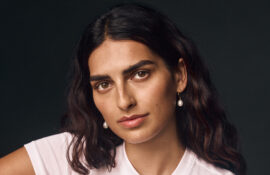

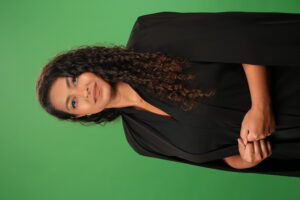
Amna Al Haddad is widely recognised as one of the UAE’s true sporting pioneers. Born in Dubai and beginning her athletic journey at nineteen, she stepped into a world where few Arab women had ever competed. What started as a personal quest for strength soon evolved into a groundbreaking career. She became the first Emirati woman to enter the Reebok CrossFit Games Open, later competing at the Asia Regionals and doing so proudly in a headscarf, inspiring women across the region.

Her transition into Olympic-style weightlifting brought new milestones, including multiple medals at the IWF Asian Interclub Championship and appearances at major competitions across Europe and the United States. Yet behind every achievement lies a deeper story of mental resilience, faith, and the challenge of navigating burnout, pressure and expectation.
Today, Amna continues to advocate for mindset, balance and women’s empowerment, using her journey to spark honest conversations about strength in all its forms, physical, emotional and psychological. In this conversation, she reflects on barriers, growth, and the lessons she hopes to pass on to the next generation.
You’ve broken a lot of barriers during your career as a competitive weightlifter. Looking back, what initially drew you to the sport, especially at a time when there were so few role models to look up to?
What initially drew me to strength and power sports was my own internal struggle with mental health. It became a way for me to rediscover my inner strength, challenge myself, and redefine my own limits. It was never about breaking stereotypes or barriers; those happened naturally as I followed my heart and pursued what felt right for me at the time.
You’ve spoken openly about your struggles with mental health during your athletic career. Why is it so important for you to raise awareness in a region where these conversations are still growing?
Speaking openly about mental health is important because silence can be isolating. In a region where these conversations are still emerging, sharing my experiences helps normalise the dialogue and shows that seeking support is a sign of strength, not weakness. As an athlete, the nature of a stringent training regime means it’s natural for our nervous system to experience periods of ‘depression.’ Learning how to recover and rest to reduce such episodes is an important conversation to have. Mental health conditions come in many forms, and it’s crucial to identify them early so they can be treated appropriately from the beginning. If my story can encourage even one person to speak up, seek help, or feel less alone, then it’s worth sharing.
The sports world often glorifies physical strength while overlooking the mental toll it takes on athletes. How do you think the industry, especially in the Middle East, can better support the psychological well-being of its talent?
The industry can start by acknowledging that mental strength is just as important as physical strength. Creating safe spaces where athletes can speak openly about stress, burnout, and mental health challenges is key. This includes access to sports psychologists, structured recovery programs, and education for coaches and teams on recognising early signs of mental strain. In the Middle East, where mental health conversations are still developing, role models speaking up and institutional support can make a huge difference in changing perceptions and ensuring athletes thrive both on and off the field.
When you experienced burnout and depression, what was the turning point that pushed you toward recovery and renewed purpose?
The turning point came when I realised that the body follows the mind. Every time I experienced an injury, it was often the result of severe mental strain that needed my attention. I started prioritising rest, reflection, and seeking support, which allowed me to reconnect with why I began my journey in the first place, to challenge myself, rediscover my inner strength, and find joy in the process. That shift in perspective transformed recovery from a passive experience into a renewed sense of purpose, showing me that true strength is not just physical but also mental and emotional.
Today, you advocate for mindset, balance, and the importance of rest. How has your definition of strength evolved from your competitive years to now?
My definition of strength has shifted from being only physical to understanding the power of the mind. I’ve learned that rest and recovery aren’t luxuries but necessary and intentional parts of life. When we don’t slow down and create balance within, the body and the outside world eventually respond. True strength now looks like listening, adjusting, and prioritising health so that everything else can move forward in harmony.
Setbacks are inevitable in any journey. How do you personally navigate these moments?
I see setbacks either as a lesson or a redirection. It’s never truly a setback. It’s very normal in any journey for obstacles to show up along the way; that’s where character and resilience grow. It’s where we learn more about ourselves: where we may be rigid, where we need to pivot in our approach, and where we need to reflect on whether the path we’re on is truly the one we want to be on, and reconnect with our “why.”
What message do you hope to pass on to the next generation of Arab female athletes?
I want them to know that their worth isn’t defined solely by performance. That discipline and ambition matter, but so does listening to yourself, protecting your mental health, and allowing space for rest. Strength comes in many forms, and honouring who you are, mind, body, and spirit, is what allows you to sustain the journey and truly enjoy it. Don’t be afraid to take that step forward toward a goal or a dream, because that one step can change the course of your life.
Mental health in the Gulf is progressing, but many still hesitate to seek help. What cultural shifts would you like to see in how our communities talk about emotional well-being?
We are past the stage of talking about mental health; we’re now at the stage of taking action. I’d like to see more integrated systems rooted in compassion, where emotional well-being is supported through clear guidelines and accessible support. This means creating real space in workplaces and educational institutions for mental health conversations, not just in moments of crisis, but as part of everyday culture. When support is structured, normalised, and led with empathy, seeking help becomes a natural step rather than one rooted in shame and blame.
As someone who has reinvented herself multiple times, what does success mean to you?
True success is having inner peace with yourself and who you are. As a dynamic individual, I am curious by nature and enjoy exploring what life has to offer, and along the way, being surprised by skills and talents I may have. I believe life is meant to be lived with the eyes of a child, as if everything is being experienced for the first time. Real success is being content with who you are, where you are, as you are, while remaining open and curious to change.

What daily practices help you stay grounded?
I don’t switch on my phone or the internet until an hour after I wake up. I use that time to take a few breaths of fresh air, do gentle stretches, water my plants, and feed my cats. I also spend as much time as possible outdoors and in nature—whether at the beach, in a park, or in the desert. This helps me stay grounded and connected with myself, which allows me to show up better in the world.
If you could change one misconception about women in sports, particularly Arab women, what would it be?
There are no misconceptions, only perspectives. Women have repeatedly demonstrated their talent, dedication, and resilience in sports and beyond. It’s time to level the playing field, providing women with equal access to facilities, sponsorships, and opportunities so they can achieve their full potential and redefine what’s possible in sports.
What’s a message that you would tell your younger self?
I thank her for everything she endured to help and shape me to become the person I am today. Without her perseverance, I wouldn’t be who I am today.
As you continue mentoring and advocating globally, what impact do you still hope to make in the world of sports, mental health, and women’s empowerment?
I aim to create a global movement of compassion and intentional action, where individuals in sports, mental health, and advocacy feel safe, supported, and encouraged to express themselves fully. My goal is to foster a lasting community that champions growth, resilience, and equality, inspiring everyone to reach their highest potential.