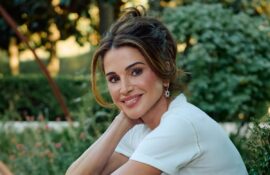

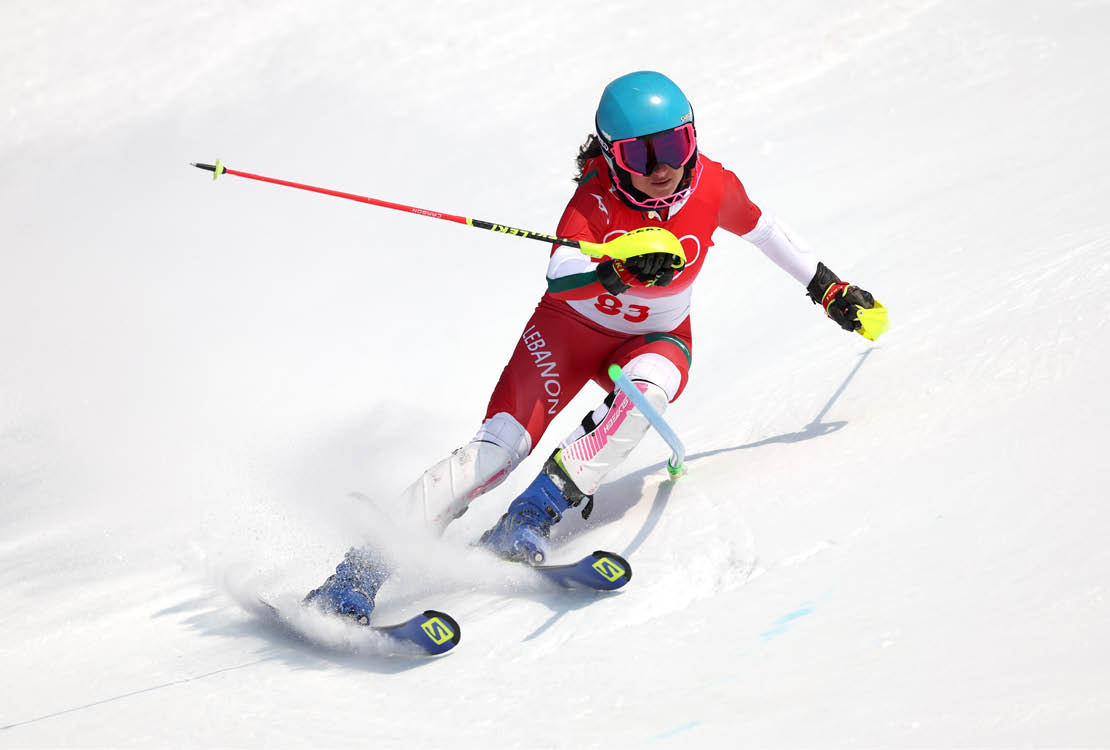
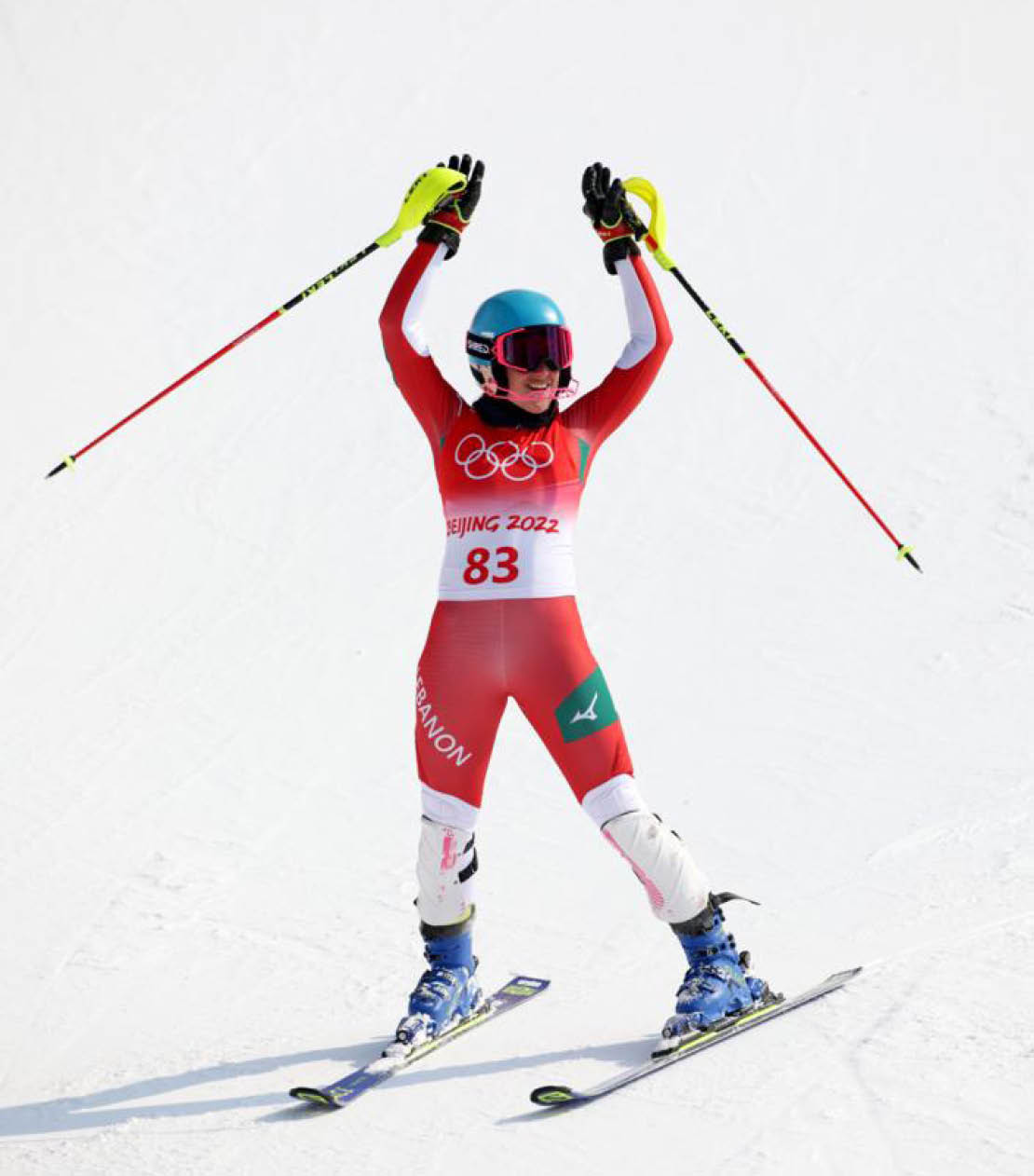
As Lebanon’s winter sports community continues to grow, one athlete has emerged as a powerful symbol of determination and national pride. Manon Ouaiss, a talented alpine skier, is preparing to take on the world once again as she heads to the upcoming Winter Olympic Games. Known for her discipline, resilience, and passion for representing her country on the global stage, Manon shares with us the journey behind the athlete, the challenges she has faced, and the dreams she carries with her to the start gate. In this exclusive interview, she opens up about her training, her inspirations, and the message she hopes to send to the next generation of Lebanese athletes.
Congratulations on qualifying for the Olympics once again. How does it feel to represent Lebanon on the world’s biggest stage?
Thank you so much. The Olympics are unique because you compete less for yourself and more for your country. That national dimension brings an immense sense of pride, but also responsibility. For a brief moment, I become an ambassador for Lebanon, and I feel a duty to give everything, not only in performance, but also in attitude and values. While I am also proudly French, representing Lebanon holds a very special place in my heart. It goes beyond nationality; it’s deeply emotional and meaningful. Wearing those colours on the world’s biggest stage is something I never take lightly.
Can you tell us about the moment you found out you would compete in this year’s Olympic Games?
That moment was incredibly powerful, especially when you realise what it represents. Behind qualification lies years of perseverance, hard work, sacrifices, setbacks, and moments when giving up would have been easier. So when it finally happens, the overwhelming feeling is relief, knowing that it was all worth it. It’s also deeply emotional because the Olympics are different from most competitions. Unlike events that feel more individual or niche, the Games are something you experience collectively – with family, friends, and even people who don’t usually follow skiing. Everyone feels connected to it, and that makes the achievement even more special.
What have been the biggest changes in your training or mindset since your previous Olympic participation?
From a sporting perspective, I’m much more mature in my decisions. I listen to my body better, I don’t overdo things, and I prioritise quality over quantity. In the past, my enthusiasm sometimes led to injuries because my technical or physical resources didn’t always keep up.
Mentally, I remain demanding of myself, but I now move much more quickly from frustration or anger to constructive analysis. Failure has become a driving force. I allow myself to feel negative emotions, but I don’t stay there for too long; I learn from them and move on.
Another major shift was learning to focus my energy on what I can control, instead of wasting it on things beyond my reach. That mindset truly changed my approach. I always give everything I have, and whatever happens, happens. That’s also the beauty of sport: pushing beyond yourself, even when motivation or focus wavers.
On a personal level, I’ve learned that there is no instruction manual. There are fundamental principles in high-level sport, of course, but no magic formula. With time and experience, you get to know yourself better, how you handle pressure, expectations, and doubt, and you discover what works for you.
Lebanon isn’t traditionally known for winter sports. What does it mean to you to inspire young Lebanese athletes, especially girls, to pursue skiing?
Beyond medals or results, my greatest achievement would be inspiring even one young girl to pursue skiing. Sport has taught me invaluable life lessons: overcoming adversity, trusting the process even when results aren’t immediate, and understanding that hard work eventually pays off – often in unexpected ways. It also teaches you to put your ego aside. Surrounding yourself with people who are better than you is essential, they push you, inspire you, and help you grow, even if it can feel uncomfortable at times.
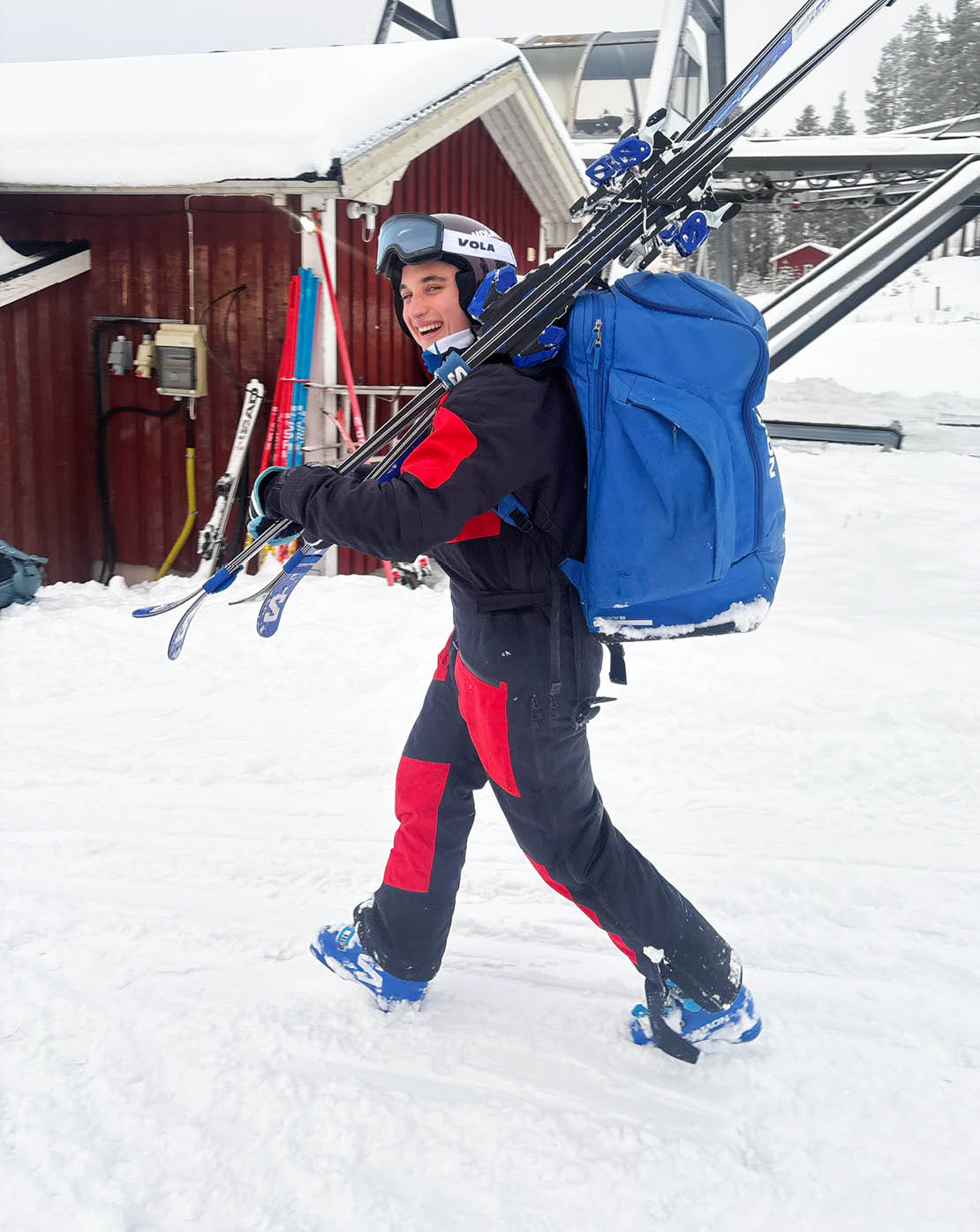
Skiing, in particular, is fascinating because nothing is ever the same. The slope, weather, snow quality, visibility, and course conditions constantly change. It’s not like a 100-meter sprint where everything is predictable. Adaptability becomes a skill, one that extends far beyond sport and into life itself. Skiing is more than a discipline; it’s a full experience, combining intense emotions, the thrill of an extreme sport, and a deep connection with nature.
How do you balance the demands of high-level training with your personal life and academic or professional commitments?
My life has always been something of a roller coaster, but discipline and deep passion have helped me balance sport with other commitments. At one point, I was actually forced to pause my athletic career because it wasn’t compatible with a conventional working life.
Doing both is possible, but as elite sport becomes increasingly competitive (and as athletes from major nations are able to fully dedicate themselves to training) you often feel like you’re doing everything halfway. This year for the first time, I made the decision to fully commit to skiing for an entire year: first to qualify, and now to prepare for the Olympics.
It’s a difficult reality, but excelling simultaneously in multiple fields that pull you in opposite directions is extremely rare. Many athletes go on to become successful entrepreneurs or professionals, but usually only AFTER having fully dedicated themselves to their sporting careers.
Can you walk us through a typical training day during peak season?
In the morning, training usually runs from around 8 to 11 a.m. on the slopes. The afternoons are more flexible and depend on individual needs: recovery naps, meals, time in the ski room tuning and waxing skis, gym sessions, or active recovery. Also, including studying or working for some, because skiing doesn’t pay the bills.
What aspects of your discipline do you feel you’ve improved the most heading into the Olympics?
My understanding of discipline has evolved. I used to believe discipline meant showing up no matter what. Now, I realise it’s far more personal than that. True discipline is knowing when to push and when to slow down, when to rest, and when to listen to your body.
As long as you respect the rules you’ve set for yourself and they help you reach your goals, that discipline is valid. I’m not always perfect at it, but I’m much more aware and balanced than before.
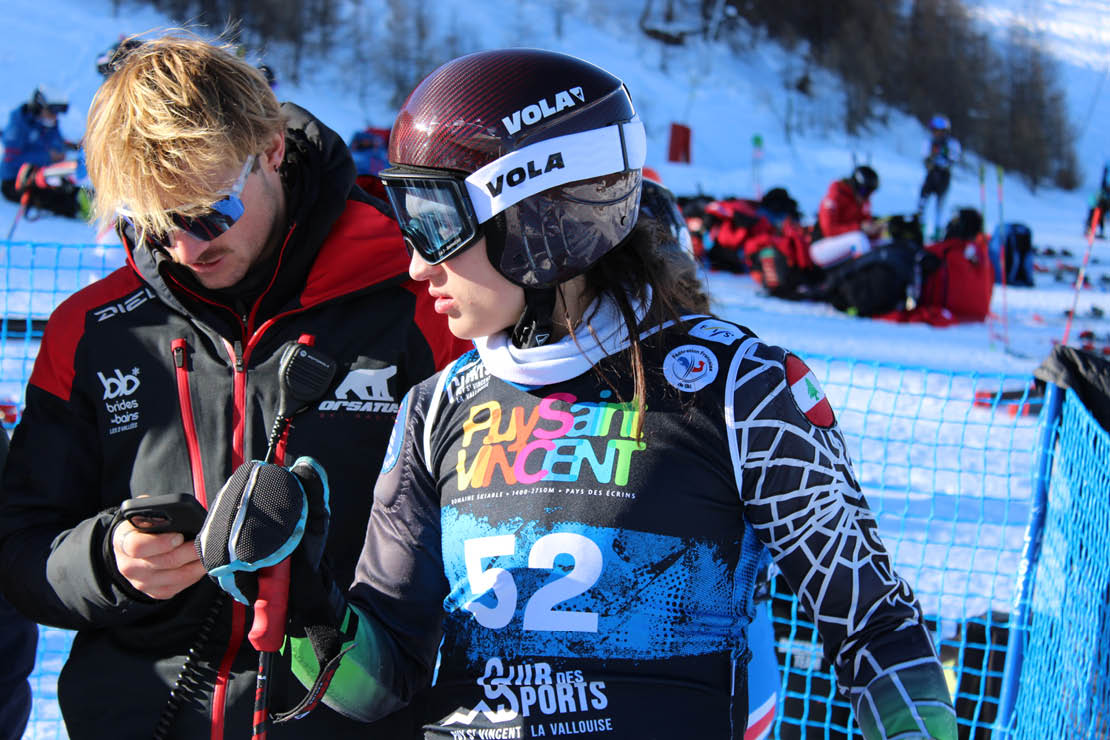
Every athlete faces challenges, whether injuries, setbacks, or moments of doubt. What has been your biggest challenge, and how did you overcome it?
Without hesitation: injuries and the lack of funding in Lebanon. In both cases, my approach has been the same: not wasting energy on what I can’t control, and focusing entirely on what depends on me.
From there, I work on finding solutions with the resources I have, always with the goal of coming back stronger. I try to remain patient and calm, because panicking or overthinking never solves the problem you’re facing.
What is your mindset at the start gate before a major race? Do you have any rituals or routines that help you focus?
I rely on keywords and technical intentions that I repeat to myself. I never focus on results, only on what I want to execute technically. I also have specific warm-up rituals that I follow every time. In a sport as extreme as skiing, confidence is crucial. Everything I do before the race is aimed at building that confidence, trusting my preparation, my body, and my ability to handle whatever the course throws at me.
Lebanese athletes often train abroad due to limited facilities. How has international training shaped your development as a skier?
Unfortunately, in skiing and in most sports in Lebanon, improving beyond the local level requires training abroad. It’s not just about facilities, but also about knowledge, experience, and the environment. Being surrounded by coaches and athletes who have “been there, done that” is invaluable. That level of expertise, along with daily emulation, plays a huge role in development and performance.
What are your goals for this Olympic appearance, both in terms of performance and personal growth?
With around 120 competitors expected at the start of the slalom race, achieving a top-40 finish would be a strong result. It would help strengthen the MENA region’s presence in winter sports and pave the way for future generations to aim even higher. Olympic medals don’t come overnight. You have to start somewhere, and this is part of building that path!
Finally, what message would you like to send to young Lebanese athletes who dream of reaching the Olympics one day?
Passion always wins. Don’t obsess too early about performance or results. Always remind yourself why you chose this path in the first place, and the answer should always be the same: a deep, burning passion. The privilege of exploring some of the most beautiful places in the world while doing what you love makes pressure feel secondary. The first step is finding a sport you truly fall in love with. When passion is there, the rest unfolds far more naturally than you might imagine.
By Lea Nouhra