
This year, Art Dubai marks its 20th edition, and the fair enters a significant moment of reflection and renewal. Over the past two decades, it has grown from an ambitious regional initiative into one of the most influential cultural platforms in the Middle East, playing a pivotal role in shaping Dubai’s creative ecosystem while fostering dialogue between artists, institutions and collectors from across the globe. Today, its impact extends far beyond the few days of the fair itself, through year-round programmes, commissions and partnerships that continue to support artistic production, research and education across generations.
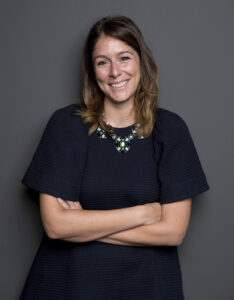
In this conversation with A&E, Benedetta Ghione, Executive Director at Art Dubai Group, reflects on the milestones that have defined the fair’s evolution and how this anniversary edition builds on that legacy. From new curated sections and expanded commissioning programmes to a renewed emphasis on voices from the Global South, she shares insight into the thinking behind the 2026 edition and Art Dubai’s growing role within both the regional and international art landscape.
This year marks the 20th edition of Art Dubai. How are you shaping this milestone moment?
The 2026 edition marks 20 years of Art Dubai as both a fair and a cultural platform that celebrates the people, partnerships and ideas that have shaped it. Over 20 years, Art Dubai has evolved from an ambitious platform into a year-round cultural infrastructure, creating networks and conversations across regions and disciplines while supporting artists, galleries and knowledge production year-round.
This milestone is a reflective and forward-looking moment to recognise the journey so far and to signal the direction of the next chapter. The 2026 edition, bringing together 120 presentations from over 35 countries, embodies that trajectory. It includes new voices alongside galleries and collaborators who have been part of the fair since its earliest editions, reflecting our continuity and renewal. Across the programme, and particularly within the 20th anniversary edition of the Global Art Forum, the tone is intentionally reflective, considering the distance travelled while asking what comes next.
Looking back at the fair’s evolution over two decades, what defining moments have shaped its identity, and how is this anniversary edition building on that legacy?
Over the past two decades, one of the most defining aspects of Art Dubai has been its evolving understanding of what an art fair can be. From the beginning, we believed an art fair here had to do more than operate for a few days each year. It had to contribute to the long-term cultural development of the city. That broader ambition has guided its development, as Dubai itself transformed into a global cultural hub.
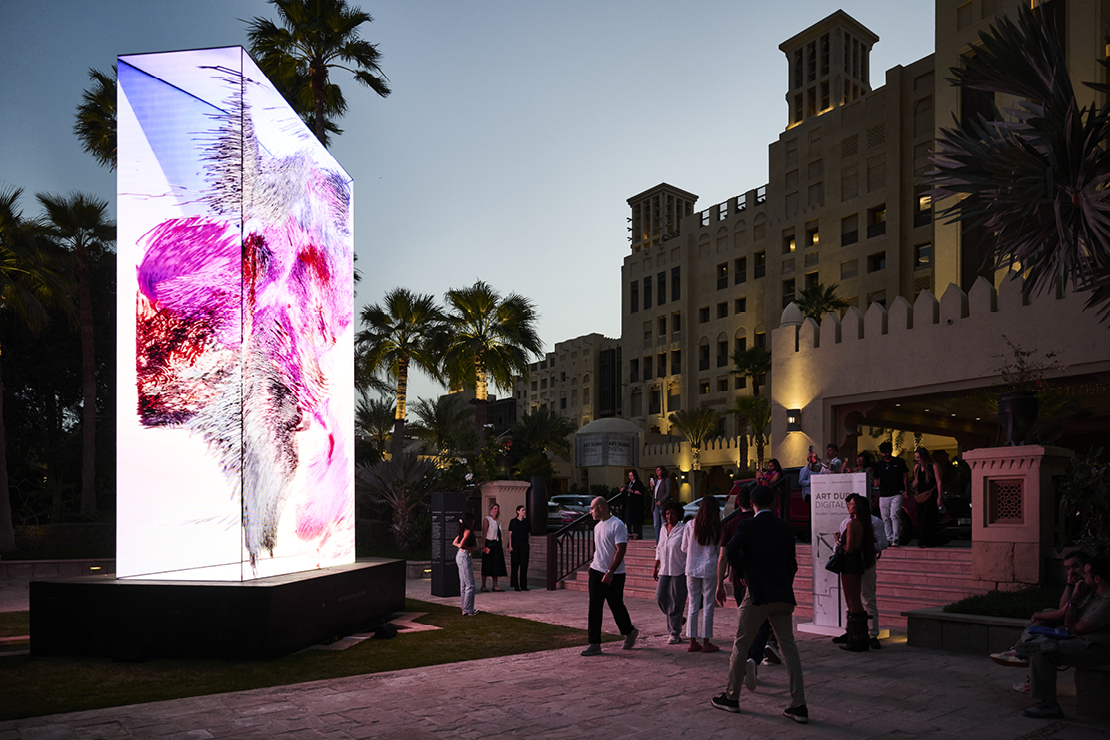
Our independence has allowed us to move quickly, take risks and respond to shifts in artistic practice. Early editions focused on regional discovery and widening international access. Over time, this expanded into more specialised platforms. Art Dubai Digital, launched in 2022 as the first dedicated fair section focused on digital art. Earlier milestones such as the launch of Campus Art Dubai (CAD), now in its 13th year, our over-a-decade-long partnership with Julius Baer, and the 2021 introduction of the A.R.M. Holding Children’s Programme, similarly underlined a commitment to nurturing creative communities across generations.
Commissioning has remained central throughout, providing artists with a platform to experiment and produce ambitious new work that might not otherwise be realised. Over time, this has positioned the fair as more than a marketplace. It has become a site of research, dialogue and production. The anniversary edition builds on that legacy by foregrounding continuity alongside renewal, bringing together long-standing participants and new voices while reaffirming the fair’s role within Dubai’s wider cultural ecosystem.
How does this year’s curatorial direction reflect the maturity of Art Dubai as an institution within the global art calendar?
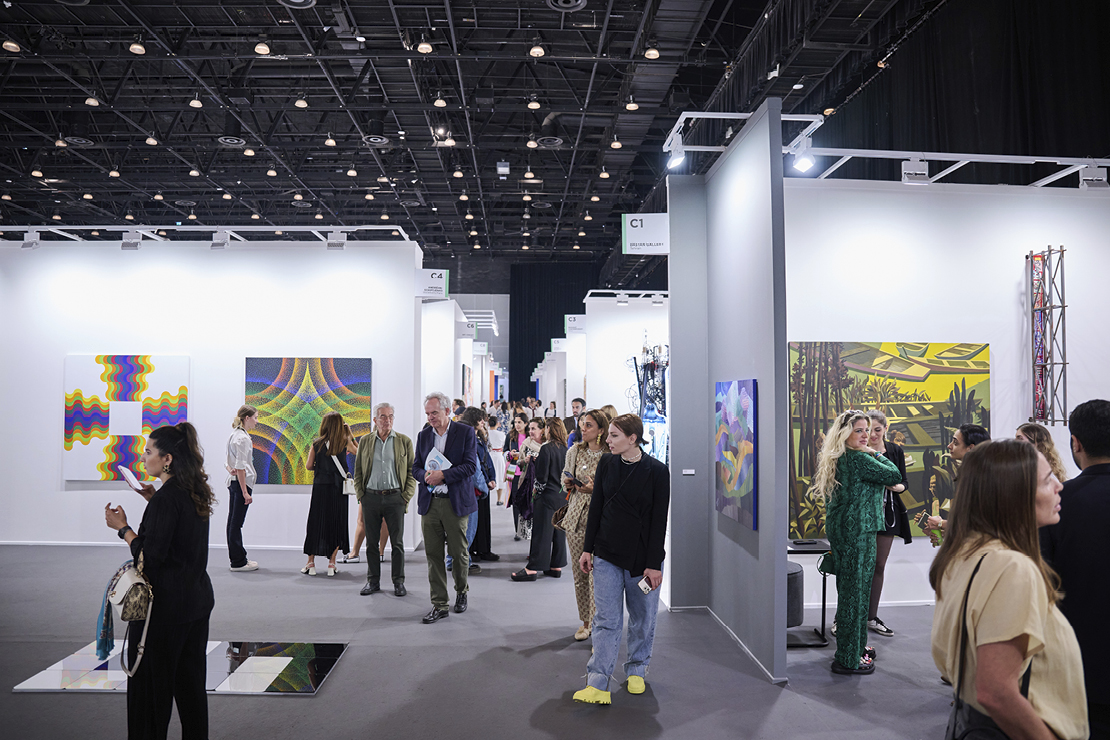
Today, Art Dubai plays a central role in the region’s cultural landscape. Over 20 years, the fair has built its identity as a trusted, independent platform with real structural impact. When Art Dubai launched in 2007, there were just around 10 commercial galleries operating in the city. Today, there are more than 40, with around half of Dubai-based galleries participating in the fair. The growth of the market has unfolded in parallel with the fair’s development, with Art Dubai acting as a crucial catalyst for the formation and expansion of the city’s gallery ecosystem.
This growing institutional maturity is also visible in the broader cultural shifts around it. Dubai is now the leading global destination for high-net-worth migration, according to the Henley Private Wealth Migration Report, and many of those individuals are becoming active patrons of the arts. At the same time, artists, curators and creative entrepreneurs are increasingly choosing to call Dubai home, contributing to a more permanent and engaged cultural community.
What are the central themes of this upcoming edition, and how do they respond to the current cultural and geopolitical climate?
The central themes of the 2026 edition are closely tied to the artists that Art Dubai platforms. They are very much of the times – artists shaped by migration, technological change and shifting global power dynamics. Many come from the Global South or represent perspectives that have historically been underrepresented within dominant Western narratives. Their work reflects a world no longer defined by a single cultural centre.
The edition celebrates what has defined the fair for the past 20 years, its role as a convening platform for exchange across communities, disciplines and geographies. At a moment when geopolitical tensions and rapid change can fragment dialogue, Art Dubai continues to create space for encounter and sustained conversation.
At the same time, the fair acknowledges the depth of the region’s art histories while looking ahead. Historical frameworks sit alongside contemporary and digital practices, recognising that today’s cultural narratives are driven by connectivity, circulation and evolving identities. Dubai is a global city built on movement and exchange, and the fair reflects that energy. In a climate that can reward speed and spectacle, the fair’s emphasis remains on community, context and long-term cultural development – qualities that feel particularly relevant right now.
Are there any new sections, commissions, or curated programmes that signal an expansion in Art Dubai’s vision?
Yes, we have several new and expanded sections that signal a deepening of Art Dubai’s vision. Zamaniyyat is a newly introduced section that brings greater art-historical depth to the fair through a focused, research-led engagement with 20th-century modernisms. Rather than presenting modernism as a single Western narrative, Zamaniyyat explores parallel modernisms shaped by migration, exile and institutional change. In doing so, it adds deeper historical context to the fair.
Another new section, Bawwaba Extended, represents a spatial and experiential expansion. Curated by Amal Khalaf and Alexie Glass-Kantor, it moves beyond the booth format to prioritise large-scale, site-responsive works encountered across the fair. Installations, digital media, moving image, sound, performance and public interventions are given space to unfold in ways that do not sit comfortably within a conventional commercial structure. Alongside this, the Bawwaba Gallery Support Programme reflects a pragmatic expansion of vision. By sharing risk and reducing upfront costs, it enables greater participation from emerging galleries and supports experimentation at a moment when market conditions can otherwise encourage caution.
Art Dubai has long positioned itself as a gateway to the Global South. How is this year’s edition further amplifying voices from the Middle East and surrounding regions?
Art Dubai is rooted in Dubai but deeply connected across the Middle East, South Asia and Africa, functioning as a platform of sustained exchange. Over time this has contributed to a shift in collecting culture in the region, with collectors becoming more research-driven and historically informed, supported by initiatives such as Dubai Collection, the Art Salon and the Modern and Collector Talks.
This year’s edition further amplifies regional voices, including through our 20th anniversary edition of the Global Art Forum (GAF). Organised by long-term Commissioner Shumon Basar under the theme ‘Before and After Everything’, the Forum reflects on two decades of cultural transformation while foregrounding thinkers and practitioners in the region today. Speakers such as Sultan Sooud Al Qassemi, Founder of Barjeel Art Foundation, Reem Fadda, Director of Cultural Programming at the Department of Culture and Tourism Abu Dhabi, and renowned artists including Monira Al Qadiri and Joanna Hadjithomas bring perspectives grounded in the Middle East’s lived realities and intellectual histories.
It also places these voices in dialogue with international figures, reinforcing Art Dubai’s role as a global meeting point. That balance reflects our long-standing focus on modern and contemporary art from these geographies, positioning regional modernisms as central to global art history. Combined with the fair’s independent model, which allows it to function as a testing ground for new gallery models and institutional approaches, these shifts have meaningfully rewritten the creative economy.
In what ways are regional artists being platformed differently or more prominently this year?
Platforming regional artists has always been central to Art Dubai’s direction. In 2026, more than half of presentations come from the MENASA region, and 27 of this year’s exhibitors are Dubai-based, reflecting a market in which regional galleries operate with year-round presence.
What may feel different today is the depth of that platform. Artists are part of a mature ecosystem that includes long-standing galleries and returning collaborators. The fair welcomes back established regional galleries such as Efie Gallery, Leila Heller Gallery, which presents across both Art Dubai Galleries and Zamaniyyat, and Saleh Barakat Gallery, alongside new participants entering the conversation.
This balance of continuity and renewal allows regional artists to be introduced, revisited and contextualised within an evolving framework. It reflects a platform that has moved beyond exposure toward long-term visibility and integration within the global art calendar.
How do you see the relationship between local talent and international galleries evolving within the fair’s ecosystem?
Local and international artists are increasingly operating within shared conversations, and in an unprecedented convergence of global and regional voices. Regional galleries are engaging with global collectors and institutions on equal footing, while international galleries are presenting artists whose practices are shaped by transnational identities and shared concerns. Art Dubai Digital, now back for its 5th edition, is an example, bringing together global and regional practitioners in a context where digital and immersive practices naturally circulate across borders while remaining rooted in local realities. With galleries spanning Argentina to Japan, the United States to New Zealand alongside leading regional spaces presenting Emirati and GCC artists, this year’s edition reflects an international field grounded meaningfully in local context.
Could you elaborate on the role of initiatives such as the Dubai Collection and how they strengthen the city’s broader cultural infrastructure?
Art Dubai Group develops long-term strategic initiatives designed to strengthen Dubai’s cultural infrastructure beyond the annual fair. Over the years, this has meant sustained investment in year-round programming, capacity building and thought leadership, working in close partnership with government and business to support the long-term growth of the sector. A good example is Dubai Collection, developed in partnership with the Dubai Culture & Arts Authority. It is the city’s only institutional collection of modern and contemporary art, and represents a new model for cultural development in Dubai. Rather than building a collection through a single public entity, Dubai Collection brings together works held in private homes and corporate collections, making them accessible to the public for the first time. In doing so, it enables a shared civic resource to emerge from a constellation of committed patrons and collectors.
This model reflects Art Dubai’s broader role in creating frameworks that allow cultural ecosystems to deepen. By creating the conditions for initiatives like Dubai Collection to exist, the fair contributes to a more structured and publicly accessible art landscape. The Collection’s presentation at Art Dubai this year highlights its working methodology, rooted in long-term commitment and support for artists and their practices. Alongside this, the Art Salon Programme convenes an invitation-only community of dedicated collectors and cultural enthusiasts based in the UAE. Through studio visits, research-led conversations and sustained dialogue, it nurtures informed patronage and strengthens the network that underpins the city’s cultural life.
Year-round programmes have become central to Art Dubai’s identity. How do these initiatives extend the fair’s impact beyond its annual edition?
Art Dubai operates as a year-round cultural platform with an impact that extends through capacity building, professional development and long-term partnerships that impact the wider ecosystem of creative practice in the region. Programmes such as Campus Art Dubai have supported generations of artists and curators, while many practitioners who first engaged with the fair have gone on to major commissions and institutional recognition. This year, for example, data and kinetic artist BREAKFAST returns to realise the Julius Baer commission after previously participating in Art Dubai Digital, reflecting a trajectory that moves from presentation to long-term collaboration.
The fair’s influence also extends into strategic partnerships, contributing to the cultural direction of organisations such as A.R.M. Holding, including advisory around their corporate collection, as well as to broader frameworks like the DIFC Art Strategy. In this way, it operates as a cultural interlocutor.
More broadly, Art Dubai Group functions across art, design and innovation. Apart from Art Dubai, it delivers long-term cultural infrastructure through Downtown Design and Dubai Design Week, as well as initiatives such as Prototypes for Humanity and Editions. The Group effectively functions as an active ecosystem builder, connecting creative practice with industry, research and public life throughout the year.
Education has always been a key pillar. How is Art Dubai investing in the next generation of artists, curators, and collectors?
The A.R.M. Holding Children’s Programme, now in its sixth year, has reached more than 30,000 students across the UAE, demonstrating how sustained private-sector collaboration can embed arts education at a national scale. Rather than a one-off initiative, it represents a structural commitment to nurturing creative curiosity from an early age.
Another example comes from Campus Art Dubai’s ongoing support to artists, curators and cultural practitioners through hands-on mentorship and critical engagement. Its impact is visible in the trajectories of its alumni, including names like Munira Al Sayegh, who has gone on to play an active role within the UAE’s cultural discourse as independent curator and a cultural instigator. These initiatives reflect a long-term investment in people, so that the next generation is equipped to contribute to and lead the region’s cultural future.
How would you assess the current state of the art market in the Middle East, particularly in Dubai?
In many ways, the trajectory of Art Dubai mirrors the maturation of Dubai itself. Today, the city hosts around 90% of the UAE’s commercial galleries and functions as the region’s primary art market centre. What began two decades ago with a small number of operating galleries has developed into a consolidated ecosystem of commercial spaces, global auction house presence, and a steadily expanding base of private and corporate collectors.
Dubai’s position is reinforced by its broader demographic and economic shifts. The UAE continues to attract significant high-net-worth migration, and that movement is translating into deeper engagement with the arts, from collecting to institutional patronage. At the same time, artists and cultural entrepreneurs are choosing to base themselves here, strengthening the year-round creative economy. Creative districts such as Alserkal Avenue, alongside institutions like Jameel Arts Centre, have embedded galleries, studios and non-profit spaces into the urban fabric. This growth is supported by long-term cultural policy frameworks, including Dubai Culture’s Creative Economy Strategy, which place culture at the centre of civic development. As a result, the market today is structured, internationally connected and increasingly confident in its identity, operating as both a regional anchor and a global meeting point.
What opportunities and challenges do you foresee for galleries and artists operating in the region today?
The level of cultural investment taking place across the Gulf is unprecedented. Significant, long-term infrastructure projects are being developed across the GCC, supported by policy frameworks and institutional commitments designed to create sustainable conditions for artists, galleries and cultural organisations to thrive. This creates real opportunity, generating greater visibility, deeper institutional support and a more stable environment in which practices can develop over time.
The UAE is also expected to see an unprecedented net inflow of more than 9,800 high-net-worth individuals in 2025, proving its position as a premier destination for private wealth. As the market grows, maintaining curatorial rigour and long-term artistic development will be critical to sustaining credibility.
Looking ahead to the next decade, what is your long-term vision for Art Dubai and its contribution to the region’s cultural landscape?
The next decade for Art Dubai is about depth, sustainability and long-term cultural impact. Over twenty years, we have helped shape a more confident and internationally connected art ecosystem in the region. Now the focus is on strengthening that foundation.
We will continue to combine the energy of the annual gathering with year-round initiatives in education, commissioning and research. This structure allows us to support artists and galleries over time, not just during the fair.
As the Gulf’s cultural landscape continues to expand, credibility and rigour will be essential. Our ambition is to remain an independent, globally engaged platform that champions artists from the region and the Global South, expanding digital and interdisciplinary dialogue, and contributing to a cultural environment that is ambitious, sustainable and built to endure.
Art Dubai 2026 will now take place from 14 to 17 May, 2026.
By Lindsay Judge