
As President of Salone del Mobile.Milano, Maria Porro is helping shape one of the design world’s most influential platforms at a moment of global change. With shifting markets, evolving urban development and new expectations around sustainability and innovation, the 2026 edition arrives at a time when design is being asked to do more than ever before.
Under Porro’s leadership, the fair continues to evolve beyond a traditional trade event into what she describes as a cultural and economic infrastructure that connects designers, architects, developers, and institutions from across the world. From new initiatives such as Salone Contract and Salone Raritas to deeper engagement with emerging markets, including the Middle East, the upcoming edition reflects a broader vision for how design can respond to complexity and shape future cities and experiences.
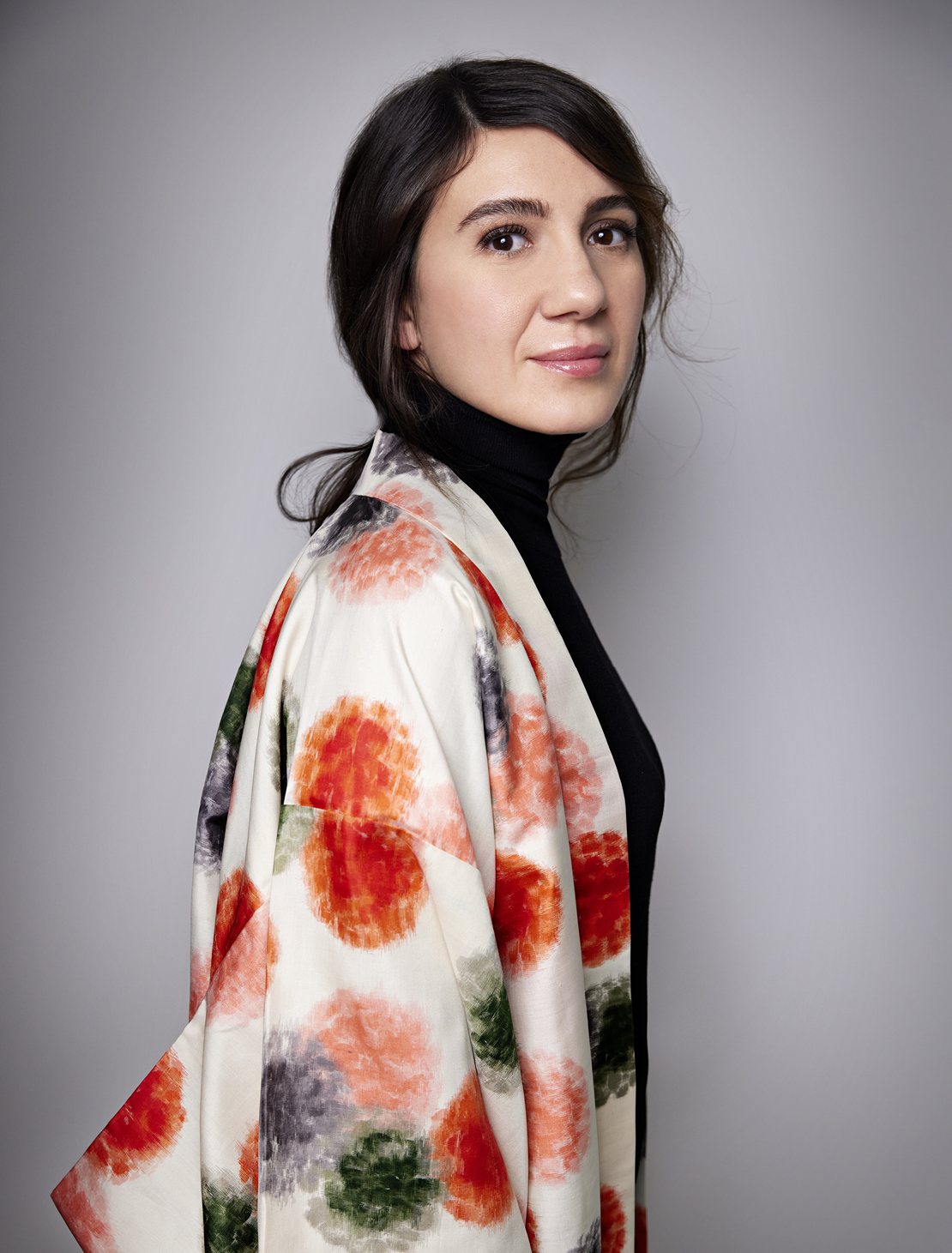
In this conversation, Porro reflects on the vision for 2026, Milan’s growing global influence, and how Salone del Mobile continues to serve as both a marketplace and a meeting point for ideas, collaboration, and innovation in an increasingly uncertain world.
As President of Salone del Mobile, how are you shaping the vision for the 2026 edition in response to an increasingly complex global landscape?
In 2026, we are shaping Salone as a platform that helps the design industry confront complexity with greater awareness, not greater abstraction. Today, the global landscape is marked by geopolitical instability, shifting trade routes, rising operational costs, new social expectations, and profound changes in market structure. In this context, our role is not simply to present products, but to create the conditions for companies to interpret change, strengthen their positioning, and build more resilient strategies.
This is precisely why Salone Contract is such a significant part of the 2026 vision. Contract is one of the areas where these global transformations become most visible. It is where design intersects with international investment, hospitality, workplace transformation, real estate development, infrastructure, and new urban demand. It is also where competitiveness no longer depends only on aesthetic quality, but on the ability to integrate production capacity, technical expertise, sustainability credentials, digital tools, regulatory knowledge, and operational reliability. In other words, Contract is where the market is asking design to become a system, service, and long-term partnership.
That is why, in 2026, we are not presenting Salone Contract as a finished format, but as the beginning of a broader strategic process. With the involvement of Rem Koolhaas and David Gianotten of OMA, the project begins this year through a public lecture, an international forum, a thematic pathway across the fair, and a structured incoming programme with selected global operators. These are concrete steps designed to help the industry read where the contract market is going, what new forms of demand are emerging, and how Italian and international companies can position themselves more effectively within that evolution.
More broadly, the 2026 edition reflects a clear conviction: in a fragmented world, the Salone must be both a marketplace and a cultural infrastructure. It must remain a place where business happens, but also where industries, designers, institutions, and markets can build a shared understanding of the changes ahead. Our vision is to make the Salone increasingly capable of connecting economic value with cultural intelligence, because today the real challenge is not only to respond to complexity, but to transform it into direction.
This year introduces new initiatives, including Salone Raritas. What prompted this addition, and how do they reflect the evolving needs of the design industry?
The introduction of Salone Raritas comes from a very clear observation: the boundaries that once separated collectable design from the professional project world have progressively dissolved. Today, unique pieces, limited editions, and author-driven works are no longer confined to galleries or private collections. They are increasingly being integrated into hospitality projects, high-end residential developments, and experiential retail environments, where identity, storytelling, and differentiation have become strategic assets.
What we are responding to is a shift in demand. Clients — whether developers, brands, or institutions — are no longer looking only for performance and efficiency. They are looking for meaning. They want spaces that communicate a narrative, that carry cultural depth, that can be recognised and remembered. In this context, collectable design is not an exception to the system; it becomes part of the project logic.
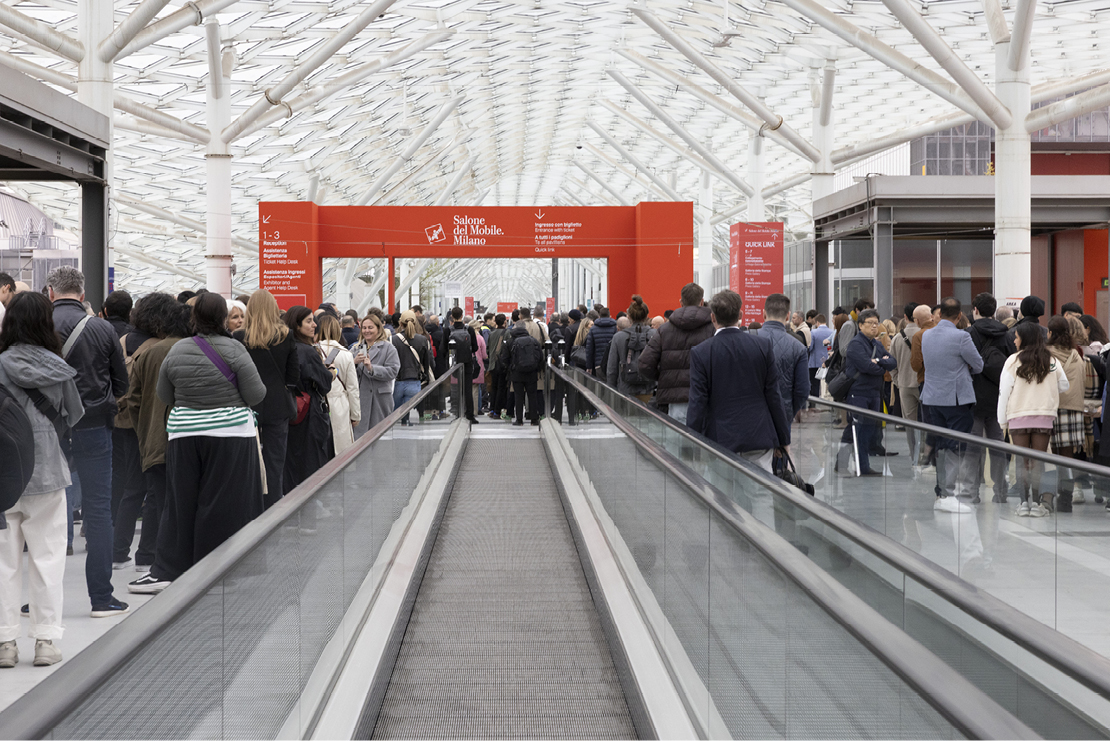
With Salone Raritas, we are making this transformation visible and operational. In 2026, it takes shape as a curated platform with 25 international exhibitors, bringing together galleries, designers, and high-level craftsmanship within the core of the fair. For the first time, these works are placed in direct dialogue with architects, developers, and decision-makers, allowing them to be sourced and specified within real projects. This reflects a broader evolution of the industry: design today operates across multiple scales. On one side, it must address complexity, systems, and large-scale integration. On the other hand, it must generate identity, emotion, and cultural value.
Salone Raritas is our way of acknowledging that both dimensions are essential—and that the future of design lies precisely in the ability to connect them.
With over 300,000 visitors and a highly international audience, Salone remains a global benchmark. What do you think continues to draw the world to Milan each year?
What continues to draw the world to Milan each year is something that cannot be replicated, scaled, or digitised: the Salone is a moment of activation. It is a spark that ignites the entire system. For one week, the industry does not simply present itself; it accelerates. Ideas circulate faster, decisions are taken in real time, and relationships are built that would otherwise take months, sometimes years, to develop. There is a unique concentration of energy in which designers, companies, developers, institutions, and media are all present at once, fully engaged.
This creates a form of momentum that is very specific to the Salone. It is not just about visibility, but about simultaneity. What happens here happens together: conversations, negotiations, discoveries, alignments. You meet the person you needed to meet, you encounter a material you were not looking for, you see a solution that unlocks a project.
Milan amplifies this dynamic by extending it beyond the fair. The city becomes an open system in which formal and informal exchanges overlap continuously. A meeting that begins in the pavilions continues in a showroom, evolves during a dinner, and becomes a project the following day. This is why the Salone remains a global benchmark. It is not only an event, but a living infrastructure of relationships. A place where the design industry becomes, for a brief and intense moment, fully visible to itself and, in doing so, moves forward.
Design weeks globally are becoming more decentralised. How is Salone adapting to this shift?
We see this shift not as a fragmentation, but as an expansion of the design ecosystem. Today, design no longer exists in a single format or place. It unfolds across multiple layers, and each of these contributes to a more complex and dynamic landscape. The Salone has evolved precisely in this direction: from a central event into a system that activates and connects these different dimensions. Milan is the clearest expression of this model. During Salone Week, the city does not compete with the Exhibition; it becomes part of it. What happens in the pavilions resonates across showrooms, cultural institutions, and public spaces, creating a continuous exchange between industry, culture, and society.
This is something we study in a structured way through our Permanent Observatory, developed with the Politecnico di Milano. The data confirms that the value of the Salone lies not only in the fair itself, but in the broader ecosystem it generates — economically, culturally, and socially. It is this distributed model that produces impact and relevance. Our role, therefore, is not to centralise, but to orchestrate. To ensure that this expanded ecosystem remains coherent, legible, and capable of generating meaningful connections. Because today, the strength of the Salone lies precisely in its ability to hold together multiple centres of energy and turn them into a shared momentum.
Sustainability continues to be a key conversation. How is Salone encouraging meaningful, measurable change?
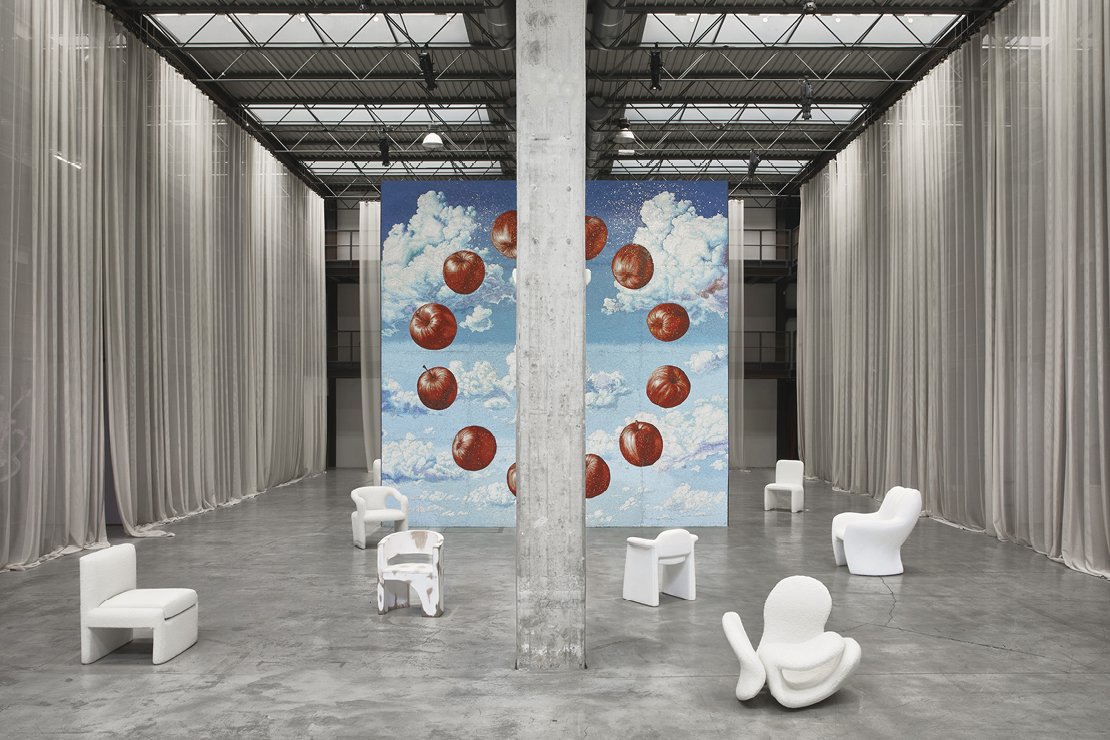
We focus on implementation, not messaging. In 2026, sustainability is embedded in multiple concrete actions: the renewal of ISO 20121 certification for 2026–2028, the use of structured guidelines for exhibitors, and the growing emphasis on circular materials and lifecycle thinking across installations. Even projects like Aurea, the immersive installation at Pavilions 13-15, are conceived with recycled and responsibly sourced materials, demonstrating that sustainability and high-end design can coexist. What matters is that sustainability becomes visible through decisions, not declarations.
The theme of recent editions has placed the human experience at the centre of design. How do you see this evolving in 2026 and beyond?
In 2026, we move from the human body to what the body encounters: matter. This is expressed very concretely through the campaign “A Matter of Salone” and through the exhibitions themselves. Visitors will not encounter material as an abstract concept, but as transformation: in Salone Raritas through craftsmanship, in SaloneSatellite through experimentation, and in Aurea through atmosphere. The evolution is clear: design is not only about how spaces feel, but about what they are made of and the responsibility embedded in those choices.
The Middle East is emerging as a major design hub. How important is this region to Salone’s future strategy?
It is certainly a central region for us, a space of evolving dialogue. What we are building there is already visible through initiatives like “Red in Progress” — a project not conceived as a standalone event but as the first step in a broader, multi-year collaboration. It brought together Italian companies, Saudi institutions, designers, and developers within a shared platform that combined exhibition, cultural exchange, and B2B encounters.
What is important is the nature of that format: it was designed as a business-first and culture-driven meeting point, where conversations are directly connected to real projects, ongoing urban transformations, and long-term investment strategies linked to Vision 2030.
So, when we look ahead to 2026 and beyond, our approach is consistent with that experience. It is not about exporting the Salone as a fixed model, but about building context-specific platforms that can connect design culture with local ecosystems in a meaningful way. In regions like Saudi Arabia, where architecture, infrastructure, and cultural identity are evolving simultaneously, design becomes a strategic layer of transformation. Our role is to enter that process as a partner — facilitating exchanges, creating connections, and helping translate ideas into spaces, projects, and, ultimately, cities.
Are you seeing a shift in participation or influence from Middle Eastern stakeholders?
We are seeing increasing participation from Middle Eastern developers and decision-makers, particularly within contract-related initiatives and international incoming programs. In 2026, this is reflected in the targeted invitation of global top players within the Salone Contract framework, many of whom are active in Gulf mega-projects.
With large-scale developments across the Gulf, how do you see design contributing to new urban identities?
In these contexts, design operates at multiple scales simultaneously. For example, in hospitality projects, it defines not only interiors but entire experiences: from material choices to spatial sequencing. In large developments, it contributes to how cities express identity and cultural positioning. The opportunity lies in combining global expertise with local narratives, creating spaces that are both internationally competitive and culturally grounded.
In times of global uncertainty, how do you see Salone responding to the geopolitical climate? And how will Salone lead that conversation?
In times of global uncertainty, I believe the Salone has an even greater responsibility: not simply to reflect the market, but to offer it a point of reference.
Today, we are operating in a landscape marked by wars close to Europe and in the Middle East, geopolitical fragmentation, trade tensions, rising transport and energy costs, and a broader climate of volatility that affects supply chains, investment cycles, and confidence. These are not external conditions to the design industry. They are reshaping the way companies produce, position themselves, and grow internationally.
In this context, the Salone responds first of all by remaining open. In moments of instability, there is always a temptation to retreat into narrower geographies or more defensive strategies. Our role is the opposite: to keep channels of exchange active, to strengthen international relationships, and to create a space where industries, markets, institutions, and design cultures can continue to meet. That is why I often say the Salone is not only an economic engine, but also a form of diplomacy. It is a neutral ground, a cultural bridge, and a place where dialogue can continue beyond political divisions.
But there is also a second level to this response, which is more structural. The Salone is evolving from a trade fair into what I would call an infrastructure of orientation. Our task is not only to gather the industry once a year, but to help it interpret complexity. This is the deeper thinking behind initiatives such as Salone Contract, developed with OMA. In a geopolitical landscape that is becoming more unstable, the contract sector shows very clearly how value has shifted: not from quality to quantity, but from products to integrated systems, from display to long-term capability, from catalogue logic to strategic positioning.
This is why the 2026 edition does not treat contract as a side topic, but as a lens through which to read the present. The lecture by Rem Koolhaas, the international forum, the thematic pathway across the fair, and the incoming programme for selected operators are all part of a broader effort to give companies tools for analysis and positioning in a time when the market is asking for more than products. It is asking for reliability, data, sustainability, technical competence, and the ability to work across complex international ecosystems.
At the same time, our response is also cultural. The Salone must continue to be the place where the industry becomes visible to itself, where thought is articulated, and where future scenarios are discussed before they fully emerge in the market. And this is where the ecosystem dimension becomes essential. The value of the Salone does not end at the fairgrounds. Through the work of the Permanent Observatory developed with the Politecnico di Milano, we continue to study the broader economic, cultural, and urban impact generated by the Salone. What emerges is that the Salone is not a standalone event, but a distributed ecosystem that activates relationships, produces knowledge, supports hospitality, and generates value across the city and beyond. In times of uncertainty, this matters enormously, because resilience is never built by single actors alone. It is built by systems that are capable of connecting industry, research, culture, institutions, and markets.
So my answer is this: the Salone responds to the geopolitical climate not by becoming defensive, but by becoming more strategic. More international, but also more selective. More cultural, but also more operational. More attentive to markets, but equally committed to building a shared framework of meaning around what design can do in a fractured world. Because when instability grows, the real value of a platform like the Salone is not only that it generates business. It is that it helps transform uncertainty into direction.
By Lindsay Judge