
By Hershey Pascual
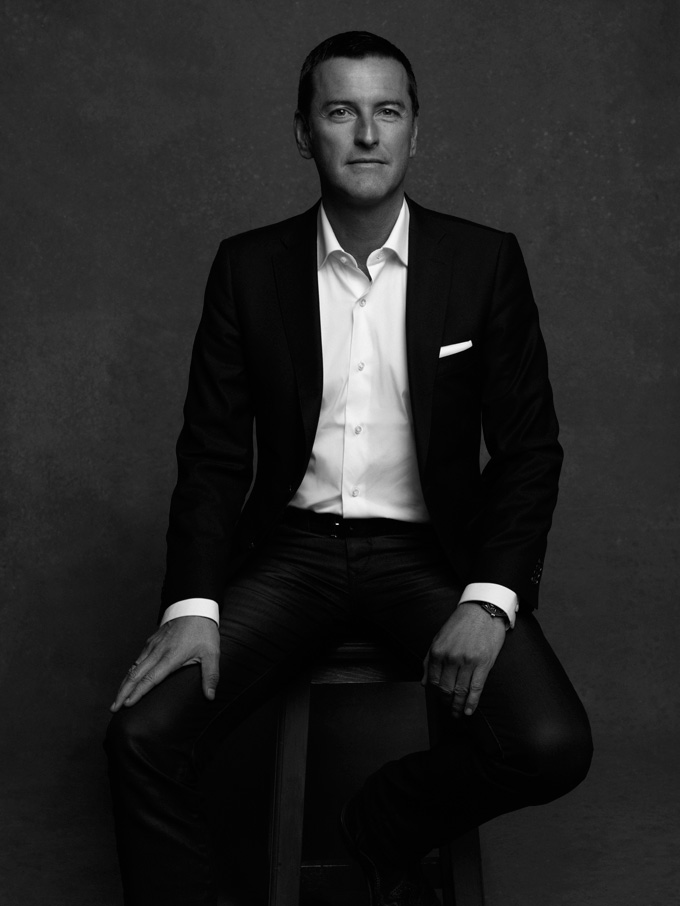
I was a little nervous when I was first told I was going to meet the CEO of Karl Lagerfeld. I suppose it was because I’m such a fan of the brand, a fan of the creative designer (Karl himself) and a fan of the two fashion houses, Chanel and Fendi, that he so masterfully built-up over the years. In fact, any association with Chanel and especially with the actual man, Karl Lagerfeld, makes me feel in awe, somewhat.
To meet the strategic brain behind the fairly new, growing brand felt unnerving. After all, so many people must have only wished to be in Pier Paolo Righi shoes. To be able to take an iconic figure that’s already respected and loved in the industry and to create a new brand with that industry icon, from the very beginning, and to be able to shape the brand any way he feels fit must be quite a dream job. And not one that’s given to just anybody.
In hindsight, I can’t imagine why I even felt partially nervous about meeting Pier Righi. The first thing I sensed from him, putting aside his title and his credibility, was that he is a kind man with a gentle heart. He’s softly spoken and his eyes seemed full of compassion. But it was his thoughtfulness that struck me initially. As I sat to join him on a table in the Kambaa lounge, at The Address Hotel in Dubai Marina, the first thing he asked was if I was okay because I was laden with heavy bags (from my morning pilates workout earlier that day). I was like a travelling gypsy. I clumsily put my baggage on the empty seats, around me, next to the attractive afternoon tea spread that lay before me.
“Would you like some tea?” he gracefully asked. Righi instantly made me at ease which actually is a rarity because wasn’t it my job to put the interviewee at ease? So they can open up to me as much as possible and not the other way around. But he didn’t need any coaxing from me. In fact, I am not even sure when the interview actually began because it almost felt like I was chatting to a new friend, over tea, during a relaxed day.
Instantly, unknowingly and naturally, we began talking about the importance and luxury of time; and this was perhaps a good insight into Righi’s deeper self and personality. “I probably have a different perception of luxury than most people’s perception of it. My perception is creating as many memorable moments as possible; that’s an amazing luxury. Today, finding time with my wife to cook because she travels a lot as well and doing simple things like that is luxury. Time is a luxury.”
He added: “At the age of 27, I ran a business. I was a CEO with about a hundred people working for us. For me that was a big thing, especially at that age, and I was already a father at that point in time too. So what I focused on was my career and having to perform and deliver, doing things and achieving things to establish and build my career. I put myself under immense pressure at a very young age. As the years went on, I did achieve certain things but I began to see that I actually didn’t have as much time as I had thought. The older I got, I reprioritised what was valuable to me. I gave all the other things, that I never did before, more of my time and space. I gave more of myself to the things that I never enjoyed before. All my life I’d say: Why should I cook? Why should I do this? I’ve no time for this! Nowadays, I love that I can do all these things. I love to cook with my wife.
“My daughter is 21 years old. She now lives on her own and she is studying but today I spent most of the day with her. In fact, I spend more time with her now than when she was five years old. It’s just totally different for me now. She’s like my best friend,” he stated. As he said that he looked pensive. Perhaps he even thought of the years he didn’t get to spend with her as a child. I noticed a hint of nostalgia in his eyes; maybe that was the ‘time’ he was referring to that he could never get back.
Righi’s emotive and thoughtful way of thinking was heartfelt; it was bold of him to be so honest with me and himself. Oddly enough these qualities are the things he discussed he loved about the designer Karl Lagerfeld, which goes to show that perhaps like attracts like. But they do say men are like fine wine, after all. The older they get the more they mature into the best of themselves; but it is a case of time and priorities that change a driven, determined young man’s mind (with a young family to take care of) into a wise, older man. At 48 years old he has reaped the rewards of his hard graft.
Tell us about you. What is your background and how did you become the CEO of Karl Lagerfeld?
I was born and raised in Germany. My father came from Italy. It was interesting because in Germany you get a certain education that is rigid and disciplined and then I have my Italian roots which gave me some sense of having good times in life and not taking things too seriously. If I had to characterise myself, I’d say I am structured in many ways but at the same time I am very Italian in a way that I think with my gut and my heart. All my decisions in life have been about thinking things through throughly but also I am guided by my gut. It puts me in a difficult position sometimes because my head will tell me one thing and my gut will say something else.
During my studies, I played a lot of sport like tennis and skiing. I always enjoyed sport. I wanted to end up working in the sports industry, and I did. I worked for a ski accessories company, which I loved. I helped the owner sell the company and I became the CEO of that company. Basically, it was part of a big group called the Pentland Group who own Speedo and Ellesse. I became part of their board. I was very young; I was 27 years old. Some point later Nike knocked at my door and they were number one in the sports industry. They hired me to be general manager in Germany, then central Europe, the Middle East and Africa which was an amazing period in my life because the company was very organised but also extremely thought provoking and emotional in the sense of what they would try to portray.
However, I’ve always had an element of aspiration when it comes to fashion. I was always a bit of the odd kid on the block with Nike because I was the one not necessarily going to work wearing a tee and sneakers. If I wore sneakers I wore them with a cool tailored suit.
During that period, I met the person who today owns Karl Lagerfeld, Fred Gehring. He was the CEO and shareholder of Tommy Hilfiger. He was about to buy the Karl Lagerfeld brand and he asked if I would like to join him on the project. He said I might have fun with it. I came from Nike and there was an opportunity to work with one of the biggest style icons in the world. I felt fortunate to work with what was a big name then but a small business and to create my own company was a great opportunity. That’s what I took on four years ago. It’s a pretty cool venture working with Karl. I had no preconceived perception of him and he was so lovely to take me on board and it was totally unexpected. He engaged with me. He was good to me. He could easily have said this isn’t someone who has come from the fashion industry. Instead, he loved that I came from a sportswear brand. He said it was amazing and we can do something different. That is how we took on the business.
Why do you think you launched the brand in 2012 and not before?
That is difficult for me to say. The Karl Lagerfeld brand did exist before. I’m not sure if there has been a sufficient stringent strategy and plan behind it and I think there has been many attempts to make the Karl Lagerfeld brand a couture house or maybe a second Chanel. But we did things differently. When we sat together to discuss the concept, I tried to understand what his vision was for the company and the Karl Lagerfeld brand, and it was pretty simple. He said: “Chanel and Fendi have to interpret their DNA and the Karl Lagerfeld brand should be about my DNA.”
There should be an ironic touch to the brand. It’s not only about fashion but he’s interested in art, music and places to go. All these elements should be part of the brand. He is very connected with the whole digital world which plays a very important role. We were the very first brand that launched globally and exclusively online with Net-a-Porter which was the biggest launch they have ever done. It attracted the largest traffic they have ever seen. So this digital component played an important part. Karl said: “I want to welcome people into my world.” Welcome means you cannot be exclusive but inclusive so we have to bring the public onboard. We highlight this at our stores – how we position the prices, all this needs to be inclusive. He had a clear idea about what he wanted and it was not a second Chanel or a second Fendi.
How valuable is digital marketing for the brand?
It’s extremely valuable because Karl is so digitally connected and we have such a large following on social media. We started Instagram over a year ago and we have 1.8 million followers, which is important for a brand. Even Choupette (his cat) has his own Instagram account. We have a lot of social media initiatives because we have such a digital savvy audience, more than most brands. Karl is so open to this and this resonates with him. He integrates himself with all the sharing on social media.
We launched our e-commerce website last week (in November 2015) in 97 countries. Karl Lagerfeld has such global recognition that our footprint is still limited to a selection of regions. This is the only way we can meet that demand, in terms of a response, so we can offer a global product. I think our biggest challenge is to make sure we deliver whilst pacing ourselves and not spreading ourselves too thin, to fast.
What is next for Karl Lagerfeld’s collaborations?
When we launched with Net-a-Porter I had just joined the company and Natalie Massenet said:“Pier, I would not have been able to do that with anyone else in the industry because the only ones that have that speed of response, ability to take risks and do things differently are you guys.” I didn’t even realise that at the time. I didn’t know how differently we work compared to others because I came from the sports industry. I think we work fast and respond speedily to what’s important, which gives us the tools to be innovative.
I think we are innovative because we don’t have an established view that certain things should be as they are and we don’t say let’s see how we can change things when we have time to change them. We don’t have the luxury to stay on one course. We have to adapt every minute to current trends and news. This makes us open to people and other influencers, which makes us innovative. If Karl says he’s seen a particular artist he likes we can do something with that artist. I will make sure we develop something together. Our finger is on the pulse and we keep things fresh. Also our team is super responsive and speedy. It’s about seizing an opportunity and being faster than all the others.
I’m getting so many requests to collaborate with people and we have so many things on the table right now that I can’t share, yet. It’s amazing to see how many global mega brands are coming up to us and asking us to collaborate with them because they see how Karl can help them to make things look different, stand out and get them on the radar. Our challenge is to say no rather than to say yes because there are so many opportunities out there and we can’t do everything.
Karl Lagerfeld has ready-to-wear for men and women, and accessories. Then there is Lagerfeld casual menswear, what’s next?
We will open the first Karl Lagerfeld hotel in Macau in 2017. It will be a six-star hotel designed by Karl and named Karl Lagerfeld which will be an extremely luxurious experience. It won’t be the last either. We are approached by many developers for many projects and we can only take on a few. It’s really about what Karl gets inspired by. He liked the idea of catering for the Chinese. It was clear in this mind that he wanted to work on this project. That specific project hooked him instantly.
Karl doesn’t like clutter so basically he wouldn’t want one hotel to have one concept and another to have a different concept. Karl wanted to deliver something that was really bespoke for the audience there whilst still bringing his influence to the table. The interiors are inspired by China combined with European Art Deco. The idea was to work with architects and make sure things were elaborate and ornate so we bring these two worlds together in a very bespoke fashion. When we decided to do the project we didn’t know what Karl would come up with which is great because it is very much like his Chanel shows. He comes up with something tailored for the audience that no one would expected. And that is what he did with the Macau project.
We will also launch childrenswear in spring 2016. Karl has never done children’s clothing before and he has got great ideas. He also has his godson Hudson who’s always at Chanel shows and he wanted to develop something for him. It will be accessible price points at a premium positioning. We also have plans to launch in the US in spring 2016.
Would you consider launching homeware?
Yes, the whole part of home and living is extremely important. We are embarking more and more on projects like hotels and Karl has recently been doing residential projects. We have to work more with homeware, furniture, design and living. Karl is extremely creative and talented when it comes to design and interiors and this hasn’t been brought to the attention of the audience yet because he’s done bespoke projects in private homes, which are all extremely modern and contemporary. His home is also modern and it looks amazing with slate grey and dark cold hues. It really looks amazing and cool. Then compare that to a recently completed project in Hamburg where he just finished designing an old villa, which is very traditional, grand and beautiful. And the Macau hotel is also very different. His creative eye and talent is very widespread.
How does the Middle East market compare to the rest of the world? How important is the region to the brand?
It’s very important. Not only in terms of getting our footprint established here in the region but we see in stores like London, Paris and Berlin that we have a large Middle Eastern audience which responses well to the brand.
We are working with the Chalhoub Group here and we have a strategic plan with them to open a significant number of stores in the region. We will open one in Dubai Citywalk in January 2016. We have opened in Qatar, Jeddah and Kuwait. It’s about following the sequence of the role out and getting the right location. We have a plan for the whole region so what comes first is dependant on what is available in terms of a good location.
Who is your typical Middle Eastern customer?
That’s not an easy question. I still think we are trying to understand and find out because from the European angle, the typical European consumer for us doesn’t exist. This is what we have experienced since we launched our brand in 2012. We have so many different consumers. Consider the 20-something-year-old, fashion orientated, digital savvy, metropolitan girl that likes Karl. Then there’s the 50-year-old Chanel consumer that comes to our stores because she also loves Karl and what he does. There is a vast spread. I would almost assume this holds true for all our consumers including our consumers in the Middle East. I see this in our London Regent Street store. Young Middle Eastern consumers register with him because of his persona and who he is, and there are those who are older who are Chanel fans. I expect a high response from the Middle Eastern consumer with the Karl Lagerfeld brand. In the next three to four years, we will develop a strong footprint here and this will be a successful market for us.
Where’s your best performing store, globally?
Our Regent Street store in London is doing extremely well. I think that has to do with the large international audience.
What do you love most about your job and what is the hardest part about your job?
I meet so many interesting and inspiring people everywhere I go. The hardest part is that I can’t be in all places at the same time. I should be everywhere at the same time. But I should learn from Karl because he can do this. He can clone himself but I can’t clone myself.
Does that mean you disappoint people?
Yes probably, but I disappoint myself more than I disappoint others because I want to do everything and be everywhere but I can’t. I stretch myself as it is. It’s hard.
What do you think of Karl?
He is one of the most loveliest people I have ever met in my life. He is so distinctly different from what I expected behind that facade. He is such a caring person and he is such a sponge of sensitivity. He is extremely sensitive. When you meet him he immediately understands people. He has an immediate feel for them. This makes him super special despite the fact that he is extremely creative, extremely fast, efficient and intelligent. He is almost intimidatingly literate and intelligent. And I love his sensitivity for situations and people.
What are your similarities and differences?
We speak German together. He is German and I am too. I am organised and actually he is also extremely organised and disciplined so that also works. At the same time, he is extremely sensitive and that speaks very much to my Italian part. I actually think my personality compliments his. I never thought about it until you asked that.
What motto do you live by?
Enjoy what you do and just have fun with it.