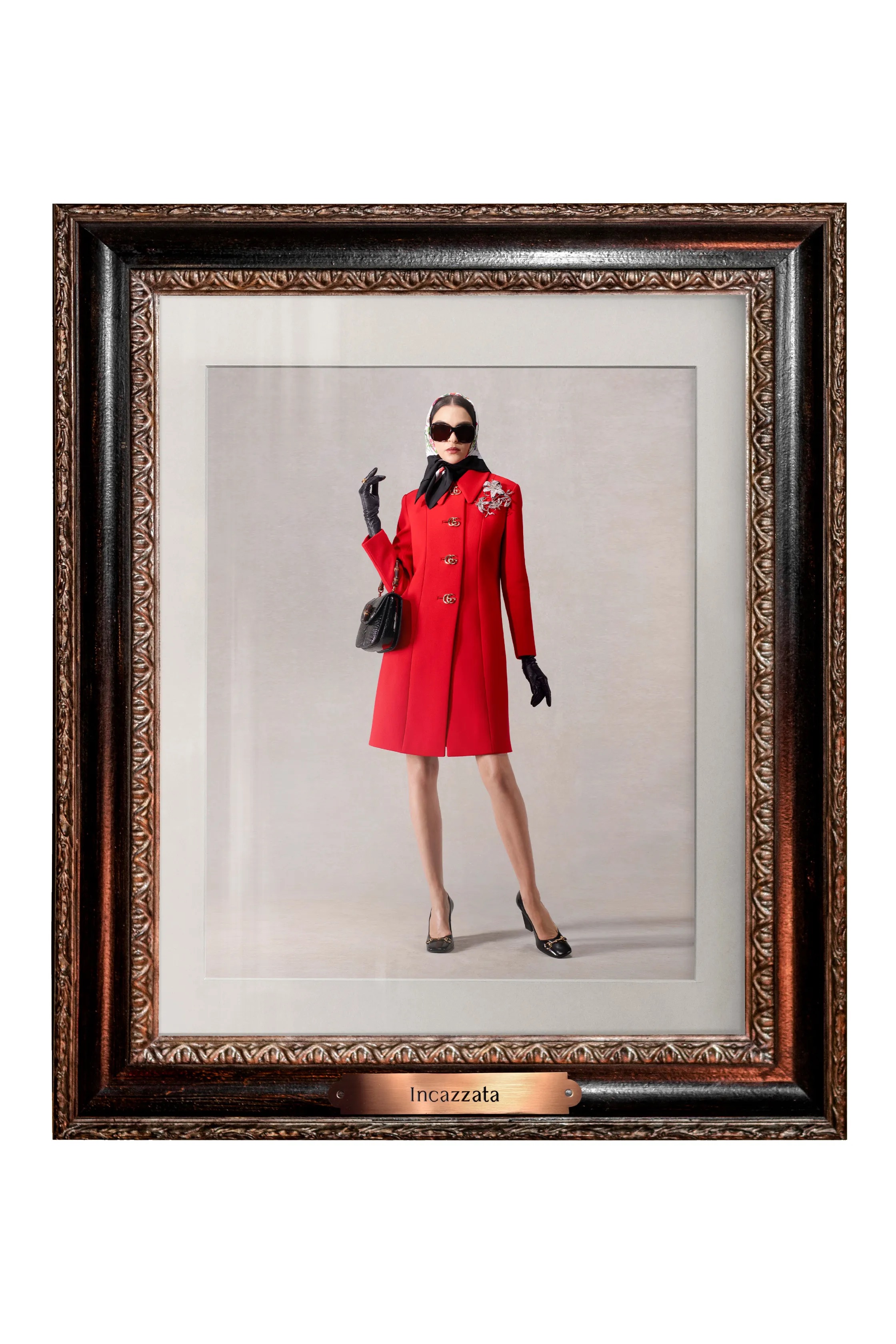
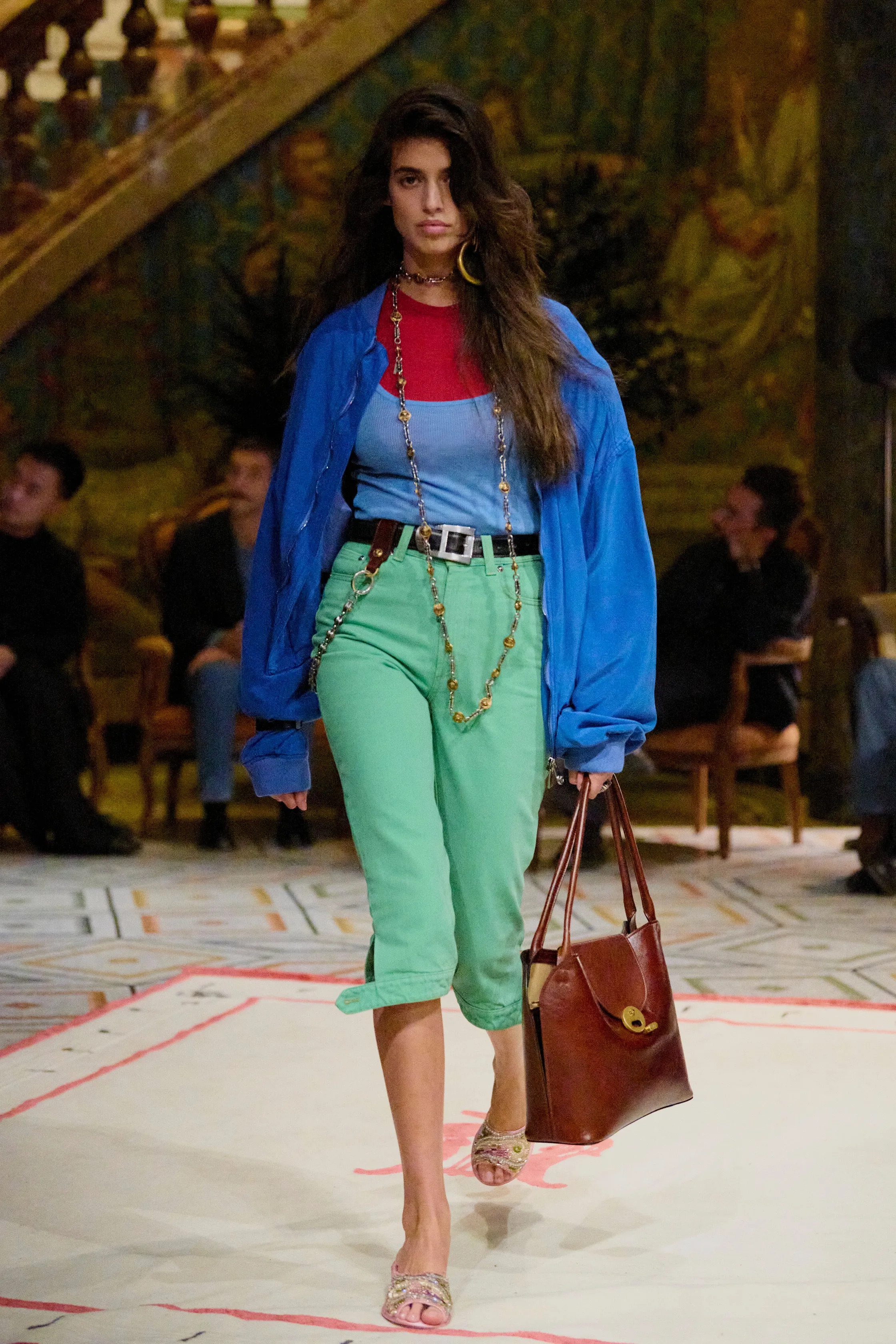
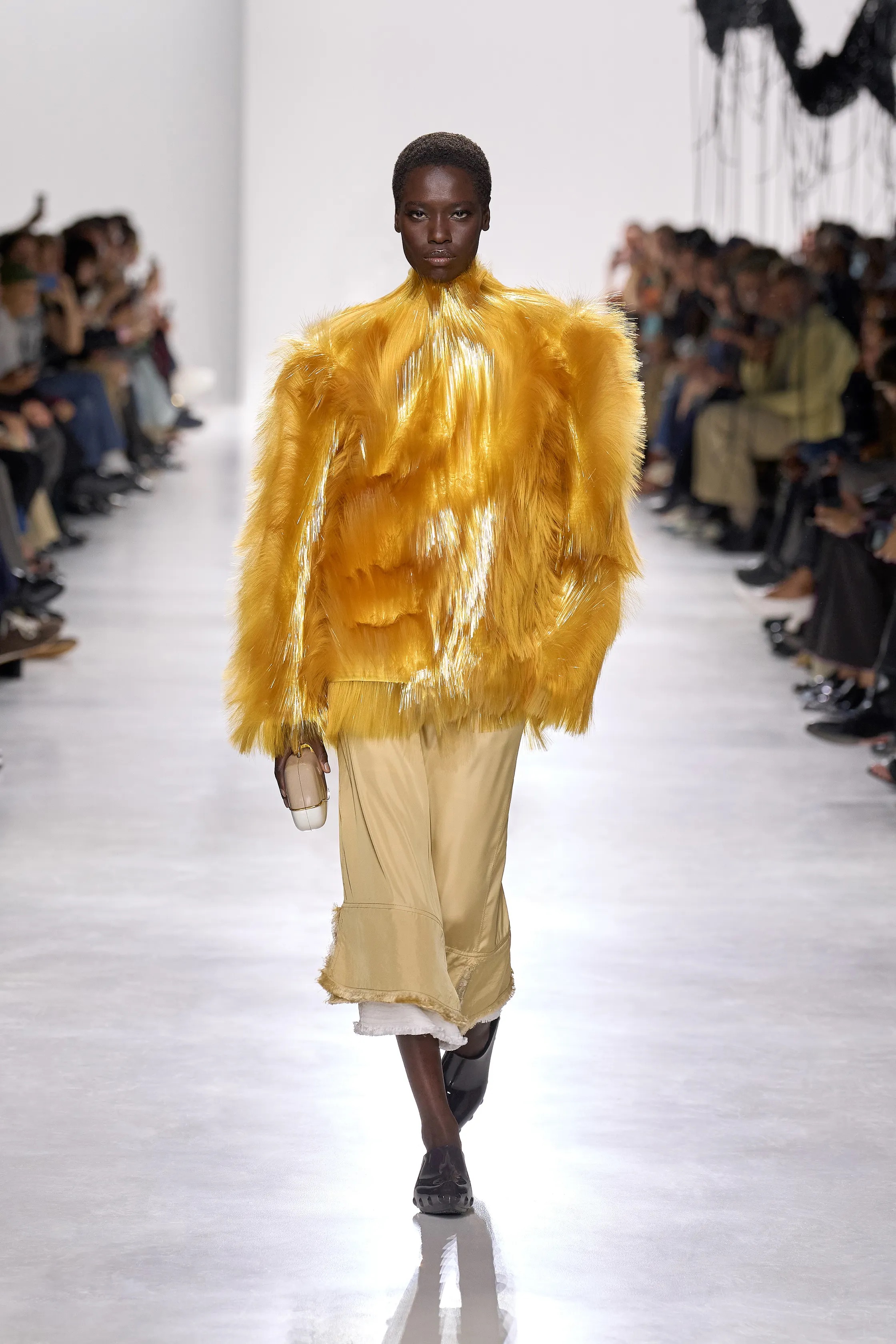
Repossi and Sterling Ruby Unite in a Fusion of Art and Haute Joaillerie
Repossi has unveiled a limited-edition collaboration with American-Dutch contemporary artist Sterling Ruby, marking a rare intersection between fine jewellery and avant-garde art.
The partnership reflects the maison’s long-standing affinity with the art world and its ongoing mission to blur the lines between craftsmanship, sculpture and conceptual design.
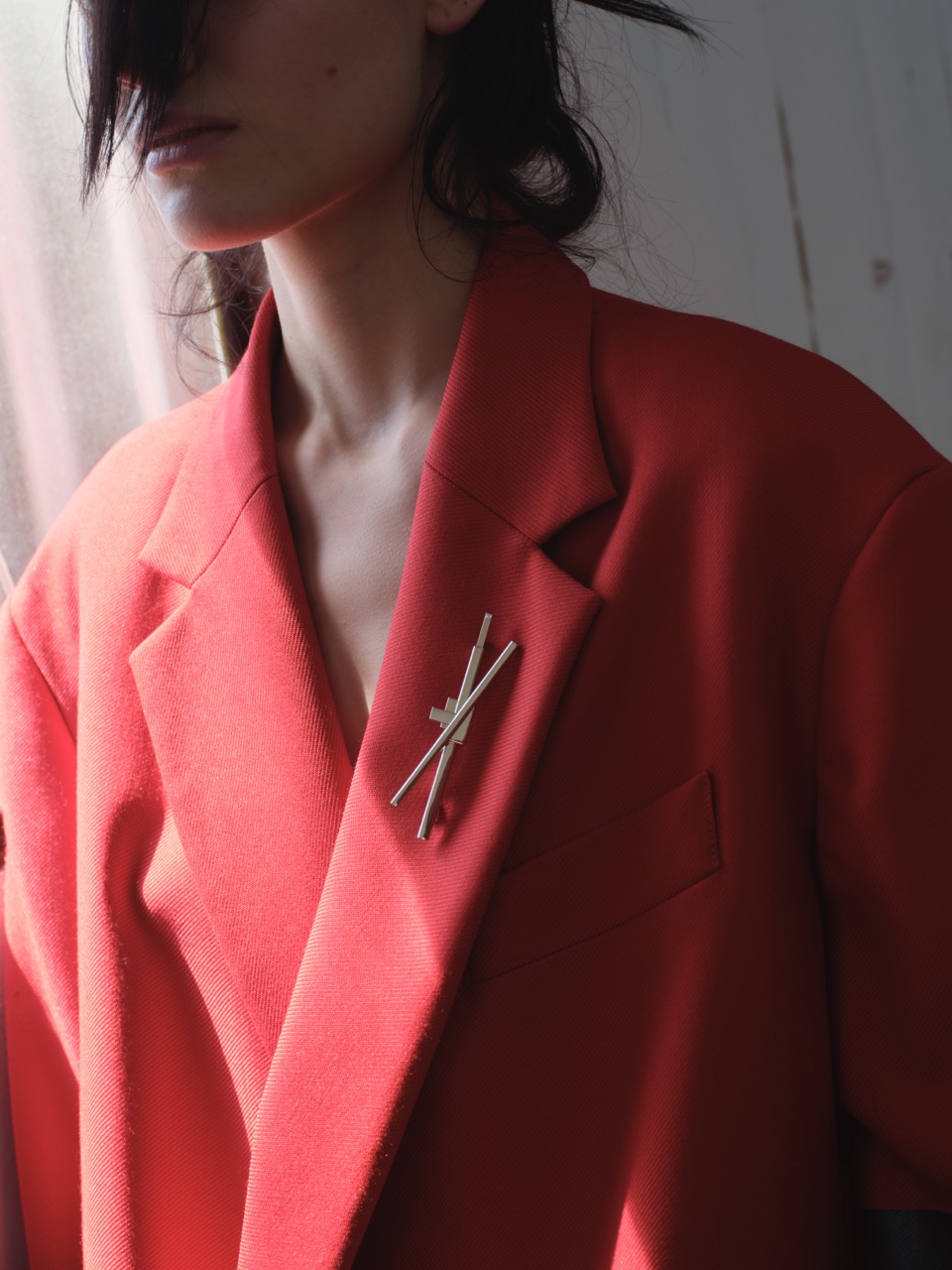
The collaboration introduces a sculptural pin that reimagines the boundaries of high jewellery. Drawing inspiration from Ruby’s “REIF” wall-sculpture series, crafted from reclaimed wood and remnants sourced from his studio and his mother’s barn in Pennsylvania, the piece translates the artist’s fascination with reconstruction and materiality into precious form.
Handcrafted in Repossi’s Place Vendôme atelier, the 18-karat light gold pin features a 2.10 mm round diamond set within a polished frame. Measuring 87 mm in height and weighing approximately 25 grams, the design combines architectural precision with technical innovation. Advanced techniques such as rapid prototyping, wax modelling and 3D resin printing were employed to realise its intricate structure, which includes a pivoting axis and chamfered angles. Despite its simplicity, the pin represents an engineering achievement requiring a rare level of artisanal mastery.

For Gaia Repossi, Creative Director of Limited Editions, the project continues the maison’s tradition of artistic dialogue, following past collaborations with figures such as Robert Mapplethorpe. “Artistic narratives and their historical milestones play a central role in my creative process,” she stated. “Working with Sterling was an in-depth exchange of ideas built on mutual respect, culminating in a shared vision for the final piece.”
Ruby described his collaboration with Gaia Repossi as an extension of his ongoing exploration of context and form. “Repossi provided an artistic space where jewellery could transcend its decorative purpose,” he noted. “The brand’s architectural minimalism and commitment to challenging tradition align closely with my own practice.”
The Repossi x Sterling Ruby pin embodies a poetic balance between sculpture and ornament, uniting conceptual artistry with the precision of haute joaillerie. Each piece is individually numbered and will be released in a limited edition, appealing to collectors of both fine art and jewellery.
repossi.com
ETRO Introduces the Pony Bag with Iris Law
ETRO has unveiled its latest creation, the Pony Bag, under the direction of Creative Director Marco De Vincenzo. The new design reflects the house’s blend of heritage and modernity, highlighting its craftsmanship and spirit of innovation.
The Pony Bag draws inspiration from the “cacciatorina”, a 17th-century Italian leather good originally used by shepherds and farmers. De Vincenzo reinterprets this classic shape through a contemporary lens, transforming it into a statement piece that embodies ETRO’s bohemian aesthetic. The bag features a softened, deconstructed silhouette with reimagined proportions and a minimal flap closure at the top. Distinctive details include a Pegasus-embossed coin clasp, a Paisley-accented carabiner, and a roller buckle referencing traditional saddlery.

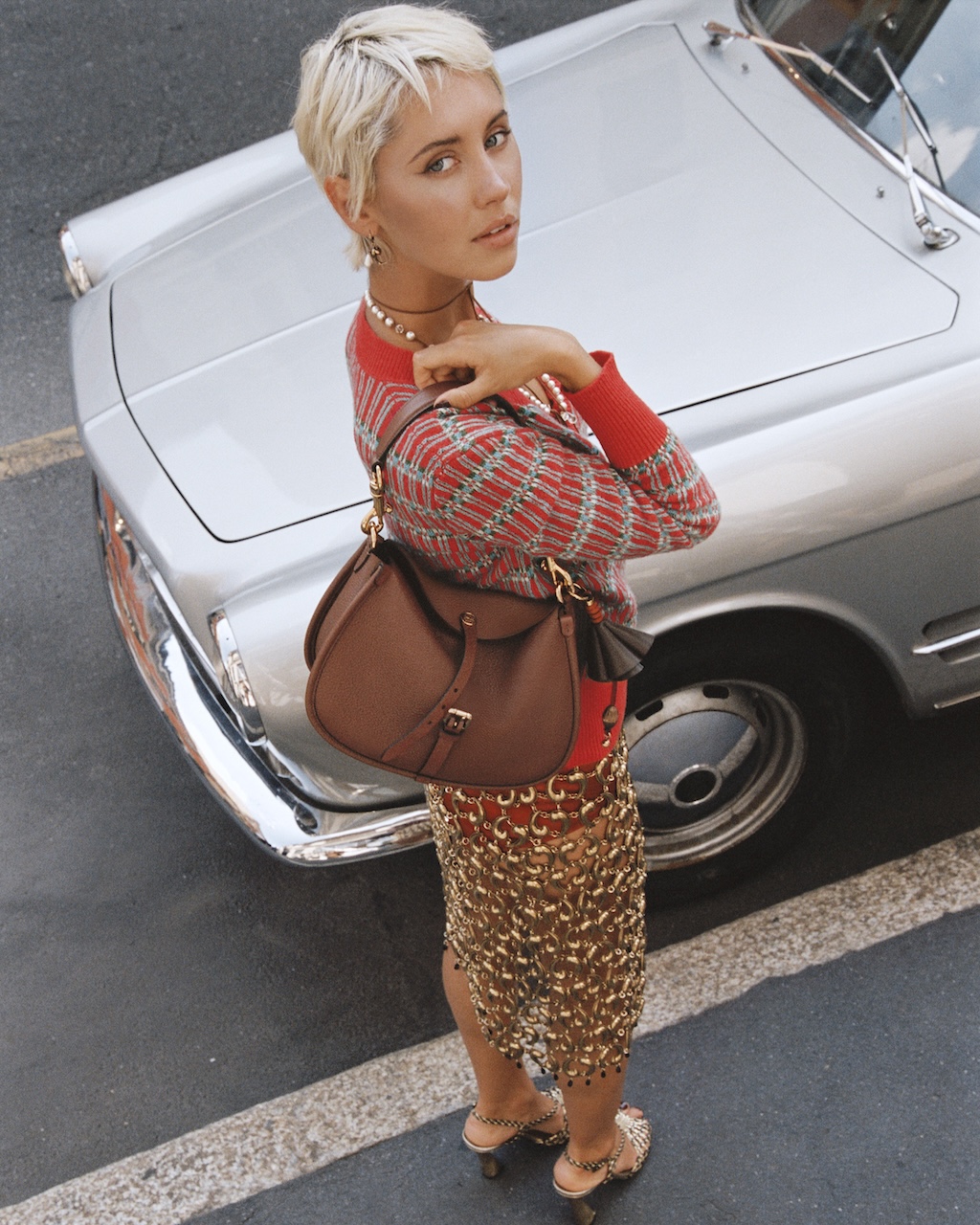
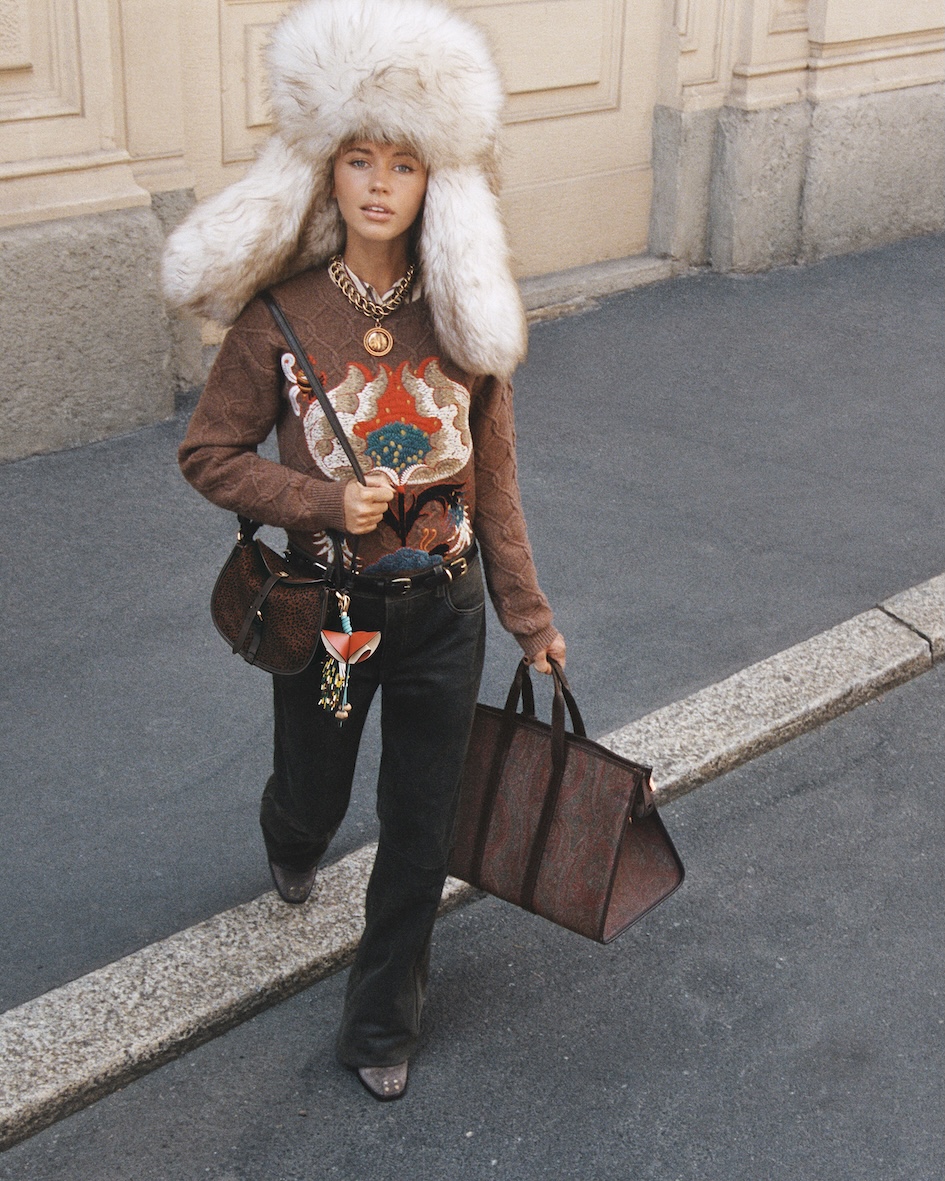
The accompanying campaign introduces the Pony Bag through a series of cinematic portraits starring British model Iris Law. Captured as she moves freely through the city, the visuals evoke a playful and spontaneous energy. The narrative unfolds through shifting perspectives, presenting a warm and nostalgic vision of individuality and self-expression.
Each frame captures the essence of ETRO’s contemporary muse, cosmopolitan, confident, and effortlessly chic. Law’s portrayal mirrors the brand’s evolving identity, balancing tradition with modern freedom. Her gestures and expressions convey the lightness and vitality at the heart of the collection.
etro.com
Versace Honours Changemakers at The Albies
Versace continued its partnership with the Clooney Foundation for Justice with a special evening in London earlier this week, held at the Natural History Museum.
The Albies, hosted annually by Amal and George Clooney, celebrates individuals making significant contributions to human rights, equality and justice around the world.
Since 2023, Versace has worked alongside the Clooney Foundation to champion global changemakers. As lead partner, the house uses its cultural influence to highlight those advancing social justice and equality. The event brought together international figures from across human rights, business, entertainment, fashion and technology, united in recognition of those driving progress in their communities.

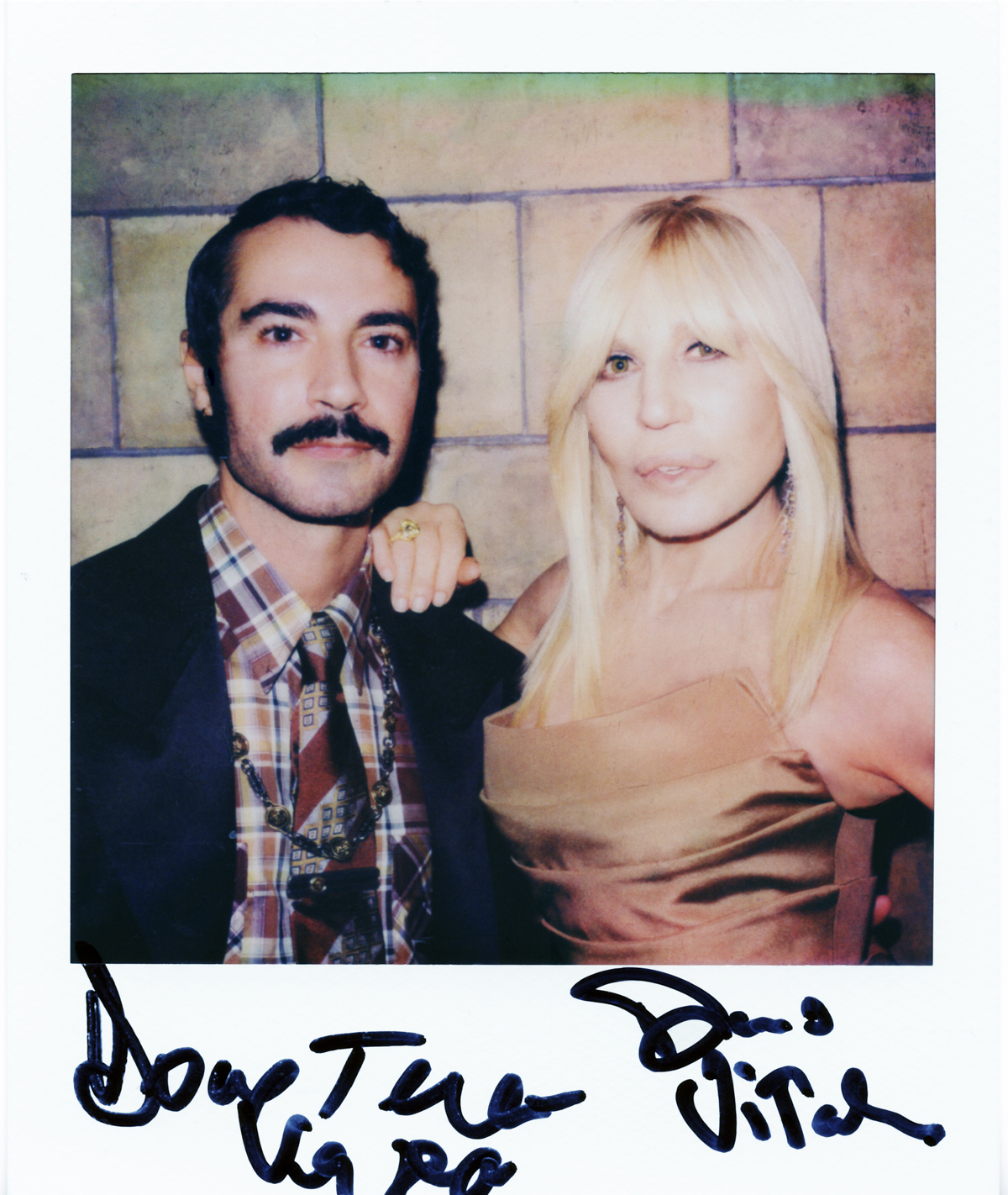
Dario Vitale and Donatella Versace by Andrew Tess
This year’s honourees included Fatou Baldeh, the Gambian women’s rights activist and founder of Women in Liberation and Leadership (WILL). A survivor of female genital mutilation, Baldeh was instrumental in opposing efforts to overturn The Gambia’s ban on the practice. Guatemalan journalist Jose Rubén Zamora was recognised for his three-decade career exposing political corruption, while American editor Marty Baron was honoured for his defence of a free press during his leadership of The Boston Globe and The Washington Post.
Melinda French Gates received recognition for over 25 years of advocacy for women’s health and gender equality, and for her work leading Pivotal, an organisation advancing women’s power and influence globally. The Ford Foundation’s president, Darren Walker, was presented with The Albies’ lifetime achievement award for his decades of philanthropic work, including creating the first billion-dollar social bond in US capital markets to support non-profit organisations during the COVID-19 pandemic.
Among the guests supporting the evening were Ramla Ali, Baria Alamuddin, Luna Carmoon, Bianca Jagger, Joseph Quinn, Russell Tovey, Graham Norton, Shailene Woodley, and Amal Clooney. They were joined by Versace’s Chief Creative Officer Dario Vitale, CEO Emmanuel Gintzburger, and Chief Brand Ambassador Donatella Versace.
Past Albies recipients have included labour leader Dolores Huerta, journalist Maria Ressa, Congolese doctor Denis Mukwege, activist Nadia Murad, and the Syrian Center for Media and Freedom of Expression.
cfj.org/the-albies
Timeless Art Deco with Van Cleef & Arpels Opens in Tokyo
Van Cleef & Arpels celebrates the centenary of the 1925 International Exhibition of Modern Decorative and Industrial Arts with Timeless Art Deco with Van Cleef & Arpels High Jewelry, a major exhibition at the Tokyo Metropolitan Teien Art Museum.
Currently open and running until the 18th January 2026, the showcase explores the Maison’s enduring relationship with the Art Deco movement and its evolution of craftsmanship across decades.
The exhibition brings together 250 creations from Van Cleef & Arpels’ patrimonial and private collections, alongside around 60 archival documents. Jewellery, timepieces and precious objects crafted between the 1910s and 1930s are displayed in the museum’s main building, while the annex highlights the Maison’s signature savoir-faire including gold work, transformability, enamel and gemstone sculpting.
Founded in Paris in 1906 following the marriage of Alfred Van Cleef and Estelle Arpels, the Maison is known for its poetic design language and technical innovation. Its Grand Prize at the 1925 Paris exhibition, awarded for pieces such as the Entwined Flowers, Red and White Roses bracelet, established Van Cleef & Arpels as a key figure in Art Deco jewellery design. This floral piece, now displayed in Tokyo, reflects the stylised natural forms that defined the period.
The exhibition is structured across four chapters. “Emergence of an Art Deco Aesthetic” examines early works, including the 1924 Entwined Flowers bracelet and Rose brooch. “Evolution towards a Singular Style” explores the Maison’s sculptural use of diamonds and platinum in pieces such as a 1929 collaret once owned by Princess Faiza of Egypt. “Modernism and Functionality” features emblematic innovations including the Camellia Minaudière (1938) and the Cadenas wristwatch (1943), designed for discretion and elegance. The final chapter, “Garden of Savoir-Faire”, presents the brand’s technical mastery through pieces like the Chrysanthemum clip (1937) and the transformable Chantilly Zip necklace (1952).
The venue itself, the former residence of Prince Asaka built in 1933, is one of Japan’s few surviving examples of original Art Deco architecture. Designed with contributions from French artists such as Henri Rapin and René Lalique, it offers a fitting setting for this retrospective.
Organised by the Tokyo Metropolitan Foundation for History and Culture and Nikkei Inc., with special cooperation from Van Cleef & Arpels, the exhibition underscores the Maison’s century-long dialogue between Parisian artistry and global design heritage.
art.nikkei.com/timeless-art-deco
Zimmermann Presents A Celebration of Creative Kinship For Spring 2026
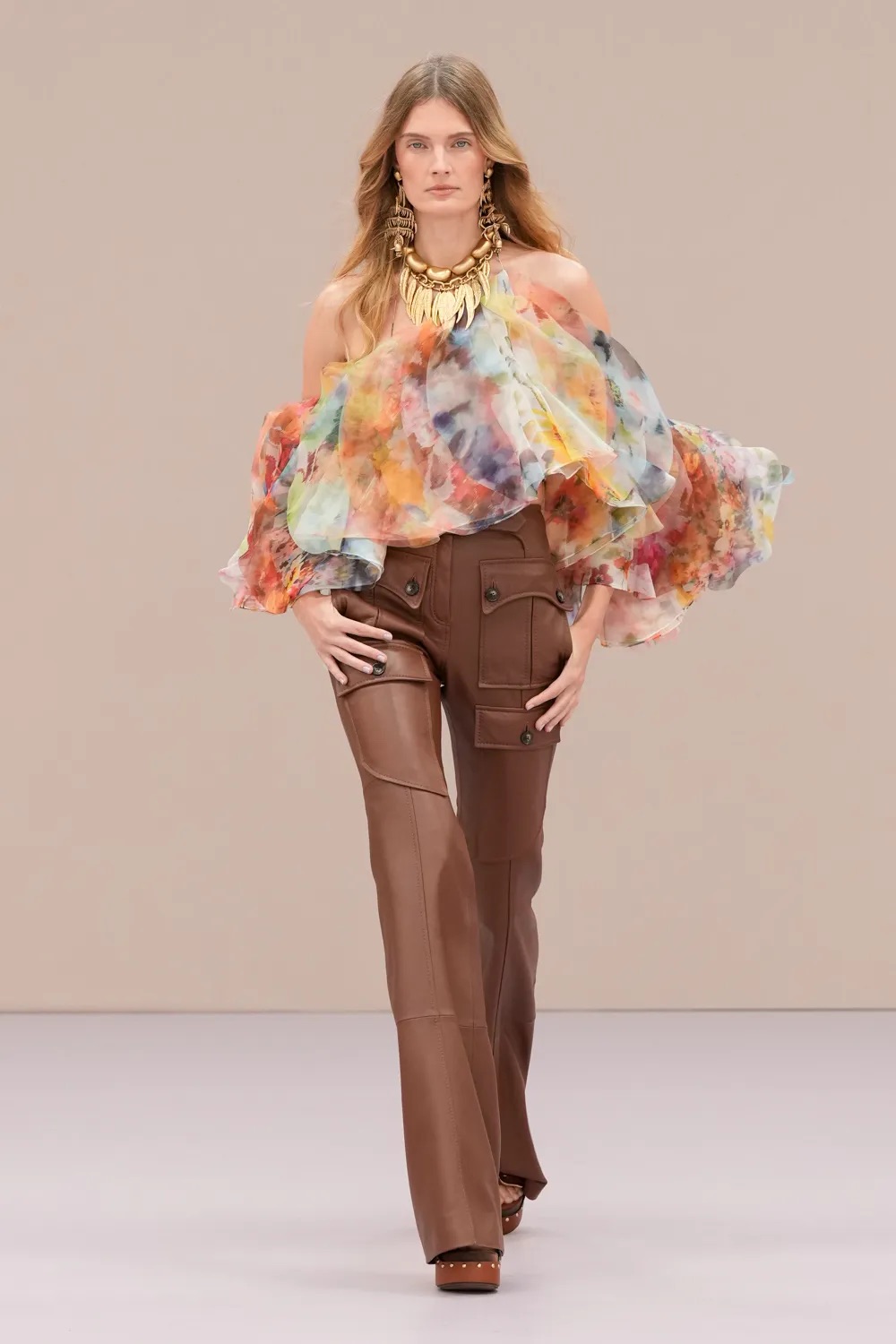
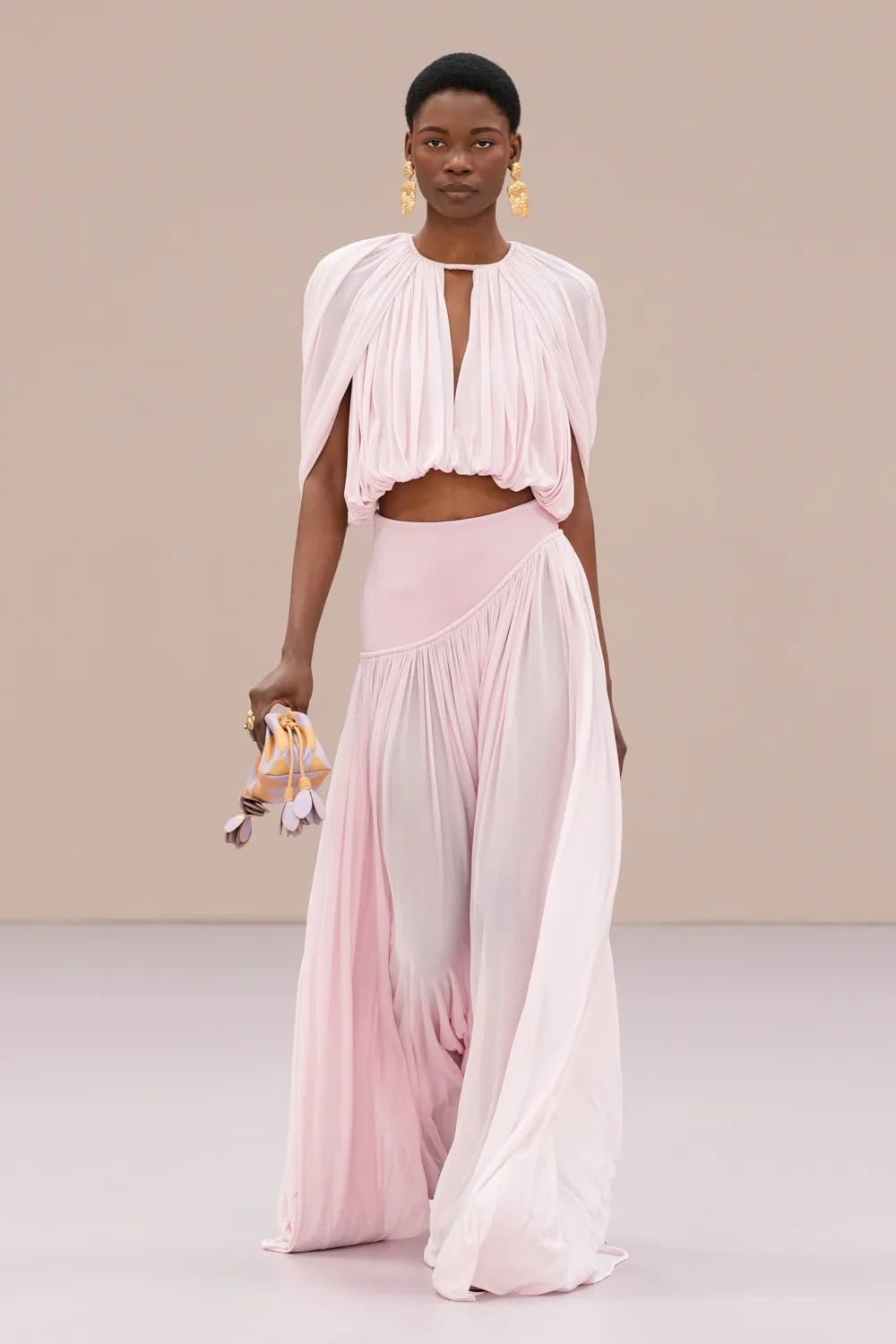
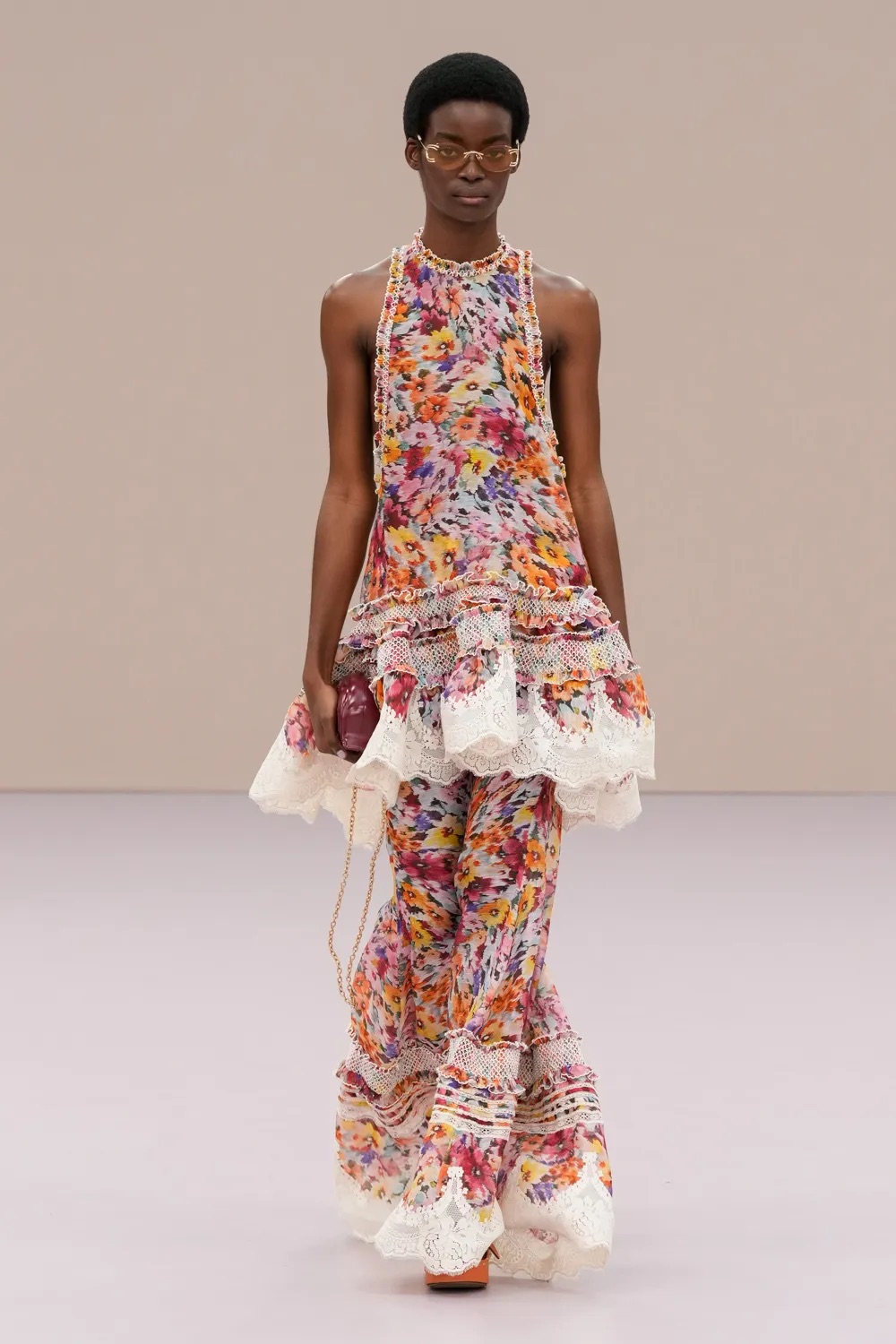
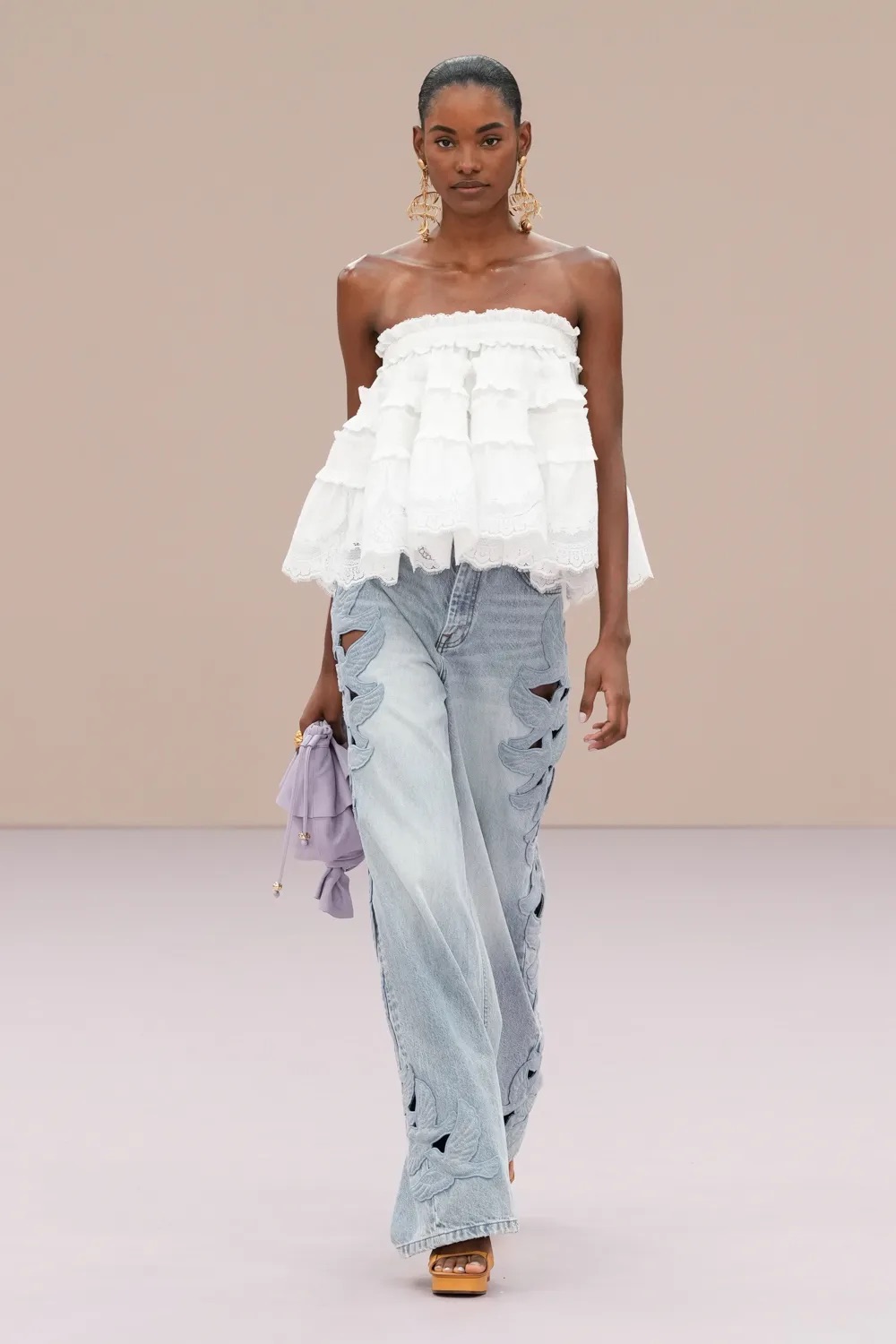
Zimmermann’s Spring 2026 Ready-to-Wear collection, titled Kindred Spirit, explores the power of artistic collaboration and individuality.
Taking inspiration from the creative collectives of the 1970s, particularly those based in Sydney’s Lavender Bay, the collection pays tribute to a generation of artists who broke away from convention to express themselves freely.

The collection captures this energy through exuberant silhouettes, vibrant colourways and a confident mix of textures and prints. At its core is the idea of chosen creative families, groups of artists bound by shared vision and mutual support. Each look is designed to embody self-expression, personality and freedom, reflecting a modern sense of joy and individuality.
Colour plays a central role in Kindred Spirit, with psychedelic florals and soft tie-dyes reimagined in bold scales that evoke movement and depth. Zimmermann’s mastery of cut and proportion continues in cotton drill silhouettes, utility-inspired jackets that flare from the waist, and super-flared trousers. The brand’s signature romanticism remains evident in billowing sleeves crafted from floral organza and crisp ivory poplin, as well as the introduction of “super-fluff” — an intricate textural technique made from layers of ruched organza cut on the bias and supported by crinoline to form tiered gowns.
The show opened with a dramatic cascading silhouette that emphasised the label’s hallmark volume and craftsmanship. Throughout the collection, painter’s overalls in cotton twill and tan leather, wool suiting in 1970s hues, and strapless tie-dye dresses offered a playful reinterpretation of retro style. New design themes included braided décolletages, drop-hip harem pants and striking lace in vibrant tones.
Denim continued as a focal point for the brand’s technical innovation, with embroidered and hand-cut bird motifs appearing across midi dresses and paneled jeans. Accessories channelled the decade’s eclectic spirit: wooden platforms, raffia slides wrapped in knotted florals, patchwork drawstring bags and oversized shield sunglasses completed the looks.
Zimmermann.com
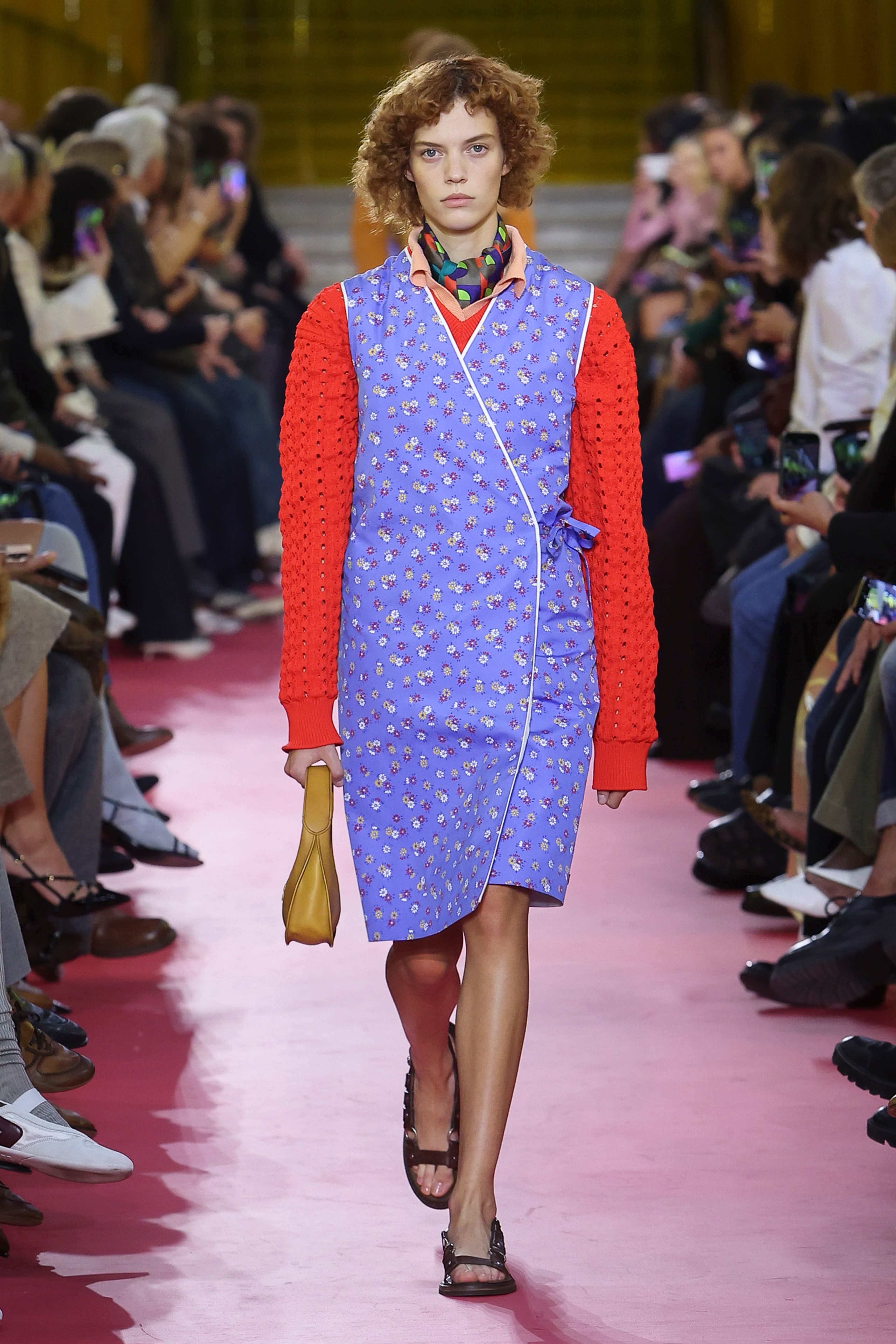
Miu Miu Champions “Women’s” Work For Spring/Summer 2026
Miuccia Prada’s Spring/Summer 2026 collection for Miu Miu examines the meaning and visibility of women’s work.
Entitled At Work, the collection explores the significance, challenges and experiences that define women’s labour, confronting its historical invisibility and revaluing its social and aesthetic importance.
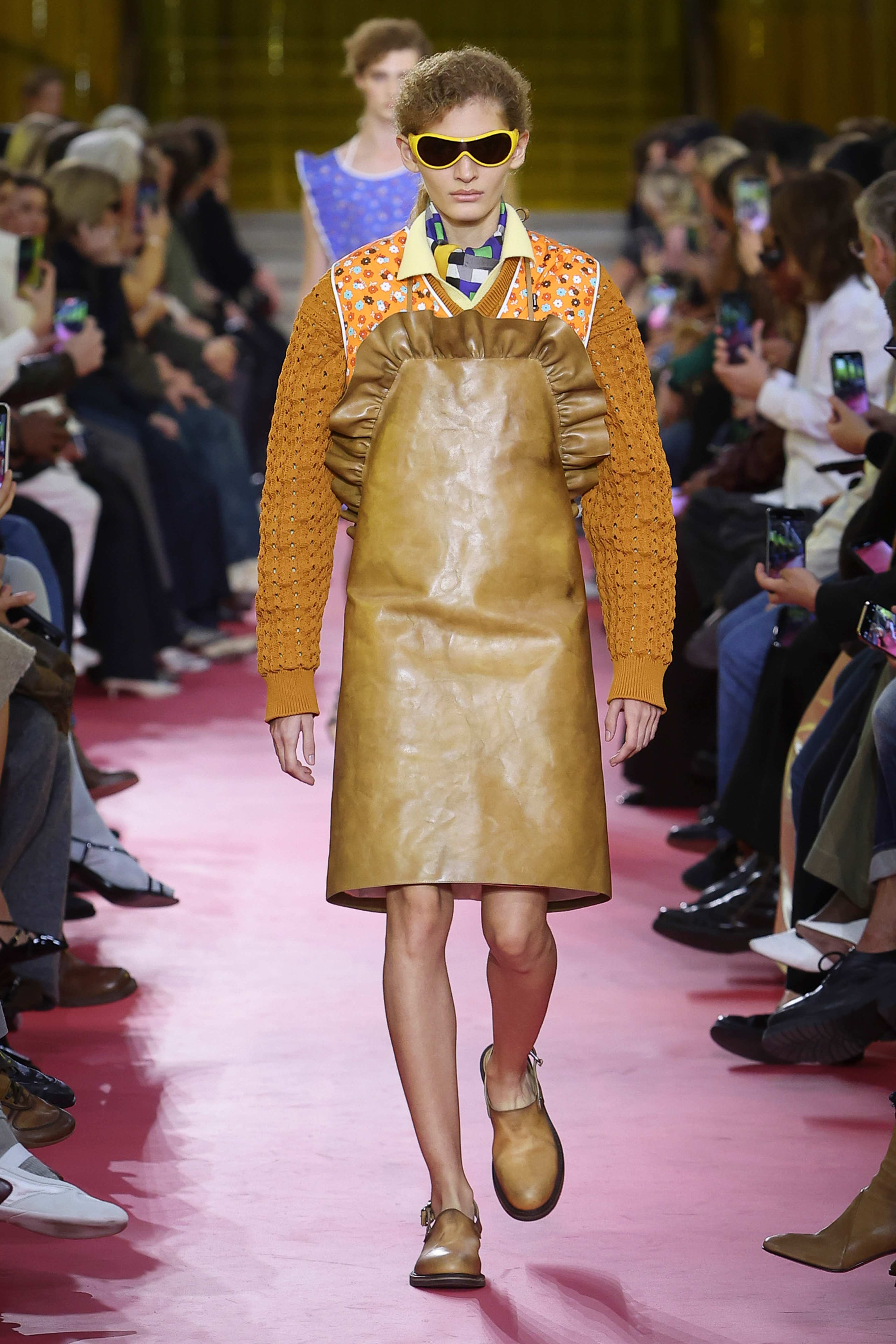
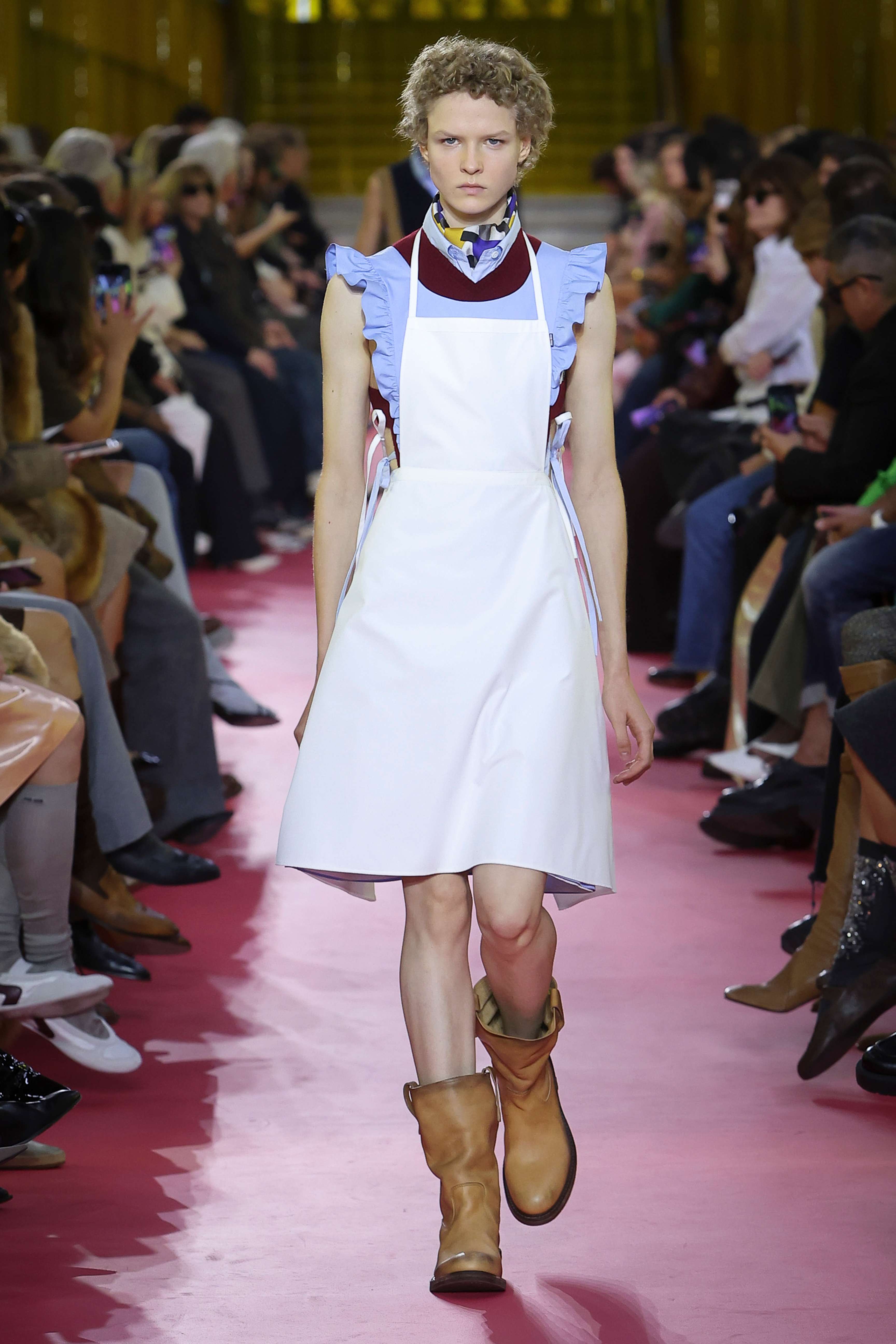
The collection treats work not only as a necessity but as a symbol of care, love and independence. It considers clothing as both functional and expressive, reflecting agency and self-determination. Central to the theme is the apron, viewed as a universal emblem of work. Traditionally associated with domesticity and service, it is reframed here as an object of dignity and respect. Its dual nature, both utilitarian and decorative, embodies the contradictions of women’s labour, which spans professional, domestic and emotional domains.
Throughout the collection, Miuccia Prada reflects on how garments evolve in meaning depending on context and material. The apron becomes a metaphor for the multiple layers of women’s identity, bridging physical work and caregiving, industry and artistry. Each piece gestures to the varied and often unseen contributions that women make to both private and public spheres.
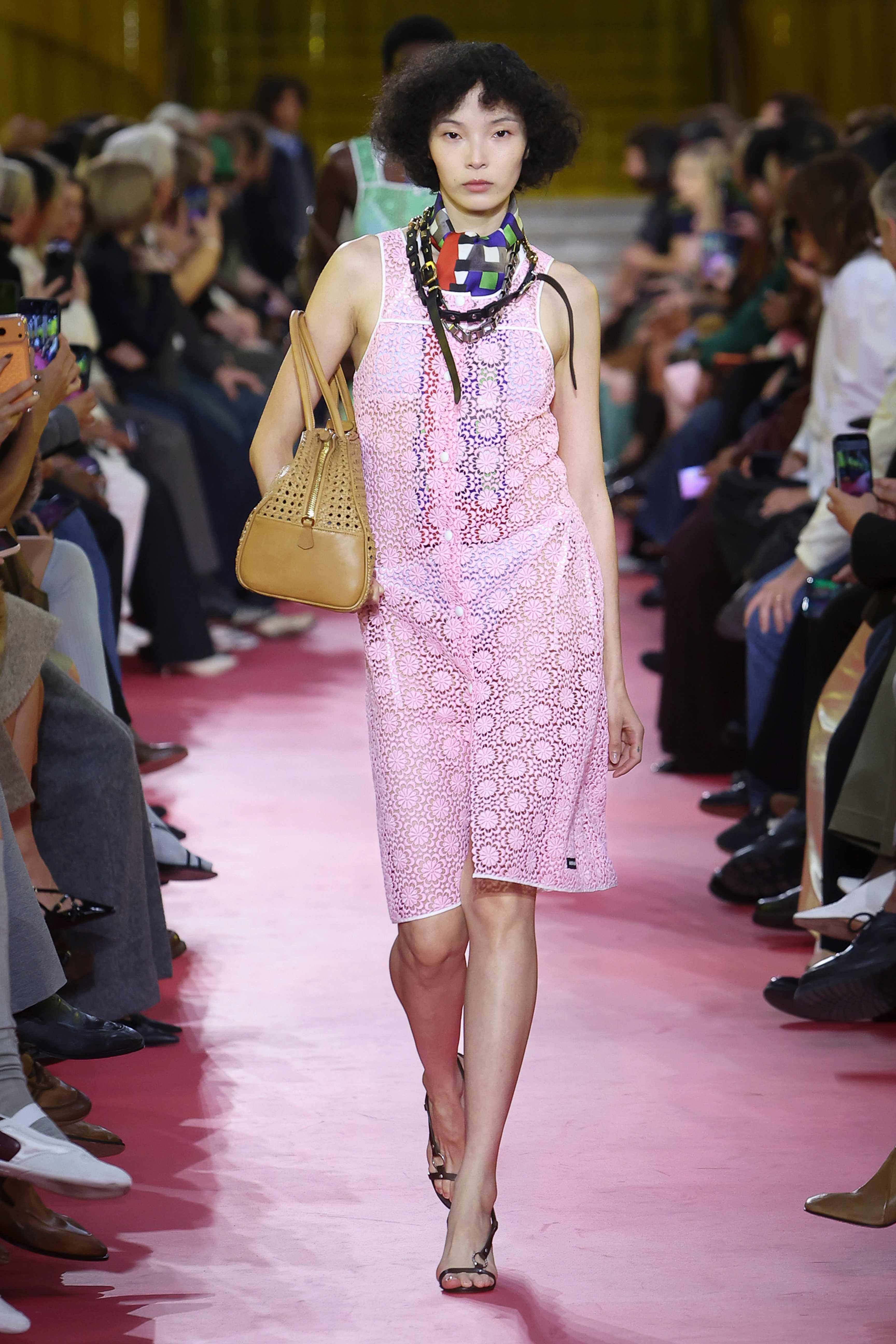
The visual and material language of the collection draws inspiration from documentary photography by Dorothea Lange and Helga Paris, whose work chronicled the realities of women in factory and everyday settings. Through this lens, the collection reflects a truthfulness to labour and to the lived experience of clothes. Industrial materials such as drill cotton, leather, raw canvas and silk cloque appear alongside lace and embroidery, highlighting the tension between toughness and delicacy.
Shoes and handbags reinforce these contrasts, designed in muscular leathers that evoke both utility and strength. Ruffles, traditionally feminine, are reimagined with a sense of industrial resilience. The interplay between hardness and softness underscores the collection’s broader interrogation of social expectations and the definitions of femininity.
The show’s scenography at the Palais d’Iéna complements this vision. The historic hypostyle space, itself a site of work, was transformed into an abstracted representation of domestic labour. Fields of Formica tables in contrasting tones punctuated the setting, translating the theme of everyday work into architectural form.
Through At Work, Miu Miu presents a study in function, femininity and purpose, offering a meditation on what it means to make, to labour and to live within the fabric of work itself.
miumiu.com
Alaïa Presents A Timeless Winter–Spring 2026 Collection In Paris
Alaïa has unveiled its Winter–Spring 2026 collection, a continuation of the house’s exploration of purity, intimacy and radical beauty.
The presentation reinforces the brand’s dedication to continuity, with each collection conceived as part of an evolving body of work that builds upon its predecessors. This principle echoes Azzedine Alaïa’s original philosophy of the intemporelle—timelessness through consistency.

Creative Director Pieter Mulier described the collection as “reduced, sculptural and precise,” yet also marked by extremes. Saturated colours and bold silhouettes define the season, balancing simplicity with intensity. Every element has been stripped back to essential materials, cotton, python, leather and silk, embodying both luxury and restraint.
Mulier revisited the notion of the uniform, taking inspiration from Azzedine Alaïa’s own workwear. These designs merge function and pragmatism with the house’s refined craftsmanship, creating what he refers to as “clothes as machines for living.” The collection bridges practicality and artistry, maintaining Alaïa’s tradition of garments that sculpt and move with the body.
Craftsmanship remains central to the house’s narrative. The show introduced inventive techniques such as macramé constructions that mimic feathers and pearls, adding texture and movement while celebrating handwork. These details reflect Mulier’s fascination with tension, between genders, between excess and restraint, and between the past and the future. The tension was mirrored in the show’s staging, where models appeared between filmed and mirrored reflections of themselves.
This interplay extended into the garments. Some pieces were tightly structured, drawn around the body and suspended from unexpected points to create ergonomic silhouettes. Others were left open or fragmented, revealing glimpses of skin and suggesting motion through the disjointed flow of fringes and fabric. The result was a series of looks that seemed to shift and fracture as the models moved, evoking what Mulier described simply as “clothes that cry.”
The Winter–Spring 2026 collection underscores Alaïa’s commitment to its founding principles: the celebration of the body, precision in design and the elevation of craft to art. It is a study in contrasts—of restraint and passion, simplicity and extravagance, affirming the house’s place as one of fashion’s most intellectually and aesthetically rigorous voices.
maison-alaia.com
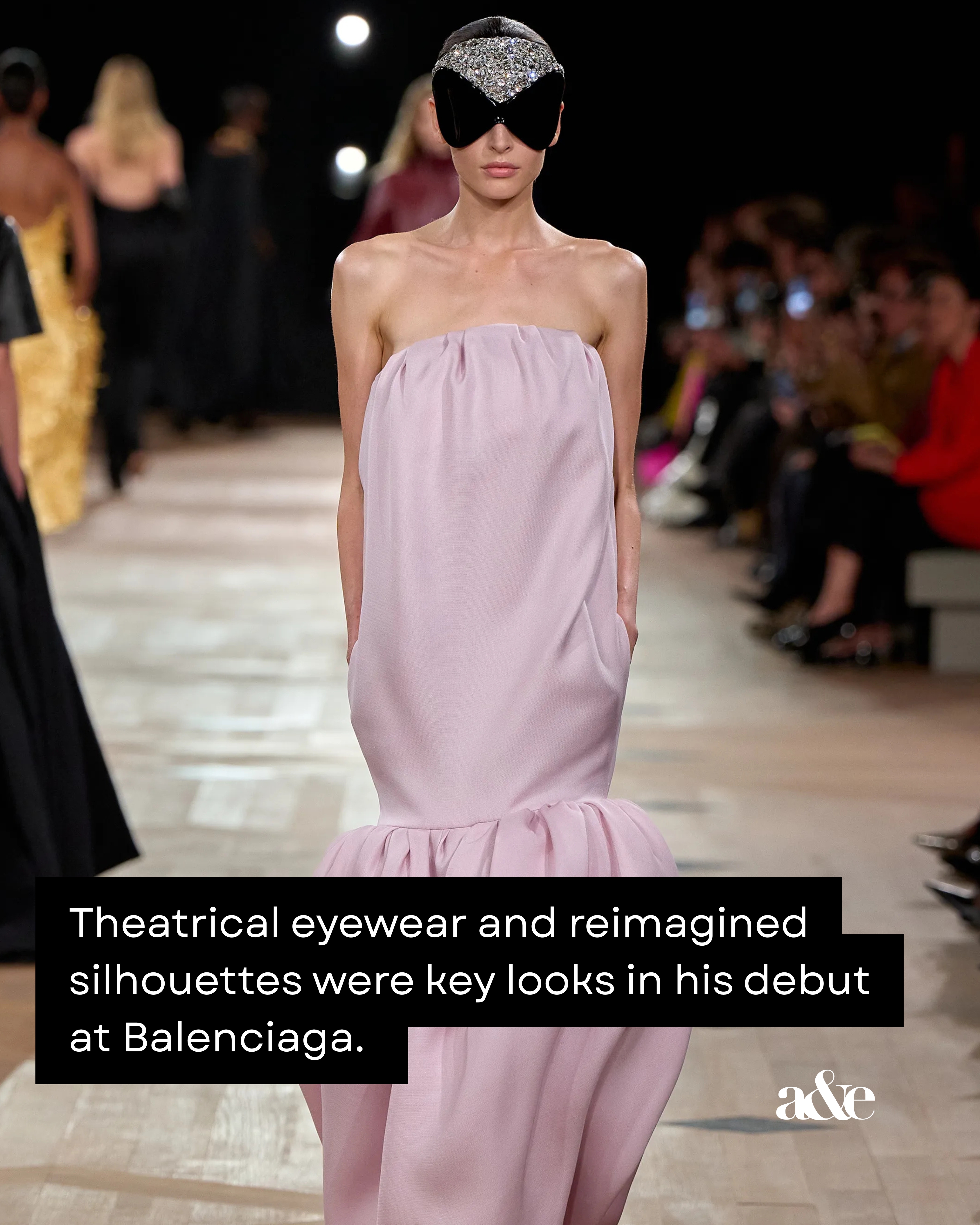
Five Key Moments From Pierpaolo Piccioli’s Debut SS26 Balenciaga Show
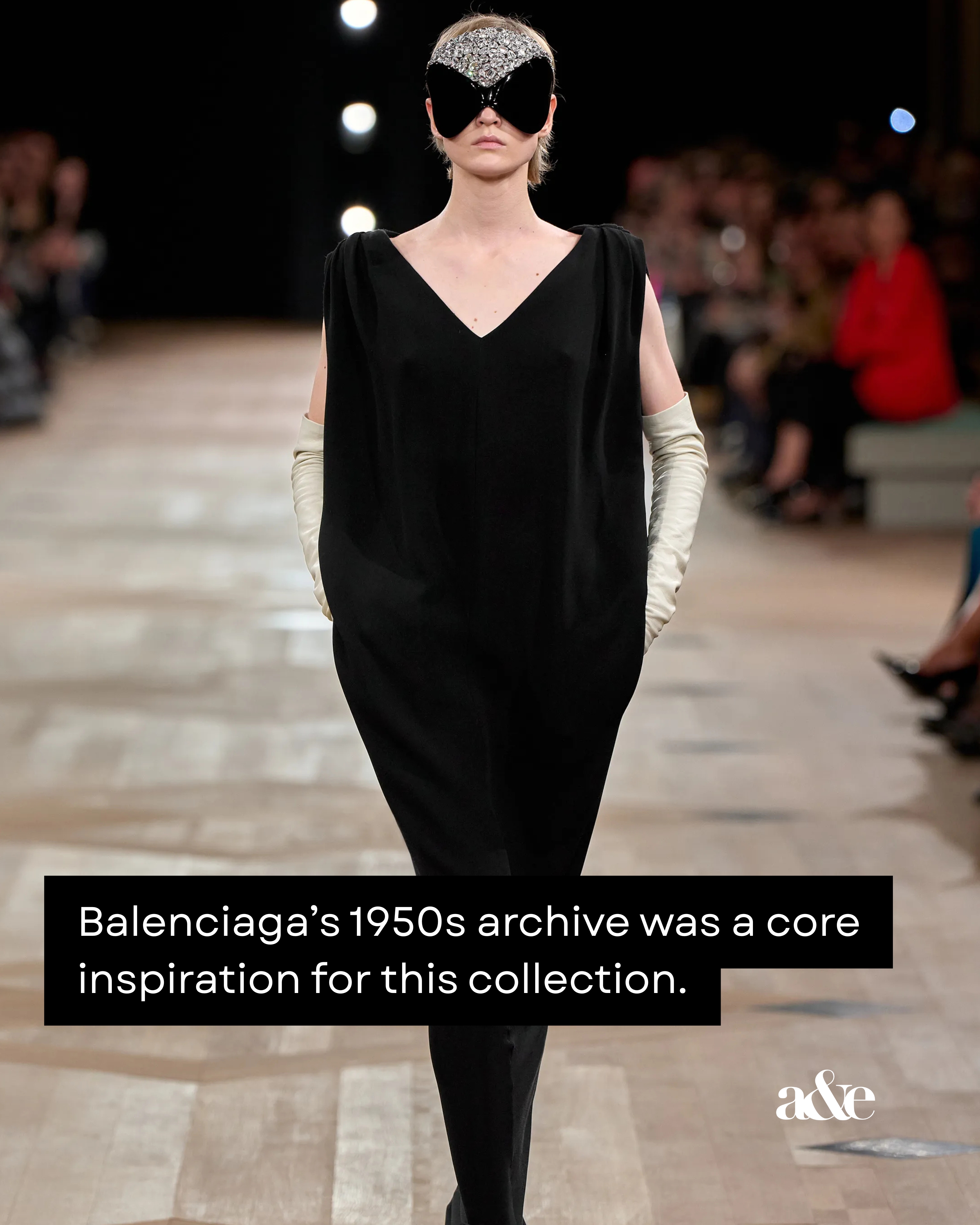
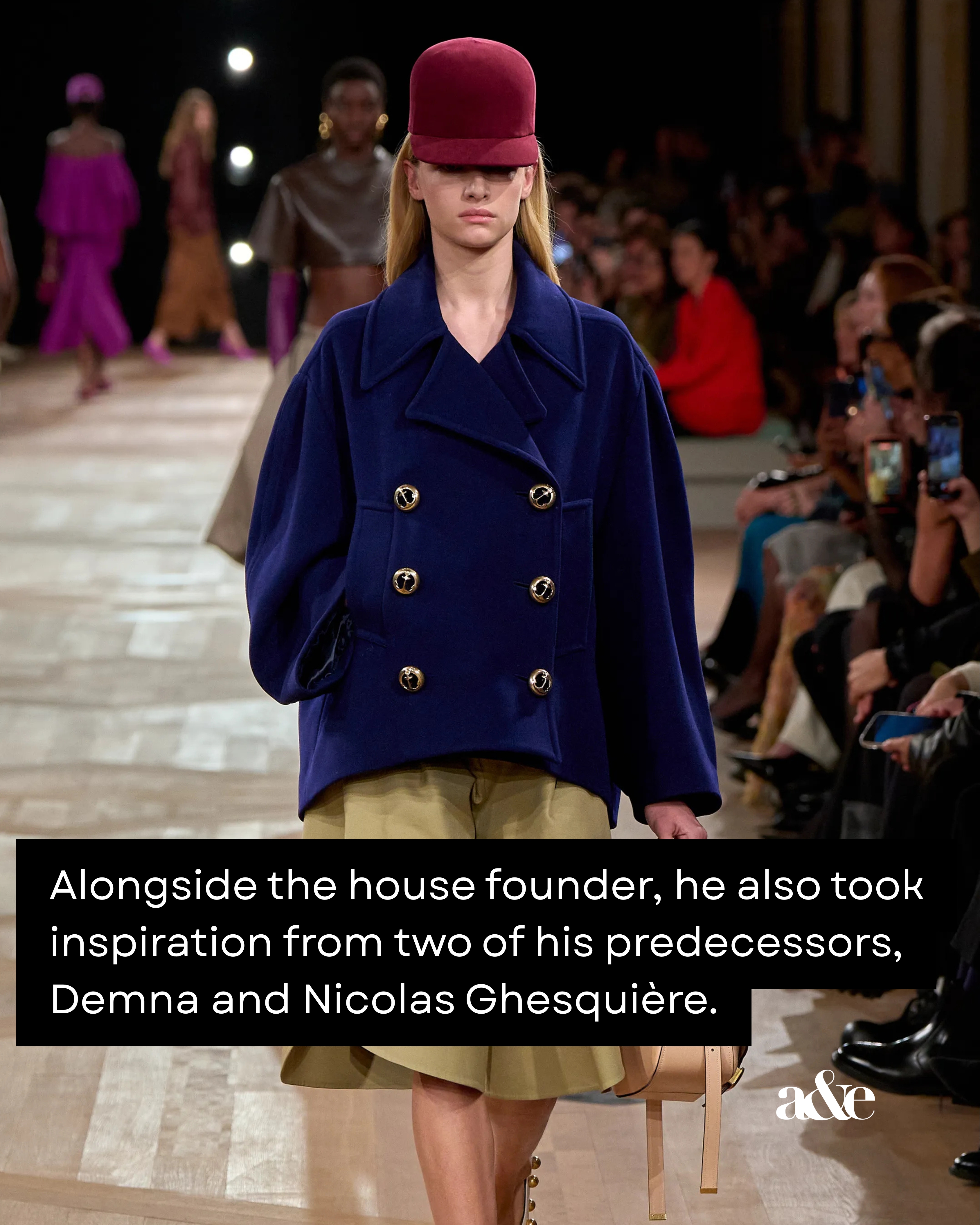
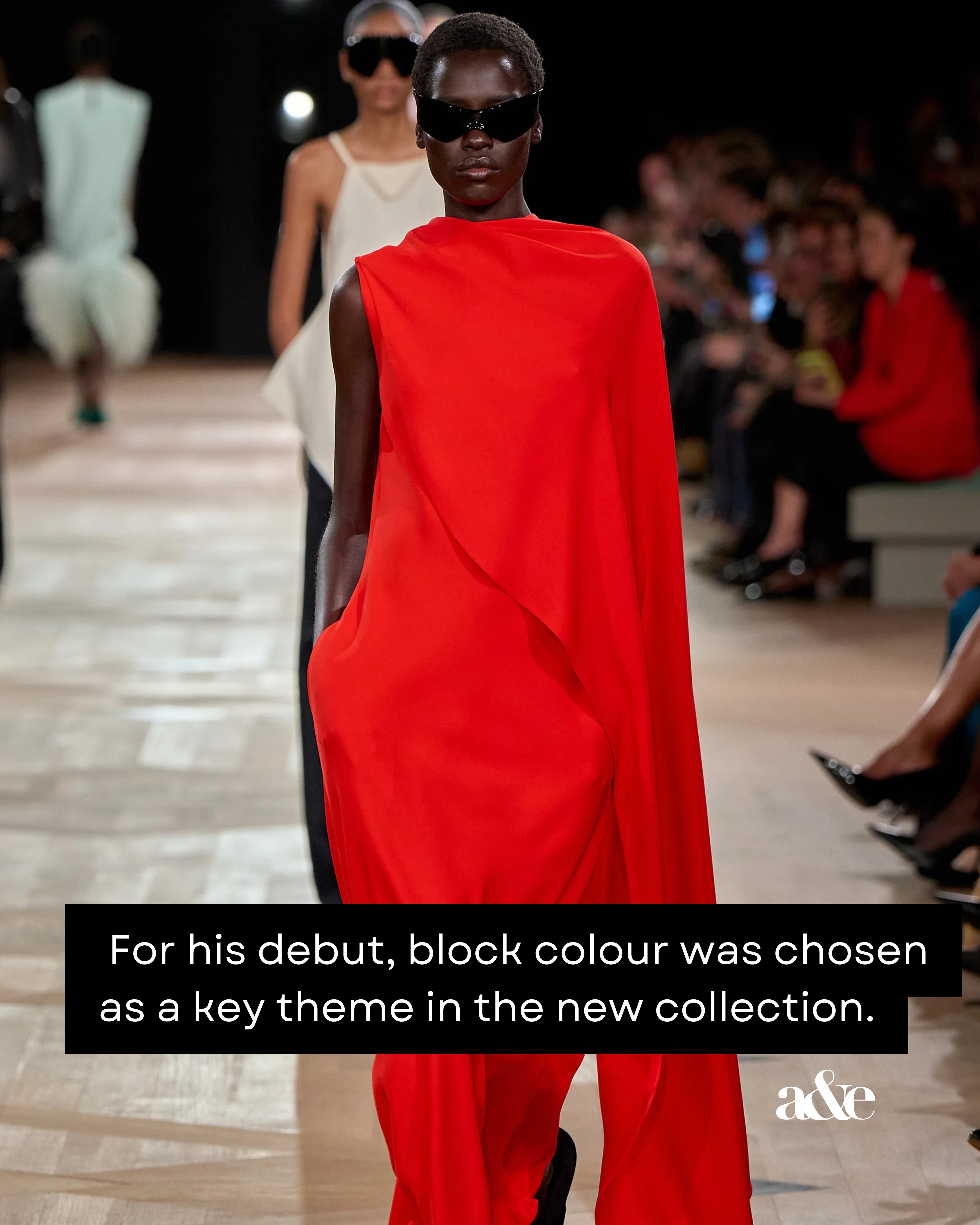
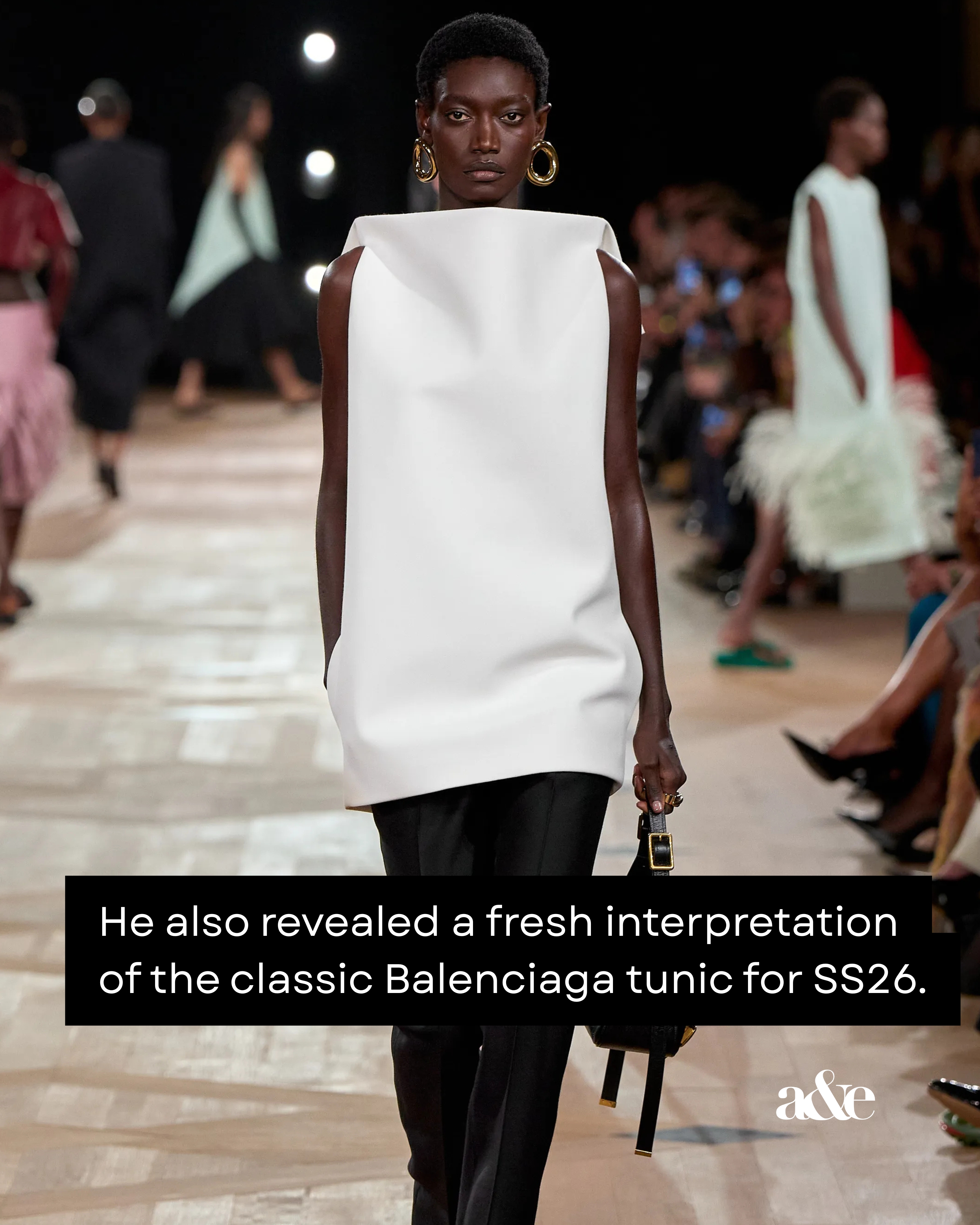
Pierpaolo Piccioli made his highly anticipated debut at Balenciaga this weekend. Scroll down for five key moments from the show.
1950s aesthetic
The house archives
Block colour rules
Tunic revival
Iconic eyewear
balenciaga.com
Hermès Goes “Free Rein” For Spring–Summer 2026
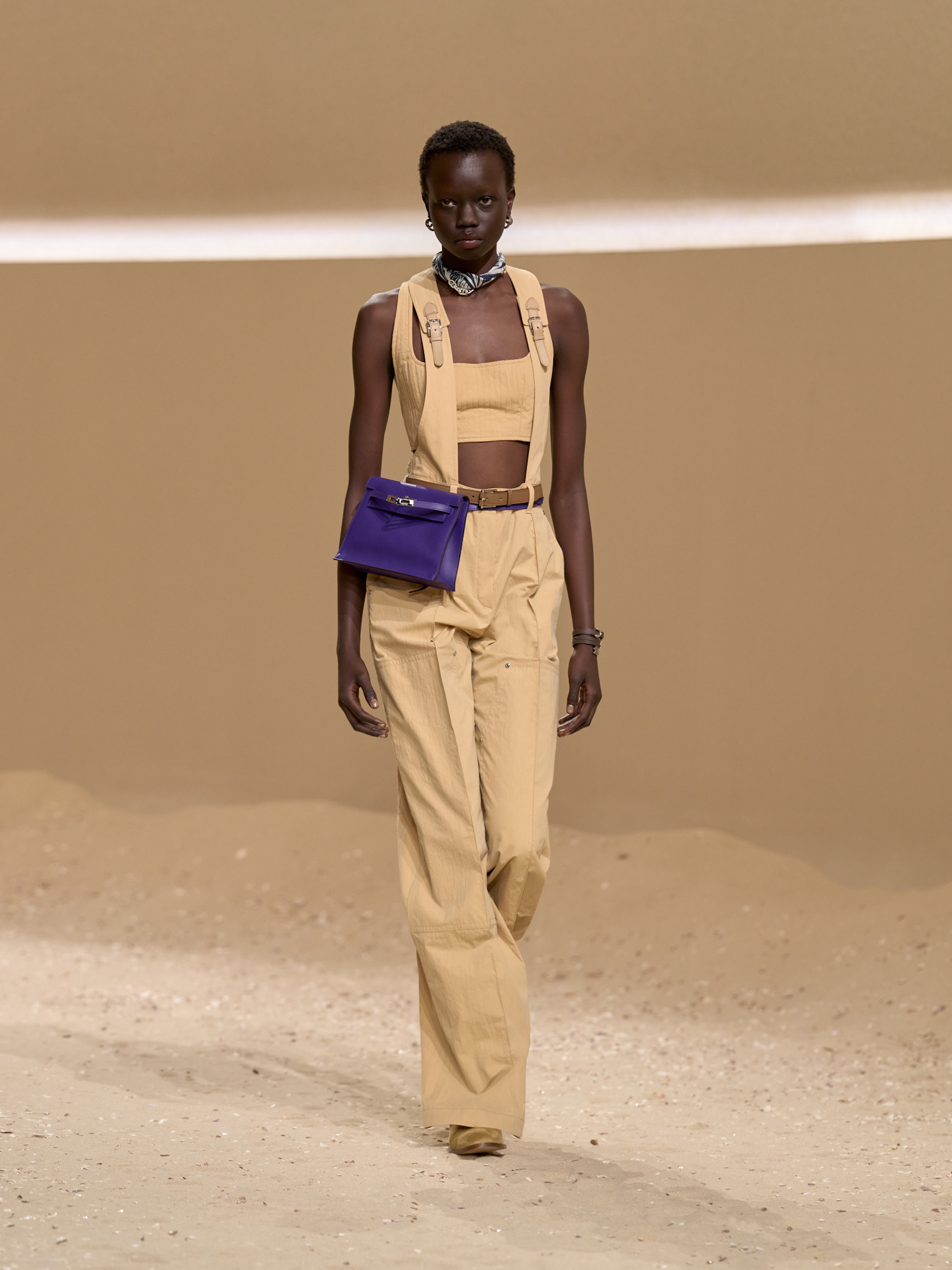
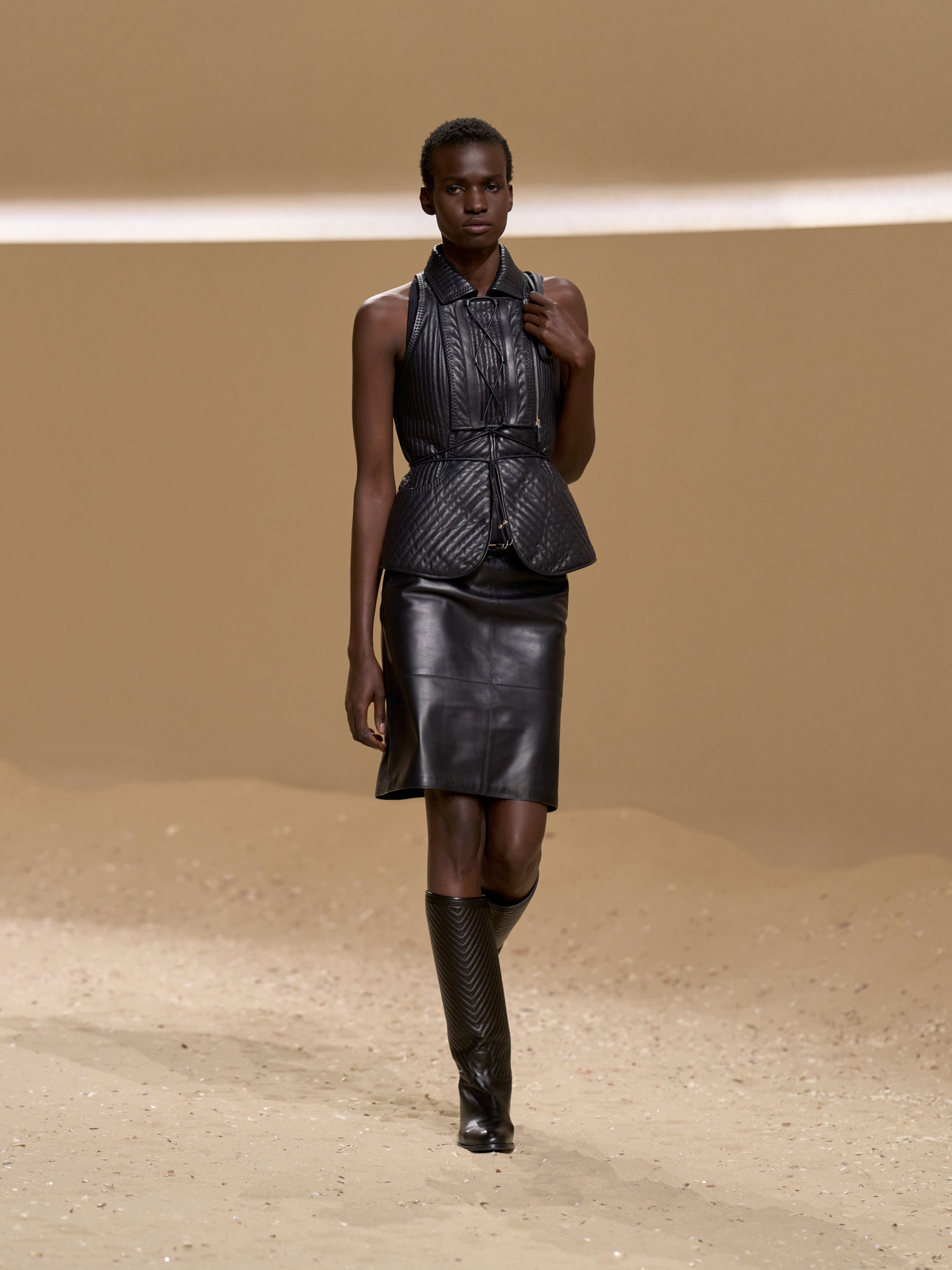
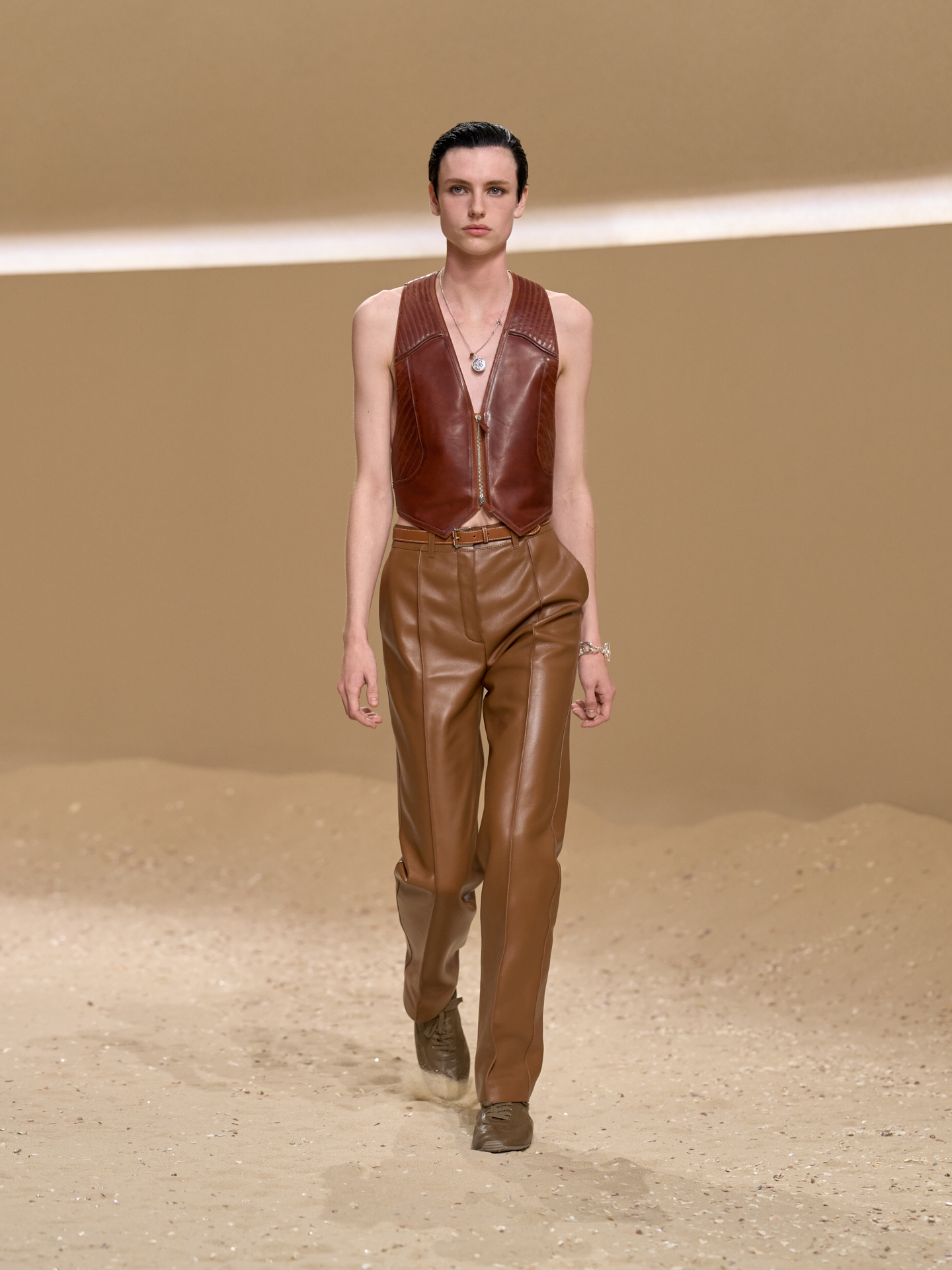
Hermès presented its Spring–Summer 2026 women’s collection, “À Brides Lâchées” (“Free Rein”), as an ode to independence, heritage craftsmanship and the enduring connection between horse and rider.
The collection drew inspiration from a Camargue saddle preserved in the Hermès archives, its patinated leather and curved troussequin backrest informing silhouettes that merge precision tailoring with equestrian tradition.
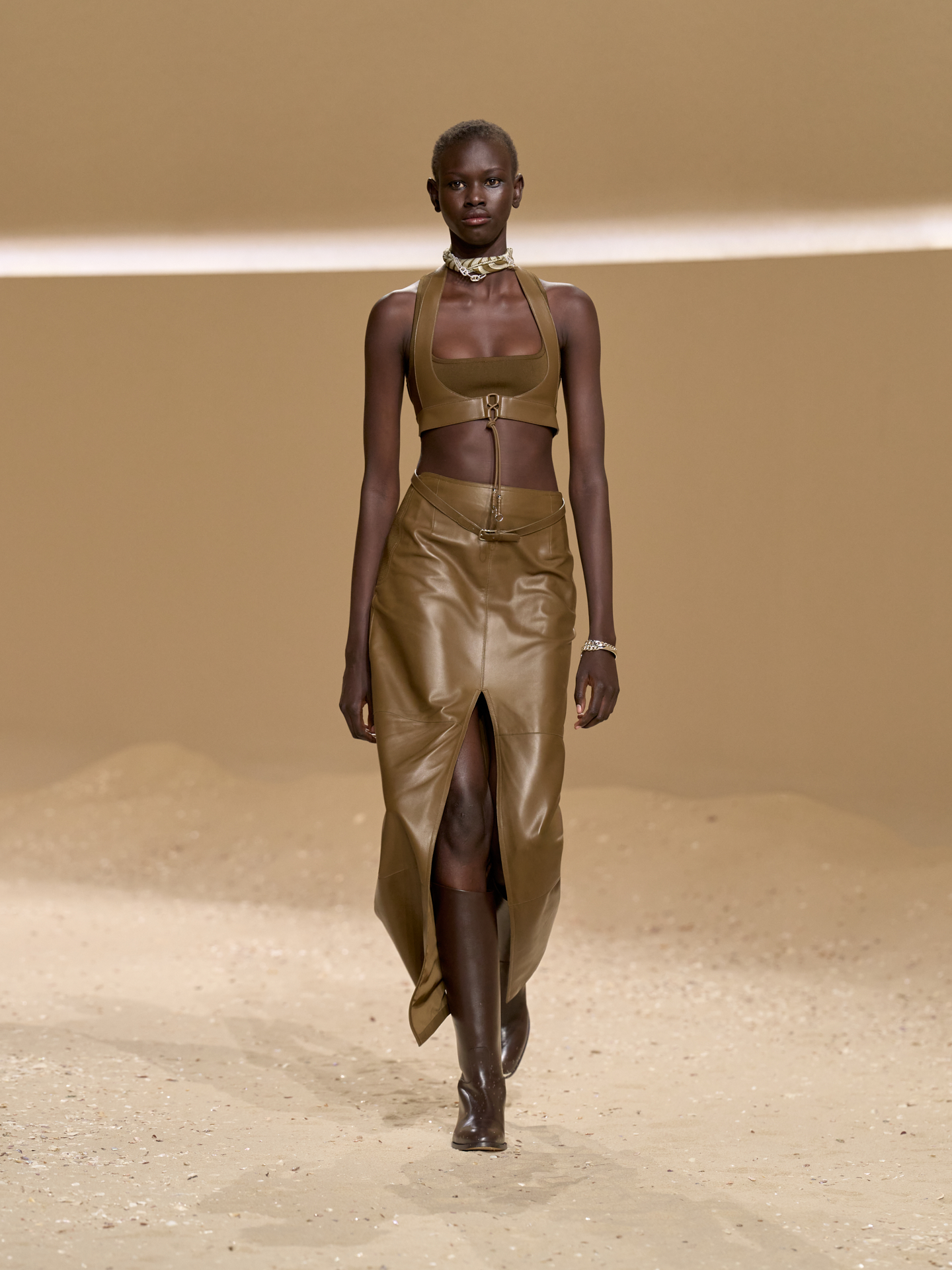
At the heart of the collection lies the fusion of couture dressmaking and the house’s renowned saddle-making savoir-faire. Curved forms, hand-waxed leathers, straps, buckles and rings evoke both utility and artistry, while intricate matelassage reflects the ancestral Provençal technique of boutis needlework. The designs embody a spirit of functionality grounded in artisanal excellence, reinforcing the maison’s equestrian roots.
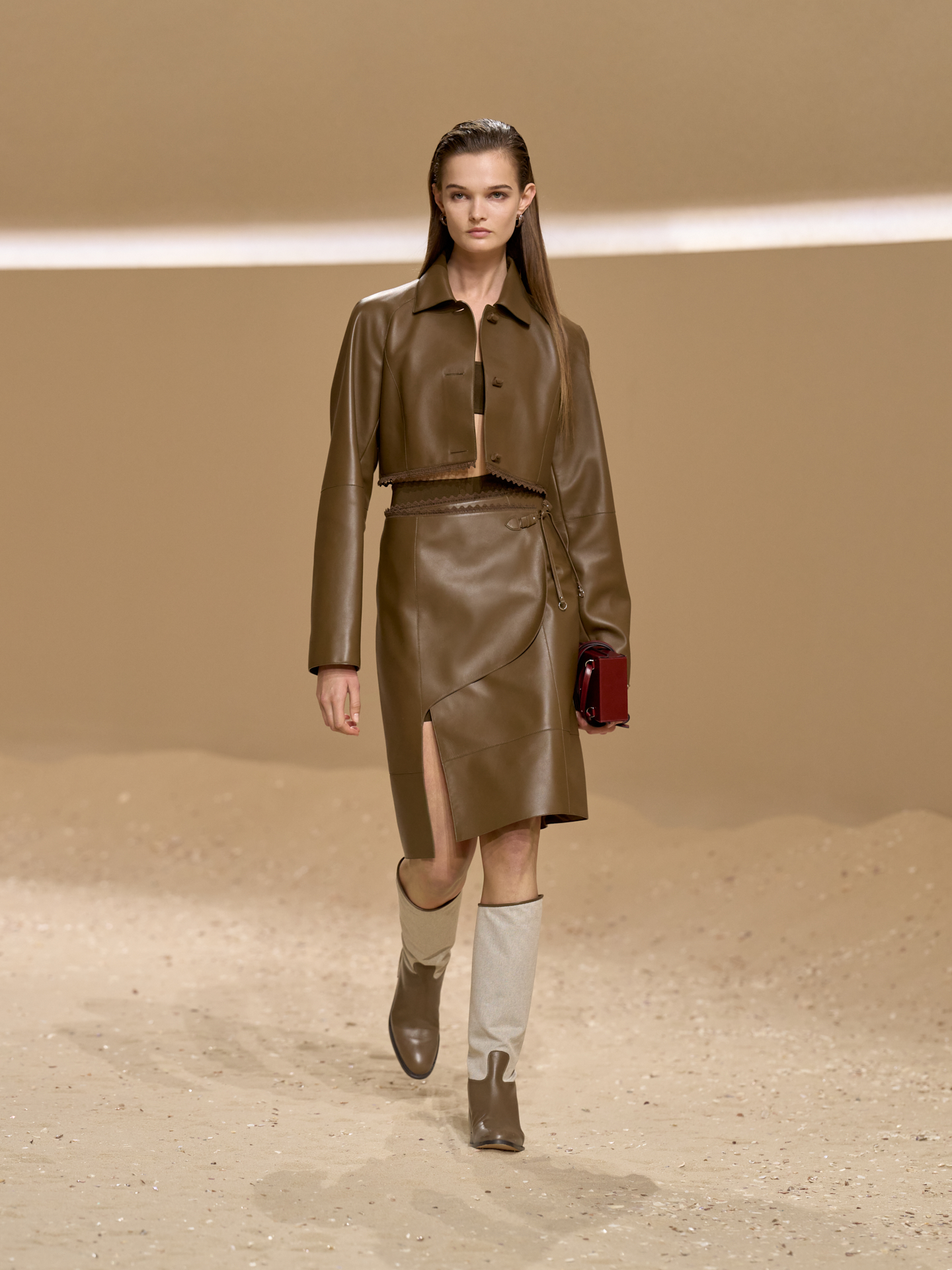
Movement defined the collection’s structure. A cropped equestrian jacket paired with an asymmetrical quilted linen skirt exemplified balance between discipline and fluidity. Long protective coats, reminiscent of trench styles, were cinched with harness belts, blurring the boundaries between tailoring and tack. Corsetry-inspired quilted dresses closely followed the body, layered over cycling shorts to merge heritage with athleticism. Brassières structured draped, fluid volumes printed with the vivid Aux champs en fleurs rayé carré motif, reinforcing the theme of freedom through physical expression.
Innovation emerged through the inventive use of the Hermès silk scarf. The carré was reimagined as a harnessed top or sculptural choker, signalling versatility and creativity within the collection. Each ensemble encouraged personal adaptation, layering and reinterpretation, always revealing, never concealing the wearer.
A nautical thread also ran through the presentation. Crisp cotton trousers featuring harness-style straps echoed the utilitarian design of dungarees, while sheer open-knit pieces let sunlight filter through like sea spray. The Méditerranée print, hand-rendered in free brushstrokes, rippled across garments to suggest the ebb and flow of tide and wind.
The show concluded with a vision of harmony between woman and landscape — a vast delta shaped by natural forces and human craftsmanship. “À Brides Lâchées” celebrated freedom, heritage and resilience, paying tribute to generations of women who, like the Hermès muse, move through life unrestrained, luminous and free.
hermes.com
Roger Vivier Opens The Spectacular Maison Vivier in Paris
Roger Vivier has inaugurated Maison Vivier, its new Parisian residence at 98 Rue de l’Université in Saint-Germain-des-Prés.
The 18th-century hôtel particulier, built in 1729 by royal architect Jacques Gilet de la Fontaine, represents a return to the Left Bank where the brand’s founder once lived. More than a new home for the Maison, the restored space serves as a dialogue between heritage and modern creativity, reaffirming Roger Vivier’s standing among the world’s leading luxury houses.
The residence brings together ateliers, archives, and salons under one roof, with interiors that highlight centuries of craftsmanship. Visitors enter through a grand staircase with gilded details, leading to salons that merge historical architecture with contemporary design. A secret garden behind the property, inspired by classical French landscaping, adds a note of Parisian serenity.

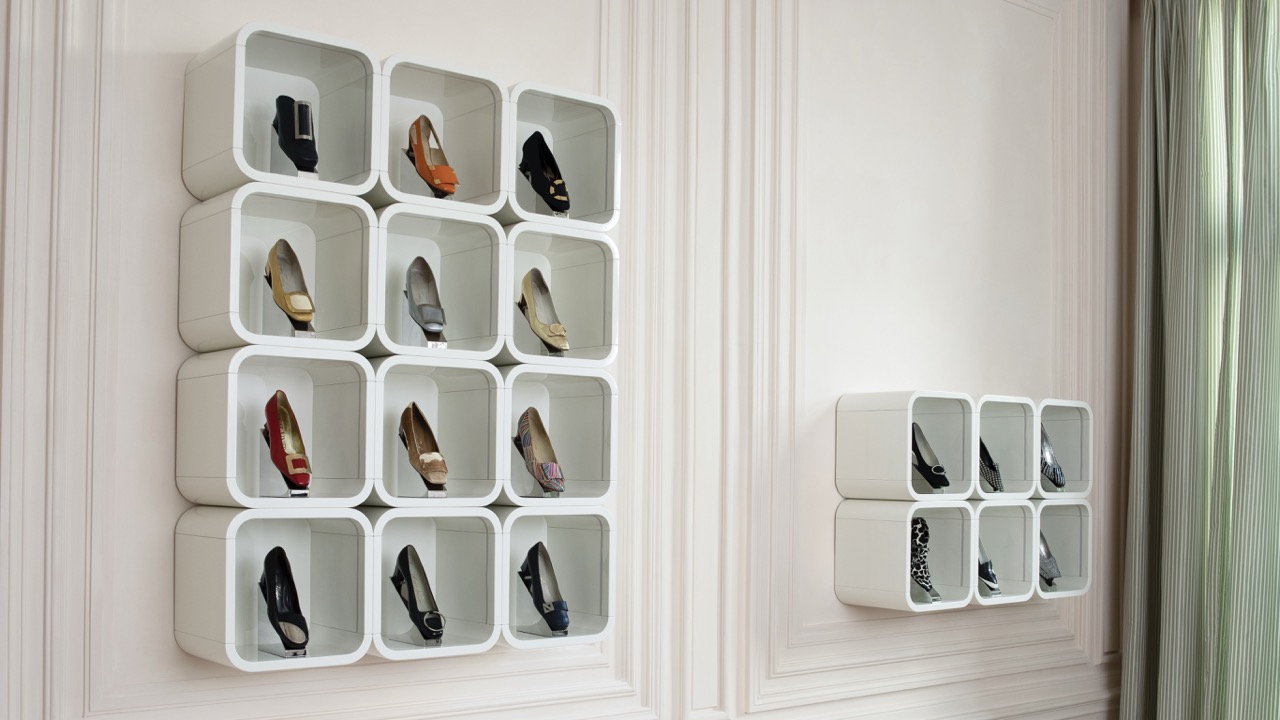
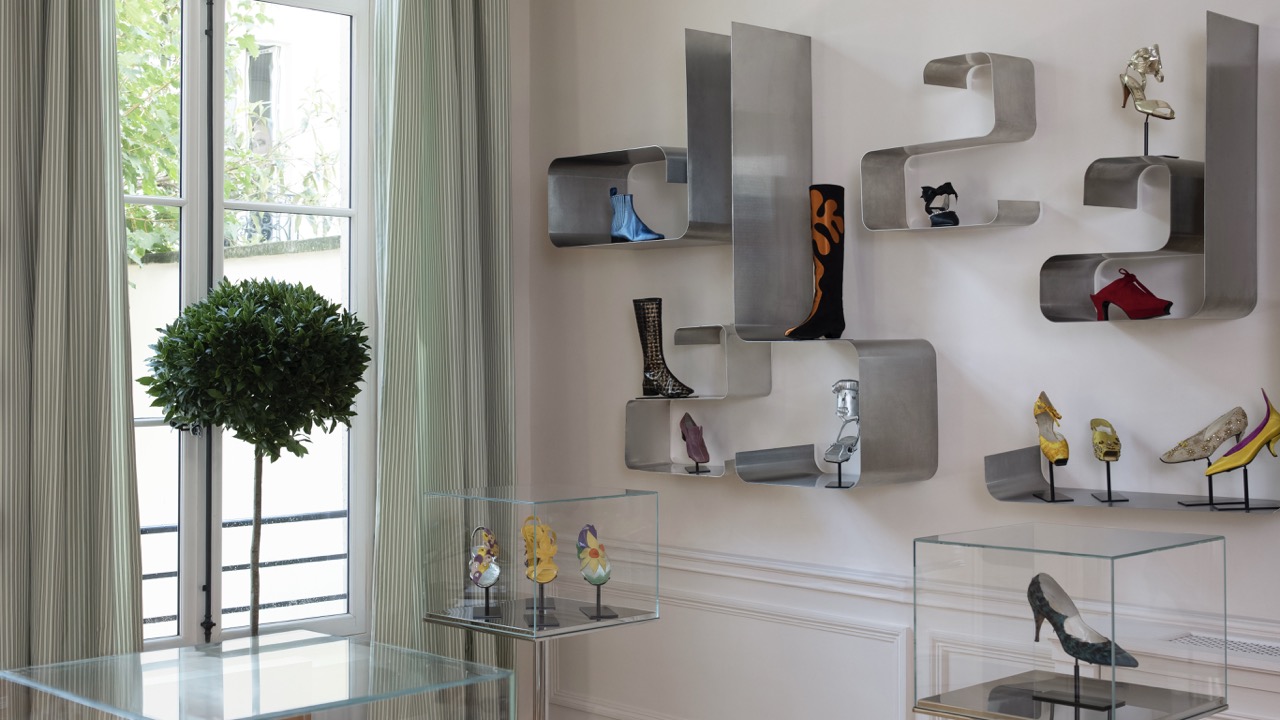
Among its key spaces is Le Salon de l’Héritage, curated by Inès de La Fressange. The room presents a visual narrative of Roger Vivier’s iconic creations from the 1950s to the 1990s, featuring archival shoes, photographs of muses, and furniture from designers such as Xavier Feal and Mies van der Rohe. The display highlights the evolution of signature elements like the Virgule heel and the Belle Vivier buckle.
Le Salon Vivier offers a glimpse into the founder’s personal aesthetic, where Regency and Louis XVI furnishings sit alongside sculptural pieces by Philippe Hiquily and Agnès Debizet. Artworks by Picasso and Charles-Henri Monvert, along with a Chinese cabinet once belonging to Hubert de Givenchy, reflect Vivier’s eclectic and cosmopolitan sensibility.
Le Studio de Gherardo Felloni, the creative director’s office, mirrors his distinctive Parisian style. Pink and green tones, a Chinese Art Deco rug, and a sculptural desk by Duccio Maria Gambi form a creative space filled with archival shoe boxes and personal objects that connect past and present.
For the first time, the brand’s extensive archives are open to guests. The collection includes over 1,000 creations, including a 1962 prototype for Princess Soraya, designs for Queen Elizabeth II’s Coronation, and the original Belle Vivier, created for Yves Saint Laurent’s Mondrian collection in 1965.
To mark the occasion, Felloni unveiled Belle Vivier 60, a Spring–Summer 2026 collection celebrating six decades of the iconic design. Reinterpreted in diverse materials and extended to accessories, it continues the Maison’s legacy of elegance and innovation. Maison Vivier stands as both a cultural destination and a tribute to Roger Vivier’s enduring vision.
rogervivier.com
Schiaparelli Presents “Dancer in the Dark” For Spring/Summer 2026
For Spring/Summer 2026, Schiaparelli’s Daniel Roseberry presented Dancer in the Dark at the Centre Pompidou in Paris, a location chosen for its resonance with art and inspiration rather than spectacle.
Staged in the same gallery that hosted a Brancusi retrospective 18 months earlier, the collection reaffirmed Roseberry’s vision of fashion as a dialogue between creativity and cultural consciousness.
The collection explored the duality at the heart of the house: the intersection of commercial wearability and artistic expression. Roseberry described Schiaparelli as existing “at the crossroads of commercial potential and creative catharsis.” His designs paid tribute to Elsa Schiaparelli’s original spirit, defined not by radical new silhouettes, but by her engagement with the cultural pulse of her era. Yves Saint Laurent once called her “a comet lighting up the night sky in Paris,” a sentiment that echoed through this season’s precise tailoring and surreal detailing.
The show opened with the Schiaparelli jacket: a structured, clean design with sharp shoulders and restrained detailing, representing what Roseberry termed tailleur rigour. This aesthetic extended through long, lean column gowns rendered in a focused palette of black, bone white and crimson red. Though minimalist in tone, the collection showcased a wide range of craftsmanship, from fluid slip-on dresses to intricate jacquard knitwear. The trompe l’oeil knit pieces, derived from Roseberry’s own sketches, referenced Elsa Schiaparelli’s iconic knits while reinterpreting them through a modern lens.
Accessories played a significant role, merging surrealism with functionality. The brand’s signature Secret handbag appeared in soft, pliable forms inspired by Salvador Dalí’s melting clocks, while shoes and bags were conceived as sketches brought to life. Every accessory was designed to evoke surprise and delight, extending the maison’s tradition of whimsy and artistry into daily life.
Reflecting on six years at Schiaparelli, Roseberry noted how the boundaries between couture and ready-to-wear have blurred. What was once perceived as a liability, creating ready-to-wear with couture-level attention, has become the house’s strength. “Why can’t fashion, even everyday fashion, be art?” he asked. With Dancer in the Dark, Roseberry offered an answer: garments that invite both fantasy and freedom, transforming the act of dressing into a moment of joy and self-expression.
Schiaparelli.com
Givenchy Presents Sarah Burton’s Spring-Summer 2026 Women’s Collection
Givenchy unveiled its Spring-Summer 2026 women’s ready-to-wear collection under the creative direction of Sarah Burton.
The presentation focused on what Burton described as “powerful femininity,” with an exploration of women’s strength through a reworking of feminine archetypes.
The collection began with tailoring, reimagined to emphasise lightness, exposure of skin, and a vocabulary of both dress and undress. Structured jackets and dresses were pared back, while knitwear and leather pieces introduced contrasts of rigidity and fluidity.
Classic house codes appeared in new forms, such as the little black dress in duchesse satin and a sliced tailored dress in black wool grain de poudre. Tailoring was central, from cropped jackets and skinny trousers in wool mohair to double-breasted cuts in pinstripe and calico. Elsewhere, slouched jackets and draped skirts created an ease that counterbalanced the sharper silhouettes.
The theme of deconstruction ran throughout. Sliced shirt dresses, cape-back designs, and cutaway bodies in seamless viscose or entwined pearl knits offered reinterpretations of traditional womenswear. Eveningwear also reflected this approach, with deconstructed crystal dresses and slashed trench coats in beige cotton or lipstick red satin duchesse.
Colour played a distinct role in defining the season. Alongside black and white foundations, the palette introduced butter yellow leather, lipgloss red knitted frills, and cherry red fine-knit dresses. Lipstick red leather mini dresses and cocoon bodies in engineered viscose highlighted a bolder side, while pastel touches appeared in mint duchesse satin with shredded rose embroidery.
Textural contrasts were central to Burton’s vision. Black and white Lyon lace, Paris net empire dresses, and fishnet-inspired viscose dresses introduced transparency and layering. Embroidered details included avalanche rose satin stitch and silk pink iris motifs on duchesse satin. Denim also entered the mix, with turn-up raw trousers paired with white leather shirts and deconstructed silver tops.
Accessories and outerwear completed the narrative, from photographic wool jacquard car coats to cropped bomber jackets in leather with engineered knit bodies. Wrapped skirts, powder puff organza skirts, and bed sheet-inspired satin dresses expanded the vocabulary of cut and drape.
The collection reaffirmed Burton’s commitment to reinterpreting femininity through a balance of strength, delicacy, and architectural precision, cementing Givenchy’s role at the forefront of Paris fashion for Spring-Summer 2026.
Givenchy.com
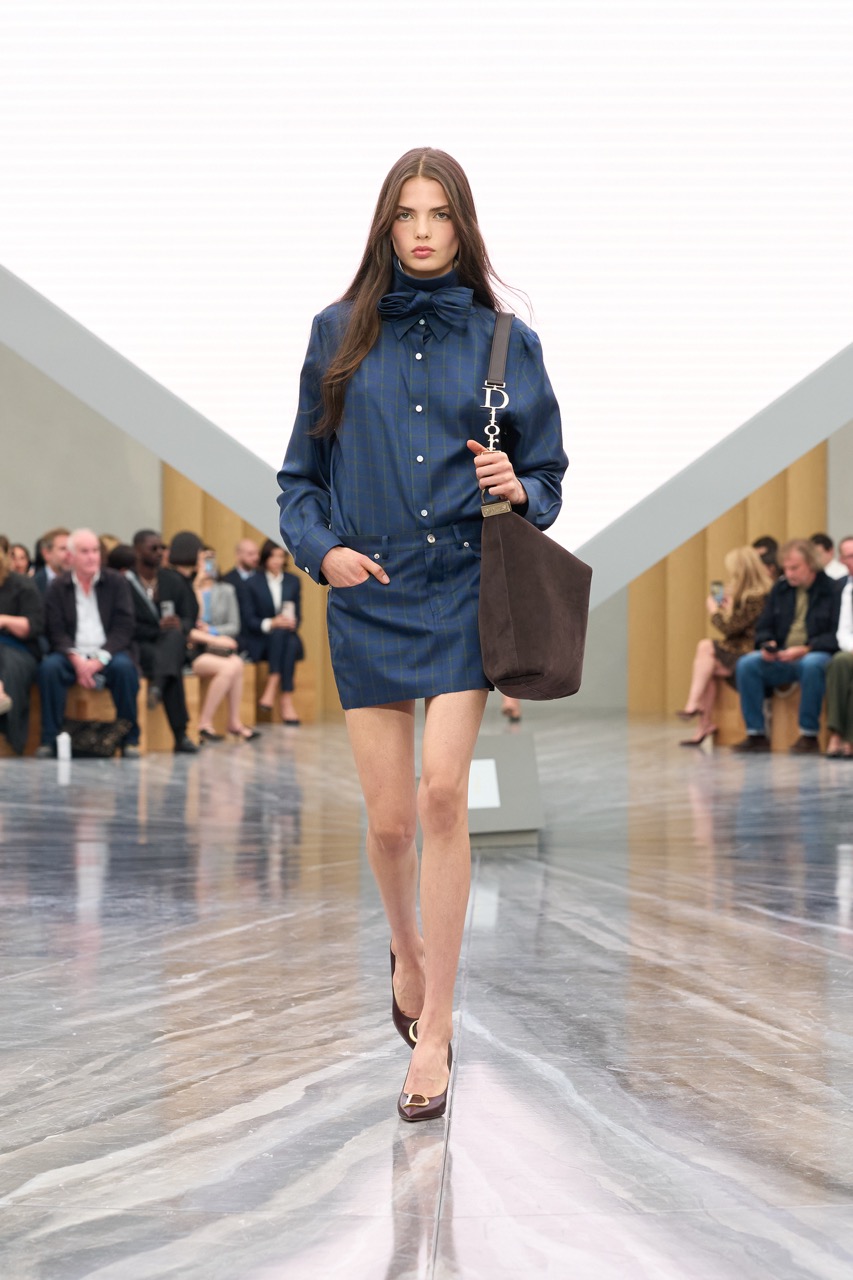
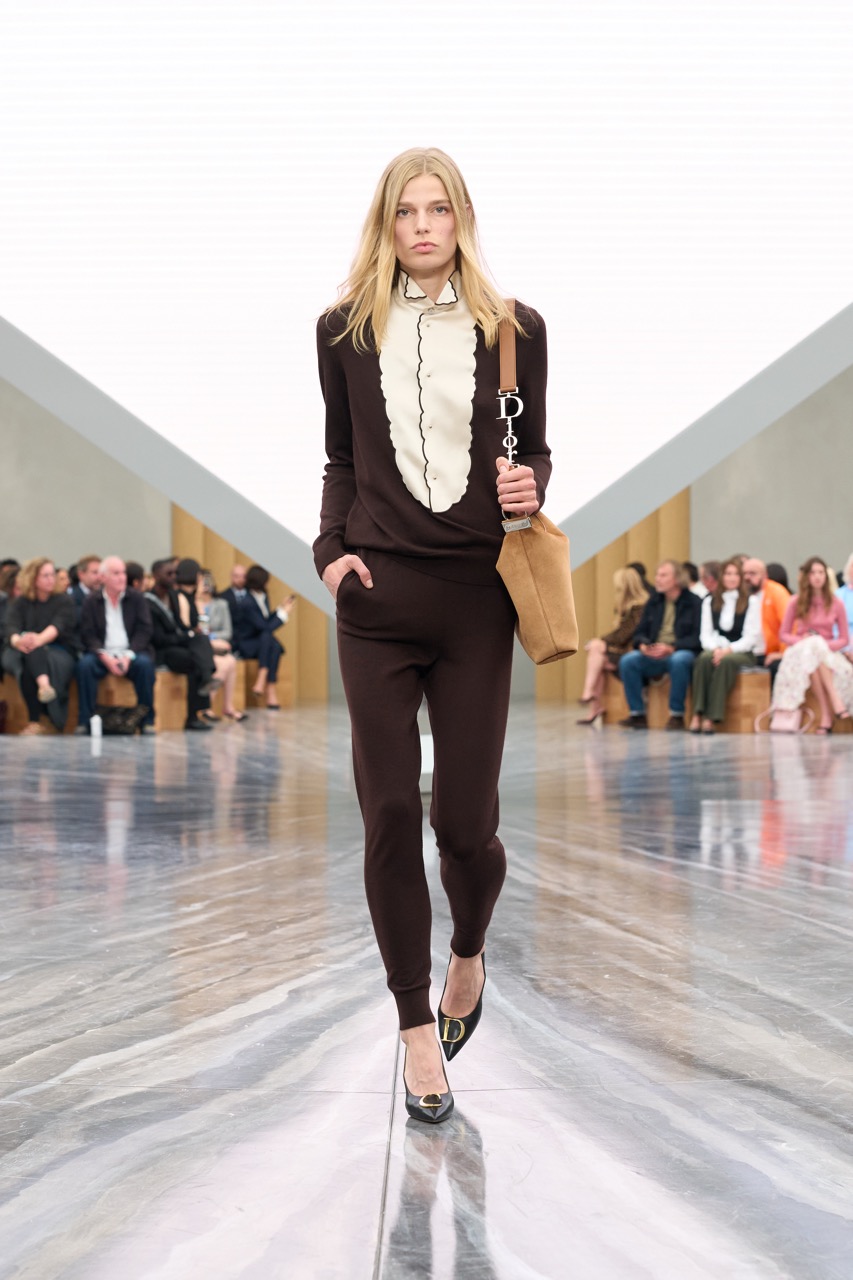
Jonathan Anderson Presents His First Dior Womenswear Collection
Jonathan Anderson has unveiled his Dior Spring-Summer 2026 ready-to-wear collection, a presentation that explored the relationship between heritage and innovation within the house.
The collection was framed around the idea of “boxing and unboxing” Dior’s history, drawing on its archive while reconfiguring established codes.
The house described the approach as an act of empathy with Dior’s history, a willingness to decode its language and preserve it while revisiting elements across time. This method, the house noted, does not erase the past but places it in dialogue with the present, reinterpreting silhouettes, details and emotions in ways that balance complexity with instinct.
Throughout, the collection aimed to capture a tension between harmony and disruption. Elements from Dior’s heritage were fragmented and rearranged to form new expressions of style. The silhouettes communicated through linear design, enabling contrasts between boldness and calm, grandness and the everyday. According to the house, this balance was expressed through a chromatic sensibility described as soft, pictorial and considered, punctuated by abrupt changes.
Accessories such as hats were reimagined in imploded forms, contributing to the collection’s sense of altered order and fragmentation. The garments were positioned as vehicles for character and performance, with clothing recasting poise and appearance in response to the heightened emotions of contemporary life.
The scenography was designed by filmmaker Luca Guadagnino and Stefano Baisi, with casting led by Ashley Brokaw. Styling was overseen by Benjamin Bruno. Beauty direction included make-up by Peter Philips, hair by Guido Palau and nails by Ama Quashie. Frédéric Sanchez composed the music for the show, while production was managed by Bureau Betak.
A film by Adam Curtis accompanied the presentation, underlining the conceptual framework of revisiting history and examining the theatre of fashion.
The house framed the collection as an embrace of fashion’s ability to transform the everyday into a “grand fantasyscape” without requiring description. By compressing and then reopening its past, Dior aimed to create space for the modern Dior woman to inhabit multiple modes of expression, whether sculptural, swift or restrained.
The closing sentiment of the release underscored the inevitability of change. The Spring-Summer 2026 ready-to-wear collection positioned itself as both a reflection on heritage and a forward-looking exercise in redefining Dior’s codes for the present moment.
dior.com
Tod’s Red Dot Sneaker Redefines Contemporary Luxury
Tod’s has launched the Red Dot, a new urban sneaker designed to redefine the codes of contemporary luxury by combining Italian craftsmanship with advanced technological research.
The sneaker features soft leather, a flexible structure, elastic lacing, and an extra-light sole. These design choices ensure comfort and ease of movement, while maintaining the refined standards associated with the Italian brand. The signature element is the Red Dot itself, which provides both a visual marker and a symbolic connection to Tod’s heritage.
According to the house, Red Dot encapsulates its philosophy of “Artisanal Intelligence,” a term that denotes the balance between traditional manual craftsmanship and contemporary innovation. By integrating generational know-how with new technical treatments, Tod’s aims to create footwear that is both beautiful and durable.
The introduction of the Red Dot marks the beginning of what the brand describes as a new code. This emblem recalls the distinctive detailing of the Gommino, Tod’s iconic driving shoe, and is intended to serve as a signifier for a community that values timeless quality and Italian artisanal expertise. At the same time, the Red Dot signals a forward-looking approach, one in which tradition and innovation are inseparably linked.
With Red Dot, Tod’s continues to strengthen its position in the luxury footwear market, reaffirming its reputation for quality and innovation. The model is available now in Tod’s boutiques worldwide and through the brand’s online store.
tods.com
Tom Ford Presents A Vision of Desire and Nobility for SS26
For Spring/Summer 2026, Tom Ford presented a collection under the creative direction of Haider Ackermann, centred on themes of seduction, desire and nobility.
The show explored seduction as a visual and physical dialogue, expressed through gazes, gestures and the interplay of concealment and revelation. Desire, described as ingrained in the spirit of the house, served as the guiding principle of the collection, framing the garments as embodiments of attraction and allure.
The silhouettes emphasised verticality, with tailoring that drew attention to the body while leaving space for subtle disruptions. Skin appeared through lace panels or slits, suggesting fragility beneath surface strength. Accessories furthered this narrative, such as the flash of a metal ring on sandals or the unexpected reveal of a leather bra beneath structured layers.
Colour played a key role in creating contrasts. The palette ranged from noble whites, deep browns and blacks to sudden bursts of yellow, orange and pastel blue. This interplay of light and shadow, brightness and depth, reinforced the collection’s dialogue between attraction and restraint. Fabrics were chosen for their tactile qualities, with silk, leather and cashmere offering a sensual dimension to the pieces.
The models’ styling supported the narrative of seduction and dignity. Graphic fringes framed the face, while lips glistened in striking shades, adding to the collection’s focus on controlled intensity. The tailoring combined precision with fluidity, incorporating elements of flou while also revealing sport-inspired details. This mixture of structure and ease underlined the duality at the heart of the presentation.
Nobility emerged as a central theme, not positioned as a matter of heritage or symbols, but as an attitude. It was framed as a way of carrying oneself, rooted in the belief that beauty can act as a form of resistance. In this sense, the collection looked beyond surface allure to propose elegance as a stance against conformity.
The closing note, “If just for one day, we can be heroes,” encapsulated the spirit of the show. Ford’s SS26 presentation was not only about garments, but about an exploration of character, confidence and the transformative power of beauty.
tomford.com
SLS The Red Sea Debuts on Shura Island in Saudi Arabia
SLS Hotels & Residences has announced the opening of SLS The Red Sea on Shura Island, positioning the property as a centrepiece of Saudi Arabia’s growing luxury destination on the west coast.
The November launch will introduce 150 rooms, suites, and villas, including 15 signature pool villas designed for privacy and seclusion. Facilities include five restaurants and bars, a spa and fitness centre, a pool, an outdoor cinema, and clubs for children and teenagers. The property also offers direct access to Shura Island’s marina, shopping outlets, and nearby coral reefs.

SLS Red Sea
Dining is a major feature of the resort. London seafood restaurant Seabird makes its Saudi debut alongside Floating World, a concept inspired by Japanese Edo-era traditions. Fi’lia introduces Italian cuisine with a modern approach, while Deluxe offers artisanal coffee and pastries. The Perch provides poolside refreshments, with small plates and mocktails during golden hour.
SLS Red Sea
Leisure and wellness are also a focus. Ciel Spa includes six treatment rooms, an indoor water circuit, an outdoor hydro pool, and dedicated grooming areas. The fitness centre is equipped with the latest technology, while younger guests have access to tailored programmes through the Kids and Teens Club. SLS will also continue its reputation for nightlife with poolside parties hosted by international DJs.
SLS Red Sea
The interiors of the property reflect the brand’s theatrical aesthetic. Signature elements include design features by Saudi contemporary artist Heba Ismail, who has reinterpreted the SLS duck as a cultural motif. Meeting spaces are also available, with private rooms adaptable for business or social occasions.
SLS Red Sea
The resort is accessible from Red Sea International Airport within 20 minutes by boat or seaplane, or 25 minutes by car. Its location places guests within reach of Shura Links, Saudi Arabia’s first island golf course, as well as other Red Sea Global developments.
SLS Red Sea
In line with Ennismore’s “Dis-loyalty” membership, SLS The Red Sea is offering a 50 per cent discount on stays between the 1st of November 2025 and the 1st of February 2026.
slshotels.com
Christian Louboutin Unveils Fétiche Le Santal, the Latest Addition to the Fétiche Collection
Christian Louboutin has introduced a new chapter in his fragrance line with the release of Fétiche Le Santal, an eau de parfum that continues the house’s exploration of desire through bold scent compositions.
The Fétiche collection, launched in 2024, is defined by its use of uncompromising creativity and haute parfumerie ingredients, each designed around the theme of desire. The series comprises six scents, Le Cuir, L’Ambre, L’Ébène, L’Iris, L’Encens and La Rose, presented in daring pairings and blends. Fétiche Le Santal now joins the line, offering what the brand describes as a sensual and inviting interpretation of sandalwood.
The fragrance combines creamy sandalwood with fresh fig notes, layered with orange blossom, pink pepper and milky fig at the top. This evolves into incense, vetiver and musk, creating depth and texture within a woody base. Christian Louboutin positions the scent as one that embodies contrasts: rough and smooth, unexpected and captivating.
Every fragrance in the Fétiche collection is accompanied by a muse. For this latest release, Anglo-American model Lily Aldridge and Italian ballet dancer Paolo Busti return to continue their partnership with the brand, representing what Louboutin describes as “the intense feeling of an unknown addictive sensuality.”
Packaging remains central to the Fétiche identity. Le Santal is housed in the line’s recognisable elongated, faceted bottle, with a transparent design accented by a gold plaque on mink glass. Its statuesque silhouette takes inspiration from Christian Louboutin’s past collaboration with filmmaker David Lynch and the brand’s iconic Ballerina Ultima shoe.
The new fragrance follows Christian Louboutin Beauté’s wider vision of translating the house’s distinctive design codes into beauty. Since its establishment in 2014, the beauty division has extended the brand’s red-soled legacy into makeup and fragrance, with products that reflect the same craftsmanship and sense of allure as the maison’s footwear.
Fétiche Le Santal is available through Christian Louboutin and select retailers worldwide.
christianlouboutin.com
Sotheby’s Opens Landmark Fine Art Exhibition in Abu Dhabi
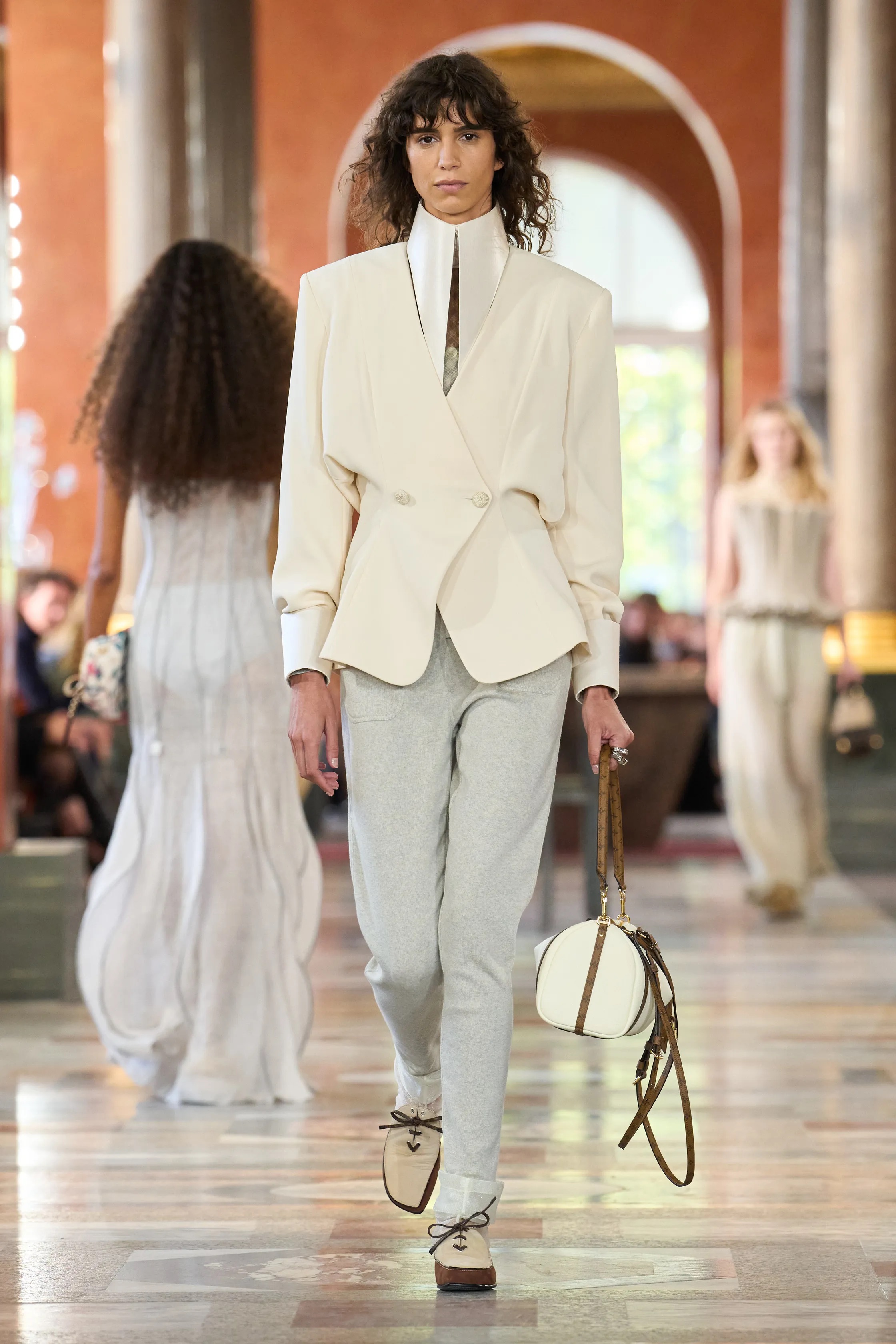
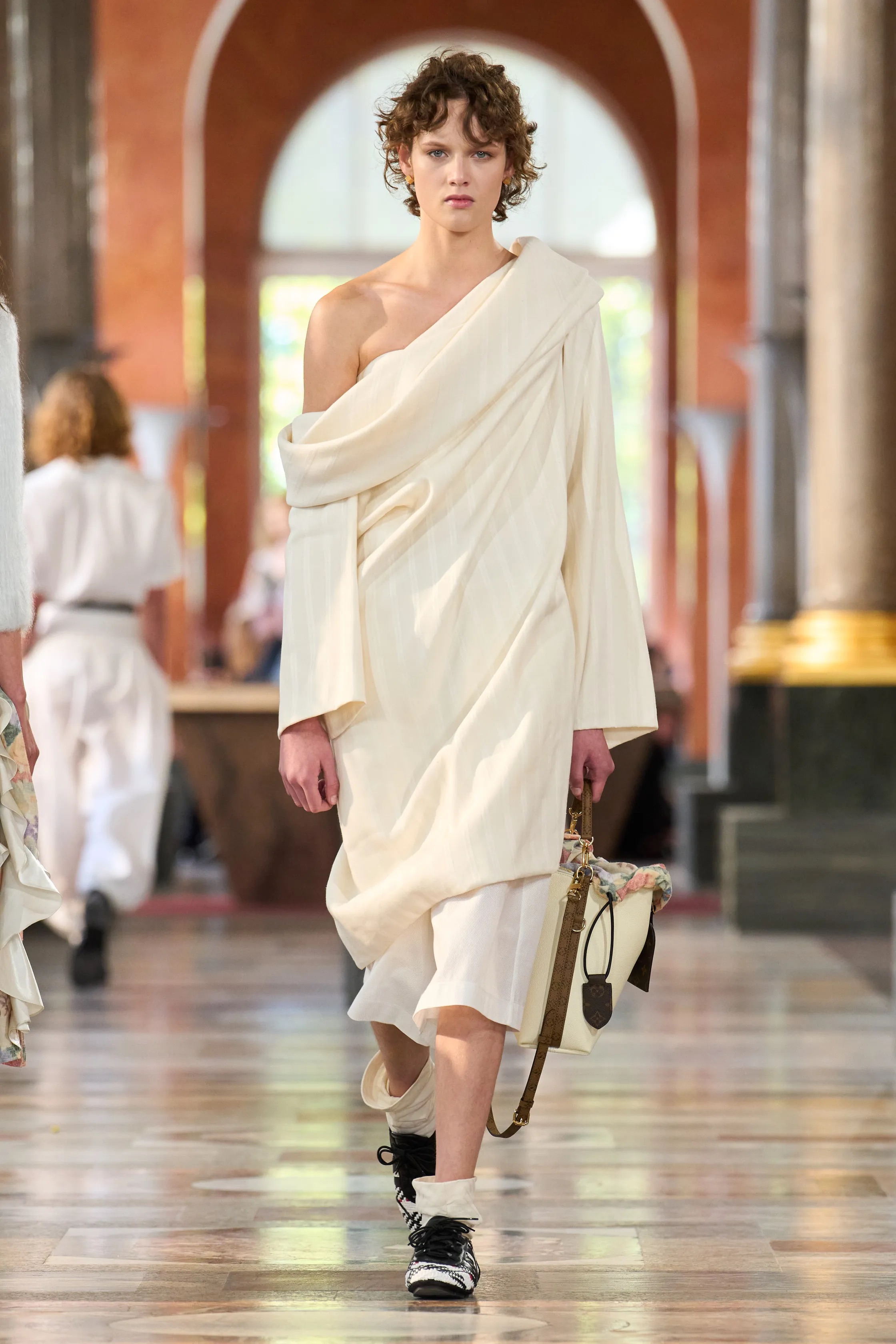
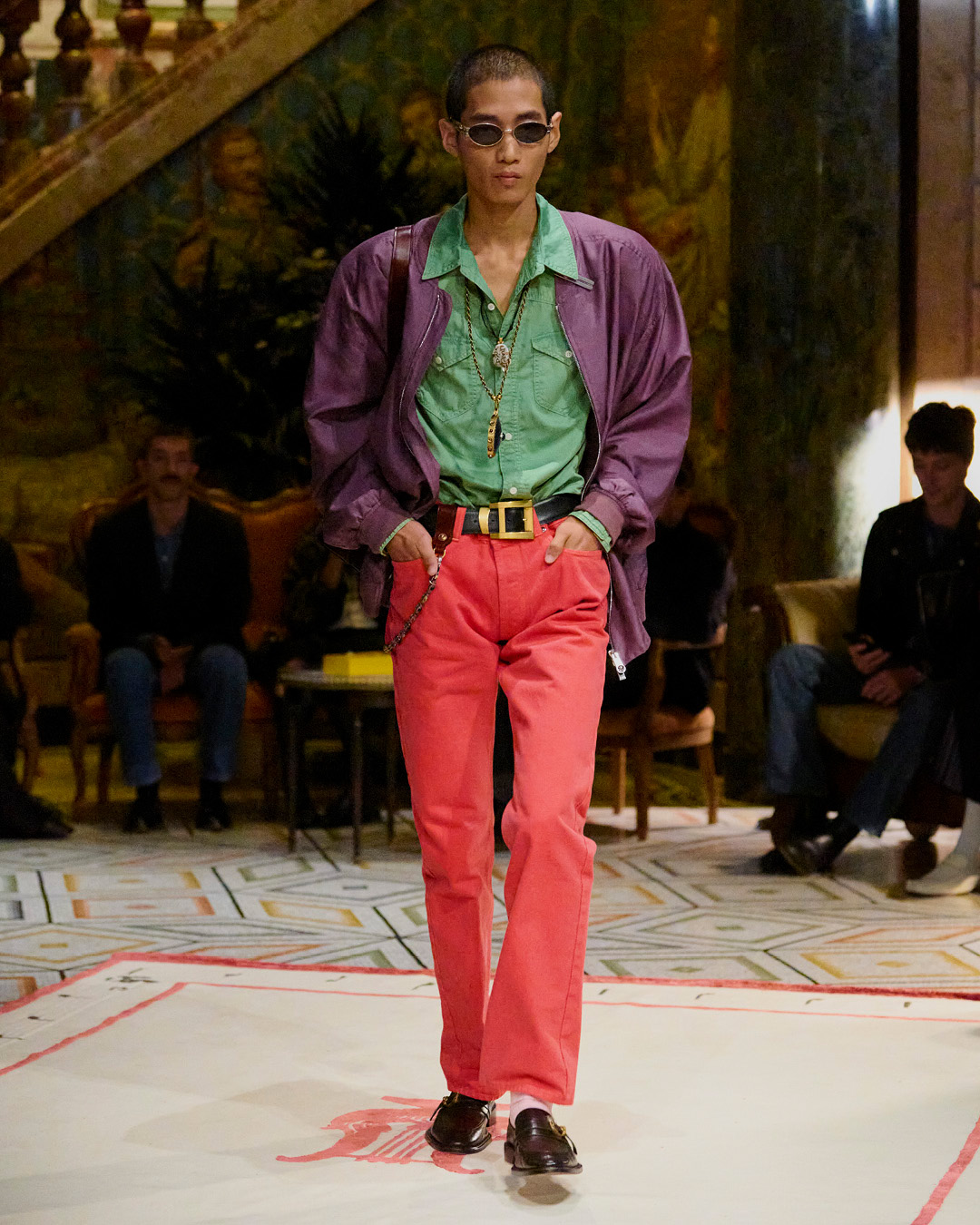
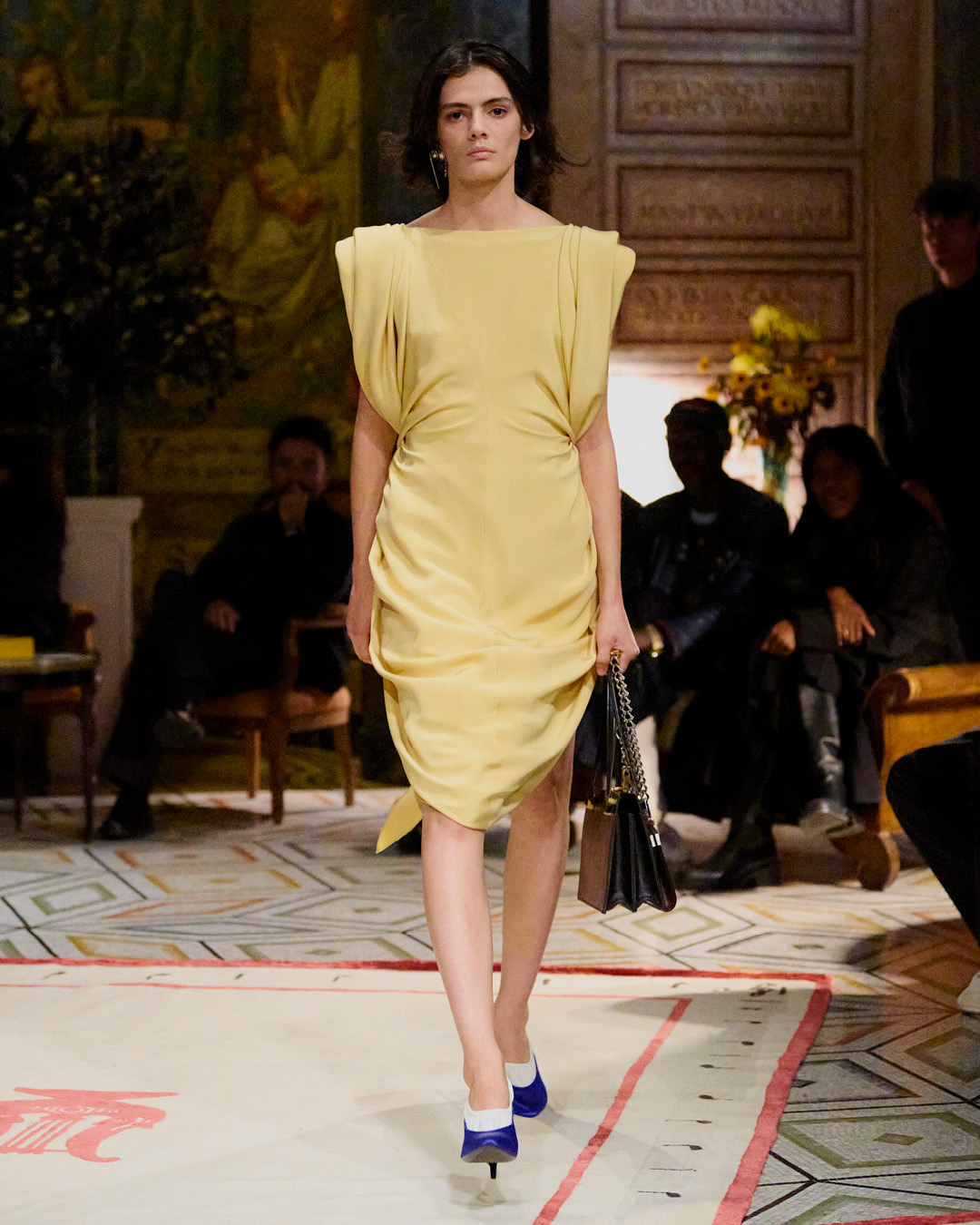
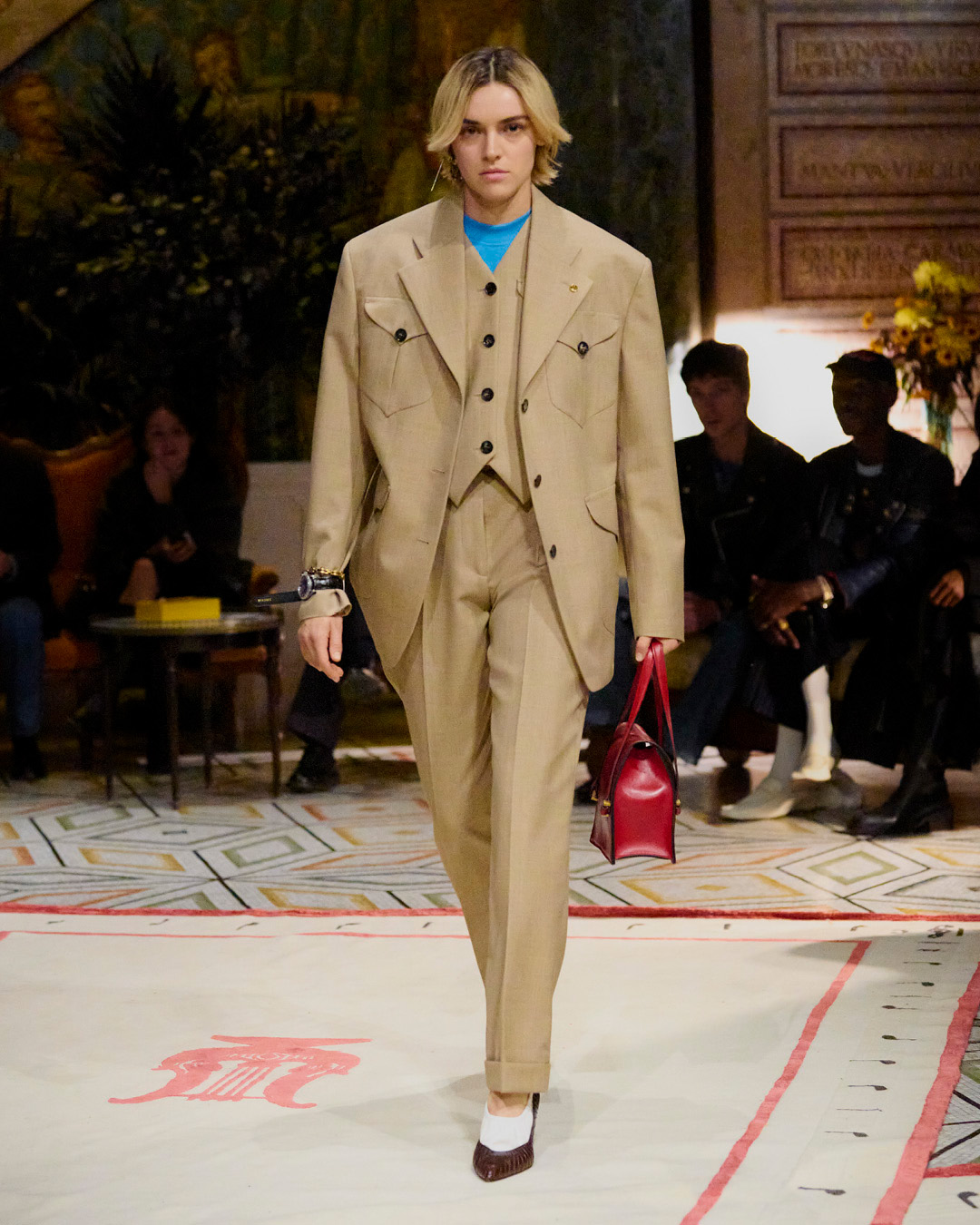
Louis Vuitton Presents Spring-Summer 2026 Collection at the Louvre
Louis Vuitton unveiled its Women’s Spring-Summer 2026 collection at the Musée du Louvre, staged within the historic summer apartments once occupied by Anne of Austria, Queen of France and mother of Louis XIV.
The presentation highlighted the maison’s continued exploration of travel and identity, this season framed as a celebration of intimacy and the art of living.
Entitled In Praise of Intimacy as an Art de Vivre, the collection focused on the concept of dressing as an act of personal expression within the private sphere. The designs conveyed sartorial freedom, exploring the archetypes of domestic wardrobes and subverting their functions. This approach placed emphasis on individuality and the ultimate luxury of dressing for oneself rather than for outward display.
According to the show’s concept, “the journey around my apartment” became a metaphor for self-discovery and a declaration of perspective. The narrative proposed intimacy as a form of courtesy and refinement, elevating private style into a manifesto of identity. The show positioned the act of revealing one’s true personality through dress as central to Louis Vuitton’s philosophy of carrying one’s way of being wherever life leads.
The staging of the show played a significant role in reinforcing the theme. Scenographer and designer Marie-Anne Derville curated a contemporary apartment setting inside the Louvre’s historic rooms. The installation brought together works from different periods, creating a dialogue between past and present. Pieces included 18th-century furniture by master cabinetmaker Georges Jacob, Art Deco seats by Michel Dufet from the 1930s, ceramics by 19th-century artist Pierre-Adrien Dalpayrat, as well as furniture designed by Derville herself. The inclusion of works by contemporary artist Robert Wilson further anchored the space in a cross-temporal aesthetic that reflected French taste over centuries.
The soundtrack was also integral to the show’s atmosphere. Music composed by Tanguy Destable reinterpreted lyrics from This Must Be the Place, the 1983 Talking Heads track by David Byrne. The text was delivered in a spoken reading by Academy Award-winning actor Cate Blanchett, whose voice contributed to the show’s reflective tone.
louisvuitton.com
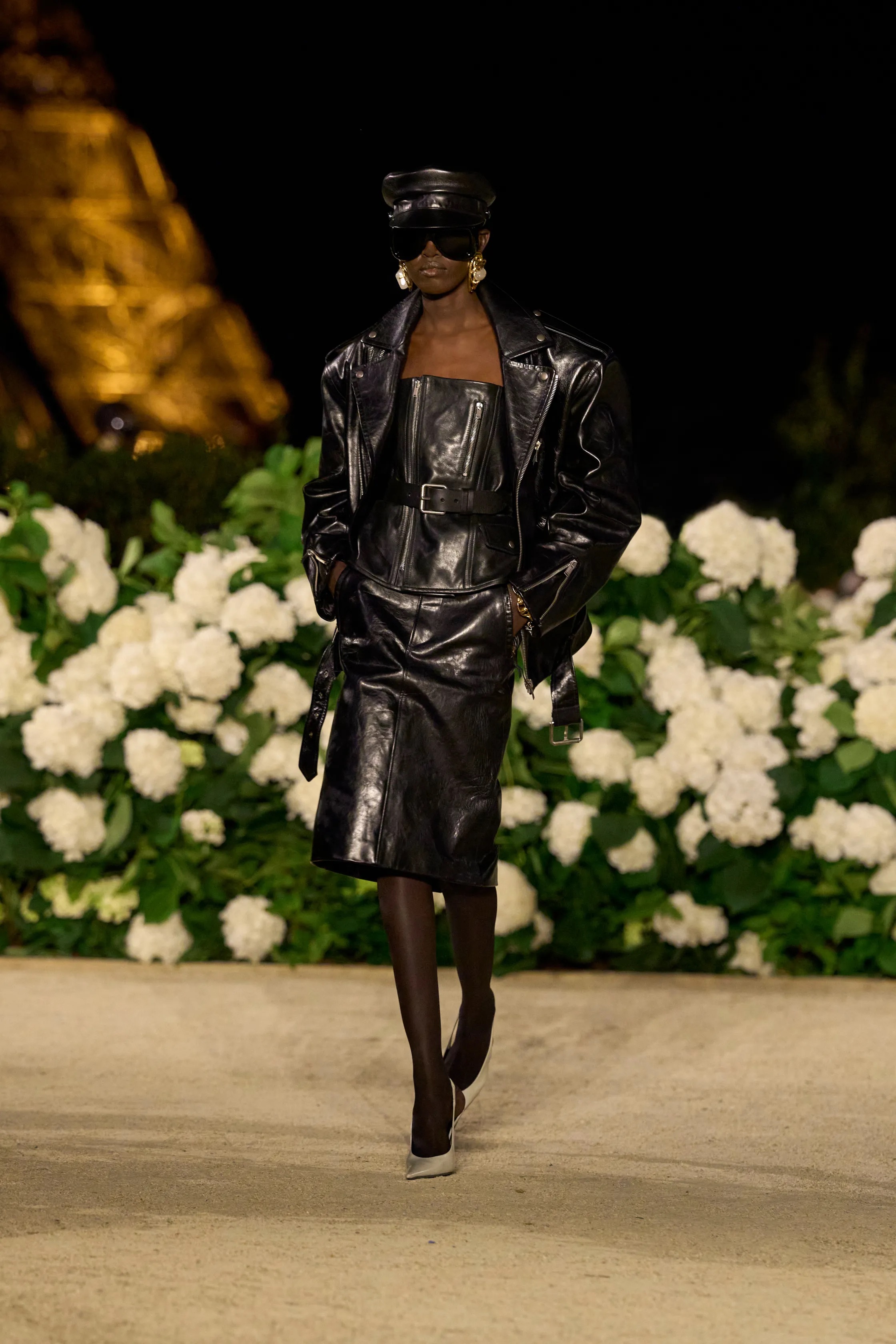
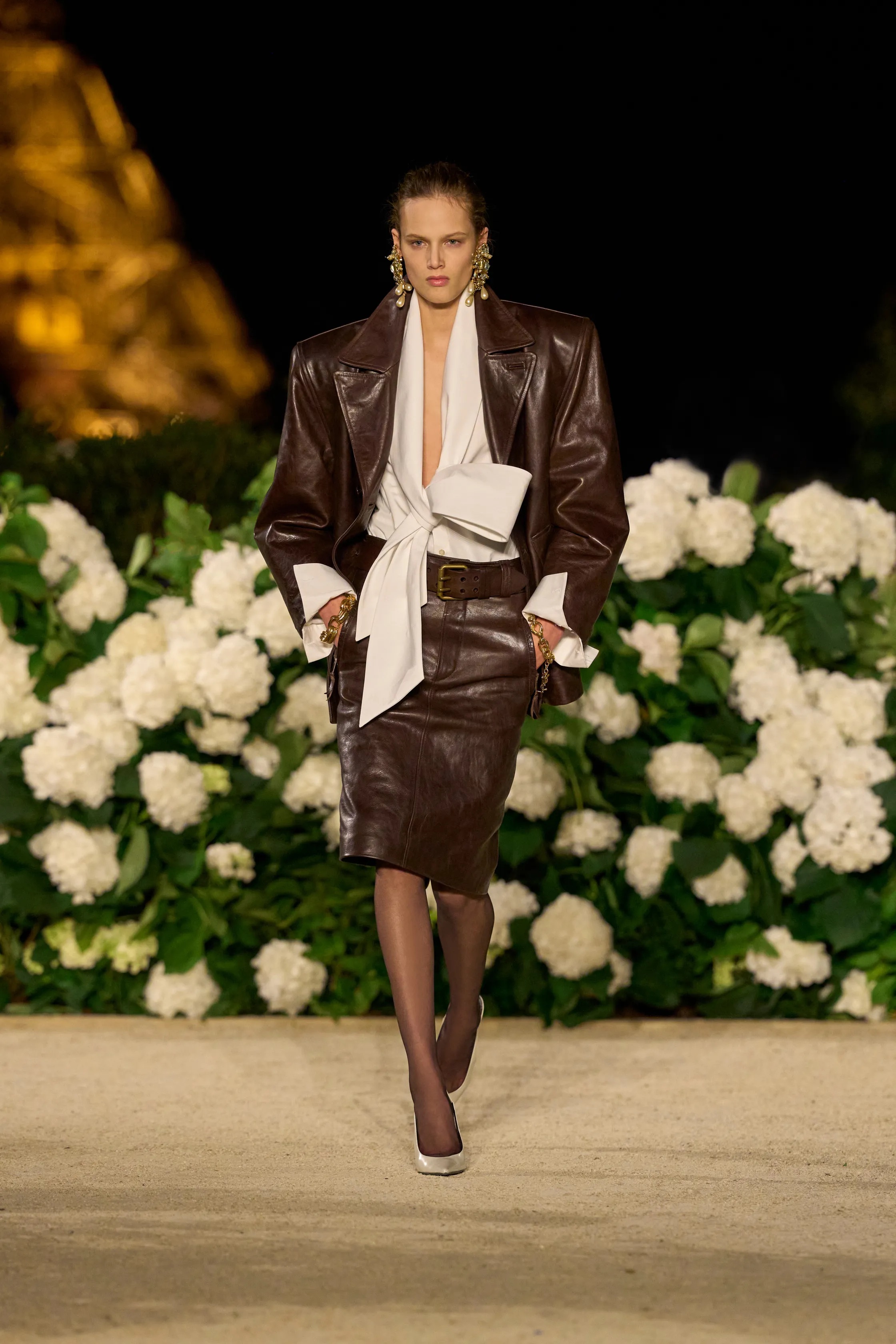
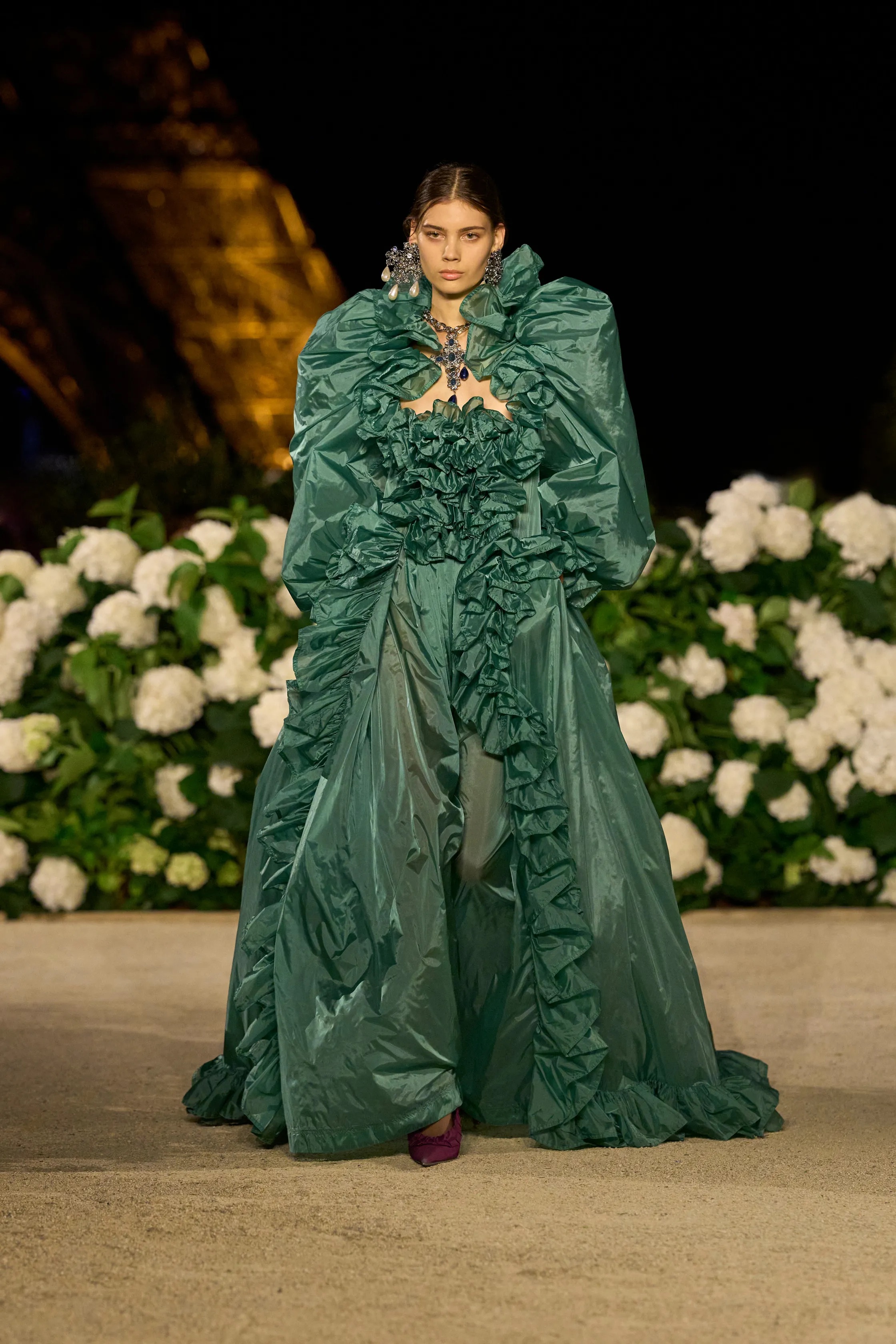
Saint Laurent Opens Paris Fashion Week with Summer 2026 collection by Anthony Vaccarello
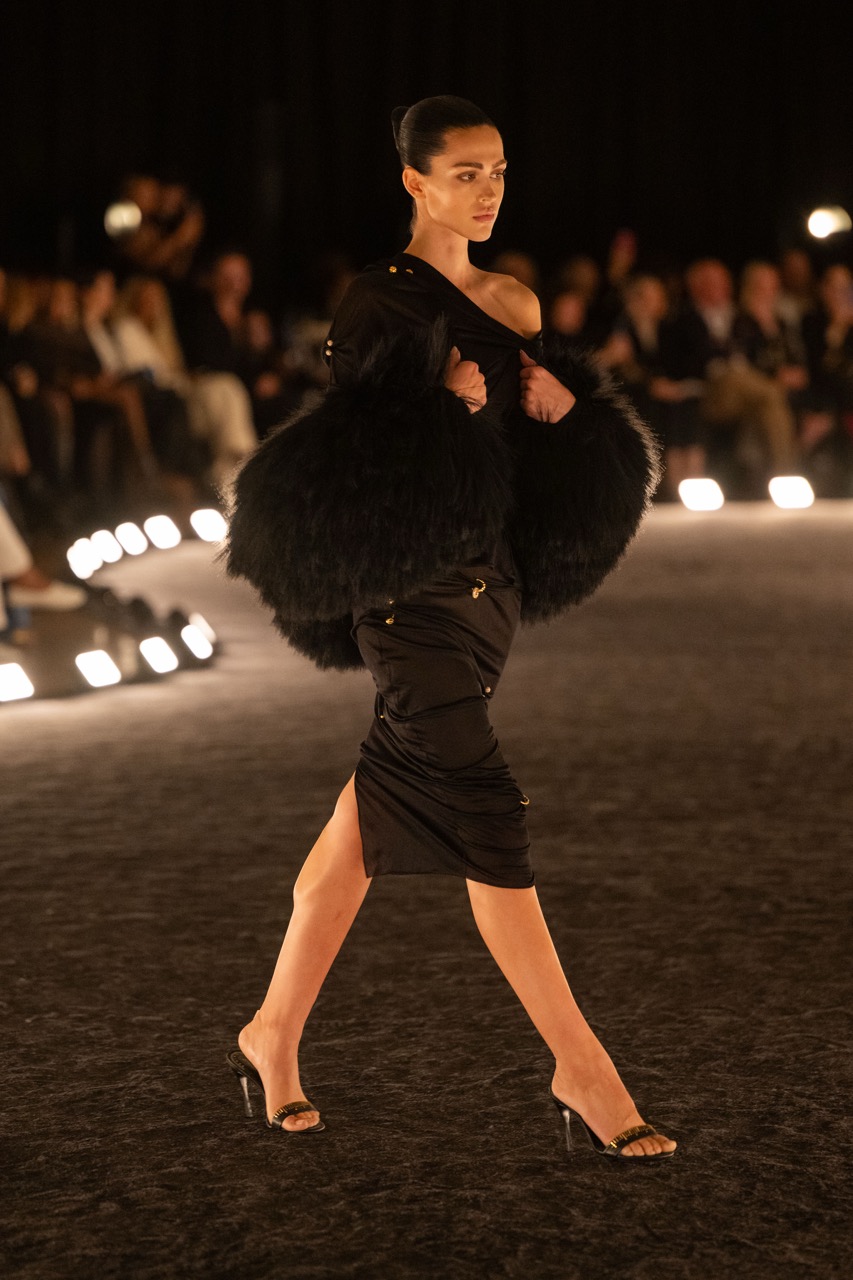
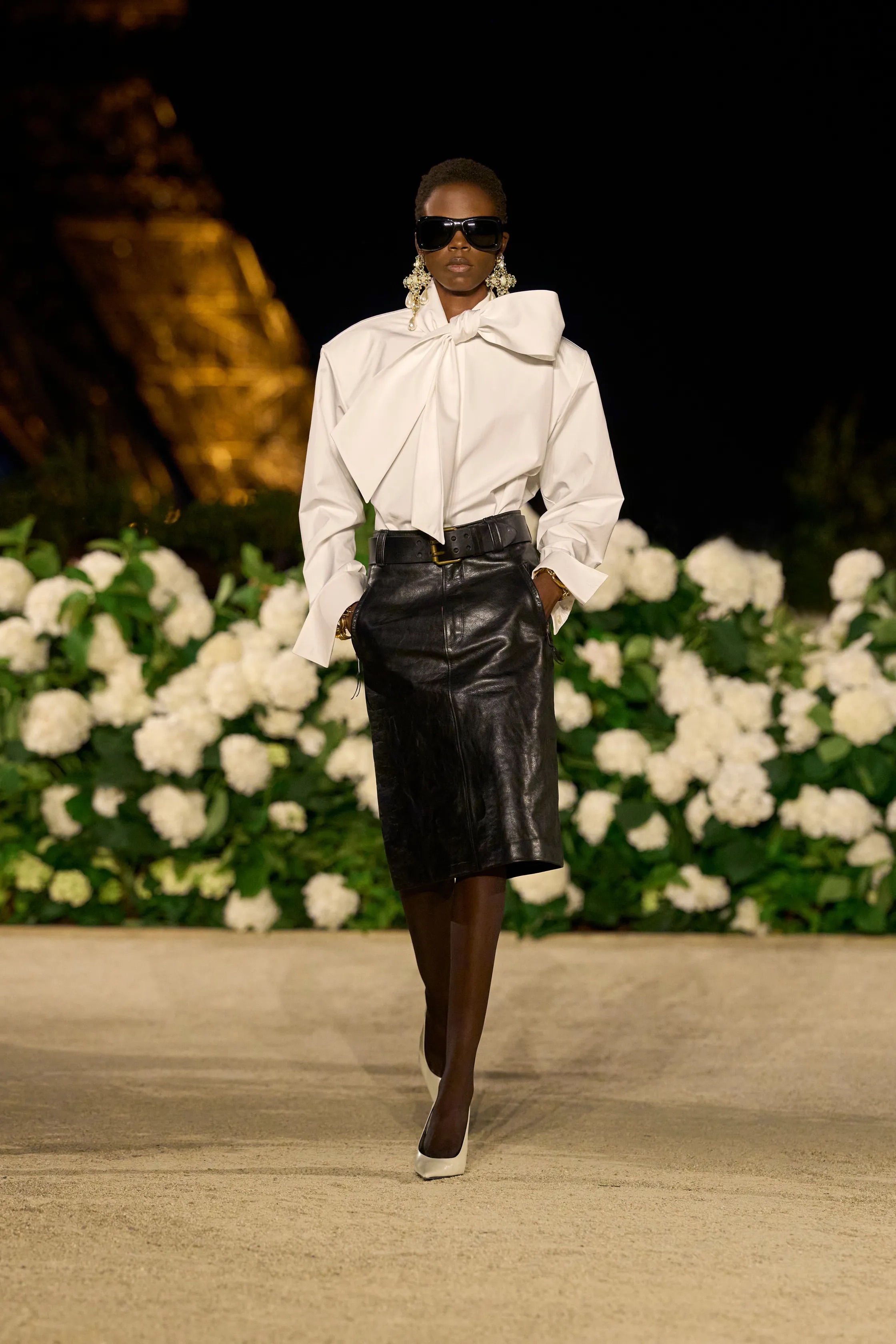
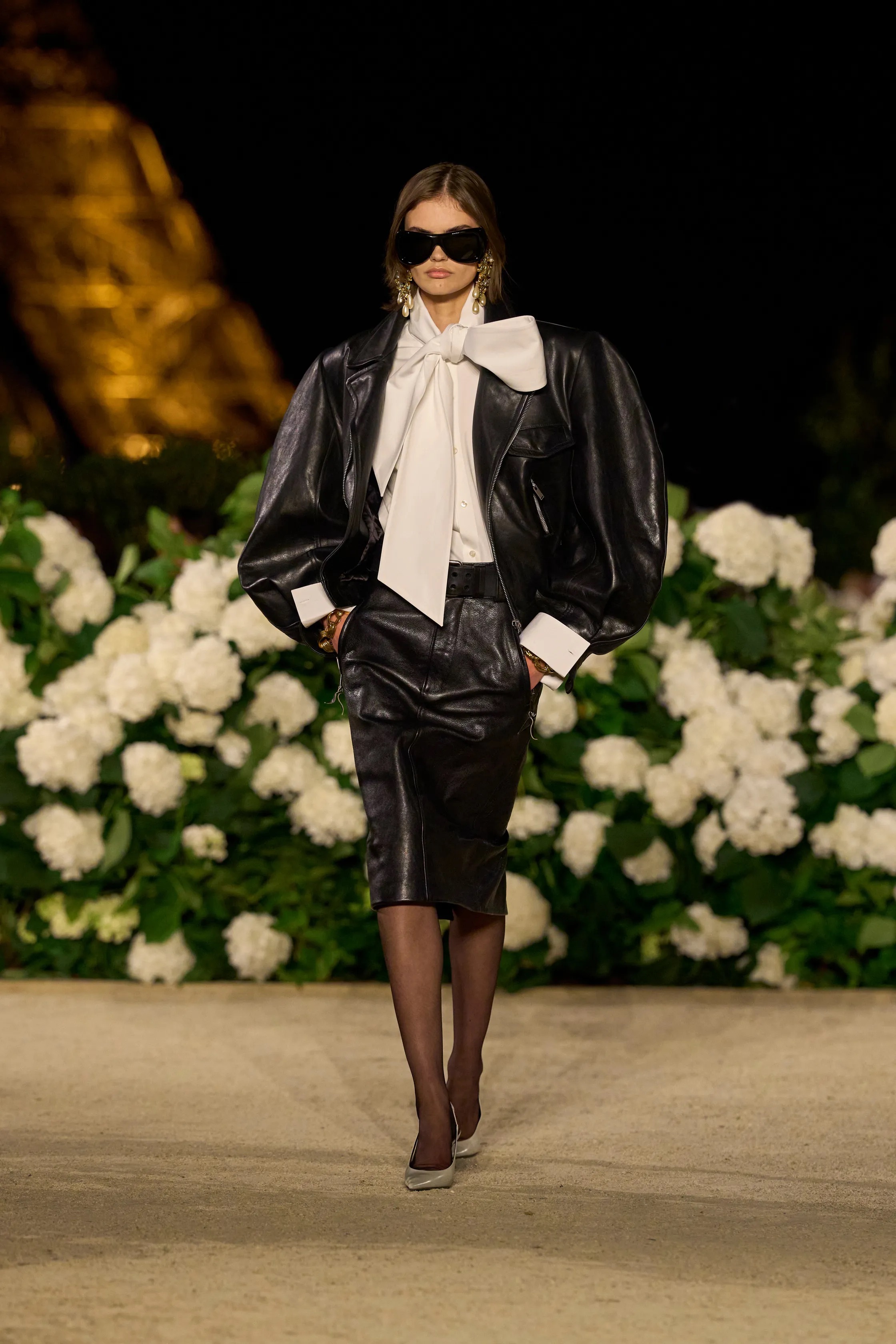
At Paris Fashion Week, Saint Laurent unveiled its Women’s Summer 2026 collection under the direction of Anthony Vaccarello.
The presentation built on the house’s tradition of using aesthetics as a means of communication, positioning style as a language that extends beyond appearance and into broader cultural dialogue.
The collection arrived with a clear statement: fashion as discourse. According to the brand, in an era where dialogue is diminishing, clothing has the capacity to connect and add nuance. Vaccarello’s work for Summer 2026 framed garments not only as visual creations but as symbolic arguments, articulating themes of resistance, respect and inclusion.
The staging was deliberately cinematic, casting the Saint Laurent woman as both heroine and classic figure. Vaccarello drew on contrasting archetypes to express multiplicity. Black leather silhouettes referenced the stark imagery of photographer Robert Mapplethorpe, paired with crown-like embellishments that suggested regality. Other looks leaned into Rive Gauche codes, offering flowing fabrics and bold colour palettes to reassert the brand’s historic left-bank identity.
Heritage influences also surfaced in the form of reimagined figures from art and literature. Evoking descendants of the Duchess of Guermantes from Marcel Proust’s In Search of Lost Time or John Singer Sargent’s portrait of “Madame X,” the collection traded traditional silks for technical fabrics, underscoring a tension between past and present. The deliberate juxtaposition highlighted Saint Laurent’s ongoing exploration of cultural symbols through modern material innovation.
By bringing together these contrasting references, Vaccarello reinforced the house’s long-standing assertion that beauty is plural. The collection balanced strength and elegance, tradition and modernity, while addressing the contemporary idea of style as an inclusive form of resistance.
With this presentation, Saint Laurent furthered its reputation for clear, purposeful storytelling through clothing. Rather than relying solely on surface appeal, the Summer 2026 collection positioned fashion as a medium capable of shaping and reflecting social narratives. In doing so, Vaccarello affirmed Saint Laurent’s continuing relevance within both the fashion landscape and broader cultural conversations.
ysl.com
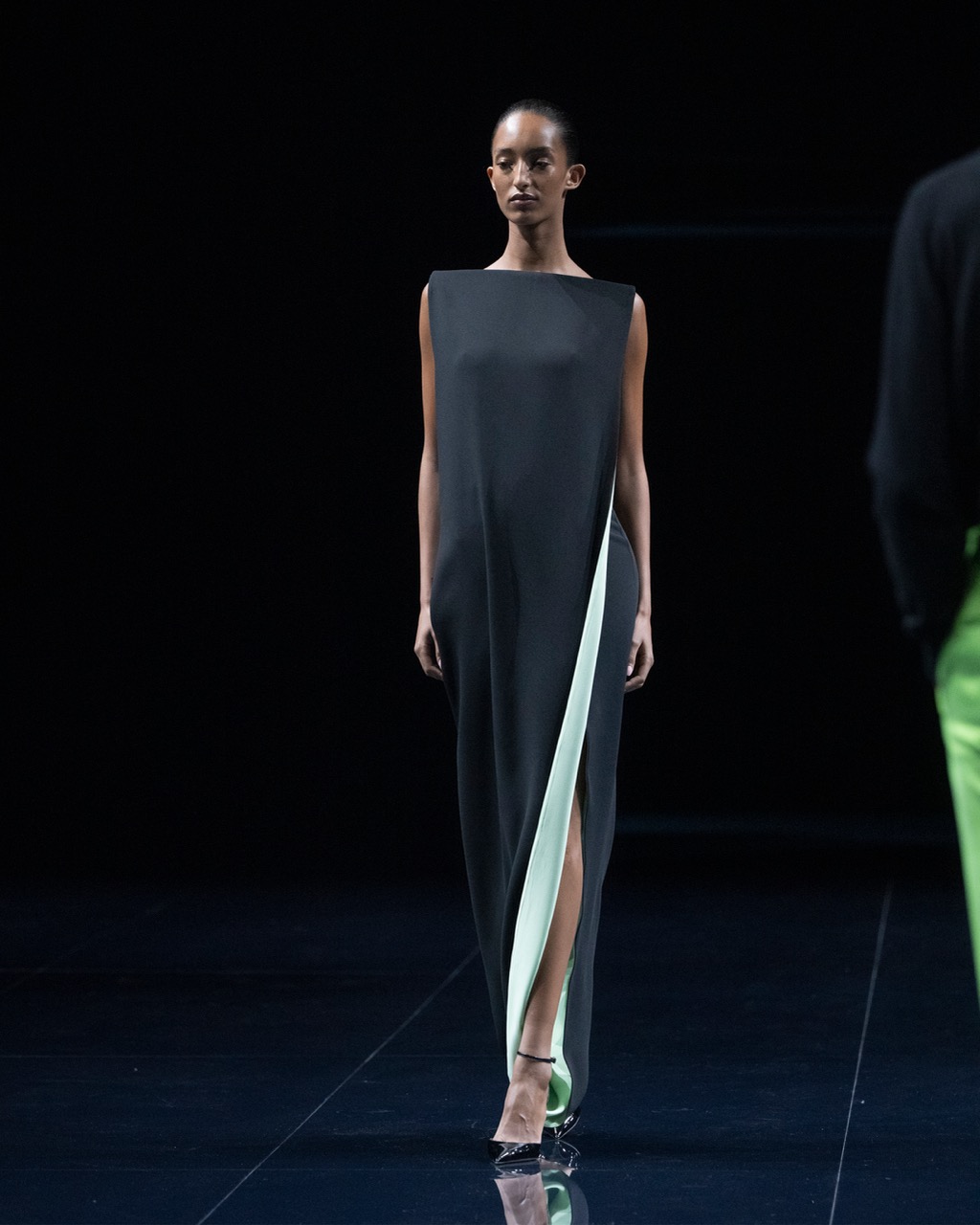
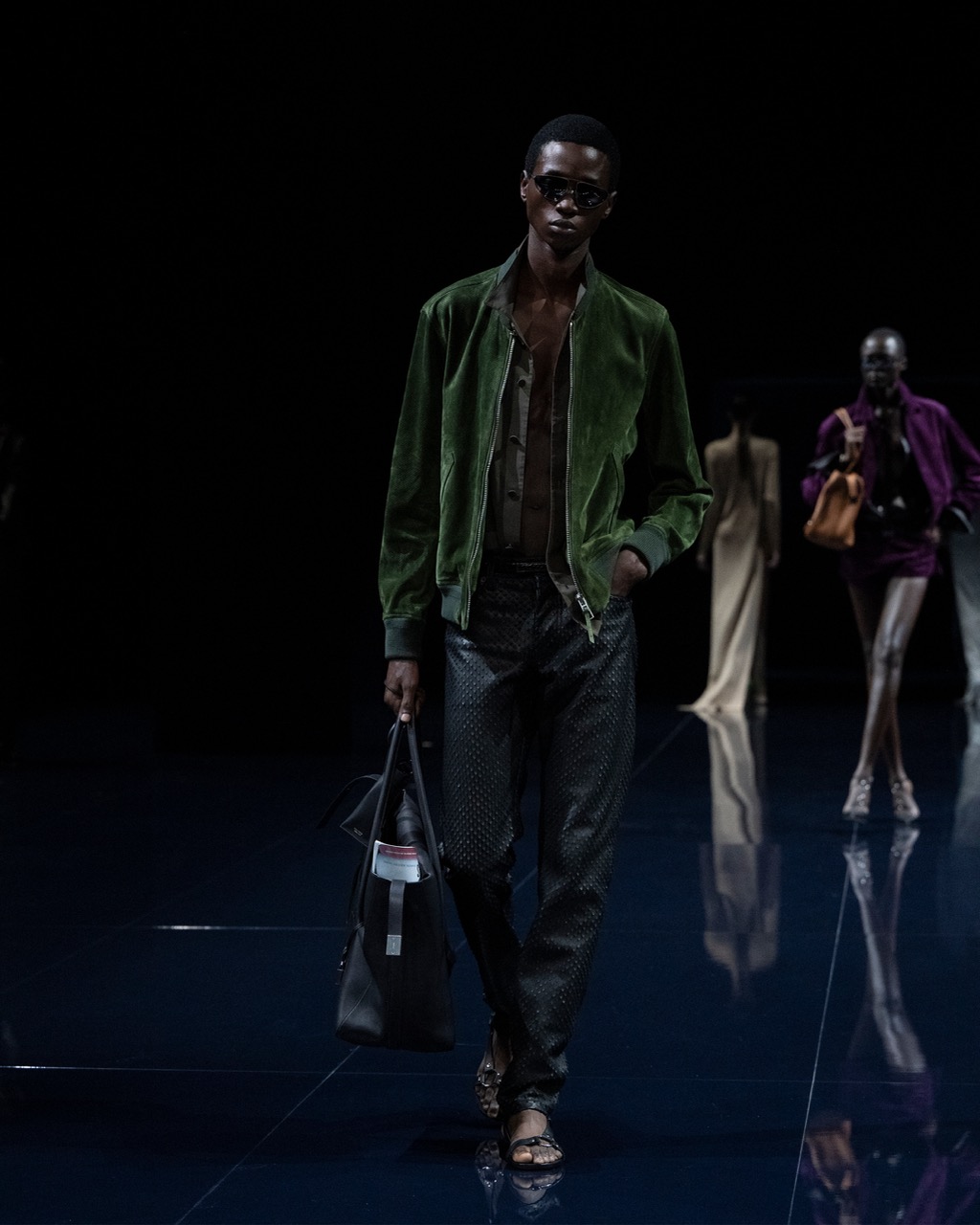
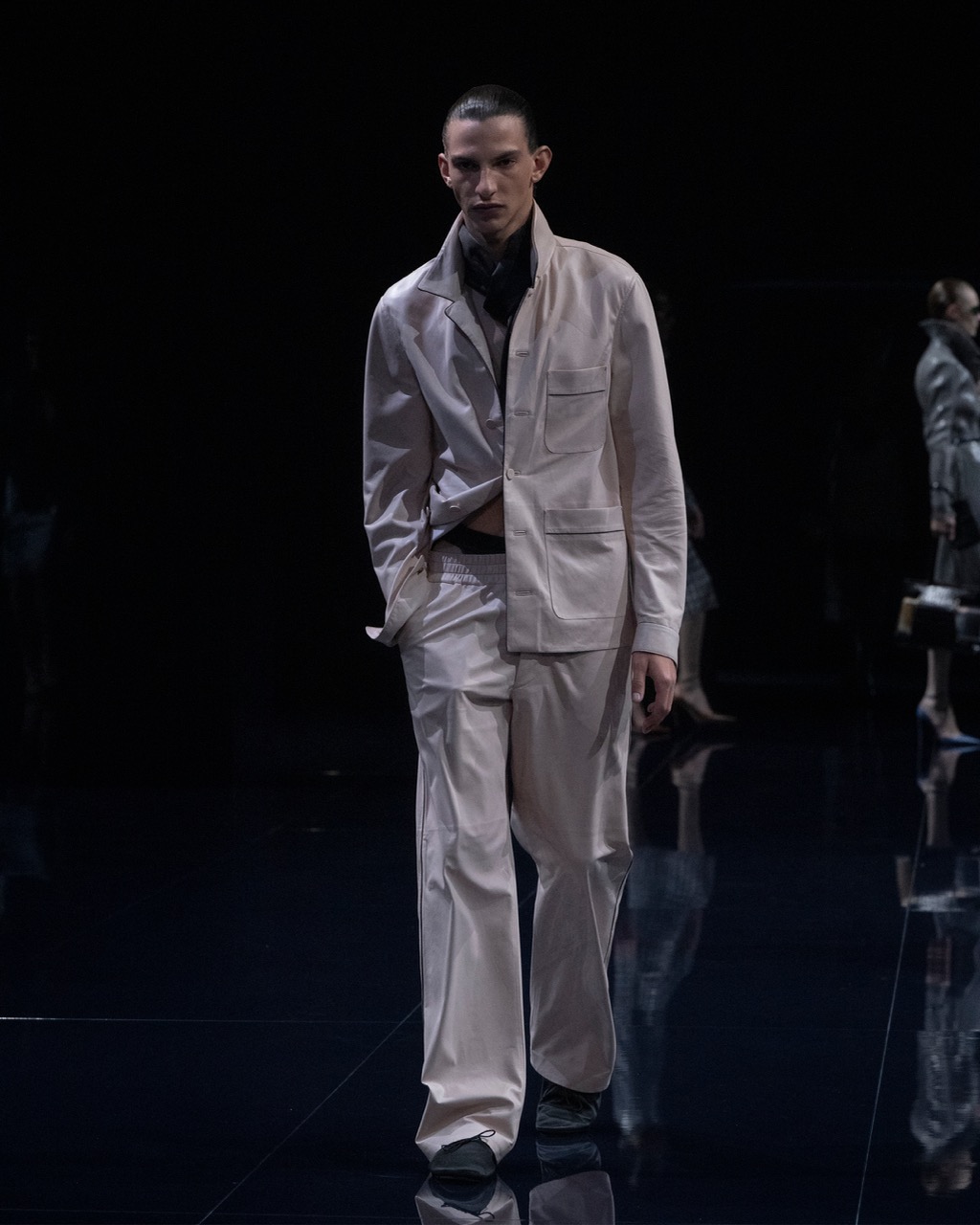
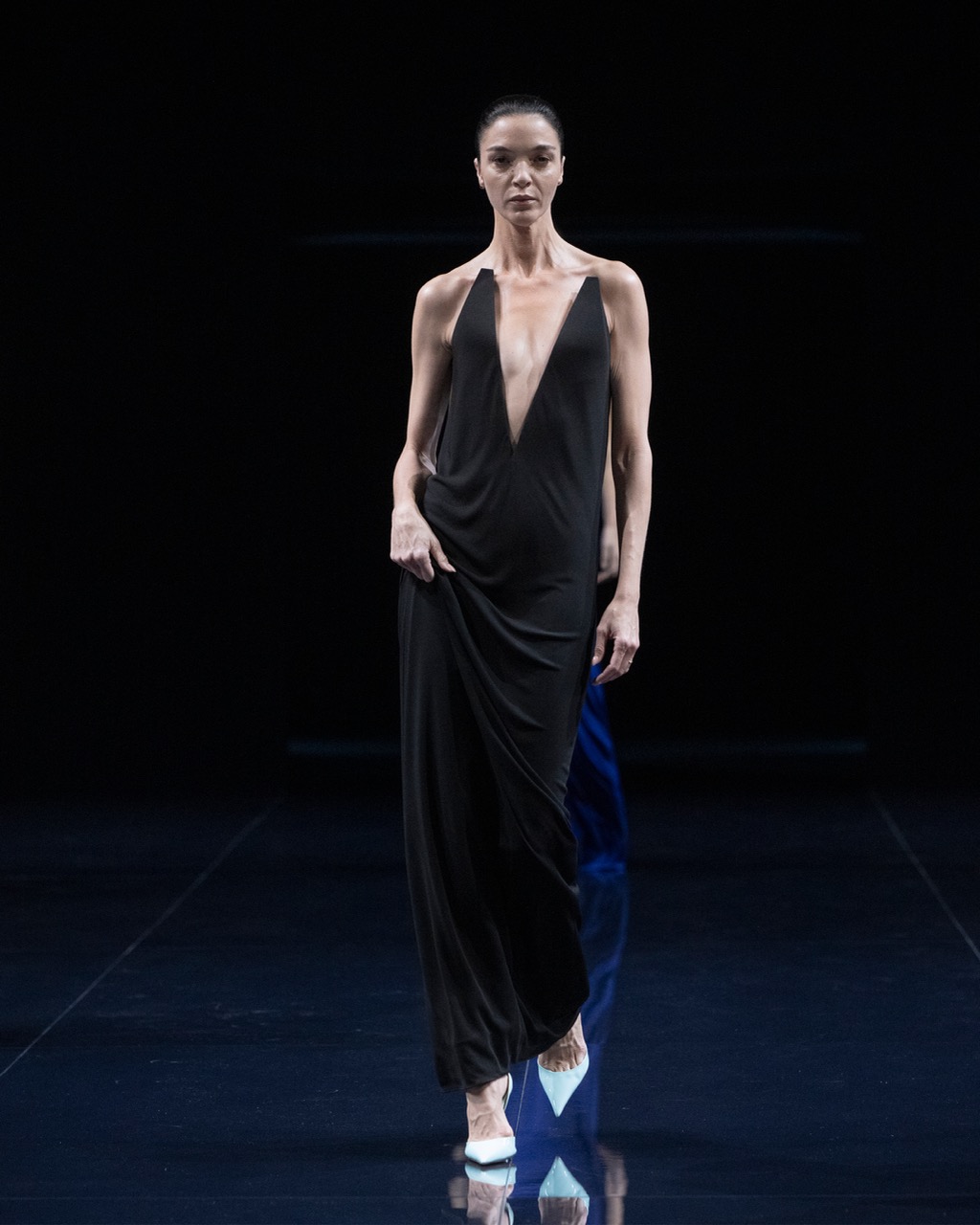
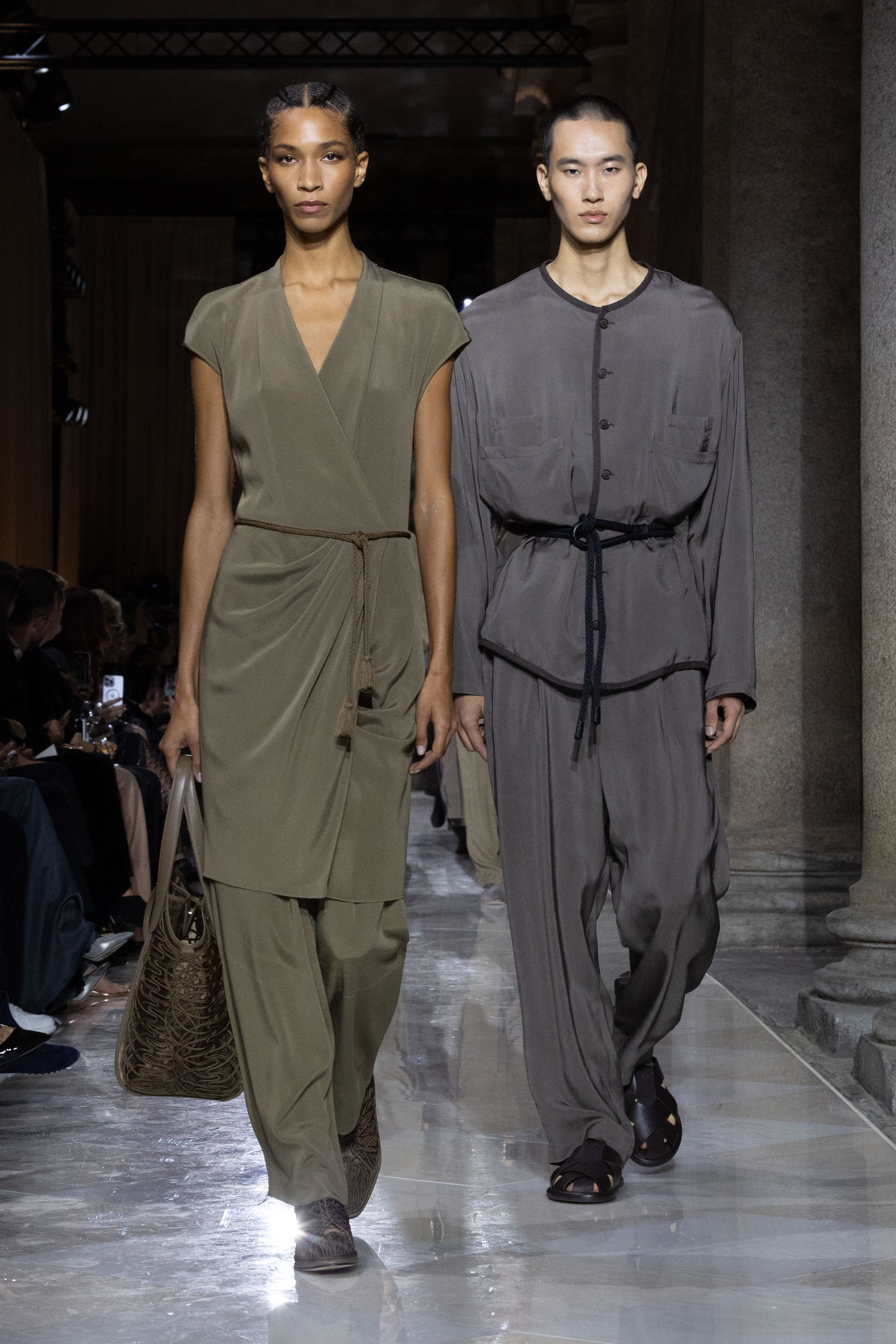
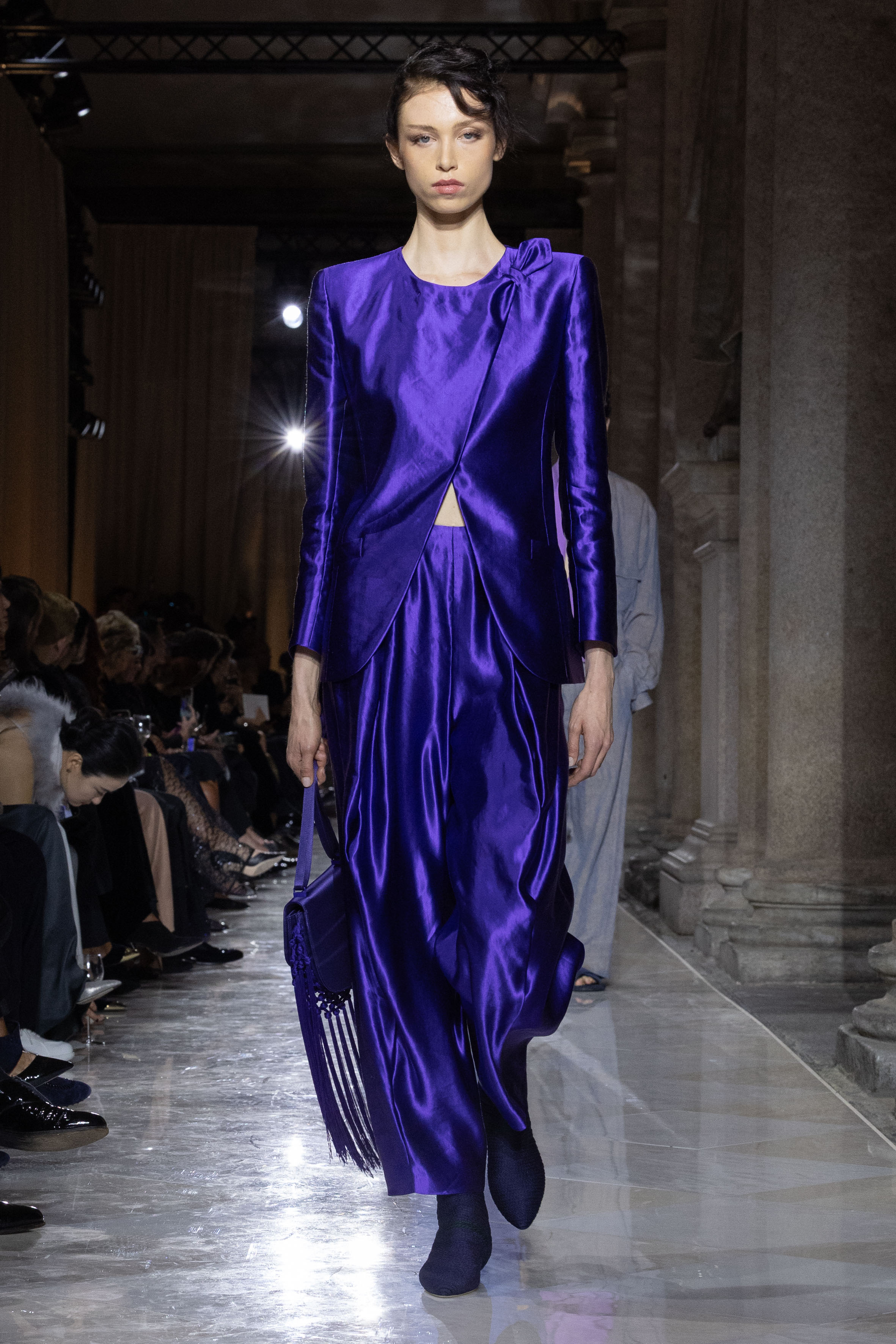
Giorgio Armani’s Final Spring/Summer 2026 Collection Shown in Milan
The Giorgio Armani Spring/Summer 2026 collection, unveiled at the Pinacoteca di Brera in Milan, has taken on heightened significance following the death of the house’s founder earlier this month.
As the last collection personally overseen by Armani, it represents both a closing statement and a tribute to a career that helped shape modern fashion.
The presentation drew on two places central to Armani’s world: Milan, the city of modernity and work where he lived and created for decades, and Pantelleria, the Mediterranean island whose volcanic landscapes and surrounding seas embodied his fascination with nature and contrast. These dual inspirations framed a collection that reflected the themes of conclusion and renewal.
Fluidity and lightness defined the garments, conceived as if moved by the island’s winds. Armani’s philosophy of purity, understood as harmony between clothing and the wearer, guided the approach. Fabrics draped elegantly across elongated silhouettes, ranging from sharply tailored pieces to delicate, ethereal dresses.
The palette shifted from organic neutrals to nocturnal blues and vibrant, jewel-like tones. Colours were employed to capture the sensations of light, earth and sea, creating visual energy and emotional resonance. The intention was to turn the wardrobe into an experience of memory and feeling, a characteristic that had long been central to Armani’s design language.
The paradox that underpinned his aesthetic was again evident: garments of striking stylistic presence rendered weightless and understated. This quality of powerful subtlety has become synonymous with the Armani name, and the collection underscored its timeless relevance.
As the last work Armani completed, the show functioned as both a testament and a farewell. It marked the end of a cycle while also preparing the ground for future directions under new stewardship. To further honour his legacy, models historically associated with Armani’s runway appearances returned to embody his enduring vision of the Armani woman.
The event was not only a seasonal presentation but also a reflection on a designer whose influence defined decades of fashion. In uniting Milan and Pantelleria, and in reaffirming his commitment to elegance, lightness and harmony, Giorgio Armani’s final collection offered a definitive closing chapter to his life’s work.
armani.com
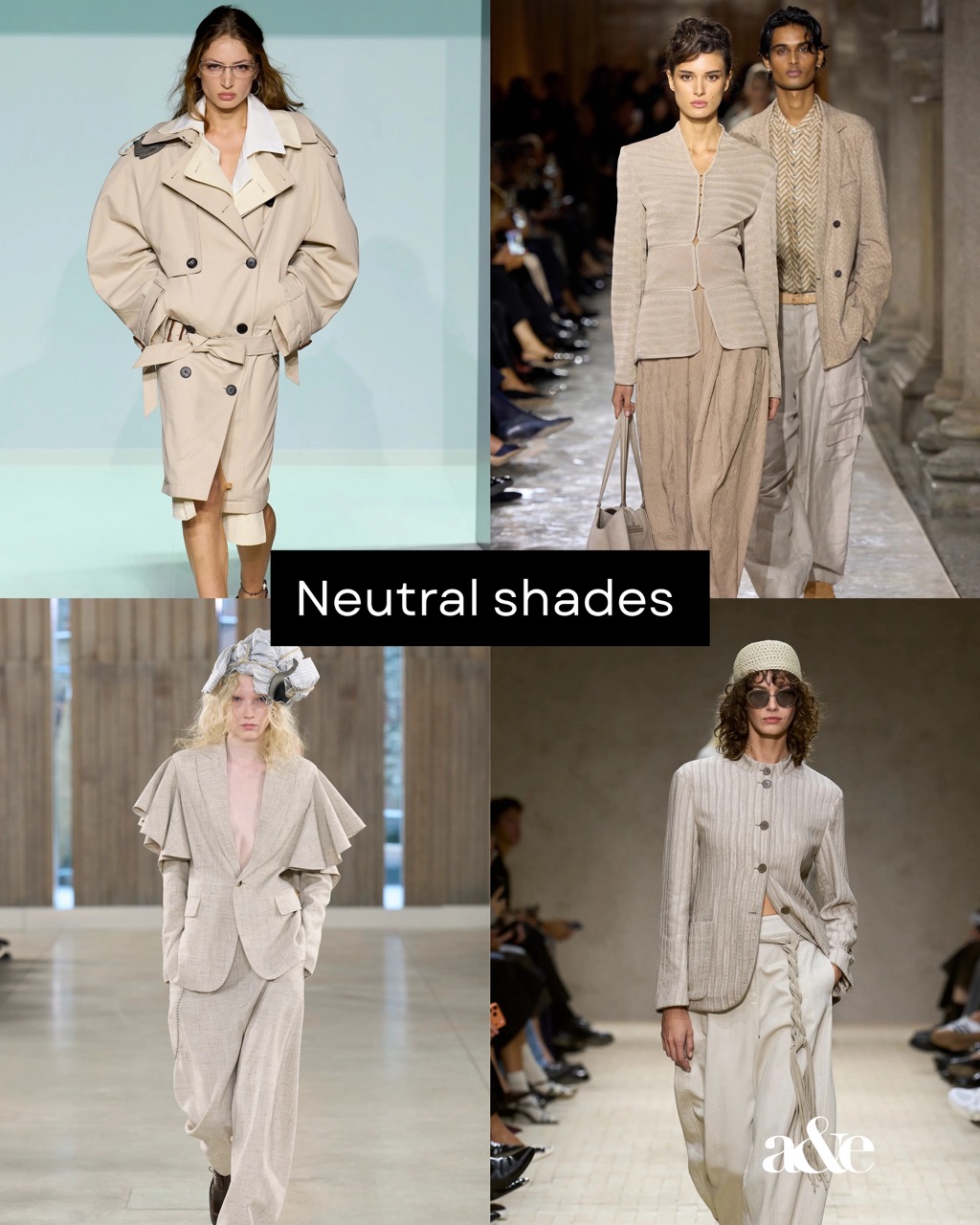
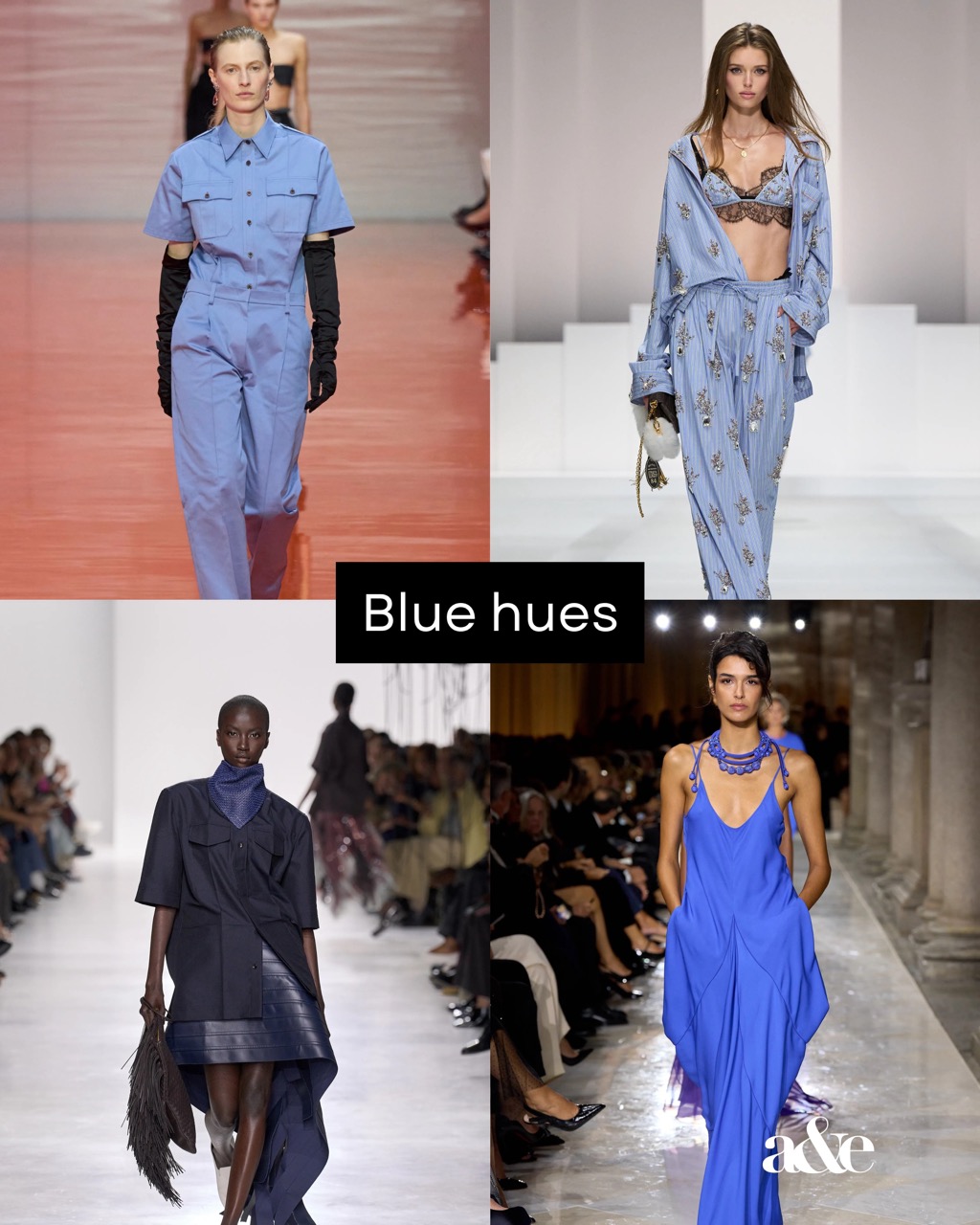
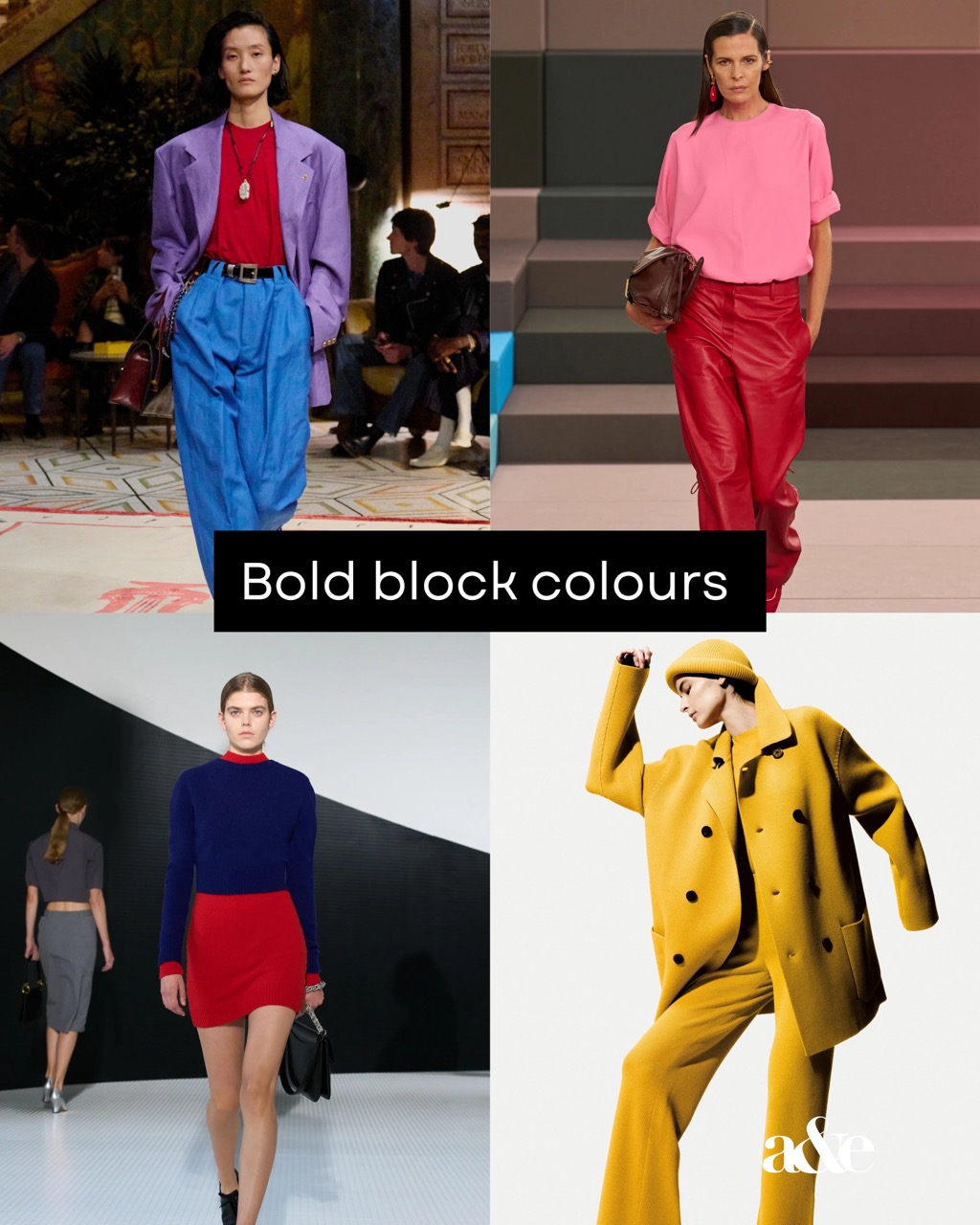
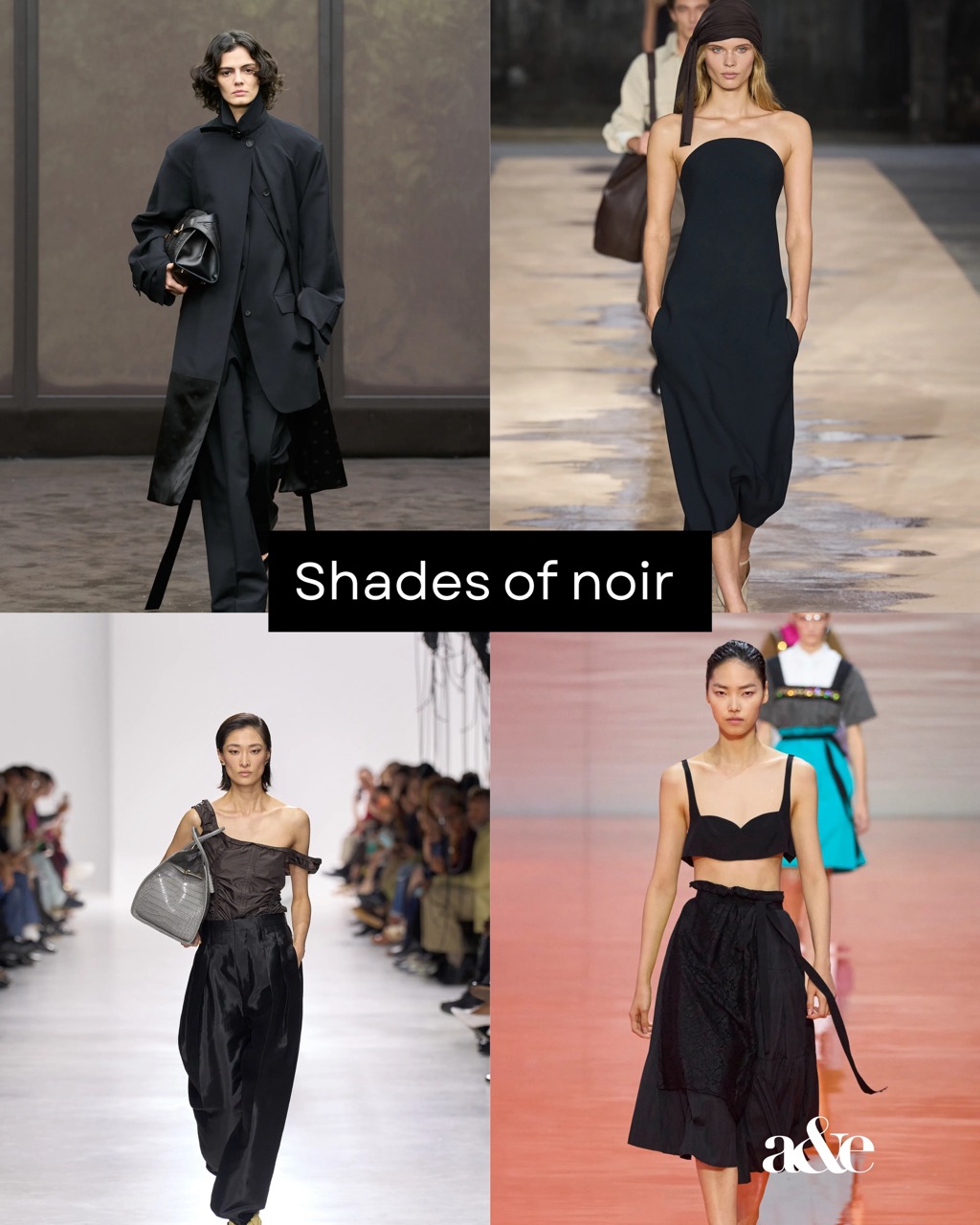
Four New Season Colour Trends From Milan Fashion Week SS26
From neutral shades to bold block colours, these are the key colour trends from the runways at Milan Fashion Week for SS26.
Neutral shades
A refined palette of beige, stone and ivory brings quiet luxury to SS26, offering timeless elegance and versatility.
Blue hues
From powder tones to deep navy, blue dominates the season, evoking both coastal calm and urban sophistication.
Bold block colours
Designers embraced vibrant, saturated tones in striking blocks, creating unapologetically confident statements.
Shades of noir
Black returned in layered textures and sharp tailoring, reasserting its place as fashion’s ultimate power colour.
milanofashionweek.cameramoda.it
Six Iconic Moments From Milan Fashion Week SS26
From Demna’s surprise debut collection to Giorgio Armani’s final farewell, these are the key moments from Milan Fashion Week SS26.
Gucci
Demna kicked the week off with a surprise SS26 Gucci collection (previously, his first collection was due to be revealed next February).
Versace
The first Versace collection without a family member at the helm was presented. Although there was still classic Versace flair – Dario Vitale’s debut was inspired by Gianni’s late-’80s designs.
Dolce & Gabbana
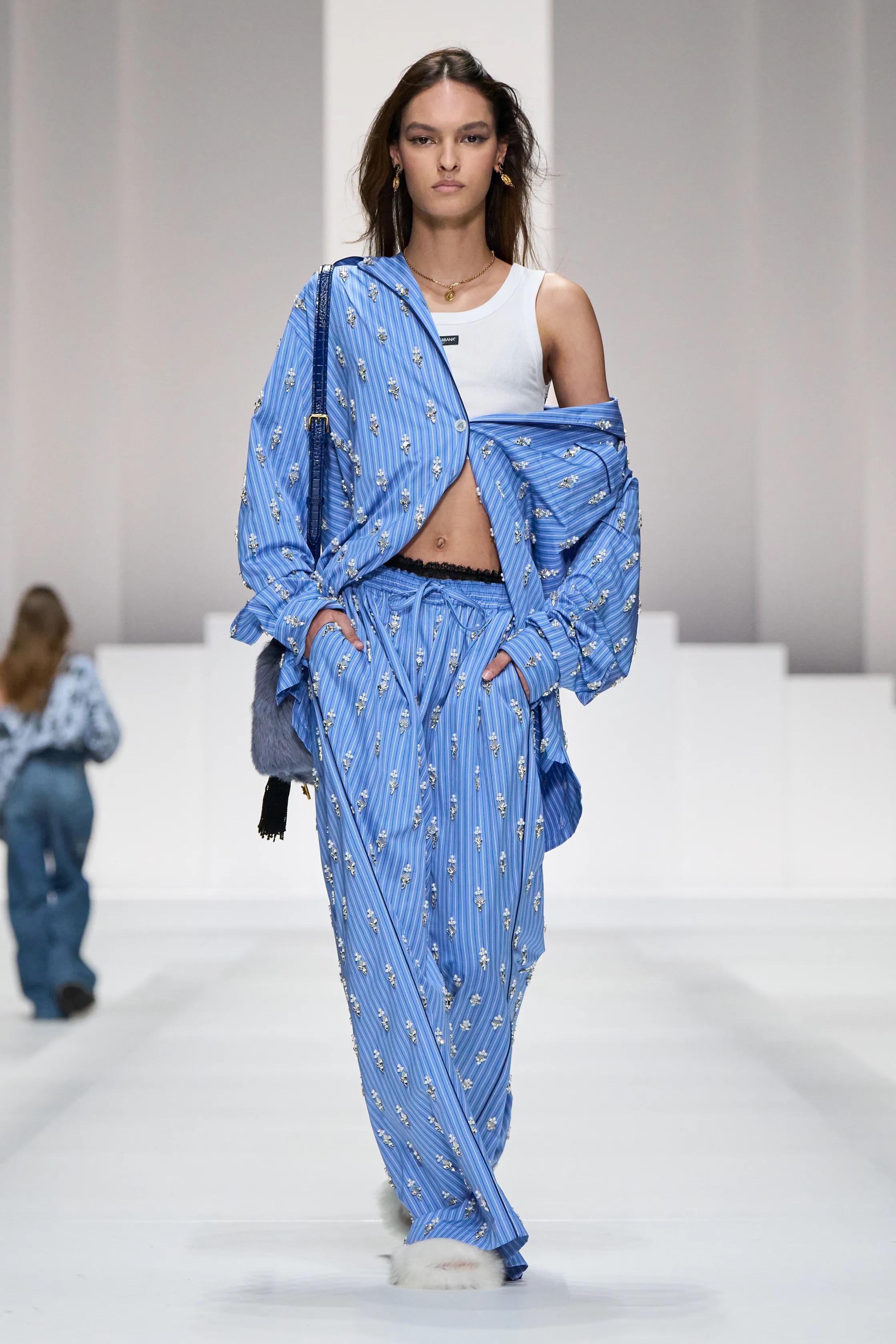
Dolce & Gabbana presented an entire collection centred on sleepwear for SS26
Bottega Veneta
Louise Trotter debuted at Bottega Veneta with classic Italian craftsmanship and pioneering fabrics
Jil Sander
Simone Bellotti’s Jil Sander debut drew on the house’s minimalist codes and artistic references from Richard Prince and Lucio Fontana, balancing structure with lightness.
Giorgio Armani
The final collection by the late, great Giorgio Armani was unveiled in Milan’s incredible Pinacoteca di Brera.
milanofashionweek.cameramoda.it
Ferragamo revisits the Roaring Twenties for Spring/Summer 2026
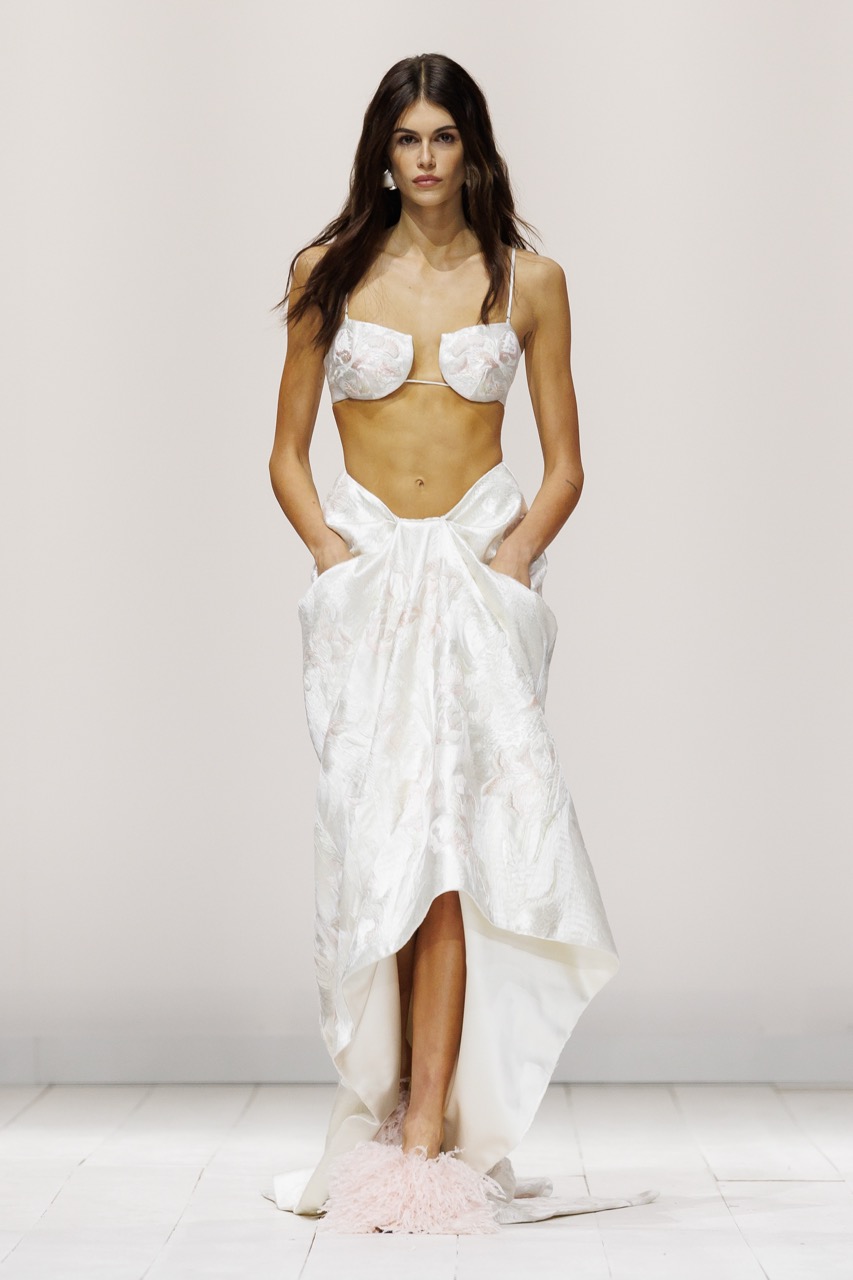
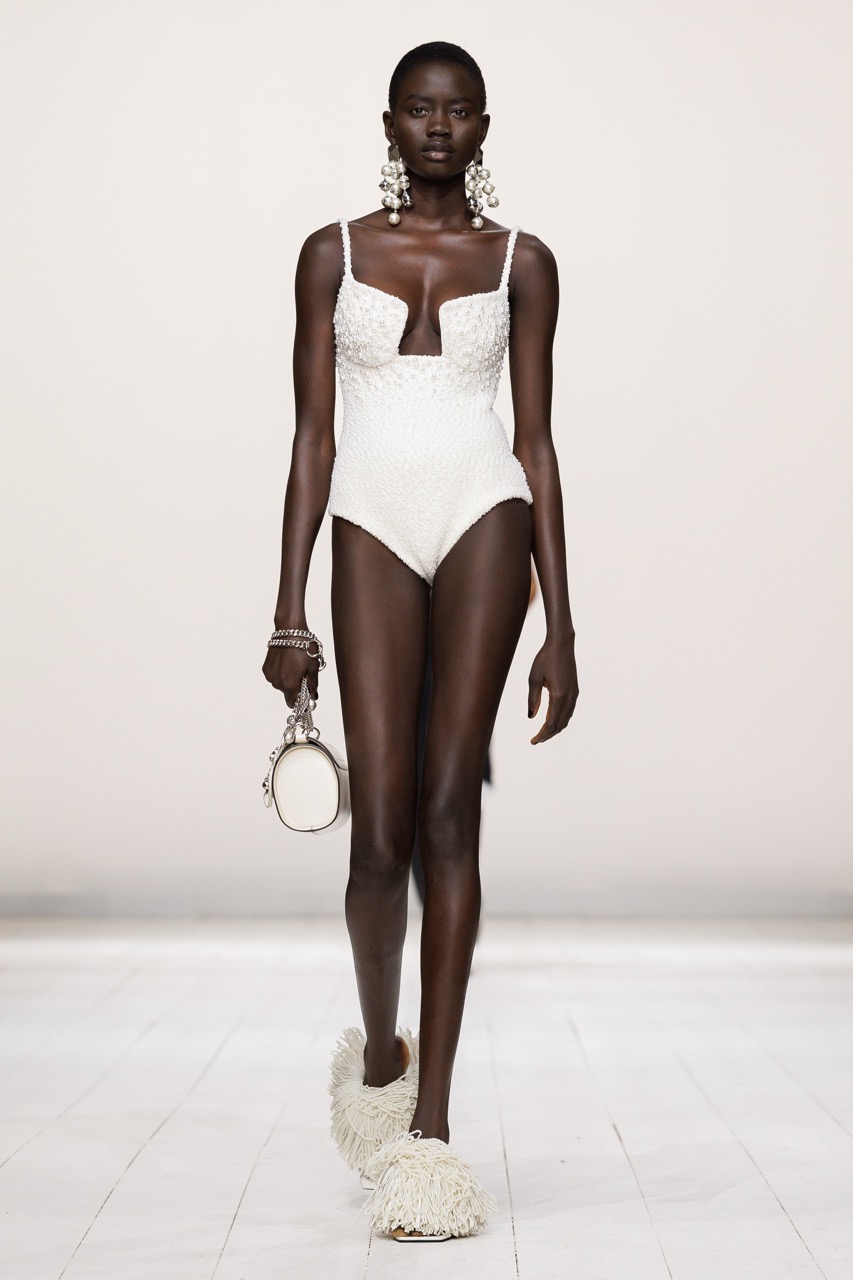
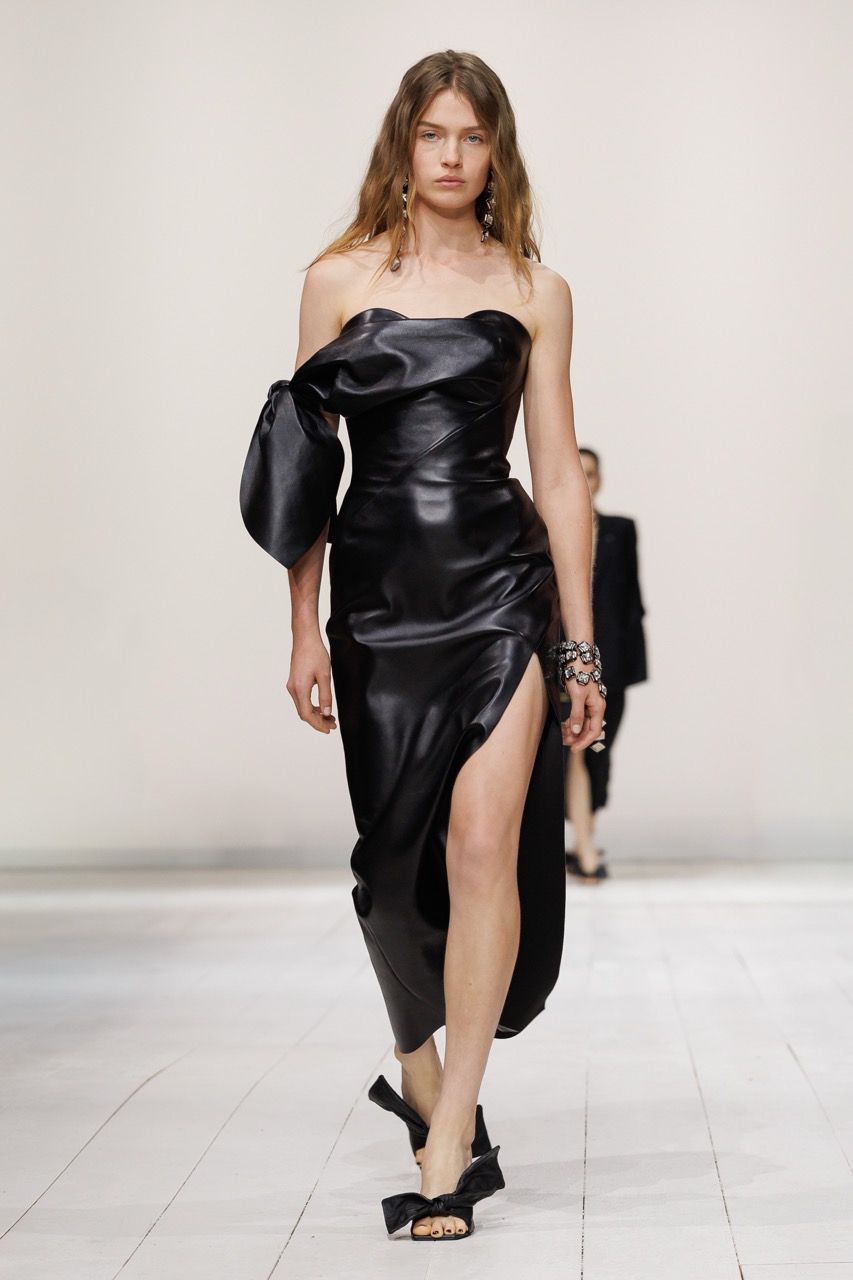
For Spring/Summer 2026, Ferragamo creative director Maximilian Davis has drawn inspiration from the 1920s, the decade in which the house was founded.
The collection examines the eclecticism of the period and its cultural exchanges, with particular focus on the exotic prints and materials that defined the “Africana” movement of the jazz age.
A 1925 archive image of silent screen star Lola Todd in head-to-toe leopard provided the starting point. From there, Davis explored how textiles and prints imported from Africa and the Caribbean became symbols of status in Europe and America. The result appears in silk satin devoré animal prints, plongé leather jewellery and fringed embellishments, reframing the decade through a contemporary lens.
The liberated spirit of the era is further reflected in silhouettes. Speakeasy suiting and straight-cut slip dresses inset with lace cut-outs recall the glamour of the time, while dropped waists and low-slung backs emphasise fluidity. “This was a moment where women were creating a new femininity – it was a celebration of freedom, a reclaiming of self,” says Davis. Menswear references include Harlem Renaissance zoot suits and dandyish tailoring, with ties reworked as scarf sashes across tuxedo waists or patchworked into dresses.
Graphic influences also play a role. Colour-blocked patent leathers with Gancini fastenings, fine-gauge knits and silk crepon florals positioned from archival imagery underline the collection’s link to the illustrative style of the 1920s.
Footwear draws on Ferragamo’s heritage while introducing new forms. The sculptural “S” heel reinterprets a previous “F” style, while caged leather pumps revisit the archival Kimo design. Gancini-chained stilettos, satin-bow straps and boudoir mules embroidered with beadwork expand the range, alongside elongated men’s derbies, slippers and sandals that underline modern elegance.
Accessories highlight the house’s craftsmanship. The Hug bag is presented in new finishes including patent, woven leather, stamped croc and nubuck suede. The foulard-inspired bag features the season’s prints and detachable Gancini hardware. A wrist bag adapted from the archives carries a golden clasp, while feathers trim both bags and the Soft design. Men’s options emphasise woven leather detailing across the Hug and Sailor lines.
By reimagining the Roaring Twenties through archival cues and contemporary reinterpretation, Ferragamo’s latest collection blends heritage with modern sophistication.
Ferragamo.com
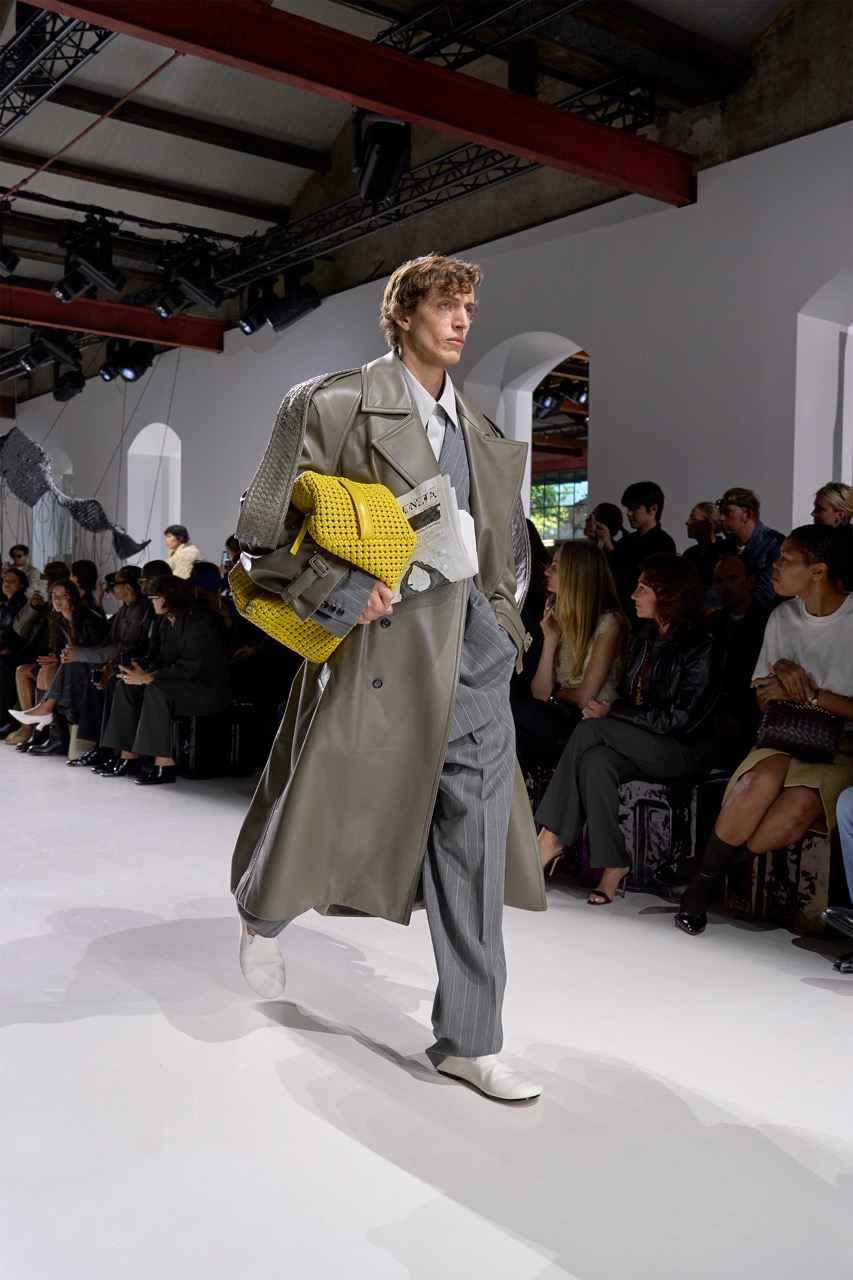
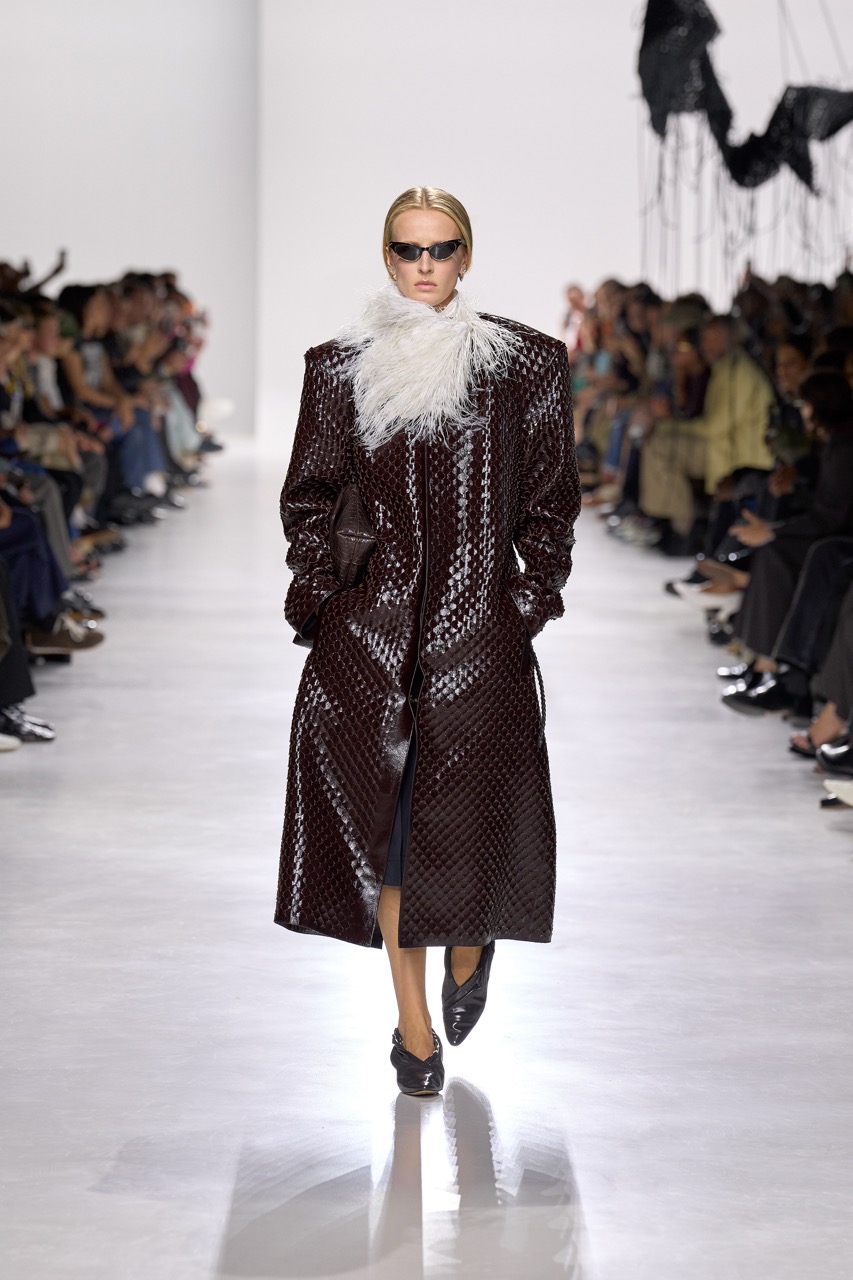
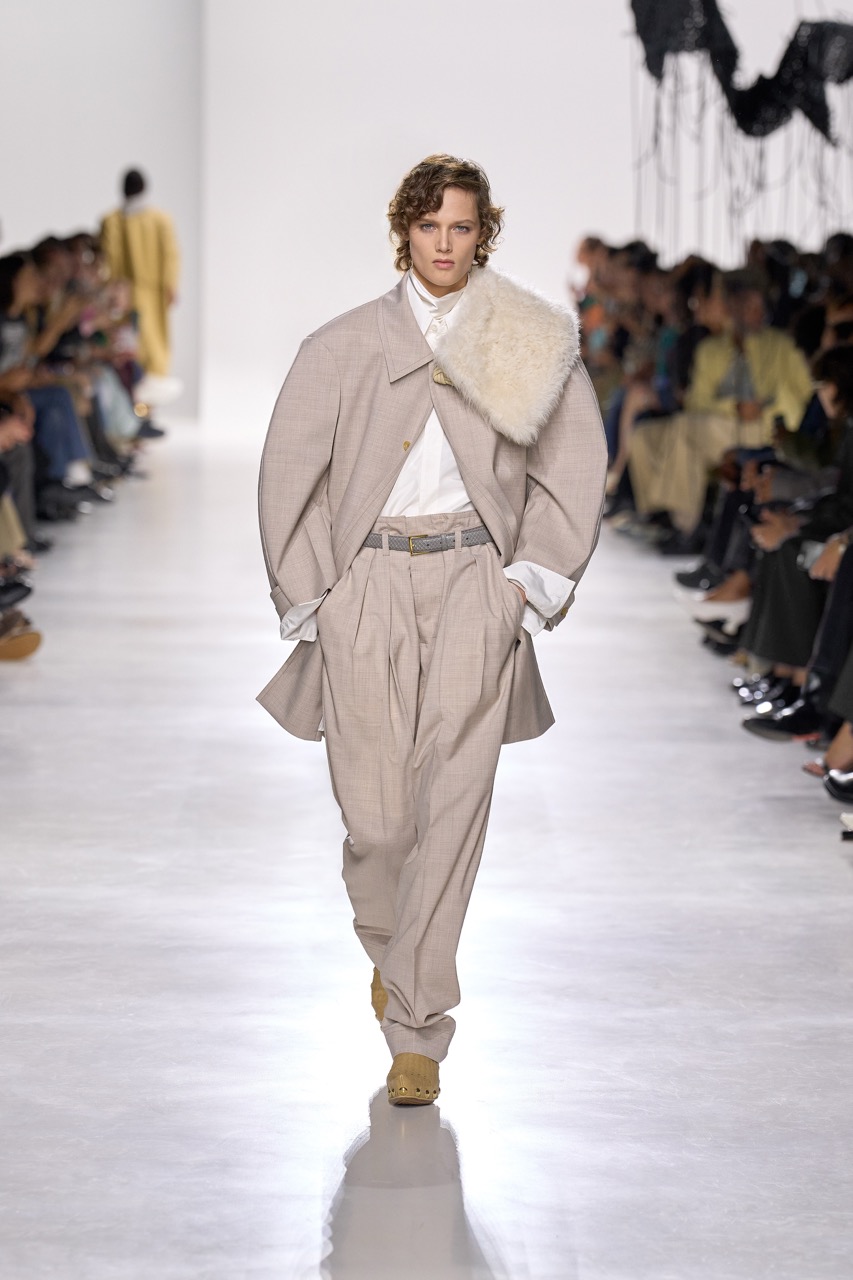
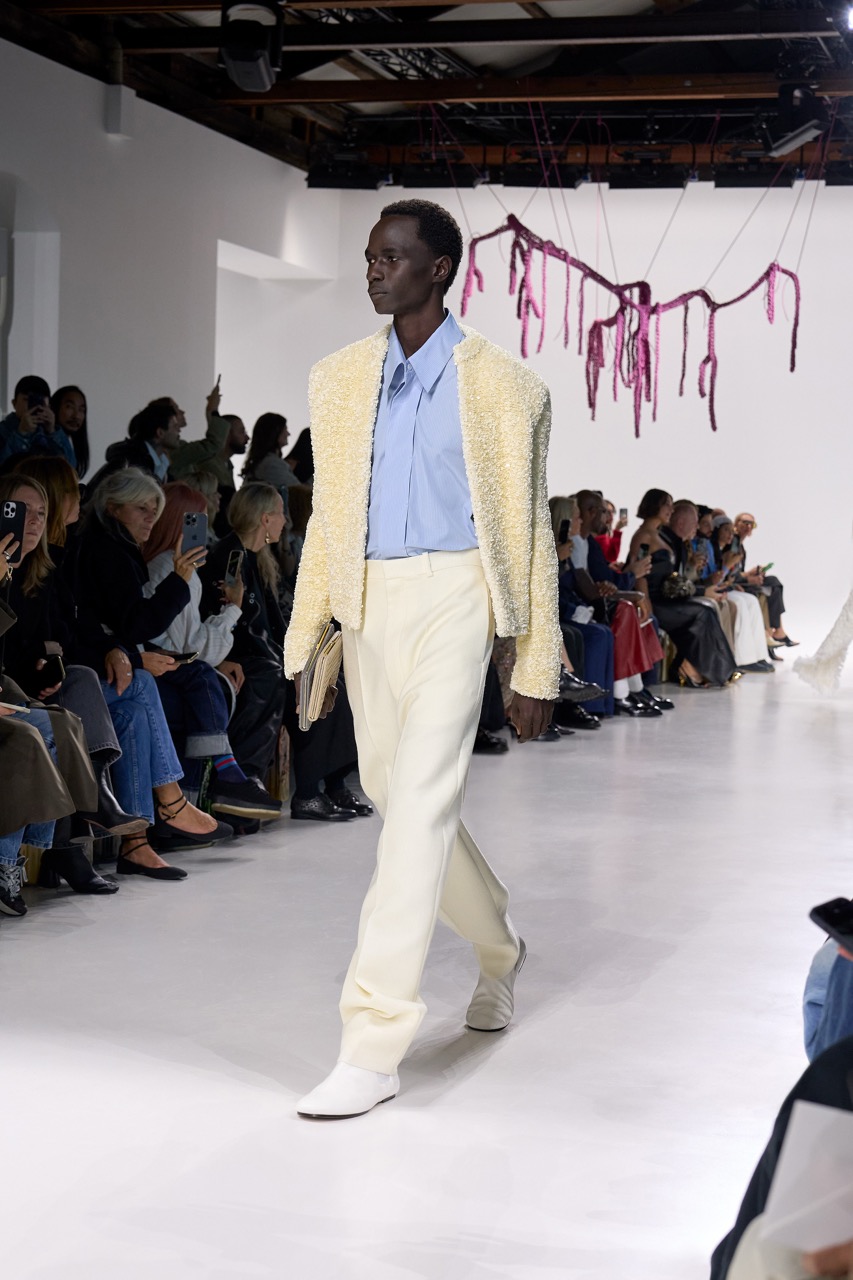
Bottega Veneta Marks 60 Years with Louise Trotter’s Debut Collection
Versace Reveals Its First Collection Without A Family Member As Creative Director
The Spring Summer 2026 show marked a turning point for Versace. For the first time since the House was founded in 1978, a collection was presented without a member of the Versace family at the creative helm.
Instead, new creative director Dario Vitale was in the lead role in arguably one of the most challenging debuts the industry has seen for some time. For his first collection for Versace, he made the astute decision to go back to the house codes, and particuarly Gianni Versace’s late ’80s designs.
The collection drew on the foundations of the brand, unearthing its essence through archival materials that included letters, photographs and ephemera. These references were not simply studied but embodied, expressed through clothing that carried forward the dualities on which Versace was built: body and mind, restraint and indulgence, elegance and impulse.
Staged at the Pinacoteca Ambrosiana in Milan, the setting underscored both the weight of history and the sense of renewal shaping this season. The show explored profoundly Italian codes of dress, yet with a disruptive edge. Classical influences and the grandeur of Magna Grecia informed the collection, but they were twisted to highlight contradiction and sensuality.
Archive-rooted tailoring, shirting, denim and leather were reframed for contemporary life. The refined markers of bourgeois style were countered with a reckless sensuality, producing looks that felt simultaneously polished and undone. Versace’s signature metal dresses appeared with an ease that suggested everyday wear, while art deco accents pointed towards decadence for its own sake.
Layered styling pushed the dialogue between classicism and streetwear. Patched leather blousons, striped denim and knitwear over crisp shirts highlighted Italian precision reinterpreted for modern contexts. Each garment was designed to feel lived in, responsive to the body in movement.
Colour was also key. Denim appeared in saturated Mediterranean tones, leather was etched and patched for tactile impact, and prints carried the House’s signature lurid palette. Trompe l’œil chains, elaborate beading and tightly draped silhouettes reinforced an atmosphere of glamour and control.
The collection functioned as both homage and redefinition. By engaging directly with the House’s archive and its mythology, Versace presented a language of dressing that is sensual, contradictory and unrestrained. In the absence of a family name at the helm, this season positioned Versace as a brand firmly rooted in its past yet recalibrated for a new era.
versace.com
Tod’s Women’s Spring/Summer 2026 Celebrates Italian Craftsmanship
Tod’s has presented its Spring/Summer 2026 women’s collection, a showcase of artisanal mastery and Italian style under the creative direction of Matteo Tamburini.
At its centre is the Gommino, the brand’s iconic loafer, which serves as the unifying thread of the collection. Its signature elements are reinterpreted through metallic details on shoes and bags, as well as decorative perforations applied to both clothing and accessories.
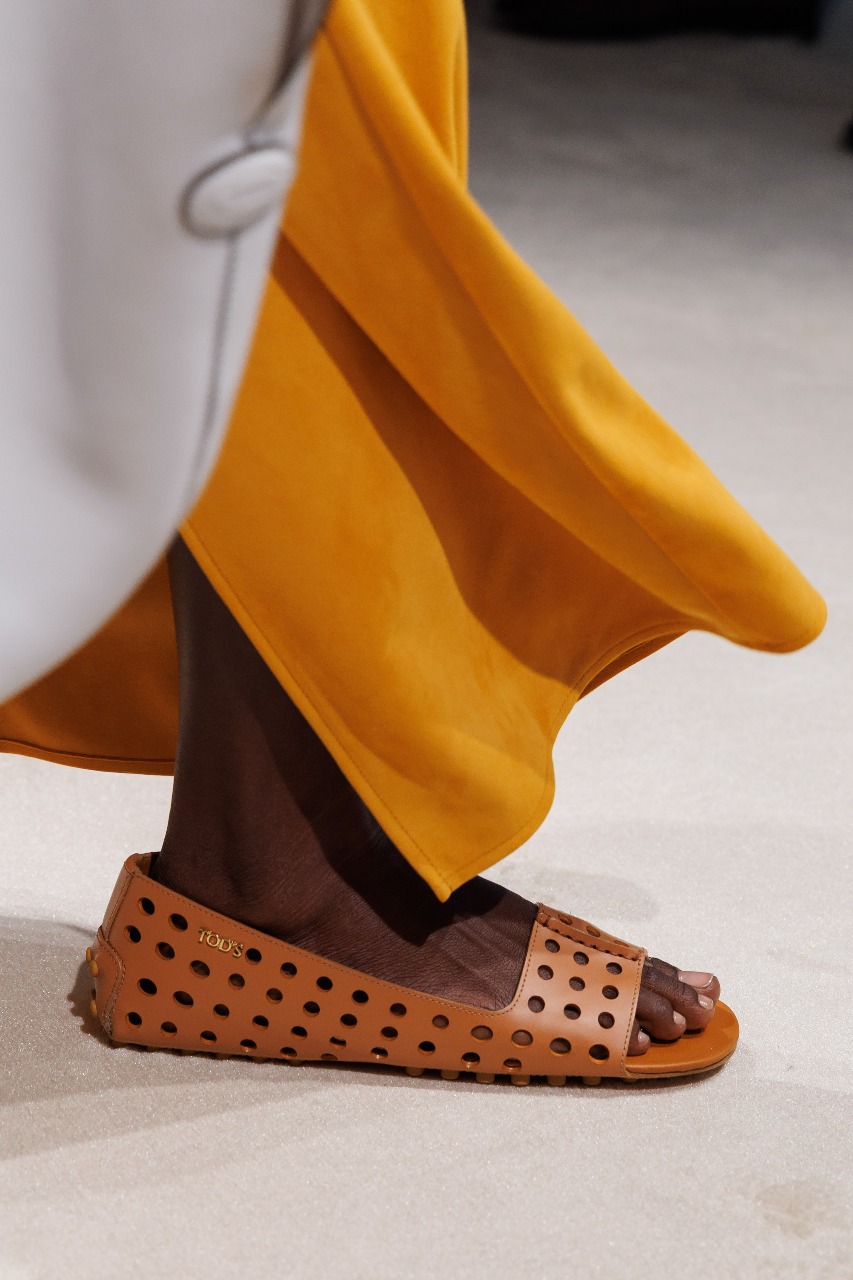
The new season open-toe Gommino loafer
Leather, Tod’s defining material, is handled with precision using refined techniques such as inlays, perforations and hand-stitched seams. Every stage of production, from the selection of hides to assembly, reflects the traditions of Italian craftsmanship, now approached with a modern sensibility. The result is clothing and accessories that highlight both material softness and attention to detail.
The Di Bag Folio and its deconstructed silhouette
Tamburini’s designs emphasise drape and movement, with garments created to sit lightly on the body. A warm palette of natural tones defines the season, with burnt hues and saffron yellow providing distinctive accents. Key pieces include a soft Pashmy caban, a perforated nappa jacket, and a cotton trench with inserts that reveal sartorial workmanship. Stripes, a recurring summer motif, appear as leather appliqué, the result of expert handcraft applied to lightweight fabrics.
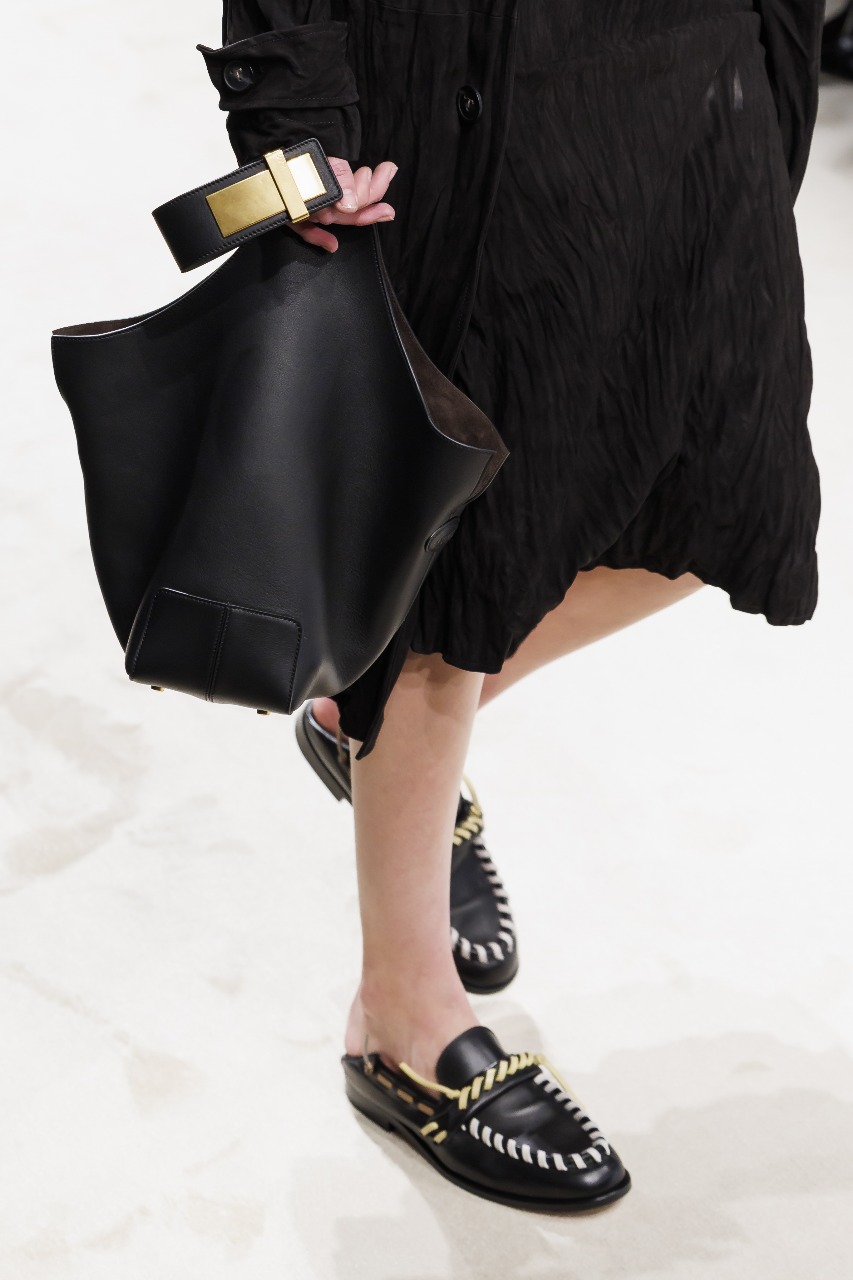
The T Timeless bag’s new top-handle design
The Gommino itself is adapted for summer, presented in its classic closed form and also in an open-toe version. Both feature perforations that echo the loafer’s iconic sole, while other models are distinguished by hand-worked multicoloured leather threading.
The Wave Bag and its contrast stitching
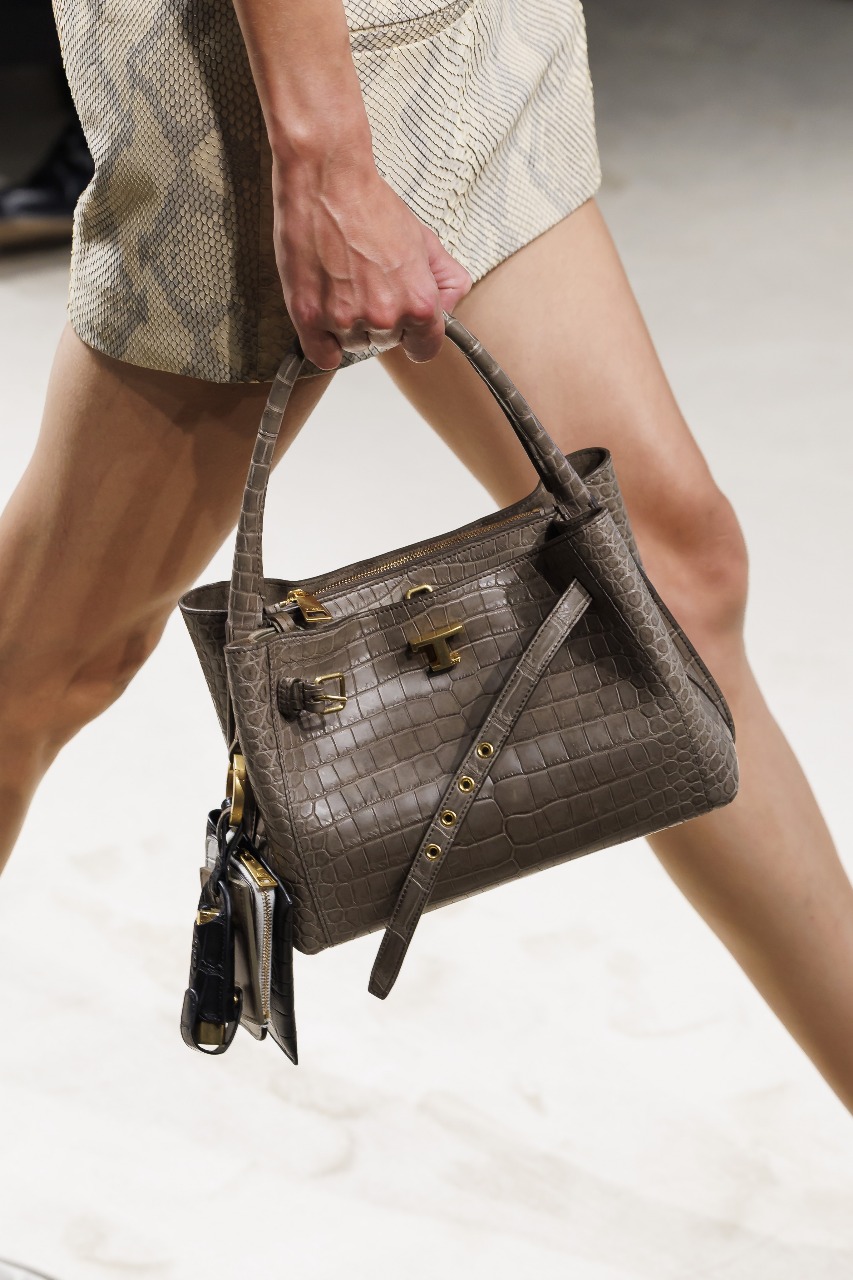
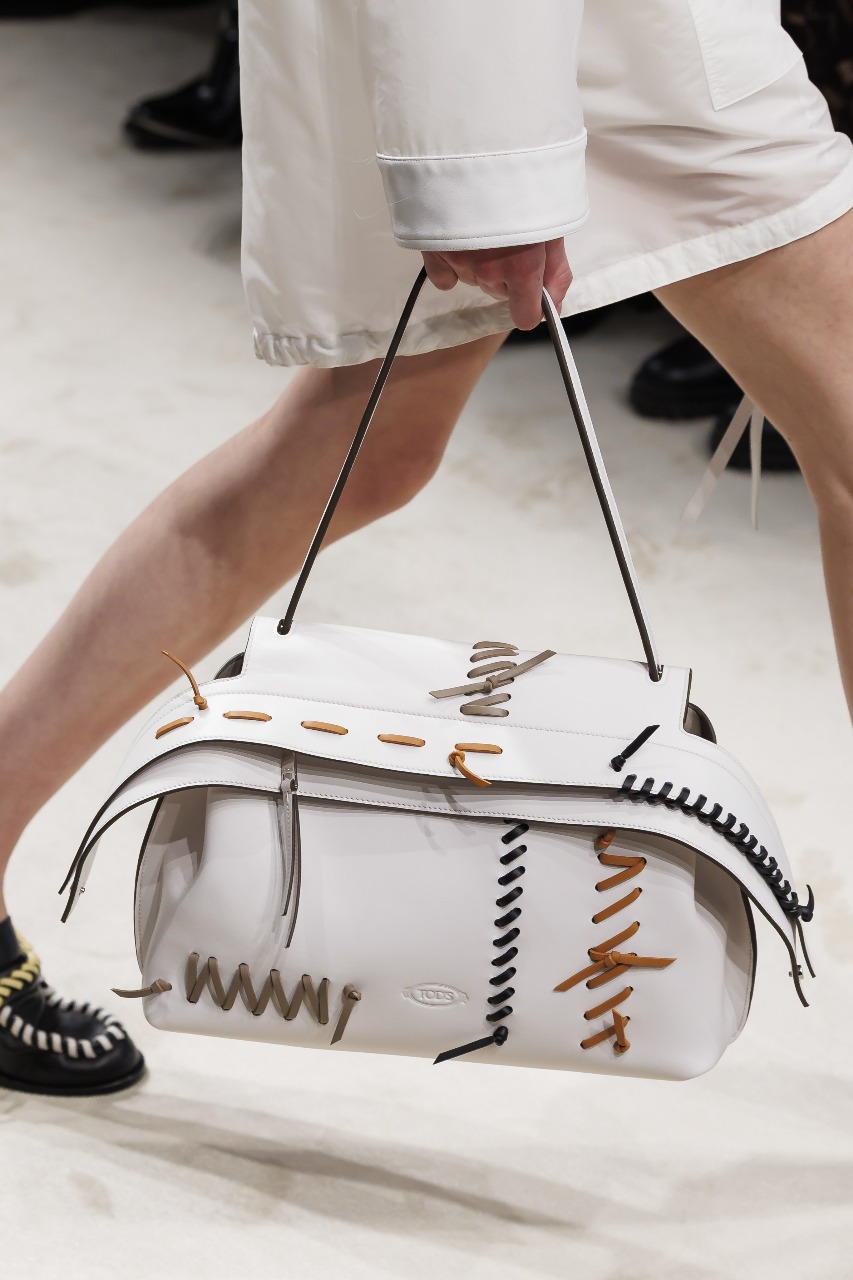
Tod’s handbags further illustrate the brand’s dedication to artisanal excellence. The Di Bag Folio, with a deconstructed silhouette, is available as a roomy tote or in a layered version, finished with intricate inlays. The T Timeless bag appears in a new top-handle design, featuring continuous perforations that create a refined graphic effect. The Wave Bag continues Tod’s exploration of luxury leather codes, its contrasting stitching highlighting the precision of its construction.
By combining heritage craftsmanship with modern design cues, Tod’s Spring/Summer 2026 collection maintains the brand’s distinctive identity while evolving its icons. The Gommino remains central, not only as a shoe but as a design language extended across clothing and accessories, leaving its mark on the season.
Tods.com
Emporio Armani Presents Spring/Summer 2026 Collection: Ritorni
Emporio Armani has unveiled its Spring/Summer 2026 womenswear collection, titled Ritorni, the first show since the iconic founder of the house, Giorgio Armani, passed away earlier this month.
The presentation centres on the idea of return, exploring the sensations experienced when re-entering the city after a journey. The designs reflect that fleeting moment when memories of travel remain vivid, and elements from afar merge with the rhythm of urban life.
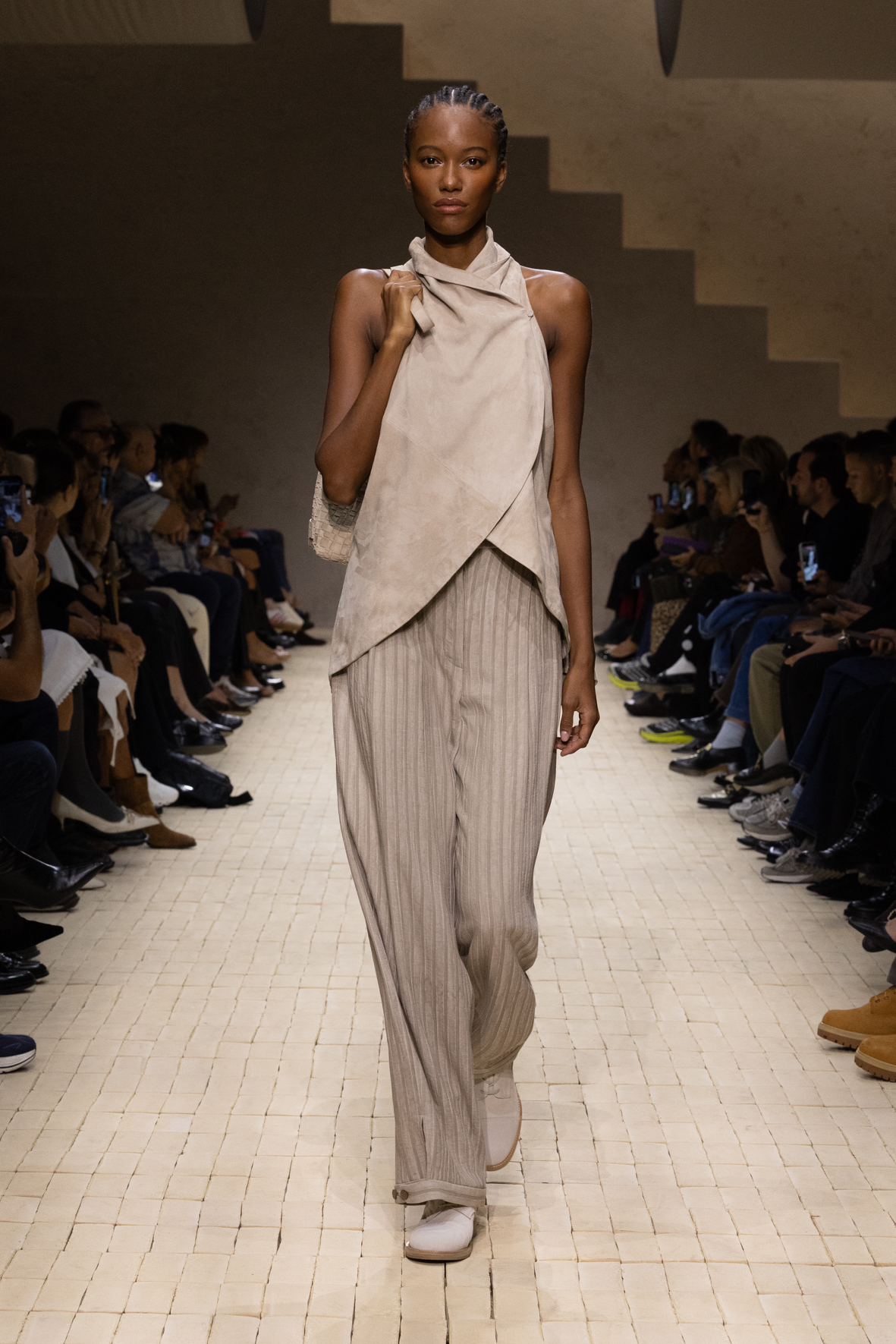
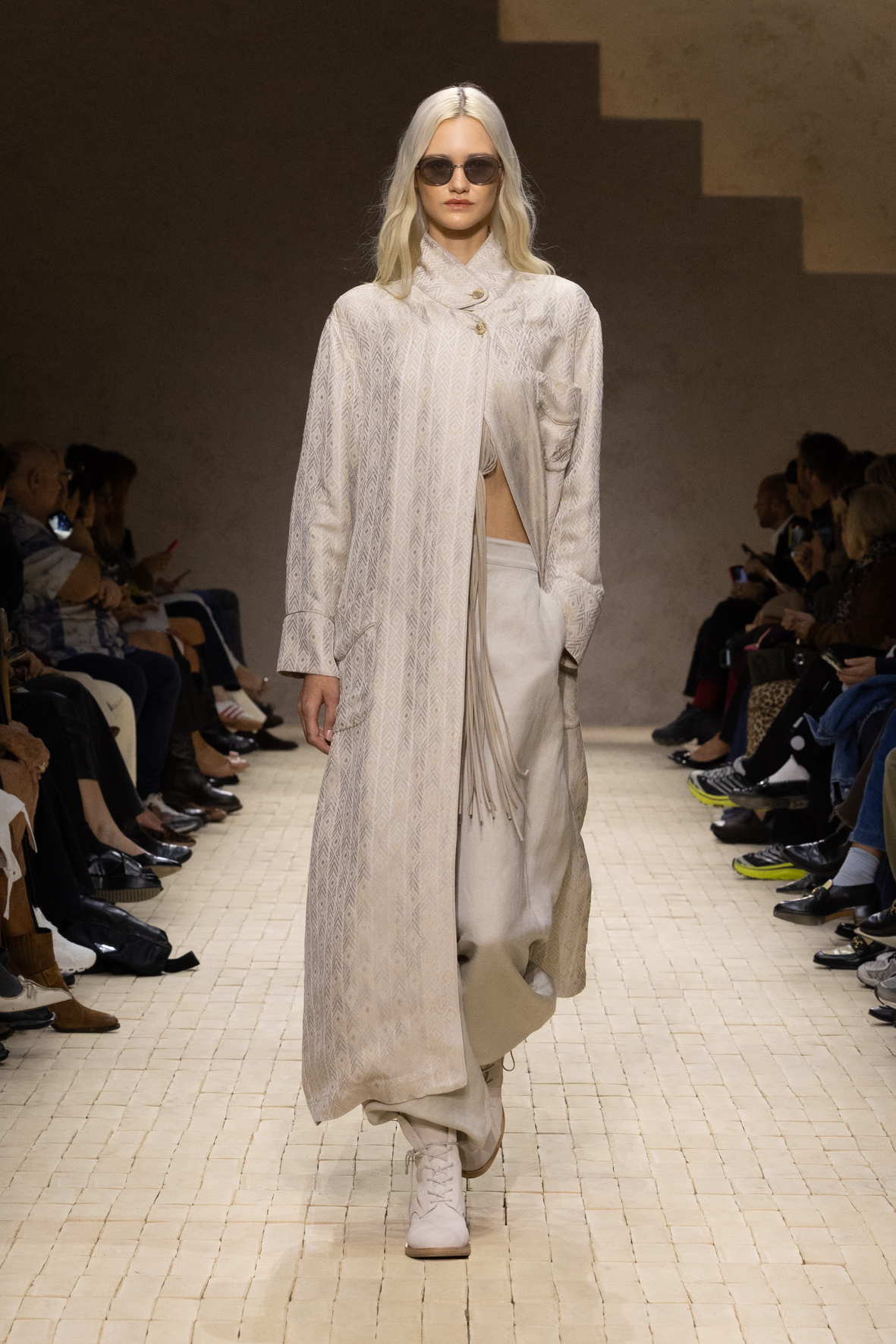
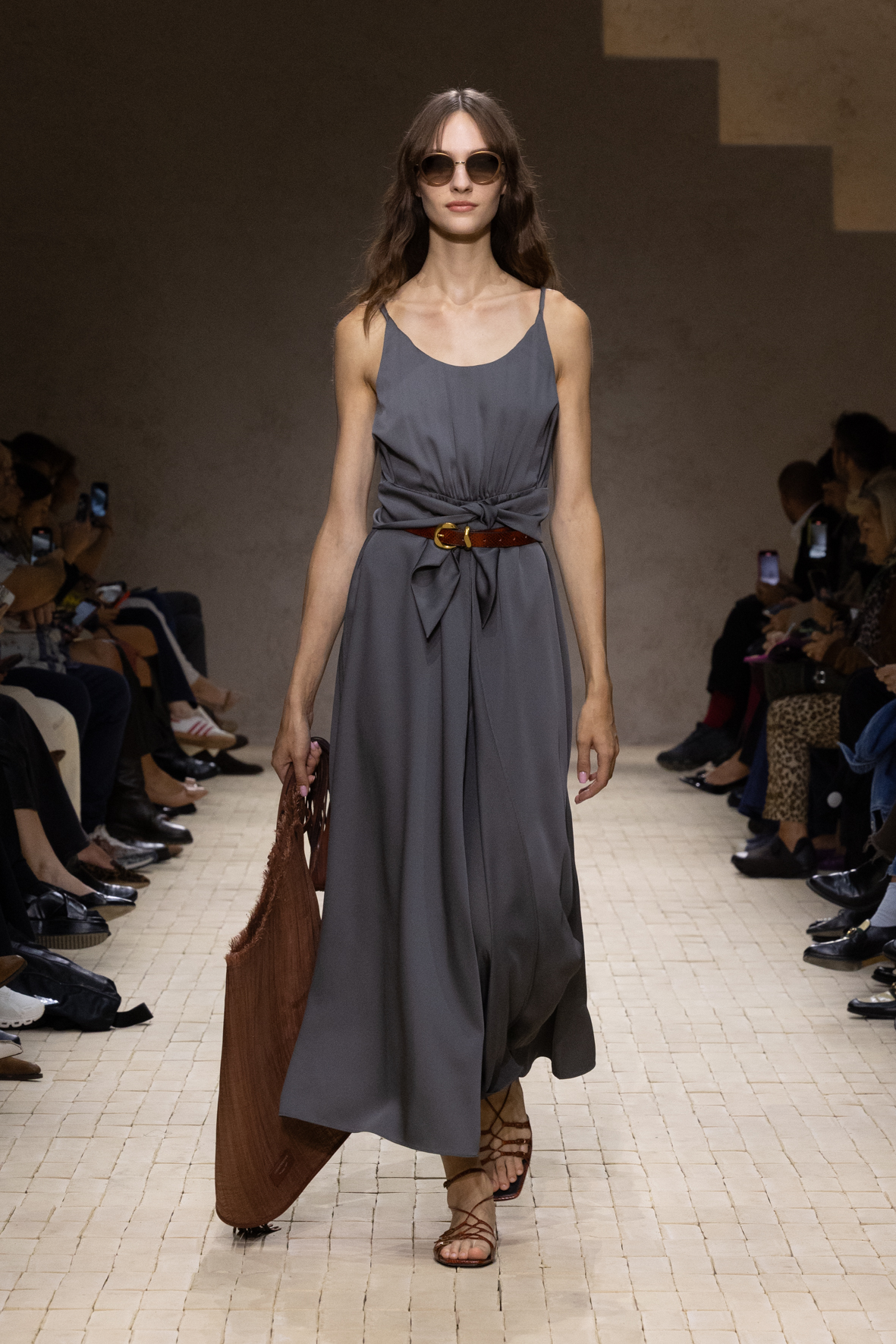
The collection also embodies a return to the essence of Armani style. Light, elongated silhouettes and a careful balance of masculine and feminine codes serve as the foundation. Through Emporio Armani’s perspective, these characteristics are infused with multicultural references, creating a wardrobe that blends global influences with the brand’s established language of elegance and restraint.
Key details include ikat fabrics, wide trousers tapering at the ankle, kimono fastenings, obi belts, raffia crochet caps, nomadic bags and flat sandals with pronounced toes. Each piece nods to distant places, yet is reinterpreted for a metropolitan setting. Jackets, duster coats, parkas, pyjamas, jumpsuits and abbreviated skirts anchor the collection firmly within a contemporary city wardrobe.
The silhouette is fluid and dynamic while maintaining a sense of composure. Colour palettes shift from beige to black, passing through neutral and mineral grey tones. These shades add depth without overwhelming the understated shapes, enhancing the sense of lightness that defines the season.
One standout element is the waistcoat, which recurs throughout the collection in multiple versions, underscoring its versatility and role as a symbolic piece. Traditional codes of dress are consistently revisited, culminating in eveningwear crafted from ultra-light nylon. These pieces bring a delicate, almost ethereal quality to the line, showing how technical fabrics can contribute to formal attire without losing refinement.
The overall effect is an approach to dressing that feels both spontaneous and precise. The collection demonstrates Emporio Armani’s ongoing ability to merge cultural inspiration with urban practicality, providing women with options that move effortlessly between travel and city life.
armani.com
Loro Piana Presents Spring/Summer 2026 at Palazzo Citterio
Loro Piana unveiled its Spring/Summer 2026 collection during Milan Fashion Week at Palazzo Citterio, an 18th-century mansion recently restored as part of the “Grande Brera” project.
The venue, which houses an extensive collection of 19th and 20th-century art, provided the backdrop for a presentation that explored the relationship between colour, fashion, and cultural heritage.
The collection highlighted the Maison’s emphasis on colour, an evolution from its long-standing reputation as “Masters of Fibres.” Drawing on its fabric-making expertise, Loro Piana presented garments distinguished by rich hues, unique mélanges, painterly prints, and tonal layering. The palette ranged from earthy neutrals to sun-drenched shades, designed to create a visual dialogue with the surrounding artworks by artists including Umberto Boccioni, Carlo Carrà, Giorgio Morandi, Amedeo Modigliani, and Pablo Picasso.
The set design reinforced the collection’s theme of movement and fluidity. Free-form shapes on the floor evoked the idea of a journey, while an emphasis on horizontality lent the display a refined and light quality. Coloured carpets harmonised with the garments, while silver mirrored surfaces and lacquered panels offered contrast. The result was an environment that allowed the clothes to be viewed from multiple angles, emphasising their lightness and detail.
Accessories, including new bags and leather goods, were integrated seamlessly into the presentation. These were displayed on Italian vintage furniture from the last century, chosen for its walnut and lacquered finishes. The combination of historical craftsmanship with contemporary design elements underlined the Maison’s approach to balancing past and present.
The choice of Palazzo Citterio was significant. Acquired by the Italian state in 1972, the building underwent a complex transformation under the direction of Angelo Crespi and architect Mario Cucinella, concluding in 2024. The restoration preserved its historical architecture while introducing modern features to create an inclusive cultural hub. Its reopening on the 8th of December 2024 marked the completion of a project envisioned more than half a century ago, situating the palace at the centre of Milan’s cultural map.
By situating its latest collection in such a setting, Loro Piana reinforced its connection to art and culture. The presentation created a dialogue between fashion, architecture, and visual art, reaffirming the brand’s commitment to understated elegance and Italian excellence.
loropiana.com
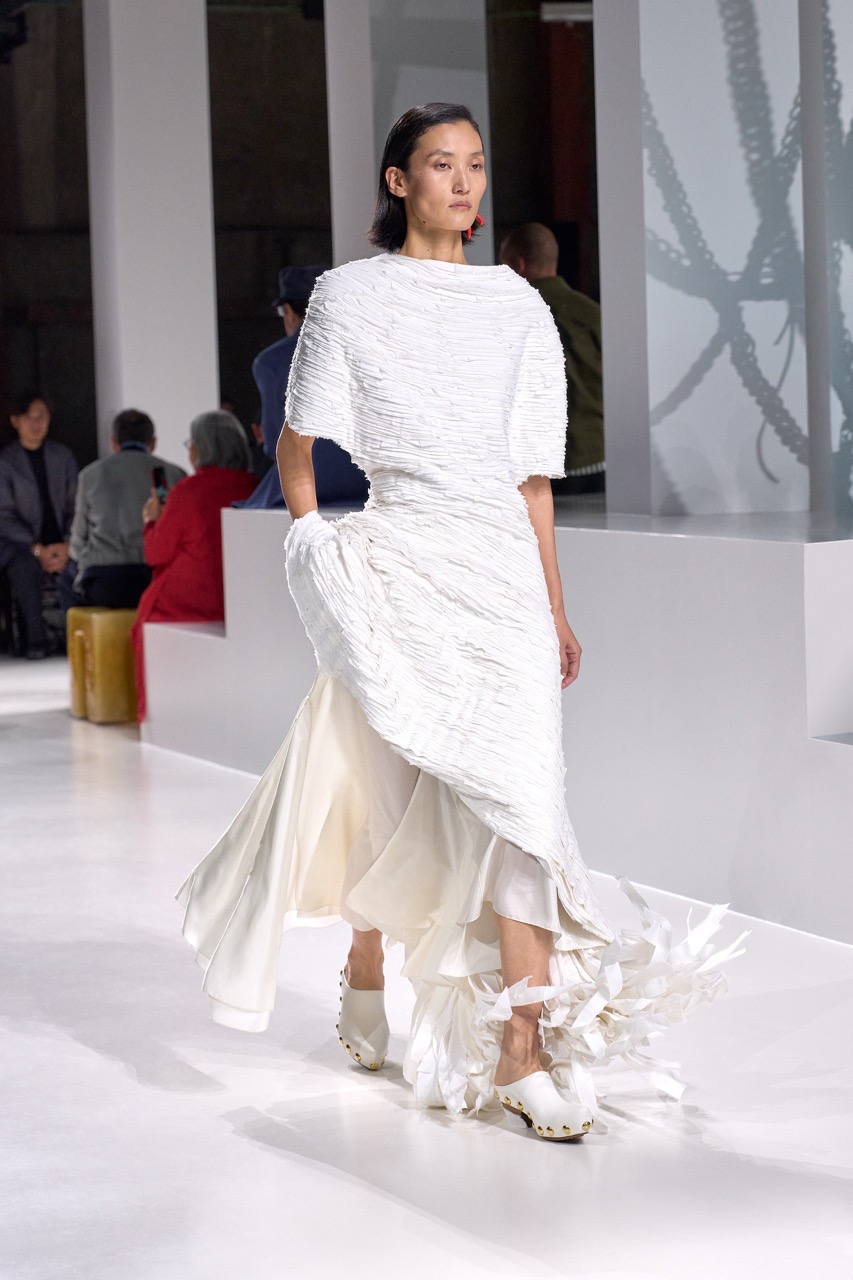
Max Mara Brings ‘Rococo Modern’ To Milan Fashion Week
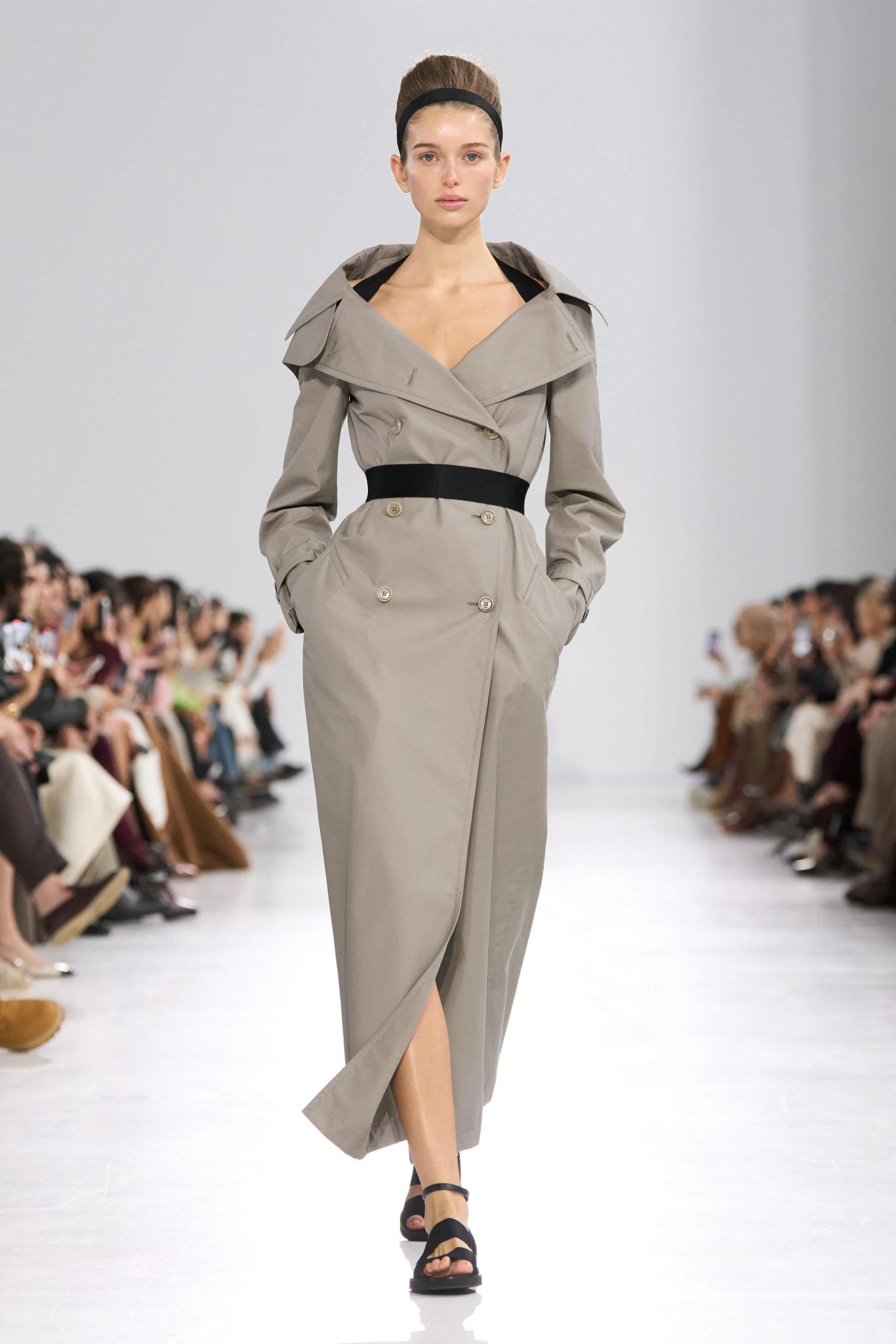
Max Mara’s Spring Summer 2026 collection, titled Rococo Modern, explores the tension between restraint and extravagance, delivering a wardrobe that blends historical references with contemporary tailoring.
Presented in Milan, the collection takes inspiration from Madame de Pompadour and the wider Rococo movement, balancing elegance with an edge of wit and rebellion.
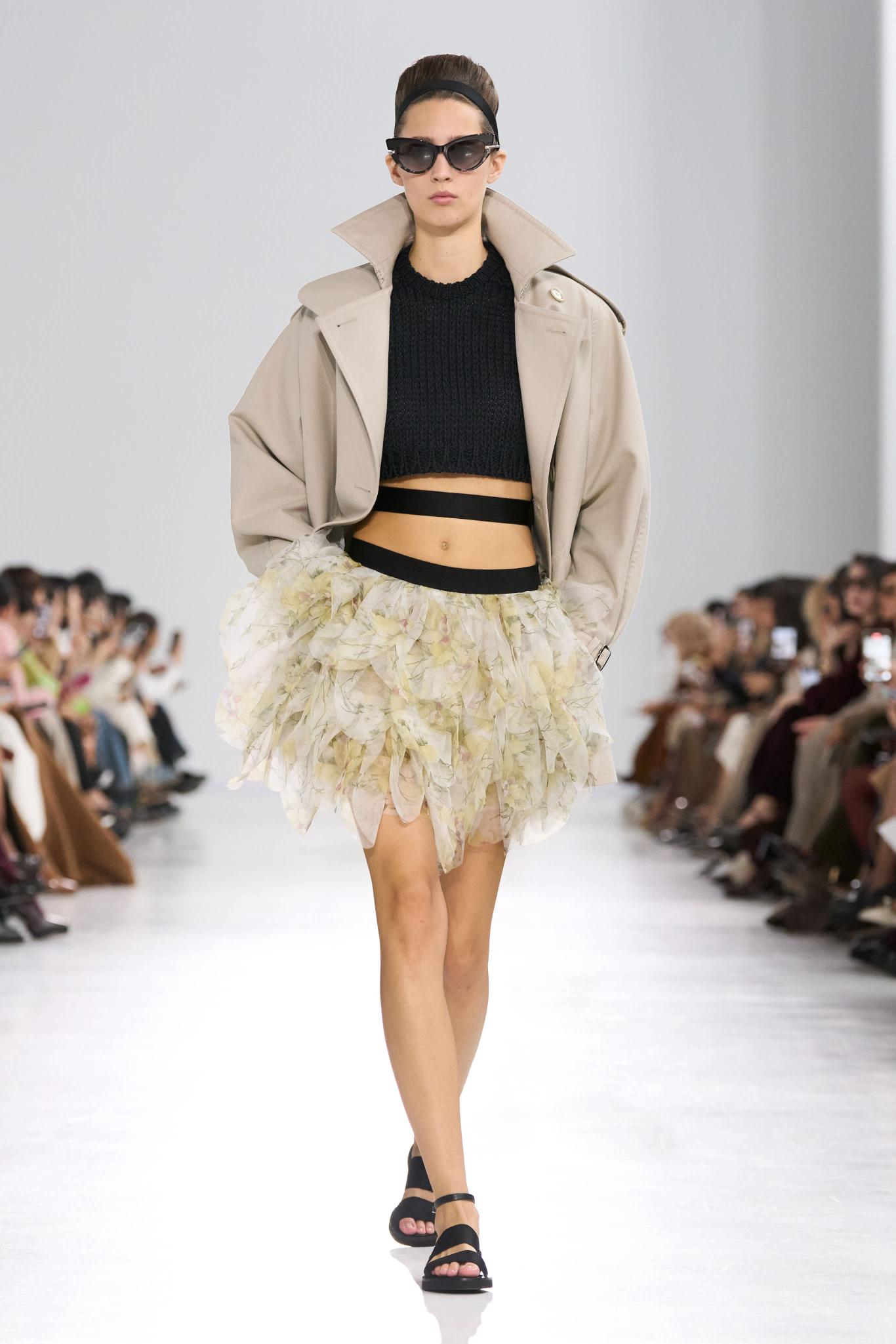
The line opens with a study of contrasts: a precisely constructed trench coat is offset by a folded corona at the shoulders, evoking the plumage of exotic birds. Similarly, a disciplined pencil skirt is interrupted by a gauzy crest at the hip, while an organza piece built from hundreds of cut and folded fragments resembles petals or fronds. The palette leans towards subtle tones, echoing the ethereal shades associated with Rococo.
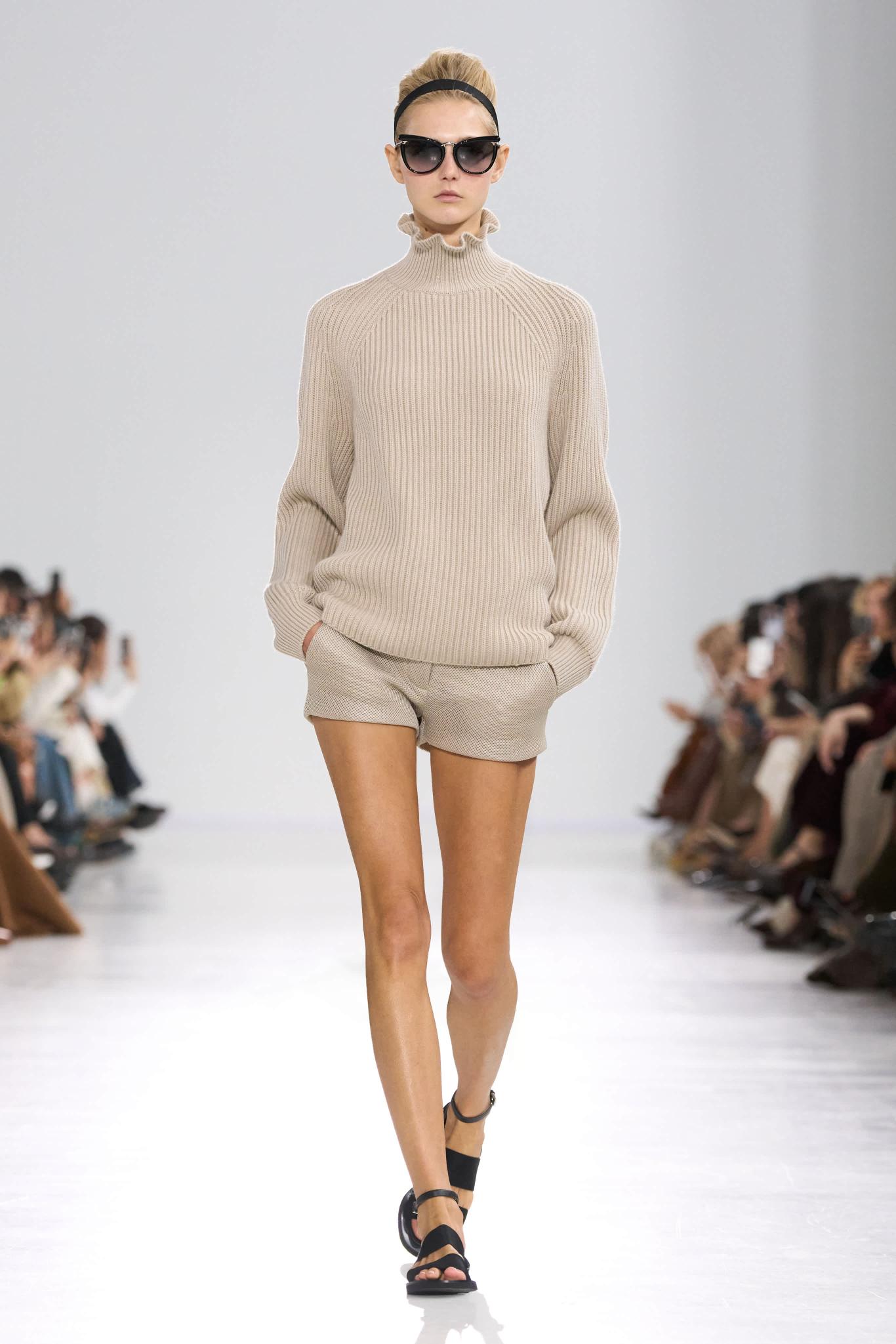
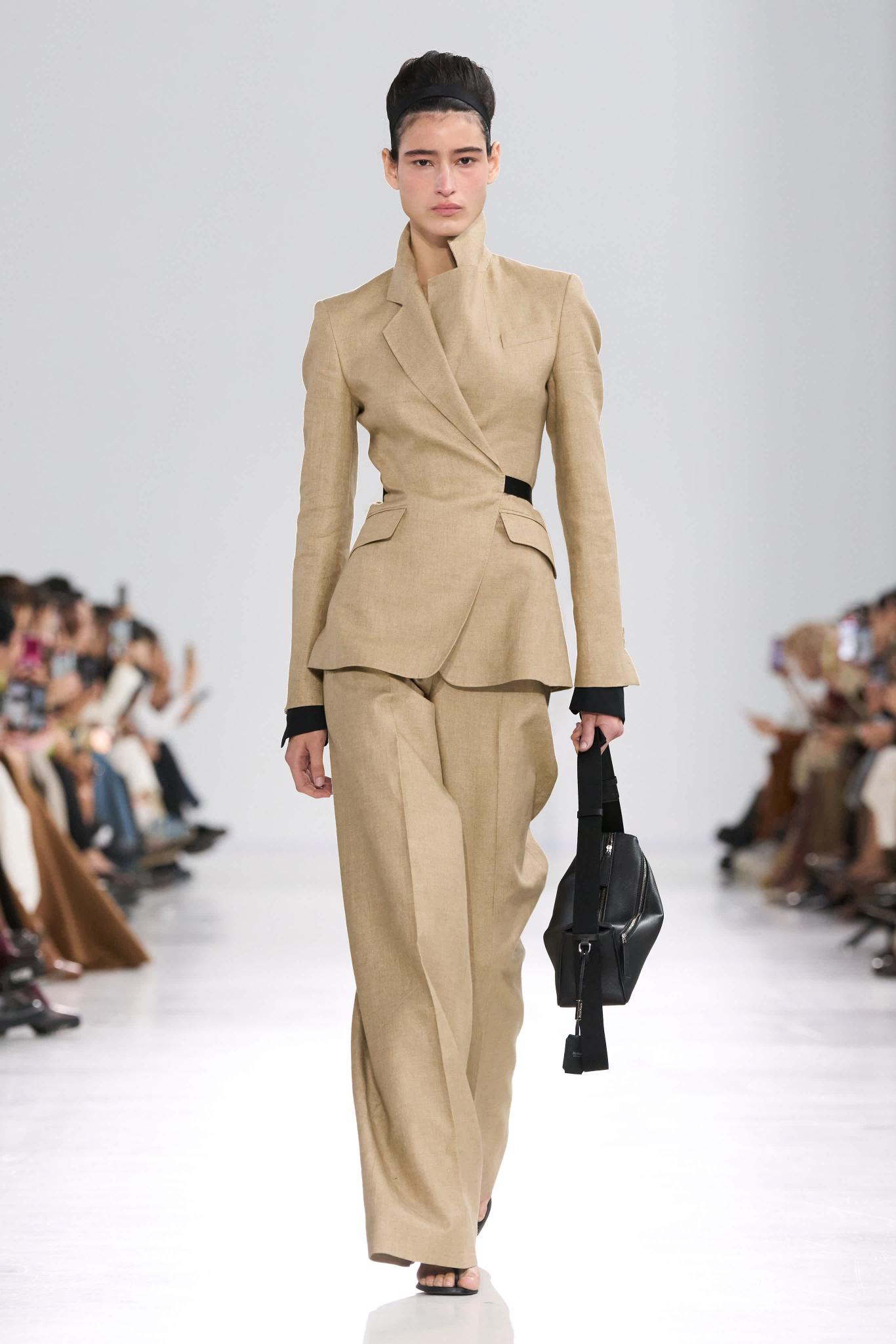
The collection is not all fantasy. Utility emerges through black elastic belts, harness-style straps and a selection of accessories that provide structure. Tailored jackets and low-slung trousers serve as the grounding elements, reinforcing the contemporary relevance of the collection. The outcome is an equilibrium between whimsy and modern discipline.
Rococo, as described by author Novala Takemoto, prizes “elegance, sweet emotions, and fantasy more than morals and truth,” and celebrates “ultimate individualism.” For Max Mara, Rococo is not a relic but a sensibility that resonates with the spirit of punk rock and anarchism. It becomes a lens through which to consider both past and present.
Madame de Pompadour, the collection’s central muse, embodied this philosophy. Rising without aristocratic birth, she built influence through talent, intellect and cultural patronage. She supported artists such as Watteau and Boucher, co-founded the Sèvres porcelain factory, and engaged in philosophical exchanges with Voltaire and Montesquieu. She also advocated for Diderot’s Encyclopédie, aligning herself with Enlightenment ideals. Her independent spirit and cultivated tastes make her a fitting figure within Max Mara’s tradition of celebrating formidable women.
The Rococo emphasis on asymmetry and nature surfaces in the detailing. Prints inspired by eighteenth-century cabinets of curiosities depict flora and fauna of land, sea and air, layered delicately in organza. The collection finds strength in lightness, elegance in play, and modernity in historical reference.
maxmara.com