

A Summer Seen Through The Iconic FENDI Lens
FENDI presented its Spring/Summer 2026 women’s and men’s collections against a set conceived by Marc Newson, marking the designer’s return to a collaboration that began in Milan 25 years ago.
The installation, an undulating pixelated colour field, was inspired by FENDI’s floral motifs and constructed as a patchwork of quilt-like squares. For Newson, the project was both a celebration of craft and a study of colour, drawing on heritage while embracing innovation.
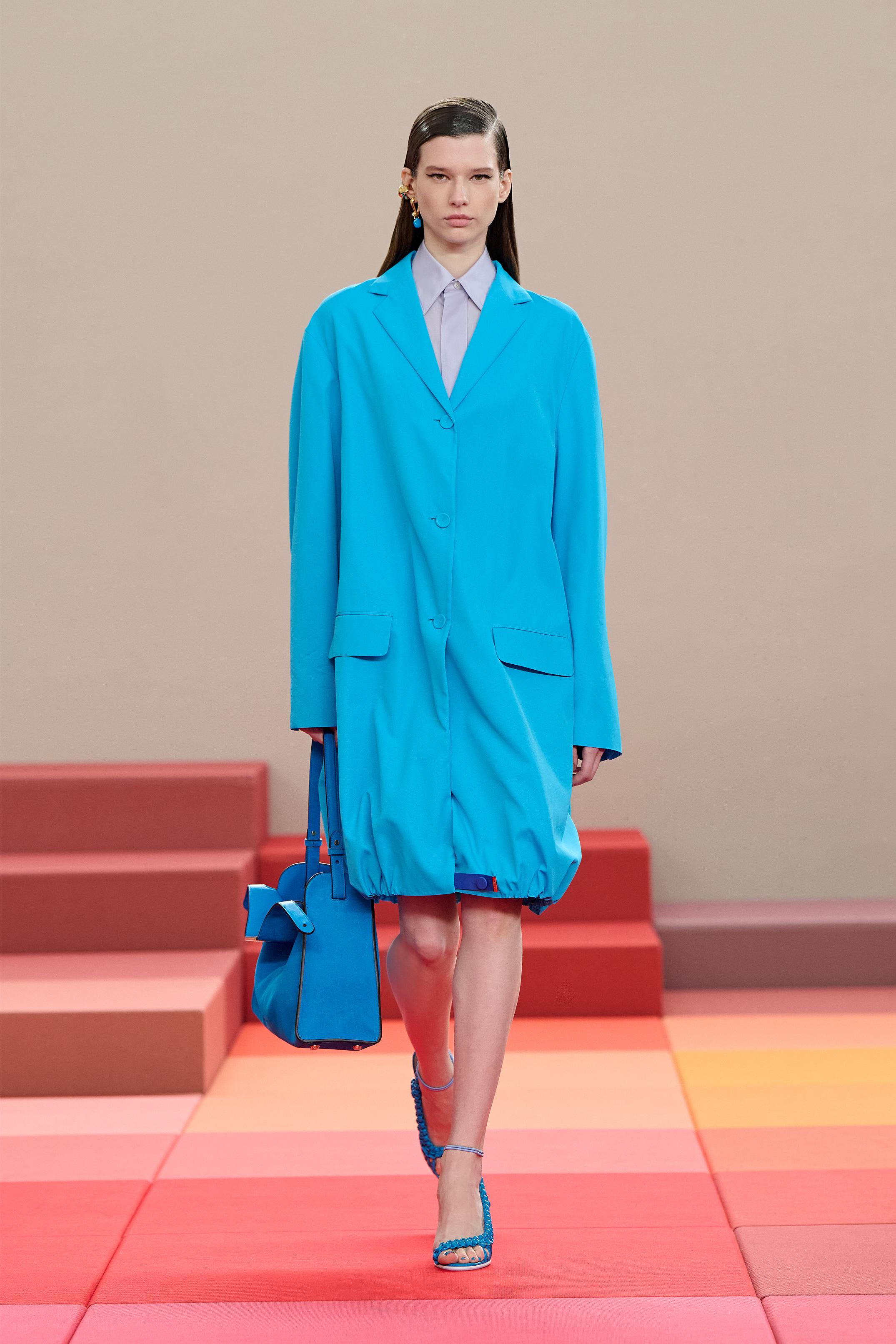
Silvia Venturini Fendi described the season as “a relaxed and colourful sense of ease with a romantic elegance.” She emphasised the fluidity between everyday life and artisanal craft, noting how simple gestures were underpinned by complex workmanship. This duality shaped silhouettes that were at once familiar and reimagined.
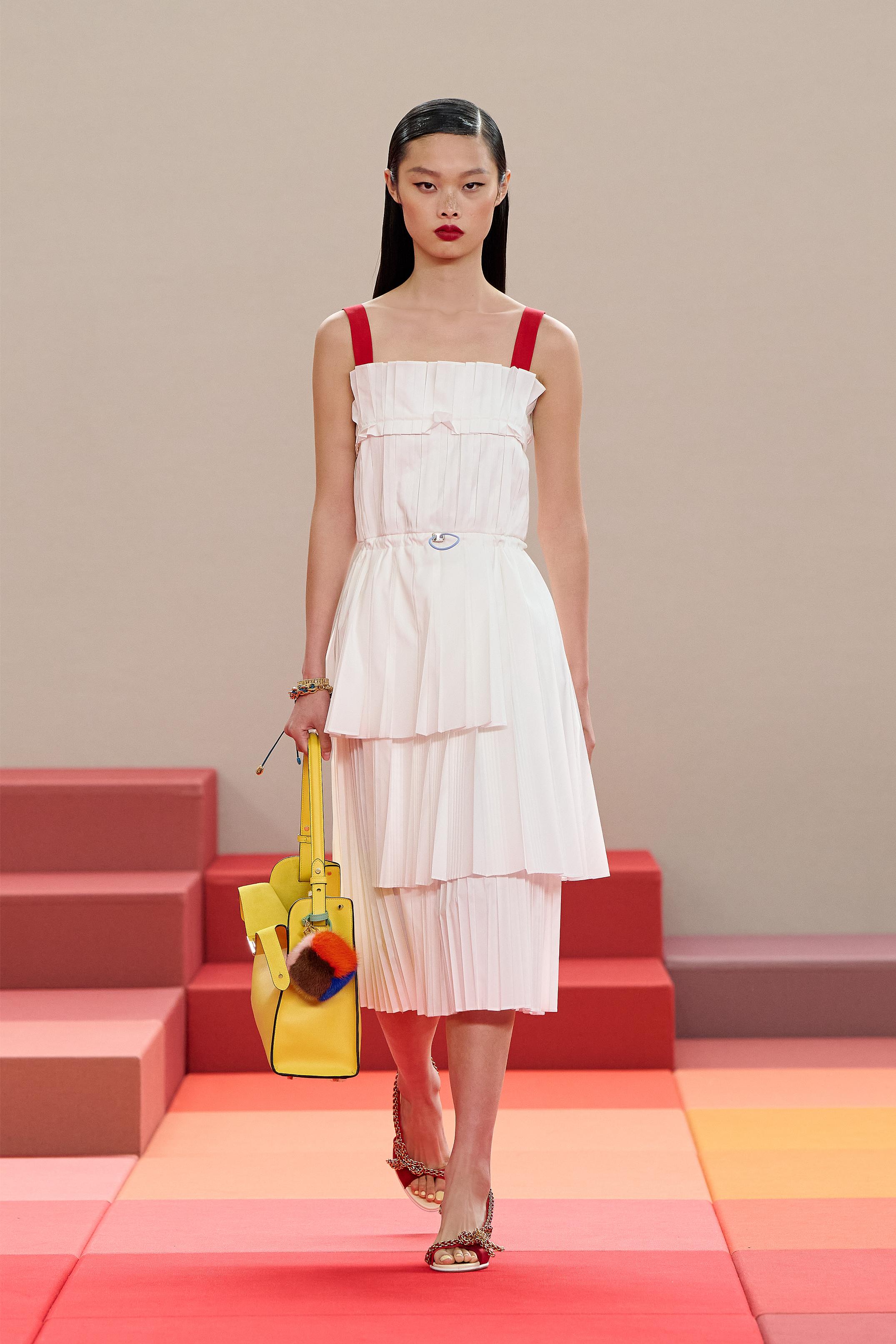
The collection balanced structure with softness. Fabrics were engineered to be featherlight, from crisp transparencies to lustrous sheers, creating garments for urban settings. Bright hues defined pared-down volumes, while impressionist floral motifs appeared across organza layers or piped into delicate daisy shapes. Tailoring intersected with sportswear in versatile forms: drawstring waists, unzipped jackets and two-tone jerseys.
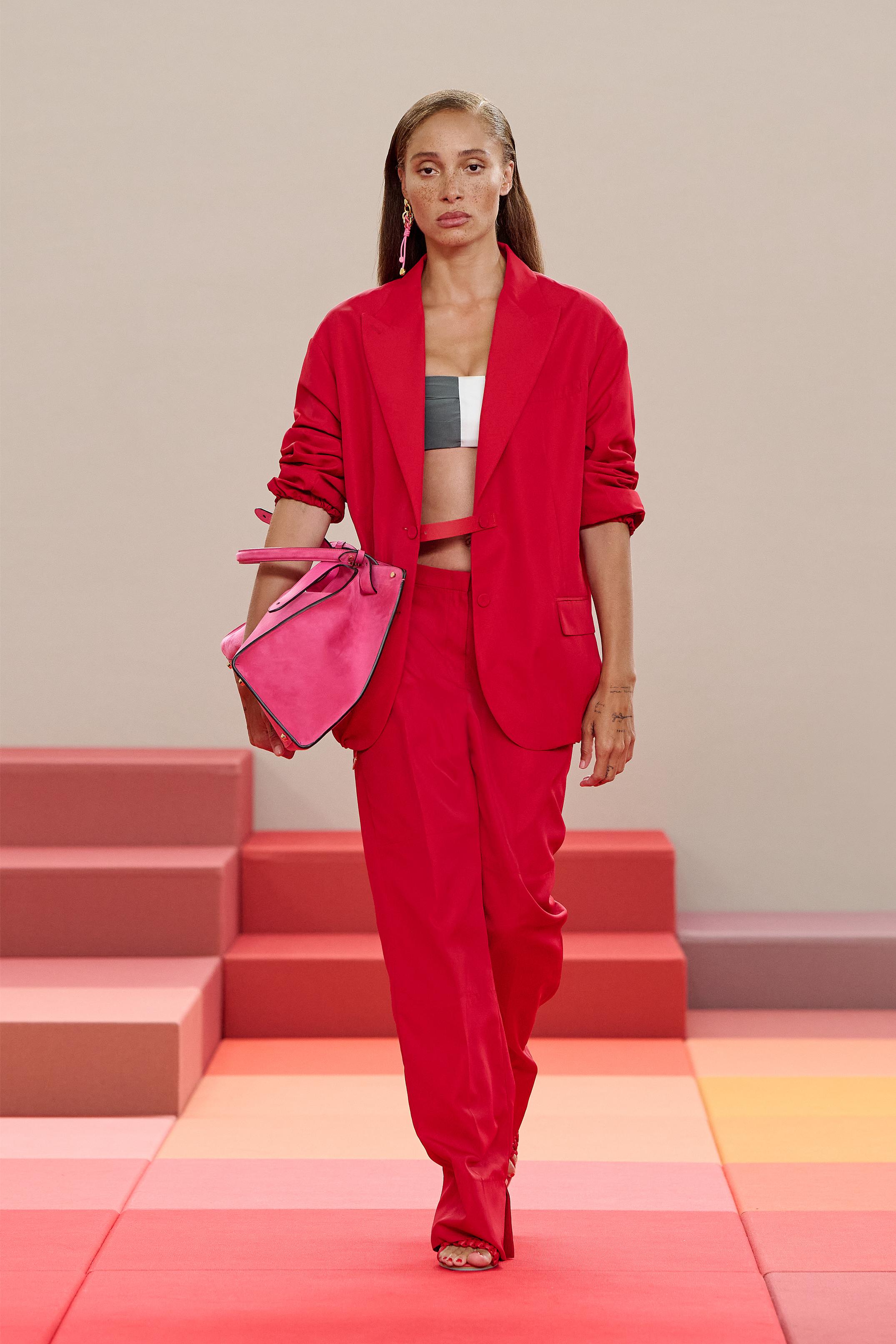
Women’s and men’s looks were conceived together, exchanging details such as suspender-style tabs, corsetry references and modular construction. A man’s shirt was reworked into tuxedo-bibbed blouses and mini-dresses, highlighting a dialogue between boyish and feminine codes. Fabrics ranged from crochet polos to technical shell suits with plush panels, underscoring a play between craft and utility.
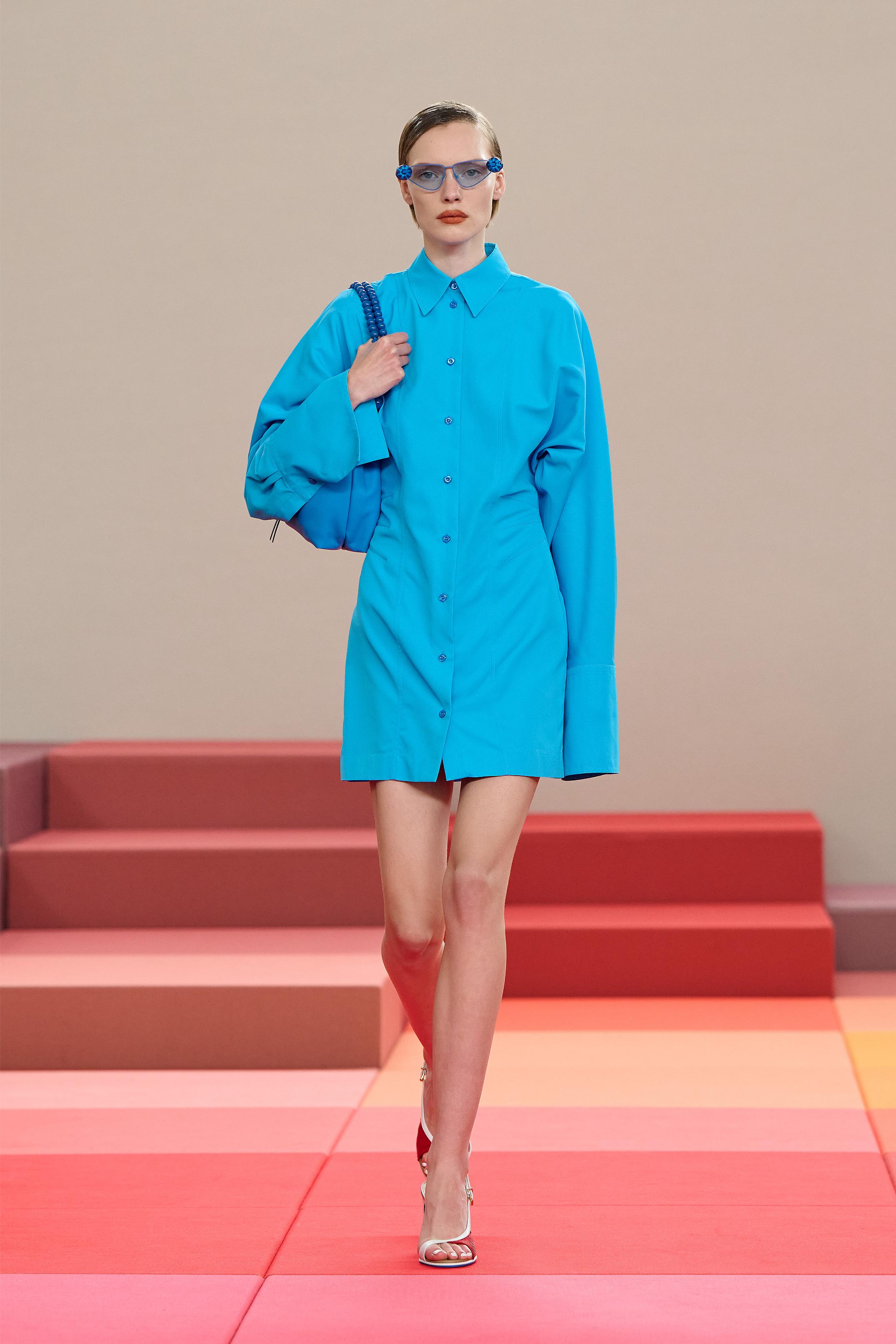
Accessories extended this sense of experimentation. The FENDI Collier bag featured a drawstring pouch ruched on a bauble handle, while the new trapezoidal FENDI Way bag appeared in suede and calfskin. House icons including the Baguette, Spy and Peekaboo were refreshed with silk cable knits, beaded cages and basket-weave leather. Footwear continued the narrative with slingback sandals, latticework loafers and woven lace-ups, while Delfina Delettrez Fendi introduced gold and enamel jewellery alongside cat’s-eye aviators.
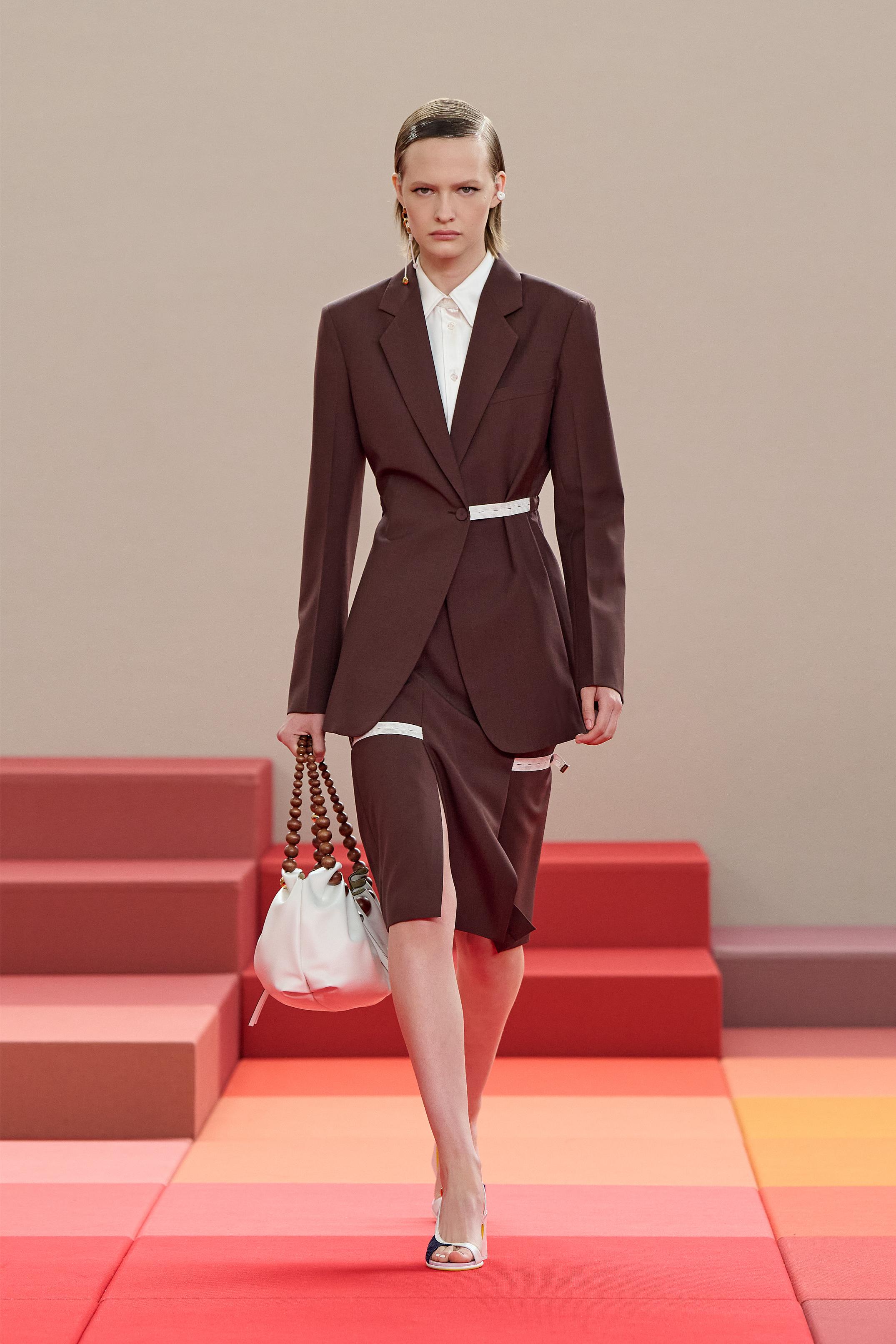
The show’s multigenerational cast walked to a soundtrack by Frédéric Sanchez, who layered electronic compositions with voices from Italian cinema and fragments of opera. This “pixelised promenade” through Rome echoed the set’s digital quilt aesthetic, underscoring FENDI’s centenary focus on heritage, craft and modernity.
Hogan Presents Spring Summer 2026 Collection
Hogan has unveiled its Spring Summer 2026 women’s collection, a celebration of Italian urban living infused with seasonal vibrancy.
Taking inspiration from “summer in the city,” the collection channels the atmosphere of Milan’s sunlit streets, where fountains, basketball courts, jasmine, and caffè culture set the backdrop for long, warm days.
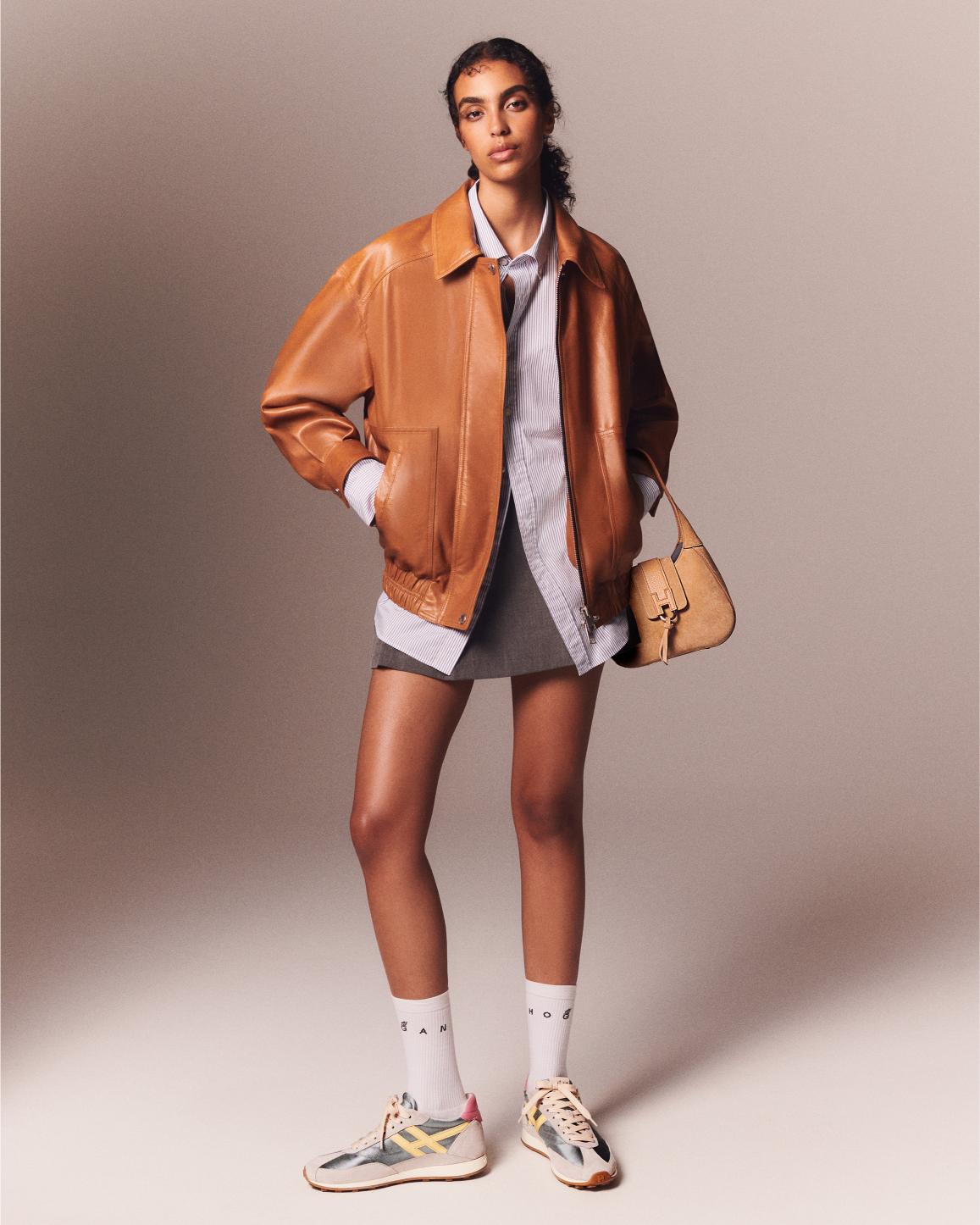
With a palette drawn from golden-hour light, the brand translates the sensory experience of the season into footwear, bags, and ready-to-wear. Hogan continues to position itself as a global lifestyle label, balancing sophistication with youthful energy.
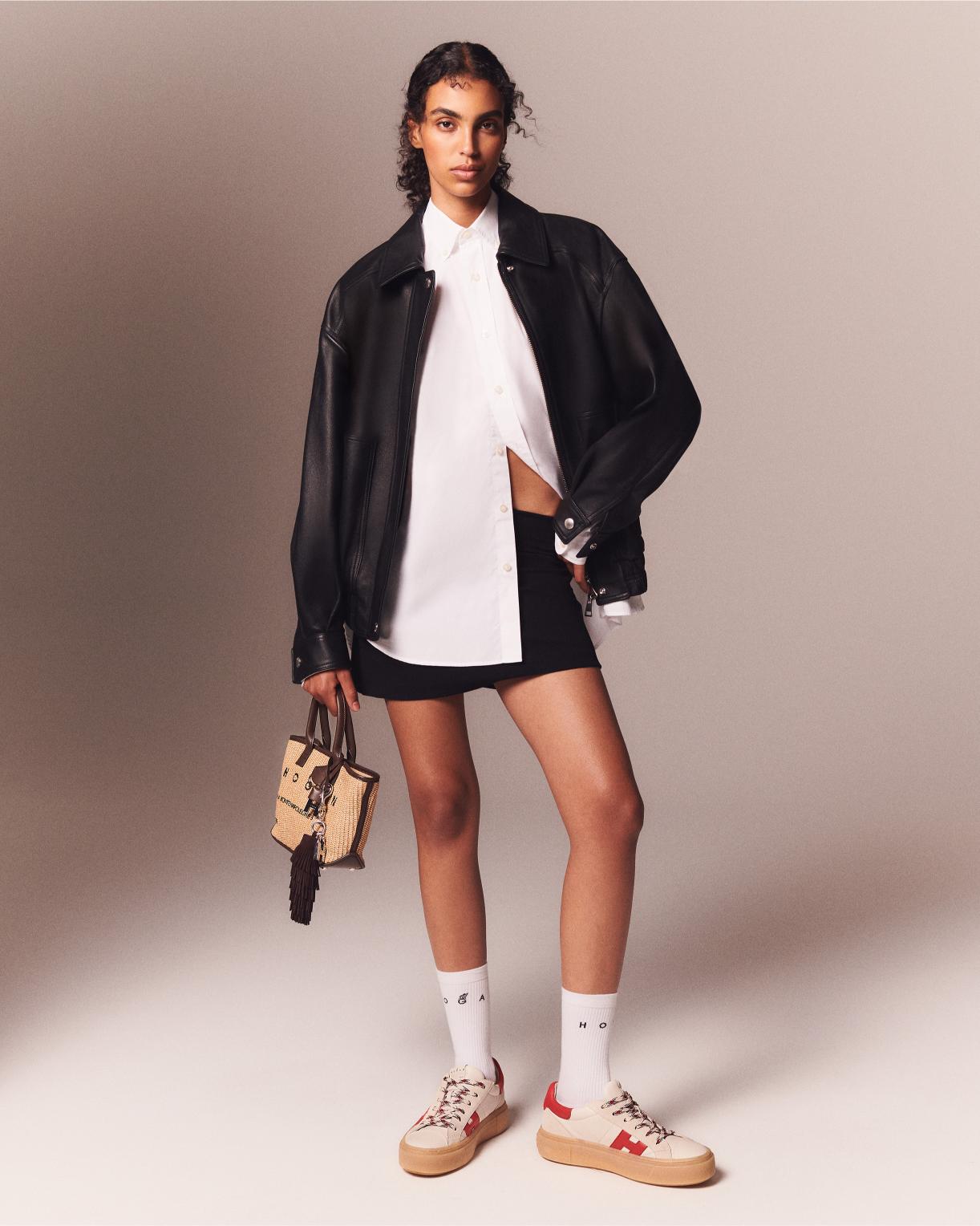
The footwear selection combines timeless design with playful accents, ensuring versatility across daily routines. Sneakers remain central to the collection, joined by loafers, sandals, and boat shoes crafted from premium leathers and lightweight materials. Each piece is designed to transition seamlessly between day and night, the office and leisure.
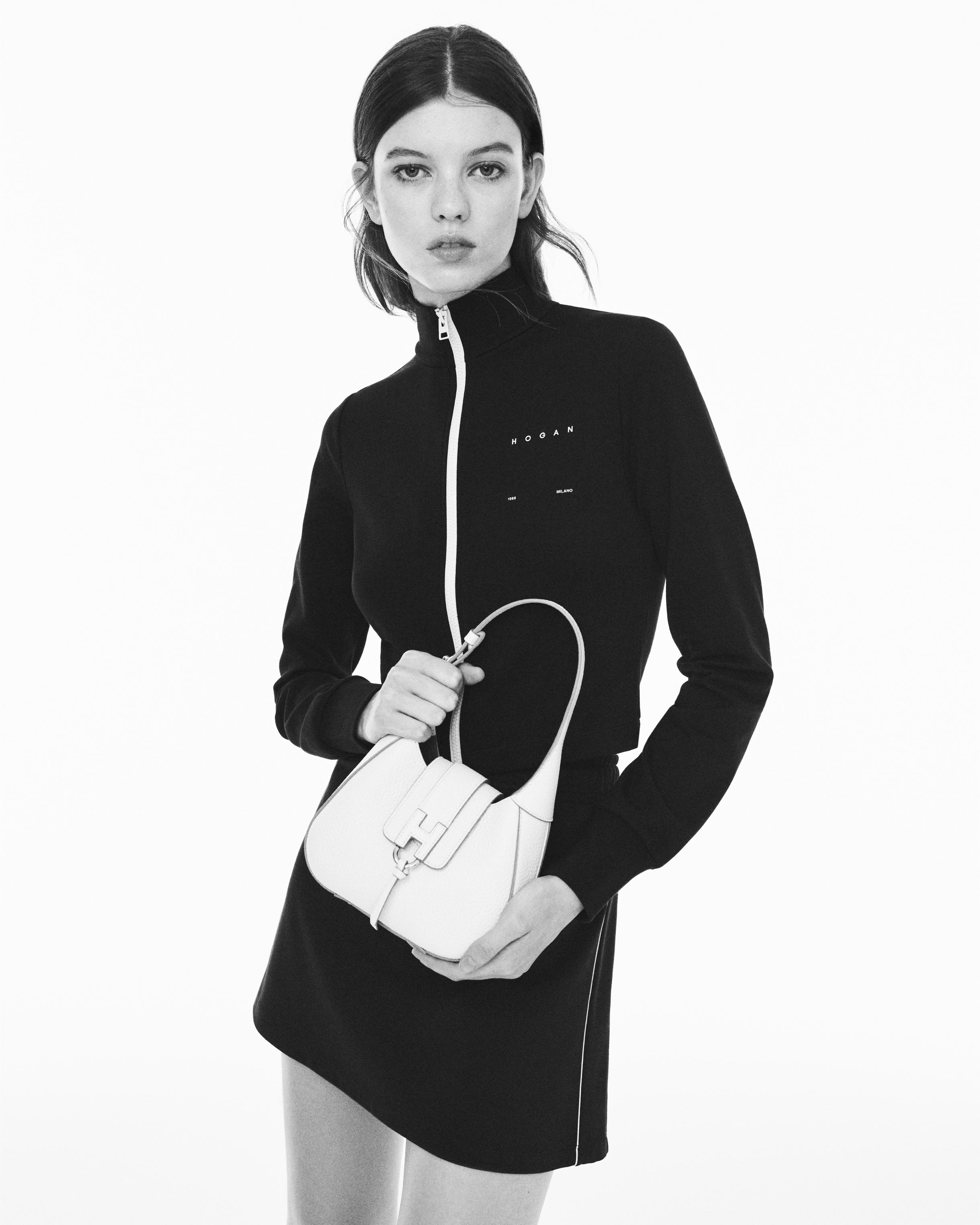
Among the highlights is the debut of The Hogan Athletic, a reinterpretation of the brand’s iconic sprinter sneaker. This updated silhouette features a slim, feminine fit and retro styling, available in a variety of colours and finishes for summer. Another key introduction is Hogan’s new statement cup-sole, distinguished by its monogrammed “H” outsole. Drawing from a skate-inspired shape, the shoe is produced in soft Napa leather and seasonal shades, including bold red.
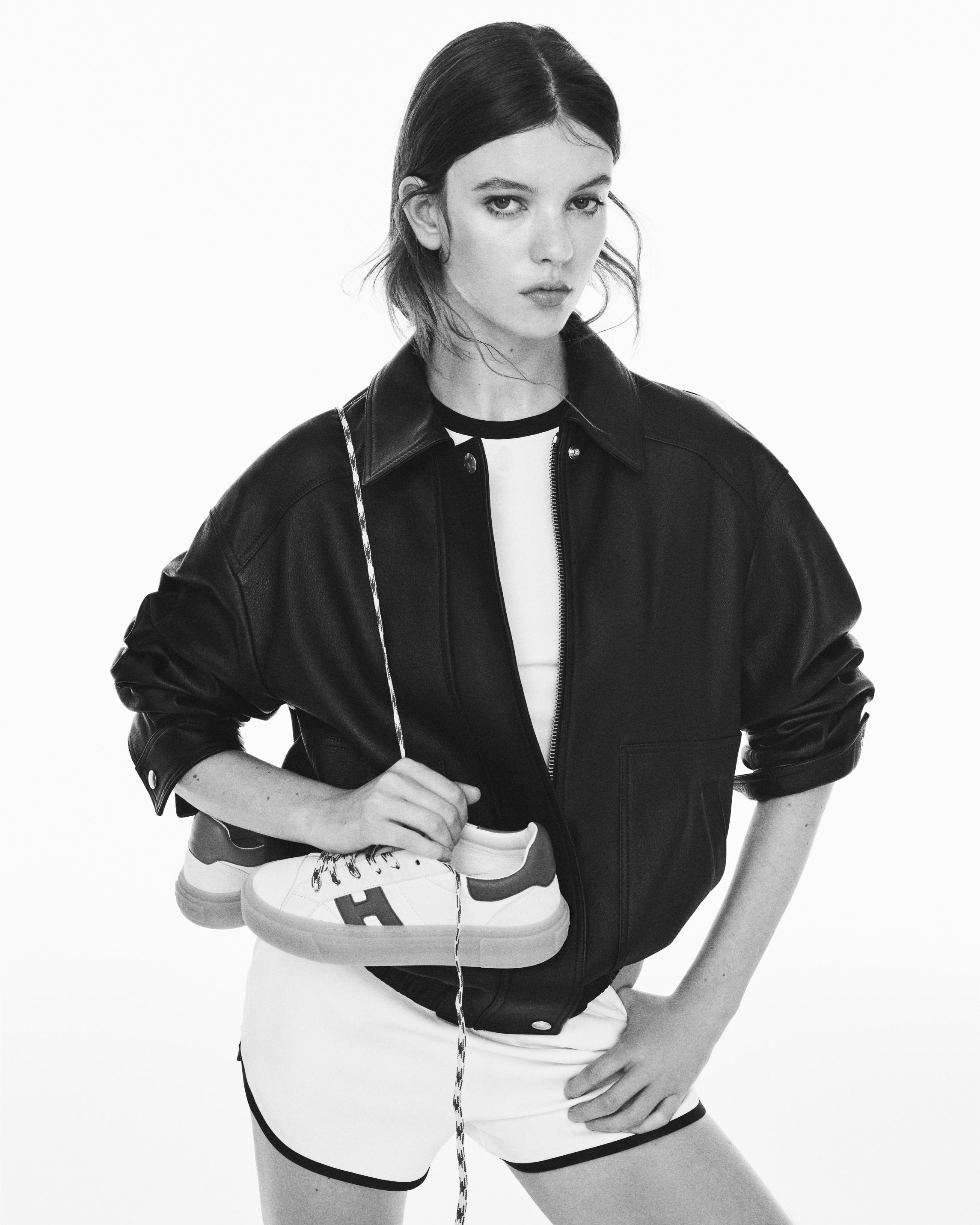
The Hogan Cool also returns in refreshed form, showcasing a wrapped high-sole that contrasts a refined upper with a chunky base. For the new season, it appears in lightweight crepe and radiant suede, embodying the brand’s balance of elegance and comfort.
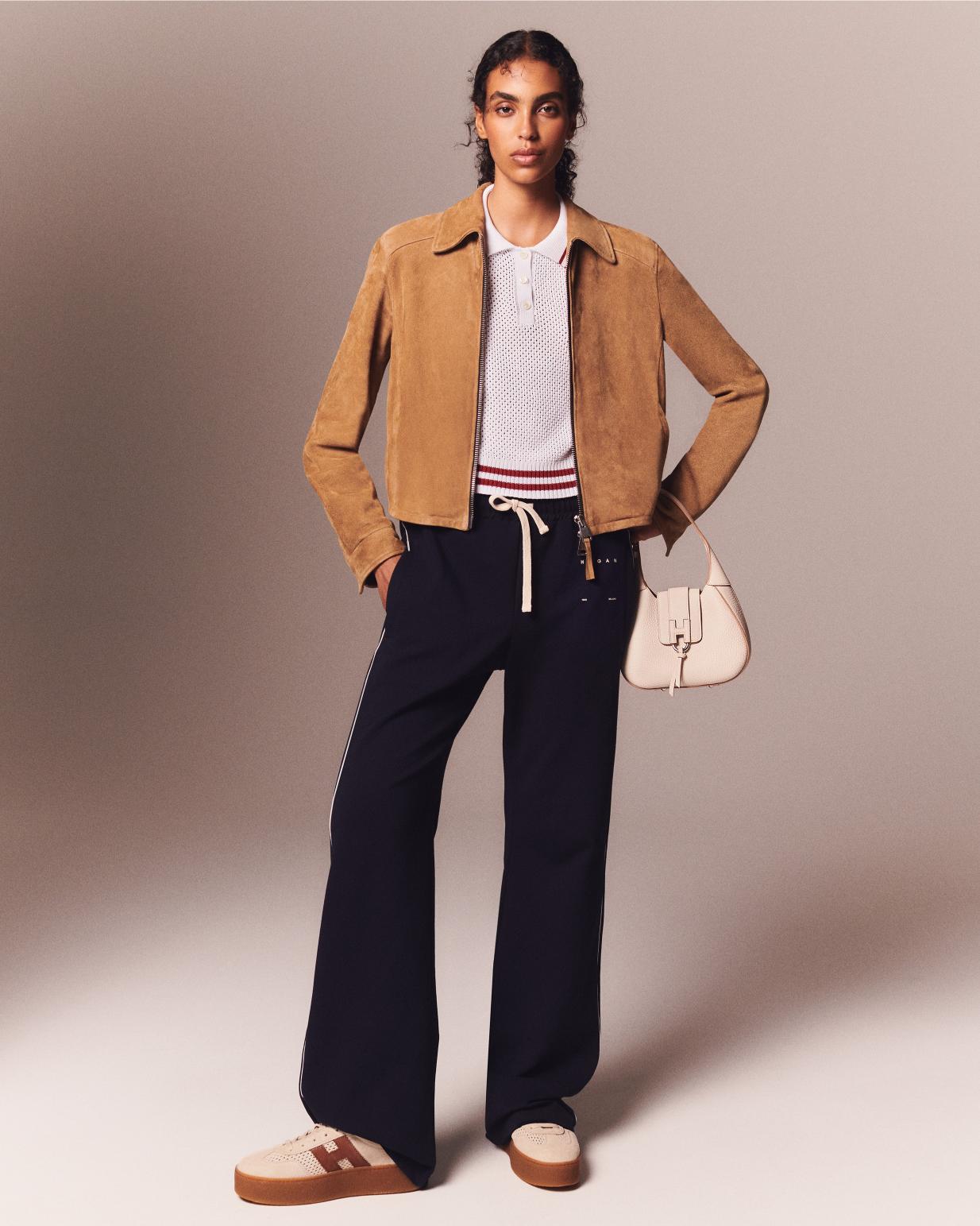
Hogan’s bag line complements the footwear with a focus on practicality and chic versatility. The Hogan Script Address logo bag, already an established favourite, is reimagined for summer in smaller proportions, pastel tones, and raffia versions. New flap bags make their debut as well, defined by a structured yet compact shape, available in small and mini sizes with a signature “H” clasp, crafted from tactile leathers and suedes.
The Spring Summer 2026 collection reflects Hogan’s continued exploration of urban chic, where refined Italian craftsmanship meets modern lifestyle needs. Balancing function and style, it embodies a season of lightness, versatility, and understated elegance, designed for city life at its most dynamic.
Simone Bellotti Debuts His First Collection For Jil Sander
Jil Sander presented its Women’s and Men’s Spring/Summer 2026 collection in Milan with a homecoming show at the brand’s headquarters, returning to the venue for the first time since 2017.
The space, once a cinema and now a three-storey building overlooking a city landmark, was set almost entirely in white with a single black line tracing the arcing runway. The soundtrack featured evolving electronic bleeps by Bochum Welt.
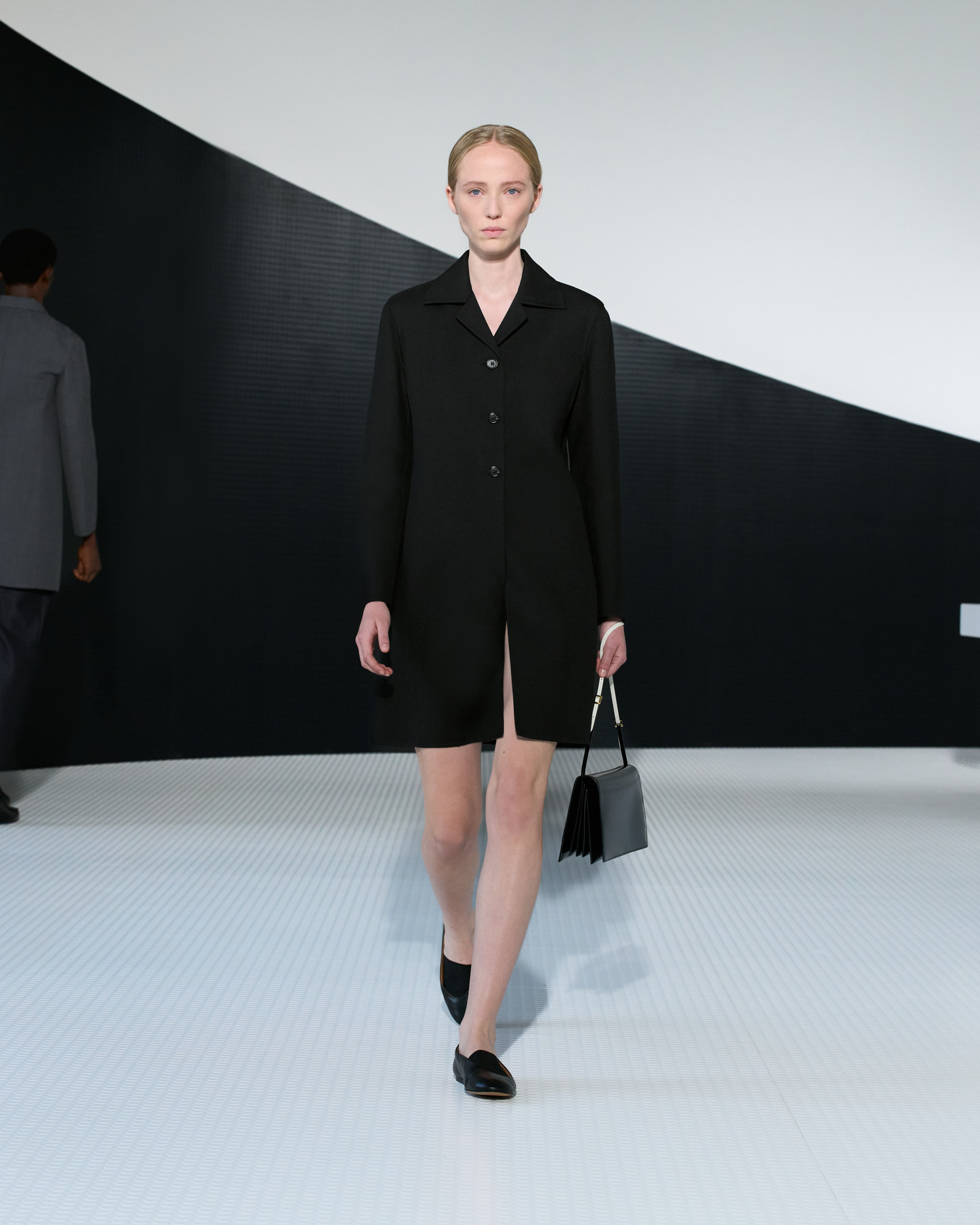
Creative director Simone Bellotti framed the season as an exercise in learning and discovery, exploring how the house’s reputation for purified design can carry a personal signature. The collection tested opposing qualities such as strictness and lightness, grace and severity, control and freedom, and treated pureness as a working method rather than a limit. Womenswear and menswear were developed in parallel, with detailed craftsmanship and an emphasis on quality evident across both.
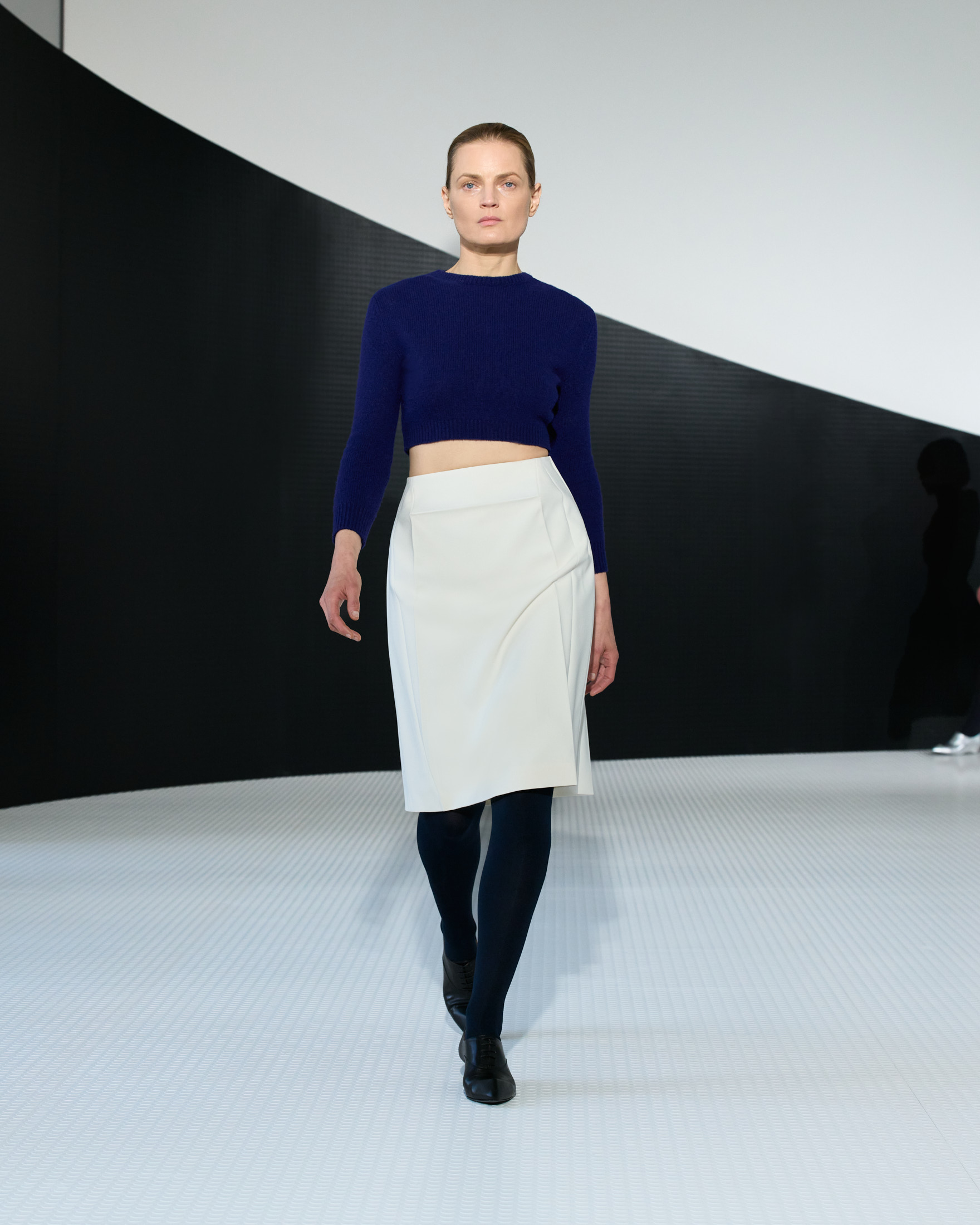
The silhouette was sharply vertical. Rational, high-buttoned tailoring was interrupted by folded details and occasional raw hems. Dresses and skirts featured clustered strips of georgette that moved like sliced pages. Double-faced leathers and wool were cut into lightweight, architectural staples. Knitwear, jumpers and shirts conveyed a taut readiness, while small floral motifs and laboratory-sheen technical fabrics added contrast.
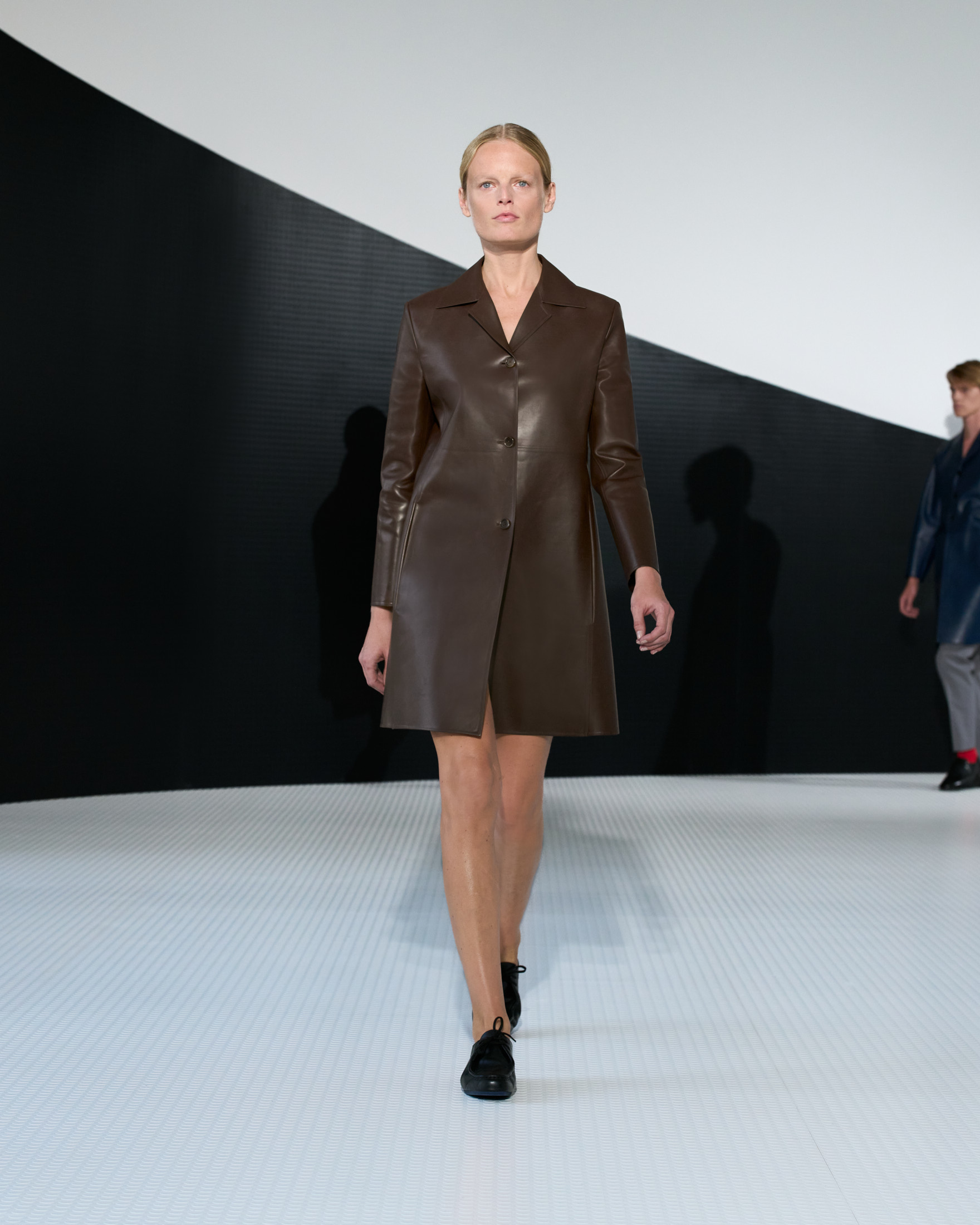
Protective ideas ran through the collection. Mirrored leather, metallic sequins and precious silks were shaped to shield the bust and hips, suggesting a contemporary notion of armour. The body was present throughout, either fully revealed through transparency or glimpsed via slits and cut-outs. The palette balanced somber neutrals with dusty pastels and brighter notes, and textures were used to build a tactile dialogue between tension and calm.
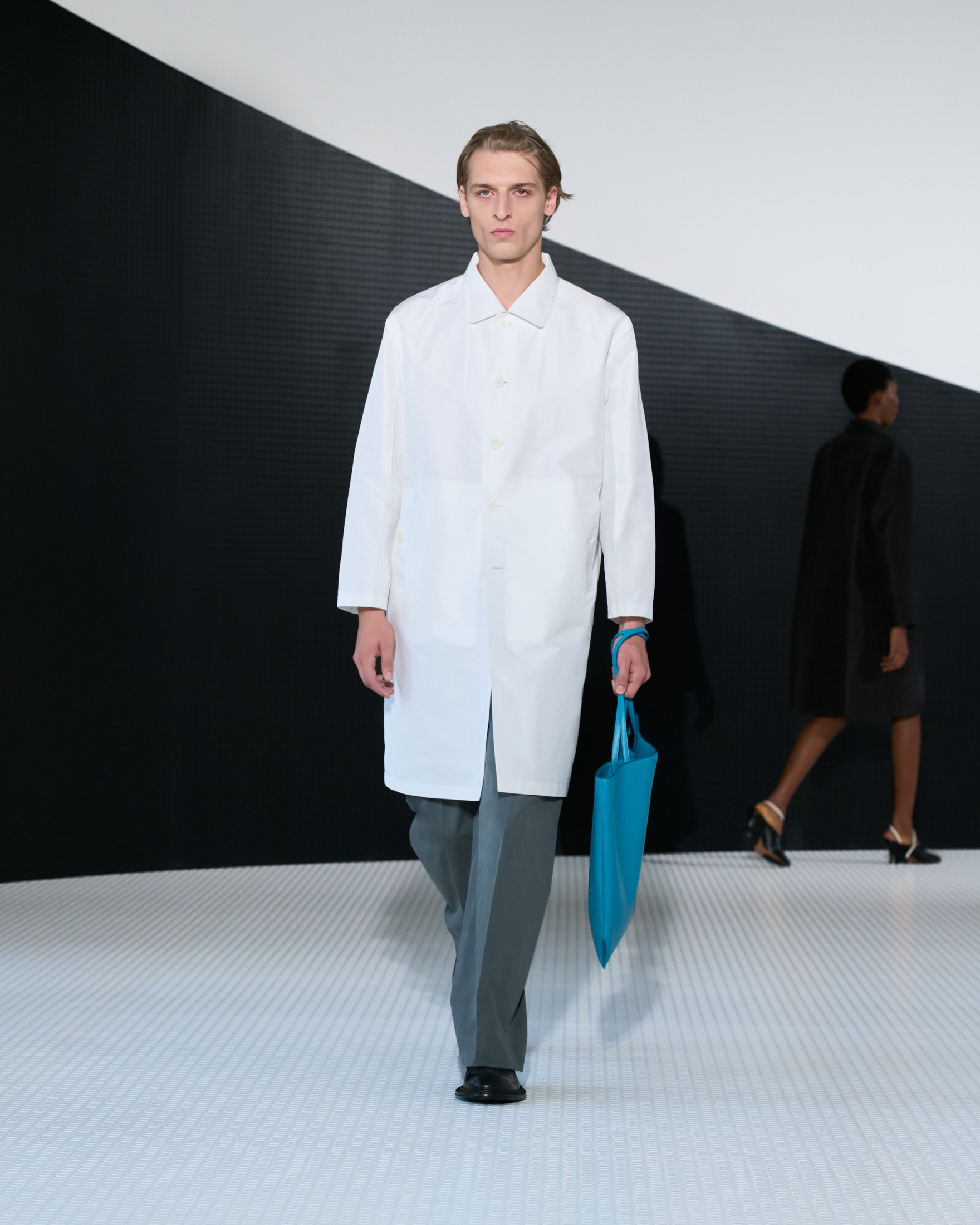
Accessories formed a significant part of the proposal. Footwear included square-toed lace-ups, cut-out ballerinas, kitten-heeled brogues and sandals. Multipurpose handbags arrived in several shapes and sizes, led by the new Pivot style, described as a union of a fluid, neat line with a range of attitudes.
Brunello Cucinelli Brings Earth, Air Water and Fire To Milan Fashion Week
Today Brunello Cucinelli revealed the house’s Women’s Spring Summer 2026 collection at Milan Fashion Week.
The latest offering from the Maison is built around the classical elements, positioning Earth, Air, Water and Fire as the key framework for the collection’s silhouette, palette and material choices. The concept is presented as a ‘return to origins’, with the elements used to reaffirm core values and to shape a contemporary, quietly emphatic aesthetic.
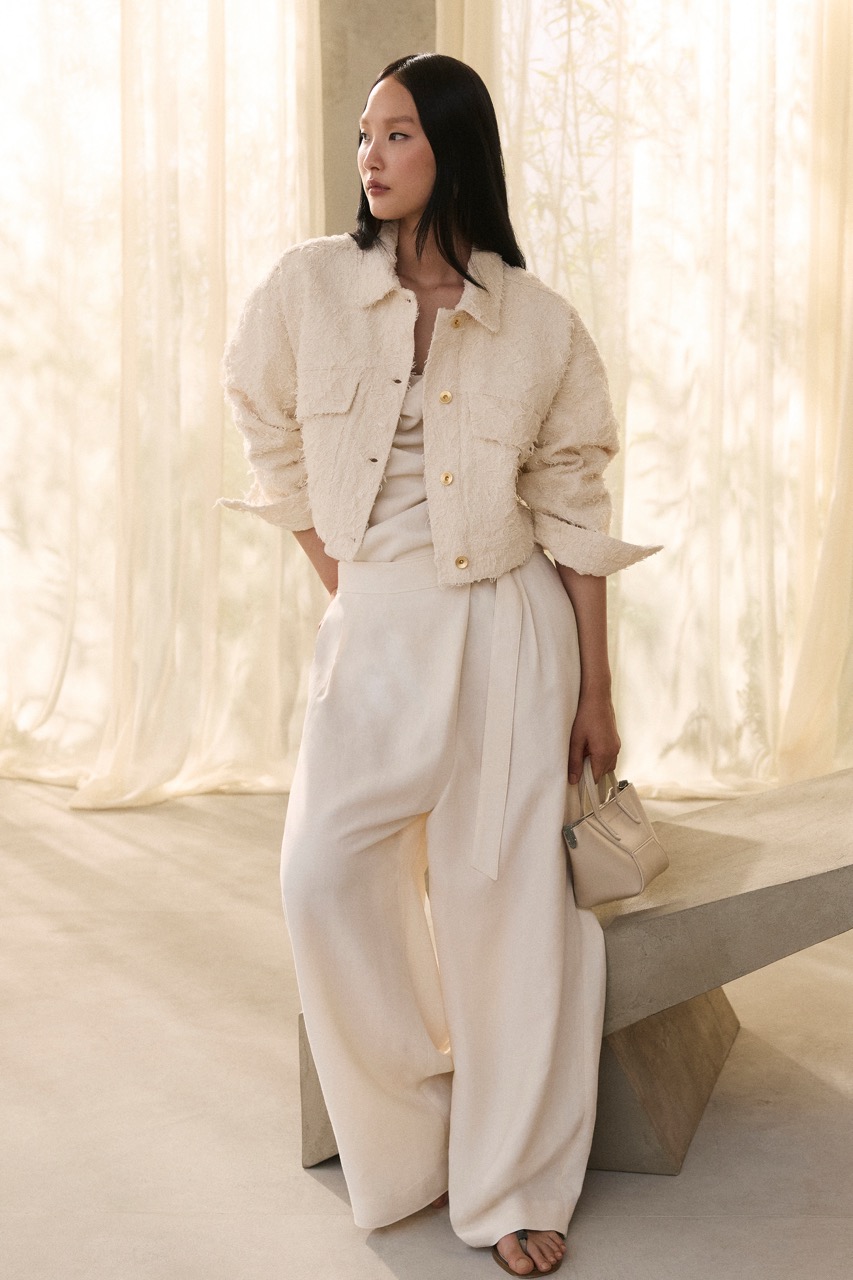
Earth sets the tone. It informs a grounded colour story with natural shades such as sand, ecru, white clay, root and earthy browns. Fabrication emphasises texture and structure through summer tweeds, macro-chevron patterns and needle-punched surfaces. The approach favours tactile detail and sophisticated tailoring that deepens these tones without overwhelming them, suggesting day-to-evening versatility within a restrained framework.
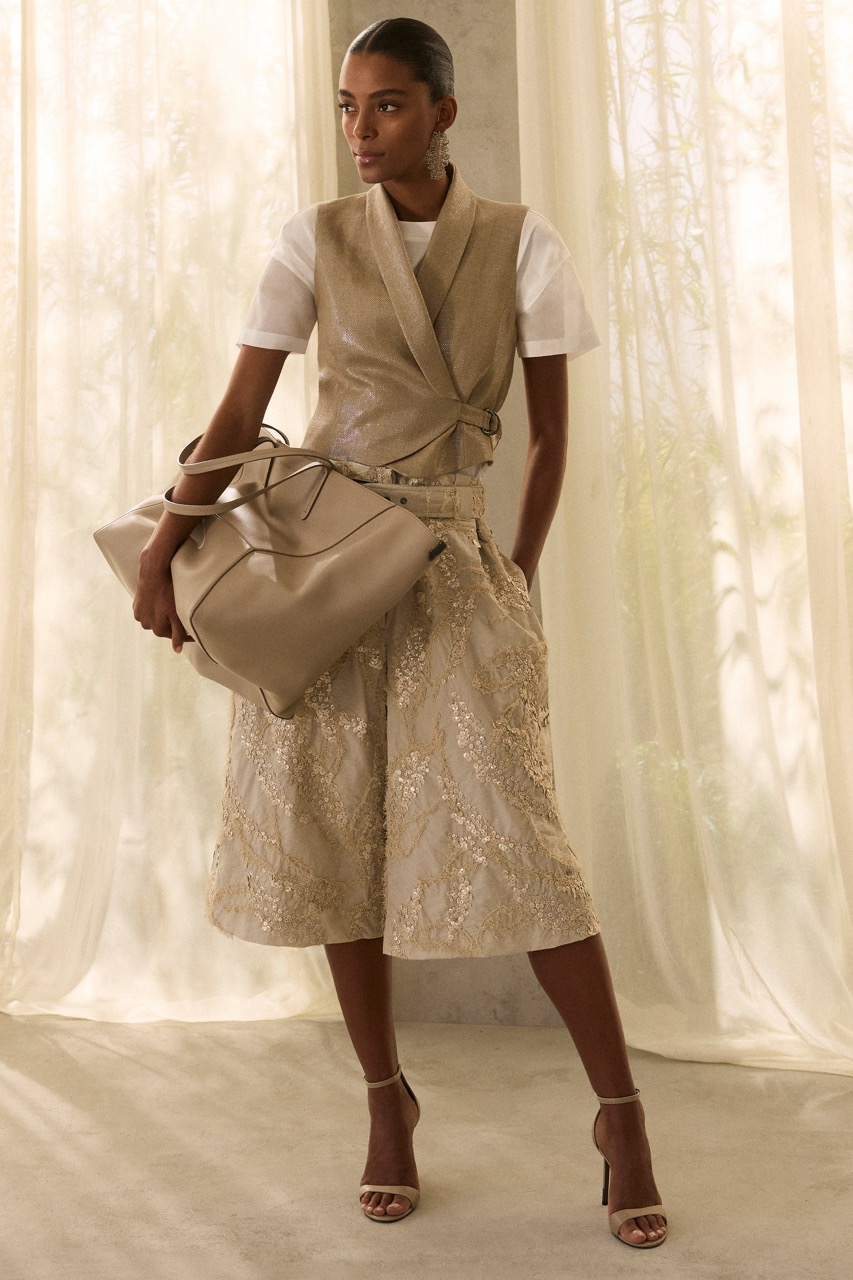
Air introduces lightness and movement. The element appears through open-knit constructions, perforated surfaces and mesh that create ventilation and ease. Transparency is handled with control via lace effects, gauzes and diaphanous fabrics. The overall impression is one of freshness and femininity, with airy textures and pale hues designed to move fluidly and read as effortless in warm weather.
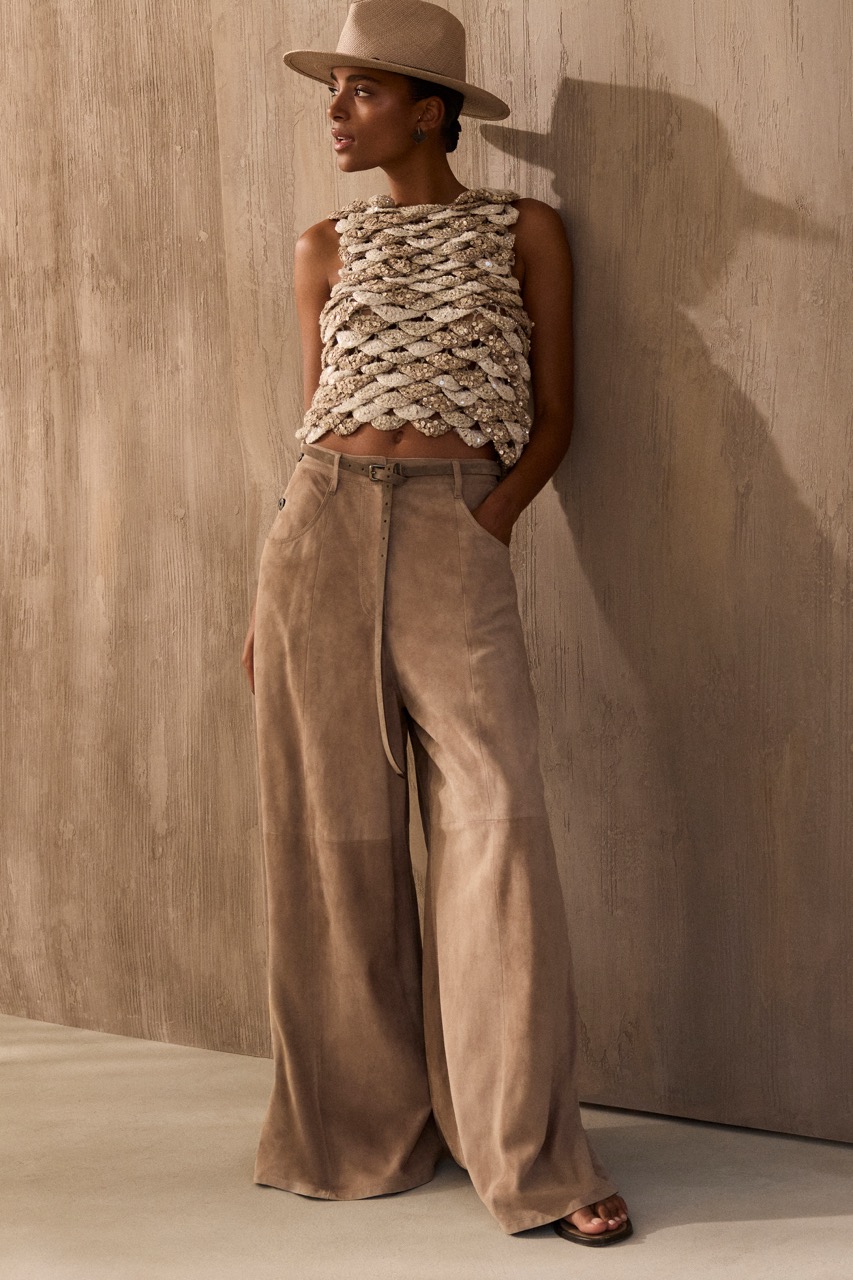
Water drives proportion and cut. The theme is expressed through updated shapes and ergonomic constructions that prioritise comfort while retaining a tailored line. The balance sits between couture-level references and active-inspired functionality, producing fluid, dynamic silhouettes. Surface interest nods to the season: embroideries evoke light refracting on the ocean floor, shell-like sparkle and subtly rippled fabrics. The palette extends across maritime blues, from sky to abyss, supporting both daywear and occasion dressing.
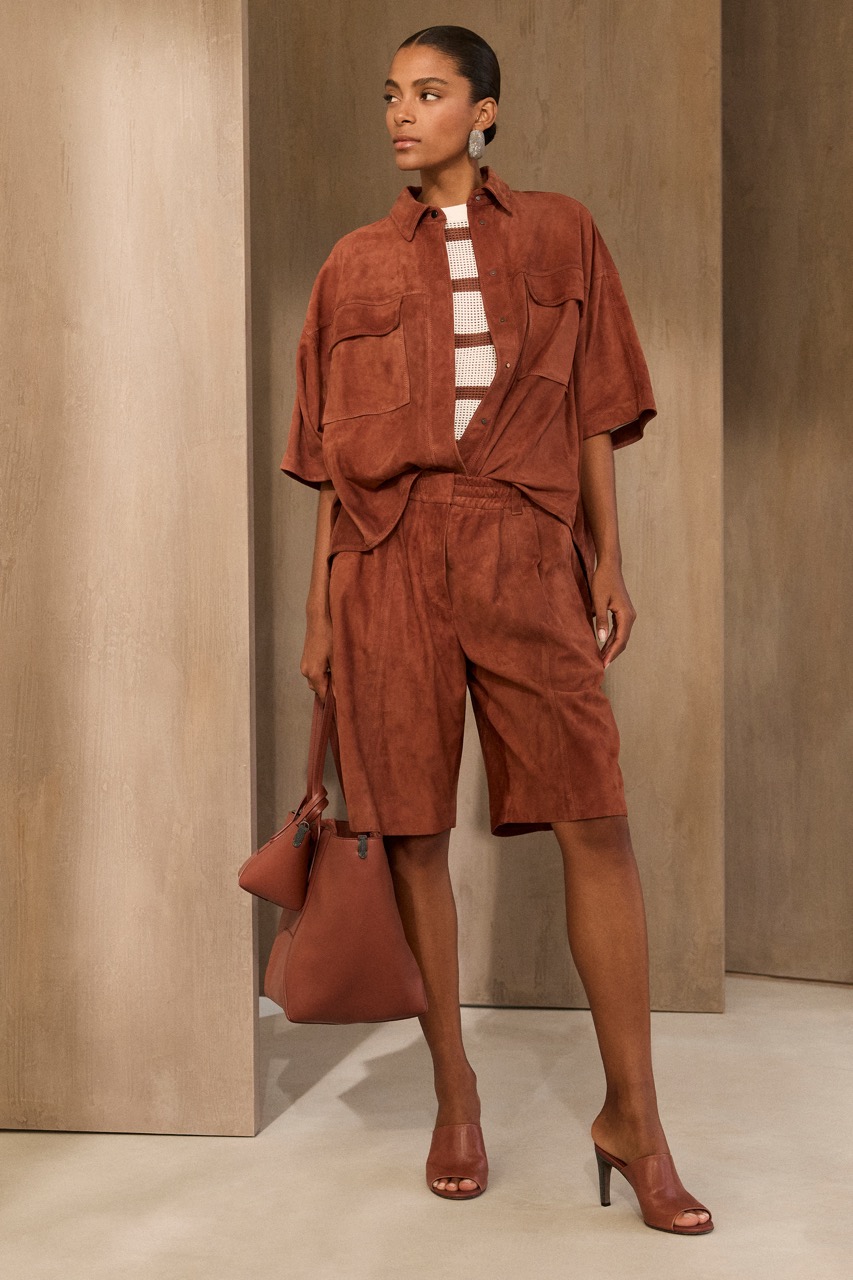
Fire brings intensity. The collection deploys saturated reds including lava, rhubarb and firebrick to punctuate looks and inject energy. This element underscores the role of craft and the emotional connection to pieces made with care, positioning artisanal pleasure as integral to the season’s message rather than an afterthought.
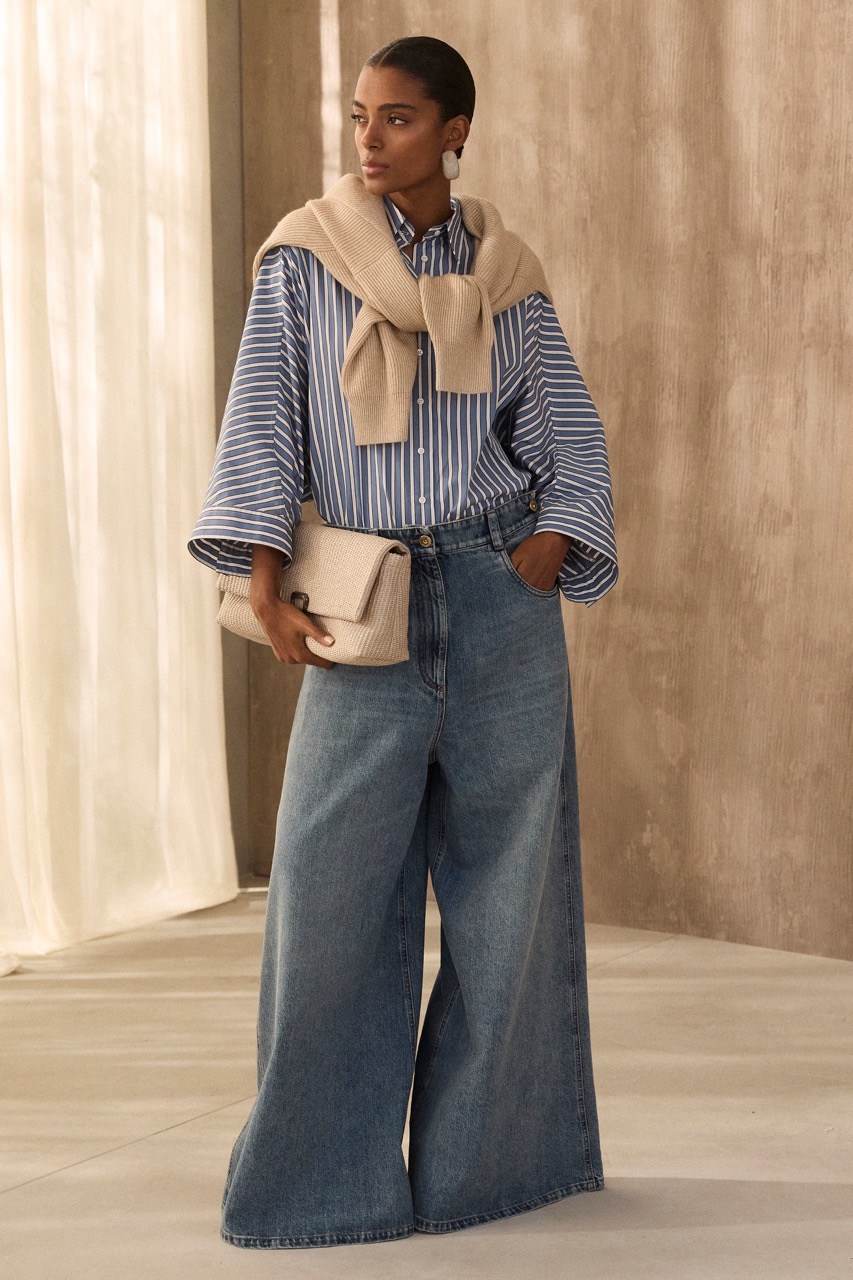
Together, the four elements create a coherent narrative: Earth anchors the wardrobe with textured neutrals and sharp construction; Air supplies transparency and light handling; Water updates proportions with ergonomic tailoring and oceanic embellishment; Fire delivers high-impact colour and craft-led focus. The result is a summer proposition that blends practicality and polish, designed to resonate across settings while remaining faithful to the collection’s foundational principles.
Alberta Ferretti Showcases “In Confidence” SS26 Collection in Milan
Alberta Ferretti has unveiled its Spring Summer 2026 collection, “In Confidence,” a proposal centred on a woman of substance who chooses discretion over exposure and keeps her world tightly held among friends, family and her partner.
The concept positions privacy as autonomy, with the collection framed as clothing for a hostess intent on creating joy in a private dimension.
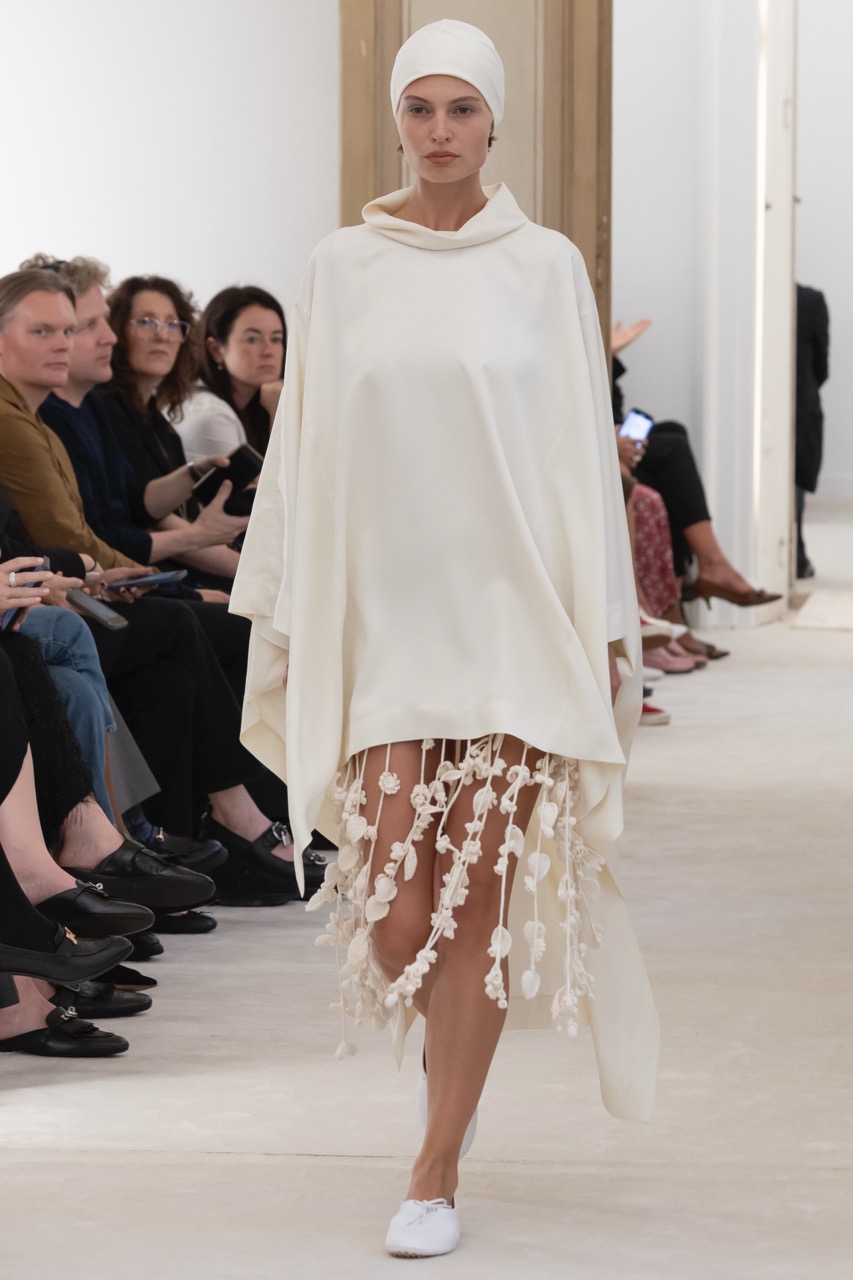
Creative lead Lorenzo Serafini sets out the brief as “offering clothes that enable an alternative approach to modern lifestyle,” adding that rethinking romanticism led to an emphasis on privacy as freedom, a condition that allows people to “talk freely, love freely, and live freely.” He describes the value of discretion as powerful and chic, aligned with a progressive romantic sensibility and the woman he designs for.
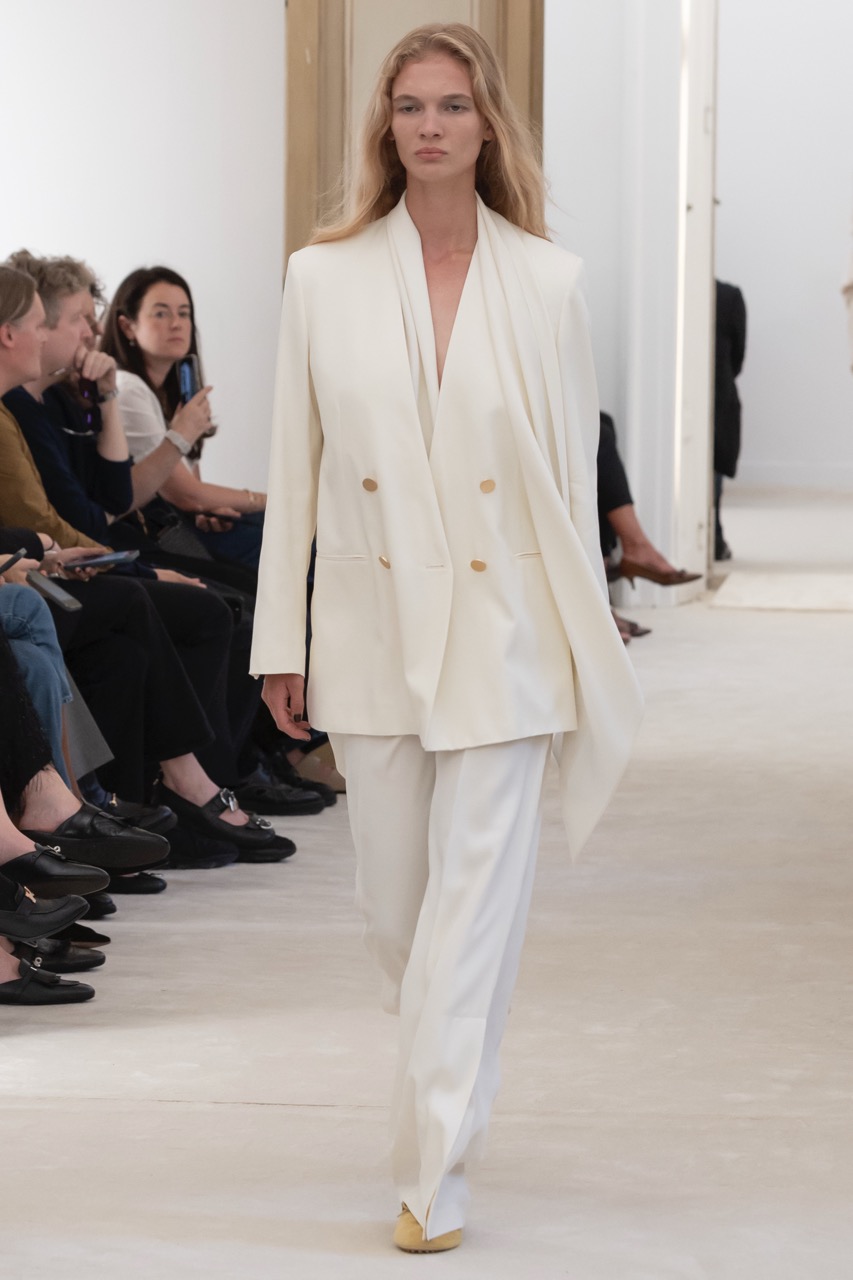
The wardrobe balances boundaries and display to prioritise presence and intimacy. Reformed classicism anchors the approach, with eveningwear shaping the narrative. Draped gowns in blue and black recall Greek statuary, their necklines and shoulders punctuated by flashes of gold at the waist or collarbone. Pleated chiffon dresses echo classical silhouettes and use transparency to catch the light and signal the sensuality of movement. Across the line, draping and pleating express softness and strength to reconcile structure with fluidity.
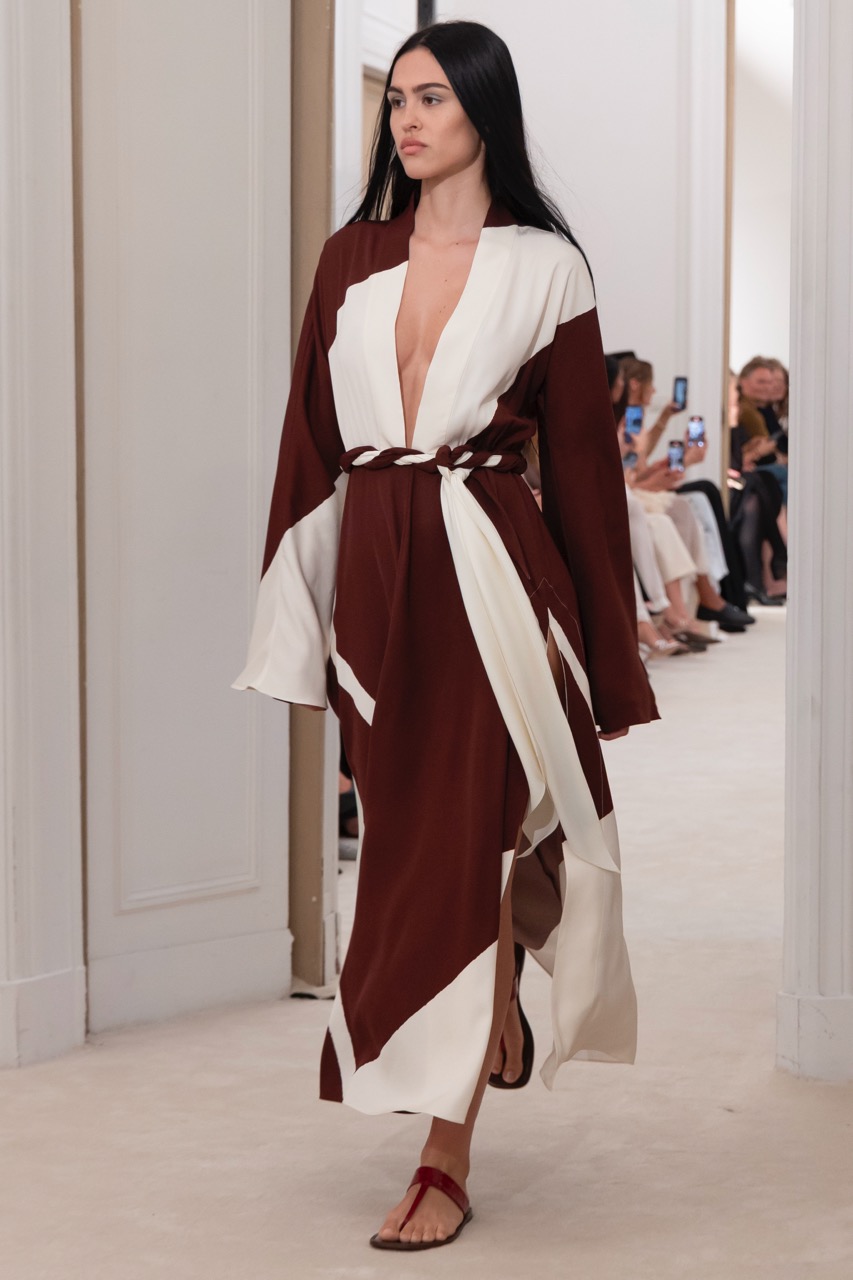
Tailoring underscores definition through self-determination. Jackets open over vests and bra tops and are paired with trousers cut in organza, viscose and linen. Small capes in silk organza and printed linen fall with the weight of drapery, while sheer shirts frame glimpses of the body. The materials palette is expanded by oversized leopard spots printed on organza and pony skin, while metallic notes in gold and silver eel add a controlled eccentricity.
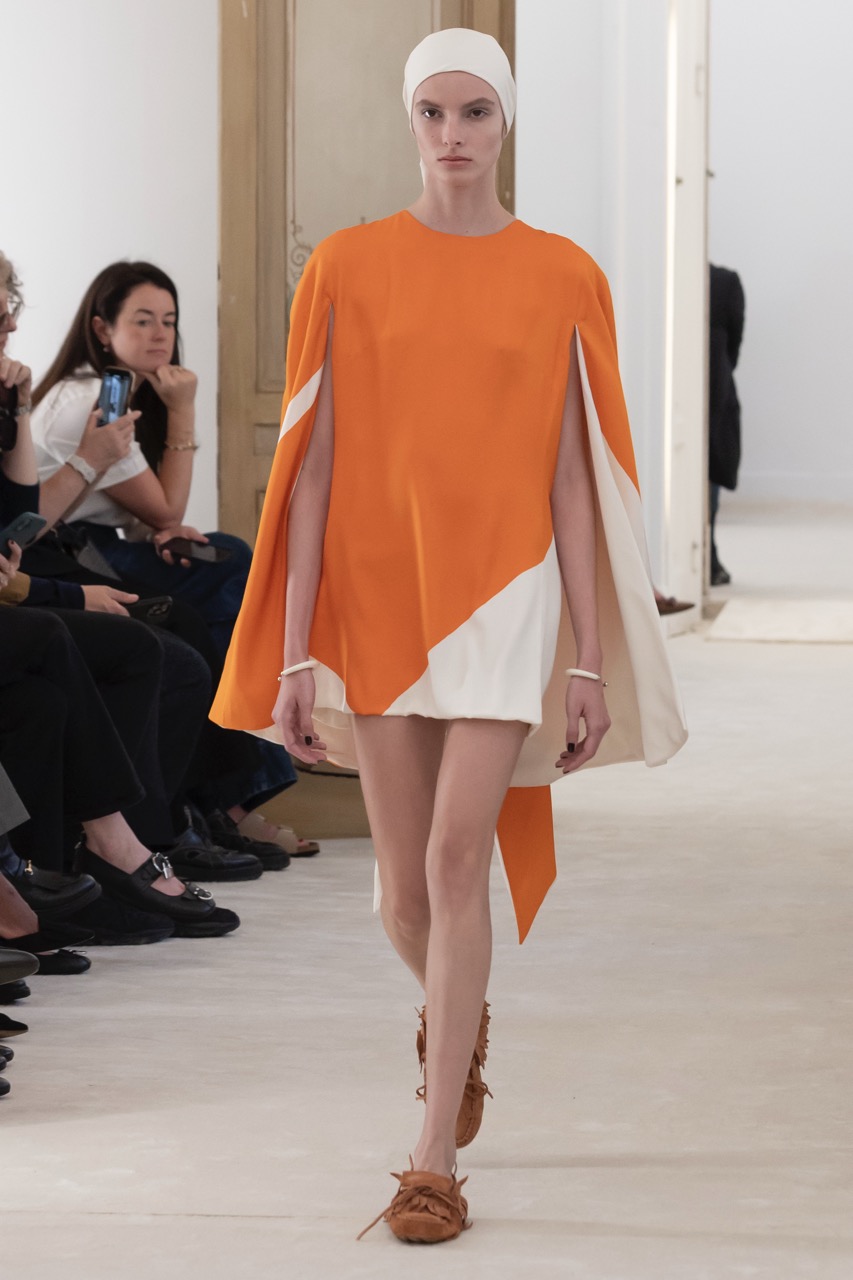
Footwear is kept close to the ground to reinforce an idea of refined ease, with loafers, slippers and thongs proposed as the collection’s anchors. The house presents the line as an affirmation of its feminocentric mission for Spring Summer 2026, offering garments designed to amplify strength with grace for women who choose to live “In Confidence.”
Everything You Need to Know About The BoTree London Hotel
When The BoTree opened its doors in September 2023, it entered one of London’s most competitive markets: the luxury boutique hotel space.
Situated on Marylebone Lane, just steps from Bond Street station, the hotel is nestled between three of the capital’s most sought-after neighbourhoods. Mayfair brings its reputation for five-star luxury, Soho its vibrant nightlife, and Marylebone its understated elegance – and even better, it’s a stone’s throw from Oxford Street.
Proximity is one of the property’s strongest selling points. Hyde Park, Buckingham Palace and The Royal Academy are also all within easy reach, making it an attractive base for travellers staying in the British capital. The location signals convenience, but The BoTree is intent on offering more than geography.
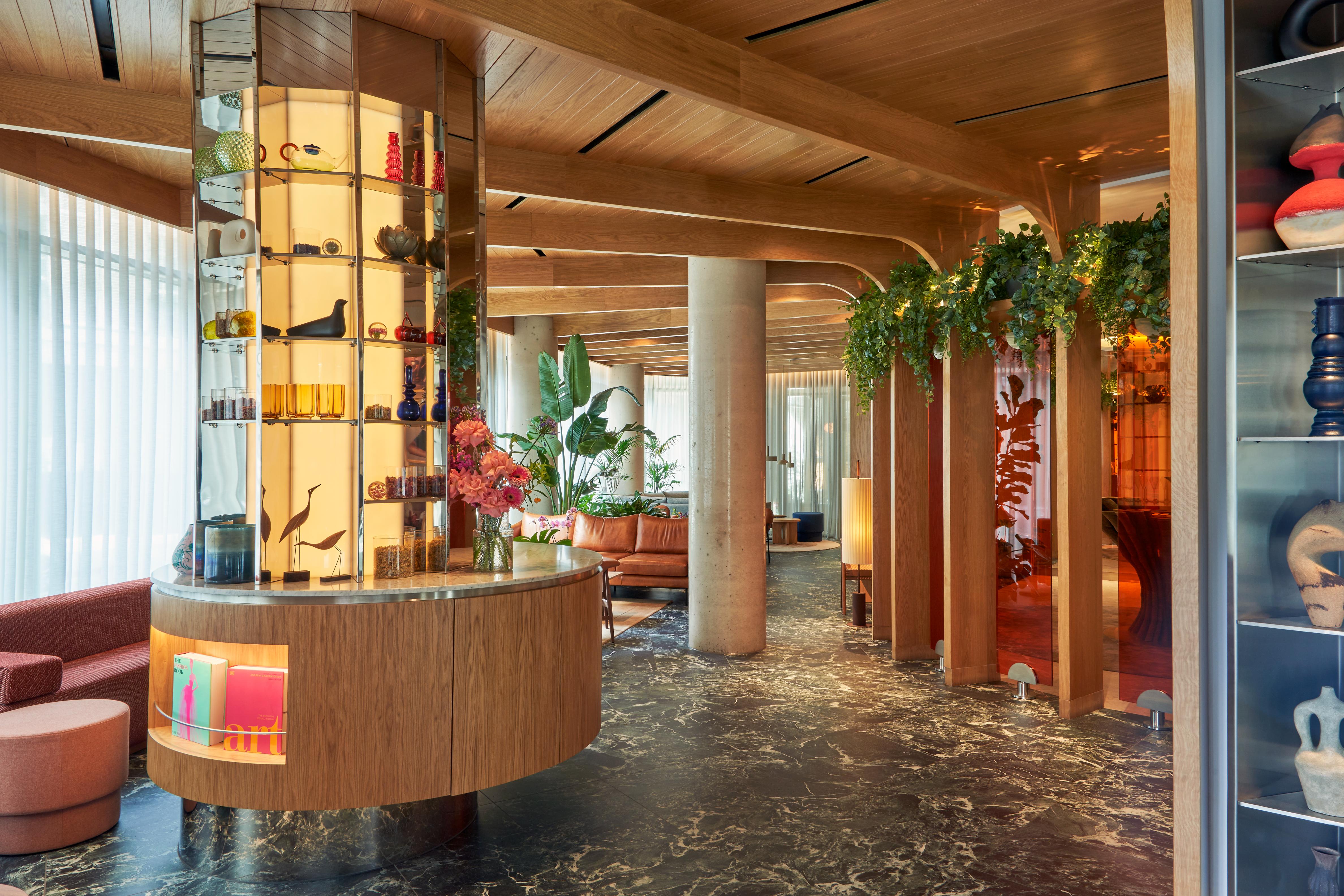
The BoTree Lobby
The hotel’s design was overseen by EPR Architects with interiors by Amsterdam-based studio Concrete. The result is a property that offers a bold and colourful palette, with natural fabrics, eclectic textures and playful detailing running throughout. The tone is light-hearted yet meticulous, a balance that aligns with its position as a “gateway” to the three districts it joins.
All of this makes it arguably one of the most exciting new luxury boutiques to open its doors in recent years.
Rooms and Suites
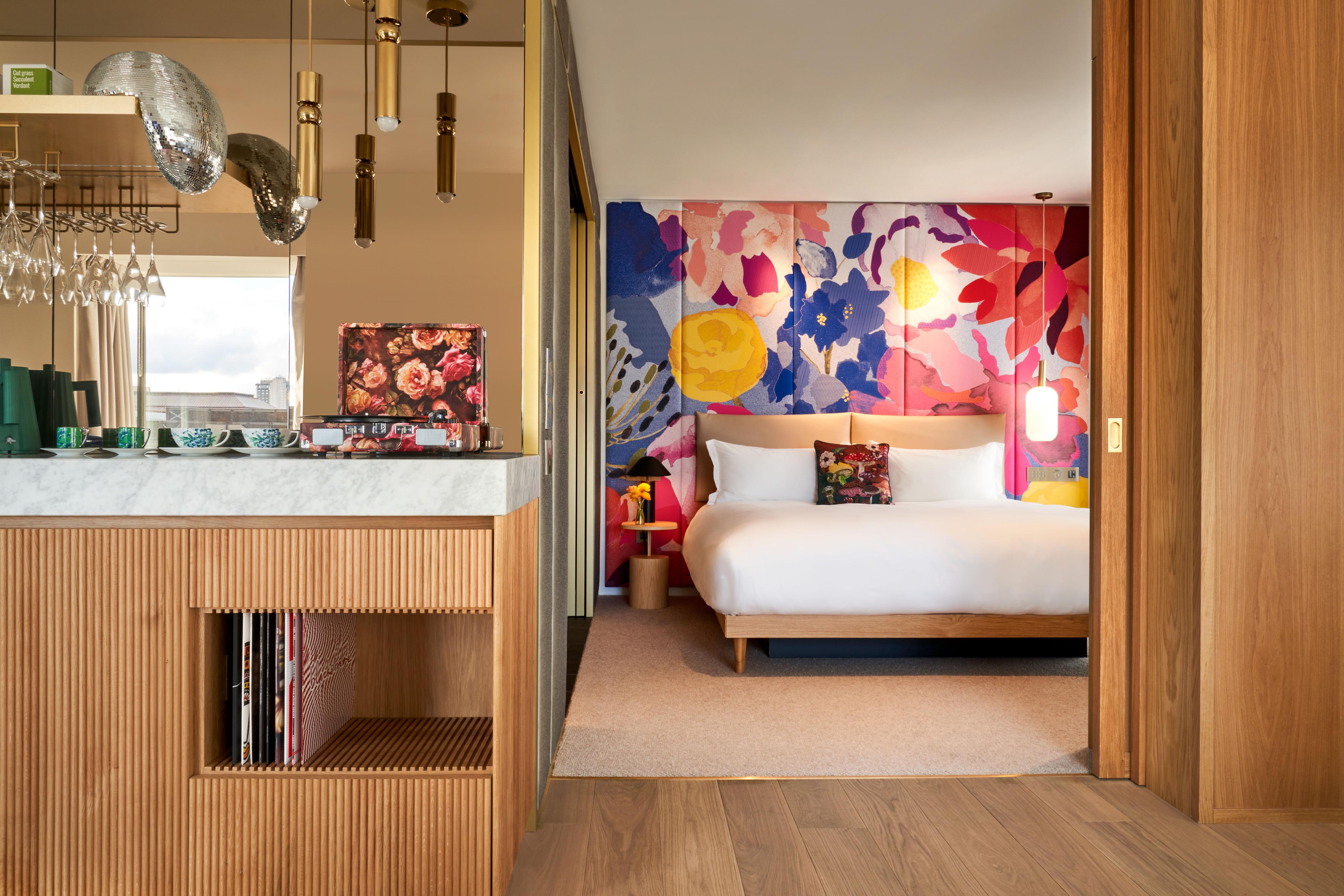
The Soho Suite
The property features 199 rooms, 30 of which are suites. A further 56 interconnecting rooms provide flexibility for groups and families, while 21 accessible rooms expand its inclusivity credentials.
Entry-level accommodation begins with Superior Rooms measuring 20 square metres, rising through a range of categories up to the signature Marylebone Lane Suite. At 80 square metres and configured as a two-bedroom option, this is the largest suite in the hotel, designed as a showcase of the property’s ambitions.
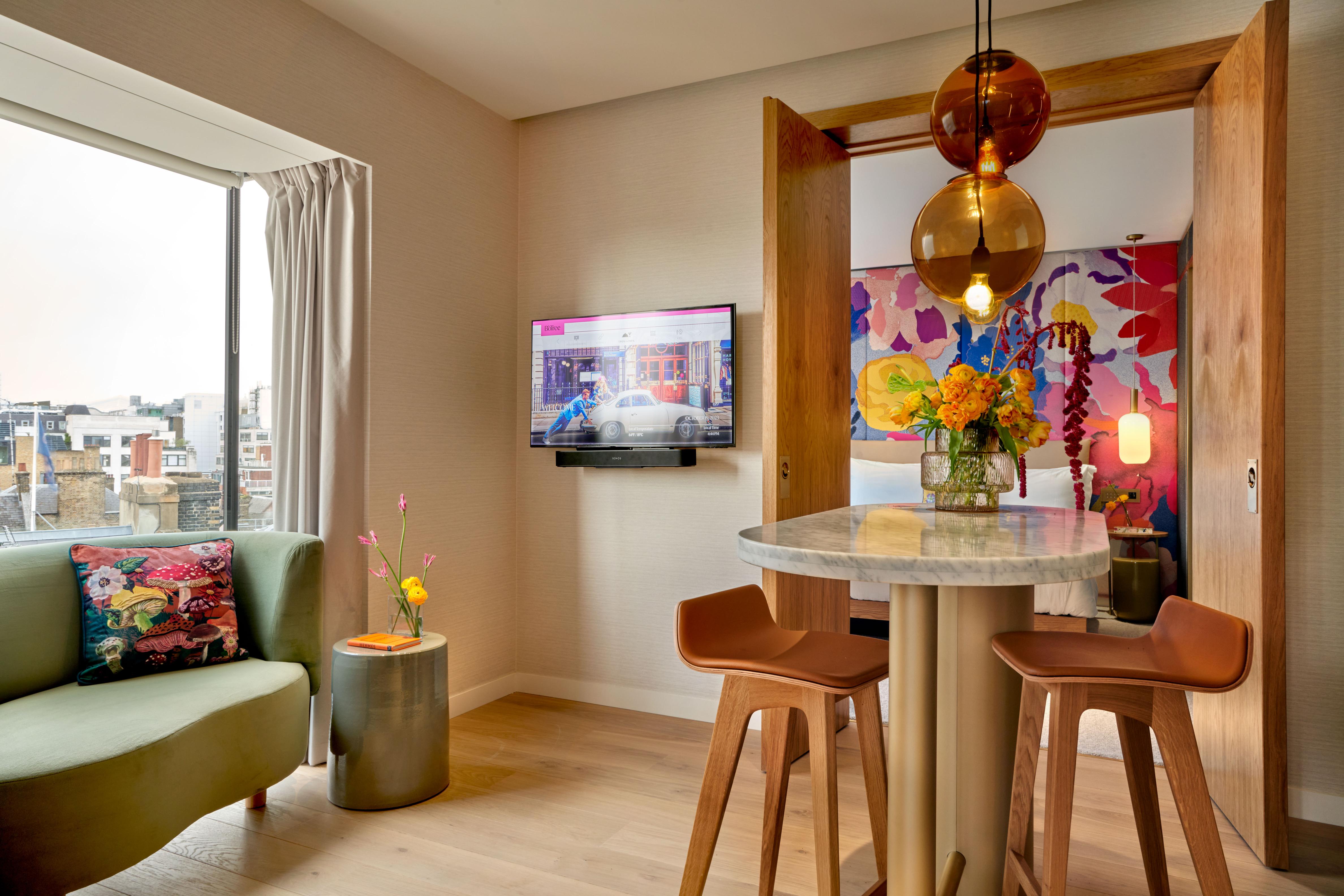
The Lane Suite
The true standout accommodation in the property, however, is its unique suites, which perfectly combine practicality with comfort. Several feature delightful outdoor terraces, with panoramic views over the cities, while inside guests can enjoy deep soaking tubs and Jo Loves by Jo Malone amenities.
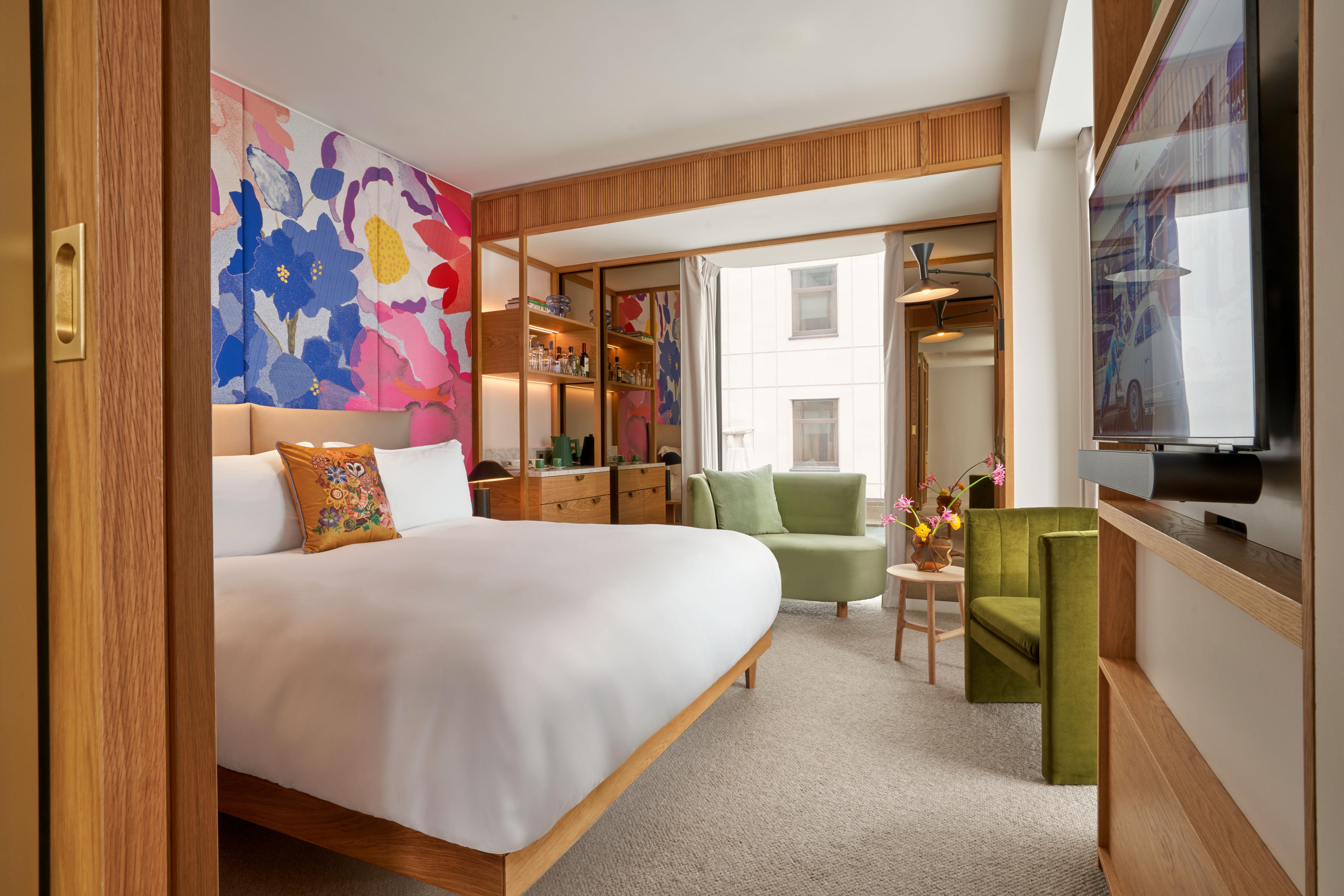
The Henrietta Suite
Every suite is designed to support both quiet moments and longer stays, a factor reinforced by touches such as eucalyptus Tencel bedding and vegan leather headboards.
No detail is left out with the provision of Dyson hair tools in all rooms, complementary soft drinks in the suites a 24-hour floor host butler service.
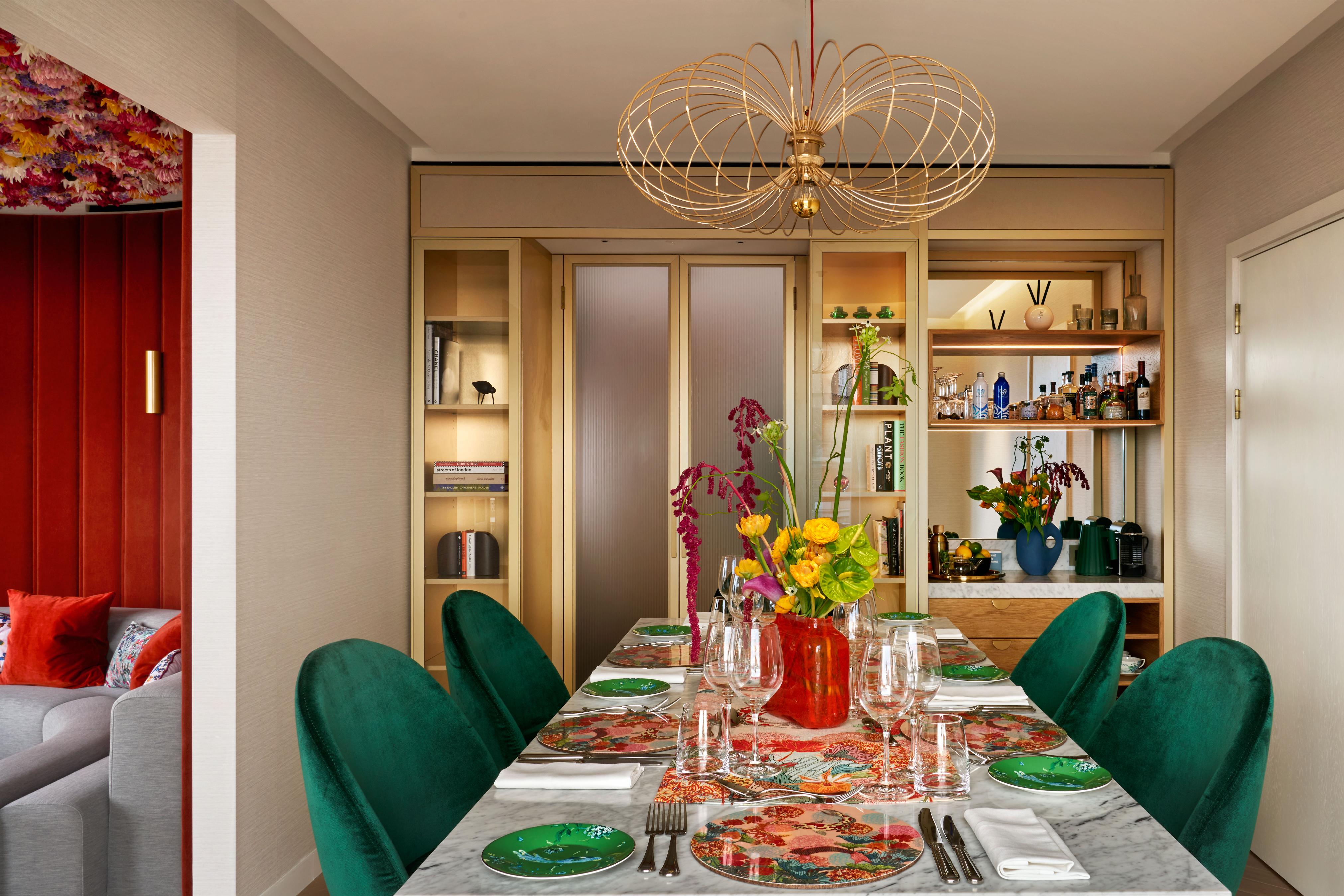
The BoTree Suite
The set up is perfect for what the hotel staff described to us as “slow mornings and restful nights” – an excellent counterpoint to the high-energy environment outside.
Family-Friendly Atmosphere
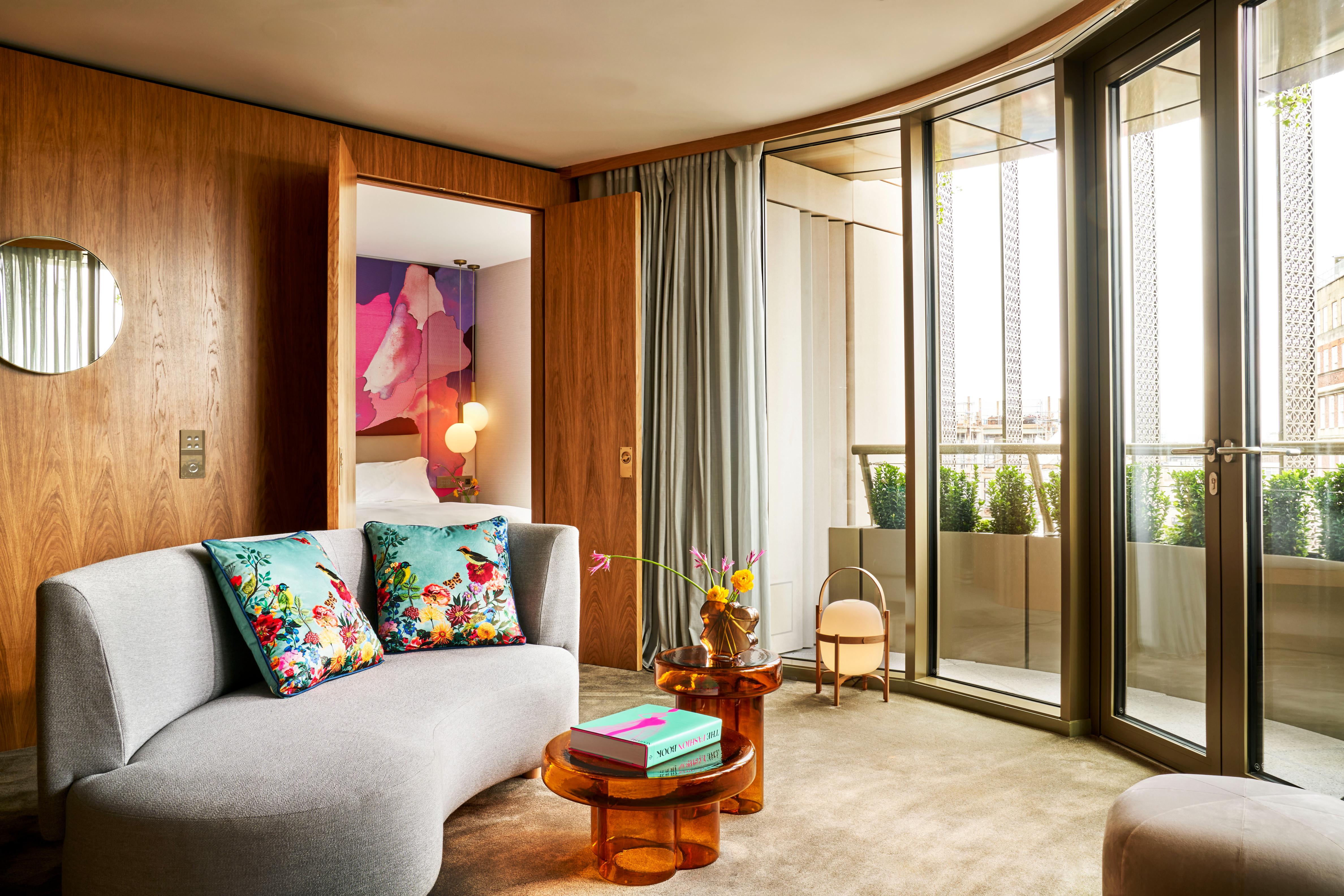
The Marylebone Suite
The BoTree also positions itself as a family-friendly property, an approach not always associated with central London boutique hotels. For younger guests, the offering includes mini bathrobes, children’s toys, baby baths and highchairs. Interconnecting rooms extend this flexibility, ensuring families can stay together without sacrificing comfort.
Food and Drink at LAVO and The BoTree Bar
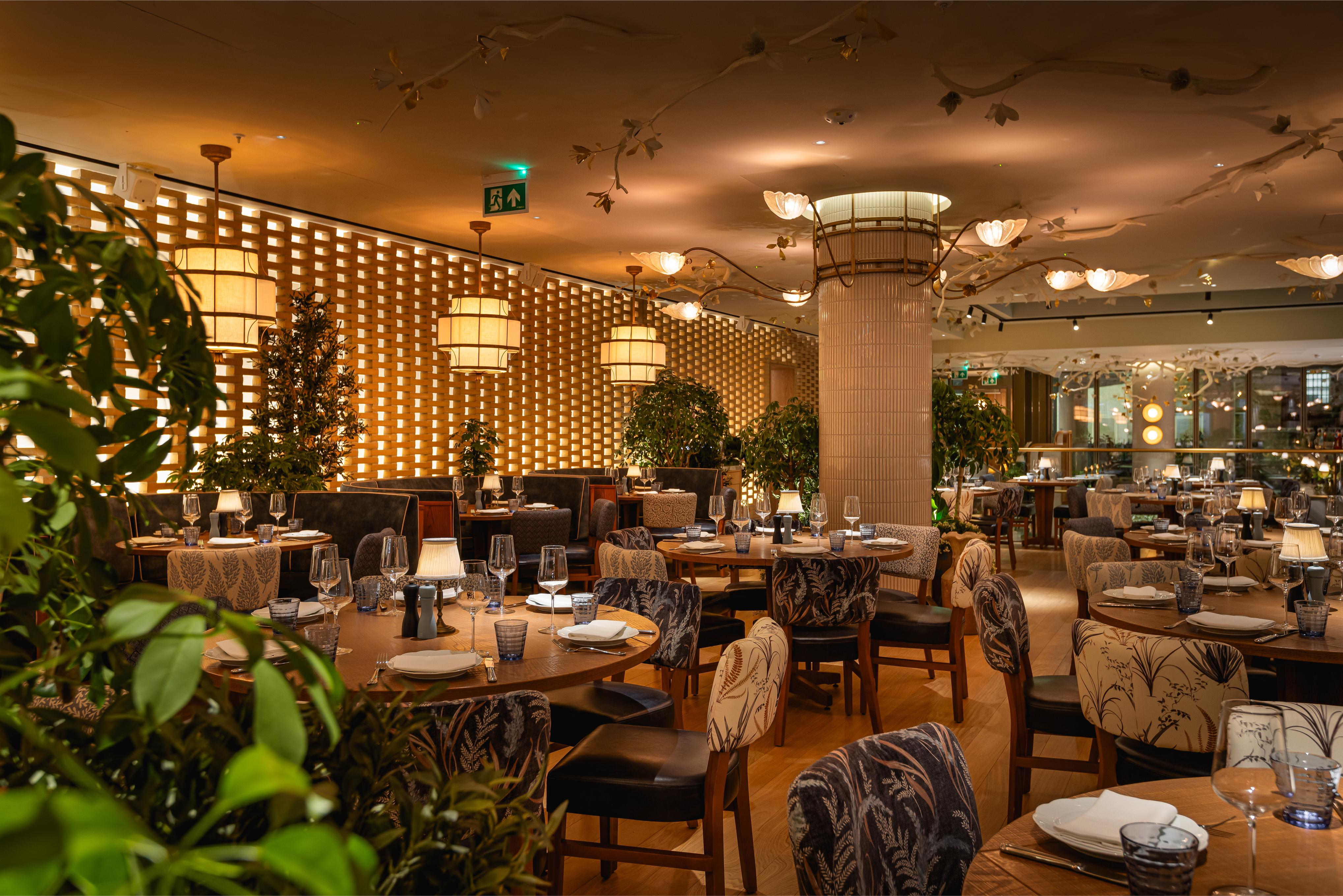
LAVO
LAVO is the hotel’s restaurant hub, which serves a buffet breakfast each morning, with a la carte egg dishes. Moving through to lunch and evening time, the restaurant serves delightful Italian fare, which can be enjoyed al fresco during the British summertime, with the restaurant’s floor-to-ceiling doors opening up at the front of the property.
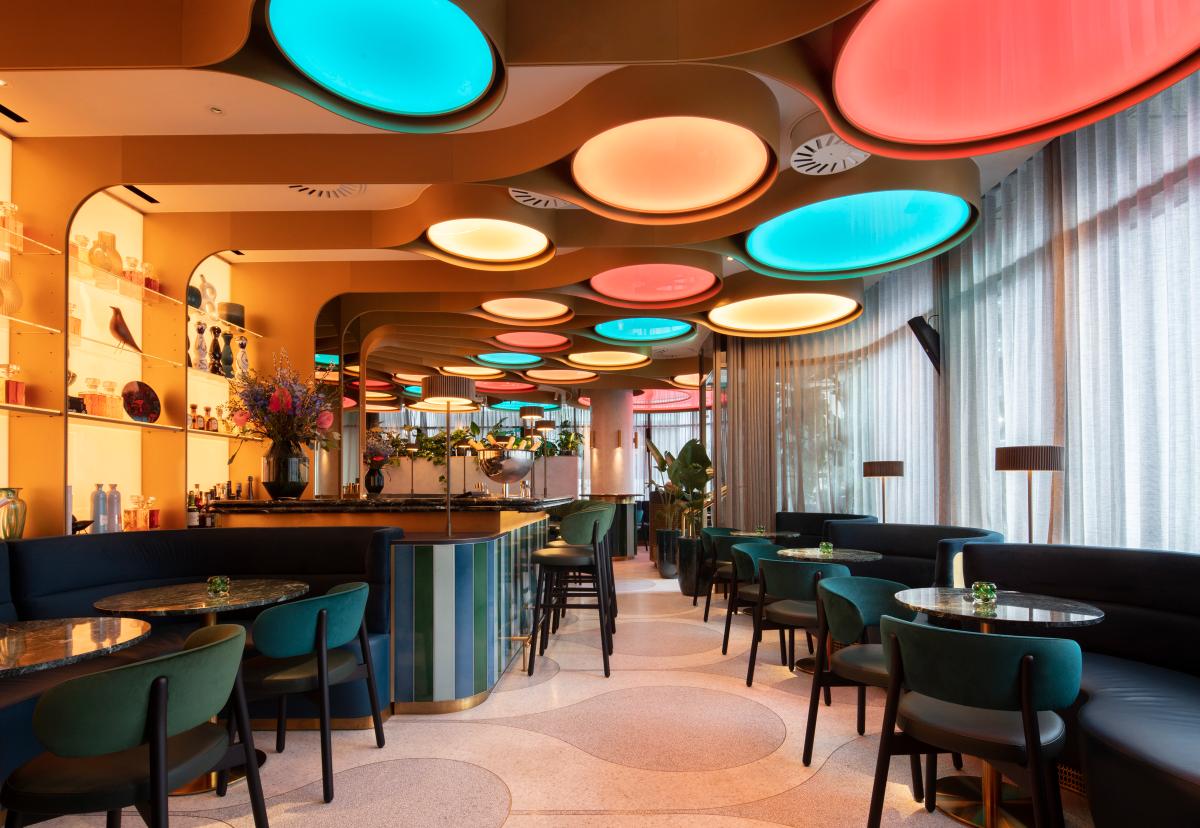
The BoTree Bar
Connected to the hotel’s BoTree Bar, both offer a schedule of regular events which attract locals as well as hotel guests, providing an authetic West London atmosphere.
A Vibrant Addition to the London Hotel Scene
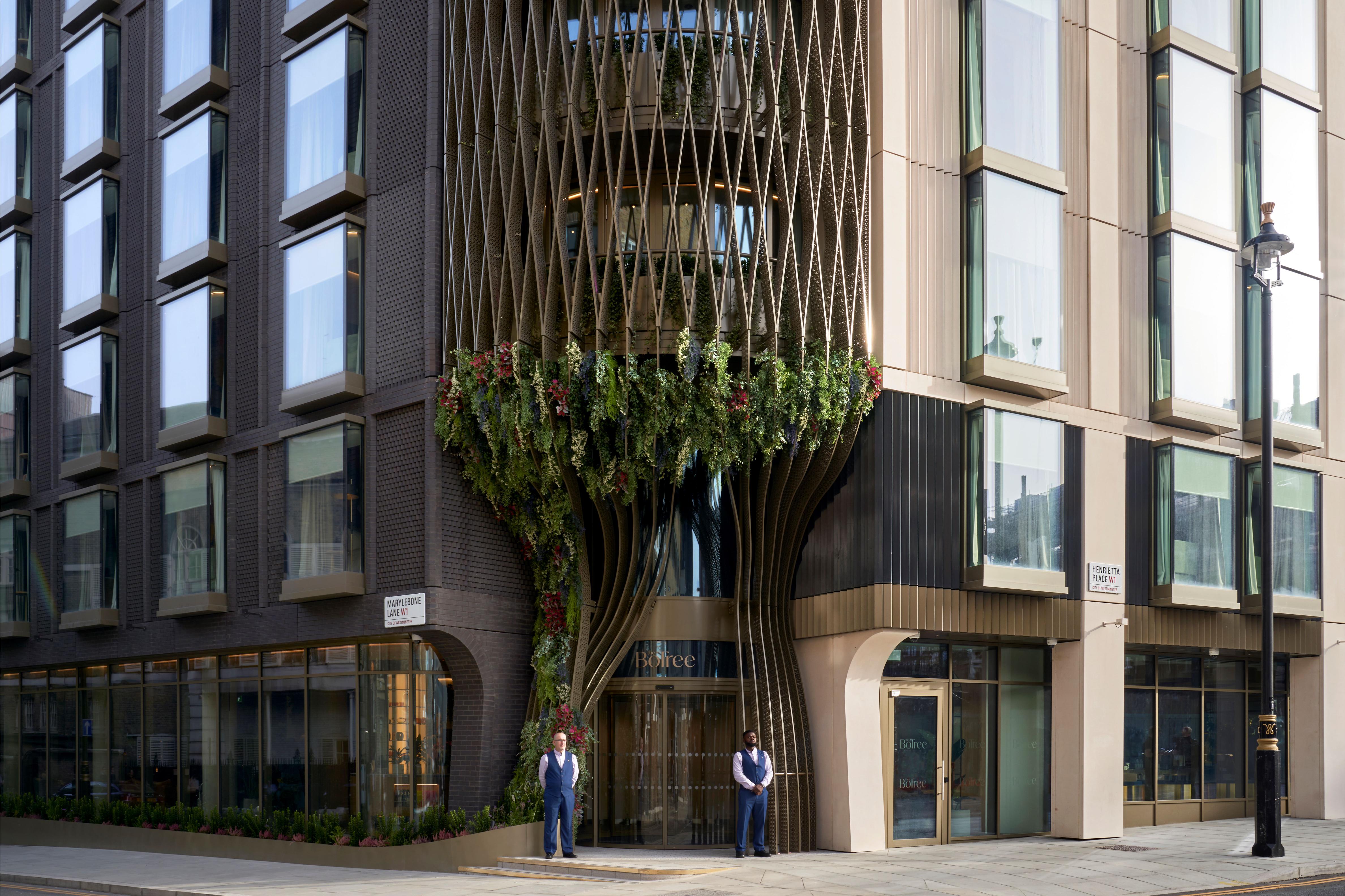
The combination of location, suite design, and a mix of discreet privacy as well as social spaces, makes it the perfect place for travellers from the GCC to spend a long summer sojourn or shorter stay.
In less than two years since opening, The BoTree has established itself as a distinctive presence on London’s luxury hotel map. Its combination of bold design, central location and attention to detail in suite amenities has given it an edge in a crowded field.
By positioning itself between Marylebone, Mayfair and Soho, the hotel draws on the identity of three distinct districts. It’s suites balance practicality with indulgence, while LAVO and The BoTree Bar deliver an energy that extends beyond the guestroom.
For travellers seeking a London stay that combines residential comfort with high-energy social spaces, The BoTree offers a product that is both considered and original.
Rooms start from £450 (approx AED 2,250) per night. Book directly on thebotree.com
BECKHAM x BOSS Returns for Fall/Winter 2025
BOSS has unveiled the second chapter of its collaboration with David Beckham, launching the BECKHAM x BOSS Fall/Winter 2025 collection.
The line continues the partnership that began with the debut capsule, expanding on themes of timeless design, versatile tailoring, and outdoor-inspired style.
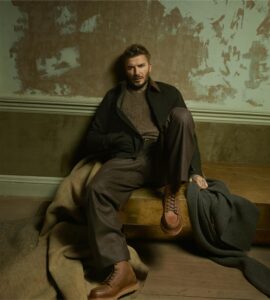
The collection was co-designed with Beckham and focuses on refined silhouettes, luxurious fabrics, and a neutral palette. Marco Falcioni, Senior Vice President of Creative Direction at Hugo Boss, said: “The collection presents a natural evolution of our debut collaboration. It lets David’s personal style shine through, while keeping a classic BOSS feeling at its core. We have worked hand in hand with him to curate a wardrobe that is versatile and elegant, perfect for both the city and the great outdoors.”
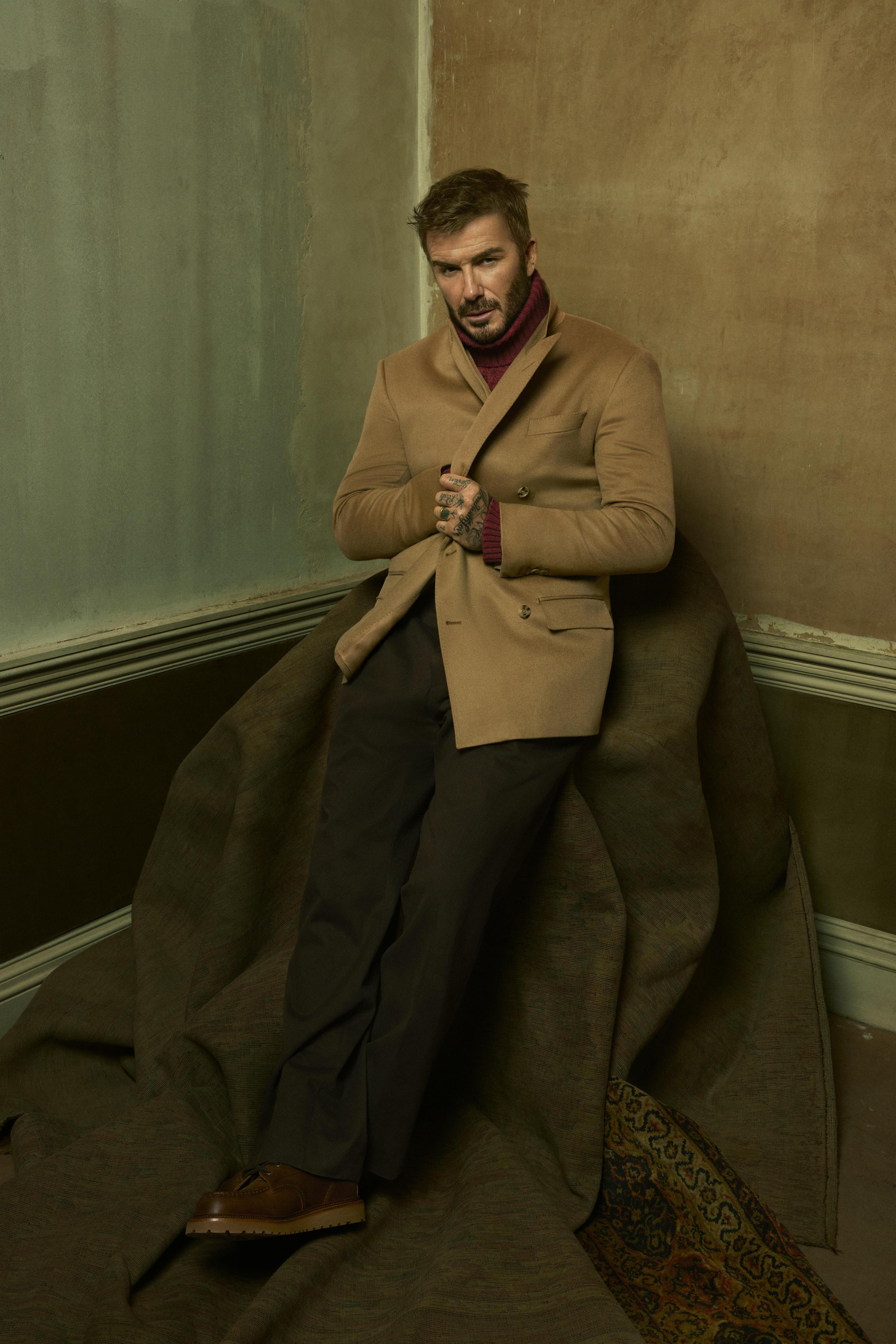
Beckham added: “I love this time of year, the layering, accessories and clothes that are stylish yet comfortable. Right from the early stages of development I wanted to create a collection inspired by the feeling I get when I am at home in the countryside in the colder months. With my second collection with BOSS, we’ve put a strong focus on textures and materials that give classic pieces a fresh, modern feel.”
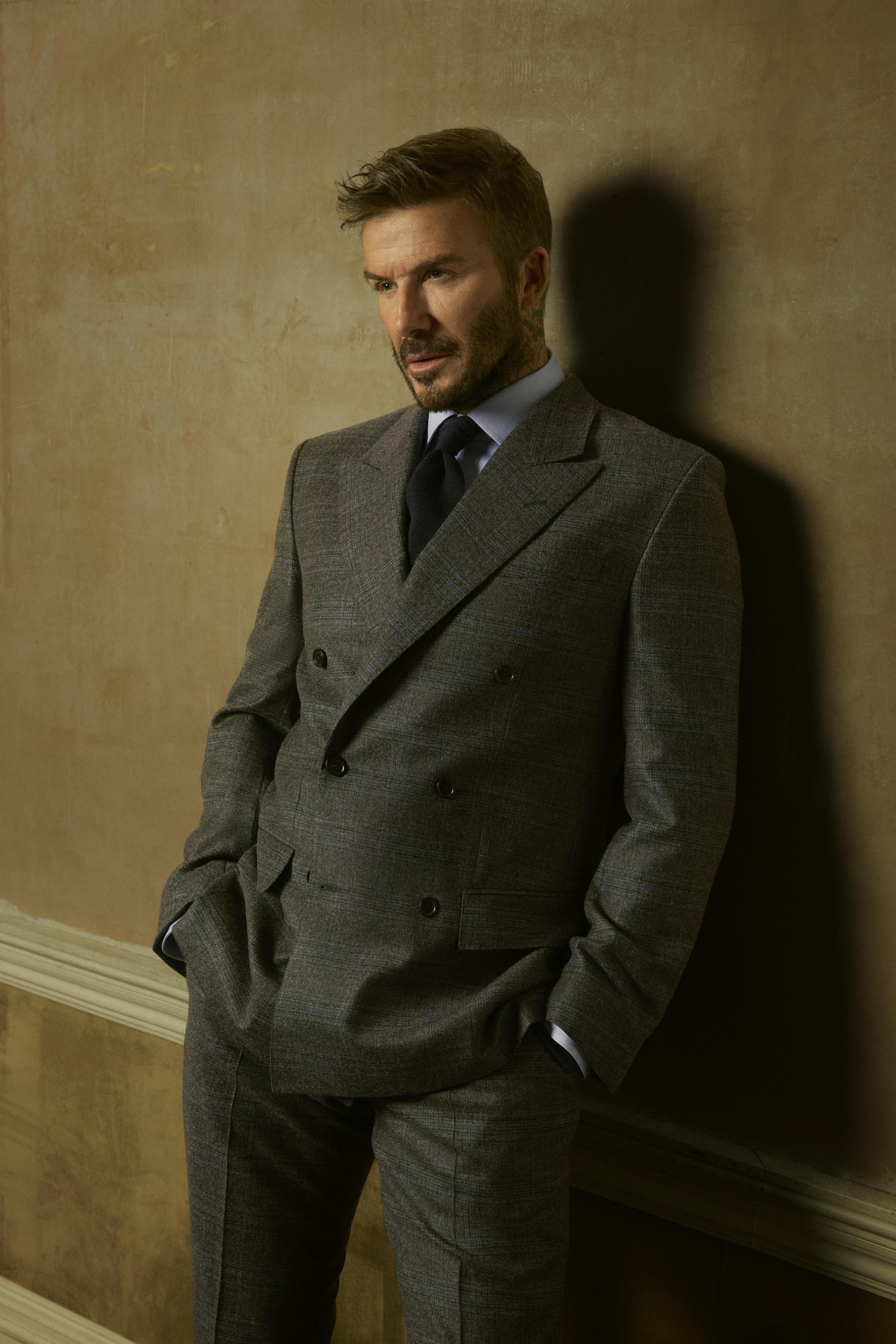
Tailoring remains central, with sharp-shouldered jackets and mid-waisted trousers offered in fabrics such as cashmere, cotton corduroy and virgin wool. Winter shades include brown, burgundy and soft cream, alongside grey checked wool flannel. Everyday shirts in cotton poplin and jersey complete the tailored offering.
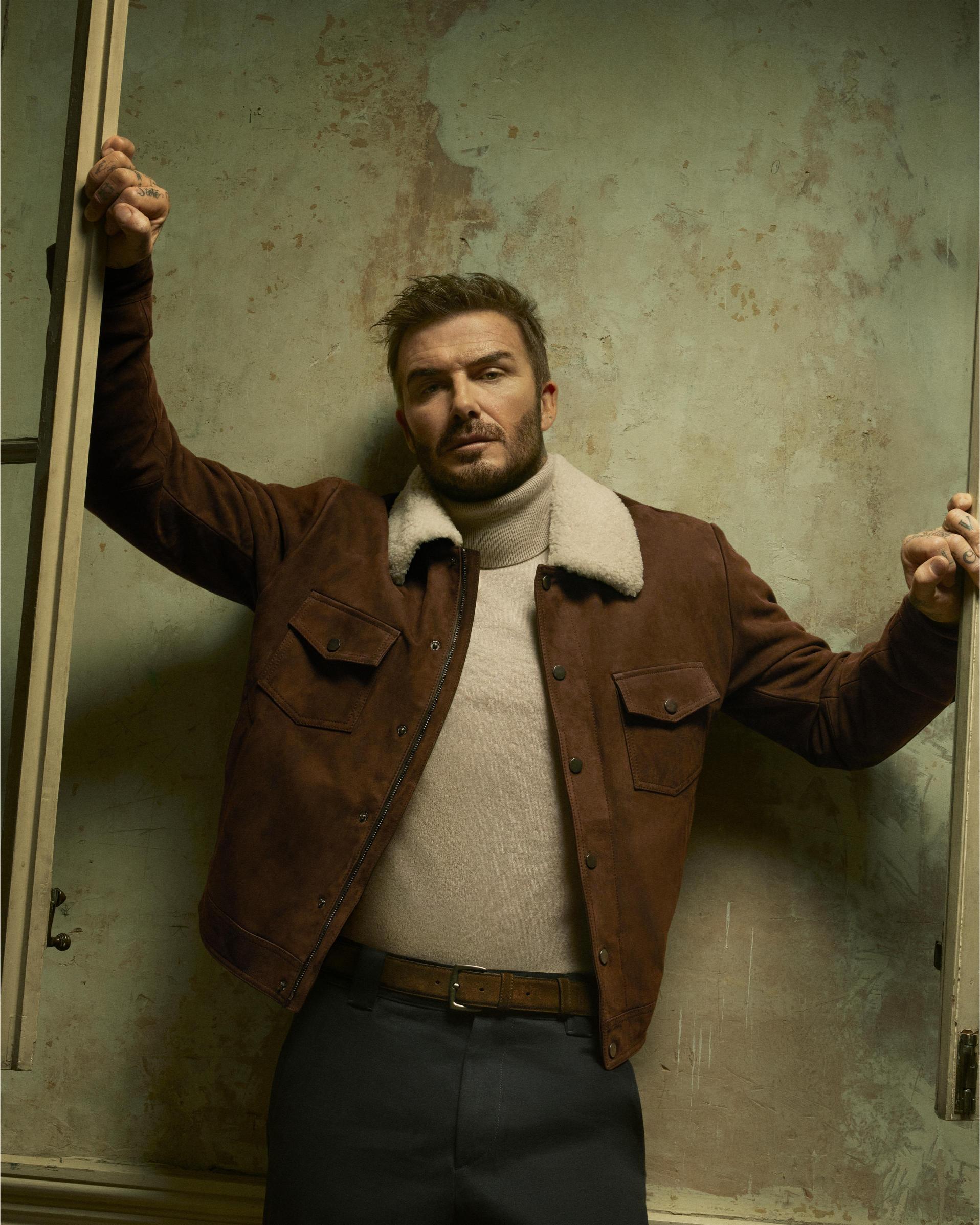
The off-duty edit introduces chunky knits in ribbed and cable textures, with roll necks in burgundy and beige. Pleat-front trousers in brushed cotton and wool flannel are joined by dark blue cargo pants and classic-fit jeans. Outerwear ranges from denim jackets with cord collars to bonded parkas, shearling-trimmed leather trucker jackets, and bomber styles in wool and nylon.
Accessories include boots, Chelsea silhouettes, sneakers, and cold-weather essentials such as hats, scarves, and bags.
The BECKHAM x BOSS Fall/Winter 2025 line is available now on boss.com, in BOSS stores worldwide, and through selected wholesalers.
Giorgio Armani ‘Milano, per Amore’ Exhibition Opens at Pinacoteca di Brera
The house of Giorgio Armani is celebrating its late founder and his incredible fifty years of creativity with a landmark exhibition at Milan’s Pinacoteca di Brera.
‘Milano, per Amore’ is set to open tomorrow, on the second day of the city’s Fashion Week, 24th September, and will run until the 11th of January 2026, presenting over 120 garments set among masterpieces of Italian art from the Middle Ages to the nineteenth century.

The show reflects Armani’s deep connection with the Brera district, where he has chosen to live and work, drawn to its blend of culture, vitality, elegance and artistic freedom. In 1993, the Academy of Fine Arts acknowledged this relationship by awarding Armani an honorary title for the coherence of his stylistic research and the rigour uniting function with imaginative invention.

The exhibition has been organised in collaboration with ARMANI/Archivio, which preserves and promotes Armani’s vision. The selection highlights recurring themes that define his style: a reinterpretation of tailoring, a measured use of decoration, a restrained palette of neutral yet nuanced tones, and the richness of techniques, finishes and embroidery. These works are displayed on invisible mannequins, allowing the garments themselves to suggest the human form.

Angelo Crespi, Director of the Pinacoteca di Brera, said: “Giorgio Armani represents one of the highest pinnacles of Italian creativity, expressed in the essentiality and rigour of form. He embodies the character of Milan most fully. That is why I believed it was right and proper to celebrate the Maison’s 50th anniversary at the Pinacoteca with an exhibition that highlights his extraordinary talent and inimitable style.”

Deputy Director Chiara Rostagno added: “Fashion as decorative art is welcomed at Brera. It will be a singular event: a dialogue between Giorgio Armani, the museum and its artistic heritage, conveyed through a selection of his creations.”

For Armani, the exhibition is also an educational gesture. As he wrote in Per Amore: “An exhibition can be seen in two different ways. On the one hand, there’s the immediate satisfaction of the creator’s ego. On the other, there’s the educational value, the unique testimony that is offered not only to the public through your work, but above all to young creatives.”
This marks the first time the Pinacoteca has placed fashion at the centre of its educational mission, integrating it into a wider dialogue with art history.
Burberry Returns to Perks Field with Festival-Inspired Spring 2026 Collection
Burberry staged its Spring 2026 ready-to-wear show at Perks Field in Kensington Gardens, returning to the location that hosted some of its most notable collections in the 2010s.
Daniel Lee, now creative director, brought the brand back to the venue in what felt like a deliberate nod to that earlier era of prominence.
Music References

The designs referenced a wide spectrum of British music culture. Arguably anticipating Sam Mendes’ forthcoming Beatles film, Lee riffed on the group’s slim-cut suits, combining them with mod-inspired tailoring to push silhouettes away from oversized shapes and towards a skinny line.

Accessories and symbols added to the festival-esque feel of the collection. A rising sun motif appeared on trousers and pastel satin bombers, later re-emerging on trenches and scarves.

Meanwhile, accessories included skinny scarves, fringed and whipstitched bags, rocker boots and medallion crochet dresses.
A Revamped Trench

Trench coats were presented in denim-effect waxed cotton, changing their traditional aesthetic into something more rock-inflected, while A-line iterations with check weaves recalled Mary Quant. Outerwear also leaned into counterculture references, with a parka designed to resemble military surplus, finished with Burberry-branded webbing, and styled with ringer shirts and straight-leg jeans.
1960s and 1970s nostalgia

Elsewhere in the collection, there were minidresses in distinct 1960s silhouettes as well as 1970s references.
It was a collection that not only looked back at Burberry’s history, but British culture and in particular, music and festival culture, to create something wholly new for SS26.
Dior Unveils Jonathan Anderson’s First Lady Dior Campaign
Dior has launched Jonathan Anderson’s first Lady Dior campaign, fronted by actors Mia Goth, Greta Lee and Mikey Madison.
The campaign marks the first designs for the House by Jonathan Anderson and was photographed by David Sims.
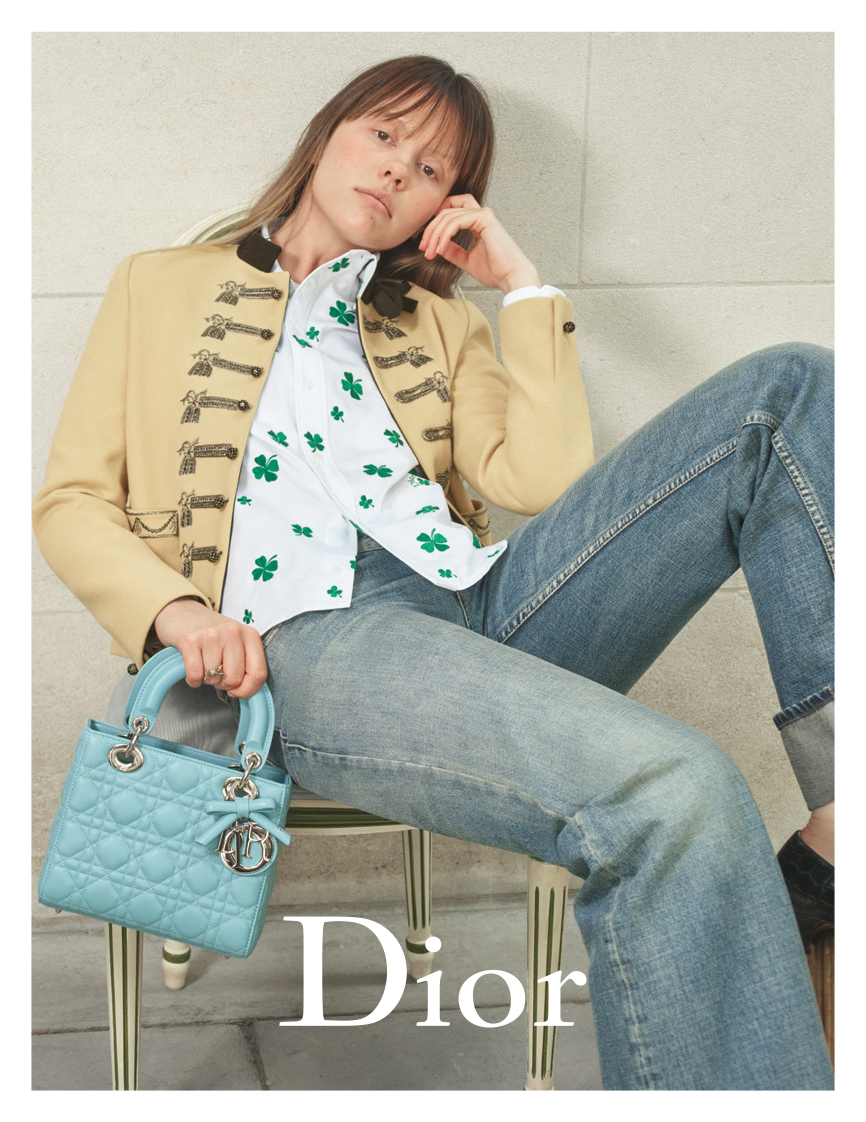
The shoot took place at the Pavillon de Musique de la Comtesse du Barry, with Sims making use of natural light across both garden and interior settings. The location and atmosphere reflect 18th-century French references, which underpin Anderson’s debut Lady Dior work.
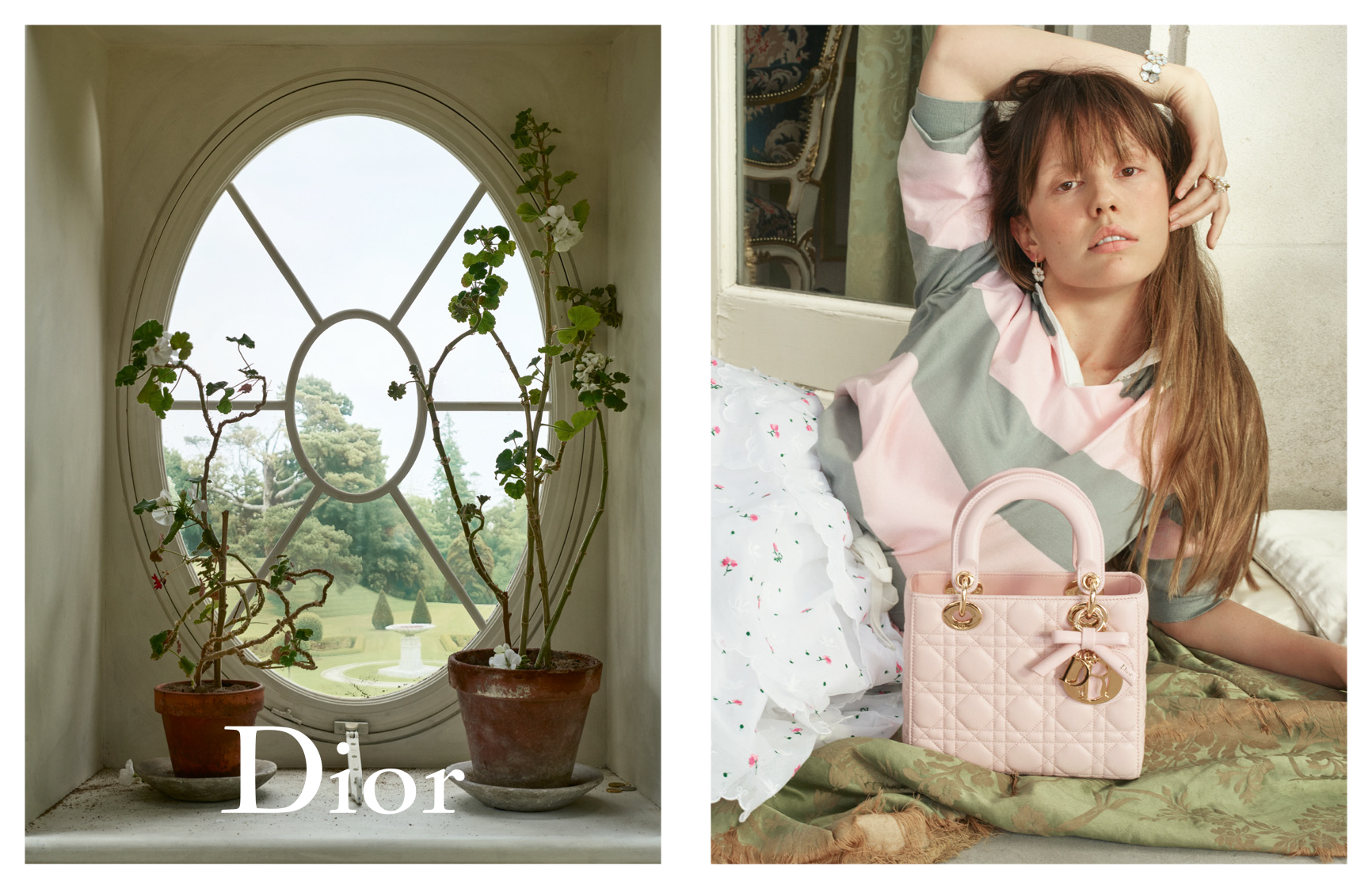
The three actors, each a Dior ambassador, appear in a series of portraits that aim to capture the essence of the Lady Dior. According to the House, their poses were instinctive and spontaneous, intended to present the icon without artifice. This approach is described as bringing a sense of renaissance to the bag, which remains one of Dior’s most recognisable pieces.
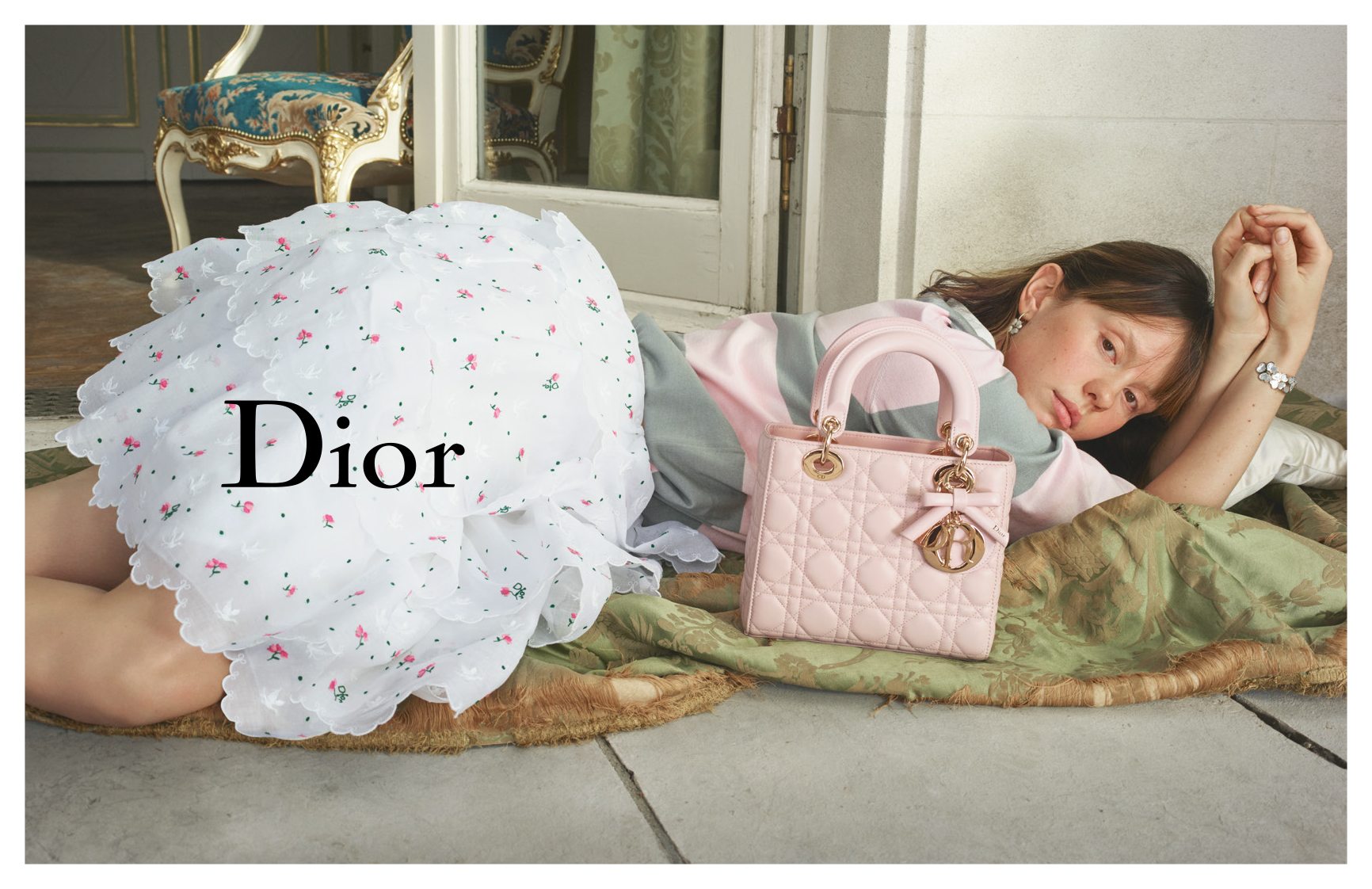
First introduced in 1995, the Lady Dior has become one of the brand’s signature handbags and has been associated with a number of high-profile campaigns over the decades. In this latest presentation, the emphasis is on reinvention through personality and presence, with each ambassador contributing her own interpretation of the piece.
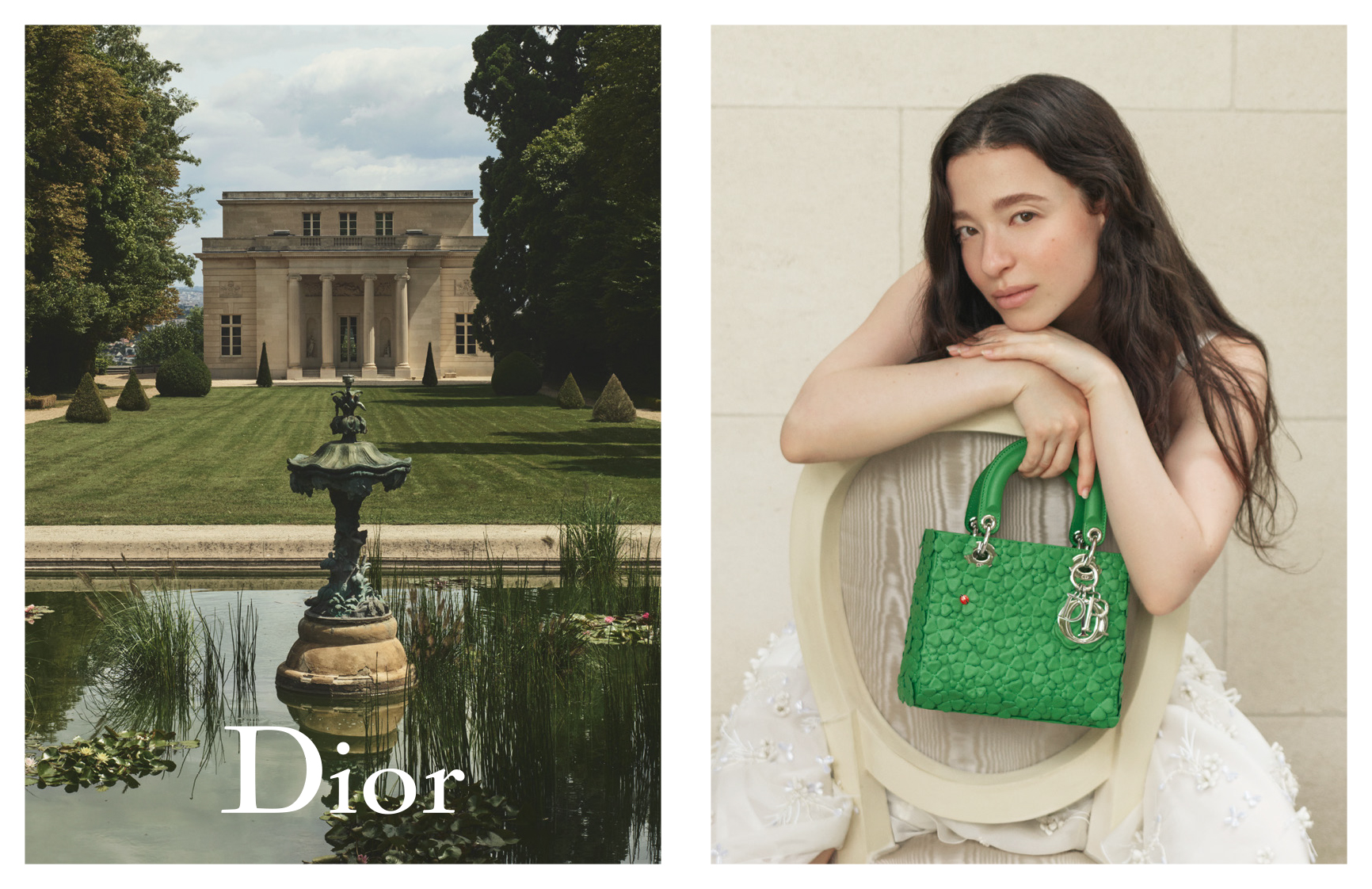
Anderson commented on the enduring legacy of the design, noting its continued ability to adapt to new contexts. “The Lady Dior is one of the most iconic bags in history. I love that when you pair it with someone like Mia, Greta or Mikey, it suddenly becomes something new,” he said.
Gucci Unveils Demna’s First Designs For The House With A Surprise Collection
In true Demna style, Gucci’s new artistic director has revealed a surprise drop called La Famiglia, featuring 38 unique looks.
The lookbook is positioned as a study of “Gucciness” and explores Demna’s vision for the house. Captured through the lens of Catherine Opie, it depicts an extended Gucci family made up of distinct personalities and styles. Each figure embodies a facet of Gucci’s persona.
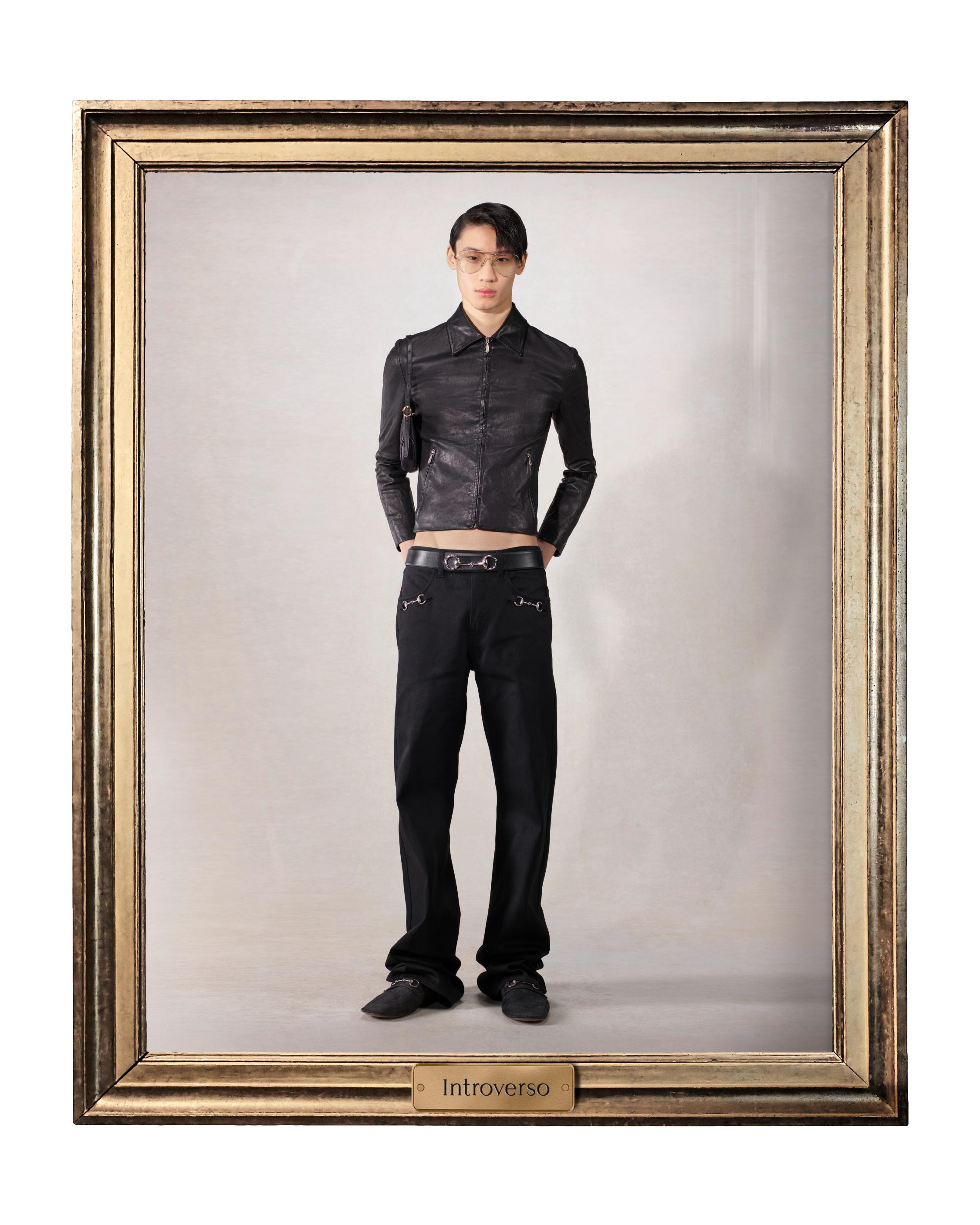
These include L’Archetipo, represented by a monogrammed travel trunk that nods to the brand’s origins in luggage making, and the Incazzata, dressed in a 1960s-inspired red coat reflecting her fiery character. Other characters include La Bomba with her feline stripes, La Cattiva with femme fatale severity, and Miss Aperitivo whose only concern is enjoyment. Contemporary archetypes appear as well, such as L’Influencer, while figures including La Mecenate, La Contessa, Sciura, and Primadonna convey traditional Italian refinement. Principino and La Principessa embody the duality of being the centre of attention.
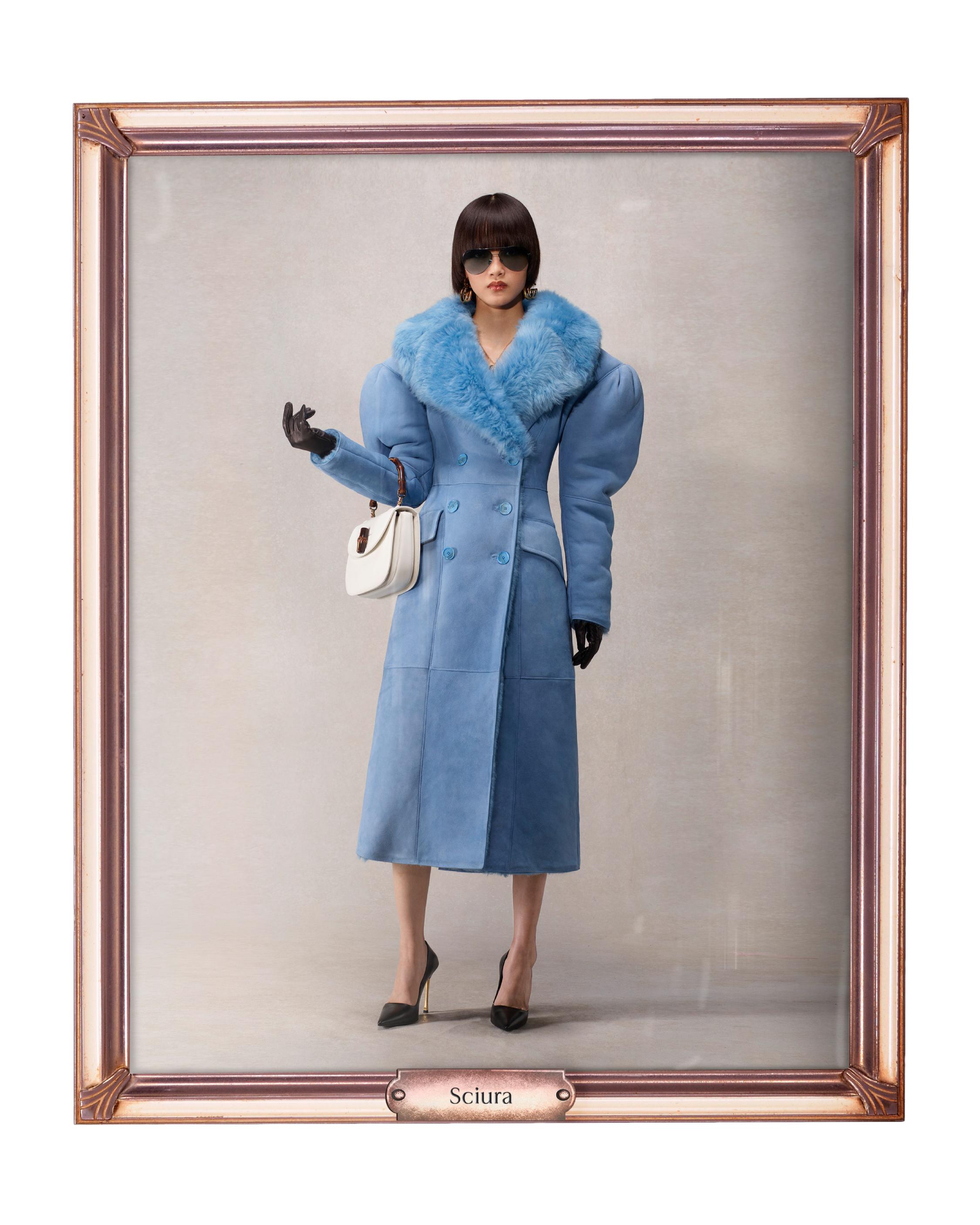
These include L’Archetipo, represented by a monogrammed travel trunk that nods to the brand’s origins in luggage making, and the Incazzata, dressed in a 1960s-inspired red coat reflecting her fiery character. Other characters include La Bomba with her feline stripes, La Cattiva with femme fatale severity, and Miss Aperitivo whose only concern is enjoyment. Contemporary archetypes appear as well, such as L’Influencer, while figures including La Mecenate, La Contessa, Sciura, and Primadonna convey traditional Italian refinement. Principino and La Principessa embody the duality of being the centre of attention.
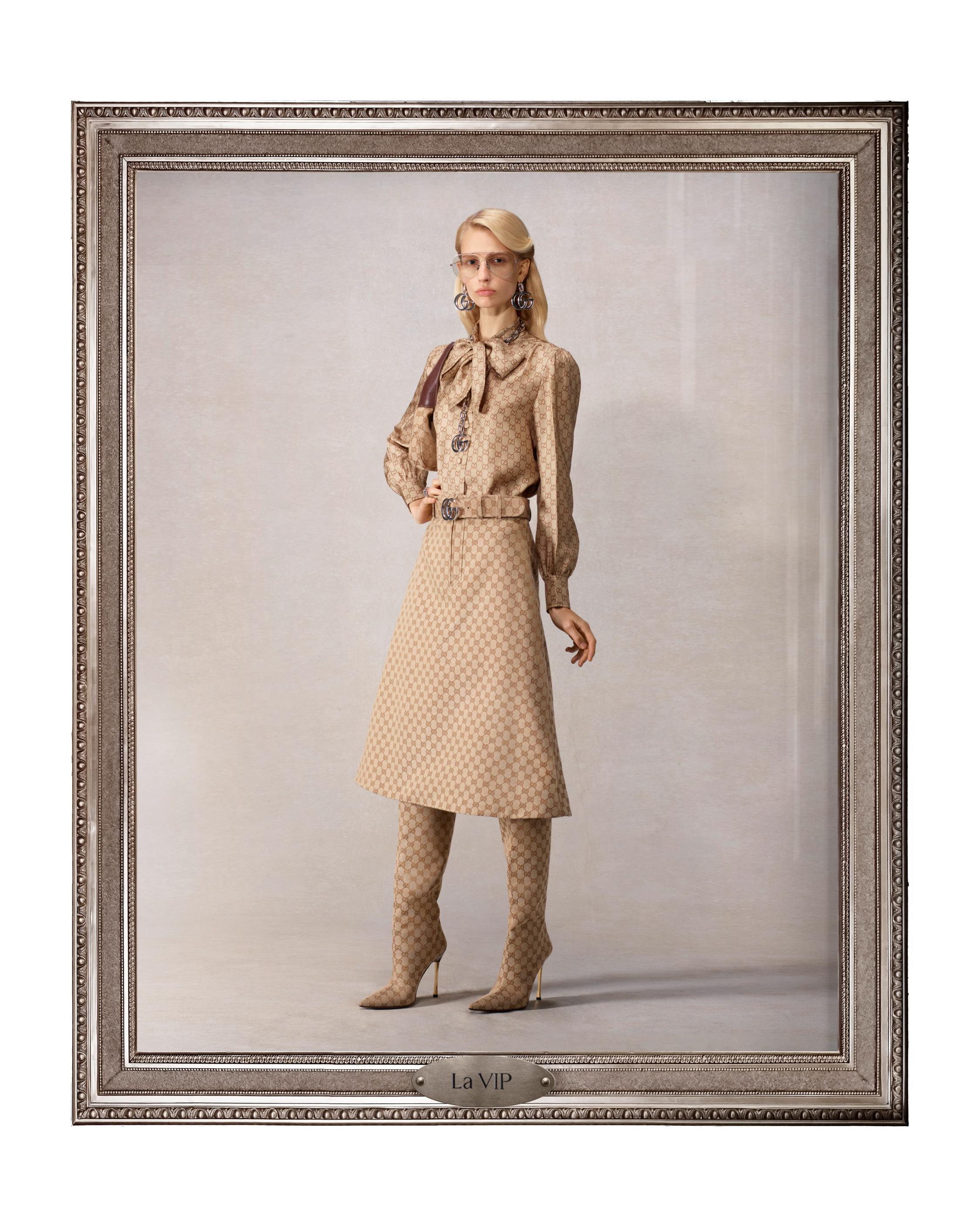
Italian concepts of sprezzatura, or effortless elegance, are woven throughout. Details include slingback kitten heels, soft leather mules worn stepped-in, and gestures of ease that balance refinement with informality. Gucci’s heritage codes also play a central role. The Bamboo 1947 bag has been re-proportioned for modern use, while the Horsebit loafer, first introduced in 1953, is revisited. The Flora motif appears both in its original form and as a darker reinterpretation. The GG monogram, derived from the initials of founder Guccio Gucci, is carried through the collection in a head-to-toe approach.
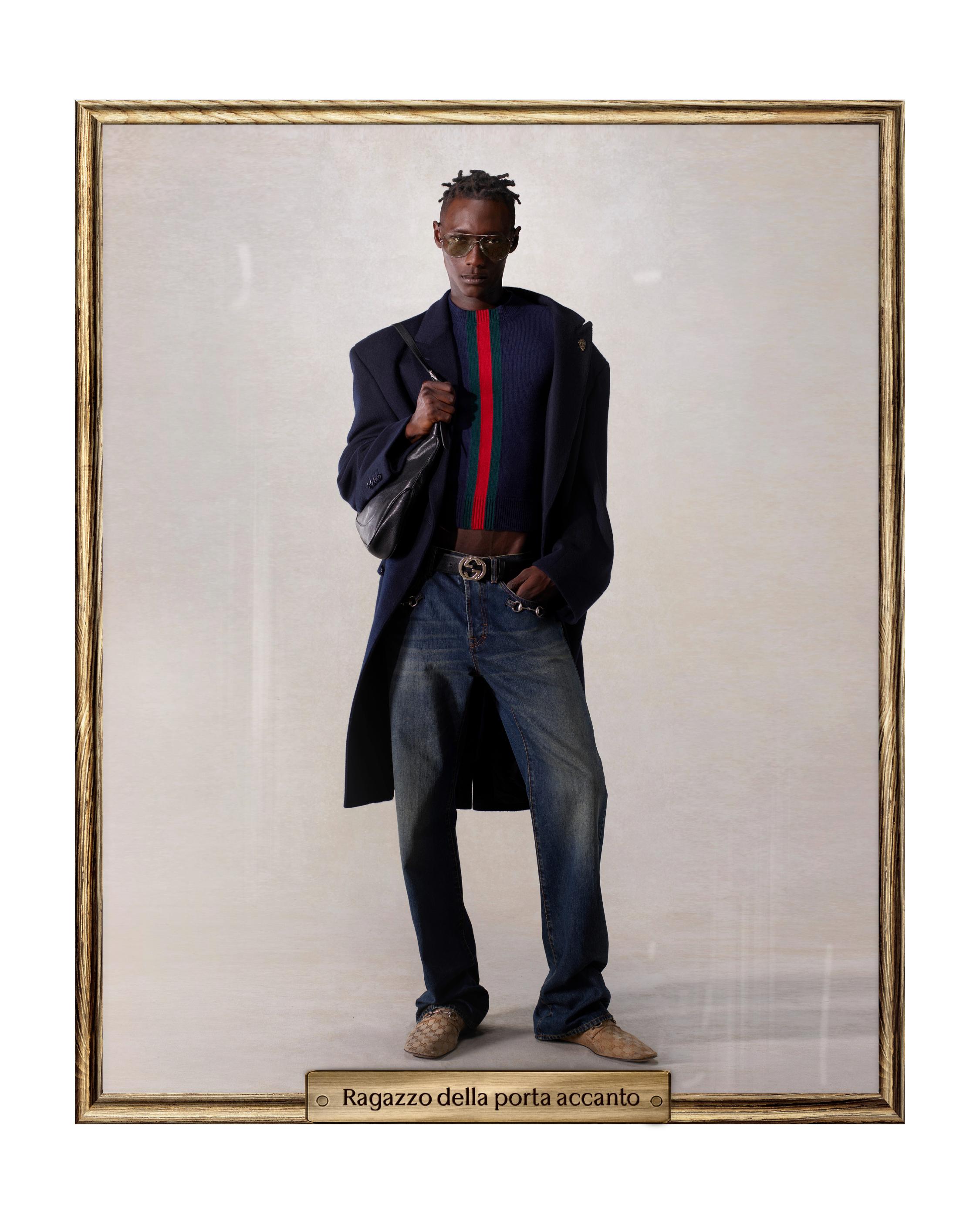
Silhouettes move between opposites, ranging from the grandeur of feathered opera coats and high jewellery to minimal hosiery garments. A focus on dressing for pleasure extends across menswear, with eveningwear elements reworked into bodycon sets and black-tie swimwear, offering a contemporary take on la dolce vita.
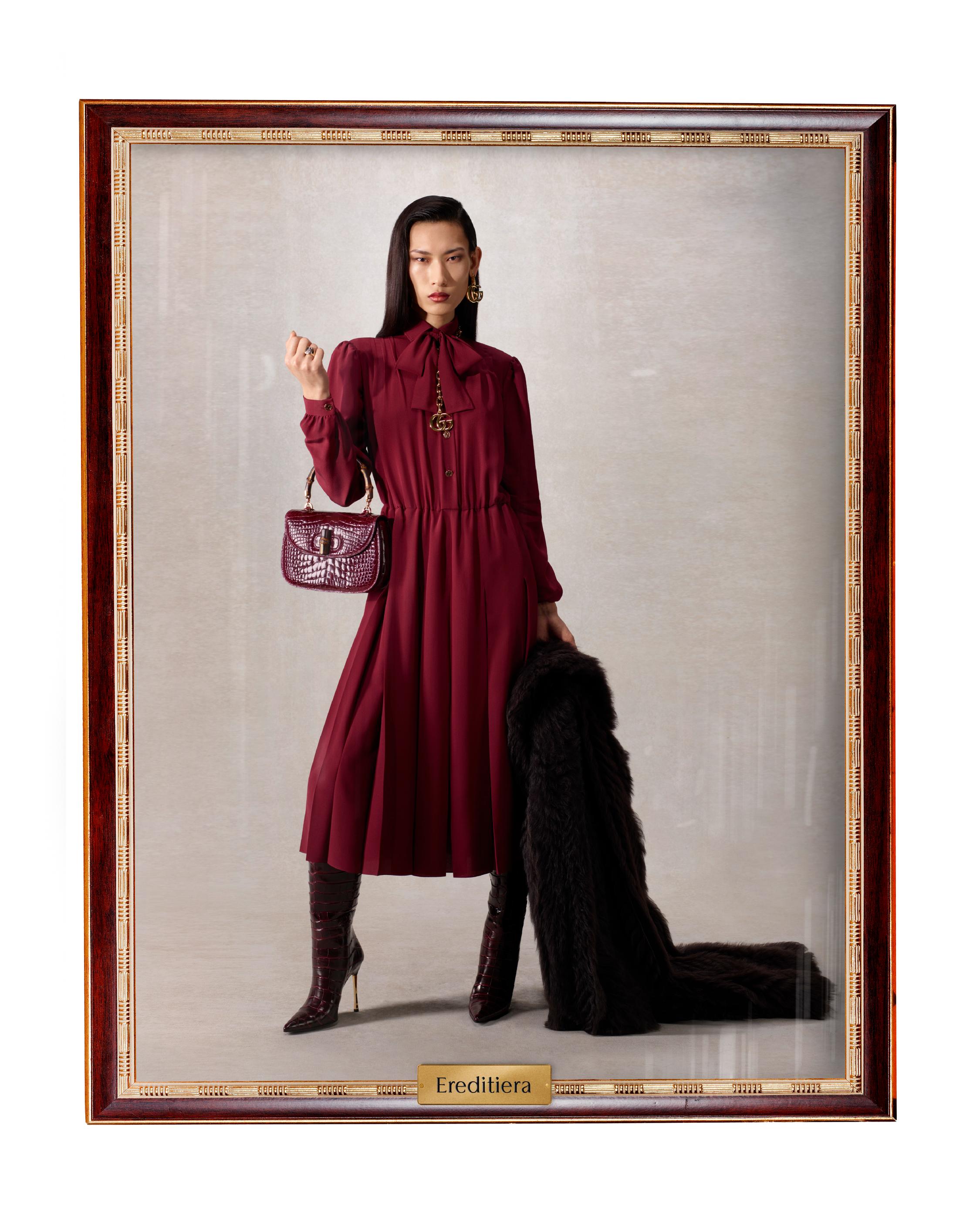
The brand describes La Famiglia as a return to storytelling, linking Gucci’s history with its future direction. It sets the foundation for creative director Demna’s first Gucci show, scheduled for February, by defining the aesthetic codes that will shape his vision for the House.
The Leading Hotel Icons That Have Stood The Test Of Time
Some properties are more than hotels; they are living legends. Welcome to our round-up of some of the best luxury properties in the past 100 years.
Hotel Imperial Vienna
The Hotel Imperial in Vienna has stood the test of time as one of Europe’s most distinguished properties. Built in 1863 as a palace for Duke Philipp of Württemberg and his wife, Archduchess Marie Therese, the building was transformed into a luxury hotel in time for the 1873 World Exhibition. The conversion coincided with the 25th anniversary of the reign of Emperor Franz Joseph I, when Vienna hosted the World’s Fair.
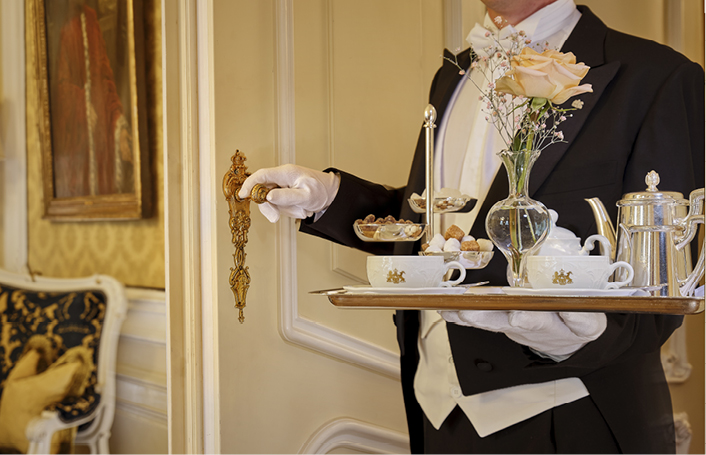
From its earliest days as a hotel, the Hotel Imperial attracted heads of state, royalty and cultural leaders, securing its reputation as one of the most elegant establishments in Europe. In 2023, the Hotel Imperial celebrated its 150th anniversary, marking a century and a half of its role as a meeting place for power and influence. The interiors of the Hotel Imperial retain much of their grand 19th-century character, with marble features, hand-carved statues and glittering chandeliers. The lobby remains a focal point, where the Royal Staircase leads to suites and rooms under ceilings adorned with stucco decoration.
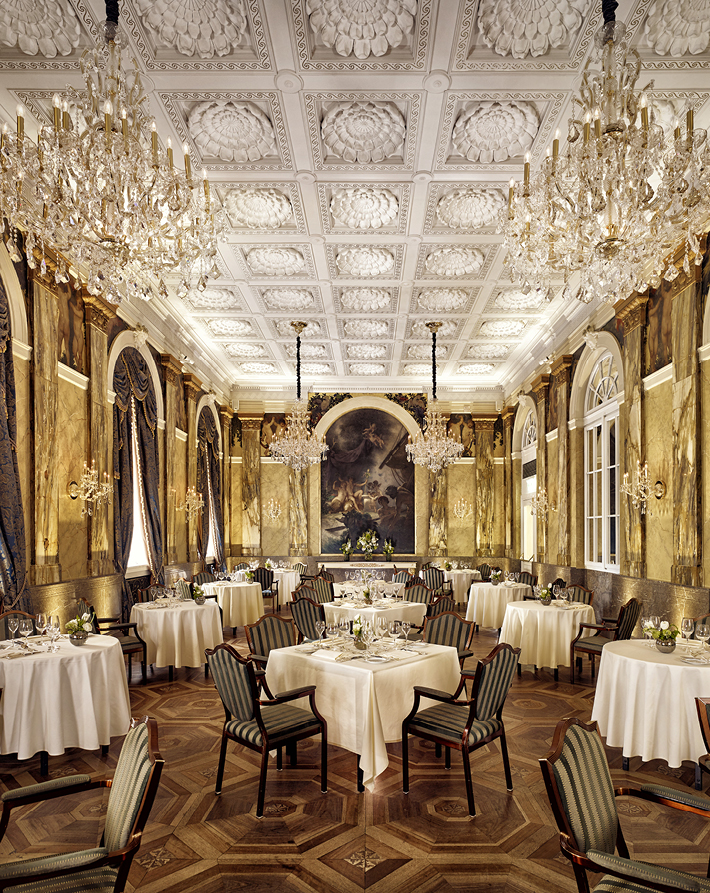
The combination of architectural detail and craftsmanship reflects the grandeur of the period in which the building was first constructed. The best suite at the property is aptly called the Royal Suite (pictured). Once the palace chambers of Duke Philipp of Württemberg, the suite unfolds over approximately 160 m², complete with crystal chandeliers, seven‑metre‑high stucco ceilings and silk‑upholstered walls. Three bedrooms and lavish salons evoke Baroque palace living. The Hotel Imperial is also home to a trio of acclaimed restaurants, including the Café Imperial Wien, a restored coffee‑house since 1873, offering Viennese classics (such as Tafelspitz, Wiener Schnitzel and the celebrated Imperial Torte) crafted in honour of Emperor Franz Joseph I. Elsewhere at the property there Restaurant OPUS, the hotel’s gourmet dining destination, and the Imperial Bar with live piano and jazz performances.
Ritz Paris
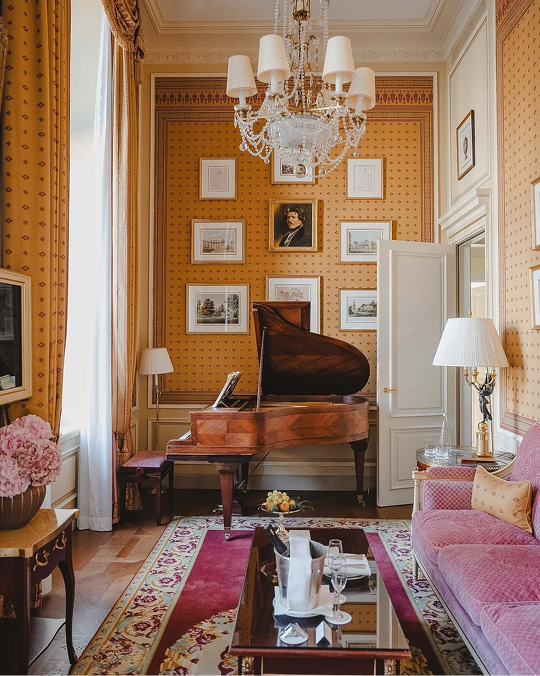
The Ritz Paris has stood at the heart of the French capital since its founding in 1898, when Swiss hotelier César Ritz and chef Auguste Escoffier opened its doors. Built behind the façade of an eighteenth-century townhouse designed by royal architect Jules Hardouin-Mansart, the hotel was among the first in Europe to offer en suite bathrooms, electricity, and telephones in each room. These innovations, combined with its opulent interiors, quickly attracted royalty, statesmen, writers, film stars, and singers. Over its history, the Ritz Paris has undergone two major renovations.
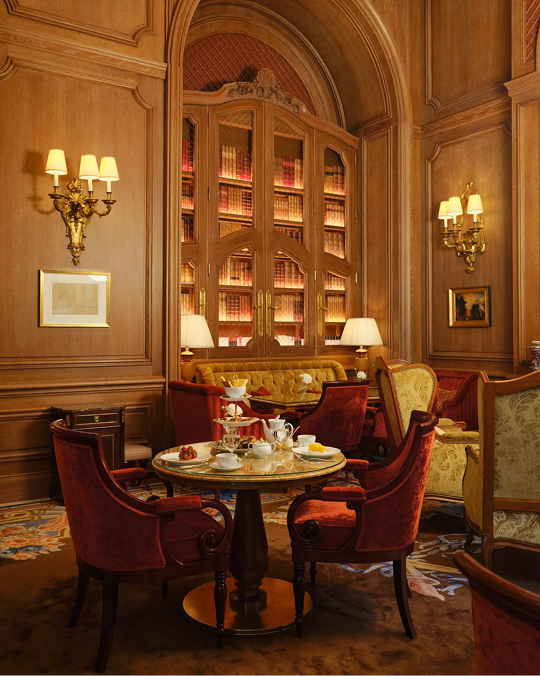
Most recently, in 2012, for a four-year, multi-million-dollar refurbishment, reopening in June 2016. Today, the hotel operates with 140 rooms spread across the Vendôme and Cambon buildings, offering views over Place Vendôme. Its facilities include a Michelin-starred restaurant, two bars, and a casual dining venue. The hotel’s history and clientele are reflected in its interiors. Several suites are named after prominent past guests, such as Coco Chanel, while Bar Hemingway commemorates writer Ernest Hemingway. The Imperial Suite, regarded as the finest in the hotel, has been designated a French national monument.
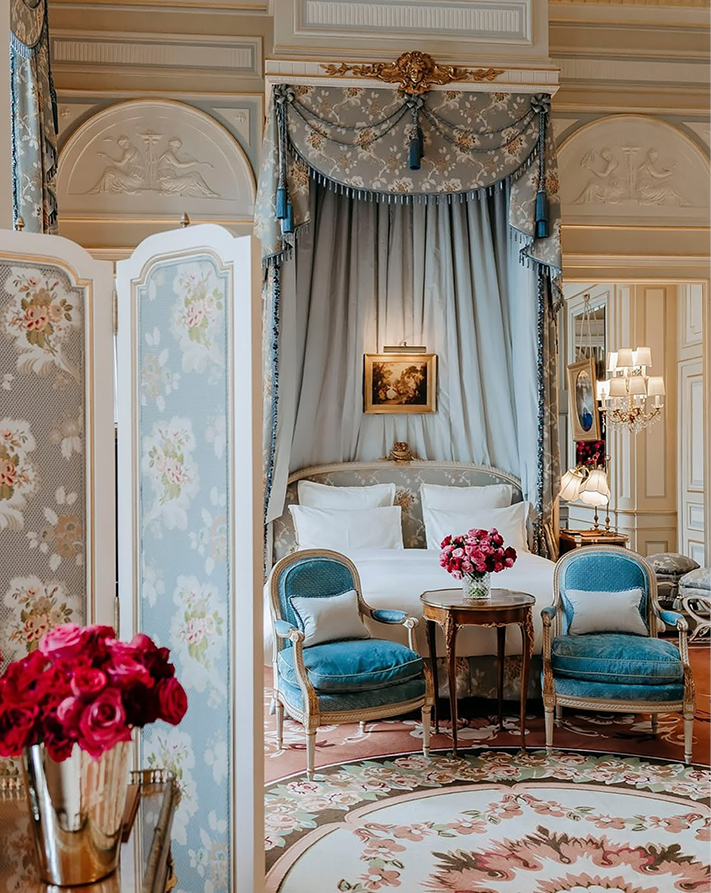
Its décor includes six-metre ceilings, Versailles-inspired furnishings, and eighteenth-century panelled walls. The suite also contains a former boudoir converted into a bathroom overlooking the Vendôme garden. Cuisine remains central to the Ritz’s identity, a legacy of Escoffier’s early influence. Today, chef Eugénie Béziat oversees the kitchen of the Michelin Star restaurant Espadon, where she blends influences from her African upbringing with Mediterranean flavours. Her signature dishes include grilled oyster with brousse cheese and paracress, and lobster with spinach and manioc, seasoned with bissap and raspberries.
Hotel Danieli
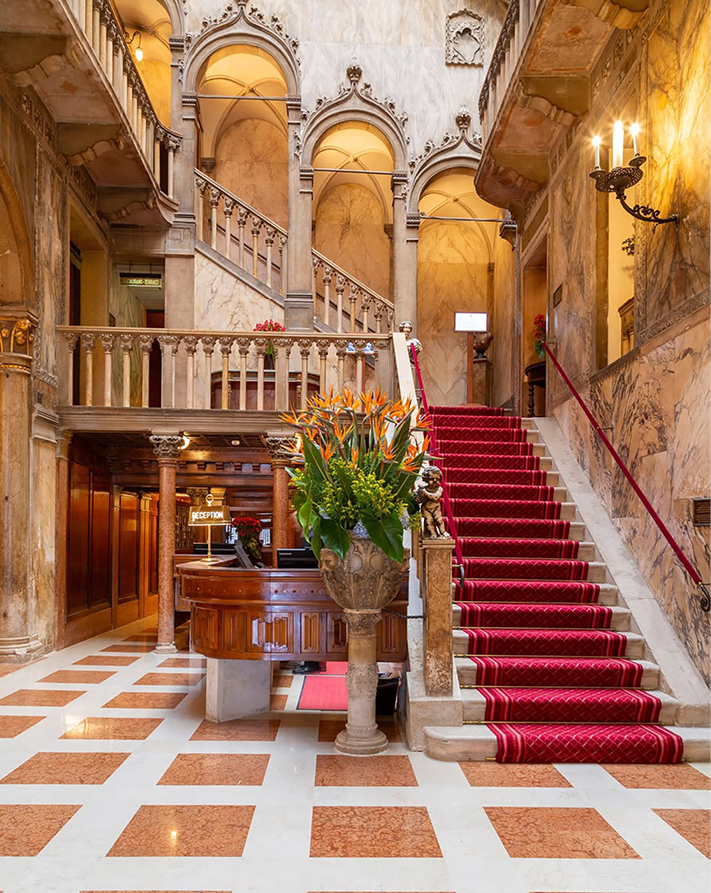
Standing on the Riva degli Schiavoni in Venice, Hotel Danieli has long been regarded as one of the city’s most recognisable landmarks. Its history is spread across three adjoining palaces that represent more than six centuries of Venetian architecture and culture. The oldest of the three, the 14th-century Palazzo Dandolo, was once home to the powerful Dandolo family.
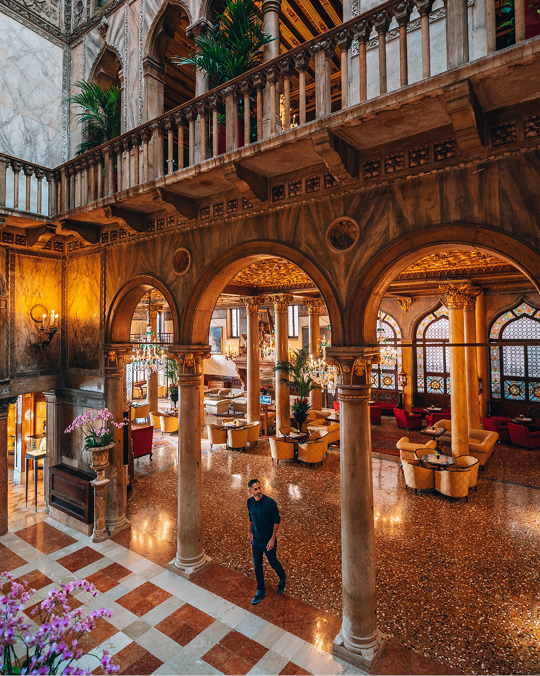
Enrico Dandolo, the first of four members of the family to serve as Doge of Venice, is remembered for leading the conquest of Constantinople in 1204.
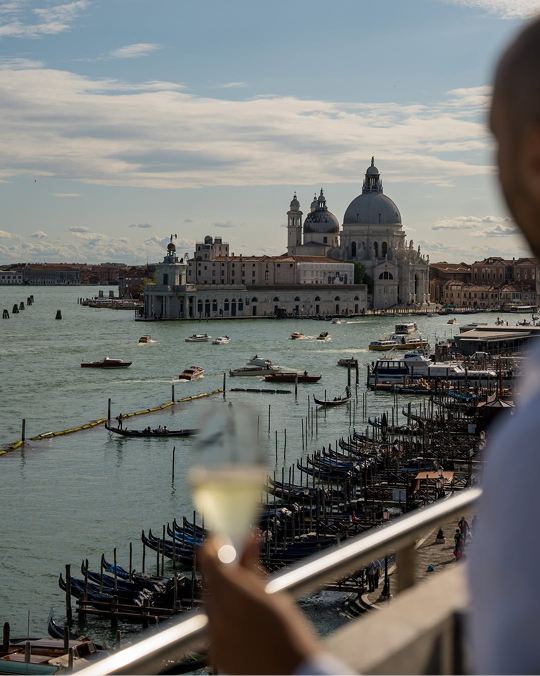
He returned with treasures including gold, marble and Byzantine artwork, much of which was displayed in the palazzo. Today, Hotel Danieli remains a symbol of Venetian legacy and luxury, combining its historical setting with contemporary facilities. Dining is centred on the top floor of the property, Terrazza Danieli, the hotel’s Mediterranean restaurant.
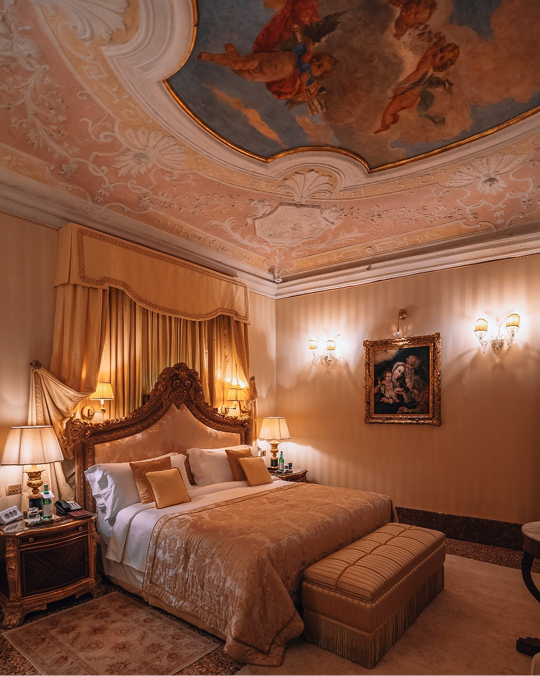
Mirrors and rich fabrics decorate the interior, but a standout feature is the outdoor terrace itself, which is open from May to October. The rooftop offers incredible panoramic views across the lagoon and nearby islands. Back in the kitchen, the restaurant changes its menu seasonally. Fresh, local ingredients form the basis of the cuisine, with flavours occasionally enhanced by exotic spices. From its origins as a noble residence to its current status as a luxury hotel, Hotel Danieli continues to represent both the history and the living culture of Venice.
Taj Mahal Palace
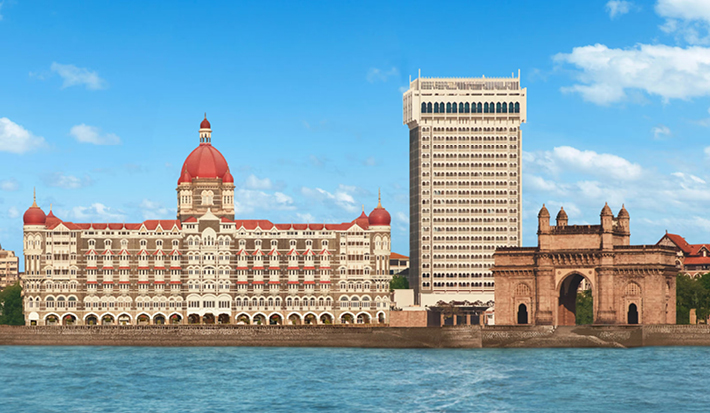
The Taj Mahal Palace, Mumbai, stands as one of India’s most recognisable iconic landmarks. Located in Colaba, adjacent to the Gateway of India and overlooking the Arabian Sea, the hotel has been a symbol of luxury and service since it first opened its doors in 1903. Built in the Indo-Saracenic style, it was originally named the Taj Mahal Hotel and quickly became one of the finest hotels in the East during the British Raj.
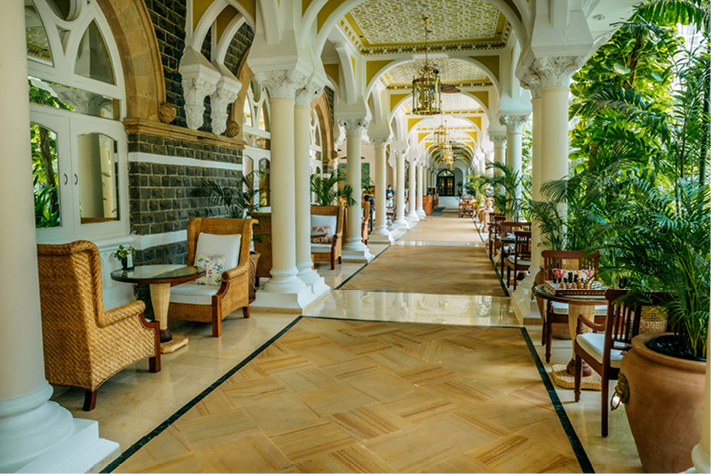
The property has a long-standing reputation for hosting dignitaries and royalty from around the world. Its heritage status and historic role in the city have cemented it as an enduring part of Mumbai’s cultural and architectural identity. Today, the Taj Mahal Palace combines heritage with the latest amenities and technology within the hotel’s 285 individually decorated guest rooms and suites. Guests have access to a range of leisure and wellness facilities, including an outdoor pool, a fitness centre and the J Wellness Circle spa, which offers massages, body treatments and facials.
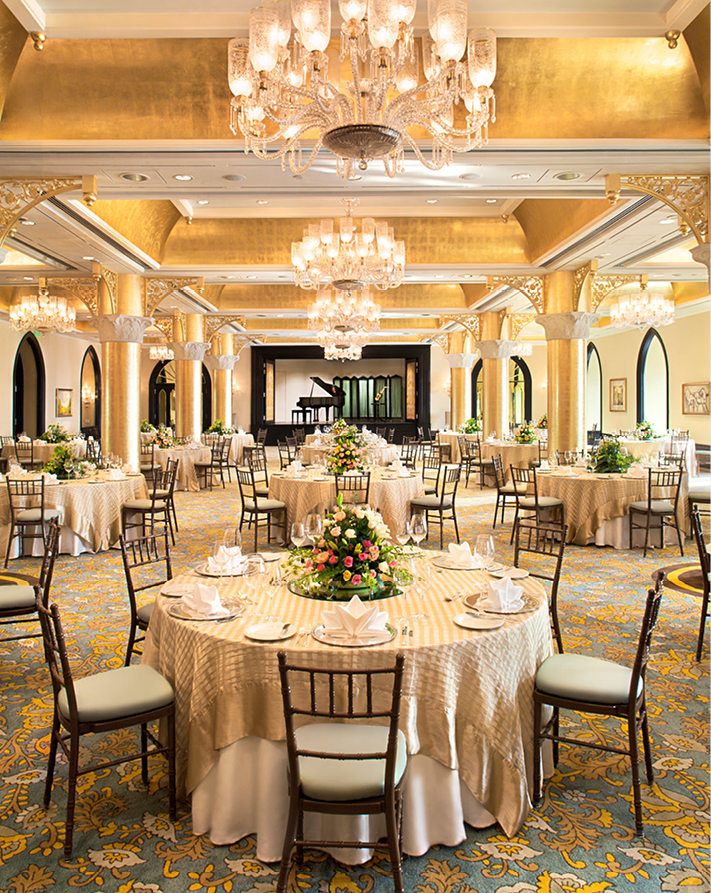
Dining is a central feature of the Taj Mahal Palace experience. The hotel houses seven restaurants offering a range of cuisines. These include contemporary Indian dishes and refined Chinese fare, as well as Japanese cuisine at Wasabi by Morimoto. Two cafés and three bars, along with 24-hour room service, ensure guests have varied options throughout their stay.
Hotel de Paris
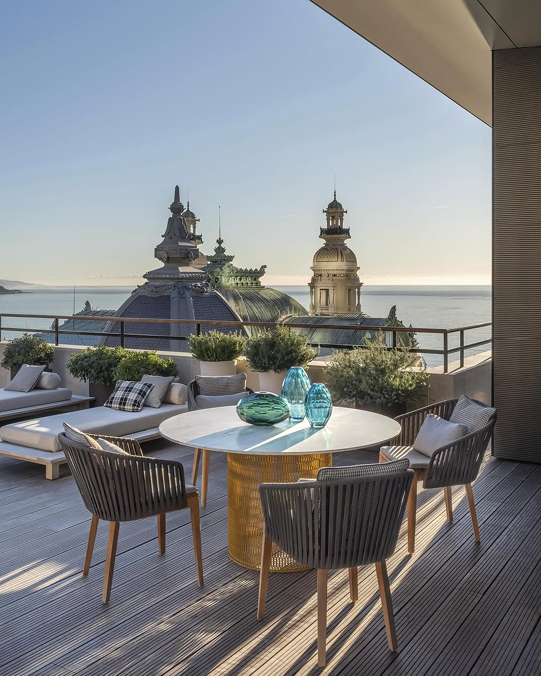
The Hôtel de Paris Monte-Carlo, located on Place du Casino in the heart of Monaco, first opened its doors in 1864 and continues to stand as one of the French Riviera’s most distinguished destinations. The hotel is known for its palatial interiors, where lighting, materials and facilities are carefully designed to deliver a five-star experience. Its most prestigious offerings are the Princess Grace and Prince Rainier III Diamond Suites, regarded as among the most exclusive on the Côte d’Azur.
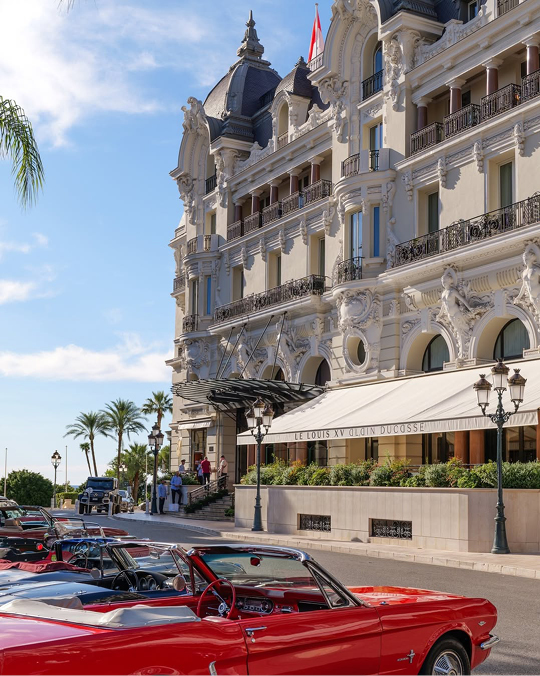
Dining remains a central feature of the hotel. Le Louis XV – Alain Ducasse at the Hôtel de Paris holds three Michelin stars and is recognised internationally for its refined celebration of Mediterranean cuisine. Alongside it, Le Grill, which carries one star, offers panoramic views of the Mediterranean from the eighth-floor terrace, with a menu centred on dishes from the grill. Other highlights at the property include The Jewellers’ Courtyard for afternoon tea, while Le Bar Américain offers live jazz and signature drinks in a classic atmosphere.
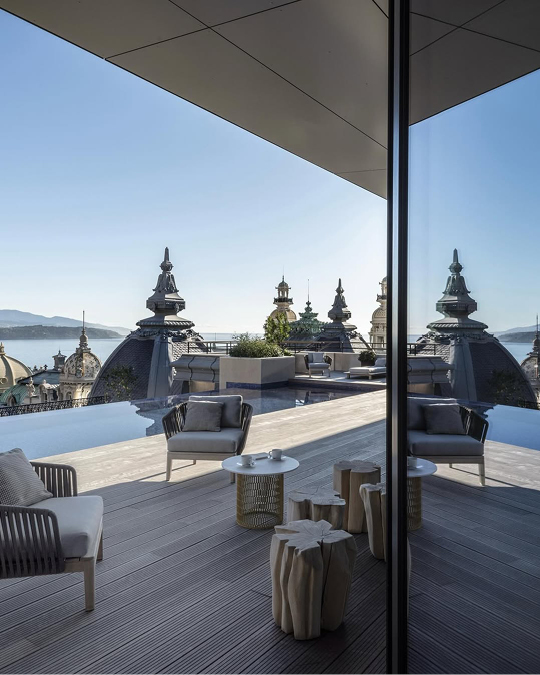
For those seeking relaxation, the rooftop pool at the Wellness Sky Club provides an opportunity to unwind with views over the principality. In addition to its in-house attractions, the hotel sits within close reach of Monte-Carlo’s latest luxury retail development, One Monte-Carlo. The district brings together a range of designer boutiques and new experiences, complementing the hotel’s established position as a hub for visitors seeking both leisure and luxury.
The Langham, Fifth Avenue
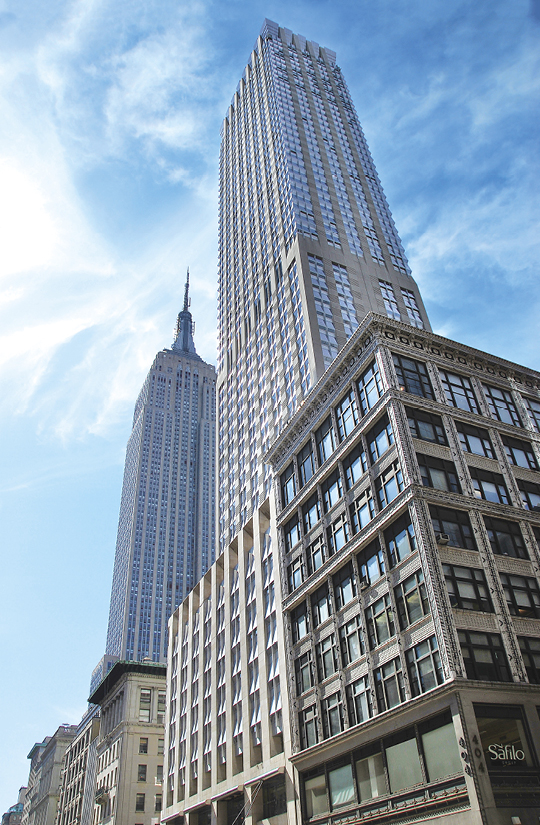
New York has no shortage of legendary addresses, yet few capture the spirit of the city quite like The Langham, Fifth Avenue. Perfectly positioned between the Empire State Building and Bryant Park, the hotel offers the ideal blend of Midtown energy and refined tranquillity. It provides the rare luxury of being steps away from the city’s hustle and bustle, but being able to escape into an atmosphere of calm sophistication.
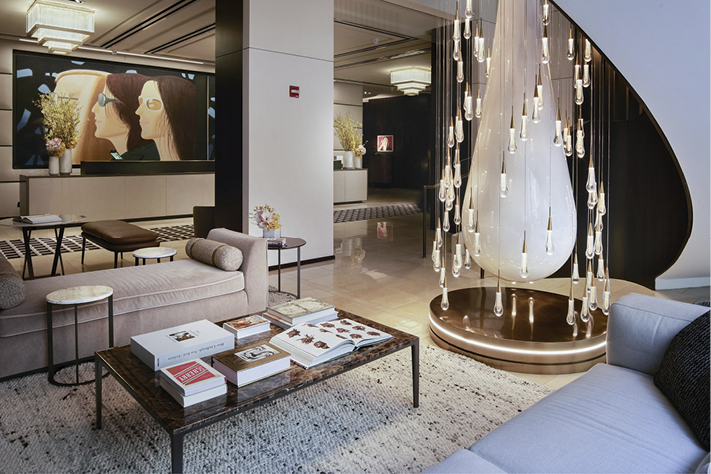
This year, the Langham brand turns 160, a milestone that began in London. When The Langham opened in 1865, it defined the modern grand hotel with innovations in comfort and service that became industry standards. That heritage matters in New York: you feel it from the moment you arrive. The brand’s signature rituals translate seamlessly to Fifth Avenue, making the property a highly sought-after destination for Manhattan tourists.
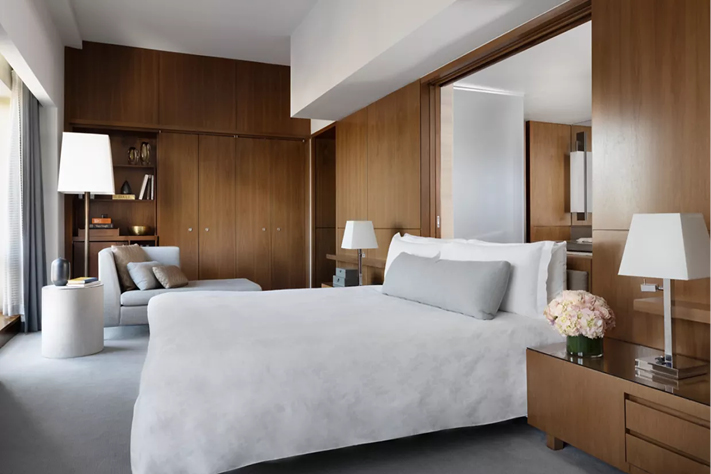
Rooms and suites are among the city’s most generous, framed by floor-to-ceiling windows that pull in Manhattan’s skyline like a living artwork. If you’re lucky enough to bag an Empire State view room, you’ll have one of the most exclusive views in the city. The room’s design language is refined and contemporary with clean lines, tactile materials, and intelligent lighting. For GCC families and business travellers alike, the residential-style layouts will also make longer stays feel uncomplicated. The hotel’s Langham Club is, in our opinion, an absolute must – located on the fourth floor, it provides all-day refreshments for guests, as well as a sanctuary for working or relaxing throughout the day. While the hotel’s higher category rooms come with complimentary access to The Langham Club, access can also be purchased on a daily rate by all guests.
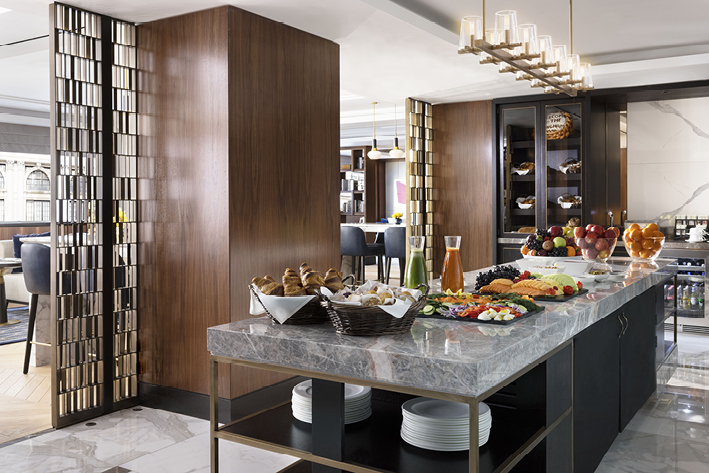
Dining at The Langham reflects New York’s cosmopolitan palate: elegantly executed, service-forward, and unpretentious. Breakfast becomes a ritual; cocktails are mixed with precision; and the kitchen’s seasonal sensibility nods to the city’s markets. Throughout, the tone is resolutely Langham, tasteful, cosmopolitan, and never showy. What makes this hotel iconic isn’t simply its address; it’s the way heritage and modernity are held in careful balance throughout. The Langham, Fifth Avenue feels at once timeless and current. As the brand celebrates 160 years, this Manhattan outpost stands as a compelling chapter in a legacy defined by quiet excellence, an urban haven in the world’s most vibrant city.
Raffles Singapore
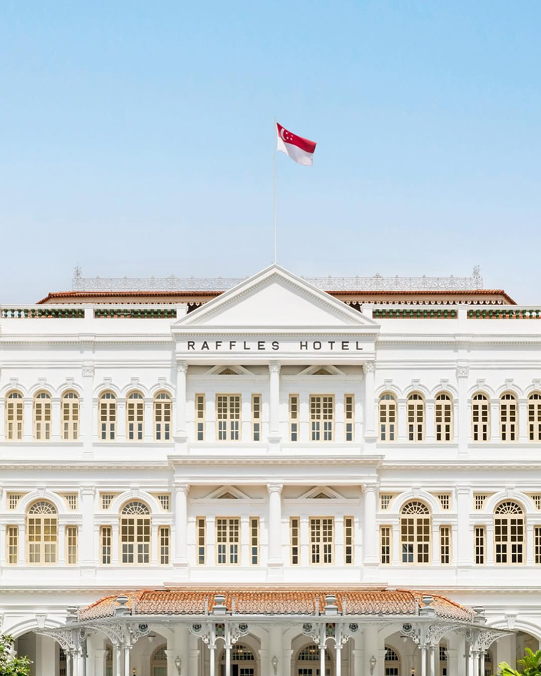
For more than 130 years, Raffles Singapore has stood as a symbol of luxury since first opening its doors in 1887. What began as a 10-room boutique property overlooking the beach and the South China Sea has become one of the most iconic hotels in the world. The property has hosted an array of distinguished guests over the decades, including Queen Elizabeth II, Rudyard Kipling, Charlie Chaplin and Elizabeth Taylor. Its reputation for elegance and cultural significance is further underlined by the presence of Resident Historians, who guide visitors through the many stories and legends spanning more than a century. In a modern metropolis characterised by skyscrapers, Raffles Singapore maintains a distinct identity.
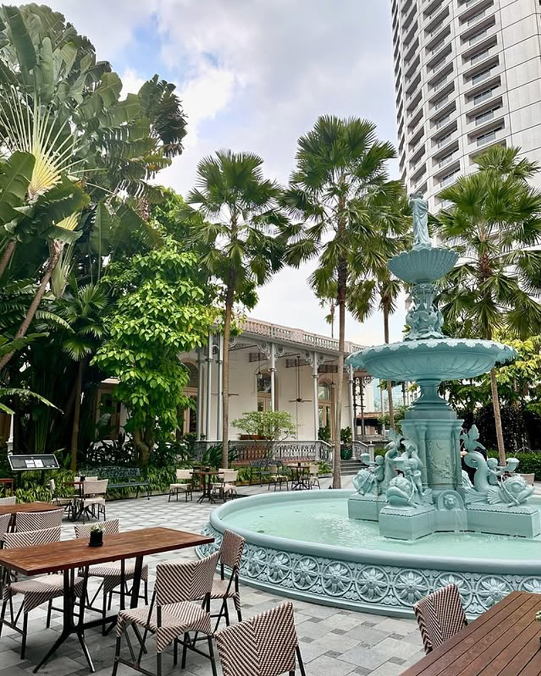
The hotel’s beautifully preserved colonial architecture was recognised in 1987 when it was declared a National Monument. Inside, spaces such as the living room, dining room and suites are adorned with antiques and artworks that reflect the property’s storied past. The hotel underwent an extensive two-year restoration project, reopening in 2019. The work was designed to balance preservation with modern expectations, maintaining the distinctive character and ambience while upgrading rooms and facilities to meet contemporary luxury standards. Today, the all-suite property offers 24-hour butler service, reinforcing its reputation for bespoke hospitality. Guests and residents of Singapore can choose from six restaurants and three bars.
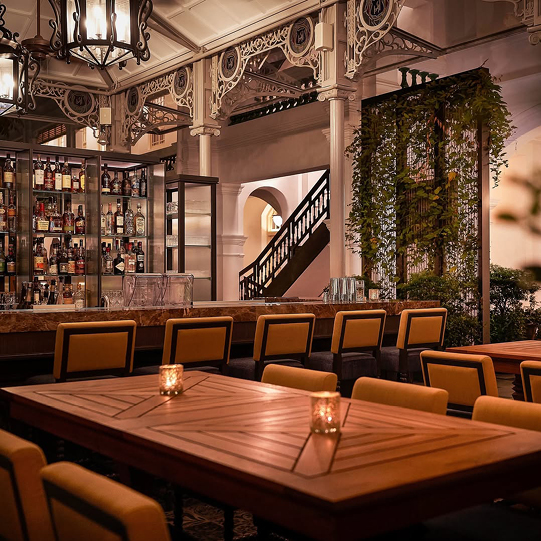
These include longstanding favourites such as The Tiffin Room and The Long Bar, as well as contemporary additions led by renowned chefs. Anne-Sophie Pic’s Le Dame de Pic and 藝yí by Masterchef Jereme Leung represent the hotel’s commitment to innovation alongside tradition. Wellness is another central aspect of the modern Raffles experience. The on-site spa provides a range of restorative treatments, further enhancing its appeal to discerning travellers seeking relaxation alongside cultural heritage.
Hotel du Cap-Eden-Roc
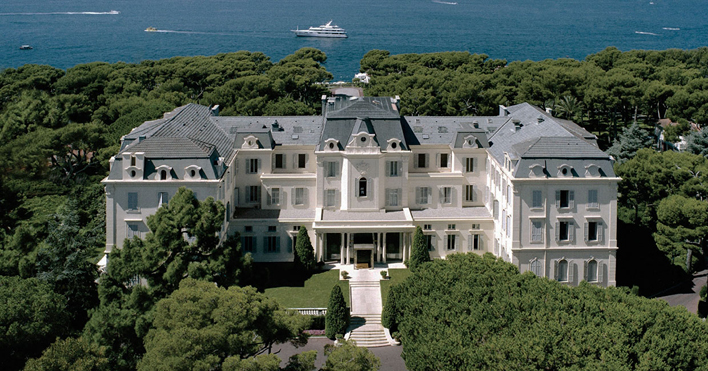
The Grand Hôtel du Cap-Eden-Roc, located on the southern tip of Cap d’Antibes, has been associated with luxury, creativity and discretion for more than 100 years. The origins of the hotel trace back to 1869, when Hippolyte de Villemessant, founder of the French newspaper Le Figaro, built the Villa Soleil as a retreat for writers seeking inspiration.
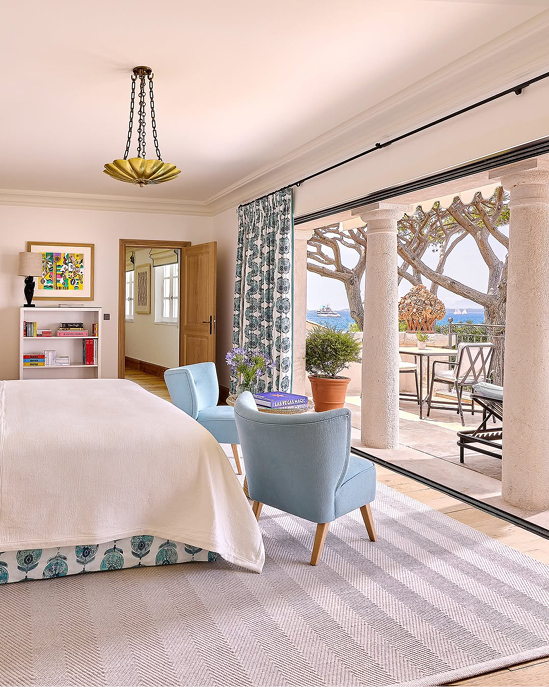
In 1887, Italian hotelier Antoine Sella purchased the property and opened the Grand Hôtel du Cap two years later. It soon became a sought-after destination for artists, aristocrats and travellers drawn to the Riviera. The property has since expanded into five distinct buildings. The Hôtel du Cap, a Napoleon III château, houses 117 suites. Eden-Roc, a pavilion at the water’s edge, complements the main residence. Les Deux Fontaines offers 32 rooms across two floors, while Villa Eleana and Villa Les Cèdres provide private accommodation within the grounds.
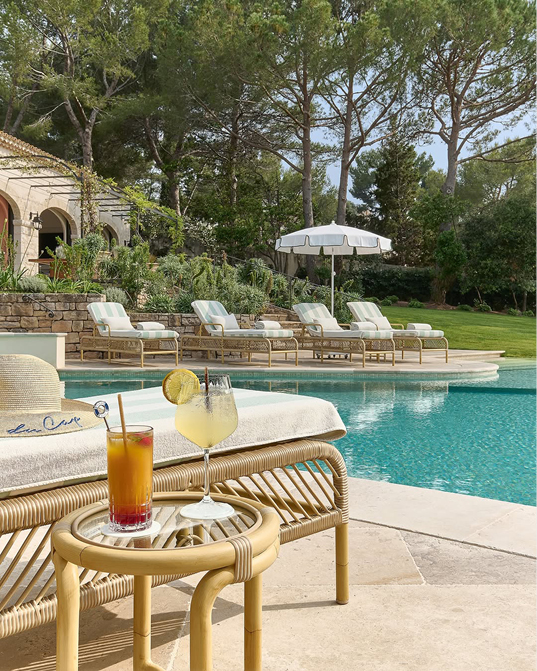
The estate covers nine hectares and overlooks the Mediterranean, midway between Cannes and Nice. Current owner Maja Oetker has overseen the decoration of its rooms and suites, maintaining the hotel’s reputation for understated luxury. While staying at the property, guests can choose from three restaurants, including the Michelin-starred Louroc, Eden-Roc Restaurant and Le Grill, each offering panoramic sea views. The property also features six bars, ranging from the piano bar La Rotonde to the Eden-Roc Pool Bar and the Bellini Bar. Stand-out features include the infinity pool with heated seawater carved into the rocks, and the Dior Spa Eden-Roc. From its beginnings as a sanctuary for writers to its current role as a celebrated palatial hotel, the property’s history reflects both the glamour and tradition of the Côte d’Azur.
Iconic Beauty Looks From The Fall/Winter 25-26 Haute Couture Shows
Get inspired for the new season with our Backstage Beauty Guide, which spotlights the key Couture runway beauty trends that will take off FW25-26.
Chanel
Chanel unveiled its Fall-Winter 2025/26 Haute Couture collection in Paris this summer, with Lisa Butler leading the beauty team at the show. Inside the Grand Palais, models took to the runway with slicked-back hair and neutral, dialled-back makeup that echoed the collection’s theme of understated refinement.
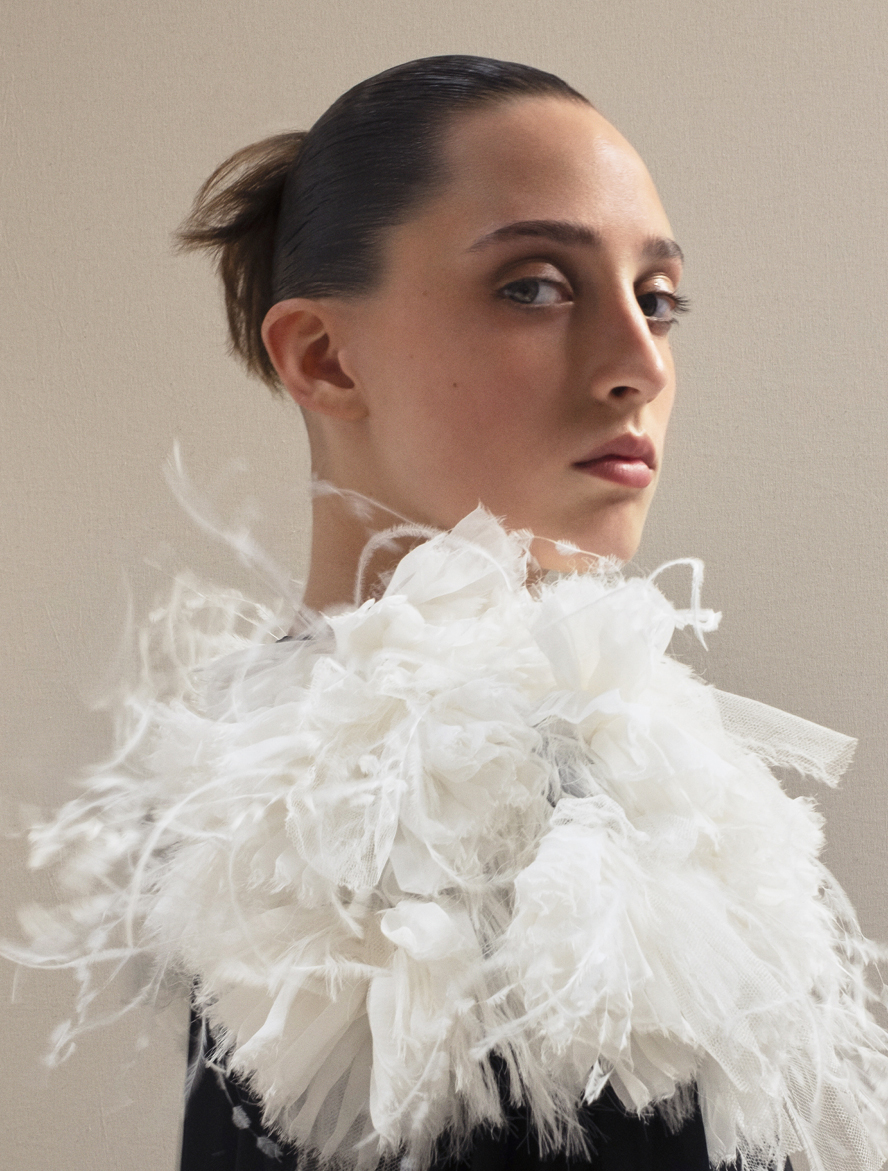
Skin was left luminous and natural, while eyes were softly defined. Neutral shades in grey, brown and muted black framed the eyes, mirroring the collection’s emphasis on classic winter tones. Lashes were kept natural and lightly coated, and brows followed suit, brushed into shape, framing the face.
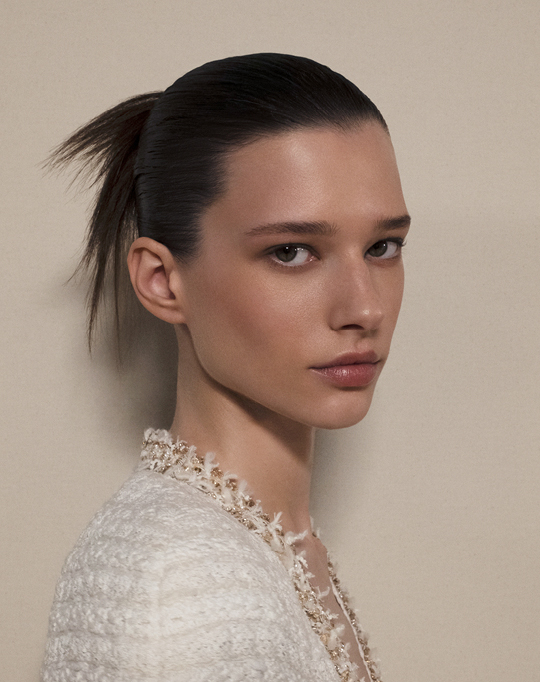
Statement lips were seen throughout the show, where deeper tones grounded the look. Shades reminiscent of berries and autumnal earth tied the beauty story to the collection’s rural inspiration.
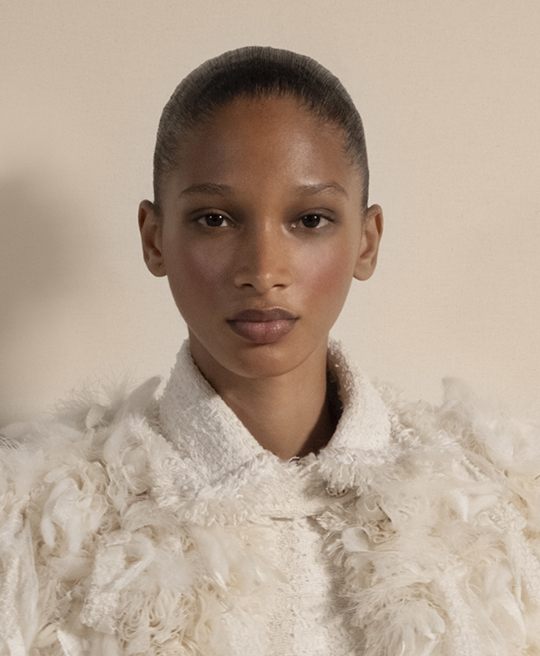
Cheeks carried only a hint of natural warmth. Rather than a sculpted effect, blush was applied sparingly, reinforcing the pared-back direction of the overall aesthetic.
Balenciaga
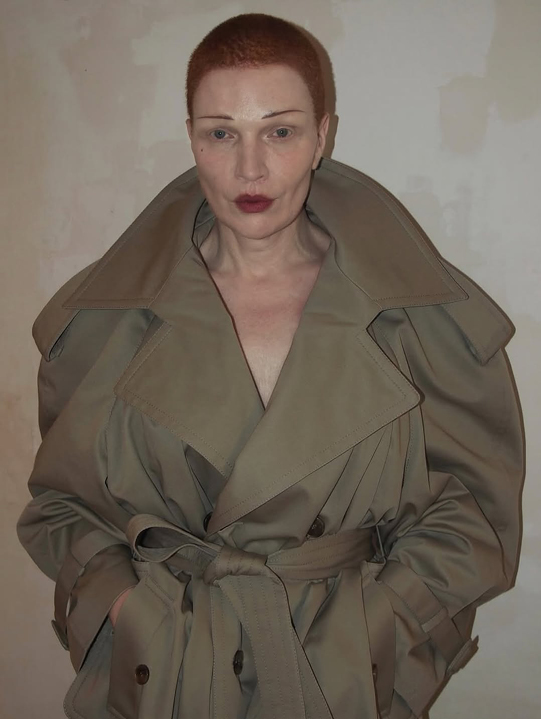
Makeup artist Inge Grognard brought her distinctive beauty approach to the Balenciaga Fall Couture 2025 show, continuing her collaboration with creative director Demna Gvasalia, for the designer’s final show for the label. Grognard is widely recognised for her subversive style and her preference for emotionally charged, stripped-back aesthetics that challenge conventional beauty norms.
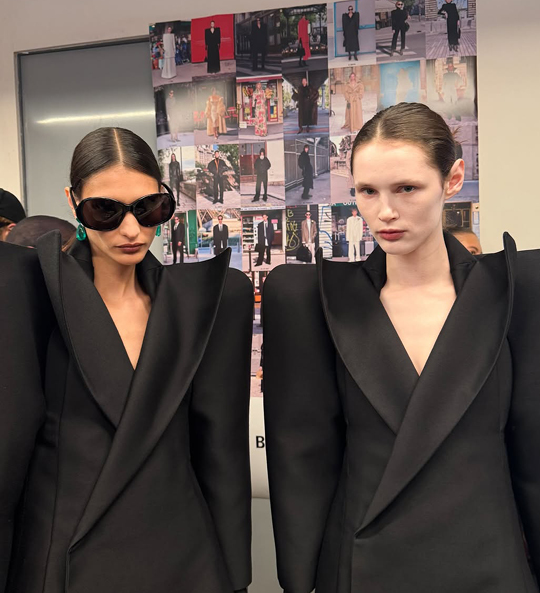
The make-up artist chose neutral base shades, with strong or bright lip shades occasionally mixed with bleached or nineties-inspired minimalist brows.
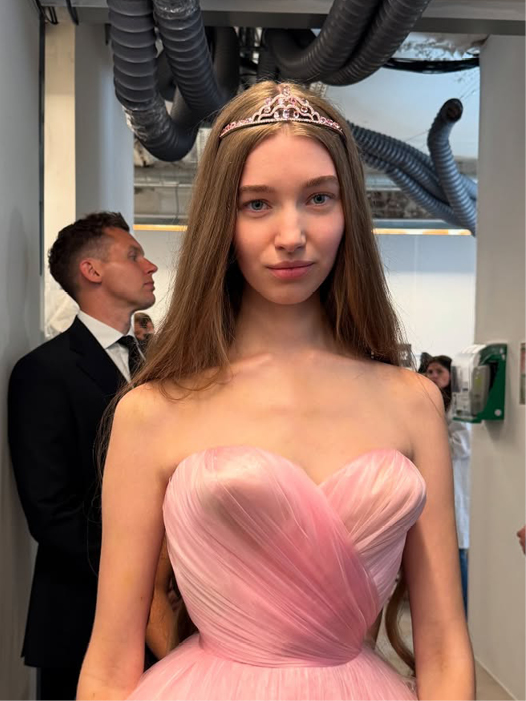
For his final show, Demna chose to include a mix of models of all ages, sizes, as well lesser lesser-known and famous faces (both Naomi Campbell and Kim Kardashian walked the show). Hair style throughout the show was as varied as the models who walked the runway. Largely, hair was swept back; however, elsewhere in the show, hair was loose, voluminous or cropped, depending on the unique style of the look and model.
Zuhair Murad
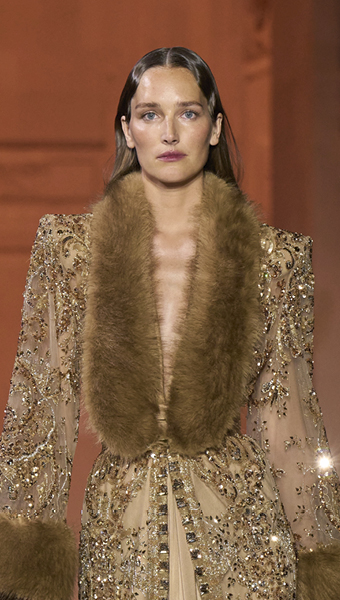
At the Zuhair Murad Fall-Winter 2025/2026 show, Mac Cosmetics unveiled a beauty look crafted by Thibaut Marieke, the brand’s global senior artist. Drawing inspiration from the elegance of the 1930s, Marieke balanced glamour with fresh, youthful skin. The focus was on bold lip stains, softened lashes, and understated cheeks, a combination that highlighted natural features while echoing vintage sophistication.
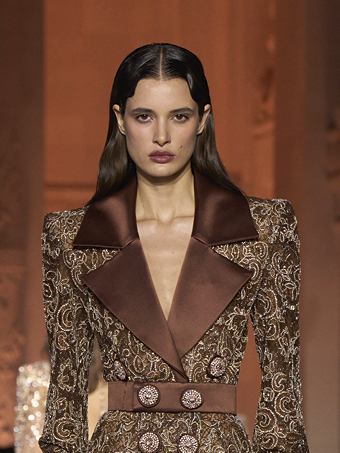
For the complexion, the Studio Radiance Face & Body Foundation and Studio Radiance 24H Smooth Glow Concealer were used to create a luminous, skin-like base. To add dimension and warmth, the Glow Play Blush in Plush Pepper provided a soft, natural flush. Eyes were kept subtle yet structured.
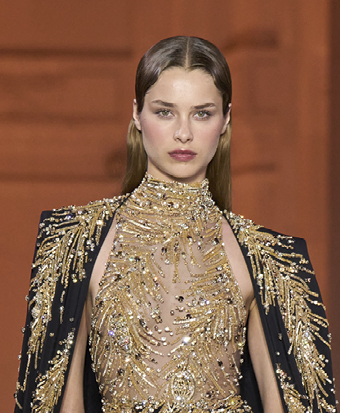
A mix of Paint Pots in Groundwork, Tailor Grey, It’s Fabstract, and Black Mirror gave depth and tonal layering, while the MACStack Elevated Mascara delivered definition without overpowering the look. The lips were the standout element, defined with the Lipglazer Pencil in Nightmoth and finished with the Matte M·A·Cximal Lipstick in Antique Velvet. This combination created a dramatic, velvety statement lip that grounded the entire beauty direction.
Schiaparelli
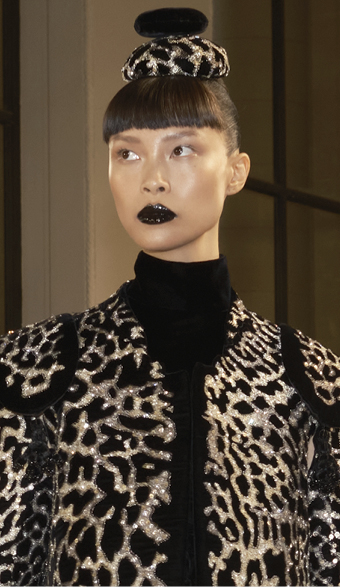
The Schiaparelli show opened Paris Haute Couture Week on the 7th of July, showcasing bold, surrealist-inspired beauty looks by renowned make-up artist Pat McGrath. The presentation featured a combination of dramatic lips, luminous skin and sculptural hairstyles, reflecting the house’s signature avant-garde aesthetic. She achieved an ethereal, bold aesthetic beginning with her Skin Fetish Glass 001 spray to evoke a luminous, glass-skin glow focused on the cheekbones.
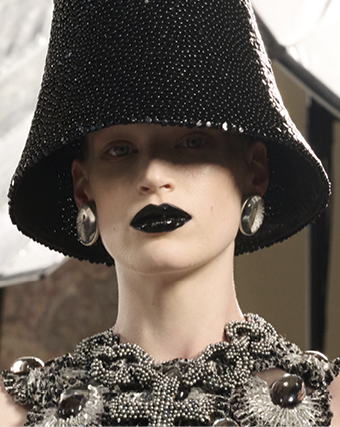
The eyes were kept somewhat neutral, with McGrath’s Fetisheyes Mascara, to draw attention to the lips. Shades of inky black and rich red appeared on the lip, using PermaGel Eye Pencil in Xtreme Black and the Legendary Lip Liner in shade Elson, often topped with glossy clear lacquer for maximum impact. Surrealism, long central to the brand’s identity, was a guiding influence in the beauty direction. Hair, styled by Guido Palau, complemented the make-up’s precision. Models wore sleek, conical chignons that elongated the silhouettes, adding a further element of sophistication and drama. This deliberate extension of form reinforced the sculptural theme present throughout the show.
Armani/Privé

The beauty direction for the Giorgio Armani Privé Fall/Winter 2025-26 Womenswear show was led by Giorgio Armani Global Makeup Artist, Hiromi Ueda, who created an effortlessly elegant, timeless look, inspired by classic Hollywood beauty. To achieve the runway look, the complexion was prepared using Crema Nera Supreme Reviving Light Cream, followed by Luminous Silk Hydrating Primer to create a smooth base. Luminous Silk Concealer and Luminous Silk Foundation were applied to perfect the skin’s appearance, with Luminous Silk Glow Fusion Powder used to set the makeup and add radiance. For the eyes, the team used Smooth Silk Eye Pencil in shade 4 to define the lash line.

Eye Tint in shade 99 with a matte finish and shade 12 with a shimmer finish were applied to create depth and luminosity. Vertigo Lift Mascara completed the eye look, enhancing lashes for a lifted and voluminous effect. Lips were finished with Lip Power, available in either shade 214 or 504, offering a choice between two statement colours to complement the dramatic eye makeup. The result was a flawless complexion paired with bold eye makeup, creating an interplay of light and shadow that complemented the Couture collection’s dramatic use of black. The overall aesthetic of the show mixed structured tailoring with fluid silhouettes. The use of black was central, evoking sophistication and mystery while allowing the makeup to play a key role in enhancing the visual impact of the collection.
Elie Saab
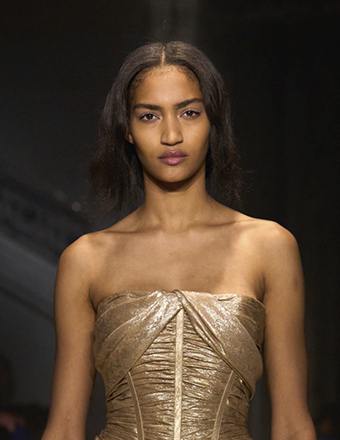
Elie Saab presented his Autumn-Winter 2026 Haute Couture show, La Nouvelle Cour, in Paris, with the beauty direction for the new season reflecting the themes of strength and femininity that ran through the collection. Skin was kept luminous and softly sculpted, allowing the couture pieces and detailing to stand out against a natural canvas.
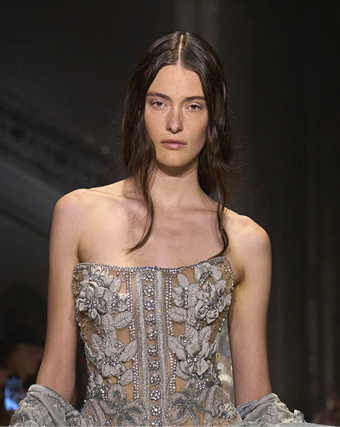
Lips carried the most striking element of the beauty palette. Shades ranged from deep stains to more natural, softened tones, echoing the duality of power and delicacy that Saab explored in the collection. The choice to highlight the mouth with either intensity or subtlety ensured variety across looks while anchoring the beauty direction in classic couture codes. Meanwhile, lashes were subtly darkened, and hair was styled in loose, natural waves. The interplay between polished skin, understated eyes and statement lips created a coherent visual identity for La Nouvelle Cour.
The Best Luxury Wellness And Spa Retreats Around The World
From the Himalayas to the Maldives, we’ve created a roundup of the best wellness destinations in the world.
Talise Spa, Burj Al Arab, UAE
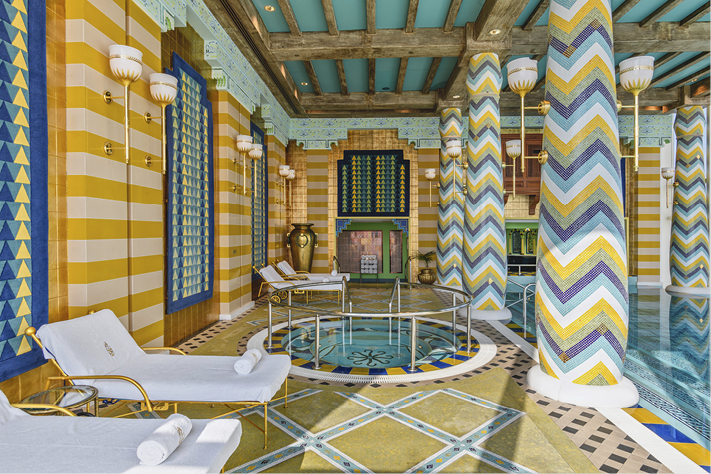
Perched 150 metres above the Arabian Gulf, Talise Spa at the Burj Al Arab continues to set the standard for global luxury wellness. Situated on the 18th floor of one of the world’s most iconic hotels, the spa combines panoramic views with a programme of treatments that bring together ancient traditions, modern technology and exclusive partnerships with leading beauty houses. Guests have access to a wide range of facilities, including indoor swimming pools, sauna, herbal steam rooms and cold plunge pools. Treatments are carried out by a team of wellness specialists, who draw on expertise in techniques from around the world, supported by products from luxury skincare leaders such as Valmont, Swissline and Clinic Lémanic.
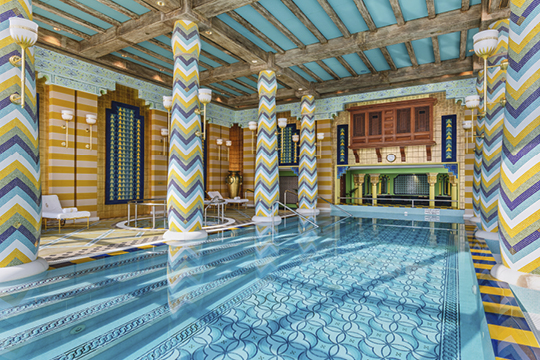
The spa’s signature experiences include the Jumeirah Burj Al Arab Golden Journey, a 150-minute ritual combining advanced technology such as radiofrequency and LED therapy with synchronised massage movements. Facial treatments integrate advanced techniques with high-performance ingredients. The L’Elixir des Glaciers Majestic facial by Valmont, for example, blends Japanese Kobido massage traditions with lifting and re-mineralising protocols, while Clinic Lémanic’s Sublime Youth Infusion employs plant stem cell cultures and colloidal gold, enhanced by radiofrequency and LED therapy. Talise also offers yoga and Pilates reformer classes, as well as bespoke personal training programmes in its fitness centre.
Six Senses Vana, India
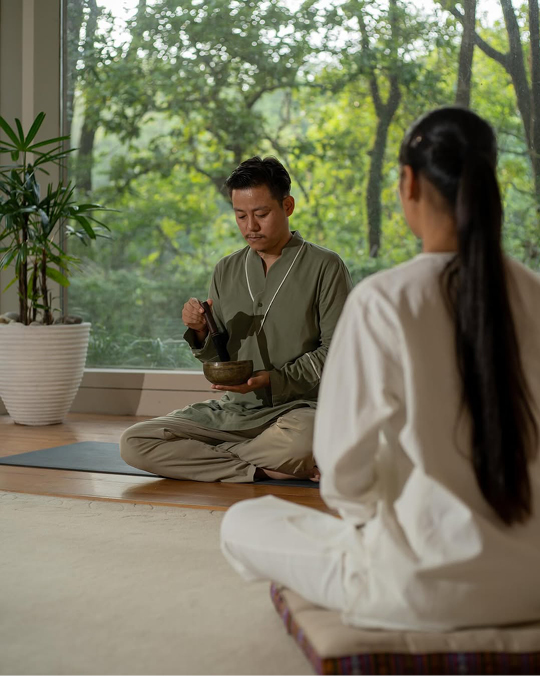
In early 2023, luxury hospitality brand Six Senses acquired Vana, a 21‑acre wellness retreat nestled in the Himalayan foothills near Dehradun, India. Fast forward just two years, and Six Senses Vana has continued to rise as one of the world’s most revered wellness retreats, renowned for its seamless integration of ancient healing traditions with modern scientific enhancements. Since the acquisition, core elements of the retreat’s identity have been carefully preserved. Long‑standing staff remain in place, and signature rituals (from the arrival blessing with crimson dot and kurta pyjamas to the red‑string farewell) continue to greet guests.

In terms of innovation, Six Senses introduced advanced wellness diagnostics, including biomarker screenings, compression therapy and massage‑percussion devices, subtly elevating the guest experienc. Leading treatments at Six Senses Vana include blending traditional therapies like Tibetan Sowa Rigpa with high‑tech wellness, all within a sustainable, tranquil forest setting. Its standing today as one of the world’s finest retreats is founded on this harmonious fusion: authentic, deeply restorative traditions enriched by thoughtful innovation, all anchored in environmental stewardship.
The Retreat at Blue Lagoon, Iceland
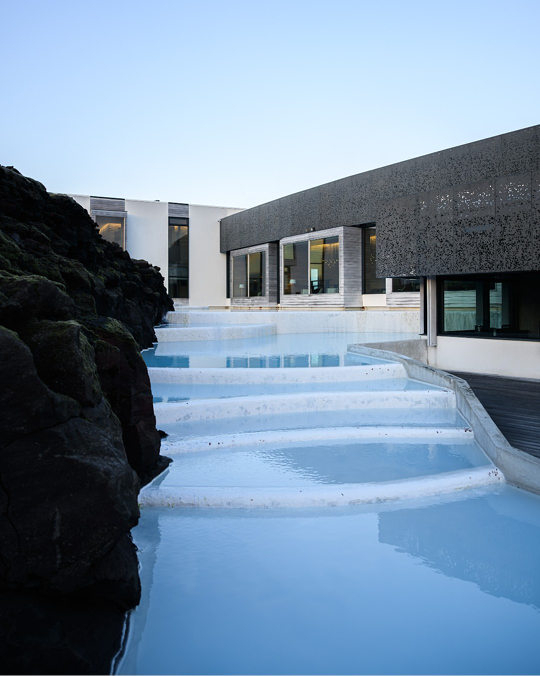
The Retreat at Blue Lagoon in Iceland stands as an award‑winning luxury resort nestled in the heart of an 800‑year‑old moss‑covered lava flow on the Reykjanes Peninsula. Opened in 2018, the hotel comprises sixty suites, a subterranean spa, Michelin‑starred dining at Moss Restaurant, and its own private lagoon fed by the same mineral‑rich geothermal seawater as the iconic Blue Lagoon. Accommodation options include the expansive Blue Lagoon Suite, which spans two levels, features a private spa and lagoon, and includes butler service. Other suite types, such as the Moss Suite, Lagoon Suite, Lagoon View Junior Suite, Lava Junior Suite, and Moss Junior Suite, offer variations in size, views and amenities, typically around 40 to 60 square metres, with private terraces or balconies and access to Retreat Spa and complimentary group yoga, coffee time, and concierge service. Guests benefit from unlimited access to the Retreat Spa, the Retreat Lagoon, and the main Blue Lagoon, along with Blue Lagoon skincare amenities, breakfast, welcome drinks, minibar provisions, and daily yoga sessions. The subterranean spa spans approximately 2,300 square metres; it is surrounded by the Retreat Lagoon and offers a multi‑stage spa journey culminating in the “Blue Lagoon Ritual.”
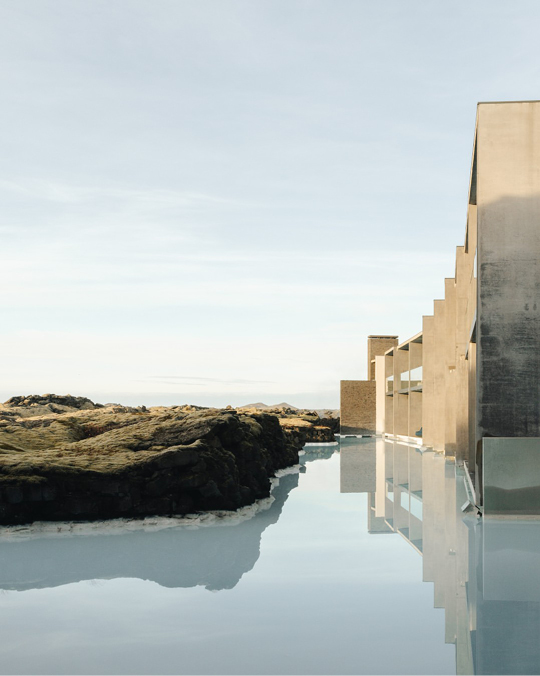
Located within the Blue Lagoon premises, The Retreat is easily accessible, positioned just 20 minutes from Keflavík Airport and approximately 40 minutes from Reykjavík. Its architectural design reflects the textures and colours of the surrounding landscape, allowing guests to experience harmony with the volcanic terrain.
Amanpuri, Thailand
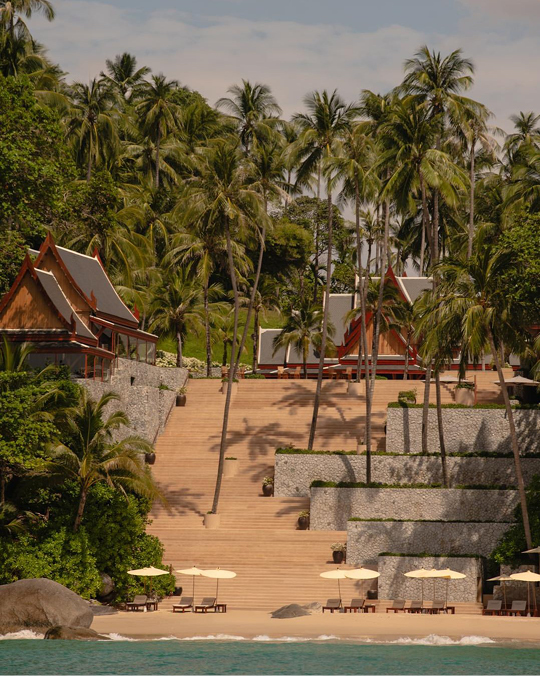
Since opening in 1988, Amanpuri, whose name means “place of peace” in Sanskrit, has served as the flagship property of Aman Resorts, setting a benchmark in luxury hospitality. The resort occupies a 24-hectare headland on the west coast of Phuket, nestled within a coconut plantation that overlooks the tranquil Andaman Sea and Pansea Beach. Conceived by developer Adrian Zecha and meticulously designed by American architect Ed Tuttle, Amanpuri reflected a radical departure from conventional hotel aesthetics by embracing traditional Thai temple architecture, local materials such as teak and maka wood, and thoughtful integration with the natural environment.
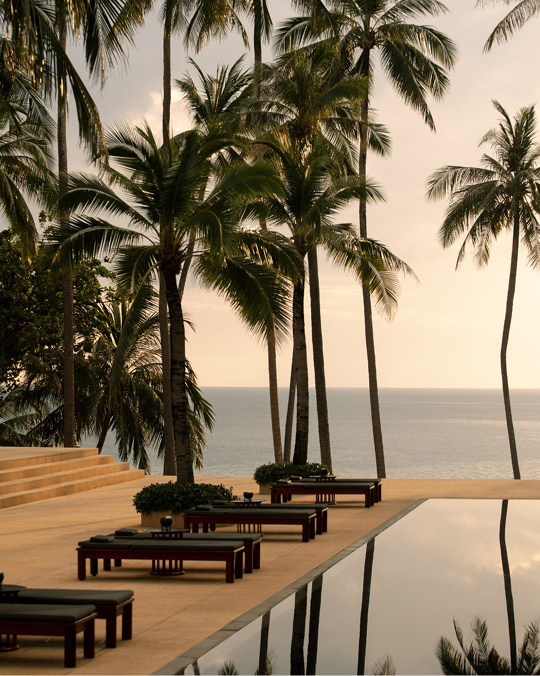
Amanpuri’s wellness and recreational facilities are extensive. Guests have access to a spa with six treatment rooms, a main swimming pool of 27 metres, a 20‑metre lap pool, and a range of water sports offerings, including paddleboarding, kayaking, windsurfing, and snorkelling at Pansea Beach. On‑site amenities further include six tennis courts, a gym, a Pilates studio, a beach club, a library, a boardroom and an art gallery. Sustainability is woven into the resort’s operations. Amanpuri cultivates its own kitchen garden and herbs using bamboo‑based terraces to regenerate soil, and composts organic and garden waste, enhancing environmental stewardship. The resort also partners with a Phuket‑based marine foundation to support coral restoration and bamboo shark breeding through proceeds from sales of an eco‑photography book.
Clinique La Prairie, Switzerland

Renowned as one of the most exclusive spa and wellness destinations in the world, Clinique La Prairie in Montreux, Switzerland, has been a world-leading clinic for more than 90 years. Founded in 1931 by Professor Niehans, a pioneer in cell therapy, the clinic has earned an international reputation for its unique combination of cutting-edge medical science, personalised programmes and serene lakeside setting on the shores of Lake Geneva. Guests, including global celebrities and political figures, have long sought its advanced treatments and discreet, refined environment. The latest addition to its offering is the Longevity Master Assessment, described as the most advanced preventive medicine analysis system available.
This comprehensive evaluation, forming the first step of the clinic’s signature CLP Longevity Method, examines more than 300 biomarkers using state-of-the-art tools such as patented cardiovascular risk prediction, genetic profiling, microbiome sequencing and a bespoke Nutrition Index Assessment. The result is a precision health roadmap designed to optimise vitality and extend healthy years. Clinique La Prairie is also expanding its Holistic Health collection with EPINOME, its first longevity supplement targeting epigenetics. Developed over three years with leading experts, the supplement uses plant compounds and targeted nutrients to influence gene activity, supporting cellular health and slowing age-related decline. These innovations join a portfolio of one-week personalised health and wellness programmes delivered by a 50-strong team of medical specialists. Guests can expect a seamless blend of luxury spa experiences, advanced diagnostics and therapeutic interventions, all set against the tranquil backdrop of Montreux.
Claridges Spa, England
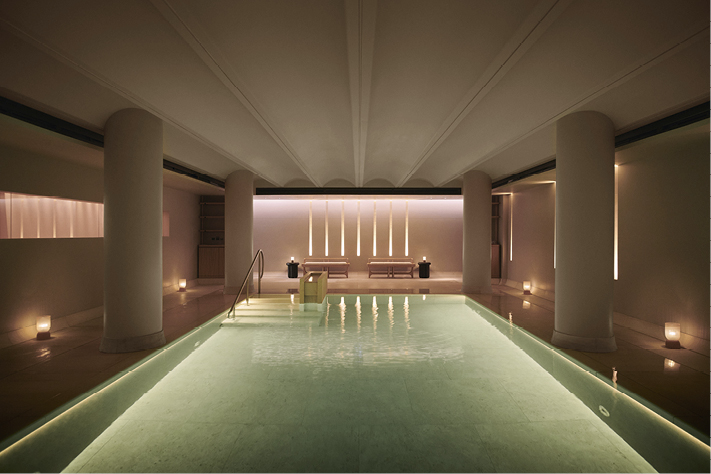
In recent years, Claridge’s Spa in Mayfair, London, has gained a reputation as one of the leading wellness destinations in the world. Opened in 2022 after a major renovation, the 7,000-square-foot retreat sits three floors beneath the iconic hotel, combining exceptional design with Claridge’s signature service. The Pink Room, which opened in March 2024, further enhances the spa’s unique offering. Inspired by the hotel’s Painter’s Room bar, it features a heated pink onyx bed and delivers a contemporary interpretation of the hammam ritual.
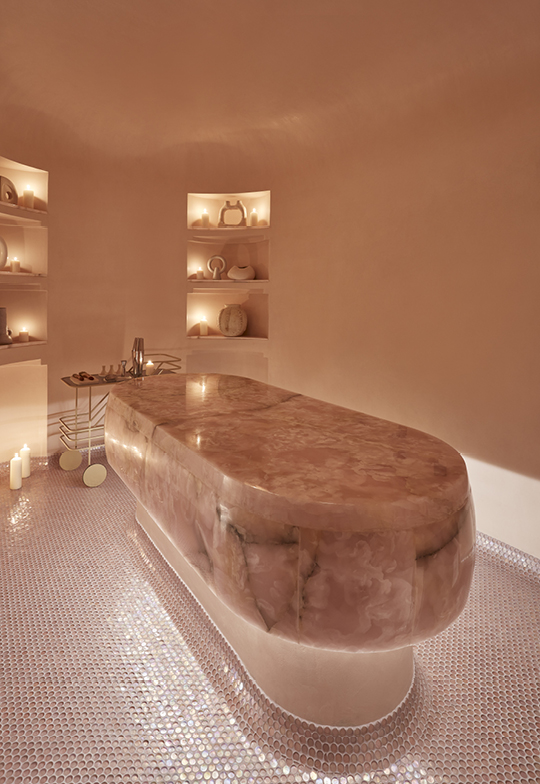
The treatment combines aromatic steam, detoxifying charcoal soap, exfoliation with a traditional kese mitt, rose water rinsing and a bespoke body mask selected from the spa’s Mask Bar. Options focus on restoration, detoxification or nourishment, with each treatment concluding in a hair cleanse and oil application. Visitors from across the globe choose Claridge’s Spa for its combination of innovative therapies, expert practitioners and the discreet luxury that defines the hotel. It offers an environment where every detail, from treatment design to service delivery, is crafted to the highest standard.
The Spa at Mandarin Oriental, Marrakech
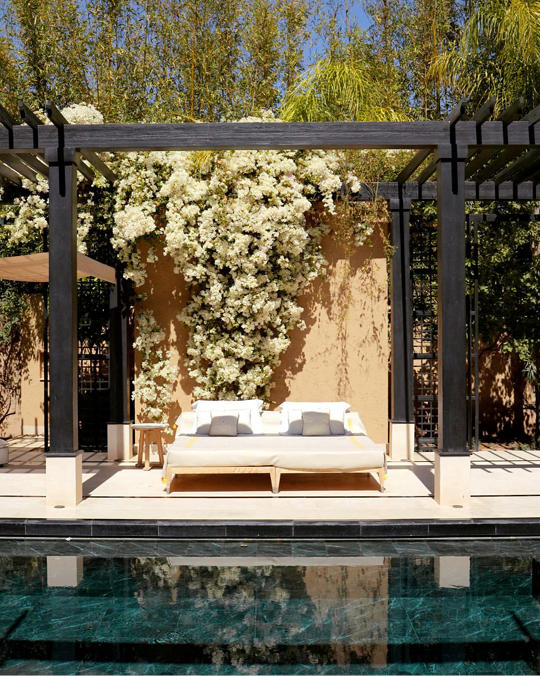
Mandarin Oriental, Marrakech has emerged as one of the world’s premier spa and wellness destinations, combining architectural elegance with centuries‑old Moroccan traditions and cutting‑edge wellness offerings. Its spa recently earned recognition as the World’s Best Spa in 2024 from the World Spa Awards, reflecting its exceptional standards. Spanning some 1,800 m², the wellness sanctuary draws design inspiration from Andalusian heritage, seamlessly blending Oriental philosophy with Moroccan ritual. It features six treatment rooms, including a Thai treatment room, each with its own private garden, two luxurious hammams, vitality baths, an indoor swimming pool and a modern fitness centre.
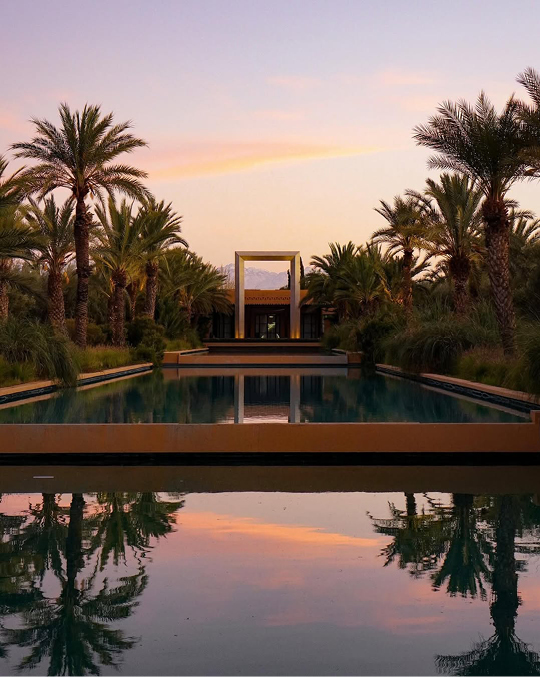
The hammams offer immersive experiences rooted in age‑old purification rituals, incorporating black soap, kessa exfoliation, argan oil, and rose water to enhance circulation, detoxification and overall relaxation. Beyond traditional treatments, the spa provides bespoke therapies and holistic rituals tailored to individual needs, delivered in an elegant and tranquil setting. Fitness facilities are equally comprehensive: guests have access to a 14‑metre heated indoor pool, state‑of‑the‑art Technogym equipment including a “Kinesis” system, personal training, boxing, functional and golf training, wellness consultations, and a landscaped jogging trail through the gardens. Its seamless integration of luxury, tradition and personalised wellness makes Mandarin Oriental, Marrakech particularly notable. Offering not only physical rejuvenation but also cultural authenticity, the resort stands out for its ability to satisfy discerning visitors seeking both serenity and immersive wellbeing.
Soneva Soul, the Maldives

Soneva Soul is pushing boundaries as a wellness destination in the Maldives, masterfully blending ancient healing traditions with modern science to deliver a deeply transformative experience. Nestled within breathtaking island settings at Soneva Fushi and Soneva Jani, Soneva Soul offers sanctuaries designed in harmony with nature. At Fushi, the two‑storey wellness complex is enveloped by flora and fauna; meanwhile, at Jani, guests enjoy panoramic lagoon views and a sense of tranquil seclusion. What sets Soneva Soul apart is its truly bespoke, holistic approach.

Personalised wellness experiences are co‑curated with an expert team, spanning spa therapists, naturopaths, Ayurvedic doctors, and Traditional Chinese Medicine practitioners, to support goals such as rest, recovery, detox, movement, and long‑term health optimisation. The treatment menu spans from centuries‑old modalities like Ayurveda, acupuncture and herbalism to cutting‑edge therapies such as hyperbaric oxygen chambers, cryotherapy, IV drips and biomodulation techniques. These offerings go well beyond the usual spa fare to foster real physical and emotional healing. The spa villages embrace Soneva’s celebrated “no news, no shoes” ethos, a grounding concept that encourages reconnection with the earth and supports wellbeing on multiple levels. Soneva Soul also offers immersive wellness programming. The Soul Festival, held annually (set to take place from the 9th to the 13th of October 2025) gathers global wellness experts for multi‑day retreats filled with talks, healing rituals and workshops, enriching the broader wellness narrative at the resort.
SHA Wellness Clinic, Spain

SHA Wellness Clinic has established itself as one of the leading wellness destinations worldwide. Since opening its flagship property 16 years ago in Spain, the centre has transformed the lives of more than 70,000 individuals through its integrated approach to health and longevity. The Clinic’s mission is to help people live longer and better lives through a holistic strategy that combines the latest advances in Western medicine with proven Eastern therapies.
Central to its philosophy is the SHA Method, which has been developed and overseen by world-renowned experts. This method focuses on preventive, genetic and anti-ageing medicine alongside natural therapies, with a particular emphasis on balanced and therapeutic nutrition. Guests at SHA receive tailored health programmes based on medical and therapeutic assessments carried out by specialists. Each plan is designed to address individual needs and goals, with the objective of achieving not just the absence of illness, but an optimal state of physical, mental and spiritual wellbeing. The Clinic defines health as complete harmony with the environment, the attainment of ideal weight and sustained vitality. Over the years, SHA has gone from strength to strength with two further properties now in the UAE and Mexico.
Friedrichsbad, Germany
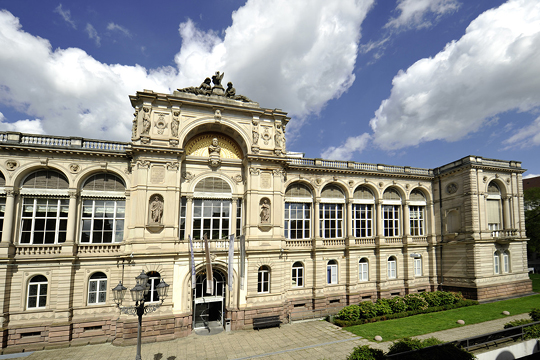
For more than 145 years, Friedrichsbad has been a defining landmark in the spa town of Baden-Baden in Germany. Opened in 1877, the Renaissance-style bathhouse was regarded as the most modern of its kind in Europe at the time, and it continues to attract visitors with its unique blend of history, architecture and therapeutic bathing rituals. From the moment guests step into the entrance hall and ascend the stairway, the experience signals a departure from everyday life. The building’s hand-painted majolica tiles, impressive shower fittings and domed hall provide a striking setting for a bathing ritual that has remained rooted in centuries-old traditions. The spa follows a structured sequence of treatments designed to restore both body and mind.
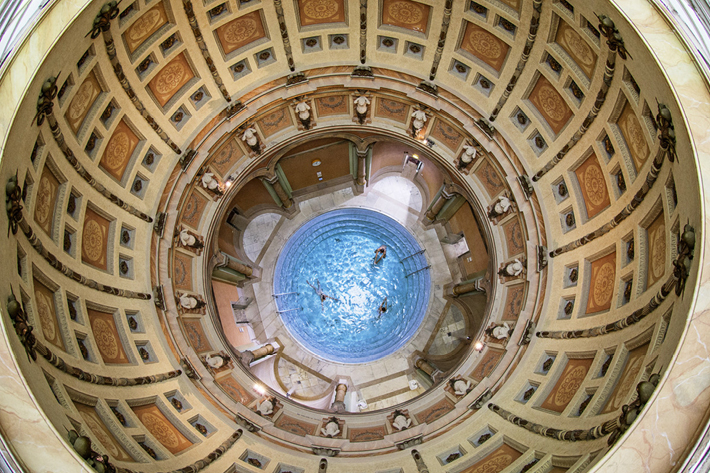
The process begins with showers of pure thermal water, followed by hot air rooms at 54 and 68 degrees, where guests recline on warm wooden beds. A soap and brush massage, available on request, prepares the skin for the healing effects of the thermal waters. Steam baths at 45 and 47 degrees envelop the body in a light mist, leading to a series of pools with varying temperatures. Visitors progress through the thermal pools, from the 36-degree bath to the bubble pool at 34 degrees, before entering the domed exercise pool at 28 degrees. The ritual concludes with a revitalising plunge into an 18-degree pool. Guests are then provided with pre-warmed sheets and body creams to complete the process, with a final stop in the reading and relaxation room for tea. The combination of hot and dry air, steam baths and thermal waters has long been recognised as beneficial for circulation, immunity and overall recuperation. It is this proven wellness tradition, together with the spa’s unique historical significance, that makes Friedrichsbad stand out internationally.
Miu Miu to Present 30 Blizzards. by Helen Marten at Art Basel Paris 2025
Miu Miu has announced its role as Public Program Official Partner of Art Basel Paris 2025 with the unveiling of a new commission, 30 Blizzards. by British artist Helen Marten.
The project will be staged at the Palais d’Iéna, headquarters of France’s Economic, Social and Environmental Council, from 22 to 26 October 2025, with a preview on 21 October.
The initiative continues Miu Miu’s commitment to exploring narratives of femininity and women’s histories through cultural projects that intersect with fashion and the arts. For Marten, known for working across sculpture, painting, drawing, video and writing, the commission represents her first foray into performance.
30 Blizzards. examines how different disciplines interact when placed in close proximity. The exhibition is built around a dialogue between five new sculptures and five videos, each relating to stages of life, including childhood, community, sexuality, interiority and loss. These paired works are punctuated by five monologues, which form part of a wider libretto structure.
The title refers to the thirty performers who embody the work, each with their own “emotional weather”. They move through the space with song and speech, their roles informed by archetypes, gestures, weather systems and animals. Every performer carries a symbolic “tool”, connecting language, image, text and music.
The performance has been developed with theatre and opera director Fabio Cherstich, with music composed by Beatrice Dillon. A fixed line of sculptural platforms and an industrial track structure the staging, creating a shifting arena of movement, sound and interaction.
At the centre of the Palais d’Iéna, the project introduces a civic space described as part theatre, part auditorium and part filmic set. Performers move around this environment, engaging in choreographed actions that highlight the tension between individual and collective expression.
Carolina Herrera Stages Spring/Summer 2026 Show in Madrid’s Plaza Mayor
Carolina Herrera unveiled its Spring/Summer 2026 collection with a runway presentation in Madrid’s Plaza Mayor, marking the House’s first main collection shown outside New York. It is the third international runway presentation in the brand’s 44-year history.
The collection was inspired by Madrid’s 17th-century Golden Age and the La Movida cultural movement of the 1980s, the same era that saw the founding of the house. Creative Director Wes Gordon said: “Madrid has always been one of my favourite cities in the world—rich in history, art, and culture. It’s home to incredible creatives with a unique approach to beauty and joy. There’s something about this city’s rhythm—its appetite for life—that inspires and energises me and is deeply aligned with the Herrera woman.”
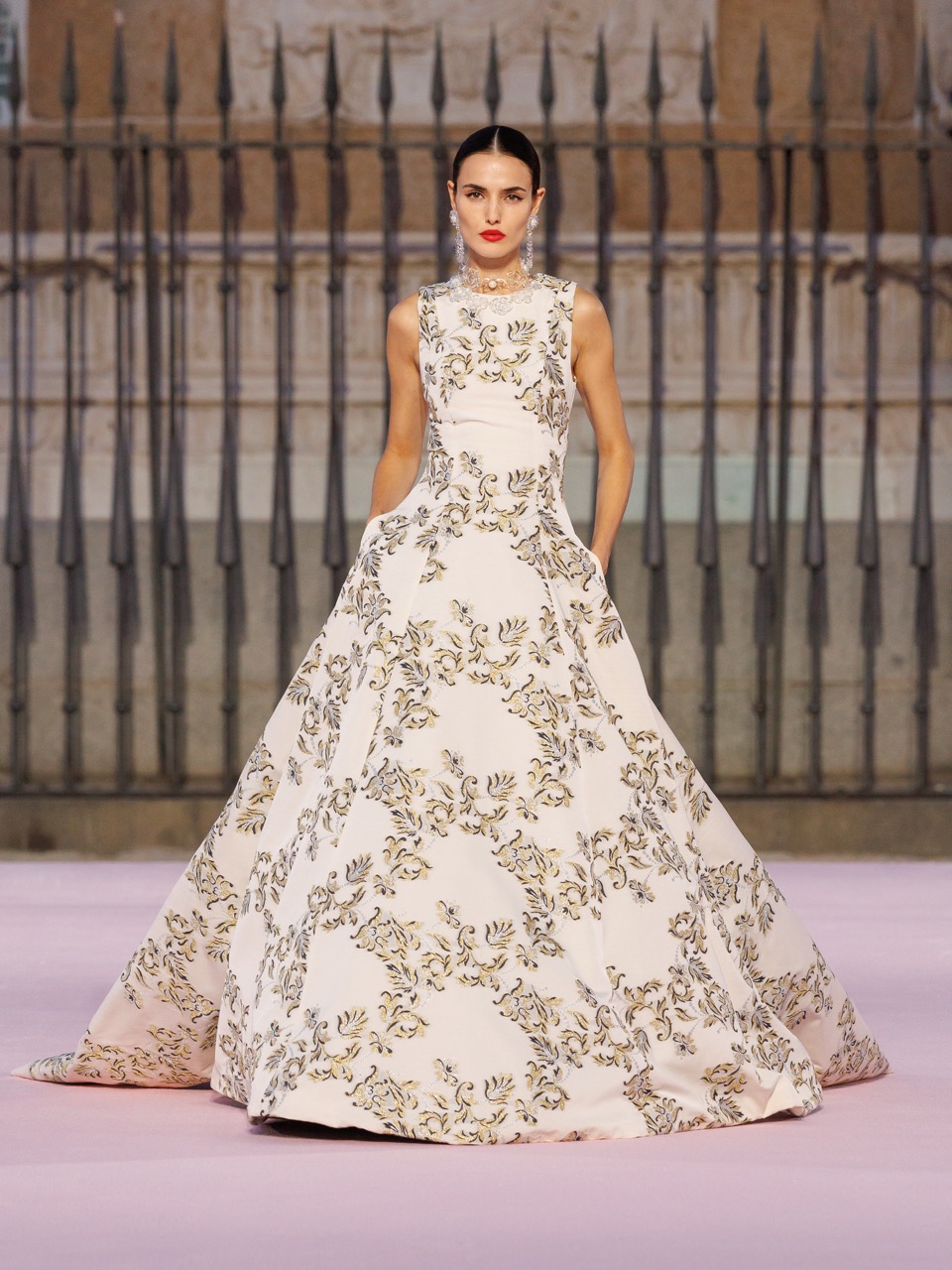
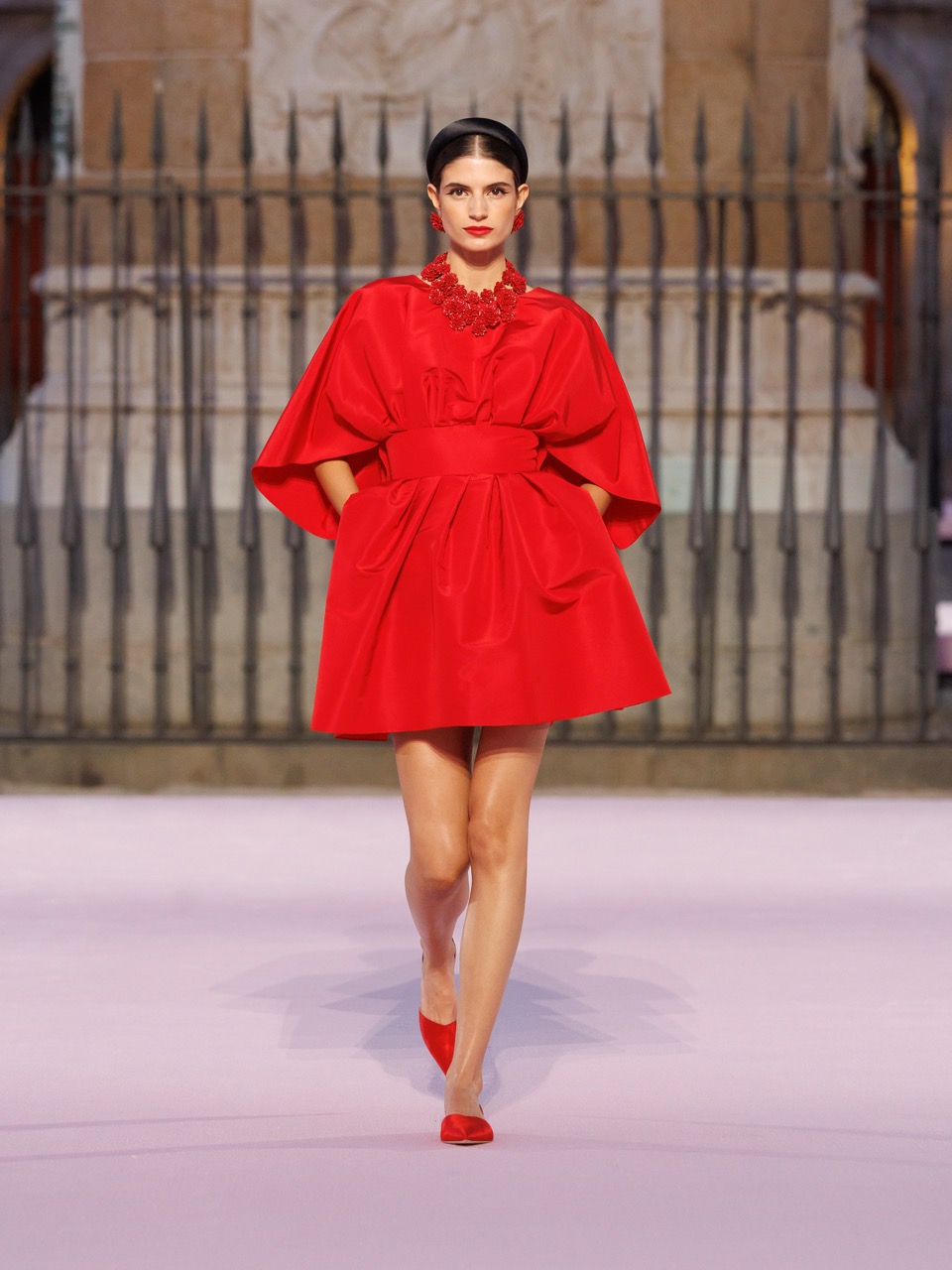
The palette combined bold and romantic tones, from saffron yellow, Herrera red and Rioja to violeta lilac, bright pink, white and black. The range drew references to the films of Pedro Almodóvar. Three floral motifs anchored the collection: carnations, violettas and Retiro roses, each worked into embroidery, jacquard and detailing.
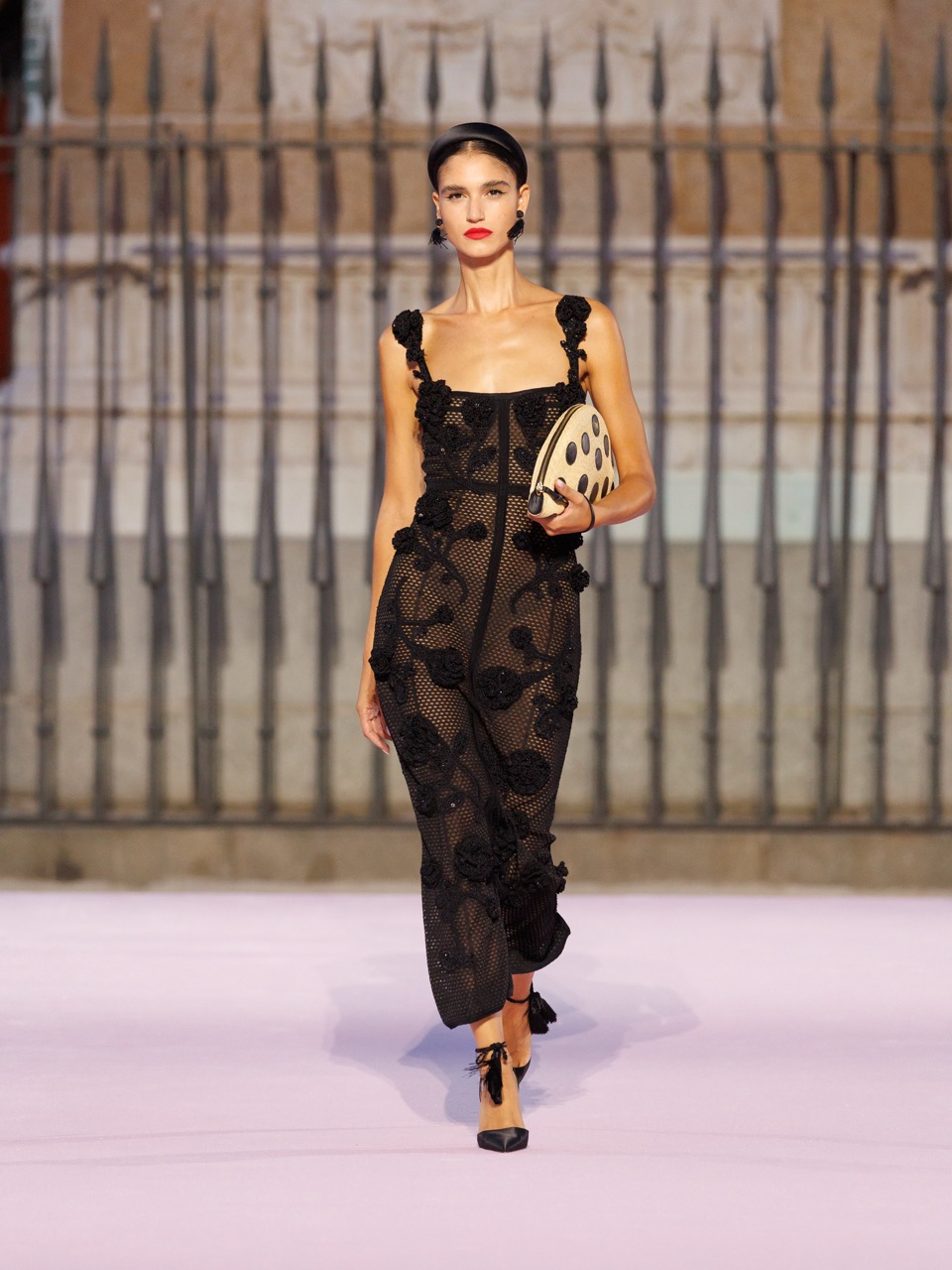
Fabrics and tailoring connected historical and contemporary influences. A golden carnation jacquard crepe recalled traditional brocades, while plaid tailoring echoed Plaza Mayor’s cobblestones. Lace trims referenced mantillas and awnings, while lurex embroidery and polka dots appeared in new silhouettes and tiered dresses. The designs also drew inspiration from muses including Paloma Picasso and Cayetana Fitz-James Stuart, Duchess of Alba.
Handbags were introduced as integral design elements, with three new models: the Mimi box clutch with polka dot clasp, the Pía clutch with tassels and chain handle, and the Lola clutch in polished leather or satin with a twin-sphere clasp.
The show also highlighted Spanish craftsmanship through collaborations with local designers and artisans. Sybilla brought her sculptural sensibility to Herrera silhouettes, while PALOMO reimagined the classic white shirt. Jewellery atelier ANDRESGALLARDO crafted porcelain carnations, and Levens contributed handmade glass accessories. Heritage brand Casa Seseña provided archival cape designs, paying tribute to Carolina and Reinaldo Herrera’s links to Madrid style.
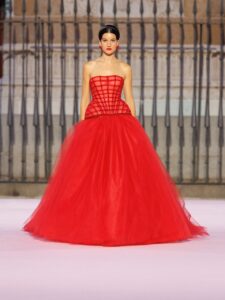
The House described the presentation as a love letter to Madrid, celebrating the city’s history, precision and boldness while reaffirming Herrera’s commitment to fusing elegance with modernity.
Dubai’s Level Shoes Expands To The US In 2025
Dubai-based retailer Level Shoes, owned by Chalhoub Group, has launched a dedicated e-commerce platform in the United States, marking its most significant international expansion to date.
The move follows the opening of the company’s first American logistics centre in Florida in early 2025. With operations now established, Level is targeting one of its largest international markets with a curated mix of luxury, accessible and emerging footwear brands.
The platform offers products from labels including Amina Muaddi, Brunello Cucinelli, Chloé, Dolce & Gabbana, Givenchy, Jacquemus, Khaite, McQueen, Miu Miu, New Balance, On, Roger Vivier, Tod’s, Tory Burch, The Row and Valentino Garavani. Shoppers can also expect exclusive collaborations, limited-edition capsules, immersive activations and pre-launch designer reveals tailored for the US market. Looking ahead, Level plans to open its first US flagship in Miami in 2027.
Chief executive officer Elisa Bruno confirmed that the U.S. ranks as Level’s fourth-largest market in terms of presence and spend. After five years of double-digit growth and data insights, the company deemed the time right to launch online in the region. The Florida hub provides distribution, customer service and operational support aimed at improving delivery and service standards.
Level, which launched in 2012 with a 96,000-square-foot flagship at The Dubai Mall, now offers more than 350 brands for women, men and children across its store, app, website and social media platforms.
Francesca Bellettini Announced As The New CEO And President At Gucci
Francesca Bellettini has been appointed as the new President and Chief Executive Officer of Gucci, marking a significant leadership change at the Italian luxury house.
Bellettini previously held the role of Deputy CEO at Kering, where she was responsible for the development of the group’s fashion brands. In her new position, she will report directly to Luca de Meo, Chief Executive Officer of Kering.
Discussing the new appointment, de Meo said: “At this pivotal moment, I intend to build a leaner and clearer organisation in which the best talent drives our houses forward…Gucci, as the flagship of our group, deserves the sharpest focus, and Francesca – one of the most seasoned and respected professionals in our industry – will bring the leadership and flawless execution needed to restore the brand to its rightful place.”
Her appointment comes at a pivotal moment for the house, as Gucci seeks to strengthen its creative vision and commercial performance within a highly competitive luxury market. Bellettini’s experience at Kering and her deep understanding of brand management are expected to play a key role in driving growth and reaffirming Gucci’s influence in the industry.
Prada Mode Returns to London with Elmgreen&Dragset Installation at Town Hall
Prada has announced that it will stage the thirteenth edition of Prada Mode in London this autumn, presenting a new commission by artist duo Elmgreen & Dragset.
The event will run from the 15th to the 19th of October 2025 at Town Hall in King’s Cross, coinciding with Frieze London.
The central work, titled The Audience, is an immersive installation that combines film and sculpture to examine spectatorship in an era defined by constant connectivity and visual saturation. The piece takes the form of a cinema where a film written by the artists plays on a continuous loop. The intentionally blurred footage depicts a painter and a writer discussing their creative practices in their flat.
Within the auditorium, five seats will be occupied by hyperrealistic sculptures of cinemagoers positioned in different states of attention. The film’s storyline continues through an additional work, The Conversation, which shows a female figure at a café table engaged in a FaceTime call with one of the film’s characters. Together, the works challenge distinctions between viewer and viewed, placing emphasis on the act of watching itself.
Speaking about the installation, Elmgreen & Dragset said: “The Audience is a work about spectatorship and redirecting the gaze of the visitors. As artists, we have often been interested in making exhibitions where the audience’s attention is pulled in conflicting directions, spaces that would encourage a degree of uncertainty and where the spectator has to actively navigate seemingly familiar environments in new ways. In The Audience, that shared experience becomes visible and the audience becomes part of the narrative itself.”
The programme will extend beyond the installation with talks, conversations, film screenings, performances and DJ sets. The first two days will be reserved for members, after which the event will open to the public from the 17th to the 19th of October.
Town Hall, the newly restored Camden Town Hall, will host the event. Originally constructed in 1937, the Grade II listed building has undergone nearly a decade of restoration led by Purcell, transforming it into a 60,000-square-foot cultural venue.
Prada Mode was launched in 2018 as an evolution of the Prada Double Club by artist Carsten Höller. Previous editions have taken place in cities including Miami, Paris, Shanghai, Dubai, Seoul and Abu Dhabi, with contributions from artists and creators such as Damien Hirst, Theaster Gates and Kazuyo Sejima.
Yannick Alléno to Lead Dior’s Dining Destinations at 30 Montaigne
Dior has announced a new partnership with leading French chef Yannick Alléno.
From this week, the celebrated chef will oversee three culinary spaces at 30 Montaigne, the Parisian townhouse where the Maison was founded in 1946 and where its historic ateliers remain.
Alléno will take charge of the Monsieur Dior restaurant, as well as La Pâtisserie, which will be renamed Le Jardin, and Le Café. Together, the three venues are intended to highlight Dior’s vision of the art of living, aligning culinary creativity with the Maison’s heritage.
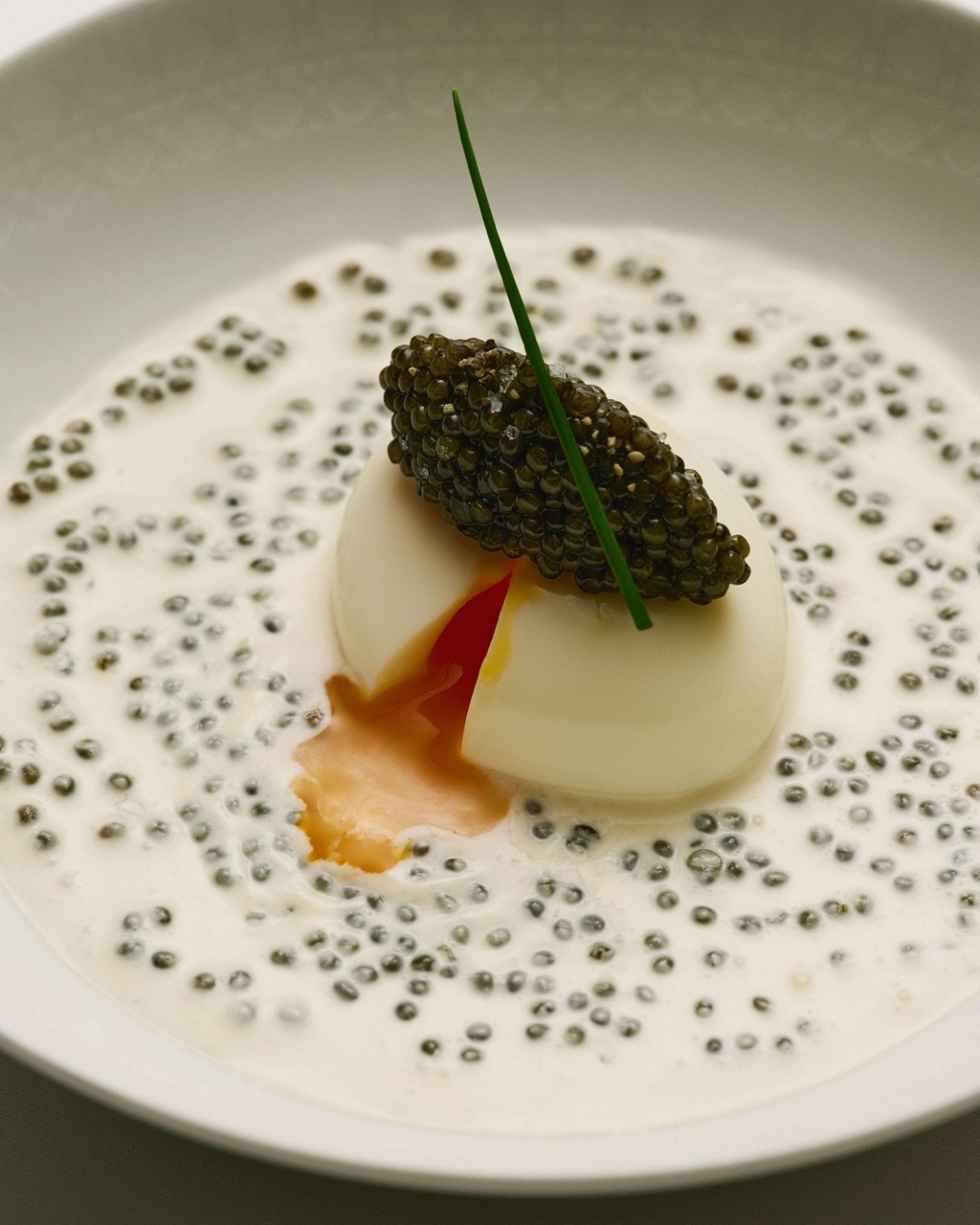
In developing the menus, Alléno has approached the project with the guiding question: “What would Christian Dior do if he were to create a restaurant today?” His answer is a culinary collection where shapes, textures and flavours mirror Dior’s couture universe and reference its archives.
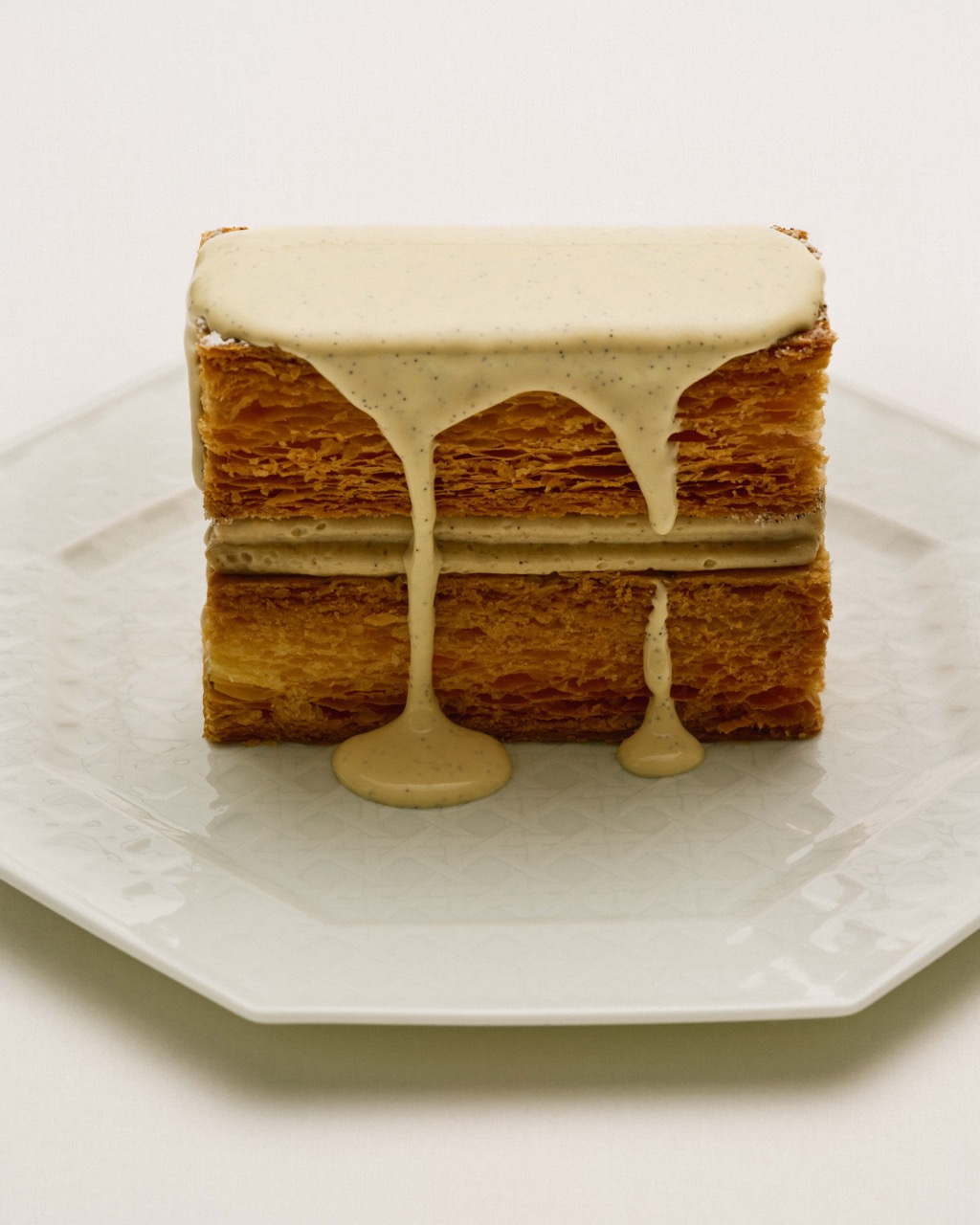
Nature and flowers, which Christian Dior admired, serve as key inspirations. The dishes are designed to combine tradition and innovation, while reflecting Alléno’s focus on contemporary technique and Dior’s longstanding emphasis on hospitality.
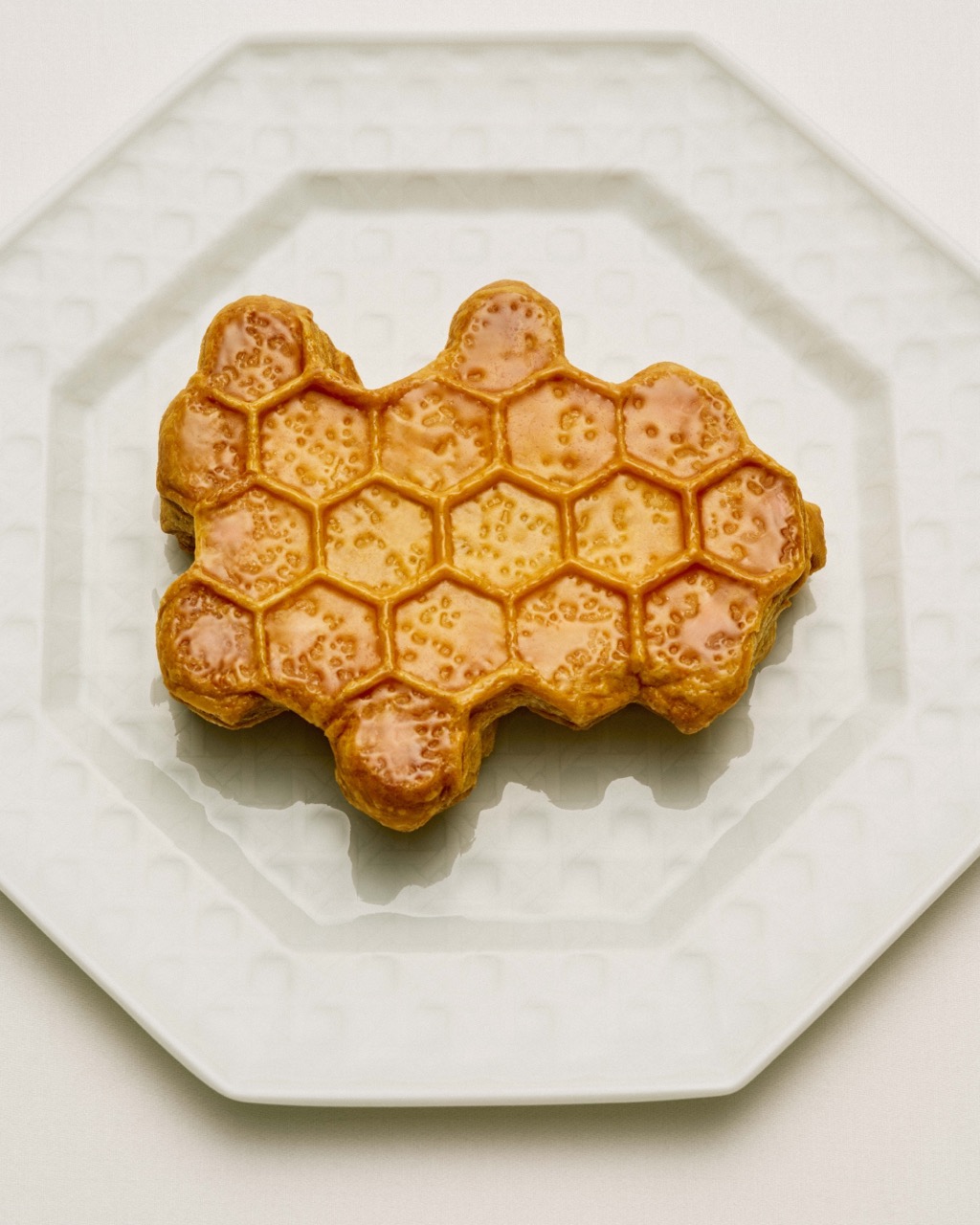
“Like Christian Dior, I am rooted in my era,” said Alléno. “What I propose is to bring the spirit of the couturier to the cutting edge of contemporary culinary creation. Imagining a restaurant according to his vision, breathing new life into his spirit at the very heart of the boutique. A place that offers customers a défilé of flavours on their plates every day. I want this lively place to fully embody its era, just as the House of Dior has always done with couture.”
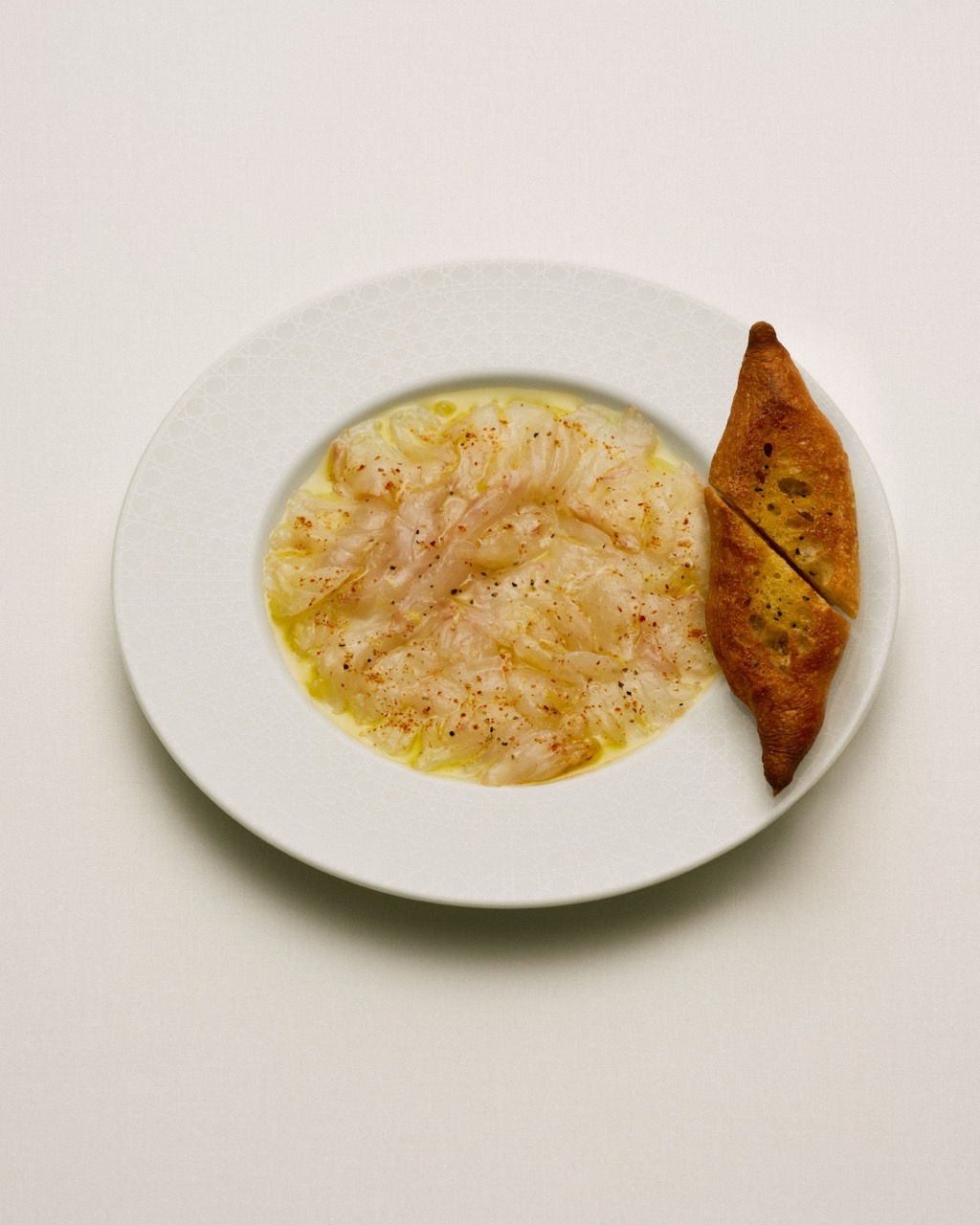
The appointment adds to Alléno’s extensive portfolio. In 2025 he is recognised as the most Michelin-starred chef in the world, with 18 restaurants awarded 17 stars in the Michelin Guide. With the addition of Monsieur Dior, the Paris restaurant becomes the nineteenth establishment under his direction.
Calvin Klein and Mytheresa Launch Exclusive Pre-Release of Fall 2025 Womenswear Collection
Mytheresa has partnered with Calvin Klein to offer an exclusive pre-launch of the brand’s womenswear Fall 2025 collection.
The release, available globally on mytheresa.com from today, the 17th of September, comes one week ahead of the official worldwide launch.
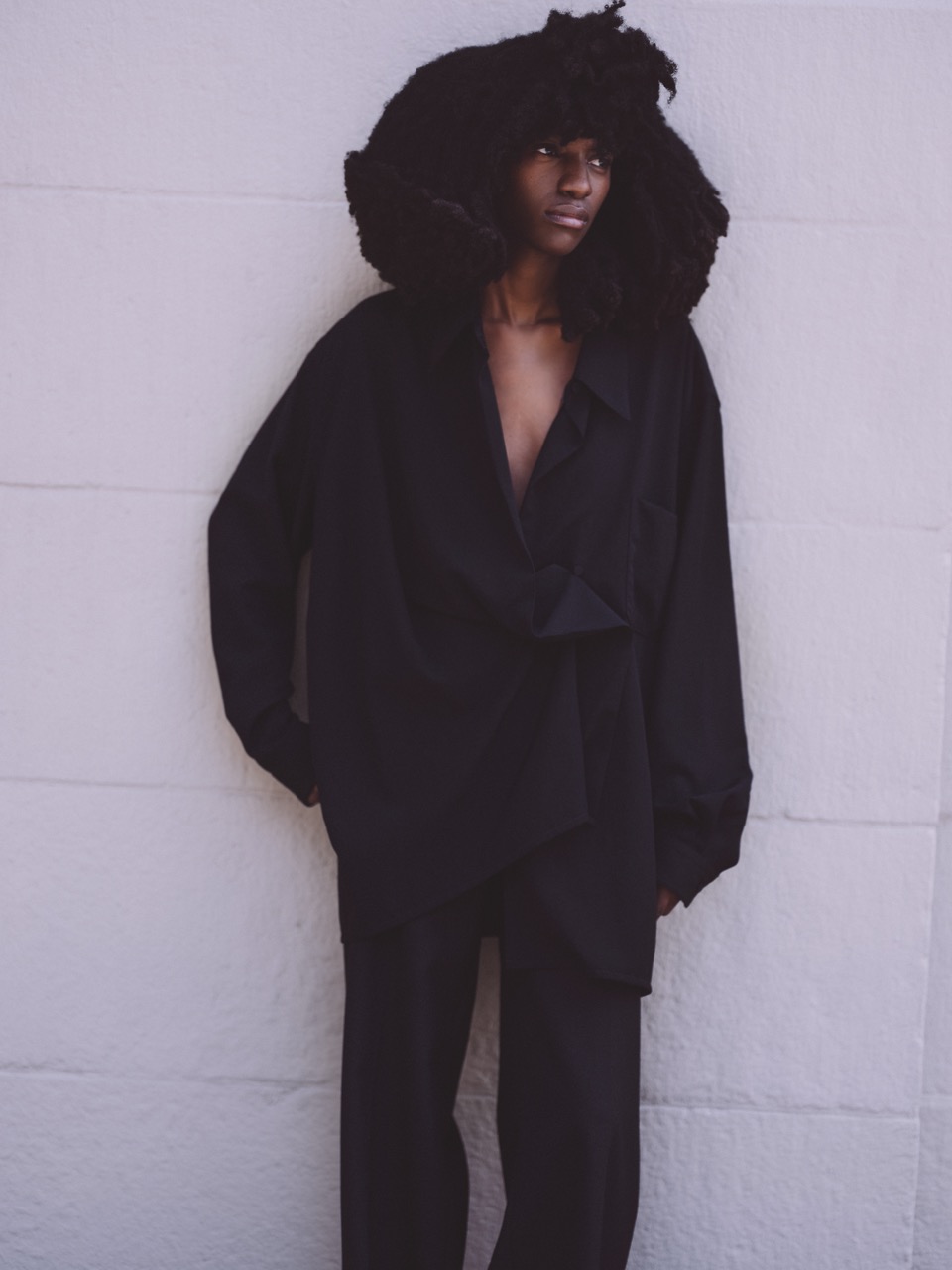
The collection, which was first presented during New York Fashion Week in February 2025, marked the debut of Veronica Leoni as Creative Director at Calvin Klein. Leoni’s first outing for the American house was built on the concept of “clothes for life” and took inspiration from ideals of American beauty.
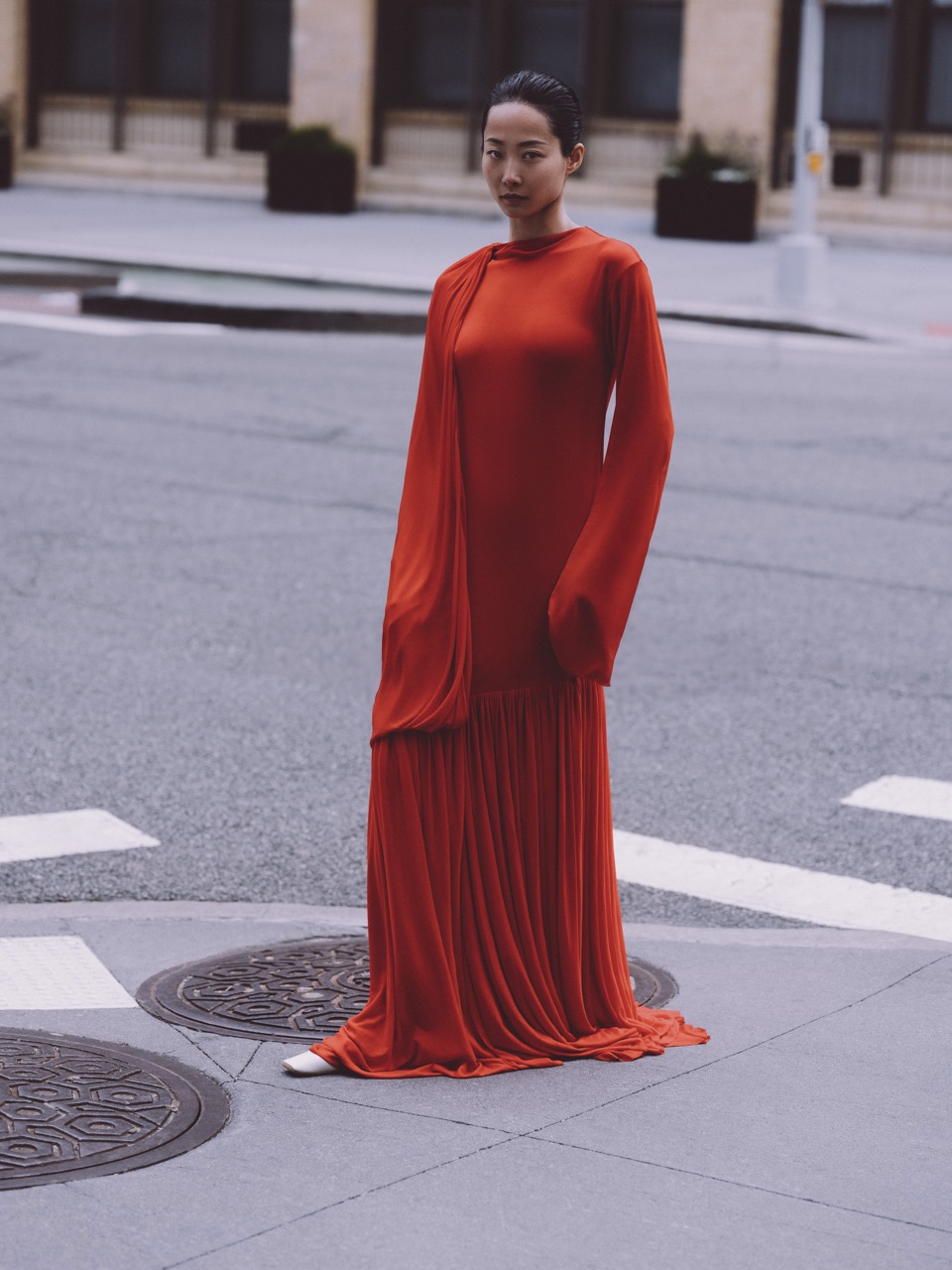
The colour palette remains rooted in the label’s established use of neutrals, with tones of black, granite, moongrey, fudge, off-white and porcelain forming the foundation. These are contrasted with accents of barolo, raspberry and pale citron, introducing a sharper edge to the classic Calvin Klein aesthetic.
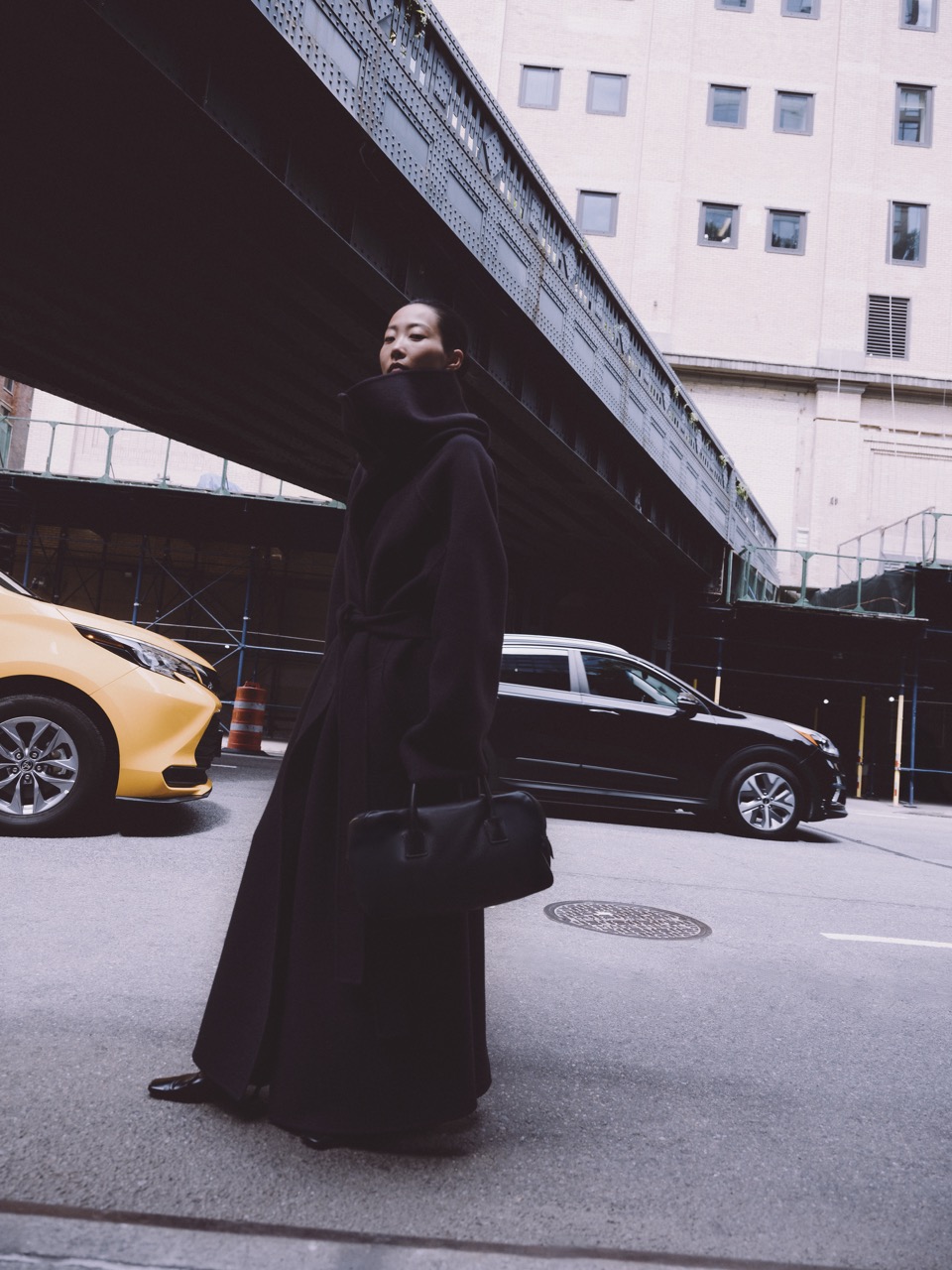
As part of the partnership with Mytheresa, three exclusive womenswear runway looks will be available solely through the platform. The pieces highlight Leoni’s refined reinterpretation of the brand’s design codes. They include a floor-length draped dress in porcelain, an off-white bustier dress finished with fringes, and a sharply tailored pinstriped skirt suit distinguished by bold shoulders.
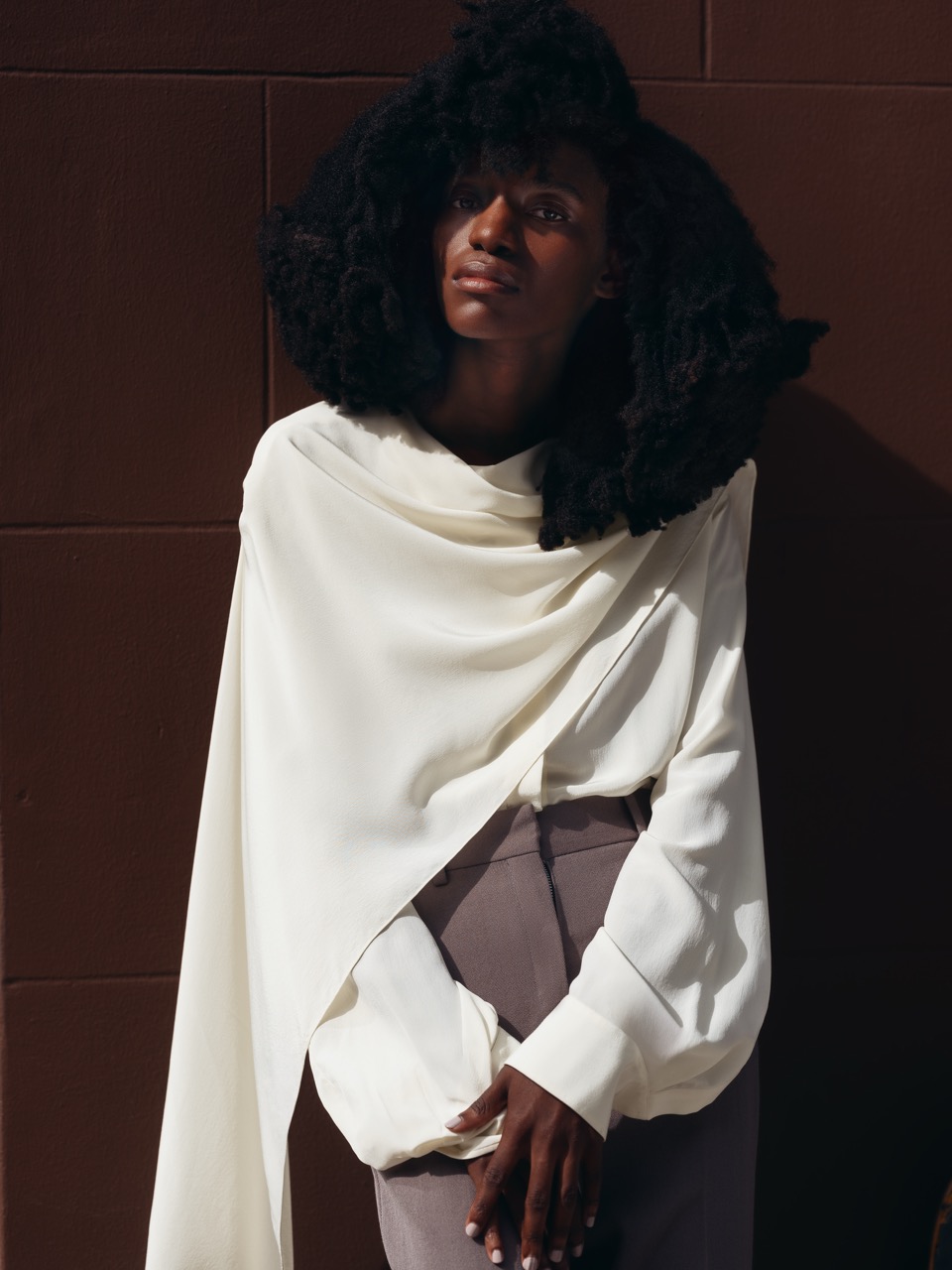
The collaboration underscores Mytheresa’s continued role in offering exclusive access to key fashion collections. For Calvin Klein, the early release provides a platform to introduce Leoni’s vision to a global audience ahead of the wider retail roll-out.
Customers worldwide can access the collection from today exclusively on Mytheresa, with the global launch scheduled to follow one week later.
Maison Christian Louboutin Appoints Jaden Smith As Its First Men’s Creative Director
Maison Christian Louboutin has appointed Jaden Smith as its first Men’s Creative Director, a role that marks a significant step in the expansion of the brand’s men’s universe.
In his position at the house, Smith will oversee four annual collections across shoes, leather goods and accessories.
Christian Louboutin and Smith first met in 2019, beginning a dialogue that evolved into an ongoing creative exchange. Louboutin cited Smith’s inventive spirit, respect for the Maison, and commitment to a more conscious future as qualities that inspired the collaboration.
“When I first met Jaden, I saw in him a natural fit for the Maison. His world is rich and multidimensional, his style and cultural sensibility are inspiring, and his curiosity and openness are remarkable. I felt that with his creative direction, our men’s collection would evolve in an exciting and dynamic way. He feels like the perfect addition to our creative team, and I am truly looking forward to having fun working with him on our men’s collections,” said Christian Louboutin.
Smith, who has experience with his own fashion label and nearly a decade of shoe collaborations, brings a multidisciplinary background that includes music, performance and activism.
“Merging my vision with Christian’s comes quite naturally because we see the world in a very similar way. There’s a shared respect for creative freedom, and I think that’s why it works. I want to continue the story, honouring the past while shaping the future through my own perspective. It isn’t just a title – it’s a creative home. Christian has given me a place to explore, to learn, and to create freely. His legacy is built on hard work and joy, and I want to carry that forward,” Smith said.
Alexis Mourot, Chief Executive Officer of Christian Louboutin, added: “We launched our Men’s line more than 15 years ago in a very genuine way, as we always do. Today, it represents 24% of our business, and we believe there is still tremendous potential. This is the perfect time to strengthen our creative team by welcoming Jaden alongside Christian. We share the same values and the Maison’s DNA.”
Smith’s avant-première capsule will launch in January 2026 in select boutiques worldwide and online, ahead of his debut collection at Men’s Fall/Winter 2026 Paris Fashion Week, with pieces available in stores in May 2026.
Eva Green Stars in Roger Vivier’s “La Rose Vivier” Campaign
Roger Vivier has unveiled its Autumn Winter 2025/26 campaign, “La Rose Vivier”, conceived as a film by Creative Director Gherardo Felloni and starring French actress Eva Green.
Set in the stillness of a Parisian palais, the campaign underscores the Maison’s ties to the French capital. The film opens with Green before a canvas of roses, wearing Virgule slingbacks from the season’s collection. She then appears absorbed into the painted world, blurring the line between reality and imagination.
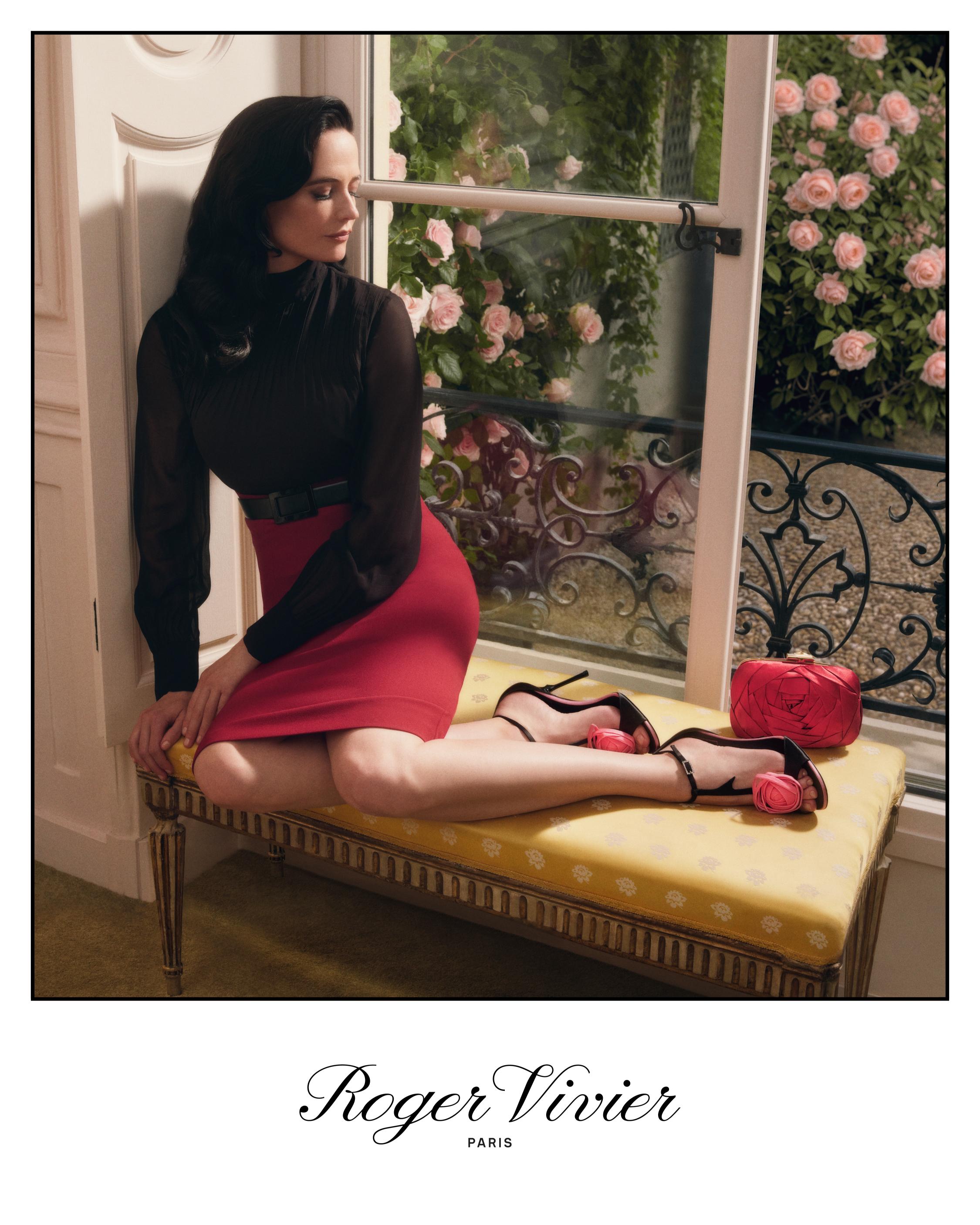
Green, who previously fronted the Vivier Express II campaign, was described by Felloni as a natural choice for the project, embodying the spirit of Roger Vivier through her elegance and presence.
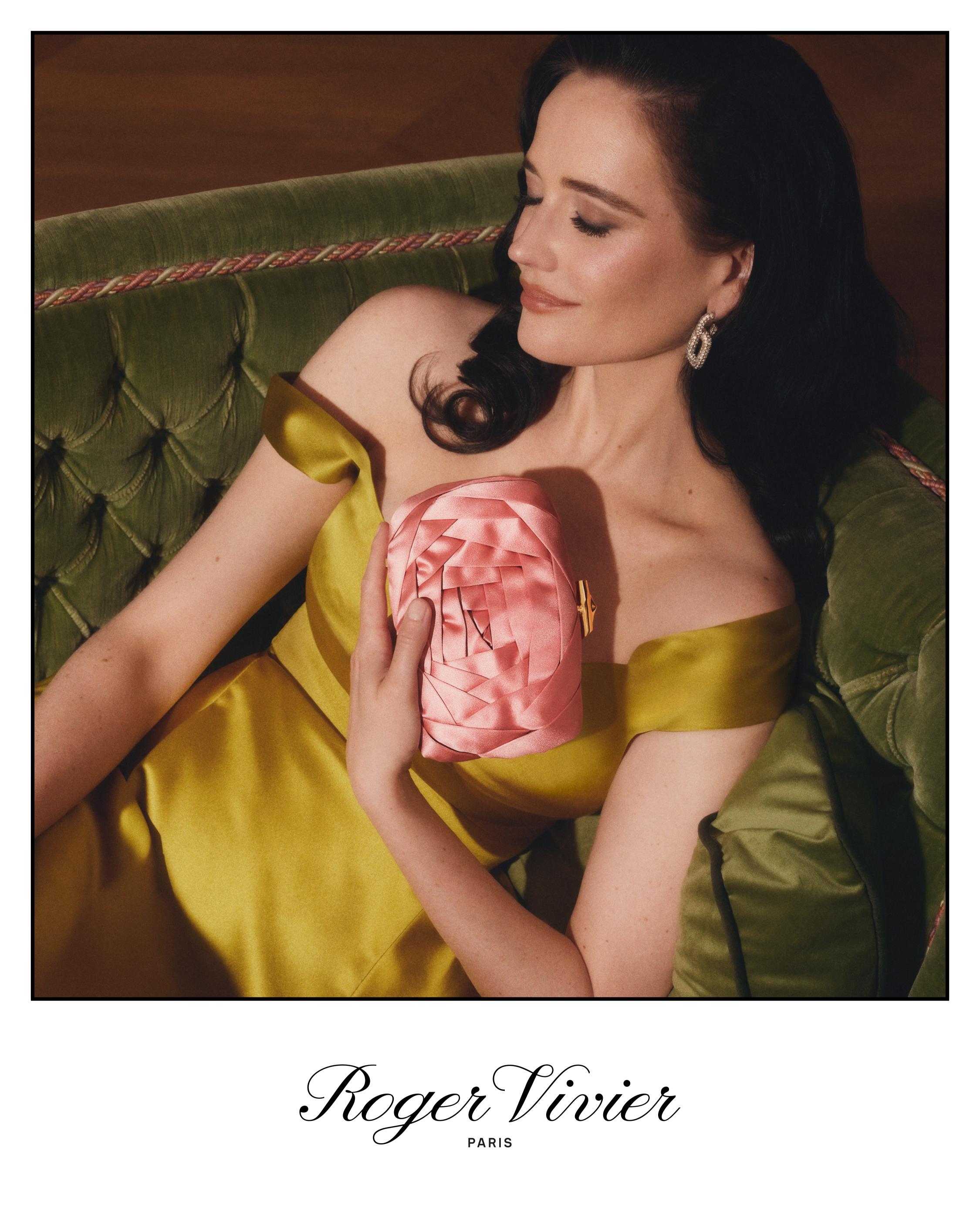
The rose motif, long associated with the House, serves as the central theme. Historically used by Roger Vivier in collaborations such as with milliner Suzanne Rémy in 1943 and during his work at Dior in the 1950s, the rose has been reinterpreted by Felloni with a modern approach. In the campaign, it becomes structural: sandals and pumps feature the redesigned Talon Épine heel, detailed with a thorn against silk satin petals. The Rose ballerinas and the silk Rose clutch continue the theme, with designs evoking a bloom in motion.
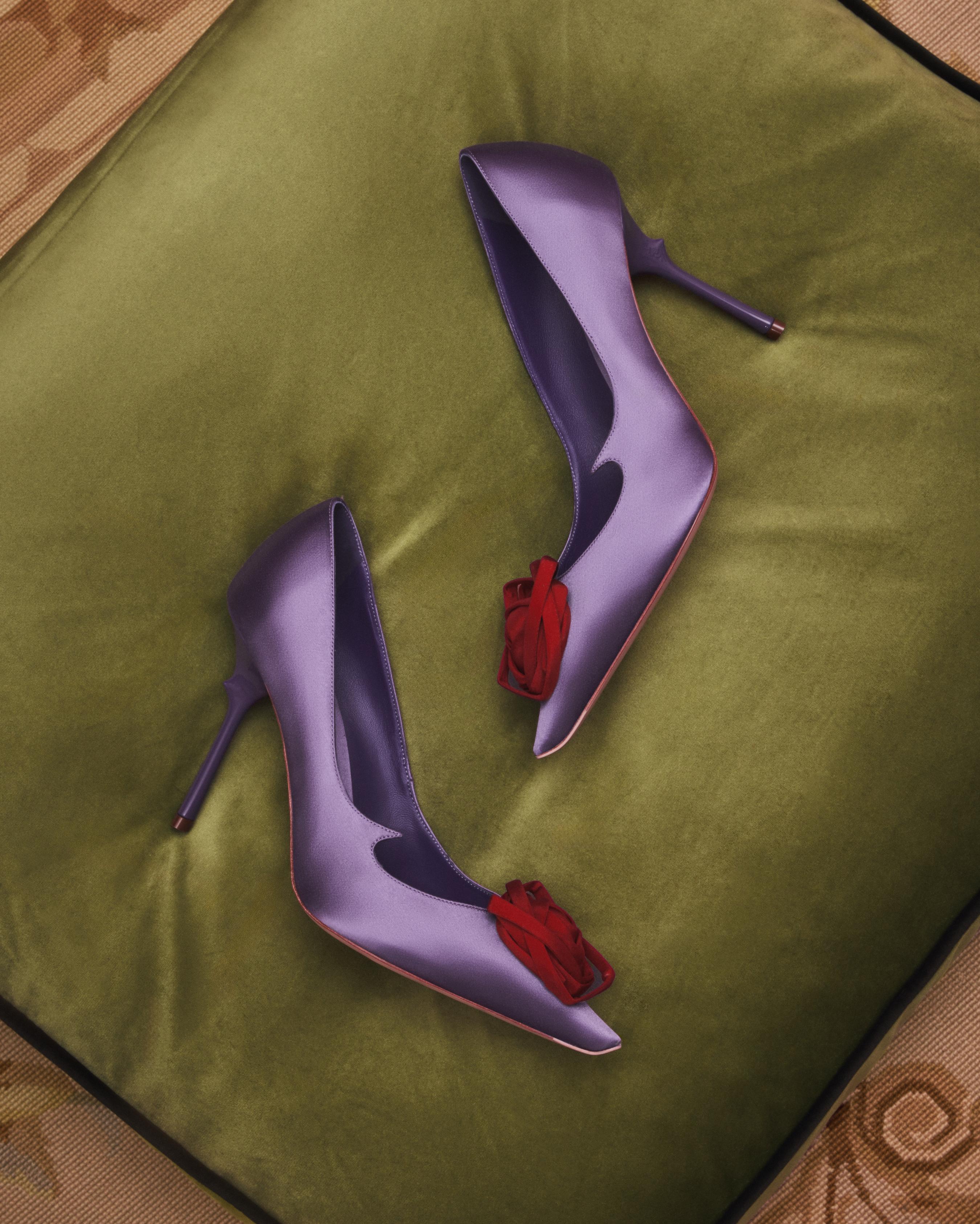
The campaign also reimagines Roger Vivier’s icons. The Belle Vivier returns in leopard pony calfskin, taken from the archives, and the Belle Vivier bag is refreshed in leopard and classic shades. The Viv’ Choc bag, which Green holds in the film’s opening, offers an architectural contrast to the organic rose forms.
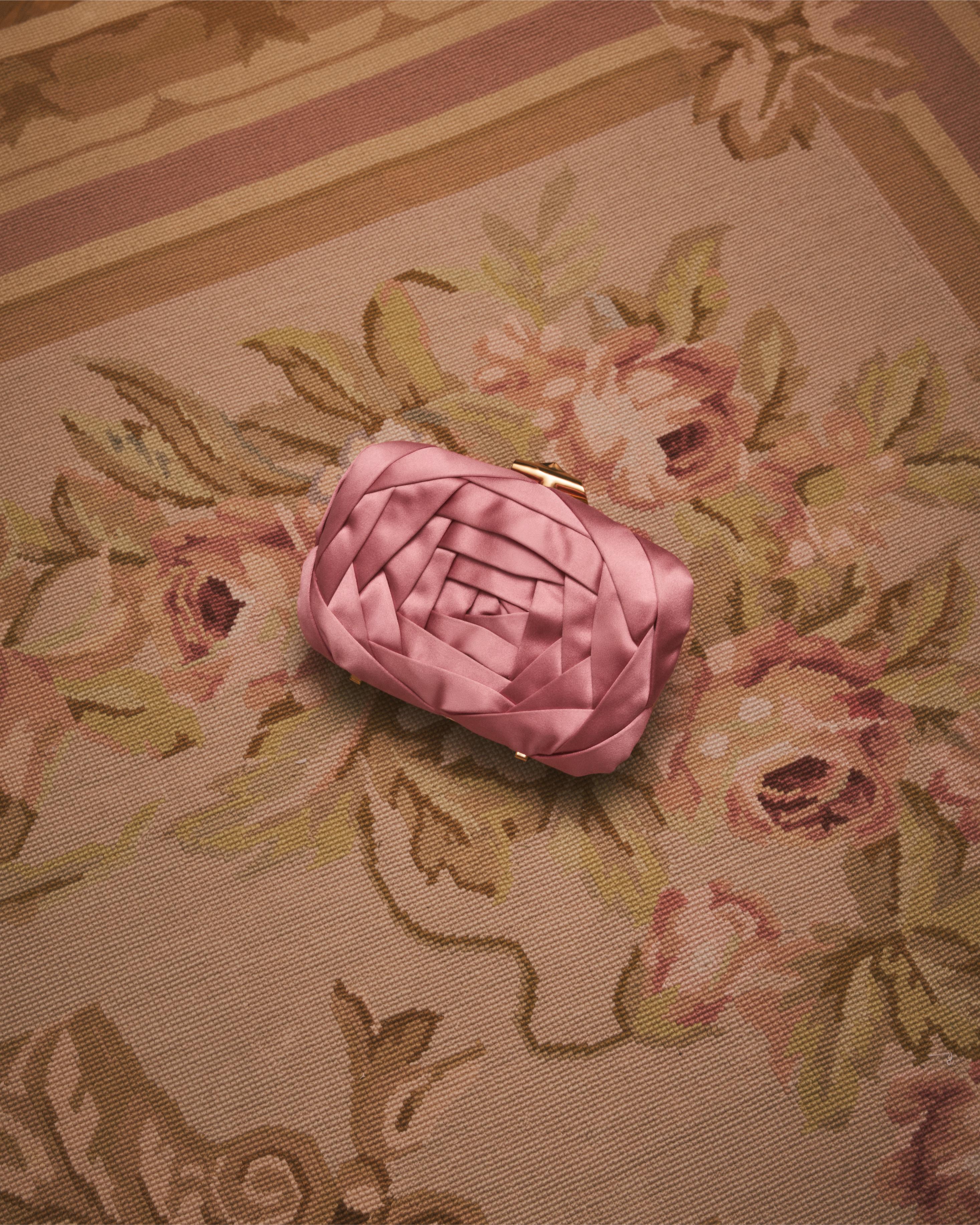
The narrative follows Green as she disappears into this dreamlike landscape, while a guard searches through the empty galleries. The campaign balances absence and presence, cinema and fashion, heritage and innovation, with Green portrayed as both witness and apparition.
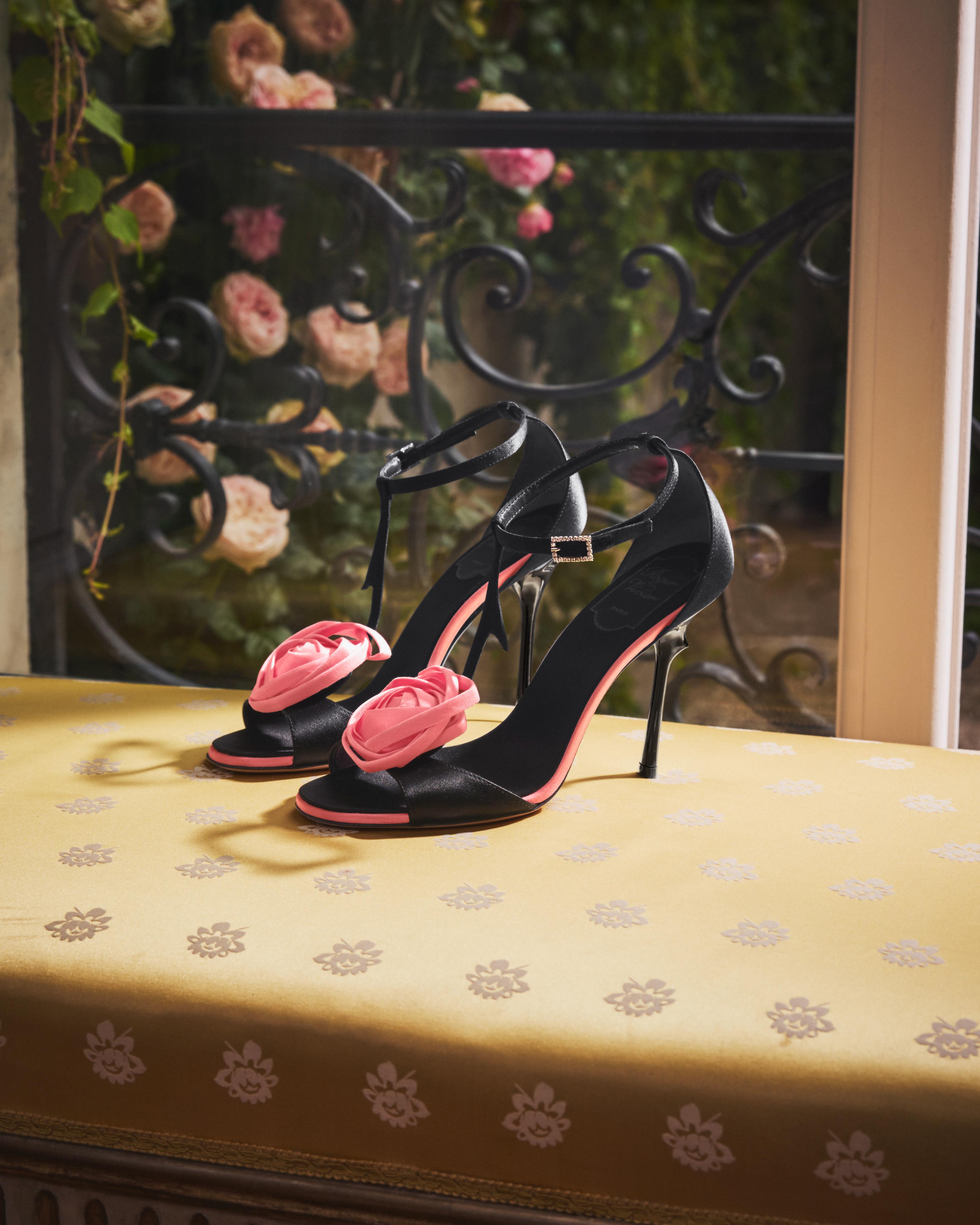
Eva Green, whose career includes roles in Casino Royale, Kingdom of Heaven and The Three Musketeers, will next appear in Blood on Snow, directed by Cary Fukunaga and due for release in 2026.
Hermès Unveils New Interpretations of the Chaîne d’ancre Collection
Hermès has introduced a new chapter in its Chaîne d’ancre jewellery line, reimagined by Pierre Hardy, creative director of Hermès jewellery. The collection explores scale, materials and form, while retaining the house’s distinct aesthetic.
Originally inspired by the silhouette of a ship’s anchor chain, the Chaîne d’ancre motif is revisited in designs that shift between lightness and strength. Hardy describes his approach as “accumulating, merging and fluidifying” archetypal forms across several creative territories. This philosophy underpins a collection that moves between discreet understatement and bold statement pieces.
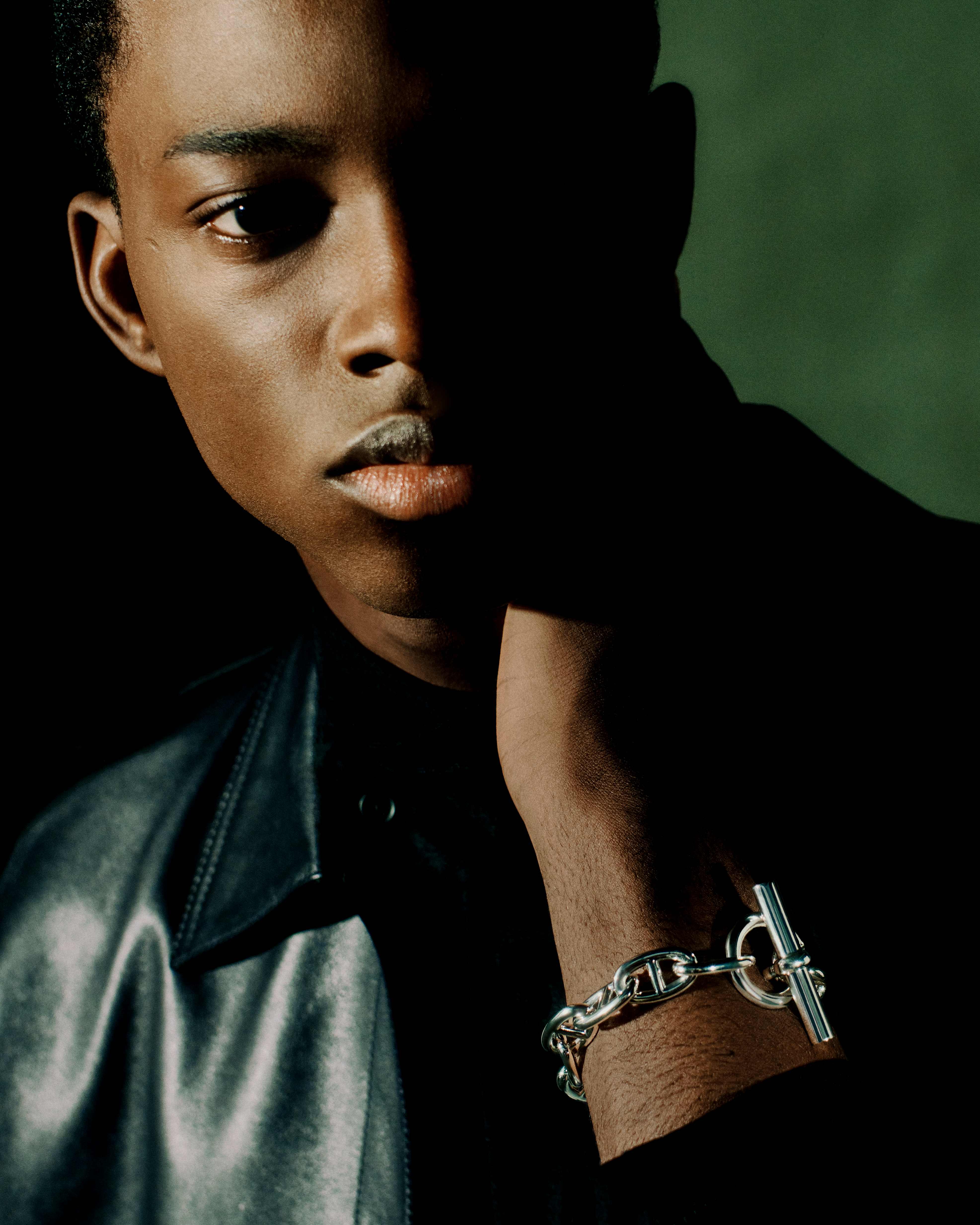
The designs present contrasts through both material and scale. The chain becomes a motif in its own right, with clasps taking a central role. Some pieces are minimalist in execution, while others adopt a highly sophisticated finish. The motif is transformed through changes in size, from subtle accents to imposing forms. The collection also incorporates unique combinations of design and technique, such as rows of nautical chai intermingled, multiplied or isolated, with links that are rounded, elongated or interlaced.
Among the highlights is a rose gold necklace set with 5,191 diamonds totalling 53.62 carats, centred around a cushion-cut orange sapphire of 14.97 carats. Another notable piece is a white gold necklace with 3,532 diamonds (34.02 carats) and an oval-cut diamond of 2.02 carats. Coloured stones are also featured, such as a rose gold necklace with an oval-cut green tourmaline of 4.63 carats and a cabochon-cut multicoloured tourmaline of 46.55 carats.
The collection also includes silver bracelets, multistrand necklaces, and pieces that reinterpret the motif in unexpected forms. The Chaîne d’ancre Punk double and triple rings, available in silver and rose gold, play with irreverence. The motif is also transformed into minaudières, small jewellery bags in white gold and diamonds or in silver, designed to be worn around the neck or wrist.
Other designs include the Chaîne d’ancre Calypso bracelet and single earring in yellow gold set with diamonds, and the Danaé necklace in yellow gold. Across the range, the clasp is intentionally highlighted and sometimes placed at the front, underscoring Hermès’ emphasis on detail.
Valentino Garavani and Vans Unveil Exclusive Collaboration
Maison Valentino has launched an exclusive collaboration with Vans, called the Valentino Garavani and Vans sneaker collection. The project combines Vans’ skate heritage with the Italian couture house’s distinctive identity.
The collection is currently available exclusively at Level Shoes in the Middle East, before its global rollout on the 19th of September.
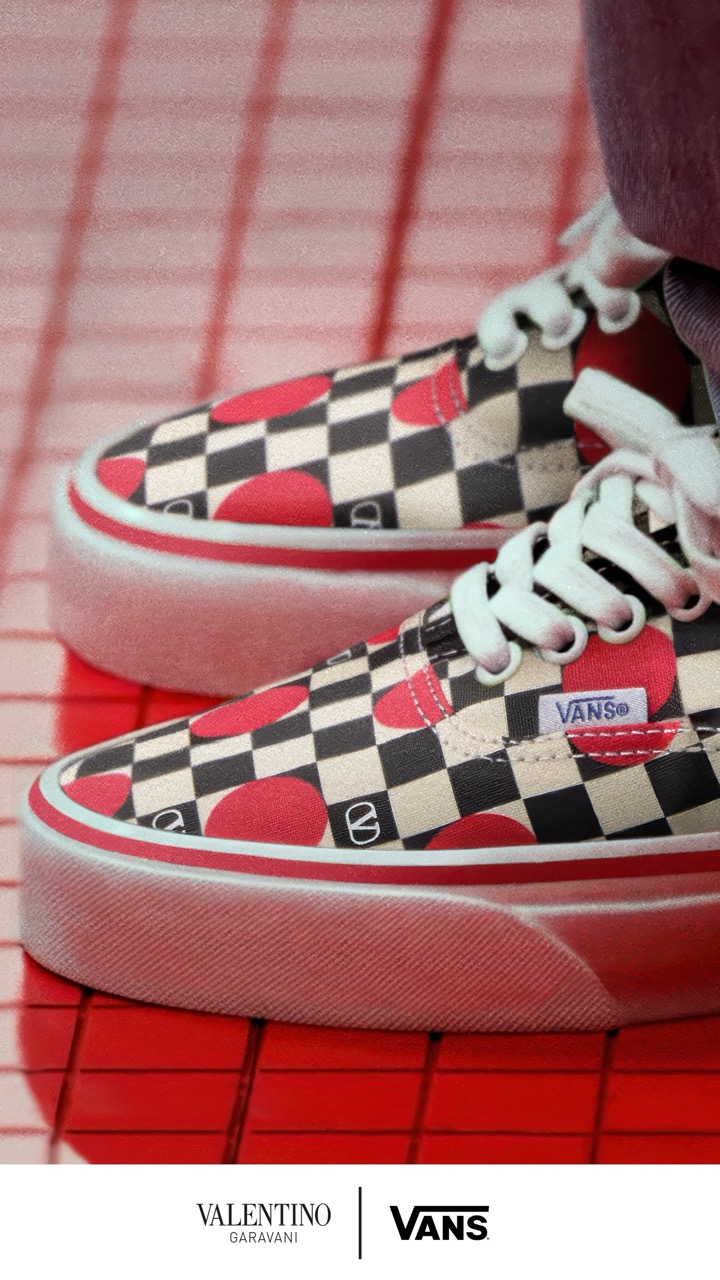
The footwear was first revealed on the runway of Valentino’s Autumn/Winter 2025-26 collection, Le Méta Théâtre Des Intimités, presented in Paris in March under Creative Director Alessandro Michele.
The collaboration reinterprets Vans’ Authentic silhouette, a style first introduced in 1966. Retaining its sturdy canvas uppers, low-top design and the signature rubber waffle outsole, the sneaker has been reimagined through Michele’s creative lens. The collection comprises six variations for men and women, produced in different colourways and finished with co-branded insoles.
The collaboration is presented as a creative dialogue between two distinct brands, uniting a focus on authenticity with a shared vision of individuality.
Princess Noura Bint Faisal Al Saud Announced As The New CEO of JAY3LLE.
Princess Noura Bint Faisal Al Saud has been announced as the new CEO of JAY3LLE.
The luxury brand was co-founded by fashion designer and entrepreneur Johan Lindeberg and his daughter Blue. The new appointment marks a strategic shift as the label relocates its operations from Sweden and the US to Riyadh, Saudi Arabia.
With Princess Noura’s background in building Saudi Arabia’s national fashion strategy and founding the creative consultancy Culture House, her leadership signals that JAY3LLE aims to root itself in the Kingdom both culturally and corporately, while still targeting a global audience. Under her stewardship, the brand intends to continue its “item-by-item” release philosophy rather than following traditional seasonal cycles, using key pieces, like its debut ballet flat or the recent golf capsule with adidas, as defining moments of creative expression.
Discussing the news Johan said “[Blue] and I are honoured to welcome Princess Noura Bint Faisal Al Saud as CEO of JAY3LLE. From Riyadh, we begin a new chapter, building a brand community that celebrates fashion, golf, and desert resort wear, all powered by the energy of a new generation…We are proud to become a Saudi brand and to have our central creative hub in Riyadh.”
The Best Places To Stay In The World’s Fashion Capitals
From New York to Paris, welcome to our roundup of the best properties in the world’s fashion capitals.
Aman New York
Few hotels in New York embody modern style and urban sanctuary quite like Aman New York. Opened in 2022 within the historic Crown Building on Fifth Avenue and West 57th Street, it has quickly redefined the concept of contemporary luxury in Manhattan.
With only 83 suites, the property combines the intimacy of a private residence with the sophistication of one of the world’s most revered hospitality brands. Interiors are minimalist yet deeply impactful, inspired by Aman’s Asian DNA, with warm wood, soothing tones, fireplaces in every suite, and spa-like bathrooms, an extraordinary rarity in New York City. The result is a serene retreat that contrasts the city’s constant motion with a sense of calm, exclusivity, and refinement.
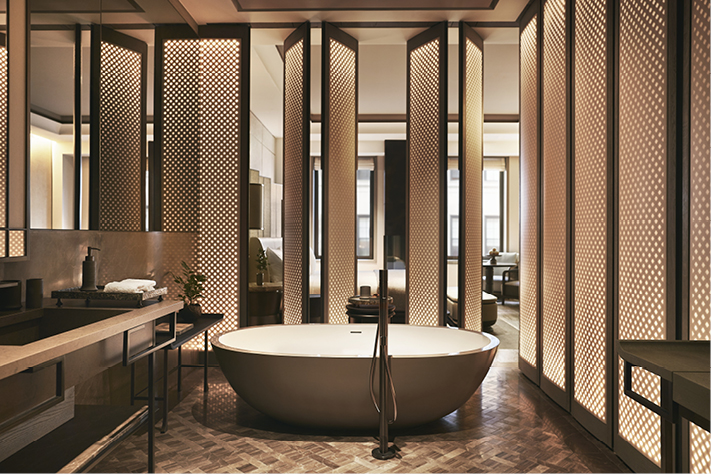
Aman New York
For visitors arriving in the city during New York Fashion Week, Aman New York is the ultimate place to stay. Its Midtown location on Fifth Avenue offers immediate access to the key show venues, luxury boutiques, and cultural landmarks, making it both practical and glamorous. After a day of runway presentations, the hotel provides the perfect respite: a vast three-storey Aman Spa with a 25-meter indoor pool, private outdoor cabanas, and wellness treatments that rival the world’s leading retreats. Guests can recharge before returning to the whirlwind of fashion week.
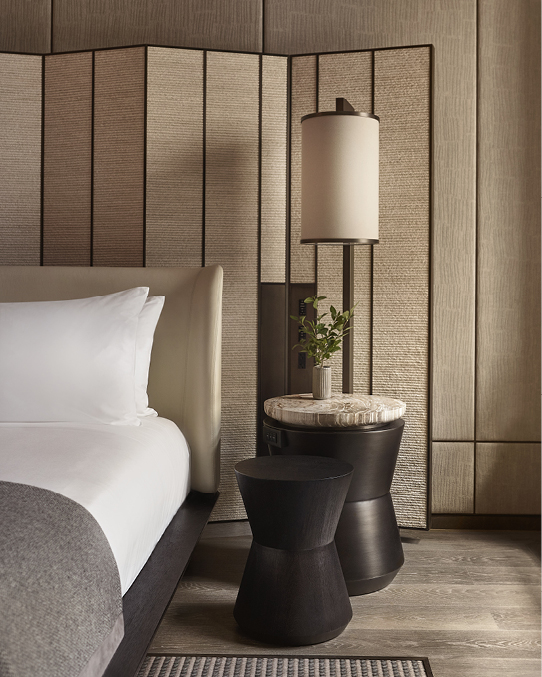
Aman New York
Dining at Aman New York also makes it a social hub for the stylish set. Arva, the Italian restaurant, and Nama, which celebrates Japanese omakase tradition, attract an international crowd, while the exclusive Jazz Club channels the city’s golden age of nightlife, adding a touch of nocturnal glamour. Whether you are attending shows, hosting meetings, or simply absorbing the energy of the week, Aman New York combines the discretion, design, and atmosphere that fashion insiders crave.
Raffles London at The OWO
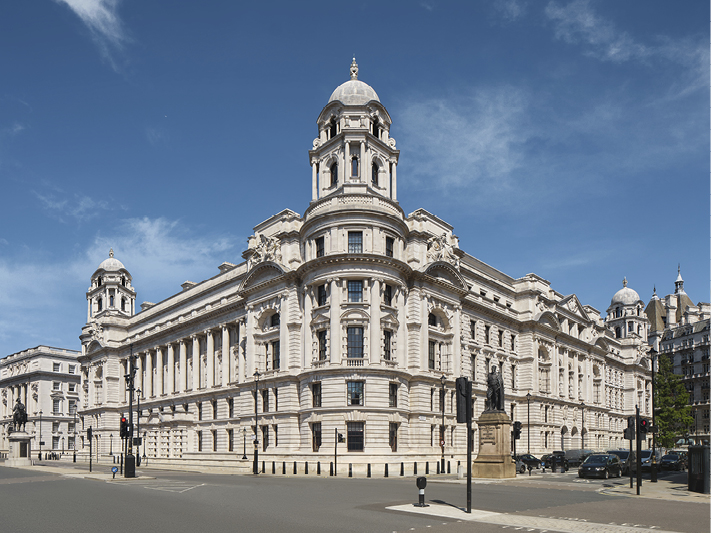
Raffles London at The OWO
Raffles London at The OWO is the most exciting new hotel opening this decade, and the perfect spot to reside during London Fashion Week. Housed within one of the city’s most iconic historic properties (the Old War Office in Whitehall) the hotel combines architectural grandeur, a prime location, and the highest level of service, ideal for one of the city’s most intense style weeks.
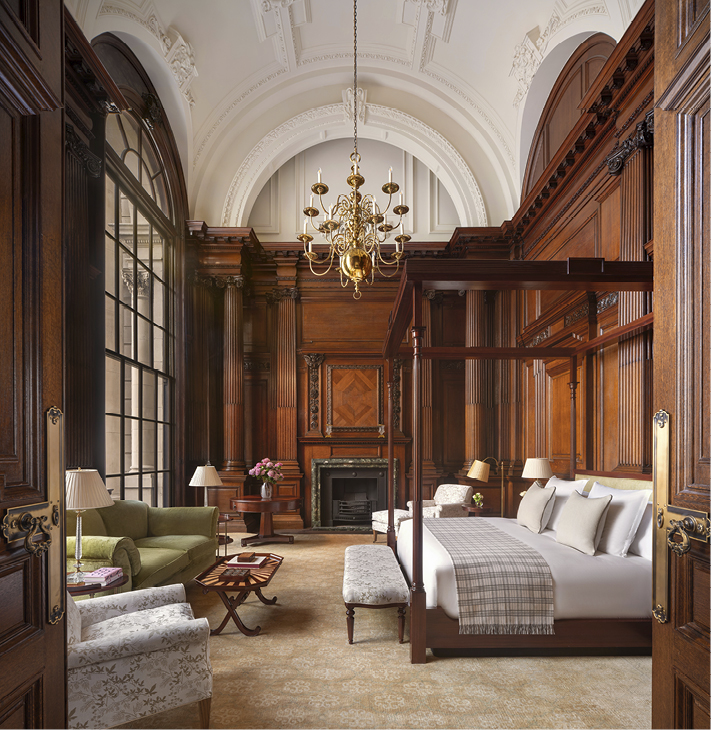
Raffles London at The OWO
The Grade II* Edwardian Baroque building was constructed in 1906 and served as the nerve centre for British intelligence and government, hosting figures such as Winston Churchill and Ian Fleming.
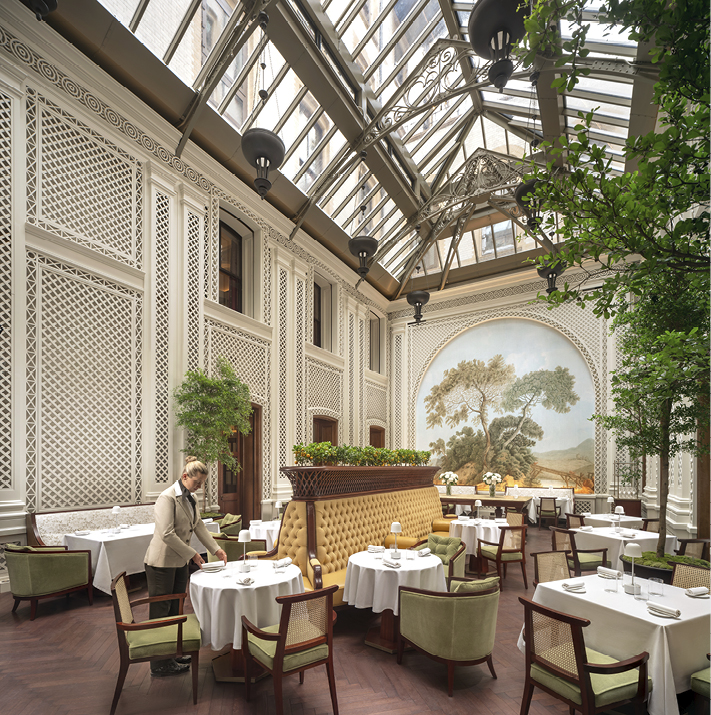
Raffles London at The OWO
Following a meticulous eight‑year AED 6.97 billion restoration, it reopened as the first Raffles hotel in the UK in 2023, overseen by the Hinduja Group and Onex Holding. The hotel’s central Whitehall location places it at the heart of the city’s power and culture, with direct proximity to iconic venues and excellent transport links.
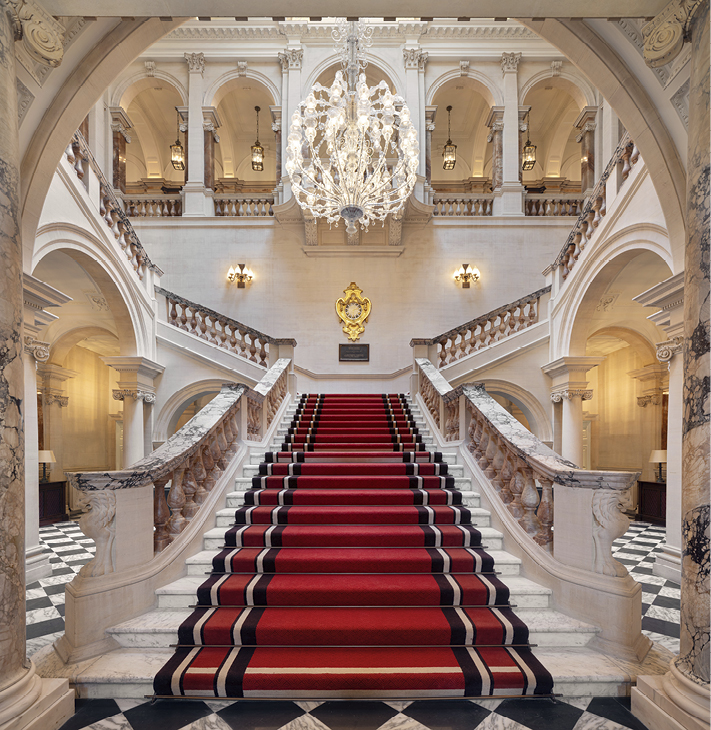
Raffles London at The OWO
The historic corridors and majestic public spaces, such as the restored marble staircase (pictured) and grand reception area, set the tone for a sumptuous stay in the British capital. A must-visit while staying at the property is the Michelin-starred Mauro Colagreco restaurant. Here, guests can enjoy a tasting menu which celebrates fine British ingredients, all sustainably grown a short journey from the property. Unique features include the property’s spectacular history tours hosted by the hotel’s brilliant concierge team, and the hotel’s speakeasy (aptly named the Spy Bar).
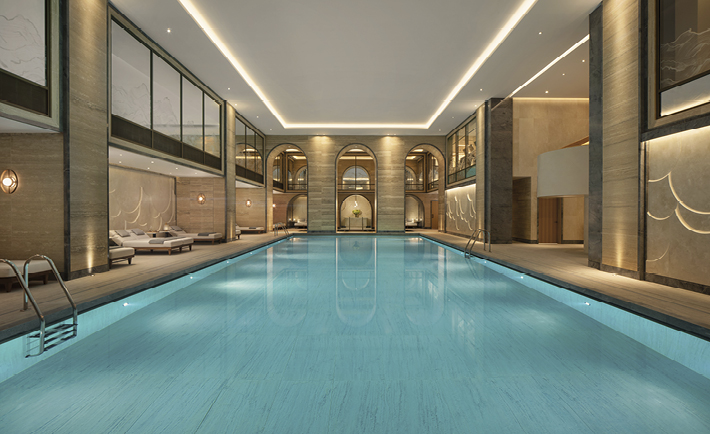
Raffles London at The OWO
While at the property, be sure to make time for London’s first Guerlain Spa, plus the 20‑metre double‑height pool and incredible fitness and wellbeing centre, offering a much‑needed pause for rejuvenation during the rigours of Fashion Week.
Mandarin Oriental Milan
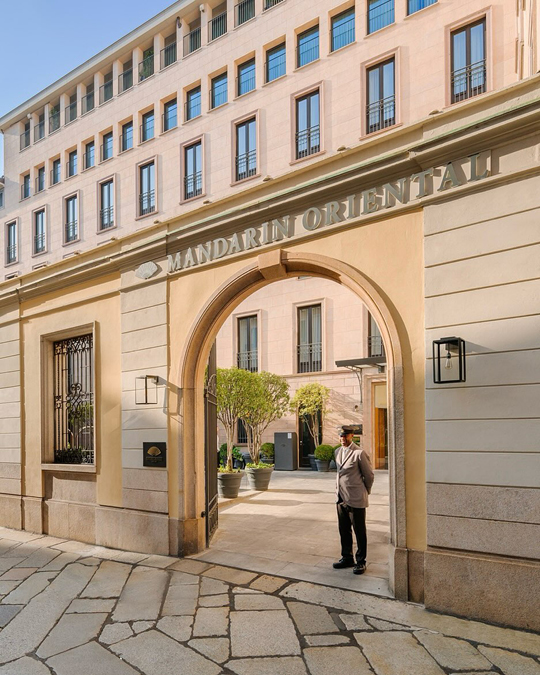
Mandarin Oriental Milan
The Mandarin Oriental, Milan, is a standout option for travellers during Milan Fashion Week. Situated discreetly on a side street adjacent to the renowned Via Montenapoleone and within close proximity to the Duomo, La Scala, and Galleria Vittorio Emanuele II, the hotel’s location offers unsurpassed access to the city’s key fashion venues and shopping district.
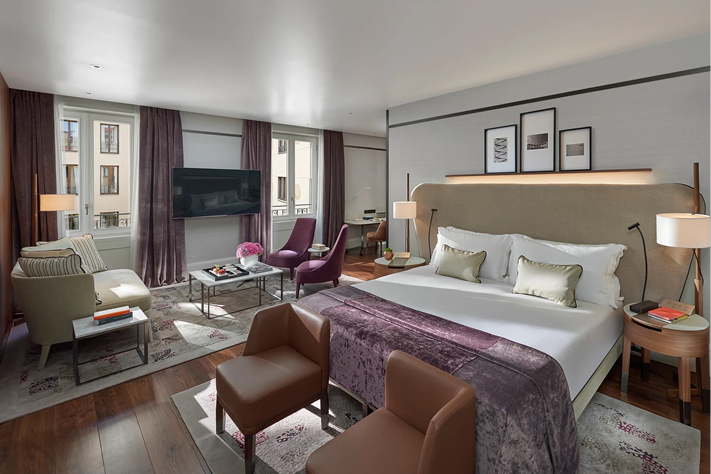
Mandarin Oriental Milan
Housed in four interconnected 18th‑century palazzos, the hotel seamlessly blends historic Milanese architecture with contemporary elegance. The design, crafted by Antonio Citterio, features boiserie, marble bathrooms, wooden floors and custom furnishings. For between-show lunches and evening soirees, Seta, the hotel’s Michelin‑starred restaurant, offers delightful contemporary Italian fare crafted by Chef Antonio Guida.
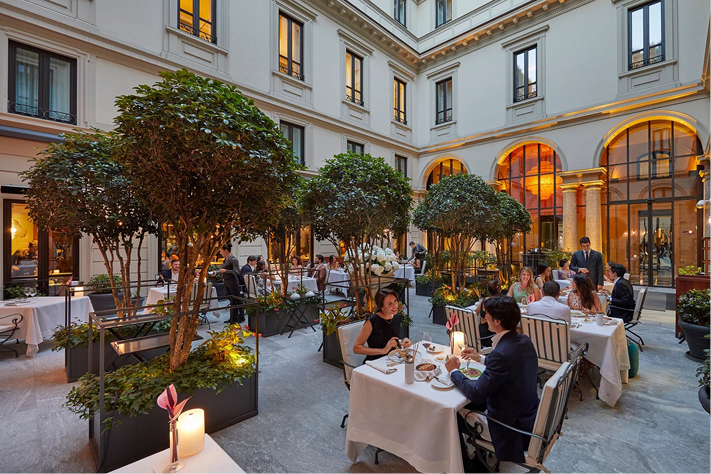
Mandarin Oriental Milan
Meanwhile, the Mandarin Garden serves as a relaxed yet stylish venue for drinks. After a day of runway shows and social engagements, the hotel’s spa and wellness facilities are a perfect place to unwind.
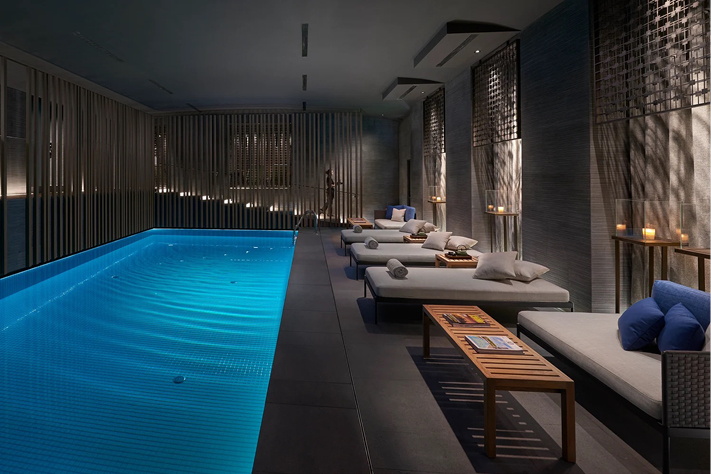
Mandarin Oriental Milan
The spa includes an indoor heated pool, sauna, steam room and holistic treatments inspired by eastern traditions. Meanwhile, the hotel’s concierge team is skilled at navigating Milan’s fast-paced fashion scene.
Le Royal Monceau – Raffles Paris
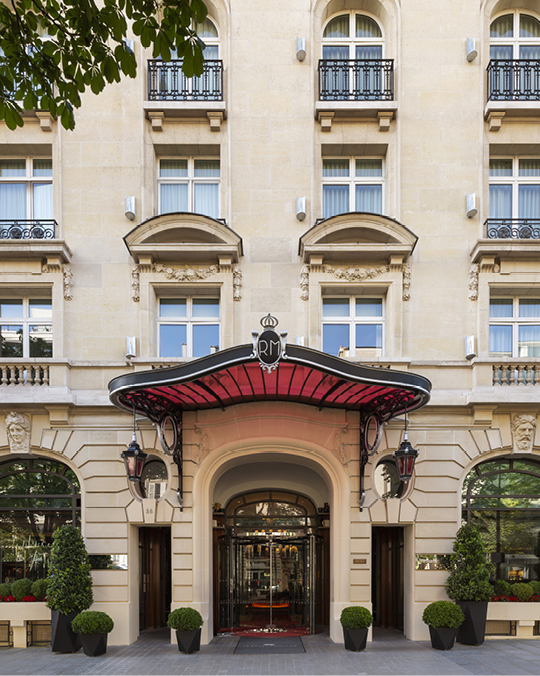
Le Royal Monceau – Raffles Paris
For Paris Fashion Week, there is no better place to stay than Le Royal Monceau – Raffles Paris. Located in the 8th arrondissement, just steps from the Arc de Triomphe and the Champs-Élysées, the Palace-rated hotel combines contemporary luxury with a deep cultural connection, making it uniquely suited for the city’s busiest week. The property’s transformation by designer Philippe Starck has positioned it as one of the most vibrant hotels in Paris.
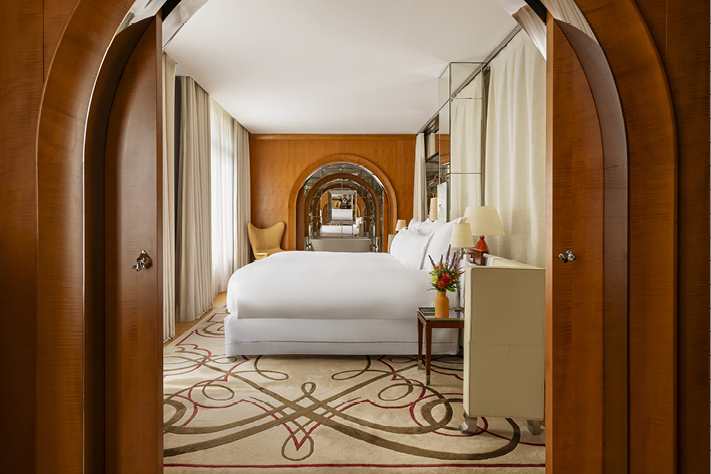
Le Royal Monceau – Raffles Paris
With 149 rooms and suites, including three Presidential Suites and exclusive 350-square-metre Private Apartments at 41 Avenue Hoche, the hotel offers the space, privacy and discretion required by high-profile guests. Private entrances, in-suite hammams, and personalised chef services add to its appeal for those who need both comfort and confidentiality between shows. For those seeking calm amid the intensity of Fashion Week, the 1,500-square-metre Clarins & myBlend Spa offers one of the longest swimming pools of any Parisian palace, alongside advanced treatments from 111Skin and Dr Barbara Sturm.
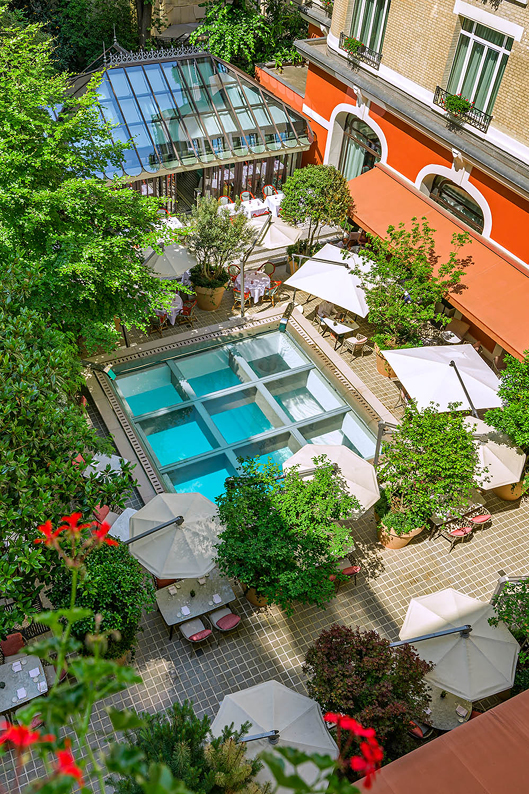
Le Royal Monceau – Raffles Paris
Fitness and wellness programmes, including private coaching and Pilates, ensure guests can maintain balance while keeping pace with demanding schedules.
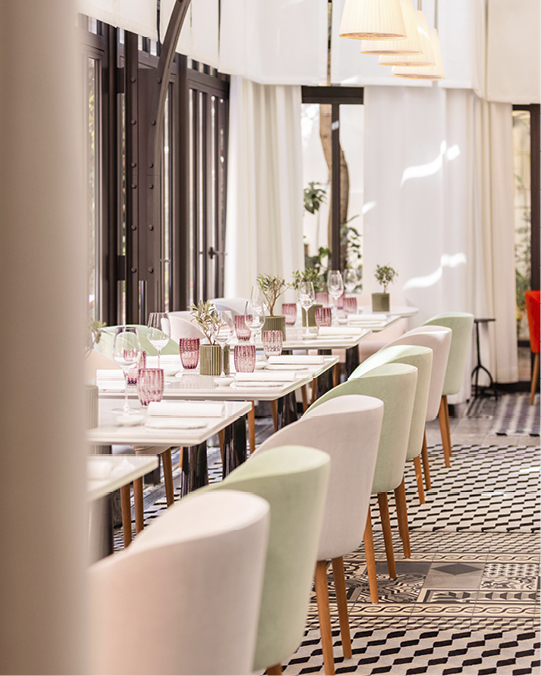
Le Royal Monceau – Raffles Paris
Meanwhile, in the property’s restaurants, world-class dining is on hand. Matsuhisa Paris, led by Nobu’s team, brings Japanese-Peruvian cuisine to the city, and Il Carpaccio, awarded a Michelin star, delivers fine Italian gastronomy. Le Bar Long and La Cuisine provide chic meeting points for networking. Since its opening in 1928, Le Royal Monceau – Raffles Paris has been a rendezvous for artists, adventurers and cultural icons.
Michael Koth The General Manager at Emirates Palace On The Iconic Hotel’s 20th Anniversary
This year, Emirates Palace in Abu Dhabi is celebrating its 20th anniversary as one of the UAE’s most iconic symbols of luxury and hospitality.
At the helm is General Manager and Area Vice President of Operations for Mandarin Oriental, Michael Koth, a global industry leader with more than 35 years of experience. For nearly five years, Koth has guided Emirates Palace, Mandarin Oriental with a blend of strategic vision and operational excellence, ensuring its enduring reputation as a world-class destination. As Emirates Palace steps into its third decade, Koth is focused on honoring its legacy while driving it toward an even more exceptional future. In our conversation, he shared his reflections on leading this extraordinary property during such a historic year and his vision for the next chapter of its story.
Congratulations on Emirates Palace’s 20th anniversary. How does it feel to be leading such an iconic property during this milestone year?
It is both a profound honor and a defining responsibility. Emirates Palace is not merely a hotel; it is a cultural landmark, an architectural masterpiece, and an enduring symbol of Abu Dhabi’s identity. Leading the Palace in its 20th year is a privilege that comes with the duty to safeguard its legacy while steering it into a new era.
This milestone is a moment to reflect on two decades of extraordinary achievement, but equally, it is an opportunity to lay the foundations for the next chapter — ensuring that the Palace continues to inspire, delight, and serve as a beacon of hospitality for generations to come.
You’ve had an illustrious career in luxury hospitality. What drew you to Emirates Palace Mandarin Oriental, and how has your vision shaped its recent direction?
What drew me here was the Palace’s rare combination of grandeur, authenticity, and deep cultural resonance. Very few destinations in the world offer such a powerful sense of place — where architectural magnificence meets heartfelt Emirati hospitality. My vision has been to retain the Palace’s iconic character while introducing a contemporary rhythm that speaks to today’s luxury traveler.
This has meant curating experiences that blend Emirati heritage with Mandarin Oriental’s oriental philosophy of service, refreshing our culinary and wellness offerings, and creating moments that feel both timeless and newly relevant.
In a region that’s constantly redefining luxury, how do you ensure Emirates Palace Mandarin Oriental remains ahead of the curve?
We maintain our leadership by evolving with intention. True luxury today is not defined by excess, but by meaning, personalization and authenticity. At the Palace, that translates into anticipating the needs of tomorrow’s traveller — whether that’s integrating world-class wellness, championing sustainability, creating deeply immersive cultural encounters, or embracing technology that enhances. Our competitive edge lies in marrying innovation with tradition, ensuring we remain a trendsetter without ever losing the soul that makes the Palace unique.
What makes the Emirates Palace Mandarin Oriental experience truly unique for today’s luxury traveller?
It is the intersection of scale, service, and soul. Guests are greeted by an architectural wonder on arrival, yet quickly discover that every interaction, every detail, has been considered with precision and care. It is a place where international sophistication is grounded in genuine Emirati warmth. The Palace offers not just world-class facilities, but a narrative — an unfolding story that guests can immerse themselves in, take part in, and ultimately, take home with them.
The architecture and design of the Palace are legendary. How do you maintain its grandeur while ensuring it remains contemporary and relevant?
We take a preservation-through-progress approach. The Palace’s signature elements from its golden domes to its intricate marble inlays are meticulously maintained by master artisans. At the same time, we introduce modern layers: innovative dining concepts, refreshed interiors, next-generation wellness spaces and discreet technological enhancements. The objective is harmony allowing guests to experience the same awe they felt two decades ago, while sensing that the Palace is firmly attuned to the present day.
How is local Emirati culture woven into the guest experience and the property’s identity?
Emirati culture is not an accessory to the Palace; it is its heartbeat. From the gracious, intuitive hospitality of our colleagues to curated encounters such as traditional gahwa ceremonies, local art showcases and partnerships with local cultural entities such as Qasr Al Hosn for this year’s Emirati Women’s Day, every aspect of the guest experience carries the imprint of the UAE’s heritage. Our goal is for guests to leave with a richer understanding of the nation’s traditions, values, and artistry — an intangible gift that extends beyond their stay.
What role do art, design and craftsmanship play in preserving the Palace’s unique aesthetic?
They are the threads that bind the Palace’s identity. Every space here tells a visual story, from hand-laid mosaics and Arabic calligraphy to the commissioned artworks that adorn our walls. We work with both master craftsmen and contemporary designers to ensure our aesthetic remains dynamic while respecting the authenticity of its origins. In this way, the Palace is not a static monument, but a living gallery where heritage and innovation coexist.
Sustainability is increasingly important in luxury travel. How is Emirates Palace Mandarin Oriental embracing responsible luxury?
We believe that the future of luxury is inherently sustainable. Here, this means embedding environmental responsibility into everything we do — from sourcing locally and seasonally to reducing waste, optimizing energy and water efficiency, and investing in biodiversity initiatives within our grounds.
We have also introduced dedicated vegan rooms, thoughtfully designed with plant-based amenities, cruelty-free products, and sustainable materials, ensuring guests can enjoy a stay that aligns with their values. Increasingly, our guests value knowing that their enjoyment supports a more responsible hospitality model.
With Abu Dhabi’s growing global profile, how does Emirates Palace Mandarin Oriental contribute to the emirate’s broader tourism and cultural strategy?
The Palace serves as both a global stage and a cultural ambassador. We welcome travelers from around the world, but our mission extends beyond hospitality. We partner with cultural institutions, host world-class events and design programs that immerse visitors in the emirate’s heritage, gastronomy, and artistic expression. In doing so, we help shape Abu Dhabi’s narrative as a cosmopolitan capital rooted in tradition.
What does a typical day look like for you at Emirates Palace Mandarin Oriental, if such a thing exists?
If there is such a thing as typical, it begins with connecting with my team and walking the property, I believe leadership starts with presence. From there, my day might involve hosting dignitaries, reviewing strategic developments, or collaborating on new partnerships. Some moments are operational, others deeply creative, but all are connected by the same purpose: ensuring every decision enhances the guest experience and the Palace’s standing in the world.
What’s one moment or compliment from a guest that has stayed with you?
A guest once told me that staying at Emirates Palace Mandarin Oriental felt like “coming home to a place they never knew they belonged.” That sentiment perfectly captures what we aspire to create not only luxury in its physical form, but a deep emotional connection that makes guests feel they are part of something timeless.
If you could describe Emirates Palace Mandarin Oriental in just three words, what would they be?
Majestic. Inspiring. Exceptional.
Looking ahead, what’s next for the Palace in the next 5–10 years?
We will continue to innovate with purpose. This means evolving our culinary repertoire, expanding wellness offerings, deepening cultural engagement, and advancing our sustainability commitments. Our goal is to ensure the Palace remains not only a jewel of Abu Dhabi but a benchmark for luxury hospitality globally — a destination that continues to surprise, inspire, and set the standard well into the future.
And finally, what message would you like to share with loyal guests and those yet to experience the Palace on this special 20th anniversary?
To our loyal guests, thank you for allowing us to be part of your most cherished moments. You are as much a part of the Palace’s story as its walls and gardens. To those who have yet to visit, I extend a warm invitation to experience the magic that cannot be fully described — only felt. Come celebrate with us: honor our past, enjoy our present and help shape our future.
Diriyah Art Futures Launches CONTINUUM ’25 Exhibition
Diriyah Art Futures (DAF), the first hub for New Media Arts in the Middle East and North Africa, has launched its new exhibition CONTINUUM ’25, presenting works by its inaugural cohort of emerging artists alongside their mentors.
The exhibition showcases pieces developed over the course of DAF’s year-long Emerging New Media Artists programme. Spanning immersive installations, sound and screen-based works, virtual reality and AI-generated art, the presentation highlights the breadth of experimentation taking place in the field.
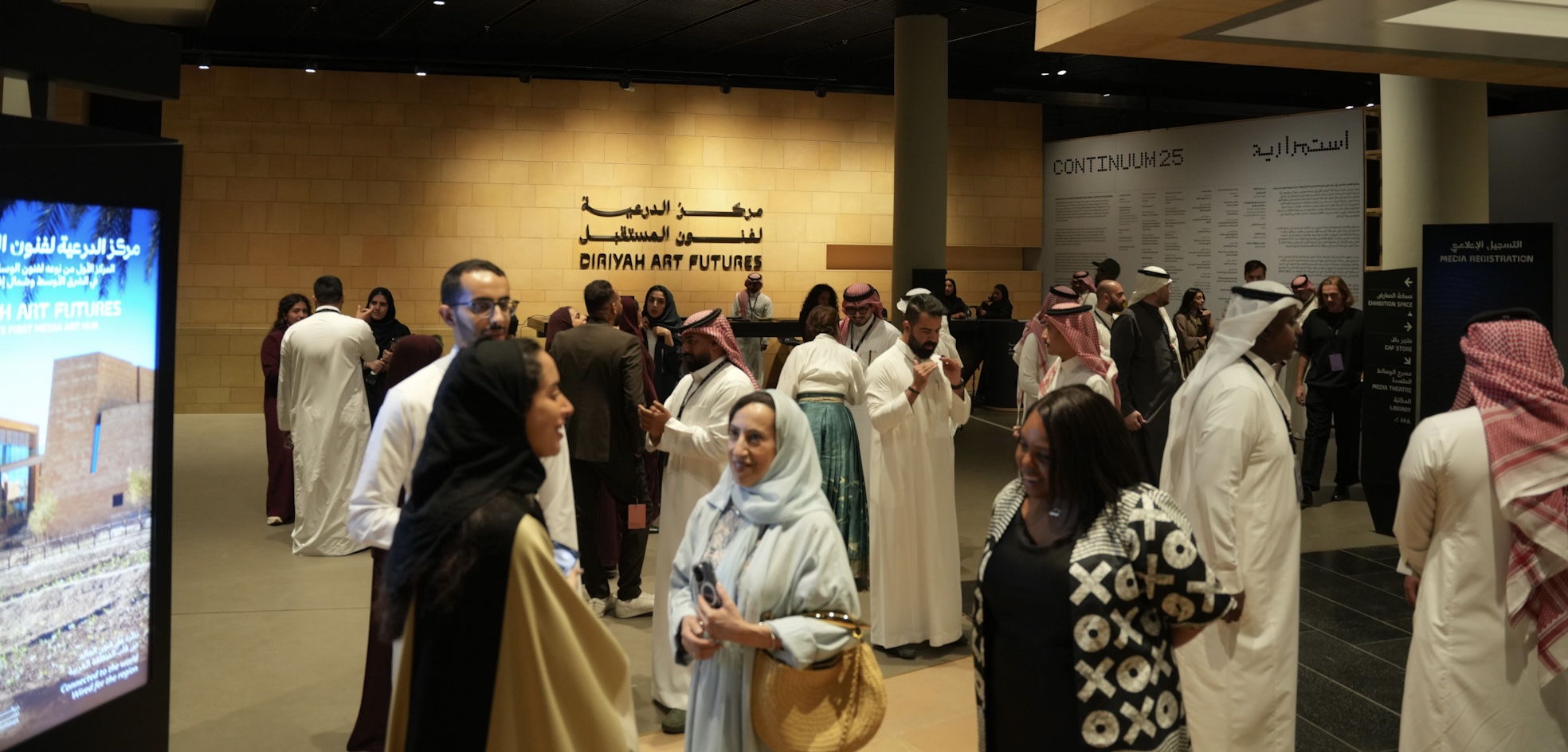
Curated by Irini Papadimitriou, CONTINUUM ’25 explores subjects including memory, identity, displacement, climate ecologies, ethics and algorithmic power. The works were produced under the guidance of internationally recognised artists Anna Ridler, Karen Palmer and Madeline Gannon, with an emphasis on blurring the boundaries between real and artificial, human and machine, organic and synthetic.
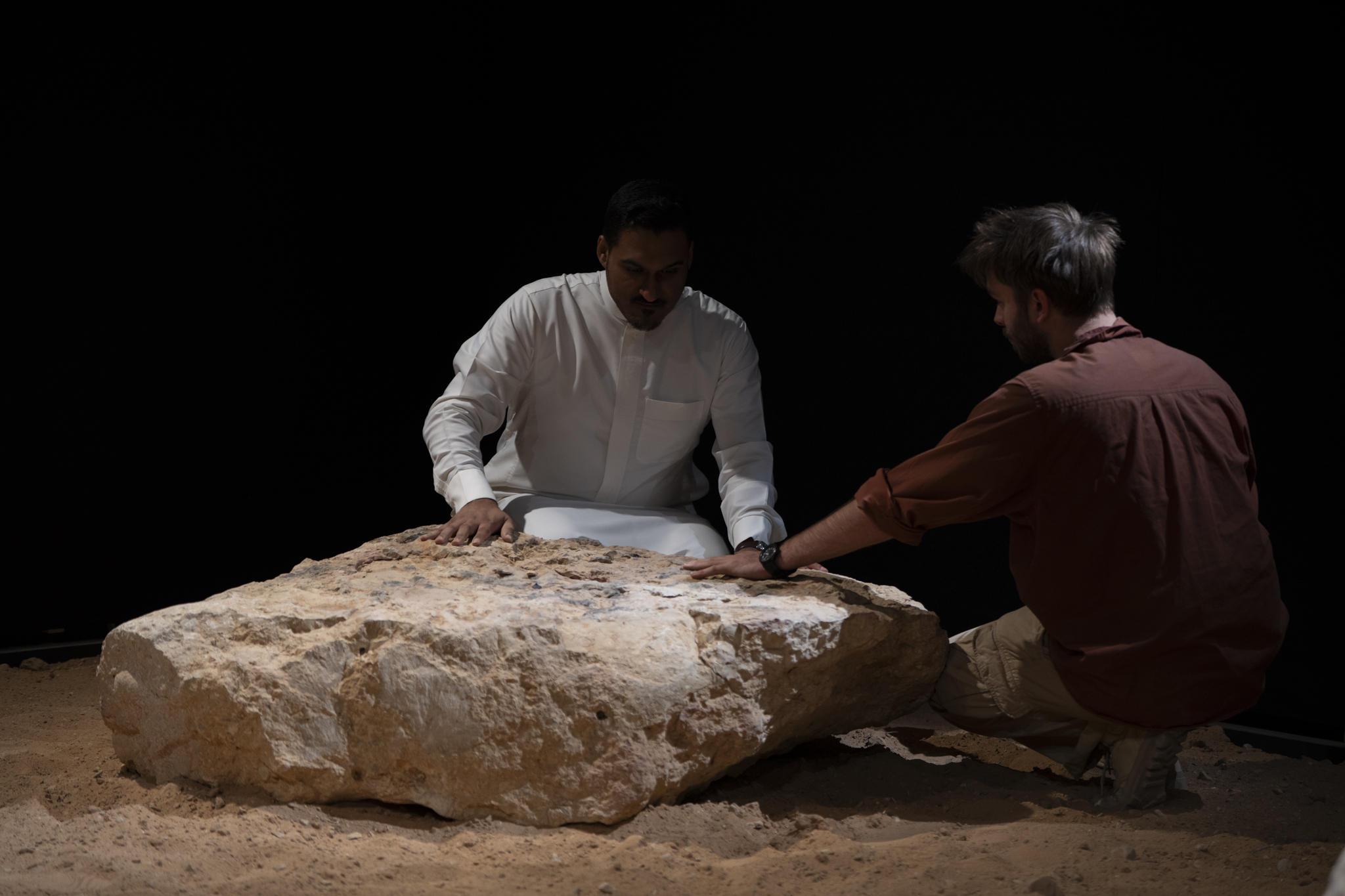
The opening was marked by a panel discussion featuring Papadimitriou, Tegan Bristow, Director of Education at DAF, and participating artists Khaled Makhshoush, Dhia Dhibi and Samia Dzair. Moderated by Wejdan Reda, the conversation addressed how New Media Artists are incorporating technology into their practice and underscored the role of multidisciplinary collaboration between artists, researchers and technologists.

The exhibition brings together works by 11 emerging artists: Turki AlQahtani (Saudi Arabia), Khaled Makhshoush (Saudi Arabia), Salma Aly (Egypt), Samia Dzaïr (Algeria), Aya Abu Ghazaleh (Jordan), Dhia Dhibi (Tunisia), William Brooks (Wales), Junsoo Kim (South Korea), Youssef El Idrissi (Morocco), Kyle Donald Marais (South Africa) and Mohamed Al Mubarak (Bahrain). Mentors Palmer and Ridler are also represented.
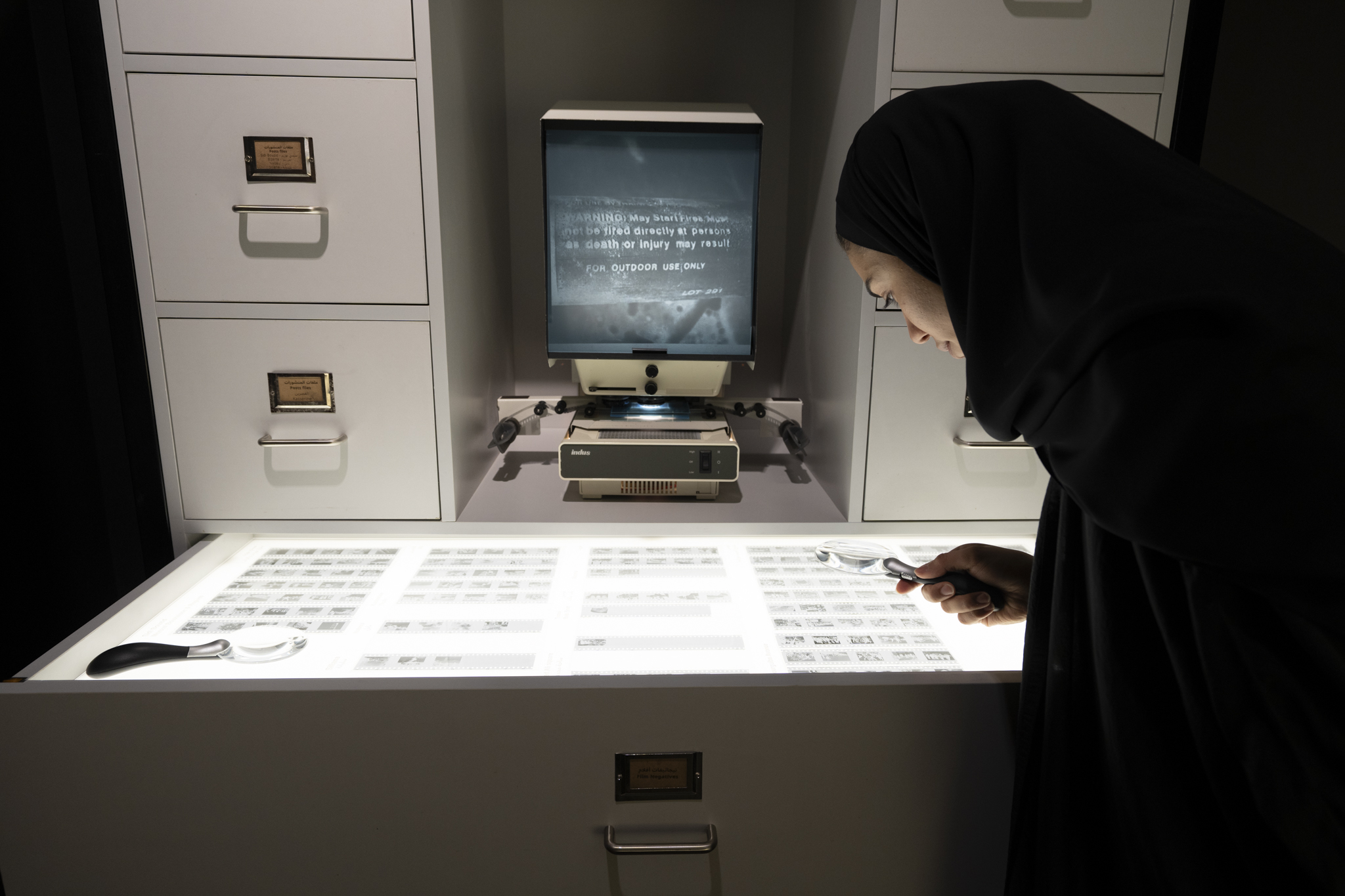
CONTINUUM ’25 is the first in a planned series of exhibitions at DAF that aim to highlight diverse voices shaping the future of New Media Art in the region and internationally. The exhibition title reflects the ongoing process of creative inquiry central to DAF’s mission.
Developed in partnership with Le Fresnoy – Studio National des Arts Contemporains in France, the Emerging New Media Artists programme provides participants with access to equipment, production budgets and multidisciplinary learning opportunities.
Running until the 15th of November, the exhibition is supported by a programme of workshops, talks and activities covering areas such as AI, VR and digital photography. Highlights include Stories of Home: Digital & Hand Embroidery on the 19th of September, a bilingual workshop combining regional embroidery traditions with New Media Art.
Ralph Lauren Presents Spring 2026 Collection in New York
Ralph Lauren unveiled the house’s Spring 2026 womenswear collection at the brand’s headquarters on Madison Avenue, marking what the house described as a “coming home” for the show.
The venue, designed with white walls, a curved staircase, cushioned angular seating, a black floor and wicker chandeliers, was conceived to emphasise intimacy and keep attention on the clothes.
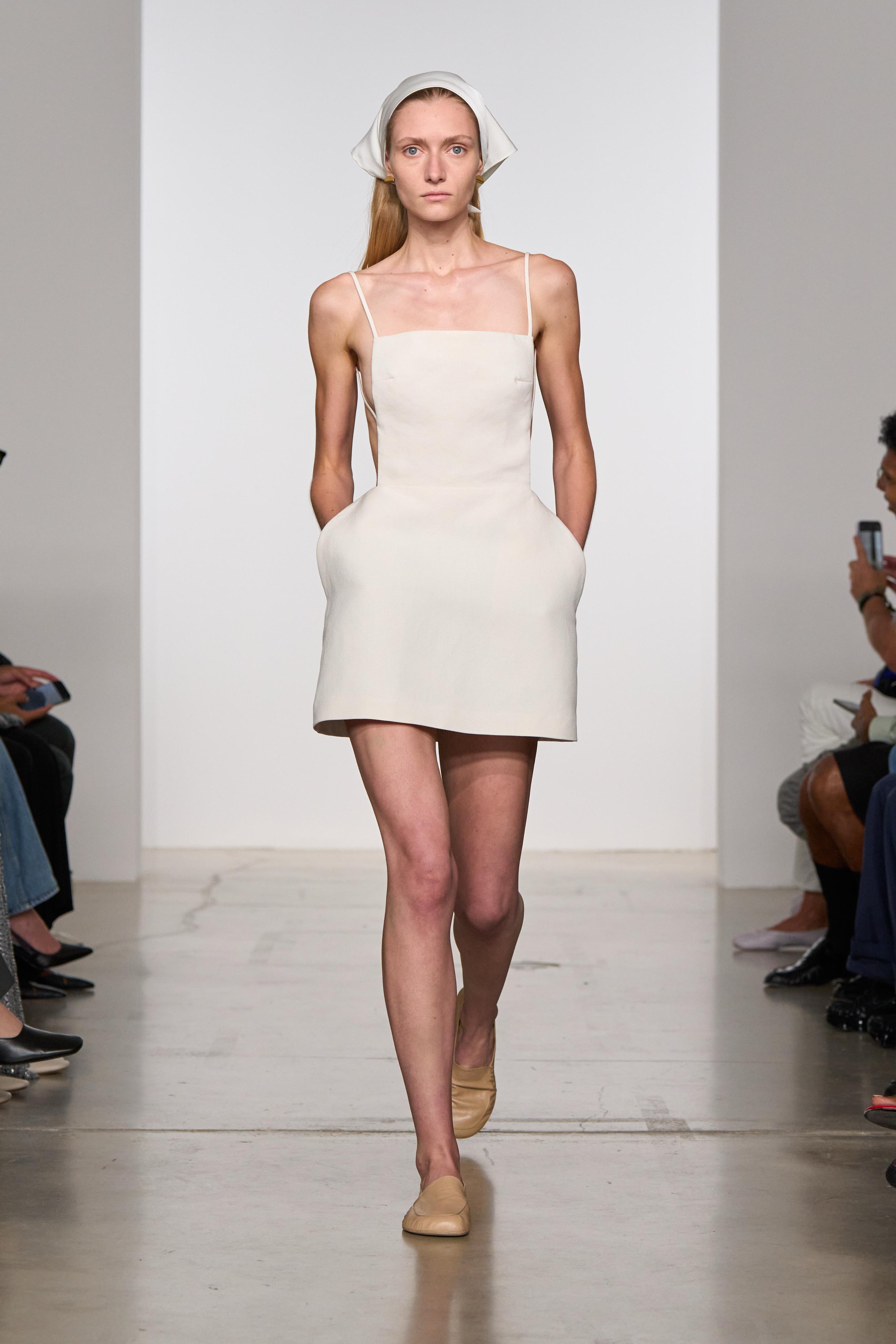
The collection explored the balance of strength and sensuality, positioning the Ralph Lauren woman as both dreamer and doer. Her wardrobe reflected modern minimalism with subtle softness, a duality expressed through precise tailoring in a palette of black, white and red. Silhouettes shifted between body-conscious lines and dramatic volume, with classic pieces reworked through unexpected twists.
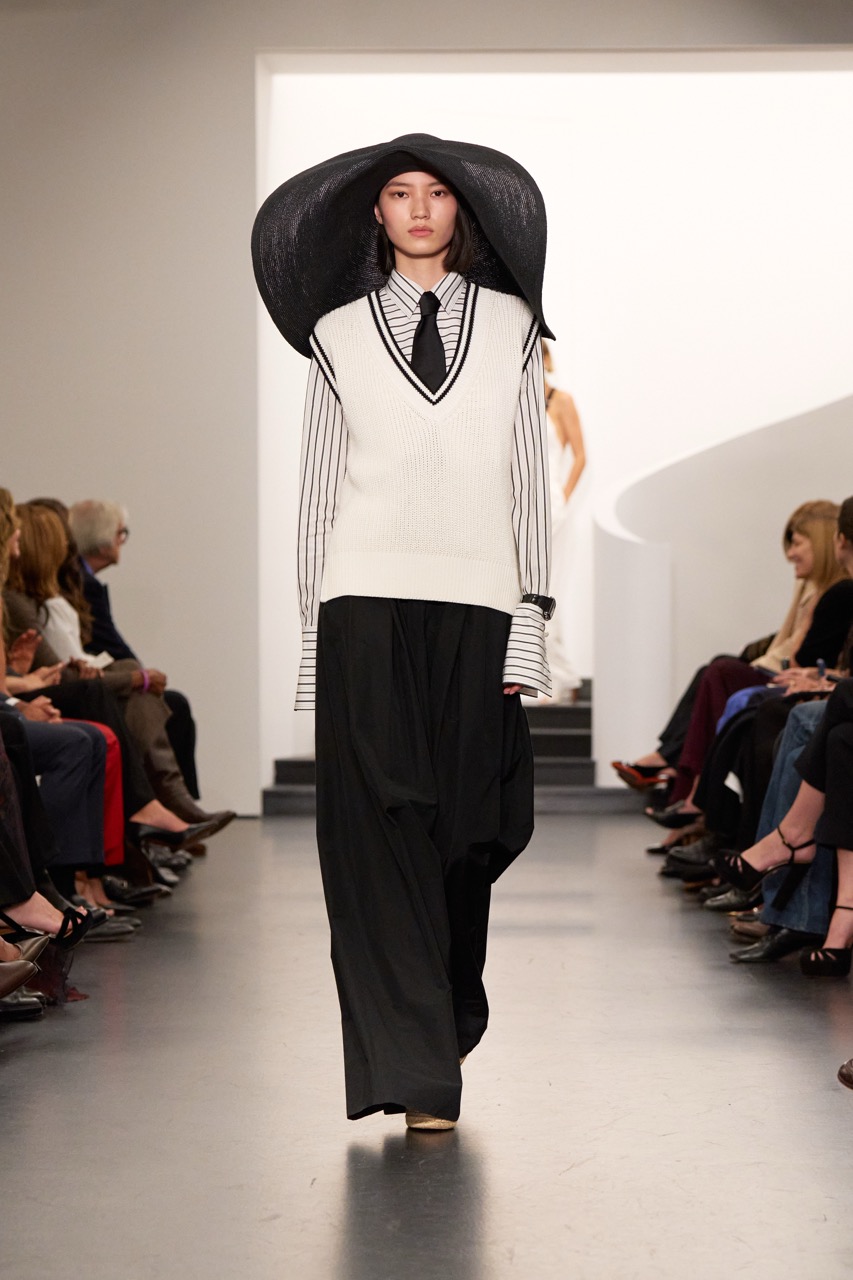
Masculine codes played a defining role. A polished white polo coat was layered over a bra top and trousers, while variations of white suiting featured prominently. These included a belted jacket over fluid trousers, a utility shirt jacket with ballooned pants cinched at the ankle, and a trench-style jacket worn with pedal pushers. Shirts were reinvented in multiple forms, from an oversized bib-front version tied with a striped necktie, to a poet’s tunic with an elaborate bow, and a mid-calf red shirtdress.
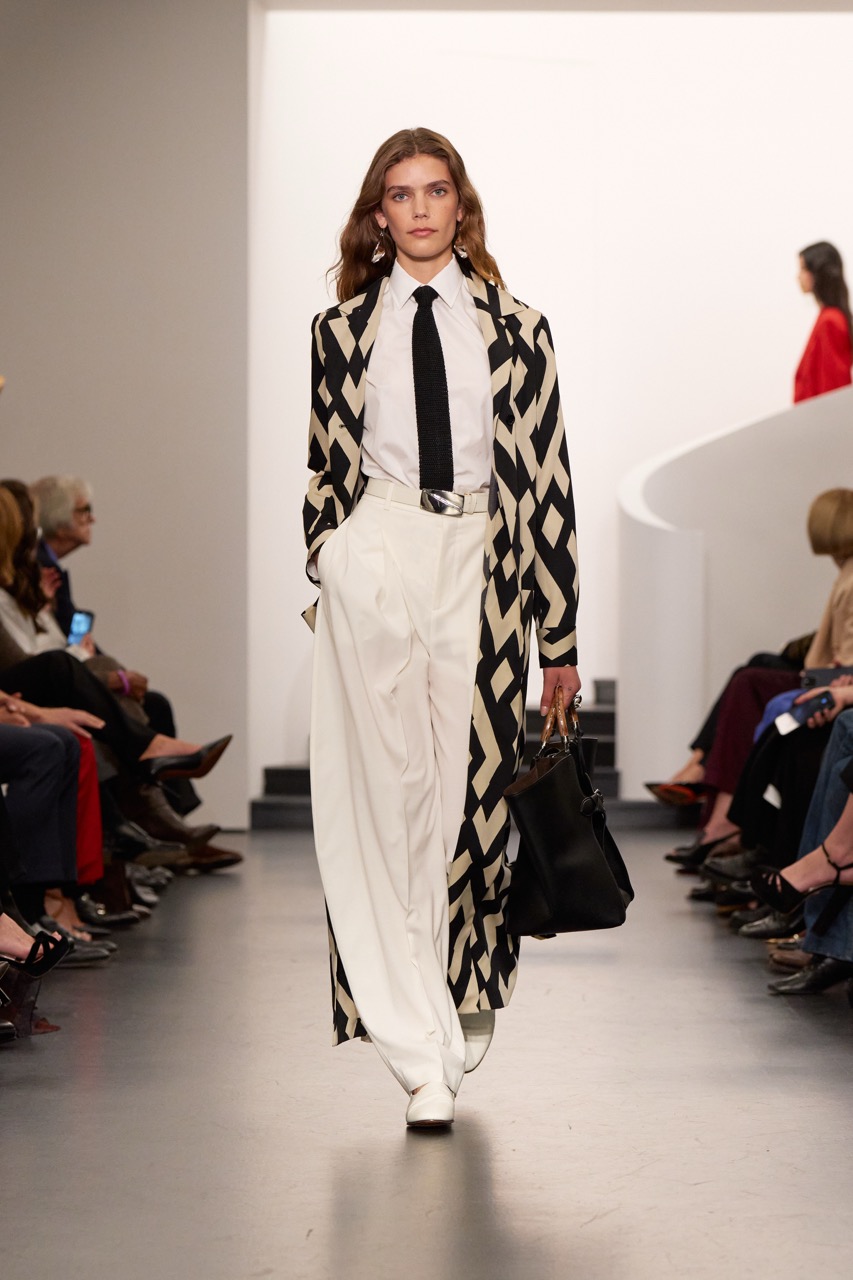
Dresses introduced further contrasts. A red cotton sundress with corset detailing offered a playful edge, while a black A-line mini layered over a pleated skirt carried a more urbane tone. A fluid floral dress nodded to the 1940s, and eveningwear ranged from streamlined black and red gowns to voluminous designs. A sequined skirt styled with a cropped black T-shirt brought a sport-luxe element to the line-up.
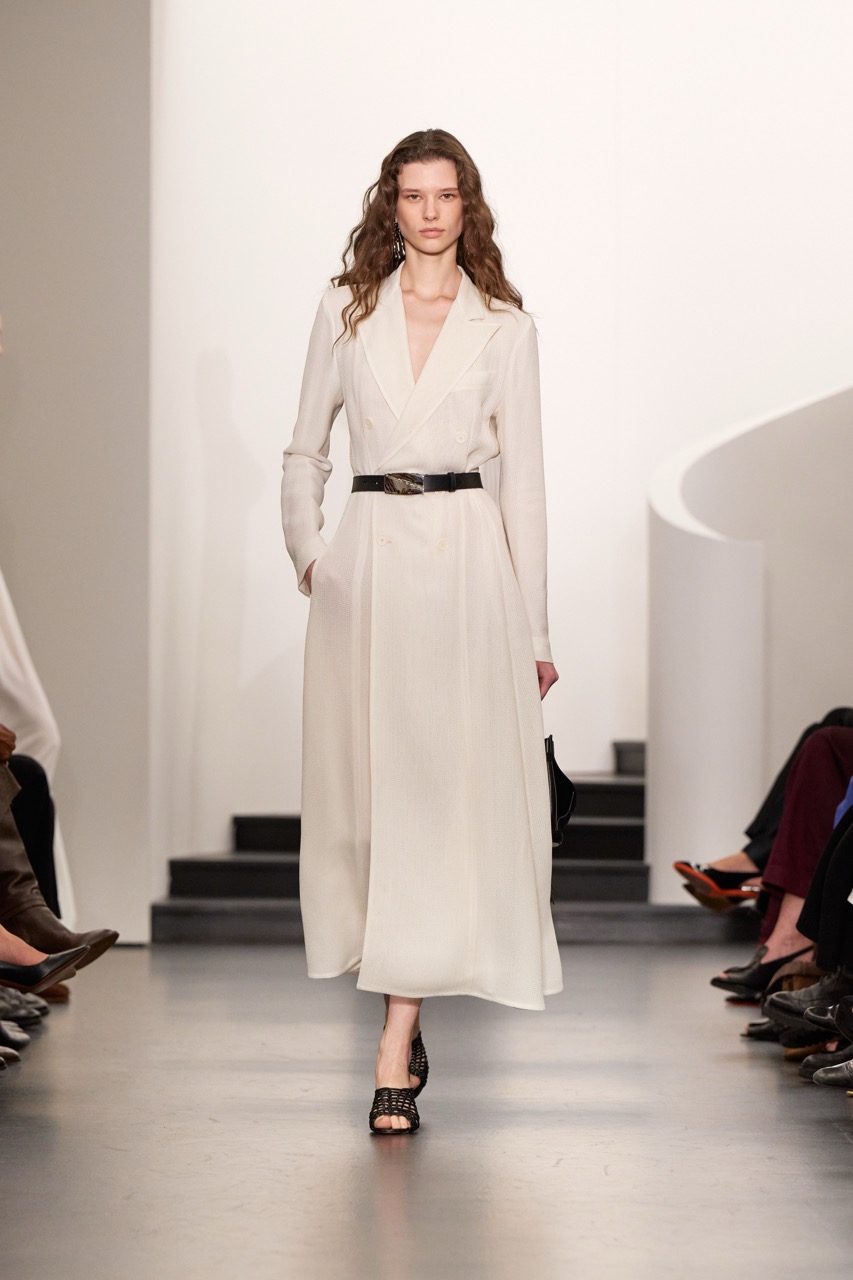
Textural experimentation ran throughout. Horizontal stripes, micro and oversized prints, and innovative knits heightened the graphic impact. Patchwork techniques appeared in a slip dress and overalls made from remnants of white fabrics, while leather was pushed to extremes in lightweight parchment-inspired tailoring, stretch bustiers with ruffle edges, and a made-to-order skirt suit constructed from eyelash-thin leather strips embroidered onto linen.
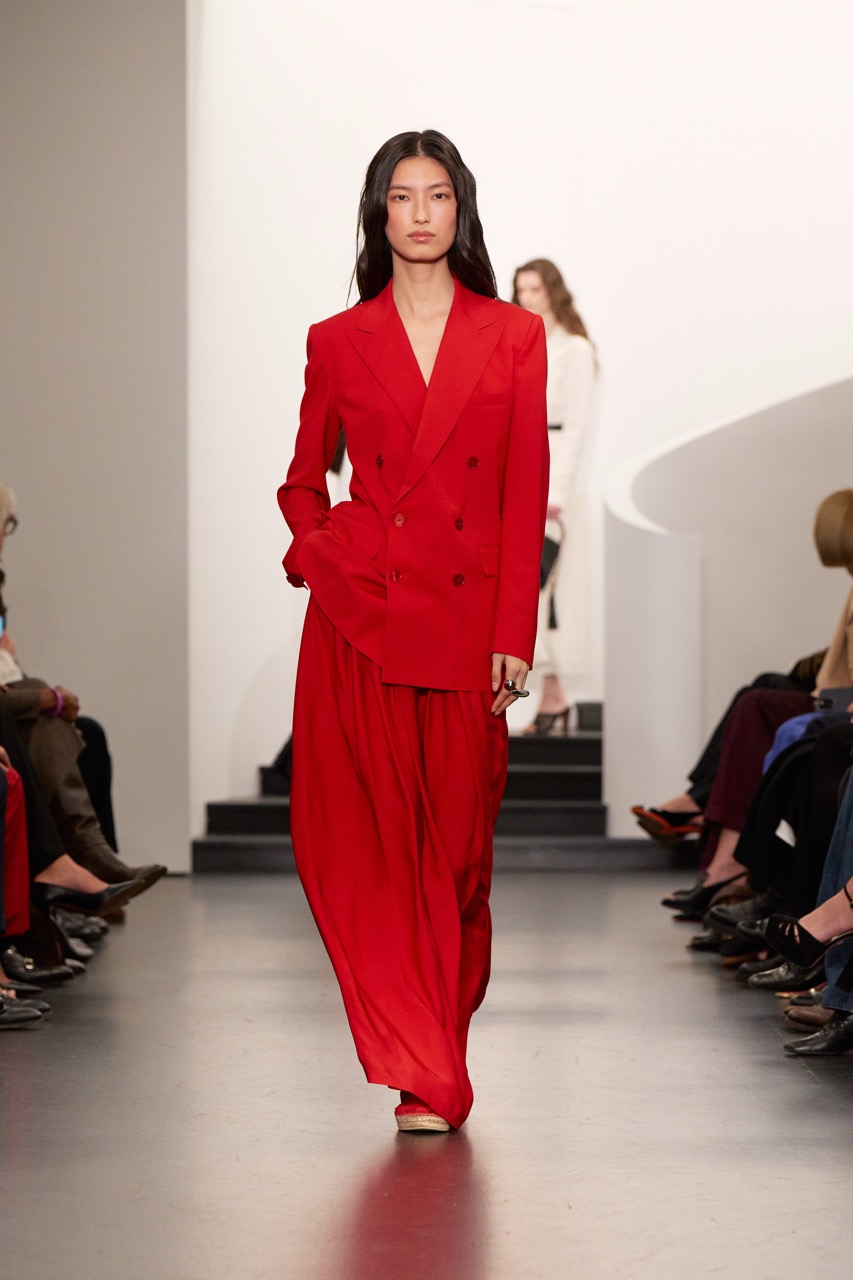
Accessories reinforced the theme of counterpoint. Silver sculptural jewellery was paired with wide-brimmed hats, while handbags ranged from woven market satchels to structured metallic pieces. Footwear included brogues, espadrilles and woven sandals. The Ralph Bag returned this season, reinterpreted in textured and woven leathers to align with the collection’s artisanal detailing.
