

Zegna Unveiled The First Chapter Of Villa Zegna In Shanghai
This May, Zegna invited clients and esteemed guests to join them in Shanghai for an exclusive experience as it introduced the first Villa Zegna project to the world.
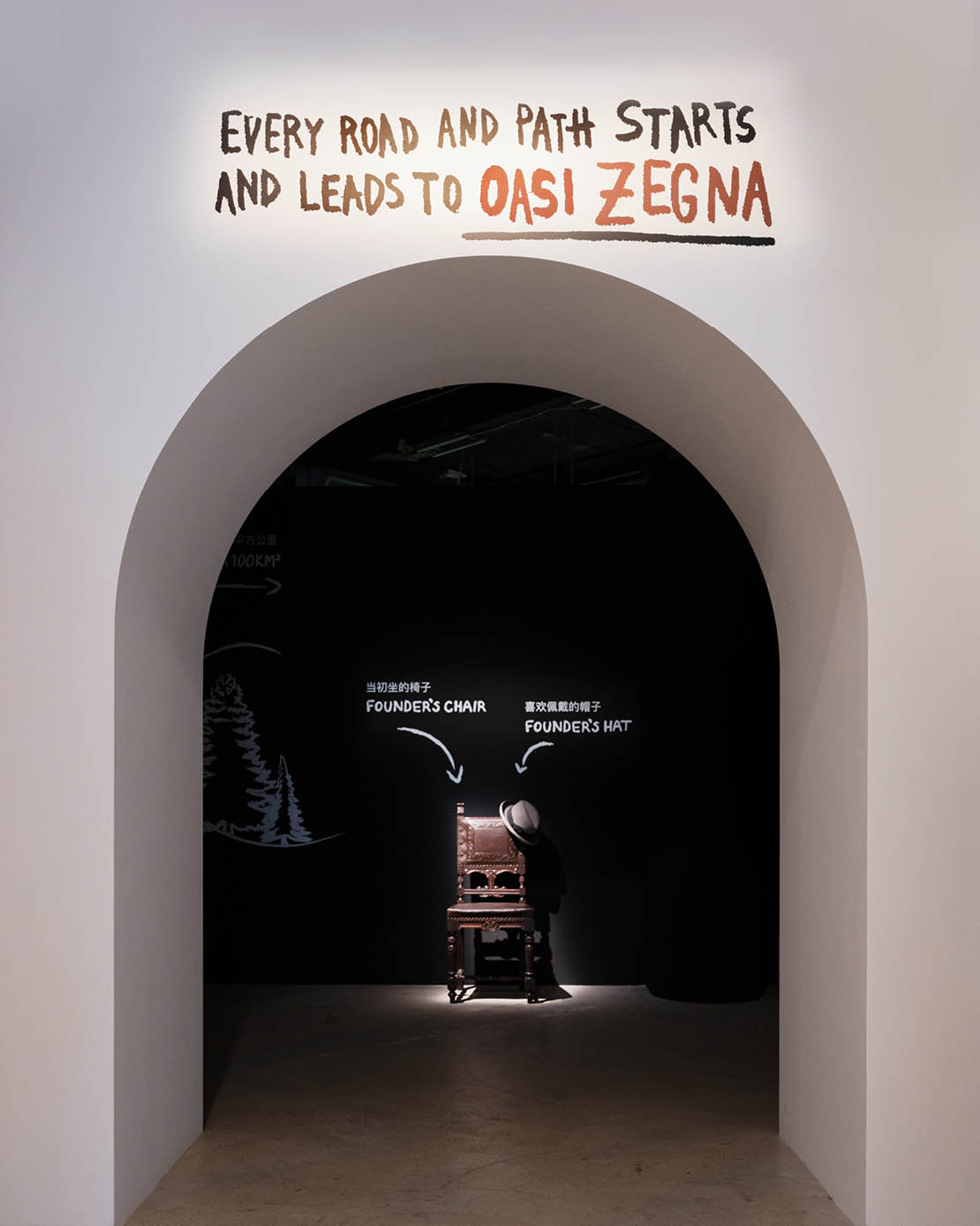
Inspired by the house’s founder Ermenegildo Zegna, and the Oasi Zegna; the the 100km2 natural territory in Piedmont, Northern Italy, created by Zegna, Villa Zegna invited guests to embark on a multi-sensory exploration of the world of the Italian menswear brand.
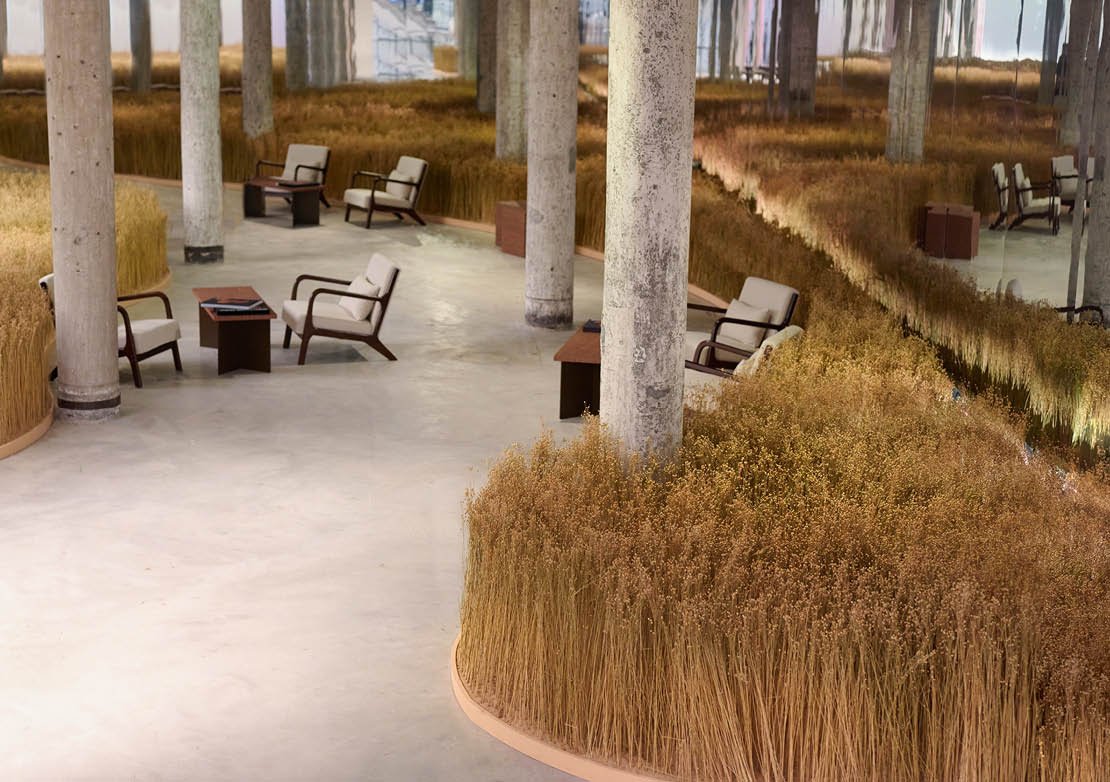
This new concept which is set to travel to other key cities around the world, reflects Zegna’s new approach of interacting with its customers, offering them immersive experiences that foster emotional connections to the brand. The one-week event provided unprecedented access to the vision of Ermenegildo Zegna, who, in the 1930s, planted more than half a million trees and built a panoramic road connecting the two sides of the mountain landscape in the area where Oasi Zegna stands today.
During the week, ZEGNA hosted a series of exclusive dinners to bring together the brand’s closest friends, including its Global Ambassadors – Mads Mikkelsen and Wu Lei, opinion leaders, innovators, celebrities, top customers. Also present was the brand’s Artistic Director, Alessandro Sartori, whose vision comes to life through this project.
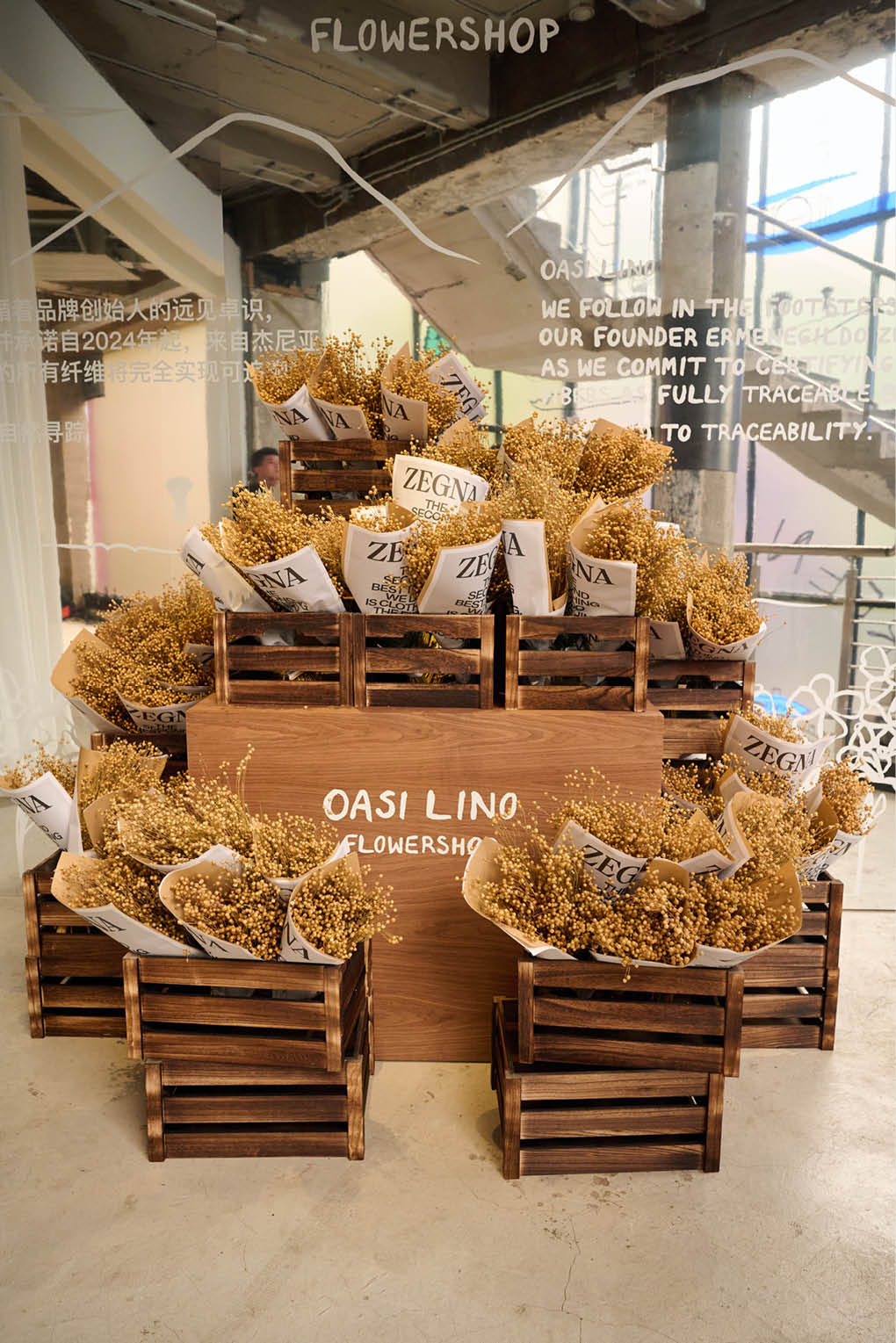
The event was held in the vibrant heart of the city and nestled in the bustling neighbourhood of Middle Huaihai Road. A real oasis of linen—inspired by the SS24 Zegna show set—spread inside a building that has been transformed into “Villa Zegna” for the occasion. For just one week, and by invitation only, a unique experience far beyond the product was offered.
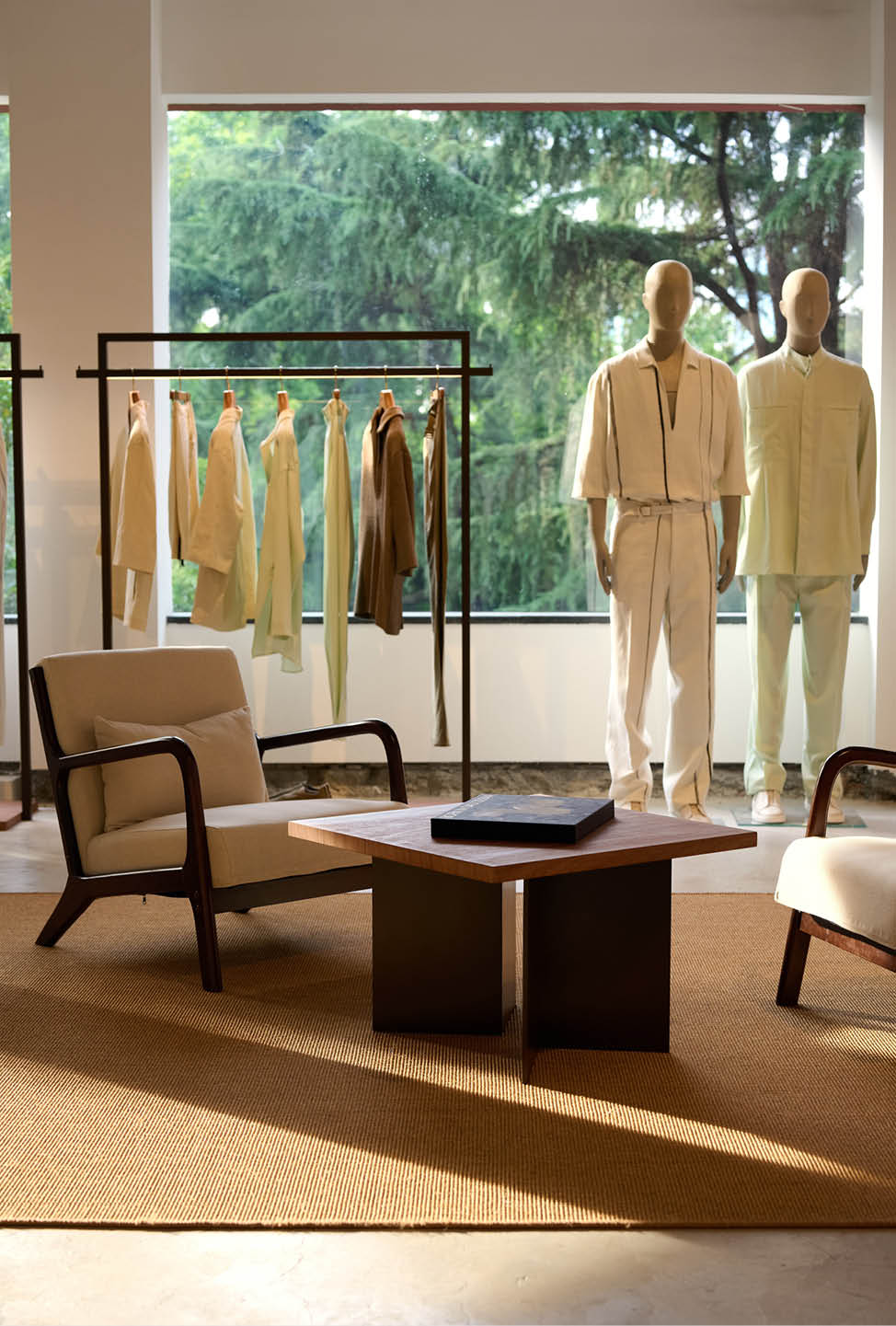
“VILLA ZEGNA” consisted of three floors, seamlessly blending the vision of the founder, the brand’s history and the fabrics that made ZEGNA the leading menswear brand in the world. Guests are taken on a journey through the oasis of linen before arriving at the floor dedicated to the products and creativity of the garments.
Ráhel Orbán Explains Why Budapest Should Be On Your Travel Bucket List This Year
We sat down with Ráhel Orbán, Creative Director of BDPST Group and Managing Director of BDPST Koncept to learn why Budapest is a must-visit city in 2024 and beyond.
The Hungarian capital of Budapest is a melting pot of culture. The largest city on the Danube River and a population of 1.7 million, this untouched city has so much to offer. With a rich culture and growing industries in finance, media, art, fashion and commerce, this bustling city is in the spotlight. The central area of Budapest along the Danube River is classified as a UNESCO World Heritage Site and has several impressive monuments of classical architecture, including the Hungarian Parliament and the Buda Castle. With a focus on wellness, the city also has around 80 geothermal springs, the largest thermal water cave system. Budapest attracts around 12 million international tourists per year, making it a highly popular destination in Europe, but it is still very much unknown to many Middle Eastern travellers.
Enter the BDPST Group. In 2015, the BDPST Group was founded with the vision of developing upscale tourism and real estate in Hungary, aiming to position the country as a premier destination for high-end and cultural travel. The group’s mission encompasses a holistic approach that integrates the development and management of upscale hospitality properties with the preservation and celebration of Hungarian cultural heritage.

Embracing the cultural heritage of Budapest, the group today has a portfolio of properties that respect the traditions of the country but offer a modern luxury touch. On the company’s The Group’s founder István Tiborcz, explains his wish to “build a bridge between the heritage of the past and the values of a sustainable future.”
This is highlighted by the Group’s most significant projects. The launch of the Dorothea Hotel, a unique 5-star establishment in Budapest, the renovation of the Gellért Hotel which is now undergoing a rebranding in partnership with Mandarin Oriental, and perhaps the most exciting project, the development of the BDPST Group including the BOTANIQ Castle of Tura. The BOTANIQ Collection is the brand’s upscale hotel chain which began focusing on integrating Hungary’s rich cultural heritage into a modern hospitality experience.

This began with the BOTANIQ Castle of Tura. The refurbished castle today celebrates the past and present with a luxury five-star resort that invites guests to discover the beauty of the country in an elegant setting. The BOTANIQ Collection umbrella also features additional properties including the Verno House, an urban jungle in the centre of Budapest, or Melea The Health Concept where you can experience longevity service and also the brand includes other restaurants, private clubs, luxury services.
Today the Group is looking to attract international visitors to the city. This untouched location is ready for GCC visitors and there is so much to discover. We met with Ráhel Orbán, Creative Director of BDPST Group and Managing Director of BDPST Koncept to find out more.

Why would visitors from the GCC want to visit Hungary?
The summer in the GCC is so hot and Europe is quite a destination for GCC guests, both for Arab locals and expats, I feel they are looking for a nest in Europe, a base where they can settle down and travel from. It’s safe, and they don’t need to worry. In the last ten years, I have heard negative comments about Hungary; that we are not open enough or not diverse enough, our language is super difficult – there is no other language similar to Hungarian, and it is one of the most difficult in the world – so people won’t want to come here and learn the language, but it’s now changing and we have a very international workforce. People say that Hungary is not diverse or multicultural, but if you visit and see how it is you will see it is in fact, very multicultural. It is a very respectful and peaceful place and for travellers, it’s very appealing.

How would you position Hungary and Budapest for GCC travellers?
As a destination, we offer great food and beverage, an area in which we are getting better and better. In general, Hungarian restaurants are good. We have local food, but we also have international food – Italian restaurants, international restaurants – maybe we are missing a little the brands, but we have Nobu, and we have started to gain more international names, and this is just the beginning.

On another note, Hungary is very safe. Our tax system is great, so it is a good place for business. We already have great hotels, but there are many more coming – Mandarin Oriental, Ennismore, Sofitel, EHG – we have all the big brands, we also have four and three-star hotels, which is also great and maximises the offering for travellers. We have the opera, we have the Palace of Art, we have museums – so if you want to enjoy a day with culture you can and in the meantime, you also have alternative culture, we have a lot of small clubs and theatres. Our architecture is beautiful. Budapest is diverse. The Danube River is there, and it is beautiful too, a river can really change a place. The airport is also changing and it will have a new operator so I hope that the air access will change. Public transport is great, and people love to use it here, and it’s safe. The only thing that is really missing is luxury shopping and we are pushing for this.

When it comes to restaurants, why do you think international brands have waited until now?
The destination is not ready yet, so we need to build it up. If you look at Marbella for example, the first time I visited, the only international restaurant was Nobu, but year after year, as the destination was developed, they changed the brands and now they have many restaurants. We are working on a strategy that is building up. F&B here is already good, it could be better. One of my favourite restaurants is an Arabic restaurant here so we have a diverse offering. The destination needs to be ready for the international brands, and that’s what we are working on. When we have enough visitors to have a Zuma for example, we will look into that. I am very proud of the BOTANIQ Collection and our other projects because we have a clear strategy. For example, we have recently opened an Aleli restaurant in collaboration with the Dani Garcia Group, and this summer, we are excited to announce the opening of another restaurant, BIBO.

Tell us more about the BOTANIQ Collection – you have a diverse portfolio, what sets it apart from other chains?
It actually came to life by accident, we didn’t intend to create the BOTANIQ Collection brand. We created the BOTANIQ Castle of Tura which was our first project, and the speciality of this castle is that we not only reconstructed the original building but also the properties and area around it. We invested money to restore the whole park area. We did a lot of research into the plants that were there, and how they were planted, it was a lot of work, and therefore the name of the chain is BOTANIQ Collection because there is a link with nature, and it is an easy elegance. Hungary often gets bundled together with Germany and Austria, but the reality is we are completely different, the country looks different, and our tastes are also very different. Originally, Hungarians come from the East, from Mongolia, and that’s why Asians for example, always feel very at home here. We wanted to bring back the elegance that we traditionally had in Hungary. We want people to feel it through our properties.

If you were to ask me what my favourite project is it would be the castle because I really love the vibe there. What I love about this property is that it’s elegant, but you feel that you are in the countryside. It’s elegant, but you don’t need to be formal, and I love this feeling of comfort and easy elegance.
We want our properties to all be different because they have different spirits and vibes, so every time we have a property we look into the roots and story of the building and what happened there.
Tura was everything because it was built by a very rich family, and then, during communism, it was taken away from them and given to the state. It was a hospital, then it was a school, and so it has this rich history. One of our waiters in the restaurant used to be a student at the school so he is always telling our guests stories and I think this is very important. There is so much history surrounding this property.

As for Verno House, this hotel feels like an urban jungle. One of the reasons we created an urban jungle is that the couple who created the park next door were a very famous Hungarian couple of the Széchenyi family. The wife planted the first plant here with the message of “let’s flourish”, and that’s why we have the word Verno which comes from Latin and meaning to bring to life. She created this park because, at the time, people didn’t mix with people from other classes. They wanted to create a place where people from different walks of life could meet and come together. So at this hotel, we are trying to do something similar: it’s an urban jungle where local people and international people meet, they come for many different reasons – business, luxury, tourism – and they meet in this urban jungle.

How would you describe your city in one word?
Spice of Europe. It’s not one word but it is what it means to me, yes, we are European, but with a twist. That’s actually the motto of Budapest.

What are we celebrating tonight?
We are celebrating the launch of the BOTANIQ collection. When we started creating all these destinations, they were all independent, so we decided to create an umbrella brand to make things clearer and easier. We have also created a loyalty programme which means everyone who is part of this family can get something back. It is very important for us to create a community here and I really hope that everyone is going to find something in our collection.
We have many exciting new projects coming, so stay tuned!
Zenith Watches CEO Benoit de Clerck On What Is Next For The Swiss Maison
Over the past few years, Zenith Watches has undergone an impressive transformation. Under the guidance of its now-former CEO, Julien Tornare, the 160-year-old brand has relaunched, catapulting it into the forefront of the watch industry and reigniting the beauty of its heritage as well as its key pillars of innovation and craftsmanship.
Earlier this year, the brand’s new CEO Benoit de Clerck took over the helm with a vision of continuing the success. Picking up at a moment where the watchmaker is excelling in many markets across the world, while his task is not easy, it is certainly an exciting one.
De Clerck comes to Zenith with many years of vast experience in the watch industry. He has led global sales in the luxury watch market across four continents working across many brands including Panerai and IWC Schaffhausen. His solid watchmaking expertise, deep knowledge of strategic international business development and his ability to connect with consumers to truly understand their evolving desires in an increasingly digital and faster-moving environment have allowed him to tailor many successful strategies. Something which he will surely implement in his new role at Zenith. Here we find out more about what he plans to bring to the shining star of watchmaking.
Congratulations on the new role, what is your vision and direction for Zenith moving forward?
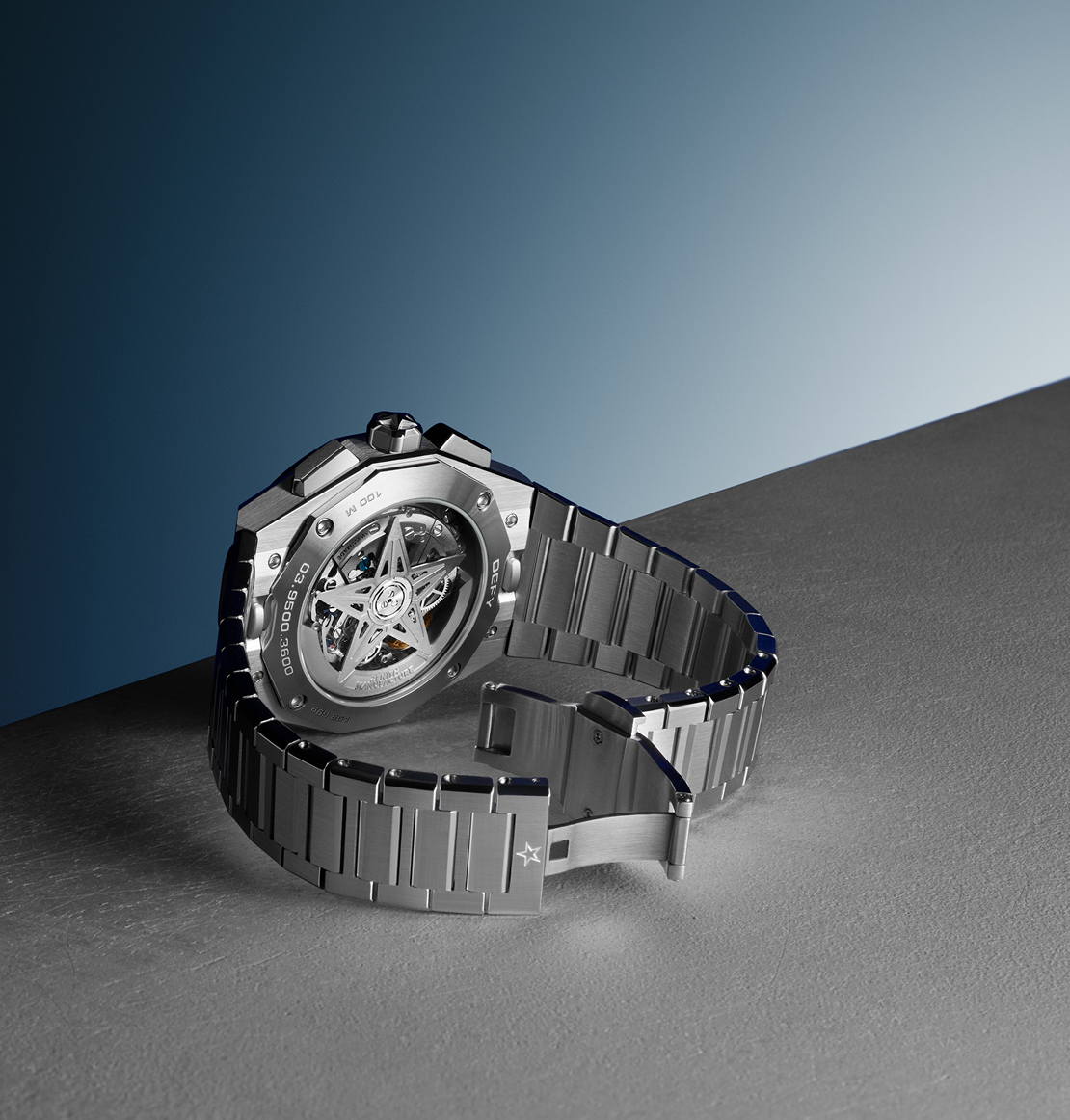
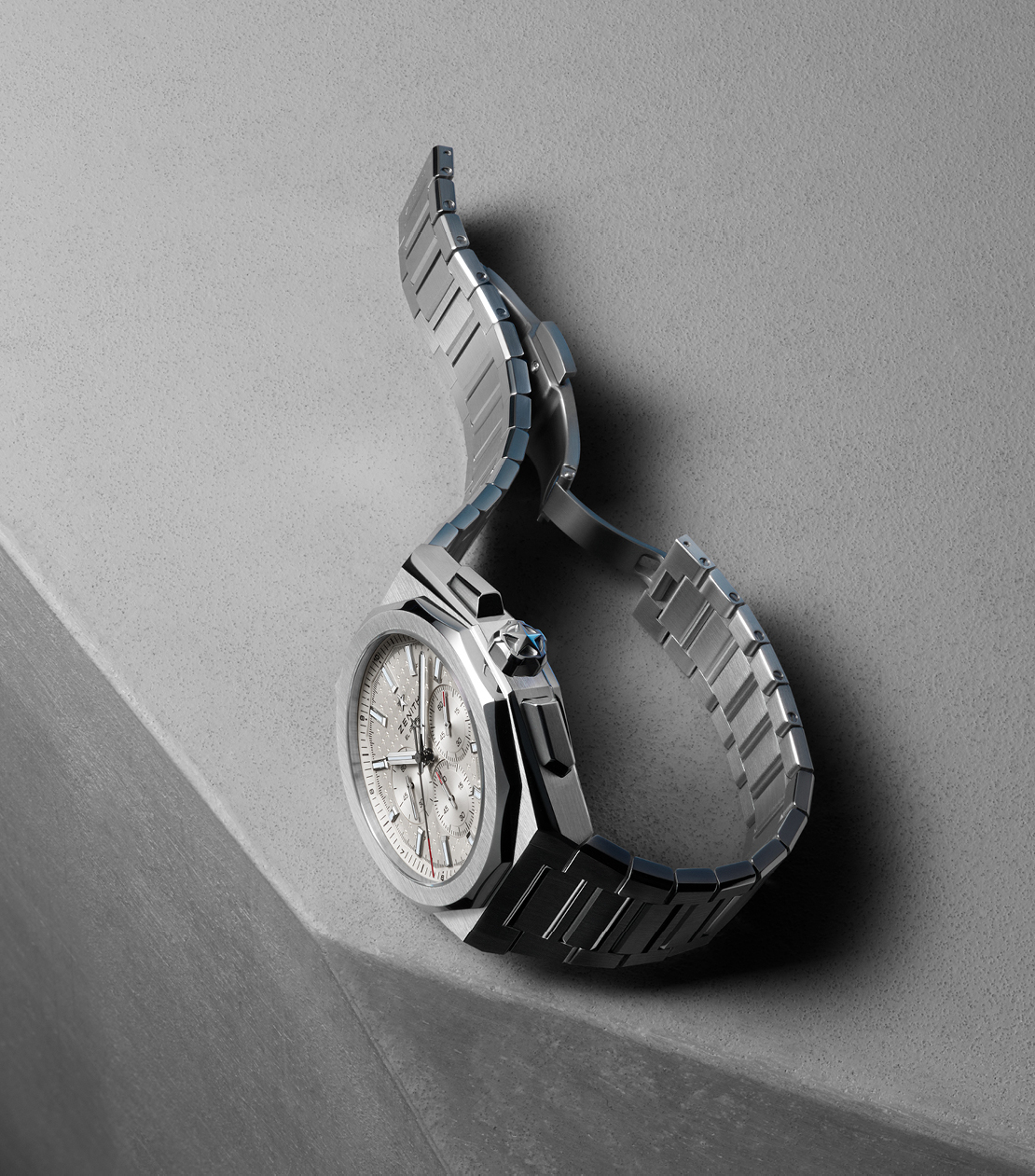
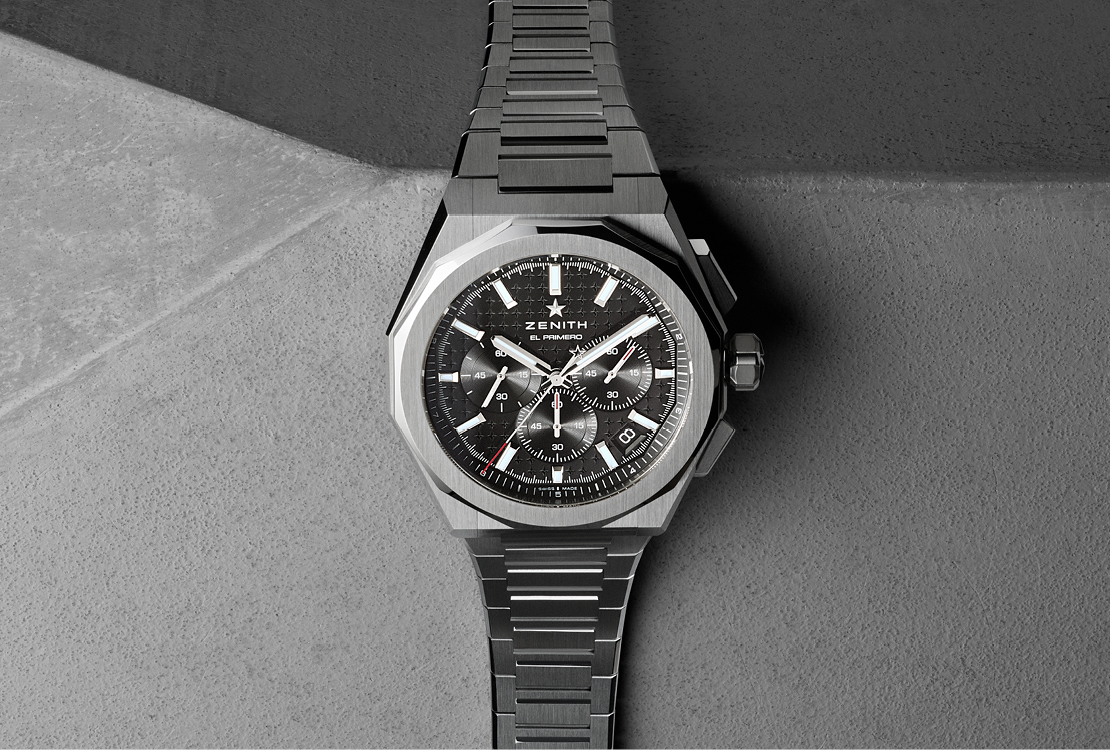
First of all, what has been done for Zenith so far is amazing. Julien Tornare did an amazing job, the way I like to say it is that he has awakened the beauty of the brand. My job now is to take that beauty out of bed and to encourage her to stand up, walk and eventually run. That’s in a metaphoric way but in terms of strategically, what I want to do is continue to capitalise on our basic models. We have beautiful models that are doing extremely well, but most of the time we are running out of stock. This is unfortunate as it means that for one week’s business is great, but the following week it’s slow. Overall, we have very strong pillars within the brand – Chronomaster, DEFY Skyline etc. The DEFY Skyline that we just launched at Watches & Wonders, for example, is already breaking records in terms of sales and we have not launched it completely across our network yet.
The third pillar is the celebration of 160 years of Zenith next year which is an important milestone for the brand. Not a lot of watch brands can celebrate this and most importantly, very few can celebrate 160 years within the same Manufacture. This is something we want to communicate with the world.
That sums up the major strategic acts that I want to capitalise on. I’m not going to reinvent the wheel. Today, we are notorious and famous for our El Primero movement, and I will also continue to capitalise on that.
What is the biggest challenge as you begin this new role?
With every challenge comes many opportunities. We are 100 percent house-made and that allows us to explore in terms of movements etc. There are many challenges and many opportunities simultaneously. One of which for example is related to the supply chain. I would love to improve the supply chain of the company. But there is no magic wand – this is a process that will take three to five years. Then I would like to capitalise on distribution. Today our partners globally are amongst the best, but I would like to do more and become a priority for them. Stronger partnerships are very key for me. We’re not a small brand but we need to become more important. We are limited by the quantity of watches we produce, so we sell what we produce and despite the fact that we have some markets being a bit slower than others, some markets compensate for the others. The beauty of Zenith is that we are strong in Asia, Japan, America, Europe, and the Middle East. So, we are well balanced in terms of sales.
What can you tell us about Zenith in the Middle East and what’s in the pipeline for the region?
We have very successful boutiques in Dubai Mall and Mall of the Emirates and we are capitalising on that. We have great projects in the region be it Bahrain, Oman, Kuwait and Lebanon and we are very proud of the partnerships we have there. We will continue to develop the brand with those partners who are amongst the best in the world, and we want to keep that momentum.
Zenith has fostered great relationships with partners and friends of the brand. Do you feel it is important to continue this, and what are the common codes you look for when naming friends of the brand?
Yes, we will continue but it must make sense and be meaningful. Secondly, if a friend of the brand wears Zenith watches already, then the chemistry is very easy because we don’t have to explain the brand to them. It will be a natural partnership. We are obviously being approached by numerous people and we cannot work with everyone. We select our partners and friends of the brand very carefully. We recently signed a well-known up-and-coming golfer Chris Kirk in the United States, and this came about very naturally because he already owns five or six Zenith watches. For me, each partnership has to be meaningful and there has to be a natural chemistry. We are not in the business of pushing people to wear our brand by force, they have to like the brand.
Zenith’s motto, “Time to Reach Your Star,” has been the backbone of the brand for some time. How do you plan to continue this theme moving forward?
It’s a great tagline, and of course, we are going to keep it for now, but am I looking at options? Yes, I am. It was a great slogan to wake up that sleeping beauty, but now if I want that sleeping beauty to stand up, I need it to be more emotional and to remind people what Zenith stands for and that we are 160 years old, meaning a brand with a legacy. So yes, I am contemplating other options, but nothing has been decided yet.
Where is the lady in the universe of Zenith?
We made it a point to be genderless at Zenith and we want to maintain that, but the reality is that we still see a lot of women wearing Zenith watches and the women’s segment is increasing even though our watches are unisex. We are not going to focus exclusively on women but we are going to be paying close attention to this sector. At Watches & Wonders, we had a counter only for women and I can tell you, it was the busiest area. So, women are very important in our environment. We have programmes like “Dream Hers” which we are going to continue with. I love this initiative which needs time, people, and ideas to nurture it. Women play an important role and we need to give them a voice for that. I think this concept is particularly relevant in the Middle East.
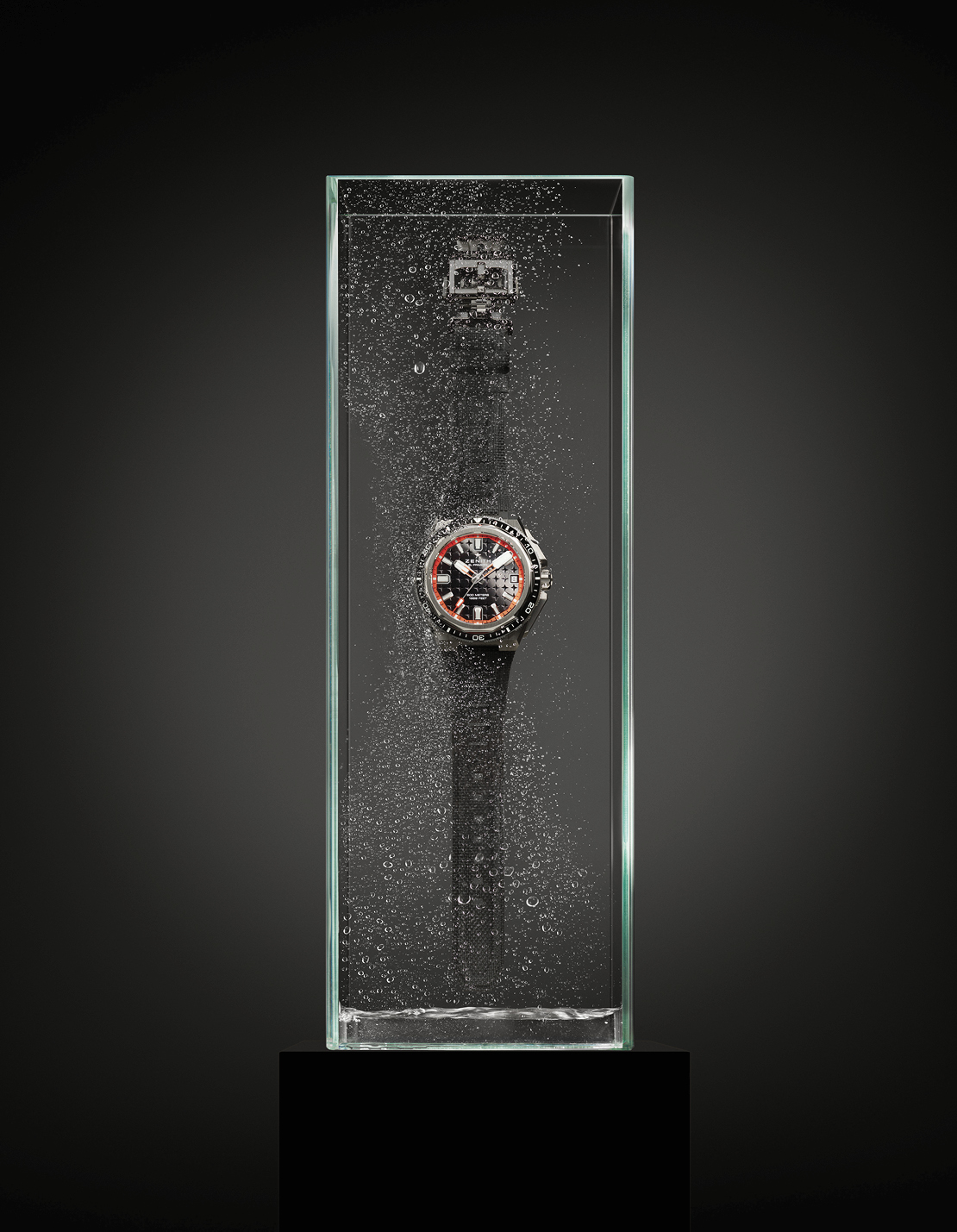
How would you assess the watch industry today?
The luxury segment is growing. The watch industry is probably going through a certain turmoil—that’s undeniable—but that’s not the case worldwide. That means that you have pockets of growth in certain areas. For example, in Europe, we have a few pockets of growth. Japan is doing very well for us. Growth is moderate, but it is still there.
How would you describe Zenith in one word?
Heritage. I was flabbergasted by the brand’s heritage. I thought I knew Zenith, but the moment I arrived at the factory, I realised it was unbelievable. Zenith’s founder was always ahead of his time. He was a visionary—that’s another word I would use, and innovation as well.
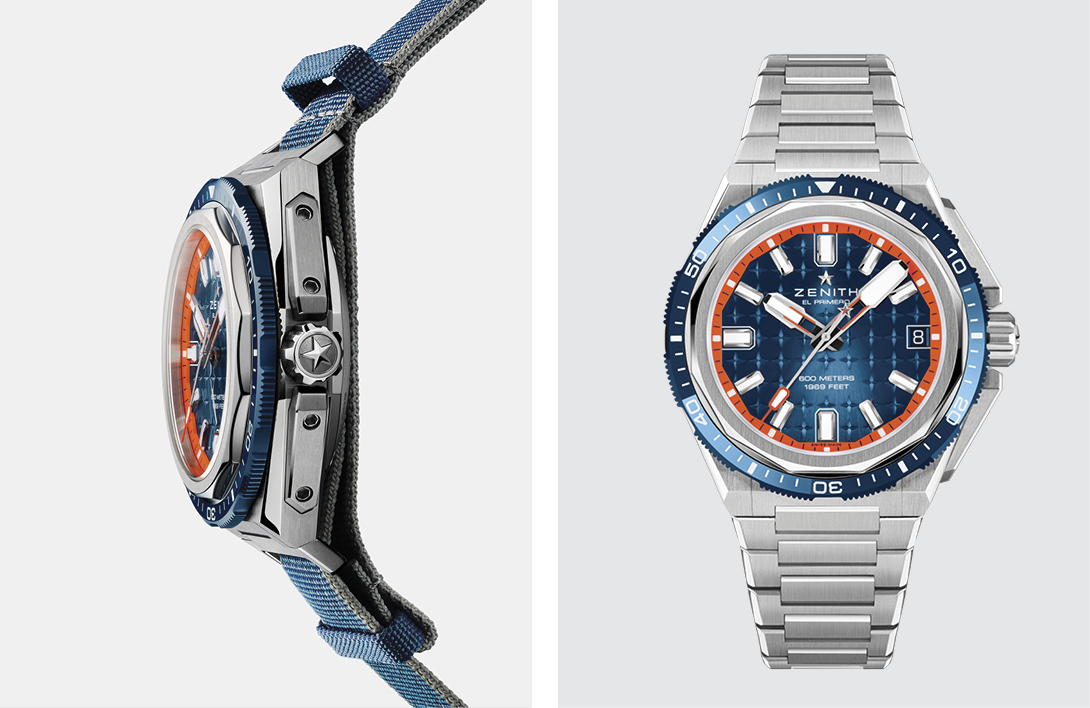
How challenging is it to balance respecting heritage and legacy while remaining relevant and modern?
It’s a very artistic move. The beauty of Zenith is that we don’t need to create any marketing gimmicks. It’s there already – we have more than one mile of archives of the brand and not a lot of brands have this. At Watches & Wonders, we launched the Revival which was exactly the same as the watch that we launched in 1968 but it was much better in the sense of improvement, and performance, but we used the heritage to push ourselves into the future. It’s legitimate. It’s a natural evolution. So, it’s not difficult per se because we have the history and the heritage, what is difficult is how we put it into perspective.
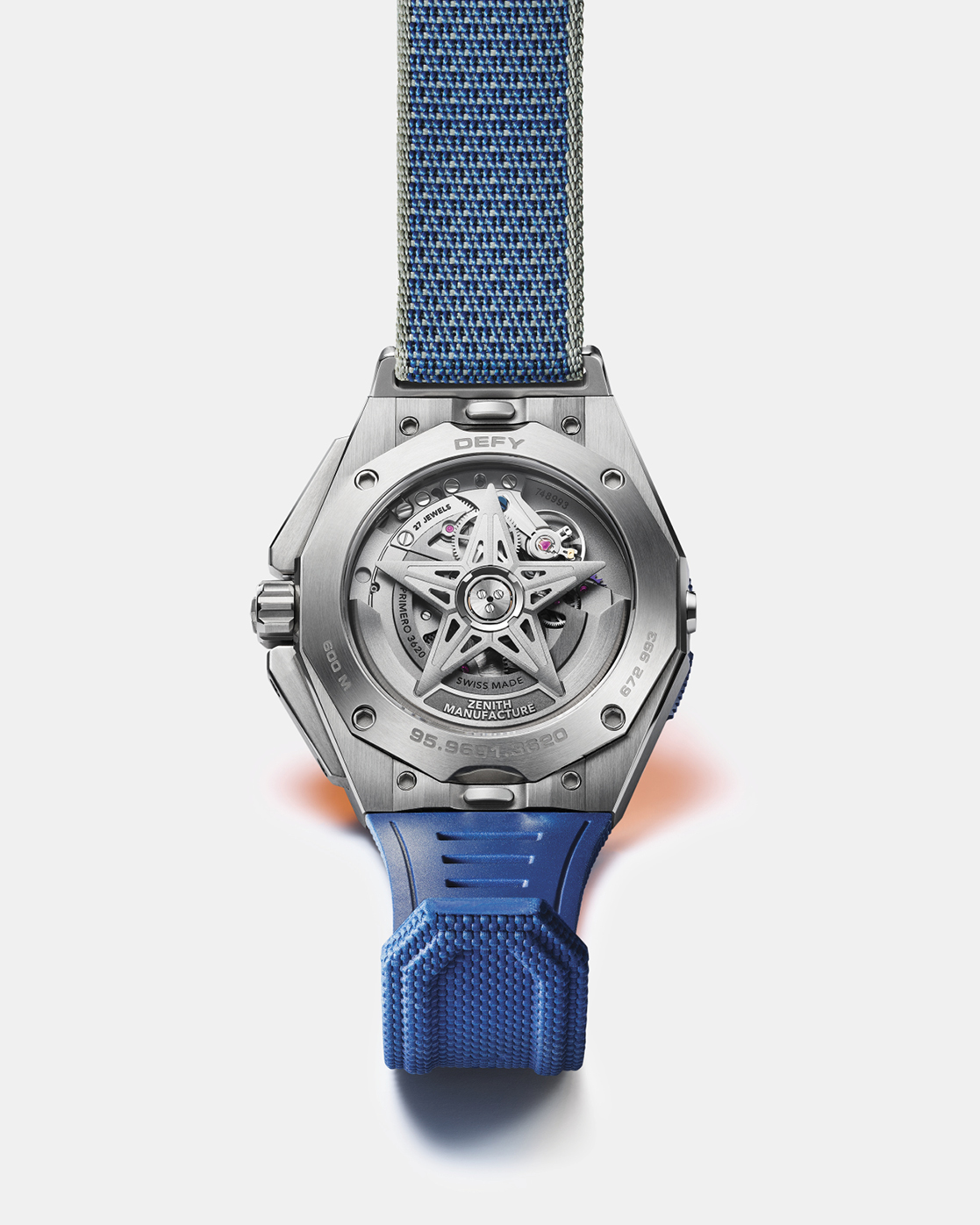
What watch are you wearing today?
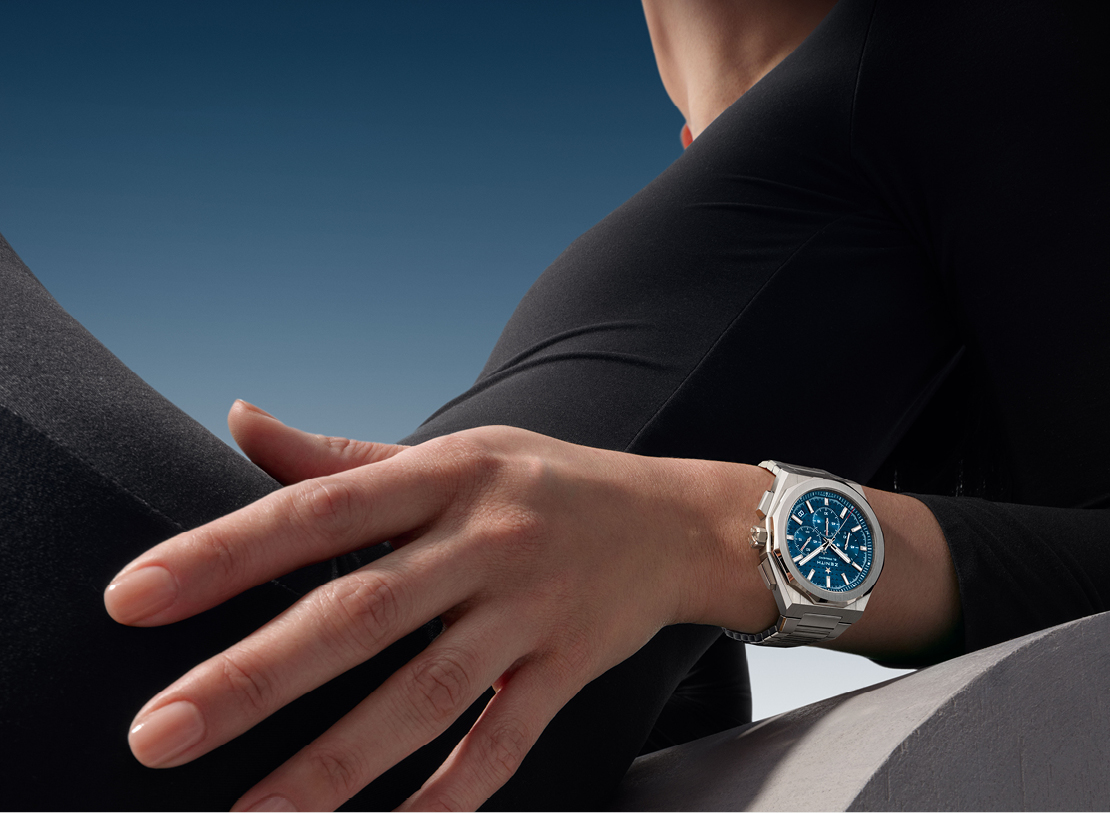
The DEFY Skyline in Blue that we just launched at Watches & Wonders. It’s a beautiful watch.
What is a message you would tell our readers and the fans of Zenith in the Middle East?
Be curious. We have loads of things to share with you so stay tuned.
When In Venice With Buccellati And Talita Von Furstenberg
In this month’s cover shoot, Talita Von Furstenberg, a friend of Buccellati, showcases the beautiful craftsmanship of the brand’s latest high jewellery collections.
(Above) Hawaii Waikiki Earrings in yellow gold, Hawaii Necklace in yellow gold, all Buccellati. Shirt, Brunello Cucinelli.

Hawaii Color Earrings in yellow gold with lapis, Hawaii Color Necklace in yellow gold with lapis, all Buccellati. Dress, Elie Saab.

Opera Tulle Premium Earrings in white and yellow gold set with 66 round brilliant-cut diamonds (ct. 0,27). Right Hand: Band ring in white and yellow gold set with 40 round brilliant-cut diamonds (ct. 0,47) and 1 faceted sapphires (ct. 2,05), Band ring in white and yellow gold set with 46 round brilliant-cut diamonds (ct. 0,69) and 1 diamond (ct. 0,69) Left Hand: Band ring in white and yellow gold set with 72 round brilliant-cut diamonds (ct. 0,20), 8 navette-cut diamonds (ct. 0,69) and 1 oval faceted sapphires (ct. 1,21), Band ring in white and yellow gold set with 16 round brilliant-cut diamonds (ct. 0,22) and 1 faceted rubies (ct.1,01), all Buccellati. Pink satin jacket and silk chiffon dress with a scarf neckline, Alberta Ferretti.

Hawaii Waikiki Earrings in yellow gold, Hawaii Necklace in yellow gold, all Buccellati. Shirt and denim skirt, Brunello Cucinelli.

Etoilée buttons earrings in yellow and white gold set with 9 round brilliant cut diamonds (ct. 0,83). Right Hand: Cuff bracelet 3.5mm in yellow and white gold set with 66 round brilliant-cut diamonds (ct.0,42). Left Hand: Macri eternelle ring in yellow and white gold set with 6 round brilliant-cut diamonds (ct.0,20), Cuff bracelet 3cm in white and yellow gold set with 19 round brilliant-cut diamonds (ct. 0,89), Cuff bracelet 2cm in yellow and white gold set with 44 round brilliant-cut diamonds (ct. 0,89), all Buccellati. Mini dress in silk, Versace.

Right Hand: Tulle eternelle Ring in white gold set with 33 round brilliant-cut diamonds (ct. 0,82), Ghirlanda bracelet in white and yellow gold set with 239 round brilliant-cut diamonds (ct. 5,86). Left Hand: Tulle bracelet in white gold set with 81 round brilliant-cut diamonds (ct. 3,59). Long dress with bib-style bodice, Max Mara.

Etoilée buttons earrings in yellow and white gold set with 9 round brilliant cut diamonds (ct. 0,83), Etoilée necklace in yellow and white gold set with 102 round brilliant-cut diamonds (ct.6,43), all Buccellati. Cropped gilet in satin, Moschino.

Opera Tulle Premium Pendant in white and yellow gold set with 45 round brilliant-cut diamonds (ct.0,33), Cocktail ring in white and yellow gold set with 33 brilliant-cud diamonds (ct. 1,21), all Buccellati. Silk slip dress with lace inserts and degrade fringe appliqués in jais, Gucci.
Credits
Concept Creation: Lara Mansour Sawaya
Photographer: Alan Gelati
Videographer: Niccolò Valentino
Hair and makeup: Cosimo Di Maggio
Stylist: Samanta Pardini
Photography assistant: Luca Giuseppe Costa
Stylist’s Assistant: Giulia Lacalamita
Location: Hotel Danieli, Venice
Louis Vuitton’s Master Perfumer Jacques Cavallier-Belletrud Discusses The House’s New Middle Eastern-Inspired Collection
Fragrance layering has been a tradition in the Middle East for many years. A practice that originally involved combining (or layering), two or more key ingredients to create a unique scent has today evolved into a trend adopted by many around the world, hoping to share a piece of their personality through the fragrance they choose.
But fragrance layering is so much more than wearing two or more fragrances at the same time; it is a way of expressing emotions and creating an individual scent that can become associated with your personality.
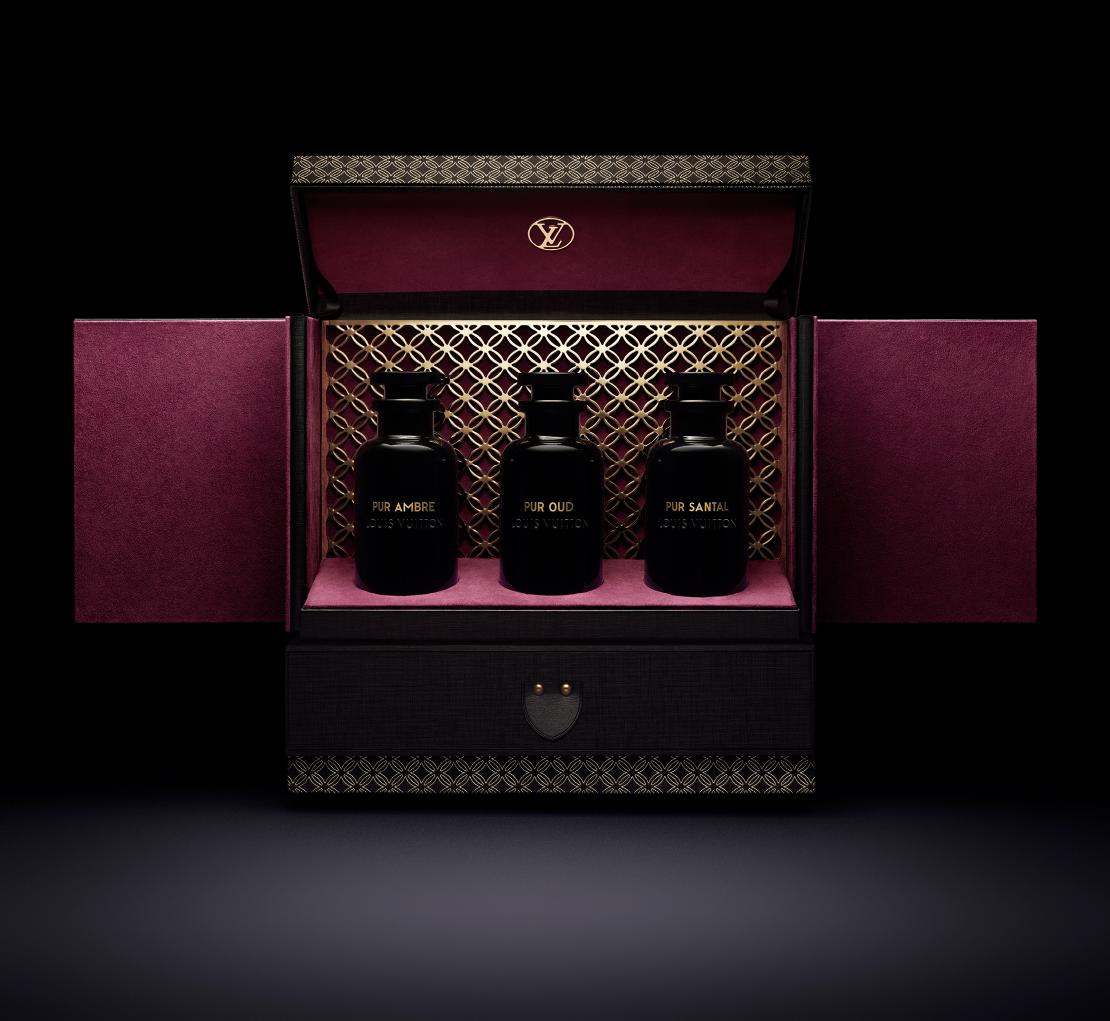
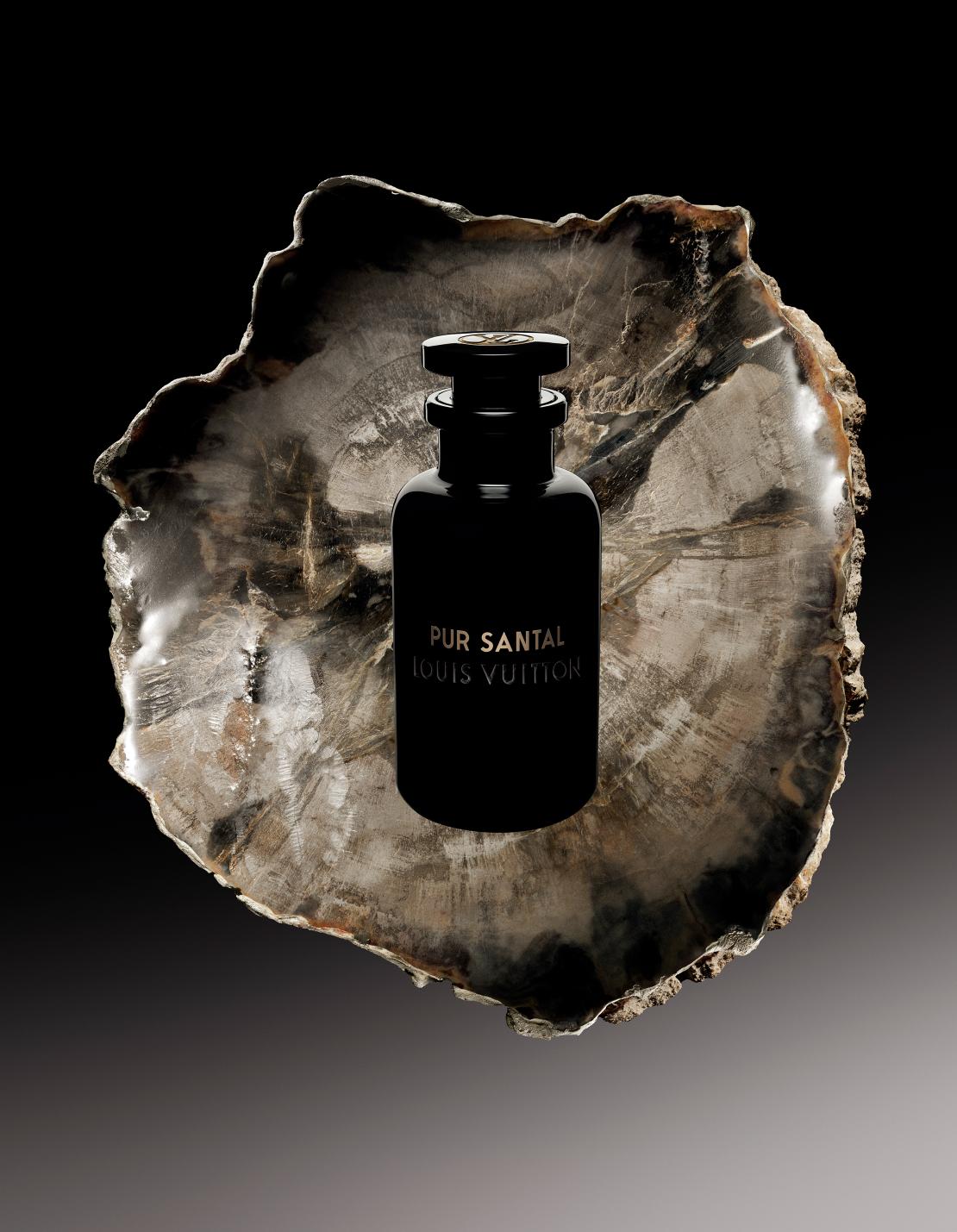
Fragrance layering is something that has long fascinated Louis Vuitton’s Master Perfumer Jacques Cavallier-Belletrud and has been an integral part of the Maison’s fragrance segment thanks to the capability of allowing customers to personalise their fragrance creations. Now, the brand is launching The Pure Perfumes, a collection that offers clients the opportunity to layer the purest ingredients to create a completely unique expression. The collection of pure perfumes (oud, Ambre, and santal) are highly concentrated expressions of the three key ingredients that can be layered together or with other perfumes, allowing the wearer complete freedom of expression. The concentrates can be layered with the brand’s existing fragrances to create new facets and expressions of timeless scents. Here, we find out more about the importance of this collection, as well as the Middle East’s inspiration for the brand’s fragrances.
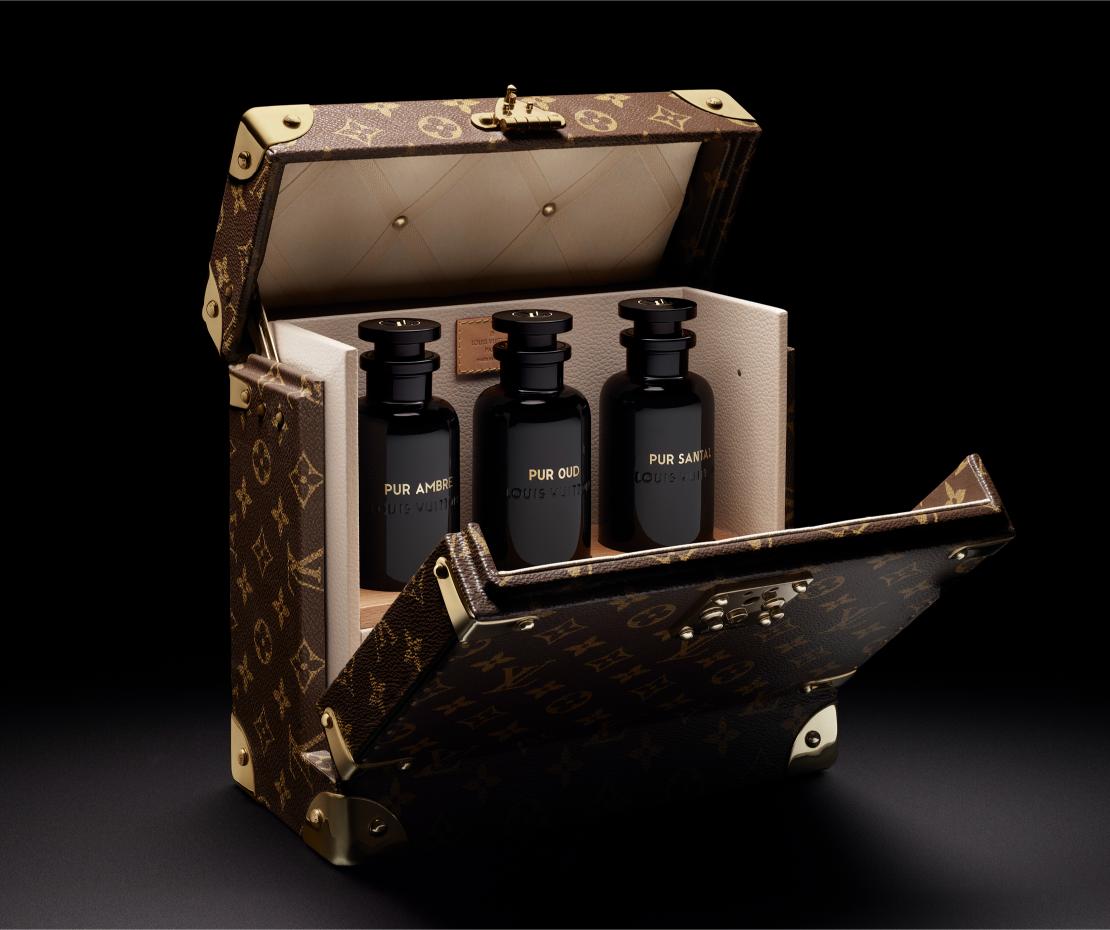
This fragrance collection is all about layering – something that is key to women in the Middle East – tell us about your experience of that.
I have always admired the art of layering, which was born here. Today, many brands around the world are pushing layering, but they forget that this is part of the culture in the Middle East. It’s something your mother may have done when you were young. It’s so much more than just mixing two perfumes together; it’s about developing and revealing an olfactory identity of yourself, which is really different from what Western people think of as layering. Layering is very personal; it’s an art, and I believe it is truly done best here in the Middle East. I’m starting to practice it myself, and it is much more complicated than just taking two perfumes and mixing them and it’s something women here know by intuition. I have an admiration for it because it goes against my education in perfumes which taught me to never mix two perfumes, but step by step I have learnt that mixing can be a dream. It has opened many doors for me.
When we talk about layering, each scent has its own identity – what is the process for you when you are dealing with complicated scents like this and layering them?
When we are dealing with major scents such as amber, oud, sandalwood as well as musk, or vanilla, they are already perfumes in their own right. So, for me, it is about pushing a character within a fragrance to add part of your personality and to showcase the way you are feeling. I start from those considerations, and I love the idea that when you are using a perfume, you are creating mystery and you are building a character. It is always about what we are thinking of at that moment, creating an attraction first with yourself and then with others. It’s a very emotional thing that’s difficult to explain, but it creates a feeling. It’s a very private language.
Tell us more about the collection you are revealing today in the Middle East.
A few years ago, we created an experience with pure oud, and I wanted to present the Louis Vuitton oud to our clients, mixing it with some of their favourite Louis Vuitton perfumes. It was very successful, and last year, we became the first brand in terms of buying in this much quantity of oud. No other brand is using oud in such a large proportion, and we are very proud of this. It is a tribute to the Arabic culture of perfumes. So, after the tremendous success of this experience, I decided to continue the story with amber and sandalwood, offering these molecules that we are using in our perfumes in a high concentration.
What’s your take on the use of synthetic ingredients as natural ingredients become more and more rare?
Synthetics are necessary to create perfumes and modern perfumery was born because chemists investigated nature and reproduced some of the key ingredients that are responsible for certain scents. Just because something is synthetic doesn’t mean it’s bad. We are now avoiding all materials that are polluting. In terms of responsibility, we cannot defend using those kinds of materials and therefore, we sometimes need the assistance of synthetics. We are fully engaged in the process of verifying with our suppliers where our ingredients come from and what our suppliers around the world are doing. And at the same time, we are paying attention to and financing many projects that are trying to preserve these resources. This way, we can be more respectful of nature. We have several projects now in Africa, combining many activities of the group, so the concept of just taking from nature and not being respectful is changing a lot.
Within the industry today, when we come to fragrances, it is rare to find noses in people – what are the steps you would suggest in identifying and harnessing these kinds of talents?
I think this kind of talent comes with hard work. Becoming a nose comes with training, and the problem is that today, some people want to do it to become famous. What I am looking for is passion. If someone is passionate about it, they will have the capacity to work hard. I tell them they must be obsessed with what they are doing. And many young people today don’t understand that. Curiosity is the key, and that means looking at what others are doing and what people are expressing in different segments. There is always something to learn, but it is about evaluating and assessing what is going on and what is coming.
Where do you see the future of haute perfumery?
I think we are at the end of massification, fortunately, which is also a problem. Because for brands, young people don’t want to only own a fragrance. They want to understand the concept; they want to experiment – it’s still working for some brands but not all of them. So the future for me is very clear, it’s about being more exquisite, more expensive, otherwise, you will become mass. That’s why I believe anything that is promoted too much, will have a shorter shelf life. I think there will be some brands that can do both, but it’s difficult to have both a high-end perfume collection and a mass one – how can you defend the difference in quality – by the price, the ingredients? I think we are entering a world where the truth and reality of the materials will drive the clients.
Delivering strong emotions through scents is not difficult, but it must be right. If it’s too complicated, it won’t work and vice versa. There are things you cannot explain. It is magic. No marketing, no commercial, no executive could produce these kinds of emotions, it is only the creator that can create these magical things, and so I think in the future, less marketing will design fragrances, more independent offices will work on new concepts with freelance perfumers, and brands will try other ways to be successful. They are spending millions on advertising and other things related to the perfume, but they are not spending millions on the perfume itself. So, we see that the market is going down, and we see the younger generations going for niche brands. There is a big shift, and I think in the future, we will have a lot of new brands arriving on the market, but perhaps more within this niche area.
Louis Vuitton’s Francesca Amfitheatrof On The Brand’s Unique Approach To High Jewellery
Louis Vuitton has always been a brand to go against the mould, even as far back as when its founder, Louis Vuitton himself, was a game-changer in the luggage industry with the introduction of flat-topped trunks for the first time ever.
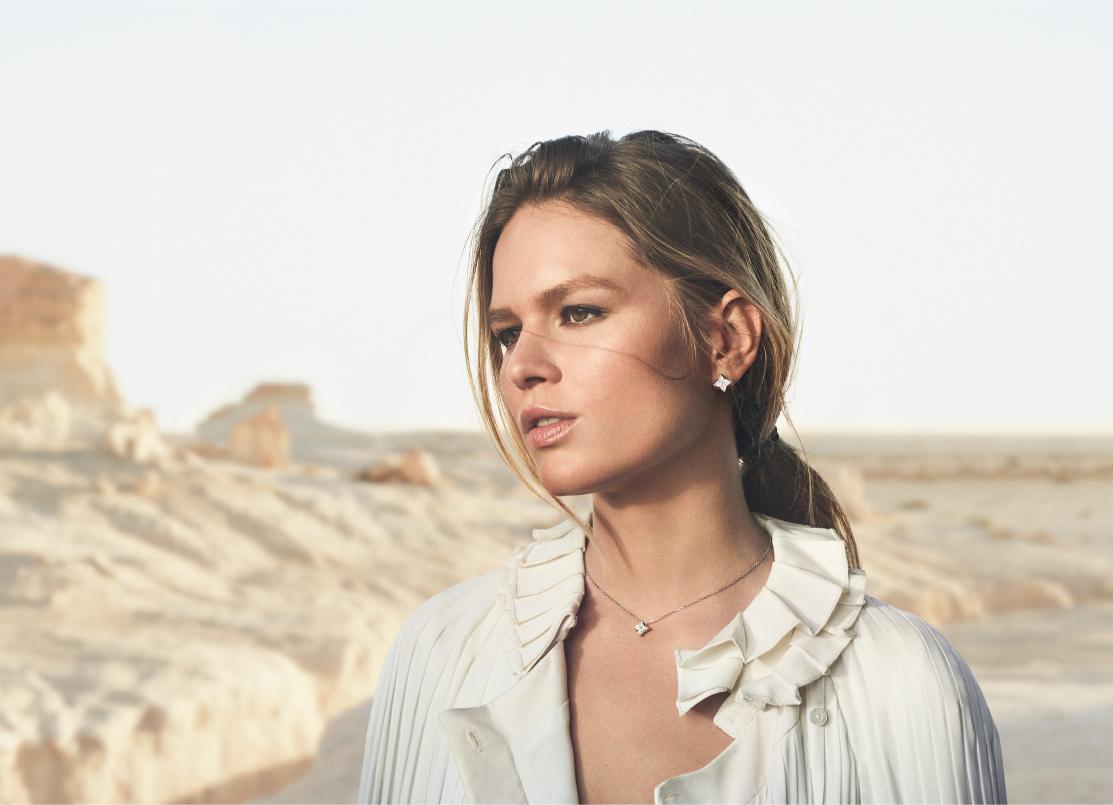
So it perhaps comes as no surprise that the brand’s latest experiment, this time in the universe of high jewellery is once again a world first. Led by jewellery industry veteran Francesca Amfitheatrof whose creativity, out-of-the-box approach and passion for what she does was a perfect match when she joined the Parisian maison in 2018. This year, with the launch of LV Diamond she has far surpassed expectations of what is possible, creating special and unique diamonds, cut exclusively for Louis Vuitton, inspired by the house’s iconic monogram.
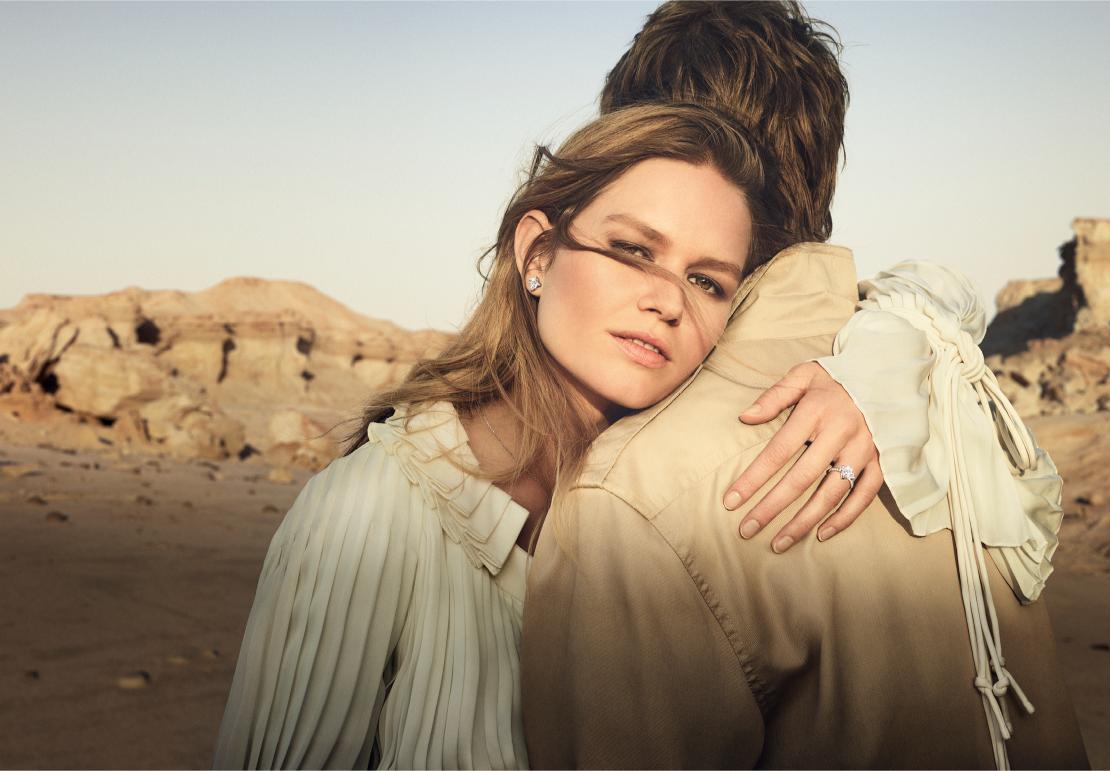
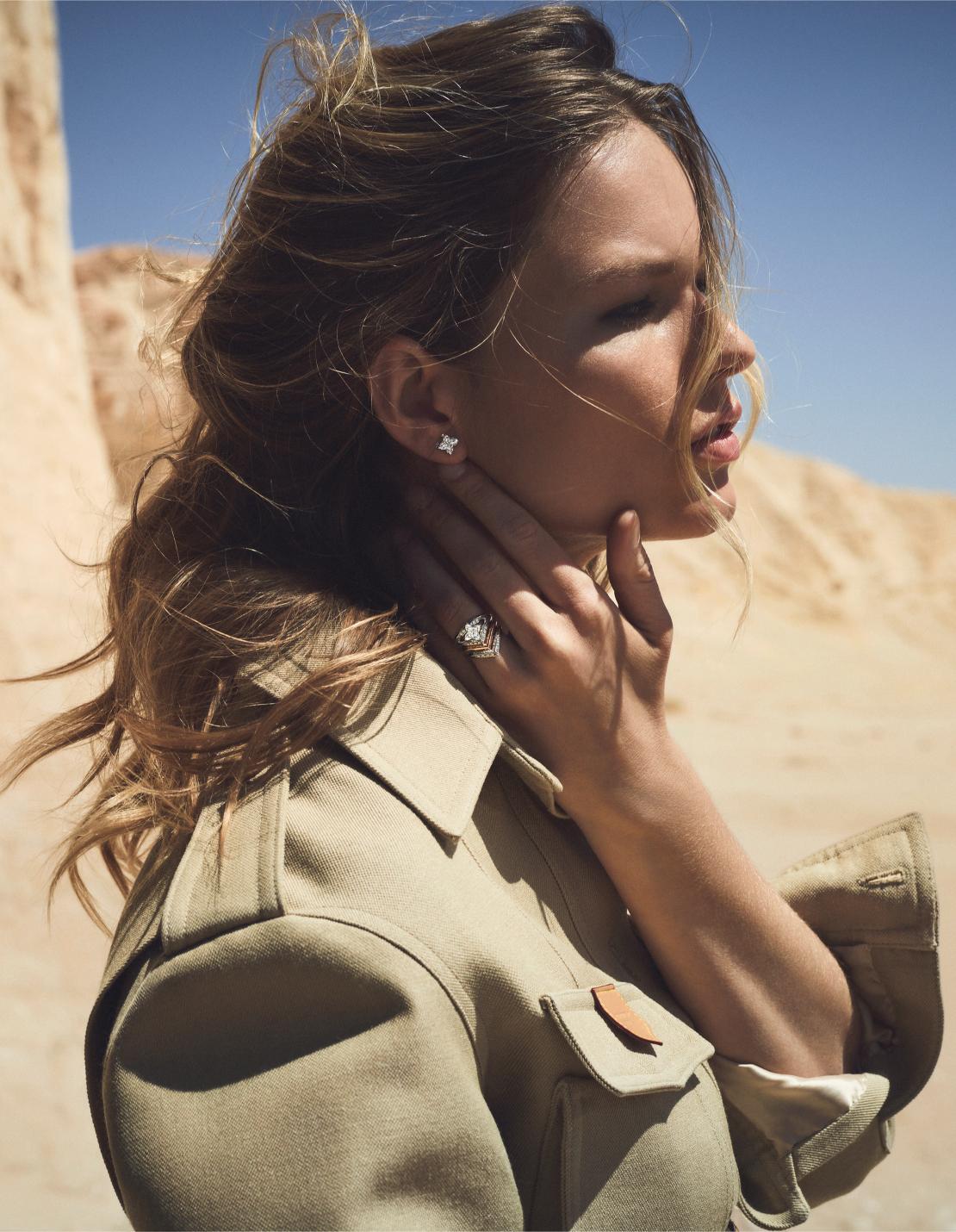
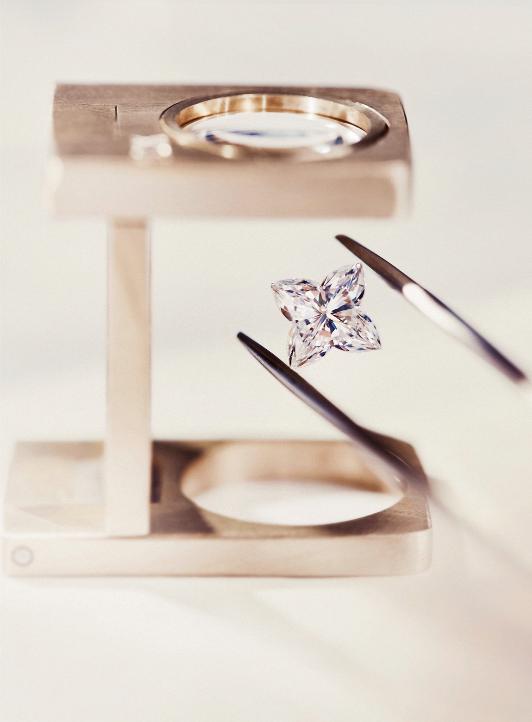
The LV Monogram Star, which debuted in Dubai last month, is a revolutionary cut inspired by the LV Monogram. Using the highest levels of creativity and savoir-faire, this unique diamond features fifty-three facets with pointed ends, and is instantly recognisable as the star-shaped monogram flower that has become synonymous with the house, since its inception in 1896. The Monogram Star is the starting point for the LV Diamonds collection which features rings, earrings and pendants that are as timeless as they are modern. Here we find out more about the latest collection as it makes its debut in Dubai.
Today, we are exploring the LV Diamonds collection, which revisits the roots of the brand; tell us more about this…
When I first started at Louis Vuitton almost six years ago, I saw there was the possibility of creating this [Monogram Star] cut. We have an amazing team – our gemmology team is astounding – and being a very adventurous brand, we decided to embark on the possibility of creating our own cut. So, obviously, having the monogram with the flower and the star, we started to investigate whether we could cut diamonds into these shapes. Now, what’s incredible here is that we mixed technology and craftsmanship, which is really at the route of the brand. We used technology to be able to analyse rough diamonds, and only one to two per cent of the rough can be cut into a star or a flower without too much wastage. So we had to very carefully select the rough which we buy directly from the mines, and then we had to teach cutters, groovers and polishers to work on this cut. It’s been a huge education because the cutters have to be able to cut without wastage. The groovers have to cut these complicated grooves, and the groove is the hardest thing to do in a diamond; a diamond does not want to be cut in a groove. Similarly, a heart-shaped diamond is super hard to do because of the groove at the top, and we have four of them on each cut! Then, for example, on the star, the points have to align perfectly, if not, the diamond shatters. So we have many challenges with this cut.
We wanted to create cuts that weren’t ultra-faceted – we didn’t want to add more facets, which is what a lot of people have done over the years. We wanted to keep it very elegant but to have maximum light reflection. So, it has a high refractory that amplifies the light.
Tell us about the transparency element of this collection.
Each stone also comes with its own blockchain certificate so that we can trace it to the rough stone, to the mine and all the way to the finger. So we’ve been very ambitious, but the interesting thing is, because we are doing it from the beginning, we could do it how we wanted to do it. We have agreements with a mine in Botswana that’s run by women, for example, we’ve chosen our partners very particular. And I think when you look at diamonds, this is the holy grail of diamonds. To be able to do this in such a short period of time and launch it, and be that ambitious and adventurous, it’s a very Louis Vuitton thing to do!
If you look at a diamond today, you can’t tell whether it’s manmade in a lab, or it’s fake etc., and with this, you can guarantee straight away from the cut that it is of the highest quality and it’s stunning.
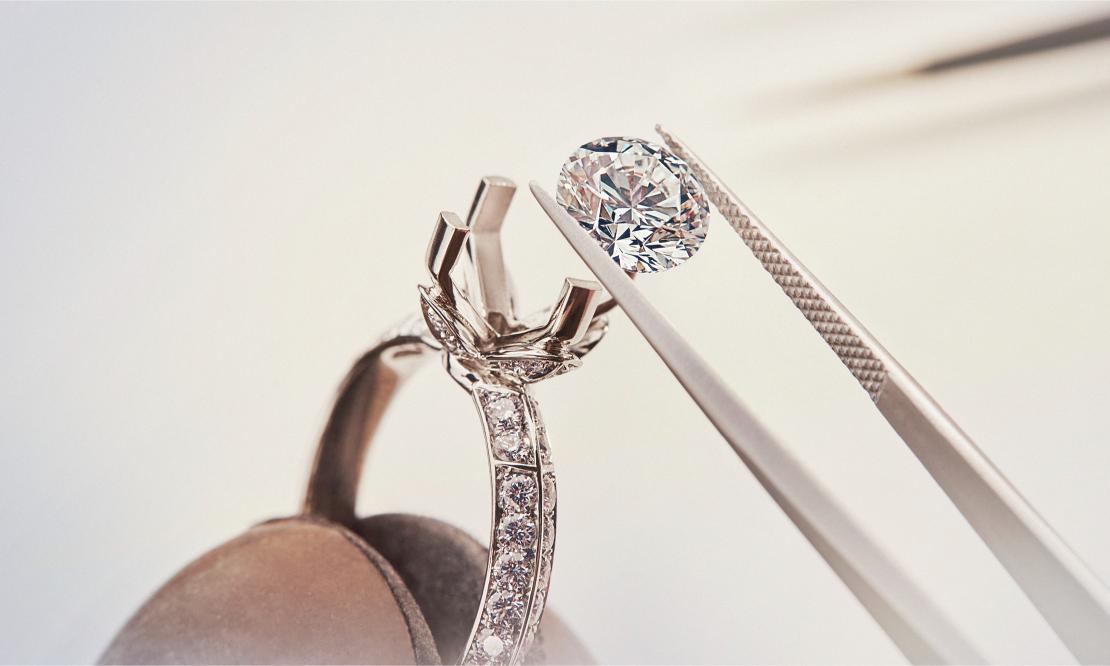
I have been using them a lot in high jewellery right from the beginning, and now you can buy them individually. So if you are looking to buy an engagement ring or a diamond for yourself, if you go to any other brand, you will still get the same product – a round diamond is a round diamond – but here you have something that is so stratospherically different, that it really is to me a revolution in the jewellery industry,
How much do you think today’s consumer is aware of the importance of traceability?
I think they are, and I think people still have this notion of blood diamonds that do not really exist anymore and haven’t for more than a decade. I think there is this bad narrative around diamonds because they trade hands so often, so it’s difficult to trace them back to their source, and therefore, people are concerned about that, and I think having that know-how is important. You can never quite know the story of a stone and so to be able to do it from the beginning was very important to us, and I think people are concerned with this.
What is your take on investing in white diamonds vs coloured diamonds today?
If you’re looking to buy an important stone (above 2 carats), diamonds are still amazing because they will not be available forever. There is a very definite amount of diamonds that we can mine. For example, when you look at yellow diamonds, which are the most common of the coloured, the Argyle mine in Australia is now closed down, but there are still a lot of them on the market. Pinks, blues, greens, and oranges, are extremely rare – you can see at auction that they have been selling for 30, 40, and 50 million dollars. So they are an amazing investment – I believe they are one of the best investments you can do today, better than property, stock market, cars – coloured diamonds are increasing in value enormously. But they cost an absolute fortune, so it’s a different type of investment, but I think that it’s very much your own personal choice.
What fuels you, and when are you at your utmost inspired?
I think I have the ability to go into a house and understand it. I don’t have the ego that wants to overpower the brand that I work for. I think I am very good at understanding the relationship, the intentions, and the codes of a brand and so I’m very able to adapt. I think it’s because I’ve grown up all over the world and I have a very big vision. At the same time, I think I’m at my most successful when I have complete freedom to do what I think should be created for that maison. At Louis Vuitton, I am extremely happy because I’ve been given that trust and freedom, and I’ve really built the team and the category with a phenomenal group of people, and at this brand, there are exceptional, intelligent people who allow you to have the freedom to create, and I think creativity is really valued at the brand, they’re not scared of ideas. If it’s risky, we love it! So, the challenges and the ambition are huge. I have the passion and the joy of being able to love what I do and to have the freedom to create such amazing pieces.
How do you balance creativity with keeping the codes of the maison and being relevant for today’s consumer?
I think even more than tradition, with jewellery, you have the challenge of making something that has to be new, relevant, and timeless. So that’s really the challenge that I’m always pulling and pushing with, and I think the idea that we create high jewellery pieces that are the only one in the world already makes them masterpieces. I think the fact that we choose the best materials, we have the most amazing craftsmanship and daring designs, makes everything work together, and this allows me to push it to be something that feels new and youthful. My biggest challenge with high jewellery is that I don’t want it to be ageing, but if it’s trying to be too modern, it becomes cold. So I have the challenge of keeping it really seductive and warm, a little bit fashionable with flair, and still timeless. That’s the dance that I have to do.
What’s something you still aim to achieve with Louis Vuitton?
There are many things. I definitely want to do more high-jewellery watches. I would love to make more men’s high jewellery. I also want to work with the way that we engage with customers to invite them to understand that we do jewellery and that jewellery at Louis Vuitton is not a uniform. I think a lot of jewellery today can become a uniform because it’s being produced in such high volumes, and I think that should never be the case with jewellery, it should be personal. So I would love to invite people to come to the brand for jewellery and find ways to wear things that feel original and individual and know that they won’t see it on everyone else.
What’s the motto you live by?
Only do what you absolutely love and feel passionate about.
What is something you would still like to do on a personal level?
I want to mentor up-and-coming designers and work within the education field. I feel very passionate about mentoring, teaching, helping, and allowing people into the world of understanding and what you really do in a creative studio. I want people to realise that whatever level you are at in your life, you should still do a job that you love, and you should be willing to do any part of it to get your creative ideas across.
How does the Middle East region resonate with you?
I think this is a really happy region. There are brilliant people, I love anything that allows lots of nationalities together. I think that makes it very open-minded and a lot of people choose to be here and I think they have an amazing time here; it’s a great place.
Exploring Turkey’s Luxurious Mandarin Oriental, Bosphorus
Located in the unique Kuruçeşme neighbourhood of Bosphorus in Turkey’s cultural capital, Istanbul, Mandarin Oriental, Bosphorus, Istanbul is arguably the city’s number one destination for travellers from around the globe. Situated on a unique Bosphorus-front site on the European side of Istanbul overlooking the water, the idyllic location features a breath-taking Bosporus panorama, including views of the 15 July Martyrs Bridge and Fatih Sultan Mehmet Bridges, as well as key landmarks such as Beylerbeyi Palace and the Kuleli Military Academy. This truly is the most attractive luxury property in the city.
The double-height entry of the hotel opens to dramatic surroundings of Belvedere marble and intricately patterned bronze screens in a contemporary, sunlit space. At the centre of the foyer is a striking glass chandelier from France, one of many illustrations of the hotel’s thoughtful, site-specific interiors. The lobby opens into a modern, sunlit space surrounded by three-dimensional wood panels and accessories. While it has 100 rooms, this property evokes the feel and mood of a boutique hotel.

Rooms & Suites
The hotel features 77 spacious rooms and 23 luxurious suites, all elegantly designed, most with terraces or balconies and a view of the Bosporus. With the idea of being designed in harmony with the hotel’s surroundings, rooms feature a bespoke detailing of bronze and onyx marble paired with organic textures and patterns inspired by Istanbul’s beloved tulip as well as the Turkish Tree of Life and the Ottoman tradition. Each room also features a handwoven carpet hailing from neighbouring countries and highlighting the region’s impeccable craftsmanship. All rooms feature ensuite bathrooms, walk-in wardrobes, high ceilings and top-of-the-range technology.
Dining
The hotel is home to several luxury big-name restaurants, including world-famous Novikov and Hakkasan Istanbul. Located on the hotel’s ground floor, Novikov offers a fusion of Italian, Asian and Mediterranean cuisine that complements the cosmopolitan vibe of Istanbul. The beautiful setting allows guests to dine indoors or outdoors (weather permitting), with magnificent views of the Bosphorus. The menu offers a wide range of dishes, including sushi platters and a variety of pan-Asian delicacies in addition to its Italian and Mediterranean specialities.

Hakkasan’s popular modern Cantonese concept has arrived in the city, with a vibrant and lively experience that locals and tourists travel across the city to try. Be sure to pre-book your table here, as it’s an extremely popular venue. Taking inspiration from both contemporary and ancient China, Hakkasan’s signature cuisine is a celebration of Cantonese flavours, innovative cocktail creations, artistic patisserie, and iconic design.
For a taste of the Mediterranean and the traditional flavours of Italian cuisine, Olea is a unique gastronomic experience. Olea, whose name is rooted in Latin and means olive in its oldest form, offers its guests traditional recipes and cooking techniques that have been used in Italy for centuries with its carefully prepared menu. In addition to classic Italian dishes, Olea reveals its difference with main courses and pasta based on original family recipes, which it calls ‘Cibo di Famiglia’.
Elsewhere, some of the Hong Kong-based-hotel chain’s signature dining destinations invite guests to enjoy relaxed surroundings. Relax at the Bosphorus Lounge, which offers Mediterranean snacks, or visit The Mandarin Cake Shop to sample freshly made sweet treats and pastries.
Wellness
Hailed as the ‘best luxury spa and gym in Istanbul,’ The 3,500 square metre Spa At Mandarin oriental focuses on helping each guest to find their inner zen. It features signature wellness concepts as well as a luxurious choice of heat and water experiences and a holistic approach to wellbeing. The Spa features 11 treatment rooms, two beauty rooms and one VIP treatment room, all with their own shower facilities. Of course, it would not be a Turkish spa without a traditional Turkish Hamman (or, in this case, three), all featuring a luxurious minimalistic design. Three Hamman experiences range from 30 minutes to one hour, promising to invigorate and relax the body and mind.

The resort also features indoor and outdoor pools and a separate kid’s pool. The seasonal outdoor 20-metre lap pool within a lush spa garden offers views over the Bosphorus with poolside service and light refreshments available every day. Meanwhile, the spa’s indoor pool features vivid natural daylight, garden access and a hot bath. Complete your wellness experience in the Pilates and yoga studio or at the state-of-the-art fitness centre.
Leisure activities
If the resort’s swimming pools and fitness facilities still leave you wanting to explore more, the hotel is on hand to provide exclusive experiences for customers. This can range from Bosphorus cruise tours, a walk around Kuruçeşme’s historic streets, jogging routes for nearby Kuruçeşme and Bebek Parks or a day shopping in the city. There’s also a distinctive kids club to keep the little ones entertained while you relax and enjoy your stay
Art & Design
Mandarin Oriental, Bosphorus Istanbul’s interiors were specially designed by renowned atelier Tihany Design. With a vision of immersing guests in the jewel of modern elegance and captivating cultural aesthetic, the design perfectly blends the old meets the new, the west meets the east. The New York and Rome-based hospitality design atelier conceived the multi-layered design scheme with a well-balanced artistry and acumen. Their enchanting modern narrative perfectly integrates the refined legendary Bosphorus-front lifestyle of the neighbouring ancient yalı-mansions, Istanbul’s rich history at the centre of the world’s leading empires and civilizations, culture, mystique, and global influences. The team created the ambience of both a tranquil and vibrant seaside getaway in synergy with the epicentre of East and West.

The interiors perfectly complement the building’s low-rise architecture and marble-clad façade in French-Portuguese cream-coloured Massengis stone, inspired by the tradition of Bosphorus palaces, yalıs and mansions. Istanbul’s design story resonates throughout its public venues and private spaces and the choice of materials used. Organic textures and patterns are complemented by a warm and sensual blend of colours, seamlessly paired with metal and leather details.
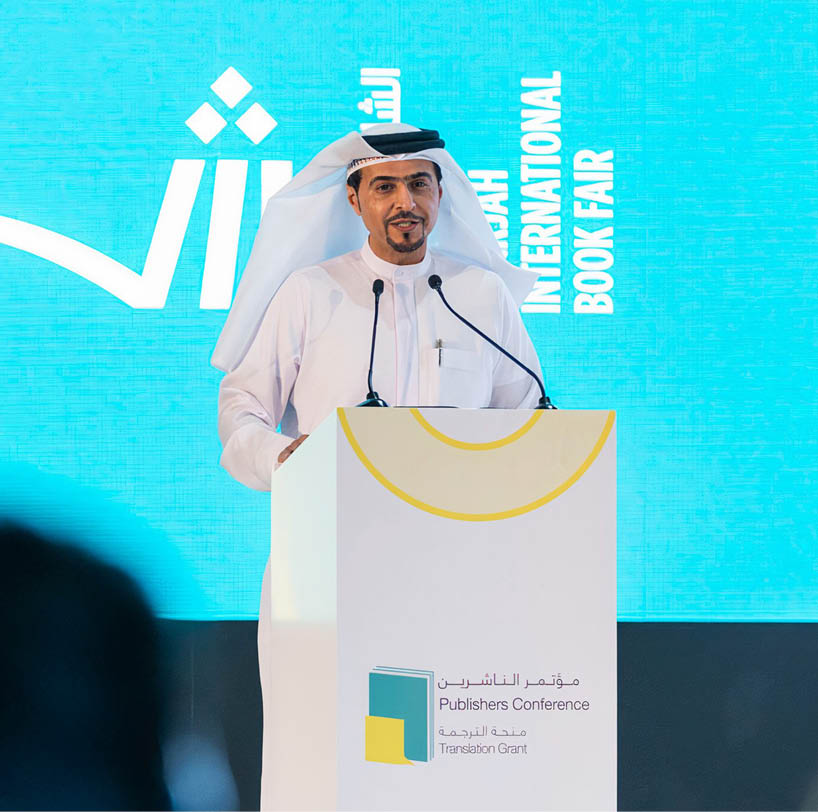
H.E. Ahmed bin Rakkad Al Ameri, CEO of Sharjah Book Authority Discusses The Power Of Reading
Since its inception in 1981, the Sharjah International Book Fair (SIBF) has become the biggest of its kind in the region. This year, the exhibition, which will take place this month, is set to be the largest yet, with 2,033 publishers and exhibitors from 108 nations, both in the Arab and international spheres, taking part.
They will collectively present an impressive array of 1.5 million titles, with 600 authors from around the world attending to share their new works. The annual fair, which this year is running under the theme “We Speak Books”, is organised by the Sharjah Book Authority, which is dedicated to spreading the importance of reading and literature across the region and internationally.
Led by CEO H.E. Ahmed bin Rakkad Al Ameri, the Authority was established in 2014 by an Emiri decree of His Highness Sheikh Dr. Sultan bin Muhammad Al Qasimi, UAE Member of the Supreme Council and Ruler of Sharjah. The Authority participates in all major regional and international book fairs worldwide, helping to educate readers around the world about Arabic literature and the cultural scene in the UAE. Thanks to the work of the Authority, Sharjah is now recognised as a key hub for literature, not just on a regional scale but an international one. But there is still much to be done. Here, we talk to H.E. Ahmed bin Rakkad Al Ameri to find out more about this year’s edition of the fair, as well as the mission and goals of the Sharjah Book Authority.

The level of development of Sharjah as a cultural authority is very impressive on a regional and global level – tell us more about this authority and what was the initial objective.
The Sharjah Book Authority was a vision of His Highness Sheikh Dr. Sultan bin Muhammad Al Qasimi — a vision of building bridges between the East and West. Through the Authority, Sharjah has become a hub for literature, education and knowledge moving between areas and countries around the world.
The vision started in 1981 with the first edition of the Sharjah International Book Fair. Nobody thought it would work as it started with just a few publishers, but His Highness was confident, and he said, ‘No, we will see’. Today, it is one of the top book fairs in the world. It has set a benchmark for many countries that are more advanced and developed in literature and culture than us. What you see today is the glory of the Sharjah International Book Fair, Sharjah Reading Festival, and Sharjah Publishing City – the first free zone of its type in the world – and now you can see a lot of replicas of our concept and festival across the region. This all comes from the strength and vision that His Highness built, and that is what we are continuing to achieve by promoting the literature and the idea. We have launched many events over the years, which are not only showcasing Sharjah but showcasing the UAE with the world. We also have Sharjah Libraries, which was established in 1925 and will soon celebrate 100 years. We are becoming the global leader in the world of literature and culture. People meet at different book fairs around the world, and many are all older than us by hundreds of years, but they all want to come to Sharjah – that shows you how much we have succeeded already. We are becoming the benchmark for many countries. We started as a cultural organisation, but we are now having a great impact in business and in literature. We are now seeing around 158 Arabic books being translated per year into other languages. We are becoming global, and it’s a huge success for Sharjah, for the UAE and for the region.

What were the challenges of placing Sharjah on the global map?
The unique thing about the UAE is that our Rulers themselves are poets, writers, and authors. His Highness Sheikh Dr. Sultan bin Muhammad Al Qasimi has written over 58 books, and he’s still writing more. If they are not writers themselves, our leaders all enjoy poetry, art, and culture, and that makes us unique. Taking that, His Highness decided to focus on human mentality and achieve his goals through literature and education and through supporting families. Sharjah became the world book capital, it became the cultural capital of the Arab world, it became the Islamic cultural capital, and it is being recognised internationally because of this. When we are participating internationally, it shows you the importance of the treasure that we have. There is a different mentality, and the biggest challenge we face is how to speak to others and share this point of view. It’s not only about saying what’s in your mind but also how to say it, and we are becoming experts in how we talk to others.
And how do you talk to others – what is the secret to succeeding in this?
There is no secret, but when you speak to others, you need to understand their culture and speak to them in a way that relates. You must speak to each one in their language and in a way they can understand.

How has digitalization affected what you do?
Digitalisation, eBooks, audiobooks are all trends. It is like a wave. When eBooks first came out, everyone thought that paper books were over. But actually, eBooks today are on the decline for many reasons. They are not profitable, Readers don’t maintain the information as well, and you can’t feel the emotion through an eBook. Today, the new trend is audiobooks and podcasts – yes, this is a way of reading, and we support every kind of reading regardless, but we, as the Sharjah Book Authority, want people to read, no matter the medium.
For me, I like how you can go back to certain pages in a physical book, and you can know how much you have left and keep it with you; with digital, you cannot do this. We are supporting digital and AI because we cannot say no to these trends; we have to support everything and work with countries, communities and people around the world to achieve our main goal of spreading Arabic literature to the world.
Tell us about this year’s edition of the Sharjah International Book Fair.
108 countries are participating in this year’s fair, more than half of the world! We have very big-name authors coming from around the world, many authors from the Arab region. It’s a huge milestone.
How do you promote the authority and the fair around the world, and how do you get these big-name authors to be part of the fair?
All our authors and guests have written a book – that is the prerequisite to come to the fair. There are many ways we connect with these people – agencies, publishers, etc. – but the real way we connect is through the books. If you see a celebrity coming to the fair, for example, it’s because he has written a book – this is the theme throughout. We are not into promotion or marketing; we are into literature, and that is what it is all about: reaching communities through this literature. Each guest we have had has fallen in love with Sharjah, and through this wide variety of guests, we are able to reach different communities, genders, and groups. We had Dan Brown at the fair, for example. He wrote about Sharjah and Dubai in one of his books. Trevor Noah came to the fair, and he spoke about Sharjah on his podcast. All of these guests have their books, and that is where it starts, but it allows us to connect with people, and that is the goal.

What made you fall in love with reading?
It’s about believing. When you believe in something, it’s power. When I was a kid, I used to be fascinated by comics. This is where I started falling in love with reading, and this opened my mind. You open your mind, and you open everything. Regardless of your faith or culture, our biggest enemy is ignorance. Ignorance can make you misunderstand others. So, from comics, I started to become attached to books – I read everything: fiction, non-fiction, novels. To me, this is all enjoyable.

On a personal and a business level, what do you still aim to achieve?
At Sharjah Book Authority, the main goal is that we want everyone to read. We want the new generation to read. It’s becoming more challenging because there are so many distractions, and to reach out to these people and to get across to them how important it is to be reading books is challenging. Technology is changing, and with the trends that we spoke about before, every day, you find something new that can impact the mission, and it is challenging. Therefore, we started to work with celebrities who have books, and we try to make people who have never picked up books before want to read again. But it takes time.
Personally, I believe there is no stopping to learning through reading. Reading allows us to understand more, and life is challenging, so we must keep reading at any age.
What is the personal motto that you live by?
I believe that anything negative in your life can be positive. If something bad happens to you, it can actually be good for you as you learn from challenges, and you learn from mistakes. You may not see how something bad can be good for you in that moment, but in the future, you will. So, I think it’s very important to change negatives in life into positives.
What is a book that really helped you to change your mindset?
The Holy Quran.
As an Authority do you collaborate with other cultural bodies on a country level and a regional level?
We collaborate internationally with many countries and destinations around the world – New York, London, Delhi, Bologna, Moscow and many more – in all these collaborations, we showcase not only Sharjah but the whole of the UAE. We have collaborations with universities around the world, in New York in Milan. In Milan, we organise the biggest Arabic literature festival in Europe at the Catholic University, one of the oldest in Italy. We did a huge translation of Arabic literature, translating books from some of the biggest Emirati authors. We did the digitalisation of manuscripts with one of the oldest libraries in Italy. We host literacy days and events in various locations around the world, and we have contributions to key libraries. We have a huge network around the world, and it is key to supporting the power of literature and in particular, the power of Arabic literature. In the beginning, we were the only Arab country participating in events and fairs around the world, and now I’m so proud to see so many other Arab countries taking part.
What is a message you would send to our readers?
Whatever you are into, be it fashion, music, sport, or lifestyle, there is always a book you can read and enjoy building your knowledge. Reading books opens your mind, so read between the lines.
If you were to give your younger self a piece of advice, what would it be?
Read more!
Arab Star Moatasem AlNahar Discusses Acting, Family, And Success
Moatasem AlNahar has been destined for the small screen since he was a young boy. Growing up in Syria he would watch TV and became fascinated by the way fictional shows could evoke emotions within us.
After beginning to study Law at University, AlNahar realised his passion for acting was something he couldn’t ignore and he enrolled into an acting programme, taking the passion further into something that could become a career. Today he is one of the most recognised promising names in the industry, with many successful roles in TV and film to his name including the Age of Fear (zaman alkhouf), Khaled ibn Alwaleed, and teen show School Days (ayam al derassa), for which he was nominated for several awards. In 2016, AlNahar was chosen to play a major role in Khatoon, where he played the role of Alzibak.

The success of the show was incredible, and it soon saw AlNahar become one of the most followed stars in the Middle East. Today his career is at its peak, with a number of new projects in the works and plenty more to come. As he is filming for his next project in Istanbul, we caught up with him to discuss the ups and downs of being in the limelight, the realities of being an actor and what’s next for his successful career.

How did you discover your passion for acting and how did you decide to take this path?
It all started at a very young age. When I was a child, there was a TV series that my parents were watching, and I used to watch it with them. It was a fiction series and this experience impacted me. It was the first vivid memory I have of watching something on TV that is created by a person, a person capable of entertaining and stirring emotions in us. At this moment, I started being curious about this talent, this profession: acting, and I started wondering how I can be an actor myself. As a person, I am someone who loves people. I like to do things that make other people happy, I like to move people. When I grew up and after I obtained my baccalaureate, it did not occur to me that I could study acting. I was interested and loved acting, but I used to feel that it is something difficult to achieve, so it was not a realistic and an attainable option for me. So, I enrolled at the Faculty of Law, and I studied Law. After two years, it happened that I met somebody who told me he was studying acting and that there was an Acting Academy with a four-year program. I enquired and found out that I could apply, which I did. I got admitted from the first time and started attending my classes. When I graduated and entered the real professional life, I cannot say I got disappointed; it was exactly like I had imagined it: a tough profession and a demanding one. I started working and taking up small roles, then more important and diverse ones, until I reached to the point where I am today. So, everything started with me at an early age, from my passion of how to make people happy, to me achieving what I like to do.

You just said that it was a difficult path. What are the main challenges you encountered as an actor?
Acting is a very complex profession. As much as we try to explain it and describe it, it is difficult to present it in a way where people can comprehend its real complexity. Nobody will really understand that except the actors themselves. With that in mind, we have different ways of approaching it, either superficially, or in depth. There are people who approached it superficially and did not succeed in achieving the objectives they had in mind. Others approached it more in depth, and here by depth I mean that you must invest yourself totally and deal with all its requirements in both your professional and personal life. Acting is a profession that follows you home in your daily life, day, night, and at all times. Other careers end at a specific time every day and you go back to your normal life, whereas acting remains with you throughout.

As for the challenges and difficulties, the challenges are dual, physical, and mental. The physical challenges are such as those you have seen today while we are preparing for this shoot, and it was only one day. Now Imagine me every day standing in front of the camera morning to evening and sometimes overnight for weeks and sometimes months, relaying feelings to the camera where I constantly must watch and observe myself, so that entails a lot of physical efforts and fatigue while at work. You cannot imagine how demanding it is. I got used to it, but one has to be prepared to the number of physical challenges and be ready to commit to a healthy diet and to a fitness regime that would allow you to endure standing or working for long hours in difficult settings and circumstances.

Besides these physical requirements, the mental difficulties are also there as we said earlier, and you must be prepared for them. These include brain exercises, like reading. Sometimes I force myself to read novels, political books, etc. to maintain my brain fitness the same way I work on my physical fitness. When you succeed in managing these constraints, you can succeed in this profession, and you are up to it. And it is the same for all professions where dedication, commitment and discipline are key.

Do you ever regret having decided to go in this direction?
Despite the challenges, no, not at all. I cannot imagine myself doing something else now. I have never had any regrets, I feel comfortable financially, physically, and mentally. This is a job that always pushes me to be a better version of myself and challenge no one but myself.
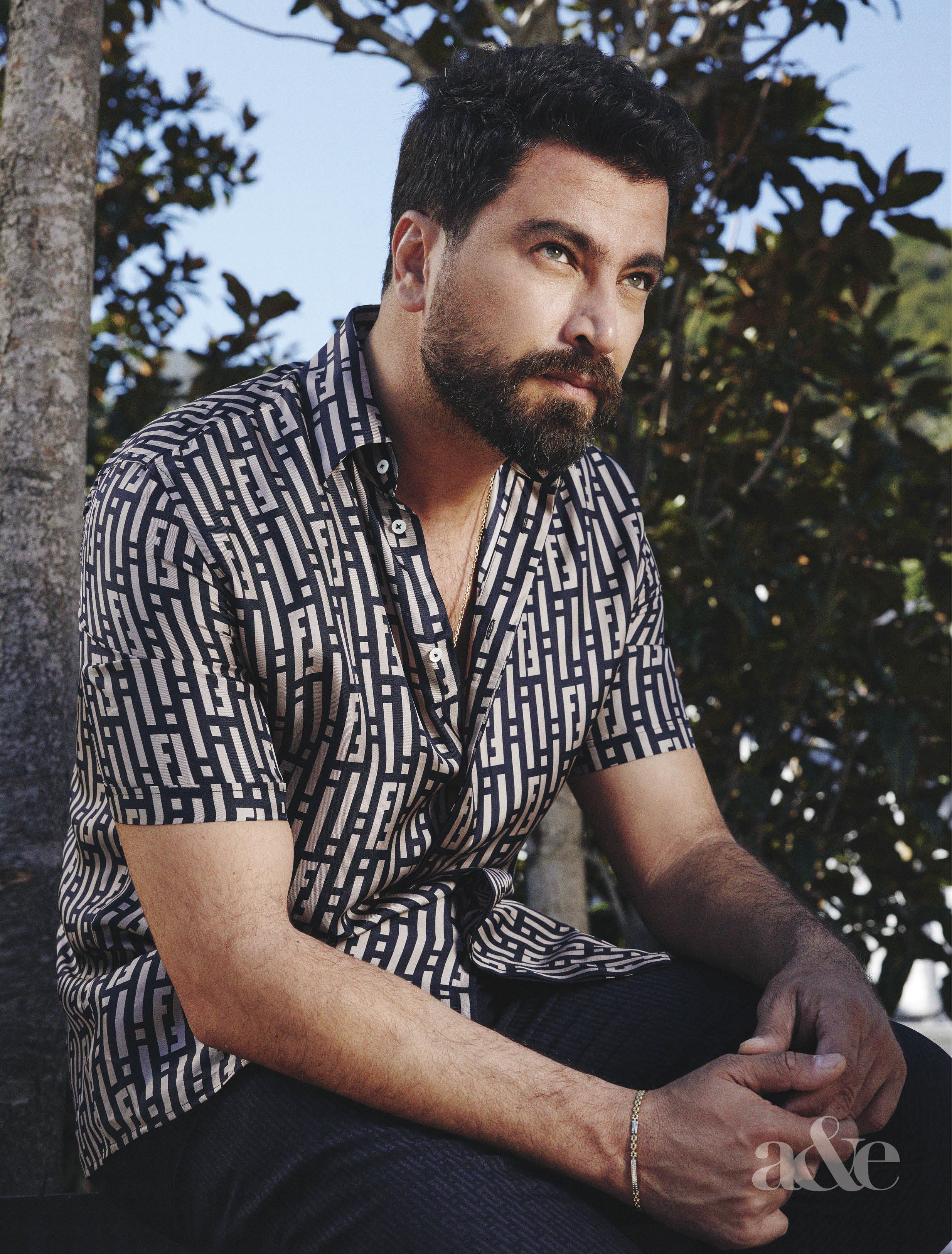
If you look today at this industry; would you say it is a fair one?
The nice thing about this profession is that it is fair because you interact directly with the public. The public impacts decisions. Anybody can become famous at any moment with today’s social media, TikTok and others. But to be loved and truly appreciated is very difficult. Anyone can come and ask to be photographed with you because you are famous, but nobody will do it if he does not like you. Let me rephrase that: maybe somebody asks to be photographed with you just because you are famous and you will appear on social media or on TV; but others won’t unless they are big fans of yours, regardless of your fame. And we have several examples. I really love it when children come and ask to have photos with me as this takes me back to when I was fan of actors and wanted to express my admiration to them. So, this profession is fair because the public likes you or dislikes you, it either makes you succeed or not. It is fair because your efforts are rewarded.

We have seen you in very different roles. What role or character would you still like to play or impersonate?
Could be James Bond 007.
Seems you like action movies
Yes, a lot. The problem today is that most production companies have stereotypes on actors and actresses. For example, they might want to do an action movie with Moatasem, but then they say the audience likes to see Moatasem in a romantic movie as they loved him in that role. And here it is like you got framed and stuck in a certain character and these companies wouldn’t want to take risks and embark on new out of the comfort zone trials. All I can say is that hopefully, I will soon be able to produce my own movie.
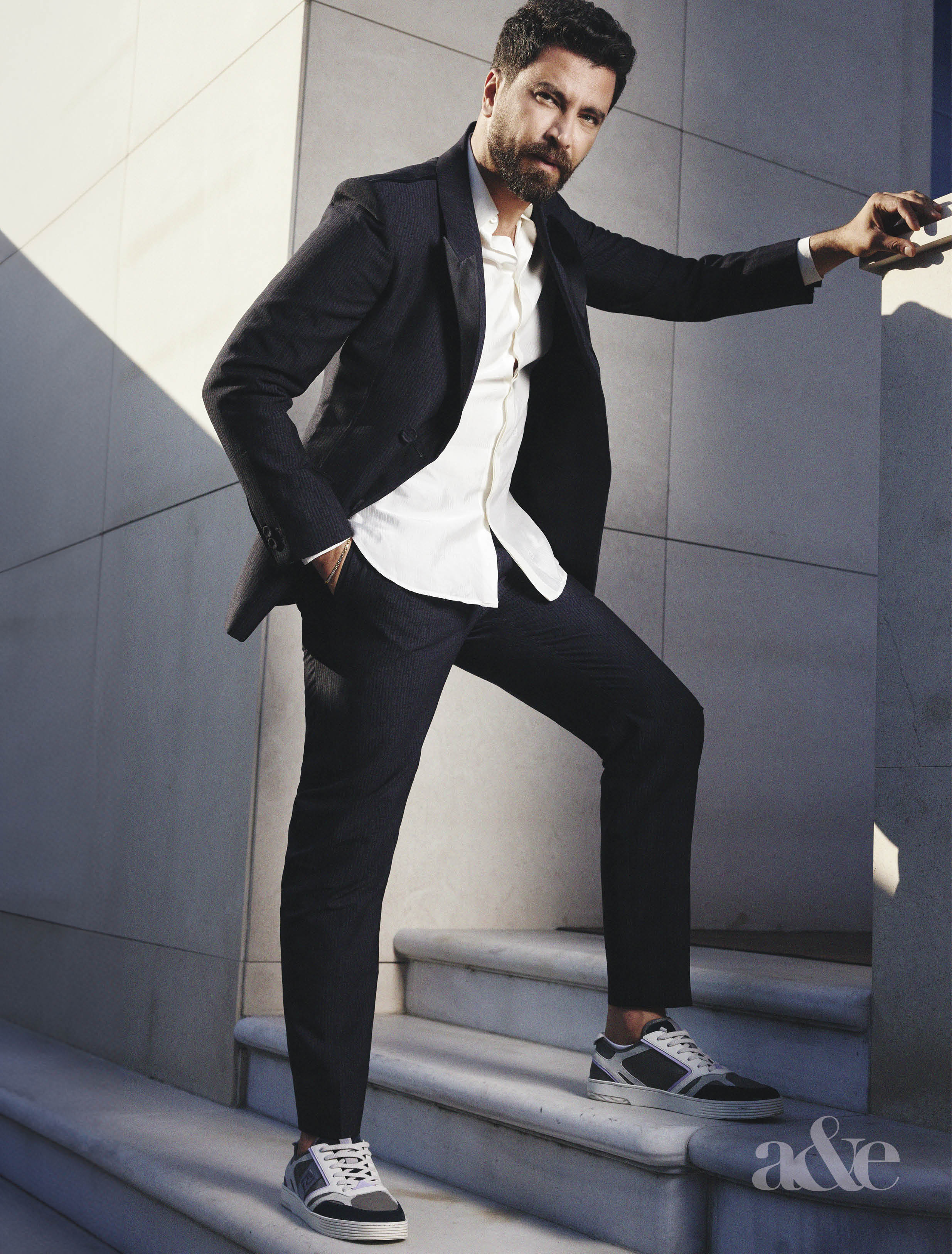
We know that you are currently working on a new project. What can the audience expect from this new project?
The project we are currently working on is a Turkish-Arabized one. It was made in Turkish and an Arabic version of it is underway. The Turkish version has already made a huge impact and success in Turkey.
Regarding Turkish series, why is it that every Turkish series we take and Arabize turns into a success? What are the reasons behind that? What do these productions have that we don’t yet?
These production companies are very smart, and they know how to attract audiences. They take a simple story, but they add to it a lot of details and touch-ups, so it becomes relevant and that is what audiences like, to relate to a story. Of course, there is another kind of elite audience that doesn’t like this kind of work. Personally, I respect all kinds of opinions, but the majority love it. Also, we sometimes hear criticism as to why do we Arabize these series made in Turkish, and all I can say Is that If broadcasting companies like MBC did not know that these projects are profitable and are well received by the public, they wouldn’t venture into them.

It might be also that the stories they tell are honest and very close to reality, therefore people feel they relate?
Yes absolutely.
Without detailing the character in the series you are currently working on, how would you describe the character in one word?
A romantic character, and a leader.
We were just saying how much the audience likes you and appreciates you, and to what extent the public is the best judge. About friendship and gratitude, if you had to thank people who played an influential role in your life, whom would you thank?
Honestly, there are a lot of friends and people who stood by me, and I’ll never forget that. I would say a big thank you to those who were negative towards me because they made me stronger and a bigger thanks goes to myself because I believed and supported myself.
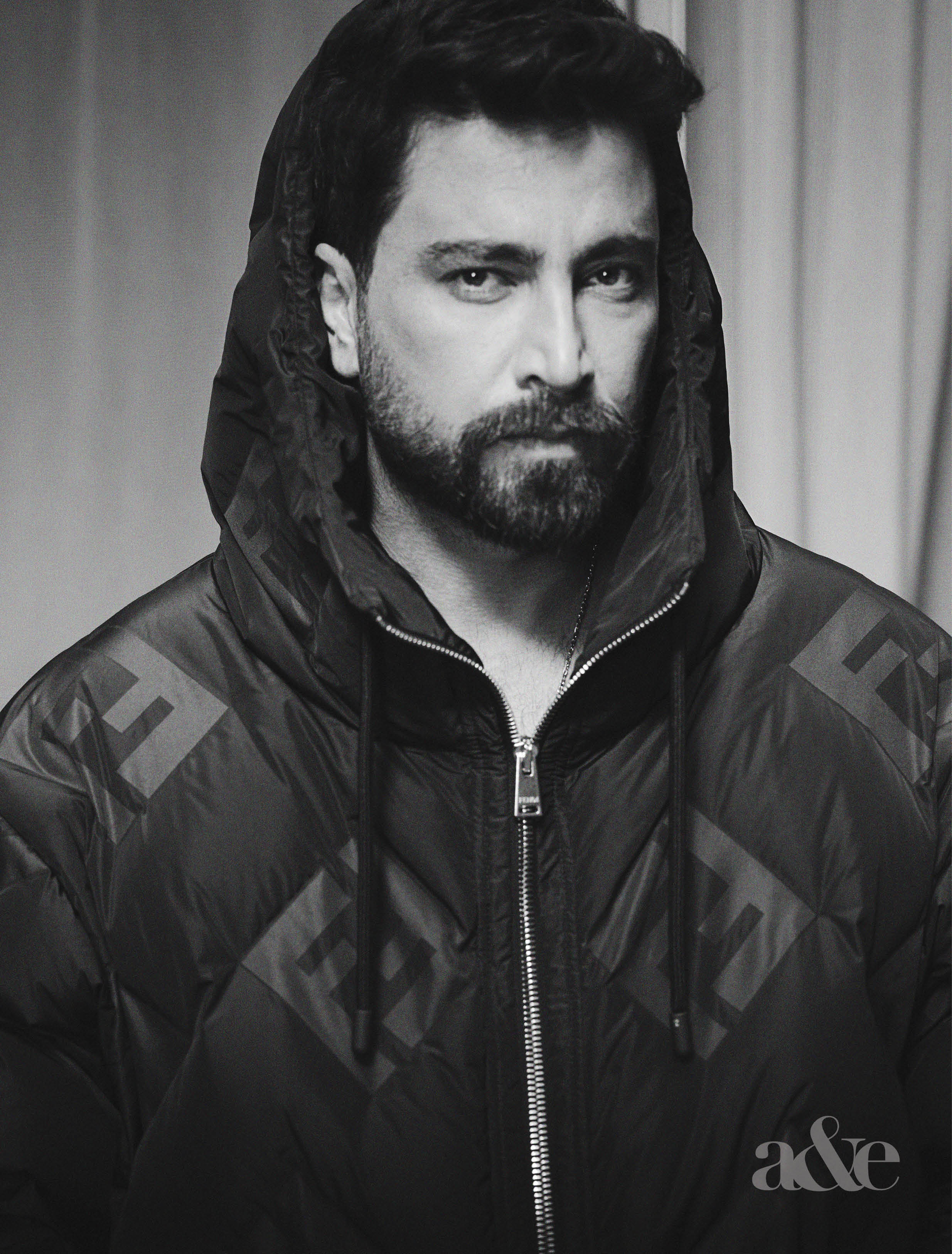
When we face challenges, sometimes we reach to the point of giving up, what do you tell yourself in such moments?
I often reached that point or felt like I was at the edge of a cliff and about to fall. But I never fell. I simply never surrendered, never lost hope. I would keep on trying and working till I would stand up again.
What do you do in your free time?
Sports. I love sports because it helped me a lot during several stages of my life, and it still does. The physical well-being it provides me with is great. I feel sad when I am unhealthy. During my free time, I try to sleep and wake up early and maintain a healthy discipline. This discipline makes me feel happy. For some people, a lack of discipline makes them happy. This is not my case. I feel happier when am committed and don’t waste time.

We spoke about the importance of reading and following what is happening around us and how much this is important for your work. Which book left a great impact on you?
I read a book, a novel, ten years ago approximately by a German author called Herman Hesse, and the book is called: Demian.
Demian is about the story of a person and his friend. The story reminds me a lot of myself and of my relationship with one of my close friends. It reminds me of my own life experience. This book moved me a lot and left an impact.
To what do you say “No” ?
I say “No” to all decisions that oppose my ethics and interests. I have reached to a point in life where I trust myself and the decisions I take. I also say no to treachery and lies.
Are you scared of failure?
Yes, of course.
You have a very large fan audience in the Arab world. What is a message you’d like to tell them?
I have been through difficult circumstances at times. The Arabic audience, their friendship, the messages I received from them were my lifeline at that time. Sometimes you go through challenges and situations that make you doubt everything. Apart from my family, I felt sometimes that there was nobody by my side; I lost trust in everyone around me. But thanks to my audience, I regained trust and confidence. I used to receive unbelievable messages of support on social media from people I don’t know. This for me was priceless and very precious and I will never take it for granted.

If you had to describe yourself in one word, how would you do it?
Simple, not idealistic.
What else would you like to achieve that you haven’t done yet?
Honestly, a lot of things. One of them is to build my dream house, a house I have always imagined and having my own business.
What is happiness for you?
Happiness is satisfaction, Happiness is a decent life. I can find happiness in tiny and simple things.
And what about success?
It is very crucial and I strive to earn it and maintain it.
Balenciaga CEO Cédric Charbit Discusses Disruption, Heritage And The Future
Over the past few years, Balenciaga has changed the fashion industry in ways we haven’t seen, perhaps since the brand’s founder, Cristóbal Balenciaga, first opened his atelier in San Sebastián in Spain back in 1917.
The couturier had a forward-thinking vision that would change the direction of couture forever, creating a brand-new silhouette and designing garments that, at the time, were innovative and different but would eventually become timeless. Fast forward over a century later and Cédric Charbit, the brand’s current CEO, is upholding the founder’s legacy and mirroring his vision with the brand’s new direction. Charbit is leading the brand from a business point of view, while Creative Director Demna employs his creative vision. Together, the two have created something special over the past seven years, and this is only just the beginning. In an exclusive interview ahead of the brand’s Spring/Summer 2024 show in Paris, we sat down with Cédric Charbit to discover more about the Balenciaga way.
Tell us about your journey at Balenciaga since you joined in 2016, and what’s the direction moving forward?
I still remember how I was offered the job and the day I joined the company – it was my first CEO job. I entered a fashion house that I knew from afar, and it was iconic for me. I knew Balenciaga was about couture, beautiful proportions and portraits of elegant women who were creatures from the past that inspire us today. This was what I felt and knew about the brand. I knew Cristóbal Balenciaga was a very powerful couturier back in the day. Still, when I joined, I had an introduction to the brand and Cristóbal and how his passion started to blossom. I discovered that this house and the heritage are perceived as classic and elegant – which is true – but I also discovered that Cristóbal was a radical disrupter when he was young. His vision made him a game-changer for fashion. He changed how people dressed and invented couture as we know it today.
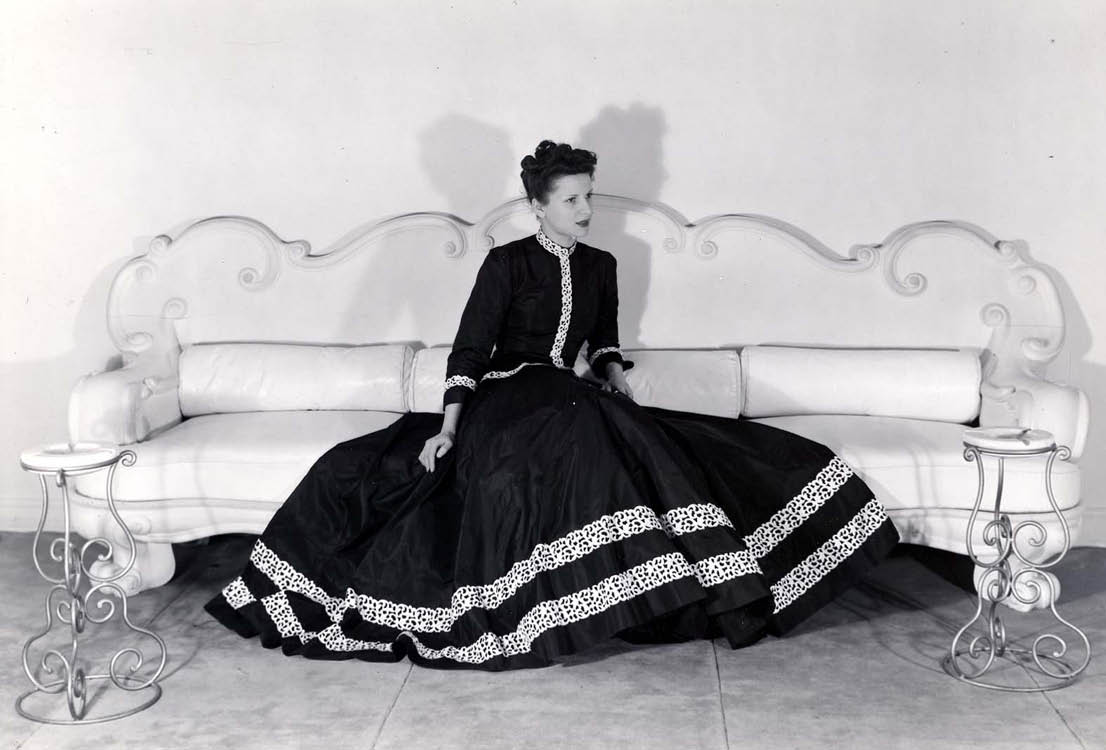
I look at those black-and-white images of beautiful women in beautiful Balenciaga gowns that are amazing because of their shape or volume. When you dig into this, you find that these women were, in fact, the ones who were bold enough to wear designs like this because at that time, people thought they were very daring and extreme. Cristóbal had a good balance between creating beauty and pushing the boundaries of what people would consider beautiful. Some of the old reviews of his shows were very challenging and critical, and it was very interesting for me to dig into this. I discovered a wonderful heritage and his ground-breaking vision, and I understood that the successful recent days of Balenciaga – those of when Nicolas Ghesquière was at the house and now even more, Demna – were linked to the story of the brand as well as vision and creativity. You can’t make it average; Balenciaga is not average. I learned what we bring to the history of couture and fashion, and it’s an enormous legacy. I remember meeting with Azzedine Alaïa when he was still alive, and he would talk about only one couturier: Cristóbal Balenciaga. It is interesting how his legacy inspired other icons of this world.
When I first met with Demna, I understood that the disruption people felt he was causing in the industry was connected to what Balenciaga was. Demna also took the time to understand the legacy, learn about Cristóbal Balenciaga, and dig into the archives. At some point, he just understood it all and decided he would do it well. But because the story of Balenciaga has not been shared that much, our work could be perceived as a surprise. In reality, if you understand that Cristóbal was an innovator from the beginning, you know that being innovative today is part of the heritage.
I wanted to create a team with the most interesting leaders in the industry. When you start something, you think anything is possible. You have the ambition and the desire to build around you, and so I recruited from around the world the people that I felt were in sync with the brand and would be game-changers for the industry in the future. The plan was to change fashion – it sounds pretentious – but we are here to change the norm. The journey was about changing how people dress and think about what they wear. So we grew, and at the same time we put creativity at the centre of the house. For the past five or six years we have been really focusing on the current moment and the future, not so much at the past.
There is a fine line between guarding the brand’s legacy and staying true to what you stand for while being relevant – how do you balance this?
We had to choose: will we invest and push on Demna’s vision, or do we push on the past? We had a fantastic legacy and vision and no time to go backwards and re-explain the story, we had to move forward. What I wanted to do when I joined was reconnect the gap between the brand awareness that Demna has brought back to the house and the business side of the company, subsequently improving the sales. This was our focus for five years, and the brand exceeded two billion dollars, which was a spectacular growth. But it’s not just about growing; it’s also about ensuring that the brand is going in the right direction and that we set the agenda in fashion, and I think that’s what we’ve done for the past five years. I’m proud of this. The time has come to explain not only who we are, but also where we are coming from.
Exemplarily leaders know how to navigate change and challenges – when you face a challenge, what’s your strategy to overcome it?
I think the industry and this world is full of very capable and amazing people, it’s important to stay humble. The world is constantly changing, and it’s about navigating that. I’m fortunate to collaborate with a creative force such as Demna because he has a fashion vision and an overall vision for what we want to do. Interestingly, this is what Cristóbal did this at the house in the first place. In those days, houses were also run by the couturiers, who would have a say on the brand’s strategy. And at Balenciaga today, I think we are all part of the success. It just happens that I’m the CEO of this brand, and we are doing this collectively. And I think it’s super important that we recognise the effort of everyone. It’s not only fair; it makes us grow and improve. I believe the more we include people, the more prepared we are to navigate challenges.
Secondly, you must be true to yourself. Especially with a heritage like the one we have and the aesthetic and values that we have as a brand – we’re not here to follow – so as much as I want to grow, I don’t want to do what others are doing; it doesn’t work for us. I believe in being innovative, and I believe that there are learnings everywhere. You need to collect data, understand the world we live in, culture, and the differences between cultures, and respect people. You can have your own opinions and values, but respect is key. At the same time, it’s important to follow your instinct because if you have the right instinct, that will make you different and make you thrive. So, it’s not only about being aware, smart, and analytical.
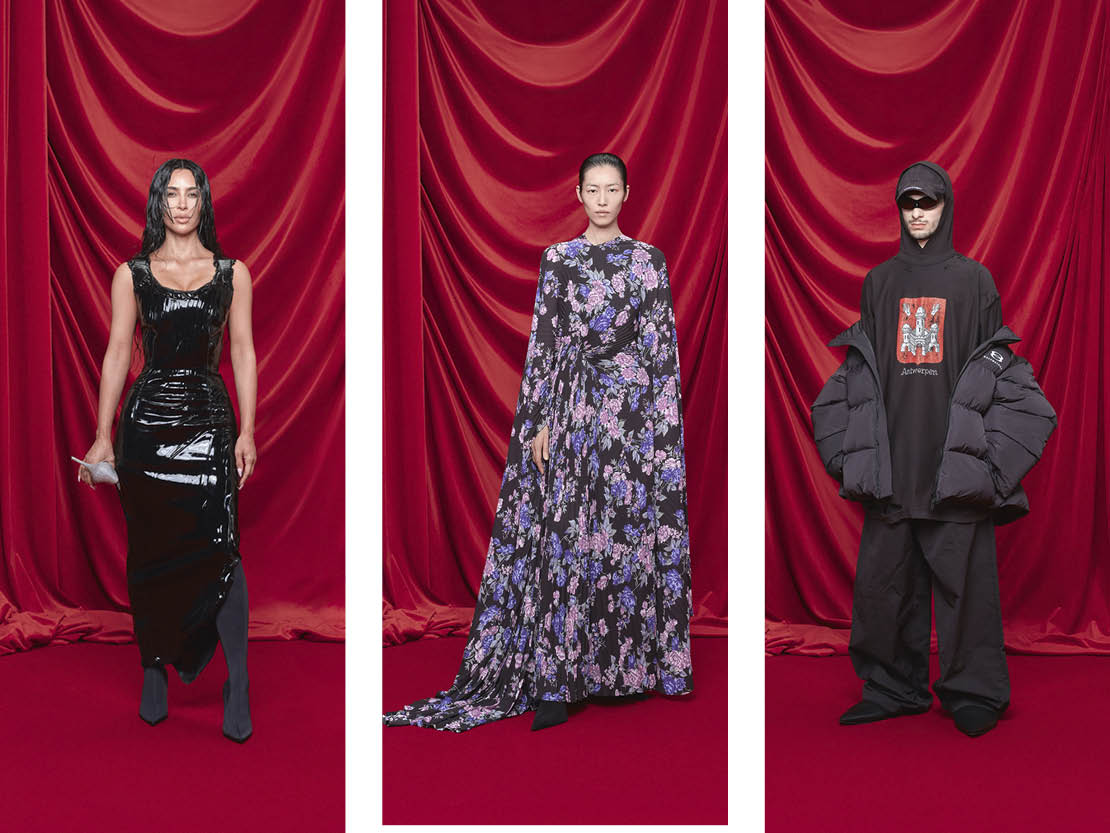
Balenciaga Summer 24
There is fierce competition in the industry – what in your opinion makes a successful luxury brand today?
To be pragmatic, the numbers are important and they speak for themselves. The second thing that comes to my mind is the craft. If you remove craft from what we do, it will take you nowhere. And most importantly, what truly makes a luxury brand successful is a very small sparkle or element. It could be an event, concept, or emotion that someone had a long time ago. Cristóbal back in the day, he was ahead of his time; he had a vision. If you look at all the brands I respect in the industry, someone at some point had an idea or vision that made a difference. It was a turning point, and there is always this unique storytelling element behind the success of a brand. These people could be no one at the beginning, but they might have a very small idea that eventually becomes a concept that changes the world for decades or centuries.
The revival of Haute Couture was a big moment for the brand – how does this category serve the business today?
Back in 2016, when I first joined, I met with Demna, and we started discussing couture at the brand and how it is a couture house, and this is something we should have. Then for the next four years, we worked on the brand to get it back where it should be in terms of relevance and positioning, but when we had the opportunity to re-do couture – because couture is who we are and where we come from – we immediately took it. Couture is important because it defines us as a brand. I believe what Balenciaga brought to couture back in the days was so major that I felt it was right for us to be back there, doing our job and contributing to the legacy of couture itself. It’s also great that Demna has brought his creativity to the highest couture segment. Today I think Balenciaga is about ready-to-wear AND couture, men AND women, and we are relevant.
In the past few years, the Maison has had major growth in terms of social media and growth in awareness – what was your strategy behind this powerful image?
It became quite obvious that whatever we were doing at Balenciaga was extremely impactful on the industry. I do believe that fashion and entertainment are connected. For example, we entered the gaming industry three years ago, giving us access to billions of users. And this is something the fashion world very much ignores. It is a cultural phenomenon that fashion was never connected to before. There are other elements as well that are not connected to fashion. Balenciaga has been working with the World Food Programme to fight against world hunger, which we put at the forefront of the show. We wanted to use our brand to raise awareness and use our platform to raise awareness of things that are not so much on trend. The most powerful thing we can do today, with all our millions of followers, is make an impact.
One very strong impact we made was when Demna came up with the idea of working with “The Simpsons”. That was something that was so connected to the world and I think we have been able to establish the links between pop culture, entertainment, art and fashion and we have been able to materialise this and become one of the most influential brands of today. For me, it was natural to go beyond the crafts and the clothes to have a 360 approach, and I feel the more we do, the more things people buy into but also believe in. What we do, people consider important, so we also need to be very aware of the message we are sending. The brand has become so exposed that it is important that we act with care and think through every action even more.
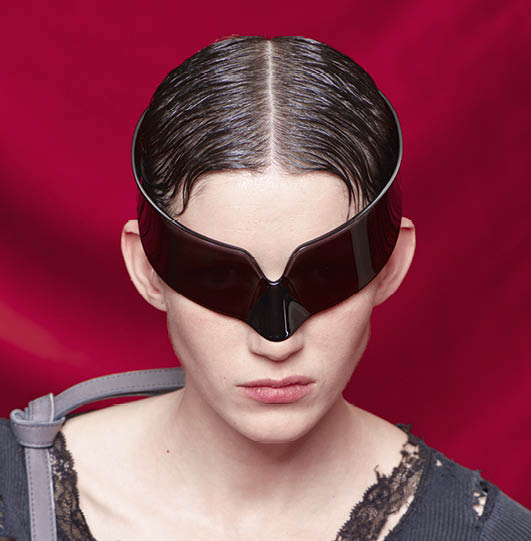
Balenciaga Summer 24
Tell us about Balenciaga in the Middle East and what’s in the pipeline for our region.
Our presence in the Middle East was established a long time ago. We now have four partners across the region. We started integrating our stores in the Middle East in 2018; it’s a long process to build our long-term vision constructively. I realised when we started getting more involved in the business in the region that Balenciaga resonates there very well. We have an aesthetic that’s respectful yet daring, creative and unexpected, and I understood that clients in the Middle East were super happy to welcome this. It was one of the first regions to pick up on the brand in the very early days. I saw some of our VICs being extremely passionate about the brand; they would buy within the region but also when they were travelling. The level of sophistication and connection between the client and what we were doing was very interesting. It was also interesting to see which other brands they would mix Balenciaga with, which helped us understand the region’s brand perception.
We have had amazing moments in the Middle East, such as the opening of the Dubai Mall store, and now that we have our own stores rather than franchises, the level of satisfaction is fantastic. We have a very big team there now, and it’s a dream. We also had a big moment with the 2022 World Cup in Qatar when we opened a store, which was such a highlight. We have many great relationships with clients in the Middle East, and it’s very authentic and true.
In the pipeline, we have an exhibition and event that will be travelling to the Middle East so that people can discover more about the bridges between now and the history of Balenciaga. Because of who we are and where we come from, the concept of timelessness at Balenciaga is not a goal, it’s the consequence of creativity. We create something new, and eventually, over time, it becomes timeless and iconic. What Balenciaga does is take something that in the first place, may have been shocking and makes it timeless over time. It’s very interesting, and I think it’s important for our fans all over the world to understand more about who we are and where we come from.
Also, when I look at the couture collection and what we have in our archive, I think it’s important that we share this but with a unique point of view. We recently did an exhibition about our customers’ dresses back in the day, and it was beautiful. These dresses are amazing, they weren’t taken from the runway collections but directly from the customers so you could see their body shapes and understand how real women wore them. It highlights how couture was a service to clients to make them feel comfortable and beautiful with who they are and the beautiful body they have. Couture has always been inclusive and diverse; we are here to serve our clients and want to ensure every woman and man looks amazing in our designs. A lot of our clientele know the brand through the lens of what we do today, but very few know what we have been about for all these years, so we want to share more of our heritage through events and exhibitions, but not in a classic way, in a Balenciaga way. We don’t want to go backwards, but we want people to understand why we do what we do today and where we’re coming from.
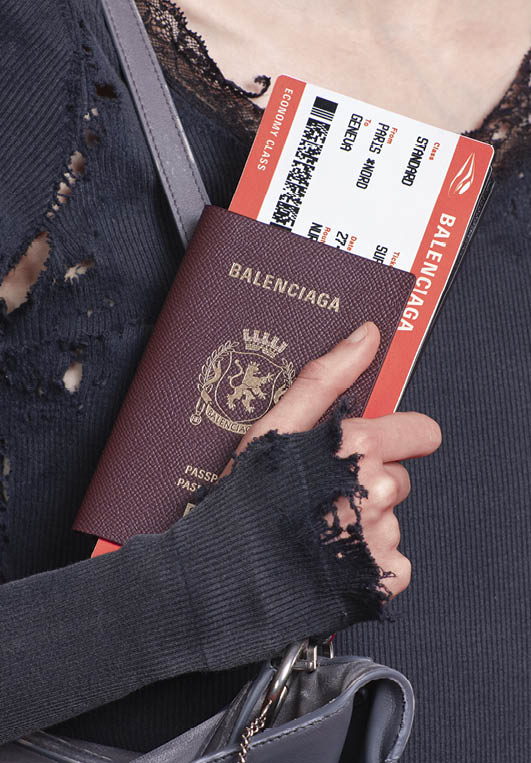
Balenciaga Summer 24
What’s the professional motto that you live by?
Be curious, as I’m learning every day, but curiosity is something you must have. Also, have discipline in everything you do and put in the work. If you do the work and the right things. All will come as a consequence.
What has been a lesson you have learned through your career?
There are so many lessons we are learning every day. You may perceive yourself through the success you have, and you look at yourself and consider yourself based on the success you could have. I realised and learned that your success does not define you; at the same time, you are not defined by your mistakes or the failures you have in your life. Success doesn’t define you; failures don’t define you. You are the sum of all this, making you a great human being and leader. I believe in experience and growing and I’m happy to say that all the experiences we have throughout our journey are meant to be so that you grow and become a better person. Life is a journey, and we should embrace it all, even failures.
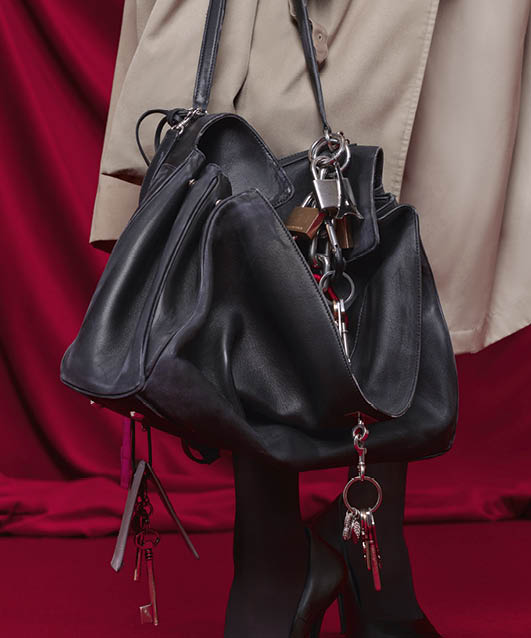
Balenciaga Summer 24
What advice do you wish someone had given you when you were young?
I think I got a lot of great advice from my parents, friends, and business mentors and so I think I got the advice I need. I was lucky, and I am very grateful for this. Pieces of advice I remember include ‘stay true to yourself,’ ‘be respectful,’ and ‘stay humble’ – all this I got, and I realise I was so lucky to receive this.
How would you describe Balenciaga in one word?
Forward.
What can we expect from the SS24 show ? A hint?
This is interesting because this is a question, I often ask Demna. He would say to me: “Expect the unexpected”. The brand has entered a stage where creativity is at the forefront, but at the same time, we are in maturity. I think the brand is finding the right balance between what we expect and what we don’t expect, and I think this is a combination of the things that makes Balenciaga so specific. I believe in creativity and freedom, so I am excited about what’s coming next.
Rolls-Royce Motor Cars CEO Torsten Müller-Ötvös Discusses The Marque’s New Spectre Model
Rolls-Royce unveiled its first electric car – the Spectre – in October 2022, and now, 12 months later, the first models are arriving in the market.
The marque describes the new design as ushering in a bold new future for electric design, calling the vehicle “the world’s first ultra-luxury electric super coupé, [which is] a Rolls-Royce first and an electric car second [with] no concessions or compromises in terms of interior space, comfort, performance or ride quality.”
The Spectre is the start of an ambitious new era for Rolls-Royce Motor Cars, which has committed to making its entire fleet of vehicles 100 per cent electric by the end of 2030. “This is the start of a bold new chapter for our marque, our extraordinary clients, and the luxury industry. For this reason, I believe Spectre is the most perfect product that Rolls-Royce has ever produced,” explains Torsten Müller-Ötvös, the CEO of Rolls-Royce Motor Cars. But this isn’t the first time the luxury automotive brand has envisioned an electric future for cars. In 1900, motoring pioneer The Honorable Charles Stewart Rolls made a bold prediction in a magazine article: “The electric car is perfectly noiseless and clean. There is no smell or vibration. They should become very useful when fixed charging stations can be arranged,” he declared. Those words, written four years before his historic first meeting with Sir Henry Royce, were to prove prophetic, but it was more than a century later that his vision was finally realised by the company they co-founded.
Today, Rolls’ vision has become a reality. “The Spectre possesses all the qualities that have secured the Rolls-Royce legend.” Müller-Ötvös said in a statement. This incredible motor car, conceived from the very beginning as our first fully electric model, is silent, powerful and demonstrates how perfectly Rolls-Royce is suited to electrification. Spectre’s all-electric powertrain will assure the marque’s sustained success and relevance while dramatically increasing the definition of each characteristic that makes a Rolls-Royce a Rolls-Royce.” He added.
A&E’s Editor-in-Chief was among the first to drive this historic innovation. Heading to Napa Valley, California to meet with the Rolls-Royce global team, we were given exclusive access to get behind the wheel of this monumental creation. At the stunning scenic location chosen for that experience, we sat down for a reflective and inspiring chat with the man who has spearheaded the development of Spectre, CEO Torsten Müller-Ötvös.

If you look back at your journey with Rolls-Royce, what has been your proudest moment?
It’s tough to pick one particular moment as there have been many. If I look back to when I joined, I started to be proud when the first ideas came together, and I saw that we were on a good course to rejuvenate the brand. We have seen many significant milestones for the brand over the years – we have introduced Wraith, Dawn, Black Badge, and then later Cullinan – all I would call key milestones. We also brought back Coachbuild. But probably the most important moment is now with the launch of Spectre. Launching the very first electric Rolls-Royce in the brand’s history is a crowning point for me and my career. It’s an extraordinary moment. Our team have worked so hard to make this happen, making me unbelievably proud.
How challenging is it to remain number one and a global leader?
The pressure is constantly on your shoulders. I remember my first day in Goodwood. I stood in front of 800 people working for the brand at that time, and I felt the responsibility to get it right and to make sure that the founding fathers would be proud of what we were doing. I don’t think there is any set recipe for how we did it; we have done so many different things. The vision has always been to be more addressable, relaxed, and casual while still staying as top luxury. We needed to address younger clients and those shaping the image and the brand’s perception, such as influential and famous people around the world, etc. We now cater for almost 25 top celebrities, which has helped us get to the position we are in today. You should never rest on your laurels, and I always push to go further. There is no perfection; perfection is a dream.
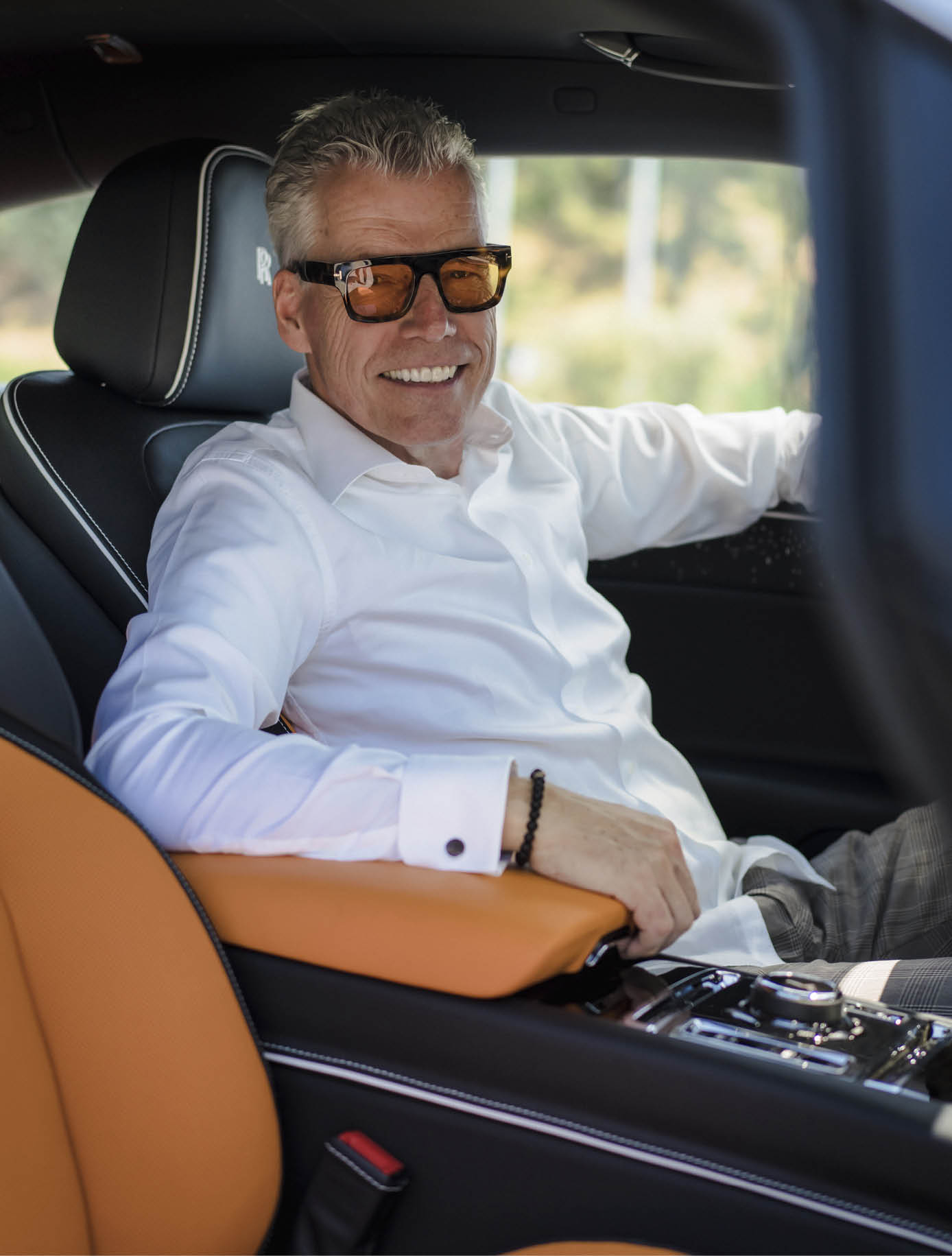
What advice would you give to younger aspiring professionals in the industry?
First of all, you need to have a good strategy in your mind, and once you work this out (and it will take a lot of time), you need to stick to it and push it through. You might encounter many obstacles in your way, and you need to have a certain stubbornness and dedication. Once you believe in something, go for it, and don’t get distracted from your goal, no matter how difficult things might get. Once your strategy is great, you will always be on the right path. Throughout my career, I fought against so many obstacles – Black Badge faced some serious obstacles at the beginning when we conceived it, and we also had challenges with Cullinan initially – but persistence got us through. I must say, I like challenges, and the more complex the challenge, the more you celebrate once you achieve your goal. I believe you must take the time to celebrate your achievements. Otherwise, you can become too fixated on what isn’t working, and you can drive yourself into a negative mindset.
Is there anything that you would have done differently?
There is not much that I would have done differently. I’m very happy with how we have done it – not just me, but the entire team – and I’m very satisfied.
How do you balance carrying the legacy of the brand while remaining relevant today?
Heritage is obviously important, but you shouldn’t always emphasise on heritage; it shouldn’t be the guiding light. What is most important is the feedback you receive from clients, what they find important, what they find relevant in terms of global trends in the luxury industry, as well as looking at what is going to be the latest and greatest in three or four years from now, and how you can best engineer and develop it and create an experience for clients. You need to watch your roots, and whenever you do something important that impacts the brand, you need to keep heritage in the back of your mind and ask questions like, ‘will this fit with what we have done throughout history?’, I would never sacrifice certain principles of the brand for anything.
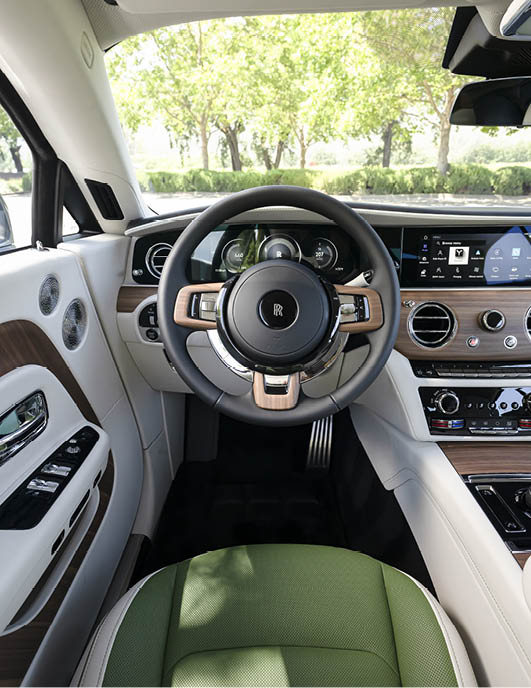
You once said that ‘luxury is rare’ – how do you think today’s consumer is translating luxury?
Rarity means that you don’t see a Rolls-Royce on every street corner, and even if you would, you need to make sure that the experience around what you offer is so great that it is something you only get when you buy a Rolls-Royce.
I’m convinced that you should never push volume. Anyone can do that; it’s easy – lower the price, and yes, you will sell more – but at Rolls-Royce, we have a very educated, successful client base, and we want to keep it that way. The value of what our clients are getting today is much more than what they received thirteen or fourteen years ago. Today, the brand has a wide array of bespoke offerings; the brand is seen as contemporary, cool, and highly relevant. You are buying into an experience that has taken the brand to a new level.
What is a message you would tell your younger self?
Firstly, be humble and stay true to yourself. Secondly, trust your gut feeling. There is a lot of decision-making that’s only based on rational considerations, and I think you should start listening to your gut whenever you are making an important decision. I think this is something you learn more with age, but I can really recommend trusting it.
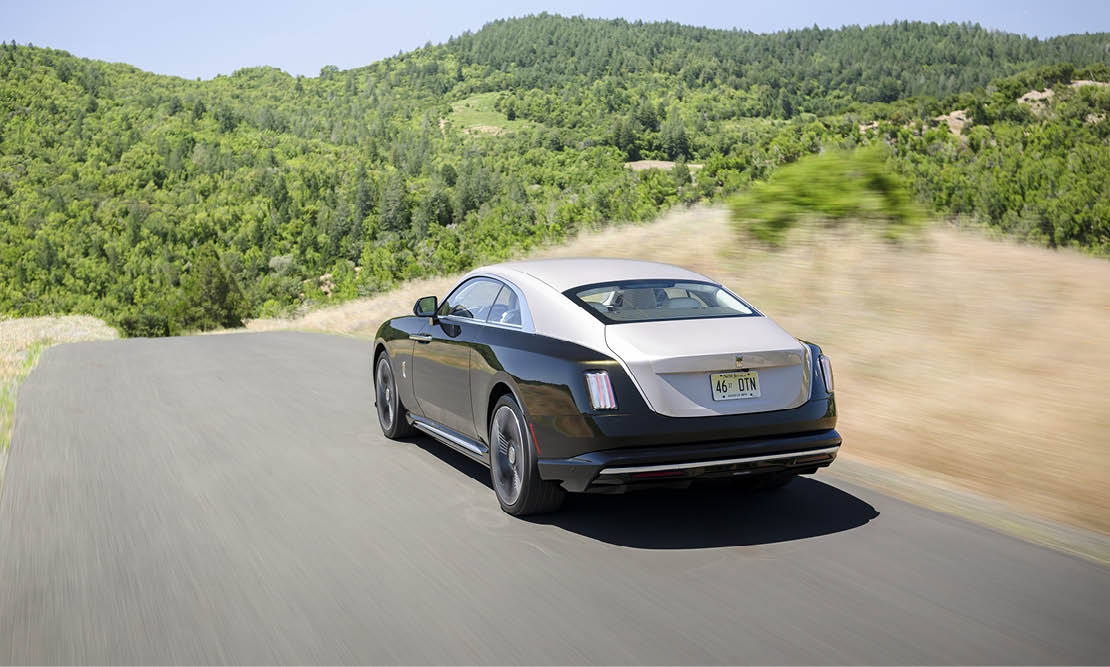
Tell us about Rolls-Royce in the Middle East and why this market is important to you.
The Middle East is not only a region at the heart of Rolls-Royce, but also somewhere that’s close to my heart. My wife and I often travel to Middle Eastern destinations for personal trips because I think it has a beautiful culture of hospitality, friendship, and happiness, and I really cherish this.
As a brand, I feel, in a way we have a similar culture to that of the Middle East. The Middle East has always relied on means of transportation that are highly reliable and loved by the entire family. This dates back hundreds of years, horses were the only means of transport, but they became part of the family. In a strange way, I feel like families in the Middle East have that relationship with their cars today. I think this is why our Middle Eastern clients cherish bespoke, they appreciate eclectic colours, embroideries, and all of the personalisation we can do, and I believe all this is very fitting to Middle Eastern culture.
If you could use one phrase to describe where you see Rolls-Royce in ten years, what would it be?
Flying high on an electric cloud.
The Founder Of AMARAH Womenswear Discusses Inspiration and FW23
Arwa Alkadi founded her womenswear brand AMARAH in 2019 after realising her passion for design.
With a background in finance, the Saudi-based designer decided to give up her corporate career and take her passion to the next level. Using her finance knowledge and innate design talent, she launched her brand with a vision of portraying new-age romance through a contemporary lens. Arwa’s designs combine traditional silhouettes with contemporary designs, making them wearable for all women, whether she dresses modestly or is looking for something that will push the boundaries of fashion. Her designs celebrate bold femininity with an elevated spirit.
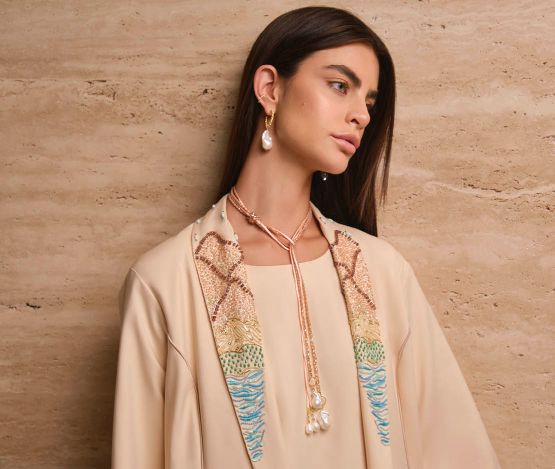
Arwa’s latest collection, “The Drop”, will launch this fall, and as the designer prepares to reveal her latest looks, we caught up with her to find out more about the launch and her vision for the future of the brand.
Tell us about the vision of your brand and how it came to life?
I envisioned creating a contemporary brand that builds an elegant, modern wardrobe. Amarah came to life when I realised it was possible to pursue my dreams towards my passion for style and fashion and inner creativity.
Who is the Amarah woman?
The Amarah woman gracefully captivates a blend of femininity and unconventional style, exuding a unique and powerful allure.

How would you describe your designs?
My designs embody an understated aesthetic and aura through elevated silhouettes, luxurious fabrics, and refined details. With immense attention to detail, I strive to create a harmonious fusion that captivates and inspires.
What can you tell us about the latest collection?
Our latest collection, aptly named “The Drop,” is a captivating capsule collection featuring limited edition pieces, including exclusive pieces from the Saudi Cup. The name not only represents the concept of a curated selection but also symbolises the graceful descent of water, which is intricately woven into the designs. The collection exudes the essence of aquatic life, adorned with delicate seashells and other marine elements, truly capturing the enchanting allure of the ocean.

What made you decide to turn your passion for fashion into a career?
I have a background in finance, which gave me great insight into how to run a business; however, fashion has always been a part of my identity. My experience in finance and my love for art and design helped me map out how I could turn my passion into a brand that evokes effortless elegance with a powerful aesthetic.
What do you make of the fashion and design industry in Saudi Arabia today?
The fashion and design industry in Saudi Arabia is evolving rapidly, driven by a pool of talented creatives who are not afraid to challenge conventions and explore new horizons. With a blend of cultural heritage, innovation, and global influences, Saudi designers are making a mark on the international fashion stage and contributing to the growth and vibrancy of the industry.
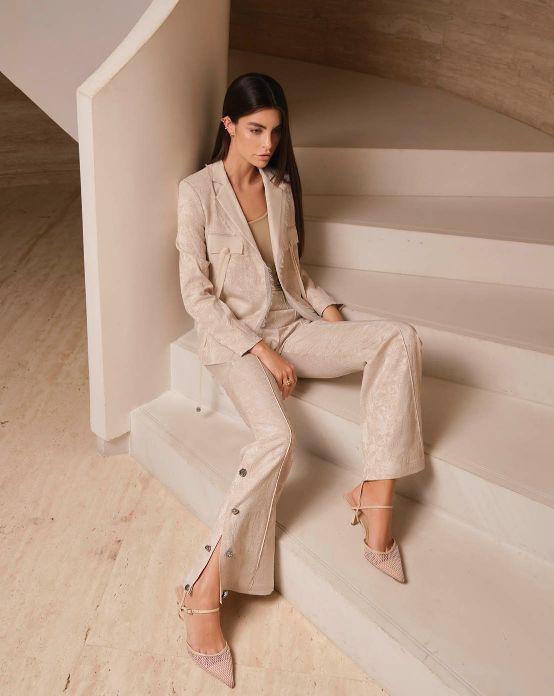
How do you think events such as Saudi 100 Brands are helping to showcase regional talent?
Events like Saudi 100 Brands are instrumental in showcasing our rich and diverse regional talent and providing local designers with visibility and recognition in the global fashion industry. They offer a much-needed platform for Saudi designers to display their unique perspectives, cultural influences, and artistic prowess, creating opportunities for collaborations and business expansion.
What more would you like to see being done to support upcoming designers in the region?
To provide emerging designers with opportunities and exposure to showcase their work on international platforms, and access to industry networks and leaders to help them establish the brands beyond the perception of being solely a modest brand.
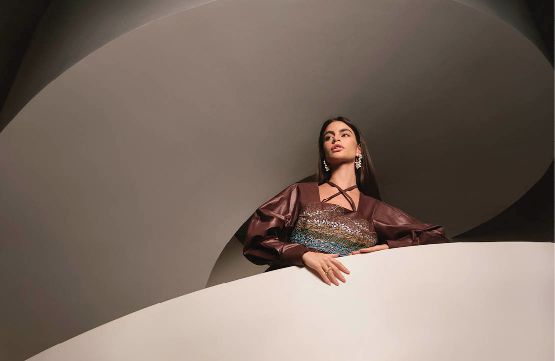
What is your current and planned retail strategy for AMARAH?
Our retail strategy focuses on establishing a strong local presence while strategically expanding our reach internationally. We aim to increase brand visibility and accessibility through partnerships with reputable retailers.
Who are some brands or designers that inspire you?
I am inspired by Maria Grazia Chiuri, the women’s Creative Director of Dior. Chanel, Prada, and Elie Saab also inspire me as all these designers remain timeless in their work yet invite a sense of never-ending discovery.
Reema Al-Mokhtar, Director – Travel Trade Marketing, Discusses How Red Sea Global is Shaping the Future of Travel in Saudi Arabia
Mega-project developer Red Sea Global (RSG) has set out to change the face of tourism in the Red Sea region of Saudi Arabia, leading to a more sustainable future with the responsible development of its projects.
Under Saudi Arabia’s Vision 2030, RSG is in the process of creating ground-breaking developments that will enhance the country’s economy and drive tourism to the beautiful Red Sea region of Saudi Arabia. The Group’s projects strongly focus on sustainability, with a unique and modern way of developing areas that enrich the community and natural landscape but will invite international tourists to discover more of the undiscovered region.
Two of the group’s biggest projects, The Red Sea and Amaala are set to become the first to be completed later this year. These two luxury regenerative tourism destinations will set new standards in sustainable development and position Saudi Arabia on the global tourism map. Reema Al-Mokhtar, Director – Travel Trade Marketing, is tasked with driving global travel trade marketing and increasing awareness and visitation to the destinations, in cooperation with the strategy of the local representation companies on international markets. Here, we find out more about the mega-projects and what they will bring to the country.

Ummahat Islands – Overwater Villa
What can you tell us about the progress of Red Sea Global’s destinations and where they are at today?
July 2023 marked six years since The Red Sea was first announced by His Royal Highness Crown Prince Mohammad bin Salman as an international tourist destination as part of the Kingdom’s Vision 2030. Now, we are preparing to unveil The Red Sea destination to the world, as our first three hotels and phase one of our solar-powered international airport are on track to open this year.
Opening this year are the inland resort Six Senses Southern Dunes, The Red Sea, and our two resorts on Ummahat Island, the St. Regis Red Sea Resort and Nujuma, A Ritz-Carlton Reserve. This represents a huge milestone for The Red Sea, as it will become the first of Saudi Arabia’s original giga-projects to receive visitors.
Following this, a further 13 resorts of phase one will open in 2024. Infrastructure works are well advanced at our second inland location, Desert Rock, a unique mountain resort being built into the rockface, which is more than 50 percent complete overall. Work is ongoing on all 11 resorts and infrastructure across our hub island, Shura. Red Sea Global (RSG) continues to maximise off-site manufacturing, with precast structures progressing rapidly. On Sheybarah Island, RSG has installed all 38 stainless steel overwater villas. The first beach villas have arrived at the island and are now being installed.
Additionally, we will open Red Sea International Airport (RSI) later this year, initially for domestic flights and by next year for international flights. Created with a sustainable approach in mind, guests are guaranteed a seamless and luxurious journey as they arrive to and depart from their hotels at The Red Sea or Amaala. RSI will be pioneering a new operational approach to reduce the time spent completing the arrival or departure process by removing the baggage claims process. Instead, luggage will be delivered directly to guests’ hotel rooms.
At Amaala, Phase One, which is focused on the Triple Bay master plan, is well underway, with our first guests to be welcomed in 2025. It will consist of eight resorts offering upwards of 1,200 hotel keys. We recently announced five major hospitality partnerships at Amaala: Clinique La Prairie, Jayasom, Rosewood, Six Senses and Equinox.
How does the project align with the Saudi Vision 2030?
Tourism is an integral driver for economic diversification in line with Vision 2030. Destinations like The Red Sea and Amaala will make the unique coasts and natural landscapes of Saudi Arabia accessible to visitors in a way that was not previously possible. They will play a fundamental role in positioning the Kingdom as a leading global destination and putting Saudi Arabia squarely on the map of international luxury tourism.
RSG’s goals include creating a vibrant society and building a thriving economy through community-focused initiatives supporting youth empowerment and upskilling. We’re committed to providing job opportunities for ambitious men and women in the Kingdom, with our two existing projects set to create upwards of 120,000 direct and indirect jobs. Indeed, as we look to welcome our first guests later this year, we are hiring around 100 people each month to fill a wide range of roles, from hospitality staff, water sports managers, and dive centre instructors to sustainability reporters, interior designers, and data analysts. Many of these roles will be filled by Saudi nationals who have come up through our graduate and vocational training programs.
The Red Sea and Amaala are expected to contribute around 33 billion riyals annually to Saudi Arabia’s economy upon completion.

Six Senses Southern Dunes
What goals do you hope to achieve with the project upon completion?
We are developing two of the world’s most ambitious regenerative tourism destinations to bring together luxury, nature, and sustainability in unparalleled experiences. Through our breathtaking and diverse topographies, our goal is to welcome both domestic and international travellers and make Saudi Arabia a highly sought-after global destination. A destination that surprises, excites, and is admired by all. We are committed to enhancing habitats in ways that continually renew the environment, adopting and developing pioneering technologies that optimise operational efficiencies, and using scientific research, data, and technology to make informed decisions.
What more can you tell us about the project from a sustainability angle?
The Red Sea and Amaala are the first-of-their-kind destinations in Saudi Arabia, where travellers can explore one of the world’s last true hidden treasures with their pristine islands and thriving marine life. But to ensure we open these gateways responsibly; we are transforming the industry through pioneering regenerative tourism. Regenerative tourism is not just about following sustainable practices; it seeks to improve the environment in the area being developed, which benefits the local community and the economy overall. We have several key projects underway, such as our plan to plant and restore as many as 50 million mangrove trees and our innovative floating coral nurseries to enhance our coral reefs.
Once fully operational, our resorts will send zero waste to landfills with our sustainable waste management system. We are also set to power both destinations with 100% renewable energy 24/7, and The Red Sea will become the world’s largest tourism destination run solely on clean power.
Our sustainable practices will also trickle down to guest experiences – from banning single-use plastics to exploring a smart and sustainable mobility network with electric and hydrogen-powered vehicles, such as electric bikes, at our resorts. We’re also exploring experiences that allow guests to be part of making a difference, and to avoid over-tourism, we are capping annual visitors to The Red Sea at one million and 500,000 at Amaala from 2030 onwards.
Ultimately, our ambitions are aligned with national net-zero carbon emission strategies and the Saudi Green Initiative and are the key to protecting the natural environment for future generations.

Six Senses Southern Dunes – Villa
Tell us a little more about the Amaala project.
Amaala is our integrated wellness haven located on the north-western coast of Saudi Arabia. It spans over 4,155 sq km and is set to evolve the concept of luxury travel with an exceptional well-being offering inspired by the purity of the Red Sea. It is a year-round destination with a pristine landscape, diverse natural ecosystems, and unbridled access to local culture and heritage.
Supported by world-class resorts, residential establishments, and recreational facilities,
Amaala will be ready to welcome its first guests by 2025. We have already announced the first five sensational resorts: Clinique La Prairie, Jayasom, Rosewood, Six Senses, and most recently, Equinox Resort.
Two of Amaala’s signature attractions will be the Red Sea Marine Life Institute – an educational and scientific research centre designed by world-renowned architects Foster + Partners – and the Triple Bay Marina Yacht Club, which is set to become an international hub for luxury yachting.
How do you think these developments will help to raise Saudi Arabia’s profile as a tourist destination?
We are ready to deliver countless extraordinary moments on our journey to positioning Saudi Arabia proudly on the world stage as a must-visit luxury destination offering diverse typography, colourful culture, a strong economy, exceptional experiences, and a full-year calendar of events that caters to all. Both The Red Sea and Amaala are setting new benchmarks for tourism. They provide a unique blend of immersive experiences that combines a spectacular natural environment, a creatively designed built environment, easy access to unique cultural heritage sites, and the highest standards of personalised luxury service.

Shura Island
Who is the audience you are trying to attract?
The Red Sea and Amaala are carefully designed destinations catering to affluent travellers, from honeymooners and adventure seekers to wellness enthusiasts, families, and more, where guests will enjoy cherished transformative experiences. Our destinations span an incredibly diverse area, ranging from idyllic islands and vibrant coral reefs to majestic mountains, dormant volcanoes, and dramatic desert dunes. There’s nothing like The Red Sea or Amaala anywhere else in the world! We expect our first batches of guests to come from Saudi and the surrounding GCC region. As we go into 2024 and beyond, we expect a 50-50 split between GCC and international visitors.
What are the biggest challenges you face with the projects today?
Saudi Arabia has various strengths, such as its historical heritage and the biodiversity of the Red Sea, yet these are often not well known abroad. Our aim is to show the world the many delights that Saudi has to offer. We will soon launch our destination campaign, inviting the world to visit The Red Sea, and challenge their expectations, to see beyond
Another challenge is developing in such a remote, diverse, and vast landscape while ensuring the environment is protected at all costs. However, this is a challenge we have faced head-on, allowing us to set new standards for sustainable development. When guests arrive, we hope they will be amazed at the exquisite nature and beautiful resorts and how they complement one another.
Can you tell us a little more about the Mangrove Nursery and why this is a key project in the vision of the country’s development?
The conservation and establishment of a sustainable mangrove ecosystem is a vital part of our commitment to protect and enhance the natural environment of our destinations. Mangrove trees are among the most efficient plants for carbon sequestration, which can absorb 5-10 times more carbon than other plants. As such, the successful cultivation of seedlings is a central pillar in our ambition to achieve a 30% net conservation benefit by 2040 across our destinations and plant 50 million mangrove trees by 2030.
Established in partnership with the National Center for Vegetation Cover (NCVC), the nursery has successfully cultivated 150,000 seedlings to date, with the goal of growing a total of 500,000 seedlings. These seedlings will then be planted across RSG’s projects.
The dedicated mangrove parks will be open for guests to explore and learn more about the important contribution of mangrove trees to the ecosystem when The Red Sea destination opens to its first visitors later this year.

Shura Island
In this issue, we celebrate Saudi National Day – what does this day mean to you and the company?
As a Saudi national, I feel great pride and responsibility towards my country. Guided by the ambitious Vision 2030 framework that sets a bold blueprint for a revitalised future for this great nation, RSG is set to be a significant contributor to diversifying the Saudi economy. Through destinations like The Red Sea and Amaala, we are paving the way for new industries to thrive on Saudi soil and attracting strong Saudi talent through various opportunities within the Kingdom.
We are embarking on an exciting journey to spotlight the Red Sea coast as a platform for the regeneration, revival, and resurgence of the Kingdom’s rich natural and cultural heritage. We are developing the nation’s luxury tourism sector, bringing opportunities to the people of Saudi Arabia, and opening an undiscovered destination for the world to experience a deeper understanding and appreciation of our country.
What is the professional motto you live by?
Two roads diverged in a wood, and I took the one less travelled, and that has made all the difference.” By Robert Frost.
Phillip Jones, Chief Tourism Officer for the Royal Commission for AlUla Discusses the Uniqueness of This Saudi Arabian Travel Destination
Over the past few years, Saudi Arabia has transformed into a global tourist destination. Opening up to visitors from around the world and revealing beautiful destinations from around its land, many of which were relatively unknown to those on the outside. One of the destinations putting The Kingdom on the map is AlUla. This unique region combines heritage and luxury, offering visitors a truly unique experience.
The region compasses more than 200,000 years of unexplored human history, including the Nabataean city of Hegra, Saudi Arabia’s first UNESCO World Heritage Site; the ancient North Arabian Dadanite and Lihyanite Kingdoms, whose scripts contributed to the evolution of the Arabic language; and AlUla Old Town, a stopping point for pilgrims from 1100CE. Today, AlUla is a living museum of preserved tombs, sandstone outcrops, historic developments and monuments combined with luxury hotels, soon-to-open museums and exciting experiences for visitors.
As the latest stage of the development begins, we talked to Phillip Jones, Chief Tourism Officer for the Royal Commission for AlUla, to find out more about the future of this dream destination.

Maraya
Tell us about what your role as Chief Tourism Officer entails.
As the Chief Tourism Officer for the Royal Commission for AlUla my primary responsibility is to strategically plan and execute tourism initiatives that position AlUla as a premier luxury heritage boutique destination. We are dedicated to finding the perfect balance between embracing modernity and preserving AlUla’s heritage, which spans an impressive 200,000 years of human history.
In essence, our strategic planning and execution revolve around creating an unforgettable journey for visitors while honouring AlUla’s rich heritage and preserving its natural beauty. We believe that AlUla is a true gem that deserves global recognition, and we are committed to showcasing its exceptional offerings to the world.
We know you have been with RCU for a few years now – tell us how the awareness and offering of the destination has evolved since you joined.
Since I arrived at the Royal Commission for AlUla in the summer of 2019, we have witnessed remarkable organic growth in terms of both regional and global awareness. In the domestic market, we have observed a notable surge in awareness among affluent consumers, resulting in an impressive brand recognition rate of 72% for AlUla. Internationally, our efforts have also borne fruit. In our top-tier markets across Europe, Asia-Pacific, and the US, awareness levels have reached 29% – a trend that looks set to continue.
Growth is also being witnessed in the volume of visitors coming to AlUla. In 2022, AlUla welcomed 185,000 visitors, which is projected to increase to around 230,000 by the end of this year. Looking ahead, we can expect to hit the milestone of over one million visitors by 2030.
As global recognition of AlUla as a must-visit destination continues to increase, we are laser-focused on the balance of light-touch tourism experiences and our target to welcome two million visitors annually by 2035 – without succumbing to over-tourism.

Azulik Resort
What is your current focus and direction for the future of the region?
Overall, our approach centres around an integrated and responsible vision for tourism development, with a strong focus on sustainable practices and the preservation of cultural heritage. At the same time, we are committed to enriching the lives of local communities through job creation, increasing quality of life, and promoting well-being – for today’s population and for generations to come.
As a part of this, our aim is to set a global gold standard for sustainable tourism in AlUla. From responsible waste management to eco-friendly transportation options, we prioritize environmental stewardship to ensure a positive and enduring impact on AlUla’s pristine landscapes.
Additionally, it is of high importance for us to establish our presence and build meaningful relationships with international travel trade partners in key source markets. To date, we have worked hard to establish the value and significance of the destination through leveraging a multi-layered program targeting our diverse audiences. We are currently working on an exciting new campaign that will communicate the overarching purpose of AlUla in the destination’s own authentic voice, which is set to roll out early next year.

Jabal Ikmah
How is the strategy at AlUla following the focus of Saudi Vision 2030?
The development of AlUla as a tourism destination directly supports the goals of Saudi Vision 2030, particularly the target of increasing the contribution of tourism to Saudi Arabia’s GDP from 3% to 10% by 2030. AlUla is marketed as an exceptional cultural and historical destination, complementing, and diversifying the country’s existing tourism offerings.
By boosting tourism, AlUla plays a significant role in the economic diversification efforts of Saudi Arabia, reducing dependence on oil. The development plan for AlUla encompasses the creation of 38,000 new jobs, contributing SAR 120 billion (USD 32 billion) to the Kingdom’s GDP, and aiming to increase AlUla’s population to 130,000 by 2035.
Preservation and promotion of AlUla’s cultural and natural heritage are in full alignment with the cultural goals of Vision 2030, which seek to highlight and promote the history and heritage of the Kingdom. AlUla’s commitment to becoming a global gold standard for sustainable tourism reflects Saudi Arabia’s broader national sustainability goals, further underlining the synergy between AlUla’s development and Vision 2030.
The development of AlUla also enhances the quality of life for both Saudi citizens and visitors. The expansion of wellness, sports, adventure, and arts offerings in the region aligns with Vision 2030’s aim to improve the overall quality of life, providing diverse and enriching experiences for residents and tourists alike.
In addition, AlUla’s emphasis on promoting art and culture, exemplified by projects such as the AlUla Artist Residency, Madrasat Addeera, and the AlUla Arts Festival, contributes directly to Vision 2030’s cultural goals. These initiatives support the growth of the creative sector in the Kingdom, fostering artistic expression and nurturing talent.
Can you share some of the tools and strategies that have been put in place to increase tourism and draw to AlUla?
Authenticity is central to AlUla’s appeal, in line with the growing preference among travellers for unique and undiscovered destinations that offer exclusive and immersive experiences. With this in mind, we have strategically targeted niche markets that align with AlUla’s strengths, including heritage, culture, archaeology, nature, outdoor activities, sports like cycling, wellness, and events-driven travel.
To enhance the visitor experience and showcase AlUla’s treasures, we have embraced technology as a valuable tool. For instance, we have utilized virtual reality to bring remarkable experiences to life; last year, we pioneered the virtual exploration of a UNESCO World Heritage Site by creating an immersive 3D model of Hegra’s Tomb of Lihyan. This initiative opened up access to individuals everywhere to appreciate this remarkable historical treasure in the virtual realm.
Additionally, we recently launched the Experience AlUla app, designed to augment the user experience with comprehensive resources. Users can browse various attractions, book online, explore interactive maps and access all the information they need to plan their ideal itinerary – easily and seamlessly.
By leveraging technology and delivering immersive experiences, we aim to engage travelers at a deeper level, fostering a genuine connection with AlUla’s rich heritage and natural wonders. Our focus on authenticity, combined with innovative approaches, ensures that visitors have the opportunity to explore AlUla in a truly distinctive and memorable way.

Hegra
Of course, the history of this area is very important – how do you maintain the cultural traditions and history but also ensure its relevance today?
AlUla’s rich cultural traditions and history are at the heart of its identity. We have deep respect for the past, as this is what not only shapes the present but guides future development. Our approach involves a seamless fusion of old and new, carefully curated to celebrate AlUla’s heritage while remaining relevant in the contemporary world. This harmonious combination of traditional and contemporary expressions showcases the diverse facets of AlUla’s cultural tapestry.
While embracing innovation and progress, we remain steadfast in our commitment to maintaining the integrity and authenticity of AlUla’s cultural traditions and intangible heritage – the customs, traditions, and genuine Saudi hospitality that make the AlUla experience truly exceptional. Preserving and promoting these elements provides a welcoming and immersive experience for visitors.
From engaging with the local community to savoring traditional cuisine and participating in cultural activities, guests can fully embrace the authentic essence of AlUla. We take great pride in inviting travelers from all over the world to experience the beauty, culture, and genuine hospitality that define our remarkable destination.
How is AlUla being presented to the rest of the world as a destination?
AlUla is positioned as a luxury boutique destination that harmoniously blends ancient heritage with modernity. It presents a wealth of cultural and natural wonders, inviting visitors to explore a thriving arts and culture scene, embark on exciting adventures, and marvel at the oasis and heritage sites. With a strong commitment to sustainable development, AlUla appeals to conscious travellers searching for authentic and meaningful experiences.
Our approach to promoting AlUla is multifaceted, focusing on continuous development to elevate its appeal and create unforgettable moments for visitors. We have meticulously curated a diverse range of offerings, spanning wellness, adventure, art, and sports, catering to a wide range of interests and captivating a broader audience. By consistently expanding and enhancing these areas, we ensure that AlUla remains a dynamic and immersive destination.
AlUla oasis
In terms of hospitality, there have been some exciting openings already – what else is in the pipeline concerning this?
We have joined forces with renowned global brands to provide our discerning visitors with premium, world-class experiences that are reshaping the hospitality landscape in AlUla and beyond. The two resorts in the Ashar Valley, Habitas AlUla and Banyan Tree AlUla are unique desert resorts offering the opportunity to wake up surrounded by the rocks and the desert in one of the most stunning locations in the world.
This year marked an important milestone as we commenced construction on the Sharaan Resort and International Summit Centre, an architectural marvel designed by the esteemed Jean Nouvel that will be carved into the face of a mountain in homage to the ingenuity of the Nabataeans.
In addition, we are currently developing the upscale eco-lodge known as Dar Tantora in AlUla Old Town. This distinctive lodge embraces sustainability by incorporating restored and repurposed historical mud-brick buildings using traditional materials and techniques. The fusion of heritage and contemporary comfort is set to deliver a truly unique and immersive experience in the vibrant Old Town precinct.
The AZULIK AlUla Resort is a stunning eco-luxury property that will be tucked into canyons near the area now known as Wadi AlFann, an ancient valley that will soon be home to large-scale permanent artworks in the landscape.
Slated to launch in 2027, the AZULIK resort will feature 76 luxury villas of six different varieties, spa, VIP club, welcome lounges, all-day dining, and a SFER IK museum. With flowing designs inspired by the natural ecosystem and surrounding sandstone cliffs, the resort’s undulating exteriors will utilize natural materials and fibers woven into several layers.
Another exciting venture on the horizon is the Chedi Hegra, which will be the first hotel located within Hegra. This remarkable establishment will allow guests to intimately connect with the monumental landscape and experience the splendor of this historic site like never before. Set to welcome its inaugural guests by Q4 2023, the heritage boutique hotel will offer 35 guest rooms, each offering a distinct connection to Hegra’s monumental landscape.
Looking ahead, we anticipate significant growth in AlUla’s hospitality sector. By the end of 2024, we project an increase in available accommodations to 1,128 keys, representing an impressive 93% surge from the inventory in 2022. This expansion will offer visitors an even wider range of options to choose from, ensuring their stay in AlUla is nothing short of exceptional.
Aside from hotels, what else can we expect to see arriving in the area in the coming years?
At AlUla, the seamless fusion of past and present touches everything we do. An excellent example of this blend is our two upcoming museums, which I believe will redefine the cultural landscape of AlUla.
The first, the Museum of the Incense Road, promises to take visitors on a journey through time, back to when the oasis city served as a crucial crossroad of civilizations. A crossroad of civilizations, the oasis city was a major way stop along the vital route that stretched from southern Arabia, north into Egypt and beyond. Not only did it bring prosperity to AlUla, but it fostered cultural exchanges that last to this day.
On the other hand, the Contemporary Art Museum will add a modern and artistic dimension to AlUla’s cultural landscape. As a highlight of the city’s artistic realm, this museum the museum will represent work from the Red Sea, Arabian Sea, and Eastern Mediterranean regions in its Three Seas Collection; a worldwide cross-section of immersive installations in its Continents Collection; and work that relates to the unique environment of AlUla and Wadi AlFann in its Desert Collection.
AlUla is increasingly claiming space on the global stage as a vibrant hub for arts and culture. This is set to intensify with the highly anticipated launch of Wadi AlFann (Valley of the Arts). A remarkable large-scale outdoor sculpture park set against the breathtaking backdrop of AlUla’s majestic sandstone cliffs and canyons, Wadi AlFann will be a unique showcase for esteemed local and international artists, including Ahmed Mater, Manal AlDowayan, James Turrell, Agnes Denes, and Michael Heizer.
Though these projects are still a few years away from being realized, they are part of a huge revitalization of arts and creative industry. Through these visionary projects and by fostering creativity, we aim to revive the spirit of creativity that has always been part of AlUla’s DNA.
There are many other projects, far too many to list, but including a world-leading archaeological research center called the Kingdom’s Institute, which form part of the Journey Through Time masterplan for AlUla.

AlUla Old Town
How do you think AlUla can differ from other destinations in the Middle East?
AlUla stands out as a destination that uniquely blends ancient heritage with modern experiences, creating an unparalleled offering that cannot be found elsewhere. There are few destinations in the world that offer such significant historical and cultural experiences alongside luxury and sophistication that today’s discerning travelers expect. It takes pride in preserving its traditions and rich history while embracing niche markets and trends, fostering innovation and sustainability.
Central to AlUla’s unique appeal lies in its ability to transport visitors on a transformative journey where the ancient and contemporary seamlessly intertwine. By immersing themselves in the cultural richness, natural beauty, and commitment to sustainability that AlUla embodies, travelers have the opportunity to create cherished memories and forge a profound connection with this extraordinary destination.
What are some of the must-visit areas or locations in AlUla that our readers should visit?
AlUla is a treasure trove of remarkably well-preserved historical sites. Dadan is AlUla oldest heritage site, The ruins and unique tombs cut into the red rock mountain denotes one of the most sophisticated cities of its era, dating back circa 1500 BCE. Jabal Ikmah is a stunning mountain full of ancient inscriptions and petroglyphs from many different cultures and parts of the world and proves how important AlUla was as a stopping point on the Incense Trading Route. And the jewel in the crown, Hegra, Saudi Arabia’s first UNESCO World Heritage Site, features intricately carved sandstone tombs that bear witness to the legacy of the Nabataean civilization. In AlUla’s Old Town, which was continuously inhabited from the 12th century to the 1980s, labyrinthine streets immerse visitors in the everyday life of past communities and has since been thoughtfully conserved to become a vibrant precinct for dining and shopping, including the adjacent AlJadidah with its five community squares offering food trucks, art galleries, boutiques and more.
The natural wonders of AlUla, with its sandstone cliffs, canyons, and unique desert landscape, also offer a spectacular and unique environment for outdoor activities and nature-based experiences. AlUla’s Adventure Hub has an extensive line-up of adrenaline-charged pursuits for thrill-seekers, such as the Giant Swing, the AlUla Stairway, and the AlUla Zipline – all of which provide stunning views of the canyons and mountains. For those who prefer to keep their feet on solid ground, AlUla’s terrain is ideal for cycling and hiking, while stargazing tours with one of our expert Rawis give visitors a different perspective on what the county has to offer.

Chedi Hegra
Where would you like to see the region by 2030?
Our vision for AlUla by 2030 is to establish it as a globally renowned luxury boutique destination, celebrated for its rich culture and heritage. We strive to become a destination of choice, one that reflects the beauty of its surroundings and stays true to the rich tapestry of 200,000 years of human history that the region has borne witness to. We aim to captivate discerning travelers from around the world, positioning it as a destination that combines light-touch sustainable tourism with authenticity and a deep appreciation for its cultural and historical significance.
As we continue to develop and evolve, new employment opportunities will be created, contributing to Saudi Arabia’s diversification goals. AlUla will offer exceptional experiences that seamlessly blend heritage, nature, adventure, and cultural immersion. Visitors will have the opportunity to engage in unforgettable moments, explore captivating historical sites, immerse themselves in breathtaking natural landscapes, embark on thrilling adventures, and deeply connect with the region’s cultural traditions.
By safeguarding AlUla’s cultural and natural heritage, we are setting a strong foundation for a sustainable future, ensuring that the wonders of AlUla can be enjoyed for years to come.
Beyond the Sea: Discover The Maldives New Luxury Wellness Destination
The Maldives has a new home of ultra-luxury wellness; we travelled to this exclusive island to discover more.
With the opening of Eveylaa Wellbeing at Velaa Private Island, the Maldives has a new wellness destination. Situated within the resort’s revolutionary Wellbeing Village, Eveylaa Wellbeing at Velaa Private Island is a temple to health and vitality, bringing together ancient healing rituals and cutting-edge technology to offer transformative treatments and comprehensive wellness programmes. Any stay at this private destination can now be combined with some of the finest treatments, with the world’s experts in their fields coming together to offer a 360-wellness escape.
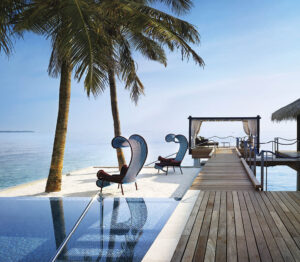
Upon arriving at Velaa Private Island, you will immediately feel at peace. The exclusive resort, nestled within the constellation of islands that form the Noonu Atoll, is a short seaplane ride away from Male airport. Stepping out, you will instantly be welcomed by the azure blue seas, lush greenery and white sandy beaches – what more could you want for a peaceful escape? Whether you’re travelling alone with a partner or a friend, the resort is designed to give you a personalised experience, relieving you of all your worries, woes and stresses of daily life, so prepare to switch off and relax!
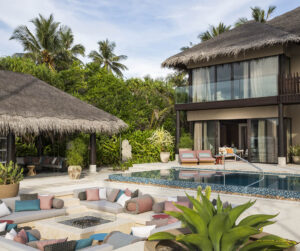
The resort is designed by award-winning architect Petr Kolar as “an elegant fusion of Maldivian culture with contemporary luxury, intimate with Maldivian nuances.” It combines traditional elements with bold modern architecture for a one-of-a-kind experience. The resort is home to 47 private villas, houses and exclusive residences, including 18 overwater villas and some of the largest suites in the Maldives.
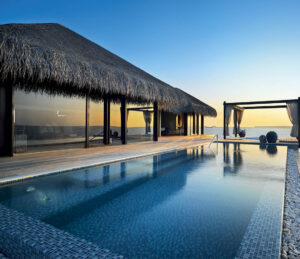
Your key to wellness
This summer Velaa Private Island has extended its offering to take your relaxation to the next level. The Eveylaa Wellbeing experience is a private sanctuary of peace where guests can rejuvenate their bodies, relax their minds, and reconnect with nature. Your journey begins by understanding Authentic Ayurvedic Rituals, with a deep respect for the healing wisdom of the past, while harnessing the latest scientific advancements. Each Eveylaa wellness journey begins with a complimentary Ayurveda consultation, a traditional form of Indian healing that has been practised for 3,000 years and focuses on balancing the three Doshas of the body via personalised diet, herbal medicine, and bespoke body treatments.

My experience began with a meeting Dr. Sree, who explained the various treatments and experiences that would be beneficial. After the chat, he tailored a specific programme to meet my needs throughout my five-day stay. Ayurvedic treatments to try include the calming Shirodhara warm oil therapy, soothing herbal poultices, and the rejuvenating Abhyanga four-hand massage, which culminates in a herbal steam session to revitalise and cleanse the channels in the body, and that was truly super helpful to reduce my back pain.
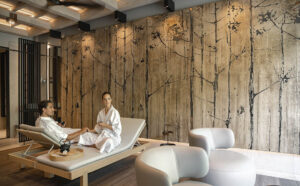
Eveylaa also offers contemporary wellness treatments that marry ancient wisdom and modern science. These detailed consultations include blood and food sensitivity analysis, private sessions with a Naturopathic Nutritionist, and the In Body Analysis test, designed better to understand your body’s composition and physical needs.

For those looking to stretch their muscles, the daily yoga and meditation sessions are a perfect way to unwind. There is a vast range of classes led by experienced instructors and visiting practitioners, including classic Hatha yoga, Vinyasa, Yin Yoga and then Dhyana (guided meditation), Praanayama (breathwork), and Yoga Nidra, a form of ‘yogic sleep’ that invites a deep sense of relaxation. Yoga and meditation classes take place in the dedicated open-air pavilion, a serene thatched-roof space that encourages you to fully connect with your body, breath and the beauty that surrounds you.
Food & Beverage
Guests can choose to follow a nutritional plan personalised by the team’s experts or dine “a la carte” from the resort’s restaurants. At the heart of Eveylaa, a new dining destination, FAIY showcases well-balanced and nutritious meals made exclusively from natural, unprocessed ingredients to keep you feeling healthy from the inside out! Dedicated wellness menus include the ‘Fresh’ menu of raw and plant-based dishes with Asian flavours and the light ‘Spa’ menu featuring low-carbohydrate, vegan, gluten-free, and Mediterranean-style fine dining.
Elsewhere on the island, you’ll find Aragu, the fine-dining restaurant, as well as Teppanyaki destination Tavaru, and Athiri and Avi, the all-day dining restaurant. There is something to suit every taste and preference.
For more information, please visit: velaaprivateisland.com/
Duha AlRamadhan, Founder of Aubade, Shares Her Passion For Jewellery
Ten years ago, Duha AlRamadhan, Founder of Aubade Jewelry, found it difficult to find jewellery pieces from independent brands she loved in the Middle East. With a strong passion for jewellery, she decided to explore further, creating her own boutique, home to a carefully curated selection of jewellery brands, both regional designers and brands that had never been seen before in the Middle East. Her first store opened in Kuwait City in 2013 and became the city’s first design-led contemporary jewellery destination and a must-visit for clients from around the region.
Run by an all-female team, the brand now showcases a thoughtful curation of independent and emerging jewellery designers. It has established itself as a trusted purveyor of handpicked fine jewellery worldwide. With jewels crafted in studios and workshops from the US to India via France and Italy, the designers on the books represent the vanguard of the contemporary jewellery scene. Aubade now has two stores, with the most recent opening in Dubai and its online boutique. With plans to expand further, we caught up with Duha at the recent Oud Fashion Talks event in Kuwait to discover more about her brand and her vision.

Tell us about your recent experience at Oud Fashion Talks and what the feedback has been like.
I was so impressed by the turnout and the organisation that I witnessed at the Oud Fashion Talks event. The topics discussed in the panels, along with the speakers, were engaging, and they helped raise topics relevant to both the region and beyond.
How are regional events such as this helping to raise awareness of brands in the region and elevate the industry here?
The GCC, and the Middle East as a whole, is a hub for amazing talent. We are cultivating wonderful brands that have the potential to go global, so regional events such as these provide the right exposure and support that these brands need. Not only so, but there are a lot of misconceptions about the region, so these types of events really shed light on how fashion forward, educated, and advanced our region really is.
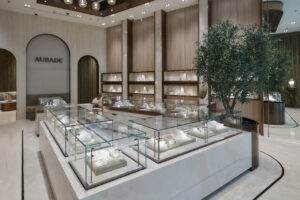
What were some of the highlights for you?
I loved meeting Imran Amed, founder of Business of Fashion. When I started my business, I had no retail background, and I was armed with only two tools – my passion for jewellery and Business of Fashion! I even proudly mentioned this to Imran, as the articles I would read at the start of my business were helpful in better understanding the industry I was in. I also really enjoyed meeting people who’d flown in for the event from various fields and of course, getting the chance to speak at one of the panels.
Tell us about your brand and where it’s at today.
Aubade was founded ten years ago from my passion for jewellery. I found a gap in the market as there were no retail stores in Kuwait that showcased emerging international fine jewellery designers. What started as a small yet curated retail store has now expanded to two branches (one in Dubai), a shop-in-shop in a major department store, and a newly launched online platform.

You launched the online platform earlier this year; how has this allowed you to expand further?
While a physical storefront is essential for any business, there are limitations to your reach. An online store enables you to reach a much wider audience, especially with the major shift in online shopping over the past few years. This was further expedited during covid, which made an online store essential for any business. In our case, having a digital store enabled us to grow our international customer base and boosted our local sales thanks to the reliance on online shopping.
The offering at Aubade has a clear, curated style – how would you sum it up?
Everything you see in store has been well-thought-out and handpicked to ensure that the collections tell a curated and cohesive story.
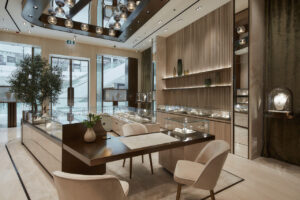
What do you look for when sourcing brands to bring to the region?
I look for jewels that tell a unique story, ones that focus on quality, craftsmanship and design. No two collections in store will ever be the same, so I work hard to ensure that the selection of brands in store remains limited and concise.
How would you like to see the jewellery industry in Kuwait further develop?
We have a lot of amazing talents in Kuwait, especially in the jewellery field. Our regional history is rich with jewels, and jewellery plays a big part in our culture. So, I would love for the industry to shine in producing compelling and unique styles to stand out globally while resonating with the local market.
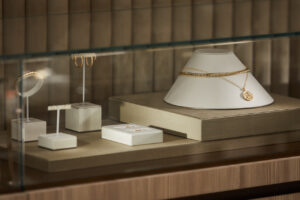
You have a background in industrial engineering; what first inspired you to get into the world of jewellery?
It’s the one thing I’m so attached to; I’m completely obsessed. My love for jewellery started at a very young age, from buying jewellery at souvenir stores to making my own friendship bracelets. Despite my love for it, I never realised I could make a career out of it. The idea of opening a jewellery store came when I was on maternity leave. After growing frustrated at having to wait to travel to make my next jewellery purchase, I decided to give it a go as more of a “side” project. Little did I know that it would grow to be a full-fledged business.
Bulgari CEO Jean Christophe Babin Discusses the Collection and the Maison’s Position Globally
Since becoming CEO of Bulgari in 2013, Jean Christophe Babin has overseen the brand’s global growth in all sectors, from its core business of jewellery to accessories and, most recently, hospitality. Now as the brand goes from strength to strength and this landmark high jewellery collection is revealed in Venice, we find out what else is on the horizon for the Roman jeweller.
Congratulations on a fantastic collection – it’s a universal collection with many verticals – why did you decide to reveal it in Venice?
Exactly for the fact that it is a universal collection. Venice is a crossroads of the world and a meeting point for Roman art, architecture, and Asian influences because it was a gateway to the Eastern part of the planet and the Middle East. And it gave birth to Byzantine architecture, which you can still admire, as well as Roman influences and oriental ones, so it was the perfect place to launch this collection and the best place to embody the diversity and inclusion that the Romans had thousands of years ago. For 140 years, Bulgari’s goldsmiths have tried their best to fuse different influences to pay tribute to all the other cultures that have made Rome what it is and created a style that is in a school of its own.
In this collection, we have a lot of colours and a lot of different gems combined in unexpected ways. Some designs are very close to Middle Eastern or Turkish Ottoman culture; other pieces are more familiar with Roman traditions. So, it is really a fusion of cultures. Many people often see the Mediterranean region to finish with the South of Italy, but we wanted to take this further, including more expansive areas of the world that are important to the history of Bulgari.
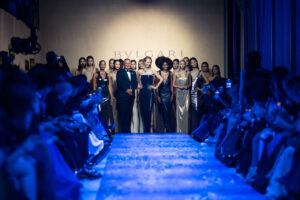
We are here in Venice for the beautiful launch – to what extent is it essential to create experiential moments for your clients?
We want to know the people that come to Bulgari, whether for an event or to our store, to purchase a product, and we want them to feel like they are part of our family. Wherever they come from, what they all have in common is the passion for a certain kind of beauty which is expressed by Bulgari, not only in the art of crafting but the Bulgari way of enjoying and glorifying luxury, which is typically Italian. There is a sense of joy and pleasure in everything we do, including the food we eat! And therefore, to create that feeling, we create a tribe. It’s a tribe where people have a place to go; some come because they want to buy jewellery, and others want to report on the jewellery, but eventually, what’s driving them is that they know they will see something new, unique and something they will enjoy.
This year, for instance, we added a catwalk show to our presentation, as well as a showroom and an extraordinary sensory experience. The latter allowed each guest to take home their digital piece of art based on their emotions and reactions to a series of experiences. Sensors pick up on each guest’s emotions to create a unique collectable piece of digital contemporary art. We want to continue taking our clients through new immersive experiences, relating them to some of the masterpieces we create. It is a stimulating experience, giving our clients something to take away with them, something that is a piece of their personality and emotions.
Another key pillar in the collection is “The Snake”, which celebrates the 75th anniversary of the Serpenti – tell us about that and the importance of the Serpenti at Bulgari.
We are still discovering the Serpenti, and in this collection, there are many iterations of it which are quite different from the ones we have had before. It shows once again that Serpenti is one of the most versatile shapes and animals, especially when adapted to jewellery watches. It’s not easy to play with an elephant or a monkey if you want to create a ring or a necklace, but a snake, just because it wraps around, it has a perfect shape; plus, in all cultures, it is a powerful symbol of power, seduction, and therefore it is universal. This year we have seen the integration of totally new shapes, showing that we are not at a plateau with it; we are, in fact, at the beginning. And this beginning is already a jewellery icon worldwide. It’s a firm emblem worldwide in our bags, watches, and our jewellery collections. So, it’s number one in our verticals; even in our hotels we use the Serpenti to decorate glass panels in the bathroom. The Serpenti is everywhere because it is Bulgari, and it defines who we are.
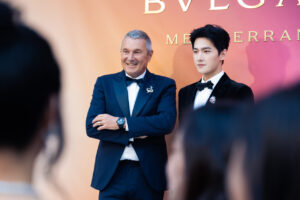
Let’s talk a little about hospitality, as it is becoming a great pillar for the brand. You recently opened the Tokyo property; tell us about that and what else is in the pipeline in the hospitality sector.
The opening of the Tokyo hotel was stunning because this city is one of the most inspirational Earth in design, but strangely, the hotel offering there was not particularly extraordinary. Therefore, this hotel has been a major event for the city to the point that the Governor of Tokyo came in person and spent hours at the property because, for her, it’s important that her city has the best of the best in terms of hospitality to attract even more visitors. After one month, we had already reached the number one position in Tokyo, which is unheard of in the business to happen that quickly. So, this has confirmed that it was necessary for us to open there, and that the city needed something that was contemporary luxury, with a bespoke format, and there is a huge clientele for this format which is unique to Bulgari.
Next, we will go back home with the upcoming opening of our hotel in Rome. Our hotel in Rome will surely raise further the standard that we have already established in eight cities around the world. And you must remember that this level of success in hospitality for a jewellery brand is unheard of. We have a lot of craftsmanship and interpersonal skills, which we apply to our jewellery and our hotels, and in turn, we use the hospitality in our hotels to make the experience in our jewellery boutiques better and different from other jewellery brands, so one benefits the other. In Rome, we’ll slightly depart from the architectural style that we have in our other hotels, it will still be obviously Bulgari, but we are going larger than life with the hotel in Rome, just because the city itself is larger than life, so we have adapted the concept to be different from all our other properties.
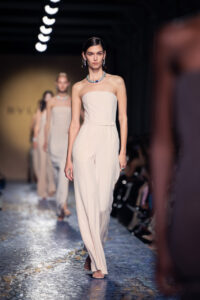
We know the Middle East is an important region for the brand – tell us about Bulgari in the Middle East this year.
Firstly, we are very happy with the Bulgari Resort in Dubai. It is a region where we are very active. Two years ago, we took over direct control of the Saudi business, which is a major market in the region. We are very active in Dubai; we have opened a second store in Dubai Mall. We are currently revamping our store in Mall of the Emirates, and across the region, our stores are either new or revamped. We plan to add another two stores in Saudi Arabia this year so that we have four stores, which is a minimum for Jeddah and Riyadh if you want to cover the market properly. So, this is the part of the region where our level of investment is the highest, and then the most iconic part is the Bulgari Resort in Dubai because everyone knows the “Bulgari Bay” and we have a huge project under construction there with the lighthouse, where we sold the most expensive loft apartment ever in the region. So again, we are expressing the desirability of Bulgari in the Middle East in other ways.
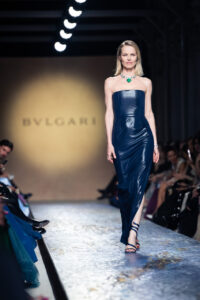
What is a message you would send to your customers in the region?
When I visit the Middle East, I’m always amazed by how close the culture is to Italian culture when it comes to interacting with people. It is sophisticated but also very casual. We feel that the Middle East is very Mediterranean, and I think there is a natural connection between the two, explaining why Bulgari is very relevant there. We try to grab a lot of inspiration from the Middle East because we know that fusing more of the Middle East into our jewellery will resonate better with our clients in the region.
Panerai CEO Jean-Marc Pontroué on Remaining True to the Brand’s Roots and Heritage
Panerai is a watch brand that fully understands its DNA and history which has been routed deeply in military and diving watches for over 160 years.
And although the brand has developed over the decades, its clear goal remains the same: to be true and close to its original values. With each new novelty, event or moment, CEO Jean-Marc Pontroué carefully considers the message and implications of its introduction and how it will honour the rich history of the 163-year-old Italian brand. This year, at the recent Watches & Wonders exhibition, Panerai went back to its routes, with a focus on the iconic Radiomir collection which is one of the most famous diving watches of all time. 2023 will see this icon get a fresh update with several new novelties added to the line in the form of the Radiomir Annual Calendar, Radiomir California, Radiomir Otto Giorni and the Radiomir Quaranta in GoldtechTM. Here we find out more about the new novelties and the priorities for the coming year at the watchmaker.
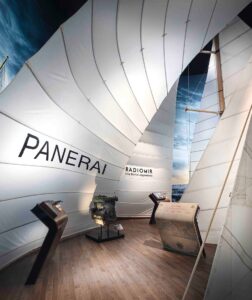
Watches & Wonders Booth
Tell us about the novelties presented at Watches & Wonders this year and why did you decide to focus on the Radiomir collection?
It was one of the most exciting shows we have had in a long time. I believe it was the first time we had all the brands together in Geneva, since before the pandemic. So this was good and the decision to open to the public on the last day was very good as well. We had a very qualified audience who came to visit us.
The show for us this year was all about Radiomir. We decided on that around two years ago as we follow a two-year plan with these kinds of shows. During the pandemic, we had a lot of launches connected to eSteel, sustainability and experiences, and now, we believe is the time to go back to the roots of the brand and to restage the original line at Panerai, which is, of course, the Radiomir.
The Radiomir is the last baby in the family to focus on, because we spent a lot of time on Luminor and Submersible which was a huge success after creating a standalone line in 2019. So Radiomir is having its moment now. This watch was the original line and was the second best-selling line when Richemont took over the brand. Hence, we decided to come with fireworks of innovation – a new size, new material, a new movement – and it has worked very well because it has reconnected the brand to many of the people who were looking for a smaller size dial. So indeed Watches & Wonders was a very good show for us this year.

Watches & Wonders Booth
Do you think that when you limit references presented is a good way to ensure the consumer doesn’t get confused or overwhelmed?
We have one golden rule at Panerai: if you introduce a product, another one has to be out. We have very high productivity at Panerai per SKU because despite being one of the top 15 watch brands in the world, we have the most limited number of offerings within our assortment. We don’t have jewellery pieces; we have a rather limited number of sizes and so on. So, in principle, if we create one, we must make sure one is removed from the offering. This puts pressure on our product department because when we present a new product, we have to ensure that it will over-produce business compared with the one we take out.
One of the biggest challenges we have coming up in the future is that we plan to open larger stores. We’re going to open a new boutique in the Montenapoleone area in Milan which will be three times the size of the existing store in the city. We are opening a new store on the Champs Elysee in Paris, and one in New York. And these will all be very large stores. So, we need to have a bigger offering to fill them. The question is how can we manage small shops in shops which are four square metres in size, but also handle boutiques which are up to 420 square metres? Previously the biggest store we had was in Florence and was around 160 square metres, so moving forward we have spaces that are much larger than we’ve ever had.
Do you think these larger stores will allow you to offer more experiential moments for your customers?
When I gave the briefing of our new retail concept to our Creative Director two years ago, the idea was not to create a watch store, but to find ways of recreating the stories of our brand connected to experiences through the military or with explorers etc. We didn’t want to have a formal concept with a sales desk and a salesman showing you thousands of watches. We wanted to find ways for our clients to browse the store, and lose their time through a memorable experience, enjoying a moment of our history. We now have our bar as the centre point at all our new stores that are over 60 square metres for example. The bar is a magnet for customers as it’s a very friendly concept that invites them to feel at home and enjoy a coffee or a snack and talk with others around them about the city that they’re in or the experience they’re having. It’s not about buying a product or what it’s about buying a lifestyle.
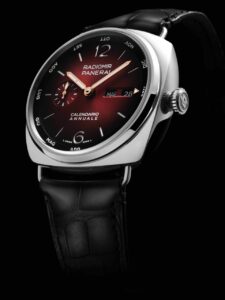
Pam 1363
What is the vision for Panerai this year?
Last year was a record year for Panerai and we have been looking at some very positive results from this year too. Moving forward the question is how we can continue to inject creativity within the playground of the brand. We don’t want to go into football or rugby or the sky, we want to stick to our DNA and remain very true to what Panerai stands for, which was always water, diving, sailing, and swimming. All these things are very true to the historical background of the brand. So, the product line may be different, but the playground remains the same.
As I always say, Panerai is an easy brand compared to many others, because we play by our rules which are very clear. I say very often that when you are in a military brand there is always a very clear target. We have one target, not 500. One of the big problems in the world today is that we’re surrounded by priorities. You have ten priorities per day, a hundred priorities per month, in the military, there is only one priority: and it’s to gain
territory or to defend the population. It’s the same for Panerai. We never forget our origins which were in the military field, and so to handle a team in 25 countries with 800 people, the idea is to have one target and to remain in our playground. We remain Italian, we continue to make big watches and we keep our principles. We can change the product line, but we don’t create new product lines.
The vision for the next 50 years is that we will not have any new product lines, we have enough with our four categories. We can increase the number of potential new customers; younger customers, more ladies, and those looking for a smaller size watches, but we remain a big-size brand. At Panerai, a 40mm dial is small, even if in the watch world, it is a regular size. So, the overall vision at Panerai is how we can change everything without changing anything. And it’s easier than we believe. The principle is to remain consistent.
Tell us about sustainability at Panerai and any new projects you would like to highlight around this.
Firstly, on the 8th June it will be the 2023 Ocean Day and Panerai has negotiated with the United Nations to become the official timekeeper for this day. Being official partners is great, but what I want is for people to get involved in the cause. So Panerai’s 800 staff will take time on that day to collect plastic wherever they are located. We are committed to collecting ten tonnes of plastic in one day. 8th June will become a key date for the brand and in the future, we will invite people to join us to collect plastic, wherever they are in the world, to help with this global crisis. I strongly believe that it’s private companies that will help to achieve these types of targets. So, keep that date in mind and we will all be on the streets, on the beaches, and by the lakes collecting plastic bottles. We have been working with universities on this matter. We have spoken to 5,000 students in the last year, and they will also join us because I need manpower to be able to collect ten tonnes of plastic! We know how many kilograms of plastic one person can collect in one hour and of course, it’s different depending on where you are in the world, so we have identified the spots and the team leaders, as well as what to do with the plastic bottles at the end of the day. There is a lot of organization involved to achieve this goal and its key for us to commit to numbers and make it happen.
Tell us about what’s in the pipeline for Panerai in the Middle East.
Firstly, we have Dubai, which is a market and of course, we have Dubai Mall, which is one of our top five stores in the world. This boutique has one of our highest variety of clients in the world. Even our Florence boutique does not have this vast variety of nations coming to visit. Dubai was one of the first cities to reopen after the pandemic, plus you have the arrival of a large Russian community who are big fans of Panerai.
Then we have countries like Kuwait and Qatar which are markets that are growing very quickly for us. We will soon be opening a second store in Kuwait which is good because it’s one of the most loyal markets in terms of our customer base. And then we have India where Panerai is one of the leading watch brands. We are going to be opening two new stores in India in the coming months: one in Mumbai and one in Bangalore. Based on the results we have had from India; in the next ten years, it will be one of the countries that we will spend most of our time developing the business. Indians have been buying a lot in Dubai, Singapore and London and they are now getting more access to our products in India itself. Then to finish we have Saudi Arabia, and this is one of the most promising markets for all industries. It’s a major market which is waking up. Airlines are the providers of tourists, so we follow what they are doing and there is a lot more access coming to the country, and they intend to make Saudi Arabia one of the major touristic destinations in the future. It will take time, but Panerai is very well placed to open new stores in Saudi Arabia in the next five years in some of the major malls which are going to open.
The region is very inspiring and it’s not only Dubai. Dubai has always had this agility and diversity in terms of population, nationalities, concept stores, and so on, but there are many other spots which also have major ambitions to grow in the future.
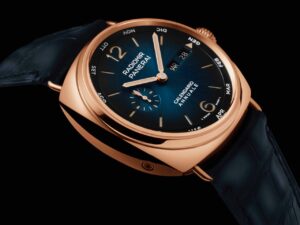
Pam 1363
What is a message that you would like to send to your fans and friends of the brand in the region?
The words for all the communities of Panerai in the Middle East are that they are close to my heart because each time I come to the Middle East I have meetings, dinners, and breakfasts with some of them. And they will know who they are! I’m happy to see it’s a growing community. Our next big event we have will be in Lisbon in October and I know that some of our Middle Eastern clients will join us for three days of celebrating Panerai. I’ll come back soon because it’s a region I love to come to, and Dubai is one of the lighthouses for our brand and for the rest of the luxury retail world.
Mandarin Oriental Emirates Palace General Manager Michael Koth Discusses the Property’s Rebranding
Rebranding and repositioning a hotel as iconic as Emirates Palace was never going to be an easy task, and combining that with the levels of luxury expected from the Mandarin Oriental Group is a huge challenge, one that takes an expert in his field.
Enter Michael Koth, a hospitality veteran with over 35 years of experience and knowledge of the industry. Koth was hired in 2020 to oversee all aspects of the branding and now, as the destination officially reopens, we talk to him to find out some of the challenges and opportunities faced within this project.
Tell us about this rebranding and what can guests expect when they visit.
Initially, the rebrand to Mandarin Oriental was more on the side of processes and technicality because we needed to take the hotel physically from an old product to a new one. That was accomplished during the COVID pandemic. The second part, which was the more difficult part, is the repositioning of the hotel. Many people have stereotypical views and ideas about this hotel that do not necessarily engage with what we want to be. So the repositioning into a multi-dimensional property, a destination in itself, a resort, a cultural place, a dining destination, a beach destination, and a sport destination, allowed us to select colleagues from all over the world, of seventy-two nationalities, that live a diverse culture, that can understand what families, couples, people with something to celebrate expect, and also for our restaurants to simply serve the local community of Abu Dhabi. And that was the challenge that we had to work on. This in combination with the attention to detail of Mandarin Oriental, but then with the chosen colleagues and their spirit, is the journey which we are now on.

What is the strategy that you are using to attract firstly the local community within the UAE and with such a dynamic and special property, how are you going to communicate about it globally to attract international visitors?
I think we always need to be locally relevant and see our place within the destination draw of Abu Dhabi and then expand further outwards. Part of our repositioning is to attract the local community, whether it is guests coming for staycations on the weekend or visitors to our restaurants. This requires a lot of social reach, local communication, local media coverage, and local followers. The second local appeal is our gastronomy. We now have a two-star Michelin restaurant, we have playful elements to our restaurants, and the elevation of our beach offerings and services – I believe in that complexity we achieve a lot. Then for entertainment, we have the Auditorium, and we are again hosting the Abu Dhabi Music Festival. I think as a destination you need to be relevant and that is what we want to offer. We just introduced a new Saturday lunchtime brunch and more than sixty per cent of our guests at this brunch are coming from Dubai because they feel that this environment is unique. This gives us the next layer of expanding in the UAE and the region and then we have got to capture the world!
Asia is still quite closed off, but Europe is a very important market. We are looking at our distribution channels, our social approach, and working with selected tour operators. We do not wish to be in the brochures of every operator in Europe, we are more into bespoke concierge agencies and travel advisors, we are looking for a network of people with a certain level of disposable income, and that opens up doors that probably weren’t open a few years ago. And then of course we have the fans of Mandarin Oriental who produce our most valuable sales and will come to us as well and spread the word within their communities. We are really excited!
It’s always very challenging when you inherit something that already exists and tasked with giving it a facelift – what was your biggest challenge through this process?
There is actually only one challenge that is not solvable with money and that is around people. We needed to take 600 colleagues and develop a deep sense of trust and love and a sense of belonging and an understanding of what the future will bring in this new chapter. That took us two years, with a lot of sincerity, open conversations, events and mindset changes, and that is what we believe is the way the organisation can move forward. We were mindful of it, and we used the time during COVID as an opportunity. So, by hiring new colleagues on top of the ones that we already had, this new family came together during this period and now no one looks back in remorse, everyone only looks forward.
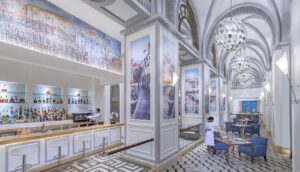
Tell us about the F&B offering at the hotel.
Because we are so large, we can mirror things on the east and west wings, so we have space for so many types of offerings. We have twelve restaurants across the hotel. This means that guests can explore every single restaurant in its own uniqueness. We have top-class Indian food, we have Hakkasan the great Chinese dining experience which now has a Michelin star, we have created our own Italian concept, and we have a new Middle Eastern restaurant opening soon which will differentiate us from others in the UAE. We have Episodes; the new café in the lobby. It features four stages including a breakfast offering, and tea offering, and we will soon have gelato – we have exclusive teas that are only sold at the palace – it’s about differentiating.
We just toured this unique Private Club – tell us about this area and how it came about.
This area is so new that you can still smell the paint on the wall! When we started to play with the design, the layout, and the elevations of this hotel, we realised that the clubs we already had were located in the wings on the fifth floor. We did the math and we thought that after a day on the beach, would our guests really want to walk through the lobby, up to the fifth floor, and then relax? The answer is no they wouldn’t. So we decided to bring the club to where the guests need it to be. We created this exclusive area with around 80 seats and we give privilege to only the guests who stay in the club rooms of which we have 44 rooms, all our top rooms with a sea view and our suites. Guests can choose when to experience this club and the accessibility means it’s convenient for them. We have various rooms that cater to their needs. Everything is on the guest’s terms and according to their timings. There is no menu, we have suggestions, and the rest is up to the chef and the guests to decide. There is also an outside area with another seating area, so our club guests could mingle or be as private as they like.
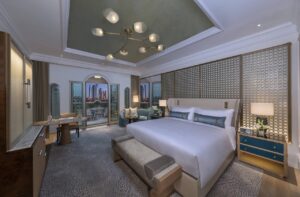
For people who are in Abu Dhabi, what access can Emirates Palace offer exclusively to prominent or VIP clients who are not necessarily staying at the hotel?
We have not yet launched our proposition in this area, but it is something we are currently exploring. It is still early to talk about it yet as it’s still under our curation, but it will likely include a facility like the private club, but for a different group of people. We are in a service industry and so everything must touch our guests somehow, we need to be attractive to people with our offering and we need to find a way to complement everything we do already, but we need to do it in a very tasteful and meaningful way.

What do you have coming up through Ramadan and for the summer season?
During Ramadan everything in our hotel is open and business as usual. However, for the first time since before COVID, we will have a new Ramadan tent on the beach. It will be in a new location, and it is a completely new design that’s amazingly laid out. It resembles the image of a light, bright Moroccan-influenced palace with lots of trees and greenery so you feel as though you are out in the open. It also has a terrace overlooking the skyline of Abu Dhabi. From the outside, it looks very big but inside it will be very intimate.
Then the summer is going to be all about sports, family activities and entertainment. We believe that last year with the craving that we have had to travel, everyone left the UAE for summer. But this year I don’t think it will be the case, we are expecting many more people to stay here in the UAE, and we believe if we combine family activation, theatrical performances for kids, themed staycations for local residents combined with sports, we will have many people wanting to visit throughout the summer.
What can we expect from the renovated spa once it’s completed?
When our spa opens this next month, it will be more beautiful than ever. It is themed around traditional Arabic styles. The hammam is world-class. We have an impressive arrival centre for our members featuring elaborate changing rooms, a sauna, steam bath and guests can come and spend the day using the facilities. We have nine treatment rooms. We recruited our therapists from all over the world. I can’t wait for this as it’s very authentic, we are not doing treatments from all around the world we want to be Middle Eastern in our offering, but we have the capability of inviting travelling practitioners to showcase treatments from other destinations. We also have this pavilion on the beach where guests can have a treatment next to the ocean in their own bliss.
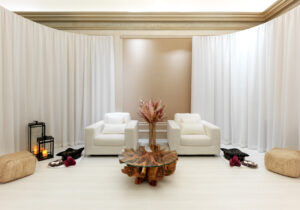
Why did you decide to take this role and what do you still aim to achieve?
I joined at possibly the worst time in the industry during COVID in July 2020. I have spent around 20 years of my life in the Middle East, I have always had a fantastic experience and there’s hardly anything I haven’t seen! So, I was therefore so delighted when I was invited to join Mandarin Oriental and take on the endeavour of rebranding and repositioning Emirates Palace.
I think we are still only at the very beginning of the journey. We are blessed with this hotel and turning it into a resort is a dream. At the moment we are only really discussing the three verticals of MO: rooms, gastronomy and wellness. We want to grow in gastronomy, we want to provide new alternatives for guests to explore even further. We currently have two brand new concepts under construction. One will directly tie in with our auditorium and will be a family-orientated dining opportunity, and the second will be a more sophisticated Asian restaurant. I can’t say too much at the moment, but both will open by the end of this year. Then we have to look at where we take wellness next. All of this will be done with sustainability in mind.
On top of this, we will have a new kid’s facility “Kids Palace” This is under construction and will be a two-story 1,000 square-metre building for children of all ages. Everything will be personally curated to the children’s needs, and it will be focused on teaching kids new skills. This will also be combined with sports. If my kids were younger, I would be bringing them here!
How do you partner with Mandarin Oriental Dubai?
There is already a lot of exchange between guests at both hotels and a lot of our guests still fly through Dubai and stay in Mandarin Oriental Dubai as well. They combine the two and they stay at both hotels. We are also opening a property in Muscat and Doha and Riyadh so there are many opportunities for Mandarin Oriental clients to travel within the region and stay at our properties.
How important is this property on a Group level?
I think it is a hotel that has its own significance within the group. No Mandarin Oriental hotel has our footprint, we have amazing ownership, and we have an amazing country that has everything we could dream of, but more importantly, we are able to break rules with this hotel within the Mandarin Oriental Group. And I love this! When you can offer something very different and desirable this is a great opportunity. We wish to be different, we want to be a new destination for our global fans, to invite them to experience Abu Dhabi, a city that has so much to offer when it comes to its cultural experiences.
Describe this property in one word.
That’s very difficult – we are indescribable! We are very difficult to frame. Our tagline says “your palace, your story” because we believe there is one palace, but you can make it tell any story you wish. The possibilities are endless.
Angelo Zegna Consumer and Retail Excellence Director at Zegna, Discusses Innovation and the Future of Retail
As one of the world’s oldest luxury brands, Italian menswear designer Zegna has spent the past century providing the highest level of excellence when it comes to its products and customer experience.
At the highest level of luxury, customers are looking for more than just a product, they want to be part of a lifestyle, and in this case, part of the family. Zegna was founded by Ermenegildo Zegna in 1910 and the brand has since stayed within the Zegna family, spanning four generations. Throughout that time, it has remained unchanged in its desire to provide the finest level of service and the most seamless shopping experience.
As Consumer and Retail Excellence Director, Angelo Zegna is responsible for ensuring this area of the business remains at its highest standard and keeping up with consumer demands as well as developing new technology and innovation to serve clients. The most recent development was the implementation of ZEGNA X, a digital ecosystem and customisation tool that is rewriting the future of the luxury service. After two years of development and testing ZEGNA X now offers a set of tools that will give customers a one-to-one experience with expert style advisors and allow them to create made-to-measure products via a state-of-the-art 3D style configurator that addresses the specific personal requirements of our clients. This will soon be available across all the product offering and offers the highest level of one-to-one service in the luxury industry today.

ZEGNA DUBAI MALL – OASI CASHMERE POP UP FW22
During a recent visit to Dubai for the 2023 Retail Summit we talked exclusively to Angelo Zegna to discover more about this innovative tool, as well as the future of retail at the luxury brand.
Customer expectations are increasingly higher today which has led to Zegna further exploring the bespoke element – how important do you think this element is today and how is it being executed at Zegna with ZEGNA X?
130 years ago, the world’s best garments were made in the United Kingdom and my great-grandfather had a dream to make the best men’s clothing in the world in Italy. His dream became a reality and because of that “Made in Italy” was born. Over the past three generations, many designers have knocked on Zegna’s door to help bring their sketches to life because Zegna has been doing this for three or four generations. It’s almost impossible to deliver a made-to-measure garment that’s made in Italy to Dubai or New York if you’re not a vertically integrated company and that’s why if you look into our archives, you will find beautiful Zegna fabrics made for many luxury brands.
Why am I telling you this story? Well, to achieve that level of customer expectation you need to have craftsmen and manufacturers working for you. We at Zegna are fortunate because we have that backbone within our company. In certain markets, made-to-measure has increased to twenty per cent of our sales and in certain stores, like New York for example, over thirty per cent of our sales are from made-to-measure products which are unheard of in the industry. Zegna is the only luxury brand that offers full made-to-measure, which means actually fully measuring every element of the body and custom fitting the garment in both formal and casual wear.

OASI Zegna
How do you see consumer behaviour today changing and how are customers driven towards more made-to-measure or bespoke services?
For the past six or seven years trends were all about bright colours, flashy colours, and big logos. The pendulum is now swinging towards much more understated sophisticated craftsmanship. And you see that even here in Dubai. When I was here a few years ago it was not like that. Streetwear was much more prominent whereas now we are moving towards a world of everyday luxury, as opposed to fast luxury, and this is the world of Zegna, so we are welcoming it. It’s interesting that when things get a little unstable in the world, people usually go back to a classic, modern and elegant look. In the past, Zegna would try to personalise collections for each market, but we believe this was a mistake which we have now addressed, but the beauty now is that trends are much more global than you realise. Even between China and America for example, the trends are the same. And as a result, we have the same products that are selling well in every country in the world. We have iconic global products, and they appeal to customers wherever they are. During the COVID pandemic, we thought that customers would no longer want to wear suits but now they are in higher demand than we expected. We are selling fewer suits than before the pandemic, but we are selling higher-quality suits. The pandemic also allowed us to ask the question of what the modern gentleman looks like. Because of this today, we use the same way of constructing a jacket, but we have created an incredible new silhouette which is more of an overshirt. This jacket is now two years old but it’s timeless and it will live for the next generation. Every season we introduce a new interpretation of it, but we won’t change the design because we are not fashion, we are luxury.
Tell us about ZEGNA X and how you are planning to roll it out globally.
Zegna targets the top one per cent of customers. For us to succeed with this customer, we need to offer the most customised experience possible. Our clients don’t want to have the stress of a complicated payment or returns or shipment process, they cannot be bothered with that. So, during COVID, we launched a clienteling app. Many brands have done this but the difference between what other brands have done and ZEGNA X is that today 45 per cent of Zegna’s revenue globally is powered by this app. This doesn’t mean we are sending products directly to their homes, but through this app, we are telling the customer to come and meet us for an appointment etc. and it has become a tool of communication. This is the first part of the ZEGNA X digital ecosystem.
The second part is the ZEGNA X configurator which is launching firstly in Milan and will be rolled out globally, and then by 2024 it will also be available on our website, so customers can put together looks from home. Then the third part brings us back to the made-to-measure element which will this month be introduced in Milan and the customer will be able to choose from forty-nine billion combinations. How can a luxury brand with very few SKUs have forty-nine billion options for its customer? The answer is made-to-measure! Thanks to this ability to have the made-to-measure element, we can make it the most extraordinary styling tool that is out there. Effectively what our customers are doing is standing in front of a big touch screen where they can build their own looks which can then be sent through the app, and then three or four weeks later they will be delivered to our customers.

ZEGNA X – 3D STYLING CONFIGURATOR
What challenges do you face to be able to achieve this?
Retail is all about people, so the biggest challenge is changing the mindset of our customer advisors. We have already moved mountains during the COVID pandemic. Before this, we were spoilt because we relied heavily on tourists to shop in our stores. Then when the pandemic happened this all changed, people could no longer travel. But I believe it was a reset moment for the business because it made us wake up and realise the changes.
So, we have spent two years, not only perfecting the app but also changing the mindset of people. We are in the business of building relationships, none of our customers need clothing, they already have clothes, but it’s about making a connection with them and making them feel like part of the brand and the community. This is the biggest challenge, to get people on board with our vision and why this is the right direction for us to take.
What do you do to make sure your retail strategy among all your boutiques around the world is coherent?
There are two points: The first is to create a new function which has precise objectives and ensure that the brand strategy lands in every single store in the market. We call it consumer retail excellence. The second is that at Zegna we say that if we do not measure something it will not happen. With that in mind, we were the first in luxury to deploy the Net Promoter Score. The Net Promotor Score is a very simple method where every Zegna customer in shops around the world will receive an email asking how likely they are to recommend their experience to a friend, ranging from 0 to 10, as well as a few other questions. It is a quick two-minute survey. We collect thousands of responses from customers globally and then based on the rating we score the stores. It’s a customer-centric approach that allows us to understand how the customer feels and shows us where we are getting it wrong. Every Friday afternoon I sit and review every single comment and of course, we have clients who write handwritten letters explaining what went wrong. The reason Zegna is able to retain the best location in The Dubai Mall, the largest mall in the world, is thanks to productivity. Productivity is the index of how much revenue a brand can generate in any given square metre of the store. And this is something we are focusing on more and more.
So NPS (Net Promoter Score) is qualitative, and productivity is quantitative. When the two come together usually there is a strong correlation. The beauty of NPS is that it’s a leading indicator. If NPS is high today, productivity is going to be high tomorrow. Because you’ve done a good job within the community through word of mouth
and the customer experience, these customers will tell others and then the numbers will come.

Tell us about Zegna in The Middle East and what are your expansion plans when it comes to the region.
Last December I toured five countries in the region and the UAE is of course currently our strongest country in The Middle East, but we feel very strongly that in the next five years, Saudi Arabia has a chance of rivalling the UAE, and I was very positively surprised about another market, Egypt.
Zegna has many unique elements. One of these is to be the first of everything. We were the first luxury brand to enter China, the same happened in Egypt. And now the country has become more stable, and everyone is going to Egypt. We are opening our first store in Saudi Arabia early next year. And we plan to open several more stores in the next five years. Gildo my father has said many times that Dubai is the next Hong Kong and I think he is proven to be right! This region is amazing. Every day at Dubai Mall, we have over 30 nationalities shopping in Zegna. It’s a pleasure to watch.
What do you still want to achieve in your role?
There’s so much! A 360 approach between marketing and customer – the opportunities are so big and I want to keep enhancing everything we do and continue raising the bar. We feel that in the next two decades, we can become the purest of brands, but it requires continuous improvement.
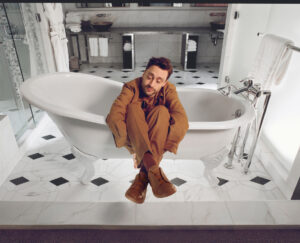
You are here at the Retail Summit – how would you assess what you have seen here today?
We are all talking about the same things: Sustainability, the top one per cent, community, and customisation. I would ask how many brands own a national park and have been taking care of a mountain that’s thirty times the size of Central Park in New York, for over 100 years. And then we can see who’s more credible and more committed to sustainability! I think it’s a fair question and we are very committed. We’ve announced that by next year, all our cashmere is going to be fully traceable. This means that customers will know exactly where the cashmere in their garments was bought from, and they will know the full supply chain. You can only share this kind of information if you own your full supply chain. We have our own land in Australia where our sheep graze. So, we go from sheep to shop!
Going back to trends everyone is talking about the same thing, but some brands are better equipped. In my opinion, we are in a very strong position when it comes to sustainability, customisation and the top one per cent – we tick all three boxes – that’s why I’m saying that the opportunities are huge.
If you were to describe Zegna as a brand what can you say?
Oasi Zegna is the home of our values and tradition and this is something we honour to this day. Traditionally Italians focus so much on polishing the product that they forget about telling the story and marketing the product. The French are very good at this and are fantastic storytellers. Doesn’t mean their product is better but they do invest a lot of time in storytelling. For me, the product always comes first.
John Elkann, the Grandson of Gianni Agnelli, who owned Ferrari came to visit us at Zegna and he told us that out of one million businesses, only 44 survive 100 years of business. And the number of businesses that survive 200 years of history is one out of one billion. Without an amazing product, you might make it for five or ten years, but you won’t make it for 100 years. Our family motto is that you never own a piece of Zegna, you are just a guardian to pass it on to the next generation.
What is a valuable lesson you learned from your father that you will share with future generations?
Integrity. Only do what’s right, stick to your values, and don’t over-promise
HE Reem Abdel Rahim BinKaram Director, NAMA Women Advancement Discusses Creating Opportunities For Women in the UAE
As Director of the NAMA Women Advancement, an organisation designed to help support and nurture the talent of women in the UAE, HE Reem Abdel Rahim BinKaram has been working to champion the successes of women in Sharjah and the surrounding area.
The organisation focuses on developing the talent of the younger generations, helping them to achieve their potential in business and life and also to prove that there is so much for women in the UAE to achieve on a regional and global level.
Since its establishment in 2016, the NAMA Women Advancement Establishment has managed and supported various entities under the NAMA umbrella, including Sharjah Business Women Council, Irthi Contemporary Crafts Council, NAMA’s educational and capacity building arm, Badiri Academy. Reem has been leading these sections of the business striving to achieve an overall goal of empowerment for women while helping them to realise their potential through various projects and activities.
With huge triumphs so far, the organisation is continuing to branch out to help more women in wider sectors through the support of small businesses, harnessing Emirati crafts and nurturing the young generations as they enter the business world. Here we find out about some of the work so far and what’s to come for the future of women in the UAE as they navigate the everchanging world we live in.

Your work supporting women in the UAE, particularly in Sharjah is inspiring, tell us why this topic is important to you.
I am Humbled, thank you.
The Global Gender Gap Report 2022 has predicted that at the current rate of progress, we will take 132 years to reach full parity. This means our global economies and societies will have to wait for over a century to reap the fruit of women’s full and equal participation. One doesn’t have to be a feminist to understand the significance of women’s empowerment – these glaring gender inequality statistics make a strong enough case to keep working to redress the issue, as quickly and effectively as we can. Here in the UAE, women have always been offered a level playing field and I see, through my own life, how important that is for successive generations of women to realise their full potential.
At NAMA Women Advancement, the success stories of thousands of women we uplift and empower regionally and globally keep us passionate about what we do.
Can you share details on some of the projects you are currently working on under the NAMA Women Advancement?
Our initiative, Irtiqa, is a vibrant platform whose mission is to help establish societies that intrinsically believe in women. How we are achieving this goal is by bringing private sector businesses together on this platform and offering them the technical guidance and support they need to apply gender mainstreaming practices like offering training to female employees, improving their access to leadership positions, and so on, across departments.
Irtiqa’s key objective is to simplify gender mainstreaming into actionable steps for committed private sector players, helping them fully understand the business and social value of women’s economic inclusion
We have seen tremendous successes of women in the UAE in recent years – tell us about your experience of this and how do you think women in the UAE have advanced over the past years in terms of their achievements and ambition.
We are grateful to be led by a forward-thinking and truly inclusive government, which not only broadcasts public messages on women’s empowerment but acts to create new and exciting opportunities for women to enjoy equal participation in both society and the economy. A recent NAMA report revealed that the number of women-owned businesses in the UAE has increased in the past few years, and a key enabling factor was the ease they experienced navigating official procedures like licensing and funding, which can be quite challenging for women in other parts of the world. The UAE has come a long way in creating a level playing field for women, and I’m hopeful that we will see more doors open up in the future.

What can you tell us about the Irthi Contemporary Crafts Council how has this developed and how you are working to sustain traditional Emirati crafts through this platform?
Irthi is very special to us, and I will start by saying that the initiative is successfully achieving our vision to create an artisan economy for women. It is absolutely heart-warming to see women achieve financial independence through the practice of traditional crafts.
We are really proud of the way Irthi has brought on the revival and modernisation of the UAE’s traditional crafts practices, offering talented craftswomen a space to hone their skills and collaborate with artisans from around the world. Over the years, Itrhi’s Bidwa artisans have produced quality crafts which have caught the attention of luxury brands like Cartier and Bulgari who approached us to explore collaboration opportunities.
The Council has also been playing a key role in documenting Emirati crafts. As an advocate for sustainability in craft processes, the Council collaborates with universities and research institutions on the research and documentation of various materials, crafts, and craft processes to provide a reference for these practices.
What is something you still want to achieve with this platform?
To celebrate more success stories of artisans, to have more craftswomen join us and realise the great things they could achieve, and to forge more international collaborations and partnerships, through which we will take our local culture to more parts of the world.
This month we celebrate International women’s day – what does this day mean to you?
To be honest, I hope for a time to come when organisations will be committed to practising inclusion and diversity all year long. Every year, we see a huge tide of discussions and demonstrations on the status of women on March 8, but I feel that the fervour somehow fizzles right after. We need to find a way to internalise gender equality and practise it daily, not just on designated days. However, I do feel that International Women’s Day offers us an opportunity to celebrate women’s success stories and contributions to societies and economies in a special way.

Who is the woman that inspires you the most?
I cannot possibly name one as my life has been touched by so many brilliant women. I have been very lucky to meet several remarkable women throughout my role at NAMA. I can tell you that I don’t need superhuman qualities to inspire me – I find qualities like ambition, confidence and determination very inspiring. Just generally listening to their life experiences about what worked for them and what did not also gives me a fresh perspective.
What can you tell us about your work with the Sharjah Women Business Council?
SBWC is another vibrant NAMA affiliate, which helps female entrepreneurs in Sharjah and beyond to grow in business and entrepreneurship through training, ease of business licensing and more. SBWC also highlights the big entrepreneurial ideas of women on several platforms in the UAE and abroad.
Today, the council is home to over 2,000 members and inspired by the success it has achieved on its home turf, SBWC has gone global. Now, women from around the world who aspire to start their own business or take an existing venture to the next level in Sharjah’s investor-first business landscape can leverage SBWC’s mentoring and support to fulfil their dreams.
We know you are working to help empower youth in Sharjah and promote entrepreneurship in the Emirate – tell us about this and can you share any details on some of the exciting projects you have seen from the young generation?
Since education is key to growth, we have made sure to provide skills development opportunities through initiatives such as the Badiri eLearning platform, where both women and men can access free online courses on life skills, professional skills and future skills. Moreover, we always look at partnerships with NGOs and other youth-centric entities to provide training opportunities for girls and women.

When working with this young generation how do you feel their mindset and drive have changed from past generations?
This is a very good question for which I have an interesting insight. I believe the biggest difference between the young generations and their predecessors is that they are not resistant to change. They embrace it.
A great example can be the artisans at Irthi. The younger generation of artisans are quick to take and practically apply feedback and suggestions on ways to boost their productivity and their product. Their seniors, however, are not immediate converts – they will first look at tangible products that have been developed by applying the guidance and feedback from IRTHI’s mentors and will be truly convinced when they see the result – a better product – with their own eyes.
In your opinion, what is the future of businesses and projects headed up by young talents in the UAE today?
The opportunities and avenues are all there in the UAE, and at this stage, I believe the way future businesses will be shaped by young talents will all depend on the extent they leverage the opportunities available to them. The future, in my opinion, is bright as we see a talented crop of young visionaries disrupting various industries and bringing fresh perspectives to all. What the youth needs to continue doing is to stay focused, work hard, not take their opportunities for granted and not look for shortcuts to success.
Things like a well-thought-out business feasibility plan, willingness to step outside comfort zones, and not fearing failure will all be crucial to long-term success.
Tell us about the work you do with the Pink Caravan Ride for Breast Cancer and why is this topic so important to you to support?
Seeing the practical impact that the Pink Caravan Ride has been making for over 10 years in empowering the UAE’s community against breast cancer by raising awareness about the importance of early detection, offering free breast screenings, and boosting the spirit of volunteerism has been one of my most rewarding life experiences. As the Chairperson of the pan-UAE campaign, I am really proud to say that I have been part of a movement that has helped save the lives of many men and women in the country.

What can you tell us about yourself as a person and how do you spend your time when you want to relax and unwind?
Spending time with the family is very important to me; being with loved ones and laughing and sharing with them recharges my batteries. Reading is a big hobby and it serves as a perfect escape, even if it is for a few brief minutes on the busiest of days!
What is something you would still like to achieve or something you would like to use your position to do?
Despite the impactful achievements NAMA has accomplished over the years, I believe we can do a lot more. Local, regional and international collaborations with like-minded partners is, in my opinion, one of the most effective ways to shape an inclusive world and I will continue leveraging my position and experience at NAMA to forge meaningful connections that will push the envelope of gender equality.
What is a motto that you live by?
Change is the only constant.
What else do you have in the pipeline for this year?
What I can reveal is that we are designing women’s advancement initiatives, which will be the first of their kind in the UAE, and there are big international partnerships in the pipeline too which will be forged to continue on our mission to achieving real and meaningful gender equality worldwide.
Zenith CEO Julien Tornare Discusses the Current Position and Future of the Brand
Since joining Zenith in 2017, CEO Julien Tornare has been on a mission to redefine the brand, its product lines, and the way it is communicated with the world.
With several record years, it seems as though he is well on his way to completing that mission. This year the brand has many key launches, beginning with a focus on the DEFY line this January. Here we find out more about the new novelties, as well as what can be expected from the brand for the rest of 2023.
In your opinion, how do you think the LVMH Watch Week platform is a good moment for the brand to showcase its latest novelties?
I believe it is a good moment, it’s just after Christmas, just before Chinese New Year and we catch the super important moment. It’s a very nice format and I hope we’ll continue to move forward with this. Of course, there is always some stress, the fact that it was right after Christmas is not so easy because everyone is exhausted and ready for a break in December, but we knew we had this show coming so it brings more work, but once you are here there is a positive momentum because we can set the right tone and rhythm for the year from day one. And it also means we are presenting watches throughout the year and what we’ve learnt during COVID is that we could drop products all year round. In the past, watchmakers would show everything once a year, now we have two shows, and we keep some other little surprises for the rest of the year.
At the upcoming Watches & Wonders in March, we are going to talk about Chronomaster and we are going to have something quite important happening on the Pilot line, but now we are focusing mostly on DEFY here.
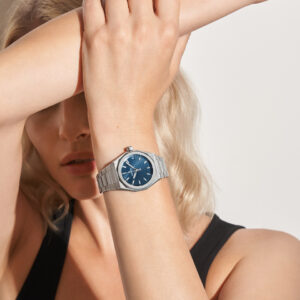
DEFY Midnight Blue
Why did you choose to focus on DEFY ?
Why not?! It was because we had to choose between two big launches for this year, DEFY Skeleton was one of them, and the feeling was that it was better to launch it now. But only a year ago, we were still thinking about doing the opposite and keeping the DEFY for Watches & Wonders and vice versa. We decided on the final timing in the summer, and it was partly because we believe that what we present at Watches & Wonders had a better space for that and things can be expressed differently, and it’s more of a global fair.
What are the current pillars right now for Zenith?
It’s quite simple. We have two main product lines: Chronomaster and DEFY. Then we have two that I would call more tactical: Pilot and Elite. When I came on board in 2017, we relaunched the DEFY which was originally from the sixties, and that gave us business and therefore time to re-work the design of the Chronomaster and to manage a very successful comeback for that in 2021. The following year we reinforced DEFY with the DEFY skyline.
The Pilot line is also very important to us. We have been working on a lot on the Pilot line to show you what we will reveal in a few months in Geneva. The Pilot line will play an important role this year and will represent a third engine. I think it’s time for Pilot to present a new direction. And of course, there is Elite, which is the segment I would say is not so strong now. People are looking more for sports watches, but I believe it’s like fashion trends and things will come back around, so I’m already anticipating that and working on something strong.
DEFY Came back to bring a lot of contemporary spirit into the brand, and today it’s still a laboratory for creativity and innovation. When I brief my product team on DEFY I tell them it is an open book, they can do whatever they want. Then they show me some ideas, sometimes I say yes, sometimes I say no, but the creativity is limitless.
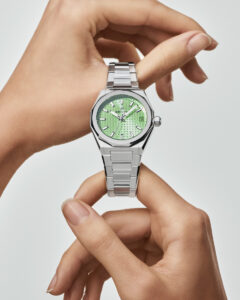
DEFY Skyline 36 Green
To what extent do you feel restrained by the history and heritage at Zenith?
It’s simple, for me there are zero constraints because heritage should be a source of inspiration. I’ve always said in the past that in the Swiss watchmaking industry, we tend to have brands that have a long history, and they are stuck in that history, repeating the past, and there was clearly a risk of losing stories of the past. On the other side, you have brands with very little history who can start from the beginning with crazy, innovative ideas. There have been great success stories over the last few years with such brands. With Zenith, we have the past and the heritage, we have the Manufacture, so we have the authenticity (any Zenith watch we produce has a Zenith movement), and these two aspects are very serious in a way, but they translate into a contemporary approach. That’s why we have been very successful over the last few years because that’s what was missing at Zenith. When I came on board, we already had the history, but the brand was weak, and that’s what we’ve been working hard on over the last few years. Of course, we have been working on the watches themselves, but also on the brand platforms, the marketing strategy, the ambassadors, the website, the social media, and the ecommerce, I could continue. These are all huge work fields that we have been putting together and now it’s paying off because the brand is totally different. We have rejuvenated our clientele in five years. It’s been about keeping our DNA and remaining who we are but looking very different.
You recently launched some Revival watches that are targeting mainly watch collectors tell us about that and where you see it in the future.
Revival is crossing all our other product lines because we have or will have Revival pieces across all the other lines. Revival is a souvenir of where we come from. It’s a re-edition of iconic watches that we had in the past. Then on top of that, you have the Zenith Icons. These are not reproductions; these are vintage watches that we have restored. But they are also part of the product portfolio.

DEFY EXTREME GLACIER
Tell us about Zenith in the Middle East today and some of the projects in the pipeline for the region.
Dubai is fantastic and it’s been a very important market for us. I have to say since we took over the boutique and we have been showing our retail expertise, it gave us a new dynamic and success. The Dubai boutique is a great success it’s always in our top three boutiques and I’m happy to say that Dubai ended up being our number one boutique in 2022, with an incredible record month in March. We will soon have a boutique at the Mall of the Emirates which will be a second important milestone. This will make Dubai the only city in the world that has two boutiques. We are also opening our first boutique in Saudi Arabia in Kingdom Mall. We have many projects happening around the region. People are believing in the brand, and they want to invest. So yes, it’s growing a lot, the Middle is booming for us and we still have a lot to do.
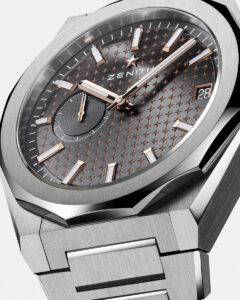
DEFY SKYLINE BOUTIQUE
The 36mm DEFY Skyline seems to be a way to bring in more female customers to the brand without compromising on the design.
Absolutely but I like to say that we don’t talk about male or female watches anymore at Zenith. If you claim to be modern, it’s not only because you bring a new material or something new, but also the whole attitude of the brand and the values of the brand, and for me today, this is about having a genderless approach. And we are the first ones to do this. I can also go further than that because everyone believes and claims they are client-centric – if you say you are client-centric, how can you decide for the client if the watch is for a man or a woman? If you want to be client-centric, you should say ‘we make beautiful watches, it’s the client’s job to choose which watches they want to wear.’ That for me is the perfect approach.
Antoine Pin, Managing Director of the Bulgari Watch Division and Fabrizio Buonamassa Stigliani, Bulgari Watches Designer Discuss the Maison’s Position in the Industry
Under the theme “Time is a Jewel” Bulgari’s novelties showcase the jeweller’s exceptional jewellery-making skills, combined with the finest in craftsmanship and watchmaking.
As a hugely successful and established jeweller, Bulgari is not lacking in history and depth, but over the last few years, the brand has been working hard to define its place in the watchmaking industry and to stand with the big players. Its difference, of course, is its jewellery heritage, but under the leadership of Antoine Pin, Managing Director of the Bulgari Watch Division and Fabrizio Buonamassa Stigliani, Bulgari Watches Designer, the Maison is using this to its advantage, to set itself apart from others and to lead by example. After yet another record-breaking year in 2022, this year Bulgari is back with some exciting launches in ladies’ jewellery watches. Here we see more of the latest novelties and find out where the Bulgari Watch Division is at today.
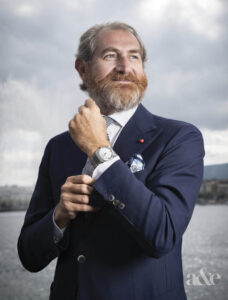
Fabrizio Buonamassa Stigliani
Where does the Bulgari Watch Division stand today within the watchmaking industry?
Antoine: It’s interesting to understand where we stand and the challenges ahead of us. I believe that what we’ve managed to do over the past years is define our playing field and identify who we are and what our contribution to the watchmaking industry is as a brand that has different origins and therefore a different perspective. It’s an ongoing process and there is clearly a different source of inspiration for us. Sometimes people want to know where we stand as a watchmaker and because there is such diversity within us, it is quite difficult to answer this question. But if you ask a Swiss watch brand the same question, they need to talk beyond just their products. We on the other side are selling values and a philosophy and that is common throughout all our products for men and women.
Allegra
Fabrizio, let’s look at the Divas’ Dream watch, this watch can span generations, to what do you attribute this strength and what is on your mind when you are thinking of designing something that will be relevant to many people today?
Fabrizio: In my mind there is a simple objective: easy to wear, with a huge jewellery aspect. That’s why it was a round-shaped watch, with all this beauty and savoir-faire around it. We are always in this in-between area, as we are so creative but there are many things we want to say and do, and sometimes it’s hard to say less! Even with the new Serpenti, we had completely redesigned the bracelet and the case. But we are always challenging ourselves to push the boundaries of our aesthetic codes to a different level. And this has totally changed since I joined the company because it used to be that we had to demonstrate something, we didn’t change the aesthetics, so it was just an aesthetic approach. Today we are more self-confident, there is a lot more experimentation around our savoir-faire, and we see things in a totally different way.
Antoine: If we are good at explaining our vision and our intention, we know where we are going. The challenge for Fabrizio is to keep ensuring that when our customers see the product, they see something they weren’t expecting, but it is still Bulgari. The moment they say this, we are successful!
Fabrizio: Exactly. There needs to be familiarization…
Antoine: We have had failures and we have made mistakes in the past and we will continue to do that, because every time you try to play with dimensions, you have to think outside the box, and when you play outside the box, the reality is sometimes you get it wrong. We must remain in the space that we are defining, but experiment within that, not forgetting where we are coming from.
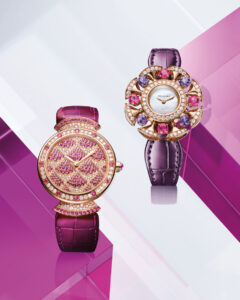
Divas’ Dream
But you have solid pillars around you at Bulgari…
Antoine: Yes we do, and that does make us comfortable but it’s about not being mistaken in the dimensions we are using to be creative again. The great thing about Fabrizio is that his team totally understand his approach.
What are the challenges you face as a brand in the watches segment today?
Antoine: I’m very confident about where we are heading because I know what we are working on, we have a shared vision, and there are lots of things that we need to be strong on, but my impression of us in the field, is that we are highly confident. The challenge is the market itself, is developing at a very high level, and the fact that I can see that everyone is jumping into this field but there’s not enough space for everyone. Everyone feels like this space is booming, which is fine, but you still need some sense of legitimacy and creativity. But again, everyone is always following the trends. The independent brands have been very successful, and they’ve shown that there is an appetite for creativity, but when everyone is starting to be creative, it leads to many products and sometimes a strange positioning. Brands shouldn’t always try to address all the markets, I think as Fabrizio says, we have become more self-confident in the sense that we know that we’re not going to please everyone, we are actually pleasing a minority of people, but that’s fine. And then we will grow because of our success. Now, that is good, but the point is that there is a kind of movement where everyone is going in the same direction, but that’s always been the case. We have had great conditions, how long they are going to last and who is going to take advantage, and who can last the distance, that is the question. But this is something normal that has happened before and will continue to happen.
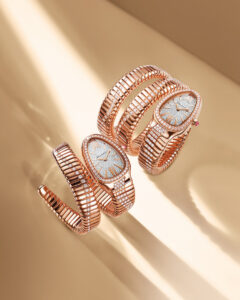
Serpenti Tubogas Infinity
What’s the story behind the small watch dial sizes we are seeing now?
Fabrizio: There is a big trend around the world about small watches. We don’t want to follow the trends, but we will see what happens. Sometimes the marketing team will come to me to highlight a certain trend but that’s not what we do, we don’t follow. We try to do the things that we love to do.
Antoine: Don’t get us wrong there are some watchmaking elements and standards that we respect, but even when sometimes we consciously say we are going to follow the standards of the market, it doesn’t always work as well as the rest.
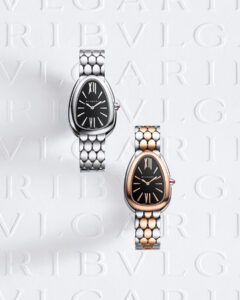
Serpenti Seduttori
Antonie, how do you balance between Fabrizio’s creative perspective and the outputs expected from a business perspective of a product launch?
Antoine: Sometimes you have to say no, otherwise we will never launch the product! I am always looking from a business perspective, and I very rarely intervene on the design side, that is Fabrizio’s area of expertise. I respect that and when there is a moment where there needs to be a decision, and unfortunately from a quality perspective, there is a limit, the beauty is that Fabrizio understands and supports it. That clearly is the reason why he is getting maximum credit because we know that his perfectionism is driving us in the right direction.
Fabrizio: I have to say that in the past there was a different mindset. Today, thanks to the Octo Finissimo, and many other things, we have discussions among ourselves, and we are looking at how things will work in the next five years, even if we can’t find a solution now there is a process to work on things to improve on what we can do now. We are making progress and today it’s more than it was in the past because our way of working is totally different. We work more closely with the product development team and the facilities, and it has to be a team effort.
TAG Heuer CEO Frédéric Arnault Shares His Vision For The Brand
Since taking over as CEO of TAG Heuer in 2020, Frédéric Arnault has been on a mission to drive innovation at the brand, while continuing to respect and honour the heritage of the watchmaker.
It requires a delicate balance and has therefore received both praise and questioning from the wider watch community as the brand entered the connected watch division a few years ago. But the results are only positive. After a successful few years, Arnault is only looking forward as the brand continues to roll out both mechanical and connected watches across the globe. As the brand reveals its first launches of 2023, we find out more of what to expect for the coming year.
Let’s start by talking about the Carrera 60th anniversary which you are celebrating this year – what is the demand for the Carrera today that made you decide to celebrate the anniversary with a big moment?
We have recently launched several limited editions of the Carrera and they have all been very successful and have seen a trend in the demand for these kinds of aesthetics. The previous designs were very close to the original, so it was attractive to collectors, enthusiasts, and those who are more passionate about these types of aesthetics on a Carrera. This year we have decided to modernise it by adding a TAG Heuer as we still had the Heuer logo on it, we worked on the design and construction, trying to stay faithful to the original idea but with more modernity. We will be revealing this new design at Watches & Wonders later this year. Right now, to finish the story of the previous case, we wanted to use one of the most searched-for design aesthetics on the dial and that’s what we are revealing today.
The connected watch became an integral part of TAG Heuer in a very short period – around 15% of sales – how do you see the connected watch category in the future in terms of sales and how important is the new model?
Yes, we are in the range of fifteen per cent of sales on connected watches and we believe it’s a good penetration on the brand. We’re investing heavily in this sector and are seeing good results, but the traditional watch category is seeing very strong growth as well. We want it to be important, but at the same time, we don’t want it to take up too much space, because at the end of the day, we are a watchmaker and that will always be our number one priority in development, in communication and at our boutiques and we want to ensure we remain seen as a watchmaker first. We invest a lot in the technology and the design of the connected watches, we are creating very strong products, we have the new women’s watch which we believe has its own space, and it’s something that will bring new customers to the brand that we can then also transition to our mechanical watches.

Frédéric Arnault (© Gian Marco Castelberg)
How do you future-proof a connected watch?
There are differences of course from a mechanical watch. When one buys a mechanical watch, one would expect it to last for decades, it’s not the case for a connected watch, however, we invest in durability and we want to make sure that we are more durable than the rest of the industry when it comes to this. We offer battery change for our customers, as this is the first component that stops functioning, this gives extra life to the product. We expect our customers to be able to wear our connected watches for five to seven years and our cycles of development are not as aggressive as some of our competitors who are launching every year. We make sure that the watch is not becoming obsolete too fast and that we can install some durability because we are a luxury brand and it’s perceived as a luxury product. We also have a trade-in programme where we buy back the previous watch and recycle it and the customer will get preferential access to the new generation watch. With a connected watch, our number one objective is to keep the customer engaged. On a daily basis, we track how many people are using it, and which functions they’re using, and we want to make sure this number grows and that people don’t just buy the connected watch, but it actually brings them value day-to-day, and if it does, they will eventually want to buy the new generation.
TAG Heuer is today a brand that has the technology and dynamism, but at the same time, has the legacy and the heritage – how challenging is it to find the fine balance between maintaining and respecting your heritage and creating something that’s relevant for today?
One could think that the heritage limits us, but I think it gives us a lot of strength. To be able to say that we have been doing many of these things for many years is a huge source of inspiration and gives us even more strength in the launches we have. Our vision for the brand is to take inspiration of course from the heritage, but always try to modernise what we’re doing as much as possible. I think that’s the point we have reached with the new Monza. The cushion shape was there, and there are some elements from the historical design – the pushers, the hands – but this watch looks unmistakeably modern, with the open-dial, the case. We didn’t want to produce a re-edition, we wanted to give the feeling of a true, modern timepiece and most of the customers won’t even know we had a historic Monza, but we will be able to tell the story. It looks modern, but when we can say we have been doing it for this many years and the design comes from there, it gives it much more strength.
What are the main challenges you face today as a watchmaker?
One of the huge challenges we had in 2021 and 2022 was the supply chain limitations due to COVID-19, but we saw it as an opportunity to build desirability around the brand. The fact that we had a shortage of some pieces meant that the demand became much higher, and it created a healthy tension and now we continue to build on that desirability. In terms of markets, right now the big question everyone has is ‘how will China bounce back?’ And nobody knows the answer to this, but what we learnt during COVID-19 was how to be agile and to react fast to changes in tourism, clientele, and the world, and so I’m confident that our teams will be able to react fast to the changes surrounding this market in particular.
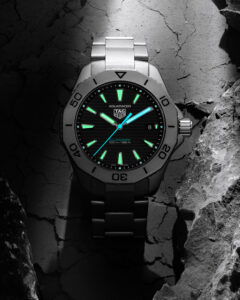
TAG Heuer Aquaracer Professional 200 Solargraph
Tell us about the role that the TAG Heuer Research Institute plays in the brand’s strive for innovation.
We launched the TAG Heuer Research Institute around five or six years ago and we have strong capabilities and amazing teams. We have a few projects happening that I can’t talk about yet, but we have the ambition to come up with ground-breaking innovation. One of the projects we have worked on is the Carbon Composite Hairspring and today we have this in some of our tourbillion pieces. It’s doing very well, and we are in the process of industrialising it. It’s such a new material, the research is still in the very early stages, and we have fundamental researchers continuing to work on this topic to ensure we have our own hairspring with increased precision. We are also working on the innovation of materials, and you will see some new novelties next year around this. The Institute is also very involved in the Plasma project that we’re working on, and you can expect more on that, and lastly, movements of course are key. We are working on revolutionising some key elements of the movements.
Can you update us on the Plasma project, what is the status of that right now?
We launched one watch last year under this project; the Tag Heuer Carrera Plasma and it was hugely successful with strong demand all around the world and we will be releasing new designs regularly with this kind of technology. We are constantly looking for something new and innovative.
What is a message that you would send to your fans and consumers in the Middle East?
Stay tuned for what’s to come, we have amazing launches, and this is just the beginning of the year, so you can expect very exciting products and news from the brand in the months and years to come.
The Novelties:
TAG Heuer Monza Flyback Chronometer

TAG Heuer Monza Flyback Chronometer
This year the TAG Heuer Monza is being reintroduced in a striking carbon edition. This special edition of a TAG icon now comes with a 42mm can and is made of ultra-lightweight and resistant carbon. It features a black dial with a two-register layout with a translucent fumé blue sapphire crystal chronograph counter at 3 and the permanent second at 6 o’clock. The unique skeletonized dial reveals the movement underneath and echoes the piece’s mechanical roots. At 9 o’clock, the date window is in blue luminescent, a first for TAG Heuer, and the blue lacquered indexes and black and white lacquered hours and minutes hands are applied with Super-LumiNova® for optimal legibility in low light. Delivering high precision and high-performance timekeeping the TAG Heuer Monza Flyback Chronometer is powered by the in-house Calibre Heuer 02 Flyback, a chronograph movement with COSC certification.
TAG Heuer Aquaracer Professional 200 Solargraph
TAG Heuer Aquaracer Professional 200 Solargraph
The new TAG Heuer Aquaracer Professional 200 Solargraph is a watch designed for endless adventures and exploration. Powered by a solar movement this new timepiece joins the Aquaracer collection, known for its exceptional quality, resistance and performance. The new model’s strengths lie in its lightness and durability – and hence make it the ultimate companion for the outdoors. The watch is designed in titanium, with a bold metallic look intensified by the light of the sun which illuminates the Super-Luminova® elements of the watch. The unique partly translucent dial allows the movement to recharge itself with the light’s rays. This means there is no need to recharge the watch’s battery and just two minutes of sun exposure is enough to power the watch for an entire day. Once fully charged, after less than 20 hours in the sun, the watch can run for up to six months with no light exposure. Thanks to the black indexes, hour and minute hand, and the polar blue lacquered central hands, all covered with Super-Luminova®, the wearers can not only see their watch in pitch dark but can also carry on with the activities of their choice at night.
TAG Heuer Carrera Chronograph 60th Anniversary Edition
TAG Heuer Carrera Chronograph 60th Anniversary Edition
This year TAG Heuer celebrates its most iconic watch, the Carrera with a collectable version of the original. Six decades from the birth of the watch a new 600-piece, limited-edition model celebrates the collector’s favourite. The classic, elegant watch features a legible ‘panda’ dial and is a reinterpretation of the Carrera 2447 SN. The watch will be limited to 600 pieces and is the first reveal in a year of celebrations of the icon. The monochrome colourway includes black stripes down the central hands and hour markers, the double stops at 12, and of course the black counters with high-contrast white markings. The watch features a vintage Heuer logo with the Carrera above it on a silver sunray-brushed dial. The 60-minute and 12-hour counters are reversed, as well as the subtraction of the T from the dial which designated radioactive tritium on the original watch. This has been replaced with contemporary Super-LumiNova on the new model. Surrounding the dial is a 39mm polished steel case, topped by a raised profile ‘glass box’ in sapphire crystal, which, along with the vintage pushers and slimline tension ring around the dial’s outer edge, gives the watch much of its retro look. The case back is engraved with the watch’s individual number, XXX/600, and a note of its 100-metre water resistance. The finishing touch is a perforated black calfskin leather racing strap with a pin buckle.
TAG Heuer Carrera Chronograph X Porsche Orange Racing
TAG Heuer Carrera Chronograph X Porsche Orange Racing
TAG Heuer has once again teamed up with car manufacturer Porsche to create a sporty timepiece with a bold orange accent and a nod to the racing world. The Carrera Chronograph X Porsche Orange Racing celebrates the racing heritage of both brands and represents the high performance and thrill of speed. It is powered by an in-house Calibre Heuer 02 which allows for allow for exceptional chronometric performance and offers an impressive power reserve of 80 hours. The design of the TAG Heuer Carrera Chronograph x Porsche Orange Racing keeps with the unmistakable Porsche aesthetic but also, most importantly, the racing universe that surrounds it. The vibrant orange colour can be found throughout the watch, inspired by the colour of the heat sparks made by the car on the asphalt. The case has been given the highest-quality black treatment possible – diamond-like carbon (DLC), with its extremely deep, elegant colour and unfailing resistance. The black dial finishing is inspired by kinetics and speed.
TAG Heuer Connected Calibre E4 Sport Edition 45mm
TAG Heuer Connected Calibre E4 42 mm Golf Edition
TAG Heuer explores new athletic territories with its latest TAG Heuer Connected Sport Edition. Thanks to its new functions and redesigned strap, the TAG Heuer Connected Calibre E4 Sport Edition 45 mm can monitor any sporting activity with an even wider range of data. With the release of a software update planned for mid-February, TAG Heuer has taken the opportunity to launch a new “Trail & Hiking” application for runners and hikers who love the mountains and going higher and further than anyone else. The use of a rubber strap enhances the wearer’s experience in action the bracelet also features two colour patterns with a fine mesh, an innovation that allows the skin to breathe better.
All-Black Titanium TAG Heuer Connected Calibre E4
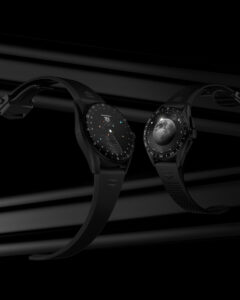
All-Black Titanium TAG Heuer Connected Calibre E4
TAG Heuer is introducing a sized-down version of its black titanium TAG Heuer Connected Calibre E4 once again reaffirming the brand’s place as a leader in the connected watch realm. Joining the core collection this smaller 42mm version comes in all-black with a sleek stylish appeal. The matte Grade 2 titanium case offers wearers an ultra-lightweight and highly resistant companion. The watch features a chronograph-inspired design including a black steel rotating crown and matching pushers used for interface navigation, refined watchmaking finishes, and a high-end digital experience with a wide range of watch faces and personalisation options.
TAG Heuer Connected Calibre E4 42mm Golf Edition
TAG Heuer Connected Calibre E4 42mm Golf Edition
Featuring new algorithms, the new 42-mm version of this golfing companion will bring unprecedented benefits to golfers for an exceptional playing experience. This is the lightest sports-connected watch ever made by the brand and is set to revolutionize the performance of golf enthusiasts of all levels.
Her Highness Sheikha Khawla Bint Ahmed Bin Khalifa Al Suwaidi Discusses Her Latest Calligraphy Exhibition
Her Highness Sheikha Khawla Bint Ahmed Bin Khalifa Al Suwaidi has always been inspired by Arabic Calligraphy but she decided to take that passion to the next level by creating her own Calligraphy works.
As a poet, artist, and writer she combines these three skills to produce works that reflect her personality and feature her unique artistic touch. After being fascinated by Arabic Calligraphy for many years, Her Highness decided to study the art form, specialising in one of its distinct forms known as Al Diwani Al Jali. She created a new, malleable, and modern style of calligraphy, allowing her to create unique pieces that reflect her inner thoughts experiences and personality.
Her Highness also went on to promote and nurture the art form of Calligraphy by founding the Khawla Art and Cultural Foundation, a platform dedicated to supporting and nourishing young talented artists in the world of Arabic Calligraphy. With this foundation, she offers her knowledge to nurture talented artists all around the world as well as ensures that Arabic Calligraphy is seen and understood by people of all cultures and backgrounds. She has also since established Khawla’s Cultural Majlis, a council concerned with tracking cultural affairs. The Majlis holds a monthly meeting to discuss cultural matters in the fields of art, calligraphy, and poetry, as well as holding seminars that focus on various aspects of culture. This helps to ensure that these art forms are preserved and nurtured for generations to come.
As Her Highness revealed her latest exhibition “Composing Calligraphy” at the Khwala Art Gallery in Dubai, we find out more about her passion and desire to share the art of Arabic Calligraphy with the rest of the world.

A moment of silence is a relief to the mind // لحظة الصمت إغاثة للعقل
Tell us about your fascination with calligraphy and Arabic letters.
Calligraphy is a way of expressing yourself, your emotions, your thoughts, and your existence. The origins of civilisation began with calligraphy such as Hieroglyphs, Sanskrit, Egyptian, etc. so if it weren’t for calligraphy, cultures wouldn’t exist. Think of what would have happened if there were no scripts; where would our cultures and history lie? Calligraphy, and more importantly letters, helped to preserve our beautiful history. What fascinates me about Arabic letters specifically is how we were able to conserve them, but also develop them and create a whole world that revolves around the language.
How did this passion become a career?
I do not call it a career per se, my love and passion for Arabic Calligraphy made me want to create something to share with the world and this is when I founded the Khawla Art and Culture Foundation.

Al Hayat
We know you are interested in many areas of the arts – poetry, music, writing – how do you bring all these together through your calligraphy works?
My works are a combination of poetry, music and writing as I expressed during my recent exhibition “Composing Calligraphy”. Regarding my way of drawing letters, I feel it’s an instant instinct, a feeling that I get when I hold my brush, turn on the background music and sit at my desk. It cannot be described; I enter a world where no one can interrupt my thoughts and I am left with just my imagination. It is at this moment that I am motivated to compose my calligraphy works.
Tell us about the inspiration and messages behind your works – what drives you to create them?
I am always inspired by what I’m reading and what I am passing through in life. What I read follows my state of mind.
How do your own memories or experiences influence your works?
My artworks are proof of all my life experiences. As I go through my works and look back at each one, I can directly know what I was passing through at that particular time. I can easily say that my works are a timeline of my own history.

How would you define your style of calligraphy?
My style of calligraphy is defined by freedom. It is the freedom of using the letters and composing my own personal and unique works.
What can you tell us about your recent exhibition “Composing Calligraphy” and the works you are showing?
“Composing Calligraphy” featured both my styles: traditional and new, and it also featured my most valuable piece “Al Hayat”. The exhibition is a summary of my artistic life in Arabic Calligraphy, and the beginning of my deeper explorations of the world of languages and calligraphy.
When and where are you in your most creative state of mind?
All I need is a soothing setting with background music and my pen. In winter, I can’t deny that the weather and atmosphere have a big impact too and therefore I find myself mostly producing in winter.

What message do you want to share with the rest of the world about the Arabic language and culture?
First of all, I always say that language itself is the basis for all cultures and civilizations, and calligraphy is a translation of these words. For me, the Arabic language is one of the most important languages in the world and unfortunately, it has been neglected by its people. We have over 12 million spoken words and over 220 fonts of calligraphy! How can we as Arabs, not appreciate this?
Why do you think it’s important to sustain calligraphy today?
It is important to preserve our language. Calligraphy is key to doing so. On one side you are creating an artwork and transmitting a certain idea or message, but more importantly, you are conserving and protecting your identity and your culture.
Tell us about Khawla Art and Culture – what are you hoping to achieve with this initiative?
Khawla Art and Culture was founded with the main aim of promoting and conserving the history of Arabic Calligraphy. We work on many research projects that revolve around the history of Arabic calligraphy, how it began and how it evolved through time. This research is also about the history of the Arab world and the Arabic cultures through time. With “Art for All” we aim to educate people on these matters by providing them with courses, workshops, and lectures, enabling them to tap into their creative potential by developing their artistic abilities and artistic knowledge. It is also a way to build bridges between different cultures: Persian, Turkish, Middle Eastern, etc. exchanging knowledge and thoughts are fundamental to evolve and grow.
Through Khawla Art Gallery, we present arts of the MENA region, seeking to connect further with MENA culture and its history. Inviting artists with different styles of art, materials, and colours; reflecting each artist’s mother culture. Khawla Art and Culture hopes to transmit the voice of Arabic culture to the world.
What can you tell us about the young talents you have seen in the UAE in the areas of art and Arabic calligraphy and how your platform is helping to nourish this talent?
Through Khawla Art and Culture, we searched and discovered a great number of talented emerging artists that need to be nurtured. I was truly amazed by their incredible capabilities and creativity. In the UAE, many young talented calligraphy artists are innovating and evolving the art of Arabic Calligraphy in a more modern way that is more attractive and interesting in today’s international community.
I try to showcase their works and highlight them by exhibiting their artworks, promoting them on our platform and introducing them to the artistic community. We must appreciate young talents, motivate them, and promote their artistry, and it is also very important for us to let these artists appreciate their culture and understand more about the Arabic language and Arabic calligraphy.

What would you like to see as the future of this industry in the region and globally?
Khawla Art and Culture began with the hope that Arabic art and culture can be recognised and appreciated internationally as they should be. I always say that a country without an artistic and cultural heritage is not complete, what if we are talking about the whole MENA region? A region that is filled with great poets, writers, artists, musicians and more. It all starts by having an impact on and nurturing one talent, and from one individual to another, society as a whole will create an impact by itself.
I would like to see more Arab artists featured in international museums, I would like to have schools and universities teach students about our culture and our heritage as we are learning about the history of other cultures. I would like to see young students reading Arabic poetry and appreciating it, communicating in Arabic and being proud of their language.
What is the biggest challenge you face in what you do?
To prove my presence despite all the challenges, to set a goal and aim on reaching it no matter the hardships. And my biggest challenge will always be my biggest motivation to move forward and never give up on my goal.
What is something you would still like to achieve that you haven’t done yet?
I am currently working on an Arabic Calligraphy book that covers the entire history of Arabic calligraphy, its evolution and where it stands today. After months of hard work, research and connecting with Calligraphy artists from around the world, this would be one of my greatest achievements. Arabic Calligraphy is not a craft, it is an art, and this should be understood by all.
Dr Khaled Ghattass Discusses the Importance of Finding Purpose in Life
Dr Khaled Ghattas has become something of an internet sensation. The Lebanon-based doctor turned poet, author, thought leader and inspirational speaker has sparked international conversations thanks to his thought-provoking social media posts, poems and books that look deep into some of life’s most complicated questions.
Ghattas, who has a PhD in cellular biology from the American University of Beirut, runs his Instagram and YouTube channels, where he presents his ideas on identity and the meaning of life, highlighting them with poetry excerpts, scenes from movies and scientific facts. His philosophical approach encourages conversations and thoughts that are often outside of the box, offering a new approach to life. Ghattas’ open approach to life has seen him harbour a following of one million users on Instagram. Here we dive deeper into Ghattass’ thoughts and get an exclusive insight into how we can reset and adjust our mindset and find out true purpose in life.
Tell us about you and your journey – how did you find your path to what you’re doing today and how did you discover that you have this talent?
I think people overestimate what talent is. A talent starts with curiosity and then an opportunity comes to follow through with this curiosity, and then you need consistency. I’m thinking of writing a book around this specifically because I think it’s a good deconstruction of what talent is.
I was always curious to get to know more about people, how they think and how they see life. One thing that boggles my mind is how there are things that don’t make sense to people, yet they accept it. So, this is how my journey started; with curiosity to know more about people. Curiosity can be triggered by just one word or comment or something that opens your eyes at an early age, then you start following these triggers until you get the opportunity to explore it further. I had the opportunity to acquire knowledge in academia and in life and I see that as a blessing. I didn’t have to get too immersed in my career too early, I didn’t get married and have children when I was very young, so I had the opportunity to actually think! And then I was consistent in this. I have been doing this now amongst my friends for the last 25 years and in public for the last seven or eight years and it has become a community.
A new year is often a moment to refresh and reset – how would you advise people to start training themselves to set the right mindset moving forward?
Often people decide on their mindset and follow their temporary goals, and this is not sustainable at all. Mindset must start with a purpose. When you have a long-term purpose that’s when your goals become sustainable. Your purpose should be your starting point with any change of behaviour or habit, so first uncover that. This could be an individual purpose, a purpose for a community, for a company, for health. Usually, the purpose isn’t related to the individual him or herself, it’s more about what he is going to do to move forward. Once your purpose is clear, you can set your mindset accordingly. Mindset starts with prioritisation and asking yourself how to approach certain habits or behaviours. This becomes easy after you have identified your purpose.
Sometimes pressure can be imposed on us by society to change…
Yes exactly, and it is very easy to drift away from your purpose, it’s a natural tendency. When you really know where you’re going, this is when you can limit drifting. This reduces the impact of social or peer pressure or being influenced by trends. I think consistency is derived from discovering and criticising and then re-discovering what you want.
There is a book called “Top Five Regrets of The Dying” by Bronnie Ware. She was a nurse who cared for those who were sent to die peacefully in their homes. By chance, she started asking some of her patients what they regretted the most, and the answers were very interesting. So, she classified them into the top five regrets and wrote a book about them. The top regret is “I wish I lived a life that is true to myself, not to what others expected from me.” This gives us a great insight into what really matters. It’s a very interesting read. There is a common question many people ask: ‘how do I resist what society wants me to do?’. I don’t understand this question! If you know what you want to do, there should be no resistance, you should just focus on what you think is in harmony with who you are and what you want to achieve, even if what you want to achieve has a social context, it has to be true to who you are, knowing that who you are changes with time. Once you have built an internal and external awareness of who you are, you live that life. This is what creates a better life for you and all those who are around you.

It is the hardest thing to acquire the attention of people, let alone them believing your analysis and advice – how did you manage to recruit this loyal base?
I have loyalty to my beliefs and values and the message I want to spread, I never betrayed this in the way I live, speak, or think and I am consistent in my positioning. This seemed to resonate well with my supporters. Secondly, I think I dared to be the voice of the silent majority. There are many who know and feel that there is something not right and I just happened to vocalise this in a smooth way, where it is accepted, but also triggers a question. I don’t advise, I push a question into people’s minds. There is a quote from Socrates that says, “Wisdom begins in wonder,” it’s actually written on the ceiling of The Louvre Abu Dhabi, and this is what I do. Even in my book, the last and most interesting character’s name was “Sou2al” which means “question” in Arabic. “Sou2al” is a character that questions everything, and I think this is how we change.
This is used in coaching, but I use it in a very different way because I ask the questions that I want the answers for. I don’t ask the questions for people to ask themselves, I really want to know the answers. I try to deliver the most appropriate answer that I see at that moment in time, based on my experience. It could change in time and that’s the most important part of a mindset – that you are honest with your answers. This is how you get the right mindset. It starts with humility. You must be humble to accept changing your mind, learning from life, and introducing new values. Humbleness is one of the earliest things you need to acquire to adopt a better mindset and I consider these things in the way I think.

We are at a time where raising these kinds of questions is no longer a taboo – how do you think your conversations are supporting the society around you?
I tackle concepts that from my perspective if handled well enough, the issue of mental health will be less impacted. I try to focus on fast and wide-spreading concepts that to me are not healthy. When it comes to taboo and if it’s OK to speak about these topics, I think people have started to realise the risk of how they are living, and that’s where they really started listening, whether it’s to me or to someone else. But bear in mind that there are a lot of people speaking about mental health issues and I don’t think this is the part that relates, I think people want to be part of something that’s fixing what is wrong, not talking about what’s wrong. And fixing what’s wrong, if it’s from the source, it’s very different. I don’t want to make it too philosophical, but what I try to tackle are the underlying concepts which to me are the basis of what we are experiencing now.
What are your key focuses for 2023 and what would you like to achieve in the coming year?
I think I’m just starting! I need to spread my messages further in every place I can. I want to focus on linking values to actual materialistic benefits because I think these two have been drastically detached, and I want to link them directly. I want to link values, to material deliverables and enjoyable benefits. These should not be so far away from each other in people’s minds. I want to start with corporate companies, academic institutions, and family organisations and I want to closely link the idea of why concepts such as trust, belonging, empathy and humility are good for us. These are not things that you should, but things you MUST have to have a proper life, whether we are talking about individuals, societies, a growing nation, company etc. Whoever you are. This is my priority. This is something that I want to bring to corporate cultures, and I want to find more research that supports these findings as this is something we don’t yet have, and leverage this to elevate the conversation to a more academic or scientific level that we can all benefit from.
There are certain situations, whether problems, relations, or questions, that don’t have an answer or a closure and sometimes as humans, we want to have those answers – in one of your episodes, which is among my favourites, you spoke about this topic – tell us more about this and how in your opinion should we deal with such situations?
The human mind is a reductionist, which means that we oversimplify what life is – we want to have one infinite answer for things that can never have that, some answers don’t satisfy our thirst and that’s where the contradiction comes and it’s painful. When you go through a breakup, for example, there is no way you will find one answer for why the relationship ended. We must learn to accept that sometimes we are helpless in understanding certain things on life. We must acknowledge that some situations cannot be answered, and we need to accept that openly and accept the shortcomings that come with this. And when you do that, you will find comfort. It is not that we are lying to ourselves, we are lying to ourselves if we think otherwise. Life is too complicated with its values, its time, and its opportunities. It’s too wide for our minds to comprehend certain elements of life or incidents or factors that might hurt us and so on. It boggles my mind because everyone knows what I’m saying, they just don’t know how to put it in the right way. We must be comfortable with uncertainty, that doesn’t only mean uncertainty in doing business, it’s uncertainty in life in general. We tend to reduce the complexity of life so we can perceive it, but this makes it painful because this is not what life is and we have to accept our helplessness facing life and sometimes understanding it. And finally, we must be comfortable with uncertainty. Sometimes reading too much into one question can make you become stuck at a certain place and that’s always not the point. Yesterday I was asked when I get an idea that I want to pursue something and then I question the source of this idea – but my answer was; what difference does it make? If the idea is there, just pursue it. So, I have a balance of what the past has put into our lives, but also how we use this experience from now on. I’m not saying people can change their lives with one decision, but you need to consider everything that you’ve passed through and what you want to make from it in a gradual way that will push you into your correct purpose.
How do you decide on the topics you want to talk about?
Every day I ask myself two questions: what do people want to know? And what should people know and listen to? They may tell me they don’t agree with certain things or like them.
Sometimes I can be a bit rough in my talks and I’ll receive feedback that it’s too deep or heavy, but I tell them ‘I’m sorry but I don’t care, I’m not here to please you, I’m here to tell you what you should know, and often what you should know, is heavy’. So, this is how I decide. Of course, some of my videos are lighter than others but some really tackle the concept directly. I focus on what goes on around me, but not in a self-centred way. Recently I had lunch with some executives, and when we finished lunch, he told me: ‘this is the most uncomfortable, comforting discussion I’ve had in years’. People come to me asking for me to motivate them, but what I do is make them think and question what they are doing and that will bring them more than just motivation. I think true motivation comes from truth. I have attended talks by some of the top motivational speakers in the world, and I don’t know if others feel the same, but the vibe goes before I even reach my car in the parking lot! Truth is what really moves us, and we need to help people uncover that.
What is a quote or motto that you live by?
It’s written on my profile which translates to “bringing proper aware thoughts into us as a community as a family as a corporate.” One of the things that I do on my Instagram platform “Al_Warsheh” is a trigger for people in any community to elevate their discussion and open a meaningful subject. All the talks that I deliver are under the topic “let’s start a new major discussion” and what I love is that now people come to us, and they say that their night discussions and dialogues were about that certain video they saw, and this is amazing for me. People tell me that they forget their phones when they are discussing these topics, and that’s exactly what I want. The second part is to bring life to our lives and to live a meaningful life where we can feel music, religion, science etc. and the third part is to bring some humanity into our lives. “The Human is in his humanity” and this is core. And then you build on these three, to change the world.

What are three books that you would recommend that have had a big impact on your life?
I have read a lot of self-help books, and nothing has helped me! I’m more into reading biographies of people who drove positive change in our lives. I like to read stories that bring insights to my mind. One of the most interesting is by a writer called Tawfic Al Hakim, I’m inspired by the way he thinks and writes, and my own book is highly influenced by his style of writing. There are many others that I like such as Najib Mahfouz, Taha Hussein, and Mikhail Neaime, all great names that had a great impact.
I love poetry and I love something that allows me to expand on who I am. There is an Arabic book called “Forty & Fifty & Sixty”, written by a man in his fifties, I feel that I acquire 50 years just reading his story. So, I would rather advise people to read something that’s more enriching. We read so many statistics and I think we miss out on the reality.
There was a quote that I got from Harvard Business School that was an opening of a course. They said that ‘we need to move from ‘image management to essence management’. This struck me big time – we need to do that!
What do you say no to?
Anything that is not in harmony with who I am and what I want to achieve. Saying no is one of the hardest things to do because people drift because of temptation, not because of suffering. And I’m more cautious about saying no to temptations.
Elie Saab Group CEO Elie Saab Junior Shares his Vision for the Brand
Today, Elie Saab Junior heads up the Elie Saab Group as CEO, overseeing the running of the company from a business perspective.
We met Elie Junior in Paris ahead of the Spring/Summer 2023 Haute Couture show and it was clear that he has a strong vision for the company which comprises the heritage and DNA of the brand as well as what he believes the next generation of clients are looking for. Over the past few years, he has, alongside his father, been implementing a plan of restructuring within the company, taking the brand further to create an entire Elie Saab lifestyle that will captivate its consumers. Here we find out more about the future of the Elie Saab Group.
On a Group level, what is the vision and positioning of Elie Saab today and what’s the objective that you are working on for 2023?
For the past few years, we have been working on reorganizing the infrastructure of the group, preparing for the next phase of growth. In 2019, we initiated an action plan to secure the sustainability of the business as an independent company. We implemented that restructuring plan by end of 2020 and that has been constantly revisited to reach our status. Amid the pandemic, at a time when there was no visibility on how the world would turn out or how the business would pick up, we created a solid platform for a big comeback and we managed to set the records straight. Today I confidently say that 2022 was a lucrative year for Elie Saab when it comes to top-line or profitability, confirming that the plan we developed is on point and we are properly following the right track. From this, we can keep building towards our strategy granting positive results. It is a laborious effort, self-financed and strategically focused.
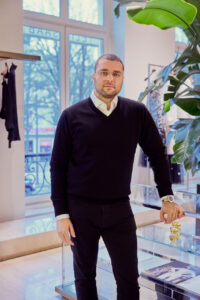
Elie Saab Junior. Photographer: Carl Halal
Did you have to compromise by closing certain boutiques around the world to make sure you focused on the repositioning or relaunching of others?
I would say we optimized our retail footprint differently. In 2019 we had ten boutiques around the world located in five countries. Our aim was to extend our presence geographically in key markets by dropping out five locations to focus on our flagships in these markets while cutting down some operating expenses and improving the use of our resources within the organisation. Building on our strategy in 2022, we opened in five new markets, ending the equation with ten locations in ten markets to diversify the demographic and geographic expansion. We live in a turbulent world so it’s important to balance this. We have projected by 2024, around five new doors in different markets, with a focus on The United States and Europe, this will increase the global footprint and reach of Elie Saab, and at the same time, allow us to push our new product offering. Our mission is dedicated to positioning ourselves as a luxury lifestyle brand. Elie Saab is a brand that has a lot to offer. We have all the components to present to a wider audience a luxurious lifestyle offering. Today there is a demand for Elie Saab Maison around the world which was proven by the market. As a business unit, it has grown by thirty-five per cent yearly since we launched.
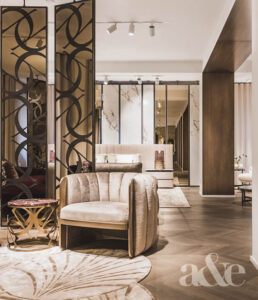
Elie Saab Maison
Tell us about the Elie Saab Maison segment and where is it today.
Today, Elie Saab Maison has gained an important position in the marketplace and represents a strong pillar in the Elie Saab World. This new segment was developed and launched during the pandemic in Milan, a sceptical timing when the global situation was drastically unstable. But slowly as the world started opening again, we witnessed a lot of demand from distributors around the world as well as from private clients and developers. And by 2021, the demand grew bigger, and the projects have taken another proportion! This evolution has positioned Elie Saab Maison as key player in the branded furniture segment. The main showrooms are located in Milan, Beirut, Paris, Dubai and Qatar. Our main hub remains in Milan as it is the capital of design. The product is made in Italy under the driving team of Elie Saab Maison operating in Milan.
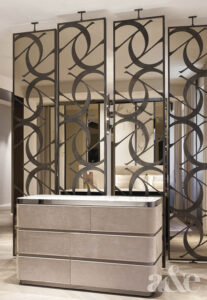
Elie Saab Maison
How challenging is it for you to maintain a coherent message and performance across the group and not drift from the DNA of the brand?
The formula is simple: positioning and product offering. From this point, you can derive many things – your marketing strategy, your distribution strategy etc. – while reflecting the DNA of the brand. And this is crucial in our approach with all parties or business stakeholders we deal with. And from there on, anything that does not fit this purpose will not see the light. We are very keen on protecting the DNA of the brand with the right balance and sense of perfection.
How would you describe Elie Saab Maison today?
A sophisticated luxury and high craftsmanship, carrying our style and aesthetics. It takes time to build this, yet it is executed in a refined and discreet way. We are working on building an identity for this entity that will gain its own place in the furniture world and reflect the brand’s essence.
Elie Saab Maison
What are the challenges you face today?
As a Group, we are one of the few brands that remains independent, and it is not an easy quest to sustain in this competitive marketplace with the big giants of the industry. So of course, this brings a lot of challenges, but we embrace them in a positive way with the main drive being our independence and ownership. So far, this has given us the leeway to improve and progress by breaking some of the traditional rules of doing things by taking prompt decisions at the right time. This is one of the operational strengths that we have and something I would like to maintain for a while.
We have seen several recent openings in the Middle East in all sectors of the business – tell us about Elie Saab in the region and what’s in the pipeline.
First, the main strategy-driven development plan is to increase the Elie Saab footprint globally. During the restructuring phase, the idea was to focus on the region with the highest brand equity. Maintaining stores in the key capitals of the world while looking for tactical opportunities. At that time, we didn’t have clear visibility mainly due to the global crisis. Post-COVID however, we encountered great opportunities on the market with unexpected potential locations, we then took the step forward to expand and enter Abu Dhabi, Qatar, Milan, Riyadh, St Barts and St Tropez at the right time and today we strongly believe that they are valuables assets in our portfolio.
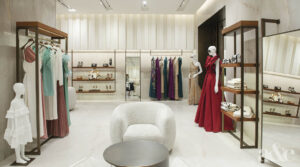
Elie Saab boutique Abu Dhabi
The Middle East is definitely one of the markets where we want to consolidate our presence because of the importance of the brand and the equity there. Seeing the development in the region today makes us so proud and we’re so happy to be part of that wave and put in place the operation of the brand in this area with the new generation, which is in fact my generation. In any case, Elie Saab’s strong presence in the region is a natural and organic practice. Today, our mission to drive the expansion is a priority for us. Owning full operation in Dubai, we extended our development into Abu Dhabi and opened at the Galleria Al Maryah Island followed by Qatar in Katara Island where we present the whole universe of the brand. Recently in KSA in VIA Riyadh a new and promising Mall, and we are very excited about that. So, we went from having one location in the Middle East to four, which is an important increase in such a short period.
At the same time, in Europe, we opened a new store in Milan. It’s a key capital and a good addition to our ecosystem along with Paris and London. We also increased our presence from an operational standpoint, opening new headquarters in Switzerland where we house the business development, the commercial operations, a distribution hub and a main warehouse for Ready to Wear. We also opened stores in St Tropez and St Bart, our first seasonal locations that we intend to develop on.
Do you believe in pop-up stores?
I definitely believe in pop-us, but it is important to have the time, resources and the right plan for these models. Our current strategy is to focus more on seasonal locations that will remain permanently.
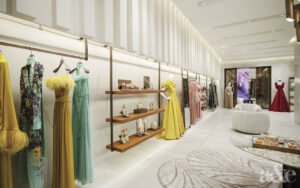
Elie Saab boutique Abu Dhabi
What about the presence of Elie Saab in Asia, is this something you are looking at?
We are studying the market carefully, and understanding the dynamics but at the same time, we still have a lot of opportunities to develop the brand in the regions where we are already in. Having the presence of Elie Saab in Asia is something that we’re looking at very seriously, but in due time.
Today, you are the group CEO, tell us how it came about and how it functions today.
As far back as I can remember, I always had the vision and ambition to see the business grow. It was a no-brainer for me to be part of the organisation from day one and of course, I grew within. I witnessed the ups and downs and today, in my role and my responsibility, I am heading towards fulfilling and completing the vision of my father, while opening new perspectives and driving the business forward. What Mr Saab has created over 40 years has built a legacy that aims to maintain its growth and expansion around the world and this mission as much as it may seem easy to lead, it makes it harder in some ways.
What would you like to achieve that you haven’t achieved yet?
Well, I don’t believe I have achieved anything yet! There is still a lot more to go, if I were to identify my target, we are still climbing up the cliff and there is so much more to do. Slowly but surely, we will get there.
Elie Saab boutique Abu Dhabi
What is your personal motto?
To keep the drive, I cannot follow one motto because we face challenges every day and you must have a certain mindset to adapt. But I would say “never give up”, “always keep aspiring towards perfection” and “don’t let anything bring you down” are key mottos. Any challenge that you face should be looked at as a learning curve. The challenges will never stop no matter what you achieve so if you overcome them with poise and insight it will help move into the next phase. That’s how we manage to get through tough times, and this is what I learnt from my father; as many challenges as I’ve faced, he came across much more in forty years!
What is a lesson you have learned from your father that you will pass on to your own children?
Keeping your head on your shoulders. I think that is the biggest lesson I’ve seen throughout my life and assimilated quite well. It may not be easy to understand and assess for the new generation, who can be easily carried away by moments of success. I have seen this in real-time and my father has been a great example and mentor. Seeing him grow through his career to the point he’s at today, without changing one bit, is something that marked us all deeply and strongly. It is one of the many lessons I’ve learnt from my father, but I do believe it is a genuine message for generations to come.
Mr Elie Saab Discusses Creating a Universe That Will Transcend Generations
There are very few fashion houses in the world today that can still claim true legitimacy, standing true to their DNA and at the same time, remain an independent entity, let alone a brand whose roots belong in the Middle East, a region that has for so long been underrepresented in the global luxury industry. But Mr Elie Saab has been the one to break those barriers.
Born in Beirut, Lebanon, Mr Elie Saab grew up dreaming of making clothes and he began to teach himself how to sew from the age of ten, dressing his sister in clothes he would make from scraps of material found in his mother’s closet. In 1982 at the age of just 18, Mr Saab launched his own fashion label in Beirut. He had blended western style with his Middle Eastern influences to create bridal couture gowns which soon caught the attention of the high society women in the local community. Mr Saab’s designs focused on making exquisite pieces from the most luxurious of fabrics. He used lace, detailed embroidery, pearls, crystals, and silk threads to create by hand, gowns that would be fit for royalty. Saab continued to harbour a strong following in Lebanon, a country that remains at his heart, but he always dreamt of taking his brand further beyond the Middle East, something that had rarely been done by an Arab designer before.
While his Lebanese heritage and culture remain until today at the heart of everything he does, Saab made it his mission to position the brand at an international level. He set his sights on Italy where he became the first non-Italian designer to be a member of the National Chamber of Italian fashion, and in 1997, he showed his first collection outside Lebanon in Rome. In 1998 he started his ready-to-wear and accessories lines and hosted a fashion show in Monaco which saw Princess Stéphanie of Monaco in attendance. As word started to spread across Europe of Mr Saab’s exquisite designs, demand began to come in from a new consumer base who were mesmerised by his dazzling gowns.
In 2002, Mr Saab was invited to dress American actress Halle Berry for her red carpet appearance at the Academy Awards. Berry won the award for Best Actress that year and of course, all eyes were on what she was wearing to accept the award. This captured the attention of the world and as a result, the brand’s profile grew in The United States, the first Lebanese fashion house to do so at such a scale. In 2003 Saab was invited by The Chambre Syndicale de la Haute Couture to become a member, and he showed his first haute couture collection in Paris in July 2003. He subsequently presented his first Ready-to-Wear collection in the French capital for the Spring/Summer 2006 season.
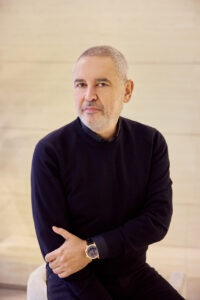
Mr Elie Saab. Photographer: Carl Halal
With his fashion line firmly positioned and going from strength to strength, the brand signed a 10-year licensing agreement with Beauté Prestige International for fragrances and cosmetics in 2010 with the House’s first fragrance “Le Parfum” launching in 2011, beginning a new chapter that would see the brand add additional verticals aside of its haute couture universe. Over the next few years, Mr Saab would open stores across the globe, from New York to Paris, to London to Beirut as well as being stocked at over 150 retailers worldwide.
In 2019, the House diversified further with the launch of Elie Saab Maison, a line of home furnishings that brings the DNA of the fashion house into the lifestyle section as well as a development into real estate through a partnership with Emaar. But as a creative mastermind and expert couturier, Saab’s strength lies in designing and the creation process and that is the legacy he wants to preserve. In 2012, Elie Saab Junior joined the company as Brand Director and today, he oversees the company as Group CEO, with a focus on diversifying the house’s verticals and expanding with an approach that remains true to the heart of the brand.
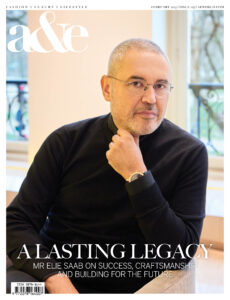
A&E Feb2023 Cover
The brand has seen great success across the years, showing Haute Couture collections each season in Paris, as well as developing a ready-to-wear line, fragrances, accessories and most recently, the addition of made-to-measure couture menswear. Not following trends as such, but ensuring his gowns are both timeless and relevant. Mr Elie Saab has become a true leader in the industry and an inspiration to all those that follow.
Ahead of presenting the Spring/Summer 2023 Haute Couture collection in Paris, we met exclusively with Mr Elie Saab and Elie Saab Junior for two heartful and insightful interviews that would allow the world to understand the balance between guarding the beautiful legacy of this brand while also setting up for future success and appeal to the new generations. We talk to Mr Saab to find out more about the collection and the couture industry, while Elie Junior offers an insight into the brand at a Group level and looks at how diversifying the company’s verticals will offer clients the opportunity to buy into the full Elie Saab lifestyle.
The last time we sat together was before the pandemic, and while that period was a slowdown period for many, how was it for Elie Saab? What can you tell us?
That period was indeed a very challenging time for everyone, however, we tried to be resilient and positive. The truth is that we never changed any of our forecasted plans. I believe that in that slowdown moment we gained time in that phase to focus, reflect, and move forward in the right direction. Hence, today everything has its proper base and foundation set. We are grateful that the industry is on its recovery and always looking forward to better days.
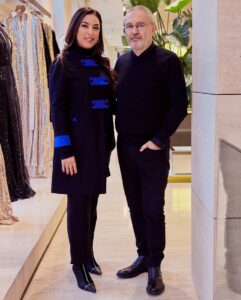
Elie Saab with A&E Founder & Editor-In-Chief Lara Mansour Sawaya. Photographer: Carl Halal
Looking at the industry today, how do you assess it and what challenges do you face as a brand?
The industry is surely a challenging one and obstacles may arise along the way, but this varies from one Maison to another as each has its own strategies, plans and expectations. For us as a brand, we have been very attentive to every step we make and will only do that after a calculated study and thorough research. We never venture into any random decision without being fully certain and aware of the output and results.
Do you still see that the Couture industry revolves around dreams?
It is dreams and they’re translated for sure. And in my opinion, wherever there is a woman, there is Haute Couture. Every woman wants to be unique and stand out, and today Haute couture has its clientele around the world that appreciate this unique and exclusive craftsmanship. There are few fashion houses that managed to sustain this savoir-faire while others just kept it as an image.
For us as Elie Saab, we started with Haute Couture, and it is the core that gives strength to everything we do however we branch out. Haute Couture was and will always remain the soul and DNA of the brand.
Speaking of couture, tell us about the latest collection for this season.
In every collection, we take our clients on a journey to a new place and time. This time we visited Thailand and were inspired by its ceremonial occasions and opulent expressions, so we translated them into looks using many new cuts and forms, exquisite textures, draped embroideries, and braided and elaborate trimmings.
Titled “Golden Dawn” the collection is a celebration of the beauty and style of the country. Each majestic piece is intricate and ornate carefully put together recreating the scenes of natural beauty that can be found in the country. Shimmering rhinestones and crystals weave into the delicate metallic tresses of wispy capes and sumptuous large coats that make elegant statements as they dance to the floor. These regal golden looks create a sense of power and opulence.
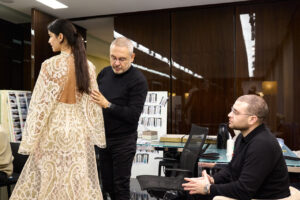
Mr Elie Saab and Elie Saab Junior. Photographer: Carl Halal
We also saw last season the Elie Saab man on the podium, tell us more about that and what brought that to life?
To be honest, we have noticed that there has been an appetite and demand for this for quite a while from many of our existing customers. Last season when we revealed the collection, we received great echoes from the press and clients. It followed the same elegance and craftsmanship as the women’s collections, with luxurious embellishments and intricate embroideries, interpreting the DNA of the brand in a new way.
I remember when you told me years ago that you want women to identify an Elie Saab look without any logo or motif. If you were to describe your aesthetic and style in one word, how would you describe an Elie Saab look?
Timeless!
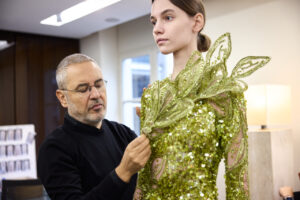
Elie Saab. Photographer: Carl Halal
You were one of the first creative names to put the region on the global map when it comes to fashion. This is success at the core. How hard is it to maintain success?
To succeed is something, but to guard and sustain being successful is a task on its own. Our industry is not an easy one and it requires a philosophy and a vision, but it also requires the person to know how to feel the market, to be resilient and to know the client’s behaviour to be able to sustain that success.
Speaking of success, your journey is full of great achievements, what is it that you still aim to achieve that you haven’t done yet?
I still have loads to do! There are many ambitions that I have on mind that I still want to achieve.
Looking back on all that was done throughout your journey, are you satisfied?
Satisfied? It is a big word and comes with a big responsibility. What I can tell you is that whenever something revolves around assessing myself, I am very strict.
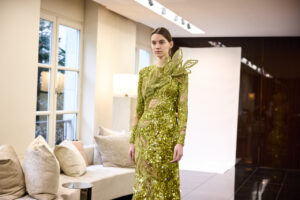
Elie Saab. Photographer: Carl Halal
Is there anything that you would change in the way you did things?
Life taught me never to look back. Sometimes I recall previous executions and practices and it is only to learn how they can be reapproached. I’ve always been a patient person from the beginning and across the years life confirmed that patience is key and core.
Elie Saab. Photographer: Carl Halal
What would you advise emerging talents who are aspiring to be designers?
I would tell them that our industry is a tough one and requires a lot of sacrifices, and to stand out they need to work hard, but most importantly they need to find their own signature. They need to listen, observe with fresh eyes, and live the experience.
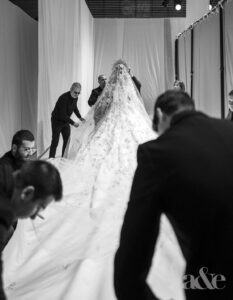
Image by © Greg Finck for Elie Saab
Looking at the industry today, are there certain names you respect and like?
On a regional level, for sure there are a lot of young men and women designers that are doing a good job and I love their work and I believe that if they remain persistent and work hard and constantly develop themselves, they will achieve great things and take their brands to another level. And in today’s world the presence of social media, allows them to reach a wider audience and target globally.
On a global level, I have immense respect for names like Giorgio Armani, Christian Dior, and Valentino Garavani as those were legends that contributed a lot to this industry, and I believe that there aren’t many today as few are the designers that are designing for their own name. Most of them are working for different fashion houses and most are doing ready-to-wear and not couture.
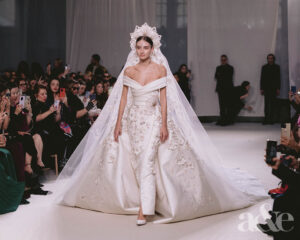
Image by © Greg Finck for Elie Saab
What was your biggest sacrifice?
Time! If you think about it, we do eight collections a year so every 40 days we present a new collection, hence time becomes the biggest investment. It is very hard for a person like me who is very attentive and fully dedicated to his work not to put all his time in the smallest of details.
What does success mean to you?
Success is something fragile and therefore it requires constant dedication, attention, and maintenance to be able to guard it and sustain it. It is surely a big responsibility therefore we must never take it for granted. Personally, I am always careful in all that I do to guard that success.
The burden of having your brand carrying your name is heavy. How would you like to be remembered?
I am blessed with the respect and appreciation of many, and I strive to guard this legacy and responsibility.
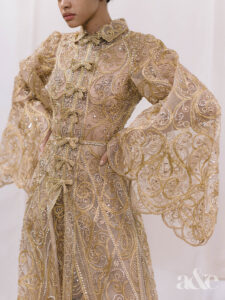
Elie Saab. Photographer: Carl Halal
Where is Lebanon in your life?
Lebanon is at the core of my heart, and it is my entire life! The more challenging the situation gets there the more persistent I am to stay. I believe in Lebanon, and I pray for better days. That’s my biggest hope.
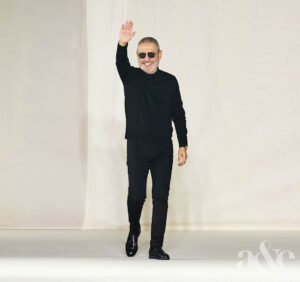
Image by © Greg Finck for Elie Saab
What are your last words for your customers and fans in the region?
Today as a part of our Group’s expansion plans, we are closer to our customers in the Middle East, be it Dubai where we have our flagship boutique or the recently opened Abu Dhabi boutique in Galleria mall, as well as our store in Qatar in Doha’s Katara Cultural Village and soon to be in Saudi Arabia in VIA Riyadh.
I hope that we continue being trusted and appreciated by our customers as this is what drives us onwards and upwards.
Ricardo Guadalupe CEO of Hublot Unveils the Brand’s Latest Novelties
Hublot is once again pushing the boundaries of watchmaking and design with its newest novelties, as revealed at LVMH Watch Week in Singapore this January.
Headed up by CEO Ricardo Guadalupe Hublot has firmly defined itself as a brand that breaks tradition. Known for its disruptive, surprising approach to watchmaking, the brand is constantly on a quest to try new approaches, and fresh materials and present interesting partnerships, offering more than just a traditional watch, but a bold and audacious lifestyle, that is incredibly attractive to today’s consumer. After a hugely successful year in 2022, sponsoring the FIFA World Cup in Qatar, Hublot is set to start 2023 stronger than ever. We find out more about the latest reveal and what to expect over the next twelve months.
As we start a new year tell us about the vision and objectives for Hublot in 2023.
We recently returned from the 2022 World Cup in Qatar which was an incredible experience, so we ended 2022 in a strong, passionate and dynamic way. Now in 2023, we have to continue with this momentum. It is going to be a year without an event at the level of the world cup but we are doing something different this year. The idea is to talk about the essence of Hublot and what the brand is about and explain our Art of Fusion and how Hublot is a real Manufacture. When you visit our headquarters, you can see our research and development, the work we do on materials, how we produce our own ceramics, how we have teams constructing movements and complications, and we want to share all of this with the world this year. We want to reiterate how Hublot represents the Art of Fusion and how that makes us different from other watch brands. At Hublot we strive to create watches that are different, if our watches were the same as others, why would anyone buy a Hublot? So that’s the message that we want to get across this year.
We are also going to be coming back to some of our art partnerships, we will be presenting a new Sang Bleu, a new Orlinski, and much more under this theme of art. At Hublot art is important not only in our communication but also in the development of our watches. I think we’re the only brand to really take the art of the artist and put it into the watch, so the watch becomes a piece of art itself, building a fusion between the artist and the watch.
And our third focus for this year is sustainability and ecology and the protection of the planet. We begin the year with the Hublot Big Bang Unico SORAI that we are launching here in Singapore. This is related to the protection of the rhinos, and we will be giving back a substantial amount to help protect rhinos through the sales of this watch. We chose rhinos because we believe they are beautiful animals, and they are an endangered species. We will be doing a keynote project connected to this at Watches & Wonders later this year.
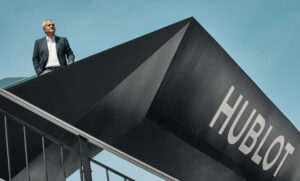
Hublot CEO Ricardo Guadalupe ©Andra
Do you still believe in disruption when it comes to your strategies and marketing projects?
Yes, I believe in disruption. For Hublot, it’s important to have this philosophy of being disruptive and I think that all our partnerships are disruptive in some way. Even if we talk about football, yes, it is a popular sport, but it’s disruptive because no other brand had the courage or the will to go into football before we did, and I think Hublot now owns this territory. I think brands are afraid of the negative impact of being involved in such things and that’s why they don’t want to take risks. When we went into boxing with Floyd Mayweather, for example, that was a hugely disruptive approach. So yes, I believe in disruption of course, but it must bring something to the brand.
What challenges do you think the watchmaking industry is navigating today?
In the past, when the Smart Watch first came out it had an impact on the entry price level watches, but I think the watchmaking industry of Switzerland has to offer an added value on its products. Of course, when you add value it’s more expensive, but we see that watches over three or thousand Euros are doing so well. This year is going to be a record year of exportation for the watchmaking industry. In my career of over thirty years, I’ve never seen such high demand for luxury mechanical watches. So, I think the future of the Swiss watch industry is quite good because I believe that the young generation is looking to luxury watches as a way to differentiate themselves from others. The main problem today is the supply, everyone is facing issues of being able to produce more watches to keep up with the demand. Of course, there are still some issues in some parts of the world, China is still under COVID restrictions for example, there is the war in Ukraine, which has stopped us from selling watches in Russia for almost a year, but despite this, I see a lot of positivity as we come into 2023. We never know what can happen, but I think it’s positive.
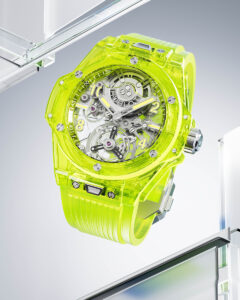
HUBLOT BIG BANG TOURBILLON AUTOMATIC YELLOW NEON SAXEM
The Dubai Mall flagship is your best-performing boutique in the world – to what do you tribute the success of the brand in the Middle East?
In Dubai particularly we sell a lot of watches to tourists as well as to local customers. But in Saudi Arabia where we are now also doing great, we are selling purely to locals. I think the Middle Eastern consumer likes to have disruptive products. It is quite a mature consumer base who loves watches and loves luxury products and when you have had many experiences with traditional brands, sometimes you want something different, and I think Hublot is a good solution for this. We also create watches that allow people to differentiate themselves and make them stand out from others. We see that particular watches sell well – the coloured ceramic for example – and these are the watches that make the wearer stand out. We also have a very good split between men and women customers in the Middle East.
What is in the pipeline for Hublot in the Middle East and on a global level in terms of boutiques?
I think we are quite well implemented in the Middle East now, we are still opening one more boutique in Saudi Arabia, so we will have six in total, we just opened a boutique in Doha at Place Vendome which is an incredible flagship. We are adding a new location in Cairo in Egypt. And for the world, we are still expanding our standalone boutiques, we have 130 in the world currently. We are expanding in China and the United States.
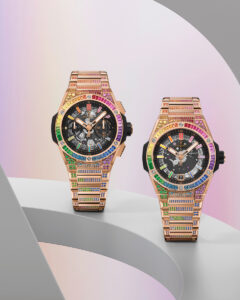
HUBLOT BIG BANG INTEGRATED KING GOLD RAINBOW TIME
You are going to be completing eleven years at the helm of the brand this year, what do you still aim to achieve that you haven’t done yet?
It’s a continuous process. I want this brand to become a very integrated Manufacture, where we have all the different know-how in-house and for that, we need to build a big new facility and that is what we have in the plans and is my new big project for the brand.
What is a message you would send to your fans and customers in the Middle East?
We love them and when you have a Hublot watch you are part of a family. We try to keep this spirit even as we grow, this spirit remains.
The Novelties
The Big Bang Tourbillion Automatic in Neon Yellow Saxem
Hublot continues its exploration of Saxem, a material often used in satellites and lasers, allowing the Manufacture to obtain translucent colours. The new Neon yellow tone is being used by the watchmaker for the first time and offers a bold, audacious appeal. “The Neon Yellow is the highlight of this watch week in Singapore.” Said Ricardo Guadalupe, Hublot CEO. “Hublot is known for its Art of Fusion and innovation is key for us, so to be disruptive in our products is also very important. We were the first brand to introduce sapphire in 2016 and we have been developing colours for the last six or seven years. We have been working on this luminescent yellow for over three years and we have been able to achieve the colour by adding certain minerals to the raw material to achieve this colour.” The result is a unique material called Saxem. “The result is amazing because it’s a very segmenting watch and that’s what Hublot is known for. Of course, it’s very difficult to produce and we use a tourbillon movement, which is our own movement with a micro-rotor at 12 o’clock, which makes the watch really interesting. It is going to be very limited to just 50 pieces. This is the highlight piece for me and of course, we will have some pieces coming to Dubai Mall.”
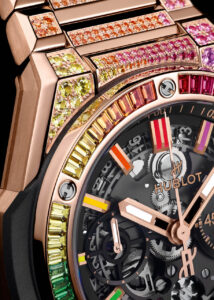
The Big Bang Integrated Time Only King Gold Rainbow
For this watch, the Manufacture has drawn inspiration from its 2022 best-seller, sprinkled with a touch of Haute Joaillerie to create two on-identical twin watches that invite us to play and revel in the art of bejewelled case setting. Featuring 174 rainbow gemstones with a fully-paved case, bezel and bracelet, these pieces are works of art.
Ricardo Guadalupe, Hublot CEO says; “we have been doing rainbow watches for a few years now, but this time we have a watch set with rainbow stones and the result is quite amazing. It comes in 40 and 42mm and it’s a unisex watch.” Both watches feature a black dial, and large skeleton hands and are less than 10mm thick combining the best of watchmaking and high jewellery know-how.
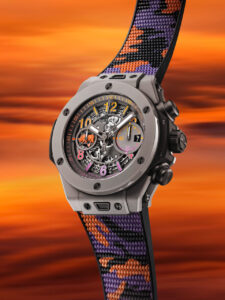
HUBLOT BIG BANG UNICO SORAI
Hublot Big Bang Unico SORAI Time For Rhinos
This watch is the first of the year to highlight Hublot’s commitment to the planet and sustaining key elements within it. The Big Bang Unico SORAI Time For Rhinos is the continuation of Hublot’s partnership with SORAI (Save Our Rhinos Africa India), which began in 2019. The organisation was founded by international cricket star Kevin Pietersen whose work helps keep rhinos threatened with extinction safe from poachers. “The inspiration for this watch is the colours of the sunset as this is the worst time for poaching as it’s when most rhinos are killed. We wanted to highlight this.” Explains Ricardo Guadalupe. The watch will be limited to 100 pieces and part of the proceeds from the sale of each watch will be donated to the organisation.
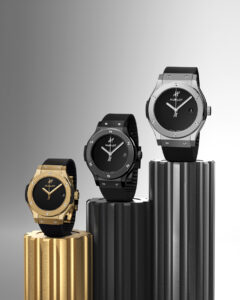
HUBLOT CLASSIC FUSION ORIGINAL
Classic Fusion Original
This year Hublot is bringing back the original Classic Fusion watch of 1980. Both refined and sporty this precious gold case strapped on a simple rubber strap, unthinkable at the time, sent huge shock waves through the world of fine watchmaking. Echoing the original design the new Classic Fusion Original features a rubber strap, polished black lacquered dial and yellow gold signature hands. It is available in yellow gold, titanium and ceramic; the cases are available in 42, 38 and 33mm.
Serge Brunschwig FENDI’s CEO Discusses the Brand’s Recent Success and its Presence in the Middle East
Since Joining FENDI as CEO in 2018 Serge Brunschwig has taken the brand on a constant path of development leading the Italian House through many changes and realignments.
Under his guidance, it has reached many milestones and successes over the past few years. But it hasn’t come without challenges. Dealing first with the death of Karl Lagerfeld in 2019, it was under Brunschwig’s lead that Kim Jones was appointed Artistic Director of Womenswear and Couture collections. He also sought to reinforce the spirit of the FENDI family at the house and introduce Delfina Delettrez Fendi as Creative Director of Jewellery as well as opening up the FENDI factories to the public to share the precious savoir-faire that is at the heart of the brand. And of course, all this while navigating through a global pandemic! In the past year, we have seen FENDI introduce high jewellery to its offering, as well as the impressive celebration of the FENDI Baguette’s 25th anniversary in New York in September. And now, the Middle East is having its FENDI moment as the brand unveils its newly renovated flagship store at The Dubai Mall. This two-story boutique in Fashion Avenue has undergone a huge renovation including a vertical expansion allowing it to double in size. To mark the occasion, the brand hosted a spectacular event in Dubai in front of the iconic Burj Khalifa. During the celebrations, we talked to Serge Brunschwig to find out more about the future of the brand and its place in the Middle East.
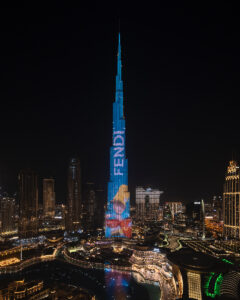
2022 has been an instrumental and fruitful year at FENDI, what have been the focuses and Add Newmajor milestones for the house? Many reasons to celebrate!
Well, we are still here, and we are still full of projects and a vision for what we want to do moving forward! We have a great team and the FENDI family is at the heart of the brand – Silvia, Delphina, and of course, Kim Jones – working together to craft the future of the brand. So I think that is the most important thing and supporting that, we have an amazing supply chain, in the sense that all of the people surrounding the Creative Directors can translate their vision into real FENDI products. Products which represent our vision and our art. This is all about the people. We have incredibly talented teams in design, crafting, and research, and this allows us to put together the FENDI objects, which are again a master of materials and something so special that only FENDI craftsmen can do. How do we make sure these people continue to exist? They are trained for the future, and we strive to ensure that there is a new generation joining who can fulfil these tasks, and this is the big challenge: making sure that this creative vision is well translated and expressed and if we want to grow, we can grow.
This is what we have been focusing on in 2022. We had quite a milestone opening two new factories in Italy. We transformed completely the shoe and leather goods factories. It was one of our best-kept secrets and now it has a new home, a new expression, a new size, and a new ambition. To do something like this, not only did need an amazing piece of architecture and landscape, but we prepared something which could accompany the growth of the brand, with the space and the ambience of the craftsmanship. It is attractive in itself to draw the new generation to work on our products which is also key. We need the new generation not only with our customers but also our craftsmen, if we don’t have that there will be no FENDI.
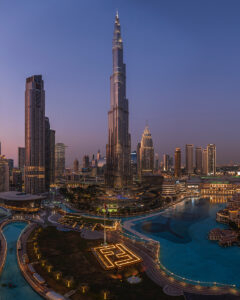
The doors of the FENDI factories in Italy were opened lately for visitors – tell us about the importance of keeping your craftsmanship in Italy and why you wanted to share this with the world.
It is key to do this, as in my opinion, we must be transparent. Our customers want to know what they’re buying, who is creating it, how they are creating it, as well as whether it is being done sustainably, what kinds of materials we are using, and so on. So, we wanted to open our doors to share these elements. And secondly, we have to be open to the people that work for us and their families. I want the parents of our craftsmen to be happy that their child is in good hands. we want everyone to say “wow” when they visit, and we want them to be proud. We are against recent trends to shy away from traditional crafts, so we want to promote this and support the artisans of tomorrow. We must excite people to come back home to these jobs and that’s why we have to open our factory.
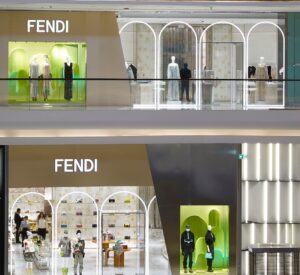
The 25th anniversary of the Baguette was also a key moment, especially with the collaboration with Tiffany, in your opinion, what are the prerequisites to keep an icon surviving?
Firstly, it must be good! And it must capture the audience, it has to bring something in the first place. Secondly, you have to take care of it by continuing to make it fresh. One aspect of FENDI which helps a lot on that is the master of materials and the ability to express those icons each season in a totally different way. We also have the ability to invent new materials and crafts, which allows us to reinvent our icons in a naturally creative way. Then I would say from time to time, why not also make sure the function of that icon is still right for the needs of today? All icons don’t stay the same, they are all evolving. Even the most famous in the market, if you look at their first version and the way it is today, it will be very different. Sometimes we may not notice that it is evolving, but it is evolving. We did this for Peekaboo when we created the Peekaboo ISeeU – this was still a Peekaboo but it was constructed in a different way. And the Baguette also has a different construction with different volumes and a new way of wearing it. With the Baguette, you can still buy the original style but there is also the style of 2022 which has been a great success because it was adapting the Baguette to the needs of today.
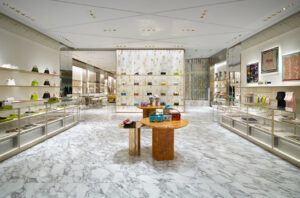
As one of the few Fashion houses that still has the family at the heart of the brand, how do you retain and guard the DNA, family, and traditions, but balance it with keeping up with what’s happening in the industry and sustaining relevancy?
I think it is always about the product and this is absolutely the job of our designers. As a CEO I can understand what they are doing and try to explain it, but they would nevertheless explain it better than I can. It’s about how you create something for today, which uses the techniques and the same methods of the brand in a relevant way. How do you always present a new version of the same thing? The repetition is there, but there is also the presentation and adaptation of our products for the customer of tomorrow. That’s what all the successful brands are doing: they are bringing this heritage and techniques from the past and expressing it which today looks fresh.
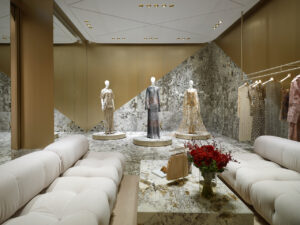
We’ve recently seen a collaboration also with Karim Benzema as the ambassador for Fendi Faster sneakers, today as a fashion house, what are the prerequisites that you look for when doing endorsements and choosing ambassadors?
That’s a difficult question! When we choose an ambassador, we have to ask the question ‘is that ambassador going to represent the brand as we see it?’ With Benzema, he is elegant, he is well-known, he is talented and frankly, he looks good! Silvia Venturini Fendi looked at Benzema and the clothes he wears, and she sees that something will work. And then we created a special friendship with him and there is a story of trust. It’s quite moving when you talk about someone who is a great footballer and working with him on this project was something that we have both benefited from. That is an example of a very successful partnership.
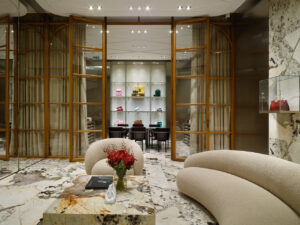
What can you tell us about what is in the pipeline for the rest of the year and any pre-hints on what to expect next year?
You can expect more good things. It’s our responsibility as always to continue to innovate, to have new ideas, and new initiatives and this is what makes us surprising for our customers and for ourselves and I think we have to continue this way.
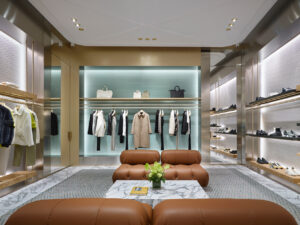
Tell us about FENDI in the Middle East – how does the region serve the brand and what can we still expect?
Of course, we are here today to celebrate this fantastic store in Dubai. We have also recently expanded our flagship store in Saudi Arabia, we tripled the size, and we introduced ready-to-wear and menswear, so I think to be able to offer that in a country such as Saudi Arabia is great, and we are very happy that we can do that. And hopefully, we will soon work on our other stores in the Kingdom with the same concept. Certainly, we are at a moment where the Saudi society is evolving. So as a brand participating in this evolution and its development is something that I think a brand like FENDI, which is about the strong woman, is important to be part of.
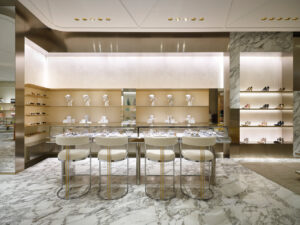
What is the biggest challenge you face today as CEO of FENDI?
In luxury brands I think we all face the same challenge of asking ‘how do I continue to do what I’m doing well, but how do I make it relevant for today and tomorrow?’ This is what is fascinating about this job. Time goes so fast in this industry and in my previous role at Dior, there was reinvention all the time. I have been with Fendi for almost five years, and it has been five years of permanent reinvention, so time goes incredibly fast. And I think this is the challenge – to always be up and ready to face reality and to adapt what we are to the new times. I am constantly adapting the organisation and I have to make sure the people around me are ready to face tomorrow. This is a constant challenge. There are great times and more difficult times, but in fact, at the times when you’re cruising and everything looks easy, that’s when things can get difficult.
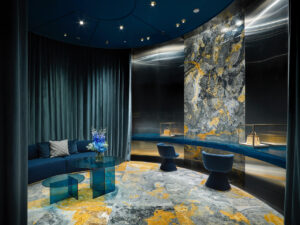
How would you assess the luxury industry today?
I think the luxury industry has had a nice ride! It has been incredibly successful for the last two years. We had a good time, but it will be interesting to see what’s next.
