

SPRING ACCESSORIES GUIDE

Colour Pop
Paint-box brights saturate our must-have styles. Colour-in your accessories with pops of bright yellow, orange and magenta.
FROM LEFT: Christian Louboutin patent Pigalles Follies • Paula Cademartori bag at Boutique 1 • Edie Parker ‘Yes’ clutch at Boutique 1 • Christian Louboutin cork chevron So Kate • Olympia Le-Tan clutch at Net-a-Porter
SPRING ACCESSORIES GUIDE
The bags, the boots, the heels and the headpieces, keeping up with this season’s accessories can take as much time as the ready-to-wear itself. This season in particular found designers embracing a varied mix of accoutrements, from tiaras and graphic bags to pop art and more, in line with clothing’s newfound maximalist spirit. Here we have curated the top trends to follow for the upcoming season.
Monochrome

Monochrome is best in the form of clean, modern lines and unapologetically stylish shapes. Think chic, sharp pieces in contrasting jet black and cool white mixed with shiny silver hues.
CLOCKWISE FROM TOP LEFT: Roger Vivier espadrilles • Thierry Lasry sunglasses at Net-a-Porter • Saint Laurent Classic Nano Sac de Jour bag • Gucci Angel sandals • Anya Hindmarch eyes bag at Net-a-Porter
SPRING ACCESSORIES GUIDE
The bags, the boots, the heels and the headpieces, keeping up with this season’s accessories can take as much time as the ready-to-wear itself. This season in particular found designers embracing a varied mix of accoutrements, from tiaras and graphic bags to pop art and more, in line with clothing’s newfound maximalist spirit. Here we have curated the top trends to follow for the upcoming season.

White Out
Crisp and clean, in all their minimal glory. They may need a lot of love and care to stay in tip top shape, but it’s well worth it for the high impact.
CLOCKWISE FROM TOP LEFT: Louis Vuitton Mocassin Samourai • Thierry Lasry sunglasses at Etoile Boutique • Tod’s Micro Wave bag • Dior Connect bag • Jimmy Choo Viola sandals
Flying Tourbillon ‘Poinçon De Genève’ Watch by Louis Vuitton
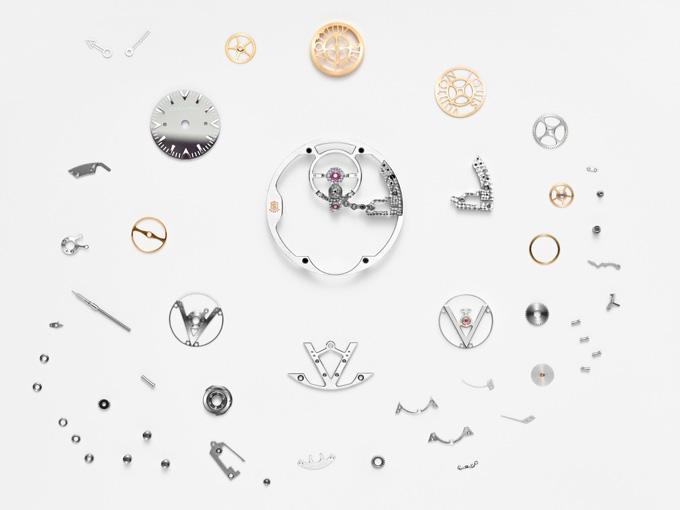
Louis Vuitton has obtained the ‘Poinçon de Genève’ and entered the inner circle of the watchmaking houses that bear this certification. With this distinction, a new case, a never before seen skeleton tourbillon movement and an exceptional degree of transparency, the watch is a major advancement for Louis Vuitton watchmaking.
The ‘Poinçon de Genève’ is a guarantee of authenticity, of a product made by the finest craftsmen in the Republic and Canton of Geneva, whose horological success is renowned worldwide. Only a few select watchmakers and manufacturers based in Geneva have been awarded this exclusive certification.
This timepiece couples a radically contemporary approach, with the highest degree of watchmaking quality, together with adhering to the ‘Poinçon de Genève’ guideline that all watch surfaces must be decorated. The V of the tourbillon cage at 6 o’clock is entirely block-polished with a mirror-like shine, and the dial is made of smoked sapphire, achieved by metallisation. The bridges at the back of the movement are all satin-brushed. All the bridges on both faces are bevelled. Their flanks are thoroughly satin-brushed. Even their invisible side, hidden by other elements, are circular-grained or finished by the watchmaker. The case alternates between a mirror polished and circular satin-brushed finish, and the contrast of these textures reinforces the subtle play on volumes of its bezel.

The LV104 calibre was developed entirely from scratch by La Fabrique du Temps Louis Vuitton, creating the most aerial of movements ever designed by Louis Vuitton. The skeleton calibre appears to be suspended in mid-air by invisible forces, as if floating inside its 950 platinum case. At 6 o’clock, a completely new tourbillon performs a rotation on itself every minute, and at the low frequency of 21,600 vibrations per hour. At noon, an off-centred dial shows the hours and minutes. It is punctuated by a series of index, which are also in a V shape, further asserting the Louis Vuitton identity.
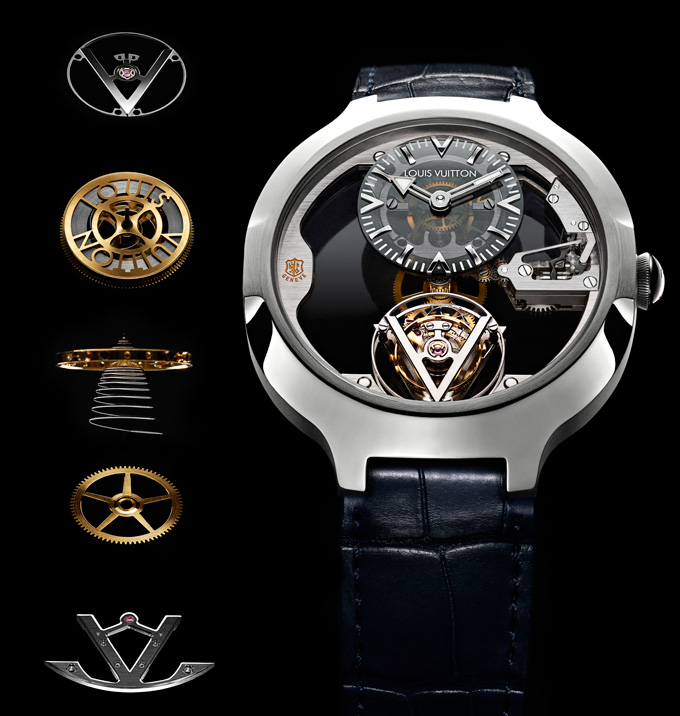
Giampiero Bodino Jewellery Collections


Granville, the childhood home of Christian Dior
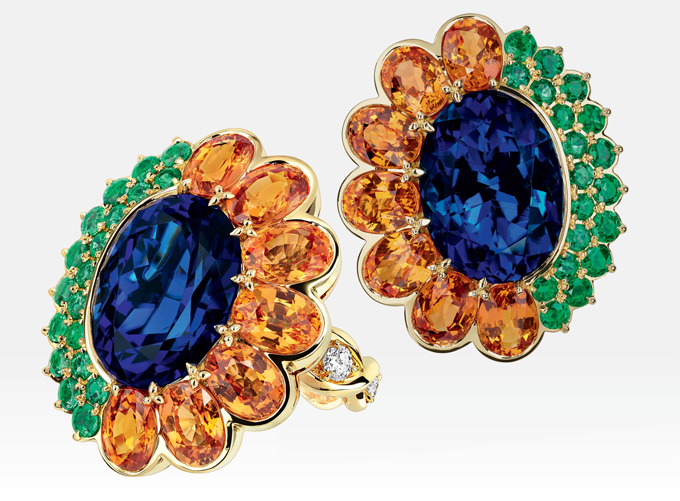
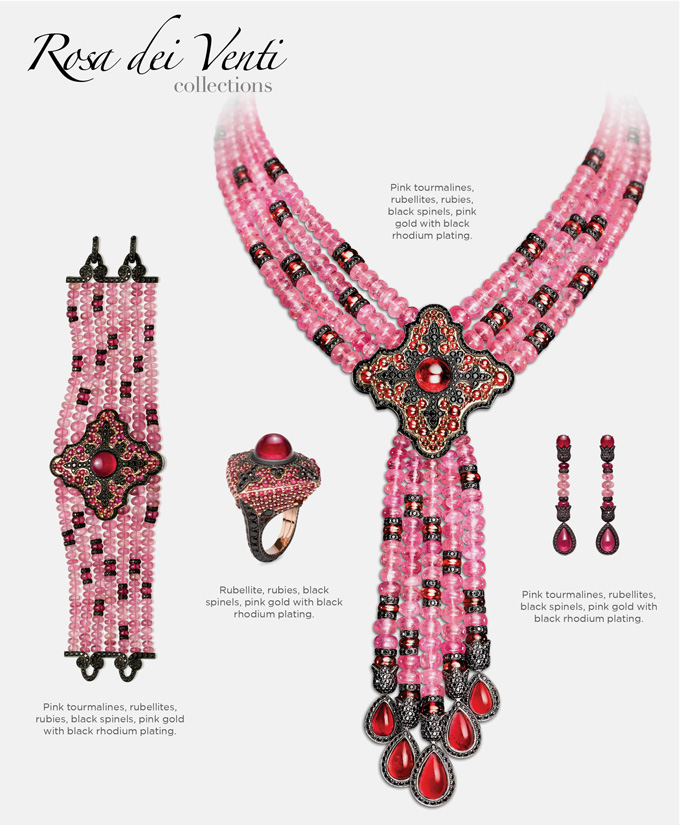
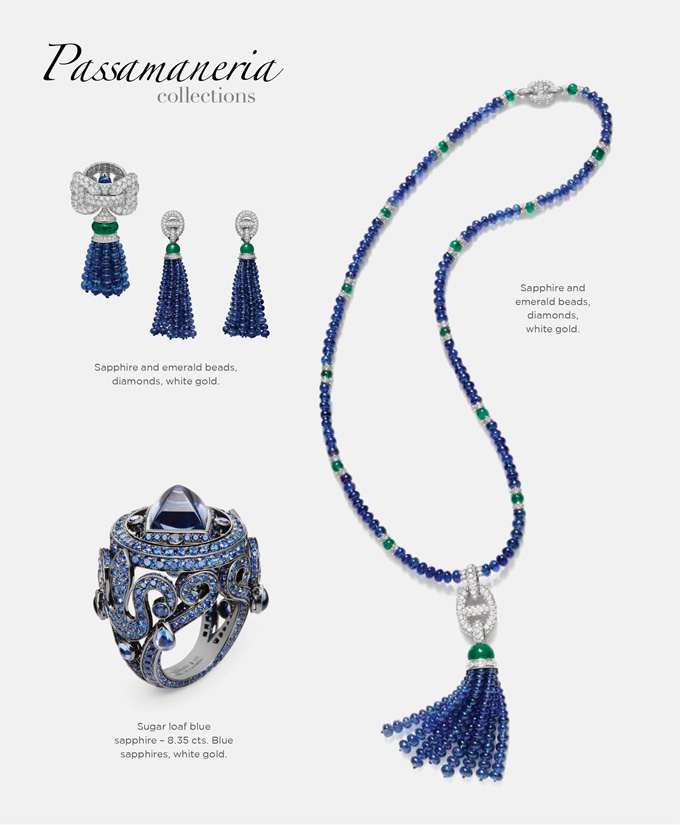
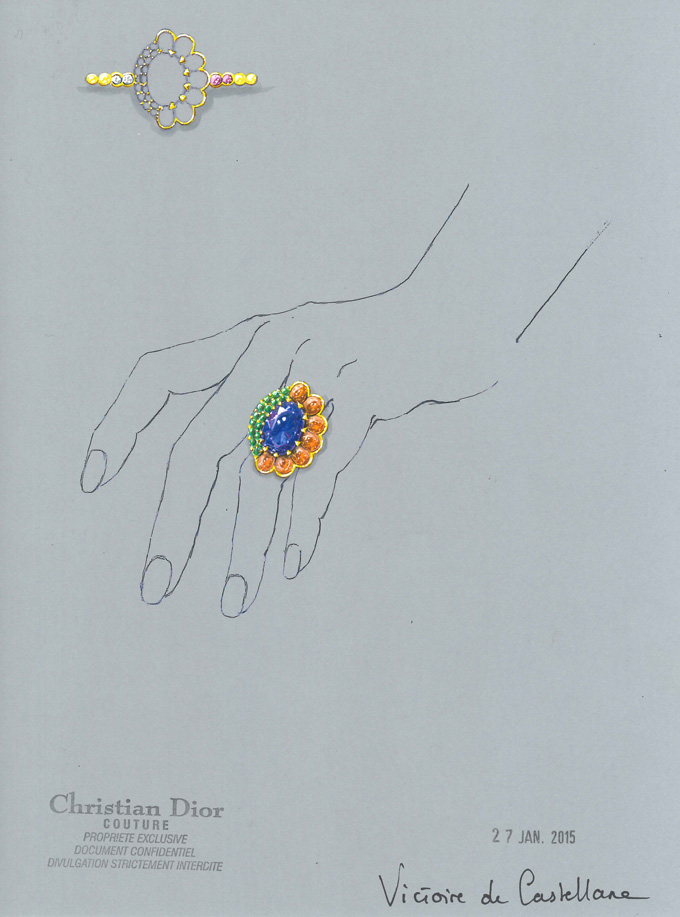
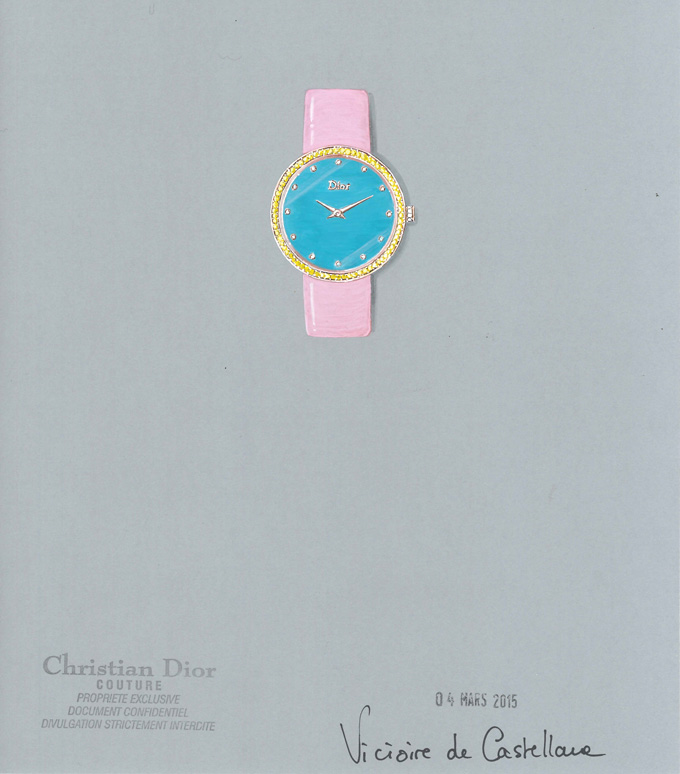
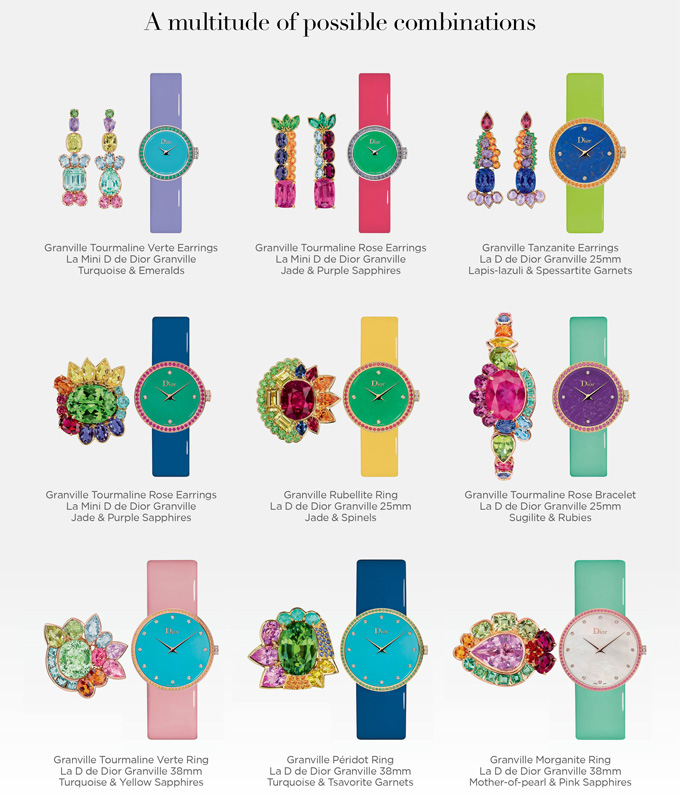
With colour playing a starring role and sparkles coming to life, Victoire de Castellane, the Creative Director of Dior Joaillerie, created twelve unique pieces. The combinations of green beryl, peridot, aquamarine, tanzanite, chrysoberyl, pink tourmaline, and rubellite were assembled and combined to create a sense of equilibrium, so that no colour dominated, and allowing each one an equal chance to shine. In the continuing spirit of paying homage to Christian Dior’s childhood in Normandy, Victoire de Castellane has also designed D de Dior ‘Granville’, nine timepieces in white, yellow or rose gold. These joyous new creations are an echo of the Granville carnival’s festive atmosphere, which coloured the couturier’s childhood, as he designed costumes for himself and his friends.
Haute Couture meets High Jewellery with de Grisogono and Gyunel

de Grisogono and Gyunel came together to pay tribute to High Jewellery, Watch Making, and Haute Couture. In the special setting of the de Grisogono Paris showroom, Gilles Mansard and Fawaz Gruosi launched the latest jewellery and watch creations together with a presentation of sumptuous Gyunel gowns. Perfumed by floral notes of white roses and transported by the positive vibrations of the electro music from DJ Dabeull, sapphires, amethysts, garnets, aquamarines, rubies, turquoise and diamonds were used for this creative and avant-garde collection. Among many beautiful pieces, there was a dazzling necklace with matching earrings set with cabochon-cut turquoises, amethysts, diamonds, and purple sapphires, which altogether summarise the spirit of the brand.

Saving Treasures of Humanity
In an unprecedented move in our region, together with our commitment to society and environment, a&e is privileged to announce a first of a kind collaboration. We will be joining with the UNESCO World Heritage Center, World Heritage Marine Programme as a media platform. In turn, this will raise awareness on the programme’s incredible mission to safeguard the 47 ocean treasures that are currently on the UNESCO World Heritage List.
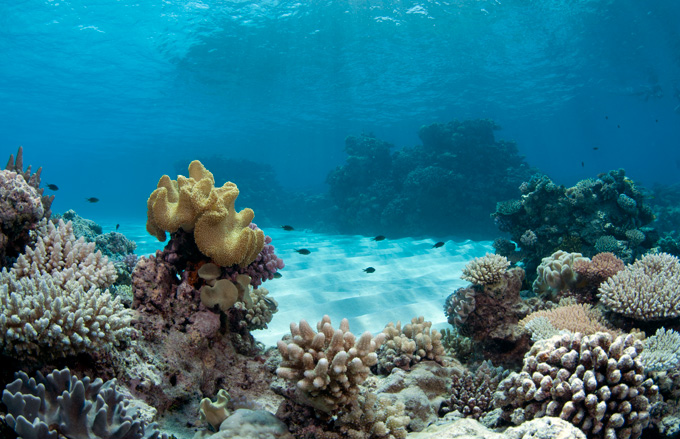
AUS Great Barrier Reef Underwater Earth – ©XL Catlin – Seaview Survey
I had the pleasure of meeting Dr. Fanny Douvere, Head of the World Heritage Marine Programme, in Paris, to gain a further understanding of the initiative. She explains how we as individuals can help safeguard these treasures for generations to come.
‘The 47 sites are spread across 36 countries and reflect some of most iconic and unique ocean places on Earth,’ explains Dr. Douvere. ‘In 1982 Australia’s Great Barrier Reef was the first site ever to be listed on UNESCO’s World Heritage List for its exceptional marine values. The collection of marine sites has since grown to count for a quarter of all natural sites on UNESCO’s World Heritage List. However, what no one knows is that this incredible mission comes with virtually no funding attached to implement it, and I am frequently asked why this is. The truth simply is, most UN programs lack the necessary funding to fully execute the needed work.’
When asked about the dangers that the sites are facing, Dr. Douvere explains the factors which have added to this over the past decades.
We see more fishing as the world population is growing, and with the advancement of technology it is possible to track where fish are in the ocean, allowing fisheries to travel further offshore, to deeper waters which were previously unexploited.
There is a higher volume of international shipping traffic. This is due to a rise in commerce, resulting in more pollution and more ports. Some of which have been built in our marine World Heritage sites.
Offshore oil and gas development.
The tremendous islands of plastics that are washed up on the shores of some of the precious marine World Heritage sites.
A growing number of coastal developments.
The effects of warmer waters and rising sea temperatures, as a result of climate changes.
I had always assumed that such programme’s are financially supported, but as Dr. Douvere states, ‘What nobody knows is that this incredible mission comes with virtually no funding attached to implement it. The list is growing, as the conservation challenges in the ocean become more complicated and require increasingly more investment on our part to deal with them. Unless we are able to invest in a site, working closely together with the respective governments, ministers and their teams, training staff on the ground and helping managers build capacity in their sites, we will just fail. Right now we are struggling because of a lack of resources.
In the areas where we have heavily invested our time and knowledge, together with in-depth conversations to find solutions, we have been tremendously successful.’
Most recently, this was the case in Australia’s Great Barrier Reef. Following the work, Australia’s minister for the Environment, Greg Hunt, pronounced that, ‘UNESCO had helped Australia do in a matter of months what otherwise might have taken a decade.’

AUS Macquarie Island Mary Bomford King Penguins

BelizeBarrierReef ©Brandon Rosenblum

AUS Ningaloo
Here Dr. Fanny Douvere tells us about the programme, its future plans and expectations.
Can you give us an example of previous collaborations and support that you have received?
We have come a long way. Back in 2008, it was the Swiss watch manufacture Jaeger-LeCoultre that first joined up with us. They believed in building a dedicated marine team at the World Heritage Centre that would focus on scaling up the state of conservation in marine sites on UNESCO’s World Heritage List. Jaeger-LeCoultre laid the seed for everything we have since built. Together with them we have established a track record of success with numerous sites, all of which have benefited substantially from this partnership.
Which projects that you are currently working on are a priority and are in need of urgent funding?
First and foremost, to get the Belize Barrier Reef Reserve System off the List of World Heritage in Danger.
Helping Coiba National Park, Panama, to set up a sustainable fisheries management, in order to prevent its precious ecosystem from collapsing.
Aiding Sundarbans National Park (India) and The Sundarbans (Bangladesh) to cooperate more closely. Together they form one of the largest unbroken mangrove systems in the world and they are home to the Bengal tiger. Late in 2014, an oil accident threatened the precious mangrove forest, which unfortunately the local communities had difficulties coping with. One of our concerns of the site is a proposed energy plant. I am scheduled to have a monitoring mission at the site this Spring to assess the situation.
Part of the resources should also go towards substantially scaling up the understanding of these problems, and their possible solutions by creating more awareness since people who visit these sites are not aware of these threats and this is what really needs to change.
What do we need to know about Belize Barrier Reef Reserve System?
The Belize Barrier Reef Reserve system, the second largest coral reef system in the world and largest in the northern hemisphere, is a top priority of the World Heritage Marine Programme. Belize is a small country, and its independence is still quite young. The reef is pretty much the only asset this country has to secure the livelihoods of the people and its future generations.The World Heritage Committee decided to include the site on the List of World Heritage in Danger in 2009 because of concerns on the sale, lease and development of mangrove islands and the absence of a solid regulatory framework aimed at ensuring its exceptional and unique values remain. In 2010, the World Heritage Committee expressed its serious concerns about the potential for oil developments within and immediately adjacent to the iconic World Heritage site. I led a mission with IUCN to the site in January last year, which resulted in an agreed roadmap with the government of Belize. The roadmap sets out 4 specific targets the government needs to achieve to have the site become eligible to get off the Danger List. We worked very hard on this, and have achieved some very promising results. Last December, the government of Belize took a major step forward by announcing a full and permanent ban of oil exploration in the entire World Heritage area. I undertook a second mission to Belize last December, to discuss the next steps and we are now constantly working with Belize to implement the other parts of the agreed roadmap. This is very challenging work and unless we are really able to invest resources to get into the smallest details of discussing and fine-tuning sustainable solutions together with the government, we will not be successful.

BEL Belize Barrier Reef ©Lynton Burger – Underwater Earth – XL Catlin Seaview Survey
What challenges are you facing today?
While the issues and what needs to be achieved are quite clear and straight forward, it is of the utmost importance that solutions are found that work for the country and at the same time allow the site to get off the Danger List.
The biggest challenge for us is that we don’t have sufficient financing that allows us to get into this work fully. This is one of the most precious reef systems in the world with all capability to become a prime asset to jobs and revenue for the country through sustainable use. But it is our task to help this country. We have a tremendous amount of expertise that could help us achieve this, but what we need would be the resourses, and these are lacking.
Tell us more about Coiba National Park in Panama? What is the problem there and what’s your mission?
Our main objective is to Secure sustainable fisheries in Coiba National Park. It is a phenomenal place and is located in Panama. It was inscribed on the UNESCO World Heritage List in 2005 for its truly unique biodiversity and ecosystems, which were found nowhere else on the planet. We have been struggling to get the government of Panama to set up a management system that can safeguard the site from being totally overfished.
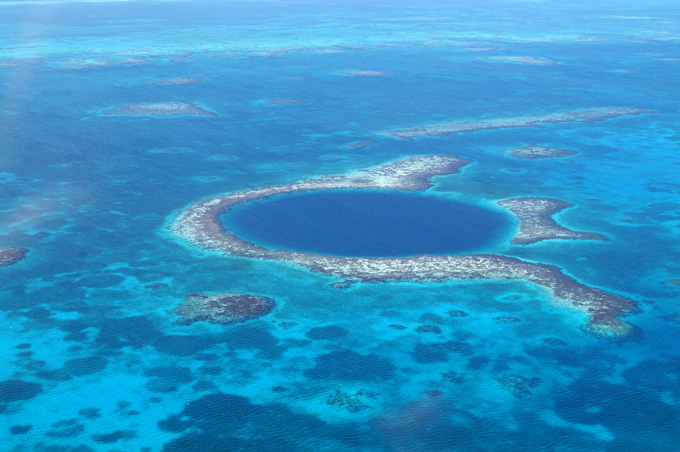
Belize Barrier Reef

BEL Belize Barrier Reef ©Brandon Rosenblum
However, I led a WHC-IUCN mission to the site in January 2014, which showed that some of the most important areas in the site (those where sharks and other species give birth and nurse their young) are also the exact same areas where fisherman capture their fish. That doesn’t go together because a lot of young fish are being captured, preventing them from spawning their own, so naturally with time it totally decreases the fish stocks and that eventually leads to a collapse.
We know quite well what needs to be done in this site. The issue once again is a matter of investing much more heavily in developing, together with the country suitable solutions. We need to scale up the capacity of people on the ground, the park rangers, etc… but work a lot closer with governments to implement the right actions to ensure that some areas are closed to fishing and secure that some areas have seasonal closures. World Heritage is a legacy of the past, what we live with today and what we pass on to future generations. The ocean faces huge challenges and it takes all hands on deck to help preserve them.
by Lara Mansour Sawaya
Mandarin Oriental, Paris
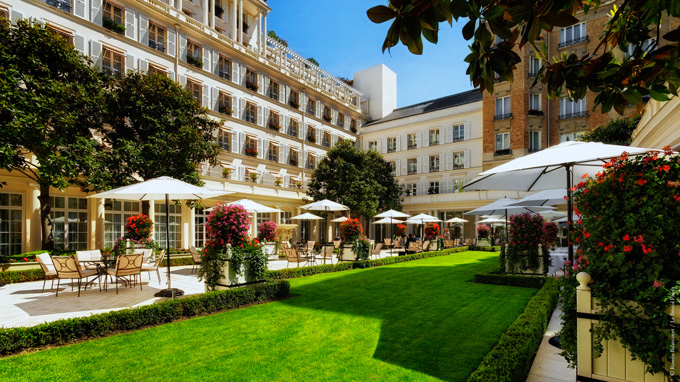
Flanked by designer boutiques, including Emporio Armani, Balenciaga, Hermes and Dior, on Rue Saint-Honoré is Paris’ Mandarin Oriental, a bastion of elegance. The hotel is built around a central garden that bursts with greenery and is just a short walking distance from sight-seeing hotspots, the Louvre, Tuileries gardens, banks of the Seine and Place Vendôme. The best rooms are courtyard-facing, however all 138 rooms and suites are spacious and stylish, with arty accents from photographers Man Ray and Ali Mahdavi, fresh cut flowers and grand marble-clad bathrooms stocked with Diptyque toiletries. The overall feel is elegant and tailored, with feminine details that add a sense of romanticism.

Exterior Garden View
Style
The style of Mandarin Oriental, Paris takes inspiration from the richness, modernity and creativity of the 1930s and Art Deco, as well as from the hallmarks of luxury and Parisian fashion. The verdant courtyard garden and its wall of cascading foliage provide a soothing sight on arrival in the marble-clad lobby. The look throughout the hotel is cool and contemporary, served up with a slice of the Orient in the form of cherry wood panelling and fine silks. Whimsical touches include the butterfly motif that appears on carpets and artwork and the statement over-sized bird cage in the garden. Altogether creating a haven of elegance and understated luxury.

Lobby Garden

Hotel Lobby
Rooms
Designed for lingering. Soft rugs, silk throws, warm colours and wonderfully comfy, over-sized beds lend a cosy and homely feel. The standard rooms are spacious and have generous wardrobe space, with even a yoga mat tucked away in the shelves. The hotel has its own in-house florist, meaning beautiful displays appear throughout the hotel, including pretty posies in the rooms. A fruit platter also awaited our arrival in the room and delicious cakes from the hotel’s kitchen were delivered daily. In-room entertainment includes a Bang & Olufsen television and iPod dock, while the use of an iPad is available on request in the standard rooms and included in the suites. This entertainment is not just confined to the rooms, you can soak in Diptique bubbles while watching television in the large sunken bath.

Suite Atelier Suite Bedroom

Suite Mandarin Royale Suite
Food and Drink
Mandarin Oriental, Paris satisfies every gourmet desire through the impetus of Executive Chef and Director of Food & Beverage Thierry Marx. Two restaurants, a bar, Cake Shop and the Garden offer many different settings and moods where guests can savour a unique experience each time. Sur Mesure par Thierry Marx is a three-Michelin-starred affair where foodies pay homage in an all-white room that has been designed so as not to detract from the ‘sensory’ dining experience. Those wishing to sample Marx’s food without making too much of a dent on their bank balance can instead dine at the hotel’s excellent Camélia restaurant, also overseen by the chef extraordinaire. Breakfast is a veritable feast and the only reason to lure yourself away from a good night’s sleep and the sumptuous bedroom.

Wedding Venue
The Spa
Entirely devoted to well-being and relaxation, the Spa offers an holistic experience to promote complete mind-body harmony. At 900 square metres, this is one of the city’s largest hotel Spas.

Spa Pool
Sybille de Margerie has imagined the entrance to this tranquil retreat as a vast pearly sphere that instantly sets a relaxing mood. The white and carmine glass mosaic floor is studded with butterflies in silver leaf and inside there is a haute couture wall that unfolds over two levels, composed from Origami-fashion stylised flowers. The sensory journey continues with the unique, refined experience of the fourteen-metre indoor pool. The Spa offers a range of relaxing and results driven treatments, including the Group’s Signature Therapies and product line. Developed in consultation with specialists in traditional Chinese medicine and master aromatherapists, Mandarin Oriental’s Signature Therapies consist of a relaxing body massage ritual that combines the powerful effects of oriental meridian massage with the therapeutic benefits of custom-blended essential oils.
Ralph Lauren THE SOFT RICKY
This stripe print bag embodies the glamorous spirit of the French Riviera. It has a romantic rusticity, as well as a sleek and luxurious sportiness that represents both a cool insouciance and understated style.
 v
v
‘My wife Ricky is my muse. She has always been a source of inspiration, and I often think of her when I design. The Ricky Bag represents for me that same timeless glamour.’
Ralph Lauren
Le Bristol, Paris
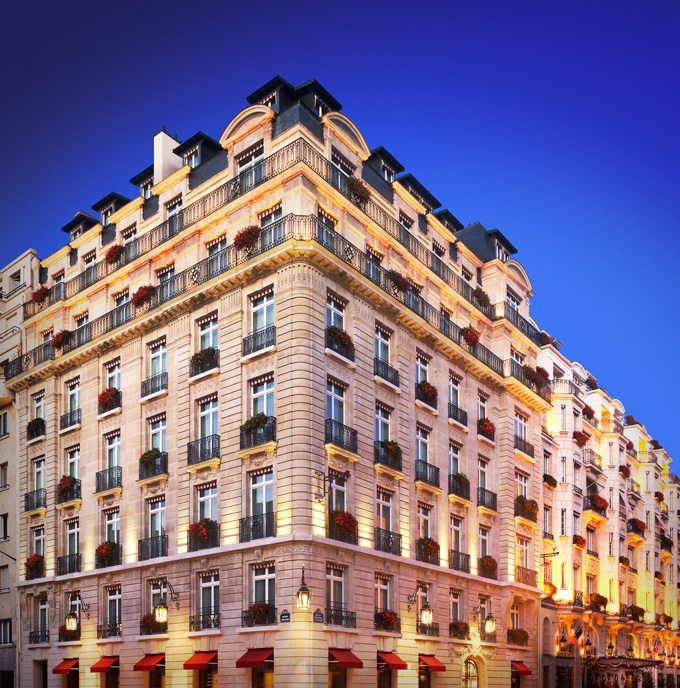
On the Rue du Faubourg St-Honoré, near the Élysée Palace and the city’s nexus of designer shopping, this ‘epitome of luxury hotels’ was built in the early 1800s and opened in 1925. Having played host to the likes of Grace Kelly and Orson Welles, the Haussmannian-style building provides a welcoming atmosphere, outfitted in antique furniture, Gobelins and Lille tapestries, and a working 1940’s lift. Chintz and silk curtains, crystal chandeliers, Persian carpets, and bathrooms of white Carrara marble set the luxurious tone. It is one of only six hotels in Paris awarded official ‘Palace’ status, which is a notch up from five stars. The jewel in the hotel’s crown is Epicure, the triple Michelin-starred restaurant overseen by chef, Eric Frechon. It is one of the best restaurants in Paris, with the menu drawing on French produce and tradition.



Signature de Chanel
Inspired by the equestrian world dear to Gabrielle Chanel and especially by the jackets the stable boys wore around the racetracks, the quilted pattern became an essential element in Mademoiselle Chanel’s creative world, and this is the first jewellery collection to be entirely dedicated to the iconic pattern. a variation on the quilted pattern and pay tribute to that inspiration.

Graphic and refined, the geometry of the forty-eight new pieces, express the purity of line and the perfection in simplicity that characterise the style of Chanel. Only the azure blue sapphires and aquamarines add a touch of contrast here and there to the luminous brightness of the white gold and diamonds. Pearls, grey mother-of-pearl marquetry and rock crystal complete the collection, in variations of the same theme.


Ray of Light, DIOR FINE JEWELLERY
Enter the world of magical creations & intricate craftsmanship
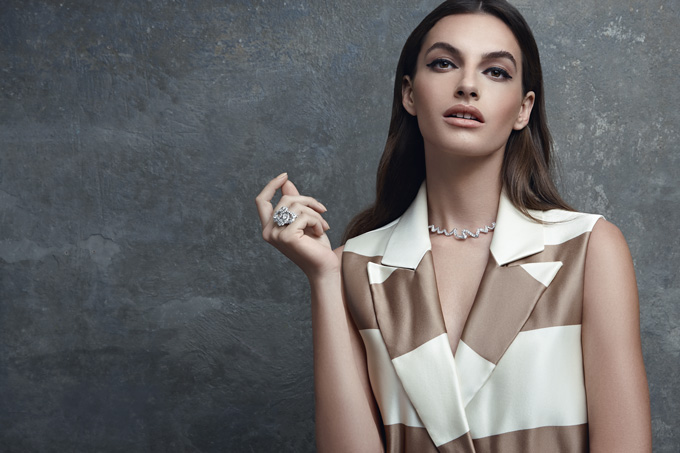
Archi Dior necklace & ring

My Dior earrings and bracelets Pre Catelan ring
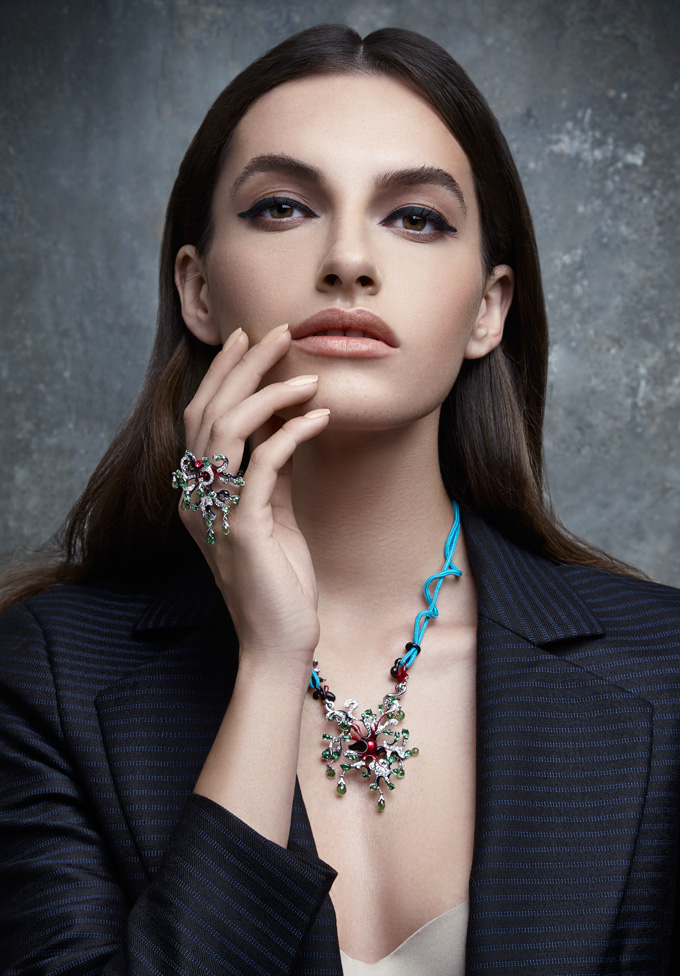
Poisonus necklace & ring

Pre Catelan earrings & rings
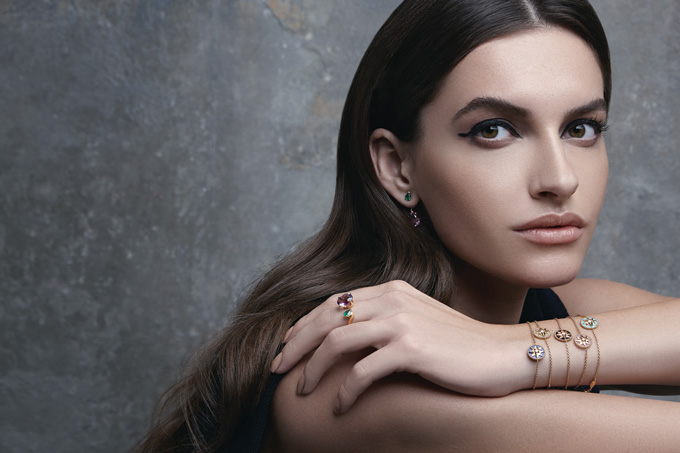
Rose Des Vents bracelets Diorama precieuse ring and earrings

Diorette earrings & rings
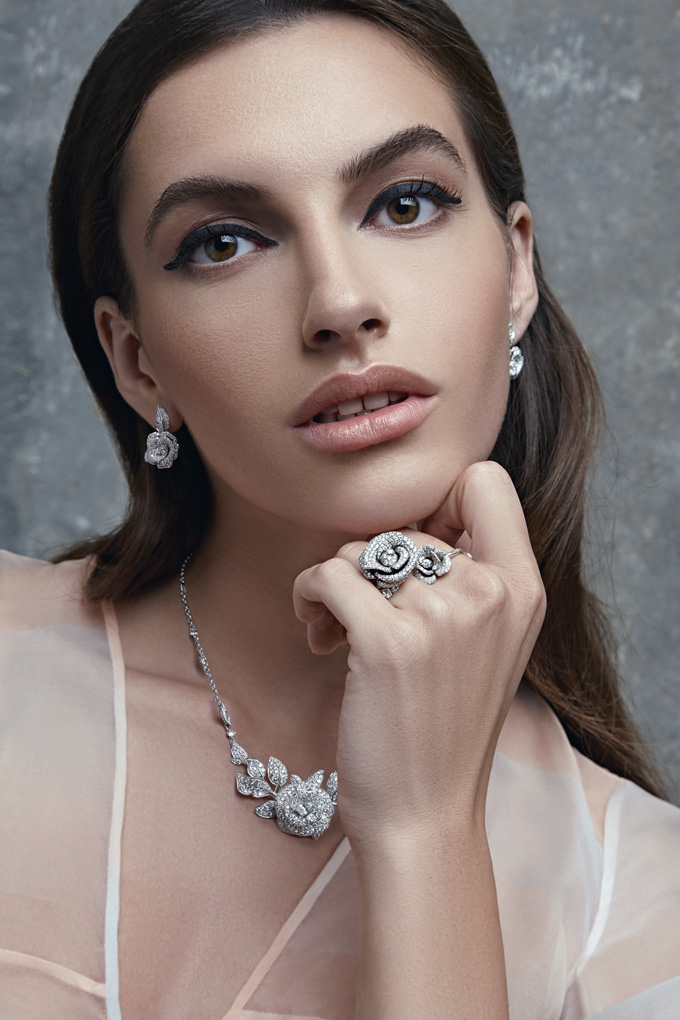
Bagatelle necklace, earrings & rings
Photographer : Tina Patni
Fashion Director : Eliza Scarborough
Hair & Make-up : Marisol Steward
Model : Anna Yve at Wilhelmina
Cindy Chao and her Wearable Art
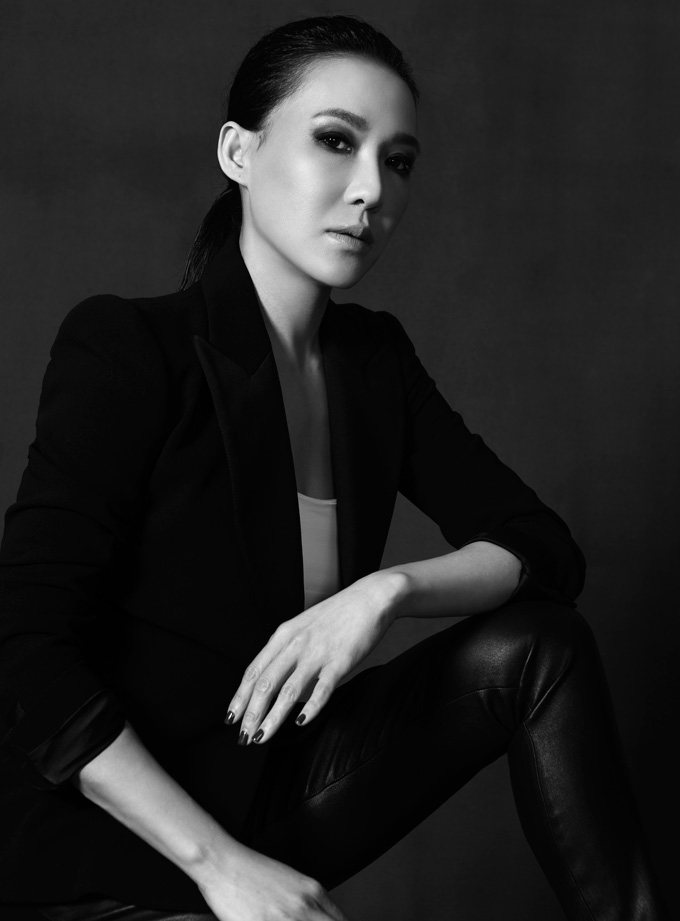
Cindy Chao came from a family of artists and her jewellery brand has grown as a perfect collaboration of all of these influences. You could describe her as a sculptor whose primary materials are precious stones and metals.
Chao’s father was a sculptor, and her maternal grandfather, Xie Zinan, found fame as the architect of Chinese-style temples across Asia. From an early age, Cindy developed an eye for volume and proportion as she shadowed them in their workshops and on construction sites. However, after being dissuaded from becoming an architect or interior designer by her mother, she fell into jewellery design, before realising that the learning during her early years was transferable.
In 2004, after studying at the Gemological Institute of America in New York, Chao returned to her native Taiwan and launched her own eponymous line. It wasn’t until 2007, that she really hit her stride and found the right direction for the brand, creating signature breath-taking designs.


Today her collections are like small sculptures crafted from the most beautiful gemstones. Each jewel is hand sculpted by Chao in a wax moulding, and a 360-degree gem-setting technique is used. This means every angle is equally as beautiful and thought out with impeccable detail, vividly depicting either the petal, leaf or wing of the design. So while the front of a butterfly brooch is covered in jewels, the back is entirely embellished too, making it especially special to the owner and wearer. No more than 36 of these unique pieces are produced each year, meaning they tend to be found at auction houses rather than on the shop floor.
Do you feel your family and upbringing have been highly influential in your career?
Absolutely! Coming from an artistic family, with my grandfather an architect and my father a sculptor, I was trained from a young age to see the world in a 3 dimensional way. Ever since I was a child, my father and grandfather imprinted an idea in me, true art has to be able to stand the trial of time, and only true art can transcend time and be passed on from generation to generation.
My grandfather used to take me to the temples he was working on, and I would stay alongside him while he explained the blueprints and constructions to the craftsmen. Two years ago I found some of his old design drafts while putting together a project. Back in the days when there was no computer technology, it was amazing to see how he was able to draft out the temple designs in three dimensional layers. I had the opportunity to see some of his projects from conception to completion. Because of my grandfather, I developed the love and passion for architecture. It was him who taught me to see things outside the box, to view every side of a building as a front, and to be meticulous with every detail. I would also accompany my father while he was immersed in his work at his studio, and he would explain various techniques and styles of sculpting. While he carved the clay, I would help him fan the pieces as the shape solidified, while observing him sculpt life and emotion into all his works. Very often to keep me quiet, I would be given projects, a piece of clay for my own creation. My father would often comment on my projects, and share with me his words of wisdom, ‘Regardless of the subject, the final piece must be as vibrant as it is in real life. Spend time to observe the object. Pay close attention to the minutest detail. And then, with your heart and soul, put into form what you’ve perceived.’
What motivated you to start your jewellery brand in 2004?
In fact, my first dream career was to become an architect like my grandfather. However, my mother, as the daughter of an architect and the wife of a sculptor, knew first-hand how difficult such vocation can be. Therefore, as the patron of my education, my mother strongly suggested that I choose a less stressful profession. Little did she know that one day my jewellery design and crafts would turn out to be even more time-consuming than being an architect or a sculptural artist!
When I first established the brand in 2004, I took on more custom-orders. After the first two years, I realised that I was not ‘creating’ but merely ‘producing’ jewellery pieces instructed by clients.
I decided to truly follow my dream in early 2006, when I stopped accepting traditional custom-made orders, and instead focused on one of a kind art jewels that I had always dreamt of creating. I began the wax sculpturing process for these new works, and at the same time set out to recruit a team of experienced craftsmen, spending countless hours to communicate with and convince them to try new creative ideas and techniques.

Four Seasons Collection
Can you tell us about the first piece you designed and the inspiration behind it?
The first collection that I designed as an art jewel was the Four Seasons Collection, and within which, the winter choker and cuff were the first to be completed.
When I first set my mind on creating ‘art jewels’, it was two years after my brand was established. The concept of artistic jewellery was very new in the market at the time, the majority of my collectors and even industry professionals were taking this new idea very cautiously. As a young artist, I was not certain if I was heading in the right direction. There was no guidance nor mentor for me to follow. I told myself to give it my all, because you never know what you can achieve until you give it a try.
The journey was definitely a solitary one. I think that was the reason why my first Art Jewel, winter choker and cuff were simply black and white, snow covered leaves on tough winter branches. They were the reflection of my emotional state during the 18 months spent on bringing life into these two art jewels. Eventually they were featured in the Christie’s New York fine jewellery auction in 2007, and each hammered at over twice their estimate.
How would you describe your design philosophy?
Life is the true essence of my works. To me, each piece tells a different story, and has its own life and mood, which reflects the emotions I felt when I was creating it. There are fragments of myself in each of my art jewels, and its story continues on with the addition of the collector’s own, eventually becoming a part of his or her life. With such sentiment, each art jewel comes to life in a very organic way, becomes impossible to replicate, and therefore is distinctively one-of-a-kind. Through my creations, I wish people to feel the life and emotions flowing through each of my art jewels, to experience the instances enclosed.
What is your favourite stone to work with and why?
I enjoy working with a multitude of materials but gemstones are my passion. Of the gemstones, I would definitely say that my favourite are emeralds, however I have a great sensitivity towards diamonds with the way they dance and evoke a sense of awe and brilliance when exposed to light. The contrast that can be achieved when working with these gemstones, bringing to life each art jewel in its own unique matter is something that I continue to strive to embody and make a priority.
Your designs are clearly inspired by nature. Where do you like to visit, to relax and gather ideas?
My inspirations have always come from my surroundings and experiences, as well as my love for nature with its majestic beauty that unfolds in mysterious and delicate ways at every moment. Nature is mesmerising because it is always in the passing. It is that brevity that makes it the more intense and captivating. Yet, every evanescent moment is so very subtle. What I try to do with my creations is to capture the fleeting moments, a frosty maple leaf in early winter dawn, a midnight rose, a whimsical flower in the wind, and I endeavour to do so by using the toughest and most timeless material, diamonds and precious gemstones. They are complete opposites, sharing a perfect synergy. I also love to travel and read books on architecture and haute couture. It is extremely important for an artist to experience various cultures and art forms, and to be stimulated. Florence, Barcelona, Paris are a few cities that I adore. In these cities one can find history at every street corner.
Tell us about a pivotal point in your design journey, when you felt you had accomplished what you had set out to achieve?
Looking back, I would say that my first auction at Christie’s New York had been a huge turning point for me. As a young artist at that time, I was not sure whether what I did was the right. There were many voices putting me down, telling me to go back to traditional jewellery-making. At last, I let the works speak for themselves, and the auction result showed that there are people out there appreciating what I was creating.
Since then there were many milestones that continued to help me evolve, for example the induction of the Royal Butterfly into the Smithsonian National Museum of Natural History, but it was always that first push that left the deepest mark in my heart.

Which of your designs are you are most proud of?
I am proud of all of my designs, especially the Black Label Masterpieces where we fuse rare gemstones, creativity and exquisite craftsmanship. But I am also the type of person who is always looking for improvement. So whenever a piece is completed, I would be extremely proud for two minutes, and then I would start telling my team on the points to improve for the next creation!
You make a new butterfly piece every year. Do you feel a great pressure for each one to be more intricate and statement than the last?
A butterfly’s life span is fleeting yet pure, undergoing several transformations in a short period of time. This metamorphosis is one I have undergone as an artist, transforming and pushing myself to create and share something pure and beautiful. Pushing limits to give life to something even more spectacular than the last creation.
I have given life to a singular butterfly each year since 2008. While each butterfly evolved with my journey as an artist, coincidentally every one of the six butterflies so far also has its own unique legacy. The 2009 Royal Butterfly was inducted by the Smithsonian National Museum of Natural History for its usage of gemstones and its breakthrough in craftsmanship. It was the utmost honour for anyone, and I was extremely encouraged. The 2012 Transcendence Butterfly was sold at Christie’s Geneva for almost five times the estimate.
Since the Butterfly-themed Masterpieces symbolise my artistic journey, part of my story, each has its own unique success. They are about progress, growth, moments bring new experiences and lessons.

How did you feel when Transcendence Butterfly sold for close to $1million, almost five times the pre-sale value?
Most of the time, the value of a piece of jewellery is defined by its centre stone. However, this particular auction result far exceeded the value of gemstones alone. Transcendence Butterfly has truly transcended from how the general public view a jewellery piece, and into a true piece of art. I was very proud, not because of the price fetched, but for the fact that the ideology of fine jewellery as art, that I had believed it was slowly being accepted, understood, and appreciated.
What are your plans for the future of the brand?
2016 is our 12th anniversary of brand establishment.
by Eliza Scarborough
Chris Hemsworth, TAG Heuer Brand Ambassador

We all know that Chris Hemsworth was catapulted to superstardom as the Marvel Comics superhero in Thor following a three-year stint in Home and Away. He followed this with his role in Formula One biographical sports drama film, Rush, together with starring characters in 2015. These ranged from playing the world’s toughest hacker in Blackhat to reprising his role in Avengers: Age of Ultron, and a leading part in adventure drama film, In the Heart of the Sea. Alongside these acting achievements, Hemsworth is now joining the ranks of watch brand ambassadors. The Australian actor, begins his new tenure by wearing the Carrera Heuer 01 chronograph, teaming up with high-profile ambassadors Cristiano Ronaldo, Tom Brady, David Guetta, and Cara Delevingne.
Tell us about your first watch?
The first watch that sticks out in my memory was probably a tired surf watch. I can’t even remember the brand, but it had tide controls on it, so was my go to for when the surf was going to be either good or bad.
What does it mean to you to join the TAG Heuer family?
It is wonderful. I have been a huge fan of the brand for years and it’s the number one watch brand in Australia, so is recognisable to many people, including myself. Iconic images of Steve McQueen and certain Formula 1 scenes have stuck in my mind for many years, so to be a part of that in some way is great.
What initiated your love for watches?
During the Rush press tour, I was given a TAG Heuer Carrera, which I wore throughout. It is a beautiful watch, so I think that initiated my love for timepieces.

The TAG Heuer Aquaracer
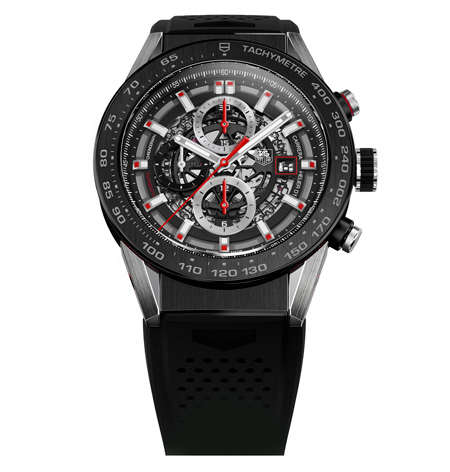
Carrera TAG Heuer 01 chronograph
What are your thoughts on TAG Heuer’s new tagline, ‘Don’t Crack Under Pressure’?
I feel it is very relevant to what I do. Acting is a competitive industry, so it is necessary for me to apply discipline, focus, and hard work. Preparing for this, eliminates the possibility of me cracking under pressure.
Can you tell me a little bit about your style when you are not working and are off camera?
When I am at home and not working I wear the Aquaracer. It is a resilient watch and ideal for my lifestyle, as I tend to be either training or in the sea surfing. My style in general tends to be a pair of shorts and t-shirt because it is hot and tropical where I live.
Does your wife influence your style?
Yes, my wife influences my style in a big way, she is the definitive kind of decision maker. She just has great taste, which is far better than mine, so I need her opinion!
How does your style work in your life as a father?
My style would be practicality, and of course nothing white, because anyone with children knows that it gets immediately ruined!
You are very active and many of your roles involve physical preparation. Can you tell us a little bit about how you train?
My training for Thor and Avengers was a lot of weight lifting. It was very much old fashioned body building, with isolated muscle groups. Whereas anything else I do is the opposite. It will be cardio and a lot of running and swimming to keep weight down. When we were filming Rush I was on a lower calorie diet, in order to fit into the Formula 1 car and match James Hunt’s body shape.
What watch are you currently wearing?
The TAG Heuer Aquaracer, which is the one I wear most of the time, as I said, because of my active lifestyle.
A GUIDE TO buttoning your jacket
You may think that buttoning your jacket is an obvious thing and that it doesn’t matter how you do it. However, because of its simplicity it can easily be overlooked and done incorrectly.
Follow our guide on how to button the three most common types of suit jackets. This will identify you as a stylish man in the know.

Two Button Jacket
When wearing the classic two button suit, or even blazer, it is simple and straightforward. Always fasten just the top button and never the bottom one. When seated the jacket should be unbuttoned.
Two and a Half Button Jacket
The two and a half button jacket may be confusing. It is basically a three-button jacket, but one of the button holes is softly rolled into the lapel. It is otherwise known as a three-roll-two lapel and is an elegant take on the three-button jacket.
For this style, fasten the middle button. However, if you want extra coverage then do button the top button aswell. But as a rule, stick with just the middle button fastened and never do up the bottom one.
Double-Breasted Jacket
These jackets are described with the total number of buttons on the suit front followed by the number of working buttons. So a ‘six-on-four’ jacket has six buttons but only four buttonholes. Of those outer buttons, two can be fastened. Again, button the middle button and leave the bottom one alone. Also make use of the inner button that isn’t seen, this keeps the jacket in position. Keep the double breasted jacket buttoned when you sit and only undo it when you are taking it off.
Slim fit Double-Breasted Jacket
This style has the same look of 6 buttons, however two of them are just for show and can’t be used. In this case just fasten the middle outer button, and as before still use the hidden inner button.
by Eliza Scarborough
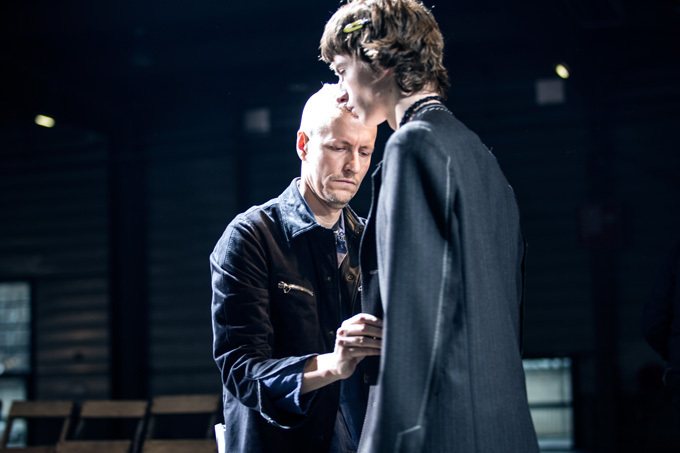
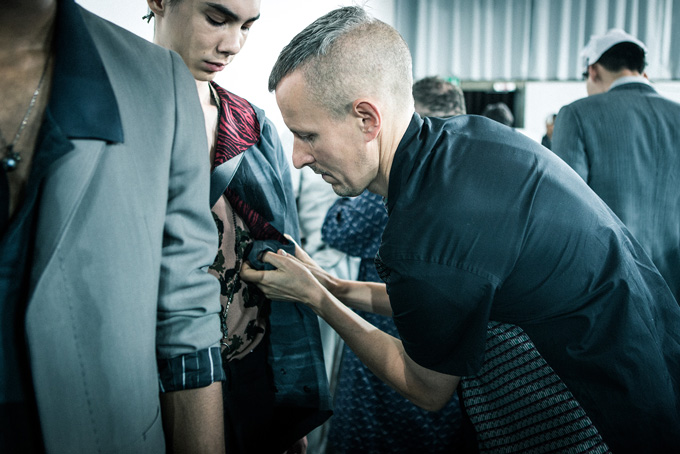
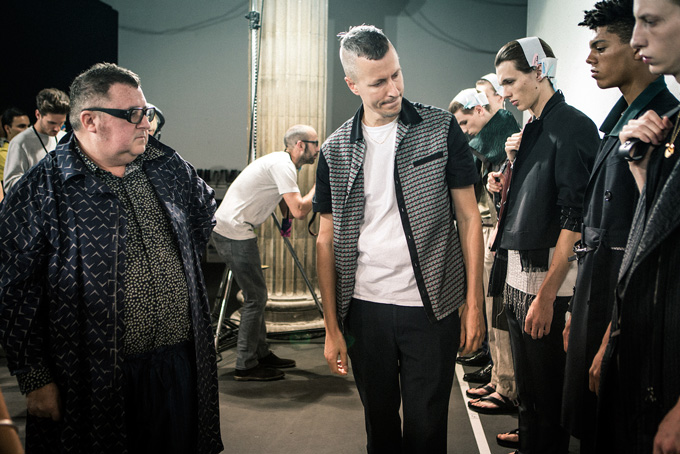
Work, his wardrobe and being inspired Lucas Ossendrijver Meet the man behind the on point aesthetic at Lanvin
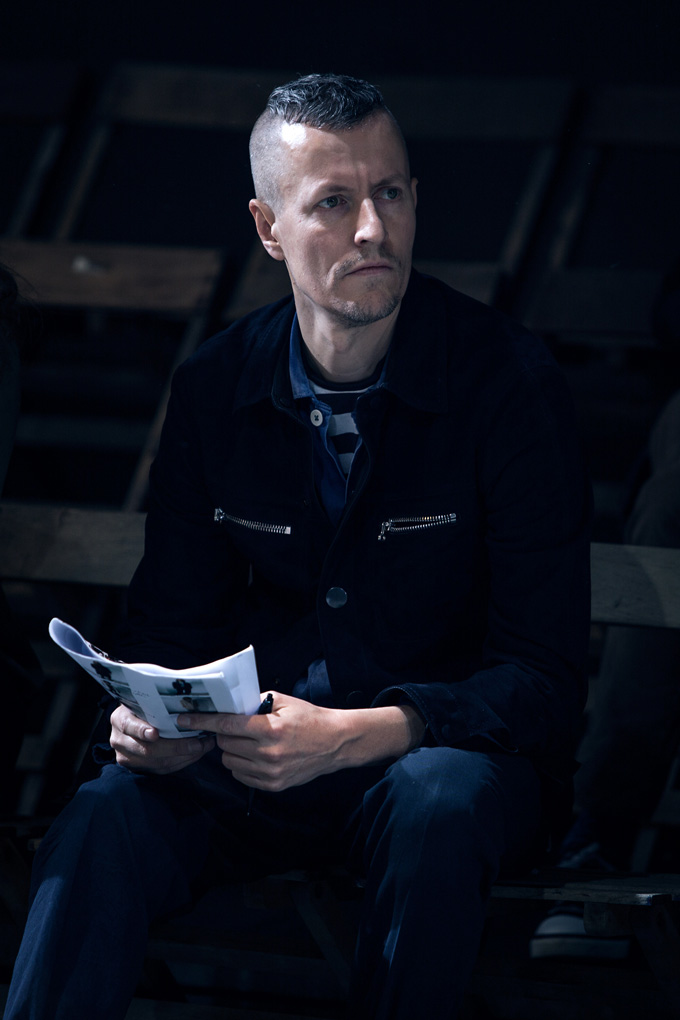
Lucas Ossendrijver joined Lanvin in 2005, employed by creative director Alber Elbaz, who gave him a free reign in restructuring Lanvin Homme. His close relationship with detail and materials have significantly advanced the components of shape that define Lanvin’s menswear. Ossendrijver was born in 1970, in the small Netherlands village of Amersfoort. His father ran a construction business, though Lucas knew early on that he wanted to take a more creative path, and this crystallised during his studies at the prestigious Fashion Institute Arnhem.
He joined Kenzo menswear in 1997 and in 2000 he moved to Munich with German-Greek fashion designer Kostas Murkudis. Next was Dior Homme in the Hedi Slimane years, before being charged in 2006 with translating Alber Elbaz’s success at Lanvin to the men’s market. Ossendrijver did exactly this, putting Lanvin menswear on the map, creating luxury clothes with a fashion edge. His shows were a highlight, while his sneakers became both a design classic and a sell-out hit.
What are your own wardrobe essentials?
Buy something versatile with which you can mix and max for different occasions. For example, a suit you can wear with Lanvin trainers or separates that can be worn with jeans for less formal events. You should always dress to underline your personality.
Who is your style icon, and in your eye, what embodies elegance?
I don’t really have a muse or famous actor who I find really fabulous. It’s really people that I know, people that I work with, people that I see in the street. You can be inspired by just walking around and seeing how people are dressed, going to an exhibition, things that people bring into the studio, or even a conversation with somebody.
How would you define Lanvin’s menswear aesthetic?
It’s about freedom and choice. I do not want to dictate. We propose options for different men and different body types. It’s all about the individuality and expression of the wearer’s personality.
At what stage did you realise that fashion was a career path you wanted to follow?
As a child my father had a construction company. I was always building things in the garden and knew that I wanted to work with my hands. At first I thought of becoming an architect but later when starting art school, I did a foundation course and it was then I found my true calling.
Do you have a fashion memory that remains engraved in your mind?
I worked for quite a lot of companies before joining Lanvin. Kenzo, Kostas Murkudis and Dior. All gave me a different experience. I think it really shaped me. You meet people, experience different ways of working, and different cultures. Without that experience I wouldn’t be able to do what I am doing now. For me my biggest step into the industry was coming to Lanvin, and working with Alber, whom I love and respect a lot! At the time I wrote him a letter, which was received the week after by him and Madame Wang. That’s how it all started. I never thought about how long I would stay but it has proven to be a great environment to work in, with a lot of freedom and possibilities. And of course, I feel an affinity with the brand, what is stands for and what it represents, as one of the oldest couture houses still functioning today. Also, don’t forget that brands are about the people behind them. The people that make things happen, from the seamstress to production. You do get attached, and after a while it feels like family.
Can you tell us about key moments in your career?
When I think about the key moments in my career and especially Lanvin, I think of all the people I’ve worked with, the journey it has been, and the opportunities I’ve had to meet these people. Designing is not a solitary occupation, it is about teamwork, from my team that I love, to the factories, to the press, and then to the clients. Step by step we’ve been able to build a business that still grows. It’s difficult to last in fashion because the attention-span is very short nowadays. One day you’re in and the next day out! So maybe that’s what I’m most proud of.
How do you feel about the fanaticism that surrounds hero products, like the high top trainers?
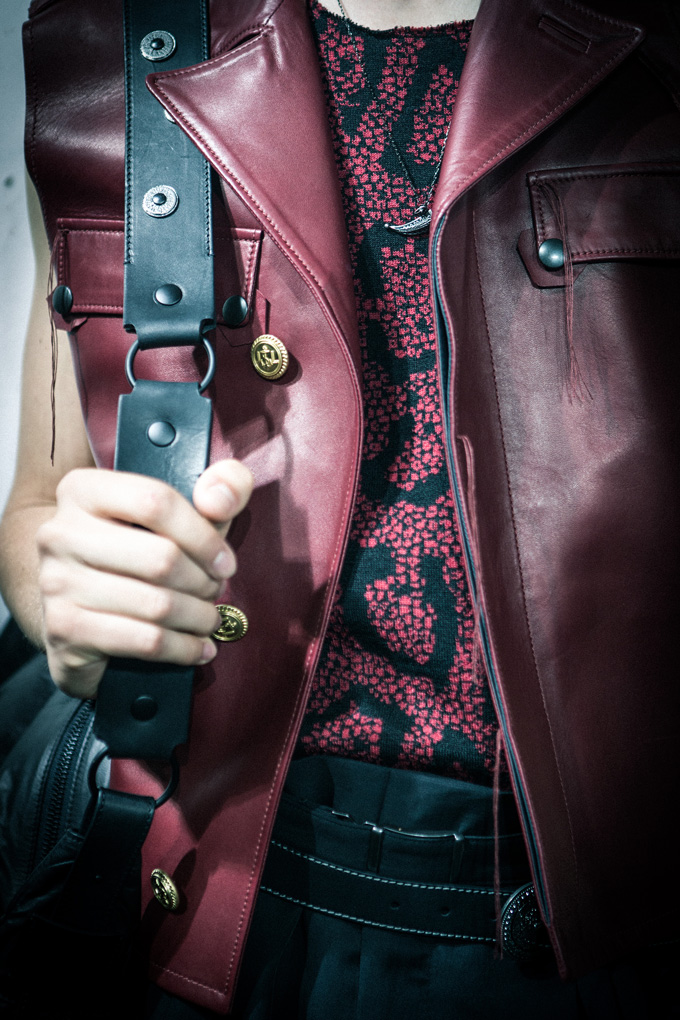
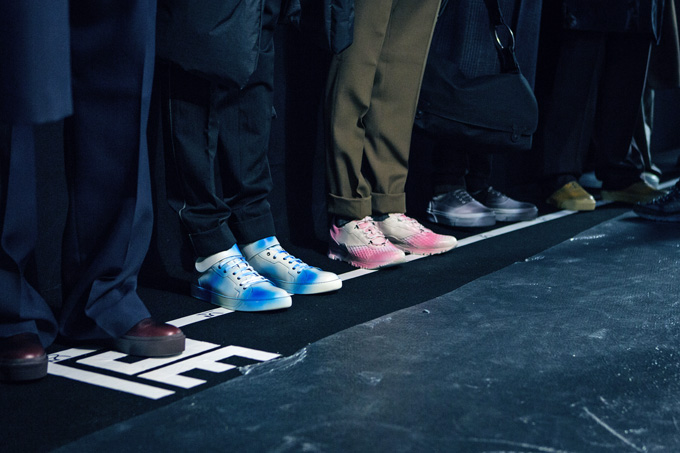
Regarding the trainers, I am very proud of how they have developed over the years. Trainers play an important part within the men’s accessory collection. They are almost like handbags for women. For me, trainers are an integral part of man’s wardrobe and personally I wear them most of the time, so I felt it was necessary to create then at Lanvin. When I started 10 years ago there were no trainers at Lanvin, so it has been a huge development to see them become an iconic product.
How do you feel men’s shopping habits and fashion tastes differ from women?
People don’t change and men don’t change, it is our lifestyle that does. What I’ve seen is that in general there is far more interest in fashion than there used to be. Men’s fashion has become a growing business, with men being more open to fashion. The way we live now means that all the information about fashion is immediately available worldwide, no matter where you are. Fashion has become democratic and everybody has an opinion about it. It is less elitist than it used to be. The speed has also changed. For men we have also started creating pre-collections so instead of two shows it’s four collections now. This constant demand for all things new has put a lot more pressure on us designers. Men have started to buy clothes more like women do, less about needs, and more because they want certain things. They are more impulsive and outspoken. It is important to deal with these factors and adapt. It also creates new opportunities for us. That’s what I love about fashion. The constant questioning of things.

What is your fashion must have for Spring Summer 16?
For a man there is nothing better than a well cut tailored jacket or coat. I love the light summer coats we did for summer, fully canvased, with a soft shoulder, and patched front. They are hand stitched and finished in a light wool mohair. Also I love the embroidered bowling shirt and look forward to wearing it this summer.
by Eliza Scarborough
THE anatomy of a suit
Every man needs a good suit, and our insider secrets will help you understand the parts you never knew. Follow these tips when you are on the search for your own perfect suit and you will be as well-equipped and in the know as a tailor.

Fit
It is worth keeping in mind that the price tag of a suit is not relative to the way it fits. It is about finding the right cut for your body shape. Most off-the-rack suits are designed for generic body types so research which brand fits you best, and it is always a good idea to get it tailored to your exact measurements afterwards.
Fabric
Suits tend to be crafted from wool, ranging up to cashmere blends. They are often graded with a ‘Super Number’ which denotes the fineness of the individual fibres. The higher the number, the thinner the fabric and the smoother and silkier it is. Although the higher numbers are deemed more luxurious, they tend to be wrinkle-prone, and will show signs of wear, such as shininess. Try testing the strength of the fabric by gathering together some of the material and squeezing it. It is a good sign if it bounces back with little to no visible wrinkling.
The turn back
This is a small piece of rectangular fabric the size of a stamp found under your jacket collar. It sits closest to the edge when your collar is up. You won’t tend to notice it, but it is a sign of quality and will highlight a well-made suit. Although it is not so commonly used these days, it is there so you can slightly alter the angle of your jacket collar if you choose to.
A tubular sleeve
Mass produced suits are designed to fit as many bodies as possible, but most brands have specific house cuts, so it’s about taking the time to find a brand that works well with your body shape. However, the more premium designs will have tubular sleeves. Rather than being completely straight, this type of sleeve will have a slight inward curve around the elbow and follow the natural line of the arm.
Lining
You may wonder whether to choose a partially or unlined suit rather than a fully lined design. They are often associated with being cheaper and of a lower quality. However, in reality it requires more skill to create an unlined jacket because the seams are visible to the eye. Nevertheless, always opt for jackets with lined sleeves so your arms slide in and out smoothly.
Lapel roll
A beautifully made suit will have a soft lapel roll. The lapel won’t look like it’s been pressed down flat against the chest, but more like it has been curved gently by hand. This feature of handmade suits gives the jacket more life than the flatness of many machine-made suits.
Spring accessories guide
The bags, the boots, the heels and the headpieces, keeping up with this season’s accessories can take as much time as the ready-to-wear itself. This season in particular found designers embracing a varied mix of accoutrements, from tiaras and graphic bags to pop art and more, in line with clothing’s newfound maximalist spirit. Here we have curated the top trends to follow for the upcoming season.

Pretty Pastels
Sugar-coated pastels don’t just have to be girlie pink. Try sorbet shades of lemon yellow, sky blue, lavender and mint green.
FROM LEFT: Rocio clutch bag at Etoile Boutique • Giambattista Valli floral shoes at Etoile Boutique • Christian Dior Diorama bag • Saint Laurent Monogram Blogger Bag • Dioressence shoes
THE HISTORY OF HAUTE COUTURE
The history of Haute Couture: the haute couture timeline
As the Spring 16 schedule wraps up, we get clued up about the lavish world of couture and take a look back at the haute couture timeline
Chanel SS14 Backstage
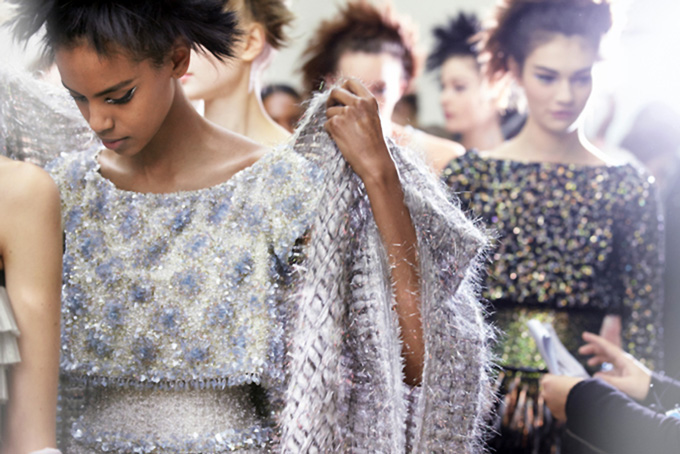
Not only is haute couture steeped in history and nostalgia, it is also worth remembering that these collections are the only branch of fashion that work on a short time line, making clothes for the season they are showing in. For fashion fanatics, the couture week will offer the visual pleasure of looking up close at the artistic merit and imagination of fragile techniques juxtaposed against grand sweeping volumes. Modernised haute couture shows are not designed and made to be sold, they are displayed for show and credibility. Instead of being constructed for the purpose of selling and making money, they are made to further the publicity, as well as perception and understanding of brand image. For the fashion houses taking part in couture week, custom clothing is no longer the main source of income, as there are only an estimated 2,000 female customers globally, meaning it often costs much more than it earns through direct sales. It does however raise the profile of the brand and their ventures, together with adding the aura of fashion to their ready-to-wear clothing and related luxury products.
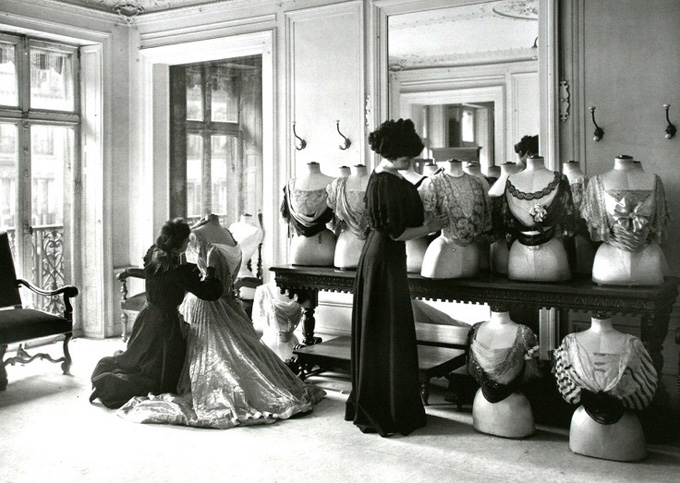
Most would assume that couture originated in France. It has the name ‘haute couture’, which is directly translated as ‘high dressmaking’. Collections are always showcased in Paris, and a set of tight rules are enforced by The Chambre Syndicale de la Haute Couture. However, the whole concept was introduced by an Englishman. Born in 1826, this man, Charles Frederick Worth, turned the female tradition of dressmaking into the male-dominated industry it is today. In the mid-1800s, when Worth began to sew, fashion was dominated by individual dressmakers who were always women. These ladies would create outfits according to whatever their wealthy clients demanded. At this stage, Worth worked in a textile shop and although he was met with opposition as this was a female led environment, he convinced his employers the he too could sew garments. He then designed a gown for Madame Metternich, an Austrian Princess and wife to the Ambassador to Paris, which she wore to a ball where the Empress Eugénie was present, who also loved the design. Shortly after, the House of Worth was established with Charles being the first to ever put his name on a tag inside a garment, as was the concept of the ‘fashion designer’. While he created one-of-a-kind designs to please some of his titled or wealthy customers, he is best known for preparing a portfolio of designs that were modelled at the House of Worth. Clients would select a design together with their specified fabric and colour, and a duplicate garment was tailor-made in the workshop. Worth combined individual tailoring with a standardisation more characteristic of the ready-to-wear clothing industry, which was also developing during this period, and his protégés included fashion legends Coco Chanel, Cristóbal Balenciaga, and Christian Dior.

Dior HC SS16
Women’s roles in the world of fashion would soon be reduced to mainly that of ‘petites mains’, which literally means small hands, and men were on their way to all but monopolising fashion. ‘Les petite mains’ refers to the collective 2,200 seamstresses who painstakingly bring haute couture creations to life. Working in the ateliers, these talented and patient women are often fiercely loyal to a fashion house, spending their whole career solely at one brand. The couture house is typically composed of two divisions, one devoted to dressmaking, ‘flou’, and the other to tailoring ‘tailleur’, all under the daily surveillance of the designer as well as in close connection with the vendeuses. Embellishments and accessories are added incrementally as applied decoration, often from sources outside the couture house. Only the finest materials by the most skilled artisans will do when it comes to Haute Couture. Thus, houses call upon Lemarié for feathers, Lesage for embroidery, Massaro for shoes, Desrues for ornamentation and buttons and Causse for gloves. Speciality is key. However, in regards to an unembellished garment, the modern couture house is a completely independent workroom of dedicated ateliers. Fit, both in its tailored form and in its dressmaking variant, is also inevitably part of the value of the couture. Altogether, this offering of distinction in design and technique remains a compelling force, and a discipline of ultimate imagination, unaccountable to cost. As New York’s Metropolitan Museum of Art describes it, the goal of couture is to create, ‘a paragon of the most beautiful clothing that can be envisioned’.
The fashion landscape shifted again after World War II, when on 12th February 1947, Christian Dior, aged 42, revolutionised fashion. Dior’s ‘New Look’ replaced wartime scrimping with breath taking opulence and unabashed femininity. He presented his first haute couture collection to the press in the salons of 30 Avenue Montaigne, strewn with flowers by Lachaume. He created unique silhouettes, new lengths, smaller waists and distinctive volumes. Just two years after the war had ended, Dior together with his new collection, definitively turned the page on restriction, rationing and uniforms and wrote a new chapter in history. For more than a century, couture has been emblematic of the triumph of costume and fashion. It represents the fusion of fashion and social needs with the arts of dressmaking, tailoring, and skilled crafts. Founded in the 19th century, haute couture was a necessity for high-class Parisians. It was the ultimate in power-dressing, and women went to couture houses to have bespoke clothing that would set them apart from the rest of the fashion set. The opulent ring of exclusivity still surrounds haute couture today. However, the main buyers are no longer French socialites, but customers from Russia, China and the Middle East. The social relevance of haute couture now has a greater claim on a reality that matters. It is an employer of thousands, not just the seamstresses and tailors who work at the couture houses, but the specialists too. This is just as worth applauding as the finale laps of each collection.

Valentino AW09 Backstage
Timeline:
1858: English couturier, Charles Frederick Worth, coined the term ‘fashion designer’ as opposed to ‘tailor’ or ‘dressmaker’ for the first time, and established the first haute couture house in Paris, selling luxury fashion to elite women of the upper classes.
1868: To set the specifications to determine what constituted a ‘couture house’, Le Chambre Syndicale de la Haute Couture was established as the industry’s first gatekeepers, and put a set of guidelines in place. Designers were required to ensure clothes were custom-made to fit the wearer and exclusive in design to each client. They were also expected to be made of the highest quality fabrics and materials and hand-made by expert artisans who specialised in one particular area.
House of Worth’s Atelier in Paris
1921: The French press created PAIS, which is the abbreviation of, L’Association de Protection des Industries Artistiques Saisonnieres. This was put in place to protect couture designs from being copied. To ensure the copyright of the designers, their creations were photographed on a model or mannequin from the front, back and side as evidence.
1945: Le Chambre Syndicale de la Haute Couture set stricter rules, which are still in place today, to determine whether or not a couture label could be deemed as such. Each maison had to ensure they followed tighter criteria than previously. This included the number of staff and the size of the collection. Each atelier must have at least 15 full-time staff and is required to present a collection of at least 35 pieces to the Parisian press twice a year, that encompasses both day and formal evening wear.
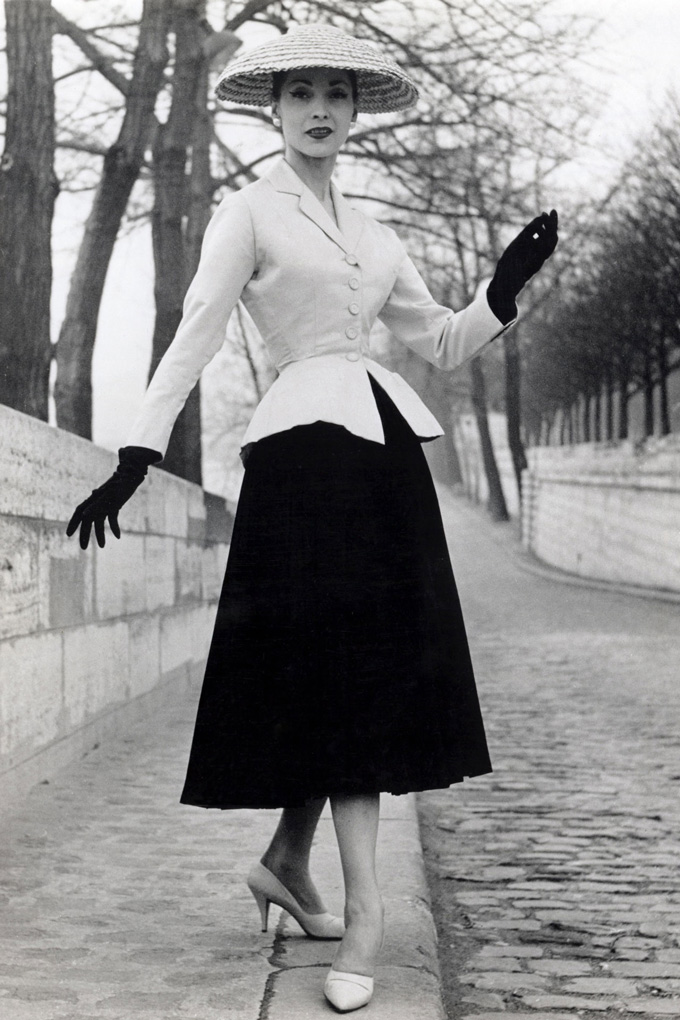
1947: France’s fashion industry was successfully revived from wartime austerity with Christian Dior’s ‘New Look’ collection. Dubbed Corolle, after the botanical term for the frail petals in the centre of a flower, the collection featured a new-found glamour in the shape of tight waists, stiff petticoats and billowing skirts.
Christian Dior Corolle collection
1966: The first ever couture boutique was established by pioneer Yves Saint Laurent when he launched Saint Laurent Rive Gauche. Other brands, including Pierre Cardin, Andre Courreges, Ted Lapidus and Emanuel Ungaro soon followed.

Yves Saint Laurent outside his Rive Gauche boutique in 1966
1970: The number of couture houses dropped to just 19. Many designers attributed blame to the strict rules from Le Chambre Syndicale de La Haute Couture, but other important factors include the growth of cheaper, mass-produced fashion using synthetic materials and widespread recession. Thierry Mugler and Christian Lacroix both left the Chambre at this time.
1980s: The rise of Middle Eastern oil fortunes and the Western economies stimulated more demand for couture.
2004: Versace was forced to stop holding a show between 2004 and 2012 as a result of the recession making it unfeasible for the brand.
2012: Christian Dior brought the first haute couture show to Shanghai on 14th April. This was to mark the company’s devotion to its presence in the Chinese market.

Dior Couture Shanghai
2013: Rad Hourani debuted the first ever unisex couture collection, taking androgynous chic to the next level.
2014: Ralph & Russo joined as the first British brand in over 100 years of Couture Fashion Week. The Chambre Syndicale’s former president, Didier Grumbach was quoted as saying, ‘we expect savoir faire, which is being lost, and they Ralph & Russo have it’.
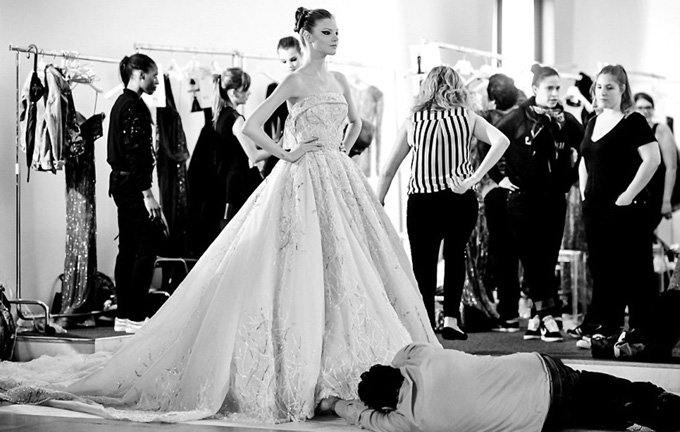
Backstage at Zuhair Murad
by Eliza Scarborough
Dolce&Gabbana and Smeg team up and unite their strong values

Dolce&Gabbana and Smeg have teamed up once again for the design of a special edition of the FAB28 refrigerator, transforming it into a work of art. The two companies belong to two different creative sectors but are united by strong values and a tradition of “Made in Italy” excellence: sharing similar backgrounds rooted in the family and local territory, they have a deep respect for tradition and their creativity allows them to skillfully combine eras, different specialties, and sensibilities. The result of this partnership is the special Fab 28 Smeg refrigerator with unique Dolce&Gabbana styling. Each refrigerator features images by Sicilian artists: lemons, the trinacria symbol, cart wheels, medieval knights and battle scenes – all distinctive elements of the poetic marionette theater and the Sicilian Cart as well as important aspects of the aesthetic of Domenico Dolce and Stefano Gabbana.


The themes developed for each product are embellished with classic floral motifs. These 100 exclusive refrigerators – the result of innovation and a meticulous eye for detail – are one-of-a-kind products that combine Smeg quality and technology and Dolce&Gabbana’s creativity and masterful artisan workmanship. The first examples of this special collection will be presented during the Salone Internazionale del Mobile 2016, which will be held from April 12 to 17 in Milan.
Sandra Choi On the perfect Choo
How Sandra Choi has been steadily building her accessories empire, one pair of heels at a time

Shoes are memorable. They mark pivotal life events. You will remember the pair you wore when you got married, or those that won you your first job. They cause judgements, are the much needed finishing touch to your look and will transform any outfit. The talented Sandra Choi, Creative Director of Jimmy Choo, has designed some of the most iconic styles we know.
Born in the UK on the Isle of Wight, and educated in Hong Kong, Choi relocated to London as a teenager to finish her secondary school education. It was a jacket from John Galliano’s graduate show that was the catalyst and persuaded Choi to pursue fashion. Thus aged 18, she started working for her uncle, Jimmy Choo, and enrolled in the foundation design course at Central St Martins. Choi eventually abandoned her studies so that she could devote herself full-time to design and the management of the atelier, which was catering to the global jet set, including Princess Diana.
In 1996, the Jimmy Choo brand was born with Sandra Choi serving as the company’s Creative Director, a position she holds to this day. Tamara Mellon, the glitzy, Vogue girl turned entrepreneur, then joined Jimmy Choo and was the key force behind the company’s explosive growth.
The fate of the brand was officially and fantastically sealed when Sex and The City hit our screens in the millennium. There were two or three storylines that specifically related to Jimmy Choo, together with those that generally highlighted the emotional attachment women have with their vertiginous friends. Iconic moments such as Carrie Bradshaw exclaiming, ‘Wait, I lost my Choo!’ could never have happened had it not been for her feathered, flesh-tone sling back.
The Oscars, too, were a turning point for the brand. Tamara and Sandra travelled to Los Angeles to produce dyed shoes to match actresses’ dresses for the Oscars. The red carpet proved to be the ideal runway for shoes and then handbags, as actresses such as Halle Berry, Penelope Cruz, Gwyneth Paltrow and Natalie Portman prominently wore Jimmy Choo. Mr Choo departed the company in 2001, and later Mellon in 2011, leaving Choi to continue steering the internationally recognised label forward. The company is now owned by a private investment firm and has 183 stores in 36 countries. Sandra, who for so long was the unsung back-room toiler of Jimmy Choo, hits a milestone twenty years this month, and now takes centre stage.
As the hotly-anticipated SS16 collection is launched, we catch up with Sandra Choi, the creative force behind the glamorous, Great British brand.
Have shoes always been a personal passion of yours?
I have always had a keen interest in fashion and an early appreciation for tailoring and architectural design in ready to wear. Shoes didn’t become part of my life until I was 18, when I started working with my uncle. He taught me the disciplines of design and the importance of the foundations of a shoe. Now I live and breathe shoes.
What are the first pair of shoes you remember wearing?
I remember my very first pair of shoes. They were white patent Mary Jane dolly shoes with block heels. I loved them because I got to dress up and feel like one of the big girls. There is an element of fairy tale and magic about shoes.
If you hadn’t been part of the shoe industry, what would you be doing?
I think something definitely within the creative industry. I have a huge passion for architecture and photography.
Why do you think women are so obsessed with shoes?
Women have always had a special relationship with shoes. It starts from a young age when you are introduced to the fairy tale of the shoe in stories such as Cinderella. The transformational power a pair of shoes has is ingrained from an early age. The ability to literally and figuratively allow the wearer to step into character. Whether it is a powerful woman with black stilettos, a glamorous siren with strappy silver sandals, or rebellious cool girl with biker boots.
What elements make a flattering shoe? Do you put comfort or appearance first when designing?
For me, a great shoe has to be fit for purpose, together with incorporating great design. When I design I am focused on keeping the balance between the aspiration of the catwalk pieces and the broader appeal of our main collections. It is all in the attention to detail of the design, the cut of the shoe, how the foot is pitched, where the straps fall, and how low the toe is cut. The smallest changes will make a difference when designing a shoe, and every millimetre counts. Shoes have always had the power to transform, both physically in how you hold yourself, but also how you feel emotionally. You need to know which styles and heel heights work for you, how they make you feel, and then consider whether they are appropriate for the occasion you are wearing them to. A great pair of heels can make you feel confident, sexy, glamorous and powerful but only when the occasion calls for it. If you need to be fast on your feet, then a sneaker or biker boot will be just as appealing, giving you the confidence to look good whilst you are on the move.
Of all the accessories that you’ve designed, which has given you the most satisfaction?
I think my designs give me the most satisfaction when I see people wearing them. Whether it is someone on the street or Michelle Obama, both make me equally proud.
How has your work evolved over the years?
I am focused on evolving the brand, ensuring the product remains modern, relevant and creative. The Jimmy Choo customer has a very strong emotional connection to the brand, and we need to feed that passion, to keep surprising them and delivering what they want. The men’s collections have been phenomenally well received and we are expanding these collections for future seasons.
It is about building on our brand heritage yet staying relevant, together with constant innovation and also throwing in a few surprises along the way.
How would you describe your personal style?
I like strong silhouettes in a muted palette. I rarely wear patterns or prints, focusing instead on the cut and tailoring. I have quite an androgynous style, although that being said, you will see me in pink, but it will be my kind of pink! For day I like skinny jeans or trousers and a silk or cashmere top, I will always work my look around my shoes which will usually be a pointy toe heel. I am currently building my jewellery collection, with vintage and contemporary pieces, and I am a big fan of Solange Azagury-Partridge. I also love vintage fashion, not necessarily to wear but because I love the way they look. In terms of designers, I love Simone Rocha, McQueen and Erdem
What is your ideal heel height? Do you tend to opt for flats or skyscrapers?
Like most women I love shoes and I have over 500 pairs! They are mainly Jimmy Choo, peppered with some vintage styles which I have collected over the years for personal design reference – it is an occupational hazard! My go-to style is the Romy 100mm stiletto that works for all occasions, I need the extra height as I’m quite small, but I also can’t live without my Demi skate shoes.
If you could only own one pair of shoes, which style would they be?
There is no way I could choose!
What fascinates you right now and how is it influencing your work?
I am inspired by so much. A designer cannot ever switch off, so different objects are always catching my eye. I am constantly collecting pieces of inspiration every day, whether it may be a picture from a magazine, a fabric swatch or a vintage reference, but I think this is what helps inspire me. I never restrict myself to certain fields. We are a global brand now who caters for an international woman and I want my inspirations to reflect this. When I travel, I adore visiting different galleries, museums or vintage stores. In LA, I love the Lachman or in Paris I will take myself off to Monmartre on a Sunday morning. The other thing that my husband, who is an oil painter, and I love doing is visiting salvage yards and brocante markets

Tell us what inspired your new Spring Summer collection?
For Spring Summer ’16 I was inspired by L.A and wanted to convey its upbeat attitude and laid-back glamour. The sunshine, the outdoors and the sculptural grandeur of architects Richard Meier and Frank Gehry were the starting point for the collection.
Is there a piece from the collection that sums you up, through its style and design?
It would have to be the Merry clog for SS16. It’s an oversized mule silhouette with a playful Perspex heel injected with glitter. It is glamorous, but also has a sense of fun. For bags, it would have to be the new Lockett Petite. It’s the perfect cross-body mini bag and offers a refined, lady-like silhouette, but with statement hardware and glamorous finishes. I will be wearing it with everything! It is so versatile.


What can we expect from the next 20 years of Jimmy Choo?
Being twenty years old you have achieved your set characteristics for your brand. My vision is to maintain the integrity of those characteristics, whilst pushing the boundaries and instilling a firmer creative code throughout the brand.

by Eliza Scarborough
Designer, entrepreneur, and fashion influencer Zayan Ghandour Co-founder & Creative Director, S*uce, Dubai

Hailing from Beirut, Lebanon and establishing firm roots in Dubai, business woman Zayan Ghandour has a success story behind her like no other. From designing to buying, her sense of creativity and taste are unique to her. Beginning her career in fashion with a limited edition t-shirt line, Zayan went on to co-found the award winning multi-brand concept boutique, S*uce, where she serves as creative director and head buyer. S*uce offers a curated selection of contemporary collections, regional brands, and up-and-coming designers mixed in with quirky accessories and limited edition collaborations, as well as lifestyle items and home interior accessories. Following the success of the boutiques, Zayan began developing her eponymous brand, Zayan the Label, which debuted at Paris Fashion Week in 2011 to wide acclaim.
What inspired your career in fashion? Was it what you always strove for when you were younger?
I remember when my mother brought the first ever catalogue-shopping experience to Beirut. I was around 10 years old and at a time when there was no Internet and no personal shopper on speed dial. The concept of shopping in the privacy of your own home proved to be a huge success and at the time it really blew my mind. I remember being impressed by how easily you could flip through pages and pages of fashion, and then all you would need to do is pencil down your choices and have it delivered right to your doorstep. I think that was the first time I started to think about how interesting and innovative the fashion business can be.
Growing up, what do you think best prepared you for running a successful business?
My mother was an incredibly strong and independent woman who taught each one of her children to go after our dreams.
What motivated you to open your first boutique? How was the S*uce concept born?
The birth of S*uce was really organic. I had just moved to Dubai from Lebanon and met my partners, who shared a love of travelling and discovering new brands. We really struggled to find exciting, new brands and pieces in the UAE and so we decided to do it ourselves. We opened our first store in The Village Mall on Jumeirah Beach Road, striving to create a fun shopping environment that was totally new and unique to Dubai. It started off as a hobby because we wanted to inspire and be inspired. We never expected it to grow in the way that it has now.
Why did you decide to create a lifestyle concept store rather than purely fashion?
For us fashion and lifestyle go hand-in-hand, which is why we wanted to create a store that reflected that. We wanted to create a unique, fun shopping experience that delighted shoppers and inspired them through both design and fashion.
S*uce has a wide range of labels and departments, do you have a favourite to do the buying for?
Right now I think we are having the most fun with our kids concept, Saucette. Everything is just too cute! Especially the mini versions of the dresses we buy for S*uce.


Does being a designer yourself help with buying and understanding the potential of the region?
I think if anything, being a buyer for 10 years helped me when I started Zayan the Label because by then I really understood what the customer was looking for.
How does it feel when you identify an exciting new designer, especially as you watch them grow?
This is probably the most exciting part of being a buyer for a concept store, you get to take risks on brands that you love and end up becoming a part of their story.
Which brands are you most proud to have supported when they were smaller and less well known?
We found so many designers long before they became famous runway sensations. For example, Mary Katrantzou, Ashish, Sacai, Simone Rocha and many others. We were actually the first store in the world to carry the Parisian-based accessories sensation, Shourouk, which, of course, went on to become a phenomenon in the world of fashion jewellery. This happens season after season, because we love to take risks on new up-and-coming brands, while larger retailers would normally have to wait until the brands become more established.
Who are your top three brands to watch out for?
The Good Practice, Maison Margiela jewellery and of course the second Made by S*uce collection.
You clearly have a great passion for fashion, how does this link with the interiors arm of the business?
Fashion and design are inseparable, they go hand in hand. And The Design Shop was an extension of the way we had always curated our boutiques, with a mix of fashion and lifestyle items.
What is your most treasured homeware possession? What memories does it evoke and do you have a story behind how you sourced it?
A vintage barber’s chair I took from an old barber’s shop in my hometown of Beirut which I gave my husband as a gift.
Who is the Zayan girl? Is she an extension of you and your own personal style?
The Zayan girl is fun and doesn’t take herself too seriously. She loves pretty details. She is determinedly and unapologetically girly, but always with an edge.
When designing, do you tend to follow trends or create your own?
I’m constantly inspired by the trends around me of course, like all of us are. But for me it’s all about how you put things together to create something new.
You have been at the forefront of Dubai’s flourishing design community for over a decade. How do feel about how it has changed and do you see this growth continuing for the future?
Dubai’s design community has gone through so many changes in recent years and I am so happy that we were able to be a part of it. There is definitely huge potential for growth in the future and with the creation of the Dubai Design and Fashion Council together with D3, we can know for certain that we are on the right track. It’s going to be an exciting few years.
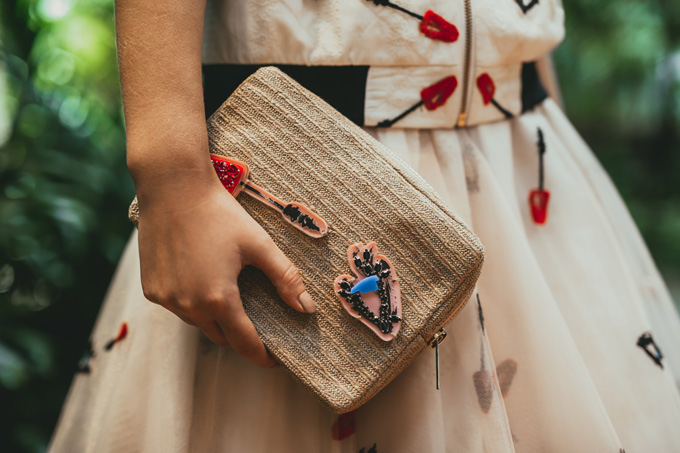
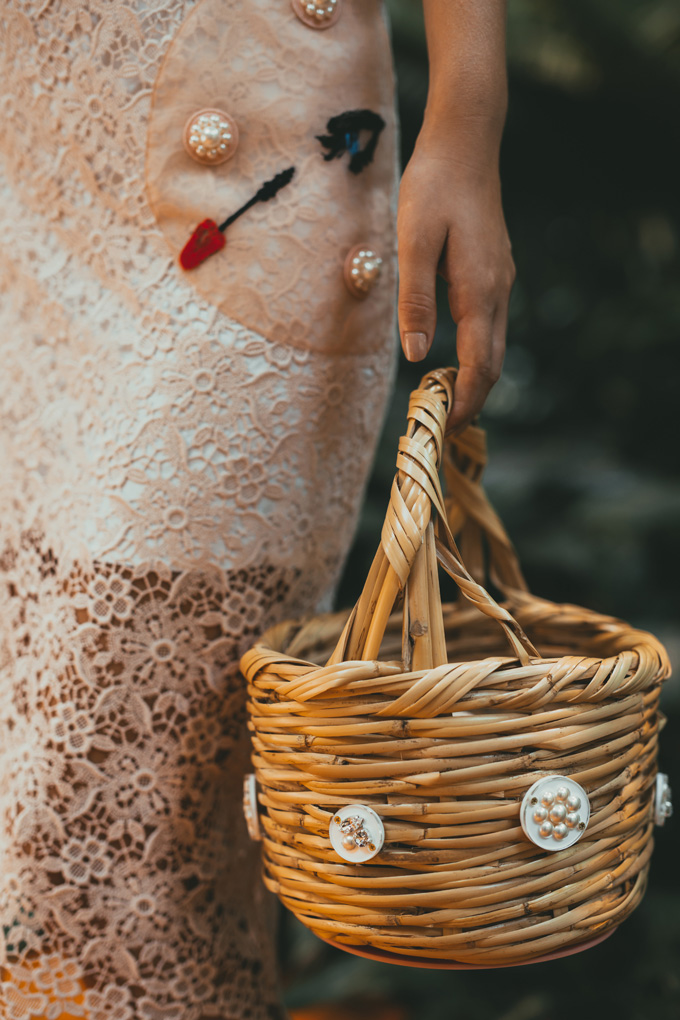
You also have an incredible personal collection of accessories. Would you say you are more of a shoe or bag girl?
Probably a shoe girl if I had to choose but it depends on the story behind the piece.
Which bag are you carrying today and what essentials would we find inside it?
Today I am carrying my Chanel bag which has been customised by our S*uce in-house artist, Janan Shihadeh. She can transform any accessory into a wearable work of art with her custom hand-painted designs. Inside you will find everything organised in S*uce pouches.
What is the formula for your day to day living? What can’t you live without?
I try to spend as much time with my girls as possible so we try to have lunch together no matter what. And bedtime is always super important as it’s when we catch up on everything we have done during the day.
Can you tell us the best advice you have received and what guidance would you pass on to your own daughters?
Love what you love without hesitation.
What’s next for the Zayan brand and S*uce?
The Zayan the Label Spring Summer 16 collection, ‘Darling je t’aime’ which was inspired by Jane Birkin, has just hit stores and the reaction has been great. For S*uce, we have officially launched our e shop which also includes an INSTASHOP, allowing you to shop directly from our Instagram feed. Our second Made by S*uce collection is also arriving in April and will be available online at www.shopatsauce.com.
by Eliza Scarborough
This Month’s Six Fashion Pick-Me-Ups
A New Generation

Tory Burch introduces the next generation in the Robinson family of handbags. Building on a tradition inspired by Tory’s stylish parents, Buddy and Reva Robinson, the new Robinson is a modern classic. This piece follows in the footsteps of its predecessors, just with more minimal hardware and an understated T-logo.
Garden Scents

The Herb Garden is the new collection of fragrances from Jo Malone London. The collection is inspired by a day in the herb garden. A quirky tapestry of fragrant foliage, entwined with flowers and fruit. There are aromas of satisfying stems of fresh English lavender, leafy clover, lemon thyme crushed in soil-covered hands, and ripening carrots. Altogether a captivating and delectable collection.
Limited Edition
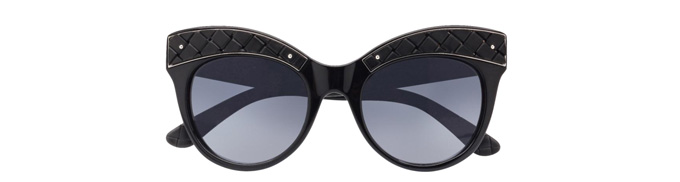
With only 500 pairs available worldwide, Bottega Veneta’s Limited Editon Felis Sunglasses are a launch you can’t miss. The cat-shaped frames combine shape and functionality with elegance, whilst incorporating the signature intrecciato motif.
All Hail the Backpack
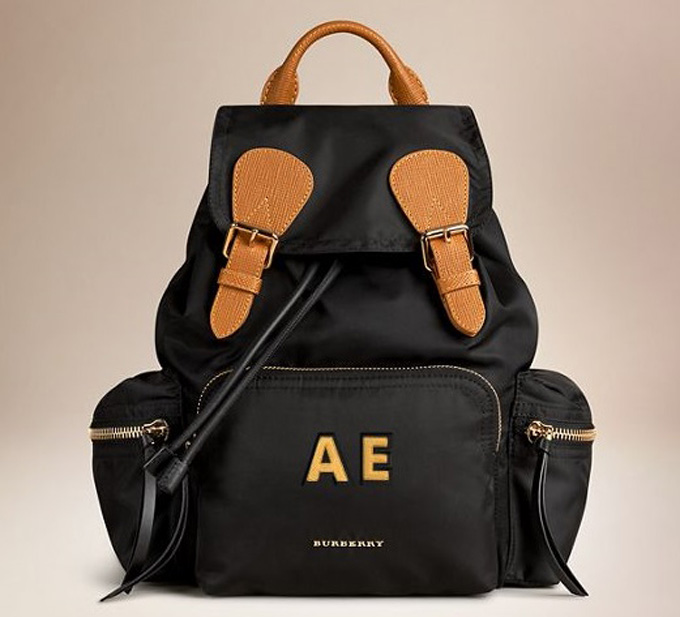
As model of the moment Victoria Kosenkova opened the SS16 Burberry show, accompanied by a live performance from Alison Moyet, it was certainly a fashion moment. This aside, all eyes were on the model’s super cool backpack, personalised with her initials – a new it bag has been born.
Cool Collaboration

Luxury British shoes and accessories brand Charlotte Olympia has partnered with The Outnet to create a limited-edition collection. It includes the label’s signature ‘Charlotte’s Web’ motif and iconic Kitty flats, as well as rich jewel-toned velvet loafers.
Sports-Luxe
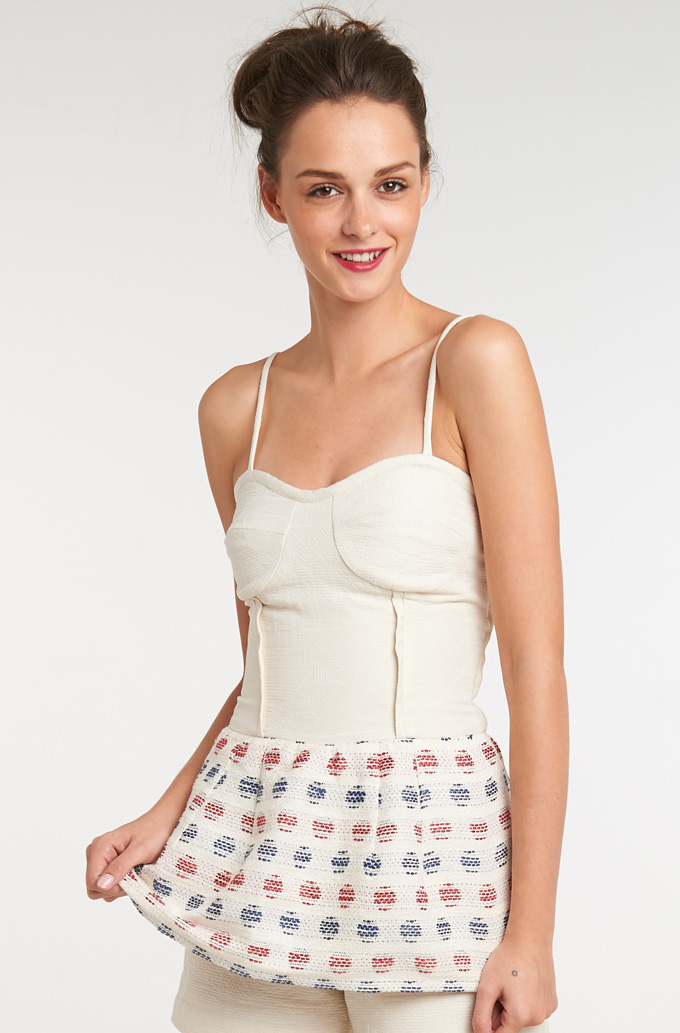
For Spring/Summer 2016, Kage creates a refreshingly androgynous flare infused with modern silhouettes. This unfussy approach to summer dressing blends a colour palette of crisp whites, metallic stripes, creams, reds and navy
By Eliza Scarborough
The Rise of the Anti-Socials, How phones are changing the way we see fashion
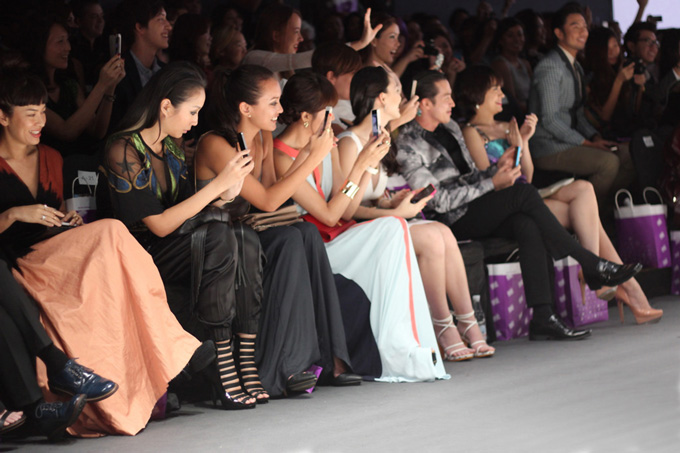
It is safe to say that social media has not only shaped the fashion industry, but it has allowed users to have a voice and a chance for self-expression, whilst giving followers access to the traditionally secretive fashion industry. However, the social-media boom has been a tricky path to navigate, and there are now signs of a backlash.
As we see a new wave of designers taking to the helm across the brands, one thing is glaringly obvious. They are socially shy and have been rarely seen or heard on social media. The influential, yet little known Demna Gvasalia from anonymous, but very cool, design collective Vetements has stepped in as Creative Director at Balenciaga with no hash tags in sight. While Johnny Coca moves from creating luxe handbags at Celine to British brand Mulberry, again with a lacking online presence. And at Hermès, there has been the appointment of Nadège Vanhee-Cybulski as Creative Director without even a hint of a selfie. They join the tribe of key fashion players who over time have avoided stepping out of the design studio and into the limelight, dodging interviews and conversations. Raf Simons notoriously just pokes his head out at the end of shows, shying away from public appearances, along with Christopher Bailey, Phoebe Philo, Miuccia Prada, and Hedi Slimane. Although these are the most influential names in fashion, they are also the ones we know the least about, adding to the allure of the brands they design for. However, while some key players keep their social-media presence dialled down, others have built their brand from a social platform. Olivier Rousteing’s Instagram-savvy approach has helped push Balmain into the collective consciousness, and brand Beckham has remained unstoppable.
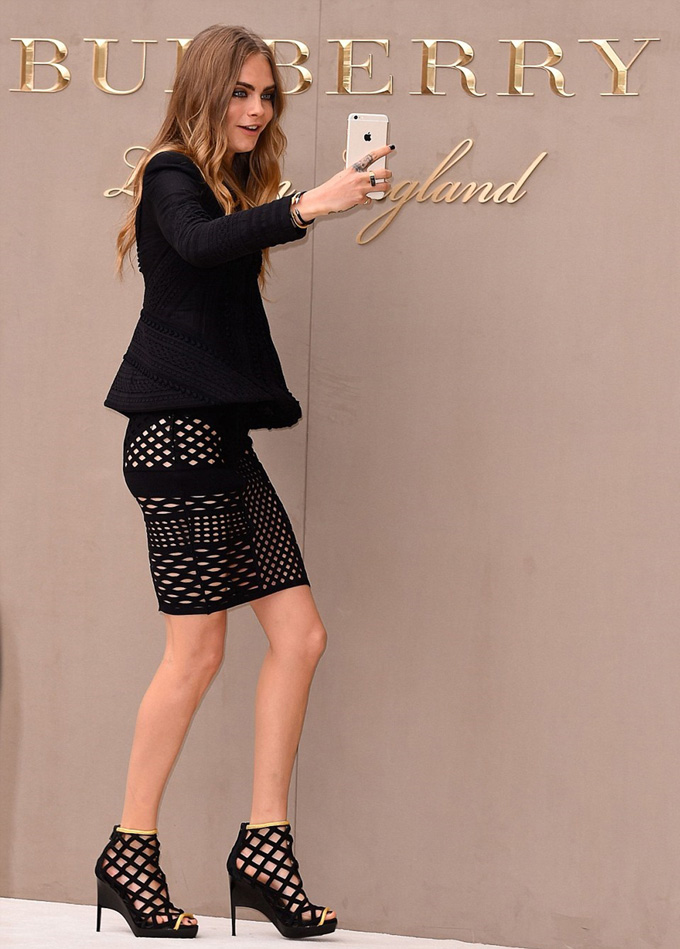
Cara Delevingne

Raf Simons

Phoebe Philo
Instagram is far from just a personal sharing app, it is now a major marketing mechanism, posts are no longer authentic snaps from life, they are now carefully crafted advertorials. Teen Instagram star Essena O’Neill, dramatically quit the social network after revealing that many of her posts were paid product placements and advertisements.
When it comes to the front row at fashion week, smartphones are again making a noticeable impact. We are digesting trends faster and the presentations are leaning more towards the consumer and less about industry insiders. All of which is a great contrast to the age where designers were averse to showing any of their collections to the public, when it was solely the realm of journalists and buyers. There were strictly no photographs of the shows, and anyone who dared sketch a design was publicly shamed. However, time has moved on and the digital age has descended upon fashion week, revolutionising the timeline of design to shop floor. The new generation of shoppers want to be able to immediately purchase the items they see, so it seems we are heading towards the end of the era where there would be a time delay of six months. Hilfiger is cancelling the delay between fashion week and the beginning of winter, instead selling his collection straight from the catwalk. Burberry also announced a similar concept, together with going one step further, they are axing autumn and spring. Their replacement is a pan-seasonal collection, for every season and every gender. Tom Ford is simply skipping the autumn fashion week which is held in spring, instead choosing to present the collection in the intended season, autumn.
Of course, not everyone is on board with embracing social media and the sweeping changes it signifies. Massimo Giorgetti, creative director of MSGM, asked attendees at his AW16 show to refrain from posting anything on social networks. As the invitation stated, ‘Put back your phone and enjoy the show’.
by Eliza Scarborough
A Journey into Digital Bohemia with LOUIS VUITTON

Overdyed Silk crepe jumpsuit
Cosplay Sling back Low Boots

Linen Blouse with shiny knitted effect
Vest

Leather & Linen dress
Petite Malle Epi Chain
Sling back low boot

Leather Jacket
Embroidered tank top
Reactor printed overdyed silk pants
Sling back flat Loafer

Leather Coat
Petite Malle

Embroidered bubble skirt
Leather Jacket

Wool pants
Vest with leather braids
Top blanc court

Striped Dress

Printed Leather Jacket
Linen & Poplin Bubble Skirt
Photographer: Pelle Lannefors
Fashion Director: Eliza Scarborough
Hair and Make-Up: Marisol Steward
Model: Sabina at Bareface
All clothes by Louis Vuitton Spring – Summer 2016
Summer’s Love Affair by BURBERRY
Sheer lace, delicate vintage-inspired slip dresses, lace trenches spliced with sporty mesh, and the perfect black pea coat. This young and carefree BURBERRY collection was titled Functionregalia, and was one of Bailey’s most on-the-pulse outings in recent seasons.
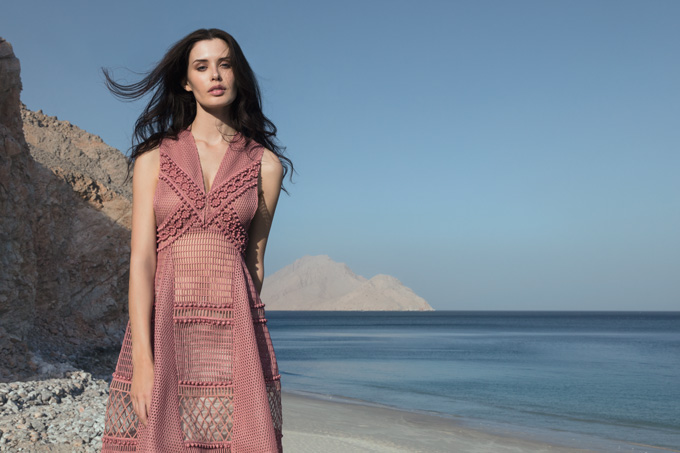
Light pink lace dress
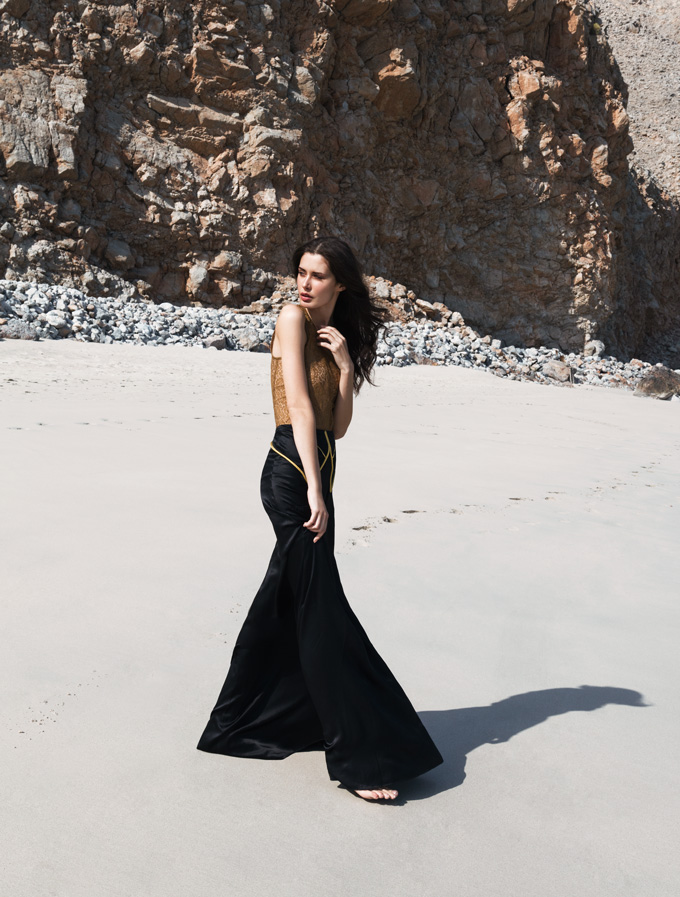
Light brown lace tank top
Black silk long skirt
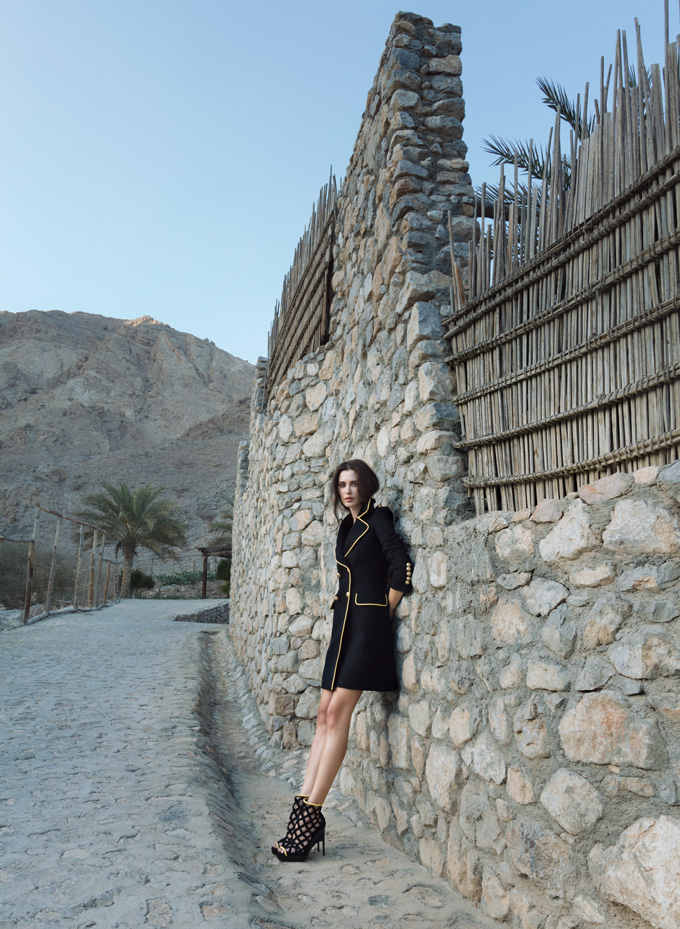
Cashmere double-breasted military coat with goldwork cording
Black cut-out ankle boots with goldwork cording
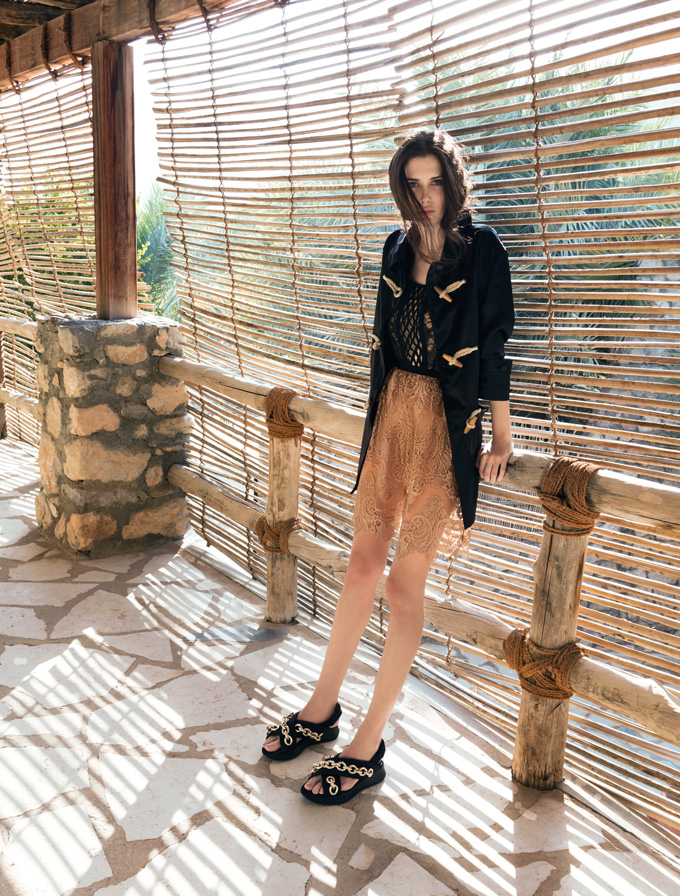
Satin Duffle Coat
Black lace tank top
Nude lace skirt
Peep toe laser-cut suede platform ankle boots
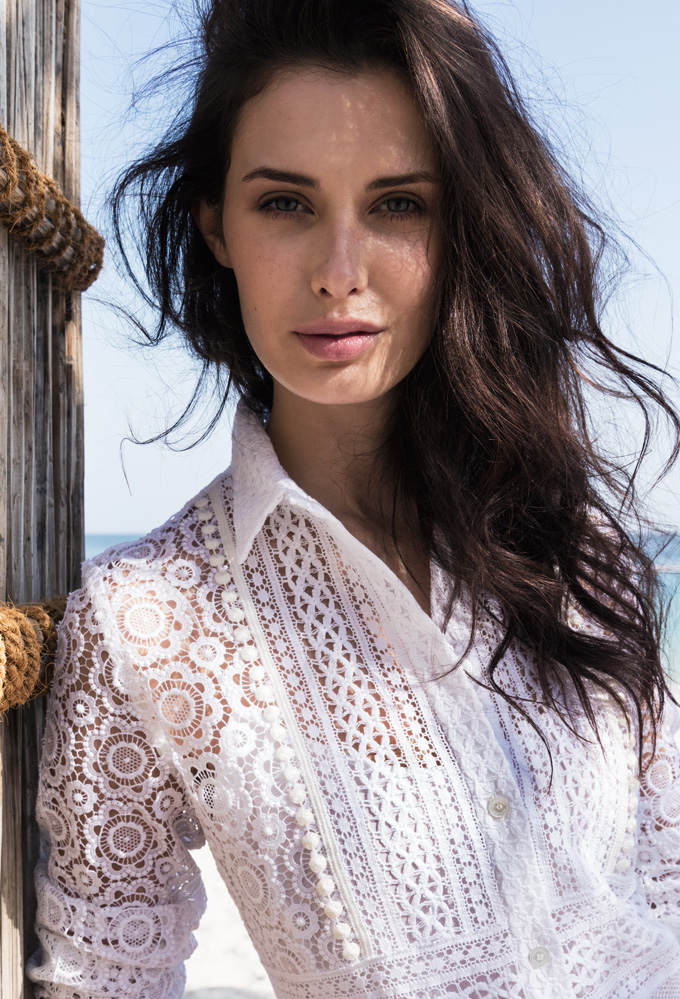
White Lace shirt
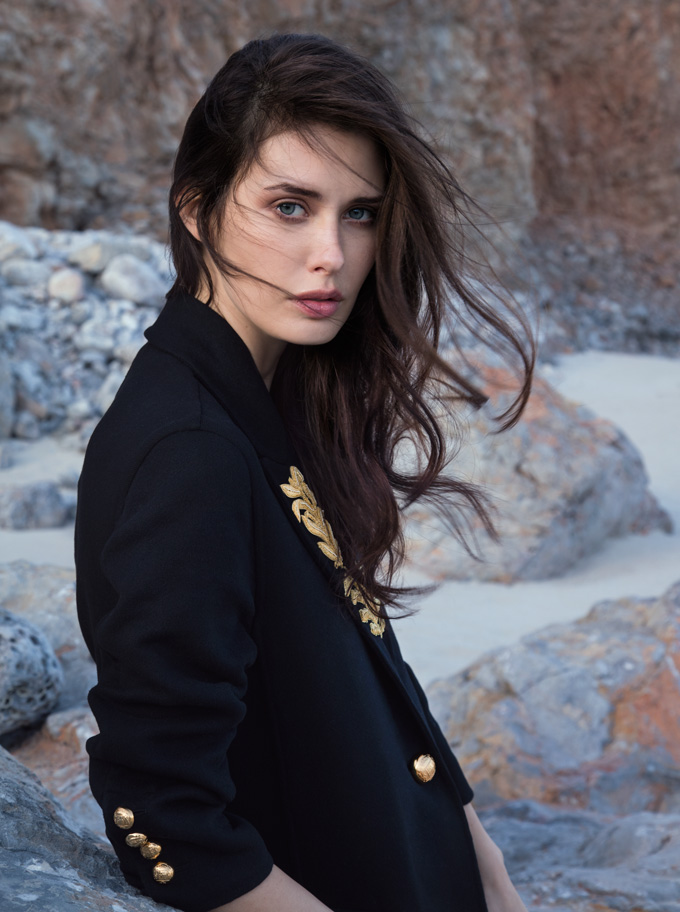
Black cashmere coat with goldwork appliqué
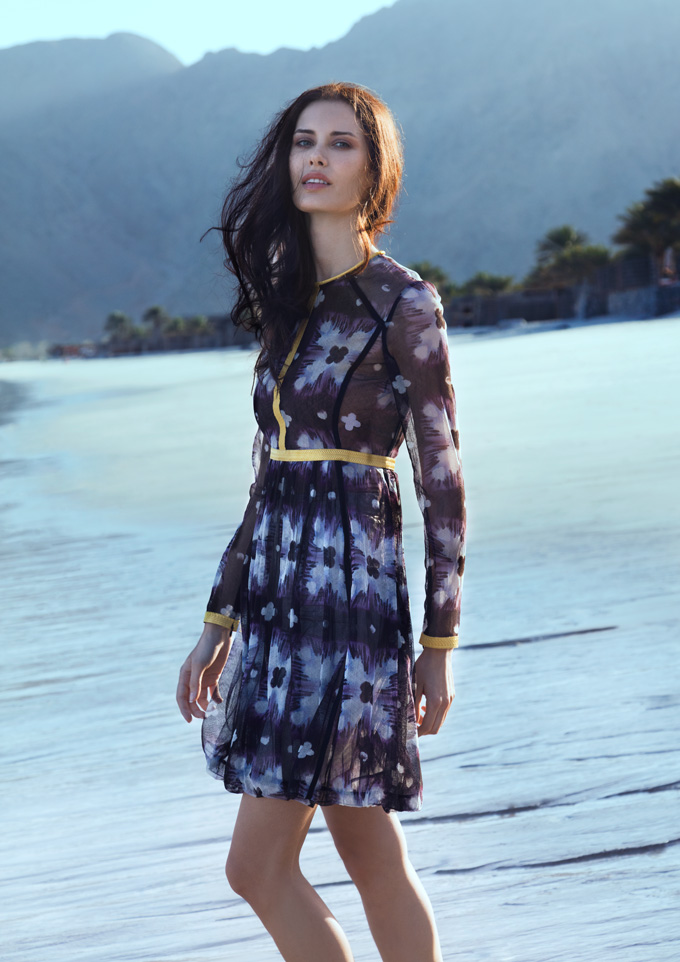
Purple tie-dye tulle dress
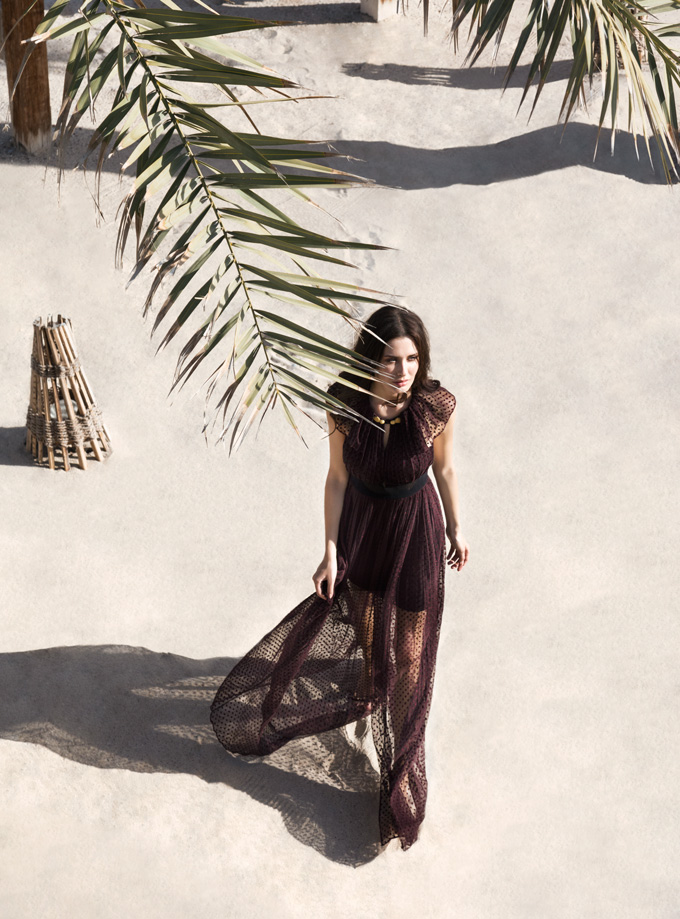
Mahogany backless polka dot tulle dress
BEAUTY LOOK:
Fresh glow fluid base, in nude radiance
Fresh Glow highlighting pen
Bold Lash Mascara
Complete Eye Palette
Light Glow Blush
Lip Velvet Nude Apricot
Lip Definer Rose blush
All Clothes by Burberry
Photographer : Vivienne Balla
Fashion Director : Eliza Scarborough
Hair and Make-Up : Sarah Damichi
Model : Sofia at MMG
Location : Six Senses Zighy Bay
Into the Wild with MiuMiu
Kitschy negligees, gingham shirts, opulent furs and deco-patterned knits join together for eclectic style

Sable satin and leather dress in black and emerald, bicolour leather shoes

Kid mohair vichy coat, polo top, tulle skirt, poplin shirt, multicolour python shoes and feather and crystal collar worn as belt

Bemberg bicolour silk dress, micro vichy shirt

Nappa patch coat, crystal collar and python bag

Nappa patch coat, red vichy shirt and bicolour tiara

Jacquard wool knit, bicolour fox fur stole, and nattè check skirt

Nattè check and leather jacket, prince of wales trousers, multicolour suede and python boots, leather bag and fur charm

Emroidered organza dress, micro vichy shirt, nattè-prince of wales skirt, bicolour suede and python boots, plex and crystal tiara
All by Miu Miu
Photographer : Jeremy Zaessinger
Stylist : Amine Jreissati
Model : Tayan Leao Melo at Elite
Hair stylist : Kazue Deki at Calliste
Makeup artist : Agna Grzeszczuk at Calliste
All Bright Now
PRADA takes the traditional and raises it with an ultra-modern spin. Boxy suits in tweeds and checks are paired with striking stripes and statement jewels, making it just what we want to wear right now

LEFT:
Sablè Baiadera dress
Silk veil
Suede sandals with ayers details
RIGHT:
Sablè Baiadera dress
Inlaid cashmere knitwear
Bicolor suede sandals with ayers details and metallic boule
All by Prada

Inlaid suede and python coat
Embroidered organdi dress
Tweed skirt
Prince of wales and tweed apron
Silk veil
Crocodile Prada Galleria Bag
All by Prada

LEFT:
Radzmire silk jacket
Radzmire silk skirt
Origami sequin earrings
RIGHT:
Embroidered organdi dress
Tweed and sablè skirt
Printed shantung top
Silk veil
Embroidered sequin earrings
Bicolor suede sandals with patent details
All by Prada

Radzmire baiadera jacket
Inlaid cashmere knitwear
Printed shantung shirt
Radzmire baiadera skirt
Silk veil
Bicolor suede sandals with ayers details and metallic boule
Calf baiadera Prada Frame Bag
All by Prada

LEFT:
Embroidered organdi coat
Python and crocodile Prada Frame Bag
RIGHT:
Embroidered organdi jacket
Embroidered organdi skirt
All by Prada

LEFT:
Inlaid naplack and suede coat
Inlaid chiffon top
Embroidered sequin earrings
RIGHT:
Inlaid naplack and suede jacket
Inlaid naplack and suede skirt
Embroidered sequin earrings
All by Prada

LEFT:
Inlaid breitschwanz coat
Embroidered organdi dress
Embroidered sequin earrings
RIGHT:
Embroidered organdi dress
Tweed skirt
Prince of wales and tweed apron
Embroidered sequin earrings
All by Prada

Inlaid breitschwanz jacket
Inlaid breitschwanz skirt
Embroidered organdi dress
Origami sequin earrings
Crocodile bag
All by Prada

Radzmire silk jacket
Origami sequin earrings
Inlaid chiffon top
All by Prada

Crocodile baiadera Prada Galleria Bag
Brushed bicolor calf leather slingback pump with metallic boule
All by Prada
Photographer : Jeremy Zaessinger
Fashion Director : Eliza Scarborough
Models : Juliette Perkins and Marti Przybylska at IMG
Hair stylist : Tomoko Ohama at Calliste
Makeup artist : Gregoris Pyrpylis at Calliste
A New Mood of Colour with Fendi
Inky silk and sumptuous black add an edge to bold and bright primary hues

Blue and black ‘broken circle’ printed long dress in chiffon with cropped sides and plissé details on front and Favorite silver heels

Black couture midi-dress in wool silk with matching python cropped top and python lace-up details with white mini peekaboo and Flowerland red and white patent heels

White midi-dress in cotton with zip and smocking embroidery on top with Fendista bangles

Fendi Micro Peekaboos

Red mini-jacket in shaved mink fur with large woven workmanship and lace-up details on collar, red strapless bloomer mini-dress in chiffon with smocking embroidery details and Fendista earring

White midi-dress in wool silk with cropped sides, leather pockets and matching leather lace-up details with Vienna Straw leather top with Flowerland sabot shoes

Black maxi dress in satin with smock embroidery details and Fendista earring

Coral cotton blouse with high collar and smock embroidery details, red mini-skirt in braids effect leather

Dark blue side-cropped jacket in wool silk with matching leather lace-up details with midi-skirt in wool silk with Flowerland sabot shoes

Long-sleeved red cotton playsuit with high-collar and smock embroidery details

Fendi Python double baguette
Photographer : Jeremy Zaessinger
Fashion Director : Eliza Scarborough
Model : Svetlana Zakharova at Oui Management
Hair stylist : Kazue Deki at Calliste
Makeup artist : Mayumi Oda at Calliste
Location : Mandarin Oriental Paris
