

Dubai from a Hotelier’s Perspective

a&e gains insight into the industry from the General Manager of Vida Hotels and Resorts
Stefan Viard is the General Manager of Vida Hotels and Resorts, the newly launched brand of Emaar Hospitality Group. He oversees the brand’s flagship property, Vida Downtown Dubai, and the newly opened Manzil Downtown Dubai. Through innovative ideas and working closely with the teams across the hotels, Stefan implements creative strategies to drive the hotels’ business, ensuring that visitors make the most out of their visit. Formerly the Hotel Manager and acting General Manager at The Address Dubai Mall, another Emaar Hospitality Group property, Stefan has over 15 years of international experience in the service and hospitality industry. The German-French born is the ideal expert to talk to about the U.A.E.’s hospitality industry and its appeal to tourists from around the world.
How do you advise Dubai visitors to go about choosing the perfect hotel or resort in a place that has a myriad of options to offer?
We have found that most visitors coming to Dubai for leisure take into account key determining factors when choosing their hotel: comfort, luxury, accessibility, uniqueness and of course hotels offering their guests authentically local experiences. We have also seen a rise in tourists from the region and for these travellers specifically, the “comfort” factor is key and finding hotels that have a feeling of being their “home away from home” is a determining factor and priority when choosing their hotel.
Leisure tourists also prioritize the accessibility to key tourist attractions as a determining factor for their choice of hotel. For example, those tourists seeking a more relaxed and beach oriented vacation, will be more inclined to choose from one of the many resorts along Jumeirah, offering direct access to Dubai’s stunning beaches. For those wanting to be in the city center and close to key attractions, including Dubai Mall, the largest shopping destination in the Middle East, will choose hotels situated in the heart of town.
Tell us about the ‘Best Lifestyle Leisure Hotel Group in the World’ award that the Vida Hotels and Resorts won at the Leisure Travel Award Ceremony in California. What will this feat add to your existing success?
We were very excited when we were honoured with this highly commendable award title. Not only will this recognition elevate the profile of the brand, but it will also increase the international visibility of both properties, which will essentially translate tapping into a new market for leisure tourists seeking hotel destinations in Dubai. Being recognized with awards such as these also places us as a brand on a global level, in the same caliber as other outstanding properties.
Both Manzil and VIDA Downtown Dubai are centrally located and do not offer the option of a beach. In a place like the U.A.E. which is very marine oriented, tell us what makes their location special and where you make up for not having a beach shore option for your guests.
I have found in Dubai, there are two key hotel destination profiles for leisure travellers – the beach resorts and the city hotels. We are the latter, located across the street from the region’s largest shopping complex, Dubai Mall, as well as one of the world’s iconic architectural structures, Burj Khalifa. We are also minutes away from the Dubai International Financial Centre (DIFC) and some of the trendiest dining destinations in the city. It is not only the accessibility factor that makes our hotels an attractive choice to our guests, but both properties are characterized as “boutique hotels” offering visitors a unique hotel experience which is relatively new to the hotel scene in Dubai.

Lobby

Pool

Zig Zag Table
Tell us about the position of boutique hotels in the U.A.E. alongside luxury international hotels that have established themselves in the market.
The world has seen an increase in the popularity of boutique hotels and this trend is slowly starting to reach the Middle East’s hotel scene. We have found that more and more, tourists are in search of a more private yet buzzing and social ambiance, offering a unique and customized experience for their guests. Especially in Dubai, where all hotels compete against each other with the number of rooms and varied facilities etc., our hotels on the other hand, have found a niche in the market and we cater to those looking for something unique and more personalized. In Dubai, less can be more appealing and that is how boutique hotels should position themselves against these big players and find unique characteristics that the bigger hotels simply cannot offer.
For our travel issue, tell us about your personal taste in travelling. What are some of your favourite destinations, and what is your jet-setting style?
As a hotelier I am very fortunate as I have the chance to travel regularly to attend various travel trade shows, corporate events, which is great as I am always inspired by what is around me. Among my favourite destinations include Berlin, which as a city has something to offer everyone. From arts, culture, unrivalled culinary and dining experiences, eclectic shopping, architecture and design to a diverse population, which makes the city a perfect combination for anyone all in one. I am also a big fan of sports, especially skiing, so I love to travel to Austria and Switzerland to enjoy some of the most challenging ski slopes and other winter activities, which we don’t get to fully experience in Dubai.
How do you describe yourself as a “hotelier?” Do you have specific personality traits that helped qualify you as an expert in this industry?
Most hoteliers are different, and management searches for diversity when hiring talent. Nonetheless, when working in the hotel industry there are some characteristics that most of us share including, adaptability to change, people skills (whether dealing with a colleague or guests), appreciation for offering unique services to our guests and of course a passionate approach to their work. I have also found that the higher up in the management chain, any hotelier having international exposure in their hotel experience, positively impacts their work style, personality and approach as they are able to better understand the many cultures and different mentalities of both the guests and employees which the hotels operate in.
You have extensive experience in leading multi-cultural teams, which is beneficial in Dubai’s cosmopolitan hospitality industry. Tell us about the people who make up this industry in the region. What attracted them to come here and what are their aspirations?
The Middle East, especially the UAE, is one of the leading countries when seeking opportunity and experience in the hospitality industry. Not only does the UAE have some of the most reputable hotel brands in the city, but because of the volume of hotels, the hotel scene is quite competitive making it very fast paced and constantly evolving, which is a great experience to be part of. From an international perspective, recruiters find that experience in the UAE is key, as it provides unique international professional experience in a city that is becoming a hub in the hospitality and culinary field.
Interviewed by Houry Seukunian
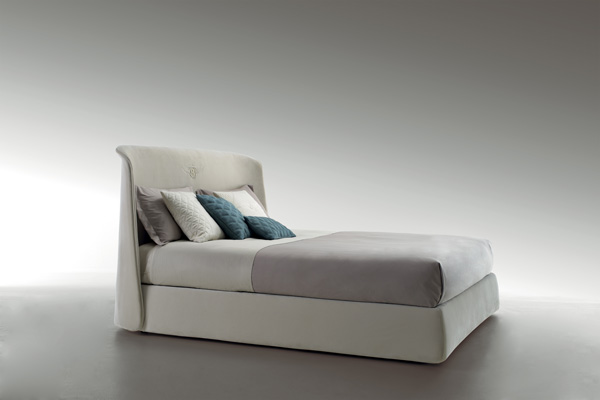
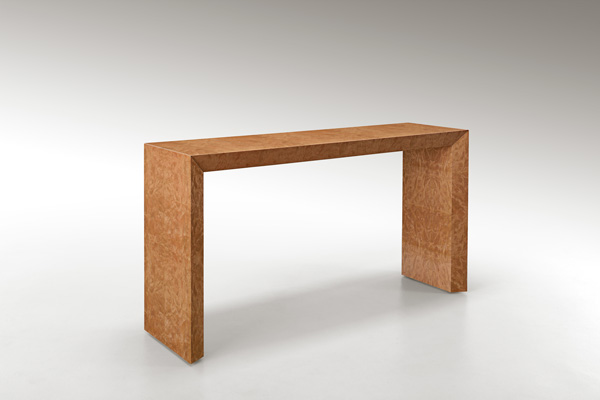
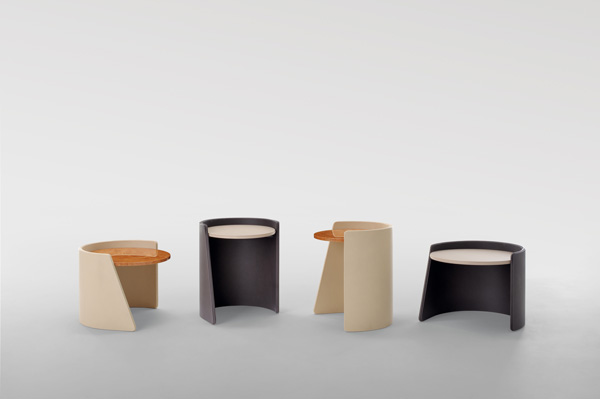
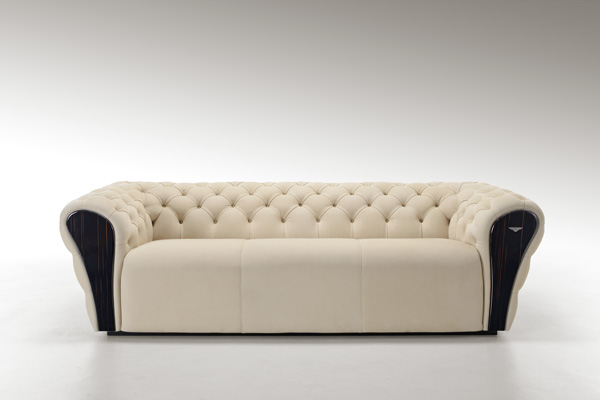
Aati launch Bentley Home
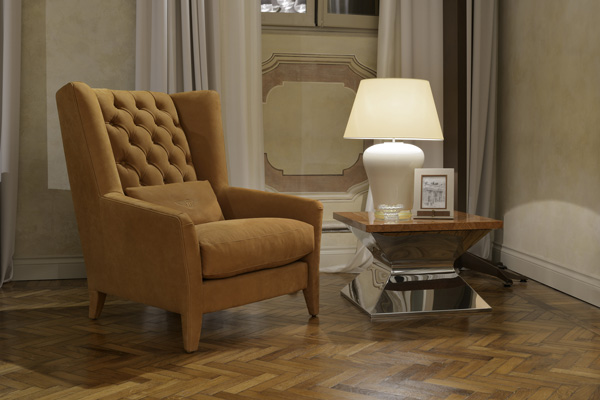
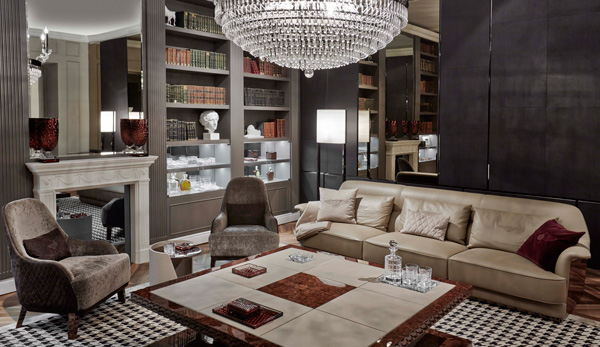
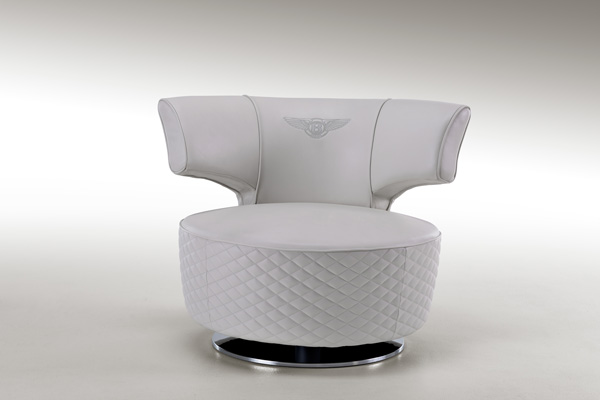
The new Bentley Home collection at Aati is inspired by the renowned craftsmanship and exquisite materials that characterise the interiors of all Bentley models. Designed to furnish luxury homes and offices, the collection combines Bentley’s inherent qualities of workmanship, heritage and tradition, exclusivity and style, with the exacting design of one of Europe’s leading furniture makers, making it the perfect addition to Aati’s diverse luxury furniture portfolio.
This exclusive collection blends the finest elements of traditional and modern design, an exercise in subtlety rather than showmanship, incorporating functional performance with comfort and luxurious, sensuous quality. It captures the elan of the Bentley driver, through items that mirror the impeccable quality and attention to detail of the Crewe-based marque.
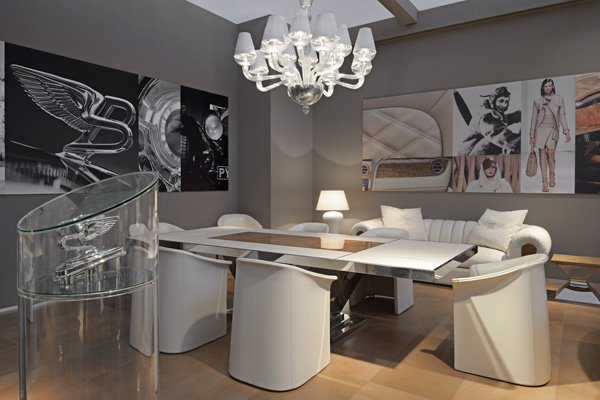
The new Bentley Home collection will combine the traditional élan of the British gentleman driver’s spirit with a new modern English twist, an approach so superbly articulated in the Bentley suite at the St Regis hotel, New York. There, the combination of traditional and modern reaches a new dimension in the use of leather, precious wood veneers, metal, wool, silk and glass throughout the suite, and the distinctive quality of each object mirrors that of a Bentley model’s performance and luxury core elements. Crewe-based marque.
The colours span a pallette of warm tones: brown tones, dark chocolate, brick, new praline shades. Shades that range from quartz grey to Burgundy and from hazelnut to royal blue also join in. The quest for style is fully expressed in the furniture’s upholstery. Elements typical of men’s tailoring, such as pinstripes and Prince of Wales suits and iconic Bentley patterns, including the quilted pattern, all feature on the leather: light, soft and very fine, in shades of beige, mink and cognac, matched with incredibly fine houndstooth-patterned wool in walnut and dark mocha hues.
Vitamin D and all you need to know about it
a&e discovers the adverse effects of low exposure to sunlight, and the importance of Vitamin D, by consulting Dr. Sundar Elayaperumal, a specialist in Microbiology in Burjeel Hospital Abu Dhabi

How common is vitamin D deficiency here in the UAE/Middle East/MENA?
According to the Dubai Health Authority, close to 81% of the UAE population suffers from Vitamin D deficiency – it is particularly high in Emirati women. Further a Journal of Health Science revealed in 2012 that 70% of adolescent girls in Iran and 80% of girls in Saudi Arabia suffer from Vitamin D deficiency. Further an article published by the International Journal of Rheumatic Diseases in 2011 showed that 20-80% of supposedly healthy individuals in the Middle East suffers from Vitamin D deficiency.

Who is most at risk from developing the deficiency?
In the Middle East, the risk factors of developing the deficiency are mainly for social, religious and environmental reasons. The Dubai Health Authority points out that veiled women are likely to suffer from a lack of Vitamin D because they do not expose enough skin to the sun which help in vitamin D formation. Dark skinned people also at a risk for developing the deficiency because their skin does not produce enough of the Vitamin compared to those with a fairer skin. Those who follow a strict vegan diet are also at risk of not consuming the recommended levels of the vitamin over time as the natural food sources of the vitamin are animal based like fish, egg yolks and beef liver.
Smoking and obesity are also linked to the deficiency.

How can we spot the symptoms?
One of the subtle yet crucial symptoms of Vitamin D deficiency is bone pain and muscle weakness. Also an American Journal of Geriatric Psychiatry study in December 2006 found that elderly individuals with low levels of the Vitamin are more likely to be depressed.
What are the best ways to avoid developing a deficiency?
Fishes like tuna and salmon are rich in the Vitamin so include large portions in your diet. Sun exposure is a good source of Vitamin D so staying out in the sun will help in vitamin D formation in skin. However do not stay long enough for your skin to turn red or pink and burn. Roughly 30 minutes under the rays when the sun is at its peak in the afternoon twice a week is an ample exposure.
Living in a place with such great year-round sunshine, why is Vitamin D deficiency so high?
In spite of the UAE enjoying an ample sunlight during the year, the high temperatures mean it is less likely for the residents to enjoy time in the sun leading to a tendency to develop the deficiency.
The health risks people may face when traveling

What are the most common health risks people encounter when on holiday?
It all depends on the destination and period of travel. For example Malaria and Dengue are common in certain parts of Sub-Saharan Africa. Water borne diseases like traveller’s Diarrhea is common in the Asian sub-continent and the Amazon region.
With regards to food poisoning, what are some common ingredients or food to avoid while travelling?
There are more than 250 diseases which can be acquired due to food poisoning. It happens when we ingest certain quantity of virus parasites bacteria and fungus along with contaminated food and water.
When travelling, avoid open foods present in the shops. Always make sure your food is properly and thoroughly cooked. Try avoiding cold and precooked dishes including salads and make sure you have bottled water or boil it before drinking.

When is it most likely for someone to get food poisoning?
Most of the times you get a self-limiting illness like a rumbling tummy or a one off diarrhea. But sometimes symptoms can be so bad that you have to be hospitalized. Some of the infections can give rise to symptoms as soon as 2 hours after eating and some of them can take up to 48 hours to have their affect. As I mentioned before, avoid semi cooked food and fresh unbottled water.
What are travel habits that lead to neglect?
It is but natural to let yourself get carried away whilst on a holiday. People tend to over-eat and over-drink. We tend to sleep late, have meals at odd times, and experiment with new dishes. As a result of all this, our body’s circadian rhythm and digestion routine changes. The human body works like a clock and is very precise. Your digestive juices and other hormones are secreted at a given time daily. A one-time late night binge is alright but if this continues then it will have an effect on your body especially with on digestive system.

We are seeing more and more outbreaks of certain contagious diseases in different parts of the world. What advice do you have for travelers regarding this?
Changes in travel patterns and re-emerging diseases have increased the demand for travel medicine.
All travellers need to be aware of diseases prevalent in areas they are visiting. Most of the diseases are Preventable. Some of them like hepatitis A, yellow fever has available vaccines which needs to be taken well in advance before travelling. Some of the diseases like malaria can be prevented by taking prophylactic medicines before travelling. The WHO’s International Travel and Health is a core text in travel health medicine and it now includes emerging problems such as avian influenza and chikungunya. You can get this information in the form of leaflets for preventive measures vaccinations and safe foods on www.who.int/ith. Alternatively you can visit www.masta.org.
What is a health emergency kit that could come in handy, especially for people travelling as families with children?
Holiday packing is always crammed up with so many things to take and so little baggage allowance. An essential health kit should be about the size of a small hand bag with at least 2 partitions. In one section, it should have basic first aid items- like adhesive bandages, small roll of cotton wool, alcohol based hand sanitizer, disposable gloves, thermometer, small bottle of antiseptic wound cleaner.
And the other section should have medications. Antidiarrhoeal, antiallergic, paracetamol, tablets for motion sickness, antibiotics for common infections prescribed by a doctor, Antimalarials or other medications relevant to the place you are visiting, and Antifungal and antibacterial ointment. You can keep a card on at all times, with your name and emergency contact back home, and your or your children’s immunization record and any known allergies.
What are some of the most common activities that might lead a traveler to develop a rash?
Rashes whilst travelling can be due to so many things. Sun burn tick or insect bite, food and dust allergies. Most of them are self-limiting, but if the rash persists beyond 3-4 days and is progressive then you need to consult a doctor.
Federation of the Swiss Watch Industry FH endorses Salon des Grandes Complications 2015


Salon des Grandes Complications is pleased to announce that the exhibition is endorsed by the Federation of the Swiss Watch Industry FH. Supporting a home-grown event in the UAE for the first time, the Federation will be present at the Salon des Grandes Complications and will showcase the rich history and traditions of fine Swiss watchmaking.
“We are truly delighted to be invited to the Salon des Grandes Complications 2015 and to have the opportunity to present our thematic exhibition Think Time Think Swiss Excellence at such a prestigious event,” said Jean-Daniel Pasche, President of the Federation of the Swiss Watch Industry FH.
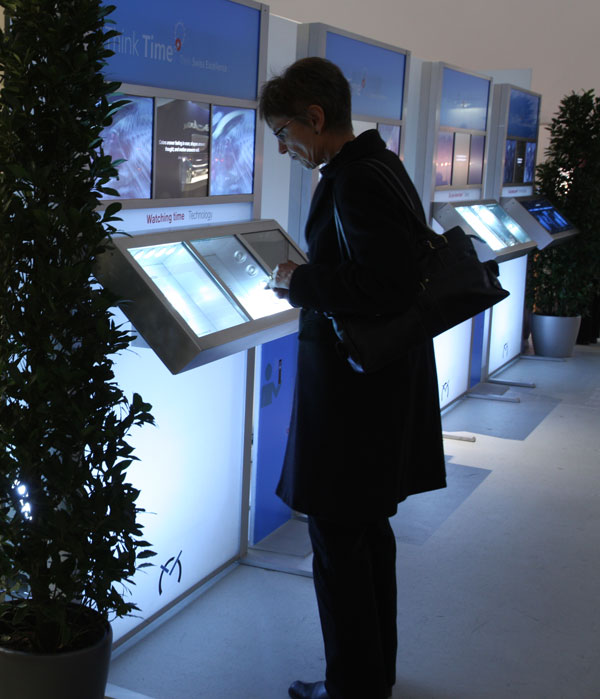

Headquartered in Bienne, the Federation of the Swiss Watch Industry FH is the Swiss watch industry’s leading trade association. The private, professional and non-profit association has over 500 members and represents more than 90% of all Swiss watch manufacturers. The Federation supports development of the industry, and provides members with a range of services acting as a counterpart for authorities, media and the public in general, both in Switzerland and internationally.
The highly anticipated second annual Salon des Grandes Complications is set to take place from 16th-19th November at the DIFC. This year’s edition will take place over a larger space, and will see an increased number of participating brands, including some of the world’s best watchmakers.
Valentino BO-Y-CH


The seasonal offer of this collection includes 70’s inspired block-heeled boot and bootie in a intarsia-striped variation.
A leather patchwork of eye-catching colourful stripes are presented and offered with a white cowhide heel and low platform.
the making of the Prada Inside Bag


The Prada Inside Bag. An iconic new design with a secret Prada twist at its core: a carefully concealed twin bag within its supple architecture.
One bag snugly tucked within another, the Inside Bag triggers many emotions. At once playful and seductive, graceful and subversive, it seamlessly blends rich tradition with daring originality.
Available in several combinations of luxurious leather, including crocodile, ostrich and calf, the Inside Bag’s soft “inner structure” is rendered in nappa leather. Beautifully paired in a colourful selection of classic and novel shades, outer and inner bag can be matched tone-on-tone, or creatively contrasted to reflect the individual spirit of its owner.
Developed by Prada’s skilled artisans, the outer bag is linked to its double through a complex design that unites Prada’s heritage of supreme craftsmanship with ingenious innovation. The inner bag is joined through two folds to the outer, without any internal frame. The result is an incredibly soft bag, each taking many hours to hand-craft.
This essential new bag is full of intriguing dualities: subtle yet daring, revolutionary yet classic. It is an unexpected surprise, an elegant gesture.
A bag-within-a-bag, reassuringly indulgent, comfortingly concealed. The decadence of layered luxury – two exquisite bags united to form a graceful, harmonious whole.
Stroll The Streets of El Corte Ingles’
Luxury Fashion Boutiques and Enjoy Seasonal Savings
Since 1940 El Corte Ingles has held the title as Spain’s leading department store. Over 7 decades later the renowned department store still reigns high as the 3rd largest department store worldwide with over 80 locations across Spain and Portugal.
Located on the same floor as the finest designer watches, jewellery and cosmetics the streets of luxury boast over 3,000 square metres of space waiting to be explored. Devised as a distinctive and exclusive zone, in the style of a true street of luxury boutiques each store features its own ambience, décor and overall shopping experience.
El Corte Ingles plays home to some of the worlds most renowned and leading fashion and accessories brands such as Cartier, Bottega Veneta, Dior, Jimmy Choo, Louis Vuitton, Burberry and Prada. Each individually showcasing their most sought after designs to El Corte Ingles’ clientele seeking unique and luxurious purchases.
In accompaniment with the wide range of luxury goods on offer comes the highest quality of service and expertise given by the sales advisors of El Corte Ingles. New staff have been recruited specifically for the streets of luxury to ensure that a vast range of languages are spoken and therefore to maintain the highest level of customer care.
In addition El Corte Ingles’ flagship store Castallena – Madrid offers exclusive VIP services to customers visiting from overseas. These services include delivery of purchases to hotel, delayed collection to enable customers to continue exploring the city without their shopping, quick and easy VAT refunds and a complimentary personal shopping experience.
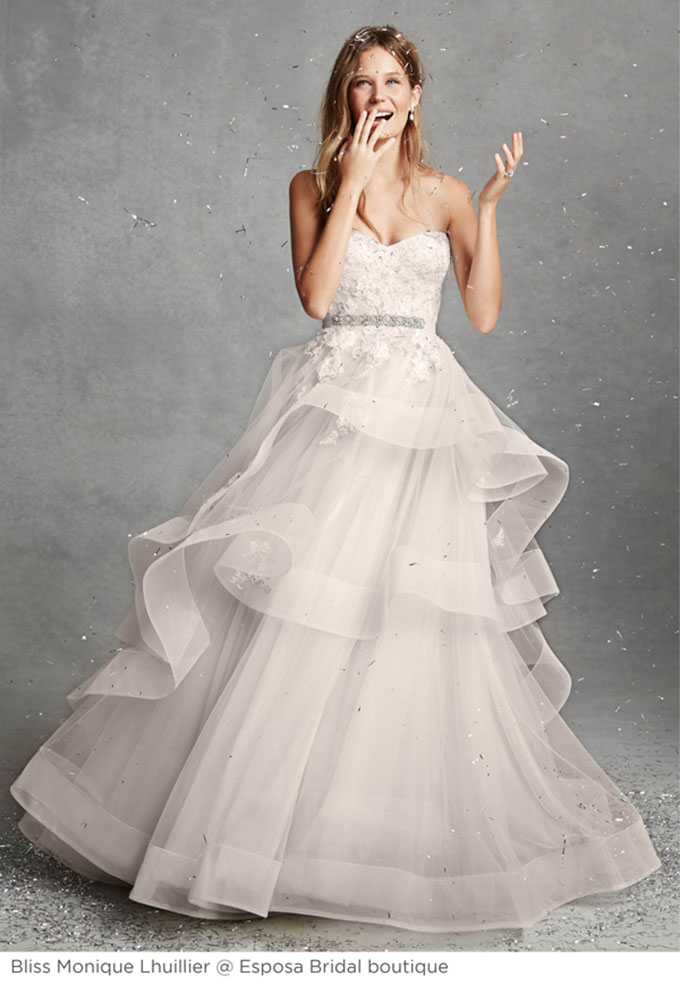
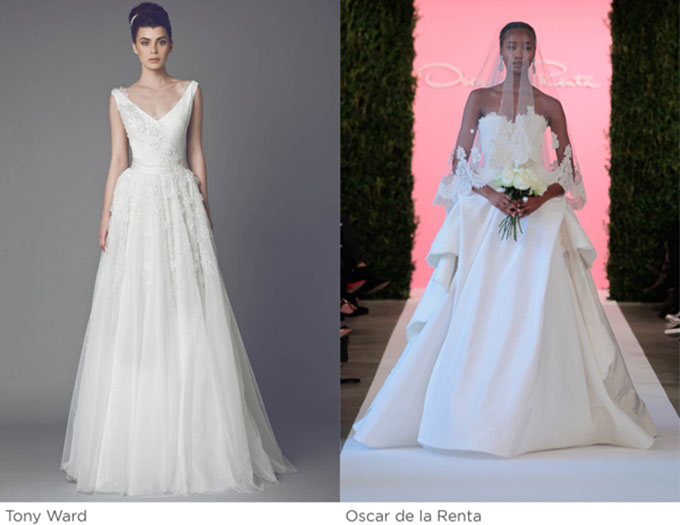
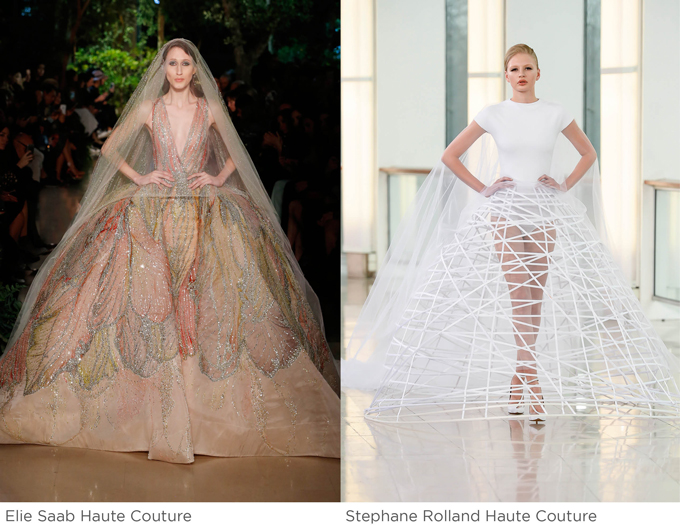
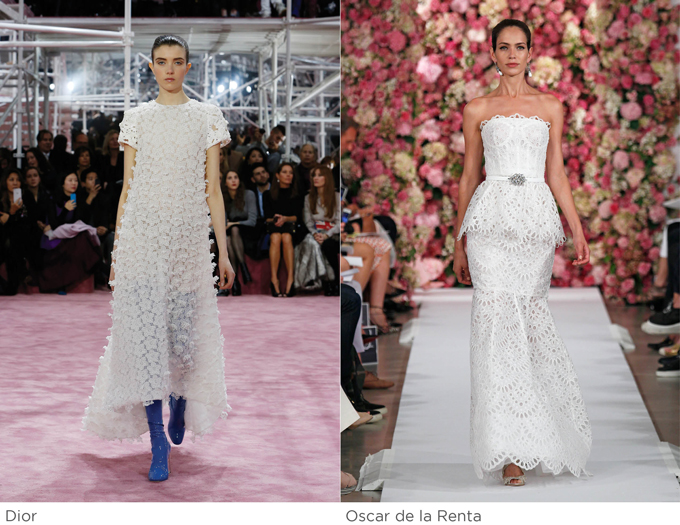
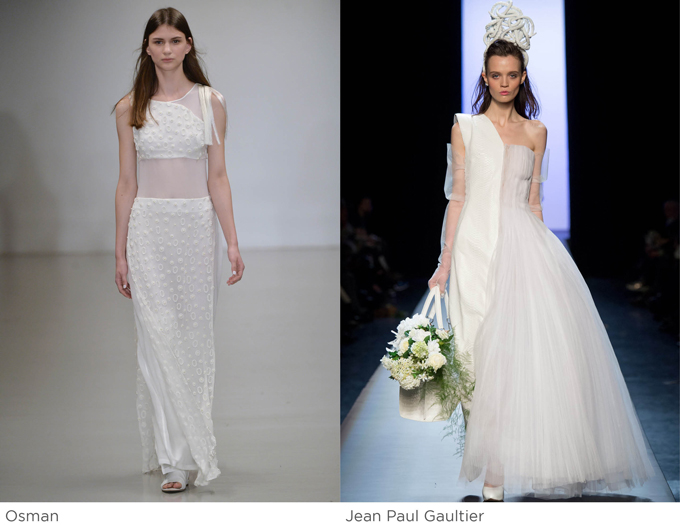
Bridal Gowns
Classic White

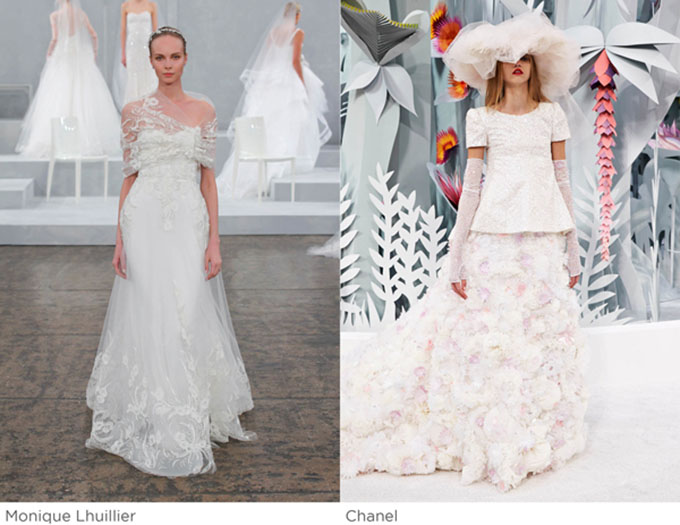
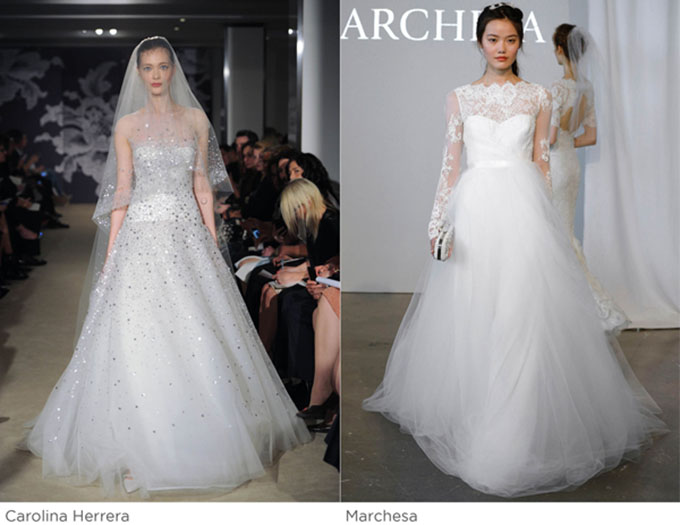
The Alternative
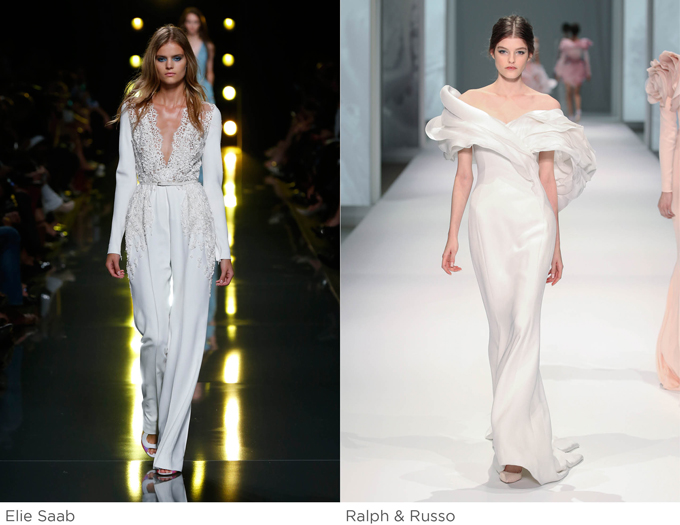
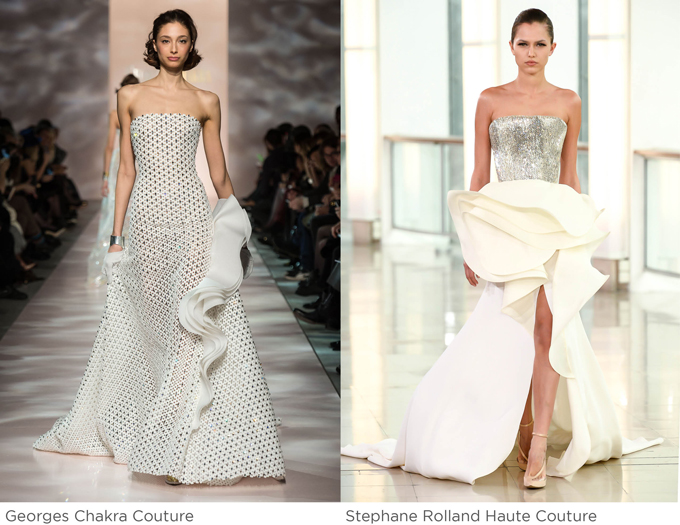
Ingie Paris launches its E-BOUTIQUE
Ingie Paris, the eponymous Parisian brand of Ingie Chalhoub, opens her E-boutique on www.ingieparis.com
Current collections will be available on the e-shop with delivery available worldwide , which allows women to receive cosmopolitan glamorous and sophisticated pieces fit for the Ingie Paris clientele. The E-boutique website is currently in English, Arabic, Russian and French. By launching an E- shop, Ingie Paris wants to expand around the world while maintaining a privileged relationship with its customers.
LANVIN FARIDA CRYSTAL JEWELS
The jewelry range LANVIN FARIDA offers an ultra-modern view of the legendary talismans cherished by Moroccan nomads. Gypsum cabochons made from semi-precious stones, rock crystal or smoked quartz are set in metal cages with a graphic and industrial accent. This crystal delivers a highly visual effect to the charismatic woman wearing it, exalted by its powerful vibrations.
As a pendant or choker attached by cords, this new magnetic line also consists of impressive rings for urban adventurers.
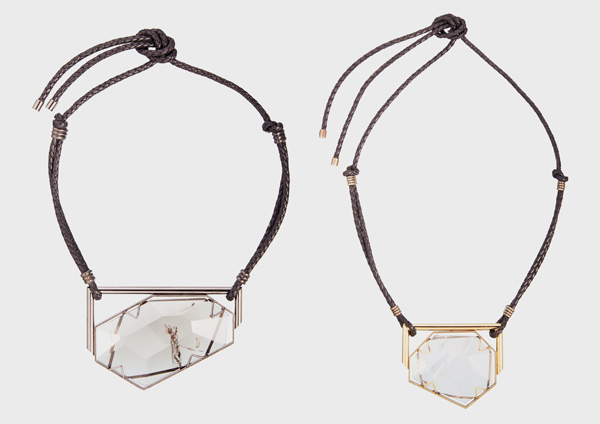
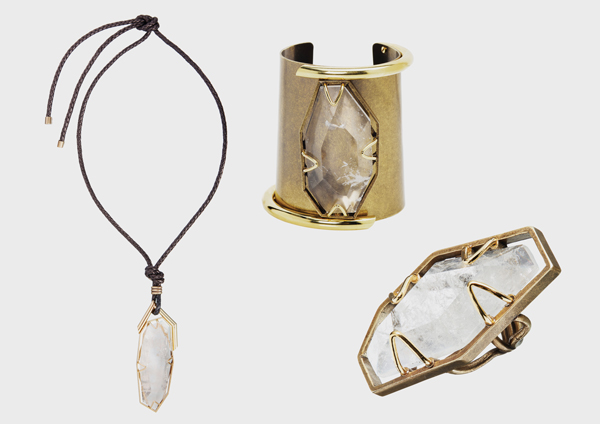 The Lanvin Farida Crystal Jewels Winter 2015 will be available in Lanvin Boutiques and Points of Sale across the Middle East starting August 2015
Celebrities at the Coach Women’s SS16 Fashion Show
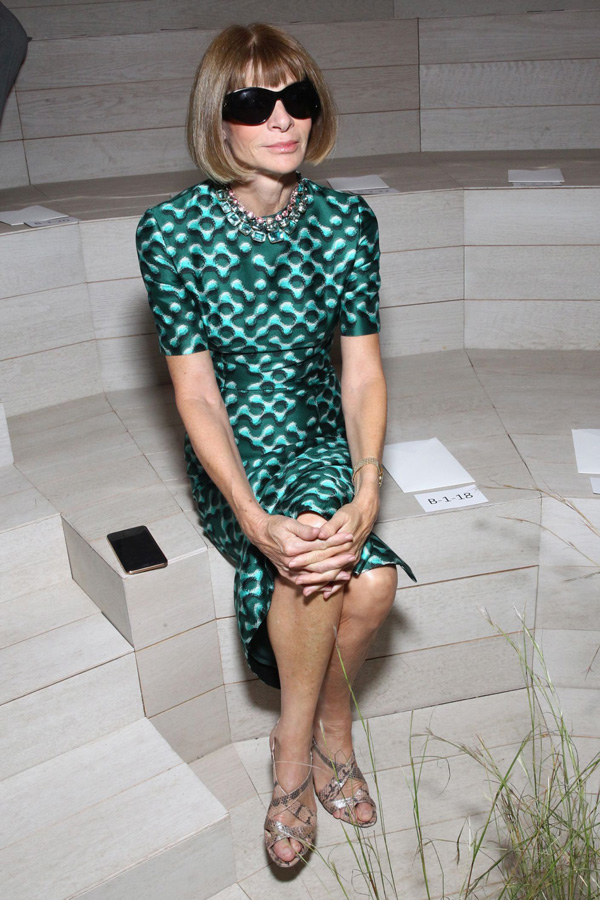 Anna Wintour wearing Coach
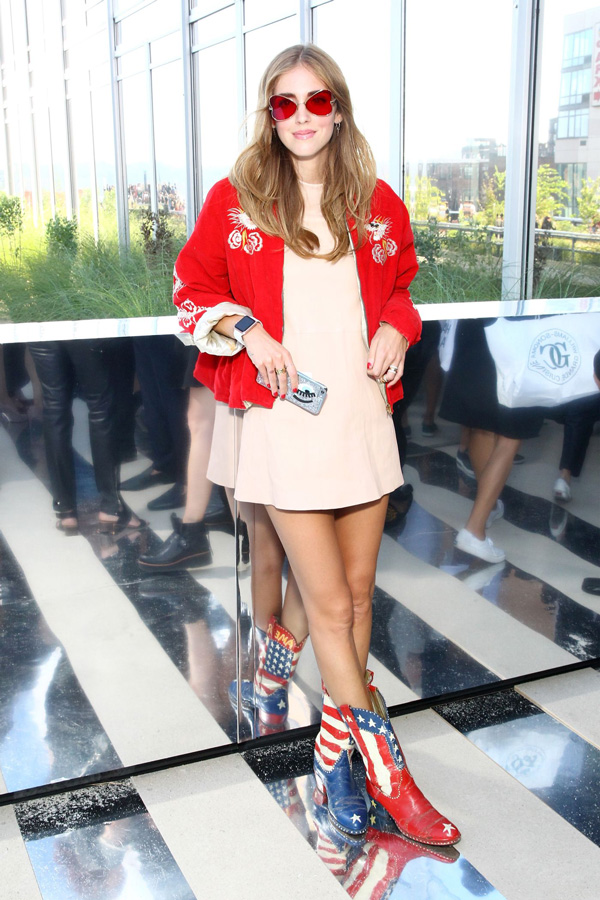 Chiara Ferragni wearing Coach
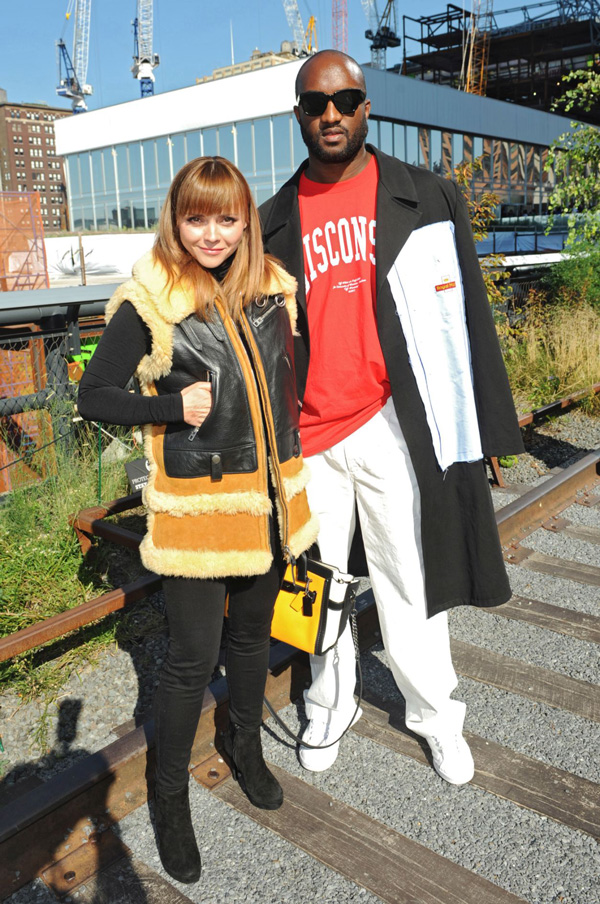 Christina Ricci & Virgil Abloh wearing Coach
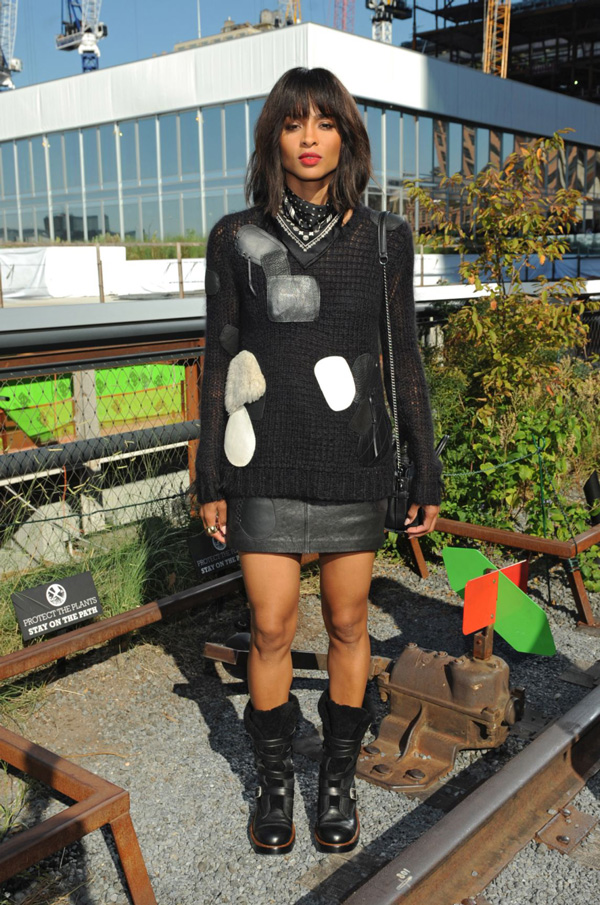 Ciara wearing Coach
 Chloe Grace Moretz , Kiernan Shipka, Sydney Sierota, & Harley Viera – Newton wearing Coach
 Yuna Zarai & Sheena Liam wearing Coach
 Zoe Kravitz wearing Coach
NEW DYNAMIC DESIGN AND EFFICIENCY BOOST FOR LAND ROVER DISCOVERY SPORT

Discovery Sport Dynamic makes global debut at Frankfurt Motor Show
Unique design accents, details and colours set vehicle apart from standard model
Increased breadth of choice for customers with launch of efficient ‘E-Capability’ eD4 derivative offering 123g/km CO 2
New technologies including All Terrain Progress Control (ATPC) and Gesture Tailgate strengthen Land Rover Discovery Sport’s renowned capability and versatility
Land Rover has further enhanced the visual appeal of its latest premium, compact SUV with the launch of the Discovery Sport Dynamic at the 2015 Frankfurt Motor Show.
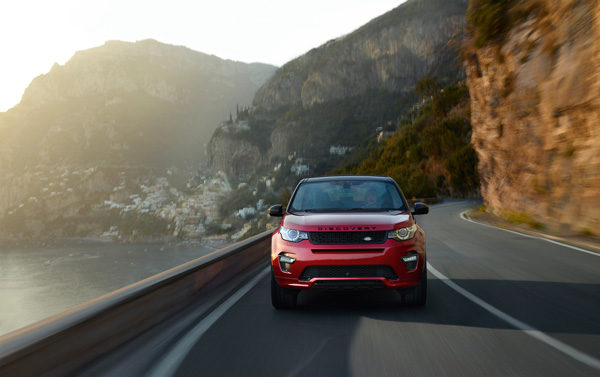
Striking design
The Discovery Sport Dynamic features a number of exterior enhancements, including Narvik Black exterior details, body-coloured mouldings and door claddings and the choice of a unique new 19” wheel design in Satin Dark Grey, or a 20” Gloss Black wheel. Combined with new interior colours and detailing, the new Dynamic design option creates a powerful and striking impression.
Gerry McGovern, Land Rover Design Director and Chief Creative Officer said: “The Discovery Sport Dynamic has been created to heighten the design appeal of the Discovery Sport. Gloss black is a key accent colour differentiator on the exterior, while the use of body coloured bumpers and door claddings emphasise its on-road, sporty presence. With the launch of the Discovery Sport Dynamic, we are offering our customers greater choice in the look and feel of their vehicle.”
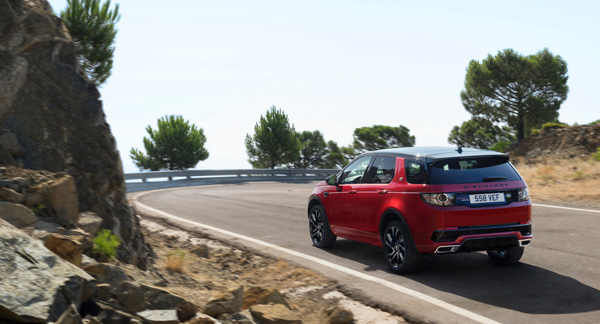
All-terrain capability
The capability of the Discovery Sport is heightened by the introduction of All Terrain Progress Control (ATPC) for 2016. ATPC is an advanced system that enables drivers to set and maintain a steady speed in off-road conditions. Developed by Land Rover’s industry-leading all-terrain specialists, ATPC functions similarly to a cruise control system, operational between 2km/h and 30km/h. The system adapts the vehicle’s behaviour according to the terrain, allowing even novice users the control of an expert off-road driver.
ATPC also features a dedicated Launch feature, allowing the vehicle to pull away smoothly and easily, even on problematic low-friction surfaces like ice, snow or wet grass.
Supplementing the Discovery Sport’s large and varied suite of technologies is a new feature called Gesture Tailgate. This provides the user with the ability to open and close the powered tailgate by means of a kick gesture, enabling the user hands-free access to the load space.
E-Capability
To help customers identify the most efficient derivative, Land Rover has introduced ‘E-Capability’ to Discovery Sport. Models that deliver the best possible CO2 for each variant will be recognisable with a blue SPORT badge at the rear of the vehicle.
The Discovery Sport E-Capability eD4 produces 123g/km CO2. The two-wheel drive variant, which features the proven 150PS Ingenium Diesel engine, offers improvements in fuel consumption and further efficiency compared to the four-wheel drive model, making it a particularly desirable option for fleet and business customers.
The Discovery Sport, the first member of Land Rover’s new Discovery family, has enjoyed a highly successful launch, with sales reaching nearly 30,000 in the first half of 2015.
a chat with Dr. Youngshin-Kim at The Salama bint Hamdan Al Nahyan Foundation’s talk on bullying
Young Shin Kim, M.D. is a psychiatrist and an epidemiologist, focusing on the research of the distribution and etiology of the childhood onset developmental disorders such as autism spectrum disorders (ASD) and disruptive behavioral disorders, including exploration of the prevalence, incidence and genetic and gene-environmental interactions of those conditions. Dr. Kim is currently an Assistant Professor in the Child Study Center at Yale University, an Associate Professor at the Dept. of Psychiatry at University of California, San Francisco and the Director of The Center for Autism Spectrum Disorders(ASD) and Neurodevelopmental Disorders (NDDs) Last year, she received Obama’s early career scientist award for her research and work in Autism. She was recently invited by The Salama bint Hamdan Al Nahyan Foundation to speak on the particular topic of Bullying Experience in Youth. The foundation develops, supports and funds strategic initiatives in the areas of Arts, Culture & Heritage, Education, and Health. It holds public learning seminars and has an Early Childhood Development Program, which is comprised of a series of engaging parenting talks and classes offered by world leaders in Early Childhood Development.

Tell us about the importance of raising awareness on the topic of bullying. How and why has the level of awareness on this strand of Early Childhood Development intensified over the past decade?
It used to be a widespread belief that bullying is common, benign and a “normal” part of a child’s experience. Some people have incorrectly suggested that children who learn to manage bullying will have enhanced character and no adverse consequences. This is not true and research in the last 3 to 4 decades has suggested so. Here are some important points to note on bullying:
Bullying is a developmental toxin – it disrupts development for all who are involved.
There is cumulating evidence that compared to children who have not experienced bullying, children involved with bullying have an increased risk for adverse psychosocial outcomes including school absenteeism, depression, suicide, and future altercations with the law.
Bullying behaviors seems to be an antecedent of more serious youth violence
Bullying is a modifiable condition that can make a significant amount of positive changes in the lives of children.
In short, bullying is NOT a normal behavior and it creates problems for all children involved: victims, perpetrators and bystanders. Therefore, it is critically important to raise awareness about bullying among parents and teachers, as well as children so that we can prevent it from happening in the future.
What are some signs to look out for in your child when he/she is experiencing bullying?
Children are often reluctant to talk about their bullying experiences with grown-ups because of the following reasons:
They may feel embarrassed.
They think it is their fault.
They think that opening up to grown-ups violates a principle of not sharing peer related information with adults – in other words, “tattling” or “snitching.”
However, there are some behavioral indicators suggesting that a child may be bullied by his/her peers:
Sudden onset of school phobia or school refusal.
Unexplained somatic symptoms including headaches, stomach ache, back ache, dizziness, etc…
Unexplained decline of school performance.
Changes in mood, onset of anxiety, difficulty sleeping and/or concentrating, and avoid conversation with grown-ups.
Less time spent with peers and friends.
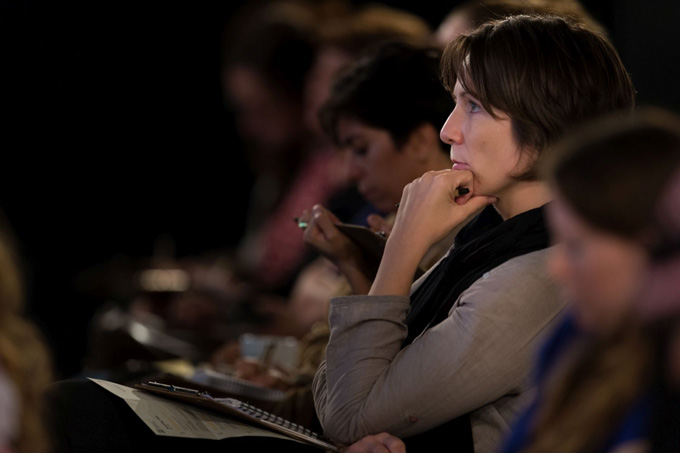
Is it common to seek help if one’s child is the one perpetrating this type of action towards others?
While it may differ by culture in terms of help-seeking patterns, it is wise to seek help for your child if they continue to bully other children despite of your (parents and/or teachers) best efforts to stop him/her from doing it. The benefit of doing so is protecting both the victim and the bully him/herself who is also at risk of having suicidal intentions, aggressive behaviour, legal problems and interpersonal failures in adulthood. In the case of persistent bullying behaviors, it is likely that bullying is not the only problems that the child is facing. Other issues may include impulsivity, attention problems, learning difficulties, psychiatric illnesses, etc…
What are some different methods of bullying? Are they limited to being physical and/or verbal?
Bullying takes various forms, including:
Exclusion: Forced isolation from a social group, including being left out of games and activities during recess or lunchtime, being ignored in social settings, and/or refusing to talk to or answer the victim.
Verbal abuse: Calling names, speaking ill of victims, threatening the victim verbally.
Physical abuse: Causing other pain, suffering or intimidation, damaging or injuring persons or property.
Coercion: Forcing others to do work for someone else, such as homework or carrying bags; snatching of items such as school supplies and snacks and forcing students to give up money or other possessions.
With recent advances in information technology, bullying has added cyberspace to the schoolyard and neighborhood as sites for bullying
Cyberbullying includes bullying behavior among students encompassing a wide array of on-line activities, including using the internet, cell phones, text messages and other electronic means to spread rumors, support social exclusion, share insulting or humiliating data or information and otherwise cause pain and suffering using electronic media.
Bullying may be “direct” or “indirect” with respect to the victim. Direct, or overt, bullying includes physical and verbal aggression, such as kicking, hitting, threatening, name-calling, and insulting. Indirect, or covert/relational bullying includes social exclusion/isolation such as ignoring, “cliques,” rumor-mongering, insulting, and humiliating with the spread of embarrassing information about an individual.
What are some of the general long-term effects they can have on a child? What about the short term effects?
In the short-term, victims are likely to suffer anxiety, depression, a fear of going to school, decreased educational outcomes, eating problems, suicidal ideations and behaviors, and unexplained somatic symptoms. Perpetrators and victim-perpetrators are also at a higher risk for future delinquency, aggression problems and suicidal behaviors and ideations.
In the long run, victims and perpetrators are at an increased risk for the later development of serious and dangerous adverse outcomes, including psychiatric illness, daily smoking, alcohol abuse, carrying and using weapons, eating disorders, and runaway episodes. Victims are also at higher rates of depression, social phobia, agoraphobia and poor self-esteem in their adulthood.
Other risks for perpetrators include criminal behavior by the time they reach their mid-twenties, with a majority having at least one criminal conviction and more than one-third having multiple convictions. They tend to fail to hold jobs, and maintain meaningful interpersonal relationships.
What are some primary steps that you advise institutions to take when it comes to its prevention?
In order to prevent and take control of bullying, there are several steps that need to be executed:
Make bullying a public issue for everyone in the community (the ENTIRE school, for example). Everyone must know what is bullying, where to find it and that they have a role in identifying and stopping bullying.
Define bullying and make it clear that there will be zero tolerance for bullying by anyone at any time.
Make it clear that it is everyone’s responsibility to manage bullying behaviors, starting with your own.
Define the response to bullying should it occur:
Children should ask perpetrators to stop and notify adults immediately.
Adults should be vigilant and demand that all bullying stop when it is observed.
Establish “safety zones” where children can go and be protected from bullying and where bullies are not welcome.
Label the bullying behavior for the perpetrator and insist that he or she stop – it is not an option.
Include all children and adults (including parents) in the response.
If the perpetrator cannot stop, he/she should be referred for evaluation.
Tell us about your talk at the Salama Bint Hamdan Al Nahyan Foundation on Bullying experience? What was to be the outcome from this talk and what can you tell us about the Foundation and its work?
It is both an honour and a privilege to be invited by Salama Bint Hamdan Al Nahyan Foundation and have the opportunity to share what I have learned about children who experience bullying. The foundation’s mission is to invest in the future of the United Arab Emirates by investing in its people, by developing and supporting strategic initiatives in the areas of education; arts, culture, heritage; and health. My talk is one of its ongoing public awareness and education efforts about healthy child development. I hope that my talk brought parents, teachers and community leaders together to help our children to be healthy and happy by providing them with a safe environment where they do not experience or worry about bullying.
Interviewed by Houry Seukunian
Roger Vivier Fall – Winter 2015-16 Biker Boots
There is a new woman at Roger Vivier. Vivier icons mix up the genders. Luxury and creativity play their best cards with an ultra-feminine approach on masculine shoes. The emblematic Buckle sits atop a rock’n’roll biker’s boot. Flat, certainly, but still very feminine.
Dr. Tatiana S. Rowson shares her knowledge on the process of retirement and the time leading up to it
Career and transitions

“Like any life transition, retirement will impact your identity and therefore affect your self-esteem and sense of self. If you plan ahead, you get prepared to smoothly bridge one life stage to the other.”
Dr. Tatiana S. Rowson is a Business Psychologist, with a particular expertise in the areas of Executive Assessment, Leadership Development & Personal Effectiveness Coaching. She is also specialised in coaching individuals to effectively manage their career-related transitions such as career change, promotion, retirement, redundancy and women-returners amongst others. Dr. Rowson was awarded a Ph.D. in the UK for her research exploring the psychological aspects of the transition and adjustment to retirement. Derived from the extensive research that she has conducted in her career, she has associated retirement with the “fear of boredom,” as retirees sometimes fail to fill the void they tend to encounter. In the below interview, we discuss concerns over a possible “loss of identity,” especially if the individual’s professional identity was strong and the loss of “status and prestige,” which she notes is particularly true for people retiring from companies that have a strong and reputable name. Dr. Rowson also speaks to us about “financial planning,” and the importance of being prepared to ensure a smooth transition.
Can you name some of the causes that are related to the fears mentioned above?
I would say it’s a fear of the unknown, but it is a bit more than that. As we age, we develop concepts about ourselves, and these concepts form our identity. The way we develop the concepts is through reviewing the experiences we had through external clues, such as things we have/achieved or feedback from others, or internal clues, such as how we feel about a certain experience. When one reaches retirement, a number of blocks used to construct our sense of selves, are removed. To say the least, some of these blocks are challenged. Consciously or unconsciously, people worry about what is going to be left, once they are made to move out of their comfort zone. Some people would be in complete denial and embrace retirement without any planning. Other people, understanding that their goals would need to be inevitably reevaluated, plan the bridges necessary to smooth the transition to retirement. One of the ways to build these bridges, is to reevaluate what aspects/goals are important to keep, for the sake of maintaining a minimum sense of self, and plan how these aspects can be brought into the retirement process.
How different do you see things in the UAE versus the Western World?
In the UAE, there are a lot of peculiarities to retirement. As most of the population is comprised of expatriates, retirement does not only mean a change in the professional identity, it also means that it will be time to leave the country. For many, especially long timers, this is the greatest shock, because their ‘home country’ doesn’t feel like ‘home’ anymore. The reality is, successful adjustment to retirement is dependent on the equilibrium between continuities and discontinuities people experience following retirement.
Are there specific behavioral changes that you see in someone who is nearing retirement?
The only change that can be commonly noted is either denial or a sense of extreme excitement as if retirement is an extended holiday.

What are the benefits of planning for this date?
Planning is extremely important, more than people tend to believe. Like any life transition, retirement will impact your identity and therefore affect your self-esteem and sense of self. If you plan ahead, you get prepared to smoothly bridge one life stage to the other. Your plan needs not be set-in-stone, but should rather be followed with a certain level of flexibility. To have a plan, is to have a few ways to start your ‘new you’, and having a starting point makes a huge difference in finding new goals and challenges. Obviously, life is full of surprises, and a lot can change – but by planning you inevitably have to examine different options and possibilities. This exercise of going through the options opens up a number of possibilities – that leads to more possible strategies.
What types of personalities have a harder time coping with this transition?
Different personalities have different coping strategies. The key is not on personality, but how many aspects of life people develop throughout adulthood, especially in middle life. The more interests you have, the more avenues you can take following retirement. People who are too single minded about work, struggle with retirement. Not that there’s no work in retirement, things changed a lot from previous generations – a great percentage of people retire and continue to work. But the work is not necessarily structured the same way, so change and adjustment are inevitable.
Is it possible to compare it to other important life transitions? If so, tell us more about this.
Any process of transition in life requires the same skills and processes. We have to let go of something we know and embrace something new, some things we can keep, others we can’t. Some things we are glad to leave behind, but when we get to the other side of the transition we find that life can be equally satisfying, however in a different way. Mothers and fathers out there would be able to relate to this very well, life before parenthood and after – there is so much change that you have to realign your identity.
What are some common mistakes people make during their work-life that makes them struggle during retirement?
One of the biggest mistakes people make is to neglect other aspects of life, excluding work. Health, family, community and leisure are very important aspects of life and also great contributors to our identity and self-esteem. So, my message to everyone who is in their career peak, is to find time for yourself and others. When you reach retirement and moreover gain the wisdom from ageing, you realize that many things we feel so strongly about are of little consequence when one looks at the big picture
We have spoken a lot about negative points, however, can you tell us some of the positive psychological benefits that retirement or the years leading up to it, may have on men specifically?
This is an interesting question. Although men have a more obvious connection to their work identity (traditionally women play multiple social roles), research shows that women tend to suffer more as a consequence of retirement. For men, the time before retirement tends to be worse than the time after. The anticipation, the fear of the unknown usually disappears once the transition to retirement is in progress. Most of the research emphasizes preparation, as the key to successful transition. (It is important to note many start a new career after retirement – so retirement does not necessarily mean relinquish a completely a professional related identity). However, once individuals are retired, they tend to report feeling as content, or more content with life than before retirement. Once people have the opportunity to step down from the ‘treadmill’ and experience a more paced life, they realize how stressful the world of full-time work can be. Many report feeling liberated, or freer to choose whether to work or not.
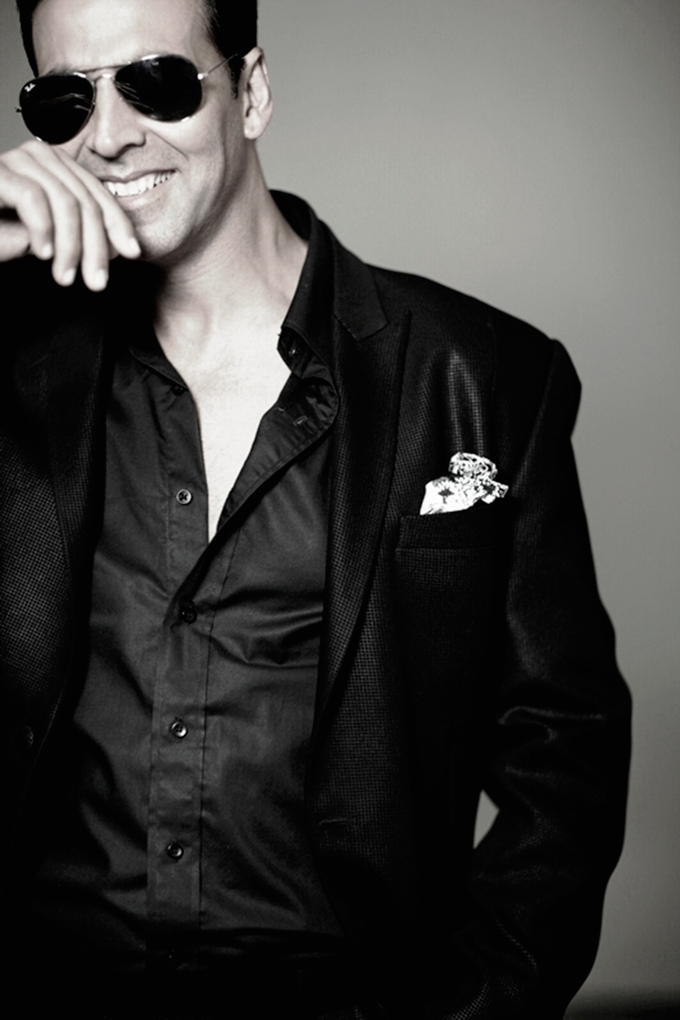
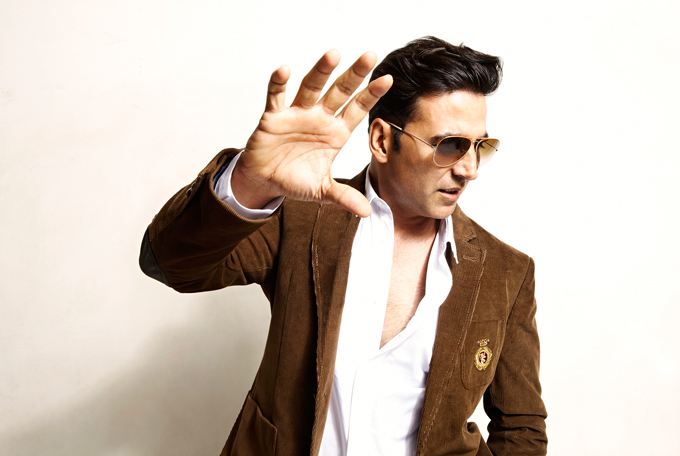
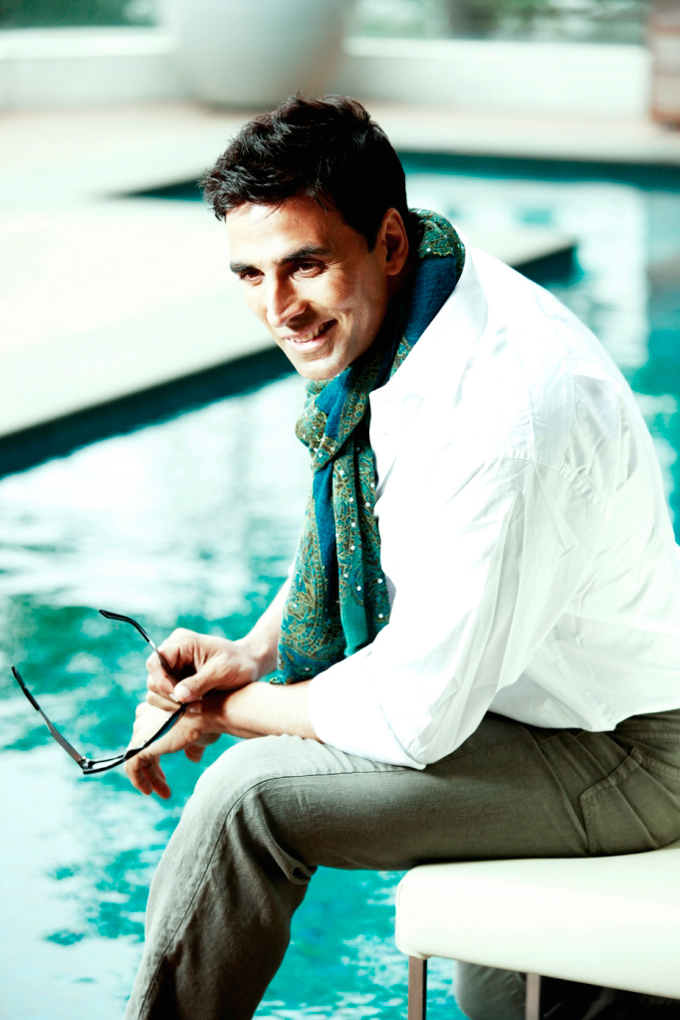
Akshay Kumar, Bollywood actor opens up on his acting career & lifestyle
Starting his career in the 1990s and with more than 120 films under his belt, his career span reflects a myriad of roles and genres extending to action, drama, thriller, comedy and romance. Akshay Kumar personifies the true essence of craftsmanship in his on-screen performances which have been critically acclaimed. The actor plays a dynamic role in the progression of Indian cinema. He is also an active philanthropist, supporting initiatives such as the Asian Heart Institute, the United Nations campaign to curb global human trafficking, HIV/AIDS awareness in rural India with actress Ashley Judd and his role as ambassador for the Special Olympics.
Akshay Kumar embodies the quintessence of class, verve and finesse coupled with style and performance. He personifies trust, dynamism and extreme entrepreneurialism, accentuated by his self-made persona.

On Film
How did you get into the Bollywood film industry? Did you always want to be an actor?
It was completely by chance that I came into the film industry. Never had it been part of my life plan – I suppose I never thought that it would ever be a reality for me. But one fine day after returning from Bangkok, where I trained in Martial Arts, one of my students put me forward for modelling. After a couple of months of walking the ramp, I was spotted on the streets by a make-up Dada (artist) who showed me to a film director thinking I had potential, by God’s Grace he snapped me up for my debut film, Saugandh. The response I got was so unanticipated and my film career catapulted from there. It has all been a total blessing. That is why I believe when you do good things, good things will come of it!!
To get to where you are today, what challenges did you face and how did you overcome them?
There have been quite a few along the way, but that’s what makes the journey so epic. The first challenge, often the hardest, is getting the roles, especially as a young actor. That’s often overcome by working hard to be in the right place at the right time, you have to make your luck! I’ve also learnt how to deal with some of the films that didn’t shine as well as I’d hoped. For some, a bad film can really get you down and when I was younger, it hit me harder. After a while I learnt that no-one can or should ever expect to have a 100% success rate. That’s life! Thankfully I have a tremendous wife who is the true rock in my life. Twinkle is a huge support system for me, she was born into this industry and she understands all its trials and tribulations.
How do you select your projects? What are the main factors that play a part in your decision making process?
Generally, I choose a project simply based on what moves me, and which I believe will inspire, challenge and entertain the audience. As an actor you only have to focus on your character and playing it convincingly. You do what your director wants and you do it to the best of your ability, but as a producer it’s the whole film that you have to look after and it’s a big responsibility. Sometimes you just have to go with your gut instinct & make what makes you as a person as well as an actor happy & content. I’m not the kind of actor that only goes looking for huge blockbuster hits, I like to do things that make me laugh or cry, regardless of whether anyone else does.
A film that you’ve enjoyed working on the most?
I’m asked this question many times, but unfortunately it’s impossible to answer! There is absolutely no way I could choose one film as a favourite over the other. Each filming experience has been one to remember & I feel it would be criminal to give one film when they all mean something to me, they are all a piece of me!
Are you working on anything new at the moment? Tell us more.
I am currently promoting my new film ‘Baby’ which releases in theatres worldwide on Jan 23rd. I’m in full training & fight mode for my monsoon release of 2015 ‘Brothers’ with Siddharth Malhotra, a film that will rock you in the ring as well as in your home. Then I start shooting for my own production ‘Singh is Bling’ followed by the release of ‘Gabbar’ & the start of ‘Air Lift’ I literally have one hell of a year lined up, but I can’t tell you how ready I am for every single project, 24 years down the line & I still love my job.
What kind of roles do you enjoy most – action or comedy..? What other roles would you like to do?
My all-time favourite is action comedy like a Rowdy Rathore, it has something for everyone, laughter to make your grandma giggle, action to keep the boys entertained and the ladies in awe. I’d like to do more nasty roles. Most actors say that they want to play a villain because it is such a departure from their normal self. It is a transformation into a different world, a hero can’t be a hero every day, one needs to play the bad guy in order to become pure once again.
You are known for performing your own stunts. Tell us more about that decision and how do you prepare for the stunts?
I wouldn’t do this job if I couldn’t perform my own stunts, it’s the best bit about my job, I get to live every boy’s adrenaline dream, I jump off buildings, I get blown from explosive fires, I smash cars, shoot bad guys, flip off walls, fly through the air, jump out of planes, fight till my knuckles bleed. Who wouldn’t want to do that for a living? Don’t worry, I take all kinds of precautions, I control every ounce of safety on set, but I wouldn’t make anyone else stand in my shoes, I’m here to give my fans what they want, they pay to see their hero perform, so perform I shall…
Who are the three people you admire the most in the industry?
My father in law Rajesh Khanna has to be up there. He has been hugely influential in Bollywood and he’s helped define the industry. I had a great deal of respect for him even before I met Twinkle (his daughter & my wife) but over the years I’ve known him, I’ve seen first-hand how much of an amazing figure he is. Another classic Bollywood actor that I admire has to be Amitabh Bachchan. I think he’s been storming the charts for more than 40 years now!! I was so upset when he retired briefly in the 90s, but it was great news for the industry when he returned. Acting is in his blood and I’m sure he missed it! For any actor, Amitabh will be one of their favourites not only because of the amount he’s contributed, but his ability to inspire an entire generation of actors.
Highlight of your career?
The satisfaction I get from pleasing my fans with my films. They have supported me in the good and bad times and with the good and bad films. They have been my highlight and in a way they are my true shining light over these years. If it wasn’t for them I’d not be here answering your questions.
What do you love most about Indian Cinema?
Its diversity, vibrancy and ability to touch not only 1.2 billion people in India (nearly a quarter of the world’s population!) but a global audience. The industry celebrates its uniqueness and revels in it, without taking itself too seriously. The vibrancy and colour in Indian Cinema is by far the best in the world and it’s amazing to be a part of. I believe that the diversity of films really keeps the industry fresh which I think is why so many people stay in it their entire career! One day I can be having a action scene in an alley fighting an evil gang, another day I can be working on a music video with 50 dancers. There aren’t many jobs where you can act, dance and sing all in one day! There’s no industry like it and I wouldn’t do anything else!
What advice would you give to young aspiring actors?
Passion, perseverance, competition, the drive to excel and lots and lots of patience. The most important thing remains here that you keep getting continuous work; that is the only way to grow, and to keep yourself going. If you have no work and you are the most talented man in the world what’s the point? It’s all going to waste. Then of course when you get work, it depends on how professionally, with how much passion and with how much honesty do you do it. It is a mixed bag of everything; you can’t put a finger on one thing.
On Lifestyle
What are some of your other passions apart from acting?
I love to spend time with my family and my kids, the perfect way to unwind for me. My son is like my handbag, he comes with me everywhere, and he’s my body and soul. I’m also a sports and health fanatic, so I spend a lot of my time in the gym. I’m a lucky man that I have a wife that plans the best holidays & brings us all together in between everyone’s hectic schedules.
If you weren’t an actor, what would you be today?
If I wasn’t acting, I would be a Martial Arts teacher, or I would have joined the Army to further my skills as a man of India. I feel that I need to teach my son that he may have been born into luxury, but that every man and boy has to fight for their country at some point, we can’t just bank on others to do it for us.
Akshay – the philanthropist. How important is philanthropy to you?
I wasn’t born with a silver spoon in my mouth and like many of my colleagues and other professionals, we’ve had to work our damnedest to succeed and stay successful too. I’ve been incredibly lucky but there are far more people who aren’t as fortunate as I have been. Many of these people struggle to get hold of even the basic essentials that many of us take for granted. I feel truly blessed to have the opportunity to share a part of what I have achieved and earned with someone less fortunate that I. Everyone deserves a chance to prosper and sometimes you just need a little extra help to push you along your way.
What is your daily routine like?
I have quite a strict regime and I work out a lot… Going to the gym everyday early in the morning is essential for me; it keeps my mind clear and focused and my body in good shape. One trick that I would happily share with you when it comes to diet and being healthy, is cleanse your body and boost your metabolism. Start in the morning with hot limewater and have a light dinner at night. Your body is resting so it doesn’t need a big meal. Ideally try and have your dinner no later than 7pm. Soups, salads and vegetables are perfect for dinner. Carbs (rice & bread) are for the earlier meals so you can spend the day burning them off…. Every other hour of the day is spent on set filming, but my evenings are for family and family only!
Where do you go when you want to escape it all?
I love Goa. It’s very chilled out. Everyone knows me there and everyone says hi, without being intrusive. It’s the only place in the country where I can roam around and enjoy myself. My family and I travel the world, but there’s no place like our little Portuguese cottage in Goa, we spend every Christmas there and have the best family memories.
When it comes to fashion – describe your personal style to us.
I wouldn’t go so far as to say I’m edgy, but I certainly like to keep it fresh. If there’s something new and a little bit different that stands out, it’s for me! I feel that your clothes need to express who you are and I try to do that when picking out a wardrobe. As long as I like what I wear, then I think that confidence comes across. It doesn’t always work, but when it does and you see a bunch of college kids copying your style it makes you want to keep giving them something new to try.
The last fashion item you bought and loved?
I took my family to Singapore for Diwali and bought myself a very nice watch. You’ll see it on my wrist sometime soon!
What is the toughest part about being Akshay – the celebrity?
I must confess that sometimes it is difficult not seeing my family while shooting, especially abroad, but as a rule, I always take my Sundays off to ensure I spend some quality time with my wife, my son Aarav and daughter Nitara.
Since this is our Men’s Portfolio – we have to ask – what makes a man a man, according to you?
It’s a combination of masculinity and sensitivity. In life it is important to be able to defend yourself and protect those closest to you, but at the same time you must also be sensitive and respectful to all human beings and living creatures in this world. There’s no point trying to fight your way out of every situation, you need to think. That makes a real man!
Best advice you’ve ever received?
To be a good actor you need to be a good human being!
The biggest advice/tip you’d like to give to a&e readers?
Take every opportunity you get very seriously and work very, very hard. Opportunities can come at the most unexpected time. Therefore sincerity towards your work is paramount. And remember this life won’t last forever… I’m grateful to all of my fans for their continuous love and support, I am truly honoured and I hope I can continue to give you guys the best of me.
Nikki Beach Hotels & Resorts set to open its first hotel property in the Middle East
To add to its growing portfolio with the Fall 2015 opening of Nikki Beach Resort & Spa Dubai. The $100 million project to be the global luxury lifestyle & hospitality brand’s first hotel property to open in the Middle East

JACK PENROD
Nikki Beach Hotels & Resorts, a division of Nikki Beach Worldwide, continues its global expansion by announcing its plans to open a new property in Dubai, United Arab Emirates (UAE) in partnership with Meraas Holding, Dubai’s leading development company. Originally revealed by Jack Penrod (founder & owner of Nikki Beach Worldwide) on CNN International’s Quest Means Business September 30th live broadcast, this will be the brand’s first property to open in the Middle East. The 52,000 square meter resort features a white sandy beachfront of 400 meters and will include hotel rooms & suites, villas, branded residences, 3 restaurants and an Ultra VIP lounge, Nikki Spa by ESPA, Tone Fitness Center, the brand’s world-renowned Beach Club and unique top line amenities.




“We have been waiting for the right time, location and partners to expand our brand in Dubai and after 10 years of waiting, I am happy to announce that we have finally found the perfect location and the perfect partners (Meraas Holding) to open Nikki Beach in Dubai.” said Jack Penrod, founder & owner of Nikki Beach Worldwide. “We are proud to partner up with Meraas and share a common vision to make of this beachfront boutique resort a new benchmark for the luxury lifestyle & hospitality industry” adds Jihad El Khoury, Co-Founder & CEO of Nikki Beach Hotel & Resorts EMEA.
The hotel at Nikki Beach Resort & Spa Dubai will encompass a total of 132 units including 117 rooms & suites, 14 Ultra Beach Villas (1 & 2 bedrooms) and one 1,350 square meter 3 bedroom Ultimate Beach Villa. The villas will feature private gardens and pools while all hotel rooms & suites will offer stunning views of the Persian Gulf and Dubai cityscape. The resort will also include 61 exclusive branded residences with a mix of 1, 2, 3 and 4 bedroom residences and townhouses and a breathtaking 850 square meters penthouse. Guests will be able to indulge in spa treatments and relaxation services at the Nikki Spa by ESPA and work out at Tone, a state-of-the-art gym with classes, personal training services, a tennis court and a diversity of water sport activities. Located within the heart of the property will be Café Nikki, featuring an open kitchen and contemporary international style cuisine made with fresh & organic ingredients. The Nikki Beach Restaurant & Beach Club will be modeled after the same stylish, contemporary look and feel as all of the brand’s locations around the world with a pool surrounded by plush, all-white sun beds. Guests will be able to spend their days and evenings indulging in refreshing cocktails, champagne and an extensive menu of delectable dishes featuring signature tastes and spices representative of all the countries Nikki Beach is located across the globe. Located on the 2nd floor of the main beach club & restaurant building will be an ultra-VIP lounge featuring a caviar & champagne bar. The resort will also boast a California style specialty seafood restaurant located on the beach.
“In line with Dubai’s Tourism Vision 2020, Dubai needs to have close to 160,000 hotel rooms to host the targeted numbers of visitors anticipated by the year 2020. With this as a key driver, Meraas is expanding its portfolio in the hospitality industry, developing projects that will not only add to the number of rooms in Dubai but also bring in a new dimension of luxury and experience to the hospitality industry in the country. We are happy to partner with Nikki Beach and Resorts to introduce a new concept that will enrich the offering in Dubai,” said Cherif Hosny, Chief Hospitality Officer, Meraas Holding.
Inspired by the design vision of Jack Penrod, Nikki Beach Resort & Spa Dubai has been designed in collaboration with DSA Architects International with interiors by Gatserelia Design. The luxurious 5 star resort will be conveniently located on Pearl Jumeira, a reclaimed island positioned to become an elite address for beachfront peninsula living, catering to individuals who enjoy the seclusion of an island, yet remain connected to the hustle of the city. Pearl Jumeira is just minutes away from downtown Dubai and the business & financial districts and only 15 minutes away from Dubai International Airport.
The global luxury lifestyle & hospitality brand currently has 12 locations around the world.
CELEBRITies in SAINT LAURENT
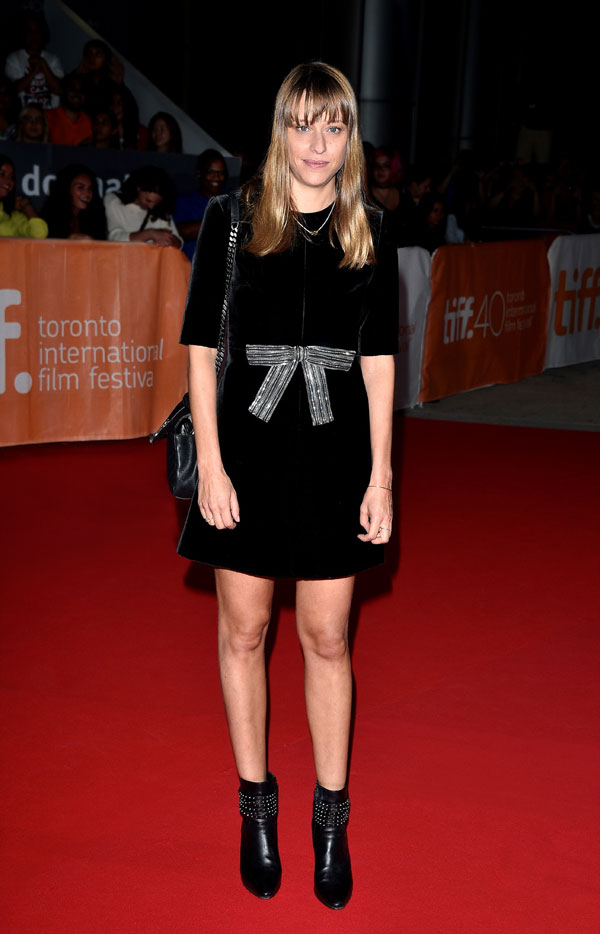
ALICE WINOCOUR IN SAINT LAURENT
TORONTO, CANADA Date: 09 17 2015
DISORDER FILM PREMIERE
ROBE BABYDOLL CEINTURE NOEUD
BRODÉ EN VELOURS SOIE ET VISCOSE
BOTTINE FRENCH
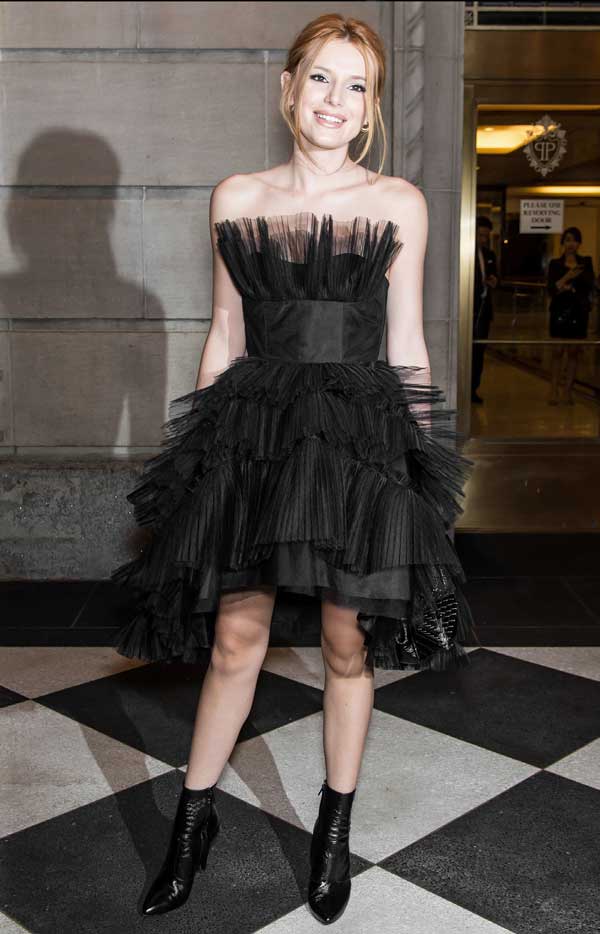
BELLA THORNE IN SAINT LAURENT
NEW YORK Date: 09 16 2015
HARPER’S BAZAAR ICONS EVENT
THE PLAZA HOTEL
ROBE LULU TULLE PLISSÉ NOIR
BOTTINE LACET FETISH 105 CUIR
BRILLANT NOIR
SAC BABY PUNK CHAÎNE
MONOGRAMME SAINT LAURENT CUIR
MATELASSÉ NOIR

JESSICA CHASTAIN IN SAINT LAURENT
NEW YORK, NY Date: 09 18 2015
BABY SAC DE JOUR EN CUIR GRAINÉ NOIR

KEITH RICHARDS IN SAINT LAURENT
TORONTO, CA Date: 09 17 2015
‘KEITH RICHARDS : UNDER THE INFLUENCE’
PHOTOCALL
VESTE COURTE 2 BOUTONS COL CRANTÉ
PYTHON SOLEADO

LILY DONALDSON IN SAINT LAURENT
NEW YORK Date: 09 16 2015
HARPER’S BAZAAR ICONS EVENT
JUMPSUIT TUX COL CRANTÉ SATIN
GABARDINE LÉGÈRE
CEINTURE 3 PASSANTS CUIR NOIR
ET LAITON DORÉ
THE LANVIN SHIRTS AND NEW COLARS
The clothes may well be of a high quality, yet there is no trace of soporific classicism in the Lanvin Men’s Winter 2015 collection. Anything goes for shirts and collars according to Lucas Ossendrijver, who draws on the fashion house’s expertise. This traditional masculine garment embraces boundless modernity with its larger set of proportions with double mao collars, sometimes shifted away from the necklines. Open and unbuttoned, turned up, revealing a mesh t-shirt or a roll-neck sweater, they shake up the codes of the conventional shirt. Prints play on the collection’s inspirations: tie-dye, geometric abstraction or neo-camouflage.
The house’s timeless signature gros grain collar is no longer presented. Since the first collections, it has made its presence known in the Lanvin dressing room and now it is available in a broad spectrum of colourful versions. The Made-to-Measure Lanvin Menswear thus offers shirts tailored to the customer and the collar colour in a choice of gros grain.
The Men’s Winter 2015 collection will be available in Lanvin Boutiques and Points of Sale across the Middle East starting August 2015
CELEBRITIES AT THE VERSUS VERSACE SPRING SUMMER 2016 RUNWAY SHOW – LONDON, ENGLAND
ALESSANDRA AMBROSIO WEARING MESSIKA PARIS – NY FASHION WEEK


Etourdissant Cartier
Earlier in July, at Domaine des Oliviers,a villa in Cap d’Antibes, South of France, Cartier presented its new high jewellery collection Etourdissant, where many of the of the maison’s exquisite fine jewellery pieces were displayed across the many rooms. a&e was among the privileged invitees to discover Etourdissant and many unique creations from their archival collections.
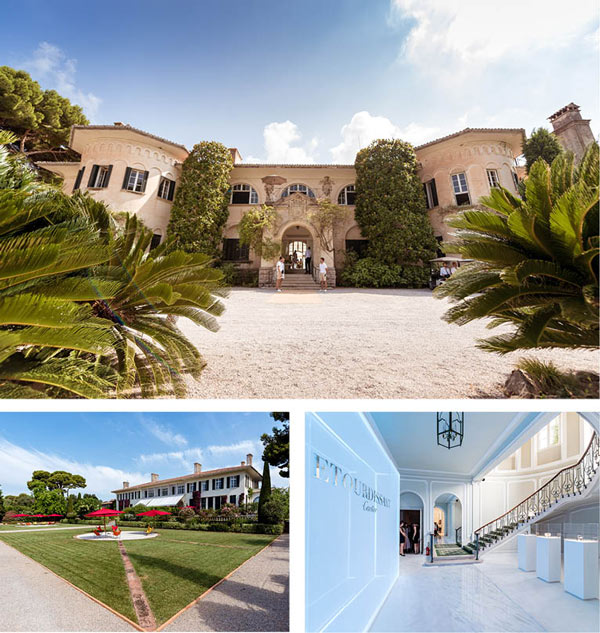
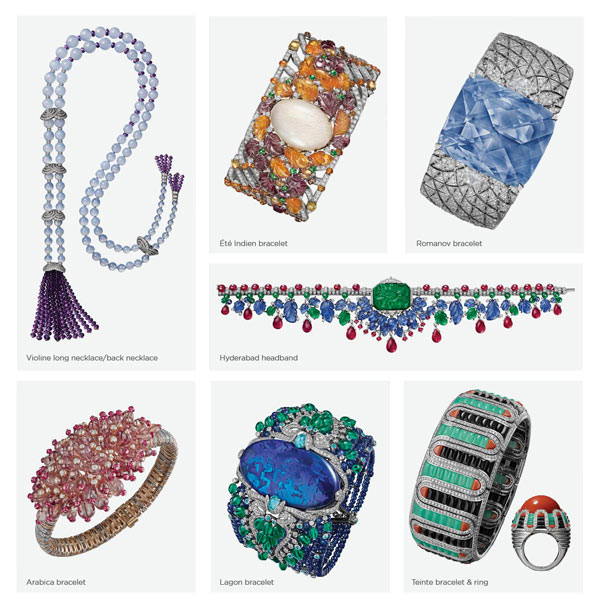
The most dazzling and beautiful jewels of the Etourdissant were inspired by the Riviera. The collection takes shape between light and shadow… The most precious gemstones: diamonds, sapphires, emeralds, rubies, opals, corals, tanzanites, garnets and chrysoprases, all chosen for the richness of their material and their unique way of transforming the light. I must say; it was a breathtaking collection and I found it hard to favour pieces among others but I wouldn’t do justice to the Hyderabad headband: the piece that can be worn as a headband, a bracelet or a choker and the Romanov Bracelet that featured a stunning 197.80-carat Ceylon sapphire, if I didn’t say that they were not the show stoppers.
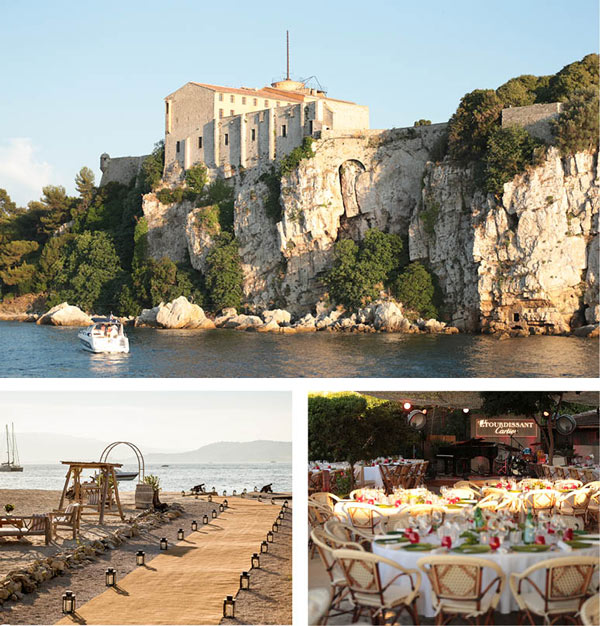
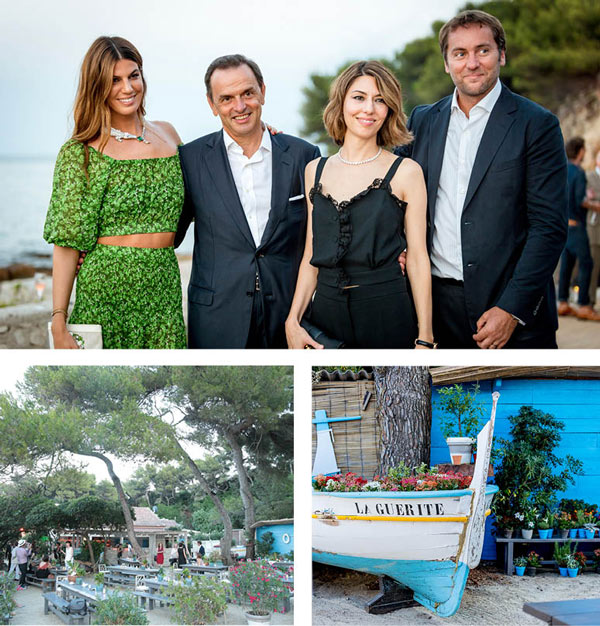
To celebrate Etourdissant, Cartier held a private dinner at La Guérite restaurant on Île Sainte-Marguerite hosted by Cartier’s CEO Stanislas de Quercize where friends of the brand like Sofia Coppola and Bianca Brandolini attended.
BALENCIAGA this fall
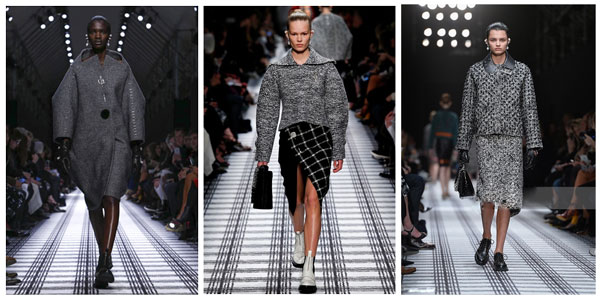


The BALENCIAGA Fall-Winter 2015 collection is comprised of timeless heirlooms: each perfectly-constructed piece has been created as an everyday luxury to be cherished and mixed into the modern wardrobe. Central to the collection is the “Topstitch” shoes line, offered in either Boot or Derby styles, and newly arrived to global BALENCIAGA boutiques.
Offered in graphic black or white calfskin, the Topstitch shoes are the streetwise counterpoint to the opulent jewels and couture shapes of the Fall-Winter collection. Fashioned with raw edges and substantial lug soles, the “Topstitch” shoes are seemingly constructed solely by metal staples and top-stitching. The deliberately-masculine lines of the “Topstitch” styles reflect a sense of strength, a signature of the modern Balenciaga woman.
Rugby is Great Britain

In 2015 rugby returns to its birthplace
Experience the world’s great sporting moments in Britain
Contested every four years, the Rugby World Cup is one of the world’s largest sporting tournaments. First held in 1987, it currently sees 20 international rugby union teams compete over 48 matches for the prestigious Webb Ellis Cup – named after the supposed inventor of rugby, William Webb Ellis – and rugby immortality. The current holders are New Zealand, after the Kiwis narrowly beat France while hosting the tournament in 2011.
Hoping for a similar tale of home glory, England hosts Rugby World Cup 2015, with some fixtures also to be played in neighbouring Wales at the Millennium Stadium in the capital, Cardiff. In total, matches will take place in ten cities and a dozen stadiums, from the north-eastern city of Newcastle down to the city of Exeter in Devon, south-west England. The competition begins on 18 September, with the final being played at London’s Twickenham – the world’s largest rugby devoted stadium, often nicknamed the Home of Rugby – on 31 October. A hundred days before the first match, a Festival of Rugby and a domestic Trophy Tour kick off on 10 June to begin the countdown. www.rugbyworldcup.com
Come for the game, then stay to explore the host destinations! This guide will show you how each of those host destinations is planning to celebrate Rugby World Cup 2015, through their fanzones and their plans for the Festival of Rugby, as well as highlighting the huge scope of attractions, accommodation, shopping, nightlife, family fun and key events that are taking place in all these cities. Many stadia run behind-the-scenes tours, however, visit their individual websites regarding information on stadium tours before, during and after Rugby World Cup 2015; timings may differ during the tournament.
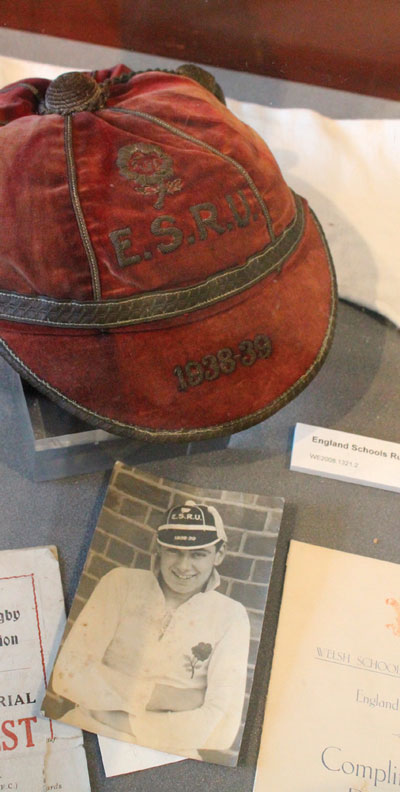

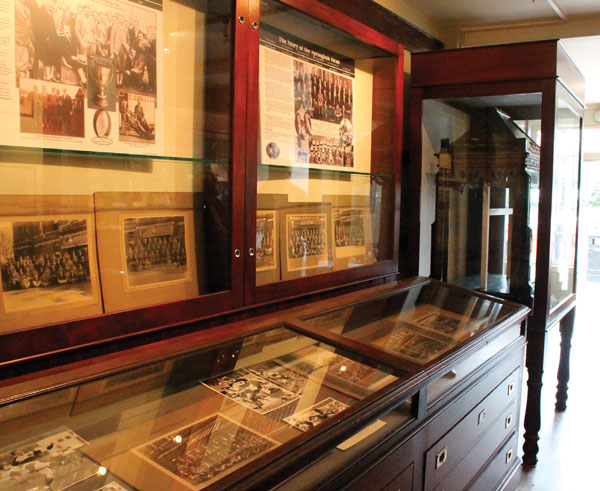
How rugby began
Rugby lore has the game originating in 1823, when a pupil at Rugby School, William Webb Ellis, picked up the ball during a football match and ran with it. This new game slowly spread around public schools and universities, with the first formal rules inked in 1845. A Rugby Football Union (RFU) followed in 1871, with an inaugural international – England versus Scotland – played that same year.
1883 then witnessed Britain’s Home Nations Championship, the first international rugby competition. By 1908, with the sport having long spread into many former British colonies, Australia, New Zealand and South Africa had all sent touring teams to compete.
Despite continued growth, rugby union didn’t turn professional until the International Rugby Board (later the IRFB, now World Rugby) removed player-payment restrictions in 1995. Continental club competitions soon followed, including Europe’s much-vaunted Heineken Cup and Super Rugby in the southern hemisphere. Today, World Rugby boasts 117 member countries.
The Rugby World Cup’s history
Until 1984, rugby union lacked a global international competition; there were only regional championships such as Europe’s Six Nations. Consistently mooted since the 1950s, momentum for a Rugby World Cup grew in the mid-1980s until, with Australian, New Zealand, French and South African union delegates all now in favour, an IRFB vote stood deadlocked at 8-8. After English and Welsh representatives then switched sides, an inaugural competition finally became possible.
The inaugural 1987 tournament, co-hosted by Australia and New Zealand, featured 16 invited nations. By 1991, an initial qualifying tournament had been introduced. 1995’s version was hosted by the returning South Africans; in the moving finale, President Nelson Mandela handed the trophy to Springbok captain Francois Pienaar. From 1999 onwards, 20 nations competed. 2003’s historic tournament, held in Australia, remains the only Rugby World Cup won by a northern hemisphere side, Jonny Wilkinson’s drop-goal sealing it for England. Now hugely popular, the 2007 competition in France set records for total attendance (2.26million) and estimated global TV audience (four billion). Even higher numbers are anticipated in 2015.
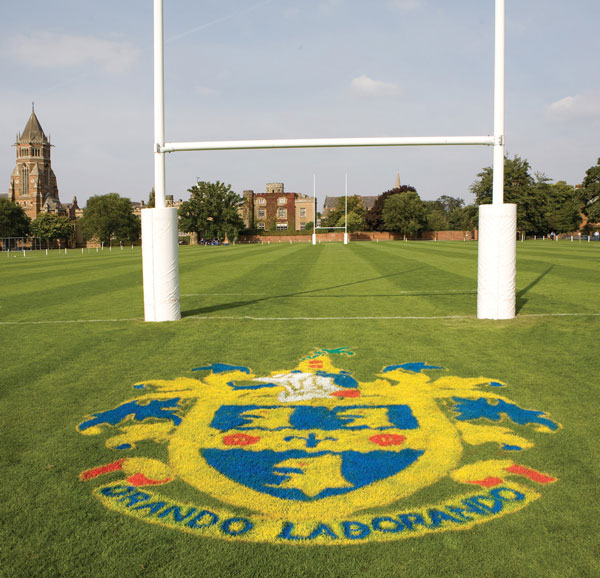
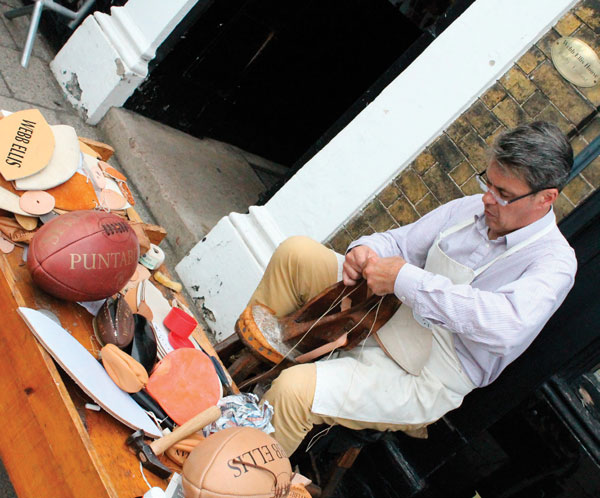
Fanzones and Festival of Rugby
Everyone’s invited to the Festival of Rugby, which kicks off on 10 June – 100 days before Rugby World Cup 2015’s Opening Ceremony and first match – and runs through to the tournament’s final, on 31 October.
Taking place across Britain, it will see clubs, schools, community groups and other affiliations host a wide variety of rugby-themed events to create a true festival feel.
Already on the agenda are the World Wheelchair Rugby Challenge at the Copper Box Arena in London’s Olympic Park and a massed performance of ‘The Armed Man’ by the Voices for Hospices Choir in Kempton Park racecourse, 15 miles south-west of central London. Not to mention a Beach Rugby Festival in the seaside resort of Weymouth, south-west England, or a rugby-themed beer festival in Ormskirk, 30 minutes north of Liverpool. Details are being confirmed at various times so visit www.festivalofrugby2015.com for all the up-to-date information of the activities taking place.
Not got tickets for a game? Make for one of the 15 official Rugby World Cup 2015 Fanzones and watch on a big screen instead; the atmosphere will be just as good, and access is completely free.
Each host venue has a Fanzone, as well as the sport’s birthplace, Rugby, and Central London’s Trafalgar Square (although this Fanzone won’t screen live matches).
Fanzones will be open on match days and at various other times during the six-week tournament. The venues span iconic spaces like Leeds’ Millennium Square, sporting arenas such as Wembley Stadium, city greenery including Victoria Park in Leicester and two waterside locations: Gloucester Docks and Brighton’s beach-side Madeira Drive.
With a million people expected in total, every Fanzone will include a bevy of food and drink options. This is the first-ever Rugby World Cup to see an official Fanzone in every host city. Information on the fanzones can be found on the individual destinations’ pages in this guide and for further information about locations and opening times, visit www.rugbyworldcup.com/fanzones.


Trophy Tour
Also kicking off on 10 June is a domestic Trophy Tour, taking over from the international version and lasting 100 days to mark the countdown to Rugby World Cup 2015’s big kick-off. The tour sees the iconic Webb Ellis Cup travel through Scotland, Northern Ireland, Wales and England, so if you’re travelling in Britain during the tour, you may even catch a glimpse of this coveted trophy.
It then arrives at Twickenham Stadium on 18 September ahead of the opening ceremony. Forty-three days later, it will be handed to the winning team’s captain at the same stadium. The Trophy Tour schedule will engage with more than 100 clubs, organisations and rugby festivals from grassroots to elite level, allowing fans to get within touching distance of the Cup. More than 300 events are scheduled during the continuous, 100-day tour; go to www.rugbyworldcup.com/trophy-tour for a map and calendar of all the action.
Opening Ceremony
Enticing details of the Rugby World Cup 2015’s Opening Ceremony – taking place at Twickenham Stadium before the first game, England vs Fiji, on 18 September – are only expected to arrive as the tournament nears. A spectacular ceremony is already anticipated, however, thanks to the news that Unspun Creative, the company that oversaw all four acclaimed ceremonies during London’s 2012 Olympic and Paralympic Games, has been put in over-all charge.
Key milestones for your diary
10 June – 31 October: Festival of Rugby, across Britain & Ireland.
10 June – 18 September: Rugby World Cup 2015 Trophy Tour, across Britain & Ireland.
18 September: Opening Ceremony, Twickenham Stadium, London.
18 September: Opening match, England vs Fiji, Twickenham Stadium, London.
30 October: Bronze Final, Olympic Stadium, London.
31 October: Final, Twickenham Stadium, London.
Where to buy tickets
Cheer on your country on an official Supporters Tour:
http://supportertours.rugbyworldcup.com/travel_home.aspx
General Ticketing: www.rugbyworldcup.com/ticketing
Special Thanks:
Visit Britain www.visitbritain.com
London: www.visitlondon.com
The Mondrian London: www.mondrianlondon.com
Asnières The “Heart”of Louis Vuitton
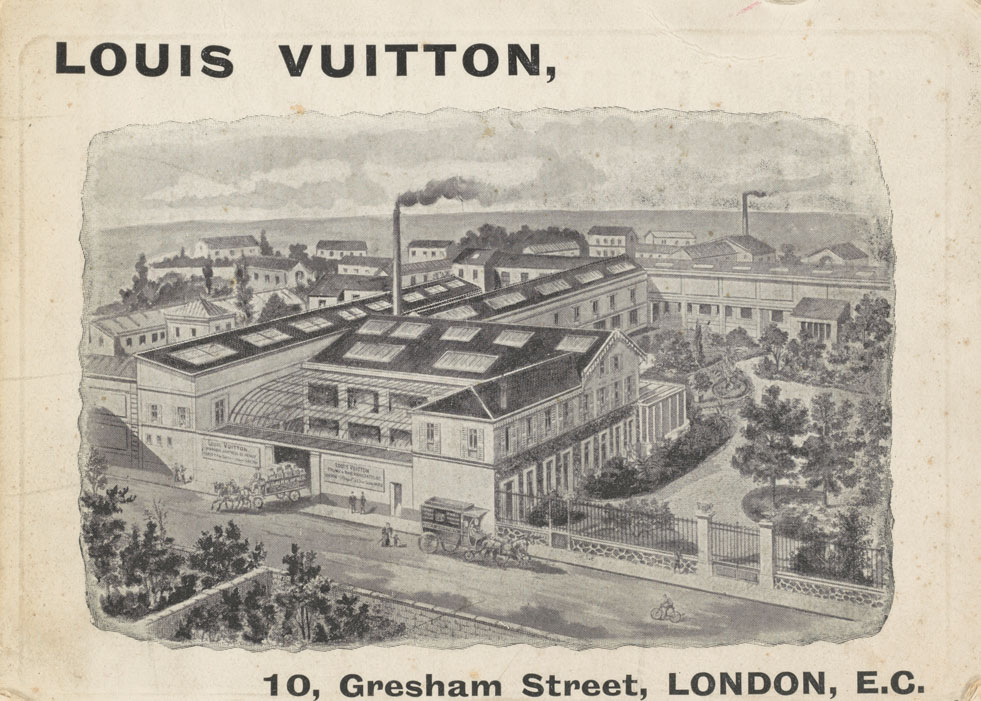
The most beautiful adventures are not always measured in kilometres, but often in years, in what and how you feel… Since Louis Vuitton first settled in Asnières-sur-Seine in 1859, the House itself has travelled, recalling incredible places and exciting creations. While the Vuitton residence in Asnières reminisces about a certain distant era through their Eiffel architecture and Art Nouveau style, the mood has always been one of absolute modernity, for both the family home and ateliers. The Vuitton family itself was made up of courageous characters who pushed boundaries and transcended time, a spirit which continues to thrive in the House today. Though inherently linked to the world of fashion, Vuitton continuously seeks the leading minds of each era, be they artists, aristocrats or adventurers of all kinds.It is this shared vision and freshness that curator Judith Clark sought to highlight in the exhibition presented in Asnières.
Within the exhibition, visitors can feel the beating heart of the Asnières ateliers which, to this day, continue to make the most exceptional trunks and pieces of Louis Vuitton’s leather goods collections. This unique savoir-faire is also endlessly renewed, to reflect the ever-changing catwalk trends and the vision of the House’s designers.
In displaying elements of the Vuitton family home and its special craftsmanship, this constantly developing exhibition presents the House as a vector of creation and creativity. Located on the historic Louis Vuitton grounds in Asnières-sur-Seine, the exhibition presents a multiple space, a blank canvas on which many different films can be projected and layered, each telling of a different adventure.
Since the ateliers began being built in 1859, Louis Vuitton transformed the top floor into living space in order to remain near to his artisans. Like many of the younger generations, his son Georges, born in 1857, was a true child of Asnières, educated at the local boarding school in a village that was rapidly becoming a town. Though Louis and his wife Émilie finally settled onsite in the 1870s, it was Georges’ wedding in 1880 that marked the turning point in Vuitton’s path with Louis building a villa with a smaller home tucked away for the young couple.
Living close to the company’s beating heart became part of the Vuitton family life, with members coming together in the big home for hearty Sunday gatherings in Asnières, this little corner of countryside just outside Paris. “The table was open to all, as was the pot-au-feu,” recalls Gaston-Louis Vuitton in a letter to his cousin. Given his own delicate health, Gaston-Louis spent all of his childhood at the family home on Rue de la Comète. The neighbouring Rue du Congrès, home to the ateliers was later renamed Rue Louis Vuitton.
The family spent their precious free time rowing on the nearby Seine. The river, large garden and railway track leading to the station of Paris Saint-Lazare were the first signs of adventure for the Vuitton boys, who had all in turn, passed through the ateliers to hone their craft before heading out to manage the ever-expanding stores. This atelier “work-experience” was Georges’ idea and the home’s current appearance is also due to Georges’ late 19th Century renovation.
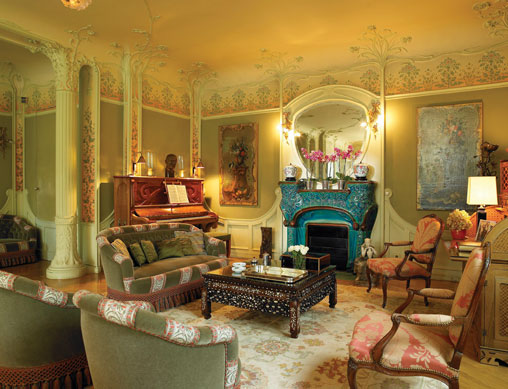
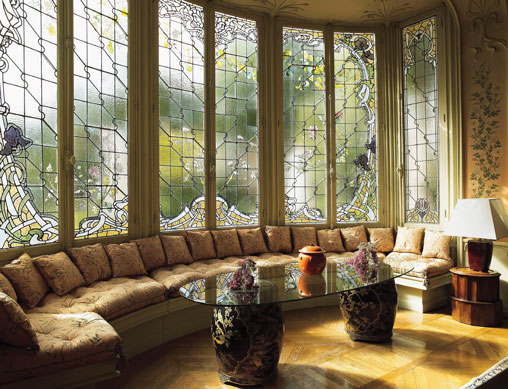
The latter paid close attention to the Nancy School and so commissioned its artisans to refurbish the family home in the purest Art Nouveau design, a style pioneered by his friend Louis Majorelle. As though the garden itself were extending into the home, flowers and leaves multiplied across stained glass windows – created by master craftsman Janin – intertwined through intricate wood carvings and even onto the furniture. The front room dining table still holds memories of family gatherings, celebrations and was home to some of the most important decisions such as the creation of the Monogram pattern, the Houdini Challenge to test the patented locks, the opening of Vuitton’s first international stores.
The family continued to live in the home until 1964 when George’s widow Joséphine passed away. Between the unique work of the nearby ateliers and the home’s anachronistic appearance, the family home remains a place where great creative minds were as comfortable in their destiny as they were visionary in their approach.
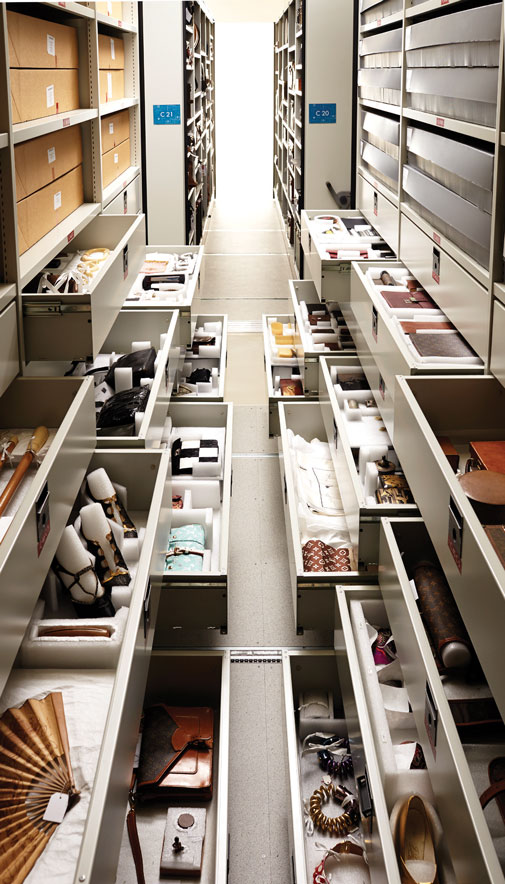
HISTORY UNWRAPPED
Of the many trunks created in the Asnières ateliers, some rest stored away in attics while others are still on show every day, paraded by their owners… Luckily, the House has always enjoyed collecting. Gaston-Louis Vuitton was passionate about historical trunks from all backgrounds and accumulated a significant collection. All of Louis Vuitton’s archives are always meticulously conserved to keep precious objects and documents in the best possible conditions. Clients records, sales registers, posters and original photographs are kept alongside trunks, suitcases, bags and ready-to-wear collections. This treasure trove includes 165,000 documents – of which 110,000 clients records – and 23,000 objects, from which Judith Clark has hand-picked the many significant pieces displayed at Asnières.
The “Galerie” boasts the personal possessions of princes and maharajas, film stars and couturiers as well as anonymous clients who hold the same, uppermost appreciation for fine craftsmanship. As Patrick-Louis Vuitton confirms: “A piece of Louis Vuitton luggage is always complicated to make and is created to carry the most beautiful of things.”

A “GALERIE” IN MOVEMENT
Reveal the intimate aspects of a House’s history, highlight its ties with the ateliers, underline the presence of the Louis Vuitton universe… These were some of the challenges that curator Judith Clark sought to tackle in the new creative, playful and timeless space she so vividly imagined. In fact, the term “galerie” itself seemed an obvious title – extending the concept of the exhibition far beyond the makings of a museum. While the latter can at times feel solemn and focused on the past, a “galerie” is a space for discovery and is deeply rooted in the present.
At the entrance, a work by Jorge Otero-Pailos highlights the traces of Asnières’ past and superimposes them against those of today. By including other artists in the project such as illustrator Ruben Toledo and milliner Stephen Jones, Judith Clark sheds light on the importance of savoir-faire, an element so crucial to this space, a sort of latent electricity which is evident throughout the “Galerie”. The exhibition is curated to allow free roaming with no specific order, though elements are grouped according to themes: globalisation, client relations, the Monogram, nature, the avant-garde…
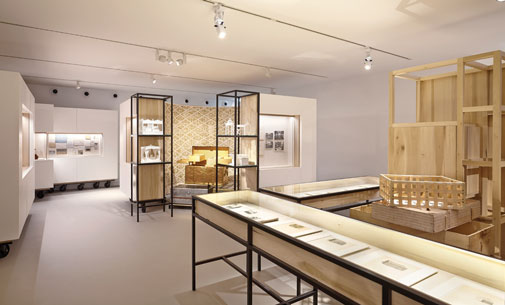
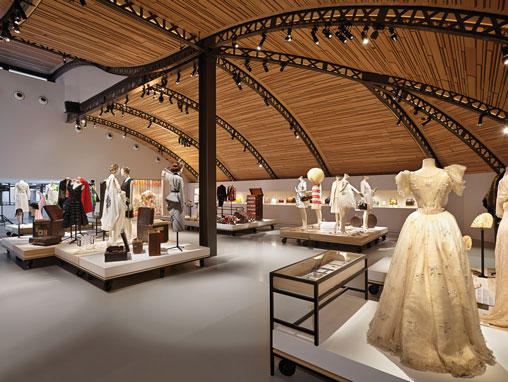
During her research through the House’s archives, Judith Clark discovered rare gems such as the Patéki wooden cube puzzle, a game created by Gaston-Louis Vuitton and which served as the inspiration behind Clark’s choice of scenography. Within these peculiar poplar boxes, luggage, objects and garments created by the House’s various artistic directors lay side by side with more private documents and insider tell-tale signs allowing visitors to catch a glimpse of those who designed, carried and owned these different pieces. From Louis Vuitton’s original journey from his native Jura to Paris, Gaston-Louis Vuitton’s private correspondence, Loïe Fuller’s dance accessories, Redfern’s travel cape, to Frank Gehry’s Fondation Louis Vuitton design… The malletage is omnipresent throughout the exhibition, revealed as an intricate interior detail in antique trunks, or as a recurring motif worked into backdrops and even prints. With unexpected twists and turns, the constant frisson of creativity and surprise, the visitor enters into a web of fantasy travels without ever leaving the world of Louis Vuitton.
Tourism Ireland launches ‘One Break, Two Cities’ campaign with VisitBritain
Tourism Ireland and VisitBritain have joined together to announce an exciting new campaign, One Break, Two Cities. Giving fans of the UK and Ireland the chance to experience both destinations in one easy trip, the ‘One Break, Two Cities’ package makes an ideal twin centre hassle-free holiday for GCC visitors.
This package was developed to promote the Irish Short Stay Visa Waiver programme, which permits GCC travellers in possession of a valid UK ‘C’ general visa to enter Ireland without requiring an additional Irish visa. The campaign will encourage visitors to the UK to include Ireland as an add-on destination when making their travel plans.
‘With such a wide variety of things to see and do in Ireland and Great Britain it’s hard to settle on just one destination. The good news is that, with the flexible ‘One Break, Two Cities’ package visitors can easily combine two or more cities, across two countries, in one memorable holiday’ says, Amanda Burns, Tourism Ireland’s Regional Manager Middle East and Asia. ‘Visitors simply pick their city break based on our recommended three day itineraries for multiple cities across Ireland and Britain, giving them an easy and flexible holiday that is tailor-made to suit their personal tastes and interests.’
The ‘One break, Two Cities’ combinations feature any city in Ireland and Britain, including suggested routes such as Cardiff to Dublin, Edinburgh to Cork or London to Belfast.
‘With good airline connectivity from the GCC to the regional airports across Britain and to Ireland, it has become easier for GCC visitors to combine a Britain and Ireland holiday. The twin cities package offer a combination of British and Irish charm, culture, hospitality and unique experiences for both families and the adventurous millennial visitors from the GCC. This is a great value proposition for visitors who want to make their money go further. The cities also serve as a gateway to some of the award-winning and breath-taking countryside filled with pristine areas of outstanding natural beauty, a sought after experience for most visitors.’ Sumathi Ramanathan, Regional Manager – Asia Pacific & Middle East.
How to book?
The packages on offer can be customised to meet any customer’s requirements and luxury travel experts Adams & Butler will be happy to assist in creating different variations of the packages. Alternatively you can contact your local travel agent to request a personalised UK and Ireland package.
To book email: sales@adamsandbutler.com.
For more information on Ireland and Britain visit Ireland.com and VisitBritain.com
Rolls-Royce Motor Cars ‘Wraith Inspired by Fashion’

Set to arrive in the United Arab Emirates
Rolls-Royce Motor Cars and the world of Haute Couture have long been bound by a common philosophy – to take the very finest materials and craft them into the most exquisite and desirable luxury goods, appointed to the customer’s exact specifications. In this spirit, Rolls-Royce Motor Cars is delighted to unveil ‘Wraith – Inspired by Fashion’, which is now available to order for Rolls-Royce customers in the United Arab Emirates for a limited time through Abu Dhabi Motors and AGMC, ahead of arriving in the country later this year.
Fittingly, the marque’s first showroom in Conduit Street, Mayfair was founded a short step from London’s famous centre of tailoring excellence, Savile Row. Here, Sir Henry Royce and his partner The Honourable Charles Rolls echoed the offerings of their illustrious neighbours by providing London’s most stylish denizens with the automotive equivalent of the finest cloths; a perfectly engineered Rolls-Royce chassis and running gear. The customer would then call upon their preferred coachbuilder, who would furnish the car with personal touches and accoutrements specified perfectly to their requirements.
A century later, a bold new generation of customers continue to share the same appetite for commissioning expressions of their taste and lifestyle. ‘Wraith – Inspired by Fashion’ provides a modern take on this grand tradition. Akin to commissioning a fine suit or elegant piece of couture, the journey of creating a highly Bespoke Rolls-Royce motor car begins at the marque’s equivalent of the tailor’s atelier, the Bespoke Design Studio at the Home of Rolls-Royce in Goodwood, England. Here, the Designers honed the aesthetic theme of the car, drawing inspiration from colour palettes, materials and techniques used in the world of high fashion. The result is an extraordinary interpretation of Wraith’s characteristic blend of power, style and drama.
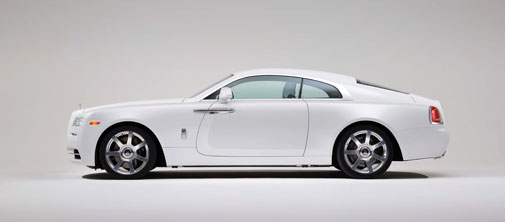
Giles Taylor, Director of Design for Rolls-Royce Motor Cars, commented, “This iteration of Wraith provides a canvas for materials and finishes most commonly associated with the world of fashion. Inspiration was sourced from international catwalks and Bespoke Tailors, resulting in an aesthetically stunning and sartorially on-point motor car.”
‘Wraith – Inspired by Fashion’ two-tone exterior colour scheme of Andalucian White and Arctic White offers a neutral setting for a choice of accent colours, namely Jasmine, Tailored Purple or Mugello Red. Wraith’s signature shoulder-line is accentuated deftly with the addition of a hand-applied feature-line in the chosen highlight colour, alluding to the divergent interior of the motor car.
Like the finest Bespoke garments, beauty is found in the subtlest details. On opening Wraith’s coach-doors you will find a contemporary impression of the car’s classic Arctic White and Black interior colour scheme. Beyond the traditional placement of embroidered headrests, seat stitching and piping, the accent colour has found an elegant new application via a striking two-tone composition steering wheel. A seamless stitch, a highly complex craft technique from the world of fine tailoring, was mastered and applied to the wheel by the craftspeople in the Leather Shop at the Home of Rolls-Royce.
The very finest garments are crafted exclusively from the most luxurious materials – with tactility, comfort and quality as important an attribute as the aesthetic of the piece itself. The Bespoke design team took inspiration from this approach in appointing the car’s front and rear door pockets with fine silks, adorned with an abstract representation of the Spirit of Ecstasy with each emblem set precisely at fifty-five degrees to complement the lines of the door.
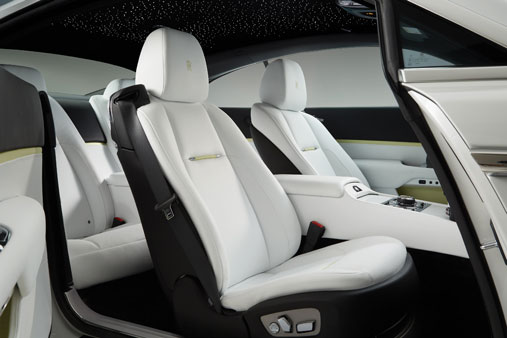
The remarkable craftsmanship and attention-to-detail employed in the creation of any Rolls-Royce is evident in the exquisite application of wood to the dashboard, with the lacquering process for ‘Wraith – Inspired by Fashion’ alone taking nine days to painstakingly complete. This is completed elegantly with the integration of a Bespoke Clock, set as a piece of jewellery, styled exclusively to emit a pearl effect, reminiscent of silk fabrics.
The contemporary fashion theme is completed with the integration of welting, a specialist technique most commonly associated with Bespoke tailoring. Presented as a colourful silk strip, the welting stylishly frames Wraith’s signature leather door-panel.
To mark the occasion of the creation of this timeless Wraith, the motor car took part in a landmark shoot on the production line at the Home of Rolls-Royce in the South of England. The luxurious materials and distinctive features presented in the motor car were accentuated by fashion models, set against a backdrop of the hand-made motor cars.
The remarkable success of Wraith in attracting a new generation of successful entrepreneurs to the marque has been underpinned by a surge in demand for Bespoke personalisation – a remarkable 95% of all Wraith motor cars left the Home of Rolls-Royce with an element of Bespoke design last year, giving bold expression to the notion that Bespoke is Rolls-Royce.
The brand was built on a love story says Nicolas Bos, President and CEO, Van Cleef & Arpels
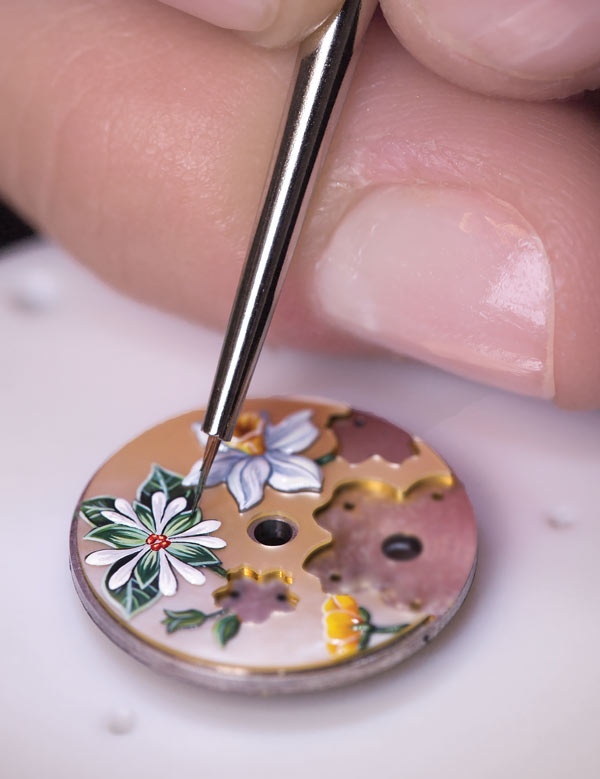
Tell us about the brand DNA.
Van Cleef & Arpels was built on a love story. Towards the end of the 19th century, Estelle Arpels – the daughter of a dealer in precious stones – met Alfred Van Cleef, the son of a stone-cutter. It was the beginning of a love story and a great adventure beyond expectation. In 1895, they were married. Over the years that followed, they succeeded in making Van Cleef & Arpels synonymous with the most exquisite jewellery in the world.
What goes into making a timeless Van Cleef & Arpels creation?
Ever since its beginnings in 1906, Van Cleef & Arpels has embodied the brilliance of jewellery savoir-faire. Inspired by constant inventiveness, the Maison’s excellence has given birth to iconic creations and exceptional techniques: Mystery Set™, Zip necklaces, Poetic Complications® watches. From the outset, the story of Van Cleef & Arpels has been punctuated by historic stones and legendary jewels.
Skills are passed on from generation to generation, and complimented by the most modern techniques to give birth to exquisite creations.
What do you think the customers are looking for nowadays and who is your customer?
The Van Cleef & Arpels client is an admirer of beauty. I believe that the clients should choose a creation that they can relate and feel close to. Each creation by Van Cleef & Arpels tells a story, whether it is about love, happiness, nature, or luck: cherished sources of inspirations of the Maison.

Tell us more about the novelties that were presented this year, and what caught your attention at SIHH. Did you feel there were a lot of new offerings or it was just about enhancements of existing products?
“The SIHH 2015 celebrated the reappearance of one of the Maison’s icons: the Cadenas® watch. It is sentimental, bold, timeless and feminine – a jewel that tells the time. First created in 1935, it has been today magnified and, on occasion, adorned with white diamonds of the best quality. Alligator straps and gold bracelets inaugurate new horizons.
Underscoring the Poetry of Time™ philosophy, the Maison enriches its Enchanted Nature(TM) with:
3 Charms Extraordinaires timepieces evoking the flowers’ language and different steps of the love story.
Faithfull to high jewellery identity, the Maison also presented High Jewellery timepieces among which the À Cheval watch, that celebrates the savoir-faire and quest for stones that express an emotion.


What do you think are the difficulties that the luxury watch manufacturing is facing today and what are you doing to overcome them?
One of the main challenges the industry is facing is to remain faithful to the Maison’s identity while the level of competition is getting faster than ever. To have the ability to handle both technique and technical skills represent also one of the challenges.
At Van Cleef & Arpels, our Poetry of Time™ illustrates, more than just being the fastest or the most technical, the Maison’s desire to respect the Métiers d’art and the excellence of our know-how which requires time.

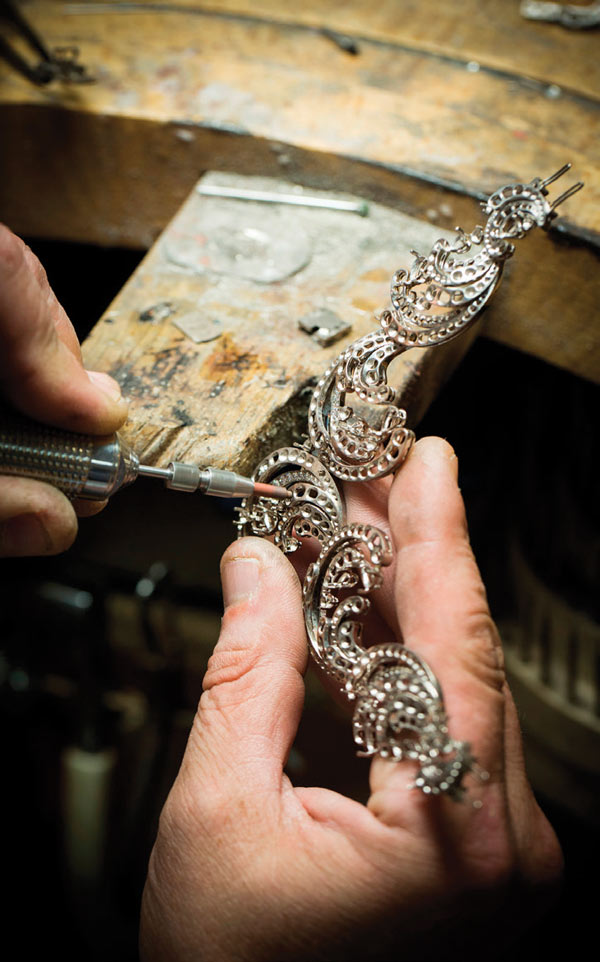
Tell us about your latest collection of high jewellery, seven seas treasures.
In this collection, the wonders of the aquatic world are idealized: sea horses, mermaids and imaginary worlds. Sea creatures have long had a fundamental presence in many collections, for example, Les Voyages Extraordinaires.
Like all aspects of life’s journey, the sea is forever-changing. The constantly moving waves and the grace of the sea’s denizens inspire the new collection of High Jewellery: Seven Seas.
An emblem of the collection is the Pangée set of the Atlantic & Indian Oceans – in white gold, round and pear shaped diamonds. Pangea (Pangée – in French) was a single continent that separated 200 millions of years ago, creating the seven seas.
The necklace draws upon the inspiration of the Océan Tiara/necklace, which was created for H.S.H. Princess Charlene of Monaco as a wedding gift from H.S.H. Prince Albert II. A tribute to H.S.H. Princess Charlene’s passion for the sea, the Maison created the Tiara – which is transformable into a necklace – to symbolize the delicate waves of the mysterious oceans.
How would you describe the brand in 3 words?
Expertise, poetry , enchantement.
Your personal motto?
Refuse to compromise.
Interviewed by Lara Mansour Sawaya
Who is Fawaz Gruosi?

The man who famed the de Grisogono brand name and the black diamond
I have seen him on TV, featured his work and his brand’s gala dinners and red carpet moments through our pages, but never have I met him. It was only this summer that I meet him in person in Cannes at the terrace of the Martinez hotel where the brand displayed their latest high jewelry collection “Divine in Cannes”.
I chat to him and get acquainted with a genuine man that shares his humble start of his business with pride, shares his dream and his vision of a brand that looks like no other.
Who is Fawaz Gruosi?
He discovered his love for gems at a very young age and was in charge of vip clients in the jewelry industry. He travelled constantly, stayed at the most luxurious hotels, and hosted lunches and dinners with important people. He worked for two of the biggest mega houses in Jewelry, including Bulgari which made it even more difficult to decide what his next step would be once he found himself alone, as the standards were set very high.
He did something he disliked, buying and selling stones and he even sold them to Bulgari. He was unhappy since his ultimate goal was to open his own shop. After joining in with two friends/partners, and putting in the minimum capital, which was 60 thousand Swiss Francs at the time, he did just that. They started with a small shop, buying, and selling, but he still didn’t feel true to himself. Since he was the only one with such passion to grow, he decided to buy out his partners and start producing, with the little knowledge that he had.
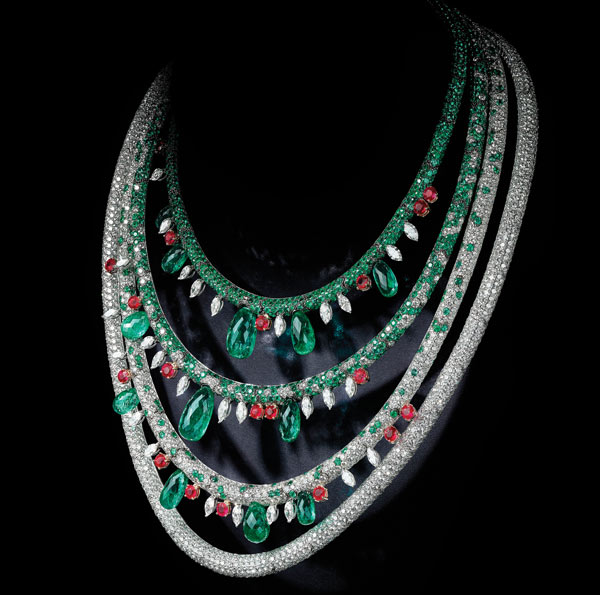
He was criticized by many who thought he wouldn’t be able to handle it. He started to design, and drew sketches “like little kids.” He would go to the atelier and explain his vision on a piece of paper. At the time, most jewels were minimal, very small, using classic platinum white and yellow gold, and traditional stones, which is why he knew he would have to do something different if he were to have a chance.
“I did the opposite, lots of volumes, mix of colors, precious stones that were perceived as nothing at the time,” he says. He didn’t receive much success, but it was enough to keep him going. “The real launch was when I used black diamonds, they said I was crazy. Then within two years people were coming in and saying ‘it’s beautiful, but we can’t wear this.’ Then a couple of brands started using my black diamonds. I wanted to defend those diamonds, I was asking around auction houses about them and about their value. I believed in them, and even worked on a book about them so the press would spread the word worldwide. I received so many calls from everywhere, it became more acknowledged but no one knew how to pronounce our name ‘de Grisogono’, it was a disaster!”
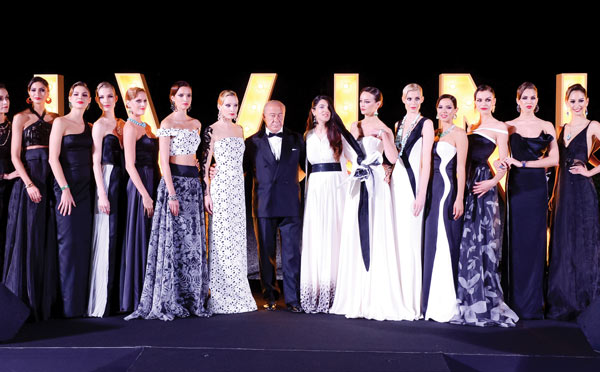
At that time clients and buyers were fed up from the ordinary so he decided to make black gold designs and gold brown.
“People said: why do I have to spend money on gold that doesn’t look like gold!’ but that’s a snobbish way to look at it.”
He put a bit of groundwork in the company, but was still criticized a lot for playing loud music in his office and inviting friends. His first guest, when he opened his shop, was actually the iconic Sophia Loren. He’s proud to have opened fifteen shops in the years he has been active and his objective is to sell couture jewelry to the brains of people. “From the smallest to the biggest piece, the care is the same,” he says. Many of his pieces were inspired by the Mediterranean. “When I look at the sea and the many tones of green around me, this inspires me to use all these different colors.”
When it comes to different markets, he insists on never taking one seriously. “I don’t care to be everywhere, I just want to reach a number of people, and once clients come to us once, they will keep coming. We try to be very selective.
We have a franchise in Kuwait. In Dubai we are with Ahmad Seddiqi & sons and we are waiting to have a space in Dubai Mall soon.
”Next year, de Grisogono is opening a shop in Macau’s 1 billion dollar hotel. The stakes are very high when your clients are the ones who will stay in a room with its very own roulette section. It’s another world. You can sell nothing less than a million dollars there!”
“Today 15 boutiques are the fruit of the many years of hard work with a starting capital of sixty thousand swiss francs, but if you give me 200 million today and ask me to start from scratch I don’t think it would be possible!! I think I was lucky then”.
I ask him about his de Grisogono woman, and he says: “ I love a woman with character as beauty shines through character. You may see a gorgeous woman and after talking to her she might disappoint you and vice versa “.
Summing up the brand DNA in a few words, he tells me: “ It’s Perfection, it’s creativity, it’s top manufacture and Glam!”
Fawaz Gruosi takes all of these things into consideration but still makes an effort not to take himself so seriously as that’s his motto. With a team he regards as his family, whom he treats with so much respect, he is not afraid of growing personally and professionally by the day. His aim remains to surprise the world but above all, surprise himself first!

Melody of Colours Turquoise & Amethyst Ring
Jewel Melody of Colours ring I metal 18k white gold I stones 14 tube-cut turquoises (approx. 11 cts), 19 navette-cut amethysts (approx. 6 cts) and 146 white diamonds (approx. 2.72 cts)
A Melody of Colours ring is designed as alternating rows of navette-cut amethysts, superbly matched with tube-cut turquoises recalling the newly launched jewellery collection named TUBETTO.

Cushion-Cut Blue Sapphire Unique High Jewellery Ring
Jewel one-of-a-kind ring I metal 18k white gold I stones 1 cushion-cut blue sapphire (approx. 28.08 cts), 12 pear-cut emeralds (approx. 4.09 cts), 22 pear-cut and oval-cut blue sapphires (approx. 17.37 cts) and 54 white diamonds (approx. 0.14 ct).
Favouring a blend of vintage and contemporary styles, the cushion cut is one of the most glamorous cut often set in solitaire. With its rectangular outline, this stunning stone asserts its distinctive look with rounded corners. Featuring the timeless beauty of sapphires, Fawaz Gruosi intensifies the brilliance and mesmerizing colour of a sapphire whose facet plan gives the stone a depth as hypnotic as a woman’s gaze. This magnificent blue sapphire weighs 28 carats and its dimensions are 20 x 16 millimetres. A heavenly stone carried by a constellation of pear-cut and oval-cut emeralds and blue sapphires divinely exults.

Melody ot Colours Turquoise & Amethyst Creole Hoops
Jewel Melody of Colours earrings I metal 18k pink gold and titanium I stones 2 turquoises (approx. 13 cts) and 506 amethysts (approx. 28.56 cts)
A row of elliptical bands made of pink gold, titanium and turquoises, as well as a band set with amethysts, reinvents the classic creole hoops in a Melody of Colours creation.
Interviewed by Lara Mansour Sawaya
