

BMW Reveals The New M5 And M5 Touring Cars With An Integrated Hybrid System
In partnership with AGMC, the brand’s regional dealer, BMW has introduced the new M5 and M5 Touring cars, which use hybrid technology for the first time since the brand’s inception 40 years ago.
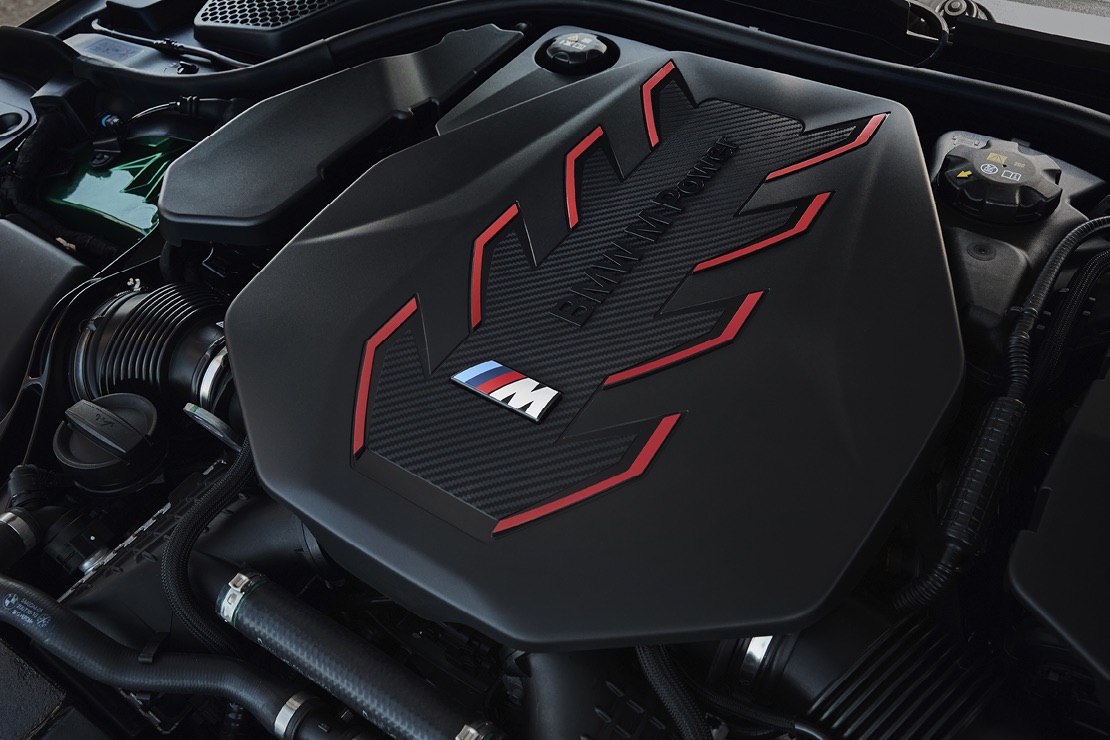
The BMW M5 Sedan and M5 Touring are revolutionary offerings due to their advanced specs and hybrid technology that integrate motorsport engineering with electric innovation. Setting new standards in luxury sports sedans by smoothly merging a V8 engine with an electric motor. At the heart of the two cars is the M HYBRID system, a mix of a 4.4-litre V8 engine and an electric motor. This setup provides 727 horsepower and 1,000 Nm of torque, taking the M5 sedan from 0 to 100 km/h in just 3.5 seconds. With the M Driver’s Package, the top speed can reach 305 km/h, making it one of the fastest and most powerful hybrid sedans available.
The electric motor offers quick acceleration and easy power with 450 Nm of torque. The combination of the electric motor and the V8 engine ensures smooth and responsive driving, offering a blend of speed, agility, and precise handling.
The M5 Touring delivers the same impressive performance on a more practical, spacious design. With the same M HYBRID engine, it goes from 0 to 100 km/h in just 3.6 seconds, making it perfect for both daily use and high-speed tracks.
“BMW has always been synonymous with innovation and Sheer Driving Pleasure, and with the reveal of the new M5 and M5 Touring in Dubai, we’re launching a new era of high-performance executive-class vehicles in the Middle East. BMW M5 and M5 Touring offer the best of both worlds — uncompromising performance with cutting-edge technology.” Said Karim-Christian Haririan, Managing Director of BMW Group Middle East at the car’s recent launch event.
The hybrid system is inspired by the BMW M Hybrid V8 endurance racer, ensuring typical M performance with a touch of electric innovation. The M5’s capabilities are enhanced by an eight-speed M Steptronic transmission, offering three shift modes for full control. Shift paddles allow manual gear changes, while the unique chassis technology ensures a perfect balance between performance and comfort.
The M xDrive all-wheel-drive system refines the driving experience with modes like 4WD, 4WD Sport, and a rear-wheel-drive 2WD mode. This allows drivers to adjust their M5 experience to the road conditions, ensuring agility and control on both track and road. Launch Control maximises dynamic excitement, ensuring the fastest acceleration with optimal grip.
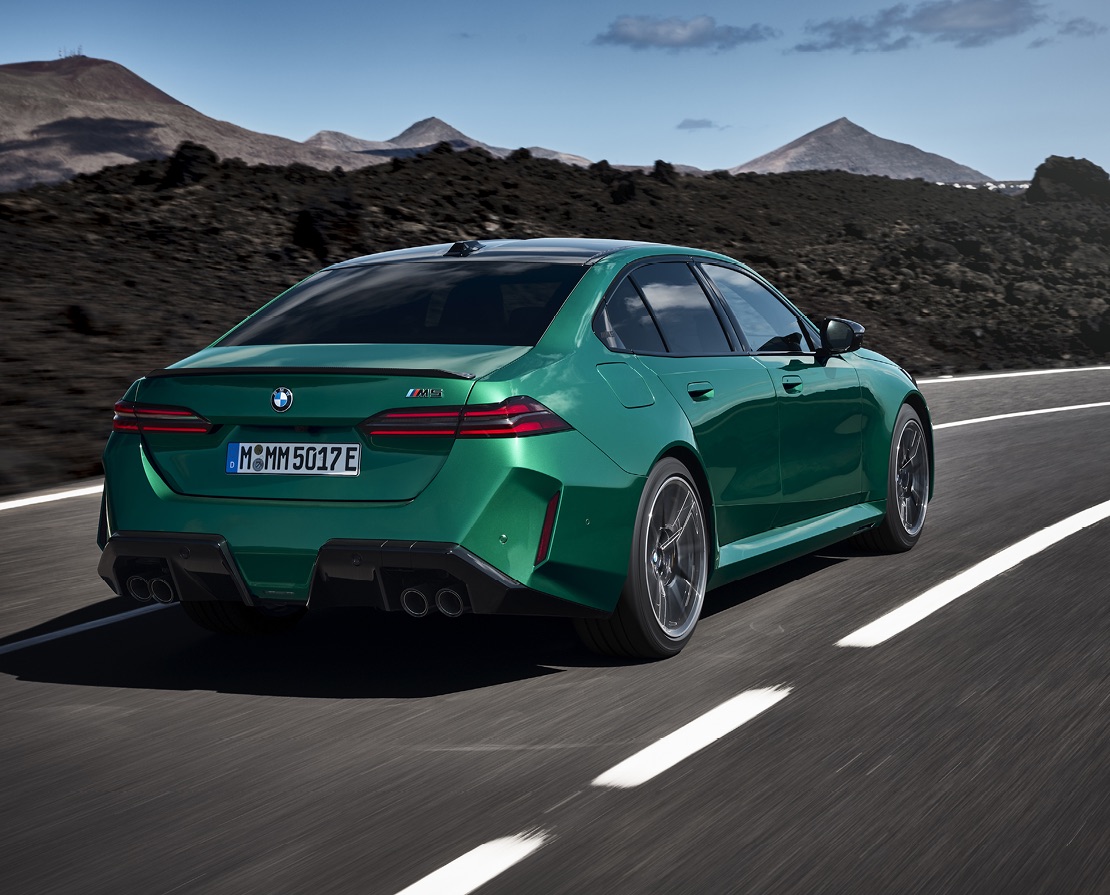
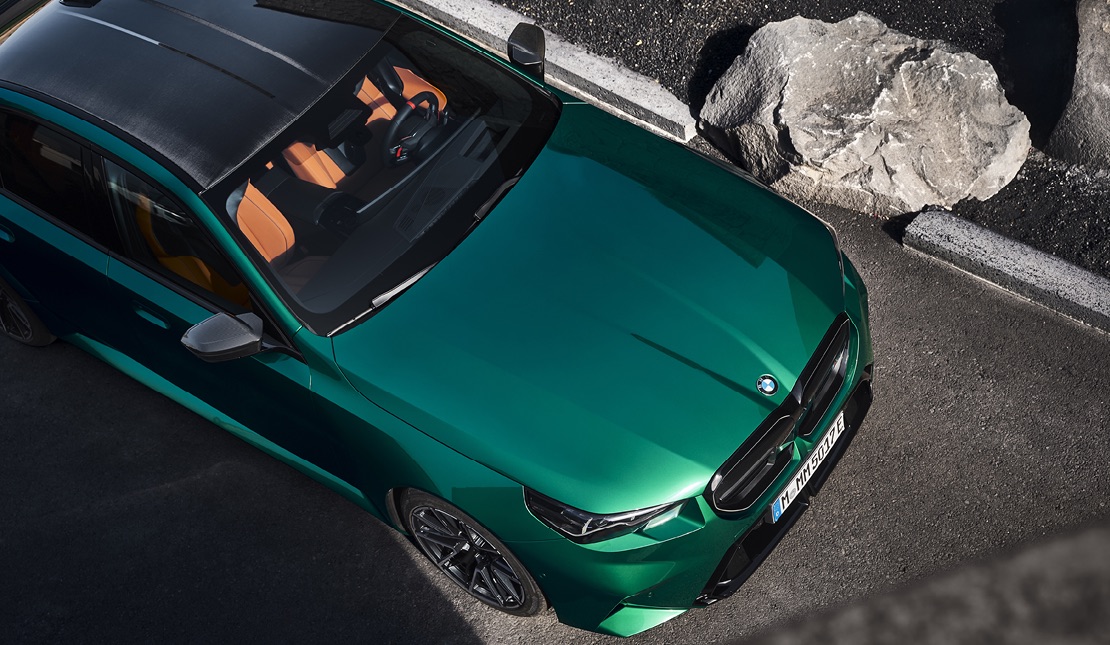
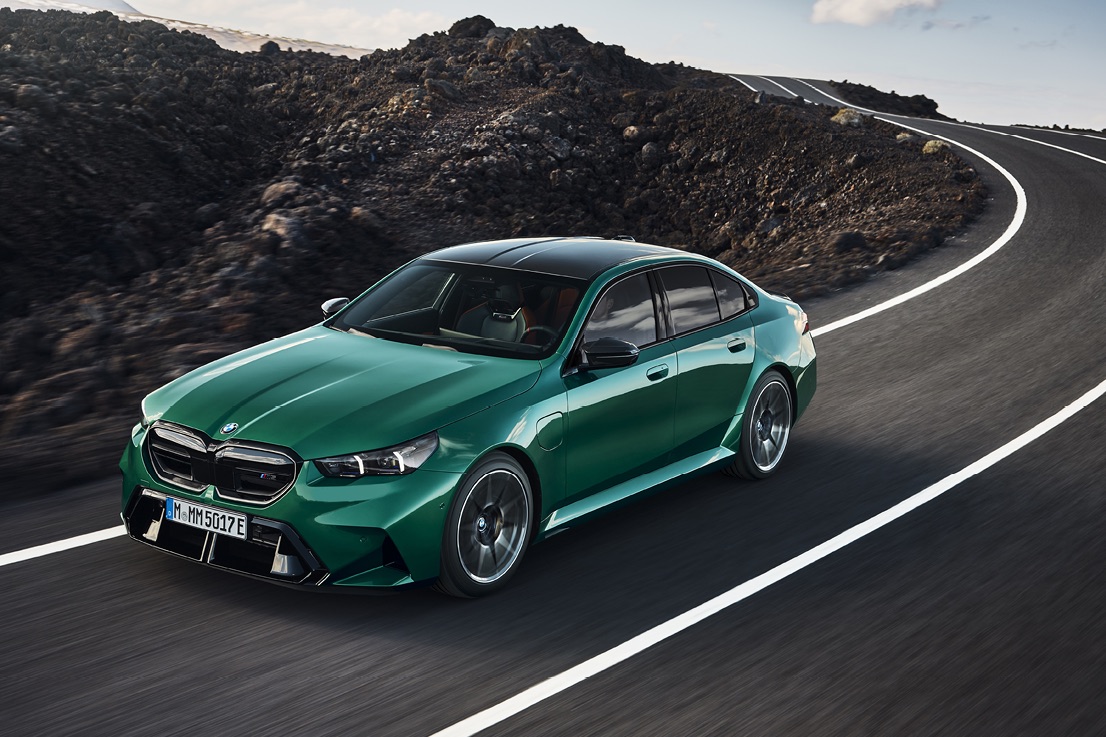
Aside from the performance, the design of these cars is exceptional. Both models feature a bold front, complete with M-specific design elements. Features like the front bumper, wheel arches, side skirts, and the unique M5 C-pillar create an athletic look. The paintwork, mostly body-coloured, gives the vehicles a sleek look.
The illuminated M grille, called the Iconic Glow, and dynamic light accents boost the cars’ visual appeal. At the rear, the twin exhausts and M Carbon roof lower the weight and centre of gravity, improving performance and agility.
The M5 Touring has its own charm, combining BMW Touring looks with M-specific features. Its long roofline, prominent wheel arches, and strong shoulders give it a sporty yet practical appeal. It’s designed for those seeking both performance and practicality, merging high-performance thrills with the utility of a spacious car.
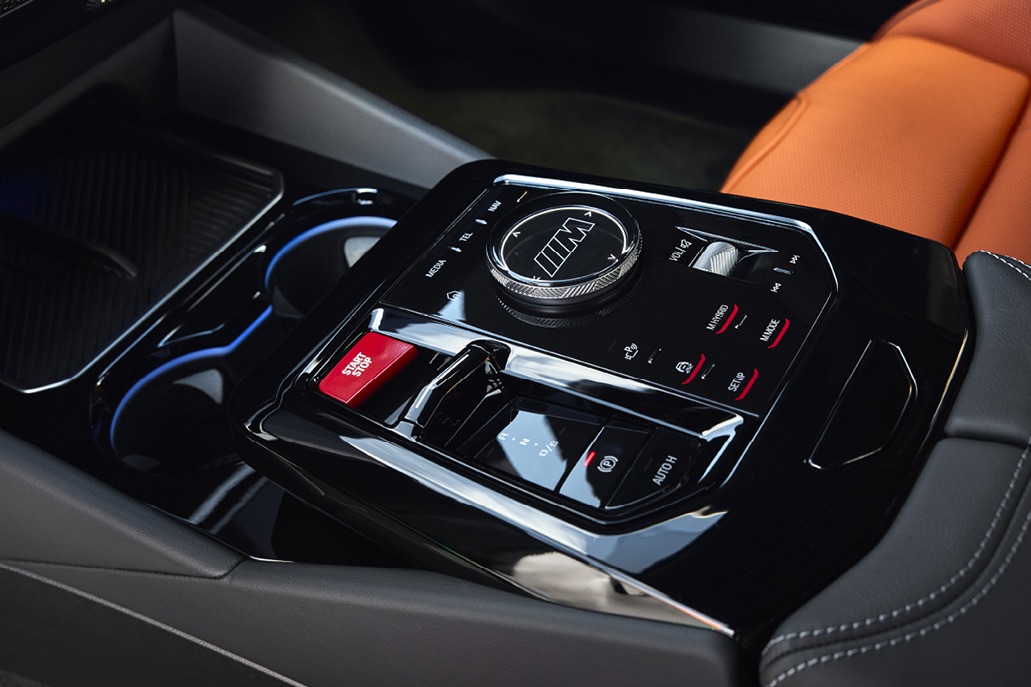
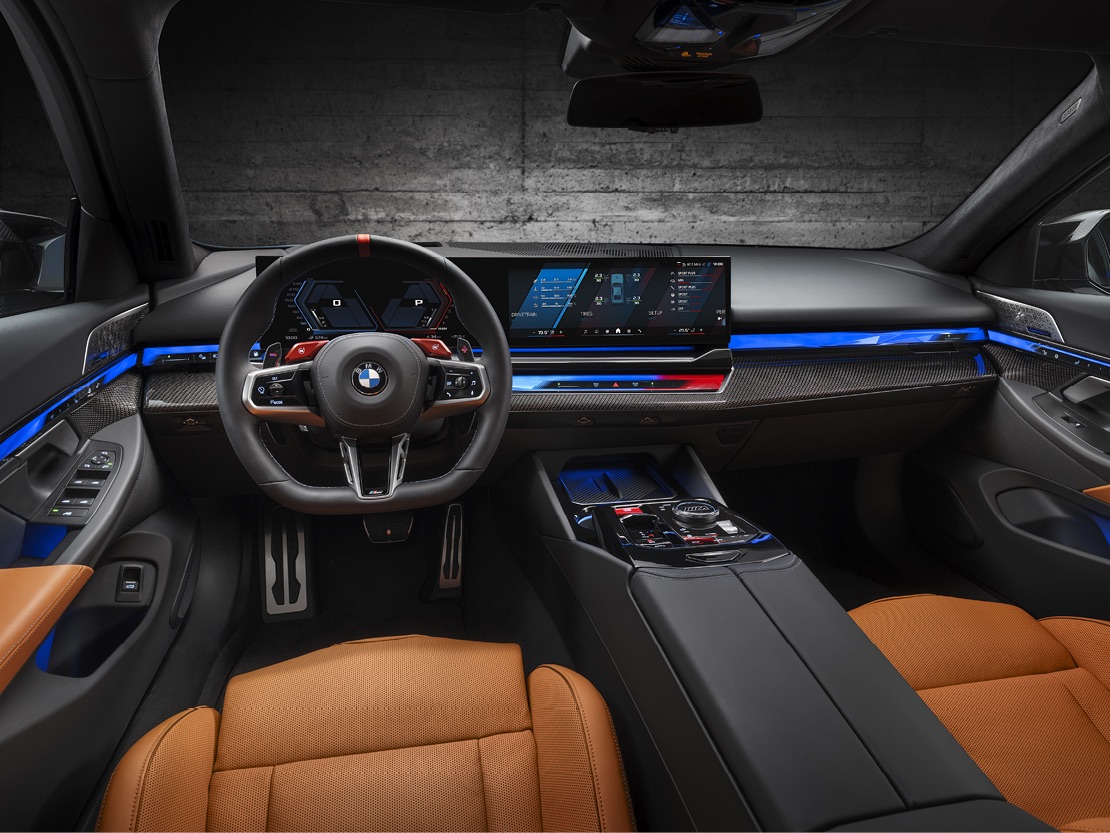
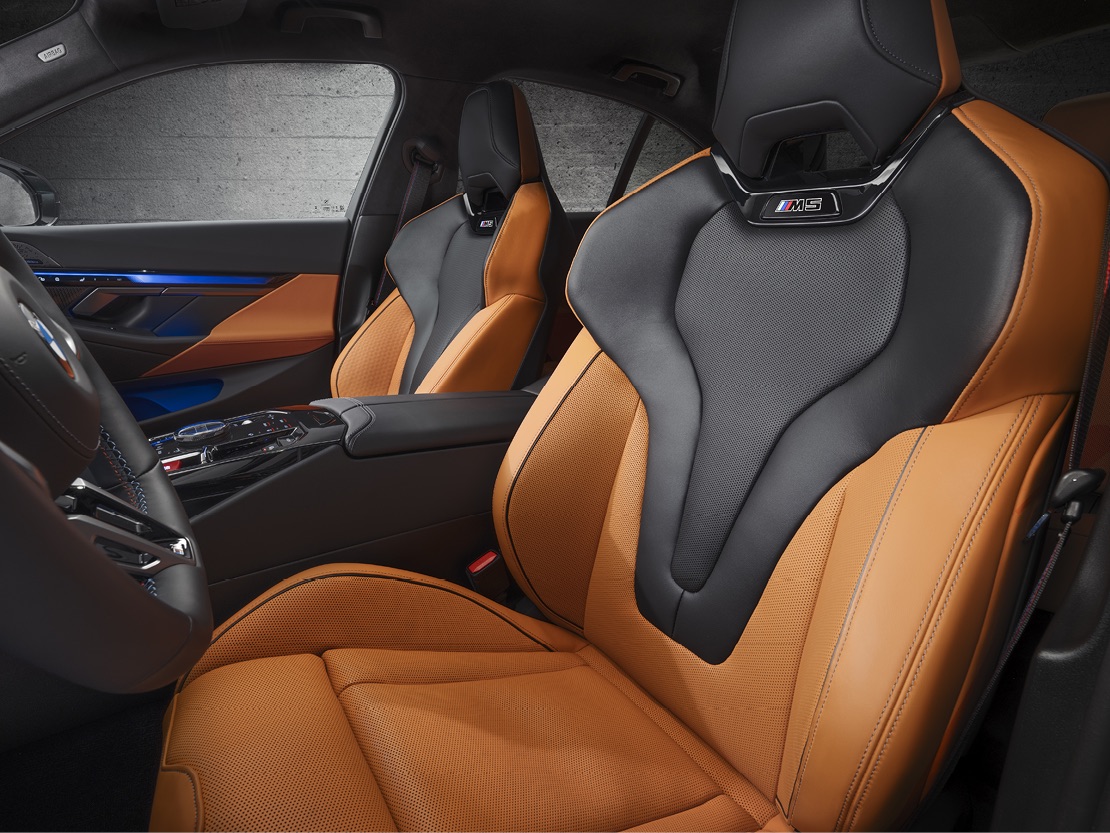
Inside, the new M leather steering wheel and multifunction seats offer sporty elegance, while the BMW Curved Display provides M-specific information. The dashboard features the latest BMW iDrive system, with a Head-Up Display and augmented reality navigation for a smooth driving experience.
Passengers can enjoy Merino leather interiors, ambient lighting, and four-zone climate control. The panoramic sunroof enhances space and luxury, while the Bowers & Wilkins Sound System provides excellent sound quality. Whether speeding across the desert or cruising through the city, the M5 and M5 Touring interiors are designed for comfort and enjoyment.
The new models feature advanced driver-assistance systems for safer and more enjoyable journeys. Standard features include Lane Departure Warning, Collision Warning, and Parking Assistant. Optional features like Driving Assistant Professional offer near-autonomous driving for long UAE travels. The M5 also boasts advanced parking tech, with Parking Assistant Professional allowing remote parking via smartphone, perfect for tight urban spaces.
The BMW M5 sedan will be available in November, and the M5 Touring in March 2025. Interested buyers can reserve a slot by paying an AED 50,000 fee on bmw-dubai.com.
Tania Fares, Co-Founder and Co-Chair of Fashion Trust Arabia on Supporting and Promoting Regional Talent
Since the inception of Fashion Trust Arabia in 2018, the non-profit organisation has successfully supported and nurtured the careers of many aspiring designers in the Middle East.
As the first initiative of its kind in the Arab world, FTA is dedicated to supporting and highlighting the work of Arab creatives by shedding light on designers from across the MENA region while supporting and promoting their work through its platforms. FTA was launched under the patronage of its Honorary Chair HH Sheikha Moza bint Nasser and Co-chairs HE Sheikha Al Mayassa bint Hamad Al Thani and Tania Fares at an annual awards ceremony event held in Doha, Qatar and each year since the platform has selected designers across various categories to work with and support throughout the year.
After a successful event in Morocco this year, we talked to Co-Founder and Co-Chair Tania Fares, to find out more about the vision and objectives of FTA.
Congratulations on the latest edition of the FTA Prize – what were some of the highlights of the event for you?
The highlight for me was seeing the entire community come together to support and celebrate MENA designers. This collective spirit embodies what Fashion Trust Arabia is all about.
Why did FTA decide to partner with Morocco for this year’s edition?
This partnership is part of a broader initiative under Qatar Museums, aligned with the Qatar-Morocco 2024 Year of Culture. It aims to foster lasting connections between diverse communities through cultural exchanges and collaborations.
Each year, the event attracts more and more international visitors and recognition. What does this mean to you and for the industry in the region?
The growing international recognition is a testament to the talent in the MENA region. It not only enhances the visibility of our designers but also establishes the region as a significant player in the global fashion industry, encouraging more investment and interest.
Can you tell us about this year’s winners and why they were selected?
This year’s winners were chosen for their unique perspectives and strong design narratives. They represent their heritage beautifully while also demonstrating commercial viability, which is essential for success in today’s market.
What is the jury looking for when selecting winners for each category?
The jury looks for strong design DNA, compelling stories that celebrate MENA heritage, and commercial viability. Each designer’s ability to connect with their cultural roots while appealing to a global audience is crucial.
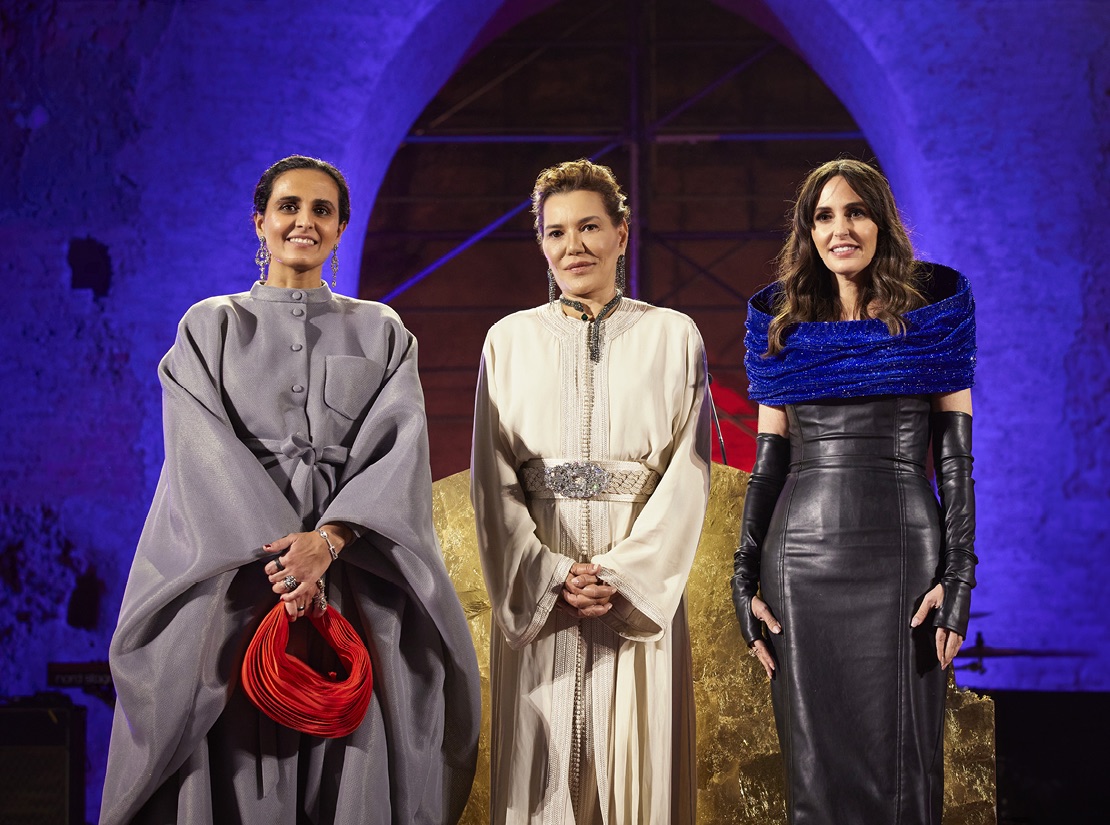
You work very closely with Her Excellency Sheikha Al Mayassa bint Hamad bin Khalifa Al Thani – how are you together helping to build the fashion industry in Qatar and the wider region?
Together, we are focused on nurturing talent and creating platforms for designers to showcase their work. Our initiatives aim to connect designers with mentors, retail partners, and opportunities that facilitate their growth and visibility.
The event attracts global celebrities and industry experts – how do you think this kind of guest list helps to elevate the fashion industry in the Middle East?
Having global celebrities and industry experts attend elevates the profile of our designers and the event itself. It creates valuable networking opportunities and showcases the region as a burgeoning hub for fashion, inspiring local talents.
Now that this year’s Awards are over – what’s next on the agenda for Fashion Trust Arabia?
Now, it’s time to support this year’s winners. We’ll be introducing them to our mentors and retail partners right away. I’m particularly excited about our new partnership with Ounass, as we’ll be bringing our designers to Dubai for the launch of their collections. Additionally, we’re preparing for the launch of the applications in January for the 2025 Prize and working on the London mentorship for this year’s winners, which coincides with the launch of their collection at Harrods. We’re also working on next year’s FTA agenda in Doha — there are many exciting developments happening.
The industry is growing a lot – what can FTA do to support aspiring and established designers from the region year-round?
FTA provides a platform for exposure and professional development, offering mentorship, networking opportunities, and resources that help designers thrive throughout the year.
How do you think FTA is endorsing bridging cultures, and what kind of dialogue are you aspiring to open between the East and the West?
FTA fosters cultural exchange by highlighting the stories behind our designers and showcasing their work to a global audience. We aspire to create a dialogue that celebrates diversity while encouraging collaboration and understanding between Eastern and Western fashion communities.
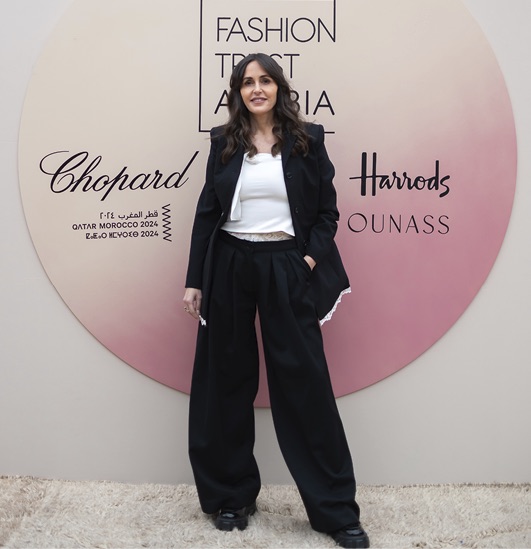
What is the biggest challenge you face in your role?
One of the biggest challenges is navigating the rapidly changing landscape of the fashion industry while ensuring that our initiatives remain relevant and impactful for the designers we support.
What is an objective you would still like to achieve?
I would love to see more MENA designers breaking into international markets, gaining recognition on a global scale, and establishing a strong presence in major fashion capitals.
Would you look at expanding to have an FTA edit for different parts of the world – would you plan to roll it out to other markets, or do you feel they are already saturated?
FTA was inspired by the success of Fashion Trust UK with the British Fashion Council, and I also launched FTUS two years ago, which has rapidly grown in Los Angeles. While there’s potential for expansion, it’s crucial to approach it thoughtfully to ensure we’re meeting the needs of each unique market.
What advice would you give to aspiring designers in this region?
Stay true to your identity and roots. Embrace your uniqueness, think creatively, and never shy away from showcasing your MENA heritage. Stand out in your own way!
The announcement for the 2025 FTA Awards has just come out, and you will partner with India as the guest country. Looking ahead, what can we expect from this partnership?
This partnership will bring exciting opportunities for collaboration and cultural exchange with the support of the Nita Mukesh Ambani Cultural Centre. Their commitment to showcasing India’s rich artistic heritage and supporting local talents will ensure that this partnership is a huge success.
Chaumet Opens An Exclusive Jewellery Showcase In Doha
Chaumet has revealed a unique exhibition in Doha, paying tribute to nature and its influence on the Maison over the years.
Chaumet & Nature: Nature-Inspired Jewellery Since 1780, presents a unique sensory journey celebrating the wonders of nature, between earth and sky, between sky and sea, all through which the true essence of Chaumet is revealed.
From its inception in 1780, Chaumet has placed its creativity and savoir-faire at the service of nature, transposing its preciousness into jewellery. It has always looked to the earth’s flora and fauna, capturing the immensity of the sky, its stars and birds, and the infinite nuances of the sea and its treasures to create jewels imbued with emotion and symbolism.

Organised by Maison Chaumet in collaboration with Qatar Museums, M7, and Qatar Creates, Chaumet & Nature marks the first high jewellery exhibition of its kind ever held in Qatar. The exhibition spotlights more than 100 exquisite jewels from the French Maison’s collections as well as those of Qatar Museums, honouring the link both countries have shared since 1970s.

The exhibition tells the story of the Maison, it’s family history and its close relationship not only to nature but also to the Middle East. Highlights include a selection of exquisite tiaras, sourced from royalty, collectors and museums around the world, as well as jewellery pieces using some of the most innovative techniques known in the industry. It culminates with a celebration of Chaumet today and its vast use of nature as an inspiration for its designs. Featuring pieces from the past year’s high jewellery collections, it displays jewellery pieces using some of the the world’s finest gemstones. Highlights include the 2023 vine Necklace from the Le Jardin de Chaumet collection in 2023.

The exhibition also displays a series of jewellery sketches, marking the first step in the creative process. Among the 66,000 drawings held by Chaumet, a multitude of sketches and illustrations testify to the Maison’s long-standing and enduring devotion to the beauty of nature, a number of which are on display in Doha.

The final chapter of the exhibition celebrates the pearl tradition, something so closely linked to this region. Chaumet has long used the most beautiful pearls in its jewellery creations. The Maison started working with Qatari pearls began in the mid-20th century and has continued until today.

Chaumet & Nature: Nature-Inspired Jewellery Since 1780,, M7 – Msheireb Downtown Doha, November 1st to December 19th, 2024.
Loro Piana’s Loom Bag Celebrates Craftsmanship And Heritage
As a tribute to Loro Piana’s history and fine craftsmanship, a new accessory is set to take centre stage in the brand’s latest collection.
The Loom Bag, which debuts for Fall/Winter 2024-25, is practical, modern and the epitome of elevated luxury. The Loom bag is a versatile tote for work and leisure, with a distinct metal bar under the flap that recalls the way fabric drapes over the heddle bar of a textile loom, from which the name and shape is inspired. A tribute to the art of fabric-making, this bag represents the essence of Loro Piana.
Made from fine calfskin with a soft and silky hand, the Loom bag is distinguished by its back panel, a unique piece that drapes gracefully over the metal bar, mirroring the way the fabric falls on the loom. The leather embraces the shape of the bag and passes through the hidden bar for a soft yet structured shape. The Loom bag features distinctive details, including locks adorned with the LP initials and refined, rounded edges– one on the clasp, and the other in the vintage-style leather key fob.
The Loom bag is available for Fall/Winter 2024-2025 in two sizes: L32 and the new L25. It is available in a range of colours, including Warm Tan, Black, Whisper White, Fossil, and Light Travertine.
Tim Coolican CEO of Milk Makeup On Aesthetics As A Form Of Aelf-Expression
When Milk Makeup launched in 2016, it immediately had a cult following of beauty enthusiasts and women looking for something different from a makeup brand.
Founded as an extension of the uber-cool Milk Studios in New York, Milk launched with the vision of celebrating the beauty that’s inherent in every individual, embracing makeup and using it to feel more beautiful, as opposed to covering imperfections. Today, Milk has millions of followers worldwide and, after its expansion in the Middle East, has become one of the must-have brands across the region. Here, we talk to CEO Tim Coolican to find out more about the mission behind the brand and how it’s helping to redefine the beauty industry today.
Tell us about the evolution of Milk Makeup and where it’s at today.
Milk Makeup was born out of Milk Studios, a creative hub in downtown New York City, merging different creative fields in a fresh, fun way. We’ve always been focused on bringing people and ideas together to make magic.
Our mantra is #LiveYourLook, which stands for freedom of self-expression. It’s our way of showing support and acceptance so everyone feels seen and inspired in beauty. We aspire to be a safe space where everyone can truly thrive. We believe beauty isn’t about how you create your look, it’s what you do in it that matters.
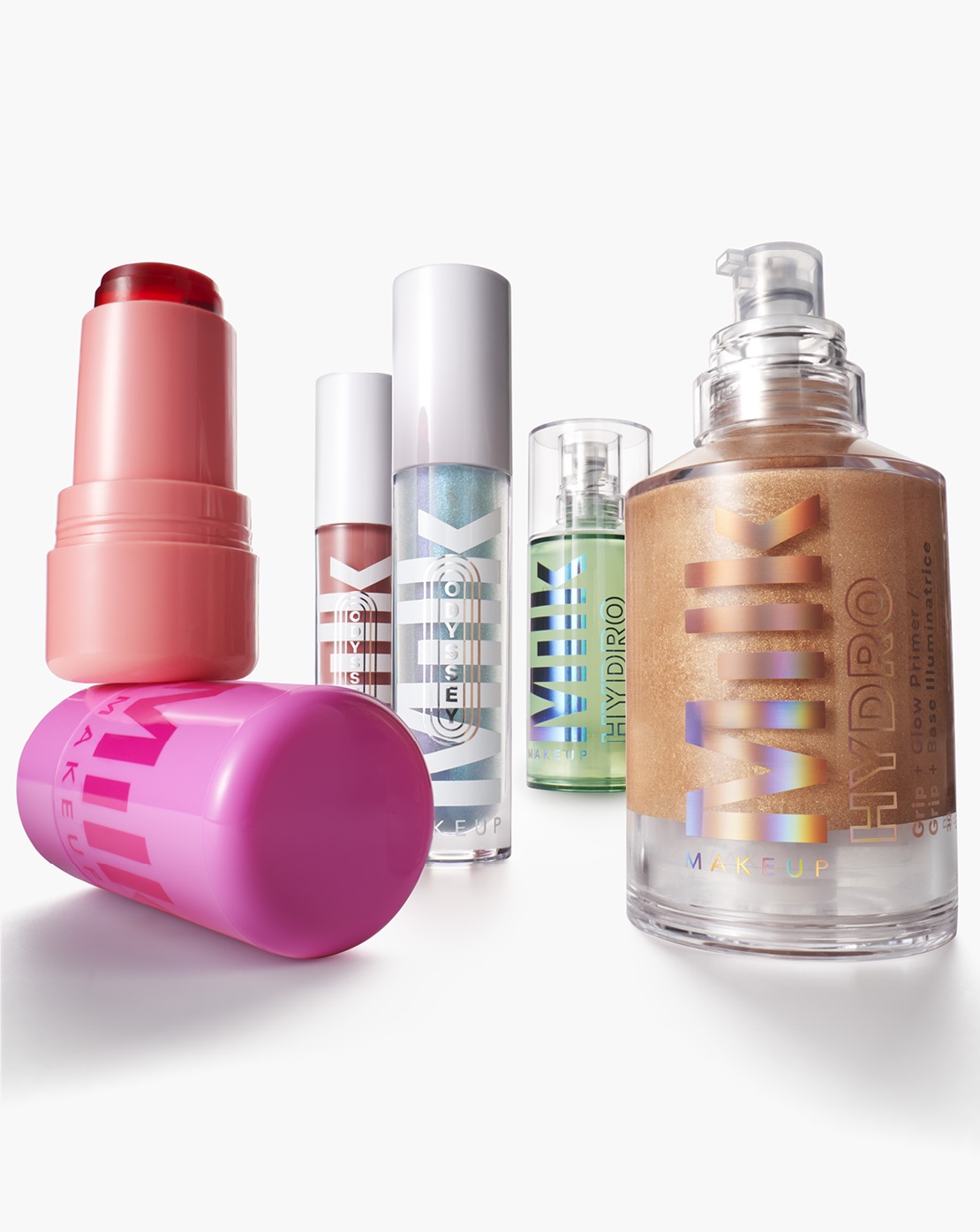
At Milk, we’re all about creating easy, effective formulas that are clean, vegan, and cruelty-free. Always. That mindset has sparked a lot of our award-winning bestsellers, like our Sticks fam and Prime + Set routines. Out of those, our Lip + Cheek and Hydro Grip Primer have been two hero products that are very iconic to Milk and to our Milk Fam.
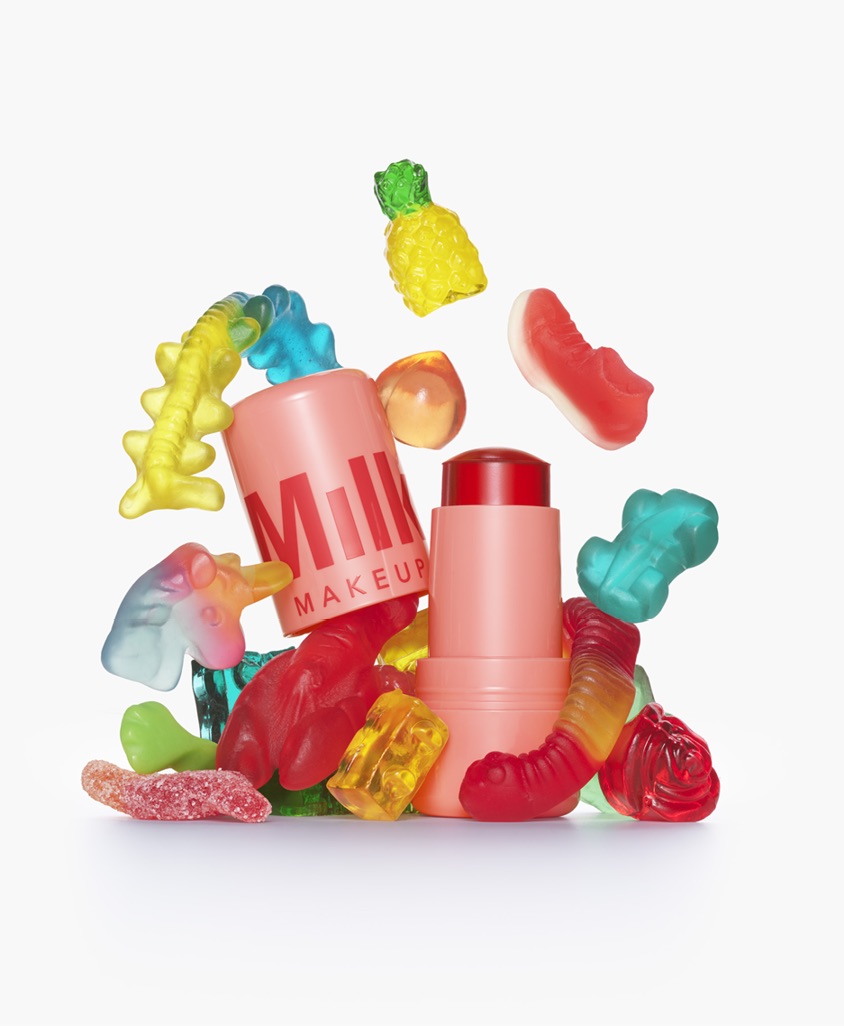
What can you tell us about the latest products Hydro Grip + Glow Primer as well as the new jelly tints?
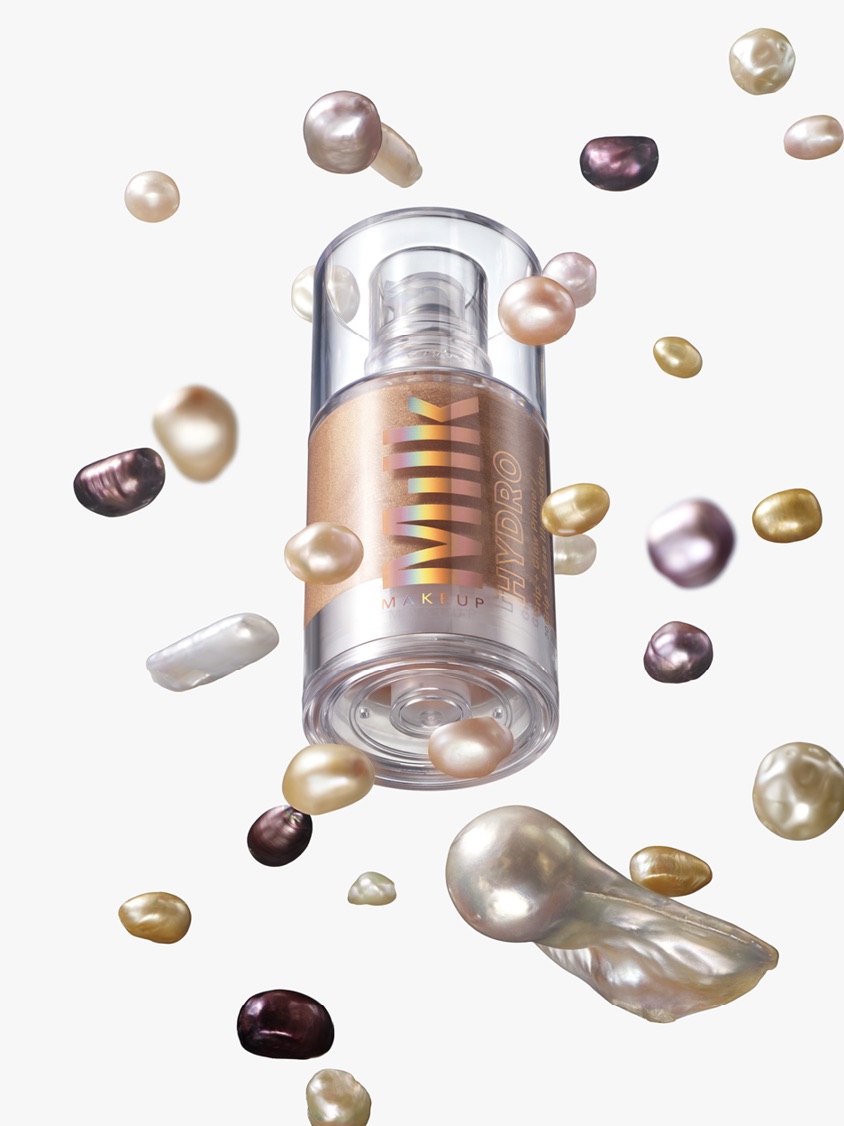
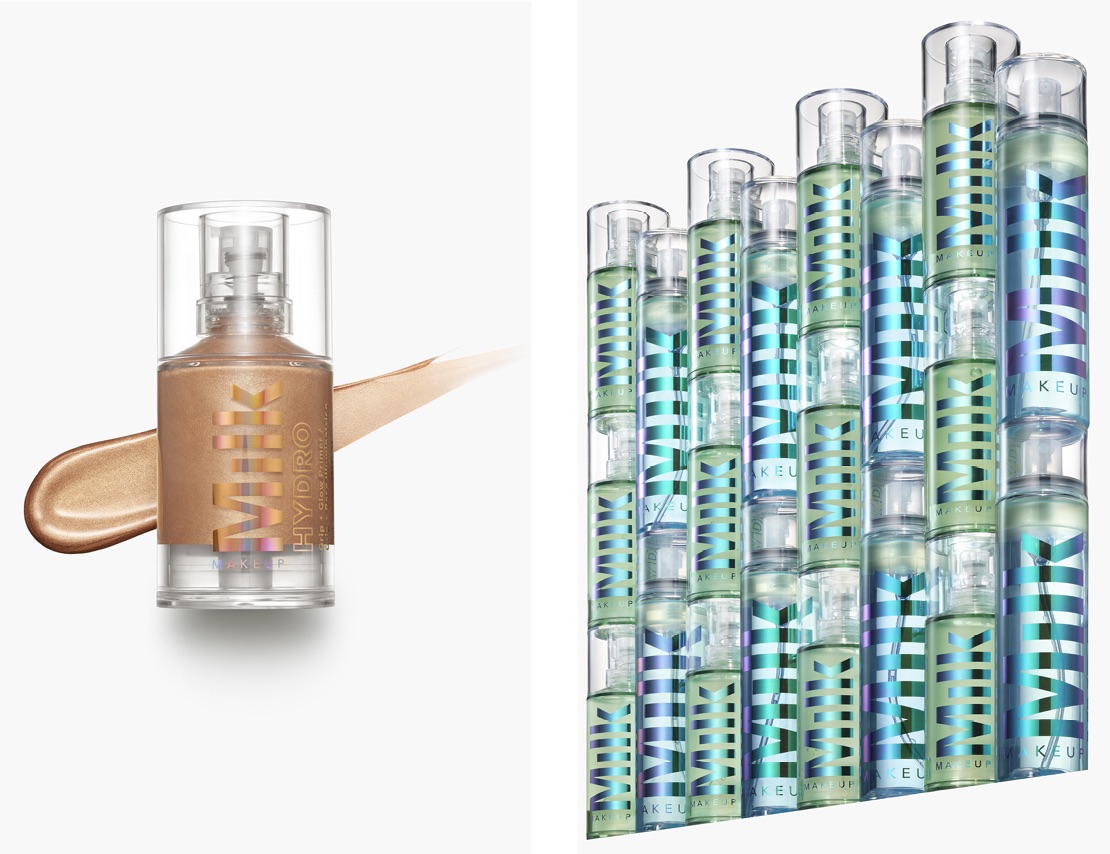
Hydro Grip Primer is a Milk Makeup icon, a multi-award winner with over 5 million bottles sold and over 35 million hashtags to date. Even 5 years after launching this past Q1, it was among the top 10 highest EMV makeup products in the USA, according to Tribe Dynamics. It’s such a Milk Fam favourite that we decided to expand the family with our new Hydro Grip + Glow Primer. Our formula is based on the idea that hydration is the secret to makeup that goes on evenly and stays glass-like all day. That’s why we made this new clean, illuminating primer with hyaluronic acid and niacinamide to boost hydration, plump the look of the skin, and create a smooth base.
Our original Cooling Water Stick was a top seller from the second it launched, and for years, we wanted to expand the franchise. Blush always seemed like a natural fit but it had to be innovative in the same way our cream sticks were when we first launched them in 2016. The Product Development team had recently discovered a new gelling agent that had a cooling, refreshing feel to it, and it clicked—the perfect next iteration for Cooling Water and for blush. This jelly-like texture has never been done before, so it required a lot of trial and error to ensure we kept the integrity of the product and still met our clean, vegan, and cruelty-free standards.
What are your main priorities as a growing beauty brand today?
Milk Makeup is focused on delivering exciting, innovative, clean beauty products while staying true to our core values of inclusivity, creativity, and community. We have always prioritised innovation in clean beauty—introducing vegan, cruelty-free products, that are packed with skincare benefits—so customers can feel good about what they’re putting on their skin. Expanding our reach globally, strengthening our brand’s presence in diverse markets, and continuing to foster an inclusive community is also key. At every step, we ensure our products and brand remain accessible, authentic, and in sync with the needs of our Milk Fam and the evolving beauty landscape.
How does Milk Makeup differentiate itself from competitors?
First and foremost, our commitment to innovation has been central to our identity. From the beginning, we focused on creating products that are both high-performance and easy to use, catering to a diverse range of skin tones and types. Our unique formulations, such as the use of nourishing ingredients, appeal to consumers who prioritise both quality and skincare benefits.
Secondly, our brand ethos of embracing individuality and self-expression resonates with people worldwide. We’ve cultivated a community that values authenticity, encouraging customers to experiment with their looks and break conventional beauty norms. This approach has fostered a loyal following and a vibrant community of fans who feel connected to our brand.
Additionally, our unique aesthetic—clean, modern packaging with a fun, youthful vibe—sets us apart visually in a crowded market. We’ve leveraged social media and influencer partnerships effectively to reach a global audience, making our brand accessible and engaging.
Lastly, our commitment to inclusivity and sustainability reflects the values of today’s consumers. By offering a wide range of shades and ensuring our products are cruelty-free and environmentally conscious, we align with the expectations of the modern beauty shopper.
How important is it to have skincare elements in your products?
It’s very important because the beauty landscape is ever-changing and consumers are more conscious about what they put on their skin. That’s why we deliver breakthrough innovations with high-quality formulas that are good for you and your skin. Every ingredient is there for a reason, and ingredients that don’t meet our high standards are cut. That’s why everything you see from us will always be clean, vegan, and cruelty-free.
What can you tell us about the brand in the Middle East?
Milk Makeup’s expansion into the Middle East has been a meaningful step in connecting with a diverse and dynamic beauty community. The Middle Eastern market is known for its bold, expressive approach to beauty, which resonates strongly with our values of individuality and self-expression. We’re thrilled to bring our clean, vegan, and cruelty-free formulas to a region that deeply values quality, innovation, and authenticity in beauty products. Our goal is to foster a space where customers can #LiveYourLook confidently, and we’re excited to see how the Milk Fam in the Middle East continues to embrace and inspire new ways to use our products.
What are the must-have products all readers should invest in?
Not to downplay any of our launches—because we’re incredibly proud of the innovation and creativity that has gone into every single product—but a few that have always felt iconic to Milk are our Hydro Grip Primer and our Cream Sticks family. Hydro Grip Primer is our community favourite, multi-award-winning, 12-hour hydrating makeup primer. It’s been a steady best-seller since we launched it, and, as I mentioned earlier, we recently launched the luminous version, Hydro Grip + Glow.
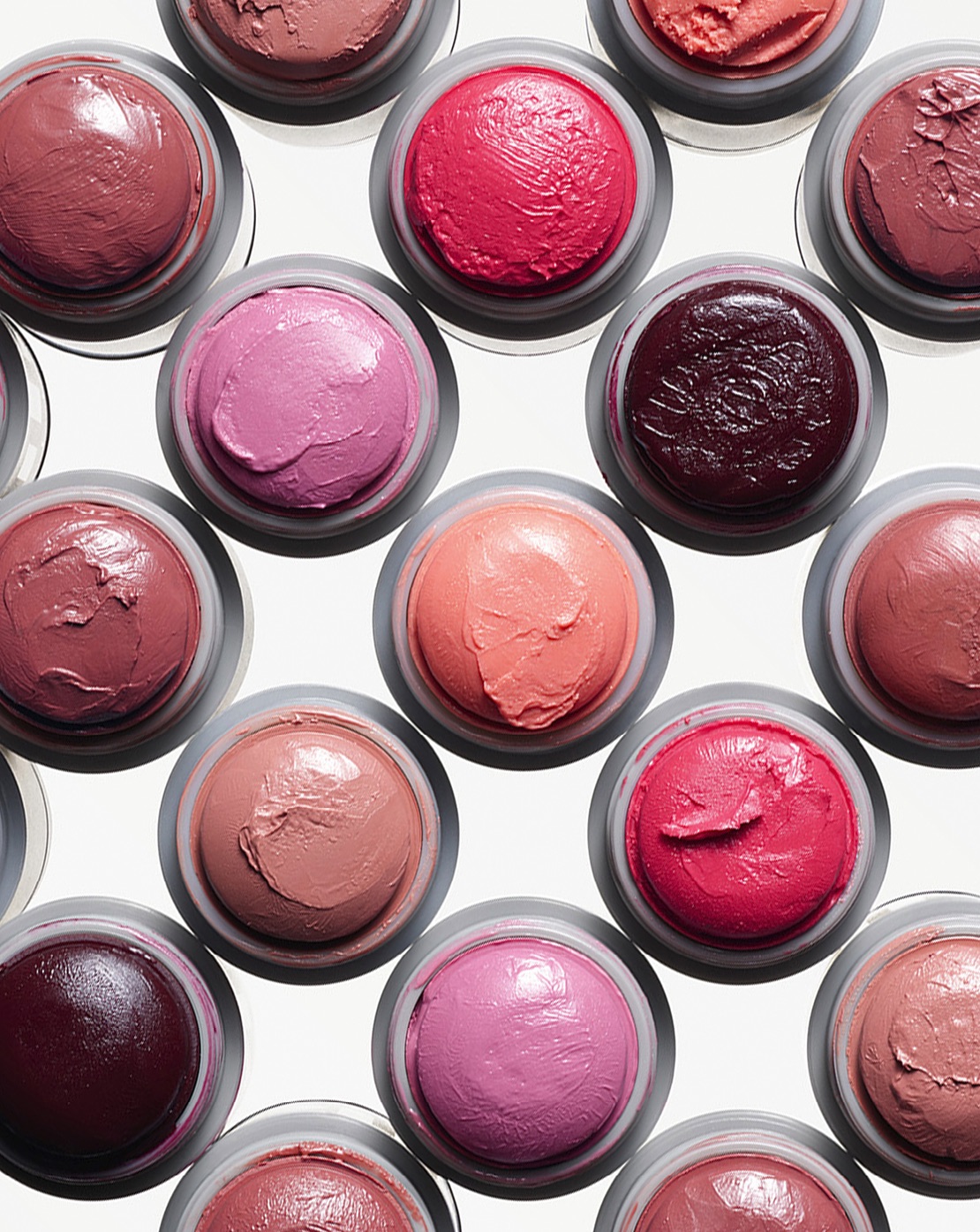
We have had our Cream Sticks since Milk Makeup launched as a brand in 2016, and they have been a key product family for us all these years. Whether they are a busy mum, hustling to their 9 to 5, or just looking for something quick, we wanted to offer products that are multi-use, easy to apply, and don’t require any additional tools to apply them. When we launched, there were very few stick products available, so offering our products in this format just felt like a natural fit. In this family, we have Lip+Cheek, Matte Bronzer, Sculpt Stick, and Highlighter. You can do a full face of colour in seconds and each stick has over 1,000 swipes!
On the business side – what are the biggest challenges you face as a brand?
As a growing beauty brand, navigating a highly competitive market while staying true to our core values is an ongoing challenge. We are committed to producing high-quality, clean, vegan, and cruelty-free products, which can sometimes mean higher production costs and longer development timelines to meet our standards. Another challenge is balancing rapid growth with maintaining our brand’s authenticity and community-first approach—ensuring that our expansion doesn’t dilute our connection with our Milk Fam. Finally, responding to the industry’s evolving expectations around sustainability and inclusivity requires continuous innovation, which is exciting but demands agility and significant investment. These challenges push us to stay focused on delivering meaningful, impactful products without compromising our values.
How would you analyse the beauty industry as a whole today and where it is heading?
The beauty industry is undergoing significant transformation, driven by a deeper understanding of individuality and inclusivity. As we move forward, I envision a beauty landscape that celebrates diverse expressions, transcending traditional norms and embracing unique identities. Sustainability will be at the forefront, with consumers increasingly demanding products that are not only effective but also environmentally responsible. Technology will continue to shape our beauty routines, offering personalised solutions through innovative applications and AI-driven recommendations. Ultimately, beauty will become more about authenticity and self-empowerment, allowing individuals to define and express their own standards of beauty without the constraints of conventional ideals.
How does Milk use brand ambassadors to support its growth?
At Milk Makeup, community is at the heart of everything we do and our Milk Fam has been with us every step of the way. Whether it’s by sending them mailers, hosting events, or partnering on a paid capacity, we always ensure we are engaging with true brand champions to support our community-first strategy.
For example, it was our engaged Milk Fam that sparked the virality of our Cooling Water Jelly Tint earlier this year. This was in part due to our strong product seeding strategy and paid partnerships with key content creators; however, most of the buzz around the launch came organically from our highly engaged community. This level of success is something we’ve never seen before and we owe it all to our Milk Fam.
Elie Saab Unveils New Luxury Residences In Ras Al Khaimah
Elie Saab and OCTA properties have unveiled plans to build an impressive new luxury residential building on Rask Al Khaimah’s Al Marjan Island.
La Mer by ELIE SAAB Residences will be a three-tower beachfront property, defined by Elie Saab’s distinctive style.
The development will boast a total of 355 residences while will be categorised into ten different residence categories, from one-bedroom apartments to chalets and villas, and nine exclusive penthouses spanning between 10,453 sq. ft. and 14,484 sq. ft. The Residences, designed with ELIE SAAB’s signature style, provide an exclusive living experience complemented by signature pieces from the ELIE SAAB Maison furniture collection.
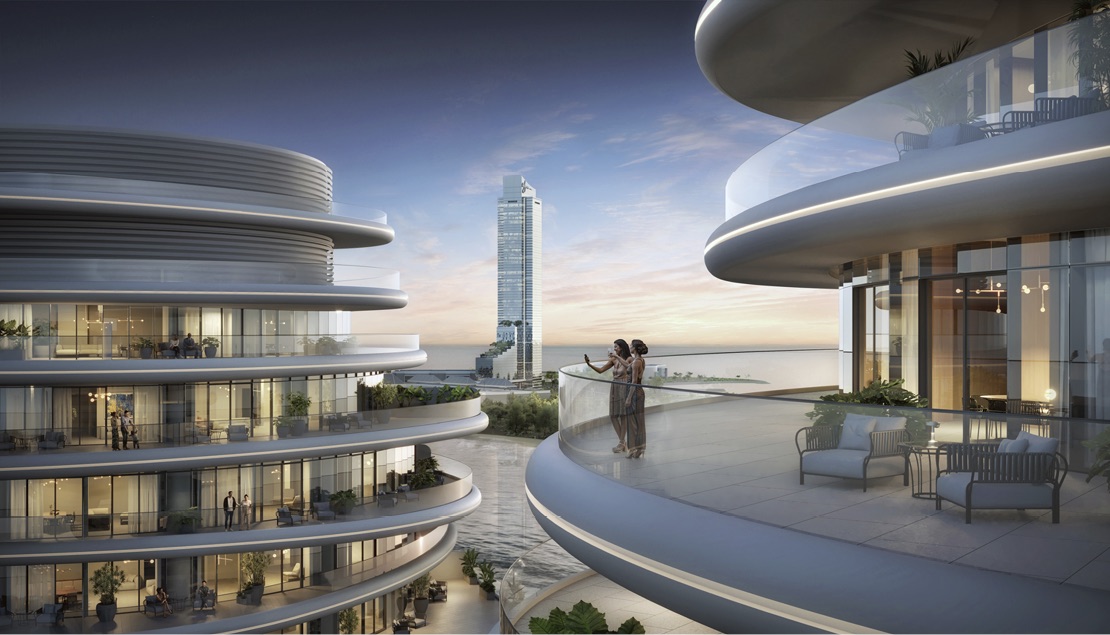
An impressive array of amenities will enhance the living experience for residents. At ground level, families will enjoy a dedicated kids’ club and indoor pool spanning 2,553 sq. ft., along with an outdoor kids’ play area and a kids’ pool. Wellness and pampering are prioritised with both male and female spas, measuring 1,058 sq. ft. and 1,107 sq. ft., respectively, complemented by a well-equipped 3,124 sq. ft. gym and a grand pool extending over 4,837 sq. ft.
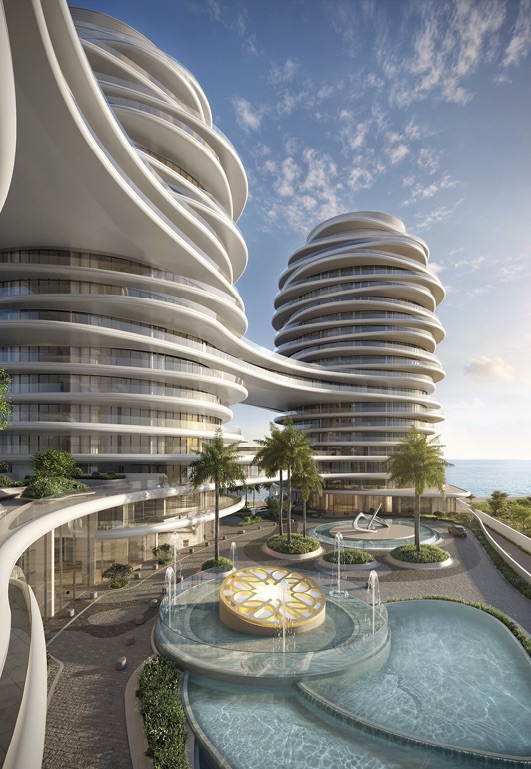
Serenity Park, located on Level 1, invites relaxation with its expansive 10,266 sq. ft. of landscaped space, while the Signature Lounge adds a touch of elegance at 1,271 sq. ft. Levels 2 and 3 feature the Link Garden, spanning 8,884 sq. ft., creating a seamless connection between outdoor and indoor spaces. On level 18, residents can enjoy the Sky Gym, Sky Co-working Space, Sky Lounge, and a stunning Sky Pool & Deck, which includes an impressive area of 7,522 sq. ft. These thoughtfully designed amenities cater to both leisure and lifestyle needs, creating an integrated community experience.
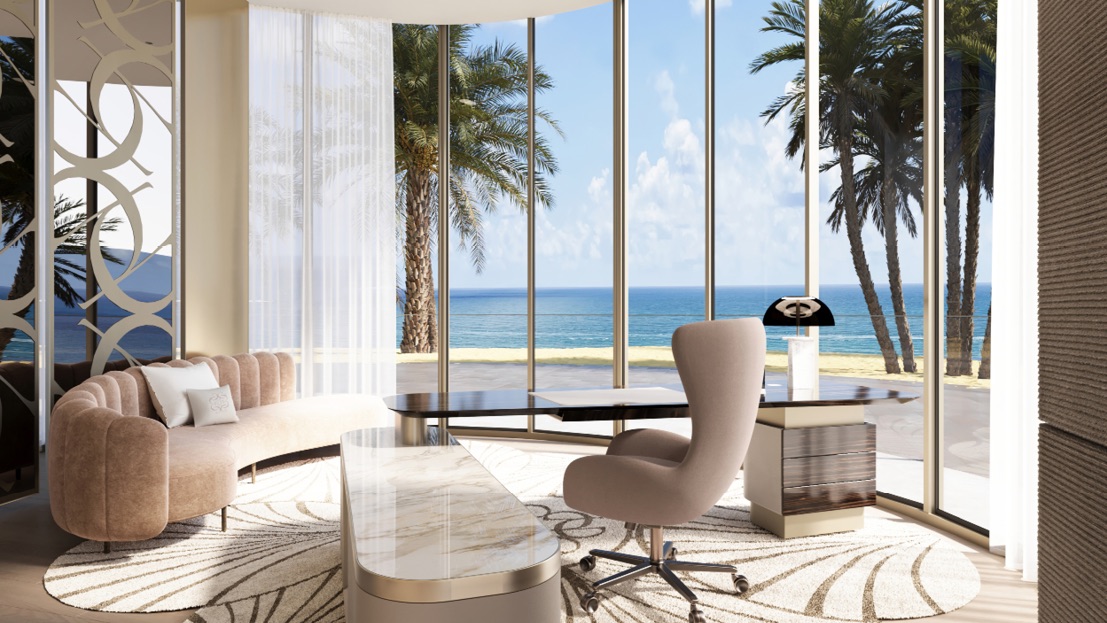
“La Mer by ELIE SAAB reflects our commitment to expanding our brand’s presence in the luxury real estate market, offering an exclusive resort-style living experience in Ras Al Khaimah. As the region grows into a premier entertainment and resort destination, this development brings the distinctive ELIE SAAB lifestyle while embracing the unique character of Ras Al Khaimah’s surroundings.”-said Elie Saab Jr., ELIE SAAB Group CEO.
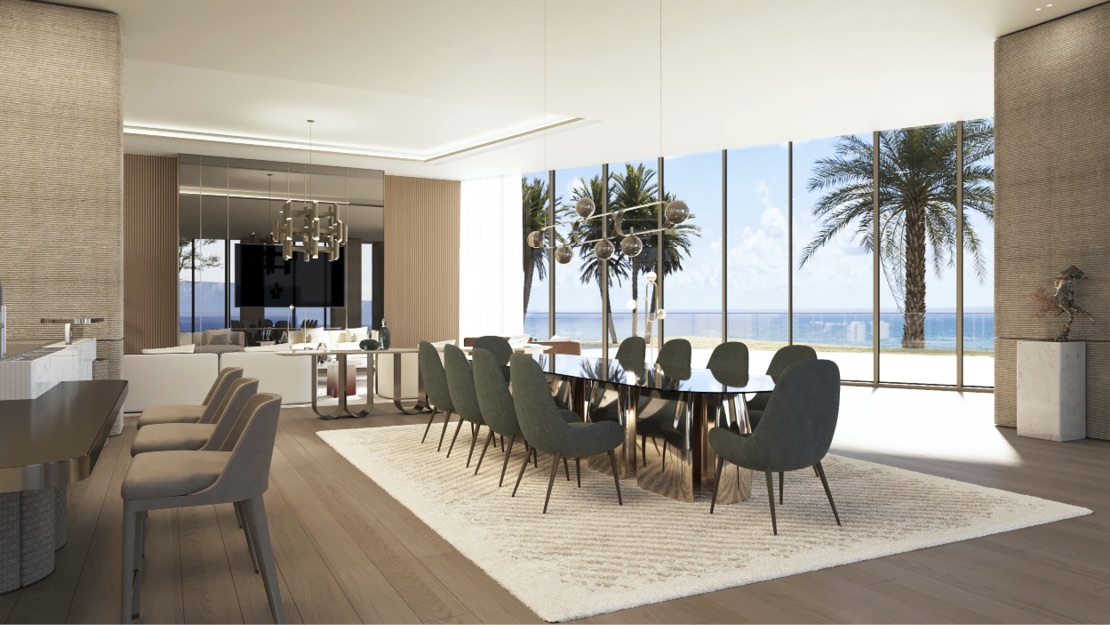
Construction began on La Mer by ELIE SAAB in Q3 2024, with the project’s expected delivery date in Q1, 2028.
Tiffany&Co.’s Victoria Reynolds Discusses The New Blue Book Collection
Earlier this year, Tiffany & Co. revealed the third and final chapter of its 2024 Blue Book high jewellery collection.
Tiffany Céleste rounds off the brand’s story of otherworldly creations with a series of exquisite pieces that celebrate the brand’s iconic jewellery designer Jean Schlumberger’s boundless imagination and his fascination with the mysteries of the universe. Tiffany’s Chief Artistic Officer of Jewelry and High Jewelry, Nathalie Verdeille does this through her choice of symbols, motifs and stones throughout the collection, with the four chapters taking on key themes: Owl on a Rock, Phoenix, Unicorn and Star Burst. Each chapter reinterprets an iconic Jean Schlumberger creation, including his most emblematic Tiffany & Co. design: the Bird on a Rock.
The House also welcomes new designs in the previously unveiled chapters; Apollo, Arrow, Ray of Light and Shooting Star; to the Fall iteration. Each creation rediscovers Jean Schlumberger’s iconic interpretations of the sun, moon, stars, distant galaxies and fantasy worlds. “Each chapter began with an intensive study of the subjects or themes that inspired it. For the fall launch of Tiffany Céleste, the Star Burst, Phoenix, Owl on a Rock and Unicorn chapters reference archival Jean Schlumberger masterpieces, such as his Phoenix brooch,” said Nathalie Verdeille, Chief Artistic Officer, Tiffany & Co. “Each new design is an ode to Jean Schlumberger’s boundless creativity.”
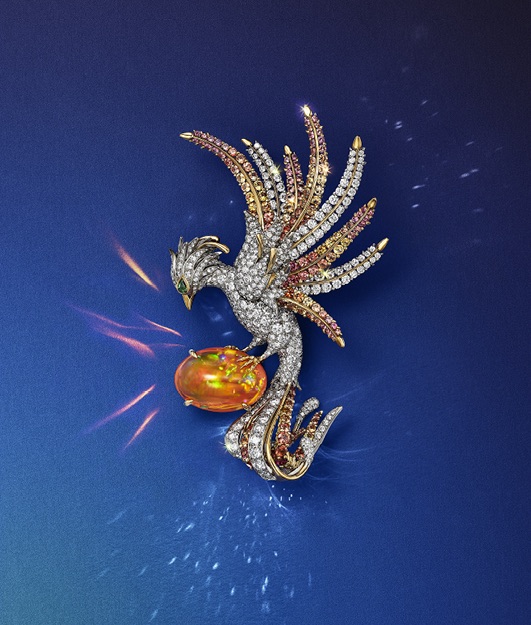
As the final creations in this year’s show-stopping collection are revealed, we talked to Victoria Reynolds, VP High Jewellery & Chief Gemmologist at Tiffany & Co. to find out more about the choices of stones, the inspiration, and the fine balance between tradition and modernity that’s leading Tiffany & Co. as a brand today.
Congratulations on the 2024 Blue Book collection – how would you describe this collection in your own words?
The 2024 Blue Book collection, Tiffany Céleste, is an inspired tribute to the cosmos, where artistry meets nature’s rarest gemstones. It reflects a harmonious blend of imaginative design and exquisite craftsmanship, capturing the ethereal beauty that Jean Schlumberger so masterfully portrayed. Each piece is not just a creation; it’s a narrative of wonder and elegance, inviting the wearer to experience the magic of the universe.
Why do you feel it’s important to still honour the work of Jean Schlumberger?
Honouring Jean Schlumberger’s work is crucial because his designs epitomise the essence of Tiffany’s creative spirit. He pushed boundaries in jewellery design, merging nature with fantasy in ways that resonate deeply with our mission today. By celebrating his legacy, we not only pay tribute to a master but also inspire a new generation of designers to innovate while staying rooted in our heritage.
There are some incredible gemstones in this collection – what are your highlights?
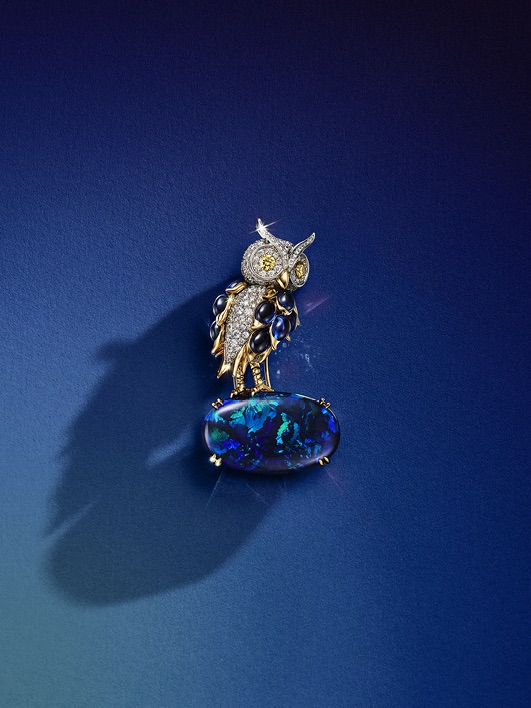
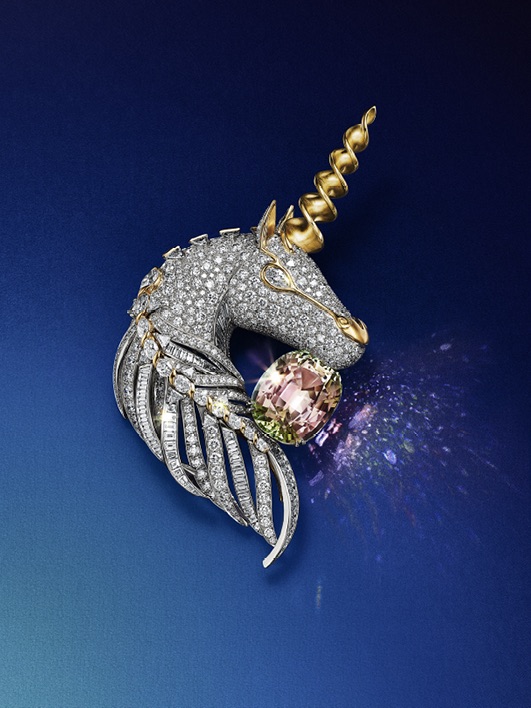
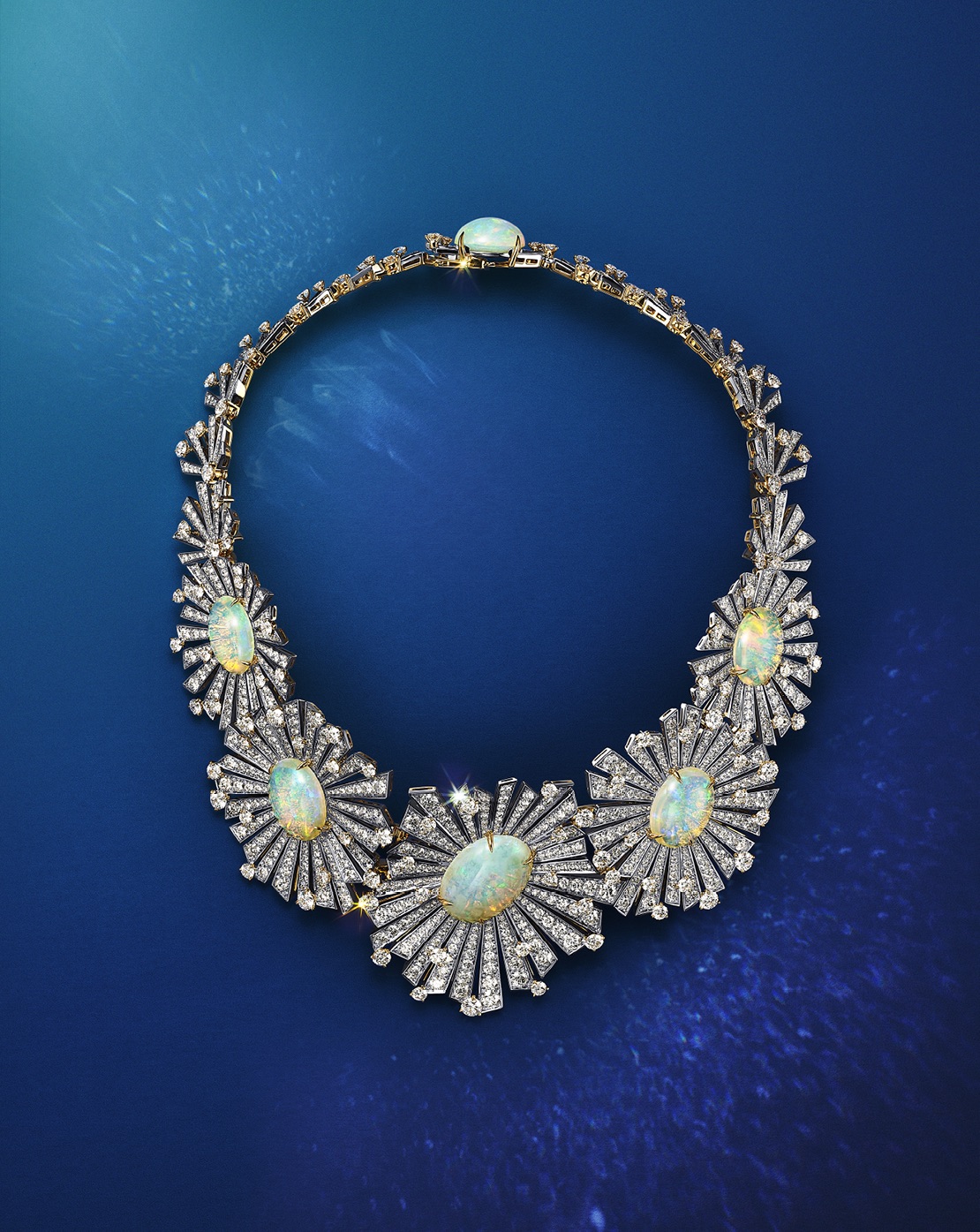
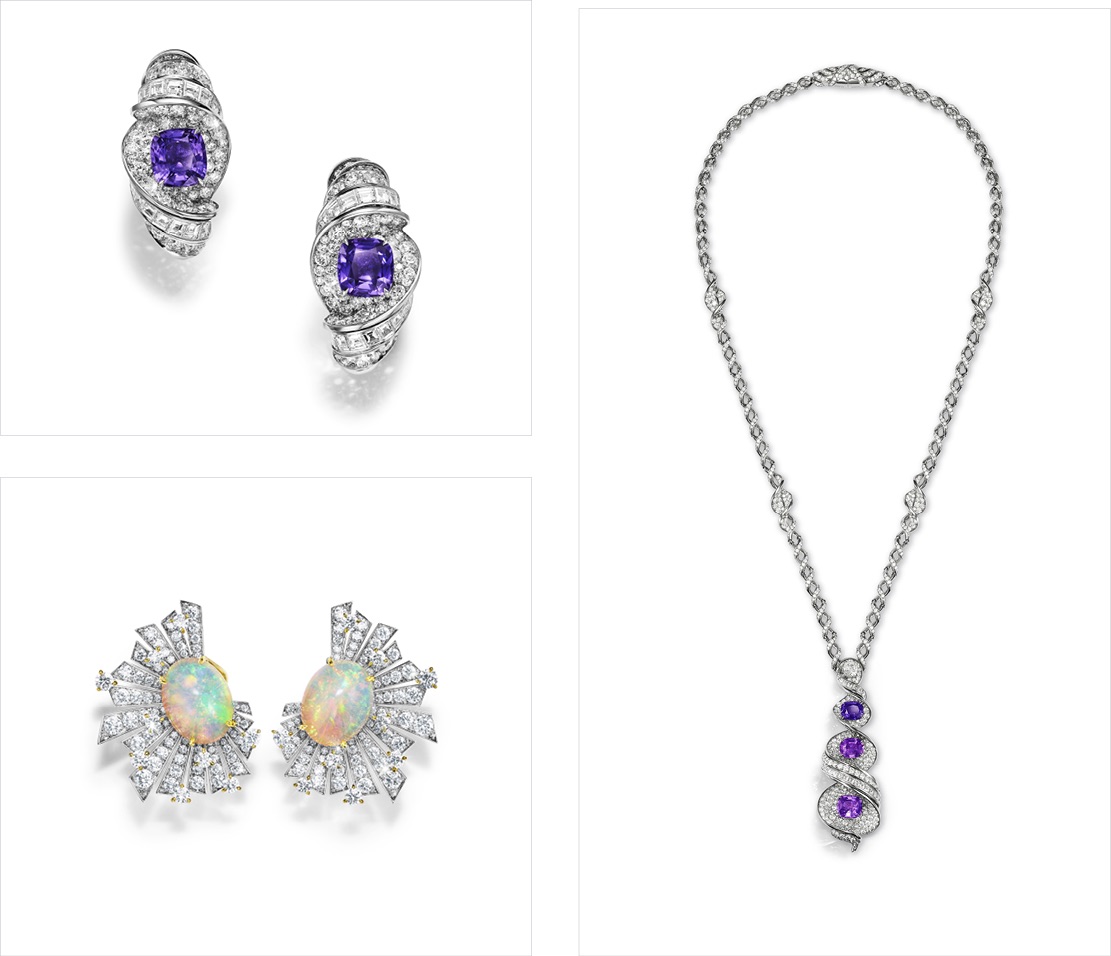
One standout piece is the Unicorn brooch, featuring a stunning cushion-cut bicolour tourmaline of over 25 carats. Its vibrant hues celebrate the essence of colour and embody the mythical quality of the unicorn. Each chapter of Blue Book 2024: Tiffany Céleste introduces remarkable gemstones that resonate with the collection’s theme. For example, the Owl on a Rock chapter showcases ethereal black opals, moonstones and star sapphire, while the Phoenix chapter highlights opals and rubellites, lending a fantastical allure. Additionally, crystal opals and enchanting pink and purple sapphires further enhance the narrative, making each stone a vital part of Jean Schlumberger’s enchanting story.
The selection of gems is also very interesting – can you share a little about some of the combinations you like and why they work together?
The careful selection of gemstones in this collection creates stunning contrasts and harmonies. For instance, the vibrant colour of the incredible suite of rubellites is perfectly complemented by the rare warm colour plate of Umba sapphires—in the Phoenix chapter. The ethereal nature of black opals and moonstones in the Owl on a Rock chapter complements the more striking sapphires, creating a visual dialogue that captivates the eye. Each combination not only tells a story but also showcases Tiffany’s expertise in harmonising colours and textures, resulting in designs that are both enchanting and timeless.
This year, we see a revisit to the iconic bird on a rock creation – tell us about this and the choices of stones in these pieces specifically.
The Bird on a Rock revisitation showcases our commitment to heritage while embracing modern techniques. In these pieces, we’ve chosen an array of vibrant gemstones to evoke the natural beauty and whimsy that Schlumberger originally captured. Each stone is selected not only for its colour but for its ability to bring the design to life, enhancing the narrative of each piece.
We know that sustainability is a subject that’s close to your heart. Can you share a little about the latest developments in this field at Tiffany & Co.?
At Tiffany & Co., we are continuously striving to set the standard for sustainability in the luxury industry. We have very rigorous sourcing practices, ensuring that all our gemstones and metals are ethically sourced. We are also focusing on transparency in our supply chain, allowing customers to understand the origins of their pieces. Our commitment to sustainability reflects our belief that luxury should be responsible.
What’s the biggest challenge you face in your role today?
Continuing to look for the most exceptional gemstones that will inspire our design team. As trends evolve, it’s crucial to stay ahead while ensuring that each piece remains true to our heritage and craftsmanship standards. This requires constant exploration and adaptation, which can be both challenging and exhilarating.
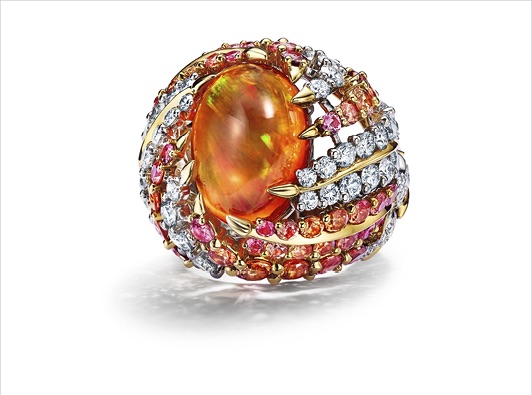
What’s a stone that has most touched your emotions over the years?
It continues to be the incredible Tiffany Diamond. It has and will continue to remain my “True North,” inspiring my team and me to source the most exceptional diamonds and gemstones Mother Nature gives us.
You have been with the brand for many years. How has Tiffany & Co. evolved over the decades?
The brand has evolved significantly while remaining true to its core values. Over the decades, we’ve embraced innovation in design and technology, expanded our commitment to ethical sourcing, and fostered a culture of creativity that honours our heritage. This evolution allows us to connect with a new generation of clients while continuing to set the standard for luxury and craftsmanship in the high jewelry market.
Hamda Al Mansoori Founder Of HASHI On Redefining Fine Jewellery In Dubai
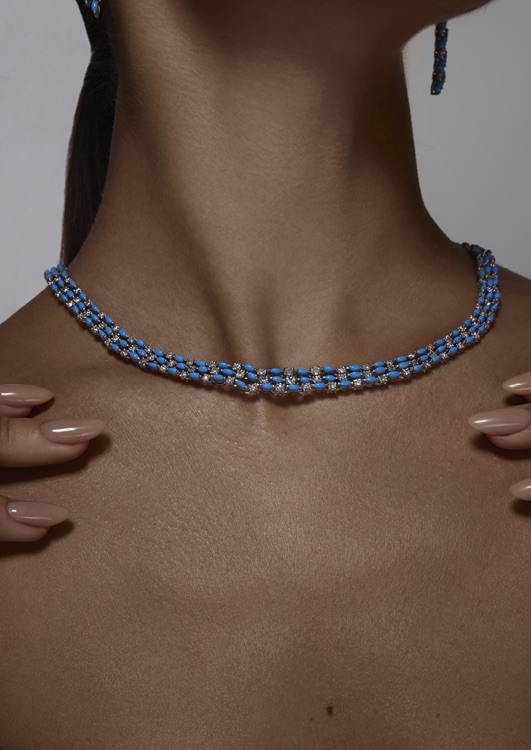
In 2013, Dubai-based Emirati designer Hamda Al Mansoori decided to start her own jewellery business with the vision of bridging the gap between traditional craftsmanship and modern design.
Her brand Hashi, commits to creating timeless individual pieces for its clients, women who appreciate the finer things in life.
Hashi’s signature collections have international appeal with a touch of Middle Eastern inspiration. Crafted with fine diamonds and gemstones, the brand’s main line collections include Essence of Life, a line of delicate pieces that celebrate the beauty of simplicity; Nature’s Wonders, an ode to nature, and Royal Treasures; inspired by the opulence of royal heritage. The brand offers designs for men and women as well as creating bespoke pieces for individual customers. With a comprehensive jewellery manufacturing facility and a commitment to finding the most extraordinary diamonds and gemstones, HASHI is dedicated to crafting fine jewellery that is both accessible and exceptional. Here, we talk to the brand’s founder Hamda Al Mansoori to find out more about the vision behind Hashi and where she plans to take it next.
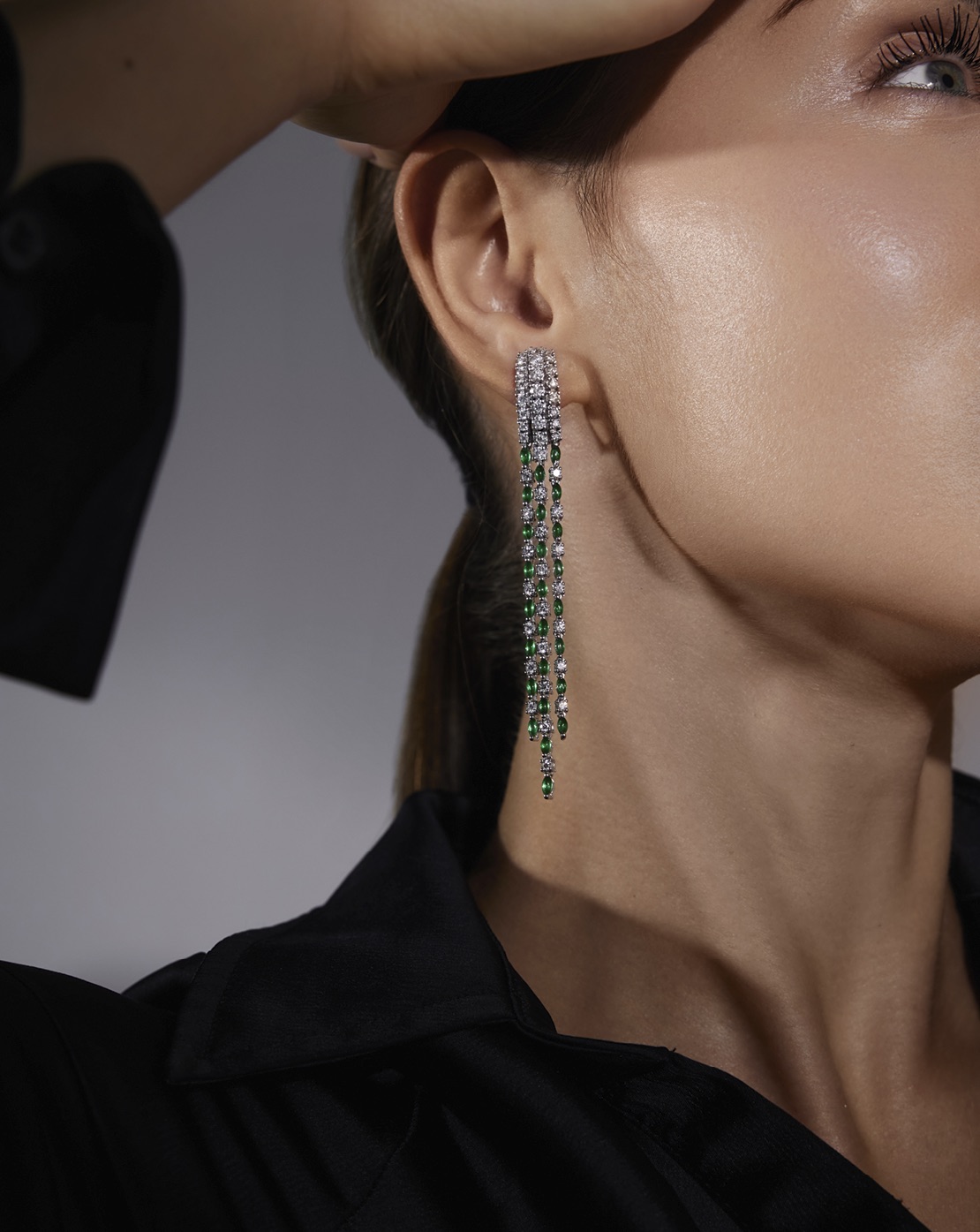
How would you describe your brand in your own words?
The word HASHI means “Bridge” in Japanese. This vision for HASHI is to build a bridge between luxury, beauty and simplicity. HASHI blends timeless elegance with Middle Eastern inspiration, creating jewellery that reflects individuality and empowers its wearer.
Who is the woman you design for?
I design for the modern, confident woman who appreciates fine craftsmanship, timeless beauty, and pieces that tell her unique story.
Can you tell us a little about your latest collections?
Our latest collections focus on capturing elegance with a contemporary twist, featuring fine diamonds, gold, and meaningful designs that celebrate individuality and heritage.
What do you think women today are looking for from jewellery?
Women today seek jewellery that reflects their personality, offers timeless elegance, and tells a personal story while also being versatile for both daily wear and special occasions.
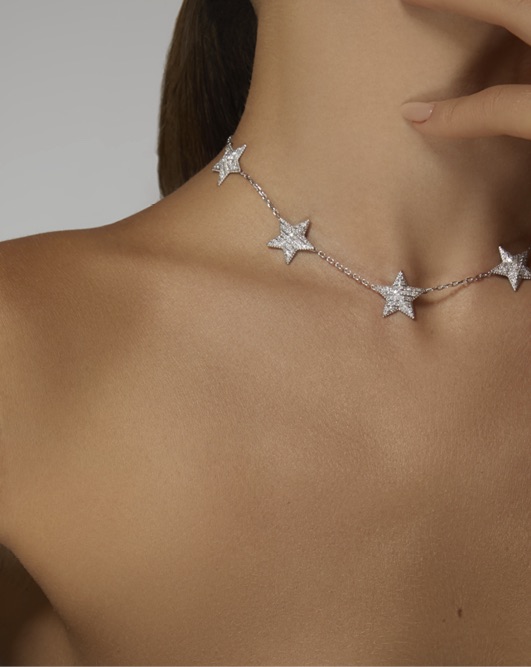
How do you create a relationship with your clients?
I create and build up the relationship through the bespoke designs, understanding their individual style, and ensuring each piece feels like an extension of their personality and journey.
How does your culture and upbringing inspire what you do?
My Middle Eastern heritage and upbringing deeply influence my designs, drawing from traditional regional artistry and symbols, which I blend with modern elements to create something truly timeless.
What’s the biggest challenge you face as a designer today?
The biggest challenge is balancing innovation with tradition while also navigating the evolving demands of sustainability and craftsmanship in the modern market.
Looking ahead, what is the vision for your brand?
The vision for HASHI is to continue pushing the boundaries of creativity while maintaining our commitment to timeless elegance and empowering women through meaningful designs.
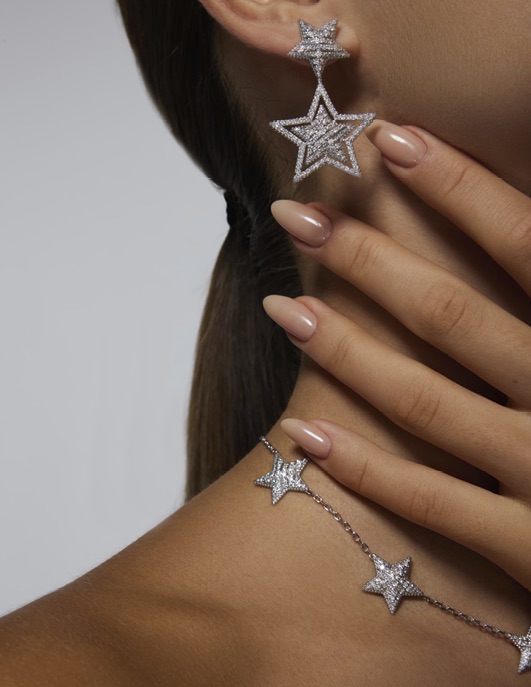
We are seeing some great new brands in the region – what are your thoughts on the industry today and how it’s growing?
The industry is growing rapidly, with a focus on innovation, sustainability, and personalisation. There’s a renewed appreciation for craftsmanship, making this an exciting time for jewellery in the region.
Tell us about how sustainability influences what you do.
Sustainability plays a crucial role in our production process. We aim to source responsibly, minimise waste, and create lasting designs that transcend trends.
Can you tell us a little about your production process?
Our production process involves meticulous craftsmanship, using high-quality materials and a blend of traditional and modern techniques to ensure each piece is both beautiful and enduring.
What’s your first memory of jewellery?
My first memory of jewellery is watching intricate pieces being crafted by artisans, and feeling fascinated by the detail, care, and legacy each piece held.
What is something you would still like to do?
I would love to explore more ways to merge art and jewellery, creating pieces that feel like wearable works of art infused with personal meaning.
What else is in the pipeline for the brand?
We are working on expanding our collections and offering more bespoke services, while also exploring new markets to bring the HASHI ethos to a broader audience.
Fashion Trust Arabia Winner Yasmin Mansour On Her Plans To Expand Her Brand
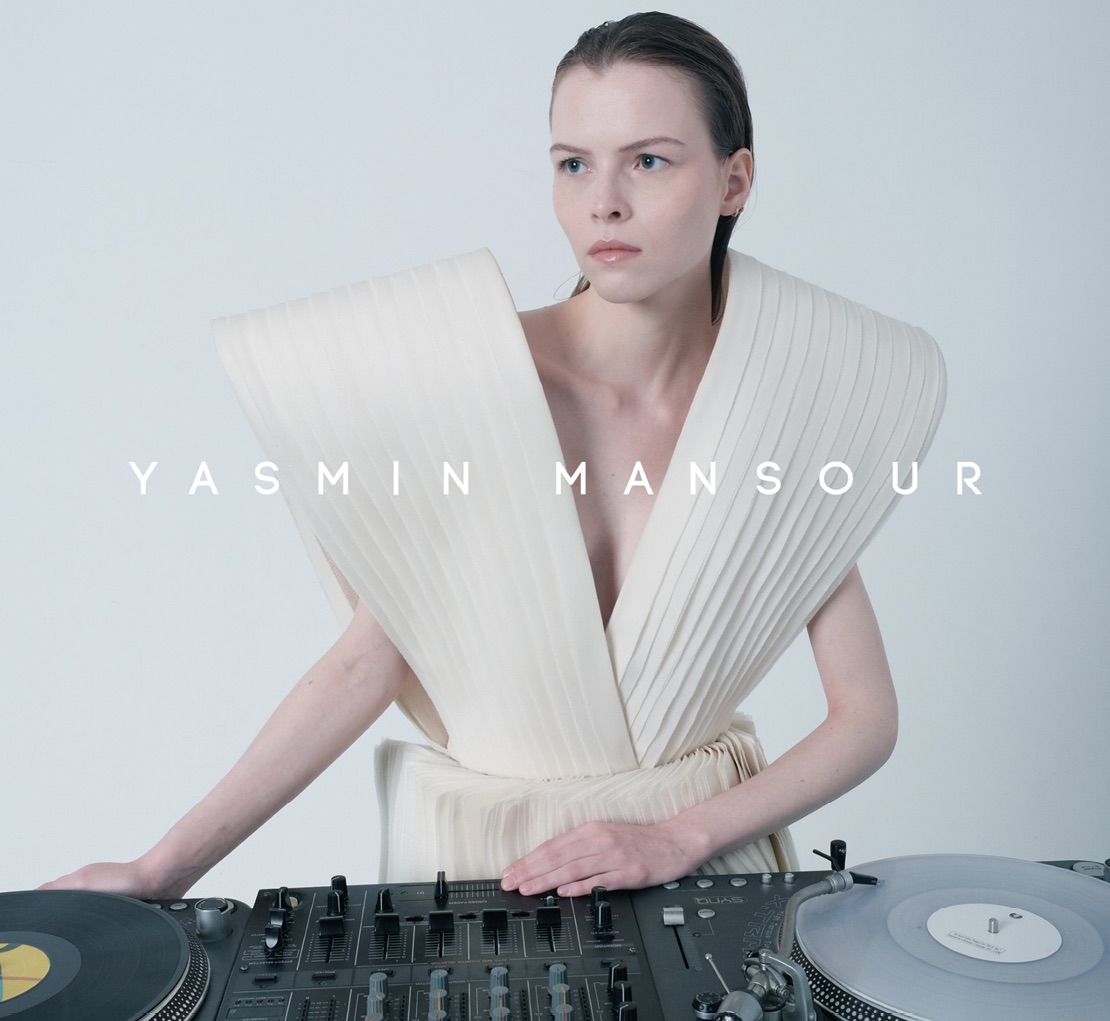
Yasmin Mansour, this year’s FTA Prize winner in the Eveningwear category, is just getting started.
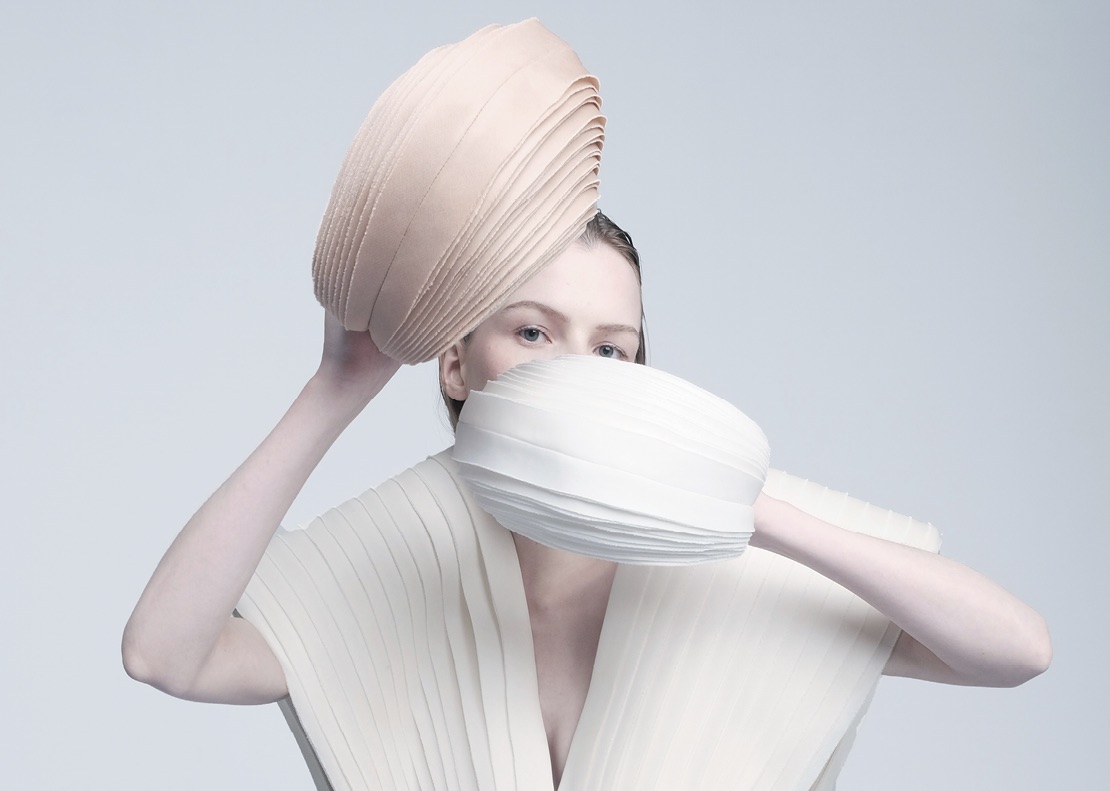
Having launched her brand ten years ago, the Doha-based design has big plans, and thanks to Fashion Trust Arabia, those plans will so become a reality as she embarks on the next chapter of her brand. Launching in 2013, her brand was one of the first luxury womenswear labels based in Qatar and has remained steadily successful ever since. Beginning as a made-to-order brand, Mansour soon saw the need to make her products more sustainable and she created a unique technique that utilised leftover fabric, inspired by the region’s landscape with geometric and structural details. Creating elegant one-of-a-kind pieces Mansour has carved out a niche and significant following of customers who come to her for her timeless, unusual designs. Now, since winning the FTA Prize this year, she is starting to plan the next steps for her brand. We find out more.
Congratulations on winning this year’s FTA prize in the eveningwear category – what does this achievement mean to you as a designer?
For me, it was a very long journey from when I started the brand back in 2013. There were a lot of challenges because, back then, there were very few brands based out of Doha. It was a journey of discovering myself as a creative. Winning the FTA Award comes at the right time when I’m ready to show the brand’s new direction and expand to the global market. I believe it happened at the right moment.
Can you tell us about your experience of the event itself?
Marrakech is such an amazing city. I have a lot of Moroccan friends who showed me around the city, and it was fantastic. I was so shocked by how magical this city is and so I was really happy that this year’s event took place in Marrakech, especially as part of The Qatar-Morocco 2024 Year of Culture, that’s connecting the cultures of Qatar and Morocco. It was an incredible experience. Seeing the museums, the food, the architecture and the people was very diverse and interesting. I would love to go back and discover more about the craftsmanship, the techniques for the embroidery and more about this industry there.
How do you think Fashion Trust Arabia is helping to elevate and support the work of designers in this region?
FTA is there to help take your brand to the next level, which is what I need right now for my brand. I think this prize can give you the tools needed to expand your brand as well as mentorship to help you as a creative move in the right direction and know where you should be. This is what I need right now.
Plus, there is the huge exposure that came alongside the event, especially with the local scene – I didn’t expect it. A lot of people from Morocco have approached me, and it was fantastic. I think this was the biggest event in its history.
And of course, being awarded by Princess Lalla Hasna of Morocco was the biggest highlight for me. I felt so honoured to be part of this, and it was really special to be given the award by her.
Tell us a little about your brand and its background.
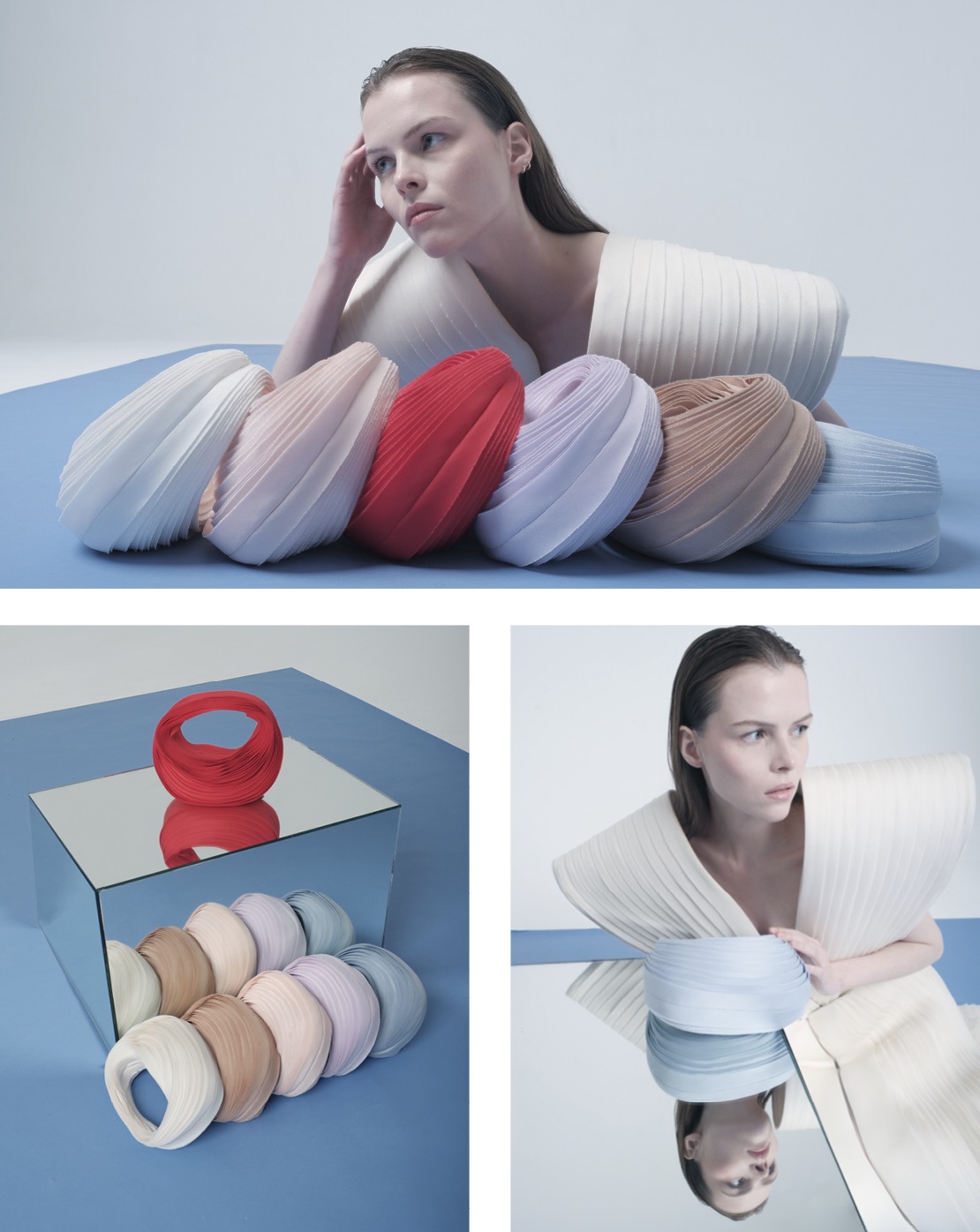
My brand started in 2013. I started out making custom-made dresses for private clients. I also made some ready-to-wear capes. We did unexpected embroidery with different materials. Then in 2020, when Covid happened, I put the brand on hold. At this point, I started working on new research into how the brand could be more sustainable and how to have a clear brand DNA. I created an exhibition for the opening of M7 Doha from leftover material. The story behind it was that a long time ago, women were the ones who used to build the traditional tents in Qatar, and they would do it by hand. So we called this piece “the book” and it was a celebration of the power of women.
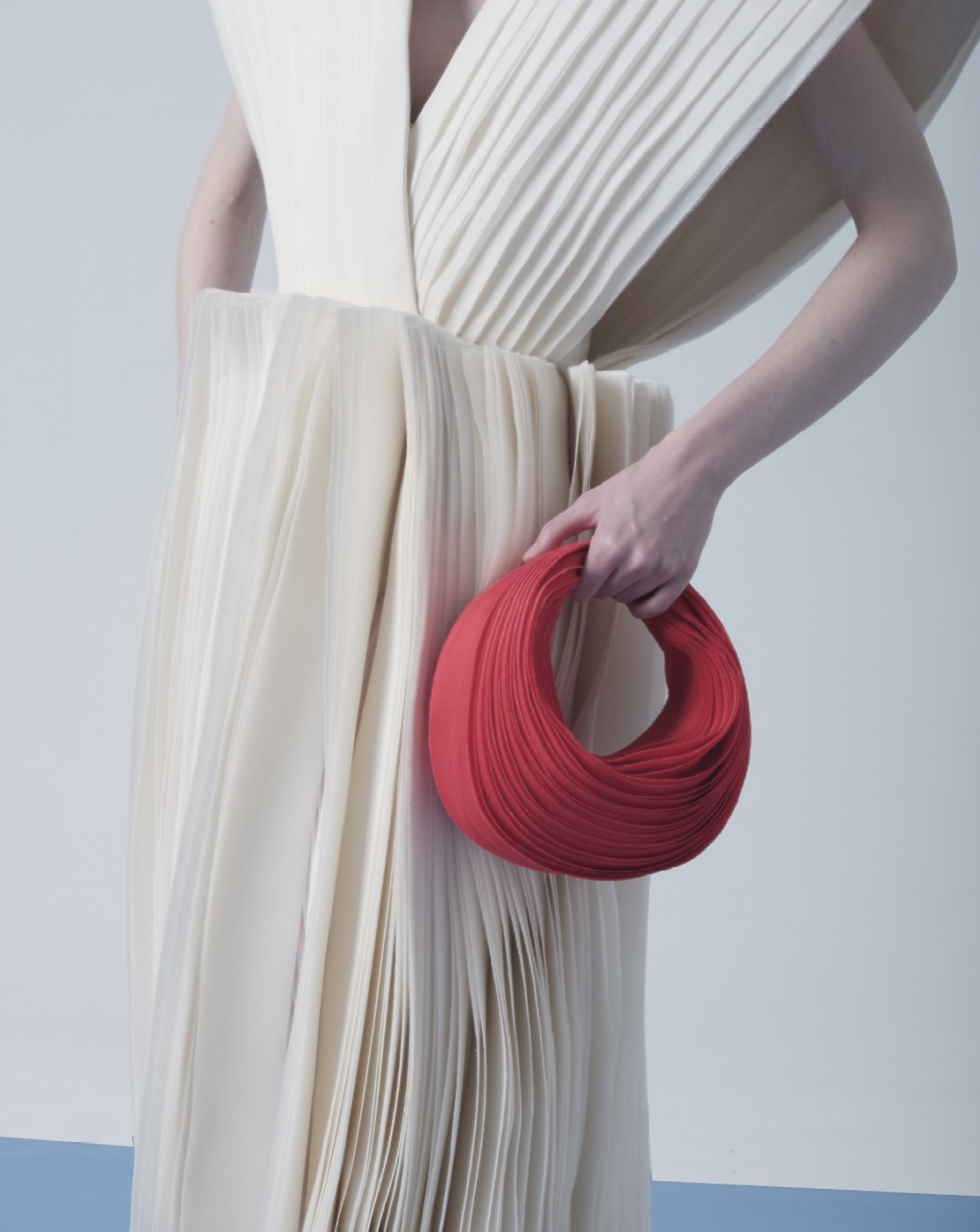
The piece was sold immediately, making me realise that I needed to work more with this millefiulle technique. I loved it and saw a way to develop to become my signature. In 2021, I created a bag using the same technique, and the success of this made me want to stick to this DNA and take it to my ready-to-wear collections. So now we have capes, dresses, and skirts, all following the same layering technique, which has become my brand DNA.
We are not producing seasonal products to make the brand more sustainable. We focus on timeless pieces of around ten pieces twice a year and I think this will make the brand special.
Can you tell us about the technical process and craftsmanship involved in your signature technique?
The first bag was made from leftover fabric from a dress I made for a private client. I saw the fabric on the floor, and I wondered what I could do with it. So, I started to collect materials, and over a period of 8 months, the first bag was completed. That’s how it started. Everything is handmade in my studio in Doha. Some of the bags are made from leftover material from other ready-to-wear pieces. If not, we talk to our suppliers who supply us with different colours of fabric. Everything is made to order, we don’t have any ready production for now, but for the next year, we are looking to have a few pieces in department stores.
Our message is to create “Made in Qatar” products that can go everywhere and target all kinds of women, regardless of location, age, etc.
How do you plan to scale the brand, and where do you envision it in the future?
When I started my brand ten years ago I dreamed of having a Qatari global brand that goes international. Plus, I wanted to make sure that all the products were made locally. With winning the FTA prize and my support from M7, I can see how my brand can be easily expanded to be sold in big department stores in Europe and The United States. I also plan to have some dinner gatherings to get people to know more about the label and the story behind it.
What’s your plan of action now you’ve won the FTA prize?
My next steps are producing more and finding the right platform to present my items. I think my focus market will be Europe since we have already been selling a few pieces there, and I want to expand that further. I want to focus on my new ready-to-wear line and develop that as well as bags. That will be my goal for the next two years. Produce and create more.
Would you like to further expand into other categories?
Yes, of course. We do have a plan to produce a perfume. It’s something I’ve been researching for six years, but I haven’t found the right moment to go through the process yet, but we are going to produce it in Grasse in France and we are going to start this next year. Hopefully, we will launch the perfume by the end of 2026. Why perfume? Because I have a very close relationship with the countryside. I fell in love with flowers, and nature is a really important element in my life, so I want to have my scent. Something really special.
Footwear is also another category I would love to produce, but when I have no idea!
What’s the biggest challenge?
A good thing about me is that I’ve always been consistent, and I didn’t give up. I’ve always wanted to produce and have a clear message. But I think the challenge now is to keep the success going. I must work hard to do this and focus on moving forward.
What inspires you?
Travelling. I travel a lot and meet a lot of people. Everything around me inspires me when I’m travelling – the buildings, the streets, the food, the people. Art also inspires me. I’m in love with Yayoi Kusama and Andy Warhol. I read about these artists and their journeys and look at their art. Keith Haring’s last exhibition in Paris was very inspiring. These artists open my eyes to new creations.
How would you assess the fashion industry in the region today and where it’s heading?
Everything is happening in our region now. When I started the brand ten years ago, everything was much slower, but now I feel the future is here, and I think the scene will continue to change very quickly. We have a lot of creatives here. We have very special techniques for creating our products. We have dreams. We have a very beautiful culture to share with the world. I feel our culture, heritage, and stories also inspire other people. I believ in a few years, cities like Doha, Riyadh and Dubai will be cities that people really want to travel to to attend fashion weeks.
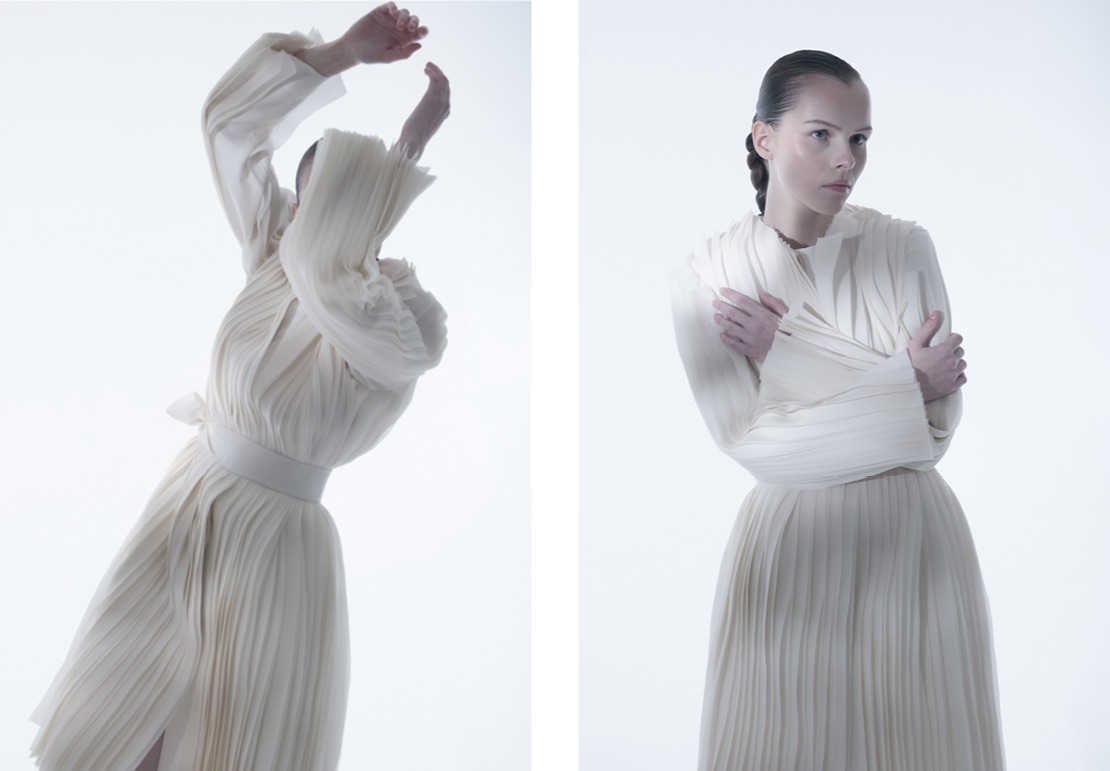
Do you feel there is a hunger for it here from the designers?
Yes I think so, especially with initiatives like FTA. When you see someone appreciate your hard work, that encourages you more. This prize is not only about mentoring or financial support; it’s much deeper than that. It’s inspiring for other generations and motivates people to know that someone will appreciate their work on a global scale. It pushes you to try harder and fight for it more.
It’s not easy to be a designer, especially in this region. We don’t have the manufacturing that other parts of the world have. We don’t have the resources, so we have to travel and invest. But I think the success is worth all the steps in the journey. When you have it, it’s a very special feeling.
What do you think organisations like FTA can do to further support design talent in the Middle East?
It’s a hard question for me because I navigated my journey alone, I never asked for support. I feel that when it comes to organisations, it needs to be about more than just putting you on the right platforms. When I started my brand, I was lost. I didn’t know how to make it happen. I didn’t know where to produce, which factories to use, what to do next. Even if you have the knowledge to create that’s not enough – you need to understand the business side of the industry. I wasn’t a businesswoman; I was a designer, but I became a businesswoman because of my business. So, I feel these organisations could give further support in finding the right direction in the business side of our brands and offering support and direction.
What’s the final message you would send to our readers?
Keep dreaming and creating because it’s a beautiful thing to share your creations with others.
Georges Kern The CEO Of Breitling On Celebrating 140 Years Of The Brand
This year, Breitling has been celebrating an impressive 140 years of the brand with a series of product launches, events and activations.
While few brands reach a milestone such as this, Breitling is soaring, with a year of rebranding and repositioning under the leadership of its CEO, Georges Kern.
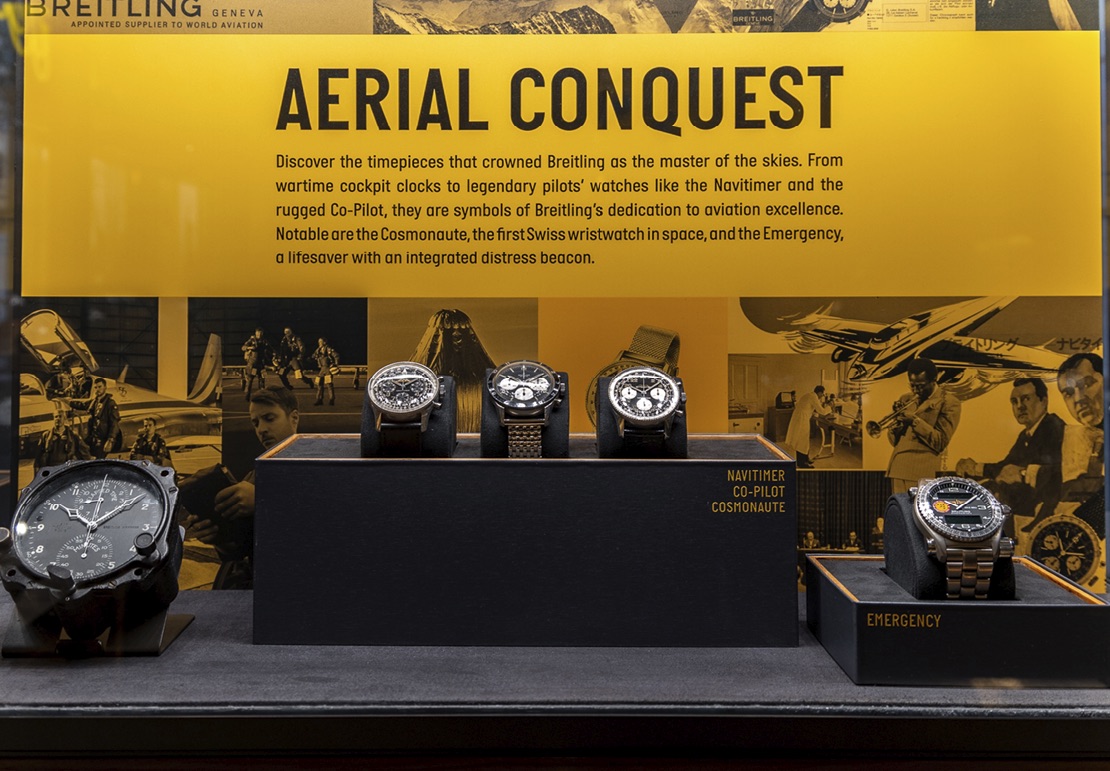
The year’s celebrations culminate with a travelling exhibition that will showcase the most significant watches from Breitling’s past, storytelling highlights from the brand’s illustrious 140-year history, and share stories from some of its innovations and designs over the years. Time Capsule: The Breitling Heritage Exhibition will travel to several locations globally, including Dubai, where the exhibition will run for the month of November. As the exhibition launches in Dubai, we met with Georges Kern to learn more about this historical year and what’s to come from the brand.
Congratulations on the 140-year anniversary of Breitling – we have seen some fantastic launches and moments happening over the course of the year – what have been the highlights so far?
The idea was to have 365 days of activations rather than having one gala dinner or event. So, throughout the year, we had events and launched limited edition products related to the 140-year anniversary. We also had the launch of our museum and our book with 140 anecdotes. Now, we have the Breitling Heritage Exhibition, which will travel around the world. This is how we have tried to activate the whole year to make clear to the customers that we are not only a cool brand but a brand with substance.
How have the customers been reacting to the products and activations so far?
They love it. And they are surprised about the depth and richness of our history. Everyone knows that Breitling is the inventor of the modern chronograph, but in everything we did – we were the first chronograph in space, for instance, we are THE brand for civil aviation – people are surprised and astonished by the depth and the power of our stories and also the beauty of these vintage watches – they’re beautiful. This adds to the coolness factor of what we have achieved over the last seven years.
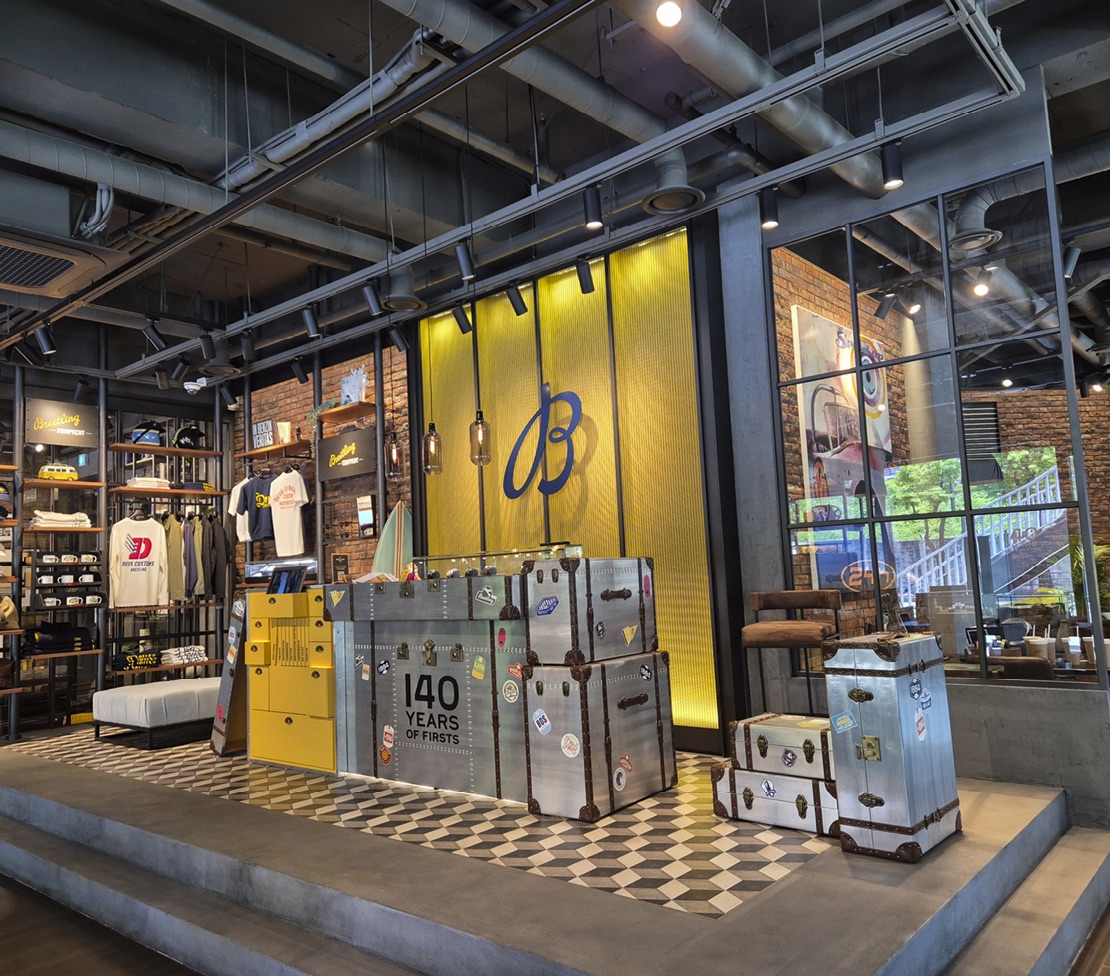
Tell us about some of the highlights of the exhibition.
We have acquired a collection of vintage watches that we believe are relevant to the brand today. These watches are travelling around the world and visitors can come to see our original designs. We also have conferences and experts coming to talk about the origins of these watches, and put them in the context of the particular period they were designed to allow visitors to understand why this watch was launched. This is all being explained, and people like it because in a digital world and a world with many problems, talking about these old days when, in a way, everything was OK gives people some joy.
Why did you choose Dubai as one of the key cities for the exhibition and how is the market here for Breitling currently?
We chose Dubai because it is one of the world’s biggest and most sophisticated watch markets. The UAE is doing extremely well. You have the latest of everything in the malls here. It has the newest boutique designs with the latest collections, which are always incredibly up-to-date. It’s very interesting for me as I always discover things when I’m here in Dubai. Whenever you launch a new concept, you launch it in Dubai. And this is why it’s such an interesting market for us and why we need to have these events and the visibility here.
We have seen a lot of openings across the Middle East, including the recent opening in Riyadh. How important is this region to the brand, and how has the performance been this year?
In general, it has been doing very well. We just opened another boutique in Abu Dhabi. We opened two restaurants in Saudi Arabia and a new boutique in Riyadh. We are very active in the region; we love it. We have a great history in the region. The Rulers have been wearing our watches for decades. So these roots, combined with the sophistication of the market, our boutiques are quite successful and I’m very happy with the performance here.
Saudi Arabia, in particular, is an interesting market because it works for some brands, but it doesn’t work for others, and I couldn’t explain it to you. Breitling is doing very well. We have seven boutiques, and we are planning to open another two or three. We have great partners in Saudi. I think an extension of the boutique experience makes much more sense than diversifying into other categories, and that’s why we’re working on that.
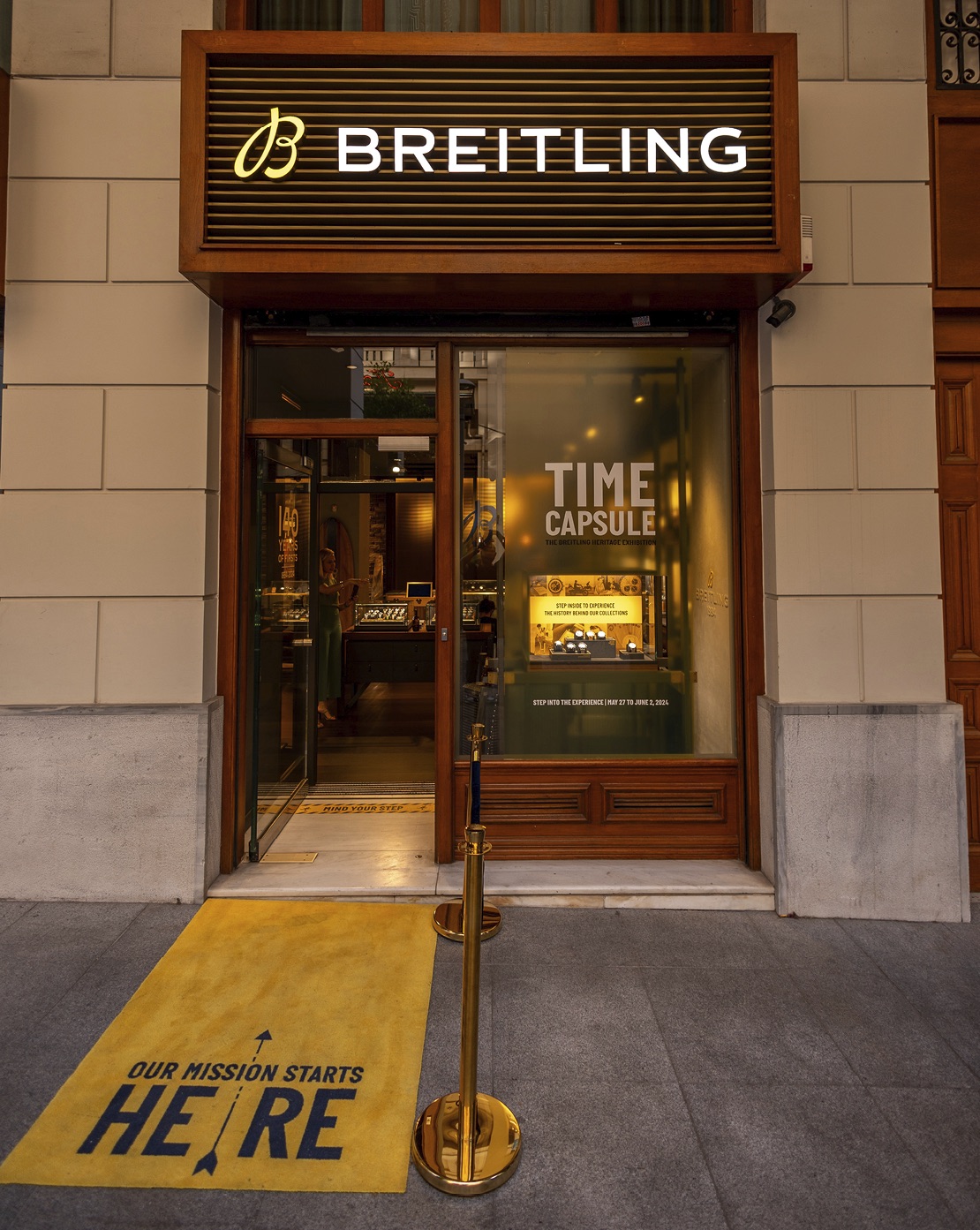
Many brands today invite their customers to buy into a lifestyle and not only a watch – where does Breitling stand on that front?
Everyone sells a lifestyle. Firstly, you are buying into a brand before buying the design and technical content. Everything is transversal, and in the watch industry, you see partnerships with cars, fashion, and sports etc. – because someone who’s interested in watches is also interested in these other industries. And, of course, you become a lifestyle brand.
What trends and developments have you seen in the watch industry as a whole over this past year?
The market is tough. We see a K shape – there is no linear decrease in the market. The K shape shows that some brands are still growing and doing very well, but they are very few. And obviously, many brands are dramatically decreasing. Thankfully, Breitling is part of the first group.
We are in a global world, meaning there are global tastes. Everyone listens to the same music on Spotify or watches the same series on Netflix, and if you’re a successful and big brand, you are part of that successful club, and I would say there are 6 or 7 of them out there today. Looking forward, I think there will be more concentration in every industry on fewer brands.
Of course, there are many successful niche brands, which will continue, but you need to be very powerful as a big brand. You need money, a strong history, and a modern, contemporary image to continue growing.
This year, we have seen many launches – how do you keep the momentum and that element of surprise for your clients?
It’s not about relaunching a product series. You need to bring impulses to your audience. You can launch a limited series or several limited pieces over a year, but it’s a small number when you put that into the context of how many watches we are selling per year. What it does is give us the opportunity to talk about the launch and the stories around it on social media to have that conversation with our audience, and I believe we need to do this around 5 or 6 times a year. It doesn’t mean that you overload your stock. It’s just storytelling and a way of connecting with the consumers. The decision process to buy an expensive watch is long. It might take a year. On average, we have 5 to 6 points of contact with the client both online and offline before that client buys a watch.
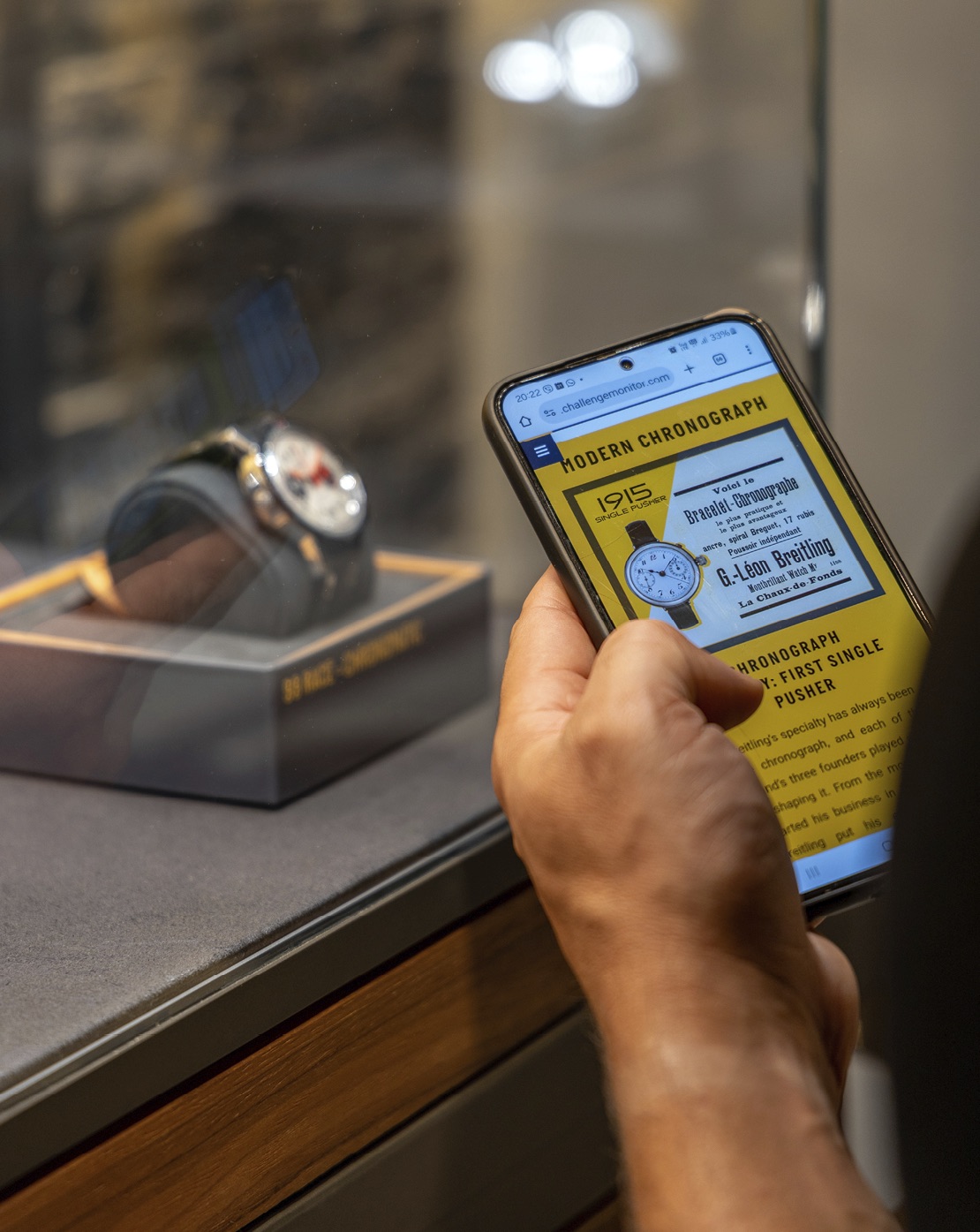
Do you find that online connection is still important in educating your customers?
Yes, not in terms of e-commerce, but in terms of interaction. There are very few people buying watches online. Especially a bracelet watch that has to be adjusted etc., but 80 per cent of the decision process is made online, and this is why we are so active, not only on social media but through blogs, YouTube, documentaries, etc. This keeps us connected to the clients and keeps them updated with what we are doing. But our boutiques are still so important because customers want to try our watches, they want to talk to our staff, it’s a very physical product, and you need to see how it feels on your wrist.
What can we look forward to in 2025?
We are preparing for three major launches next year. There will be more innovation, more renovation of products, and more impulses. It’s not always a revolution but more of an evolution of what we already have in our collections.
We have followed your journey at Breitling very closely, and it has been a great success so far. What are your current objectives and vision?
In the last couple of years, we concentrated on becoming relevant in the market again. We have rebranded the design of our boutiques, and we have a much more modern image. We are one of the coolest brands in the industry. That’s one part. But it’s not sufficient because when you become fashionable, you can also become out of fashion. This is why what we’re doing now is working on consumers’ emotional perceptions of the brand. The 140-year anniversary is reassurance; this is what we need to have and build in the coming years further to set our image as an iconic and institutional brand. We want to become an institutional brand, so it’s about being relevant and building esteem. The crazy thing is that only 10 to 15 per cent of our target group knows the new Breitling – this modern, cool, beautiful brand with beautiful products – and 85 per cent of our clients still have the old image in mind. So we need to work on raising awareness of the new Breitling because when we show that to these customers, they will see how beautiful our products are. There is a long way to go and a lot to work on, but that’s what we’re focusing on.
What’s the biggest lesson you’ve learnt in the last few years?
The industry is like cycling. You can gain speed by going down the mountain, and everything will feel easy, but as a cyclist, I know that the next mountain will come. Now, we are climbing because the market is difficult, but I know when we reach the top, it will get easier again. It’s a lesson for life – things go up and down, but that’s business.
What’s a message for clients in the Middle East?
Come to visit us to learn about the new Breitling.
Claire Choisne Discusses Boucheron’s 2024 High-Jewellery Collection
Each year, French high jewellery brand Boucheron further pushes the boundaries of craftsmanship and innovation with its Carte Blanche high jewellery collections.
With Creative Director Claire Choisne taking the lead, the collections often take ordinary elements such as air or water and create the almost impossible thanks to unique processes that combine jewellery craftsmanship with technology and innovation. This year’s collection “Or Bleu”, focuses on water as its source of inspiration and uses some of the most advanced techniques ever used in the high jewellery industry to create 26 incredible pieces. Here we find out more about what to expect.
In your words, how would you describe this year’s Carte Blanche collection?
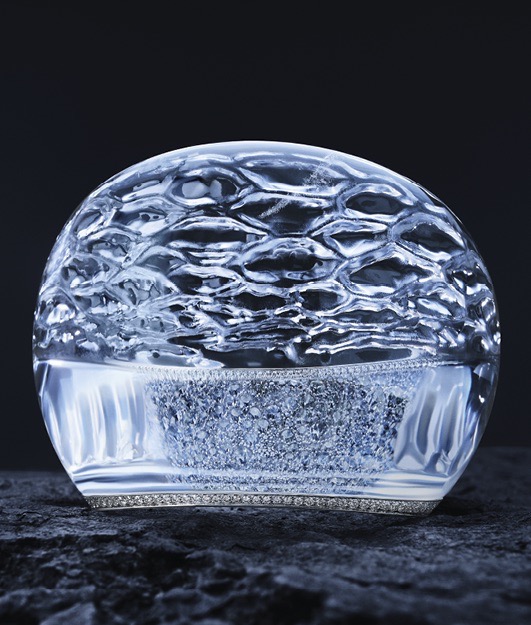
Or Bleu high jewellery collection is an ode to the memory of water. It is our most vital and precious resource, and I wanted to pay homage to its beauty by creating 26 pieces reproducing as faithfully as possible the landscapes of Iceland and reflecting the colour, texture, transparency, and reflection of water.
What is special about this collection for you?
At Boucheron, our creative process for the Carte Blanche collections is mainly dedicated to re-questioning the notion of preciousness. For example, by using Cofalit, a “final material” made by recycling an industrial byproduct, burnt wood, or sand in my Carte Blanche collections, I am fueling this question. Our aim is to demonstrate that certain materials, not considered noble at first sight, are actually just as precious as gold and diamonds. What is special about this collection is that, for me, water is the most precious and vital thing on earth, so we have managed to achieve our vision and take our creative process to its fullest.
Can you talk about some of the highlight pieces?
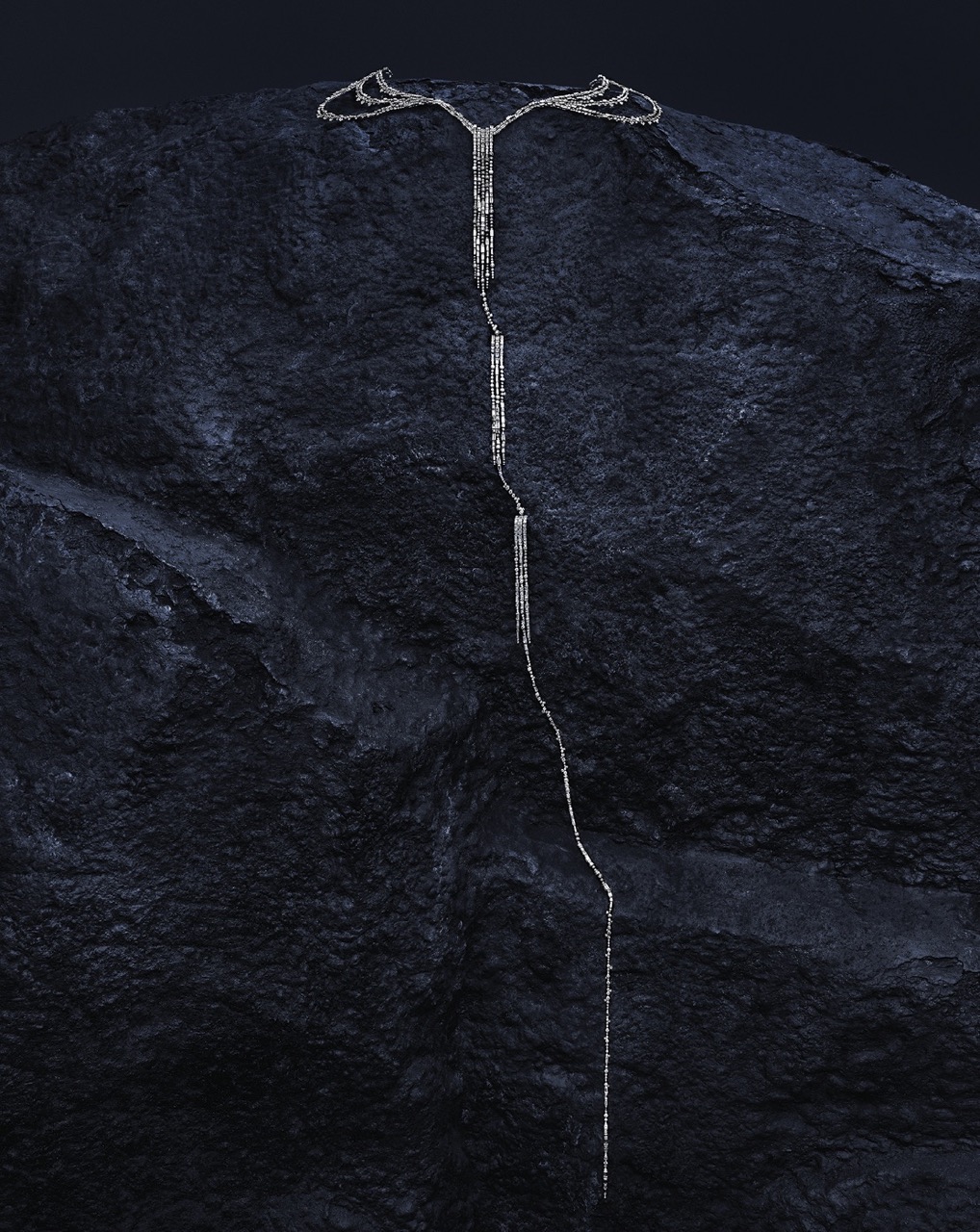
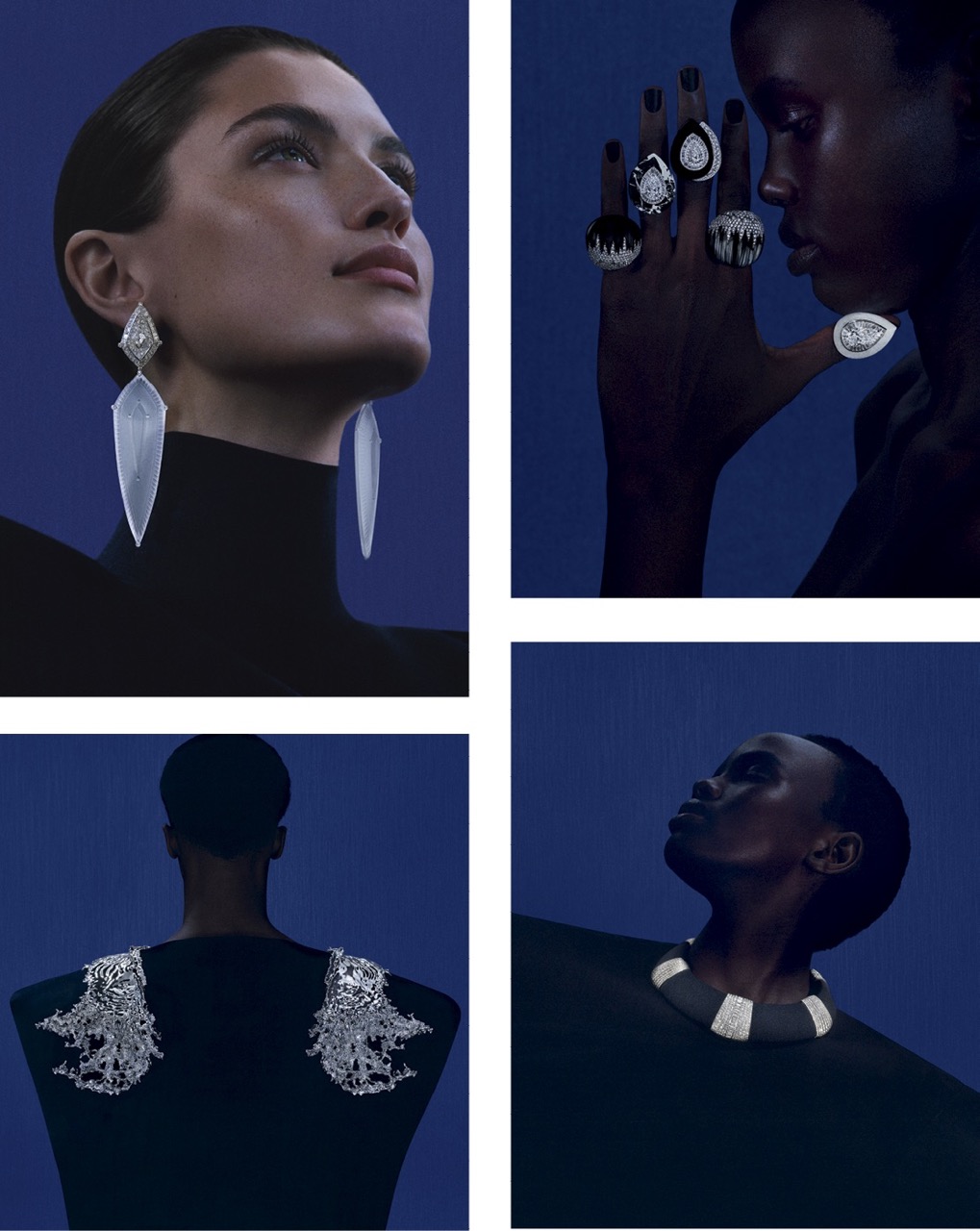
Each piece is unique, and I cherish each of them. One of the collection’s masterpieces is the Cascade necklace, for its beauty and emotion. Measuring 148 centimetres, this white gold and diamond piece is the longest ever made in Boucheron’s ateliers, which stayed true to the source of inspiration by crafting a piece as fine as a filament. Given its oversized dimensions, this called for the utmost precision and patience; it took about 3,000 hours to craft it. With more than 1,800 diamonds of different sizes along its length, “Cascade” is set in a single articulated row to give it a beautiful suppleness and strikingly realistic fall. This necklace can be worn in six different ways: longer or shorter versions, and part of the necklace can be detached to become a pair of earrings. I like pieces to be transformable so that they can be worn for different occasions. Boucheron does not impose, Boucheron proposes. It’s up to you to choose your own style!
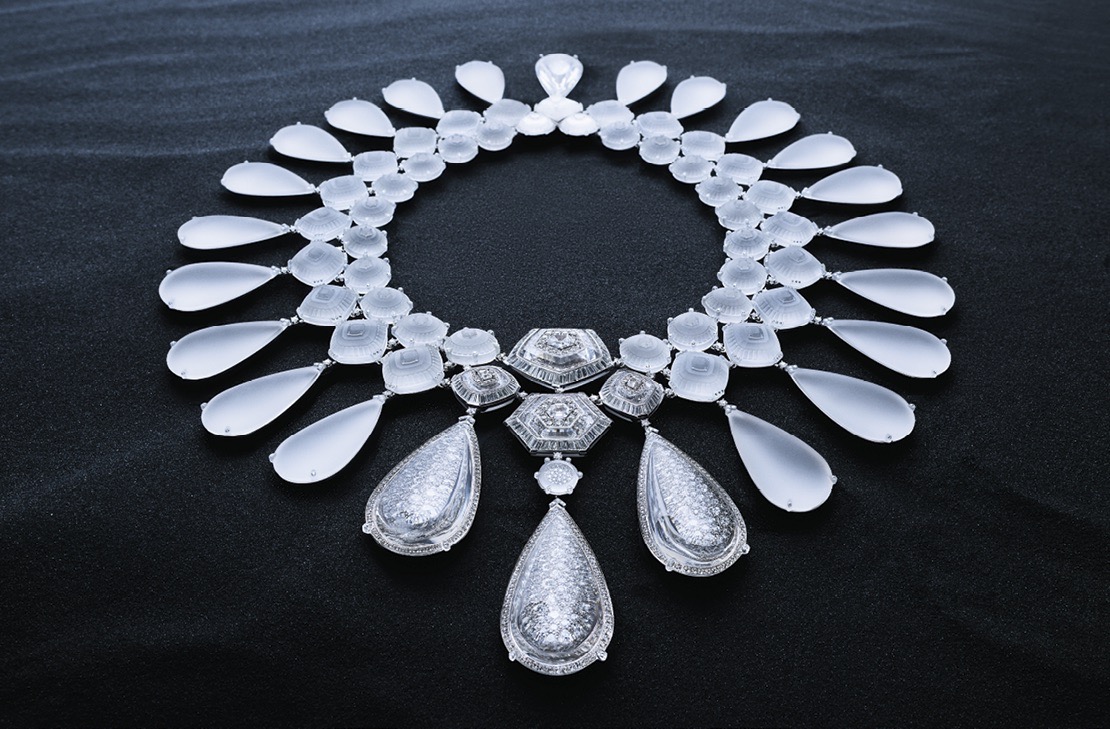
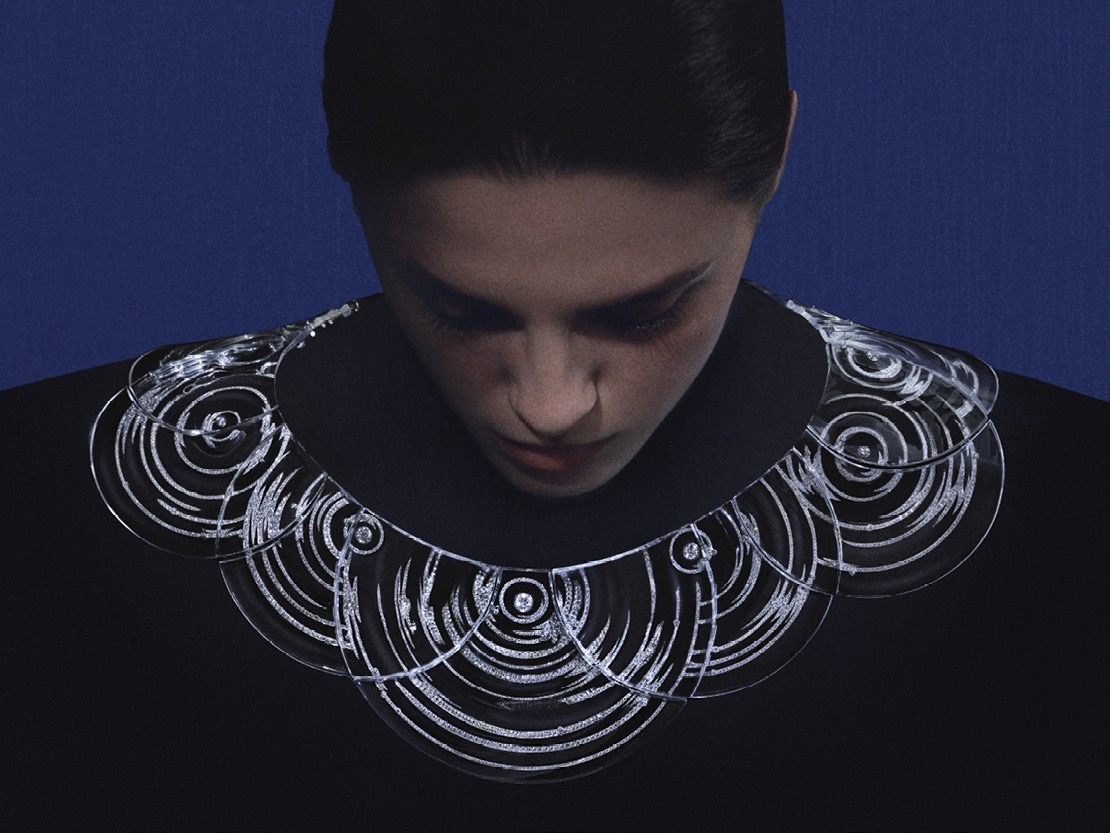
The Ondes necklace, inspired by the exact instance of a falling drop breaking the fragile balance of the water’s surface, is also a masterpiece. To capture its organic ripple motion, our Studio simulated this on 3D software, which then dictated the volumes of a necklace and two rings. To realistically reproduce the ripples, I decided to use rock crystal, which was sculpted and polished. The metal is reduced to a minimum in this necklace, designed as a second skin.
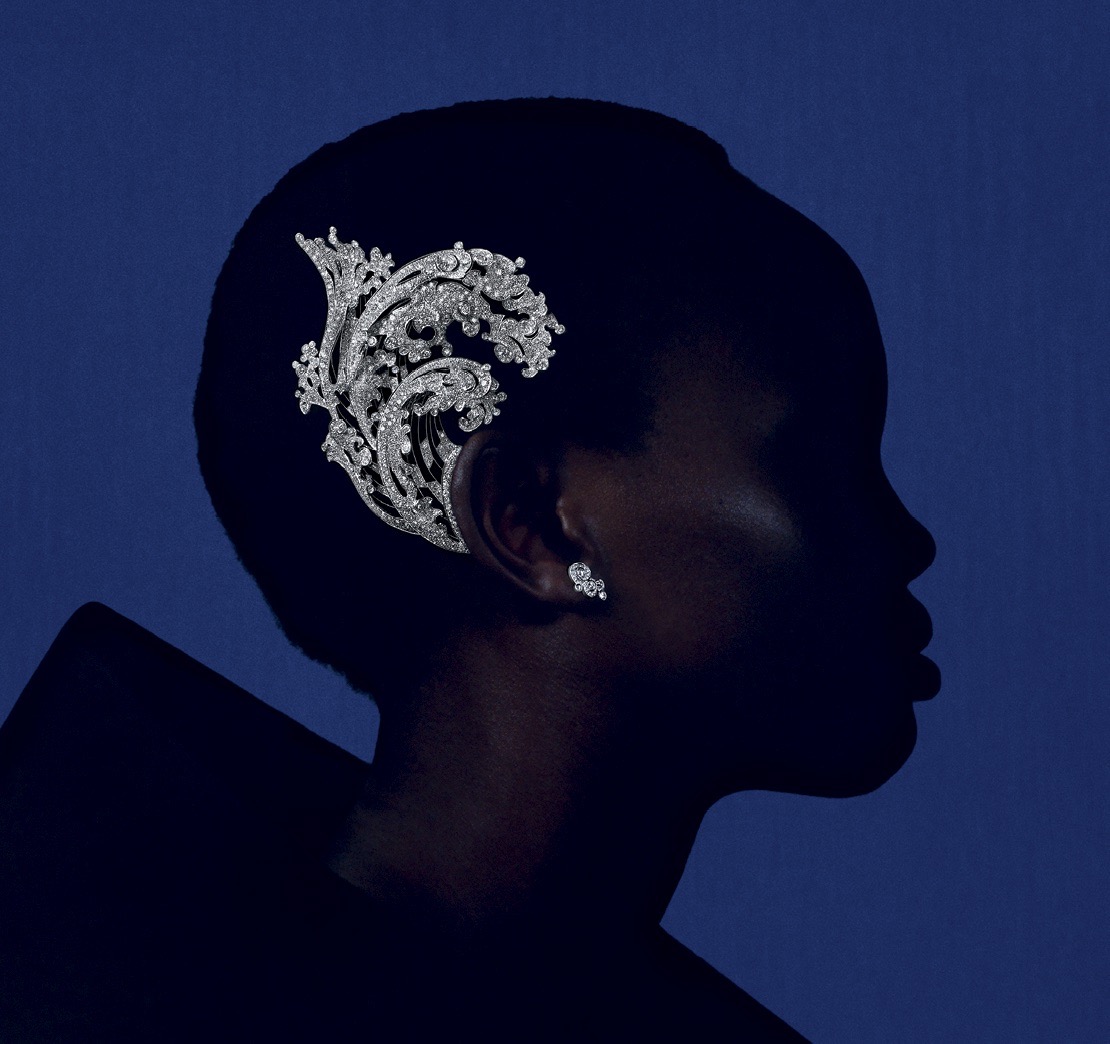
Furthermore, Vague, serving as both a brooch and a hair jewel, is also one of our masterpieces, which pays tribute to the power of water. It also echoes a 1910 tiara from the archives, itself inspired by Hokusai’s The Great Wave off Kanagawa. This piece draws on traditional high jewellery savoir-faire to convey the original design’s organic sense of poetry.
Tell us about some of the unique materials and processes used.
As we wanted to create ultra-realistic pieces, we focused on materials and innovations which would help us the most. We chose diamonds, rock crystal, and blue gemstones to perfectly reflect all states of water. Innovations such as 3D scanning and digital printing enabled us to reach the precise outcome that we wanted. For example, I wanted to capture and represent the exact movement of Icelandic waves on Eau Vive brooches. Every detail of these perfectly symmetrical pieces arises from a fusion of cutting-edge technology and high jewellery savoir-faire. These shoulder brooches were designed with 3D software to mimic the appearance of crashing waves, and then sculpted from a single rectangular block of aluminium. Materials and technology are always chosen depending on their ability to serve the purpose of our collections.
The black sand necklace is incredible – can you tell us about the process used for this?
When I saw black sand on Icelandic beaches, I immediately knew I wanted to bring it to this collection and create the Sable Noir set. Therefore, we consulted the automotive and aeronautics industries to form engine molds to bind the sand with a polymeric binder (a kind of glue), and deposit it in layers 1mm thick to obtain the desired shape. There is no limit to innovation when it serves our creative purpose.
Can you share a little about how you used water in this collection?
Water is the ultimate source of the Or Bleu collection, which explains its name. We chose “Or” (gold in English) to evoke the precious material, and “Bleu” (blue in English) to evoke water, thus linking the preciousness of gold with that of water. The challenge of this collection was to represent water, the most intangible of elements, and capture it for eternity in precious, innovative materials, creating 26 pieces of high jewellery.
As Boucheron continues to innovate with materials and techniques – what is something you would still like to do?
What I will always do in my high jewellery collections is fulfil a dream. Indeed, the starting point of our collections is always a dream that innovative materials and techniques make possible. Furthermore, I will always continue to cherish the ancestral know-how of our jewellers, as I believe that our greatest wealth is held in their hands.
How do you continue to be inspired for these collections, and where do you look to for inspiration?
I am constantly inspired by the social and cultural context that surrounds me and drawn to beauty—nature, human creations, and the Art Deco or Memphis art movements. I will continue to travel and nourish my creativity to further question the notion of preciousness and propose new creative visions and perspectives.
What are you currently working on?
In High Jewellery, time is long. I am constantly working on six different collections with a time horizon of around three years, so I am currently developing my creative concepts for 2027 and 2028 in collaboration with the Studio, the Research and Development department and our High Jewellery workshop.
What else can we expect to see from Boucheron in the Middle East this year?
Every year, our Carte Blanche collections, presented in Paris in July travel around the world for two years. We hope to present this collection soon in this fast-growing market, which is dear to Boucheron.
What is the final message you would send to readers about this collection?
The Or Bleu high jewellery collection is an ode to the memory of water. Water is the most vital and precious resource, and I wanted to pay homage to its beauty. I create High-Quality Jewellery to convey an emotion unique to each person. I believe that pieces should always go beyond their materiality and build an emotional bond with individuals.
Mette Degn-Christensen Discusses The Highlights Of Dubai Design Week 2024
Mette Degn-Christensen, Director of Downtown Design, offers a preview of this year’s event
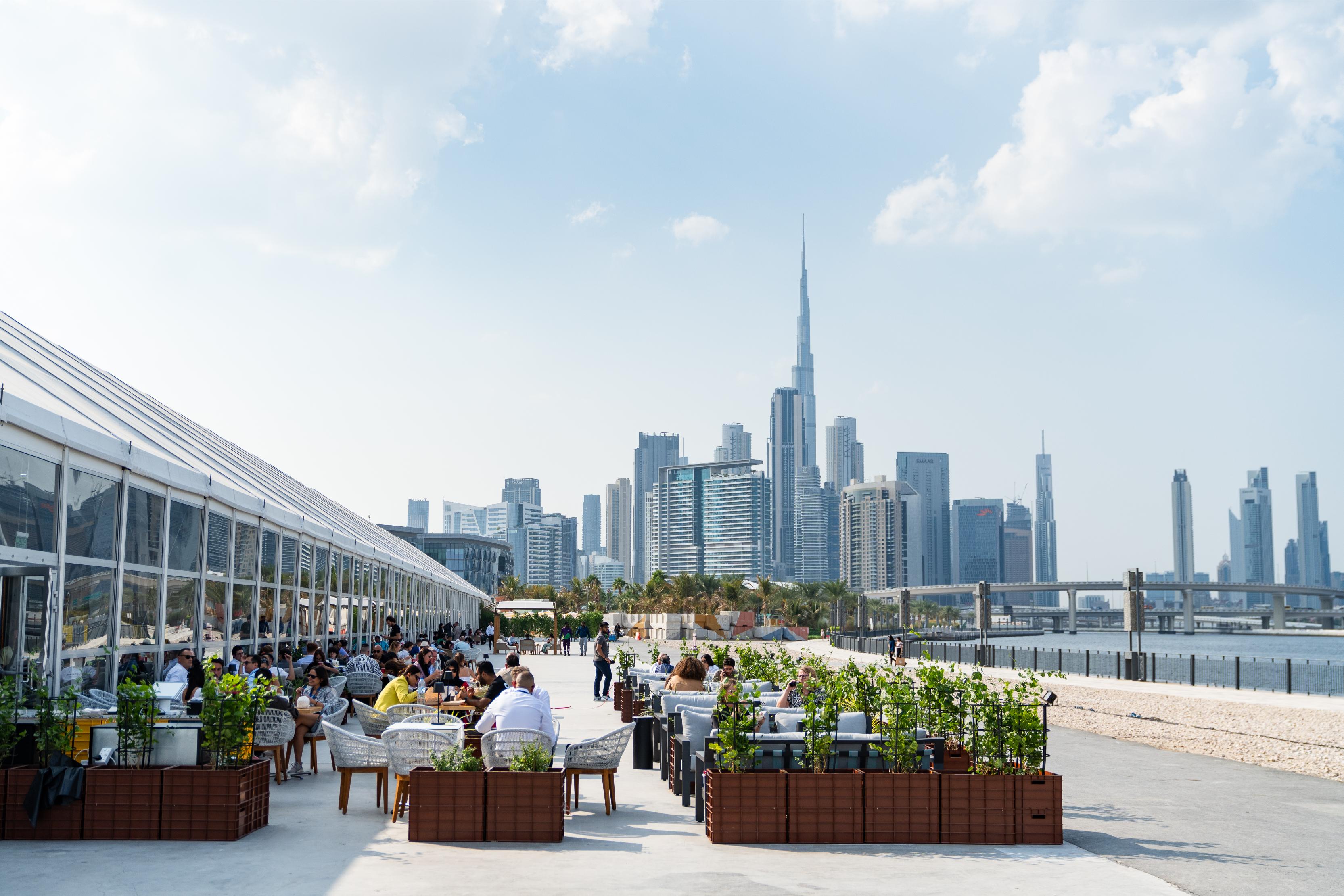
The latest edition of Downtown Design and Dubai Design Week is currently underway in the city. Held under the patronage of Her Highness Sheikha Latifa bint Mohammed bin Rashid Al Maktoum, Chairperson of Dubai Culture & Arts Authority (Dubai Culture) and member of Dubai Council, the yearly fair invites regional and international brands, designers and creatives to showcase their talent and creations to industry professionals and potential clients. This year’s programme of events across Dubai Design Week and Downtown Design, which run in parallel, will once again highlight Dubai’s growing importance in the global design industry. This edition will focus on designing for a sustainable future and will outline trends and developments in the industry over the past 12 months. Here, we talk to Mette Degn-Christensen, Director of Downtown Design, to find out what to expect.
What can we expect from this year’s edition of Downtown Design?
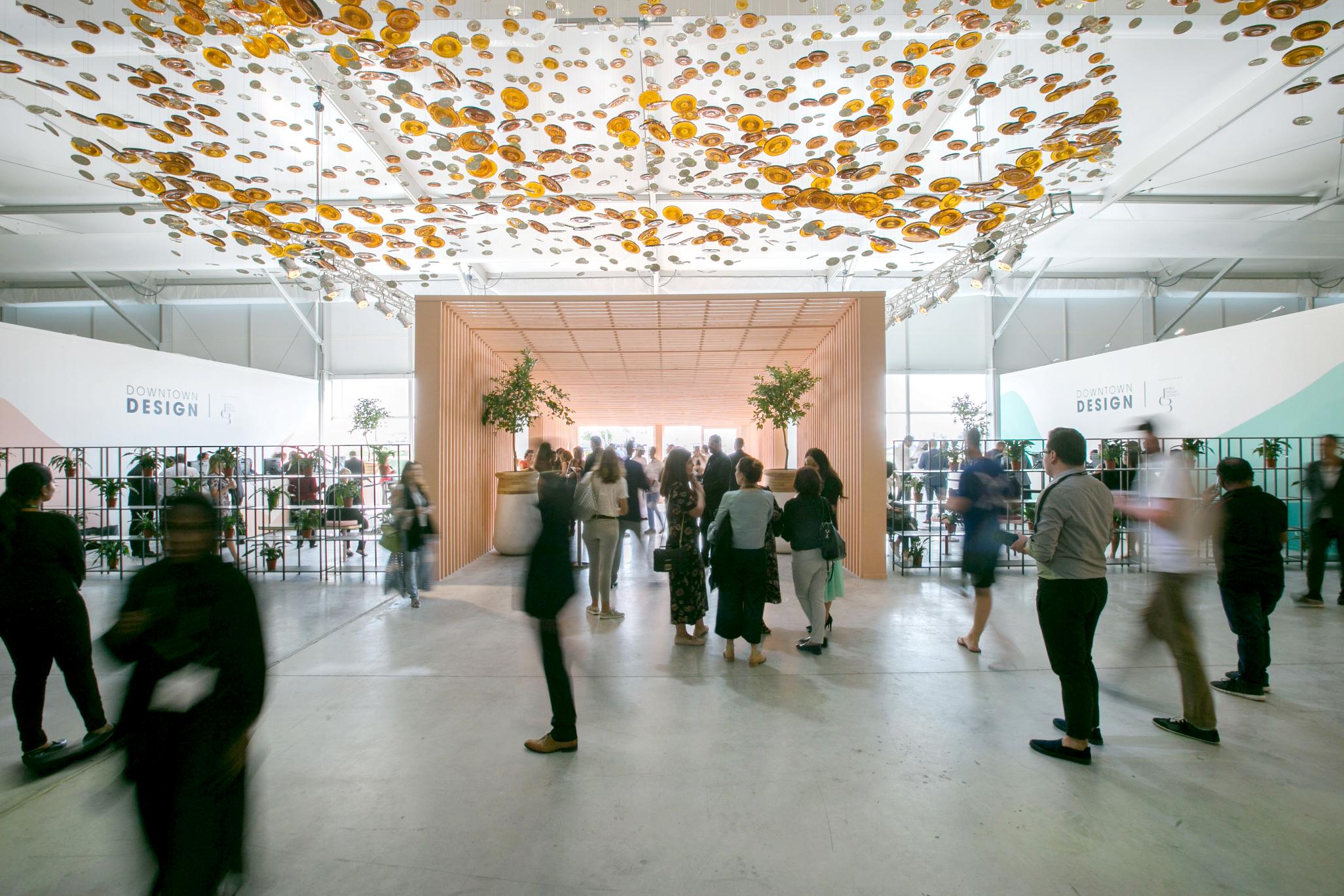
Last year we marked the fair’s tenth anniversary and so this year we’re looking forward, always with change in mind. We have been asking ourselves what experiences we want people to have and what we want to do differently. As well as ‘what do we want people to learn and discover?’ We want to make sure that everyone has an interesting experience.
Can you tell us about Editions Dubai, which will launch this year? What types of works will be showcased here?
Editions is going to be one of this year’s highlights. It’s a joint project between Art Dubai and Dubai Design Week, and it brings limited edition pieces from galleries and individual designers around the world to one exhibition setting. It will feature contemporary design and art pieces in the form of works on paper, ceramics, prints, photography etc. It’s not affordable per se, but it’s not unreachable in terms of price point. There is nothing else like it in this region, and even internationally, you don’t see anywhere that has a format like this. I think people will be surprised that they can go and find some really interesting pieces – there will be a wide range of objects from all over the world from a huge range of price points. I’m super excited about it, and I’ve already got my own list of what I want to buy!
Tell us about some of the talks to visit this year at The Forum.
Every year we have a great programme of talks, but this year it’s fantastic. There is much attention on this region and some great talent coming here and great brands setting up here, and with that, we are seeing a lot of people wanting to get involved and, therefore, the access that we have to people of a certain calibre in The Forum is really of a different level this year.
Any other highlights to look out for?
The De Gournay lounge is fantastic. It is a brand that creates mesmerising handmade wallpaper that I personally love. It’s a very cool brand that’s definitely worth checking out. And then the last thing I would say is that the UAE Designer exhibition has really taken a step up this year.
Can you expand a little on that and how the event supports and showcases regional talent?
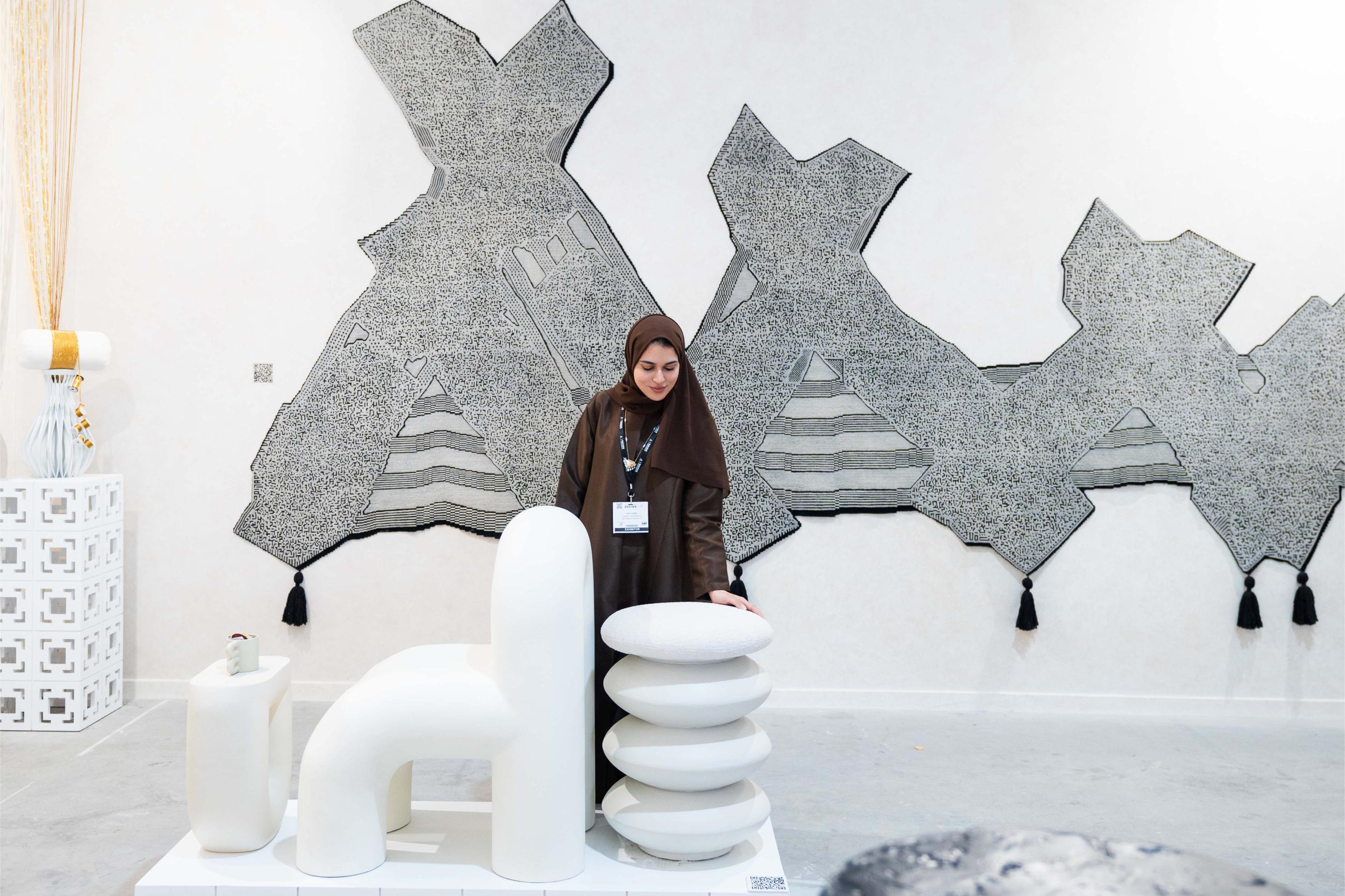
This exhibition started in 2020 when we all had to rethink what we were doing after Covid. We did an extensive survey within the creative community to find out what they needed, and it was clear that everyone needed commercial opportunities. Before that, commercial was considered a bad word, especially when you’re communicating with creatives or artists. I think that was a pivotal point when people realised that we all need to make money, and if we don’t have commercial opportunities, we can’t pay our bills. So we set up the initiative that year to allow people to market themselves among their peers and potential clients and audiences, to see how they can further develop their products, and specifically to sell. So, the word “commercial” started to have a different impact. We soon realised that the initiative really made a difference to a lot of people who had their work featured in the exhibition, and it became an annual highlight. Omar Al Gurg, who is the curator of this year’s exhibition was actually a participant in the 2021 edition and, as a result, decided to set up his practice.
So this year, in the fifth edition, we are looking at trying to remember why it came about and then going back to the initial opportunity, but also thinking about the next generations and making sure that they have a community and mentorship. We have 32 participants, and Omar has managed to design the entire exhibition as an experience as opposed to focusing too much on each individual product or design. It has a full concept, and a lot of the objects speak to each other. A lot of the designers have already started collaborating with each other which is nice to see.
And then, aside from the UAE designers exhibition, we have the Design in Saudi Pavilion that’s specifically for Saudi talent, we have the Tanween programme, which is run by Tashkeel, and then we have individual regional designers as well. Beyond that, the forum also gives space to early-stage career studios, who can come and show their expertise and meet with industry professionals.
What do you think are the benefits of an event such as this for the UAE?
This is something that we consider all year, beyond November. When speaking to brands, buyers, interior designers, and architects around the world, I realise that the access to any kind of product or solution here is just not the same as in other markets that have had hundreds of years of artisanship or developed infrastructure when it comes to the creative industries. So, as soon as we see the result of a brand coming into Downtown Design, it could be a brand that is considered mainstream elsewhere in the world – and benefitting from that, there is a ripple effect – brands open up showrooms, they have dealerships – and it helps to expand overall the offering that we have in the UAE, both B2B and B2C. Over the years, I have seen the change, and even within two years, we have really seen the ripple effect of brands coming into the landscape.
What are some of the international brands showcasing that we should look out for and what are some of the benefits for them to be involved?
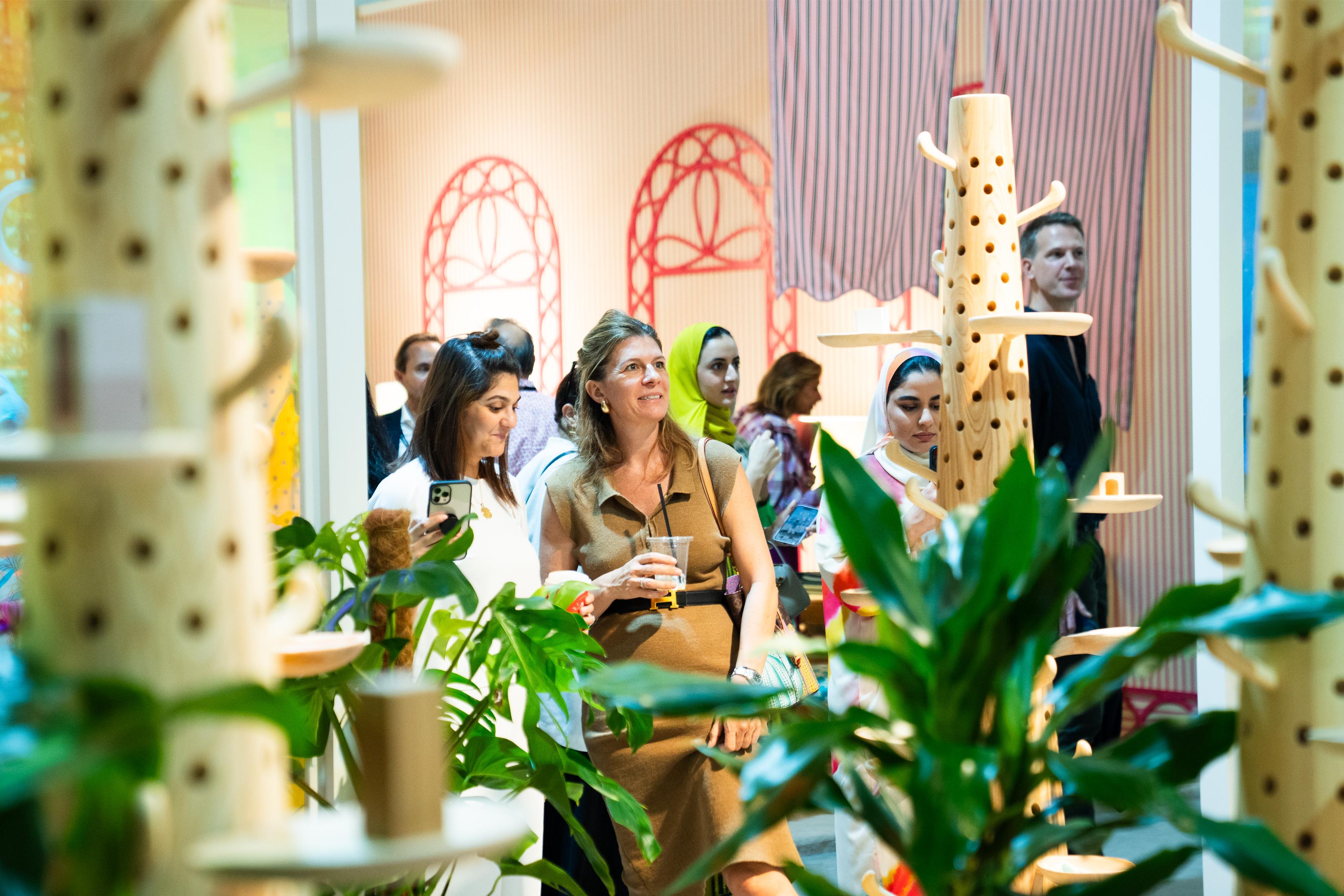
Some of the highlights this year will for sure be big names like B&B Italia, and Poltrona Frau. There are quite a few exciting Danish brands this year. Another brand I love is Atelier Vierkant, as well as Saint Louis, Kartell, and Haberdashery. Our mandate is to focus on high-quality, contemporary design, and we are starting to see a lot of those kinds of brands coming through and doing well.
What can you tell us about the design industry in the UAE today and how it’s growing?
When I first moved to Dubai I remember one of my friends saying that it’s so to be part of building a country. And that kind of stuck with me as it is really true. What’s happening now in the design industry is really exciting, and we are actually part of establishing something that’s going to change how the future looks, not only from the creative industry side, but also the look and feel of locations within the UAE. Everything is changing now, and it’s very exciting.
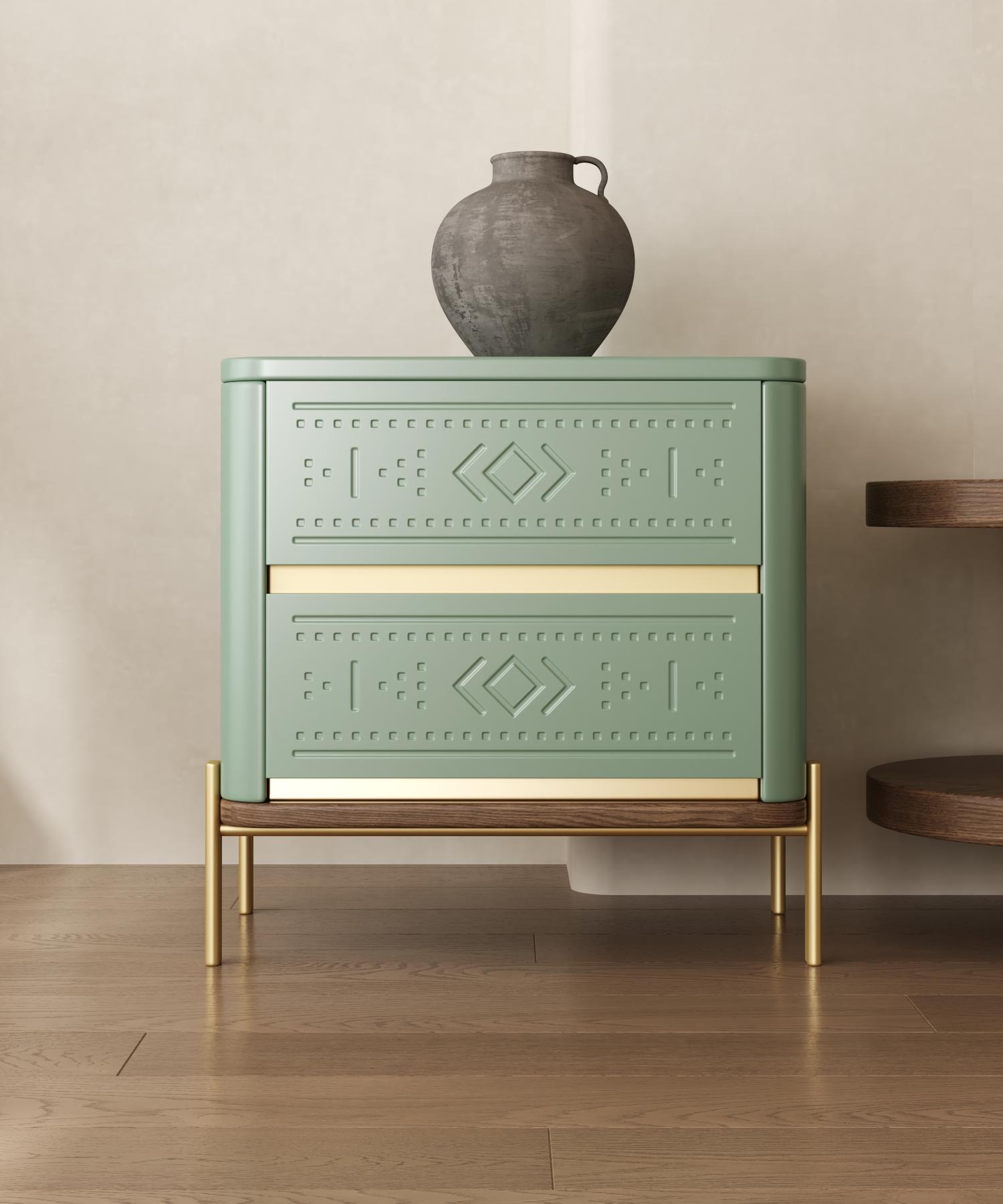
There are many challenges of course. Some of them I didn’t think so much about earlier, like the logistical side of how brands actually get into shops and the distribution, as well as the perception that minimalist style isn’t so popular here, but I think this is hugely changing. Today, we are seeing brands really focusing on The Middle East, and there’s a big shift happening overall, which is super exciting to be part of.
What else would you like to see happening in this industry?
My main mandate is quality driving and pushing the contemporary design scene, and I know there is a huge market for it here. There is still work to be done. I think there is a lot of price point education around collecting and copying that needs to happen. There’s work that needs to be done on a government level but also on a manufacturing level.
There are a lot of great minds setting up design studios and coming up with great ideas here, but it still makes more sense financially to manufacture in Europe and ship things in, which is crazy both from a social responsibility point of view but also that then we are not actually making locally. I think this is something that will change and it would be great to see it developing over the next five years.
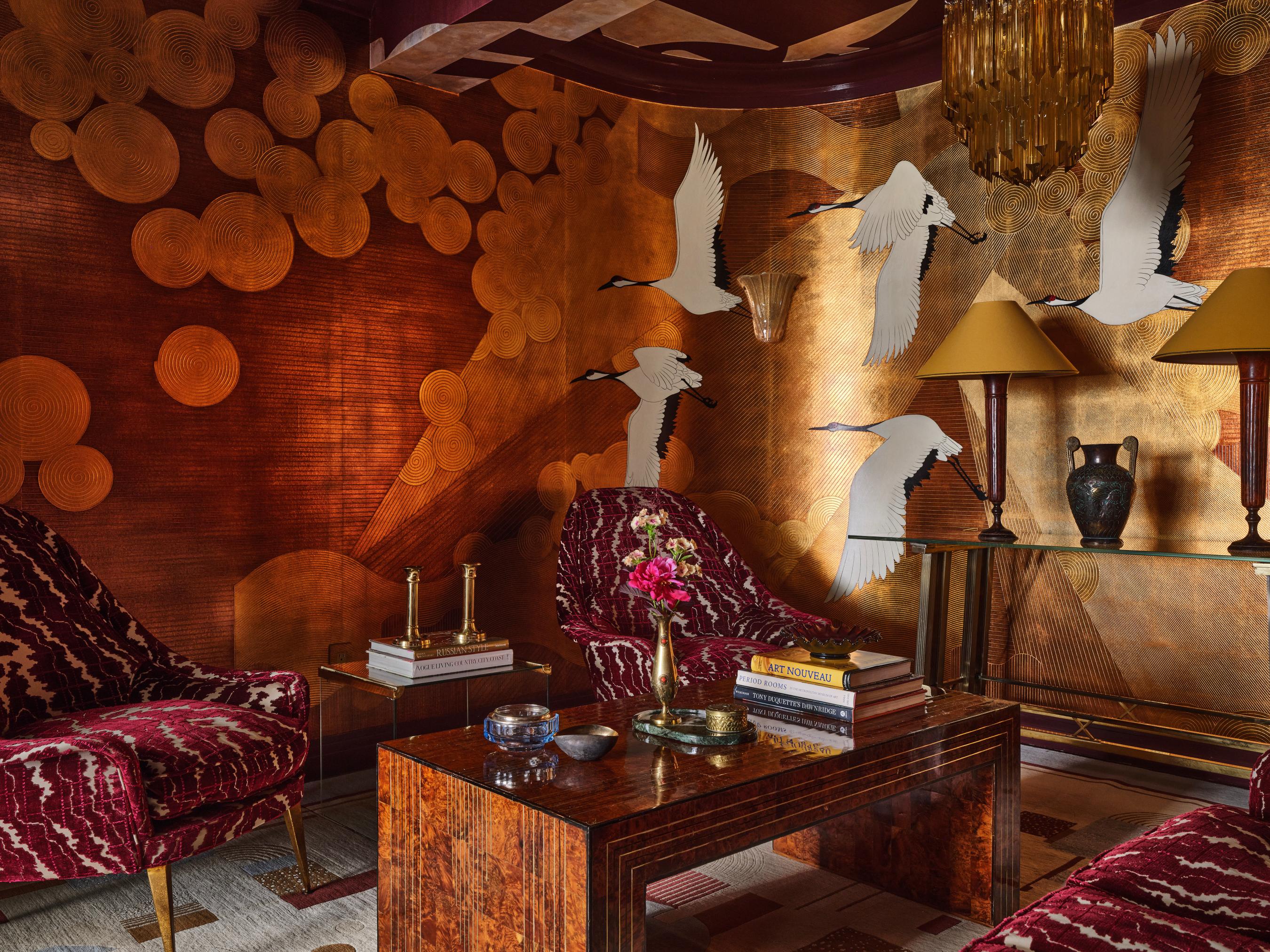
What’s the biggest challenge you face in your position today?
There are so many things that we want to do and not enough time, so it’s a question of finding priorities annually because you can’t do everything at once.
What’s something you would still like to achieve in your role?
There’s so much I want to do. We are just about to go international now for the Group’s first event overseas in Riyadh next year. We have several initiatives and fair elements that we want to take internationally. I can’t give too much away at the moment, but we have a lot of ideas for the region that we want to start implementing.
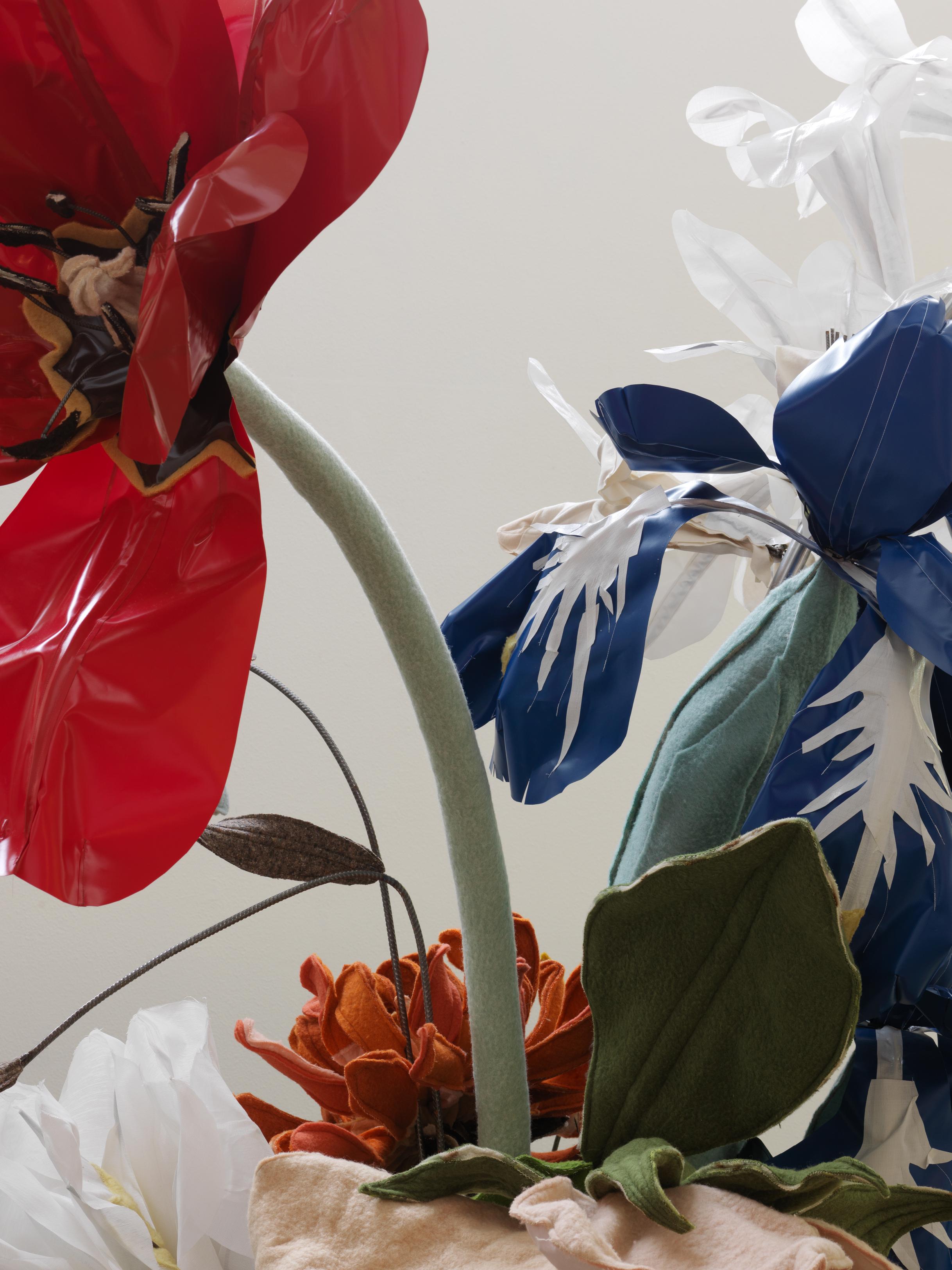
What are some of the interesting regional trends you currently see in the design industry?
Straight after Covid, we started seeing a lot of nudes and soft tones, and then we went straight back into colour and joy. And what we’ve seen in the past year and a half is a focus on social responsibility. We are really going back to our roots, looking locally. Asking what interior design elements can mean for our health and its impact on us. There is a focus on the responsibility of the designers as well as a focus on using sustainable materials. I think this is so much more than a trend; it’s a shift in the industry.
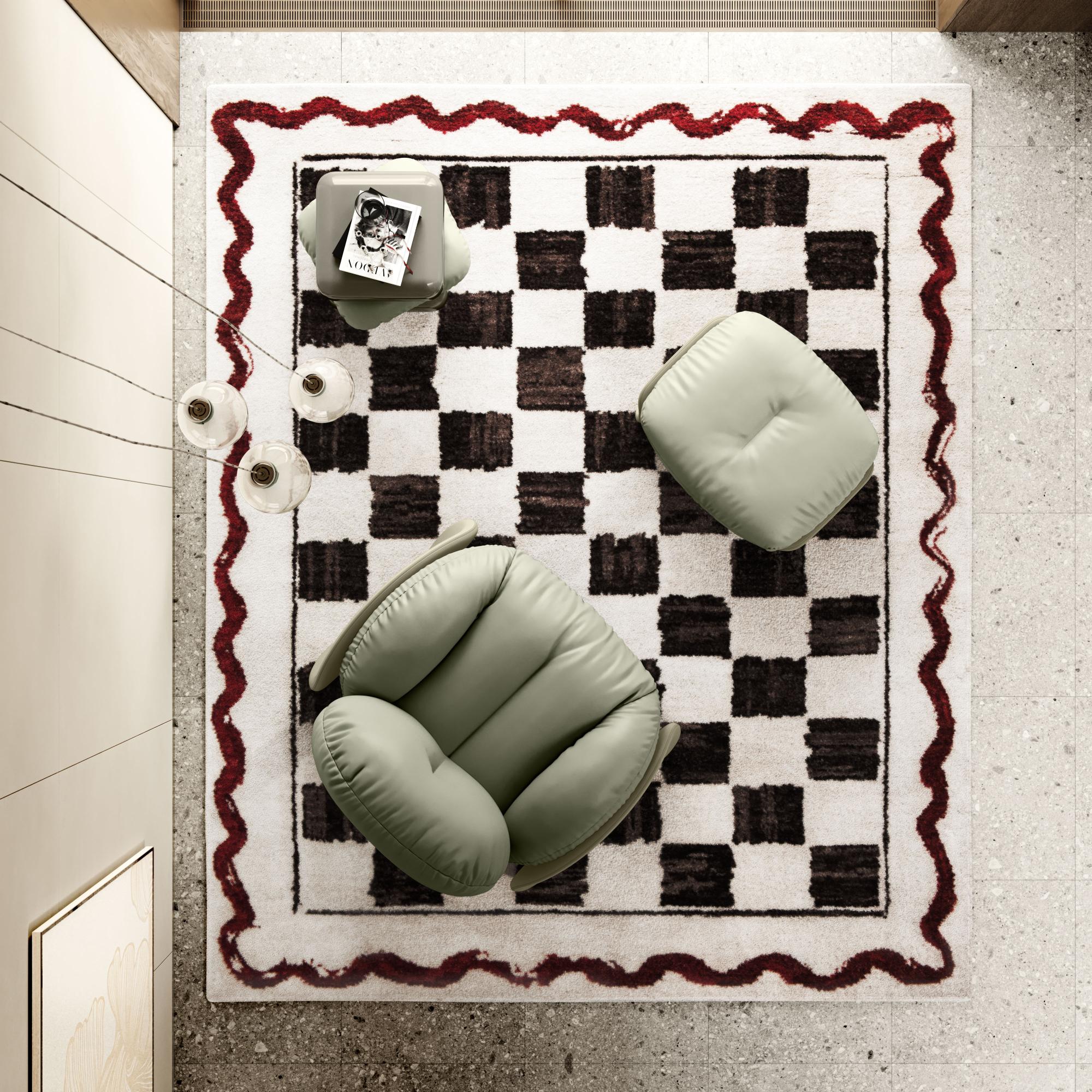
What would be your advice to upcoming and aspiring designers and creatives?
My first piece of advice is always to figure out your identity in what your work is. Then, figure out how to package that and build a sustainable business around it because you have to create something viable and there’s a need for it in the market. And then don’t be afraid of the commercial side, because without it you won’t go very far.
What’s a final message you would send to readers on why they should visit the fair?
It is the place to be in November. I think there is really something for everyone in the fair, from the B2B element to the consumer side – I go there to buy my Christmas presents! It’s a great day out, and there is always something to learn.
Dubai Design Week is running until the 10th of November, with Downtown Design running until the 9th of November at Dubai Design District (d3).
A Look Back At The Highlights And Novelties From The 2024 Geneva Watch Days
The 2024 edition of Geneva Watch Days took place this August with a record 52 brands taking part and almost 1,500 watchmaking professionals, including 650 media representatives and 250 retailers from all over the world, gathering on the shores of Lake Geneva.
Open to the general public for five days, the Pavilion at the “Rotonde du Mont Blanc” welcomed 13,800 visitors. Connoisseurs of fine watchmaking were able to admire over 100 new timepieces free of charge, displayed in 65 showcases around four themes. 650 of them took advantage of guided tours given by experts from the Fondation de la Haute Horlogerie, and VIP programs were offered to collectors.
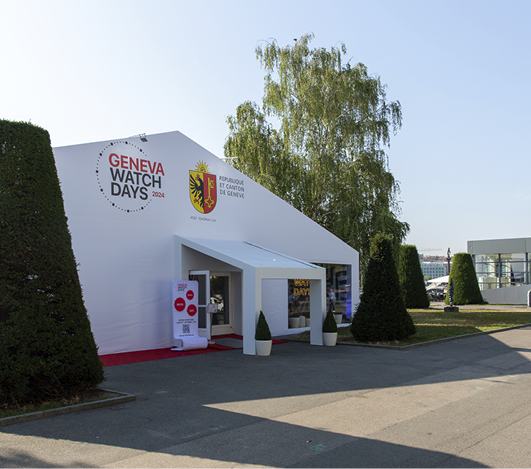
“The success of this year’s event is due not only to the participating brands, but also to our partners. I would like to thank the Republic and Canton of Geneva, the Chamber of Commerce and Industry, Geneva Tourism, the Fondation de la Haute Horlogerie, the Geneva Watchmaking Grand Prix, Horopedia, the GenevaWatchmaking School, the Watch Library, Worldtempus, the Horology Society of New York, GMT publishing, Revolution Magazine, Le Temps, WatchPro, Euronews and Europastar for their invaluable support,” said Jean Christophe Babin, President of the Geneva Watch Days Association and CEO of the Bulgari Group.
Georges Kern, CEO of Breitling added: “It’s a source of pride and pleasure to be involved in and witness this initiative, a collaboration that has gone from strength to strength since its inception four years ago. It’s a cultural moment, a unifying gathering and a platform for exchange for the watchmaking industry. This year, the Geneva Watch Dayshave even moved to German-speaking Switzerland for a day in June to raise their profile.”
The show is well on the way to a 6th edition in 2025 and is definitely becoming a not-to-be-missed event in the industry calendar. Turn the page to see some of the novelties that debuted at the event.
Breitling
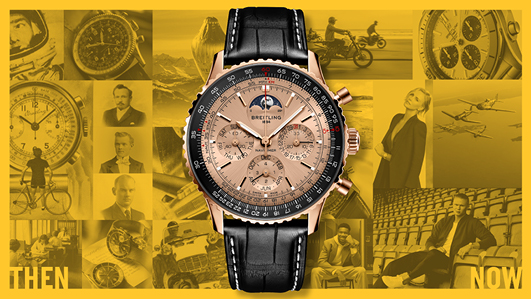
Breitling is celebrating its 140-year anniversary and has already revealed a number of exciting moments throughout the year. At Geneva Watch Days, the Swiss brand revealed its limited 140th-anniversary editions of its three flagship models—the Premier, Navitimer, and Chronomat. Each is equipped with the revolutionary Caliber B19, which promises a century of precision without major adjustments and an impressive 96-hour power reserve. 140th-anniversary editions of its three flagship models—the Premier, Navitimer, and Chronomat. Each is equipped with the new revolutionary Caliber B19, which promises a century of precision without major adjustments and an impressive 96-hour power reserve.
Premier B19 Datora 42 140th Anniversary: The Premier made its debut in 1943 as the watch that took the chronograph out of the cockpit and into society. It was the gentleman’s chronograph, a symbol of good taste that also happened to be a highly functional tool watch. The anniversary edition in solid 18 k red gold retains the Premier’s distinctive Arabic numerals, contrasting minutes scale, and signature square pushers. The strap is black alligator leather with elegant tone-on-tone topstitching and an 18 k gold folding buckle.
Navitimer B19 Chronograph 43 Perpetual Calendar 140th Anniversary: The Navitimer was the first watch for pilots to combine a chronograph with the brand’s proprietary wrist-worn circular slide rule. Originally developed in 1952 for members of the Aircraft Owners and Pilots Association (AOPA), the Navitimer quickly found favor with a broader audience that included celebrities and astronauts—in 1962 it became the first Swiss wristwatch in space. The anniversary edition features the famous slide rule in black on an attention-grabbing 18 k red-gold dial. The strap is alligator leather with contrasting topstitching and an 18 k gold folding buckle.
Super Chronomat B19 44 Perpetual Calendar 140th Anniversary: The Chronomat first launched in 1983 as the official watch of Italy’s aerobatics team, the Frecce Tricolori. The popularity of its design led to a wider release a year later. This quartz-era timing was significant—the Chronomat was instrumental in restoring the popularity of mechanical chronographs. The anniversary edition features the model’s distinctive design with four raised rider tabs at the 15-minute marks, an “onion” crown, and a rubber version of the model’s classic Rouleaux bracelet. Ceramic inserts give it a supercharged look. Plus, it marks another first for Breitling: a dramatic skeletonised dial.
Bulgari
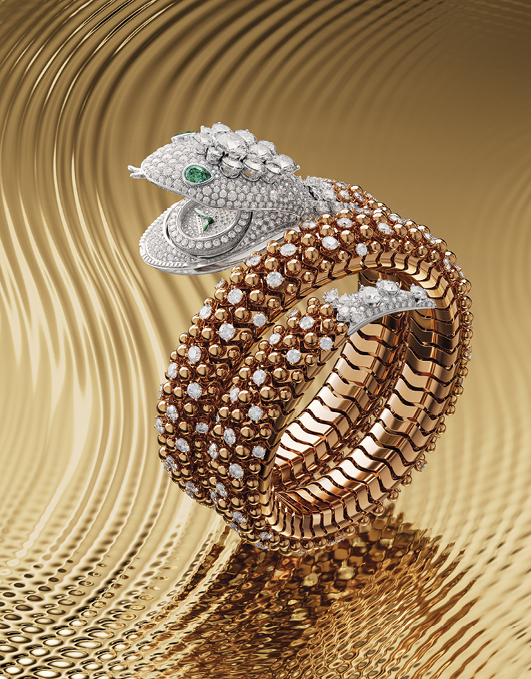
Bulgari’s 2024 showcase at Geneva Watch Days focused on The Sound of Bulgari with new novelties in the form of Octo Chiming, Bulgari x Fender and Serpenti Pallani.
The Octo Roma Grande Sonnerie is the most complex watch ever created by Bvlgari, it features the queen of complications in watchmaking, the minute repeater: here, four hammers mark time with a tune composed by conductor Lorenzo Viotti. This horological marvel, equipped with an innovative openworked metal dial, reinvents the melody of gongs by adding the ‘tritone,’ a characteristic interval of classical music.
The Octo Roma Carillon Tourbillon stem from two extremely complex mechanisms, visible as a dual ballet on the dial side: the tourbillon and the minute repeater with three hammers, rendering the time at will. Meanwhile, the Octo Finissimo Minute Repeater Carbon combines the inimitable Octo Finissimo design with an extraordinarily complex minute repeater calibre that chimes the hours, quarters, and minutes on demand.
The Bvlgari Aluminium GMT x Fender® Limited Edition, like a vibrant anthem transcending time and time zones, is a testament to the universal power of music. As part of an exceptional collaboration between Bvlgari and the Fender Custom Shop, the Bvlgari Aluminium and the Stratocaster, two icons in their respective realms, come together to celebrate the 70th anniversary of the legendary electric guitar.
And finally, the Serpenti Pallini High Jewellery sensuously nestles itself around the wrist. Sliding into yellow, rose, and white gold under a canopy of diamonds, Serpenti Pallini iconic serpent now comes with the Maison’s Piccolissimo calibre – a marvel of miniaturization, it allows Bvlgari to revisit the lines and proportions of its iconic serpent creation.
Arnold & Son

Arnold & Son’s Perpetual Moon 38 Red Gold welcomes two limited-edition dials. The radiance of 88 pieces in blue aventurine glass and 28 pieces in a warm, sunray-brushed grey joins that of the largest moon phase. Arnold & Son exhibits its mastery of colour, its sense of texture and its taste for materials, telling a nocturnal narrative that brings together the grey of a cliff, the iridescent white of the moon and the almost black blue of a starry sky.
Blue aventurine glass and cliff grey. Two new themes take hold of the 38 mm diameter red gold (5N) iteration of Perpetual Moon, giving two sophisticated dials befitting of the precise astronomical moon phase of the A&S1612 calibre.
From the outset, Perpetual Moon 38 was destined to become a fully-fledged collection, distinct from its larger 41.5 mm diameter cousin and its more assertive style. Behind the scenes is the unwavering quality with which Arnold & Son creates its movements and selects the elements for their exteriors.
Czapek
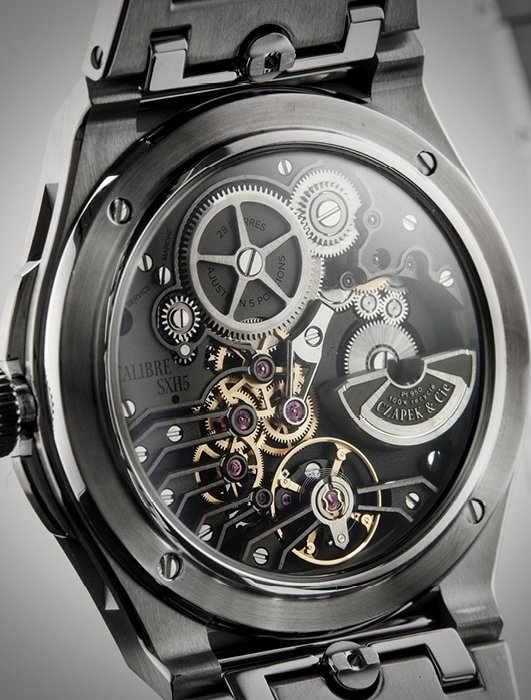
As Czapek continues to celebrate the chameleon character of the Antarctique, it presents a new and unexpected twist to the sporty-chich watch: ‘dressing it up for a gala’ with an aventurine dial and a version with diamond indexes. The new Antarctique S uses colour, form and the play of light across different textures and surfaces and the aventurine and diamond dials embody this ethos in a new way. The visual depth and subtle ‘starry sky’ sparkle of the aventurine contrast with the brilliance of the Antarctique-cut index markers which in turn, contrast with the polished surfaces and cool tones of the steel case.
De Bethune
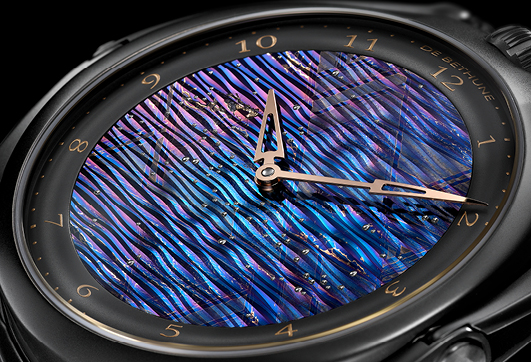
The DB28xs Aérolite is a fusion of art and science. Crafted from a real meteorite, this incredible creation is offered in a limited edition number. This exceptional timepiece sits at the intersection of watchmaking tradition and modern science, pushing the boundaries of creativity and horological engineering. It marks a new milestone in the brand’s history, drawing inspiration from previous masterpieces such as the DB28xs Starry Seas and the DB28XP Météorite, while introducing a unique and contemporary vision. “No other metal is as infused with pure energy and emotion as iron meteorites, which have taken form in the furnace of stars,” says Denis Flageollet.
Girard-Perregaux
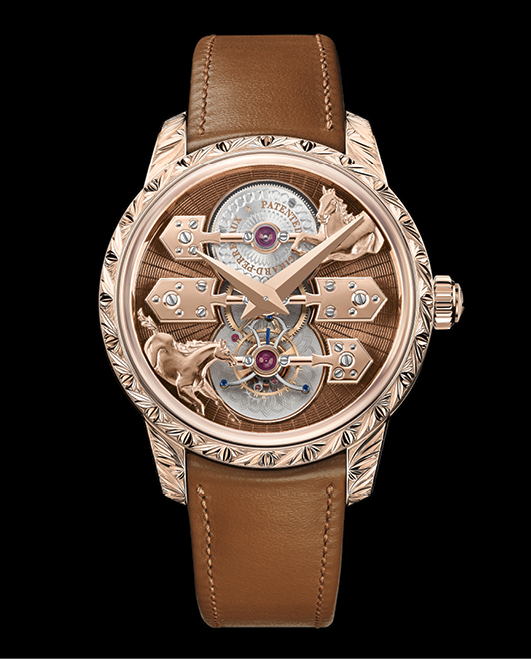
Girard Perregaux unveiled an additional version of La Esmeralda Tourbillon ‘A Secret’ Eternity Edition. This latest addition to the Bridges collection is executed in rich honey tones and, along with its widespread use of pink gold, masterfully plays with light.
La Esmeralda Tourbillon ‘A Secret’ Eternity Edition is housed in a 43 mm pink gold case. It features Three Gold Bridges in a matching hue and is endowed with a honey colour Grand Feu dial. The case, lugs, bezel and buckle are intricately engraved and pay homage to the historic pocket watch of 1889. The dial is enlivened with a combination of sunray and circular guilloché, expertly imparted by hand using a traditional rose engine lathe.
At the heart of the watch sits the Signature Tourbillon with Three Gold Bridges, the Manufacture calibre GP09600. Equipped with a discreet white gold micro-rotor, located beneath the barrel, the movement offers the convenience of automatic winding and plays host to golden engravings, referencing the patent filed for the Tourbillon with Three Bridges movement in 1884. Enriched with a cornucopia of refined finishes, the Manufacture calibre GP09600 perpetuates the Maison’s reputation for crafting the finest expressions of watchmaking.
As well as the dial, the case is dressed in honey-toned Grand Feu enamel. This artisanal technique is executed at the Maison’s sister company, Donzé Cardrans. Employing a Champlevé technique imbues the surface with a fade-free allure. The rear of case is intricately engraved with a fluted pattern and adorned with three galloping horses found on the historic pocket watch. The significance of the equine scene is a secret never to be revealed.
Louis Erard
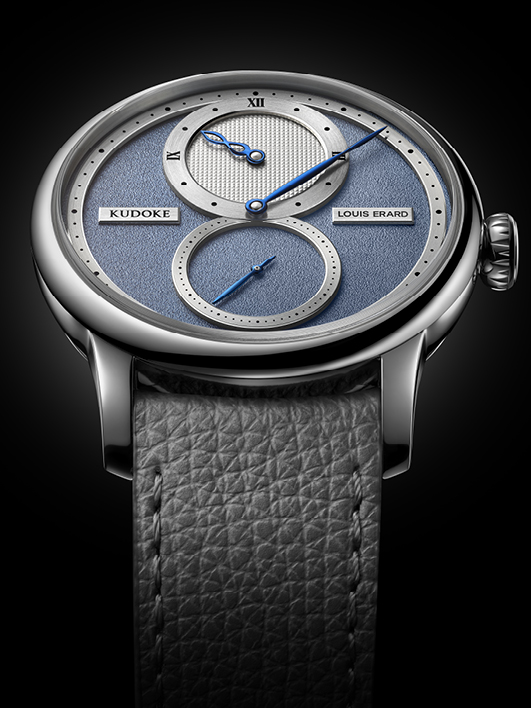
Louis Erard has partnered with Stefan Kudoke, one of the best-known indie horologists and the first independent German master watchmaker to win the Grand Prix d’Horlogerie de Genève in 2019. The Le Régulateur Louis Erard X Kudoke collection features four watches that are packed with eight distinctive details of KUDOKE’ “HANDWORK” dials. The watches play on geometry, highlighting the Regulator’s “three in-line hands” design through highly recognisable features. These eye-catching colourful timepieces are stylish and feature the highest levels of watchmaking craftsmanship.
Maurice Lacroix
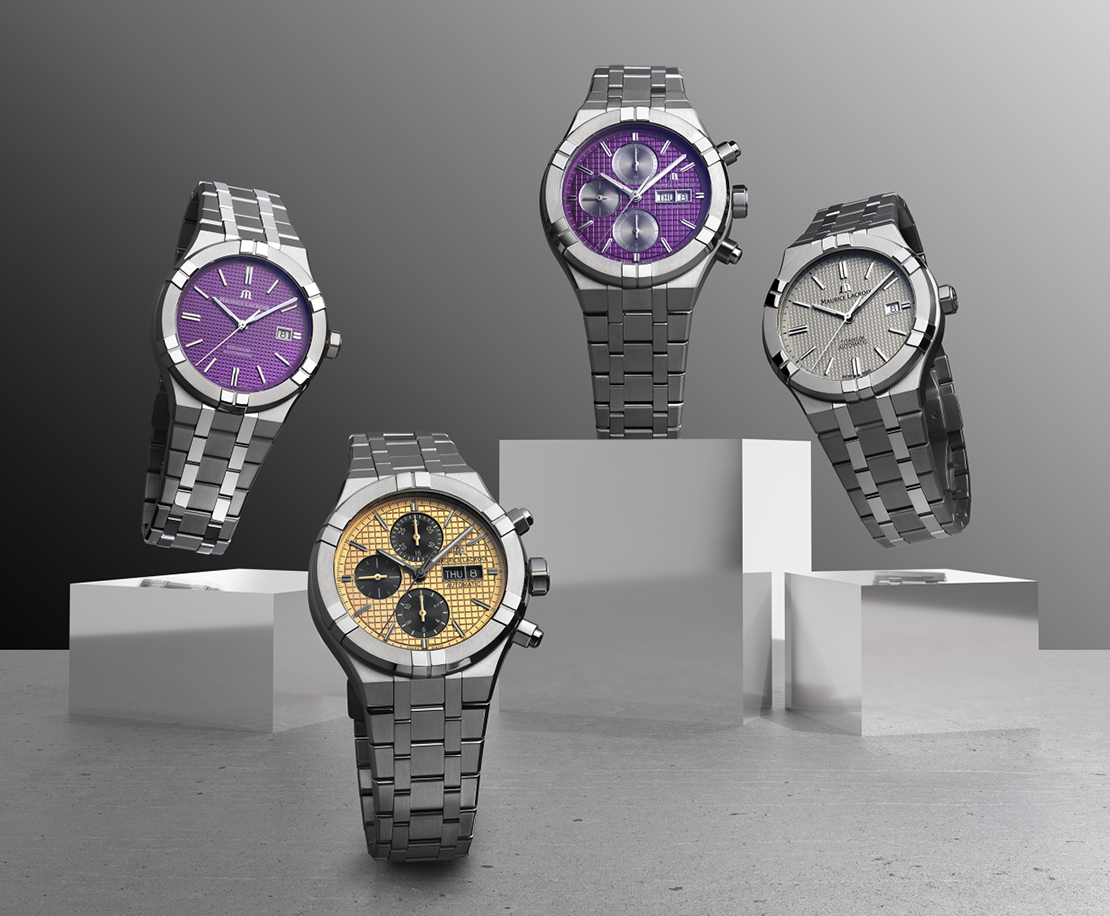
Maurice Lacroix revealed a lineup of AIKON timepieces that offer impressive performance and feature an eye-catching design. The additional versions of its AIKON Automatic and AIKON Automatic Chronograph are housed in titanium and feature highly fashionable colours, making them perfect for day-to-day wear. The AIKON Automatic 42mm is available in two variants, both of which feature a clous-de-Paris dial motif, facetted hour and minute hands, a liberal application of Super-LumiNova to aid readability in dim light, a centre seconds hand and a date indication. While sharing the same genetic makeup, both references evince a different character. An elegant grey dial delivers a monochromatic aesthetic, accentuating the cool tones of the titanium housing. Alternatively, the AIKON Automatic is available in an eye-popping shade of vibrant purple for those wearers who choose to live life above the radar.
The Aikon Automatic 44mm features dials enriched with a lattice-like motif, luminescent treatment, a day-date display and three counters. Packed with functionality, the AIKON Automatic Chronograph is offered in two eye-catching dial colours: purple, with contrasting silver counters, or a golden option set with brooding black subdials.
These Are The Home Accessories You Need For The New Season
Welcome to the best new home accessories collections to add a stylish touch to your living space
Elie Saab
Elia Saab has revealed its first home accessories collection in partnership with Italian brand Giobagnara. Giobagnara collaborates with some of the world’s most exclusive hospitality brands, crafting unique pieces that embody elevated elegance, making it the perfect pairing for the Elie Saab Maison.
Featuring the perfect blend of timelessness and contemporary flair, the Giobagnara X Elie Saab home accessories line features stylish pieces crafted in luxurious materials that will add a high-fashion accent to your home.
The range uses high-quality Italian leather and features the Elie Saab monogram pattern across gaming sets, boxes, trays, tea box frames and other gifting items.
Each piece features a touch of tailor-made luxury and will make the perfect keepsake.
Fendi
Fendi’s newest home collection which will debut for Spring/Summer 2025 is a harmonious blend of timeless elegance and contemporary flair. Designed by Silvia Venturini Fendi, the collection includes tableware, soft furnishings, and home accessories, which are imagined to add understated accents to the home.
The Art de la Table pieces are presented in white Limoges porcelain, re-imagined with a deep blue captivating FF geometric graphic that pays homage to Fendi’s archive. The collection consists of different types of plates and bowls, coffee and teacups and small vide-poche. The collection is accented by azure blue which can be found on water glasses, linen placemats, napkins and cushions.
Home décor items and accessories are adorned with the same workmanship: neutral-toned nappa leather vide-poches and photo frames feature the interlaced detailing reminiscent of the FENDI leather goods artistry, in an enchanting mix of tradition and innovation.
Completing the décor experience are rattan and leather vases presented in natural tones, perfect on their own or to create dynamic combinations within any space.
Candles come in two luxurious styles, carrying the iconic Pequin pattern or a hand-interlaced leather lid. Textile accessories boast new shapes and patterns that seamlessly integrate with existing FENDI Casa designs, affirming a synergy across the entire home collection.
Dolce&Gabbana Casa
Dolce&Gabbana Casa’s homeware collections are known for their bold, audacious appearance, reflecting key lines of the house’s clothing collections.
For 2024 the Italian Maison showcased its home and furnishing ranges during Milan Design Week. This fall, the Verde Maiolica accessories collection becomes available, offering a touch of colour and vibrancy to the new season and to your home.
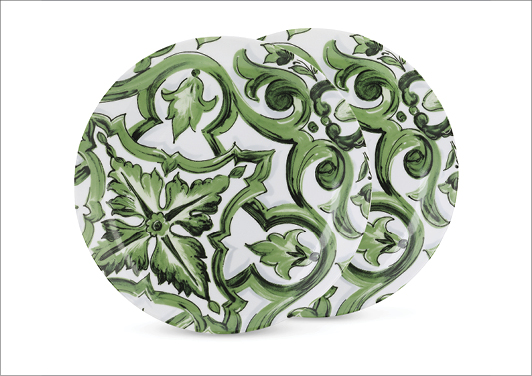
The Verde Maiolica collection features intense white and green prints, evoking the landscapes of Southern Italy. It captures the essence of the Mediterranean Scrub with its aromas and colours, celebrating the handmade craftsmanship of the region.
Hermès
Hermès’ Objets FW24 collection comprises tableware and home accessories that will add an elevated edge. The Tressages équestres vase and serving bowls in porcelain draw inspiration from harness passementeries and braids, further cementing the brand’s connection to the equestrian world.

The Sialk Damier Hippique centrepieces in enamelled copper centrepieces welcome new motifs inspired by jockey silks.

A material derived from the fire arts, enamelled copper is born of a subtle balance of raw material and fused pigments. The enamels are stencilled on copper leaf and only reveal their true colour when fired. This feat of hand-craftsmanship gives rise to unique pieces in vibrant and dazzling shades.
Tiffany&Co.
The new Tiffany Batik homeware collection designed by artistic director Lauren Santo Domingo takes inspiration from the archival tableware by French craftsperson and artist Camille Le Tallec, who worked for the House in the 1970s.
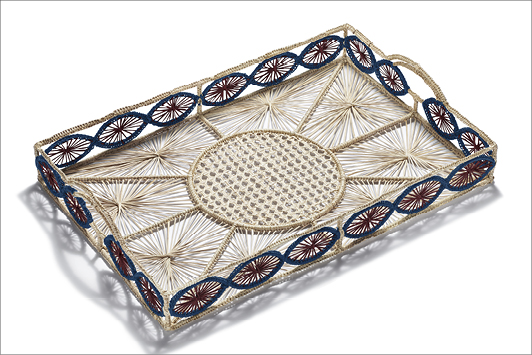
Le Tallec’s pieces included hand-painted porcelain creations featuring intricate, geometric motifs inspired by traditional Javanese textiles known as batik. This season Santo Domingo gives new life to Le Tallec’s pieces in an array of home designs spanning multiple product categories, from drinkware and Limoges porcelain dinnerware to home decor and more.
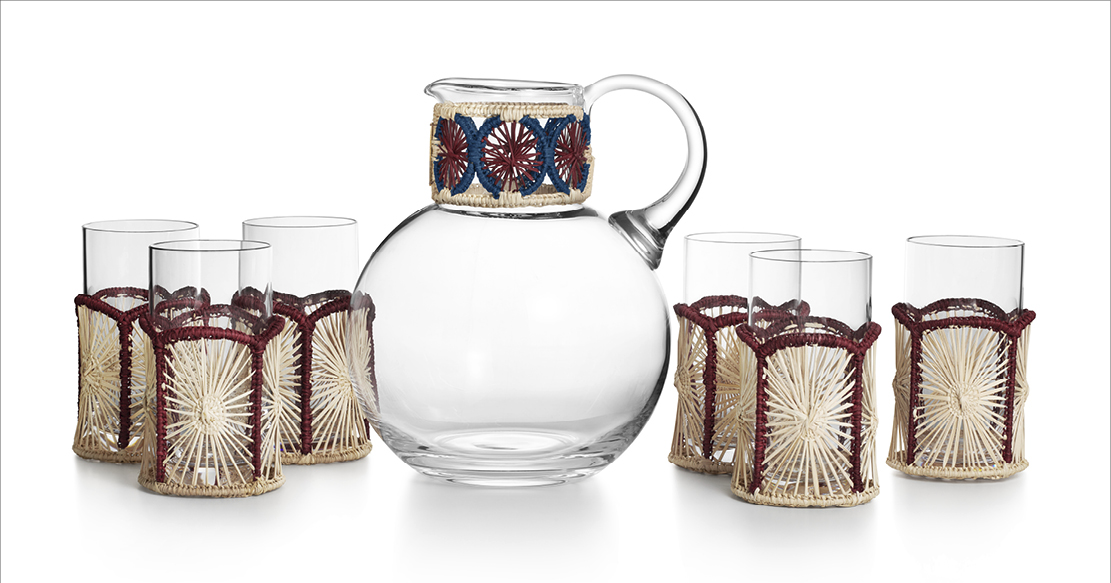
Each creation is handcrafted from unique materials such as raffia, which is woven using ancestral techniques. The Batik placemat, tray, fan, candleholder and basket are all crafted from raffia, while the refresher set features glass designs with raffia sleeves.
Stéphane Rolland Discusses Design, Emotion And The Importance Of Always Learning More
Haute Couture designer Stéphane Rolland started his eponymous brand almost two decades ago.
After a successful stint at Balenciaga, where he was the creative director of menswear, at the at the age of 24, he left to start his own label. Today, he is one of Paris’s most sought-after couturiers, and his consistency and impeccable design means that he is popular with women all around the world. His popularity in fact, reached the Middle East over 30 years ago when he first came to the region to design dresses for private clients and this part of the world remains very close to his heart.
Stéphane Rolland is one of the few brands that remains independently owned and it is perhaps this that’s the secret to the brand’s long-lasting success. As the designer prepares for his next haute couture show in January, discuss design, architecture, emotion and the importance of always being open to learning more.
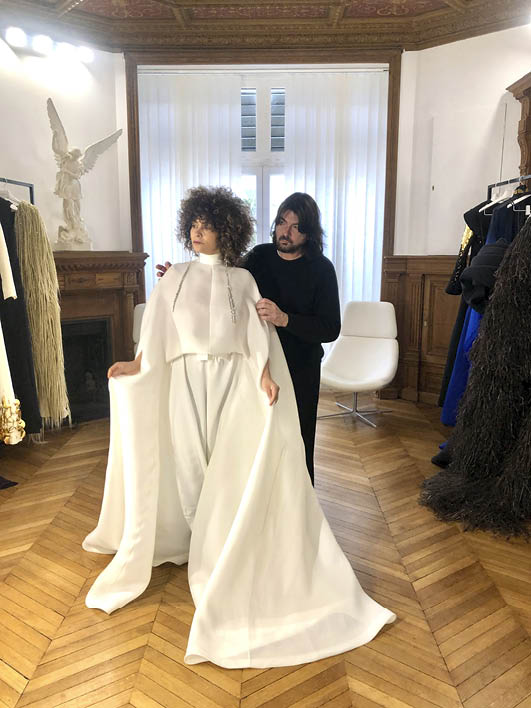
How would you describe the universe of Stéphane Rolland today?
My world: It’s a large subject! Everything is about art and movement, and my inspiration comes from architecture and modern art. Since I was a child, I’ve been extremely interested in how the structure of a building, a house, or nature comes together. There are icons like Oscar Niemeyer and Zaha Hadid, who have built some of the most incredible buildings in the world. When you see the city of Brasilia, it’s the wrong shapes, but the structures come together, and this is really me. You can feel and see that in the construction of my clothes. I always translated this in my haute couture designs, and a few years ago, I found it was time to develop other lines, so we launched a bridal collection, which has been very successful. We also have a line of ready-to-wear evening gowns, and last year we launched jewellery.
What is your current focus and direction for the brand?
What I love the most is creating collections, and the experience of the big shows and presentations. I love this artistic part and creating something very emotional and spectacular at the same time. Currently, we are preparing a very big show for January – we will have almost 2,000 guests. Most of the seats will be sold for the benefit of the foundation of French hospitals and a part of the venue will be open to the public. I love this idea of being able to help or give back through what I do, whether from a charity angle or by giving my knowledge to those who need it. Everyone wants to be in fashion but what I am trying to explain is that fashion is not all about the glamour. What’s important is knowledge and culture, and so, I try to open the eyes of the younger generation and tell them to forget about their mobile phones and go to the museum or the theatre or the opera, and they will see and understand why music, light and design are so important and why we need to bring emotion to our work. I also try to help a lot with kids and students as much as I can by doing masterclasses around the world.
Tell us about the Fall/Winter 2024 collection – the inspiration, the silhouette, the materials etc.
It’s very Parisian. Everything is black and white – I wanted to show who I am and my DNA – in the structure and graphic lines – so we are in Paris in the forties. The theme is one thing, but the mood of the show was very important. I used very old songs with the voices of great French artists in the soundtrack.
It’s difficult for me to talk about this show strangely because it is probably the one that is a perfect reflection of who I am. Many people have told me it’s probably one of my best collections ever – so there is a big challenge now for the next collection…
What can we look forward to with the Fall/Winter 25 collection that will debut in January?
This collection is about my creative process, although I don’t know if we would call it a process. There is a story, of course. It’s about transmission, tolerance, peace, and fusion of different cultures – words and topics that are very important today when we read the news. The spiritual Godmother of this show is Josephine Baker. She was a fantastic woman, an extremely modern artist. She was the first black star to come to Europe in the twenties, and she performed almost naked on stage; with such modernity, she was ahead of her time, and she did a lot for our country. She became a huge icon in France. She adopted 14 children from countries around the world, and she built an international family, showing that many different cultures could live together. So in this show, we are celebrating 100 years of her birth, and her children will be attending the show. It will be a very emotional moment. In the collection, I will mix the cultures of France and Africa, as well as the vibe of the American Jazz culture. It will be very emotional.
How would you assess the industry today and how it has evolved?
I think people have started to learn and understand that it’s better to buy clothing that’s a bit more expensive but also better quality—buying less but better. I think we are now at the end of the culture of wasting products and exaggerating consumption. People have consumed too much, and I think they are now starting to understand that it’s a tragedy for the planet. So, I do think the system is starting to change. I don’t exaggerate when I say that real luxury, like Haute Couture, is good for the planet. OK, clients are still buying clothes, but they don’t dispose of these clothes like they do with fast fashion items. They will be kept for generations. I can start to see the change, and I hope this will continue.
What’s the biggest challenge you face as a designer today?
There are so many challenges! My challenge is not to repeat myself, always bring new ideas, and surprise myself. This is the biggest challenge.
For the new generation, the biggest challenge is to be an artist, and also be aware of the business and have marketing and commercial formation.
How do you balance finding new ideas but not being too different each season to ensure your loyal clients remain loyal?
I think the advantage of being my age is that you know who you are and you don’t have anything to prove. You have to be honest in how you express yourself and honest with yourself. And to transmit and to give what you really are. Don’t create to seduce the media or follow trends. Remain true to who you are, and success will come.
Tell us about your brand in the Middle East.
My story with the Middle East is a very old story. I have been going to the Middle East for 30 years. I was probably the first couturier to visit Saudi Arabia, when it was undeveloped, and it felt like a secret world, which I loved. 30 years ago, when I arrived in Riyadh at the small airport, everything was very quiet, and I loved it. I was the first male designer to be allowed access to the female palaces and I really discovered a new world. I started with Riyadh, where I designed for some clients, then went to Doha, Dubai, and Abu Dhabi. I met the daughter of Sheikh Zayed, it was really amazing.
What made you come to the region at that point?
The royal family invited me as I was designing a wedding dress for a Saudi princess. I actually designed her wedding dress without knowing who she was at this point. After I designed the dress, she became my publicity in the Middle East because she was the granddaughter of the king of Saudi Arabia. I met the daughters of the founder of Saudi Arabia, and they told me some incredible stories. They really showed me the roots of the country and I learned a lot with a lot of respect. I was living a dream. When I come to the Middle East today, I feel like part of the family. I have a very special relationship with many people there, including members of the royal family, and it means a lot to me.
What are your thoughts on the fashion industry in the Middle East today?
The industry is booming. I’m glad that fashion designers and brands are arriving and blossoming in the Middle East. Ashi Studio is probably one of the best examples of this, and I am very proud to have seen a Saudi designer on an international platform. [Mohammed] Ashi is a very modern designer who shows very interesting things.
Of course, the countries in the region have money and power, but they know how to use it smartly, which is not always the case everywhere. Everything they do is impressive, and I can see this happening in the fashion industry too. I’m very happy for the countries.
Tell us something about Stephane Rolland, the person.
The designer and the person is the same because designing is ninety per cent of my life. I’m a dreamer, I’m a lover, and a part of me is very oriental. I love to give, and when I give, I receive even more. I like to observe and always say I will finish my life in the desert. Her Highness Sheikha Moza bint Nasser once told me I am a Bedouin, and I think I am; I take it as a compliment. I’m a Bedouin in the sense that I have no boundaries. I like to move, I like to discover new cultures. I had the chance to travel a lot in my childhood so my eyes and brain have been trained to observe and live with different cultures. That really made me who I am today.
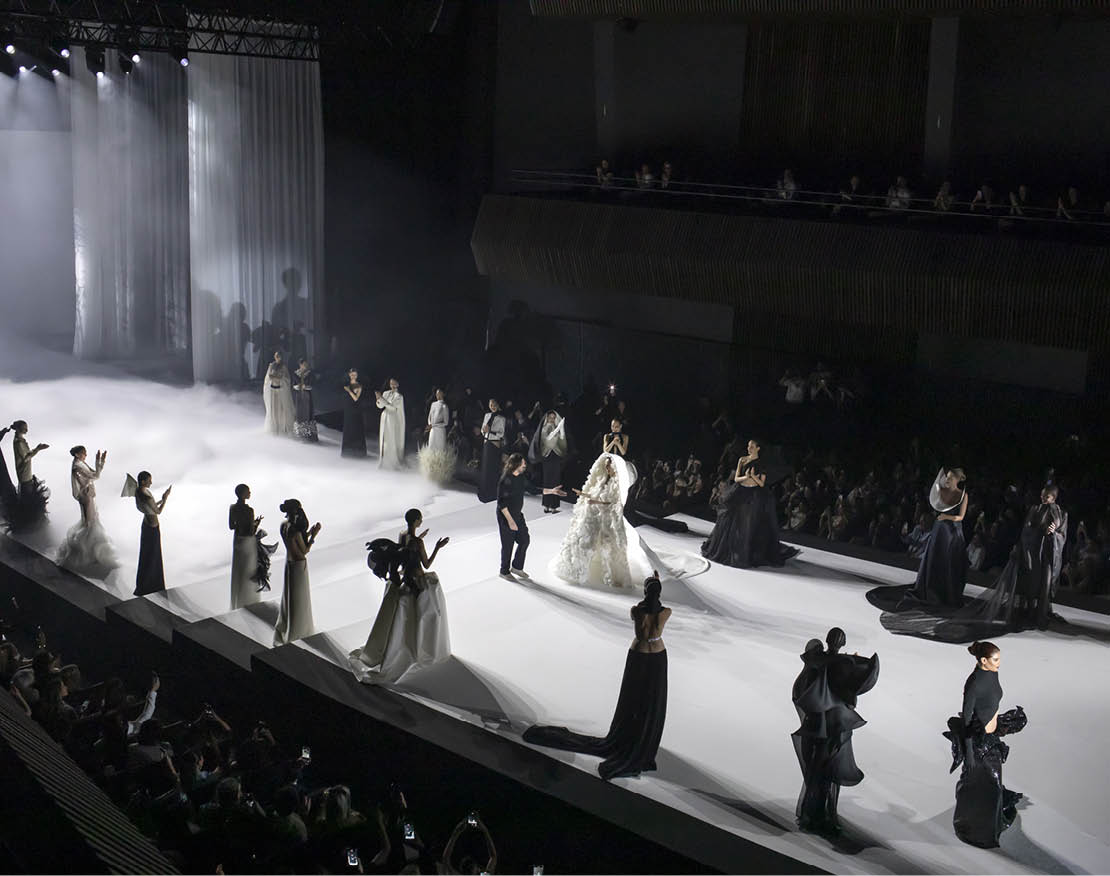
Now my life is about transmission. But there are many things I want to do. I want to spend time developing more artistic skills – I want to sculpt, paint, and take photos – and I create more and more costumes for cinema and opera. I love to collaborate with artists.
Being independent and not having a group behind me is difficult, but it gives me freedom. Freedom has a price to pay, but I prefer to pay. Sometimes I feel like a dinosaur as there are not many brands continue to be independent and have success. It’s important to continue to express yourself and develop and make sure my team are happy.
What is a message you would send to our readers?
I think the readers know what they want, and they will understand my message when they read. Open your eyes, open your ears. Observe and accept and open your arms to learning. The most beautiful thing in life is to learn.
Sheikha Bodour Bint Sultan Al Qasimi Discusses Sharjah’s Upcoming Tanweer Festival
This November, Tanweer Festival will debut in Sharjah’s Mleiha desert.
The music, art and poetry festival will invite visitors to gain a greater understanding of the arts through interactive experiences and live performances. Guests are invited to stay in the majestic desert and fully immerse themselves in the experience. Tanweer Festival was brought to life under the leadership of Sheikha Bodour bint Sultan Al Qasimi, who hopes to bring together people from all walks of life and create a wholesome, enriching, and celebratory environment. Here we find out more about what to expect from the festival and why it will help to further solidify Sharjah’s place as a cultural capital.
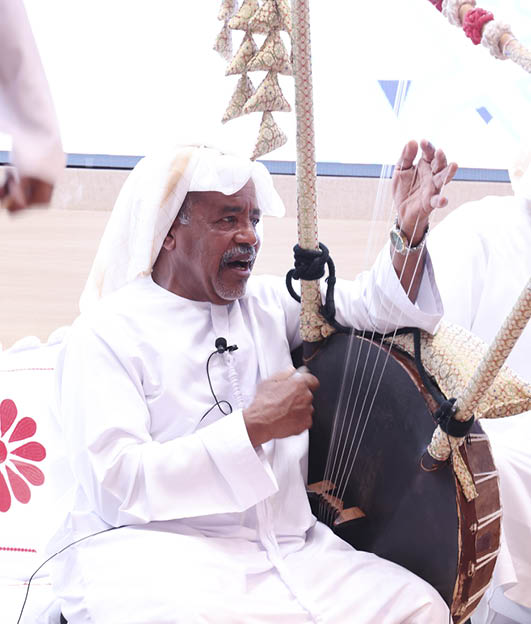
Congratulations on the upcoming Tanweer Festival – what is the vision and purpose of this festival?
The vision of Tanweer Festival is to create a transformative space where art, music, and poetry transcend boundaries and foster a deeper sense of connection and understanding between cultures. We see the festival as a beacon of creativity that encourages people from all walks of life to come together, share their stories, and celebrate our common humanity. Through this celebration, we aim to promote acceptance, respect, and peace in an increasingly fragmented world.
With the theme ‘Your Journey Begins Here,’ Tanweer Festival offers an immersive experience that goes beyond entertainment. It’s an opportunity for personal reflection and cultural exchange, where creative expression serves as a bridge between different identities and backgrounds. Our purpose is simple: to light the way toward a brighter, more harmonious future, using the universal languages of art and music to inspire deeper connections between people and cultures
What can visitors expect to find when they visit?
Visitors to Tanweer Festival can expect a truly immersive experience that ignites all the senses within the stunning natural backdrop of the Mleiha desert. The festival will feature an exciting lineup of performances, workshops, art installations, and activities that showcase a diverse range of artistic expressions. From captivating traditional music and dance, deeply rooted in heritage, to thought-provoking visual art and poetry, every element has been carefully curated to inspire and connect.
Guests will have the chance to participate in hands-on workshops, interact with artists, and explore interactive art installations. Our indigenous marketplace will offer unique crafts and local creations, providing a platform for artisans to showcase their work. To complete the experience, visitors can enjoy nourishing culinary delights that bring together diverse flavours from around the world.
Each moment at Tanweer Festival is designed to educate, inspire, and nurture a sense of community and connection, offering visitors a unique opportunity to engage with art, culture, and each other in meaningful ways.
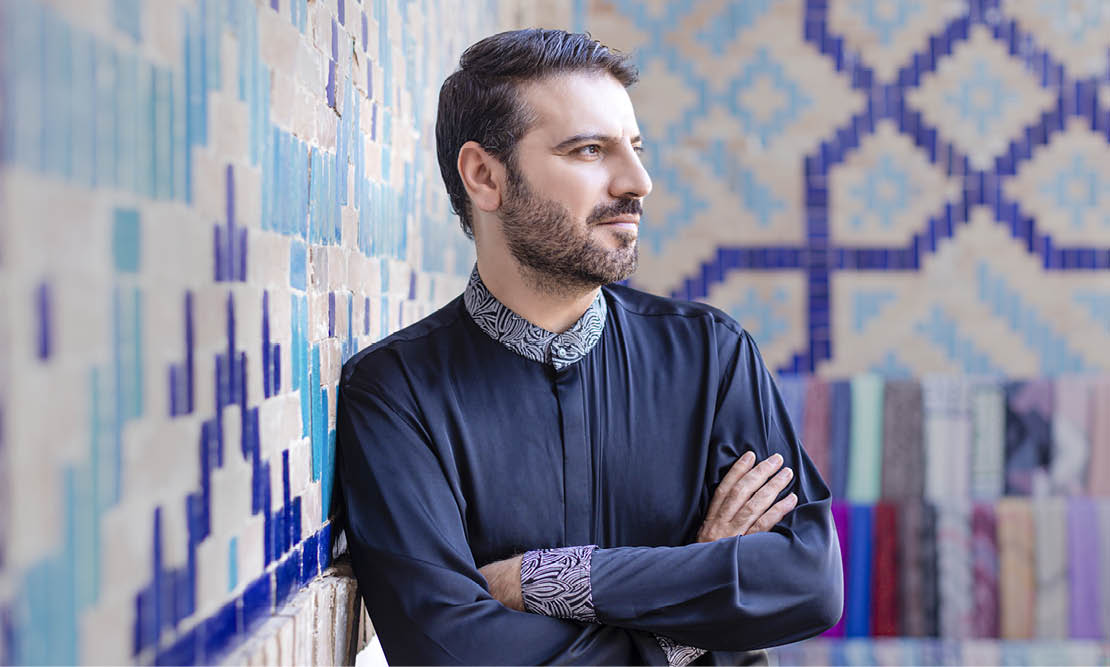
How did the idea for this festival come to life?
It feels as though Mleiha itself has called for this festival. With its ancient history, this land has been a meeting place for countless generations, and it now longs to gather people once again—this time through the universal languages of art, music, and poetry. There is a timeless energy here, and Tanweer Festival was born from the desire to honour that spirit and continue Mleiha’s legacy of connection and exchange.
I am the daughter of the ancestors who inhabited this mystical land, and within my DNA lies a deep love and passion for art, culture, and books, along with a desire to bring people together. I believe these elements can unite us, especially at a time when we need each other the most.
While my passion for the arts played a role in shaping this vision, it’s the essence of Mleiha and its deep-rooted history that truly inspired the festival. This is not just about gathering people today—it is about tapping into the centuries-old tradition of storytelling and connection that has always thrived here. The support of the community, artists, and cultural institutions has brought this vision to life, turning Tanweer Festival into a platform where the past and present converge in a harmonious celebration of creativity and shared humanity.”
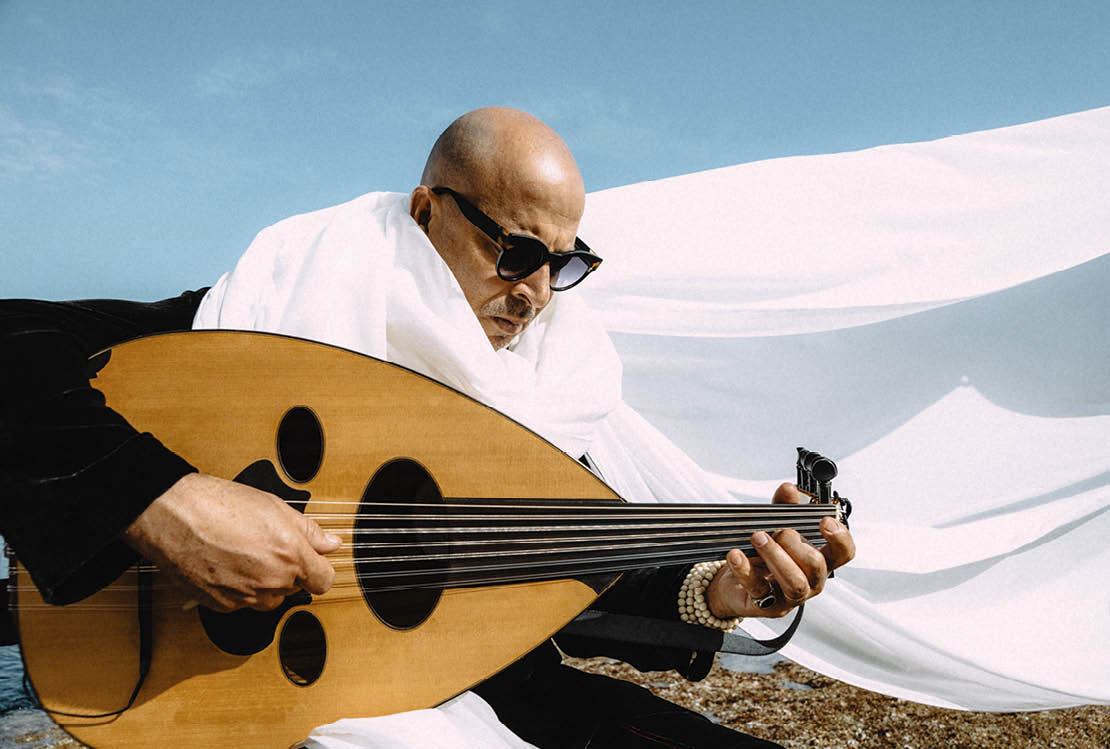
How do you believe music can connect different cultures and bring people together?
When music speaks, everyone understands. It is a universal language that transcends borders, cultures, and generations, carrying with it the power to evoke emotions and tell stories that resonate deeply within all of us. Music taps into the shared human experience—whether it’s love, struggle, or triumph—and through these emotions, it has the unique ability to connect people from vastly different backgrounds.
Traditional music, in particular, acts as a bridge between the past and present, preserving cultural heritage while uniting listeners through shared stories and values. The melodies, lyrics, and instruments carry lessons and wisdom across generations, reminding us of the common threads that bind humanity.
When we listen to music that stirs something within us, we are reminded of the universality of the human experience. It inspires empathy and understanding, allowing us to connect with one another on a deeper level. This is why music is such an essential part of Tanweer Festival—it brings people together, breaks down barriers, and fosters a sense of unity and belonging, no matter where we come from.

What were you looking for when selecting artists to be part of the event?
When selecting artists for the festival, we sought individuals who embody not only exceptional talent but also a deep commitment to cultural exchange and collaboration. It was essential to include a wide array of cultural backgrounds, and we aimed to showcase artists from different regions and traditions, ensuring that the festival represents a spectrum of musical styles and artistic expressions. We are not just celebrating music; but rather igniting a powerful movement of cultural connection and understanding that resonates across borders and beliefs.
Through a global gathering of extraordinary artists, we are proud to welcome the likes of Sami Yusuf, whose melodies inspire hope and unity, the enchanting Dhafer Youssef, who blends traditional sounds with contemporary innovation, the mesmerising performances of Hassan Hakmoun, whose Gnawa music transcends time. With each performance, from the rhythmic whirling of the Sema dancers, the evocative poetry of Nujoom Al-Ghanem, and the hypnotic rhythms of the Anas Handpan Orchestra, Tanweer Festival serves as a profound reminder that through the unifying ability of creative expression, we can echo a message of togetherness and human harmony.
How will the event showcase some of Sharjah’s beautiful sites?
We are honoured to have the festival set against the breathtaking backdrop of the Mehlia Desert, a landscape steeped in history and cultural significance. This majestic location has long been a crossroads of civilisations, where ancient trade routes once flourished, allowing diverse cultures to converge and exchange ideas. As visitors gather in this enchanting setting, they will not only experience the beauty of the natural world but also connect with the rich heritage of Sharjah, one that the Mehlia Desert embodies. The festival will showcase this historic relevance through performances that echo the traditions of the past while embracing contemporary expressions, echoing inspiration from the desert’s timeless spirit, and creating an atmosphere that honours both the land and its stories.
Accommodation options at the festival include add-on experiences such as a “bring your own tent” pass for those who prefer more traditional camping, a “rent-a-tent” pass with options for 2-person, 4-person, and 6-person setups for added convenience, and luxurious Glamping options for a more comfortable stay. Additionally, there are numerous hotels, retreats, and resorts in close proximity, providing a variety of lodging choices to suit every preference and budget.
We will also be facilitating a number of unforgettable add-on activities in the area, including horse riding, access to the Mleiha Archaeological Centre, and guided tours of the archaeological sites and the renowned Valley of the Caves, as well as paragliding for the more adventurous, providing an unforgettable perspective of the expansive landscape. Additionally, moongazing will offer a unique and tranquil experience, allowing visitors to marvel at the beauty of the night sky in peaceful surroundings.
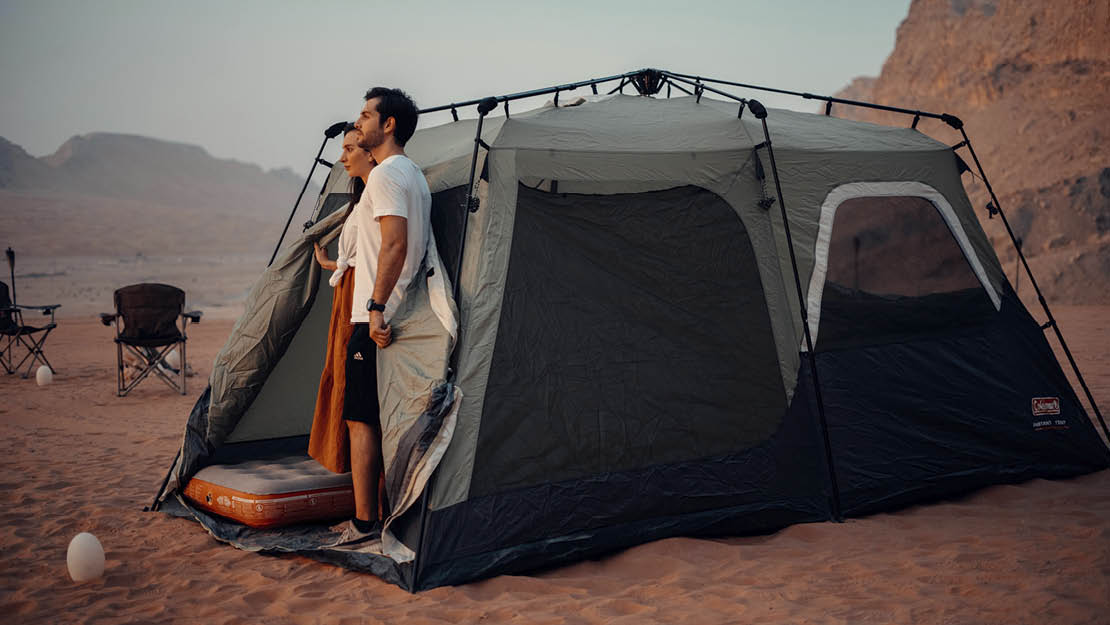
The festival is reinforcing Sharjah’s position as the cultural capital of the UAE – how do you see Sharjah has progressed in this sector in recent years?
Sharjah has always been a beacon of culture, where history, tradition, and innovation coexist harmoniously. Over the years, it has solidified its place as the cultural capital of the UAE, becoming a hub where artistic expression and heritage thrive side by side. What sets Sharjah apart is its unwavering commitment to nurturing creativity while preserving its rich heritage, creating a space where both past and present are celebrated.
In recent years, Sharjah has made great strides in this sector, attracting global recognition for its cultural initiatives, from art exhibitions and book fairs to heritage festivals. The Tanweer Festival is a continuation of this journey, adding another chapter to Sharjah’s cultural story. By blending ancient wisdom, traditions, and contemporary artistic interpretations, Tanweer aims to inspire future generations through the transformative power of art and cultural exchange.
Tell us a little about the sustainability angle of the event.
At Tanweer Festival, sustainability is not just an initiative but a core principle that we believe is as essential as our dedication to artistic expression. We are deeply committed to creating an event that reflects both cultural vibrancy and environmental consciousness. Through our eco-friendly practices, we aim to reduce our ecological footprint and inspire others to follow suit.
We have carefully curated every aspect of the festival with sustainability in mind. From requiring all vendors to use eco-friendly materials and packaging, ensuring that everything from food containers to merchandise bags contributes to environmental preservation, to setting up recycling and waste separation bins throughout the venue, we are dedicated to minimising waste. These efforts enable attendees to dispose of refuse responsibly, while our waste management partners ensure that materials are recycled and composted offsite.
In addition to supporting local artisans and vendors who prioritise sustainable practices, our workshops aim to ignite creativity while educating participants on the importance of living in harmony with nature. Through these efforts, we strive to show that sustainability and art are intertwined, encouraging festival-goers to reflect on their own role in protecting the environment.
Metaphorically, we believe that we are all a piece of the larger puzzle that connects humanity and the planet. By working together, we can form a complete picture—one where culture and nature coexist in balance. Tanweer Festival is an invitation to experience this harmony, knowing that while enjoying the festival’s magic, you are also contributing to a more sustainable future for everyone.
What more would you like to see happen to increase Sharjah’s footprint in the arts and culture industry?
Sharjah is globally recognised as a cultural hub connecting East and West, where diverse traditions and ideas come together. We are already making significant strides in the arts and culture sector, and I believe that by continuing to foster collaboration between local and international artists and relevant stakeholders, we can further solidify this position on the world stage.
Events like the Tanweer Festival play a crucial role in this effort. By bringing together diverse voices from across the globe, these cultural gatherings not only celebrate creativity but also create a platform for meaningful exchange and dialogue. Through these initiatives, we can continue to nurture the rich ecosystem of arts and culture that Sharjah has built, ensuring that it remains a beacon of creativity and collaboration.
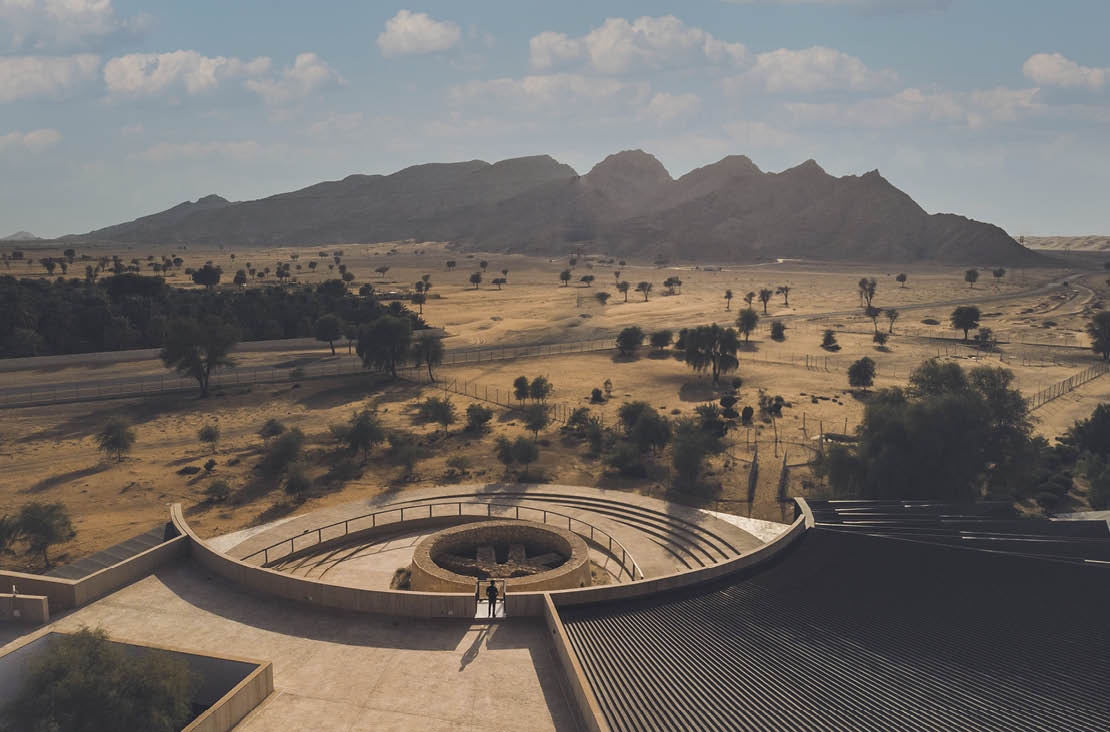
What’s a message you would send to our readers on why they should visit the festival.
If you want to feel the desert breeze on your skin, gaze at the stars under the clear skies of Mleiha, and stand in the presence of a mystical land where human beings have walked for thousands of years while being enchanted by the mesmerising music of Tanweer’s artists, then Tanweer Festival is where you need to be. Set against the awe-inspiring backdrop of the Mleiha desert, the festival offers an immersive experience that awakens all your senses and transports you to a place where art, music, and poetry transcend boundaries.
Inspired by the timeless wisdom of Jalal Al Din Al Rumi and captured in the theme ‘Timeless Echoes of Love and Light,’ Tanweer Festival invites you on a journey of discovery. From soul-stirring musical performances and thought-provoking art installations to hands-on workshops, every moment is designed to ignite your imagination and foster connections across cultures.
Join us at Tanweer Festival for an unforgettable three days of creativity and reflection. Let the ancient spirit of Mleiha and the power of artistic expression inspire and unite us, reminding us of our shared humanity beneath the stars!
The inaugural Tanweer Festival is set to debut in the Mleiha desert, Sharjah, from 22nd to 24th November 2024.
Nadine Kanso The Founder Of Bil Arabi On Exploring Culture Through Jewellery
Nadine Kanso founded her jewellery brand in Dubai in 2006. Its instantly recognisable designs and motifs have allowed it to be one of the most sought-after homegrown brands in the region.
Since the beginning, Kanso, a Lebanese native, has been inspired by her culture, specifically the history of calligraphy and its meanings. By calligraphic artistry and intricate design, the brand curates unforgettable experiences through its pieces, with each piece having a story or meaning behind it which allows the wearer to express their own individuality.
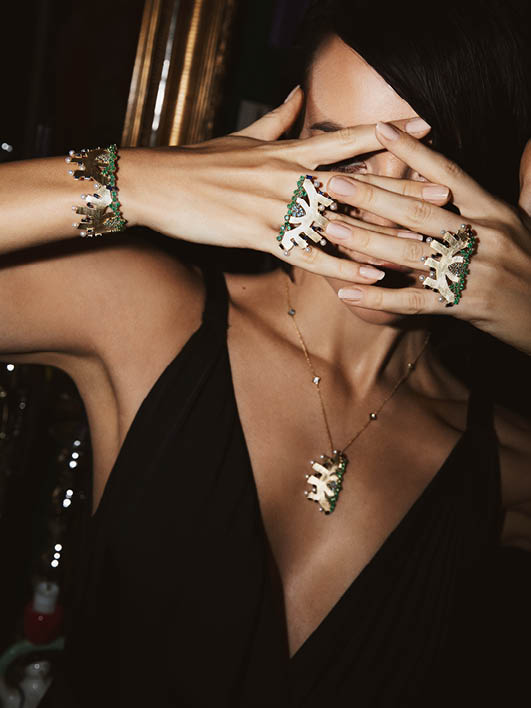
This Fall, Bil Arabi debuted the NAJLAA collection, a new line inspired by the captivating allure of Arabic poetry. Drawing on the rich literary tradition where the word “Najlaa” is often used to describe a woman with wide, expressive eyes, symbolising beauty and mystique. The collection features pieces with striking precious stones that take them to new levels. Here we find out more about the NAJLAA collection and Kanso’s vision for the brand.
Tell us about the vision and direction for your brand Bil Arabi, this year.
Bil Arabi is all about deepening our connection to Arabic heritage while embracing modern influences. This year, we continue to celebrate Arabic identity through our jewellery, infusing each piece with meaning and story. With our latest collection, NAJLAA, we are staying true to our roots while exploring new and interesting design directions that will speak to both our regional and international audiences.
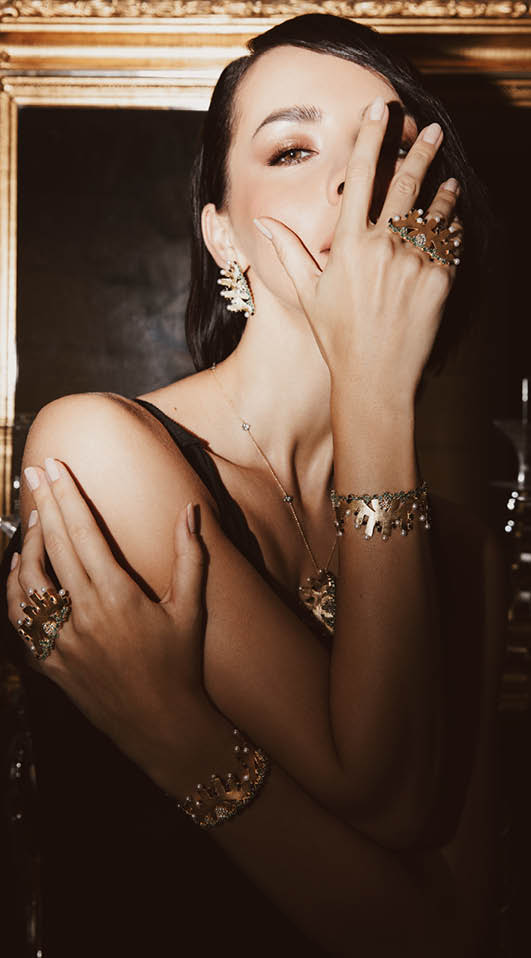
You recently launched the NAJLAA collection – tell us about this collection and how it fits with your existing pieces.
NAJLAA is a collection that holds deep personal meaning for me, as it draws inspiration from Arabic poetry. “Najlaa” is often used to describe a woman with wide, expressive eyes, and this imagery was central to the design process. This also beautifully connects to my beloved grandmother Najlaa, whose spirit is truly felt in the essence of this collection.
As a sub-collection of our main Ya Ein line, NAJLAA continues to explore the eye symbol, a signature motif of Bil Arabi. What sets NAJLAA apart is its focus on intricate detailing and the use of a wider array of precious stones, reflecting the richness of Arabic poetry. We’ve also introduced brushed gold to this collection to add a layer of complexity that blends timeless elegance with modern design.
There are some beautiful pieces in the collection – tell us about some of the stones and motifs used.
Each stone in the NAJLAA collection was carefully selected to capture the essence of beauty and mystique found in Arabic poetry. We’ve used precious gems such as emeralds, sapphires, blue topaz, tsavorite, and pearls to create a rich, layered design. The eye motif, central to the collection, draws on its symbolic association with protection, a concept deeply rooted in Middle Eastern culture. Each gemstone carries its own unique meaning: emeralds symbolise wisdom, blue topaz evokes clarity and calm, pearls represent elegance, and the vibrant tsavorite exudes strength and vitality. Together, these elements weave a narrative not only of beauty but also of resilience and grace.
You have always been inspired by Arabic calligraphy – is this something that continues to inspire you, and how do you continue to find new and original ideas?
Calligraphy continues to be a profound source of inspiration for me, but I also look beyond it to explore broader aspects of our culture such as poetry, heritage, and personal memories. Arabic calligraphy lies in its fluidity, allowing endless possibilities for reinterpretation in a fresh, modern context. However, with the NAJLAA collection, we intentionally shifted our focus from calligraphy to further explore and reinterpret the iconic eye symbol.
Our culture has immense richness and beauty, and I constantly draw from this as a source of inspiration, keeping our heritage alive while ensuring its relevance to contemporary tastes. For instance, while working on NAJLAA, I was inspired by a traditional technique from Roman styles – a matte and brushed gold finish that was once highly popular in our region. This nostalgic element, which was a significant trend, has now made a comeback, allowing us to blend tradition with modern aesthetics.
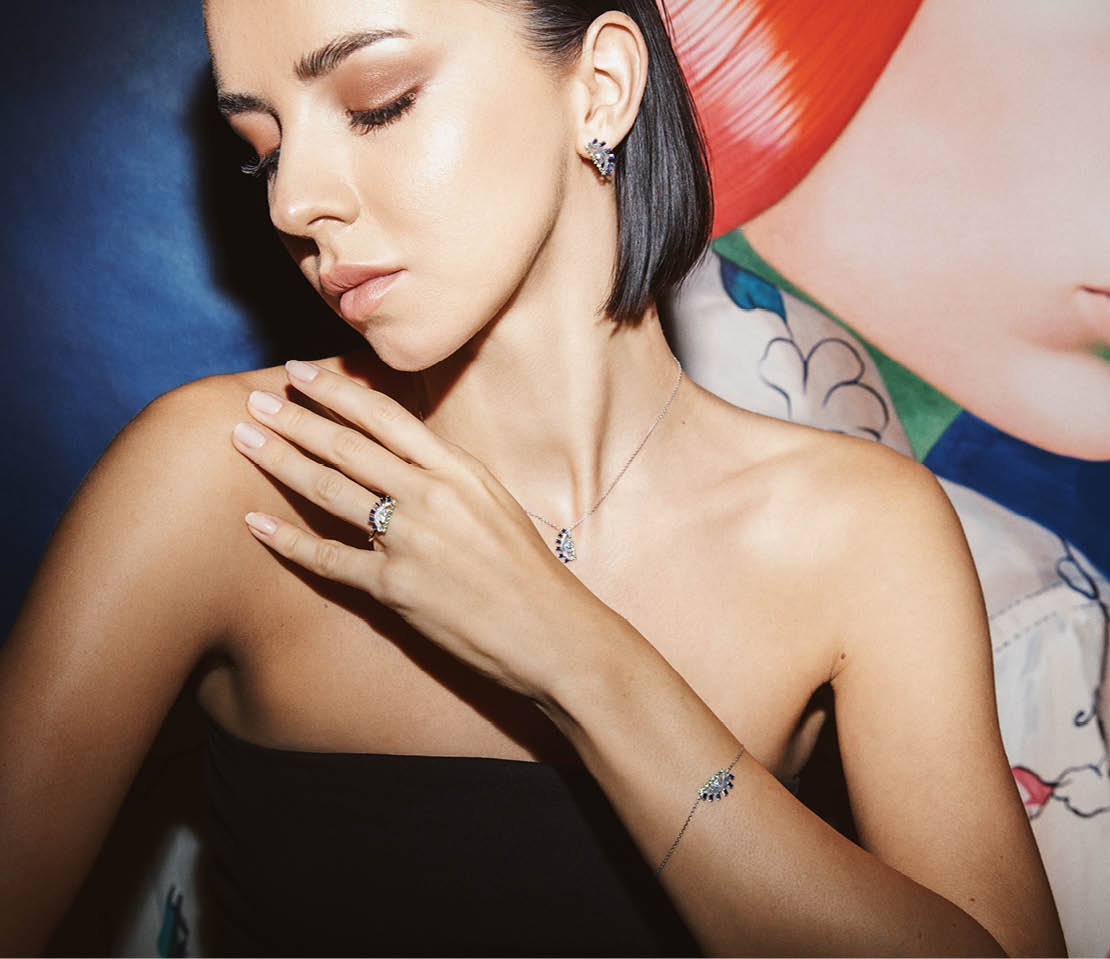
You have had a successful brand for many years now – what do you believe is the secret to sustaining a brand in this industry?
I think the key to sustaining a brand in this industry is remaining authentic and true to your vision. For Bil Arabi, that has meant consistently embracing and celebrating the modern Arab identity. Innovation is equally important; we continually evolve by blending our cultural heritage with contemporary trends, all while staying faithful to the brand’s core identity.
Building and maintaining strong relationships with our clients has been essential as well; many of them have been with us since the beginning, and we actively engage with them to create pieces that reflect their personal expressions. This close connection not only helps us stay relevant but ensures our designs resonate with both loyal clients and new audiences.
What’s the biggest challenge you face in your position today?
The biggest challenge is navigating the balance between honouring tradition and pushing creative boundaries. As a brand rooted in Arabic heritage, it’s important for me to stay true to those cultural narratives while also offering something new and exciting for a global, modern audience. For instance, while working on NAJLAA, I faced the challenge of modernising the eye symbol without losing its traditional significance. We experimented with new materials and forms to give it a fresh look, while making sure it still held the same cultural meaning. It’s always a delicate but rewarding process.
What else is in the pipeline for you this year?
There’s always something exciting in the works, which is one of the joys of being in the creative industry. While I can’t share too many details at this stage, we have a few collaborations that we’re currently exploring.
Can you share any more on collaborations or capsules, and would you like to further expand into other categories?
Absolutely. Collaborations are always an exciting part of Bil Arabi’s journey, and they continue to inspire us creatively. Partnering with other brands allows us to explore new ideas while staying true to our brand’s core ethos. I’m always eager to expand into new categories – it’s exciting to see the Bil Arabi universe take shape in different forms. Some of our most rewarding collaborations have been with brands like Berluti, Iwan Maktabi, and Guerlain, and I’m always open to exploring more opportunities that allow us to push creative boundaries.
Can you share a little about the brand here in the Middle East as well as plans to expand internationally?
The Middle East is truly the heart of Bil Arabi – it’s where our story began and where we continue to evolve. As a homegrown brand, I’m incredibly proud of our roots and always looking for ways to innovate and reach new audiences. It means so much to me to share Bil Arabi’s story with the world, especially highlighting the beauty and essence of the Middle East. I’m grateful for how far we’ve come, and with each step, we’re pushing boundaries to capture the world’s attention.
How would you assess the industry in the region as a whole today?
The jewellery industry in the region is flourishing. There’s a strong sense of cultural pride, and people are seeking designs that tell a story – pieces that connect them to their heritage. At the same time, there’s a growing appreciation for contemporary design, and I think that balance is what makes the industry so dynamic and exciting right now.
We’re also seeing a shift where clients are on the lookout for more bespoke, personalised pieces that reflect both their cultural background and their individual style, and this is something that is so true to our ethos at Bil Arabi.
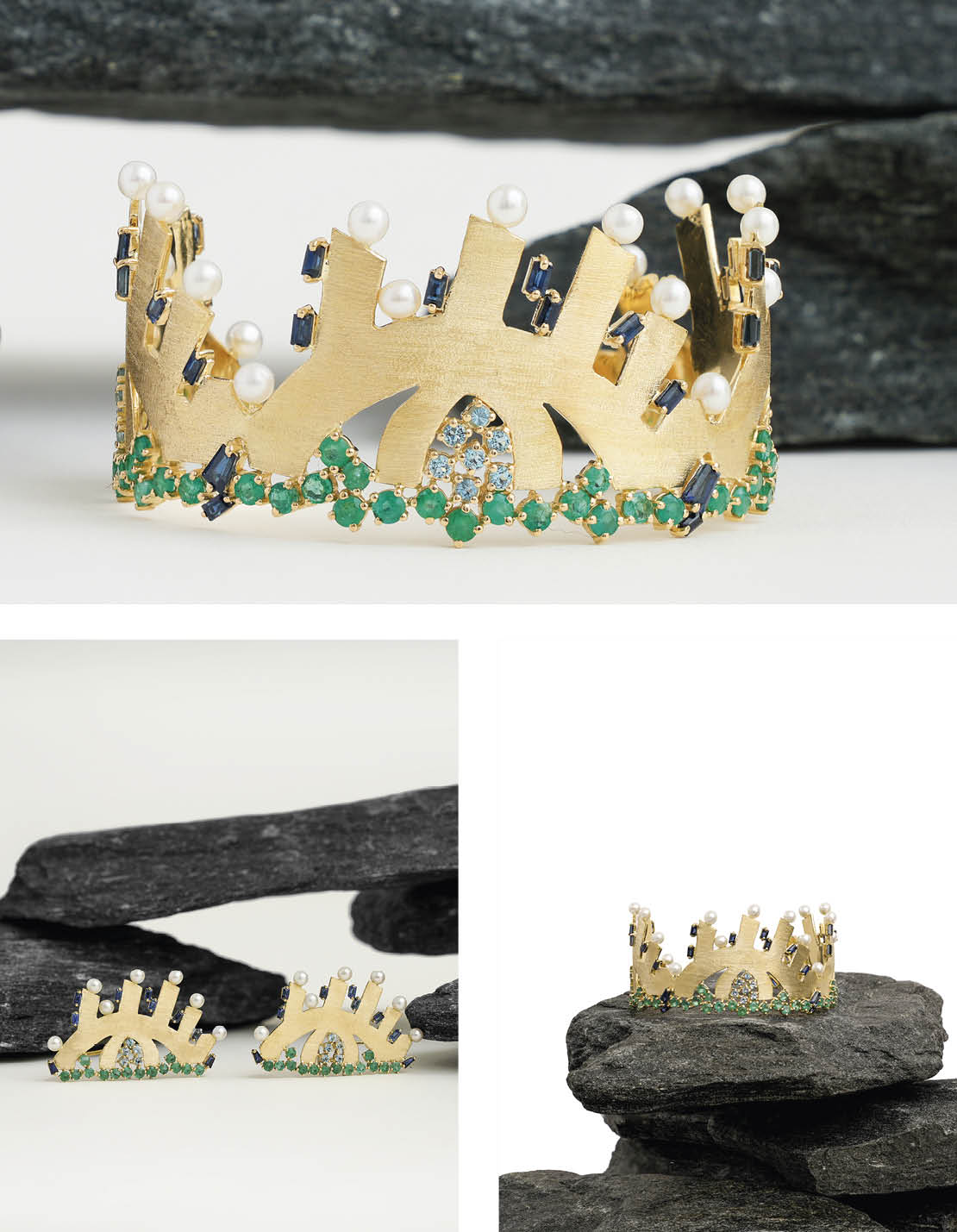
What would you still like to achieve at the brand that you haven’t done yet?
There’s still so much more I want to achieve with Bil Arabi. I’m eager to explore new design forms and mediums, whether in jewellery or beyond while staying true to our cultural roots. Experimenting with different materials and techniques allows me to expand the brand’s creative expression and introduce new ways of telling our story. Success, for me, is about sharing this journey with the world, and I feel proud when people connect with Bil Arabi’s message. What drives me is seeing our heritage reflected in our designs and knowing it resonates with others.
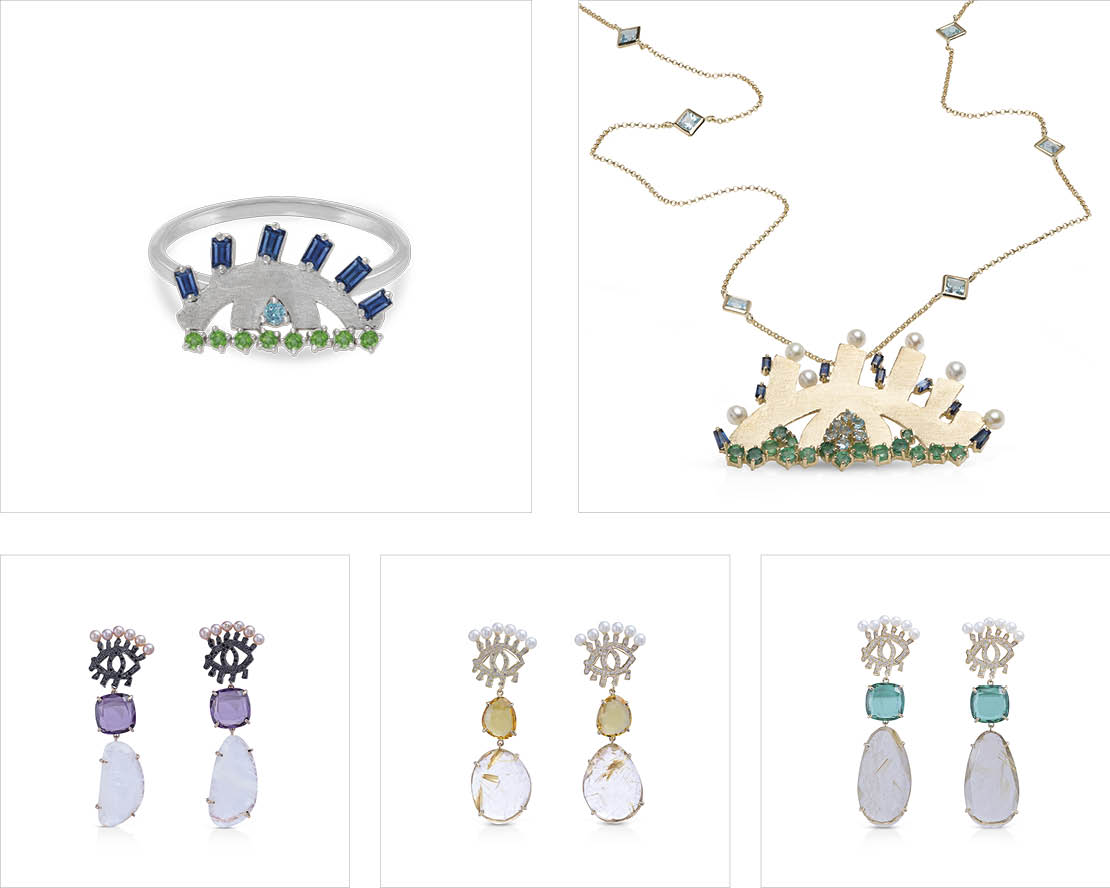
What is a message you would send to our readers?
Embrace your heritage and express it proudly. Jewellery, for me, is a way of telling your own personal story, and I hope through Bil Arabi, we can inspire others to take pride in their identity and share it with the world.
This Limited Edition Book Pays Tribute To The Middle East’s Watch Collectors
A beautifully curated coffee table book pays tribute to some of the region’s most esteemed watch collections, celebrating some of the rare and precious timepieces in their possession.
The book, which is published in Arabic, offers a rare glimpse into the private collections of connoisseurs, capturing not only their passion for horology but also some of the masterpieces that have shaped the history of watchmaking.
Published by Hassan Akhras, founder of Arab Watch Guide and Katia Jundi, founder of KatsBling, Icons on the Wrist celebrates the region’s rich heritage of luxury and craftsmanship, where watch collecting transcends investment to become an artistic expression of personal legacy. “With Icons on the Wrist, we are putting Middle Eastern collectors on the global horological stage,” explains Hassan Akhras. “This project is a celebration of their expertise and significant role in shaping the world of luxury watchmaking. It’s a proud moment for our region, and I’m privileged to document these remarkable collections.”
“This book is a tribute to collectors whose passion for horology defies time,” adds Katia Jundi. “Each watch tells a story, not just of design and craftsmanship, but of deeply personal connections, aspirations, and dreams. It’s an honour to share these stories with the world.”
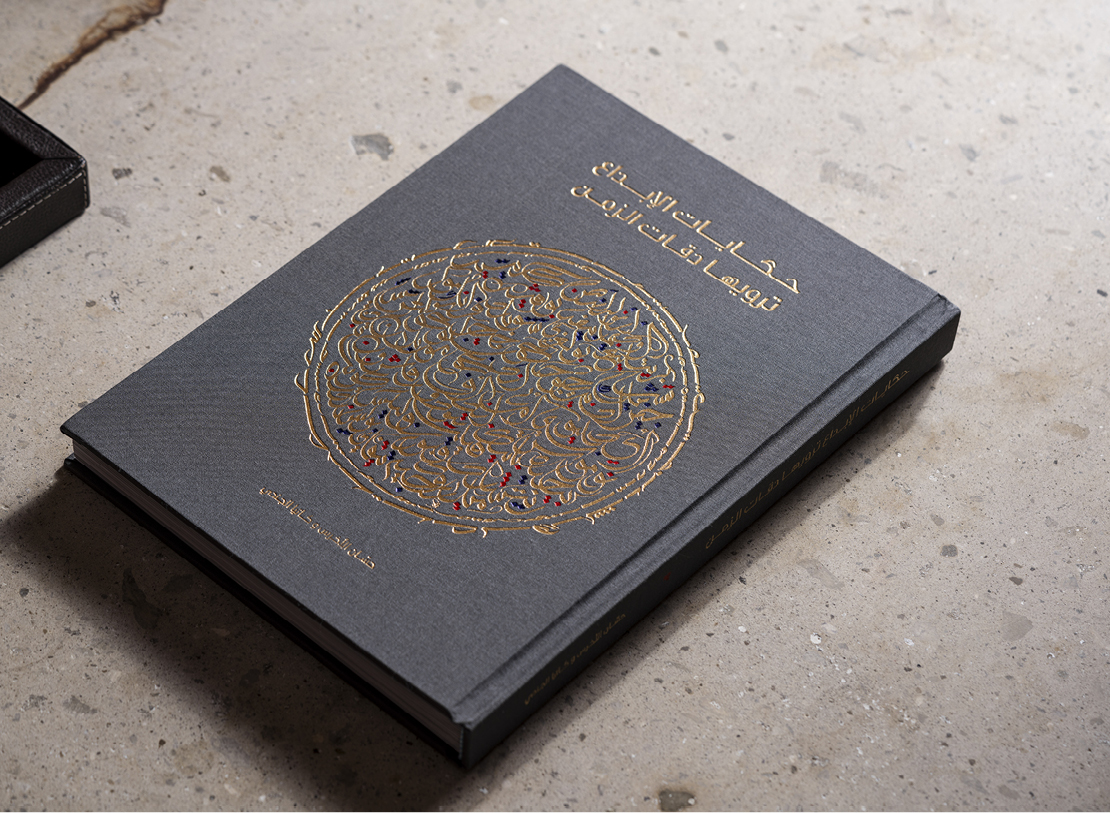
The book features the collections of 36 Middle East watch collections who offer an exclusive look at some of their rare timepieces. Among the collectors is Latifa Al Gurg who admires her Piaget Limelight Gala Aventurine for its striking balance between timeless design and intricate artistry. Latifa’s connection to this masterpiece comes from her appreciation of its historical significance, drawing inspiration from the art of glassmaking that originated in Venice in the 17th century.
Another highlight is Hussain M Al Luwati, who treasures his BVLGARI Octo Finissimo Middle East for its elegance and exceptional design. For Hussain, this timepiece represents the pinnacle of watchmaking and has held a special place in his collection since its acquisition.
Each chapter of Icons on the Wrist honours not only the treasured timepieces but also the personal significance behind them. From Mohammad Bin Ghatti’s Jacob & Co Bugatti Chiron Tourbillon, which reflects his visionary approach to life and business, to Nidhi Gupta’s MB&F Flying T Black Lacquer, inspired by the women who shaped the watchmaker’s life, these stories add meaningful depth to the collectors’ connections to their watches.
The book also highlights the growing influence of women in horology. “The women featured in this book bring a new dimension to the world of watch collecting,” notes Katia Jundi. “Their impeccable taste and emotional connection to their watches enrich the narrative of luxury and artistry.”
Loewe Perfumes Launches Limited Edition Colleciton
Loewe Perfumes launches limited edition fragrances in collaboration with Spanish porcelain brand LLADRÓ
Loewe has collaborated with Spanish porcelain brand LLADRÓ on a capsule collection of fragrance bottles to house its Botanical Rainbow fragrances. Each bottle, is toped is topped with a handmade porcelain flower cap, with a different coloured flower for each scent: pink for LOEWE Earth EDP, pure white for LOEWE 001 Woman EDP, and blue for LOEWE Agua Drop EDP. The bottles are limited to 600 pieces for each scent.
The decorative items celebrate the brands’ shared Spanish heritage, history of artisan craft, and reverence for nature. The handmade, hand-painted porcelain flowers are made up of softly serrated porcelain petals. fusing classical beauty with a sculptural reinterpretation of nature. Each unique piece is a work of art in its own right; a gestural, artisanal creation expressive of the botanical inspiration that lies at the heart of the fragrance itself.
Prada’s Newest icon Combines Modernity With The Brand’s Classic DNA
Prada’s new Aimée bag combines a modern shape with quality materials and a soft, understated appearance.
Inscribed within the codes of essential geometry, the Aimée features a modern silhouette that’s unstructured and malleable, it exudes personality and style, yet it is pragmatic and versatile. A perfect day bag for all your needs, Aimée is set to become this season’s must-have companion.
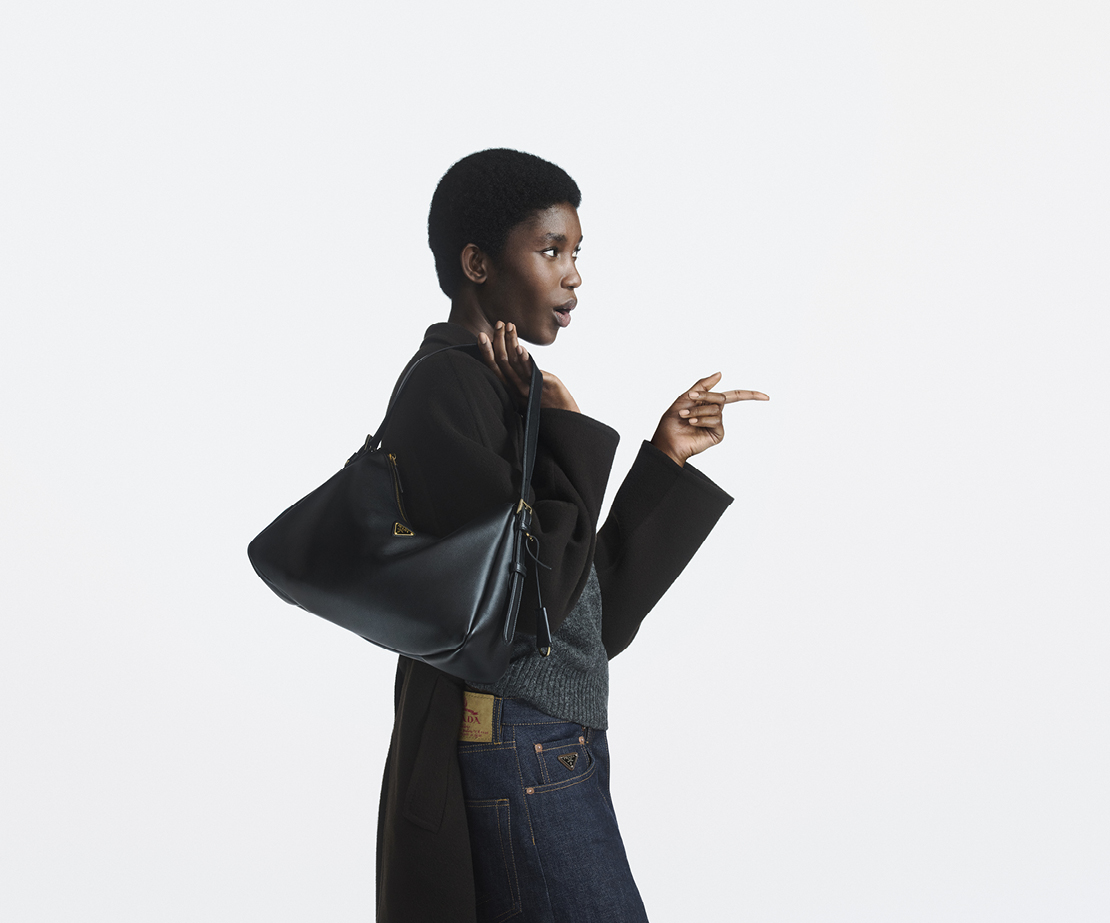
The trapezoid shape with its slouchy half-moon form relates to the genealogy of iconic Prada hobo bags: the Re-Edition created in 2005, the Cleo launched in 2000. Its soft and capacious envelope-bottom construction requires the considerable skills of Prada artisans to be crafted. The rich softness of the Soft Grain leather, high-end and tactile, as well as the lining entirely made in contrasting nappa, give Aimée a luxurious feel — but its character is practical and pleasant, adapting with ease to the creativity of individual looks.
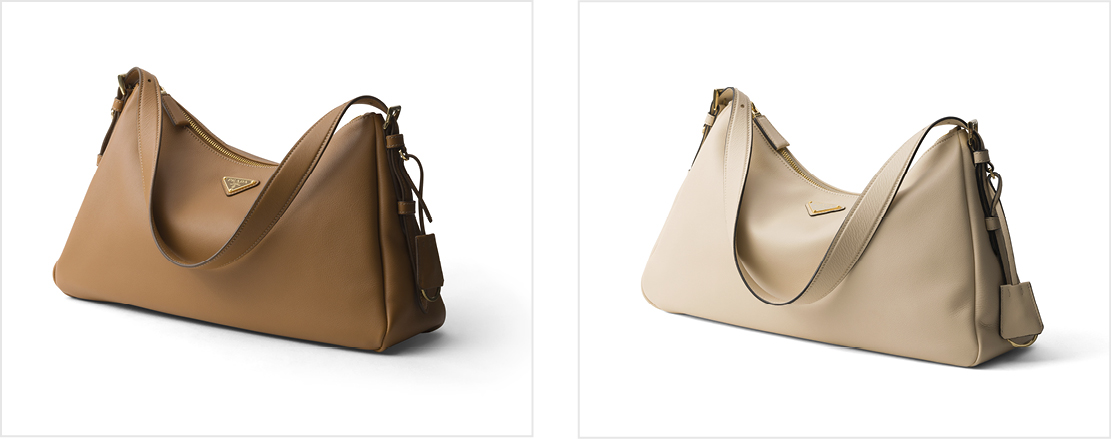
Each bag is finished with golden hardware, adding a dash of luminosity. The bag’s strap can be extended so it can be worn either on the shoulder or across the body. The Prada Aimée bag is offered in a range of neutral tones and a variety of sizes.
Available in selected Prada stores and at Prada.com.
Celine Launches Its First Ever Line Of Beauty Products
This October, Celine is launching its first line of beauty products, expanding the Parisian brand’s universe into makeup, with Celine Beauté, which follows the brand’s launch of fragrances in 2019, and a collection of beauty objects in 2023.
Designed by the brand’s creative director Hedi Slimane, the makeup collection captures the brand’s DNA of femininity and allure. The collection will feature a curated selection of must-have products, all housed in sleek, minimalist packaging that echoes the brand’s ready-to-wear and accessory lines.
The “Rouge Triomphe” Lipstick will be the first item available from this collection, along with a selection of beauty accessories and objects, as well as precious leathers to house the lipstick. The “Rouge Triomphe is presented in a faceted gold sheath and embossed with the maison’s couture monogram. Early next year, the range will expand with the launch of “Le Rouge Celine” lipstick collection in 15 satin-finish colours, including the classic nude shade “La Peau Nue” highlighting the lips of the models in the “triomphe” film, which debuts this month.
Each season will reveal new collections designed by Hedi Slimane, who sets the foundation of his Celine Beauté collection, comprised of lip balms, mascaras, eyeliners and pencils for the eyes, loose powder and blush cases for the complexion, nail polishes and more.
In keeping with Celine’s ethos, the beauty line places a heavy emphasis on clean beauty. The formulations are expected to be free from parabens, sulfates, and other harmful chemicals, while the brand ensures its products are cruelty-free, aligning with global sustainability standards.
Celine’s entrance into the beauty space is a homage to Parisian sophistication. Drawing inspiration from the effortless beauty of French women, the brand champions a fresh-faced look where individuality and natural beauty shine. It’s less about perfection and more about celebrating one’s own unique features.

The “Rouge Triomphe” Lipstick launches this October with the wider collection launching in January 2025.
The New Temerario Lamborghini Sports Car Is In A League Of Its Own
The new Temerario by Lamborghini is an all-new super sports car equipped with a twin-turbo V8 hybrid powertrain that redefines the very concepts of performance, driving pleasure and comfort.
The second model in the Lamborghini High-Performance Electrified Vehicle (HPEV) range, (the Revuelto was the first to launch), the Temerario completes the hybridisation of Sant’Agata Bolognese’s line-up following the market debut of the Urus SE.
The Temerario debuted at the recent Monterey Car Week this summer and was the star of the show as it presented a new benchmark in the super sports car segment, thanks to class-beating performance. The new hybrid powertrain combines an entirely new twin-turbo V8 engine with three electric motors, providing a total power output of 920 CV. The twin-turbo V8 has been designed and developed from scratch by Lamborghini and is the first and only production super sports car engine able to reach 10,000 rpm. The performance is an absolute revelation: maximum speed of over 340 km/h (210+ mph), 0 to 100 km/h (0-62 mph) in just 2.7 seconds.
“The Temerario is a genuine ‘fuoriclasse’: a car in a league of its own, an extraordinary and innovative vehicle both from a technical and stylistic point of view,” says Stephan Winkelmann, Chairman and CEO of Automobili Lamborghini. “Every new Lamborghini must surpass its forerunners in performance terms, while at the same time being more sustainable from an emissions standpoint. With the Temerario, we have completed a key chapter in the electrification strategy included in our Direzione Cor Tauri plan: we also become the first luxury automotive brand to offer a completely hybridised range.”
With the Temerario Lamborghini has also achieved new heights in terms of aerodynamic efficiency, combined with stylistic details and lines that represent a further landmark in the brand’s design. Also entirely new is the aluminium chassis which, thanks to the use of a cutting-edge high-strength, ultra-light alloy, significantly increases torsional rigidity and contributes to excellent driving dynamics.
The chassis delivers excellent passenger comfort and increased roominess: the Temerario is a super sports car that expresses its full potential on the track while offering more space for passengers and luggage than any other vehicle in its segment.
The Temerario also delivers the most advanced multimedia experience in Lamborghini history, thanks to the introduction of the Lamborghini Vision Unit system, which provides access to new functions and applications that allow users to relive and share their track and road driving experiences.
The heart of a Lamborghini has always been its drive system. With the new Temerario, Lamborghini takes an entirely new approach, with several years of development, delivering an unprecedented super sports car powertrain, comprised of an extremely high-revving biturbo Internal Combustion Engine concept combined with three electric motors. When it comes to the engine noise there was no compromise; Lamborghini has invested significant technical effort in the development of a unique and unmistakable audio experience from the Temerario’s completely new drive system. Ensuring a highly emotive and unmistakably Lamborghini sound and sensation feedback. The new drivetrain incorporates three electric motors. With 110 kW of power each, the electric motors are an integral part of the powertrain strategy. Two oil-cooled axial flow electric motors with a total peak output of 220 kW and up to 2,150 Nm of torque (the continuous output is 60 kW) drive the front axle when required to achieve all-wheel drive. The electric front axle weighs just 73 kilograms, and each electric motor only 15.5 kilograms.
When it comes to design this car is flawless inside and out and opens a fresh chapter in Lamborghini design DNA. “The Lamborghini Temerario marks definitively a new milestone in our design language. We call it “essential and iconic” with enhanced athleticism from its surfaces. From the first glance, this is a puristic, futuristic and yet fascinating super sports car, with its compact and agile proportions, the new hexagonal light signature, the ‘Feel like a pilot’ interior design and its sharp lines emphasizing the new hybrid powertrain and its fun-to-drive dynamics. We provide a clear view of the new V8 biturbo engine: the emotional heart of the car and an innovative source of power,” says Mitja Borkert, Director of Design at Automobili Lamborghini. The new car’s design points towards the future of Lamborghini’s legendary mid-engine sports cars, while the shapes of the car stay pure, athletic and well-defined.
The Lamborghini design language has evolved to create a new hexagonal Daytime Running Light (DRL) signature, rendering it strongly recognizable and identifiable from far away. The hexagon concept can be found as the main design theme throughout the car: on the main bodywork, the side air intakes, the taillights and in the remarkable hexagonal exhaust pipe. The hexagonal daytime running lights, which incorporate an air tunnel, are part of the design philosophy of incorporating lights within the aerodynamic concept. Furthermore, air channels positioned below the headlights improve the aero performance and cooling of the front high-performance braking system for better efficiency. The Temerario’s designers combine elements from aviation with a visceral muscularity that starts at the front.
The interior mirrors the exterior design, creating a balance between digital and physical experiences. Lamborghini uses best-quality materials such as carbon, leather and Corsatex by Dinamica suede throughout the interior, combining them to create a high-quality interior experience with a special feel. Many interior elements can also be ordered in carbon fibre as an option, including parts of the centre console, air vents, door panels, parts of the dashboard, steering wheel and steering column.

In addition to the elegant, lightweight materials, customers can find classical Lamborghini elements such as the Start/Stop “Power button” inspired by aviation; e-gear lever, and red ‘line-up’ indicator on the steering wheel to emphasise the extreme sportiness of the Temerario.
Following the “Feel like a pilot” philosophy, thanks to the new generation dashboard, the pilot and co-pilot quickly become one with the car for a seamless experience.
A Brief History Of Bvlgari’s Iconic Serpenti Collection
For more than 75 years, Bvlgari’s Serpenti collection has been the embodiment of the brand’s ethos of power, seduction and transformation, captivating the world with its serpentine curves and timeless allure.
What began as a bold venture into the realm of avant-garde design has become one of the most iconic symbols in luxury jewellery history, a striking representation of Bvlgari’s audacious spirit.

When the serpent began its life with the original Serpenti collection in 1948, it debuted with bracelet watches that coiled around the wrist, mimicking the sinuous grace of a snake in movement. The early versions of the Serpenti Tubogas watch featured a flexible band made using the Tubogas technique—a method derived from ancient Roman traditions, where gold or steel bands were coiled tightly around a core.

This technique allowed the bracelet to remain flexible, making it as comfortable as it was striking. The first iterations of the Serpenti were sleek and understated, but they set the stage for the bold, bejewelled iterations to follow.
The 1950s and 1960s marked a period of transformation for Bvlgari’s Serpenti, with the collection beginning to reflect the glamour and exuberance of its time. One of the most iconic wearers of Serpenti was Elizabeth Taylor, who famously donned a Serpenti bracelet-watch while on the set of Cleopatra in 1962. This moment cemented Serpenti’s place not only in pop culture but in fashion history, transforming it from a piece of jewellery into a symbol of empowered femininity and enduring beauty.
By the 1970s, the Serpenti collection evolved further, incorporating vibrant enamels and precious gemstones, from emeralds and rubies to diamonds. The serpent became more than just a coiled form; it was now a hypnotic, bejewelled masterpiece that could adorn the wrist, neck, or finger.
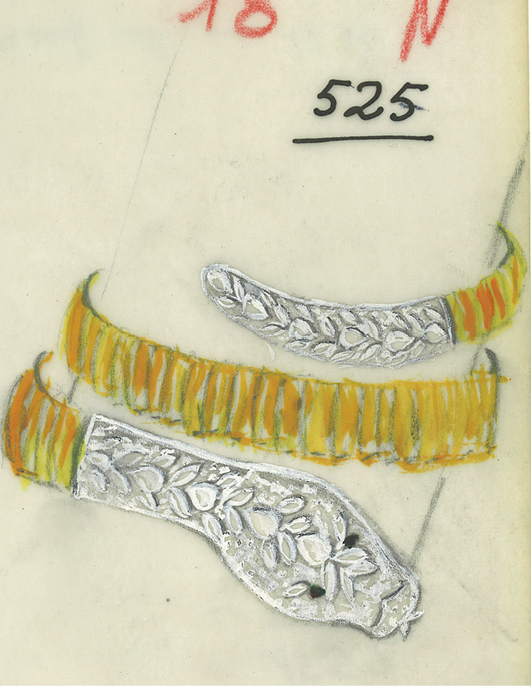
While Bvlgari’s Serpenti has maintained its symbolic and aesthetic heritage, the house has never shied away from pushing creative boundaries. Over the decades, the design has been reinterpreted in a variety of forms—cuffs, necklaces, earrings, and rings—all while maintaining its distinct serpent motif. The Serpenti Viper, a more contemporary collection, introduced sleek, modular designs, showcasing the house’s ability to evolve with changing fashion trends while keeping its core DNA intact.
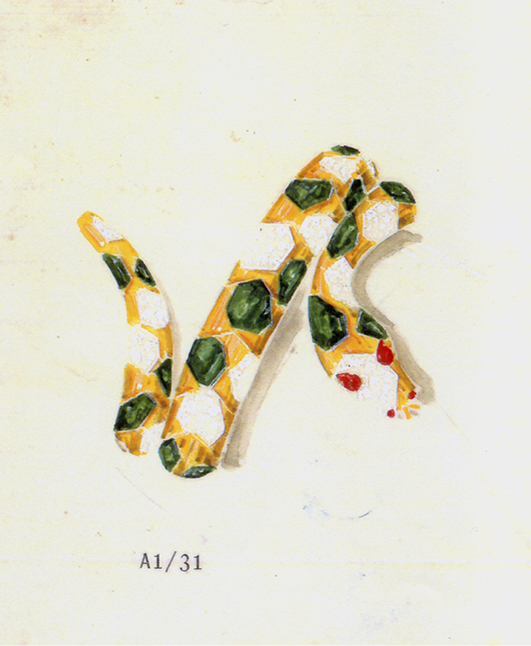
In the 2010s, Bvlgari introduced Serpenti High Jewellery pieces, adding intricate diamond settings and playing with scales and movements. These lavish pieces are hand-crafted to embody the fluidity and grace of a snake in motion, with exquisite attention to detail that speaks to Bvlgari’s expertise in fine craftsmanship.
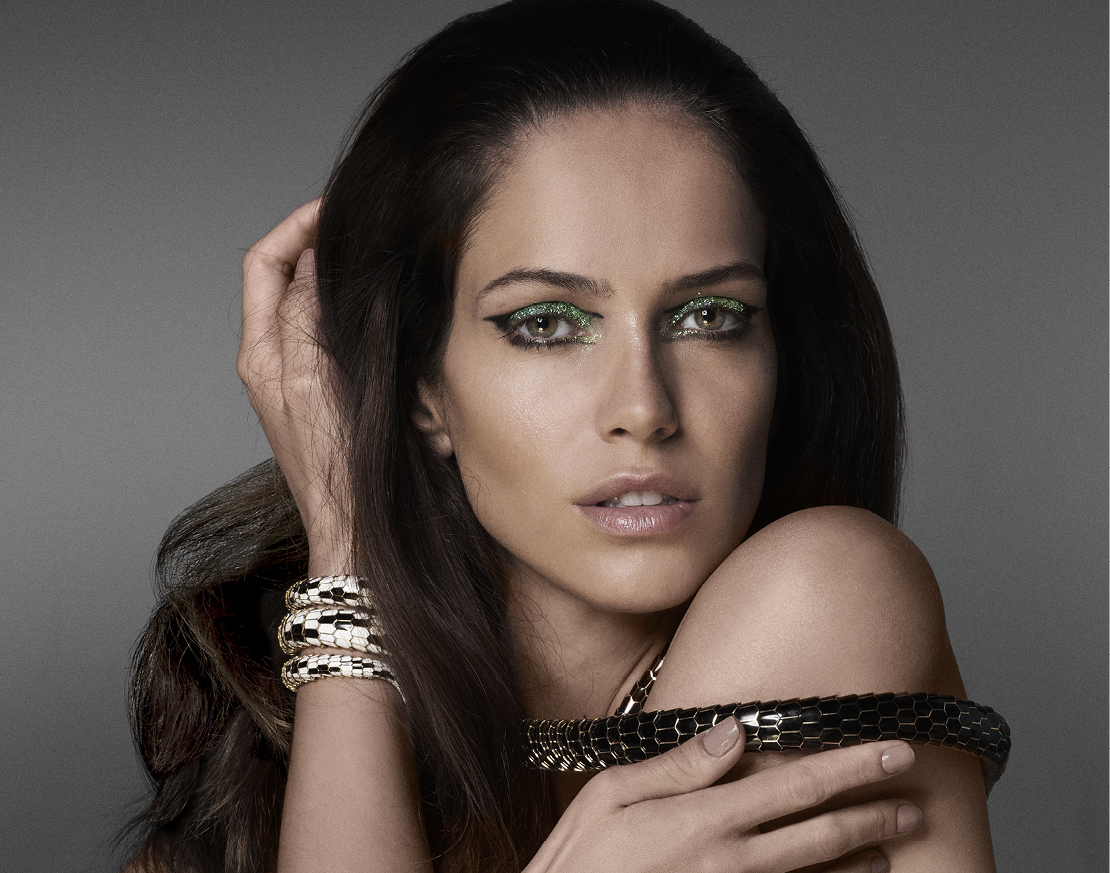
Through its 75-year journey, Serpenti has come to embody transformation—a natural fit for a motif so deeply rooted in mythology. Each Bvlgari Serpenti creation tells a story of reinvention, power, and resilience. The serpent, a symbol of eternity and cyclical renewal, mirrors the journey of the modern woman, making it a favourite among those who seek to embrace both elegance and inner strength.
The Serpenti has also come to symbolize the house of Bvlgari itself, reflecting the brand’s journey from a small Roman jeweller to a global icon of luxury. The design’s ability to morph and adapt while staying true to its roots parallels Bvlgari’s creative evolution—always forward-looking, but with deep respect for its heritage.

Last year, as Serpenti marked its 75th anniversary, limited-edition collections and one-of-a-kind high jewellery pieces which celebrated the legacy of the Serpenti. Exquisite high jewellery collections presented the Serpenti as it had never been seen before, paying tribute to its rich history. Meanwhile, pop-up exhibitions around the world displayed some of the rarest Serpenti pieces and told the story of the evolution of Serpenti through the years with The Serpenti Factory.
Today, as the brand looks forward to the next 75 years, recent releases have seen the introduction of new materials, such as ceramic and rose gold, while still celebrating the ancient craftsmanship techniques that first brought the Serpenti to life.
The 2024 Serpenti Viper Jewellery collection
This year, the newest chapter of the Serpenti comes in the form of the Serpenti Viper Jewellery collection. With its signature blend of essential aesthetics, mesmerising suppleness and magnetic flair, Serpenti Viper represents the further evolution of Bulgari’s icon of metamorphosis. The collection features five new jewellery creations, illustrating the snake’s innate power to evolve and take always new forms.
The five designs feature sleek designs crafted in 18 kt yellow or rose gold and lit by a precious touch of demi pavé diamonds. While offering a new, contemporary appeal, the pieces maintain the collection’s signature enveloping lines that connect the creation with the wearer in a symbiotic embrace.

The new single wrapping ring, available in 18 kt rose and yellow gold, radiates confidence and charm with diamond accents enlivening the head and the tail of the snake’s abstracted body. The same captivating curves and modern lines define the earrings set in 18 kt rose or yellow gold, decorated with diamond demi pavé touches. The enchanting new pendant necklace also intertwines iconic aesthetics and modern flair. With a stylised 18 kt yellow gold snake coiling around a gold chain and enhanced by a diamond pavé.
Completing the new set is an already beloved icon of the collection, the Serpenti Viper single coil bangle bracelet in 18 kt yellow gold with demi pavé diamonds, which invites the wear to experiment with different and ever-evolving styling options. The contemporary appeal of yellow gold is brought to shine through its empowering embrace that wraps the wrist with a second-skin effect.
To be worn as stand-alone pieces or in an irresistible mix and match, the new creations perfectly incarnate Serpenti’s versatile and eternally contemporary spirit.
Bentley Reveals New Luxury Travel Collection
Bentley unveils an exclusive luggage collection to celebrate the launch of the fourth-generation Continental GT and GTC
Bentley Motors has revealed a three-piece luggage set to celebrate the launch of its fourth-generation Continental GT and GTC which debuted this year. The exclusive collection takes inspiration from the powerful grand tourer’s new design DNA and showcases Bentley’s dedication to superior craftsmanship and handcrafted luxury. The luggage collection features three essential pieces: a Weekender Bag, a Backpack and a Wash Bag and is offered in Gravity Grey in a nod to the new contemporary hide colour introduced with the fourth generation Continental GT and GTC.

Distinguishing this luggage collection are accent stripes in three distinctive hues: Mandarin, Kingfisher, and Hotspur. These colours are thoughtfully inspired by the sophisticated interiors of Bentley cars, offering a subtle yet impactful expression of luxury.

Each piece is hand-made in Italy using the finest materials and precision-crafted details, including hand-stitching and edging in contrast colours, front buckled pockets, debossed luggage tags with subtle emblems and internal leather-trimmed compartments – all showcasing Bentley’s refinement, quality and never-ending luxury.

The special collection is priced at approximately AED12,200 per set and can be purchased at shop.bm.com.
Mahraa Alshamsi Founder Of Bivalve On Balancing Tradition, Heritage And Modernity In Her Designs
When Mahraa Alshamsi founded UAE-based luxury footwear brand Bivalve, she embarked on a journey that would seamlessly blends Emirati heritage with contemporary design, all while ensuring the highest standards of craftsmanship.
With a vision to push the boundaries of modern footwear, Alshamsi channelled her passion for design into creating a brand that reimagines classic shapes and styles through a modern lens, infusing them with rich cultural accents. Bivalve is a celebration of tradition and innovation, sparking a dialogue between the past and the present. Though still in its early stages, Alshamsi’s ambition to transform the UAE’s footwear industry is clear, and her aspirations for the brand’s growth are as bold as her designs. We delve deeper into her journey.
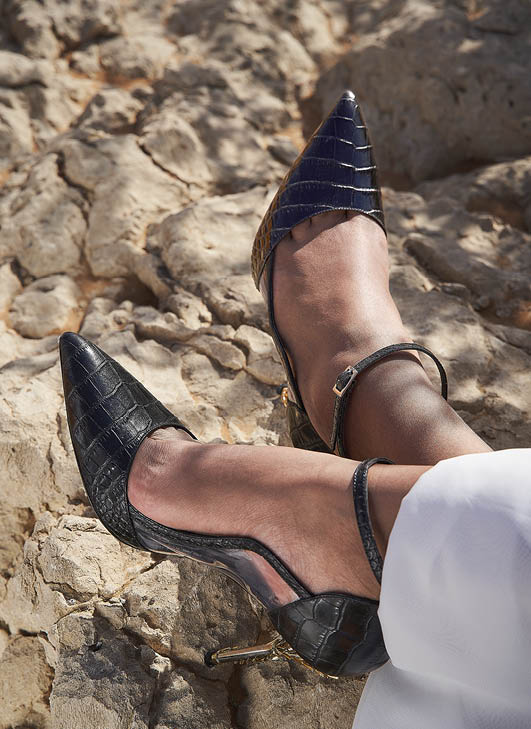
Tell us a little about your footwear brand, Bivalve and how it came to life.
Bivalve is the manifestation of my deep-rooted passion for storytelling through design. The brand was conceived not just as a footwear label but as an artistic journey that marries the opulence of luxury with the soul of cultural heritage. The spark was ignited when I first challenged myself to design a pair of shoes—a challenge that quickly transformed into a love affair with the craftsmanship and storytelling potential of footwear. Bivalve emerged from this love, as a brand that captures the essence of Emirati tradition while reimagining it for the modern woman, resulting in designs that are as meaningful as they are beautiful.
What can you tell us about your latest collections?
Our latest collections are an ode to the delicate interplay between nature and human artistry. One of the crowning jewels is the “Pearl Bloom” from the Art Blooms Collection—a design that intertwines the purity of pearls with the elegance of florals, symbolising the grace and resilience of women. Each piece in this collection is a carefully crafted narrative, blending intricate details with luxurious materials to create footwear that feels like an extension of the wearer’s inner strength and beauty. These aren’t just shoes; they’re wearable sculptures that invite you to step into a world where nature and luxury coexist.
How does the UAE and your culture inspire your designs?
The UAE’s rich cultural tapestry is the heartbeat of Bivalve’s designs. From the majestic palm trees that symbolise endurance and growth to the intricate patterns found in traditional Emirati art, my homeland’s heritage is woven into every pair of shoes I create. My designs are a tribute to the timeless elegance of Emirati culture, reinterpreted through a modern lens. I strive to capture the spirit of the UAE—its strength, its beauty, its history—and translate it into footwear that tells a story, connecting the wearer to a deeper sense of identity and tradition.
Where did your passion for design come from?
My passion for design was born from a moment of self-discovery during my final year of business studies. What started as a personal challenge to create something unique quickly blossomed into a realisation that design is a powerful medium for storytelling. The more I immersed myself in the world of shoe design, the more I fell in love with the idea that shoes could be more than just functional items—they could be vessels of expression, symbols of individuality, and even works of art. This realisation fueled my desire to turn my passion into a profession, leading to the birth of Bivalve.
What do you believe is unique about your brand?
Bivalve stands out for its ability to blend cultural heritage with contemporary design, creating footwear that is as rich in meaning as it is in style. Our brand is unique because it’s not just about luxury; it’s about creating a connection between the wearer and the story behind each pair of shoes. The palm tree heel, for instance, is more than just a signature design—it’s a symbol of resilience, growth, and the beauty of the UAE. Moreover, our commitment to sustainability and ethical craftsmanship ensures that every product is made with integrity, aligning with the values of today’s conscious consumers.
Who is the woman who walks in Bivalve’s shoes?
The woman who walks in Bivalve’s shoes is a modern muse—she is confident, culturally aware, and deeply connected to her roots, yet unafraid to forge her own path. She is someone who sees fashion as a reflection of her inner self, a means to express her individuality and strength. This woman values the stories behind the pieces she wears, appreciating the blend of tradition and innovation that Bivalve represents. She walks with purpose, elegance, and an innate understanding that true luxury lies in authenticity and craftsmanship.
How do you balance comfort and style in your designs, and what do you think women are looking for from their footwear today?
In today’s world, women seek footwear that transcends mere aesthetics—they want pieces that empower them, combining unparalleled style with uncompromising comfort. At Bivalve, this balance is achieved through meticulous attention to detail in both design and construction. Every curve, and every stitch is carefully considered to ensure that our shoes not only look stunning but also provide the support and comfort needed for all-day wear. We use only the finest materials, chosen for their luxurious feel and durability, ensuring that every pair of Bivalve shoes delivers both the elegance and ease that modern women demand.
Tell us more about your design process and the choice of materials.
My design process is a journey of discovery, where each step is guided by a desire to create something that is both beautiful and meaningful. I start with inspiration, often drawn from nature, art, or the rich cultural heritage of the UAE. From there, I sketch my ideas, focusing on how each design can tell a story while remaining functional. The choice of materials is equally thoughtful—I work exclusively with suppliers who share my commitment to quality and sustainability, selecting leather components that enhance both the aesthetic and comfort of the final product. Each shoe is a labour of love, a testament to the artistry and craftsmanship that defines Bivalve.
Who or what inspires you?
Inspiration for me is a confluence of influences—my father’s unwavering support, the timeless elegance of iconic designers like Jimmy Choo, and the natural world’s inherent beauty. I’m particularly inspired by the resilience and grace of the women who wear my designs; their strength and confidence fuel my creativity. The palm tree, with its deep roots and ability to thrive in harsh conditions, serves as a powerful metaphor in my work, reminding me of the importance of staying grounded while reaching for the sky. These inspirations come together to create designs that are not just beautiful, but also deeply resonant with meaning.
What’s the biggest challenge you face today?
The greatest challenge I face today is navigating the delicate balance between honouring tradition and embracing innovation. As a designer, I’m constantly striving to create pieces that are fresh and forward-thinking while staying true to the cultural narratives that inspire me. Additionally, in an industry that’s rapidly evolving, maintaining a commitment to sustainability and ethical production is both a challenge and a responsibility. However, these challenges push me to continually refine my craft, ensuring that Bivalve remains a brand that stands for integrity, quality, and timeless design.
What would you like to achieve with the brand looking ahead?
Looking ahead, I envision Bivalve becoming a global ambassador of elegance and cultural fusion, known not just for our distinctive designs but for the stories they tell. I aim to expand our presence in international markets, introducing more women to the unique blend of luxury and heritage that defines our brand. I also plan to continue innovating, developing new collections that push the boundaries of design while staying true to our core values of quality and sustainability. Ultimately, my goal is for Bivalve to be recognised as a brand that empowers women, celebrates cultural diversity, and redefines what it means to be truly luxurious.
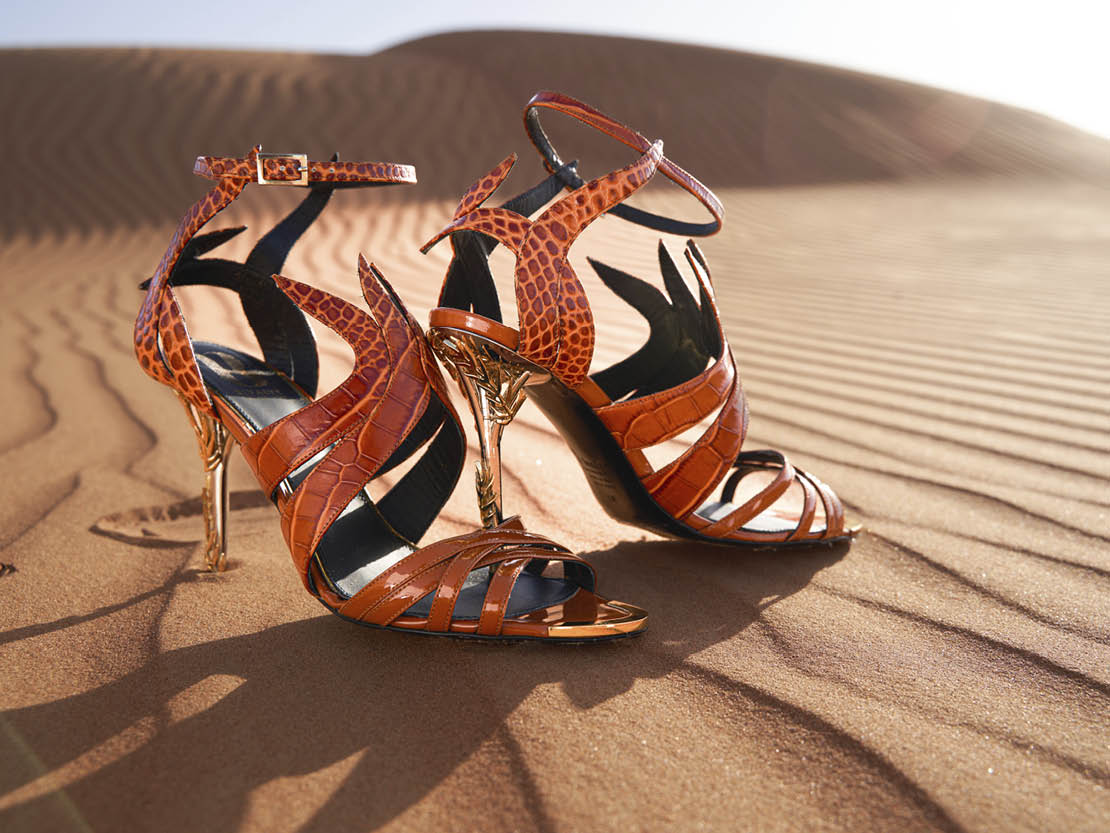
What message would you send to our readers to help them understand more about the brand?
Bivalve is more than just a footwear brand—it’s a journey into the heart of culture, craftsmanship, and creativity. Each design is a chapter in a larger story, one that speaks of heritage, elegance, and the power of self-expression. When you wear Bivalve, you’re not just wearing a pair of shoes; you’re stepping into a narrative that honours the past while embracing the future. We invite you to explore this world with us, to discover the beauty of tradition reimagined, and to walk in shoes that are as unique and inspiring as you are.
Kosas Founder Sheena Zadeh On Creating Products That Are Better For Our Skin
Clean Beauty brand Kosas has captured the attention of millions around the world thanks to its skincare-first approach to makeup.
Its founder Sheena Zadeh prides herself on creating products that not only allow every woman to look and feel great but also have real skincare benefits. Since Los Angeles-based Kosas launched in 2015, it has become somewhat of a cult brand with beauty insiders, social media users and even celebrities (Hailey Bieber and Kylie Jenner have been spotted flashing her Kosas makeup), and now it’s launching in the Middle East. Its Instagrammable products have launched exclusively in Sephora in the region and are set to be flying off the shelves. We talked to founder Sheena Zadeh. To find out more about why she believes her brand has become so popular across the world.
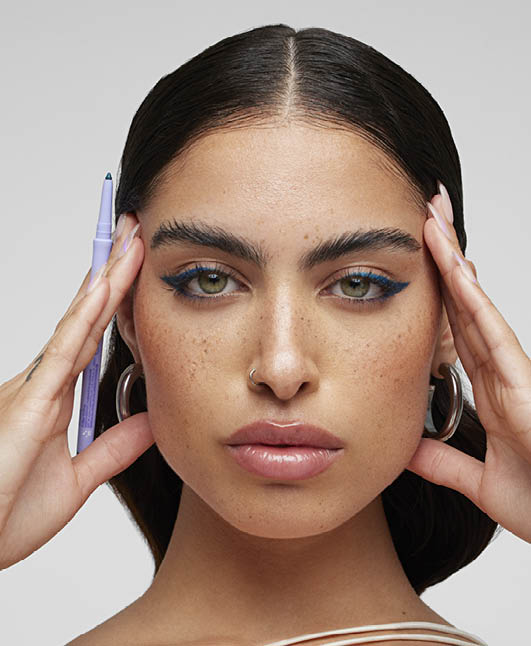
Tell us about the universe of Kosas.
Kosas exists to make beauty feel effortless, intuitive, and true to you. We believe makeup should work with your skin, not against it. That’s why we’ve created products that enhance your natural beauty while providing real skincare benefits. Our universe is a place where everyone feels comfy in their skin — free to experiment, have fun, and embrace their true selves. It’s about clean beauty that’s easy, inclusive, and rooted in self-expression.
How is your approach different from other beauty brands?
Our approach is 100% makeup, 100% skincare, blending both worlds in a way that feels seamless. Since makeup sits on our skin all day, it’s such a huge opportunity to continue your skincare routine. Every product is formulated to deliver both dimensional colour and super nourishing care, so it not only enhances your look but also improves your skin over time.
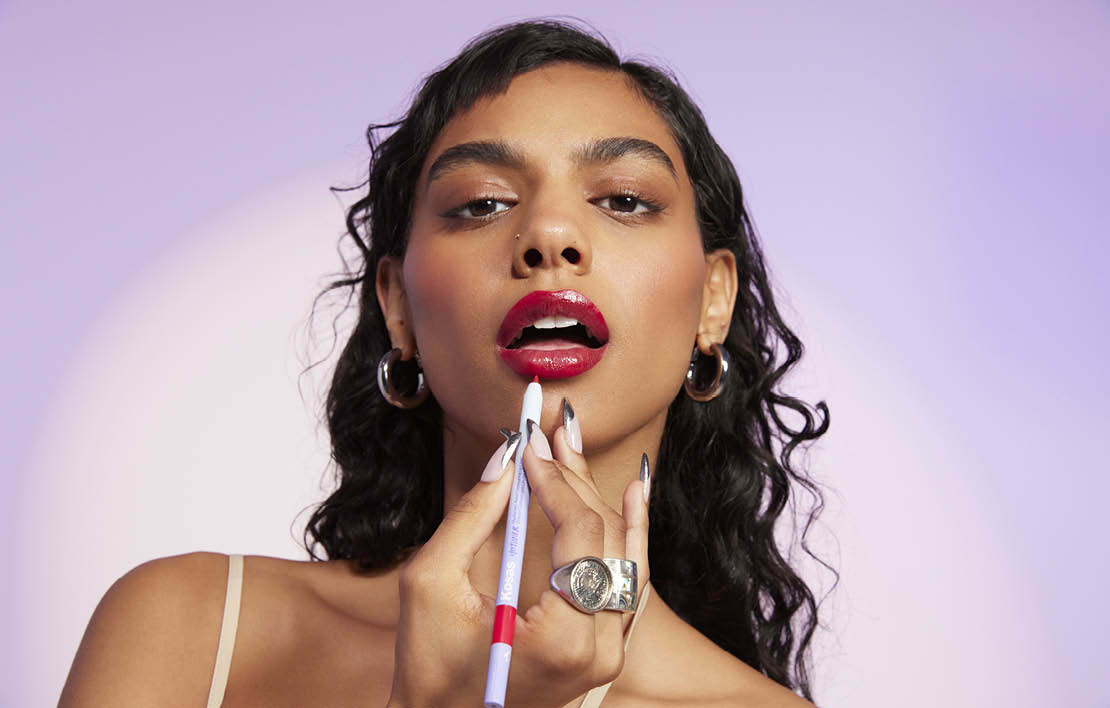
We are excited to have the brand launch in the Middle East. What does it mean to you to be here?
Launching in the Middle East is incredibly exciting for us. It’s home to such a diverse and dynamic beauty culture, and we’ve seen so much enthusiasm for innovative, high-performance products that are also clean. It means a lot to be able to connect with a new audience and share the world of Kosas with you.
How would you assess the beauty market in this region and the customers here?
The Middle Eastern beauty market is both sophisticated and evolving. Customers here are very knowledgeable and passionate about beauty, and they’re looking for products that deliver real results. There’s also a growing demand for clean beauty solutions that don’t compromise on performance, which aligns perfectly with Kosas.
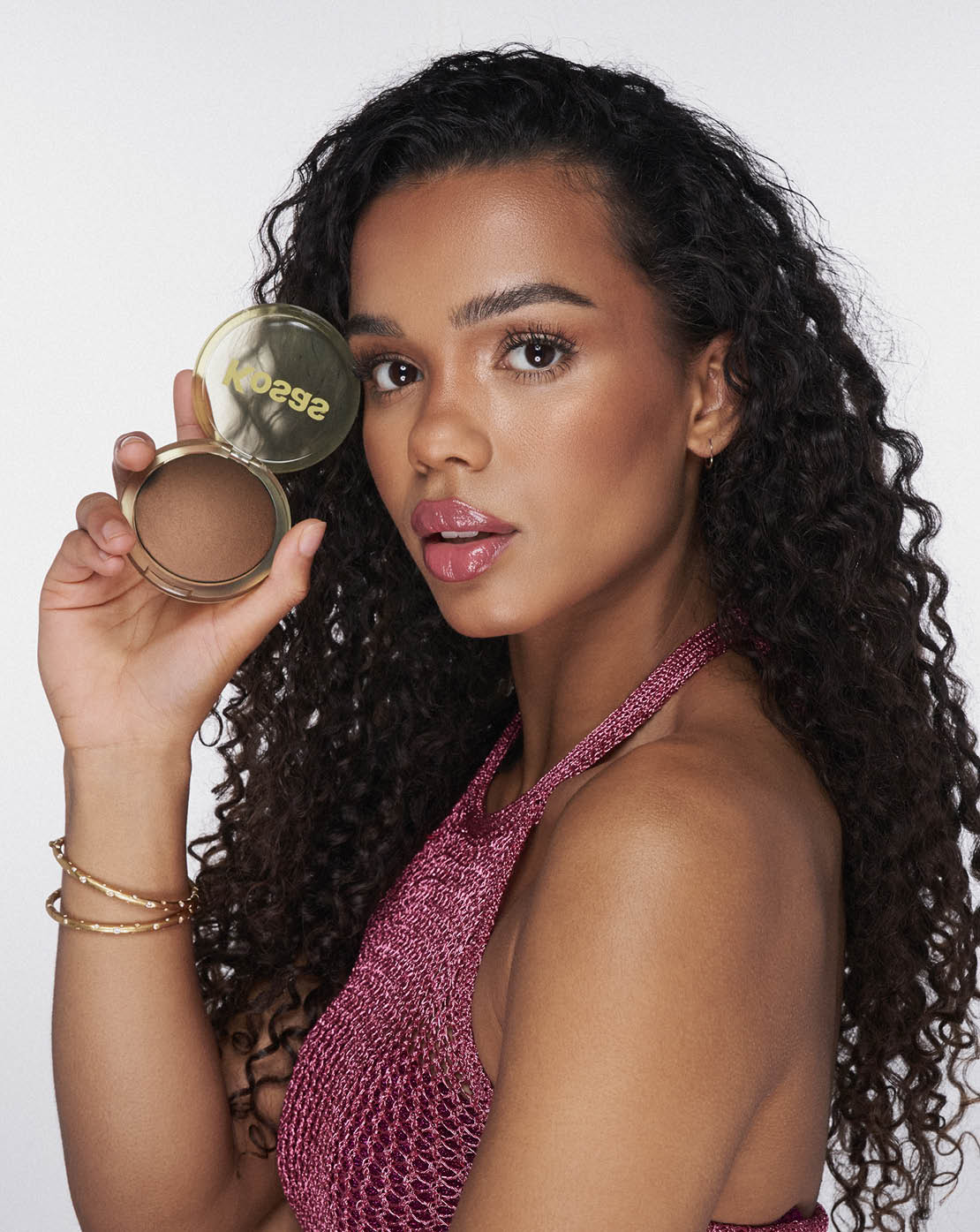
Your brand has garnered many celebrity and influential followers – how do you feel this has helped the success of the brand?
Having support has definitely helped elevate the visibility of Kosas, but it’s really the authenticity behind those connections that’s made a difference. We connect with people who genuinely love the products, and their enthusiasm resonates with their audiences. At the end of the day, it’s about building trust—whether it’s with a creator or a customer trying our products for the first time. That organic excitement and word-of-mouth have been key drivers of our growth.
What do you believe is the secret to sustaining a beauty brand today?
Authenticity and innovation. People are incredibly savvy and can spot when a brand isn’t genuine. For us, staying true to our values—like creating clean products that perform and listening to our community—has been crucial. You also need to keep evolving. Beauty is constantly changing, and it’s important to stay ahead by innovating and offering products that meet the needs of your customers without compromising who you are at your core.
Can you tell us a little about some of your hero products to look out for?
Some of our most loved products are Revealer Concealer, which is both a concealer and an eye cream, it gives you this brightening creamy coverage and skincare benefits in one. Wet Lip Oil is also a favourite—it’s super juicy, hydrating, and gives a beautiful shine. Then there’s Cloud Set, which is a game-changer for people looking for a soft, natural finish without that heavy, cakey feel. It sweeps away shine (not glow). Each product is designed to enhance your natural beauty while taking care of your skin.
What about your choices of ingredients and formulas – can you tell us about that?
Clean beauty is at the core of everything we do — we only formulate with super nourishing ingredients at active levels that bring real skincare benefits. We carefully select ingredients that not only meet our high-performance standards but are also safe and effective, focusing on botanicals and natural ingredients that nurture the skin, like hyaluronic acid, peptides, and plant-based oils. Our formulas are designed to be as gentle as they are powerful, ensuring that every product feels good on the skin while delivering long-term benefits.
Why do you think having a skincare element in makeup products is important today?
People are increasingly looking for multi-functional products that simplify their beauty routines and still bring real skincare results. Incorporating skincare into makeup means that you’re not covering up imperfections but actively working to improve your skin’s health and glow — revealing your best skin over time.
What’s the biggest challenge you face?
One of the biggest challenges is balancing growth with staying true to our brand values. As we expand, it’s important to maintain the same level of integrity, quality, and connection with our community that we’ve always had. There’s also the challenge of constantly innovating in an industry that’s fast-paced and ever-evolving. We always want to push beauty forward but in a way that feels real to us and we are as a brand.
Where did your passion for beauty come from?
My passion for beauty has always been rooted in the idea of self-expression, artistry, and empowerment. From a young age, I saw how makeup could be transformative, not just in how someone looks but in how they feel about themselves. I wanted to create products that make people feel confident in their own skin, while also simplifying their routines. It’s that blend of creativity and care that has always fueled my love for beauty.
Who is your makeup muse?
There isn’t one person in particular, but I love seeing how people use makeup to tell their stories. It’s that personal connection to beauty that inspires me the most.
Looking ahead, what is the vision and direction of the brand moving forward?
Our vision is to continue pushing the boundaries of clean beauty while staying true to our core values. We want to keep innovating, creating products that are multi-functional and that meet the evolving needs of our community. Expansion is also a big focus, both in terms of product offerings and geography, as we continue to bring Kosas to new markets. Ultimately, we want to make clean, high-performance beauty accessible to everyone, everywhere.
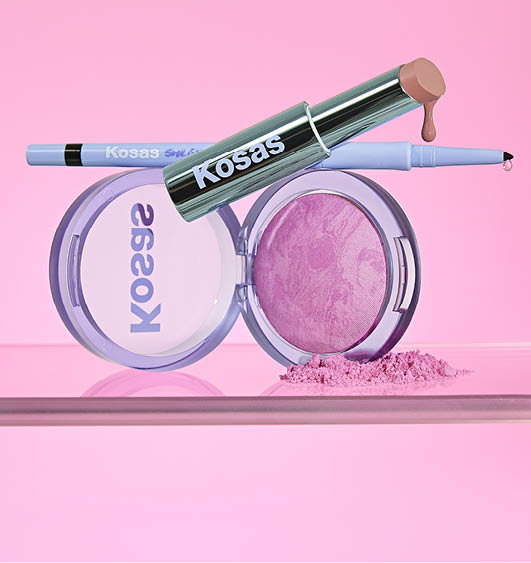
What else is in the pipeline for you this year?
We have some exciting new product launches coming up that build on our mission of merging skincare and makeup. I can’t share too many details just yet, but we’re continuing to innovate with clean ingredients and some really incredible new formulas! We’re also expanding our presence in new regions, which is an exciting chapter for Kosas.
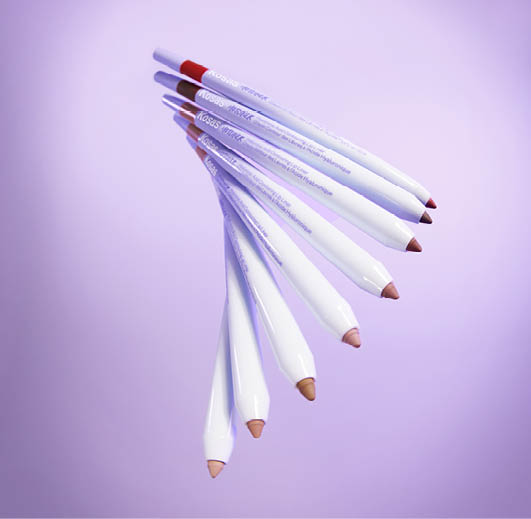
What is a final message you would send to our readers?
At Kosas, we always say beauty is a feeling. It’s about finding what makes you feel good and celebrating yourself through makeup.
Julien Pruvost, Creative Director Of Trudon Discusses Balancing Heritage And Modernity
Trudon is one of the oldest and most prestigious luxury candle and perfume manufacturers in the world, tracing its roots back to 1643 when Claude Trudon opened a store in Paris that sold wax, candles and spices.
Over the centuries, Trudon became the candle supplier to the French royal court, providing exquisite candles for the likes of Louis XIV and Napoleon Bonaparte. The company maintained its reputation through the French Revolution and beyond by creating high-quality candles made from the finest beeswax, known for their slow burn and clean fragrance.
Today, Trudon candles are celebrated for their craftsmanship, blending centuries-old traditions with modern luxury. The brand offers a wide range of fragrances, each inspired by history, culture, and nature. Trudon collaborates with skilled perfumers to create rich, complex scents housed in their signature hand-blown glass vessels, making their candles not just a product but a work of art. Each candle evokes a story, with fragrances named after historical figures, events, or even literary works, enhancing their timeless appeal in the world of luxury home decor. At the heart of the brand’s vision today is Creative Director Julien Pruvost, who is tasked with balancing the history and traditions of the brand with modern times. Here we find out more about this historical brand as it opens its first store in Dubai.
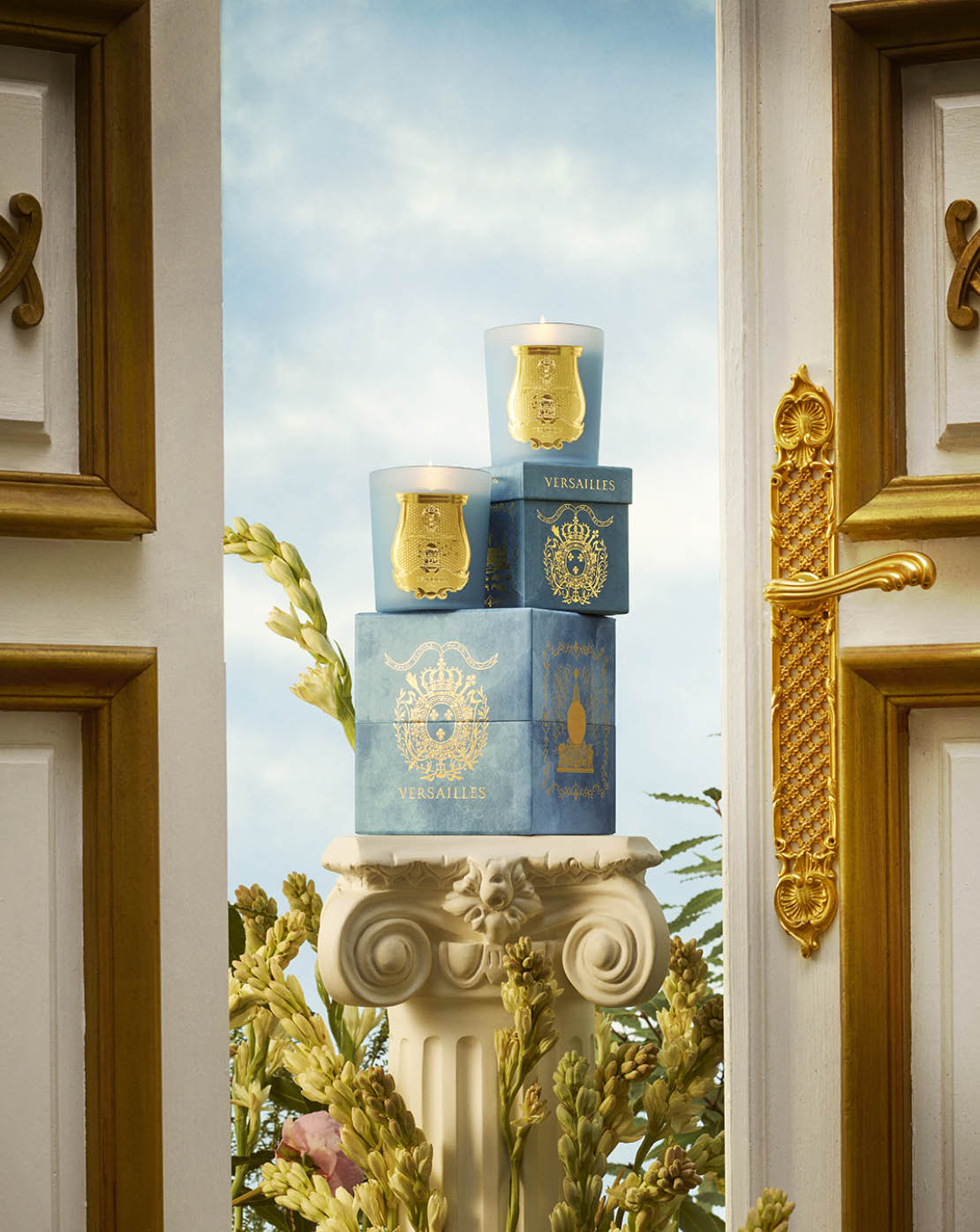
Tell us about the universe of Trudon.
The world of Trudon lies at the crossroads of secular uninterrupted know-how, French history and the sophisticated art of perfumery. The result is the most advanced and refined proposal of interior fragrances, presented in the form of candles and a unique collection of fine fragrances.
What is your current focus for the brand?
Our focus is continuously perfecting our art, craft and products and developing beautiful fine fragrances with carefully sourced raw materials.
What do you think clients are looking to get from Trudon’s products?
A product that tells a story in the most authentic way, whether through its core values as a living heritage company or through its perspective on contemporary perfumery. Trudon is a true classic in the sense that it connects the past with current needs and desires.
Working with such a historical brand, how do you honour its heritage while still ensuring you are creating products that are relevant today?
By staying true to our roots, which are condensed in our past, present and future, as manufacturers of our own products. And, of course, through continuously exploring the realm of possibilities with our partner perfumers.
Can you share a little about the savoir-faire and craftsmanship of the brand and how you sustain some of the old-age techniques?
For one, all Trudon candles are at least 80 per cent handmade. Our large five-wick candles for example, are each signed and dated by the craftsman who made them. Of course, we have adapted our techniques to manufacture products that are relevant today. Finally, work conditions are absolutely incomparable with the past and guarantee the well-being of our artisans.
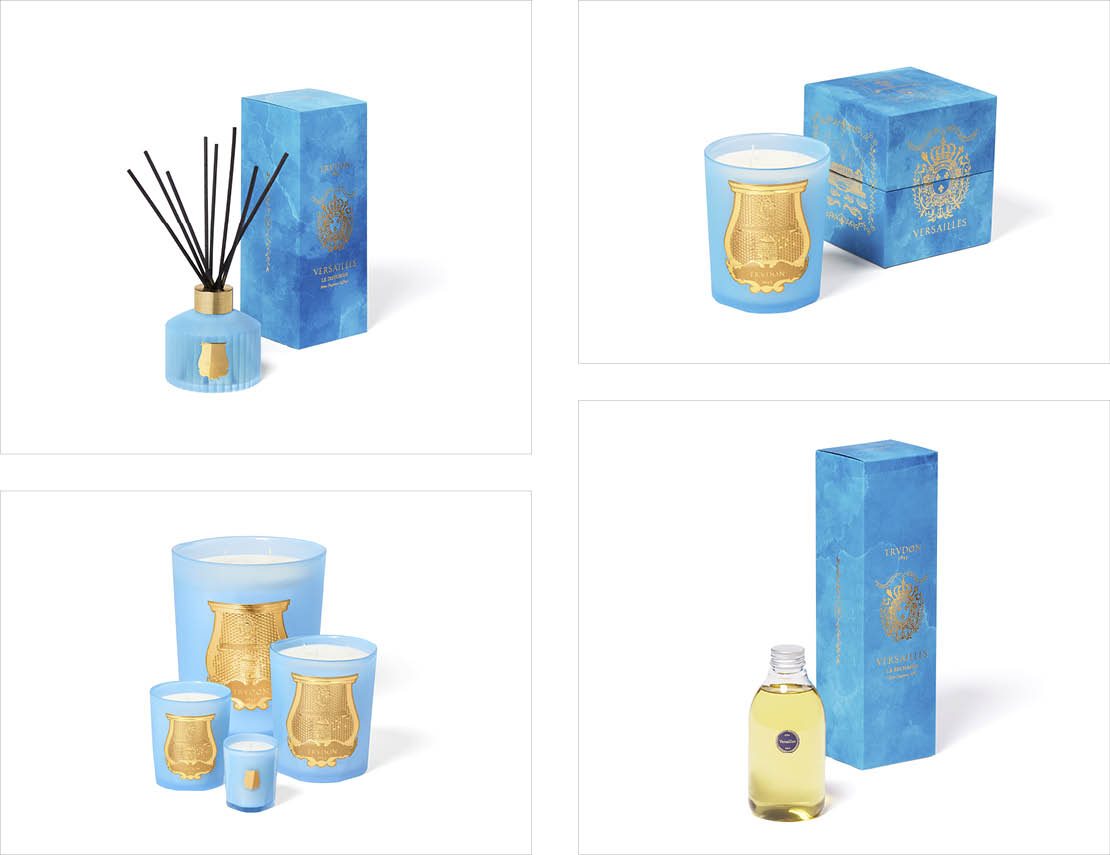
Tell us about the brand in the Middle East.
Our presence is very selective, thanks to our strong partnership with Action Group. We currently have a store in Kuwait City and in Dubai, with more projects to come.
What are some of the products that you feel are particularly suited to this region?
The region has such a deep perfume culture that we are not one to teach but rather propose our own traditions and quality. All our products and, in particular, our great formats are very well suited for the homes in the region. I believe the Middle Eastern customer is very discerning, and because we work with some of the best suppliers of raw materials in the world, I think that many of our interior fragrances and fine fragrances may be appealing.
We have seen some great collaborations – can we expect more of this?
Yes! This has become a modern tradition at Trudon, stay tuned! In the meantime, you can enjoy our current collaborations with Giambattista Valli and Zimmerman.
What’s the biggest challenge you face in your position today?
Trudon is continuously a source of inspiration for our competitors, and renewing ourselves is also a matter of survival. On a more personal level, the challenge is to balance the fantastic heritage of the company with modern needs and desires.
How do you incorporate sustainability at Trudon?
We incorporate sustainability at all levels, but especially at the industrial, product development and logistics levels. It is a continuous work in progress to lower our environmental impact. Since 2018, we have incorporated financed a project that directly contributes to the protection and conservation of biodiversity. We are the proud sponsors of an endemic Dark Bee conservation project in Normandy, which mission is to maintain a very important species of pollinators that are crucial to humankind. The project is monitored by the French Scientific Board and we contribute financially directly and indirectly through the sales of our CIRE collection.
What inspires you?
My family, my perfumer friends, History and craftmanship.
Looking ahead, what is the vision and direction of the brand moving forward?
Staying true to our roots, keeping on proposing a product that is embedded in tradition and know-how, becoming an even bigger reference in the realm of fine fragrances allowing customers to feel surprised and joyful when using our products.
What else is in the pipeline for you this year?
A new Trudon fine fragrance called Absolu, an original tribute to orange blossom, beautiful Trudon hand soaps representing two of our best sellers in the perfume range: Vixi and Médie, and probably the most sophisticated holiday collection we have ever produced, launching mid-October worldwide.
What is a message you would send to our readers?
If you are already a Trudon customer, thank you very much for your appreciation! I hope you will keep on enjoying our products and discover more in the future. For those hearing about us for the first time and if you have a little time, please listen or read about our rich history as the former Royal Wax Manufacturer under Louis 14. You will find a fragrance you love at Trudon.
Rabaa Saleh S. Al-Anqari On Her Saudi Arabian Jewellery Brand YOURA
Rabaa Saleh S. Al-Anqari founded the Saudi Arabian jewellery brand YOURA after her passion for jewellery design developed while at University.
Studying at the Gemological Institute of America in London and the International Gemological Institute in Dubai, she was able to further develop her deep-rooted passion for diamonds and jewellery and learn more about starting her own brand. After graduating, Al-Anqari returned to her mother country of Saudi Arabia and decided to set up her own brand.
Taking inspiration from her heritage, Al-Anqari’s designs are influenced by her childhood experiences as well as her rich culture. The brand’s signature motif of an eagle symbolises vision, power and the ability to elevate the ordinary to the extraordinary. It was this that fuels her brand today, with a mission to produce the best quality pieces and always surprise and inspire its clients. At the heart of YOURA’s philosophy is the belief that jewellery is not merely an adornment but a form of art that invokes magic, originating from a place beyond time and tangible space constraints. The brand’s core values of creativity, quality and meaning infuse each piece with not only exceptional design and craftsmanship but also a deeper sense of personal connection and inspiration.
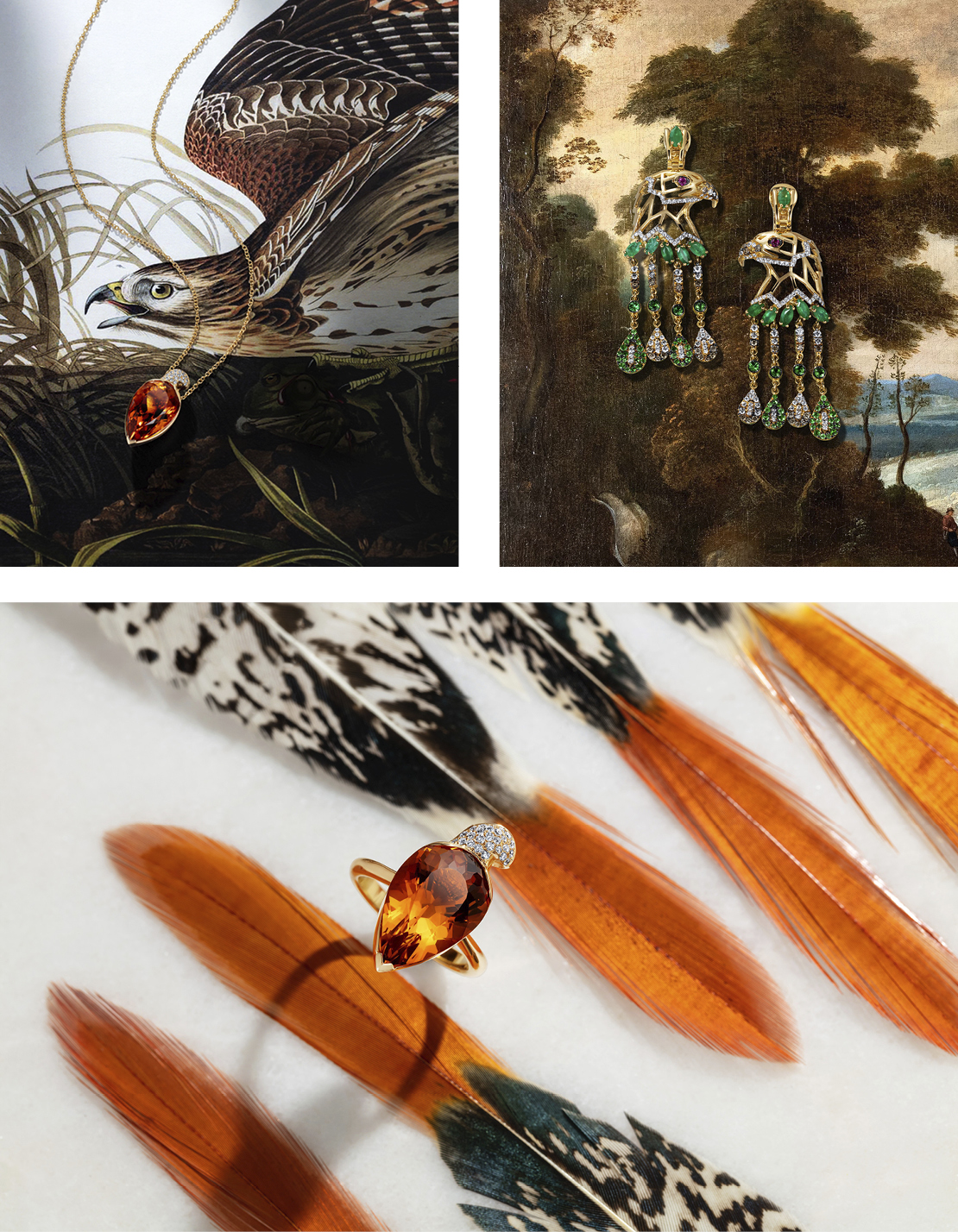
Although YOURA was founded in Riyadh, Al-Anqari’s vision is that the brand will eventually become a global brand, helping to put Saudi Arabia on the map when it comes to jewellery design. Here, we learn more about the brand and its founder’s great ambitions for the future.
Tell us about your brand, YOURA, and how it came to life.
For me, YOURA is not just a brand but a complete story with all its chapters. My love for jewellery and diamonds has been with me since I was a child, and it is an eternal love. When I chose the business world, jewellery was my first choice, as it combines spiritual and moral aspects, and this is my focus and message.
What can you tell us about your latest collections?
In our upcoming collection, we will focus on the eagle, not only because it’s our logo but also because of its concepts of a freedom bird, a sharp eye, and a focused attitude.
Where did your passion for jewellery come from?
I don’t have a specific moment or time when my passion for jewellery began, but I know I have loved it since I was a child. It is a calling from the inner spirit that I can’t avoid.
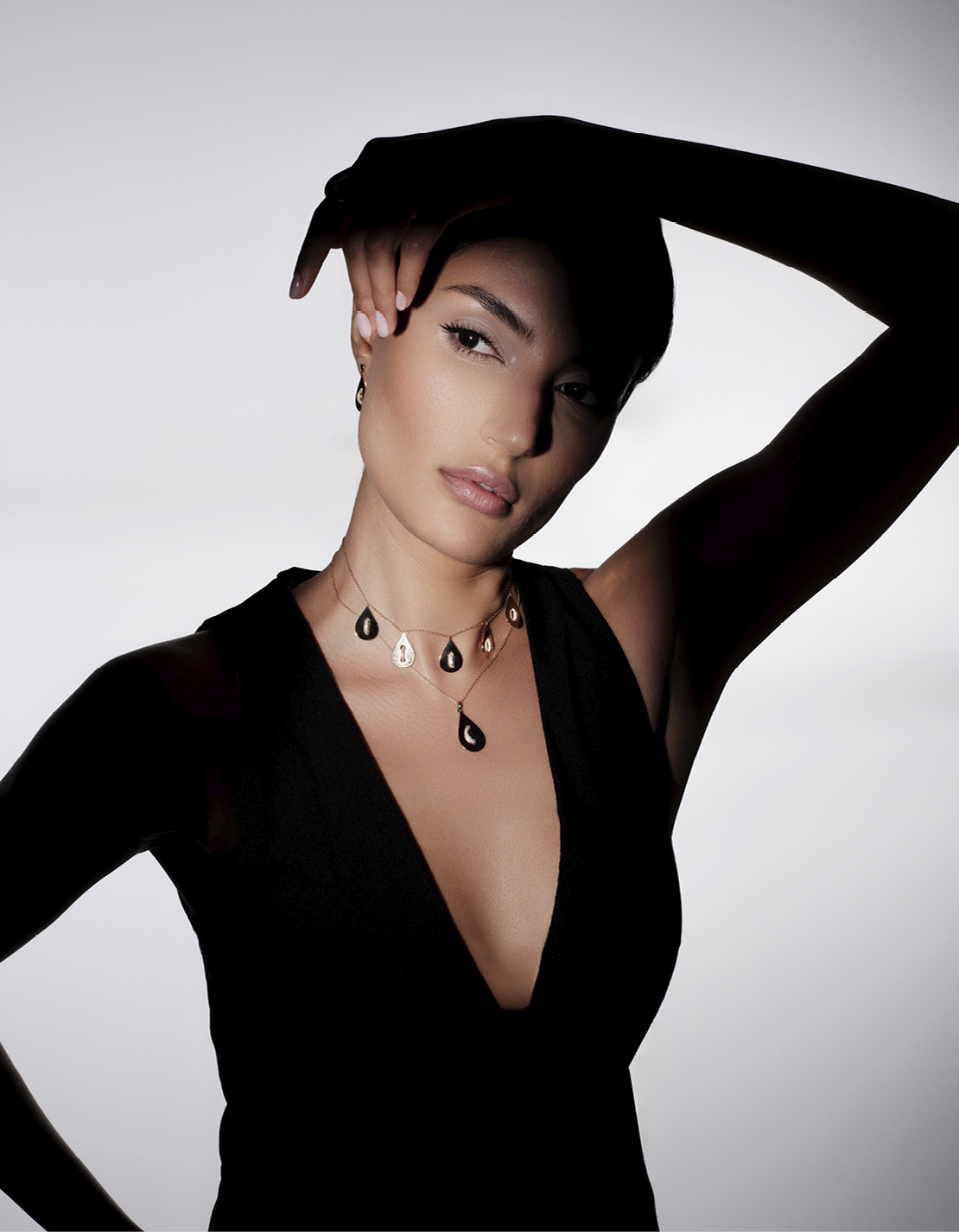
What do you believe is unique about your brand?
Everything starts with the logo, then our story, message, and details, and ends with the design and unique pieces.
Take us through your design process and the choice of materials.
Each design is created through our design language and brand DNA, which are our frame rolls. We choose the idea based on the deep meaning we want to present. Then, we select the material that suits the design and add additional elements to the piece. All the materials that we choose are high-quality; this is our standard.
Who or what inspires you?
I am inspired by all the beautiful things around me, the spiritual stories, the small things hidden from others or that appear and vary obvious, and the feelings we share or hide.
Do you have a favourite stone and why?
Yes, I have two favourite stones: the first is the pink diamond because it suits my personality and charisma, and the second is the ruby because my family used to call me Ruby. After all, they thought we had the same essence and DNA.
Why do you think jewellery is important in women’s lives today?
Jewellery is not a compliment, as some people think; it is essential to a woman’s personality and beauty. To this day, I have never seen or met a woman who does not wear jewellery. Even women in the diplomatic and government corporations wear jewellery that supports their personality and enhances their position or profession. Jewellery is a strong reinforcement for a woman when she wants to show her personality clearly and boldly.
What are your thoughts on the jewellery industry in Saudi Arabia today and where it’s heading?
In Saudi Arabia, we are now experiencing great wealth and expansion in the field of jewellery, and fortunately, we have great support from the government. The Kingdom of Saudi Arabia is now the focus of the world’s attention and an approved destination as we have become a global city.
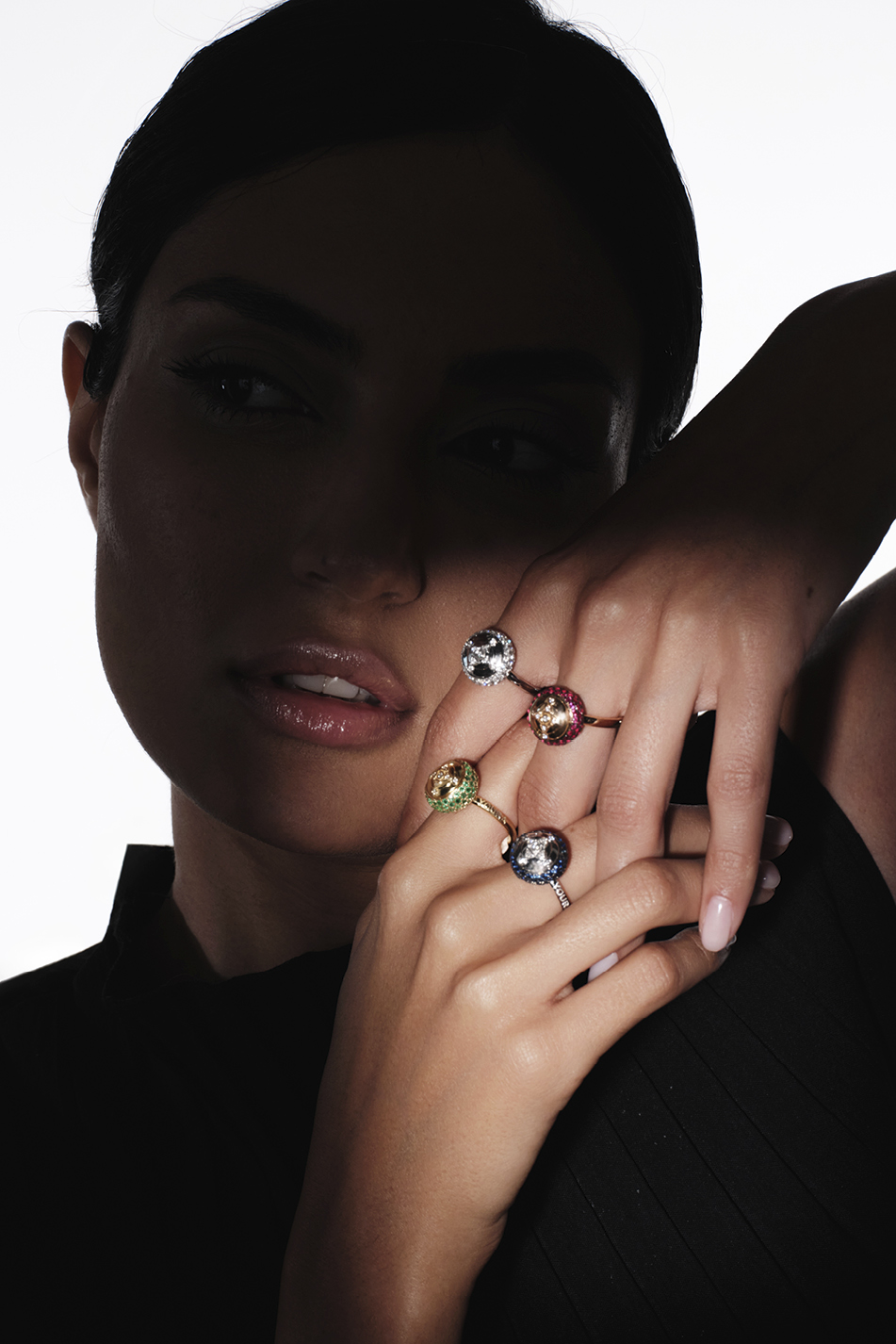
What’s your biggest challenge as a jewellery designer starting a brand today?
As a brand and a designer, we must put extra effort into showing our deep qualifications and strong message to the jewellery world, which is comprised of qualified brands.
What would you still like to achieve at the brand that you haven’t done yet?
As we expand, we have more goals and more achievements. This is our strategy.
What else is in the pipeline for this year?
The new collection, masterpieces, and something to keep a surprise.
In this issue, we are celebrating Saudi National Day – what does this day mean to you?
This day is our “green day”, which means purity, extension, clarity, breathing, belonging, life, and beauty. I carry all these traits and more for my country, love, and homeland.
What message would you send to our readers to help them understand more about the brand?
I encourage them to stay in touch with us and follow our page on Instagram; don’t hesitate to send us a message or ask questions you want about our jewellery or jewellery in general. Many beautiful things are around the corner, and many pieces will come soon.
Vincent Coste CCO Of Riyadh Air Discusses The Vision For The Region’s Newest Airline
With plans for its maiden flight to take off mid-next year, Riyadh Air is set to become The Kingdom’s newest airline, connecting Riyadh and Saudi Arabia to the rest of the world.
Riyadh Air is proud to be different and with its digital-first approach, hopes to change the future of air global air travel, putting customers first and offering a passenger experience that sets it apart from other airlines. After the reveal of the company in March 2023, Riyadh Air has revealed plans to fly to over 100 destinations worldwide by 2030. This will align with Saudi Arabia’s Vision 2030 and help to improve connectivity to the country, subsequently encouraging tourism for both domestic and international travellers.
As Chief Commercial Officer, Mr. Vincent Coste has over 30 years of experience in commercial leadership roles in the aviation industry, driving growth across EMEA, the US, Latin America, Asia, and the Indian sub-continent. He joined Riyadh Air after almost four years as Chief Commercial Officer at Gulf Air, the national carrier of the Kingdom of Bahrain and one of the first commercial airlines established in the Middle East. During his time at Gulf Air, Vincent oversaw major business developments, including fleet modernisation, network expansion, enhanced product offering, rebranding, and long-term strategic direction for continuous growth. Today he oversees Riyadh Air’s commercial strategy and future development across business areas, including network planning, pricing, revenue management, cargo, marketing, digital, distribution, product, and guest experience. Here, we find out more about the vision for the company and what’s to be expected when the airline takes its maiden flight next year.
The tagline “transforming the future of air travel” is a very poignant message – what makes Riyadh Air different from other airlines?
That’s a great question! Transforming the future of air travel is a universal statement of our intention, a positioning and a goal all wrapped in one. Our team didn’t just come together to figure out the unique selling points for Riyadh Air. We looked at it through the eyes of the traveler and the customer experience. It was clear that air travel had lost some of its magic. Where is the joy? That special feeling? For many people, flying is a big occasion in their lives, but it feels like most airlines – and the aviation industry overall – are more focused on treating passengers like just another piece of cargo. Too often, people travel from point A to B with little genuine interaction or enjoyment.
Realizing this, we knew it was time to shake things up and put the traveller back at the centre of what we do. We asked ourselves how we could really change the future of air travel and so, to answer the question, we have brought together a team with a pioneering spirit, free from traditional constraints. Everything is starting to fall into place. It seems so obvious now, and you might wonder why other airlines haven’t caught on. The truth is, many are too stuck in the old ways of flying, while Riyadh Air is starting fresh, without the baggage of legacy issues and with a drive to challenge the norm. We want to create a fresh approach to travel, recapturing the golden era of flight that has been lost.
How will the airline support the growth of tourism in Saudi Arabia?
Riyadh Air will play a key role in boosting tourism in Saudi Arabia by making it easier to connect to important global destinations. With direct flights and smooth connections, we will help international travellers discover the Kingdom’s amazing cultural, historical, and natural sights. From the moment our guests board, our promise is an unforgettable journey and an effortless gateway to the Saudi Arabian experience.
We’re aligned to national strategies, working closely with stakeholders, and our marketing campaigns aim to highlight Saudi Arabia’s unique attractions to a global audience. By working with our partners, Riyadh Air wants to create authentic travel experiences that showcase the Kingdom’s diverse offerings.
Riyadh Air is about making access to the Kingdom easier and contributing to the growth of a sustainable tourism sector. We will be working with the Saudi Tourism Authority to enhance the tourist experience in the Kingdom, which includes expanding flight routes and participating in roadshows and global events that spotlight our offerings. These initiatives will promote Saudi Arabia as a go-to travel destination, support economic growth, and enable cultural exchange. We will shape the future of tourism by ensuring visitors have great access to the treasures of the Kingdom.
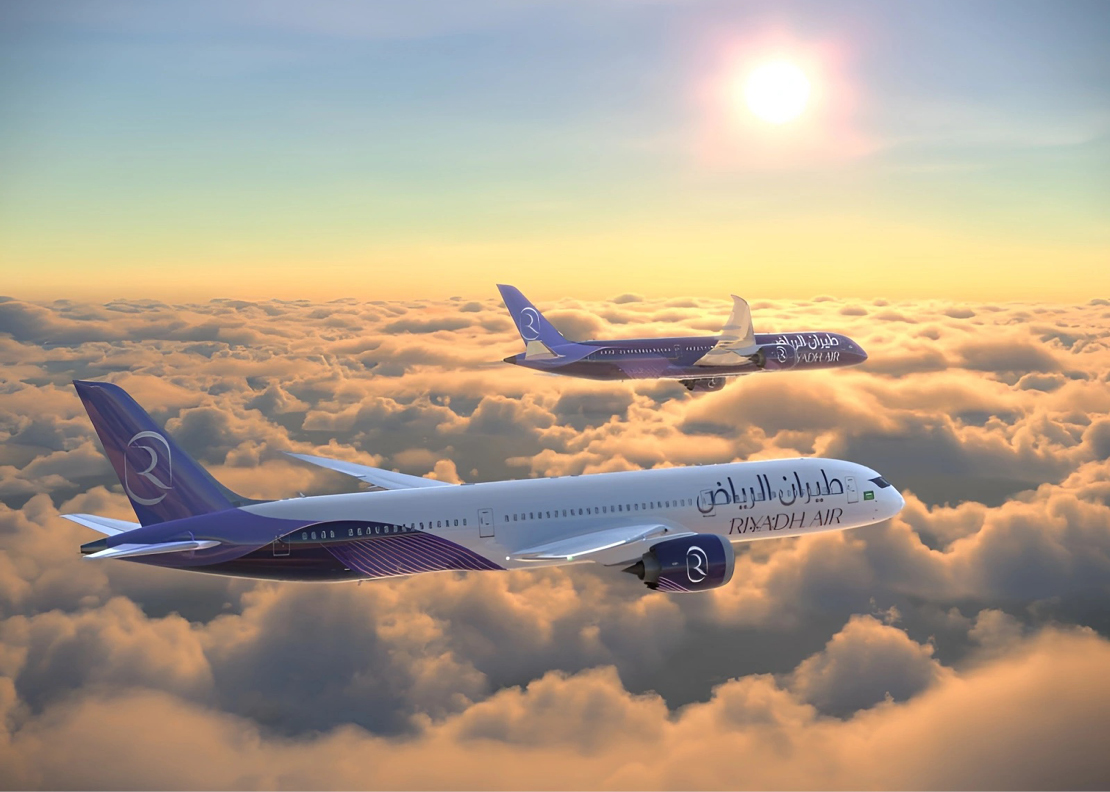
How is the airline prioritizing sustainable practices?
We are dedicated to minimizing our environmental footprint through strategic investments and sustainable practices. Our efforts include investing in advanced, fuel-efficient aircraft to reduce carbon emissions significantly, applying sustainable best practices in aircraft design and operations to lower weight and enhance efficiency, and using cutting-edge technology and systems to drive operational efficiencies and reduce fuel consumption.
Our commitment extends beyond operations. We aim to positively impact the communities we serve and protect the planet for future generations. This is reflected in our alignment with key initiatives like IATA’s goal to achieve Fly Net Zero by 2050. We have joined the United Nations Global Compact, embracing the Sustainable Development Goals (SDGs) to guide our efforts. Within our own operations, this commitment is embedded with Environmental, Social, and Governance (ESG) principles at the heart of Riyadh Air. This extends further to our workforce, as demonstrated by initiatives like launching electric buses to provide a convenient and eco-friendly daily commute for our employees.
At Riyadh Air, we also understand that sustainability is not just about implementing green practices but also about creating value for all stakeholders. By prioritizing sustainability, we believe we can create a positive impact on society while also securing long-term success for our company. Our focus on sustainability extends beyond the skies and into our operations on the ground. We have implemented initiatives to reduce our carbon footprint, such as investing in more fuel-efficient employee transport options and implementing green technologies at our headquarters. This not only benefits the environment but also helps us to cut costs and operate more efficiently.
We are committed to giving back to the communities we serve. We invest in our employees’ development and well-being, support local communities through various social responsibility projects, and ensure ethical and transparent business practices. Through various partnerships and initiatives, we aim to make a positive impact in areas such as education, healthcare, and environmental conservation. Our goal is to create a sustainable future for our airline and the world around us.
What will a customer experience look like on Riyadh Air?
Our customers can expect an experience that goes beyond travel; it will cover everything from planning and booking to arriving at the destination. As a digital-first airline, we are all about leveraging technology at every step of the journey. With our advanced tech, we are set to transform the Riyadh Air experience – from booking and airport processes to time onboard – giving a level of personalization like never before. While many airlines are stuck with outdated technology and legacy systems, Riyadh Air will use tools designed for today’s travelers. This includes offering a seamless and personalized booking process, utilizing data to anticipate customer needs and preferences, and creating a more efficient and eco-friendly in-flight experience.
We know the maiden flight is expected to launch next year – where is the company currently at with the progress for the launch?
Yes, we are on track to be fully up and running mid-next year, with our first commercial flight set for 2025. We just announced a big order for Boeing’s new Dreamliner 787s and are in advanced talks to supplement our fleet with narrow-body jets. In addition, we are forging ahead with strategic partnerships with regional and international airlines, such as Delta, Turkish Airlines and Singapore Airlines, to expand our global network and the destinations we serve – all of which will make Saudi Arabia a gateway for international travel markets.
Can we expect sponsorships and commercial exposure of the airline globally, as we have seen with other airlines in recent years?
Our strategic vision includes expanding our global presence through targeted sponsorships and commercial exposure. These efforts align with our brand values and objectives and will enhance our international standing as well as connect us with diverse audiences. We want Riyadh Air to become a globally recognized brand, and this will help to support our ambitious growth plans.
One way we can do this effectively is to support and jointly promote Riyadh and Saudi Arabia as exceptional destinations for tourism, leisure, and business. Saudi Arabia is set to host several major sporting and high-impact events over the next decade – AFC Asian Cup in 2027, Riyadh Expo 2030, the 2034 FIFA World Cup and Formula 1, as well as other major international competitions and entertainment events. As a national flag carrier, these events will project Riyadh Air as a leading player on the world stage and are very much part of our strategy as we scale up operations, develop our network and reach out to the global market.
Tell us a little about what your role entails and the biggest challenge you must deal with.
As Chief Commercial Officer of Riyadh Air, I am responsible for guiding our commercial strategy, boosting revenue, and improving customer experiences, all while staying in line with our company vision and responding to market trends. We are always looking for new tech and solutions to enhance our operations, lessen our environmental impact, and elevate the overall travel experience. I’m dedicated to driving positive change and shaping the future of aviation to be more responsible and sustainable.
The toughest challenge in my role is dealing with fierce competition in a fast-changing market. To tackle this, I prioritize innovation and strategic partnerships, making sure we stay nimble and ready for change. This way, we can secure our spot as a top airline and deliver value to our customers.
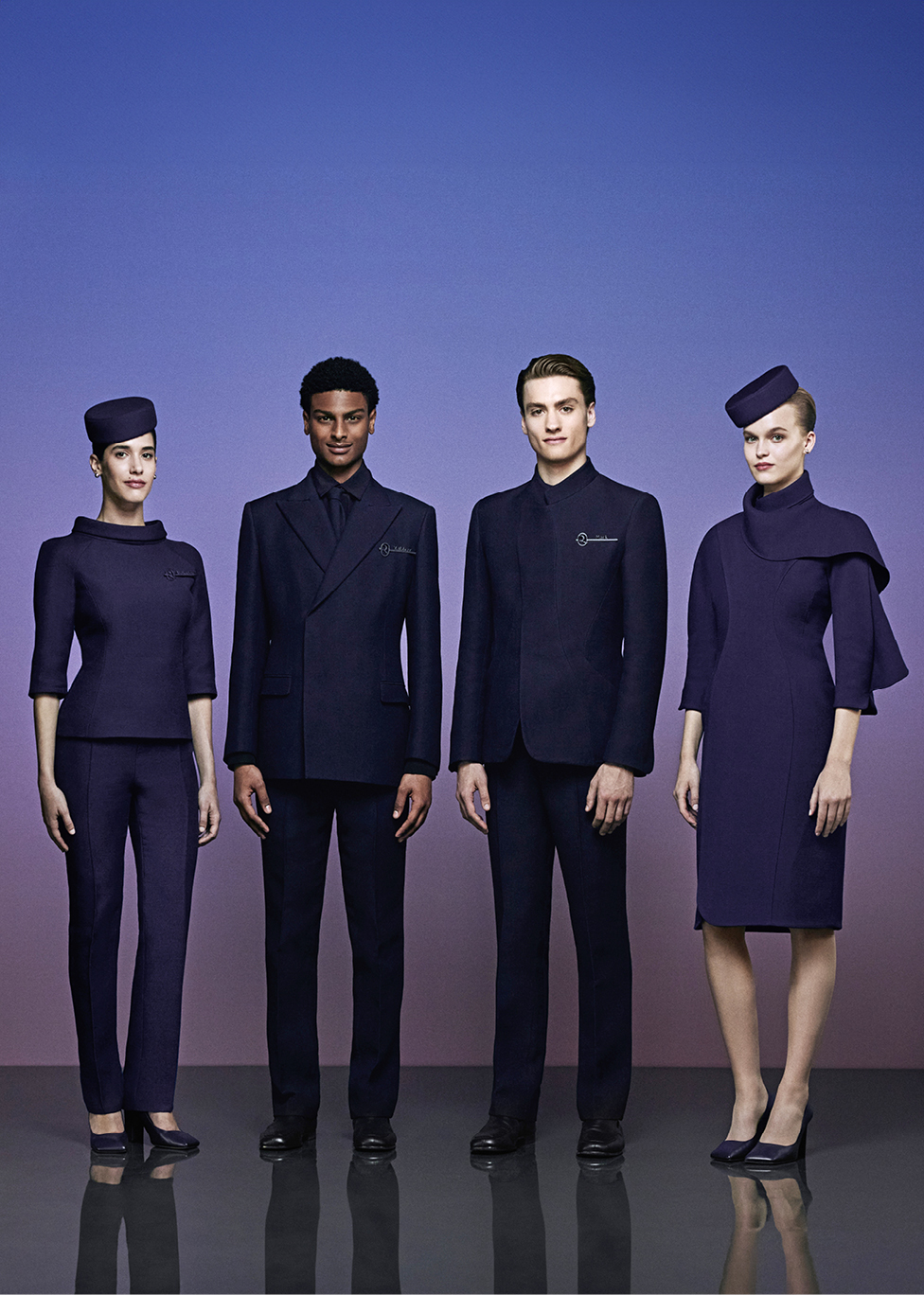
On a broader level, what are some of the trends and key issues you feel need to be addressed in the aviation industry today?
Technology is leading the charge, enhancing operational efficiency and customer experience with digital solutions like AI, IoT, and big data analytics. These innovations help streamline routes, improve processing, and offer personalized services that cater to evolving passenger expectations.
Sustainability is a major focus too, with the aviation industry working hard to cut carbon emissions and hit net-zero goals. Airlines are pouring resources into sustainable aviation fuels, electric and hybrid aircraft technologies, and carbon offset programs to lessen their environmental footprint.
However, the industry is not without its challenges. Regulatory changes and economic pressures require quick thinking and adaptability, while safety continues to be a top priority. My feeling is that we are at a crossroads, balancing tech innovation with sustainability and safety. For Riyadh Air, the focus is on harnessing digital transformation and building strategic alliances to expand our network, share resources and tackle these challenges to provide outstanding value to passengers everywhere.
In this issue, we are celebrating Saudi National Day – as a company, what does this day mean?
Saudi National Day holds profound significance for Riyadh Air as it embodies our national pride and celebrates our rich cultural heritage. As a company, we are deeply committed to connecting Saudi Arabia to the world, and this day serves as a reminder of the pivotal role we play in highlighting the beauty and diversity of the nation on a global stage. Our commitment extends beyond celebration; it is about contributing to a vibrant and dynamic Saudi Arabia that welcomes the world. We are proud to be a part of this journey, enhancing connectivity and driving progress in line with the visionary goals of our nation.
What is a final message you would send to readers about the airline?
Our first commercial flight will be taking off in mid-2025 and we’re on the runway to that momentous moment. To all our future customers and travellers, I say keep an eye out online, in the press and to the skies for our distinctive lavender planes and get ready for a new era of travel that you have never experienced before. These are exciting times for Riyadh Air, Riyadh, and the kingdom – let’s fly high together towards a brighter, more sustainable future!
Rolex: A Legacy in Precision and Luxury
The story of Rolex began in 1905, not in Switzerland, but in the bustling city of London.
It was here that Hans Wilsdorf, a visionary with a passion for precision, founded the company alongside his brother-in-law, Alfred Davis. Originally known as “Wilsdorf & Davis,” the company specialised in importing Swiss movements to England, where they were cased and sold.
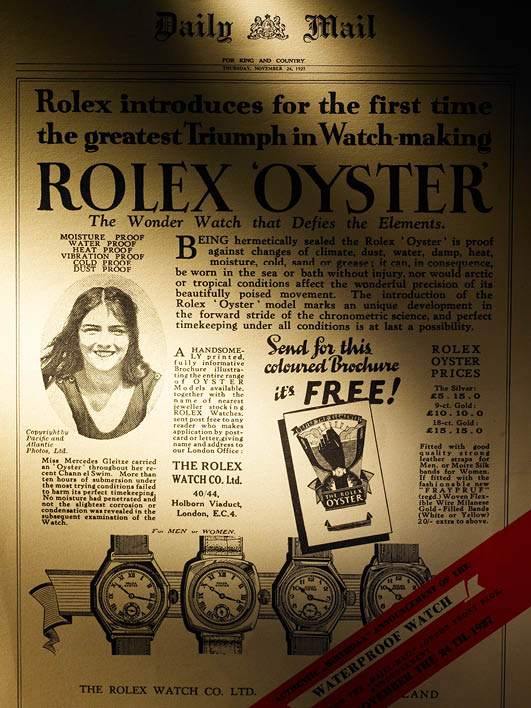
In 1908, Wilsdorf coined the name “Rolex,” a brand name short enough to fit on a watch dial, yet distinctive enough to be recognised globally. Wilsdorf relocated the company to Geneva, Switzerland, in 1919—a move that would forever associate Rolex with the world’s most prestigious watchmaking region.
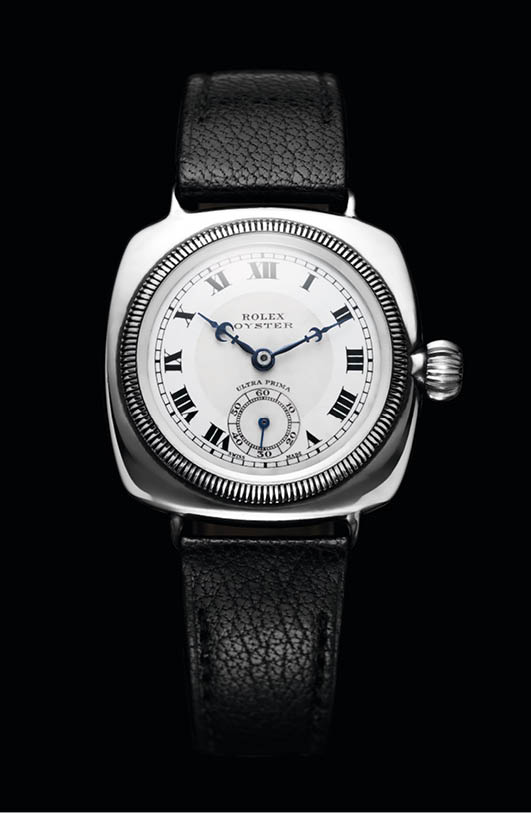
The early history of the brand is inextricably linked to the visionary spirit of Wilsdorf, whose vision was to create wristwatches that not only looked good but were reliable and innovative in their design. To ensure the reliability and quality of the products, he commissioned a Swiss watchmaking company in Bienne to create precise movements that would impress even the most seasoned watch collector.
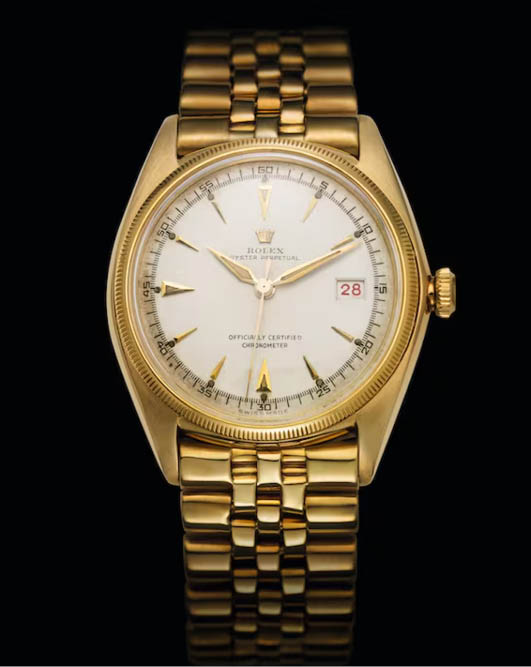
The relentless quest for chronometric precision rapidly led to success. In 1910, a Rolex watch was the first wristwatch in the world to receive the Swiss Certificate of Chronometric Precision, granted by the Official Watch Rating Centre in Bienne.
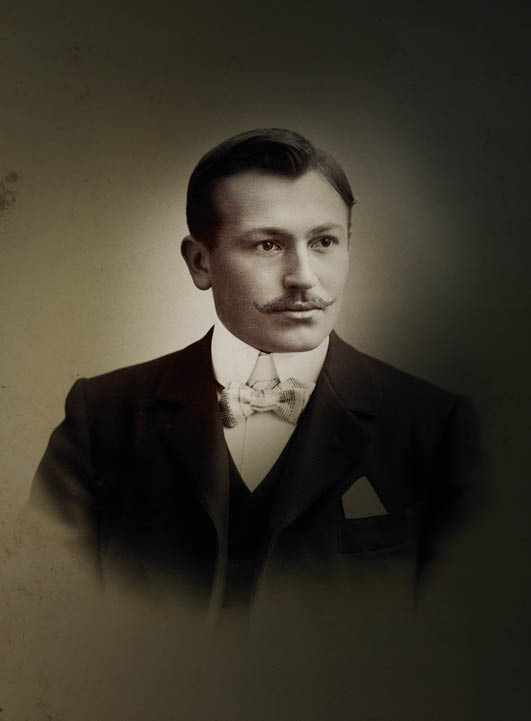
Four years later, in 1914, Kew Observatory in Great Britain awarded a Rolex wristwatch a class “A” precision certificate, a distinction which until that point in time had been reserved exclusively for marine chronometers. From that date forward, the Rolex wristwatch was synonymous with precision.
The Birth of Iconic Models
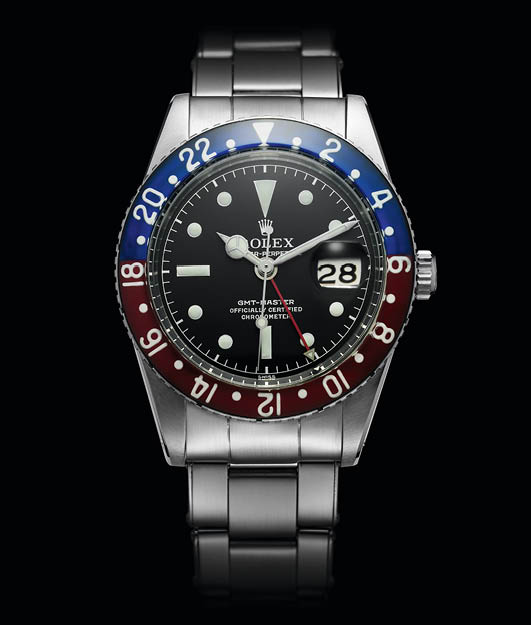
In 1926, Rolex introduced the Oyster, the world’s first waterproof wristwatch. This groundbreaking invention was tested when Mercedes Gleitze swam across the English Channel wearing a Rolex Oyster, proving its resilience and sealing Rolex’s reputation for reliability.
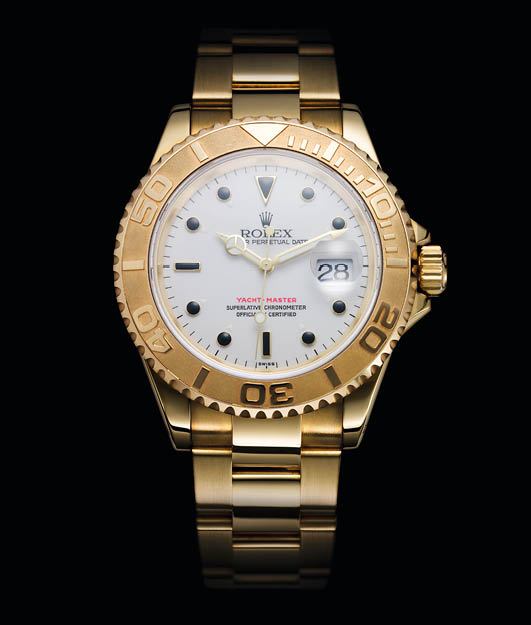
In 1931, Rolex developed the world’s first self-winding mechanism with a perpetual rotor, a feature that remains at the heart of modern automatic watches. This invention was not just about convenience; it ensured that the timepiece was always powered, further enhancing its precision.

Throughout its history, Rolex has introduced several iconic models that have become symbols of status and sophistication. The Rolex Datejust, launched in 1945, was the first watch to automatically change the date on the dial, a feature that was revolutionary at the time. Then came the Rolex Submariner in 1953, a diver’s watch that has since become a symbol of adventure and exploration.
The Rolex Daytona, introduced in 1963, was designed for the high-speed world of motorsport, with a chronograph that could measure elapsed time and calculate average speed. This model gained further fame when Paul Newman, the Hollywood icon and racing enthusiast, was photographed wearing it, making the “Paul Newman” Daytona one of the most sought-after watches in the world.
The Hans Wilsdorf Foundation & Philantrophy
Rolex’s philanthropic efforts are deeply intertwined with the legacy of its founder, Hans Wilsdorf, and are primarily conducted through the Hans Wilsdorf Foundation, which owns and controls Rolex since Wilsdorf’s passing in 1960. The foundation is a significant force behind Rolex’s commitment to supporting various causes in education, arts, culture, and the environment. The foundation supports numerous charities and social initiatives, particularly in the fields of education and the arts. The exact extent of its donations and the specific organisations it supports are not always publicly disclosed, reflecting the private nature of Rolex’s philanthropic approach.
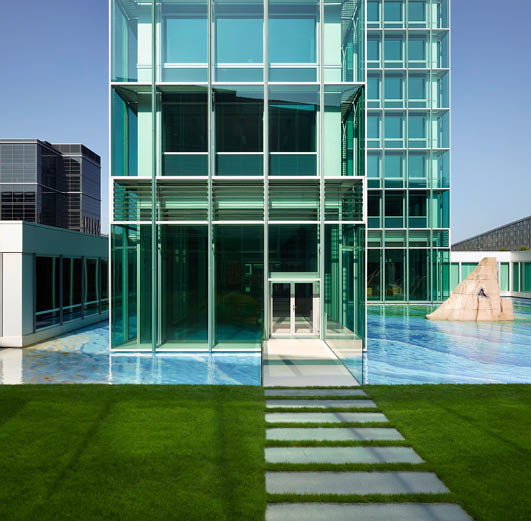
One of the most visible examples of Rolex’s commitment to philanthropy is the Rolex Awards for Enterprise. Established in 1976 to mark the 50th anniversary of the Rolex Oyster, these awards support individuals who have innovative projects that improve lives or protect the world’s cultural heritage and the environment. The awardees, known as Rolex Laureates, receive financial support, global publicity, and the backing of Rolex’s vast network to help bring their projects to fruition. Over the years, this program has supported initiatives across a wide range of fields, from science and technology to exploration and the environment.
Another significant philanthropic effort is the Rolex Mentor and Protégé Arts Initiative, which was launched in 2002. This program pairs emerging talents in various art forms—such as music, dance, theatre, and visual arts—with world-renowned mentors for a year-long collaboration. The initiative is designed to foster excellence and promote the transmission of artistic knowledge to the next generation. Mentors have included some of the world’s most distinguished artists, and the program has had a profound impact on the careers of young artists globally.
Rolex has also been a long-time supporter of the arts and conservation. It has partnerships with prestigious cultural institutions like the Vienna Philharmonic, the Teatro alla Scala in Milan, and the National Geographic Society. Through these partnerships, Rolex supports endeavours that preserve and promote cultural heritage and environmental conservation.
Limited Supply and High Demand
Acquiring a Rolex watch today has become a challenging endeavor, and this scarcity is due to several factors that contribute to the brand’s exclusivity and desirability.
One of the primary reasons for the difficulty in obtaining a Rolex is the brand’s strategy of limited production. Rolex manufactures around one million watches annually, which may seem like a large number, but it’s relatively small considering the global demand. This limited supply ensures that each watch retains its value and exclusivity.

The demand for Rolex watches has skyrocketed in recent years, fueled by their reputation as status symbols, their association with luxury and success, and their history of retaining or even appreciating in value over time. This high demand outstrips the available supply, leading to long waiting lists and a thriving secondary market.
Rolex controls its distribution very tightly, only allowing authorized dealers to sell their watches. These dealers receive limited allocations, often based on their sales performance and relationship with Rolex. As a result, even authorized dealers struggle to meet customer demand, with some models being particularly elusive.
Rolex watches have gained a reputation as solid investments. Certain models, especially vintage or limited-edition pieces, can appreciate significantly in value. This investment appeal attracts not only watch enthusiasts but also investors looking for alternative assets, adding pressure to the already limited supply.
Given the difficulty of purchasing a Rolex at retail, many buyers turn to the secondary market. However, prices on this market are often significantly higher than retail, sometimes even double or triple the original price. This premium is driven by scarcity and the desire to bypass long waiting lists.
The Enduring Legacy
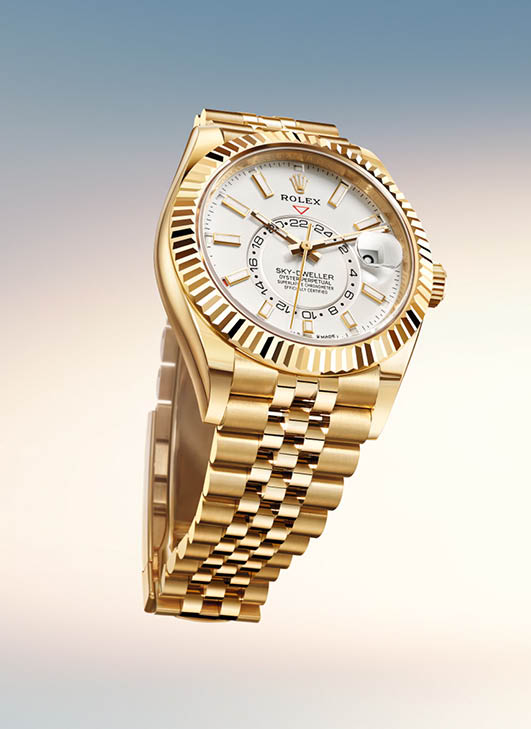
Today, Rolex is a leader in luxury, innovation, and timeless elegance. It’s a brand that has weathered wars, economic downturns, and shifting fashion trends, yet it has never wavered from its commitment to quality and precision. Whether on the wrist of an explorer at the top of Mount Everest or a business magnate closing a deal, a Rolex is more than just a watch; it’s a statement of enduring excellence.
As we glance at the time, it’s clear that Rolex doesn’t just measure hours and minutes—it measures history. And in the world of horology, there’s no name more iconic, no legacy more enduring, than Rolex.
Beyond the Surface: Little-Known Facts About Rolex
Secret Handshake with Hollywood: While Rolex’s association with luxury is well-known, its deep-rooted connection with Hollywood is often overlooked. The brand has appeared in over 100 films, often without direct sponsorship, showcasing its organic presence in pop culture. From James Bond’s Submariner to Paul Newman’s Daytona, Rolex has become an unintentional star on the silver screen.
Rolex’s Own Gold Foundry: Unlike most luxury watch brands, Rolex produces its own gold. The company has its own foundry where it melts and forms 18kt gold, ensuring that every component of a Rolex watch, from the case to the bracelet, meets the brand’s stringent quality standards.
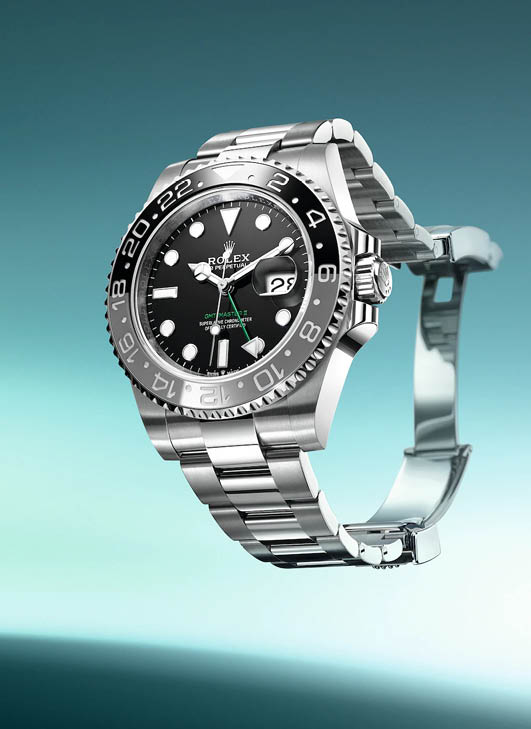
The Mystery of the “Testimonee”: Instead of using the term “ambassador,” Rolex refers to its brand representatives as “testimonees.” This group includes icons like Roger Federer, Tiger Woods, and Martin Scorsese, who embody the excellence and dedication that Rolex represents.
A Commitment to Philanthropy: While many see Rolex as a symbol of wealth, the brand has a philanthropic side that is less well-known. The Hans Wilsdorf Foundation, established after Wilsdorf’s passing in 1960, owns and controls Rolex. The foundation is committed to funding educational and charitable causes, ensuring that the brand’s legacy extends beyond luxury.

A Unique Serial Number System: Rolex watches feature a unique serial number system that not only aids in identifying counterfeit models but also offers insights into the watch’s production year. This serial numbering, combined with Rolex’s meticulous record-keeping, has made vintage Rolex watches particularly valuable among collectors.
