

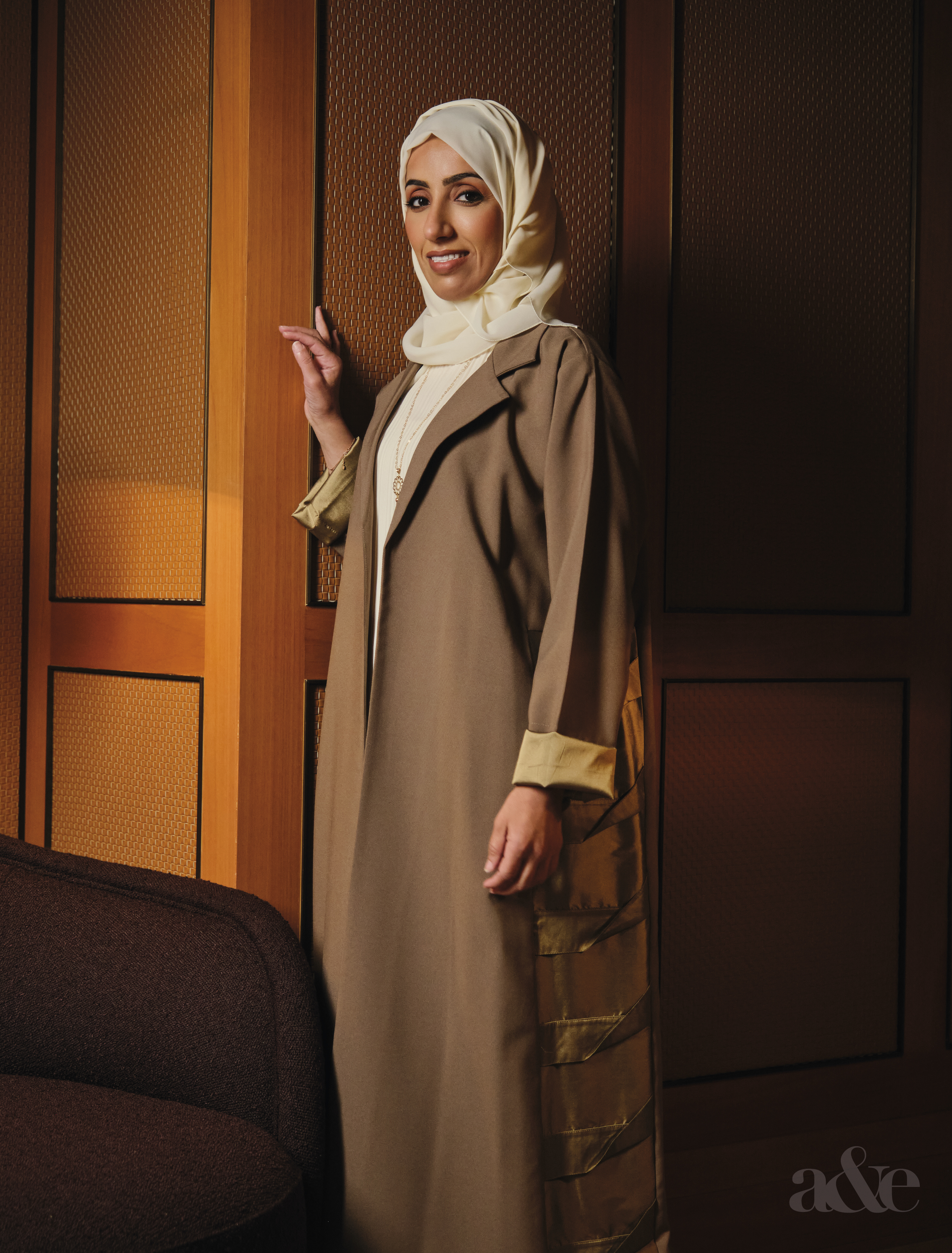
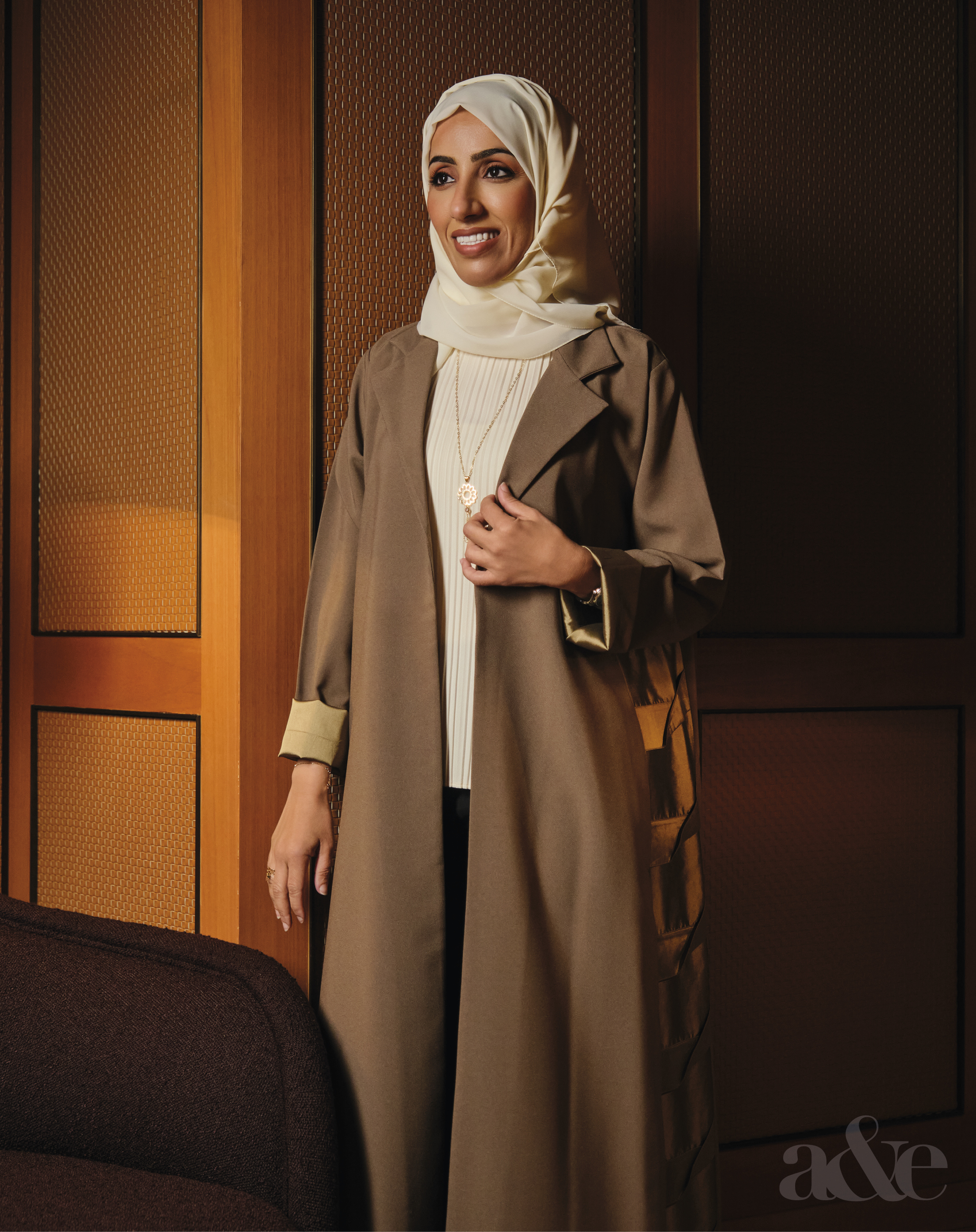
The Saudi Couturier Tima Abid on Making Her Mark on the Global Fashion Stage
In a region where tradition and innovation intertwine, Tima Abid stands out as a designer who knows how to honour both.
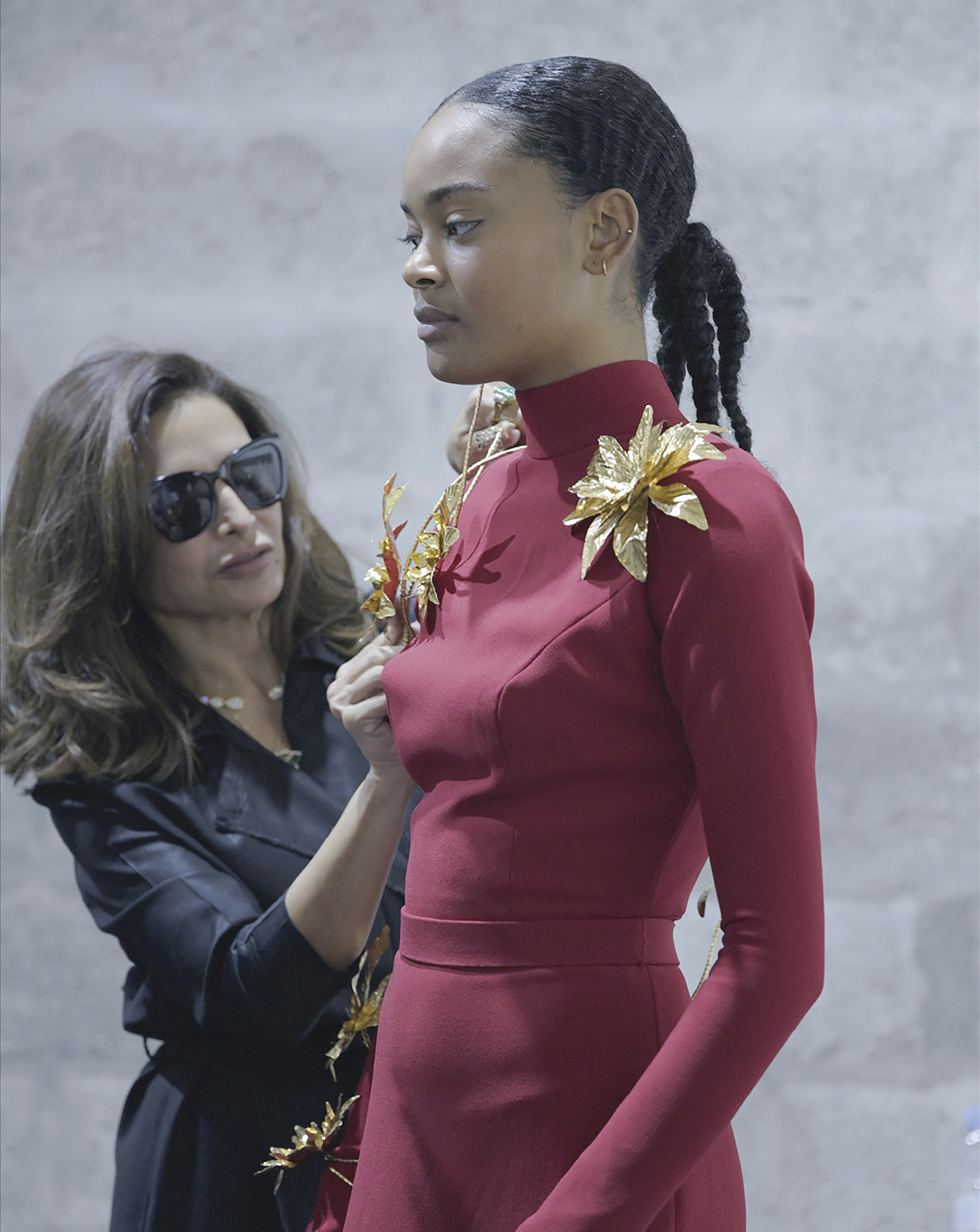
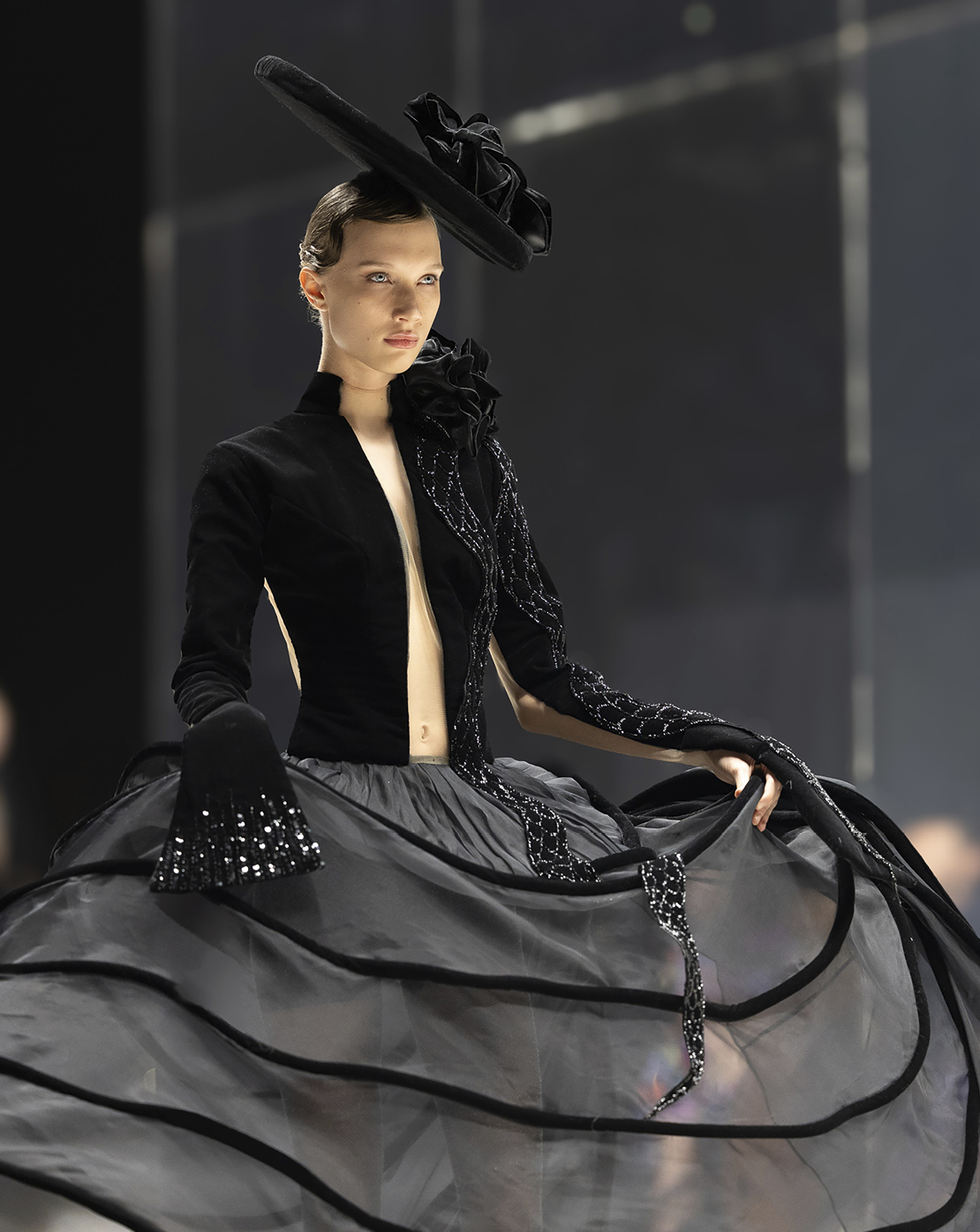
With her roots firmly planted in Saudi Arabia and her vision reaching across continents, the Jeddah-based couturier has quietly and confidently risen to become one of the Arab world’s most respected fashion voices. Known for her exquisite craftsmanship, sharp architectural tailoring, and romantic silhouettes drenched in detail, Abid creates couture that speaks not only to beauty but to strength, legacy, and evolution.
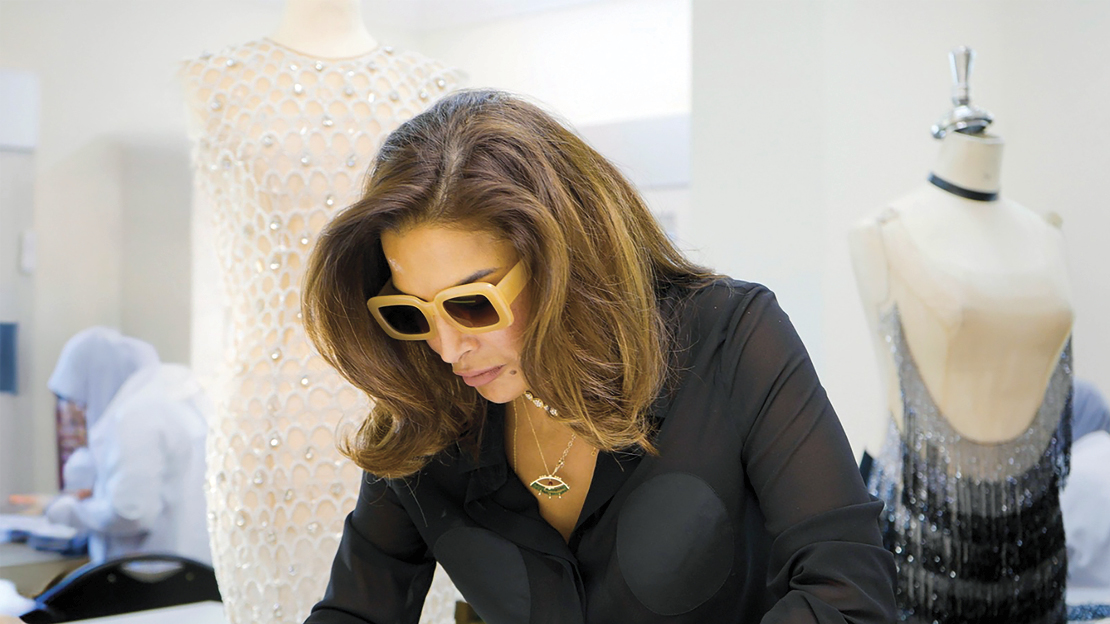
With over two decades of experience, Abid has built a brand defined by elegance and emotion, often drawing on themes of femininity, resilience, and cultural pride. Her breakthrough moment on the international fashion scene came in 2020, when she became one of the first Saudi designers to present at Paris Haute Couture Week—a milestone that signalled not just personal triumph but a wider shift for Saudi fashion on the world stage. Since then, her collections have been met with praise for their intricate embroidery, masterful construction, and the quiet power they exude.
Abid’s client list is as diverse as it is distinguished—from Gulf royals and international celebrities to brides seeking something extraordinary. And yet, for all her acclaim, she remains grounded in her commitment to artisanal craft and emotional storytelling. Whether it’s a sweeping wedding gown laced with French tulle or a structured evening dress embellished with thousands of hand-sewn crystals, every Tima Abid piece is designed to make a statement.
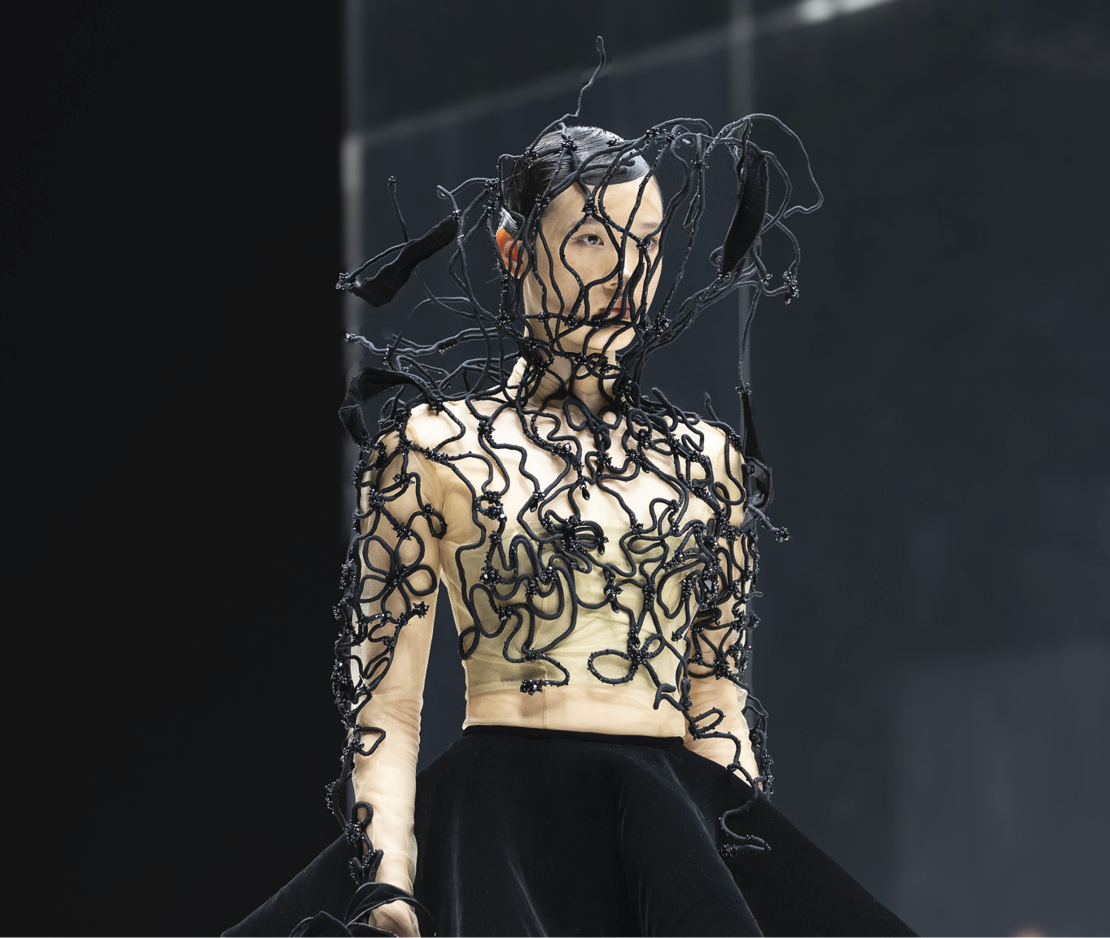
As Saudi Arabia undergoes a cultural and creative renaissance, designers like Abid are helping to shape a new narrative—one where regional identity and global sophistication coexist. In this exclusive interview, the designer opens up about her journey to the top, the evolution of her aesthetic, and why she believes the future of couture is being written right here in the Middle East.
Tell us about your brand, Tima Abid.
For a more complete answer, you might ask those who wear Tima Abid. As for me, Tima Abid is a reflection of who I am—an extension of my imagination, designed to adorn those who appreciate beauty.
Where did your passion for design come from?
My passion for design stems from various sources, often a mix of personal influences, life experiences, and the environment around me. Cultivating a sense of beauty means actively looking for it in every aspect of life and finding it in everything around me.
Tell us how Saudi Arabia’s culture inspires you.
Saudi culture is abundant in artistic and historical influences that provide a rich foundation for design inspiration, whether in fashion, architecture, or the visual arts. Our kingdom, with its expansive deserts, the undulating dunes of the Empty Quarter, the rose-filled mountains of Taif, and the shores of the Red Sea, all evoke colours and patterns inspired by the natural world. The hues of the sand, the shifting shades of the mountains, and the rhythm of the sea— these elements present a profound visual artistic heritage that can be embraced and infused into my designs.
What is your secret to creativity?
Creativity has no hidden secret or set formula. If there were a recipe to ignite the imagination, I wish I had it—because I would gladly share it with everyone!
As a designer from the Middle East and Saudi Arabia specifically, what does it mean to you to represent your country globally?
“”Representing one’s homeland”—such a powerful notion. Yet, I see it not just as a representation, but as both an honour and a responsibility. No matter how much I create or how deeply I strive to reflect cultural and historical identity, it is my country that truly represents me. I believe no one can fully embody their homeland.
What more would you like to see happening to highlight the talent of designers in this region?
Genuine collaboration and meaningful empowerment go hand in hand—what is the purpose of empowerment if we don’t support those just starting their journey or those who have faced setbacks? Together, we grow and rise.
Tell us about your latest collections.
What I am working on will soon come be revealed, and seeing it unfold is far more beautiful and true than just hearing about it. So, stay tuned with me.
What’s the biggest challenge you face with your brand today?
The biggest challenge is maintaining consistency and setting priorities. I strive to do my best while ensuring a balance between my work and my family’s needs.
What would you still like to achieve?
While the future remains uncertain, my hope is for Tima Abid to reach a broader audience. My goal is to expand production and connect with customers beyond Saudi Arabia. My ambition is for Tima Abid to establish boutiques in the world’s leading fashion capitals.
What is a lesson you’ve learnt throughout your career?
Lessons never end, and if you think you’ve learned them all, you’ve stopped growing. But the most important lesson is mastery.
What inspires you?
Everything around me can inspire me.
What is the professional motto you live by?
My professional principle revolves around prioritising the work environment and the well-being of those within it, considering their circumstances. I make it a point to remember every employee’s name and see them as part of my extended family. One of my major principles is to focus on quality, not quantity.
Who is your muse or a woman you would love to dress?
Usually, I think of my mother… how much I wish to reach out to women who have fulfilled their duties and stepped aside from society as they grow older. How beautiful it is to show them their beauty on their special occasions. I truly believe that beauty can never be erased.
How would you describe your brand in one word?
Dream. I dream of uniting the beauty of the living idea in my imagination and shaping it with precision.
The Founders of Dimoremilano Discuss Their Collaboration with Loro Piana
Emiliano Salci and Britt Moran, founders of Dimoremilano, on their recent work with Loro Piana
At this year’s Milan Design Week, Italian luxury brand Loro Piana joined forces with Milan design studio Dimoremilano. Rooted in the prestigious tradition of Milanese design and supported by a network of Italy’s finest artisans and manufacturers, Dimoremilano pays homage to the country’s craft culture while boldly pushing it forward, always remaining true to the style and identity from which it all began.
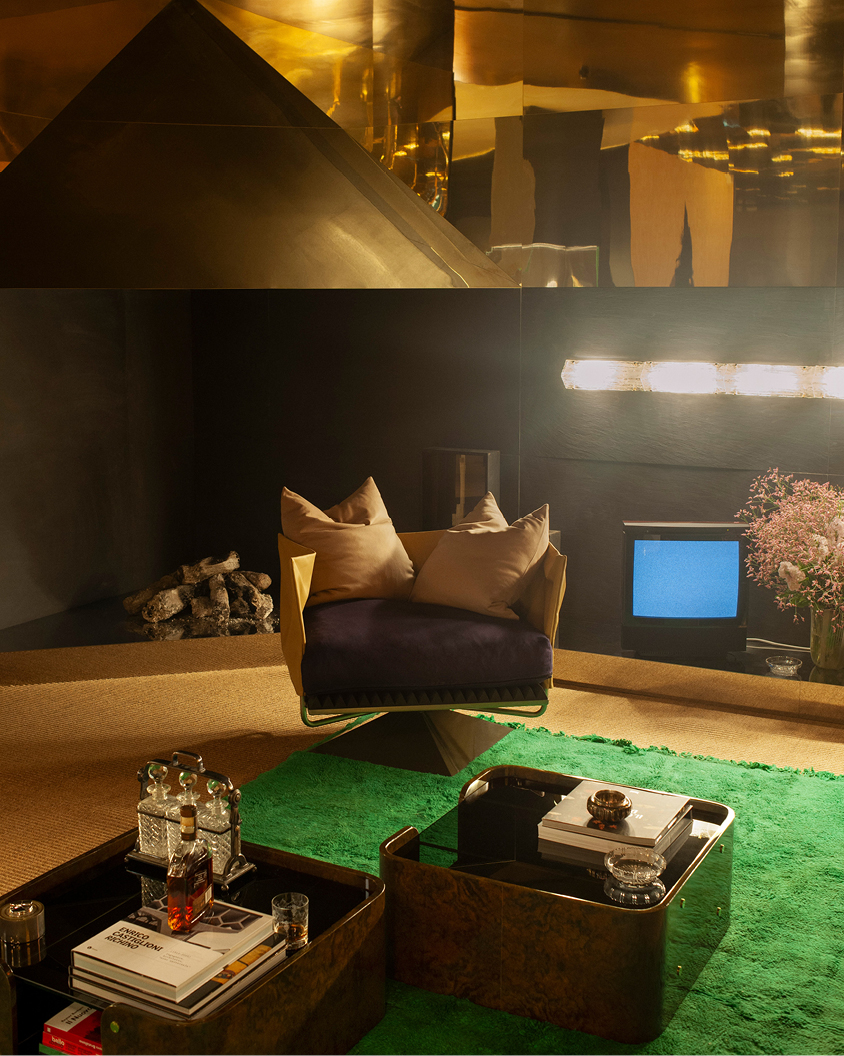
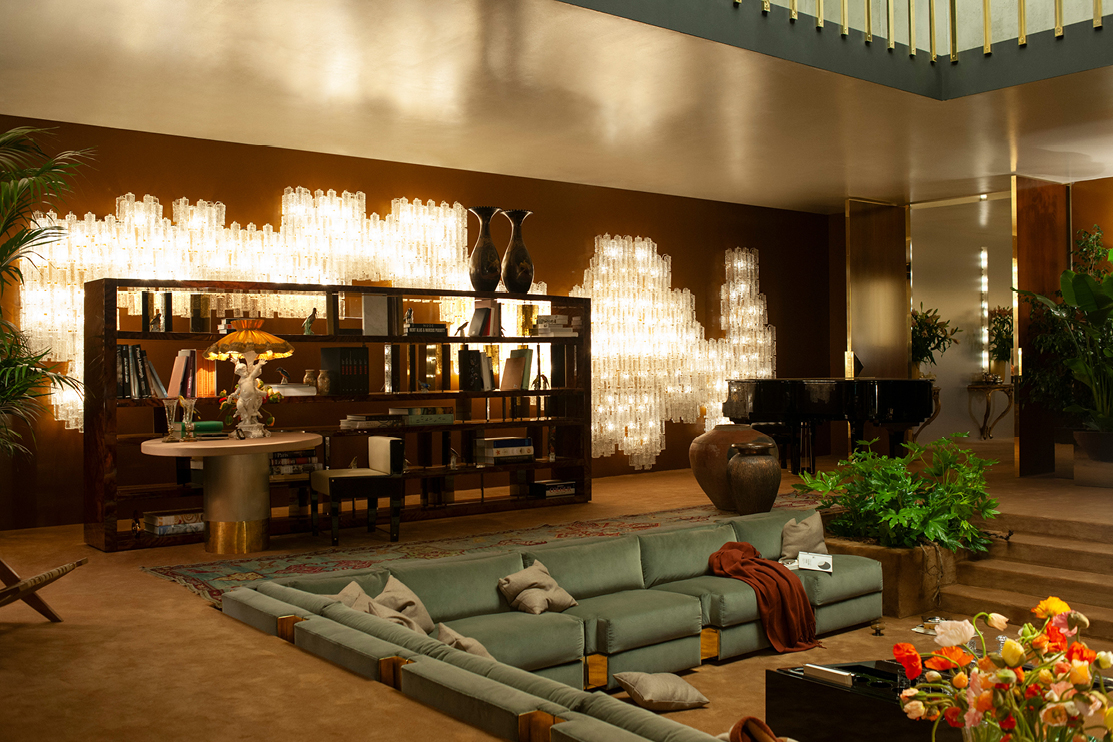
For this first-of-its-kind collaboration, the two luxury houses created a captivating experience inside Loro Piana’s Cortile della Seta courtyard, in the Maison’s Milan headquarters. Visitors were transported to La Prima Notte di Quiete, a world of vintage cinema within a fully furnished installation that replicated a house from the 70s or 80s. Exceptional furniture was designed by Dimorestudio for Loro Piana Interiors; while new and classic pieces from Dimoremilano were upholstered with Loro Piana Interiors fabrics, and items from the Loro Piana The Art of Good Living Collection were also on display. Antique pieces artworks from local galleries completed the offering. Here we find out more about the installation and what this partnership means to Dimoremilano’s founders.
Tell us about your brand, Dimoremilano today and its vision.
Dimoremilano represents a refined balance between tradition and innovation. Our design philosophy is rooted in a deep respect for history, particularly the 20th century, while embracing a contemporary perspective. We create timeless environments where every piece feels as though it belongs, integrating historical references with a modern sensibility. Our work is defined by an intense focus on proportions, the quality of materials, and impeccable attention to detail. Each design tells a story, evoking a sense of elegance and timelessness, which is reflected in both the products we create and the spaces we design.
What can you share on the collaboration with Loro Piana and how it came to life?
The collaboration with Loro Piana felt like a natural extension of our approach. Both brands share a commitment to quality and craftsmanship, but also an understanding of the power of materials to define a space. This collaboration was born out of a shared desire to push the boundaries of design and create something extraordinary. Loro Piana’s exceptional fabrics allowed us to explore new textures, while ensuring that the final pieces aligned with our vision of understated elegance.
What are some of the highlights?
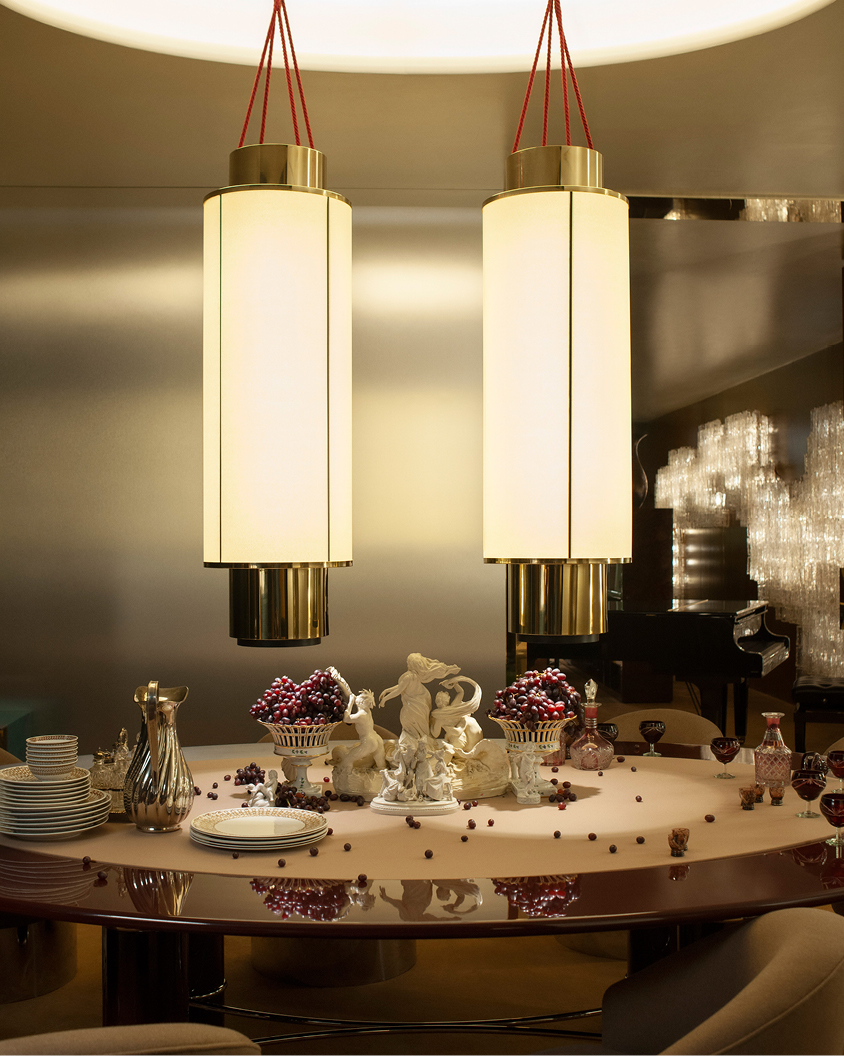
In this collaboration, we aimed not just to create products but to design a complete sensory experience. With La Prima Notte di Quiete, we sought to evoke an intimate atmosphere of warmth and quietude, and here we wanted to engage all the sensorial layers of the space. The use of Loro Piana’s exceptional fabrics allowed us to infuse texture, softness, and tactile richness into each piece, crafting an environment where every element—from the upholstery to the overall design—came together to create a cohesive experience. Our intention was for people to enter the space and feel fully immersed, not just by the furniture, but by an atmosphere that stimulates all their senses, visually, tactily, and emotionally.
Why did you decide to partner with Loro Piana on this project, and what do you feel are the common codes between Loro Piana and your own brand?
We’ve always admired Loro Piana’s commitment to craftsmanship, quality, and timeless elegance, which aligns perfectly with our philosophy at Dimoremilano. Both brands share an appreciation for the beauty of simplicity, the importance of texture, and the exploration of materials. The collaboration was a natural step for us as we both value the artistry of fine craftsmanship, and we believe in our approach to design—one that combines historical references with a modern sensibility. It was a perfect match with Loro Piana’s rich heritage and commitment to creating luxurious, enduring pieces.
What can you tell us about some of the pieces you created specifically for the space?
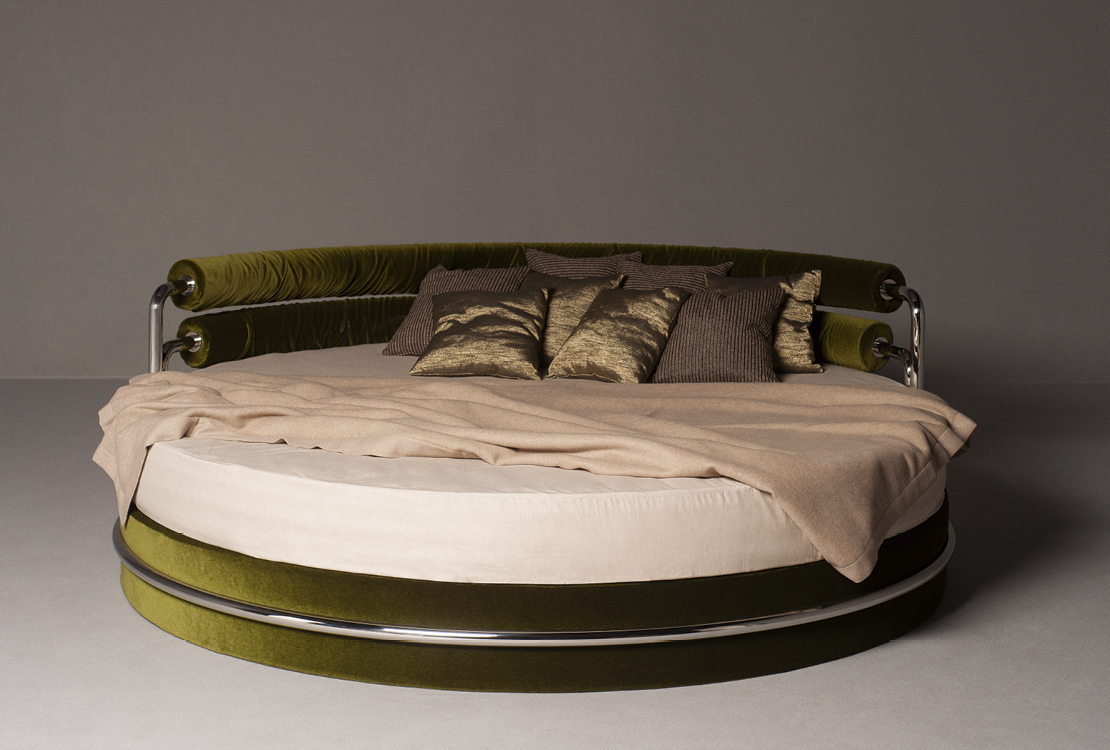
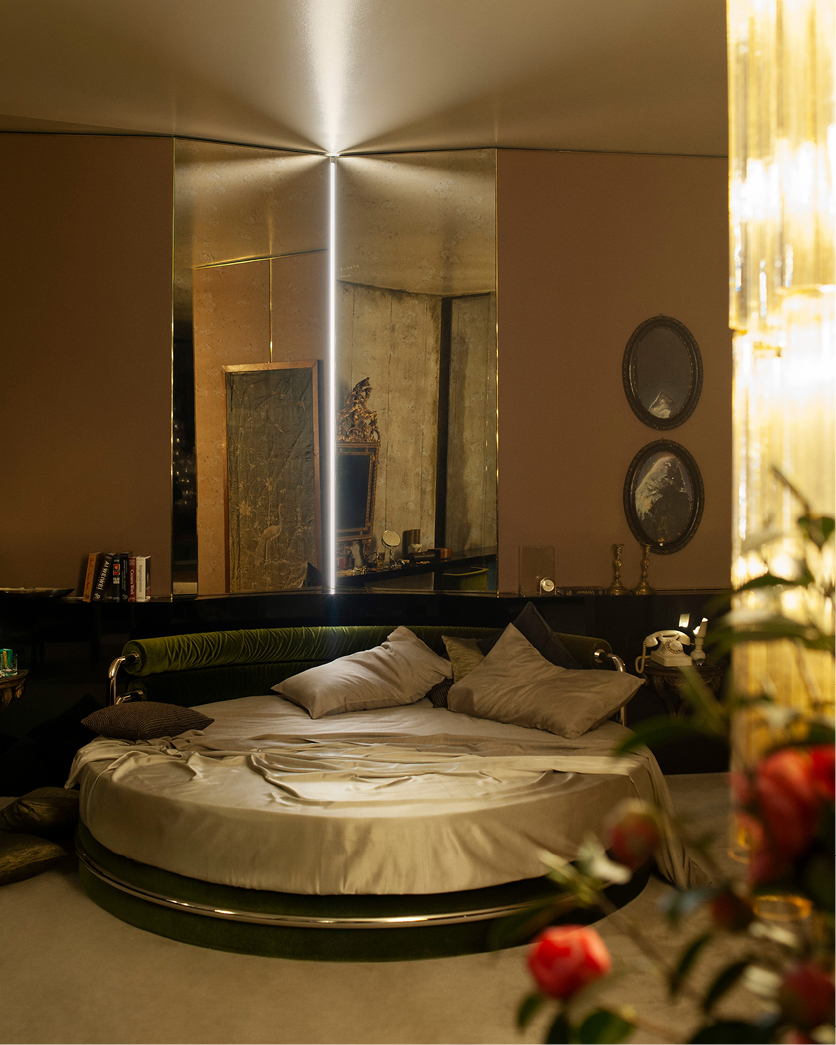
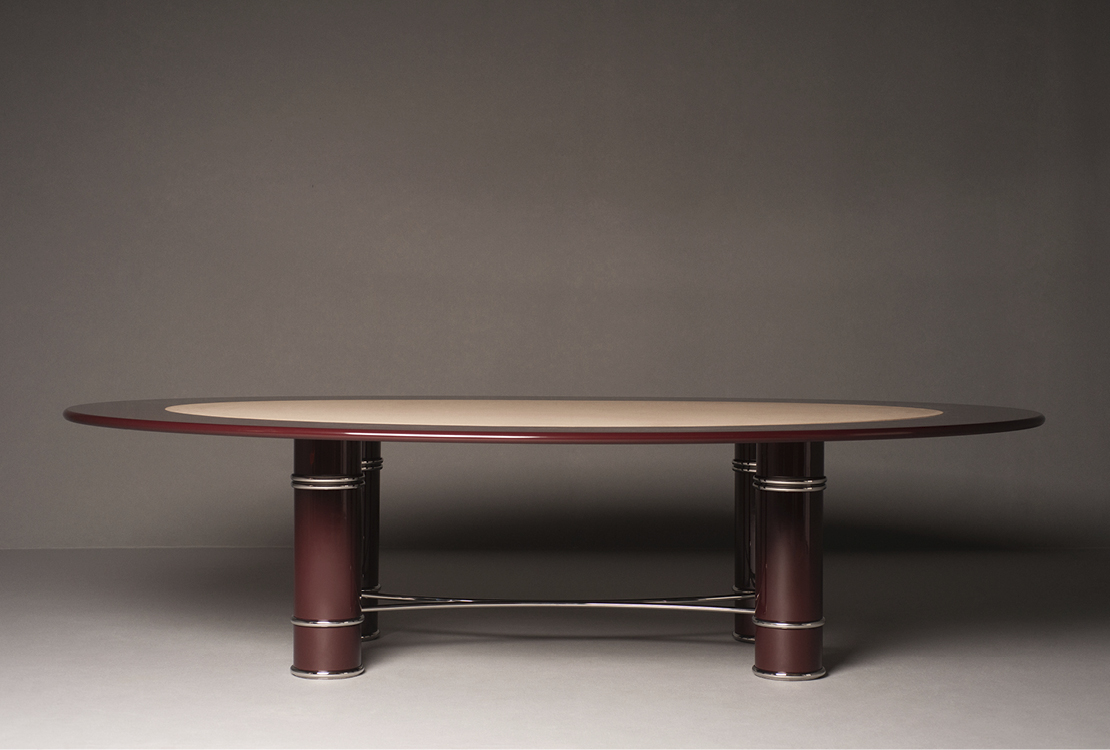
For this collaboration, we designed several pieces that were specifically created for the space and Loro Piana’s exceptional materials. One of the key pieces is a round bed, created exclusively for Loro Piana Interiors, offering both comfort and luxury with its enveloping design. Another standout piece is the Carl Low Table, which also functions as a bar cabinet. Positioned within the conversation pit, this piece not only adds a sculptural element but also enhances the space’s functionality, seamlessly integrating with the environment.
What were some of the challenges you faced in bringing this collaboration to life?
The main challenge was creating a cohesive experience that aligned with both Dimoremilano’s and Loro Piana’s philosophies. We wanted the space to be more than just a collection of objects—it had to be immersive, engaging the senses in a way that felt natural. Finding the right balance between design and comfort while respecting the identities of both brands was key. Additionally, we had to consider how each piece interacted with the space and with the overall atmosphere we wanted to create.
Tell us how you worked with Loro Piana materials and fabrics to achieve the final pieces.
We began with an in-depth research phase, exploring the wide range of Loro Piana Interiors materials. From there, we selected a palette of cashmeres and velvets that not only highlighted the tactile richness of their textiles but also felt aligned with the identity of both our brands. The tones we chose were soft yet expressive—warm neutrals, deep reds, and subtle contrasts that created a dialogue between comfort and character. It was less about decoration and more about atmosphere, about using material to reinforce the emotional tone of the space.
Can you share more details of the craftsmanship and materials used to create the pieces for Loro Piana?
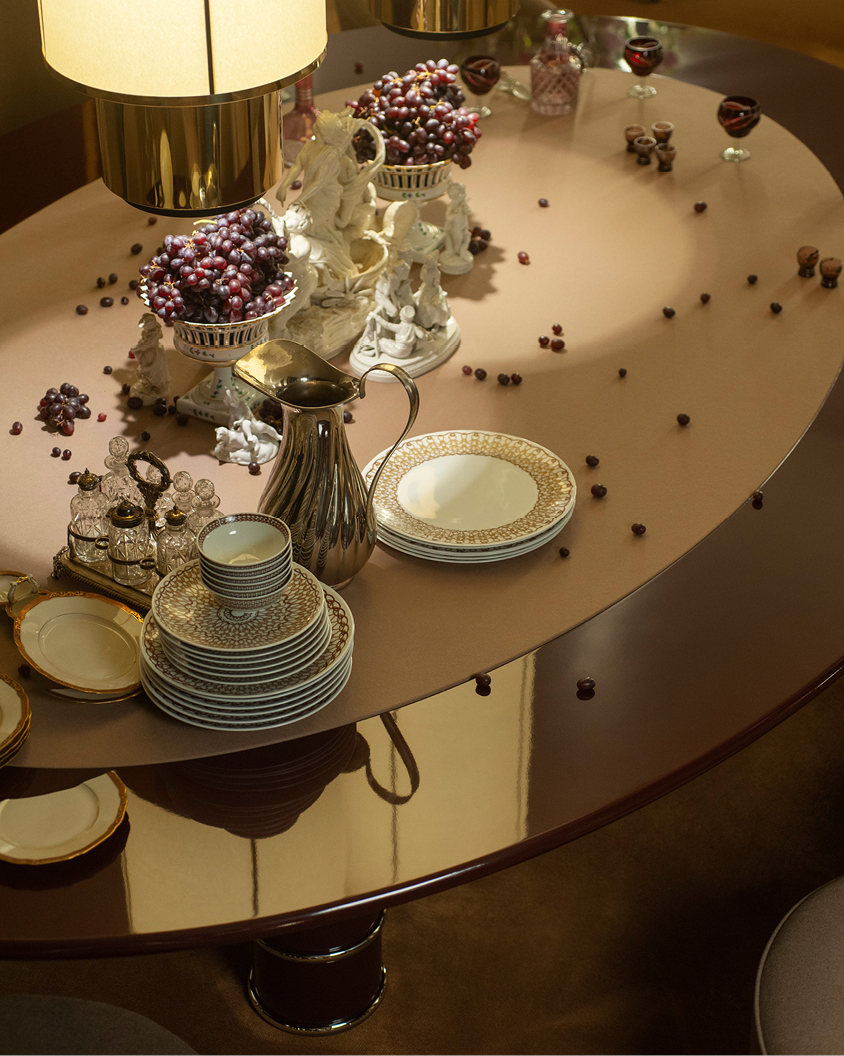
All the pieces were entirely custom-made for Loro Piana Interiors, designed specifically for this collaboration. What mattered most to us was not only the precision of the execution, but how each element could evoke emotion through contrast and detail. We explored combinations of materials that enhance each other—lacquered wood against soft cashmere, brushed metals alongside deep-pile velvets—creating unexpected tactile experiences. The craftsmanship lies in the layering: hidden seams, curved structures that required complex carpentry, and textile applications that follow the geometry of the design with surgical accuracy. Each piece was conceived as a unique object, expressive and rich with tension between rigour and softness.
How would you describe your design aesthetic today, and what are your biggest influences?
Our design aesthetic is rooted in a sense of timeless elegance, where every piece feels like it has a story to tell. We aim for designs that are both contemporary and classic, where the patina of the objects gives them a sense of being lived in—like they’ve had a history and have evolved over time. The concept of creating pieces that feel like they belong in a space, rather than just being placed there, is central to our approach. We are influenced by the design movements of the 20th century, where attention to proportion, balance, and materiality was key. But it’s this enduring quality and the passage of time that we focus on—creating pieces that gain character as they age.
Can you share some details on your design process?
Our process always starts with research. We spend a lot of time looking through books—art, photography, architecture, design—searching for fragments, moods, details that resonate with us. It’s about building a visual and emotional vocabulary that then informs the direction of a project. From there, we develop concepts that are not purely decorative, but layered and evocative. The process is intuitive but meticulous: we sketch, test materials, build prototypes, and constantly refine. It’s not linear—it’s more like composing a story through objects, light, and space.
Tell us about your latest collections.
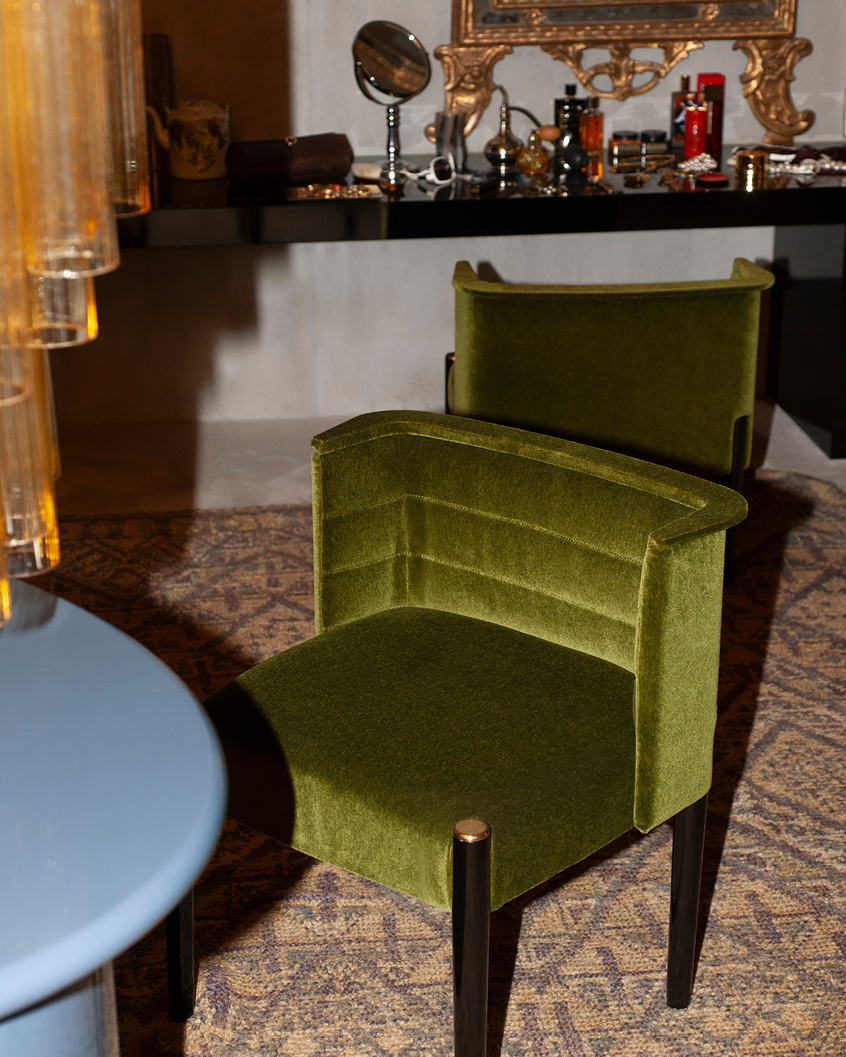
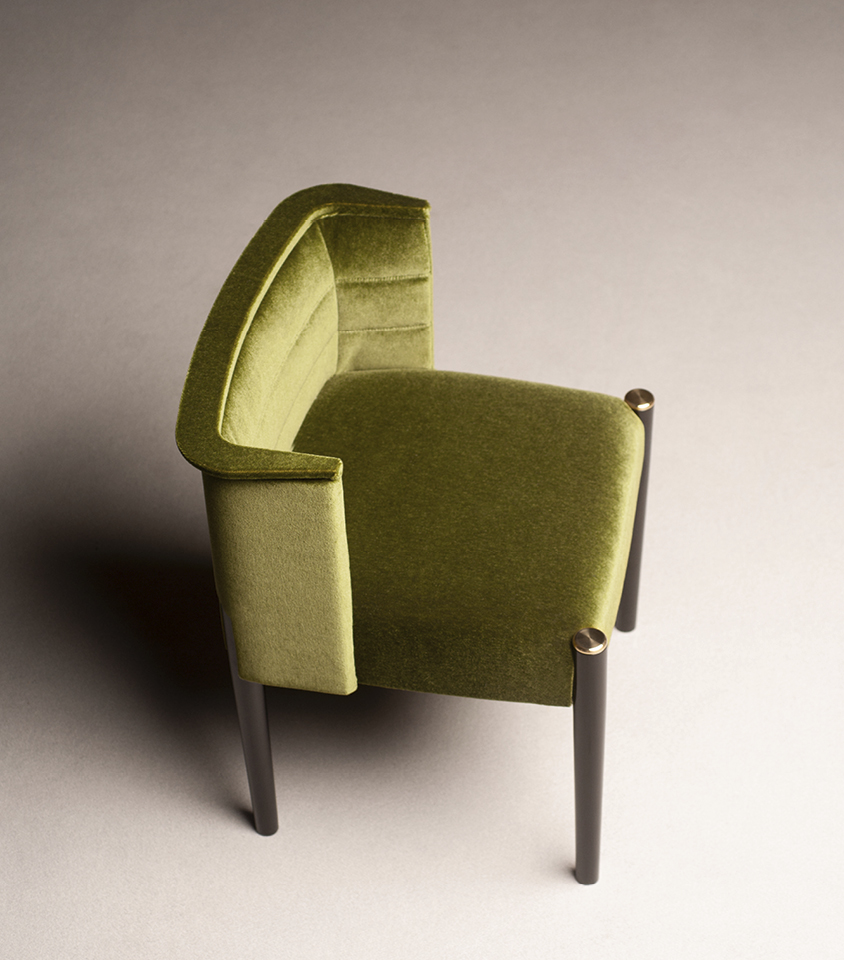
Our latest collections continue to explore contrast and atmosphere through form and material. We’ve introduced new lighting pieces, like the Bodice table lamp and the Bullet ceiling lamp—both playing with sculptural presence and subtle detailing. We’ve also developed modular sofas, such as Corner and Snooker, designed to create conversation areas and adaptable configurations. These new additions reflect our ongoing focus on balance, proportion, and that slightly cinematic sense of space that defines the Dimoremilano language.
What would you still like to achieve?
We hope to continue expanding Dimoremilano’s global presence, reaching new markets and audiences. We’re always looking for new ways to push the boundaries of design, particularly when it comes to materials and innovative uses of space. Achieving a deeper integration of art and design is something we’re particularly passionate about for the future.
Can we expect to see more of Dimoremilano in the Middle East?
Absolutely. While Dimoremilano hasn’t launched a specific collection dedicated to the region yet, Dimorestudio has already been involved in several important projects in the Middle East. It’s a market we find incredibly stimulating—there’s a deep appreciation for design, culture, and detail. We’re always open to new dialogues and opportunities there, both in terms of residential, retail and hospitality projects, and we look forward to expanding our presence in the region.
What’s a message you would share with our readers to understand more about the brand?
To understand Dimoremilano—and Dimorestudio—you have to look beyond the surface. Our work is never just about objects or interiors; it’s about creating atmospheres, emotional landscapes, and memories you can inhabit. Whether it’s a piece of furniture or a complete space, there’s always a narrative, a tension between past and present. Both brands are deeply rooted in research and storytelling: Dimoremilano through collectable design pieces, and Dimorestudio through spaces that blend architecture, art, and time. What unites everything is a distinctive sensibility—one that embraces imperfection, layering, and a kind of quiet drama.
Louis Vuitton Reveals a Newly Enhanced Personalisation Service
Louis Vuitton has unveiled a new personalisation service which offers clients an even more enhanced bespoke experience with a wider range of possibilities for customising their leather goods.
Mon Monogram is accessible both in Louis Vuitton stores and online, offering new colours, typefaces, striped designs and patches to enhance men’s and women’s bags in classic Monogram and also on Monogram Eclipse for select items. Models eligible for personalisation include the Travel set which comprises the Keepall, Horizon, the Trio Poche Toilette Monogram, the Christopher backpack, the OnTheGo Monogram, the passport cover, and other products.
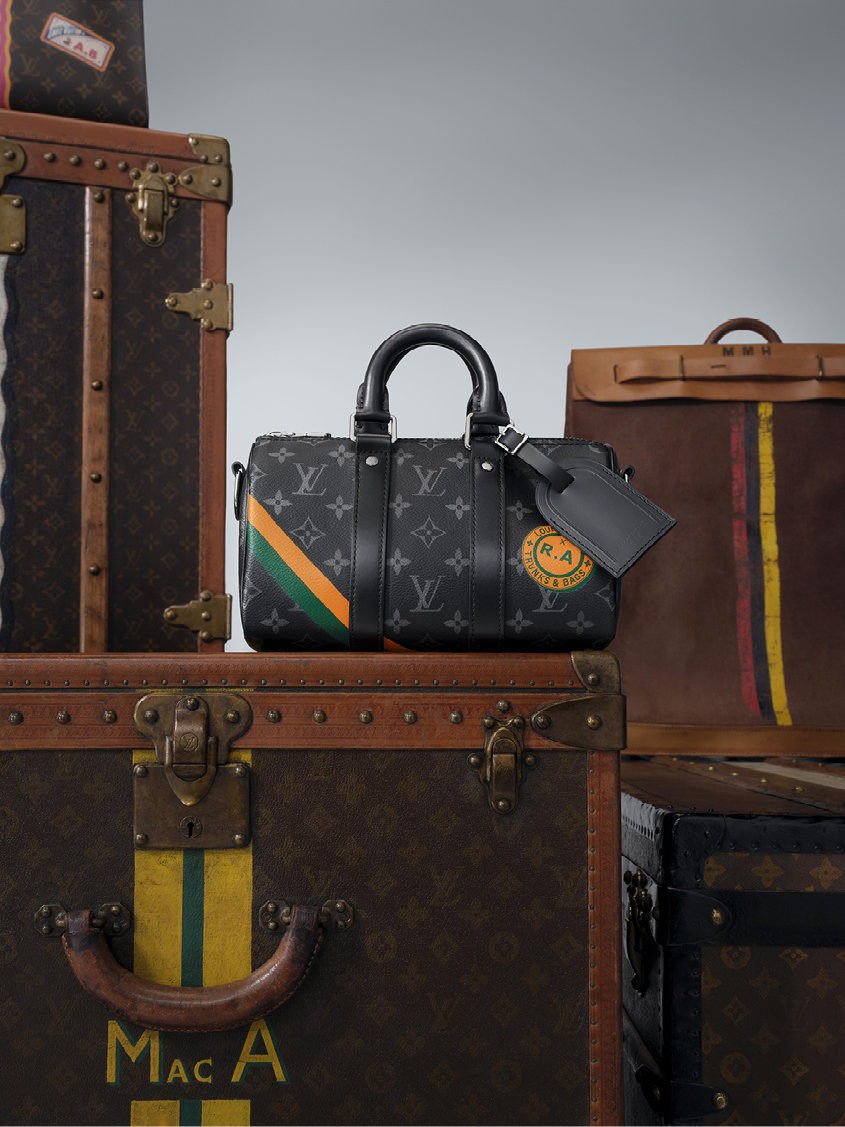
The process is easy and seamless, inviting clients to begin by selecting their iconic piece, before selecting from a palette of new colours that are applied to initials and new optional stripes. Clients can also choose to have their initials set within new vintage-style patches that capture the spirit of design eras such as the Belle Époque or Art Nouveau, which can also be positioned in groups and according to several schemes. From each of these options, the outcome is entirely unique. This enhanced iteration of Mon Monogram will continue evolving with a larger selection of Louis Vuitton materials, models and motifs to come.
Armani Beauty Releases Three New Products for Spring
This season, Armani Beauty has revealed three key new makeup products for eyes, lips and skin. We discover the latest must-haves to add to your vanity case.
Prisma Glass
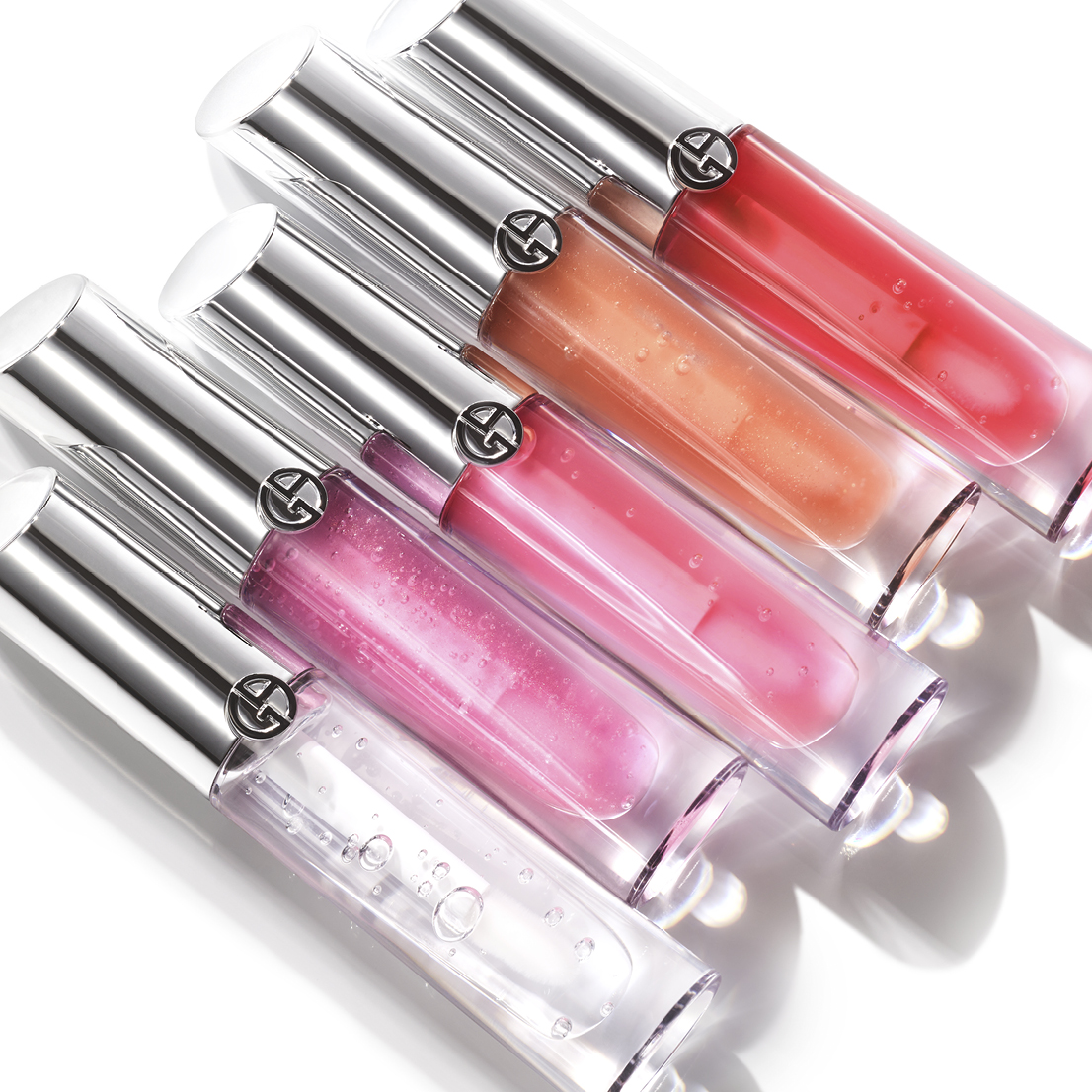
This new shiny lipgloss combines mirror shine with a smooth, volumising effect that will last for up to 24 hours. Using oil-in-gloss technology and lip-caring ingredients, it doesn’t just look good, but it hydrates and strengthens the skin’s barrier in your lips over time, locking in moisture and ensuring your pout looks its best. Prisma Glass is offered in seven multidimensional, sheer shades, spanning a crystal-clear gloss to translucent delectable pinks, caramels, corals, and cherry, each delivering a mirror-shine effect with little to no shimmer.
Luminous Silk Acqua Highlighter
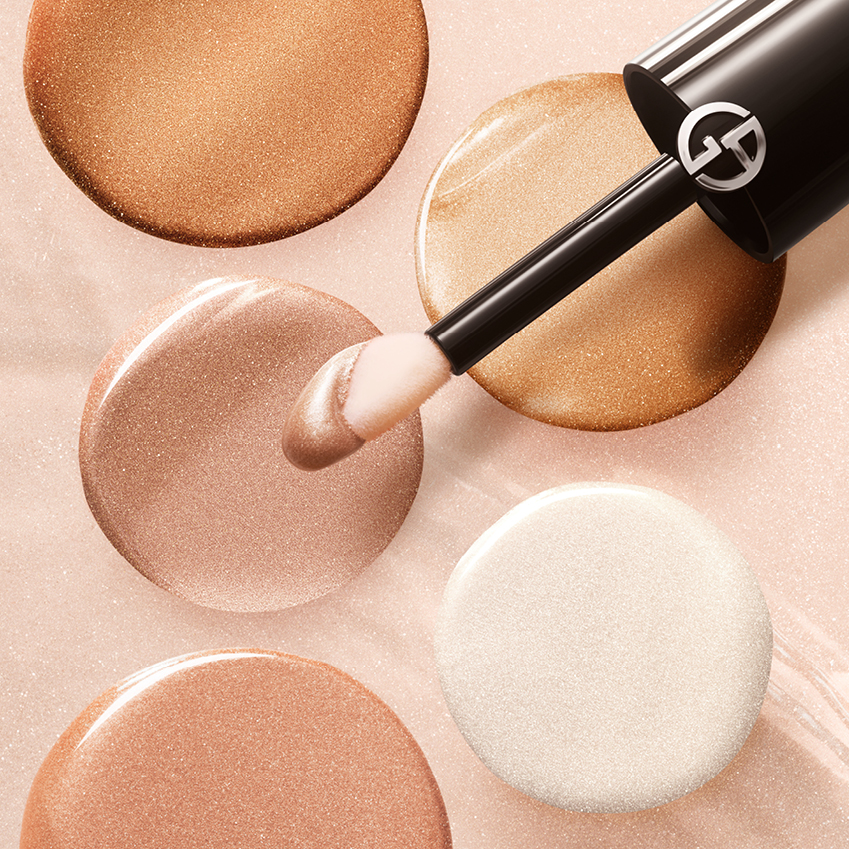
This new blendable liquid highlighter is the latest addition to Giogio Armani’s Luminous Silk range. Luminous Silk Acqua Highlighter combines skin-boosting ingredients and a unique blend of micro-pearls for glossy translucency and a pearly glow effect.
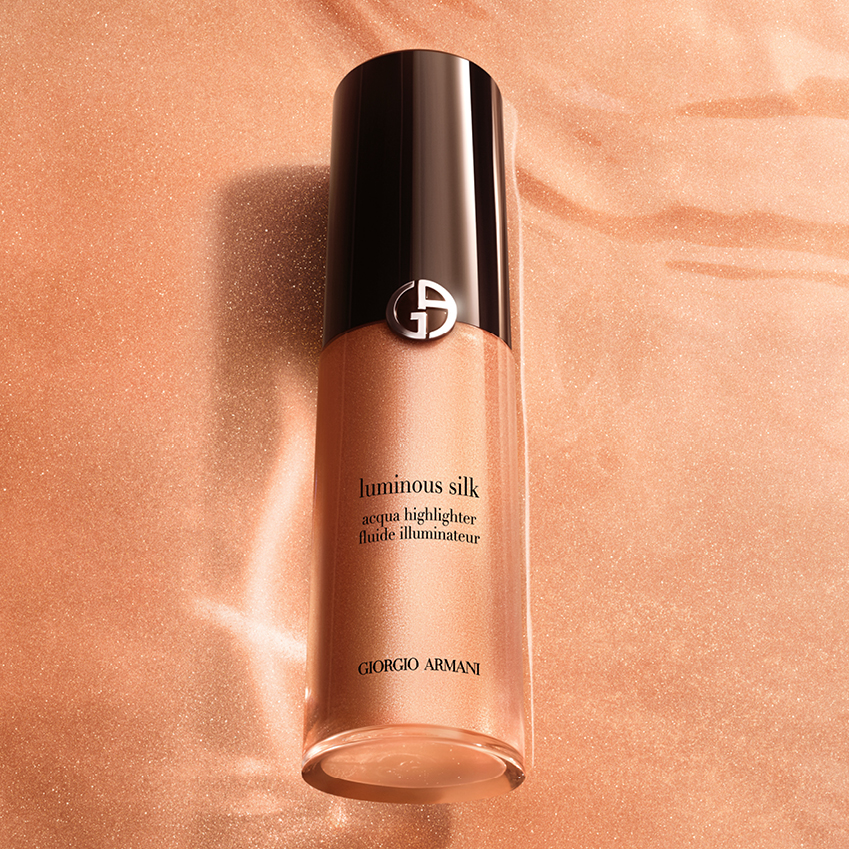
The resulting watery yet creamy liquid formula catches the light for a three-dimensional shine. Debuting in five radiant shades, the highlighter’s hues are crafted to suit a range of skin tones and a dewy, bespoke finish.
Vertigo Lift Mascara
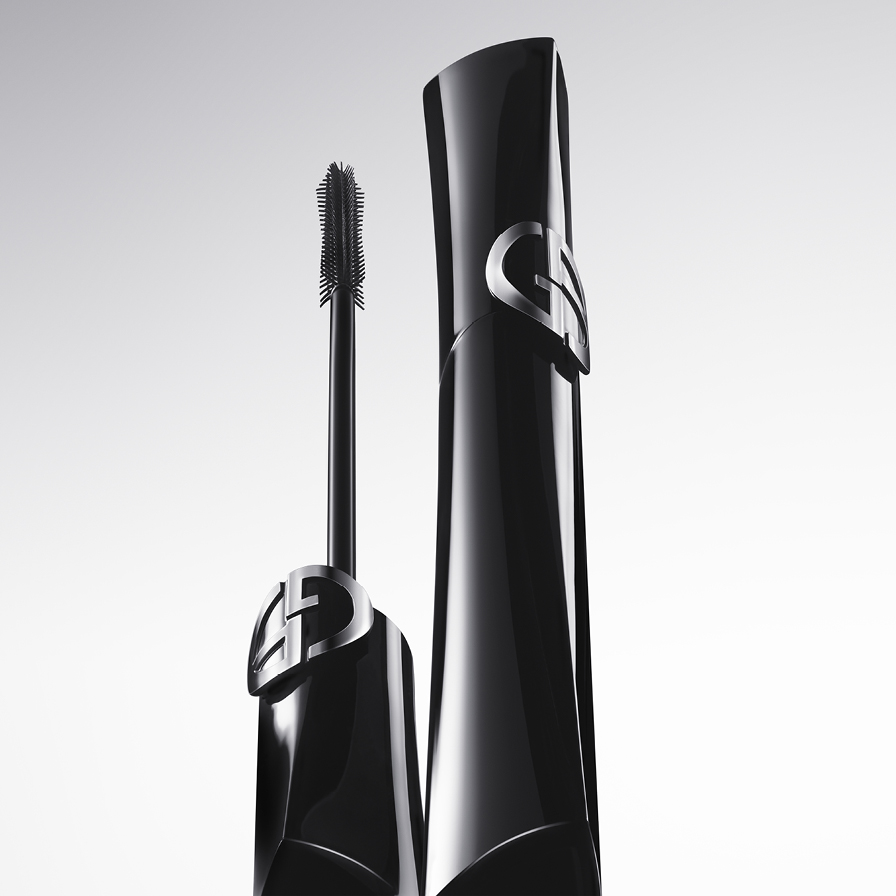
The new Vertigo Lift Mascara offers sculpted definition, clean volume and extreme length. The mascara focused on developing a skincare-first product that feels lightweight and clump-free on the lashes. The product features the latest in beauty technology, and the new Infinity Loop Brush, offering the look of 70 per cent longer lashes and a striking finish. The brush was engineered to grip and wrap the formula, reach all lashes from short to long, and hold enough formula for striking impact without excess clumping or fallout.
Piaget’s CEO Benjamin Comar discusses the Maison’s Daring New Novelties
Known for its seamless fusion of high watchmaking and high jewellery, Piaget once again reaffirmed its place at the intersection of art, innovation, and elegance with its newest novelties, presented at Watches & Wonders last month.
From ultra-thin mechanical feats to radiant gem-set creations that blur the line between timepiece and treasure, the maison unveiled a series of bold novelties that both honour its heritage and look decidedly toward the future.
At the helm of this vision is CEO Benjamin Comar, who brings to Piaget a discerning eye for storytelling and a deep reverence for craftsmanship. In this interview, Comar shares the creative impulses behind the 2025 novelties, reflects on the brand’s evolving identity, and explains why Piaget’s signature blend of exuberance and savoir-faire continues to resonate with a new generation of collectors.
Tell us about some of the highlights from this year’s Watches & Wonders experience and the company’s booth.
Even if this year was no longer the 150th anniversary, we felt the same excitement for this edition as we were introducing Sixtie; the first new jewellery watch collection since 2013. You never know how it’s going to be perceived, so the tension builds up until the very first guests enter the booth and praise this collection Since 2022, we have tried to connect our present creations to the past and the Sixtie trapeze case is more than deeply rooted in Piaget’s DNA, it’s a nod to a very important time for us: 1969 and the 21st Century Collection. We have reworked this trapeze shape for Sixtie, and put it on daily watch, but we have also created some more elevated versions with new Swinging Sautoirs. In addition, we have unleashed the creativity that shaped the late 60s and early 70s to celebrate other iconic curves, like the Andy Warhol watch or the Limelight Gala.
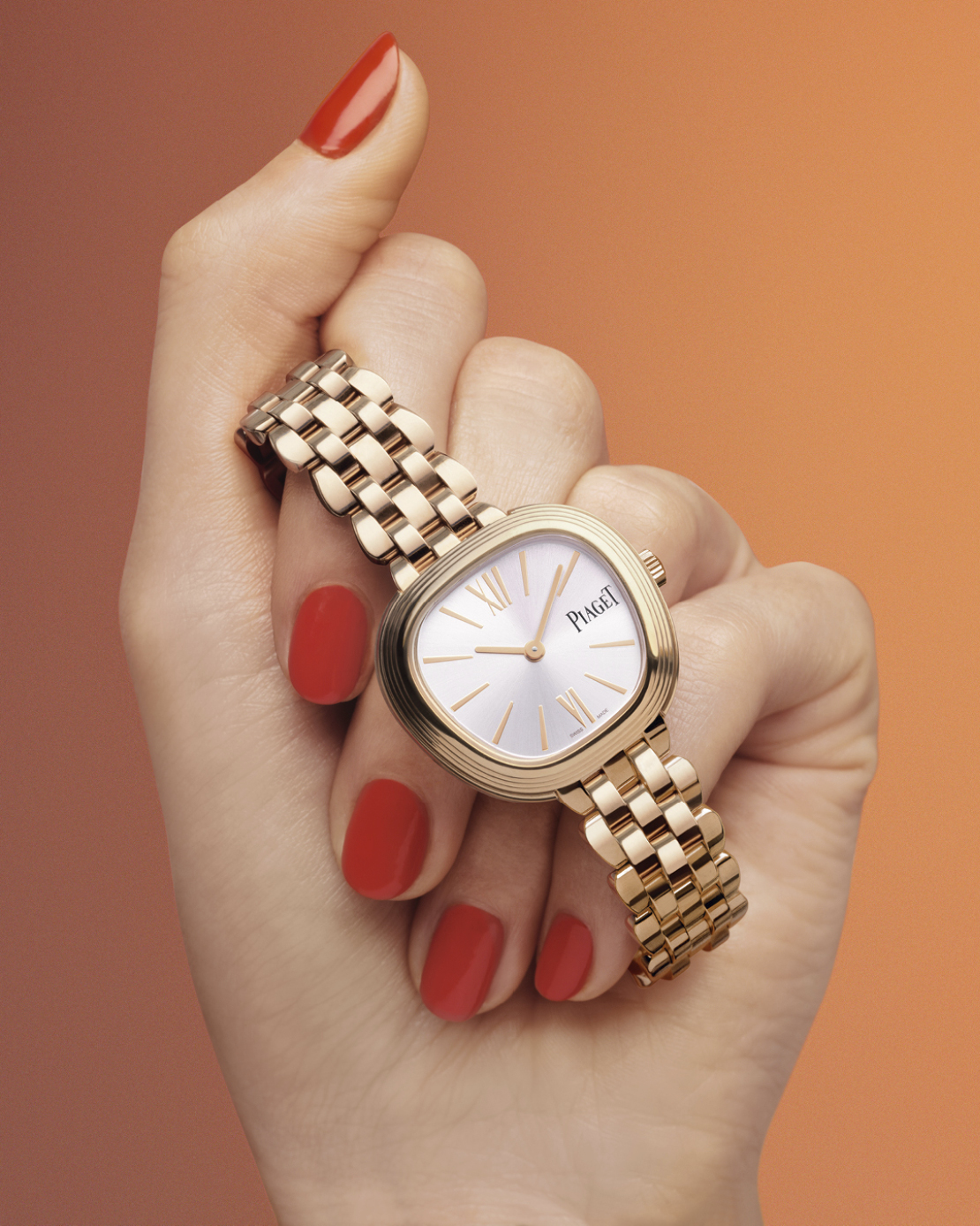
We saw a large focus on jewellery watches this year – tell us about this category at Piaget and why this is a current focus.
It’s not just a category for us; it’s one of the Piaget pillars. Just like Yves Piaget used to say, “a watch is first and foremost a piece of jewellery”. So it has always been detrimental for us, whether in a more wearable version or a high jewellery version. We like to have the best of both worlds: the technical innovation like the AUT and the incredible know-how of the jewellery watches. These are truly one of a kind.
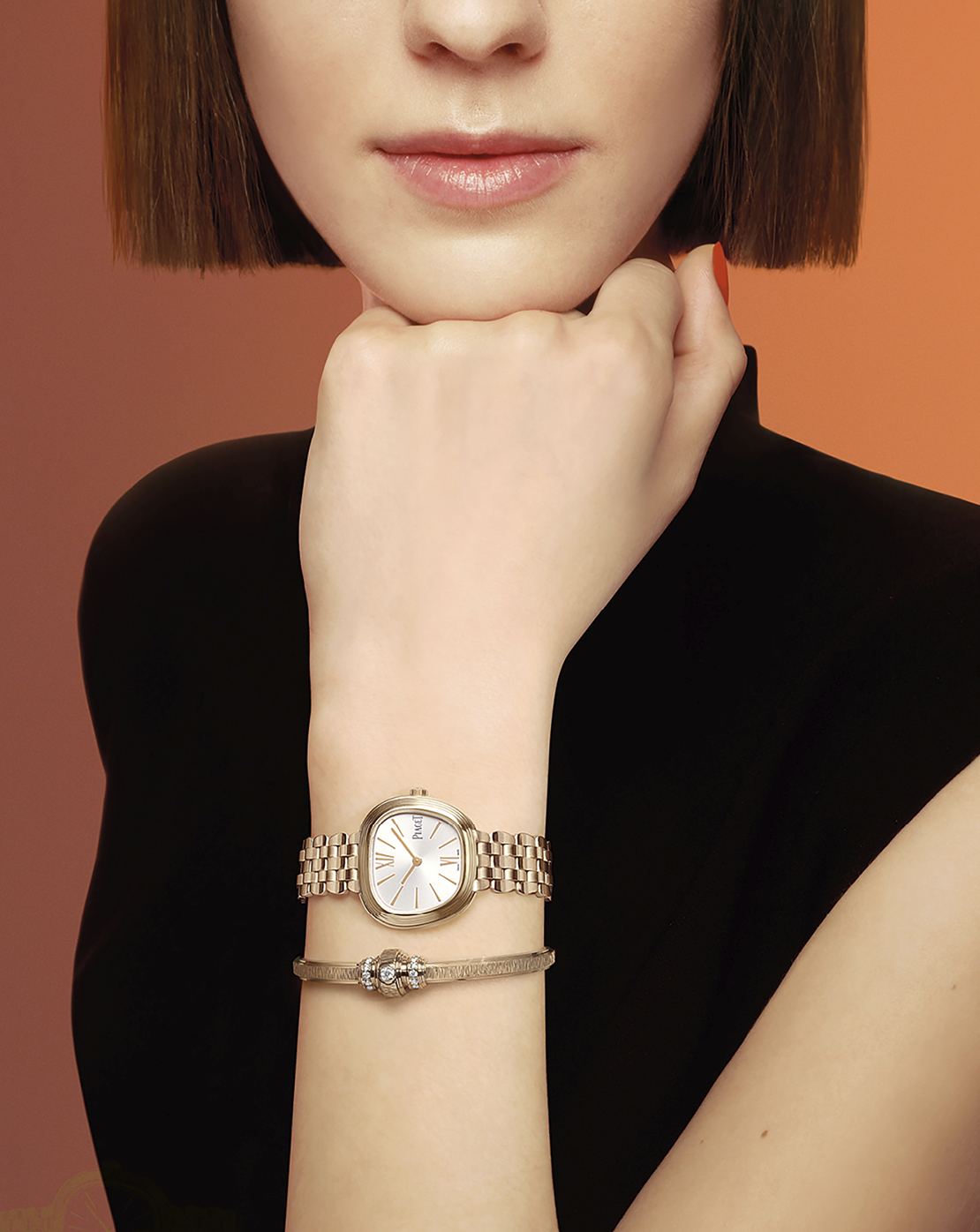
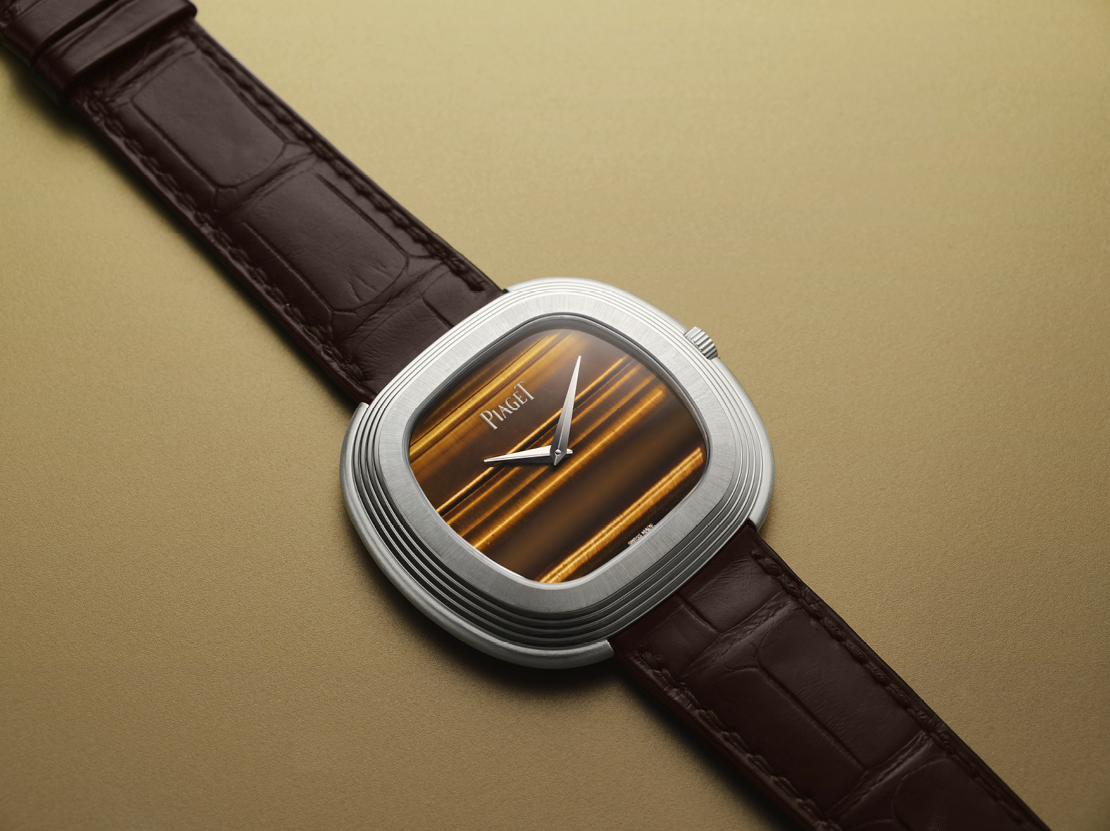
Tell us about The Andy Warhol watch and why this was a perfect partnership for Piaget.
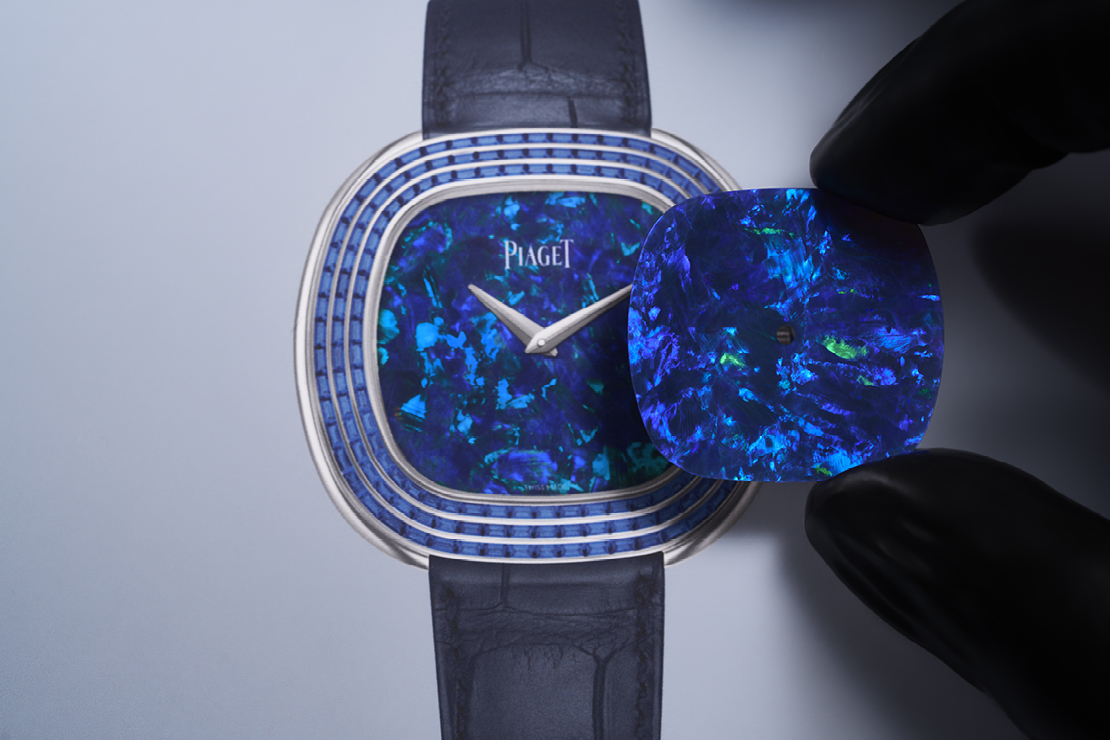
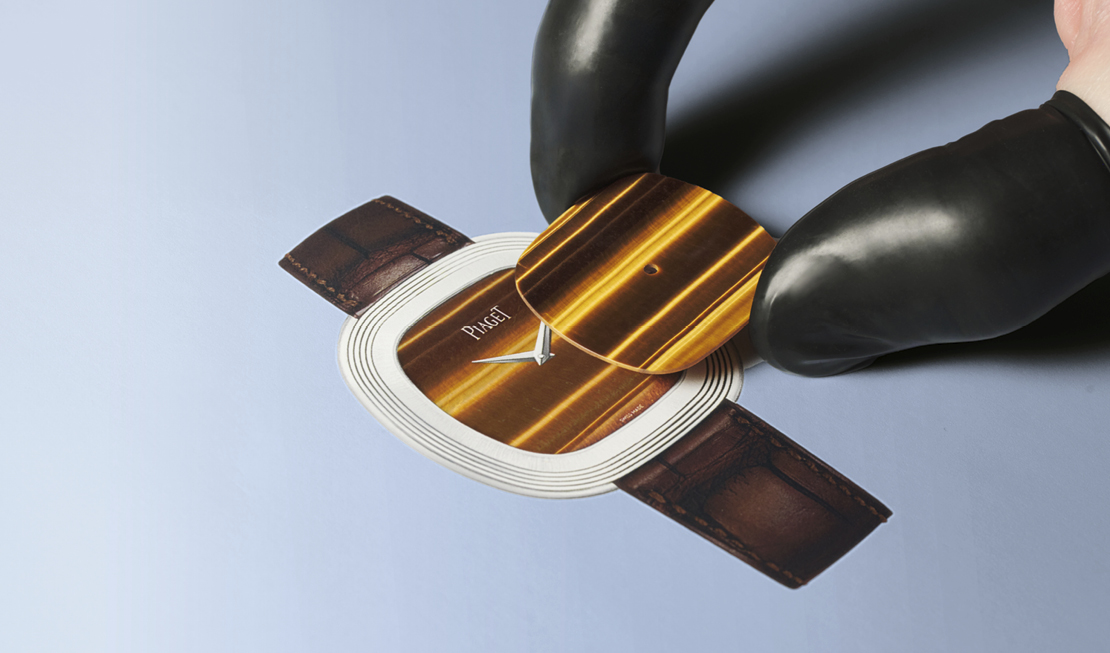
Another creation that is highly special to our hearts is the story behind this watch, as well as its shape and dial. Yes, it’s 45mm technically, but what a canvas it opens for the ornamental stone dials and with the gadroons on the case, it creates a nice illusion, and it looks bigger than it is. It was a true delight this edition to see the watch collectors, the Piaget lovers, and new customers come to the booth just for this watch. Everyone has their favourite dial, stone, material, and look, and that’s why it’s the perfect bespoke watch. Everyone can write their own story with it.
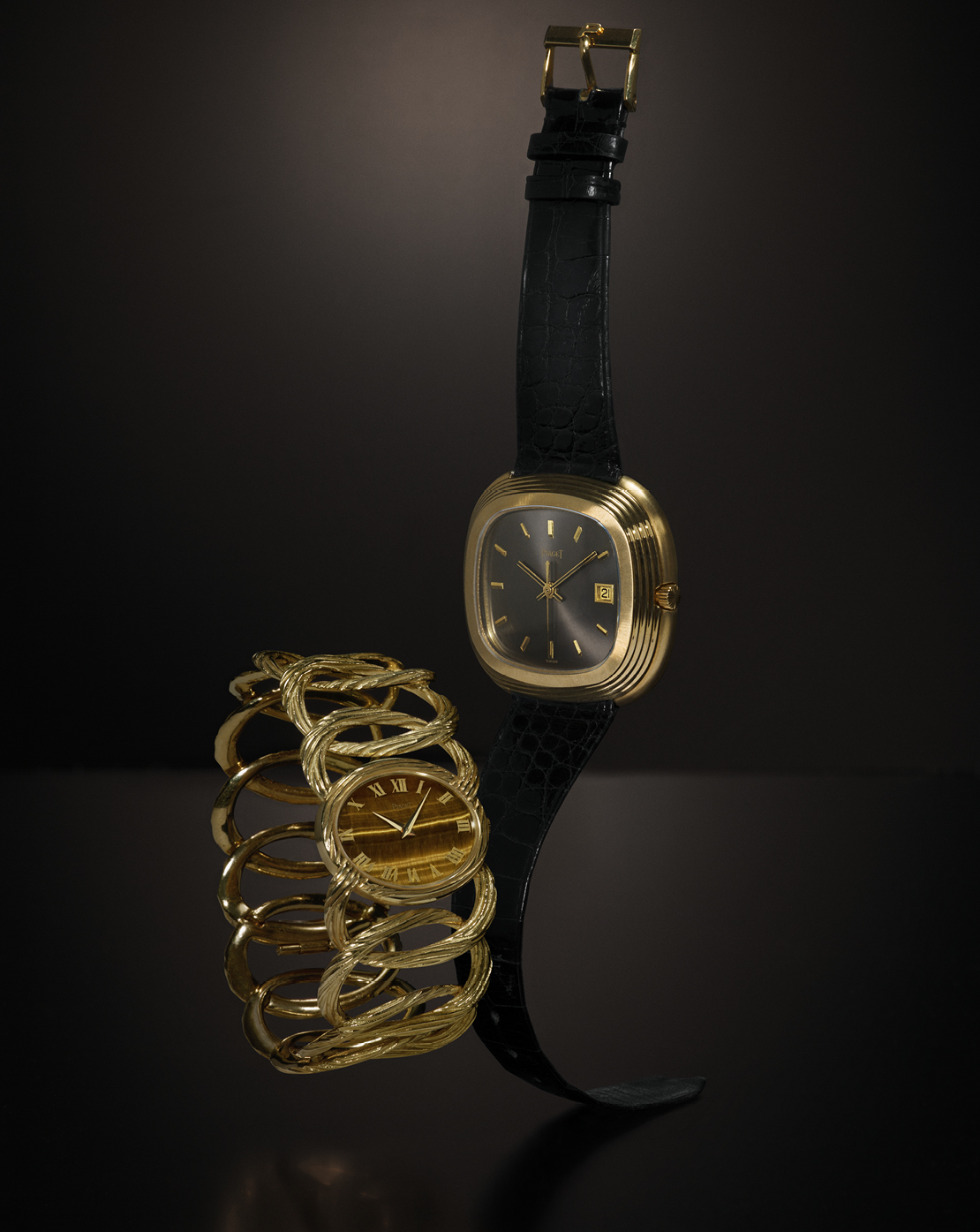
How do you feel partnerships and collaborations help to elevate the brand today while also honouring its legacy?
If I take the example of the partnership with the Andy Warhol Foundation, it was an absolute must. Having their recognition, their support, and their access is key for us to elevate the Maison beyond what it’s known for.
Tell us about some of the innovations and technical developments the brand has been working on today.
There are many! You’ll see some in the upcoming months, whether it’s the new High Jewellery collection or the new watchmaking pieces. Every new creation shows a new skill and a new way to master the constraints. Lately, however, I have been particularly proud of the new gold décor for the Limelight Gala. It’s just fascinating to see the artisans reproduce the same movements and effects as those from the 60s. It truly elevates the piece and creates a mesmerising effect.
How do you feel events such as Watches & Wonders still have relevance in the industry today?
I really enjoy these moments; it’s a rare opportunity to meet everyone in one place, and it attracts more and more clients every year. It’s important to be part of this energy. But obviously, as we are both watchmakers and jewellers, we also have other moments during the year, such as presenting the High Jewellery collections, but Watches and Wonders always hits differently.
You have some watches that have become icons – what does it take to become iconic in this industry today?
Time for sure. You don’t create an icon overnight. It has to have a unique design, an imprint, something to tell that goes far beyond the product. Creating one is difficult; updating one is something else. You have to tweak it and make it evolve without damaging its essence.
What are the biggest challenges you’re facing today in your position?
Keep pleasing our audiences in both the jewellery and watches segments. Watches and Wonders was a great moment, and now, we’ll move on to the next one. Nothing is ever forever.
What’s something you would still like to do?
I hope I continue to take as much pleasure in launching magnificent creations as I do lately.
Looking ahead, what is Piaget’s vision and direction this year and can you tell us a little about the brand in the Middle East?
It’s a story of shapes, of how the watch mastery unleashed the creativity in the 60s to become a revolution in the watch panorama. It’s about the Piaget distinction. Something the Middle East clientele know very well, as they have seen the Maison grow and enter the territory at that time, leaving a special impression in their memories. Art Dubai was also the opportunity for us to bring a little bit of Watches and Wonders in the region and feel inspired by everything which is happening at the moment.
Saudi Film Festival Director Ahmed Al-Mulla Discusses the Event’s Latest edition
Since 2008, the Saudi Film Festival has been shining a light on the cinema industry in Saudi Arabia.
Long before going to the cinema was legally acceptable in the Kingdom, Ahmed Al-Mulla, often hailed as the “godfather of Saudi cinema”, was finding ways to bring attention to this industry and the talented filmmakers in the region. He has been a pivotal figure in the Kingdom’s cinematic evolution. As the founder and director of the Saudi Film Festival, Al-Mulla has championed the growth of local filmmaking, providing a platform for Saudi storytellers to showcase their narratives. Under his stewardship, the festival has transformed from modest beginnings into a significant cultural event, reflecting the nation’s burgeoning interest in cinema.
The latest edition, which took place this April, was the largest and most interactive yet. Here we talk to Ahmed Al-Mulla, who delves into the latest edition, highlighting its role in nurturing homegrown talent and fostering a vibrant film culture, as well as sharing insights into the broader trajectory of Saudi Arabia’s film industry.
Tell us about the Saudi Film Festival and some of its highlights this year.
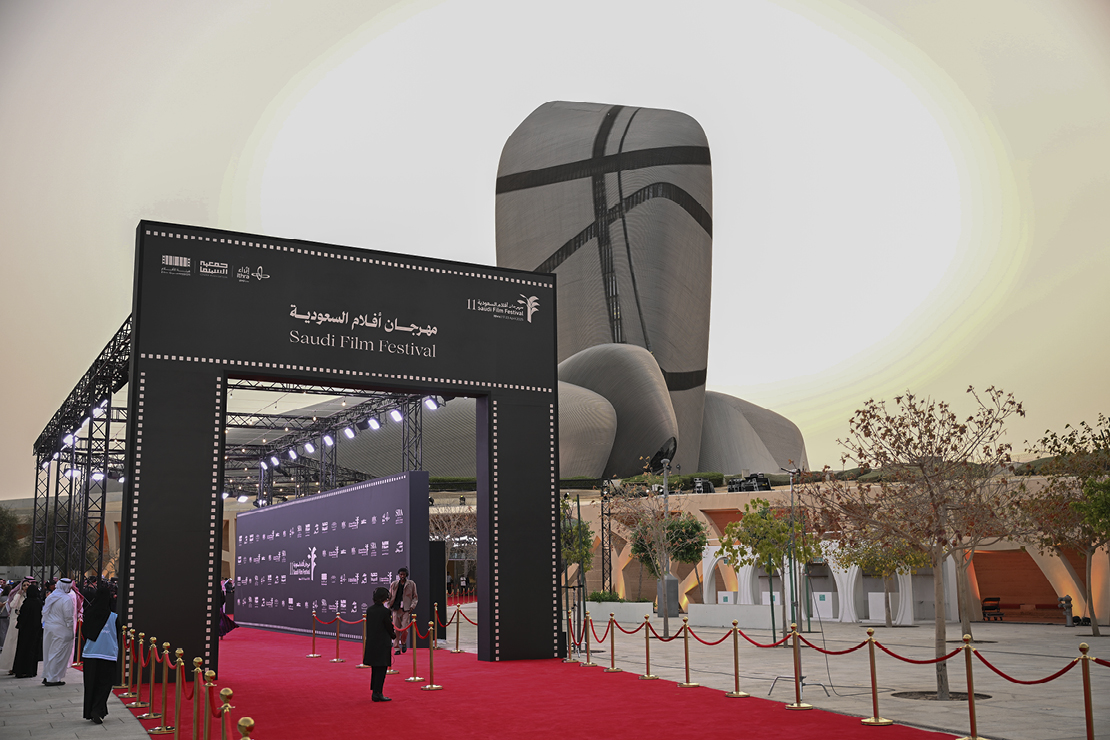
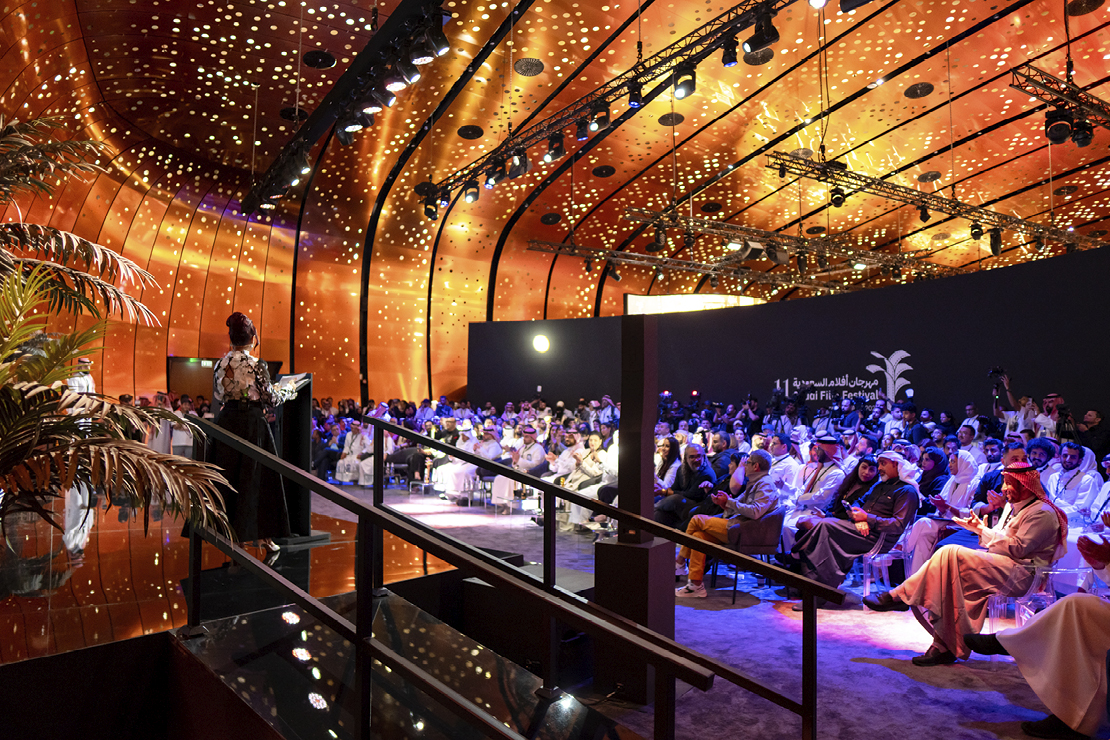
Now in its 11th edition, the Saudi Film Festival continues to build on its legacy while introducing fresh and dynamic elements each year. The festival has always centred on its competitive programs, with awards for feature films, short narratives, and documentaries judged by respected committees. But this year marks a new level of scale and ambition.
One of the standout developments is the inclusion of more than 12 world premieres, bringing fresh regional and global voices into the spotlight. The Production Market was also significantly expanded, an initiative that offers tangible opportunities for filmmakers to secure support for their projects. This year, 22 projects were selected to pitch in front of a jury. What makes this unique is that participating production companies commit to supporting at least one project, ensuring that backing offered to filmmakers goes beyond the festival itself.
A spotlight on Japanese cinema added a rich cross-cultural layer to the program this year, with curated screenings and sessions offering a window into another cinematic language. Meanwhile, the central theme of this edition, Cinema of Identity, sparked deep, philosophical discussions about how filmmakers express identity, belonging, and perspective through their work.
Since the festival’s inception in 2008, we have also placed a strong focus on knowledge-building. This year, we reached a major milestone: over 75 titles have been published under the Saudi Cinema Encyclopedia, including translations, authored works, and studies on cinematic poetics. This publishing initiative, led by the Saudi Cinema Association, remains unmatched in the Arab world.
Hosting the festival at the King Abdulaziz Center for World Culture—Ithra—elevates these elements even further. Ithra is not just a venue, but an active cultural partner that has helped shape the festival’s growth and relevance from early on. As a destination for creatives, Ithra provides filmmakers access to enriching facilities, resources, and mentorship programs that elevate their craft and amplify their voices. It creates an environment where artistic exchange, cultural dialogue, and innovation thrive, making it the ideal home for a festival that reflects the spirit of Saudi Arabia’s creative renaissance.
How do you feel the festival is helping to raise awareness of Arab talent and the growing industry in the region?
Since its inception, the festival has gone through several phases, much like Saudi society itself. In the early years, particularly from 2008 through its sixth edition, it was the only platform truly dedicated to Saudi cinema. There were no institutions supporting the film scene, no venues for screenings, and few spaces where filmmakers could gather.
This began to change around 2018, with the start of Saudi Arabia’s cultural and urban renaissance. Cinema became part of the national vision, with support from the Ministry of Culture and the Film Commission. This shift allowed the festival to grow from a lone initiative into a key player in a broader cinematic movement while still holding onto its distinct identity.
Ithra has played a catalytic role in this transition. Long before dedicated film infrastructure existed, Ithra provided not only the space but also platforms and resources that enabled the festival to thrive. This partnership continues to evolve and has shaped the festival’s growth and expansion. The festival connects regional filmmakers with international audiences, experts, and collaborators. It provides an entry point to the global creative dialogue, allowing Arab filmmakers to not only showcase their work but also shape the broader cinematic narrative.
What is the goal or vision of having this festival?
The vision behind the festival has gradually developed. When we started in 2008, the goal was to create a space for filmmakers to come together and share their work. At that time, filmmaking in Saudi Arabia was happening quietly, with few public outlets or opportunities to screen locally. Many were creating films that never reached an audience at home.
The festival was born out of a need to change to provide a gathering point where filmmakers could connect, be seen, and feel part of a creative community. Although it paused for a few years, it returned in 2015 with renewed purpose and has continued evolving ever since. One of its core aims has always been to fill the gaps, offering access to workshops, labs, panels, and mentorship that were not available before. We also helped connect local filmmakers to the international scene by nominating their work to global festivals. Starting from the fourth edition, we expanded beyond a single city, organising film screenings across various regions of the Kingdom even beyond the festival dates. That spirit of accessibility and year-round engagement remains central to the festival’s vision today.
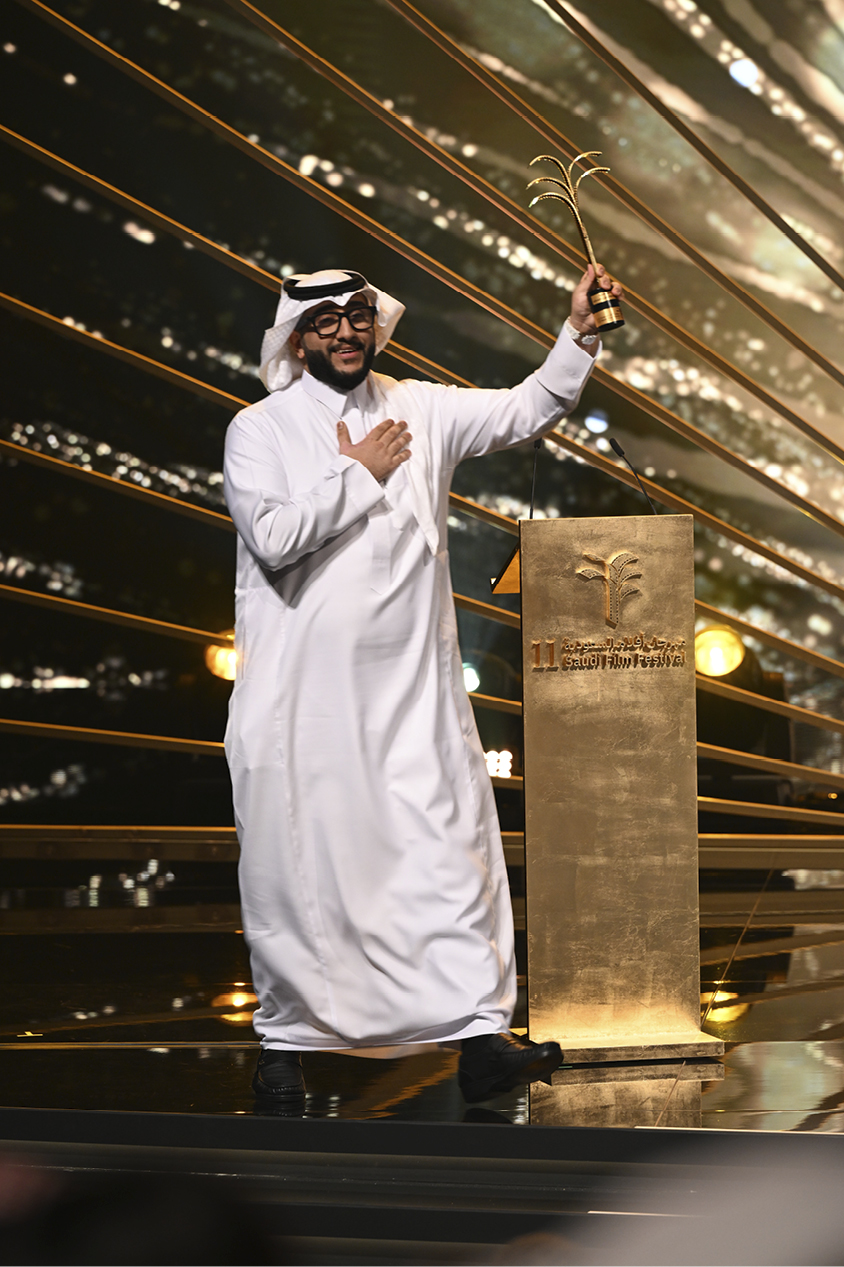
Can you share details on some of the Arab filmmakers we should be aware of?
At the Saudi Film Festival, our approach to Arab filmmaking, especially in the Gulf Cinema section, goes beyond nationality. We focus on films that are meaningfully connected to Saudi Arabia. That could mean a film that explores local issues, portrays Saudi culture, or was shot here. The filmmaker’s background is secondary to the story they’re telling.
We’ve seen a wide range of talent emerge under this model. Some filmmakers explore deeply personal narratives, while others are pushing stylistic and thematic boundaries through documentary, animation, or experimental formats. It’s this diversity of approach, grounded in a shared regional context, that we find most exciting.
Rather than spotlighting individuals, the festival’s role is to create space for a broad spectrum of Arab voices offering them a platform and surrounding them with the resources to grow. That includes connecting them with international experts, authors, and critics through juries, workshops, and collaborative sessions that enrich the creative process.
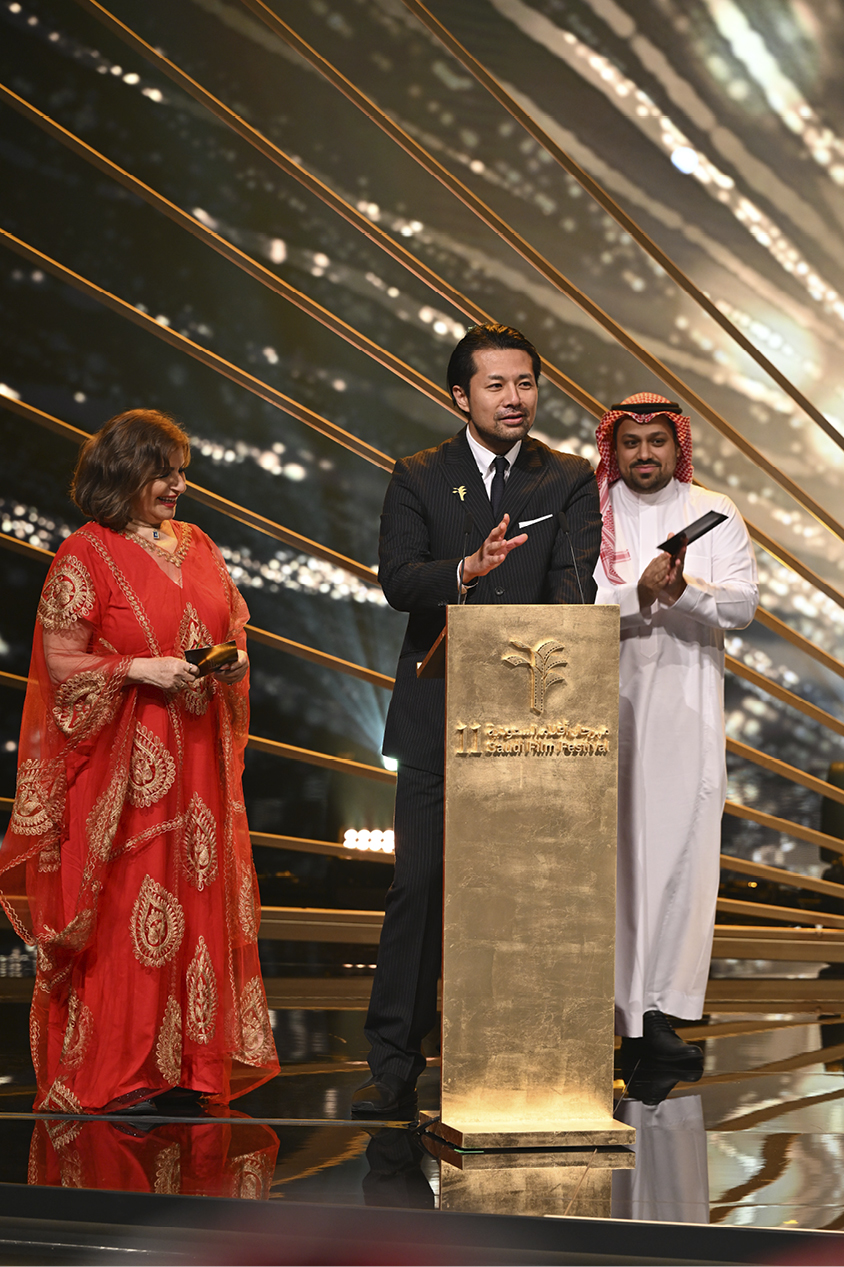
What are your thoughts on the growing industry in this region today?
In my opinion, after this major cultural transformation in Saudi Arabia, the fastest-growing sector is undoubtedly the film industry, which is moving at a very rapid pace. Since the opening of cinemas in 2018, by 2024, we’ve seen three fully Saudi films become top trends, ranking first at the box office. This was something we expected to happen in 10 to 15 years, because Saudi audiences were accustomed to American, Hollywood, Bollywood, and Egyptian films, as well as others like Korean cinema. It was relatively new for them to watch a Saudi film, so logically, we would have expected that it would take at least 10 years to see a film reach box office success, especially when comparing it to industries with a history of over a hundred years, or at least several decades.
This rapid growth is incredibly promising and indicates that there are talents, abilities, and topics that can be presented within the Saudi context, and through Saudi culture, in the cinematic arts. Certainly, there are institutions that enable and support this progress, such as the Ministry of Culture and the Film Commission, with their open strategies and support, as well as other entities like the Red Sea Film Festival, NEOM, and others. Ithra of course, remains a central pillar in the cinema ecosystem through its sustained and very active support to Saudi projects in the form of funding, education programs and mentorship. It’s impressive to think that in just a few short years, such initiatives have begun to encourage and nurture the industry. The Saudi Cinema Association, though a non-profit and non-governmental organisation, also plays a significant role in this development.
What still needs to be done in the region to help increase the awareness and success of Saudi filmmakers on a global level?
Personally, I focus more on the domestic side because if we succeed locally, global success will follow naturally. This could be applied to everything. If we create a product that we can be proud of, enjoy, and be amazed by, it will surely capture the attention of people worldwide. The world is a part of us, and we are part of the world.
At this moment, I believe there are other challenges, economic, legal, and regulatory, that we must be involved in solving, especially in the film sector. On the other hand, there needs to be a strong focus on the economic aspect. There is substantial capital available, and it’s important to recognise that the film industry is a real investment opportunity. It has the potential to contribute significantly to national economic growth. Moreover, there is existing capital that may not be directly linked to cinema, but when people consider the economic potential of cinema, its revenues and economic contributions, they will realise its high profitability compared to other traditional economic sectors.
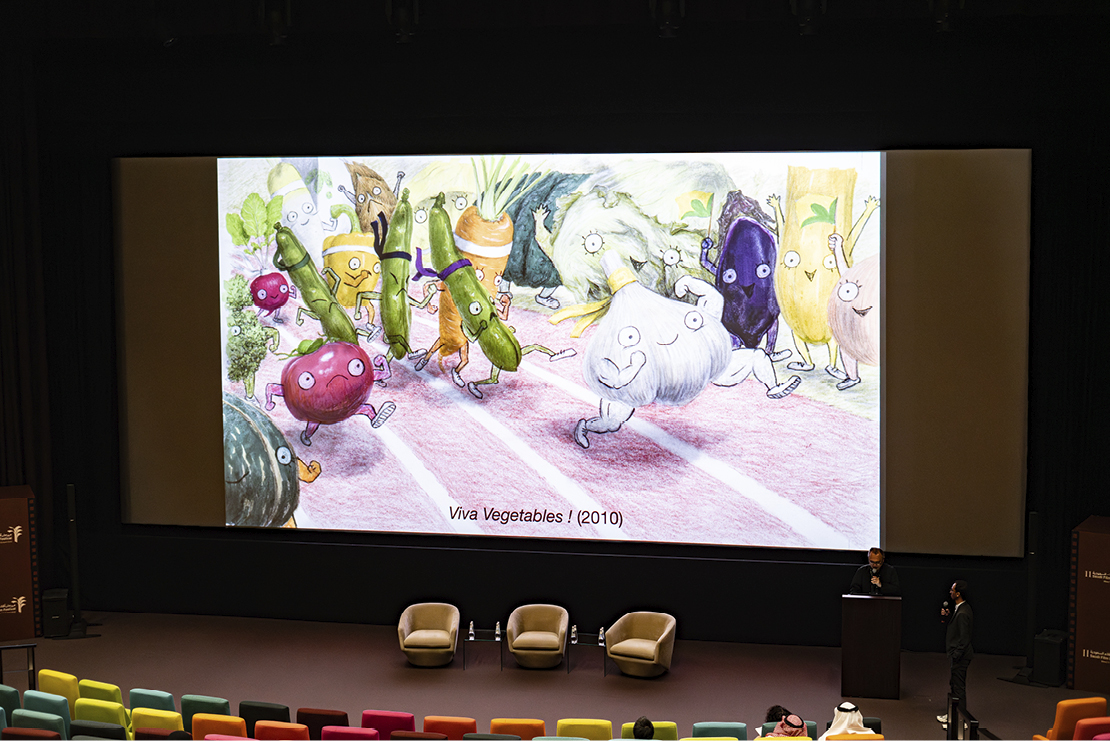
Why was it important to you to establish this festival?
My background is not in cinema, it is in poetry, but I truly believe that poetry exists in everything, including cinema. I fell in love with cinema early on and began to follow it closely, then started blending the two. In 2005, we began hosting screenings at the Eastern Province Literary Club. At that time, showing films in the Eastern Province, particularly in Dammam, was quite difficult, and it was nearly impossible at the national level. But there was a need, and when we started the screenings, it became clear that filmmakers were emerging from unexpected places, people we hadn’t known in the literary club. We were familiar with poets, writers, and critics, but these were new voices, a different generation. They started presenting us with works they were creating.
We began to realise that there was a new generation in need of a platform. That’s how it started, and its objectives grew until it reached where it is now. Ithra understood this vision early on, recognising the role of cinema as a multidisciplinary art form that can bring people together and encourage cross-cultural understanding. Ithra’s support from the third edition of the festival onward was not just logistical; it was philosophical. It reflected a shared belief in nurturing homegrown creativity while inviting the world to engage with it.
How do you feel the festival has grown since the beginning?
I believe that our main concern has always been to ensure that we continue year after year. We didn’t want this to be a one-time event. Continuity, gradual growth and sustainability have always been our priority. We wanted each edition to show progress and achieve set goals. And now, we have more measurable goals than before. We recognise that this art has truly become the pinnacle of culture. It now encompasses all forms of art, including poetry, storytelling, literature, cinema, music, theatre, and performance, and thus, it is the fastest way to communicate stories to the world.
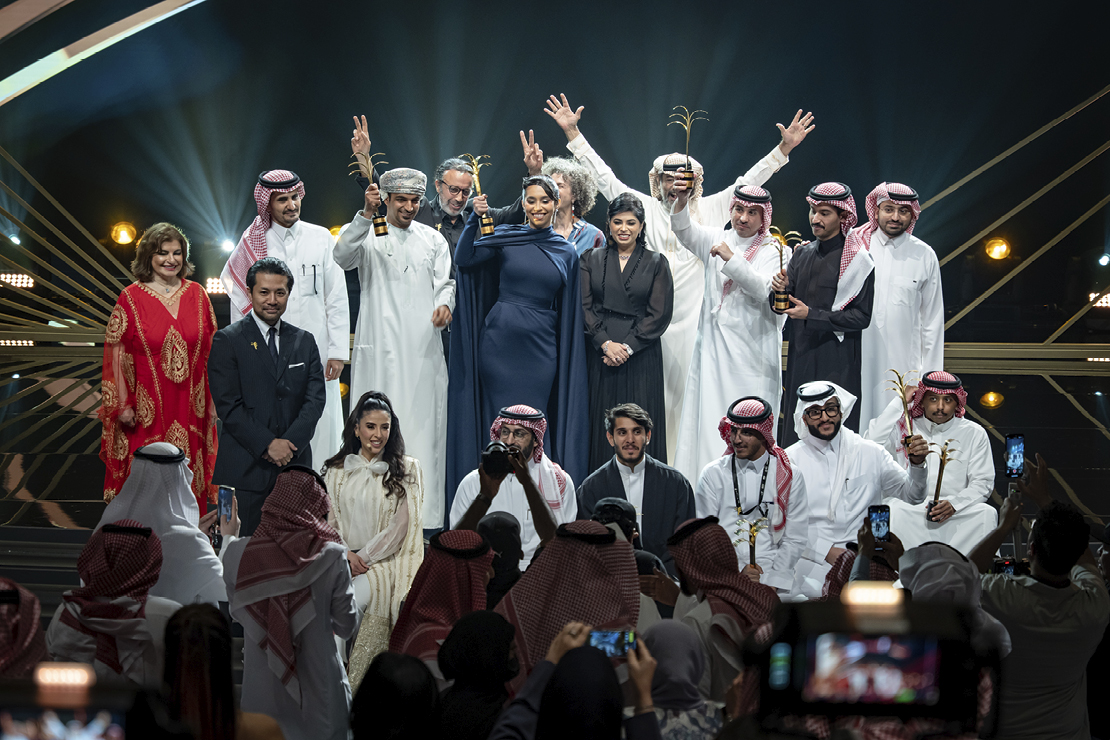
In your own experience, how has the cinema industry grown in recent years?
As a viewer, I have witnessed how the film sector has grown. Before the major transformations in Saudi Arabia in 2018, the efforts were individual ones. But cinema is a collective endeavour, not an individual one. From 2018, we saw rapid growth, especially in the same year. This growth happened because all the forces within our society believed in it, supported it, and contributed to it. Even the youth, previously disengaged from cinema, became passionate about them because all forces became interconnected. This is very important; any growth in any field should not come from one party alone; it requires a collective drive.
What advice would you give to aspiring filmmakers?
My advice is to never settle for anything less than the best. It’s crucial to combine talent with knowledge and learning. Focus on presenting the best of what you have. Of course, all beginnings are difficult, but there must be determination to deliver. Collective work is essential in cinema. Therefore, there are scientific, cognitive, psychological, and social mechanisms to consider when working in this field, and it’s important to give it the attention it deserves.
What films are currently on your watch list?
I have loved poetic cinema for a long time in my life, and I adore anything related to it. From the very beginning until today, I have always been drawn to this aspect. The film that I have recently fallen in love with is a Saudi film called Hobal.
ithra.com/en/visit-ithra/attractions/cinema/saudi-film-festival-11
The Founder of Asteri Beauty Sara Al-Rashed Discusses Her Big Ambitions to Expand
In a region known for its rich beauty traditions and cutting-edge innovation, Sara Al-Rashed is carving a bold new path. As the founder of Asteri Beauty, the Saudi-born entrepreneur is redefining what it means to build a beauty brand from the Gulf—one that speaks to identity, empowerment, and authenticity on a global scale.
Launched with the ethos of celebrating individuality while honouring Arab heritage, Asteri has quickly become a cult favourite, thanks to its inclusive approach, high-performance formulas, and unapologetically regional narrative. For Al-Rashed, beauty is more than a product—it’s a form of cultural storytelling, one lipstick or skin tint at a time.
As Asteri Beauty continues to expand its presence across the Middle East and beyond, we sit down with Sara Al-Rashed to talk about building a brand with purpose, the rise of Arab-owned beauty, and why representation in beauty is more than skin deep.

Tell us about the universe of Asteri Beauty today and how it came about.
Asteri Beauty was born from a desire to redefine what beauty means in the region. It’s rooted in the strength, elegance, and individuality of Arab women. I wanted to create a brand that celebrates our heritage while offering high-performance products tailored to our unique climate and needs. Today, Asteri is a reflection of our story—luxurious, resilient, and proudly regional, yet globally relevant.
You have had great success with the brand in such a short time – what do you think it takes to build a successful beauty business today?
Success today goes beyond a great product. It’s about authenticity, innovation, and truly listening to your community. You need to build a brand that stands for something and connects emotionally. We focus on creating products that serve a purpose and solve real challenges—like beauty that stands up to desert heat—while staying true to clean, responsible practices.
The products in the collection are very much focused on being “desert proof” What are some of the challenges this uncovered?
Creating “desert-proof” products meant developing formulas that could withstand extreme heat, dryness, and humidity—all while remaining lightweight and breathable. One of the biggest challenges was balancing performance with comfort. We didn’t want heavy, cakey textures. It took a lot of testing and iteration to achieve that seamless, second-skin feel while maintaining longevity and pigment.

We know you are very much inspired by your home country as well as the personalities of women close to you – tell us about that.
Saudi Arabia is incredibly rich and diverse—not just geographically, but culturally. While the desert is a powerful symbol of strength and resilience, there’s also a deep vibrancy in our cities, art, traditions, and communities that continues to inspire me. It’s this fusion of the old and the new, the bold and the understated, that shapes Asteri’s aesthetic.
I’m also constantly inspired by the women around me, especially my mother and the female community I grew up with. They are strong, expressive, and unapologetically themselves. Many of them have pushed boundaries and redefined what’s possible, and that spirit is woven into every product we create. Asteri is really a love letter to their courage and individuality.
What can you share about your latest products?
We’re really excited about our most recent launches—the Committed Lip Tint, Mattitude Loose Powder, and Let It Rain Powder. Each one represents a step forward in our mission to create high-performance, desert-proof beauty.
The Committed Lip Tint is all about versatility. It delivers long-lasting colour with a weightless, buildable texture that gives you that “your lips but better” finish—perfect for everyday wear, yet striking enough for evening looks. It’s hydrating, transfer-resistant, and designed to move with you. Mattitude is our answer to controlling shine in extreme conditions. It’s a silky loose powder that sets makeup without flattening the skin—it keeps you matte but still alive and radiant. It’s become an essential for anyone dealing with heat and humidity.
And Let It Rain Powder is something truly special. It’s a refreshing, waterproof setting powder that gives a soft-blur effect while keeping your makeup locked in. Perfect in hot climates. Each product reflects our commitment to marrying innovation with what our community truly needs.

Looking ahead, what is your vision for the brand, and where would you like it to get to?
I envision Asteri as a global beauty powerhouse with deep regional roots. I want us to be known for innovation, storytelling, and for setting a new standard of beauty that’s inclusive and empowering. Expanding into new markets is definitely in the plan, but always with purpose and intention.
Tell us about what fuels your development of new products and the process from initial idea to finished beauty essentials.
It always starts with a need—something I or someone in our community is missing. From there, it becomes a creative and technical journey. We collaborate closely with labs, test extensively, and never settle. The goal is always to create something that not only looks good but performs beautifully in real life.

We have seen you working on some interesting collaborations – is this something you would like to do more of, and what do you look for in a collaborator?
Definitely, collaborations are a powerful way to merge worlds and tell new stories. I look for collaborators who share our values—creativity, quality, and authenticity. Whether it’s an artist, designer, or another brand, it has to feel organic and add value to both communities.
What does your daily beauty routine look like?
My routine is all about enhancing natural beauty while staying comfortable throughout the day. I start with a good skincare base—hydration and SPF are non-negotiable. For makeup, I keep it minimal but effective: a sweep of our Swoosh Blush Stick for that effortless flush, Committed Lip Tint for a soft pop of colour, and Maha Mascara for instant definition. I finish with a light dusting of Mattitude Loose Powder or Let It Rain Powder, depending on how my skin is feeling. It’s a quick, reliable routine that keeps me feeling fresh and polished from morning to night.

What’s the biggest challenge you face with Asteri?
Balancing creativity with the technical limitations of clean beauty, sustainability, and performance, especially in a region with extreme weather, is a constant challenge. Creating vegan, clean formulas that can withstand desert heat without compromising on texture or payoff requires a lot of innovation. On top of that, finding sustainable solutions for packaging and delivery systems that still feel luxurious is a big part of the puzzle. But it’s a challenge we fully embrace, because it’s core to who we are as a brand.
What’s something you would still like to do with the brand?
One of my biggest dreams is to create a Maison Asteri—a space where people can fully immerse themselves in the brand. Not just a store, but a destination that brings our universe to life through scent, texture, design, and storytelling. A place where beauty, culture, and community come together in an authentic, elevated way.

What advice would you give to women looking to get into the beauty industry?
Be resilient and believe in your why. The beauty industry is competitive and constantly evolving, but you’ll find your space if you’re clear about your purpose and what makes your vision unique. Trust yourself, stay curious, and don’t let setbacks shake your confidence—they’re part of the journey.
What else is in the pipeline for this year?
We’re working on a major launch after summer that I’m incredibly excited about—it’s going to be a big moment for us. We’re also focusing on expanding into new markets, introducing Asteri to a broader audience while staying true to our identity. There’s a lot in motion, and I can’t wait to share more soon.
Filmmaker Nahla Al Fahad on Cinema in the UAE and How She Hopes to Inspire Women to Follow Their Passion for Film
In a region where tradition and modernity are in constant conversation, Emirati filmmaker Nahla Al Fahad has mastered the art of capturing both on screen.
Known for her striking visual style and deeply human narratives, Al Fahad has emerged as one of the UAE’s most distinctive creative voices. Her work spans film, television, and music videos—each project threaded with cultural nuance and an unflinching commitment to authentic representation.
With a career that has consistently pushed the boundaries of what storytelling in the Gulf can look and feel like, 2025 finds Al Fahad at a pivotal moment. Her latest documentary project, exploring the evolving role of Arab women in media, is already generating regional buzz, while her recent foray into narrative film is earning her accolades on the international festival circuit.
We sit down with Nahla Al Fahad to discuss the power of representation, the responsibility of storytelling in today’s world, and why she believes the future of Arab cinema lies in its ability to honour the past while daring to imagine what’s next.
How did you fall in love with film and what does it mean to you?
My love for film started with a deep passion for storytelling — the power to move people, spark emotions, and capture life’s moments. To me, filmmaking is not just a career; it’s a way of giving life to dreams, ideas, and voices that deserve to be heard.
What is your current focus and vision for your career?
My current focus is on creating impactful stories that bridge cultures and inspire emotions. I aim to continue directing and producing films that leave a lasting mark, while also supporting the growth of the film industry in the UAE and the region.
Tell us about some of the projects you are currently working on.
I’m currently working on a feature documentary set for completion by summer 2025, producing a short documentary, and preparing two drama series along with a short drama season of 10 episodes. I’m also getting ready to launch filmmaking workshops, which I have been preparing since last year. In parallel, I continue developing creative content that explores the future of storytelling through AI and innovative production techniques.
What has been your biggest achievement over the last few years?
One of my biggest achievements has been directing my first feature film, 218: Behind the Wall of Silence, which was shot entirely during the challenging summer of 2021, in the middle of the lockdown. It was a tough experience for the entire team, especially as we worked on a true and emotional story about home abuse that affected a local girl, and how her neighbour saved her life. The film went on to win awards and recognitions both locally and internationally, and I’m proud to see it featured on more than six international airlines.
Another milestone was my return to drama, directing two drama series for the Ramadan seasons — Mant Rayeg and Bab Al Seen — both of which aired on major Arabic channels and platforms such as MBC, Kuwait TV, MBC Drama, and Dubai TV. I was honoured to be chosen as Best Director for both productions in 2024 and 2025.
Additionally, I co-produced the Malayalam children’s film Momo in Dubai, which was a whole new and enriching experience for me, collaborating closely with talented Indian producers and directors. It opened new creative perspectives and strengthened cultural bridges through storytelling.
I am also proud to have served as a jury member in several prestigious international film festivals, including the Malmo Arab Film Festival (Sweden), Shams Arabic Content Creators Award (Sharjah), Al Marmoom Film Festival (Dubai), Al Danah Award (Bahrain), and Morex D’Or Award (Lebanon). Being part of these juries is a profound experience — it’s a privilege and a great responsibility to watch films and creative works from around the world, and to evaluate them with fairness, passion, and deep respect for every artist’s voice and journey.
What’s been the biggest challenge?
The biggest challenge has been pushing creative boundaries while staying true to meaningful storytelling. Balancing the artistic vision with production realities — especially during difficult times like the pandemic — tested my resilience. But every challenge strengthened my passion and commitment to bring authentic stories to life.
As an Emirati and a woman in this industry, what barriers did you have to break through to get where you are today, and what are you most proud of when it comes to this?
As an Emirati woman, stepping into the film industry meant challenging stereotypes and proving that creativity knows no boundaries. I had to earn trust in a field where leadership was often seen differently for women. I’m most proud of paving the way for other Emirati talents, showing that with passion, resilience, and hard work, we can tell our stories to the world with pride and power.
You have seen the industry in the UAE develop over the last few years. What are your thoughts on where it is now and where it’s heading?
The UAE’s film industry has grown tremendously, embracing both local voices and international collaborations. Today, there’s a real sense of energy, ambition, and pride in telling our own stories in ways that are authentic and globally relatable. We now have stronger support systems, more opportunities for emerging talents, and greater recognition for creative excellence.
I believe we are heading toward a future where Emirati cinema will not only flourish regionally but also leave a lasting and meaningful mark on the global stage, showcasing the richness of our culture, our stories, and our unique perspective to the world.
What are your thoughts on the growing number of women entering the industry in the region, and what would you say to them?
It’s incredibly inspiring to see more women entering the film industry in our region. Their voices, creativity, and perspectives are enriching the storytelling landscape in powerful ways. To every woman stepping into this field, I would say: believe in your vision, stay true to your passion, and know that your story matters. You have the power to reshape narratives and inspire future generations.
How do you want your work to help inspire and support aspiring filmmakers?
I believe in sharing knowledge and creating opportunities. Through workshops, mentorship, and open conversations, I aim to guide aspiring filmmakers, encouraging them to believe in their voice and vision. Supporting new talent is not just a responsibility — it’s a way to keep the spirit of storytelling alive for future generations.
What more would you like to see being done to help filmmakers with the challenges they face in this region?
I would love to see more structured support for filmmakers, such as easier access to funding, stronger distribution networks, and more platforms to showcase independent voices. Mentorship programs, creative labs, and stronger collaborations between local and international industries can truly empower filmmakers to overcome challenges and bring their stories to life.
Is there anything you would still like to do?
Absolutely! I still dream of directing more feature films that can travel across cultures and leave a lasting emotional impact. I would also love to establish a creative hub that nurtures emerging filmmakers and supports bold, original storytelling from our region.
What’s the biggest lesson you’ve learnt?
The biggest lesson I’ve learned is that patience and passion are equally important. Success in filmmaking doesn’t happen overnight — it’s built through resilience, believing in your vision, and staying true to your voice, even when the journey gets tough.
Credits:
Founder/Editor in Chief: Lara Mansour
Fashion Director : Lindsay Judge
Styling Assistant: Lea Naoufal
Photography: Ziga Mihelcic
Hair and makeup: Lina Dahlbek
Location: Four Seasons Hotel Dubai
The UAE’s First Female Filmmaker Nayla Al Khaja Discusses Her Next Chapter in Cinema
In the ever-evolving landscape of Middle Eastern cinema, Nayla Al Khaja stands as a true pioneer—a trailblazer whose voice has shaped the contours of Emirati storytelling both at home and abroad.
As the UAE’s first female filmmaker, she has broken through cultural and industry barriers to bring complex, emotionally resonant narratives to life on screen. Over nearly two decades, Al Khaja’s work has consistently pushed boundaries, tackling themes often left unspoken and shining a light on the human stories tucked within the fabric of Gulf society.
In 2025, she returns to the spotlight with renewed energy. Her last feature film, Three, has earned critical acclaim on the international circuit, cementing her reputation as a bold, uncompromising storyteller with a global vision. As she embarks on a new wave of projects—each more ambitious than the last—Al Khaja remains committed to nurturing the region’s next generation of filmmakers, while continuing to challenge cinematic norms.
We sit down with Al Khaja to talk about her creative process, her upcoming project BAAB, the shifting dynamics of Arab cinema, and why storytelling matters.
Tell us how you fell in love with film and what it means to you today.
My love for film began as a child, and I was fascinated by storytelling. I was drawn to cinema’s ability to transport, challenge, and evoke deep emotions. Growing up, I rarely saw Emirati stories on screen, which fuelled my desire to fill that gap. Today, film is my voice, my passion, and my tool for change. It’s how I push boundaries, challenge narratives, and bring unheard stories to life.
You released your debut feature film last year – tell us about the reaction.
The reaction to “Three” was overwhelming. Being the first Emirati psychological drama film to reach international audiences was a milestone. The film’s cultural depth, psychological tension, and exploration of mental health resonated with viewers beyond the region. Seeing the film spark conversations, especially about the intersection of belief and science, was incredibly rewarding.
What would you like to do next in your journey?
I want to keep pushing the boundaries of Emirati cinema. My next step is BAAB, a dark fantasy psychological drama that fuses Emirati folklore with intense, character-driven storytelling. I also want to expand into TV series and international collaborations, ensuring that Middle Eastern narratives find their place on the global stage.

You have seen the industry in the UAE develop over the last few years. What are your thoughts on where it is now and where it’s heading?
The UAE’s film industry has grown exponentially. We have gone from barely having a filmmaking infrastructure to attracting international productions and developing homegrown talent. However, we still need more investment in original storytelling, stronger support for local filmmakers, and international partnerships. The industry is heading in the right direction, but now is the time to solidify a distinct Emirati cinematic voice.
As a filmmaker, how do you feel you have evolved?
I have evolved by becoming bolder with my storytelling. I have moved from short-form narratives to tackling feature-length, high-concept stories, exploring more complex themes, and refining my visual language. I have also learned to balance artistic vision with commercial viability, ensuring my films resonate both emotionally and commercially.
On a global level, how do you think perceptions of the industry have changed?
There has been a shift toward inclusivity and diverse storytelling. Audiences now crave authentic voices and underrepresented narratives, which gives non-Western filmmakers a bigger platform. Streaming platforms have also opened doors for global content, allowing films from the Middle East to reach audiences like never before.
What more would you like to see being done to support aspiring filmmakers?
I would love to see more funding opportunities, mentorship programs, and industry workshops. Filmmakers need access to global networks, co-productions, and grants that support creative risk-taking. Also, distribution support is crucial; it’s not enough to make great films; they need to be seen.
What’s the biggest challenge you face, and how do you overcome that?
The biggest challenge is securing funding for high-concept films while retaining creative control. I overcome it by strategic pitching, building strong industry relationships, and proving the commercial viability of my projects. It is about finding the right partners who believe in the vision.
Can you tell us about the casting of characters in your movies and how you select the talent you want to work with?
Casting is one of the most critical aspects of my films. I look for actors who bring raw emotional depth and cultural authenticity to their roles. I also work with dialect coaches and acting mentors, ensuring that performances feel genuine and immersive.
What kind of genre haven’t you worked on yet, and what would you still love to create?
As a person who is producing and directing dark fantasy and horror, I would love to explore dark satire/comedy, a genre that is still being discovered in Middle Eastern cinema. I envision a film that combines Emirati heritage with comedic storytelling, creating a visually striking, high-concept narrative.

What is your biggest achievement so far, and what would you still like to achieve?
My biggest achievement is breaking barriers as the UAE’s first female film director and bringing Emirati cinema to international audiences, moving away from short form to feature films. But I am just getting started. I want to see one of my films compete at the Cannes Film Festival, to be released internationally at the Academy Awards and to be a key player in the global film industry.
What advice would you give to aspiring filmmakers?
Don’t wait for permission. The industry is tough, but relentlessness, resilience, and originality will set you apart. Learn every aspect of filmmaking, take risks, and tell the stories only you can tell.
What is the dream film you would still like to make?
My dream film would be a dark, epic drama set in 1921, centred around a devastating contagion triggered by acid rain, where the struggle for survival and the pursuit of love lie at the heart of the narrative.
What else is in the pipeline for 2025?
BAAB is my main focus. It is my biggest and most ambitious project yet.
Credits:
Founder/Editor in Chief: Lara Mansour
Fashion Director : Lindsay Judge
Styling Assistant: Lea Naoufal
Photography: Ziga Mihelcic
Hair and makeup: Lina Dahlbek
Location: Four Seasons Hotel Dubai
Filmmaker and Writer Farah Nabulsi Discusses Making Films with a Truly Important Meaning
Farah Nabulsi doesn’t just make films—she gives voice to stories that too often go unheard.
A British-Palestinian filmmaker, writer, and human rights advocate, Nabulsi has emerged as one of the most powerful cinematic voices from the Arab world. Her breakout short film “The Present”, which earned an Academy Award nomination and won a BAFTA in 2021, captivated audiences with its poignant portrayal of life under occupation, told through the quiet, emotional lens of a father and daughter on a seemingly simple errand.
With a background in finance and no formal film school training, Nabulsi’s pivot to filmmaking wasn’t just a creative shift—it was a calling. Driven by a desire to challenge dominant narratives and shine a light on the daily realities of Palestinians, her work is as visually poetic as it is politically resonant. Her storytelling is subtle, yet emotional, layering realism with empathy to ask difficult questions without forcing answers.
Today, Nabulsi stands at the forefront of a new wave of Arab filmmakers using cinema as a tool for cultural resistance, social commentary, and nuanced representation. Her latest projects continue to push boundaries, amplifying perspectives from the Middle East and beyond with artistry and intention.
Here, Nabulsi speaks candidly about reclaiming the narrative, finding truth through film, and how her identity as a Palestinian woman continues to shape her voice as a storyteller in a global industry.
How did you fall in love with film, and what does it mean to you?
From as early as I can remember, I’ve loved cinema, theatre, and drama. Certain films I watched growing up had a profound impact on me, shaping my understanding of storytelling, and I performed as the lead role in a number of school plays. However, it wasn’t until much later in life that I pursued it as a career. That decision came with a deeper realisation: that cinema is more than just entertainment; it is one of the most powerful and meaningful forms of human communication and artistic expression the world has ever known.
For me, filmmaking is an act of resistance, a form of storytelling that carries both urgency and purpose. It is a way to stand in solidarity with the marginalised, the silenced, and the misrepresented, those who exist on the receiving end of oppression and injustice. As a Palestinian by heritage, cinema has also become a means of exploring and expressing my own identity. It allows me to give voice to those who have been forcibly silenced or ignored while getting to know myself better. Using artistic expression is not just a form of catharsis but also a means of telling stories that matter.
In many ways, filmmaking has become a kind of alchemy for me; the transformation of outrage, grief, and the deep disturbance I have felt in the face of the injustice I’ve witnessed in militarily occupied and colonised Palestine specifically, into something powerful, meaningful, deeply human, and I hope, inspiring.
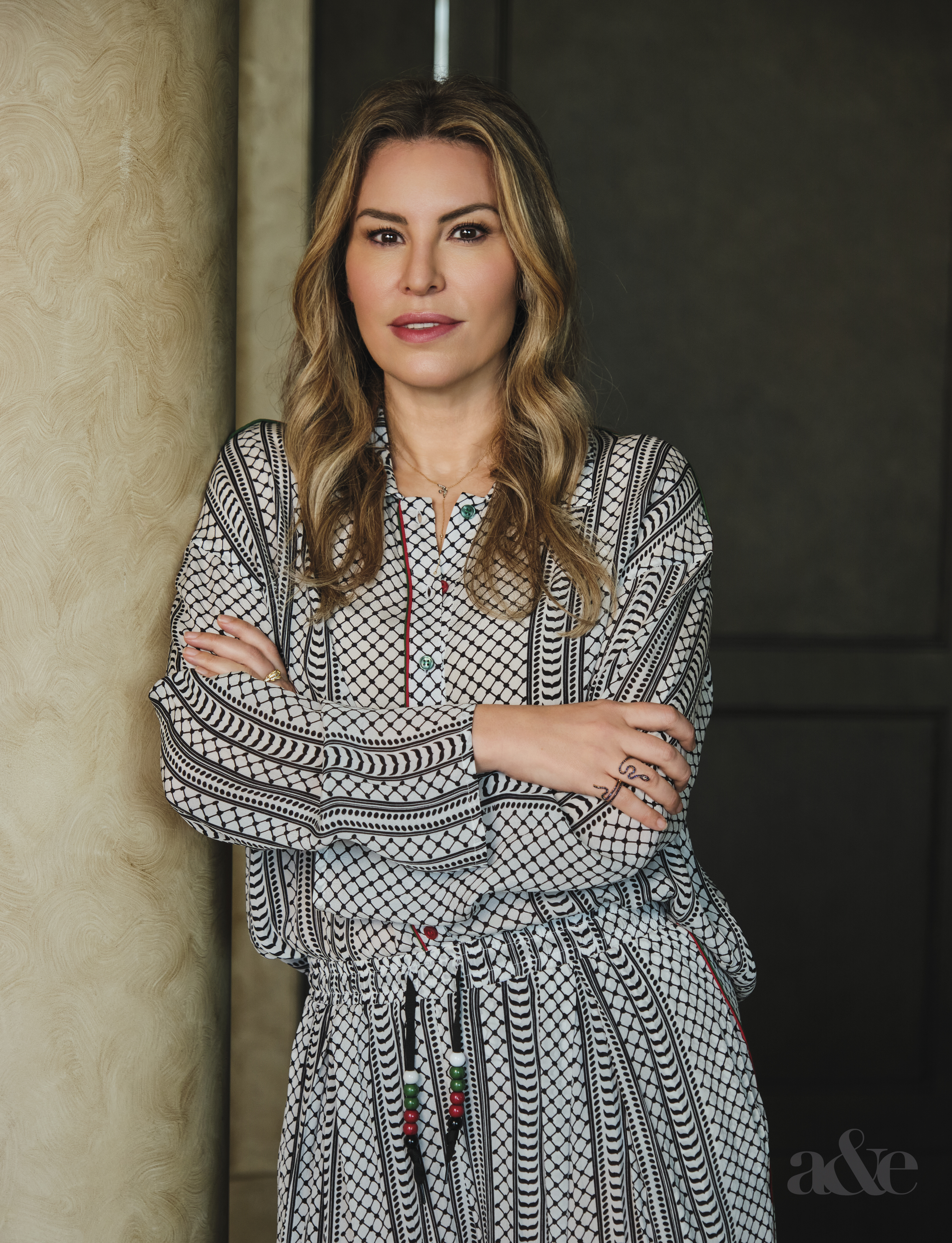
Last time we met, you were about to head to the Oscars – tell us about that experience and what has changed in your life since then.
That experience was truly unique. It was right after COVID, so it was unlike any Oscars ceremony prior or since. With a reduced attendance of around 400 people instead of the usual 4,000 at the Dolby Theatre, it felt much more private and personal. It was an exciting, whirlwind experience in the lead-up, during, and after.
What the Oscars did was create momentum and draw attention to my next project, “The Teacher”, which had its MENA cinema release last year and is now available on video on demand in the Middle East and North Africa. I believe that without the credibility gained from the accolades of The Present, including the Oscar nomination, I wouldn’t have been able to make The Teacher in such a short time or with the budget we did. The recognition opened doors and allowed me to be taken more seriously as a filmmaker.
Since then, it’s been a non-stop journey, but all in a positive direction. On the other hand, the last year and a half has been incredibly difficult, particularly given the ongoing genocide in Gaza. As you know, my films are deeply connected to the realities on the ground in Palestine, and this period has been devastating. But despite the challenges, I am forever grateful and privileged to have The Teacher to share with the world during this crucial moment in the discourse surrounding Palestine.
What was the feedback from “The Teacher” movie and the recognition it gained, and how has it helped you decide on the future trajectory of your career and the films you make?
The reaction to The Teacher across the world has been incredible. The film has had numerous theatrical releases, following screenings at dozens of international film festivals. It has garnered over 18 international awards, primarily audience awards and best actor awards, which is always a wonderful recognition for a film.
In terms of shaping the trajectory of my career, I wouldn’t say The Teacher has defined a specific path for me. My goal remains to express myself creatively, to explore varied projects, and to follow wherever my artistic instincts lead. That said, I know with certainty that I will continue to make films connected to Palestine. These are stories that hold deep meaning for me, not just because they speak to my identity as a Palestinian, but as a human being in these darkest of times.
What are you currently working on, and what else is in the pipeline?
At the moment, I’m still very much involved with the distribution of The Teacher, which means a lot of travel, Q&A events, and media engagements. It’s been a full-on but rewarding process, connecting with audiences around the world. The genocide in Gaza continues, as does the escalation of military violence and annexation in the West Bank, so this film still feels incredibly important to continue serving. It also continues to work as a release for me personally in resistance and defiance against all the hypocrisy and violence we are witnessing against our brothers and sisters.
In terms of what’s in the pipeline, I’ve co-written a screenplay with a talented Lebanese-American writer set in cool-Britannia late 1990s London. It’s a crime, finance drama – greed is bad, as well as exploring elements of mental illness. It’s loosely inspired by a personal experience I had many years ago during my years as an investment banker. On the other hand, I’m also just finishing a drama-comedy screenplay, set between Palestine and Ireland, which I’m particularly excited to bring to life. That said, I’m keeping the details of both projects close to my chest for now, but I’m keen to get strong producers on board for both projects.
You spend a lot of time shooting in war-torn areas across the region and areas where many people are struggling. How do you deal with some of these terrible experiences, and how do you think film can help shed light on global issues?
I deal with it by creating. When you witness injustice up close, especially in places marked by conflict and suffering, you carry a kind of moral trauma. But channelling that pain into storytelling becomes a way to process it – to release it. My work becomes a conduit, an outlet for the outrage and sorrow I feel, and a way to make sense of the weight of what I’ve seen and become so acutely aware of. There is truly nothing more cathartic, and even spiritual, than the act of creating. It’s how I cope, and how I try to turn pain into purpose.
In terms of how I think film can help shed light on global issues, cinema has a unique ability to humanise what might otherwise remain abstract or distant. It can cut through noise, headlines, and political rhetoric to reach people on an emotional and psychological level. By telling nuanced, intimate stories rooted in truth, cinema can shed light on global issues in a way that invites empathy, understanding, and sometimes even action. For me, that’s the power of film. It doesn’t just inform, and it shouldn’t just entertain; it connects.
What have you learnt about the industry over the past few years?
Honestly, what I’ve learnt is that it’s a lot harder than it looks! It now makes sense why it does not have as many people pursuing this line of work as you would think, and it is very tough to make a living at it. I have also learnt that it’s quite messy and haphazard and leans towards the sales agents, distributors, and exhibitors rather than the creators, which is a shame. It is certainly not as glamorous as most perceive it to be, either. It is, however one of the most exciting and personally rewarding industries to work in, from my perspective at least.
What’s been the biggest challenge?
Sadly, the biggest challenge, and that seems to be the case for most independent filmmakers, is funding. There are plenty of great stories that should be told, and talented people who can tell them, but sadly, so much does not get made, or takes ages to make, because of a lack of funding. Also, there is the aspect of distribution, which can be very challenging. It can be very hit or miss, especially when we are talking about independent cinema (rather than studio-produced), which is more my world.
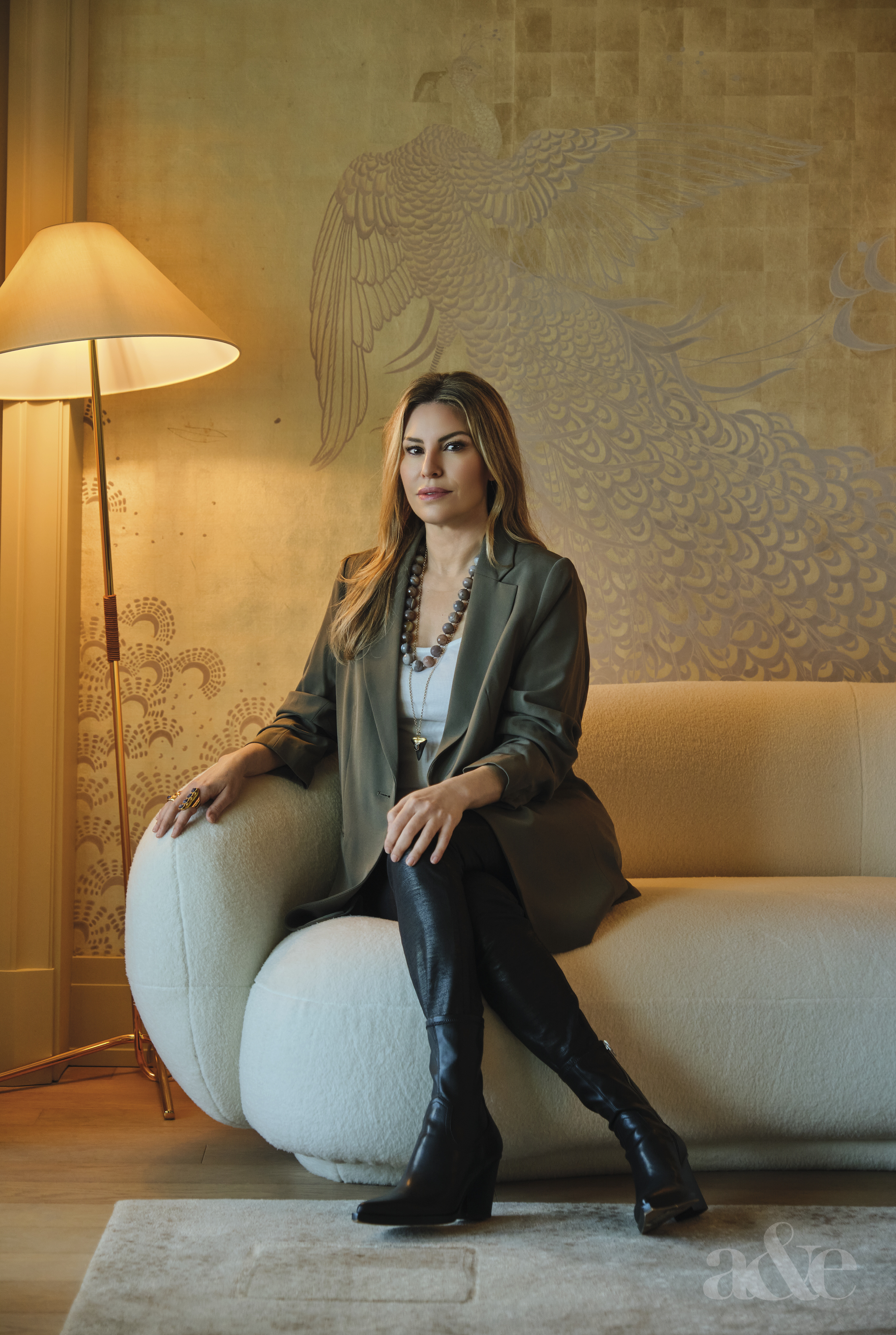
We know you are very passionate about writing and directing your own films – tell us about that and why you prefer this method.
I’ve come to realise that while I’m open to directing a project, I haven’t written – provided it resonates with me on a deep, personal level and the script is truly exceptional, I don’t feel compelled to write something unless I intend to direct it myself. Writing, for me, isn’t where I feel most in my element. I’m much more drawn to the process of directing, even if I still occasionally suffer from impostor syndrome, which I have now concluded many artists do, no matter how seasoned.
What excites me most is taking a story from the page and breathing life into it on screen. That transition, from script to set and eventually to the final cut, is where my passion lies. I find that when I’m both writer and director, it allows for a singular, cohesive vision from beginning to end. And because I only write stories that I feel deeply connected to, there’s already an emotional and creative investment in the work.
For me, the most powerful films are often those made by filmmakers who are intimately connected to the material. Being both the writer and director enables that connection to flow through every stage of the process, from the first word on the page to the final frame on screen.
What are your thoughts on the growing number of women entering the industry in the region, and what would you say to them?
It goes without saying that I’m very pleased to see a growing number of women entering the industry, whether in the Arab world or in the UK, where I’m more rooted, or anywhere else for that matter. It’s especially heartening in the context of such a male-dominated field.
To the women coming into the industry, I would simply say: keep going. We have a unique lens and are more than capable. I encourage women to pursue every corner of the field, whether as directors, writers, producers, executive producers, as DoPs or leading other key departments. We belong in all of it and have much to offer.
Is there anything you would still like to do?
There’s still so much I’d like to do. I often catch myself daydreaming, quietly calculating how many years lie ahead (since I started quite late), and how many of the stories I carry within me I can realistically bring to life. Every time I feel momentum building around one project, another idea calls to me. I’m constantly jotting things down in notepads or on my phone, ideas, fragments, glimpses of future films.
Of course, I know I won’t be able to make them all. So, I try to focus on the stories that resonate most deeply, the ones that feel urgent and meaningful, and that also make sense strategically in terms of scope and possibility. I aim to stay true to my creativity while choosing projects that stretch me, that broaden my horizons, and that still speak to the issues and themes I care most about.
At the end of the day, the work has to come from the heart. There can be nothing contrived, it has to be honest, necessary, and creatively fulfilling.
Credits:
Founder/Editor in Chief: Lara Mansour
Fashion Director : Lindsay Judge
Styling Assistant: Lea Naoufal
Photography: Ziga Mihelcic
Hair and makeup: Lina Dahlbek
Location: Four Seasons Hotel Dubai
The Making of Dior’s SS25 Haute Couture Collection
Dior’s Spring/Summer 2025 haute couture collection focused on the Cigale silhouette, first designed by Monsieur Dior for the autumn-winter 1952-1953 haute couture line.
This season, Maria Grazia Chiuri reinvents this iconic shape in the original moiré fabrics, adopted for a little skirt paired with a fitted tailcoat, accentuating the contrasting proportions. The cape is embellished with feathers delicately crafted in organza.
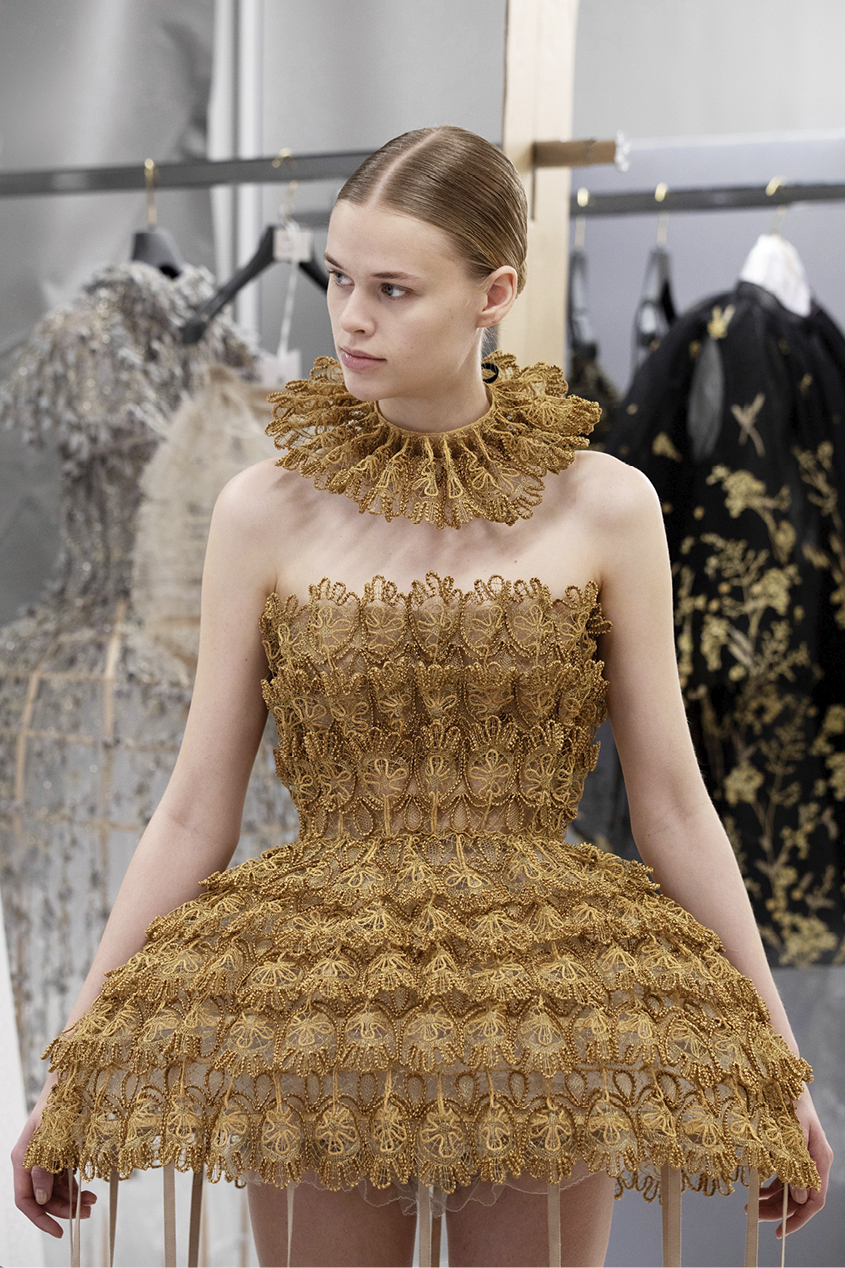
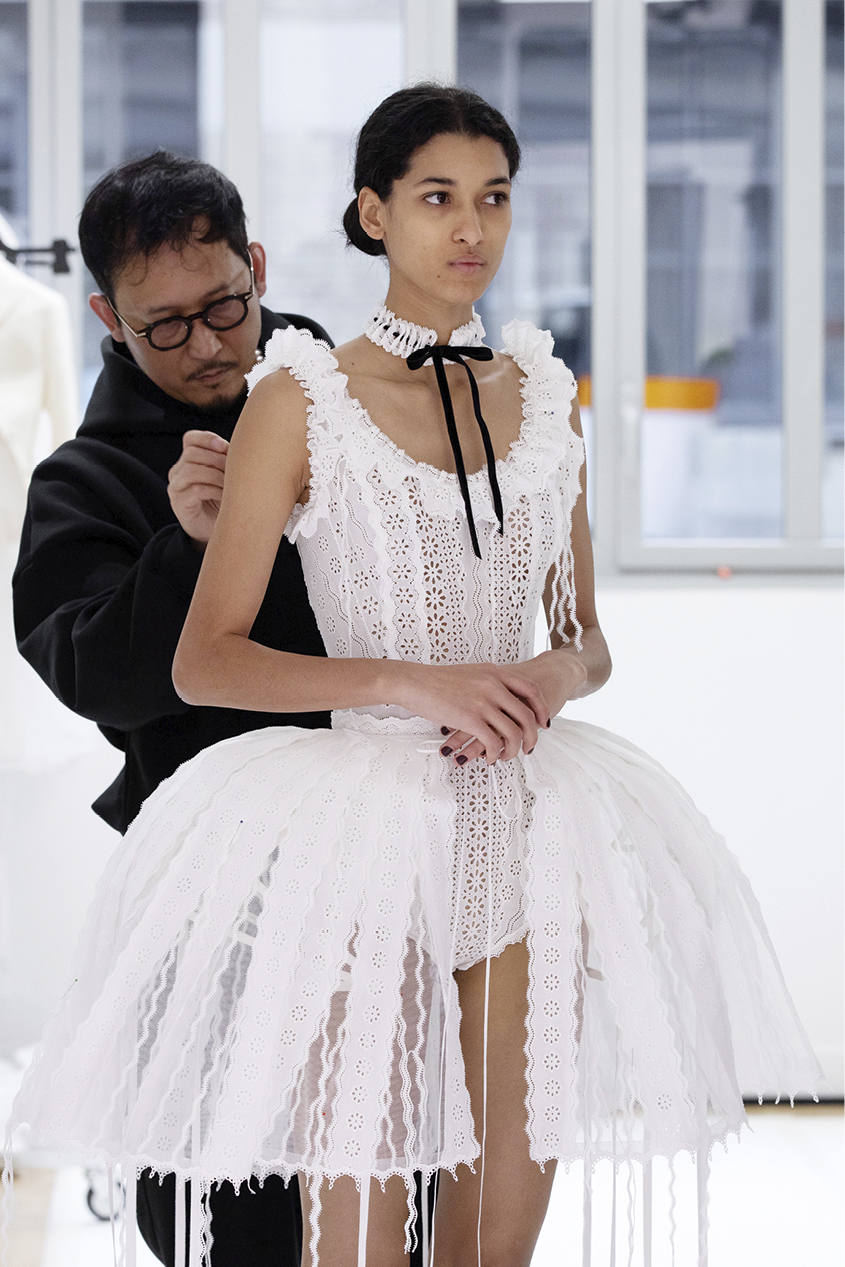
The crinoline, in its modern, practical version, proves to be an extraordinary breeding ground for memories, yielding to the most excessive fantasies and motifs.
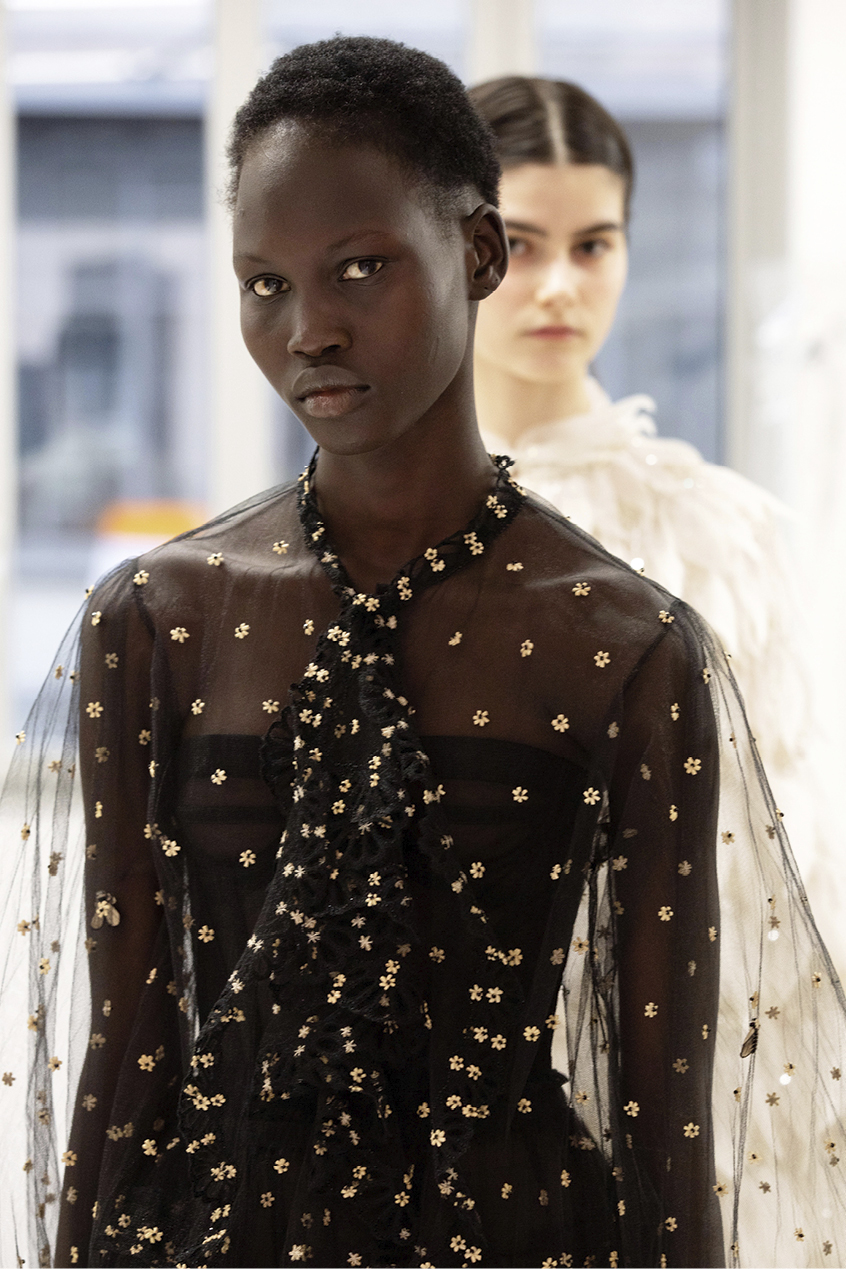
This shaken cage concealing its construction discloses threads that stretch and undulate with every movement, like embroidered branches. Simply hiding its structure, the underwiring enhances light blouses sublimated by floral embroidery. The visible bustiers and draped skirts are unforgettable.
Black, both sober and superb, magnifies the coats, which orchestrate and underline the choreography of minute motions.

The long dress shines supremely with its three-dimensional burnished silver embroidery, at the heart of a poetics of the absurd. It seems suspended in the perpetual temporality of fashion, the essence of which is to fulfil desires of all kinds.
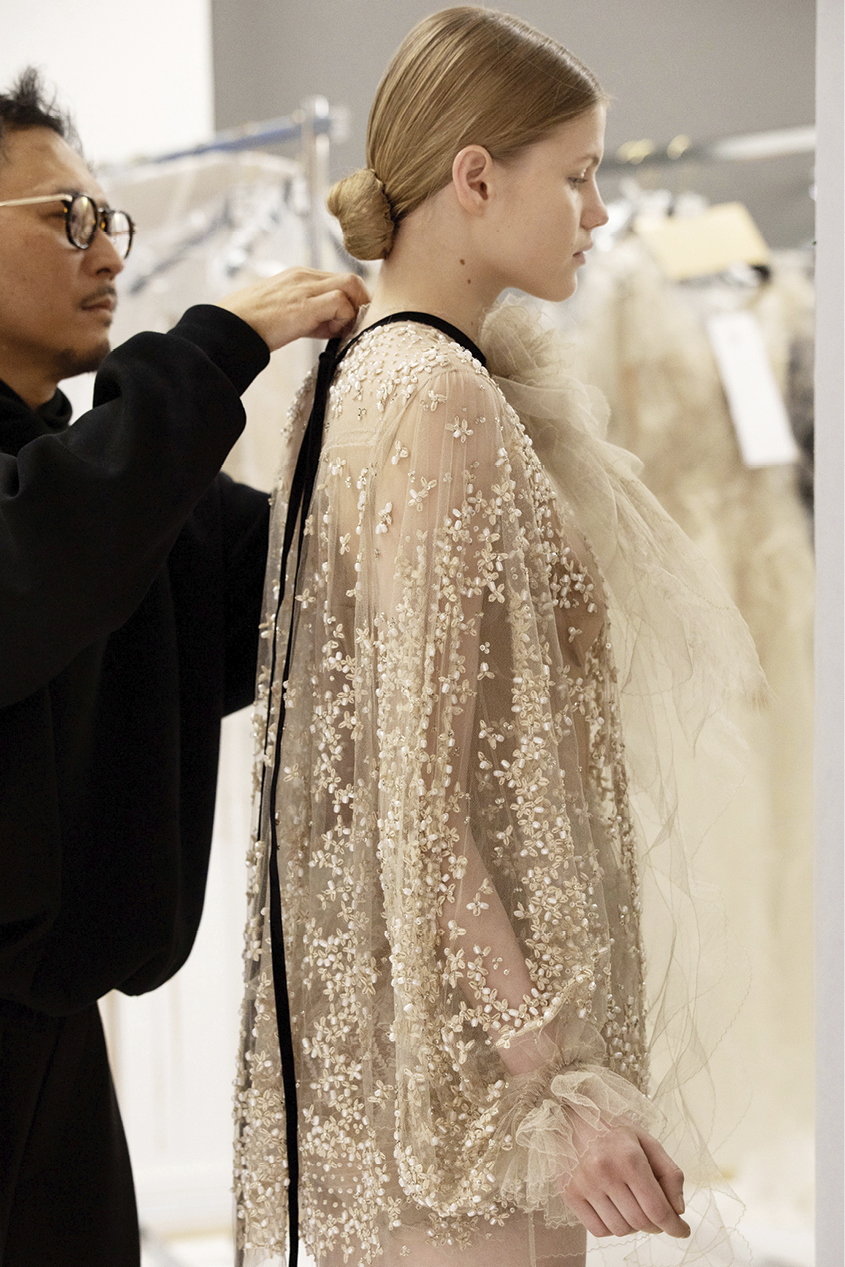
As with all the brand’s offerings, this feminine collection celebrates the mastery and talent of the house’s founder, bring romance and fairy-tales to life.
SS25: This Season’s Must Have Mens and Womens Accessories
We round up key accessories for men and women from the Spring 2025 collections
Giorgio Armani
His
Giorgio Armani’s Spring/Summer shoe offering for men focuses on comfort and ease of movement. The upper gently embraces the foot, while Japanese-inspired geometric lines trace the sole. Available in suede and the iconic black mesh, with or without laces, new models come in classic black, white, sand and the brand’s signature greige.
Hers

Giorgio Armani has collaborated with luxury concept store 10 Corso Como to create an exclusive shoe collection for women. The collection is a line of flat ballerina-style shoes and loafers that offer timeless elegance and the ultimate comfort. The design features a minimal elegant shape, with each pair of shoes constructed to follow the natural contours of the foot.
Dior
His
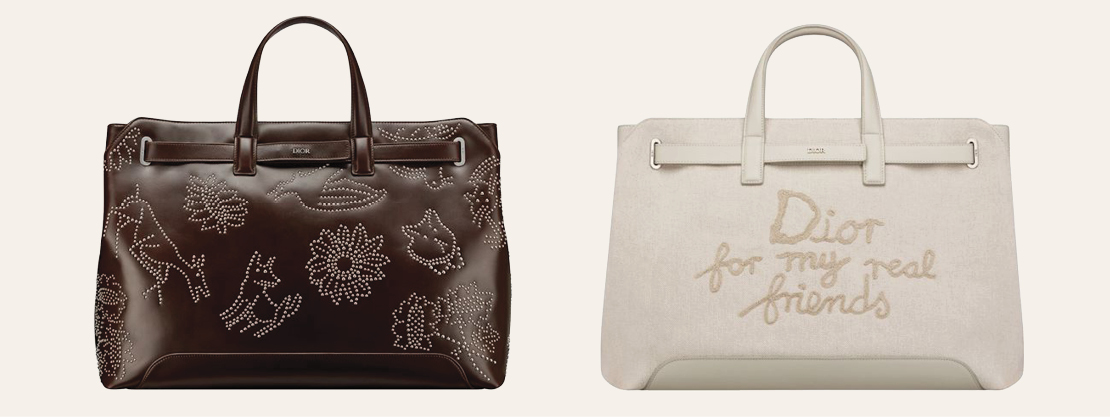
Dreamed up by Kim Jones, the new Dior Normandie bag features rounded handles, adjustable straps and a refined design. Combining style, elegance and practicality, its main compartment contains a zipped pocket and several flat ones to protect all your precious essentials. It features extremely soft-grained leather and is available in black, beige or brown. Refined details, such as silvered eyelets and the “Dior” logo – the metal letters of which are subtly affixed on the front – testify to discreet, exclusive luxury.
Hers
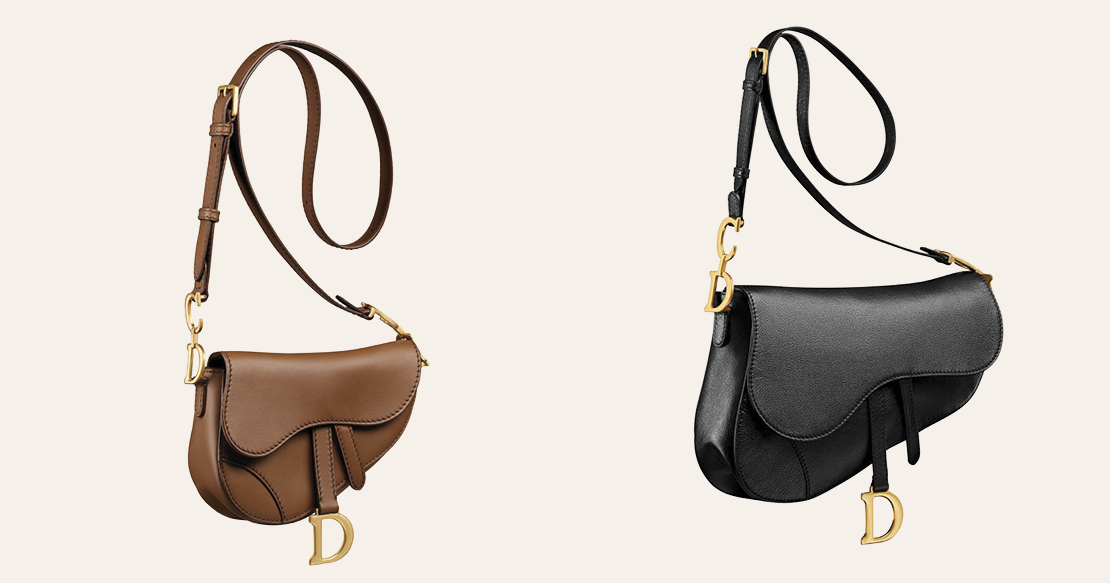
Dior’s Soft Saddle bag has been reinvented in a supple form for Spring/Summer 2025. Its emblematic lines have been reinterpreted with functionality, while the adjustable shoulder strap offers a practical, modern and effortless crossbody carry. This new piece is available in three sizes and a variety of exquisite shades of leather – black, Downtown Brown, latte or Deep Amaranth – as well as in a bi-material version enhanced by the timeless jacquard Dior Oblique motif.
Louis Vuitton
His
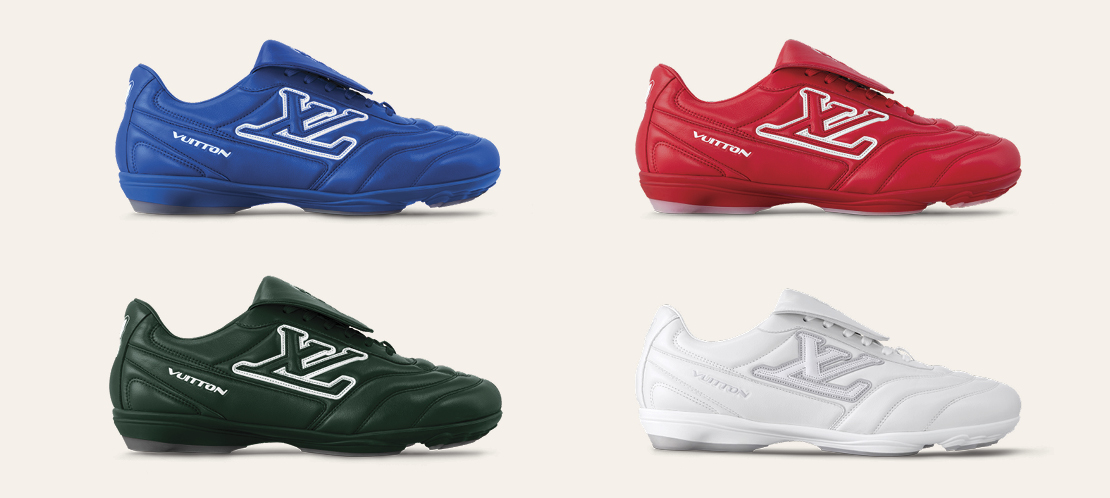
The LV Footprint sneaker is the first of its kind designed by Pharrell Williams—inspired by authentic cleated boots from the world of field sports. The sleek sneaker consists of a laced calf leather upper and a padded rubber outsole, expressing the brand signatures throughout its design. Floral motifs taken from the Louis Vuitton Monogram and an interlinked LV logo are stretched to form a stylised, five-toed footprint on the articulated sole, giving it the ability to leave an LV stamp on soft ground.
Hers
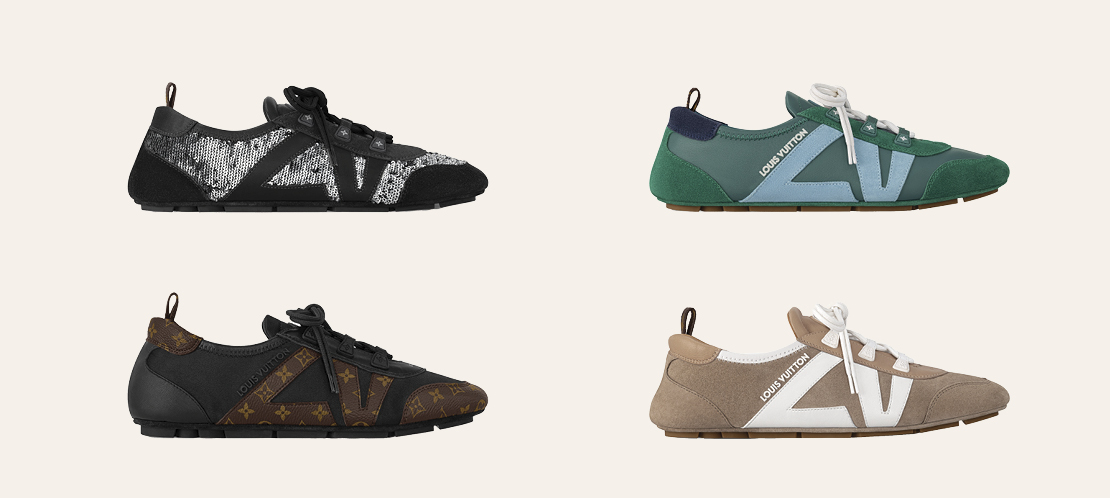
The new LV Sneakerina plays on the contrasts of sport and fashion with a hybrid design that’s midway between a sneaker and a contemporary ballet flat. The streamlined design puts comfort at the forefront and sits perfectly with today’s minimalist sportswear trend. Each variation has been specially designed for everyday wear to match any casual or dressed-up silhouette, thanks to a sole made infinitely flexible by the Sacchetto construction and an ultra-light interior design. All feature Louis Vuitton’s timeless signatures, such as the Monogram pattern, Monogram canvas and LV Circle, adding to the energy of this edgy sneaker.
Tod’s
His
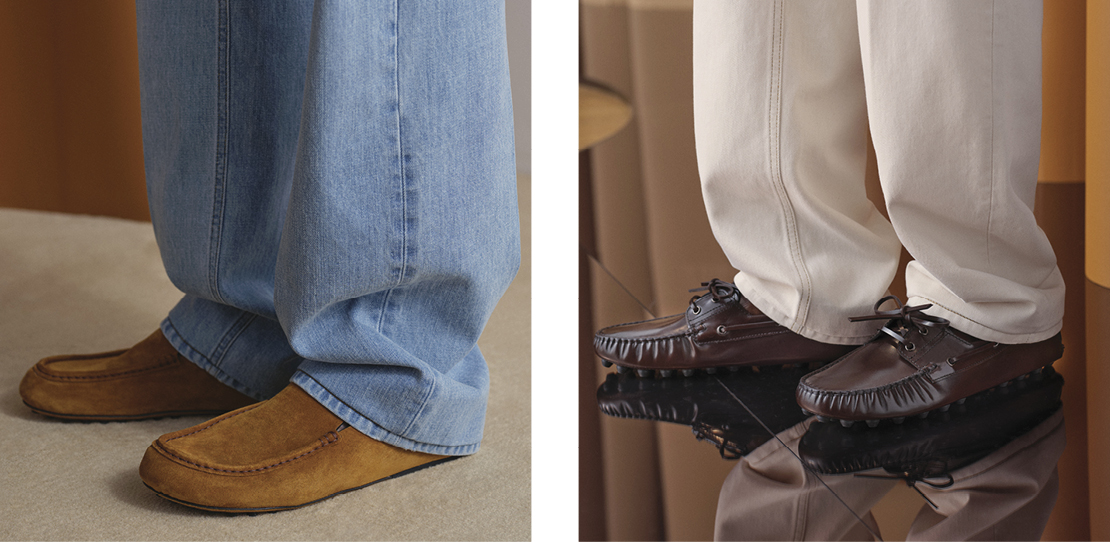
This season, the iconic Tod’s Gommino has been enriched with a new sabot version in natural colours. The Bubble Gommino, is presented in the new boat model and with the T-bar accessory. The pop of colour makes a bold statement, while the classic shape puts comfort and elevated style at the heart of the design.
Hers
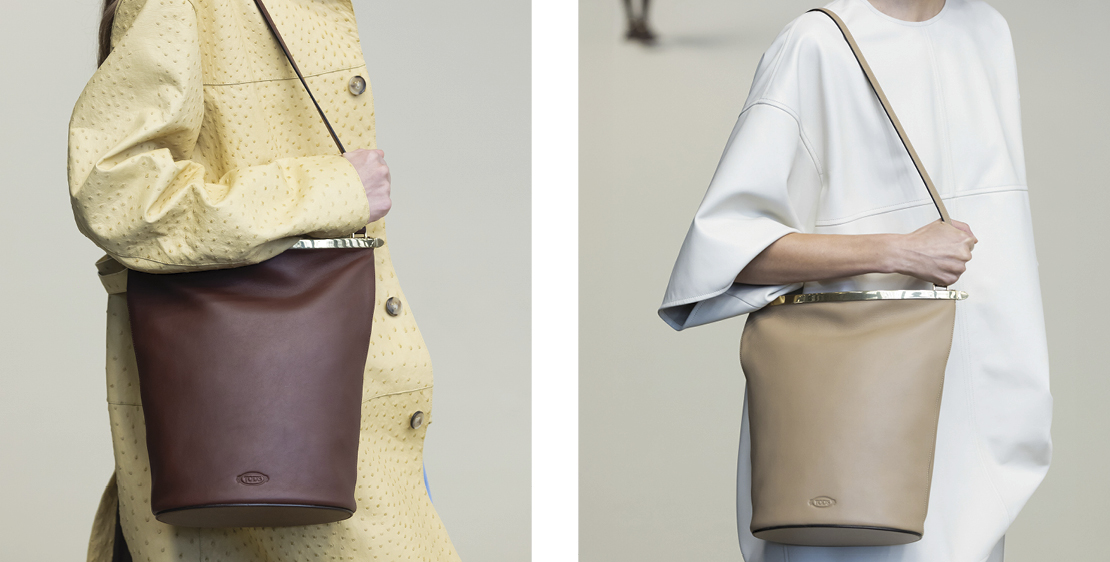
For women, Tod’s new signature detail is in the magenta bags, which are enhanced by a slim metal band, evoking a feeling of lightness and simplicity. Available in warm brown or rich teal colourways, the bucket-style bags make the perfect accessory from day to night.
Loro Piana
His
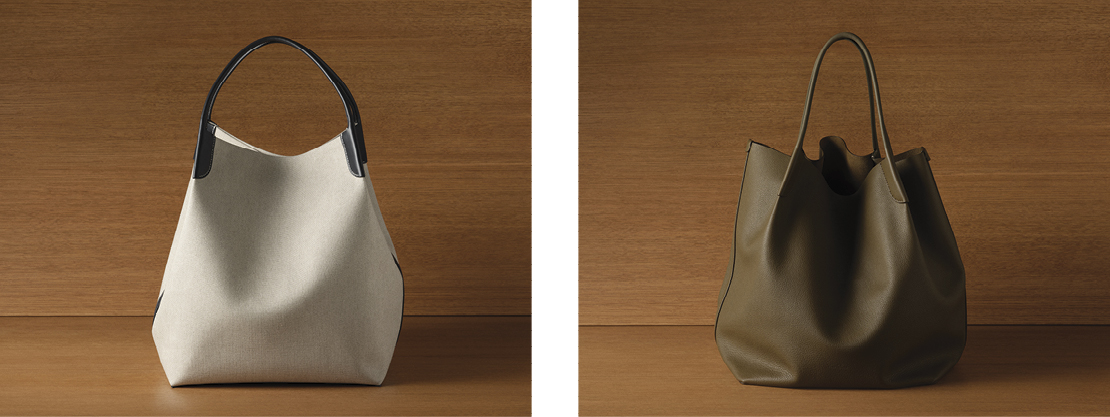
The versatile Bale Hobo Bag is inspired by Loro Piana’s textile heritage and is reminiscent in its silhouette and touch of cashmere bales, and large bundles of raw fibre. With a seamless design and unique lightness, it is a celebration of supple softness with its unlined design crafted from carefully selected single pieces of leather. It features hand-stitched handles and a removable inner pouch. Available in Natural Canvas, grained leather in Azuki Beans, Warm Mastic, or Salty Capers.
Hers
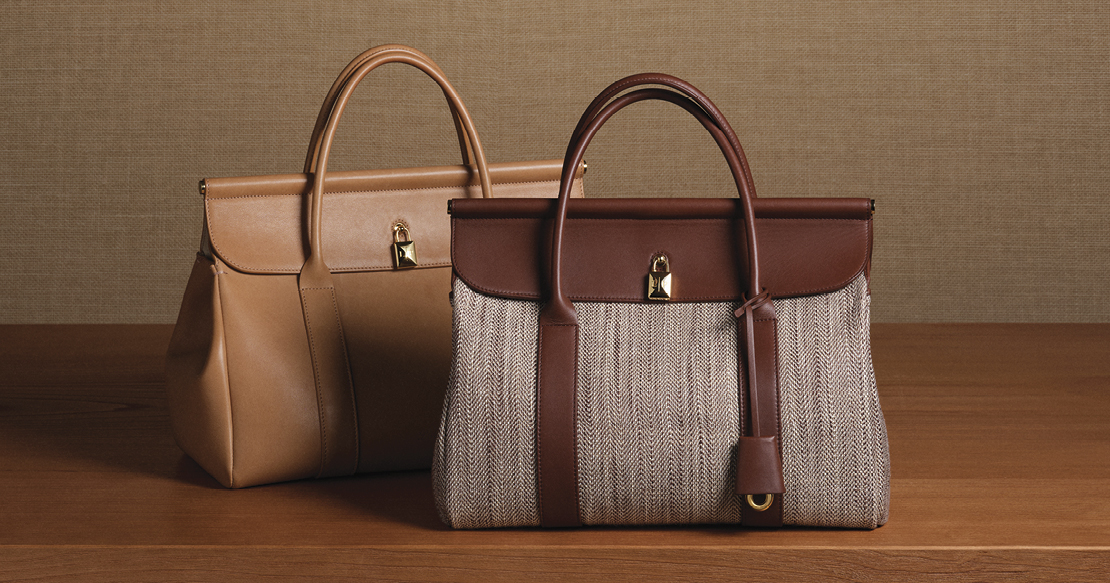
Loro Piana’s Loom bag L32 is now offered in a new elegant silk linen chevron version. The bag, which was designed to honour Loro Piana’s textile heritage, is a tribute to the art of fabric making with its Loom-inspired design. Made from fine brown calfskin with a soft and silky hand, the bag is distinguished by its back panel, a unique piece that drapes gracefully over the metal bar, mirroring the way the fabric falls on the loom. The silk-linen blend fabric has a refined herringbone weave with a unique texture. The light and soft material guarantees elasticity and resistance to tearing and its lustre further embellishes the fabric in its natural light.
Prada
His
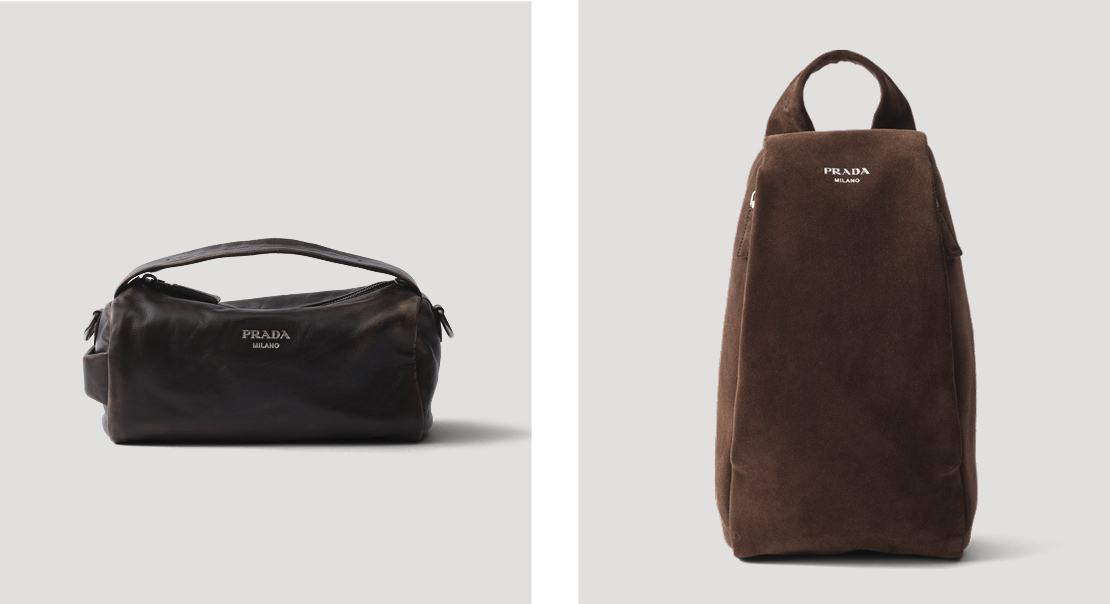
This season, Prada presents key accessories for men as part of the “Closer” collection, which debuted on the runway in Milan. While simplistic in appearance, the designs honour the finest materials and unrivalled craftsmanship. The coffee suede backpack is an elegant companion for the working man, while the Nappa leather shoulder bag is perfect from day to night.
Hers
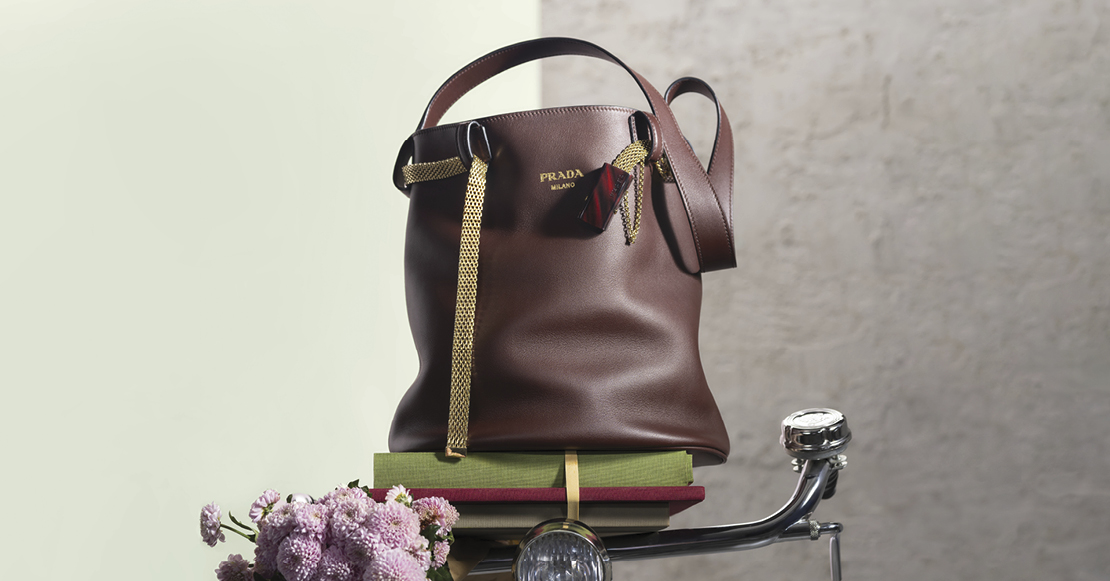
The new Prada Buckle bucket bag, unveiled during the Spring/Summer 2025 fashion show, is an evolution of the iconic two-handle Prada Buckle, showcasing the brand’s expertise in crafting striking contemporary designs born from the fusion of diametrical elements. Formal in its puristic proportions yet supple in its smooth soft-grain leather, the Prada Buckle bag features a unique closure: a jewel-like belt crafted from flexible golden metallic mesh, exuding a nocturnal, exquisite, and luxurious allure. The resin buckle has an elegant tortoiseshell effect; the strap, attached to the belt, offers effortless versatility, allowing it to be carried by hand or worn over the shoulder.
Louis Vuitton Reveals Plans to Launch a New Beauty Collection
Louis Vuitton has revealed it will launch a beauty line for the first time ever.
La Beauté Louis Vuitton, which will expand the house’s universe further than ever before, will include a line of luxury beauty products that perfectly embody the DNA of the brand. To coincide with the launch, the house also welcomes Dame Pat McGrath, DBE, as the Creative Director of Cosmetics. The world-renowned British makeup artist brings her incomparable eye and expertise to developing a lifestyle beauty experience that extends beyond products.
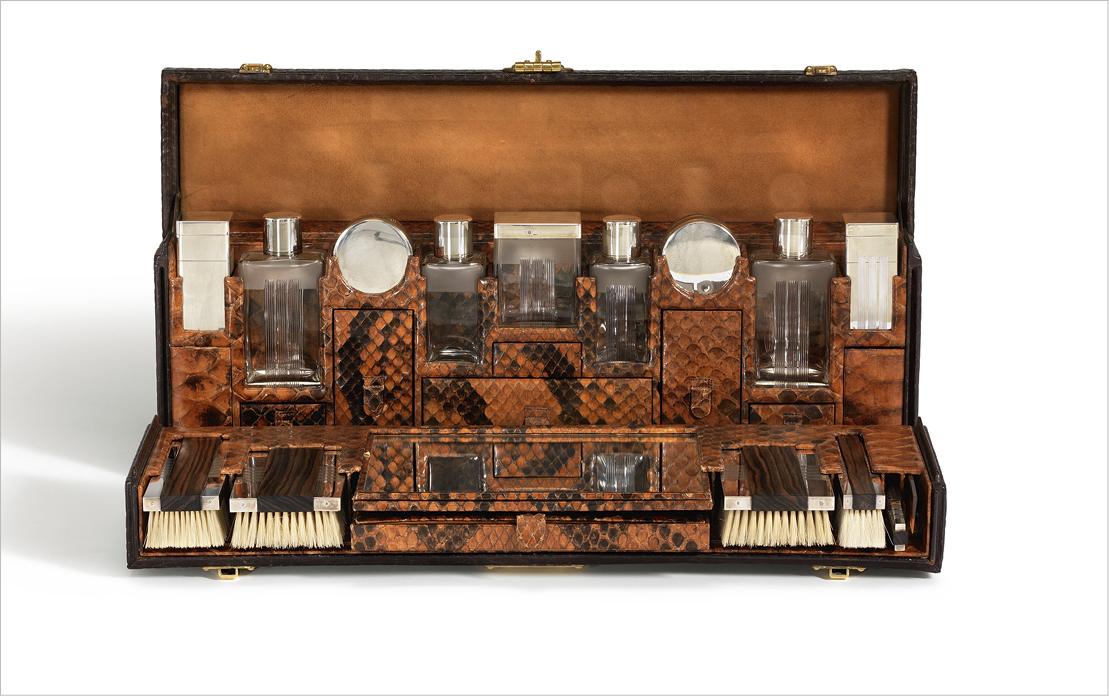
“Working backstage for over 20 years at Louis Vuitton fashion shows, I am thrilled to now play such a key role in the launch of La Beauté Louis Vuitton, which is the result of extraordinary craftsmanship, creativity and innovation.” Says Pat McGrath. “The beauty universe is about so much more than just product, and what we are creating here will unlock a new level in luxury beauty.”
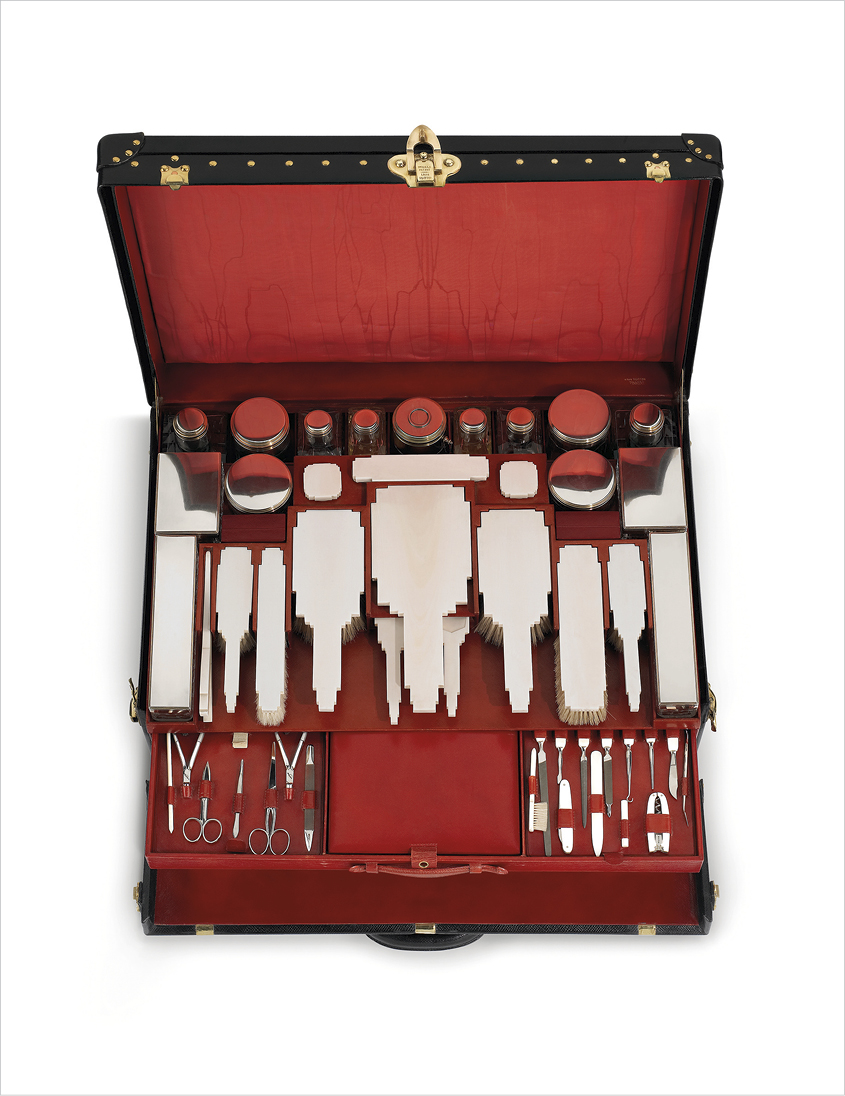
Since its founding, Louis Vuitton’s travel history embraced beauty, with innovative vanity cases specially crafted for the transport of delicate toiletries, perfumes and cosmetics. In the 1920s, Louis Vuitton designed luxurious powder compacts, brushes and mirrors. Two exceptional examples preserved in the Louis Vuitton archive date from 1925: Le Milano was a bespoke kit made for the soprano Marthe Chenal, while an exquisite toiletry case was also created for the Polish composer Jan Paderewski. Moreover, the first Louis Vuitton handbags for women were conceived with the need to carry daily essentials, including cosmetics. This upcoming chapter promises to be a continuation of this ethos, taking it to a new level.
“La Beauté Louis Vuitton is a natural business evolution, driven by our meticulous attention to quality, formula and innovation. Through this new universe, we have the opportunity to further accompany clients in their everyday lives with purpose and pleasure while continuing to celebrate our creativity and heritage.”, says Pietro Beccari, Chairman and CEO of Louis Vuitton.
With more information on the product range to follow, La Beauté Louis Vuitton reflects the broadening scope of luxury, whereby the House’s rich heritage assumes once again a new, contemporary form.
SAL at Jumeirah Saadiyat Island Celebrates its First Anniversary
SAL at Jumeirah Saadiyat Island is one of Abu Dhabi’s most hidden treasures.
As the second branch of Burj Al Arab’s exclusive pool, beach and restaurant SAL Saadiyat island brings the barefoot chic mood of Saint-Tropez and Mykonos to the capital.
Currently celebrating its first anniversary, SAL offers visitors an impressive culinary experience, featuring SAL favourites, such as King Crab & Homemade Trenette Pasta and Sea Salt Crusted Sea Bass, as well as a delicious array of drinks and desserts. Guests can dine in the restaurant or for a more relaxed environment at the beachside lounge or poolside deck.
Housed in a contemporary mirrored venue, reflecting the beautiful surroundings and blending seamlessly with the environment, SAL Saadiyat Island is the ideal setting for relaxing and socialising, featuring its own dedicated infinity swimming pool and section of beach for those wanting to make a day of it. The chic oasis is reserved exclusively for adults and is designed for couples seeking the perfect escape to spend quality time together.
Relax in style on sunbeds, love beds, or luxury cabanas, each offering a haven of comfort and sophistication amidst breathtaking views of the Arabian Gulf. Whether you’re lounging by the pool or strolling along the shoreline, every moment at SAL is a celebration of relaxation.
For more information or to make a reservation, please contact: +971 2 811 4325 or SAL.SaadiyatIsland@jumeirah.com
Le Royal Monceau – Raffles Paris Unveils a New Spa Concept
As one of Paris’s most exclusive destinations Le Royal Monceau – Raffles Paris has a new spa concept fit for the most esteemed guests. A sanctuary in the heart of the city, the Raffles Spa & Wellness has introduced a luxurious wellness destination.
Pushing the boundaries of excellence and innovation, the spa has introduced three new brands –11SKIN, Dr. Barbara Sturm, and Nooance – to accompany its five-star treatments. In collaboration with these renowned houses, the Spa now offers exclusive protocols that combine cutting-edge technology, immediate results, and harmonious serenity. The spa is now putting personalisation and a pioneering approach to skincare at the forefront was an impressive new offering.
11SKIN, known for its repairing properties and innovation, was founded by plastic and reconstructive surgeon Dr. Yannis Alexandrides. The brand was initially developed to support post-surgical healing; its formulas are based on precise science and incorporate the exclusive NAC Y2TM complex, stimulating skin regeneration, radiance and vitality. Exclusive to the Royal Monceau – Raffles Paris, the Black Diamond Ritual is an 80-minute face and body treatment combining relaxation in the pool, gentle exfoliation, wrinkle-minimizing wand massage, and a 3-tier multi-masking process to lift, firm and deeply hydrate the skin.
German-born Dr. Barbara Sturm is renowned for her cosmetic approach, based on anti-inflammation and cellular regeneration. Her Molecular Cosmetics range is highly acclaimed for its pure formulations, enriched with highly concentrated active ingredients that preserve the skin’s natural balance while delivering visible results in radiance and hydration. Raffles Spa & Wellness is Paris’s exclusive destination, offering Barbara Sturm’s signature treatments. The signature Royal Monceau Molecular Rejuvenation Ritual is an 80-minute treatment designed to rejuvenate both face and body. Beginning with a tailored consultation to customise every moment of treatment, the Spa’s expert therapists engage advanced techniques and premium, science-driven products to deliver a deeply restorative experience. The journey is complete with exclusive access to the serene pool, extending relaxation in a tranquil and luxurious atmosphere.
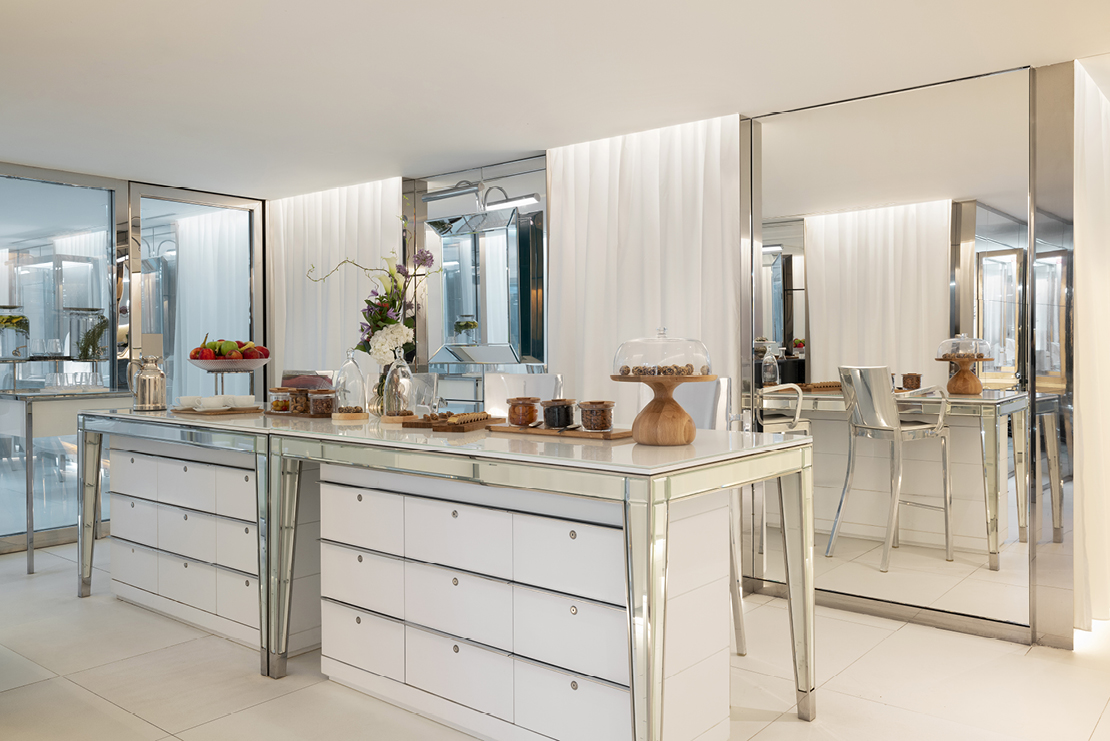
NOOĀNCE, the French specialist in enhanced anti-ageing, puts science at the heart of its approach by combining ultra-concentrated skincare with powerful active ingredients and LED technology (red light + infrared). Clinically validated, the brand offers innovative solutions to revitalise the skin, reduce the signs of ageing and enhance radiance. An integral part of the Royal Monceau – Raffles Paris Spa’s treatment protocols, the Nooance LED face mask envelops the skin in life-saving light, topping off a series of treatments that transform and illuminate. Tailor-made luxury that can also be extended at home with products available from the Spa boutique.
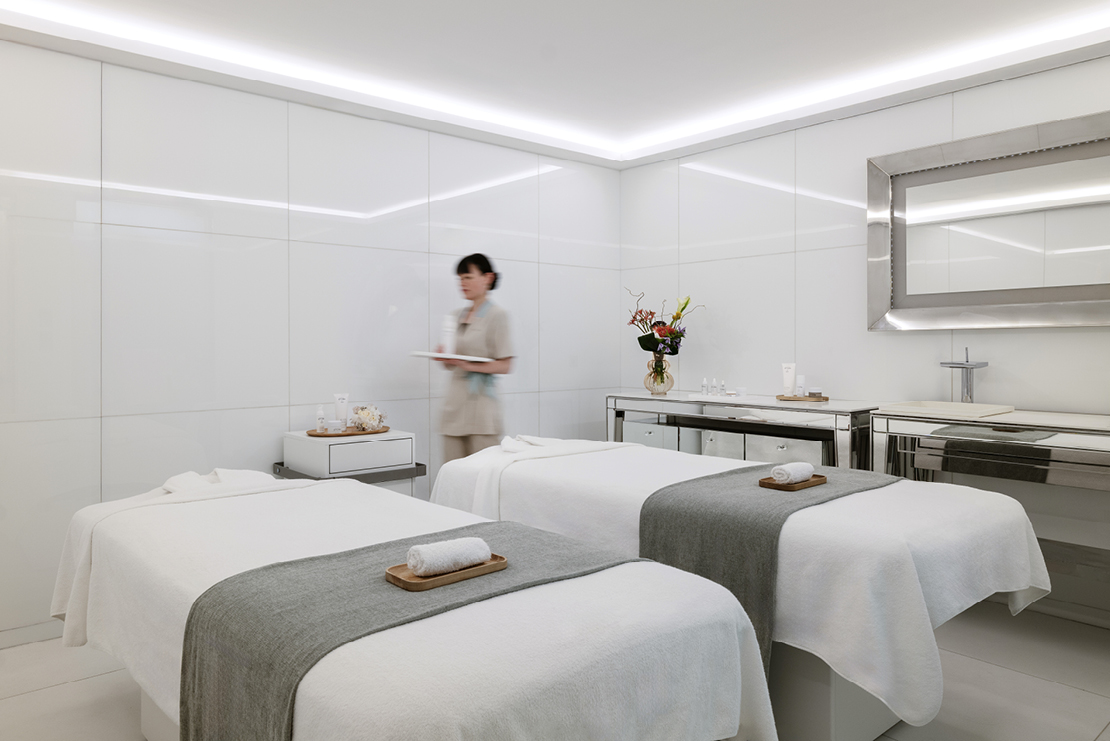
“We are thrilled to introduce new bespoke wellness experiences in partnership with these exceptional brands for the guests of our Parisian Palace,” said Nicolas De Gols, General Manager, Le Royal Monceau – Raffles Paris. “Raffles Spa & Wellness is committed to providing an unparalleled well-being retreat, seamlessly combining state-of-the-art technology and innovative treatments for ultimate rejuvenation.”
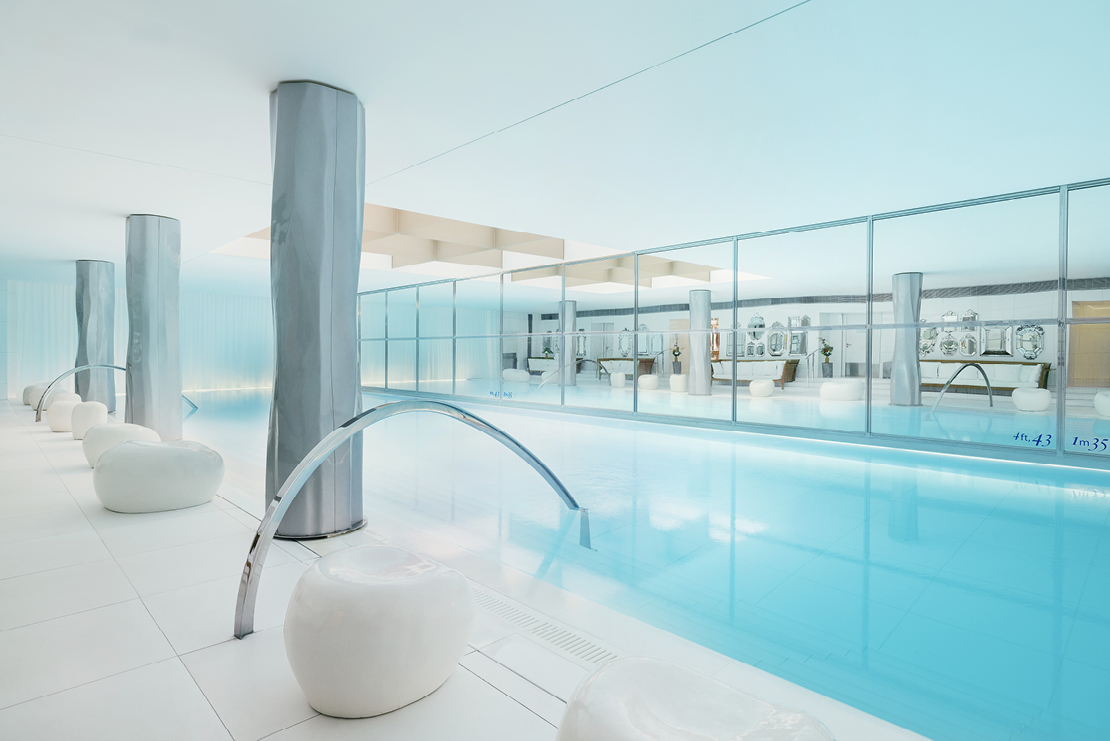
In addition to introducing new brands, the luxurious haven will unveil special experiences throughout the year to enhance its unique wellness offerings.” He added.
Istituto Marangoni Expands its Global Presence to Riyadh
Istituto Marangoni is working with the Saudi Fashion Commission to open its newest campus in Riyadh, Saudi Arabia, this summer.
The new Higher Training Institute, which will open its doors in August, will offer specialised programmes designed to align with the needs of Saudi Arabia’s fashion and luxury market and contribute to the Kingdom’s economic diversification goals.
As part of a strategic initiative to support the next generation of Saudi fashion professionals, the Ministry of Culture’s Fashion Commission is supporting Istituto Marangoni in the launch of its new three-year undergraduate Advanced Training Diploma. Istituto Marangoni will, therefore, provide 50 scholarships for Saudi students enrolling in the Diploma. This opportunity is open to Saudi nationals holding a high school certificate or an equivalent qualification. The campus will be located at KAFD, at the Riyadh Creative District (RCD), the new initiative managed and overseen by the Royal Commission for Riyadh City (RCRC).

Stefania Valenti, Group Managing Director of Istituto Marangoni
The scholarship initiative was officially launched on Istituto Marangoni website on March 17th. It will feature a competitive selection process, giving aspiring Saudi fashion students the chance to receive partial funding for their three-year diploma programs, which will commence in late August 2025.
Stefania Valenti, Group Managing Director of Istituto Marangoni, expressed her gratitude: “A sincere thank you to the Fashion Commission, the Ministry of Culture, the Royal Commission for Riyadh City, and to MISA – Ministry of Investment – for their invaluable support in establishing this Higher Training Institute. Our mission is to nurture local creative talent by combining global expertise with Saudi heritage, shaping the future leaders of the fashion and luxury industries in Saudi Arabia. This initiative will lay the foundation for developing a new generation of Saudi talents and managers, equipping them with the skills to connect with international markets while embracing the vision of the Fashion Commission and Saudi Vision 2030.”
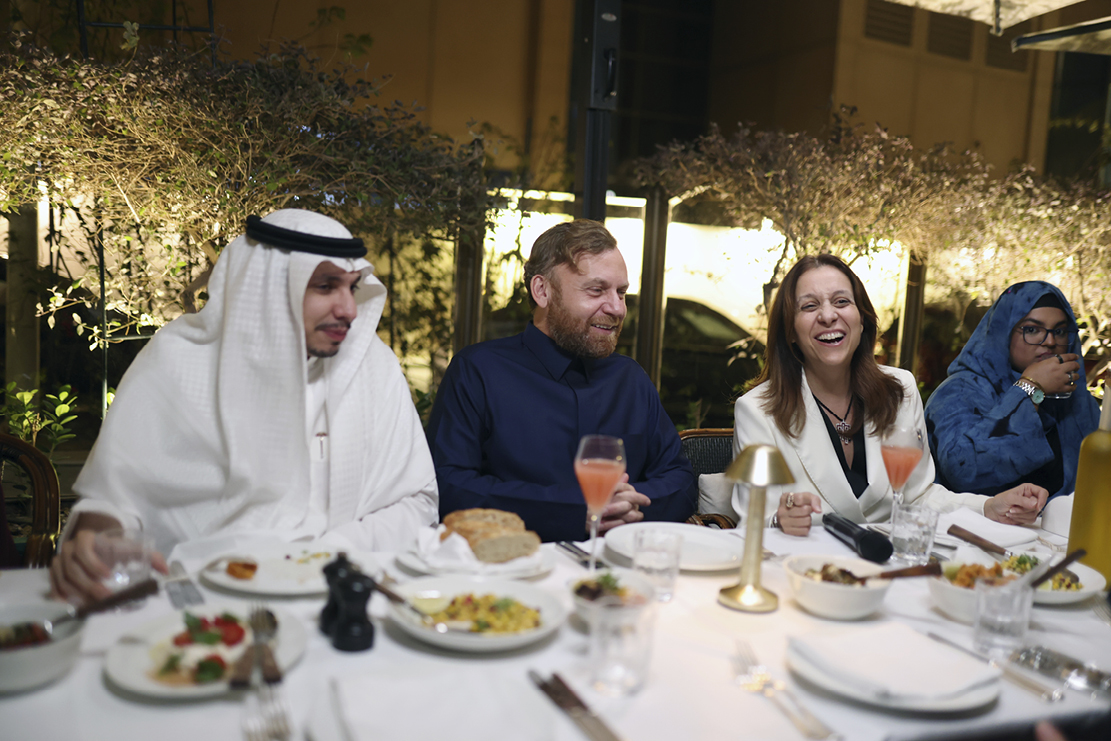
Burak Cakmak, CEO of the Fashion Commission, added, “This partnership with Istituto Marangoni marks a pivotal moment for the Saudi fashion industry. By investing in our local talent and providing them with world-class education, we are not only empowering the next generation of Saudi designers and leaders but also enriching the global fashion landscape with our unique cultural heritage. Together, we are building a sustainable and thriving fashion ecosystem that reflects the ambition of Saudi Vision 2030.”
istitutomarangoni.com/en/schools/riyadh-school-of-fashion-and-design
The Abu Dhabi Royal Stables Launches 2028 Los Angeles Paralympic Games Project
The Royal Stables in Abu Dhabi has launched an ambitious project in the run-up to the 2028 Los Angeles Paralympic Games, aimed at developing a competitive para-dressage team to represent the UAE.
With a mission to empower para-athletes and inspire future generations, The Royal Stables is actively seeking potential Emirati athletes to join the development pathway, sponsorship partners and community support to bring this ambitious vision to life. This project is a unique opportunity to be part of a historic journey toward the Paralympic Games, championing diversity and breaking barriers in equestrian sports.
The Royal Stables has assembled a team of distinguished experts to manage this project, spearheaded by Performance Manager Laura Richardson, bringing her extensive experience in elite sports management to optimise athlete development and competitive success, and Russell Mackechnie-Guire as the Technical Lead, whose PhD in equine biomechanics and vast expertise will provide a scientific edge to training and performance strategies.

H.E. Buthaina Abdullah Mohamed Ali Al Mazrouei, Member of the Board at The Royal Stables
“Our mission is to create an inclusive and empowering environment where every aspiring para-dressage athlete can reach their full potential. With the leadership of our exceptional team, the support of our community and the backing of visionary sponsors, we are excited to embark on this journey to the Paralympic Games and showcase the incredible talent from the UAE.” Says Laura Richardson, General Manager of The Royal Stables.
Same basic rules as the sport of Dressage, the highest expression of horse training, adjusted for athletes of determination. Athletes perform at a walk, trot and canter, executing tests ridden from memory that follow a prescribed pattern of movements, with the test difficulty determined by the athlete’s graded level of impairment.
Athletes are graded according to the severity of the impairment, ranging from Grade I—most severe impairments that usually require the use of a wheelchair—up to Grade V, which is classified as a mild impairment of movement or muscle strength or visual impairment.
H.E. Buthaina Abdullah Mohamed Ali Al Mazrouei, Member of the Board at The Royal Stables, expressed immense pride in the launch of the project, stating, “This initiative is a testament to our dedication to fostering talent and breaking barriers in equestrian sports. We are thrilled to support our para-athletes in achieving their Paralympic Games dreams.”
For more information on how to apply as an athlete, become a sponsor, or support this initiative, please contact UAEParaDressage@theroyalstables.ae.
Tamara Ralph on Her New Haute Couture Collection and Her Plans for the Future
Tamara Ralph has built a legacy of exquisite craftsmanship, feminine silhouettes, and a vision that seamlessly blends heritage with modernity.
Since relaunching her namesake brand two years ago, the Australian designer has reaffirmed her place in the world of haute couture, designing elegant pieces that signify strength and femininity, and her gowns have become red carpet regulars with some of Hollywood’s biggest stars. With her Spring 2025 couture collection, which debuted in Paris this January, Ralph once again asserts the values that are at the heart of the brand, presenting a world of intricate detailing, architectural draping, and an ethereal elegance that feels both timeless and forward-thinking.

In this exclusive interview, Ralph shares the inspirations behind her latest collection, the artisanal techniques that bring her creations to life, and how she envisions the future of haute couture in an era of evolving fashion. From the atelier to the runway, she takes us inside her creative process, revealing the dedication and passion that continue to shape her house’s unmistakable aesthetic.

Tell us about the Spring 2025 Haute Couture collection and the show in Paris.
I wanted the show to feel very romantic this season, so we chose the American Cathedral as a show space because of its grand, magical appeal. We wanted the show to be based around symphonies and music and the grace and grandeur of a symphony masterpiece. The collection features delicate harmonies and intricate lace of crystal compositions, so it transitions from quite romantic soft tones to quite strong black and white tones, taking you on a journey. You can see a lot of my signature elements in the designs. I love colour, playing with feminine strength and having juxtapositions of fabrications and textures. It was really a beautiful show and a beautiful moment.
How do you think you have evolved as a designer this season, and what new elements have come into the collection?
We wanted to develop further the hardware work that we’ve been doing recently. We also used hand-painted enamel, which we wanted to soften and make richer with more colour. I think the collection has evolved from last season, and there was a very elegant feel. We wanted something very polished, with classic elegance but with a youthful modernity to it, and I think that comes through in everything I’m working on at the moment. We are evolving the brand to have much more of a lifestyle aspect, taking couture into other product categories, but with that mindset of it being very elevated, limited edition and very exclusive.
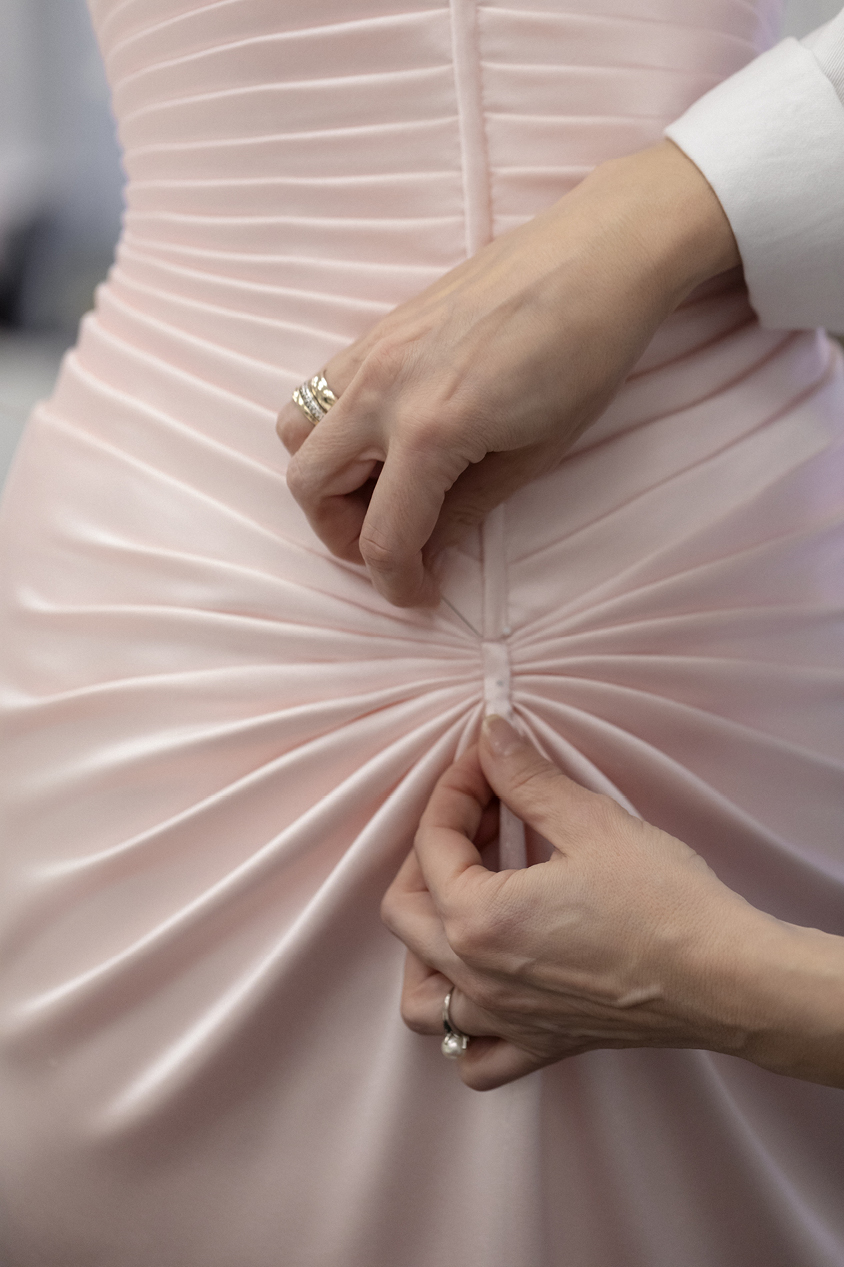
What are some of the product categories we can expect to see you expanding into?
We did a wonderful collaboration with Audemars Piguet recently, which was the first time I delved into watchmaking. Collaborating with a house that shared the same vision and respect for craftsmanship, quality, innovation, and creativity was incredible. They were wonderful to work with because they have the signature Royal Oak, and to reinvent such an iconic piece was really amazing. That was just the start of the wider collaboration that we’re working on together, and it was nice to have such a juxtaposition from what I’ve done in the past. As a brand, they have always been focused on a male-orientated market, so for them to push the female market with something completely different to what they’ve offered before was great. Funnily enough, the watch appealed to both genders!
We recently launched a wonderful collaboration with the French crystal brand Daum. They are a brand that has such an amazing history, and it was my first collaboration in that field. They wanted to have a collection that showcased both brands, and we wanted to highlight the Art Nouveau period. I wanted to have some of the decadent elements of my brand infused with theirs. I learnt a lot about the way they make their pieces. It takes a long time, and they are all one of a kind because no two pieces can ever be the same. It’s a fascinating process and the length of time it takes to make one piece and the delicate process is much like making a couture gown. We took signature elements of my brand, like hardware and pearls, the soft flow of fabrics, elegant, feminine details, and rose tones, and we fused it into a collection that’s worked incredibly well and has been very well received.

We are now working on a collaboration that we’re launching next year in another product category, which I can’t say too much about yet, but it will give us again another interesting element to the house. It’s very important for us as a brand to pick and choose the partners we work with, keep it very elevated and exclusive, and work on pieces of art. I think for me as a creative, it needs to make sense and have a story behind it, and I need to feel passionate about what I’m doing and who I’m designing for.
When you first came back with the brand, you spoke of this strength and femininity that you wanted to have at the core – where are you now with this and what’s the vision looking ahead?
I think, as a designer, you never get to where you want to be. It’s a constant journey. I think with each day, you can have a new idea or direction that you want to take, and obviously, the brand direction that we’re taking is very clear. We have so many different ideas for expansion, but it’s always important to do that in a very considerate way, and the journey needs to be the right one. We’re very excited about what future collaborations will hold and what product categories we’re looking to launch, but haute couture still remains the heart and soul of the brand. It’s been in my family for generations, and I’ve been showing in Paris since 2014, so it really is the heart and soul of my work, and that’s what stems from everything else. So we are still very much concentrating on growing and developing that. I opened the Paris Maison last year, which is a very beautiful, exclusive space – a lot of my VIP clients come to visit – and so it’s an exciting time. There is a lot more that we’re working on and looking at doing, but we have already grown a lot in a short period of time.
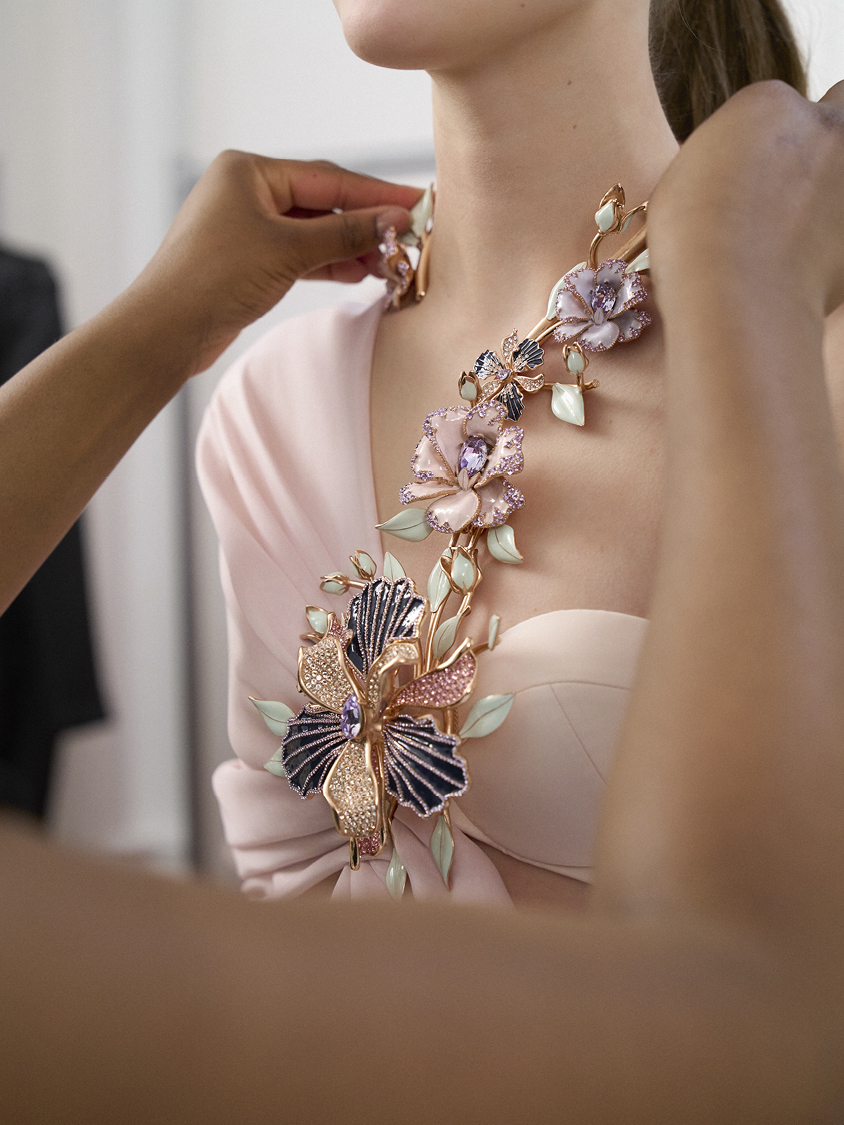
We have seen some incredible red carpet moments over the past two years – are there any moments that have stood out to you or any women you would still like to dress?
All the women I work with are amazing. They are all elegant, powerful women who have confidence and strength, and it is important that the women we dress embody the brand. And so, for me, it’s about working with the right people and the right women that we feel will showcase the brand in the right way.
But yes, we are very blessed to have so many incredible women who admire what I do and to work with these women is amazing. I couldn’t choose my favourite moment because I think each moment has its own special element. But we are very grateful that we have these amazing women wanting to wear the brand.

You are now a mum to two daughters – tell us about motherhood and how you’re balancing that with running a business.
I think women who can balance everything are incredible because it’s really very difficult to be everything. But I think you do need to find a balance and separate your time with family from your career. I do, however, love to involve my family in everything. They’re always at the show. My daughters are backstage; everyone is there, including my mother! We do model castings together, and it’s lovely to have such support and such an amazing family. My eldest daughter comes to the atelier all the time. She loves to see all the dresses coming together and is genuinely interested. She’s even becoming quite opinionated about it! She chooses the collection sketches with me, and I like to involve her. If it’s a path she wants to do when she’s older, then amazing, and if it’s not, that’s fine too, but at least she’s been exposed to the opportunity.
The little one is now ten months old; I had her only one month before the previous couture show, so it was quite a lot having a baby and putting on the show one month later. I had to do a lot via video call, and she was backstage with me while the show was happening. They give me the strength to do it as well. It’s lovely having daughters and doing what I do because it’s like a fairy tale for them, but it’s also nice for them to see their mother working so hard because it gives them a basis for hard work and morals, and I want them to grow up with a strong woman as a role model. That’s the best lesson you can give them.
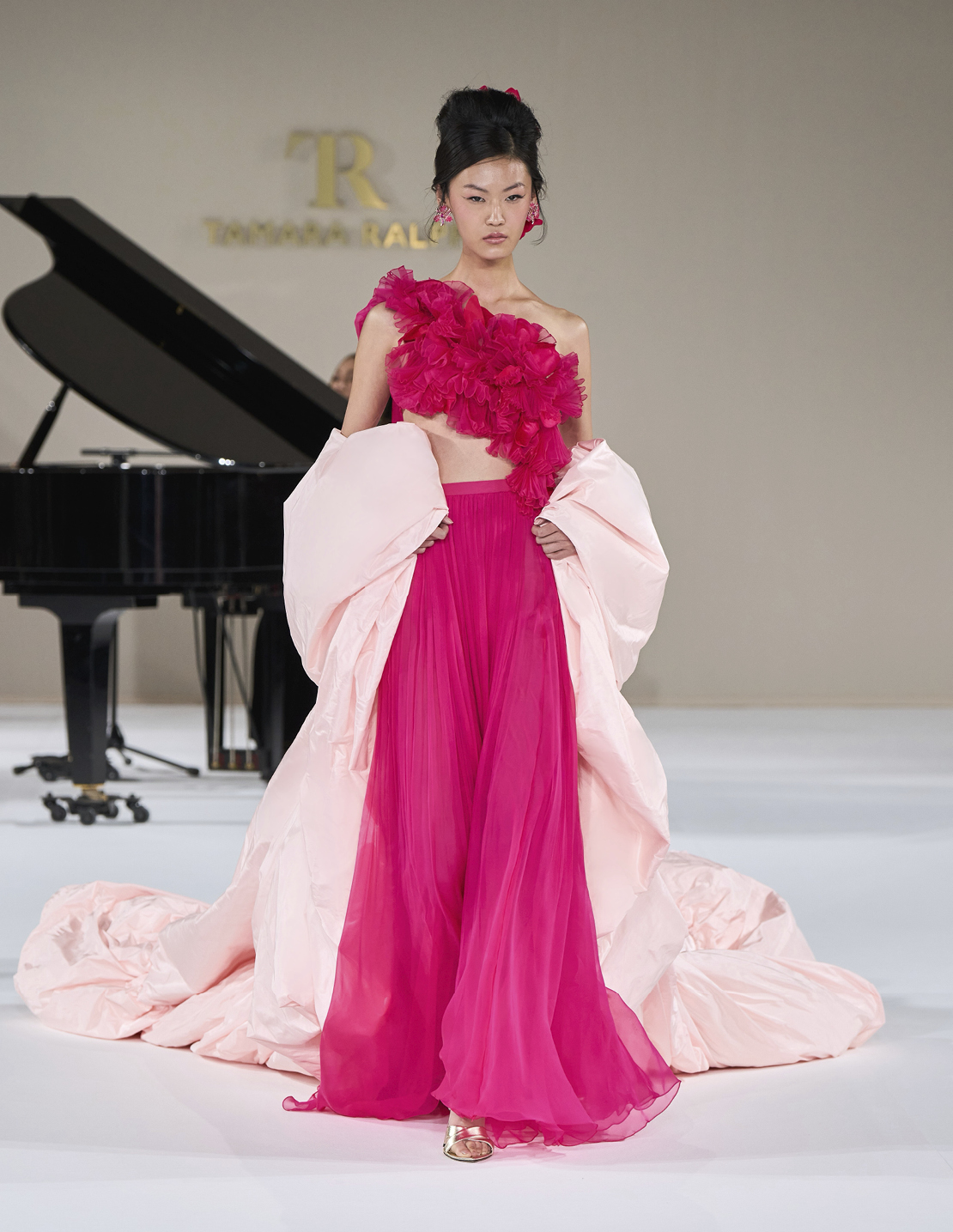
As an independent brand, what are the biggest challenges you face, and how do you overcome them?
With some of the growth in the industry, it also introduces an element that clients want something more exclusive and less exposed and an important part of my work is to focus on that type of clientele. I design for women who want something very exclusive, and that’s also part of the reason we are doing interesting niche collaborations. We want to keep that exclusivity to the brand.
I think it’s an interesting time for luxury. There are a lot of changes happening, but I think it’s a time when the type of clientele who want something even more exclusive is growing.
How do you feel having your name on the brand is beneficial today?
Yes, there are actually not that many brands left with the original founders or designers at the brand. I’m very close with my clients, and we have become like family and they are very loyal to the brand, and I like to have that connection with my clients and to know what they want, not only is it nice for me, but I also get an insight into what people are buying and how the market’s moving. So that connection with clients is very important for me as a business owner and as a creative.

What are you currently working on?
The new couture collection will be revealed in July. I had an incredible response to the recent couture collection, so we had a lot of things that stemmed from that which we are working on. There are new collaborations in the mix that we’re looking at launching early next year, and we have two more product categories in development which we will be able to announce soon. We are keeping ourselves very busy!
Tell us about the brand in the Middle East.
I come to the Middle East almost on a monthly basis and hope to be spending more time there, too. The region is very important and special to the brand and me, so we’ll be looking at doing some more things there soon.
Here’s Why You Need to Visit Armani/SPA in Dubai
Armani/SPA at Armani Hotel Dubai is a 12,000-square-foot oasis of peace in one of the city’s most exclusive locations. Featuring the same Giorgio Armani design philosophy that is present throughout the hotel, the spa is focused on bespoke treatments which cater to the individual needs of each guest.
Ahead of their treatment, each guest will receive a consultation from the spa professional to develop a bespoke sensory experience designed by Armani, combining unique therapies and services for body, mind and soul.
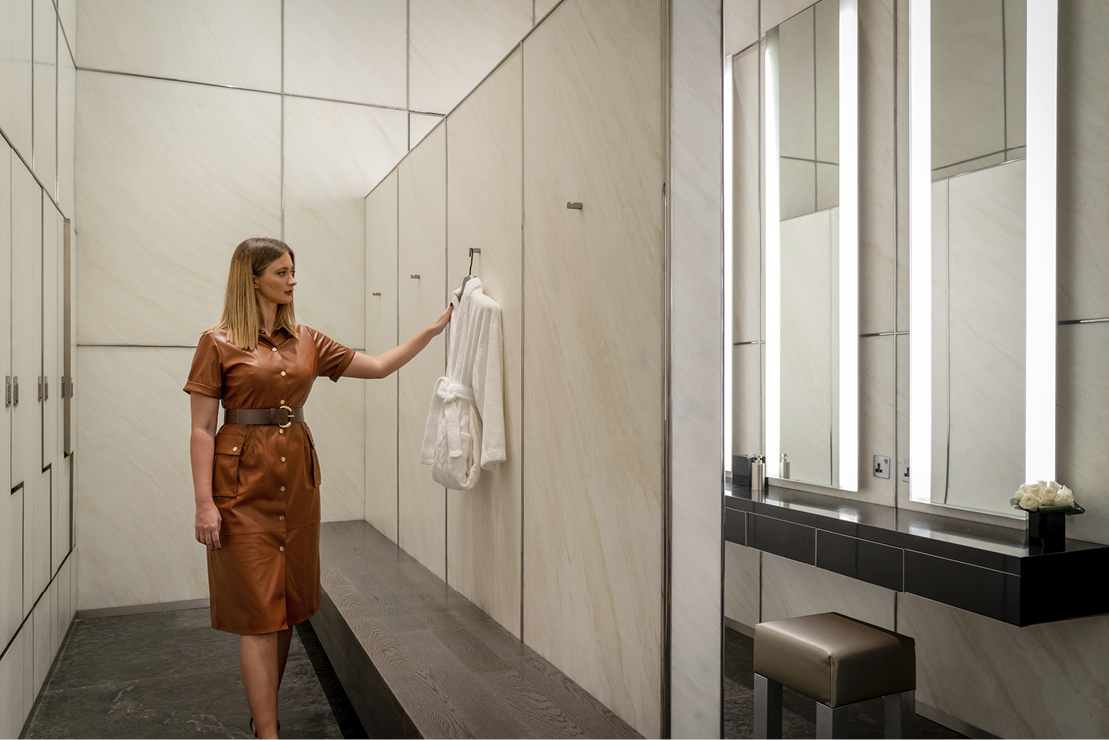
The bespoke menu is split into three categories, each focusing on a different goal. MU quenches a desire for relaxation, creating moments of stillness and peace. Libertà encourages the relief of deep-seated physical stress with muscle soothing and joint-liberating treatments. And finally, Fluidità balances and energises the body and skin to relieve, stimulate and revitalise from within.
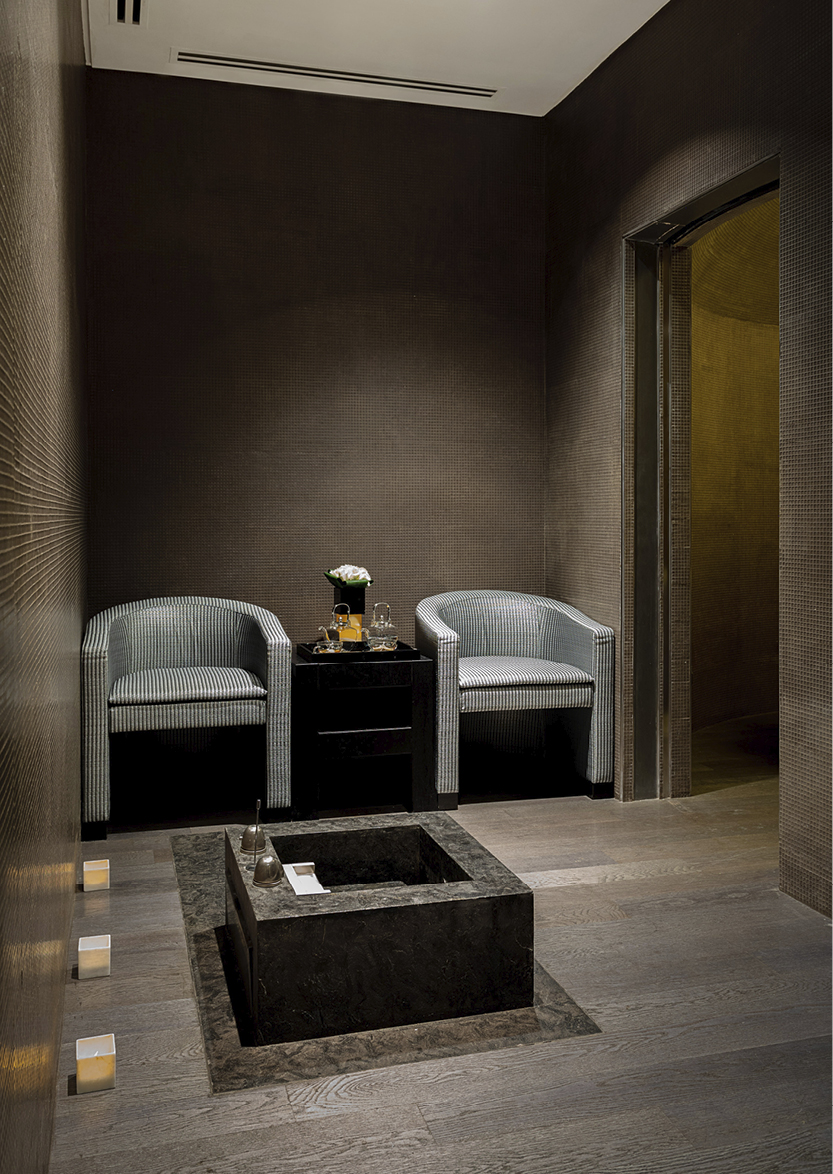
These therapeutic treatments are enhanced with custom-made, naturally fragranced Bois, Jasmine and Jade oils by Armani. Each therapy style covers facial treatments, body wraps, body massage, and more, with an option of 50 up to 150-minute experiences along with half- and full-day journeys.
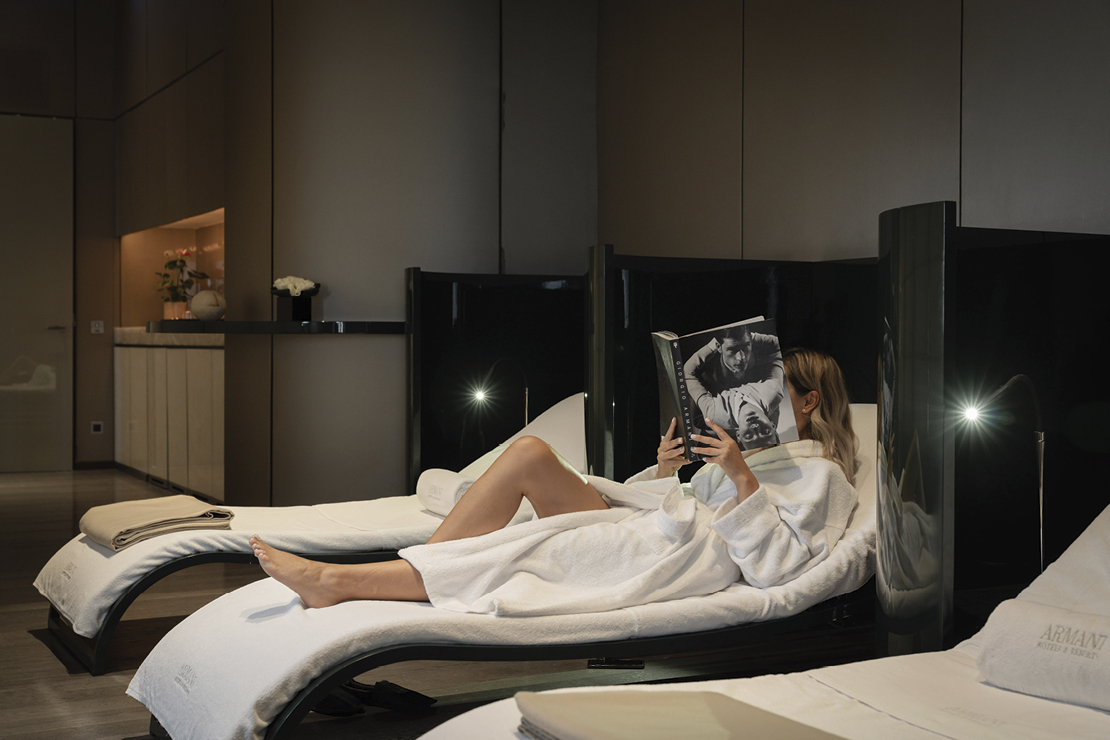
Signature therapies and treatments are further complemented by a menu of Essential Touches offering 25 and 30-minute express experiences, and Final Touches for manicure and pedicure services.
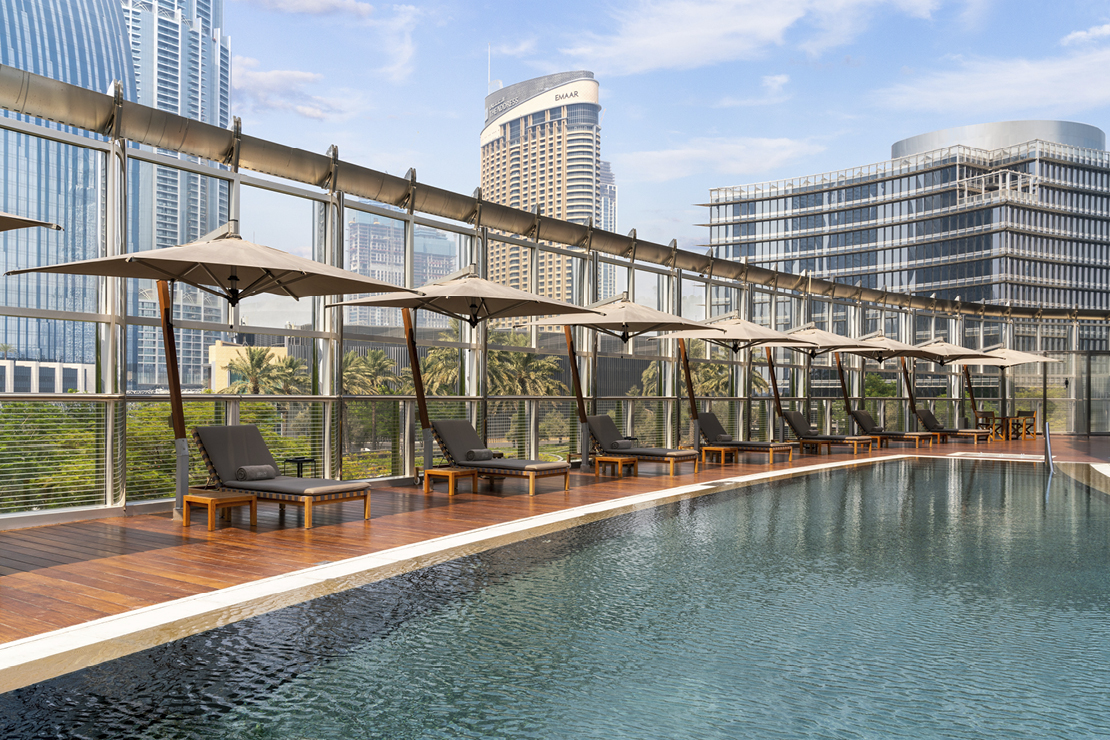
SPA guests also enjoy exclusive access to the Armani Terme facilities – a classic sequential hydrothermal experience using heat, humidity and falling water – to cleanse and heal both body and mind. Facilities include a sauna, steam chamber, and warm freshwater shower with a cool mist walkway.
For booking and appointments, please call +971 4 888 3282 or email armanispa.dubai@armanihotels.com. Open daily from 9am to 10pm.
Christian Louboutin joins forces with Maison Margiela
Christian Louboutin and Maison Margiela have collaborated on an exclusive capsule collection that captures the DNA of both brands.
First revealed at the Maison Margiela show in January 2024, the line of footwear sits as a perfect interpretation of both brands with each design offering their own interpretation of the other’s iconic styles. The collection is composed of two lines featuring three and four shoe styles, split between the genetics of the two houses.
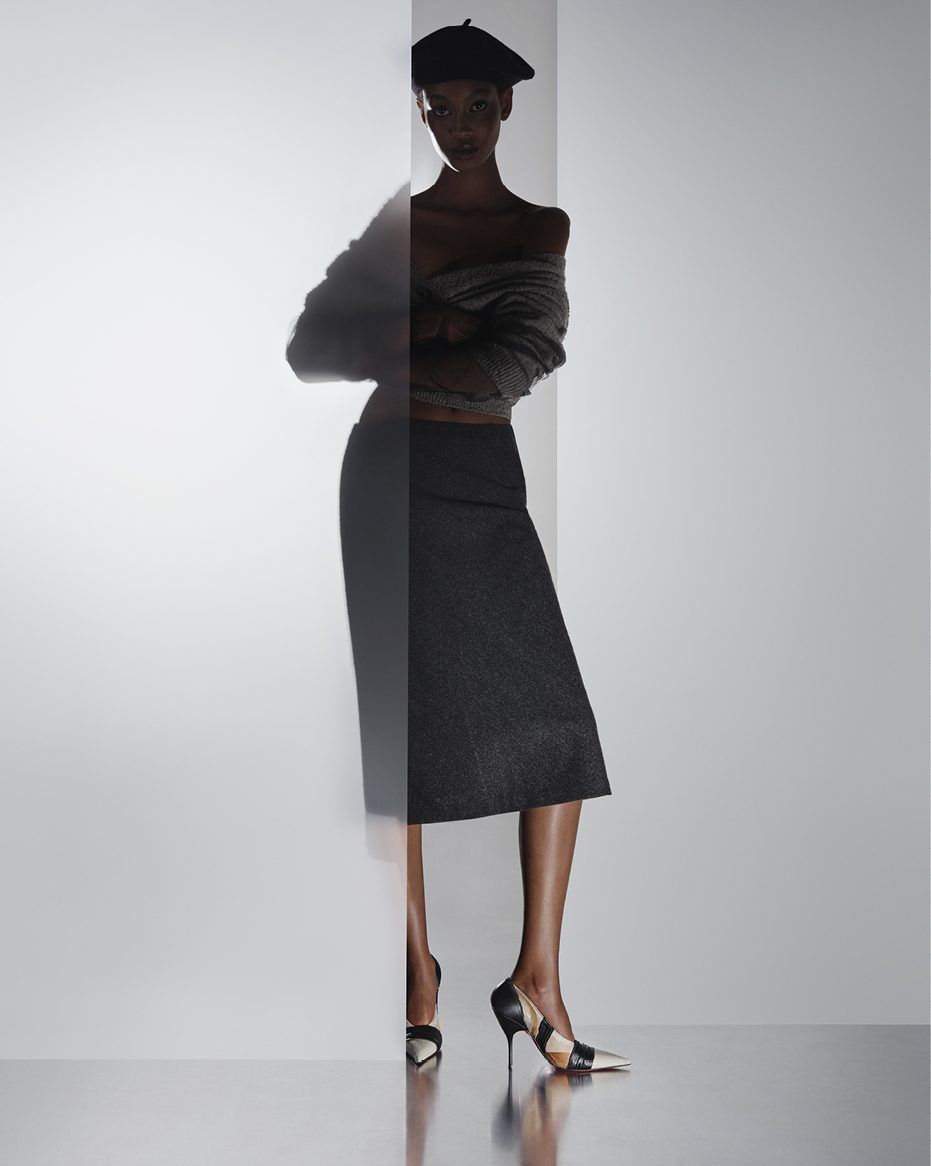
The Maison Margiela by Christian Louboutin collection considers the Maison’s signature Tabi through the curvaceous and feminine form language of Christian Louboutin. Painted with the designer’s signature red sole, the three proposals are structured around a new interpretation of the emblematic split-toe crafted through Christian Louboutin’s singular savoir-faire.
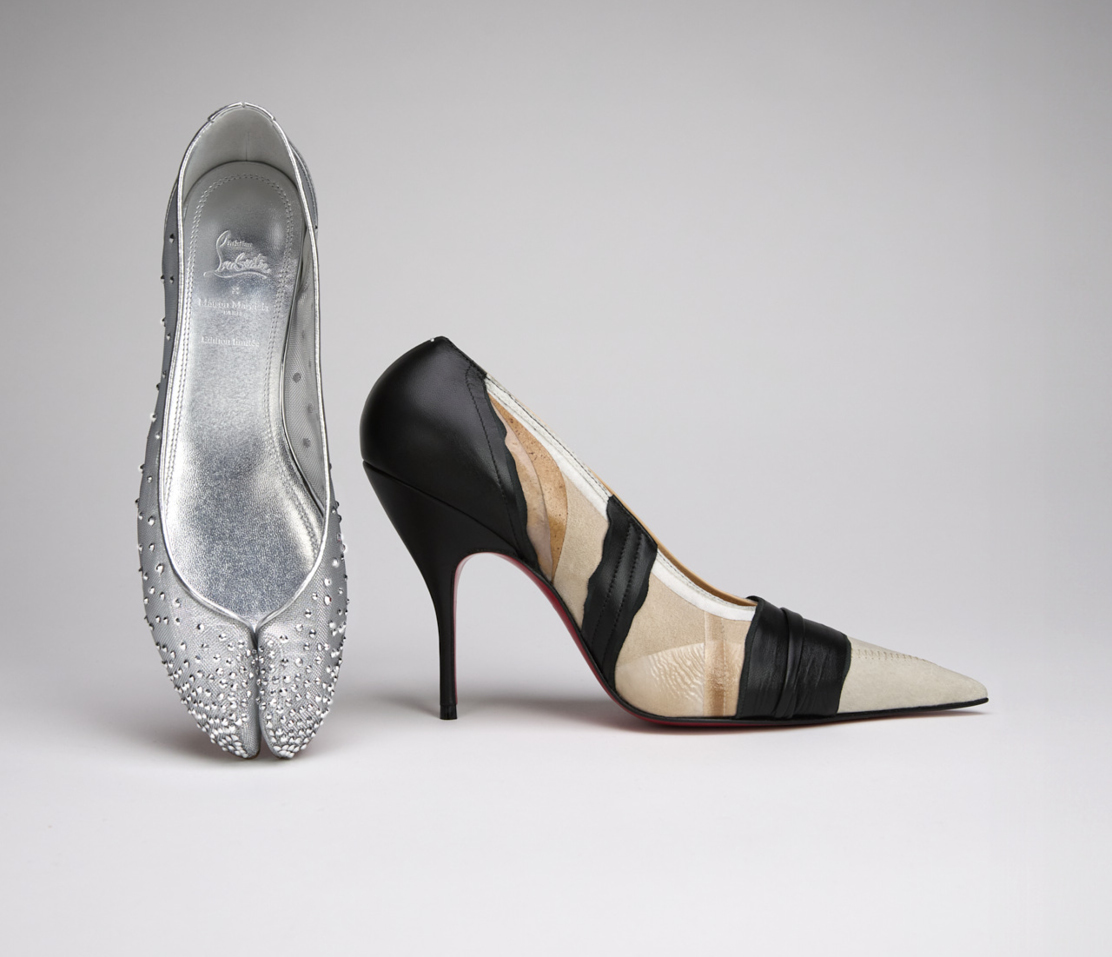
The Christian Louboutin by Maison Margiela collection re-frames the seductive silhouettes of Christian Louboutin through the inverted and subversive lens of the Maison. Evolved from haute couture explorations developed in the Artisanal atelier, Creative Director John Galliano applies his figurative and illustrative techniques to the expressions of Christian Louboutin.
Chanel Beauty Reveals its Latest Makeup Collection for Spring 2025
The Chanel Makeup Creation Studio has collaborated with Cécile Paravina of the Cometes Collective, to design the Camélia Futura Makeup Collection.
The camellia flower is an inspiration for the brand, which already has a skincare line inspired by its beauty. This makeup collection, however, takes inspiration from the camélia’s shapely, almost geometrical, curves to create dreamlike products with futuristic charm.
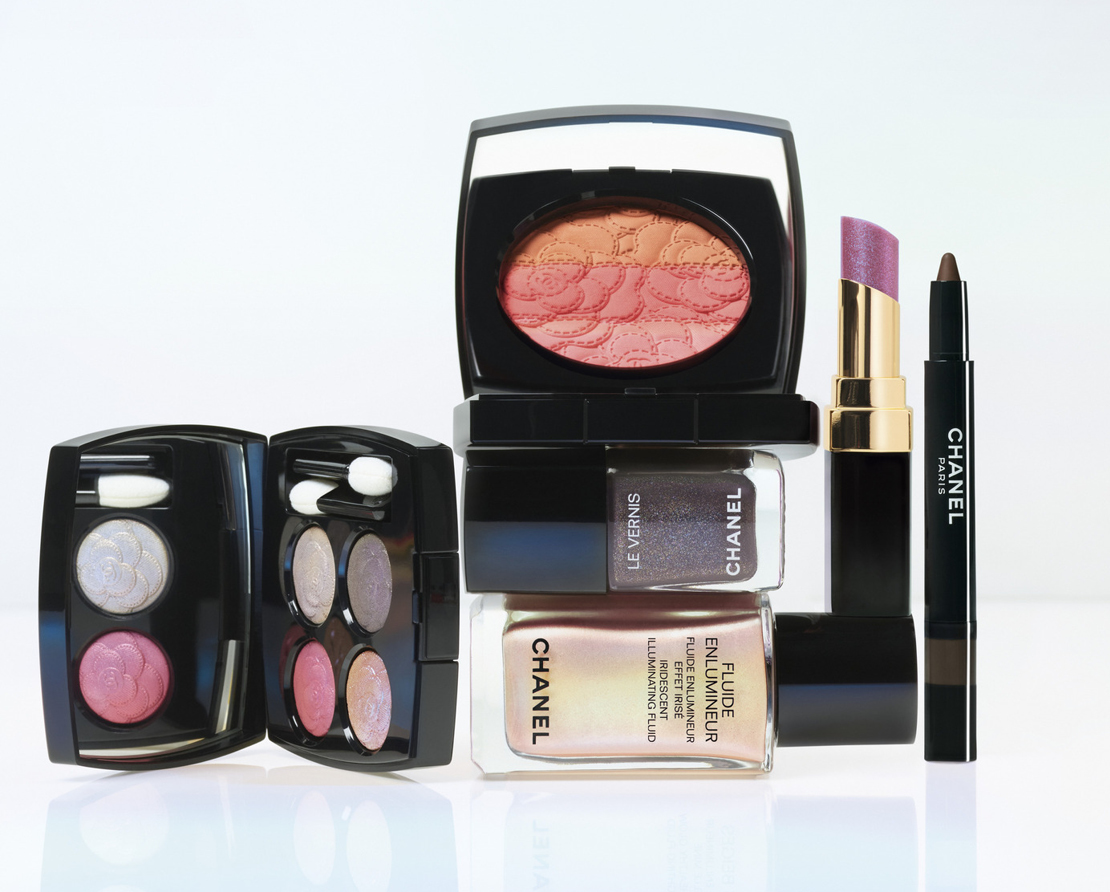
“There is something very soft and gentle about the camellia’s aesthetic… which is particularly surprising when you know that it is actually a very hardy plant that adapts and manages to flower even in extreme conditions. This duality is the basis for the collection, marrying soft, romantic qualities with colder, more futuristic and modern codes.” Says Cecile Paravina, Chanel Global Creative Makeup Partner.
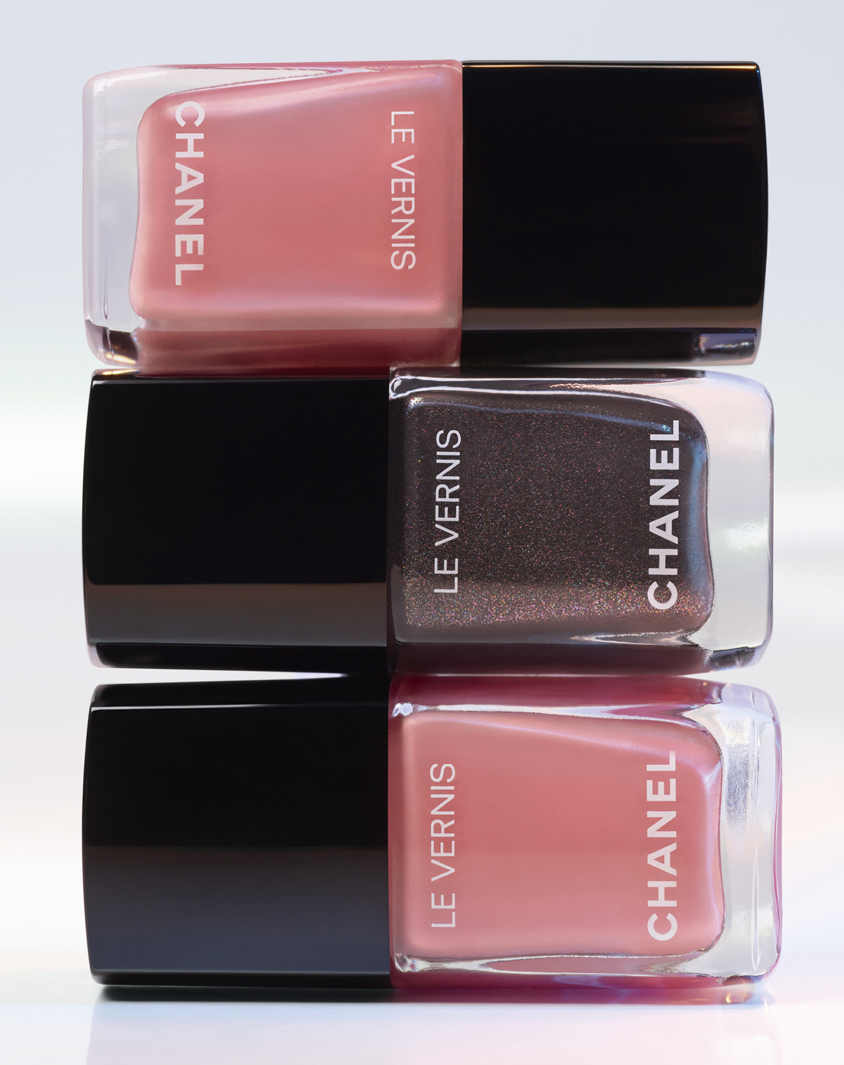
The Camélia Futura Makeup Collection is a line of products featuring metallic accents, multi-faceted shimmer and a blend of avant-garde and romantic styles. The products come in eye-catching shades and are designed to be incredibly easy to work with, making them appealing to all women.
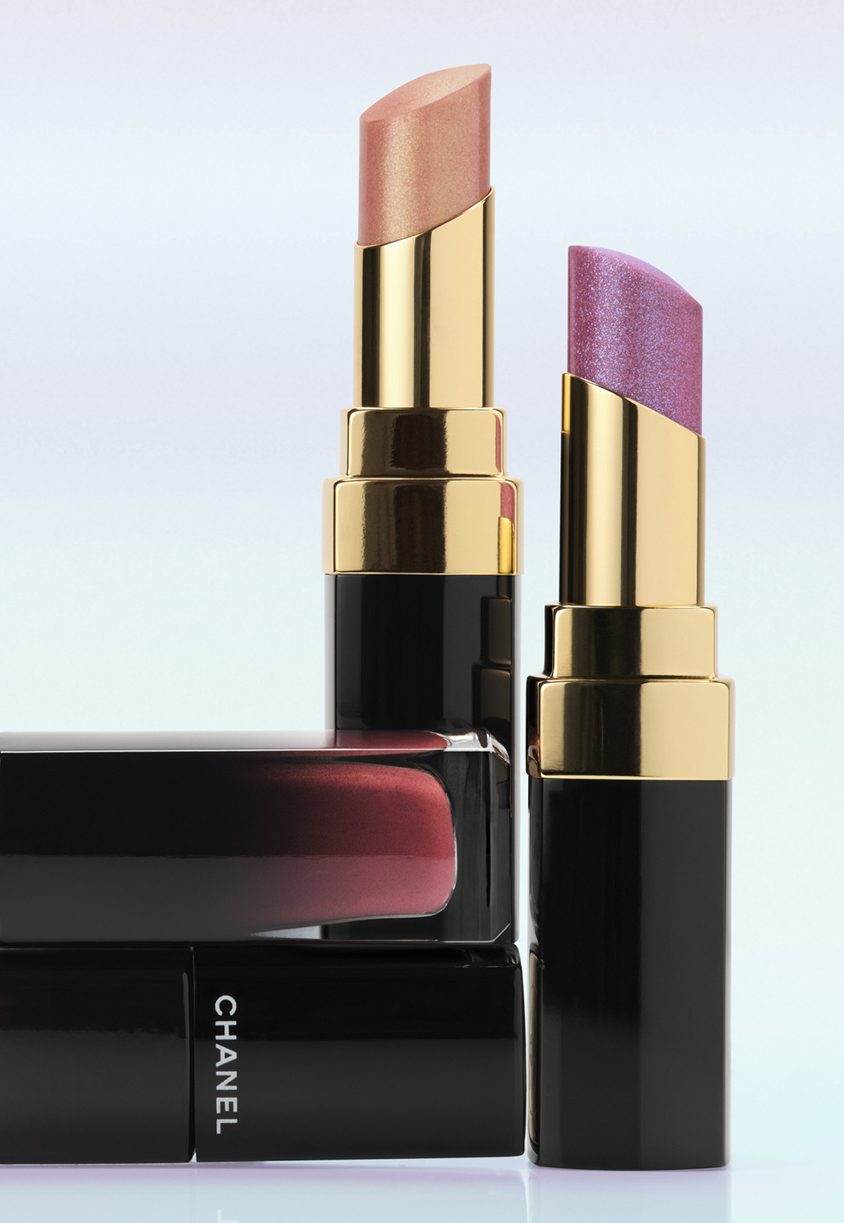
At the heart of the collection is the Camélia Futura Exclusive Creation, embossed with hand-sewn camellias. A true colour odyssey, this blush trio shifts from tender pink to apricot in a gradation of ethereal hues. Cécile Paravina adds a hint of iridescent light to the complexion with an exclusive shade of Fluide Enlumineur, a soft pink with a green shimmer.
For eyes, the Les 4 Ombres Utopia palette features four eyeshadow shades created with resplendent pearly particles, designed to embellish the eyes with a sublime, practically futuristic glow. The Stylo Ombre et Contour come in four deep matte shades with a pearlescent shimmer that will catch the light with every blink of the eye.
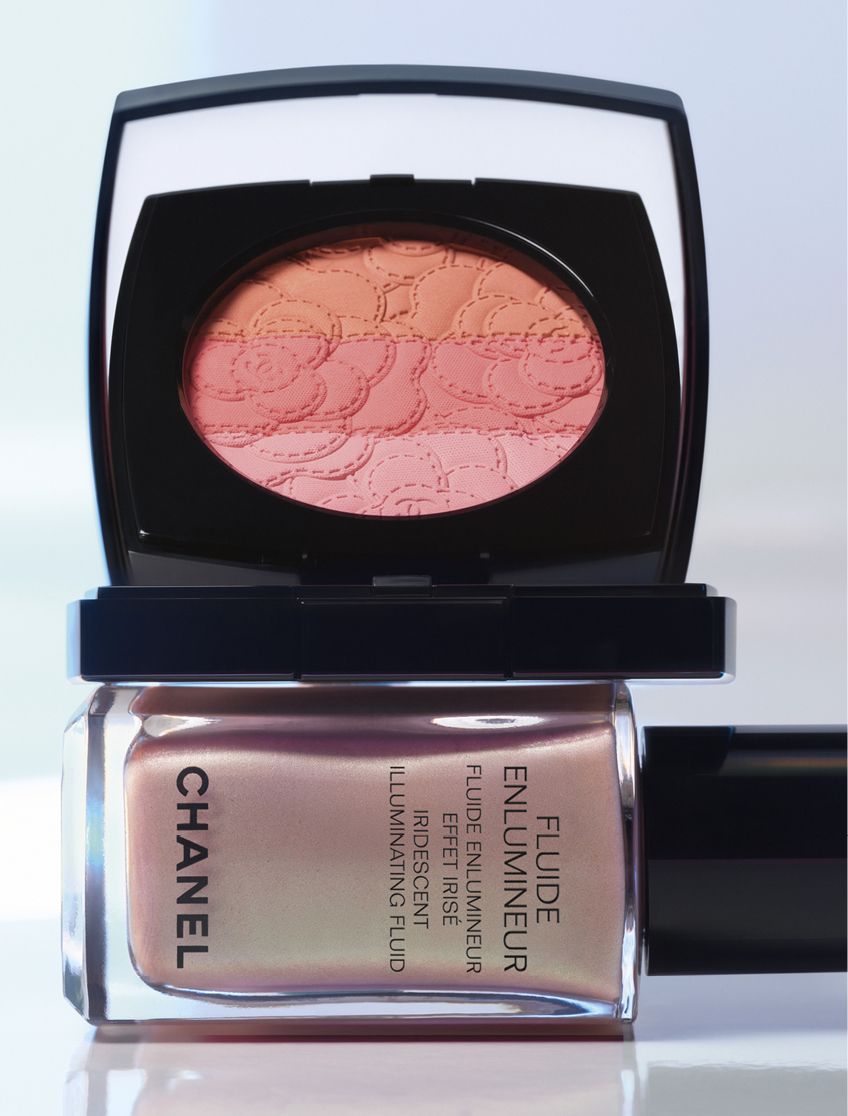
In lips, two shades of Rouge Coco Flash make the lips shine: a peach with golden pearlescence and pink with hints of lilac blue. Their shimmery finish adds a touch of light and a modern feel to the lip look. And two shades of Rouge Allure Laque also capture the spirit of the collection. A deep, rosy peach and a hot pink with metallic shimmer, made all the more spectacular by its colour-shifting shine.
And finally, in nails, two new shimmery shades of Le Vernis put the finishing touch on looks created with this collection: a glittering mauve grey and a semi-sheer pink with fine pearlescent particles. They reflect the avant-garde take on romanticism that underpins the entire collection.
A Closer Look at Dubai’s New Jumeirah Marsa Al Arab Hotel
Jumeirah Marsa Al Arab, the latest impressive addition to Dubai’s skyline, officially opened on March 14th.
The new five-star resort is situated in one of the city’s most exclusive locations, with a backdrop of the Arabian Gulf, Jumeirah Beach Hotel and Burj Al Arab. The opening of Jumeirah Marsa Al Arab represents a significant milestone in Jumeirah’s journey, offering guests a new, extraordinary experience.

Designed by acclaimed architect Shaun Killa, the resort features an avant-garde, superyacht-inspired aesthetic, whose interiors borrow from the hue of the golden hour. The resort features 386 rooms and suites, as well as 82 serviced residences, an 82-berth superyacht marina, an immersive spa and a collection of curated dining experiences, as well as four stunning pools set amidst lush landscapes and one indoor pool.

Guests will be immediately in awe as they enter the impressive driveway, as each experience will take them on a journey. The hotel is home to 11 curated dining experiences and four destination bars, each offering unforgettable moments.
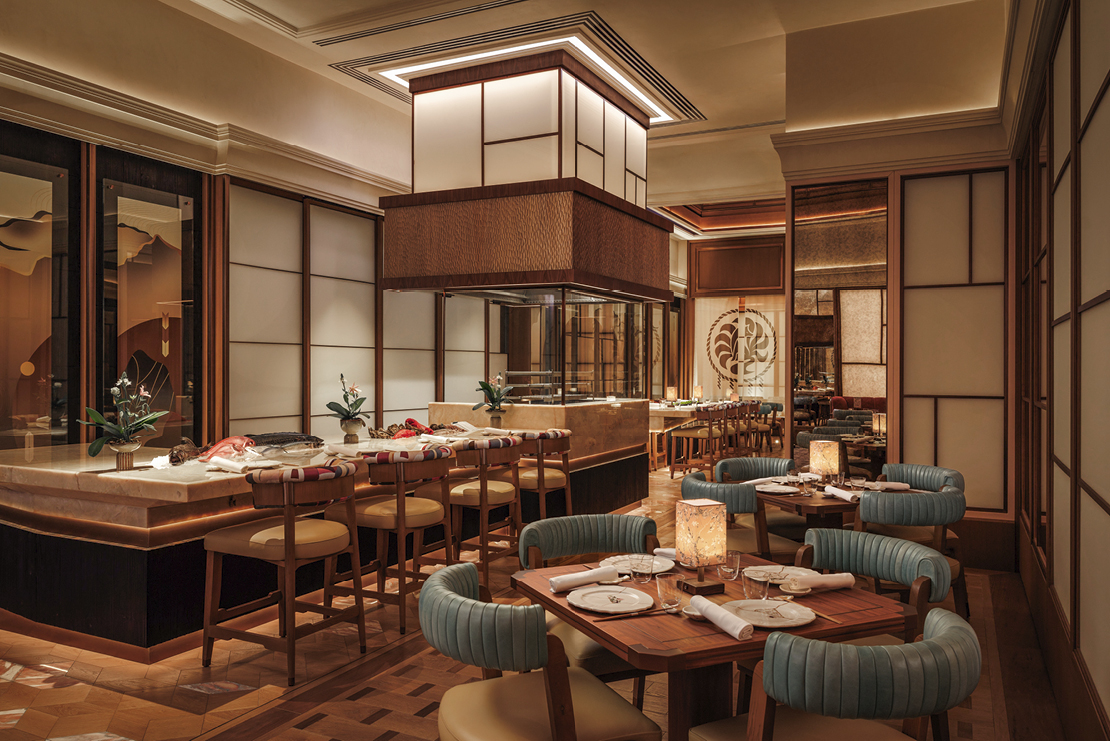
TALISE Spa opens its newest signature wellness concept, where bespoke treatments and holistic therapies are expertly designed to restore balance and promote well-being. The resort is designed to attract families and includes a kid’s club and a host of facilities for children.
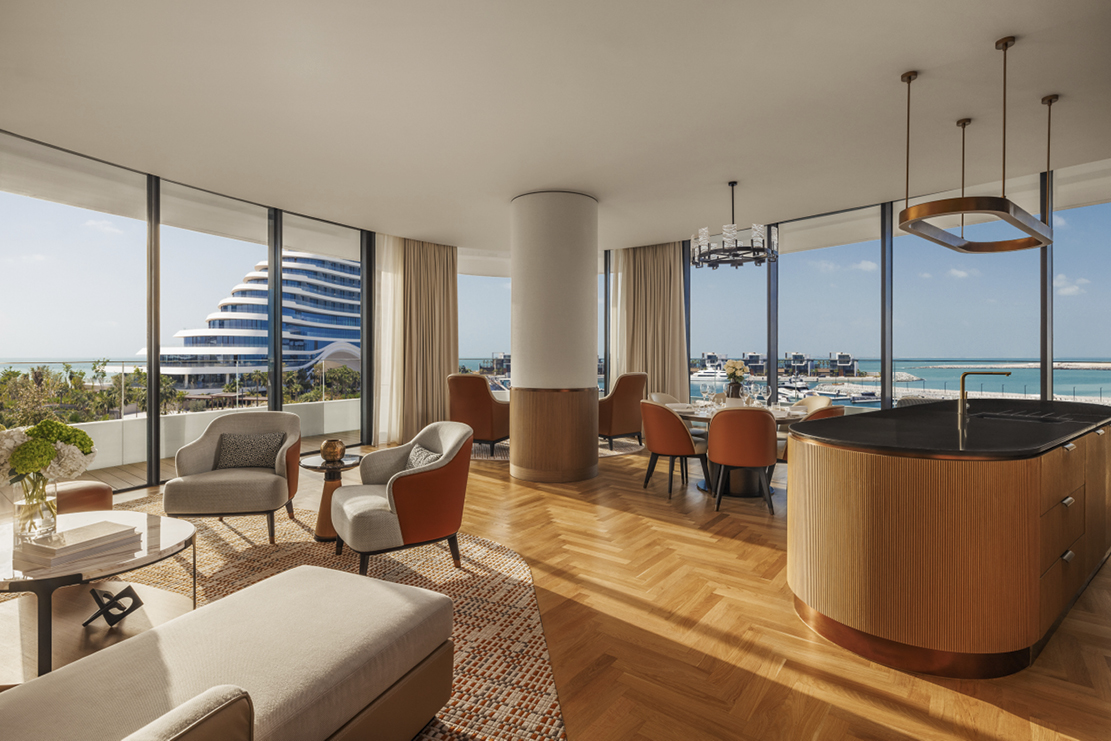
And finally, the Marsa Al Arab Marina offers an unparalleled yachting experience along Dubai’s stunning coastline.
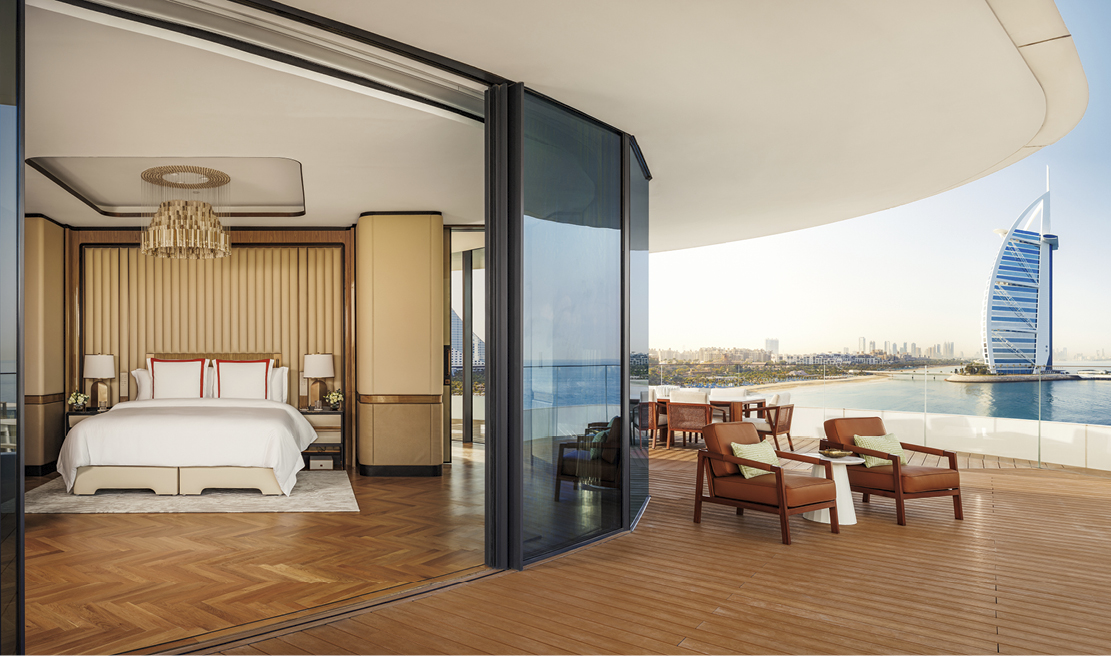
As a vibrant social hub, it features serene vistas, homegrown dining concepts, exclusive retail stores and sophisticated suites, it invites locals and visitors to immerse themselves in the beauty of the sea while exploring a rich tapestry of cultural experiences.
Maral Artinian the Founder of Marli New York Reflects on Ten Years of the Brand
Over the past ten years, Marli New York has carved out a unique space in the world of fine jewellery, embodying a modern, minimalist aesthetic that resonates with confident, independent women.
Founded by Maral Artinian, the brand has become synonymous with clean lines, fluid movement, and an effortless sense of luxury. Inspired by the city of New York, the brand’s pieces are bold, and unapologetic, as well as being uniquely feminine in a contemporary way. As Marli celebrates its milestone 10th anniversary, we sit down with Maral to reflect on the journey—what inspired her to launch the brand, the evolution of her signature designs, and what the future holds for Marli as it enters its next chapter.
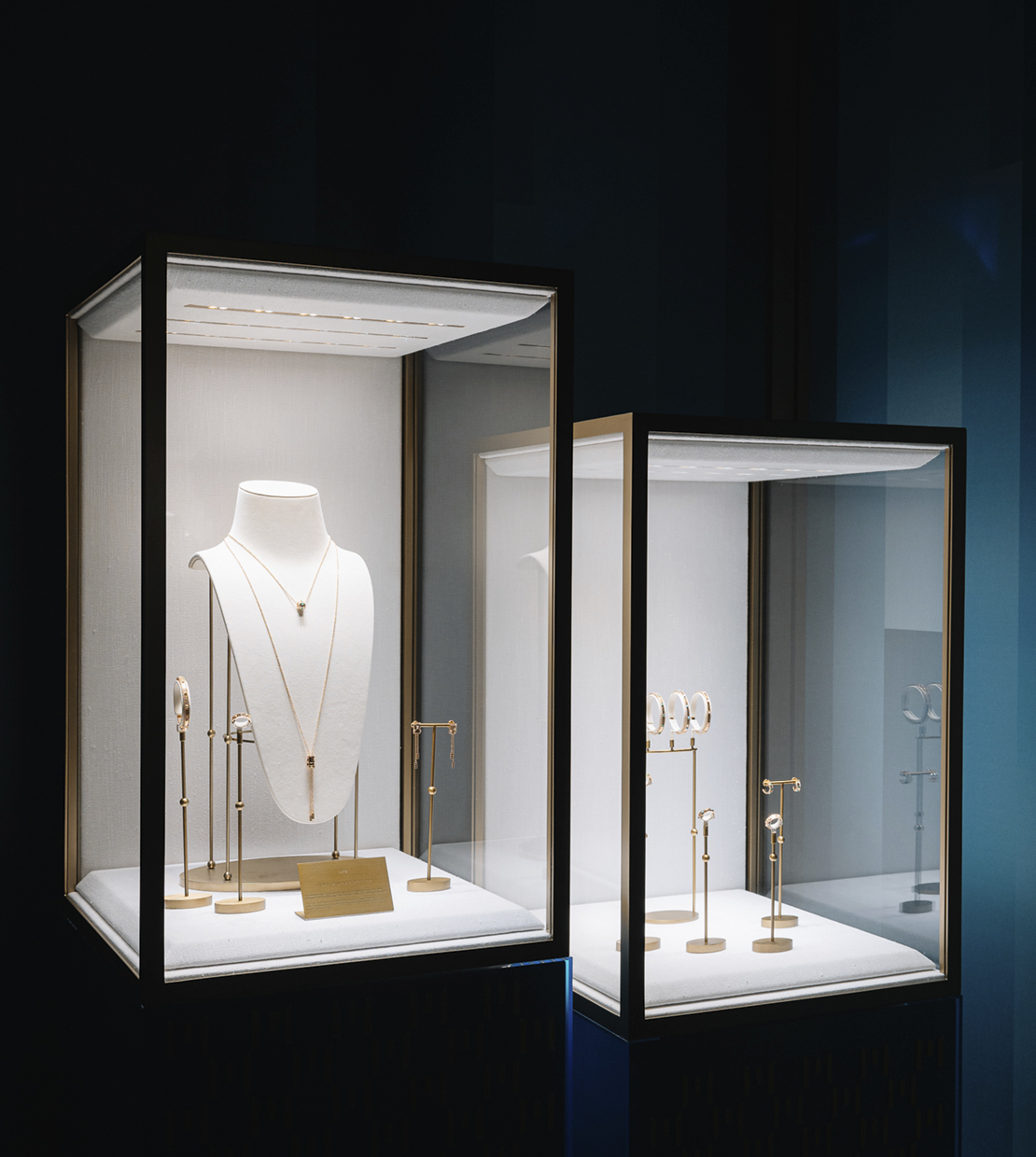
Tell us about the vision and direction of Marli for this year.
Looking ahead to the rest of 2025, I’m incredibly excited about where Marli is heading. The milestones we’ve achieved since the debut of our High Style collection, ‘A New York Affair,’ along with the continued expansion of our global presence and growing community, have been nothing short of remarkable. Dressing icons like Cynthia Erivo at the Oscars and Rihanna in Marli’s signature creations has been a true reflection of our vision that jewellery transcends adornment. We want to continue the year liberating our clients to express their exceptionalism and embrace their individuality while feeling inspired by the bold energy and vibrant spirit of New York.
You have just celebrated the brand’s 10th anniversary, what can we expect from the next 10 years?
Expect Marli to continue to grow as a brand that balances craftsmanship with innovative design. Presently, Marli is on the brink of a transformative geographical expansion, strategically entering new markets and positioning ourselves in the world’s most influential major cities. This global footprint will ensure that the community we have built feels they are accessible to the Marli universe, no matter where they are. We are set to redefine our boutiques into fully immersive spaces. This evolution in retail design is a bold statement of our commitment to delivering an unparalleled client experience. It’s not just about displaying jewellery—it’s about creating an environment where Marli collections come to life and ensuring every visit leaves a lasting impression. Lastly, seeing Marli dominating red carpets from Dubai to Hollywood has been nothing short of exceptional. Marli is worn and sought after by the most influential icons, from Demi Moore to Elissa. This is just the beginning for us, and we will continue to make our mark and captivate talent around the world.
How would you sum up MARLI’s evolution over the last ten years?
Reflecting on Marli’s evolution over the last ten years, it feels like both a blink of an eye and an incredible journey. One of the milestones I’m most proud of is our expansion to 14 boutiques globally, enabling us to share our vision and craftsmanship with an ever-growing international community. From New York, Paris, and Geneva to Dubai, seeing Marli’s presence in major cities worldwide has truly been a dream come true. Each boutique is not just a storefront but an experience to create lasting connections with our clients. The community we’ve cultivated across the world is the heart of Marli, and we are deeply committed to being accessible to our clients, wherever they live or travel. The presence of Marli on red carpets and in the hands of global icons is a testament to the powerful relationships we’ve built, and it continues to inspire us to reach even greater heights.
Who is the MARLI woman today?
The Marli woman is bold, confident, and unapologetically herself. She’s someone who embraces her individuality and liberated self-expression. She’s not afraid to make a statement, whether through her style, her choices, or the way she moves through the world. She celebrates her achievements, milestones, and her unique journey by her own rules. The Marli woman is modern, dynamic, and always evolving—just like the city that inspires us, New York. She wears jewellery as a reflection of her own identity, not just as an accessory, but as a symbol of her empowerment.
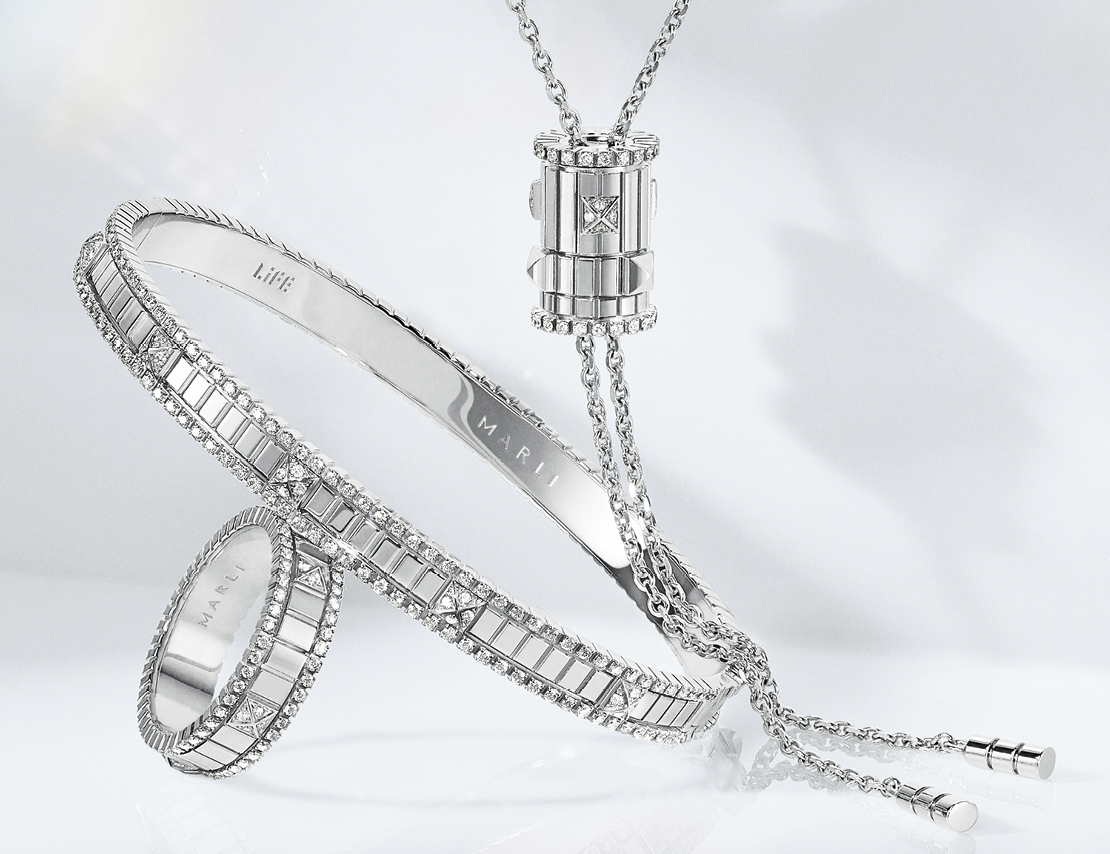
What can you tell us about the latest collection?
The LIFE collection is an uncompromising celebration of life, love, and creation. At the heart of this collection is the powerful notion that there are many ways of moving forward; even when all stands still. LIFE is, above all, a remarkable expression of lines and movement, softness and strength, colour and light. This collection is a bold reflection of time and eternity, infused with the spirit of New York—where energy and dynamism are the driving forces that shape everything within all Marli collections. In parallel with LIFE, I am excited to have debuted A New York Affair, Marli’s first high-style collection—a love letter to the city that continues to ignite my inspiration, passion and vision.
How would you assess the jewellery industry today as a whole?
Traditionally, the jewellery world is still deeply rooted in norms and expectations, especially when it comes to gifting. For many years, jewellery was often seen as something that was given to someone else to mark an occasion or milestone. At Marli, we believe that jewellery should reflect the wearer’s individuality and personal journey, not just be a gift for a special occasion. We want our creations to allow our clients to celebrate their own milestones, whether it’s a career achievement, a personal victory, or simply treating themselves to something beautiful. Jewelry, in our eyes, should be a form of self-expression—something you wear to mark the moments that matter to you, regardless of tradition.
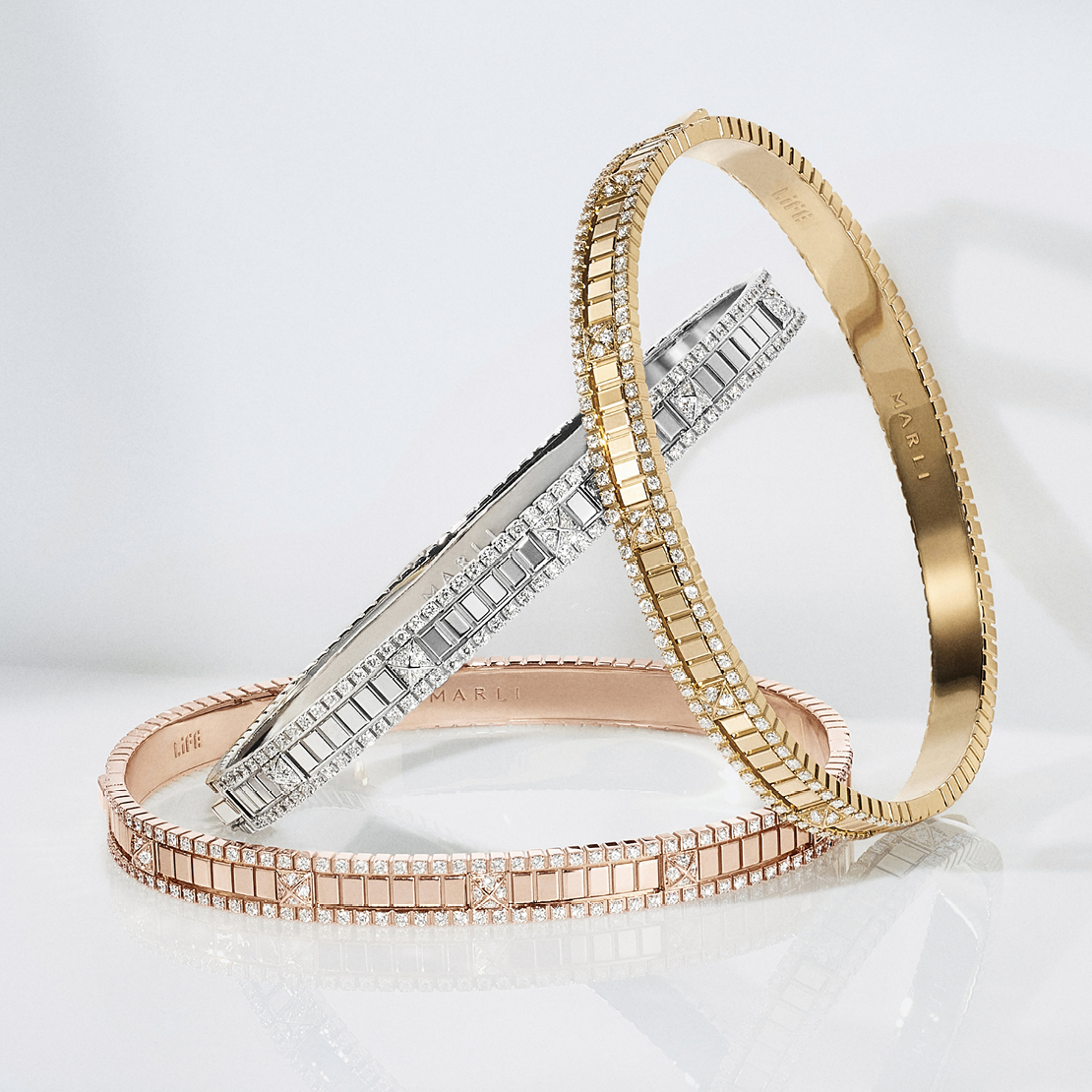
What can you share about MARLI in the Middle East?
Over the last decade, we have built something extraordinary in the Middle East—an unparalleled community that goes far beyond business. The relationships we have cultivated are not just transactional—they are transformative and will always be essential to our journey. At Marli, our mission is to bridge the vibrant energy of New York with the timeless elegance of the Middle East in a borderless and dynamic way. Our Middle Eastern clients are not just visiting us in New York—they are becoming part of the city’s pulse, experiencing firsthand the innovation and creativity that define Marli. They return home, forever marked by the energy and spirit of New York, while we carry the essence of their culture with us, solidifying a profound, unyielding connection that unites both worlds.
What are the global markets you are focusing on currently?
A significant milestone for Marli was the recent opening of our boutique in Geneva, marking a pivotal moment for the brand. Geneva, with its legacy of high-end craftsmanship and elegance, aligns perfectly with our vision, and we are proud to contribute to that tradition. While the U.S. remains a crucial market, we’re focused on expanding our presence and offering our clients more immersive experiences that connect them with the essence of the MARLI universe. Above all, our mission is to continue growing and nurturing our global community.
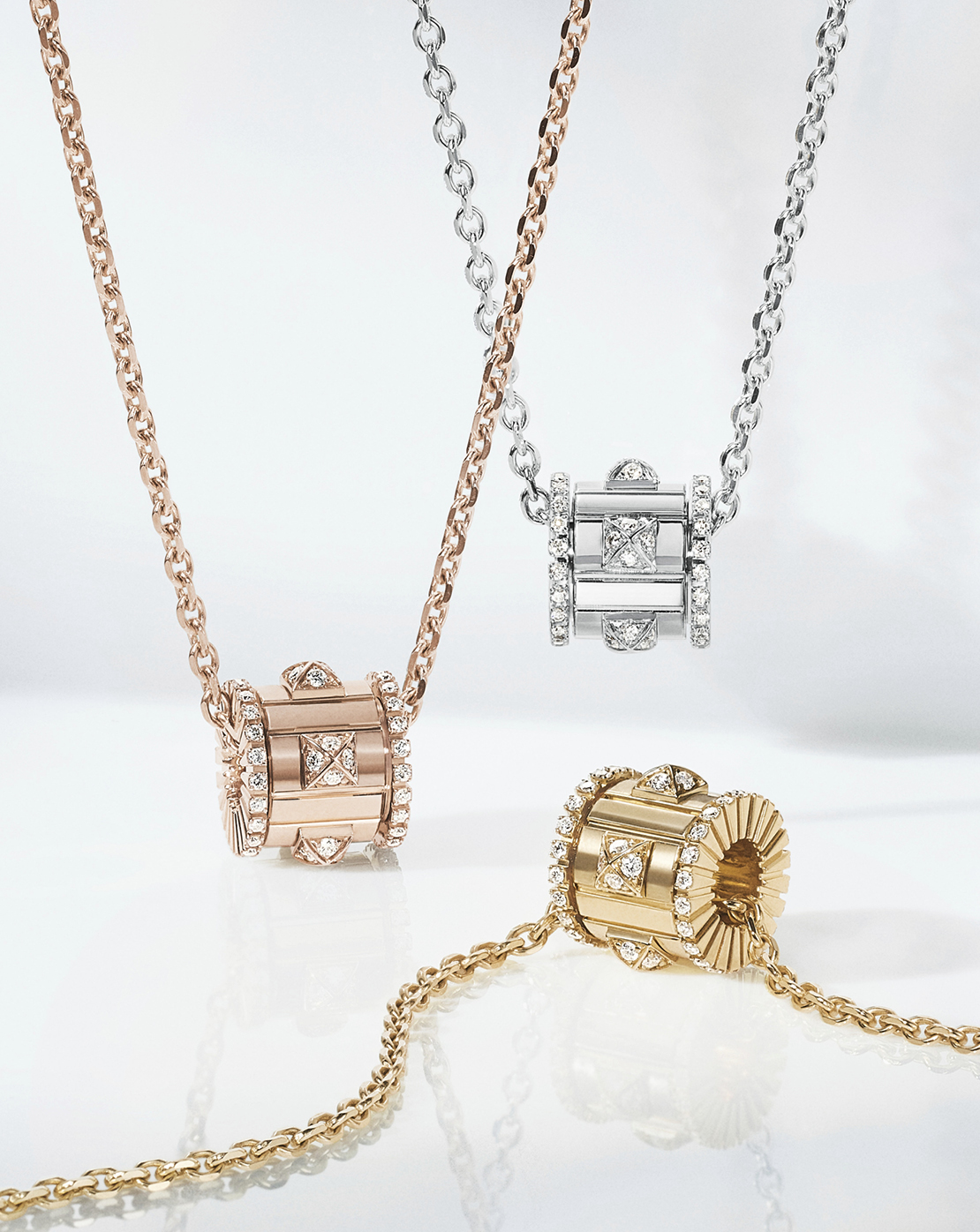
Can you tell us about sustainability at MARLI?
Sustainability is an imperative pillar of everything we do at Marli. From the very beginning, we’ve been committed to ensuring that our creations not only embody timeless design and exceptional craftsmanship but also align with the highest ethical standards. We take our responsibility for the planet very seriously by being incredibly selective about the materials we use, ensuring that they are responsibly sourced with integrity, and meet the strictest environmental and social standards. We want our clients to feel confident knowing that the creations they wear are made with honesty, from design to delivery.
What is something you would still like to do with the brand?
As the creative force behind Marli, my mission has always been to bring the unapologetic energy of New York into everything we create. This city has been my greatest inspiration—a place where boldness, innovation, and individuality collide, shaping everything from culture to creativity. I want Marli to embody that fierce spirit in every design. It’s not simply about crafting jewellery; it’s about inviting our clients into the heart of New York—the city that fuels my vision. With each creation, I want them to feel the pulse of this vibrant metropolis, to mark their defining moments, celebrate their uniqueness, and express their exceptionalism. Every Marli creation should reflect their journey and be a statement that they are not simply following trends but creating them. Through Marli, we’re not just celebrating the individual; we’re celebrating those who dare to push boundaries and defy convention while empowering those who wear our pieces to carry that same energy with them, embracing their self-expression wherever they go.
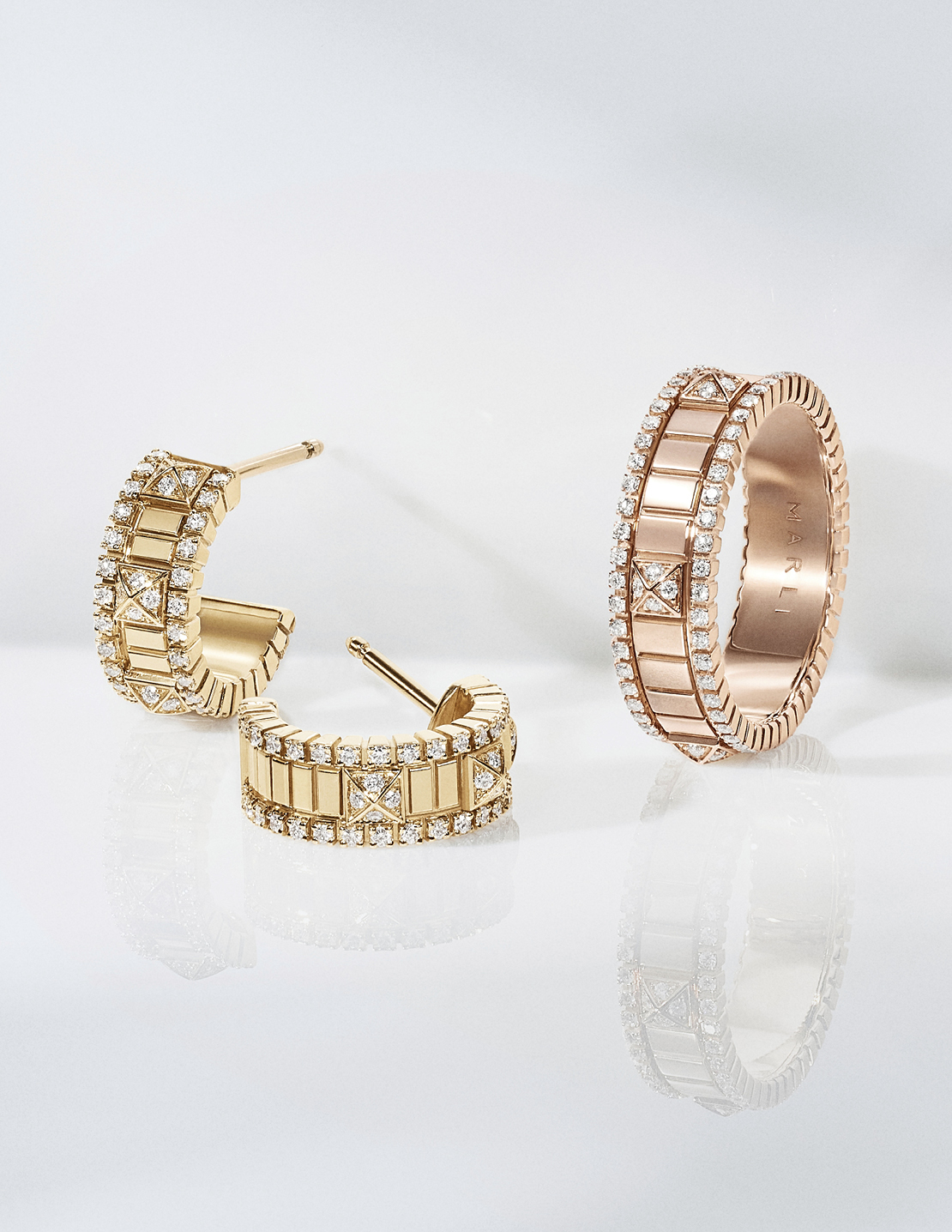
Where did your passion for jewellery come from?
My passion for jewellery is deeply rooted in my family’s legacy. I come from three generations within the industry, so the world of fine jewellery has always been a part of my DNA. Growing up, I was surrounded by craftsmanship and creativity—it was in the air I breathed! When I founded Marli, it was a natural extension of this, but with my own vision of creating something modern, dynamic, and empowering for today’s wearers. I wanted to create a borderless brand that embodies both the heritage of fine jewellery and the innovative spirit of New York, where every creation tells a story and makes a statement about the exceptionalism of the person wearing it.
What inspires your designs?
New York is the backdrop for Marli—it is the driving force behind every creation. The city’s iconic architecture, its dynamic energy, and the relentless pulse of its streets are woven into each striking design, infusing it with a spirit that is uniquely its own and where every detail speaks with purpose and power. The women of New York—fearless in their self-expression are the true muses behind every collection. Each creation captures New York’s raw vitality, where timeless elegance meets unapologetic modernity. With Marli, it’s not just about wearing jewellery; it’s about carrying the unstoppable energy, spirit, and unmistakable identity of New York with you wherever you go.
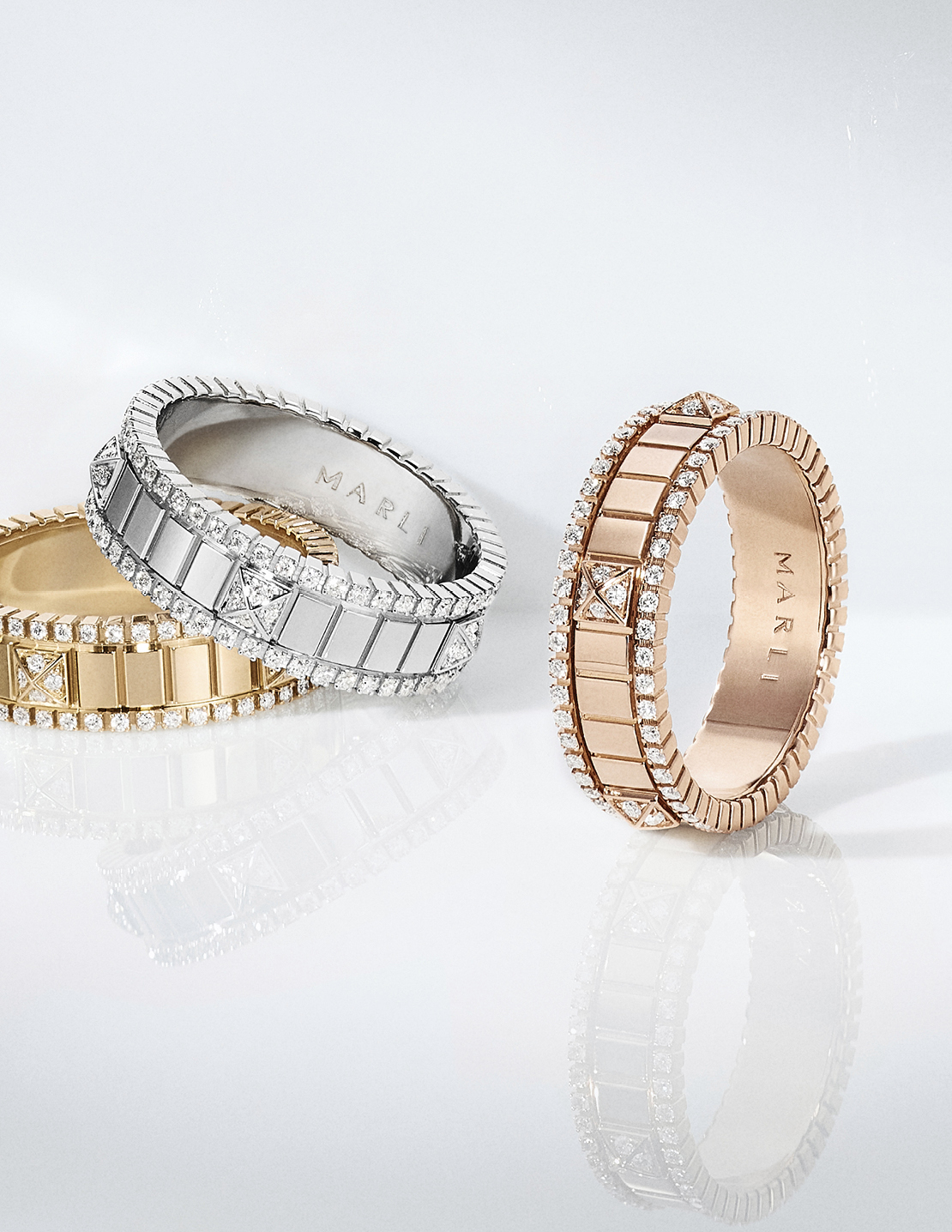
What is the professional motto you live by?
My philosophy is simple: “Everyday is a new opportunity, so make it something good, even if it’s a small one.”
Describe MARLI in one word.
Empowering.
Marli is empowering because it goes beyond adornment—it’s about self-expression and celebrating what makes you distinctly unique. Each creation is designed for the wearer to mark their own moments and embrace their individuality with confidence. Wearing Marli; reflects their exceptionalism and is a way for them to carry their unique story with them, every day.
Katia Samra the Artistic Director of Samra Discusses Family, Craftsmanship and Legacy
With a history dating back to 1941, Dubai-based jewellery house Samra’s commitment to craftsmanship, sustainability, and innovation continues to shape the future of fine jewellery in the region. Behind every exquisite piece is a story of ambition, artistry, and a dedication to empowering women through timeless design.
Today, the family-owned business is overseen by third-generation family members, including Artistic Director Katia Samra. Katia is a visionary force in the region and in her position, she has not only redefined what it means to design for the modern woman but has also championed creativity and empowerment in an industry historically dominated by men. Through her pioneering initiative, Dream Big with Samra, Katia has opened doors for aspiring artists, offering them mentorship and the opportunity to collaborate with the Maison.
Her passion for artistry extends beyond jewellery, forging collaborations with influential women across diverse fields—from art and design to floristry and entrepreneurship—further solidifying Samra’s regional and global presence. Here, we sit down with Katia Samra to uncover the inspirations behind her designs, the evolution of Samra, and her vision for the future of the jewellery house.

Tell us about Samra today and its vision.
Samra is more than a jewellery house — it’s a legacy built on craftsmanship, heritage, and a deep understanding of the modern woman. Today, Samra stands as a bridge between tradition and innovation, honouring our roots while pushing creative boundaries. Our vision is to craft timeless pieces that celebrate individuality, empower women, and carry stories across generations.
Who is Katia as a woman, and where did your passion for design come from?
I am a designer, a dreamer, and a believer in the beauty of detail. Growing up in a family deeply rooted in jewellery, I was surrounded by the language of craft, sparkle, and storytelling. My passion comes from seeing how jewellery can transform emotion into form — how it can empower, protect, and elevate.

How do you hope women will be empowered by the jewellery pieces you create?
Jewellery is intimate — it reflects who we are. I design pieces that give women a sense of strength, beauty, and pride. Whether it’s a bold geometric ring from our Turath collection or a delicate diamond necklace, each creation is meant to become a part of her journey — her identity, her legacy.
How would you assess the jewellery industry in the Middle East today, and how has it evolved since you first began?
The industry has flourished — creatively and culturally. We’re seeing a beautiful balance between honouring our rich heritage and embracing bold, modern expressions. When we first began, it was more traditional, but today, regional designers are innovating and making their mark globally while staying true to our roots.
How would you describe your design aesthetic today and what are your biggest influences?
My aesthetic is architectural, poetic, and deeply symbolic. I’m drawn to symmetry, geometry, and motifs that speak to our heritage — especially through our Turath collection, which evolves season after season. I’m influenced by the women around me — their strength, their softness, their individuality.

Can you share some details on your design process?
It always begins with a story. I think in emotions, shapes, and symbols. From there, I sketch and re-sketch, working closely with our artisans to bring the vision to life. It’s a dance between precision and soul — between geometry and magic.
Tell us about your latest collections.
Our latest expressions within the Turath collection are incredibly close to my heart. Turath, meaning heritage, is an ever-evolving tribute to Arabian artistry. We’ve introduced new chapters like Sarab, Muftah, and Thaman, each reflecting a different facet of feminine identity — from power to mystery to direction. It’s a collection that never stops growing, just like the women we design for.
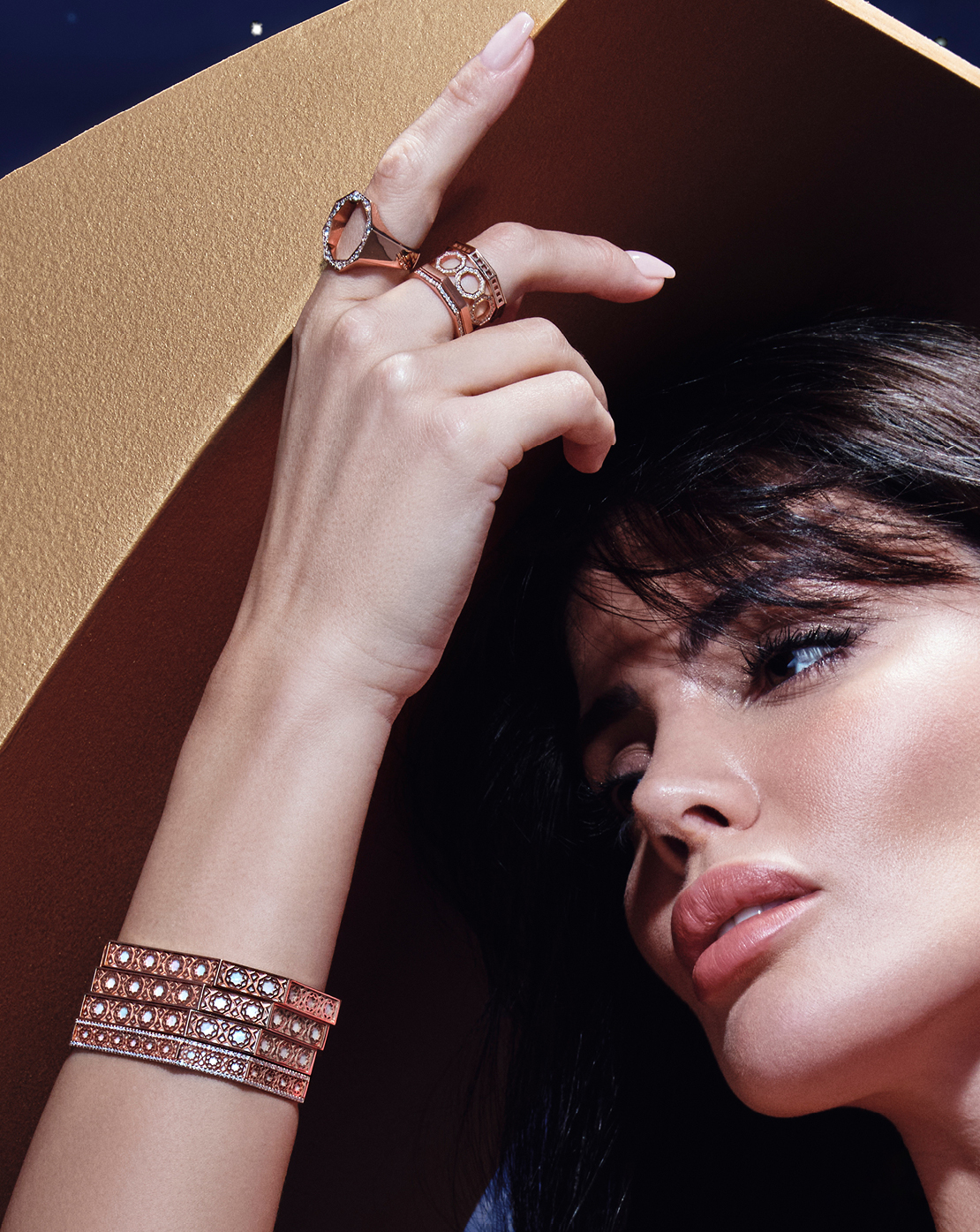
What’s the biggest challenge you face with the brand today?
One of our biggest challenges is balancing growth while staying deeply personal. As we expand, we’re committed to remaining authentic — continuing to design with intention, supporting our local community, and maintaining the level of craftsmanship that defines Samra.
What would you still like to achieve?
I’d love to see Samra become a global reference for modern Middle Eastern luxury — a name synonymous with purpose-driven design. But more than anything, I want our pieces to keep empowering — to be heirlooms of strength, stories, and love.
What do you see as the future of the industry in the region?
I see the region becoming a hub for not just jewellery, but design innovation as a whole. With younger generations embracing their identity while redefining it, the Middle East is becoming a creative force — one that the world is finally paying attention to.
What is a lesson you’ve learnt throughout your career?
Trust your instincts, and never underestimate the power of subtlety. Sometimes, the smallest design detail carries the deepest meaning. And sometimes, the quietest voice is the strongest in the room.
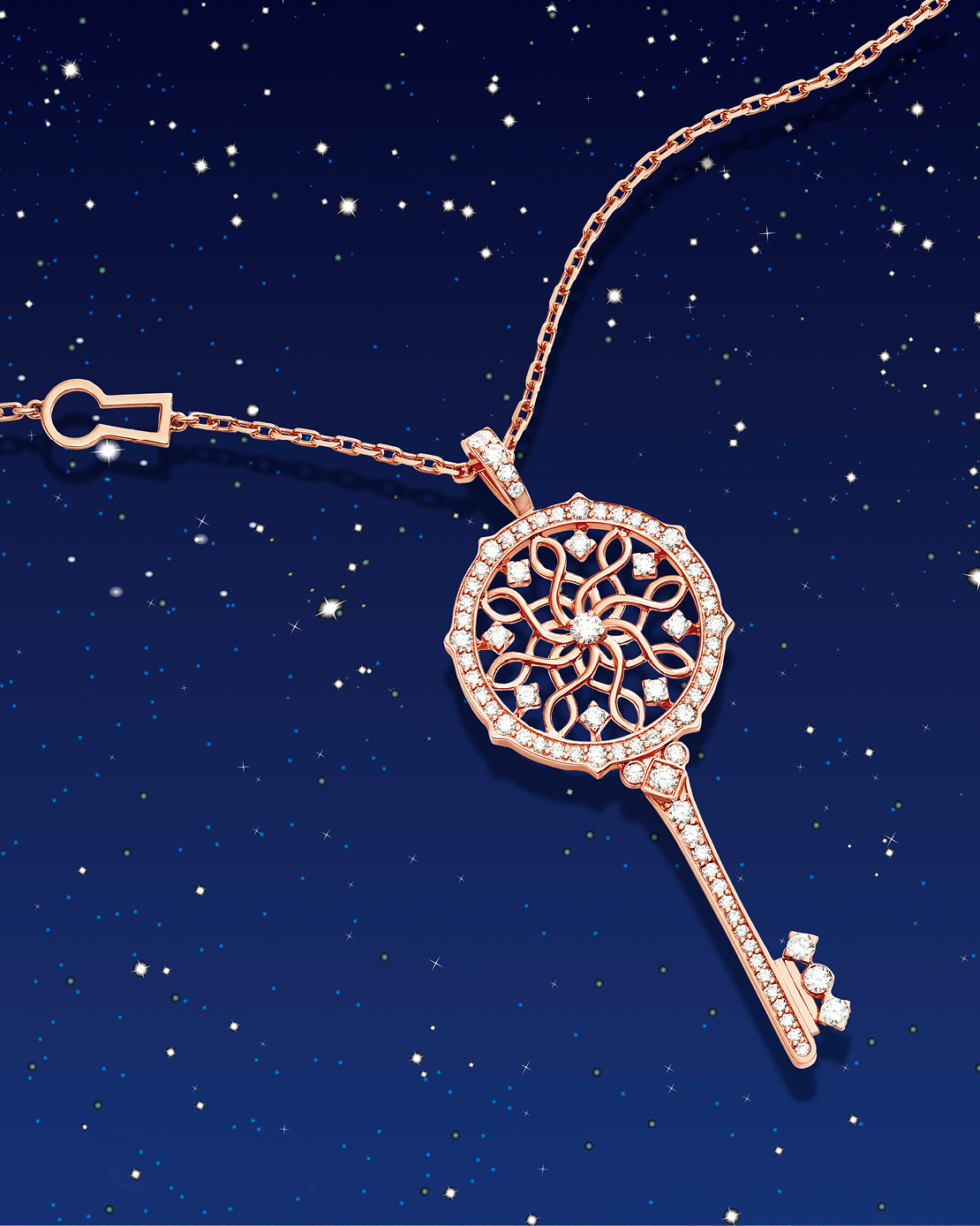
What advice would you give to aspiring designers?
Be rooted in your culture, but fearless in your vision. The world needs authenticity. Learn the craft, respect the process, and design with purpose.
What is your most treasured piece of jewellery?
A ring passed down from my grandmother — it’s simple, but it holds a universe of memories. It reminds me why I do what I do — jewellery isn’t just adornment. It’s emotion made eternal.
What is the professional motto you live by?
Design with meaning, create with love and lead with purpose.
What else is coming up this year?
We’re unveiling new expressions within the Turath world — bold, refined, and full of emotion. We’re also collaborating with local female-led businesses and continuing our mission to uplift women through design. The journey is only just beginning.
Givenchy’s Legacy Reimagined by New Creative Director Sarah Burton
For decades, Givenchy has stood as the epitome of Parisian elegance, its legacy rooted in the refinement of founder Hubert de Givenchy’s timeless aesthetic.
Founded in 1952, the house, which became synonymous with the effortless sophistication of Audrey Hepburn, revolutionised couture by blending architectural precision with an innate sense of ease. Now, in a pivotal new chapter, the Maison welcomes Sarah Burton as its creative director—an appointment that will surely signal a return to craftsmanship, heritage, and a future-forward vision.
A History of Elegance and Innovation
Established in 1952 in Paris by Hubert de Givenchy, Givenchy was built upon the principles of purity, structure, and innovative femininity. Hubert de Givenchy’s close collaboration with Hepburn not only immortalised the brand on the silver screen but also cemented its status as a beacon of understated luxury. The house flourished under his direction, championing the ‘separates’ concept—allowing women to mix and match for an effortlessly chic silhouette.
As the years passed, Givenchy evolved under various creative leads, from John Galliano’s brief tenure to Alexander McQueen’s rebellious edge and Riccardo Tisci’s streetwear-infused aesthetics. More recently, Matthew Williams brought a modern, industrial-inspired take to the label, incorporating hardware-laden designs and a utilitarian attitude. Yet, as the house sought to reestablish its couture roots, Sarah Burton emerged as the perfect heir to Givenchy’s legacy.
The Arrival of Sarah Burton: A New Dawn
Best known for her transformative work at Alexander McQueen, Sarah Burton has long been revered for her ability to intertwine tradition with modernity. Her 26-year tenure at McQueen, where she served as creative director following Lee McQueen’s passing, cemented her reputation for blending meticulous tailoring with poetic, emotionally charged narratives. Under her direction, the house became known for its structured yet ethereal designs, fusing historical references with contemporary innovation.
At Givenchy, Burton’s arrival marks a return to the house’s original codes: precision, purity, and an unwavering dedication to craft. Her affinity for sculptural silhouettes and masterful draping aligns seamlessly with the legacy of Hubert de Givenchy, promising a renaissance of classic elegance. With her expertise in couture techniques, Burton is set to breathe new life into Givenchy’s haute couture division, ensuring that the artistry of the past is not only preserved but reinterpreted for the modern woman.
Reviving Givenchy’s Past for the Present
Burton’s debut collection for Givenchy was highly anticipated, with fashion insiders speculating on a return to refined tailoring, romantic gowns, and a heightened focus on fabric manipulation. The Spring/Summer 2025 women’s collection which debuted in March saw a revival of the house’s signature elements—exaggerated shoulders, crisp monochrome palettes, and strong hourglass silhouettes—reimagined through Burton’s singular, contemporary lens. “To go forward, you have to go back to the beginning. To me, that’s about the atelier. It’s the heart and soul of Givenchy,” the designer said in a statement ahead of the show.
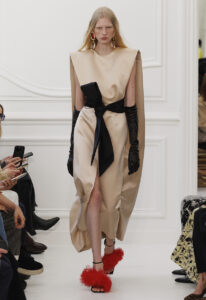
Burton’s inspiration came from a collection of Hubert de Givenchy’s patterns that were recently discovered in a hidden cupboard at his home in Paris while it was being renovated. The brown paper packets proved to contain calico patterns from his 1952 debut collection, which he showed to the audience packed into his atelier. For Sarah Burton, it triggered a tangible connection with her own way of working: on the stockman, in fittings, between the studio and the atelier.
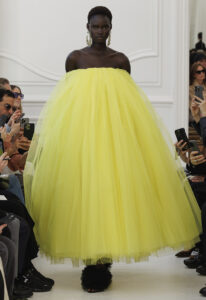
“It’s my natural instinct to go back to pattern-cutting, to craftsmanship. To cut, shape and proportion. It’s what I feel, how I work, and want to do.” Said Burton in the show notes. “ I want to address everything about modern women. Strength, vulnerability, emotional intelligence, feeling powerful or very sexy. All of it.”
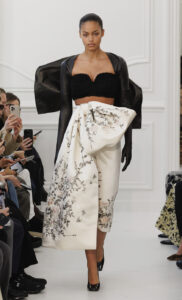
Starting from the body up – from the imagery of the studio stockman, stamped GIVENCHY 1952- the rhythm of her collection evolves around tailoring, merging and counterpointing masculine techniques with feminine shapes. Through salons stripped back to their original beauty, a sense of powerful femininity is constructed, re-cut, played with, and enjoyed from all angles from a woman’s point of view.
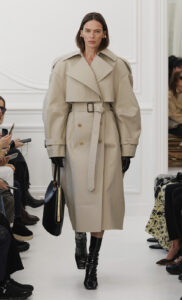
Symbolism and atmosphere flow through the precision of modern couture-cut silhouettes. With strong shoulders and an hourglass waist, the definitive line of jackets and coats and two types of trousers walk in counterpoint with the free experimentation of shapes that happened in the studio. Bolts of fabric are spontaneously poured as backless dresses or tied as a skirt. Incendiary female-gaze sexuality charges covered-up fronts with bared backs and rivets the eye to the kick in the back of a black leather pencil skirt.
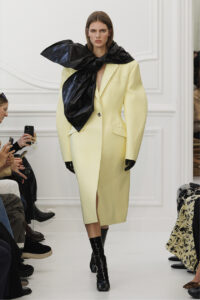
Echoes of Hubert de Givenchy are caught but not replicated. The Chantilly lace dresses are scissored-up to micro length, elongating the body. Fifties foundations take a provocative turn in bullet bras. Bracelet-length sleeves and cocoonbacks are captured in coats and jackets. His scarves and bows are translated into graphic, exploded leather scarves, knots, and the airy organza neckline of another Givenchy classic – a white shirt that acts, for today, as a dress.
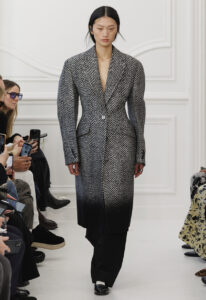
In accessories, shoes, jewellery and bags are designed as objects of desire. Couture gestures are materialised in frou-frou tulle mules, twisted ribbon sandals, curvaceous cone-heel fetish pumps, ‘naked’ cutaway satin-strap heels and slice-toe ballerina flats. Patent leather square-toe loafers and masculine round-toe slippers walk with tailoring; high-heel latex sliced-toe boots zipper up the back and hug the calf. The Pinch and The Facet, two styles of bags, iterated as clutches and shoulder bags, with jewelled, and micro-metal evening clutches.
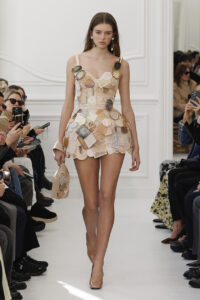
In an era where fashion houses often chase trends, Burton’s appointment is a testament to Givenchy’s commitment to authenticity. Her vision speaks to a clientele that values artistry over hype, seeking timeless pieces that transcend fleeting moments. By marrying Givenchy’s storied past with her own legacy of innovation, Burton is poised to restore the house to its rightful place at the pinnacle of French fashion.
Catherine Reiner CEO of Van Cleef & Arpels Discusses the House’s Recent Exhibition in Dubai
Van Cleef & Arpels has epitomised timeless elegance and unparalleled craftsmanship, weaving poetry into high jewellery and watchmaking for over a century.
From its signature Mystery Set technique to its whimsical fairytale-inspired creations, the Maison has consistently redefined luxury, capturing the imagination of collectors and connoisseurs alike. As the world of High Jewellery evolves, Van Cleef & Arpels remains steadfast in its commitment to savoir-faire and artistic innovation. The brand recently hosted an exclusive exhibition in Dubai that celebrated some of the brand’s most treasured designs. Bringing these exclusive pieces together for the first time. Reflecting on the event, the brand’s CEO Catherine Reiner shares insights into the maison’s creative philosophy, the enduring allure of its iconic designs, and how the brand continues to push the boundaries of high jewellery while staying true to its storied heritage.
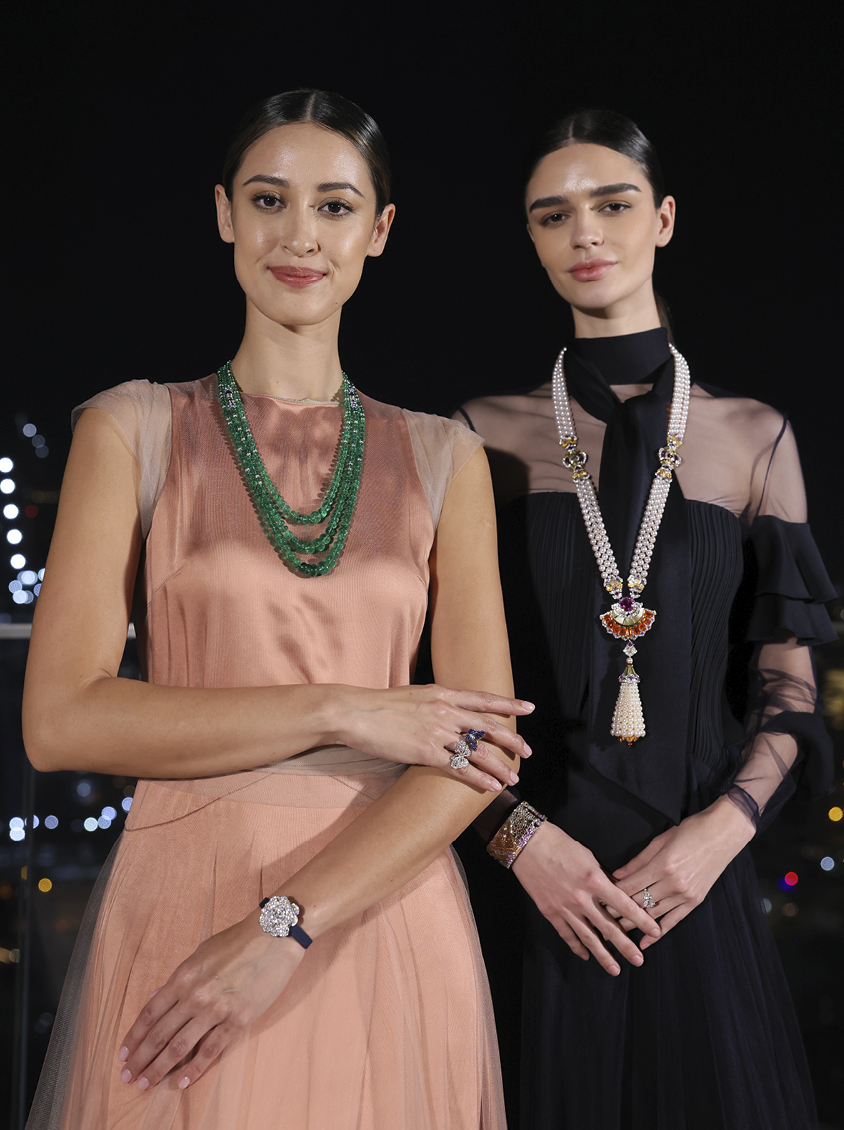
Tell us about the recent Treasure of Gems exhibition in Dubai.
With Treasure of Gems, Van Cleef & Arpels celebrated artistry and elegance while offering enchanting experiences. This intimate event, hosted in Dubai in February, was designed as an immersive journey to captivate High Jewelry connoisseurs. It showcased some of the Maison’s creations and highlighted the Maison’s expertise in the selection of rare and remarkable gemstones.
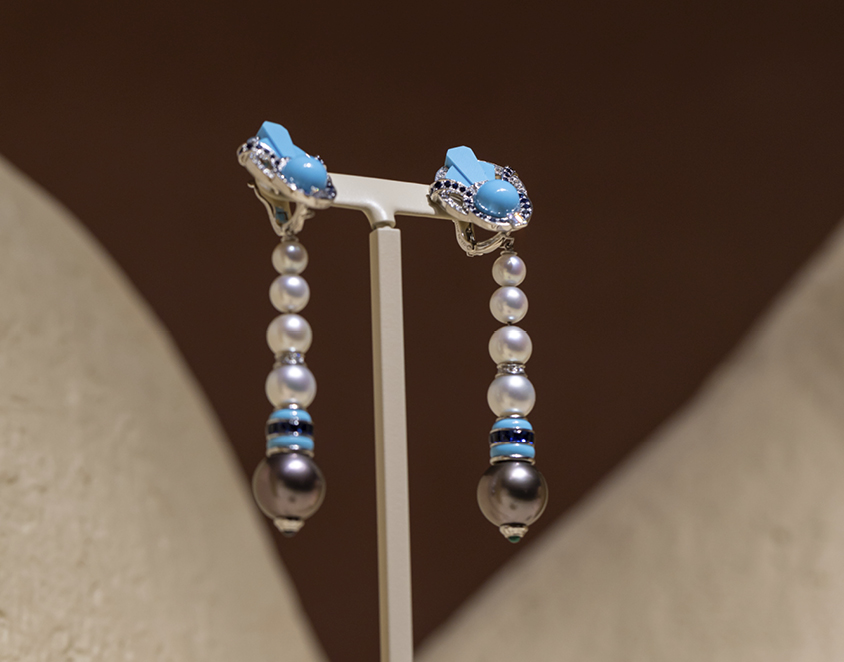
Can you tell us more about the pieces in the exhibition and why some of these iconic pieces were chosen?
Since 1906, the Maison has nurtured an expertise with no compromise on quality and with the strictest criteria for selecting stones that it strives to enhance in each setting. Over the decades, several one-of-a-kind stones have been mounted on High Jewelry pieces. Today, Van Cleef & Arpels pays tribute to their beauty, hues and appeal, as well as their unique character.
Each piece selected represents the essence of the Maison’s heritage, creativity and excellence in craftmanship. They also showcase the rarity and brilliance of remarkable gems, which brought to life thanks to the savoir-faire of Van Cleef & Arpels’ ateliers. Whether it’s the deep intensity of a ruby, the perfect symmetry of a flawless diamond, or the vibrant hues of emerald, each stone is a masterpiece in itself, chosen for its uniqueness and the emotions it elicits.
For example, the discovery of an exceptional rough diamond, the Lesotho Legend, led to the creation of the Legend of Diamonds High Jewelry collection. Collaborating with various experts, the Maison selected cuts that awakened the designers’ creativity.
The Maison’s Le Grand Tour High Jewelry collection, inspired by European travels from the 18th and 19th centuries, also features a great variety of gems to express sources of inspiration such as art, architecture, music, and natural wonders.
Claude Arpels’ believed that “Every stone has a soul of its own” and this was a central idea in the event. In what ways did this philosophy influence the pieces featured at Treasures of Gems?
Within our Stone Department, gemstones are carefully selected not only for their rarity and beauty, but also for the emotion they convey and the story they tell.
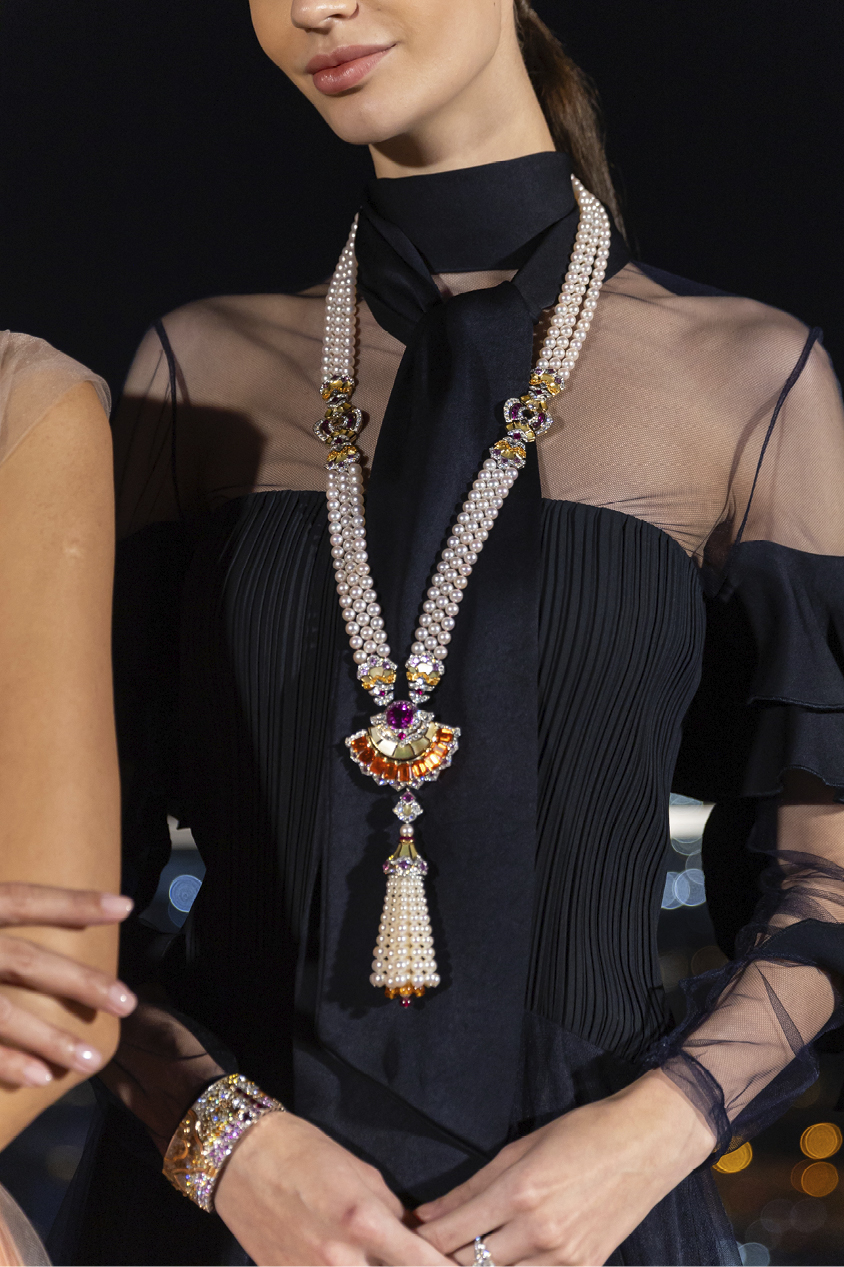
For Treasure of Gems, this belief guided our curation in multiple ways. First, we sought out stones with exceptional character, whose color, brilliance, and uniqueness set them apart. Whether it is the deep, velvety red of a ruby, the hypnotic blue of a sapphire, or the luminous fire of a diamond, each one was chosen for its singular energy and presence.
Beyond their physical attributes, the gemstones featured here are brought to life through our craftsmanship. Van Cleef & Arpels’ signature Mystery Set, intricate settings, and poetic designs allow each stone to reveal its full essence, enhancing its natural beauty and depth. This testifies to the Maison’s aim to highlight the soul of gemstones, letting them inspire the final form of the creations.
This approach is also reflected in the way we connect with our clients. Just as every stone has its own soul, every wearer has their own story. Through these pieces, we celebrate the profound and timeless dialogue between the jewel, the craftmsen, and the person who will ultimately bring it to life.
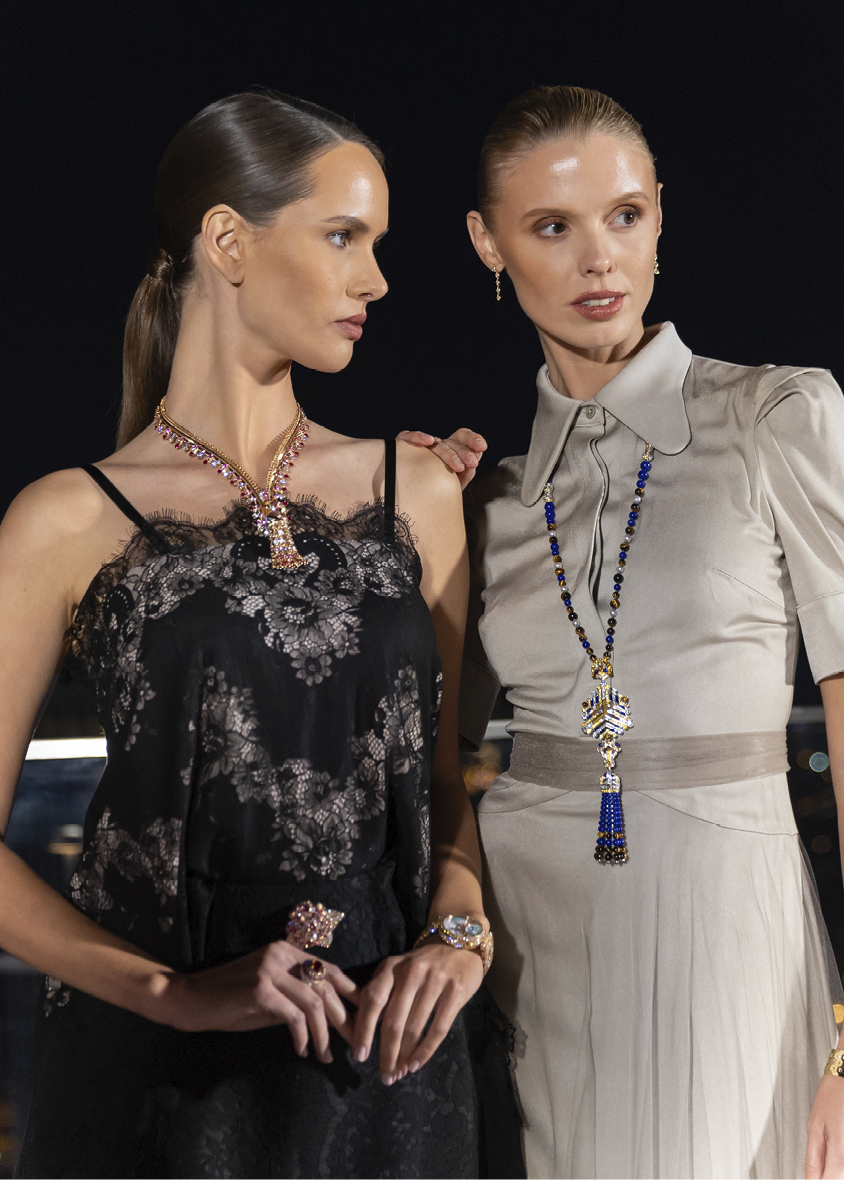
What do you think women are looking for from jewelry today?
Today, more than ever, I believe that women seek jewelry that is not only beautiful but also meaningful. They search for pieces that tell a story, reflect their individuality, and accompany them through life’s special moments.
At Van Cleef & Arpels, we understand that jewelry is more than an ornament; it is a form of self-expression. Women today are drawn to timeless creations that resonate with their personal style and emotions. Whether it is a piece that symbolizes luck, love, or a cherished memory, jewelry has become a way to celebrate life’s milestones and express one’s identity.
Additionally, versatility and wearability have become increasingly important in our designs. Women appreciate creations that can transition seamlessly from day to night, that are elegant yet effortless to wear. This is why our transformable High Jewelry creations are crafted to be both sophisticated and adaptable.
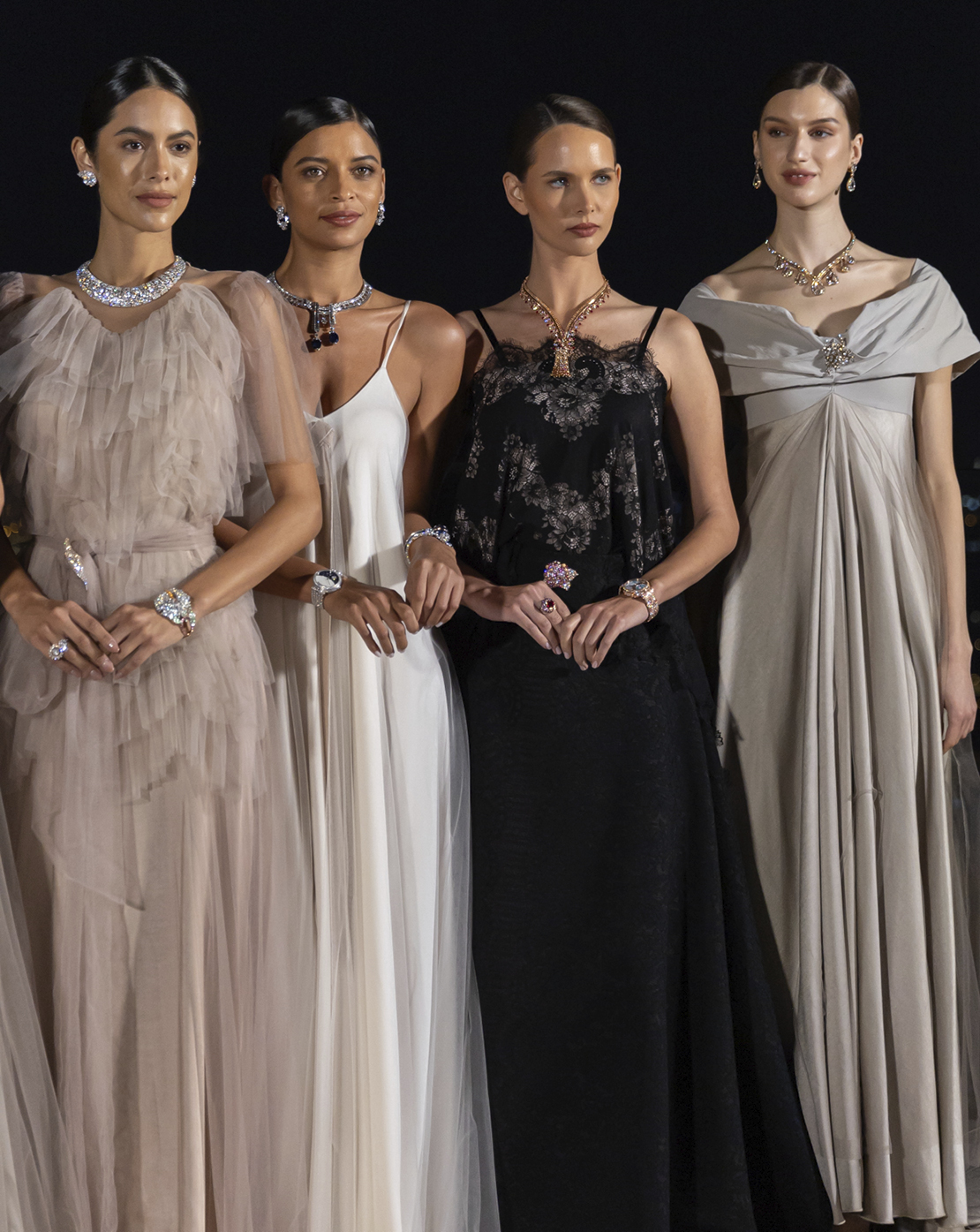
Van Cleef & Arpels has been known for its unique designs and craftsmanship. What inspires the creation of new collections?
Van Cleef & Arpels draws inspiration from a world rich in poetry, nature, and movement. Each new collection is born from a deep appreciation for beauty, a commitment to exceptional craftsmanship, and a desire to tell stories through jewelry.
One of our primary sources of inspiration is nature, which has been an essential element in our designs since the Maison’s founding. From delicate floral motifs to butterflies and tender animals, we strive to capture the elegance and vitality of the natural world in our creations.
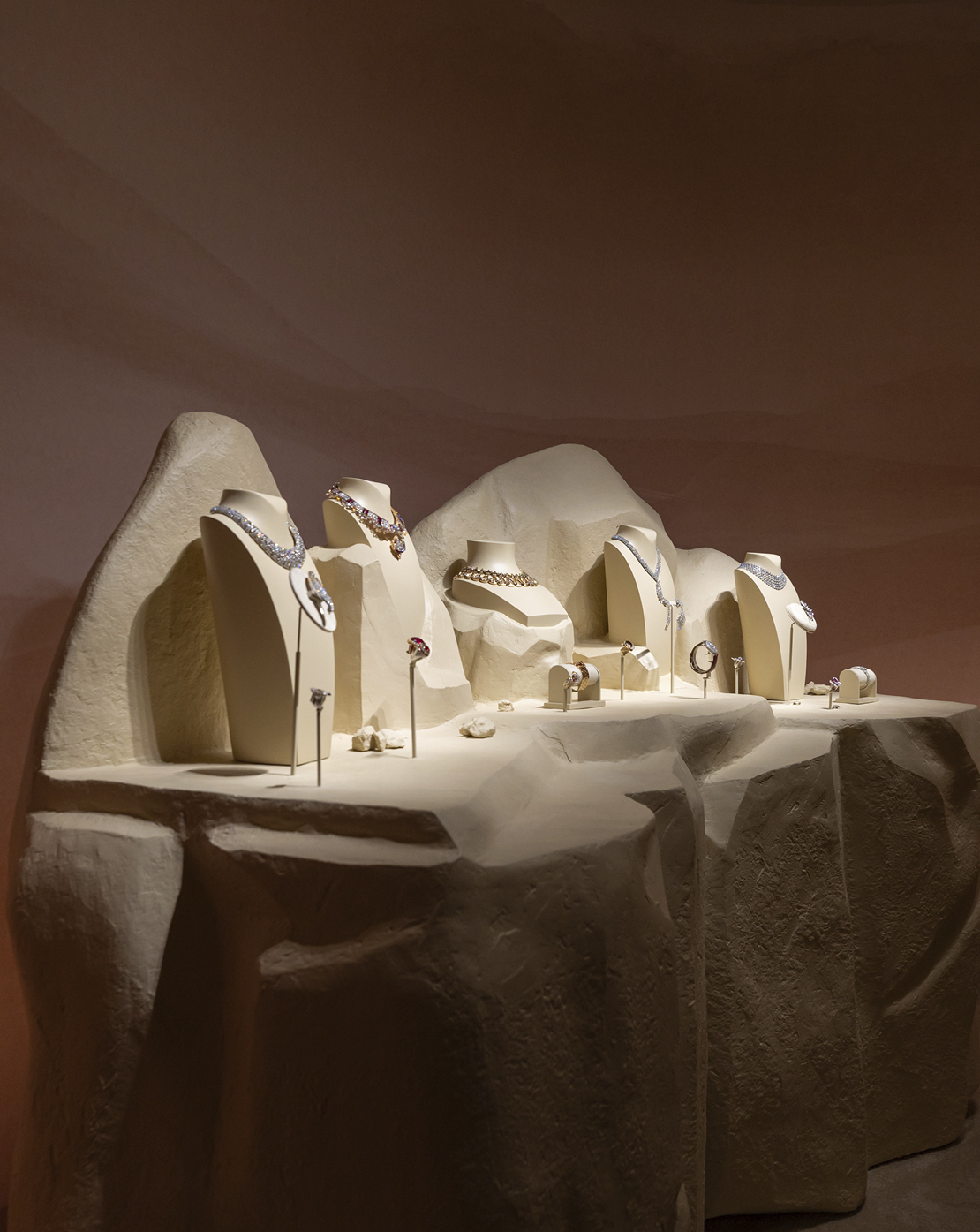
Other major themes are fairy tales, ballet, and literature. Our ballerina and fairy clips, for example, reflect Van Cleef & Arpels’ admiration for the performing arts, where movement and grace are translated into jewelry. Likewise, our High Jewelry collections often pay tribute to literary works, historical romances, and fantastical voyages, turning imagination into precious pieces.
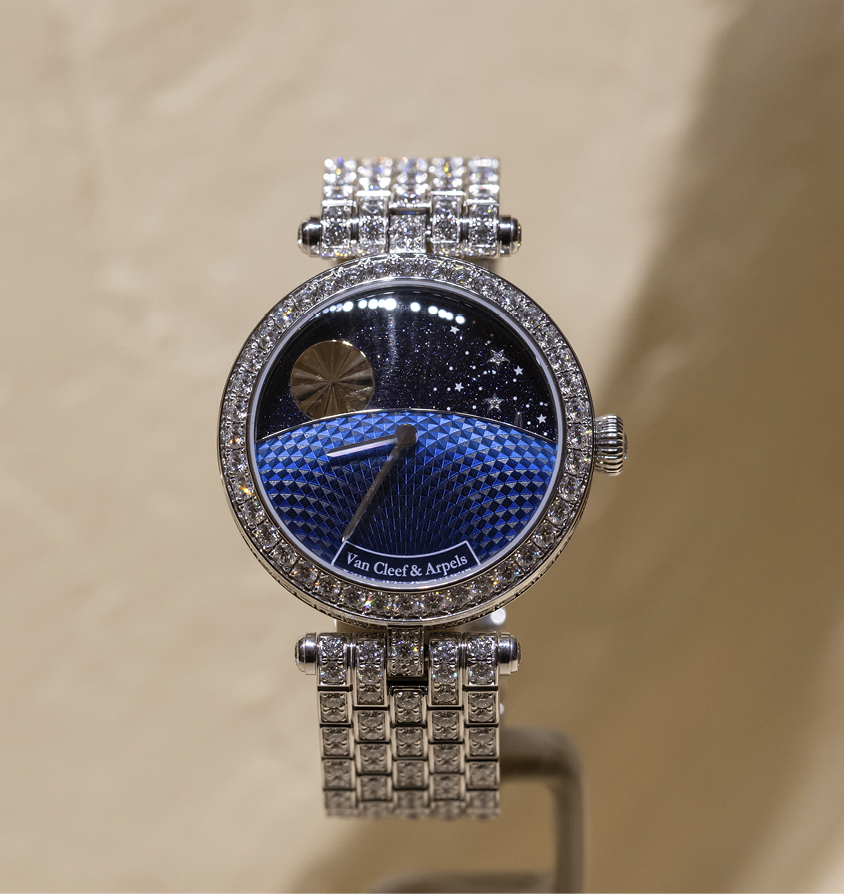
Finally, our heritage continues to inspire us. The Maison’s archives and emblematic pieces serve as a foundation for contemporary ones, allowing us to reinterpret classic designs while pushing the boundaries of creativity. Techniques such as the Mystery Set, as well as transformable jewels, are constantly revisited to make way for modern masterpieces while honouring Van Cleef & Arpels’ tradition.
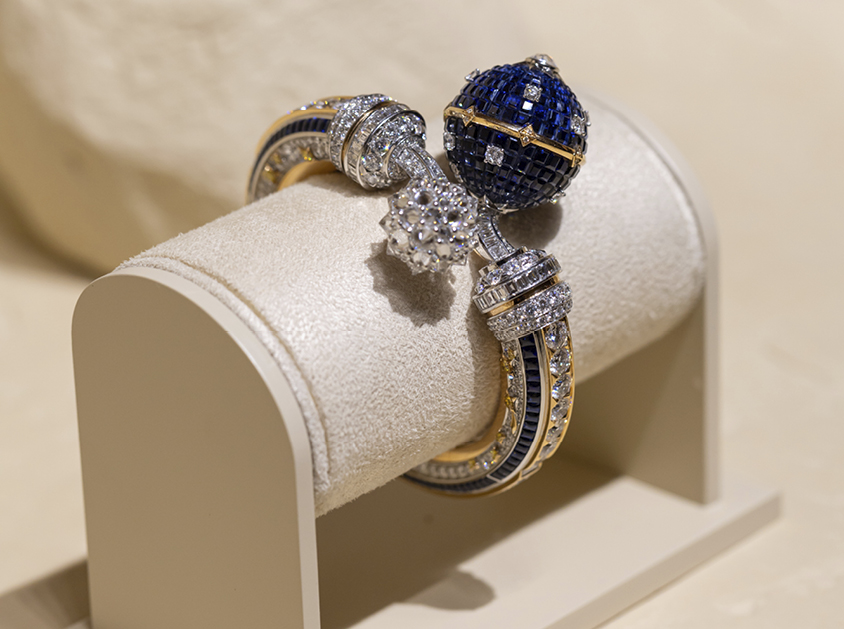
Ultimately, each new collection is a way to capture moments of beauty and turn them into timeless creations that resonate across generations.
The Ultimate Watch Edit For Ramadan 2025
For Ramadan this year, many of our favourite watch houses have released limited edition timepieces to mark the Holy Month
Vacheron Constantin
As Vacheron Constantin celebrates its 270th anniversary, the Maison continues its timeless quest for excellence—seamlessly blending heritage, craftsmanship, and innovation. Embracing the reflective spirit of Ramadan, this milestone offers a moment to gather, reflect, and give back to the community.
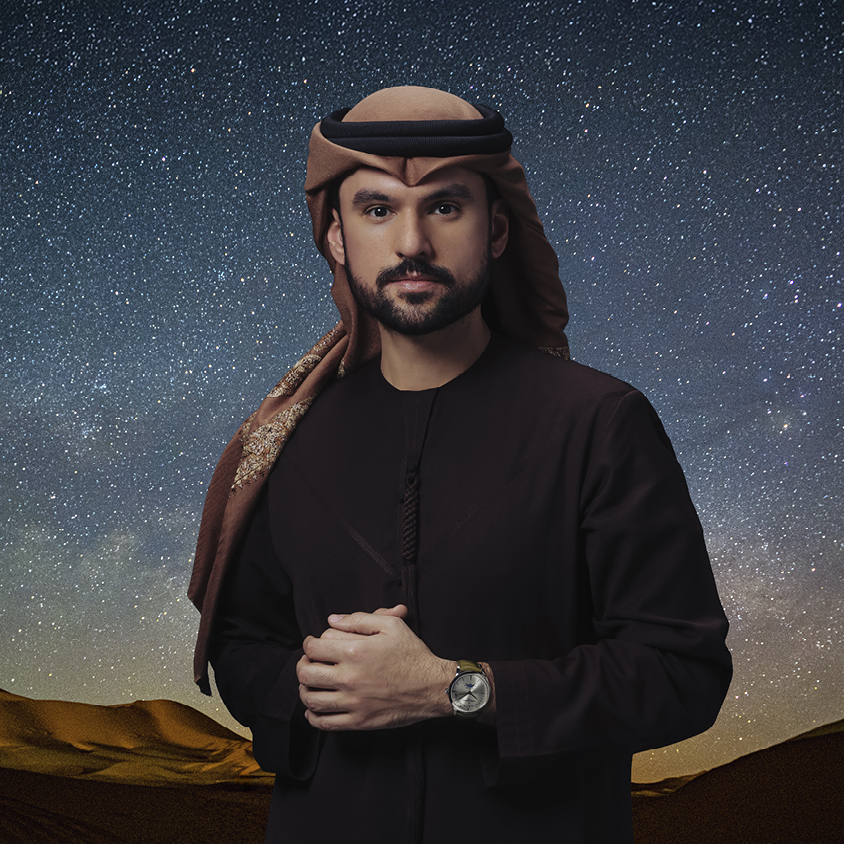
At the heart of this initiative is a profoundly human journey, illustrated through the personal quests of four exceptional regional talents whose stories honour tradition, enrich the present, and shape the future, reflecting the shared values of the Middle East region and Vacheron Constantin.
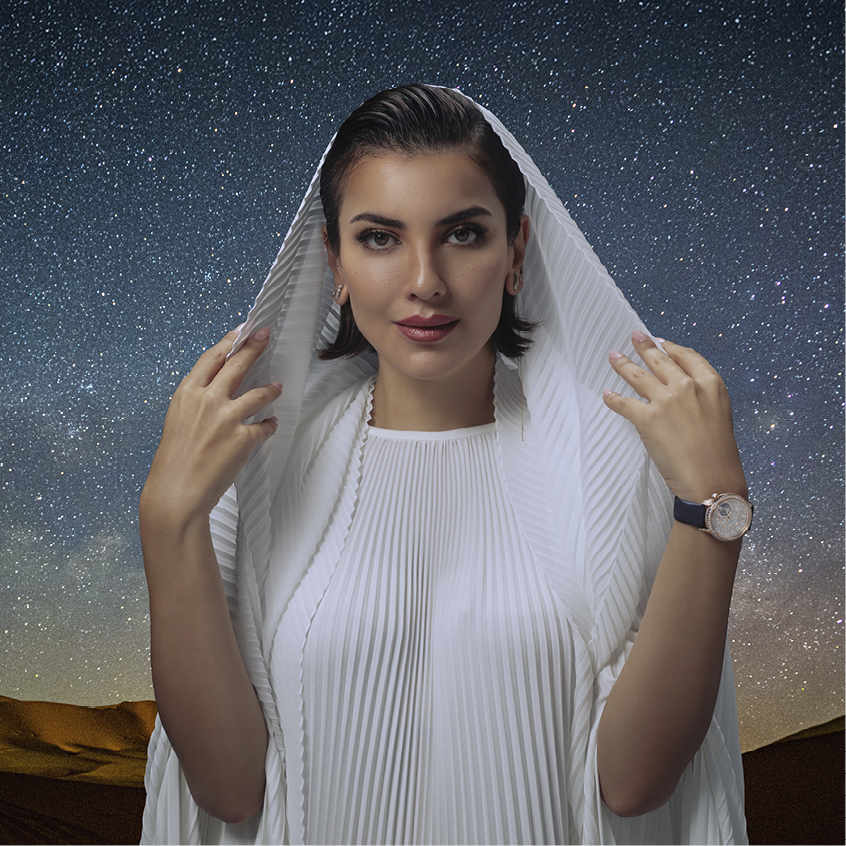
A series of videos and images highlights the unique quests of Aljoud Lootah, Adi Al Fardan, Nouf AlMoneef, and Fatima AlBlooshi. Each talent shares the passion and purpose that drive them, shaping their journeys, inspiring their fields, and leaving a lasting impact.
Piaget
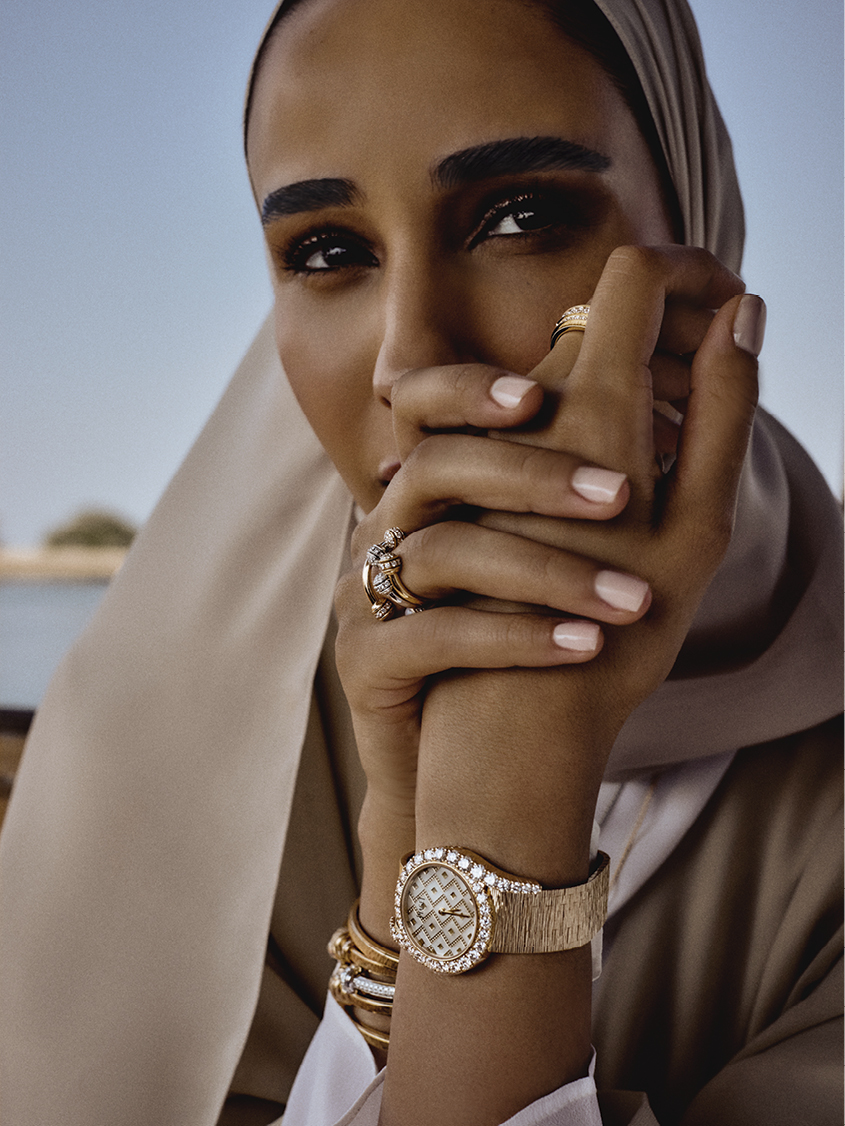
Piaget has unveiled an exceptional precious timepiece that harmonises with the spiritual heritage of the region. For more than half a century, the Limelight Gala watch has stood as a symbol of Piaget’s artistry, blending elegant design with technical prowess.
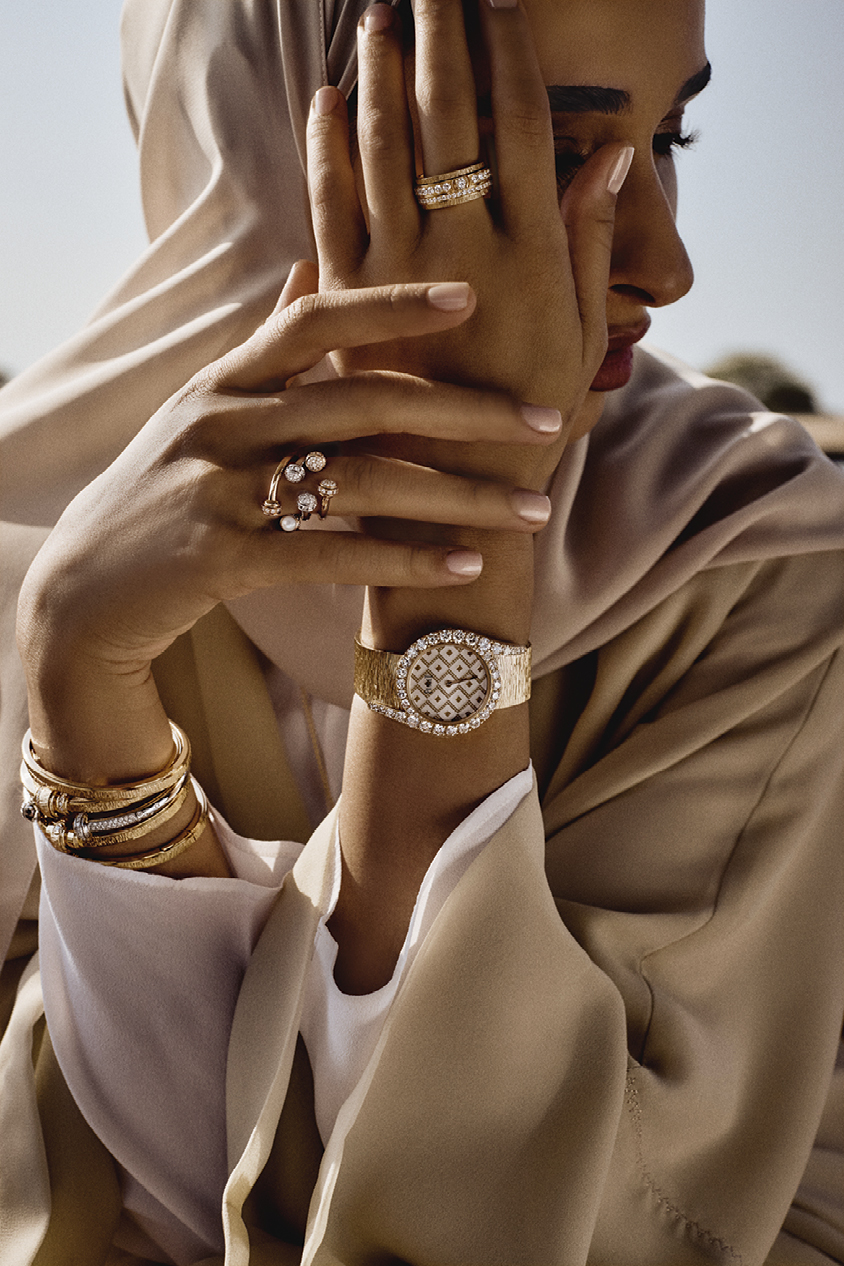
This Ramadan, the brand has collaborated with Emirati designer Shamsa Alabbar to bring her signature Token design to life, blending the Maison’s craftsmanship with Shamsa’s contemporary take on Arabic typography.
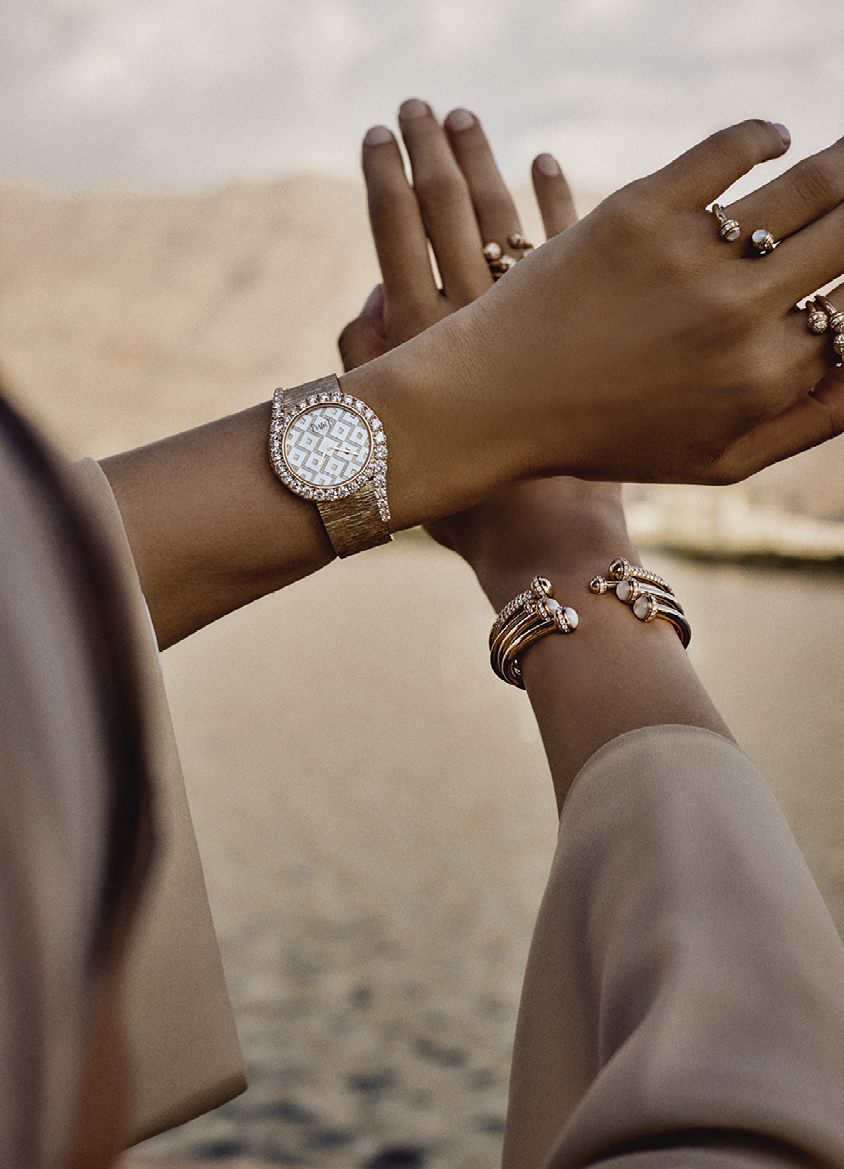
A powerful emblem of heritage, the Token symbolises power, unity, and balance, bringing her distinctive vision that celebrates both tradition, heritage and artistry during the Holy month.
Bvlgari
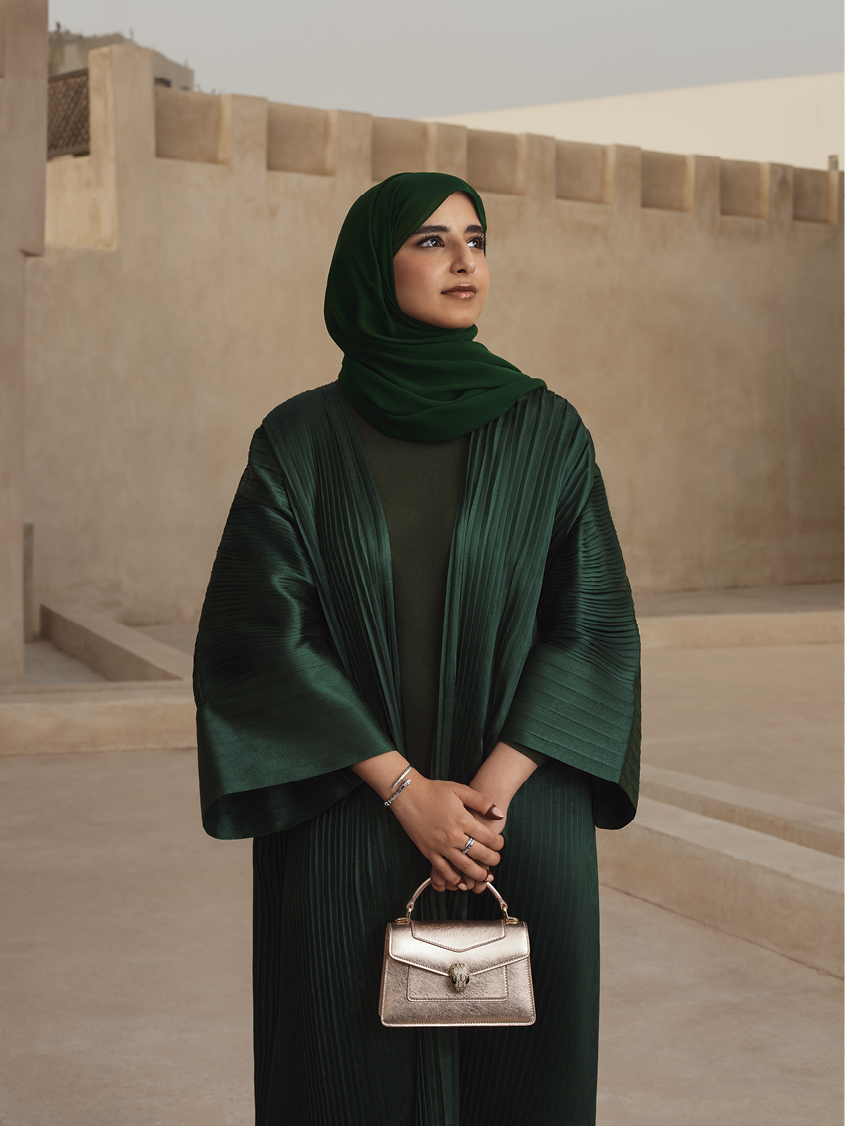
Bvlgari revealed Journeys of Ramadan – “A Celebration of Rebirth, Reflection and Resilience” in time for the Holy month.
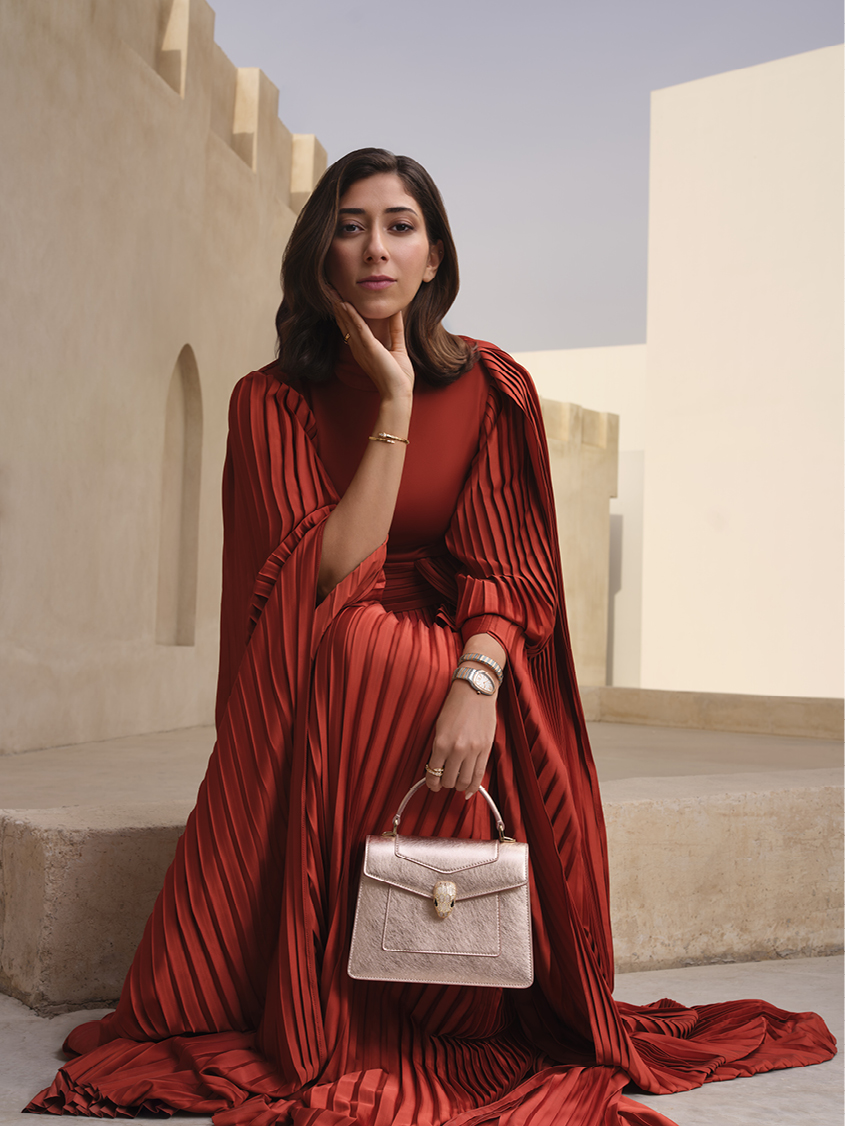
The campaign features a series of captivating films highlighting the journeys of three exceptional female artists from the Middle East, each embodying a unique connection to Ramadan.
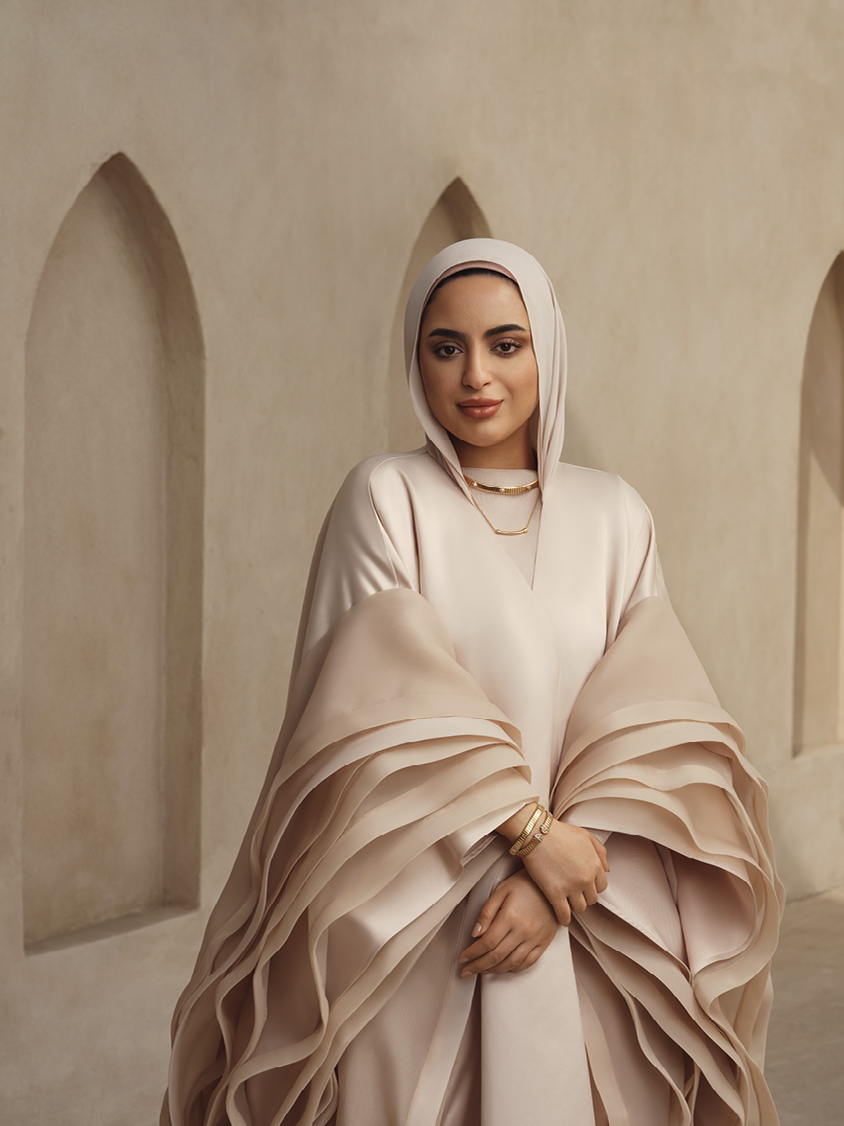
The three artists draw inspiration from the region to create unique artworks that capture the spirit of Ramadan. Each lady wears some of the house’s key creations, from watches to jewellery, to accessories.
Jaeger Le-Coultre

Jaeger Le-Coultre has revealed a new artistic collaboration under the Made of Makers programme with Emirati designer Khalid Shafar. Shafar has interpreted the Maison’s celestial movements through Ramadan’s lunar cycle. The project culminates with an exclusive art installation inspired by the sacred rhythms of the Holy month.

‘Crescent To Crescent’ is an evocative art installation, spanning six metres in width and three metres in height, embodying the passage of time through the evolution of the moon. Featuring 29 intricately designed moons representing each day of the lunar cycle, the installation highlights the passage of time throughout the month. Subtle design details honour the Maison’s craftsmanship, expressed through delicate engravings that mirror the guilloché decorative technique mastered in the Manufacture’s Métiers RaresTMatelier.

During the month of Ramadan, tracking the precise moments of sunrise and sunset is essential, as they dictate the daily rhythm of fasting and prayer. This reverence for time aligns seamlessly with Jaeger-LeCoultre’s rich watchmaking heritage, where the measurement of time has always been intrinsically linked to the movements of celestial bodies.
Breitling
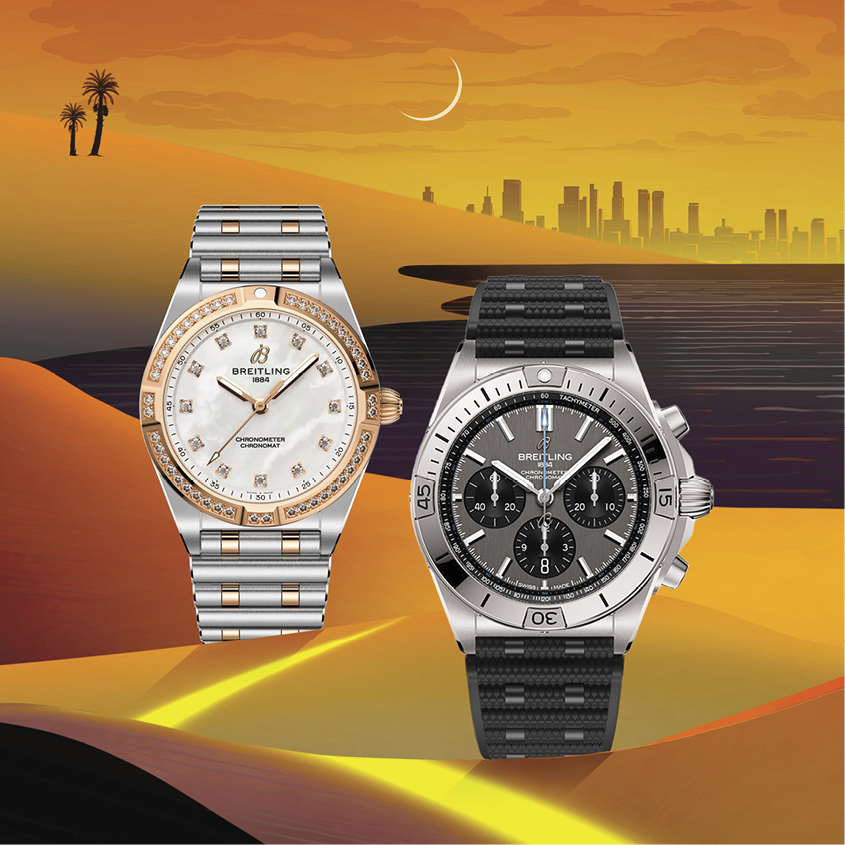
Breitling is celebrating precious moments with its Connected Through Time campaign for Ramadan. The brands conveys the significance of time during Ramadan and highlights how we are connected through special moments that unite us.
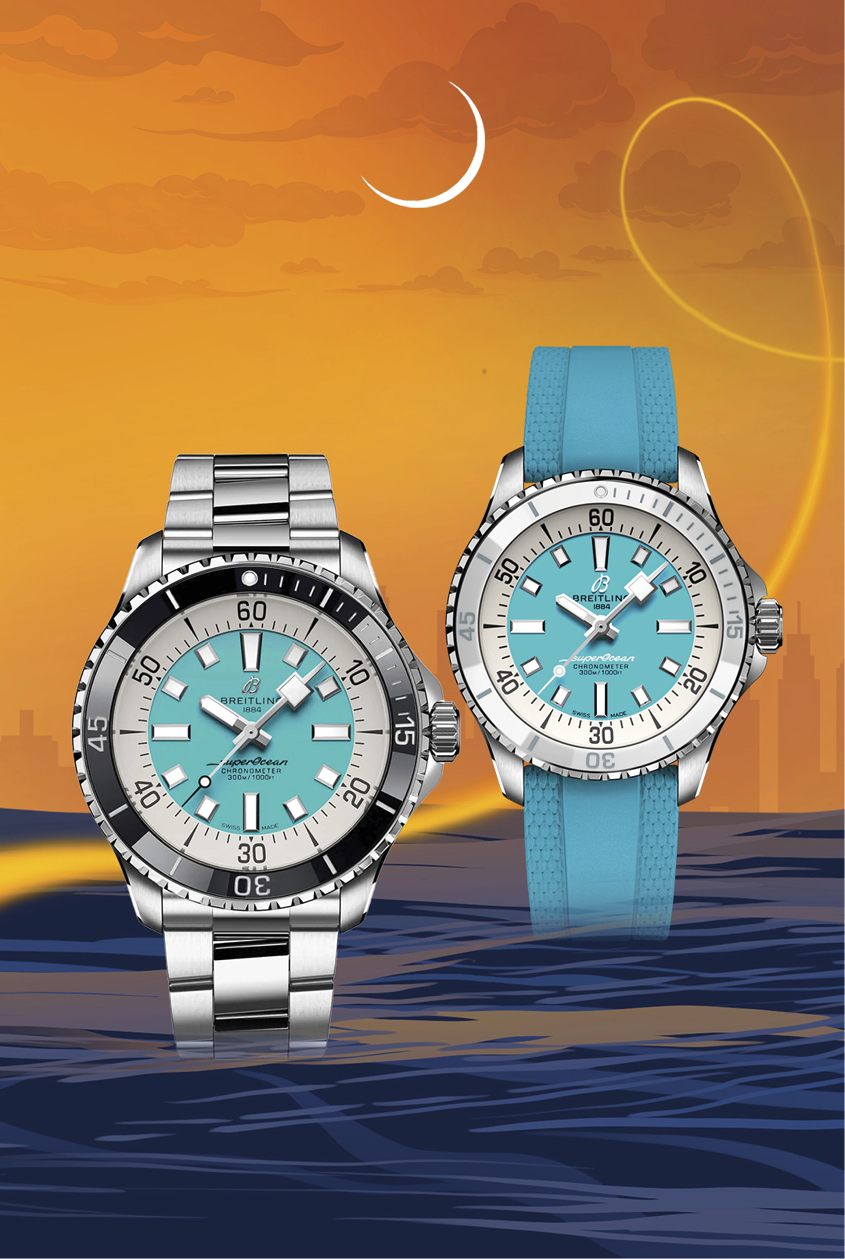
The campaign features key timepieces from the brand’s three pillars of Earth, Land and Sea. From the iconic Chronomat to the Superocean Diver’s watch, to the Navitimer.

Breitling’s three universes – Land, Sea, and Air – pay tribute to the brand’s rich heritage in producing exceptional timepieces that historically fit into these segments, making it an inclusive watch brand that offers something for everyone.
Tag Heuer
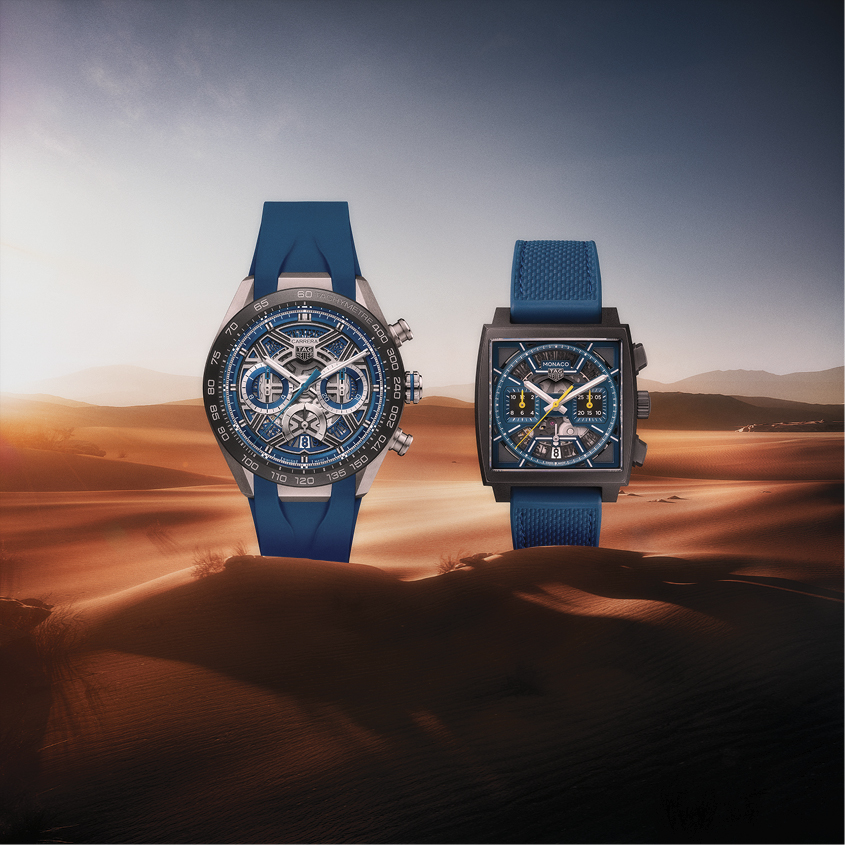
TAG Heuer introduces “Chapter III: Time is a Gift,” the latest edition of its annual Ramadan campaign, but with a twist! Featuring the highly sought-after TAG Heuer mascots, this campaign blends high-performance watchmaking with the spirit of the Holy Month.
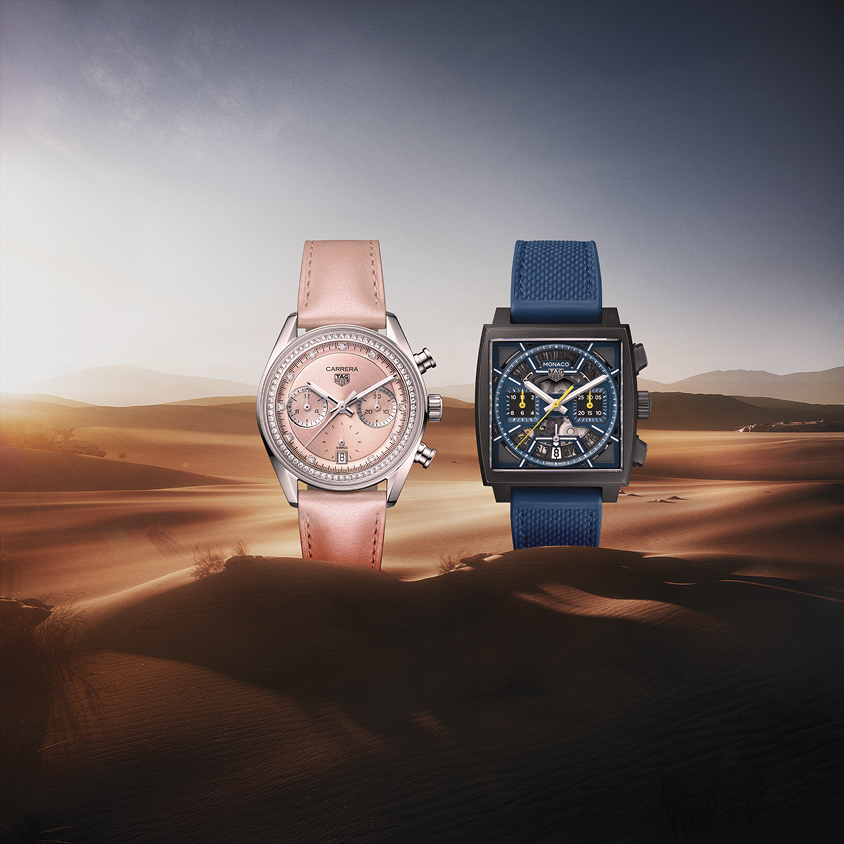
Set against the mesmerising backdrop of the desert at sunset, the animated film brings to life the Maison’s official mascots – reimagined with distinct Middle Eastern elements – as they embark on an exhilarating race to an Iftar gathering.
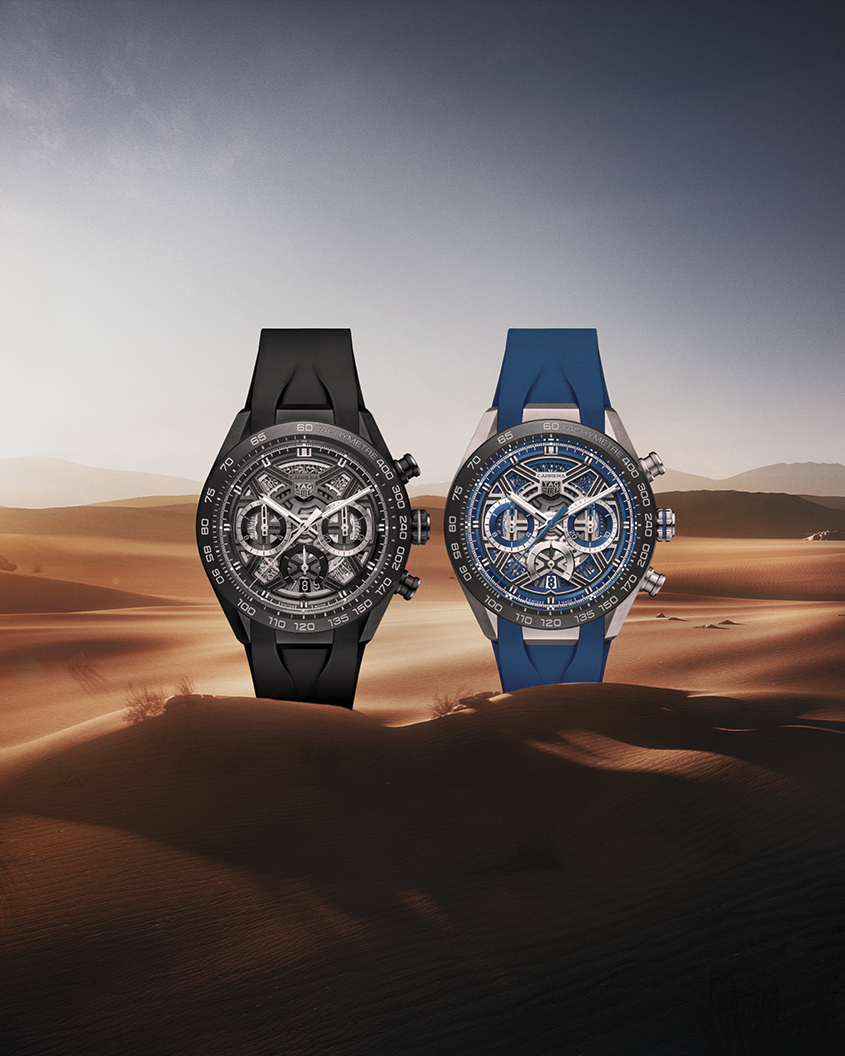
The campaign features iconic timepieces from the brand’s ranges, including the Carrera and Monaco. The mascots are each seen in custom-coloured jumpsuits matching their dedicated TAG Heuer Monaco or Carrera watch. Each timepiece reflects the essence of TAG Heuer and its associated mascot—timing every moment with absolute precision, much like the importance of time during Ramadan.
Dior Joaillerie Celebrates the 10th Anniversary of the Rose des Vents Collection
In 2015, Dior Joaillerie unveiled its Rose des Vents jewellery collection.
A delicate selection of pieces inspired by the wind rose that was found in the garden of Christian Dior’s childhood home in Granville, Normandy. As an allegory of the Dior medallion, the Rose des Vents collection combines the Wind Rose with the lucky star of Christian Dior and the idea of a playful lucky jewel to keep generations. The Rose des Vents collection has become known for its playful use of colourful ornamental stones and its versatile design. Each piece can be worn in more than one way, thanks to the double-sided motifs.
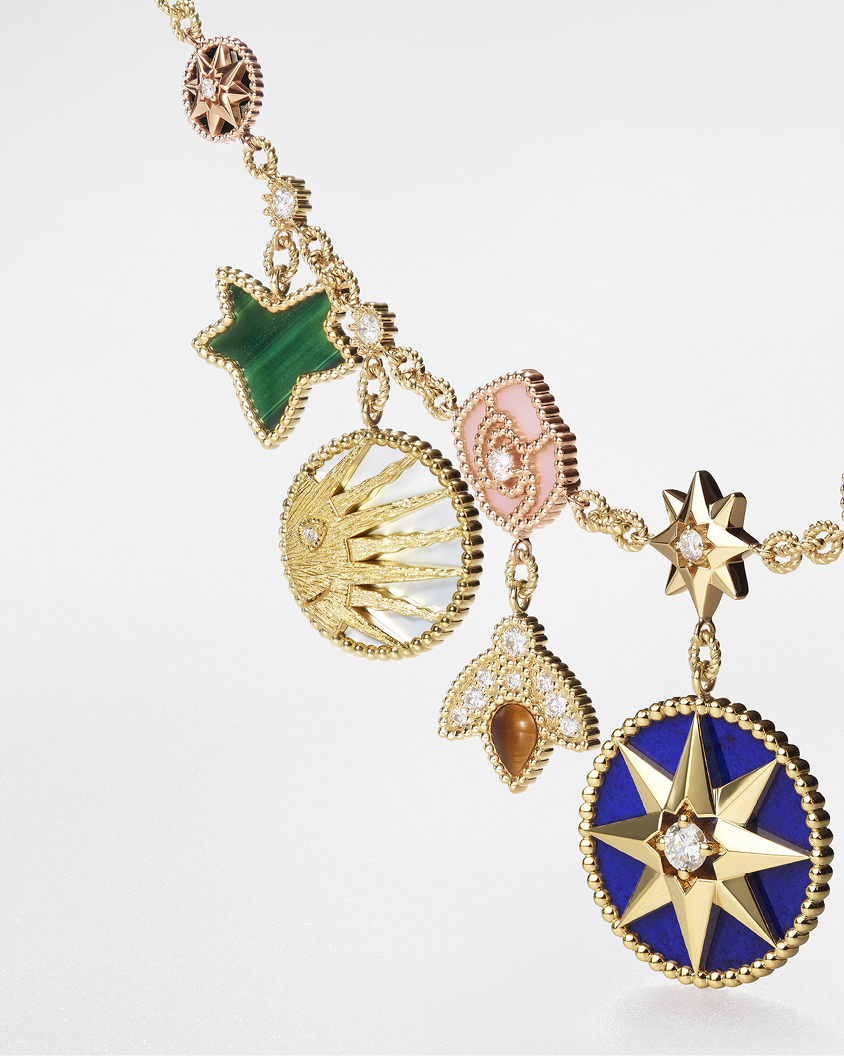
In 2018, the collection expanded to include the Rose Celest, which features a sun and moon motif, this has become an integral part of the collection’s identity. Then in 2022, Rose des Vents introduced the Charms, a reinterpretation of Monsieur Dior’s “Grigris”. These would appear alongside the original Rose des Vents motifs for an elegant update to the fine jewellery pieces.
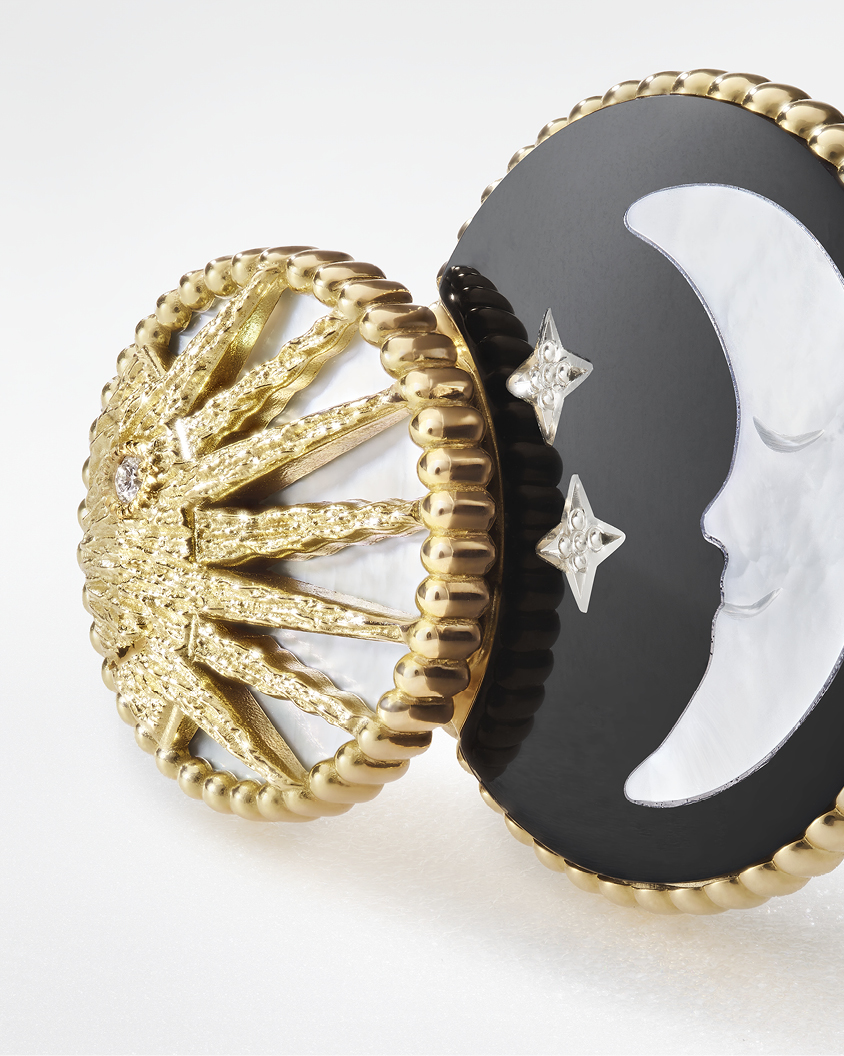
Last year, Etoile Des Vents introduced lucky star symbols inspired by the 30 Montaigne Lucky Star of Christian Dior as a refined wind rose. Without ornamental stones, these designs appeared to be a more minimal yet elegant addition to the collection.
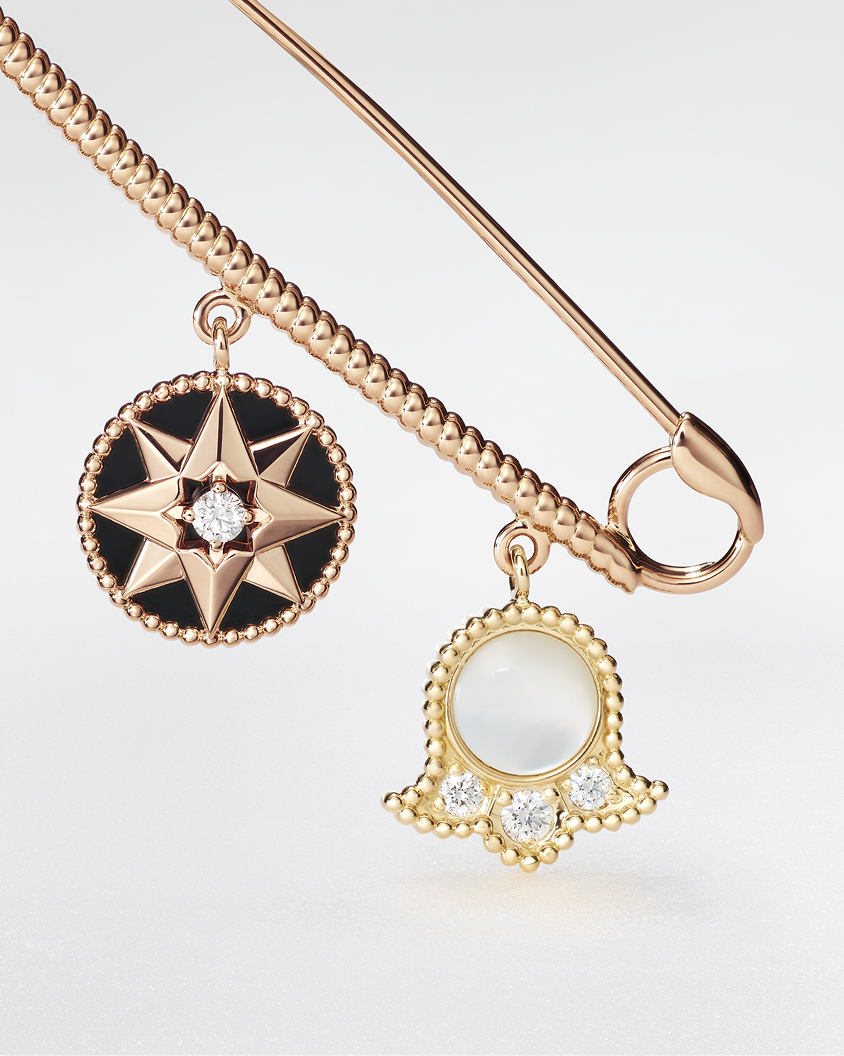
Today, a decade later, the house reveals new additions to the collection to celebrate the collection’s tenth anniversary. The latest novelties in the Rose des Vents collection will enrich the offering and encapsulate all of the stories told before it.
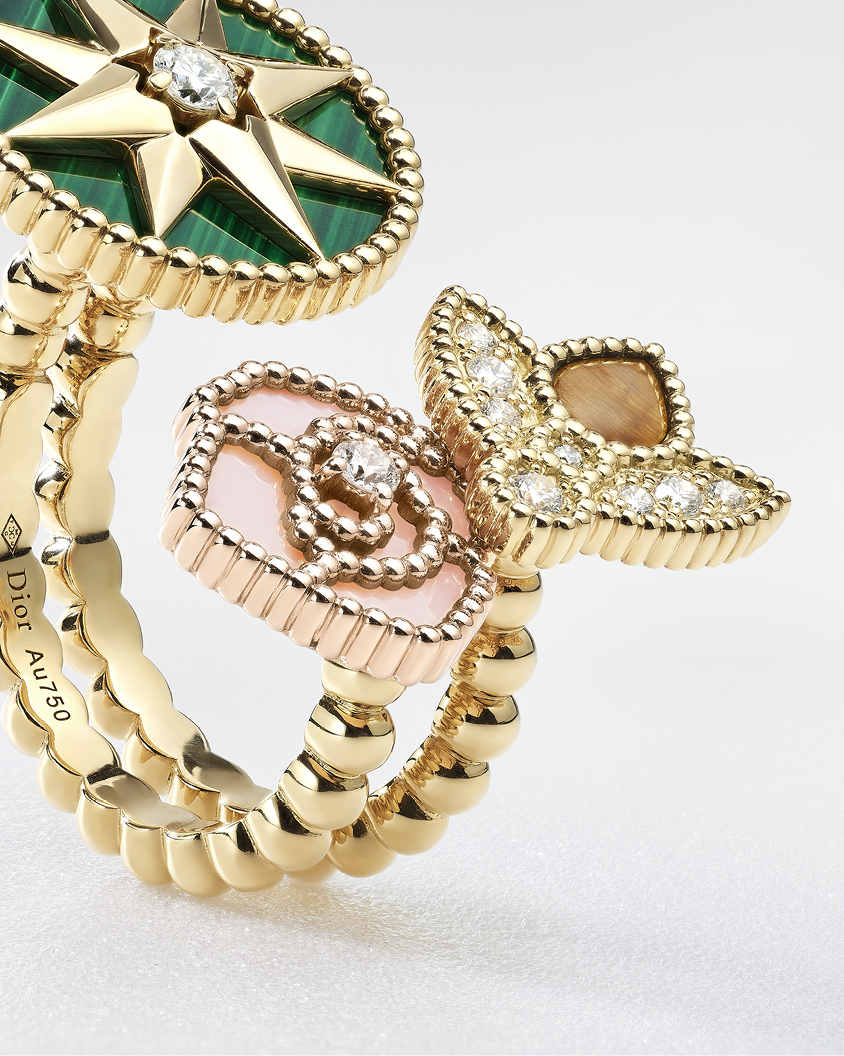
Statement pieces will feature a combination of the collection’s motifs, making them a playful addition to the range. Combining coloured stones, diamonds and ornamental stones, these new pieces are perfect for the woman who loves to express her vibrant personality.
Highlights from the Luxury Brand Activations in Abu Dhabi in 2025
During the first three months of 2025, Abu Dhabi has become a key hub for luxury pop-ups
Louis Vuitton
Louis Vuitton partnered with Abu Dhabi Investment Office for a special activation, showcasing the House’s spirit of travel and exceptional craftsmanship. Savoir Rêver (Crafting Dreams), which took place at Anantara Santorini Abu Dhabi from February 7th to 15th, featured some of Louis Vuitton’s most exclusive pieces, inviting clients to immerse themselves in the Maison’s universe.
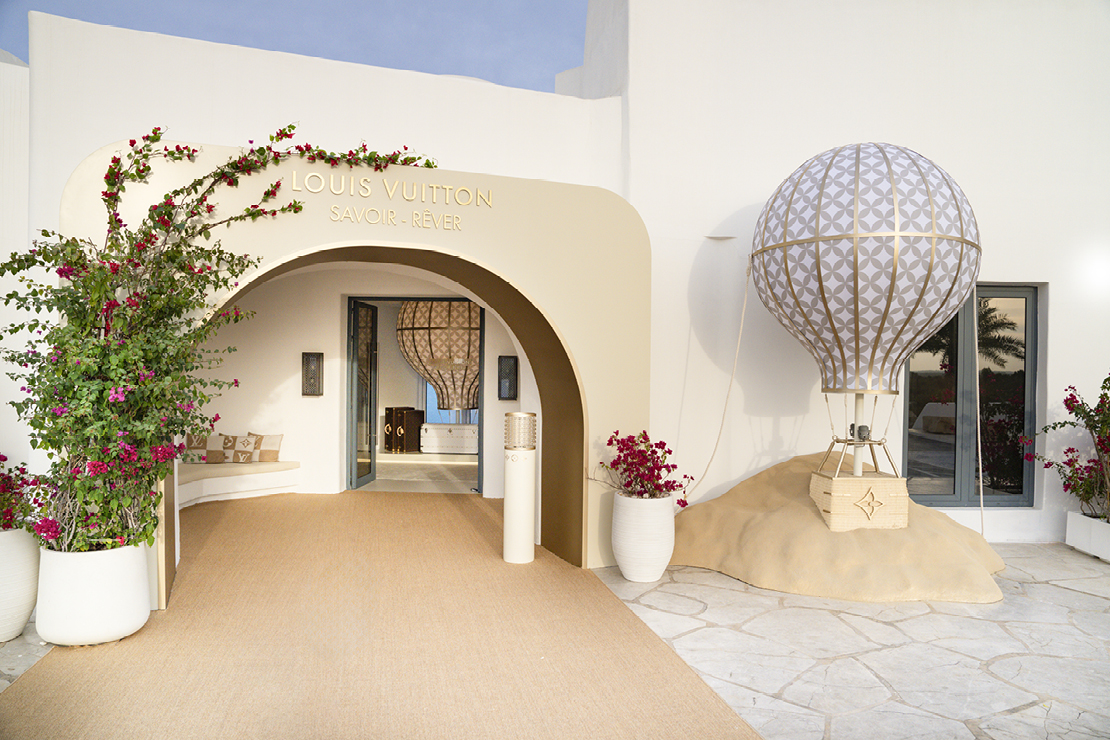
Hosting clients by appointment only, Louis Vuitton unveiled key pieces from its various collections, including high jewellery, high watchmaking, loose stones, hard-sided luggage, objets nomades, leather goods, exotics and ready-to-wear. The creative concept invites clients on a journey that blends the brand’s history with travel and it’s heritage of fine savoir-faire. Immersive activations throughout the event are designed to engage all senses, with private consultations and personalised presentations tailored to the unique tastes of each guest. The carefully curated selection of products represents the pinnacle of the House’s tradition of celebrating bespoke creations.
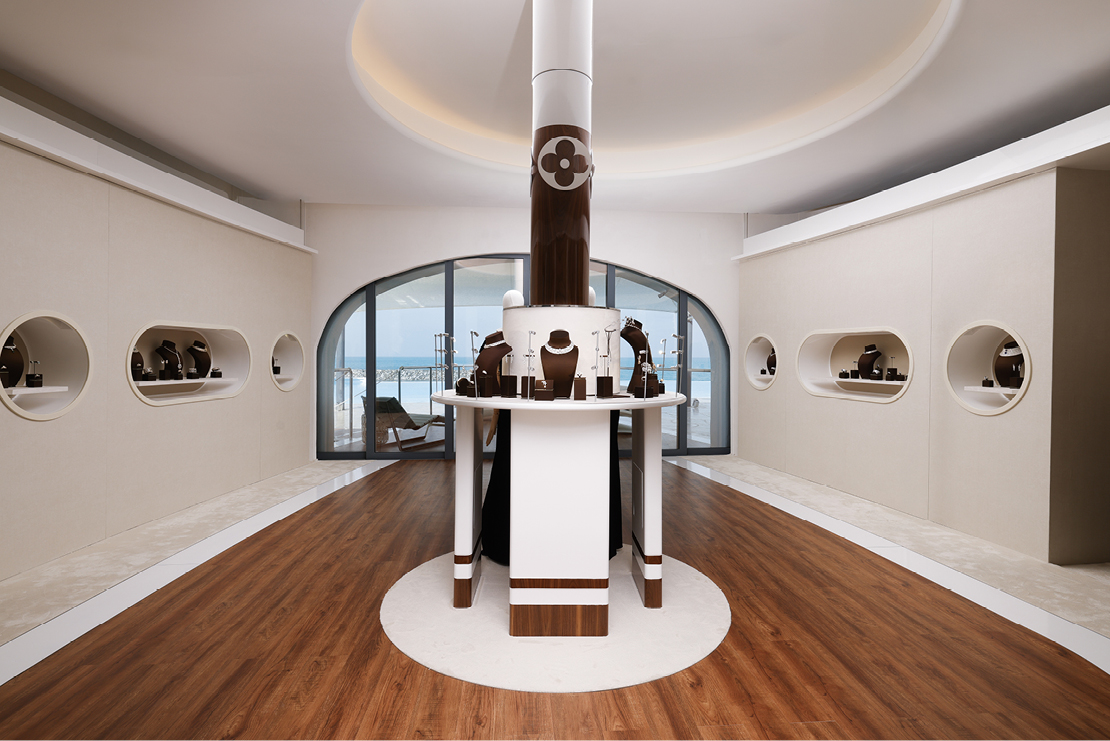
“Abu Dhabi continues to lead the way in luxury retail, and together with Louis Vuitton, we are delighted to bring Savoir Rêver to the capital. The dreamlike exhibit embodies the Maison’s spirit of artistry and adventure while reinforcing the emirate’s commitment to offering extraordinary, future-defining luxury experiences.” Said Noura Al Foulathi, Abu Dhabi Investment Office.
Prada
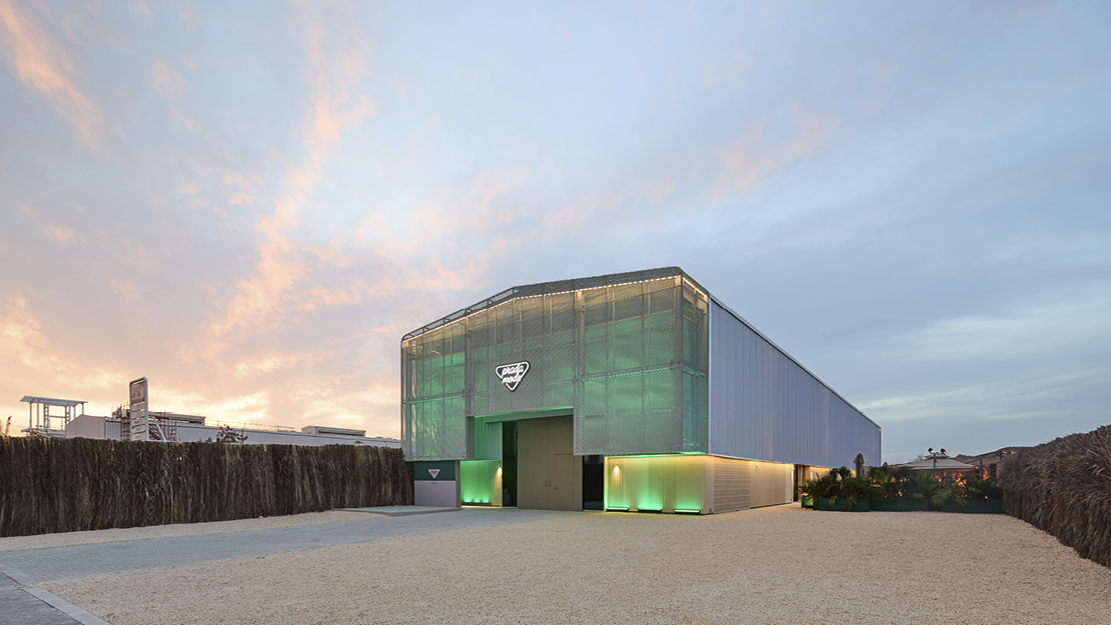
Prada hosted the latest edition of its Prada Mode activation in Abu Dhabi on from11th to 14th February. The 11th iteration of the global event took place at the MiZa neighbourhood in Mina Zayed and acted as a cultural space, bringing together the worlds of art, fashion, technology, history and more. Curated in collaboration with multidisciplinary artist Theaster Gates, the space at MiZa was transformed into an architectural structure consisting of areas for talks and discussions, dining, educational experiences and more.

Anchored in the format of a circle within a square, a cylindrical structure situated in the middle of the space created a boundary between the realms, dividing the room in two. Acoustic music sets, fostering a sense of contemplation, introspection, and conversation, characterised the interior of the cylinder, while the space at the exterior was defined by a boisterous atmosphere with live performances and DJ sets. The musical program for the interior and exterior zones was co-curated by Gates and NTS, a space for radio and creative projects founded by Femi Adeyemi. The cultural programming curated by Myrna Ayad focused on local and regional talent, with conversations and performances highlighting the multivalent expressions, traditions, intelligence, creativity, and contributions of Arab women.

The event was open to the public for the second half, while the first two days were reserved for VIP guests.
Roger Vivier
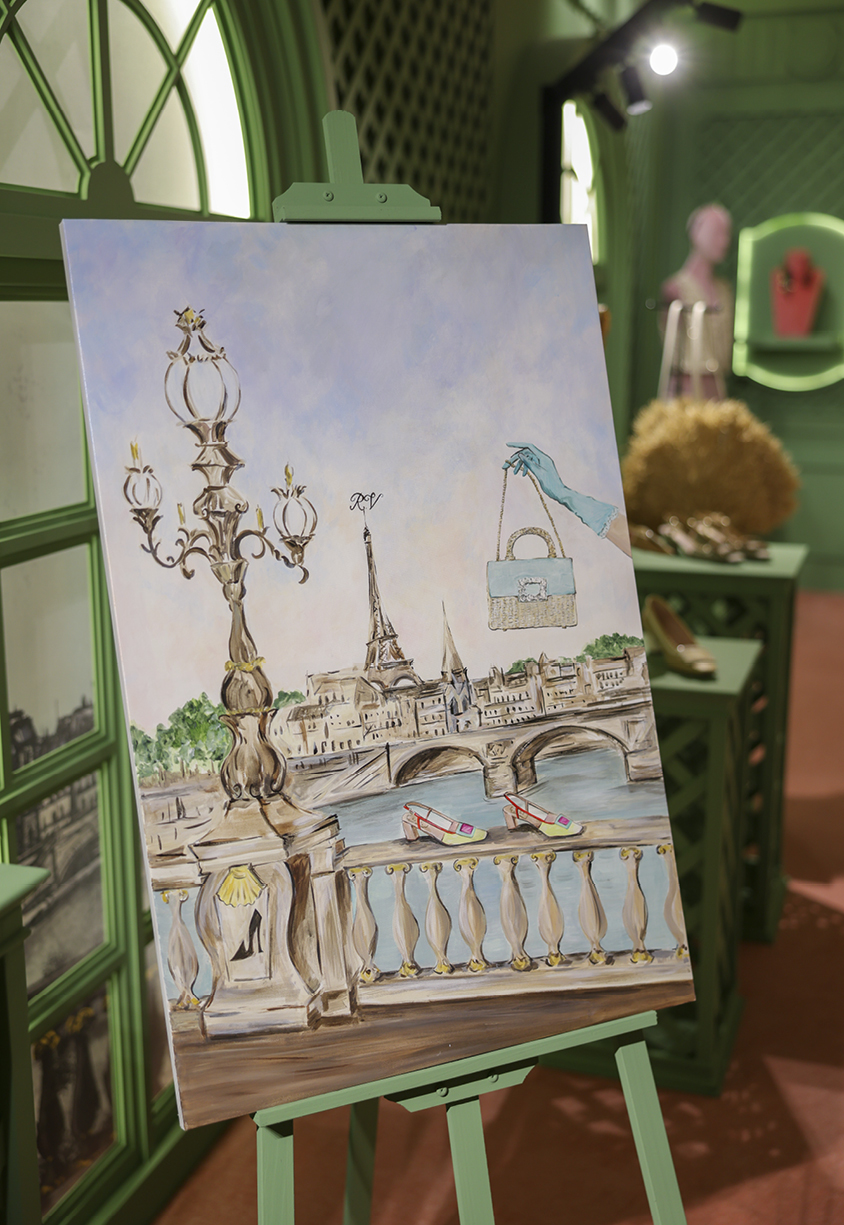
French accessories house Roger Vivier hosted an exclusive three-day event in partnership with Abu Dhabi investment office, inviting clients to discover the Spring/Summer 2025 collection at Jardin à la Vivier’. Taking place from 4th to 6th February, the presentation saw the capital’s Umm Al Emarat Park transformed into a Parisian garden, and guests were invited to discover the collection as well as enjoy dinners curated by Balbosté, offering a multisensory experience of style, taste, and artistry.
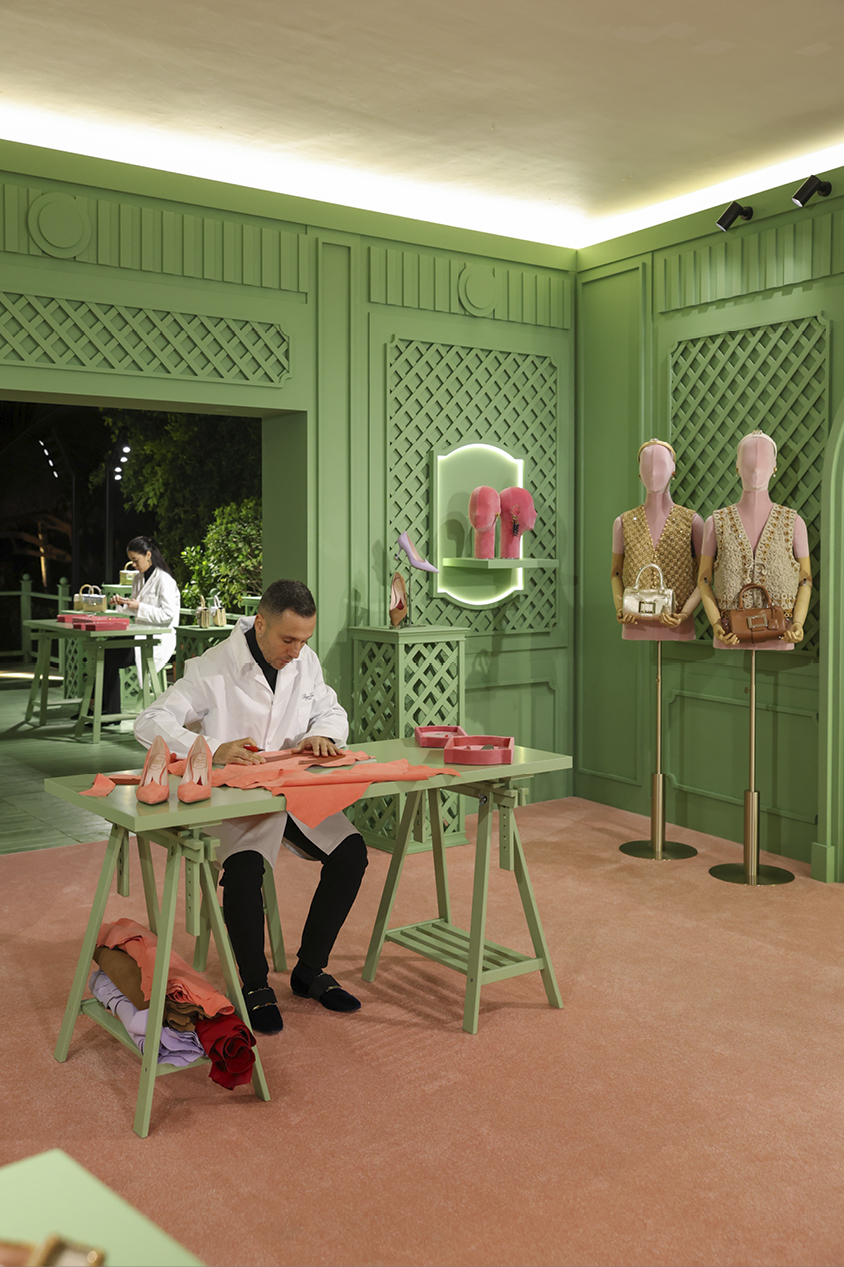
Inspired by outdoor elegance, the presentation also incorporated natural materials such as raffia, woven wicker and canvas, paired with luxurious embellishments like crystals, sequins and rhinestones. “Our collaboration with Roger Vivier brings the Maison’s unique perspective to Abu Dhabi, with the stunning Umm Al Emarat Park selected as the debut venue. This extraordinary event underscores Abu Dhabi’s growing reputation as a global hub for innovation in luxury retail, with its dynamic cultural scene and world-class infrastructure making it the ideal destination for this showcase,” says Noura Al Foulathi, Abu Dhabi Investment Office.
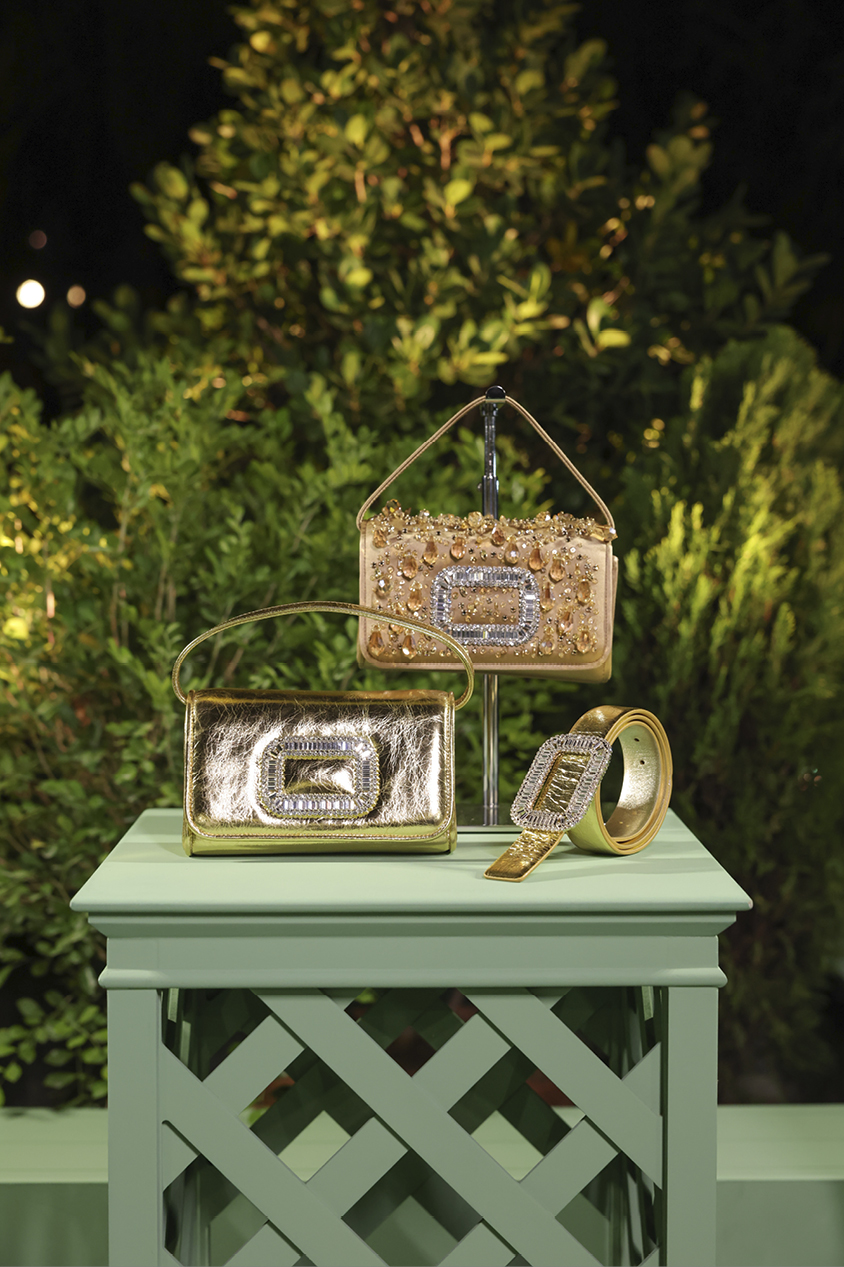
Designed by Creative Director Gherardo Felloni, the Spring-Summer 2025 collection features some of Roger Vivier’s most iconic creations, including the Belle Vivier slingback and I Love Vivier pump. The new Belle Vivier bag, a reinterpretation of travel luggage from the 1930s, also makes its debut, highlighting the brand’s exceptional savoir-faire in every single detail.
Zegna Set to Bring its Spring/Summer 2026 Show to Dubai
For the first time, Italian men’s fashion house Zegna will present its Summer 2026 collection outside the traditional Milan Fashion Week calendar, choosing Dubai as the stage for its latest runway show.
On June 11, 2025, the brand will bring the excellence of Made in Italy to the UAE for an exclusive show, reinforcing its ongoing commitment to Italian craftsmanship, innovation, and global expansion as well as further solidifying its close relationship with the Middle East.
This exceptional move — made in full alignment with Camera Nazionale della Moda Italiana — reflects ZEGNA’s ambition to take Italian savoir-faire beyond borders while maintaining its deep roots in Milan. The SS26 show will be the highlight of a week-long program of curated experiences designed to engage top clients, friends of the brand, and select members of the international press.
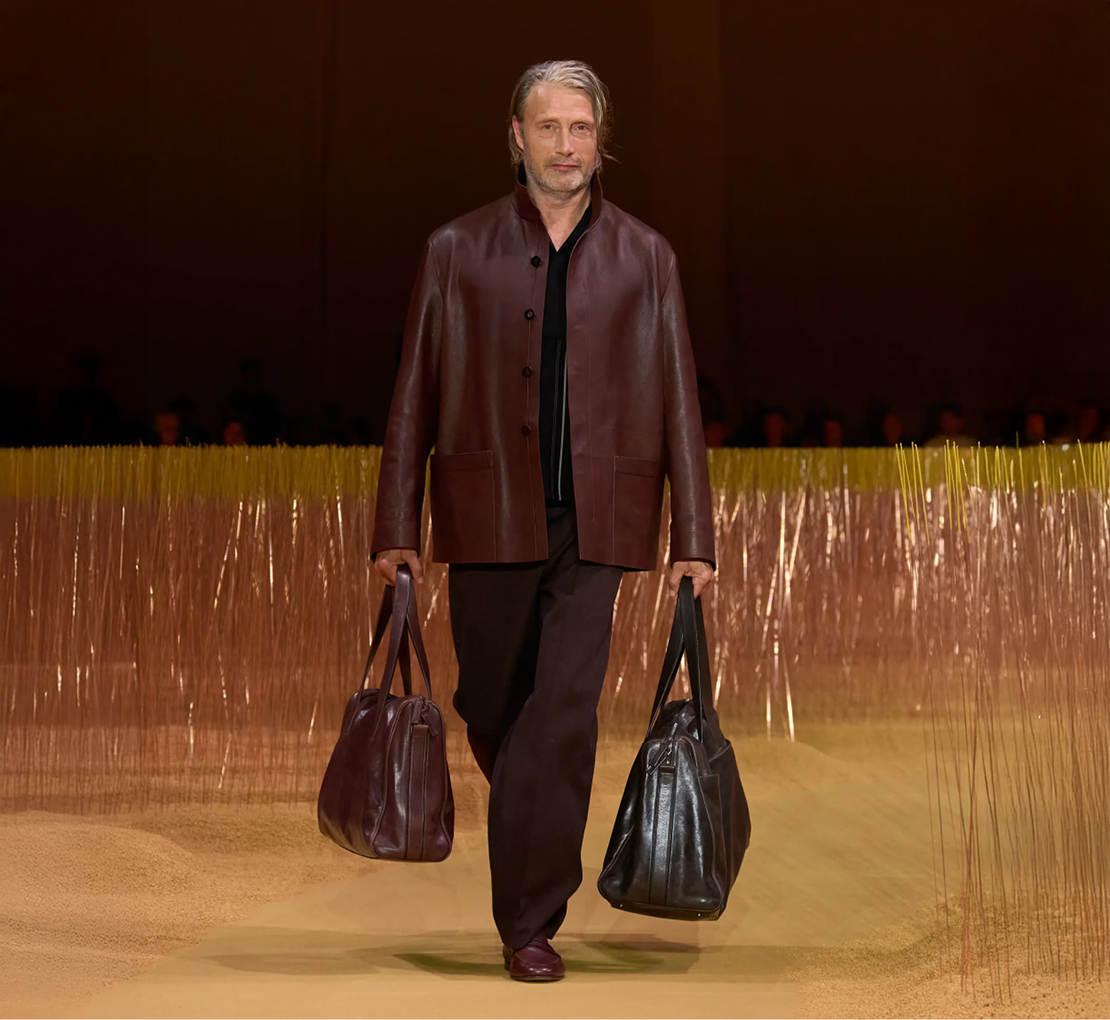
“As a company that has always looked beyond, we are excited to bring the artistry of Made in Italy to Dubai for the first time,” said Gildo Zegna, Chairman and CEO of Ermenegildo Zegna Group. “This is not just about a fashion show—it’s about reinforcing the strength of Italian craftsmanship on a global stage. Dubai today is the center of the world, a place where cultures converge, ideas flourish, and the future takes shape. It embodies the energy, vision, and innovation that define modern luxury. Milan will always be our home, and our partnership with Camera della Moda remains as strong as ever. But today, luxury is about movement, evolution, and embracing new perspectives. Dubai is the perfect place for us to tell the next chapter of our story.”
As part of this special occasion, VILLA ZEGNA, the brand’s travelling event concept inspired by the original home of Ermenegildo Zegna, will also land in Dubai, offering an immersive journey into ZEGNA’s heritage of craftsmanship and innovation. Following its first two chapters in Shanghai and New York, this latest iteration will continue to celebrate the creative spirit, sustainability, and contemporary vision that define ZEGNA today.
