

John Sanei: How To Use This Summer To Prepare Yourself For The future
This summer, I want readers to take time to engage with new technological advancements because, by September, the world will have changed again due to the fast-paced movement of technology today. There is no avoiding it, so it’s better to be prepared than to be unprepared and surprised. Author Jeremy Rifkin wrote a book called “Zero Marginal Cost Society”, explaining how anything technology touches becomes free of charge. All things that previously came at a cost, from music to photos to communication, are now free of charge due to technological developments becoming available.
Next, we will see transportation and energy production becoming free, as has already happened with communication. A man called Salim Ishmail drove from Miami to Toronto in 2021. At this point, 15 per cent of the drive was automated. Then, six months ago, he made the reverse trip from Toronto to Miami, and 80 per cent of the drive was automated. That was possible because, during the drive, he stopped off and charged his car for free. And so, in this way, transportation is becoming free; electric vehicles are making this possible. Yes, you have to make the initial investment in your car, but when it comes to charging, you will not pay for that service as you go along. And next will be energy production and usage.
Besides all these free products and commodities, the big thing going free now is services. And this affects all of us. By services, I mean experts, lawyers, nutritionists etc.; all of this is or will soon be available to us for free. So all of the skillsets of professionals will be available at no cost. In a recent interview Sam Altman, CEO of Open AI, was asked: “What’s your business model for making money from Open AI and Chat GPT?” And his response was: “We don’t know yet; we will ask Chat GPT when we think we are ready to ask it!” So services are going in such a direction that the owner of Open AI doesn’t know how to monetise his own platform. To the point that he is going to ask his own technology for the answer! Now think about all the services that are or will be coming out of Chat GPT. Your brain does not have that same capability.
To understand this process, there is a concept called the Six D’s: Digitised, Deceptive, Disruptive, Demonetised, Dematerialised and Democratised. The first D is Digitised; everything in this world is translated into a digital concept. Then it becomes Dematerialised, which means products or services that were previously physical are now available virtually. The third D, Deceptive, is the most important. The Deceptive phase is the part that catches us all out. As humans, we are so focused on today that we are not thinking about how technology is coming and is going to change everything. Then we have the Demonetised phase, followed by the Disruptive and finally, the Democratised phase, meaning that these free services can be accessed by anyone, not just those within a particular category. And this process is currently happening in every industry.
We must also reassess how we engage with technology as humans. People of a certain age will think certain technological advancements are extraordinary and others are not. For example, anything that was invented before we were born, we believe it is normal. Someone under the age of 35 would not think that electricity is a massive technological advancement. The same goes for televisions or telephones because these things have always been part of our lives. But if you talk to a 35-year-old about the latest computer or AI, they are much more likely to become overwhelmed. Why? Because, as humans, we find it challenging to deal with change or anything that is introduced as new. We see this with parents not wanting their kids to be too into technology or gaming, and this is because they don’t understand it. Actually, technology and gaming are the future for these children.
So, we all need to consider this over the summer period. Think about how much time you or your family are spending in the future. Are you exposing yourself and your family to what’s coming? Are you ready to unlearn to relearn new skills that will be required in the future world? If the answer is no, it’s time to start engaging with it.
Human skills and engagement are not being disrupted. Those things will still be around, and their value will increase, but we need to consider adding value to how we work. And suppose we are stuck in the deceptive phase, and we are over 35 years old; in that case, it’s a perfect storm for you to disengage with anything new because you don’t know how to add value in this new world because of your age and you are forced into the defective phase, and you can see things happening overnight.
So for people who fall into this category especially, take the time to relax but engage this summer. The more you engage with the future, the more scary it will be, but the more you will be able to move forward. So enjoy your summer break but make sure you keep engaged, and then you can come back to a world in September that will be completely different again, so at least you will be prepared.
Carlos-Antonio Rosillo, Co-Founder of Bell & Ross discusses the brand’s latest novelties
Since its inception in 1992, Bell & Ross has been striving to be different. This bold brand arrived on the scene and shook up the watch industry, which at the time, was highly saturated by long-lived watch Maisons. Founded by college friends Bruno Belamich (Bell) and Carlos A. Rosillo (Ross) the company began producing square watches that became their signature style, inspired by the instruments found in aircraft cockpits. Bell & Ross has found its firm place in the market over the past years and while it is still a relatively new brand its strong identity and instantly recognisable design have made it increasingly popular around the world, including in the Middle East.
This year the brand took part in the Watches & Wonders fair in Geneva for the first time. Bell & Ross presented three new novelties enriching its current collections. The BR 03-93 GMT BLUE is an instrument watch with duel time reading continuing the brand’s voyager approach, the BR 03-92 DIVER WHITE BRONZE evokes the glorious hours of the first underwater explorations with a modern flair. And the BR 05 Green Gold with a green dial represents victory. Here we find out more about the new timepieces as well as what’s in the pipeline for the brand.
Tell us about the recent Watches & Wonders presentation and what were the key takeaways for the brand this year.
Last year was an opportunity for us to see how the salon works and to understand if it was interesting for our company to participate. For this edition, we were happy and honoured to be part of Watches and Wonders Geneva. It was a unique opportunity to present our 2023 novelty to journalists as well as our loyal and new dealers from around the world. For our first time participating in Watches & Wonders, we wanted to mainly focus on the new core range which launched at the end of last year: the BR-X5. It is a great honour for us to enter the very closed “club” of Manufacture movements. Kenissi has created a movement specifically for us, with a power reserve of 72 hours, a large date window and a power reserve indicator on the dial. With this new range, we are moving significantly upmarket. In addition, it was essential for Bell & Ross to enrich its core range with new versions such as the novelties unveiled in Geneva: the BR 05 Green Gold, the BR 03-92 Diver White Bronze and the BR 03-03 GMT Blue.
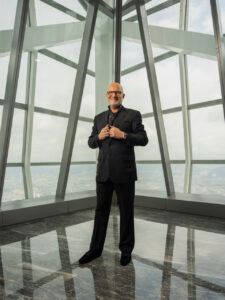
Carlos-Antonio Rosillo
Tell us about the Diving line at Bell & Ross and how it is positioned.
The BR 03-92 Diver is the first square diving watch created by Bell & Ross. It was designed especially for professionals and meets the international standards governing diving watches. Bell & Ross has had in-depth expertise in underwater matters since 1997 when it released the Hydromax, its first diver’s watch. With this model the brand achieved a world record for perfect watertightness to a depth of 11,100 metres, made possible by perfectly filling the case with a patented transparent fluorinated oil: a major innovation. Ten years later, a second diver’s watch emerges, with the BR 02 collection dedicated specifically to the underwater world. With its barrel-shaped case, this family of watches is immediately recognizable. Technically speaking, the BR 02 is equipped with a helium decompression valve and an ultra-resistant domed sapphire crystal: essential elements for saturation diving. But not all Bell & Ross Diver’s watches are round. As of 2017, Bell & Ross took on a new aesthetic with the arrival of the BR 03-92 Diver model. Part of the BR 03 family of instrument watches for professionals and civilians alike, in true watchmaking fashion, it perfectly reinterprets the functionality of fighter plane dashboards, featuring the signature ‘round within a square’ case. Above all, like all the instrument watches in the BR 03 family, the BR 03-92 Diver are conceived and designed as professional quality tools for divers. In order to meet their expectations, it complies with international standard ISO-6425, which states that a “diver’s watch” is a “watch designed to withstand diving in water at depths of at least 100 metres and equipped with a secured measuring system”. Underwater, the indices must still be visible at a distance of 25cm in the dark. A diver’s watch must also be magnetic-resistant, shock-resistant and, of course, resistant to salt water. Complying perfectly with all these demanding specifications, the BR 03-92 Diver is an underwater instrument worthy of its name according to Swiss standards. In 2018, Bell & Ross added a remarkable new variation by cutting the 42 x 42mm square case in bronze: a material historically linked to the maritime world. This is a family that would go on to see great success, welcoming several new releases each year. It included models in steel and bronze, with red, green, blue and even black dials… Some collectors sought to own every version. This year, the BR 03-92 Diver White Bronze joins the elegant and athletic line. Paired with a pearl white dial, the bronze case of the new BR 03-92 Diver White Bronze, evokes the glorious hours of the first underwater explorations with a modern flair. It’s a new chapter in the Bell & Ross nautical odyssey.
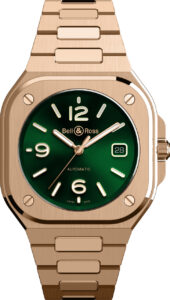
The BR 05 Gold Green is a stunning watch, what can you tell us about the choice of green on this dial, as well as the brand’s gold watch offering?
The new BR 05 Green Gold is the third link in the gold family, its case is made entirely in gold. The different models in this collection are characterised by a distinctive colour on the dial. The green on the BR 05 Green Gold evokes victory. It’s the colour of trees – more precisely, that of the fir or spruce tree. On the new BR 05 Green Gold dial, the green shade takes on a luminous, sparkling tone. The painted metal plate that serves as the base of the dial has a sunburst effect, changing colour when tilted. Depending on the reflections hitting its surface, it varies between an almost fluorescent shade all the way to dark bottle green. The depth of this unique colour is obtained thanks to the numerous coats of tinted green varnish.

Bell & Ross is a brand that creates experiences around its products – what can you tell us about this and how do you connect with clients and create a community feel around the brand?
Since the beginning, Bell & Ross aims to create useful timepieces that become tools in the hands of professionals working under extreme conditions. On-board instrumentation has always been the key to entering the Bell & Ross universe. The universe in which we immerse our customers is essential. Through our story and our universe, we create a strong link and an emotional connection with them. We are attentive to the request and desires of our customers, for example, the launch of the BR-X5 range allows us to respond to a request from customers looking for a Manufacture movement. We also differentiate ourselves thanks to our original and identifiable design. We have a great community at Bell & Ross, a community of enthusiasts who have a great interest in each of the company’s models and we are delighted to maintain this strong link with them. We have also managed to build a large community thanks to our various partnerships with the Patrouille de France for aviation, Alpine for the F1 and Tara Foundation around the oceans. We find the three pillars: Air, Land and Sea that speak to a large community.
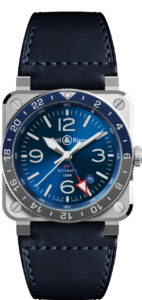
Tell us about the new BR 03 GMT – what is different from the previous GMT watches?
With the new BR 03-93 GMT BLUE, an instrument watch with dual time zone reading, Bell & Ross continues its voyager approach with a colourway that’s rare, elegant, and subtle. The previous BR 03_93 GMT had a black dial with a black and red two-tone bezel. This year Bell & Ross opted for the blue colour of the sky. A new version to meet a wider audience!
How would you assess the watchmaking industry today?
The Manufacture is a must-have, the creativity makes the difference and the brands who have an icon have a powerful strength.

What else can we expect to see coming for the rest of the year, particularly in the Middle East – can you give us a sneak peek?
As we do every year, we will introduce watches in our key categories: aviation, city, and instrument watches. Through the shapes, sizes, colours, materials, and functions, we will evolve our collection. Without forgetting, of course, the introduction of novelties within the framework of our partnerships such as the Patrouille de France for aviation, Alpine for car racing and maybe we will introduce something with our new partnership; Tara. We are also developing our new high-end collection of the BR-X5.
What is something you would still like to achieve with the brand?
Our plan for the coming years is to consolidate our BR-X5 range and strengthen our partnership with Kenissi. We would like to continue to develop our international presence and maintain our icons (BR 03) and our best sellers (BR 05) to meet our customers’ expectations.
Tell us about your passion for watchmaking – what do you look for from a timepiece?
Form and substance with the design, the engineering, and the watchmaking manufacture.

What is the professional motto that you live by?
Our tagline is: “From the cockpit to the wrist”. In the quest to create the ideal utilitarian watch, we broke traditional watchmaking codes in 2005 with the simple idea of turning a plane’s cockpit into a wristwatch. I think the strength of our company is our very strong DNA, a Bell & Ross watch is immediately recognisable, and we have from the beginning marked a very strong identity. More than a concept, this motto always reminds us of our origin: to create timepieces perfectly suited for professional use.
Let The Sun Shine: Noor Al Bahrani Discusses Her Spring/Summer 2023 Collection
Noor Anwar Al Bahrani studied Electronic Engineering in her home country of Oman before realising her passion for fashion design and realising that this could become a career. After the birth of her first daughter, Noor decided to take the leap and launch her own fashion brand, channelling her passion into her own label. She started her brand Noor Al Bahrani in 2020 with a vision of creating dreamy styles that are a reflection of her personal style and unwavering vision. She is inspired by nature and timeless storytelling to create feminine pieces that evoke individuality and flourishing beauty.
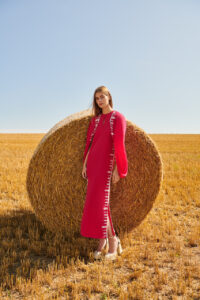
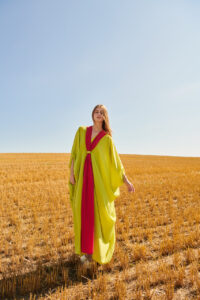
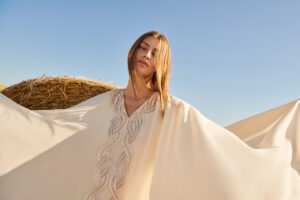
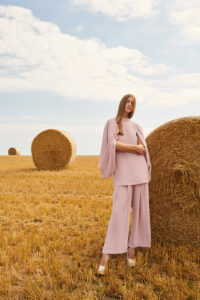
The Spring/Summer 2023 collection is inspired by sunrise on a warm summer’s day. It features a warm colour palette with iridescent embellishments, perfect for the summer month. Silhouettes are highlighted in long dresses, separates and kaftans fused with scattered embellishments and delicate embroideries. Embellished patterns adorned on necklines and sleeves using intricate techniques elevate each look with a ray of femininity. Designed with luxurious fabrics of crepe and chiffon, each style illustrates the true essence of the Noor Al Bahrani aesthetic.
As the new collection launches in stores around the region, we learn more about the inspiration for the collection and what’s next for the Noor Al Bahrani brand.
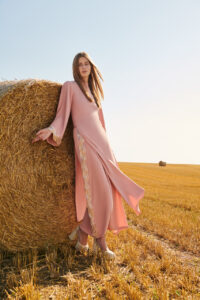
Let’s start by talking about the Spring/Summer 23 collection – tell us how this collection came together and what the inspiration was.
This collection symbolises a new day and the first rays of sunlight that break through the clouds. I envisioned this collection to be something that offers a breath of fresh air, something that brings joy to a new day.
What can you tell us about the colours, the shapes, materials and the details in this collection?
Flowy silhouettes in a warm colour palette with subtle embellishments lie at the heart of this collection. Long dresses and kaftans with embellished patterns on the sleeves and necklines highlight the feminine aura of the collection. While fabrics such as crepe and chiffon embody the brand’s aesthetic of gracefulness. Soft shades of cream, tan, mocha, lilac and rose reference the different hues of sunrise.

Tell us how your brand came to life and has developed since its launch.
Noor Al Bahrani, the brand, came to life when I decided to channel my inner desire to create dreamy styles. What was once a few sketches and fabric samples I played around with soon became a brand where I unleashed my creativity and love for feminine silhouettes. Since its launch in 2020, the brand has evolved, releasing collections that our clients love regionally and internationally.
At what point did you realise you wanted to give up your job in engineering and turn your passion for fashion into a career?
The turning point for me was when I had my first daughter. At that point, I realised my lifelong love for fashion and wanted to channel this into my own label, where I could design for women of all ages.
Who is the woman that you design for?
I design for the graceful woman who wants to express her femininity through her style and what she wears.
What is the vision for your brand moving forward?
I would love to see the brand at different stores across the world.
What would you like to see in terms of more Arab designers being recognised on a global scale?
I would love Arab designers to be showcased on more platforms globally and to become the first choice for quality and craftsmanship.
What else do you have coming up for the rest of the year?
I have a new collection launching soon that includes resort wear styles that would be the perfect companion for any woman.
What can you tell us about the retail strategy for Noor Al Bahrani and how you would like it to develop?
Noor Al Bahrani is stocked at several retail stores across the region, such as Ounass, Tryano and Saks Fifth Avenue Bahrain and internationally with Threads Styling and Every Whim. Our retail strategy is simple, our styles are designed for women from every walk of life, and we want to be present at different parts of the world to be able to cater to them.
Are there any brands or designers that inspire you?
Oscar de la Renta, the brand is so dreamy!
Who is a woman that you would love to dress?
Queen Rania.
What is the current motto that you’re living by?
To put my heart into my work.
What message would you send to your clients and fans across the Middle East?
I would like to thank each and every one of them as their constant love and support helps me continue doing what I love.
How would you describe your brand in one word?
Graceful.
Maria Grazia Chiuri Dior’s Creative Director of Womenswear Discusses The Brand’s Fall 23 Collection
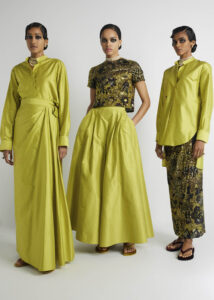
Earlier this year, Dior travelled to India to Mumbai’s extraordinary Gateway of India, a location that represents cross-cultural influences, heritage, and tradition, to present its Fall 23 collection, designed by Creative Director of Womenswear Maria Grazia Chiuri.
This collection was more than just an offering of garments, much like all of the Italian designer’s collections since joining the House of Dior in 2016. This was a celebration of crafts, and Chiuri wanted to shine a light on the incredible craftsmanship and traditions of India, a country that has been so dear to her throughout her career, as well as having an intertwined place in the Maison’s history.
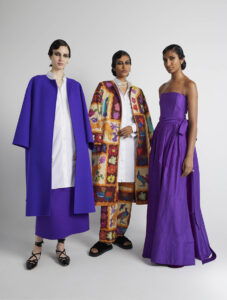
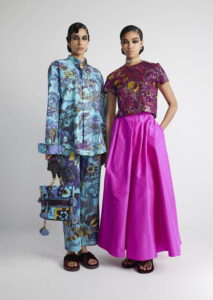
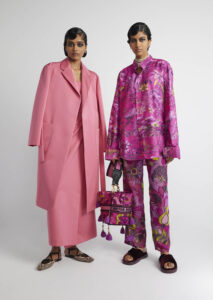
For this collection, Chiuri collaborated with the Chanakya School of Craft in Mumbai, a school that has for many years contributed to the House’s designs. This was the first time, however, that they would be put at the forefront, with the School’s Director, Karishma Swali, taking the lead. Working closely with Dior’s Creative Director this school explored traditional Indian crafts, reinterpreting them in the Dior way and highlighting the visionary spirit of the founding Couturier. The result was an extraordinarily colourful and detailed collection, which could not be fully appreciated at first glance. Intricate embroideries, prints and needlework were combined with innovation to create something truly magical.
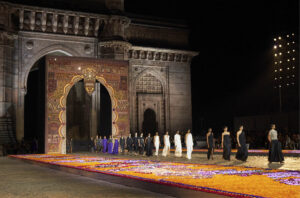
Championing talented artisans and exceptionally gifted women in the worlds of design arts and crafts has been a clear mission of Chiuri’s since she joined the House. Travelling to some of the far corners of the world, she has worked with and given the spotlight to some of the most diverse artisans and craftspeople. As this collection launches in stores around the region, we find out more about the story behind the show and the Creative Director’s mission to fulfil the vision of the House’s founding Couturier but make it relevant for today.
Let’s start by discussing the Fall 23 collection; tell us how it came together.
This collection is the result of a long creative process. One which began long before this actual project of showing in Mumbai. So, in a way, it was not the result of a few months, but it most surely reflects years of creative dialogue. The Chanakya School of Craft worked on the show installations, and over the last few years, it has been an opportunity for the students to collaborate with great female artists, such as Judy Chicago or, more recently, Mickalene Thomas. For this collection, we approached things a little differently: the students conceived a “toran,” a symbolic arch made of textiles and needlework which represents a sense of gathering, of welcoming. And this time, they were entirely the authors of their work, an opportunity to acknowledge their growth as artists as much as artisans.
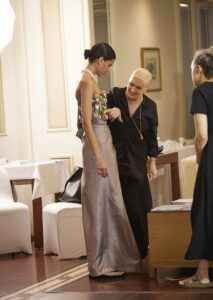
The colours, the shapes and the embroideries in this collection are beautiful – what can you tell us about the attention to detail in the pieces?
I wanted a great variety of techniques to be represented in the collection to suggest the wealth of textile cultures pertaining to India. We included different embroidery techniques, such as zardozi, appliqué and mirrorwork. But beyond the needlework, we also conceived a design of block-printing on silk and collaborated with artisans in the South of India to produce a series of woven silks such as those used for saris. It was a humble way of mapping part of the diversity of gestures and traditions forming the Indian culture.
In the history of the House of Dior, there is an iconic French fabric, the ‘toile de Jouy’, which was used notably to decorate the first Dior store in the 1940s. The history of this fabric is fascinating because it was actually a French answer to the popular Indian printed cotton back in the 18th century. Drawing from this important reference for the House of Dior, we revisited this print, and, instead of the flowers and forests of France, we placed the fauna and flora of India, with elements such as lotus flowers, peacocks, or tigers. I felt it was a meaningful way of reflecting on mutual influences and the way patterns and textiles travel between cultures.
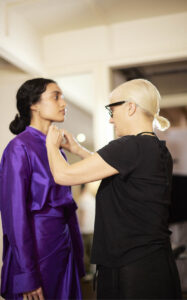
Can you share a little on the partnership with Chanakya ateliers and their connection with the House?
The Chanakya School of Craft is a space for education and the transmission of artisanal needlework. The students are taught the techniques, but also to reflect on the value of craft: in this context, it felt very relevant to connect with the art world, and especially with female artists who have demonstrated, over the last decades, that through textiles and embroideries, you could create art pieces with the same symbolic and aesthetic value as a painting or a sculpture.
This was the starting point of our collaborations around the Dior couture shows, where I have commissioned women artists to create installations to which the Chanakya School of Craft students contribute. I am profoundly proud and touched that the many conversations I have had over the years with Karishma Swali have inspired her to create this incredible project. It’s both an honour and a great pride to be able to have accompanied the realisation of such a vision and to continue to do so across many projects together.
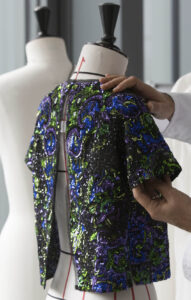
What impresses you about the skills and craftsmanship you can find in India?
I started by discovering the embroideries of India – indeed, in the 1990s. I was amazed by the wealth of techniques and materials that this tradition has kept alive. But it was not a heritage looking only towards the past. As soon as I started collaborating with Indian artisans, I understood that I had found partners who would allow me to constantly push the limits of craft and reinvent it for the future.
I think it’s difficult to define the fashion culture of India in general precisely because it is so rich and vast. Each region has its own specificities when it comes to dress and textiles, and this is what is so fascinating. I will never be done exploring the numerous techniques and stories that they carry.
The show for this collection was truly breathtaking – what was your initial vision, and how did it come together?
This show is the result of collaborative work, on so many levels. And it’s possibly what make it that much more powerful. I really felt I shared its success, first and foremost, with the many artisans that have helped me make it come alive. This was one of the most emotional experiences for me as a Creative Director because the show was not just about a creative performance or the display of visual art in all its shapes and medium. It was truly a collective gathering and one meant to express gratitude. I hope that this energy could be felt and that it was demonstrated to the audience as well as the beauty that comes from working together.
Since you joined Dior and over the last few seasons, it has felt as though your collections are more than just a creative idea; there is a meaning, a partnership, or a message in everything you do – why do you think it is important to convey this through your designs?
I have approached this as an opportunity to redefine the notion of femininity, which the House of Dior was built on, as something less normative and more empowering for all women. It has been crucial for me to look back at the legacy of the Couturier and to explore with my ‘female gaze’ his sometimes-misrepresented idea of womanhood. In other words, I have sought to connect Dior with women in a different way – past, present and future.
I truly believe in collaborative projects; this is an integral part of my creative process. Establishing dialogues with other creatives from different fields and practices is an extremely challenging and enriching adventure. I have cherished these moments and relationships for what they have taught me. I feel it’s only natural to acknowledge the fruitful collaborations that I have initiated as it’s so intrinsically connected to my work. These are values that guide me no matter how successful they may be. I am committed to these ideas and will stay consistent in my project to bring them to the forefront.
We have seen collections presented in so many beautiful corners of the world, but where do you go when you truly want to be inspired and how do you get into your most creative state of mind?
India has been an important country for me throughout my career as a designer. It’s a place where I have met wonderful collaborators who have introduced me to the unique Indian culture of craft. It’s a place where I have really come to understand my own creative process and the central role that craft plays in it.
How do you balance using traditional crafts at Dior with new technology and innovation?
I think it’s very important to balance heritage and innovation. In any case, when you work for a brand like Dior with a long, rich history, you have to maintain the heritage and value of the brand, but at the same time, to move into the future. For instance, the RTW 22-23 collection was called The Next Era – title of Mariella Bettineschi’s artwork at the heart of the show’s scenography – because this collection was a new design challenge geared towards inventing a series of garments that combine fashion with textile innovation. This ambition is the essence of the collaboration between Dior and the Italian start-up D-Air lab*, which has given rise to a new era of clothing – performance is increased tenfold thanks to new technologies. Technical elements are integrated into outfits that symbolise a dialogue with fashion, embodying the synthesis of these two languages. It represents a post-humanity conceptually unfolding through the forms that have defined the legendary destiny of the House of Dior.
*D-Air lab is an Italian start-up founded in 2015 by Lino Dainese. Architect Silvia Dainese Gris has led this special project for Dior.
Looking to the future – what is your vision for the House of Dior?
The Dior fashion house has succeeded in staying relevant over a long period, peppered with revolution and social and cultural transformations that have sometimes been drastic by reinventing itself and constantly building its identity around femininity and its complexities. This is mainly because the codes have remained at the core of the Dior project, constantly brought up to date and reinterpreted in light of the times and fashion trends. It is important to respect the past because you can only imagine the future if you know what came before it.
What is a key piece every woman should own this summer?
I see many girls with vintage bags, but they have added a new strap, and I think it’s cool. It’s about freedom and personal style, so I really like this idea. This is not to make someone else happy. This is to make yourself happy. Women today are full of freedom; they wear whatever they want and be whoever they want to be.
What is the current motto that you’re living by?
While you should feel confident of your accomplishments of the knowledge you have acquired through training, remember that you never stop learning.
Emirati Film Writer, Director and Producer Nayla Al Khaja Discusses Her Upcoming Feature Film
Nayla Al Khaja has had quite an impressive career, with her films being screened at more than 42 film festivals worldwide. Nayla is passionate about sharing deep and emotional stories through her work and has been widely recognised for her honest and open approach to producing. This year, Nayla will achieve one of her biggest goals, producing her own feature film. Titled “Three,” the film will depict a true story about the struggles of a child and his family.
Having run a production company in the UAE for over 15 years, Nayla has a 360-degree perspective on requirements to deliver a successful production in addition to an appreciation for both the creative and fiscal, and she plans to use all this experience to make the best possible success of her upcoming film. Ahead of the press launch for “Three” in Dubai, we met Nayla to find out what to expect.

We know you are working on an exciting project, “Three” – tell us about this film, what it’s about, and what it means to you.
Three is my debut feature film, a lifelong dream. It was challenging to make this project happen. I was initially ready to go ahead in 2019, but then the pandemic hit, and everything paused for a year and a half, and then I had to kick-start it again. I didn’t raise enough funds to shoot the film, so I was stuck in a situation where if I didn’t raise the entire amount, I had to decide whether to return the money to the investors or try to make them wait longer until I find more investment. It was a challenging place to be in. Then a good friend of my husband’s suggested I shoot somewhere else in the world. My film was ninety percent indoors, so it didn’t have to be shot in the UAE; I could easily shoot somewhere cheaper. So I decided to go to Thailand. I started working with a location scout, and when the numbers started coming in, we were shocked by how far the budget could stretch in Thailand. I didn’t realise there would be such an incredible calibre of crew there. There are some incredibly talented people, and they film a lot of content there, so I was fortunate to work with a very experienced team who were used to working on Hollywood films.
What can you tell us about the story and genre of the movie?
It’s a film about mental health, a very relevant topic, but it’s also about exorcism in Islam. Looking at two schools of thought and the ideology of treating people through spiritual and religious healing, and also looking at it from a medical perspective. And this time, we decided to take our character on both routes and the clash, so things get quite controversial, and it’s an interesting journey. The character goes on a journey of self-confusion, and we also see the journey of his mother working through this. It’s based on a true story, and I wanted to really depict the emotional journey of this mother and her son, as it’s a very human story.
All of the exteriors were shot in the UAE, and the interiors in Bangkok. I’m returning to Thailand next week to finish the post- production, working on the sound design and music composition until I bring the film to its final stage. I have officially submitted it to the Toronto Film Festival, and I plan to send it to the Venice Film Festival and Sundance to see where my luck is! I also plan to send it to the Red Sea Film Festival in Saudi Arabia. It’s exciting to see what the reaction will be, it’s impossible to predict, but as a team, we did everything we could to mitigate the risk and ensure the film gets the best chance possible.
I worked alongside a very experienced producer and was in excellent hands. My husband also produced the film with me, and the people that really touched my heart were the investors because they believed in me. I’m particularly pleased about my female investor because she has never put money into a film before, but she does support women with getting education scholarships which is amazing. I owe both of my investors so much; they made my dream come true! The film will be ready in July, and hopefully, the minute it is released at a festival, we will start to get attention from buyers, etc.

And this movie is based on a short film that you already produced?
Yes, the film is based on my short film called “The Shadow”, which was bought by Netflix for worldwide release. It was around fifteen minutes long, and I wrote and produced it. My new film “Three” is based on the concept of “The Shadow.” I am happy to say that in the production of “The Shadow” we had one of the highest percentages of women working on set behind the scenes of any film production. It was almost forty per cent women, which was brilliant to watch. And even with “Three.,” we had a lot of women on set, which I’m very happy about.
How would you assess the development of the number of women in the film industry, and what still needs to be done?
Unfortunately, the numbers are still very bleak; we are at twelve per cent of women worldwide. Cinematographers have it the worst, with just three per cent women. It’s twelve per cent for female directors, so slightly more but not fantastic. What’s interesting, however, is that when it comes to producers, there are over thirty per cent female producers worldwide, which is better, but it still needs to increase. Today, studios especially are very male-orientated, and the bigger the money, the lesser the chances of women getting the role, and unfortunately, that is still the reality. Things are changing, but it will take time, remember, it only really started to change with the Me-Too movement, so we need quite a few more years to see a balance.
In the Middle East, there is around a fifty-fifty balance of male and female directors. This is quite surprising, but I think the reason is that we started much later in the game compared with other parts of the world. By then, there were already developments and awareness of the gender imbalance, as well as men and women starting around the same time in the Middle East, compared with the rest of the world where men have been working in the industry for decades before the women arrived.

Tell us about your upcoming movie BAAB.
“BAAB” is more of an arthouse than “Three”. It’s a story about the five stages of death in random order, and it’s about a sister and her twin and the story of grief. One of the sisters discovers a secret about the other who has passed away, and that’s when the mystery starts unravelling, and it’s quite exciting. I worked with two-time Oscar-winning composer A.R Rahman on this film as the primary composer, and I’m very proud to say that he is planning to use an all-female orchestra of over 40 musicians.
The subjects you cover in your films are quite deep, emotional topics – is this a pattern you like to follow with your works?
Yes, I do. I like to tell stories about coming of age, especially with young boys. I think that’s because I saw my brother go through trauma as a child, and I don’t think I ever got past that. So I feel like a lot of my stories cover topics such as divorce, dysfunctional families, and young children dealing with abandonment issues. I come from a divorced home, so there is a sense of that in my stories. It’s almost like therapy! But it’s also a great way to raise awareness.

The latest edition of the Cannes Film Festival has taken place in France, what do you think is the importance of events and festivals such as these for the industry?
They are extremely important because that is where all the big sales happen. They are still very robust and thriving. As a filmmaker, you can meet all the important people, including representatives from streaming platforms, theatrical distributors etc. It’s imperative to work with a sales agent that’s well prepared and make the most of these opportunities and if the film does well at the festival, then you’re set!
Toronto Film Festival, for example, gets 4,000 film submissions each year; from that 4,000, only seven per cent get selected. The chance of your film being showcased is tough. Sometimes your movie might not get chosen, but it’s not because your film isn’t good enough, it could depend on if there’s a political agenda happening in the world, or the theme of the festival, there are so many elements that play into it, including some good luck!
What is something you would still like to achieve in your career?
I would like to be one of the most successful film studios in the Middle East that can produce films for the rest of the world. I want to be able to produce two to three movies a year and I would also like to produce films for other directors.
What more would you like to see done in the film industry in the region?
I always say this, but I truly believe that the UAE desperately needs a film grant. We need treaties with other countries, and we absolutely need government incentives and grants invested in the film industry
because it’s impossible here. Finding investors is the only way to produce a film here, but it is so difficult. If you look at a Canadian film or an American film, for example, you will see that for a two-million- dollar film; they only have to raise a small part of the budget in cash; the rest is supplemented in a variety of different ways – cashback, incentive, government grants – we don’t have that option here, and that’s why my film was 100 per cent self-funded. It’s also very risky doing it that way, but I had no other choice. I don’t understand why nothing has happened yet; I don’t think they see the potential; I think it might take one or two films to break the mould for them to take notice.
What is the one film you love to watch over and over again?
That’s a tough one! I have a lot of films that I love, but I don’t know if I have one particular favourite. If I had to pick a genre, it’s easy – I love psychological thrillers, anything very dark! I also appreciate a lot of directors’ work, such as Roman Polanski’s, I like Wes Anderson, and in the Middle East, I like Nadine Labaki’s work.

Who would play you in a movie about yourself?
Helena Bonham Carter combined with Cate Blanchett! The seriousness of Cate mixed with the quirkiness of Helena.
Where do you like to travel, and where is a place that inspires you?
I like to travel to Cape Town; it’s beautiful, very relaxing, a place where I find a lot of stunning visuals, and I feel very at peace there. Interestingly, a place that inspires me is Bangkok; I like the energy there.
What else is in the pipeline for the coming year?
As you know, I’m finishing off “Three,” my first feature film, and I’m working on “BAAB”, my second feature film, and I’m already thinking about my third. Two of my sisters are screenplay writers, and they are helping me think of the third, and it might be a horror-comedy, a genre I’ve never explored before but I’m very interested in. My first two films are very heavy and emotional, so I think it would be nice to do something light and fun that will also show my range of directing. I’m also hoping that once I’m finished with the first film that, I get an offer to have an agent represent me in a wonderful management company in The United States.
What message would you send our readers and your fans about your upcoming movie?
I think this is the first time in the history of filmmaking where an Englishman is portrayed at the heart of an Emirati family. He has full access to this family, and you see him become wholly immersed and integrated with them. The mix of East and West is so beautifully done, showing the authenticity of the cultures and personalities. There is a coming together of religions and colliding ideologies, and it’s about how people from very different lives come together to try and help this child. What’s beautiful about the film is how the wonderful cast comes together, and we see Arabs portrayed in a genuine way. It will be different from anything else you’ve seen.
Golden Hour: Discover Buccellati’s Latest Jewellery Collections
Buccellati’s jewellery collections make the perfect accessory for summer. See more in our latest editorial production below.
Photography: Sandra Chidiac
Styling & Direction: Lindsay Judge
Model: Rona at Fashion League
Hair and Makeup: Lina Dahlbäck at Signature Element
Location: The Westin Dubai Mina Seyahi Beach Resort & Marina
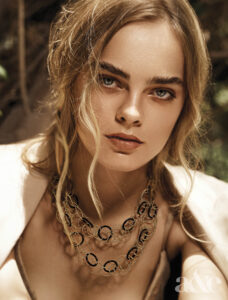
Hawaii color necklace in yellow gold set with onyx. By Buccellati
Jacket and dress, Brunello Cucinelli
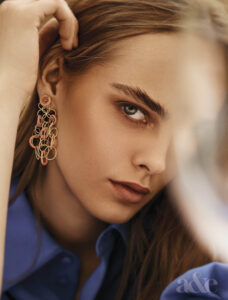
Hawaii Color earrings in yellow gold set with opal. By Buccellati
Dress, Valentino

Left hand: Macri Positano Eternelle in yellow and white gold set with round faceted rubies
Right hand: Macri classica eternelle in pink and white gold set with diamonds. Macri Eternelle in yellow gold DLC set with diamonds. Macri bracelet in pink and white gold set with round brilliant cut diamonds.
Macri bracelet in yellow and white gold set with round brilliant cut diamonds. All Buccellati
Jumpsuit, Genny
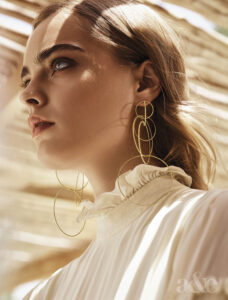
Hawaii Earrings in yellow gold. By Buccellati
Dress, Noon By Noor
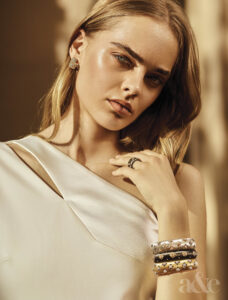
Macri classica earrings in white gold set with 3 round brilliant cut diamonds.
Macri Eternelle in yellow gold DLC set with diamonds. Macri Giglio bracelet in white and yellow gold set with diamonds.
Macri bracelet in yellow gold DLC set with diamonds. Macri Giglio bracelet in rose and white gold set with diamonds, All Buccellati. Jumpsuit, Genny
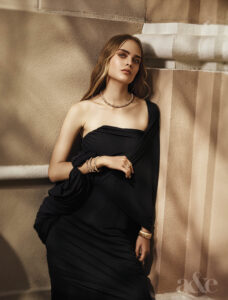
Torsade necklace in yellow and white gold set with diamonds.
Left hand:
Macri AB bracelet in yellow and white gold set with diamonds.
Right hand:
Macri bracelet in yellow and white gold set with round brilliant cut diamonds.
Macri bracelet in white gold set with round brilliant cut diamonds.
Macri bracelet in pink and white gold set with round brilliant cut diamonds.
Premium band ring in yellow, white and pink gold set with rubies.
All Buccellati
Dress, 1309
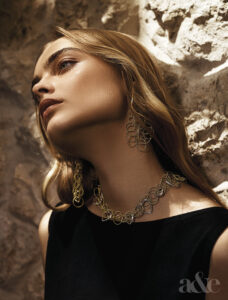
Hawaii Earrings in yellow gold. Hawaii Diamonds Necklace in yellow and white gold set with diamonds. All Buccellati
Dress, Max Mara

Daphne Earrings in yellow and white gold set with diamonds. Macri gold watch in yellow gold set with diamonds. All Buccellati
Jumpsuit, Genny

Collane Ombelicali necklace in white and yellow gold set with pearls.
By Buccellati
Dress, Brunello Cucinelli
H.E. Sheikh Fahim Bin Sultan Bin Khalid Al Qasimi, Chairman of the Department of Government Relations in Sharjah on the UAE’s City of Culture and Knowledge
The Emirate of Sharjah has become known for its rich history and cultural appeal. Thanks to events such as the Sharjah Biennial and the Sharjah Art platform, as well as the numerous cultural museums around the city, the UAE’s third-largest Emirate has received global recognition for its celebration of the arts, welcoming creative talents from around the world to share this platform of culture.
But there are many more ways that Sharjah is sharing its strengths. Under the guidance of H.E. Sheikh Fahim Bin Sultan Bin Khalid Al Qasimi, Chairman of the Department of Government Relations, Sharjah is spreading its uniqueness, beauty and strengths with the world, developing global partnerships and putting Sharjah on the map for its cultural power, as well as its expertise in education and innovation.

Heading up the Department of Government Relations, H.E. Sheikh Fahim and the department work in cooperation with the Ministry of Foreign Affairs and International Cooperation to coordinate the Emirate’s foreign relations and seek to maintain and strengthen its reputation at the regional and international levels. The department oversees the organisation of the strategic cities program in Sharjah, aiming to build strategic relationships based on enhancing cultural and knowledge exchange and achieving economic development. We talk exclusively to H.E Sheikh Fahim Bin Sultan Bin Khalid Al Qasimi to learn more.

Tell us about your role as the Chairman of the Department of Government Relations in Sharjah, what it entails and what your role involves daily.
I started my career in the private sector, and then, nine years ago, His Highness Sultan bin Muhammad Al-Qasimi, The Ruler of Sharjah, asked me to join the Sharjah Government to establish an international cooperation for the Emirate of Sharjah. Having studied abroad, I realised we needed to identify where an international cooperation department in Sharjah would focus. We began by looking at where Sharjah has an outward-looking presence. We identified four areas: economics, tourism, culture and education, and we started working on ways we could place Sharjah by comparing it to other cities in the world. For example, we looked at The United Kingdom and highlighted the similarities between cities like Cambridge, Edinburgh and Manchester. And I think that helped our international partners to place Sharjah.
My job today revolves around working with countries and cities worldwide to help deepen and strengthen their ties with Sharjah. There are three main elements of my job. The first is to be the international representative when Sharjah travels abroad. I support other departments when it is required for Sharjah to have a global presence. For example, with the Sharjah Book Fair coming up next month, I will be in Korea as the guest of honour, working with our Korean partners on this. My department also helps to organise economic and trade visits to certain countries. The second part of my role is to represent His Highness the Ruler of Sharjah as his diplomat when required. I have had the pleasure and honour of meeting presidents and speaking at prestigious events on behalf of His Highness, and I feel blessed to have had those opportunities. And then last but not least, it is related to representatives of our international partners who are based in the UAE, namely the Consul Generals of all of the countries we work with; whenever they need anything from Sharjah, we call ourselves the “Diplomatic Window” into the Emirates.
How is Sharjah positioning itself as a tourist destination and appealing to international visitors?
My role is a very multi-faceted job, and I will say that there can be different messages depending on who we’re speaking to, but around seven years ago, we realised that we needed to distil the message down to something that everyone could understand. If we think about the core values of Sharjah, it comes down to the message that Sharjah is the UAE’s capital of culture, education, and innovation. Culture in the sense that we have the Sharjah Biennial and the Sharjah Arts Foundation. We also have one of the world’s largest Book Fairs, the country’s most extensive collection of museums, and so on. Regarding education, we have over 40,000 students from over one hundred nationalities. I always say we educate the region. The number of Cabinet Ministers who are graduates of Sharjah Universities is vast; we have produced numerous lawyers, dentists, doctors and more. This message is quite easy to share, and we work a lot on student exchanges, professor exchanges, and research programmes around this. And then lastly, after 25 years of these Universities, we are focusing on the next phase of innovation, which looks at how we bring applied research and technology to the Emirates. We look to find young start-up companies that are solving global challenges and consider how we, as a government entity, can enable them to have Sharjah as a base. That is an exciting task.

What is in the pipeline for Sharjah in terms of innovation?
Innovation is a very abstract and broad term. If I try to keep the message very focused, I look at where Sharjah has been leading in particular industries, where I always highlight our “Sharjah Champions”. Sharjah is the only Emirate that has two coastlines on the Arabian Gulf and the Gulf of Oman. And because of that, we have Gulftainer, one of the leading logistics port operators in the world. This is a Sharjah-based company which operates Port Canaveral in The United States. Secondly, Sharjah International Airport, which people living in the UAE might call a small airport, is a large international airport on a global scale. It can carry up to 12 million passengers a year, and it’s rapidly growing. We also have there the Sharjah International Airport Freezone, where cargo and aviation are a huge hub due to Air Arabia, one of the fastest growing low-cost carriers in the world: once again, a Sharjah success story. We can continue to innovate in this huge sector, and any start-ups in that space should look at working with our aviation sector.
Another company I would like to highlight is BEEAH. BEEAH is a company that’s doing something, unlike anything I’ve seen throughout my career. Around 17 years ago, Sharjah embarked on a mission to solve the waste disposal challenge. The region is one of the highest waste producers in the world, and Sharjah had a bold target of zero waste to landfill. BEEAH was created as a public-private partnership with the Sharjah Municipality and is run by Khaled Al Huraimel, one of the most fascinating CEOs in the country. BEEAH uses a special technology that allowed it to reach seventy per cent diversion of waste from landfill in three years. With the commissioning of a waste-to-energy plan, in coordination with Abu Dhabi, this year Sharjah is on track to being the first city in the Middle East that has zero waste to landfill. And now, BEEAH is exporting its expertise to other areas of the world. They handled waste management for COP 27 and now manage the waste in Sharm El Sheikh, Medina in Saudi Arabia, and the new administrative capital in Cairo, Egypt. This is a global challenge, and this company is solving a problem that needs a solution the world over. So we have these huge success stories in Sharjah, and we need to be sharing these with the world, and that’s my job.

What’s happening in terms of the cultural attractions and activations in Sharjah?
Sharjah has a unique identity, and I tell people they need to spend a week there to get a true sense of the Emirate, particularly the city centre. We have worked for a long time to build an authentic programme, whether in fine art, handicrafts, innovation, education, arts, or other areas. The Sharjah Biennial is one project that has been successful for many years. The art world now knows Sharjah as this location, and I’ve worked with universities teaching Arab art that have Sharjah as part of their curriculum, which shows we’ve created something of magnitude. The Sharjah Book Fair started as a very humble event before I was born and has been the world’s largest book fair in the last few years.
Other stories are not as widely shared yet. I’m fascinated by a project by the Irthi Contemporary Crafts Council. I have worked on a few projects with them, and the handicrafts these women are doing are incredible. As a department, whenever we give gifts, we include items that we have co-produced with Irthi Contemporary Crafts, and it also gives the women working there the opportunity to earn a living. When it comes to Irthi, I would say “watch this space” because there will be a lot of news in the design space in Sharjah.
Last but not least, we as a department have been working on something fascinating in the cultural space. We realised that countries were trying to find better ways to engage with our cultural programme by being on the ground, meeting curators, and finding ways to collaborate. But the cultural centres have always been very much based in the embassies in Abu Dhabi. So, we wanted to find a way to have cultural representation in Sharjah. Most countries worldwide have an official government-associated cultural institution that acts as a cultural ambassador. The British Council is one example; the Allianz Française is another. Coming from the private sector, I realised that one of the challenges for them opening in Sharjah would be the actual physical cost of establishing a centre. But today, with so much content being delivered digitally and people working in more collaborative-like spaces, why don’t we create a cultural centre that houses all of them in one space? And so that is what we are doing! It will be almost like a cultural co-working space. So that is a fascinating project we are currently working on. We hope it will be a place where cultures meet, and I look forward to welcoming Sharjah’s students, residents, and Nationals to this unique space when it opens.

Tell us about what’s happening in terms of the digital transformation of Sharjah and what this means for the future of the Emirate.
I didn’t initially come from the digital industry but began bringing technical solutions to the government several years ago. I saw that there was an opportunity to work on that more closely, and I was asked by His Highness Sheikh Sultan bin Mohammed bin Sultan Al Qasimi, Crown Prince, and Deputy Ruler of Sharjah, to look into it, and what I realised was that we needed to think about the people that choose to call Sharjah home. Not digitalisation for digitalisation’s sake but rather, how do we build a plan where the outcome makes people’s lives easier? That took a number of years, the pandemic accelerated a lot of technology adoption, and today we have the Sharjah Digital office, which is now handling this, and they have built the Sharjah Digital app, which is a digital window for residents, and we continue to develop.
Technology, for technology’s sake is great. Still, how we think about it in Sharjah is to consider that only some have access to technology or are used to working with it. We are not naïve to the fact that specific segments of society still prefer to come into a department and deal with someone face to face. So, it’s a tough challenge, and I commend the Sharjah Digital office team who continue to find this delicate balance.

Khorfakkan Ampitheatre
What are some of your favourite locations in Sharjah that our readers should visit?
I often say that I have the easiest job in Sharjah. I get to bring foreign diplomats to the Emirate, show them all the wonderful places, and tell them all the wonderful stories. I’m lucky as I get to see all the hard work that’s put in, and then I get to share it with others, so I have seen every beautiful corner of Sharjah.
I recommend anyone to take a walk around Sharjah. There are some locations that people may be aware of but have not truly experienced it. If you start at the Sharjah Art Museum and walk through the Heart of Sharjah, you will get a sense of the culture and beauty of the city. In the cooler months, stop for a coffee in Chedi Al Bait, continue to walk through the Souq Al Shanasiyah, and pass by the Museum of Islamic Civilisation. That gives you a sense historically about how Sharjah has preserved its history. My family have been in Sharjah for hundreds of years, and for us to maintain that is fascinating.
For people that might be able to call Sharjah home or have just moved there to start a new chapter of their lives, I’m fascinated by the area around University City, all the way across to Al Mamsha and Aljada, where you get a sense of the youthful vibe of Sharjah. You are then also very close to The House of Wisdom, where I spend a lot of time, and it’s a fascinating location. Eating at the Chie restaurant is a great experience, especially if you are a foodie like me!
If you ask me personally where my favourite place in Sharjah is, it would have to be the East Coast. I love Khor Fakkan and Kalba, and because I work in sea turtle rehabilitation in my personal life, I spend a lot of my life underwater on the east coast. The way the mountains roll into the sea is truly special; if I could move the department there, I would!
How would you sum up the future vision of Sharjah?
If I were to look at what Sharjah is focused on or what drives our approach, I would always echo His Highness’ analysis for any project. This is to consider the economic, environmental and, most notably, the social return. That is what Sharjah’s future will be. It will continue to be a place that people want to call home. We’ve grown by nearly half a million people in just a few years because it’s a place that continues to be very conscious of the balance between driving our economy forward but also protecting the environment and making sure the people that benefit the most are the citizens and residents of the Emirate. As long as my colleagues keep that in mind, the future of Sharjah is bright and full of colour, culture and knowledge.

What do you do to relax when you’re not working?
I spend time with my twin boys, who are my everything. I grew up sailing and like to take them out on fishing or sailing boats. If you ask me how to switch off, I free dive. I swim underwater without oxygen because it helps me connect with nature and it lets me completely switch off.
What is the professional motto that you live by?
One of my biggest mentors once told me: “don’t get comfortable, and don’t get complacent.” That’s driven my entire career.

How would you describe Sharjah in one word?
Sharjah means so much more than just a word. No word can capture how dynamic, complex, and multi-faceted Sharjah is. The only way for anyone to describe Sharjah is by using the name of the Emirate itself. I would call Sharjah, Sharjah and if you want to know what that means, you must come and visit!
Christoph Grainger-Herr, CEO IWC Schaffhausen discusses the brand’s newest novelties
At the recent edition of Watches & Wonders, IWC Schaffhausen introduced a significant timepiece to the brand.
The Ingenieur Automatic 40 is a watch inspired by Gérald Genta’s Ingenieur SL, Reference 1832, from the 1970s, reflecting the iconic design codes and bold aesthetic of the watch, encompassing three new editions that bring the iconic design into the 21st century. The new Ingenieur is powered by the IWC-manufactured 32111 calibre with a power reserve of 120 hours. All new models feature soft-iron inner cases to protect the movements from magnetic fields and are water-resistant to 10 bars, making them fully versatile sports watches for the 21st century. With a successful reaction to the watch so far, it’s set the brand up for an exciting year ahead. We talk to CEO Christoph Grainger-Herr to find out more.

Watches & Wonders 2023
Tell us about the experience at this year’s Watches & Wonders – how did the event serve the brand, and what was the feedback?
We had a fantastic Watches & Wonders this year, and it was one of the most significant evolutions in watches & Wonders I can remember. We’ve been doing these events for sixteen or seventeen years now, and it’s fantastic to see how it’s developed; when you look at the feedback and visitor numbers this year, it’s been by far the most frequented Watches & Wonders. We had a huge influx of visitors from all over the world which, and it was interesting seeing the watch industry come together in this way, especially after the concept of physical fairs has been constantly questioned since the pandemic. The resurgence of attendance we experienced this year proves the importance and relevance of these kinds of events.
Watches & Wonders was open to the public for the first time this year, it was completely sold out, and I was blown away by not only the interest and the feedback of people travelling from all over Europe and beyond but also how they were interested in the products and making inquiries and I think that’s a fantastic step forward for Watches & Wonders. So as an exhibitor, we couldn’t be happier.
For us, this year was quite a key moment because after many years of waiting to re-enter the integrated steel sports market with the Ingenieur, we brought back one of the three original Gérald Genta designs, and to receive the sort of feedback we’ve had so far, has felt very special. So, it was a very focused edition of Watches & Wonders for us. We presented several new automatic models in the Ingenieur line, three in stainless steel, and one in titanium, so it’s hyper-focused, but it was interesting to see the clarity of the message and how it was received. It’s not a confusing storyline across many families; it’s one story about the heritage, engineering, and design of this watch and how to distil what is essentially the DNA of the watch and turn it into a relevant product. That’s been the storyline of the launch, and it’s been fantastic.
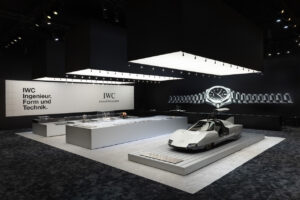
Watches & Wonders 2023
How have you taken the original design of the Ingenieur Automatic and made it relevant today, and what were the challenges?
The Ingenieur is such a unique piece because it has had many iterations throughout its history and lifetime; from the start, in the 1950s, we had an antimagnetic watch with a very classical design. And then, in the sixties and early seventies, we saw this idea of a sports watches emerge from what was previously a classically designed gold watch; all of a sudden, Quartz came in, and a new aesthetic had to be found that went beyond very classical golden watches and that’s really why Gérald Genta jumped onto the trend at the time, reformulated what a luxury mechanical watch could be. He created bold sporty designs using stainless steel, not precious metal, with an openly expressed construction and a much bolder look and feel to these products. The Ingenieur first appeared in 1976 and from there, went through many different iterations; in fact, many of the watches that are now revered as the original designs were never manufactured. There was not a completely continuous design solution from the beginning; there were a lot of disruptions along the way.
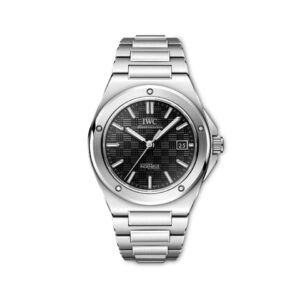
Ingenieur Automatic
Everyone in the watch world and everyone familiar with IWC and Gérald Genta might happily agree that we should bring back the Ingenieur, but we had to look at what that means. Although the design DNA of the Ingenieur is strong, the design translation of the original was neither very wearable nor was it appropriate for today in terms of proportion. So we could not just go back to the original design; an evolution had to happen in terms of case size, height, ergonomics, the way the watch sits on the wrist, the pure wearability, and also making sure the proportions were modernised. The original watch had quite a dominant bezel but was flat with a wide integrated band that looked like a thick bracelet. We decided to maintain the dominance of the bezel but trim down the integrated steel bracelet to make sure it flows over the wrist properly and fits different wrist sizes. We created a more modern balance between case and bracelet. Of course, we wanted to maintain the anti-magnetism, so the new Automatic also has a closed caseback and antimagnetic protection. We have a proper three-piece case construction with a screw-in bezel that is not just decorative but functional. We invested in the bracelet design to ensure that we have a high-end stainless-steel bracelet with the best ergonomics, really good stability. We invested a lot in the finishing to ensure that it’s a product that is at the level of what Gérald Genta intended, but at the same time, is a wearable modern sports watch. Gérald’s wife, Evelyne Genta, has endorsed the watch, and we have support from the family foundation, which is fantastic. Evelyne was involved in the design discussions to give her input and for her to say that this is how Gérald would have done it, and that’s really special and a nice touch to round off the story.
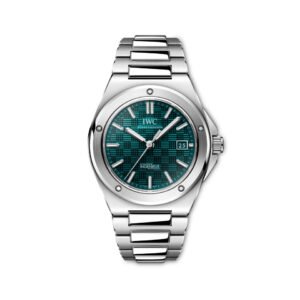
Ingenieur Automatic
Now we have the core model and the essence of the design; we will go from there and continue to develop this line. It’s been fantastic to hear the feedback from both men and women around this watch, and it has given me the confidence that we can build something from this.
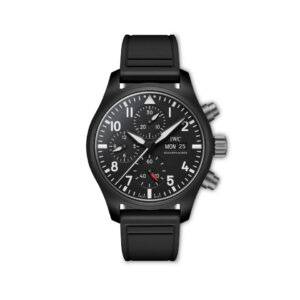
Pilot’s Watch
We also saw some new references on Pilot’s Watches within the Top Gun line; what can you tell us about that and why the Pilot’s line, in general, is still such an important pillar for the brand?
Generally speaking, there has been a long-term trend around this appetite for sports watches over the last five or six years, particularly colourful sports watches. We’ve seen a return to the happier, more playful side of watchmaking, especially after the pandemic. We’ve seen boasts of colour, playful associations and so on. Starting from the original straightforward tool watch in the Pilot’s classic designs, in 2019, we embarked into the field of coloured ceramics. That has really appealed to people looking for this slightly more expressive and playful twist on the classic. When you think about aviation-inspired contemporary sports watches, IWC is the reference in that field, and from there on, we’ve found that people love this uniqueness that we bring in colour codes such as the Mojave Desert watch, which is different from anything else in the industry. This watch has a functional background, but at the end of the day, it becomes a contemporary sports watch that is a style choice more than anything else. Then we added the Lake Tahoe-coloured crisp black and white edition, showing the graphic quality of the Pilot’s design so well. The white against the black turns it into the purest expression of that particular design code. I always thought this watch would be more of a niche choice, but it turned out it wasn’t at all! People were jumping onto ceramic watches, and we totally underestimated the response. Last year we introduced the Woodland Green shade, and the latest is the Oceana Blue which we presented at Watches & Wonders.
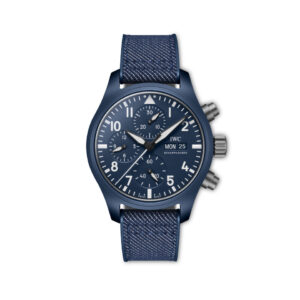
Oceana Blue
This watch has a new diameter of 41cm. We kept wearability in mind, and there is definitely a place for two diameters in our line-up. The Oceana is a watch I have been wearing often, especially around the pool. It has a denim inlay rubber strap which is waterproof, sun cream proof and UV-proof. And again, the versatility of a blue and white watch is something that really works. It was a bit of a dark horse in terms of our launches at Watches & Wonders, but once you have it on your wrist, you don’t want to take it off. That is, for me, a good indicator. Ultimately watches are a personal preference; you must like wearing them and feel an emotional connection to them. There are many watches that I like to look at from afar, but on my own skin, they are not comfortable, and that’s why when customers ask me for advice, I tell them it’s such a personal choice. Of course, I can give direction, but ultimately the only thing that matters is that they feel good in the watch and that it brings them joy when they wear it. Quite often, the watch that you might have thought you would like on paper is not the watch for you, and I think that’s what makes our products so unique; it’s a very personal experience.
Do you think the physical boutique experience is still relevant to customers today?
My background is in-store architecture, so I am a little biased, but when all the other channels started to emerge, from around the late noughties – it really took off around 2017 – it also took us a while to work out what the online shopping experience for luxury watches looked like. There must be a balance between the convenience of online shopping, personal advice, and a seamless luxury experience. But I never thought this would ever be anything but a complimentary channel, a tool to meet a certain customer need. Luxury brands are all about the emotional experience, the meaning, the heritage, the character and ultimately, what the brand expresses. Online shopping has shifted towards a very straightforward convenience factor. When you enter a brand’s website, you don’t have to navigate through tonnes of immersive experience videos until you get to the products, it’s more simple, convenient, and information-driven and that only takes you so far. When buying a non-essential, emotional product, especially from a certain price point and above, I feel customers what to know what the brand is, who’s behind it, where it’s from, what it represents and whether they trust it with a lot of their hard-earned money. And this is where the physical experience starts to come in and where physical advertising, stores and human interaction are such an important part of buying that type of product. And that’s why I think, despite all of the growth online, I don’t believe that you can fully virtualise a luxury brand. I think humans are fundamentally wired to want that human aspect. The virtual part is there for research and to obtain or buy something quickly when the occasion arises. But it is always complementary to the physical experience.
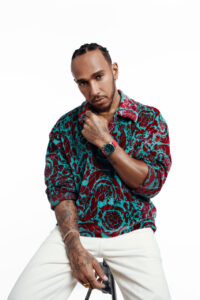
Lewis Hamilton
How important is it for you as a brand to be creating experiential moments for your clients?
The way that it works for luxury brands and for us is that we want to offer an almost infinite number of layers of interaction, involvement, and relationship to our customers. As you get invested into a brand as a client, it is more important. As luxury watch brands, we are quite particular in the sense that we’re somewhere between being a fashion brand and being an enthusiast technical brand. So, on the one hand, you have that style and status element; on the other hand, you have huge technical complexity, craftsmanship, and heritage, and some of our customers really want to dive into that. So, you must have layers that appeal to all types of customers. To be able to understand a brand from the very public and in a way superficial image and representation is one part, but then you have experiences that go beyond that. Moments where you could interact with a brand to understand its DNA a lot better, and then you start to create a personal relationship with the people behind the brand. When we have intimate events with our customers, the takeaway is that the customers understand more about the brand and why we work with the people we do. Of course, we can’t invite all our customers to these events, but as you get more familiar with the brand, you want to understand more. You want to come to the factory and start finding out what it’s like to build a watch. You want to meet the people behind it, and I think our job is to create a multi-layer platform where you go from a basic understanding of the brand to the very top level, where you become part of the family.
Digital innovation has allowed us to bring a deeper experience of our brand to many more people than before, and that’s been a huge development we’ve seen over the past few years. This adds a layer of involvement that didn’t exist before, reaching a completely different audience than traditional media. It shows how we can bring diverse sets of people into a conversation or interaction, and that’s what we are working on more of. As new things emerge, my approach is always to be part of it early on and experiment, and we know that things aren’t always going to take off, but we are always open to experimenting.
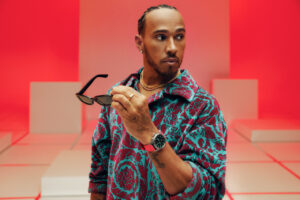
Lewis Hamilton
We know that partnerships and ambassadors are key for the brand – tell us more about that, and what do you look for when entering these kinds of partnerships?
The best way for me to explain our relationship with our partners and ambassadors is to take the example of Lewis Hamilton, who has now been working with us for ten years. When you think about the evolution of Lewis Hamilton and the evolution of the awareness of Formula One around the world across generations, it’s nothing short of amazing for me. You have somebody who started with McClaren at a very young age before joining Mercedes in 2013, and we have now just celebrated ten years of partnership with the team and with Lewis. Over this time, we’ve done everything from awareness of social issues to straightforward campaigns, comedy videos, customer interactions, acting, music – you name it, we’ve done it! Lewis is such a great ambassador for the sport and, the values he represents and his investment in diversity anti-racism. Everything he represents is a powerful association for IWC to show what we stand for and who we are. Again, talking about layers, he’s somebody who, as an ambassador, will bring awareness to the brand, especially to young people. The increase in Lewis Hamilton awareness now in the United States is insane. There is an unbelievable platform that you can’t replicate without someone with that sort of reach. Just recently, we had a fantastic basketball activation in Miami where Lewis came out and all of the children from the Dibia DREAM non-profit organisation joined in. Yes, it created huge PR coverage, but at the same time, that charity effect on the local community was great for them and our customer engagement. Lewis is an absolute star when he meets any of our customers. He takes time to talk to them all and to see, after ten years of partnership, the level of trust that’s there and how relaxed he is when he approaches all of the things we do together, that’s something that radiates to the millions of young new followers of Formula One who will be coming into contact with our brand for the first time, all the way to our top customers who might own a Lewis Hamilton Special Edition watch who have the pleasure to meet him through these events. It’s these moments when he really engages with people and answers questions that we see the real benefits of these partnerships and our layers that can be highlighted through the experiences with our ambassadors. We are fortunate to have these kinds of long-term partnerships.
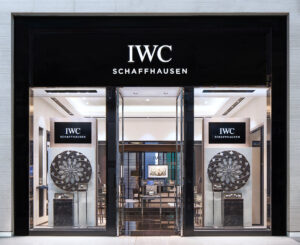
IWC Schaffhausen boutique The Dubai Mall, Dubai
Tell us about IWC in the Middle East and your focus for the region this year.
The development of the region has been absolutely amazing in recent years. I think we’ve seen the interest in luxury watches rapidly accelerate recently. I remember when the Dubai Mall was constructed, and nobody could have foreseen what sort of development it would take. But it is today probably the most important shopping mall in the world. I think the traffic our store in the Dubai Mall generates is crazy. Since we moved into a bigger, more experiential space, it is one of our leading boutiques in the world. And therefore, the quality of the environment and our customers from all regions of the world is a special blend in Dubai. I love the energy, and it’s a real pleasure.
This year we have a main launch coming in the autumn, which we are looking forward to, and we will be activating that around that in the Middle East. Quite a number of store openings are happening around the region beyond the UAE. It’s a fantastic region for watches.
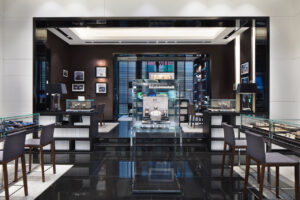
IWC Schaffhausen boutique The Dubai Mall, Dubai
What message would you send to your clients and friends here in the Middle East?
I love that celebrating watchmaking in the Middle East, in many cases, brings together a diverse mix of people, and this exchange of ideas, viewpoints, and tastes is what really needs to be celebrated. We are in a time where many discussions around public life are quite polarising, and we see a lot of trends of things drifting apart, to experience places in the world where people come together peacefully is so important. It’s so important to have things like watchmaking in regions like Dubai where people can connect and come together with their shared passion.
WATCH: Prada’s Latest Collection is Perfect For Summer
Prada’s latest collection features classic essentials reinterpreted for the summer months. See more in our recent editorial shoot.
WATCH HERE…..
To see more of the shoot, click here.
Video by Kais Dahoul
Photography: Esra Sam
Styling & Direction: Lindsay Judge
Model: Martina at The Art Factory
Hair and Makeup: Amanda Kay
Location: Terra Solis
Bulgari Launches the Mediterranea High Jewellery 2023 Collection in Venice
Bulgari has revealed its 2023 High Jewellery collection in Venice. Celebrating the beauty of the Mediterranean, the collection is a journey through history, culture and beauty, showcasing the finest in craftsmanship, design and innovation.
Designed by Bulgari Jewellery Creative Director Lucia Silvestri, the collection is divided into three universes Southern Radiance,” “Roman Splendor,” and “East Meets West,” each of them referring to a specific constellation of symbols, atmospheres, and inspirations.
“This High Jewellery collection is a homage to Mediterranean beauty. Being in the Mediterranean region, all my senses are awakened; I see beauty everywhere. Architecture, nature, and people are an inspiring melting pot, where many different cultures and societies have mingled and enriched each other over centuries.” said Lucia Silvestri.
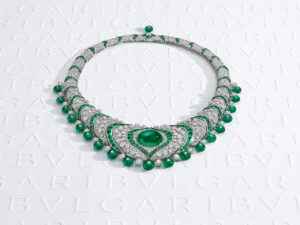
Emerald Lotus
The Southern Radiance pieces express Bulgari’s vivacious, joyful, and fierce spirit. Intricate architecture, lush gardens, sunny coastlines, and a powerful telluric nature are some of the elements contributing to the uniqueness of Southern Italy that inspires this vertical.
The Roman Splendor category is an emblem of magnificence. It is a series of exquisite creations that evoke some of the Eternal City’s most emblematic monuments, its unique warm light, and the fascinating mythology linked to its history.
And the “East Meets West” translates and expresses various elements from different countries and three continents, Europe, Africa, and Asia.
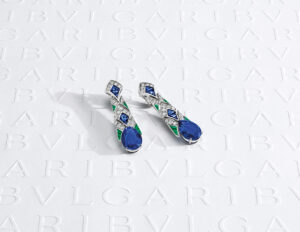
Diocletian Garland Earrings
Highlight pieces from the collection include the Tribute to Venice high jewellery necklace, which evokes the splendor of Venetian architecture. It features a 15.38-carat fancy yellow diamond drop complemented by an exquisite layout of yellow and white diamonds and a cascade of diamond baguettes meticulously cut to reflect light at their best.
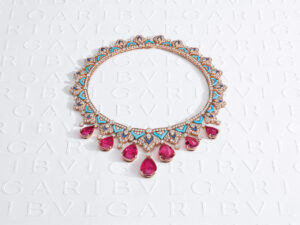
Venetian Fantasy
The Southern Sapphire platinum necklace recalls Southern Italy’s Apulia region, where white chalky Baroque villages overlook the sea with a peaceful serenity. Requiring 1,650 hours to be completed, this lace-like soft layout of shimmering diamonds and transparent sapphires unfolds around a stunning 66.88-carat Ceylon sapphire evoking the blue depth of the Mediterranean Sea.
The Emerald Lotus Necklace expresses the aesthetics of Indian spirituality in jewelled form. Creative Director Lucia Silvestri imagined the evoking design of a pashmina, soft and graceful. The majestic protagonist emerald, a maharaja stone of 37.14 carats found in Colombia, is placed horizontally and symbolizes the “third eye.” The undulating design of round brilliant-cut diamonds (48,74 ct) accented with 20 emerald beads (53.22 cts) radiating from the centre enhances the sense of spiritual magnetism.
The final vertical of the collation “The Snake” is a celebration of the Serpenti, Bulgari’s signature High Jewellery emblem that celebrates its 75th anniversary this year. Two exquisite pieces celebrate this icon.
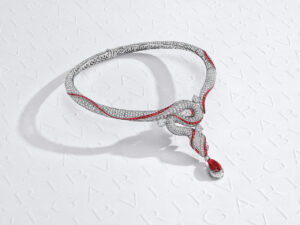
The Yellow Diamond Hypnosis Serpenti Necklace continues the legacy of Serpenti’s transformation. Representing the delicate balance between the powerful Serpent’s strength and the diamond’s beauty, the snake coils firmly wrap a fancy intense yellow diamond of 15.5 ct.
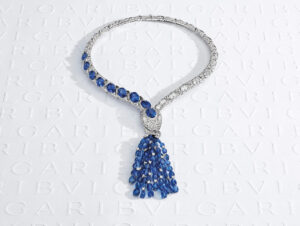
Mediterranean Sapphire Serpenti
The Mediterranean Sapphire Serpenti necklace. Nine sapphires from Sri Lanka of a total of 40,81carats evoking snake’s scales are set in a sinuous platinum and pavé diamond body construction culminating in a tassel pendant of 80 oval-shaped sapphire beads totalling 116 carats.
The High Jewellery collection launched in Venice on 16th May 2023.
Smita Prabhakar, Founder and Chairperson, Ishara Art Foundation on the UAE’s Art Scene
Living in Dubai for over four decades Smita Prabhakar, Founder and Chairperson, Ishara Art Foundation has seen the country grow beyond belief.
This is especially true when it comes to the city and the country’s arts and culture scene, something that is quite frankly thriving today thanks to the influx of creative energy, as well as a strong focus on the industry from the country’s leadership. Smita founded Ishara Art Foundation with a desire to shine a light on South Asian art, guided by the shared histories and plural voices from across the region. Smita has been a keen collector and art patron for many years and her passion has seen her become a member of the TATE International Council (London), the Middle Eastern Circle of the Guggenheim Museum (New York) and the Peggy Guggenheim Collection (Venice). Her truly unique outlook on art in the region makes her the perfect candidate to envision the future of the art world in the UAE.
This year, Ishara Art Foundation welcomes a fascinating exhibition titled Notations on Time. Running until 20th May, this unique showcase explores the philosophical and political dimensions of time through the works of 20 contemporary artists from South Asia and its diaspora. Curated by Sandhini Poddar and Sabih Ahmed, the exhibition stages a dialogue between artistic generations to highlight entanglements between the past, present and future. It exists as a veritable laboratory of time, exploring art in notational, experimental and fragmentary forms. Standing apart from Western notions of linearity, progress and capitalist domination, Notations on Time explores ontological systems that reveal how artists from this region and its diaspora think about aesthetics, existence, remembrance and futurity. As the exhibition enters its final month, we find out more about what to expect and why it’s a key showcase for the region.

Tell us about Ishara Art Foundation, what your role entails and how the foundation came to life.
Ishara Art Foundation is an amalgamation of three important factors in my life – first my commitment to contemporary art from South Asia and a deep belief that it meets and surpasses international standards, second my love for Dubai and the UAE, a city and country that has given me unparalleled opportunities, and thirdly a commitment to the community which is mandatory after 42 years of living here. Therefore, it brings together important and integral elements of my existence. My role is that of an advisor to the team and as the head who assists them in taking the mission of the Foundation forward.
Tell us about the current exhibition Notations on Time and why you decided to showcase this in particular.
The show was actually supposed to happen in 2020 but COVID did now allow it to. Sandhini Poddar and Sabih Ahmed on our Advisory Board decided jointly on the content of the show and as you may be aware the show has received great reviews. They have done me proud so my role as advisor has been well served.

What is the foundation doing to support talented artists in the region?
Ishara supports and advocates the best practices in art from South Asia. By bringing to the region artists whose practices have not been showcased yet we are helping with the cultural development of the region. When audiences in the region have the opportunity to view, comment and discuss artistic practices then automatically this will lead to a vibrant art community.
How did you first become interested in art?
I come from a family that has always been interested in culture. Also, extensive travel around the world helped me grow my interests.

What particularly interests you about art in the Middle East?
I think art is global and it is not about art from the Middle East or South Asia. The growth of practices’ thought processes and manifestations consequently are of deep interest to me.
How would you access the arts and culture industry here today?
The Sharjah Biennale, Fairs in Dubai and Abu Dhabi, and the numerous gallery shows are just some of the ways to access arts especially in the Emirates.

How do you think museums such as Guggenheim and Louvre coming to the UAE has impacted the arts scene?
Two words – Absolutely fantastic! What their presence does and will mean to us as a community in the Middle East is fantastic.
What more would you like to see happen to ensure the UAE is recognised on a global scale for its art and culture scene?
Many projects have already put us on the world map such as the Museum of the Future, Louvre, Guggenheim, and Sharjah Art Foundation. But we have to ensure we continue with the same passion and dedication.

What do you think it takes for young upcoming artists today to be successful?
Institutions such as Sharjah Art Foundation, Guggenheim etc. are currently creating platforms and opportunities for young artists to showcase their talents to international and domestic audiences. We too at Ishara are very proud of what we have done in the last four years.
You have been in Dubai for over four decades – tell us about your personal experience and how you have seen the city change.
I have been the lucky one – to see the growth of a country is an opportunity that only a few people have. Today there is no city better than my beloved Dubai.

This issue is about success – what does success mean to you?
I don’t know about “success”. I strive every day to be a better human being and create moments where I still learn.
What is the biggest lesson you have learnt that you would pass on to the younger generation?
Respect and good ethics in all aspects of my life are integral to my life every day.
Who is a person that has inspired you throughout your career?
I have been inspired (and continue to be) by my colleagues – their commitment, care and love.

What else is coming up for the foundation in the coming year?
We shall continue to put up exhibitions that are thought-provoking, highlight exploratory artistic practices and that initiate a dialogue within the community.
Meet Ahmed Saleh, Co-Founder of 3Fils and Chief Executive of The Lab Holding
In 2022 homegrown Dubai restaurant 3Fils took the coveted top spot in the first MENA’s 50 Best Restaurants list, it may have been a surprise for many but not for those that were already in the know of this relatively unknown unique Japanese fusion concept in Jumeirah Fishing Harbour.
Beating some of the city’s most prestigious restaurants this boutique concept has seen a huge increase in popularity since the award and has even become a favourite of Dubai royalty. Founded in late November 2016, 3FILS is piloted by a team who live by a diehard daringness to be different. The menu puts a new twist on Japanese cuisine and the laidback environment invites guests to feel relaxed and comfortable as they dine on the finest dishes, made using the best ingredients. 3Fils has long been a hidden gem of the UAE, but its rise in attention has seen its profile grow in the past year.
With plenty more on the horizon, we talk to Ahmed Saleh, Co-Founder of 3Fils and Chief Executive of The Lab Holding to find out what’s the next step in sustaining the success.
Congratulations on the success of 3Fils – tell us about the journey and how you got to where you are today.
The idea started in 2013 when myself and my Co-Founders started our journey by travelling and exploring various cities, regions and different cultures to discover more about how they consumed food. We ate at so many restaurants we lost count! After three years of all that wonderful research, we founded 3Fils in November 2016, hard set on creating a casual, Japanese-inspired concept offering high-quality service and ingredients without breaking the bank. We travelled to over 50 countries, researching and eating our way around from the smallest street vendors to memorable fine dining restaurants, looking for the ideal direction to take.
Tell us about the name and how it came about.
3Fils is piloted by a team, not one person, who lives to be different, to offer a story akin to the ‘2 cents worth’ [cents equals to fils in UAE] of the opinion of dining in Dubai’ with every bite.
What is the message you are trying to portray and how do you want people to feel when they visit the restaurant?
We’re a casual concept yet use premium quality ingredients. Come visit us in your shirt, shorts and flip-flops but expect our best on the plate whenever you dine with us.
You have some iconic dishes on the menu – tell us about the offering and what are the ultimate must-tries?
We’re what you might call contemporary Asian with a big influence from Japan and Japanese ingredients and techniques. Our best-selling items such as the Dragon Roll, Otoro Nigiri, Wagyu Burger, and the Yokozuna (which is a special dish that uses 100% Japanese ingredients), have all been influenced by Japan but in our own 3Fils way.
What do you think makes the restaurant different from anything else in the UAE?
There’s a Japanese concept that our head chef, Chef Shun, taught us. It’s called “Omotenashi”, it means to wholeheartedly look after our guests. This is something we strive to do on a daily basis, whether it’s food, ambience or service, we’ve got this in everything we do.
Tell us about the achievement of winning 50 Best Restaurants and what this meant for you as a business.
It’s a bigger responsibility for all the winners, including us. Since we received the award we’ve seen an increase in new and returning customers, this support is most definitely humbling. Our goal is to ensure consistency in all that we do, from our service to the dishes we create, the entire 3Fils experience must be memorable.
How do you think the arrival of platforms such as this and Michelin in the region has changed the industry?
I think it’s great to have these platforms in the UAE to motivate chefs and restauranteurs to do better and to continually strive to improve and offer their very best to the region and their guests. It’s a fantastic initiative to create a destination based on well-trusted reviews and recommendations from publications and platforms such as the Michelin Guide and 50 Best. I believe that Michelin would also take into consideration all the unique cuisines, not just fine dining locations as Dubai is a very diverse and multicultural destination offering so much to so many.
Fremantle Octopus
This issue is about success – what does success mean to you?
The word ‘satisfaction’ comes to mind. It doesn’t have to be the most perfect outcome or return, however, for me, a sense of Satisfaction must be felt in a project or task to feel that it was a success.
With so many restaurants opening (and closing) in the UAE what do you think is the secret to sustaining a business in today’s market?
I believe our winning edge is our people and our food. We are people-centric placing a huge emphasis on our casual yet warm, friendly customer service and also our high-quality ingredients. Consistency is key.
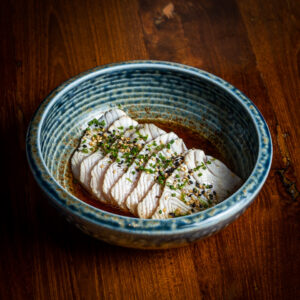
Kampachi Tataki
With any success comes setbacks, how do you deal with these and continue moving forward?
Setbacks are a normal part of life, whether in business or our personal lives. I think it’s best to pause for a moment, breathe, analyse the situation then plan how you will move forward because this is how we take a positive step toward our future. If you jump without thinking, most of the time it will end in a negative moment and when you have multiple people involved especially our team and guests, it’s not a good thing.
What are the plans for the future of 3Fils can we expect to see a second venue at any time?
We are looking into expanding the 3Fils brand, however, we must offer the same guest experience and high-quality food in any locations we consider.
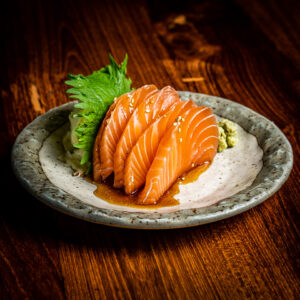
Salmon Nigiri
How do you plan to retain the “hidden gem” element associated with the restaurant but also meet the demands of a growing customer base?
It’s not something we planned nor can you, especially when you’re among 20,000 restaurants in Dubai. You have to stand out, in everything that you do, because the smallest details and actions will have a ripple effect and you want this to be a positive one.
What is the professional motto that you live by?
Our slogan is “Making Complex Simple”. The effort and process behind 3Fils are multi-layered and branch out vastly, from the food in our kitchen to the marketing, to the on-ground customer service, the complexity behind each department is made simple for our guests.
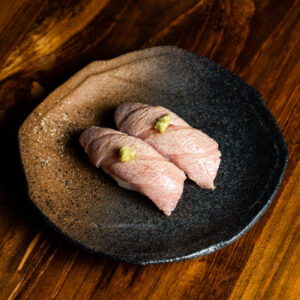
Otoro Nigiri
What else are you currently working on and what’s in the pipeline for the rest of the year?
3Fils is part of The Lab Holding, a start-up studio in Dubai. Other than expanding 3Fils to other regions, we’ve launched a new ramen concept called SLRP, and we’re also building Cafe BRIX, a new cafe right on the harbour offering the finest coffee, desserts and all-day breakfast. Also attached to that, we are working on Bordo Mavi, a seafood-centric restaurant using the finest and freshest seafood with a Mediterranean BBQ twist. We’ve got quite a bit on our plate!
BOLD DEFINITION: See the Dior Men Fall 2023 Collection
The Dior Men Fall 2023 collection by Kim Jones offers a modern take on classics and a wardrobe for the contemporary man. See more below:
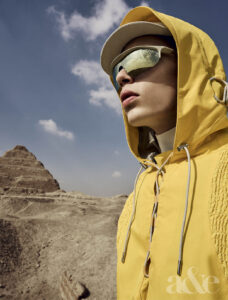
Beige Cap, Sunglasses, Yellow Anorak, Off-white Knitwear
All Dior Men
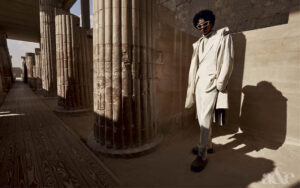
Sunglasses, Beige Coat, Off-white Jacket, Off-white Knitwear, Off-white Pants, Brown “Dior Garden” Boots All Dior Men
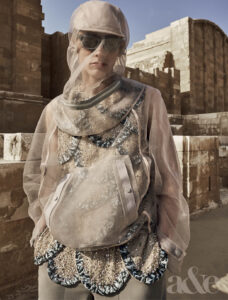
Sunglasses, Off-white Cap, Beige Anorak, White Tanktop, Gray Pants,
All Dior Men
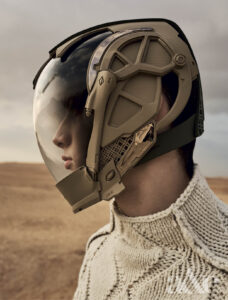
Beige Short Sleeved Knitwear Brown Helmet
All Dior Men
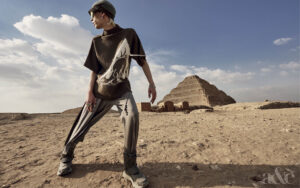
Brown Beanie Earrings Sunglasses Brown Short Sleeved Knitwear Brown Pants Brown Kilt Bracelet Brown “B31 Desert Runner” Shoes
All Dior Men
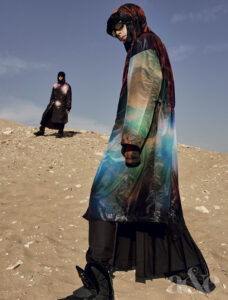
RIGHT SIDE: Sunglasses Astral Coat Gray Knitwear Black Pleated Pants Black Kilt Black “B31 Desert Runner” Shoes
LEFT SIDE: Sunglasses Astral Jacket Black Knitwear Blue Pleated Pants Blue Kilt Black “B31 Desert Runner” Shoes
All Dior Men
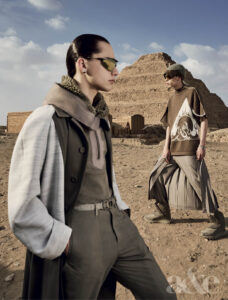
LEFT SIDE: Earrings, Sunglasses, Brown and Gray Coat Brown Sweater Brown Pants, Belt RIGHT SIDE: Brown Beanie, Earrings, Sunglasses, Brown Short Sleeve Knitwear Brown Pleated Pants, Brown Kilt, Bracelet, Brown “B31 Desert Runner” Shoes
All Dior Men
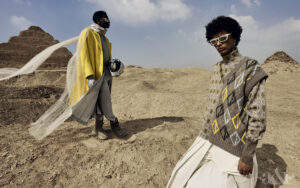
Left: Sunglasses Earrings, Yellow Coat, Gray Top, Gray Pleated Pants Gray Kilt, Light Gray Scarf, Gloves, Brown “B31 Desert Runner” shoes All Dior. Right: Sunglasses Earrings, Yellow Coat, Gray Top, Gray Pleated Pants Gray, Kilt, Light Gray Scarf, Gloves, Brown “B31 Desert Runner” shoes, All Dior Men
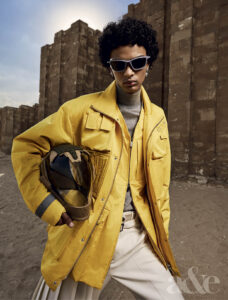
Sunglasses Earrings Yellow Jacket Gray Knitwear Off-white Pleated Pants Off-white Kilt Belt Brown 3D Printed Helmet All Dior Men
Zainab Alsalih, Founder and Creative Director, of Carousel Weddings
For the past fifteen years Zainab Alsalih, Founder and Creative Director of Carousel Weddings has been creating dream days for husbands and wives to be across the Middle East.
Her personalised and high-end approach to making her client’s big days that extra bit special has earnt her an incredible reputation across the region, with so of the Middle East’s most impressive weddings in her portfolio. But until now, most of these weddings were experienced solely by the bride and groom and the guests on their special day. Zainab started to realise that she wanted to share more of her experiences with the rest of the world, giving an insight into the beauty and elegance of weddings in the Middle East. During the COVID lockdown, when many weddings and events were cancelled, Zainab began to put together a book featuring highlights of some of the weddings she has worked on, as well as her thoughts and knowledge about all elements of a modern wedding today. This soon transpired to become a published book, showcasing some of the wedding planner’s accomplishments and her thoughts and secrets to planning the perfect wedding today.
“A Carousel of Weddings – From Dubai with Love” offers an insight into the world of weddings as well as being an inspiration for brides, grooms, wedding and event planners, designers and professionals. It includes several chapters, dedicated to particular aspects of weddings including regional traditions, couture wedding gowns, bridal hair and makeup, bridal bouquets, and more. Here we find out more about the book, as well as Zainab’s plans for the future of her company.

Congratulations on your new book – tell us about how this came to life.
I have always wanted to write a book, to show the world the beauty of Middle Eastern wedding traditions, and by association, the beauty of our culture. The only problem is that I was too busy creating these weddings, and didn’t have time to write a book about them, and then came COVID, and the forced shutdown, which although was a terrible time for the world and our industry, had a silver lining: I had the time to focus on writing my book, so I spent the COVID period doing exactly that.
What are some of the highlights of this book?
The book has two main sections: the first is about the making of a Middle Eastern wedding, and the various beautiful elements that go into it, and the other section is a gallery of photos from twelve selected weddings we have created over the years. As for highlights, the opening of the book tells my personal story and my “journey of a thousand weddings…” It’s very heart-felt and it’s very real. I also love the section on wedding bouquets. I love flowers and using them as a principal ingredient in our weddings, and the bridal bouquet remains a deeply personal item for each bride. We have created so many beautiful bouquets over the years, some of which are shown in the section of the book titled; “To Have and to Hold”.

What in your opinion are the key elements of hosting a successful wedding in the Middle East?
For any wedding, the key ingredient is joy. The happiness of the families on this special occasion is the principal ingredient. Beyond that, we simply try and create an atmosphere that allows the families to celebrate their joy elegantly and beautifully. The way to create this atmosphere is with a very bespoke, personal and authentic approach. This is how we create true luxury, that is elegant, stylish and timeless.
Are there any particular weddings you have worked on that stand out in your mind?
All our weddings are unique and truly one-of-a-kind, so it’s hard to compare them, and like a proud mother who loves all her children, I have loved all my weddings. Some of the weddings we created during COVID were special because they gave us a glimmer of hope and beauty in an otherwise sad and uncertain time, so those will always have a special place in my heart, and on the cover of my book is a picture from one of those weddings.

This issue is about success – how would you describe success?
Success is finding your true calling, and answering it, it is learning what you are passionate about, and applying that passion to create and build something lasting, but most of all, success is about creating joy and happiness, and making a positive impact on the lives of people.
What do you think is the secret to sustaining a business in today’s market?
Being resilient, both emotionally and financially. Don’t stretch yourself or your business beyond its limits, and achieve success slowly and in a measured sustainable and constant way.

What has the post-COVID bounce back been like for the wedding industry in the region?
It’s been what we always hoped and expected it to be: there was tremendous pent-up demand, and what I called a huge “back-log of joy,” waiting to be released. Needless to say, we have been extremely busy, but you will not hear me complaining!
In a high-pressure business, how do you keep your cool when things get stressful?
As the leader of the business, I know that my mood and behaviour have a knock-on effect, and will spread to my team, my partners, my suppliers, and everyone else. So I have a responsibility to remain calm, and even if I am going crazy on the inside, I must maintain a posture of calmness, confidence and control on the outside. I consider myself the custodian of a little girl’s dream, and I cannot allow anything to undermine it. It’s never about me, it’s always about her, and him, and their families.

What are some of your favourite wedding venues in the Middle East?
Dubai has some amazing venues, that are truly world-class. Several come to mind, including Mandarin Oriental Jumeira, Armani Hotel Dubai, The Four Seasons and Dubai Opera. These are some of my favourite venues.
Can you share some of the wedding trends to look out for this season?
While we try not to be too trendy in our approach, and we always seek to create stylish and timeless weddings, some interesting trends are emerging, including minimalistic, sustainable and organic approaches to wedding design. I am also loving the monochromatic colour palettes. Perhaps as a result of the hectic few years we have all endured, there is great appeal to the calming effect of clean and simple design and that is perhaps why I am now more drawn to pure and minimalistic décor. It is just so calming and light.

During the lockdown you launched an interiors section of Carousel – tell us where this division is at today.
Yes, this was a major “pivot” for me and my business. As events were shut down, and as we at Carousel have an incredible and talented team of designers, project managers, stylists, and florists, I decided to leverage this capability in designing beautiful permanent spaces and interiors, and this turned out to be another silver-lining of COVID. Today, the interiors division, which we call “Carousel Casa” has designed and executed some beautiful interior spaces, including most recently the Majlis at Mandarin Oriental, Jumeira, which has received some wonderful feedback and accolades.
What is the biggest lesson you have learnt throughout your career?
It’s not about what you do, or even how you do it. It’s about why you do it, and who you do it for.
What is the professional motto that you live by?
Do it with passion, or not at all.
What else are you currently working on and what’s in the pipeline for the rest of the year?
We have an upcoming wedding in East Africa, for a wonderful family that wants to create a stunning and memorable wedding for their beautiful daughter. Also, as the wedding season here in Dubai slows down, we have several interior projects that are starting and will keep us very busy this summer.
Roger Dubuis CEO Nicola Andreatta Discusses the Brand’s New Chapter in Innovation
Roger Dubuis has always been a brand set on disrupting the watch industry. The watchmaker has been at the forefront of contemporary Haute Horlogerie since 1995.
Its audacious creations, firmly anchored in the 21st century, embody substantial expertise expressed through the finest watchmaking mechanisms combined with powerful and daring designs. This year at Watches & Wonders the brand took a risk by launching just one exceptional timepiece. The MonovortexTM Split-Seconds Chronograph was designed to showcase everything the company has been working on over the past few years, including an impressive new movement and a new radical and uncompromising approach, known as Hyper HorologyTM. The launch was in fact setting the scene for a series of exciting launches that will take place over the next twelve months. We met CEO Nicola Andreatta to find out more.
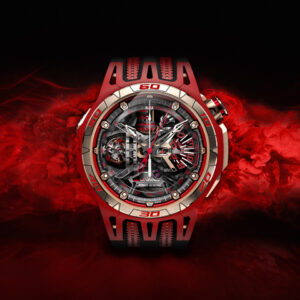
Tell us about Roger Dubuis at Watches & Wonders this year.
Watches & Wonders is always a great moment within the year firstly because we have a few occasions to celebrate the watch industry in general and this is probably the only moment to bring everyone from around the globe together to show them what we are capable of. For us, it’s always a key moment to demonstrate our unique attitude and world, and this year, more than ever, I think this was the case. Our booth is always designed to stand out and we were once again able to combine the past and the future within this surreal visionary representation. We had people queuing in front of the booth to take pictures of the show that we put on every hour. We had a robo-dog. We had a robo-bartender, so there were a lot of amazing things that made us stand out and conveyed, a futuristic image for our clients. So, I’m very happy about that.
Knowing that we create hyper-horology we wanted to create this kind of hyper-life where emotions are at the maximum. We enjoy life. We have this hedonistic approach where we really please ourselves with everything we do and we managed to have experiences for our clients within the booth every night to give them a taste of our lifestyle. It was also a moment for us to showcase our craftsmanship, innovation, and performance, with a single timepiece in which we decided to concentrate everything we’ve been doing in the past few years in terms of development.
It was a peculiar choice not to have several different novelties this year, but to combine everything into one, which sometimes is more complicated, and this was the case. We presented a split-second chronograph, which is one of the most complicated movements in the watchmaking industry. We equipped it with three patents that we developed recently, two of which are connected to gravity which is something we are fascinated by at Roger Dubuis in terms of increasing the performance of our timepieces. On one side, we control gravity, on the other side, we use it. This watch has a completely new tourbillon system, which is revolutionary to compensate for the gravity on the regulating organ of the timepiece, and a new oscillating mass, which offers a way to use gravity to power and fuel the energy of the watch. It uses a revolutionary system that we call Turborotor which works in parallel to the gravity force, and so it is ideally more efficient in terms of generating energy.
And finally, we have a new chronographic display for the minutes’ display. As always, not satisfied with all of that, we added a new case design which ideally should represent the future of our Spider collection which allowed us to show where we’re going in terms of design. And we used a new material – MCF in red – which is a colour that’s very dear to the brand and is part of our identity. The result is a stunning timepiece and I think everyone was quite amazed.
This was truly a concept watch, and the idea is that in the next twelve months, we will derive a series of timepieces that showcase all the innovations that we presented in this single one. These patents will be used for more commercial timepieces.
What can you tell me about technology and innovation at Roger Dubuis currently and the direction that you’re heading in?
In the past two years we have worked a lot on clarifying what we stand for, we’ve been reworking our mission and our promise and so on. And clearly, our aim is that of crafting and inventing hyper-horology and that means that we need to keep an eye on the future which is a big responsibility. We need to stand up to the expectations and we need to continue evolving our craft in a way that has never been seen before. That requires a huge effort in terms of research and development because we are talking about something that doesn’t exist already. This is where we have been investing a lot in the past few years to create a place where we can gather all the creativity, the ideas and all the creative minds of the company. We call Q-Lab, it’s a place that’s not accessible to everybody and it’s a place where we test, invent, create, and brainstorm on a daily basis. This is what is actually fuelling the future of Roger Dubuis, not only in terms of product development but in everything we do, including our experiences with clients and so on. The idea is that every person within the company can be part of the creative process. We have set up the concept so that anyone that works within the company can pitch ideas, and these ideas are discussed internally.
We also invite a few clients from around the world to the Q-Lab where we discuss specific creations for them if we are creating bespoke timepieces. The Q-Lab is equipped with machines and technology so that we can develop products in front of our clients.
As a brand how do you balance pushing the limits in innovation and technology while ensuring you honor the traditions of watchmaking?
This duality is in fact probably one of the peculiarities of the brand. We always say that we start from the tradition of fine watchmaking and then we evolve it. So, we constantly have an eye on the past, and then we evolve it from there.
Roger Dubuis himself came from a classical watchmaking background with his experiences at Patek Phillippe and Longines, so it was strongly anchored within the tradition, but his idea was always to evolve it into something that didn’t exist. And I think we are true to our DNA by continuing this tradition of constantly looking forward but always starting from what has been done in the past.
One keyway to show this is the fact that we are still 100% certified by the Poinçon de Genève, the highest standard in Swiss watchmaking. It’s an elite requirement in terms of quality and finishing and it requires our watchmakers to finish every single component by hand and every piece to be made and manufactured in Geneva. And there are very few companies that can say that today. This gives credibility to what we do, and it shows that we are very well anchored within the tradition of watchmaking. It’s interesting to see now within our Manufacture very advanced state-of-the-art technology on one side, and the hands of our craftsmen on the other side and they exist together which is very cool.

We know that creating experiences for clients is important to the brand, how are you continuing to do that?
This is very key to the brand and something that we continued to try and do even during the pandemic. We like to provide experiences that allow our clients to enjoy life, in the end, everything comes down to emotions and we want to make sure we evoke emotions in our clients, not just through our products but through these experiences.
We create a lot of experiences through our partners including Lamborghini. We do a lot of events on the track with Lamborghini cars, or we go for rallies around Europe as we are going to this month with some of our clients. These kinds of experiences are the times when we can really get our clients to experience the “hyper life”.
There are three words that we use in everything we do with our clients: pleasure, madness and freedom, which inform the life at Roger Dubuis and the experiences we have with our clientele. It is also great to connect different communities who share similar values and have some affinities in the way they live life. Our community is animated by this idea of living life differently and having emotional experiences. Life is too short to get bored!
Tell us about Roger Dubuis in the Middle East currently and what’s in the pipeline.
The Middle East is a very dear market to us as I think the brand resonates well with customers in the region. The biggest investment happened a few years ago when we opened our boutique at The Dubai Mall. It was right before the pandemic so the timing was interesting, but we are now seeing a lot of traction there. We just changed leadership within the market and so soon we hope to be able to accelerate even further within the region. We’re putting together a lot of specific initiatives, including, for example, the Platinum Monobalancier that we launched exclusively in Dubai last year. This was designed with our local clients in mind. Aside from Dubai, we want to expand further into other markets. We just opened in Bahrain. We will soon have a permanent location in Qatar. We are working on Saudi Arabia and the idea is that we’re going to invest even further in the next few years. The potential is huge, and we want to find ways to enjoy moments with our clients in the Middle East as well.
How are you managing high demand from your customers but trying to keep a sense of exclusivity around the brand at the same time?
There is high demand and it’s not easy given the limited quantities that we manufacture at Roger Dubuis but I don’t plan to increase quantities. We concentrate on skeletonized timepieces and high-end timepieces which means that we cannot increase our quantities without compromising on quality and we don’t plan to do that.
The most beautiful things in life come in scarce quantities and we want to keep this exclusivity. We are not for everybody, and I don’t have any problem with being polarizing even in terms of our brain attitude. And so, we’ll continue this way. I hope to be able to make our top clients happy and that by far is our focus for the next few years. I would not necessarily respond to the demand of the market; I will respond to the demand of our dear clients.
What do you think it takes to in today’s market to create and then sustain an icon in the watch industry?
You need to be relevant to the clientele but at the same time, you need to be timeless. It is a complicated approach because even just to be timeless it takes time! For us, it’s key to remain anchored in our DNA. The moment you start to depart from who you are to look for commercial success clients will let you down because it’s difficult for them to understand. And so, you need to have a clear understanding of who you are and be relevant to your clientele and if you can remain by having a design that stands the test of time. This is what we are trying to do.
Of course, sometimes there are timeless designs which need an update, and this is what we’ve been doing with the Excalibur, for example, when we decided to restyle it three years ago, and I think today we have something very contemporary there and we are seeing the success of the restyle. The design evolves and so we need to make sure we are always relevant at that moment in time.
Can you share a little more about what you have coming up in the months?
It’s going to be a very intense year for Roger Dubuis. As I mentioned I decided not to launch everything at once because we have a lot of important events coming up throughout the year and ideally, we want to have something to reveal at every event. For the next two to three years, we are going to again concentrate on the Excalibur Spider which is our sportiest novelty. We have Goodwood coming up soon and we will be the official timekeeper and so there will be an important lunch for the brand. A totally new calibre. I’m looking forward to that because it’s a piece that our clientele have been waiting for.
We have Pebble Beach in California where we will have another moment. then Art Basel Miami and then we have Watches & Wonders Shanghai in September. So, we will keep the momentum all through the year.
FENDI Presents an Exclusive Partnership and Exhibition in Rome
FENDI has partnered with Fondazione Arnaldo Pomodoro for a multi-year partnership that will celebrate art as an instrument combining respect for heritage, attention to widespread knowledge of artistic languages, and search for new forms of collaboration from the perspective of sustainability and innovation.
The partnership kicks off with an exhibition which was unveiled in Rome yesterday at the FENDI headquarters. Arnaldo Pomodoro. Il Grande Teatro delle Civiltà [Arnaldo Pomodoro. The Great Theatre of Civilizations is curated by Lorenzo Respi and Andrea Viliani].

Il Grande Teatro delle Civiltà explores the interconnection, in Pomodoro’s practice, of visual and scenic arts and highlights the relationship between the planning component of the work and its creation. The exhibition begins at the four external corners of the building where the four sculptures Forme del mito (1983) – Il potere (Agamennone), L’ambizione (Clitennestra), La macchina (Egisto), and La profezia (Cassandra) – are placed.
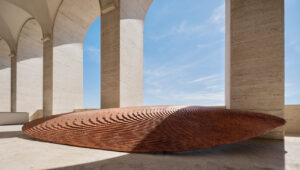
The sculptures are taken from the scenic machines that were created for the series of theatrical performances inspired by Aeschylus’ Orestes by the artist Emilio Isgrò, presented on the ruins of Gibellina’s main square which was later destroyed by the Belice earthquake. Inserting themselves like a backdrop between the Palazzo, the natural landscape and the surrounding urban community, the four Forme del mito re-draw and give new meaning to the building, transforming the so-called Colosseo Quadrato – one of the architectural symbols of Modernism and Italian Rationalism – into an open, reinterpretable and re-designable work, therefore not defined once and forever.
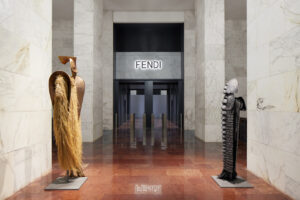
In the Palazzo delle Civiltà Italiana’s entrance hall appear two costume works created by the artist for two theatrical shows: Costume di Didone (for Dido, Queen of Carthage by Christopher Marlowe, staged in Gibellina in 1986), and Costume di Creonte (for Oedipus Rex by Igor Stravinsky performed in Siena in 1988). Produced with sculptural materials paired with ephemeral materials such as raffia and fabric, these costumes recall the iconography and dramaturgy of ancient Greece as well as the antique iconographies and traditional techniques of African and Asian works of art, reactivating the tale of the legendary stories of Dido and Oedipus.
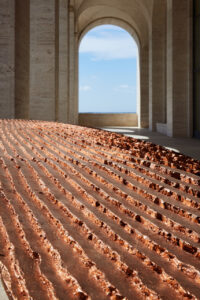
The exhibition continues in two specular rooms and a connecting room, designed like two acts of a play with an intermezzo. Included among the various activities that the Foundation and FENDI are planning is the reinterpretation by Arnaldo Pomodoro of the iconic Peekaboo bag, created by Silvia Venturini Fendi in 2008. This falls within the global Canvas Peekaboo project that, starting in 2014, has involved artists, designers and iconic personalities in the creation of unique pieces representing special testimonies for the Maison.
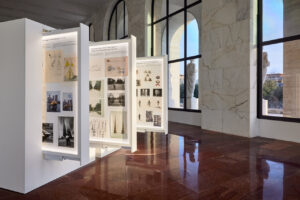
With his creation, Pomodoro wanted to place the function of the use of the “object-bag” in discussion, transforming it into something mysterious and visionary, perhaps a medieval shield, perhaps a mythological animal covered in sharp spines, or even an exotic flower with long pistils.
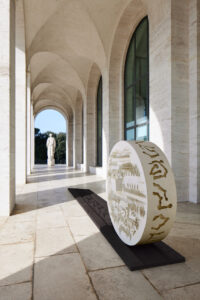
Il Grande Teatro delle Civiltà is also a starting point for discovering Pomodoro’s other works located in Rome and around the world, an opportunity to deepen one’s knowledge of the artist’s experimentation and his relationship with the “eternal city”. The exhibition is accompanied by a monographic catalogue published by Skira – with an essay by the two curators, numerous critical and bio-bibliographic materials and extensive photographic documentation – which will be available in FENDI boutiques and directly in the exhibition space. It can be explored digitally via a dedicated mini website (http://arnaldopomodoro.fendi.com/) where users will also be able to sign up to visit the exhibition.
Chopard Reveals It New Red Carpet Collection
Chopard has given a first look at its 2023 Red Carpet Collection which will be officially unveiled at the Cannes Film Festival this month.
This year’s high jewellery collection, designed by Caroline Scheufele features 76 masterpieces that highlight the Maison’s affinity with the arts.
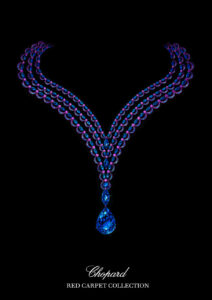
Inspired by a range of elements from architecture, museums, galleries, conversations, nature or starry nights the collection embodies Scheufele’s flair for creativity and the Maison’s jewellery-making expertise.
This year the collection explores the ultimate in innovation from employing new materials such as titanium to using novel stone-cutting techniques. It symbolises the quintessence of classic jewellery-making know-how and carefully preserved tradition, nurtured by a fresh eye and a truly avant-garde spirit.
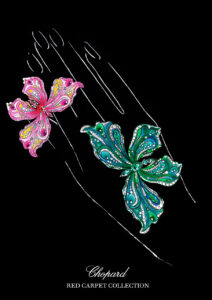
See more of some of the key pieces from the collection ahead of its grand reveal below:
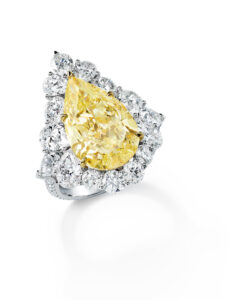
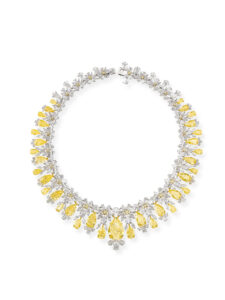
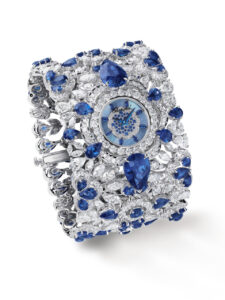
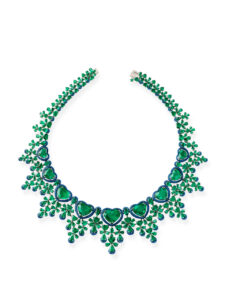
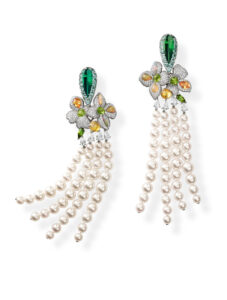
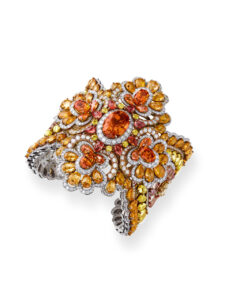
Riccardo Audisio and Yago Goicoechea, Founders of Taller Marmo Discuss the Success of the Brand
After meeting at college in Italy, Riccardo Audisio and Yago Goicoechea decided to move to Dubai to fulfil their dream of founding their own fashion label.
Inspired by the fluidity and elegance of the traditional kaftan, they opened their brand Taller Marmo in 2013, offering a new modern take on this classic sartorial item. Since then, Taller Marmo has gone from strength to strength, receiving international recognition for their chic designs that combine Middle Eastern flair with Italian craftsmanship. The designers have since moved back to Italy to further develop their brand, but they have not forgotten where they came from, with strong connections still in the region. As they prepared to launch their latest Ramadan collection, whose campaign stars the iconic Farida Khelfa, we caught up with the founders to reflect on the success of the brand so far.
Tell us about the universe of Taller Marmo today and where the brand is at.
We founded the brand in 2013 when we were just 19 years old, just a few months after we dropped out of the Istituto Marangoni in Milan where we met. We moved to Dubai to begin creating fluid kaftans, inspired by the jet-set style of the 1960s and 1970s. Taller Marmo is named after the Spanish expression for laboratory and the Italian word for marble; an indicator of our experimentation with innovative techniques and luxury fabrics.
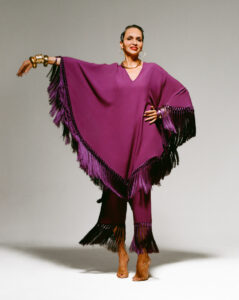
What can you tell us about the High Summer collection?
The High Summer 2023 collection is celebratory and explores the juxtaposition of opulence and freshness: pastel-neon colours versus deep dark hues, shiny metallics versus matte textures, asymmetrical silhouettes versus symmetrical styles, fluid crepe cady versus crisp Couture-quality fil coupe and jacquard textiles, sleek fringes versus vaporous feathers. Each exclusive combines new modern silhouettes, like the Mila Kaftan and the California Kaftan and iconic ones, like the fringed Mrs Ross Kaftan and the feathered Ubud Dress.
You worked with Farida Khelfa on the campaign images – how do you think she embodies the brand and the Taller Marmo woman?
The Middle East is a key market for us and for this reason, we worked on a very special campaign starring the iconic Farida Khelfa, photographed in an unexpected and editorial style by Louie Banks. Farida Khelfa is a style icon that embodies and celebrates all of the values of womanhood while perfectly representing the essence of a Middle Eastern woman and this is what Taller Marmo is about.
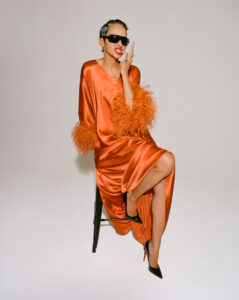
This issue is about success – how would you define success?
For us, success is perseverance, consistency in our designs and an elevated finishing which has helped to build trust with our consumers throughout the years. Our goal is to keep pushing the envelope for eveningwear and to make it modern without falling into clichés like being edgy, cool, trendy, classic or feminine. We think about how the 20-year-old and the 60-year-old will experience the same dress or how a modest dresser or someone who wants to dress sexier will style the same minidress anywhere from Riyadh to Los Angeles. This year, we have presented the largest number of collections composed of nine exclusive capsules made in collaboration with Taller Marmo’s key retail partners including Net-a-Porter, Browns Fashion, MatchesFashion, MyTheresa, Bloomingdale’s Middle East, Harvey Nichols Dubai, Ounass, Etoile La Boutique and Harrods.
Your brand began in Dubai but you have since had success across the world – to what do you attribute this success?
As mentioned above, in 2012, we dropped out of the university in Milan and moved to Dubai after doing our very first collection from Riccardo’s parent’s house in his hometown. We had no business knowledge, zero work experience at a fashion house and two unfinished degrees. Dubai received us with open arms, for half a decade, and gave us the chance to learn so many things, with the support of industry leaders in the Middle East. After that, we decided to move back to Italy, the country where we grew up, to apply the expertise of Italian craftsmanship to our designs. During all these years, our determination has helped us grow in the region and internationally having been able to familiarise ourselves with different markets and consumers.
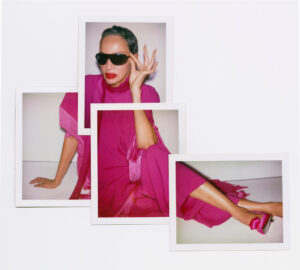
What would you say to aspiring designers from the Middle East who are looking to make their mark on a global platform?
Creating a personal and unique identity within your designs is the key to succeeding on an international level in addition to understanding the need of the markets you are targeting.
How do you combine the tradition and styles of the Middle East with Western fashion in your designs?
The symbol of our brand is the kaftan. We think the kaftan is a statement. A sign of relaxedness, self-care and well-being. When you think of an occasion that you would wear a kaftan, you imagine yourself having fun at a party or during the holidays, visiting a beautiful city during the summer. This silhouette which is created through our collection fits both Middle Eastern and Western fashion styles.
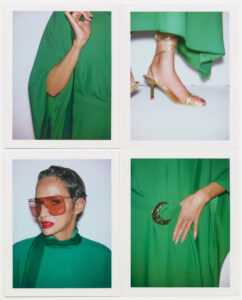
Tell us a little about your creative process and the materials you use in your collections.
Perseverance and listening to your instincts are fundamental. We take pride in our stubbornness. At the very beginning, nobody understood why we were doing kaftans and loose silhouettes, because it was not “in fashion” and it didn’t look cool, but we decided to stick to it until we started receiving attention from key retailers, and our kaftans proved themselves. We produce our collections entirely in Italy, in small and medium family-owned factories. Manufacturing is managed internally to avoid subcontracting. The factories are based nearby our headquarters and distribution centre to reduce the carbon footprint and our collections are only produced to orders, avoiding extra stock.
Tradition and innovation are key in all the materials we use for our collections: the viscose is FSC certified, the polyester used in garments is recycled, the sequins are made from recycled plastic found in the ocean, the cotton is part of the Better Cotton Initiative, the jacquards and fil coupé fabrics are made by a historic family-owned silk mill in Como, Italy, the feathers are sourced exclusively in South Africa and assembled by hand in Florence, Italy.
Can you tell us about some of the unique techniques that you use in your designs?
Our designs are defined by the fluid silhouette we create made for all women of all body types. And this requires expertise in tailoring and precision in the construction of the garment keeping an effortless look to our design.
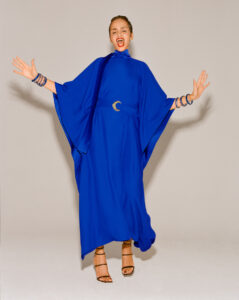
Who is your Taller Marmo muse?
Women like Peggy Guggenheim, Marchesa Casati, Isabella Blow, Dalida, Josephine Baker, Diana Ross, Raffaella Carrà. All of them have something in common for us, and they were starting points of entire collections because of their uniqueness and body of work really shaped the world around them.
Dima Ayad On Her Fashion Brand and Entrepreneurial Spirit
Dubai-based Lebanese entrepreneur Dima Ayad is a woman on a mission. While working in marketing and PR she discovered the huge gap in the market for plus-sized clothing and after struggling to find clothing herself, she felt the need to create garments that women of all sizes could wear.
Combining her corporate experience with her love for fashion, she set about creating her own clothing brand that would cater for women of all sizes, with an offering of elegant eveningwear that any woman would feel comfortable and confident in. Alongside her day PR job, she began designing clothes that she felt women would truly want to wear and she launched her fashion label Dima Ayad in 2010. Over the past 13 years, the brand has become a go-to not just for plus-sized women but women of all sizes, looking for flattering, comfortable outfits that combine elegance and style. The brand recently launched on Net-A-Porter and is attracting global attention from women who have previously struggled to find clothing that fits. In 2020 Dima went back to her PR roots when she launched her own PR agency DAC Communications which represents several luxury food and beverage outlets across the Middle East. She applies her entrepreneurial mindset to both businesses and her passion and drive are clear through to see. With many exciting projects on the horizon, we spoke to Dima to find out what’s next for her.
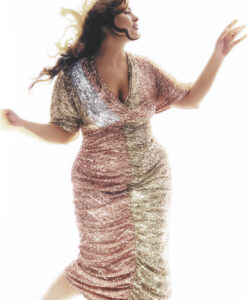
Congratulations on the success of your brand – tell us what first inspired you to launch.
In all honestly there was a period when I was travelling a lot and I had a lot of weddings to attend, and I could never find anything that fits me well. Everything was either too tight or too short and I’m big and tall and it was always a nightmare to find clothes. At that time the concept of circular economy, reusing, repurposing, was non-existent. Each outfit was a one-hit-wonder, and you would end up wearing something once and shoving it to the back of your wardrobe. So, I started making my own clothes and a lot of people would ask me where I got them from. I think ignorance is bliss because I didn’t have an education in fashion, so I had no idea what it was going to take to create a fashion line. And then before I knew it I created a collection and sold it to “Sauce” which was a multi-brand boutique in Dubai at the time. And it did really well! Looking back at that time I thought I knew what I was doing but I had no clue – I didn’t have the cohesion, didn’t have the sense of what the collection was. But I love a challenge and I just went for it like crazy, and now it’s my baby!
So how did you learn what it takes and what work you needed to put in to create a fully-fledged fashion brand?
I would study women, I would study their bodies, how they would walk, what they would choose to wear, and how they would pair items together. I would go into stores and just watch them, and I think in this way I really used my marketing and PR background. And then I started to learn about fabrics and that for me was the major learning curve – how to stitch, which fabrics to use, which fabrics can be used for what etc. There was a lot of trial and error involved. Sometimes I would buy very expensive dresses and I would deconstruct them I would learn how they did it, and then I would construct them back. This was a way of further understanding what it takes to put a garment together.
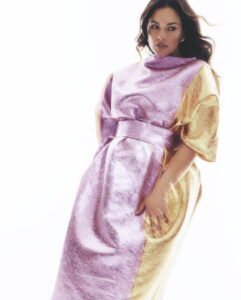
How did you start creating the whole line to ensure that other women would want to buy your clothes?
One of the concepts of how I design clothes now is that I design in a bigger size and reduce it down for the smaller sizing. Most of the time if an item suits a larger person, it’s going to suit a smaller person. So from that premise, I started by designing in sizes 3XL or 2XL and then I went down to size 8. I would try them on a regular model and a bigger model, and I’d see if it worked on both. My sample sizing is a size 8UK and a size 20UK and then I check if it works on both, and I try to make it work that way.
Once we started in this direction it was much easier for me. I do get told a lot that I cater for taller women more than I realise, probably because I’m tall, but I’m taking note of that and it’s something I need to work on. It’s easy to shorten a dress but you can’t lengthen something.
Where is the brand at now and what is your vision for it?
Currently, we are doing a lot of collaborations. We collaborated with Malone Souliers at Level Shoes which did really well. We have another very exciting collaboration coming up which I can’t share yet, but it will be global and it will be live in September. So, we are quite big on collaborations around the world. Also, we are now being stocked on some famous e-commerce sites including Net-A-Porter. The brand is doing well there and funnily enough, I get a lot of messages from brands or clients looking for items on NAP and it’s sold out already and they come to me directly for their size. So it’s quite interesting how that’s happening. We are also looking at expansion onto other sites. One of the things I want to mention is that personally, I don’t find value in having a standalone store. I think the value today is being in a department store, where a customer can come in and buy shoes from one brand, a dress from another, makeup from someone else and have this holistic approach. As customers, we don’t dress head-to-toe in one brand, and I don’t think that’s even how the biggest brands on earth expect it to be. My absolute dream would be to have concessions in department stores all around the world. And I would like to see my brand on different types of people. It’s not about celebrities wearing my brand, what I care about the most is real women. Women in Brazil, London, and the Middle East – and I want people to feel like they can come to Dima Ayad to find something for a special occasion and to feel comfortable. These are the moments where I want them to think of my brand.
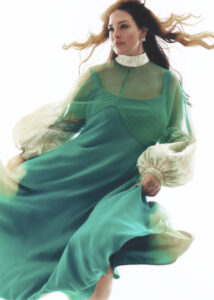
Tell us about the collaboration with Ashley Graham – how did this come about?
Honestly, it is a dream come true. I tried hard to get Ashley and one of the things that tempted her was that she really does believe in the cause, and once I said that we are the only evening wear brand on Net-A-Porter with size inclusivity, it blew her mind and she agreed to come on board. She is the loveliest human being; she’s the kindest person and she really cares. I woke up one day to a post on Instagram from Ashley that said, “Dima I’m really proud of you”. And that was truly amazing. She didn’t need to do that, but she did it because she cared and wanted to see me grow and I admire that. There is more to come in this space, and it’s been brilliant so far.
Your brand is inclusive in its sizing and style but lately, we are starting to see criticism of “skinny chic” being back in fashion – what’s your thoughts on this?
Let’s just start with the fact that ninety per cent of the runway shows that had these plus size models never actually stocked the sizes in their collections. So, in all honestly, whether or not the models are walking or not, I don’t think representation is necessarily defined by what is on the runway, I think it’s defined by what is actually available to buy. And if you are having someone plus size on the runway to tick a box but you’re not stocking those sizes in your collection – for me it’s just for the headlines. This representation is important, but only when the customer is able to purchase the product in that size, otherwise what is the point of showcasing the clothes in this way?
The second thing I’m wondering as we are seeing cover shoots and stories with these plus size models – are the brands really making clothes in these sizes? Most of the time the answer is no. So I don’t know how these designers are managing to dress these plus-sized models. Another question that I would ask the editors of the magazines is ‘if you are going to have plus size models on your covers, where is it translating, is it just PR? And does it add value when women reading the magazines don’t feel represented with what they can buy in the stores?’ I’m not trying to advocate anyone being big or small, I’m just saying that wherever you are in your health or weight journey, you should be able to find clothes that fit you. It’s wild when you think about it that I would say, forty per cent of women around the world cannot find clothes that fit them. It’s ridiculous! And therefore, luckily for me, if a customer comes to my platform and finds something that suits her, she’ll buy it in all colours – we have become that brand that women can rely on because they find it difficult to buy clothes. I receive messages all the time from women all around the world who are so happy. To have been able to find clothes in their size it’s unbelievable how even today women cannot find clothes in their size. I want to take on the challenge of telling women that clothes can look great on women of every size, and they should be able to buy them.
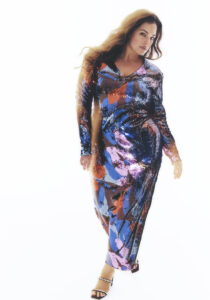
What does success mean to you?
I do believe that leaving a mark is very important. You have a lot of people who might measure success by money, but if they look back on their lifetime, have they done anything to add value to society? I feel that success should be measured by this, and I think Ashley Graham is a true testament to that. Even on her down days, she pulls herself up. Even though success can happen simultaneously with being kind, I feel that if you have that balance between growth and kindness, you can achieve magic. I also think that being successful is something more on a long-term basis. You have a lot of one-hit-wonders who do a great collection and have great moments and then it does. I think it’s also measured by consistency determination. If you show up to do something every single day, the chances are it is going to work.
What is your advice to those who want to take the opportunity to follow their dreams or passion as you have?
Research is a very important component, whether you have all the answers or not, you still need to do research and development. Once you’ve done this, if you are still convinced by your idea, don’t listen to anybody else. Honestly, if I had listened to every person who told me that fashion was a bad idea, my brand would not exist. You must know what it takes to make your dream work and you have to do the research, work hard and don’t listen to anyone.
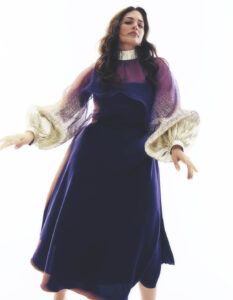
As well as your fashion line you have a PR business – how do you manage your time?
There are days when fashion takes over and there are days when the agency takes over, and I think it’s important to find a balance between the two. I’m not great at it, but I know that I need both. The two feed each other and break up my daily. For example, if I’m very stressed and with the PR business, I can take ten minutes out to finish a drawing and I feel like I’ve moved into this creative space or calm. And sometimes when I’ve been in that creative space for a while it’s nice to go back to my day job to something more structured. So, they balance each other. Balancing is something you learn with time and is not always easy. The time it gets bad is when it’s fashion week, and I’m launching a restaurant! And that’s when you rely on your team.
What’s your vision for DAC Communications?
One thing that is amazing about my agency is that we can do things that don’t follow the usual patterns. I’m pro-collaborations and doing things that are out of the box and I think that’s why the agency green even faster than I expected.
Moving forward I want to make it something bigger and stronger across the region. I feel that we all need a refresh and something more alive in the region and I think if the region adopts this philosophy between Saudi and Dubai, we can become really iconic and that’s how we can create something very impactful.
What is the professional motto that you live by?
It’s never a no.
Who is a woman you would love to design for?
Instantly I would tell you it’s Julia Roberts. I love her purity and how natural she is, I love everything about her and I would love to dress her because she feels real.
What else is in the pipeline for this year?
We are working on some capsules and looking to team up with some people that we love in the region and globally. I would like to work on another shoot collaboration. I also want to expand into certain concessions around the world as I think this will add a lot of value to our brand.
Chanel Reveals Its Cruise 2023/24 Collection in Los Angeles
Chanel’s Cruise 2023/24 collection by Virginie Viard was a celebration of colour inspired by the city of Los Angeles. Bringing together sporty and glamorous looks on the West Beach coast, this vibrant collection has us in the mood for summer.
See some of our favourite looks from the collection below:
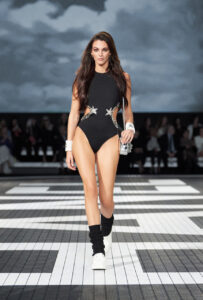
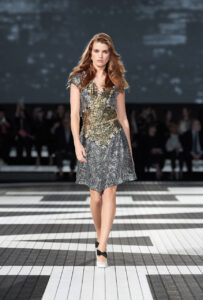
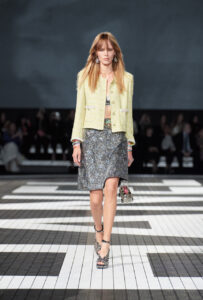
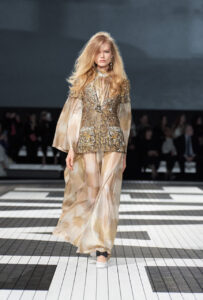
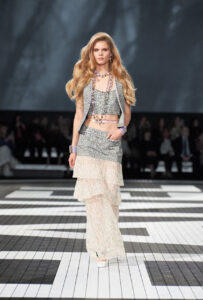
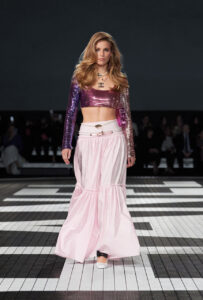
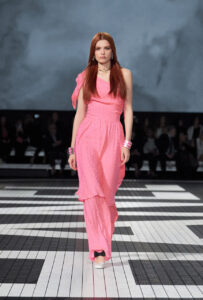
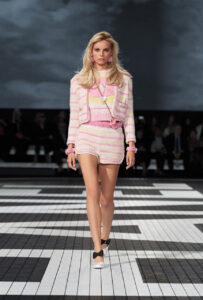
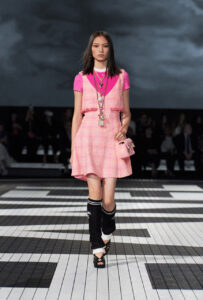
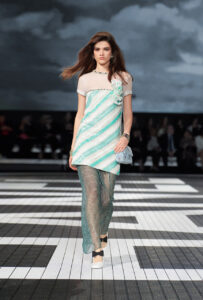
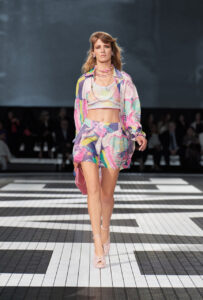
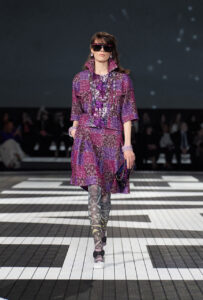
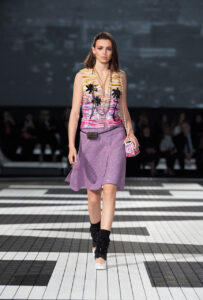
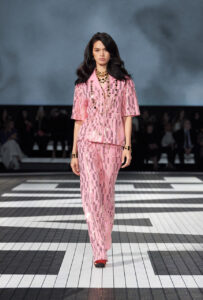
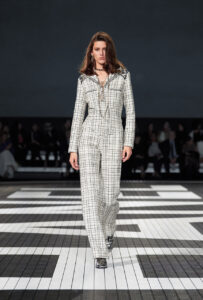
HIGH SEASON: See Prada’s Latest Women’s Collection
Prada’s latest collection features classic essentials reinterpreted for the summer months. See more in our recent editorial shoot.
Photography: Esra Sam
Styling & Direction: Lindsay Judge
Model: Martina at The Art Factory
Hair and Makeup: Amanda Kay
Location: Terra Solis
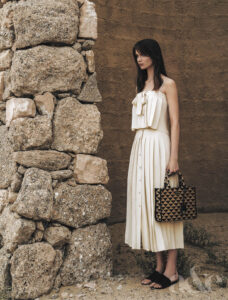
Jacquard Crepe de Chine Top Jacquard Crepe de Chine Skirt Prada Symbole Handbag Leather Slides
All Prada
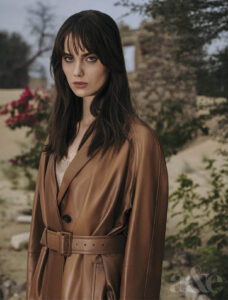
Nappa Leather Overcoat Cashmere Wool Knitwear
All Prada
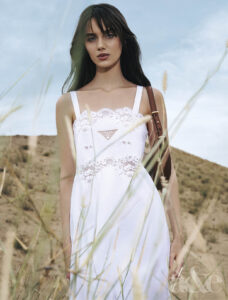
Poplin & Lace Dress Leather Shoulder Bag
All Prada
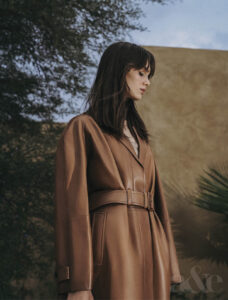
Nappa Leather Overcoat Cashmere Wool Knitwear
All Prada
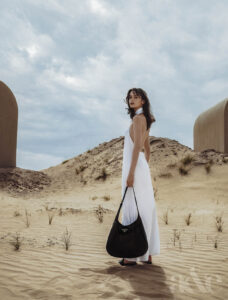
Poplin Dress Leather Shoulder Bag Leather Slides
All Prada
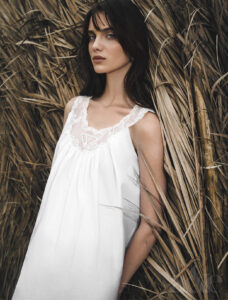
Poplin & Lace Dress
Prada
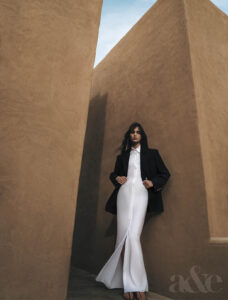
Poplin Dress Light Mohair Jacket
All Prada
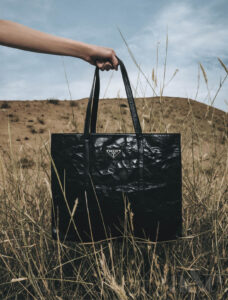
Leather Tote in nappa antique Prada
Christian Louboutin Reveals a New Capsule Collection Celebrating the Tradition of Flamenco
Christian Louboutin has collaborated with Rossy de Palma, actress and long-time friend of the designer to create an exclusive collection that celebrates the creativity, charisma and exquisite craftsmanship that the Spanish destination of Andalusia has to offer.
Inspired by the region’s rich culture and flamenco tradition, the FLAMENCABA capsule embodies savoir-faire, passion, and friendship but also female empowerment, through its two signature cabas, men’s and women’s shoes, leather goods and accessories.

These statement pieces are designed to create a statement for women who love to dance but also have a charitable side at the heart of the collection.
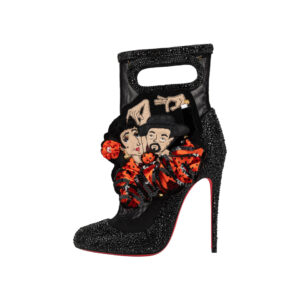
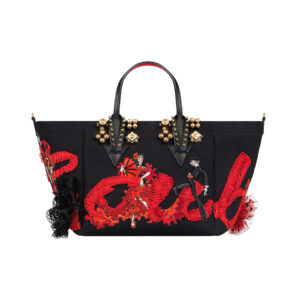
Launching today on May 2023, all proceeds from the capsule collection will be donated to Centro Coreografico Maria Pagés, an organisation that aims to promote dance and Spain’s cultural heritage as a model of social and civic commitment for the benefit of children, adolescents, genders and vulnerable groups.
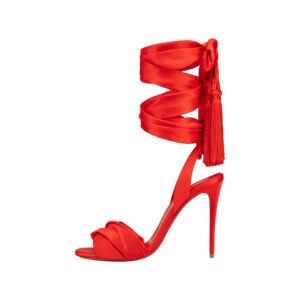
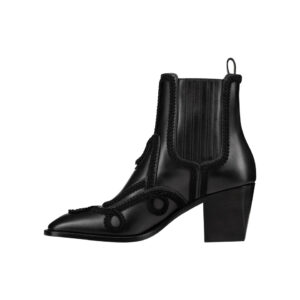
The collection launches in Christian Louboutin stores globally on 10th May 2023.
Ingie Chalhoub, Founder and President of Etoile Group Reflects on the Changing Face of Luxury
In 1983, when few luxury brands had any presence in the Middle East Ingie Chalhoub was a trailblazer in the industry, seeing the potential of the market and the hunger for luxury brands in the region she founded Etoile Group with the mission of bringing the world’s most prestigious luxury brands to the Middle East.
Forty years later the Group has achieved this mission numerous times over, with brands such as Chanel, Tod’s, Ralph Lauren, Valentino and more amongst their portfolio. Led by Ingie and fuelled by her passion for fashion, as well as her determination to make sure the Middle Eastern woman is well-represented by international luxury Maisons, the company has gone from strength to strength and prides itself in being a pioneer and one of the leaders of the luxury fashion in the retail industry in the Middle East. Under Ingie’s leadership, the Group has developed an inspiring reputation as an ambassador of fashion-forward know-how and excellence as well as creating a positive and motivational atmosphere for its employees and clients.
As well as running the Etoile Group, Ingie also established her own fashion brand Ingie Paris which has received international recognition and has been presented at Paris Fashion Week for several years. She also founded Etoile La Boutique which is a one-of-a-kind multi-brand boutique offering a curated selection of items from global brands to meet the needs of the Middle Eastern shopper. Despite achieving so much already Ingie is not done yet as she continues to thrive on shaping up the luxury industry in the region. With expansion into Saudi Arabia, digitally transforming the business and new stores on the horizon, we find out what’s next for her and the company.

Etoile La Boutique
This issue is about success – what does success mean to you?
Success can be defined in a variety of ways. For me, success is the ability to turn your dreams and passion into a reality while making a positive impact. Etoile Group is a product of my love for fashion and art, and since establishing it in 1983, I’ve embarked on a journey to push the frontiers of high-end luxury fashion and bridge the gap between the Middle East and the West. Today, I’m proud to say that Etoile Group is a true pioneer and leader in luxury fashion in the region, and even more proud that our clients know us, trust us, and have become our biggest advocates.
Coming from the Middle East, what does it mean to you for your work and brand to be recognised on a global scale?
Global recognition is an honour, but it’s also a testament to our team’s commitment to building the Etoile Group over the last 40 years, as well as the unwavering loyalty of our clientele, for which I am always grateful.
Looking back at Etoile Group’s journey, there are some standout moments for me – from the opening of the first ever Chanel boutique in the region back in 1983 to relocating and rebuilding the business in Dubai after the Kuwait Crisis in 1992, to bringing brands like Ralph Lauren and Tod’s to the region, and, of course, to creating my own brand, Ingie Paris. Venturing into the Saudi market was also a major turning point, given the size and potential of the market for luxury brands, which presented an ideal opportunity to tap into new markets and consumer segments in KSA.
But perhaps my biggest personal achievement is making the Middle East woman matter to renowned Maisons and helping to ensure that the needs of our clients were understood and appreciated by some of the world’s greatest designers – like Karl Lagerfeld, Thierry Mugler, Jean Paul Gaultier and Christian Lacroix. It took determination, resilience and passion.

Tod’s Store – Dubai Mall
The last time we spoke it was just after the pandemic – tell us what you have been working on since then and how things have changed.
Undoubtedly, the pandemic was a transformative experience for our business, and it gave us a valuable opportunity to re-evaluate our operations and explore innovative ways to connect with our clients. One of the initiatives we introduced during this time was a bespoke home service, which involved us conducting personalised visits to our client’s homes, presenting them with carefully curated items that we knew would resonate with their unique tastes and preferences. This approach allowed us to deepen our engagement with our customers and strengthen our reputation for delivering unforgettable, personalised experiences. As a result, we were able to not only adapt to the challenges of the pandemic but also thrive by seizing new opportunities for growth and innovation.
We also launched etoilelaboutique.com in 2020 as part of our efforts to enhance the customer experience and develop our omnichannel strategy. The online platform helps us better connect with our customers by offering them a seamless shopping experience. We are now able to offer our consumers a wider selection of products, easier accessibility, and more convenience, all while keeping the same high-quality service and personal attention that we are known for.
I firmly believe that our focus on building long-term partnerships has played a key role in transforming our loyal clientele into enthusiastic brand ambassadors, who are eager to spread the word about their positive experiences with us.
What do you think luxury brands need to do today to keep up with ever-changing technology and increasing customer demands?
Luxury brands must constantly adapt to stay ahead of the competition and meet the ever-changing demands and desires of clients. To get significant insights into consumer behaviour and preferences, it is critical to embrace digital technology and invest in data analytics. But just as importantly, they must listen to their clients – have conversations with them about what they are looking for and their sense of style and fashion.
As more clients today want to pick and choose between selecting items in person or online, luxury brands would need to focus on enhancing that experience on whichever platform their clients prefer. By offering bespoke, personalised experiences that cater to their unique preferences and tastes, luxury brands can create meaningful connections and build long-term loyalty.
Creating experiences – in physical environments, as well as in the digital realm – is another critical element that can help luxury brands differentiate themselves and create lasting impressions or attract the next generation of clients. By designing immersive, interactive experiences that allow customers to fully engage with the brand or items from its latest or vintage collections, they can create memorable experiences that leave a lasting impact, and drive loyalty.

AQUAZZURA Store – Dubai Mall
How do you ensure that your brands and companies appeal to a younger audience but don’t alienate existing customers?
At Etoile Group, we recognise the younger generation’s affinity for the environment and social consciousness, which means prioritising collaborations with brands and partners who share the same values as this generation, with a focus on sustainable fashion. We don’t feel that this approach in any way conflicts with the needs of our existing clientele, in fact, quite the opposite. I believe there is an intrinsic commitment to sustainability in luxury fashion – from the preservation of craftsmanship and artisanal skills to the production of quality fabrics and materials. Luxury fashion and design are about creating collections and pieces that can be passed down through generations. It is the antithesis of fast fashion.
Tell us about Etoile La Boutique today – we know you recently opened a new space.
Since its establishment in 1993 in Dubai as a first-of-its-kind luxury multi-brand store for the region, Etoile La Boutique has been on a mission to bring exclusive global brands to our clients and support the very best home-grown designers and brands. We have worked to create an environment where you can interact and get to know these designers at a single destination – whether that is in-store or online.
Earlier this year, we celebrated the re-birth of Etoile La Boutique with the opening of our new boutique at Mall of the Emirates. Here, we have curated a luxury offering that can’t be found anywhere else, with exclusive ranges and pieces – including some of the most sought-after collaborations from the likes of Roksanda x FILA, Herve Leger x Law Roach and Hudson Jeans x Zoe Costello. In total, we have created a destination for 45+ brands, 40 of which are exclusive to the region.
What can you tell us about the curated selection of brands at Etoile La Boutique?
At Etoile La Boutique, our goal was to create an exceptional shopping experience that celebrates the latest trends and emerging labels while offering an unparalleled selection of seasonal pieces from the world’s leading designers. As the founder, I’m deeply involved in curating those collections, drawing on my passion for fashion and art to select pieces that I know will truly resonate with our clients.
We take a highly personalised approach to selecting each piece, carefully considering the needs and preferences of our clientele. This means offering more modest options for those who seek them and selecting individual items that are perfect for the events, galas, and dinner parties that our clients attend. Each piece is handpicked with an in-depth understanding of the Etoile La Boutique woman, her life, and her needs.

As a successful career woman, what advice would you give to others aspiring to take a business leap?
That’s simple. Always believe in yourself, trust your intuition and follow your passion. If you have confidence in your skills and trust in your ability to achieve your goals, others will too. It’s also important to keep a positive mindset and be bold enough to take measured risks to succeed.
What is your biggest achievement so far?
We have many accomplishments to be proud of at Etoile Group but considering the magnitude of the pandemic and its implications for the retail industry and our business, I am most proud of our ability to turn things around post-pandemic and maintain a strong business performance.
What is something that you still want to achieve that you haven’t done yet?
I’d like to further expand our operations in the Kingdom of Saudi Arabia, which is an important market for Etoile Group. Many international brands have already recognised the significance of Saudi Arabia and established a strong presence there. With the country’s continued investment in various sectors and increasing demand for luxury goods among Saudi consumers, opportunities for luxury brands in KSA are likely to grow in the coming years.
What else is in the pipeline for you this year?
We are planning to open 20 new boutiques in Saudi Arabia between 2023 and 2026 for our different brands and we are in the process of renovating two of our existing major stores to offer our clients an enhanced shopping experience.

Tod’s Store – Dubai Mall
Who is someone that inspires you?
My mother has always been my main source of inspiration. Right from the beginning, she gave me the space and freedom to unleash my creativity and encouraged me to pursue my dreams. When I graduated, all I wanted was to work in fashion and we opened our first store together. That was a very proud moment for me.
What is the professional motto that you live by?
I’m driven by a passion for fashion and art and have always worked hard to put my creative and business skills to good use and achieve my goals. I truly believe in listening to my intuition when deciding on which direction to take and that ethos has stayed with me throughout my career.
What is a message you would tell your younger self?
Trust your intuition and go with your gut instinct. The sooner you learn to believe in yourself, the more confidence you’ll have and the more success you’ll achieve – both personally and professionally.
Discover Dior’s Limited Edition Summer Beauty Collection
Dior’s Summer 2023 makeup collection takes inspiration from the beauty of the French Riviera. The new collection captures the beauty of this picturesque location and its blue skies and lush green gardens, emulating the mood of the golden hour.
“For the world, the French Riviera is known as the sweet life: sunny, luxurious, and relaxed, as reflected by its most emblematic luxury hotel, the Hotel du Cap-Eden-Roc,” explains Peter Philips, Creative and Image Director for Dior Make-up. “It provided the inspiration for this easy-to-wear collection in natural and luminous colours for a stunning summer look, in audacious hues that let you express creativity and personality.”
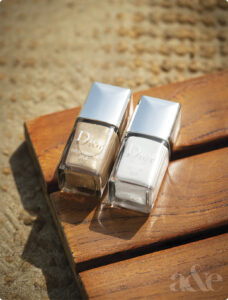
ROUGE DIOR BAUME ROSE BRUME DIOR BEAUTY
DIOR VERNIS SOLAR BRONZE DIOR VERNIS JASMIN
ALL DIOR BEAUTY
The collection features a series of products that sets the stage for a sun-filled season, exploring the contrasts between golden brown, intense coral, and deep blue.
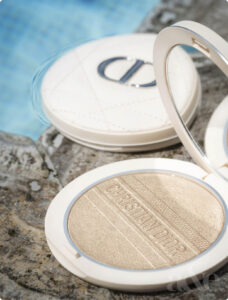
FOREVER COUTURE LUMINIZER GOLDEN CRUISE DIOR BEAUTY
Palettes feature elegant cases covered in raffia-inspired fabric and palettes with a marine-inspired pattern engraved with the Christian Dior logo.
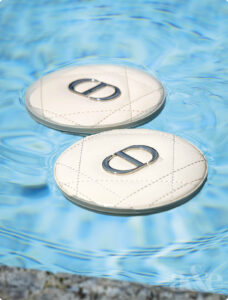
The Dior Summer 2023 collection is available online and at Dior beauty stores.
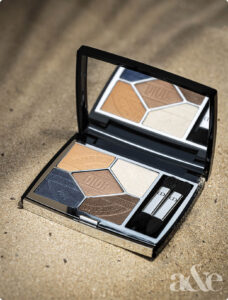
5 COULEURS COUTURE EDEN-ROC,
DIOR BEAUTY
Photography: David Goff
Styling & Direction: Lindsay Judge
Location: Venus Beach Club, Dubai
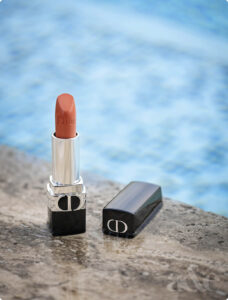
ROUGE DIOR BAUME ROSE BRUME DIOR BEAUTY
Wilhelm Schmid, CEO of A. Lange & Söhne Talks Heritage and Innovation
Lange & Söhne is a brand that stays true to its routes but is not afraid to explore new territories and this year it reiterates that with the launch of the ODYSSEUS CHRONOGRAPH which debuted at Watches & Wonders.
This newly develop timepiece combines the long history of the brand with a new innovative design and features the watchmaker’s first ever self-winding chronograph movement. With a history dating back to the 1800s, Wilhelm Schmid has a hard task on his hands connecting that history to today’s contemporary market, and ensuring that customers old and new, understand the beauty of this brand and its rich history in craftsmanship. But it’s a task he’s willing to take on and has so far succeeded in.
With the introduction of the ODYSSEUS line in 2019, the German watchmaker successfully entered a new category of elegant sports watches, and it has seen the brand go from strength to strength, so much that the demand is even greater than this delicate and complicated watches can be made. But that is not an issue for Wilhelm Schmid, whose priority the sustaining and celebrating the beauty of watchmaking craftsmanship and ensuring the brand’s watches are made by only the best in their field. Here we find out more about the newest novelty and what else we can expect in the coming year.
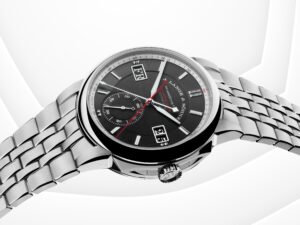
ODYSSEUS CHRONOGRAPH, reference 463.178.
Congratulations on the recent edition of Watches & Wonders – let’s talk about the novelty…
Our horological journey has once again taken us to a new summit in design and manufacturing with the ODYSSEUS CHRONOGRAPH. This special stainless-steel timepiece is equipped with the newly developed calibre; the L156.1 DATOMATIC, our first self-winding chronograph movement. With its stopwatch hands at the centre of the dial and its ability to measure elapsed time up to 60 minutes, it raises the bar in terms of precision and readability. The timepiece features a pair of dual-function buttons for easy operation of the chronograph and convenient setting of the outsize date and day. Another innovative mechanism is the dynamic reset-to-zero function, which creates an impressive spectacle when the chronograph hands return to their initial position. In view of its horological complexity and the high level of craftsmanship involved, this masterpiece is limited to 100 pieces. As usual, we will be unveiling other new timepieces throughout the year.
This watch continues the new chapter for the brand – tell us how this timepiece fits into the brand portfolio and how it has in some ways changed the perception of what A. Lange & Söhne can offer?
When we launched the ODYSSEUS in 2019, it was the beginning of a new era for us. Our goal was to create a sporty, elegant timepiece for clients with an active lifestyle who don’t want to do without the consummate craftsmanship and the technical refinements of a fine mechanical watch. Although the ODYSSEUS is quite different from all our other models, there is pure Lange DNA in even the smallest detail. From the proprietary movement to the fine craftsmanship to the design elements of the dial, hands, and typography. Much like the ZEITWERK, the ODYSSEUS sparked a sense of astonishment when it was first introduced. Today, both families are an essential part of our collection.
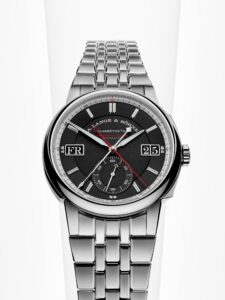
ODYSSEUS CHRONOGRAPH, reference 463.178.
How do you balance offering new watches such as this but also keeping with the heritage and traditions of the brand?
Ferdinand Adolph Lange had the vision of making Glashütte the centre of German fine watchmaking, which he realised over 175 years ago. His great-grandson, Walter Lange, revived the manufactory of his ancestors after the reunification of Germany and inspired A. Lange & Söhne to “never stand still” and push the boundaries of watchmaking. This personal motto has also become the philosophy of the manufactory and of our watchmakers. In this way, we have managed to create something new that has not existed before, without losing sight of the time-honoured achievements. The impressive number of manufacture calibres testifies to our innovative strength and that we are not afraid to explore previously uncharted territories. Each of our new models is distinguished by traditional elements, ground-breaking innovations, and an unparalleled level of craftsmanship.
Who is the A. Lange & Söhne customer today and do you think it has changed or evolved in recent years?
Our clients are well-educated, successful in their careers and enjoy the finer things in life. They like to travel, appreciate art and culture, exceptional craftsmanship and ingenuity, and have a taste for exclusivity. Some share our passion for elegant vintage cars and are also collectors of mechanical timepieces. The pursuit of perfection and the quest for uniqueness is what connects the people who own an A. Lange & Söhne watch with those who create them. Incidentally, this fascination is quite independent of age. However, one of our most important tasks is to educate younger people about our legacy and to spark their enthusiasm for our mechanical timepieces as well.
How does the innovation in this new movement further push the Maison’s boundaries in watchmaking?
We often find that A. Lange & Söhne is particularly valued for the development and manufacture of its own movements. Since the re-founding of our manufactory in 1990, we have created 71 distinctive movements. Each of these calibres is in a class of its own, combining technical innovation with the highest level of craftsmanship. From the very first idea of the ODYSSEUS, we recognised the great potential of this watch family and had future variations in mind. We started the development of this chronograph six years ago, even before launching the first ODYSSEUS model in 2019. The new L156.1 DATOMATIC calibre is our 13th chronograph movement, however, it marks a premiere as it is our first self-winding one.
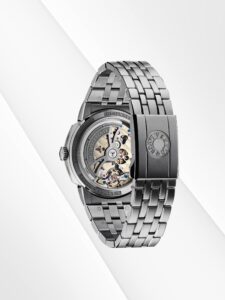
ODYSSEUS CHRONOGRAPH, reference 463.178.
Tell us about the positioning and direction of A. Lange & Söhne today and in your opinion, what does it take to be a successful watch brand today and to sustain that success?
I think what sets us apart from other brands is our unique history which is divided into two parts. The first part began in 1845 and ended in 1948 with the expropriation after the Second World War. The name A. Lange & Söhne nearly vanished until German reunification enabled Walter Lange to re-establish and re-register the company on December 7, 1990. After four years of development, we launched the first four watches, each equipped with a dedicated calibre. This was a monumental moment, which laid the foundation for success in modern times. Today, we are one of Germany’s leading luxury brands, dedicating all our passion to precise timekeeping, as well as aesthetics, intricacy, and complexity. The commitment to providing the highest quality and meeting our client’s expectations is the cornerstone of our success. Understanding them is essential to improving our customer service. We have learned that the best way to connect with our customers is through face-to-face contact in our own boutiques, where we can best present the special characteristics of our timepieces and our brand’s universe. By increasing our global network of boutiques, we are creating the necessary infrastructure to make this happen.
The industry seems to be thriving since the bounce back of COVID – how would you assess the industry today?
Thanks to the extraordinary commitment of our employees in Glashütte and our teams worldwide, we are very well positioned. The strategic decision to shift sales more into our own hands and to expand direct customer contact has also contributed to this success. Obviously, our devotion to the highest standards is also key. We can only remain successful if we continue to focus on the highest quality and meet our customers’ expectations. I can only speak for A. Lange & Söhne, not for the entire watch industry.
With this high demand for watches, how do you as a watchmaker ensure you can meet the needs of the customer without overstretching your craftsmen and watchmakers?
Our watches are handmade, so everything revolves around our watchmakers. They are our most valuable asset. It’s a simple calculation: Without them, we could not make watches. Working in a highly specialised field requires excellent training and an exceptional level of expertise. That is why it takes so long to make a Lange watch. We could never hire as many new watchmakers, mechanics, and engravers as we need to meet the growing demand. But we do our best because we know that the only way to ensure long-term success and growth is through excellent training.
Front view of the ODYSSEUS CHRONOGRAPH, reference 463.178.
What does A. Lange & Söhne do to sustain traditional watchmaking techniques and to ensure this lives on for future generations?
We see it as our duty to do all we can to preserve and perpetuate, with the help of future generations, the art of watchmaking and the craftsmanship associated with it, as it is a unique cultural asset of our region. As I said earlier, the very existence of our manufactory depends on highly skilled watchmakers. Walter Lange was aware of this early on. That’s why he initiated the training of apprentices as early as 1997. In October 2022, we celebrated the 25th anniversary of this commitment to vocational education and on this occasion officially renamed the institution “Walter Lange Training and Further Education Centre.” We are proud to have trained 228 watchmakers in the last twenty-five years.
What can you tell us about the brand in the Middle East today and what’s coming up for the region?
I believe that the passion for classic design, coupled with the technical ingenuity that endures, is deeply rooted in the hearts of connoisseurs in the Middle East. We are delighted that A. Lange & Söhne has so many friends in this region who cherish our vision of fine watchmaking. We are experiencing this to a great extent in our boutiques in Dubai. The number of enthusiasts and collectors who appreciate our heritage, our technical expertise, and our commitment to the highest level of craftsmanship continues to grow.
What else is coming up for the brand this year – can you give us a preview?
As always, we will introduce more new products over the year. I can’t reveal any details just yet. The next event on our agenda is this year’s Concorso d’Eleganza Villa d’Este, which will take place on the beautiful shores of Lake Como from May 19 to 21. We have been a partner of this prestigious classic car competition since 2012 and are very much looking forward to it. This year again we have created a one-of-a-kind 1815 CHRONOGRAPH which will be awarded to the owner of the “Best of Show” car. Having also been a sponsor to the Concours of Elegance at Hampton Court Palace in the UK since 2018, we are now proud to partner with one of the most important classic car events in the US for the first time: the Audrain Newport Concours d’Elegance taking place from September 28 to October 1, 2023. Classic cars and mechanical watches both represent values that are important to us.
Meet Hind Sebti, Founder of Beauty Brand Whind
A couple of years ago, as we were all recovering from the uncertainty of the COVID-19 pandemic, a new beauty brand appeared on the scene in the Middle East.
With a refreshing appearance and an interesting offering of products, Whind quickly caught the attention of women looking for something to bring joy into their lives after a tough period. Hind Sebti, founder of Whind was born in Morocco and had always dreamt of sharing the unique culture and ingredients of her home country with the world and capturing the mood of the golden hour of Morocco through the collection of skincare and fragrance products. After many years of research and delving into the origins, ingredients and craftsmanship of her home country, while combining this with the latest innovations in science, Sebti launched Whind, the first luxury skincare brand to be born in the Middle East and created by an Arab woman combining science, sustainability and natural ingredients. Whind’s skincare offering was born out of science and rituals, and is powered by a unique ‘chemistry of glow’ that recreates that golden hour feeling that has become synonymous with beauty.
Earlier this year Whind introduced its first fragrance line; the Whind Elixir Fragrance Collection. This fine fragrance offering captures and bottles the mystery, sensuality and elegance of Morocco with a series of scents that introduce new ways of combining traditional ingredients and bringing nature and science together as one. Now as she prepares to take her brand outside of the Middle East, we find out more about what makes Whind unique, and why it has the potential to be one of the region’s greatest beauty success stories.
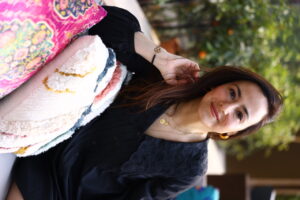
Tell us about the story of Whind and how it came about.
I first dreamt of a brand that would shake up the mono-dimensional world of beauty where our consumer seems to always face a trade-off between high-performance products, but with relatively unimaginative experience OR a sensorial experience, but without effective visible results. What I and many consumers like me wanted is skincare that does not compromise on performance or experience. So I created products that are as efficacious as they are enjoyable, powered with what I called the “chemistry of glow” that fuses high-performance actives in divinely sensorial textures and evocative scents. In doing so, I was bringing the best of the science I learned in my 20 years as a beauty executive and the essence of indulgent rituals and natural ingredients inspired by my home of Morocco.
But beyond products, the true inspiration behind Whind is to expand the way the world sees beauty and to spotlight our uniquely rich and warm Arab beauty heritage, something that deserves visibility on the global stage. This is true diversity, this is representation. And what drives me in building the house of Whind. Skincare was the first step of the brand and I am beyond excited to step in and shake up the wonderful world of fragrance with our Elixir Fragrance collection.
When it comes to beauty and fragrance what are the values that you find important to highlight through your own brand?
Whind was created to bring a warm, positive and optimistic view of beauty to the world. So at the heart of the brand is inclusivity and representation of our rich Arab culture, products that deliver on performance and delight our community with an inside and out glow whilst also being kinder to the planet.
Tell us about how your heritage has influenced your brand.
My Moroccan and Arab heritage shaped how I see beauty – warm, joyful and unapologetically celebrated. So I wanted to create a brand that reflects those values, with beautiful, warm objects, a nod to our world-renowned craftsmanship and decadent textures and scents inspired by celebrated local ingredients such as amber, rose water or orange blossom water and rituals that are as efficacious as transportive. Whind is all about the beauty of the golden hour, bottled. A glow that radiates inside and out and is a cornerstone of our beauty point of view.

We love the new Elixir Fragrance collection what can you tell us about that?
At Whind, we believe that beauty is first and foremost an emotion. And nothing expresses emotion like fragrance. A fragrance can instantly transport someone to a place or a moment in time. Our inspiration is our home of Morocco, a country famed for its unique seduction of the senses and its intoxicating scents. It was a very natural step to venture into fragrances. Over the years, many fragrance houses have presented their interpretations of what Morocco smells like, but there has never been a Moroccan Arab woman who told the authentic story of their beloved country from the inside out. And I wanted to take on that role and bring a world-first look at the wonderful scent stories of my beautiful country.
Fragrance is an art so I couldn’t do it by myself. I was extremely lucky to partner with two fragrance artists, Roger Schmid and Jerome Epinette who transformed my stories, memories and emotions into uniquely magical scents. We called it Elixir because we felt they were much more than fine fragrances but an intoxicating collection that bottles the mystery, sensuality and elegance of Morocco. A deeply sensorial and sensual experience that transports you, and makes you feel.
What does success mean to you?
Success is very personal. To me, it means freedom – to work and build something I am passionate about, with people I love in the set-up I need to be most effective and happy.

What can you tell us about Whind in the Middle East?
Whind is proudly an Arab-born brand, so it was very important for me to launch the brand first in the region and build a local success that I could take globally and flip the narrative of brands only coming to the region once they have first served consumers in the West. It was a business strategy and even more so a personal belief and desire to walk the talk and I have been so humbled by the amazing success that the region gave to whind, perhaps for the first time a brand that looks like us and speaks to us and that spotlights our rich culture and excellence in beauty.
What is your plan for the brand moving forward?
The plan is to continue listening to our amazing community who sees Whind as more than a beauty brand but a lifestyle one; they have asked for 2 things – bring in-store so they can experience it in real life so we are expanding into stores as we speak all over the region and to expand into new categories like fragrances – which we have done – and body which will be coming soon.
What do you think is the secret to sustaining a business in today’s market?
Being constantly in touch with the market and consumer and having the ability to adapt and do so quickly.

What are some of the biggest challenges you have faced with the brand and how did you overcome them?
When building a brand to be successful, you need to have a point of view. And to be able to accept that there are people who will love it and others who don’t. The challenge is of course to be in touch and listen to feedback, but also keep in mind the reason for starting the brand in the first place. This is a general challenge when building brands, but specifically around whind I think the biggest challenge was to launch during the tail end of the COVID pandemic and to make the decision to launch exclusively online and wait for the retail landscape to settle before expanding – this was especially challenging for a brand like Whind which is built on experience, so we had to find new ways to immerse our community in our universe digitally, which was also a challenge in itself. I am glad we took on these challenges because we have learnt a lot, and now that we are both in stores and online, we are in a great position for a seamless omnichannel experience.
What do you think makes your brand unique in the industry today?
Whind is the first luxury Arab-born beauty brand that spotlights globally the unique beauty point of view, rituals and storytelling of our rich culture with a modern and relevant twist.
Tell us about some of the ingredients and unique combinations you use in your products.
Our skincare is designed to deliver superior performance in a delightful experience of texture and scent. It is powered by what I like to call the “chemistry of glow”; highly effective proven actives such as Niacinamide, Ceramides and Vitamin C that are blended with powerful ingredients native to our ancestral Moroccan rituals such as Argan Oil, Rhassoul Clay or Orange Blossom Water. A perfect marriage of old-time tested and new trending ingredients. For skin so healthy and happy it glows.
For our fragrances, we chose ingredients that help tell rich, sensual and warm stories that are a tribute to Morocco, its elegance, sensuality and mystery through beloved scents like Rose, Orange Blossom Tangerine and Oud. Ingredients that happily and sensually blend with other more exotic ingredients brought through by the mythical caravans of the silk road like Kashmiri Saffron or Somali Incense to quote a few.
What is the biggest lesson you have learnt throughout your career?
If you don’t ask, you don’t get. Always ask.
What is the professional motto that you live by?
Only those that dare to go too far can see how far they can go.
Talk us through your morning beauty ritual.
After a shower, I use Whind Oasis Fresh Jelly Cleanser on my damp face. Its delicious orange blossom jelly texture melts immediately to a milk that rinses off quickly, leaving my skin clean and nourished and my spirit awakened. I follow it with a spray of Oasis Veil Serum Mist for a shot of hydration and vitamin C, before layering Oasis Bright Vitamin C Serum which packs a punch of super brightening ingredients that even your skin and protect against further damage.
I top this with my absolute hero Marrakech Rich Ultimate Cream, literally, the product I can’t live without, its’ delicious whipped texture hugs my skin in nourishment and makes it visibly glowing. My last step is always a few drops of Ourika Sun Tinting Water for a natural tan and a quick swipe of Marrakech Light Illuminating Oil as a highlighter on my cheeks and lips. Once my skincare is done, I apply my favourite Blush and Bronzer – either Milk Make Up Blush Sticks or Bronzer (I have them in all colours and adore mixing and matching depending on the mood of the day).
What else are you currently working on and what’s in the pipeline for the rest of the year?
We are already working on our fragrance line extensions and a super exciting body care launch.
Oud fashion Talks is Returning to Kuwait This May
After a successful first year in 2022, Oud Fashion Talks will return to Kuwait this May, bringing together fashion experts and power players who have contributed to the region’s fashion scene.
The event will consist of a series of panels and discussions that aim to spark conversation about some of the industry’s key issues and topics.
This year’s key themes will focus on sustainable fashion and its importance and create a bridge between Kuwait and the international world of luxury. By highlighting the challenges of the region’s fashion and creative industry, Oud Fashion Talks hopes to bring together a community of creatives and encourage investments in local designers.

“Kuwait has always been a hub for art and creativity, particularly in the fashion sector. With the evolution and openness in the region, it’s high time for new initiatives to emerge. This motivation drives us to keep up with the industry’s changing landscape,” says Zainab AlAbdulrazzaq, Founder of Oud Fashion Talks.
This year’s edition of Oud Fashion Talks will take place from May 10th to 12th.
Meet Dominic Nowell-Barnes, Founder of The Giving Movement
Just three years ago Dominic Nowell-Barnes Founded “The Giving Movement”, a Dubai-based brand that would put sustainability and charity at the forefront of fashion, giving back to those in need through the products it creates and shifting the culture from fast fashion to conscious consumerism.
For every item purchased, The Giving Movement donates a proportion of the amount to charity and has so far raised over four million dollars. The money goes towards children’s education and improving the lives of those less fortunate. On top of that, the company’s mission to commit to sustainability is something to truly admire. While it is not 100 per cent sustainable yet (something that’s virtually impossible in today’s culture), they are well on their way. Producing their own sustainable materials locally in Dubai is a great start!
The Giving Movement’s products have become instantly recognisable thanks to their eye-catching branding and simple yet edgy design. The brand’s core collection focuses on leisure or fitness wear, but more recently they have branched out into modest wear, formal wear and even kidswear. It really does seem like the sky is the limit for this movement. As TGM continues to grow, we spoke to the Founder Dominic Nowell-Barnes, to find out what have been the greatest achievements so far and what’s next.
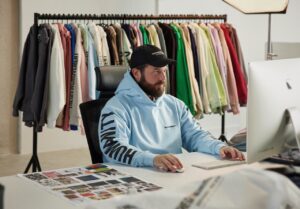
How would you describe the universe of The Giving Movement today?
Our universe belongs to every member of the movement. The way that TGM has been created is through collective effort, and it makes us happy to see that we’ve crossed $4.5 million in money raised for charity, simply through the contributions of every person who interacts with and joins the movement. It’s a reminder that together, anything can be accomplished, whether it’s helping put an end to the vicious cycle of poverty or championing conscious consumerism and sustainability.
What do you think makes TGM movement different from anything else out there?
There are a lot of brands doing incredible work and we salute them for their contributions to society, we need as many as we can get. For The Giving Movement, our focus is on our motto; “Humanity in Motion” – it makes the causes of charity and sustainability a constant that never stops, as we focus on transparency, being interactive with members of the movement, and showing the difference that people’s purchases are making.
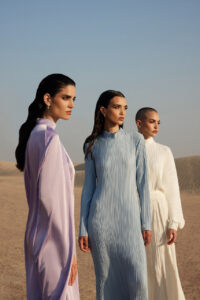
Let’s talk a little about the charity element of the brand – can you tell us what you have achieved so far with this?
We work with Dubai Cares and Harmony House India – two organisations that focus on education as a way to put an end to poverty. We commit $4 from each item sold to go towards charity, which by itself can be enough for a lot of essentials: a week of milk for a baby, a week of three meals a day for a child, a hygiene kit for a family of four, a vocational training kit… and the list goes on. Through this, the $4.5+ million that the movement has raised so far has made an incredible difference for the communities in India. The wonderful team behind Harmony House India has managed to build 2 new centres, an Early Learning Wing, the Hope at Harmony House special needs wing, expand to have 1,000+ students, provide 3 daily meals for each student, have over 250 graduates, provide surrounding communities with weekly rations and medical care, and help women become independent through vocational training courses. It’s really inspiring and motivating what can be done when our communities band together to help one another.
You have diversified the collections over the past few months – how far would you like to take it in terms of the offering?
Our expansion has been based on the community and the region. We have a heavy focus on modest clothing, for example, as the women in the region inspire our collections. We introduced TGM kids and baby and have most recently dived into Formal collections. At the end of the day, we are working towards shifting the culture from fast fashion to conscious consumerism, and that’s what drives our collections – hand-in-hand with innovation. The movement is more than closet essentials, it’s about pieces that do good and feel good, as well as updating our closets.
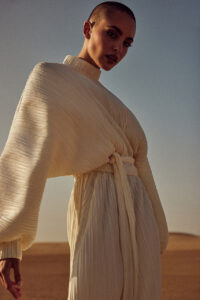
What are some of the key pieces or collections we should know about now?
The heroes of TGM are always the Lounge Collection and the Active Collection. They’re the collections we launched with and continue to be at the core of TGM. Their ultra-soft textures, sustainable materials, and local production are what make them the streetwear essentials that have taken over.
How do you ensure that your products are sustainable?
Sustainability is a journey and always calls for improvement, so getting to a stage where TGM is 100% sustainable is something that we’re still working towards. Innovation defines our approach to the materials we use, so every season, every material used in every collection is innovated in-house, meaning that we take care of the process from A to Z. Whether it’s sourcing the raw materials that we need, working with certified suppliers, or manufacturing things locally, we rely on growth and development to continue our promise of creating sustainable collections. This also means ensuring that the trims and extra detailing in each piece are sustainable.
Can you tell us a little more about the materials and what they are made from?
Our collections are centred around recycled polyester, recycled nylon, and organic cotton. The Lounge collection of hoodies, jackets, and joggers is made from an Organic Cotton Blend of 60% organic cotton and 40% recycled polyester. Our Active collection is made from the signature Softskin100© which combines 80% recycled polyester and 20% recycled spandex. Shell, one of our top 3, is 100% recycled nylon and was the first streetwear collection to do so. We use various types of recycled materials and update our fabrics every season, and we rely on transparency to build trust with the community. Our goal is to remove any recycled synthetics from the supply chain for biobased alternatives that are slowly coming into the market.
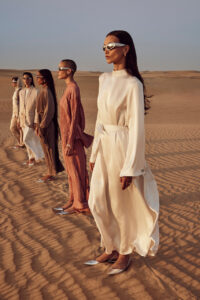
In this issue, we are talking about success stories born in the UAE and yours truly is that – to what would you credit the success the brand has had so far?
The success of the brand is two-fold: one, the commitment of our community in the UAE and the GCC towards being eco-friendly and charitable, and two, creating a business model that places giving back at the centre of the strategy.
What do you think are the prerequisites to creating a brand that will stand the test of time in today’s environment?
You must be ready to experiment, to be reactive, and to see what your audience is looking for. We’ve entered a new decade that is constantly changing, evolving, and developing, and without incorporating these things into your strategy, it’s quite difficult to maintain a strong presence.
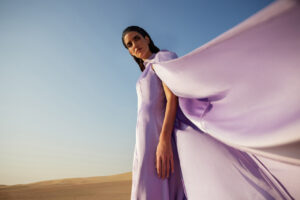
As an entrepreneur what is a piece of advice you would give to others?
I would share a piece of advice that has changed my own approach: “if there is no enemy within, the enemy outside can do you no harm.” It’s a lesson on the importance of having a strong mindset, setting your standards, and knowing them inside and out… which makes your foundation impenetrable and your resolve iron-clad regardless of external factors.
What have been some of the biggest challenges along the way and how did you overcome them?
The general industry’s struggle with being sustainable in today’s world is difficult to navigate at the beginning stages, we are working towards being sustainable and featuring biobased materials. Eco-friendly materials aren’t readily available, which makes it difficult to find and source cost-effective ways to be eco-friendly. Thankfully, one of our goals is helping the industry evolve, and as the world becomes more aware of consumer habits, the negative impact of fast fashion, and the importance of sustainability, they’re contributing towards higher demand which would ultimately make these materials more available.
Another challenge is pacing the company’s growth – there’s a lot we want to accomplish and change and contribute to… and it all takes patience to ensure that it’s accomplished well, rather than making decisions that aren’t supported by the necessary research or data… or even strategy.
What’s the biggest lesson you’ve learnt?
I think one of the biggest lessons any entrepreneur and start-up faces is adapting to fast growth and ensuring that you scale your team of experts as you scale the audience and the products. It requires a lot of skills in strategically putting together the next steps, and it all comes down to the team dynamics, working with talent that you trust, and believing in what we’re working towards.
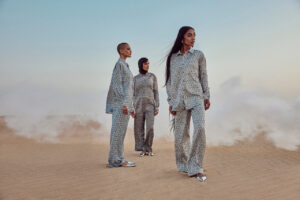
Is there anything you would like to do that you haven’t done yet?
I’ve committed my career to helping those who are in need and seeing the feedback and the collaboration that we’ve received from the community and from the movement only expands all the goals and things that I want to do, whether in charity or sustainability.
What’s next for the brand over the coming year?
As we enter our 3rd anniversary, the next year carries a lot of exciting moments, from store openings to new collections and campaigns. Stay tuned!
Dior Maison Reveals an Elegant New Homeware Collection
Dior Maison has revealed Plan de Paris, a new homeware collection that celebrates the iconic streets of the French capital that have been pivotal to the brand’s history.
From Faubourg-Saint-Honoré, where Monsieur Dior spotted his lucky star, to 30 Avenue Montaigne, the House’s iconic address, where you will find the excellence of savoir-faire, these addresses have influenced the Parisian House from its beginning until today.
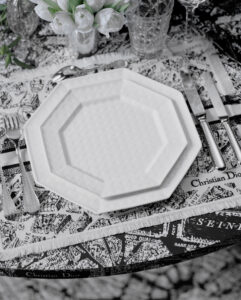
Echoing Maria-Grazia Chiuri’s Spring/Summer 2023 womenswear collection a black and white print featuring a map of Paris appears across a selection of exceptional creations, such as porcelain tableware, embroidered cushions, placemats and notebooks. This enchanting motif is an ode to the magic of the City of Light that has inspired the House of Dior since its founding in 1946.
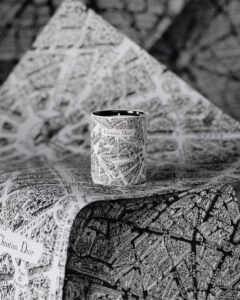
The collection is available at selected Dior stores globally.
Nadine Kanso, Founder of Bil Arabi Discusses her Passion For Jewellery
When she founded her jewellery brand Bil Arabi in 2006, Nadine Kanso had the vision of creating modern jewellery pieces that celebrated the history and heritage of the Middle East.
She had a fascination with Arabic calligraphy, and combined with her background in graphic design, wanted to present this in new ways that would capture some of the messages of the region and offer customers the chance to hold these messages close to their heart with the jewellery they wear. Nadine’s unique style and flair as well as her passion for the Middle East can be felt through the conceptual design of her creations. Originally from Lebanon, Kanso has established herself as one of the UAE’s success stories as her brand continues to receive international recognition and her profile has seen her be invited to collaborate with many brands using her talent for calligraphy in several different ways. As Bil Arabi launches a new collection Hobbi, which celebrates love and partnership, we talk to Nadine to find out more about her success and her vision for the future of her brand.
Congratulations on the success of Bil Arabi – tell us about the journey and how you got to where you are today.
I started Bil Arabi in 2006 with the mission to create modern and timeless pieces that capture the essence of the Middle East. Growing up in the region, my roots and heritage have always been a major source of inspiration. Bil Arabi is a culmination of my passion for jewellery and my love for the Middle East. I believe our pieces are not just accessories, but symbols of identity and culture. We strive to bridge the past and present through our designs and to stay true to our values of craftsmanship, quality and timelessness. This I believe, is what got us here today.

We love the new Hobbi collection what can you tell us about that?
The Hobbi collection is a true sentiment to the brand’s exquisite craftsmanship and artistic translation of love, and a collection I am very passionate about. I am always inspired by the instinct to connect, share, and love and the collection highlights the importance of bonding; these Hobbi masterpieces are made to be shared as experiences of interchanging connections and admiration. The way I see it, the Hobbi Collection is an extension of a cherished collection by Bil Arabi. Its inspiration is drawn from Hobb meaning “love”. Hobbi is meant to embody the sentimental joy of giving and honouring lovers, friends, and family members. What’s interesting about this collection is that the creations are playful yet elevated with a harmonious, delicate feel, I hope the collection creates experiences for those who dare to show their love and affection.
We have seen a number of exciting collaborations recently including one with Guerlain – what are the values that you look for when collaborating with brands?
I look for brands that have values around quality, style, creativity, innovation, durability, and design. As long as these elements are in place and the brand shares my values for authenticity and craftsmanship, I am happy to collaborate. I love to have the opportunity to create unique products through collaborations with incredible brands. There are many more collaborations in the works which you should keep an eye out for.

What fascinates you about the Arabic language?
The Arabic language reflects my identity, my pride, and certainly the history of what Arabs have given to the world. Each piece and each collection is unique.
How do you get inspired and how do you continue to keep the creativity alive?
As an artist, I find inspiration in the world around me – from the people I meet and the places I visit to the everyday objects and materials that surround us. I believe that beauty can be found in the most unexpected places, and I strive to capture that essence in my work. I try to refresh and keep my creative passion alive by travelling, discovering new cultures and exploring new things.

This issue is about success – what does success mean to you?
Success is when you have achieved a dream or worked on something you have always wanted to work on and your message and work have been recognised and appreciated. It has been loved and accepted.
Few brands from the UAE have achieved international success but it seems to be growing – what is your experience of this and what more could be done to support regional brands on a global level?
As someone who has worked in the UAE for many years, I have seen first-hand the incredible talent and creativity that exists in the region. While it is true that there have been only a few brands from the UAE that have achieved international success, I believe that this is changing rapidly, and there is a growing interest in and appreciation for the unique perspective that regional brands can offer.
To support regional brands on a global level, several things can be done. One is to provide more opportunities for these brands to showcase their products and services at international events and trade shows. Another important factor is the development of local creative and design talent. By providing training, mentorship, and funding support for emerging designers and entrepreneurs, we can create a strong foundation for a thriving creative industry capable of competing on the global stage.
Finally, it is important to promote the unique cultural identity of the UAE. By celebrating our heritage and embracing our unique perspective, we can establish ourselves as leaders in creativity, innovation, and design, and create new opportunities for regional brands to succeed on the international stage.
What do you think is the secret to sustaining a business in today’s market?
In my opinion, the secret to sustaining a business in today’s market is to stay true to your vision and values. It is important to have a clear understanding of what you want to achieve and why you are passionate about your work. This can help you to stay focused and motivated, even in the face of challenges and setbacks. Another key factor is to stay flexible and adaptable. The business world is constantly changing, and it is important to be able to pivot and adjust your strategies as needed. This may involve taking risks, experimenting with new approaches, and being open to feedback and criticism.
Building strong relationships with customers and partners is also critical for sustaining a business. This involves understanding their needs and preferences, delivering high-quality products and services, and maintaining open and honest communication.

With any success comes setbacks, how do you deal with these and continue moving forward?
I love to learn from my setbacks and work harder towards the next success. I don’t spend too much time dwelling. Rather, I like to use the challenges I have faced to my advantage, as it has given me a unique perspective on the industry and a drive to succeed.
Where would you like to see your brand in five years and what is your planned direction for the brand?
Our focus will remain on creating unique and personalised jewellery pieces that celebrate the Arabic language and culture. Bil Arabi will continue to innovate and push the boundaries of traditional jewellery design by exploring new techniques and materials while staying true to its signature style.
In addition, we see great potential in expanding our global presence through strategic partnerships and collaborations. By working with other like-minded brands and individuals who share our values and vision, we believe we can amplify our impact and reach new audiences around the world.
What is the biggest lesson you have learnt throughout your career?
I have learnt that you really need to love what you do to keep shining. It is essential as your daily input is crucial.
What is the professional motto that you live by?
Rome was not built in a day.
What is the most precious piece of jewellery you own?
All my creations are dear to me and each piece carries love. The one piece I would cherish is probably the Hobb classic cuff which I never part from. Another piece or collection that I cannot get over its beauty and boldness is HAWA.
Who is a person that has inspired you throughout your career?
I have always been inspired by women who are mothers and wives and are in the workforce. Women who can handle everything at once and never complain, who appreciate life and everything they worked for.
What else are you currently working on and what’s in the pipeline for the rest of the year?
Many things in the pipeline, beautiful projects and collaborations along with new beginnings.
