

JAZ Hotel Group Launches JAZ Elite Hotels to Redefine Coastal Luxury
Spanning Egypt and Zanzibar, the new collection brings together JAZ Hotel Group’s most exclusive beachfront properties, placing personalised experiences, destination-led design and meaningful travel at the heart of luxury hospitality.
JAZ Hotel Group has unveiled JAZ Elite Hotels, a new luxury hospitality identity bringing together a curated collection of its most elevated beachfront resorts across Egypt and Zanzibar. The launch marks a significant evolution for one of the region’s leading hospitality groups, shifting the focus from scale and expansion towards a more experience-driven approach to luxury travel.
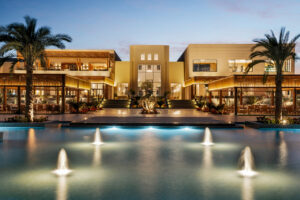
Elite Amara – Marsa Alam
The collection includes properties in some of the region’s most sought-after coastal destinations, including Almaza Bay, Sharm El Sheikh, Marsa Alam, Hurghada and Zanzibar. Each hotel has been selected for its distinctive setting, design and connection to its surroundings, creating a portfolio that prioritises individuality over uniformity.
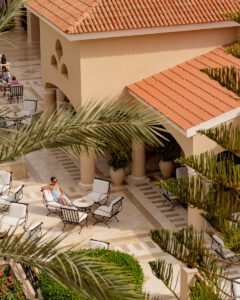
At the heart of the concept is a reimagining of the traditional all-inclusive model. Rather than a one-size-fits-all approach, JAZ Elite Hotels offers guests greater flexibility through personalised experiences, curated dining concepts under the JAZ Flavors programme and integrated wellness experiences through Mividaspa.
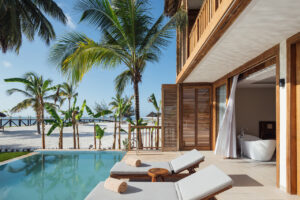
JAZ Elite Aurora – Zanzibar – Room View
The launch comes as luxury travellers increasingly seek deeper connections to the places they visit, valuing atmosphere, authenticity and meaningful experiences alongside service and amenities. JAZ Elite Hotels has been designed to respond to this shift, creating immersive environments that celebrate both destination and culture.
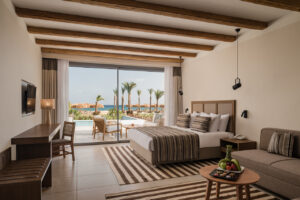
“JAZ Elite Hotels represents a natural evolution of how we see luxury today,” said Alaa Akel, Chairman and CEO of JAZ Hotel Group. “It is not about doing more, but about doing better, refining what already exists and shaping experiences that feel more intentional, more connected and more distinct to each destination.”
Additional properties, including JAZ Elite Cavo in Sokhna and JAZ Elite Nejma in Marsa Alam, are scheduled to join the collection in 2026, further expanding the brand’s vision for contemporary luxury hospitality across the region.
Spanish Landscapes Inspire LOEWE Perfumes’ New Campaign
LOEWE Perfumes is returning to its roots with a new campaign that celebrates the connection between fragrance and nature through some of Spain’s most striking landscapes. Captured by photographer Peter Jordanov and videographer Marc Dimitrov, the campaign showcases the diverse terrain of LOEWE’s home country, using natural environments to reflect the character of the brand’s fragrances.
The imagery forms part of the LOEWE Landscape collection, where each scent is paired with a location that echoes its olfactory identity. Fields of wildflowers, rugged mountains, mineral-rich terrain and dramatic coastal scenery become visual extensions of the fragrances themselves.
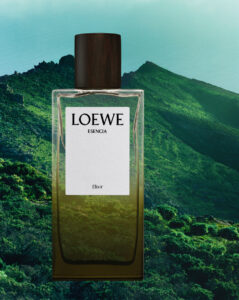
LOEWE Perfumes Esencia Elixir
Leading the campaign is the newly launched LOEWE Aire Sutileza Elixir, a floral and musky fragrance with notes of pear, bergamot and lemon, presented against a blooming landscape of wildflowers. Elsewhere, the woody LOEWE Esencia Elixir is set among lush mountains, while LOEWE Solo Ella Elixir is framed by the warm glow of a Spanish sunset.

LOEWE Perfumes Pistachio Candle
The campaign also extends to LOEWE Home Scents, whose botanically inspired candles are set within the same natural environments. Together, the imagery highlights LOEWE’s enduring fascination with the natural world, transforming Spain’s landscapes into a sensory expression of fragrance, emotion and place.
Rolls-Royce and Cyril Kongo Transform the Black Badge Cullinan into Rolling Works of Art
Rolls-Royce Motor Cars has unveiled one of its most ambitious artistic collaborations to date, presenting five unique Black Badge Cullinan commissions created in partnership with internationally acclaimed artist Cyril Kongo. Developed through the marque’s Private Offices in New York, Seoul and Goodwood, the project sees Kongo’s vibrant visual language integrated throughout the luxury SUV, transforming each vehicle into a one-of-one collector’s piece.
While Rolls-Royce has a long history of collaborating with artists and creatives, this project represents an unprecedented level of collaboration. Kongo was embedded within the company’s Bespoke Collective, working alongside designers, engineers and craftspeople at the Home of Rolls-Royce in Goodwood. Over several months, he was given dedicated studio space within the marque’s facilities, allowing him to hand-paint each component directly.

The result is a series of five motor cars united by a common theme but distinguished by individual artistic interpretations. Inside, Kongo’s signature aesthetic universe, known as the “Kongoverse”, unfolds across the Starlight Headliner, fascia, centre console, picnic tables and rear waterfall section. Inspired by imagination, exploration and individuality, the artworks incorporate references to planets, constellations and quantum physics, creating dreamlike compositions that celebrate limitless creativity.

The most striking feature is the hand-painted Starlight Headliner. Each one features 1,344 individually positioned stars, with Kongo personally determining their placement and colour. A final star stretching the entire length of the ceiling marks a first for Rolls-Royce. Throughout the cabin, vibrant colours contrast against a black foundation, with Phoenix Red, Turchese, Forge Yellow and Mandarin creating distinct zones within the interior.

The exterior adopts a more restrained approach, finished in Blue Crystal Over Black and accented by bespoke gradient coachlines incorporating Kongo’s signature tag motif. Even the brake callipers feature different colours, another first for the marque.

All five Black Badge Cullinan by Cyril Kongo commissions have already been allocated to collectors, underscoring the growing demand for highly personalised luxury objects that blur the boundaries between automotive design and contemporary art.
Miu Miu launches Upcycled 2026
A vintage-inspired collection built around the classic white cotton shirt and khaki chinos.
Miu Miu launches its new Upcycled collection: a conversation between the past and the present, the emotion of history and the immediacy of the new. This emerges in an accompanying campaign, featuring singer, model and actress Suki Waterhouse. Drawing similarly on notions of time passing, here is an homage to Miu Miu’s own archive, upholding a restrained and elegant perspective, with an eye on reimagination and renewal. All serves to reinforce Miu Miu’s connection to vintage clothing and its commitment to breathing life into garments once worn and loved by others.
For 2026, Miu Miu Upcycled begins with the classic white cotton shirt and a pair of khaki cotton canvas chinos. These are two pieces beloved for their perfect fusion of form and function, and of sophistication and ease, both exemplifying the juxtaposition at the heart of the Miu Miu universe.
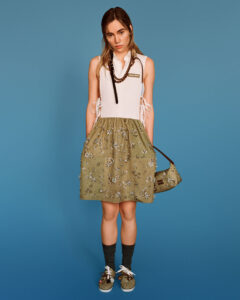
In a studio empty save for a single chair, against a backdrop predominantly confined to signature blue and khaki, the power of gesture, posture and gaze – at times introspective, at others direct – is emphasised. The power of character and the power of clothing interact – they are intimately intertwined.

The garments for the Miu Miu Upcycled collection were sourced in limited numbers from experts in vintage clothing worldwide. Each piece is carefully restored, then refashioned. Silhouette is reinvented: exaggerated, abbreviated, oversized. Trousers become jackets, bustiers and skirts. Shirts are reiterated as dresses and apron tops. Sleeves are slashed, pockets are patched and finished with ribbons and bows. Collars are introduced in signature aged leather, buttons are removed and replaced, and utilitarian surfaces are printed and embroidered with crystal flowers. Accessories are similarly reconsidered: a khaki pouch or backpack, printed, embroidered, and with leather trim; the Plume sneaker in the same material, finished with personalised laces and charms.
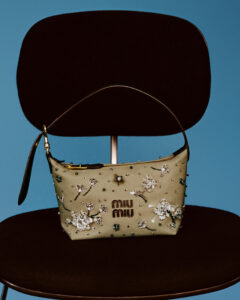
Any marks of ageing celebrated: the lives and experiences of previous owners are profoundly respected. In this way, even such apparently unassuming wardrobe archetypes are infused with meaning. Finished by hand, it is the very nature of Miu Miu Upcycled that no two garments are the same.
Miu Miu Upcycled 2026 was first unveiled in Tokyo at the Miu Miu flagship in Ginza on May 13, 2026, on the occasion of Miu Miu Jazz Club, and is available in selected stores worldwide from May 18, 2026.
Maria Grazia Chiuri Reimagines the Fendi Wardrobe for Cruise
For her first Cruise collection for Fendi, Maria Grazia Chiuri presents a thoughtful exploration of contemporary dressing, one rooted in Italian craftsmanship, material innovation and a modern understanding of how people live today. More than a seasonal collection, the offering is a declaration of intent, outlining Chiuri’s vision for a wardrobe designed to accompany men and women through the realities of modern life.
At the centre of the collection is the idea of versatility. Menswear and womenswear exist in dialogue, with interchangeable pieces designed to move fluidly between traditional categories. Shirts and trousers appear almost as a single garment, while tailored separates can be mixed, reassembled and adapted to suit individual needs. This sense of flexibility reflects Chiuri’s belief that fashion should empower rather than prescribe.
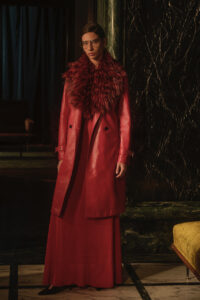
The collection also reaffirms Chiuri’s commitment to Italian craftsmanship and material research. Signature Fendi materials are reinterpreted in unexpected ways, most notably parchment, which appears across both accessories and ready-to-wear. The material is paired with studded black leather in a reimagined Baguette bag, creating a striking contrast between heritage and modernity.

Throughout the collection, familiar wardrobe staples are transformed through innovative construction and texture. Trench coats are detailed with fur stripes and metal studs, while shiny leather is juxtaposed with matte fabrics to create depth and visual tension. Georgette dresses gain a new dimension through structured leather elements, while silver lace and sequin embroidery introduce moments of luminosity.
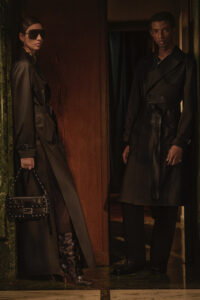
Chiuri describes the collection through the lens of an inclusive modern bourgeoisie, one that embraces different generations, identities and ways of living. This spirit is perhaps best captured by the recurring Tree of Life motif, a symbol of coexistence, humanity and connection.
With her debut Cruise collection, Chiuri proposes a wardrobe that is elegant yet adaptable, refined yet practical.
Louis Vuitton reveals its 2027 Cruse Collection in New York
For Cruise 2027, Louis Vuitton also turned its attention to New York, with Nicolas Ghesquière exploring the cultural dialogue between Paris and the city through a collection titled Metropolitan Life. Presented at the historic Frick Collection in Manhattan, the show unfolded as a study of duality, examining the intersections between old-world refinement and contemporary urban energy, French savoir faire and the layered realities of American style.
Ghesquière has long been fascinated by movement, travel and the emotional possibilities of clothing, and here those ideas were channelled through the identity of New York itself. The collection approached the city as a place of contradiction and coexistence, where uptown and downtown, glamour and utility, heritage and subculture continuously collide.
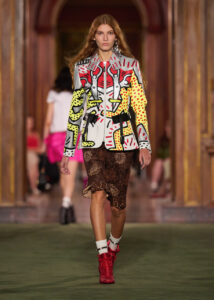
One of the collection’s strongest elements was its integration of pop culture and art. Inspired by the discovery of a 1930s Louis Vuitton suitcase reworked by Keith Haring, the collection incorporated Haring’s instantly recognisable visual language across garments and accessories. Rather than feeling decorative, these references reinforced the show’s broader exploration of New York as both a cultural symbol and a lived experience. Graffiti-inspired embroidery, vivid colour and graphic detailing brought energy to the collection, balancing the more polished and historical elements of the setting.
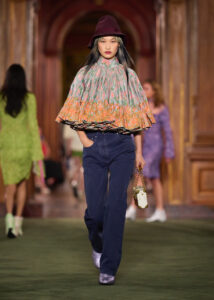
The silhouettes reflected this layered perspective. Tailoring remained sharp yet fluid, moving between elongated coats, structured jackets and softened eveningwear. Elsewhere, jersey, leather and denim referenced the foundations of American dressing, though elevated through intricate construction and embellishment.
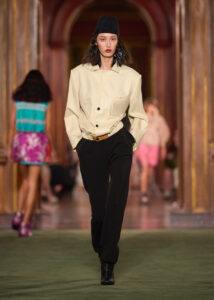
The Frick Collection itself became an important part of the narrative. Surrounded by European decorative arts viewed from an American perspective, Ghesquière positioned the collection within a broader conversation about cultural exchange and reinterpretation. This dialogue could be seen throughout the clothes, where references to the grandeur of the Gilded Age appeared alongside automotive details, slot machine motifs and fragments of street culture. Different eras and identities seemed to coexist simultaneously within the collection, much like the city that inspired it.

Accessories continued this sense of storytelling. Structured trunks, embellished leather goods and sharply detailed footwear grounded the collection within Louis Vuitton’s travel heritage while extending its metropolitan mood. The styling retained movement and energy throughout, giving the impression of characters navigating the city across different moments in time.
Burberry Celebrates Football Culture in New Autumn 2026 Campaign
Burberry is turning its attention to one of Britain’s most enduring cultural passions for Autumn 2026, unveiling A Good Sport, a campaign that captures the energy, rituals and community spirit surrounding football match day.
Shot from the perspective of the fans rather than the players, the campaign celebrates the unique atmosphere of football culture, from the anticipation before kick-off to the camaraderie found in the stands. Set to Bloc Party’s iconic track Banquet, the campaign brings together a cast spanning film, television, sport and fashion, reflecting football’s ability to unite people across generations and backgrounds.

Among the familiar faces featured are Jason Sudeikis, Romeo Beckham, Jodie Turner-Smith, Stephen Graham, Rosie Huntington-Whiteley, Neelam Gill and Son Heung-min, alongside football stars Declan Rice, Leah Williamson, Eberechi Eze and Naomi Girma. Each contributes to a series of scenes that capture the everyday moments that define football fandom, whether gathering before a match, cheering from the sidelines or supporting local grassroots teams.
For Chief Creative Officer Daniel Lee, the campaign reflects a long-standing connection between the brand and the sport. “Burberry has connected football fans across generations for decades,” he says. “It’s only right that we celebrate that this summer.”

The collection itself builds on Burberry’s heritage as a brand rooted in the outdoors. Founder Thomas Burberry originally designed clothing to protect against the elements, and that functional spirit continues throughout the Autumn 2026 offering. Signature trench coats, parkas and Harrington jackets are reimagined through lighter constructions and contemporary silhouettes, balancing practicality with refinement.
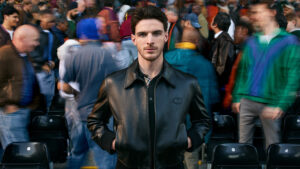
Highlights include the new Swarby trench jacket in lightweight tropical gabardine and the Tillydrine trench coat in fluid silk with a ruched, flared hem. Elsewhere, Burberry Check appears across football-inspired staples including polo shirts, button-down shirts, cashmere scarves and outerwear trims.
Accessories also play a key role, with the debut of the curved Primrose bag and the introduction of the new Knight Runner sneaker.
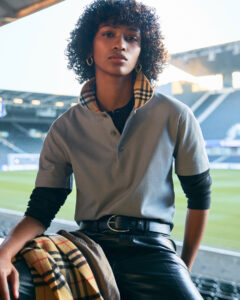
Through A Good Sport, Burberry celebrates not only football itself but the culture, identity and sense of belonging that surrounds it, reinforcing the brand’s position at the intersection of British heritage, fashion and contemporary life.
Ounass Launches Ounass Stage with Aimé Leon Dore in Dubai
Ounass has unveiled Ounass Stage, a new retail and cultural platform designed to bring some of the world’s most influential brands and creative concepts to the region through immersive experiences. For its inaugural activation, the luxury e-commerce platform has partnered with New York fashion and lifestyle label Aimé Leon Dore, marking the brand’s first-ever presence in the Middle East.
For its first act, Ounass Stage introduces a multi-month takeover that transports visitors into the world of New York brand Aimé Leon Dore. Known for its distinctive blend of New York culture, contemporary craftsmanship and elevated casualwear, the brand has built a global following through its carefully curated aesthetic and storytelling-led approach to retail. The Dubai concept aims to capture the same spirit, creating an experience that goes beyond shopping and immerses visitors in the brand’s visual identity and lifestyle universe.
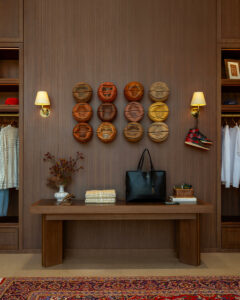
The launch marks a new chapter for Ounass as it expands its role beyond digital retail to include physical experiences that connect customers with leading international brands. Through Ounass Stage, the company intends to create a platform where fashion, culture and community intersect, offering visitors exclusive opportunities to engage with brands in new and meaningful ways.
At the centre of the activation is a dedicated Aimé Leon Dore retail concept featuring a curated selection of the brand’s collections. Designed to reflect the atmosphere and aesthetic of its New York roots, the space introduces regional audiences to the label’s unique approach to fashion, craftsmanship and cultural storytelling.
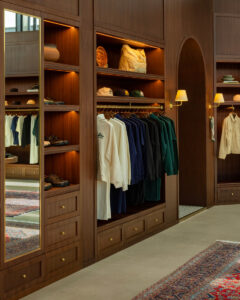
Adding another dimension to the experience is Café Leon Dore, the brand’s signature café concept. A staple of the Aimé Leon Dore universe, the café has become synonymous with the brand’s lifestyle-driven approach, blending fashion, hospitality, and community in a way that resonates with customers worldwide. Its arrival in Dubai offers visitors the opportunity to experience a key part of the brand’s identity for the first time in the region.
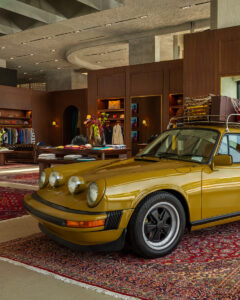
As the first of what is expected to be a series of rotating concepts, the launch of Ounass Stage signals an ambitious new direction for Ounass, one that places immersive brand experiences at the heart of its evolving offering.
Hermès Expands its Plein Air line with Its First Skincare Foundation
Hermès Beauty has introduced a new chapter in its Plein Air collection with the launch of the Maison’s first skincare foundation, a product designed to enhance rather than conceal, reflecting the brand’s philosophy of effortless and natural beauty.
Imagined by Gregoris Pyrpylis, Creative Director of Hermès Beauty, the foundation has been conceived as an invisible base for the face, offering what he describes as the freedom for every personality to express itself. The lightweight formula delivers a second-skin effect, creating a luminous matte finish that evens and blurs the complexion while preserving its natural character.

Developed as a skincare-first product, the formula contains 82 per cent skincare ingredients and is designed to deliver both immediate and long-lasting benefits. The foundation joins a new complexion ritual that also includes a perfecting primer, with both products working together to boost radiance and create a fresh, healthy-looking glow.
The launch further expands the Plein Air vision of beauty, one centred on natural sophistication and everyday ease. “This new collection for the complexion is essential,” says Pyrpylis. “It is a simple offering designed to be used every day, daytime and evening.”

Available in 34 shades, the foundation has been carefully developed to suit a broad spectrum of skin tones. The shades are organised across five intensity levels, ranging from light to deep, with cool, neutral and warm undertones to ensure a precise and seamless match.
As with all Hermès Beauty creations, design plays a central role. Created by Pierre Hardy, the bottle combines glass and metal in a graphic composition that reflects the house’s refined aesthetic. The launch is accompanied by a collection of complexion tools, including the Le Perfecteur brush and a palette-and-applicator duo, designed to combine practicality with craftsmanship.
Art Dubai’s Anniversary Edition Draws Its Biggest Crowds Yet
Art Dubai’s 20th anniversary special edition has concluded with record-breaking attendance, drawing more than 25,000 visitors across its four-day programme and reinforcing the fair’s position as one of the region’s leading cultural events.
Held at Madinat Jumeirah this May, the milestone edition brought together galleries, artists, collectors and institutions from around the world, while placing a strong spotlight on the UAE’s rapidly evolving creative landscape. Organisers confirmed that public attendance on the fair’s opening days reached its highest level in the event’s history, reflecting growing regional and international interest in the Gulf’s art scene.
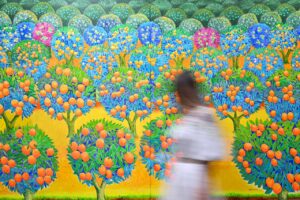
This year’s edition featured more than 120 galleries representing 65 cities across over 40 countries, alongside an expanded programme of talks, installations, performances and digital commissions. According to Art Dubai, attendance included international museum groups, collectors, patrons, and corporate leaders, further underscoring Dubai’s growing influence in the global cultural sector.
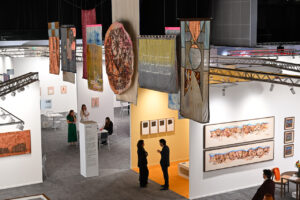
The 2026 edition also saw strong engagement with large-scale public programming, including collaborative exhibitions and live performances presented with regional and international partners. Among the highlights were projects developed alongside Dubai Culture, the Alserkal Arts Foundation and the Diriyah Art Futures initiative. More than 200 local creatives also participated in the fair’s wider programming, reflecting Art Dubai’s continued emphasis on nurturing homegrown talent and creative exchange within the UAE.
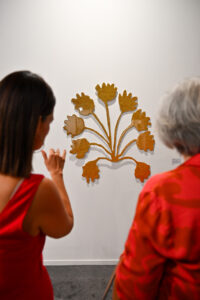
Alongside celebrating two decades of the fair, organisers also used this year’s edition to announce several major future cultural developments for Dubai and the UAE. Among the most significant was confirmation that the new Dubai Museum of Digital Art is expected to open in 2029, marking another step in the emirate’s growing investment in immersive and technology-led creative experiences.
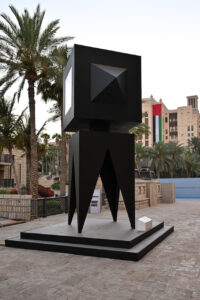
Art Dubai also revealed plans for a new public sculpture commission to be developed by architecture studio Hollding in partnership with A.R.M. Holding. Elsewhere, Tomas Dauksa unveiled a large-scale AI and sound installation titled Children’s Programme, which is scheduled to open in September 2026.
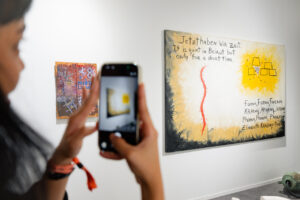
Speaking after the event, Art Dubai said the anniversary edition reflected the fair’s evolution from a regional initiative into an internationally recognised platform for contemporary art and cultural dialogue. Organisers noted that this year’s record attendance and expanded programme highlighted the UAE’s growing role as a global centre for creativity, innovation and cultural exchange.
Vision BMW ALPINA Signals a New Era of Refined Performance
The Vision BMW ALPINA marks the beginning of a significant new era for one of Germany’s most quietly revered automotive names. Revealed at the 2026 Concorso d’Eleganza Villa d’Este, the one-of-one design study signals BMW Group’s future direction for ALPINA following the marque’s transition into an official brand within the BMW portfolio earlier this year. Rather than chasing overt aggression or hypercar theatrics, the concept instead refines the qualities that have long defined ALPINA: speed, comfort and understated sophistication.
At over five metres long, the Vision BMW ALPINA carries an unmistakable grand touring presence. Its sweeping coupé silhouette, low stance and elongated proportions nod subtly to historic ALPINA models, particularly the B7 Coupé of the late 1970s, while introducing a more sculptural and contemporary design language. A reinterpreted shark nose grille illuminated crystal detailing, and signature deco lines reference the brand’s heritage without feeling nostalgic. Instead, the car is designed around what BMW calls a “Second Read” philosophy, in which details reveal themselves gradually rather than demanding immediate attention.

This sense of restraint runs throughout the exterior. Warm white daytime running lights inspired by the first light over the Bavarian Alps trace the kidney surrounds, while carefully sculpted inward-facing metallic surfaces reward closer inspection. Even the iconic ALPINA deco lines, a signature of the brand since the 1970s, have been subtly modernised beneath the clear coat rather than applied as overt graphic statements. Large 22-inch front and 23-inch rear wheels further reinforce the balance between elegance and capability.

Inside, the concept continues this restrained approach to luxury. Architectural forms, full-grain leather sourced from the Alpine region and watch-inspired finishing techniques create an atmosphere that feels more like a private lounge than a performance cockpit. Even the smallest details, from crystal driving controls to self-deploying ALPINA engraved glassware hidden within the rear console, reinforce the idea of discreet craftsmanship over spectacle. BMW’s Panoramic iDrive system has also been reworked specifically for ALPINA, introducing heritage blue and green tones that intensify as the driver moves between driving modes.

Yet despite its refinement, performance remains central to the car’s identity. Powered by a V8 tuned to deliver ALPINA’s signature deep exhaust note, the Vision BMW ALPINA continues the philosophy established by founder Burkard Bovensiepen in the 1960s: that comfort and speed are not opposing ideas, but complementary ones. That belief remains embedded throughout the concept, including the retention of ALPINA’s Comfort+ driving mode, which prioritises composure and long-distance usability alongside performance.

The Vision BMW ALPINA acts as a statement of intent. In an automotive landscape increasingly dominated by extremes, it proposes a rarer form of luxury built on restraint, confidence and the art of travelling quickly without sacrificing comfort.
Prioritise you, Dr. Smita DSilva Ayurvedic Doctor at RAKxa itegrative wellness and medical retreat, offers an Ayurvedic to better sleep
From an Ayurvedic perspective, what are the most common reasons people today struggle with sleep and maintaining a sense of calm?
From an Ayurvedic perspective, the difficulty many people experience today with sleep and maintaining a sense of calm can be traced back to imbalances in the three doshas – Vata, Pitta, and Kapha – largely influenced by modern lifestyle habits.
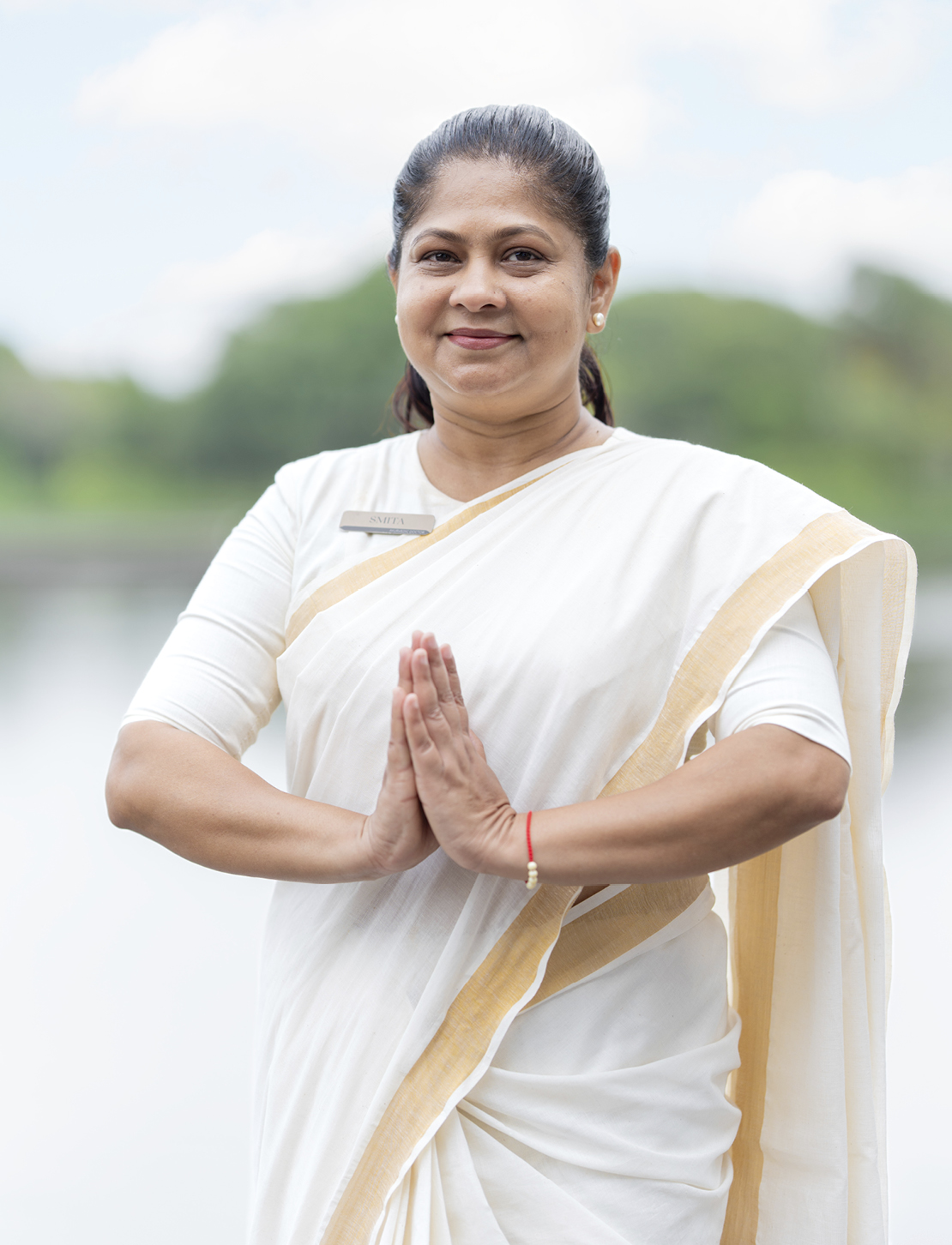
Vata, which governs movement, the nervous system, and mental activity, is the most disturbed dosha in relation to sleep issues. When Vata is out of balance, the mind becomes restless and overactive. This is often triggered by irregular daily routines, excessive screen time, frequent travelling, and constant mental stimulation, such as anxiety, overthinking, and information overload. As a result, individuals may experience racing thoughts at night and light, interrupted sleep, making it difficult to fully rest.
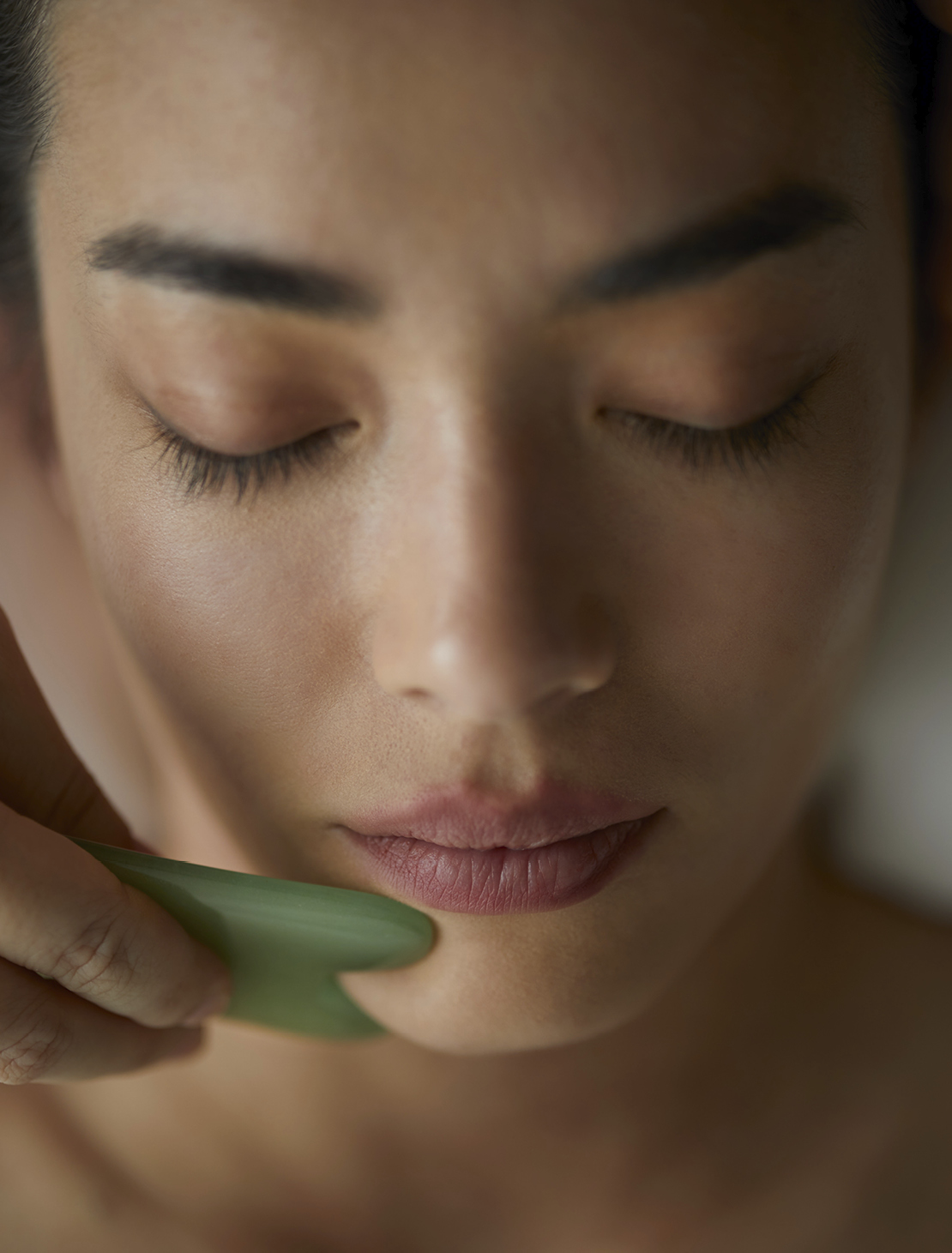
Pitta, which controls metabolism, focus, and intensity, can also contribute to sleep disturbances when elevated. An aggravated Pitta creates excess heat in both the body and mind, leading to heightened mental activity. Modern factors such as high caffeine intake, consumption of spicy foods, and ongoing productivity pressure can increase Pitta. This often results in difficulty falling asleep due to an overactive mind, along with symptoms such as irritability, frustration, night sweats, and a general feeling of overheating.
Kapha, on the other hand, is responsible for stability and calmness. When balanced, it promotes a grounded and steady state of mind. However, when imbalanced, Kapha can become stagnant. This is commonly caused by emotional suppression or attachment, lack of stimulation or purpose, and overeating, especially heavy or late meals. Rather than causing difficulty falling asleep, a Kapha imbalance tends to affect overall daytime energy. Individuals may feel dull, heavy, and unmotivated, and may sleep excessively while still feeling tired, often accompanied by emotional lethargy or low mood.
Overall, Ayurveda suggests that modern lifestyles, characterized by irregular routines, overstimulation, stress, and poor dietary habits, disrupt the natural balance of the doshas. This imbalance manifests as restlessness and poor sleep (Vata), mental overactivity and heat (Pitta), or heaviness and low energy (Kapha), ultimately making it difficult to achieve both restful sleep and sustained calm.
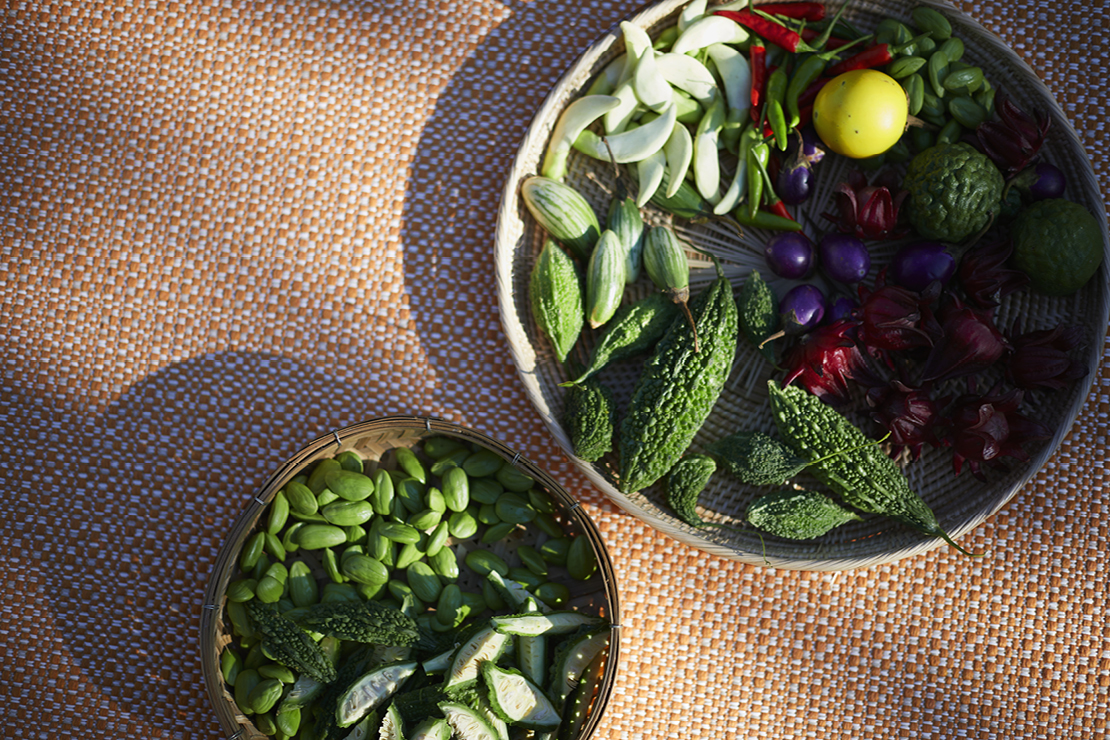
What simple evening rituals can people introduce at home to help prepare the body and mind for restful sleep?
Follow these steps for an easy Ayurveda night routine
- Wind down after sunset: Dim lights, reduce screens, avoid stimulating activity.
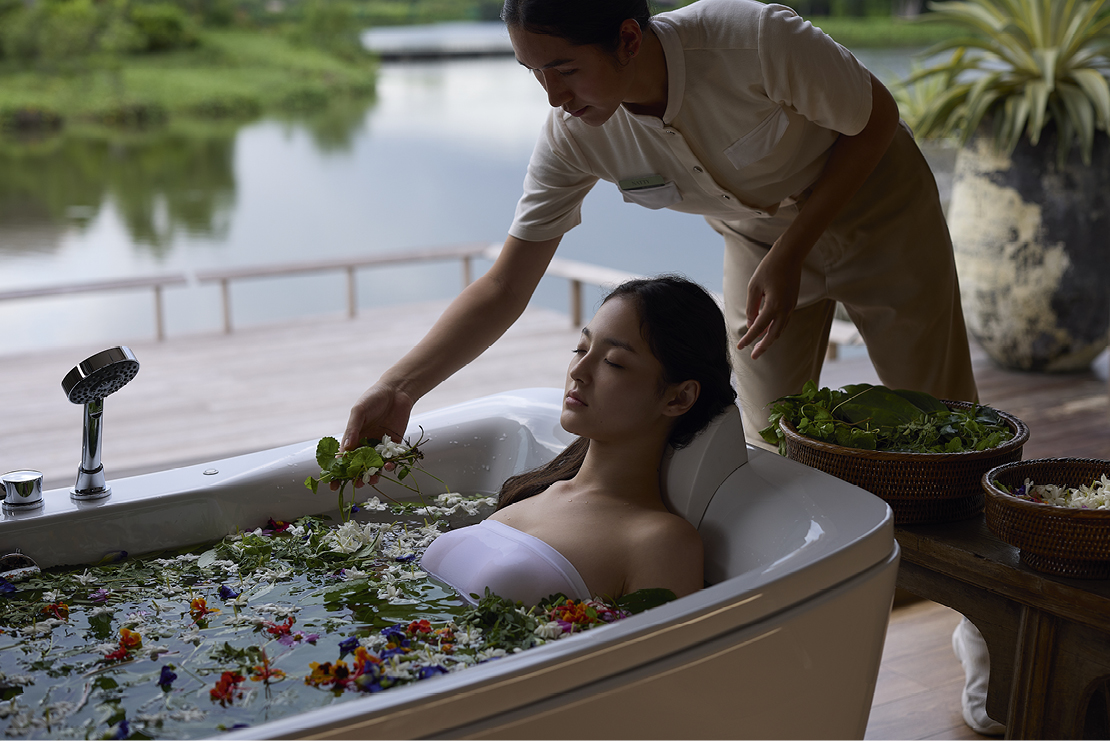
- Warm bath or foot soak: 10–15 minutes to relax the body and calm the nervous system.
- Oil massage (Abhyanga): Apply warm oil (sesame or coconut) to feet, hands, or scalp.
- Calming drink: Warm milk with turmeric/nutmeg or herbal tea (like chamomile).
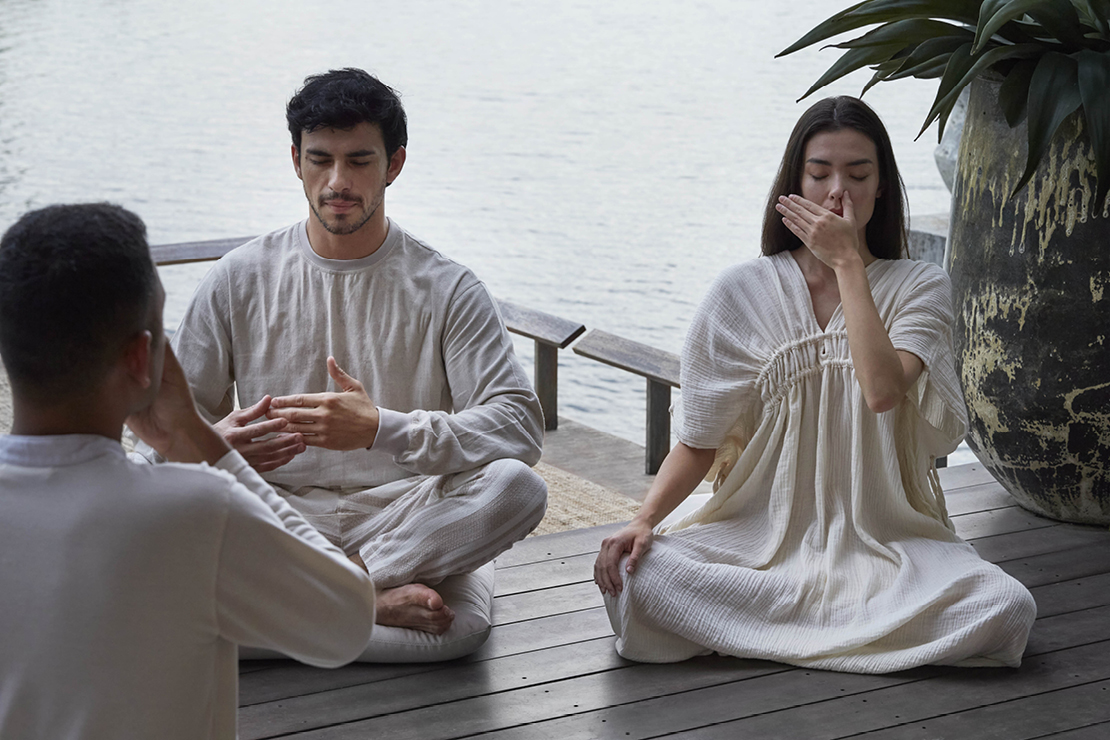
- Breathing or meditation (5–10 min): Try deep breathing or alternate nostril breathing.
- Clear your mind: Write down thoughts or practice gratitude journaling.
- Sleep on time. Aim for a consistent bedtime (around 10–10:30PM).
- Optimise your space: Cool, dark, quiet room; avoid screens before bed.
Are there specific breathing techniques or pranayama exercises that can help calm the nervous system and reduce stress before bedtime?
- Nadi Shodhana (Alternate Nostril)
Balances the mind and calms the nervous system - 4-7-8 Breathing
Slows heart rate and helps you fall asleep faster - Extended Exhale
Inhale 4, exhale 6–8 → promotes deep relaxation - Bhramari (Humming Breath)
Reduces mental noise and stress - Chandrabhedana (Left Nostril Breathing)
Inhale left, exhale right → cooling, calming, sleep-inducing
Quick tip: Practice 5–10 minutes, slow and gentle breathing.
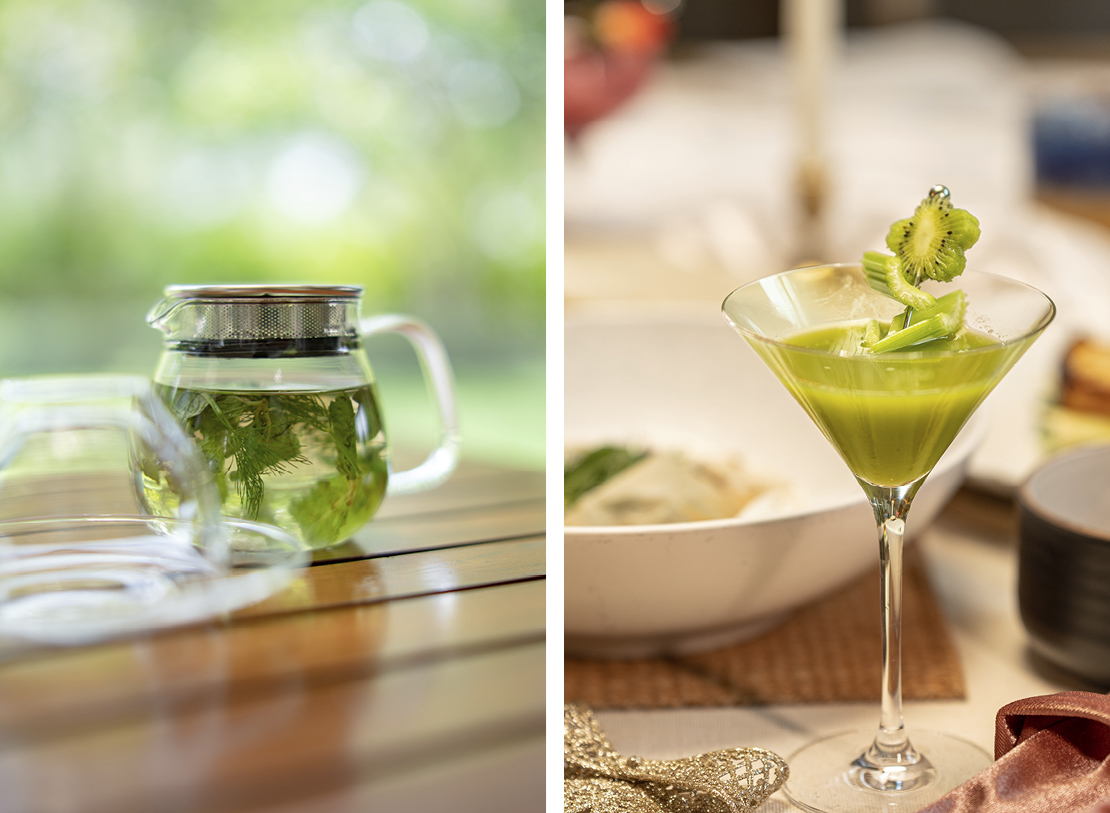
Many people experience racing thoughts at night. What mindfulness or Ayurvedic practices can help quiet the mind and encourage deeper rest?
- “Mind Dump” Journaling: Write down worries or next-day tasks to clear mental clutter
- Gentle Breathing (Pranayama): Try Nadi Shodhana or extended exhale to slow the mind
- Body Scan Relaxation: Bring attention slowly from head to toe, releasing tension
- Abhyanga (Oil Massage): Warm oil on feet/scalp grounds the nervous system (great for overthinking)
- Digital Sunset: Avoid screens 30–60 minutes before bed to reduce mental stimulation
- Mantra or Gratitude Practice: Repeat a calming word or list a few things you’re grateful for
- Herbal Support: Warm milk or calming teas (like chamomile or ashwagandha)
Simple reset:
Write it out + 5 minutes slow breathing + no screens → calmer mind, better sleep.
How does an Ayurverdic diet influence sleep and emotional wellbeing, and are there particular foods, drinks or herbs that can naturally support relaxation?
Ayurveda sees digestion (Agni) as key to both sleep quality and mental calm. Poor digestion leads to restlessness, heavy sleep, or waking at night. Eating balanced, light evening meals can result in deeper, more restorative sleep.
Evening Eating Guidelines
- Eat light, warm, and easy-to-digest dinners.
- Finish meals 2–3 hours before bed.
- Avoid heavy, fried, spicy, or late-night eating.
Foods & Drinks That Support Sleep
- Warm Milk with spices such as turmeric, nutmeg, or cardamom is nourishing and calming for the nervous system.
- Herbal Teas such as Chamomile, Ashwagandha, and Tulsi reduce stress and promote relaxation.
- Grounding Foods such as rice, oats, soups, stews and cooked vegetables help stabilise mood and reduce anxiety (especially for Vata types).
- Natural Sleep Spices such as nutmeg, saffron and cinnamon are a mild sedative with calming effects.
Helpful Ayurvedic Herbs
- Ashwagandha reduces stress and supports deep sleep.
- Brahmi calms the mind and improves mental clarity.
- Jatamansi promotes relaxation and sleep.
What to Limit at Night
- Caffeine (coffee, strong tea).
- Sugar and heavy desserts.
- Alcohol (disrupts sleep quality).
Simple Night Routine
Light dinner + warm herbal drink + consistent timing → better sleep and emotional balance.
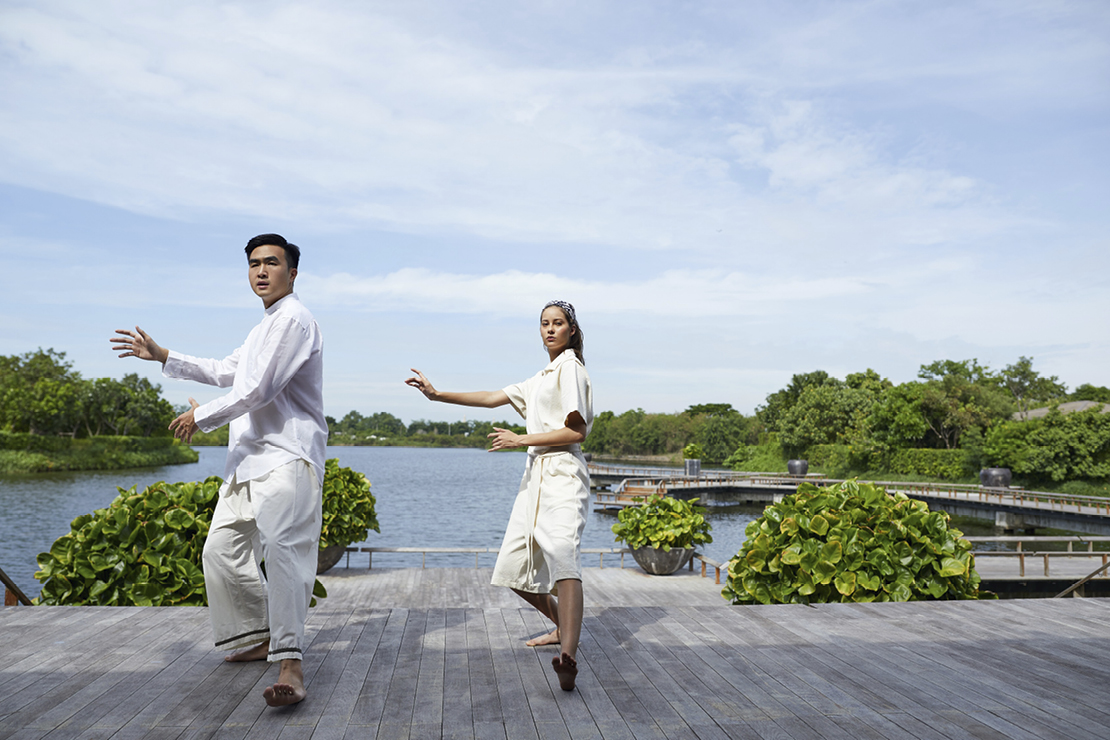
What daily wellness habits can help maintain calm and balance throughout the day, particularly during stressful or uncertain periods?
- Wake up early (around sunrise).
- Tongue scraping and hydration first thing.
- Gentle movement (yoga or stretching).
- Meditation or breathwork daily.
- Main meal at midday (strongest digestion).
- Light dinner before sunset (or at least 2–3 hours before bed).
- Sleep before 10–11 PM for nervous system recovery.
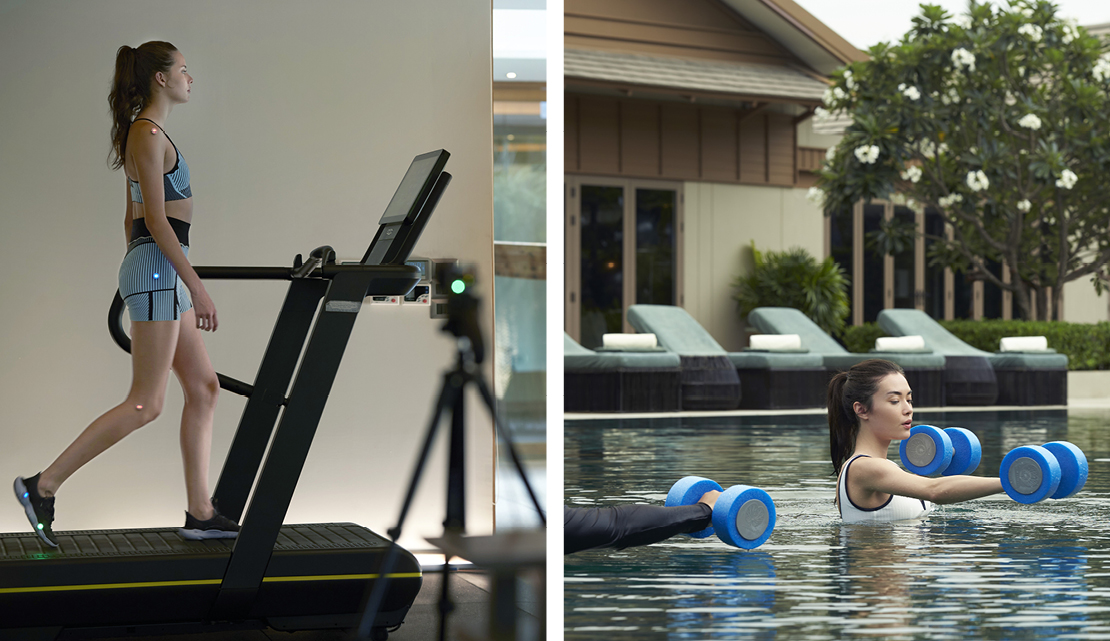
For those experiencing fatigue or low energy, what practical techniques can help restore balance and support overall wellbeing?
For individuals experiencing fatigue or low energy, simple daily practices can help restore balance and support overall wellbeing. The following techniques are effective and easy to incorporate into daily life:
- Maintain a consistent sleep routine: Going to bed and waking up at the same time each day helps regulate the body’s internal clock and improves energy levels.
- Eat balanced, nourishing meals: Consuming whole foods, including fruits, vegetables, whole grains, and proteins, supports sustained energy and overall health.
- Stay hydrated: Drinking enough water throughout the day helps prevent dehydration, a common cause of fatigue.
- Engage in light physical activity: Walking, stretching, or yoga can boost circulation and naturally increase energy.
- Practice stress management techniques: Deep breathing, meditation, or mindfulness can reduce mental fatigue and restore emotional balance.
- Spend time in natural light or outdoors: Exposure to sunlight helps regulate circadian rhythms and improves mood and alertness.


For someone with a busy lifestyle, what are three simple changes they can start today to support better sleep, calm and overall wellness?
- Journaling: Writing down thoughts, worries, or a short gratitude list before bed helps clear mental clutter and reduce overthinking, making it easier to relax and fall asleep.
- Using calming herbal support (e.g., ashwagandha Brahmi, Tulsi):
Herbs such as ashwagandha can help reduce stress, support the nervous system, and promote better sleep when used appropriately. - Creating a wind-down routine without screen time:
Avoiding screens before bed and engaging in calming activities like reading, gentle stretching, or deep breathing helps signal the body to relax and prepare for restful sleep.
Scene Setter, Mehdi Abdelhedi, founder of Siena restaurant discusses reinterpreting the iconic concept to Dubai
Siena’s arrival in Dubai marks a considered expansion of a concept that has already defined a certain kind of dining in Paris. Founded by Mehdi Abdelhedi, the restaurant was conceived not simply as a place to eat, but as a space where cuisine, design and atmosphere come together to create a distinct rhythm from day to night. Now, with its new home in DIFC’s Gate Village, Siena enters a city that shares a similar appetite for experience-led hospitality.
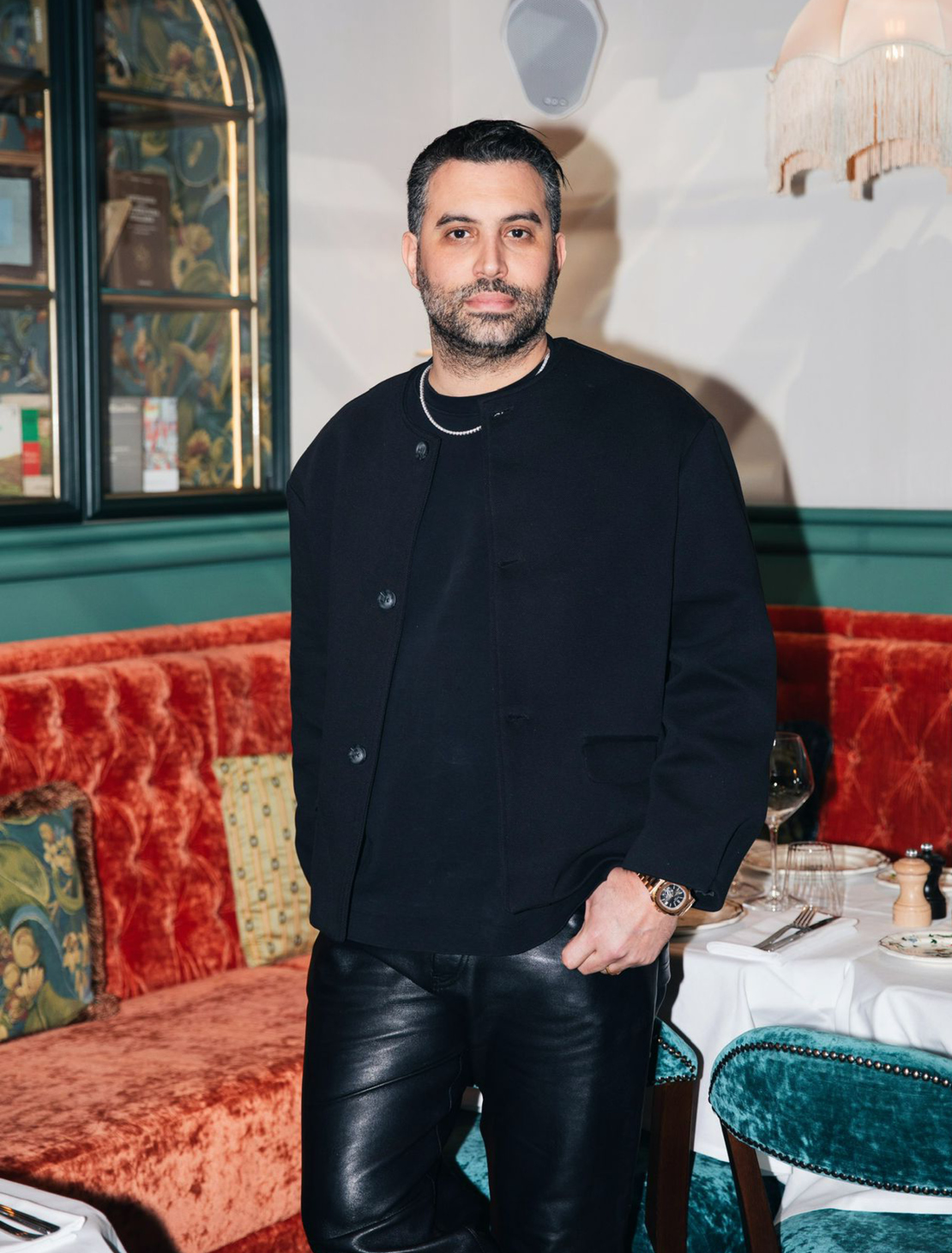
Developed in partnership with Rizwan Kassim, CEO of Paris Society, the Dubai opening reflects a strategic move into one of the world’s most competitive dining markets. Rather than replicate the original, the concept has been carefully adapted, maintaining its core identity while responding to the energy and expectations of a new audience.
At its core, Siena is built on a clear philosophy: that atmosphere defines everything.
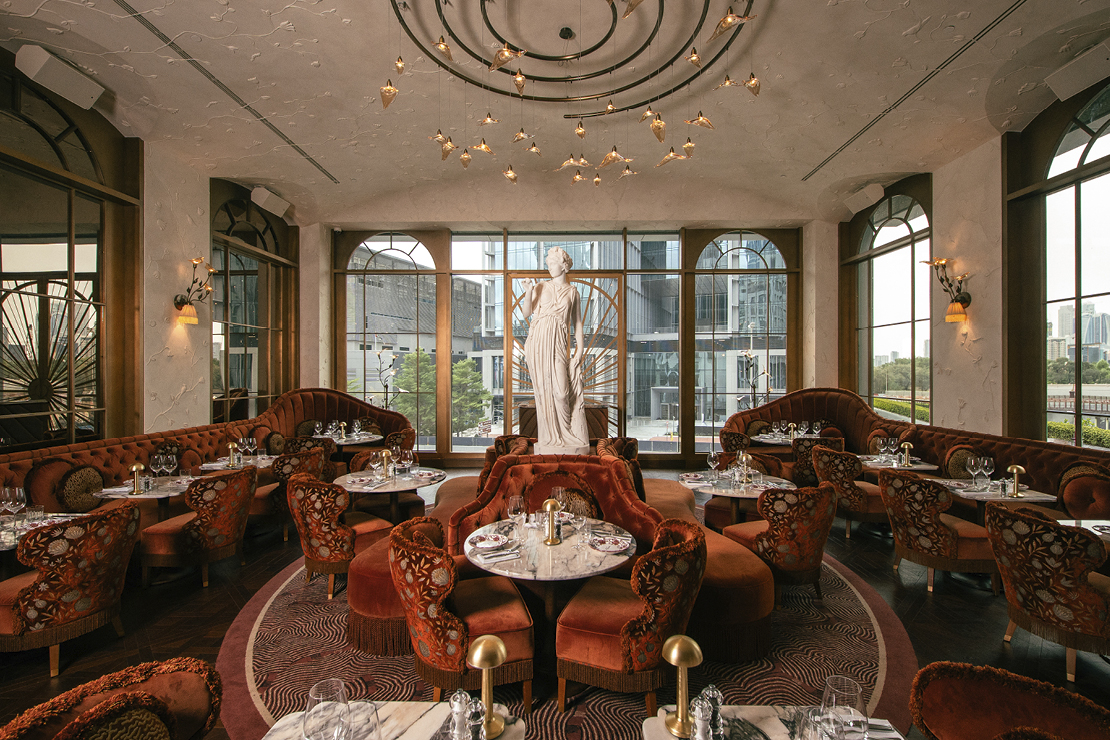
From its terracotta-toned interiors to its emphasis on generous, ingredient-led Italian cuisine, each element is designed to create a space that feels both refined and social. In Dubai, this translates into a venue that evolves throughout the evening, shifting from a more understated setting into a lively, immersive environment.
As the region’s hospitality landscape continues to mature, Siena arrives at a moment where identity and authenticity are becoming increasingly important. Abdelhedi’s approach reflects a broader shift towards concepts that are grounded in narrative, intentionally designed and built to resonate over time.
Here, he reflects on bringing Siena to Dubai, preserving its essence across markets, and the role of atmosphere in shaping modern dining.
You built Siena into one of Paris’s most fashionable dining destinations. What made you feel the time was right to bring Siena to Dubai?
I’ve been thinking about opening a restaurant in Dubai for a long time. I’ve always felt a strong connection to the city and its energy. Dubai is one of the few places today where different cultures and ways of living come together so naturally. For Siena, which was always imagined as a lifestyle rather than just a restaurant, it felt like the right continuation. In Paris, Siena became a place people return to for the overall experience, not only for dining. I see a similar openness in Dubai, but with its own rhythm. It gives a concept the space to evolve and become part of the city in a very organic way.
Siena in Paris is known for combining refined Italian cuisine with a vibrant social atmosphere. How will the Dubai location translate this identity while adapting to the local market?
Siena is built as a lieu de vie, where everything works together, cuisine, design, music, and atmosphere. The idea is always to create a journey that evolves from day to night.
In Dubai, we stayed very close to that. The experience begins in a more relaxed, elegant way, and then the energy builds naturally. Music becomes more present, the atmosphere shifts, and the space becomes more vibrant. This evolution is essential to Siena.
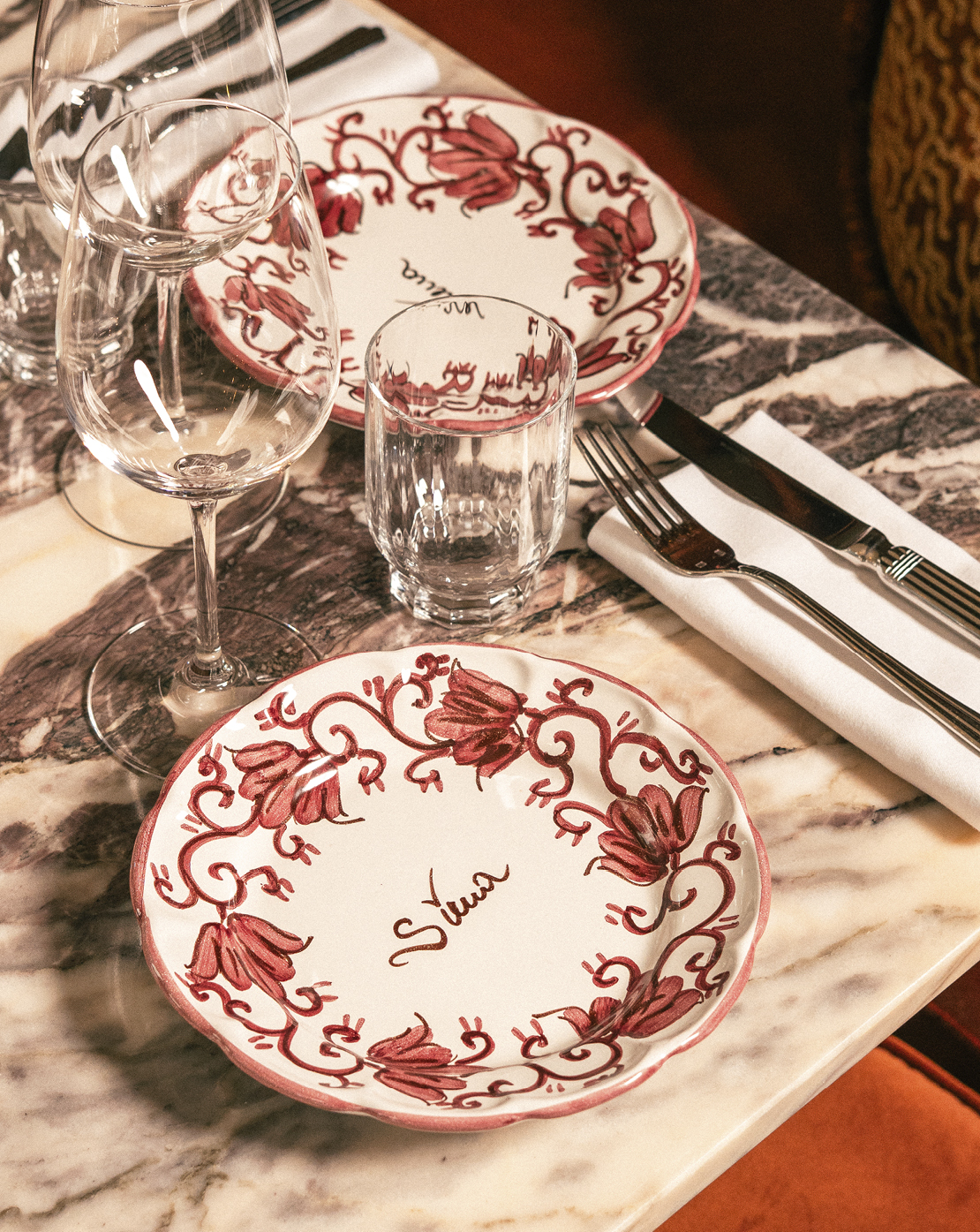
What elements of Siena’s DNA were most important for you to preserve when expanding into the Middle East?
When expanding Siena into the Middle East, we preserved its essence: generous cuisine driven by exceptional ingredients, a distinctive design language with terracotta tones and Paris-inspired bas-relief details, and a focus on creating an atmosphere that feels both refined and alive. The foundation of Siena is something very personal but also rooted in a broader culture of hospitality. It’s about generosity, warmth, and attention to detail, always expressed in a way that feels natural.
From the beginning, Siena was conceived as a lifestyle inspired by la dolce vita, where cuisine, design, and atmosphere come together to create emotion and connection. There are very clear codes in the way guests are welcomed, in the flow of the room, and in the importance of music, scenography, and detail. These are not things you change. You can reinterpret them, but the essence must remain.
You’ve built restaurants that feel like cultural and social destinations rather than just dining venues. How important is atmosphere in today’s hospitality landscape?
Atmosphere is what defines everything. Today, people are looking for places that create a real moment. At Siena, it’s about how the space feels, how the energy evolves, how people interact. When all these elements come together, it becomes more than a restaurant; it becomes a social destination.
Dubai diners are highly well-travelled and exposed to global concepts. How do you create something that still feels fresh and distinctive?
By being very clear in what you are. Siena has its own identity, its own codes. It’s a design-led destination, with a strong focus on atmosphere, detail, and experience. In a city like Dubai, people recognise immediately when something is authentic. It’s not about following trends; it’s about executing a vision with consistency.
Before Siena, you gained recognition with César and collaborated on Zeffirino Paris. How did these experiences shape your approach to launching Siena in a new market?
Each project taught me something different. With César, it was about creating energy and understanding how a place becomes part of a scene. With Zeffirino, it was about heritage and respecting a strong identity. Siena brings these elements together. It has that sense of legacy, but also a very strong focus on how people experience the space today.
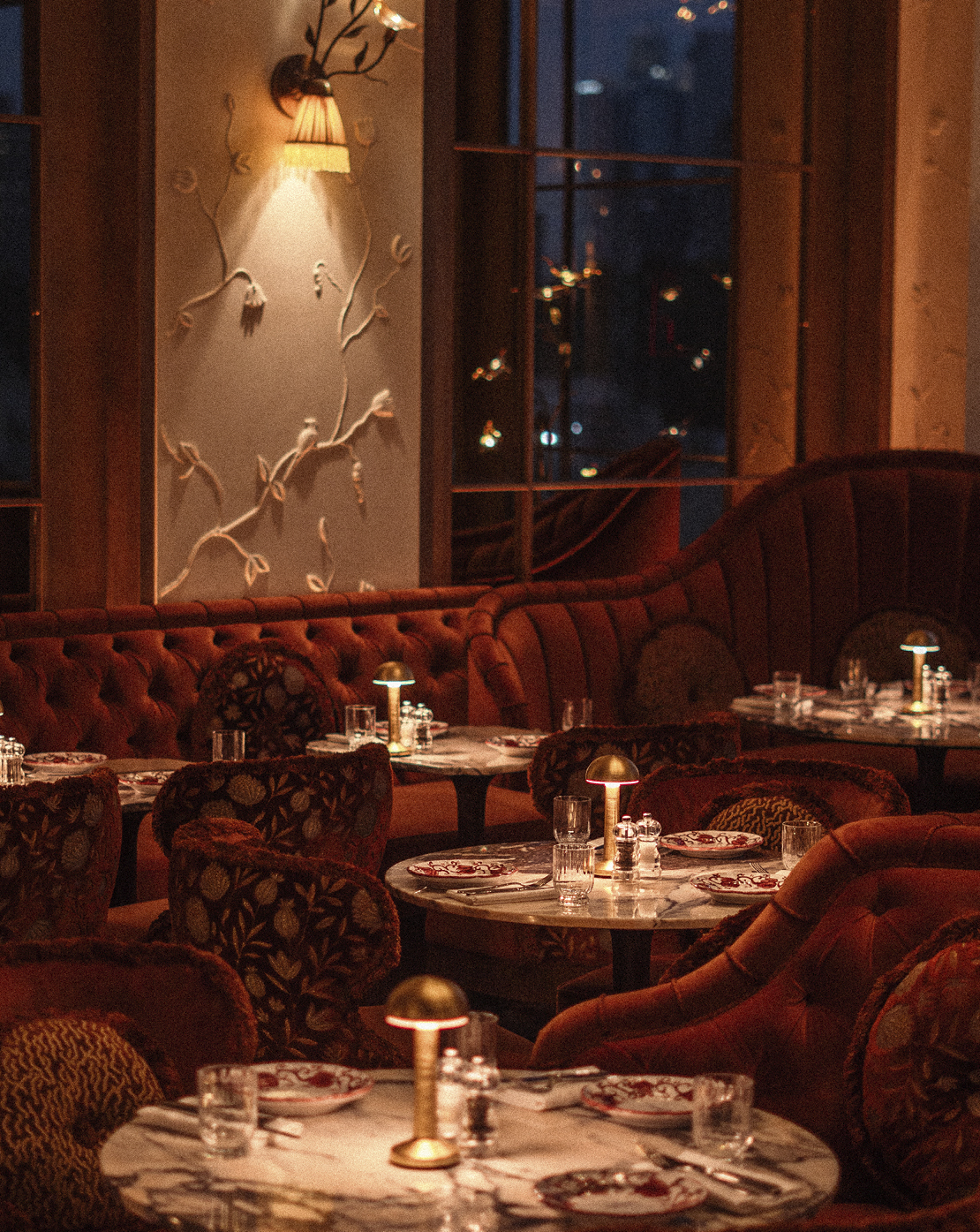
How do you see the Middle East hospitality landscape evolving over the next few years?
I think we will see more concepts that are built around identity and experience. The region already has a very high level, but people are becoming more attentive to detail, to quality, to how a place makes them feel. That naturally leads to more meaningful concepts.
With so many new restaurant openings, what do you believe makes a concept stand the test of time in Dubai?
Consistency and the ability to create a connection. Siena was always designed as a place where people come to share, to celebrate, to feel part of something. If a concept becomes part of people’s lives in that way, it naturally lasts.
What role does design play in creating a memorable restaurant experience?
Design is fundamental. It’s what creates the first emotion. At Siena, the space is conceived almost like a scenography, inspired by an Italian palazzo, where every detail contributes to the atmosphere. It’s not only about aesthetics, but also about how the space evolves, how it supports the energy from day to night.
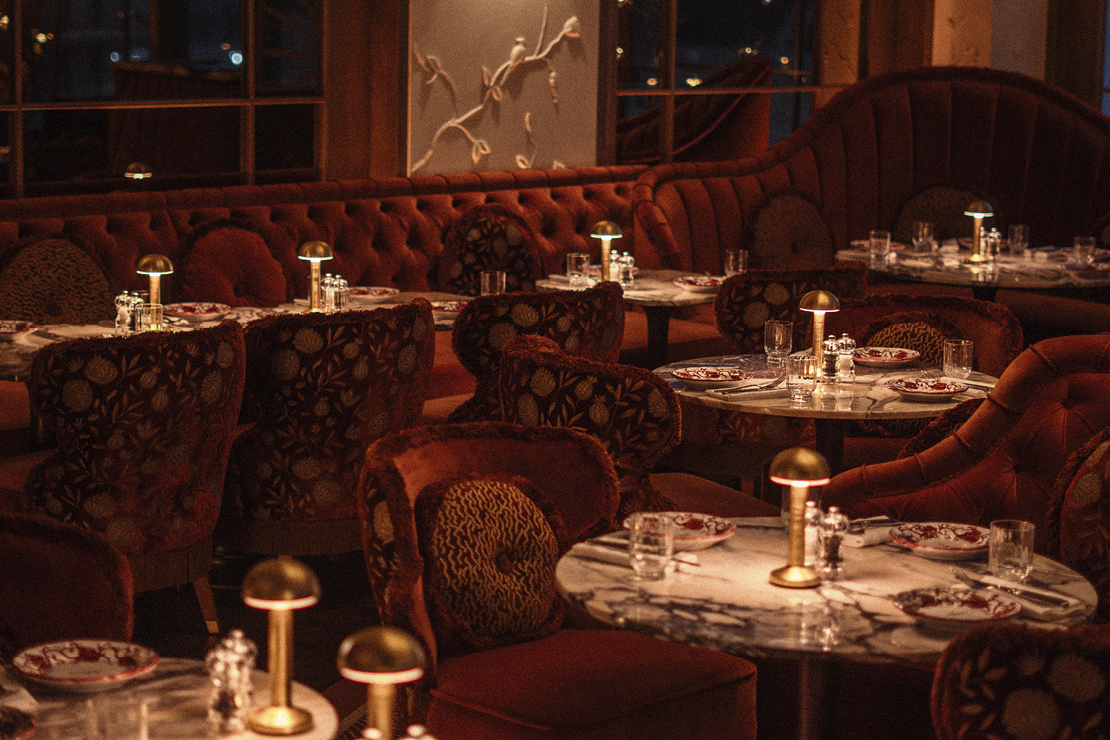
What trends are you currently seeing in global dining that you believe will shape the Middle East market?
There is a return to authenticity and simplicity, but with a very high level of execution. At the same time, dining is becoming more experiential. The connection between food, music, and atmosphere is becoming stronger. The restaurant is no longer just a place to eat; it’s part of a broader lifestyle.
As you launch Siena in Dubai, what excites you most about this new chapter?
It’s the idea of seeing how the concept evolves in a new environment. Each city brings its own energy. Siena is designed to adapt while keeping its identity, so it’s always interesting to see how people connect with it and make it their own.
Looking ahead, what is your long-term vision in the region for Siena and your portfolio in the region?
To grow in a way that stays true to the identity of what we create. Siena is not just a concept, it’s a universe. The objective is to develop it in places where it feels relevant, while maintaining the same level of detail, atmosphere, and experience.
By Lindsay Judge
Mariam Em Founder Mariam Almazourei on finding a unique beauty space in the region
Mariam Almazourei has carved out a distinct space in the region’s beauty industry. Taking inspiration from beauty rituals rooted in the region, Mariam Em’s founder is shaping a brand that draws directly on Arab heritage. The Abu Dhabi-based entrepreneur reinterprets traditional Arabian ingredients and rituals through a modern, considered approach to skincare.

At the centre of the brand is Sidr, a native ingredient long valued for its nourishing and medicinal properties, reimagined through carefully developed formulations that prioritise simplicity, transparency and purpose. Rather than following trends or overcomplicating routines, MARIAM EM is grounded in a philosophy of mindful beauty, where each product serves a clear role within an intentional ritual. Here, Almazourei reflects on building a homegrown brand, the importance of cultural authenticity, and her vision for sharing the UAE’s beauty traditions with a global audience.
What inspired you to create MARIAM EM, and what gap did you feel was missing in the beauty and skincare market in the region?
The inspiration behind MARIAM EM was a desire to bring an ingredient — and a ritual — from the Arab world to a global audience. It was about creating something rooted in our heritage rather than borrowed from elsewhere.
Mariam Em draws inspiration from traditional Arabian ingredients and rituals. How important was it for you to create a brand rooted in regional heritage and cultural authenticity?
It is the foundation of MARIAM EM. Our hero ingredient and the inspiration behind the brand is the Sidr tree, native to this region and revered for centuries. We draw inspiration from many places, but everything comes back to Sidr. It is an ode to our heritage.
Mariam Em is built around holistic beauty and mindful skincare rituals. How would you describe the brand’s core vision and how it has evolved since launch?
The vision has always been to create mindful skincare, haircare and body care that is simple and holistic. MARIAM EM is not about filling a category with as many products as possible, it is about building minimal, intentional practices. We are not the ten-step routine. Every product we create has a purpose.
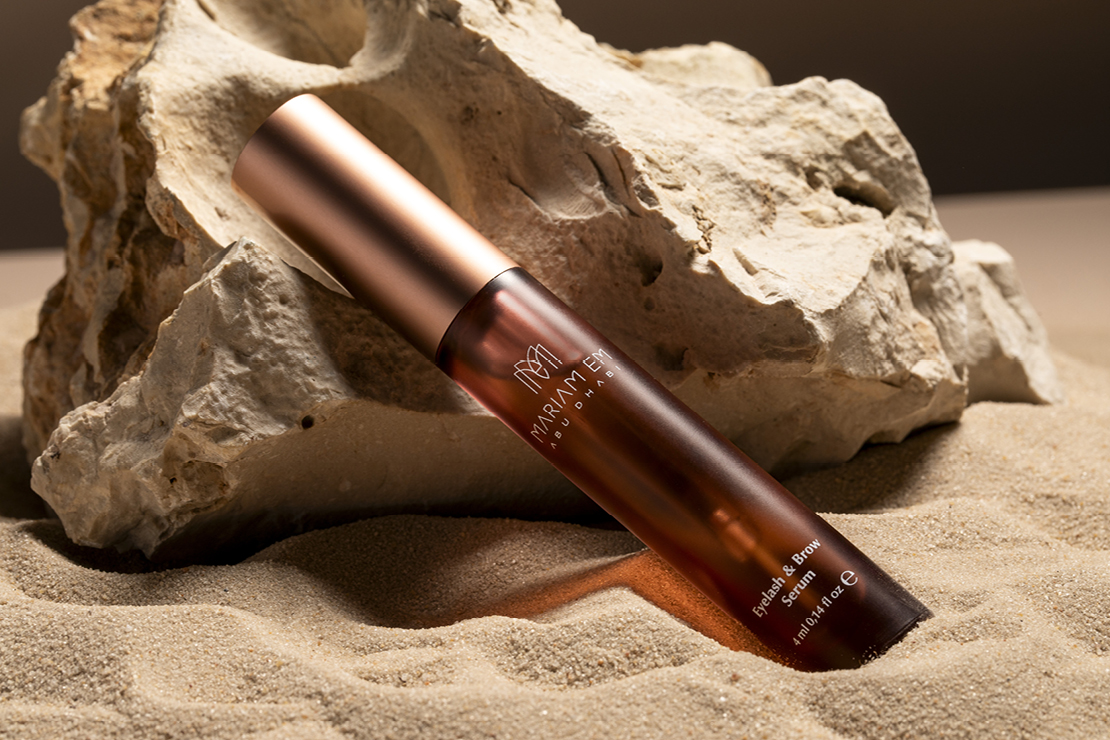
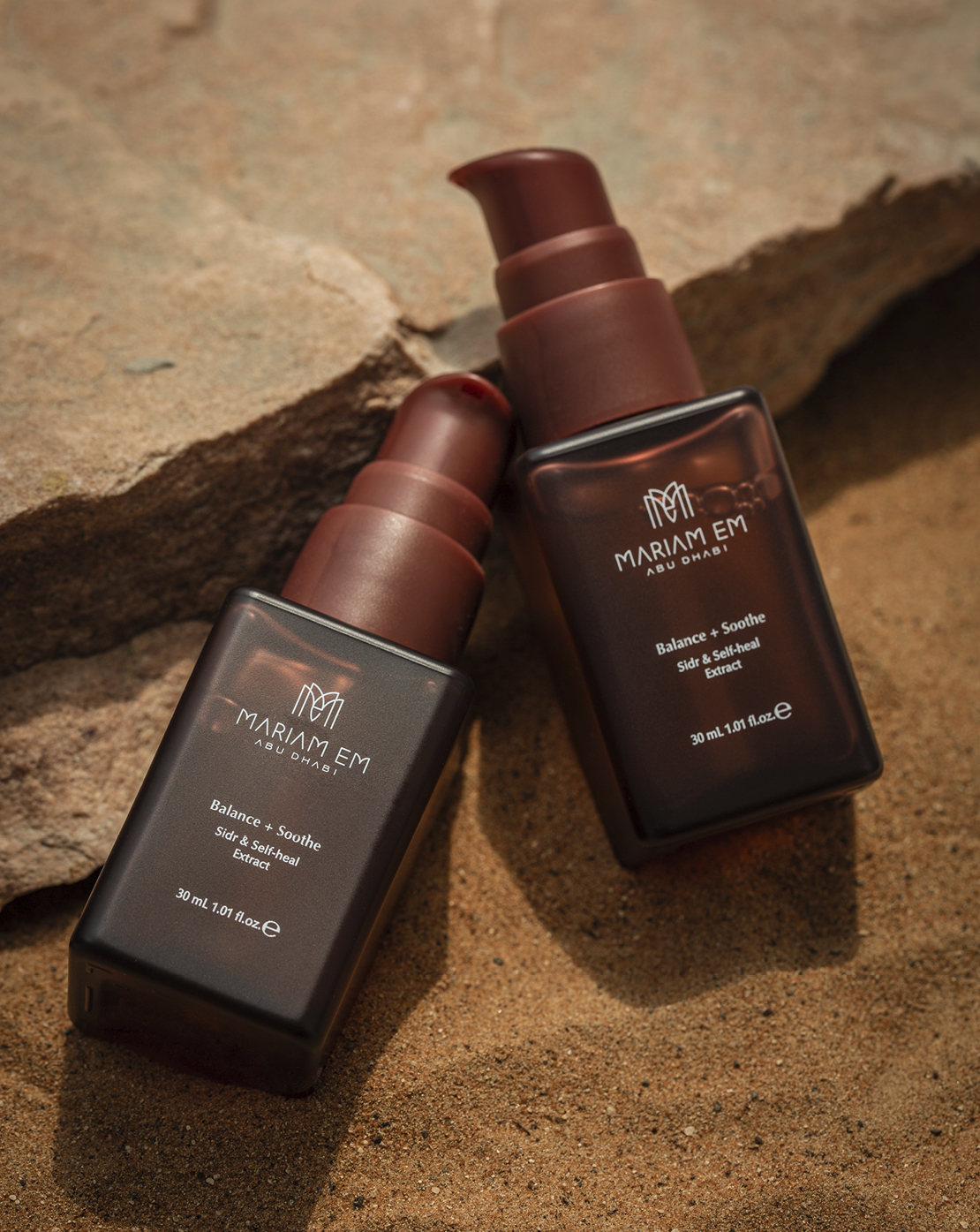
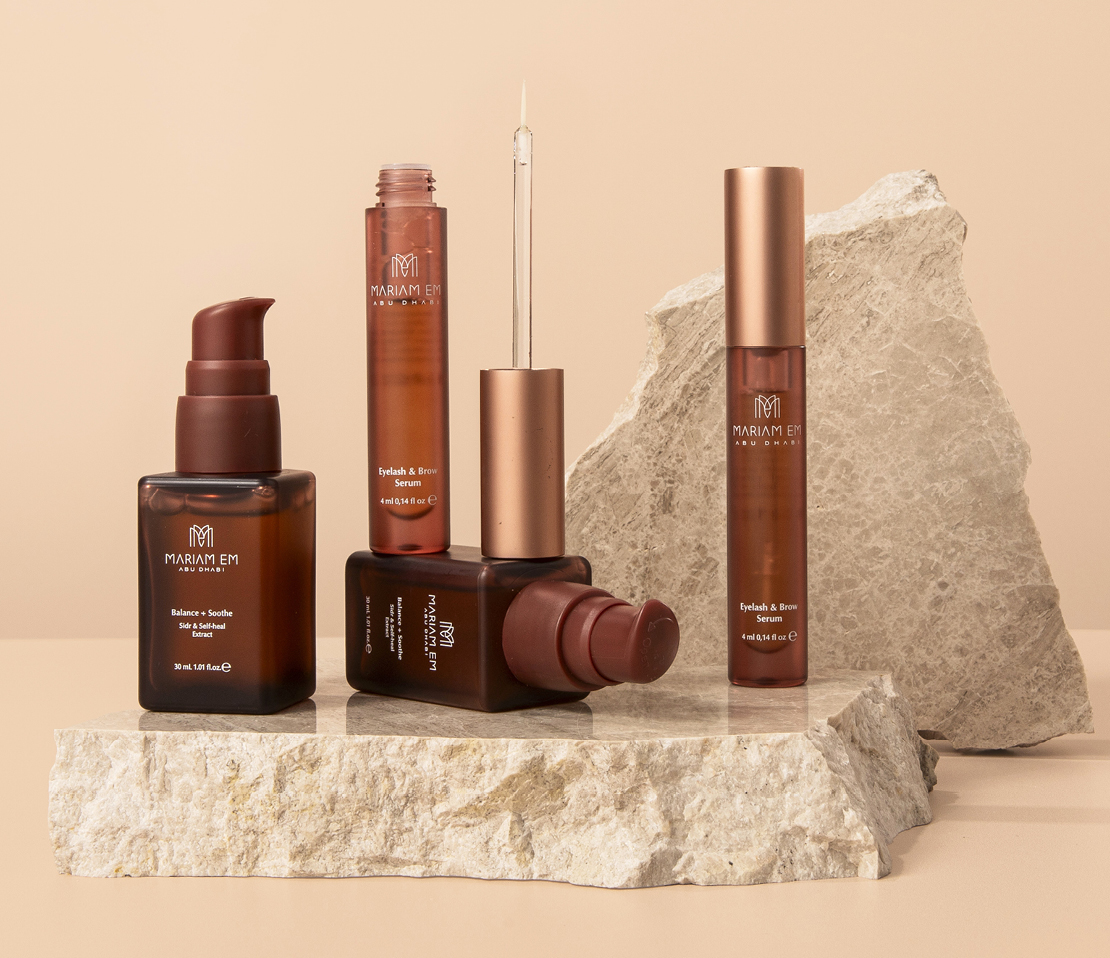
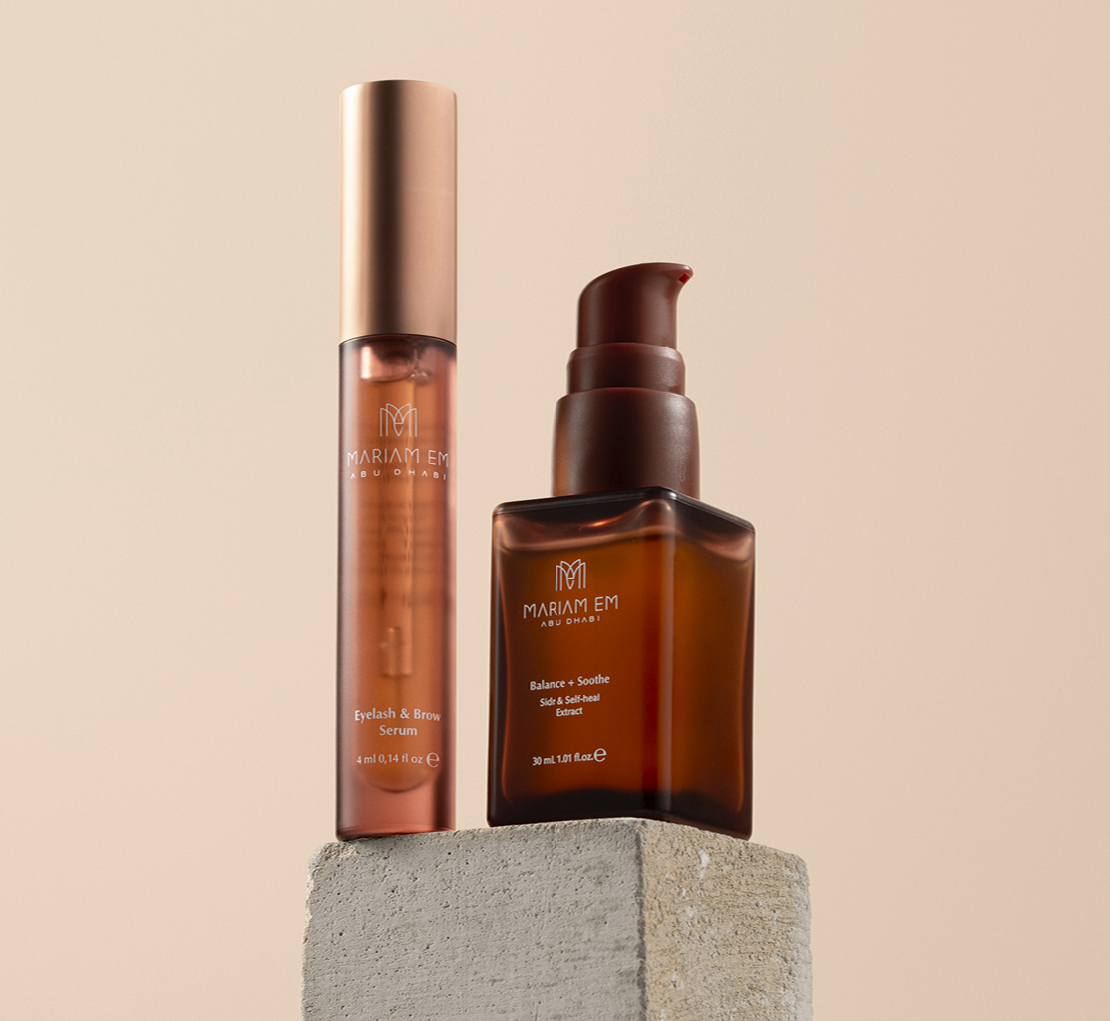
Your product range currently includes skincare solutions such as the Balance & Soothe Face Serum and Eyelash & Brow Serum. How did you decide on these initial categories, and what concerns were you aiming to address?
MARIAM EM’s inaugural product was the Eyelash & Brow Serum, born out of genuine frustration with the misleading products on the market. Before MARIAM EM existed, I was always searching for a serum free from prostaglandin analogues -the ingredient responsible for the fast, dramatic growth that many of these products promise, but which carries side effects that simply do not justify the result. I knew the first product I wanted to create had to rely on well-researched botanicals that support beautiful lashes and brows, without the compromise. The Balance & Soothe Face Serum followed, because the benefits of Sidr had not been captured in any face serum on the market – and I wanted to change that. We have more products on the way, but we are extremely meticulous when it comes to formulation. We will never rush a launch. A new category is coming soon!
Creating a beauty brand in the Middle East allows you to directly address regional skincare. How has being based in the UAE influenced your formulations and product development?
Every part of the world has its own needs, its own heritage, its own relationship with beauty. For too long, our region has been served by brands built elsewhere and adapted for here. MARIAM EM was built here – but what we found here, in our ingredients and our rituals, is something the whole world deserves access to. That is what global expansion means to us. Not adapting ourselves for other markets – but sharing what is ours with them.
The Middle East beauty industry is experiencing significant growth, with regional brands gaining international recognition. How do you see Mariam Em contributing to this evolving landscape?
MARIAM EM is not the first regional brand to reach for a global stage, and it certainly will not be the last. It makes me enormously proud to see Arab talent gaining international recognition. We are working hard to be part of that movement – and to make sure Sidr has a place in it.
As an Emirati entrepreneur, what makes you most proud to represent the UAE through your brand?
No matter how much you give back to your home country, it will always deserve more. Having Abu Dhabi’s name on every MARIAM EM product is the least I could do – so that when MARIAM EM becomes a globally recognised brand, the world knows exactly where it came from. That is what this means to me.
Many consumers today are looking for clean, thoughtful and culturally relevant beauty products. How important is sustainability and ingredient transparency to Mariam Em’s philosophy?
“Clean” is a misleading movement and one MARIAM EM does not subscribe to. It has no regulatory standards, which we believe makes it potentially dangerous for consumers who trust it at face value. Every ingredient we work with is scientifically studied and chosen on merit not to align with a trend. Transparency is non-negotiable for us. Our full ingredient lists are published on our website, and we actively educate our community about what goes into our formulas and why. We also take a considered approach to packaging — our products arrive in simple boxes whose sole purpose is to protect what is inside. We do not produce elaborate PR packaging designed for attention. That kind of waste has no place in how we operate.
What have been some of the biggest challenges you’ve faced while developing Mariam Em?
There are many challenges – enough to fill an entire book! But life, and building a business, is defined by how you respond to them. Research and development are expensive and unforgiving. Developing a single product means funding months of formulation work, waiting for samples, and then testing each one independently over an extended period. I lost count of how many times I fell in love with a sample, only for it to become unstable and must be rebuilt from scratch.
The truth is that bringing a perfect product to market can take years. And when you finally get there, the self-doubt does not disappear – a different kind of doubt sets in, the second-guessing. You start wondering whether the product actually works, whether people will connect with it and love it the way you do, or maybe you should tweak it one last time. Funding is another reality. MARIAM EM is self-funded, which means there is no margin for the kind of mistakes that larger, backed companies can absorb. And then there is the challenge of finding the right voices to amplify the brand – we have had content creators agree to test and review our products, receive them, and then go quiet without ever following through. Each of those situations is a financial loss we carry ourselves. These are not unique challenges, but they are real ones.
As Mariam Em continues to grow, are there new product categories or innovations you are particularly excited to explore?
Certainly!
We currently have around ten products in different stages of development across skincare, haircare, body care, and lifestyle. Haircare is launching very soon. And because no ritual is truly complete without candlelight, that category is also on its way.
What advice would you give to women looking to launch their own beauty or lifestyle brands?
You will doubt yourself. A lot. It’s part of the process. You’ll feel invisible next to brands that have been around for years. But those brands were invisible once too – every single one of them. My advice is to find people in your life who truly believe in you, and when that familiar voice in your head starts questioning everything, call them. They will cut through all the noise and bring you back to yourself.
Looking ahead, what would you still like to achieve with Mariam Em, and what is your long-term vision for the brand’s global expansion?
There are bigger plans – but I am keeping them close for now. The priority is bringing everything that is already in development to market first. Once that picture is complete, the longer vision will speak for itself.
By Lindsay Judge
The Maine Man, Hospitality Entrepreneur Joey Ghazal on Building one of Dubai’s Most Enduring Homegrown Dining Concepts
Over the past two decades, restaurateur Joey Ghazal has built a career defined by instinct, consistency and a deep understanding of what makes a space resonate. From his early days working across every level of the industry to launching some of the region’s most recognisable dining concepts, including his successful homegrown UAE concept, The Maine, Ghazal has shaped a distinct approach to creating restaurants that feel both personal and enduring.
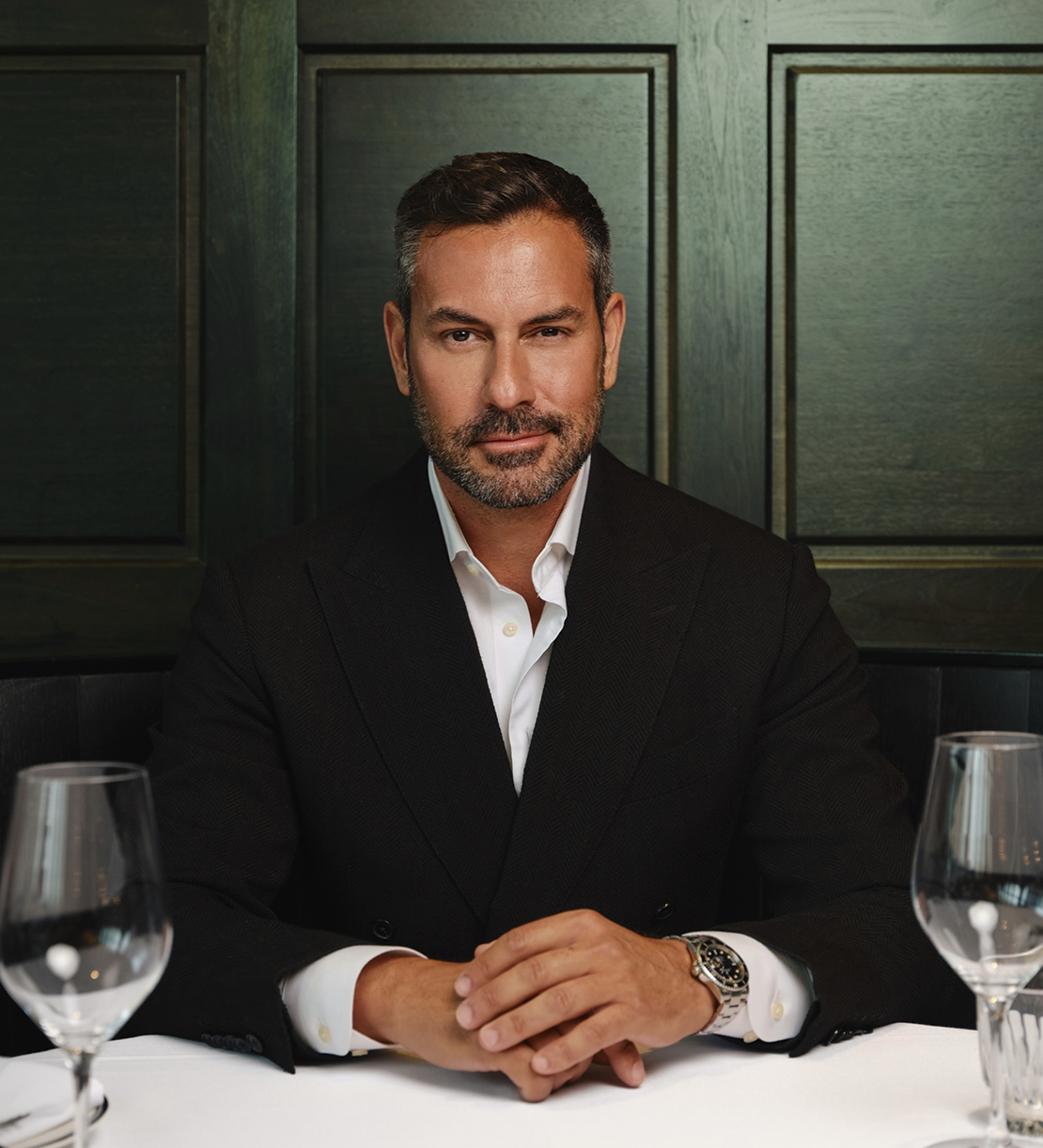
Born in Montreal and raised in Dubai, his journey has spanned continents, from Canada to Lebanon and back to the UAE, where he founded Fighterbrands Ltd. and first introduced The Maine, a concept that redefined what a homegrown brand could look like in a market long dominated by international imports. What began as a single location has since evolved into a multi-venue, international success story, grounded in a clear identity and a commitment to quality.
Central to Ghazal’s work is his belief in authenticity over novelty. His concepts are not designed to chase attention, but to build loyalty, shaped by an understanding that longevity in hospitality comes from consistency, adaptability and a strong sense of place. As the UAE’s dining scene continues to evolve at pace, his perspective offers a considered view on what it takes to create restaurants that last. Here, he reflects on his journey, the lessons learned along the way, and how he continues to navigate an industry defined by constant change.
You’ve built a strong portfolio of concepts. What initially drew you to hospitality, and how has that shaped your approach today?
My fascination with food and hospitality started early. From the age of 18, I immersed myself in the industry, taking on just about every role along the way, giving me a deep understanding and respect for every element that contributes to a restaurant’s failure and success. Hospitality is all-consuming in the best way; there are countless details, big and small, that need to align to create a memorable guest experience. Nearly thirty years in, it’s not just a career, it’s still something you have to eat, drink and breathe.
The Maine Oyster Bar & Grill has become one of the city’s most popular concepts. What do you think has been the key to its longevity in such a fast- moving market?
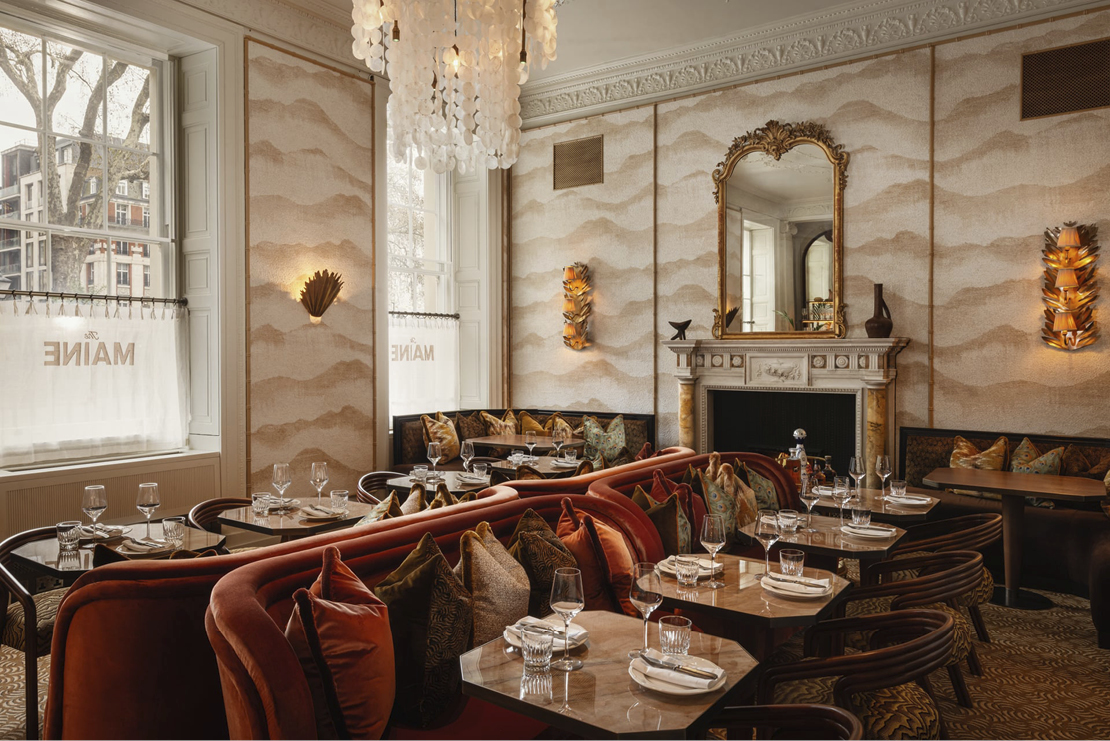
Since the first Maine launched in 2015, it has clearly struck a chord. It was a departure from what was opening in Dubai at the time. It felt like an authentic homegrown brand in a market that was dominated largely by imports, and people gravitated to our comfortable luxury approach to dining. Ten years later, with four locations dotted around Dubai, The Maine still stands as a great example of a homegrown hero in the market.
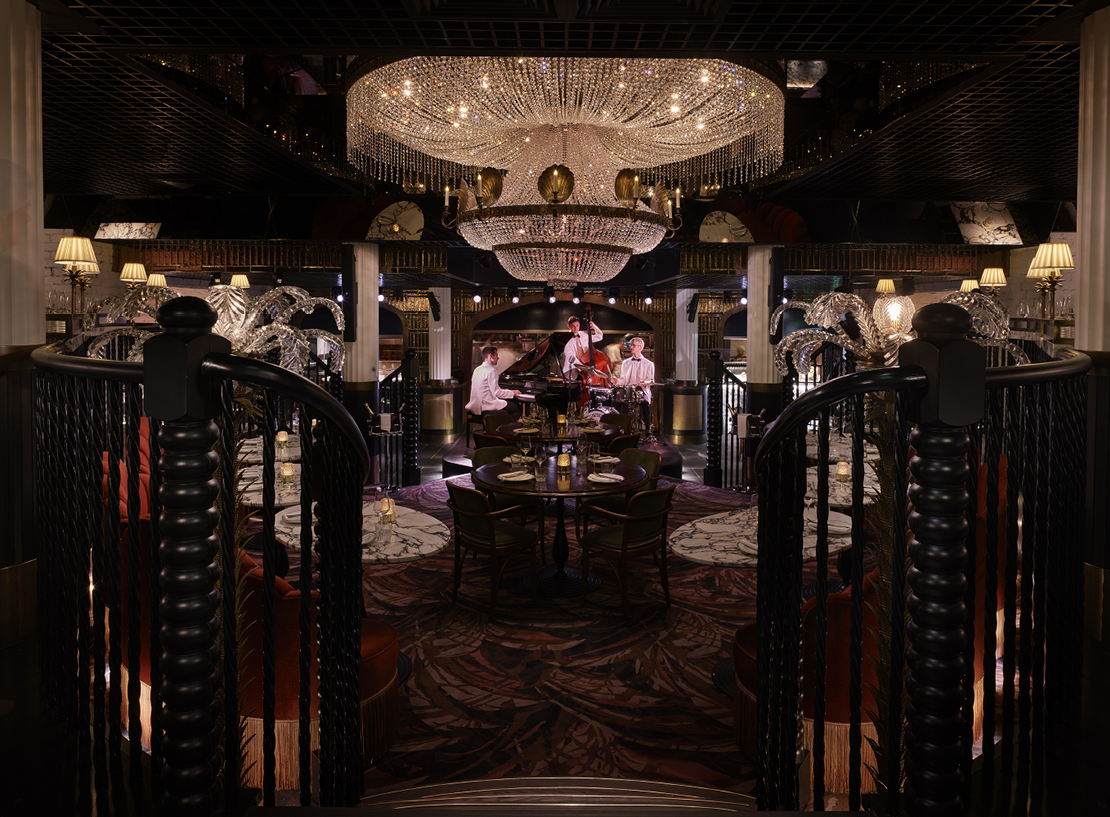
How do you approach differentiation in a city like Dubai, where new venues are constantly emerging?
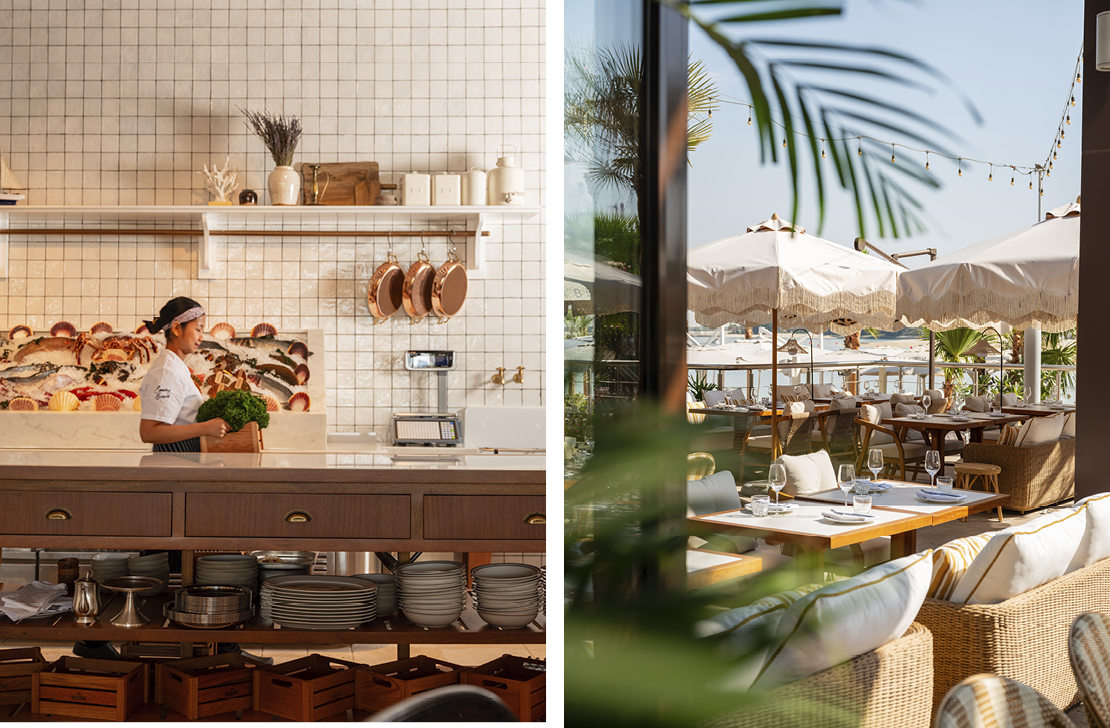
We never stopped evolving – from a seafood brasserie in JBR, to a downtown steakhouse in Business Bay, to a neighbourhood eatery in Studio City and most recently a beachside restaurant on the Palm. While we adapted each Maine to suit the neighbourhood, we kept the brand’s core principles intact – good food, good vibes and good value. Our competitive advantage is that no matter which Maine you walk into, you know what to expect.
What do you think defines a concept that truly stands the test of time?
I have started to hate the word ‘concept’, because it immediately suggests something that is thematic, borrowed or contrived, and we have seen many fads that start to fade over the years. Creating timeless restaurants that withstand the test of time is the holy grail of the restaurant industry. There is no secret formula to creating a restaurant that lasts for decades. It’s ultimately down to hard work and consistency in service, food, brand, and the attention they require.
Taking The Maine to London marked a significant step. What did that expansion teach you about translating a concept into a different market?
That experience taught me so much, I could easily write a book on what it truly takes to launch a brand in a new market — from navigating the nuances of doing business in London versus Dubai, to understanding differences in work culture, consumer tastes, cost structures, and even the perception of luxury itself. Expansion is never straightforward, but opening in an entirely new country presents a unique set of challenges. I feel immense pride in the Maine Mayfair’s success, but if there’s one lesson that stands above the rest, it’s the level of personal commitment required to make it work.
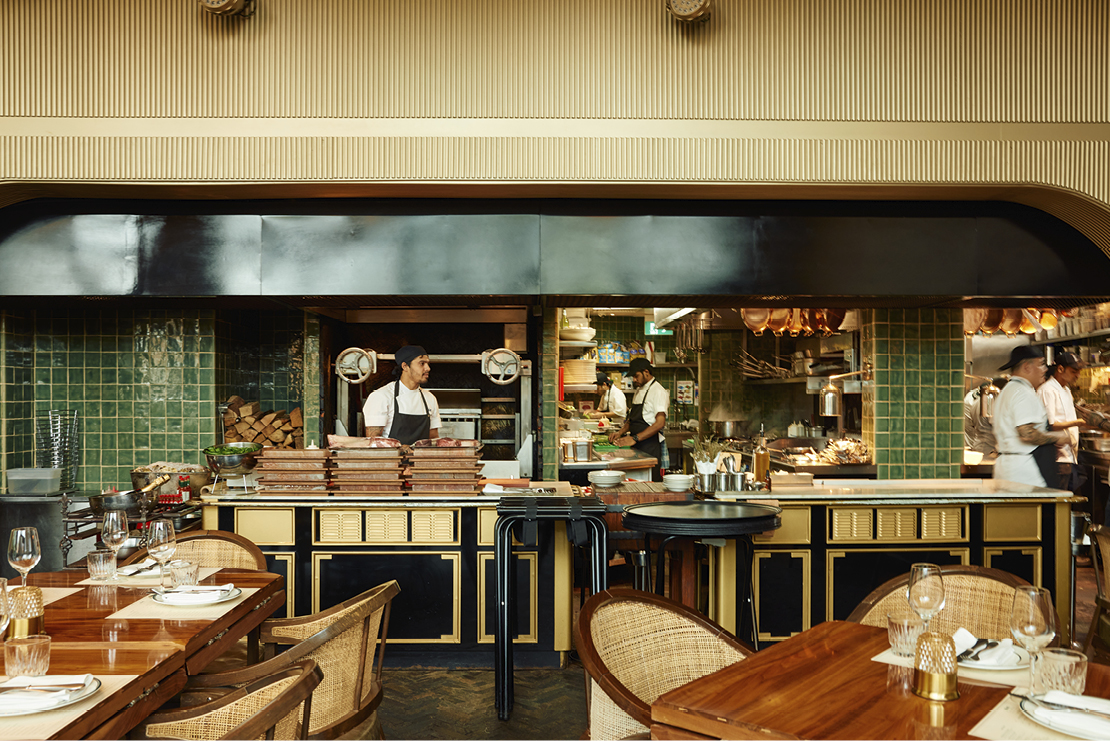
What have been some of the most significant challenges you’ve faced as an entrepreneur in this space?
I have been through many changes over the past 15 years of being an entrepreneur. Change is inevitable. The industry is constantly changing, as are people’s behaviours and tastes, so you need to be able to ‘shed your skin’ every couple of years, and you need a structure around you that can evolve and adapt to market conditions. The danger is to have a big, rigid structure that can’t adapt quickly enough. We have always had a small company mentality, which has helped us during periods of market volatility. Speed is the key.
The region has experienced periods of uncertainty. How do you see the UAE hospitality sector responding and evolving from this moment?
Those who have been in the sector for a long time will remember what it was like in 2008 and during COVID. It provides you with a lot of learning and a playbook to work from. It is still too early to say what the effects of this conflict will have on the hospitality sector, but I have no doubt that the UAE will continue to be a model for the rest of the world on how to navigate in times of crisis.
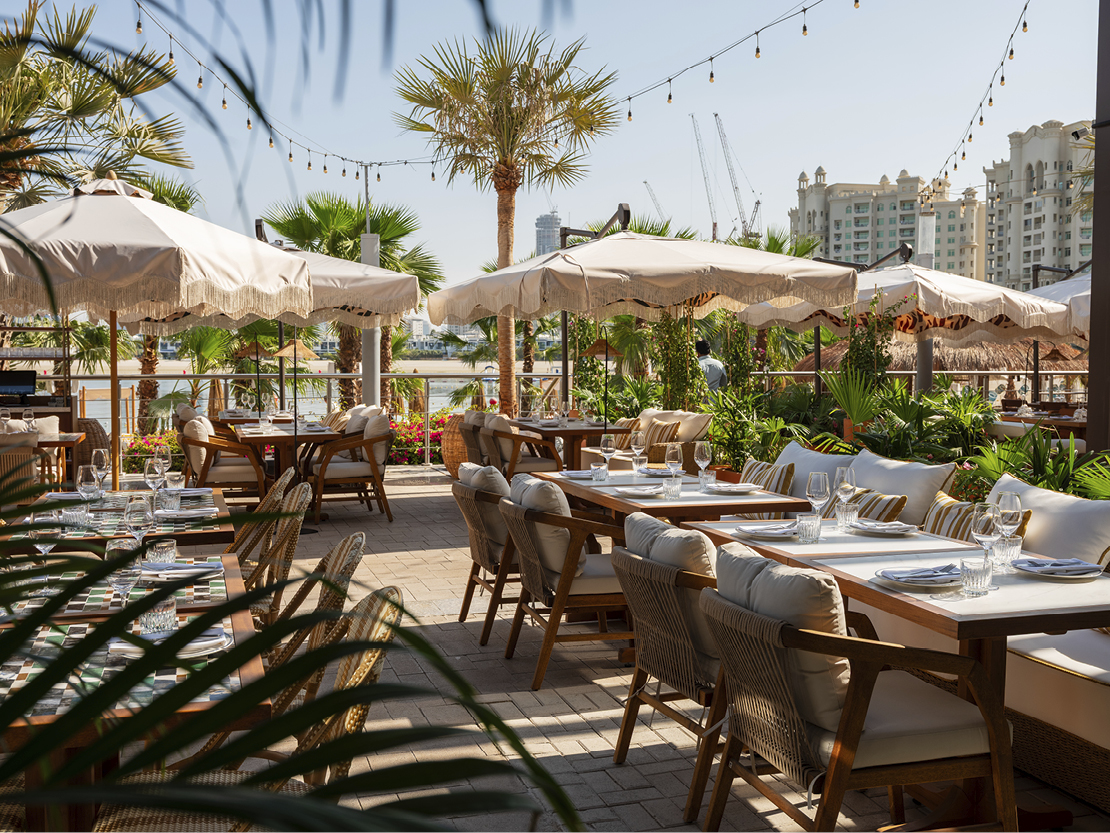
What have been the most important lessons for you personally during times of instability?
To remain calm and level-headed when faced with challenges that are out of your control. It’s easy to feel overwhelmed, so prioritising mental health and personal wellbeing is key. Times of instability can also be a good opportunity to consolidate, learn new skills and reinvent yourself. The most important thing is to remind yourself that this, too, shall pass.
How do you maintain confidence and momentum when external conditions are unpredictable?
Being an entrepreneur can feel lonely at times, but no matter how tough things get, we have to ‘keep the show going’ for our guests and especially for the team. You always have to be there to reassure everyone around you and continue to ‘be the pulse’ of the company. Positivity is a habit you have to practice every day. I often joke that people in hospitality are made of Teflon; everything has to slide right off!
The UAE’s hospitality scene continues to evolve rapidly. How do you see it developing over the next few years?
Dubai has cemented its position as a global hub for hospitality brands being exported internationally. There is a growing interest in brands coming from this region because we operate at such a high level. I believe that the UAE will continue to attract the best talent from around the world, and with it will come amazing innovation in the space.
Are there emerging markets you find particularly interesting right now, either in the region or globally?
I’ve always looked to New York and London for restaurant inspiration, but in recent years I’ve found myself increasingly drawn to lesser-known food scenes in Bangkok, Beirut, and Mexico City. There’s a raw authenticity in these cities that feels deeply rooted in culture, less manufactured, more instinctive. The restaurants there don’t just serve food; they’re storied and have a genuine sense of place.
Is there a particular concept or idea you’ve been wanting to bring to life but haven’t yet had the chance to bring to life?
I’ve always wanted to delve into my Lebanese heritage and create my own Lebanese brand. It’s an idea that feels simultaneously daunting, intimidating and exhilarating. I have never shied away from a challenge, but I also feel a responsibility to approach it with great reverence. So it’s not something that I would do unless all of the ‘stars align’.
What’s one direction you believe will define the next chapter of hospitality?
I personally think that the age of super-sized restaurants is dwindling. Rising costs and market unpredictability make them increasingly difficult to operate. We are already seeing a small but noticeable shift towards smaller restaurants, counter service offerings and more specialised brands, which is promising.
Looking ahead, what excites you most and what’s in the pipeline that you can tell us about?
I’m excited to work on new brands and new cuisines. There are several new projects that I’ve been quietly developing over the years. I feel like this is a good time to take all of the learnings and apply them to something completely new. Watch this space.
By Lindsay Judge
Rosemin Opgenhaffen, Founder of Rosemin Beauty, on Translating Industry Insight Into a Modern Beauty Brand
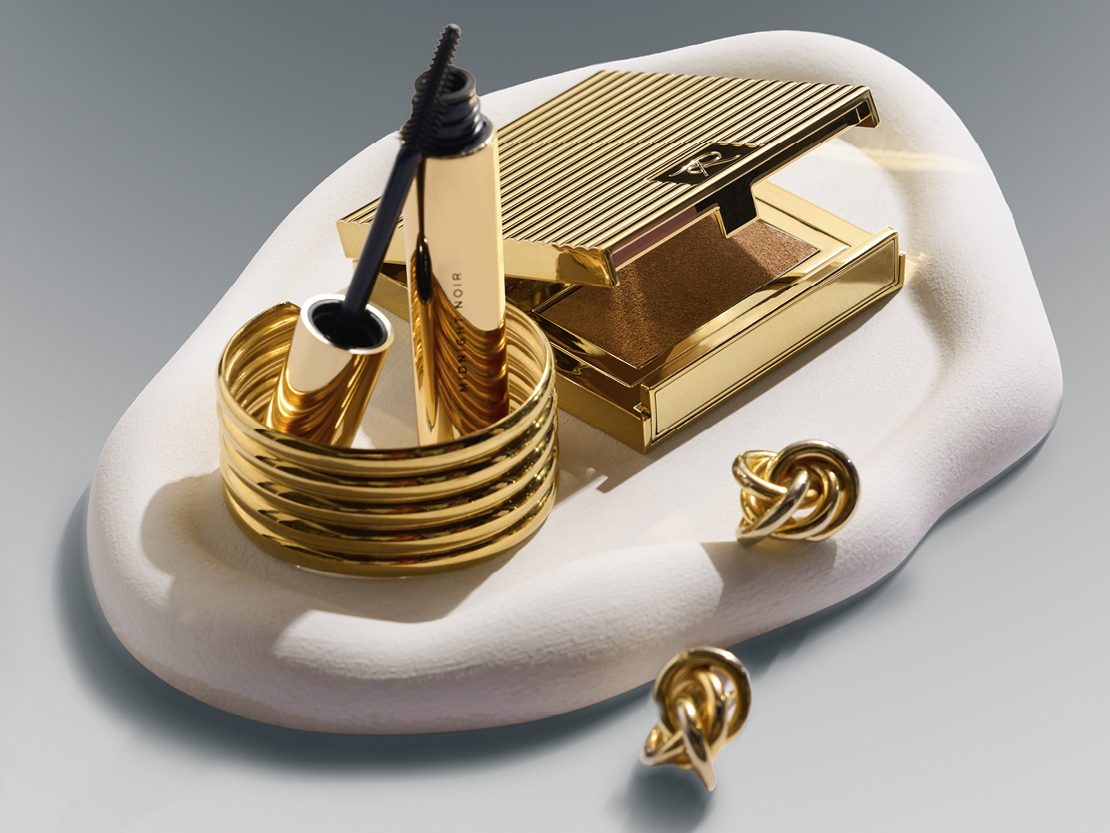
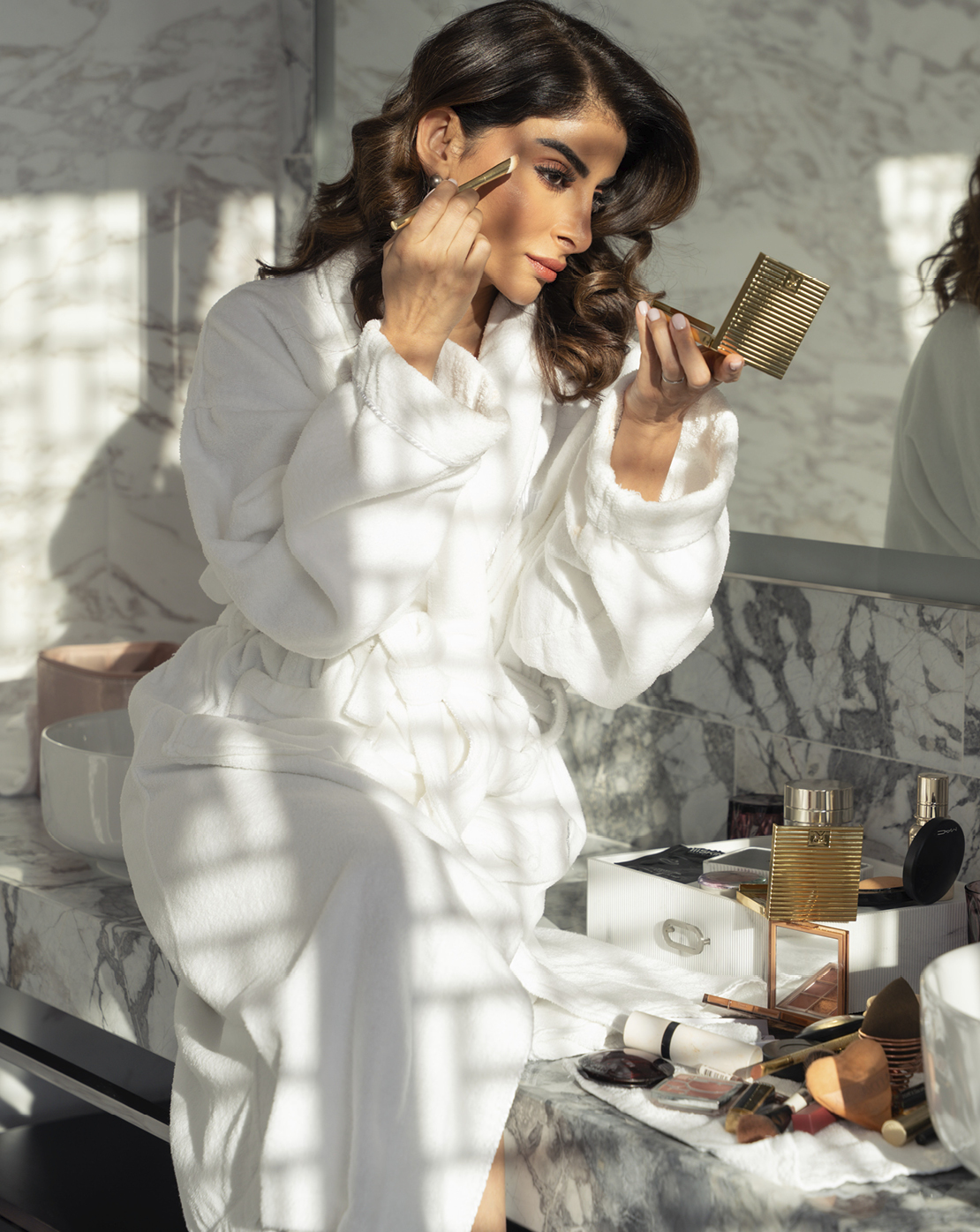
Rosemin Opgenhaffen is a Dubai-based beauty entrepreneur, former global editor and industry expert with over two decades of experience across fashion, media and luxury. Having spent years shaping conversations around beauty through editorial, television and brand consultancy, she now brings that perspective to her own label, Rosemin Beauty, a brand rooted in precision, performance and a deep understanding of undertone.
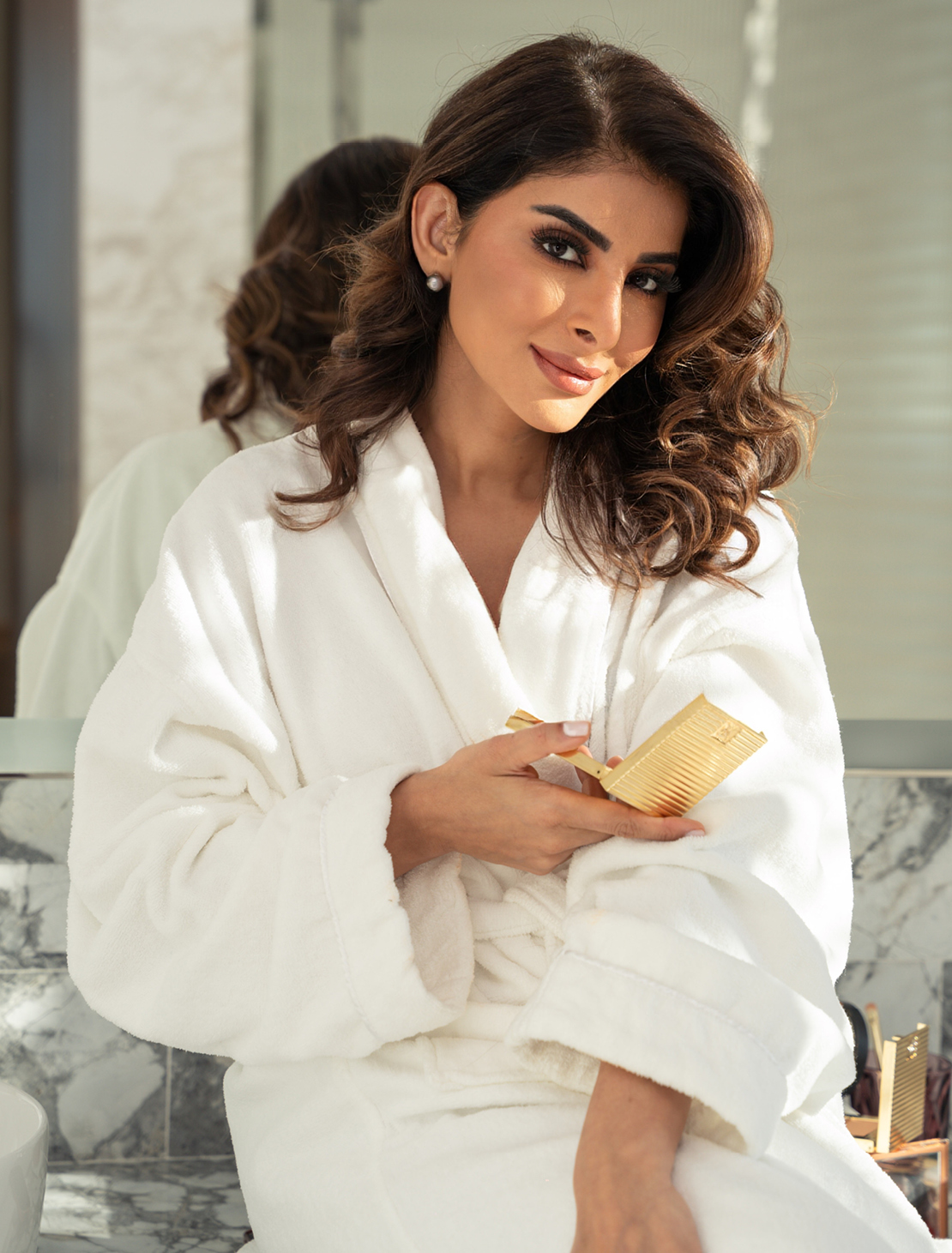
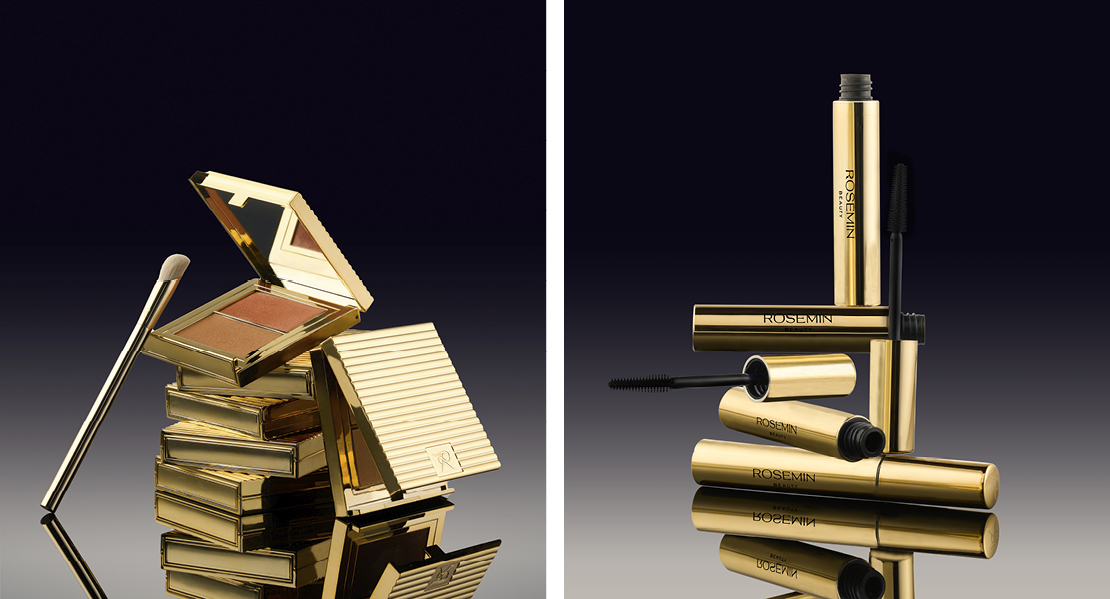
Built on the idea of “everyday elegance,” the brand offers a tightly curated edit of high-performance essentials designed to enhance rather than mask. As outlined in its mission, Rosemin Beauty focuses on simplifying the routine, cutting through the noise of an often-saturated market to deliver products that feel considered, effective, and effortless (see mission overview, page 2).
For Opgenhaffen, the move into product is a natural extension of a career defined by a sharp eye and an intuitive understanding of what works both on and off camera. Drawing on personal experience as much as professional insight, her approach prioritises intelligent coverage, refined textures and a more tailored view of beauty.
In this conversation, she shares the thinking behind the brand, the gaps she set out to address, and what it takes to build a modern beauty label in today’s landscape.
What inspired you to launch your own beauty brand?
After nearly 25 years in the luxury fashion and beauty space, I felt that this brand was a natural evolution of everything I had experienced. I had a 360-degree understanding of the industry, from concept to consumer. But alongside that, there was a very personal motivation. As someone who struggled with cystic acne, I initially relied on heavy makeup to cover my skin, simply because I didn’t know any better. Over time, I learned the art of correcting and concealing only where needed, and that became the foundation of my first product. Rosemin Beauty is truly an accumulation of both my professional journey and personal experience.
Why focus on warm, olive, and deep undertones?
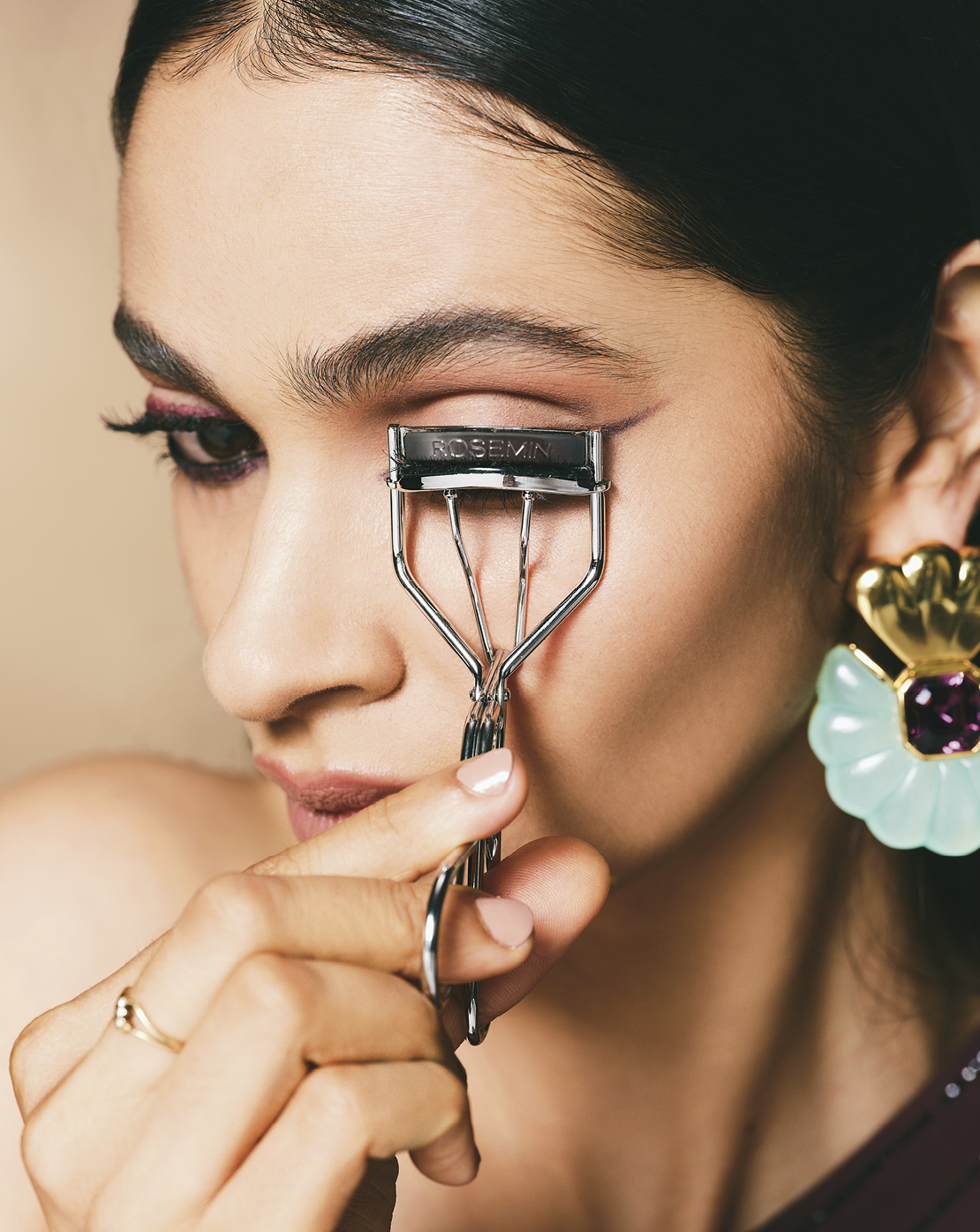
For far too long, undertones, especially olive, have been misunderstood or overlooked. Women across the Middle East and South Asia often find themselves between shades that were never quite catered to. For me, it wasn’t just about inclusivity, it was about precision. “Intelligent coverage” is about understanding how colour behaves on the skin and creating formulations that enhance rather than mask. When you combine the right undertone with the right texture, the result is effortless, elevated beauty.
How did your media background shape your product development?
Having worked across editorial and television, I developed a very discerning eye. I understand what performs well on camera, what translates in real life, and what resonates with a sophisticated audience. That perspective made me incredibly focused during development. Every product had to deliver, whether under studio lights, backstage at a show, or in everyday life. There was no room for excess; each product needed to feel essential, refined, and purposeful.
How did you decide on your first products?
My starting point was deeply personal. My experience with cystic acne and dark under-eye circles taught me that coverage doesn’t need to be heavy to be effective; it needs to be intelligent. The Daily Radiance Correct & Conceal Duo was designed to correct discolouration and conceal only where necessary, so the skin still looks like skin. It’s a product rooted in technique, not just formulation. From there, the eye category felt like a natural extension of products that define and enhance with ease, while maintaining that same philosophy of precision.
Why move away from a one-size-fits-all approach?
Today’s consumer expects more. She understands her skin, her undertones, and her needs. A one-size-fits-all approach no longer serves the modern beauty landscape, particularly in regions like the Middle East, where diversity in skin tone and undertone is vast. Beauty should feel tailored, not generic. In a crowded market, you need a point of view.
What are some key lessons you take away from your experience in the industry?
One of the most important lessons I’ve learned is that true luxury lies in detail.
From formulation to packaging, every element must be considered. That’s why we partnered with a leading product developer in New York and worked closely with expert packaging designers to ensure that every aspect of Rosemin Beauty reflects quality and intention.
It has been a brand with years in the making, and that level of dedication is something the consumer can feel.
What were the biggest challenges in building the brand?
Building a brand from the ground up, particularly as a self-funded founder, comes with constant challenges. Product development alone requires patience, precision, and the right partners. Ensuring we were working with the best while staying true to our vision was both essential and demanding. But those challenges ultimately shape the strength and integrity of the brand.
What opportunities do you see in the Middle East beauty landscape?
The Middle East is an incredibly dynamic and influential market. There is a strong appreciation for luxury, combined with a highly engaged and informed consumer.
For Rosemin Beauty, it’s an opportunity to lead with authenticity, creating products that are not only globally relevant but deeply connected to the region. Dubai has been home for me for almost 20 years, so there is no other place I would want to launch the brand.
How do you stay focused and motivated?
I stay grounded in my purpose to build a brand that will last. It’s an exciting time for me as an entrepreneur. This brand represents years of experience, but also a very personal journey. That keeps me focused, even during challenging moments.
I also believe in structure, discipline, and surrounding myself with the right team of those who share the same level of commitment and vision.
What are your key objectives for the company over the coming years?
Our focus is on thoughtful, strategic growth. We want to continue expanding our product range with intention, strengthen our retail partnerships, and build a deeper connection with our customers. At the same time, we are preparing for international expansion, ensuring we scale in a way that maintains the brand’s integrity.

What advice would you give to women entering entrepreneurship?
Be clear on your vision and be prepared for the journey. Entrepreneurship requires resilience, patience, and belief in what you are building. There will be challenges, but those moments often define your success. Most importantly, create something that is authentic to you; that is where true differentiation lies.
What’s next for Rosemin Beauty globally?
I see Rosemin Beauty evolving into a globally recognised luxury brand rooted in precision, performance, and a curated, edited collection of products. We will continue to innovate, particularly in colour cosmetics, while expanding into markets that align with our customers. Ultimately, my goal is to create a brand that women trust, one that makes them feel confident, understood, and represented.
By Lindsay Judge
A Global Vision, From Dubai to the world, Rizwan Kassim on shaping the future of modern hospitality
For Rizwan Kassim, hospitality extends far beyond food. It is about crafting atmosphere, evoking emotion and creating destinations that stay with you long after you leave. Now, as CEO of Paris Society, following its merger with RIKAS Hospitality Group, he is taking that vision onto a global stage.
Over the past 15 years, Kassim has played a defining role in shaping the UAE’s dining landscape, introducing a new standard of experience-led concepts that blend design, culture and culinary precision.
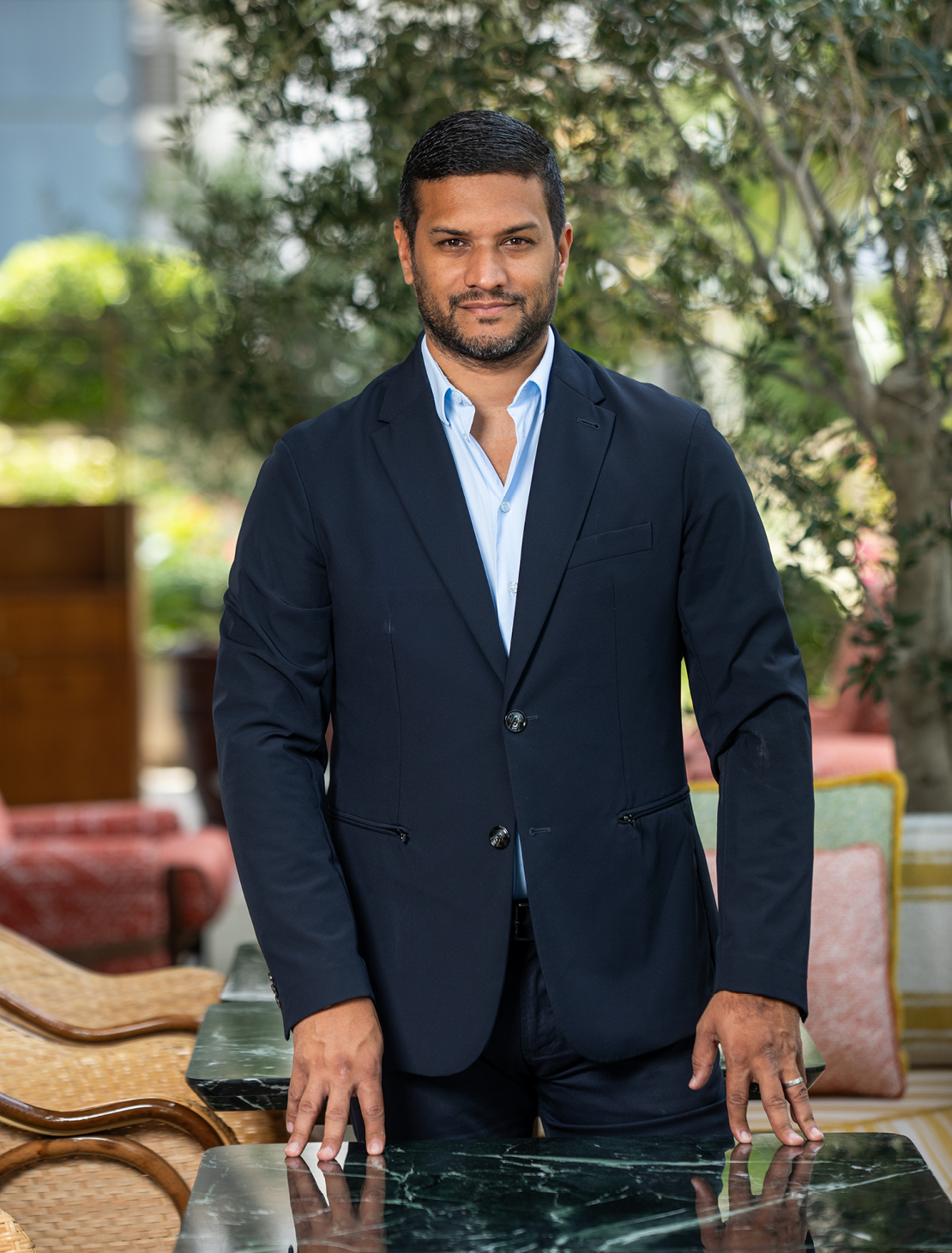
With a portfolio of more than 25 restaurants and beach clubs across the UAE, including Mimi Kakushi, Gigi Rigolatto and La Cantine du Faubourg, Kassim has built a reputation for transforming venues into immersive environments where every detail is carefully considered. His approach moves beyond traditional restaurant models, focusing instead on creating spaces that feel curated, layered and culturally relevant, while maintaining strong commercial performance.
In recent years, that vision has expanded significantly. Through strategic partnerships and the integration of Paris Society within the Ennismore platform, Kassim is now shaping a global hospitality model that combines creative direction with operational scale. From London to Miami and the Greek islands, the next phase of growth reflects a shift from building individual concepts to developing an interconnected international portfolio.
Yet, at the core of his work remains the consistent philosophy that hospitality should create a feeling. Whether through design, music, service or setting, each concept is built around a clear narrative, one that evolves with its location while retaining a distinct identity. As the Middle East continues to establish itself as a global hub for experience-led dining, Kassim’s perspective offers insight into how the industry is maturing and where it is heading next.
Here, he reflects on building brands with longevity, scaling creativity across markets, and redefining what modern hospitality can look like on a global stage.
You founded RIKAS Hospitality Group and helped shape Dubai’s dining landscape. What drew you to take on the role of CEO of Paris Society at this moment in your career?
It felt like the right moment to move from building successful venues to building a global platform. With RIKAS, we focused on creating concepts that went beyond dining, places defined by design, atmosphere and cultural relevance. That approach helped shape the market in Dubai.
Paris Society operates with that same philosophy, but at a much broader scale, with a portfolio of brands and destinations already established internationally. Bringing RIKAS into that platform allows us to build on that foundation and evolve it within a more structured, global framework.
Within Ennismore, it gives us the opportunity to combine creative direction with operational depth and scale those ideas in a disciplined, sustainable way.
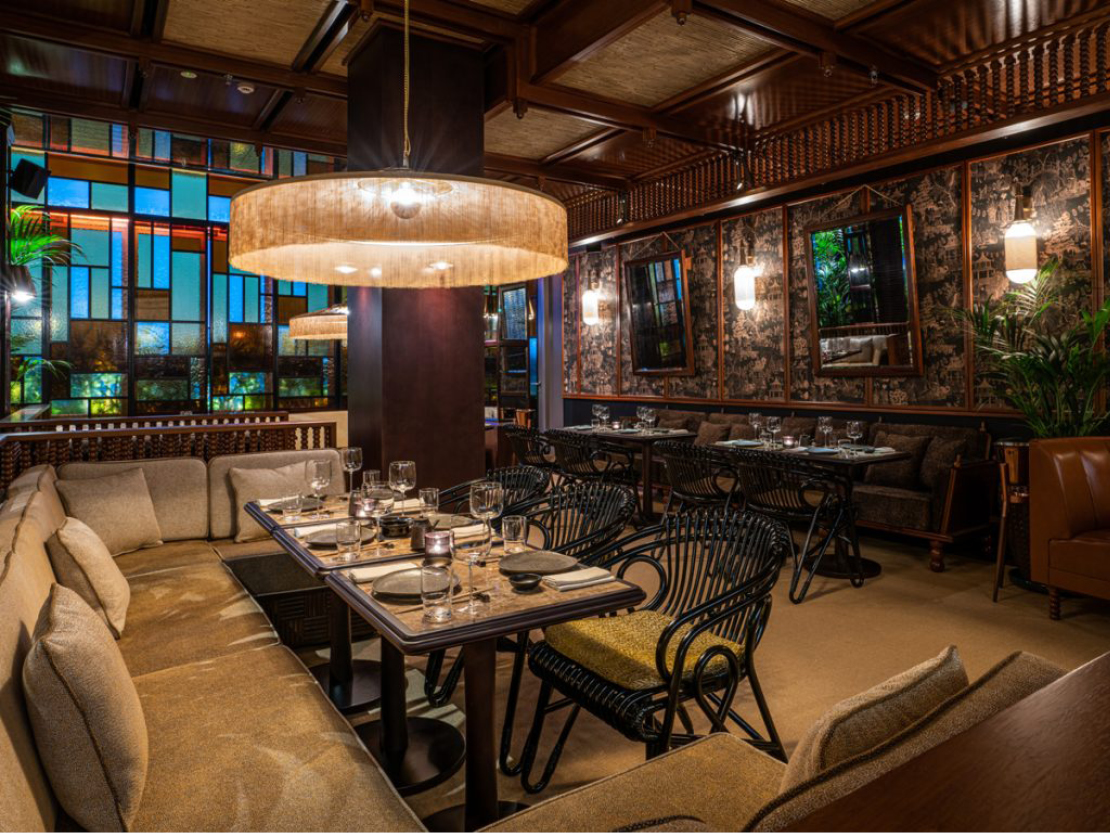
Paris Society was built around emotion, design and experience. How do you see this philosophy evolving as the brand expands internationally?
Emotion remains at the centre of everything we do. If a place does not create a feeling, it becomes forgettable.
Paris Society has always created what we consider emotionally charged destinations, where gastronomy, design, music and energy come together to form a complete experience. As we expand, the focus is on translating that into each market in a way that feels natural.
We approach every project as a tailor-made destination, rooted in its environment but guided by a clear identity. It is not about replicating a concept; it is about expressing a point of view in different cultural contexts.
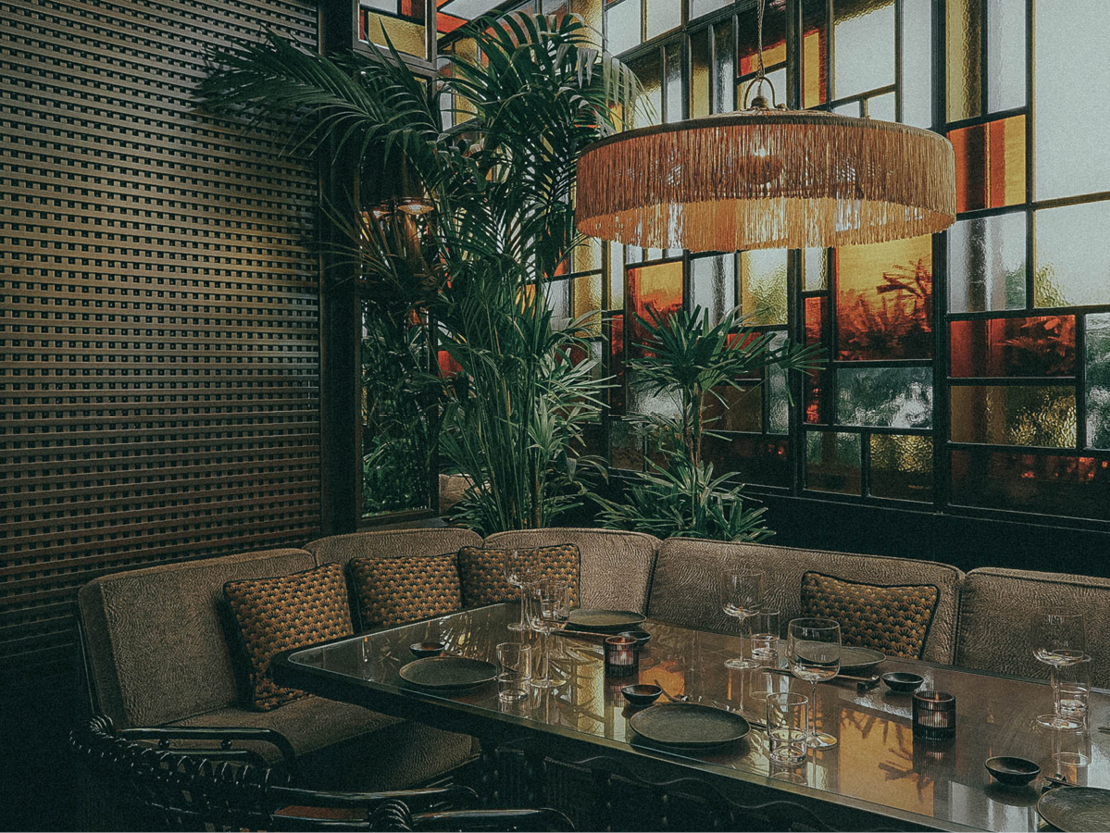
Bringing together Paris Society and RIKAS within Ennismore creates a powerful hospitality platform. What opportunities does this collaboration unlock for the Middle East and wider global markets?
It creates a fully integrated model across the hospitality ecosystem. We are able to conceive, design, operate and scale concepts within one structure, supported by strong creative and operational capabilities. Paris Society brings a portfolio of brands and a defined art of hospitality. RIKAS brings experience in delivering high-performing, culturally relevant concepts in the Middle East. Ennismore provides the global infrastructure and reach. That combination allows us to grow across markets while maintaining consistency in quality and experience, which is critical for long-term value.
As you scale globally, how do you ensure each concept retains its individuality and sense of place rather than becoming standardised?
It comes down to having a very clear identity from the beginning. Every concept is built around a narrative, a design language and a specific energy. From there, it is about interpretation. We do not approach projects as rollouts. Each location is developed in response to its architecture, culture, and audience. The consistency is in the philosophy and the level of detail. The individuality comes from how that philosophy is expressed in each place.
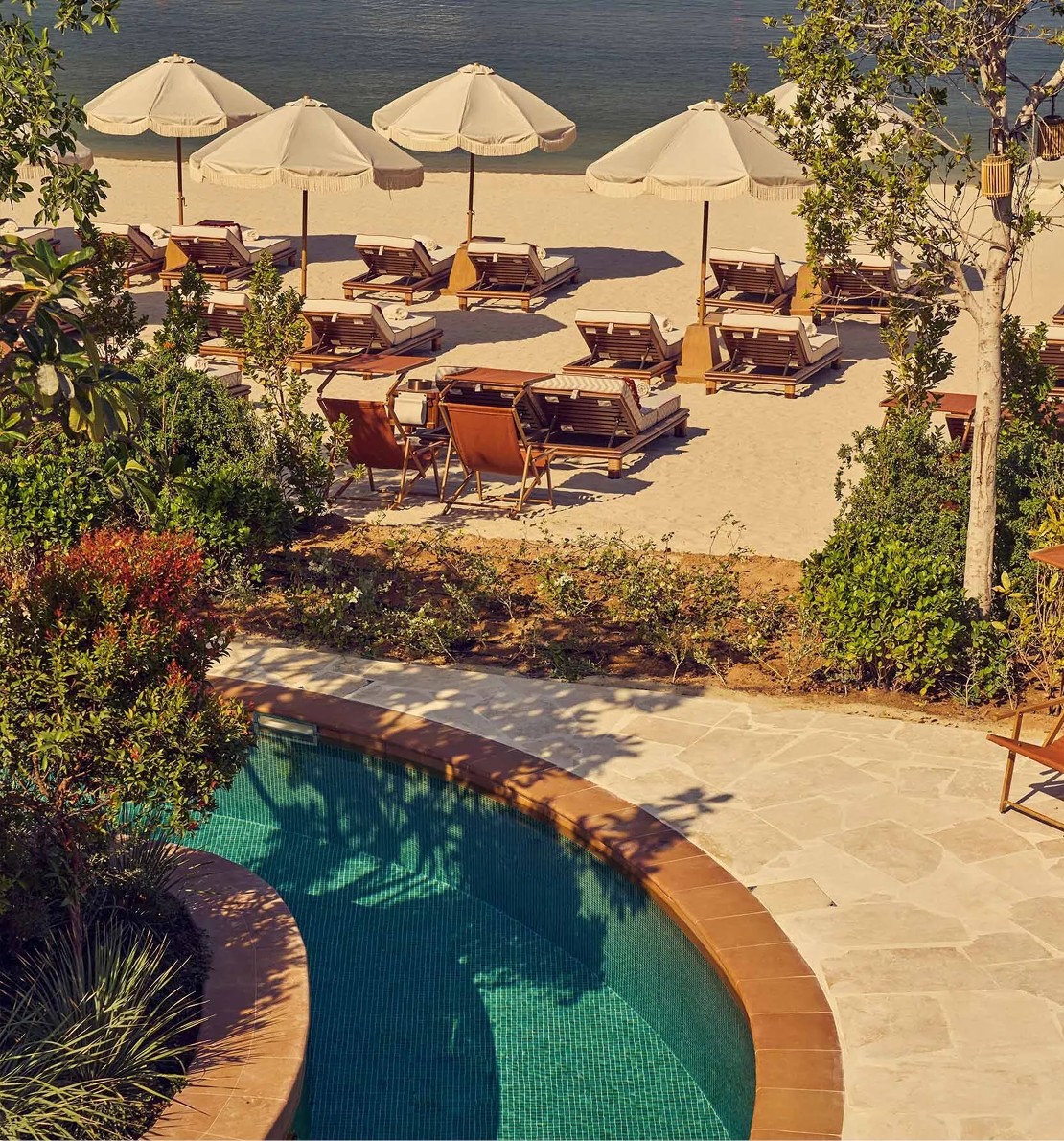
Many hospitality concepts launch with strong momentum but struggle to maintain longevity. What, in your view, makes a concept stand the test of time in this region?
Longevity is not about opening strong; it is about staying relevant. The region evolves quickly, and guests are highly aware. Concepts need to be built with a strong identity, but also with the ability to evolve over time. The ones that last are the ones that create a genuine emotional connection and continue to refine the experience without losing what made them successful in the first place.
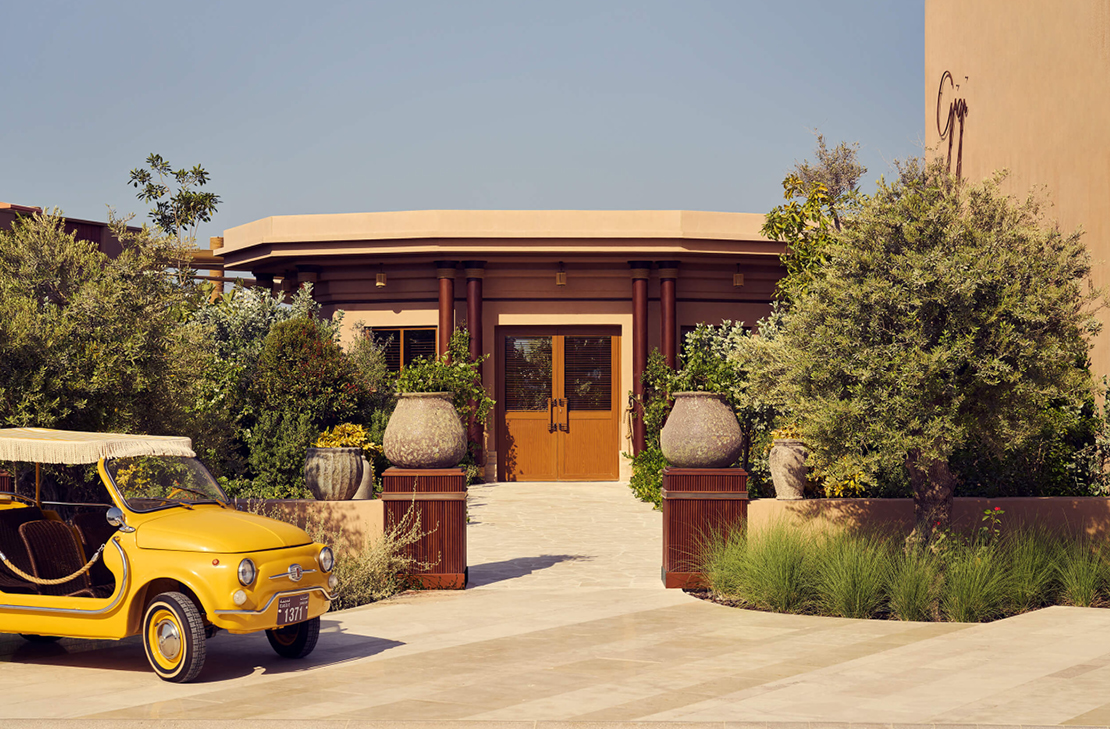
The Middle East hospitality scene has grown rapidly over the past decade. How would you describe the region’s evolution from when you first started to today?
It has become one of the most sophisticated markets globally. When we started, there was a heavy reliance on importing concepts. Today, the region is creating its own voice and setting its own standards. Dubai, in particular, has become a reference point for experience-led hospitality. That level of competition pushes everyone to be more precise, from design to operations to storytelling.
Saudi Arabia is emerging as a major hospitality market. How do you see its influence shaping the wider regional dining landscape?
Saudi Arabia represents one of the most important growth markets globally, not just in scale but in opportunity. It allows us to develop concepts with a strong cultural foundation from the outset. That will have a wider impact on the region, encouraging a more thoughtful approach to localisation and authenticity.
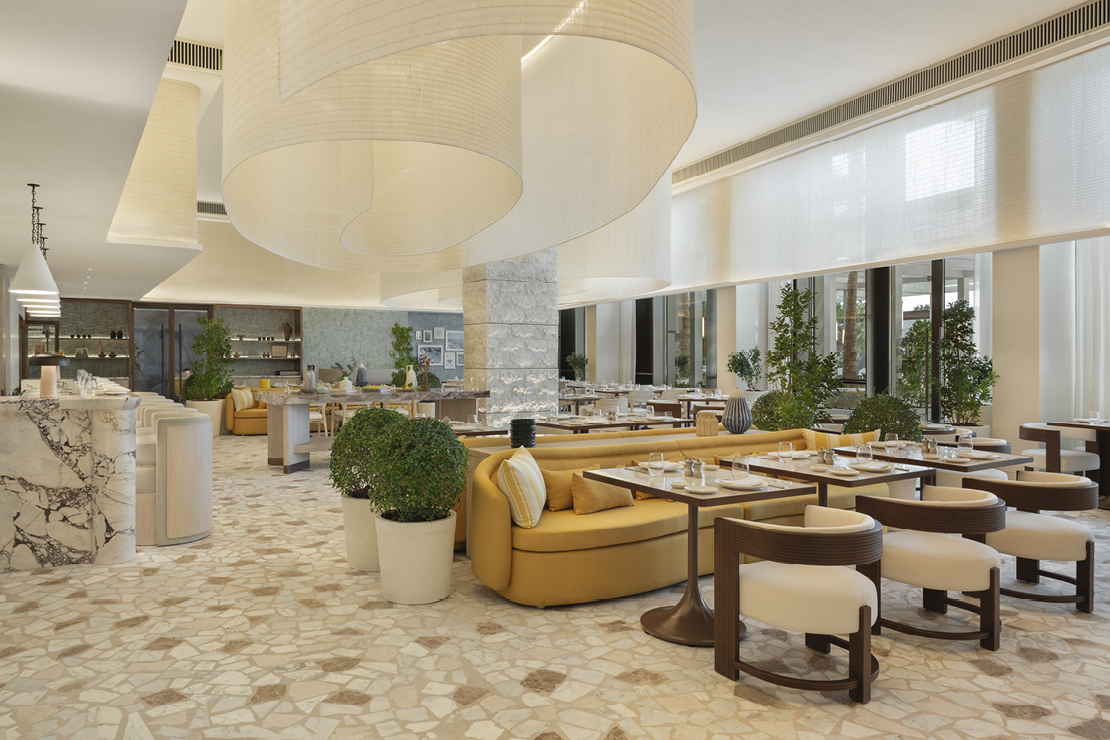
The region has experienced periods of uncertainty recently. How have you seen the hospitality industry respond and adapt?
It has created more discipline across the industry. There is a stronger focus on clarity of concept, operational efficiency and consistency of delivery. Growth is becoming more intentional, with greater emphasis on creating real value through experience.
How do you see the hospitality industry bouncing back and evolving across the Middle East in the coming months?
Growth will continue, but it will be more considered. There is a clear shift towards destinations that offer a complete experience. Guests are looking for places that combine food, design, music, and atmosphere in a cohesive way.
What trends do you believe will shape the next generation of hospitality concepts in the region?
We are moving towards more immersive, multi-dimensional concepts. Hospitality is becoming more connected to culture, whether through art, music or community. At the same time, there is a growing focus on building ecosystems around concepts, including membership, repeat engagement and long-term guest relationships.
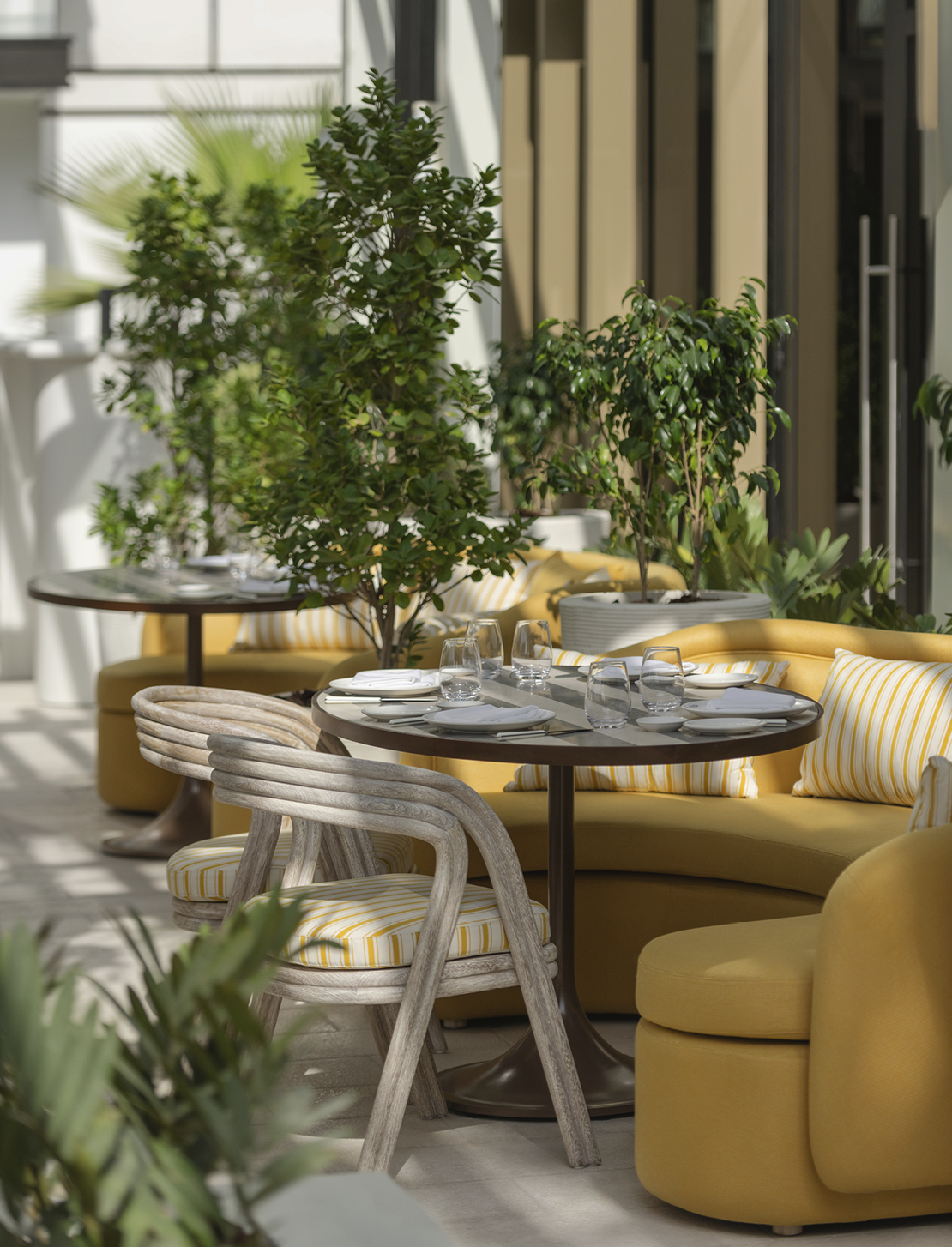
As hospitality becomes more experience-led, how important is storytelling when developing a new concept?
Storytelling is what gives a concept its direction. It informs every decision, from the architecture and interiors to the menu and service style. Without a clear narrative, it is difficult to create something that resonates over time. People return to places that make them feel something, and that always comes back to the story.
Looking ahead, what is your long-term vision for Paris Society and its presence in the Middle East?
To build on the foundation established by RIKAS and position Paris Society as a leading lifestyle hospitality platform in the region. The ambition is to create a portfolio of destinations that reflect a refined art of living, combining thoughtful cuisine, design, experience and cultural relevance, while maintaining consistency in quality across markets.
What is in the pipeline for you this year, and looking to the future?
We are entering a strong phase of international expansion, building on the momentum of recent openings, most notably Siena Restaurant in Dubai International Financial Centre, which has quickly established itself as one of the city’s standout new destinations. This reflects the continued evolution of our brands within Paris Society (formerly RIKAS Group), and the growing international recognition of concepts such as Mimi Kakushi and Gigi Rigolatto, both expanding into the U.S. as part of the Delano Miami Beach relaunch, marking a key milestone for the group.
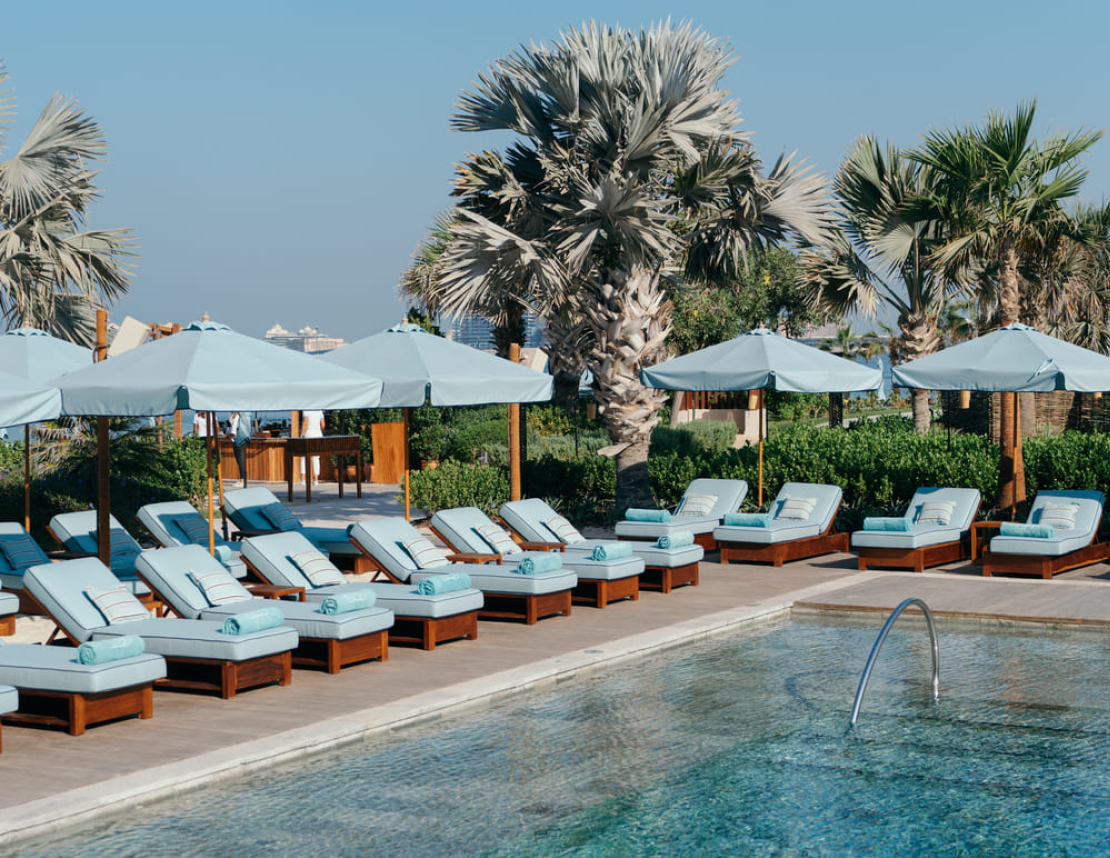
Looking ahead, the pipeline includes strategic openings across Bodrum and Saint Tropez this year, alongside continued growth in the GCC and key international cities such as Abu Dhabi, Rome and New York. Each project is carefully tailored to its location while remaining part of a connected global portfolio of destination-led brands.
Is there one dream concept you would love to bring to the region?
There isn’t a single fixed “dream concept” in isolation, because what’s most exciting is the ability to continuously redefine hospitality itself in this region. The idea is a destination where hospitality, culture, and art are fully intertwined in a seamless way, an evolving space that doesn’t remain static but grows with its city and becomes part of its identity over time. A place people return to not just for one experience, but for the sense of connection it creates.
In many ways, this feels less like a future ambition and more like something already in motion. With the regional and international expansion underway, we are living that vision day to day. I feel incredibly grateful for the teams who have built this with such consistency and ambition, and for the communities that continue to support and embrace what we are creating. That combination is what allows us to keep pushing boundaries and shaping what modern hospitality can be.
By Lindsay Judge
Inside the Japanese Head Spa Trend as it Arrives in the Middle East
From Asia to the Middle East, it has become one of the fastest-growing wellness rituals
Japanese head spas have become one of the fastest-growing wellness rituals globally, blending scalp care, massage, and holistic relaxation into a treatment designed to restore both hair health and mental well-being. Long popular in Japan, where scalp care is approached with the same importance as skincare, the concept has steadily evolved from niche beauty ritual into an international wellness trend, now finding a growing audience in Dubai.
Part treatment, part sensory escape, Japanese head spas focus on scalp health through deep cleansing, massage techniques, and circulation-boosting therapies designed to relieve tension and improve hair and scalp condition. In a city where wellness trends often lean toward high-performance treatments and aesthetic results, the rise of head spas reflects a broader shift toward slower, more restorative experiences that combine beauty with emotional well-being.
Dubai’s luxury wellness scene has increasingly embraced the concept, with spas and salons introducing elevated versions of the ritual that combine scalp detox treatments with aromatherapy, facial massage and holistic relaxation techniques. The appeal lies not only in healthier hair but in the sense of calm the treatment creates, offering a rare pause from the overstimulation of everyday life.

Sensorial Head Spa, ReFIVE Spa, Five Hotels
Tried & Tested
Sensorial Head Spa, ReFIVE Spa, Five Hotels
90-minutes, Dhs695 per person, couple’s Head Spa from Dhs500 per person
Among the latest additions is the 90-minute Sensorial Head Spa at ReFIVE, designed as a complete relaxation ritual rather than a traditional salon treatment. Beginning with a personalised scalp consultation, the experience moves into a bespoke head spa ritual focused on detoxifying the scalp and releasing built-up tension through gentle massage techniques.
At the centre of the treatment is the traditional Japanese-inspired water therapy machine, which softly cascades streams of water across the scalp in rhythmic motions designed to stimulate circulation and encourage deep relaxation. As the treatment unfolds, colourful ambient lights reflect around the dimly lit room, creating an immersive 360 sensory experience that feels closer to a wellness escape than a salon appointment.

ReFIVE Spa, Five Hotels
The treatment is also paired with a lymphatic drainage facial and glow mask, adding an additional skincare element that leaves the face looking noticeably fresher and more radiant by the end of the session. The experience is genuinely calming, balancing physical results with a strong sensory element. Expect to leave feeling deeply relaxed, while the scalp and hair feel refreshed, healthier and noticeably silky smooth.
For bookings and more information, visit ReFIVE Spa
Michaela Watrelot, Curator and Director of Exhibitions Foundation at Bassam Freiha Art Foundation, on shaping exhibitions that connect regional histories with global narratives
As the UAE’s cultural institutions expand in both scale and ambition, the role of independent foundations has become increasingly significant in shaping how art is accessed and understood. At the Bassam Freiha Art Foundation, this approach is defined by a commitment to public engagement, curatorial depth and a dialogue that moves fluidly between regional and international perspectives.
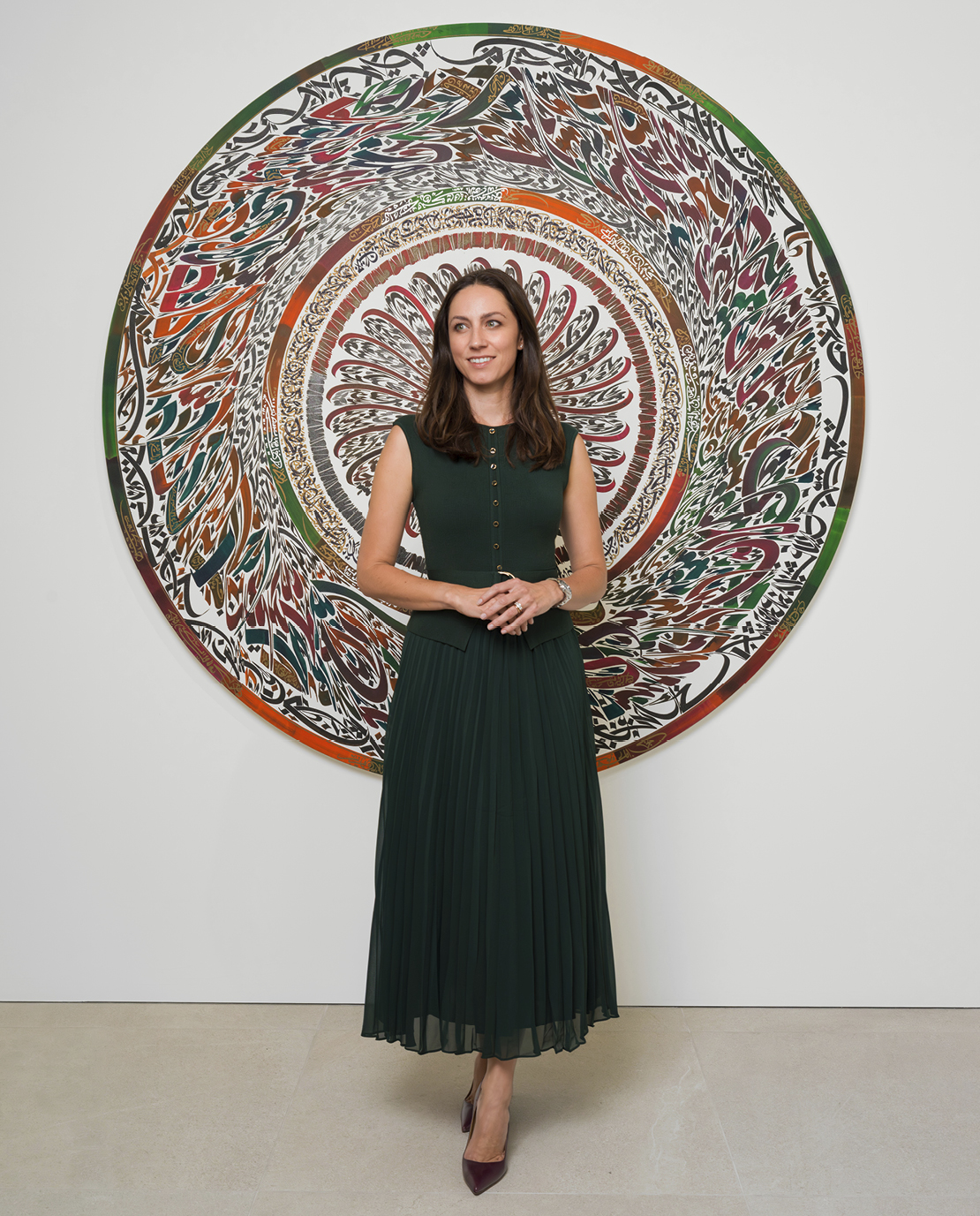
As Curator and Director of Exhibitions, Michaela Watrelot plays a central role in developing this vision, overseeing a programme that brings together historical narratives, contemporary practices and educational initiatives. Positioned within Saadiyat Cultural District, the foundation offers a distinct model, one that balances private collection with public access, while creating space for emerging voices and critical discourse.
In this conversation, Watrelot reflects on the evolving cultural landscape of the UAE, the thinking behind recent exhibitions, and how institutions can foster deeper, more meaningful engagement with art today.
How would you define the role of the Bassam Freiha Art Foundation within the UAE’s evolving cultural landscape today?
Bassam Freiha Art Foundation (BFAF) occupies a specific position within the UAE’s cultural ecosystem. Founded by philanthropist and collector H.E. Bassam Said Freiha, the foundation was established with a clear dual purpose: to make private art collections publicly accessible, and to provide a platform for artists from the UAE, the wider Arab world, and beyond. As a non-profit institution, that philanthropic foundation shapes everything we do, from our free admission policy to the breadth of our educational programming. We are not a commercial gallery, nor are we a state institution, and that position allows us to move with a certain curatorial freedom, presenting material that is historically grounded while remaining responsive to contemporary conversations.
What distinguishes the Foundation’s curatorial vision and programming, particularly in the way it engages both regional and international narratives?
H.E. Bassam Said Freiha’s focus on Orientalism and the collections we bring in from other private collectors, naturally raises questions about how the region has been seen, represented and how it has represented itself. No artistic tradition develops in isolation and that premise shapes how we build our exhibitions. We present the region’s art within the broader frameworks that shaped it, whether by looking at Arab modernism in relation to international movements or by tracing the Western gaze in Orientalism. Education is embedded within this framework. Every exhibition is accompanied by programming, whether workshops, lectures, or artist talks, that invite audiences to engage more deeply with what they are seeing. Our Story of Art series, tracing key art movements from the Renaissance to contemporary practice, has become one of our most attended programmes, which tells us something about the genuine appetite from UAE audiences for that kind of sustained engagement.
When developing an exhibition programme, what are the key elements you look for when selecting projects and artists?
An exhibition needs to have intellectual substance and the capacity to sustain extended engagement, whether through a single body of work or a more complex thematic structure. Beyond the work, we consider what the programme contributes to the broader cultural conversation we are building at BFAF. Each exhibition connects to those around it, building a body of reference for our audiences over time. Philanthropy is also part of that thinking. H.E. Bassam Said Freiha’s founding vision was rooted in public benefit, and that shapes the kinds of projects we take on. We ask not only whether a project is artistically strong, but whether it genuinely extends access to collections and voices that audiences would not otherwise encounter.
How important is it for the Foundation to create platforms for emerging talent, and how does this shape your broader programming strategy?
It is central to our purpose. Education and emerging talent are closely linked at BFAF. Through our university partnerships and our free public programming, we are invested in developing the next generation of artists, collectors, and cultural practitioners, not only giving them exhibition opportunities but building the critical literacy that makes those opportunities meaningful.
The Foundation recently launched a collaboration with Zayed University, marking its first artist-in-residence programme. Can you tell us about the vision behind this initiative and what you hope students will gain from the experience?
The collaboration with the College of Arts and Creative Enterprises at Zayed University is structured in three phases, each led by a different student group: one producing the photographic body of work, one curating the exhibition, and one developing its visual identity. Working with French photographer Philip Ducap, students photographed architecture, landscape, and portraiture across Abu Dhabi, producing work that will now form the basis of an exhibition titled Seeing Ourselves. It is conceived as a direct counterpoint to the Orientalist collection at BFAF, where those nineteenth-century European paintings present the Arab world through an outsider gaze, the student photographs invert that dynamic, images made by young people from the UAE, looking at their own world on their own terms.
The exhibition will be displayed in our Main Gallery from June 2026, and the work they produce will be seen by an international audience. That visibility matters, but so does the process of developing a critical and personal visual language, which is what the programme is fundamentally designed to support.
Turning to your current programme, Reflections: Modern and Contemporary Art from the Villain Collection brings together works from across the Arab world. Can you tell us about the curatorial vision behind the exhibition?
Reflections is built around the collection of Fairouz and Jean-Paul Villain, assembled over three decades through sustained relationships with artists across the Arab world. The exhibition traces the trajectory of that collecting journey across three zones: The Levant and the Greater Arab World: Voices Between the Lines, where works by Paul Guiragossian, Louay Kayyali, Etel Adnan and others move between figuration and abstraction to carry histories of displacement and endurance; North African Art: Forms of Continuity, which examines how artists from Morocco, Tunisia, Algeria and Egypt have treated cultural memory as something living and transformative rather than fixed; and Emirati Art: This Place, This Feeling, a zone deliberately positioned at the heart of the exhibition, reflecting the Villains’ long presence in Abu Dhabi and the relationships they built with the artists from the region.
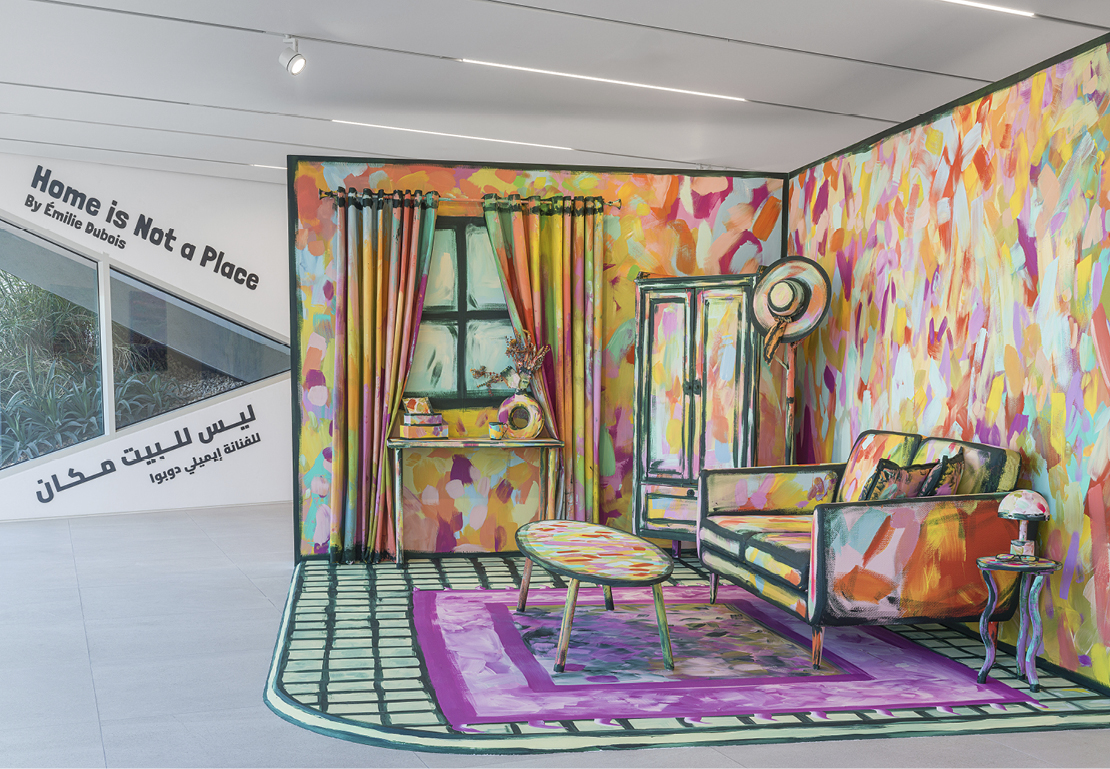
What interests me about this collection is what it demonstrates about private patronage as a form of cultural responsibility. These works were not acquired to illustrate a thesis. They are the result of genuine, long-term engagement with artists, and that relationship is itself part of what the exhibition explores.
The exhibition is organised into interwoven sections that move beyond geography and chronology. What kind of dialogue were you hoping to create between these works and cultures?
Many of the artists in Reflections were educated across different countries, worked in multiple contexts, and were in conversation with movements far beyond their immediate region. The thematic structure allows those connections to surface. The dialogue we were hoping to create is less about comparison and more about shared concerns. Across all three zones, the recurring questions are displacement and endurance, the relationship between heritage and contemporary form, and what it means to look at one’s own world on one’s own terms.
Home Is Not A Place explores the idea of belonging through a deeply personal and immersive lens. Can you tell us about the thinking behind presenting this exhibition?
Emilie Dubois’s work considers home as something assembled over time rather than attached to a fixed location. That idea resonates strongly in Abu Dhabi, where most residents know what it feels like to live away from their place of origin, and where questions of belonging are part of everyday life. The exhibition speaks directly to that experience and bringing it to BFAF reflects our commitment to presenting work that is genuinely relevant to the community here.
As an immersive experience, how does the exhibition invite audiences to engage with the concept of home in a more emotional or sensory way?
The central element is a living room installation where walls, furniture, and floors are painted with broad, expressive brushstrokes. Visitors are invited to step into it physically, which changes the nature of the encounter entirely. Rather than standing in front of a work and observing it, you are inside it. The colourful mixed media works surrounding it add another layer, drawn from Dubois’s own experience of building a life away from Guatemala. Together they trace what we carry with us, what we leave behind, and what we gradually reconstruct. Because so many visitors share some version of that experience, the exhibition tends to produce a reflective quality that is harder to achieve through conventional display.
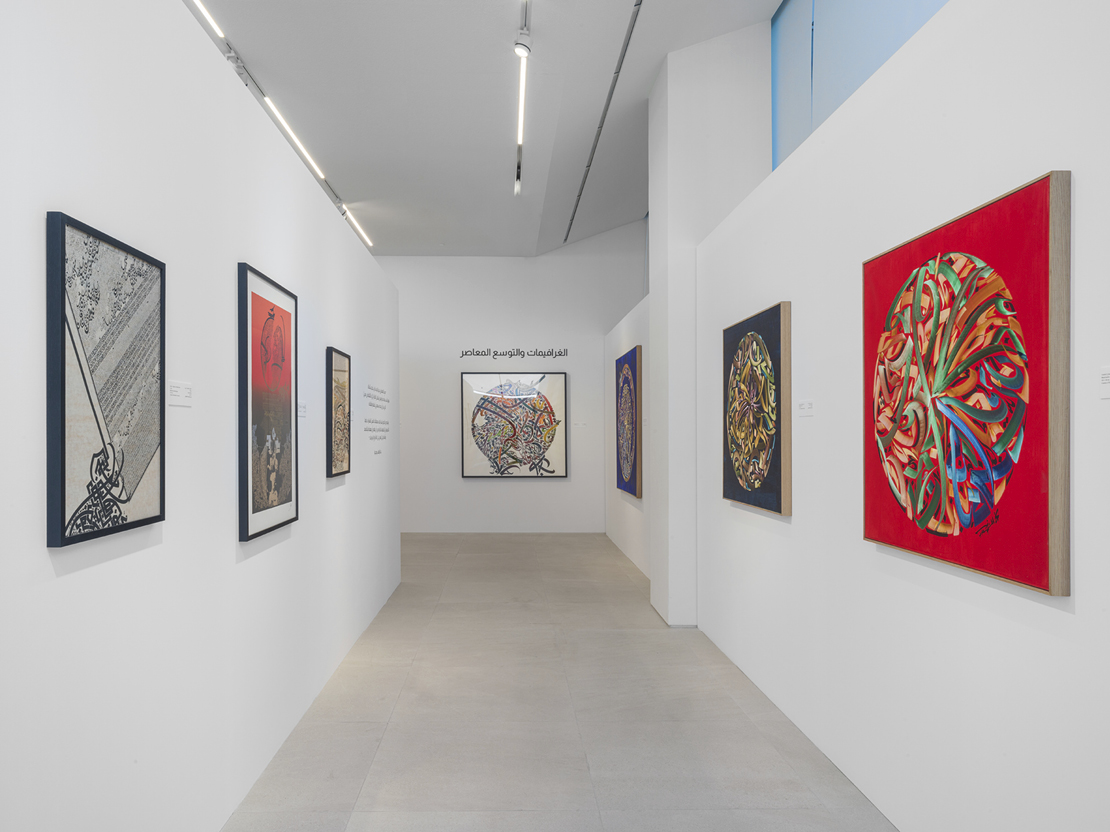
More broadly, how do you see the cultural landscape in the UAE evolving over the coming years?
The foundations laid over the past decade are beginning to produce something very layered. We are located in the heart of Saadiyat Cultural District in Abu Dhabi. With the Louvre Abu Dhabi now a mature institution, and the Zayed National Museum and Natural History Museum Abu Dhabi recently opened, there is a more complete ecosystem in place. Frieze Abu Dhabi and the forthcoming Guggenheim will strengthen the city’s connection to the international contemporary art market and deepen its engagement with global art histories. What I find most significant is the audience that has developed alongside these institutions, one that is increasingly informed and comfortable engaging with art across different periods and contexts.
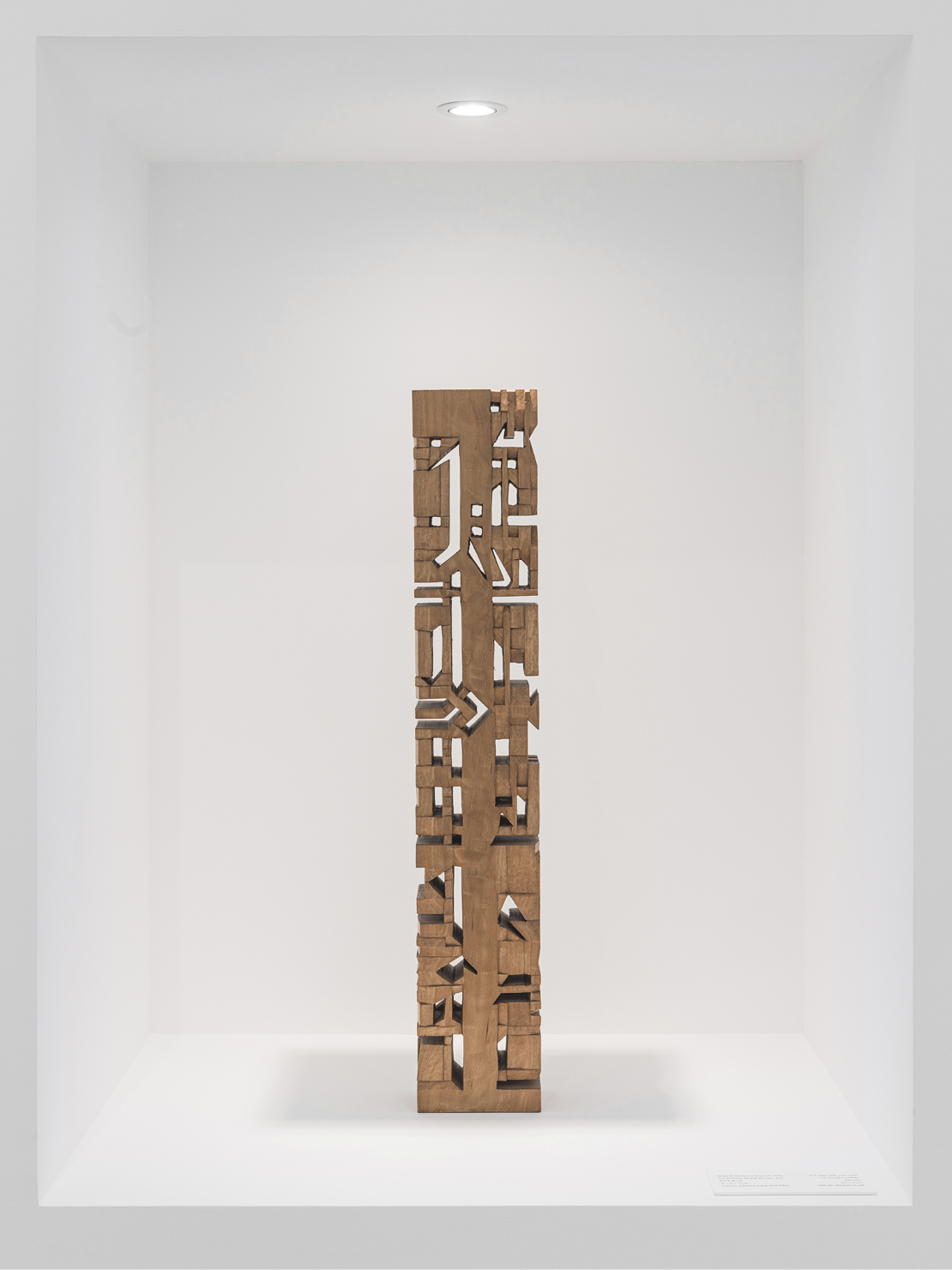
What shifts are you observing in how audiences are engaging with art and exhibitions today?
There is a growing appetite for depth. Visitors are returning, attending lectures, joining workshops, and asking more specific questions about what they are seeing. That shift reflects the cumulative effect of years of serious cultural programming. At BFAF, we see it in how people move through our exhibitions and in the conversations that happen during public programmes.
Looking ahead, what can we expect next from the Bassam Freiha Art Foundation in terms of upcoming exhibitions or collaborations?
The 2026 programme continues to develop the curatorial direction we have established. Reflections and Home Is Not a Place are currently on view alongside Constructing the Orient: Fragments of a Western Dream, which remains open until 31 May. We continue our education programme, with a number of lectures, talks and workshops scheduled each month, and this summer we will present our student-led exhibition in collaboration with Zayed University. Our next series of exhibitions will open in October 2026, and we will announce them in the coming months.
By Lindsay Judge
Dima and Tania Nawbar, CEOs and Creative Directors of L’atelier Nawbar, Discuss Honouring a Family legacy
With a legacy dating back to 1891, L’atelier Nawbar is one of the region’s most storied fine jewellery houses, shaped by generations of craftsmanship and creative evolution. Born in Lebanon as a small jewellery store in Beirut’s historic gold souk, the brand is today run by fourth-generation family members, sisters Dima Nawbar and Tania Nawbar, who became the first women to take the helm of the family business in 2011.
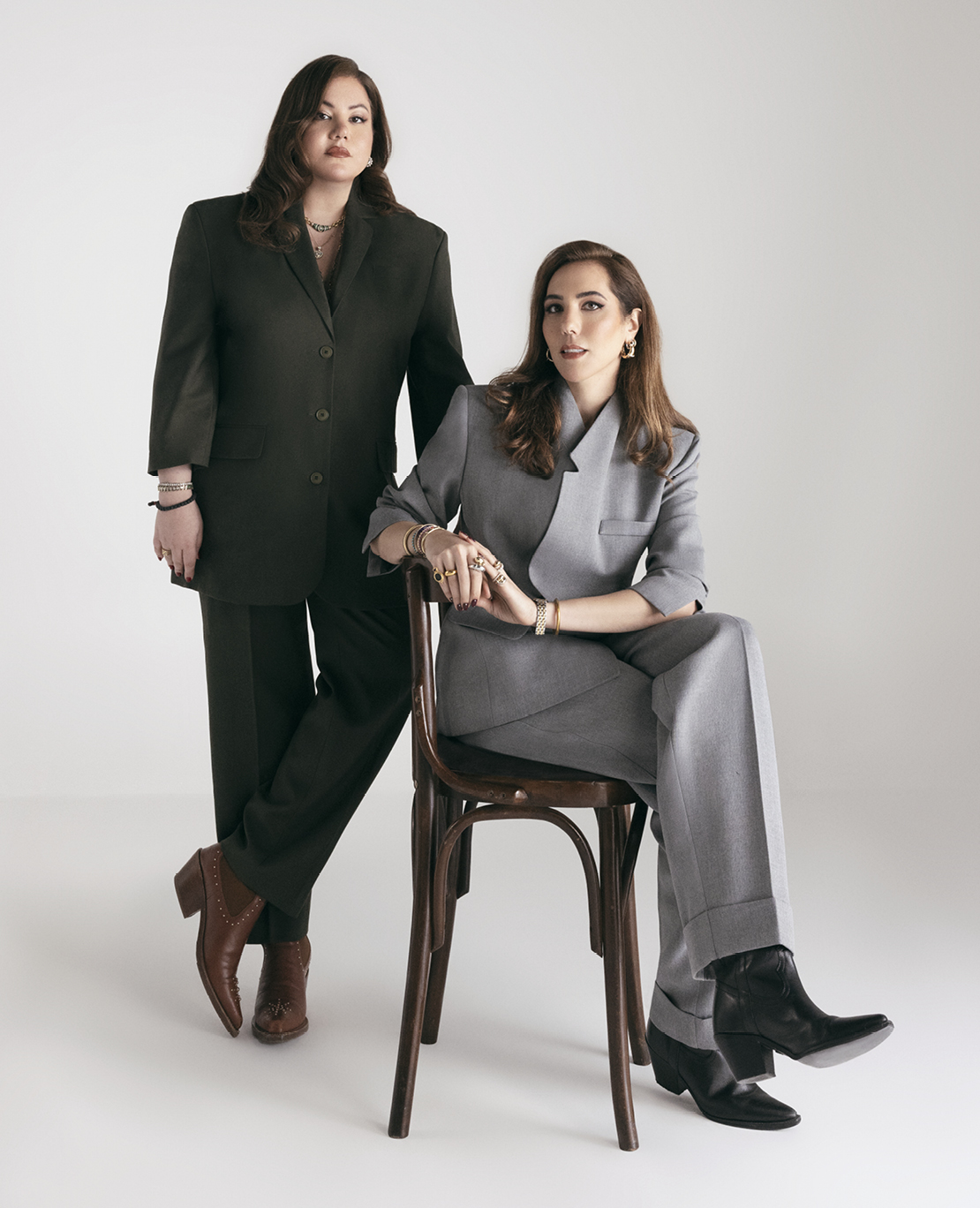
Blending heritage with a distinctly modern sensibility, the duo have redefined the house’s identity, honouring what their great-great-grandfather built through pieces that feel personal, expressive and deeply rooted in storytelling. Designed as “modern heirlooms”, their creations move beyond tradition, offering jewellery that is meant to be worn, layered and lived in, carrying meaning across generations.
As the brand continues to expand its international presence, we speak to Dima and Tania about navigating legacy, building a contemporary jewellery language and shaping the future of L’Atelier Nawbar.
L’Atelier Nawbar’s story dates back to 1891, with four generations of family heritage. What did it mean for you to become the first women to step into the Nawbar dynasty?
Stepping into the Nawbar dynasty as the first woman was both a responsibility and a natural evolution. We grew up around the atelier, so it never felt unfamiliar, but there were expectations to carry forward. From an early age, we developed a deep appreciation for craftsmanship, texture, and the emotion a piece can carry. Because of that, returning to the brand didn’t feel like stepping into something new, but rather continuing something that was already part of us. What mattered most was finding a way to honour that legacy while bringing our own voice into it, making it feel more personal, expressive, and relevant to today.
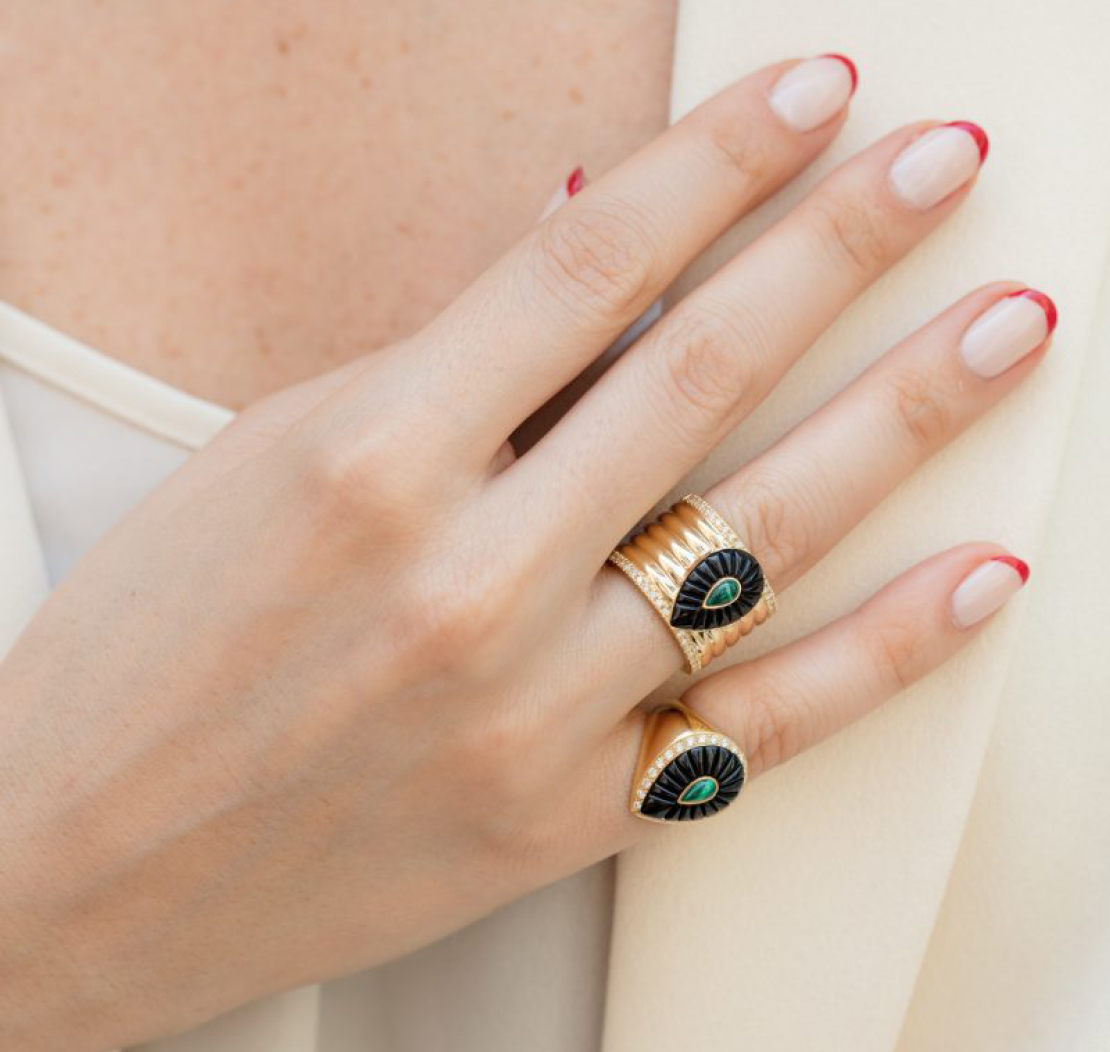
You both built your careers abroad before returning to Lebanon in 2011. What drew you back to the atelier, and how did that transition shape the direction of the brand?
Working together wasn’t something we had planned. When the opportunity came to join the family business, something clicked for both of us at the same time. It felt natural and aligned with how we think, create, and understand the world around us.
We had both started our careers at an advertising agency in Abu Dhabi, and about a year and a half in, our father asked if we would consider joining the atelier. We moved back to Lebanon, and the rest followed quite organically. Because it was never forced, it gave us the freedom to approach the brand in our own way.
How do you approach evolving a legacy brand today while staying true to its roots?
For us, evolving the brand feels very instinctive. We grew up around the atelier, watching pieces come to life from sketch to final polish, so that connection shaped how we see jewellery from an early age. Because of that, evolving the brand isn’t about changing it, but about building on what already exists. Stacking and styling have always been part of our DNA, so we continue to introduce pieces that feel playful, colourful, and easy to layer. It’s about creating something new while allowing it to sit naturally alongside what’s already there, so the brand keeps evolving without losing its identity.
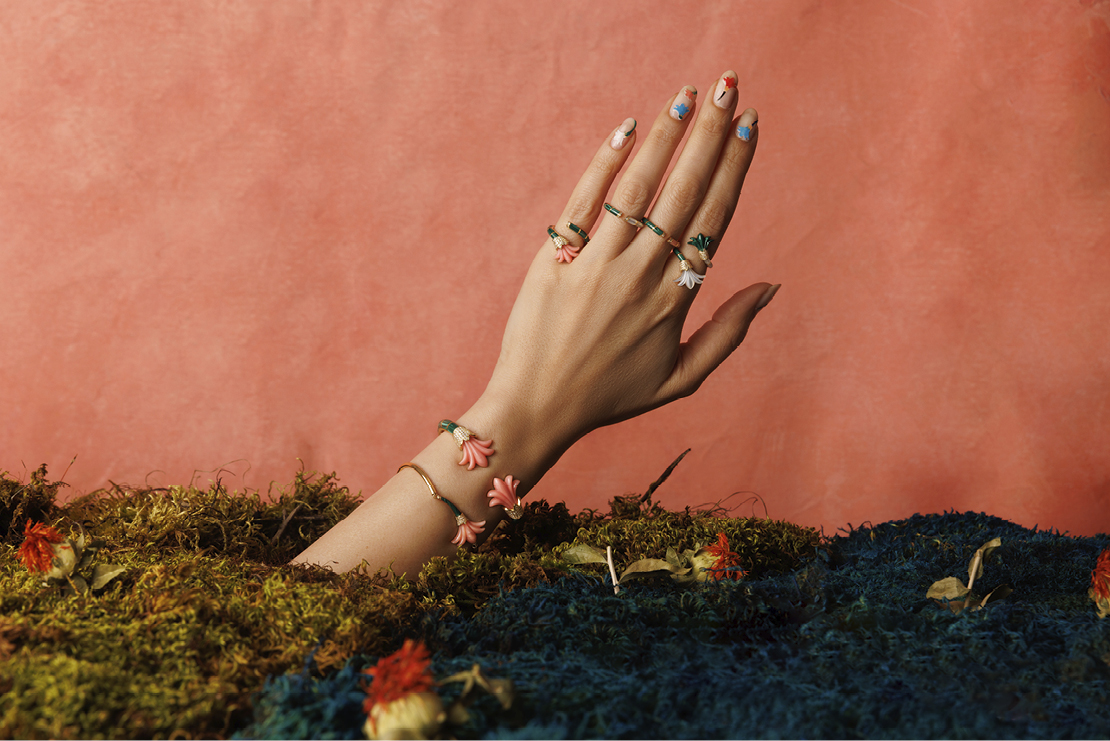
How do you work together as sisters, and how does this dynamic influence your creative process and decision-making?
Our sisterhood shapes everything we do. We grew up with the mindset that what’s mine is hers and what’s hers is mine, so collaboration comes very naturally to us. There’s a strong sense of trust and openness in how we work, but also an understanding of each other’s strengths. We give each other space while staying completely aligned, and that balance creates a process that feels intuitive rather than forced. It also builds a culture around us that’s warm, supportive, and very human.
The Middle East’s jewellery landscape has evolved significantly in recent years. How have you seen the regional industry change, and what excites you most about its future?
The region has become much more expressive. There’s been a shift from traditional, occasion-based jewellery to pieces worn every day that reflect personal identity. What’s exciting is seeing more individuality and creativity coming through, especially from younger generations that aren’t afraid to mix, layer, and experiment.
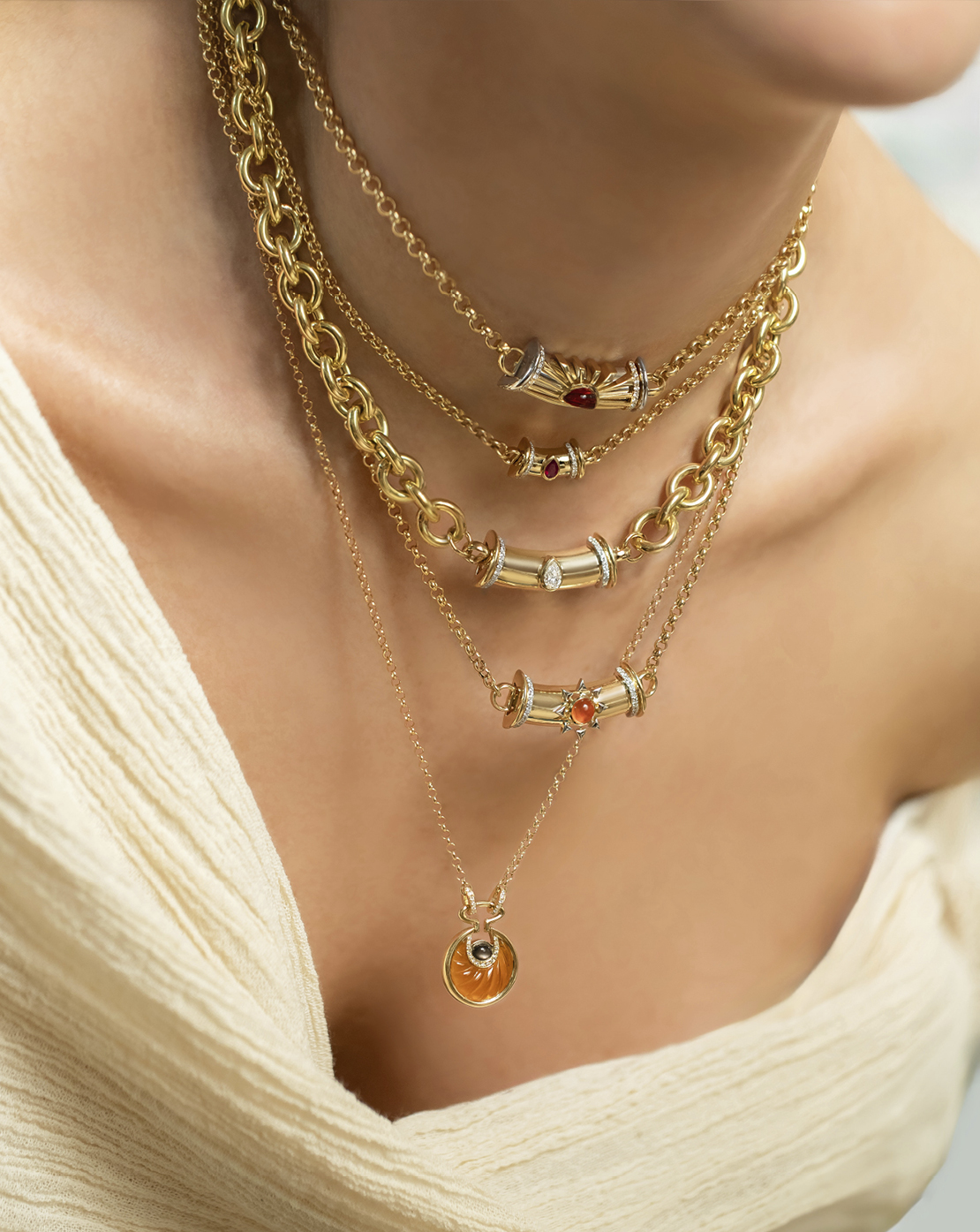
L’Atelier Nawbar has become known for creating jewellery that carries meaning and storytelling. Why is emotional connection so important in your design approach?
Jewellery is something people live with, so it has to mean something. For us, it’s never just decorative. Whether through symbols, zodiac elements, or pieces that mark personal moments, each design is meant to carry a story that becomes unique to the person wearing it. Pieces are layered and styled differently by each person, so the same pieces can look completely different on everyone, each telling its own story. They become part of everyday life, and that’s where the emotional connection truly comes in.
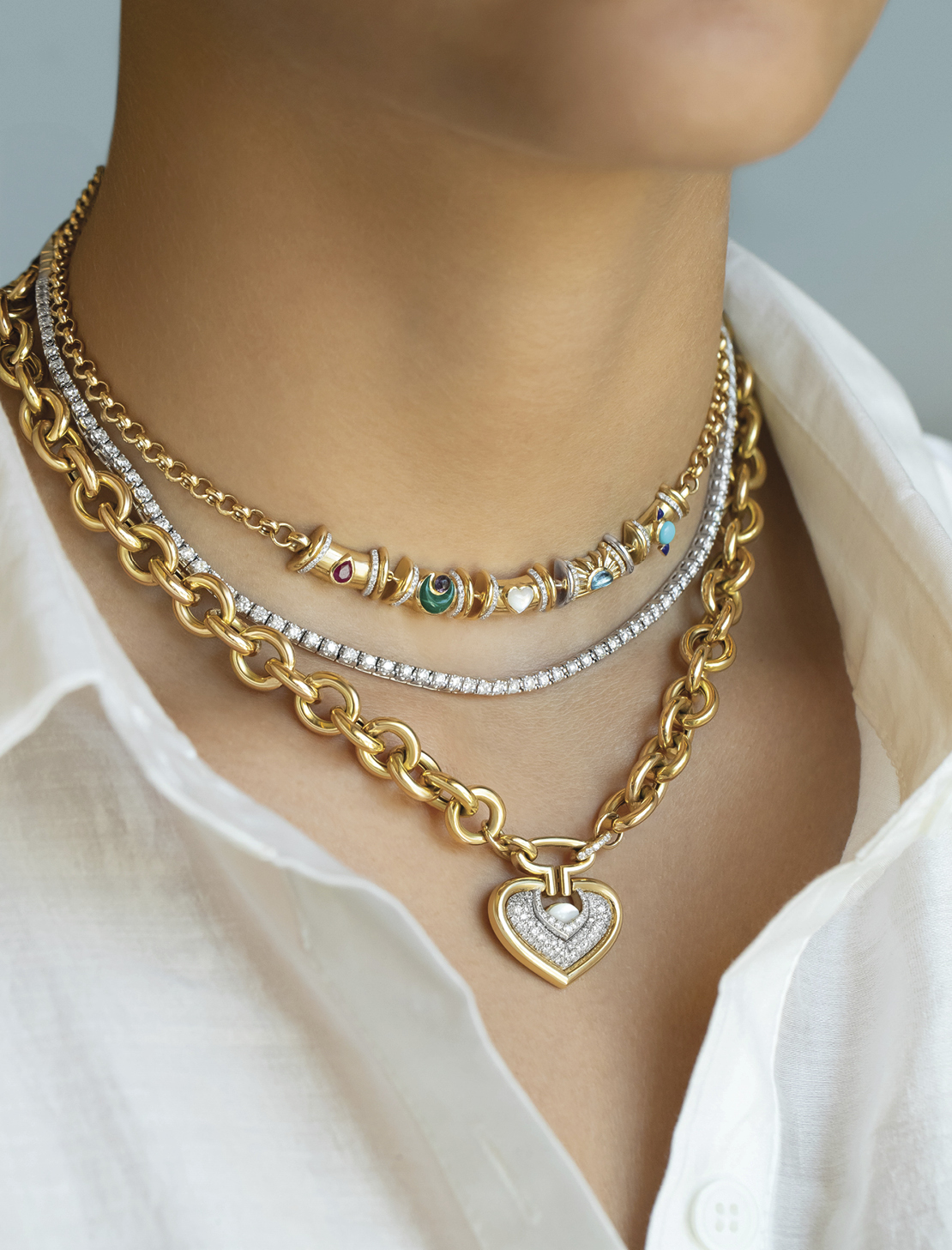
As founders, how do you balance creativity with running a growing business?
It’s always a balance. Creativity is at the core of everything we do, but it needs structure to grow. We’re very hands-on, constantly moving among design, production, and strategy, and we naturally support each other throughout the process. As sisters, we’ve always had that instinct to step in for one another. When one of us feels overwhelmed, the other takes over, whether that’s creatively or on the business side. That balance allows us to keep things moving while staying aligned. In that sense, the business side doesn’t take away from the creativity; it supports it and allows it to evolve.
What have been some of the biggest challenges you’ve faced while building L’Atelier Nawbar, particularly as women leading a heritage jewellery house?
One of the biggest challenges was finding the confidence to step into something so established and make it our own. It wasn’t just about continuing the legacy, but about knowing when to respect it and when to challenge it.
As women, we also felt the need to prove ourselves beyond the creative side, showing that we could lead, make decisions, and grow the business as a whole. Over time, that pressure pushed us to become more certain in our vision and more intentional in how we shape the brand today.
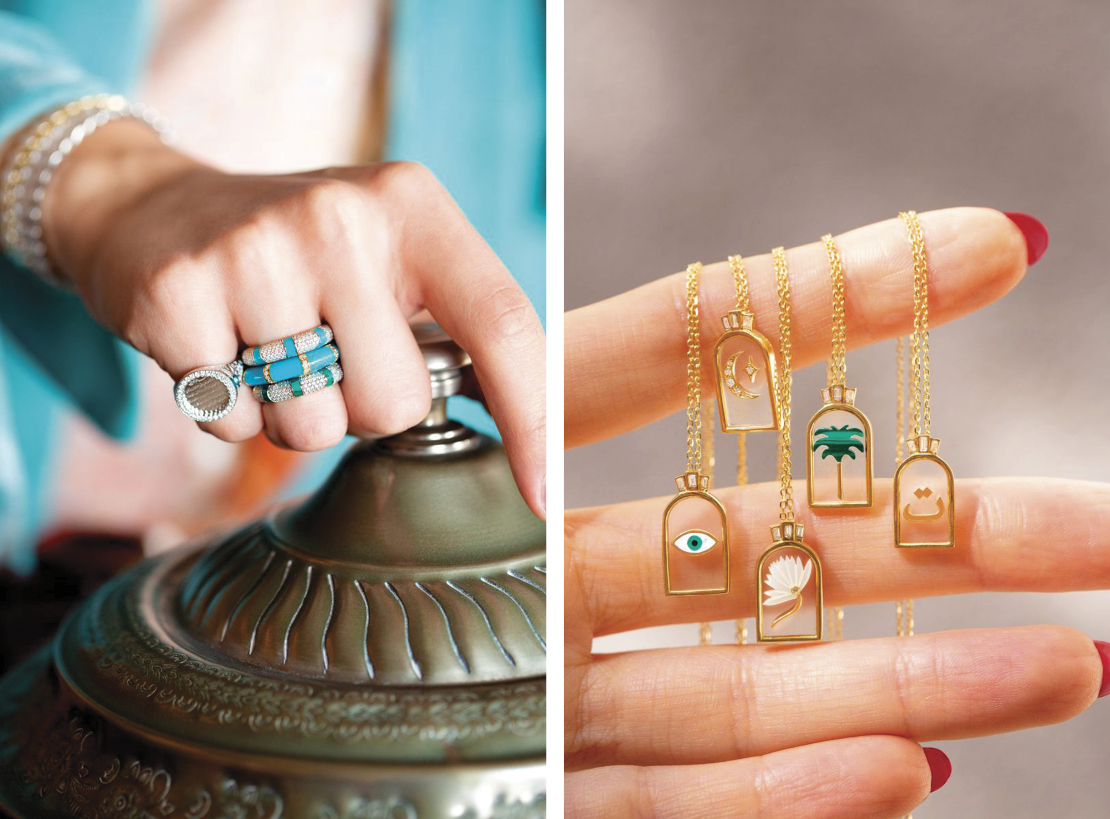
The region has been through a difficult time this year and in previous years – how do you stay positive when faced with challenging periods both professionally and personally?
Living and working in Lebanon teaches you resilience. There’s always a level of uncertainty, but it also gives you perspective on what really matters.
We rely on each other a lot; we’ve always been as much best friends as sisters. When one of us feels overwhelmed, the other steps in, whether that’s practically or emotionally. That balance helps us stay grounded and keep moving forward.
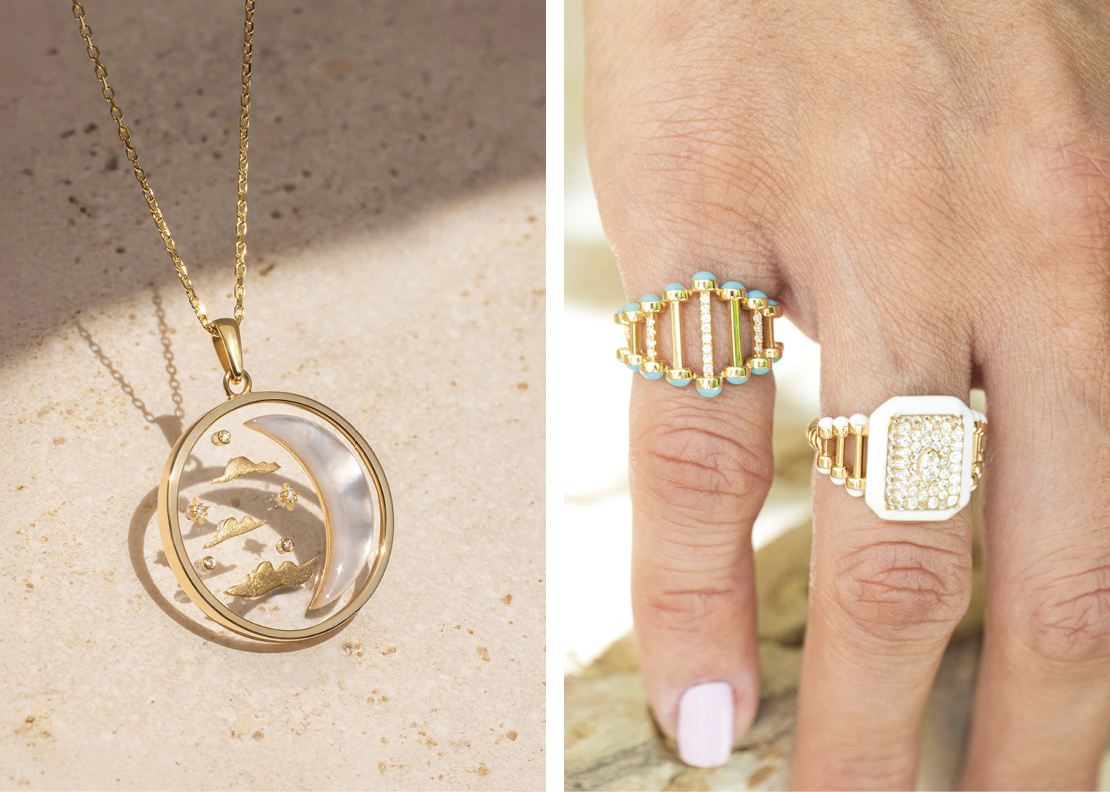
What advice would you give to women looking to build their own brands, particularly within the creative or luxury industries?
Trust your instinct and don’t wait for everything to be perfect before starting. Say yes, even when you don’t have it all figured out yet, and trust that you’ll learn along the way. Building something takes time, but clarity comes through doing.
Looking ahead, what would you still like to achieve with L’Atelier Nawbar, and how do you see the brand evolving in the future?
We want to continue growing internationally while staying true to who we are. That means reaching new audiences, expanding our presence, and continuing to create pieces that feel personal and meaningful. The goal is to evolve naturally, without ever losing the essence of the brand.
What is the professional motto that you live by?
Trust your instinct and stay true to your vision.
Building Through Change, Jean-David Malat, Founder of JD Malat Gallery on resilience, risk and the evolving art scene in Dubai
As the region continues to navigate periods of uncertainty, Jean-David Malat, founder of JD Malat Gallery, has chosen to move in the opposite direction, expanding, investing and building momentum in one of the world’s fastest-evolving cultural hubs. With the opening of JD Malat Gallery in Downtown Dubai in early 2025, the Paris-born, London-based dealer has brought his international programme to the region at a moment when energy is shifting eastward.
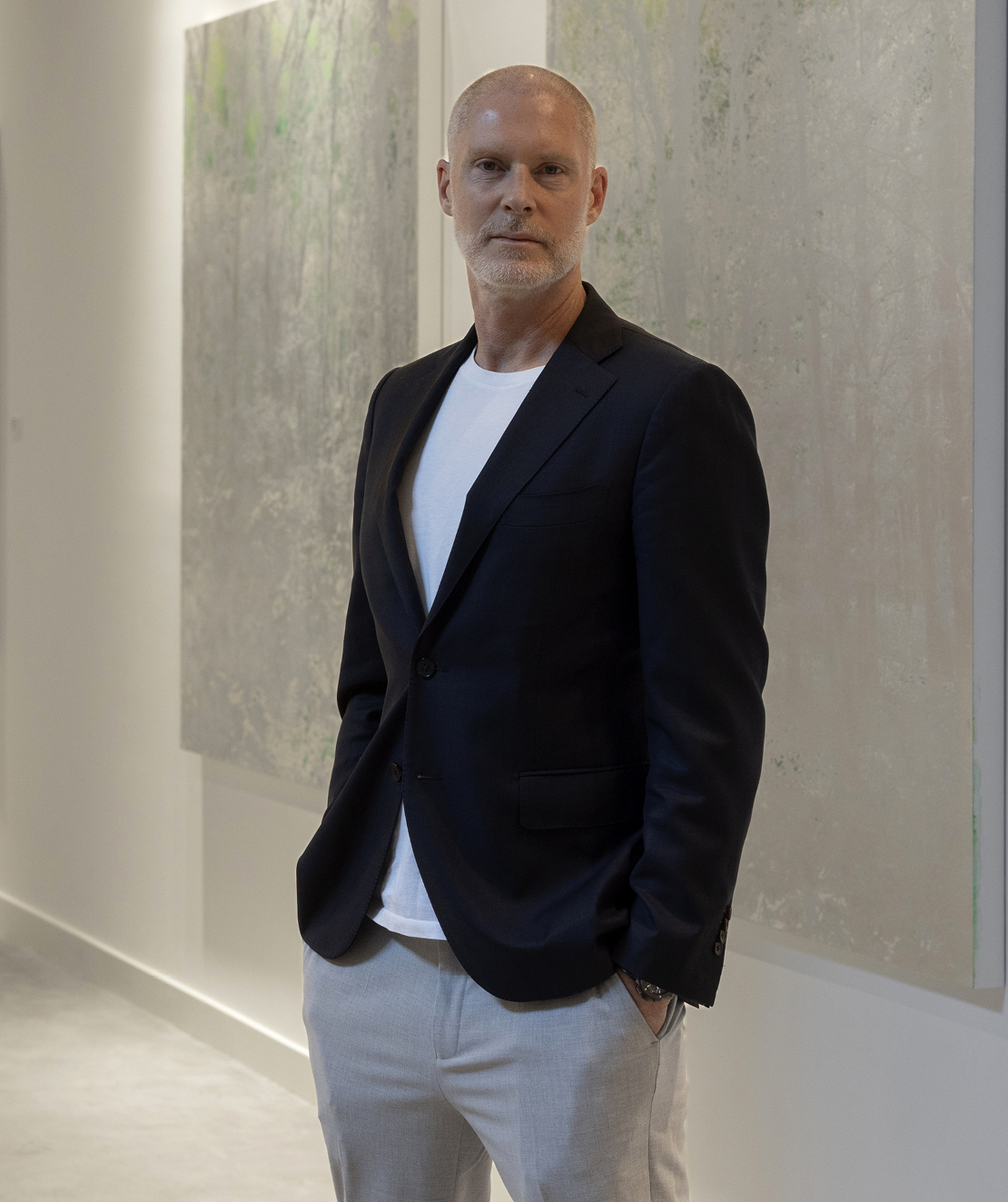
As the second gallery, after its established Mayfair space, the Dubai outpost reflects broader confidence in Dubai’s role as a global meeting point for collectors, artists and institutions. Rather than slowing down in response to external pressures, Malat has continued to programme exhibitions, launch new initiatives and actively engage with the local community, reinforcing the idea that galleries must remain dynamic, even in challenging times.
With a strong calendar of exhibitions ahead, including the upcoming Made in UAE initiative, JD Malat Gallery is entering its next chapter with intent. Here, Malat reflects on building in Dubai, staying resilient through uncertainty and the opportunities shaping the region’s art scene today.
What first brought you to the Middle East, and what attracted you to the region?
I came to Dubai in 2024, initially because many of my friends, clients and collectors had relocated here from London. I wanted to see firsthand how the city had evolved. When I arrived, I was genuinely surprised by how much it had changed since my last visit in 2008. There was a real energy everywhere I went, and I found myself reconnecting with people I had known for years, all of whom were now based here.
Very quickly, I realised there was an opportunity. I opened a company and began looking for a gallery space, exploring areas such as DIFC and Alserkal Avenue before finding a location on the Boulevard. What drew me to it was the atmosphere, there is life, movement, people walking, cafés and restaurants. It felt different, more open, more accessible. I took on three units and transformed them into one large gallery space. I opened in January 2025, at a time when I felt the London market was slowing while the UAE was gaining momentum. It turned out to be the right decision; we’ve had an extraordinary first year.
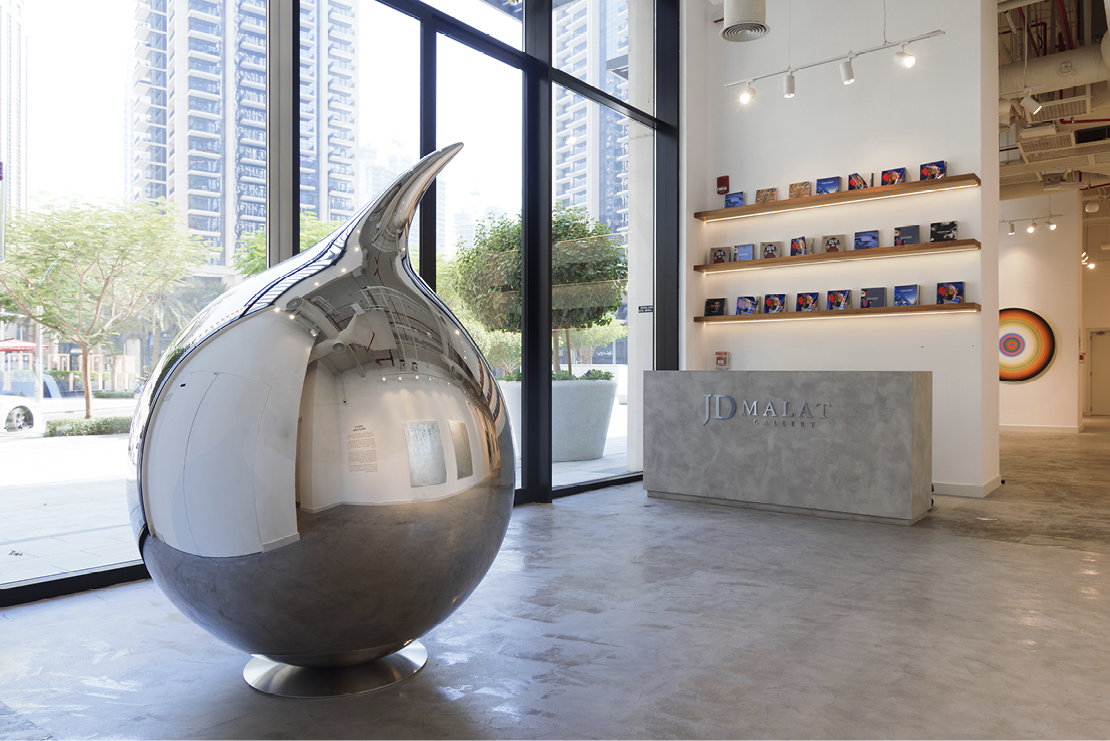
You’ve already hosted several exhibitions in Dubai. What direction do you want to take the gallery in the region?
I want to stay true to the gallery’s identity while also responding to the region. Our programme continues to focus on the international artists we represent, but I am also very interested in discovering and working with talent from the Middle East.
We are launching a project called Made in UAE this summer, which has so far received over 1,000 applications. We are currently reviewing submissions with a panel of judges and will select five artists to exhibit. It’s important to take time when choosing artists. It involves discussion, reflection and alignment with the gallery’s vision.
Alongside this, we’ve maintained a very active exhibition programme. We opened with a group show, Carte Blanche, which introduced the gallery through a mix of artists, followed by a series of solo exhibitions. Remaining visible and engaged is essential, and the response from audiences in Dubai has been extremely positive.
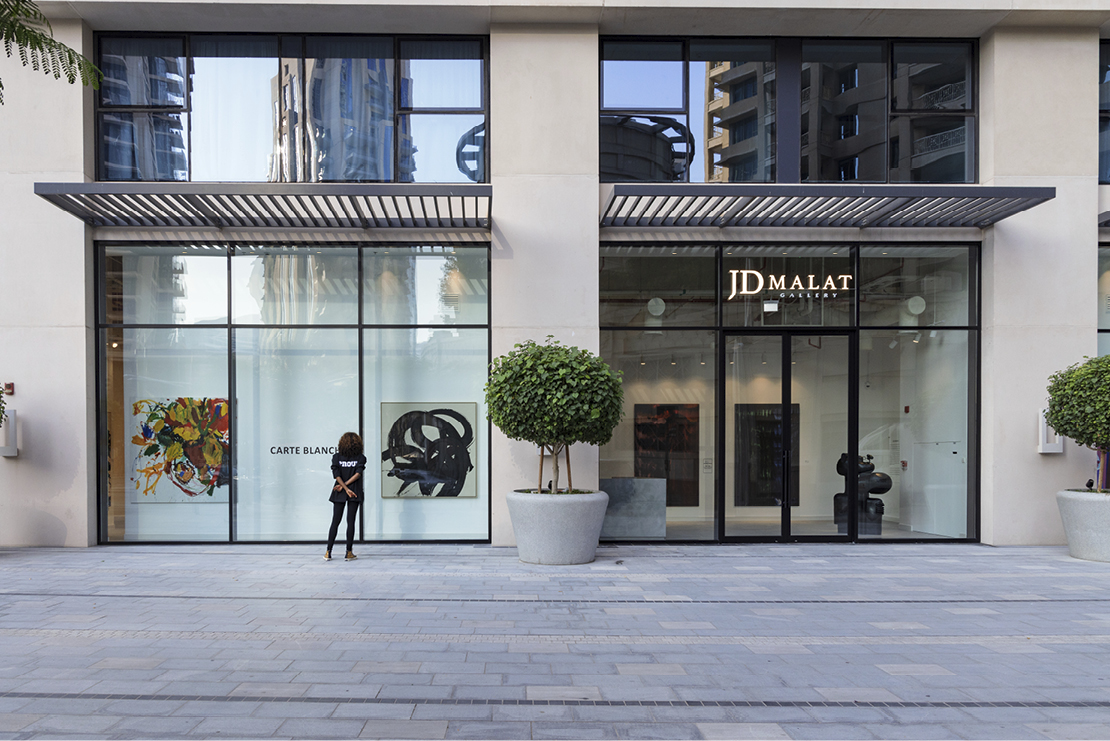
How important is that personal connection in building your gallery?
It’s fundamental. I enjoy meeting artists and collectors and being present in the gallery. When people visit, they want to understand the vision behind the space and the work. That connection creates a different kind of relationship.
Before opening, I spent a full month in Dubai meeting people, introducing myself and building those relationships. It made a real difference when we launched. We had a very busy opening, and since then we’ve continued to host events, talks and gatherings. A gallery should feel alive; it’s not just about the exhibitions, but about the experience around them.
What role do art fairs play in the region, and how do you see them evolving?
Art fairs are very important. We participated in Art Abu Dhabi, which was extremely successful for us, almost a sell-out, and we’re now preparing for Art Dubai. These platforms bring visibility and create moments of energy for the market.
What I find particularly interesting is the mix of local and international audiences. The region is still developing its global positioning, but there is strong engagement from collectors here. With new fairs and global names entering the market, it will continue to grow. Of course, there are logistical challenges, especially around shipping, but overall, the direction is very promising.
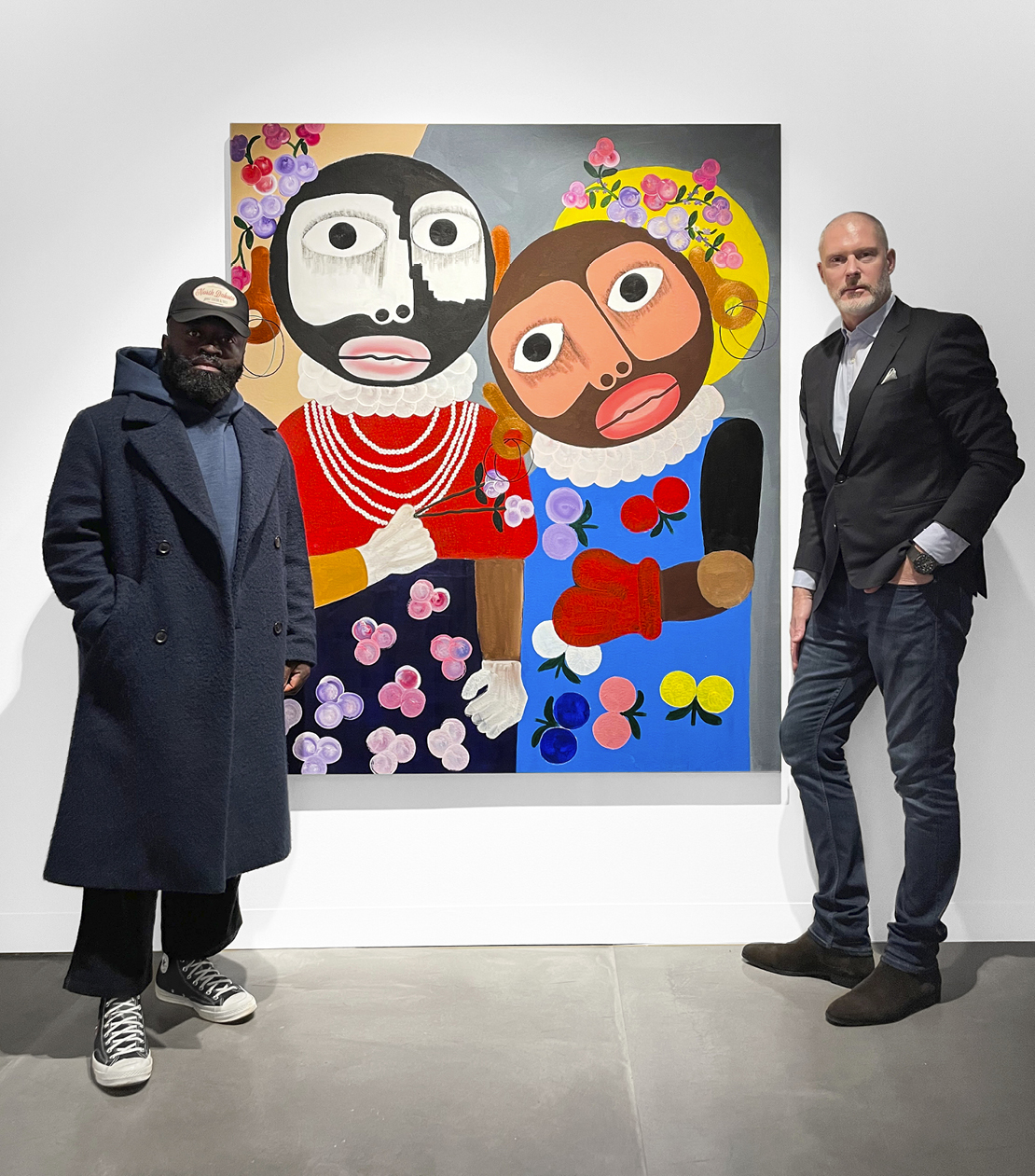
How do you navigate periods of uncertainty within the industry?
For me, the approach is simple: you keep going. During Covid-19, I continued to organise exhibitions, even without physical audiences. I adapted, working digitally and creating initiatives to support artists when everything else had paused.
It’s the same mindset now. When things slow down, you don’t wait; you create. Recently, instead of extending our current exhibition, we decided to change it and open a new group show. A gallery needs to remain active. Otherwise, nothing moves.
I also believe that art has a role to play during uncertain times. When people come into a gallery, it can offer a moment of calm, almost like a form of meditation. That’s something I value deeply.
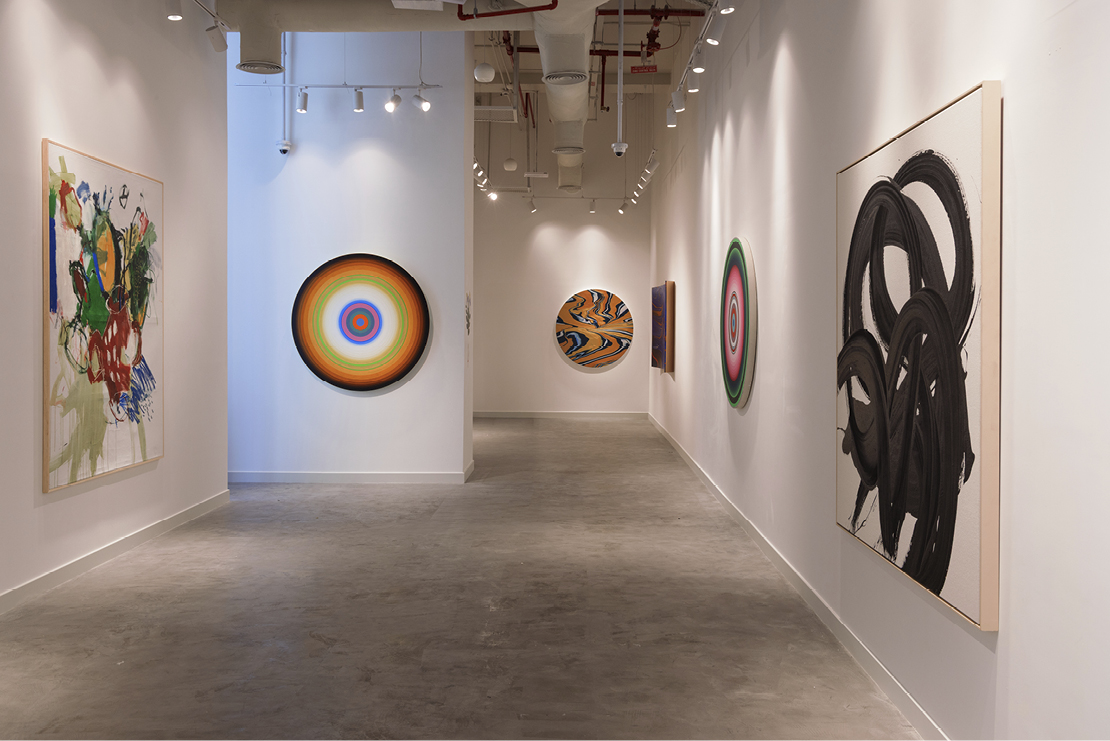
What advice would you give to emerging artists looking to be discovered?
They need to be different. That’s the most important thing. I see a lot of work that feels familiar, and that’s not enough. Artists need to develop their own perspective and create something that makes people stop.
Storytelling is also essential. Collectors connect with meaning. They want to understand the story behind the work, not just how it looks. Art is not only decorative, but it also carries emotion, context and intention.
And of course, persistence. Keep creating, keep refining your work, and use the platforms available today. Social media is a powerful tool; it allows artists to share their work globally in a way that wasn’t possible before.
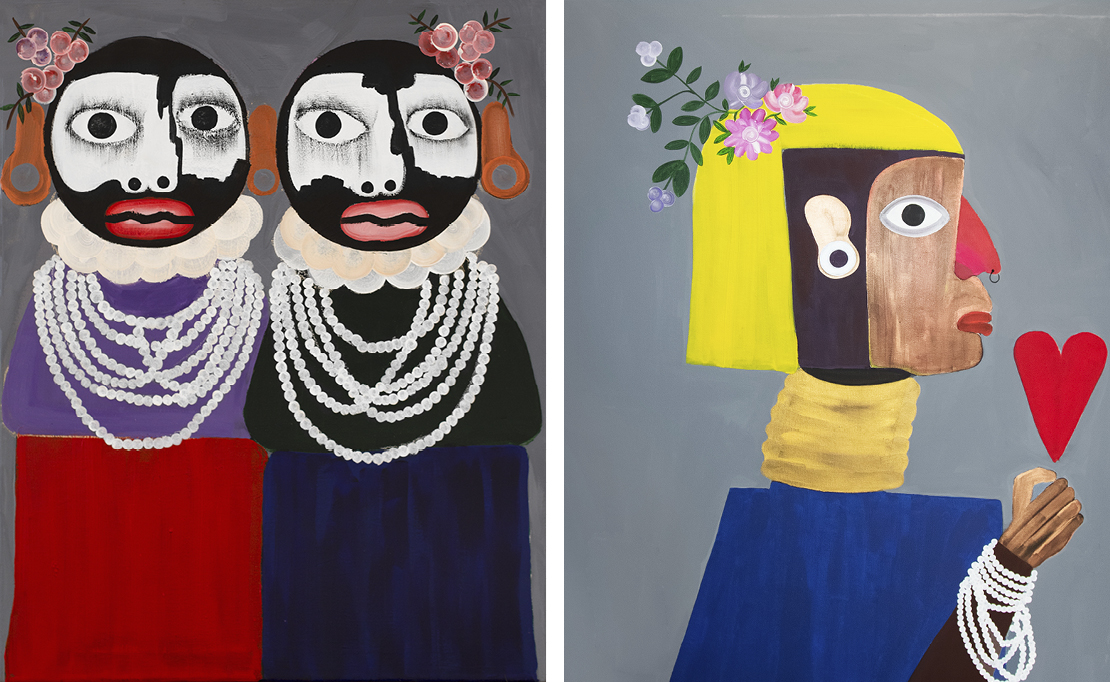
What draws you to an artist? How do you recognise potential?
It’s never the same. It can be the technique, the subject, the personality, or simply something that resonates emotionally. But there must be a connection. Today, I think there is a growing desire for authenticity. With everything becoming more digital, collectors are drawn to work that feels real, something crafted, something that reflects time, skill and human touch.
What continues to inspire you in your work?
Discovering artists is what I enjoy the most. Supporting someone early in their career and seeing their work grow, entering collections, being recognised, that’s incredibly rewarding. I’ve worked extensively in the secondary market with major names, but what excites me today is working with contemporary artists, building something together and being part of that journey.
Are you considering further expansion?
At the moment, I am focused on strengthening London and Dubai. The two galleries already require a great deal of work. Expansion is not only about space, but it’s also about having the right people and the right structure. We’ve explored other markets, including New York, where we held a pop-up in Chelsea. It was very successful, but opening a permanent space requires a different level of commitment. Today, you can build presence through art fairs, pop-ups, and relationships without necessarily being physically everywhere.
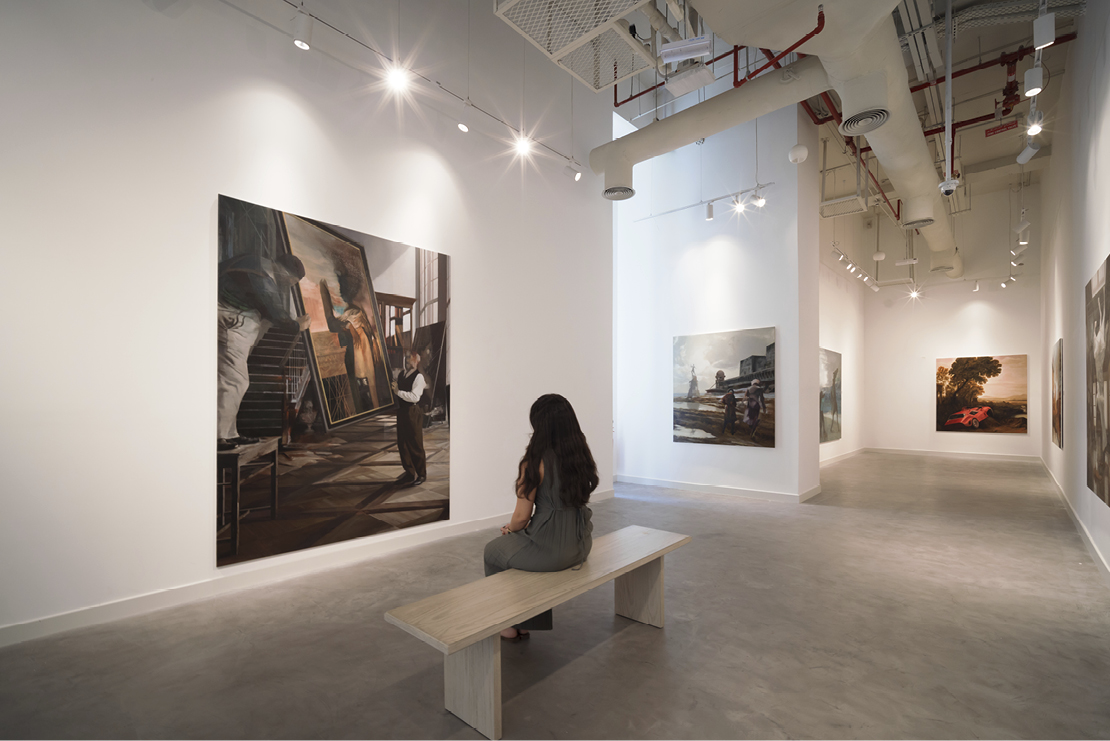
What can we expect from the gallery in the coming months?
We have a strong programme ahead, including solo exhibitions and curated group shows. This summer will focus on Made in UAE, followed by a major exhibition dedicated to international women artists, bringing together both represented and invited artists.
There is a lot to come. The focus is on continuing to build momentum, introducing new voices and keeping the gallery active and engaged within the region.
By Lindsay Judge
Craft With Purpose, Sarah Beydoun, founder of Sarah’s Bag, on becoming a globally recognised brand rooted in craftsmanship
Sarah Beydoun has built more than a brand; she has built a community. As the founder and creative director of Sarah’s Bag, the Beirut-based label known for its intricately handcrafted pieces, her work sits at the meeting point of design, craftsmanship and social impact. What began as a sociology project has grown into a globally recognised luxury brand, all while remaining deeply rooted in its original purpose: creating opportunities for women through meaningful, skilled work.
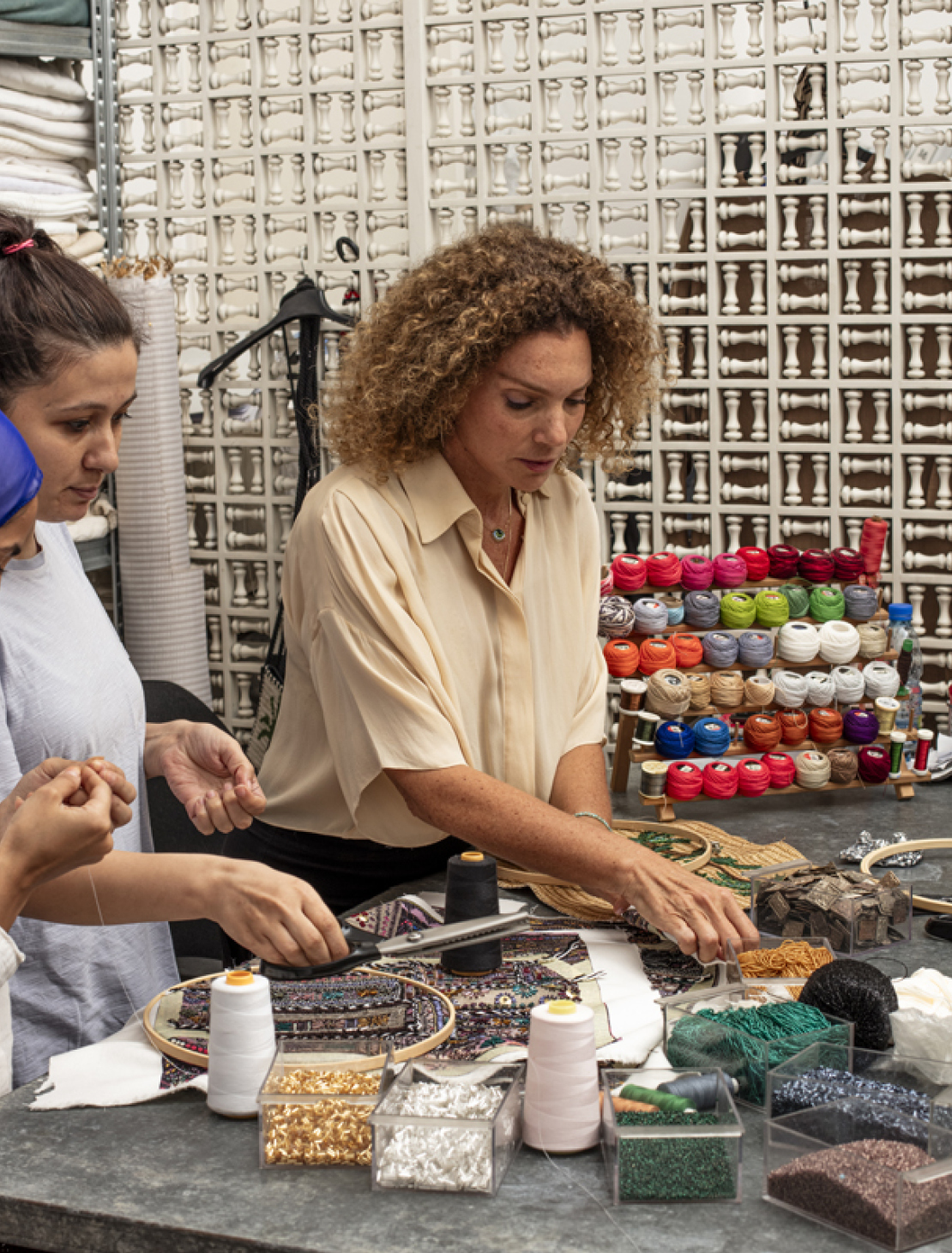
Over the past two decades, Beydoun has developed a distinct aesthetic that feels both playful and considered, with each piece brought to life through hours of detailed embroidery, beading and handwork. Behind every design is a network of artisans whose craftsmanship shapes the brand’s identity, turning each bag into something personal, expressive and enduring.
Navigating the realities of building a business in Lebanon has added another layer to her journey. From economic instability to periods of conflict, resilience has become part of the brand’s foundation, reinforcing its focus on purpose, adaptability and human connection.
Here, Beydoun reflects on the evolution of Sarah’s Bag, the community at its core, and how she continues to balance creativity with a mission that remains as relevant today as it was at the very beginning.
Sarah’s Bag was founded with a clear social mission alongside a strong design identity. How have you balanced these two pillars as the brand has evolved?
From the beginning, the two pillars were never separate. The product had to be desirable, with design, quality, and craftsmanship meeting luxury standards. The social mission is sustained through that equation. As the brand evolved, the focus has been on maintaining this balance, ensuring that every piece is both beautifully designed and meaningfully made.
Supporting and empowering artisans has always been at the heart of your work. How has that community grown over the years, and what does it mean to you today?
What started as a small group of trainees in Baabda prison has grown into a strong, skilled community of artisans across Lebanon. Today, more than 200 women in different regions are continuously employed by Sarah’s Bag. We have explored many forms of handcrafts rooted in our region, from embroidery and crochet to beading and marquetry, and many of the women have developed highly specialized skills over time. These crafts now represent stability, independence, and pride. It is a living ecosystem of craftsmanship that we continuously nurture through creative design.
Many of the women you work with have been part of the brand for years. How do you continue to nurture and evolve those relationships while expanding the business?
The relationships are built on trust and consistency. I am a strong believer in the importance of the people who form the teams. We invest in training, fair wages, and flexible working conditions. As we grow, we create structure within the teams so that knowledge is shared and passed on, while maintaining close, personal connections.
Craftsmanship is central to Sarah’s Bag, with each piece requiring hours of intricate work. How do you preserve these traditional techniques while keeping the designs relevant for a contemporary audience?
We preserve the techniques by continuously using and evolving them. Each collection introduces different techniques that our teams perfect, so with every new season, we challenge ourselves to develop new designs through diverse forms of craftsmanship.
Your collections are known for their vibrant, playful aesthetic. How do you approach each new season creatively, and what inspired your latest collection?
Each collection begins with a story, drawn from travel, art, or cultural references, which we translate into textures, embroidery, and colour. We are a niche brand with broad appeal, and we feel there is a shift toward investing in unique, meaningful pieces with a strong point of view. In our latest collection, we revisit our iconic bags and reinterpret bestsellers, bringing a sense of joy and lightness. These pieces are designed to uplift, especially in challenging times, offering the wearer something emotional and expressive.
The region has faced periods of instability in recent years. How has this impacted your approach to running the brand, and what has it taught you about resilience?
Running the brand in challenging times requires constant adaptability. We’ve learned to be agile, diversify markets, and strengthen our internal operations. Times of war and hardship have also reinforced the importance of what we do, providing continuity and purpose amid uncertainty.
In challenging times, how do you maintain momentum while staying true to your values and mission?
We stay focused on what we can control: our product and our team. A clear sense of purpose guides our decisions. We always return to our social mission of employing underprivileged women, especially in difficult times, it becomes even more crucial. The recent war has displaced around 30% of our employees, and our first response is always to support them.
We have always placed the human element at the core of what we do, and today more than ever, this remains our priority.
What have been some of the biggest challenges you’ve faced as an entrepreneur?
Scaling while preserving our identity and social mission is the main challenge. Maintaining craftsmanship, quality, and brand DNA as the business grows requires discipline.
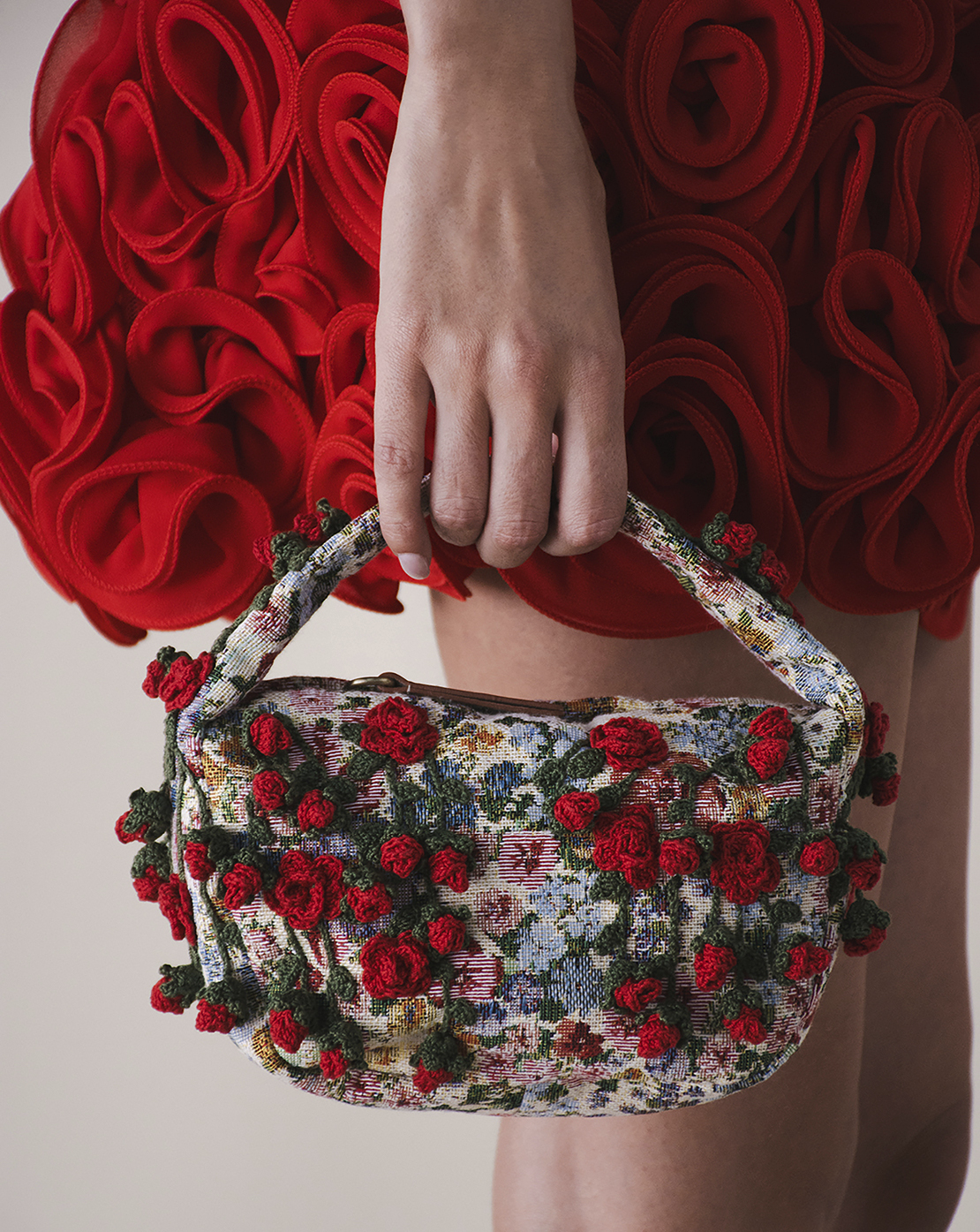
At the same time, navigating five wars over 25 years of my career has been the ultimate challenge. Experiencing war as a child, then as a mother, and as a business owner is very different. When you have 250 families relying on you for their livelihood, the responsibility becomes deeply personal.
Are there new materials, techniques or creative directions you are currently exploring that feel particularly exciting?
In recent years, we have focused on elevating our craft internationally, positioning our bags as “luxury artisanal.” This required effort across all teams, from creative to production to quality control. We increasingly see our pieces as precious objects designed to be passed from one generation to another. In that sense, we consider our bags as “modern heirlooms”.
We are also working on a collection inspired by vintage Beirut posters from the 1960s. Thanks to the work of the Fondation Philippe Jabre in preserving this heritage, we are translating these visuals into a contemporary design language. I love Beirut and feel deeply attached to it. With every war, I feel a stronger need to speak about it and highlight its beauty. As designers in Lebanon, I believe we all make the effort to ensure that Beirut is not only associated with war and conflict, but also with beauty and creativity.
Looking ahead, what markets or regions are you most interested in expanding into next?
It has been a pleasure to design with the Arab region in mind. Today, there is a renewed appreciation for handmade products and strong demand for bespoke services, which we have offered since the beginning of Sarah’s Bag on our website.
We are also seeing a shift from trends toward personal style, and it is rewarding that our clients, whether in the GCC or internationally, recognize our DNA and integrate it into their own identity.
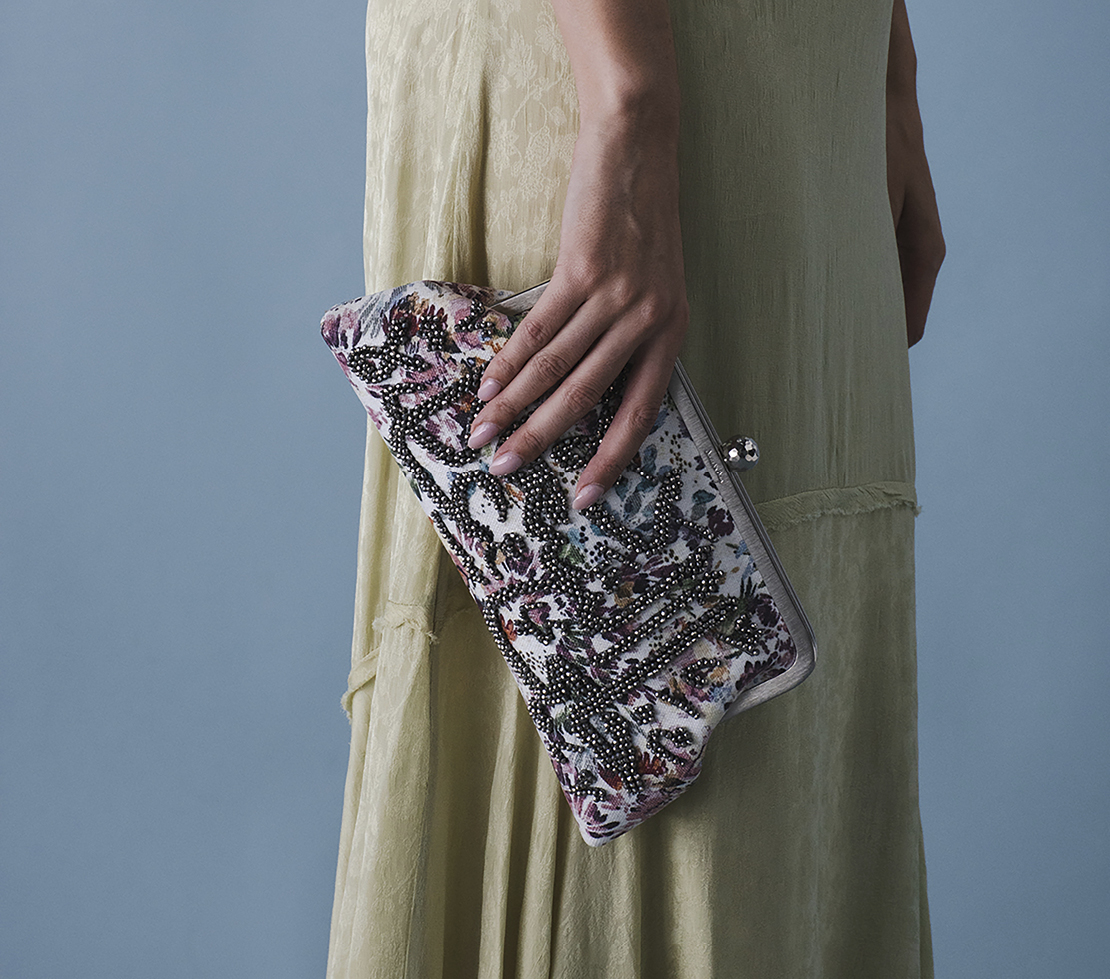
Beyond expansion, is there a concept or project you’ve always wanted to realise but haven’t yet had the chance to explore?
Over the years, we have expanded from accessories to ready-to-wear, outerwear, and fashion jewellery. I am open to exploring lifestyle elements and creating curated, limited-edition pieces for the home that reflect the same craftsmanship and spirit as Sarah’s Bag.
I don’t want to limit my creative direction, as long as we continue to support our artisans and keep the social mission and craftsmanship at the core of everything we do.
Finally, what does the future of Sarah’s Bag look like to you?
A brand that continues to merge craftsmanship, design, and social impact. More global in reach but always rooted in its values. Beyond longevity for both the brand and the artisan community, I simply want to remain excited about what I do and continue to enjoy the creative journey.
By Lindsay Judge
Colour and Creation, Dubai-based visual artist Kristel Bechara invites us into her world, where emotion becomes an art form
Art has a way of saying what words cannot, and for Dubai-based visual artist Kristel Bechara, every canvas is a conversation. Known for her distinctive visual language and expressive use of colour, Kristel has built a body of work that goes far beyond aesthetics, each piece acting as a personal yet universal conversation. Rooted in a lifelong connection to creativity and shaped by Dubai’s dynamic cultural landscape, her journey reflects both intuition and intention.
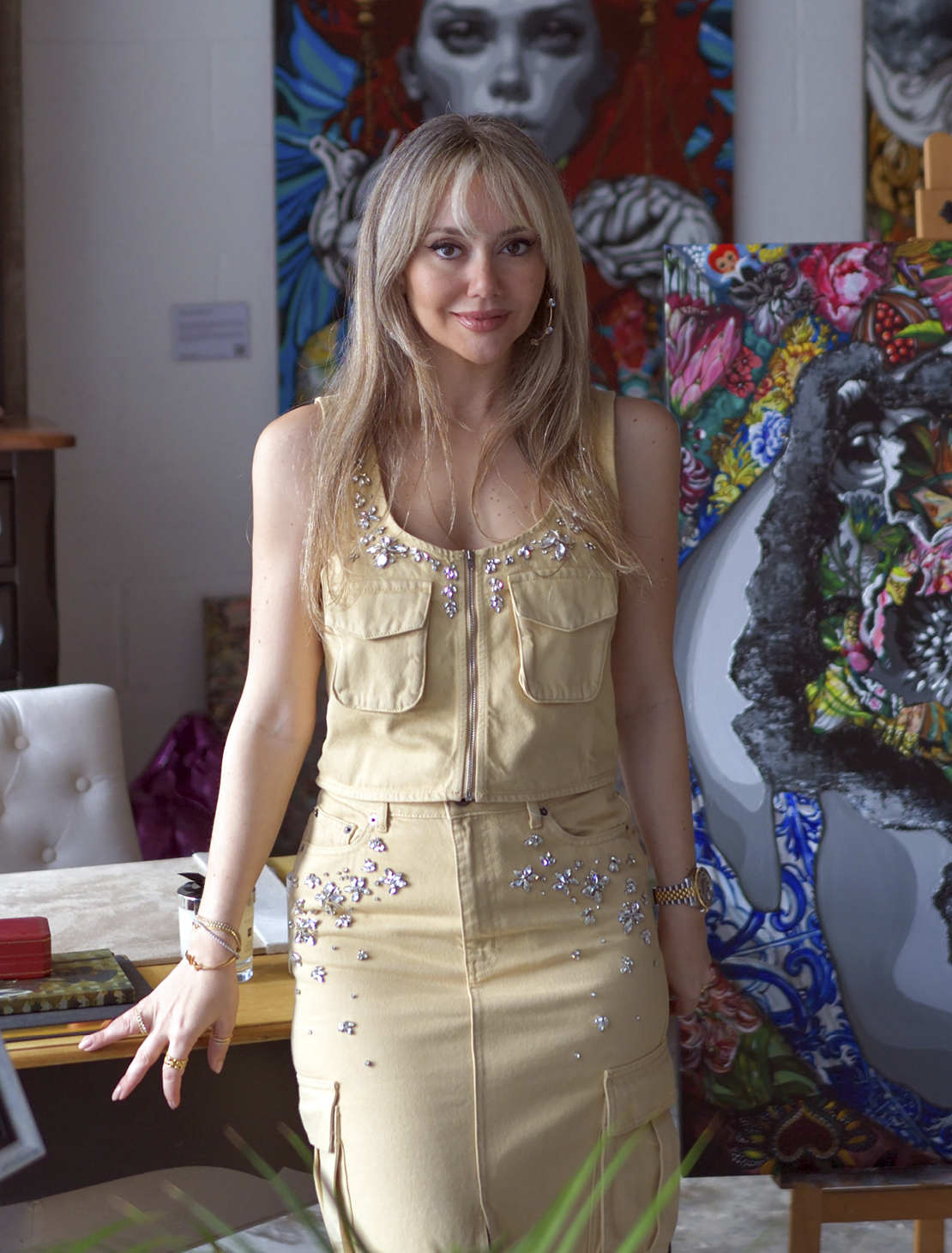
With a distinctive voice that has captured collectors’ attention, Kristel has carved out a space in the art world that is entirely and unmistakably her own. Her work is more than aesthetics; it is emotion, narrative, and identity translated into colour and form. We sat down with Kristel to explore the mind behind the masterpieces and what drives her to keep creating in one of the world’s most dynamic cultural landscapes.
What was the moment where you realized you wanted to follow a career path in the art world?
There was never one single moment. It was always there. I think I was about five years old when I first imagined having my own studio, creating work, showing it, and selling it. That picture was so clear in my mind, even then. My late father was a surrealist artist and sculptor, so I grew up in a home where creativity was part of the air. He never pushed me toward art, but he never had to. He created an environment where curiosity was celebrated, and self-expression felt natural. That kind of encouragement early in life shapes you in ways you don’t fully appreciate until much later. So when people ask about the moment I decided to build this, I almost have to smile, because I’m not sure I ever decided. I think I always knew. Everything else, the design career, the move to Dubai, the years of developing my style, it was all just the long way of getting back to what I dreamed of at five years old.
How does your work reflect the community you’re rooted in, and how has that community shaped your creative or business direction?
Dubai didn’t just provide a backdrop for my career; it shaped the entire way I think about art as a business. I moved here nineteen years ago, and in many ways, I grew up alongside this city. I watched it evolve at a pace that is unlike anywhere else in the world, and there is something deeply infectious about that energy. When you are surrounded by that level of ambition and vision, it becomes impossible not to dream bigger yourself.
When I launched my art career about a decade ago, this city gave me everything I needed to build something real. The opportunities here, from galleries and collectors to brand partnerships and cultural events, created an ecosystem that I genuinely believe I could not have found anywhere else. Dubai has a way of opening doors that other cities keep closed.
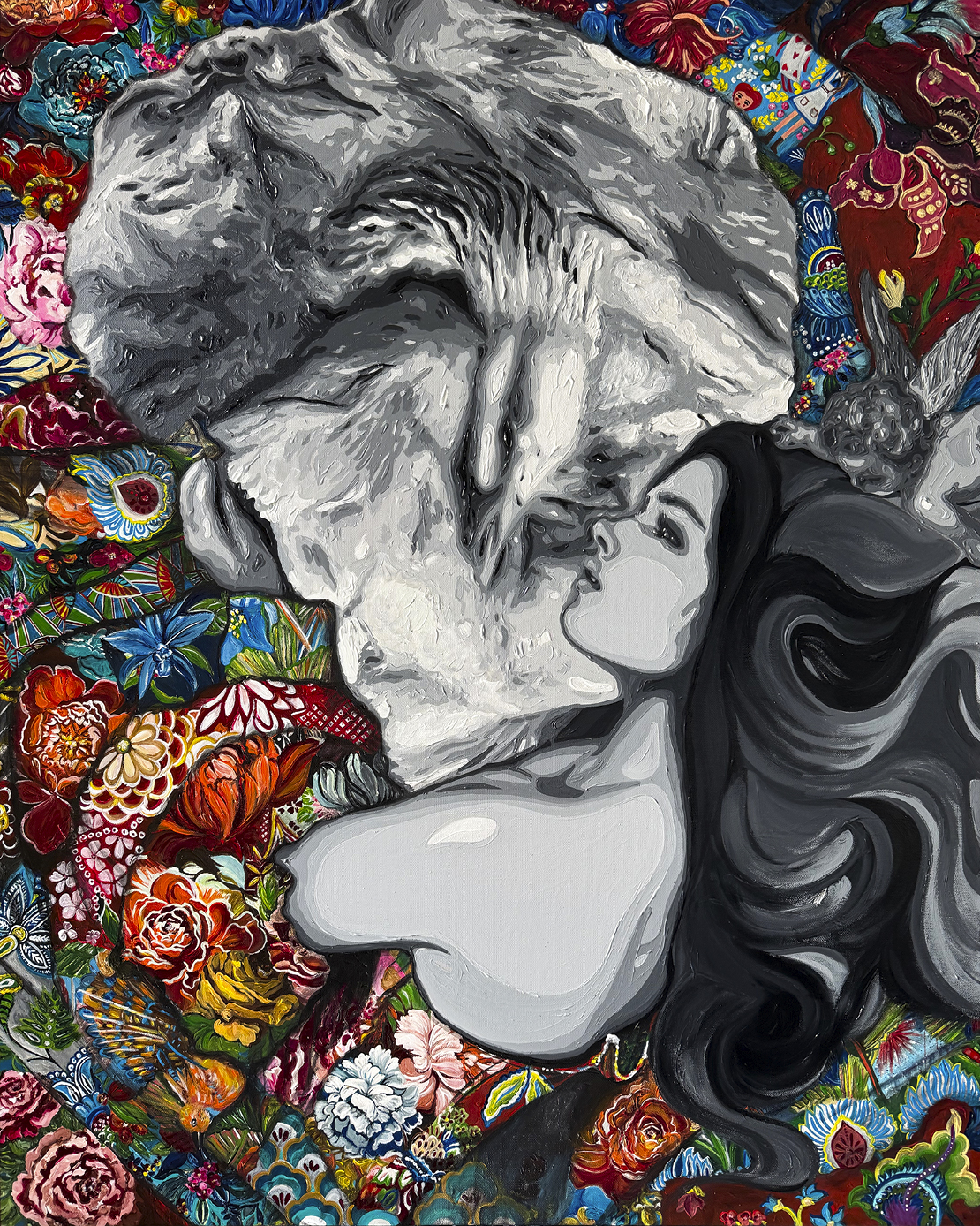
But beyond the infrastructure, what has shaped me most is the people. This is one of the most multicultural communities in the world, and that melting pot of cultures, perspectives, and stories feeds directly into my work.
In a crowded industry, what makes your work stand out?
The most obvious answer is my signature style, and yes, it is recognisable. But I think what makes me genuinely different goes deeper than aesthetics. It is about where I choose to look for inspiration. I make a conscious effort not to follow what other artists are doing. I don’t study the market to see what is selling or scroll through what my peers are creating. That kind of awareness, even when it feels passive, has a way of seeping into your work and pulling you toward the familiar. I protect myself from that deliberately.
Instead, I look sideways. Architecture, interior design, fashion, and other disciplines that are adjacent to art but not competing with it. That cross-pollination is where my ideas come from, and I think it shows in the work.
What’s a challenge that tested you, and how did you overcome it?
The challenge that tested me most wasn’t a single moment. It was a period. The years spent searching for a style that was truly mine.
I went through phases of experimenting with different directions, different aesthetics, and different ways of expressing what I felt inside. Some of it was interesting. Some of it was technically competent. But it wasn’t landing. I could feel it, and the audience could feel it too.
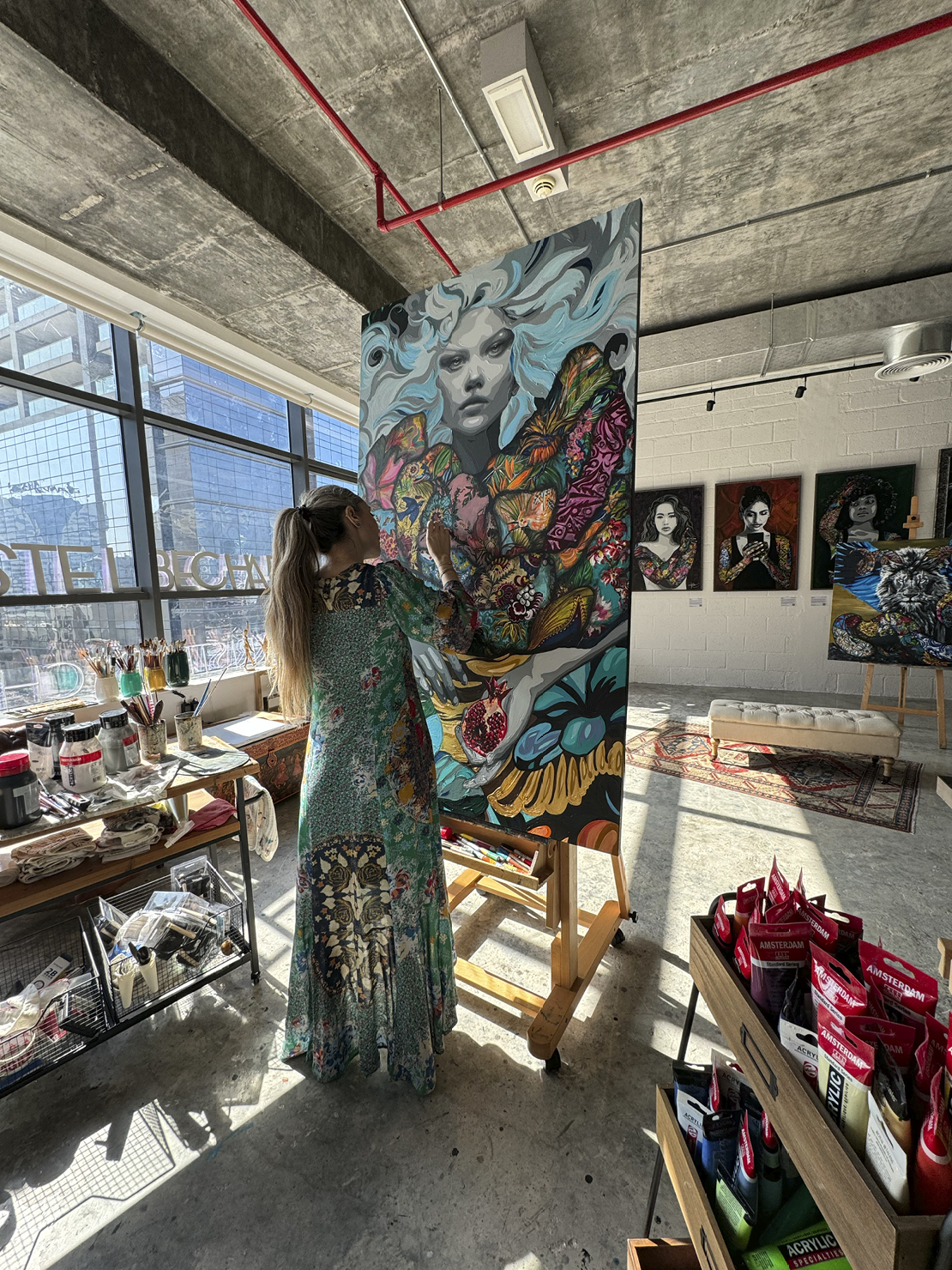
What kept me going was the refusal to settle for work that didn’t feel honest. I knew that if I couldn’t feel it deeply myself, no one else would either. So instead of walking away, I kept asking questions. I kept experimenting. I treated every dead end as information rather than failure.
The breakthrough came when I stopped trying to fit into something and started pulling together everything that was already part of me, my design background, my love of pattern and fabric, my painting, my emotions. When those elements came together, the work finally felt true. And when the work feels true, people feel it too.
How do you balance staying true to your original vision while adapting to what the market or your audience needs?
For me, this balance has never really been a source of tension because I made a decision early on that I would never compromise my signature style. Not for a commission, not for a trend, not for anyone. If a brief comes in that doesn’t align with my visual language and my values, I simply won’t take it. That boundary has never felt like a limitation. It has always felt like integrity. What I have learned over time is that staying true to your vision doesn’t mean being rigid. Within my style, there is actually a lot of range. I work across different scales, media, and price points, so there is something for collectors and spaces alike, without ever straying from who I am as an artist. That range means I can meet my audience where they are without meeting them halfway on the things that matter.
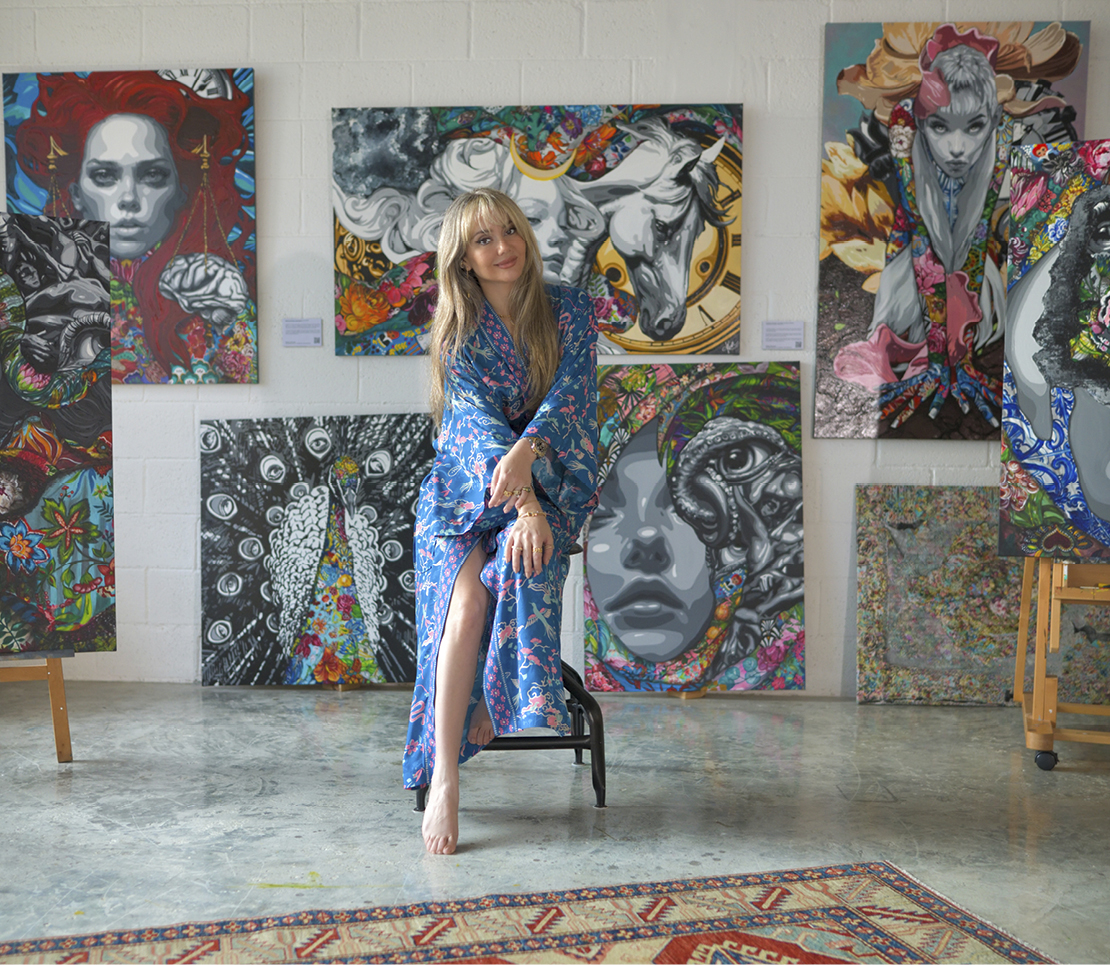
What does support for local and independent businesses actually look like in practice? What have you received, and what do you wish existed?
The support I have received has been genuinely meaningful. Dubai has invested in creating spaces and platforms for artists to develop and showcase their work, from studio access to media coverage and cultural events that put local artists in front of the right audiences. The Golden Visa has also been a significant gesture of recognition, giving creatives the stability and long-term security to build real careers here rather than treating this as a temporary base. That kind of infrastructure matters enormously, especially in the early stages when you are still finding your footing. I felt that support, and it made a real difference.
In terms of what I wish existed, I think the conversation is still evolving, and that is actually encouraging. There is growing recognition of the value independent artists bring to a city’s cultural identity, and I would love to see that translate into even deeper collaboration between the creative community and the wider business and institutional landscape. More opportunities for local artists to be visible on an international stage, more pathways for emerging talent to build sustainable careers, and a continued commitment to collecting and championing art that is made here. The foundation is strong. There is just always more we can build on it.
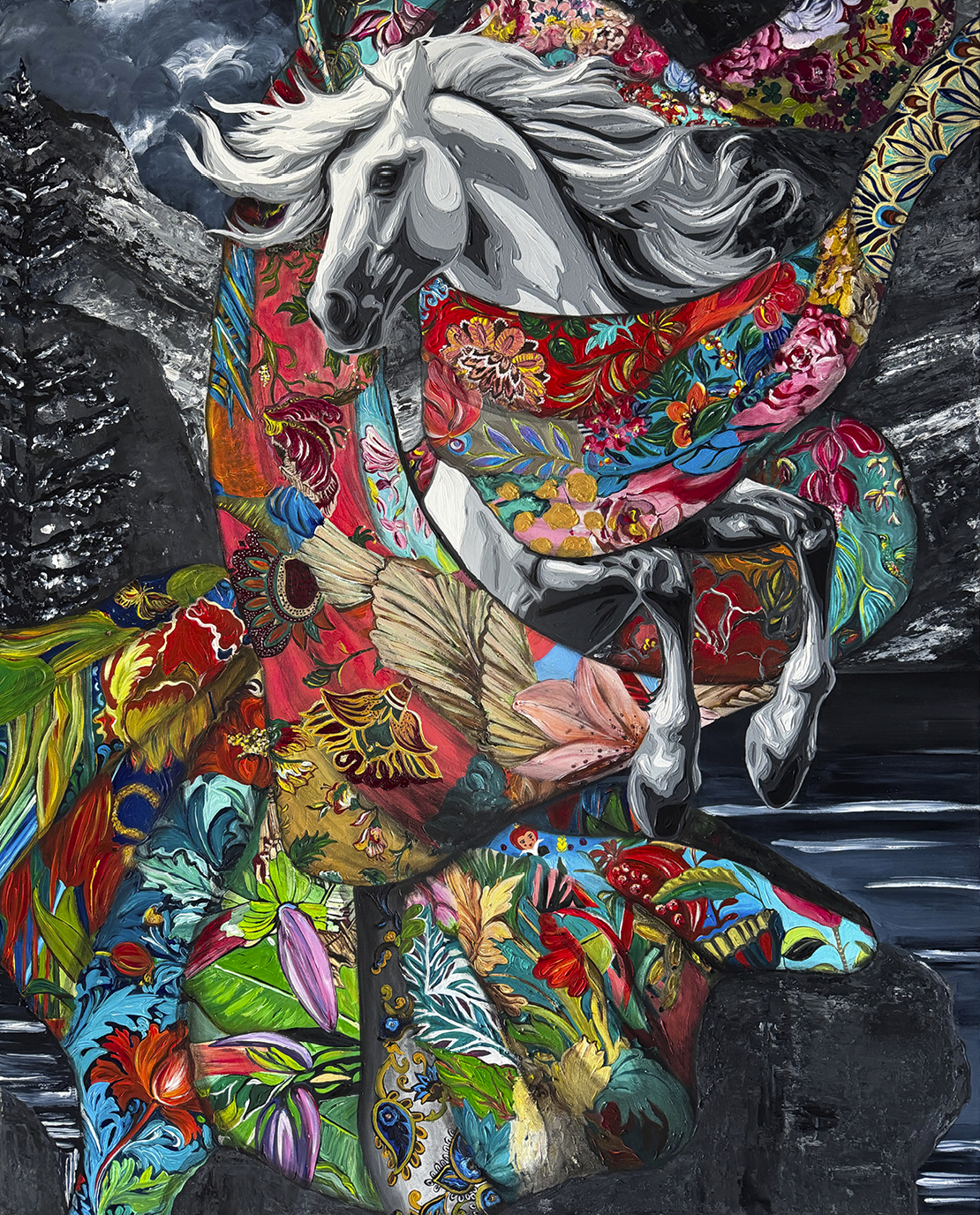
Who in your city or region is doing something you deeply respect, and why?
Rather than singling out one person, what I deeply respect is the collective ambition of what is being built here. The vision behind the Saadiyat Cultural District in Abu Dhabi, with the Louvre already open and the Guggenheim on the horizon, is genuinely extraordinary. The idea that this region is positioning itself as a world-class cultural destination is not just talk. You can see it taking shape in real time. The energy around Art Dubai and Frieze Abu Dhabi has created a platform that puts regional artists in conversation with the global art world in a way that simply didn’t exist here not long ago. That matters enormously for artists like me.
What I respect most is that this isn’t happening by accident. There is real intention behind it, a belief that art and culture are not accessories to a city’s identity but central to it. Being an artist here at this particular moment feels like very good timing, and I don’t take that for granted.
If you could change one structural thing to help entrepreneurs like you thrive, what would it be?
If I could change one thing, it would be creating a dedicated pathway for independent artists to participate directly in major art fairs. Right now, if you want to show at Art Dubai or Frieze Abu Dhabi, you need gallery representation. There is no route in for a solo artist, regardless of how established or recognised they are. That means independent artists either miss out entirely or enter through a gallery, giving up a significant commission in the process.
I understand why fairs are structured that way; galleries provide curation, credibility, and infrastructure. But the art world has changed. There are serious, professional, internationally recognised artists who operate independently by choice, and the system hasn’t fully caught up with that reality. A dedicated section at major fairs for vetted independent artists would level the playing field without compromising the event’s standards. It would also make these fairs more diverse, more interesting, and more representative of the creative landscape today.
What does success look like for you in the next three years, and how do you define it beyond revenue?
Success for me has always been defined by connection rather than metrics. In the next three years, I want to continue growing my collector base internationally, show in new cities, and create work that keeps pushing my own creative boundaries.
But when I zoom out and think about what I am truly building toward, I have a bigger goal that drives everything. I want 10,000 of my artworks to find their homes across the world over the course of my career. That number represents reach and meaning to me more than anything else.
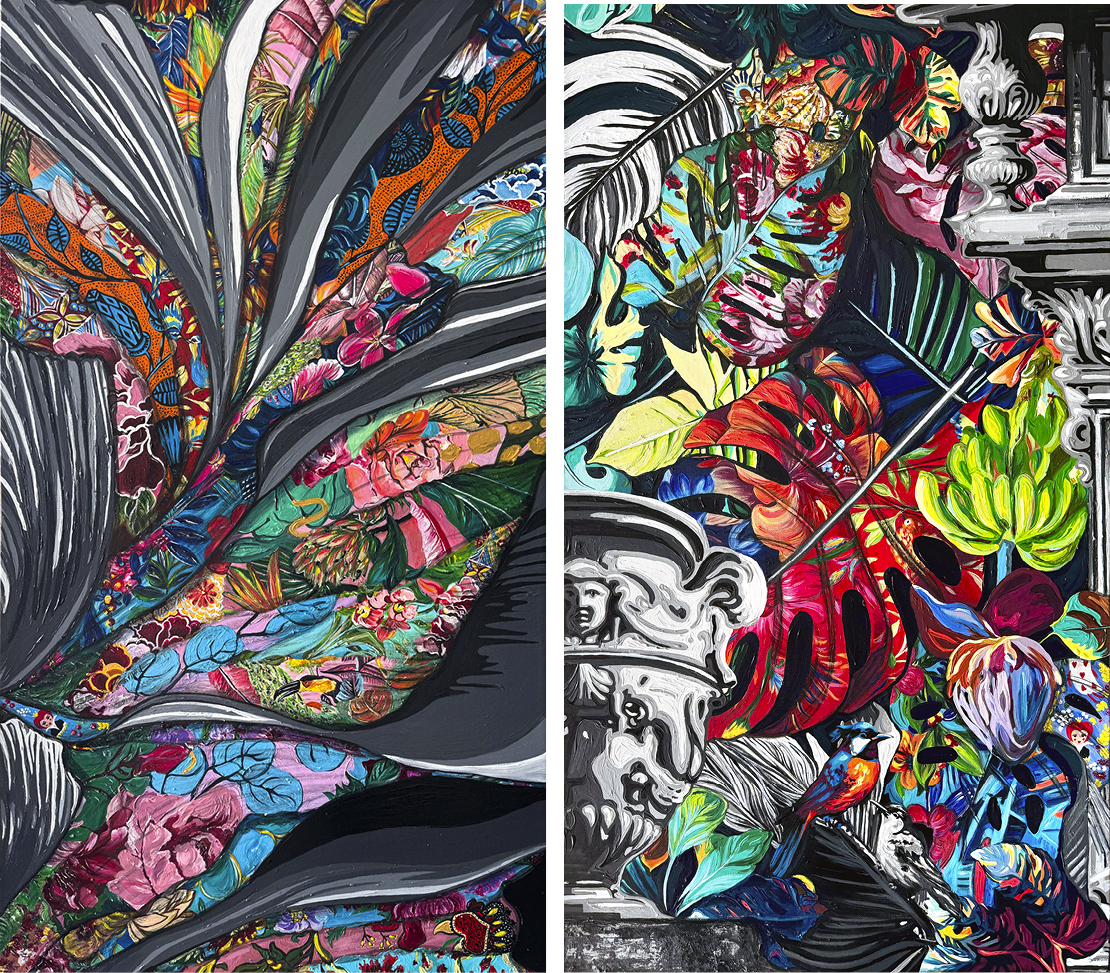
The most rewarding messages I receive are from collectors who tell me that guests stop in front of a piece and ask about it, or that they find themselves drawn to it differently depending on their mood. That kind of presence in someone’s life is what I am building toward. Revenue is a measure of sustainability, but that is what success actually looks like to me.
What would you say to someone sitting on a dream similar to yours, too afraid to start?
Start. That is the only advice that truly matters.
I know how heavy a dream can feel when it’s still just an idea. The fear of failure, of judgment, of not being good enough, can keep you frozen for years. But the truth is, failure is not the opposite of success. It is part of the process. Every artist, every entrepreneur, every creative who has built something real has a catalogue of moments where things didn’t work, where they had to pick themselves up and begin again.
What I would say is this: start before you feel ready, because that moment rarely comes on its own. Stay true to your voice, not what is trending, not what others expect of you. And when things go wrong, and they will, treat it as information rather than a verdict on your worth.
The dream doesn’t disappear because you stumbled. It waits for you to get back up. So get back up, learn what that moment had to teach you, and keep going. The only version of this story where you definitely don’t make it is the one where you never begin.
By Lea Nouhra
Craft Culture, Mounaz and Aya Abdelraouf, Co-Founders and Creative Directors of Okhtein on the Importance of Bespoke
Founded by sisters Aya Abdelraouf and Mounaz Abdelraouf, Okhtein was created with the clear intention to reintroduce Egyptian craftsmanship to the global luxury conversation through a contemporary lens. Launched in 2013, the brand quickly established itself through a distinctive design language that blends heritage, structure and storytelling, bringing a renewed focus to the value of artisanal work produced in Egypt.
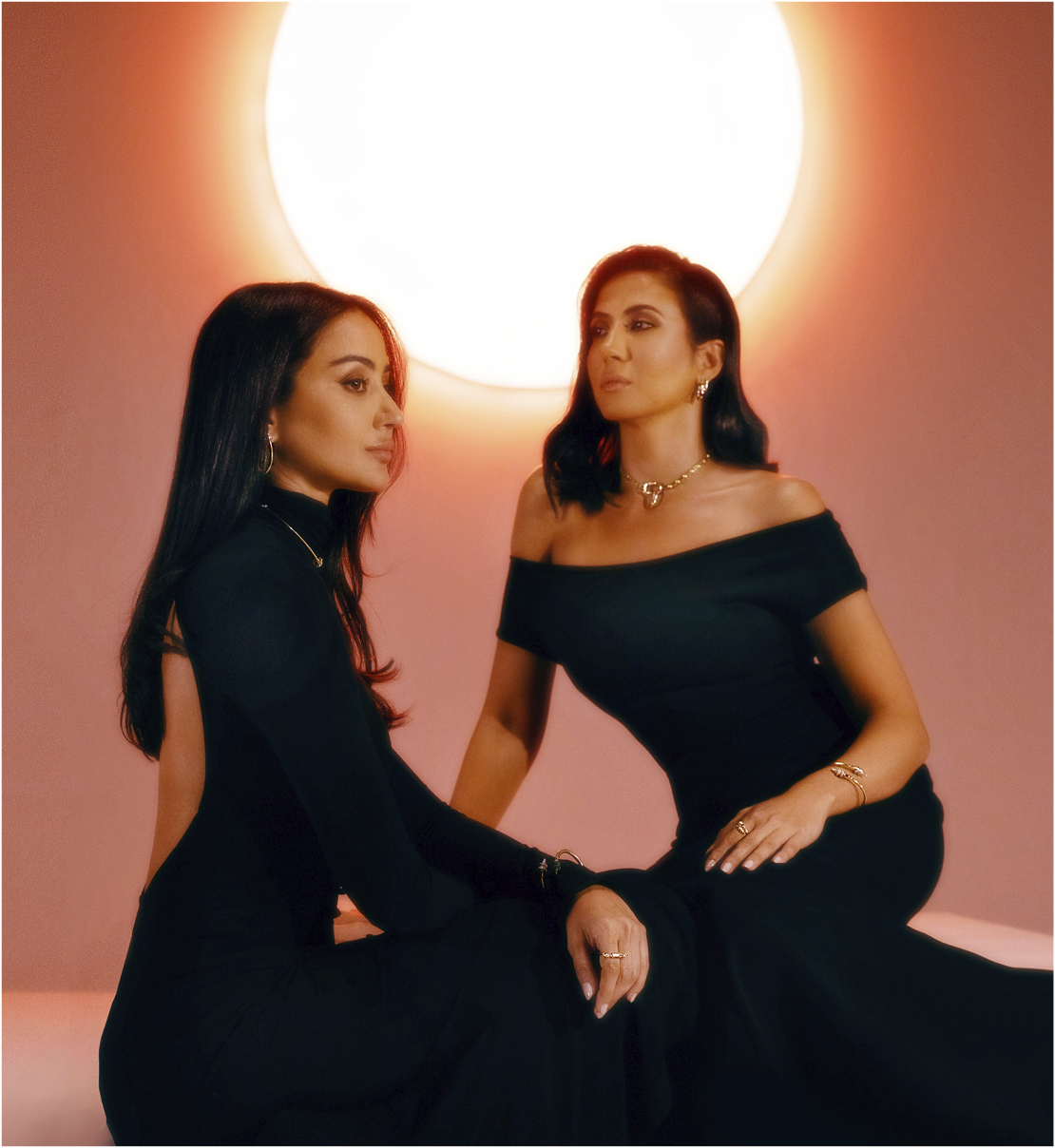
Born and raised in Cairo, the sisters were shaped by a deep connection to culture, art and design from an early age, influences that continue to inform their work today. At the heart of Okhtein is a commitment not only to craftsmanship but to the communities behind it, with the brand working closely with local artisans and female-led initiatives to preserve traditional techniques while creating new opportunities.
Known for pieces that carry as much meaning as they do design, Okhtein has built a global following drawn to its balance of detail, narrative, and individuality. Now, with the introduction of its bespoke service in Dubai and Riyadh, the brand enters a new chapter, offering a more personal, collaborative approach to design that allows each piece to become uniquely tied to its wearer.
As Okhtein continues to expand internationally while remaining rooted in its origins, we speak to Aya and Mounaz about evolving a brand with purpose, navigating growth and redefining what modern luxury can look like.
From the beginning, Okhtein has celebrated heritage through contemporary design. How has your creative vision evolved as the brand has matured?
At the beginning, the vision was already clear. Our work has always been rooted in heritage, craftsmanship, and storytelling, and that foundation has remained consistent from the start. What has evolved over time is the depth and precision with which we approach it. As the brand has matured, we’ve expanded how we translate those references into each piece, allowing the stories behind them to become more layered and defined. That evolution has also come through in how we work with materials, detail, and construction, refining each element while maintaining the same core identity. It’s not about changing direction, but about building on what was already there. Each collection adds to that process, allowing the work to grow in scale and clarity, while staying grounded in the same principles that shaped Okhtein from the beginning.
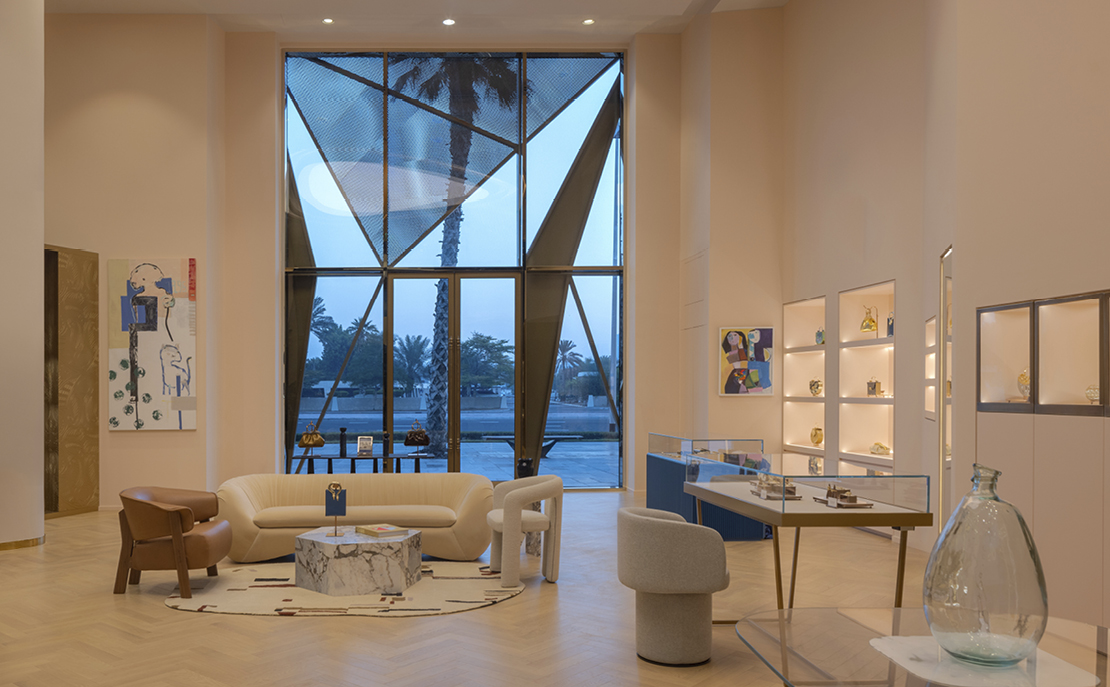
Your designs are deeply rooted in Egyptian craftsmanship. How important has preserving traditional techniques been in shaping Okhtein’s identity?
Craftsmanship is central to our identity. It’s not something we add to the design; it’s what defines it from the beginning. Our understanding of craft was shaped early on through Egyptian craftsmanship. It influenced how we see materials, detail, and construction, not only as elements of design but as things that carry intention and discipline. For us, traditional techniques are not references, but a way of thinking. They inform the structure, the level of detail, and the balance within each design. Preserving them doesn’t mean keeping them unchanged but allowing them to be translated into a contemporary context. Through design, they remain part of how each piece is conceived and built. That’s how they continue forward, by staying embedded in the work itself.
The Middle East fashion landscape has changed significantly over the past decade. How have you seen the region evolve, and where do you see its influence heading next?
There has been a clear shift in how the region expresses itself. Over the past decade, it has become more confident, more visible, and more self-defined. Designers are no longer looking outward in the same way; there is a stronger sense of identity in the work itself. At the same time, there is a growing appreciation for pieces that carry meaning, whether through craftsmanship, narrative, or detail. That has always been part of the region, but it’s now being expressed more openly and more consistently. Looking ahead, we see the influence of the region continuing to grow, not as a trend, but as a distinct voice. One that contributes to the global fashion landscape on its own terms, with a clearer sense of direction and presence.
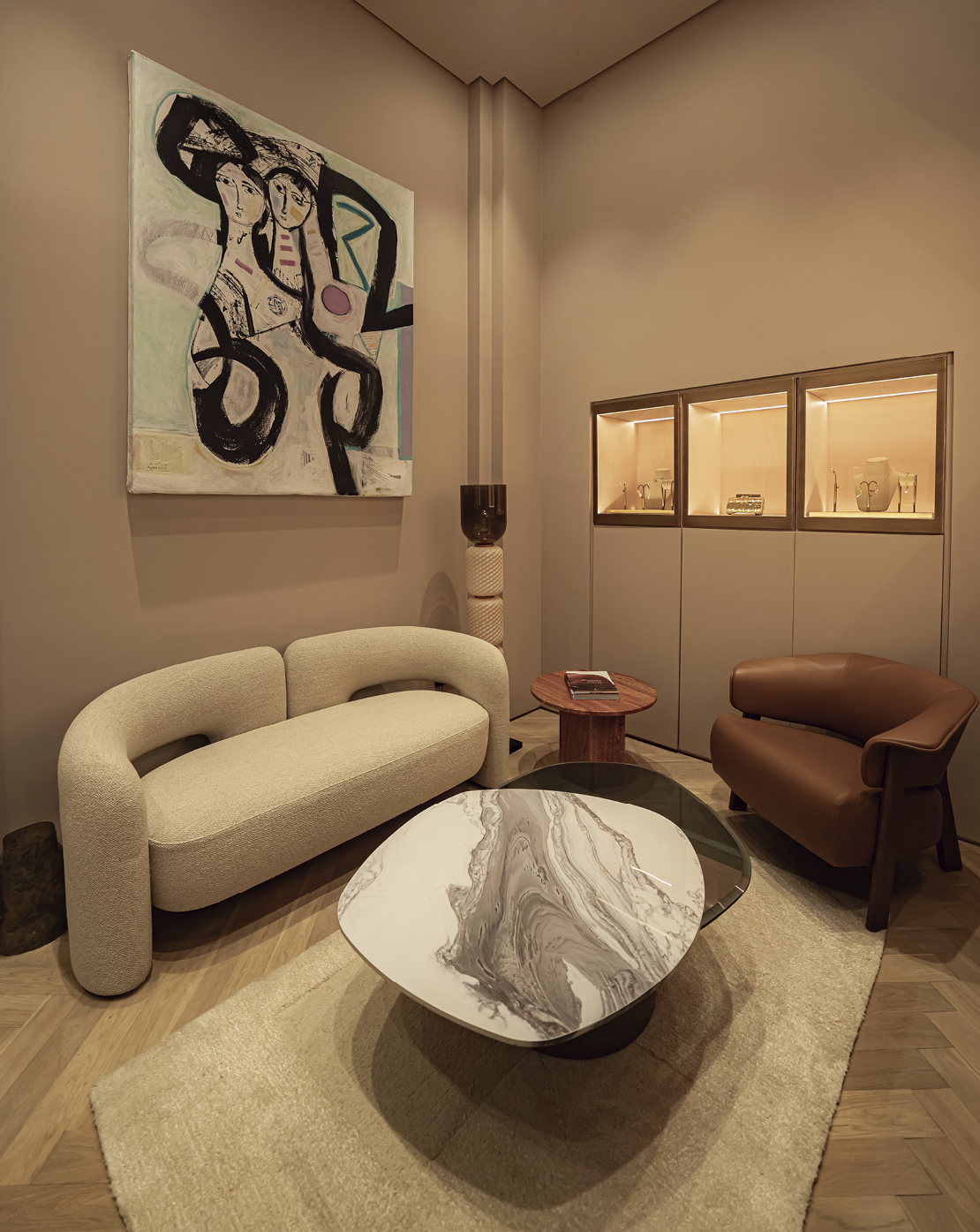
Middle Eastern designers are gaining increasing global recognition. Why do you think this moment is particularly important for regional brands?
This moment is important because the narrative is coming from within the region itself. For a long time, Arab identity in fashion was often interpreted from the outside. What’s happening now is different. Designers speak from their own experiences and references, which brings a level of authenticity that resonates more strongly. It also marks a shift in how regional brands are positioned. They are now part of the global conversation in a more established and recognised way. What makes this moment significant is that it creates space for a more accurate and nuanced representation of the region, one that isn’t shaped by expectation, but by lived experience.
What opportunities do you see emerging for luxury brands from the region, particularly in markets such as the UAE and Saudi Arabia?
Markets like the UAE and Saudi Arabia offer strong opportunities for luxury brands, with a clear appreciation for detail, craftsmanship, and pieces that carry meaning, alongside a strong sense of individuality in how they are chosen and expressed. What stands out in these markets is how intentional the relationship with luxury has become. There is a growing demand for pieces that feel more personal and considered, rather than purely transactional. That creates space for more tailored experiences, where design, storytelling, and personalisation come together in a more defined way. For regional brands, this is an opportunity to move beyond traditional retail and build a more direct and meaningful presence, where the value of the piece extends beyond the object itself.
Okhtein has recently launched its exclusive bespoke service in Dubai and Riyadh. What inspired you to introduce this more personalised experience now?
The introduction of bespoke was a natural progression from how we’ve always approached design. Each piece already carries a narrative, but over time, we felt there was an opportunity to make it more personal. Markets like Dubai and Riyadh, in specific, reflect a shift toward more considered and individual ways of engaging with luxury. There is a stronger desire for pieces that feel specific to the wearer. That’s what made the timing right. It allowed us to move from creating a defined narrative to making it more personal.
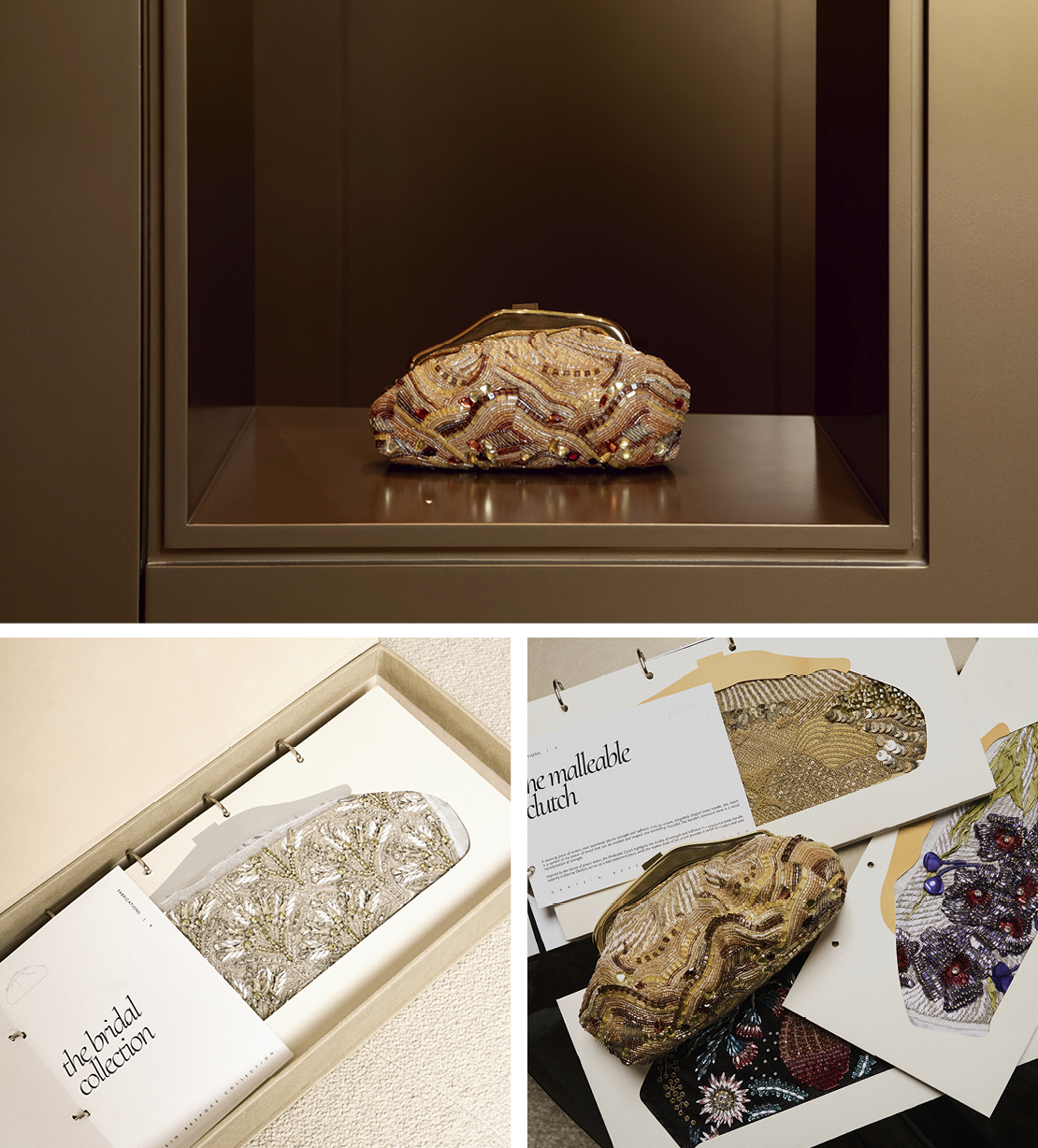
Clients can collaborate directly with you to design a one-of-a-kind piece. Why was it important for you to create this more personal relationship with your customers?
Creating that relationship changes the role of the piece itself. When someone is part of its creation, it becomes tied to a person, a moment, and a set of choices entirely her own. For us, it shifts the process from designing for someone to designing with her. That interaction adds another layer to the work. It still carries our language, but it also carries hers, making the piece more specific and more personal in a way that cannot be replicated. That’s what makes it important. It allows the piece to move beyond being an object and into something that holds meaning over time, something that can be kept, passed on, and experienced differently by the person who owns it.
In an increasingly fast-paced fashion landscape, how important is the idea of creating something timeless, personal and made to order?
In a fast-paced landscape, creating something made to order introduces a different sense of time. It shifts the process away from immediacy and towards something more considered. There is value in slowing down the process by which a piece comes into being. It allows for more attention to detail, more precision, and a more deliberate approach to design. That changes not only how the piece is made, but how it is understood. In that sense, timelessness is not about resisting change but about creating something not defined by speed. Something that exists with a sense of permanence, rather than urgency.
What markets are you most excited about as you continue to expand globally?
We’re particularly drawn to markets where there is a strong appreciation for craftsmanship and a clear connection to narrative and design, where the work is understood not only for how it looks, but for what it carries. For us, expansion is not only about geography, but about context. It’s about entering places where the brand can exist in a way that feels aligned, allowing the work to be experienced as it’s intended.
As female founders building a globally recognised brand, what have been the biggest challenges along the way, and what advice would you offer to women looking to build their own businesses?
One of the biggest challenges has been building a brand that meets international luxury standards while staying true to where we come from. As the work evolved, so did the level of technical complexity, particularly in our approach to structure, materials, and construction. That required us to rethink how and where we produce, while remaining grounded in the same identity. At the same time, there is always a balance between creative direction and the realities of building a business. That process takes time, and it requires clarity, consistency, and resilience.
Our advice would be to begin from your own culture, not from imitation. Build from your own perspective and protect it. Being unique is essential, but so is resilience. This industry can be demanding, and there will be moments where things don’t unfold as expected. What matters is the ability to continue, to stay consistent, and to keep building with conviction.
As you look to the future, what would you still like to achieve with Okhtein?
Looking ahead, our focus is on continuing to grow the brand while strengthening its presence in an intentional, considered way. It’s important for us to build a strong foundation where the work is understood and experienced in its full context. Beyond that, the vision is to continue expanding globally in a way that feels aligned. Growth, for us, is not about scale alone but about allowing the brand to exist in different places while remaining true to its origins. It’s about building something that can evolve over time, without losing the identity that defines it.
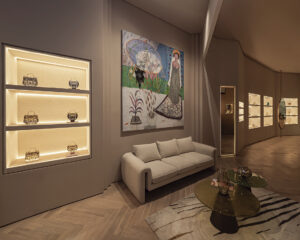
What else is in the pipeline for the brand this year?
This year, we’re working on a more intimate, personal collection that holds a very meaningful connection for us. It draws on something closely tied to our grandmother, and it’s a project we’ve been developing with great care. Alongside that, we will continue to expand the bespoke experience, allowing it to evolve further into a more personal way of connecting each piece to its owner. At the same time, we will continue to introduce new designs and explore different directions across the coming seasons, building on our existing language while allowing it to develop.
Emirati Designer Noora Shawqi on Travel, Heritage and Jewellery Shaped by Storytelling
Dubai-based Emirati jewellery designer Noora Shawqi has built her brand around storytelling, travel and modern elegance. Since launching her eponymous label in 2018, Shawqi has created collections inspired by destinations around the world, translating cultural landscapes, colours and architectural details into wearable fine jewellery designed for contemporary women. A certified Diamond Graduate from the Gemological Institute of America, her approach combines craftsmanship with narrative, creating pieces that carry both meaning and timeless appeal.
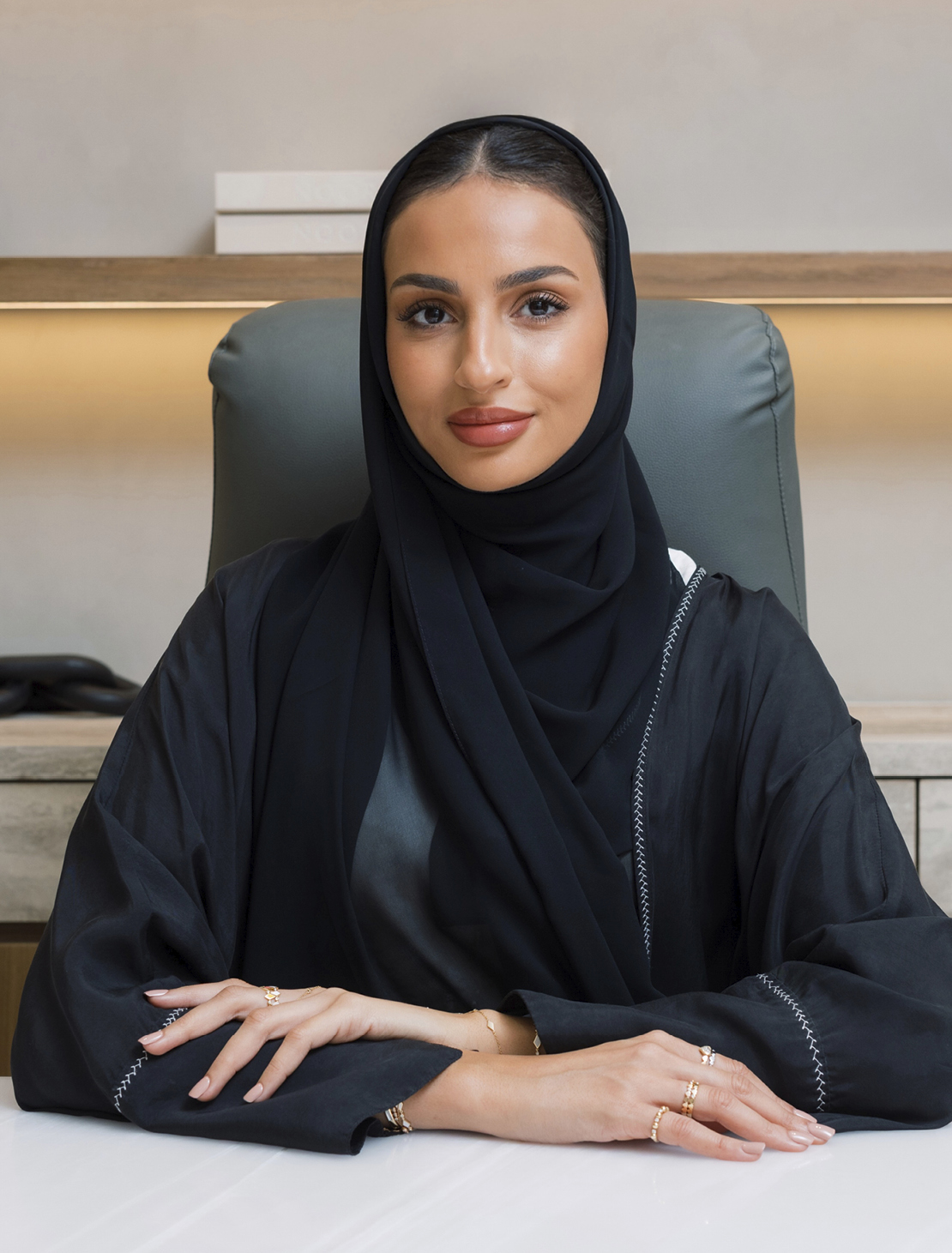
As the UAE’s jewellery landscape continues to evolve, Shawqi is part of a growing generation of Emirati designers shaping the industry with distinctive perspectives and global ambition. In this interview, she reflects on how travel inspires her collections, the influence of her heritage, and the challenges and opportunities of building a fine jewellery brand from the region.
As an Emirati designer, how has your heritage and cultural background influenced your approach to jewellery design?
My heritage is always present in the way I design, even if it is not always obvious. The environment I grew up in, learning about our culture and traditions, and the people around me have all shaped how I see things. It naturally influences the way I approach design and how I develop each collection.
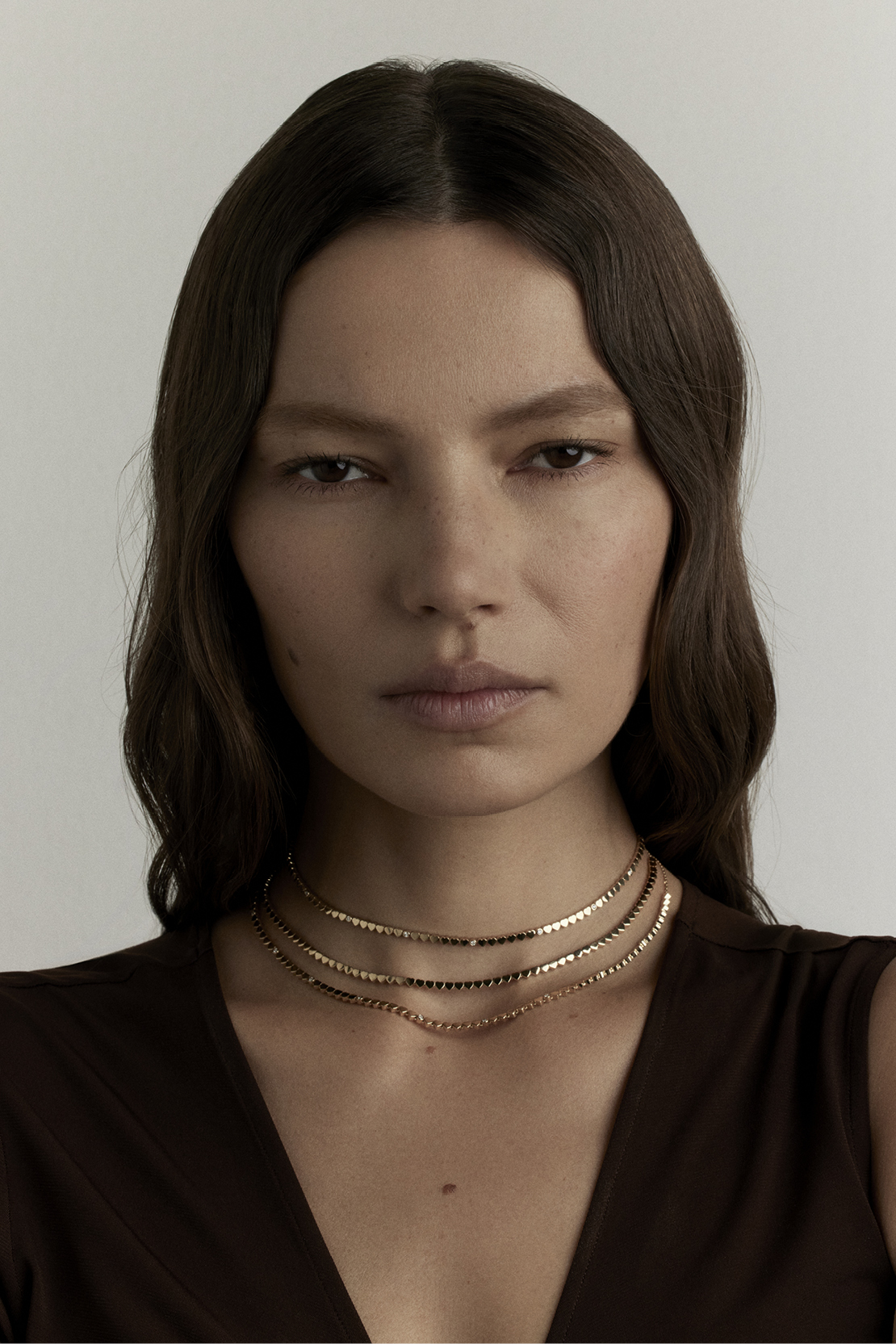
How would you describe the philosophy behind the Noora Shawqi brand today?
The brand is built around the concept of travel through jewellery. Every piece has a story behind it, and each collection is inspired by a destination. We want our customers to understand how a piece was created and the meaning it carries. That connection adds a different kind of value to the jewellery, beyond its appearance.
How have your personal journeys influenced the stories, materials and aesthetics behind your collections?
Travel gives me a different perspective every time. I pay attention to what I see around me, whether it is colours, textures, or patterns. That becomes the starting point for a collection. It also influences the materials I choose, especially when it comes to gemstones. Each destination adds something new, and I try to translate that into pieces that feel connected to a place but are still easy to wear anywhere.
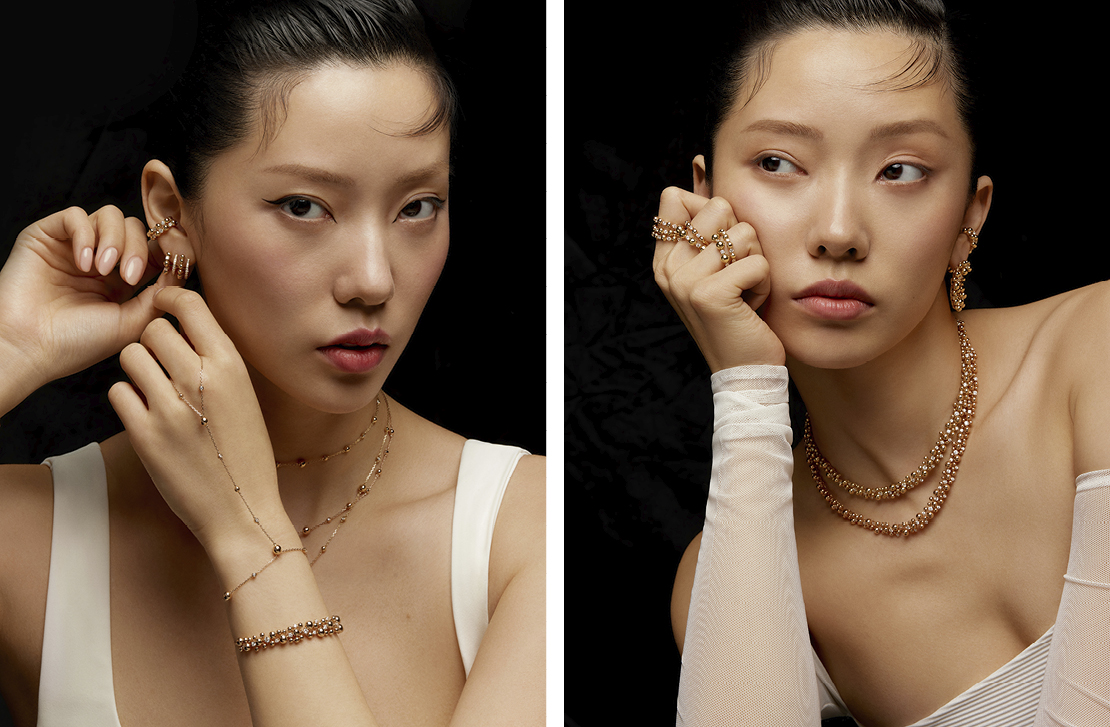
How do you strike a balance between tradition and modernity with your designs?
For me, it’s about taking inspiration from the places I experience through travel and interpreting them through my own perspective, which is naturally shaped by my Emirati heritage. Each collection is rooted in a specific destination, whether it’s the colours, textures or patterns I encounter, but I don’t replicate tradition directly. Instead, I translate those elements into clean, refined designs that feel modern and wearable. My background influences how I see and develop these ideas, so even when a piece is inspired by another country, there’s always a subtle connection to where I come from. It’s about creating jewellery that carries the essence and story of a place, while still feeling timeless and relevant today.
Tell us about the creative process for your collections.
The process usually begins with research and observation. I spend time understanding the place or idea I am working with, then I start sketching. From there, I look at materials and how they can support the story. Once the direction is clear, I work closely with artisans to bring the pieces to life. It is a mix of planning and allowing the design to evolve along the way.
Many of your pieces are made in Dubai in collaboration with skilled artisans. How important is it for you to support local craftsmanship and production within the UAE?
It is very important to me. Working with local artisans allows me to stay involved in the process and maintain a certain level of quality. It also supports the craft and keeps those skills active within the region. There is a lot of talent here, and it is important to continue building on that.
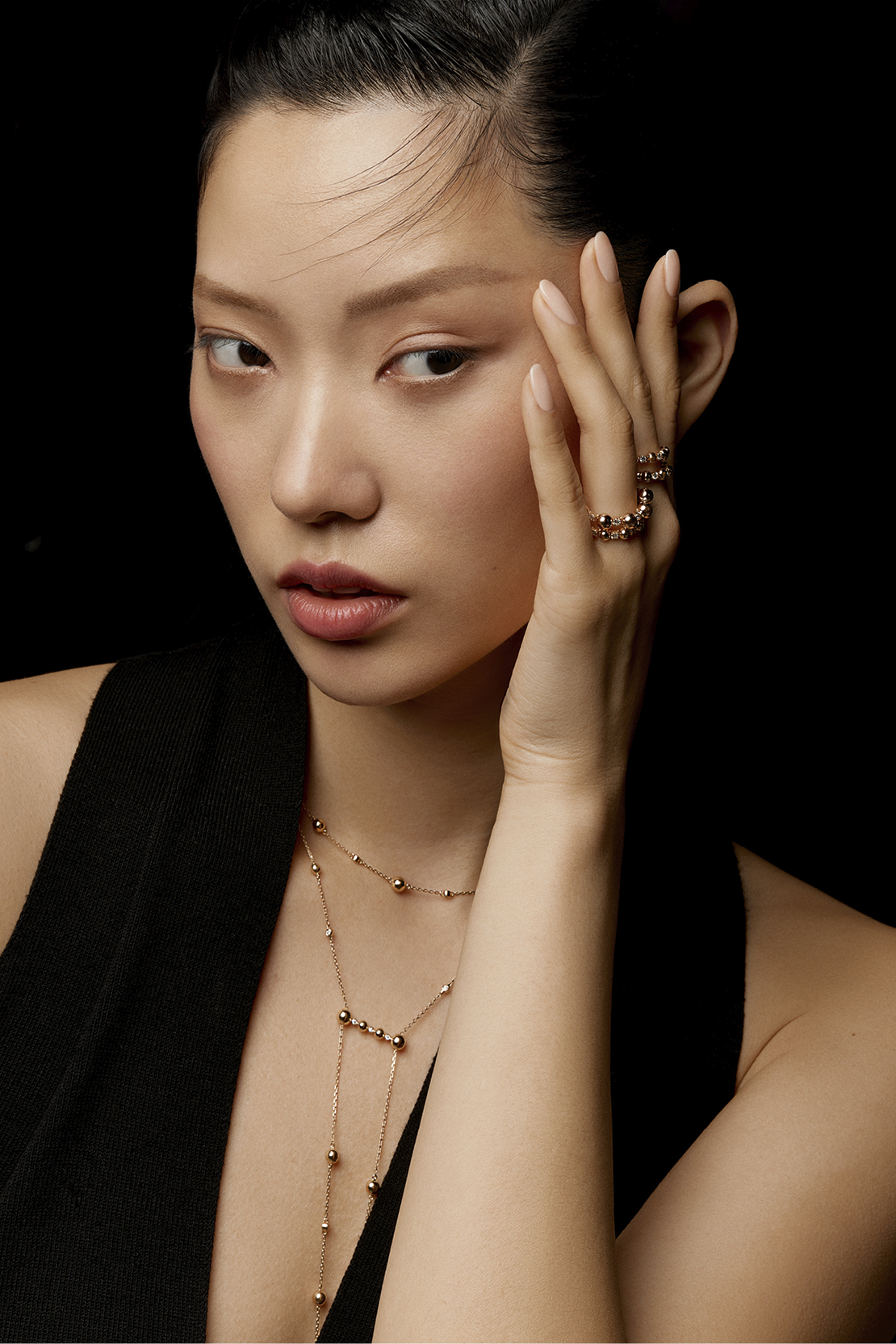
How have you seen the industry in the UAE grow, and what opportunities do you see for Emirati designers?
The industry has grown a lot over the past few years. There is more visibility, more platforms, and more support for local designers. Emirati designers now have the opportunity to reach both regional and international audiences. There is also greater openness to different styles, creating space for new ideas and approaches.
As an Emirati entrepreneur, what makes you most proud to represent the UAE through your brand?
Being recognised as an Emirati entrepreneur makes me proud, especially knowing that I am representing my country through something I have built. The UAE has created an environment where we are supported and encouraged to grow, and that is something I value. It motivates me to continue building the brand in a way that reflects that support and carries a sense of responsibility.
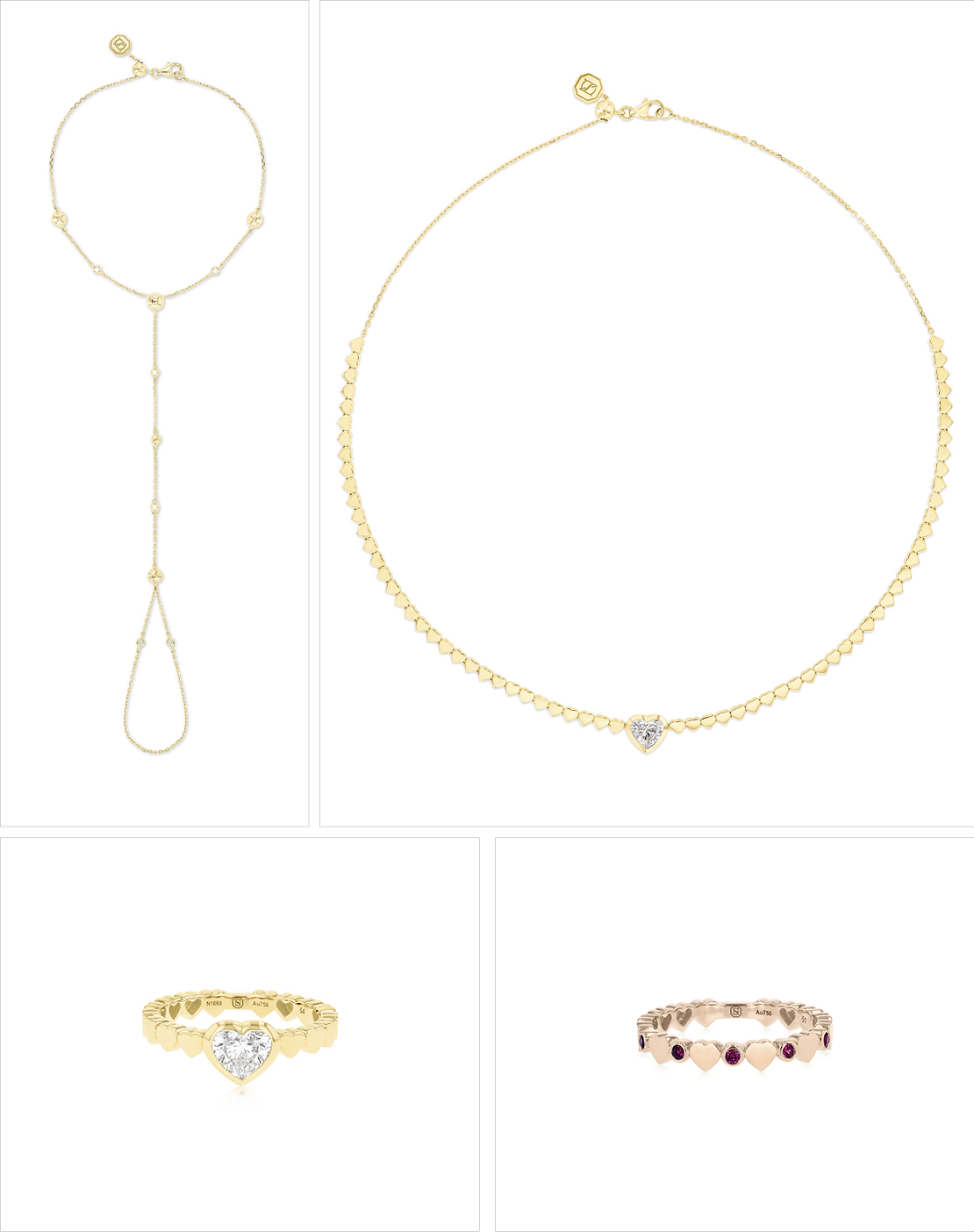
Building a jewellery brand requires both creativity and business strategy. What have been some of the biggest challenges you’ve faced along the way?
One of the biggest challenges is balancing creativity with the business side. There are also external factors affecting the industry, especially over the past couple of years. For example, the steady rise in gold prices has directly affected how we operate. In situations like that, you have to stay flexible and adapt rather than focus on what is beyond your control. It can be challenging, but it is part of building and sustaining a business.
As your brand continues to evolve, are there new markets or regions you are particularly excited to expand into?
I am interested in expanding into markets that align with our style and storytelling. At the moment, we are focusing on growing more in Europe, where there is a strong appreciation for craftsmanship and design.
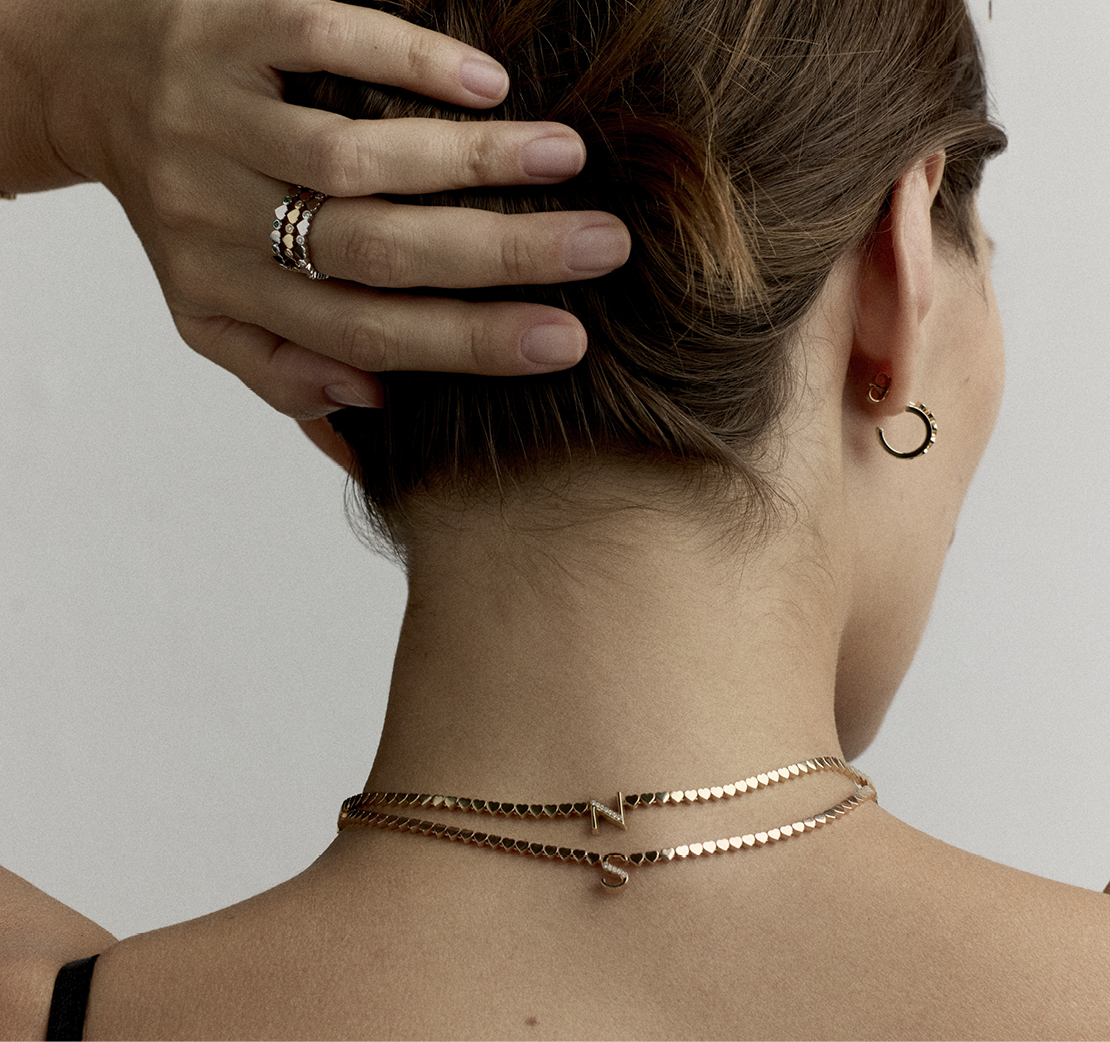
What advice would you give to women looking to launch their own brands or pursue careers in the creative industries?
Take your time and focus on building something that feels true to you. There will always be pressure to move quickly, but consistency is more important. Learn as much as you can, stay open to feedback, and be patient with the process. Staying connected to your values will help guide your decisions.
Looking ahead, what would you still like to achieve with Noora Shawqi?
I would like to continue growing the brand while staying consistent with its identity. That includes exploring new destinations, working on meaningful collaborations, and expanding the impact of each collection. The focus is on building something long-term that continues to evolve while staying true to its foundation.
By Lindsay Judge
Shaping Form, Lilian Afshar, Founder of L’Afshar, on design, material and growing a luxury brand from Dubai
With L’Afshar, Lilian Afshar has built an accessories brand focused on material, form and a strong visual identity. In a region where a new generation of designers is reshaping the language of luxury, her work stands apart for treating accessories as objects to be both worn and collected.
Since launching L’Afshar in 2013 with just five pieces, the brand has grown into a globally recognised name, known for its sculptural clutches that sit between accessory and objet d’art. What began as a prototype during her time at Esmod has expanded into a wider creative universe, now including furniture and objets d’art alongside her signature designs.
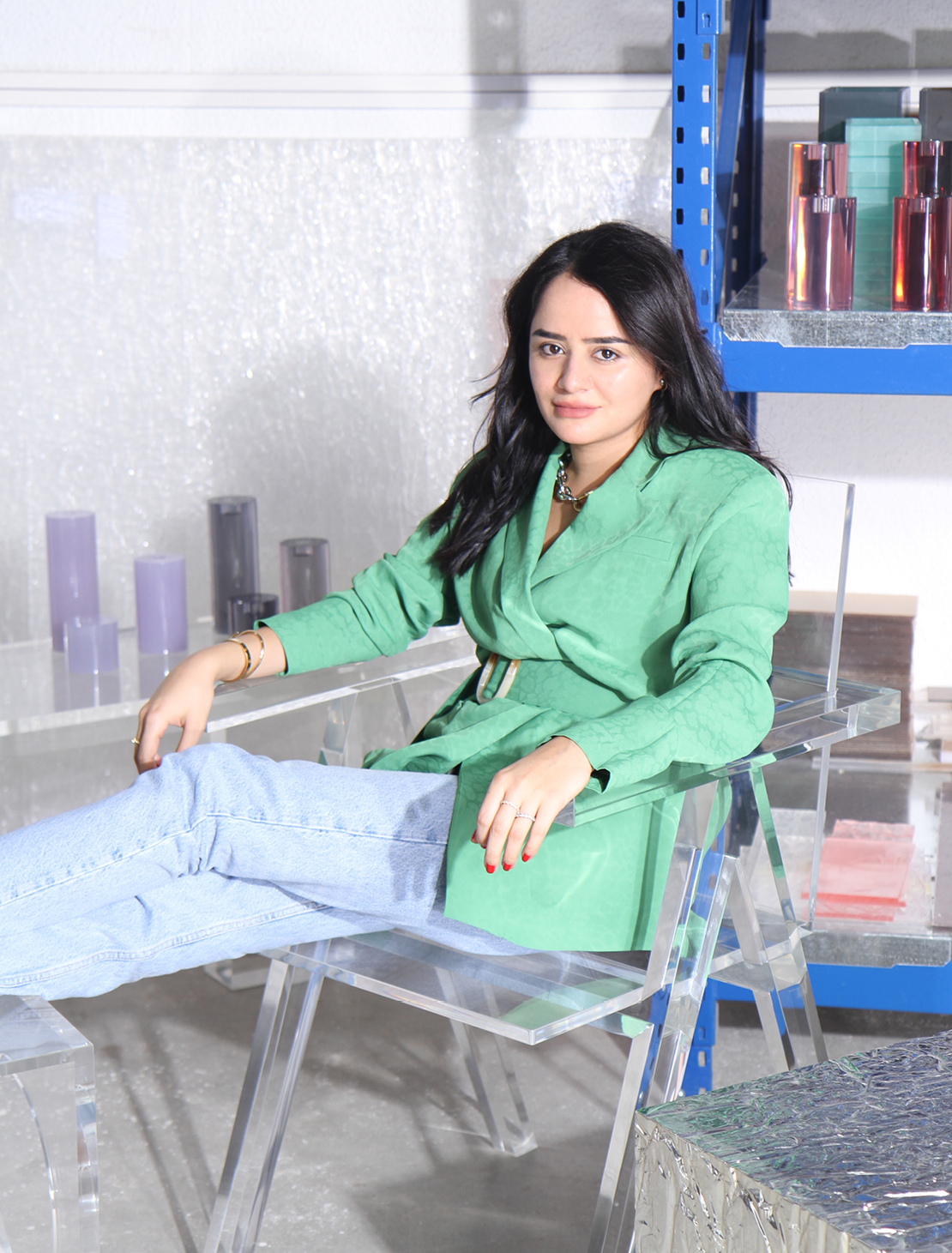
Working primarily with acrylic, a material she describes as balancing structure and light, Afshar has developed a design language that feels both architectural and instinctive. Each piece begins as raw material, shaped and refined with a jeweller’s eye for detail, resulting in precise, considered forms.
Here, Afshar reflects on the evolution of her brand, the role of craftsmanship and material innovation, and the realities of growing a business in an ever-changing industry.
What first inspired you to launch L’Afshar, and how has your vision evolved since those early days?
I was initially inspired by a desire to create something sculptural yet functional. Pieces that felt like objects of art but could still be worn and used. There was a gap for something clean, architectural, and material-focused. Over time, that vision has evolved beyond handbags into a wider world of design, including homeware and furniture. The core has remained the same, but it’s grown into a more complete expression of the brand’s identity and aesthetic.
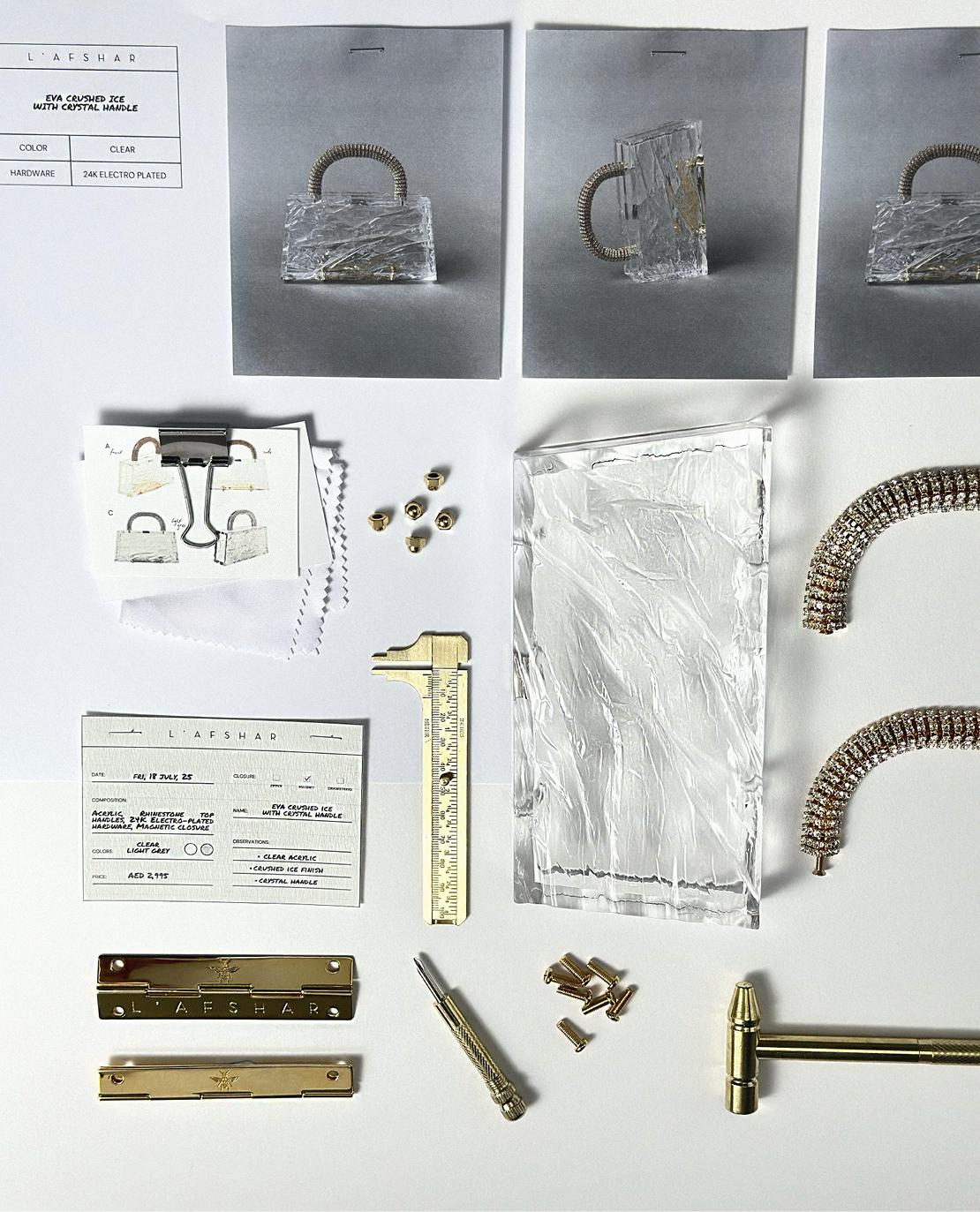
Your designs have become instantly recognisable. How would you describe the design philosophy behind L’Afshar today?
The design philosophy behind L’AFSHAR today is rooted in creating sculptural, timeless pieces that sit between art and function. I’m drawn to clean lines, architectural forms, and a sense of balance where each piece feels considered from every angle. Materials play a central role, particularly acrylic and resin, which allow me to explore light, texture, and structure in a very distinct way. The goal is always to create something refined, impactful, and modern, with a lasting presence.
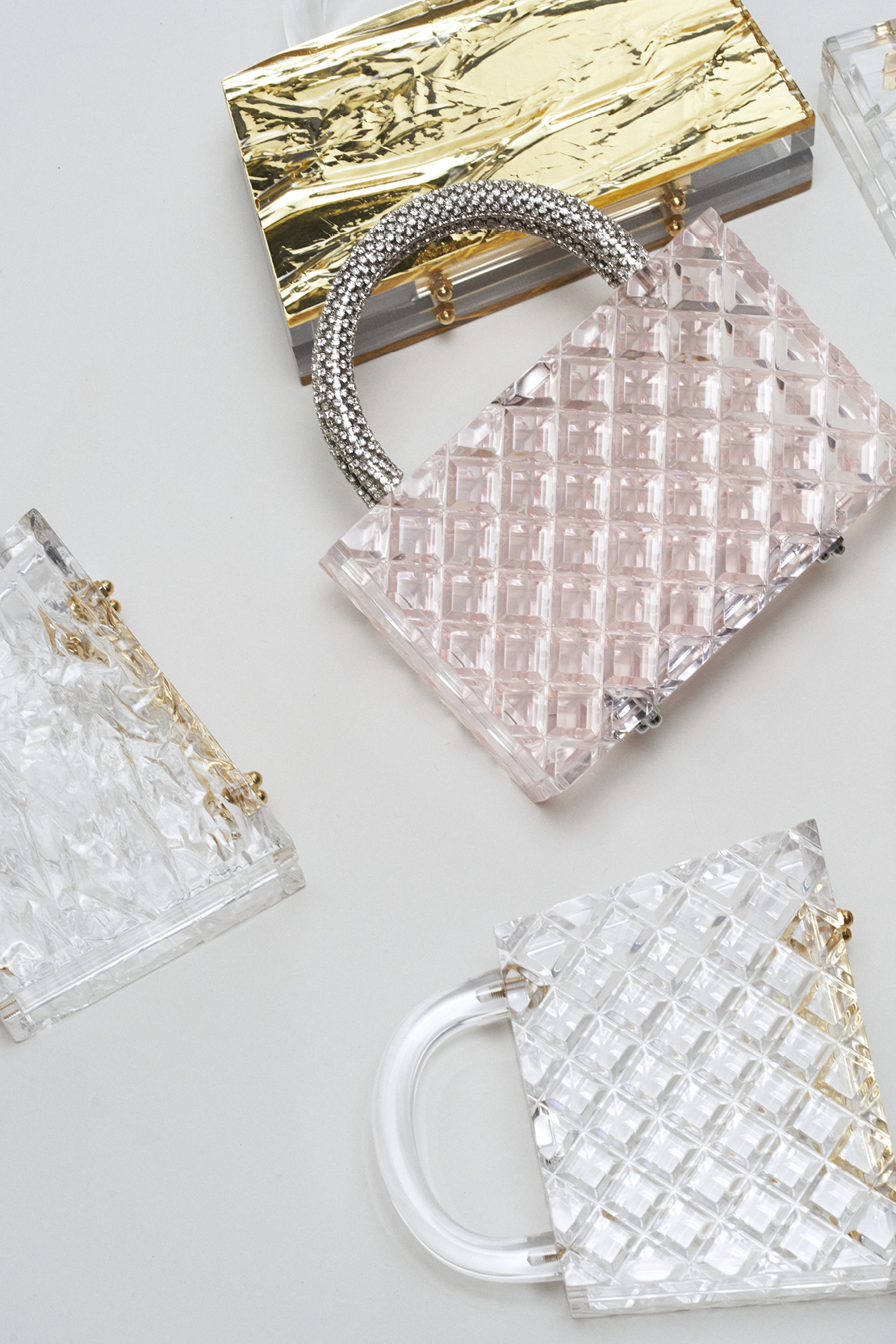
How has Dubai influenced your creativity and the growth of your brand?
Dubai has given me the freedom to have an idea and act on it almost immediately. Whether it was creating my first prototype in Al Quoz 13 years ago and then starting the business or taking a much bigger leap in 2019 by opening our own factory.
Being based here in Dubai has allowed me to experiment freely and scale the brand internationally, while still maintaining a strong connection to where everything is made. The energy, diversity, and ambition of Dubai constantly push me to think bigger and evolve creatively.
The Middle East has seen a significant rise in homegrown luxury brands. How do you see the regional fashion and accessories industry evolving?
I love seeing it. There’s so much creativity in this region, and it truly deserves to be highlighted globally. What feels different now is the confidence. Designers are building strong, distinct identities rooted in their own culture, rather than looking outward for validation.
Our region is an incredibly strong market, and it’s been truly powerful to witness the level of support and engagement from clients here. They’re no longer looking abroad to meet their needs. The same applies to tourism; when I travel, I’m always drawn to discovering designers that are unique to that city.
L’Afshar has gained international recognition and a global clientele. What do you think resonates most with customers both in and outside the region?
I think what resonates most is offering something truly unique and distinctive. There’s a strong sense of identity in the designs; you can always spot a L’AFSHAR piece.
It’s that balance between sculptural form, materiality and a clear point of view that connects with customers both within the region and internationally
How important is craftsmanship and material innovation in your design process?
Craftsmanship and material innovation are integral to my design process. Acrylic and resin are complex materials with many limitations, but that challenge is exactly what drives me to push their boundaries and explore new possibilities with my team.
At the same time, every piece is handmade in our Dubai studio, ensuring a sense of precision and individuality. It’s that balance between innovation and craftsmanship that defines the brand.
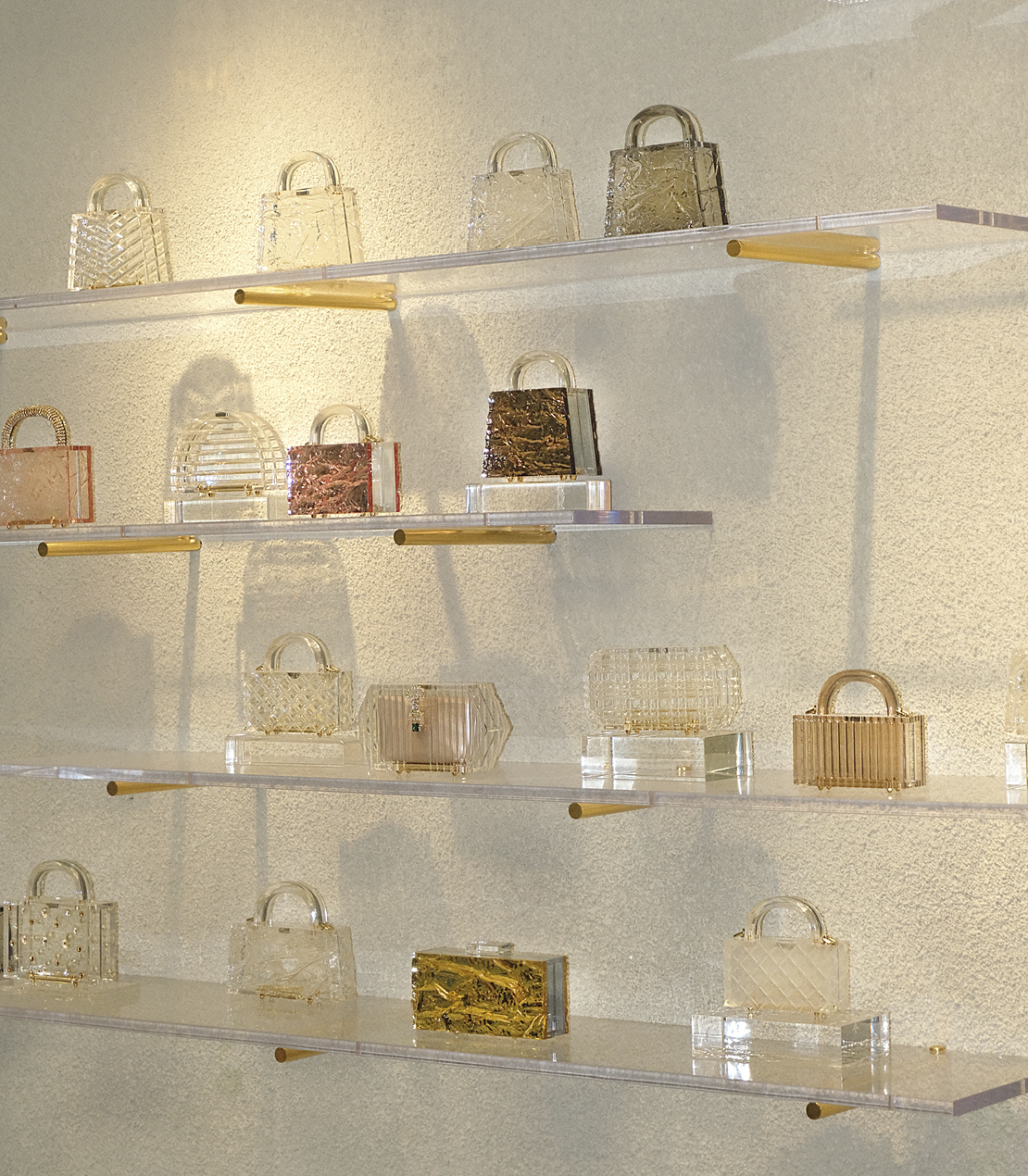
What have been some of the biggest challenges in building an independent luxury brand from the region?
One of the biggest challenges has been growing and scaling the brand from the region. International buyers and department stores have become more cautious about adding brands from here, especially as costs like shipping, duties, and logistics have risen significantly in recent years. At the same time, the industry here is still relatively young, and the region isn’t yet fully recognised for its craftsmanship, which adds another layer of challenge when building credibility internationally.
As a female founder in the region, what advice would you offer to emerging designers and entrepreneurs?
We need to stop glamorising entrepreneurship and the whole “girlboss” narrative. Running a business requires real resilience, vision and grit, but that label often creates pressure to constantly perform and overachieve. In reality, 99 per cent of the time, it’s about navigating challenges and constantly adapting to whatever comes your way. It’s so important to maintain a calm, regulated nervous system while building a business, and to have an outlet. Otherwise, you risk compromising your health.
What inspires you and when are you at your most creative?
I’m often most creative on a plane, I get a rush of energy and ideas seem to flow effortlessly, only without the kids, though!
Inspiration comes from many places. Some days it’s in the simplest details, like observing how petals are naturally formed, and other days it’s immersing myself in different cultures or getting lost in an antique market
What’s the professional motto that you live by?
A lot can change in a day, for the better.
Are there any new categories, collaborations or expansions you are currently exploring?
Having two categories already is essentially like running two separate businesses. For the next few years, my focus is on rediscovering and expanding the homeware and furniture category. Something I launched six years ago, but which naturally fell onto the back burner after having two children back-to-back.
What’s in the pipeline for L’Afshar this year?
A much stronger focus on homeware, as it’s a category showing significant growth. I also want to lean more into in-person events with my clients and community. I’m seeing a real appetite for connection and shared experiences.
By Lindsay Judge
QUIET POWER: DIOR READY-TO-WEAR SPRING-SUMMER 2026
Discover Dior’s Spring/Summer 2026 collection by Jonathan Anderson, a thoughtful study in quiet power, where reinterpreted icons and statement pieces redefine modern dressing.
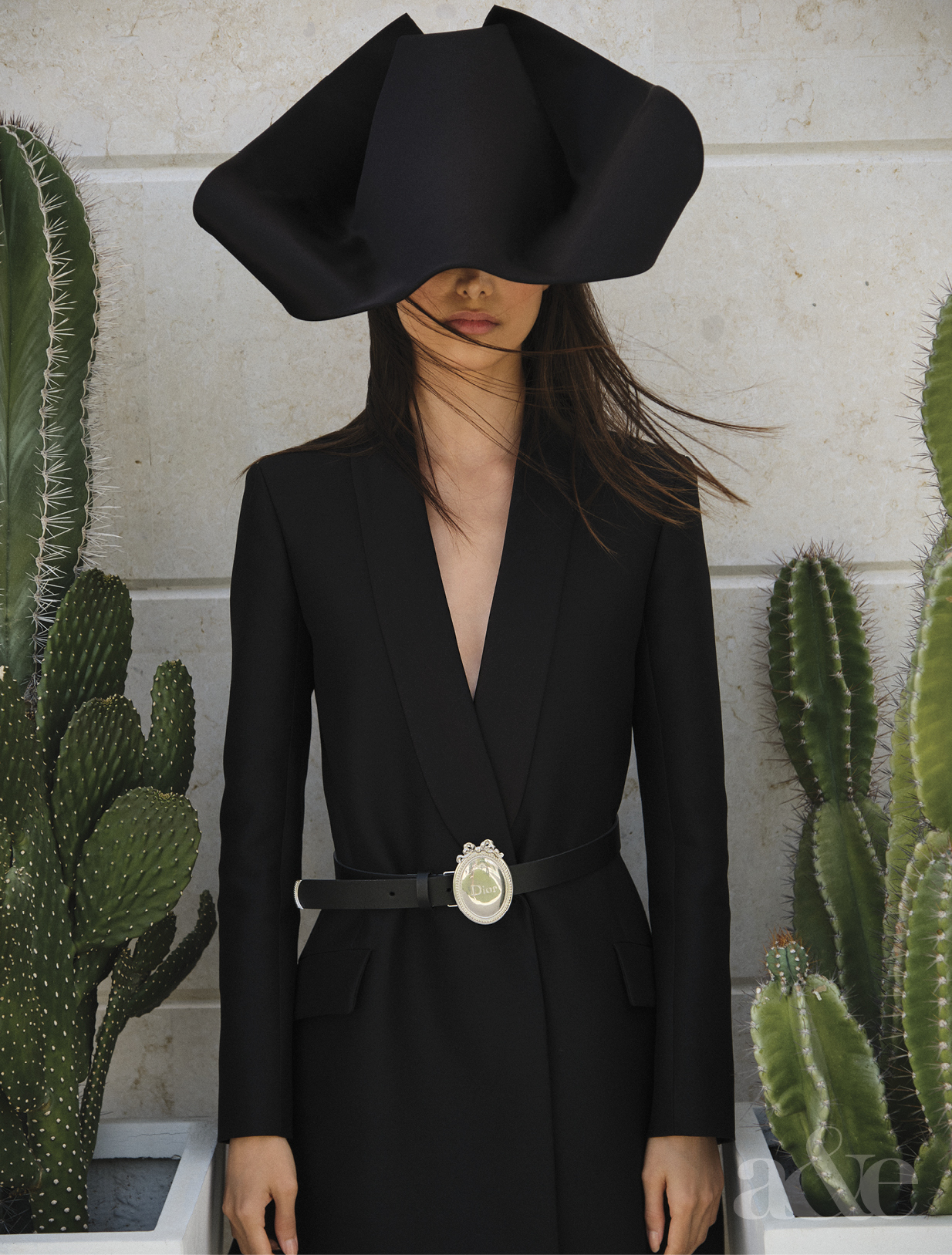
Black “Dior Show Stingray” Hat
Black Jacket
Black “Dior Medallion” Belt
All Dior
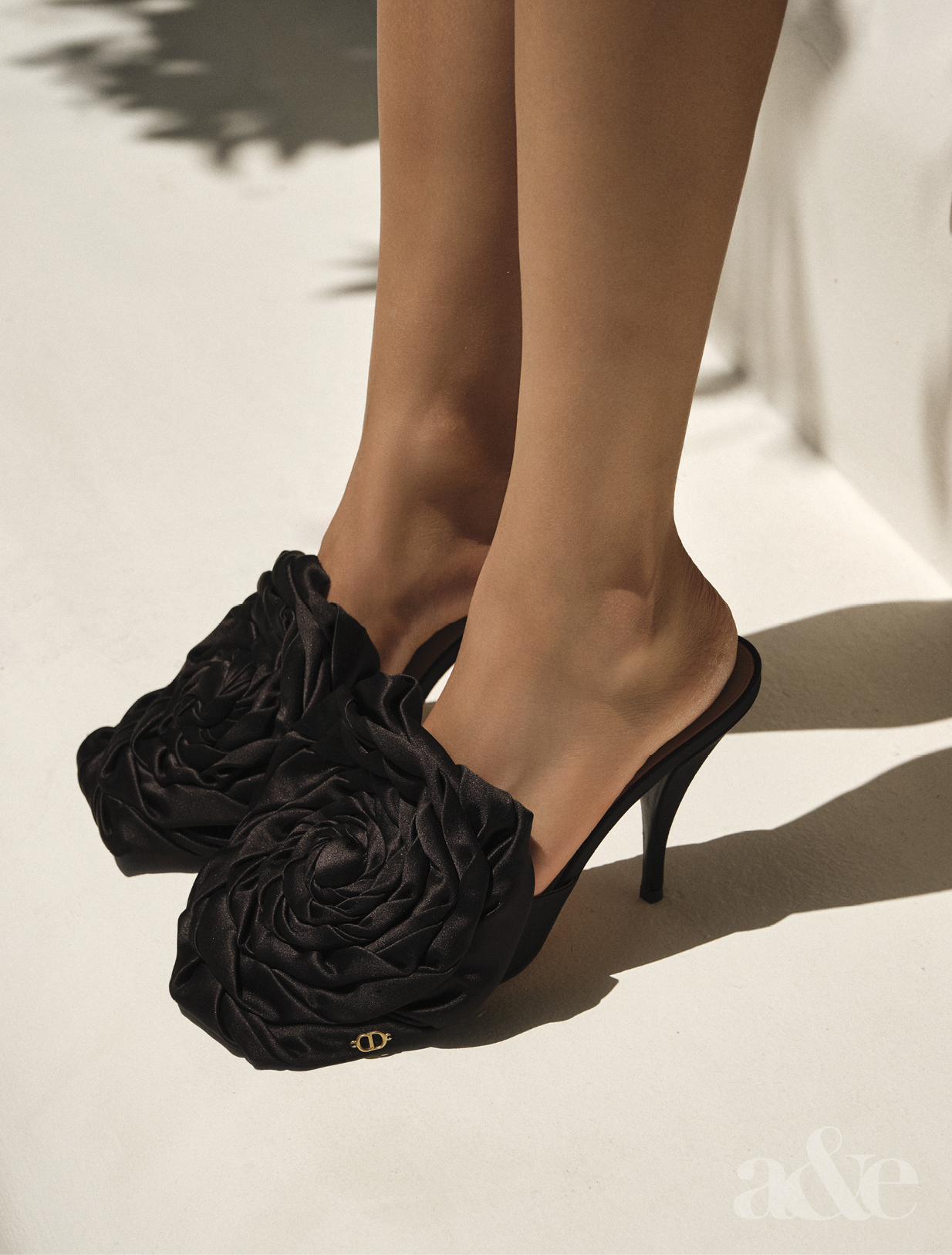
Black “Dior Aurore” Mules
By Dior
Black Bar Jacket
Beige “Diorly” Bag
Jeans
All Dior
Earrings
Denim Shirt
Denim Bow Collar
Denim Skirt
Green “Petit Trèfle” Bucket Bag
All Dior
White Dress
Bracelet
Blue “Dior Cigale” Bag
All Dior
Green Shirt
Yellow “Dior Crunchy” Bag
All Dior
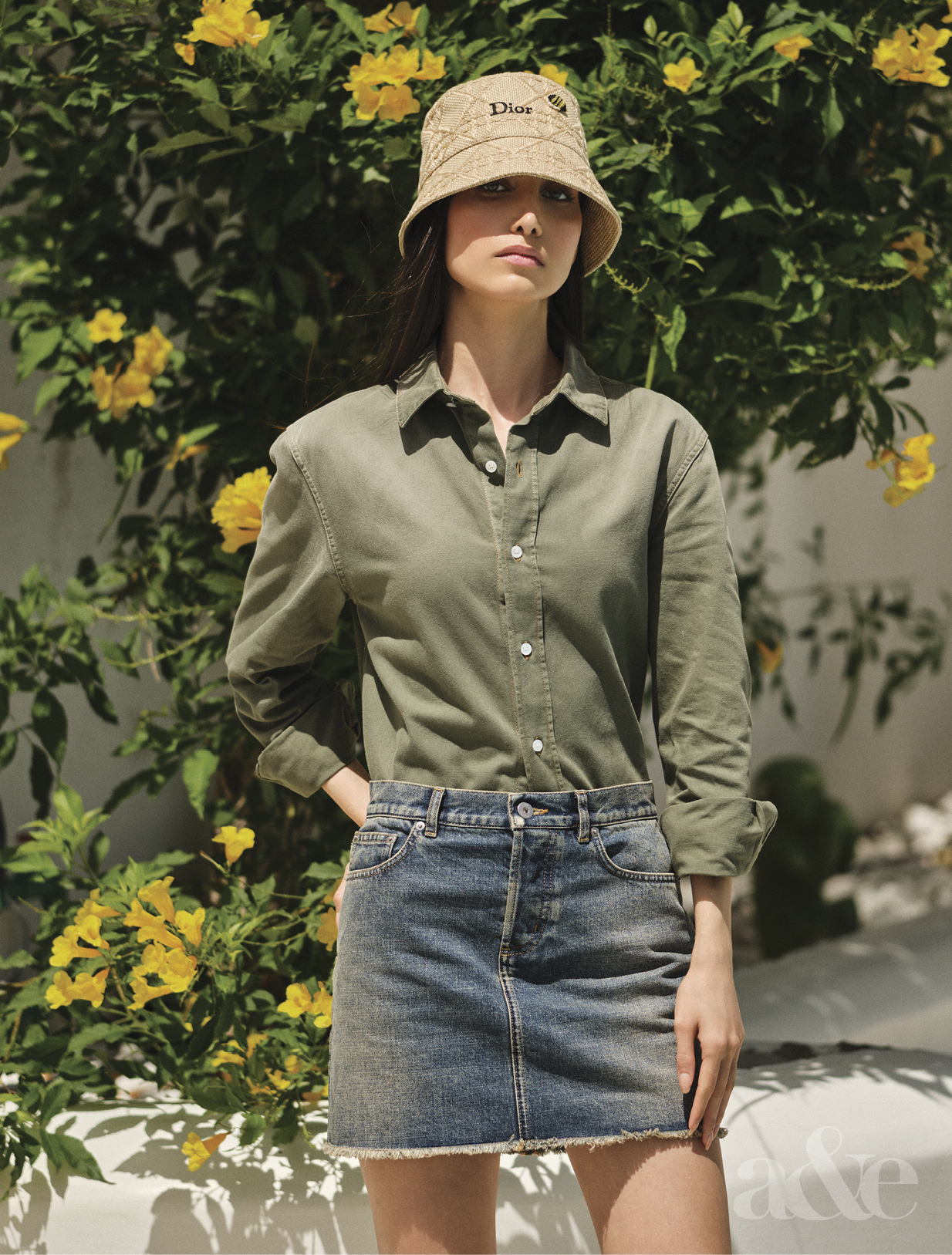
“Teddy-D” Bucket Hat
Green Shirt
Denim Skirt
All Dior
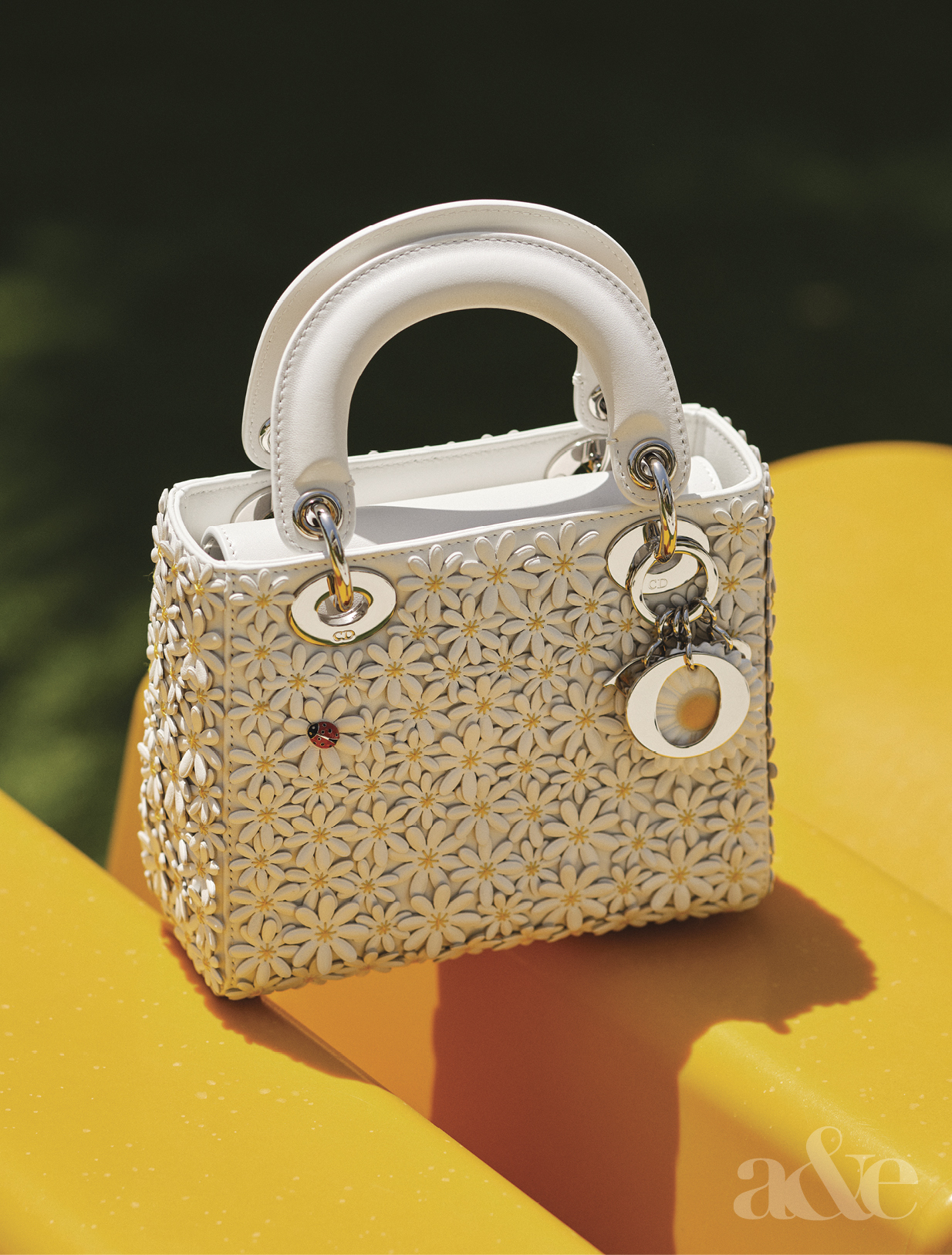
White Daisies “Lady Dior” Bag
By Dior
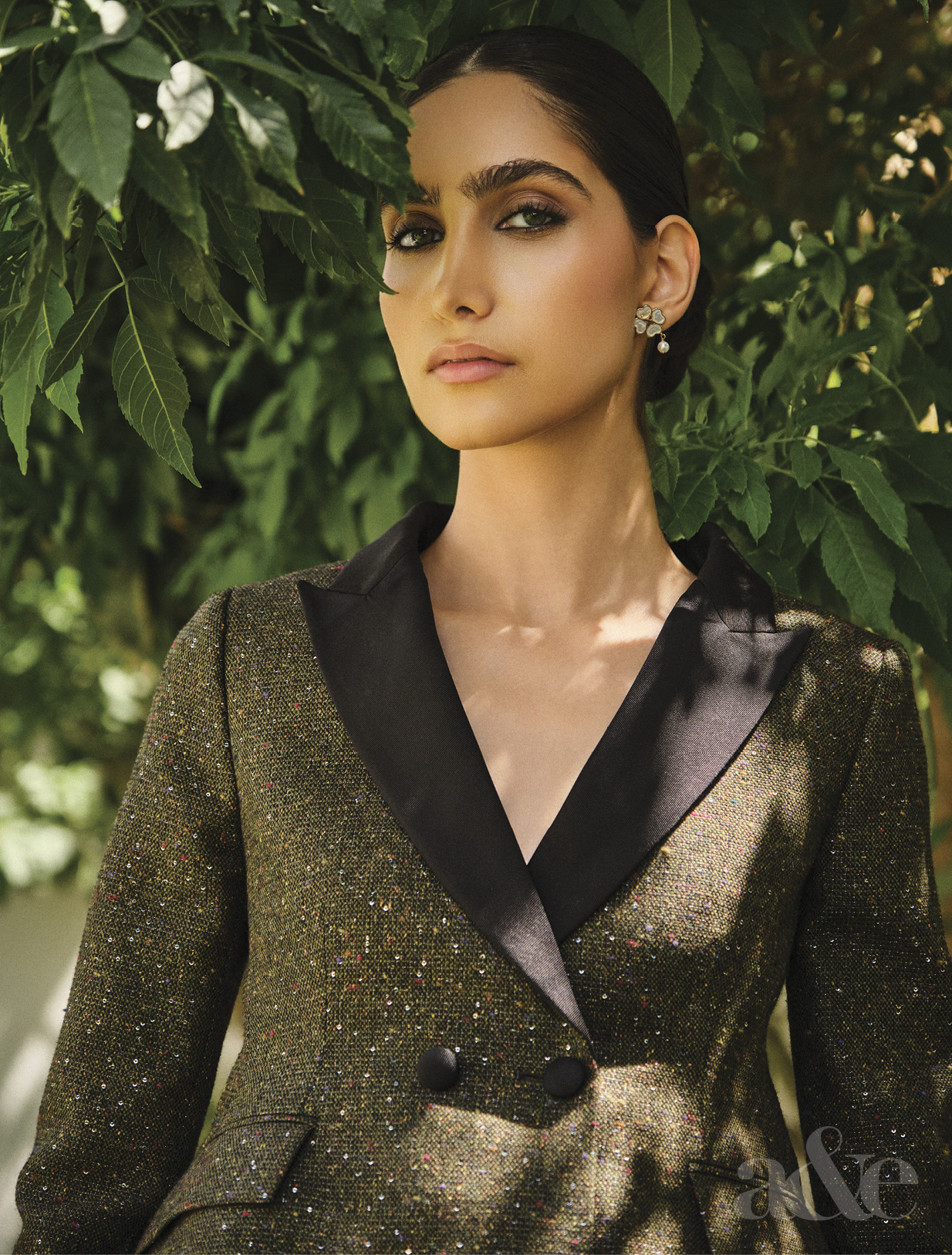
Earrings
Olive Green Cropped Jacket
All Dior
Founder/Editor in Chief: Lara Mansour
Styling & Direction: Lea Naoufal
Photography: Ziga Mihelcic
Model: Era at MMG
Hair: Aiza Qureshi
Makeup: Manuel Losada for Dior Beauty
Beyond the Page, UAE Author Salha Obaid on Writing, Community and the Future of Literary Expression
Salha Obaid has emerged as one of the UAE’s most thoughtful and distinctive voices in the country’s evolving literary landscape. From her early short story collection Alzheimer to her more recent novels, her work traces the complexities of memory, identity and place, offering narratives that are at once deeply personal and broadly reflective of the societies they inhabit.
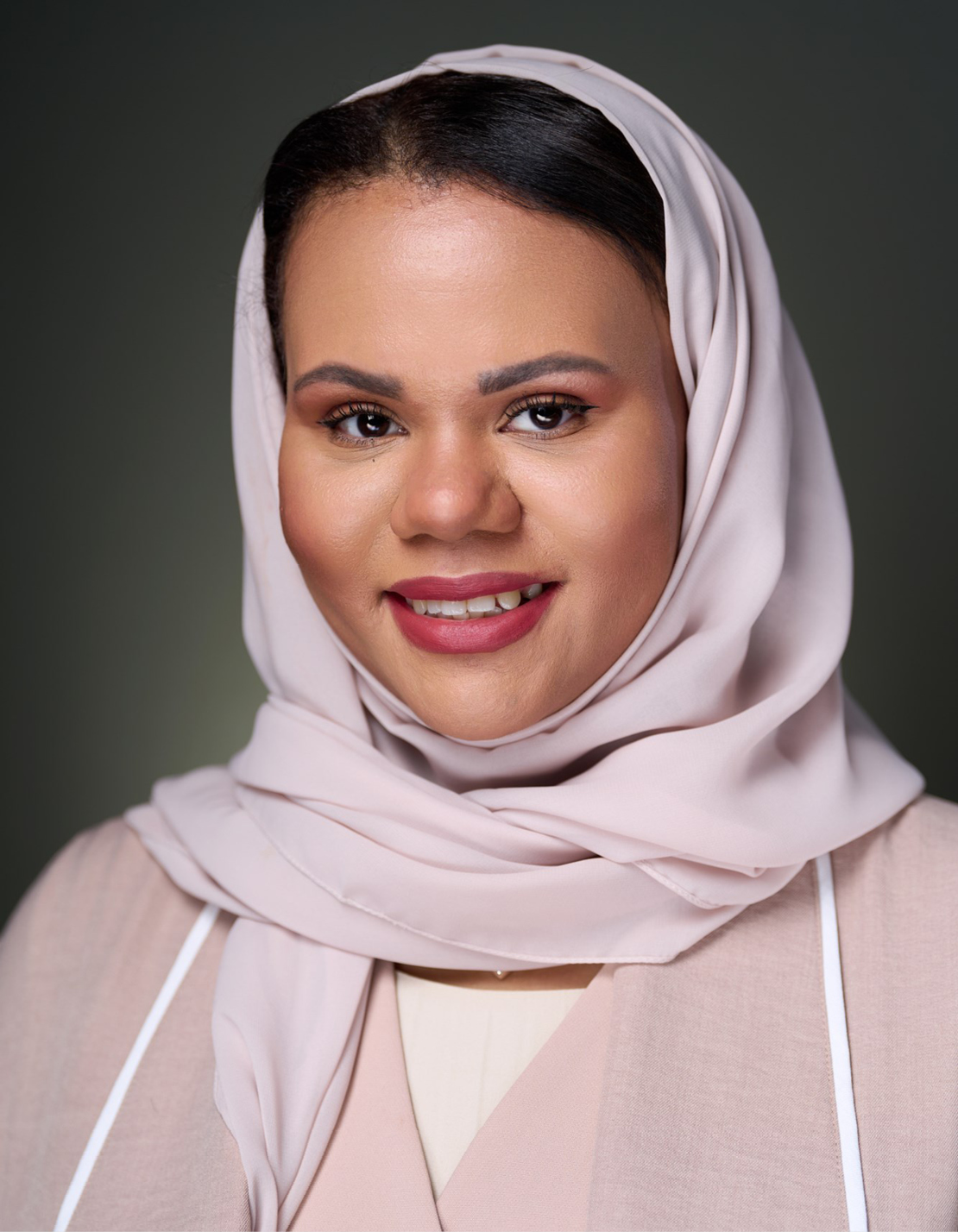
Rooted in the UAE yet resonating far beyond it, Obaid’s writing reflects a sustained engagement with the world around her, shaped by observation, inquiry and a desire to understand the human condition in all its nuances. Alongside her literary practice, her role within the country’s cultural landscape, from her work with the Board of Directors of Culture and Science in Dubai to founding the Cultural Community Project, underscores a broader commitment to dialogue and collective cultural growth.
As the UAE’s literary scene gains momentum, her work sits at the intersection of tradition and experimentation, exploring not only what stories are told but how they are shaped and expressed. Here, Obaid reflects on memory as a central theme, the influence of place on her storytelling, and the evolving role of writing in times of uncertainty.
What first inspired you to begin writing, and how has your voice evolved since then?
What inspired me in the first place was reading. From there came my first fragments of writing, through imitating imagined friends and stories like those I read. Over time, observations and personal questions about place, people, and the world emerged, allowing my writing experience to develop with a voice I continue to shape.
What themes do you find yourself returning to most, and why do they resonate with you?
I often return to the theme of memory. It first appeared quite directly in my debut short story collection, Alzheimer, shaped by my own understanding and perspective. Since then, it continues to surface in my work, sometimes subtly, through small details and underlying narratives.
Over time, memory has evolved into something broader for me, almost like an ongoing exploration of how individuals and societies understand themselves. It intersects with both personal experience and collective history, shaping the way we relate to place, identity and one another.
In many ways, everything begins with memory. It informs how we interpret the present and how we imagine the future. We often ask what comes next, but before that, there is another question: what happened, and how? That is where memory becomes essential, in helping us make sense of who we are and how we move forward, both as individuals and as societies.
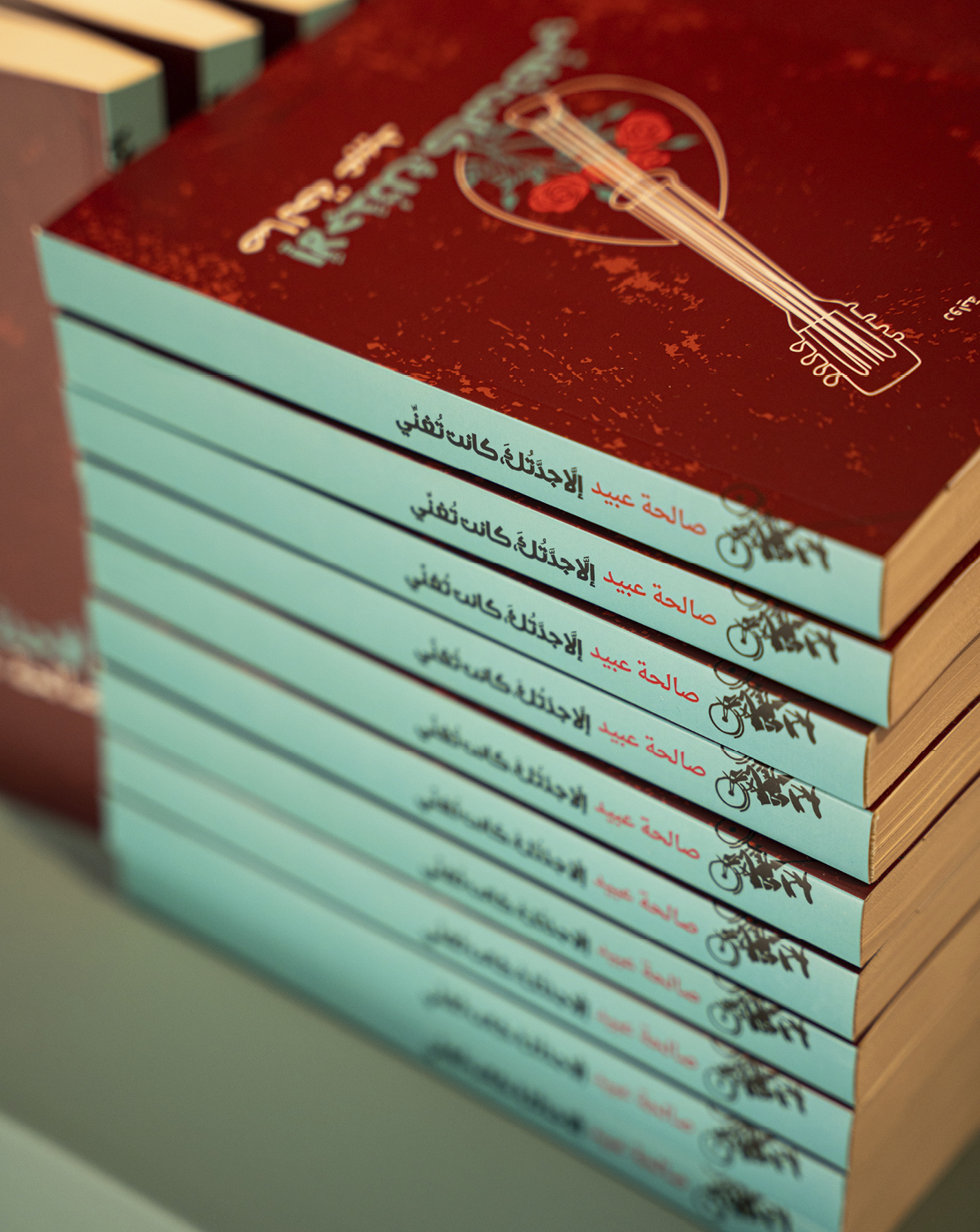
As an Emirati writer, how has the UAE influenced your storytelling, and what does it mean to contribute to the country’s growing literary landscape today?
My work is deeply connected to place, even when it isn’t explicitly referenced in my short stories. The human experiences and transformations I explore are drawn from my observations of people and everyday life in the UAE. In my novels, place becomes more central. It acts as a framework that holds events, shaped by social, historical, political and economic shifts. Many of these changes may not be immediately visible to those observing the Gulf region, particularly the UAE, from a distance. There is often a perception that we exist separately from the wider global experience of modern life and its complexities. Through my writing, I try to offer a more nuanced perspective, showing that we are deeply connected, and that our experiences, emotions and challenges are shared.
You have published both short story collections and novels. How does your creative process differ when working on short-form versus long-form writing?
For me, a short story centres on a specific emotional state. It’s about capturing and unpacking a feeling or a moment in a condensed, immediate way, and I often complete it in a single sitting. Novels, on the other hand, require a different approach. While they share that same impulse to explore an idea, they exist on a much broader scale, often connected to wider social and historical contexts. The process involves building fully realised characters and situations, supported by research, to create a cohesive world that feels believable and immersive for the reader.
You are also actively involved in the cultural landscape, serving on the Board of Directors of Culture and Science in Dubai and founding the Cultural Community Project. How important is community building to your work as a writer?
I believe a writer exists in two ways. The first is through their work, which lives on over time, beyond their own presence. The second is more immediate, shaped by their engagement with the world around them, through dialogue, participation and a conscious effort to contribute to the cultural life of a place.
For me, community building is part of that second role. It is about being present, engaging with others and helping to create a shared cultural awareness. I often think of Michel de Montaigne’s idea that conversation is a way of refining the self through connection with others. In that sense, dialogue becomes essential, not only in writing, but in how we exist within a cultural environment.
Being actively involved allows me to contribute to that wider cultural movement, supporting its growth and vitality in a more immediate and tangible way.
The UAE’s literary and publishing scene has grown significantly in recent years. How have you seen opportunities evolve for writers in the region?
This growth has played an important role in bringing forward a wider range of creative voices, each with different perspectives and levels of experience. It reflects the energy of a region like the UAE, where development is constant and where culture is being actively supported, both at an institutional level and through individual initiatives.
What remains important now is time. As the scene continues to expand, time will determine which voices and projects truly endure and shape the literary landscape in a lasting way, both within the region and on a global stage.
You recently participated in Letters to the UAE, sharing messages of hope with the community. What inspired your contribution, and why are initiatives like this meaningful at this moment?
This is an overwhelming moment, where emotions are heightened and often shaped by uncertainty, fear and anxiety. At the same time, there is a visible collective effort to respond to these challenges with clarity and realism, to understand what is happening and to face it honestly. In this context, writing becomes essential. It offers a way to document these feelings and to create a sense of continuity, a reminder that this place endures, even in moments of instability. We live in a world that often feels disoriented, prone to forgetting its own history. Writing, in that sense, becomes a way of holding on, of recording and of affirming what is real.
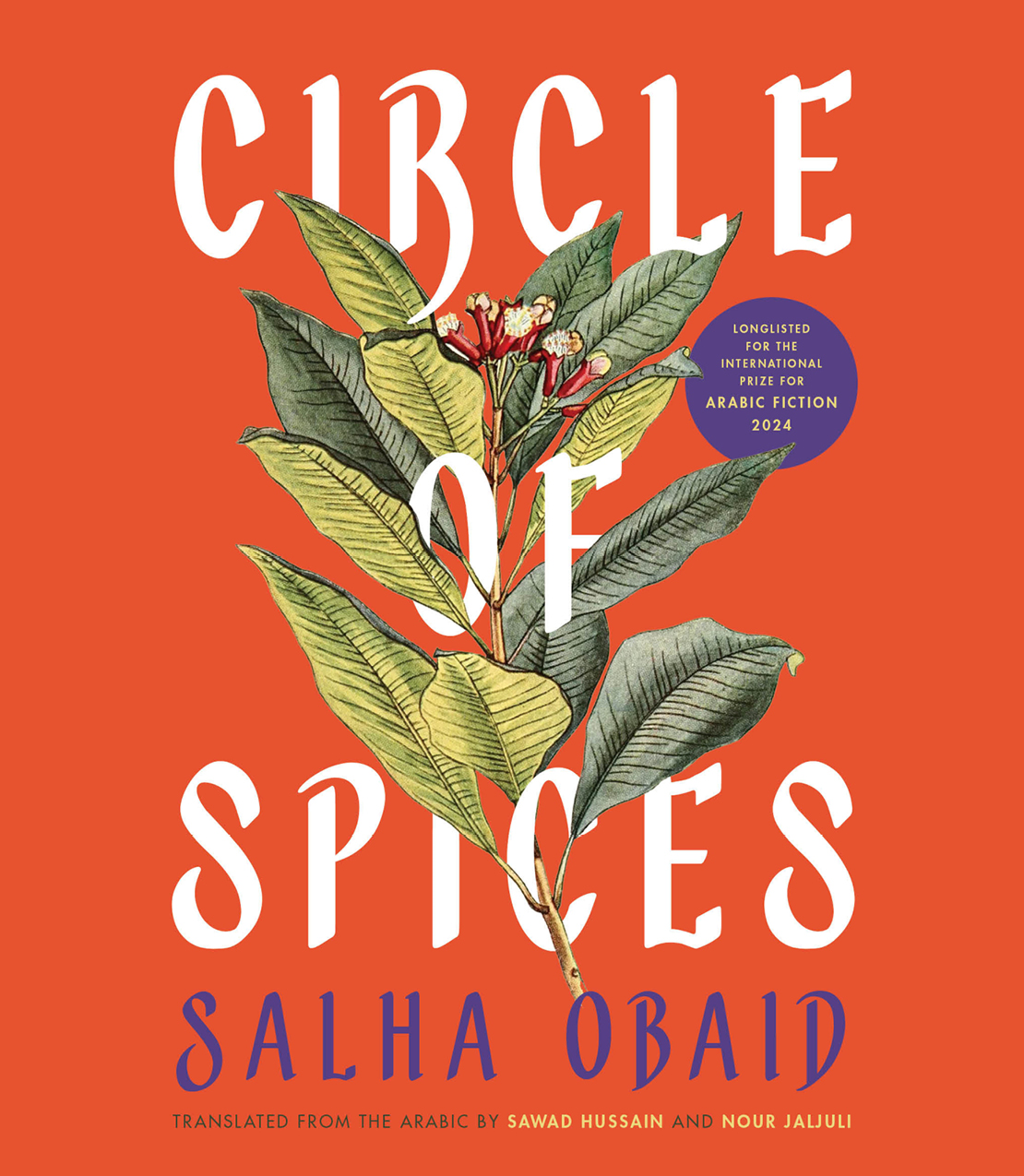
Across your books, your storytelling often balances introspection with social observation. How do you approach translating everyday experiences into compelling narratives?
I am naturally drawn to observation and constant inquiry. I tend to focus on small details to understand the bigger picture, approaching the world almost like a puzzle I am continuously trying to piece together.
In my daily life, I collect fragments, phrases, emotions, ideas and questions. Some of these find their way into short stories, while others stay with me longer, gradually developing into the foundations of larger works that require more time, research and exploration. It’s an ongoing process, one that allows everyday experiences to evolve into something more layered and meaningful over time.
What continues to inspire you creatively, and where do you find ideas for your stories today?
Reading remains central to my creative process; it opens new ways of thinking and understanding. Travel is equally important, allowing me to observe different places and the patterns of human behaviour within them. I’m also inspired by conversations and the nuances of everyday life, whether simple or complex. These moments often prompt me to write as a way to explore and make sense of what I encounter.
Looking ahead, what would you like to explore next in your writing, and what do you hope your work contributes to the UAE’s cultural and literary future?
There are many ideas I would like to explore in my writing, but beyond content, I’m increasingly interested in experimenting with form. I’m drawn to the possibilities within storytelling, how structure, voice and style can evolve to create new ways of expression. I often ask myself what my work might look like if I pushed these boundaries further. That sense of exploration is something I find exciting and continue to develop. Ultimately, I hope my writing contributes to a broader, evolving literary landscape in the UAE, one that embraces both depth of content and experimentation in form.
By Lindsay Judge
Art in The City, DIFC Art Nights Return for its 21st Edition
DIFC Art Nights returned for its 21st edition, transforming Gate Village into a lively hub of art, culture and creativity. Running until Sunday 26 April 2026, the long-standing event once again drew visitors from across the city, reinforcing its position as one of Dubai’s most popular free cultural experiences.
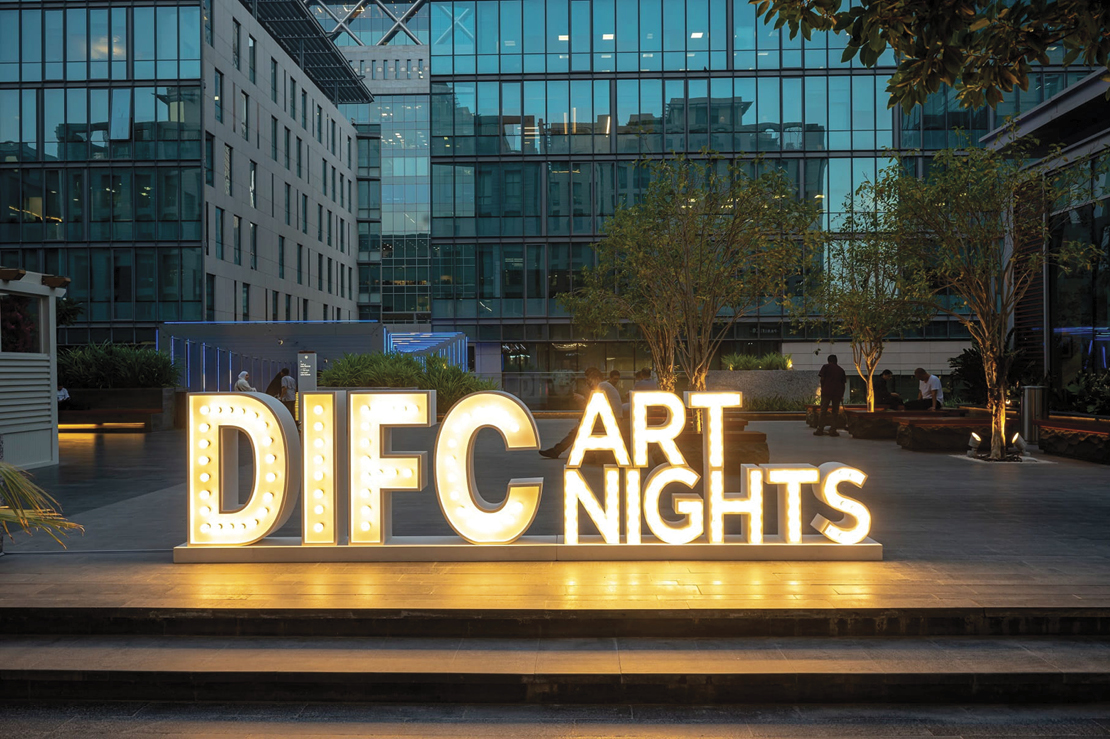
Now in its second decade, DIFC Art Nights brought together a diverse programme spanning visual art, film, music and discussion. This year’s edition featured a curated series of short film screenings presented by Cineolio and its founder, Nawaf Al Janahi, alongside live performances from emerging young pianists Abdulla Makki, Ameera Al Ali and Hadi Kotaich.
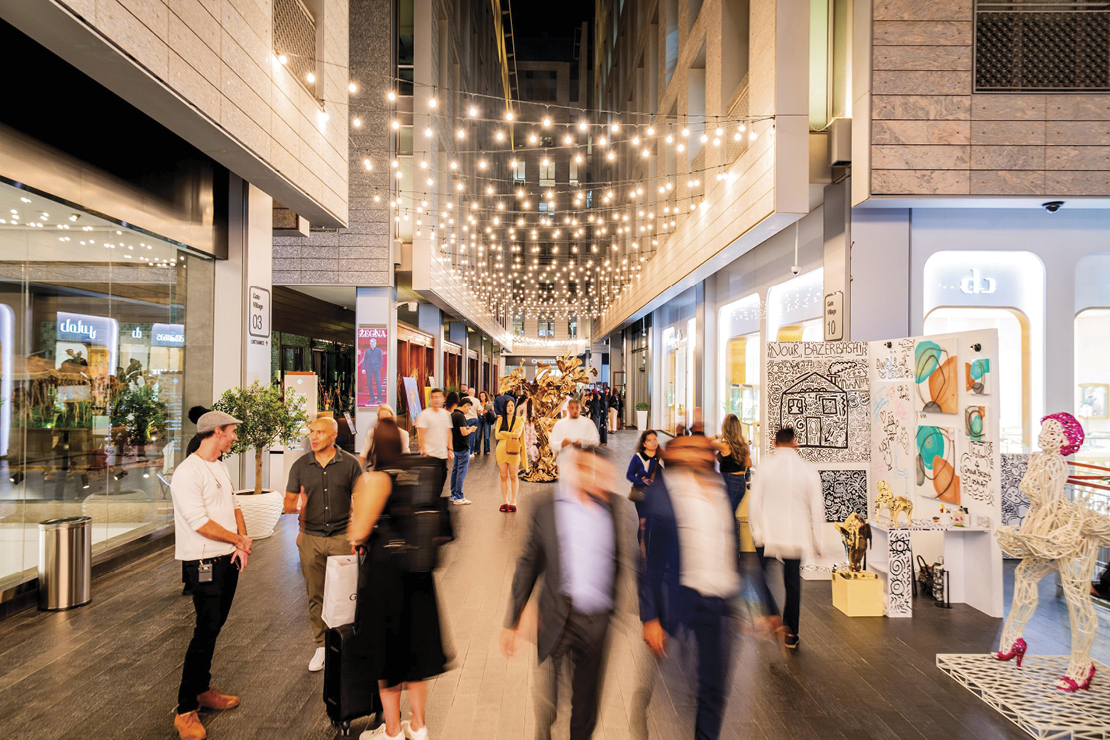
Opening night featured a series of panel discussions exploring the evolving cultural landscape, including a session on “The Next Generation of Collectors,” hosted by Christie’s and Dubai Culture, as well as insights from the Electronic and Emerging Art Conference, ISEA2026.
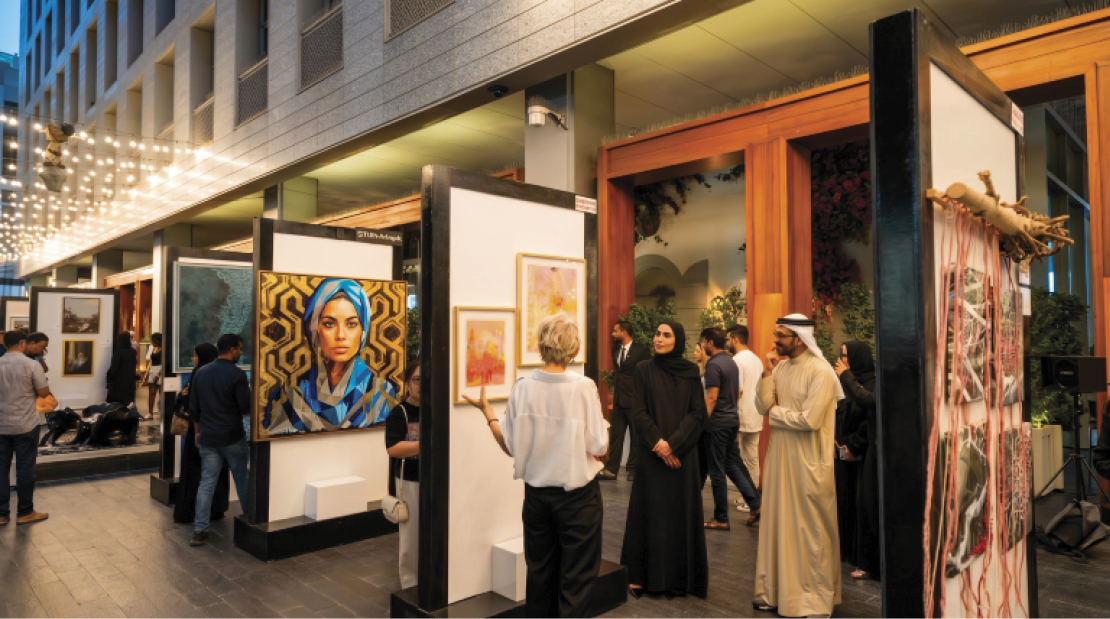
Across Gate Village, visitors experienced a range of installations and live works, from Domingo Zapata’s large-scale acrylic-on-metal sculpture to interactive doodle art by Nour Bazerbashi and live painting by Ayman Mohammed. Complementing the exhibitions, the programme also included complimentary workshops and ongoing live entertainment.
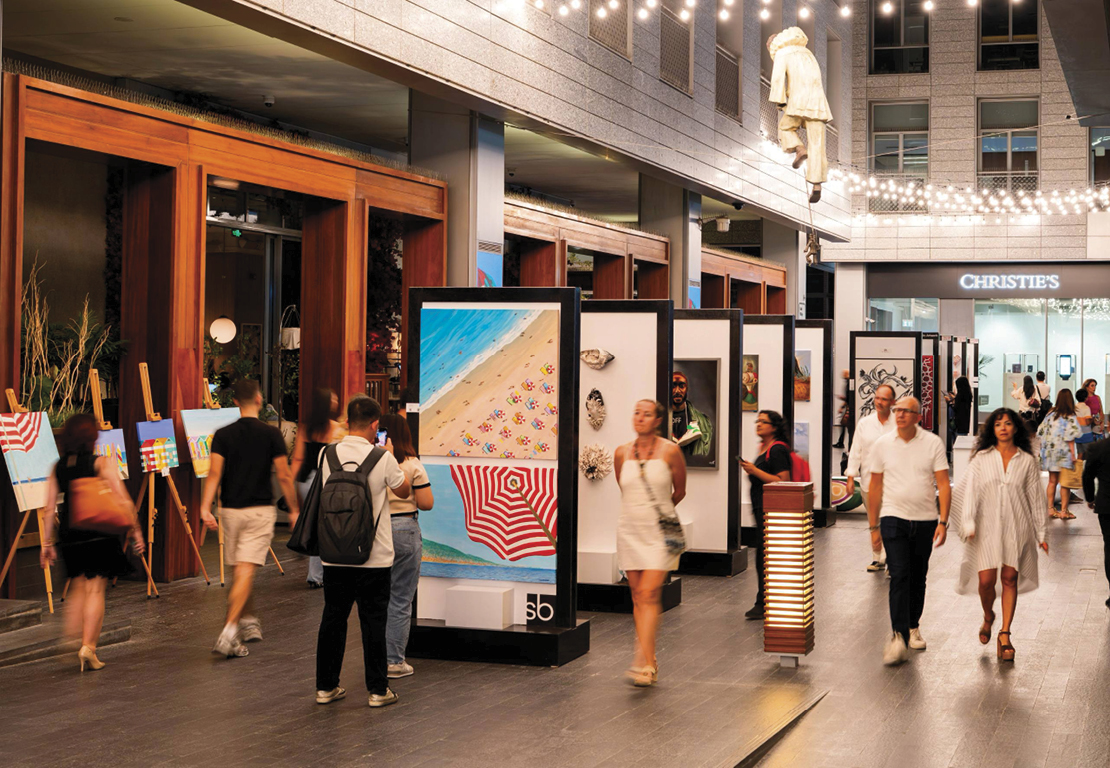
The event continued to highlight Dubai’s growing creative scene, offering an accessible platform for both established and emerging artists.
Creative Shift, Alserkal Avenue expands its annual programme into a month-long showcase of regional creativity
Alserkal Avenue has expanded its annual Art Week into a month-long programme, introducing Alserkal Art Month, a broader initiative designed to support and sustain the UAE’s creative ecosystem amid regional uncertainty. Running from April 18 to May 18, the programme unfolds across five weekends, offering a more flexible and considered approach to engaging with art and culture across the district.
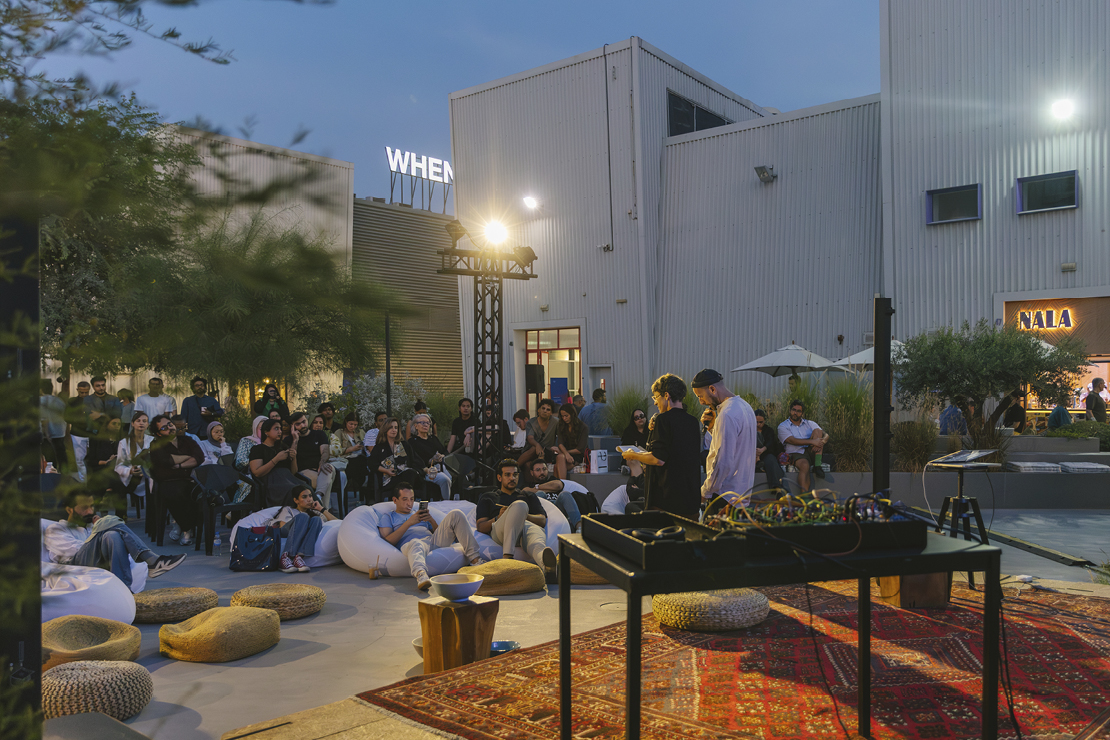
Rather than concentrating activity into a single week, the extended format allows for a slower, more immersive experience. Developed in collaboration with artists, galleries and multidisciplinary collectives from across the region, Art Month positions Alserkal Avenue as a space for dialogue, reflection and connection. The programme brings together new gallery exhibitions, public art commissions, performances and workshops, alongside Majlis Talks, open studios and reading groups hosted by Alserkal Arts Foundation.
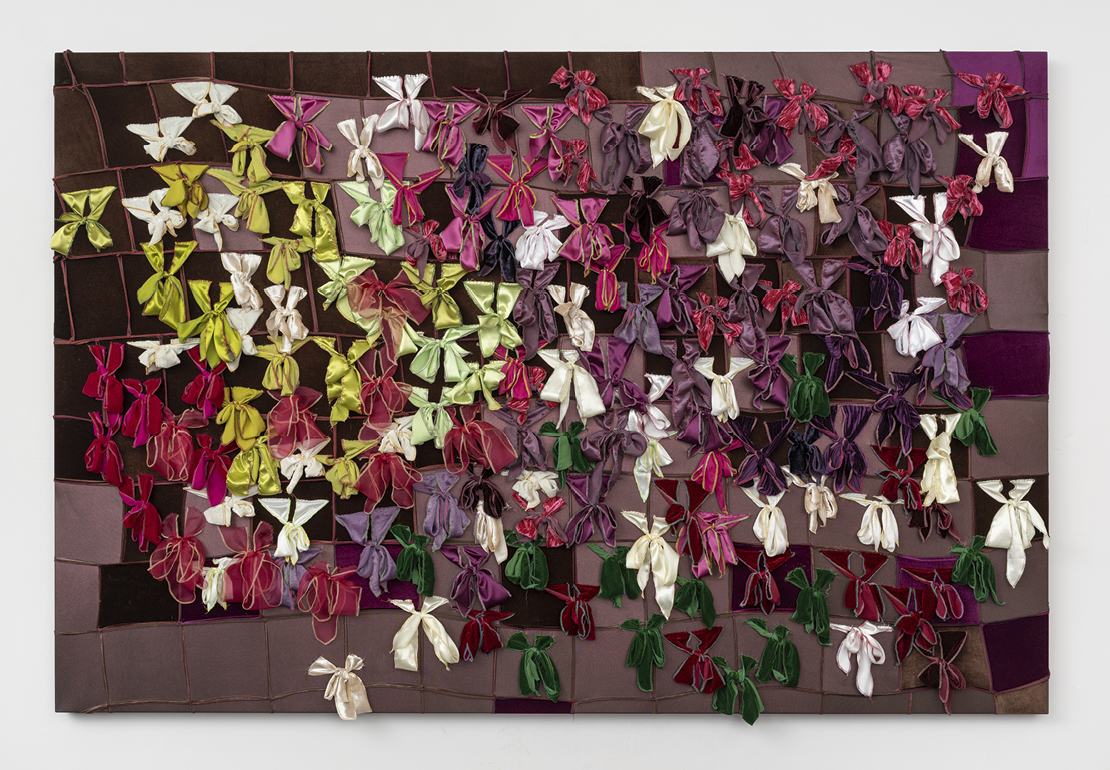
The evolving structure is guided by Shilpa Gupta’s work Still A Sky We Hold, a new iteration of her earlier commission, which serves as a conceptual anchor for the programme. This theme of shared space and collective resilience runs throughout, shaping a series of initiatives that prioritise collaboration and community engagement.
A central highlight is Déjà Vu, a large-scale multi-gallery exhibition opening at Concrete on April 25. The exhibition brings together artists from leading UAE galleries in a collective commercial show that examines ideas of repetition, memory, and the uncanny through a contemporary lens. Curated by Kevin Jones, Nada Raza and Zaina Zaarour, the exhibition reflects a broader effort to support galleries and artists while maintaining a platform for ambitious work.
Beyond exhibitions, Alserkal Arts Foundation has placed a strong focus on supporting practitioners through studio takeovers, participatory programming and research grants. During Art Month, visitors can engage with open studios, artist-led reading groups and live performances, while a newly established fund offers financial support to help creatives continue developing their work.
The programme also extends into wider cultural dialogue. A roundtable hosted by Alserkal Advisory will bring together institutions and stakeholders to explore how the arts can continue to create meaningful impact, while initiatives such as Blank Space highlight emerging creatives working across design, craft and visual arts.
Closing the month, a dedicated programme of moving-image works will coincide with Art Dubai, further reinforcing the district’s role in the region’s cultural calendar.
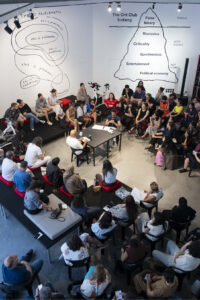
Through its expanded format, Alserkal Art Month reflects a shift towards a more adaptive and community-led model, one that prioritises continuity, collaboration and creative exchange. In doing so, it reinforces Alserkal Avenue’s position not only as a cultural destination but as a platform that actively supports the people shaping the region’s artistic landscape.
