
Desert X AlUla returns for its fourth edition
Returning for its fourth edition, Desert X AlUla 2026 once again transforms one of the world’s most extraordinary landscapes into an open-air museum. Staged under the theme Space Without Measure, the exhibition draws inspiration from Kahlil Gibran’s reflections on possibility, perception, and the boundless nature of the human spirit, inviting visitors to experience contemporary art in direct dialogue with AlUla’s valleys, canyons, and ancient routes.
Set within Wadi AlFann, AlUla’s Valley of the Arts, large-scale, site-specific installations by Saudi and international artists respond to the land’s dramatic geology and layered history. AlUla is not a blank canvas but a living archive, shaped by centuries of movement, trade and settlement. Desert X AlUla unfolds within this context, placing contemporary works alongside traces of earlier civilisations at this UNESCO World Heritage site, encouraging new ways of seeing and listening to the land.
The 2026 edition is curated by Wejdan Reda, founder of Sahaba and Associate Director at Diriyah Biennale Foundation, alongside London-based curator Zoé Whitley OBE, bringing together regional insight and global perspective. While the full artist line-up will be revealed soon, the exhibition promises a dynamic mix of emerging and established voices exploring themes of culture, nature and transformation through works created specifically for AlUla.
All commissions were produced in Saudi Arabia, emphasising material knowledge, local craft and collaboration. Artists worked closely with artisans, musicians, botanists and fabricators through initiatives including Madrasat Addeera and the Native Plant Nursery, embedding community knowledge directly into the works.
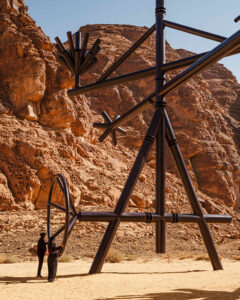
Visitors can experience Desert X AlUla in multiple ways, from self-guided walks and public or private tours to viewing the installations from an open-top car. Together, the exhibition and its accompanying programme of talks and events continue to strengthen AlUla’s growing legacy as a global destination for art in the landscape, where creativity, history and environment remain inseparable.
Bvlgari Reveals BVLGARI ICONS Minaudière: A New Concept Where High Jewellery Style
With the BVLGARI ICONS Minaudière Collection, the Roman High Jeweller transforms its most enduring symbols into sculptural objets d’art. Blurring the line between jewellery and accessory, the collection celebrates craftsmanship, female wisdom and cultural legacy, redefining what it means to carry luxury in the modern world.
Bvlgari expands its accessories universe with the launch of the BVLGARI ICONS Minaudière Collection, a refined exploration of heritage, symbolism and contemporary design. Titled Carrying Culture, the collection sits at the intersection of high jewellery and luxury accessories, transforming the minaudière into a cultural object imbued with meaning as much as beauty.
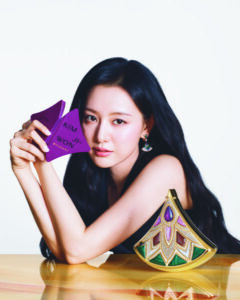
Under the creative direction of Mary Katrantzou, Bvlgari’s most enduring symbols, Monete, Serpenti, Tubogas, Divas’ Dream and BVLGARI BVLGARI, are reinterpreted as sculptural metal minaudières. Drawing on more than 140 years of Roman jewellery-making mastery, each piece is conceived as an objet d’art, crafted in limited edition using techniques traditionally reserved for high jewellery. Lost-wax casting, hand-enamelling, pavé diamond settings and inlays of coloured stones elevate the minaudière beyond accessory, positioning it as a wearable expression of heritage.
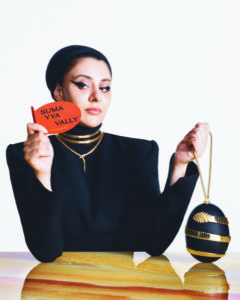
Rather than focusing on functionality alone, the collection proposes a more conceptual idea of luxury. The minaudières are intentionally compact, designed not to carry everyday essentials, but to carry ideas, values and stories. This philosophy is brought to life through the campaign, which stars five influential women: Chimamanda Ngozi Adichie, Linda Evangelista, Kim Ji-won, Isabella Rossellini and Sumayya Vally, each embodying one of Bvlgari’s icons and the values it represents, from transformation and wisdom to identity and strength.
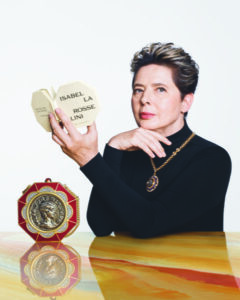
For the campaign, each woman authors a bespoke miniature book designed to fit inside her corresponding minaudière, reinforcing the idea that culture itself can be carried. In doing so, Bvlgari reframes the accessory as a vessel for knowledge and lived experience, celebrating women as custodians of culture and storytellers of legacy.
Inside Mandarin Oriental’s Growing Collection of Exceptional Private Homes
With ten new residences added across Europe, Mandarin Oriental Exceptional Homes continues to redefine discreet, service-led travel for today’s most discerning guests.
Louis Vuitton Opens A Dedicated Beauty Store in Dubai
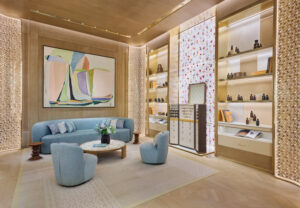
Louis Vuitton has taken a significant step in its global beauty journey with the opening of its first dedicated beauty store at The Dubai Mall. Located on the second floor of Fashion Avenue, the new space marks a fresh chapter for the House in the UAE, expanding its presence beyond fashion and leather goods into a fully immersive beauty experience.
Rather than a traditional retail concept, the boutique has been designed as a sensory destination. The space reflects Louis Vuitton’s heritage through refined materials, fluid architectural lines and subtle references to travel and craftsmanship. Every detail is considered, encouraging visitors to explore beauty in the same way the House has long invited clients to discover fashion: slowly, intuitively and with emotion.
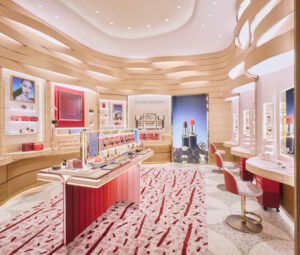
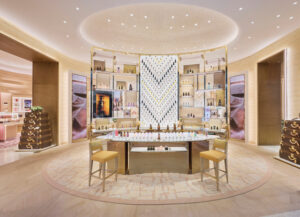
Inside, the store is organised into distinct yet seamlessly connected zones dedicated to fragrance, makeup and personalised consultation. Signature Louis Vuitton design codes are woven throughout, from bespoke furniture elements to tactile surfaces that echo the Maison’s visual language. The result is an environment that feels luxurious yet inviting, designed to linger rather than rush.
The opening spotlights La Beauté Louis Vuitton, the House’s growing beauty universe developed under the creative direction of Pat McGrath. Each product is conceived as both a functional beauty essential and a collectable object, combining high-performance formulas with thoughtful design. The emphasis is on artistry, texture and longevity, reinforcing Louis Vuitton’s commitment to craftsmanship across categories.
One of the most striking pieces within the boutique is the Louis Vuitton lipstick trunk — a contemporary nod to the House’s iconic travel trunks. Crafted from Monogram-coated canvas and designed to hold an entire lipstick wardrobe, it exemplifies the Maison’s ability to merge beauty with heritage-driven design.
The Dubai opening also carries regional significance with the Middle East preview of Ambre Levant, a fragrance inspired by the warmth and depth of amber and oud. The scent offers a modern interpretation of these traditional notes, creating a luminous composition that feels closely tied to the region.
With this launch, Louis Vuitton now counts four standalone beauty stores, bringing its global total to five. The Dubai Mall boutique not only reinforces the city’s role as a global luxury hub but also signals the House’s long-term commitment to beauty as an integral part of its evolving identity.
Milan Men’s Fashion Week Highlights Fall/Winter 2026 Collection
As the shows took place in Milan this January, we bring you highlights from the men’s Fall/Winter 2026 collections set to define men’s wardrobes later this year.
Zegna
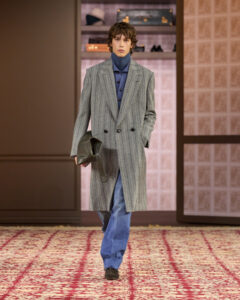
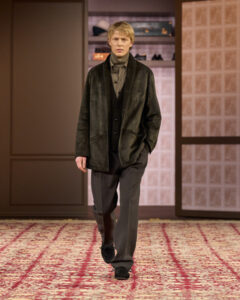
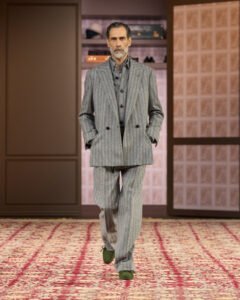
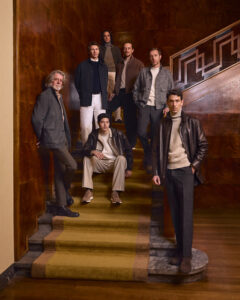
Zegna’s Fall/Winter 2026 collection reimagines the family wardrobe as a sacred space where generations meet through the act of wearing. Real pieces from Gildo and Paolo Zegna’s personal heritage form an intimate backdrop, including the preserved “ABITO N.1”, a bespoke suit from the 1930s that anchors the story in craftsmanship and continuity. Opening Milan Fashion Week Men’s, Alessandro Sartori’s latest collection features a long, relaxed silhouette, with broader shoulders, higher waists, and fluid trousers.
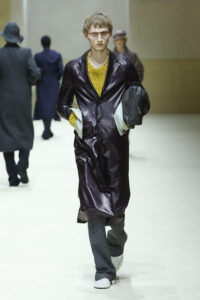
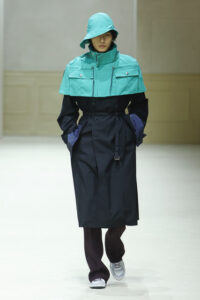
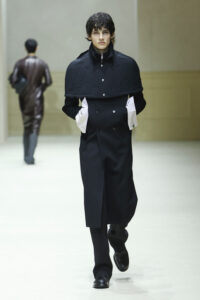
Prada
Prada presented its Fall Winter 2026 menswear, “Before and Next” at Milan Fashion Week. Miuccia Prada and Raf Simons offered a collection focused on the evolution of menswear at the brand, where memory shapes the future. Elongated, precise silhouettes reveal the body within, built from familiar codes thoughtfully reimagined.
Collaged prints reference antiquity, renaissance and modernity, layering time into each garment, while the Deposito of the Fondazione Prada becomes a liminal stage between private reflection and public display. A deeply cerebral vision of tailoring that feels restrained, poetic and profoundly human.
Tod’s
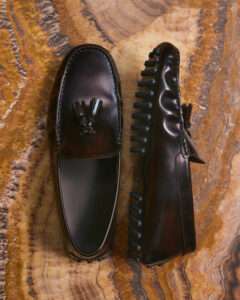
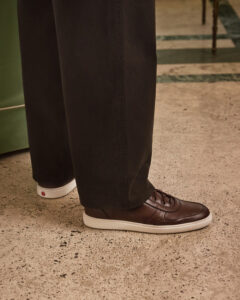
Tod’s Men’s Fall Winter 2026/27 is a collection rooted in timeless Italian craftsmanship and a devotion to doing things beautifully. At its centre sits the Winter Gommino, a true ode to meticulous handwork, exceptional materials, and the quiet art of savoir faire. Its proportions and sole revisit the brand’s origins, proving that great design endures beyond trends while staying relevant for today. Rendered in plush suede with cashmere or shearling linings for snowy mountain days, or in refined antiqued leather for city life, the Winter Gommino moves effortlessly between worlds.
Giorgio Armani
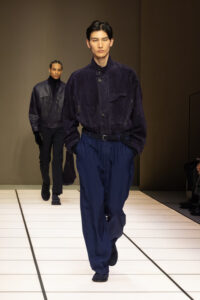
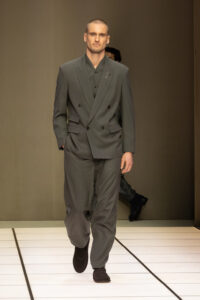
For Autumn/Winter 2026-27, Giorgio Armani unveils Cangiante, a menswear collection built around iridescence and shifting colour. Creative director Leo Dell’Orco makes his debut after four decades alongside Armani, placing subtle yet luminous hues at the forefront.
With references to designs from the brand’s 1980s designs, silhouettes are relaxed and fluid, featuring blousons, low-buttoned jackets, enveloping coats, and wide trousers that fall effortlessly over suede shoes and boots. Winter fabrics feel especially tactile, from brushed cashmere to velvet and chenille, while soft knitwear includes a geometric jacquard cardigan created with Alanui. Accessories complete the look with oversized totes, crossbody bags, graphic belts and wide-brimmed hats.
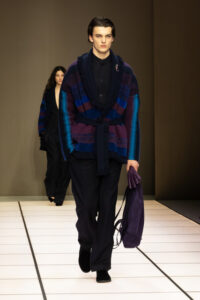
Louis Vuitton Reveals the 2026 LV Mirage Capsule Collection
For its sixth edition, the LV Mirage Capsule Collection sees Louis Vuitton return with a refined expression of elegance, designed as a celebration of generosity and a thoughtful approach to modern dressing. Created as a complete lifestyle wardrobe, the collection spans leather goods, ready-to-wear, accessories, shoes, fine jewellery, and fragrance, offering a cohesive universe of exclusive pieces intended to be worn, gifted, and treasured.
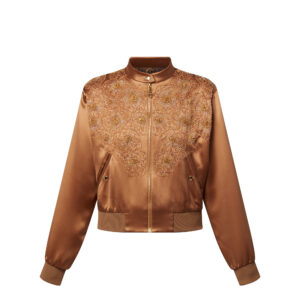
Fluidity defines the ready-to-wear offering, where versatility takes precedence. Pieces are designed to move seamlessly from day to evening, balancing comfort with polish. Soft, flowing silhouettes are elevated through precious details such as gem buttons and delicate embroidery, adding a subtle sense of radiance rather than overt embellishment. The colour palette remains calm and considered, built around earthy browns, powdery pinks and warm neutrals that reflect a sense of understated chic.
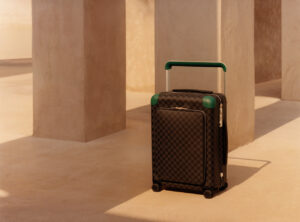
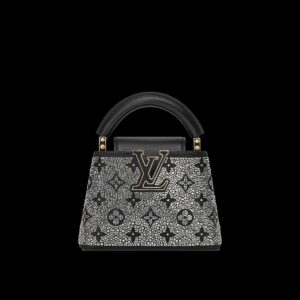
Within the same tonal family, Louis Vuitton’s iconic leather goods are reimagined with a Mirage lens. The Capucines and Speedy bags appear in varnished Monogram leather, exceptional embroidery and gem-like accents that echo across the shoe collection. Select designs are finished with a distinctive “Heirloom” detail, a motif that connects footwear, eyewear and jewellery in a single visual language. New textile additions include a stole and a lightweight poncho, both introduced with tone-on-tone Monogram patterns that play with matte and shine for a discreet statement.
Fine jewellery also takes on renewed expression through the latest additions to the Color Blossom line. The Monogram flower is rendered in vibrant malachite green, luminous amazonite blue and rich cornelian red, offering a fresh perspective on one of the Maison’s most recognisable symbols.
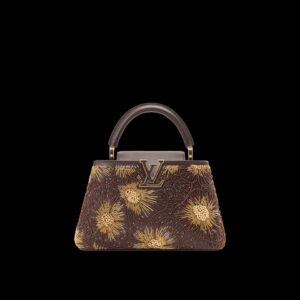
This edition marks a significant first for the Mirage universe, in collaboration with Lebanese designer Nada Debs. Known for reinterpreting traditional savoir-faire through a contemporary lens, Debs introduces a dune-inspired motif inspired by the desert landscape. Her contribution includes a high-end Bakhoor set shaped as a Monogram flower inspired by mashrabiya patterns, a Bakhoor trunk and a reinterpretation of the Capucines bag crafted in Taurillon leather.
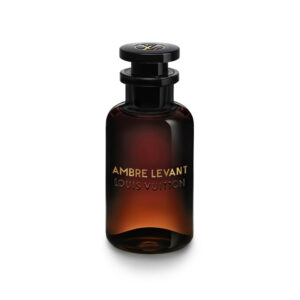
Completing the experience is Ambre Levant, the latest fragrance by Master Perfumer Jacques Cavallier Belletrud. Blending amber notes with oud, the scent evokes the glow of golden hour as sunset light softens the horizon.
With its considered craftsmanship and cultural sensitivity, the LV Mirage Capsule Collection is dedicated to the Middle East and select markets in South West Asia and Europe. The collection launches with a Middle East pre-launch on January 15, 2026, followed by a worldwide release on January 30, 2026, both in stores and online.
Nobu One Za’abeel Opens with a Star-Studded Celebration in the Dubai Skyline
Dubai has once again cemented its reputation as a global epicentre of luxury hospitality with the grand opening of Nobu One Za’abeel, the latest and most ambitious expression of the iconic Nobu brand. Unveiled last night with a dazzling red-carpet celebration, the launch brought together an international roster of stars, industry leaders, and tastemakers, marking a defining moment in the city’s ever-evolving dining and nightlife landscape.
Founded by culinary legend Nobu Matsuhisa alongside Robert De Niro and Meir Teper, Nobu has become synonymous with refined Japanese-Peruvian cuisine, understated glamour, and world-class experiences. With this new flagship venue in Dubai, the brand enters an exciting new chapter, blending its signature culinary excellence with high-energy nightlife and architectural spectacle.

Lindsay Loha
Guests arriving at the opening were greeted by the dramatic setting of One&Only One Za’abeel’s The Link, the iconic 230-metre cantilevered sky concourse that bridges two towers high above the city. The red carpet glittered with global names, including Lindsay Lohan, Jean-Claude Van Damme, Chanel Iman, and many more, alongside leading figures from hospitality, fashion, and entertainment.
Inside, the evening unfolded with a deeply symbolic kagami biraki ceremony, a centuries-old Japanese ritual performed by Nobu Matsuhisa, Meir Teper, and senior partners. As traditional Taiko drums resonated through the space, the founders struck open a large sake barrel with wooden mallets, signifying harmony, prosperity, and new beginnings. Guests were then served sake in traditional masu cups, setting the tone for a night rooted in culture yet infused with modern celebration.
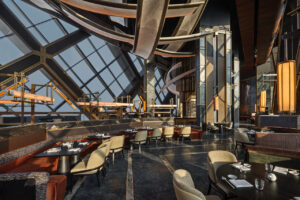
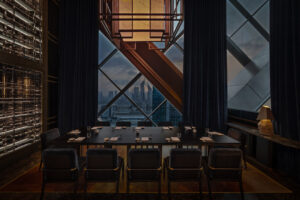
The design of Nobu One Za’abeel is a triumph of creativity and craftsmanship, led by the internationally acclaimed firm Rockwell Group. The interior seamlessly weaves Japanese precision with Dubai’s bold architectural identity, using intersecting geometries, sculptural lighting, and layered spaces that blur the boundaries between dining, lounge, and performance. A monumental custom ceiling installation, developed in collaboration with LASVIT, ripples above the space, guiding guests from arrival through to private dining with a sense of fluid movement.
Culinary highlights showcased the very best of Nobu’s repertoire: delicate Yellowtail Jalapeño, buttery Black Cod with Lettuce, rich Wagyu Short Rib with Wasabi Salsa, and expertly crafted sushi and sashimi offerings that reinforced why Nobu remains a global standard-bearer in fine dining.
With reservations now open to the public from 17 January 2026, Nobu One Za’abeel is set to become one of Dubai’s most coveted destinations for dining, socialising, and celebration.
Prada Reveals its Spring Summer 2026 Campaign
For Spring Summer 2026, Prada turns its attention inward, offering an analysis of what fashion imagery means today. Under the creative direction of Miuccia Prada and Raf Simons, the house continues its long-running inquiry into authorship, perception, and the mechanisms of advertising, questioning not just how images are made, but also how they are seen, circulated, and consumed.
At the centre of this exploration is American artist Anne Collier, whose practice over the past two decades has consistently interrogated photography as both cultural artefact and object of desire. Working across the boundaries of art, advertising and visual culture, Collier has built a body of work that asks us to reconsider our relationship with images, the act of looking, and the power dynamics between observer and observed.
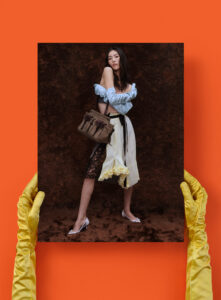
For this Prada campaign, Collier was commissioned to create a portfolio of images that fundamentally reframes the idea of a fashion campaign in the digital age. Rather than producing imagery designed solely for screens and feeds, Collier’s intervention renders the campaign as something tactile and material, an object that exists physically, to be held, handled and contemplated.
Each image is a carefully composed still life. In them, disembodied hands hold photographs of the collection, images within images, creating a layered act of looking. The images were shot by Oliver Hadlee Pearch, whose lens captures Prada’s Spring/Summer 2026 designs, worn by a cast that brings both recognisability and emotional resonance to the work.
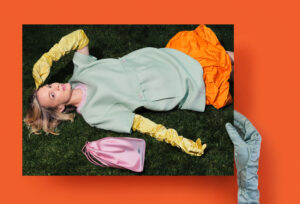
Appearing within these framed images are actors Levon Hawke, Nicholas Hoult, Damson Idris, Carey Mulligan and Hunter Schafer, alongside musician John Glacier and model Liu Wen. Their presence adds a further dimension to the work, introducing personality, familiarity and narrative, while simultaneously positioning them as subjects observed through multiple lenses.
As viewers, we are invited to recognise ourselves in the act of looking, reflected in the anonymous hands that hold the images. Desire, admiration and consumption are all gently exposed, prompting reflection on how fashion imagery operates and how meaning is constructed through framing and repetition.
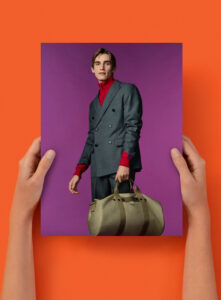
In doing so, the campaign becomes both a celebration of fashion photography and a quiet liberation from it. By placing the campaign image outside its usual context, Collier allows it to be examined as an object rather than a directive, shifting attention from persuasion to perception.
Creative Directors: Miuccia Prada and Raf Simons
Photography: Anne Collier, with images by Oliver Hadlee Pearch
Talent: John Glacier, Levon Hawke, Nicholas Hoult, Damson Idris, Carey Mulligan, Hunter Schafer, Liu Wen
Campaign Creative Direction: Ferdinando Verderi
Test of Time, Why Luxury Watches and Sport Are the Ultimate Modern Partnership
There was a time when luxury watches and sport lived in different worlds. Fine watchmaking belonged to quiet workshops in Switzerland, where time moved slowly and perfection was measured in microscopic details. Sport was loud, bold and public, defined by stadium lights and the drama of victory and defeat. Today, however, they are inseparable. The partnership between the world’s leading watch Maisons and the global sporting stage has evolved into one of the most influential relationships in luxury culture. It is a space where engineering meets emotion, design meets endurance, and a fraction of a second can define both a race and a brand.
Breitling
Luxury watches have always been storytellers. They are symbols of precision, discipline and mastery, qualities that mirror those of elite sport. Timing is sport’s invisible referee, and watchmakers have long provided the instruments that make competition possible. But the connection runs deeper. Sport delivers moments that become part of collective memory. A championship point at Wimbledon. A record-breaking sprint. A final lap at Monaco. When a watch brand is present in those scenes, it becomes woven into the moment’s emotion. Collectors aren’t just buying a timepiece. They are buying into triumph, resilience and human achievement. It is a partnership built on shared values of excellence, performance, innovation and legacy.
Watch brands benefit from being part of real performance. Athletes test watches in extreme environments. Tracking vibration, ocean spray, sweat, ice, force and shock becomes part of the research process. This leads to advances in lightweight cases, high-tech ceramics, carbon composites and improved water resistance.
Consumers see authenticity rather than simply aspiration. A watch worn on court or track feels different from one positioned solely in advertising. Sport, in turn, gains prestige, heritage and craftsmanship. A luxury watch brand elevates a tournament or team, adding a sense of timelessness to what is otherwise a fleeting competition. And crucially, the partnership connects with a younger audience. Sporting heroes become entry points into horology, introducing new generations to mechanical watches in a digital age.
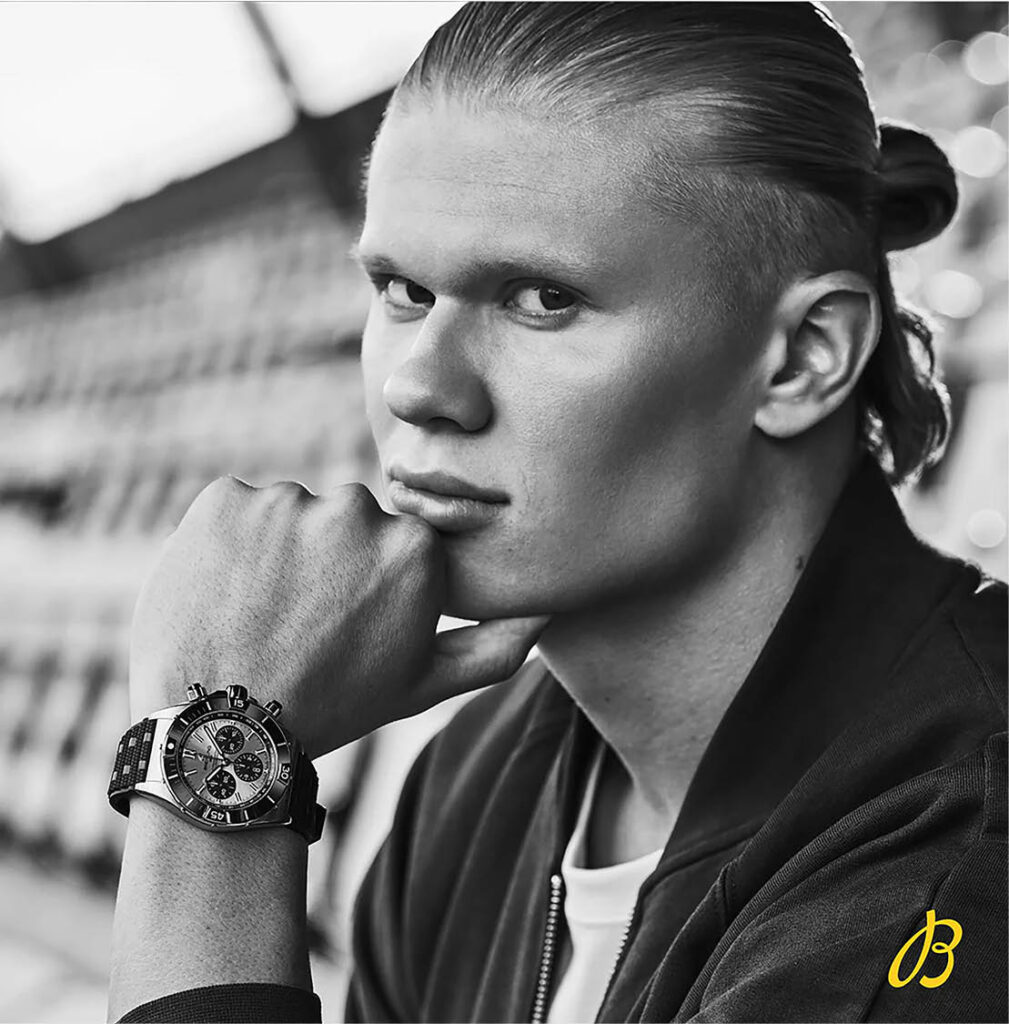
That explains why brands today increasingly align with athletes who embody performance beyond statistics. Breitling’s partnership with Erling Haaland is a powerful example. The Norwegian striker represents a new era of sporting stars: disciplined, data-driven, fearless and global. By putting Breitling on his wrist, the Maison taps into the energy and ambition of modern football while reinforcing its identity as a brand built for action, not just display.
Omega provides another case study in evolution. Already synonymous with precision on the Olympic stage, the brand has deepened its role in golf, supporting major tournaments and champions who rely on focus, control and rhythm rather than speed alone. The fairway may seem calmer than a sprint finish, yet the discipline of timing, swing mechanics and competitive pressure speaks directly to the values of fine watchmaking.
And then some brands approach sport from an entirely different angle, using personality rather than performance as their canvas. Jacob & Co has become a favourite among global football icons, designing bold, theatrical timepieces for stars such as Lionel Messi and Cristiano Ronaldo. These watches celebrate star power as much as mechanics, turning sporting legends into living ambassadors for highly expressive, gemstone-studded complications that feel as dramatic as the moments they create on the pitch.
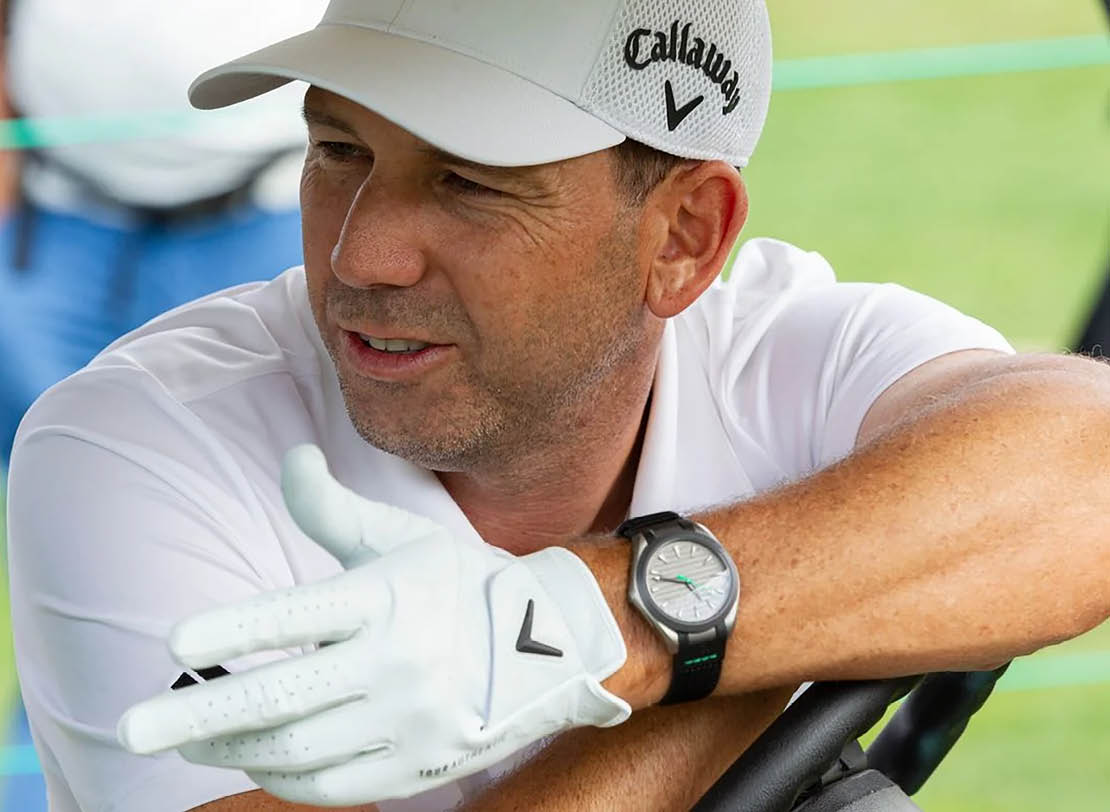
As we move toward 2026, the landscape of watchmaking and sport looks set to evolve further. Women’s sport continues to gain momentum, and we can expect to see more performance-driven timepieces created specifically for female athletes, alongside a growing number of women fronting flagship collections rather than appearing only in jewelled lines. Sustainability will also accelerate, with sailing, endurance events and outdoor disciplines encouraging brands to work more actively with recycled metals, bio-based composites and advanced ceramics while retaining a sense of luxury. Technology, meanwhile, will increasingly inform mechanical tradition, as sports science, recovery timing and performance analytics inspire new complications and deeper collaborations in athletics and motorsport. Global tournaments will also shape storytelling, with the 2026 FIFA World Cup and major winter and summer events prompting limited-edition releases that will likely become instant collectables. Finally, personalisation will continue to rise, with athlete-led editions and micro-collaborations allowing individual personalities to influence watch design in more expressive ways.
Luxury watches and sport are ultimately both about time: how it is measured, how it changes lives, and how one second can transform everything. The watch on an athlete’s wrist is no longer only a marker of taste. It is a symbol of discipline in training, focus in competition and the relentless pursuit of better. As 2026 approaches, this powerful relationship shows no sign of slowing. If anything, it is becoming more sophisticated, more emotional and more culturally relevant. Because when precision meets performance, the result is not just a watch or a win, it is a story that lasts.
The collaborations that changed the conversation
Some of the most recognisable relationships in modern luxury sit within this space.
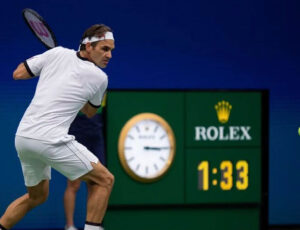
Rolex and Tennis
One of the most elegant alliances in sport. Wimbledon’s emerald courts, timeless etiquette and legendary champions mirror the brand’s quiet confidence. Rolex ambassadors, from Federer to rising stars, reflect poise and consistency, reinforcing a message of endurance across generations.
Omega and Golf
Across leading tournaments, Omega highlights precision through patience and strategy, reflecting a sport where control and timing define every victory. The brand’s watches are also a favourite of the world’s top golfers.
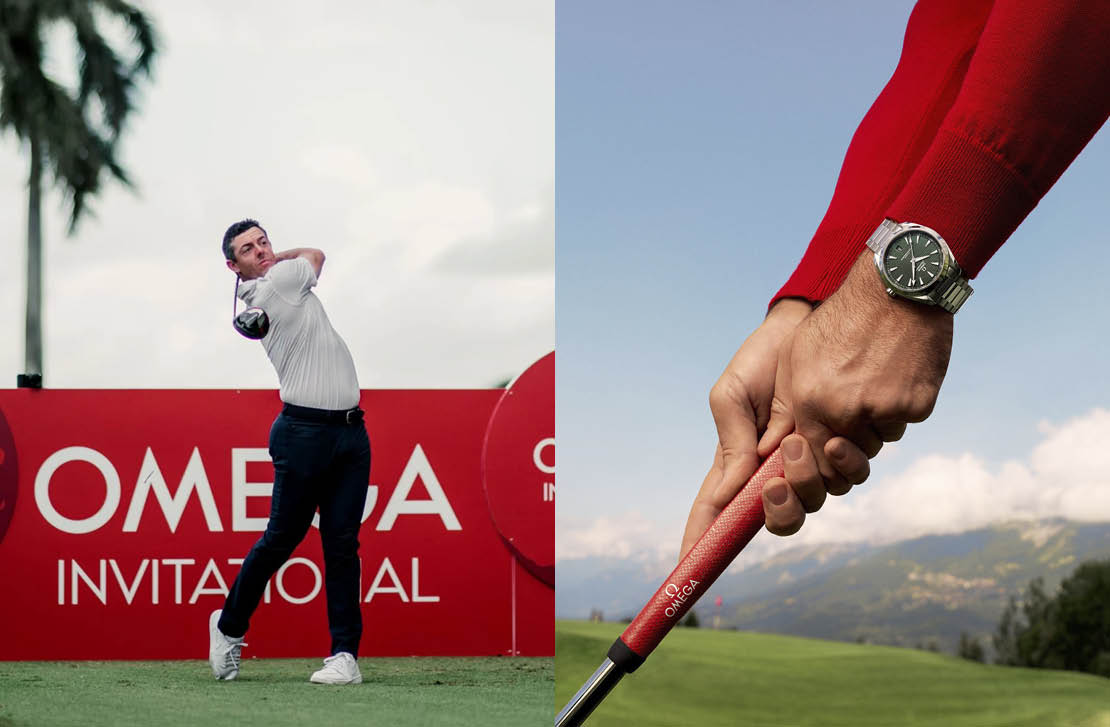
Omega Invitational, Rory McIlroy
TAG Heuer and Motor Racing
TAG Heuer and motor racing are bound together by adrenaline. The Monaco and Carrera collections are not just inspired by racing culture — they helped define it. The image of a driver glancing at a chronograph before a corner remains one of watchmaking’s most enduring icons.
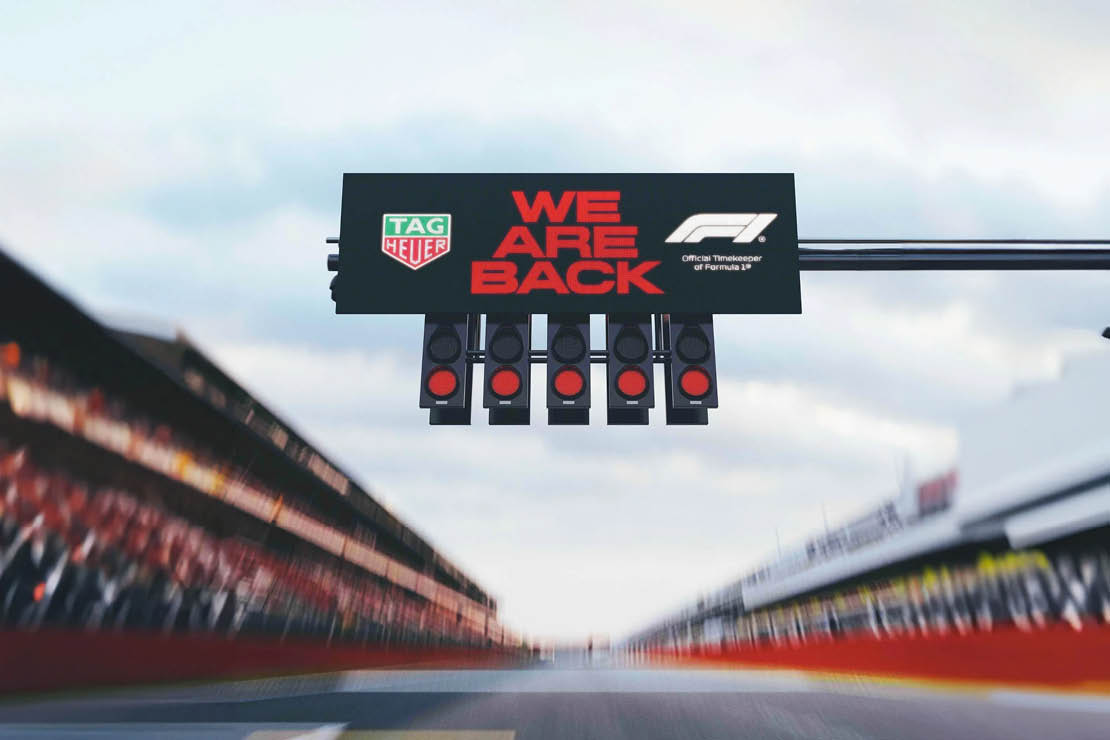
TAG Heuer back asthe official timekeeper of Formula 1in 2025
Richard Mille and High-Performance Sport
Richard Mille and high-performance sport have pushed boundaries further still. Ultra-light watches worn mid-match by Rafael Nadal or on Formula One circuits proved that haute horlogerie can live in motion rather than in safes. Shock resistance, exotic materials and audacious design turned laboratory experiments into a covetable reality.
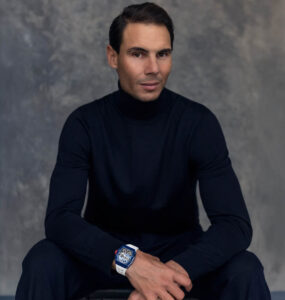
Rafael Nadal wears Richard Mille

Odell Beckham wears Richard Mille
Hublot and Football
Hublot and football showed how contemporary luxury could embrace popular sport without losing exclusivity. From World Cup sponsorships to collaborations with leading clubs, the brand transformed the referee board into a cultural symbol and placed fine watchmaking in front of billions.
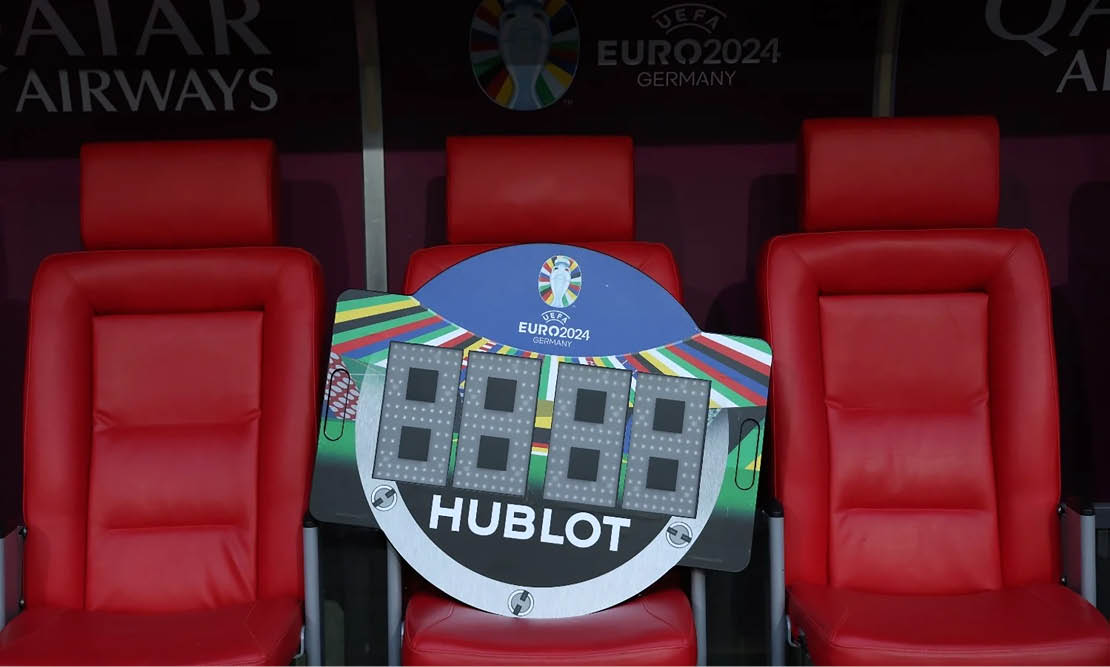
The Hublot Big Bang e FIFA World Cup Qatar 2022
Panerai and Sailing
And then there is Panerai and sailing, a natural extension of its maritime heritage. Yachting partnerships celebrate nautical adventure, strong legibility and instrument-grade reliability, brought together with Italian flair.
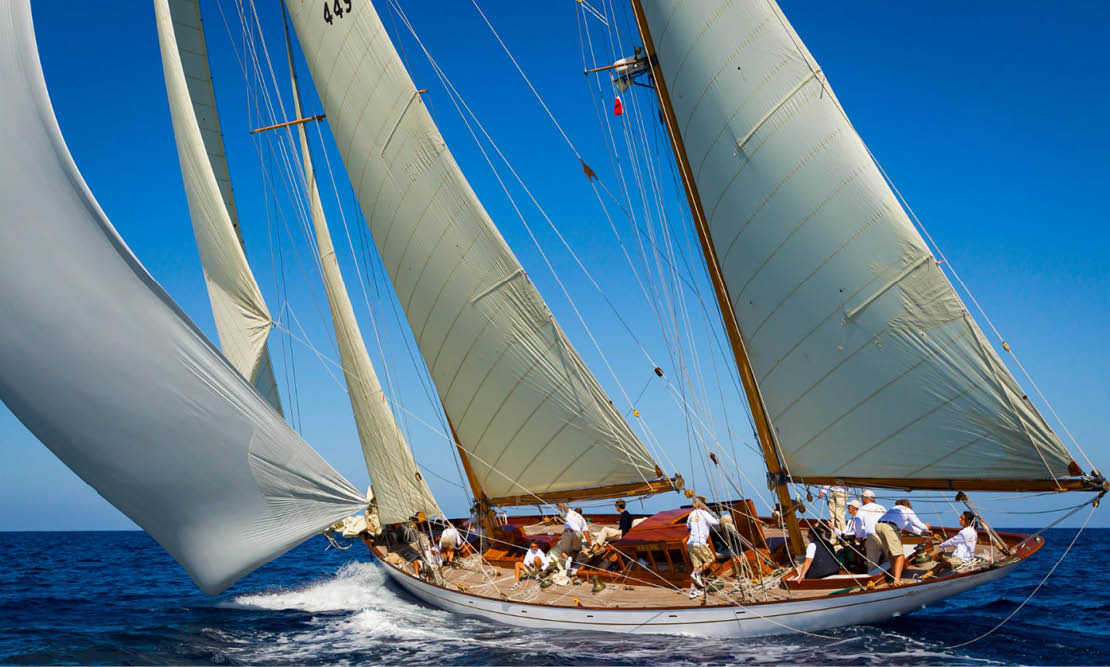
Panerai
Best Dressed at the 2025 Golden Globes
The 2026 Golden Globes took place last night, with stars offering impeccable style moments. This year’s best dressed leaned into strong silhouettes, refined tailoring, and statement details that spoke to personal style rather than spectacle. Scroll down to see some of our favourite looks from the night.
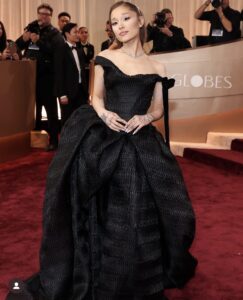
Ariana Grande wearing Vivienne Westwood
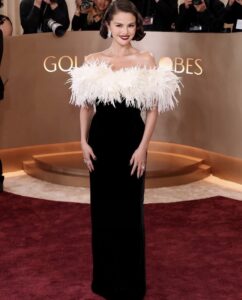
Selena Gomez wearing Chanel

Kate Hudson wearing Giorgio Armani
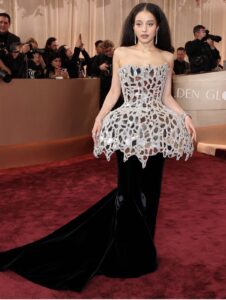
Chase Infiniti wearing Louis Vuitton
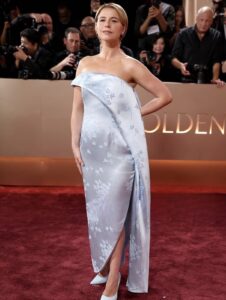
Jesse Buckley wearing Dior
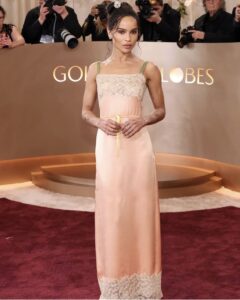
Zoe Kravitz wearing Saint Laurent
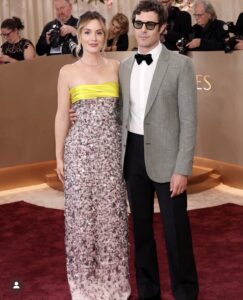
Leighton Meester and Adam Brody wearing Valentino
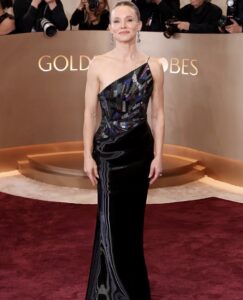
Kristen Bell wearing Giorgio Armani

Rose Byrne wearing Chanel
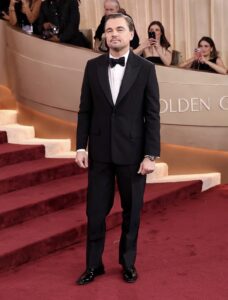
Leonardo DiCaprio wearing Dior
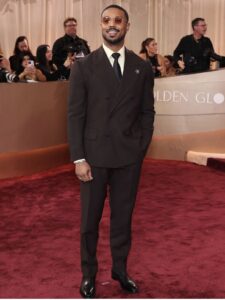
Michael B Jordan
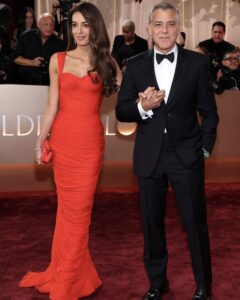
George and Amal Clooney wearing Balmain
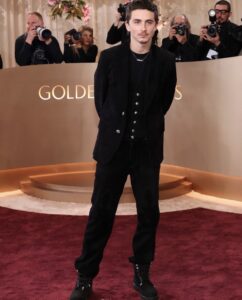
Timothée Chalamet

Emma Stone wearing
Intimate Coastal Escape, Discover the serene beauty of the Beachfront Villas at One&Only The Palm
Set along one of Dubai’s most secluded stretches of coastline, the exclusive Beachfront Villas at One&Only The Palm provide a serene retreat where every detail feels thoughtfully designed and deeply personal. For those seeking a stay that feels effortlessly luxurious, destinations offer an escape defined by calm, intimacy and understated indulgence.
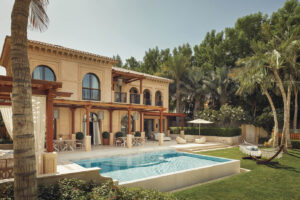
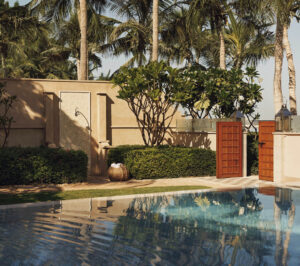
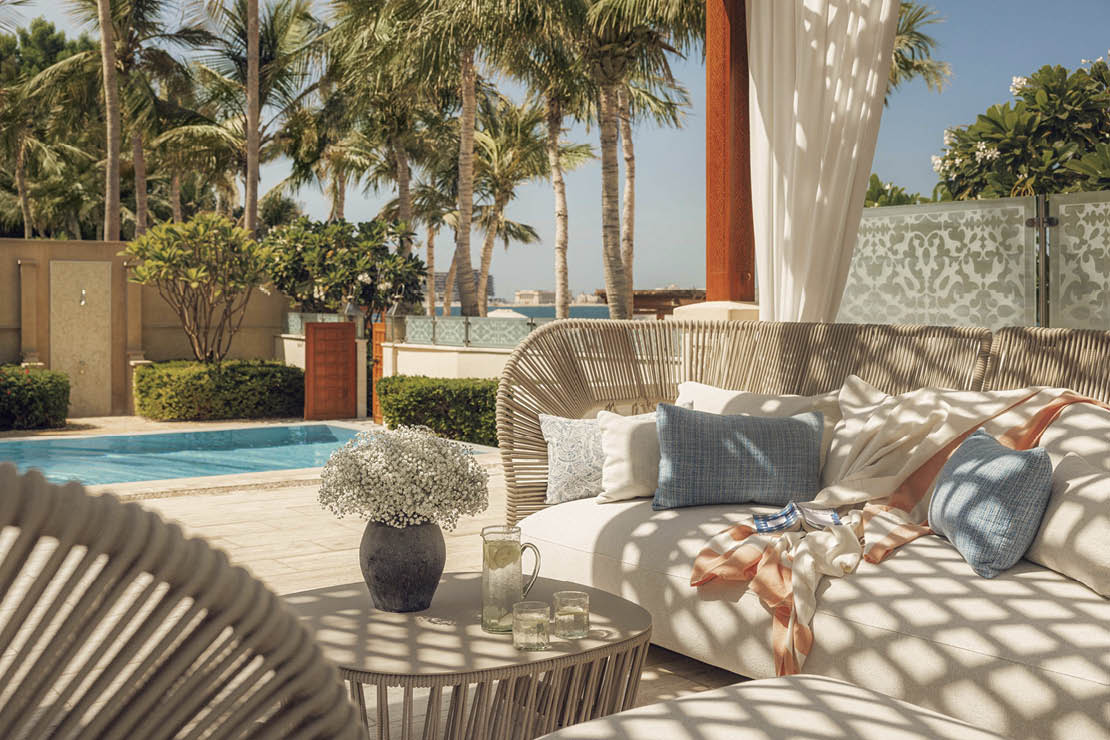
Each villa opens directly onto a private pool and garden, creating a peaceful sanctuary where time slows and the day unfolds at its own gentle pace. Sunlit interiors flow into elegant bedrooms and generous en suite bathrooms, while spacious terraces invite long afternoons outdoors. Whether guests choose to unwind beneath a gazebo, host a relaxed dinner on the terrace, or stretch out on an oversized daybed with music playing softly in the background, the space adapts effortlessly to the moment.
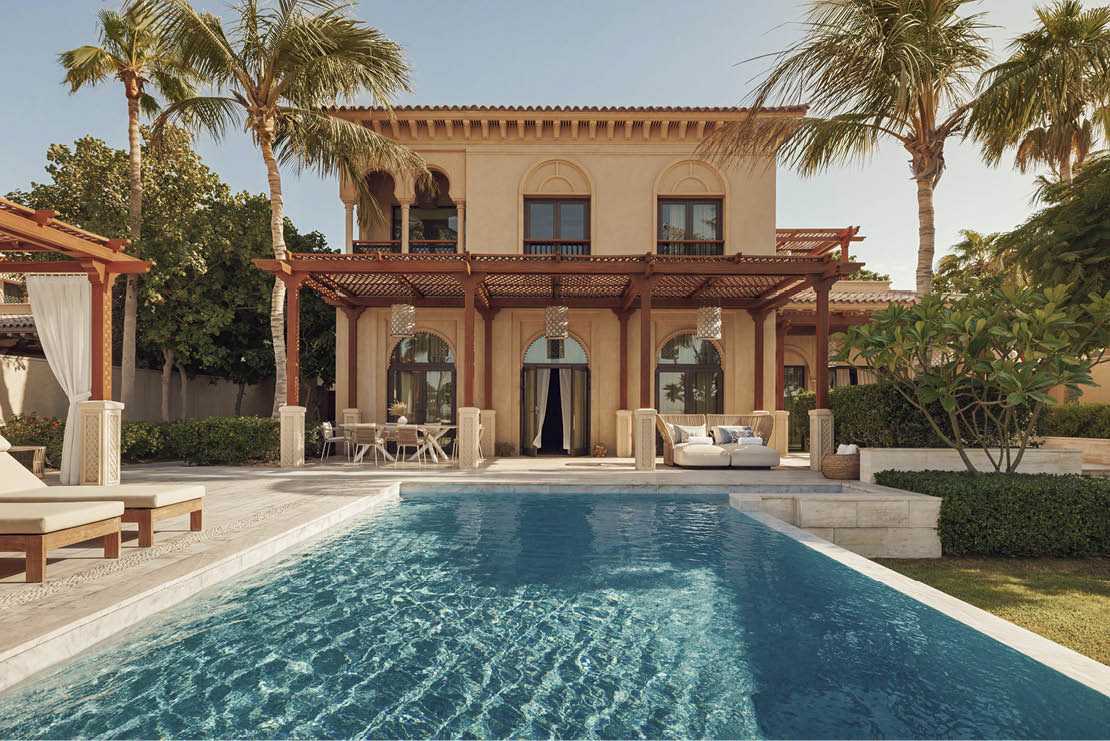
One of the most covetable features is the villa’s immediate access to the shoreline. With no public pathways to cross, guests can step directly from their terrace onto the sand. It is a rare sense of privacy and connection to the sea, creating an atmosphere that feels worlds away while still being close to the city.
The experience is further elevated by a dedicated private host. From arranging spa treatments to curating personalised dining experiences or ensuring that a morning coffee arrives just right, the host’s attention brings a sense of ease and comfort to every stay. The service is discreet, intuitive and seamlessly delivered.
Whether it is a special celebration, a romantic escape, or a desire for quiet rejuvenation, the Beachfront Villas offer a setting that is both indulgent and deeply restorative. It is luxury expressed with grace and simplicity, allowing guests to unwind in complete privacy.
The Villa and Suite Escape Offer
To enhance the stay even further, One&Only The Palm invites guests to enjoy the Villa and Suite Escape, a curated selection of benefits designed to enrich every moment.
The offer includes:
• Twenty percent savings on suite and villa stays
• AED 1,000 resort credit for suites
• AED 4,000 resort credit for villas
• Daily afternoon tea
• Daily sundowners from 5 pm to 6 pm, with two drinks per adult
This exclusive experience allows guests to immerse themselves even more deeply in the resort’s refined world, combining exceptional service, thoughtful touches and a tranquil beachfront setting.
For travellers seeking a private, elegant retreat in Dubai, the Beachfront Villas at One&Only The Palm offer a rare sense of calm paired with the comfort and beauty of one of the city’s most exceptional resorts.
Reinventing Heritage, AlUla Desert Polo Returns in 2026, Elevating Sport on a Global Stage
Set against the monumental sandstone landscapes of north-west Saudi Arabia, AlUla Desert Polo returns on January 16–17 2026, reaffirming its status as the world’s first organised desert polo tournament and one of the region’s most distinctive sporting spectacles.
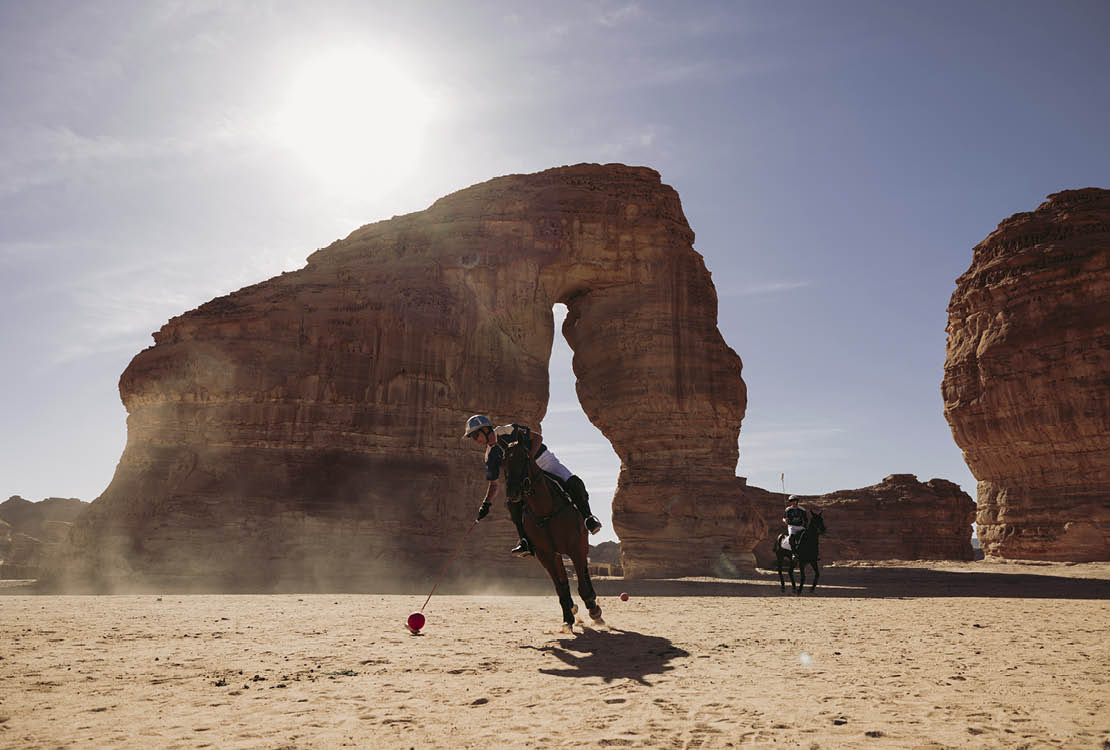
A highlight of the AlUla Moments 2025/26 programme, the event brings together elite international polo players, regional dignitaries, and a style-conscious global audience for two days where heritage sport meets contemporary luxury. Hosted at the Mohammed Yousuf Naghi Equestrian Village, the tournament unfolds amid towering rock formations, offering a setting that is as dramatic as it is unforgettable.
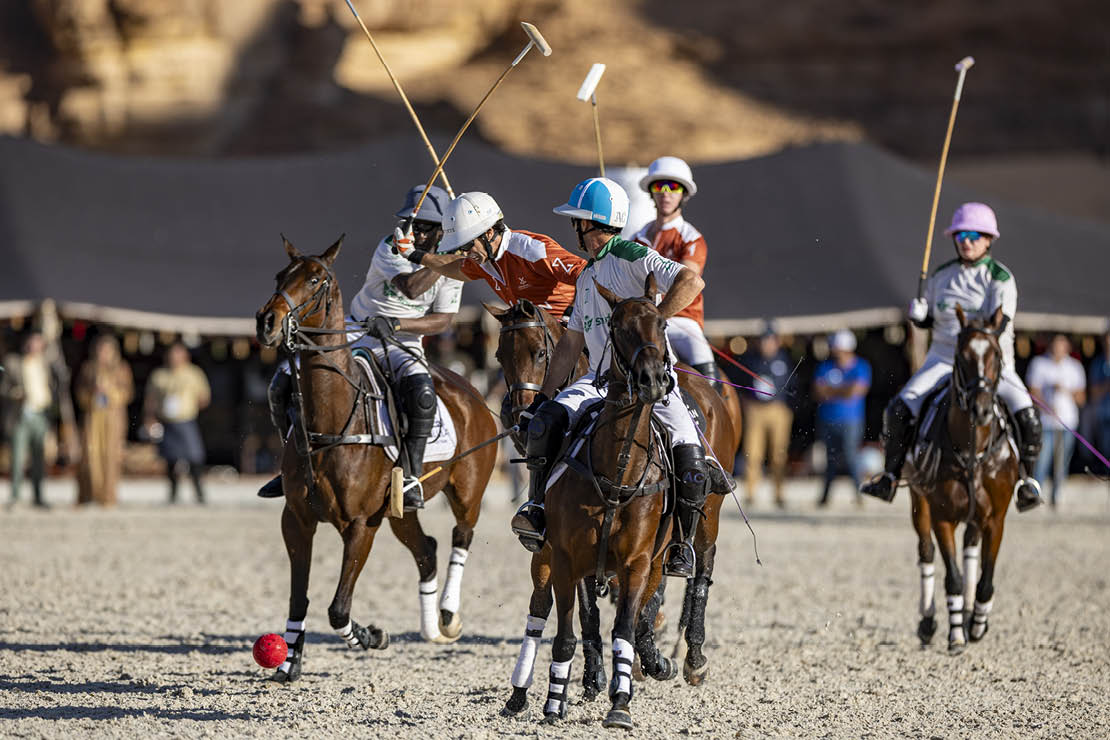
Organised by the Royal Commission for AlUla, the 2026 edition also marks a significant milestone for AlUla’s heritage sports vision. A newly announced three-year partnership with Mohammed Yousuf Naghi Motors, the exclusive distributor of Jaguar Land Rover in Saudi Arabia, sees the company appointed as the Founding Partner of Heritage Sports in AlUla. The collaboration strengthens the destination’s positioning as a global hub for premium sports tourism, spanning flagship events including AlUla Desert Polo and the FEI Endurance World Championship 2026.
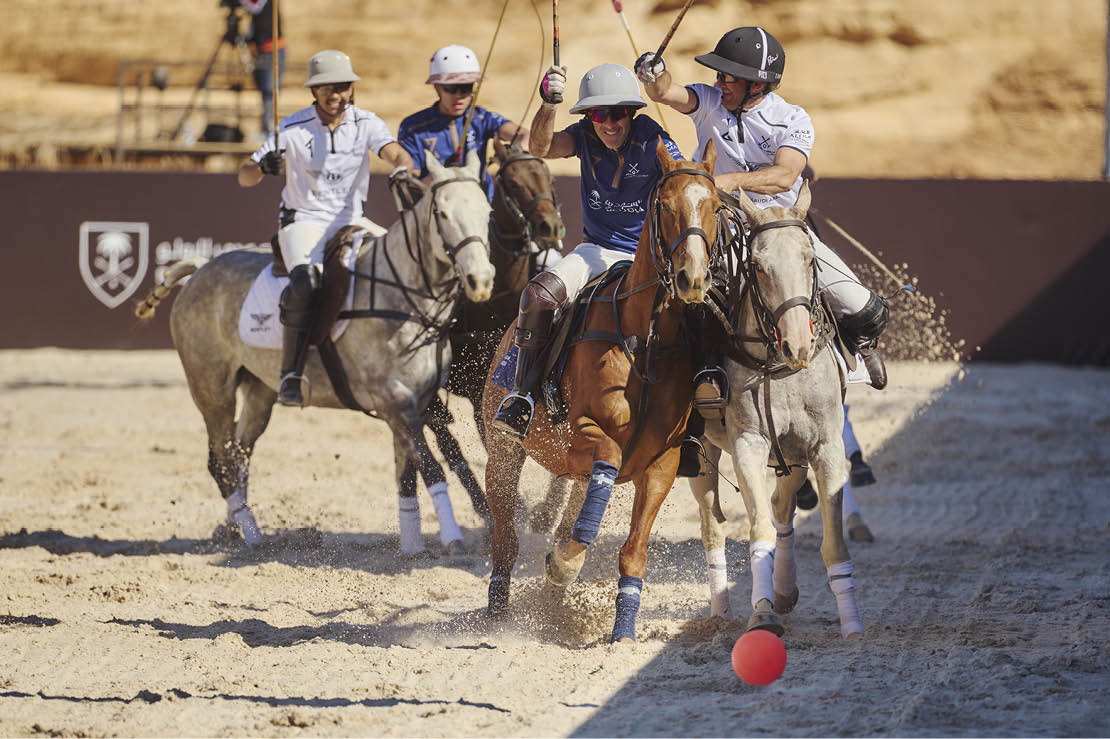
Beyond the field, the experience is carefully curated. Guests can expect gourmet dining, live music, shaded lounge spaces, pop-up retail, and family-friendly zones, all designed to reflect AlUla’s refined hospitality. For those seeking closer access, the Polo Players Circle add-on offers behind-the-scenes field access, player meet-and-greets, and exclusive souvenirs.
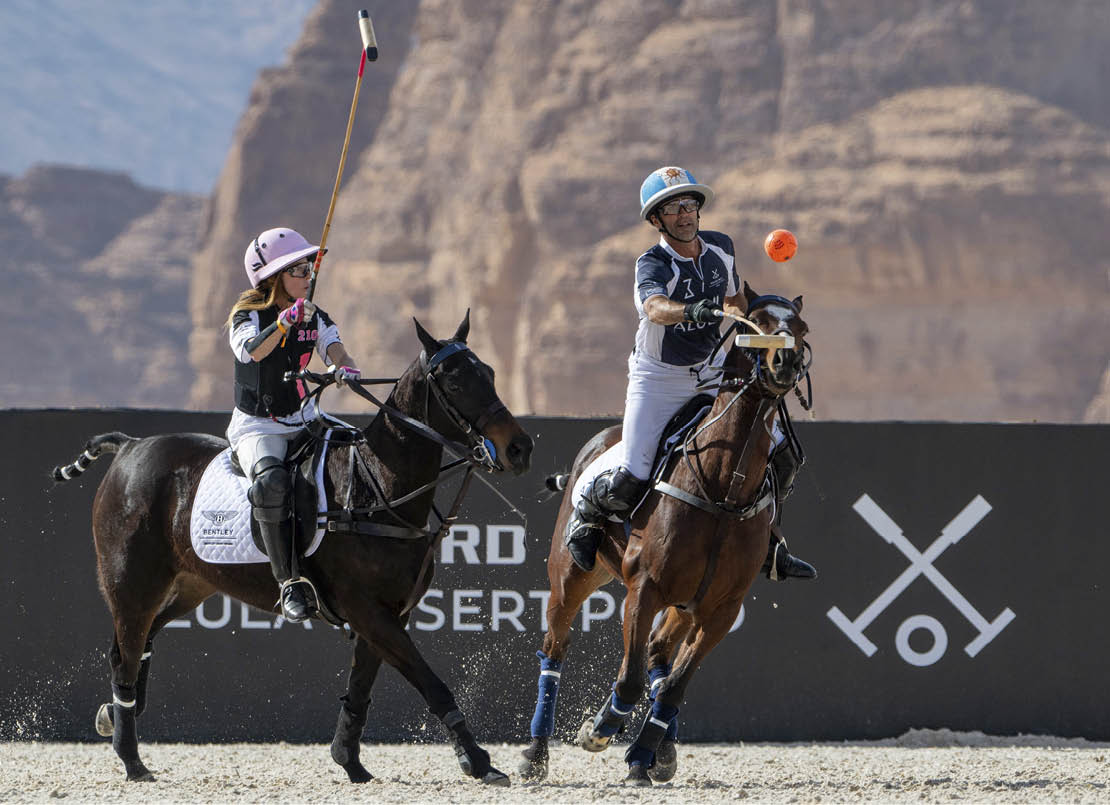
Since its debut in 2020, AlUla Desert Polo has become a signature moment on the winter calendar, embodying the destination’s unique ability to blend sport, culture, and landscape. More than a tournament, it is a statement of AlUla’s ambition: to create world-class experiences rooted in heritage, delivered with elegance, and set in a place unlike anywhere else.
Dubai’s Globe Soccer Awards Cement the UAE’s Place on Football’s Global Stage
Dubai closed out the year with one of football’s most glittering nights, as the city hosted the 16th Globe Soccer Awards at Atlantis The Royal, bringing together a constellation of global stars, club leaders, legends and rising talent for a celebration of excellence in the beautiful game. More than two decades since its inception, the Globe Soccer Awards have become a fixture in the global football calendar.

At the centre of the evening was Cristiano Ronaldo, who was crowned Best Middle East Player, underscoring both his enduring impact and the continued rise of football in the region. Now in the latter stages of a remarkable career, Ronaldo’s influence goes beyond goals and performances; his presence has helped shape conversations about football’s expansion outside traditional European strongholds and has drawn global attention to Saudi Arabian football in particular.
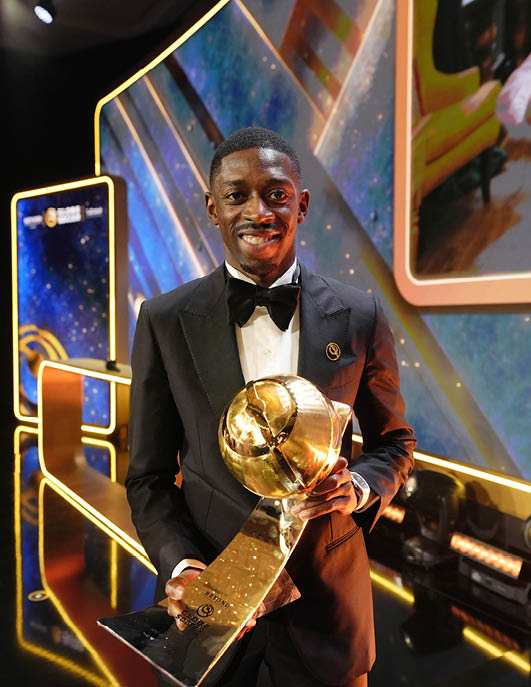
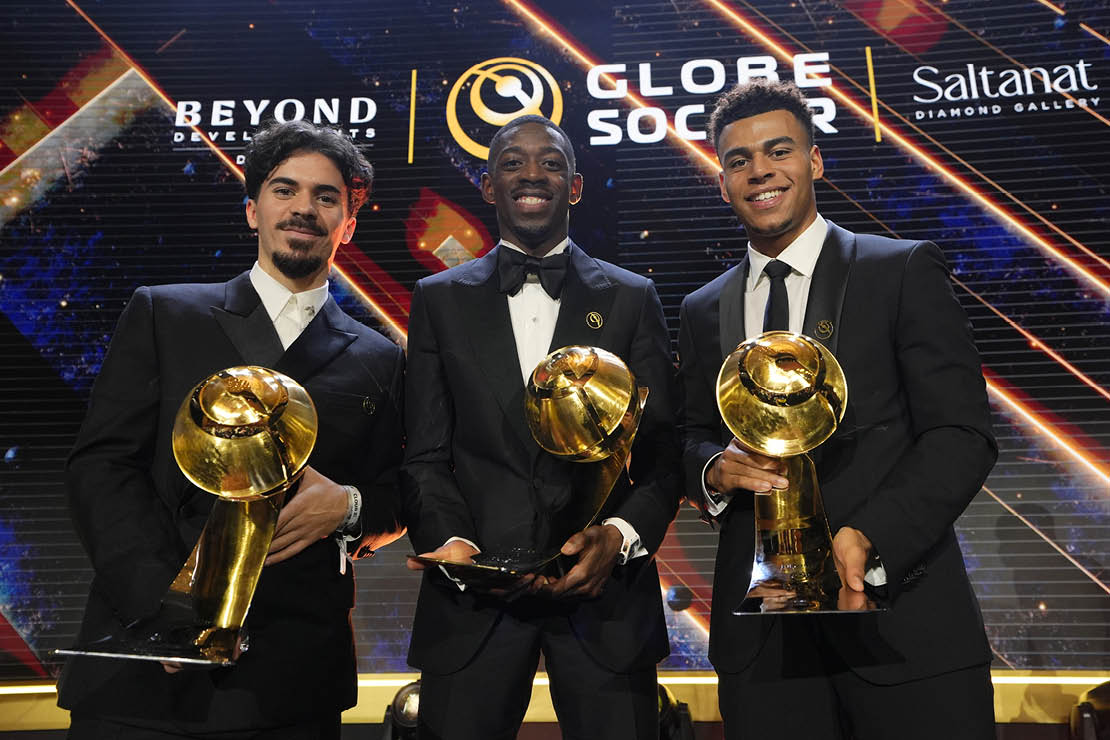
But the awards weren’t just about a single moment or name. Paris Saint-Germain enjoyed a standout night, recognising both club and individual achievement after a season that included domestic dominance and European success. Ousmane Dembélé was named Best Men’s Player after a standout campaign that culminated in PSG’s historic Champions League victory, while Aitana Bonmatí made history by being crowned Best Women’s Player for a third consecutive year. International finalists were chosen following a global fan vote involving more than 30 million votes, alongside expert panels that spanned players, coaches and football legends.
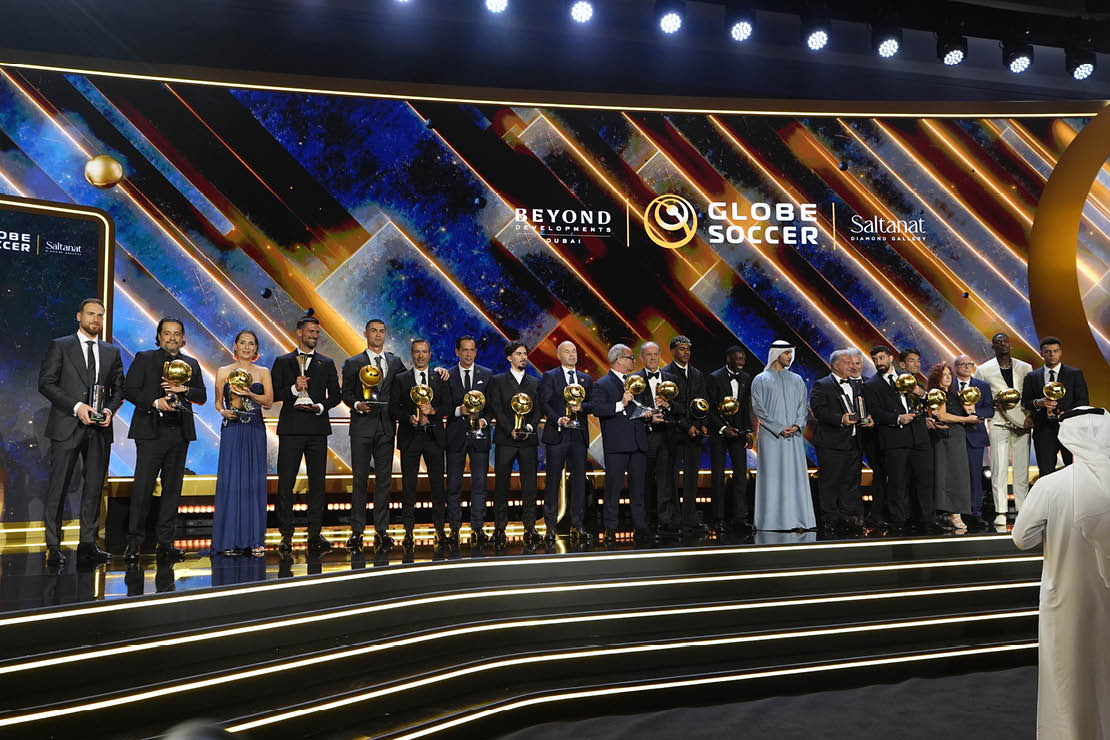
Beyond the winners, the ceremony illustrated the UAE’s ambition to host world-class sporting experiences that resonate globally. Framed by the glittering backdrop of the Arabian Gulf and supported by passionate local audiences. As the football world looks ahead to 2026, with a World Cup on the horizon and continued shifts in global leagues and talent pipelines, Dubai’s Globe Soccer Awards stand as a reminder that the region is becoming a serious contributor to the sport’s evolving narrative.
Dior Beauty Introduces Cuir Saddle, a Modern Take on Leather Fragrance
Dior Beauty has expanded La Collection Privée Christian Dior with the launch of Cuir Saddle, a new fragrance created by perfumer Francis Kurkdjian. The scent offers a contemporary interpretation of leather, moving away from the traditionally heavy, smoky profile often associated with the category and toward something lighter, more fluid, and distinctly modern.
Inspired by the iconic Dior Saddle bag, Cuir Saddle translates a fashion symbol into olfactory form. Rather than replicating leather in its most literal sense, the fragrance explores the contrasts of structure and softness and familiarity and surprise. Kurkdjian describes the scent as a “trompe-l’œil” leather, one that initially references classic accords before revealing unexpected luminosity on the skin.
Leather fragrances hold a long-standing place in perfumery, historically linked to animalic, woody, and smoky notes, but with Cuir Saddle, Kurkdjian sought to respect this heritage while updating it for a modern audience. Traditional leather facets are present, but they are softened with floral, musky, and suede-like elements, creating a composition that feels supple rather than imposing.
The result is a leather-floral structure that wears closer to the skin, described as smooth, velvety, and cool. Smoky and woody notes remain part of the framework, but they are balanced by lighter floral nuances and contemporary woody-amber tones, giving the fragrance clarity and ease without sacrificing depth.
Advances in synthetic molecules play a key role in shaping Cuir Saddle. Kurkdjian uses them to diversify the leather accord, enabling a more flexible, nuanced expression. This approach reflects a broader shift in modern perfumery, where tradition is often revisited through innovation rather than replication.
In addition to the fragrance itself, Dior has introduced a limited-edition travel case for Cuir Saddle. The bottle is wrapped in supple matte leather in a soft taupe shade, echoing Dior couture codes and the Saddle bag’s design language. Crafted with meticulous attention to detail, the case reinforces the connection between fashion and fragrance that defines La Collection Privée.
Alpine Indulgence: Hit the slopes in 2026 at these luxury ski destinations
Courchevel 1850, France
Courchevel 1850 remains the gold standard of alpine luxury. Part of the vast Les Trois Vallées ski area, it offers high-altitude snow reliability, and access to over 600km of pistes. But it’s off the slopes where Courchevel truly shines with palatial hotels such as Cheval Blanc and Airelles, private ski butlers, and a dining scene that rivals Paris, including multiple Michelin-starred restaurants. January and February bring prime snow conditions, while March offers sunnier days without sacrificing quality. Add designer boutiques, exclusive nightspots, and immaculate service, and Courchevel 1850 delivers a ski experience that is as polished as it is exhilarating.
St. Moritz, Switzerland
St. Moritz is synonymous with alpine glamour. With over 300 days of sunshine a year and a legendary social scene, this Swiss icon attracts royalty, creatives, and jet-set travellers alike. January and February offer crisp conditions across Corviglia and Diavolezza, while March skiing is elevated by blue skies and sun-drenched lunches on panoramic terraces. The town’s luxury hotels, including Badrutt’s Palace and Kulm, are destinations in themselves, hosting champagne bars, grand spas, and historic dining rooms. From frozen lake polo to high-fashion pop-ups, St. Moritz blends sport, style, and society like nowhere else in the Alps.

Zermatt, Switzerland
Zermatt offers a quieter, more refined form of luxury, framed by the unmistakable silhouette of the Matterhorn. Car-free and effortlessly elegant, the resort is known for its long ski season, with excellent conditions stretching well into March thanks to its altitude and glacier access. Skiers enjoy varied terrain, while non-skiers gravitate toward Zermatt’s exceptional gastronomy, including the highest concentration of Michelin-starred restaurants in Switzerland. Wellness is central here, with many hotels offering expansive spas overlooking snow-covered peaks. Zermatt appeals to those who value understated sophistication, slow luxury, and scenery that feels almost cinematic.

Aspen, United States
Further afield, Aspen combines serious skiing with a distinctly cosmopolitan energy. Spread across four mountains, it caters to all levels, while maintaining a reputation for expert terrain and immaculate facilities. January brings prime powder days, while March offers longer daylight hours and a lively cultural calendar. Beyond the slopes, Aspen excels in luxury retail, art galleries, and acclaimed dining, alongside some of the most prestigious hotels and private residences in North America. Wellness, culture, and social life are woven seamlessly into the experience, making Aspen as appealing to creatives and tastemakers as it is to seasoned skiers.

Lech Zürs, Austria
Lech Zürs is the epitome of discreet alpine refinement. Favoured by European royalty and those who prefer privacy over spectacle, the resort delivers exceptional snow quality thanks to its location in the Arlberg region, one of Austria’s most reliable areas well into March. Luxury here is subtle: family-run five-star hotels, impeccable service, and a strong focus on wellness and cuisine. Skiing is extensive and uncrowded, while evenings are calm, cosy, and refined. Lech Zürs is ideal for travellers seeking a polished, intimate ski escape with a strong sense of tradition and authenticity.
Niseko, Japan
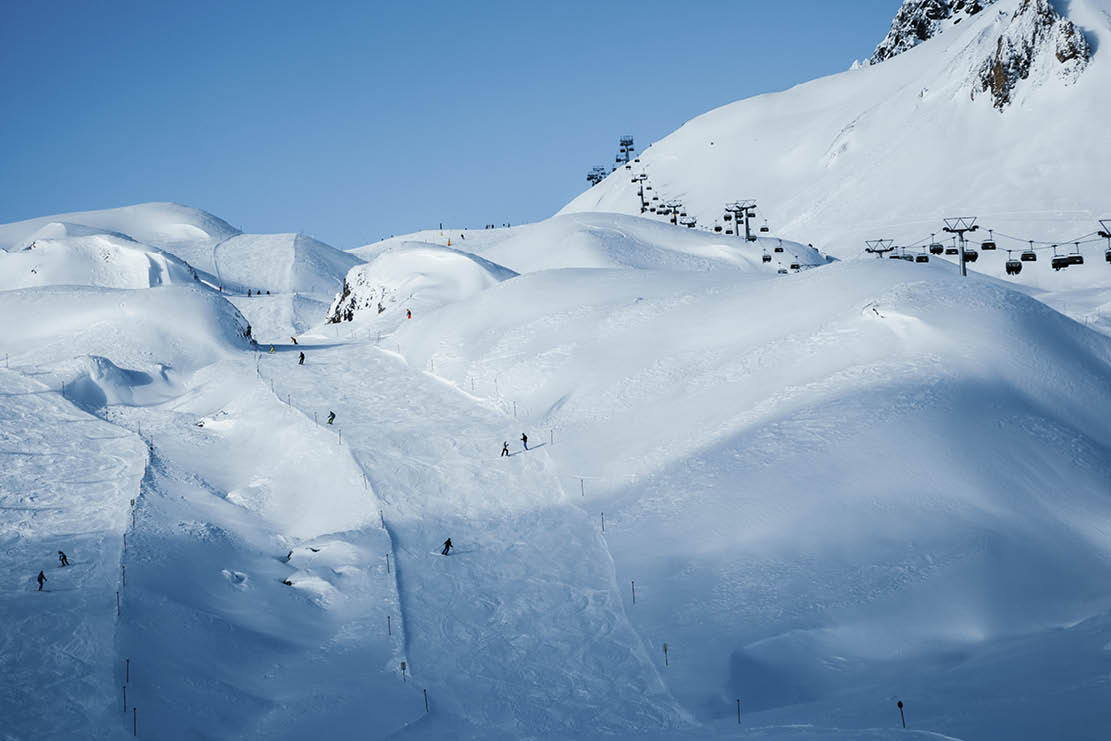
For something truly different, Niseko offers a luxury ski experience defined by deep powder, minimalist design, and exceptional hospitality. January and February are renowned for light, dry snowfall, while March brings quieter slopes and softer conditions without losing its magic. High-end chalets and boutique hotels blend Japanese aesthetics with international comfort, while the region’s onsens provide restorative rituals after long ski days. Dining ranges from refined Japanese cuisine to contemporary global concepts. Niseko’s appeal lies in its contrast: raw natural beauty paired with thoughtful luxury, making it one of the most compelling ski destinations in the world.

Noura Alqemzi, Founder of Aimée Moreau, Discusses the Vision Behind the UAE’s Newest Accessories Brand
In a region where luxury is often expressed through bold statements and overt codes, a new generation of designers is quietly reshaping the conversation. Among them is Noura Alqemzi, the Emirati founder and creative director of Aimée Moreau. This contemporary leather goods brand speaks through restraint, form and intention rather than logos or spectacle.
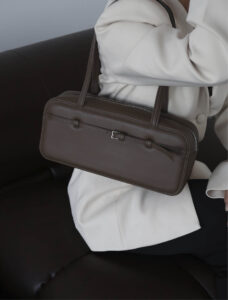
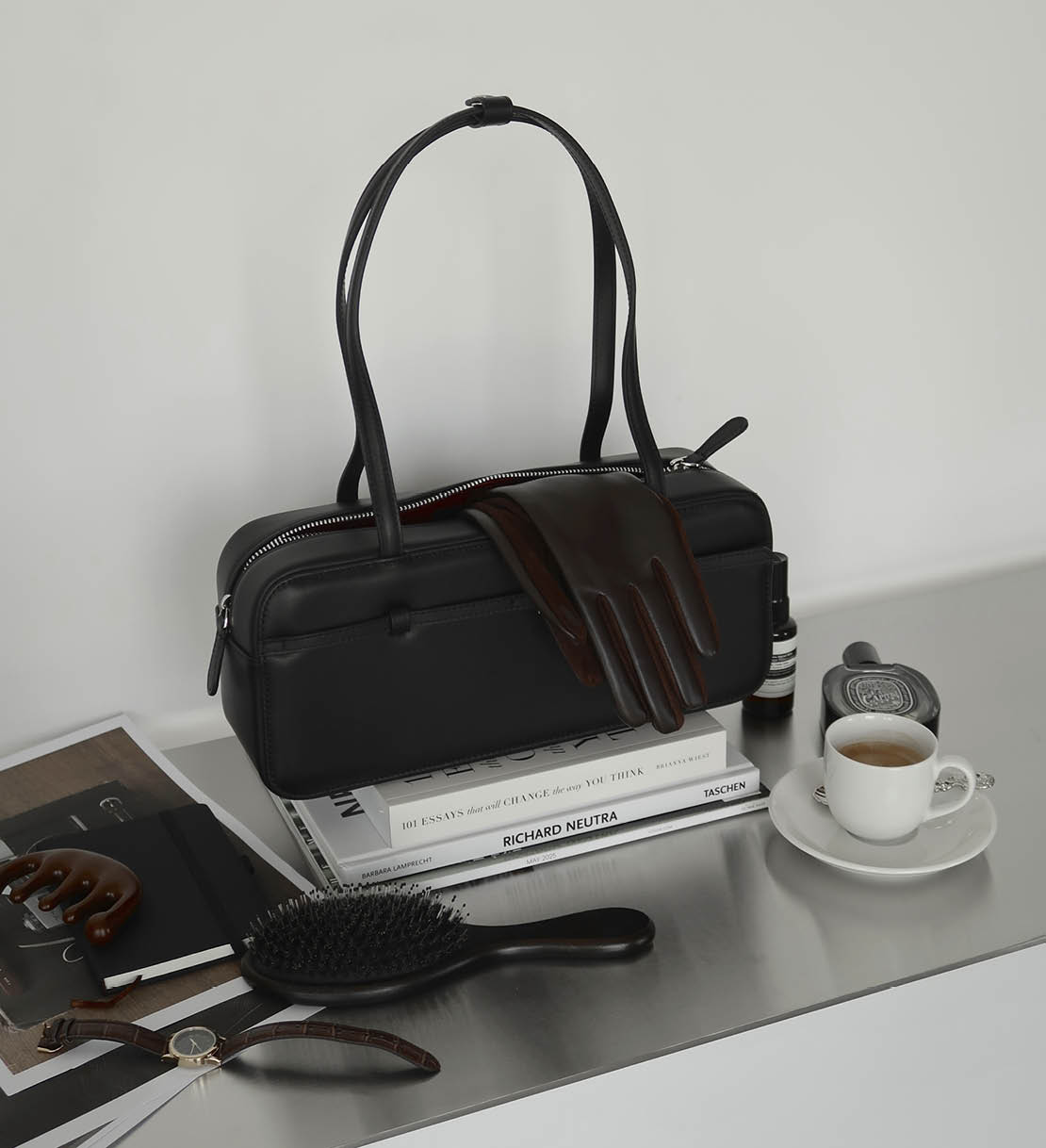
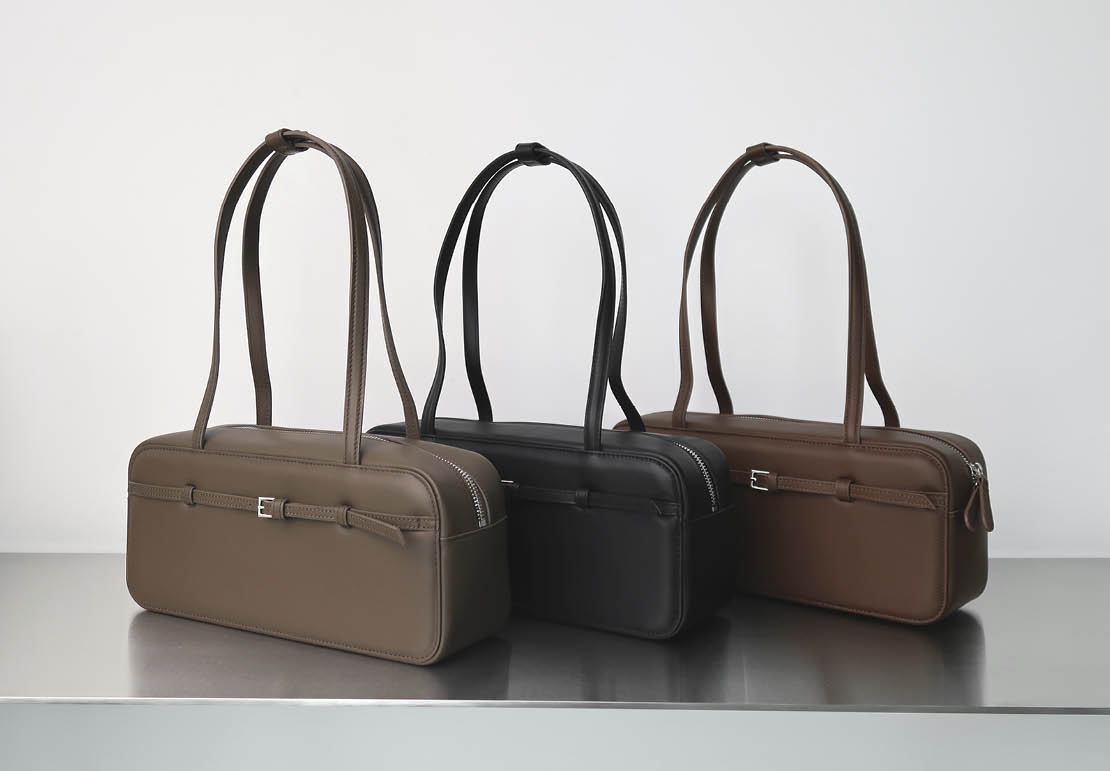
Founded in the United Arab Emirates, Aimée Moreau represents a thoughtful evolution of Middle Eastern luxury. Crafted in small batches by specialist artisans, the brand focuses on sculptural silhouettes, tactile materials and pieces designed to endure beyond seasons. Its debut collection, Forme 01, reflects this philosophy with a structured shoulder bag rendered in premium leather and offered in a refined, understated palette. The result is a collection rooted in permanence rather than trend, and in clarity rather than excess.
For Alqemzi, Aimée Moreau is both a creative expression and a statement of confidence. Built from the ground up, the brand reflects a broader shift in the region’s fashion landscape, one in which emerging Emirati designers are creating globally relevant luxury brands without relying on literal cultural references. Instead, heritage is expressed through approach: balance, precision, and a deep respect for craft.
In this interview, Noura Alqemzi speaks candidly about building a brand from scratch, defining luxury on her own terms, and the discipline required to create something that feels both deeply personal and internationally resonant.
Tell us about Aimée Moreau’s universe. What was the emotional and creative starting point behind the brand?
The idea started years before the brand existed. When I launched my first accessories label, I knew the leather goods space was where I eventually wanted to be. I didn’t see Emirati-founded bag brands aiming for a global audience, and it felt like an open space where I genuinely belonged. Instead of reshaping my earlier brand, I decided to build a new one from the ground up. That came with challenges, but I trusted the strength of the concept and my ability to build something that could sit confidently on an international level.
You describe your aesthetic as sculptural, minimal, and tactile. Tell us about your distinctive aesthetic and the creative process behind it.
My aesthetic is grounded in clarity. I’m drawn to clean forms, considered proportions, and silhouettes that don’t need loud elements to stand out. My creative process usually begins with understanding the purpose of a bag, how it will be used, what it needs to carry, and how it should behave in daily life. From there, I build shape, volume, and structure. Pinterest and visual research play a part, but most of the direction comes from editing. I remove anything that doesn’t belong. What remains is a functional shape with a clear identity.
As an Emirati founder and creative director, how important was it to build a brand that feels rooted in the region while also speaking to a global audience?
It’s important, but for me, the connection isn’t about motifs or literal cultural references. It shows up in the way I approach design, in restraint, in balance, in an appreciation for quiet detail. Emirati culture values refinement without noise, and that naturally shapes the brand’s direction. Aimée Moreau is global in its positioning, but the perspective behind it is mine, and that influence is part of every decision, even when the design language stays minimal.
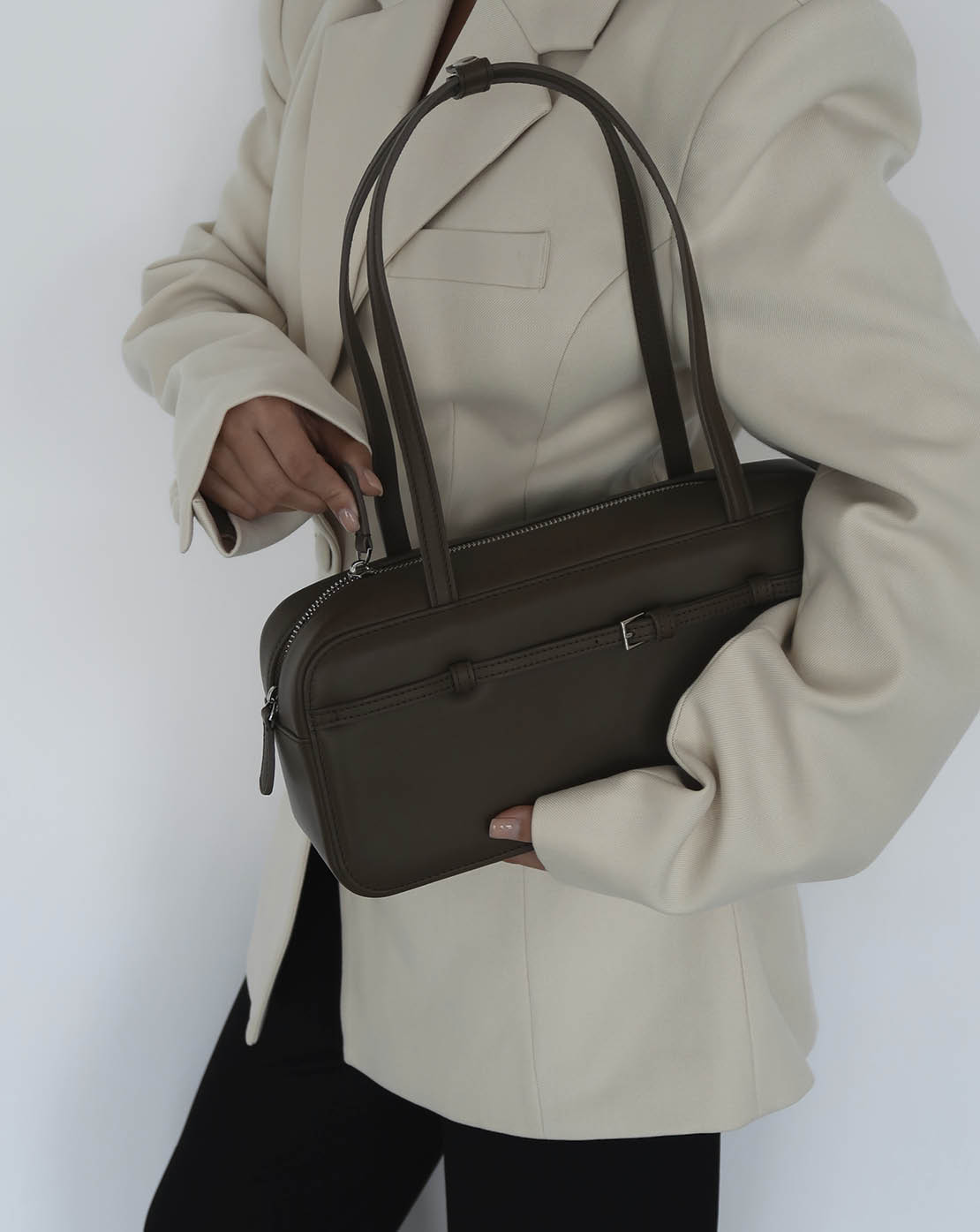
The debut collection, Forme 01, centres on permanence rather than trend. Why was it important for you to step away from traditional fashion seasons?
I didn’t want the brand to fall into the cycle of seasonal noise. Forme 01 was built around practicality, versatility, and longevity; it’s a bag meant to stay relevant. Seasonal drops don’t define the brand; silhouettes do. I prefer releasing pieces when they’re truly ready rather than rushing into a seasonal calendar that doesn’t serve the product or the long-term direction.
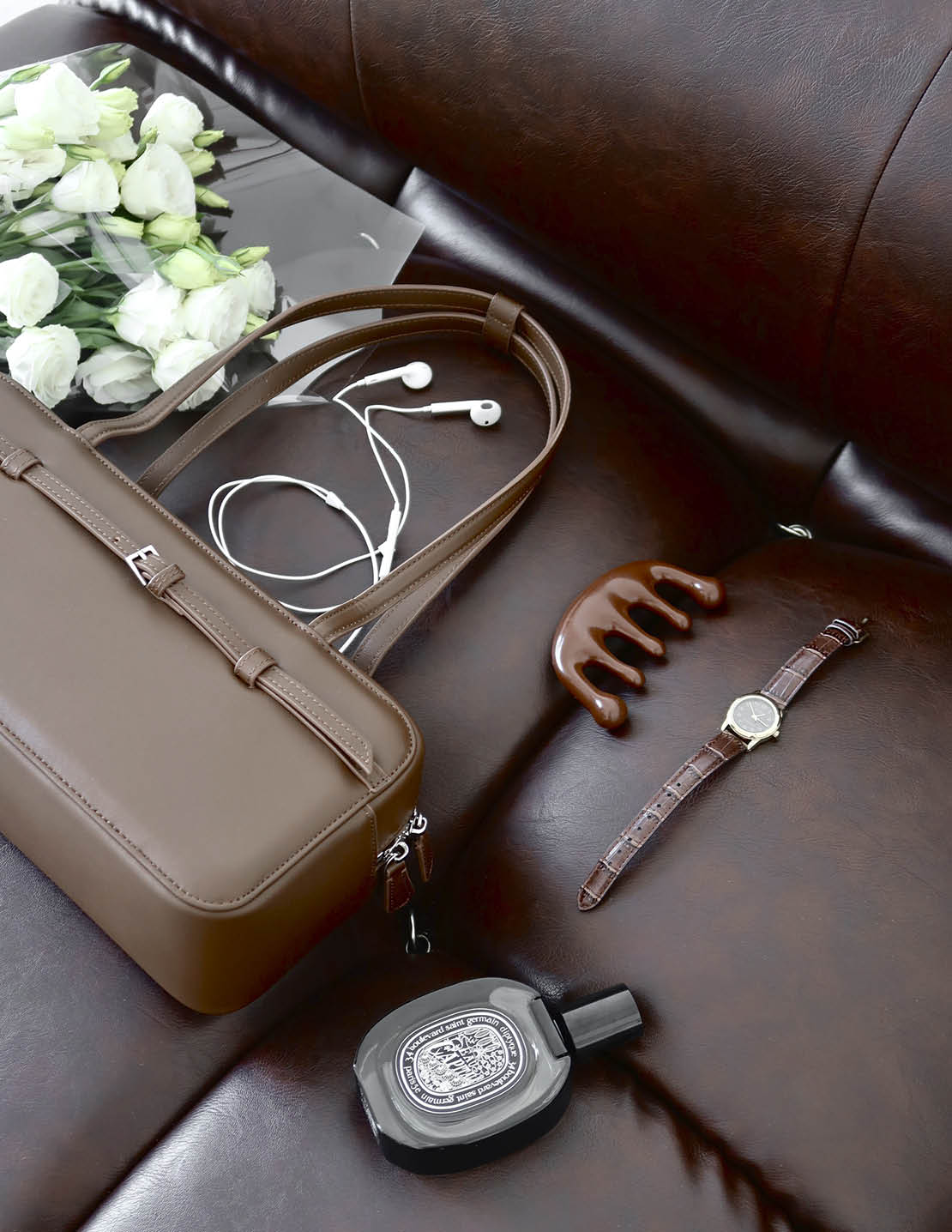
What was the biggest challenge in starting a brand from scratch?
Building everything without reference points. When you start from zero, every decision carries weight, from production to pricing to brand identity. You don’t have history to lean on. At the same time, that challenge was what allowed me to create Aimée Moreau exactly as I envisioned it. It forced clarity and pushed me to trust my direction.
Where would you like to see the brand in five years?
In five years, I want the brand to be stocked in key international markets and recognised for its design clarity. My focus is on establishing a solid silhouette library and expanding responsibly, not fast, but correctly. The goal is for the bags to be worn by women across the world and for the brand to sit confidently among global contemporary luxury names.
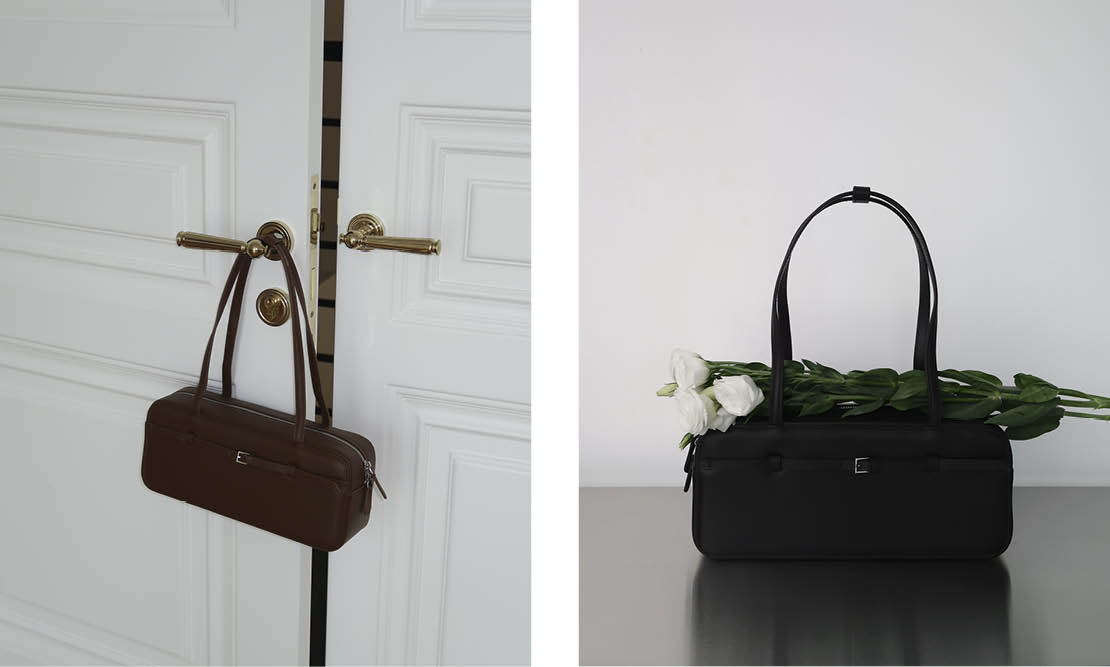
Who is the Aimée Moreau woman in your mind?
She prefers intention over excess. She values pieces that fit seamlessly into her life, modern, understated, and reliable. She doesn’t follow trends for validation; she builds a wardrobe with long-term value. The brand speaks to women who appreciate good design without needing the loud branding that often comes with it.
As a female founder in the Middle East luxury space, what have been the most defining lessons of your entrepreneurial journey so far?
You learn very quickly that clarity and consistency matter more than speed. The luxury space demands patience. It also taught me the value of trusting my instincts, especially as a founder coming from a region that is still shaping its global fashion footprint. You must be confident in your perspective and disciplined in how you build.
Tell us about you as a woman and what first inspired you to enter the world of fashion?
I’ve always gravitated toward design. Even before launching any business, I naturally paid attention to form, material, and how people interact with the products they use every day. Bags, in particular, always stood out to me; they sit at the intersection of function and identity. I didn’t come from a formal design background, which made entering the fashion world a challenge, but that challenge is what drew me in. Learning along the way, trusting my eye, and building experience through doing is what ultimately led me into fashion, and it’s where structure and creativity began to come together for me.
What’s the professional motto you live by?
Start with clarity and build with consistency. Direction matters more than volume and doing something well once is better than doing ten things without focus. Follow what genuinely interests you, learn from your mistakes instead of rushing past them, and be patient with the process — building something meaningful takes time.
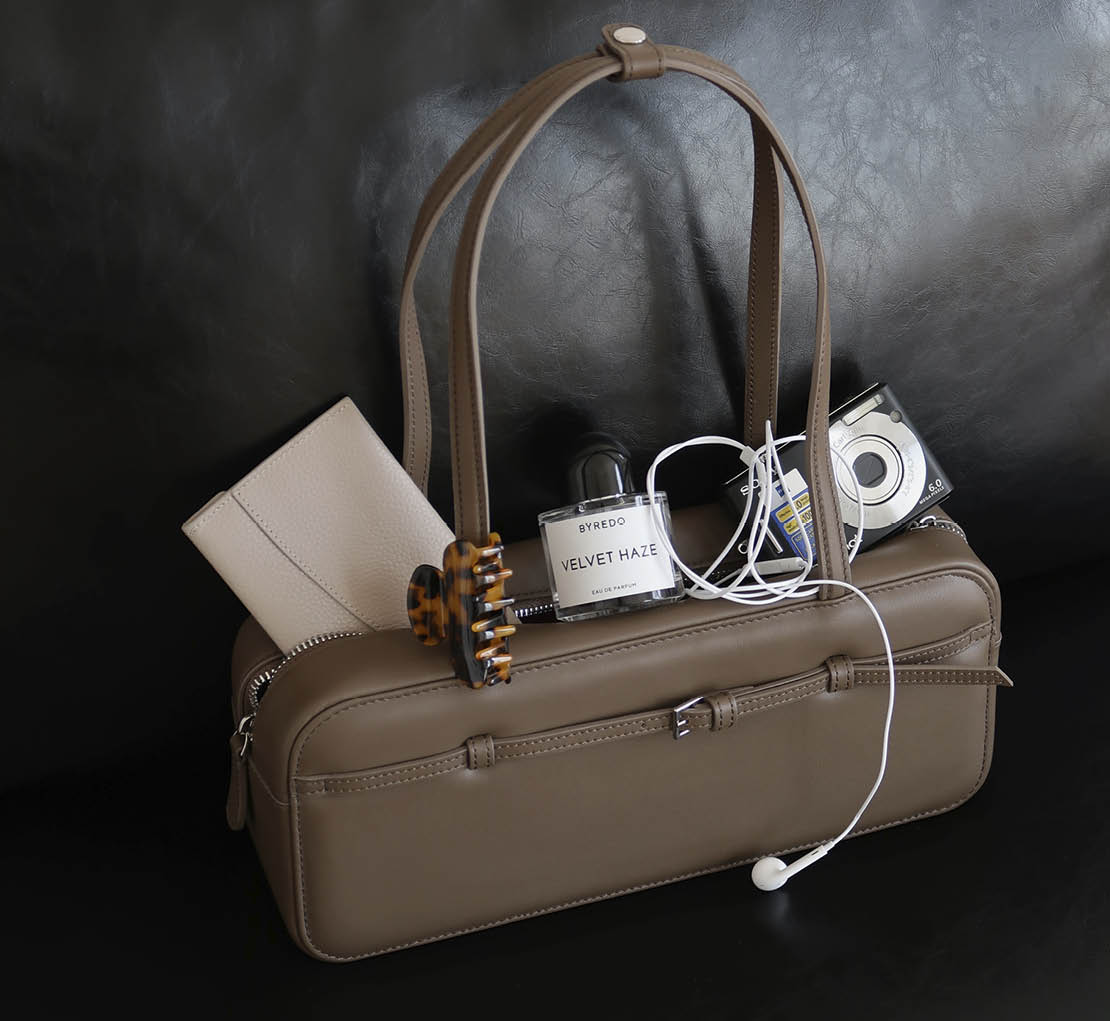
The region’s fashion identity is evolving rapidly. From your perspective, how is Middle Eastern luxury being redefined by emerging designers today?
We’re seeing designers from the region move away from stereotype-driven design and into more technical, global, and contemporary approaches. There’s more confidence now, a belief that a brand from here doesn’t need to over-prove its heritage to be taken seriously abroad. The redefinition is happening through quality, design clarity, and a more modern representation of what Middle Eastern luxury actually looks like.
Looking ahead, what can we expect next for Aimée Moreau, and what personal goals are you working towards as both a designer and a businesswoman?
You’ll see more silhouettes. The next two years are about expanding the product range and understanding which shapes resonate most with our audience. As a designer, my focus is on refining the brand language and exploring new constructions and materials. As a businesswoman, my goal is to grow the brand globally in a controlled, strategic way — building longevity rather than noise. Alongside that, I want to build a real community around the brand and create opportunities to interact with our customers more directly, whether through events, pop-ups, or hands-on experiences that allow for a more personal connection.
By Lindsay Judge
All You Need To Know About the 2026 Edition of Manchester City Abu Dhabi Cup
Simon Hewitt, Head of Football Operations MENA, City Football Group and Tournament Director of Manchester City Abu Dhabi Cup, discusses youth football in the Middle East
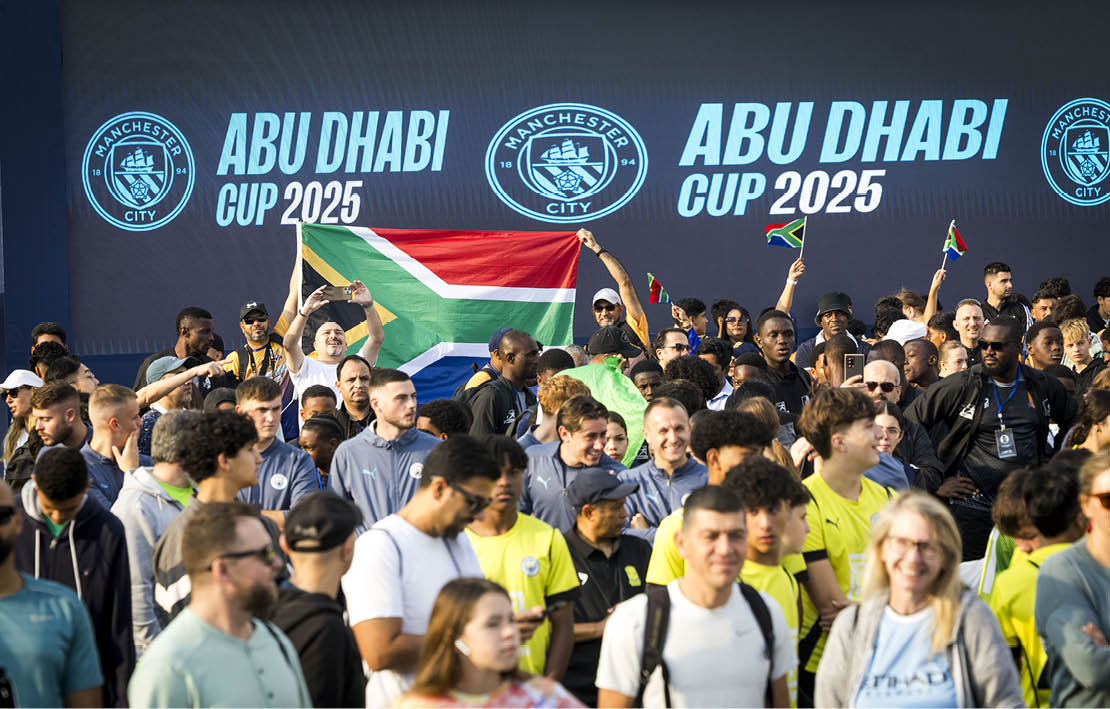
Youth tournaments shape far more than future athletes. They build confidence, community and lifelong memories, while giving young players a chance to experience football on a truly global stage. Few events in the region capture that spirit as powerfully as the Manchester City Abu Dhabi Cup. Now preparing for its biggest edition yet, the tournament has grown into one of the most anticipated youth football gatherings in the Middle East, welcoming teams from around the world and celebrating the joy of the game.

At the centre of it is Simon Hewitt, Head of Football Operations MENA for City Football Group and Tournament Director of the Abu Dhabi Cup. With a deep understanding of both player development and event vision, he oversees a platform that blends competition, culture and inspiration for children and families alike.
Here, he shares how the tournament has evolved, why inclusion remains a driving force, and what the future holds for youth football in the region.
The Manchester City Abu Dhabi Cup kicks off this month. Tell us a little about the event and what it means to see the tournament reach its biggest edition yet.
The 2026 Manchester City Abu Dhabi Cup will be the seventh edition and will be staged between January 9th to 11th. Since its launch, the tournament has gone from strength to strength and is now established as the biggest and best youth football tournament in the Middle East for boys and girls.
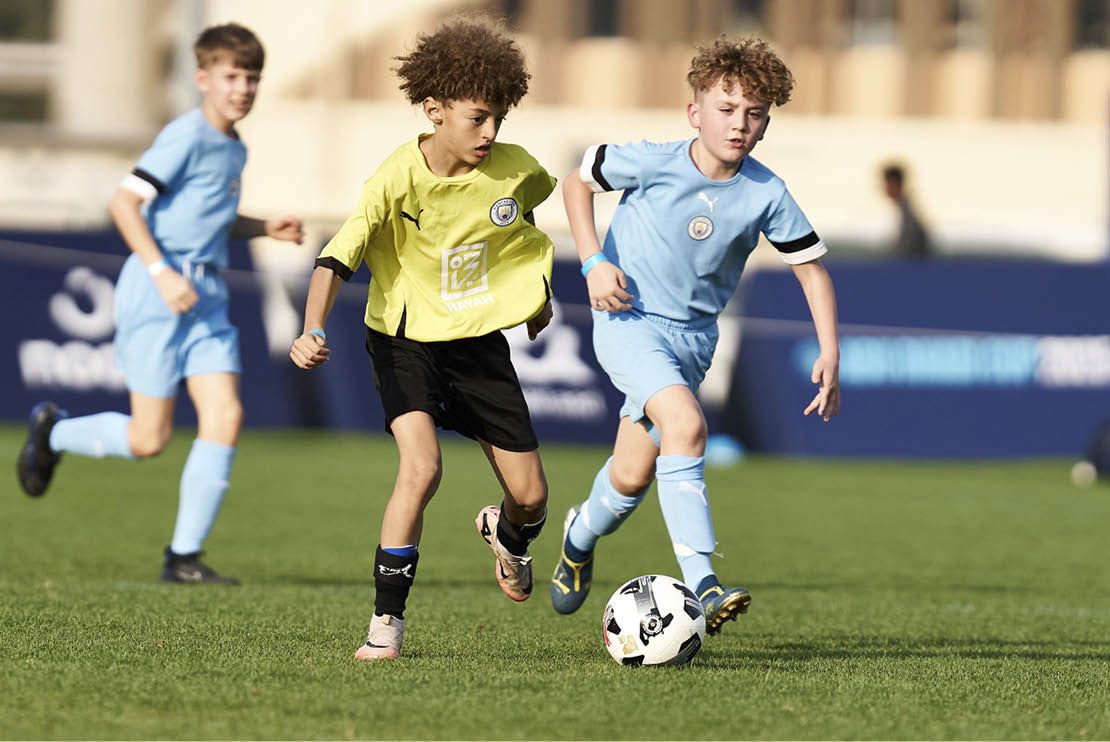
The demand from teams around the world has always been high, which is why we decided to expand the upcoming Abu Dhabi Cup to three days for the first time, so we can accommodate more teams and host more matches. By adding an extra day, 2026 will be a record-breaking tournament, and we look forward to welcoming more than 244 teams from 21 countries around the world, across age groups from under-8 to under-16s. To see our biggest line-up playing in the Manchester City Abu Dhabi is a testament to how far the tournament has come, and it will be great to see so many young boys and girls showcase their talent and test themselves on a big stage against local, regional, and international sides.

The Abu Dhabi Cup has always been about more than competition. How important is it for City Football Group to create an experience that blends football, culture and community for young players and their families?
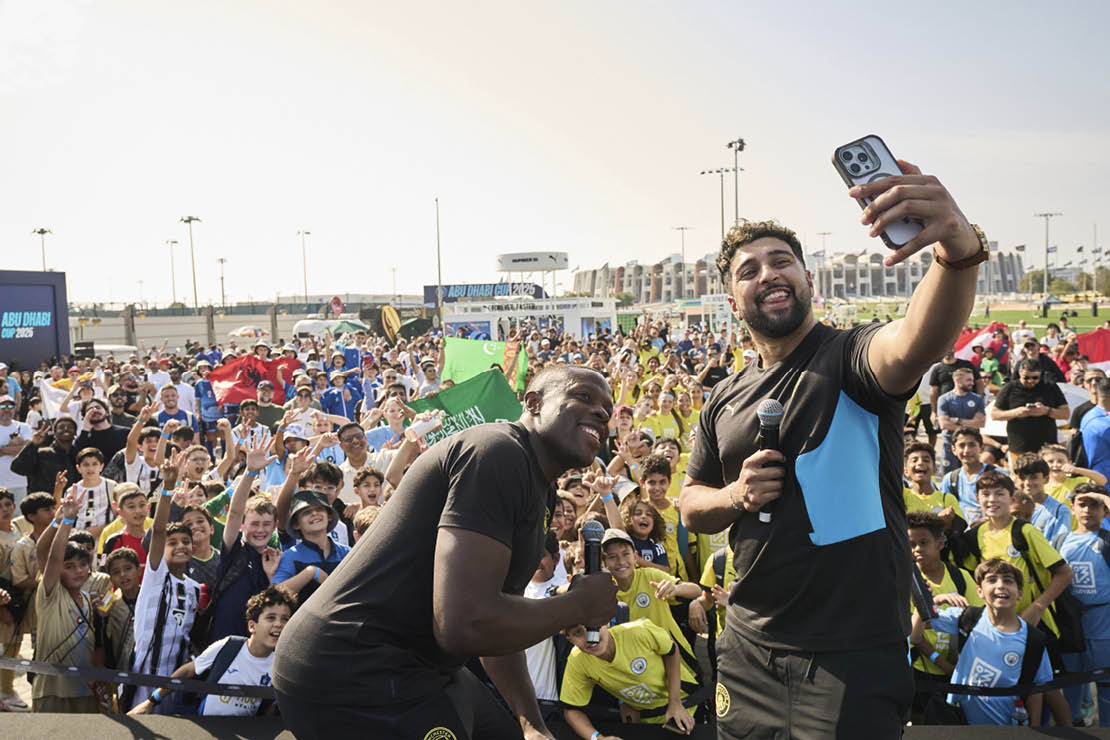
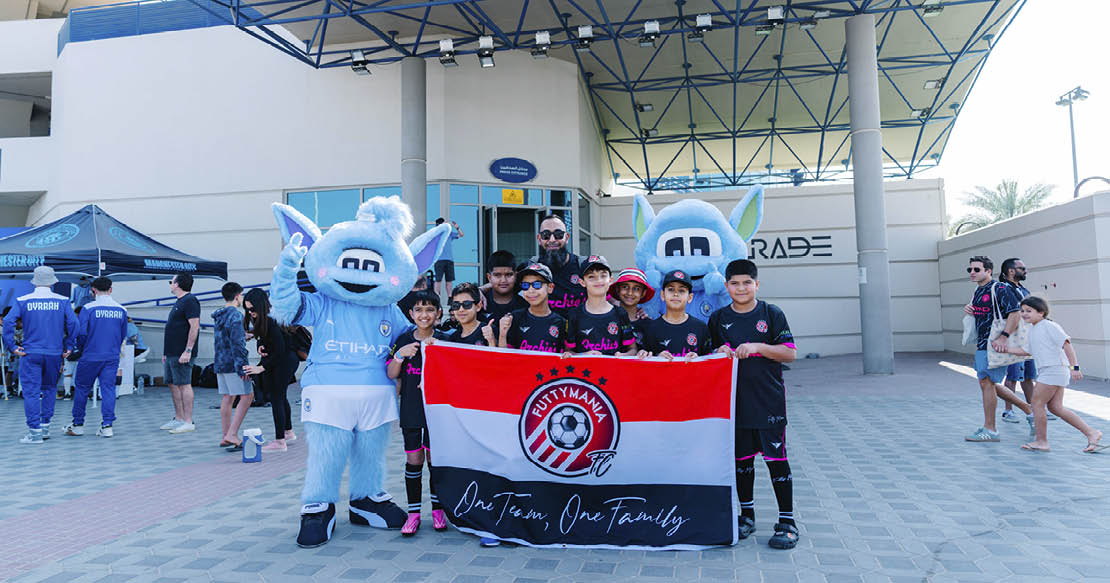
When we start planning the Manchester City Abu Dhabi Cup every year, we not only look to host a world-class football tournament but also turn it into a festival that players, coaches, families and spectators can enjoy. We will see more than 7,000 people in the Tournament Village over the weekend, and they will be able to take part in a wide range of activations, entertainment, and cultural experiences. International teams can also learn more about Abu Dhabi’s culture, heritage, and hospitality as they explore the City and its attractions during downtime.
One of the standout milestones this year is the record number of girls’ teams taking part. Why is increasing access and visibility for girls in football such a critical focus for you and for City Football Group more broadly?
Girls’ football has grown enormously in the last few years with greater exposure of the professional game and more opportunities for girls to play at recreational and competitive levels around the world. We are set to welcome 44 girls’ teams, which is another record for us. This number keeps growing year-on-year and is a key commitment for us to give more opportunities to girls so they can play in international tournaments like this one, and hopefully follow in the footsteps of the professional stars.
For City Football Group in the Middle East, we are dedicated to enhancing the experience for female players. We have more than 250 girls on our City Football Schools programmes which are overseen by our female coaching team at venues in Abu Dhabi, Dubai and Ajman while also entering them in competitions in the UAE, the wider Middle East, and internationally to challenge themselves further.

We also open opportunities for other girls to get involved. For example, last year, when Manchester City Women’s First-Team visited Abu Dhabi, we held a Girls’ Open Day where teams from across the Emirate competed in a fun tournament, took part in free training sessions, and met the professional players and watched them train. These opportunities provide unforgettable moments, and we hope these experiences can inspire them along their footballing journey.
How do tournaments like this help shift perceptions around girls’ participation in sport in the region, and what long-term impact do you hope this has on future generations?
It shows that the Manchester City Abu Dhabi Cup is an inclusive tournament, as it has always been since its first edition. We have provided opportunities for girls to play football and be part of a global stage. With girls playing football, we hope that other girls are inspired by what they see, follow in their footsteps, and get involved in the game we all love.
From your perspective, why is it so important for children to engage in sport from a young age, not just for athletic development but for confidence, teamwork and life skills?
It is so important that children are active from a young age, as these activities can help them stay happy and healthy, and also make new friends in the process. Playing football is a great learning experience, as it is a team sport, allowing players to work together and communicate – skills that help them in the real world while also shaping them into confident, resilient, and well-rounded individuals.
The UAE continues to invest heavily in sports infrastructure. How do world-class facilities elevate youth tournaments and inspire young players to dream bigger?
Abu Dhabi’s Zayed Sports City, which is one of the premier sporting facilities in the UAE, has been the home of the Manchester City Abu Dhabi Cup since it began, and has played a big part in the tournament’s success so far. Their infrastructure is world-class, with their team going the extra mile to ensure the grass pitches are of the highest standard as part of a fun and safe environment. It is always great to see the excitement of young boys and girls who are impressed with the facilities and cannot wait to play at the Cup.
City Football Group operates across multiple continents. How does bringing global football standards to Abu Dhabi help nurture local talent while also strengthening international sporting connections?
At City Football Schools, we follow the philosophy and training programme of the Manchester City Academy. As such, all of our coaches in the UAE who deliver sessions in Abu Dhabi, Dubai and Ajman are trained at the Manchester City Academy in the UK, meaning everyone employed understands the football club’s philosophy and can deliver the right methodology to the children. Our primary goal is to continue providing high-quality environments where children can develop, stay active, and enjoy football. It is important for us that children have the opportunity to fulfil their potential. We have players from 3 to 18 years old, and we provide pathways for all of them. Whether they simply want to enjoy football with their friends or have professional ambitions, we have programmes in place to meet their needs.
For one of the winning teams, the opportunity to train at one of City Football Group’s clubs is truly life-changing. What impact do experiences like this have on young players’ motivation and belief in their potential?
This is what makes the Manchester City Abu Dhabi Cup different from other youth tournaments. One lucky winning team will get the opportunity to train at a City Football Group club and watch the first team of that club in action. We understand that winning a trophy is a big achievement, but visiting and training at a professional club’s facility is a lifelong memory. These are unforgettable experiences that everyone will cherish, and, more importantly, encourage and inspire them to continue their own footballing journey.

Looking ahead, how do you see youth football in the region evolving, particularly when it comes to inclusion, girls’ pathways and access to elite-level experiences?
I believe there’s a bright future for youth football in the region. We are seeing more boys and girls play the game every week, and, more importantly, play with smiles on their faces. Youth football is a key platform for developing the stars of tomorrow, not only to engage in the sport but also to help them become the best they can be as young people. For both boys and girls, the opportunities to play, learn, and develop have never been better – and that is only going to improve in the coming years. It is an incredibly exciting time to be a part of football, and we are very fortunate to work with these young players on a weekly basis and watch their progression first-hand.
The 2026 edition of the Manchester City Abu Dhabi Cup youth football tournament will kick off on Friday, January 9, at Zayed Sports City in Abu Dhabi.
The most stylish ski collections to wear on the slopes this year
We reveal the luxury brands who have unveiled stylish ski wear collections for the 2026 winter season.
Dior
DiorAlps returns with a winter capsule inspired by altitude, movement and effortless elegance. Designed as a tribute to the magic of mountain escapes, the collection blends technical innovation with couture refinement, creating a modern Dior silhouette for cold-weather getaways. Soft fairisle knits, practical outerwear, technical accessories, denim and signature Dior prints come together in pieces that feel both luxurious and adventure-ready.
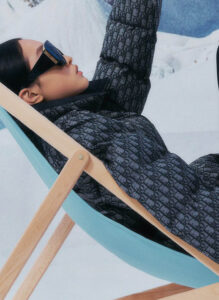
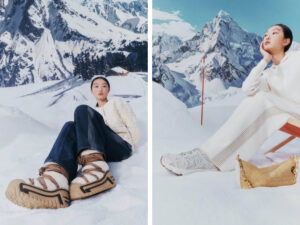
Every item is created to balance style with performance, whether you are wrapped up beside the fireplace or carving fresh tracks on the slopes. The palette remains timeless, the fabrics enveloping, and the details unmistakably Dior, resulting in a wardrobe that moves easily from chalet lounge to après-ski evenings.

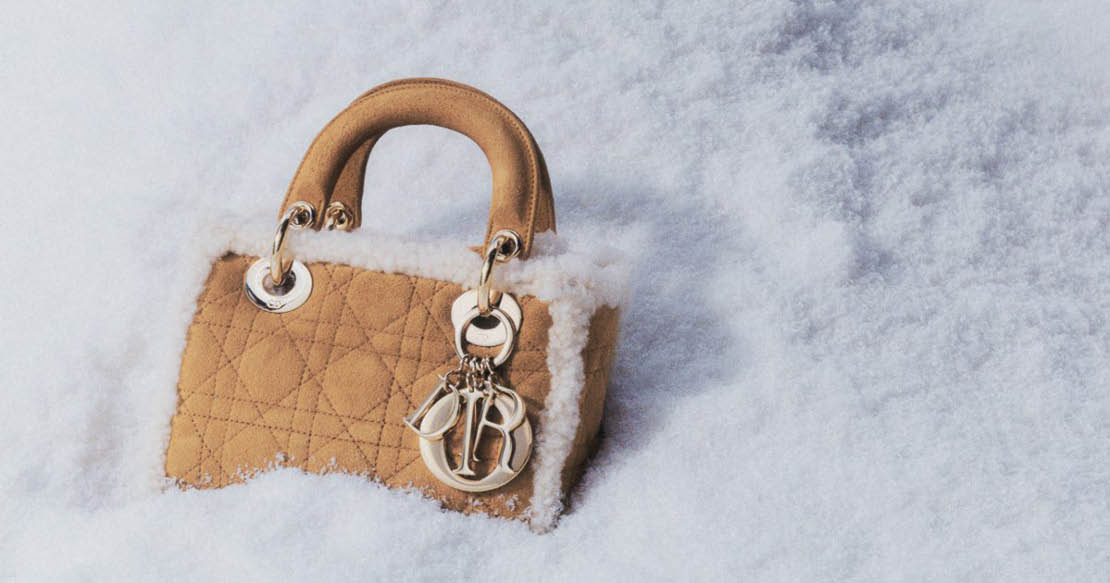
No alpine-inspired collection would be complete without statement bags, and this season icons such as the Lady Dior, Dior Toujours and D-Journey appear in plush suede enhanced with shearling touches. DiorAlps captures the freedom of winter travel while staying undeniably chic.
Louis Vuitton
Louis Vuitton presents LV Ski, a complete winter wardrobe designed for style, movement and modern adventure. The collection elevates the House’s spirit of travel with technical outerwear, graphic coats and sleek salopettes crafted from ultra-light, fully waterproof fabrics that protect while allowing freedom to move. Recycled nylon jackets echo the Maison’s history with quilted stitching that recalls the interiors of vintage trunks.
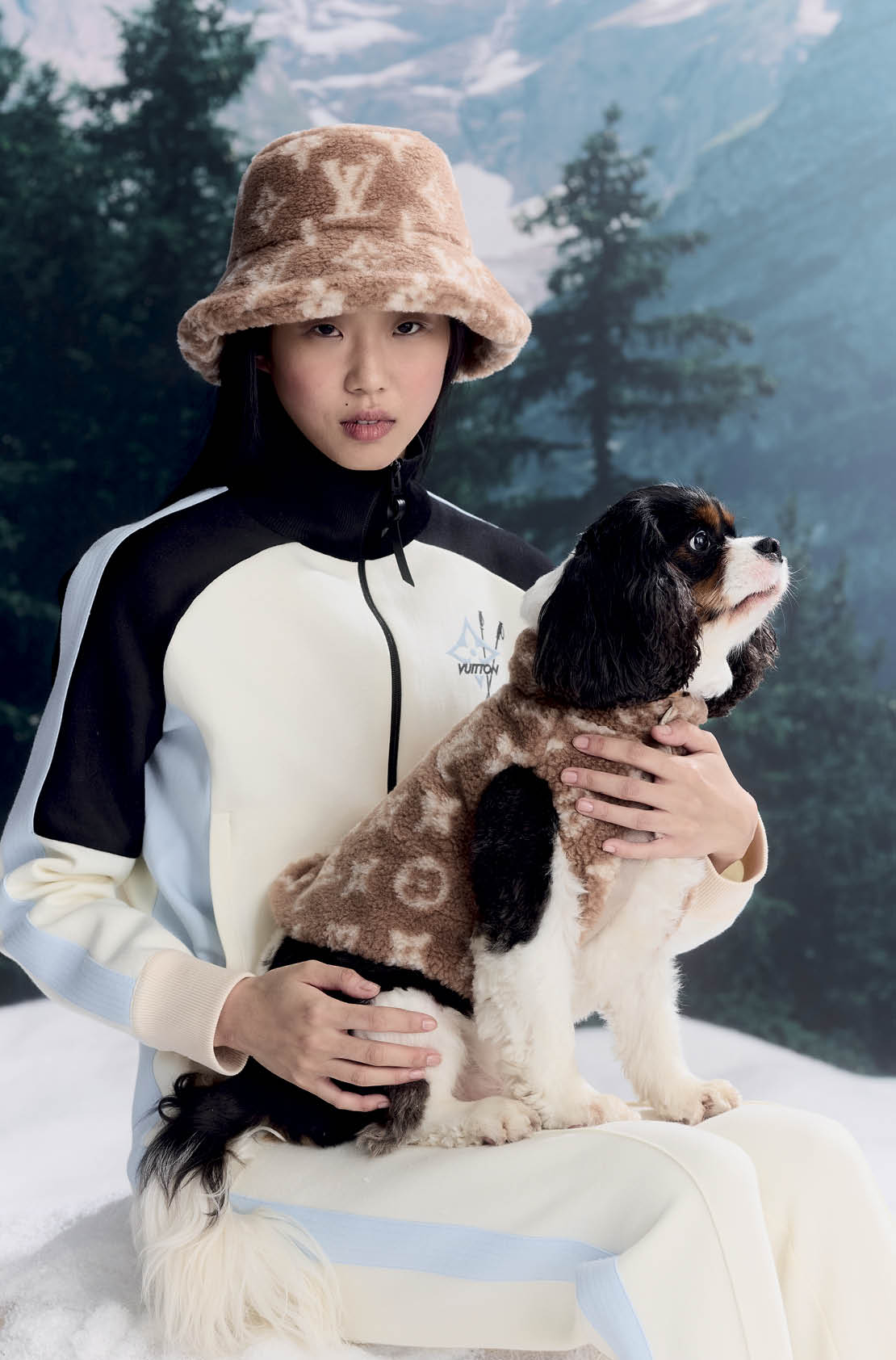
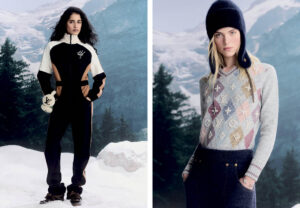
Après-ski looks bring warmth and glamour, pairing Norwegian-inspired knits and Monogram motifs with sequin denim and plush textures. Leather goods take on a glacial sheen through Monogram Miroir canvas, reimagined in silver and a new copper tone across favourites such as the Alma, Speedy and Petite Malle. Shearling enriches icons from the Capucines to the Neverfull, while sporty nylon versions add an easy, travel-ready feel.
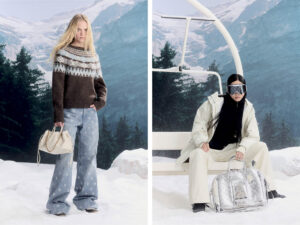
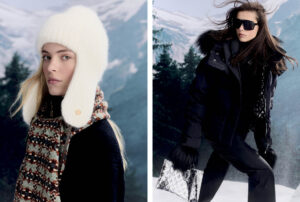
Finished with cosy accessories, sculptural boots and the statement ski mask, LV Ski captures winter escape in a refined, contemporary way — practical, polished and unmistakably Louis Vuitton.
Chanel
CHANEL’s COCO NEIGE 2025/26 collection brings a fresh vision of winter dressing, where technical performance meets polished elegance. Conceived for life between city streets and snowy slopes, the line blends protective fabrics, streamlined silhouettes and unmistakable CHANEL codes. Soft, frosted tones sit alongside deep navy, pine green and sleek black, creating a palette that feels both modern and serene.

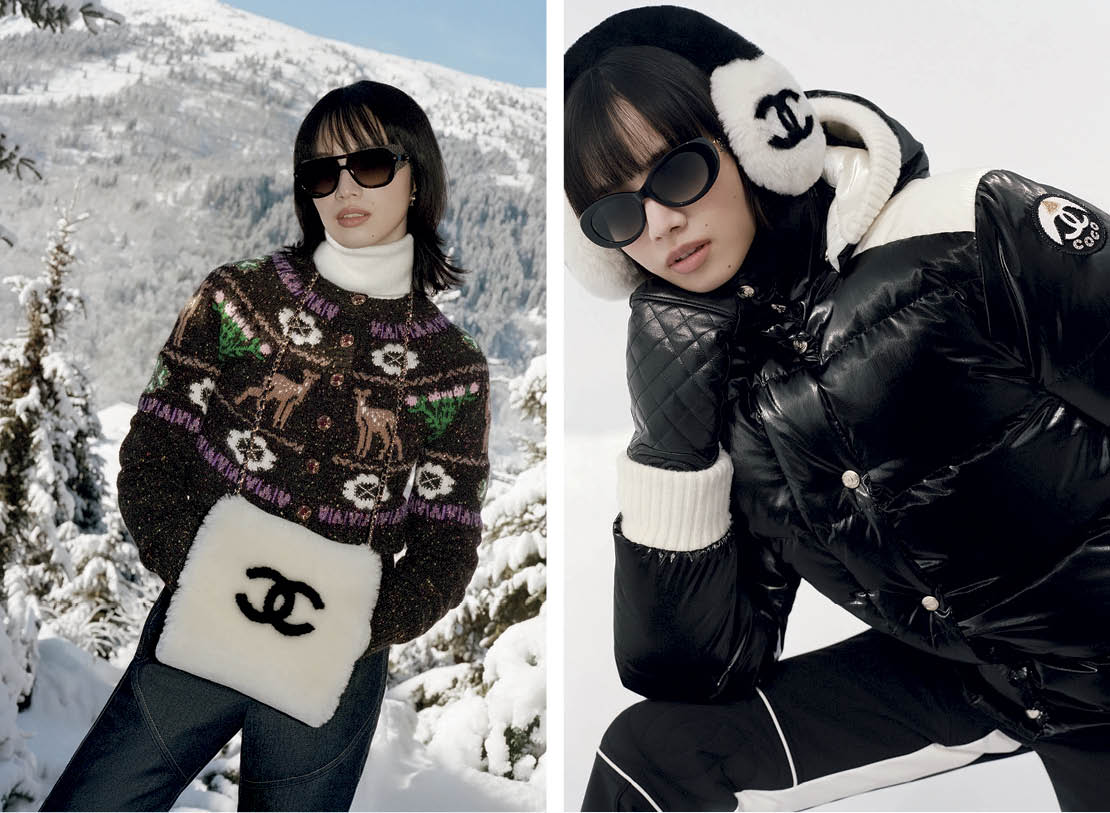
Outerwear leads the story: taffeta puffers, graphic two-tone jackets and quilted knits offer warmth without bulk, while tailored technical trousers and cozy cashmere layers add refinement. Tweed appears in new alpine interpretations, alongside mohair, velvet touches and subtly shimmering accents that echo winter light.
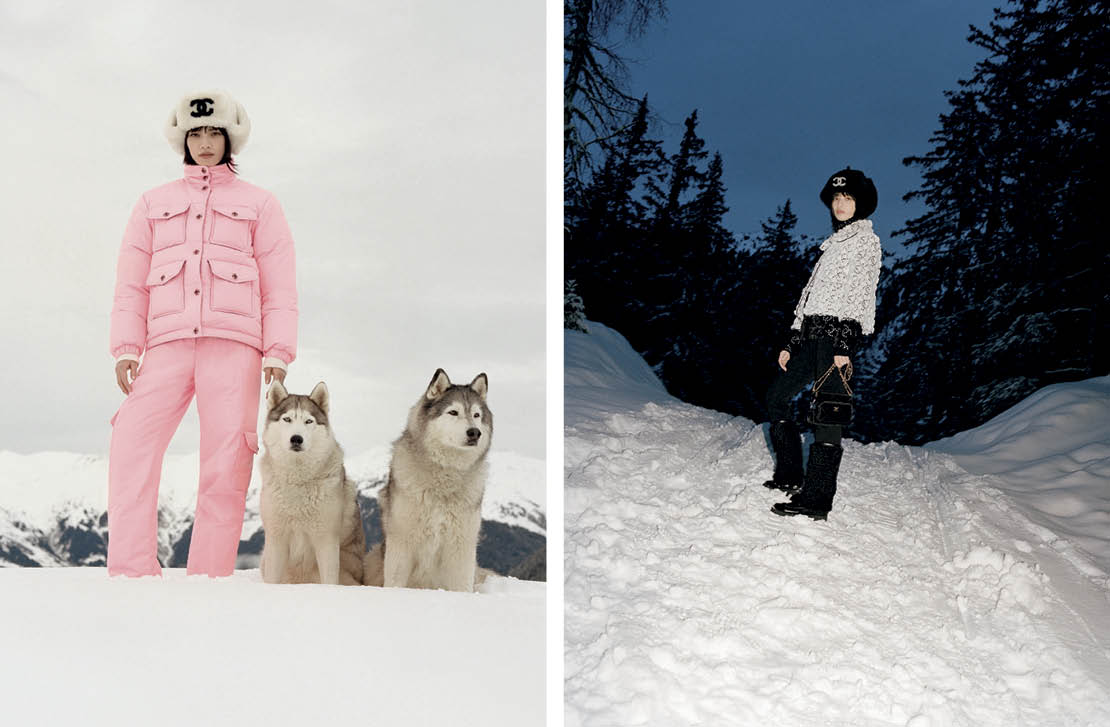
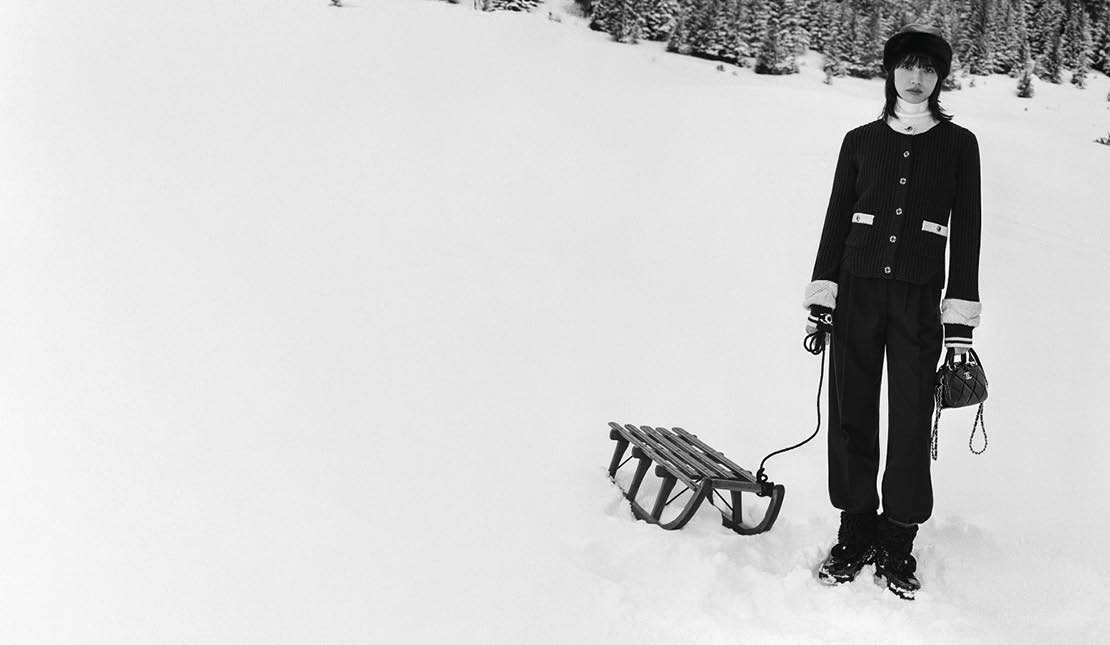
Accessories amplify versatility. Earmuffs, pocket belts, sunglasses and velvet-finish nylon bags feel playful yet practical, while faux-pony and sheepskin boots deliver comfort with a couture twist. Designed to transition effortlessly from slope to chalet to city, COCO NEIGE reimagines winter style as confident, functional and beautifully composed.
Balenciaga
Balenciaga introduces its 2025 Skiwear Collection, a performance-driven wardrobe that fuses advanced innovation with the brand’s sculptural aesthetic. Protective outerwear leads the line, including reversible puffers, gilets, hooded parkas and fleece layers made with water-repellent shells, Aquazip closures and down-proof constructions. Hidden elastics enhance comfort and mobility, while the integrated Recco rescue system underscores a commitment to safety in demanding winter conditions.
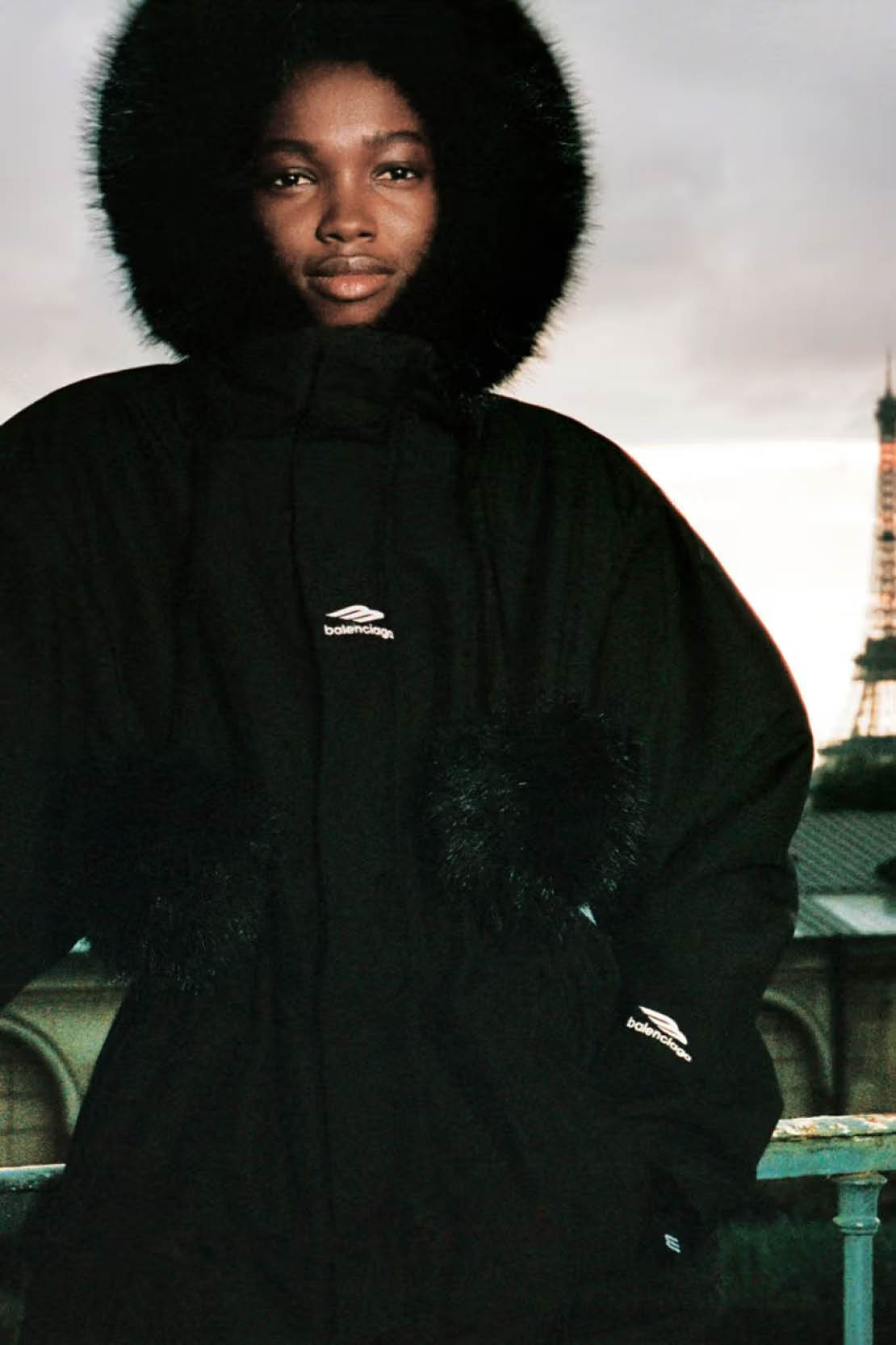
The collection expands into technical equipment crafted with Italian specialists. Mirror-finish skis and snowboards, impact-resistant helmets, lightweight poles and silver-tinted mask goggles emphasise Balenciaga’s exploration of precision gear.
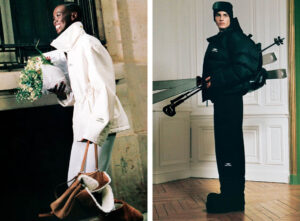
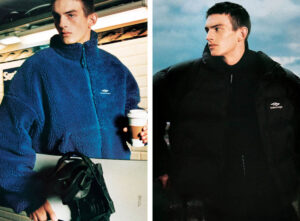
Footwear and accessories echo the alpine mood. Oversized boots and platform mules from the Dumbo and Alaska lines arrive in padded nylon and split calfskin for insulation, while signature bags such as Explorer, Rodeo and Le City appear in shearling-lined and fleece-lined finishes. Designed for slope to city ease, the collection brings thermoregulating outerwear, streamlined shapes and refined utility into a cohesive winter wardrobe.
Moncler
Moncler’s FW25 Grenoble collection reimagines skiwear by equipping everyday fabrics with true Alpine performance. What looks like suede, denim and flannel has been meticulously engineered to handle snow, wind and shifting temperatures, reflecting the brand’s commitment to research-led innovation. The standout denim ski suit, sourced from Japan’s Kojima mills, becomes windproof, waterproof and breathable, with taped seams, RECCO® reflectors and PrimaLoft Gold Active insulation for warmth without weight.

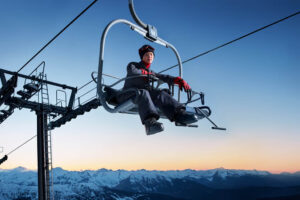
Signature puffers return with luxurious textures such as corduroy, velvet and wool, finished with metal hardware and leather trims. Technical patchwork outerwear blends GORE-TEX canvas, four-way stretch nylon and DERMIZAX DX to deliver advanced waterproof and windproof protection.

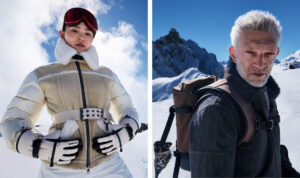
Après-ski pieces soften the mood with tonal suede, plush shearling and tech nylon, while classic knitwear, including Fair Isle and Irish Aran styles, anchors the collection in cold-weather tradition. The result is skiwear that feels luxurious, highly functional and distinctly Moncler, whether on the mountain or off.
Perfect Moment
Perfect Moment and BWT Alpine F1 Team unite for a winter capsule that blends performance skiwear with racing-inspired design. Built for speed, precision and cold-weather versatility, the collection reworks Perfect Moment’s technical silhouettes in Alpine’s signature blue and pink, accented with bold contrasts and graphic detailing. Ski jackets, suits and knitwear deliver warmth and mobility, while circuit-line motifs echo track layouts and subtle green and red markings nod to wheel-bolt indicators seen in the Alpine garage.
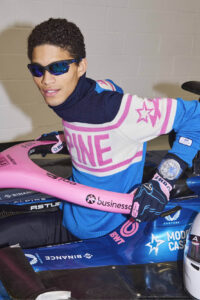
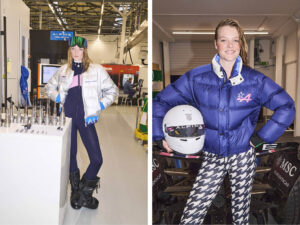
Signature shapes are refined with embroidered patches, sleek trims and co-branding that feels elevated rather than overt. Beyond the slopes, the capsule introduces après-ski layers and accessories that transition effortlessly from mountain days to relaxed evenings, offering a cohesive wardrobe anchored in comfort and durability.
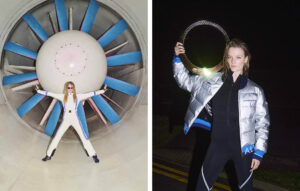
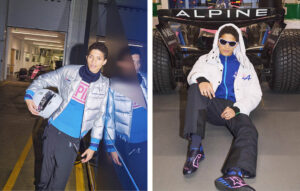
The result is functional skiwear with the attitude of motorsport: aerodynamic, distinctive and crafted for those who appreciate technical performance paired with confident style.
Best Dressed at the 2026 Critics Choice Awards
Awards season is officially underway, and the 2026 Critics’ Choice Awards delivered exactly what we hoped for: statement gowns, confident tailoring and red-carpet looks that felt modern, elevated and unmistakably individual. From refined minimalism to high-drama couture moments, celebrities used fashion to tell their own stories, and the result was a night full of standout style.
Here, we round up the best-dressed stars of the evening, and the designers behind the looks everyone is talking about.
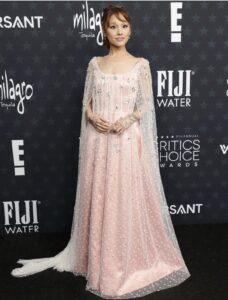
Ariana Grande wearing Alberta Ferretti

Odessa A’Zion wearing custom Ott Dubai

Mia Goth wearing Dior
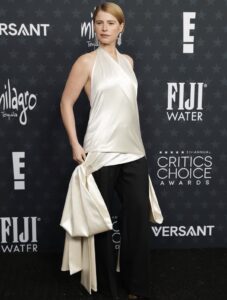
Jessie Buckley in Dior

Rose Byrne

Britt Lower in Bottega Veneta
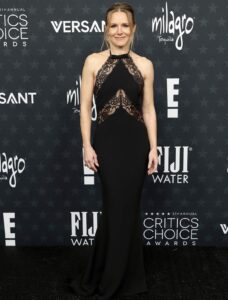
Kristen Bell

Kate Hudson

Chase Infiniti wearing Louis Vuitton
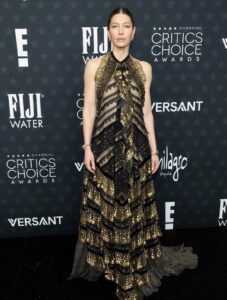
Jessica Biel wearing Lanvin
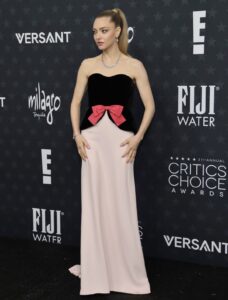
Amanda Seyfried wearing Valentino

Leighton Meester and Adam Brody
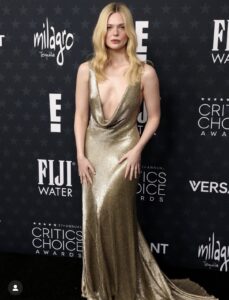
Elle Fanning wearing Ralph Lauren
School of Excellence, Gonzalo Marques Obeso, Chief Rider, Abu Dhabi Royal Equestrian Arts, discusses this new chapter for equestrian culture in the Middle East
In Abu Dhabi, a new cultural landmark is quietly redefining the relationship between tradition, artistry and horsemanship. The Abu Dhabi Royal Equestrian Arts (ADREA) is a living school dedicated to preserving and elevating the classical riding heritage that has shaped centuries of equestrian culture around the world, now interpreted through an Emirati lens. Here, craft, discipline and storytelling come together. Horses are trained with patience and respect, riders learn that excellence is inseparable from ethics, and performances are created as carefully as a ballet or symphony. ADREA positions the UAE as a guardian of legacy, while also championing innovation and education for future generations.
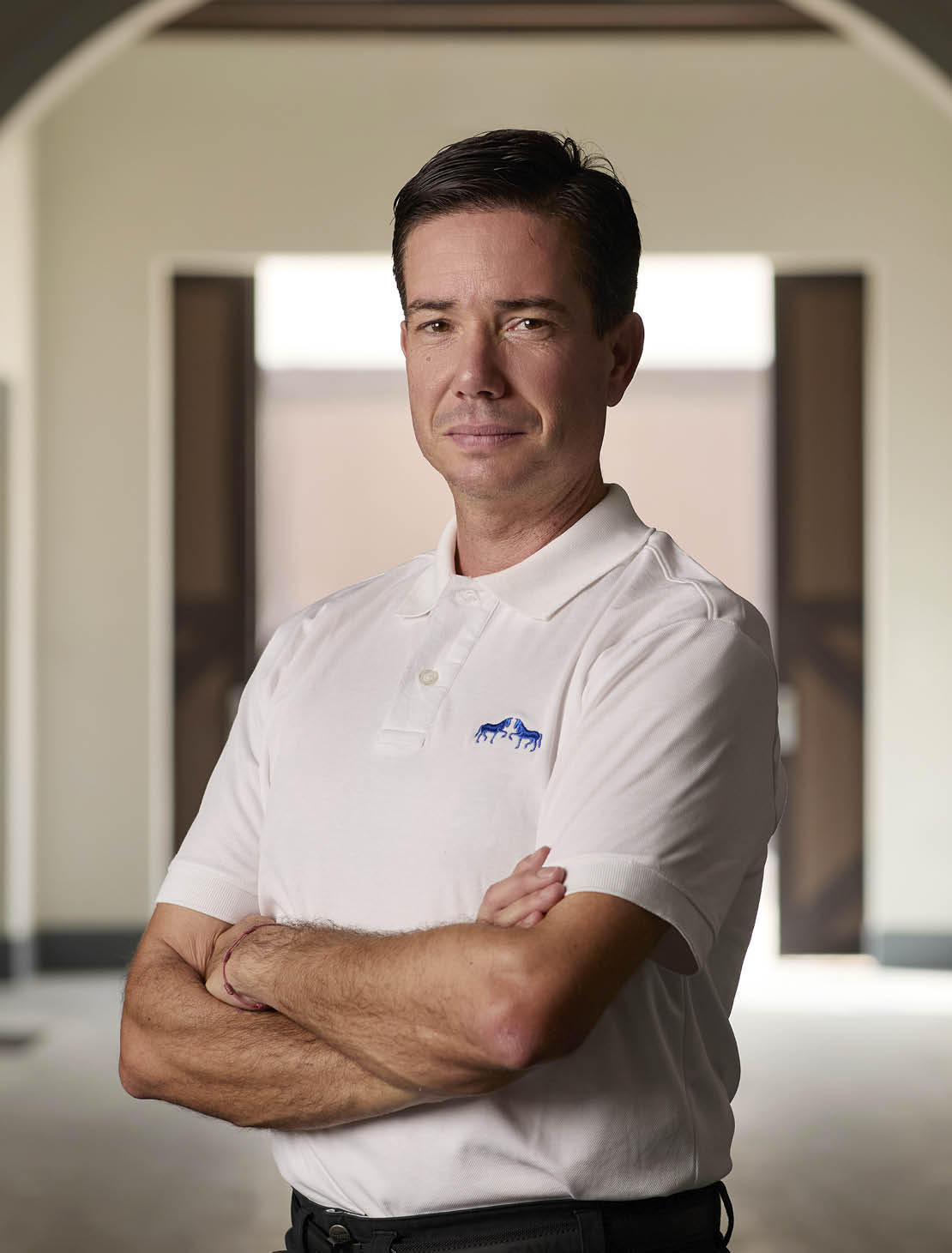
Guiding this remarkable vision is Gonzalo Marques Obeso, Chief Rider and artistic leader of the institution. With decades of experience in classical horsemanship, he brings both technical mastery and philosophical depth to the role. In this conversation, he reflects on ADREA’s mission, its global significance, and the transformative power of riding when it becomes not just a sport, but an art form.
ADREA joins a very select group of historic institutions worldwide. What does it mean to you to lead the artistic and technical vision of the first school of its kind in the Middle East?
For me, it is both an honour and a profound responsibility. Personally, it represents a dream that connects my life’s work in classical horsemanship with a new cultural chapter for this region. Professionally, it is an extraordinary opportunity to help shape the artistic and technical language of a school that will stand alongside the world’s great classical institutions, while proudly rooted in the heritage and identity of Abu Dhabi and the UAE.
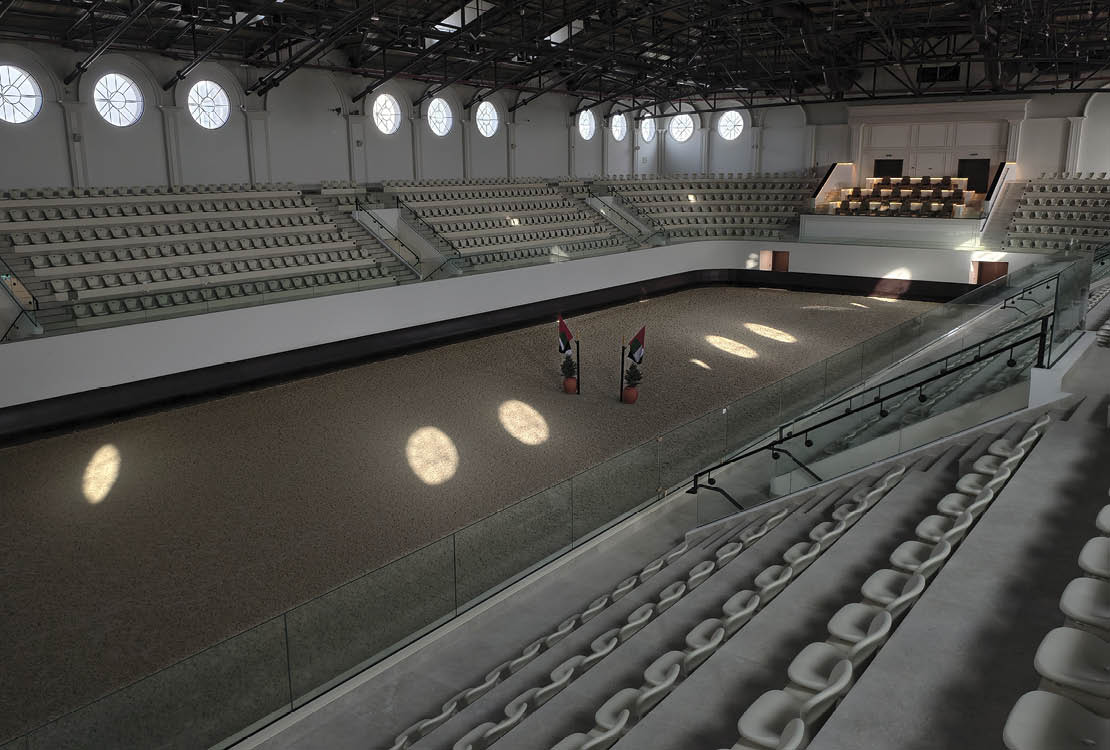
From your perspective, how does ADREA elevate Abu Dhabi’s position on the global equestrian and sporting map, particularly in the realm of classical horsemanship?
ADREA places Abu Dhabi at the forefront of the global conversation around classical horsemanship. It demonstrates that the UAE excels, not only in hosting world-class events, but also in nurturing culture, art, heritage and technical excellence at the highest level. Through ADREA, Abu Dhabi is showcased as both a guardian of tradition and a creator of legacy.
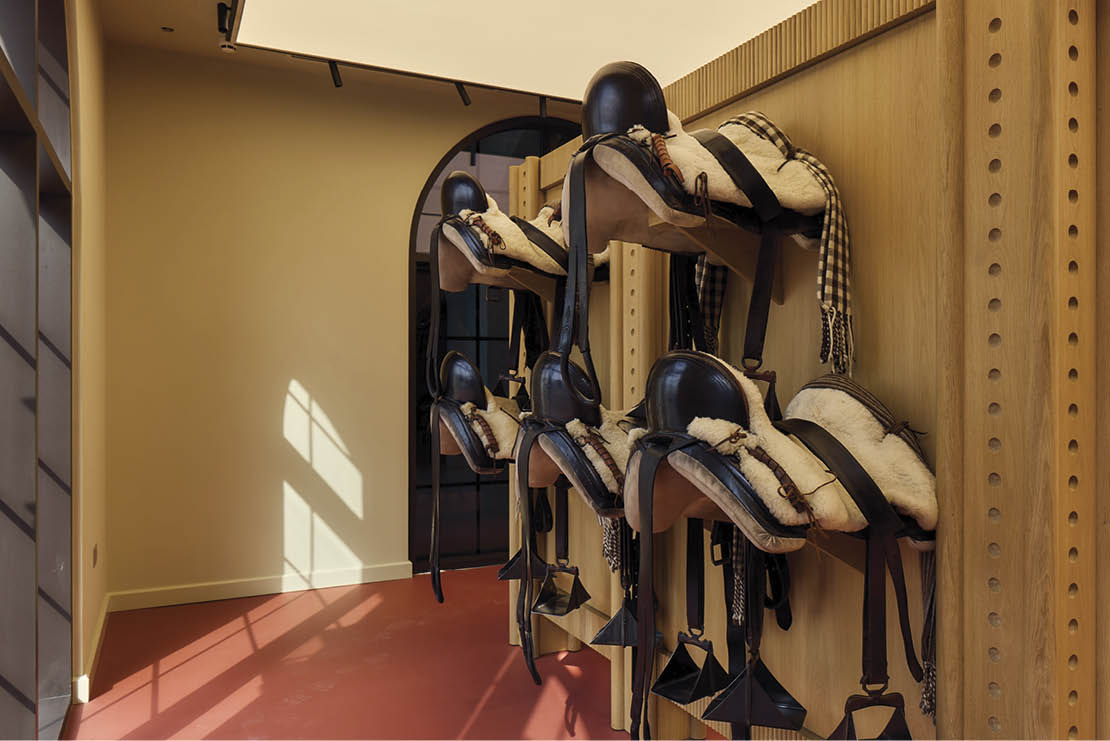
ADREA has been designed as a fully integrated, horse-first environment. How does this philosophy shape the way riders are trained and performances are conceived compared to more conventional equestrian centres?
ADREA’s horse-first philosophy fundamentally shapes both training and performances. Riders are trained with patience, respect, and a deep understanding of classical horsemanship principles, emphasising harmony and partnership with the horse rather than force or dominance. This approach ensures that performances are not just technical displays but artistic celebrations of the bond between horse and rider. When the horse truly comes first, everything changes. By prioritising the welfare, dignity, and emotional well-being of the horse, ADREA creates an environment where excellence emerges naturally, setting it apart from more conventional equestrian centres.
What makes ADREA’s facilities and vision truly world-class, and how do they compare with the historic schools you trained at in Spain and beyond?
ADREA seamlessly blends the wisdom and discipline of the historic European schools with state-of-the-art infrastructure and innovation. Every aspect of the technology, environmental control, stabling, arenas and performance spaces is designed to support the highest standards of classical horsemanship. What truly elevates ADREA is that these world-class facilities serve a broader artistic, educational, and cultural mission, mirroring the greatest European institutions but with a unique Emirati vision.
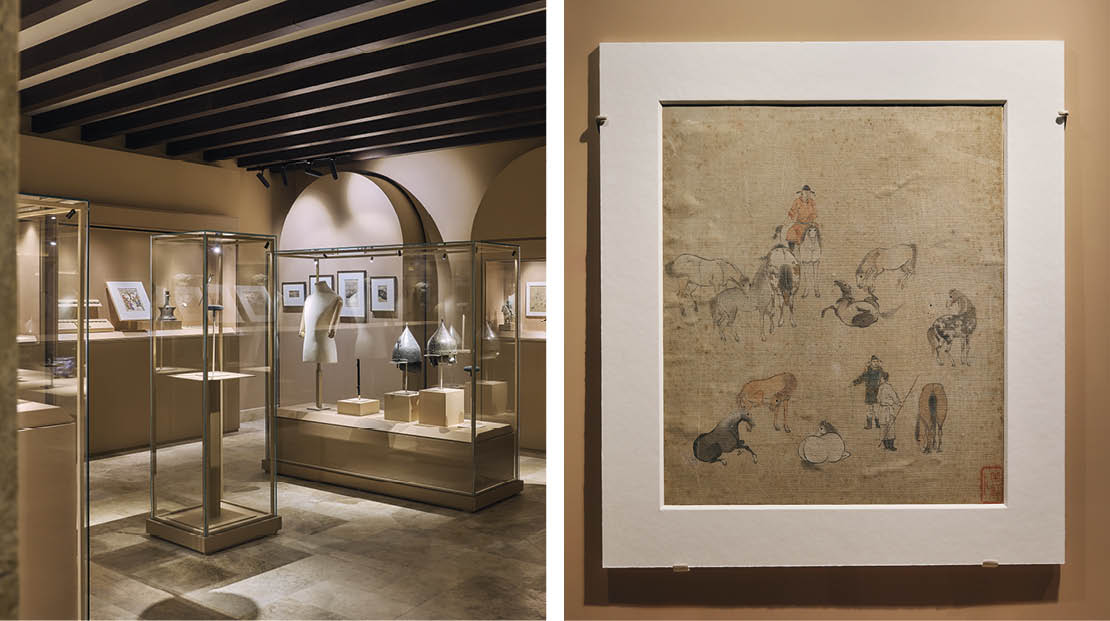
How does ADREA balance athletic excellence with artistic expression, and why is that distinction important for modern audiences?
Classical horsemanship has always existed in terms of athletic precision and artistic expression. At ADREA, we believe audiences today seek more than technical skills; they want to experience emotion, authenticity and connection. While our riders and horses perform at the highest technical level, the focus is not on competition, but on storytelling. This balance transforms classical riding into a living art form, allowing audiences to appreciate classical riding as a living art.
Education sits at the heart of ADREA. Why is long-term, structured education so critical to preserving the haute école tradition?
Haute école cannot be improvised or rushed; it requires years of discipline, humility, and structured guidance. Long-term education is essential to preserve the tradition, allowing knowledge to evolve, riders to mature responsibly, and horses to develop correctly. Education ensures continuity, protects values, and guarantees that future generations inherit not only techniques, but philosophy and respect.
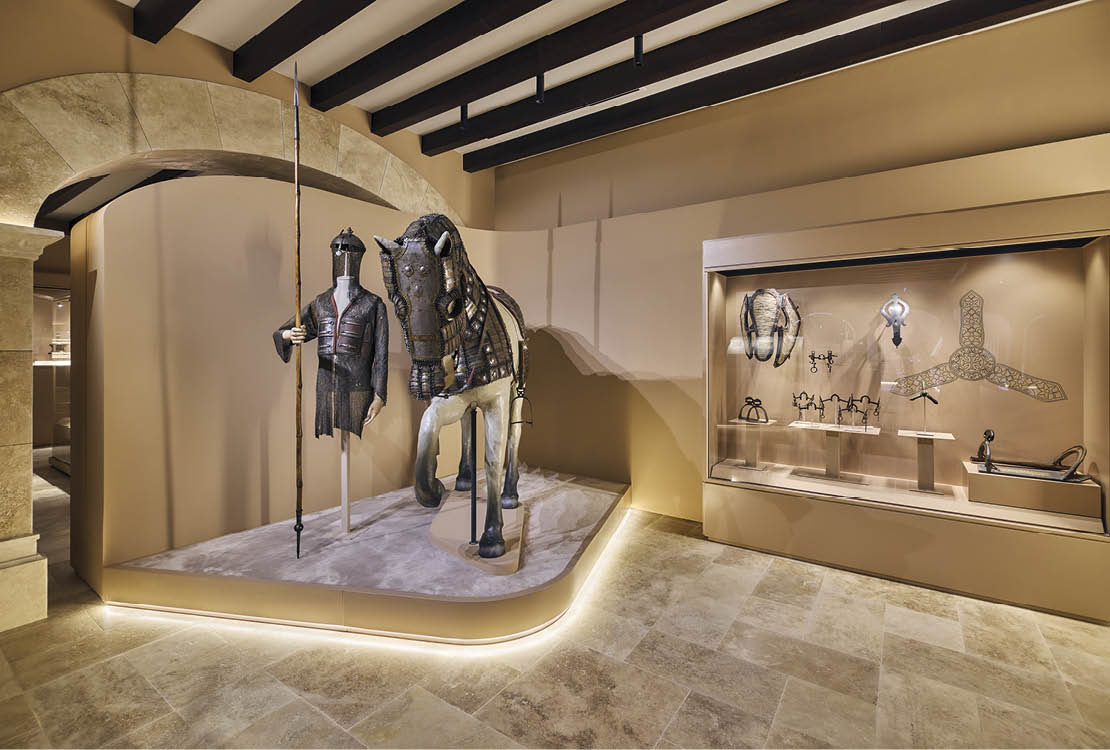
The weekly performance Furusiyya: Return to Origins has quickly become a cultural highlight. How do performances like this help introduce classical horsemanship to new audiences while remaining true to tradition?
Furusiyya: Return to Origins allows audiences to experience classical horsemanship emotionally before they understand it technically. The narrative that tells the story of the Arabian horse, tracing a return to the ancient traditions of Arab horsemanship and the enduring bond of honour, skill, and unity between horse and rider. music and choreography, people connect instinctively with the horse, heritage and artistry. At the same time, everything they see on stage is rooted in true classical technique and historical authenticity. That balance is what makes the performance powerful, educational and culturally meaningful.
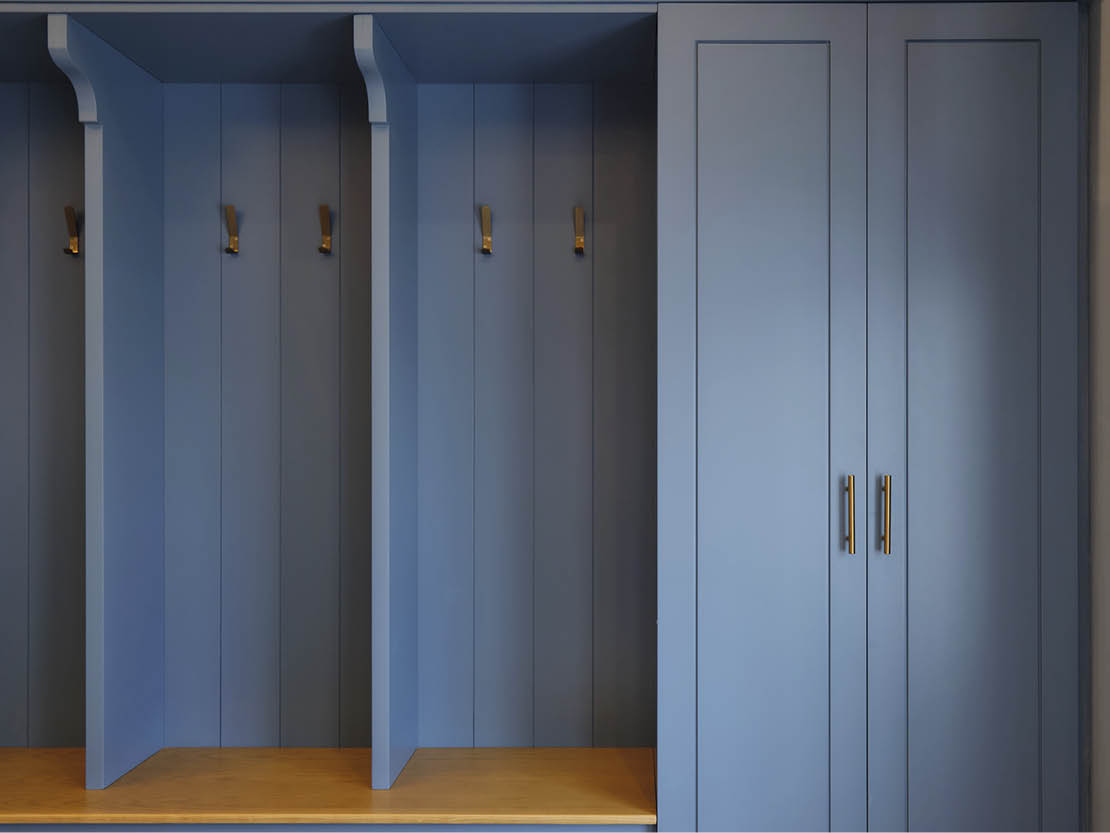
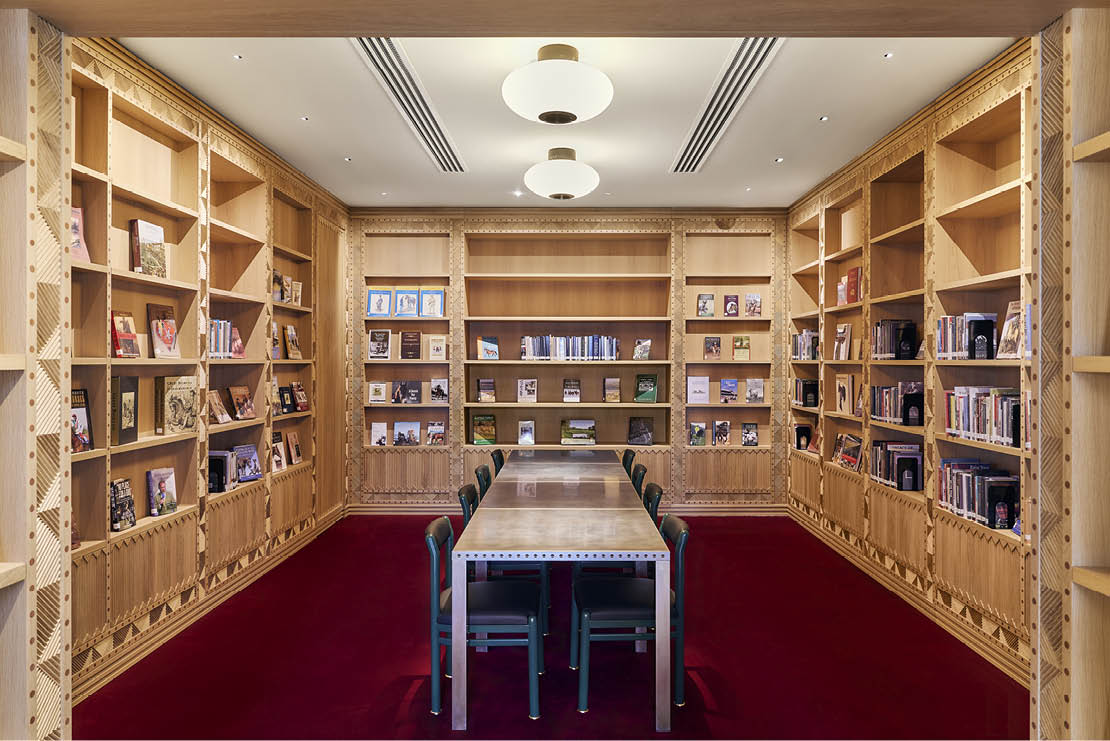
ADREA also houses cultural spaces, an equestrian library and the UAE’s first saddle-making atelier. Why was it important for the school to preserve craftsmanship and knowledge alongside performance and training?
Classical horsemanship extends far beyond the arena; it is a complete culture encompassing craftsmanship, history, literature, design, and tradition. By preserving saddlery, archiving knowledge, and creating cultural spaces, ADREA ensures it serves as a centre for research, creativity, and heritage, not simply a place to watch horses perform.
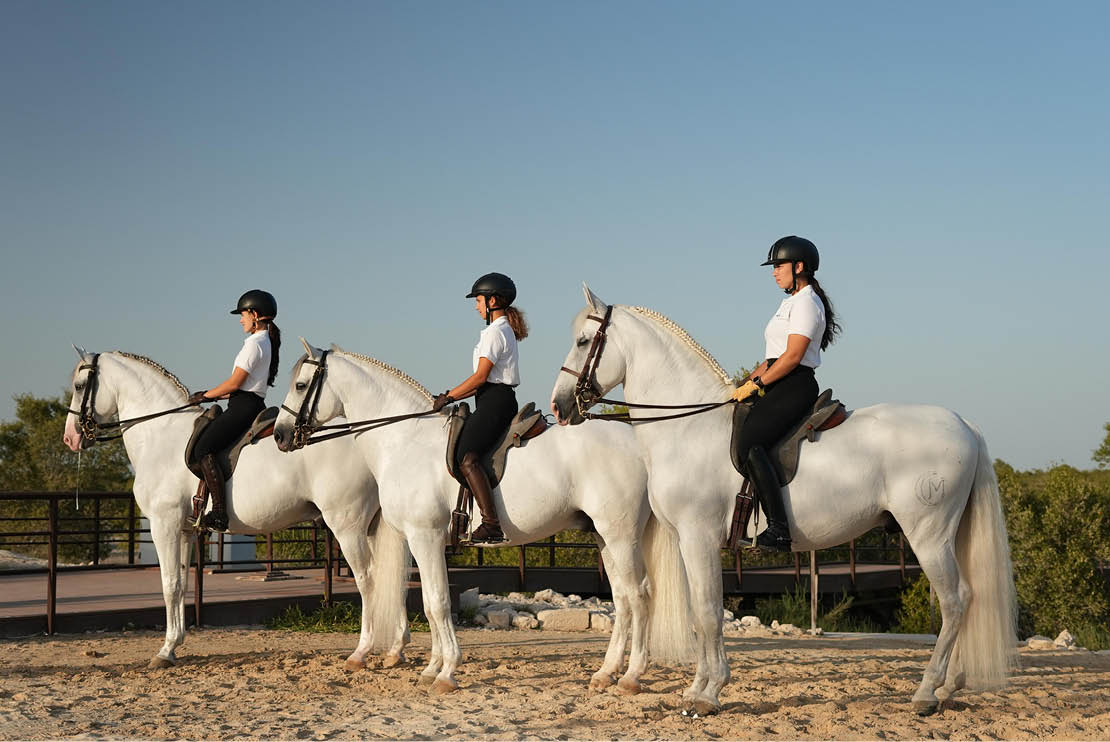
As a global specialist in Iberian horses, how do you see their role within ADREA’s identity, and what makes them particularly suited to classical horsemanship?
Iberian horses are deeply connected to the very origins of classical riding. Their temperament, intelligence, sensitivity and natural collection make them perfect for haute école. Within ADREA, they are not only performers but also symbols of the connection between European classical tradition and the Arabian legacy of horsemanship. They embody elegance, nobility and artistic power.
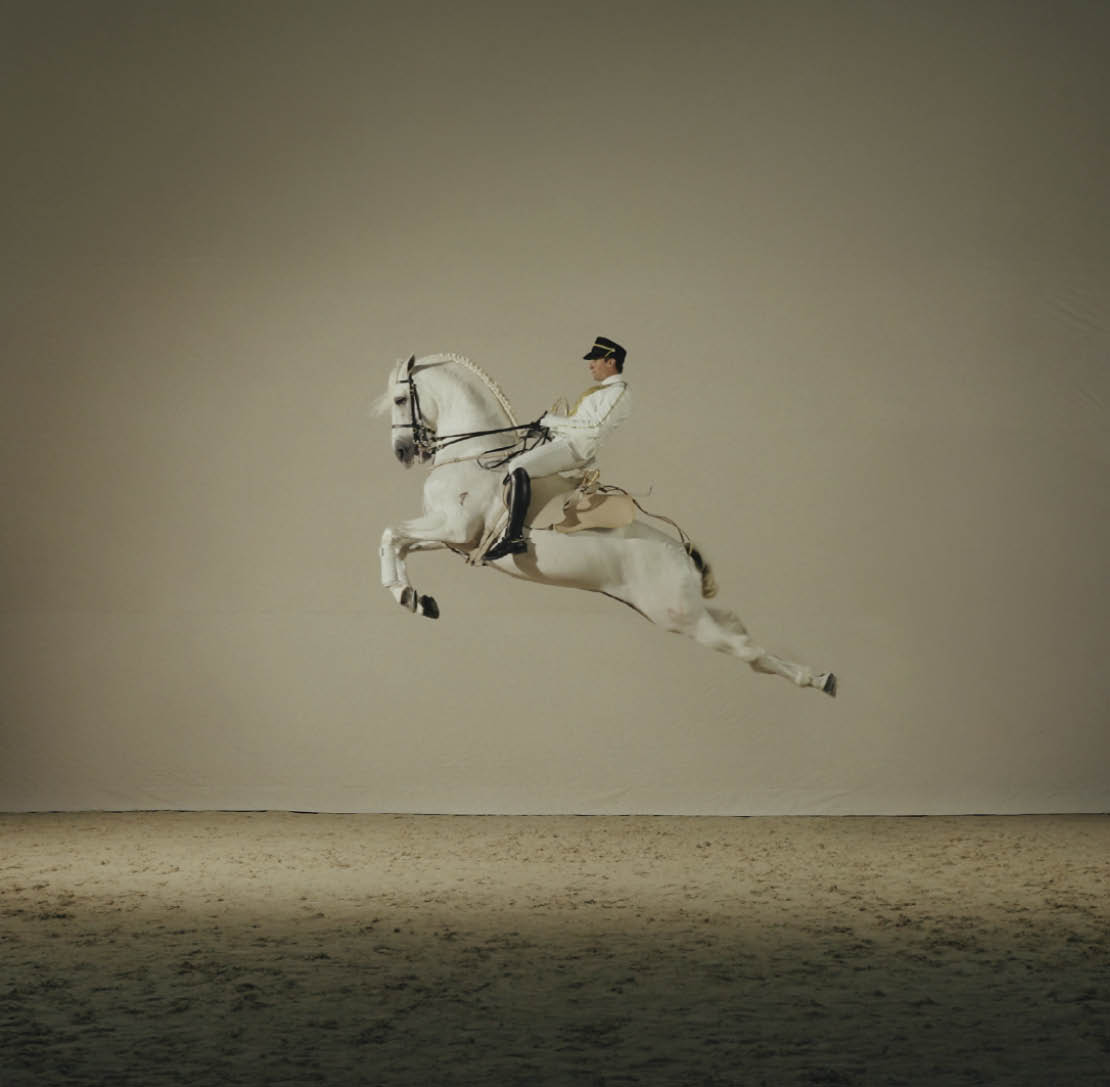
Looking ahead, how do you envision ADREA influencing the next generation of riders, not only in the UAE but internationally?
I believe ADREA will inspire a generation to see horsemanship differently, with more respect, deeper understanding and greater artistic ambition. We want riders to learn that excellence is inseparable from ethics, and that classical riding is not just technique, but culture and character. Our graduates will carry these values globally, shaping the future of equestrian art.
From a wider perspective, what impact do you believe ADREA will have on how the UAE is perceived globally as a destination for art, culture and heritage-led excellence?
ADREA reinforces the UAE as a nation capable not only of building the future, but of honouring and elevating heritage with world-leading precision and vision. It demonstrates that the UAE invests in culture with the same ambition it invests in innovation creating initiatives that are meaningful, timeless and globally respected. ADREA is more than an equestrian project; it is a cultural statement about identity, excellence and legacy.
By Lindsay judge
Breaking Barriers, Rasha Alkhamis, President of the Saudi Mixed Martial Arts Federation on crushing stereotypes in women’s sport
From the moment she first stepped into the ring, Rasha Alkhamis has been redefining what it means to be a female athlete in the Middle East. A pioneer in every sense, she became Saudi Arabia’s first certified female boxer and went on to leave her mark across multiple combat disciplines, even setting a Guinness World Record along the way. Today, Alkhamis stands at the forefront of a new chapter in sport as President of the Saudi Mixed Martial Arts Federation and the Kingdom’s official representative to the International Mixed Martial Arts Federation (IMMAF).
Her rise from trailblazing competitor to influential leader mirrors the rapid evolution of Saudi Arabia’s broader sporting landscape. Where once pathways for professional athletes, particularly women, were limited, Alkhamis now helps build structured governance, athlete development frameworks, and sustainable opportunities for future generations. Her leadership combines the grit of a seasoned fighter with the strategic vision of a policy maker, grounded in resilience and driven by purpose.
In this interview, Alkhamis reflects on her transition from athlete to institution-builder, the significance of MMA’s growth in the Kingdom, and the systems she believes are essential to nurturing sustainable careers for young athletes, both male and female. She also speaks candidly about challenge, leadership, and her ambitions to shape not just the sport’s future, but Saudi Arabia’s legacy on the global stage.
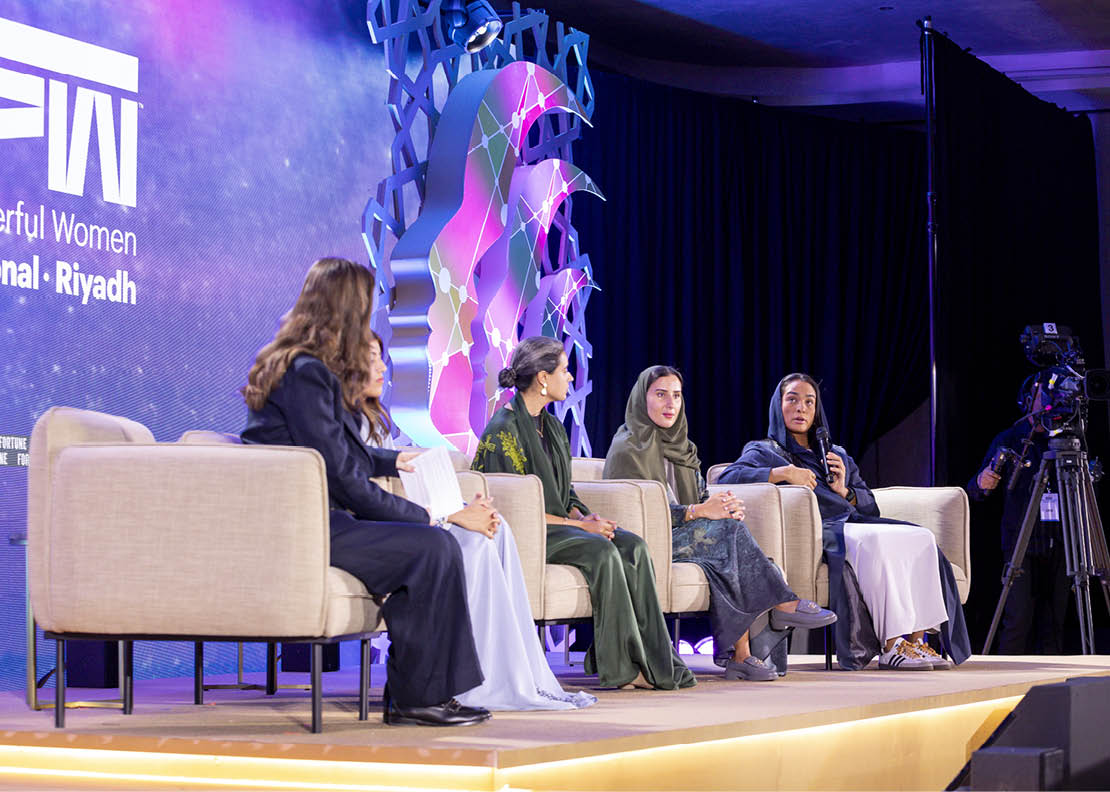
You have broken barriers across multiple disciplines, from becoming Saudi Arabia’s first certified female boxer to holding a Guinness World Record. Looking back, what first sparked your passion for sport and challenge?
I grew up with the belief that sport is for everyone, girls and boys alike. From an early age, sport was part of my daily life, not just a hobby, but as a way of building discipline, confidence, and curiosity. That foundation sparked a lifelong passion for challenge, whether on the court, in the ring, or later in leadership.
Your journey spans elite sport, governance and policy. How have these different experiences shaped you as a leader today?
These experiences taught me that performance and leadership are deeply connected. Sport sharpens decision-making under pressure, while governance and policy demand structure, accountability, and long-term vision. Together, they shaped a leadership style grounded in resilience, clarity, and purpose.
Being appointed Chairwoman of the Saudi Mixed Martial Arts Federation is a landmark moment. What does this role represent to you personally, and what responsibility do you feel carrying it?
It represents responsibility, not just a title. Personally, it is the culmination of a journey from athlete to institution-builder. Professionally, it carries the responsibility of building safe, regulated pathways for athletes and ensuring MMA contributes meaningfully to Saudi Arabia’s sporting legacy.
Saudi Arabia’s sports sector has evolved rapidly in recent years. From your perspective, how significant is MMA’s growth in the Kingdom, and where do you see it heading on the global stage?
MMA’s growth in Saudi Arabia mirrors the country’s wider sports transformation. What was once unregulated is now structured, safe, and rapidly expanding. Globally, Saudi Arabia is becoming a key contributor, not just as a host, but as a leader in governance, athlete development, and international collaboration.
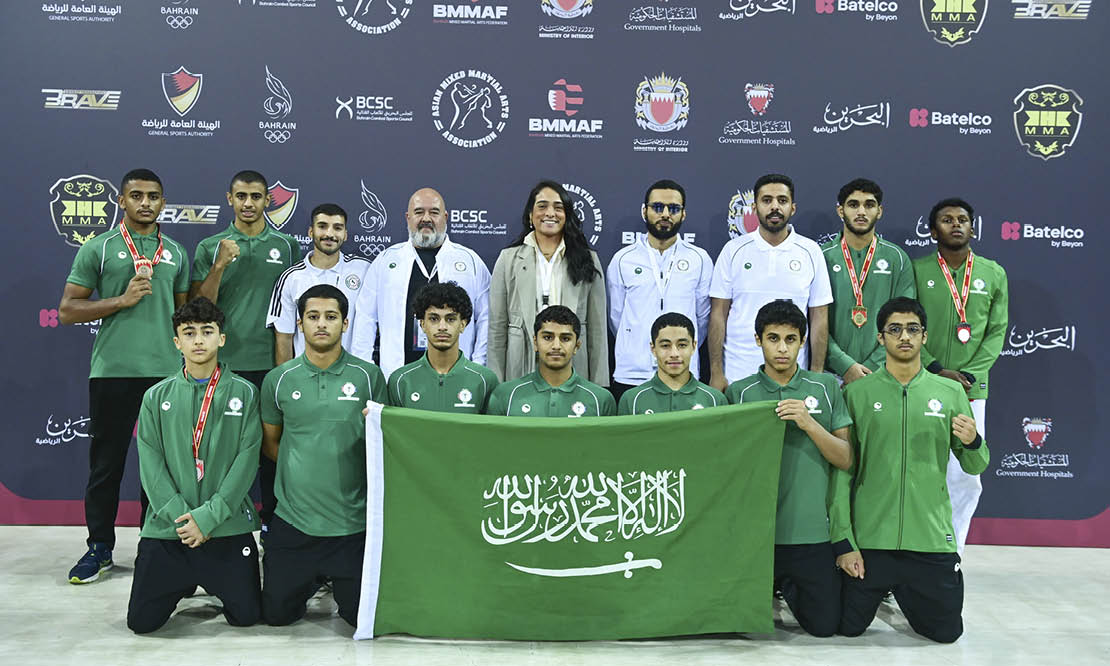
As IMMAF’s official representative in Saudi Arabia, what are your immediate priorities in developing the sport through governance, structure and athlete pathways?
My priorities focus on increasing participation, establishing clear and sustainable pathways from grassroots to elite performance, and paving the way for world-class athlete development. This includes strengthening elite athlete pathways, expanding partnerships and sponsorships, and reinforcing strong governance, both within the federation and through external alignment. Central to this approach are robust medical standards, continuous education for coaches and officials, and transparent progression routes that support both men and women equally.”
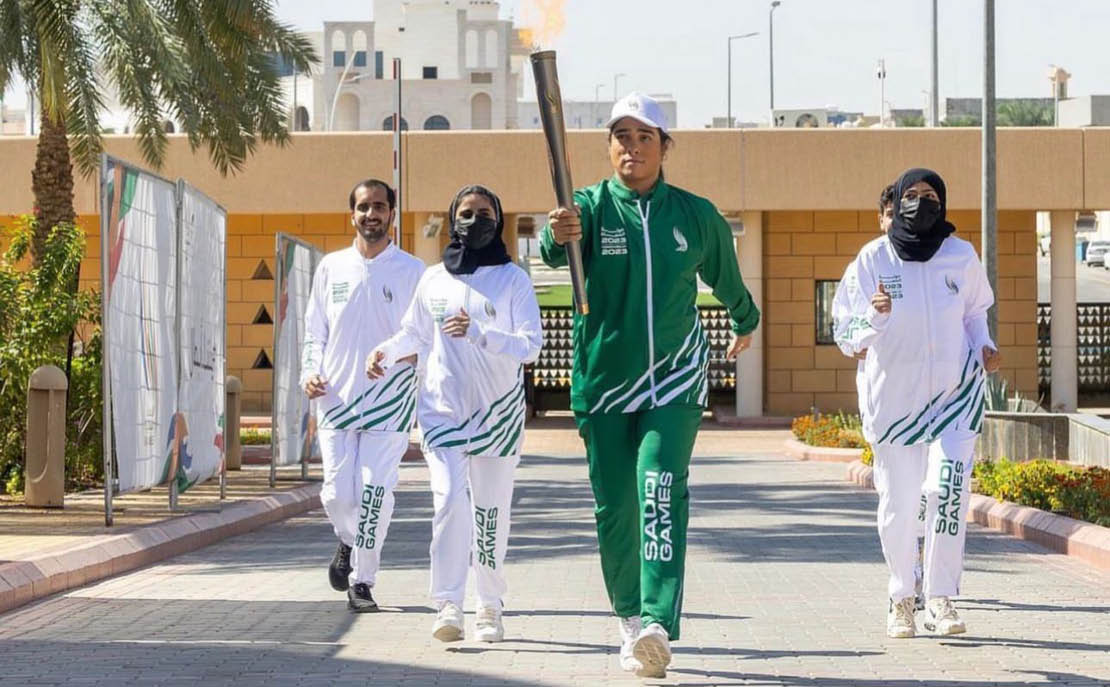
You are deeply invested in building opportunities for the next generation of athletes. What systems do you believe are essential to creating sustainable careers in MMA across the region?
Sustainable careers require three systems: strong grassroots participation, professional coaching and officiating ecosystems, and competition pathways supported by sports science, education, and post-career planning.
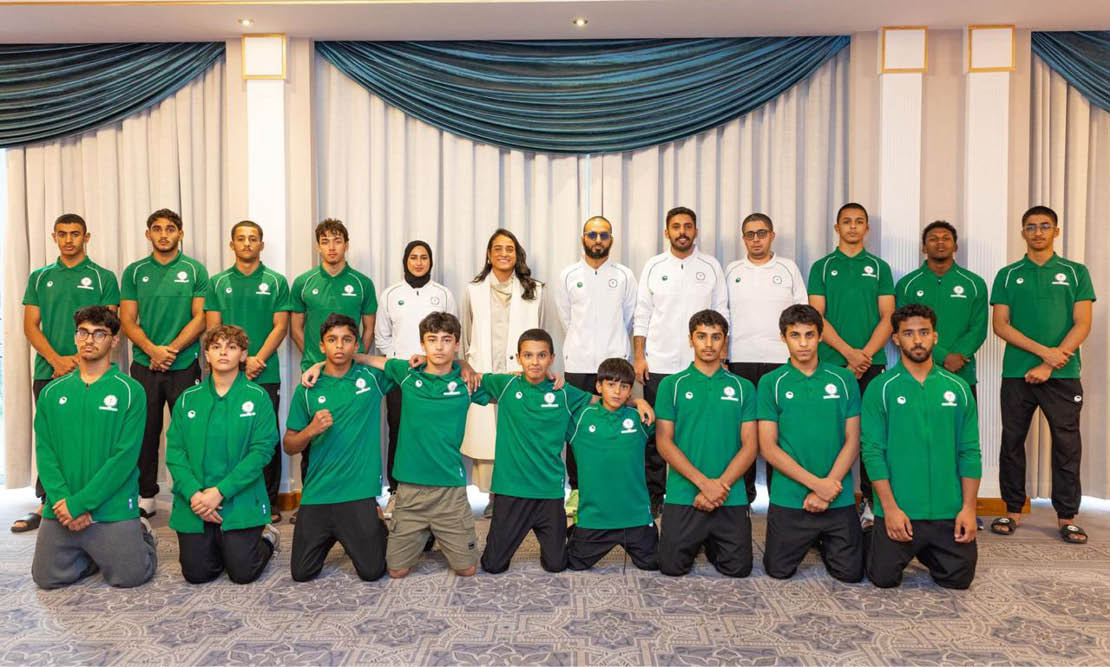
Women’s participation in sport across the Middle East has accelerated dramatically. How do you view your role in this movement, and what progress makes you most proud?
I see my role as an enabler. Progress happens when systems change, not just perceptions. I’m most proud of helping create structures where women no longer need permission to participate, but simply opportunity.
Having studied female sports facilities in Saudi Arabia and worked directly within federations, what gaps still need to be addressed to support women in competitive sport fully?
Facilities and access have improved significantly, but gaps remain in coaching and R&Js representation, and long-term career sustainability. Addressing these requires policy, investment, and continued leadership commitment.
You’ve faced physically and mentally demanding challenges. How do you personally deal with failure, setbacks or moments of doubt?
I treat setbacks as data, not identity. Clarity of vision, breaking challenges into small steps, and mental preparation are tools I rely on, both as an athlete and a leader.
What lessons from your athletic journey do you apply most often in leadership and decision-making?
Discipline, strategic thinking, and resilience. In boxing, most of the work is mental, reading situations, adapting quickly, and staying composed. Leadership is no different.
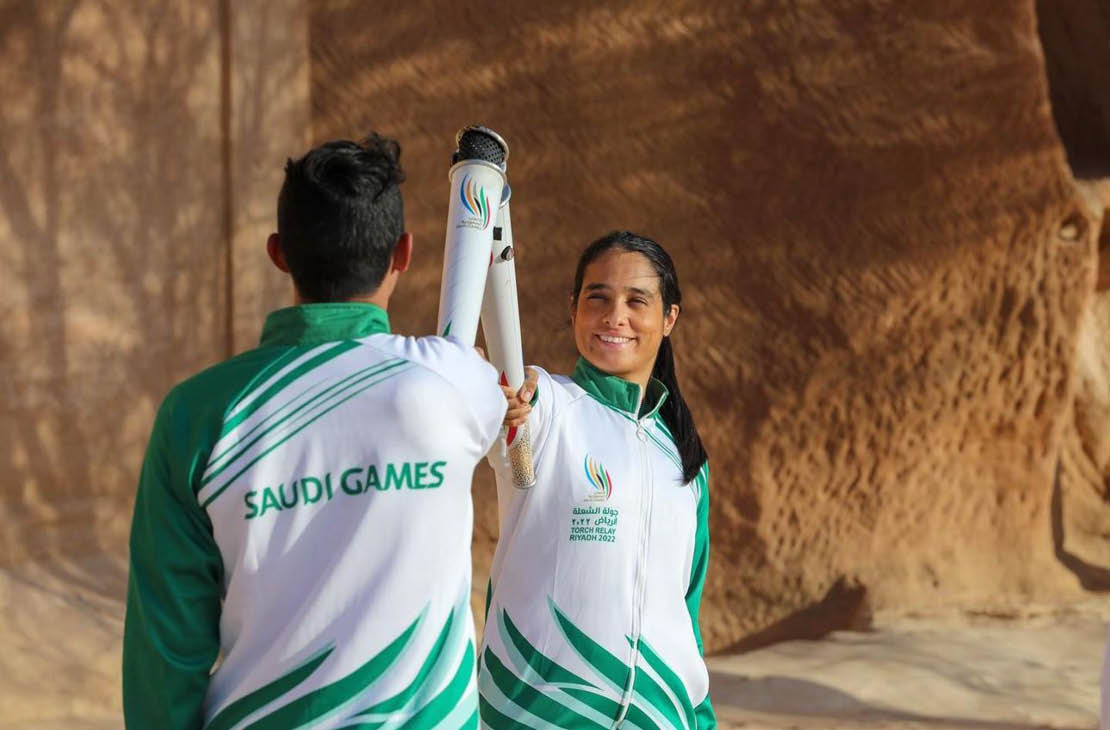
You’ve spoken about being driven by challenge and discovery. How do you continue to push yourself while balancing responsibility, public expectation and long term vision?
By staying anchored to purpose. Clear vision allows me to push boundaries while remaining grounded in responsibility and long-term impact.
As MMA works towards greater global recognition, including Olympic ambitions, how important is Saudi Arabia’s role in shaping the future of the sport internationally?
Saudi Arabia has a unique opportunity to shape the future of MMA through governance, athlete welfare, and global partnerships. Its role is increasingly influential.
For young girls and boys across the region who dream of careers in sport but fear limitations, what message would you like them to hear today?
Start before you feel ready. Believe in your vision, stay consistent, and let results speak louder than expectations. Nothing is out of reach.
Finally, when you look ahead to the end of your 2024–2028 term, what impact do you hope to have left on MMA, on women in sport, and on Saudi Arabia’s sporting legacy?
I hope to leave behind strong institutions, clear pathways, and a culture where MMA, and women in sport are firmly embedded in Saudi Arabia’s sporting future.
By Lindsay judge
All About You, 2026 Wellness Trends to Look Out For
As wellness continues to evolve beyond quick fixes and surface-level self-care, 2026 marks a decisive shift toward longevity, intelligence and personalisation. The next chapter of wellbeing is more about focusing on the body and mind in ways that are preventative, science-backed and deeply considered. From next-generation skincare ingredients to biohacking rituals and emotionally intelligent wellness, these are the six trends shaping how we will care for ourselves in 2026.
Longevity-Led Living
Longevity is no longer a niche interest reserved for Silicon Valley biohackers. In 2026, it becomes the cornerstone of mainstream wellness. Rather than focusing on anti-ageing aesthetics alone, longevity-led living prioritises cellular health, metabolic balance and long-term vitality. Expect a rise in preventative diagnostics, advanced blood profiling, DNA testing and personalised health plans that target ageing at a biological level. Wellness retreats, clinics and even spas are increasingly offering longevity programmes that blend medical insight with lifestyle interventions, from nutrition and sleep optimisation to movement and stress regulation, reframing ageing as something to be supported, not resisted.

Peptides Go Mainstream
Peptides are set to be one of the most talked-about wellness ingredients of 2026. Already popular in skincare and aesthetic medicine, peptides are now moving into supplements, injectables and performance recovery protocols. These short chains of amino acids play a critical role in signalling within the body, supporting everything from collagen production and muscle repair to cognitive function and hormonal balance. What makes peptides particularly compelling is their targeted nature; they work with the body rather than overriding it. As regulation and education improve, expect peptide therapy to become more accessible, refined and integrated into both beauty and wellness routines.
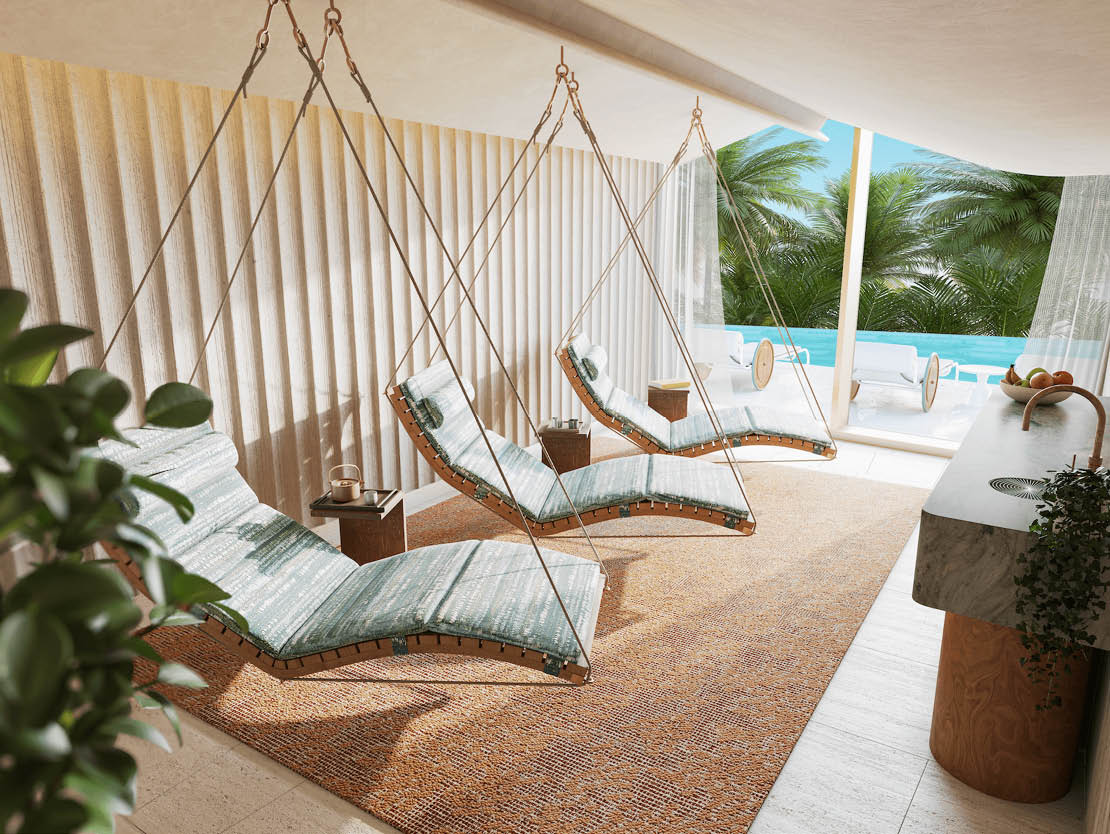
Nervous System Regulation Becomes Essential
In a world of constant stimulation, nervous system health is emerging as a core wellness priority. In 2026, practices that regulate the nervous system move from niche therapy rooms into everyday life. Breathwork, vagus nerve stimulation, somatic movement and sound therapy are increasingly recognised for their role in reducing chronic stress, improving sleep and enhancing emotional resilience. Luxury spas and wellness spaces are designing experiences specifically to downshift the nervous system, think low-light environments, slow rituals and therapies that prioritise calm over intensity. The message is clear: true wellness begins with regulation, not stimulation.

Emotional and Mental Fitness
Mental health is evolving into emotional fitness — a proactive, strength-based approach rather than crisis management. In 2026, wellbeing conversations centre around emotional intelligence, self-awareness and mental agility. Coaching, therapy, and mindfulness are increasingly integrated into lifestyle wellness, with tools designed to help individuals build emotional resilience, manage transitions, and maintain clarity in fast-paced environments. Journaling practices, guided reflection, digital detox retreats and mindful leadership programmes are gaining traction, particularly among high-performing individuals seeking balance without burnout.
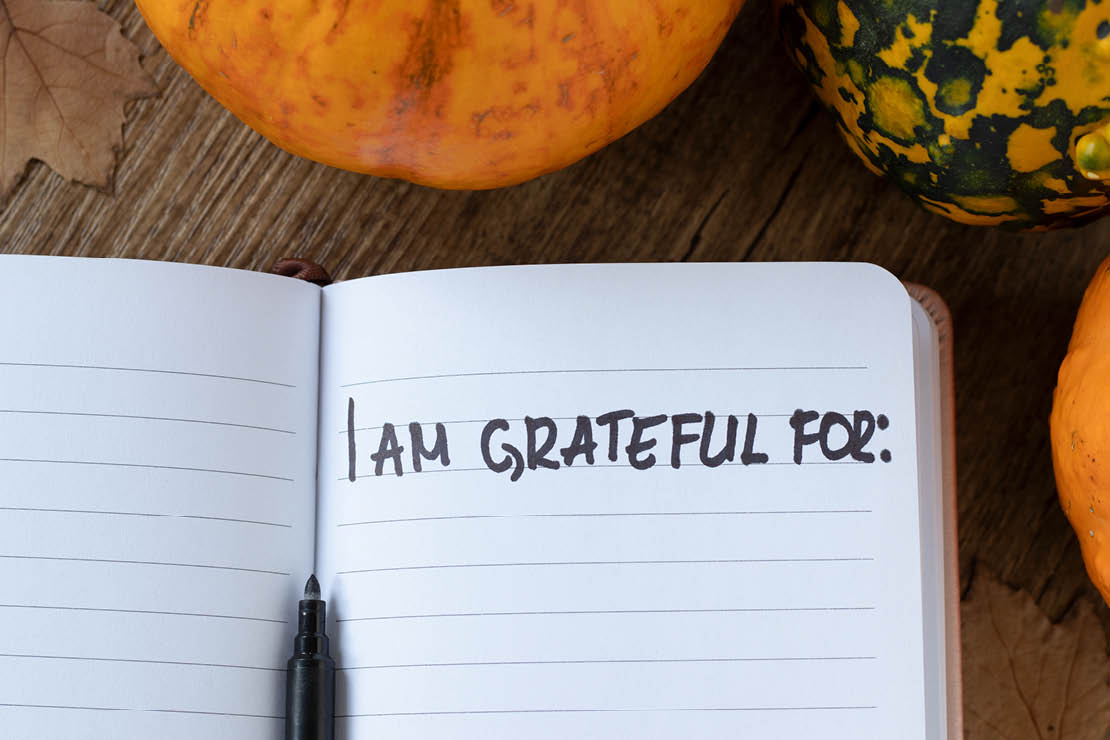
The Rise of Personalised, Precision Wellness
One-size-fits-all wellness is officially outdated. The future is personalised, data-driven and highly specific. In 2026, precision wellness uses a combination of biomarkers, lifestyle data and behavioural insight to tailor everything from supplements and fitness plans to skincare and sleep routines. Wearable technology plays a larger role, offering real-time feedback that allows individuals to adapt their habits with intention. Wellness becomes less about following trends and more about understanding your own body, a shift that empowers people to make smarter, more sustainable choices.
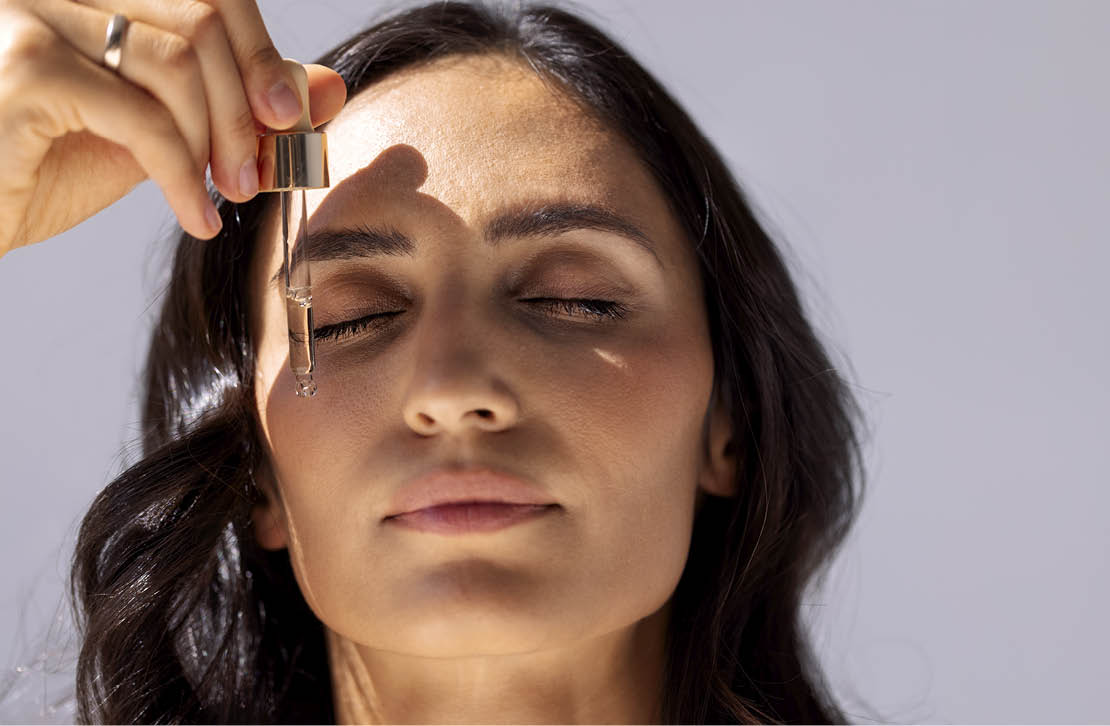

Beauty and Wellness Fully Converge
The line between beauty and wellness continues to blur, with 2026 cementing their full convergence. Treatments now address skin, body and mind as a single ecosystem. Facials incorporate lymphatic work and calming techniques for the nervous system. Body treatments focus on inflammation, circulation and hormonal balance. Skincare formulations prioritise barrier repair, microbiome health and long-term skin function rather than instant results. This holistic approach reflects a deeper understanding that how we feel internally is inseparable from how we look externally — and that true radiance is cumulative.
Discover the new Lady Dior by Jonathan Anderson
Few handbags hold the symbolic power of the Lady Dior. Season after season, the icon evolves while remaining a signature of Dior’s enduring elegance. For the upcoming collection, Jonathan Anderson reinterprets the classic silhouette through the lens of luck, superstition, and personal symbolism, transforming the bag into a modern talisman.
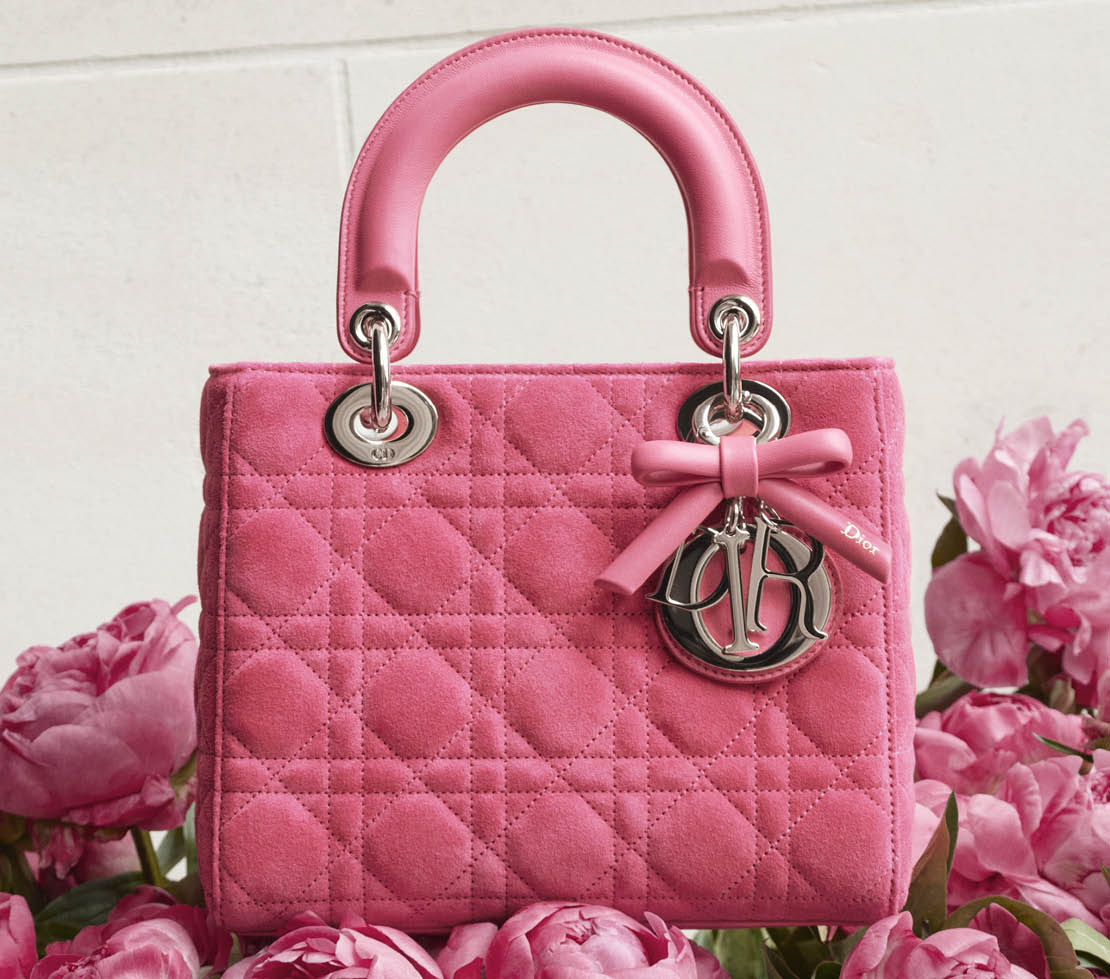
The Mini Lady Dior Clover is embroidered with four-leaf clovers, a tribute to Christian Dior’s belief in lucky signs and a subtle nod to Anderson’s Irish heritage. Offered in green, black, and rose soupir, each piece is finished with a discreet red ladybug. The Mini Lady Dior Buttercup takes a more sculptural approach, blooming with three-dimensional buttercups in luminous yellow, while a tiny bee, one of the House’s enduring emblems, gathers pollen among the flowers. Anchored by the iconic D I O R charms, both designs celebrate Dior’s exceptional savoir faire with a lighter, more poetic spirit.
Available in boutiques from January 2026.
Amna Al Haddad discusses the importance of mental preparation and reflection in sports
Amna Al Haddad is widely recognised as one of the UAE’s true sporting pioneers. Born in Dubai and beginning her athletic journey at nineteen, she stepped into a world where few Arab women had ever competed. What started as a personal quest for strength soon evolved into a groundbreaking career. She became the first Emirati woman to enter the Reebok CrossFit Games Open, later competing at the Asia Regionals and doing so proudly in a headscarf, inspiring women across the region.
Her transition into Olympic-style weightlifting brought new milestones, including multiple medals at the IWF Asian Interclub Championship and appearances at major competitions across Europe and the United States. Yet behind every achievement lies a deeper story of mental resilience, faith, and the challenge of navigating burnout, pressure and expectation.
Today, Amna continues to advocate for mindset, balance and women’s empowerment, using her journey to spark honest conversations about strength in all its forms, physical, emotional and psychological. In this conversation, she reflects on barriers, growth, and the lessons she hopes to pass on to the next generation.
You’ve broken a lot of barriers during your career as a competitive weightlifter. Looking back, what initially drew you to the sport, especially at a time when there were so few role models to look up to?
What initially drew me to strength and power sports was my own internal struggle with mental health. It became a way for me to rediscover my inner strength, challenge myself, and redefine my own limits. It was never about breaking stereotypes or barriers; those happened naturally as I followed my heart and pursued what felt right for me at the time.

You’ve spoken openly about your struggles with mental health during your athletic career. Why is it so important for you to raise awareness in a region where these conversations are still growing?
Speaking openly about mental health is important because silence can be isolating. In a region where these conversations are still emerging, sharing my experiences helps normalise the dialogue and shows that seeking support is a sign of strength, not weakness. As an athlete, the nature of a stringent training regime means it’s natural for our nervous system to experience periods of ‘depression.’ Learning how to recover and rest to reduce such episodes is an important conversation to have. Mental health conditions come in many forms, and it’s crucial to identify them early so they can be treated appropriately from the beginning. If my story can encourage even one person to speak up, seek help, or feel less alone, then it’s worth sharing.
The sports world often glorifies physical strength while overlooking the mental toll it takes on athletes. How do you think the industry, especially in the Middle East, can better support the psychological well-being of its talent?
The industry can start by acknowledging that mental strength is just as important as physical strength. Creating safe spaces where athletes can speak openly about stress, burnout, and mental health challenges is key. This includes access to sports psychologists, structured recovery programs, and education for coaches and teams on recognising early signs of mental strain. In the Middle East, where mental health conversations are still developing, role models speaking up and institutional support can make a huge difference in changing perceptions and ensuring athletes thrive both on and off the field.
When you experienced burnout and depression, what was the turning point that pushed you toward recovery and renewed purpose?
The turning point came when I realised that the body follows the mind. Every time I experienced an injury, it was often the result of severe mental strain that needed my attention. I started prioritising rest, reflection, and seeking support, which allowed me to reconnect with why I began my journey in the first place, to challenge myself, rediscover my inner strength, and find joy in the process. That shift in perspective transformed recovery from a passive experience into a renewed sense of purpose, showing me that true strength is not just physical but also mental and emotional.
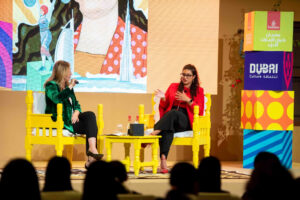
Today, you advocate for mindset, balance, and the importance of rest. How has your definition of strength evolved from your competitive years to now?
My definition of strength has shifted from being only physical to understanding the power of the mind. I’ve learned that rest and recovery aren’t luxuries but necessary and intentional parts of life. When we don’t slow down and create balance within, the body and the outside world eventually respond. True strength now looks like listening, adjusting, and prioritising health so that everything else can move forward in harmony.
Setbacks are inevitable in any journey. How do you personally navigate these moments?
I see setbacks either as a lesson or a redirection. It’s never truly a setback. It’s very normal in any journey for obstacles to show up along the way; that’s where character and resilience grow. It’s where we learn more about ourselves: where we may be rigid, where we need to pivot in our approach, and where we need to reflect on whether the path we’re on is truly the one we want to be on, and reconnect with our “why.”
What message do you hope to pass on to the next generation of Arab female athletes?
I want them to know that their worth isn’t defined solely by performance. That discipline and ambition matter, but so does listening to yourself, protecting your mental health, and allowing space for rest. Strength comes in many forms, and honouring who you are, mind, body, and spirit, is what allows you to sustain the journey and truly enjoy it. Don’t be afraid to take that step forward toward a goal or a dream, because that one step can change the course of your life.
Mental health in the Gulf is progressing, but many still hesitate to seek help. What cultural shifts would you like to see in how our communities talk about emotional well-being?
We are past the stage of talking about mental health; we’re now at the stage of taking action. I’d like to see more integrated systems rooted in compassion, where emotional well-being is supported through clear guidelines and accessible support. This means creating real space in workplaces and educational institutions for mental health conversations, not just in moments of crisis, but as part of everyday culture. When support is structured, normalised, and led with empathy, seeking help becomes a natural step rather than one rooted in shame and blame.
As someone who has reinvented herself multiple times, what does success mean to you?
True success is having inner peace with yourself and who you are. As a dynamic individual, I am curious by nature and enjoy exploring what life has to offer, and along the way, being surprised by skills and talents I may have. I believe life is meant to be lived with the eyes of a child, as if everything is being experienced for the first time. Real success is being content with who you are, where you are, as you are, while remaining open and curious to change.
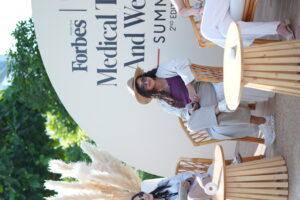
What daily practices help you stay grounded?
I don’t switch on my phone or the internet until an hour after I wake up. I use that time to take a few breaths of fresh air, do gentle stretches, water my plants, and feed my cats. I also spend as much time as possible outdoors and in nature—whether at the beach, in a park, or in the desert. This helps me stay grounded and connected with myself, which allows me to show up better in the world.
If you could change one misconception about women in sports, particularly Arab women, what would it be?
There are no misconceptions, only perspectives. Women have repeatedly demonstrated their talent, dedication, and resilience in sports and beyond. It’s time to level the playing field, providing women with equal access to facilities, sponsorships, and opportunities so they can achieve their full potential and redefine what’s possible in sports.
What’s a message that you would tell your younger self?
I thank her for everything she endured to help and shape me to become the person I am today. Without her perseverance, I wouldn’t be who I am today.
As you continue mentoring and advocating globally, what impact do you still hope to make in the world of sports, mental health, and women’s empowerment?
I aim to create a global movement of compassion and intentional action, where individuals in sports, mental health, and advocacy feel safe, supported, and encouraged to express themselves fully. My goal is to foster a lasting community that champions growth, resilience, and equality, inspiring everyone to reach their highest potential.
Cross Country Skier Rakan Alireza on why he believes the journey matters more than the medal
From the desert heat of Jeddah to the snowy trails of international competition, Rakan Alireza has carved out one of the most unexpected athletic journeys in Saudi sport. A former competitive rower turned cross-country skier, Alireza is set to make history as the first Saudi male athlete to qualify for the Winter Olympics in cross-country skiing, securing his spot for Milan-Cortina 2026 after years of relentless training and perseverance.
Unlike most elite skiers raised amid snow-covered landscapes, Alireza developed his endurance and technique through creative training in the Kingdom and targeted seasons abroad, pushing his limits with running, cycling and roller skiing to bridge the gap. His path hasn’t just been about athletic development — it has become a symbol of ambition and adaptability, inspiring a new generation of Saudi athletes to venture into winter sports once considered out of reach.
In this interview, he reflects on the obstacles, milestones and mindset that have defined his extraordinary rise and what it means to carry his nation’s flag on the world’s biggest winter stage.
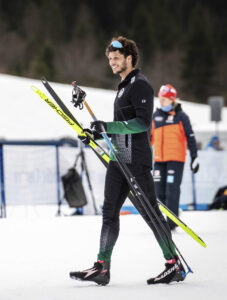
You’ve described your path into cross-country skiing as unexpected, especially coming from Jeddah with no snow nearby. What first drew you to the sport and kept you committed even when the challenges were steep?
It’s an interesting question, because I always tell people this opportunity was a complete gift from God. I wasn’t looking to get into winter sports at the time. I was working a full-time job as a consultant in Riyadh and had only recently started taking sports seriously through CrossFit. A few months later, I received an unexpected call from a relative asking if I wanted to be one of the first Saudis to qualify for the Winter Olympic Games. It felt like an answer to my prayers — so of course, I said yes. Then I asked what sport it would be, and he told me: cross-country skiing.
At the time, I was doing CrossFit, lots of aerobic training, rowing, and I already knew alpine skiing. I thought I was fit enough and assumed it would be similar. How wrong I was! It’s actually good that I had that false confidence, because within the first five minutes, I realised how demanding and different it was. We faced so many challenges, including timing, qualification quotas, and training in a country without snow, but I stayed committed.
Where are you at now with your sporting career, and what are you hoping to achieve from the Winter Olympics 2026?
I’m in a good place. I’m definitely not at the top of the field yet, because I am still considered a beginner. To put it into perspective, I’ve been on skis around 150 times, which is nothing compared with professional skiers who do that in six months. So, I constantly have to push myself.
My goal is bigger than finishing in a certain position. I want to open doors for the next generation of Saudis. People may say, “He was the first skier,” but I want someone to surpass me. I hope the next generation goes further. I want to qualify not only for the Olympics, but also for the World Cup, and to be taken seriously as an athlete.
I’m racing against people who were practically born on skis. Many are better than I and still might never reach the Olympics because of the competition in their countries. I don’t take my opportunity for granted. I worked hard to earn it, and I want to prove I truly belong in this sport, not just that I chased the Olympic rings.
Living in Saudi Arabia, there aren’t many places to ski. How do you find time for training and ensure you can practice as much as you need?
There are many limiting factors, but if I focused only on them, I wouldn’t be where I am today. Luckily, my coach understands this and adapts my training around it. I’m only allowed to be in Europe for 90 days a year, so we make the most of the time I do get.
To build my aerobic base, I roller ski, train indoors, row, cycle, and spend a lot of time in the gym. It has always felt like a catch-up game, so I put in hours wherever I can. When I finally get back on snow, I’m usually more motivated than most — I want to prove to myself and others that I am a skier.
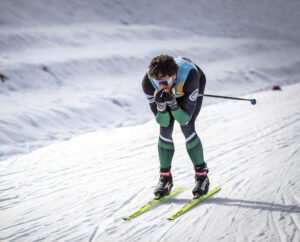
How do you deal with the kind of mental endurance that comes with the sport and keep your mindset in the right place? And how do you kind of deal with challenges and setbacks?
Each challenge is different, but you must find ways to motivate yourself. During a race in 2023, I genuinely thought I might retire in the middle of it. Then I suddenly smiled because I realised how much I love this. There will come a day when I can’t do it — whether because of age, injuries, or circumstances. That day comes for every athlete. When it does, I want to know I gave everything.
So when people ask, “Are you excited about the Olympics?” I say: I’m proud — but I was happiest while chasing the dream.
You mentioned that you have a day job – tell us about that and how you manage your schedule.
I work for a development company in Jeddah, creating the first water sports resort in the country, so it still connects closely to sport and what I love.
Saudi Arabia is seeing huge growth in sports. What are your thoughts on the changes, and what do you hope comes next?
Sometimes I wish I had the Benjamin Button effect and could grow younger. The new generation has opportunities I wish I had, but I’m still grateful to be part of this transformation. It’s exciting to see kids choosing physical activity over screens, even if gaming is growing too.
In the past, families discouraged kids from becoming athletes because it didn’t seem secure. “How will you support a family?” was the question. That mindset is slowly changing. Opportunity is expanding, and with it, belief.
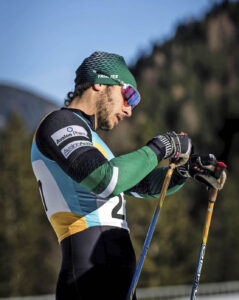
What advice would you give the younger generation of athletes?
The goal is never guaranteed. So, you must love what you do. Even when I didn’t qualify, I still knew I would do it again a million times over. Enjoy the journey — not just the result.
Outside of skiing, what motivates and inspires you?
Growing up, the expectation was simple: study, graduate, and work in the corporate world. I did that, but it didn’t feel right for me. What motivates me now is making the most of every opportunity, even if it involves risk. I quit my job to pursue the Olympic dream because sometimes you have to see what’s on the other side.
For me, the pursuit of a goal is often more meaningful than the goal itself.
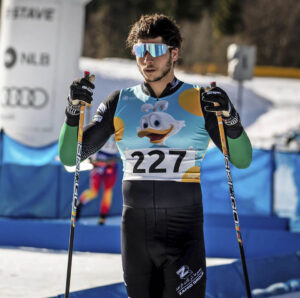
Looking ahead to 2026, what do you hope to achieve this year?
Would it be too much to say to be confirmed? Because I’m a big believer, but I don’t like to make promises I can’t keep!
Do you have any New Year’s resolutions?
I’m a firm believer that if I need a resolution, I’ll just start now rather than wait until New Year’s. So, I’m constantly changing my life.
The Spirit of Rio, Harry Brantly, Founder of Frescobol Carioca discusses the brand’s evolution
Menswear brand Frescobol Carioca has long embodied the spirit of Rio de Janeiro. That effortless blend of sun-drenched ease, refined simplicity and the joyful rhythm of Carioca living. When founder Harry Brantly launched the brand in 2013, it began with a single, beautifully crafted object: the frescobol bat, handmade by artisans using upcycled Brazilian wood. What started as an homage to Rio’s iconic beach culture quickly evolved into a globally recognised lifestyle label, one that redefines modern menswear through craftsmanship, comfort and a distinctly Brazilian sense of alegria.
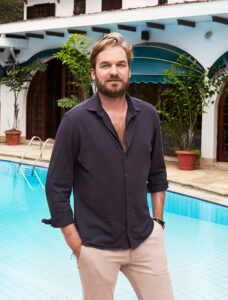
Today, Frescobol Carioca stands at a pivotal moment. No longer just a resort wear favourite, the brand has grown into a year-round wardrobe rooted in ease, elevated materials and thoughtful design. With men’s fashion trends evolving, the brand As it prepares to launch its first Autumn/Winter collection in 2026, its evolution feels both natural and exciting — the next chapter for a label that has always celebrated movement, versatility and understated luxury.
In this interview, founder Harry Brantly reflects on the origins of the brand, its evolution, and the philosophy that continues to shape its journey.
You launched Frescobol Carioca with a distinct identity rooted in Rio De Janeiro’s lifestyle. What was the original inspiration behind creating the brand?
From the very beginning, it was about capturing the unique rhythm of Carioca life, the ease of moving from beach to city, from morning swims before work to late-night dinners. It’s a way of living like no other, so relaxed yet refined, spontaneous but considered. It’s the feeling of being completely at ease wherever you are, in harmony with your surroundings, that was really the starting point for everything we’ve built since.
How has the brand evolved from its beginnings into what it represents today?
Frescobol Carioca really began as a resortwear brand but has naturally grown into something much bigger, representing a lifestyle that transcends the seasons. We’ve moved beyond the beach, creating collections that carry that same sense of ease into everyday life, wherever our customers are in the world. 2026 marks a really exciting milestone for us as we’re launching our first-ever Autumn/Winter collection. This feels like the final stage in the metamorphosis of the brand’s DNA.
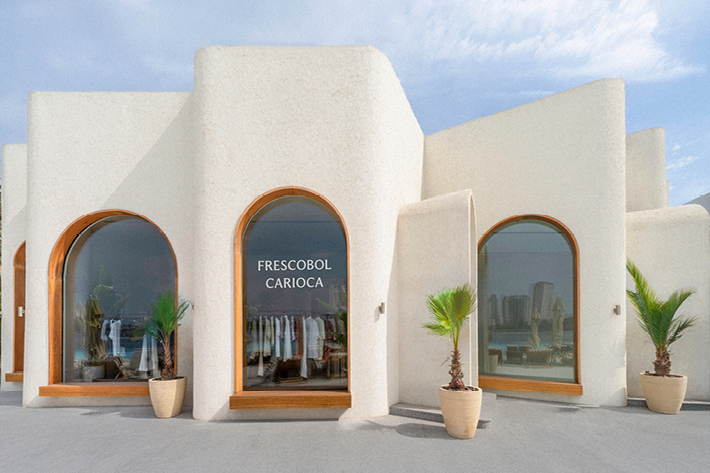
Frescobol Carioca embodies the “art of living” rather than just fashion. How do you translate that philosophy into your collections and brand experiences?
It’s about creating pieces that are genuinely wearable, that move with you through the day, made from easy, breathable fabrics that feel as good as they look. That same thinking extends to our brand experiences: everything we do is designed to complement its environment and hopefully add something meaningful to it. Whether it’s a beach club activation or an in-store event, it should feel like a natural extension of the day, not an interruption.
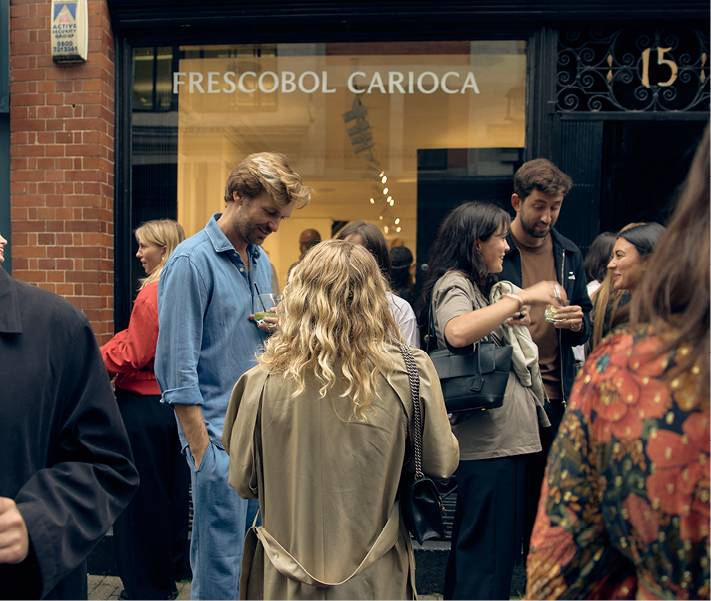
What are some of the biggest challenges you’ve faced building a niche luxury brand in a market dominated by major players?
One of our biggest challenges has been building recognition as a year-round brand. Our customers know and trust us for linens, swimwear, and lightweight pieces – a go-to summer wardrobe. But when it comes to introducing them to our outerwear or knitwear, there’s a bit more of an education needed. People are comfortable investing in these pieces from the larger luxury houses that have been in the seasonal space for longer. We take the same care and craftsmanship approach to every suede jacket or cashmere knit as we do to our iconic resort pieces; it’s just about getting that in infront of people.
Men’s fashion has changed significantly in the past decade. How do you see Frescobol Carioca fitting into that evolution?
We’ve always maintained a close relationship with our customer, and that’s been key. I think men are now more considerate about what they buy, and they want timelessness. They’re looking for quality and pieces they can rewear and restyle across seasons. I think our offering fits quite nicely into that bracket, an evergreen wardrobe built on expertise, craftsmanship, and a sense of style that moves seamlessly between seasons.
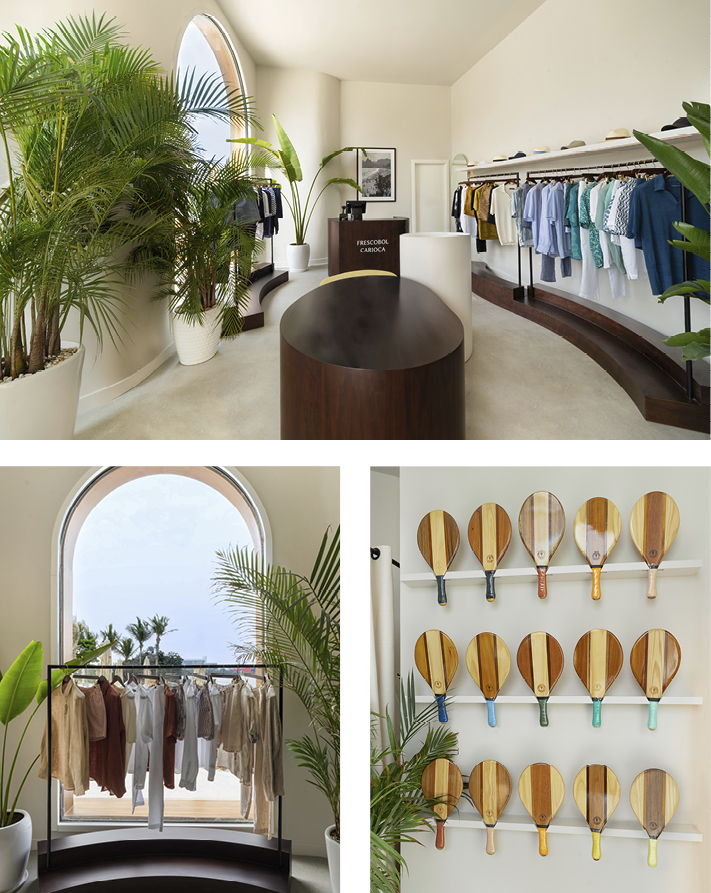
What are the key men’s fashion trends you’re noticing for 2025, and how do they align with the brand’s timeless yet modern aesthetic?
Golf seems to be having a real moment right now, and it’s something that aligns quite naturally with our aesthetic and customer. Sport meeting leisure in a very refined way is at the core of our DNA with our founding product, the frescobol bat…and that same refined balance is very much shaping how we think about style for 2025. What I’m seeing in the industry right now feels like a gentle dialogue between performance and ease.
The Middle East is becoming a growing hub for contemporary luxury. What excites you most about the region, and how has the response been to your current pop-up at Twiggy Beach Club in Dubai?
What excites us most is how deeply people in the region embrace a global lifestyle, with experience, travel, and hospitality valued just as much as a quality product. The response at Twiggy has been fantastic, people are familiar with the idea of a blended experience where they can relax, dine, and shop all in one place. In a growing city like Dubai, where distances can be long and time is precious, that 360 approach really resonates with consumers and is very much ingrained in the spirit of Frescobol Carioca.
Sustainability and craftsmanship are increasingly important to consumers. How does the brand maintain these values while continuing to grow globally?
We see ourselves first and foremost as craftsmen. Every piece begins with the finest materials, this choice often means staying close to the source. Our eponymous frescobol bat embodies this: they’re made by upcycling offcuts from the Brazilian furniture industry, giving new life to what would otherwise be waste. Each one is unique, pieced together with the same meticulous artistry that defines everything we do. Maintaining that level of quality and authenticity is absolutely non-negotiable as we continue to grow.
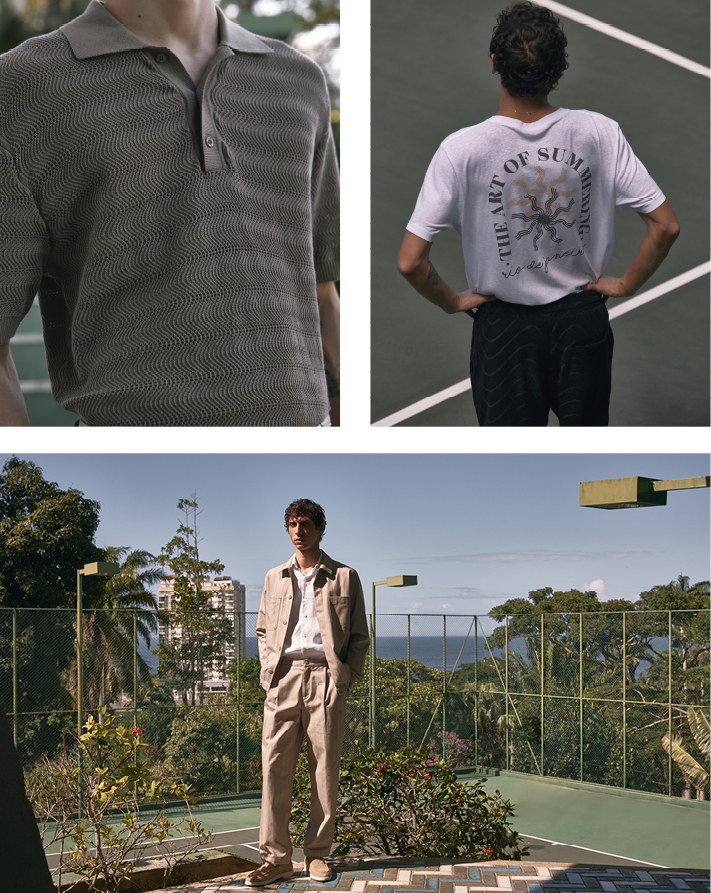
What does luxury mean to you today?
Luxury today is about so much more than just a product, it has become a sensory experience. It’s about excellence at every touchpoint, from how you’re greeted in-store to an online interaction, the visual content you engage with, and the aftercare you receive. True luxury is about creating a sense of belonging, making people feel valued and part of a community.
As a founder, how involved are you in the creative process and where do you continue to find inspiration?
We’re very lucky to have an incredible Head of Design who brings Frescobol Carioca to life through bespoke prints and innovative fabrications. My own role is more about ensuring that every creative decision stays true to our origins and that sense of ease that defines us. Inspiration continues to come from Rio, of course, but also from the rhythm of life in other cities and cultures that share that same spirit of warmth, openness, and ease.
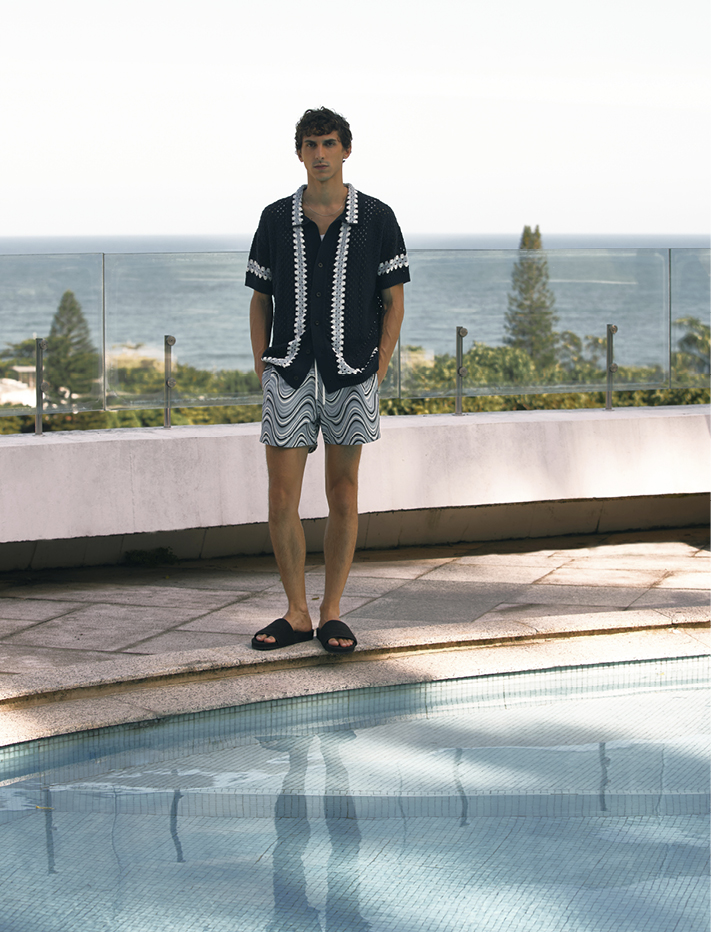
Tell us something about you as a person and as a leader.
I’ve always had a fascination with language and culture, which probably comes from growing up bilingual and picking up several Latin languages along the way. As a leader, that curiosity translates into a genuine interest in learning and evolving. I like to grow with the team and for the team, carving space for creativity and collaboration.
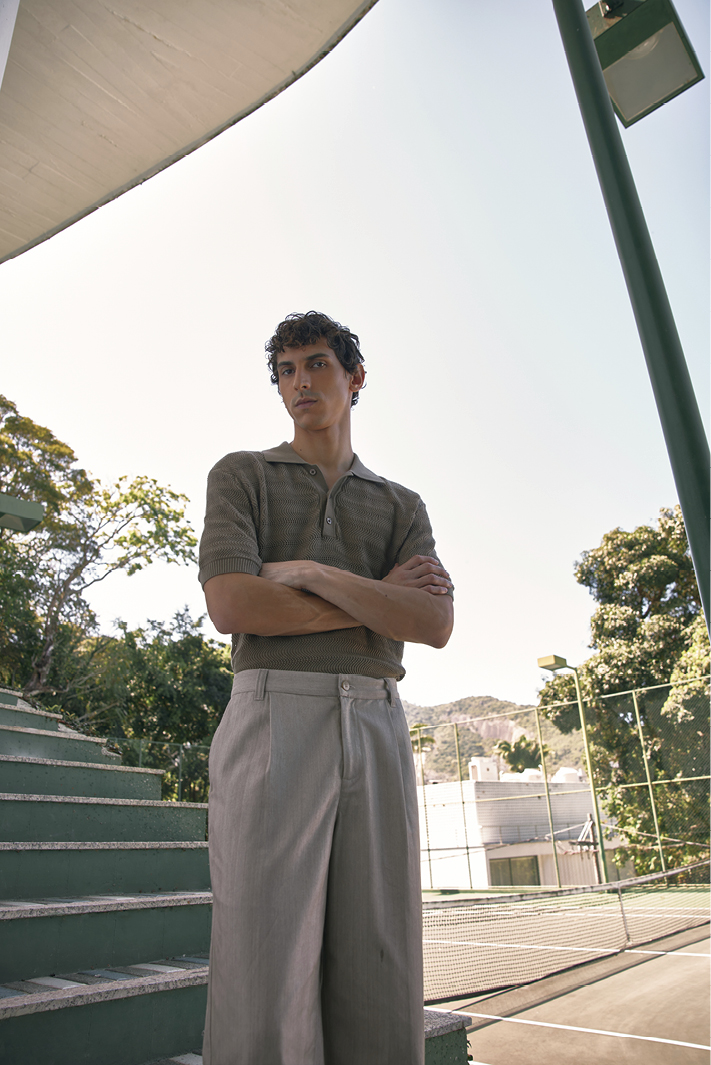
Looking ahead, what’s next for Frescobol Carioca?
We’re continuing to expand our product offering to meet the needs of our customers’ year-round wardrobes, while deepening our presence in key regions like the UAE.
By Lindsay Judge
Arabian Nights, Omani perfume house Amouage expands its presence in Saudi Arabia
Omani High Perfumery House Amouage is deepening its presence in Saudi Arabia with new Boutiques in Riyadh and an Ephemeral Frankincense Lounge in AlUla. Celebrated for its artistry and emotional storytelling, the brand has also inaugurated a temporary Frankincense Lounge in AlUla’s Old Town.
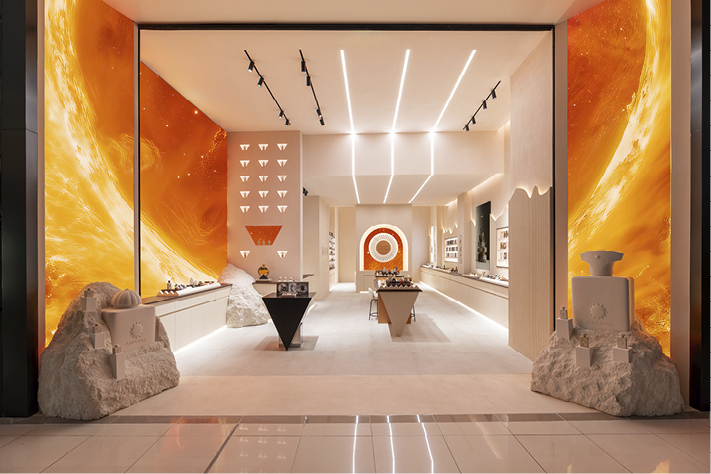
In Riyadh, Amouage unveiled boutiques in Solitaire Mall and Nakheel Mall, each designed as a cultural encounter rather than a retail space. At Solitaire Mall, the concept Still Growth pays tribute to the resilience of the Khejri tree, with sculptural branches, an architectural canopy and soft textures that echo the natural rhythm of growth and transformation. At Nakheel Mall, the boutique, Openings, draws inspiration from the architectural language of Najd. Triangular forms, inverted pyramid displays and a blend of sandblasted and polished surfaces reinterpret traditional Najdi facades through a modern lens. Together, both spaces express Amouage’s philosophy of presence with purpose, inviting slow discovery and a deeper connection with scent and place.
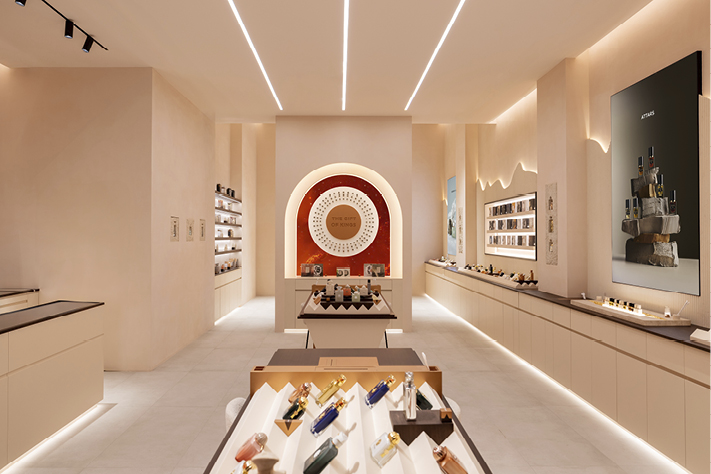
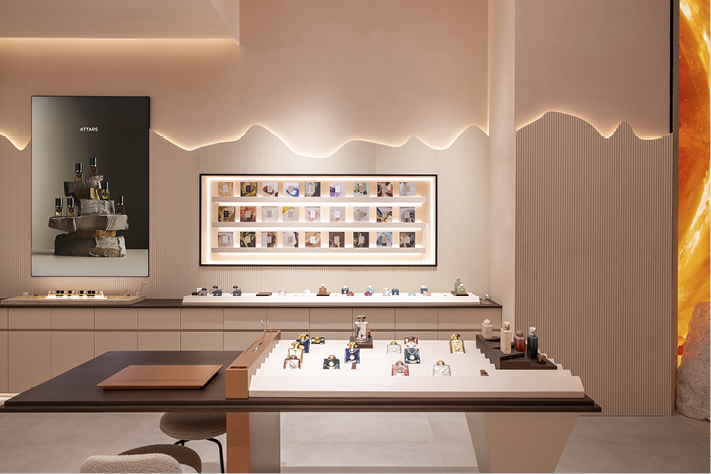
Further north, within the historic alleys of The Incense Road Experience in AlUla, Amouage inaugurated its ephemeral Frankincense Lounge dedicated to Wadi Dawkah, the protected forest of Frankincense trees in southern Oman. The lounge honours the ancient trade routes that once linked Dhofar with AlUla, celebrating a shared history shaped by the movement of precious resin across the Arabian Peninsula.
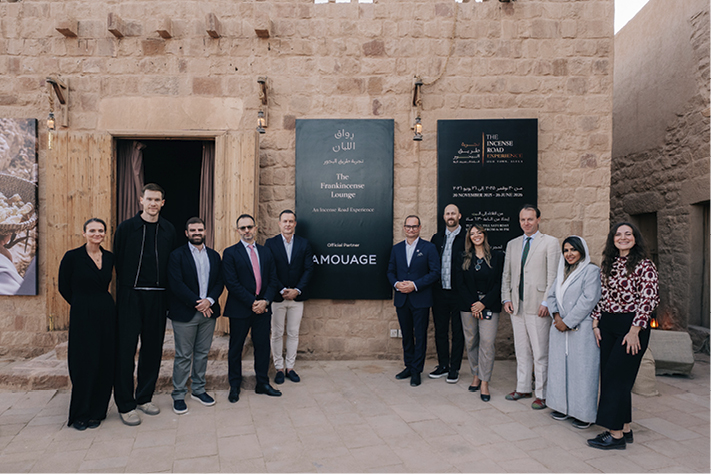
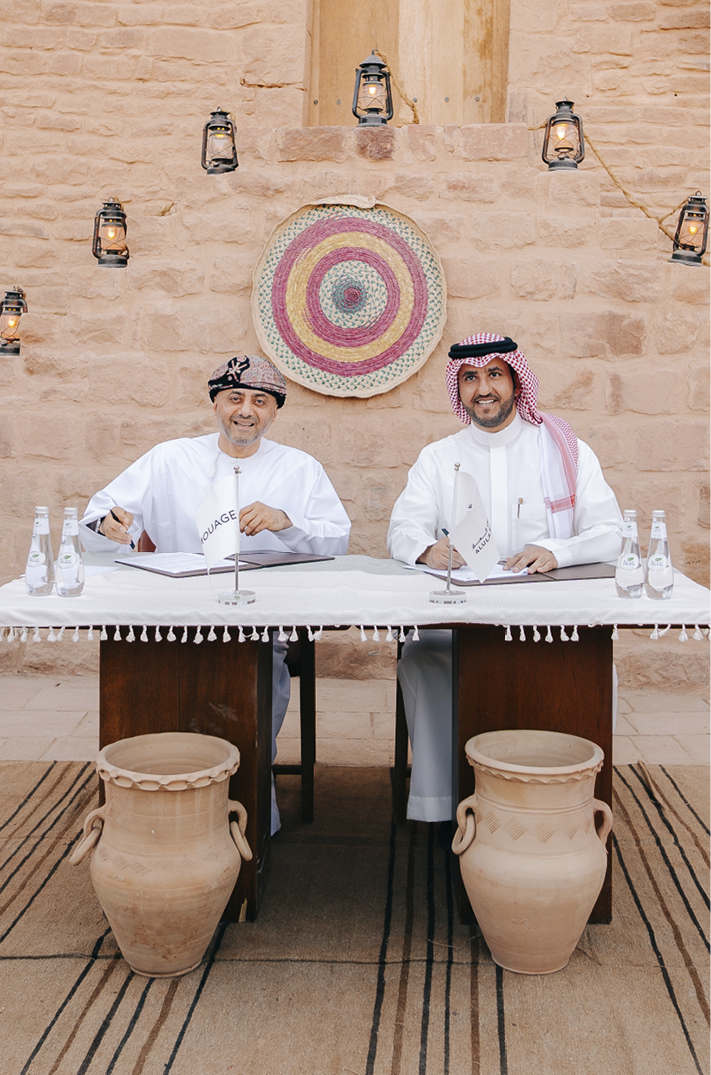
The opening was attended by dignitaries from Oman and Saudi Arabia, underscoring the cultural significance of the collaboration. Visitors journey through an immersive experience that highlights the biology, history and spiritual legacy of Frankincense, culminating in a personalised scent test featuring six Amouage fragrances based on this treasured ingredient. The lounge forms part of The Incense Road Experience, a ninety-minute multisensory exploration that recently earned Best Arts and Culture Event at the 2025 Saudi Event Awards.
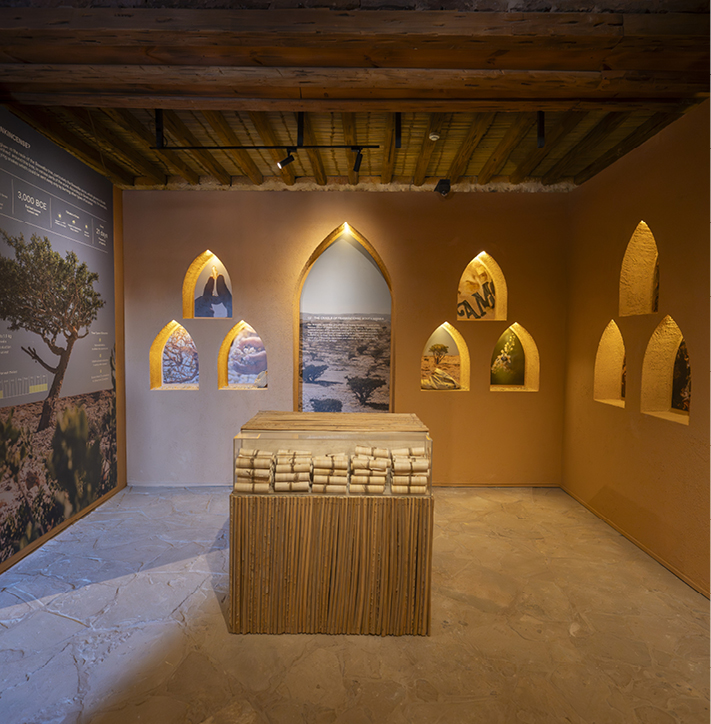
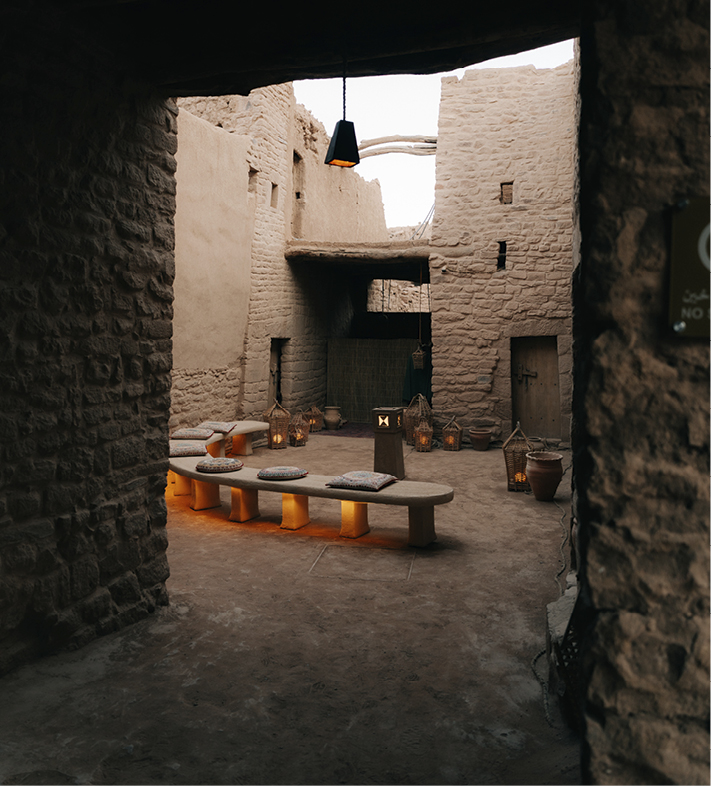
Since 2022, Amouage has served as custodian of Wadi Dawkah through an agreement with the Omani Ministry of Heritage and Tourism. This partnership enables the House to develop the site responsibly and to promote ethical and transparent Frankincense sourcing while protecting one of the most important ingredients in perfumery.
From Riyadh to AlUla, Amouage continues its thoughtful journey across the Kingdom, creating spaces and experiences that honour heritage, embrace nature and celebrate the enduring beauty of scent.
Soft Touch, Louis Vuitton Introduces a new language of men’s leather elegance
Louis Vuitton expands its menswear universe with LV Touch, a new line of leather goods shaped by the workwear-influenced vision of Men’s Creative Director Pharrell Williams. Combining utility with quiet sophistication, the collection introduces a fresh design language that balances function, craftsmanship, and understated luxury for the modern man.
While the collection embraces a streamlined aesthetic, its foundation lies in the house’s deep heritage of leather expertise. Each piece is crafted from naturally supple, grained calfskin, paired with suede accents and linings that heighten both comfort and tactility. This interplay of textures creates a distinctive softness that defines the character of LV Touch.
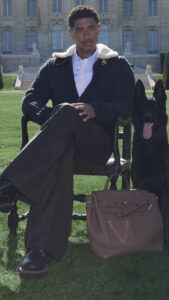
Subtle, thoughtful detailing anchors the line to Louis Vuitton’s legacy. Tonal suede front pockets reveal a topstitched V motif, a contemporary echo of Gaston-Louis Vuitton’s historic blazon and a signature of Pharrell’s design vocabulary. A V-shaped carabiner, discreetly embellished with Monogram Flowers, adds a utilitarian twist while nodding to the House’s roots in travel and craftsmanship.

The LV Touch lineup comprises four key styles, each reimagining an iconic silhouette for today’s lifestyle. The Steamer 30, first introduced in the early 1900s as a foldable travel companion, now features a softened, modern structure suited for daily use. The new Verso Hobo introduces a reversible format—two aesthetics in one—enhanced by a multi-use hook and removable interior pouch. Rounding out the collection, the Steamer Backpack and Delta Slingbag deliver adaptable shapes that move effortlessly between business, leisure, and travel.
Festive Flight Plan, The ultimate Winter Destinations To visit this holiday
As the festive season approaches, travellers across the UAE are already dreaming of an end-of-year escape, somewhere to soak up the sunshine, embrace a dusting of snow, or simply rediscover the joy of celebrating in a new corner of the world. Whether you’re craving snowy landscapes and classic holiday charm or long days spent in warm turquoise waters, this year’s festive list offers something for every mood.

Maldives
For those seeking warmth, serenity and barefoot luxury, few places rival the Maldives during December. Just a short flight from the UAE, the islands offer a picture-perfect festive escape; powder-soft sands, glassy lagoons and villas suspended above the water. Many resorts curate special holiday programmes, from oceanfront Christmas dinners to New Year’s Eve fireworks set against a moonlit sea. Whether you’re travelling as a couple, a family, or on a wellness-focused retreat, the Maldives promises absolute tranquillity wrapped in tropical glamour.
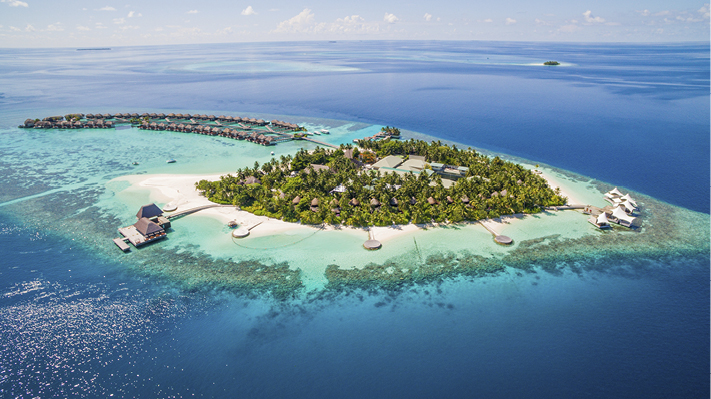
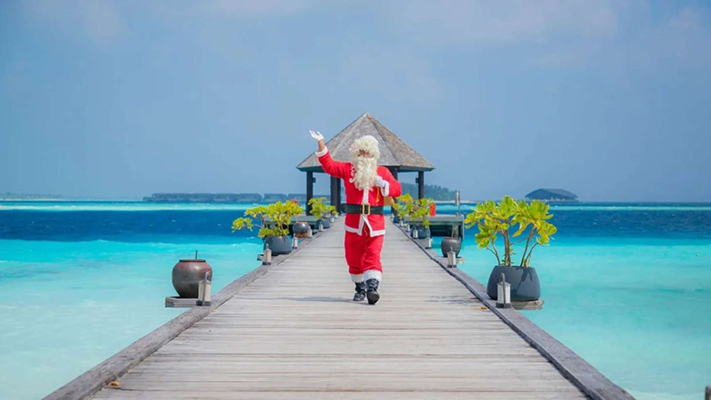
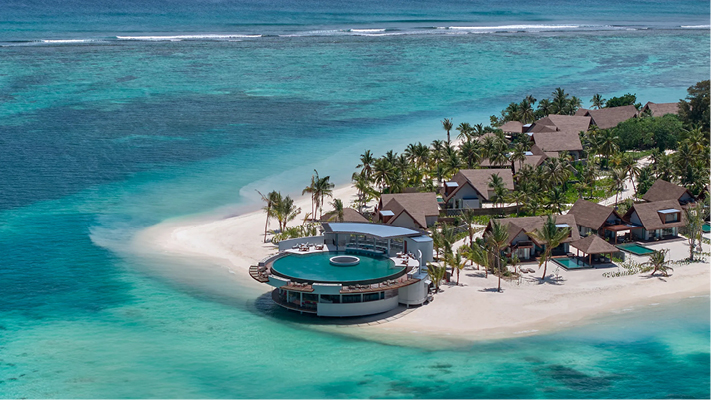
Bali, Indonesia
For a slower, more soulful festive escape, Bali is a sanctuary wrapped in lush landscapes and warm hospitality. From jungle hideaways in Ubud to stylish beachfront resorts in Seminyak or Uluwatu, December in Bali offers sunny days, wellness-led itineraries and deeply restorative experiences. Expect festive dinners infused with Balinese flavours, sunset rituals overlooking the ocean, and plenty of opportunities for grounding, yoga, nature retreats, traditional healing and cultural exploration. Ideal for those who want warmth but with depth and meaning woven into each moment.
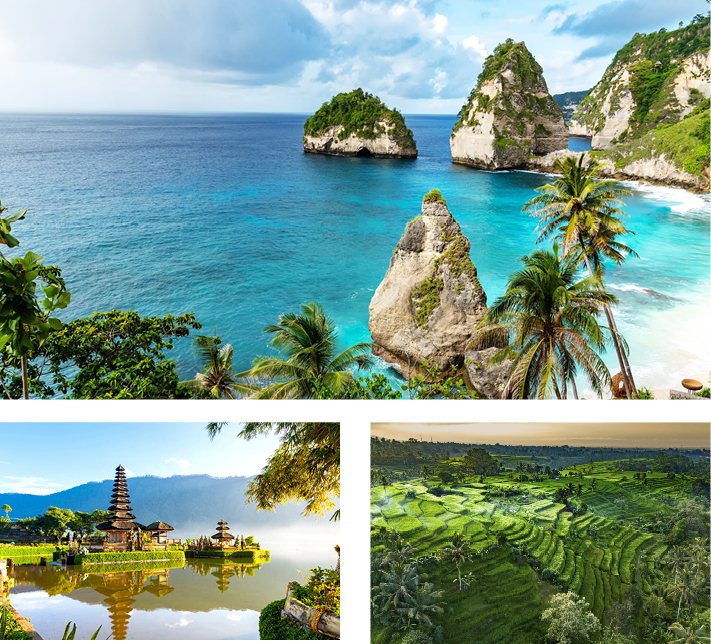
New York, United States
If you’re seeking festive electricity on a grand scale, New York shines brighter than anywhere else in the world. The Rockefeller Christmas tree, ice-skating in Central Park, Fifth Avenue’s iconic window displays, and the buzz of Times Square make December in Manhattan unforgettable. With world-class dining, luxury shopping, and Broadway shows topping travellers’ lists, the city offers a vibrant, cinematic festive experience. It’s bold, glamorous and perfect for anyone who loves the energy of big-city celebrations.
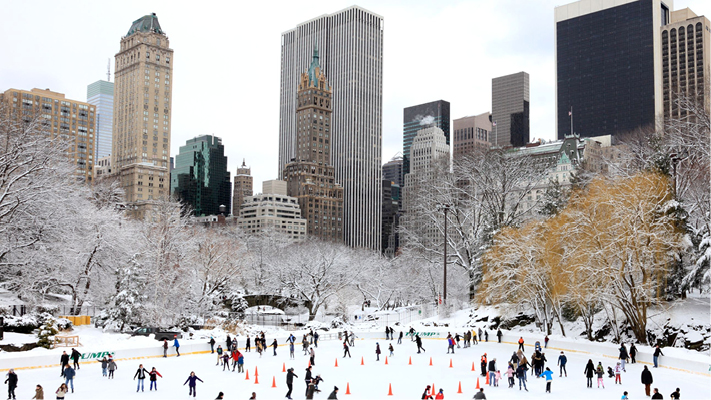
London, England
London in December is magical. With streets strung in golden lights, the smell of roasted chestnuts drifting through markets, and department stores transformed into glittering storybook scenes. Wander through Winter Wonderland in Hyde Park, enjoy the city’s famous theatre season, or settle into one of London’s historic hotels for afternoon tea by a crackling fire. For UAE travellers, it’s a chance to embrace a traditional European holiday, charming, atmospheric and endlessly cosy.
Lapland
For families, couples or anyone wishing to rediscover childlike wonder, Lapland is the ultimate winter dream. Imagine husky-sledge rides across frost-covered forests, glass igloo stays beneath the Northern Lights, and visits to Santa’s Village in Rovaniemi. It’s as immersive as festive travel gets! Reindeer safaris, snowmobiling, and cosy fireside dinners surrounded by glistening winter scenery. Lapland is the kind of destination that makes December feel truly magical.
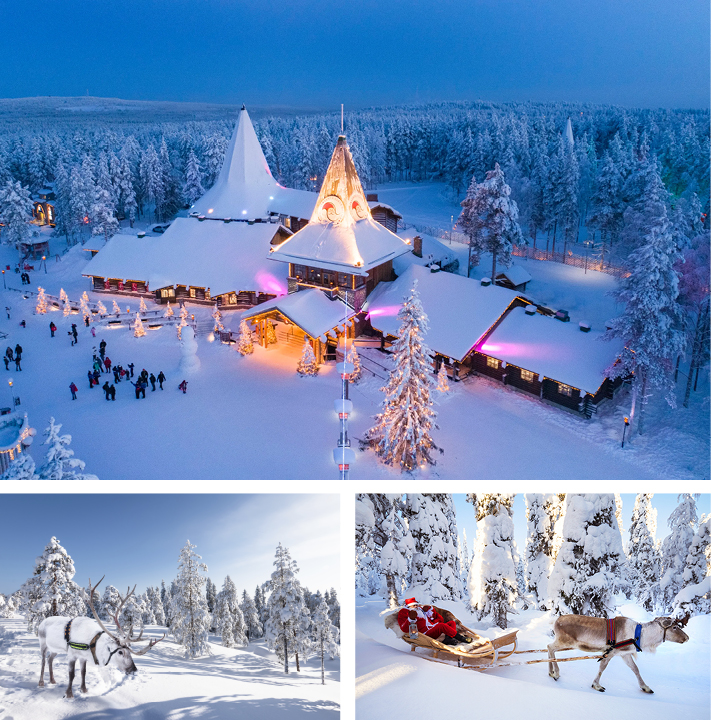
Zermatt, Switzerland
For those who prefer elegance and alpine glamour, Zermatt is a luxurious winter escape framed by the iconic Matterhorn. Days are spent skiing immaculate slopes, wandering through chalet-lined streets and indulging in après-ski fondue in candlelit restaurants. Luxury resorts such as the Cervo or The Omnia elevate the festive experience with thermal spas, panoramic views and unforgettable culinary programmes. It’s the perfect blend of adventure and sophistication.
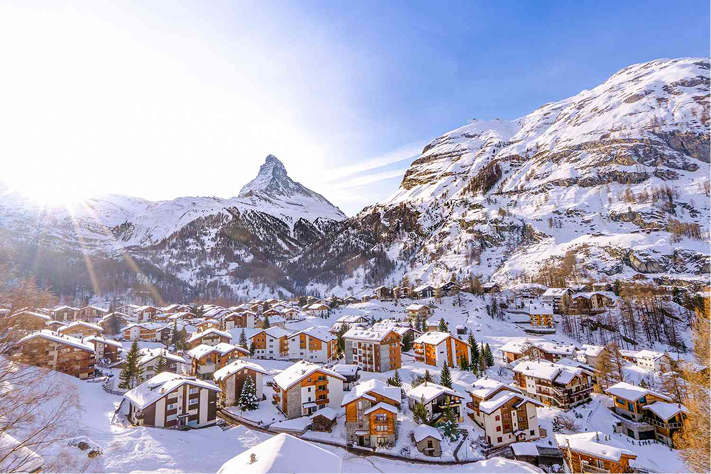
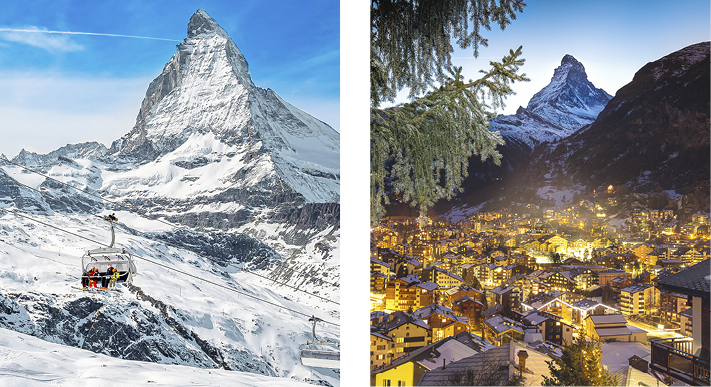
Kyoto, Japan
For something truly unique, Kyoto offers a quieter, more reflective festive experience wrapped in Japanese tradition. While not a Christmas-celebrating destination in the Western sense, Kyoto’s serene temples, winter gardens dusted in snow and atmospheric tea houses create a magical setting for an end-of-year escape. It’s peaceful, elegant and perfect for travellers seeking culture, craftsmanship and calm.
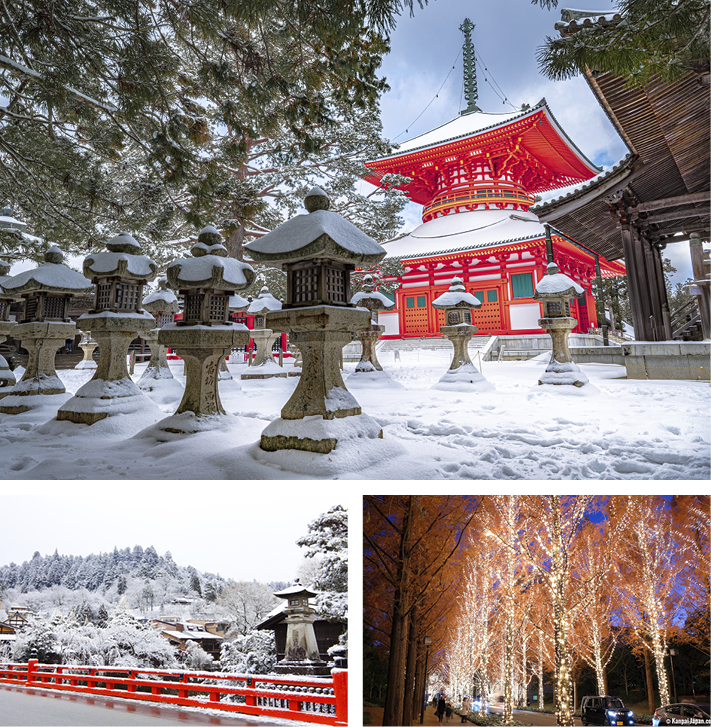
Zanzibar, Tanzania
For those seeking a festive escape wrapped in sun-drenched serenity, Zanzibar is a dream. December brings warm breezes, turquoise seas and a relaxed island rhythm that invites you to slow down. Picture long days drifting between private-villa pools and white-sand beaches, dhow cruises at sunset, and spice-scented markets that offer a glimpse into the island’s rich Swahili heritage. Whether you’re celebrating the season with a romantic retreat or a family getaway, Zanzibar blends barefoot luxury with vibrant culture.
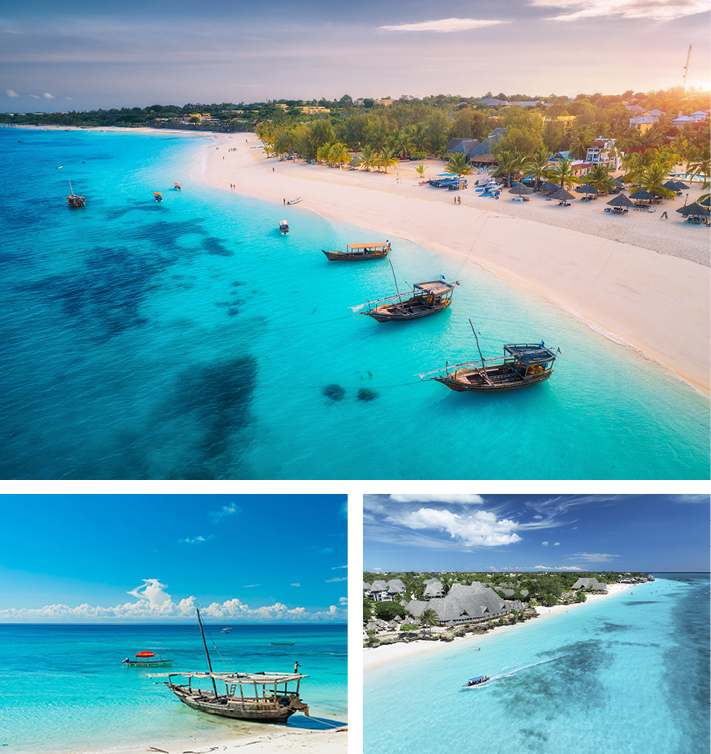
Oman
For a shorter break closer to the UAE, Oman offers an extraordinary festive appeal. Think rugged mountains, serene beaches and dramatic desert landscapes. Muscat’s luxury resorts, such as Al Bustan Palace or Six Senses Zighy Bay, craft beautifully intimate festive celebrations, beachfront dinners, lantern-lit nights and wellness-driven itineraries. For nature lovers, the cooler December weather also makes it the ideal time to explore wadis, mountain trails and Oman’s UNESCO-listed heritage sites.
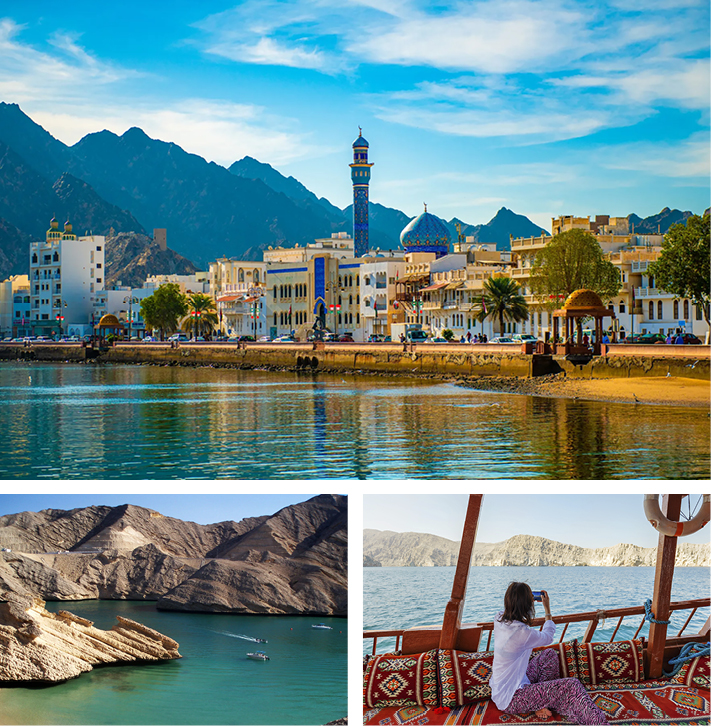
Cape Town, South Africa
Cape Town offers one of the world’s most captivating warm-weather festive seasons. With its golden beaches, vineyard estates, world-class restaurants and dramatic Table Mountain views, the city delivers a celebration filled with adventure, culture and natural beauty. December brings perfect sunshine, lively beachfront energy and a cosmopolitan festive atmosphere. For travellers who love food, wine and breathtaking landscapes, South Africa is a standout long-haul choice.
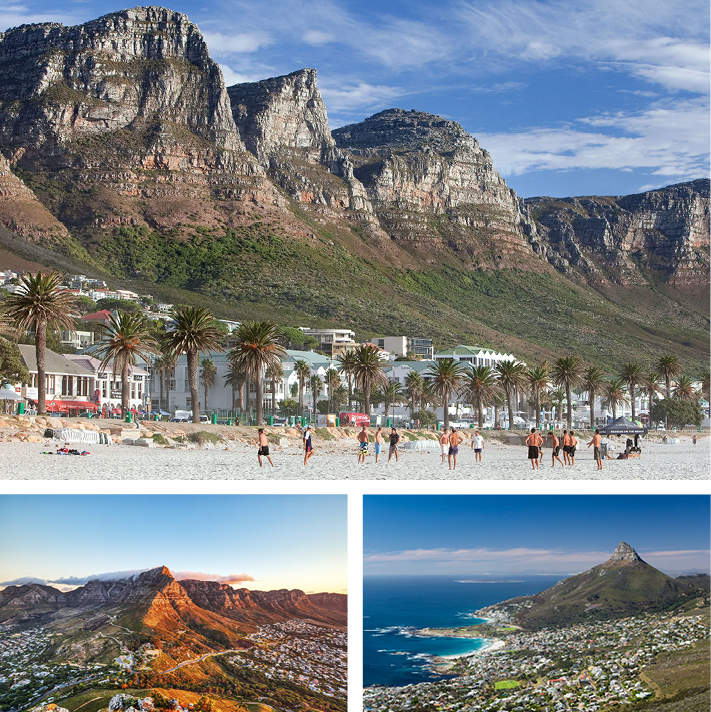
Beauty Wonderland, From eye-catching makeup looks to festive gifting inspiration, we round up the must-have beauty buys for the season
GUERLAIN
Dior
Dior steps into the holiday season with a flourish of imagination, unveiling its “Circus of Dreams” theme, a whimsical universe where beauty, nostalgia, and artistry collide. This festive world, conceived by the House as a place of wonder and spectacle, becomes the backdrop for a dazzling makeup collection crafted by Peter Philips, Creative and Image Director for Dior Makeup.
Infused with the spirit of the circus, the collection reimagines Dior’s most iconic products in bold, luminous forms. Golden compacts gleam like spotlights, flamboyant pigments sweep across the palette like performers in motion, and shimmering finishes echo the magic of sequins twirling beneath a tent of light. Each piece feels like a keepsake from an enchanted performance, playful yet refined, luxurious yet full of childlike delight.
“The circus is a never-ending source of inspiration,” Peter Philips reflects. “Its swirl of colours and sequins takes you back to childhood, to a world of magicians, trapeze artists, and tightrope walkers performing under the spotlight.” This sense of joyful escapism runs through the entire collection, inviting wearers to step into a fantasy and rediscover the thrill of transformation.
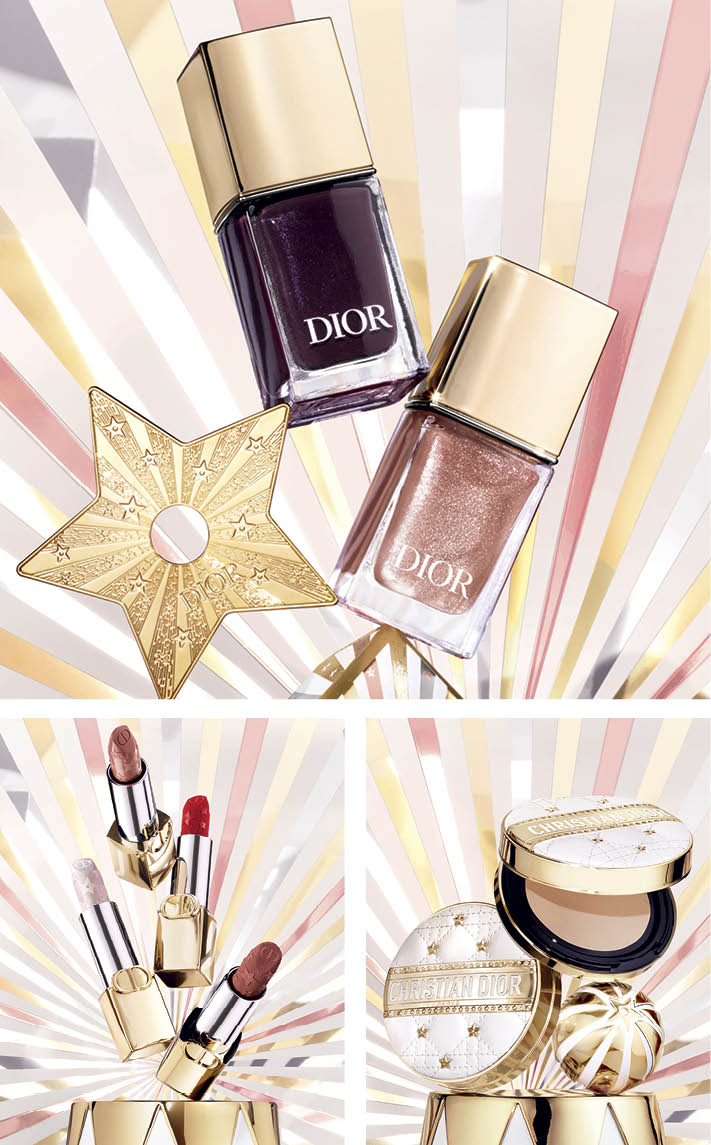
Charlotte Tilbury
Charlotte Tilbury’s festive universe arrives this year with even greater sparkle, supercharging the founder’s mission to empower everyone to look and feel like their most confident, radiant selves. For the holidays, the makeup artist–turned–global beauty phenomenon presents a collection designed not only to beautify but to inspire, wrapped in a constellation of star-studded fantasy.
At the heart of the campaign is the Magic Gifting Universe, a treasure trove of viral icons, best-sellers and award-winning formulas reimagined as keepsakes for every beauty lover. From party-ready essentials to elevated stocking fillers, the lineup is crafted to surprise, delight, and make beauty gifting effortless.
This year’s standout is Charlotte’s Beauty Treasure Chest, the brand’s most extravagant advent calendar to date. Filled with Tilbury favourites and coveted miniatures, it transforms each day of December into a luxurious countdown. Equally dazzling is the arrival of Star Confidence, the newest addition to the Fragrance Collection of Emotions. Inspired by Celine Tilbury’s signature aura, the scent is designed to bottle that unmistakable “star confidence,” giving wearers a luminous, uplifting energy.
Every element of the collection, from the formulas to the finishing touches, carries Charlotte’s exclusive Star Confidence constellation design. Mystical unicorns, magic keys, celestial flames and astral motifs dance across the packaging, turning each piece into a collectable object. Keepsake tins, sparkling baubles, metallic clutch bags, and the show-stopping treasure chest elevate the unboxing into an experience.
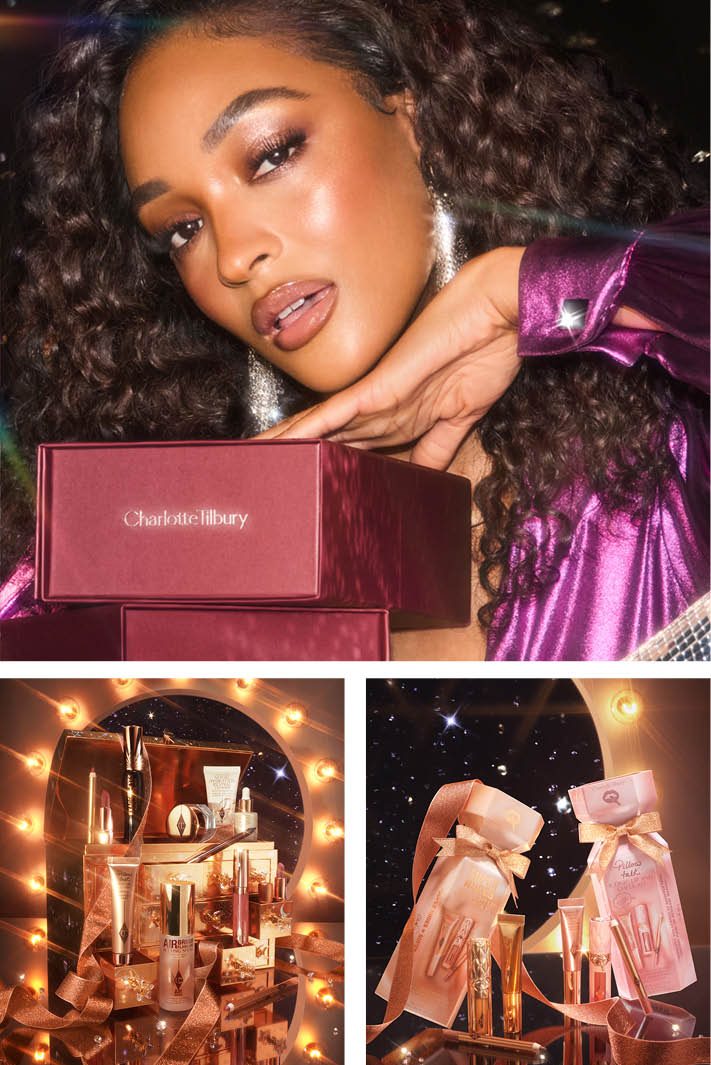
Guerlain
Guerlain welcomes the festive season with one of its most enchanting celebrations yet. A storyteller since 1828, the Maison unveils a holiday world where art, fragrance, and fantasy intertwine, transforming gifting into a moment of pure wonder. Fragrance sits at the heart of this year’s spectacle, with icons such as the Bee Bottle and Shalimar reimagined in radiant new forms. Artist Mélissandre Vidal brings the Maison’s Advent Calendar to life through a sculptural paper tableau, where origami forests and celestial scenes unfold behind a deep red cover, revealing 25 treasures spanning fragrance, skincare, and makeup.
Guerlain’s tradition of “Exceptional Pieces” continues through a remarkable collaboration with sculptor Géraldine Gonzalez, who lends her mastery of metal, crystal, and mother-of-pearl to a breathtaking one-litre Bee Bottle crowned with a gilded crescent moon. Limited to 64 pieces, it glows on a mirrored base like a celestial artefact. For Shalimar’s centenary, a monumental 1.5-litre edition further elevates the iconic fragrance. The Maison also extends this artistic spirit to Rouge G with the limited Tale of Stars case, a mirrored, star-studded design available in 670 editions.
A new origami-inspired collection rounds out the season, with sculptural cases in shades of white, gold, and silver. Highlights include the star-engraved Rouge G Stellar lipstick, a luminous Ombres G quad in gold and silver, special-edition Météorites pearls with a new star-shaped bead, two shimmering KissKiss Bee Glow Oil shades, and the radiant Terracotta Luminizer Rosy Gleam.
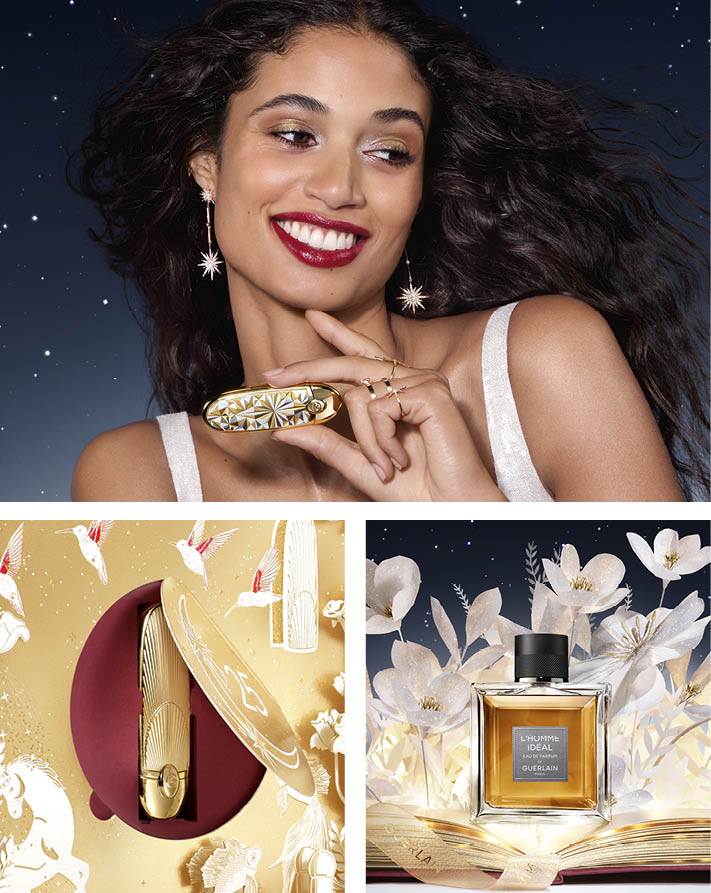
Chanel
This winter, Chanel looks to the stars and its most emblematic symbols, the lion, camellia, comet, wheat, and pearls. Together, they guide this season’s constellation of fragrance creations, offering an invitation to gift with meaning and intention
At the heart of the collection are two exquisite limited-edition body oils, each designed to illuminate the skin with a soft celestial glow. N°5 The White Gold Body Oil enhances the sensuality of the legendary floral bouquet, capturing it in a sleek bottle filled with pearlescent particles toned in white gold. It is an elegant reinterpretation of one of the most recognisable fragrances in history, transformed into a ritual of radiance.
Meanwhile, Coco Mademoiselle Pearly Body Oil offers a fresh burst of energy, echoing the ambery brightness of the beloved fragrance. Housed in a glass bottle that reveals a swirl of iridescent shimmer, it drapes the skin in a satiny finish infused with notes of vibrant orange, jasmine, rose, and refined patchouli. Sensual and luminous, it reflects the spirit of the Coco Mademoiselle woman, bold yet effortlessly refined.
Chanel also unveils a series of collector-edition fragrances, each encased in shimmering sleeves that echo the season’s celestial theme. N°5 Eau de Parfum, Coco Mademoiselle Eau de Parfum, and Chance Eau Splendide Eau de Parfum appear in pearly white cases accented with golden and silvery touches, turning each bottle into an object of desire. For men, Bleu de Chanel Eau de Parfum and Allure Homme Sport Eau de Toilette receive deep-blue holiday sleeves with the same metallic details, evoking the quiet mystery of a winter sky.
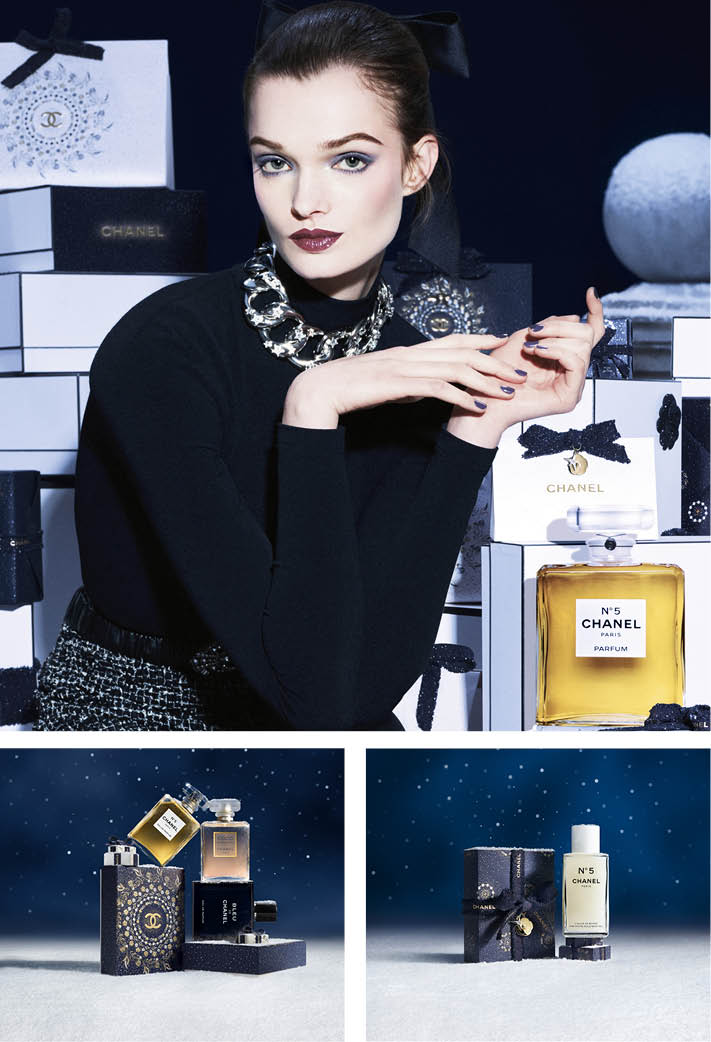
Byredo
Byredo captures the Nordic winter atmosphere with its 2025 holiday collection. Set against sweeping mountain backdrops, the campaign imagines an otherworldly scene: sleighs gliding across crisp snow, delivering beautifully wrapped gifts to a perfume-bottle-shaped igloo, while families gather outside to sculpt snowmen and share laughter in the cold. It is a moment distilled to its essence — connection, generosity and the small rituals that make winter feel meaningful.
The collection itself mirrors that sense of wonder. Dressed in vibrant graphic patterns inspired by childhood nostalgia and the tactile joy of festive wrapping, each box becomes an object of celebration. At its heart is the standout Advent Calendar, a sculptural three-tier bento box hiding 24 miniature treasures. More than a countdown, it encourages a slower rhythm to the season, offering a daily ritual of discovery. Inside are miniature editions of signature Eau de Parfum scents such as Blanche, Gypsy Water, Mojave Ghost and Bal d’Afrique, alongside Chromophobia Lip Balm, travel hair perfume, candles, creams and a sleek pocket mirror.
Byredo also introduces Winter Cabin, a limited-edition candle designed to evoke the warmth of firewood after snowfall. In smoked glass, it blends birch, vetiver, patchouli and amber into a scent that feels both raw and comforting — a fragrant reflection of evenings spent indoors as snow settles outside.
Extending beyond fragrance, the Byproduct Holiday Collection brings the same joyful energy into lifestyle pieces. Glass ornaments, generous blankets and woven scarves appear in seasonal shades of blue, green and grenadine, all accented with crisp white patterns. Each piece is crafted as a collectable, designed to carry the sensory spirit of the holidays into the home.
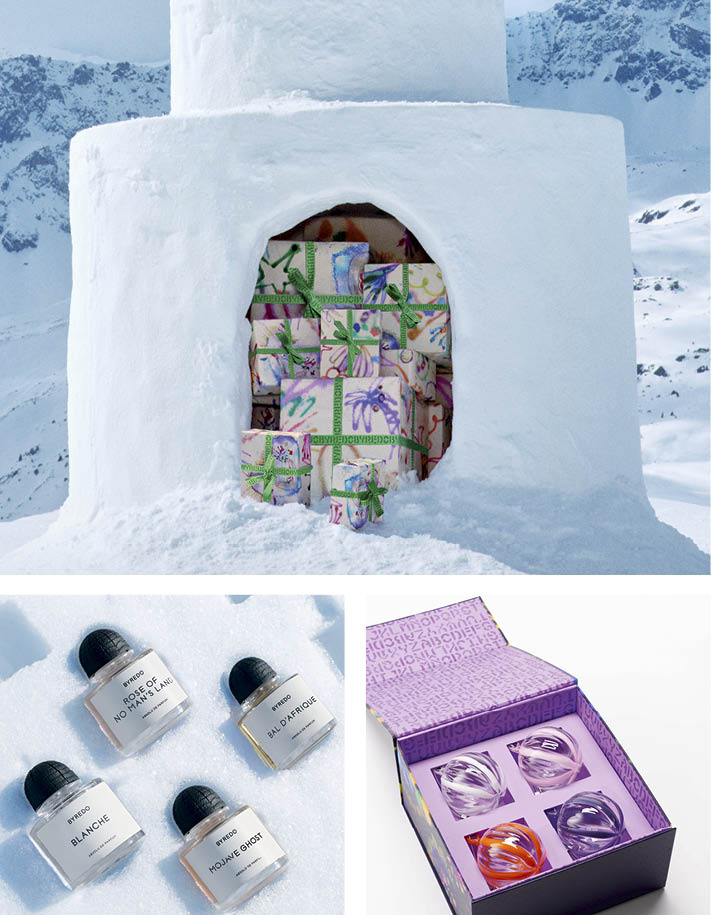
Acqua Di Parma
Acqua di Parma’s Holiday 2025 collection journeys to the Dolomites, taking inspiration from the iconic peak of Antelao and the quiet poetry of the alpine winter. Serving as a metaphor for rugged landscapes and centuries-old craft, the season unfolds through a contemporary lens shaped by architect and designer Cristina Celestino, whose creative direction reinterprets traditional mountain techniques into sculptural ceramic objects.
Anchoring the line-up are limited-edition Masterpieces: refillable fragrance bottles in glazed porcelain, finished in shades that echo the mountain’s palette, their hammered textures and wooden caps nod to traditional alpine artisanship. Seasonal candles and diffusers in scents such as Bosco, Panettone, and the new Torrone appear in brushed porcelain vessels, each finished with hand-applied textures and engraved wooden lids that double as display bases. Their fragrances evoke the forest, festive treats, and alpine air with notes ranging from fir needles to toasted pistachio.
Acqua di Parma’s Art of Living collection also expands with two standout creations. The Alpine Holiday Advent Calendar turns the Maison’s signature hatbox into an object of quiet luxury, handcrafted in white bouclé and calfskin, while the Alpine Holiday Chess Set reimagines a classic game through fine Italian woodworking, complete with lacquered pieces and hidden fragrance vials. The Maison also introduces new iterations of its sculptural Chapeau! candles, each one crowned with a hat-like ceramic lid and infused with exclusive seasonal scents inspired by alpine destinations.