

Gucci Storia Brings the House’s 105-Year Legacy to Life in Florence
Gucci unveils Gucci Storia, a new exhibition now open at Palazzo Gucci in Piazza della Signoria in Florence, offering an immersive exploration of the House’s past, present and evolving future. Conceived through the eyes of Artistic Director Demna, the experience unfolds across nine rooms spanning two floors, each designed as a distinct narrative environment.
Both archival and forward-looking, Gucci Storia invites visitors into a series of curated worlds that reinterpret the brand’s 105-year history. Tapestries line the walls, reimagining key moments and motifs through a contemporary visual language, while a striking portrait gallery, photographed by Catherine Opie, captures a cast of individuals who reflect the House’s enduring cultural relevance.
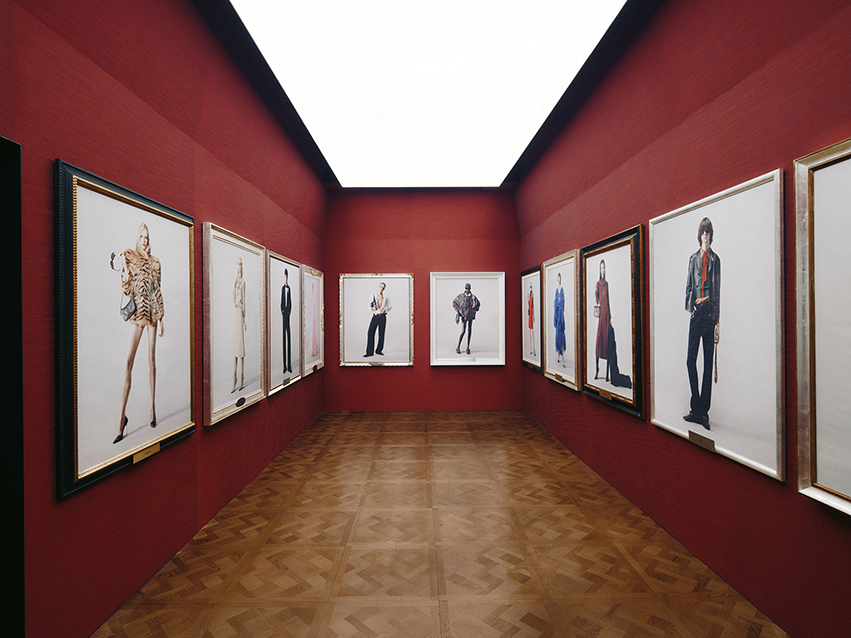
The exhibition moves between disciplines and formats. An immersive archive offers a closer look at Gucci’s design evolution, while a dedicated cinema space presents curated film works that expand on the brand’s creative universe. Elsewhere, an interactive oracle installation introduces a more introspective dimension, encouraging visitors to engage with the idea of identity, intuition and transformation.
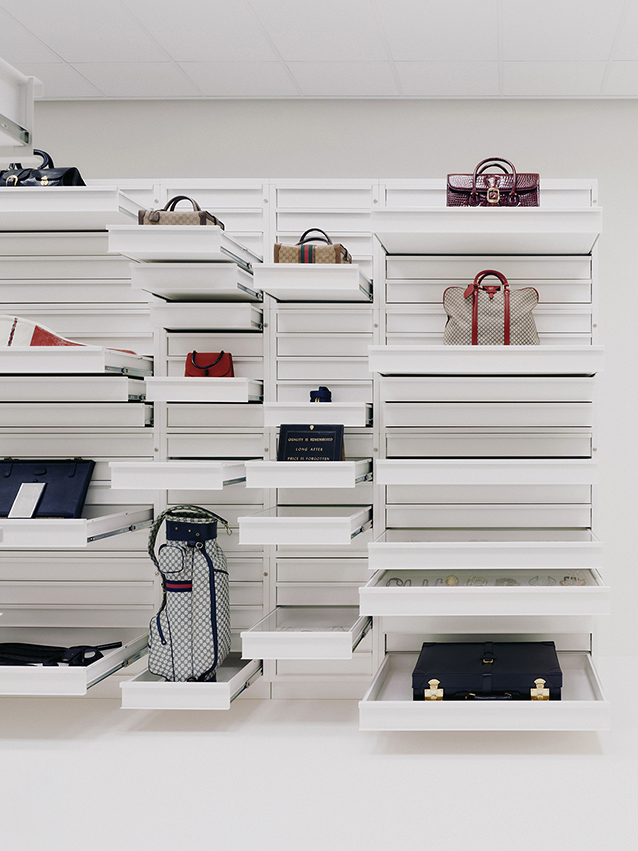
At its core, Gucci Storia is a meditation on duality. Heritage and reinvention, tradition and radical innovation are placed in constant dialogue, reflecting the House’s ability to evolve while remaining anchored in its origins. Under Demna’s direction, this tension becomes a central theme, shaping an experience that feels both reflective and forward-thinking.
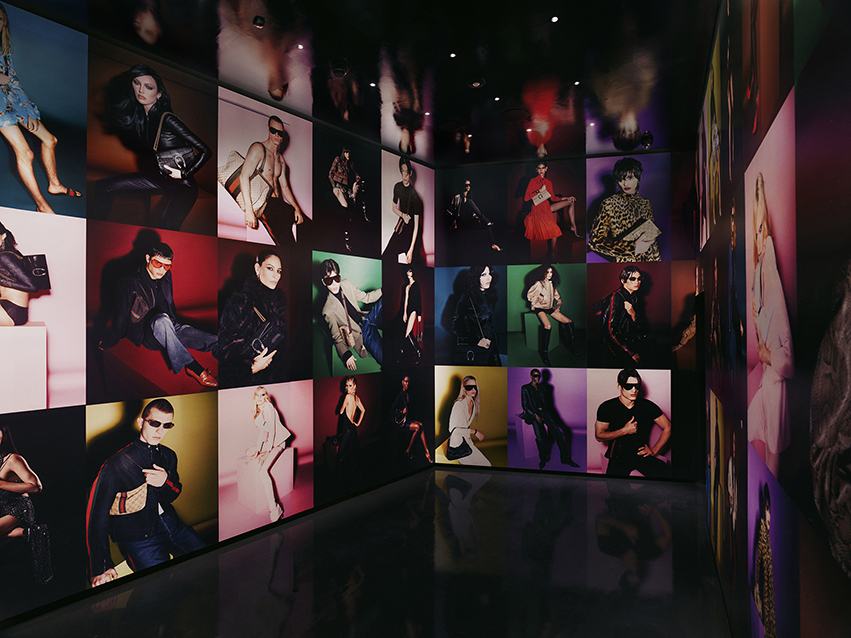
Open to the public from April 27 at Palazzo della Mercanzia.
Maison Margiela Rewrites Tailoring for Spring Summer 2026
Maison Margiela presents its Spring Summer 2026 Co-Ed show as a study in contrast, precision and quiet subversion, where the language of tailoring is reworked through the house’s unmistakable lens. This season, structure takes centre stage, anchored by sharply defined silhouettes and a distinctive tuxedo waistcoat cutline that introduces a sense of discipline to the collection without ever feeling rigid.
Fluidity is layered into this foundation through slip dresses worn over suiting, softening the formality of traditional menswear codes. Fabrics further this interplay between strength and delicacy, with plasticised silk adding a subtle sheen and technical edge, while floral motifs emerge in unexpected ways, embossed directly onto knitwear to create texture rather than print. The result feels tactile and considered, offering a new dimension to familiar patterns.
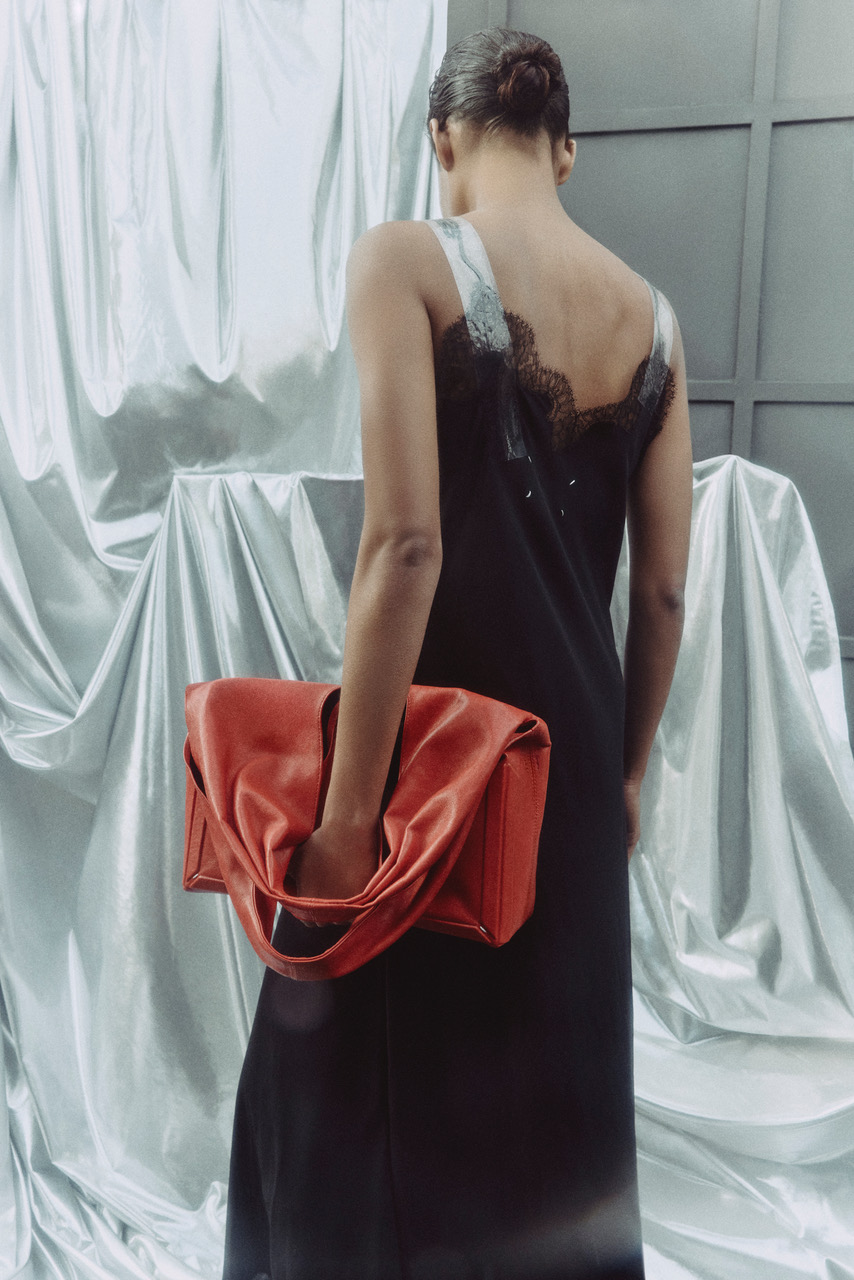
Archival references are revisited with confidence. The house’s iconic heelless footwear returns, now expanded to include pumps and boots, reinforcing Margiela’s long-standing fascination with form and illusion. Alongside this, the Tabi Claw makes its ready-to-wear debut, translating one of the brand’s most recognisable codes into a new, wearable expression.
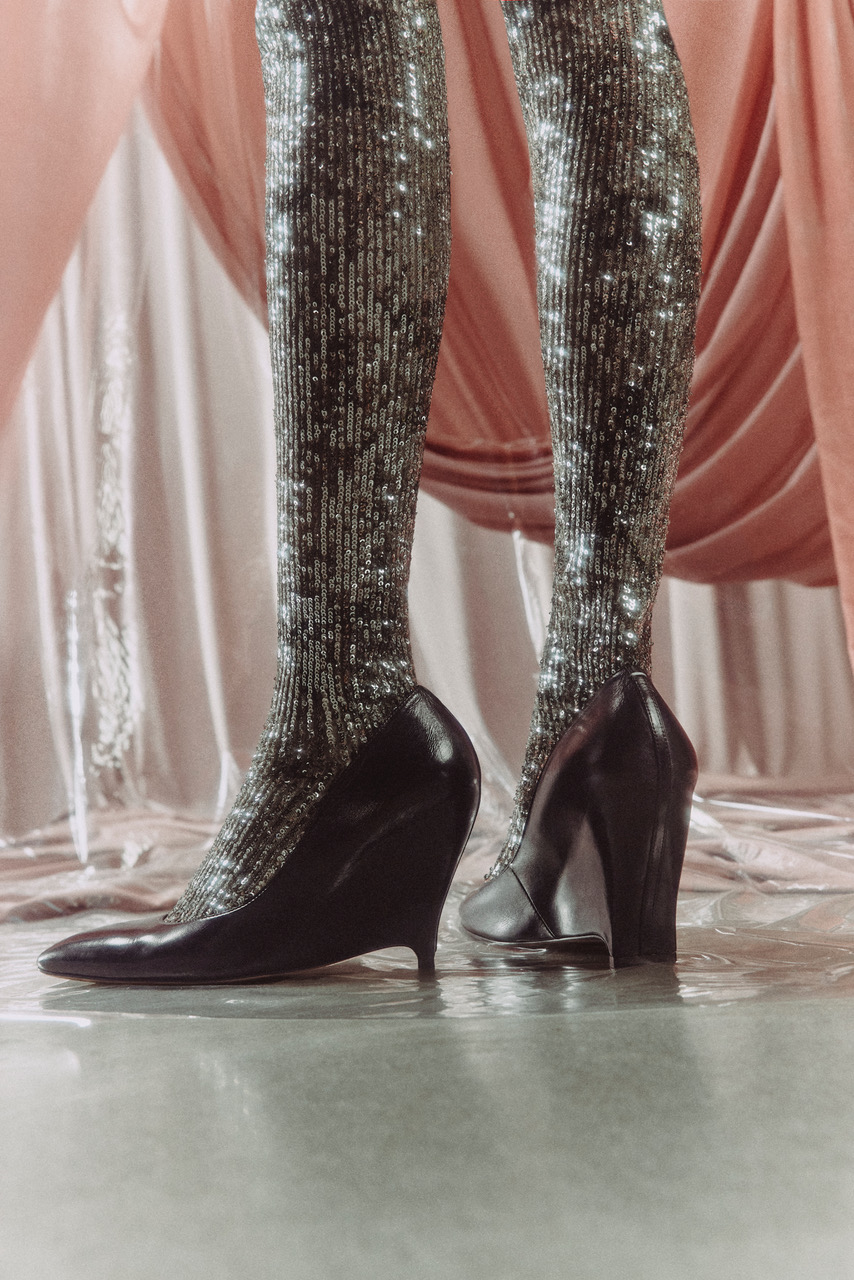
Accessories follow suit, balancing innovation and practicality. The new Box Bag, crafted from supple leather with thermoformed reinforced edges, reflects the collection’s architectural undertones. Designed for versatility, it can be carried with straps or folded into a clutch, adapting seamlessly to different moments.
Set against this refined yet experimental backdrop, the show’s atmosphere was elevated by a live orchestra of 61 young musicians from Romilly-sur-Seine, aged between 7 and 15. Their performance of classical compositions by Richard Strauss, Pyotr Ilyich Tchaikovsky and Wolfgang Amadeus Mozart brought an emotive resonance to the presentation, underscoring the collection’s dialogue between heritage and reinvention.
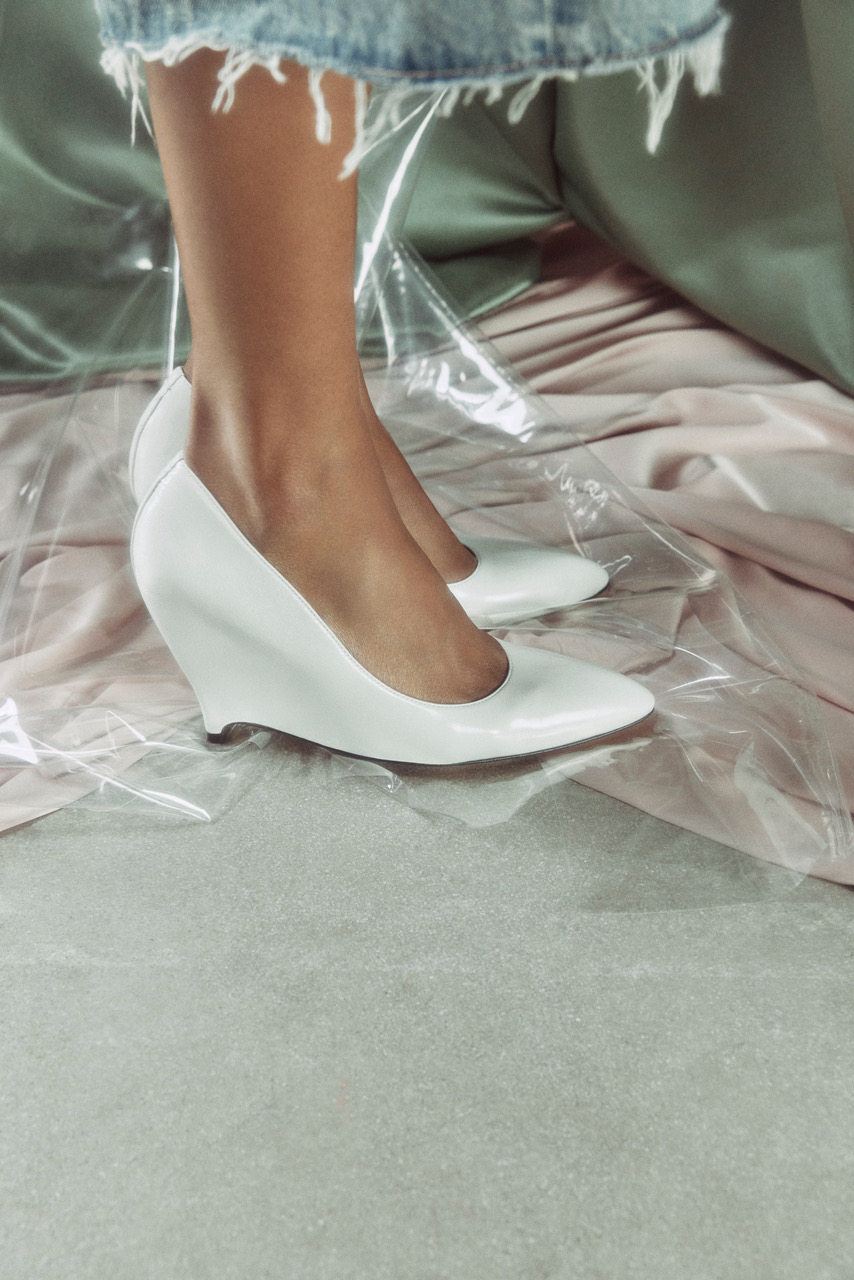
In true Margiela fashion, the collection does not seek to disrupt loudly, but rather to reframe. It is a considered evolution, where tailoring, texture and tradition are quietly deconstructed and reassembled into something entirely new.
Chanel Cruise 2026/27 in Biarritz: Matthieu Blazy’s Debut Collection Reimagines the House’s Origins
Chanel returned to Biarritz to present its Cruise 2026/27 collection, revisiting a destination that sits at the very foundation of the House’s identity. It was here, over a century ago, that Gabrielle Chanel established her couture house, shaping a new way of dressing defined by freedom, practicality and life by the sea.
For his debut Cruise collection, Matthieu Blazy builds on this legacy, drawing inspiration from the Basque coastline and its natural rhythm. The collection moves fluidly between structure and ease, uniting elements of French workwear, leisure dressing and eveningwear into a wardrobe that feels both considered and effortless.
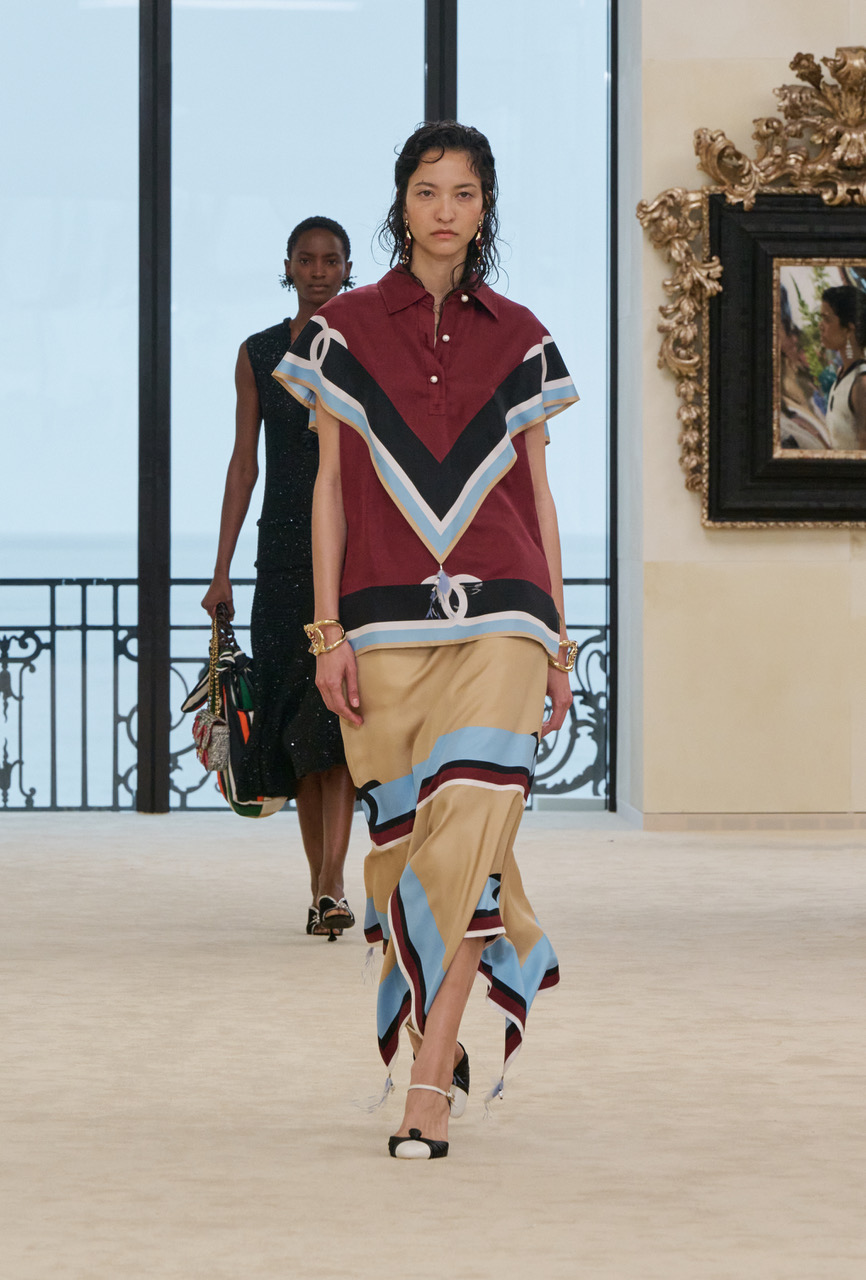
Lightweight fabrics and maritime influences run throughout, from sailor-inspired stripes to relaxed silhouettes designed for movement. Materials reflect the surrounding landscape, with fluid silks, textured tweeds and soft knits echoing the tactility of the coast. At the heart of the collection is a renewed focus on comfort, aligned with sophistication, where the boundaries between day and evening dressing are softened.
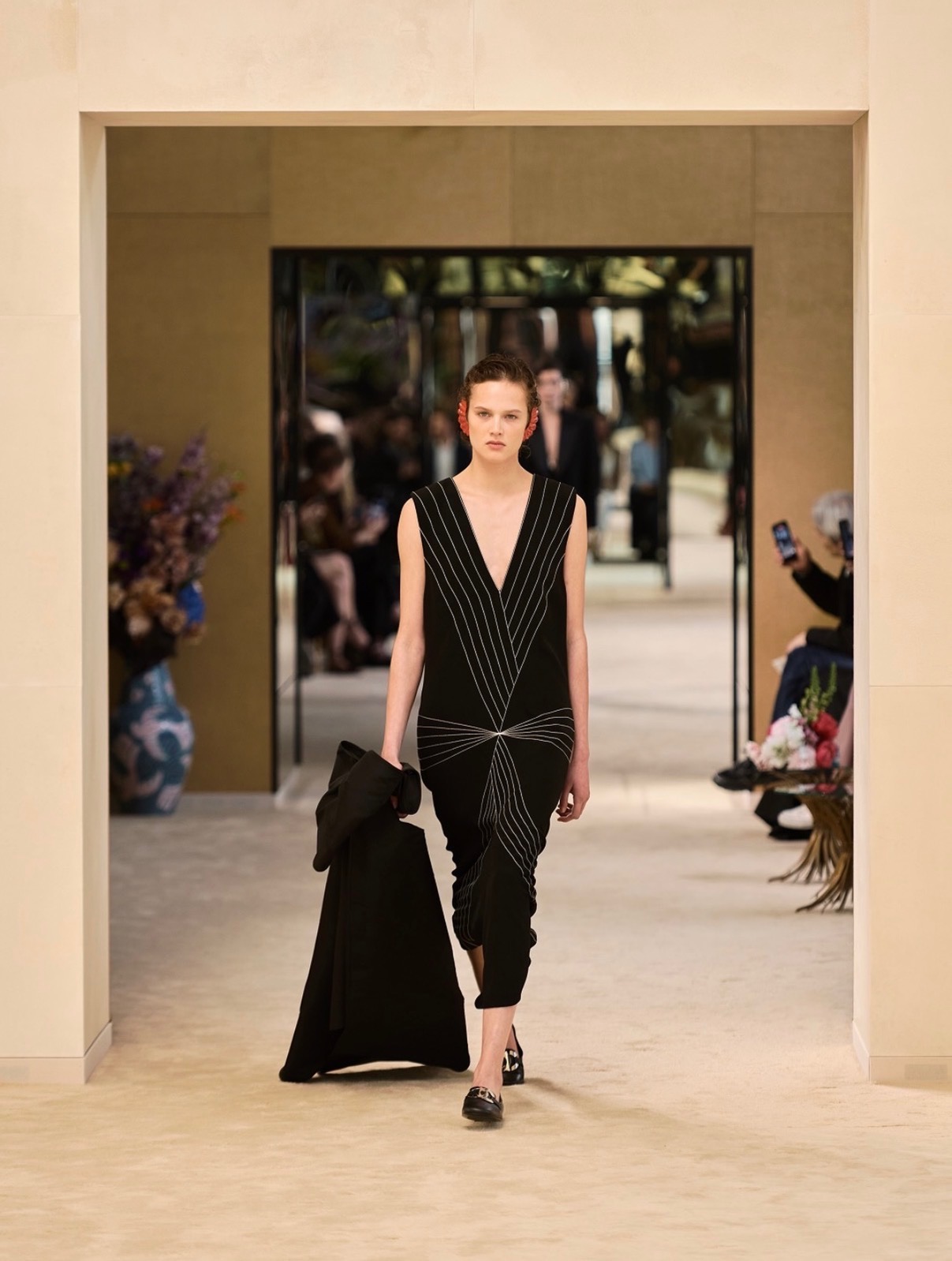
Blazy also revisits one of Chanel’s most enduring codes, the black dress, reinterpreting it as a symbol of simplicity and quiet rebellion. Accessories reinforce the idea of travel, spanning from practical beach pieces to refined evening accents.
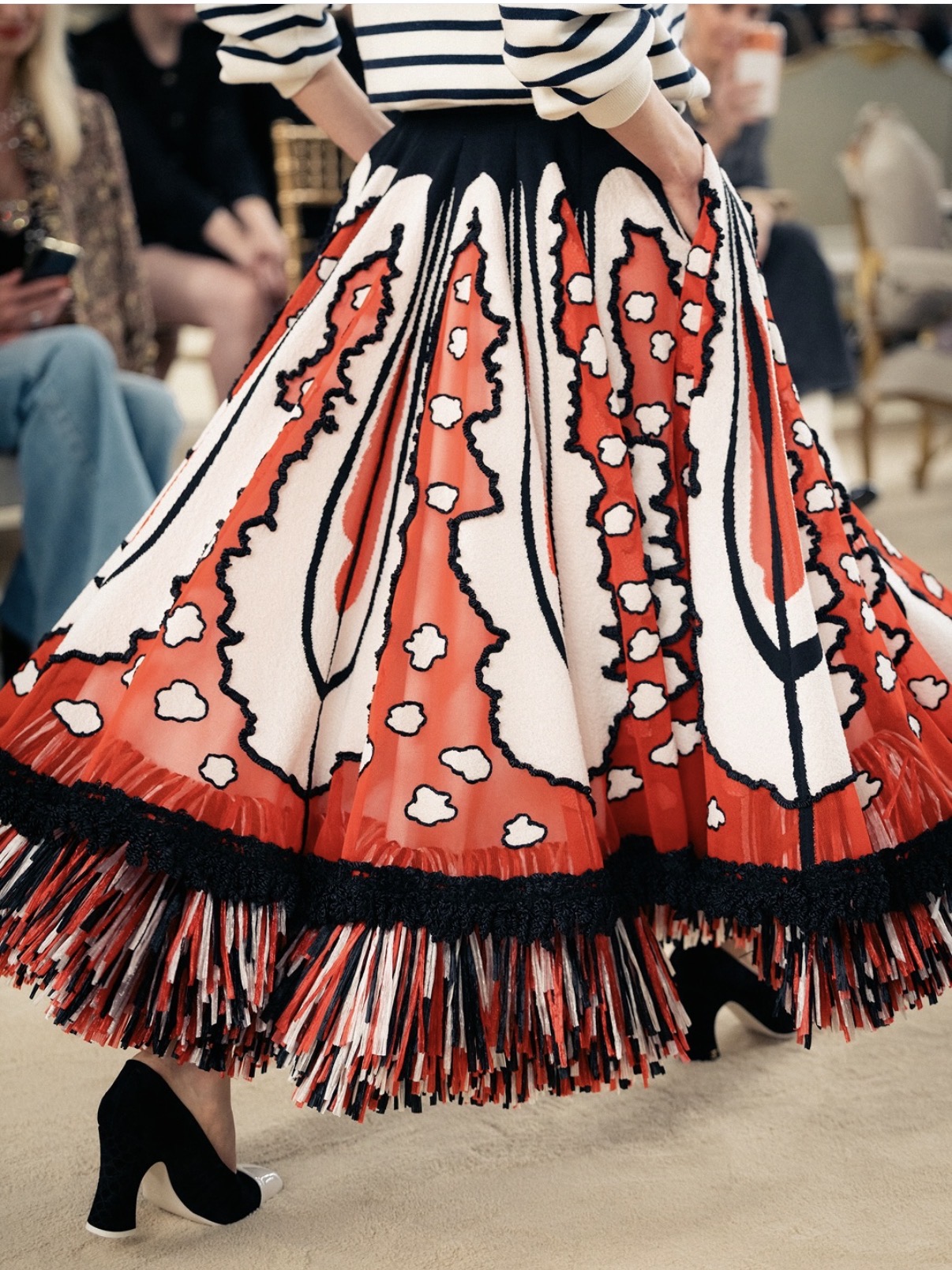
A return to Biarritz marks more than a change of setting. It signals a deeper reflection on the origins of the House, reimagined through a contemporary lens.
Dior Maison Reveals an Exclusive Collaboration at Milan Design Week
Dior Maison continues its exploration of design as an extension of couture, unveiling a new series of Corolle lamps created in collaboration with French designer Noé Duchaufour-Lawrance. The collection builds on a shared language rooted in craftsmanship, materiality, and a sensitivity to form, offering lighting pieces that combine function and art object status.
Duchaufour-Lawrance, known for his ability to draw connections between human experience and the natural world, approaches design with an intuitive, almost sculptural sensibility. For Dior Maison, this translates into a series of works that combine couture and art de vivre. The Corolle lamps take their name and inspiration from the iconic silhouette of Christian Dior’s New Look, reinterpreting the volume and movement of the Corolle skirt through light, texture and structure.
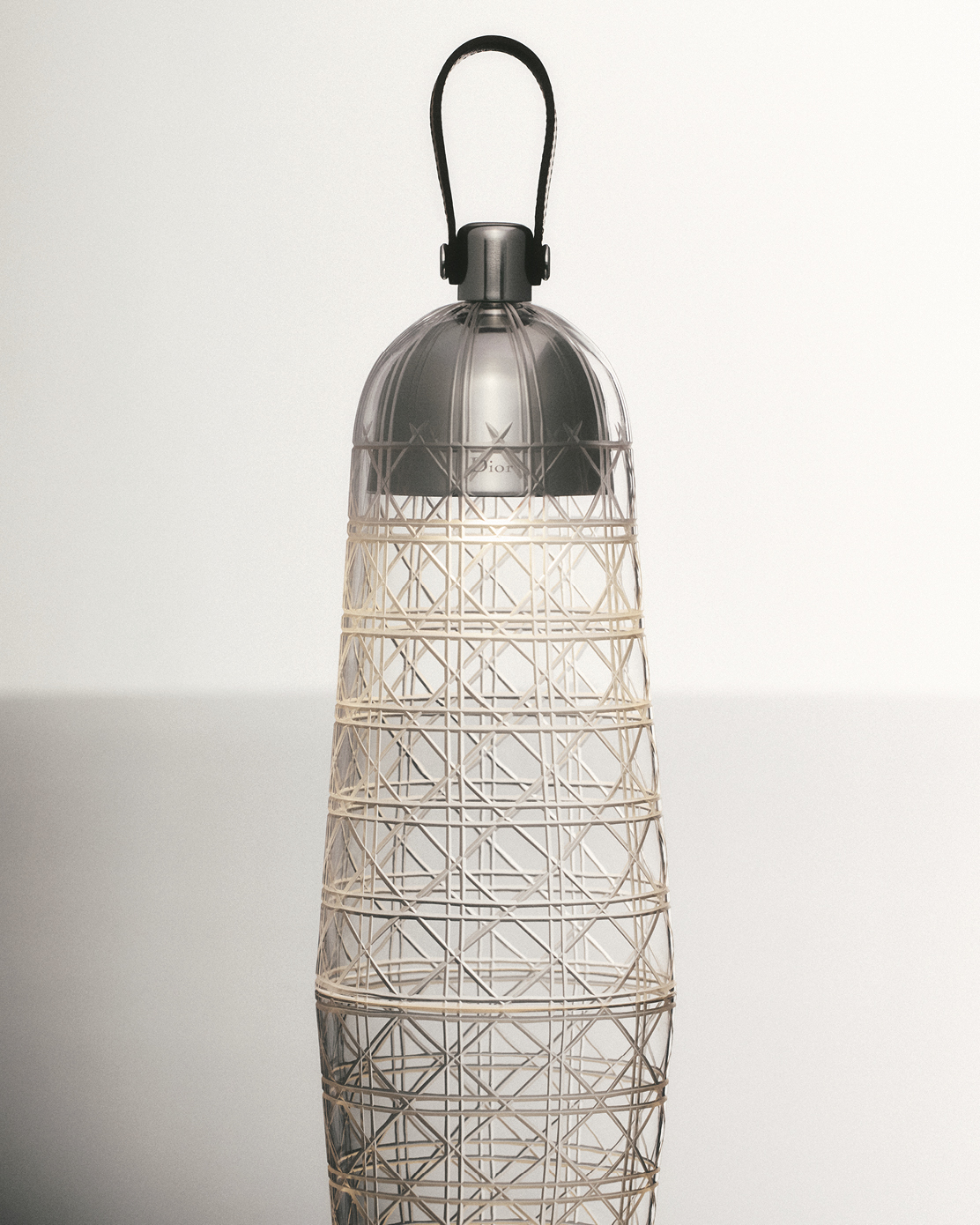
Crafted using traditional techniques, the collection reflects a deep respect for artisanal heritage. Mouth-blown glass, produced by master craftsmen in Murano, forms the central element of the lamps, with each piece shaped to evoke the fluidity of fabric in motion. The glass appears almost weightless, its softly curved form recalling the gentle fall of pleats and drapery. In contrast, other designs within the collection explore the art of basketry, with finely woven Madake bamboo fibres creating graphic, structured surfaces that subtly reference Dior’s signature cannage motif.
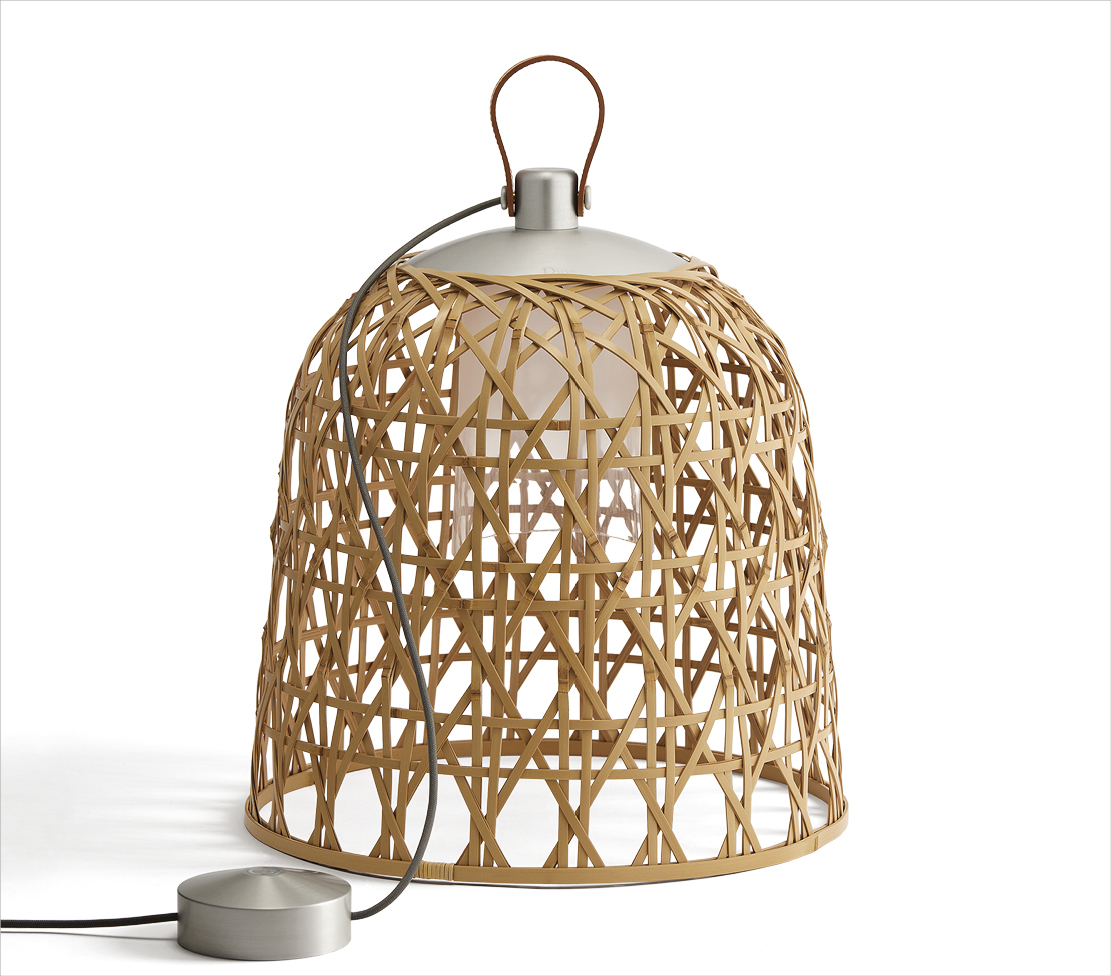
The result is a series of lighting pieces that feel delicate yet architectural, balancing softness with precision. Each lamp carries a sense of time and intention, crafted over an extended process that echoes the meticulous approach of the ateliers at 30 Montaigne. This attention to detail elevates the objects beyond their functional purpose, positioning them firmly within the realm of collectable design.
Balenciaga Presents a Special Installation in Milan
Balenciaga presented Artean – Eduardo Chillida, a special installation at its Via Montenapoleone flagship, marking the House’s first major art project under Creative Director Pierpaolo Piccioli. Conceived as the beginning of an ongoing series, Artean—a Basque word meaning “between”—set the tone for a dialogue that bridges art, fashion and heritage.
The exhibition brought together seven works by the celebrated Basque sculptor Eduardo Chillida, displayed alongside Balenciaga’s current collections. Some pieces paid direct homage to Cristóbal Balenciaga, reflecting a creative relationship that dates back decades. Both figures, rooted in Basque culture, shared a deep interest in form and space—where volume, structure and absence become central to the work.
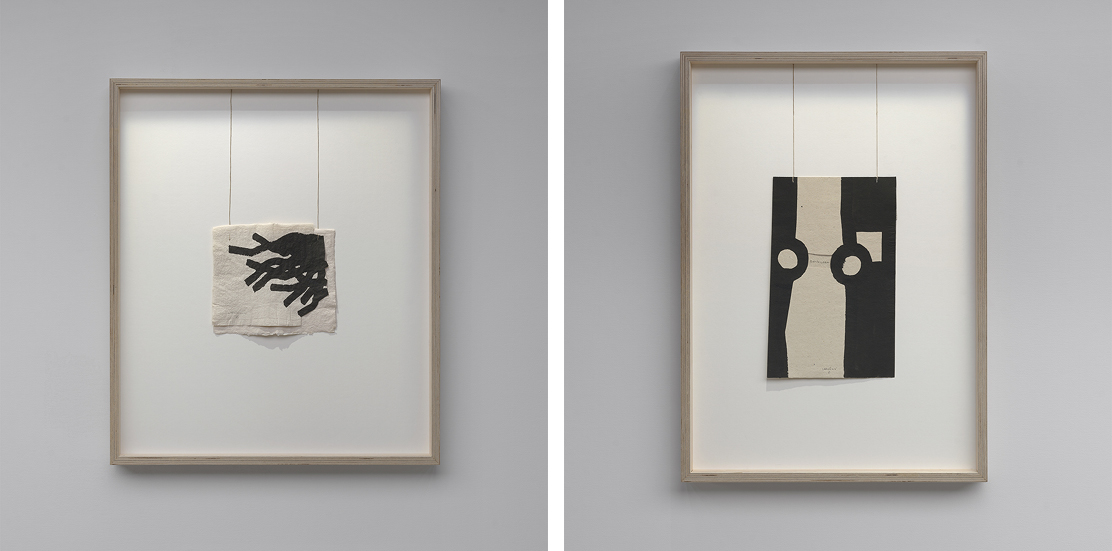
Among the highlights were sculptural pieces in iron, including Homenaje a Balenciaga (1990), presented here as a smaller study, alongside Project for Comb of the Wind I (1966) and Lotura XVIII (1991). These works were complemented by Chillida’s works on paper, including a series of Gravitación compositions, where cut paper, ink and thread explored balance, tension and movement.
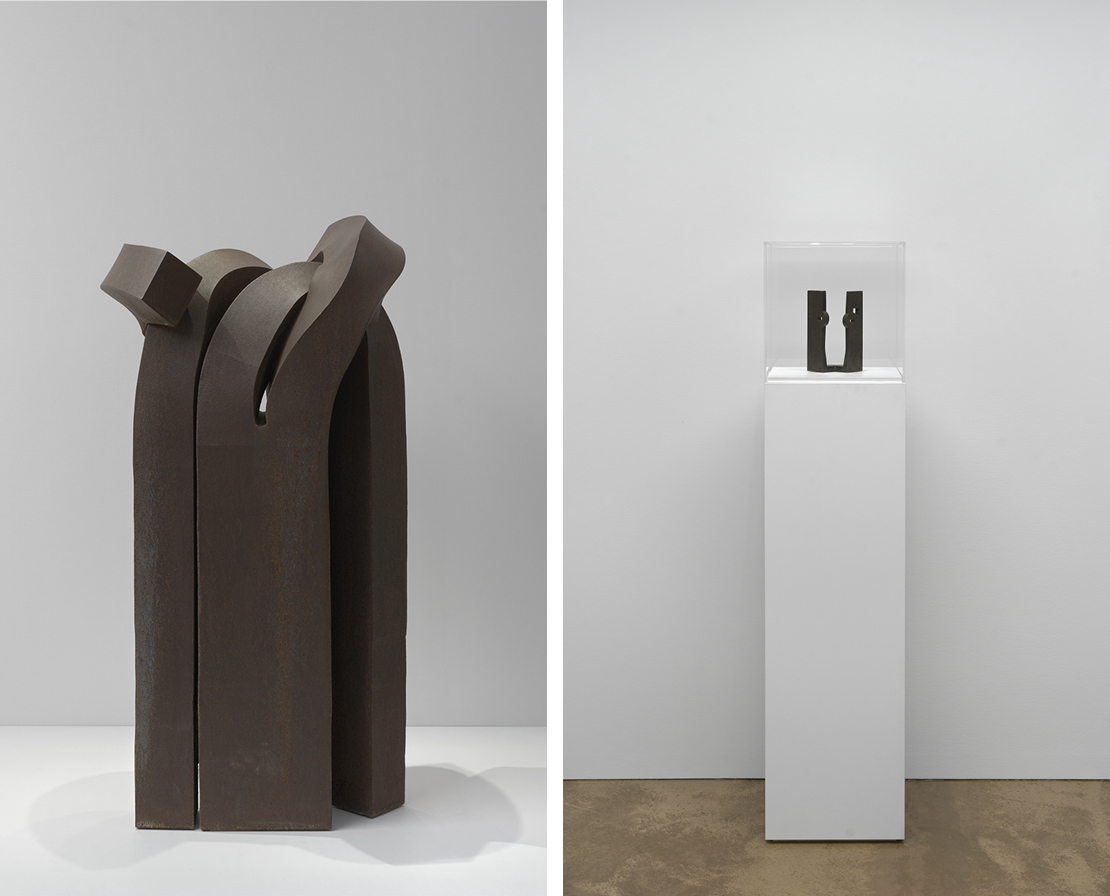
Rather than isolating the artworks, the installation integrated them into the store environment, allowing them to converse with the garments. This approach reinforced Piccioli’s vision of art as a living presence, one that brings energy, emotion and context into the space.
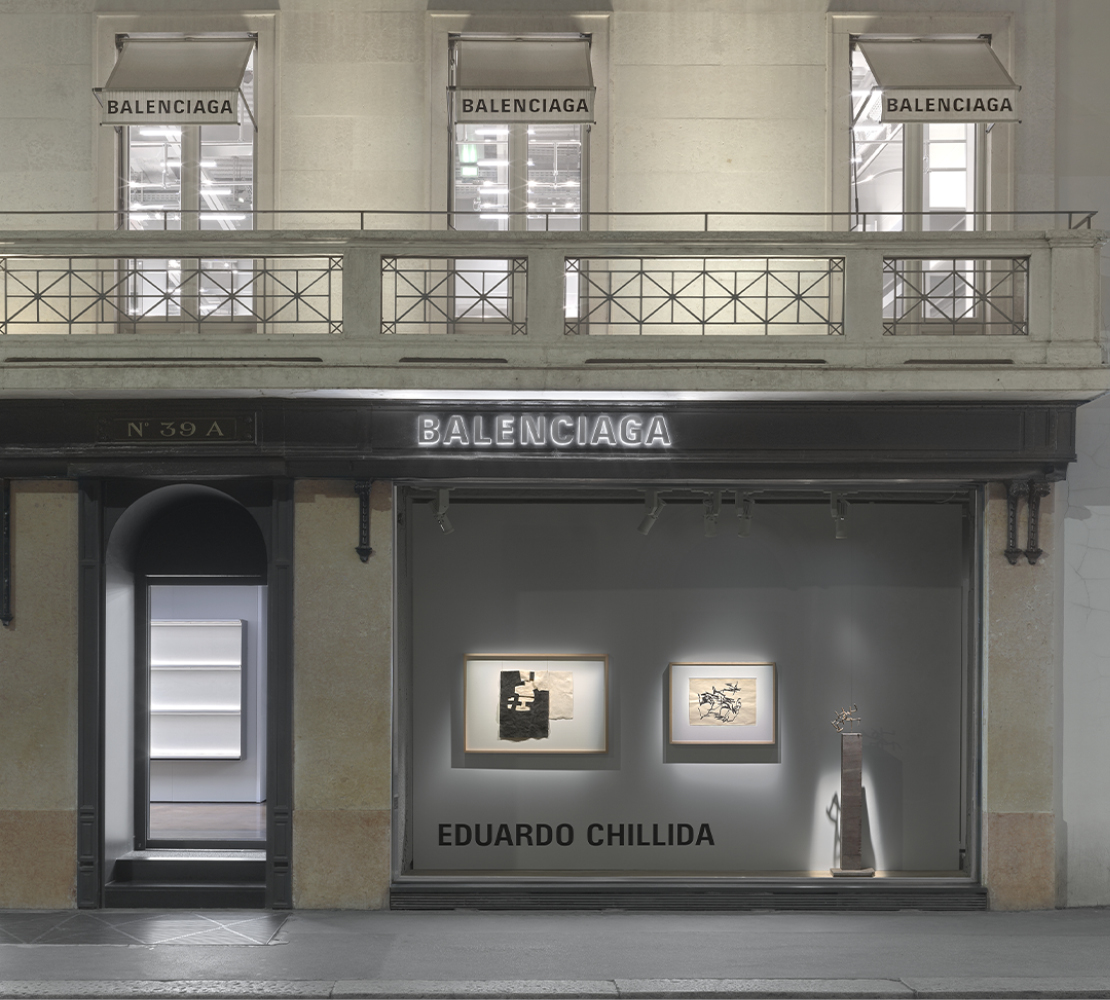
Developed in collaboration with the Eduardo Chillida Estate and Hauser & Wirth, the project also carried a personal dimension for Piccioli, who has long admired the artist’s work. The opening welcomed Mikel Chillida, the artist’s grandson and director of Chillida-Leku, further grounding the exhibition in its cultural lineage.
Hermès Presents a Scenographic Installation Showcasing its Latest Home Collections
Hermès presented a scenographic installation at Milan Design Week, conceived by Charlotte Macaux Perelman and Alexis Fabry, transforming space into an exploration of form, material and movement. Composed of thirty rectangular columns in varying heights, the structure created a series of pathways and shifting perspectives, guiding visitors through the Maison’s latest home collection.
Arranged in rhythmic alignment, the columns evoke the repeated gestures of craftsmanship, where precision and time shape each object. Wood, plaster and beech form a subtle architectural language, framing the pieces while allowing moments of pause and discovery. The interplay between full and empty spaces encourages a slower pace, in which moving through the installation becomes part of the experience itself.
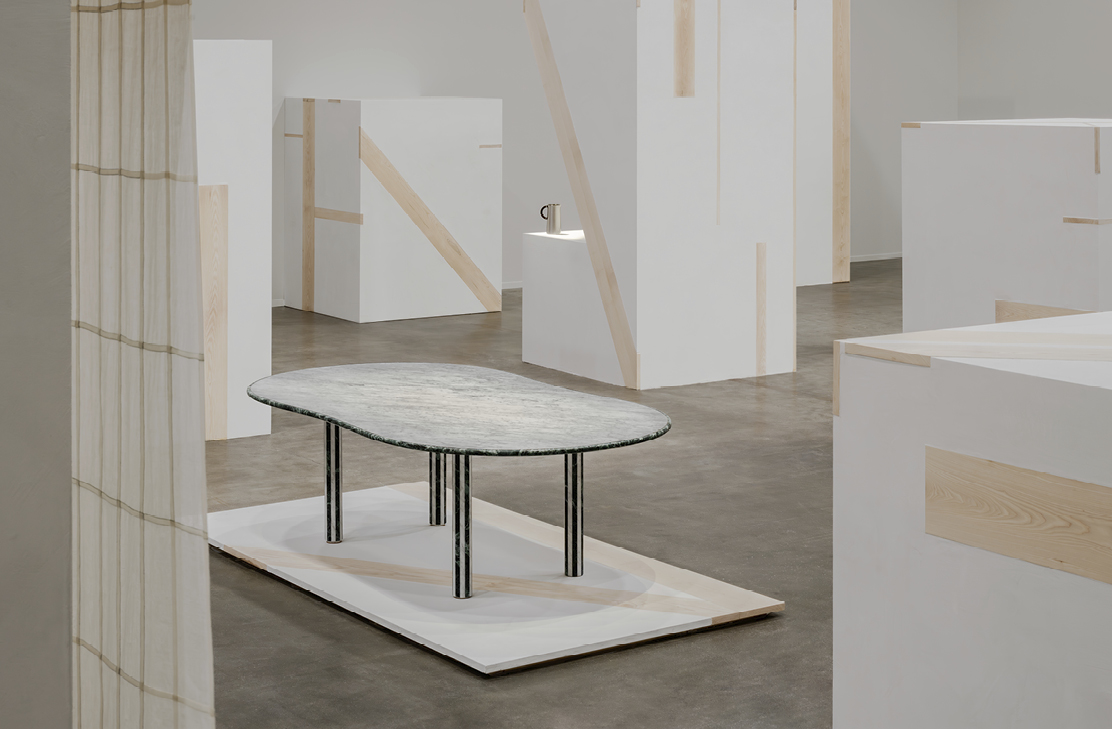
Throughout, the installation reflected Hermès’ approach to the home, where craftsmanship, materiality and imagination come together with restraint. Rather than presenting objects in isolation, the space allows them to exist within a broader narrative, one that moves between architecture and intimacy, gesture and detail.
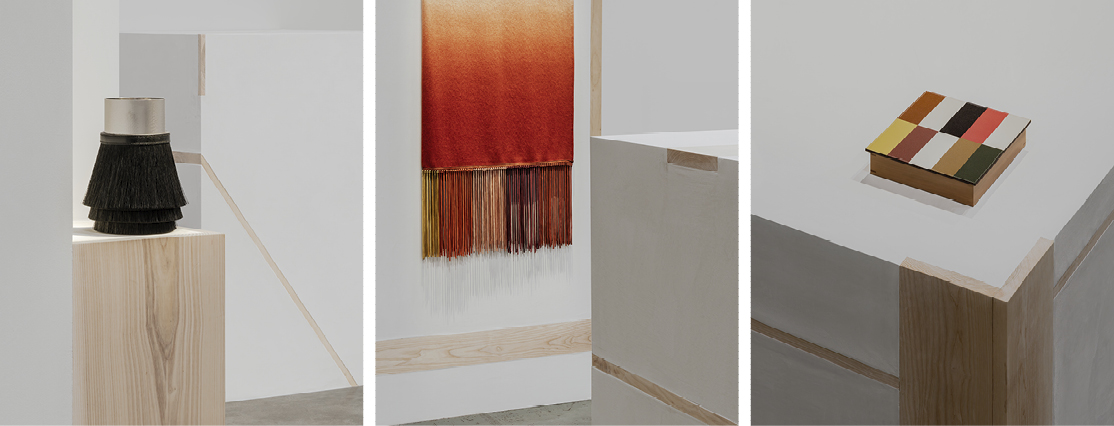
As the light shifts and perspectives change, the installation unfolds gradually, revealing new alignments and connections. It is a considered expression of the Hermès universe, where design is experienced not only through objects, but through the atmosphere they create.
Loro Piana Reveals Studies, Chapter I: On the Plaid at Its Milan Headquarters
Loro Piana presented Studies, Chapter I: On the Plaid at its Milan headquarters, Cortile della Seta, offering a focused exploration of one of the House’s most enduring design elements. Open to the public, the installation examined the plaid not simply as an object, but as a field of experimentation rooted in material, technique and craftsmanship.
First introduced in the mid-1980s, plaids have long held a central role within Loro Piana’s universe, serving as a space to explore weaving methods and fibre innovation with precision. This new project expanded on that legacy through Studies, an evolving framework dedicated to examining individual elements of interior design through a series of chapters.
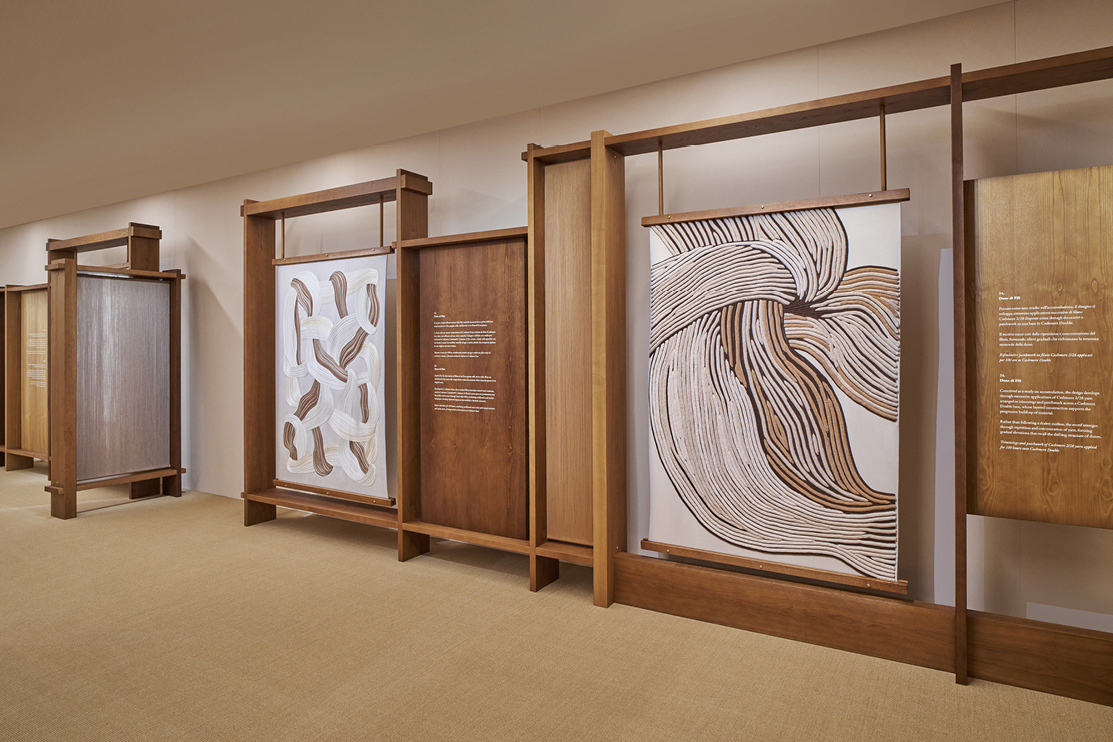
For its first iteration, the scenography unfolded as a passage, guiding visitors through a sequence of twenty-three plaids, each presented as a distinct study. Differentiated by construction, pattern, technique and finish, the pieces formed a visual index, mapping the breadth of possibilities within a single object. The display adopted a curatorial approach, placing the finished works alongside the raw fibres and yarns from which they originated, revealing the processes behind their making.
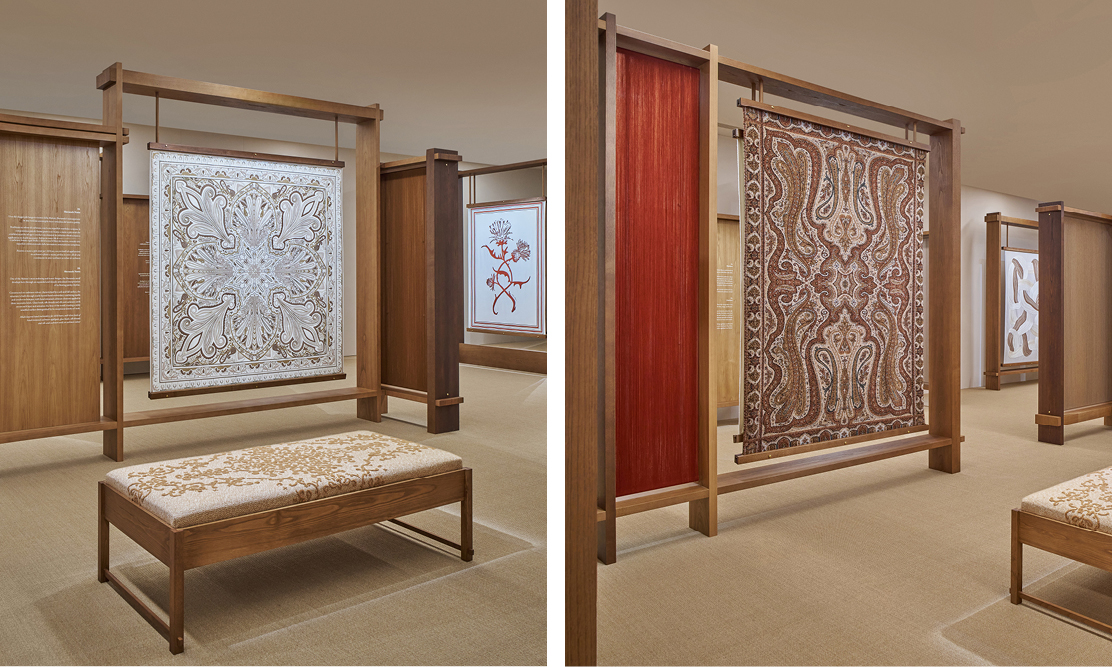
Across the installation, materials entered into dialogue with a range of techniques, from embroidery and appliqué to handloom weaving, patchwork and screen printing. Crafted using the House’s signature fibres, including Vicuña, Baby Cashmere and The Gift of Kings®, the plaids reflected Loro Piana’s ongoing commitment to excellence in material sourcing and production.
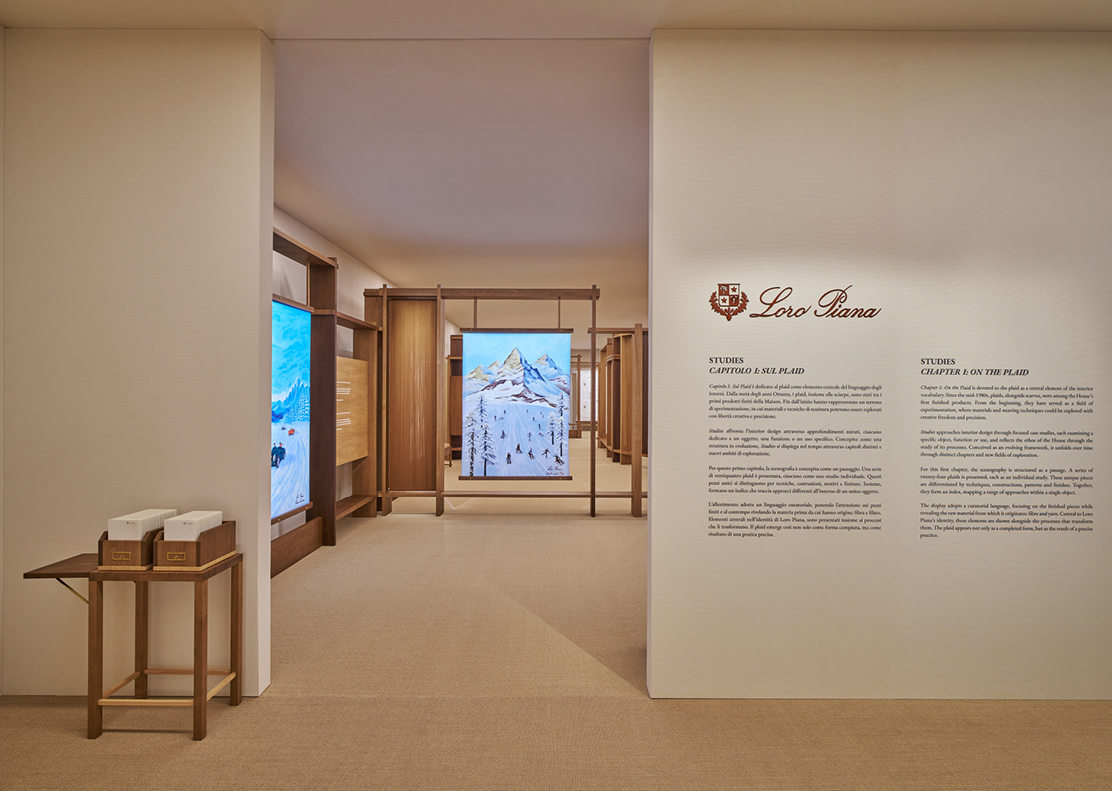
Historic motifs drawn from the archives were reinterpreted through contemporary compositions, highlighting a balance between heritage and innovation. Each piece, created upon request, underscored a sense of individuality and precision, positioning the plaid as both a functional object and an expression of craftsmanship shaped by fibre, technique and time.
Discover Dolce&Gabbana Casa’s Latest Collections For The Home
At Milan Design Week 2026, Dolce&Gabbana Casa unveiled its latest furniture collections, created in collaboration with Luxury Living Group, continuing the brand’s expansion into the world of interiors. Presented at its Via Durini showroom, the collections translated the House’s signature aesthetic into a refined domestic setting, where bold motifs, rich colour palettes and artisanal craftsmanship came together with a distinctly Italian sensibility.
The new Moss and Gardenia collections introduced softer, more fluid forms, with modular sofas, armchairs and daybeds defined by sinuous lines and generous proportions. These pieces balanced comfort with heightened attention to detail, reflecting the brand’s focus on both function and visual impact. Complementing these were the City line of cabinets and storage pieces, as well as the Club Noxus bar cabinet, where sculptural presence and contemporary design created a strong focal point within the space.
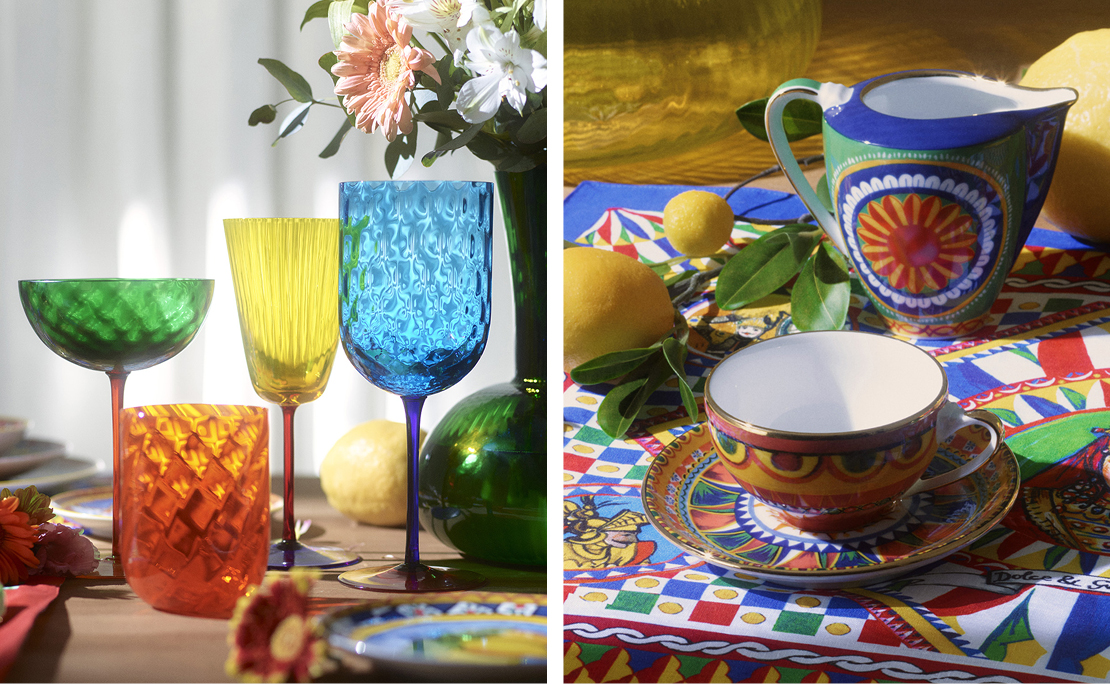
Outdoors, the Saint Jean collection expanded with a series of seating and dining pieces, distinguished by Dolce&Gabbana’s iconic prints. From Leopard and Zebra to Sicilian Cart motifs and majolica-inspired patterns in Blu Mediterraneo and Verde Maiolica, the designs brought a vibrant, expressive quality to open-air living.
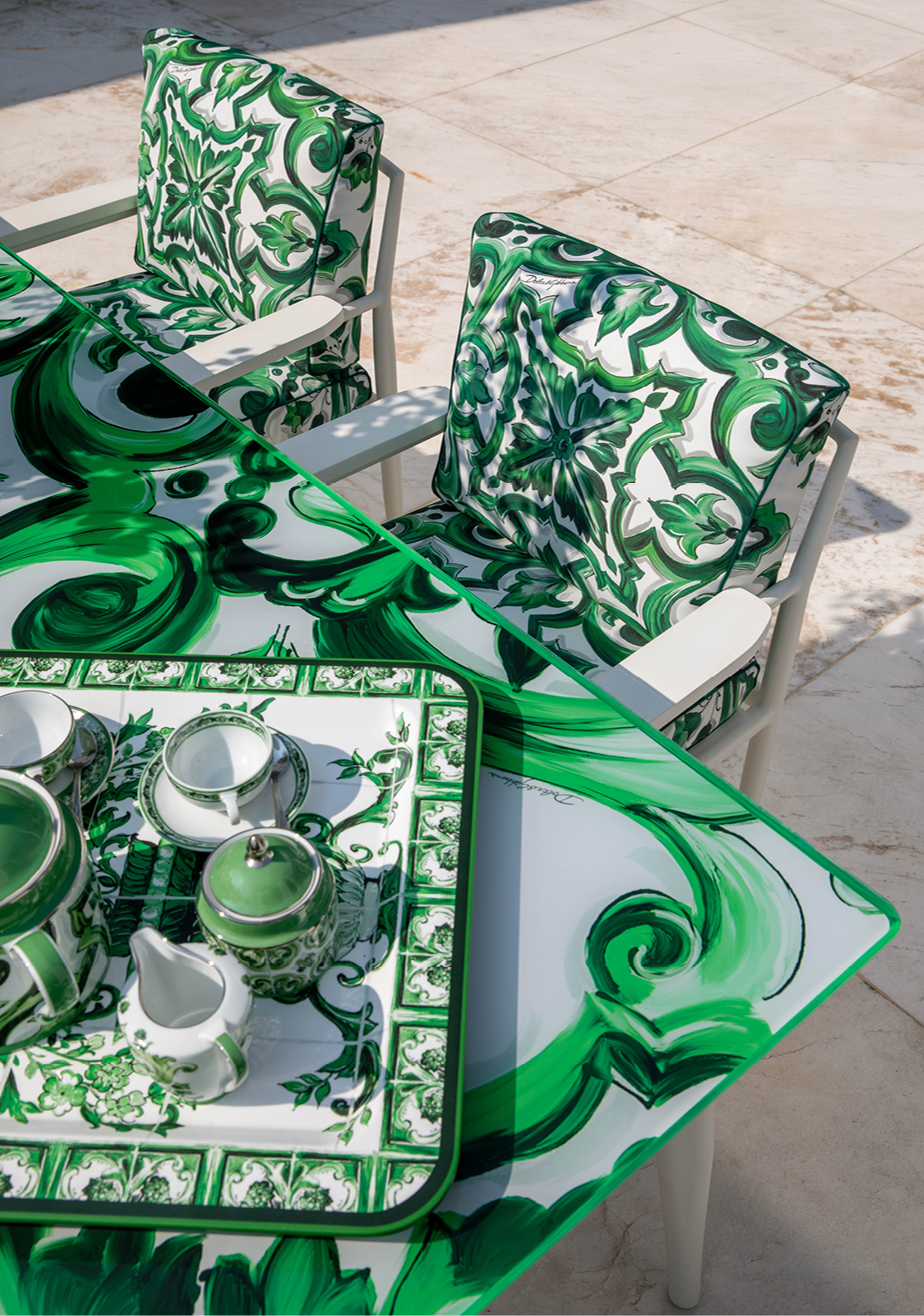
Beyond the collections themselves, the brand extended the experience through a live installation titled The Italian Lunch, an act of love, staged at its Corso Venezia boutique. Here, the concept of mise-en-place was reimagined as a moment of connection and conviviality, transforming the window display into a theatrical setting that celebrated Italian culture through design, food, and shared experience.
Armani/Casa Reveals its 2026 Collection With Origins Exhibition
Presented at its Milan flagship on Corso Venezia 14, the Armani/Casa 2026 collection unfolded through Origins, an exhibition that reflects the essence of Giorgio Armani’s approach to living. Conceived as a fluid narrative, the project moves between past and present, using the Maison’s most iconic pieces as a starting point to explore how design evolves while retaining a clear sense of identity.
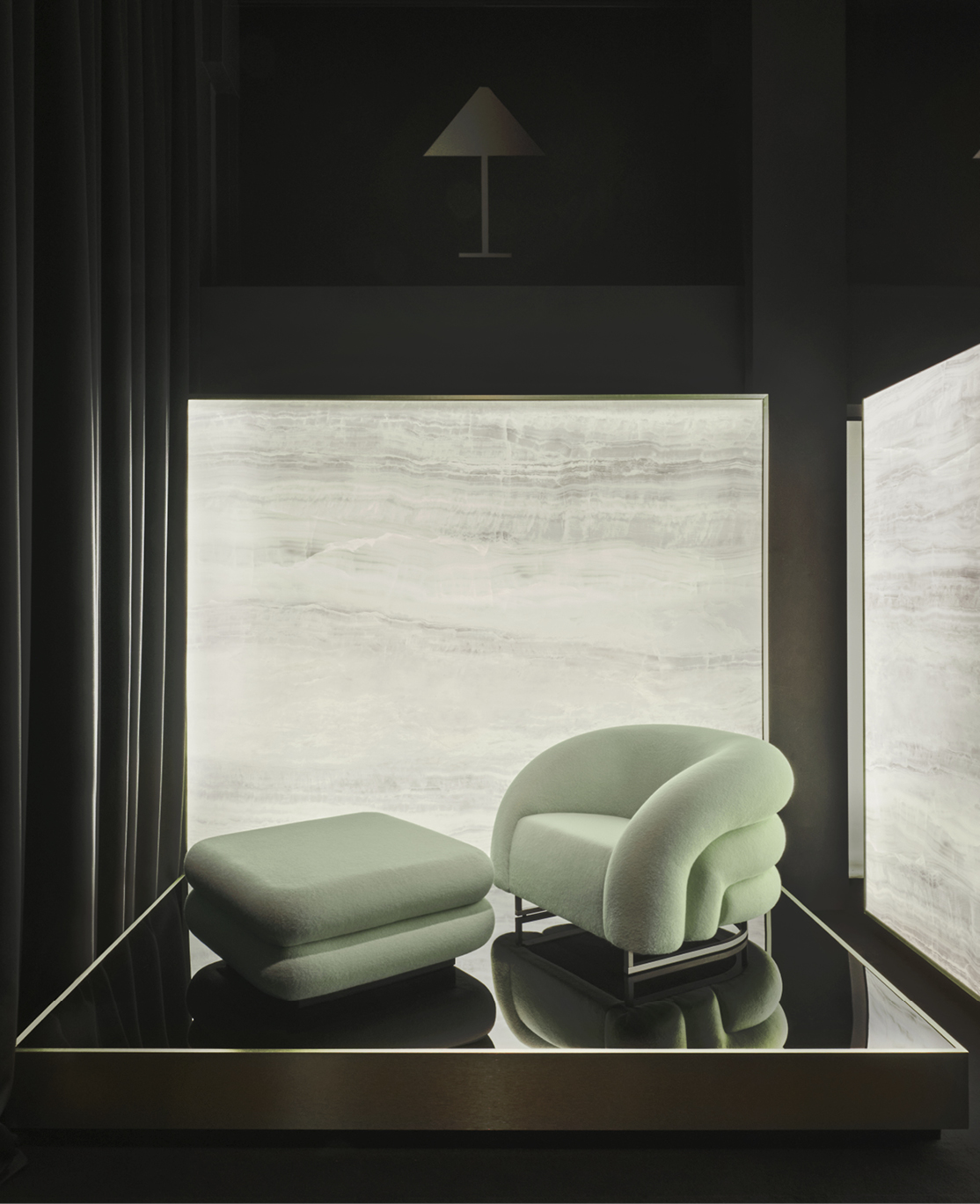
The presentation began at street level, where eight signature designs were displayed in the windows, each shown alongside its contemporary evolution. From the outside, these pieces appear as softened silhouettes behind frosted glass, creating a sense of intrigue that is only resolved once inside. The contrast between original and reinterpreted forms sets the tone.
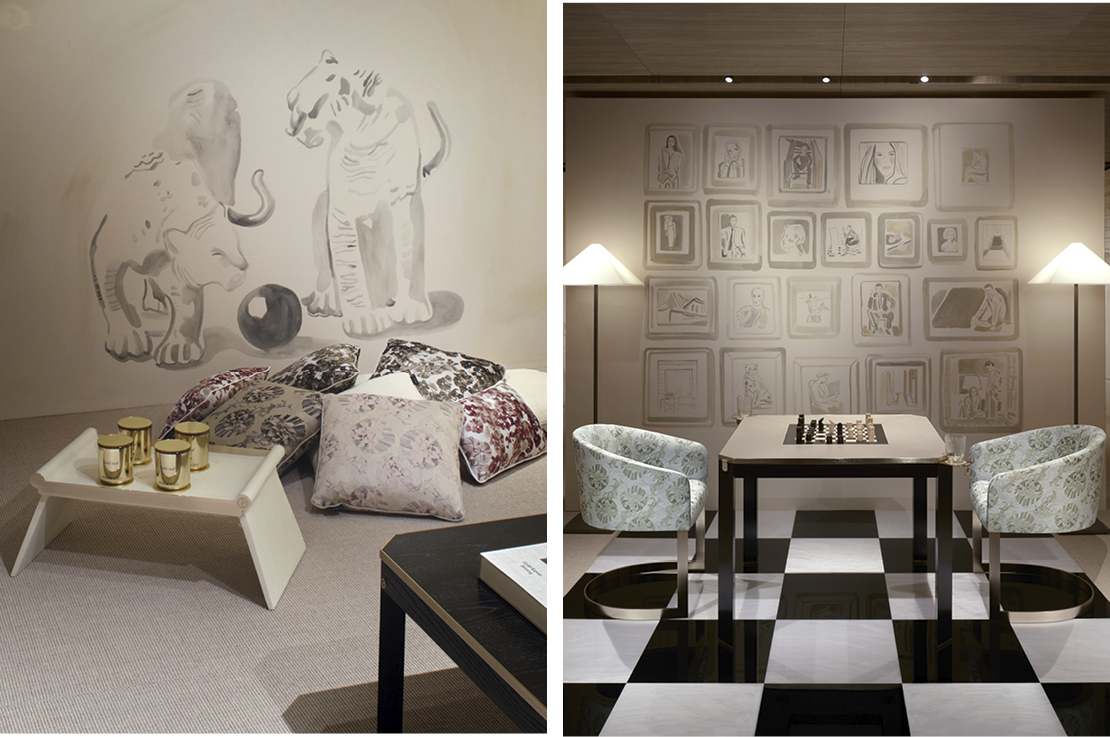
Inside, the space was transformed into a series of carefully composed interiors inspired by Armani’s own residences. On the ground floor, dramatic black drapes frame golden display cases, introducing a theatrical quality that contrasts with the restraint of the furniture itself. Upstairs, the exhibition opens into three living environments, each centred around the idea of the home as a place of gathering, reflection and personal expression.
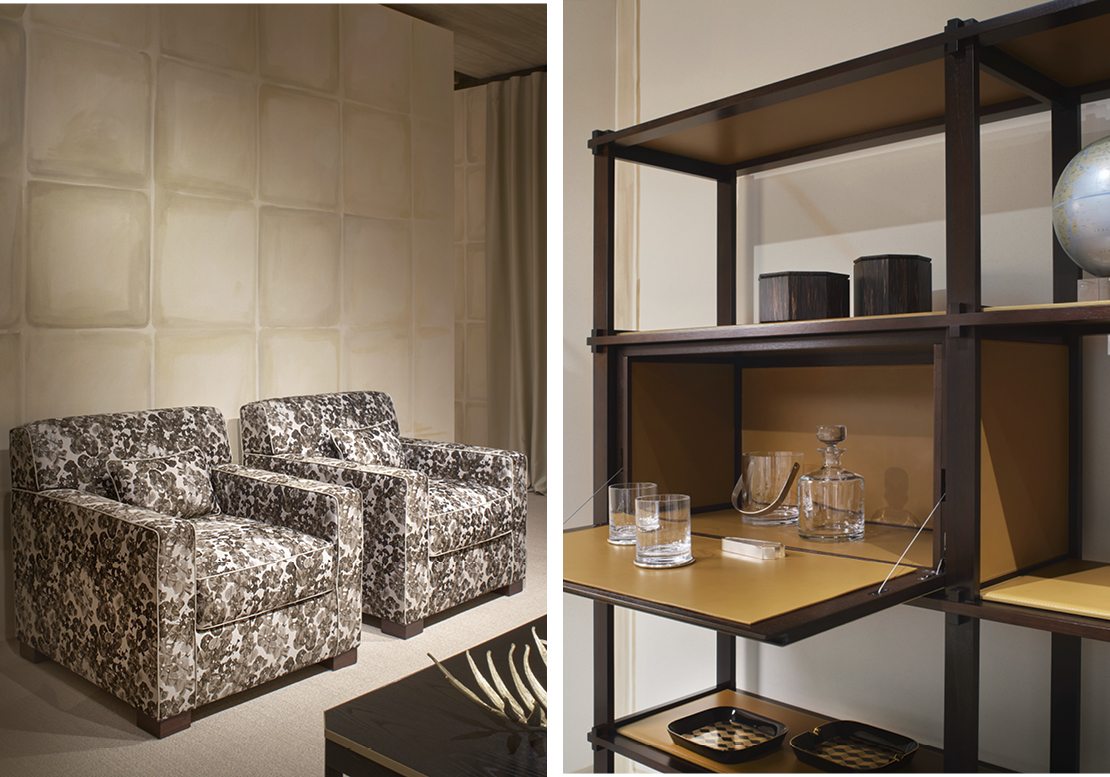
Hand-painted watercolours form the backdrop to each space, referencing elements of Armani’s interiors and guiding the viewer through different atmospheres. From structured, graphic compositions to softer, more intimate settings, the collection explores a balance of textures, materials and tones. Pieces such as the BORGONUOVO game table, PLAY sofa system and BRANDO modular seating reflect this approach, combining craftsmanship with a sense of ease.
Business, But Not As Usual, Katie Godfrey on How Business Owners Can Stay Positive During Uncertain Times
No matter how long someone has been in business, there’s rarely a point where everything feels completely secure. Something is always shifting. It might be a quieter month than expected, a dip in bookings, a launch that doesn’t land as planned, or external factors that create uncertainty and make even the most experienced founders question their footing. That’s why I always say, business is a rollercoaster.
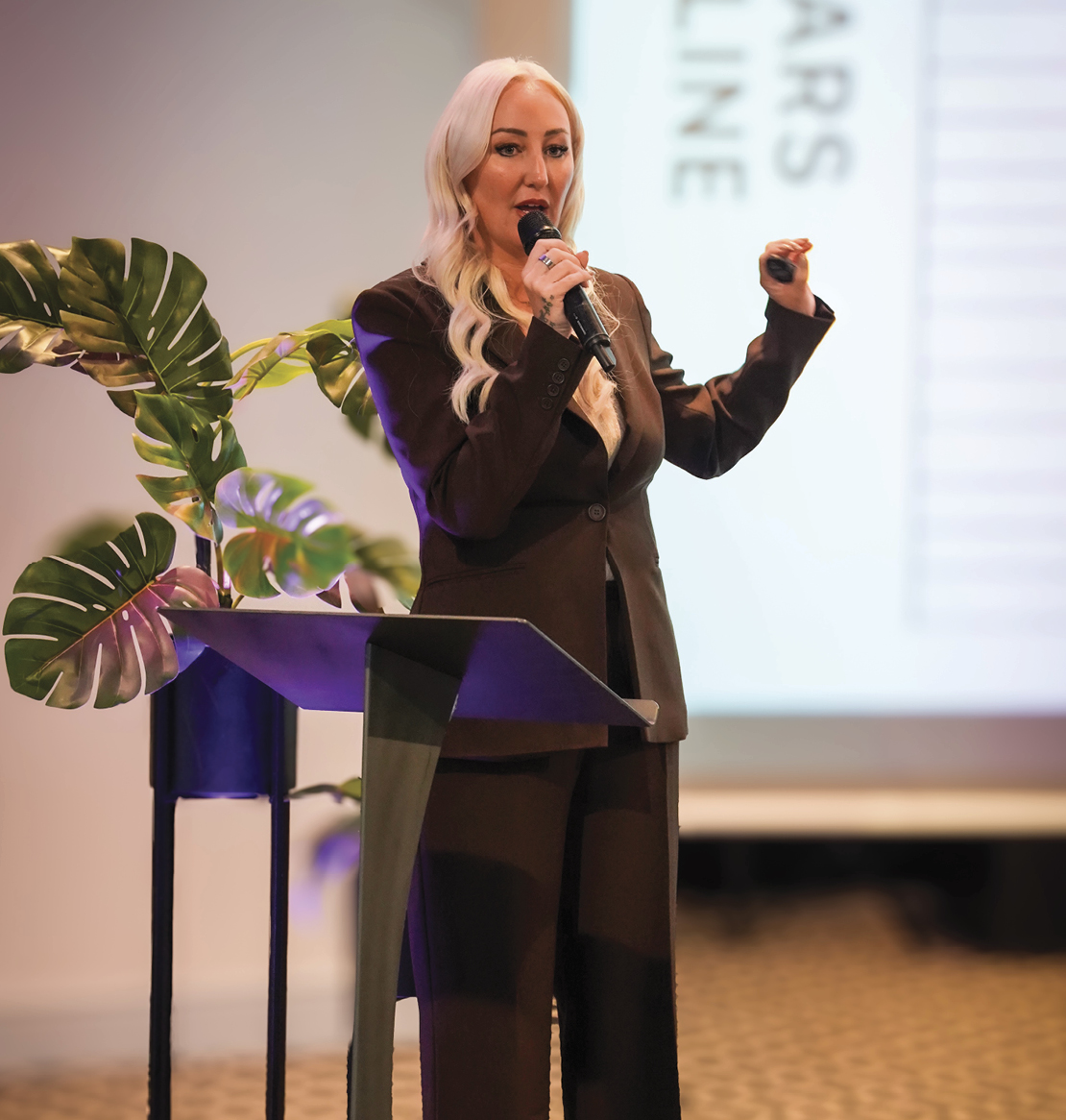
After over 17 years in business, one thing becomes clear: these periods are not unusual. In fact, they are often the moments that shape us into the strongest and most resilient business owners. The seasons that feel the hardest are usually the ones that demand growth, sharper decision-making, and a deeper level of self-trust.
It is easy, in those moments, to assume something has gone wrong. When things slow down or feel “off,” the natural reaction is to question every decision, to overanalyse, or to hesitate. But often, the shift is not as dramatic as it feels. What matters most is not the uncertainty itself, but how it is handled.
Standards over motivation
Positivity is often misunderstood as something that should come naturally, as though it is a mindset that simply appears each morning. But it really doesn’t work like that. There will always be days when motivation feels low, when things feel heavier, or when clarity is lacking. Building a business cannot rely on those moments. Instead, it is consistency and standards that carry things forward.
Showing up, even when it doesn’t feel easy. Continuing to communicate with your audience. Leading with intention, especially when others rely on you. These are the behaviours that create stability over time. Try to make a list when you lack motivation that you know will lift you back up. That could be listening to a podcast, going on a walk along the beach or hitting the gym.
One of the most common reactions to uncertainty is to retreat. To post less, to become quieter, to wait for things to improve before taking further action. While it may feel like the safest option, it often has the opposite effect. Reduced visibility leads to fewer opportunities. Less communication weakens the connection and trust. A lack of action inevitably impacts income. During these periods, it becomes even more important to remain present. To continue showing up, to maintain visibility, and to communicate clearly. Not forcefully or overwhelmingly, but with a steady, reassuring presence that signals consistency and confidence.
Focus on what can be controlled
Uncertainty often draws attention towards what cannot be controlled: the economy, external events, or the actions of others. However, this focus rarely leads to progress. What creates movement and momentum are the simple, consistent actions like showing up, speaking to clients, maintaining relationships, following up, and continuing to offer services or solutions.
These are not complicated strategies, but they are the ones that make the greatest difference. Waiting for clarity or certainty before taking action can lead to stagnation. In most cases, it is the action itself that rebuilds confidence and restores a sense of control.
When things feel unpredictable, structure becomes essential. That doesn’t have to be rigid or unrealistic routines like 5 am starts. But simple, consistent habits that provide direction. Starting the day with intention, having clarity on priorities, and continuing to take small, meaningful steps forward. In service-based businesses, this consistency is equally important for clients. Continuing to open, to connect, and to deliver services creates a sense of normality and reassurance. That sense of stability is something people value deeply, particularly during uncertain times.
It’s never just about the service
Businesses, particularly within beauty, wellness, and service industries, offer far more than surface-level service. Clients are not only investing in a treatment or appointment; they are investing in how it makes them feel. The time to pause, to reset, to connect, and to feel better, even if only briefly.
This is often underestimated, yet it is one of the most valuable aspects of any service-led business. Continuing to show up during challenging periods is not simply about maintaining income; it is about providing something that holds real value in people’s lives. That 60 minutes out can make a world of difference to someone.
The environment surrounding a business owner plays a significant role in how uncertainty is experienced. Constant exposure to negativity, fear, or pessimism can quickly shape perspective, leading to hesitation and reduced action. On the other hand, being around individuals who remain proactive, solution-focused, and forward-thinking can have the opposite effect. It reinforces possibility, encourages action, and helps maintain momentum.
While business ownership can feel isolating, building or being part of a supportive network can make a significant difference in navigating more challenging periods. You really are who you surround yourself with.
Stay present and focused
Looking too far ahead during uncertain times can often create unnecessary pressure. Focusing instead on what is directly in front of you can be far more effective. Asking simple, practical questions like, What can be done today? Who can I support today? How can progress be made in the immediate term?
This will allow for consistent movement without becoming overwhelmed by factors outside of control. Momentum is rarely built through large, sudden actions. It is created through small, consistent steps taken over time.
There is often a belief that a clear plan or complete certainty is needed before moving forward. In reality, clarity is usually the result of action, not the starting point. Taking the next step, adjusting when needed, trying new approaches, and making decisions even without complete certainty are all part of building a resilient business. Waiting for everything to feel aligned or guaranteed can often lead to inaction, which is far more limiting than making a decision and adapting along the way.
Uncertainty is not something that can be avoided in business, it is something that becomes part of the journey. Each time there is a bump in the road, and you have worked through it, it builds resilience, confidence, and experience. Over time, it becomes easier to navigate, not because the challenges disappear, but because the ability to handle them strengthens.
Periods of uncertainty do not indicate failure or being off track. More often, they signal growth, adjustment, and the need to step forward with greater intention. And with that comes progress.
Katie Godfrey is a Business Strategist, Podcaster and Best-selling Author “Get off the Tools”
By Katie Godfrey
Lise Macdonald, President of L’École, School of Jewelry Arts Discusses Jewellery, Art and the Importance of Education
Since its founding in 2012 with the support of Van Cleef & Arpels, L’ÉCOLE, School of Jewelry Arts has established itself as a unique educational platform dedicated to sharing the cultural, historical and technical dimensions of jewellery with a wider audience. Through a multidisciplinary approach spanning courses, workshops, talks and exhibitions, the institution opens up the world of jewellery to all, from curious beginners to seasoned collectors, offering an immersive understanding of gemstones, craftsmanship and the artistry behind each creation.
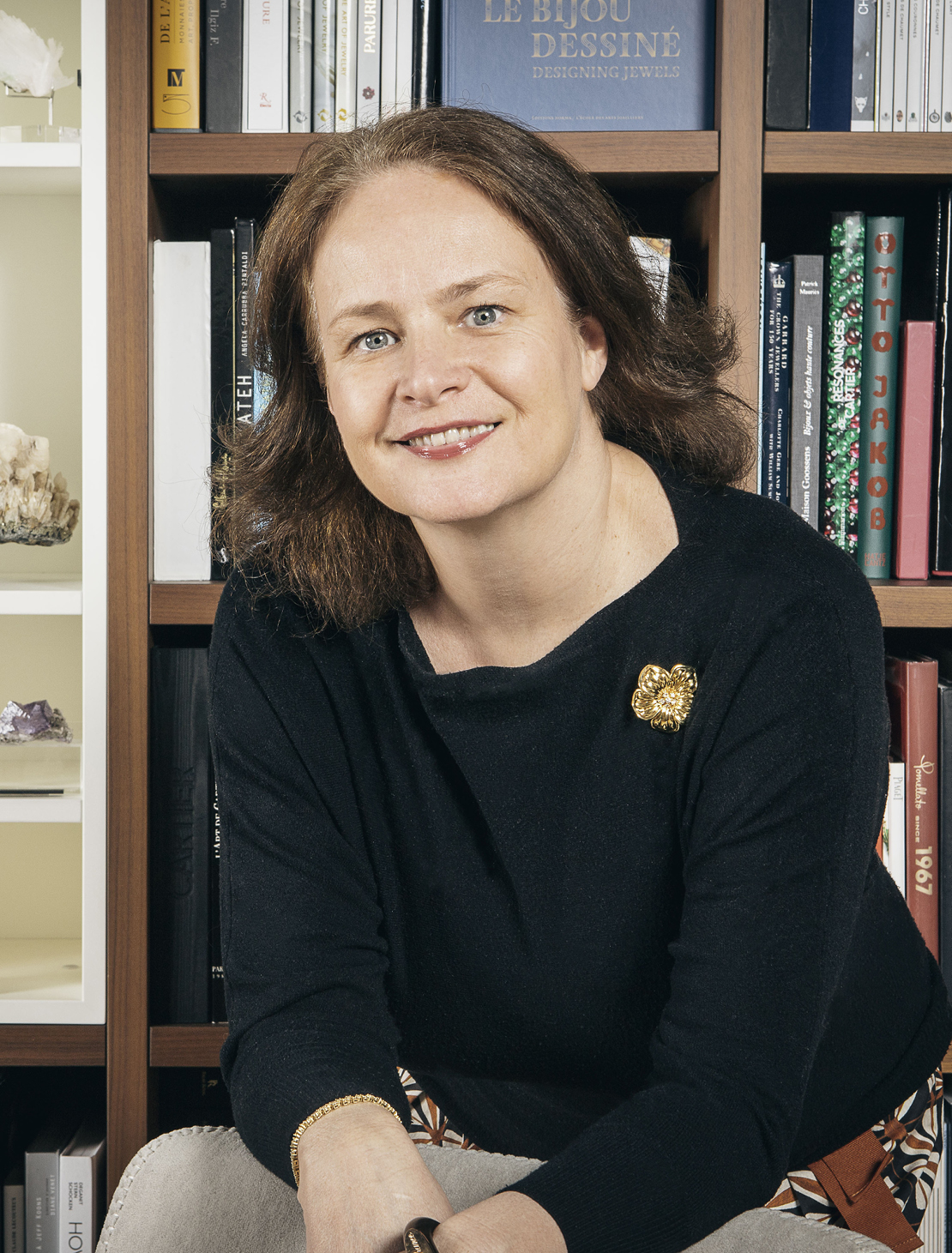
Now with a permanent presence in Dubai, alongside its campuses in Paris, Hong Kong and Shanghai, L’ÉCOLE continues to expand its global dialogue while engaging closely with regional audiences. The Middle East campus reflects the school’s broader mission, creating a space where education, cultural exchange and heritage intersect, while also supporting local initiatives through partnerships and philanthropic programmes.
This season, that dialogue extends into its latest exhibition, Poetry of Birds, a thoughtful exploration of symbolism and storytelling across jewellery and the arts. Here, Lise Macdonald, President of L’ÉCOLE, reflects on the institution’s evolving presence in the region and its role in shaping the future of jewellery education.
L’ÉCOLE has steadily expanded its international footprint. How do you see the school’s presence evolving in the Middle East, and what opportunities does this region offer for jewellery education and cultural exchange?
The Middle East has experienced remarkable growth in recent years, particularly in the cultural and educational spheres. Its unique context as an international melting pot, the openness of the public to cultural exchange and the strong interest in history, arts and savoir-faire provide a natural, fertile ground for L’ÉCOLE. We aim to actively contribute to this growth by building strong and lasting relationships with local audiences and institutions.
L’ÉCOLE’s mission is to share and transmit jewellery culture to a wide audience through diverse educational paths – from courses to exhibitions, talks, publications, podcasts, and research programs. We hope to inspire the public – jewellery lovers and amateurs, children and adults – as well as experts and students to approach jewellery arts in new and creative ways, blending tradition and modernity in their imagination.
Why did the Middle East feel like a natural next chapter for L’ÉCOLE, and how do you tailor your programs to resonate with the artistic traditions and aesthetic sensibilities of the region?
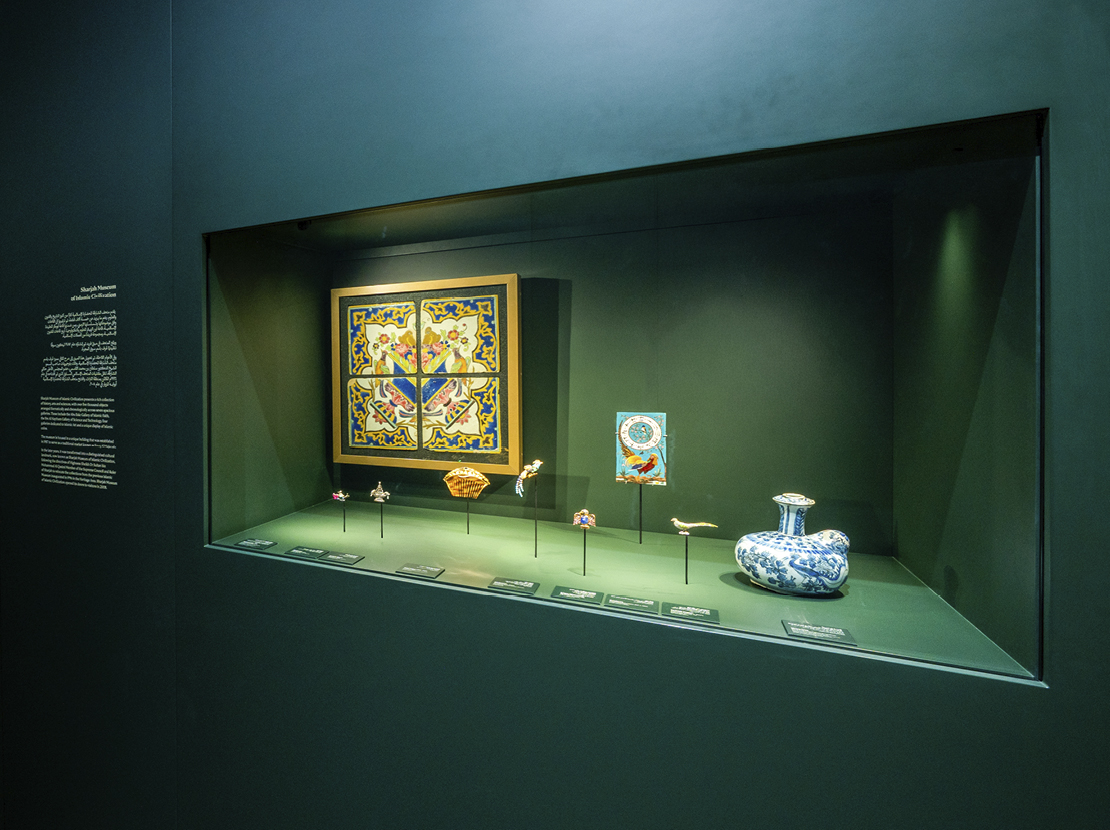
We chose Dubai to settle L’ÉCOLE’s first permanent campus in the Middle East as it is a dynamic cultural hub, a strategic place to initiate partnerships with local cultural and educational institutions, and to progressively organise activities across the UAE and the whole region. Our programs are tailored to local needs, while drawing on our expertise to collectively address the universality of jewellery arts. Accordingly, we are increasingly developing our courses and talks in Arabic and forging strong links between our scientific content and the region’s. Our most recent exhibition to date, “Poetry of Birds”, features a particularly strong local relevance, developed in close collaboration with local lenders, including institutional partners such as the Sharjah Museum of Islamic Civilization.
Your latest exhibition, Poetry of Birds, has captured attention for its delicate storytelling and craftsmanship. What inspired this theme, and how does it connect with L’ÉCOLE’s broader mission of blending art, history, and craftsmanship?
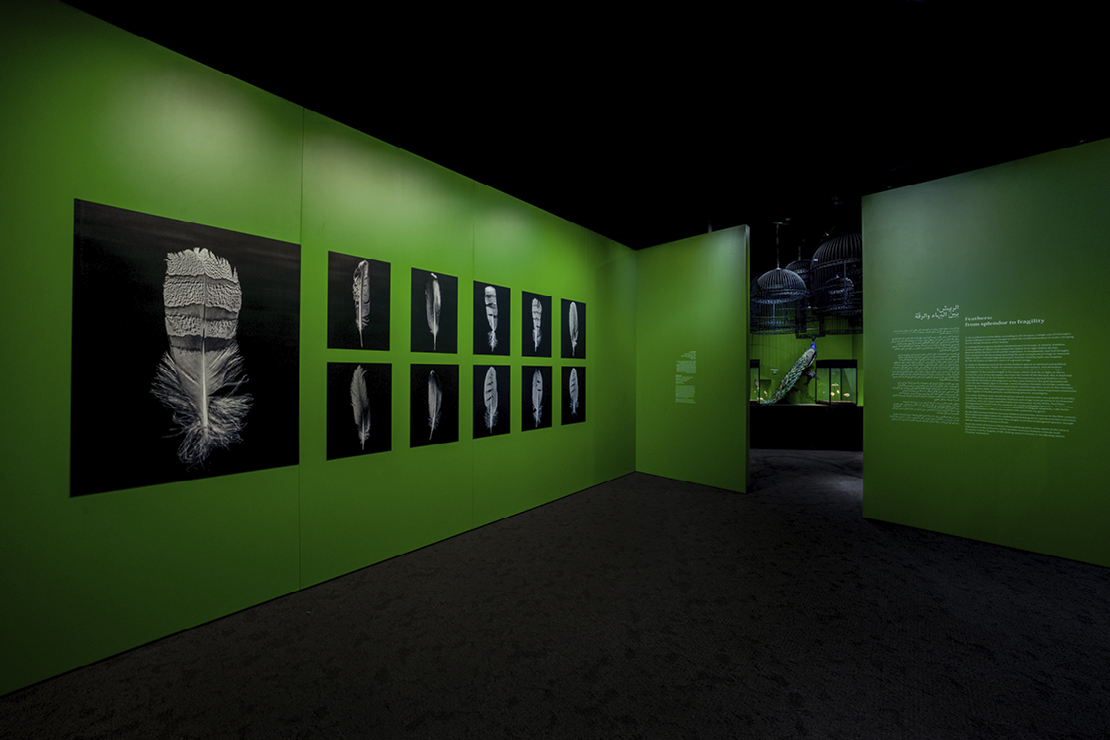
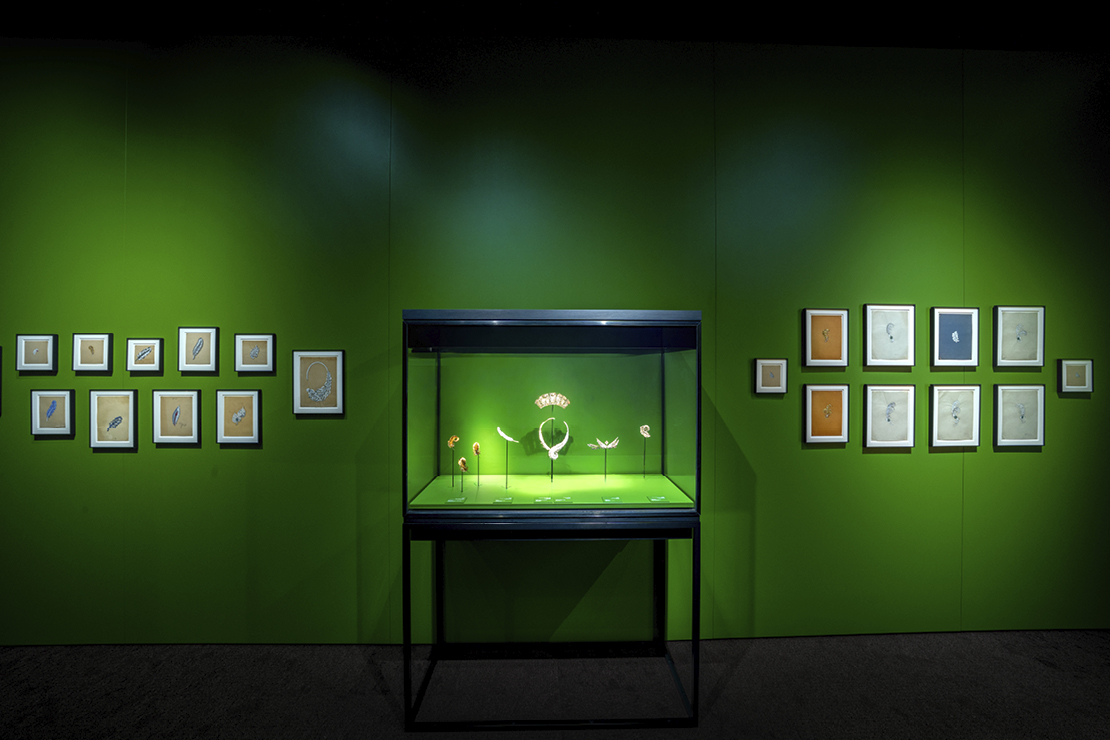
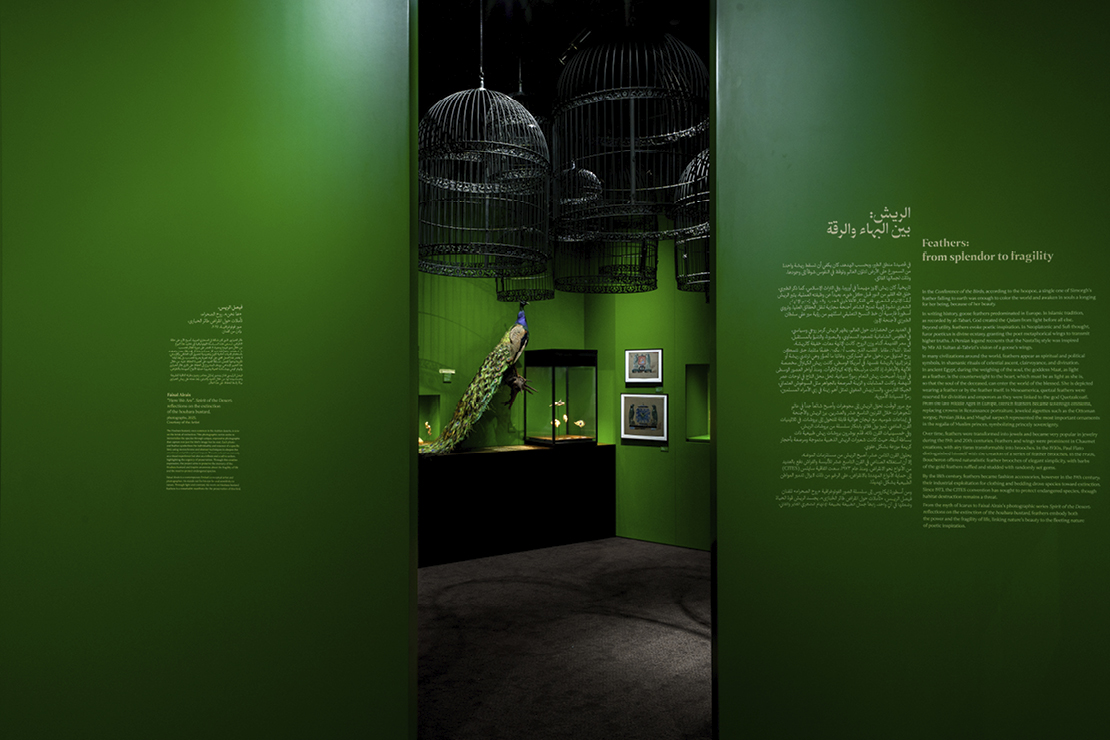
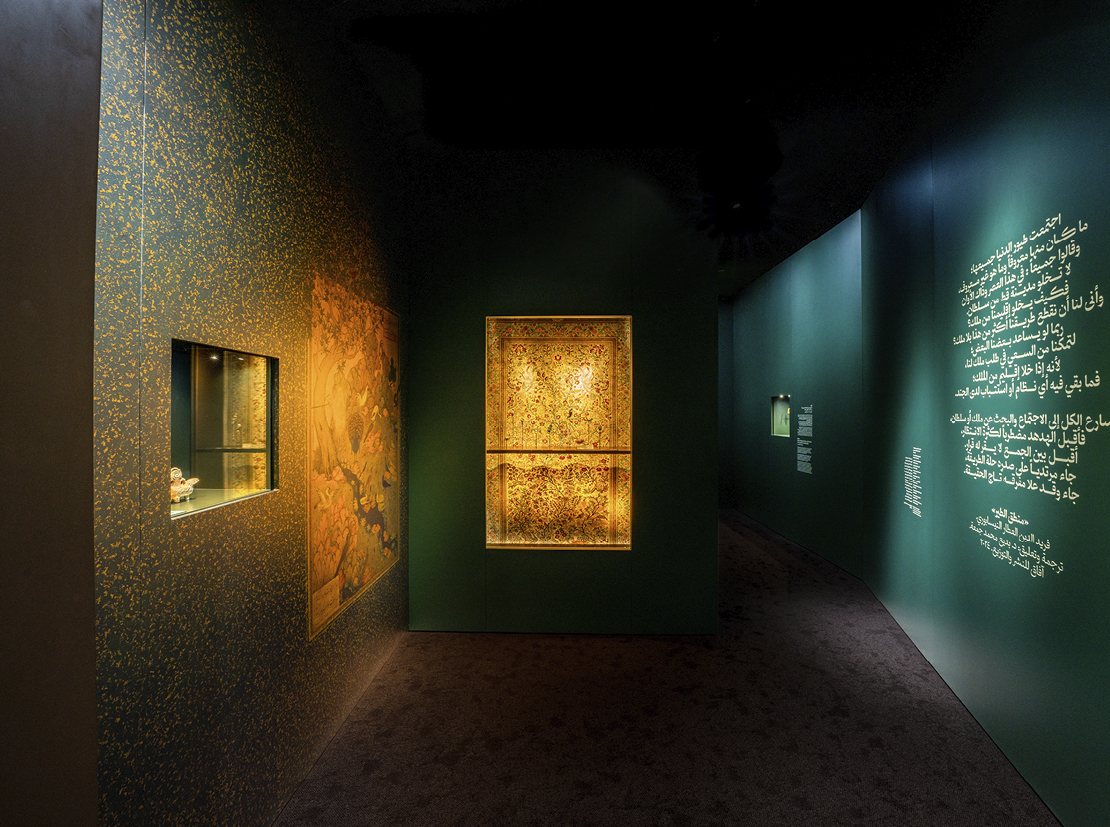
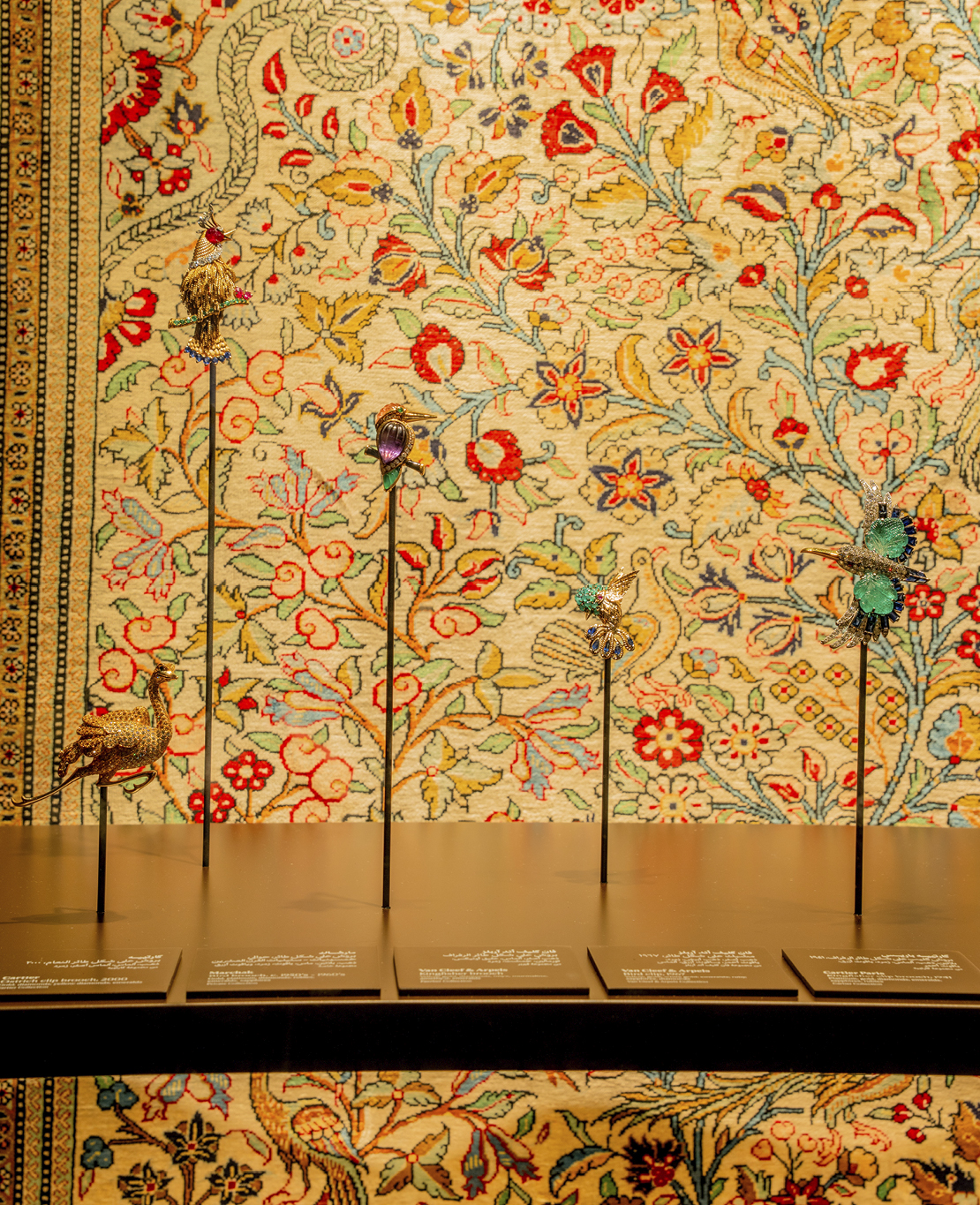
Birds, with their vibrant plumage, their songs, and their capacity for flight, are considered symbolic creatures in multiple cultures. They have inspired many artists and jewellers. L’ÉCOLE has been interested in these aerial figures since 2019, when it presented the “Birds in Paradise” exhibition in Paris. We decided to adapt the topic for the regional audience by highlighting the links between bird-shaped jewellery and Middle Eastern arts, with poetry as the connecting thread. The precious loans from European Maisons encounter the works of art from the Sharjah Museum of Islamic Civilization and Dubai Museums, alongside photographs by Emirati photographer Faisal al Rais. With its immersive scenography, the exhibition creates a dialogue between 19th and 20th-century jewellery and other artistic fields, shedding light on a topic relevant at both local and international levels.
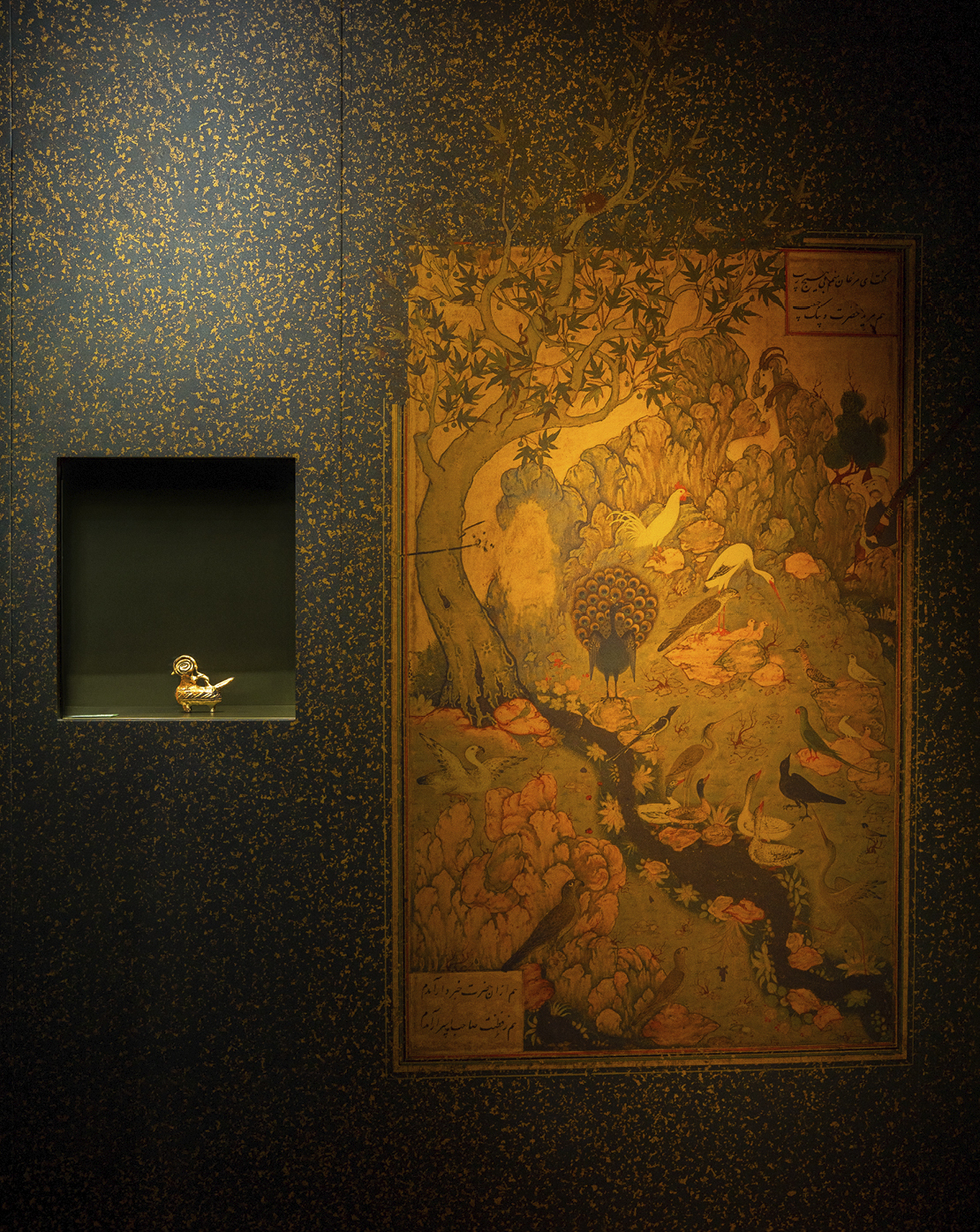
Birds have deep symbolic meaning across cultures, including in the Middle East. How does Poetry of Birds explore these narratives through jewellery and decorative arts?
Birds have indeed long been revered in Middle Eastern culture as symbols of freedom, renewal, and the human spirit. Through “Poetry of Birds,” we aimed to honour this tradition and demonstrate how these figures resonate across time and continents in art, poetry, and jewellery. The work by Persian poet Farid al-din Attar, The Conference of the Birds, written in 1177, was a real inspiration for our curator, for instance. The 150 exceptional pieces bringing together bird-shaped jewels from myriad styles, but also calligraphies, photographs, sculptures, ceramics, and tapestries, have all been selected in that goal: to transcend mere aesthetics and reveal how even the smallest motif can encapsulate centuries of memory, emotion, and craftsmanship.
One of L’ÉCOLE’s core strengths is nurturing new generations of talent. How are you empowering emerging jewellery artists, designers, and craftspeople, particularly young voices from the Middle East?
L’ÉCOLE in Dubai launched specific professional development programs for young talents, like ADMAF Jewelry Design Award and the Talent Atelier Program with Dubai Culture & Arts Authority (Dubai Culture), to empower local professionals and create cross-disciplinary dialogues. These programs enrich and inspire emerging designers by providing a platform to refine their skills and advance their expertise in jewelry arts with educational experiences in the Dubai and Paris campuses through courses, workshops, museum visits and encounters with jewelry experts of different backgrounds. These programs are one of the key cornerstones of our campus in the region as we are increasingly solicited to play a role in transmitting knowledge to young creators. Our campus in Dubai is becoming an increasingly important hub for the next generation of creative talents.
Traditional craftsmanship techniques are becoming increasingly rare worldwide. How does L’ÉCOLE work to safeguard these skills, and what role do you believe education plays in preserving centuries-old savoir-faire?
Traditional craftsmanship is evolving with technology, but jewellery still has a strong connection to human gestures and creativity. It is our purpose to shed light on and share knowledge of the jewellery arts through hands-on workshops, to foster understanding and admiration for this savoir-faire, part of our humanity. L’ÉCOLE has a role to play to introduce people of all ages to jewellery craftsmanship, history and the world of gemstones as appreciation inspires preservation.
Hands-on learning is a hallmark of your approach. How important is it for students to experience real tools, materials, and techniques rather than only digital or theoretical learning?
Education creates intellectual and emotional resonance because it brings meaning and context to what might otherwise remain an object or a theory. For example, we conduct hands-on workshops by recreating the actual jeweller’s bench and explaining real jewellery-making techniques. We also use professional gemmology equipment, where one learns to recognise and appreciate gemstones and minerals. That said, L’ÉCOLE is also providing different paths of education – one can learn not only through in-person experience, but also through reading jewellery-related books and remote learning with online talks and podcasts. With our own publications on different jewellery topics or the recent literary collection Dédale associating jewellery and literature, as well as our podcast “Voice of Jewels”, L’ÉCOLE hopes to multiply different touchpoints to interest the public with different learning habits and from various locations.
You’ve championed accessibility in jewellery education. How do you ensure L’ÉCOLE remains inviting to the public while also maintaining depth and academic rigour for more advanced learners?
Our goal is to propose pleasant and meaningful experiences at the crossroads of leisure and education. We want to create the perfect conditions so that our participants can focus on the beauty of jewellery and discover something new. The quality of the learning experience is also a key priority at L’ÉCOLE. Our courses are designed for small groups, with two Lecturers for each class. Regarding academic content, L’ÉCOLE’s Research and Education Department leads jewellery research and develops pedagogical materials to ensure our courses and talks remain accessible to everyone while upholding scientific rigour.
As President, what has been the most significant challenge you’ve faced in steering a global institution like L’ÉCOLE, and how has it shaped your vision for the future?
The recent rapid and international expansion of L’ÉCOLE in the Middle East and China has been a wonderful opportunity for all the teams worldwide to expand our knowledge and, in turn, the transmission of jewellery culture from these regions. It continues to be an immense source of new projects, collaborations and future developments for us, and we are confident that this international approach will enable L’ÉCOLE to better fulfil its mission of transmission to all.
Looking ahead, what would you still like to achieve for L’ÉCOLE, whether through expansion, new programmes, partnerships, or areas of research?
The world of jewellery culture provides an endless source of content, and we are thrilled to continue our journey in its transmission, looking through the prism of different cultures, know-how and gemmology topics. Our ambition is to delve deeper into their studies, foster cross-cultural dialogue, and spark interest – if not passion – in the beautiful and rich world of jewellery.
Finally, when you think about the next decade of jewellery arts, what excites you most and how do you hope L’ÉCOLE will contribute to that evolving landscape?
By transmitting jewellery culture and knowledge to the widest possible public, L’ÉCOLE aims to cultivate a community that deeply values the history, craftsmanship, science, and art inherent in jewellery. This objective seeks to inspire a public perception of jewellery that moves beyond mere adornment to recognise its profound artistic and cultural significance as a form of human heritage.
Looking ahead, L’ÉCOLE hopes to have a significant and lasting impact on cultural education by serving as a dynamic, international hub for jewellery knowledge and exchange. It envisions itself as a meeting point across its campuses worldwide, where jewellery professionals, academics, and enthusiasts can converge to share insights, exchange ideas, and collaborate on innovative projects within the jewellery arts. In the Middle East, partnerships with cultural institutions like Dubai Culture, ADMAF, Al Safa Library, etc. are also ways for us to support young people, emerging artists, and outreach to a wide public with an interest in art and culture in general.
Designing the Future, Maria Porro President of Salone del Mobile.Milano shares the vision for this year’s edition
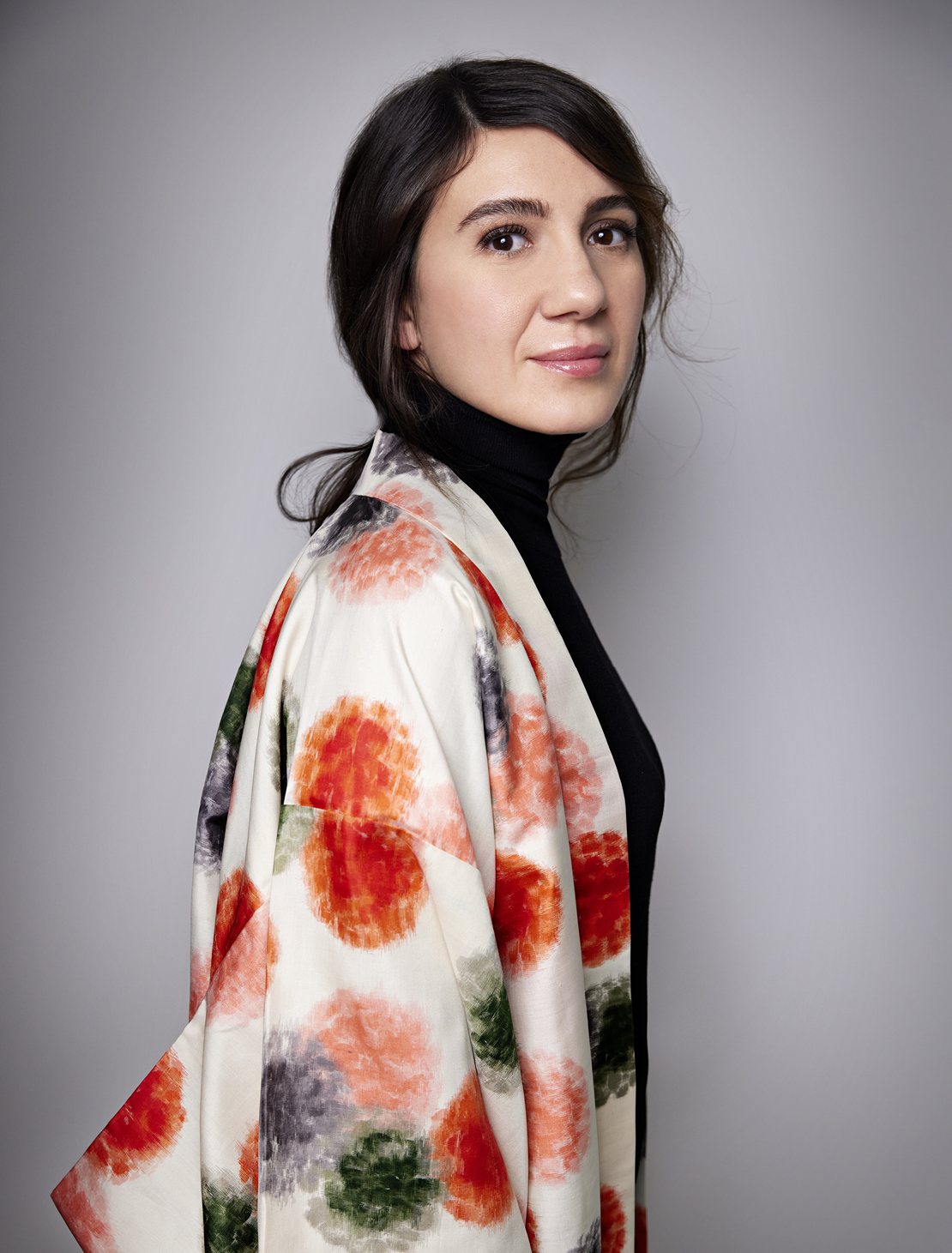
As President of Salone del Mobile.Milano, Maria Porro is helping shape one of the design world’s most influential platforms at a moment of global change. With shifting markets, evolving urban development and new expectations around sustainability and innovation, the 2026 edition arrives at a time when design is being asked to do more than ever before.
Under Porro’s leadership, the fair continues to evolve beyond a traditional trade event into what she describes as a cultural and economic infrastructure that connects designers, architects, developers, and institutions from across the world. From new initiatives such as Salone Contract and Salone Raritas to deeper engagement with emerging markets, including the Middle East, the upcoming edition reflects a broader vision for how design can respond to complexity and shape future cities and experiences.
In this conversation, Porro reflects on the vision for 2026, Milan’s growing global influence, and how Salone del Mobile continues to serve as both a marketplace and a meeting point for ideas, collaboration, and innovation in an increasingly uncertain world.
As President of Salone del Mobile, how are you shaping the vision for the 2026 edition in response to an increasingly complex global landscape?
In 2026, we are shaping Salone as a platform that helps the design industry confront complexity with greater awareness, not greater abstraction. Today, the global landscape is marked by geopolitical instability, shifting trade routes, rising operational costs, new social expectations, and profound changes in market structure. In this context, our role is not simply to present products, but to create the conditions for companies to interpret change, strengthen their positioning, and build more resilient strategies.
This is precisely why Salone Contract is such a significant part of the 2026 vision. Contract is one of the areas where these global transformations become most visible. It is where design intersects with international investment, hospitality, workplace transformation, real estate development, infrastructure, and new urban demand. It is also where competitiveness no longer depends only on aesthetic quality, but on the ability to integrate production capacity, technical expertise, sustainability credentials, digital tools, regulatory knowledge, and operational reliability. In other words, Contract is where the market is asking design to become a system, service, and long-term partnership.
That is why, in 2026, we are not presenting Salone Contract as a finished format, but as the beginning of a broader strategic process. With the involvement of Rem Koolhaas and David Gianotten of OMA, the project begins this year through a public lecture, an international forum, a thematic pathway across the fair, and a structured incoming programme with selected global operators. These are concrete steps designed to help the industry read where the contract market is going, what new forms of demand are emerging, and how Italian and international companies can position themselves more effectively within that evolution.
More broadly, the 2026 edition reflects a clear conviction: in a fragmented world, the Salone must be both a marketplace and a cultural infrastructure. It must remain a place where business happens, but also where industries, designers, institutions, and markets can build a shared understanding of the changes ahead. Our vision is to make the Salone increasingly capable of connecting economic value with cultural intelligence, because today the real challenge is not only to respond to complexity, but to transform it into direction.
This year introduces new initiatives, including Salone Raritas. What prompted this addition, and how do they reflect the evolving needs of the design industry?
The introduction of Salone Raritas comes from a very clear observation: the boundaries that once separated collectable design from the professional project world have progressively dissolved. Today, unique pieces, limited editions, and author-driven works are no longer confined to galleries or private collections. They are increasingly being integrated into hospitality projects, high-end residential developments, and experiential retail environments, where identity, storytelling, and differentiation have become strategic assets.
What we are responding to is a shift in demand. Clients — whether developers, brands, or institutions — are no longer looking only for performance and efficiency. They are looking for meaning. They want spaces that communicate a narrative, that carry cultural depth, that can be recognised and remembered. In this context, collectable design is not an exception to the system; it becomes part of the project logic.
With Salone Raritas, we are making this transformation visible and operational. In 2026, it takes shape as a curated platform with 25 international exhibitors, bringing together galleries, designers, and high-level craftsmanship within the core of the fair. For the first time, these works are placed in direct dialogue with architects, developers, and decision-makers, allowing them to be sourced and specified within real projects. This reflects a broader evolution of the industry: design today operates across multiple scales. On one side, it must address complexity, systems, and large-scale integration. On the other hand, it must generate identity, emotion, and cultural value.
Salone Raritas is our way of acknowledging that both dimensions are essential—and that the future of design lies precisely in the ability to connect them.
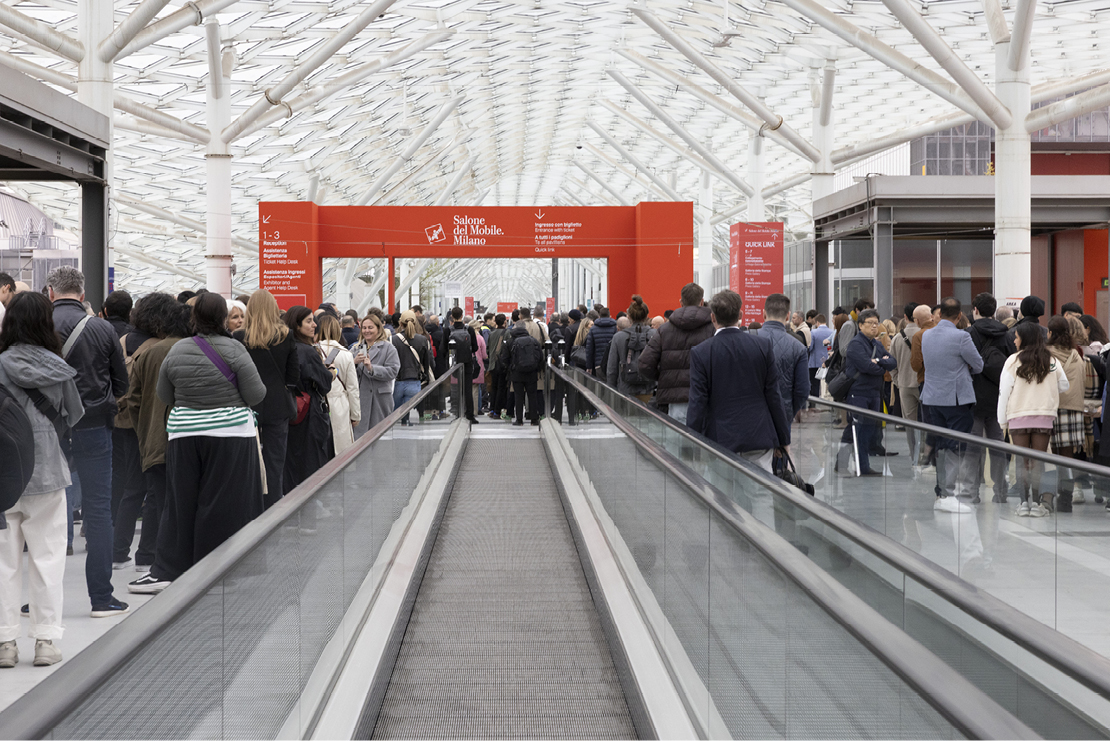
With over 300,000 visitors and a highly international audience, Salone remains a global benchmark. What do you think continues to draw the world to Milan each year?
What continues to draw the world to Milan each year is something that cannot be replicated, scaled, or digitised: the Salone is a moment of activation. It is a spark that ignites the entire system. For one week, the industry does not simply present itself; it accelerates. Ideas circulate faster, decisions are taken in real time, and relationships are built that would otherwise take months, sometimes years, to develop. There is a unique concentration of energy in which designers, companies, developers, institutions, and media are all present at once, fully engaged.
This creates a form of momentum that is very specific to the Salone. It is not just about visibility, but about simultaneity. What happens here happens together: conversations, negotiations, discoveries, alignments. You meet the person you needed to meet, you encounter a material you were not looking for, you see a solution that unlocks a project.
Milan amplifies this dynamic by extending it beyond the fair. The city becomes an open system in which formal and informal exchanges overlap continuously. A meeting that begins in the pavilions continues in a showroom, evolves during a dinner, and becomes a project the following day. This is why the Salone remains a global benchmark. It is not only an event, but a living infrastructure of relationships. A place where the design industry becomes, for a brief and intense moment, fully visible to itself and, in doing so, moves forward.
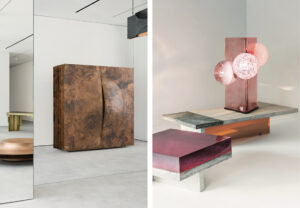
Design weeks globally are becoming more decentralised. How is Salone adapting to this shift?
We see this shift not as a fragmentation, but as an expansion of the design ecosystem. Today, design no longer exists in a single format or place. It unfolds across multiple layers, and each of these contributes to a more complex and dynamic landscape. The Salone has evolved precisely in this direction: from a central event into a system that activates and connects these different dimensions. Milan is the clearest expression of this model. During Salone Week, the city does not compete with the Exhibition; it becomes part of it. What happens in the pavilions resonates across showrooms, cultural institutions, and public spaces, creating a continuous exchange between industry, culture, and society.
This is something we study in a structured way through our Permanent Observatory, developed with the Politecnico di Milano. The data confirms that the value of the Salone lies not only in the fair itself, but in the broader ecosystem it generates — economically, culturally, and socially. It is this distributed model that produces impact and relevance. Our role, therefore, is not to centralise, but to orchestrate. To ensure that this expanded ecosystem remains coherent, legible, and capable of generating meaningful connections. Because today, the strength of the Salone lies precisely in its ability to hold together multiple centres of energy and turn them into a shared momentum.
Sustainability continues to be a key conversation. How is Salone encouraging meaningful, measurable change?
We focus on implementation, not messaging. In 2026, sustainability is embedded in multiple concrete actions: the renewal of ISO 20121 certification for 2026–2028, the use of structured guidelines for exhibitors, and the growing emphasis on circular materials and lifecycle thinking across installations. Even projects like Aurea, the immersive installation at Pavilions 13-15, are conceived with recycled and responsibly sourced materials, demonstrating that sustainability and high-end design can coexist. What matters is that sustainability becomes visible through decisions, not declarations.
The theme of recent editions has placed the human experience at the centre of design. How do you see this evolving in 2026 and beyond?
In 2026, we move from the human body to what the body encounters: matter. This is expressed very concretely through the campaign “A Matter of Salone” and through the exhibitions themselves. Visitors will not encounter material as an abstract concept, but as transformation: in Salone Raritas through craftsmanship, in SaloneSatellite through experimentation, and in Aurea through atmosphere. The evolution is clear: design is not only about how spaces feel, but about what they are made of and the responsibility embedded in those choices.
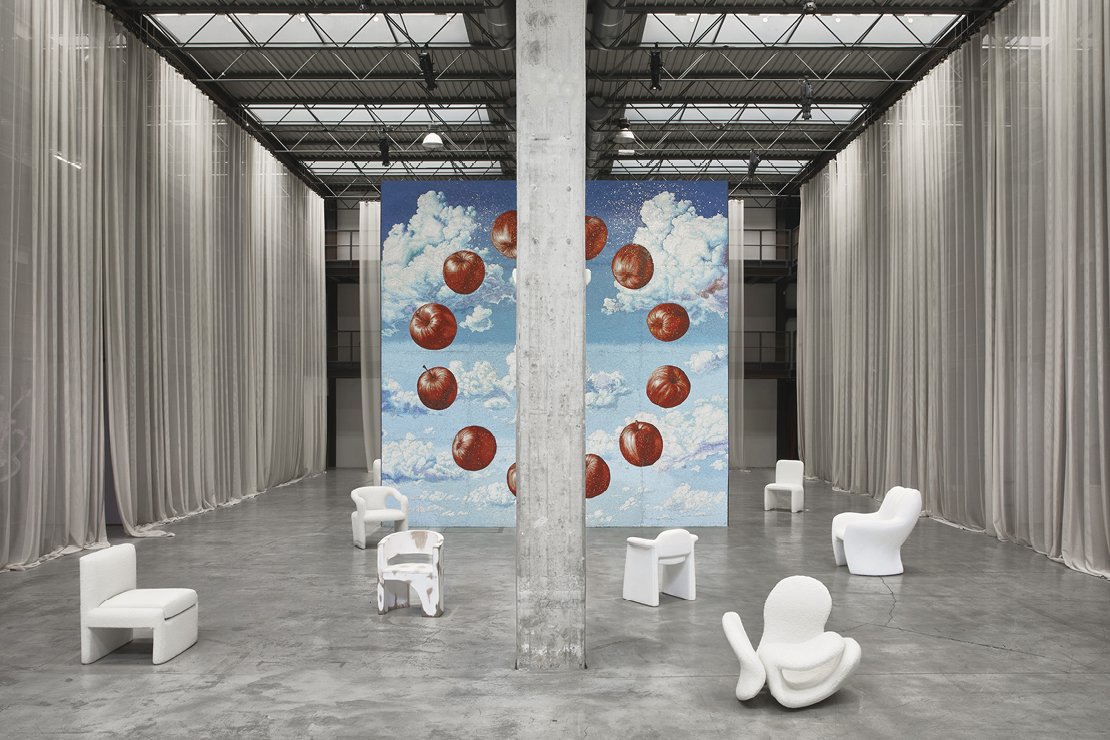
The Middle East is emerging as a major design hub. How important is this region to Salone’s future strategy?
It is certainly a central region for us, a space of evolving dialogue. What we are building there is already visible through initiatives like “Red in Progress” — a project not conceived as a standalone event but as the first step in a broader, multi-year collaboration. It brought together Italian companies, Saudi institutions, designers, and developers within a shared platform that combined exhibition, cultural exchange, and B2B encounters.
What is important is the nature of that format: it was designed as a business-first and culture-driven meeting point, where conversations are directly connected to real projects, ongoing urban transformations, and long-term investment strategies linked to Vision 2030.
So, when we look ahead to 2026 and beyond, our approach is consistent with that experience. It is not about exporting the Salone as a fixed model, but about building context-specific platforms that can connect design culture with local ecosystems in a meaningful way. In regions like Saudi Arabia, where architecture, infrastructure, and cultural identity are evolving simultaneously, design becomes a strategic layer of transformation. Our role is to enter that process as a partner — facilitating exchanges, creating connections, and helping translate ideas into spaces, projects, and, ultimately, cities.
Are you seeing a shift in participation or influence from Middle Eastern stakeholders?
We are seeing increasing participation from Middle Eastern developers and decision-makers, particularly within contract-related initiatives and international incoming programs. In 2026, this is reflected in the targeted invitation of global top players within the Salone Contract framework, many of whom are active in Gulf mega-projects.
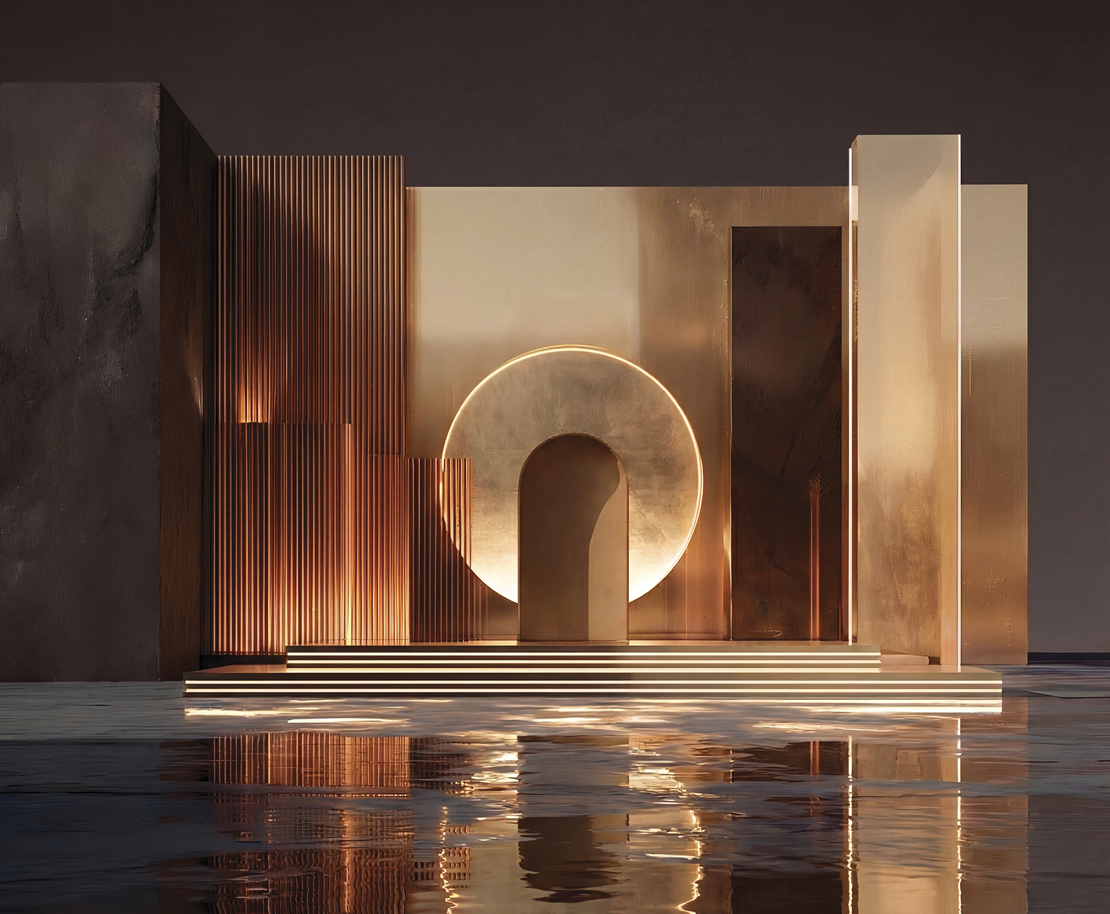
With large-scale developments across the Gulf, how do you see design contributing to new urban identities?
In these contexts, design operates at multiple scales simultaneously. For example, in hospitality projects, it defines not only interiors but entire experiences: from material choices to spatial sequencing. In large developments, it contributes to how cities express identity and cultural positioning. The opportunity lies in combining global expertise with local narratives, creating spaces that are both internationally competitive and culturally grounded.
In times of global uncertainty, how do you see Salone responding to the geopolitical climate? And how will Salone lead that conversation?
In times of global uncertainty, I believe the Salone has an even greater responsibility: not simply to reflect the market, but to offer it a point of reference.
Today, we are operating in a landscape marked by wars close to Europe and in the Middle East, geopolitical fragmentation, trade tensions, rising transport and energy costs, and a broader climate of volatility that affects supply chains, investment cycles, and confidence. These are not external conditions to the design industry. They are reshaping the way companies produce, position themselves, and grow internationally.
In this context, the Salone responds first of all by remaining open. In moments of instability, there is always a temptation to retreat into narrower geographies or more defensive strategies. Our role is the opposite: to keep channels of exchange active, to strengthen international relationships, and to create a space where industries, markets, institutions, and design cultures can continue to meet. That is why I often say the Salone is not only an economic engine, but also a form of diplomacy. It is a neutral ground, a cultural bridge, and a place where dialogue can continue beyond political divisions.
But there is also a second level to this response, which is more structural. The Salone is evolving from a trade fair into what I would call an infrastructure of orientation. Our task is not only to gather the industry once a year, but to help it interpret complexity. This is the deeper thinking behind initiatives such as Salone Contract, developed with OMA. In a geopolitical landscape that is becoming more unstable, the contract sector shows very clearly how value has shifted: not from quality to quantity, but from products to integrated systems, from display to long-term capability, from catalogue logic to strategic positioning.
This is why the 2026 edition does not treat contract as a side topic, but as a lens through which to read the present. The lecture by Rem Koolhaas, the international forum, the thematic pathway across the fair, and the incoming programme for selected operators are all part of a broader effort to give companies tools for analysis and positioning in a time when the market is asking for more than products. It is asking for reliability, data, sustainability, technical competence, and the ability to work across complex international ecosystems.
At the same time, our response is also cultural. The Salone must continue to be the place where the industry becomes visible to itself, where thought is articulated, and where future scenarios are discussed before they fully emerge in the market. And this is where the ecosystem dimension becomes essential. The value of the Salone does not end at the fairgrounds. Through the work of the Permanent Observatory developed with the Politecnico di Milano, we continue to study the broader economic, cultural, and urban impact generated by the Salone. What emerges is that the Salone is not a standalone event, but a distributed ecosystem that activates relationships, produces knowledge, supports hospitality, and generates value across the city and beyond. In times of uncertainty, this matters enormously, because resilience is never built by single actors alone. It is built by systems that are capable of connecting industry, research, culture, institutions, and markets.
So my answer is this: the Salone responds to the geopolitical climate not by becoming defensive, but by becoming more strategic. More international, but also more selective. More cultural, but also more operational. More attentive to markets, but equally committed to building a shared framework of meaning around what design can do in a fractured world. Because when instability grows, the real value of a platform like the Salone is not only that it generates business. It is that it helps transform uncertainty into direction.
By Lindsay Judge
Gurgen Yeritsyan, Founder of UrArtU Gallery, on Redefining Floristry as Art, Architecture and Emotional Experience
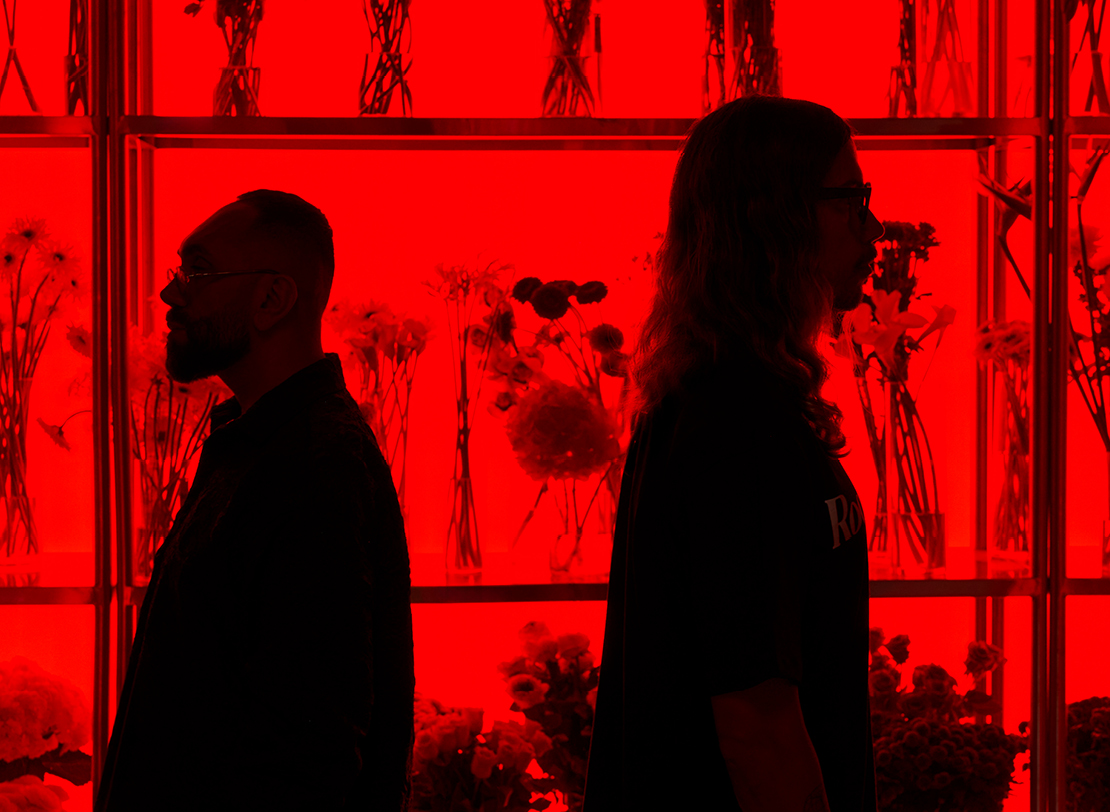
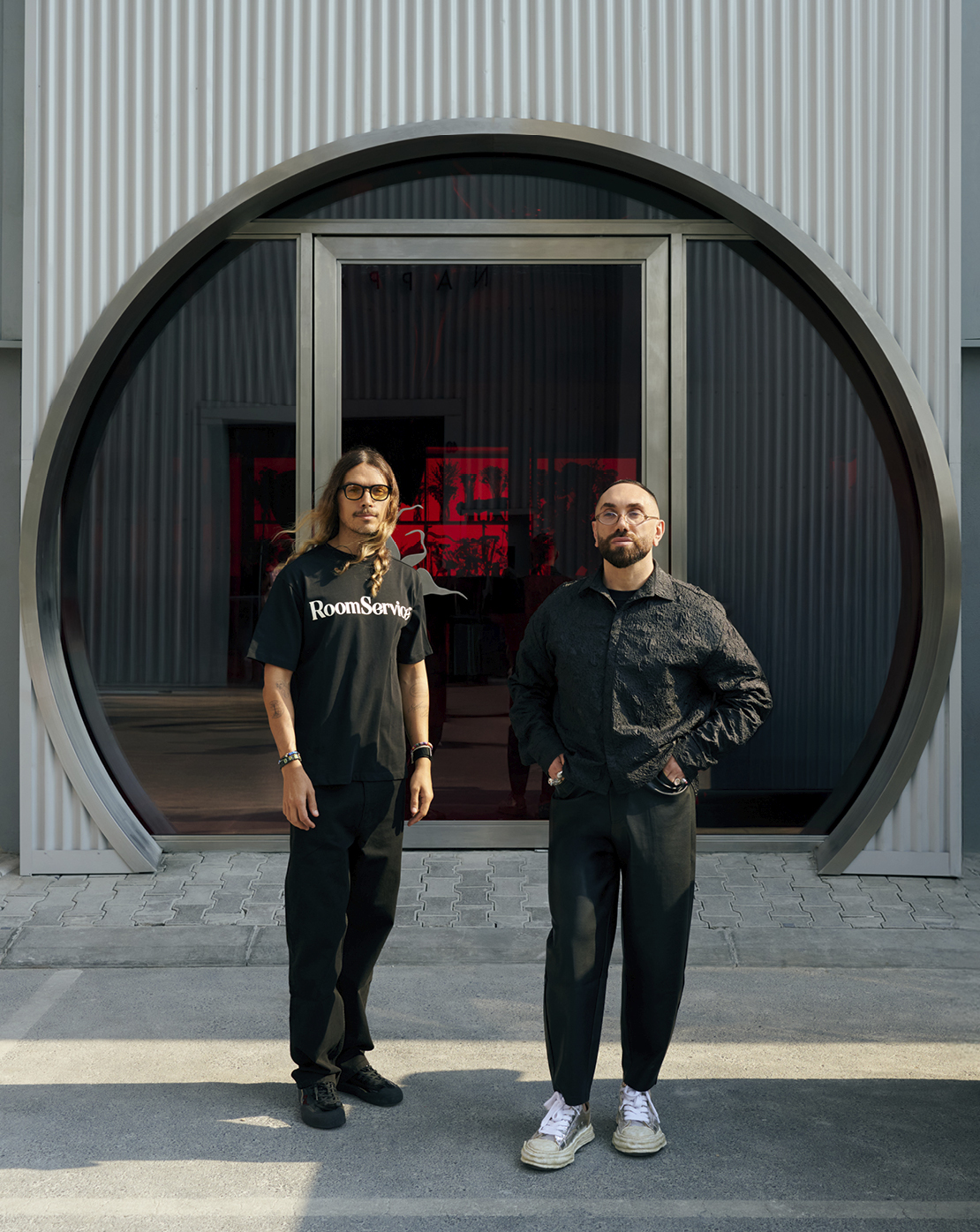
In Dubai’s evolving creative landscape, UrArtU Gallery offers a distinct perspective on the role of floristry within contemporary culture. Founded by Gurgen Yeritsyan, the Alserkal Avenue space moves beyond traditional notions of flowers as decoration, positioning them instead as a medium for artistic expression, spatial design and emotional storytelling.
Drawing on more than 15 years of experience in floral artistry, Yeritsyan has developed a practice that treats flowers as both material and message. At UrArtU, this vision unfolds through a programme of exhibitions, installations and collaborations that blur the boundaries between art, architecture and design. The gallery operates not only as a space to view floristry, but to experience it, inviting visitors into environments where nature is reimagined through scale, structure and context.
This approach is further explored through the gallery’s recent collaboration with Crosby Studios, where floristry takes on a more architectural presence, shaping the space as much as inhabiting it.
Here, Gurgen Yeritsyan reflects on the concept behind UrArtU, the evolving language of floristry and the role of the gallery within Dubai’s wider creative ecosystem.
UrArtU Gallery has always explored flowers as more than decoration. What was the original vision behind the gallery, and how does this new collaboration with Crosby Studios expand that concept?
When I started UrArtU, the idea was to challenge the way people usually interact with flowers. Most of the time, they are seen as something temporary or a gift and used as decoration. I wanted to slow that moment down and give flowers a different kind of presence. The collaboration with Crosby Studios allowed us to push that idea further. Instead of flowers existing within a space, the space itself now feels shaped by them. The gallery becomes a stage where nature and design meet, and where people can experience floristry in a way that feels more immersive and unexpected.
This project transforms floristry into a spatial and architectural experience. How did the idea for a flower space that operates as both a gallery and an installation first come about?
For a long time, I felt that floristry was often confined to the vase. But flowers have so much more potential than that. They have colour, movement and emotion. They can create an atmosphere in the same way that light or music can. The idea for the gallery was to create a place where flowers could exist in dialogue with art, design and architecture. A space where floristry becomes immersive, almost cinematic. With Crosby Studios, we pushed that concept further, treating flowers as part of the environment rather than just something placed within it.
What kind of experience did you want visitors to have when they walk through the gallery for the first time?
I want people to feel welcome. UrArtU Gallery is a place designed to bring people together, and I want it to be a moment to pause. In cities like Dubai, everything moves very fast, and we are constantly surrounded by noise and information. When you enter the gallery, I want it to feel almost meditative. Somewhere you can grab a coffee, enjoy art and take some flowers home to enjoy the memory.
Working with Harry Nuriev and Crosby Studios brings a strong architectural language into the project. How did this collaboration come together, and what was the creative dialogue like between you and the studio?
I’ve admired Harry’s work for a long time because he approaches design with a very conceptual mindset. When we first started talking, we realised we shared a similar idea: that objects and materials can tell stories and evoke emotion. The dialogue between us was very organic. I came from the perspective of flowers and emotional storytelling, and Harry brought this strong architectural vision. Together we created something that lives somewhere between art installation, architecture and floristry.
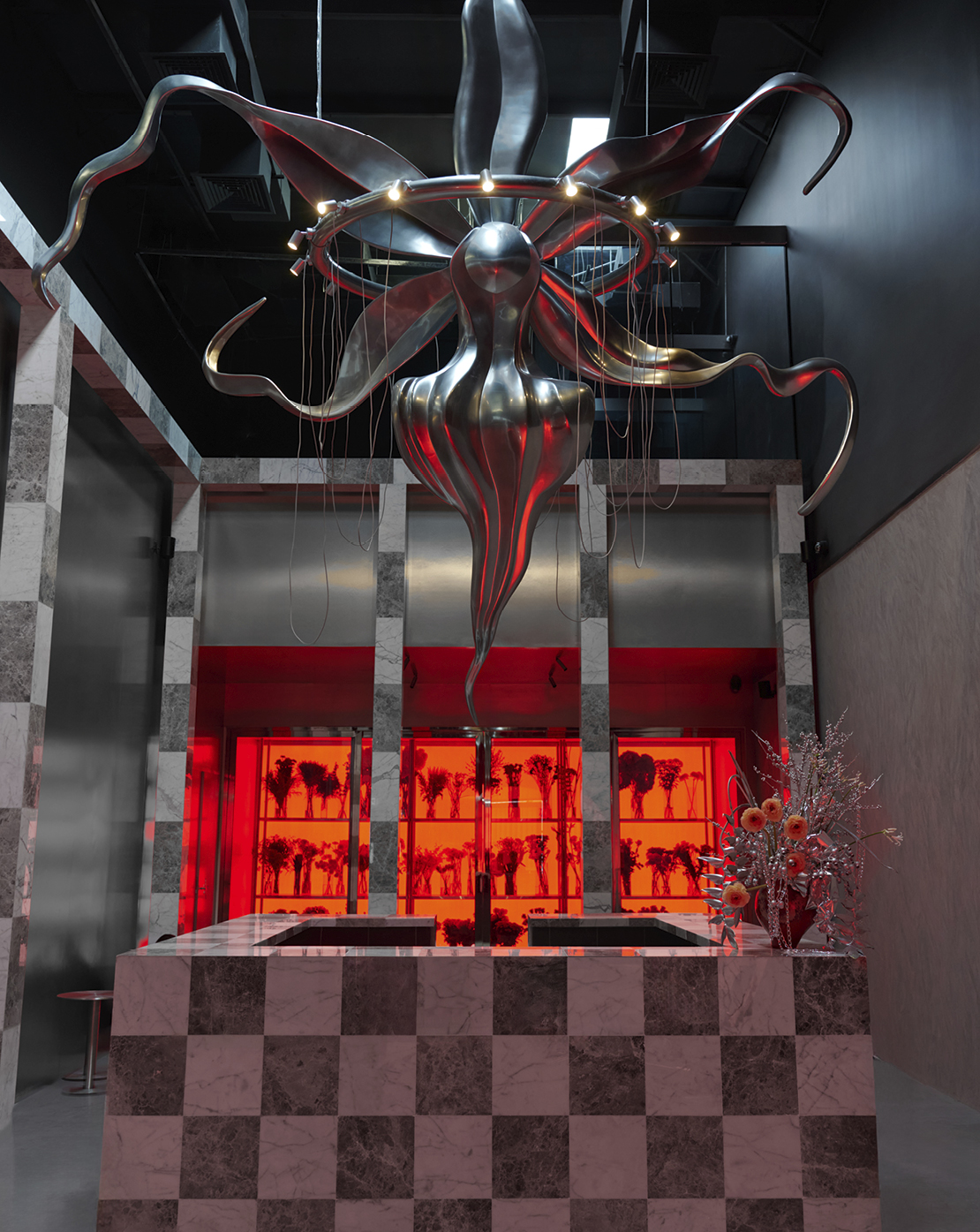
The aluminium orchid structure is one of the defining elements of the space. How did the idea for this dramatic centrepiece emerge, and what does the orchid represent within the project?
The orchid is my favourite flower, and it’s a fascinating flower because it represents elegance but also strength. It’s delicate, but it also has a very sculptural form. We wanted to take something that is usually fragile and temporary and make it monumental. For me, it symbolises the whole concept of UrArtU, turning something fleeting into something powerful and lasting.
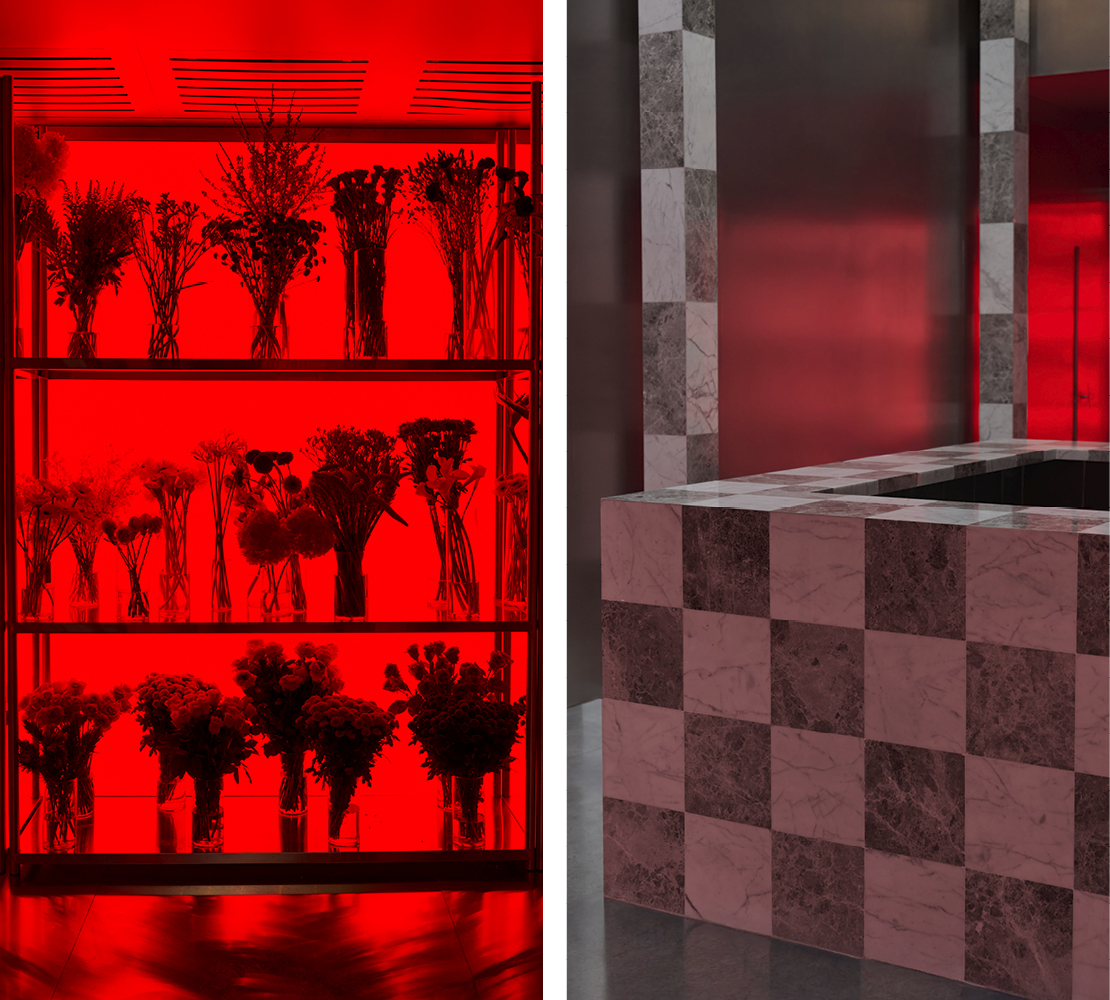
Materiality seems to play an important role in the design, from microcement floors to Italian marble and stainless-steel finishes. How do these more industrial materials complement the softness of flowers?
The project is built around contrasts. Flowers represent softness, fragility and nature and using materials like the beautiful marble by Stonetta represents permanence and structure. When these opposites exist together, they amplify each other. The flowers feel even more alive within a space that is minimal and architectural. And the architecture feels more emotional because it interacts with something organic.
Floristry has traditionally been seen as feminine. As a male founder working with flowers as a primary medium, how do you view that perception, and how do you think it is evolving today?
For me, flowers have never been about gender. They are part of nature, part of culture, part of art. Historically, flowers have always been present in architecture, painting, fashion and rituals across different cultures. I think today people are beginning to see floristry differently – not just as decoration but as a creative discipline that can be conceptual, sculptural and expressive.
Flowers seem to have become particularly relevant again in art, fashion and design. Why do you think floristry has recently gained this renewed cultural ‘cool factor’?
I think, like most things that are organic and natural, society has almost a subconscious cyclical approach to it. In a world that is full of stimulation and speed, as humans, we will always find our way back to nature somehow. I think people are searching for emotion and authenticity again. In a very digital world, flowers remind us of something real. They carry symbolism, memory, and beauty, and artists, designers, and fashion houses are rediscovering that emotional power.
UrArtU operates not only as a gallery but also as a multi-purpose platform for workshops, pop-ups and collaborations. How important is that flexibility to the identity of the space?
It’s essential. I never wanted UrArtU to be static. Creativity is always evolving, and the space should evolve alongside it. The gallery is designed to host many different types of experiences like workshops, installations, collaborations, and even brand projects. It’s a platform for ideas as much as it is a gallery for flowers.
Alserkal Avenue has become one of the most important cultural districts in the UAE. What does it mean for UrArtU to be part of this creative community?
Being part of Alserkal Avenue is very meaningful because it’s one of the few places where different creative disciplines truly meet in the city – art, architecture, design, fashion and food. For UrArtU, it’s the perfect environment. The community here encourages experimentation and dialogue, and that’s exactly the spirit behind the gallery.
More broadly, how do you see the creative industry in the UAE evolving?
The UAE is becoming an exciting place for creativity because there is openness to new ideas and formats. Galleries become event spaces, design studios become cultural platforms, and collaborations happen across industries. That kind of fluidity allows creativity to grow in unexpected directions.
Looking ahead, what are your plans for UrArtU Gallery? Are there particular exhibitions, collaborations or creative directions you’re excited to explore in the coming years?
UrArtU is a long-term creative journey. We’re planning collaborations with artists and designers from different fields, and also more public experiences that allow people to interact with floristry in new ways. At the moment, we are running BELONGING(S), a solo exhibition with Tunisian-Finnish artist Dora Dalila Cheffi, curated by Yeocheva, but definitely stay tuned for more to come.
By Lindsay Judge
Jewels in Bloom, Victoire de Castellane Reinterprets Nature With Dior’s latest Diorette Creations
For 2026, Dior Joaillerie returns to one of its most poetic signatures with the latest Diorette creations, a collection that captures the spirit of nature through the imaginative lens of Victoire de Castellane. Drawing inspiration from the lush landscapes of Milly-la-Forêt, so closely tied to the life and vision of Christian Dior, the new pieces unfold like miniature gardens, translating flora and fauna into finely crafted jewels.
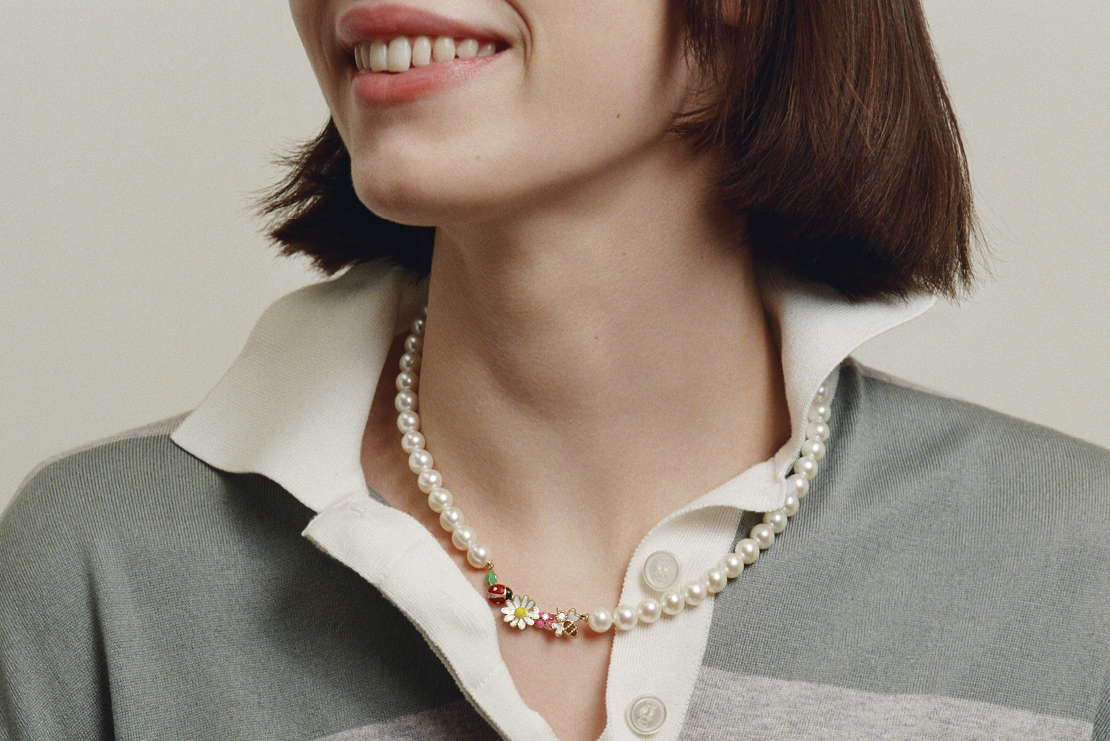
At once playful and precise, the collection reflects an enduring dialogue between creativity and craftsmanship. Each piece is brought to life through Dior’s exceptional savoir-faire, with lacquer applied entirely by hand in a meticulous, multi-step process. The result is a palette of vivid, almost painterly hues that lend depth and vitality to every detail. Elements are then assembled with equal care, underscoring the technical mastery of the Maison’s ateliers.
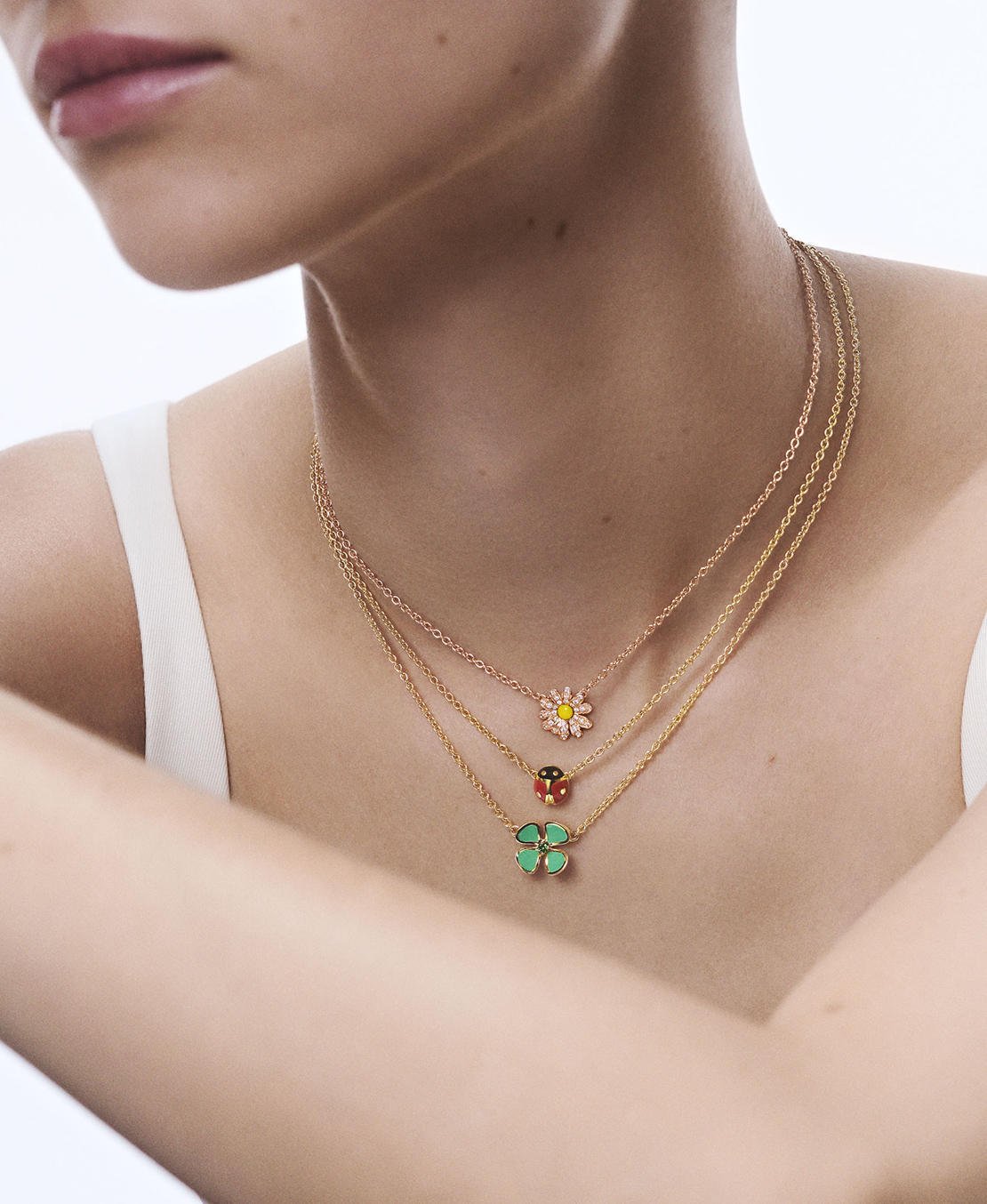
Motifs central to Dior’s visual language reappear with renewed delicacy. Daisies, a symbol long associated with the House, bloom alongside bees and other talismanic emblems, evoking a sense of luck, joy and continuity. In select designs, these elements are set against rows of luminous pearls, introducing a refined contrast between whimsy and elegance.
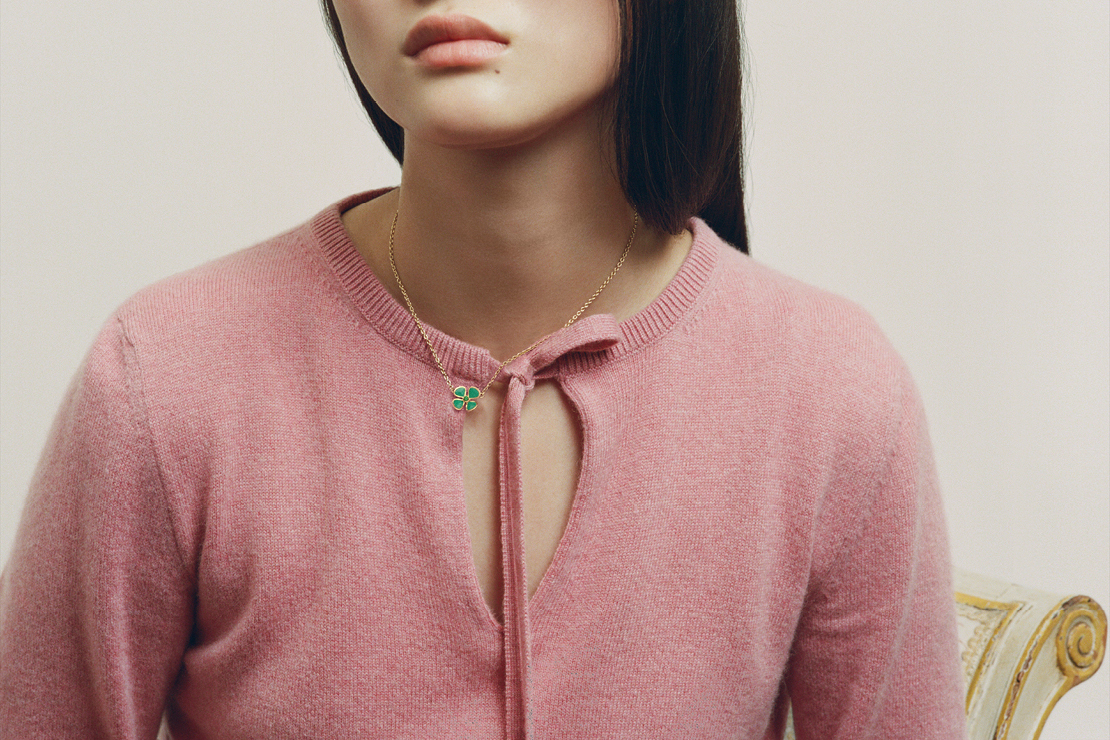
The collection’s more intimate pieces take on the role of modern talismans. Diamond-set clovers, ladybirds and daisies are suspended on fine chains in yellow or rose gold, designed to be worn close to the skin. Light, symbolic and deeply personal, they reflect the essence of Diorette, where nature, memory and emotion are distilled into jewellery that feels both enchanting and enduring.
Aston Martin DB12: The Super Tourer Redefined
The Aston Martin DB12 comes with a bold claim attached to its name: the world’s first “Super Tourer.” It sounds like the sort of branding exercise luxury carmakers love to invent, but after spending time with the car, the title begins to make sense. This is not simply another grand tourer built for long motorway drives and occasional bursts of speed. The DB12 feels designed for modern luxury living, equally at home pulling up outside a five-star hotel in Dubai as it is carving through open mountain roads.
What immediately stands out about the DB12 is how approachable it feels for a car with such dramatic performance figures. Beneath its sculpted bonnet sits a 4.0-litre twin-turbo V8 producing 680PS, capable of taking the car from 0-60mph in just 3.5 seconds. Yet despite this immense power, the DB12 never feels intimidating or difficult to manage. Instead, Aston Martin has focused heavily on refinement, balance and ease of use, creating a car that feels surprisingly suited to daily city life.

In urban environments, the DB12’s adaptive suspension and intelligent driving systems come into their own. Luxury performance cars often struggle in cities, feeling overly stiff, too aggressive or simply exhausting to drive in traffic. The DB12 avoids this entirely. In its GT mode, the ride quality remains composed and smooth, absorbing uneven roads and speed bumps with a level of comfort you would expect from a much softer luxury saloon. Steering is light enough to make parking and manoeuvring effortless, while visibility is helped by the car’s cleaner, more contemporary proportions.

The interior is perhaps where the DB12 feels most transformed from previous Aston Martins. Traditionally, the brand’s cabins leaned heavily on old-school charm but lacked the intuitive technology buyers now expect. Here, Aston Martin has clearly modernised its approach. The all-new infotainment system finally feels contemporary, with responsive touchscreens, wireless Apple CarPlay and a far more seamless digital experience. Importantly, though, physical buttons remain for key controls, something many luxury brands are now abandoning to their detriment.

The cabin itself strikes an impressive balance between sportiness and luxury. Hand-stitched leather, elegant trim detailing and beautifully crafted materials create an atmosphere that feels indulgent without becoming overly flashy. The driving position is low and cocooning, but never cramped, while the overall layout prioritises comfort and usability rather than theatrics. It feels like a car designed for someone who genuinely intends to spend time in it, not simply admire it in a garage.

What also makes the DB12 particularly relevant today is its versatility. There are faster supercars and softer luxury cruisers on the market, but very few combine both worlds this effectively. It can switch personalities effortlessly, calm and refined for city commutes, then genuinely thrilling when roads begin to open up. The handling is sharp and controlled, yet the car never loses its sense of composure.

Aston Martin has successfully created a car that delivers all the qualities modern consumers are looking for. It is fast, elegant and unmistakably luxurious, but crucially, it seamlessly blends into everyday life.
Structure Meets Stillness, Benoît Rondard, founder of YLA, on emotional design, craftsmanship and the future of the industry
As the UAE’s design landscape continues to evolve, a new generation of homegrown brands is redefining how materials, craftsmanship and contemporary living intersect. Among them is YLA, a Dubai-based furniture atelier founded by engineer Benoît Rondard, whose work challenges traditional perceptions of metal in interior design. With a background in high-precision manufacturing and a vision rooted in emotional design, Rondard has set out to transform metal from an industrial material into something refined, expressive, and quietly architectural.
Launched in 2025, YLA’s debut Audace Collection introduced sculptural pieces crafted from stainless steel and aluminium, softened through thoughtful proportions, curved forms and tactile finishes. Designed in collaboration with French designer Rémi Damilleville, the collection reflects a balance between strength and serenity, combining technical precision with a calm, minimal aesthetic. Rooted in Dubai yet conceived with a global perspective, YLA’s philosophy centres on longevity, intentional design, and the belief that furniture should evoke emotion as much as it functions.
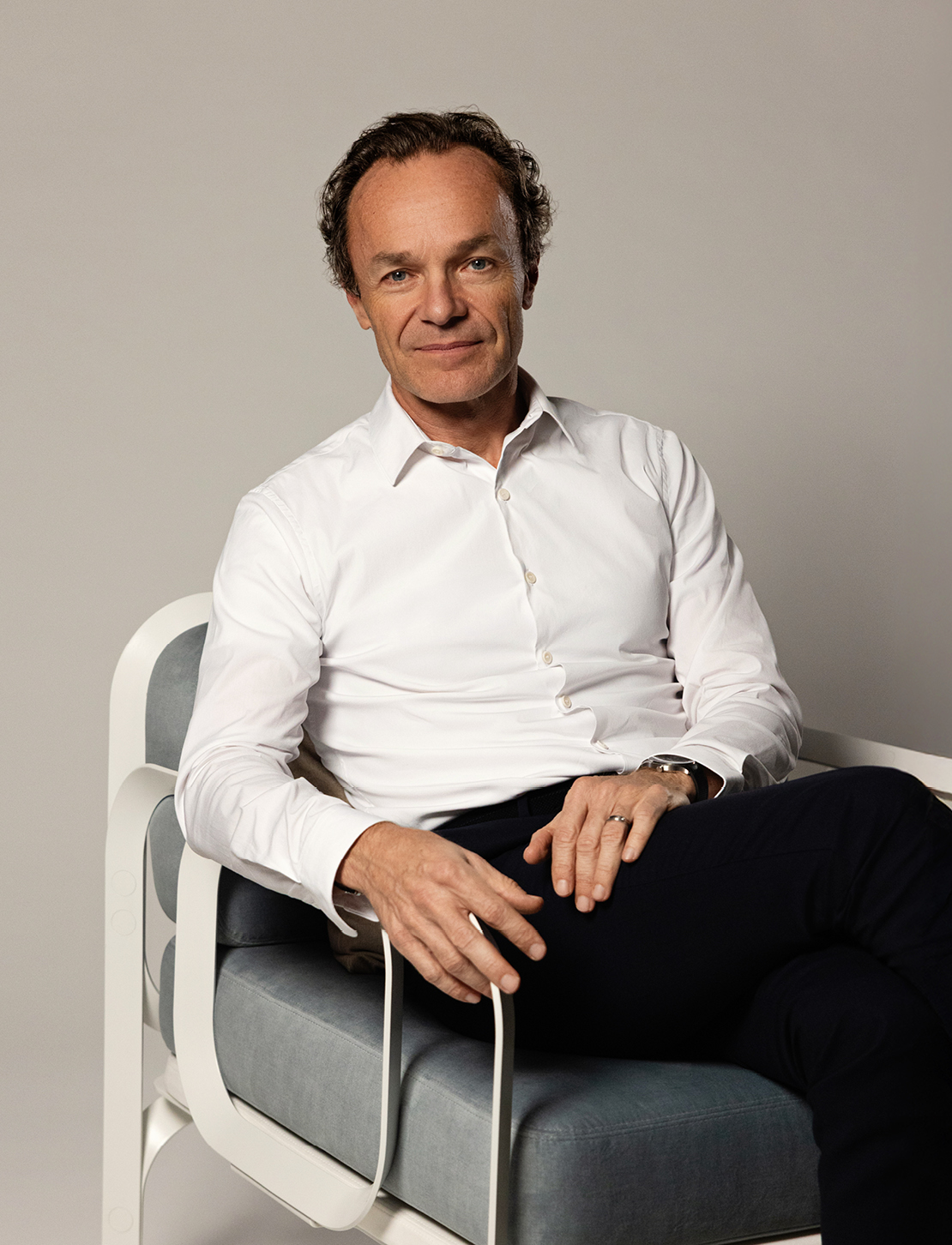
With local manufacturing at the heart of the brand and a growing international outlook, Rondard is part of a broader movement positioning the UAE as an emerging global design hub. In this interview, he discusses the inspiration behind YLA, the evolving regional design landscape and how material-led design is shaping the future of contemporary interiors.
What led you to start your own brand, and what’s the vision behind YLA?
Yla was born from the desire to translate deep technical expertise in metal into a design language that feels refined, minimal, and relevant for contemporary interiors. Coming from a background rooted in high-precision metal manufacturing, I saw an opportunity to move beyond industrial applications and explore a more expressive, design-driven approach.
The vision behind Yla is to create indoor metal furniture that combines precision, durability, and a strong aesthetic identity. The goal is to position metal not as a cold or purely functional material, but as something that can convey balance, colour, and emotion within a space.
What drew you to working with metal in particular, and how do you approach transforming an industrial material into something refined and expressive for the home?
Metal is often perceived as rigid and industrial, but it has incredible potential when handled with precision. What attracted me is exactly this contrast: taking a material associated with industry and transforming it into something soft in perception, even if not in structure.
At Yla, we work on proportions, finishes, and colour to achieve this transformation. Powder coating, for example, allows us to introduce depth and warmth, while our approach to geometry keeps the design minimal and balanced. The objective is to make the material appear to almost disappear, leaving a clean, calm presence in the space.
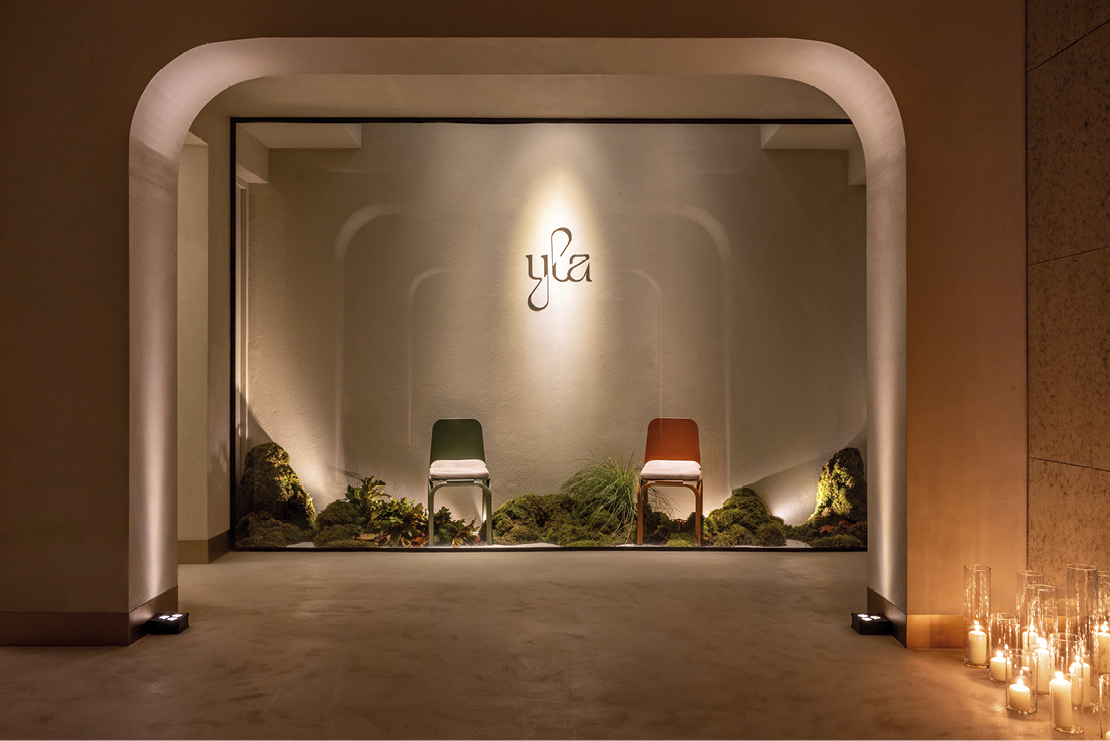
Tell us about your design process and how you approach each piece.
Our design process is highly iterative and closely connected to production. We start with a clear intention regarding proportions and use, then move quickly into prototyping.
Because design and manufacturing are closely linked, we can test, refine, and adjust continuously. Details such as junctions, thickness, and finishing are critical, as they define the final perception of the piece. The goal is always to reach a point where the design feels simple, even if the process behind it is technically complex.
What was the creative vision behind the first collection?
The first collection was conceived as a statement of intent. We wanted to introduce a series of pieces that express clarity, balance, and restraint, while showcasing the technical capabilities behind them.
Colour played an important role, with tones inspired by nature rather than trends. The collection was designed to feel cohesive, with each piece contributing to a consistent visual language built on minimal forms and precise execution.
Producing locally in Dubai is central to YLA’s identity. Why was it important for you to build a design brand rooted in local manufacturing?
Local production allows us to maintain full control over quality and to keep a direct link between design and execution. It also gives us the flexibility to produce made-to-order pieces and adapt when needed.
Dubai offers a robust industrial infrastructure, and our location in Jebel Ali allows us to operate efficiently while staying connected to international markets. Beyond logistics, it was important to build something rooted in the place where the brand was created, contributing to the local ecosystem.
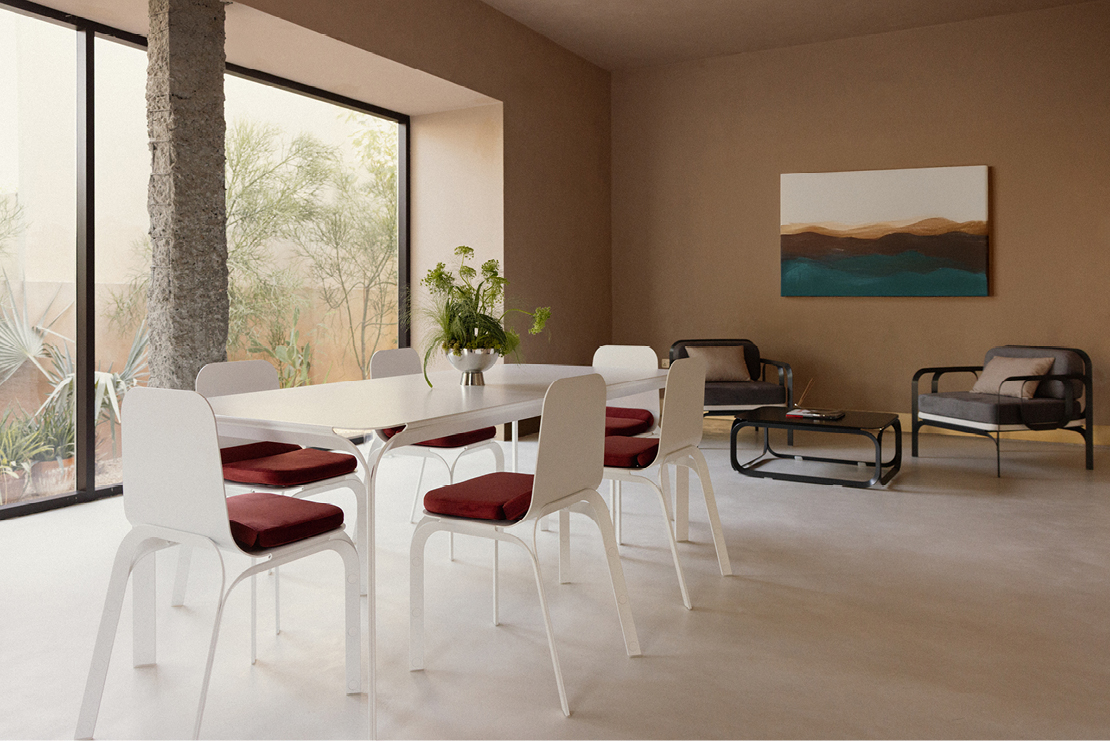
How have you seen the region’s design and manufacturing landscape evolve?
There has been a clear evolution over the past few years. The region is moving from being primarily a consumer of design to becoming a place where design is created and produced.
We are seeing more initiatives, more platforms, and a growing interest in locally developed brands. At the same time, manufacturing capabilities are improving, enabling higher-quality, more complex production within the region.
The UAE is increasingly positioning itself as a global design hub. What opportunities does the region offer emerging design brands today?
The UAE offers a unique platform for visibility and growth. It combines international exposure with strong infrastructure and a supportive business environment.
For emerging brands, this means the ability to launch, test, and scale in both local and global markets simultaneously. The diversity of the audience also creates opportunities to engage with different perspectives and industries, from residential to hospitality.
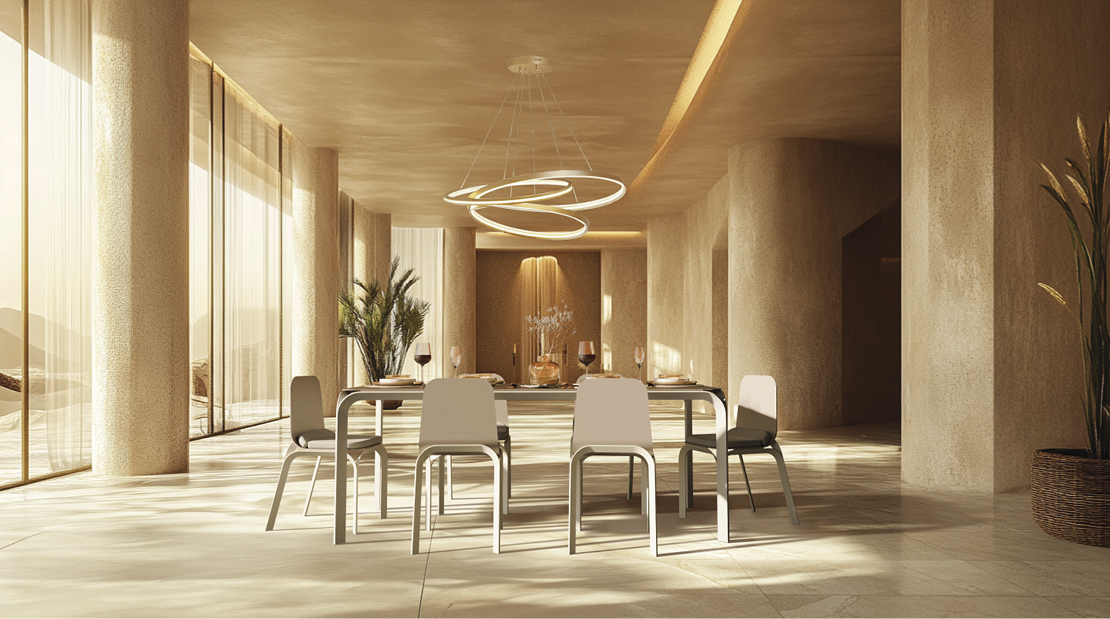
How would you describe the design identity emerging from the Middle East, particularly in furniture and product design?
The identity is still evolving, but it is becoming more confident and distinct. There is a growing balance between international influences and regional sensibilities.
In furniture and product design, this often translates into a focus on materiality, texture, and a certain sense of calm and space. Rather than following trends, many designers are exploring more timeless and grounded approaches.
Platforms such as Dubai Design Week, Downtown Design and Alserkal Avenue are becoming increasingly influential. How important are these ecosystems for supporting regional design brands?
These platforms are essential. They provide visibility, build connections, and enable brands to showcase their work in a curated environment.
They also help build a narrative around design in the region, which is important for positioning local brands within a broader international context. For emerging brands, this can be a first step towards recognition.
What more do you think is needed to strengthen the region’s design industry and support homegrown brands?
Continued investment in both creative and industrial infrastructure will be key. Education, collaboration between designers and manufacturers, and access to production facilities are all important elements.
At the same time, there is a need to support long-term brand building, not just short-term visibility. Developing strong, consistent brands takes time, and the ecosystem should encourage that.
Material-led design and craftsmanship are gaining renewed attention globally. How do you see this influencing contemporary furniture design?
There is a growing appreciation for how things are made, not just how they look. Material-led design brings focus back to the essence of an object.
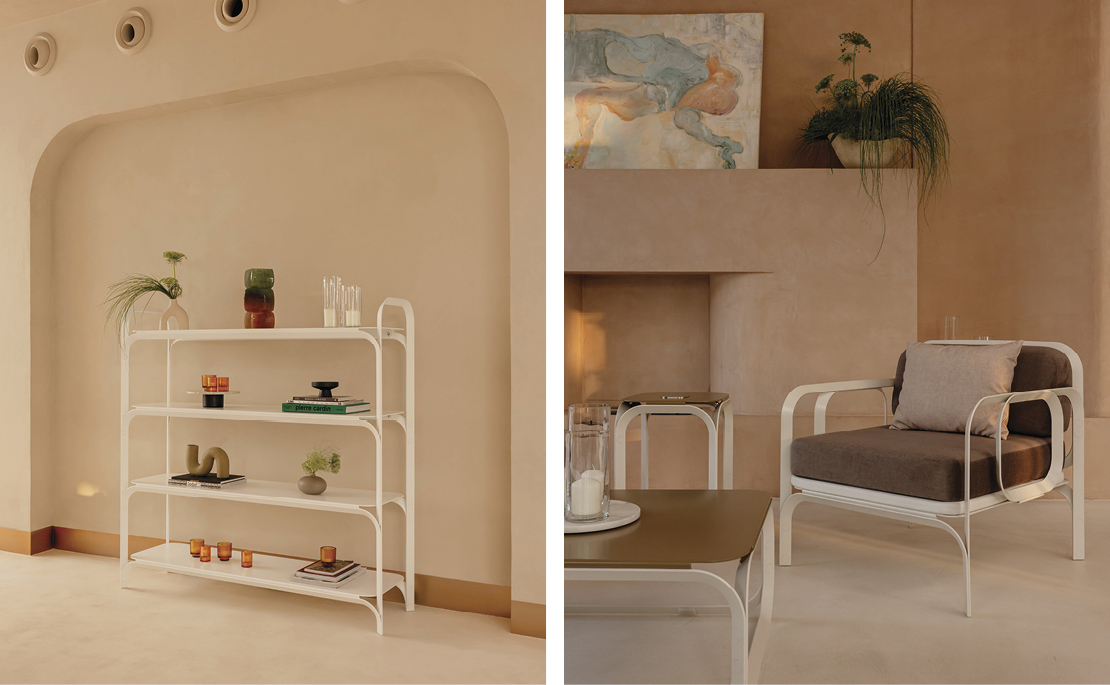
In furniture, this translates into pieces that are more honest, where the material and the construction play a central role in the design. Craftsmanship becomes visible, even in minimal forms.
Sustainability and longevity are becoming increasingly important in interiors. How is YLA approaching these ideas in both design and production?
For us, sustainability is closely linked to durability and longevity. Our pieces are designed to last, both in terms of structure and aesthetics.
We use materials such as stainless steel and aluminium, which are durable and suitable for long-term use. Finishes are developed to resist wear and preserve surfaces over time.
The idea is to create objects that do not need to be replaced, which is a fundamental aspect of sustainable design.
Collaboration appears to be central to YLA, including your work with designer Remi Damilleville. How important are creative partnerships in shaping the brand’s direction?
Collaboration is very important. It brings different perspectives and allows the brand to evolve beyond a single point of view.
Working with designers such as Remi Damilleville helps challenge assumptions and refine ideas. These exchanges contribute to shaping a more consistent and thoughtful design language.
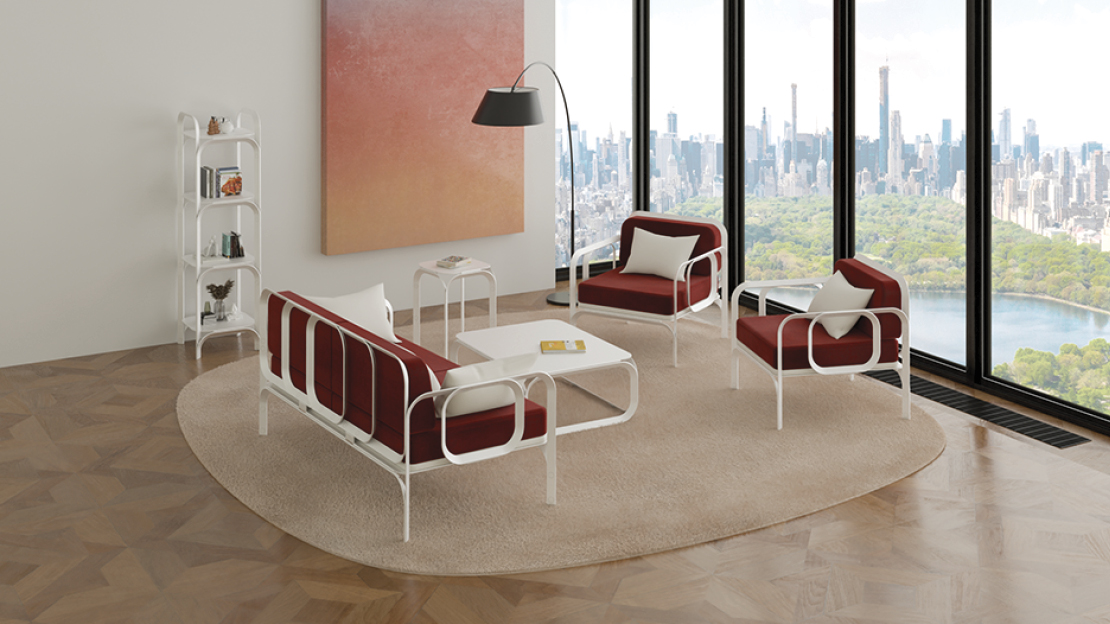
What’s the biggest challenge you face with a new brand in the region today?
One of the main challenges is building recognition and trust as a new brand. In a competitive environment, it takes time to establish credibility and communicate the value behind the product.
Balancing investment between product development, production, and brand building is also a key challenge, especially in the early stages.
Looking ahead, what is your long-term vision for YLA, and what role would you like the brand to play within the regional and international design landscape?
The long-term vision is to position Yla as a reference for indoor metal furniture, known for its precision, durability, and refined minimal aesthetic.
We aim to grow both within the region and internationally, collaborating with architects, designers, and hospitality projects. At the same time, we want to contribute to the development of a strong design identity emerging from the Middle East, showing that brands from this region can compete globally with a clear and confident voice.
By Lindsay Judge
The Scent of Heritage, HRH Prince Mohammed Alfaisal Alsaud, Founder of Batlah, on craftsmanship, rare ingredients and the future of fragrance
Rooted in Saudi Arabia’s rich fragrance heritage and shaped by a commitment to rare natural ingredients, Batlah is redefining the art of haute perfumery in the region. Founded by HRH Prince Mohammed Alfaisal Alsaud, the brand draws inspiration from traditional Arabian perfumery, particularly the prized Taif Rose, to create fragrances that honour heritage while embracing a refined, contemporary sensibility.
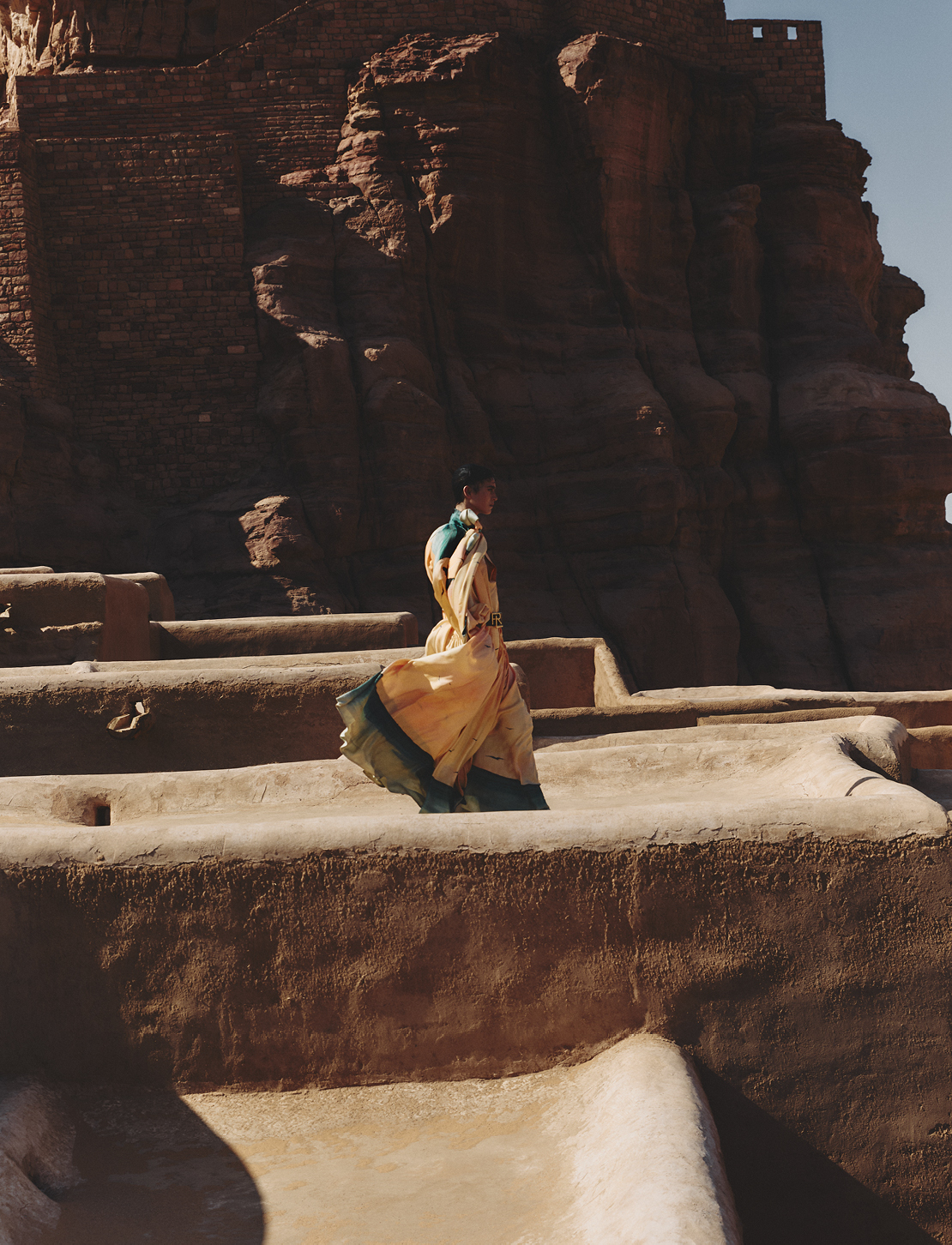
With a focus on craftsmanship, patience and purity of materials, Batlah stands apart in an industry often driven by speed and mass production. Each scent is designed to evolve naturally on the skin, reflecting a philosophy rooted in restraint, quality and authenticity. As interest in Middle Eastern perfumery continues to grow globally, Batlah represents a new generation of regional fragrance houses preserving tradition while shaping the future of scent.
Here, HRH Prince Mohammed Alfaisal Alsaud shares the inspiration behind the brand, the significance of Saudi Arabia’s fragrance heritage and his vision for a more refined, material-led approach to perfumery.
Tell us about the origins of Batlah. What inspired you to create a Saudi haute perfumery house?
The story started in 2015 as we were working to refine and increase the production of Saudi Arabia’s Taif Rose, which lead us to the conclusion that such raw material will always be rare and limited by nature, being the top of its grade in comparison to all other rose oils, we took that as a sign for Batlah to create fragrances using the same characteristics of the Taif Rose (Natural, highest grade) oils which led us to create a Saudi luxury Haute Perfumery House.
Where did your personal love for fragrance begin, and what is your earliest memory connected to scent?
I have loved fragrance as long as I can remember. Fragrance is integrated in the Saudi social fabric and heritage; the first distillation of essential oils was conducted by Arabian Scholars. The oldest trade route of incense and essential oils passed through the heart of Saudi, in poetry, gifts of Kings and in celebrations, in every household in Saudi Arabia, you will find a story of fragrance of some sort. One of my most cherished memories was of the Taif Rose, which my grandfather used to gift us when we were very young.
Saudi Arabia has a deep fragrance heritage. How does Batlah interpret and preserve this tradition for a contemporary audience?
Saudi Arabia’s fragrance heritage is profound, and we have always felt that it should be approached with reverence rather than reinvention. At Batlah, we preserve that tradition by remaining faithful to the principles that once defined fine perfumery in the region: natural materials, uncompromising quality, and a respect for the character of each raw ingredient. What changes is the level of refinement. We use contemporary techniques and technologies not to alter that heritage, but to render it with greater precision and purity. The objective is to retain the soul of traditional perfumery while presenting it with a clarity and sophistication that speaks to the present. For us, continuity matters more than novelty. We are simply carrying the tradition forward in its most considered form.
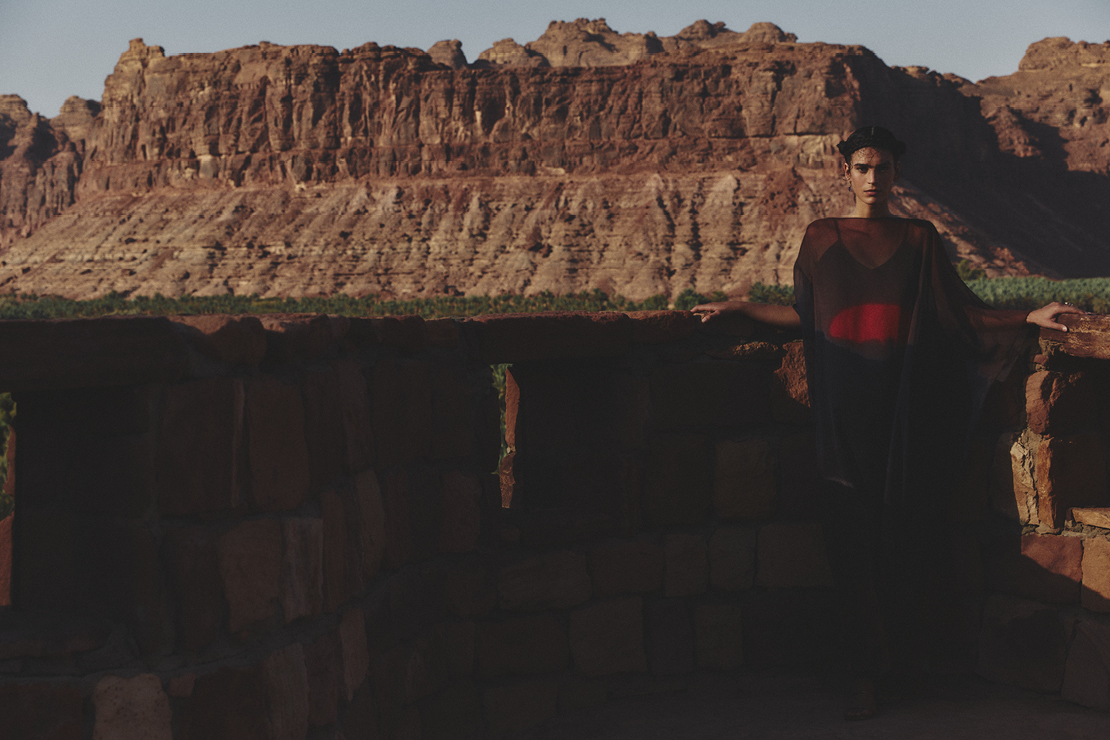
Batlah is known for using rare and natural ingredients. Why was it important for you to focus on this approach, and how does it shape the final fragrance experience?
From the beginning, the intention was to focus purely on creating high-quality fragrances, as if nothing else mattered but the material itself and the audience that truly values it. Rare, natural ingredients offer something that cannot be replicated. They have depth, subtlety, and a natural evolution on the skin that feels alive and unforced.
This shapes the fragrance in a very quiet way. It is not about immediate impact, but about how it develops over time-more nuanced, more personal, and truer to its origin. Ultimately, it allows one to experience the beauty of the raw material itself, in its most refined form.
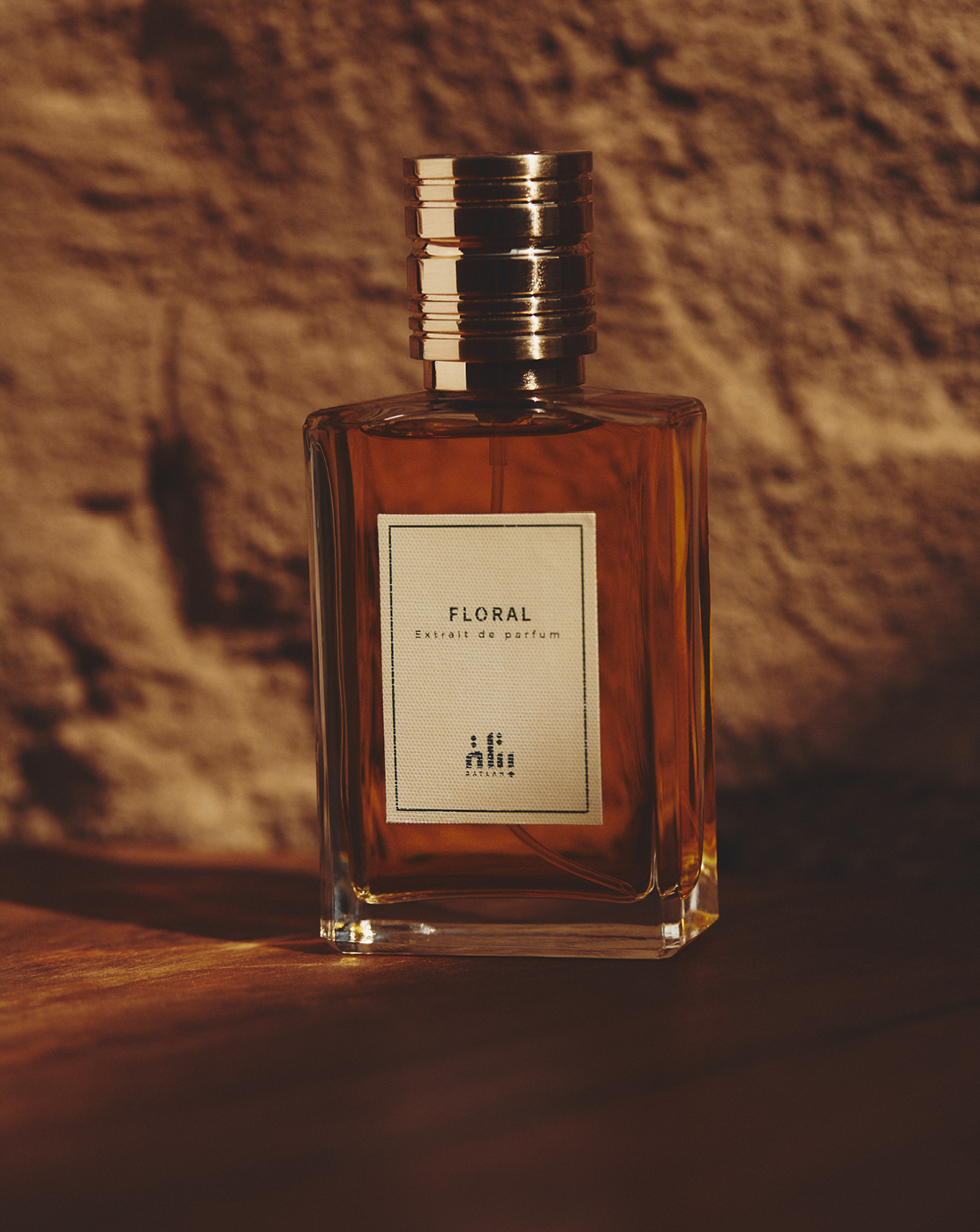
How would you describe the Batlah signature?
Batlah’s signature is defined by restraint and material. It is less about a fixed style and more about a consistent standard: clarity, depth, and respect for the natural character of each ingredient. There is a certain quietness to it. The compositions are composed rather than constructed, allowing the materials to speak with precision.
For whom are Batlah fragrances created?
For those who believe that the most refined form of beauty is the one that is simple yet carries depth.
The fragrance industry in the region is evolving rapidly. How do you see the Middle East influencing global perfumery today?
The Middle East has always had a deep relationship with perfumery. What is changing now is its global influence. There is a growing appreciation for the region’s understanding of raw materials and a more intimate way of wearing fragrance, one that values depth, presence, and character over trends. In many ways, it is not introducing something new but sharing our heritage with a global audience.
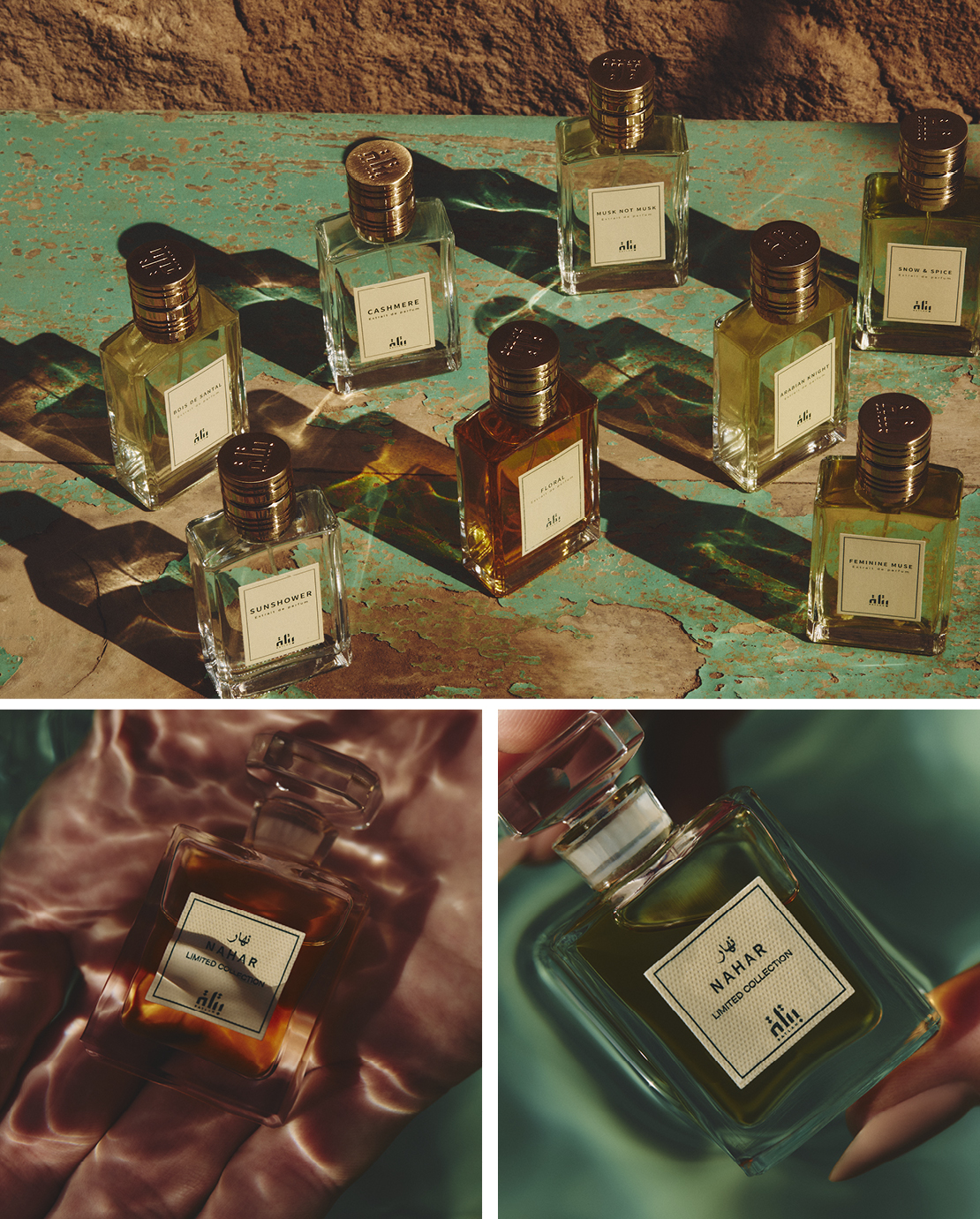
As a founder, what have been some of the biggest challenges in building a Haute perfumery brand?
The greatest challenge is discipline. Choosing patience and restraint in an environment that favours speed. Choosing the long-term brand benefits on a daily basis over short-term gains.
How do you balance heritage and innovation when creating new fragrances for Batlah?
Heritage is a continuous cycle of innovation that was created over time. The way we see it, we are in a cycle in which we work to preserve the essence of perfumery rather than lose it altogether.
Looking ahead, what is your long-term vision for Batlah, and how would you like the brand to shape the future of fragrance in the region?
The vision is to grow with intention, without compromising the standard. If Batlah can encourage a more refined, material-led approach to perfumery in the region, that in itself would be meaningful.
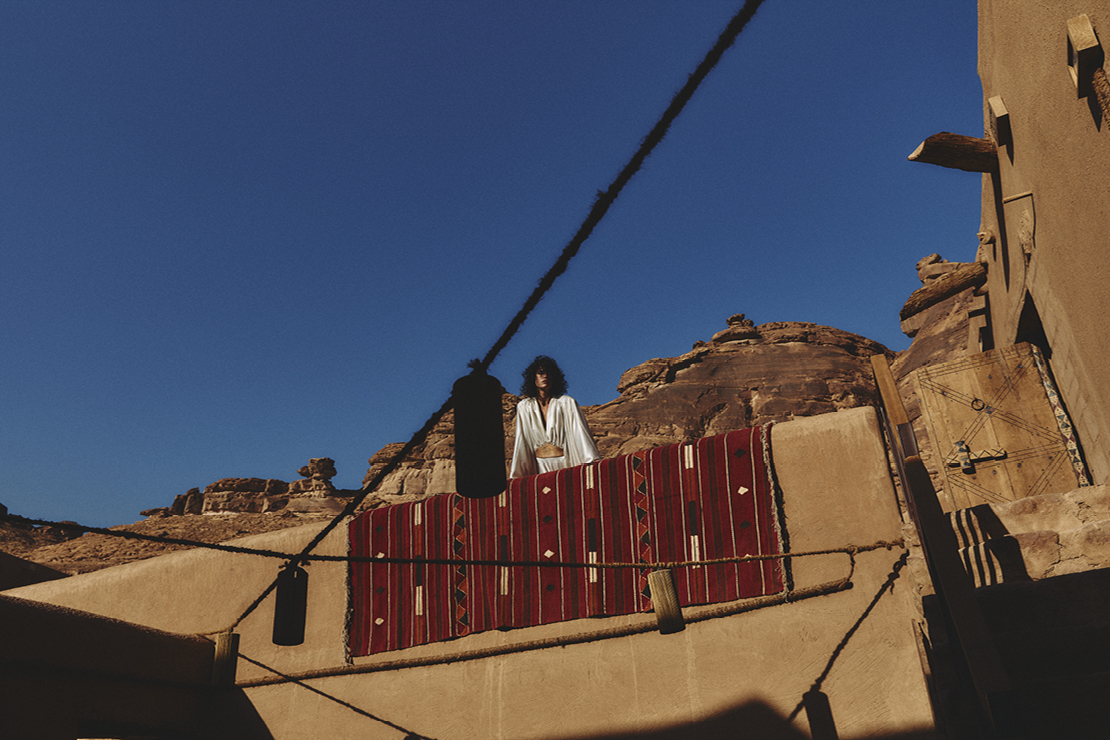
What is the fragrance you choose to wear most often?
Cashmere, Taif Rose, Aqua or Nahar.
What message would you send to our readers about the brand?
I would invite them to experience a long-lost Beauty.
By Lindsay Judge
The Art of Eclettica, Bvlgari’s Latest Collection Explores a Bold Dialogue Between Jewellery, Design and Artistic Disciplines
At Bvlgari, eclecticism has long been more than an aesthetic; it is a philosophy. With the new Eclettica high jewellery collection, the Maison pushes this vision further than ever before, unveiling a collection that blurs the boundaries between disciplines, mediums and meanings. Conceived as a living dialogue with art, the collection extends across jewellery, watchmaking, leather goods and fragrance, forming a complete universe shaped by creativity, craftsmanship and bold imagination.
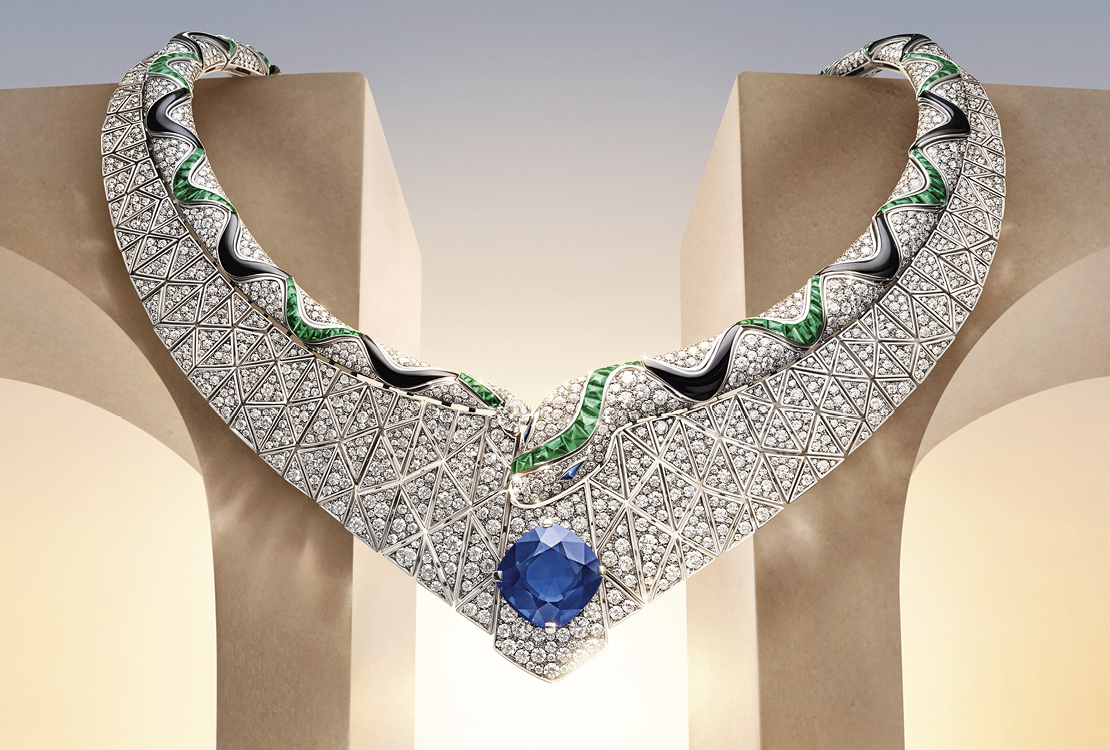
At the heart of Eclettica lies an extraordinary High Jewellery offering of more than 150 one-of-a-kind creations. Each piece is conceived as wearable art, drawing from a spectrum of artistic influences that range from the sculptural to the painterly. Gemstones are treated not simply as precious materials, but as expressive elements, arranged in compositions that feel both intuitive and meticulously orchestrated.
Anchoring the collection are nine exceptional Capolavori, or masterpieces, which represent the pinnacle of Bvlgari’s savoir-faire. These singular creations embody the Maison’s pursuit of gemstone excellence and technical mastery, while also capturing the creative audacity that defines the collection’s spirit.
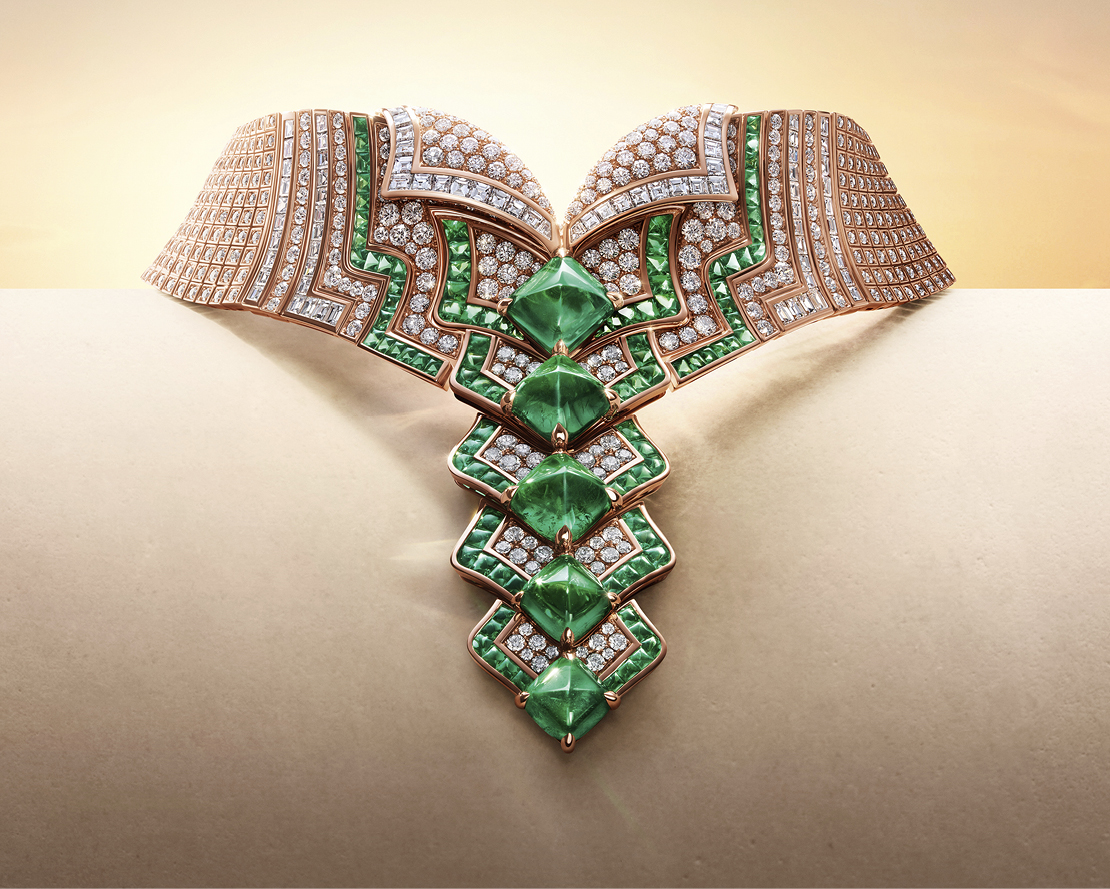
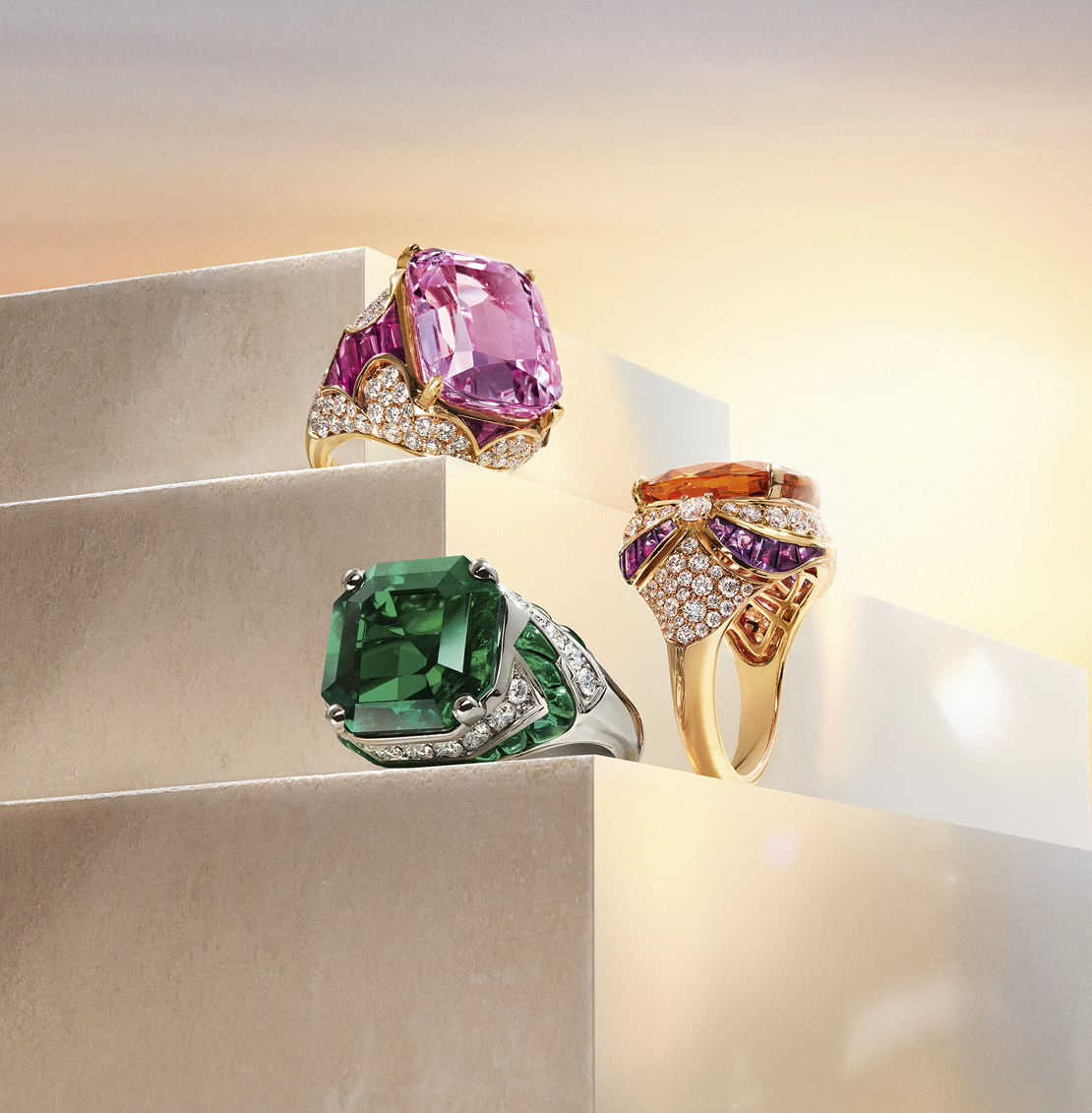
This multidisciplinary vision continues into High-End Watchmaking, where time itself becomes a canvas for artistic expression. Here, Swiss horological expertise is elevated through the integration of exceptional gemstones and intricate jewellery techniques. The resulting timepieces move beyond functionality, existing instead as objects of art that reflect the full spectrum of Bvlgari’s eclectic identity.
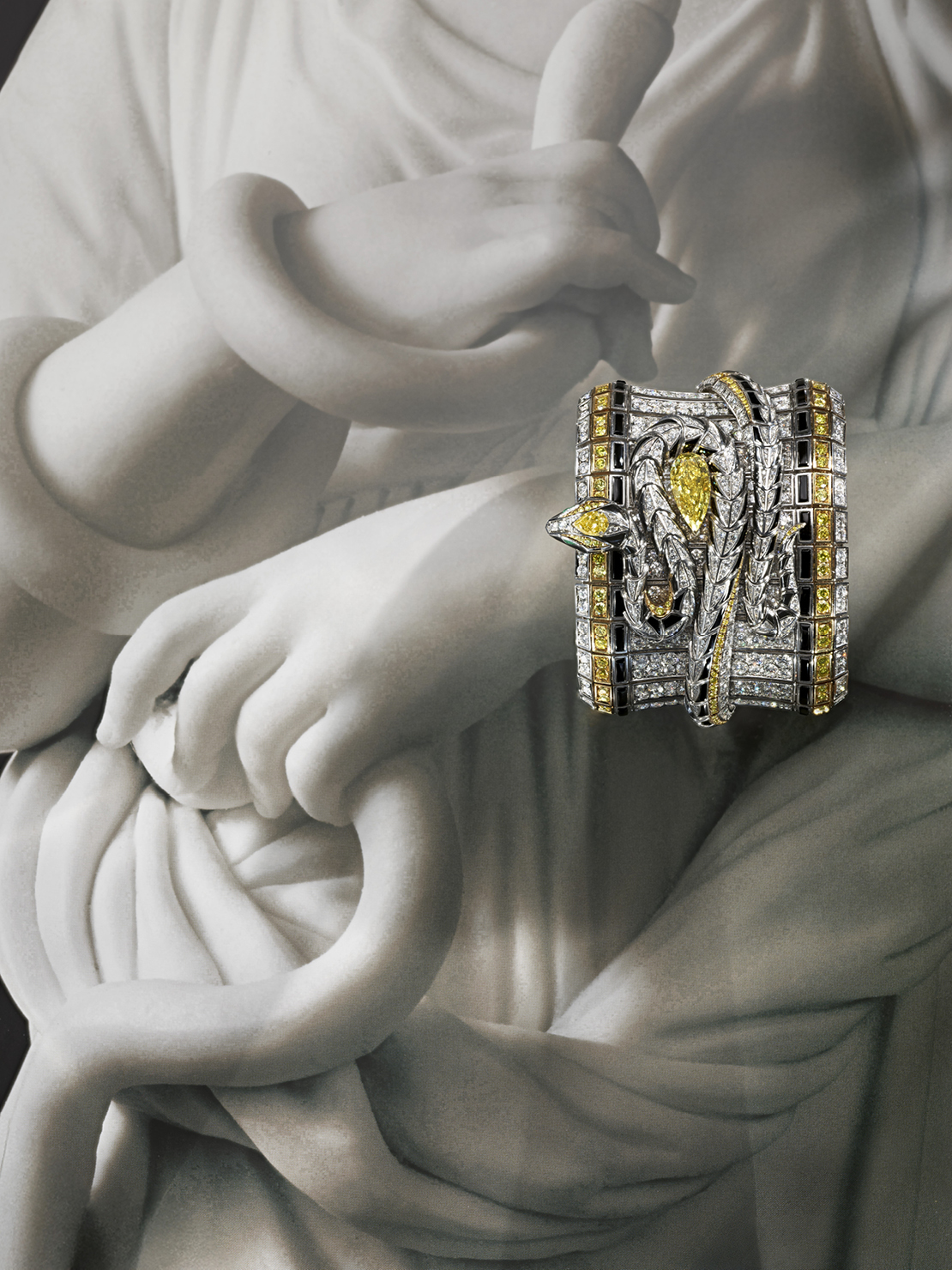
The collection’s narrative extends further into the realm of accessories with a series of one-of-a-kind High Jewelry bags. Crafted through a dialogue between jewellery savoir-faire and leather artistry, these creations transform the handbag into something far more precious. Alongside them, the High-End Eclectic Serpenti bags introduce a new alligator-leather silhouette, distinguished by a contemporary interpretation of the Maison’s iconic snake-head closure, reimagined through the lens of Eclettica.
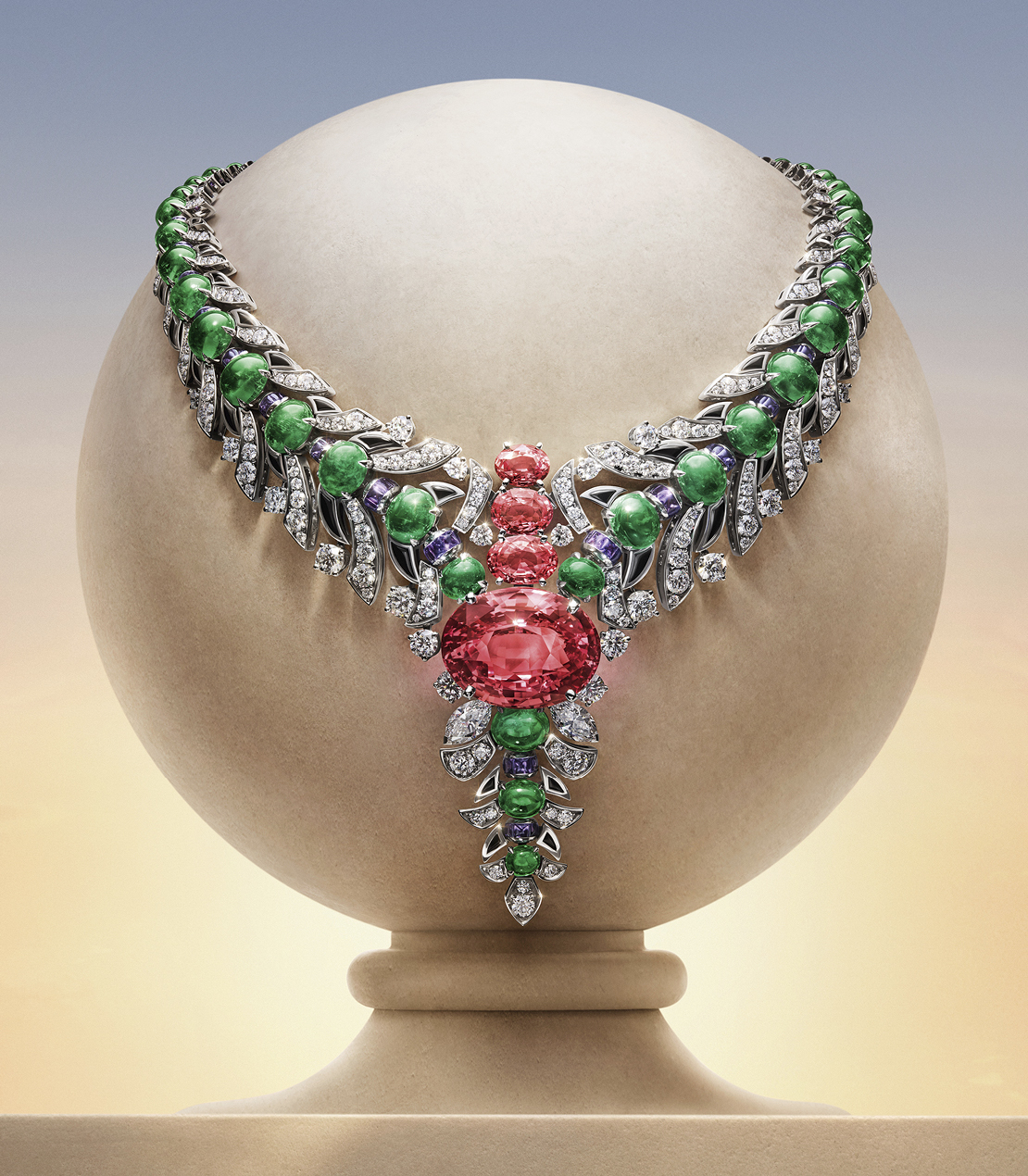
Completing this immersive universe is a trio of very high-end fragrances, each conceived as an olfactory interpretation of artistic disciplines. Drawing inspiration from architecture, sculpture and painting, these scents translate form, texture and colour into sensory experiences, further blurring the lines between High Jewelry and High Perfumery.
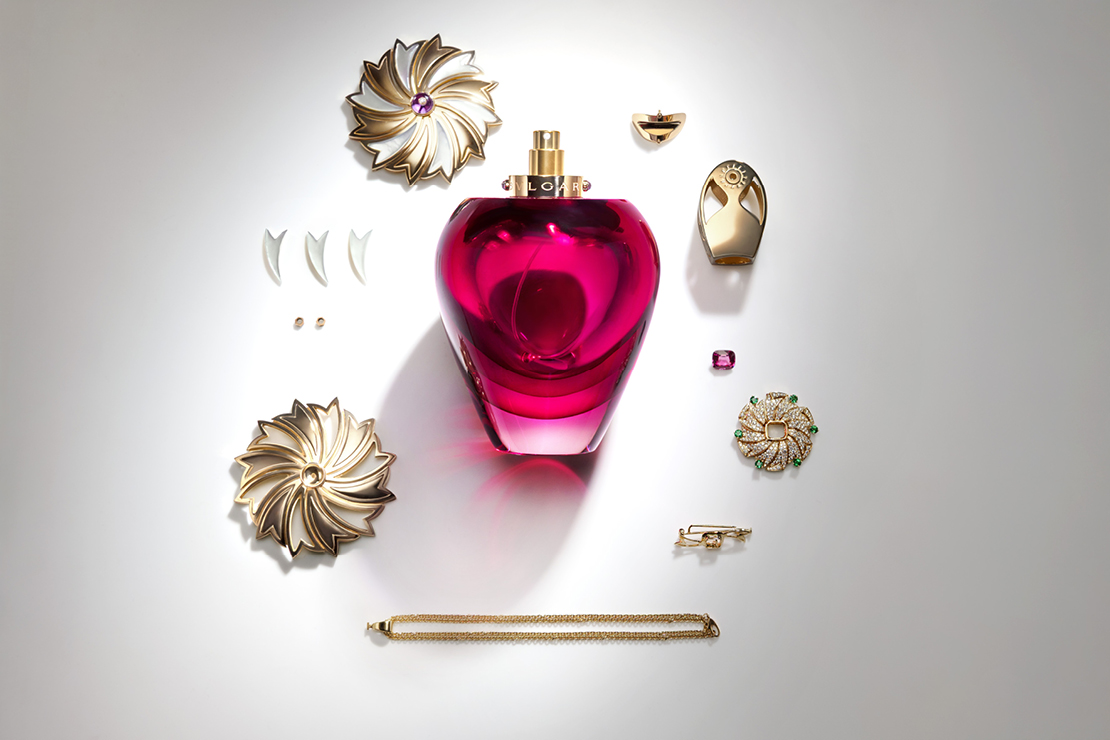
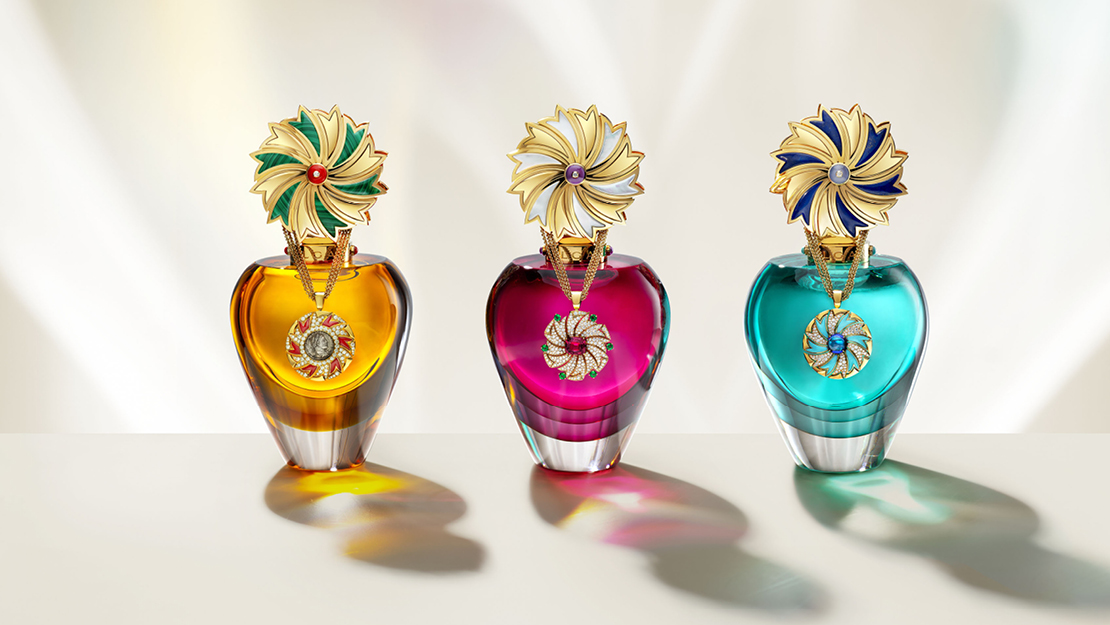
The collection displays an extraordinary level of craftsmanship, where each creation is the result of hundreds, and in some cases thousands, of hours of meticulous work. Master artisans bring together traditional techniques with advanced innovation, carefully selecting and setting rare gemstones to enhance their natural brilliance and character. Complex transformable mechanisms allow pieces to shift seamlessly between forms, reflecting both technical ingenuity and a deep understanding of wearability. From the precision of stone cutting to the invisible settings that create fluidity and lightness, every detail is considered. It is this balance of heritage savoir-faire and forward-thinking design that defines Bvlgari’s approach, elevating each piece into a true work of art.
Dior’s J’adore Fragrance Gets a new Chapter with the Launch of J’adore Intense
Dior enters a new era of femininity with J’adore Intense, a bold reinterpretation of its iconic fragrance composed by Francis Kurkdjian and embodied by Rihanna. Sensual, radiant and unapologetically confident, the new scent reimagines J’adore through a modern lens, capturing the spirit of a woman who embraces intensity, individuality and pleasure without hesitation.
Rihanna’s presence marks a defining moment for the House. As the J’adore muse, she brings a fresh energy to the fragrance, transforming its identity with her unmistakable confidence and golden radiance. Her image, captured in a striking portrait at Versailles, reflects the essence of J’adore Intense. With her arresting gaze, layered pearls, glowing gold tones and signature tattoos, she embodies a femininity that is both powerful and liberated. The setting, steeped in grandeur and history, contrasts with Rihanna’s contemporary presence, reinforcing the fragrance’s dialogue between heritage and modernity.
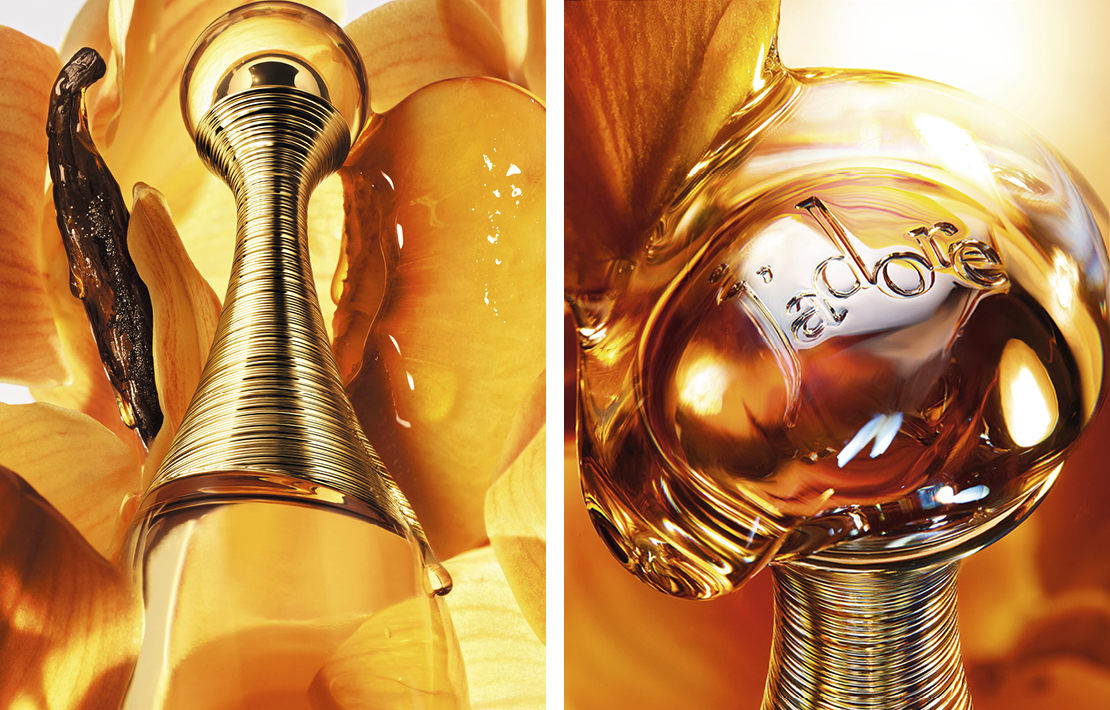
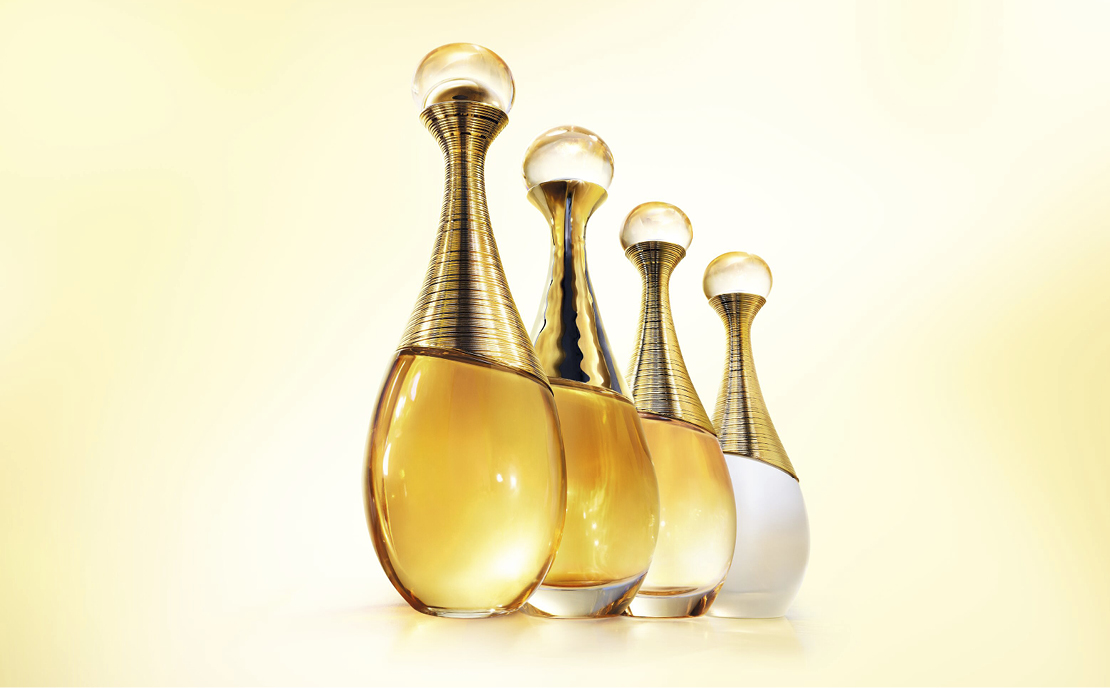
For Francis Kurkdjian, Perfume Creation Director at Dior, J’adore Intense presented a rare opportunity to compose a fragrance inspired by a specific woman. Designed with Rihanna in mind, the scent explores a more voluptuous, rounded and luminous interpretation of the iconic J’adore floral bouquet. The result is a fragrance that unfolds as a warm, honeyed floral nectar, layered with sensual depth and vibrant intensity.
At the heart of the composition, jasmine takes on soft apricot nuances, while ylang-ylang, one of the most solar of flowers, radiates warmth and brightness. Rose introduces an addictive dimension, enhanced by a gourmand violet accord that adds richness and softness. These luminous florals are grounded by a base of creamy sandalwood and generous vanilla, creating a scent that melts into the skin with enveloping warmth. The fragrance is designed to deliver immediate pleasure, an instant sensation that reflects the emotional and sensual impact of J’adore Intense.
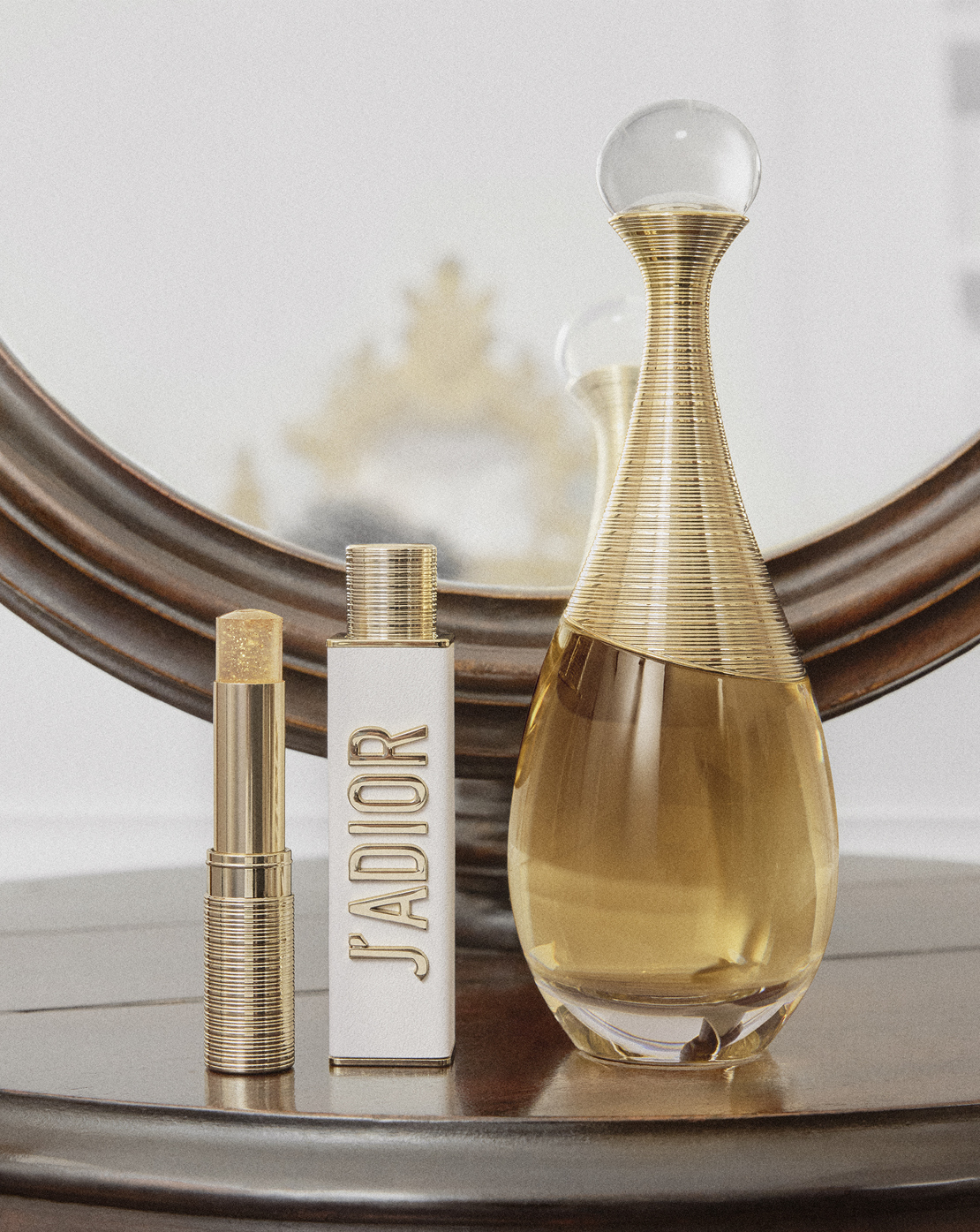
Kurkdjian describes the fragrance as an expression of contemporary femininity shaped by luminous intensity and spontaneous sensuality. The composition pushes the legendary J’adore bouquet to its peak, capturing the moment when flowers reveal their most vibrant and colourful facets. The result is both familiar and daringly new, a fragrance that celebrates indulgence while remaining true to the essence of J’adore.
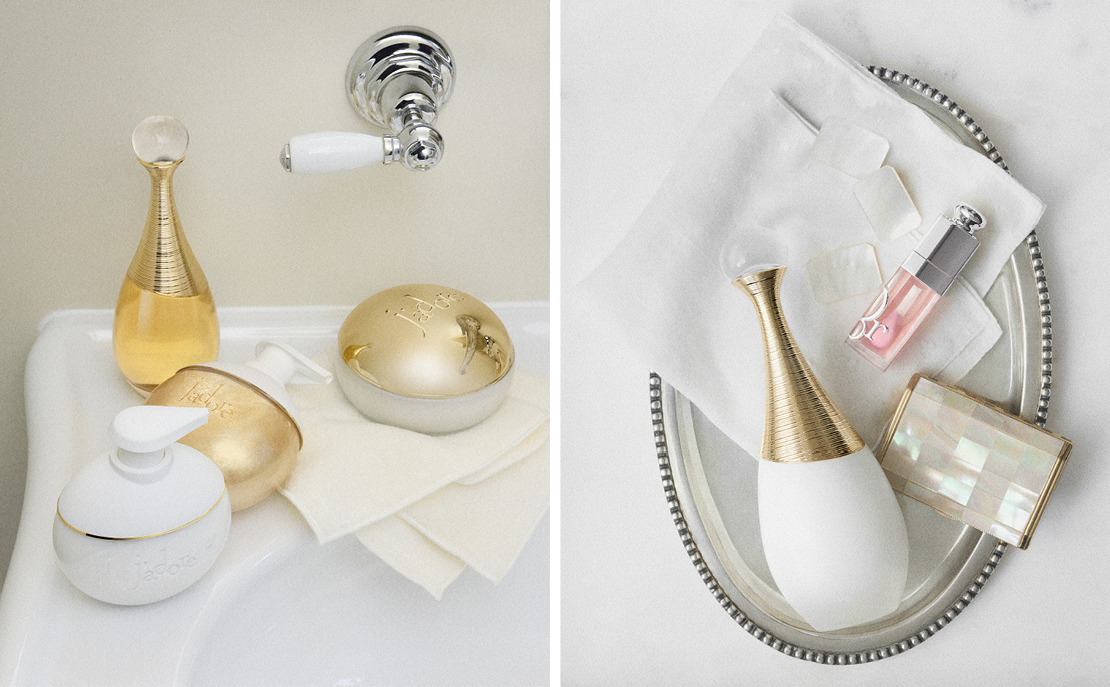
The bottle itself continues the story. The iconic J’adore amphora, inspired by Christian Dior’s 1947 New Look silhouette, is reimagined with a lighter glass design, reducing environmental impact while preserving its elegant curves. The refined transparency enhances the golden hue of the fragrance, while a delicate golden bead engraved with the name J’adore sits atop the slender neck, like a precious jewel suspended in light.
With J’adore Intense, Dior creates more than a fragrance. It introduces a new interpretation of femininity, one that is confident, radiant and unapologetically sensual. Through Rihanna’s presence and Francis Kurkdjian’s composition, J’adore Intense becomes a celebration of modern beauty, where heritage meets bold individuality and the iconic scent evolves for a new generation.
Lana Al Kamal Shares Her Journey From Architecture to Design
Founded in 2018 by architect and jewellery designer Lana Al Kamal, Lana Al Kamal Jewelry reflects a thoughtful approach to design rooted in craftsmanship, structure and emotional storytelling. Drawing on her background in architecture, Al Kamal approaches jewellery with a sculptural sensibility, creating pieces that balance proportion, movement and meaning. An elite member of the Dubai Chamber’s Jewelry Designers and Gold Business Group and supported by prestigious certifications from the Gemological Institute of America, she brings both technical expertise and creative vision to her work.
Since launching her brand, Al Kamal has developed collections inspired by nature, symbolism and the evolving role of jewellery in modern life. Her latest collaboration with Al Jalila Foundation, the Amal piece, further reflects her belief that jewellery can carry purpose as well as beauty, supporting women’s health and those facing cancer.
Here, Lana Al Kamal discusses her journey from architecture to jewellery design, the inspiration behind her sculptural aesthetic, the growing regional design scene and her vision for building a meaningful, globally recognised brand.
You began your career as an architect before founding your jewellery brand in 2018. What inspired the transition from architecture to fine jewellery, and how do the two disciplines intersect in your work today?
Architecture was the beginning of my relationship with design. When I studied architecture, I discovered that what truly excited me was not only buildings themselves, but the act of designing. I found myself fascinated by every form of design, interior spaces, exterior structures, objects and details. During that time, I began sketching jewellery purely for myself, almost as a personal creative exercise. Even while working as an architect, I felt a growing desire to explore design beyond architecture. Jewellery slowly became another passion. Eventually, I decided to study jewellery design and gemmology, and that was the moment when I realised I wanted to build something of my own. The transition was not sudden; it grew naturally from a deep love of design. Today, architecture still lives inside my work. I approach jewellery the same way an architect approaches a building, thinking about proportion, balance, structure and how a piece interacts with the body. Each design becomes a small architectural object with emotional meaning.
In what ways does your architectural training influence the way you approach form, balance and structure in jewellery design?
Architecture trains your eye to understand volume, balance and structure. That perspective naturally shapes how I design jewellery. I rarely see jewellery as something flat. I think about how the piece moves, how light touches different surfaces and how it sits on the body from different angles. Many of my designs include layers and depth because I approach them almost like small sculptures. This architectural mindset allows the pieces to feel dynamic and dimensional rather than purely decorative.
Your latest collaboration with Al Jalila Foundation introduces the Amal piece, created to support women’s health and those facing cancer. What inspired this initiative, and why was it important for you to use jewellery as a vehicle for social impact?
I strongly believe that every career should include a way of giving back to the community. As a brand founded by a woman, I have always supported women. I believe deeply in the idea of women supporting women. When I started thinking about how Lana Al Kamal Jewelry could contribute meaningfully, I wanted to create initiatives that could support women in real ways. Supporting women facing cancer felt especially meaningful, leading to a collaboration with the Al Jalila Foundation.
What makes the Amal initiative special to me is that it is not only the brand making a donation. With every Amal necklace purchased, 50% of the profits are donated to support women battling cancer. That means our clients also become part of the impact. In this way, the initiative becomes something shared, the brand, the clients and the wider community all participating together in spreading hope and support.
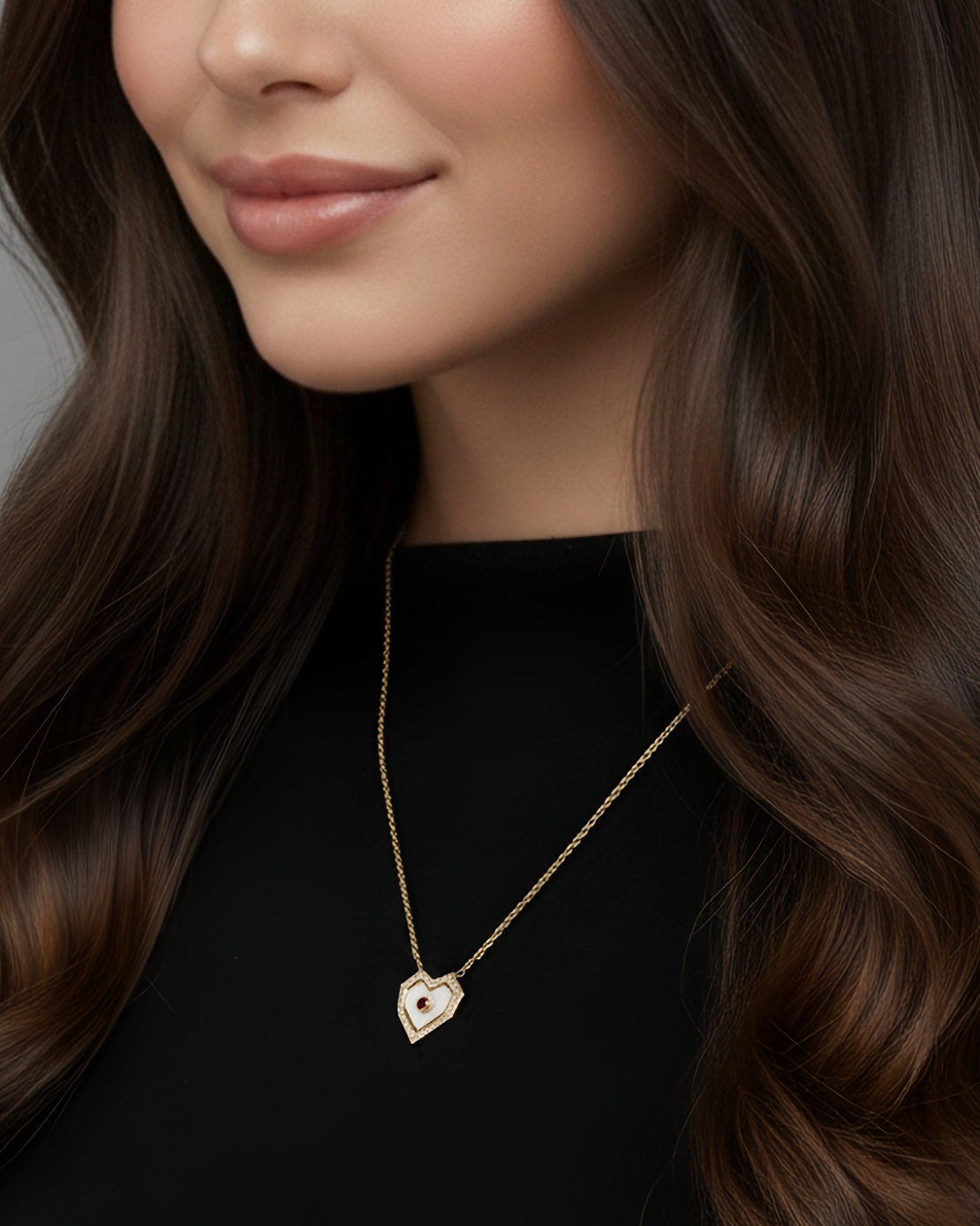
The name Amal, meaning hope, carries powerful symbolism. How did that concept shape the design of the piece itself?
The entire design process began with the word itself, Amal, meaning “hope.” From that idea, we developed a mood board exploring emotions connected to hope, care and compassion. The heart shape became central to the design because it symbolises warmth, love and empathy.
The heart is framed with diamonds that form a circle around it, almost like a community standing together in support. At the centre, the heart is crafted from mother-of-pearl, chosen for its soft, calming presence and sense of serenity. Finally, a ruby sits at the centre, a stone associated with life, courage, strength and resilience. Each element carries meaning. Together, they create a piece that tells a story of hope, compassion, and collective support.
As a female-founded jewellery house, your brand celebrates strength and femininity in equal measure. How has your experience as a woman shaped the way you build and lead your business?
For many years, the fashion and jewellery industries were largely led by men. Today, it is inspiring to see more women stepping into leadership roles and shaping the direction of these industries. As a woman designing for women, I feel there is a different level of understanding. I can imagine how the piece will feel when worn, how it becomes part of someone’s daily life and what emotional meaning it might carry. That perspective naturally influences both my designs and how I lead my brand. Femininity brings sensitivity, intuition and attention to detail, qualities that are incredibly powerful in creative industries.
The Middle East is seeing a new wave of independent jewellery designers emerge. How do you see the regional jewellery industry evolving, and what makes this moment particularly exciting?
The Middle East is experiencing a very exciting evolution in jewellery design. In the UAE in particular, there is strong support for creativity and entrepreneurship. The environment encourages designers to start their own businesses and develop their artistic voices.
Over the past eight years, since founding my brand, I have watched the regional design scene grow rapidly. Today, many talented designers produce work that could easily compete internationally in terms of creativity, craftsmanship, and gemstone quality. This moment is exciting because the region is no longer only a consumer of luxury; it is becoming a creator of it.
Many of your collections explore themes found in nature. What draws you to these motifs, and how do they reflect the women who wear your designs?
Nature is one of the greatest sources of inspiration for me. If you look closely, nature offers endless ideas, plants, insects, waves, stars, colours and textures. It is an infinite design library. Personally, I feel very connected to nature, and that connection naturally appears in my jewellery.
Many of my pieces also carry symbolic meaning inspired by nature. Butterflies represent transformation, flowers symbolise growth and bees reflect dedication and harmony. Through these symbols, the jewellery becomes more than decoration. It reflects the journeys and emotions of the women who wear it.
Your pieces are designed to move effortlessly between special occasions and everyday wear. Why was it important for you to create jewellery that accompanies women through all moments of life?
Jewellery should not only exist for rare occasions. The pieces we wear every day often become the most meaningful because they accompany us through our daily lives. I wanted to create designs that feel elegant yet comfortable enough to wear regularly. In modern life, women want jewellery that moves with them, from everyday moments to special celebrations. Designing pieces that adapt to both was very important to me.
Having studied gemmology and jewellery design at the Gemmological Institute of America, how important is technical mastery when it comes to creating pieces that feel both artistic and enduring?
Technical mastery is essential. Creativity alone is not enough to create fine jewellery. Understanding gemstones, metal behaviour, structural durability and craftsmanship is what allows a design to truly come to life. Studying gemmology and jewellery design gave me the technical foundation needed to translate ideas into pieces that are not only beautiful but also durable and enduring. In many ways, jewellery design is a balance between art and engineering.
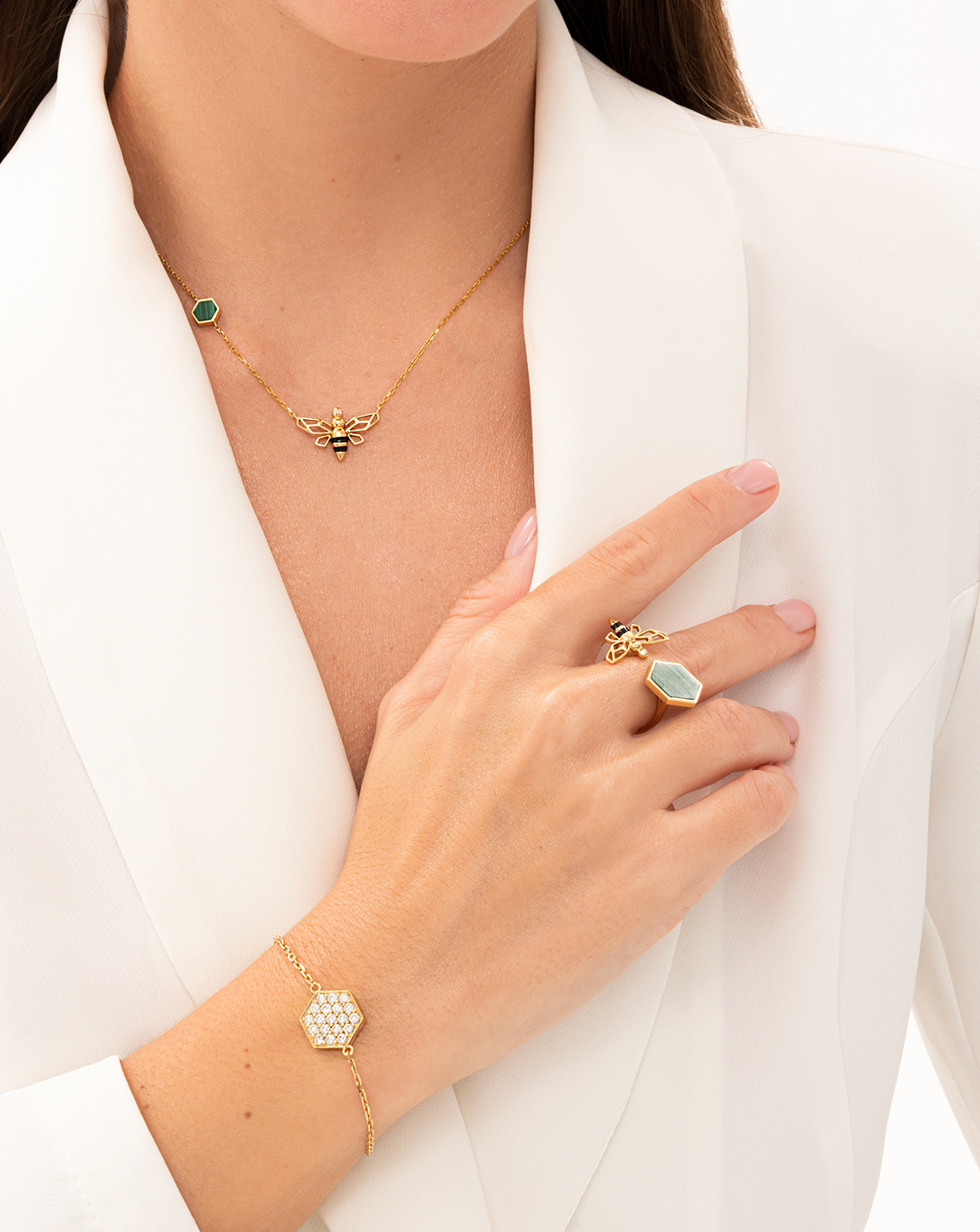
Entrepreneurship often comes with challenges. Looking back at your journey since launching the brand, what have been some of the most defining or difficult moments?
One of the biggest realisations when starting a business is understanding that design is only one part of the journey. When I launched the brand, I quickly learned that running a company involves many other responsibilities, strategy, operations, communication and business decisions. That was one of the biggest challenges in the beginning. But over time, through experience, learning and persistence, you develop the skills needed to navigate these challenges. Every difficulty becomes part of the learning process.

For women who are considering a career change, as you once did when leaving architecture, what advice would you give them about taking that leap?
For me, the transition from architecture to jewellery did not happen overnight. It was a gradual process. I spent time exploring jewellery design while still working in architecture. I studied, practised and tested whether this passion could truly become a profession.
Only once I felt confident that it could become both creatively fulfilling and sustainable did I make the full transition. My advice would be not to rush such decisions. Think carefully, prepare yourself and build a strong foundation. Follow your passion, but also approach it with patience and clarity.
Finally, looking ahead, what would you still like to achieve with Lana Al Kamal Jewelry?
My goal is to continue growing Lana Al Kamal Jewelry into a globally recognised brand. I want the brand to be known not only for craftsmanship and design, but also for meaningful storytelling and emotional connection. Jewellery should carry beauty, but also purpose and memory. Ultimately, I hope that when people wear a Lana Al Kamal piece, they feel both elegance and meaning, something that becomes part of their own story.
By Lindsay Judge
HE Mariam Al Hammadi, Director General of NAMA Women Advancement, on Gender Equity, Leadership and the Future of Women’s Empowerment
Her Excellency Mariam Al Hammadi stands at the forefront of advancing women’s empowerment in the UAE and beyond. As Director General of NAMA Women Advancement, she brings a strategic, forward-thinking approach shaped by years of humanitarian leadership, policy development and cross-sector collaboration. With a career spanning both the corporate and non-profit worlds, Mariam has consistently focused on creating meaningful, long-term change, placing women at the centre of sustainable social and economic progress.
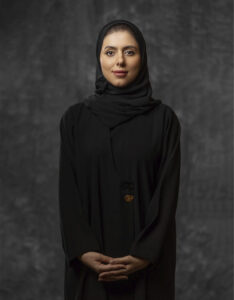
Before joining NAMA, Mariam served as Director General of The Big Heart Foundation, where she led initiatives impacting millions of lives across more than 25 countries. These experiences shaped her belief that empowering women is not only a social priority but a catalyst for stronger communities and resilient economies. Today, under her leadership, NAMA continues to expand its reach through partnerships, research, and programmes designed to equip women with the tools to lead and thrive across sectors.
Guided by the vision of Her Highness Sheikha Jawaher bint Mohammed Al Qasimi, Mariam’s work reflects a commitment to creating systemic change, moving beyond conversations around empowerment to building tangible opportunities. In this conversation, she reflects on leadership, collaboration, and the evolving role of women across the region, while sharing her vision for the future of gender equity on both a regional and global stage.
You have led transformative initiatives across both humanitarian and development sectors. How has your experience at The Big Heart Foundation shaped your approach to advancing women’s empowerment at NAMA?
Driven by a deep commitment to advancing women’s socio-economic status, my professional journey has spanned both the corporate and humanitarian sectors. I began my career in the corporate world before making a conscious transition into humanitarian and development work to pursue a path where impact is both meaningful and enduring in people’s lives.
My experience at The Big Heart Foundation was instrumental in shaping my perspective on what true empowerment requires. Working across more than 30 countries and engaging with millions of people facing complex humanitarian challenges, I came to understand that impact is not measured by immediate outputs, but by the lasting change it creates in people’s lives and the systems that support them.
I met women whose resilience fundamentally redefined strength, mothers rebuilding their lives after loss, young girls pursuing education against significant barriers, and entrepreneurs creating opportunities in fragile contexts. These experiences reinforced a fundamental truth that women are not just passive beneficiaries of change, but active drivers of transformation. When equipped with the right tools and opportunities, their influence extends beyond the individual, uplifting entire communities.
Today, at NAMA Women Advancement, I build on this foundation with a clear focus on shaping systems that enable women’s full and sustained participation in economic and social life. Our approach goes beyond programmes to influence policies, strengthen institutional frameworks, and drive partnerships that embed gender equity into the fabric of economies. We are working to ensure that women’s contributions are not only recognised but fully integrated into future-facing sectors and leadership spaces, positioning empowerment as a driver of inclusive and sustainable growth.
Ultimately, empowerment is not only about unlocking individual potential but about redefining the systems that sustain inclusive and lasting impact at scale.
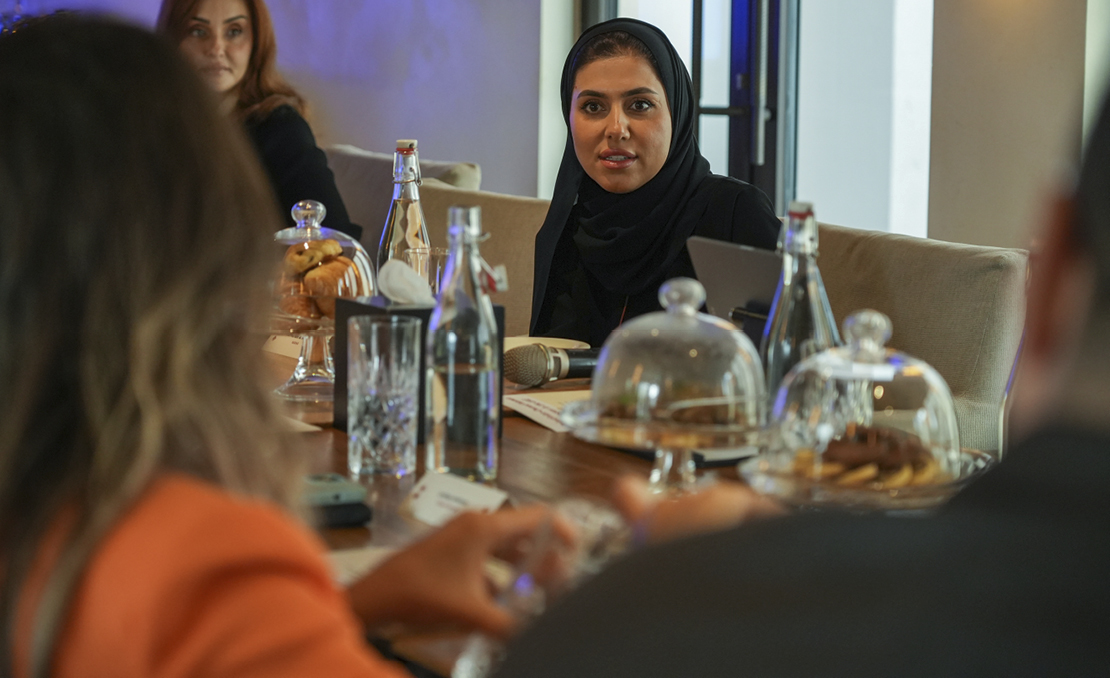
Working under the vision of Her Highness Sheikha Jawaher bint Mohammed Al Qasimi, how does that leadership influence the direction and ambition of NAMA today?
The vision of Her Highness Sheikha Jawaher bint Mohammed Al Qasimi is not only guiding but also foundational to NAMA’s mandate. It drives a strategy focused on scalable outcomes, systemic change, and measurable impact, positioning women’s advancement as a core pillar of economic and social development.
This vision is reflected in how NAMA translates strategy into action, focusing on programmes that deliver tangible results and sustained progress in women’s lives. It informs our approach to designing initiatives that are relevant, scalable, and aligned with national priorities and global development frameworks.
From its inception, NAMA has worked to reshape perceptions of women’s roles and reinforce their position as active contributors to economic and social advancement. This goes beyond awareness to enabling participation—creating environments where women are supported and empowered to lead and thrive across all sectors.
Her Highness’s vision also reflects a global perspective, recognising that advancing women’s empowerment is a shared responsibility that requires collaboration, knowledge exchange, and sustained commitment. At NAMA, we translate this vision into action through strategic partnerships, strengthened institutional frameworks, and programmes that contribute to more inclusive and forward-looking societies.
Her leadership sets a clear ambition: to not only support women, but to redefine the systems that enable their empowerment to be enduring and transformative.
The conversation around women’s empowerment has evolved significantly in recent years. What do you believe are the most pressing challenges women still face, particularly within the region?
The conversation around women’s empowerment has advanced significantly, and in many parts of the region – particularly in the UAE – the foundations are strong. What has shifted more fundamentally is the environment in which women live and work, shaped by rapid economic, technological, and social change.
Over the past decades, economic structures, the nature of work, and the pace of life have evolved rapidly. Industrial and digital transformations have redefined labour markets, placing greater emphasis on specialised skills, adaptability, and lifelong learning. At the same time, roles that were once embedded within family and community structures have transitioned into more formal and complex systems. In parallel, technological innovation has not only expanded opportunities but also reshaped how individuals participate in the economy.
As a result, women today navigate an environment where choices are broader, roles are more interconnected, and decision-making requires greater awareness, agility and confidence.
In this landscape, the challenge extends beyond access or participation. It lies in ensuring that women are equipped—not only to engage with these changes—but to actively shape them.
Women’s empowerment, therefore, is not a standalone objective; it is a strategic imperative for resilient and sustainable societal progress. Achieving this requires moving beyond a focus on individual capability-building to instead addressing the systems that influence women’s experiences- policies, workplace structures, and economic frameworks. It is about creating enabling environments that recognise the full spectrum of women’s roles – whether in leadership, the economy, or within the family – and ensure these roles are supported, not constrained.
At NAMA, this perspective guides our work. Through initiatives such as Irtiqa, we collaborate with institutions to embed gender equity into policies and workplace practices, particularly in sectors where structural gaps persist.
Our research and policy efforts are equally critical. For example, our collaboration with partners on care-related challenges contributed to developing the Care Leave policy, demonstrating how evidence-based insights can drive tangible, systematic policy outcomes.
Collaboration has been central to your work, both locally and globally. How important are partnerships in accelerating gender equity, and what kinds of alliances are you prioritising moving forward?
Advancing gender equity is inherently collaborative – its progress depends on how effectively institutions, sectors, and communities align their efforts.
In practice, the difference between intention and impact often lies in that alignment. When efforts are fragmented, progress remains limited. But when the government, the private sector, and civil society operate within a shared framework, change becomes more scalable, more sustainable, and more responsive to real needs.
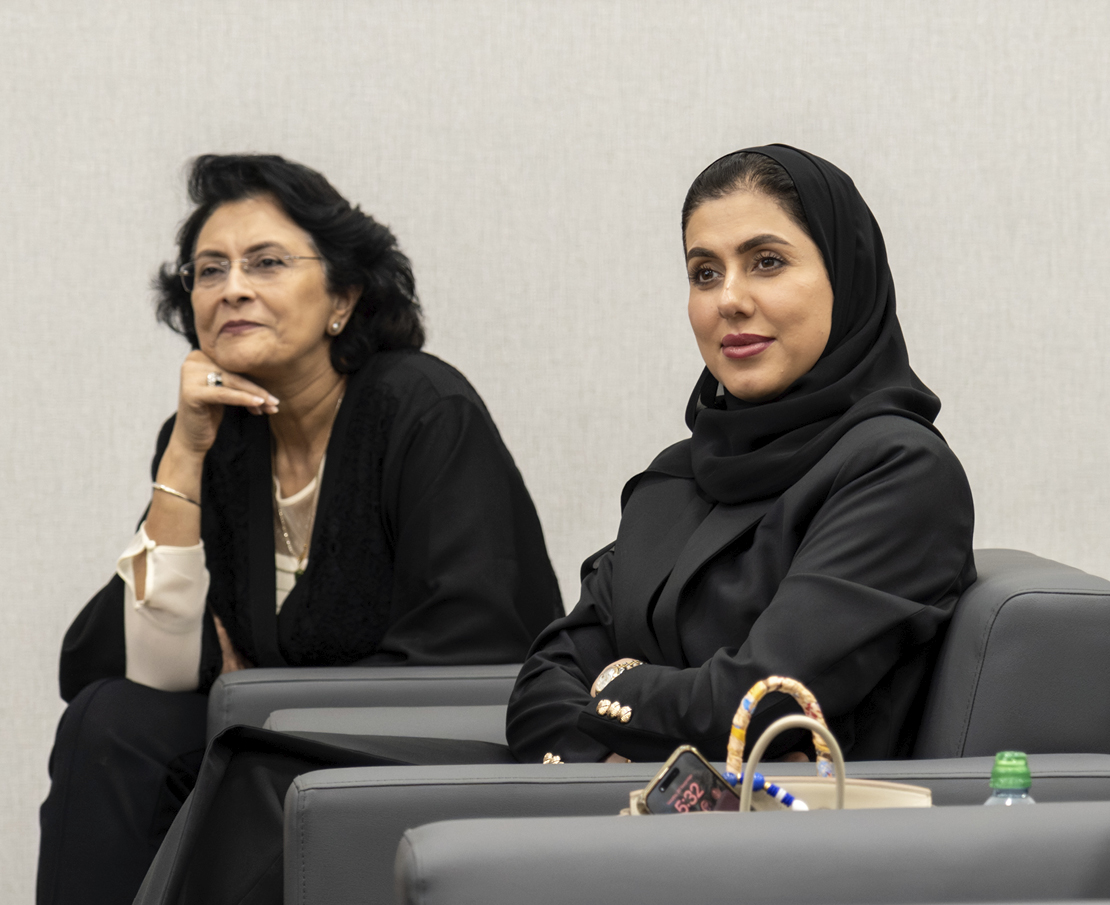
At NAMA Women Advancement, we use partnerships as a strategic lever to shape the agenda for gender equity and drive systemic change. We work with government entities to inform and advance inclusive policies, and engage the private sector to strengthen workplace standards and expand equitable economic participation. For example, through our collaboration with Emirates Global Aluminium on the Challenger Programme, we support the development of more inclusive practices within heavy industry, helping address structural gaps in traditionally male-dominated sectors. These partnerships are designed not only to implement initiatives, but to influence how institutions embed gender equity into their operations at scale.
Our international programmes extend this approach globally. Through collaborations with UN Women, we have supported women entrepreneurs in accessing finance and markets. In Africa, our partnership with the International Renewable Energy Agency has focused on advancing women’s participation in the clean energy sector, equipping them with technical and leadership skills in emerging industries.
Looking ahead, our focus is on building alliances that go beyond implementation. We are prioritising partnerships that inform policy, unlock access to opportunities, and elevate women’s voices within regional and global dialogues.
Advancing gender equity requires a shared commitment to creating environments where women can fully participate and actively lead in defining the future of our societies.
What’s the biggest challenge you face in your role today?
One of the biggest challenges I face today is ensuring that progress in women’s empowerment is not only visible but also meaningful and sustainable across policies, institutions, workplaces, and communities.
While there is growing recognition of the importance of empowering women, the real challenge lies in translating that recognition into systems that consistently enable women’s participation, leadership, and growth. In my role, this means working across multiple layers—policy, institutions, and partnerships—to ensure that efforts are aligned, cohesive, and capable of driving lasting change.
It also requires balancing immediacy with long-term impact. There is often pressure to deliver visible outcomes, but the most meaningful progress is built over time—through structures that continue to create opportunities far beyond a single initiative or moment.
At its core, the challenge is not only to expand opportunities for women but also to ensure they are connected so they can thrive across sectors and generations. Because real empowerment is measured by sustained progress over time, not isolated outcomes.
What are some of the key initiatives or programmes that are coming up in the near future at NAMA?
Our focus remains on strengthening both the economic and holistic well-being of women, while continuously evolving and building our existing programmes.
Education continues to be a key pillar of our work, particularly through research grants, academic partnerships, and long-term initiatives such as the Jawaher Fund for the Advancement of Women’s Education, which supports women pursuing higher education and research across fields, including STEM, health, and social sciences —ensuring they are equipped to contribute meaningfully to society and the economy.
At the same time, we are expanding programmes that strengthen institutional capacity and create more inclusive environments. Through our national Irtiqa initiative, we are convening entities across sectors through targeted workshops and forums such as the Women Councils Connect platform, which focuses on strengthening governance models, enhancing operational maturity, and enabling organisations to translate gender commitments into measurable workplace outcomes. This includes supporting entities in establishing and advancing Women Councils as structured mechanisms that inform policy, strengthen accountability, and embed gender equity into institutional decision-making.
We also continue to invest in community-based platforms such as NAMA Talks. The 2026 edition is being delivered as a six-session, year-long series across Sharjah, with a focused theme on women’s health and quality of life. The programme is designed to provide practical tools and structured dialogue that support women in managing competing responsibilities, strengthening wellbeing, and sustaining their participation across professional and family roles.
Alongside this, research is a central component of how we shape policy and programmes. Through the Jawaher Fund for the Advancement of Women’s Education, we awarded 80 research grants in 2025 in partnership with leading institutions, including the University of Sharjah, as well as Al Akhawayn University and Cadi Ayyad University in Morocco. The research spans STEM, sustainability, public policy, and inclusive economic growth, ensuring that our work is grounded in evidence and contributes to addressing pressing regional and global challenges.
From your perspective, where does the greatest untapped potential lie for women in the UAE and the wider region?
I believe the greatest untapped potential lies in moving women from participation to influence, positioning them not only as contributors, but as decision-makers shaping economic and social outcomes. The UAE has already built a strong foundation through sustained investment in education, representation, and opportunity, resulting in a generation of highly capable, globally aware women ready to lead.
Leadership often requires resilience and adaptability. What continues to motivate and ground you in your role today?
What keeps me grounded is the tangible impact of our work, seeing how the right support at the right time can transform a woman’s life, in turn, the future of her family and community.
Across both my humanitarian experience at The Big Heart Foundation and our efforts at NAMA, I have witnessed how access to education, financial literacy, and enabling policies can create lasting, meaningful change. These concrete shifts are a daily reminder of why this work matters.
Early in my career, I learned to combine analytical rigour from the private sector with a sense of compassion and service shaped by humanitarian work. That balance continues to guide my approach to leadership. Over time, I have also come to understand that resilience is not merely enduring pressure- it is the ability to remain anchored in purpose while navigating constant change.
What motivates me is the knowledge that every initiative contributes to a broader vision. Whether it is equipping women with financial literacy or supporting them in taking their first steps into entrepreneurship, we see how access to the right tools can open pathways to growth. This enables women to develop and scale their businesses over time, supported by an ecosystem designed to sustain their progress.
I see leadership as stewardship. It is our responsibility to carry a vision with care, to remain consistent in times of uncertainty, and to ensure that what we build delivers lasting impact.
What message would you share with young women who are just beginning to shape their ambitions?
To every young woman, I would say this: your ambition is not negotiable. It is not something separate from who you are; it is an extension of your perspective, your experiences and your values. Hold on to it with clarity and conviction.
Do not wait for perfect conditions. Start where you are, even if the path ahead is not fully defined. Growth does not come from certainty; it comes from moving forward with purpose and learning along the way.
Invest in your skills, your knowledge, and your networks, while also prioritising your wellbeing. These are lasting assets that will open doors, sustain you through challenges, and create opportunities over time. Make use of the platforms around you, whether through mentorship, business networks, or initiatives like NAMA Talks, to connect, learn, and build the awareness and resilience needed to navigate both your professional and personal journey.
There will be obstacles, but each one you overcome clears the path for others. Ambition is not only about what you achieve for yourself, but also about the example you set in your everyday roles, whether as a daughter, a colleague, a mother, or a mentor, and how that encourages others to grow alongside you.
And when you step into leadership, do so with that awareness. You are not only shaping your own future but also expanding what is possible for others and contributing to a more inclusive and equitable society.
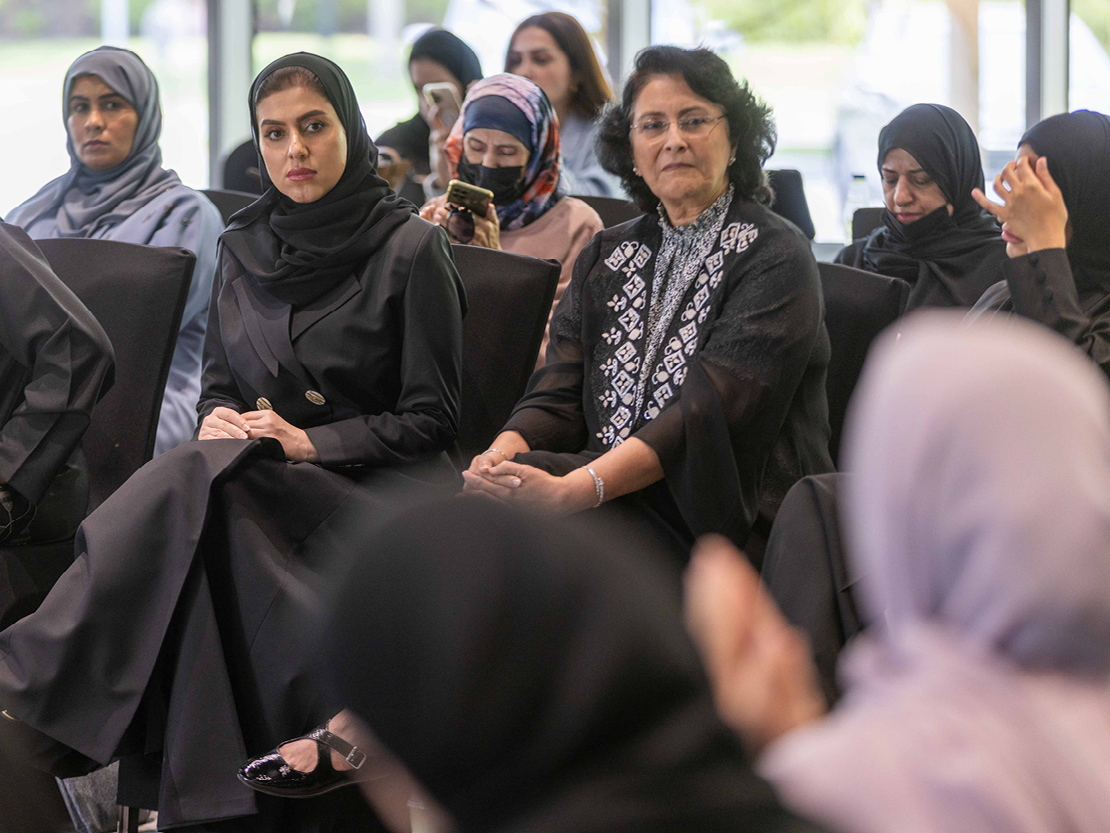
Looking ahead, what is your long-term vision for NAMA, and the role it can play on a global stage in shaping conversations around gender equity?
My long-term vision is for NAMA to be recognised as a catalyst for advancing women’s empowerment across four core pillars: economic empowerment, sustainable livelihoods, health and wellbeing, and status in society. These priorities should not be treated in isolation, but embedded within national policies and institutional frameworks across the UAE.
Rooted in Sharjah’s values, NAMA’s role extends beyond programme implementation to shaping broader systems of impact. It is about influencing how institutions think, design, and act to support women’s full participation in society.
Internationally, I see NAMA evolving into a thought leader, contributing to global conversations through regionally grounded, evidence-based models. A key part of this is amplifying voices from our region and ensuring that diverse experiences inform global approaches to gender equity.
By Lindsay judge
Lama Jouni on Designing for the Modern Woman and Creating Pieces Designed to Last
Lebanese designer Lama Jouni has built her namesake label on the idea that modern dressing should be both effortless and intentional. Founded in Dubai, her brand has become known for its refined balance of femininity and functionality, offering pieces designed to move seamlessly through a woman’s everyday life. With a background shaped by studies at ESMOD, Instituto Marangoni and Parsons Paris, and experience at leading fashion houses including Balmain and Rad Hourani, Jouni’s approach is grounded in strong tailoring, thoughtful construction and a clear sense of purpose.
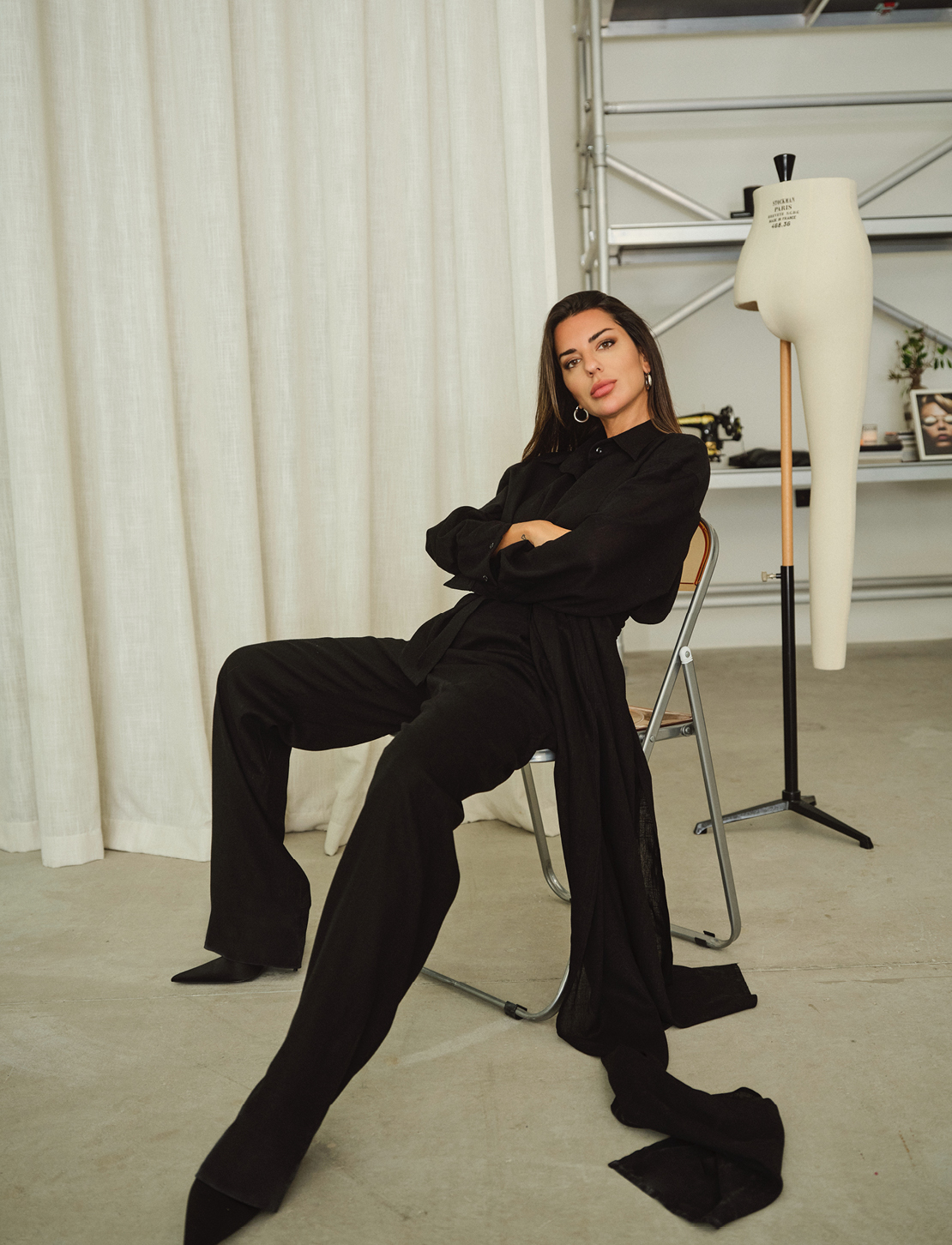
Since launching her label, Jouni has focused on redefining the capsule wardrobe, creating collections that emphasise versatility, longevity and ease. Her Essentials Series, introduced in 2020, helped shape the brand’s identity, with signature cut-outs, wrap ties and multi-strap silhouettes designed for women seeking confidence without complexity. Recognised by Vogue Arabia, Harper’s Bazaar Arabia and Forbes Middle East, she has steadily positioned her brand at the intersection of luxury and accessibility, with conscious design at its core.
As the regional fashion landscape continues to evolve, Jouni remains focused on building with intention, creating pieces that transcend seasons while empowering women through thoughtful, wearable design. In this interview, she reflects on redefining effortless dressing, building a brand from the region, and why slowing down may be the key to long term success.
Your brand is rooted in the idea of effortlessness. How do you define effortless dressing today, and why do you think it resonates so strongly with modern women?
Effortless dressing today is about clarity. It’s knowing yourself, your body, your lifestyle and choosing pieces that support that without overcomplicating it. Women today are doing so much, they don’t want to think too hard about what they’re wearing, but they still want to feel strong, feminine, and put together. Effortlessness is that balance of ease without losing intention.
Was there a personal moment or experience that led you to rethink how we consume fashion?
Yes, going through both the growth and the setbacks of my brand really shifted my perspective. There was a time when we were producing a lot, selling a lot, but it didn’t always feel aligned. That made me step back and question volume versus value. I started focusing more on creating pieces that have longevity—not just in quality, but in how they make you feel.
In a world driven by constant newness, how do you approach designing pieces that feel both relevant and enduring?
I don’t chase trends. I observe them, but I filter everything through the brand’s DNA. For me, it’s about refining rather than reinventing. If a piece can exist in your wardrobe for years and still feel right, then it’s successful. That’s how I define relevance: something that evolves with you, not something that expires.
Your silhouettes are known for their balance of femininity and ease. How do you ensure your designs remain both flattering and functional?
It comes down to construction and understanding the body. I come from a production background, so I think a lot about how something is made, how it moves, how it sits. I always ask: Does this make a woman feel comfortable and confident at the same time? If it restricts her or feels forced, it doesn’t work.
What lessons have you learnt along the way that continue to shape your approach today?
To slow down and be intentional. Not every opportunity is the right opportunity. Also, to trust my instinct more—especially when it comes to creative direction and business decisions. And to build sustainably, even if that means growing slower.
You’ve positioned your brand between luxury and accessibility. How do you maintain that balance without compromising on quality or design integrity?
It’s a constant balance, but it starts with being very clear on where value lies. I invest in fit, fabric, and construction—those are non-negotiables. Then I simplify where I can, whether it’s in design complexity or production processes, to keep things accessible. It’s about being smart, not cutting corners.
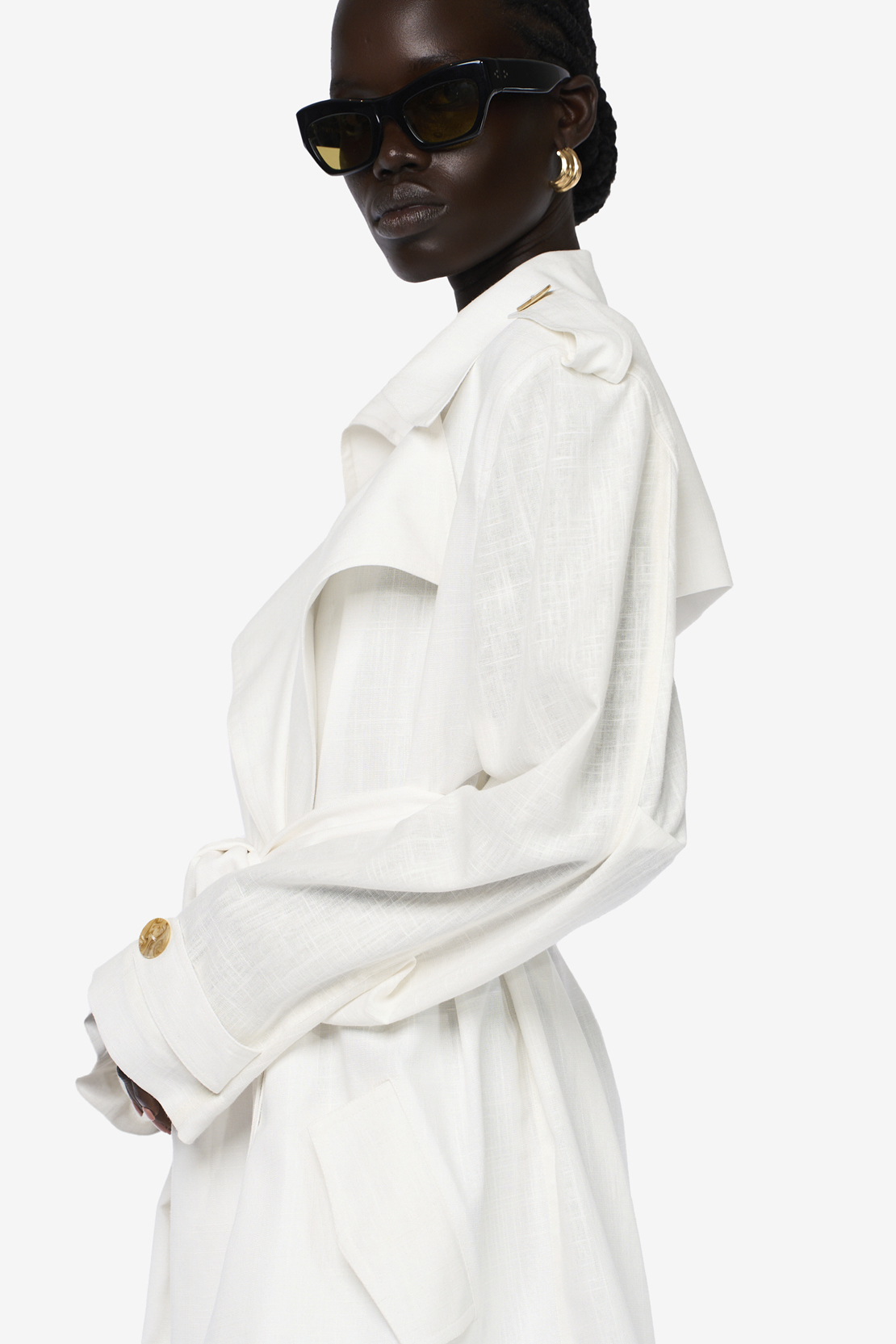
Conscious shopping is a key part of your philosophy. How do you encourage customers to shift their mindset from quantity to intention?
Through storytelling and consistency. I don’t want to overwhelm the customer with too many options. Instead, I want each piece to feel considered, like it has a purpose. When women connect emotionally to what they’re buying, they naturally become more intentional.
What, in your view, defines a truly modern essential?
A modern essential is something that adapts to different moments in your life. It’s versatile, comfortable, and makes you feel like yourself—but elevated. It’s not loud, but it’s impactful in how it’s worn.
As your brand continues to grow internationally, how do you ensure it remains rooted in its original vision?
By staying very close to the core of the brand, its values, its aesthetic, its message. Growth can sometimes pull you in different directions, but I always come back to: does this feel like us? If the answer is no, then it’s not worth pursuing.
What are the biggest challenges as a brand coming from this region, hoping to have success on an international scale?
There’s still a perception gap. Sometimes you must work twice as hard to be taken seriously internationally. Logistics, production limitations, and access to certain resources can also be challenging. But at the same time, coming from this region gives us a unique perspective, and that’s something we should lean into more.
As a member of the Dubai Fashion Week committee, how do you see the regional fashion landscape evolving in the coming years?
I see it becoming more structured and more globally connected. There’s a lot of talent here, but now it’s about building the right systems, whether it’s production, distribution, or visibility. I think we’re moving towards a more mature and sustainable industry.
What would you still like to see being put in place to support designers coming from this region?
Stronger infrastructure, especially in manufacturing and funding. Designers need access to reliable production and financial support to scale properly. Also, more international exposure in the right markets, not just visibility, but actual commercial opportunities.
What would be your advice to aspiring designers?
Focus on building something real, not just something that looks good. Understand the business, not just the creative. And be patient, this industry takes time, and longevity is built through consistency, not hype.
What’s in the pipeline for you this year?
This year is about rebuilding with intention. We’re focusing on smaller, more curated drops, strengthening our direct relationship with our customers, and expanding into new categories. It’s less about doing more and more and more about doing things right.
By Lindsay Judge
Roger Vivier Unveils New Flagship Store in Paris
The luxury accessories Maison strengthens its presence in Paris with a new flagship boutique on Rue du Faubourg Saint-Honoré.
Roger Vivier has opened a new flagship boutique at 20 rue du Faubourg Saint-Honoré in Paris, marking a significant moment in the evolution of the French luxury accessories maison. Located just moments from the site of Roger Vivier’s original atelier, which opened on rue Royale in 1937, the new space reinforces the brand’s historic connection to Paris while introducing a refined new retail destination in one of the city’s most prestigious shopping streets.
Spanning two floors and ranking among the largest Roger Vivier boutiques worldwide, the flagship represents a broader strategy to strengthen the maison’s global presence while deepening its Parisian roots. The opening follows the recent launch of Maison Vivier on rue de l’Université, a cultural and creative space dedicated to archives, heritage and design. Together, the two addresses establish a dual identity for the brand in Paris, combining cultural storytelling with an elevated retail experience.
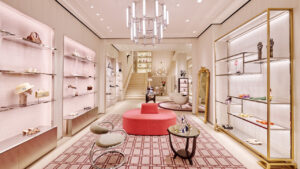
Designed to feel more like a sophisticated Parisian residence than a traditional boutique, the new flagship blends architecture, art and craftsmanship. A striking staircase and stone flooring create a strong sense of place, while soft textures, layered materials and warm tones add a residential elegance. Velvet, bouclé, suede and lacquered finishes are combined with polished metals and curated furnishings, creating a space that reflects the maison’s timeless yet contemporary aesthetic.
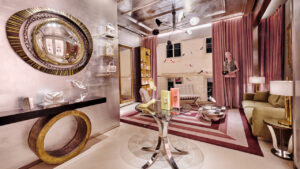
Art and design play a central role throughout the boutique. Vintage furniture sits alongside contemporary pieces, while carefully selected artworks and original sketches reference the maison’s creative heritage. Decorative elements, including sculptural objects and curated displays, create a gallery-like atmosphere, echoing Roger Vivier’s long-standing relationship with art and culture.
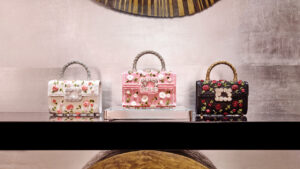
A key highlight of the new Paris flagship is the launch of Atelier Vivier, the maison’s bespoke service. This personalised offering allows clients to customise shoes, handbags and special occasion pieces, selecting materials, colours and finishes tailored to individual preferences. The experience takes place in the Salle d’Argent, an intimate private salon finished in silver leaf, designed to host private appointments and exclusive presentations.
Now open, make this a must-stop destination on any upcoming visit to Paris.
Bashayer Al Mahmood, Founder of My Fancy Closet, on Creating Pieces that Balance Nostalgia, Craftsmanship and Modern Femininity
Founded in 2013 by Bashayer Al Mahmood, My Fancy Closet has built a distinctive identity rooted in romance, nostalgia and a deep appreciation for craftsmanship. What began as a single handcrafted design has evolved into a label defined by its vintage-inspired aesthetic, where cinematic references and delicate detailing come together to create pieces that feel both timeless and personal.
Balancing ready-to-wear collections with bespoke creations, the brand is guided by a slower, more intentional approach to fashion, one that places meaning, individuality and emotional connection at its core. Each design is conceived as a story, shaped by memory, heritage and the quiet beauty of everyday moments.
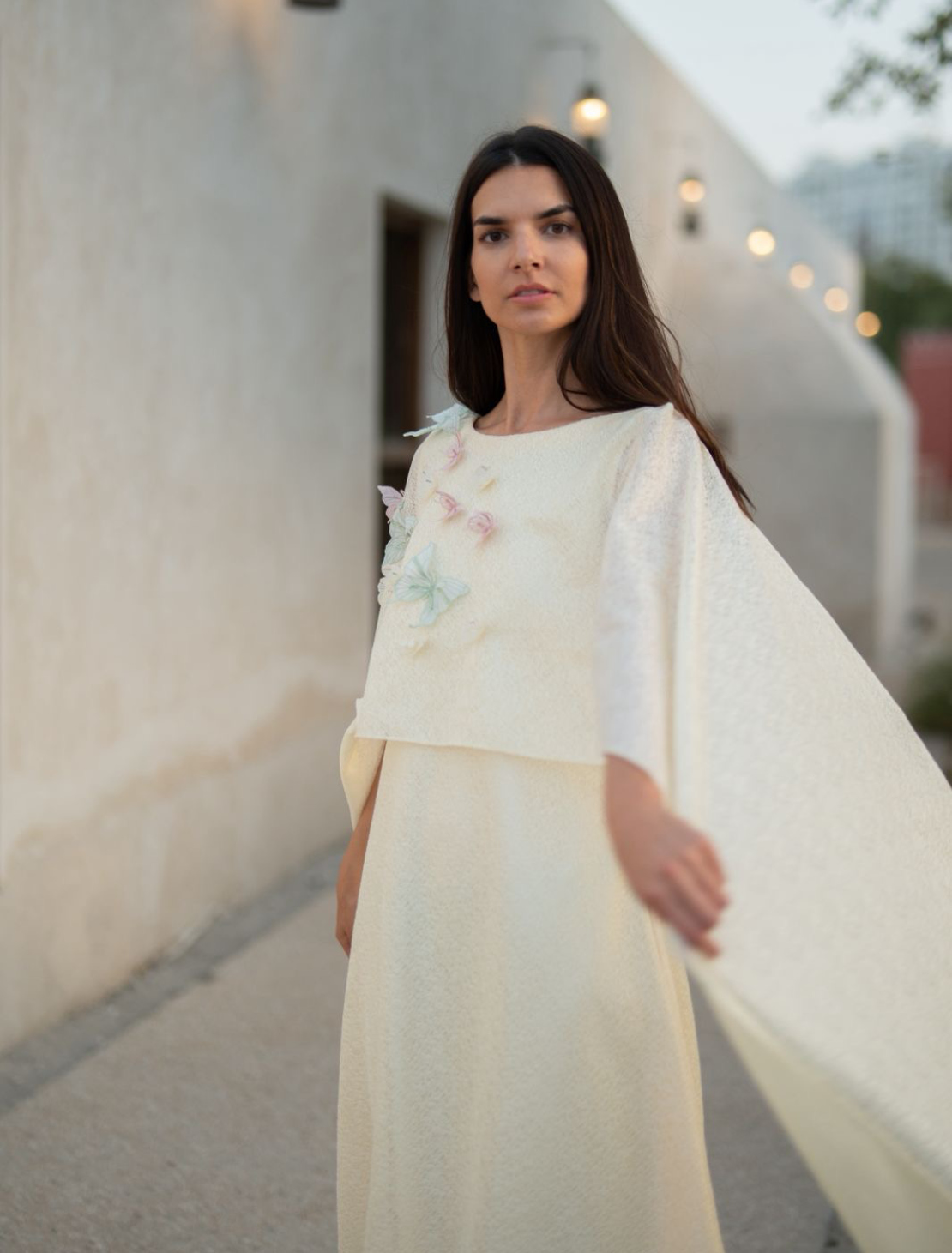
Here, Bashayer Al Mahmood reflects on the journey of My Fancy Closet, the inspirations behind its signature aesthetic and the evolving landscape of fashion in the region.
You launched My Fancy Closet in 2013. Looking back, how has the brand evolved from that first moment to the label it is today?
My Fancy Closet began in 2013 with a single handcrafted design created from a passion for elegance and detail. Over the years, the brand has grown into a distinctive label known for its refined aesthetic. While the collections and reach have expanded, the essence of the brand remains the same, creating timeless pieces that celebrate femininity, guided by our slogan “Made for pretty people.”
The brand is known for its romantic aesthetic, vintage influences and cinematic references. Where does your fascination with this visual language come from?
My fascination with this visual language comes from a deep appreciation for timeless beauty, vintage elegance, and storytelling. I have always been inspired by old films, classic fashion, and delicate details that carry a sense of romance and nostalgia. I also draw inspiration from nature gardens, sunlight, and soft natural moments, which bring warmth and softness to my designs. These influences naturally shape the identity of My Fancy Closet, where each piece reflects a dreamy, cinematic aesthetic.
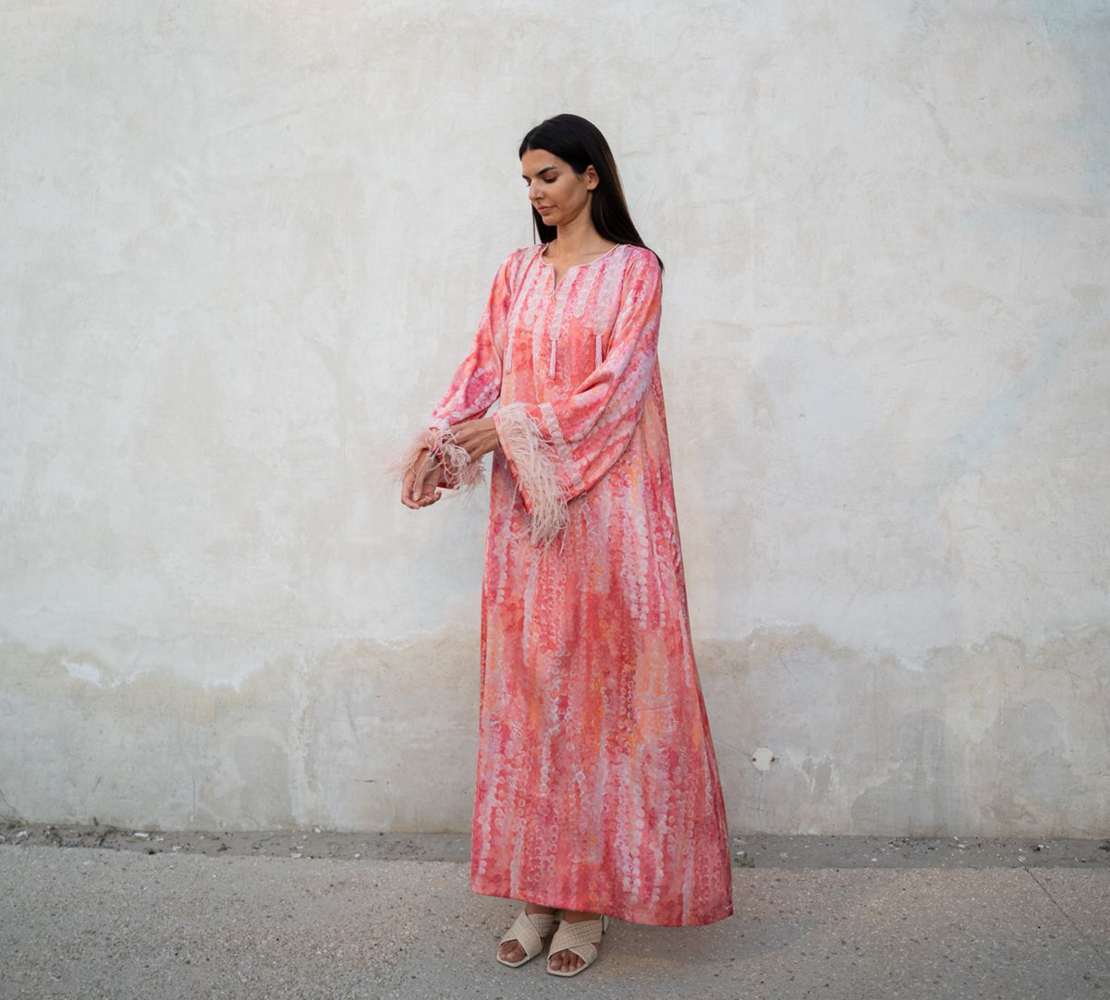
Tell us about your latest collection. What inspired it and what story were you hoping to tell through the designs?
The After Sunset Collection is inspired by the quietness and calm of Ramadan days, leading into the beautiful moments after sunset when families and loved ones gather. I wanted the designs to reflect this transition, from peaceful daytime serenity to elegant evening gatherings. I reimagined the traditional Mukhawer in a modest and refined way, creating pieces that honour our heritage while bringing a sense of elegance and femininity to these special Ramadan moments.
From ready-made pieces to custom creations, My Fancy Closet offers a range of experiences. How important is it for you that each garment feels unique to the woman wearing it?
It is more important than simply making a sale that each piece feels truly special to the woman wearing it. I genuinely enjoy creating garments designed specifically for one customer. The process is very personal; I put great care into every step, from sketching the design to selecting the right fabric and beads, and imagining how the final piece will look. Perhaps this comes from my own perspective, as I have always preferred owning a special piece rather than seeing many similar ones in the market. This philosophy is what drives me to create designs that feel unique, thoughtful, and truly personal.
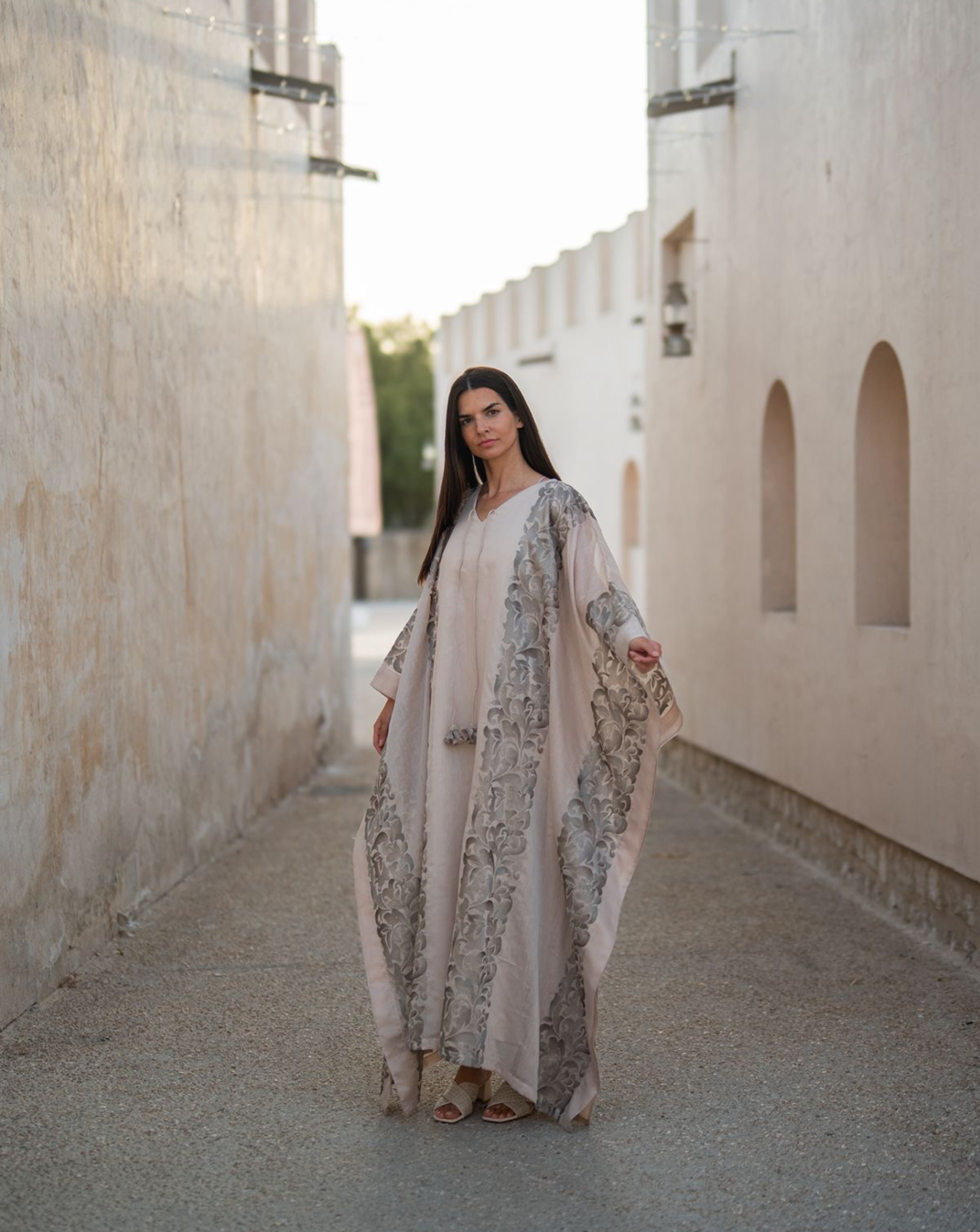
As a founder, what continues to motivate and inspire you creatively after more than a decade in the industry?
What continues to motivate me the most is the trust and loyalty of my customers. Even during seasons when a collection may take longer to launch, I receive messages from them saying they are waiting for the new pieces. That support means a lot to me and inspires me to keep creating. I am also driven by the joy of the creative process, from developing the idea and storytelling behind a collection to imagining the photoshoot and how the designs will be presented. Each collection feels like a new story waiting to be told.
The UAE’s fashion industry has grown significantly in recent years. How do you view the evolution of the local fashion scene and its influence on regional design?
The industry in the UAE has grown remarkably over the years, becoming a vibrant platform for creativity and innovation. Local designers today are confidently expressing their identity while blending tradition with modern influences. This evolution has also strengthened the region’s design voice, allowing regional fashion to gain greater recognition while celebrating cultural heritage in a contemporary way. It is inspiring to see how the UAE continues to support and shape a dynamic and influential fashion scene.
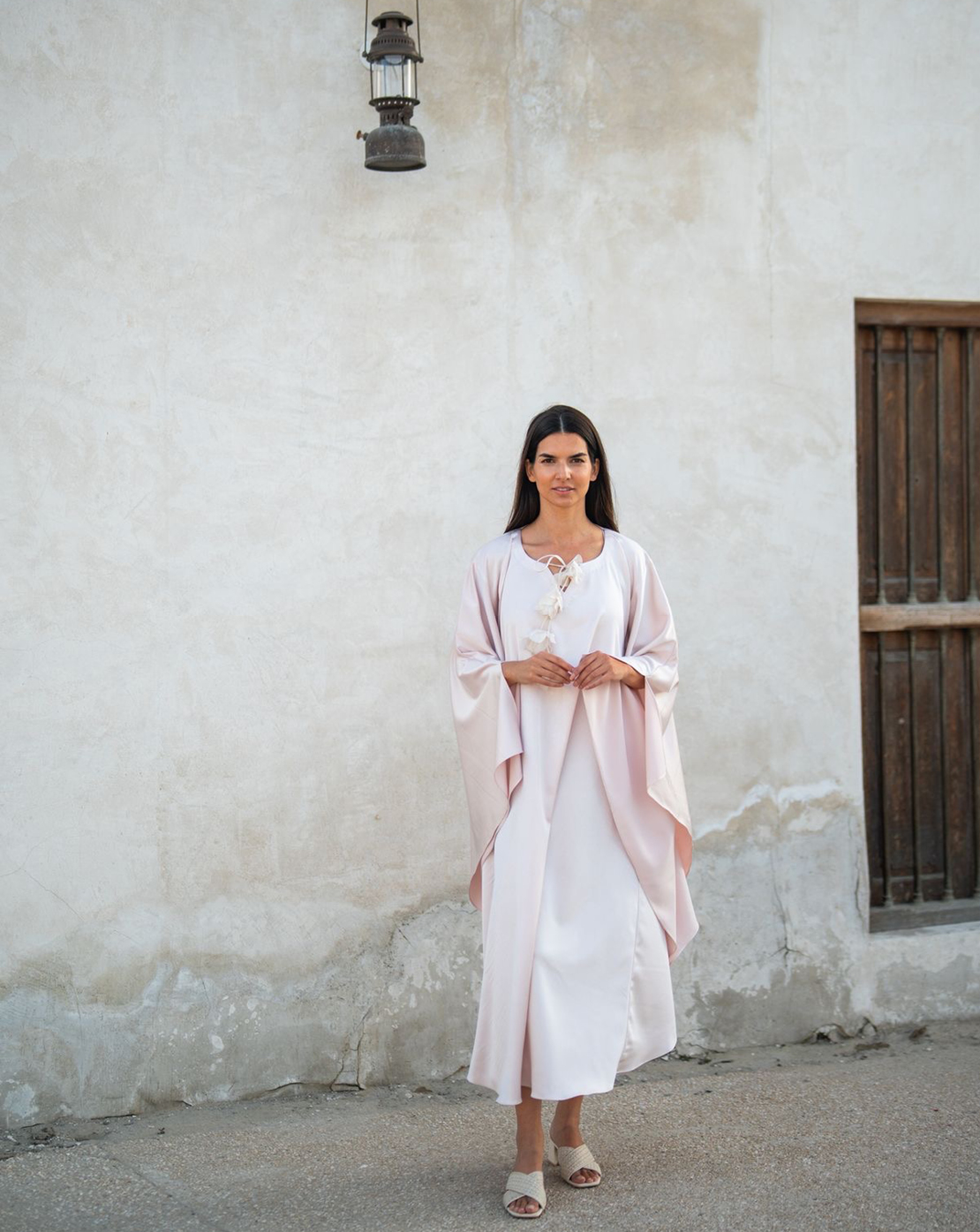
Modest fashion continues to gain global recognition. How do you see the modest fashion movement evolving in the region today?
Modest fashion today continues to evolve beautifully, gaining recognition both regionally and globally. In the region, we see designers confidently blending cultural heritage with modern trends, creating pieces that are both elegant and contemporary.
In my designs, I always follow the flow of trends while maintaining the identity of My Fancy Closet, ensuring that each collection reflects modest elegance while staying true to the brand’s aesthetic.
What do you think women are looking for from fashion today, particularly in the Gulf?
They are looking for individuality in their style. They want to feel unique and different in the way they dress, choosing pieces that reflect their personality and suit their body. Fashion has become a way of expressing confidence and personal identity while still embracing elegance and cultural values.
Your brand reflects a slower and more intentional approach to fashion. Why do you believe this mindset is becoming increasingly important in today’s industry?
I believe a slower and more intentional approach to fashion is becoming increasingly important because it allows designers to focus on quality, craftsmanship, and meaning rather than simply producing more. When time and care are given to each piece, the result feels more thoughtful and lasting. For me, fashion is not only about trends, but about creating pieces that women can value, wear, and remember for special moments. This mindset brings more authenticity and purpose to the industry.
What challenges have you faced while building your brand, and what lessons have those experiences taught you as a founder?
When I started in 2013, there were very few competitors in this field. Today, the industry has grown significantly, and there are many more brands in the market, so I have to stay active and continually evolve to remain relevant. What I have learned is that passion is essential. I always create collections that I genuinely feel inspired by, and that connection to the work helps keep the brand authentic and meaningful.
What advice would you give to young designers or entrepreneurs in the region who are hoping to build their own fashion labels?
Never give up on your dreams, no matter the challenges you face along the way. If you truly believe in your vision and keep working toward it with dedication, you will eventually reach the place you aspire to be. Passion and perseverance are the most important foundations for any successful journey.
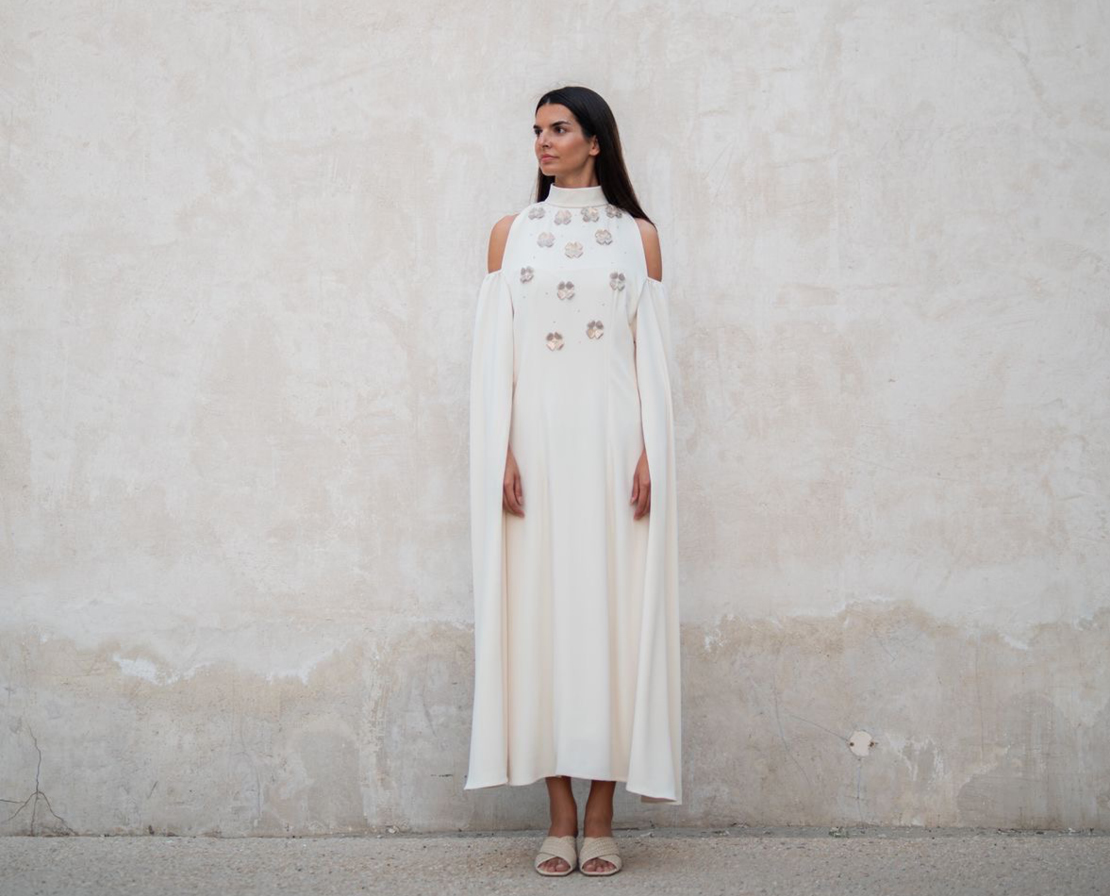
Finally, what is the vision for My Fancy Closet and where would you like to see the brand go next?
My vision for My Fancy Closet is to continue growing while staying true to the brand’s identity of elegance and femininity. I hope to expand the brand’s presence and reach more women who appreciate unique and meaningful designs. At the same time, I want to keep creating collections that tell a story and make women feel special when they wear them. The goal is to continue evolving while preserving the heart and authenticity of the brand
By Lindsay Judge
Alia AlShamsi, Photographer, Author and Cultural Storyteller, on Being Selected for Tashkeel’s Tanween Design Programme
Photographer, author and cultural storyteller Alia Al Shamsi has long explored the intersections of memory, heritage and identity through her work. Rooted in social documentary, archives and cultural narratives in the UAE, her multidisciplinary practice spans photography, writing and research, often examining how stories shape collective understanding across generations. A graduate of Griffith University and Durham University, where she explored photography and memory, Al Shamsi was also the youngest photographer exhibited at the Biennale di Fotografia in Brescia, Italy, and most recently received the 2024 Ministry of Culture National Grant for her forthcoming book project.
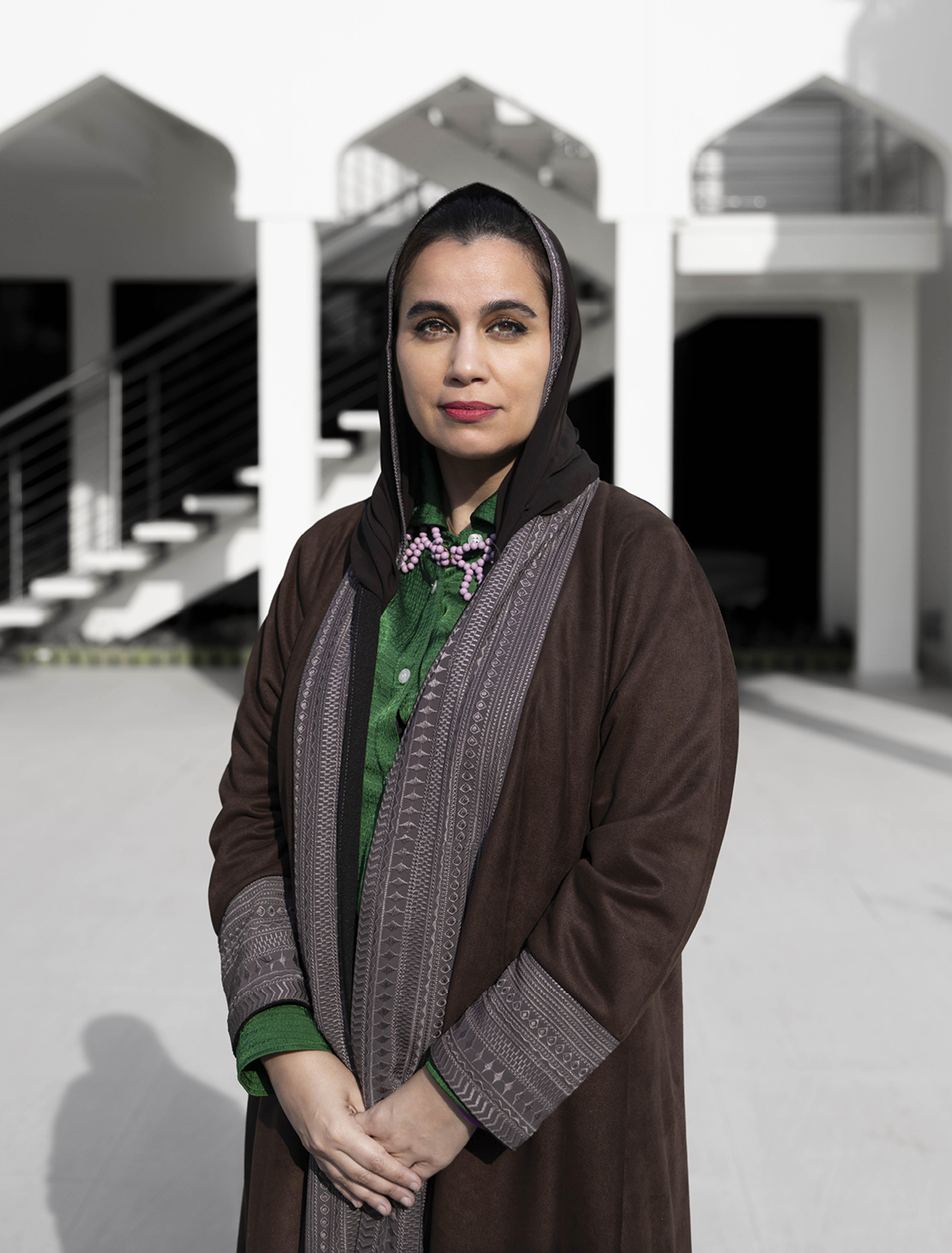
Now selected as part of Tashkeel’s Tanween Design Programme 2026, Al Shamsi embarks on a new creative chapter, translating her narrative-driven approach into three-dimensional design. Over the eleven-month programme, culminating in an exhibition at Downtown Design during Dubai Design Week, she will explore how objects can hold stories, memory and cultural connections, while collaborating with local manufacturers and embracing material-led experimentation. We spoke to Al Shamsi about this new journey, her fascination with folklore and archives, and how storytelling continues to shape her evolving creative practice.
What does it mean to you to be selected for the Tanween Design Programme 2026, and what are you hoping to explore during the eleven-month journey?
Last year, I took a leap of faith and stepped away from my nine-to-five role as Cultural Program Manager at Louvre Abu Dhabi, a position I deeply loved, to begin a creative journey of experimentation. After working within global narratives, I felt a pull to return home, to contribute to a local narrative within the global conversation, and to create within an ecosystem that continues to inspire me. Being selected for the Tanween Design Programme 2026 filled me with immense joy because it was part of my own journey as an exhibiting photographer. In the early stages, I was encouraged by Tashkeel from the very beginning, and continuing this journey through Tanween feels, in many ways, like coming home.
Pakistan Earthquake Coverage 2005
Pakistan Earthquake Coverage 2005
Your work is rooted in photography, illustration, archives and cultural memory in the UAE. How do you see these themes translating into product design through Tanween?
As a storyteller, I have worked with many types of media. From photography and illustration to writing books and poems, to curated exhibitions. Participating in Tanween with product design has raised a new question: how can a three-dimensional object hold or manifest an embodied story? The story I chose is from the regional folklore of Waq Waq Island: the mystery of the seven beautiful flying maidens in feathered gowns, the gardener, and the magical realm of Waq Waq Island. This story was part of the Khareefa Mejreifa, a book of UAE folklore stories rewritten for modern audiences, with the workshop run by the UAEBBY and the Goethe-Institut. My curious nature led me down a rabbit hole, and through a series of stumbles, I discovered that versions of this story exist in many other cultures, from the Selkie folklore in Scotland to the Fairy and the woodcutter in Korea. The red thread was weaving its way across continents, and the research has led me to believe that these stories are connected through trade in the forms of storytelling told in ports by sailors who then carried them across oceans. These are all hypotheses for how we can really tell how stories are formed. What is important is how I connect all of this to material selection, which will reflect the trade routes and the interconnectedness of our histories through the Mansoon trade.
Much of your research explores the relationship between illustration and memory. How might that influence the objects or materials you develop for the programme?
Creating vessels for the intangible, holding what cannot be seen and connecting people through stories.
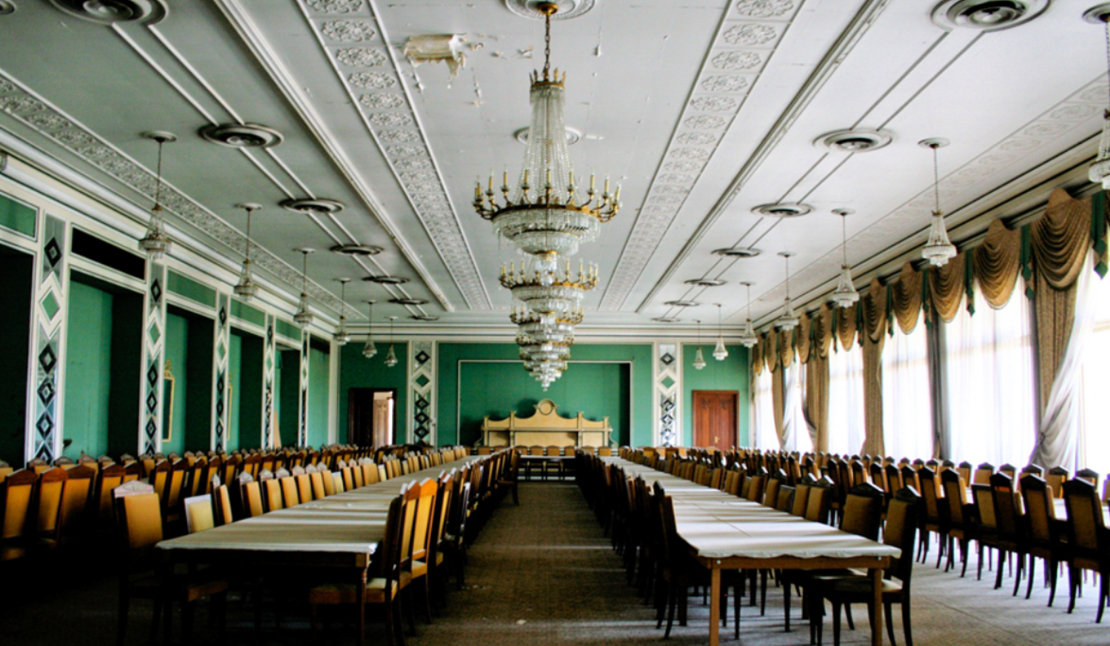
Documanetation Al Mudheef 2010
Tanween encourages collaboration with local manufacturers and fabricators. How important is this connection between research, craft and production in your practice?
I believe this is the foundation of a thriving ecosystem, where all parts are interconnected and supportive of one another. To me, sustainability lies in creating with purpose and in making timeless pieces. Artisans and those who work with their hands leave traces of the soul within the objects they create. It is a way of making that I deeply believe in and advocate for.
Gucci Icons on Icons 2014
Syrian Refugees Mreejjeb Al Fuhood Camp 2013
What can we expect from the work you plan to develop for the exhibition at Downtown Design during Dubai Design Week?
The first piece of furniture reflects my love for storytelling, folklore, and the interconnected histories shaped by the monsoon trade routes.
Happy Hearts India 2016
Happy Hearts Kenya 2017
Your career has spanned photography, writing and research. How has this interdisciplinary approach shaped the way you think about design today?
As a storyteller, I am always drawn to objects that carry a story; they become all the more valuable because of it. Purpose, for me, is the answer to sustainability. I aspire to create objects that endure because they are timeless. In a world of fast fashion and the decline of artisanal work, I hope to support the revival of these crafts by bringing them into contemporary practice, merging traditional methods with new and thoughtful design.
Al Khazan / Al Ghurair Mosque
Looking ahead, how do you hope participating in Tanween will influence the next chapter of your creative practice?
My answer to this question always leaves people perplexed because what I describe is less a plan and more a journey stirred by what makes me curious and anchored in passion. What I hope for each story, in diverse forms and media, is to convey a connection through conversations between people who are interconnected by our shared histories and geographies, but above all, our humanity.
By Lindsay Judge
Meet Eliane Gemayel, Interior architect and Founder of Sole Architecture & Interiors
With a distinctive eye for elegance and a deep appreciation for thoughtful spaces, interior architect Eliane Gemayel has carved a refined presence in the design world. Her work reflects a harmonious balance between aesthetics, functionality, and emotion—creating interiors that feel both timeless and personal. With the launch of her new studio, SOLE Architecture and interiors, Eliane embarks on an exciting new chapter, bringing her creative vision to a platform dedicated to curated spaces and interiors, innovative concepts, and meaningful design experiences. In this conversation, she shares the inspiration behind the studio, her creative philosophy, and what lies ahead for her growing practice.
What inspired you to launch SOLE design studio and what does this new chapter represent for you as a designer?
After years of working alongside an exceptional mentor and team at Claude Missir Interiors, shaping my eye, my standards, and my confidence through high-end residential and commercial projects, I felt ready to build something of my own. SOLE is the natural next chapter: a studio that carries everything I’ve learned, expressed in my own voice. This new chapter is deeply personal. Design is not what I do; it is who I am. I pour myself into every project with a level of dedication that goes beyond profession; this is my passion, my purpose, and where I see myself for the rest of my life.
We believe that every project has a soul, a story waiting to be revealed through thoughtful architecture and refined interiors. Our role is to uncover that essence and translate it into spaces that are not only beautiful, but meaningful and enduring. And at the heart of everything is our relationship with our clients; their story is always our starting point, and every space we design flows from that deeply personal foundation.
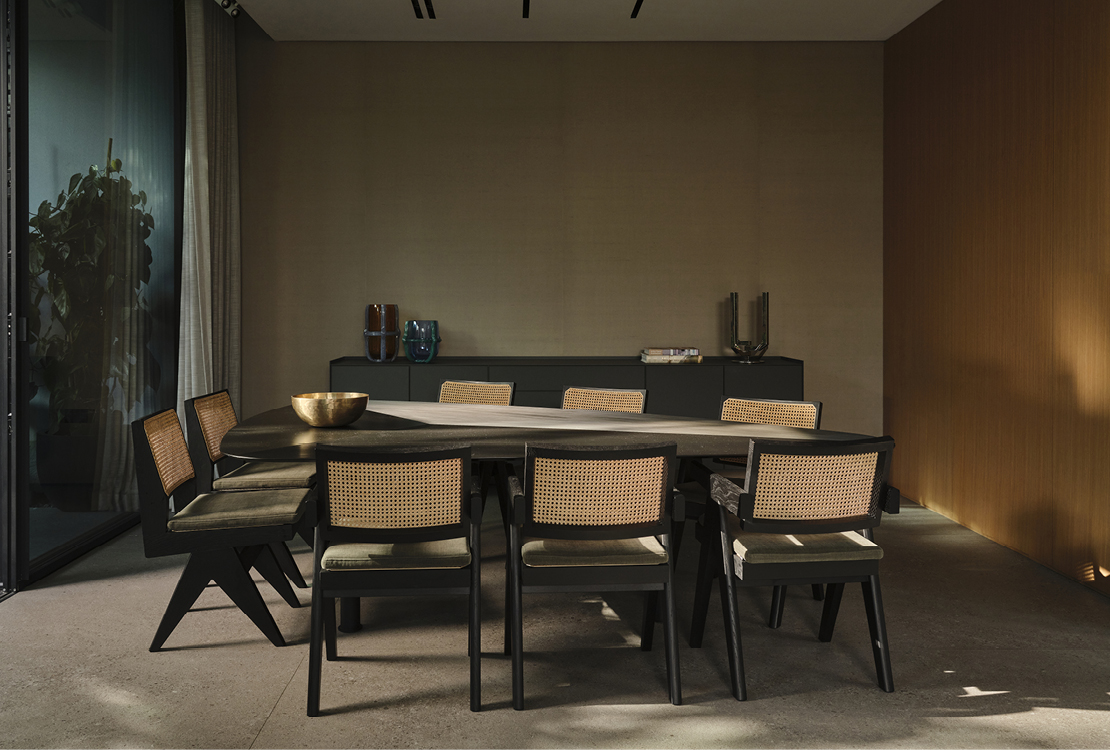
The name “Sole” evokes both warmth and individuality. How did you arrive at the name, and what does it symbolise for the studio?
SOLE took so much time to find. I spent months searching for a name that felt true, and it came in the most unexpected, beautiful way. My husband and I were in Marrakech, a city that has inspired me since I was a little girl. We were sitting in the gardens of La Mamounia, having coffee, and I remember telling him: I cannot live in a city without the sun. The sun defines my day. Light is everything to me.
In that same moment, almost instinctively, he picked up his phone and searched what my name, Eliane, means. And there it was, the sun. We both just looked at each other. That was it. That conversation changed everything.
I didn’t want to name the studio after myself. I’ve always believed this work is bigger than one person; it is about the team, the collaboration, the collective dedication. But SOLE felt different. It carried soul, the belief that every space has one. It carried soleil, the French word for sun. And it carried something deeply personal without ever being just about me.
Light has been central to my work from the very beginning. The way it moves through a space, reveals texture, shifts mood, brings materials to life, that is where design truly lives. At SOLE, the careful interplay of light and shadow is not an afterthought. It is the foundation of everything we create.
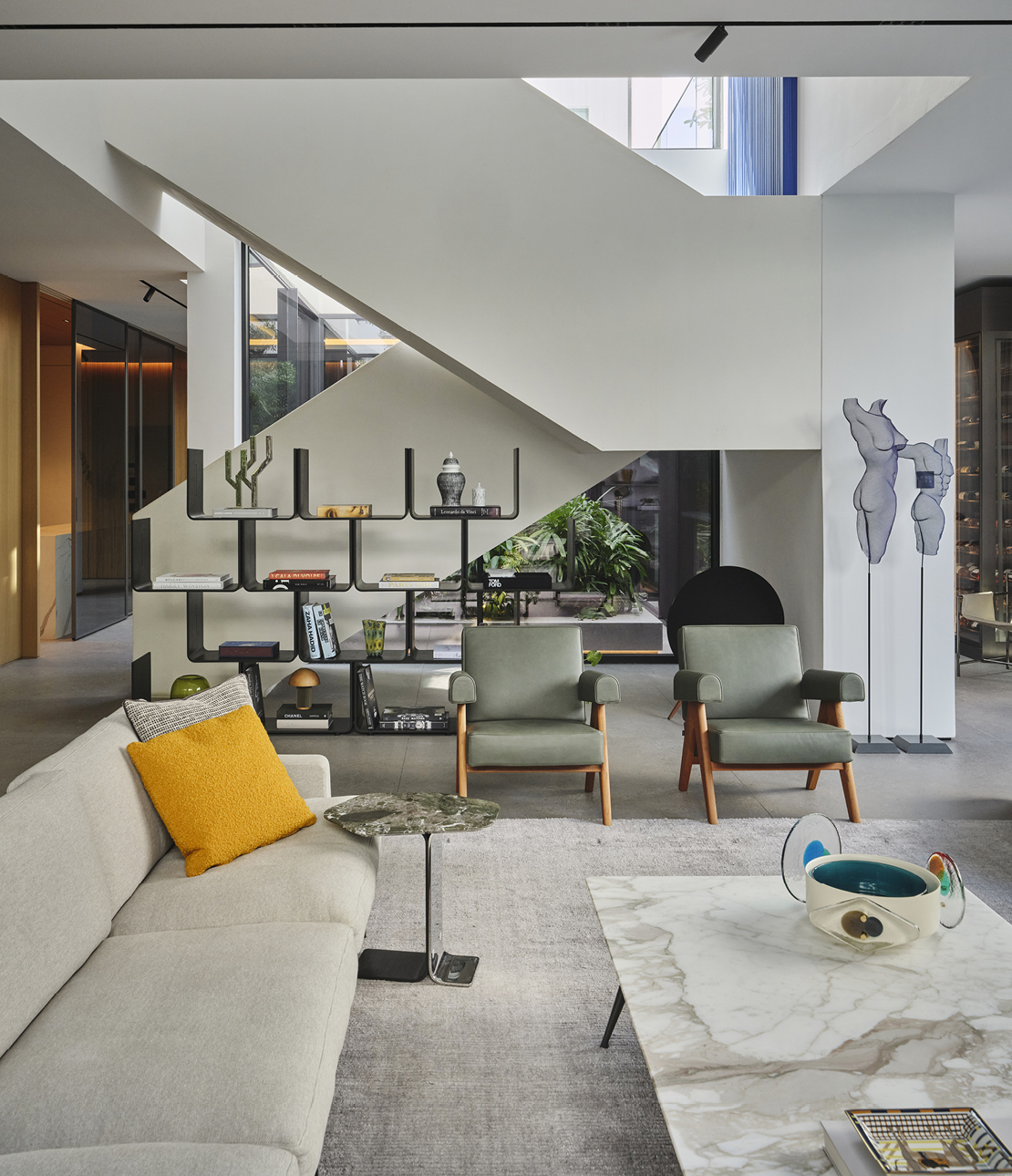
How would you describe your design philosophy, and how is it reflected in the projects you take on?
I am, at my core, a minimalist. I believe deeply in less is more, but only when it is done right. Great design is never about excess or statement-making. It is about restraint, intention, and the quiet confidence of a space that simply feels right. I am obsessively attentive to details. Not in a way that is visible or loud, but in a way that you feel without quite knowing why. The proportion of a doorframe. The balance of materials. The way light falls across a surface at a particular hour. These are the things that make the difference between a beautiful space and an unforgettable one.
What I care about most is durability, not structural, but emotional. I never want a client to love their home today and feel disconnected from it five years later. That is a failure of design. I want to create spaces that age with grace, that feel as considered and alive ten years on as they did on the first day. Low key, but lasting. Our work is guided by natural and noble materials, a coherent spatial language, and an honest mix of iconic pieces, vintage finds, and contemporary elements. That tension, handled with care, is what gives a space its character.
And perhaps the most personal measure of success: most of our projects come through referrals. A client who returns years later to entrust us with their next home or sends a dear friend our way. To me, that says everything.
Interior design often tells a story about the people living in a space. How do you ensure each project feels personal and unique to your clients?
Every project begins with listening. Before a single line is drawn, I take the time to truly understand my clients: how they live, how they think, what they dream of for their space. I visit them, I sit with them, I ask the questions that go beyond aesthetics. With time, many of our clients become close friends, and I think that closeness is what makes the work so personal.
This applies equally to commercial projects. Whether it is a residence or a hospitality space, the same question drives everything: what do you want people to feel when they walk through that door? For a commercial client, I need to understand their vision, their brand, their guest, because a space that moves people, that leaves an impression, is never accidental. It is designed with intention from the very beginning.
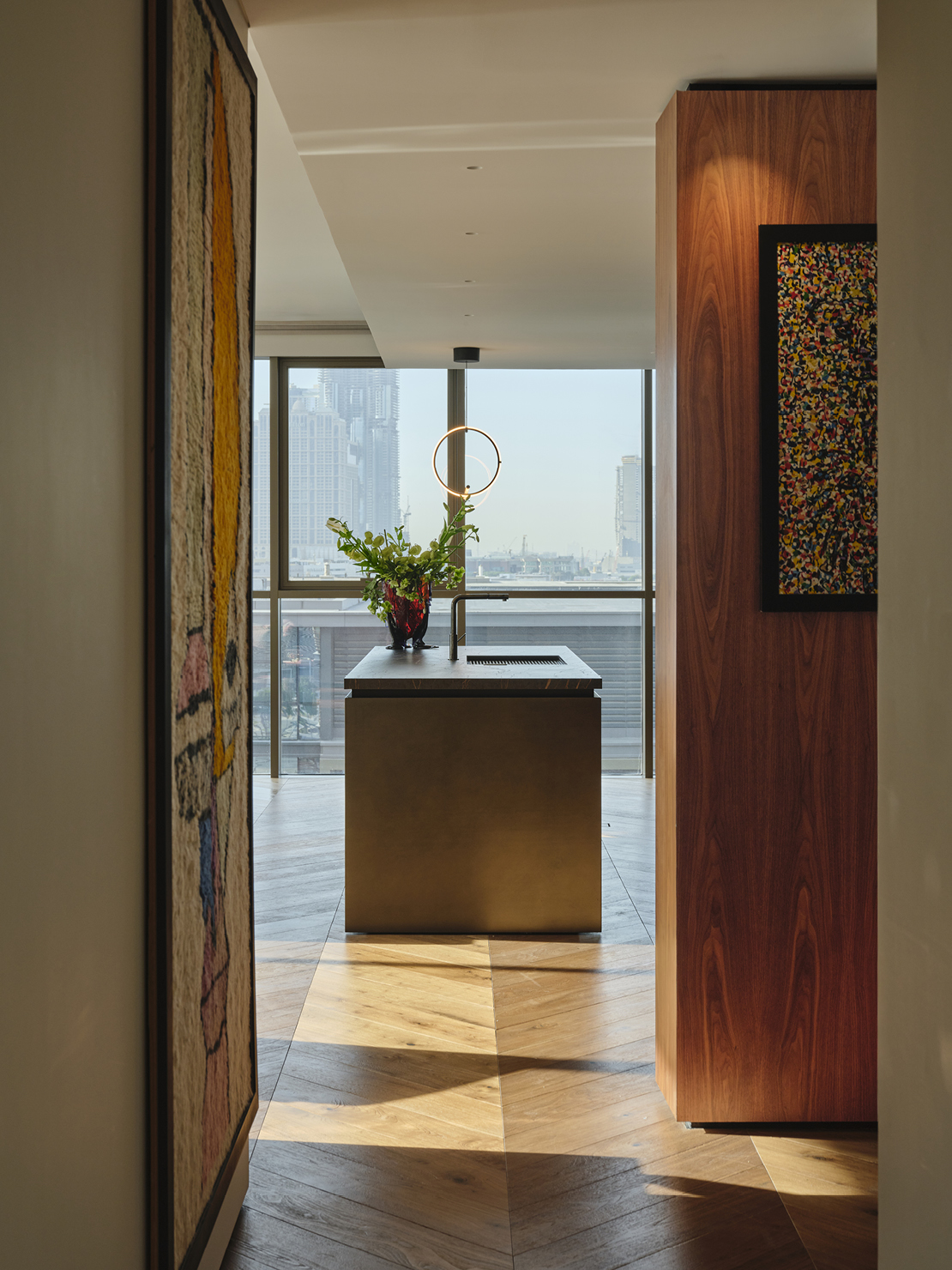
From those conversations, we build a preliminary concept — mood boards that reflect everything we have discussed, a visual translation of their story and aspirations. Once that foundation is approved, we move into the design process with a clear and shared vision.
Throughout, we always keep my clients’ best interests at the centre of every decision. We guide them thoughtfully within their budget, making sure that every choice — every material, every piece, every detail- works toward the most beautiful and meaningful outcome possible. The goal is never just a stunning space. It is a space that feels entirely, unmistakably theirs.
What are some key elements or materials you find yourself naturally drawn to when designing interiors?
I am drawn, above all, to authenticity. Materials that are real, that age beautifully, that carry history in their texture, these are non-negotiable, in design as in everything else.
Wood brings warmth and life. Glass brings clarity and lightness. Marble carries a quiet nobility, and there is something I find deeply moving about its veining, each slab unique, a pattern formed over millions of years. Metal is almost always present too, adding precision and edge, whether as structure or detail.
Symmetry and balance also run through everything we do. There is a discipline in alignment that I find both calming and powerful.
And one thing I feel very strongly about: I will never use imitation materials. No fake wood effects, no simulated finishes. If the budget does not allow for the real thing, we find another genuine material that serves the same intention. A space built on honest materials has an integrity that you feel, even if you cannot always name it.
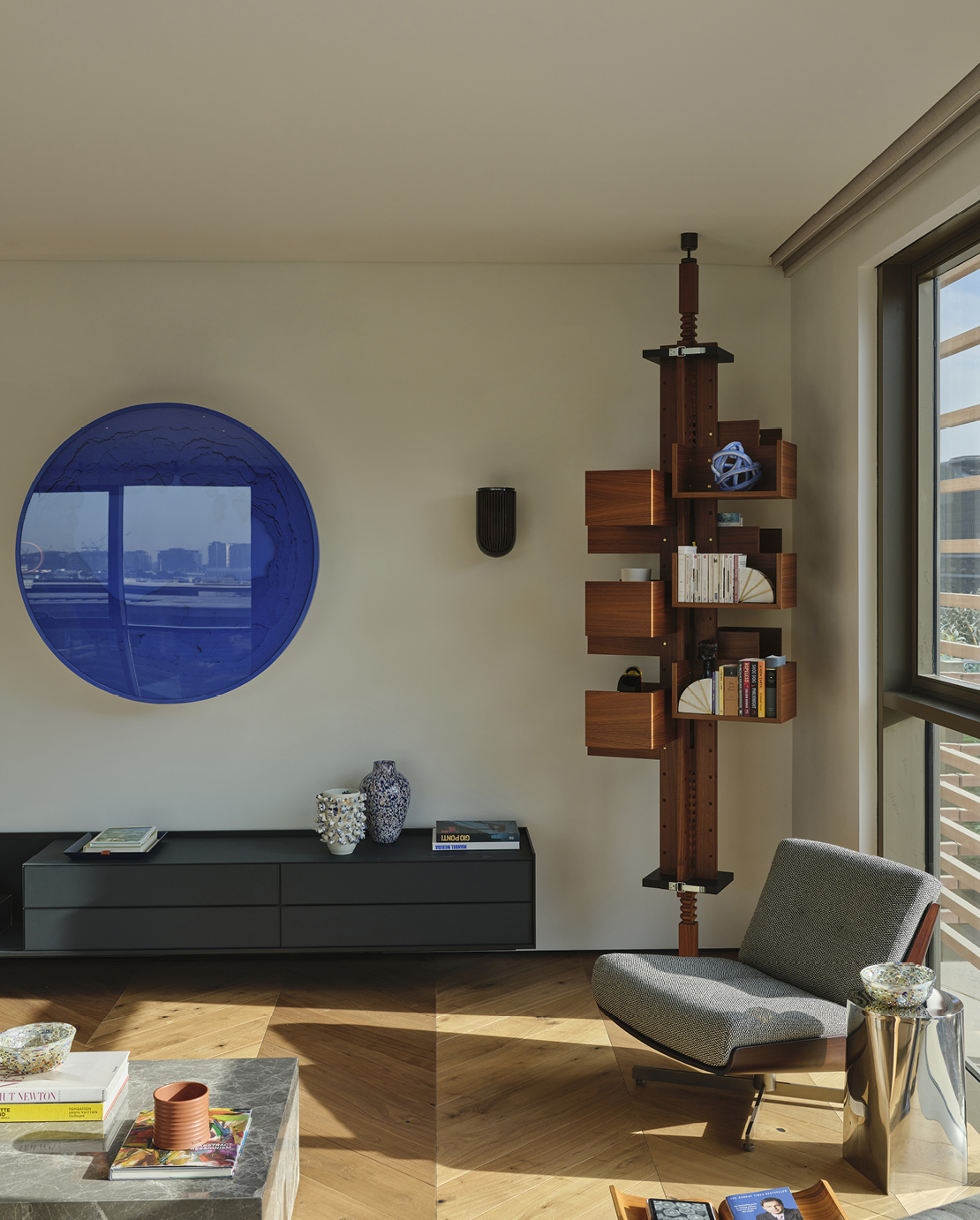
With SOLE design studio, are there particular types of projects or collaborations you are hoping to focus on?
Since I was a child, I have carried a dream of designing a religious space; and I mean that across all faiths, all traditions. These spaces hold something rare: meaning, history, culture, and a sense of purpose that very few other typologies can claim. When I visited the Abrahamic Family House in Abu Dhabi, I walked through each space and felt genuine peace. I understood, in a very visceral way, what architecture can do to the human spirit when it is designed with true intention. That is something I hope to bring to SOLE one day.
Beyond that, I am deeply drawn to hospitality and marine projects; hotels, boats, spaces designed around an experience and a feeling. The constraints push the creativity, and the results, when everything comes together, are truly beautiful.
One collaboration that means a great deal to me personally is with Cloud Stone Studio, a US-based architecture firm founded by my brother, Antonio. There is something very special about that dynamic: a shared sensibility, a mutual trust, and a fluency that only comes from a deep personal connection. Together, I believe we have the reach and the vision to take on projects across continents.
As for collaborations more broadly, I am intentionally selective. I only work with brands and partners I genuinely believe in. Design has never been a commercial exercise for me; it is about authenticity, and about never putting your name on something that does not reflect your values. That will always be the standard at SOLE.
The design world is constantly evolving. What trends or shifts in interior design are inspiring you the most right now?
AI is impossible to ignore right now, and I embrace what it offers. It saves time, streamlines processes, and frees up space for the thinking and dreaming that drives great design. But I believe deeply that it will never replace the human part of what we do. It cannot sit across from a client and feel what they need. It cannot translate a personal story into something spatial and alive. That remains ours.
What inspires me most right now is the growing consciousness around sustainability, and honestly, it feels overdue. As designers, we have a real responsibility to our planet. The materials we specify, the suppliers we choose, the longevity we build into every project; these decisions matter. A space that lasts twenty years is, in itself, a sustainable choice.
Design shapes how people live. And how people live shapes the world. That connection is something I feel very personally, and it will only become more central to the way SOLE works.
What has been the biggest challenge—and the most rewarding moment since launching your own studio?
The biggest challenge, honestly, is the current climate. The uncertainty is real, and it would be naïve to pretend otherwise. But I believe deeply in this country and in this region. The UAE has given so much to us and to so many others. We have been here for twelve years, and not a single day has passed without genuine gratitude for the opportunities this place has offered. So, while the times are uncertain, my trust in what is coming remains unshaken. If anything, there is excitement in it.
As for the most rewarding moment, it is not one moment; it is every message. Every time a client reaches out, whether days or years after completing a project, to share how much their space still means to them, that is everything. Those messages carry more weight than any award or recognition ever could. They are the proof that what we do matters, that the spaces we create truly become part of people’s lives. That, for me, is the greatest reward of all.
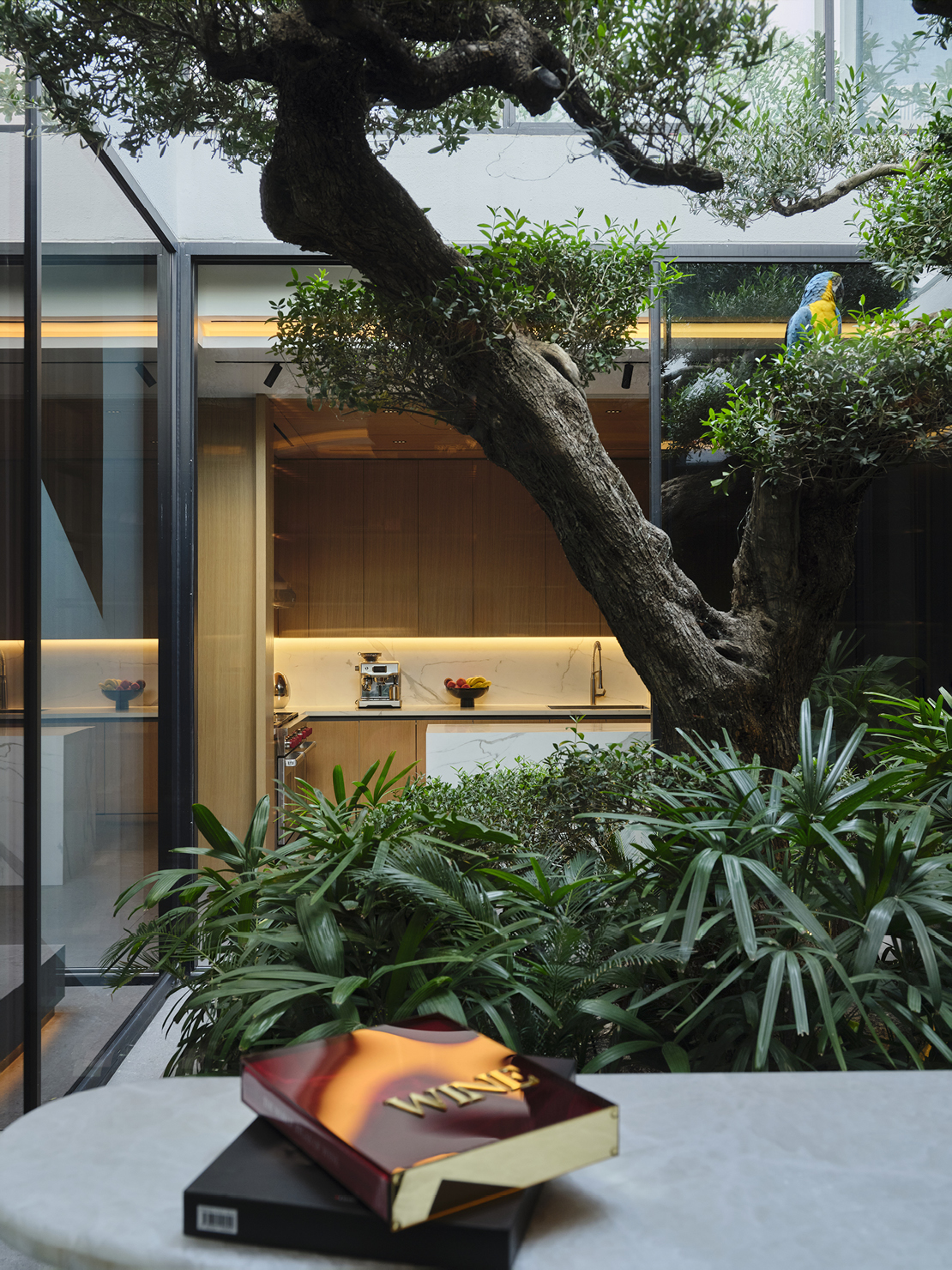
How do you balance creativity with the practical demands of running a design business?
To be very honest, the business side has never been my natural territory. I am a designer at heart; that is where my instincts live, where my energy goes, and where I am most at home. Numbers and financial management are not my forte, and I have always believed in surrounding yourself with people who complement what you lack.
I am genuinely fortunate to have a husband who not only believes in what we do, but also actively steps in to support the financial and business side of the studio. His trust in our design capabilities means everything, and his involvement allows me to focus fully on what I do best: creating spaces that are meaningful, considered, and lasting.
I think that balance is one of the most important lessons in running a creative business: know where your strengths lie, protect your creative energy, and never be too proud to lean on the people who support you
Looking ahead, what is your long-term vision for SOLE design studio, and what kind of impact do you hope it will have in the design community?
My vision for SOLE has always been clear, even from the very beginning: to remain intentional. I never want to grow for the sake of growing. It is not the more the merrier, it is about the right projects, the right clients, and the right energy around every single space we create.
I want SOLE to be known for deeply personal work. Boutique in spirit, yet present on a global stage. The kind of studio that takes on fewer projects precisely because each one deserves everything we have. That balance, intimate and worldwide at once, is something I protect carefully.
Equally important is the team. I want every person at SOLE to feel a sense of ownership over what we build together. This is not my studio alone; it is theirs, too. When the team feels that investment, it shows in the work, and the work shows in the spaces.
Ultimately, what I hope SOLE leaves behind is simple: more beauty in the world. More spaces that feel personal, considered, timeless, and alive. More rooms where people feel truly at home, where moments are lived so fully, they become memories. If we can do that, genuinely and consistently, then I think we will have done something that matters.
By Lea Nouhra
Princess Noura bint Faisal Al Saud on leading JAY3LLE and Building Luxury Brand from Riyadh to the World
As Saudi Arabia continues to redefine its position on the global fashion stage, few figures have played as influential a role in shaping its cultural and creative landscape as Her Highness Princess Noura bint Faisal Al Saud. From leading the Kingdom’s first Fashion Week to helping establish the strategic foundations of the Saudi Fashion Commission, her work has been instrumental in building a framework for long-term growth, talent development, and international recognition.
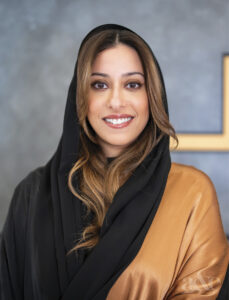
Now, as CEO of JAY3LLE, Princess Noura brings that same vision and strategic clarity to a new chapter in regional fashion. A Saudi-born womenswear brand with a global outlook, JAY3LLE is rooted in Riyadh while drawing creative influence from international fashion capitals. Under her leadership, the brand is evolving into a platform that reflects a new definition of luxury, one that is progressive, purposeful and deeply connected to community.
Working alongside Creative Director Johan Lindeberg, whose legacy spans brands such as Diesel and J. Lindeberg, JAY3LLE merges Saudi identity with global design expertise. The result is a contemporary approach to fashion that moves beyond traditional seasonal structures, focusing instead on versatility, longevity and a lifestyle-driven perspective. This direction reflects a broader shift within the region, where fashion is becoming both a cultural expression and a tool for shaping new narratives.
Here, Princess Noura discusses the vision behind JAY3LLE, the importance of balancing cultural identity with global relevance, and how the next chapter of Saudi fashion is being shaped from within.
What attracted you to JAY3LLE, and what made this the right moment to join the brand as CEO?
For me, JAY3LLE’s story isn’t really about timing; it’s about vision. What drew me in was the purpose behind building a progressive luxury brand from Riyadh with global relevance, and how it connects to the broader transformation happening through Vision 2030. There’s a sense of momentum here, driven by partners and stakeholders who share that same commitment to innovation and progress, and that’s what truly inspired me to be part of it.
JAY3LLE is rooted in Riyadh while targeting a global audience. How do you envision balancing Saudi identity with international appeal?
It really begins with a clear sense of identity. When the vision is authentic and anchored in purpose, it resonates naturally beyond borders. For us, it’s not about choosing between Saudi identity and global relevance, but about expressing both with consistency, refinement, and intention. The strength of our perspective lies in where we come from, and that’s exactly what makes it globally compelling.
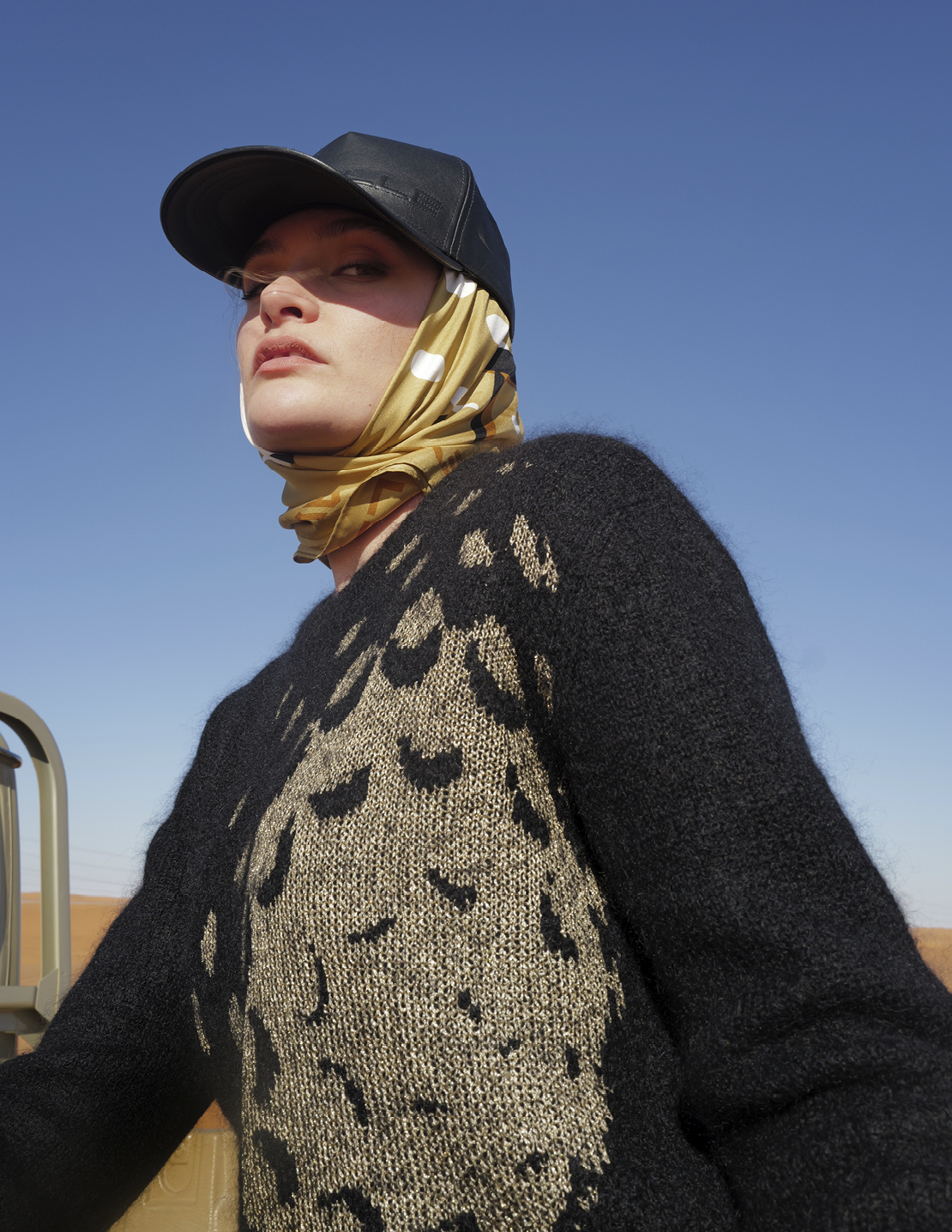
You have played a key role in shaping Saudi Arabia’s fashion ecosystem. How does your previous experience inform your leadership of JAY3LLE today?
My background has always been centred on building structure and creating platforms that enable sustainable growth. At JAY3LLE, I bring the same approach, focusing on establishing a brand with strong foundations and long-term relevance, rather than chasing short-term visibility.
JAY3LLE follows an ‘item by item’ release philosophy rather than traditional seasons. What does this approach enable the brand to achieve, both creatively and strategically?
Our ‘item by item’ approach reflects who we are as a lifestyle brand—seasonless, versatile, and intentional. It allows us to design with precision and agility, creating pieces that can be worn for any occasion, dressed up or down, and naturally integrated into everyday life. This philosophy gives us the freedom to stay responsive to our community while building a timeless, cohesive narrative around each release.
The collaboration between Saudi leadership and international creative direction is central to JAY3LLE. How do you see this dialogue shaping the future of the brand?
What makes this collaboration special is how our experiences complement one another. The brand is proudly rooted in Saudi Arabia, shaped by its energy and ambition, yet built through a global lens that brings depth and perspective. It’s not about defining differences, but about creating something that reflects the strength of Saudi with a mindset that speaks to the world.
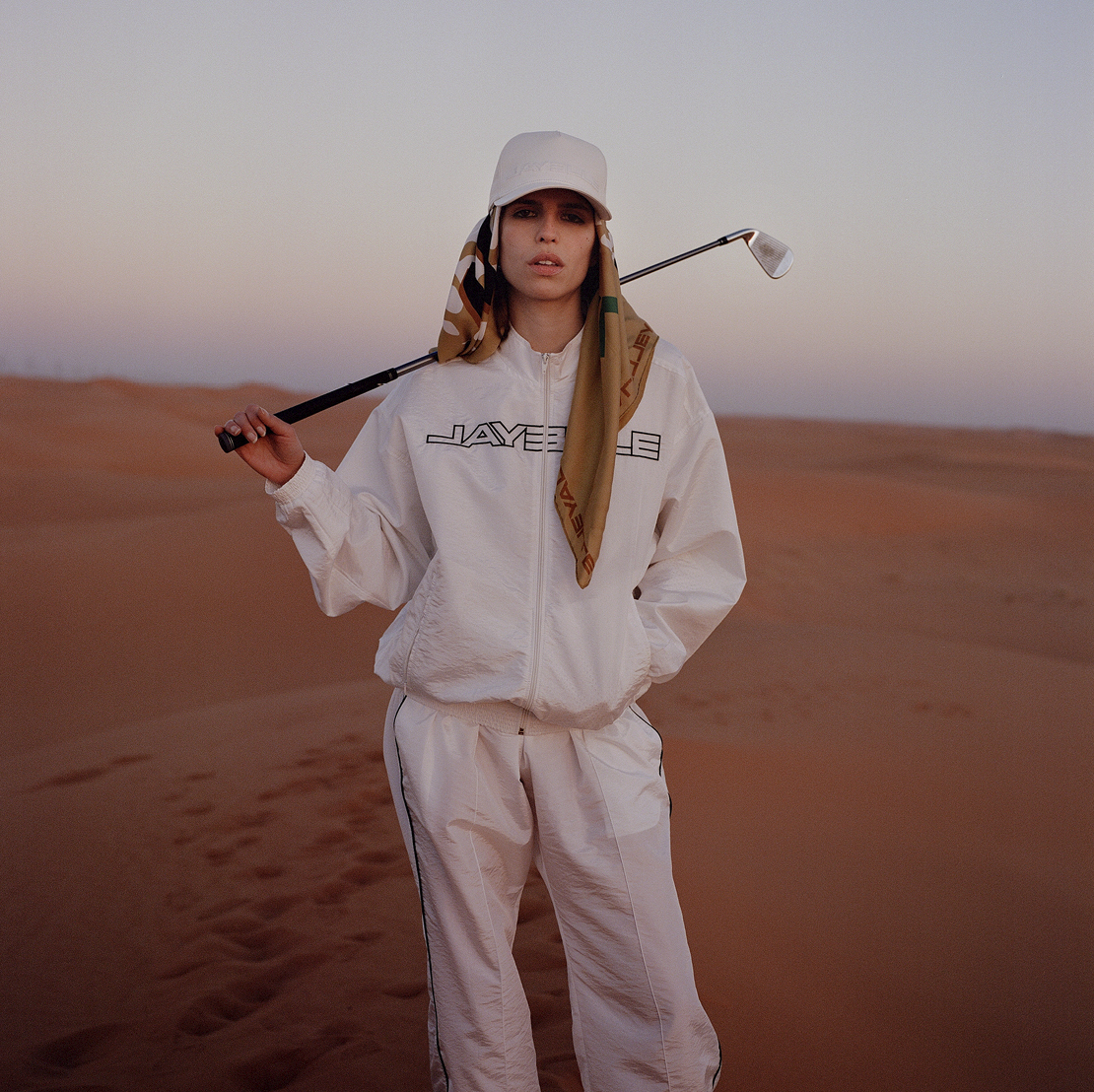
Supporting Saudi talent is a key part of your vision. How do you plan to nurture emerging designers and creatives through JAY3LLE?
It starts with creating meaningful access, whether through mentorship, collaboration, or hands-on project involvement. Our aim is to build real capabilities and confidence within emerging talent, not just offer visibility. We want JAY3LLE to serve as a platform for developing, sharing, and elevating creativity.
Saudi Arabia’s fashion industry is evolving rapidly. What excites you most about this moment for regional designers?
What excites me most is seeing new markets like ours take an active role in shaping the global fashion narrative. There’s a genuine openness right now, a space to build with a fresh perspective, to redefine what luxury and creativity look like from this region.
What are your thoughts about the growing industry in the region as a whole and where it stands on the global map today?
The region is becoming an increasingly influential player in the global fashion landscape. What’s important now is maintaining consistency, building scale, and establishing a long-term position that reflects the depth and maturity of our creative industries.
With Riyadh becoming the brand’s creative hub, how do you see the city influencing JAY3LLE’s aesthetic and identity?
Riyadh brings a unique mix of energy, contrast, and ambition; it’s a city constantly in motion. That spirit naturally informs JAY3LLE’s aesthetic, shaping a brand that feels structured yet bold, rooted yet forward-looking.
Building a new luxury brand comes with challenges. What has been the biggest challenge in this transition so far?
The main challenge and opportunity have been building a strong foundation that positions JAY3LLE as a truly global brand from the start. It’s about striking the right balance between commercial strategy and creative freedom, while thinking ahead about how to access and resonate in different markets. From deciding which events to participate in to defining how we engage globally, every decision is made with long-term relevance and purpose in mind.
Looking ahead, what is your long-term vision for JAY3LLE, and how would you like the brand to contribute to the future of Saudi fashion on the global stage?
Looking ahead, my vision is for JAY3LLE to become a globally recognized reference in progressive luxury defined by strong design, clarity of positioning, and enduring consistency. Beyond the brand itself, the greater ambition is to help shape a wider movement: establishing Saudi Arabia as a credible, influential force within the global fashion system, not merely an emerging market, but a lasting source of creativity and value.
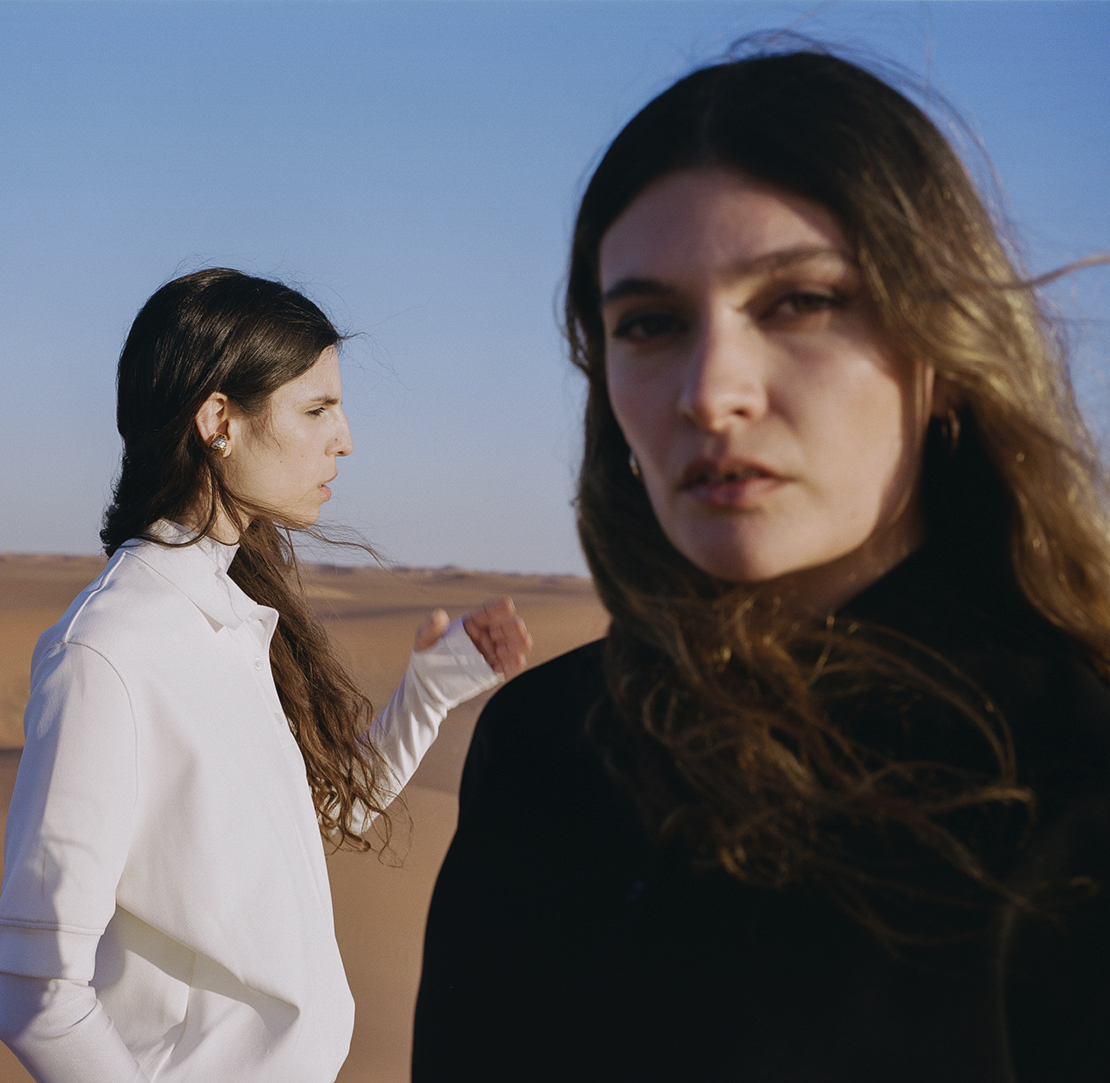
What advice would you give to entrepreneurs in the fashion industry?
Stay disciplined. A clear vision is essential, but it only becomes meaningful when supported by structure, persistence, and thoughtful execution.
Basmah El Bittar, Director of Alserkal Avenue, on the Role the Community Plays in Shaping the Region’s Artistic and Creative Identity
In a city that’s constantly developing, Alserkal Avenue has emerged as one of Dubai’s most compelling cultural anchors, a space where art, design and community come together with purpose. Founded in 2008 by Emirati businessman and patron Abdelmonem Bin Eisa Alserkal, the district began as a cluster of industrial warehouses in Al Quoz, reimagined as a home for contemporary art and creative exchange. What started with a handful of galleries has since evolved into a multidisciplinary destination that reflects Dubai’s growing cultural confidence. An anchor destination in the UAE’s creative scene, it has quickly become one of the most forward-thinking hubs for the arts, fashion, architecture, gastronomy and more.
At the centre of AlSerkal Avenue’s continued evolution today is Basmah El Bittar, whose work has helped shape the Avenue into a dynamic ecosystem extending far beyond visual art. Today, it encompasses performance, film, design, wellness and culinary concepts, all while maintaining a clear commitment to nurturing regional talent and fostering meaningful dialogue. Here, El Bittar reflects on the milestones that have defined Alserkal Avenue’s journey, the importance of building a community-driven cultural model, and how the district continues to evolve in step with Dubai’s ever-expanding creative identity.
Alserkal Avenue has grown into one of the region’s most important cultural districts. From your perspective, what has been the most meaningful transformation in its evolution over the past decade?
Following the Avenue’s opening in 2008, we expanded in 2015, doubling the Avenue’s size and nearly tripling the number of units. That was followed soon after in 2017, with the launch of Concrete, a multipurpose, museum-grade space designed by OMA. The opening of every new concept has been a milestone in its own right. I don’t think we could ever pinpoint just one. What’s more, we’ve been very fortunate to have the belief and vision of our founder, Abdelmonem Alserkal, driving us. Over the past decade, we’ve grown to have more than 90 concepts, the vast majority of which are homegrown brands from the region, steeped in their respective histories and cultures.
Supporting regional creatives has always been central to Alserkal Avenue’s mission. How does the organisation actively nurture artists and designers from the UAE and the wider region today?
Alserkal Avenue was founded with the vision of creating a space for contemporary art, creativity and cultural exchange. Since we opened in 2008, our mission has been to create an ecosystem from the ground up, working in partnership with cultural entrepreneurs – gallerists, artists, creative entrepreneurs, designers and audiences – to nurture a creative community here in Dubai. We’ve produced more than 5,000 programmes, free and open to the community, offering audiences a chance to engage with artists and cultural practitioners across a wide range of disciplines. Our network of artists and practitioners has grown with time, and we’ve commissioned more than 35 works of public art across the Avenue.
Alserkal Avenue has the feeling of being a living community. How intentional has that sense of community-building been in the way the district has developed?
Community is an essential part of any cultural endeavour. The exchange of ideas, meaningful dialogue, and the sharing of creative energy are contingent upon a community committed to curiosity and cultural exchange. That intent underpins how we curate the Avenue experience, not just for audiences but for community members too. Our focus is on the relationships that can grow and thrive, and the conversations that can arise as a result. A few years ago, when we began to grow our culinary offering, we spent a lot of time working with the concepts popping up on the Avenue, as well as those making their permanent homes here, to encourage a dialogue. The result is a culinary community that consistently experiments and shares its curiosity with audiences. It’s the same for the design concepts that are now in the Avenue. Each of them (there are eight permanent design spaces in the Avenue today) brings a unique approach and aesthetic to the community.
Beyond galleries, the Avenue now encompasses film, theatre, performance, literature, music, food and wellness. Why was it important to expand beyond the visual arts into a broader cultural ecosystem?
Culture informs creativity in all its forms. Whether in design, film or theatre, visual arts or literature, dance, performance, craft, music, or culinary arts, we see cultural nuances reflected in all creative endeavours. In a city like Dubai, where multiculturalism is a way of life, having a space that celebrates its distinct energy and plurality is important. It allows for a deeper, more layered, and multidimensional understanding of each other’s backgrounds, beliefs, and ways of thinking.
What role do spaces like Alserkal Avenue play in helping regional creatives gain international exposure and recognition?
Championing creatives and cultural practitioners from the region is woven into our DNA. From the earliest days, when we supported our galleries at international art fairs such as Art Basel, to our present-day community grants, which support projects such as Ishara House at Kochi Biennale, we’ve always worked to create and enable platforms for the region’s artistic and creative community to be celebrated, at home and on the international stage. The inaugural exhibition in Concrete was a celebration of Syrian art and a regional collection—Syria: Into the Light—which presented the Atassi Foundation’s collection. For our public art commissions, we regularly work with artists and practitioners from the region; in recent years, we’ve worked with Emirati artists Nujoom Alghanem, Asma Belhamar, and Sarah Al Mheiri, as well as regional artists such as Shilpa Gupta and Abbas Akhavan. We have numerous examples; the fact remains that contemporary artistic practice and critical thinking from the region should be celebrated on the international stage, and we’re really excited to shape and support that endeavour.
How do international collaborations strengthen Dubai’s position as a global cultural destination?
For us, as Alserkal Avenue, the more pertinent question is how collaborations can be beneficial to both parties. The UAE is already a global cultural destination, and collaborations serve a symbiotic purpose by fostering cultural exchange. They create opportunities that allow both parties to become stronger, more diverse, and more representative in their offerings and in the audiences they reach.
Alserkal’s model has moved beyond the traditional landlord-tenant relationship to a more collaborative one. How does this approach benefit creative entrepreneurs and cultural organisations within the district?
This has been our approach from the very beginning. We’ve never seen our role as that of a traditional landlord with a top-down approach. We begin every conversation with a long-term view: how can we work together to develop a concept that will challenge the status quo within its own industry, endure and grow, and how can we (Alserkal Avenue and the community as a whole) support that growth and vision?
Kave started as a pop-up in one of the warehouse spaces in the Yard in 2018. Today, the space is a hub for the community and hosts regular community programming throughout the week. Cinema Akil, now an anchor tenant, was a regular programming partner as far back as 2015, as we worked together to build a community and audience for independent cinema before they opened a permanent space in the Avenue.
We also frequently encourage conversations and collaborations amongst and between concepts in the Avenue. The results are beneficial to the entire community: synergies and new ideas emerge, and an authentic and supportive camaraderie grows.
Looking ahead, what can audiences expect from Alserkal this year in terms of exhibitions, festivals, or new cultural initiatives?
Our galleries’ openings are always a highlight, both during Alserkal Art Weeks and in September and January, and you can expect more programming to draw audiences into a space for interaction with contemporary art and critical thinking. We already do this, but people will find more opportunities to engage with contemporary art and design, and with the practitioners and creatives involved, as we move through the year. In addition, we will have more consistent programming through our growing weekend programme, which focuses on activities for the whole family, with arts programming, music, the farmer’s market and culinary activations. What The Food and QAF will return, and both programmes are already starting to look really exciting.
As the Avenue continues to grow, how do you balance expansion with maintaining the independent, experimental spirit that made the space special in the first place?
As an organisation, our ethos has always been about experimentation by design and a purposeful improvement. We take calculated risks and consistently look for ways to respond to and address the needs of businesses and creative entrepreneurs. With feedback from various business owners and creatives, we decided to create our kiosks, which allow entrepreneurs to experiment with products and ideas. They can try out their ideas without overcommitting, and tweak and fine-tune their offerings as they go. The pop-up model, whether in our kiosks or our warehouse spaces, enables us to work with more independent brands as they test the market and refine their offerings. It’s been an incredibly rewarding experience for us as well as the business owners who have brought their concepts to the Avenue.
Badibanga, a homegrown fashion brand started by Oscar Badibanga and Gilda Gilantash, recently had a pop-up in the Avenue, selling out their third capsule in just a few days. House of Habanero has recently opened as well.
While we do make concerted efforts to continue bringing fresh, independent concepts into the Avenue, experimentation is also part of the ethos of some of our concepts: Satellite, artist Rami Farook’s studio, is a great example. Ever since it first opened its doors, Satellite has been a space of continual reinvention.
Ultimately, Alserkal Avenue is a microcosm of Dubai’s multiculturalism and plurality. In many ways, we are a reflection of, and a response to, the cultural shifts in the city’s social fabric, and as the city evolves and grows culturally, so do we.
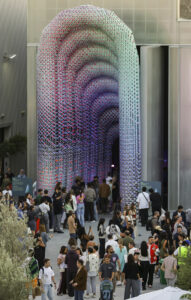
In your view, what still needs to happen for the UAE’s creative industries to reach their full potential?
I think we already see the UAE’s creative industries working to consistently fulfil their potential, from contemporary art galleries to community theatre, cinema, and even F&B concepts. More importantly, we see an incredible dedication and commitment from entrepreneurs to setting, achieving and then maintaining a very high level of personal investment in their concepts. Naturally, the ecosystem and the infrastructure to support their efforts have been growing in tandem. At Alserkal Avenue, we’ve been creating an ecosystem from within, working closely with the government, entrepreneurs, and creatives to develop systems of support that allow talent and commitment to truly shine. In that regard, there is always more we can do, and do better, but the creatives and entrepreneurs themselves, and the businesses they have set up, are a testament to the potential already here in the UAE and across the region.
Shaun Killa Disccusses Innovation, Founder & Design Director, Killa Design, on Architecture, Sustainability and Shaping the UAE’s Architectural Identity
Over the past three decades, Shaun Killa has played a defining role in shaping the architectural identity of the UAE. From the futuristic form of the Museum of the Future to the flowing superyacht-inspired design of Jumeirah Marsa Al Arab, his work has become closely associated with Dubai’s ambition and forward-thinking design landscape. Over nearly three decades, the award-winning architect and Founder of Killa Design has delivered some of the region’s most recognisable landmarks, including the Address Beach Resort, Shebara Resort, the Office of the Future, and, earlier in his career, the Bahrain World Trade Centre, the world’s first large-scale integration of wind turbines within a building.
Driven by a philosophy rooted in sustainability, innovation and human-centred design, Killa has consistently challenged architectural norms, creating expressive structures that balance technical precision with emotional impact. His projects do more than define skylines; they shape experiences, reflect cultural identity and push the boundaries of what architecture can achieve.
As the UAE continues to evolve as a global design destination, Killa remains at the forefront of this transformation, mentoring the next generation of architects while championing sustainable and future-focused urban environments.
Here, Shaun Killa discusses the evolution of architecture in the UAE, the vision behind his most iconic projects, and how design can shape the cities of tomorrow.
The UAE has become a global stage for architecture. How do you see the country’s design landscape evolving, and what makes it unique internationally?
What makes the UAE unique is its mindset. It’s a place that doesn’t just accept ambition, it encourages it. There is a willingness here to explore new ideas, new technologies, and new ways of living. What’s evolving now is a deeper level of thinking. The conversation is shifting from iconic, standalone buildings to more integrated, human-centric environments. We’re seeing a move toward mixed-use, lifestyle-driven developments that prioritise wellbeing, sustainability and long-term livability. That shift is important. The UAE is no longer just building for visibility; it’s shaping a future where people can live, work and thrive within a more complete ecosystem. That’s what gives it real global relevance.
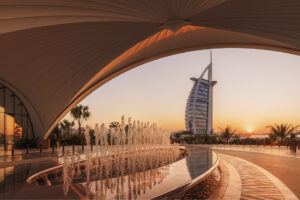
Jumeirah Marsa Al Arab
Many of your projects, including the Museum of the Future, have become global icons. What does it mean to contribute to shaping the architectural identity of the UAE?
It’s both a privilege and a responsibility. The UAE is still defining its architectural identity, and each project becomes part of that narrative. For me, it has never been about creating icons for their own sake. Architecture should have purpose; it should uplift, inspire, and improve the quality of life. When it’s disconnected from people or a place, it becomes a sculpture rather than architecture. Projects like the Museum of the Future or Jumeirah Marsa Al Arab are meaningful because they express something larger, a sense of optimism, innovation and cultural confidence. Contributing to that evolving identity is something I value deeply.
Take us back to the Museum of the Future. What was your vision for the project, and how did you approach designing such a landmark?
The project began with a question. What is the future, and how do you design for something that is still unknown? The design evolved around three key elements: the mound, the form and the void. The mound represents the earth, grounding the building in place. The form represents humanity and our ability to innovate. And the void represents what we do not yet know. The challenge was to translate that philosophy into something buildable. The integration of structure, calligraphy and façade required new ways of thinking and making. But when there is clarity in the narrative, design, engineering and technology align, and that’s when architecture becomes something more than just a building, it becomes an experience.
Many of your designs push boundaries both aesthetically and technically. How would you describe your architectural philosophy?
For me, design begins with purpose. It comes from understanding context, not just the site, but the culture, the climate and the emotional character of a place. We approach architecture holistically. It’s the interplay of structure, light, landscape, materiality and movement. When these elements are considered together, the result feels intuitive and connected. I see architecture as a tool for connection, between people and place, between the built environment and nature. That’s what gives it meaning and longevity.
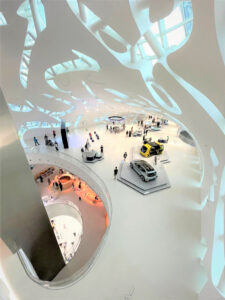
Museum of the Future
Sustainability is central to your work. How do you see sustainable architecture shaping the future of cities in the UAE and beyond?
Sustainability is no longer optional; it has to be fundamental. It needs to be embedded into the design process from the very beginning. We’re moving toward a future where buildings are not only efficient but also regenerative, giving back more than they take. That includes integrating renewable energy, passive design strategies, and a stronger connection to nature through biophilic design. At the same time, sustainability is also about well-being. It’s about creating spaces that improve how people feel, live, and connect with their environment. That balance between performance and experience will define the cities of the future.
The UAE is home to several of your most recognisable projects. Which projects are you most proud of and why?
Each project reflects a different aspect of our thinking.
The Museum of the Future stands out because it pushed the boundaries of what was possible, both technically and conceptually.
Jumeirah Marsa Al Arab is more about experience and narrative. It completes a beachfront story that began with Jumeirah Beach Hotel and Jumeirah Burj Al Arab, evolving into a more fluid, contemporary expression inspired by the elegance and movement of a superyacht.
Address Beach Resort is another project I’m proud of, particularly in how it redefines vertical hospitality while maintaining a strong connection to the sea.
More recently, Discovery Dunes, the ultra-exclusive Discovery Land Company golf residential community, represents a more immersive, lifestyle-driven approach. It’s about creating moments of pause and reconnection within the landscape, where architecture blends into the experience of the place.
And with the Four Seasons Residences in Abu Dhabi, the focus is on creating a sanctuary, where architecture, nature and hospitality come together in a seamless and refined way of living.
The projects I’m most proud of are the ones that create a strong emotional connection and stand the test of time.
Dubai has evolved rapidly over the past two decades. How has the architectural narrative of the city changed during your career?
In the early years, the focus was on creating icons that would define the city globally. There was a strong emphasis on visibility and ambition. Today, the narrative is more considered. There is a shift toward experience, towards creating environments that are liveable, sustainable and emotionally engaging. Dubai has taught me to think at the scale of legacy, to design buildings that capture the spirit of their time but remain relevant decades into the future. That evolution from spectacle to substance is what makes the city’s architectural journey so compelling.
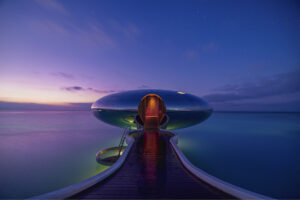
Shebara
Is there a project you have always dreamt of designing?
There are a few. I would love to design a hyper-luxury eco-safari lodge, something completely immersive where architecture and wilderness exist in balance.
But something very personal to me is designing a sailing yacht. Sailing has always been a source of clarity and inspiration, that balance between wind, sea and movement, and the connection to nature that comes with it. If we were to design a yacht, it wouldn’t be just an object; it would be a complete experience. A synthesis of performance, elegance and sustainability, where every line is fluid and every space evokes calm. More than anything, it would be about creating something that reconnects people to the ocean and to a sense of freedom and wonder.
Where do you draw inspiration from when conceptualising a new project?
It always begins with place, understanding the landscape, the light, the culture and the emotional quality of a site. But inspiration also comes from experience. From nature, from travel, and from moments of stillness. Sailing, in particular, has influenced how I think about balance, movement and connection to the environment. Often the most powerful ideas come from the space between what we understand and what we imagine. Design is about translating that into something tangible.
You have mentored many young architects. What advice would you give to emerging talent looking to build a career in the UAE’s architecture sector?
Stay curious and stay disciplined. Architecture is both creative and technical, and the strongest ideas are always grounded in rigour. Focus on purpose, not just form. Think about how your work impacts people and how it connects to its environment. And most importantly, be resilient. The UAE offers incredible opportunities, but it also demands a high level of thinking and commitment.
What would you say the biggest challenge is in your position today, and how do you manage that?
The biggest challenge is maintaining clarity as projects become more complex. There are more influences, more constraints, and more expectations than ever before. For me, it always comes back to the core idea. If that narrative is clear from the beginning, it guides every decision through to completion. And equally, it’s about building a strong team. Great architecture is always collaborative.
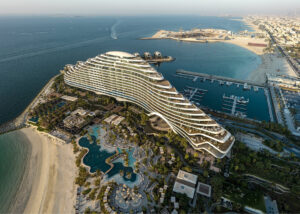
Jumeirah Marsa Al Arab
In terms of design, what’s your favourite building in the world and why?
I’m drawn to buildings that feel inevitable, where everything is resolved with clarity and intent. The most powerful architecture is not just visually striking, it’s emotionally resonant. It connects to its context, enhances experience, and remains meaningful over time. That balance between simplicity, innovation and emotion is what defines great design.
Looking ahead, what role would you like Killa Design to play in shaping the next chapter of architecture in the UAE?
We want to continue pushing the conversation forward, not just in terms of form, but in terms of meaning, responsibility and experience. Architecture should connect people to place, to nature and to each other. The future of the UAE’s architecture will be defined by that balance, innovation with purpose, ambition with sensitivity. If we can contribute to that in a meaningful way, then we are doing something worthwhile.
Mattar Bin Lahej on Reimagining Arabic Calligraphy and Shaping the UAE’s Cultural Landscape
From monumental sculptures to the flowing Arabic calligraphy wrapping the Museum of the Future, Mattar Bin Lahej’s work has become an integral part of the UAE’s evolving cultural landscape. The Emirati painter, calligrapher, photographer, sculptor, and designer is known for blending tradition with contemporary expression, transforming Arabic script into bold visual statements that move beyond language into form, movement, and light. As the artist behind the Museum of the Future’s striking façade, often described as “the only building that speaks Arabic,” his work stands as a powerful symbol of both heritage and innovation.
Self-taught and multidisciplinary, Bin Lahej approaches art as a continuous exploration, moving fluidly between painting, sculpture, photography and design. His work draws inspiration from Emirati heritage, cultural memory and the rapid evolution of the UAE, resulting in pieces that feel both deeply personal and widely resonant. Through public installations and gallery works alike, he creates art that invites reflection, dialogue and emotional connection.
Here, Mattar Bin Lahej reflects on his creative journey, the evolution of Arabic calligraphy in contemporary art, and the ideas shaping his work today.
You are known for blending painting, sculpture, photography and design. How do these disciplines influence one another in your creative process?
For me, you cannot separate different art forms. Painting teaches sensitivity to colour and light, sculpture teaches patience and an understanding of mass, design opens the door to innovation, and photography is a third eye that sees what is otherwise unseen. When I work, these disciplines move together like an orchestra; each field complements the others, giving me broader freedom of expression.
Your work often incorporates Arabic calligraphy. What draws you to this art form and how do you reinterpret it for contemporary audiences?
Arabic calligraphy is not merely letters; it is a spirit. I am drawn to its capacity to transform; it can be a word, a form, or a movement. I present it today as contemporary art, not as a fixed heritage, but as a living energy that interacts with light, materials, and modern techniques.

Emirati heritage and cultural memory are central to your work. How do you translate these themes into visual art?
Emirati heritage is not old pictures to me, but a living memory. I translate it visually through symbols, materials, and the stories I grew up with. The sea, the desert, the majlis, human relationships, and the nation’s rapid development. I always aim to create work that dialogues with the past without repeating it and embraces the future without forgetting its roots.
You are a self-taught artist. How did your journey shape your distinctive artistic voice?
My journey was full of experimentation. I did not learn art only from books but from life, from mistakes, and from passion. That path shaped my artistic voice differently because it was not built on ready-made rules but on continuous searching and a desire for self-discovery.
Your public art installations have become part of the UAE’s visual landscape. Which project stands out as particularly meaningful to you?
Every public work holds a special place because it lives among people. Some projects remain especially close to my heart because they became part of a place’s identity. What moves me most is seeing people interact with the work, take photos, and pass by it daily, as if it has become part of their lives.
The Museum of the Future was a pivotal moment. To see Arabic script transform into architecture and for light to become part of the letter was an artistic dream realised. The project was more than a design; it was a responsibility to the nation and a symbol of the UAE’s vision for the future. I felt I was helping write a new page in the history of Arab art.
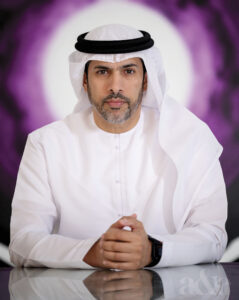
You have described your work as deeply personal and handcrafted. Why is this approach important to you?
The hand carries a truth that machines cannot replicate. Even when I use technology, the handmade touch remains the soul. I believe an artwork must bear the mark of the human; its pulse and its labour. That is what makes each piece unique.
Your Al-Duroor project in Al Shindagha explored an ancient astronomical device. What inspired this concept, and what message did you hope to convey?
I drew inspiration from humanity’s relationship with time and the cosmos. The “Duroor” was a simple yet ingenious device our ancestors used to understand the sun’s movement and the seasons. I wanted to revive that heritage in a contemporary way to show that ancient knowledge is not merely the past but a foundation we build upon.
You have created works both in the UAE and internationally. How do you approach creating art for different audiences while maintaining your identity?
Wherever I work, I carry my identity with me, while also listening to the place and its people. Art is a universal language, but its roots must remain firm. I balance my inner world with the particularities of each city or culture I engage with.
You have established your own gallery and museum space in Dubai. What was your vision behind creating this platform?
My aim was to create a space that resembles me: a place for dialogue, experimentation, and respectful presentation of work. I also wanted to provide a platform for young artists and contribute to Dubai’s vibrant art scene.
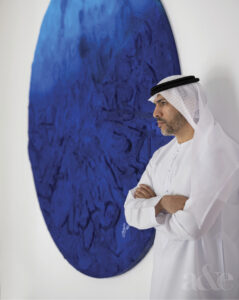
Preserving Arabic calligraphy is increasingly important in a digital world. Why do you believe this art form must continue to evolve?
Arabic calligraphy must evolve to stay alive. If it remains only within tradition, it will lose new audiences. Technology is not a threat but an opportunity; it can give calligraphy new life and open doors it could not reach before.
As one of the UAE’s most recognised contemporary artists, what advice would you give to emerging Emirati artists today?
I advise them to be honest. Seek your own voice rather than repeating what succeeds for others. Art is a long journey that requires patience, courage, and persistence. Above all, remain true to yourself.
Looking ahead, what projects or ideas are you currently working on?
I am currently working on a series that explores the relationship between light and script, and between movement and mass. I am also developing international projects that will be announced soon, offering a new vision for Arabic calligraphy in public space.
Who or what inspires you creatively, both within the UAE and internationally?
I draw first from the UAE: its energy, its transformations, and the stories of its people. Internationally, I am inspired by practices that break boundaries between disciplines and redefine beauty in unexpected ways.
What is your professional motto, and what continues to drive your creative journey?
Art is a responsibility before it is beauty. What drives me is the desire to create work that leaves a mark and adds something honest to the world.
