

Dior Reveals Anya Taylor-Joy, Jisoo, and Willow Smith as the Faces of Its Latest Collection
Dior is ushering in a new chapter for its fragrance universe with the arrival of three globally influential figures, Anya Taylor-Joy, Jisoo, and Willow Smith, as the new faces of Dior Addict.
Each woman brings a distinct creative energy to the House, reflecting a modern vision of beauty that is expressive, individual, and confidently unconstrained. Together, they embody a new generation of Dior icons, united not by uniformity, but by contrast—three personalities, three sensibilities, and three interpretations of glow.
The trio fronts the latest Dior Addict fragrances created by Francis Kurkdjian, Dior’s Creative Director of Perfumes. Peachy Glow, Rosy Glow, and Purple Glow are conceived as olfactory expressions of youthful spontaneity, playful, radiant, and emotionally driven. Rather than adhering to a singular fragrance identity, the collection celebrates mood, instinct, and self-expression, inviting wearers to choose scent as a reflection of how they feel rather than who they are expected to be.

Willow Smith
Anya Taylor-Joy brings cinematic magnetism and modern elegance to the campaign, her presence balancing refinement with unpredictability. Jisoo, whose global influence extends far beyond music, channels effortless charisma and cultural impact, resonating with a generation that sees beauty as both personal and powerful. Willow Smith completes the trio with her fearless creativity and soulful individuality, representing a beauty philosophy rooted in authenticity and artistic freedom.
Visually, the campaign bursts with colour and energy, creating a dialogue between fragrance and makeup. The scents are paired with the iconic Dior Addict Lip Glow Oil, designed by Peter Philips, reinforcing Dior’s holistic approach to beauty, where scent, colour, and emotion converge. The result is a vibrant universe where perfume becomes an extension of personality, and glow is both literal and symbolic.

Jisoo
With this launch, Dior Addict moves beyond fragrance as an accessory and positions it as a sensorial statement, one that celebrates youth not as an age, but as a mindset defined by curiosity, confidence, and freedom. Anchored by three women who each redefine modern stardom on their own terms, Dior’s latest chapter feels bold, joyful, and unmistakably of the moment.
All That Glitters, Must have jewellery collections to shine in this festive season
Boucheron
Boucheron’s signature collections step elegantly into the festive season, offering pieces that feel both timeless and full of winter magic. Serpent Bohème, with its fluid silhouettes and radiant drops of diamonds or coloured stones, brings a soft glow to winter dressing. Whether worn in yellow gold for warmth or white gold for an icy sparkle, the collection adds effortless refinement to celebrations, from intimate gatherings to evening soirées.
Plume de Paon offers a more ethereal touch, its feather-inspired curves catching the light with every movement. These pieces bring delicacy to festive looks, ideal for those who prefer jewellery that feels poetic yet boldly feminine.
For a modern edge, Quatre Classique delivers graphic lines and striking contrasts. Its stacked textures and architectural codes are perfect for layering, allowing each wearer to create a personalised festive statement. Together, these Boucheron icons offer a season of brilliance, versatility, and celebratory style.

Bvlgari
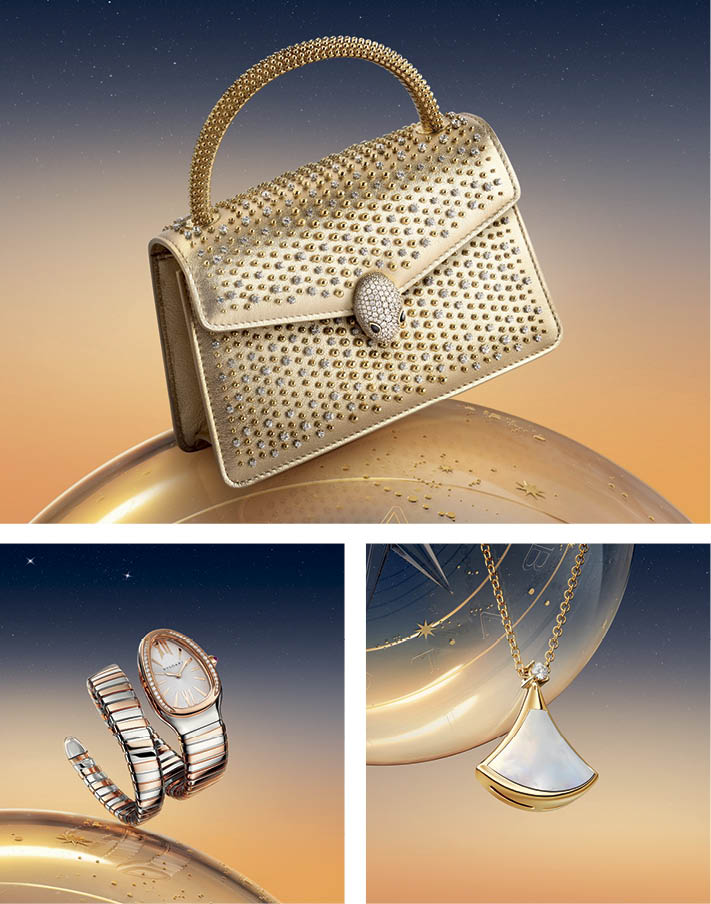
Bvlgari offers a festive collection that captures the Maison’s radiance, warmth, and artistry. Its jewellery icons shine brighter than ever, offering exceptional pieces that feel perfectly suited to gifting, celebrating, and elevating winter style. From the rich glow of yellow gold to vibrant gemstone accents, Bvlgari’s signatures – Serpenti, Divas’ Dream, B.zero1, Tubogas, Bvlgari Bvlgari and Cabochon – invite endless creativity. Each collection is designed to be layered, stacked, and personalised, allowing wearers to create combinations that transition seamlessly from daytime gatherings to evening celebrations.
For those who gravitate toward statement timepieces, Bvlgari’s watchmaking universe brings its own festive brilliance. Serpenti Tubogas and Serpenti Seduttori wrap the wrist with soft, fluid curves, while Bvlgari Bvlgari and Bvlgari Aluminium offer a more contemporary attitude. The Octo Roma and the ultra-thin Octo Finissimo bring a sculptural edge, making them standout choices for gifting or marking special moments. Together, these creations reflect the joy, glamour, and emotion that define Bvlgari at the height of the holiday season.
Piaget
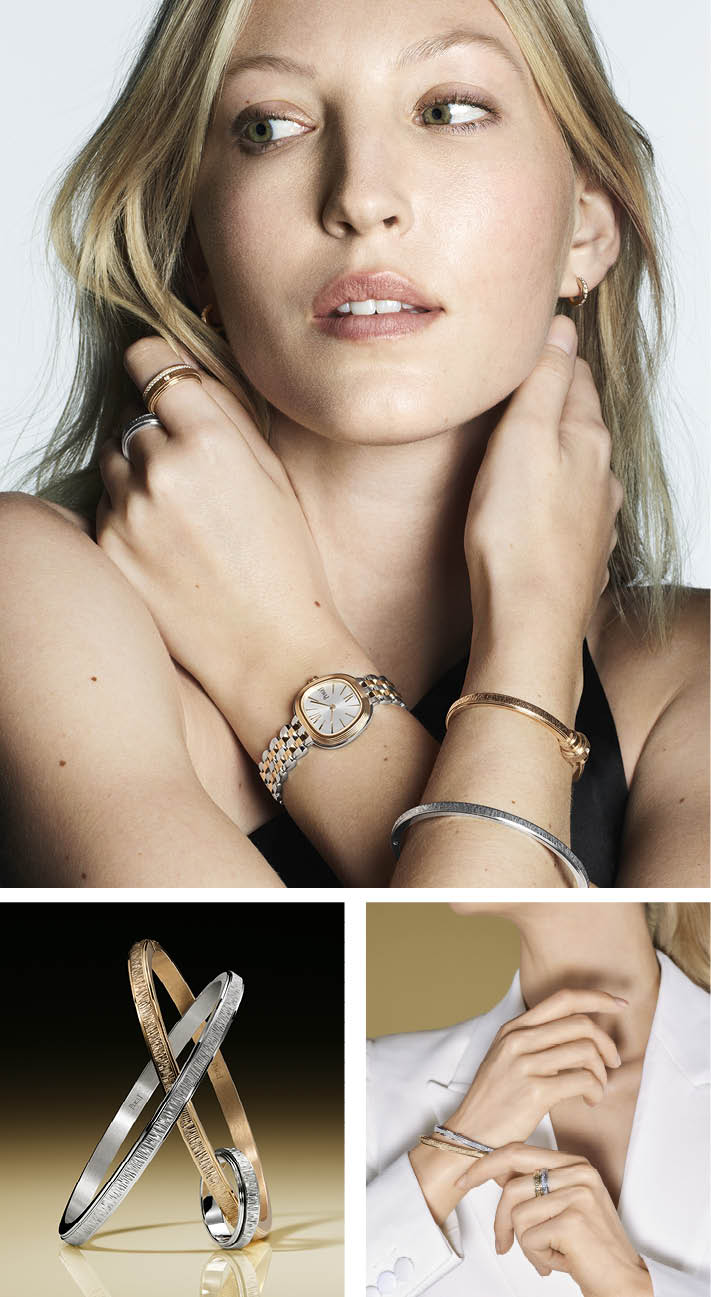
Piaget’s iconic Decor Palace motif is perfectly suited to festive dressing. Known for its intricate gold engraving and unmistakable shimmer, the motif now enriches an expanded collection of bracelets, rings, and elegant earrings crafted for everyday wear with a touch of celebration.
The newest additions include a refined 4.7mm white gold ring and a matching white gold bangle adorned with a single diamond, pieces that bring a subtle yet striking luminosity to winter gatherings. They join a wider family of bangles, from fully gem-set designs to sleek, minimalist creations crafted in rose and white gold. These unisex silhouettes are made for layering, allowing each wearer to create a combination that feels personal, modern, and effortlessly polished.
Piaget also introduces a coveted new pair of 3cm hoop earrings, bringing a hypnotic flash of sculpted gold to the festive season. Together, these pieces capture the essence of Possession Decor Palace: luxurious, tactile, and created to shine from morning celebrations to evening events.
Tiffany & Co.
Tiffany & Co.’s holiday season shines bright with a standout selection of jewellery that feels made for gifting. This year’s spotlight falls on the house’s most loved icons, such as HardWear, Lock, T and Knot, each chosen for their clean lines, modern elegance, and the kind of timelessness that makes a gift feel meaningful long after the season ends. Whether it’s the bold industrial edge of HardWear, the symbolic clasp of Lock, or the sculptural simplicity of T and Knot, these pieces carry sentiment as much as style.
Adding a touch of magic to the season is the new Bird on a Rock collection, with its vibrant gemstones and whimsical design, ideal for someone who loves a statement piece with heritage charm. Together, these creations capture the spirit of festive gifting: luxurious, thoughtful, and crafted to become future heirlooms. Wrapped in the unmistakable Tiffany Blue Box®, each piece transforms into its own expression of love—ready to be unwrapped and cherished.

Van Cleef & Arpels
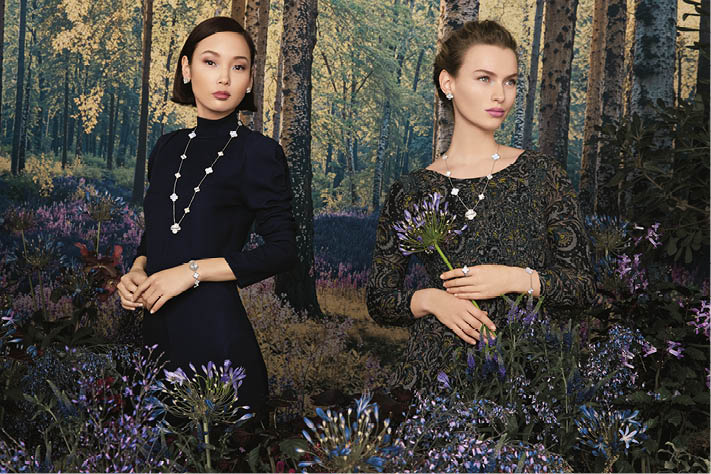
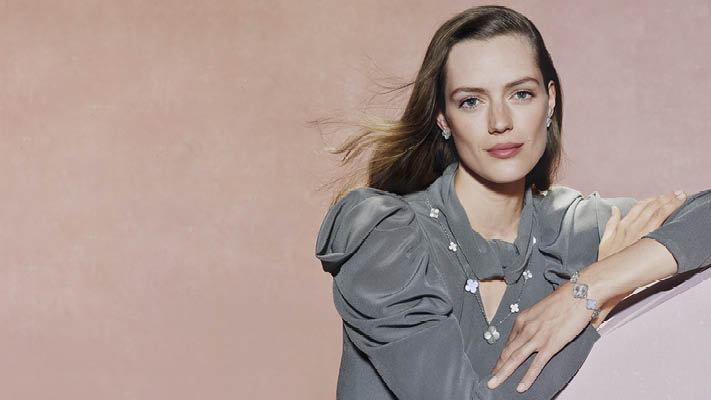
Van Cleef & Arpels’ Alhambra collection has long been a symbol of luck, beauty and timeless elegance, and this season it becomes an extraordinary destination for meaningful festive gifting. The newest additions to the Magic Alhambra family bring transformable design to the forefront, offering long necklaces that can be worn in multiple ways, as a full-length strand, a shorter necklace, or even a bracelet. This versatility makes them ideal presents for someone who loves pieces that adapt effortlessly from day to evening.
The new reversible Vintage Alhambra rings add another layer of enchantment. Each one unveils two expressions of beauty: luminous grey mother-of-pearl or soft chalcedony on one side, and a sparkling diamond set against guilloché gold on the other. With a simple turn, the wearer can shift from subtle radiance to festive brilliance — a perfect gesture for the holiday season.
Completing the lineup is the Sweet Alhambra watch, an elegant timepiece with alternating motifs of precious stones and guilloché white gold. Delicate, refined and instantly recognisable, it’s a gift that carries both sentiment and sophistication. Each creation captures the spirit of celebration, making Alhambra one of the most enchanting ways to mark the season.
Dubai World Sports Summit will bring together sporting legends, global leaders, innovators and decision makers
Dubai is set to reaffirm its position at the centre of the global sports conversation with the launch of the World Sports Summit, a landmark gathering that will bring together sporting legends, global leaders, innovators and decision makers on one unified platform to help shape the future of sport.
Held under the directives of His Highness Sheikh Hamdan bin Mohammed bin Rashid Al Maktoum, Crown Prince of Dubai, Deputy Prime Minister, Minister of Defence and Chairman of The Executive Council of Dubai, and under the supervision of the Dubai Sports Council, the Summit will take place from December 29 to 30, 2025, at Madinat Jumeirah, under the theme “Uniting the World Through Sports.”
Positioned as the largest global gathering of its kind, the World Sports Summit aligns closely with the objectives of the Dubai Sports Sector Strategic Plan 2033, reinforcing Dubai’s long-term vision to lead global sports dialogue while strengthening the sector’s economic, social and cultural impact.
More than 70 speakers from across the international sports ecosystem will take part, spanning athletes, federation leaders, investors, innovators and policymakers. The line-up includes an exceptional roster of global figures such as His Highness Sheikh Nasser bin Hamad Al Khalifa, His Excellency Dr Ahmed Belhoul Al Falasi, Nasser Al-Khelaifi, Ronaldo Nazario, Paolo Maldini, Khabib Nurmagomedov, Manny Pacquiao, Reggie Bush, Ons Jabeur and Nick Santonastasso, with additional influential names set to be announced in the coming days. Together, they will share insights drawn from sporting excellence, leadership, humanitarian impact and innovation, positioning the Summit as a rare convergence of experience and vision.
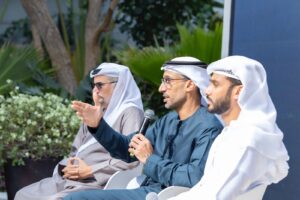
Speaking during the Summit’s announcement, H.E. Khalfan Belhoul, Vice Chairman of the Dubai Sports Council, emphasised that the event reflects Dubai’s commitment to positioning sport as a driver of economic growth, quality of life and social cohesion. He noted that sport today extends far beyond competition, acting as a powerful force for innovation, governance and global connection.
The Summit’s first edition also aligns with the Dubai Sports Sector Strategic Plan 2033, overseen by His Highness Sheikh Mansoor bin Mohammed bin Rashid Al Maktoum, President of the UAE National Olympic Committee and Chairman of the Dubai Sports Council. The plan aims to strengthen Dubai’s standing among the world’s leading sports cities, attract top talent, host major international events, and support every layer of the sports ecosystem.
This vision reflects a deeply rooted philosophy within the UAE: sport as a humanitarian message as much as a competitive pursuit, with innovation defined not only by achievement, but by governance, societal impact and the inspiration of future generations.
Across two days, the Summit will host more than 20 keynote sessions exploring the present and future of the global sports industry. Topics will range from technical performance and athlete development to the evolving role of sports icons as influential societal figures. Technology and AI will take centre stage, alongside discussions on governance, policy, diplomacy and investment trends.
A strong focus will be placed on women’s empowerment in sport, cultural impact and inspiring human stories that transcend competition. The programme will also address the challenge of engaging younger generations, examining digital behaviour, fan engagement, content creation and how global events can leave meaningful, long-term legacies.
Reflecting the diversity of modern sport, the Summit will cover everything from football, basketball and tennis to combat sports, Olympic and Paralympic disciplines, equestrian and cycling sports, motorsports, fitness and contemporary lifestyle-driven sports shaped by innovation.

Running alongside the Summit will be the 13th edition of the Mohammed bin Rashid Al Maktoum Global Sports Award, held under the patronage of His Highness Sheikh Hamdan bin Mohammed bin Rashid Al Maktoum. First launched in 2008, the award has evolved to recognise not only athletic excellence, but also creativity, innovation and societal impact across 16 diverse categories.
This year’s honourees will include athletes, teams, institutions and initiatives that have contributed meaningfully to the development of sport on local, regional and global levels, reinforcing Dubai’s belief in sport as a force for progress and positive change.
New Perspective, Carlos Rosillo, Co-Founder and Chief Executive of Bell & Ross, on legacy and independence
Dubai Watch Week has always been a celebration of watchmaking excellence, but this year, the energy felt different. Among the industry’s most anticipated launches and conversations, Bell & Ross co-founder Carlos Rosillo arrives with a quiet confidence. It has been nearly three decades since the Maison first entered the Middle East, building its story alongside generations of collectors. Today, as Rosillo explains, it has become a cultural anchor for the brand, and Dubai Watch Week is a key event for the Swiss watchmaker.
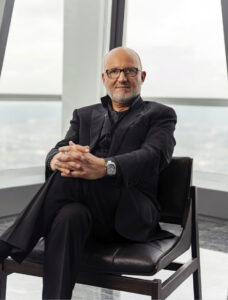
“I think that the most important thing is having direct contact with our clients,” Rosillo says. “Here, in the Middle East, collectors want to talk directly to the people who are making the watches. So having this direct contact means that you can share the passion, and the emotions, and they are really knowledgeable.” That sense of informed appreciation is precisely why Bell & Ross chose Dubai Watch Week to unveil its newest horological statement: the BR-X3 Tourbillon Micro-Rotor, the Maison’s most ambitious expression of high watchmaking to date.
Before we arrive at the watch itself, Rosillo reflects on the Middle East’s central role in Bell & Ross’s global growth. “We have been in the region for a long time, almost since the beginning, so 30 years ago,” he notes. Much of this journey has been shaped alongside Seddiqi & Sons, the UAE’s most established watch distributor. “With Mr Seddiqi and the team, we have taken an important step because having a good distribution is very important. Having a nice setup in the boutiques is very important. So I think we have a good base for the brand.” Yet the future promises even more. Rosillo hints at a major partnership set to be revealed next year, something widely recognised in the region and designed to speak to a broader audience. “We have an amplifier that will speak to the region… It’s a partnership that will be disclosed at the beginning of next year. It’s very chic with a very famous brand,” he teases.
A combination of technical mastery and emotional storytelling sets the stage for the BR-X3 Tourbillon Micro-Rotor, a watch that pushes Bell & Ross into new territory. Far removed from the utilitarian, cockpit-inspired instruments that built the brand’s reputation, the X3 signals a climb toward haute horlogerie. Launching it in Dubai was no coincidence. “Because here there are a lot of collectors,” Rosillo explains. “Making sure that the launch is here or there depends on the production side… but in terms of momentum, it was the right momentum.” For a piece of this complexity, timing and audience matter.
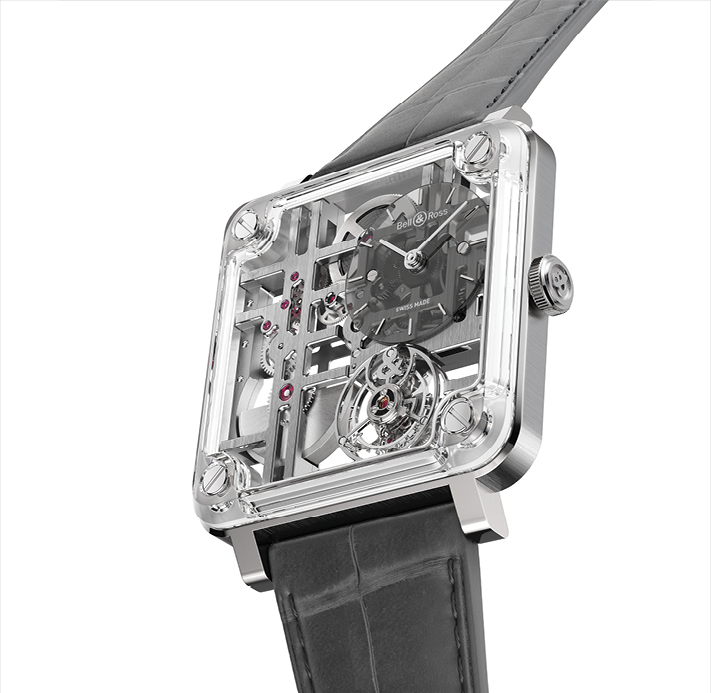
And what an audience the BR-X3 commands. The watch is an architectural revelation: a square movement with a flying tourbillon, framed not by a traditional case but by two layers of sapphire that form a crystalline sandwich around the calibre. “Having a square movement is not frequent,” Rosillo says. “Having a square movement with a tourbillon is unique. It’s a flying tourbillon, very slim because it’s a micro-rotor… You just have the movement, and the two sapphires.”
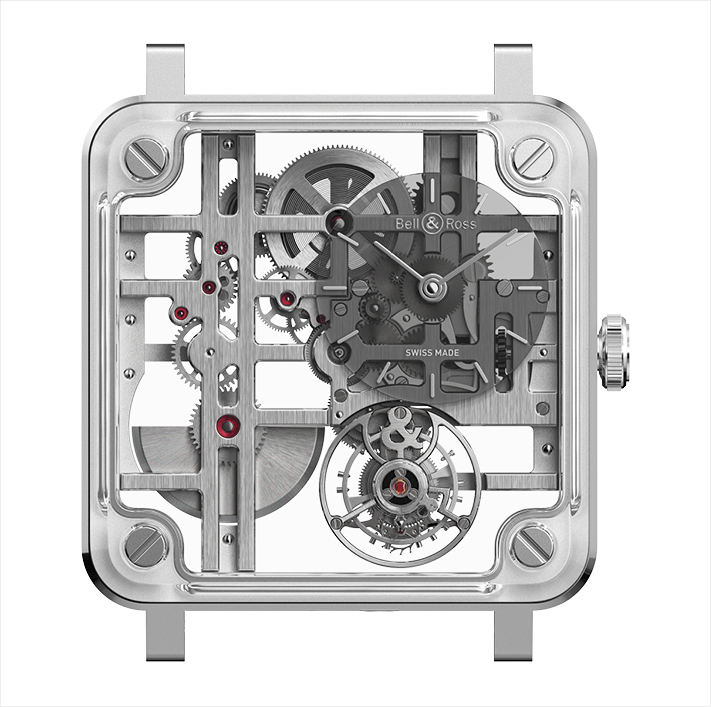
Collectors walking past the display at Dubai Watch Week stopped almost instinctively. The piece is undeniably technical, yet quietly confident, not oversized, not flashy, but a showcase of mechanical purity. “Even though it’s bulky, it’s not too big, it’s not blingy,” Rosillo notes.
The BR-X3 Tourbillon Micro-Rotor is a statement of identity. The Maison has long operated across three distinct segments: playful dashboard-inspired designs, elegant urban timepieces, and the high-watchmaking creations that showcase its deepest technical capabilities. The X3 sits squarely within this third universe, pushing the brand into a space defined by mastery, precision, and engineering purity.
There is also a quiet but meaningful validation that comes with launching a watch of this calibre. As Rosillo shares, peer recognition in the industry is a powerful measure of success. “It means a lot when your colleagues say, ‘Wow, brilliant.’ In watchmaking, of course, there is competition, but there is also common respect for people who appreciate the beautiful work. And having this common respect from great watchmakers means a lot.”
That respect is strengthened by Bell & Ross’s steadfast commitment to its own identity. In an industry often swept up by loud marketing and rapid-fire launches, Rosillo sees value in clarity and intention. “Staying faithful to who we are is very important because you feel good in your shoes,” he says. Independence gives the brand the freedom to choose its rhythm, adapt to shifting economic climates, and protect its philosophy. “Selling is just the result of the previous actions… if there is too much pressure to sell, I think it’s another business.”
This approach proved especially significant during a challenging global year. “The economy has been struggling,” he acknowledges, “but we have been able to face that because we have a rhythm that allows us to cope with it. We are flexible, we have a good team, we can cope with good or bad momentum, keeping who we are.”
Being recognisable at first glance is part of that strength. The square case has become Bell & Ross’s signature. Instantly identifiable, even from across a room. “It’s important to be recognisable at first glance. When you see the watch, you don’t have to mention the name. You understand. And there are not many brands, even long heritage brands, that have that very distinct look.”
That distinctiveness also shapes how the brand thinks about expansion, particularly into the women’s segment. Rosillo’s wife, Barbara – one of the brand’s earliest female customers – joins briefly in the conversation to share her own preference. “I prefer the bigger size dials,” she says, acknowledging that bold designs have long appealed to female collectors in the region.
But Bell & Ross is preparing to take a dedicated step forward. “Next year we’re probably going to make one watch that combines different elements, but it will target more women with their tastes,” Rosillo reveals. He references the poetic Diamond Eagle with its constellation motif as an example of how the brand has already explored more delicate storytelling. The new creation will deepen this direction without losing the clarity of the Bell & Ross design language. It’s a gradual evolution.
As the conversation closes, Rosillo returns to the idea of energy and presence, two themes that seem to guide both his leadership and the brand’s trajectory. “When you get older, you don’t have as much energy as when you were younger, but you know how to control the energy,” he reflects. “To make sure you don’t waste it, and to feel comfortable using it in the right way. And I think this is very important because in the end, this makes you happy. If you’re happy, then you share happiness.”
By Lindsay Judge
Dubai Watch Week, Novelties and highlights from the event’s largest edition yet
Dubai Watch Week returned this November with its most dynamic and successful edition yet, reaffirming its status as one of the world’s leading horology events and a cultural moment in its own right. This year’s programme drew an impressive mix of collectors, industry leaders, independent watchmakers, and enthusiasts from across the globe, all gathering in Dubai to celebrate craftsmanship, creativity, and the evolving future of watchmaking.
Across five days, the event delivered a rich blend of launches, masterclasses, panels, and immersive brand experiences, transforming Burj Park into a vibrant hub of ideas and innovation. From rare timepieces unveiled exclusively for the region to thought-provoking conversations about design, legacy, and next-generation manufacturing, the week balanced technical depth with contemporary cultural relevance.
The atmosphere was electric yet intimate, true to Dubai Watch Week’s reputation for fostering genuine dialogue between brands and their communities. With record attendance, standout novelties, and a renewed sense of momentum, this year marked a defining chapter for the event and for the region’s growing influence in the global watch landscape. Turn the page to discover some of the novelties and highlights from this year’s event.
Audemars Piguet
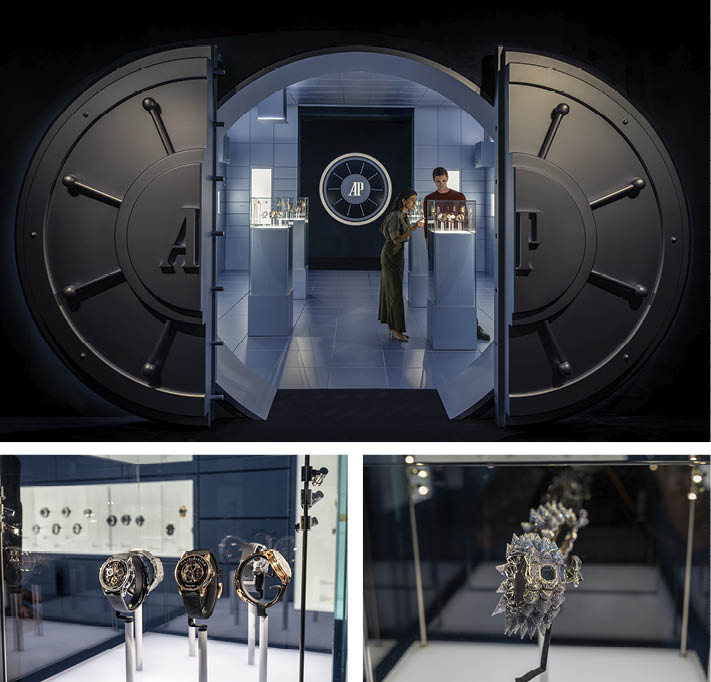
Audemars Piguet marked its 150th anniversary with a standout presence at Dubai Watch Week, presenting its large-scale House of Wonders exhibition. Held across Dubai Mall’s Burj Park, the immersive showcase offered visitors a rare journey into the Maison’s heritage, craftsmanship and creative evolution. Designed as a bridge between Dubai and Le Brassus, the exhibition unfolded through themed chambers that highlighted historic workshops, archival timepieces, mechanical innovations, and the landscapes of the Vallée de Joux. It also reflected the brand’s long-standing relationship with the Seddiqi family, founders of Dubai Watch Week. Throughout the event, Audemars Piguet hosted a dynamic programme, including the reveal of its ongoing collaboration with the Dubai Future Foundation, reinforcing its commitment to sharing watchmaking culture with a wider audience.
Bvlgari
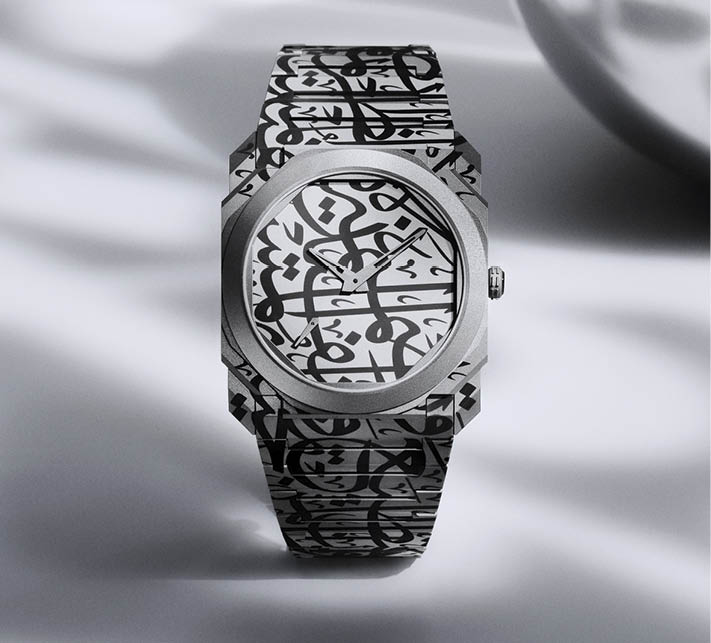
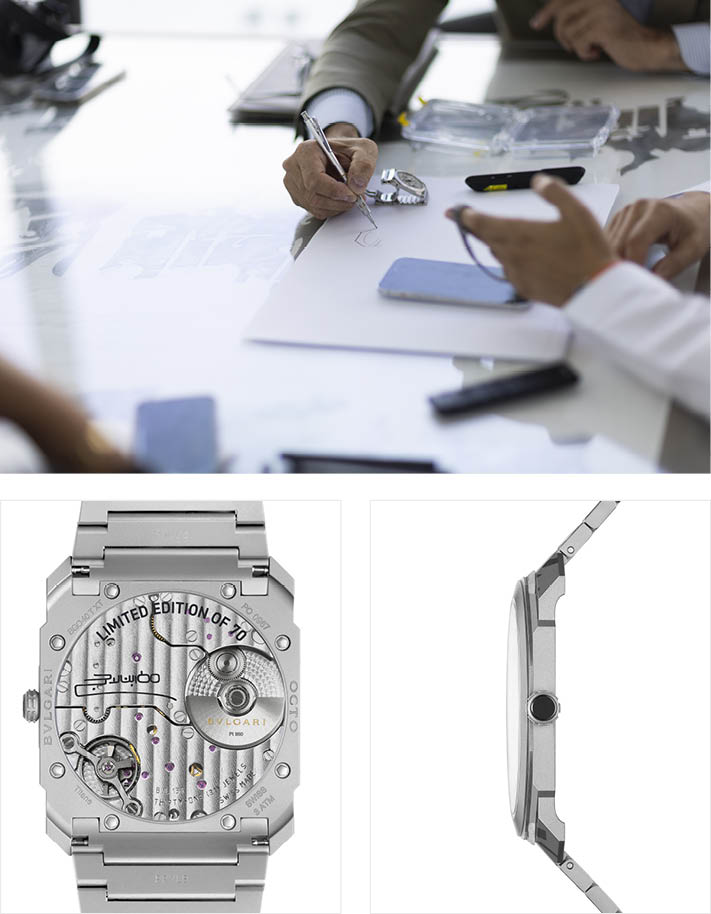
Bvlgari returned to Dubai Watch Week, unveiling a limited-edition collaboration that seamlessly unites Italian design with Emirati artistry: the Mattar Bin Lahej x Octo Finissimo. The seventh edition of the fair set the stage for this remarkable debut. Since its introduction, the Octo Finissimo has offered a refined canvas for creative expression, merging Roman architectural codes with Swiss precision. This year, Bvlgari partnered with renowned Emirati artist Mattar Bin Lahej, whose signature calligraphy transforms the ultra-thin titanium case, bracelet, and dial. Inspired by the words of His Highness Sheikh Mohammed bin Rashid Al Maktoum, the piece becomes a tribute to imagination, innovation, and the future. An exceptional fusion of cultural legacy and modern mastery.
Van Cleef & Arpels
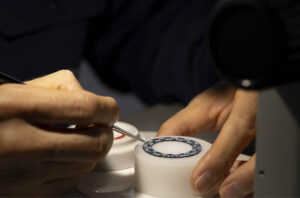
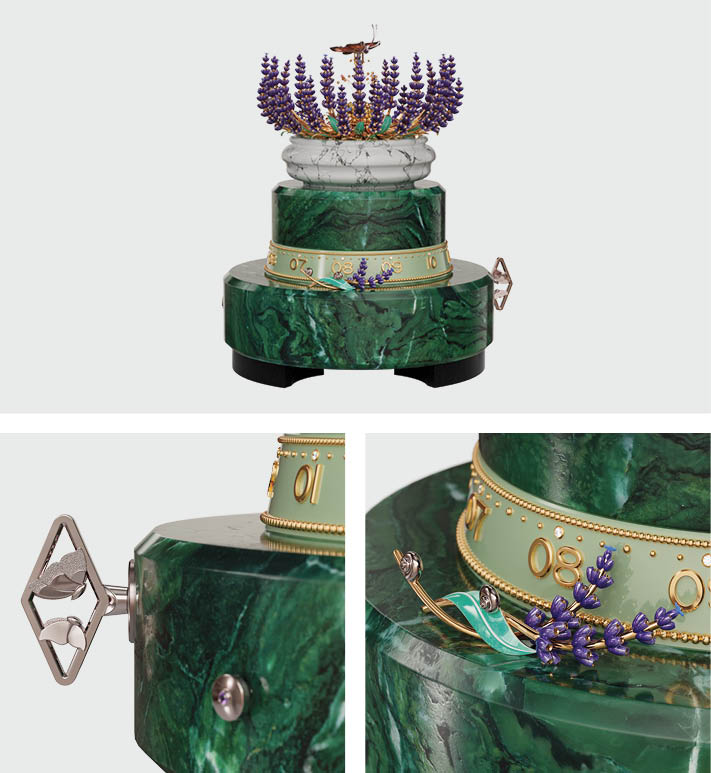
Van Cleef & Arpels returned to Dubai Watch Week with a poetic celebration of horological artistry, unveiling the Poetry of Time exhibition and the remarkable Brassée de Lavande automaton. The Maison invited visitors into an imaginative universe shaped by ballerinas, fairies, cosmic scenes and nature-inspired creations, each one narrating time through emotion and craftsmanship. At the heart of the presentation, artisans demonstrated their savoir-faire at dedicated workbenches, while archival pieces offered insight into the brand’s creative heritage.
The debut of the Brassée de Lavande automaton captivated audiences: a lacquered rose-gold dome that blossoms open to reveal a fluttering butterfly and soft melody. Blending technical mastery with dreamlike storytelling, the piece embodied Van Cleef & Arpels’ enduring vision of time as an art form.
Breitling
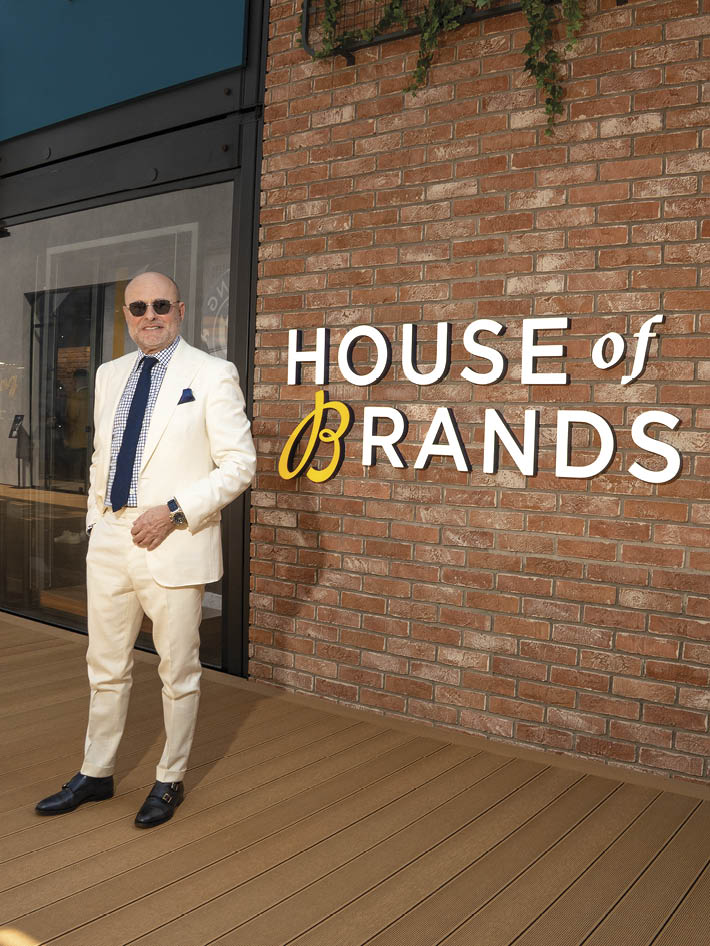
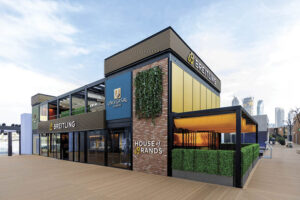
Breitling marked a pivotal moment with CEO Georges Kern unveiling the House of Brands, a new strategic vision uniting three historic watch maisons under one umbrella. Alongside Breitling, the revived Universal Genève and Gallet were previewed ahead of their global relaunch in 2026, signalling a renewed commitment to preserving significant horological legacies. Presented at one of the world’s most influential industry platforms, the announcement underscored the importance of the Middle East, Southeast Asia and India in shaping the future of contemporary watchmaking. A dedicated two-storey pavilion offered guests a first look at the House of Brands, reflecting a portfolio designed to span accessible craftsmanship to ultra-luxury, while honouring each maison’s heritage, identity and cultural impact.
Hublot
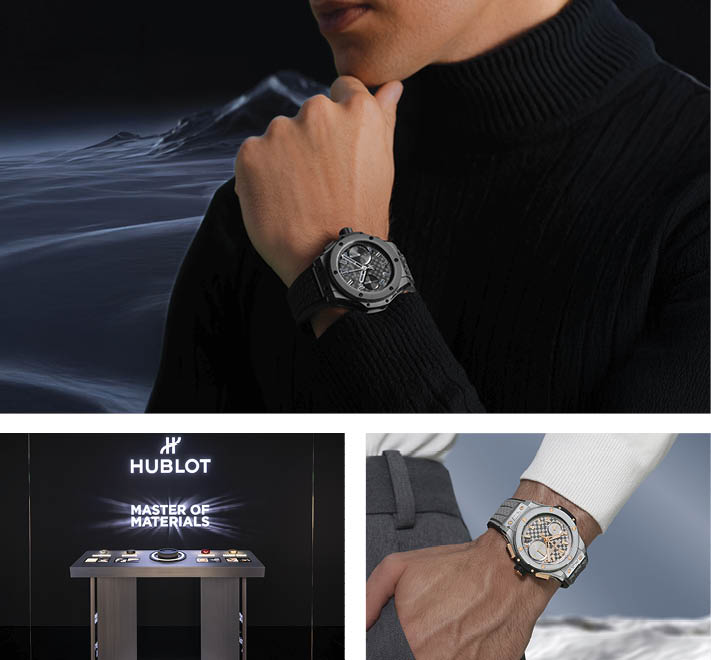
Hublot marked its return to the event with a celebration of two milestones: 20 years of the Big Bang and the 75th anniversary of Ahmed Seddiqi. The brand unveiled two exclusive timepieces created in partnership with Seddiqi: the Big Bang All Black Ahmed Seddiqi 75th Anniversary, limited to 10 pieces, and the Big Bang Titanium Grey Ahmed Seddiqi 75th Anniversary, limited to 25. Both models featured Arabic numerals honouring regional heritage and bespoke oscillating weights engraved with Seddiqi’s anniversary emblem. Revealed in the presence of Hublot CEO Julien Tornare and Mohammed Abdulmagied Seddiqi, the launches underscored a longstanding partnership and highlighted Hublot’s continued commitment to bold design, innovation and the Middle East’s watch community.
Roger Dubuis
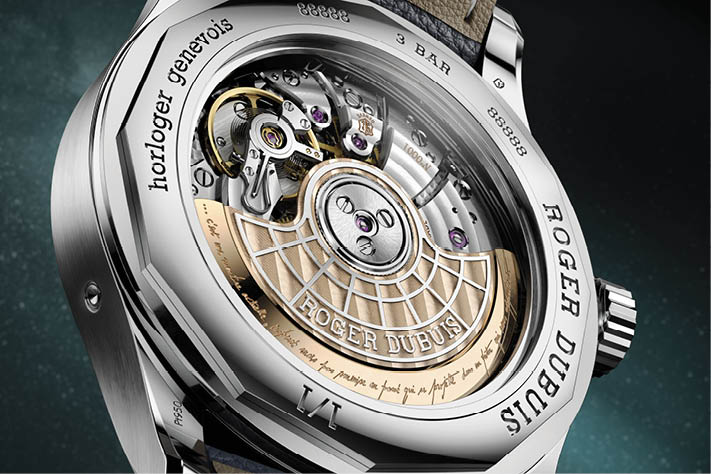
Roger Dubuis concluded its “La Placide” series at Dubai Watch Week with the unveiling of Hommage Sukoon Al-Layl, a unique tribute to the Maison’s founder. Presented as a one-of-a-kind creation, the timepiece drew inspiration from the serenity of the desert at night, echoing Mr. Roger Dubuis’ calm character and lifelong passion for astronomical complications. Crafted entirely in platinum, the 38 mm watch featured a layered dial composed of mother-of-pearl, guilloché waves in Astral Blue, and an aventurine moonphase, all designed to capture the stillness and luminosity of the night sky. Powered by the revived RD1472 calibre with a biretrograde perpetual calendar, the piece celebrated heritage, technical mastery, and the expressive spirit that defines the Maison’s identity.

TAG Heuer
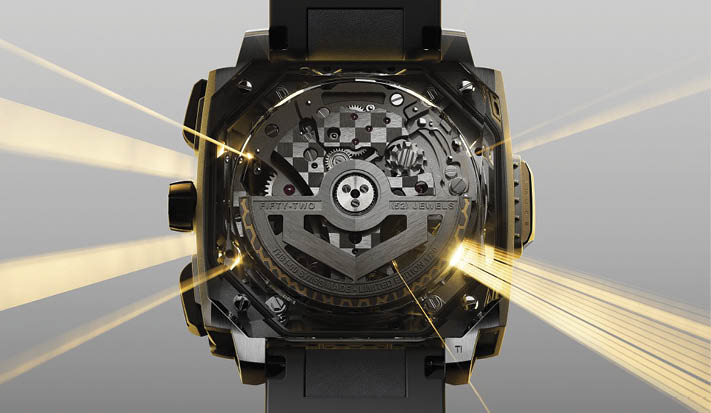
TAG Heuer introduced a bold new chapter with the Monaco Split-Seconds Chronograph Air 1, a creation that pushes the boundaries of contemporary watchmaking. Weighing just 85 grams, it combines Grade-5 titanium, solid gold elements and an openworked aerodynamic case that appears sculpted by airflow. Designed using Selective Laser Melting, the case forms a futuristic exoskeleton wrapped around a twin-layer honeycomb mesh inspired by hypercar engineering. Inside sits the Calibre TH81-00, TAG Heuer’s most advanced rattrapante movement, developed with Vaucher and beating at 5 Hz with a 65-hour power reserve. Limited to 30 numbered pieces, the Air 1 stands at the apex of TAG Heuer’s performance-driven ethos, fusing motorsport DNA with avant-garde design.

Ulysse Nardin
Ulysse Nardin unveiled the UR-FREAK, a groundbreaking limited edition created in collaboration with URWERK, marking the first partnership between the two independent Swiss maisons. Considered one of the most influential contemporary watches, the original Freak redefined timekeeping by rotating the entire movement to indicate the hours and minutes. In the UR-FREAK, this radical concept merges seamlessly with URWERK’s signature wandering-hour satellite display, resulting in a fully integrated, in-house calibre that unites two avant-garde mechanical architectures. The watch incorporates Ulysse Nardin’s advanced Grinder® system, along with DIAMonSil and silicon innovations first introduced by the brand in 2001. Produced in a strictly limited run of 100 pieces, the UR-FREAK stands as a bold fusion of imagination, engineering and modern horology.

Girard-Perregaux
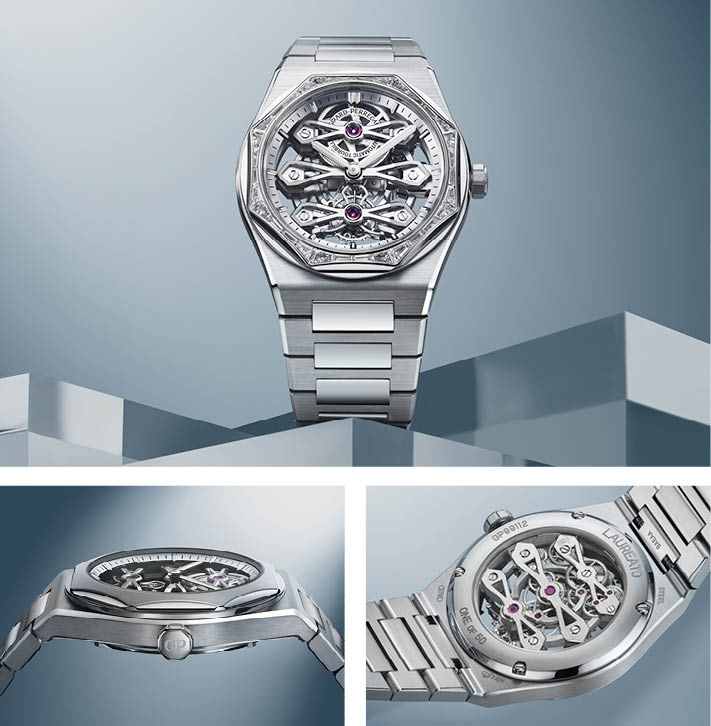
Girard-Perregaux’s latest creation unites two of its most enduring icons: the Three Bridges, introduced in 1867, and the Laureato, launched in 1975. The new Laureato Three Gold Bridges reinterprets these signatures in a contemporary masterpiece that blends architectural beauty with advanced watchmaking. Powered by the in-house Calibre GP9620, the movement features three openworked white-gold bridges aligned on a single axis, revealing the barrel, gear train and tourbillon in a striking vertical composition. Its inverted design transforms the calibre into a sculptural display of motion and light. With refined finishing, luminous suspended indexes and the Laureato’s distinctive geometry, this creation pays tribute to more than two centuries of innovation while writing a bold new chapter in the Maison’s design legacy.
Gerard Charles
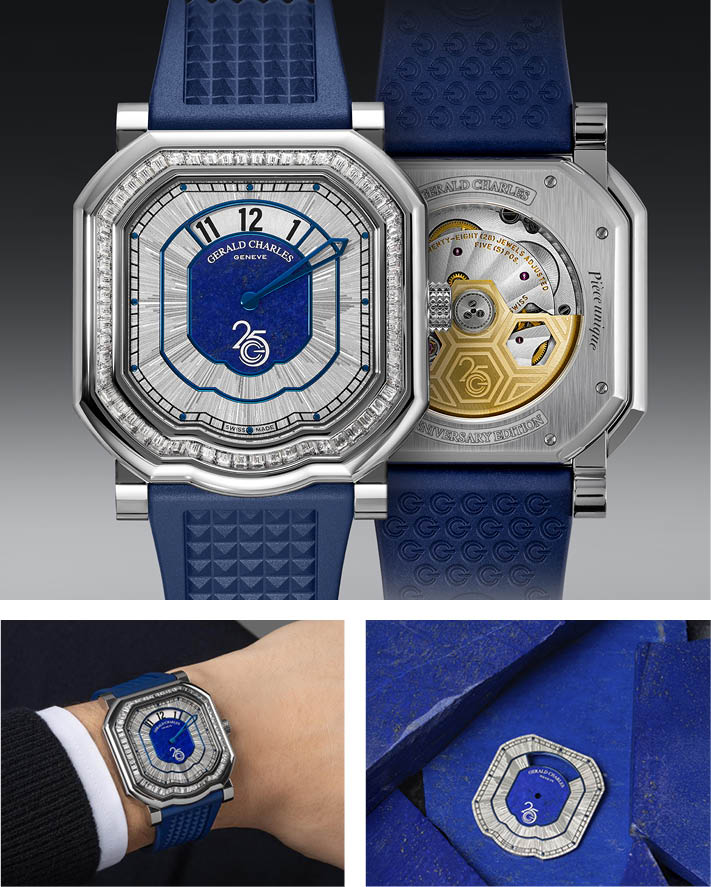
Gerard Charles marked a milestone year at Dubai Watch Week with the debut of the Maestro GC39 Remaster Diamond Baguettes, a dazzling finale to the Maison’s 25th anniversary celebrations. This exclusive creation elevates the commemorative GC39 with a bezel set with 60 baguette-cut diamonds totalling 2.66 carats, bringing a new brilliance to the anniversary line. At its core lies the proprietary meta-guillochage dial, an innovative micro-chemical engraving technique that layers intricate patterns to form a shifting, Baroque-inspired star motif. A rare jumping hours complication at 12 o’clock reflects Gérald Charles Genta’s enduring love of playful yet refined mechanics, while a lapis-lazuli centre and the Maestro’s signature architecture complete a tribute that unites heritage, artistry and technical excellence.
Need For Speed, The Aston Martin DB12 S marks a new era of the super tourer
Aston Martin’s DB bloodline has long defined the meeting point between power and poise. With the arrival of the DB12 S, the marque’s latest halo model, that legacy evolves once again. More assertive, more agile, and more exacting in its craftsmanship, the DB12 S marks a new pinnacle for the Super Tourer category, a machine shaped by heritage yet engineered for a sharper, more connected future.

Building on the foundation of the DB12, the DB12 S amplifies every defining attribute of its predecessor. The ‘S’ designation is not merely symbolic; since the 1950s, Aston Martin has reserved it for the most performance-driven expression of an existing model, from the DB3S and Vanquish S to the V12 Vantage S. With this latest chapter, the brand continues a tradition of reinterpreting excellence with renewed ambition.

At its core lies an updated version of Aston Martin’s 4.0-litre twin-turbo V8, now delivering an extraordinary 700PS and 800Nm of torque. The result is a car that accelerates from 0–60mph in just 3.4 seconds, surging forward with relentless energy while maintaining the poised refinement expected of the DB lineage. The enhanced powertrain is accompanied by noticeably sharper throttle response and significantly quicker gearshifts, over 50 per cent faster than before, thanks to recalibrated software and a more progressive drive-by-wire system.

Yet the DB12 S is not only about straight-line performance. Aston Martin’s engineers have redefined its dynamic character through a suite of targeted chassis enhancements. Revised Bilstein DTX dampers, a stiffer rear anti-roll bar, and fine-tuned geometry come together to deliver greater agility and a more intuitive sense of connection. The result is a car that inspires confidence at every moment, whether threading along a twisting coastal road or shifting its weight through a sweeping high-speed curve.

Precision continues through the steering and electronic rear differential, both reworked for more natural feedback and rapid response. The DB12 S encourages earlier throttle application through corners and rewards the driver with exceptional balance and stability. It’s an evolution of Aston Martin’s Super Tourer philosophy, emotion delivered through engineering, with no compromise on refinement.

One of the most significant advancements is the standard carbon-ceramic brakes. Beyond offering immense stopping power and resistance to fade, they shave 27kg of unsprung weight, improving ride quality, steering feel, and overall control. Coupled with the next-generation corner braking control system (CBC), the DB12 S can maintain impressive stability while trail braking, using torque vectoring and predictive software to shape the car’s line with precision.
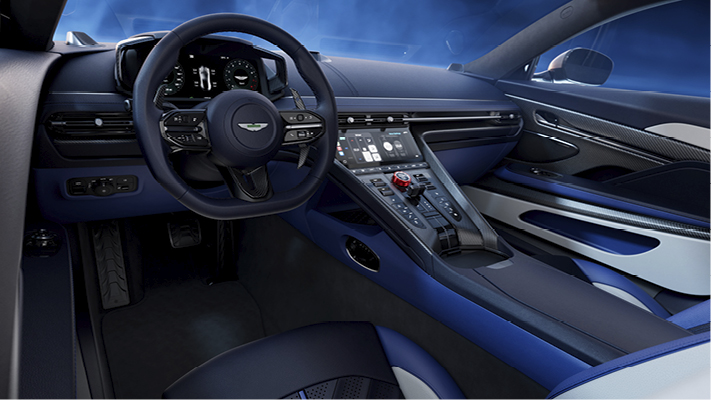

Visually, the DB12 S asserts its identity with purposeful clarity. A new dual-element front splitter and distinctive bonnet louvres enhance both aerodynamics and drama, while gloss-black sill treatments reinforce its low, ground-hugging posture. The rear is dominated by a fixed spoiler, a sculpted diffuser, and a quartet of stacked exhaust tailpipes, each a reminder of the heightened soundtrack engineered into the car’s stainless-steel or optional titanium system.
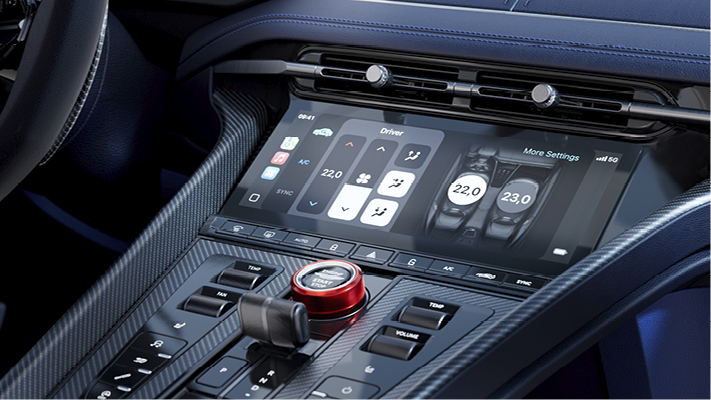
Inside, the DB12 S celebrates its halo status through meticulous attention to detail. The red-anodised drive-mode controller sets the tone for a cabin defined by craftsmanship and material richness. Buyers can choose between full semi-aniline leather or a combination of leather and Alcantara, with new quilting techniques and precision embossing adding sculptural depth. Sport Plus seats come standard, while a lightweight carbon-fibre performance seat is available for those seeking an even more dynamic edge.
Available to order now in both Coupé and Volante forms, with deliveries beginning in early 2026.
Evolving Legacy, Anne de Vergeron, Repossi CEO discusses the brand’s growing presence in the Middle East
Parisian jeweller house Repossi is entering a new chapter in the Middle East. Following major boutique openings in Abu Dhabi and Riyadh, alongside the newly redesigned Dubai Mall store, the Maison is strengthening its ties with a region that has long embraced its sculptural aesthetic and avant-garde spirit. Known for redefining Place Vendôme codes since its founding in 1957, Repossi continues to blend heritage with modernity through architectural design, artistic collaborations, and a bold creative vision. As the brand expands its footprint across the GCC, CEO Anne de Vergeron reflects on the Maison’s evolving presence, the enduring relevance of its design language, and the future of Repossi’s distinctive universe.
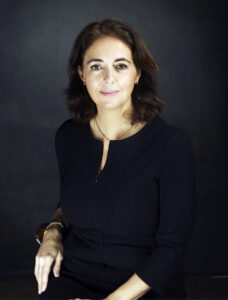
Repossi has strengthened its footprint in the Middle East with new openings in Abu Dhabi and Riyadh, as well as the renovation of its Dubai Mall boutique. What makes the region such a significant market for the Maison?
The Middle East is a truly significant market for Repossi because of its deep appreciation for contemporary art, artistic expression, and exceptional craftsmanship. These values align perfectly with Repossi’s core identity and vision. We found strong resonance with our values among local clients who are increasingly connoisseurs. The region’s cultural affinity for creativity and heritage, exemplified by institutions like the Museum of Diriyah Art Futures, makes it a significant area for our presence and growth.
The Dubai Mall boutique redesign signals a renewed architectural and retail vision. What were your priorities for the renovation, and how does the new space reflect Repossi’s identity?
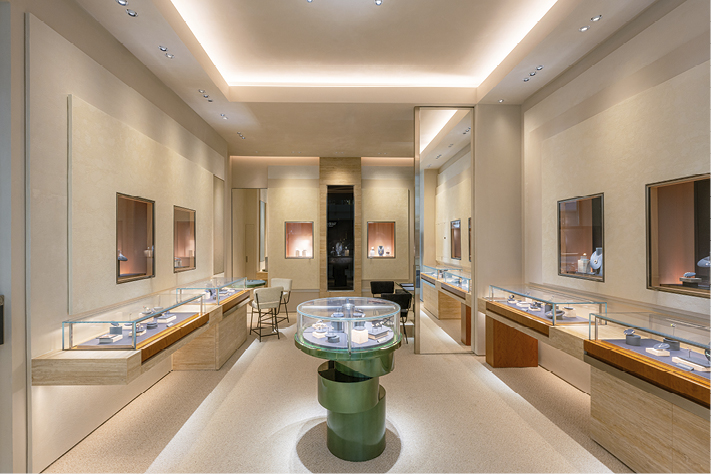
Our priority for the renovation of the Dubai Mall boutique, as part of our new retail design concept being rolled out across the Middle East and Asia, was to create a modern, minimalist venue that not only embodies our unique identity but also resonates with local culture. The new space pays homage to the Maison’s emblematic aesthetic codes, drawing inspiration from Japanese minimalism and artistic movements such as the Bauhaus, as well as the visionary architecture of Oscar Niemeyer and Tadao Ando. We aimed to create a luxurious “jewellery box” experience, where every detail is handcrafted and contributes to an environment of understated opulence. The colour palette reflects the brand’s DNA and its connection to the region, creating a sophisticated setting where our unique pieces can truly shine.
How do you adapt the Repossi boutique experience to different cultural expectations while staying true to the Maison’s DNA?
While expanding our presence in the Middle East, we ensure that our boutique experience remains true to Repossi’s DNA by emphasising our core values: exceptional craftsmanship, contemporary design, and avant-garde vision. We recognise and respect the cultural nuances of the region, which often include an exquisite design and a strong sense of exclusivity, as well as appreciation for heritage and meticulous attention to detail.
Repossi is known for its avant-garde approach, often pushing boundaries in form and structure. How do you balance that modern edge with the house’s heritage and longstanding traditions?
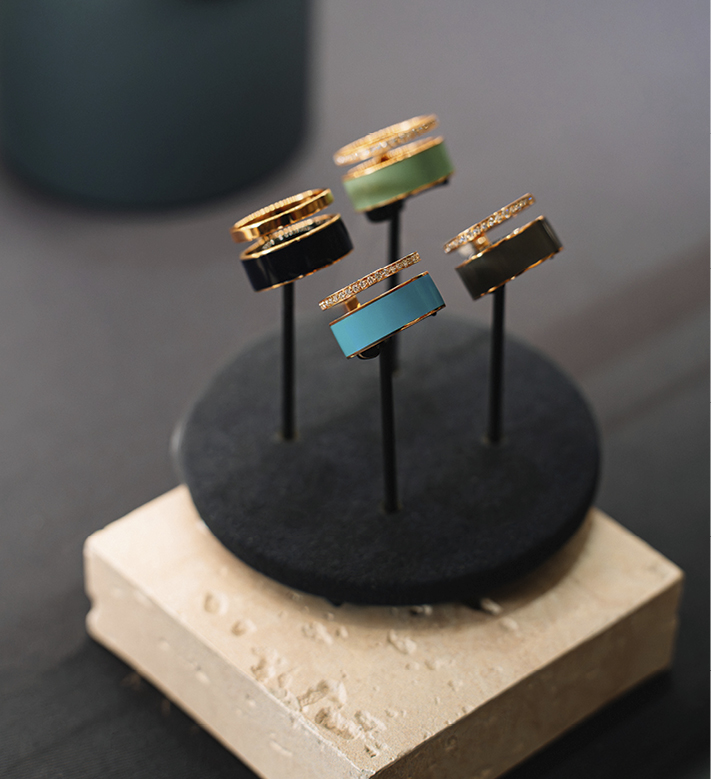
Each generation captured the essence of its time. Since 1957, we have focused on reinventing the classic jewellery codes while always staying true to our heritage and highest craftsmanship standards. Repossi embodies an avant-garde femininity, where the refined discretion of its creations is enhanced by strong cultural references and a strikingly distinctive design language. Over the past 20 years, our creative studio has challenged the traditional jewellery codes, upholding the highest standards of design and craftsmanship rooted in Place Vendôme. Our iconic collections, such as Serti Sur Vide, Antifer and Blast, are perfect illustrations of this reinterpretation of traditional jewellery standards.
This has been a big year for the Maison in the region. What has the reception been like in Abu Dhabi and Riyadh since the openings?
The reception in Abu Dhabi and Riyadh has been very encouraging. We’ve observed a strong interest and enthusiasm for our brand and its unique offerings. This positive reception reaffirms our belief that the Middle East is a dynamic market where consumers appreciate Repossi’s artistic vision and contemporary design.
Repossi’s high jewellery collections continue to draw attention for their sculptural design language. What can you tell us about the creative direction behind the newest pieces?
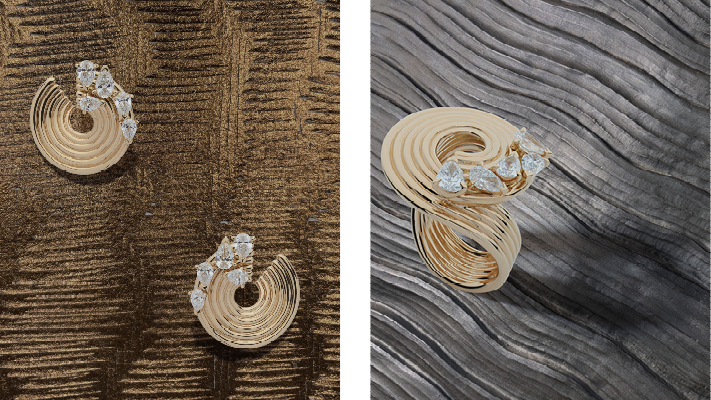
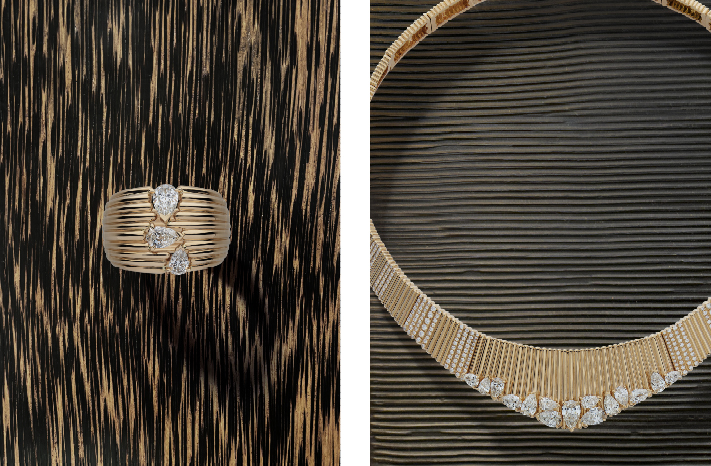
High Jewellery has always been at the heart of Repossi, and it is the true expression of our style and craftsmanship. The Blast High Jewellery collection is a celebration of opulence and the radiance of gold, embodying Repossi’s legacy of craftsmanship since 1957. Drawing inspiration from the Maison’s heritage, the collection reinterprets the concept of fullness through the motif of an infinite gold thread, sculpted into bold and sensual forms. Blast pays homage to both primitive and modern arts, blending ancestral influences with contemporary design to create minimalist yet bold, sculptural pieces.
On the fine jewellery front, how do you continue evolving your signature collections without losing their essence?
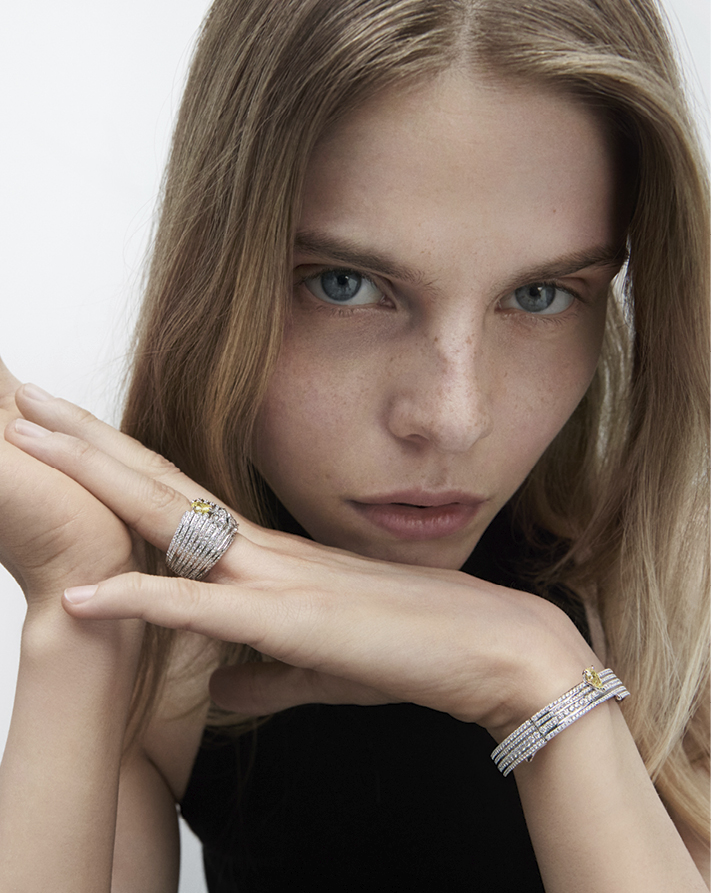
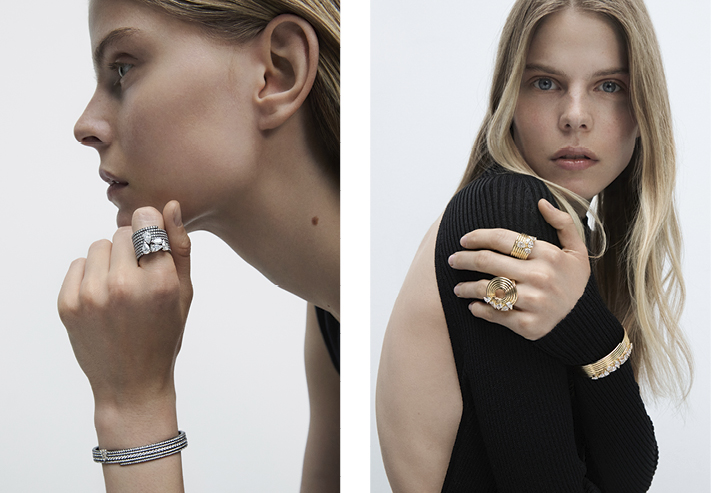
Our approach is rooted in understanding that each generation breaks the codes of the past to reinvent them. We achieve this by continuously reinterpreting the design, looking for a new pattern and ensuring that our pieces remain relevant and captivating. For instance, the Serti sur Vide collection, even after 10 years, remains relevant due to its minimalist design and adaptability. We aim to offer pieces that are both stylish and timeless, yet personal and versatile, allowing them to be dressed up or down and worn alone or layered.
Innovation is a longstanding part of Repossi’s story. Where do you see the next wave of creativity emerging?
Repossi loves to experiment with new techniques and new designs. Artistic collaborations are key for us.
The Middle East has a strong appreciation for craftsmanship and bold design. How does this influence the maison’s approach when creating or curating collections for the region?
Repossi’s universe is perceived as ultra-contemporary and distinct from traditional jewellery. What our clients seek above all is a strong creative vision and bold design, far from easily recognisable or codified styles. We are continuously inspired by the region’s sophisticated audience, whose appreciation for contemporary art, design, and cultural refinement reflects our own creative direction. This inspires us to bring to life exceptional pieces available exclusively in the region. This shared sensibility allows us to introduce exceptional pieces designed exclusively for the region.
With multiple regional openings coming in a single year, how do you approach long-term growth in the GCC?
Our vision for long-term growth in the GCC goes well beyond increasing our physical presence. It is rooted in a deep appreciation for local culture, thoughtful artistic partnerships, and an ongoing commitment to understanding our clients’ preferences. Through cross-disciplinary collaborations and tailored experiences that honour the region’s heritage while reflecting our avant-garde DNA, we seek to establish an enduring, meaningful presence in the GCC.
Repossi collaborations with architects and contemporary artists have been central to its identity. Are there new cross-disciplinary partnerships on the horizon?
Collaborations with multi-disciplinary artists are integral to Repossi’s identity, as they allow us to explore new dimensions and infuse our Maison with diverse perspectives. We have a history of artistic dialogue, initiated with MoMA and Centre Pompidou, and our recent capsule collection with The Invisible Collection and artistic collaboration with Sterling Ruby is a testament to this. We are constantly looking for new cross-disciplinary partnerships that will challenge traditional codes and bring fresh perspectives to our creations, whether in jewellery design or other creative fields. We have a number of exciting initiatives planned for next year, including a significant celebration of our 40-year presence on Place Vendôme!
As CEO, what has been your most meaningful milestone with Repossi so far, and what ambitions remain at the top of your list for the coming years?
My most meaningful milestone as CEO of Repossi has been driving the brand’s geographic expansion, particularly with a focus on the Middle East and Asia. Witnessing an exceptional reception of Repossi’s new openings in Riyadh and Abu Dhabi has been incredibly rewarding. I feel there is room for growth in both regions for Repossi.
By Lindsay Judge
A Legacy of Weaving, Bottega Veneta Marked 50 Years of Intrecciato with “Destinations” at NOMAD Abu Dhabi
Bottega Veneta unveiled “Destinations” at NOMAD Abu Dhabi this month, presenting an exhibition that reflected on the symbolism and legacy of weaving. Staged in honour of the 50th anniversary of the house’s iconic Intrecciato technique, the showcase brought together eight creatives from across the Middle East and North Africa, each offering an individual response to the craft that has defined Bottega Veneta’s identity since 1975.
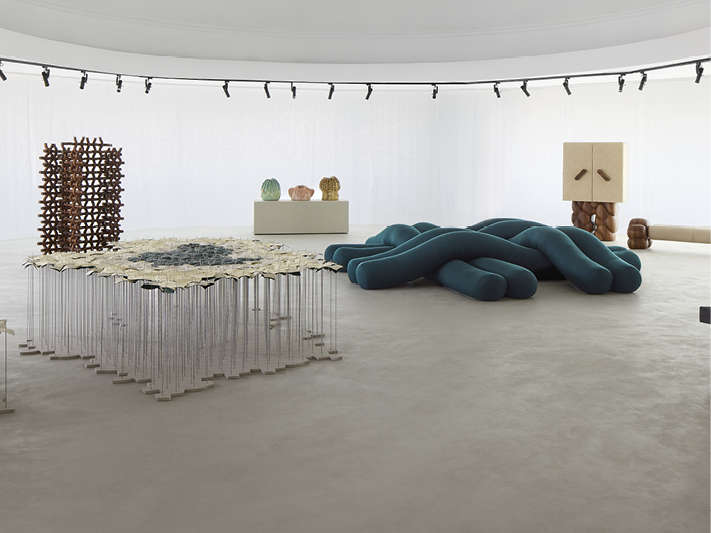
Curated by Rana Beiruti, the exhibition featured works by Abdalla Almulla, Amine Asselman, Esna Su, Nader Gammas, Shaha Raphael, and Zein Daouk, along with design studio Sayar & Garibeh and architectural office Bahraini—Danish. Their pieces spanned a wide range of materials from ceramic sheets and volcanic stone to interpretations inspired by traditional Emirati Areesh and palm-frond braiding. Several works incorporated reserve leather sourced directly from the Bottega Veneta atelier, echoing the house’s deep-rooted dedication to technique and materiality.
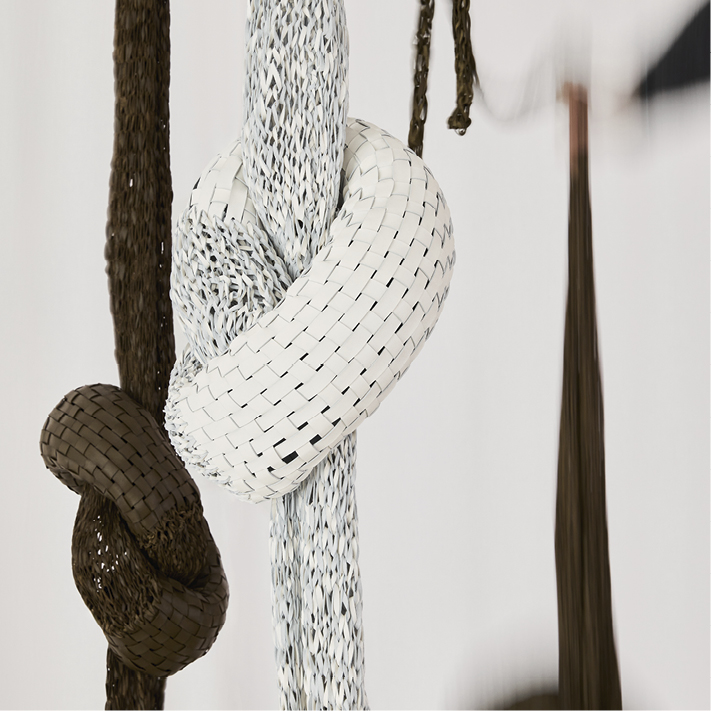
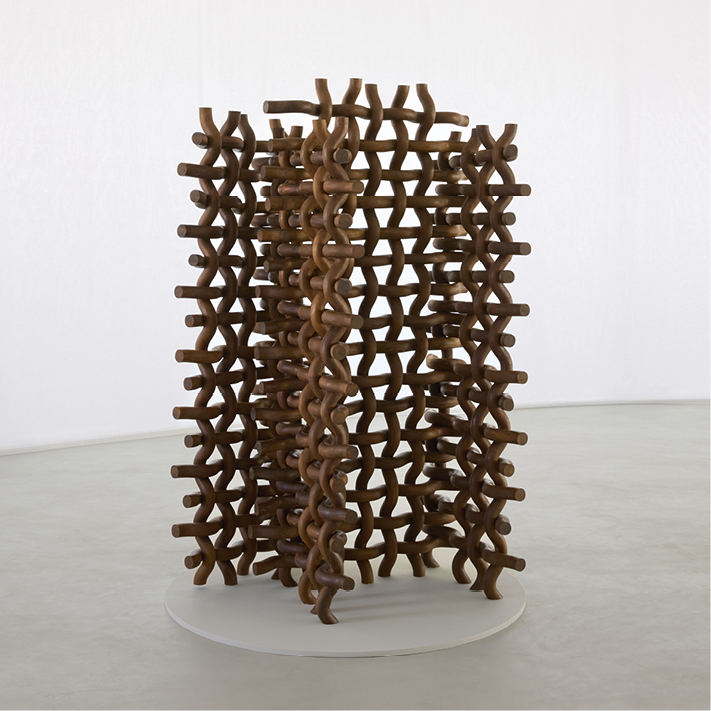
The exhibition also highlighted Bottega Veneta’s ties to Venice, a city historically shaped by exchange and movement. This spirit of encounter informed the exhibition title, “Destinations,” reflecting both the evolution of Intrecciato and the broader journeys – cultural, material, and artistic – that have shaped the house.
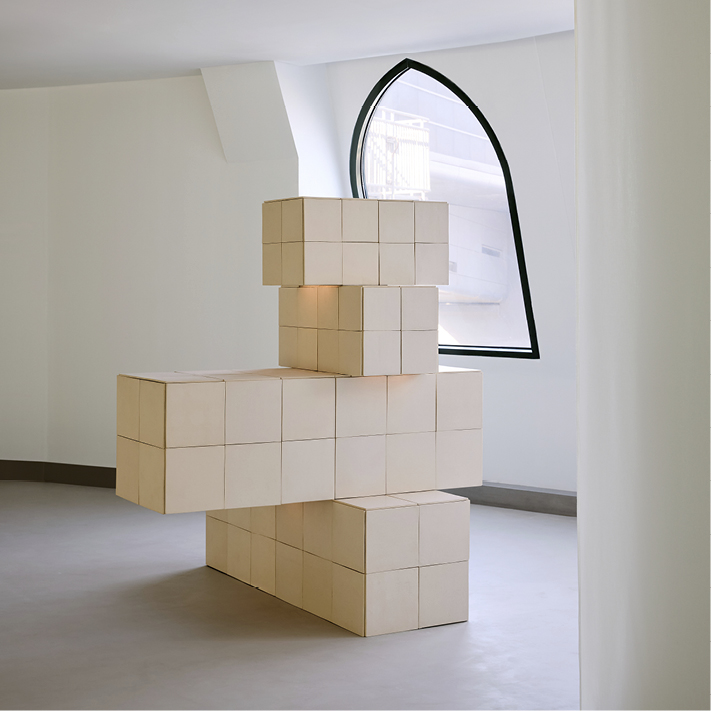
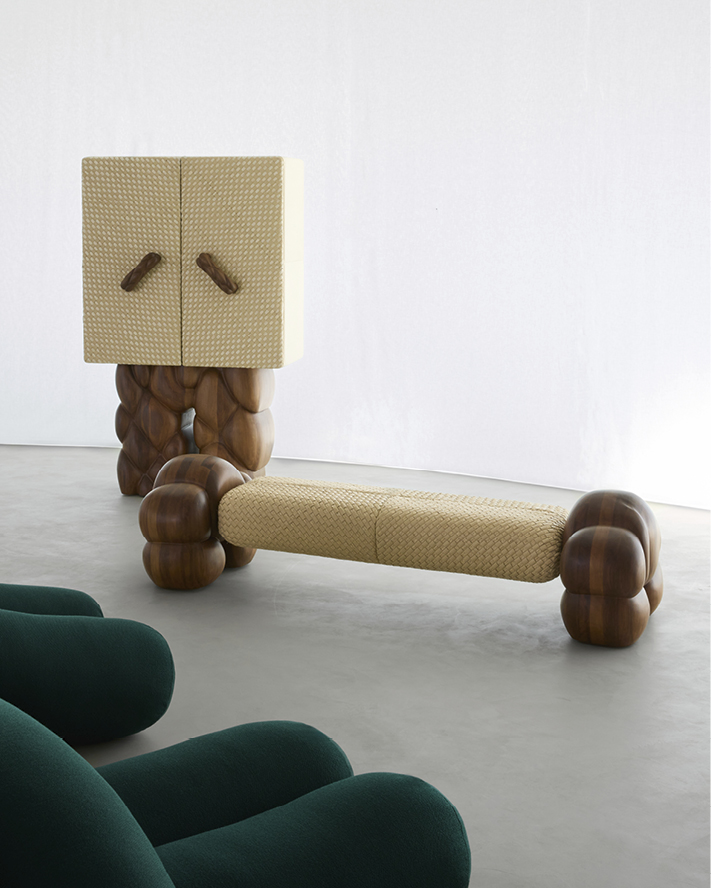
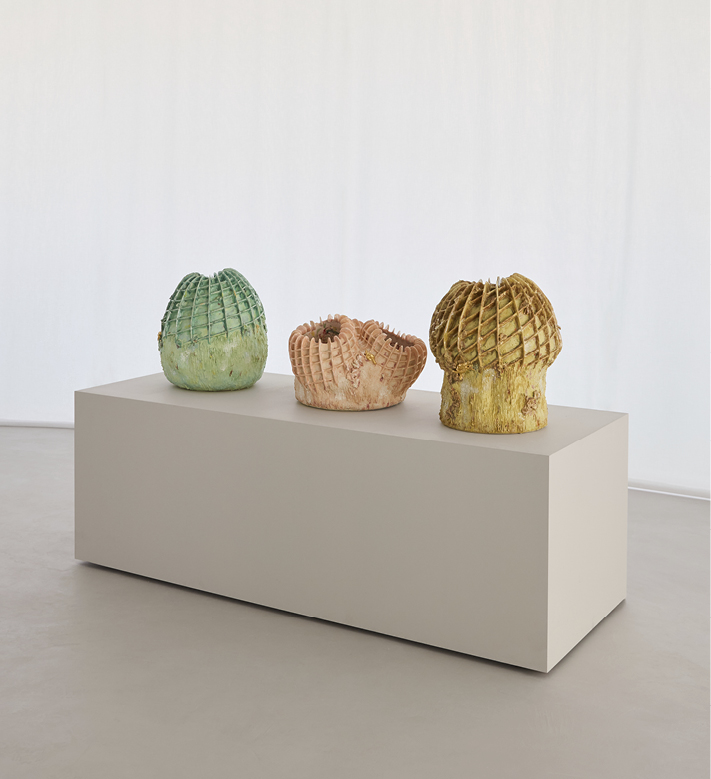
“The commissioned works reflected a wide variety of interpretations that honoured the Intrecciato weave while carrying gestures from the designers’ own personal styles,” said curator Rana Beiruti. “Some drew on regional heritage and weaving traditions, while others interpreted weaving beyond its physical expression, exploring the interlacing of ideas, narratives, and cultures.”
Fédération Libanaise de la Mode and ABC Unite to Elevate Lebanese Fashion in a Landmark Partnership
A new long-term collaboration between the Fédération Libanaise de la Mode and ABC aims to empower Lebanese designers, strengthen the country’s creative industries, and position Lebanon as a global fashion force.
The Fédération Libanaise de la Mode (FLM) and ABC have announced a landmark strategic partnership that promises to reshape Lebanon’s creative and cultural landscape and elevate the future of Lebanese fashion. Formalised through a long-term Memorandum of Understanding, the collaboration aims to strengthen Lebanon’s creative industries by empowering local designers, nurturing innovation, and expanding national artistic visibility on the global stage. Together, FLM and ABC are building a unified, future-focused ecosystem that supports Lebanese designers by increasing visibility, providing structured development, enabling commercial pathways, and offering a dedicated platform to showcase their work.
As part of the agreement, ABC will serve as the exclusive mall partner for the FLM, enabling the rollout of in-store activations, designer showcases, creative incubators, limited-edition capsules, and a series of public-engagement experiences celebrating Lebanese creativity and craftsmanship.
This partnership is envisioned as a long-term framework that elevates Lebanese talent not only through exposure but through sustainable, strategic support. By combining FLM’s industry leadership with ABC’s influential national presence, the collaboration creates meaningful opportunities for designers to grow their brands in a resilient, competitive market. It also reinforces the role of Lebanese fashion as a cultural asset that contributes to economic regeneration, national pride, and international recognition—an important step as Lebanon continues to rebuild its creative economy.
Mohammed Aqra, Chief Strategy Officer and Co-Founder of the Fédération Libanaise de la Mode, said: “This partnership with ABC strengthens our mission to build a coherent, future-driven ecosystem for Lebanese designers. ABC is one of the country’s most influential platforms, and together we are creating pathways that give our talent real visibility, commercial opportunity, and a stage that reflects the excellence of Lebanon’s creative industry.” Elie Hawa, Chief Retail Officer at ABC Lebanon, added: “We are proud to collaborate with the Fédération Libanaise de la Mode on initiatives that support, promote, and celebrate Lebanese creativity. This partnership aligns with our longstanding commitment to nurturing local talent and contributing to the cultural and economic vitality of Lebanon’s creative industries.”
As the partnership takes shape, both institutions will work closely to develop programming that reflects Lebanon’s distinct design identity, its heritage of craftsmanship, and its capacity for innovation.
Canvas to Community, Artist Rabab Tantawy discusses creating a community that supports aspiring creatives in the UAE
Dubai-based artist Rabab Tantawy has become one of the most resonant artistic voices shaping the UAE’s evolving cultural landscape. Her practice, rooted in the human form and enriched by Nubian visual heritage, has developed into a powerful language of connection that speaks to memory, belonging, and the shared rhythms that bind communities together. Over the past decade, her work has expanded from intimate canvases to monumental public commissions, from Yas Island murals to her historic Formula 1 livery collaboration, each project revealing a deeper exploration of movement, identity, and collective resilience.
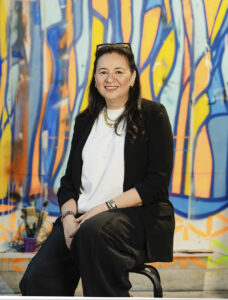
Yet Tantawy’s impact extends beyond the work itself. As the founder of Studio Thirteen, she has created one of Dubai’s most vital creative hubs, a space built on access, openness, and community. At a moment when the region is defining its own cultural identity, she stands at the intersection of artistic experimentation and community-building, nurturing emerging talent while continuing to push the boundaries of her own practice.
As she embarks on her latest projects, she reflects on the evolution of her visual language, the power of public art, the realities of creating opportunity where none existed, and the role artists will play in shaping the UAE’s next cultural chapter.
Your work often weaves together themes of kinship, resilience, and collective identity. How did these themes first begin to take shape in your artistic language, and how have they evolved over the years?
When I first started painting Nubian figures, I wasn’t consciously thinking about community or connection; I was trying to understand belonging and trace my own roots. Over time, almost instinctively, the work revealed what I was searching for: connection, memory, and the spaces we hold for one another. Now the work feels less like representation and more like a conversation between people. I would like to think that those themes continue to evolve as I explore scale, new materials, and ways of experiencing the work beyond the canvas.
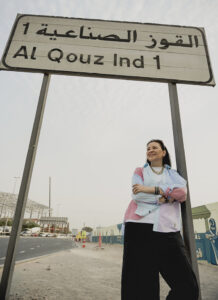
You’ve created some of the UAE’s most recognisable murals. How do you approach large-scale public work differently from studio pieces?
Public work requires a different mindset. A mural belongs to the public, the city, and those who live or move through that space. You must think about it in a cultural and spatial context. Studio work, on the other hand, is intimate. It’s slower, more experimental, more personal. Both are instinctive, but murals demand clarity and intention, while studio work allows for more experimentation and uncertainty.
What did it mean to you to become the first artist to design a Formula 1 livery? How did you navigate bringing your visual identity into that high-performance world?
It was surreal and completely unexpected. There was no reference point, no example to look back on, which meant excitement and fear showed up at the same time. Being the first came with a huge sense of responsibility. But it also became a moment of validation: that my visual language could exist on something moving at 300 km/h on one of the biggest global stages. Professionally, it opened my eyes to what happens when art enters a world that isn’t built for it. I stayed true to the lines, the figures, the rhythm of my work, but shaped it to fit a sport driven by precision, speed, and engineering. That contrast is what made it memorable.
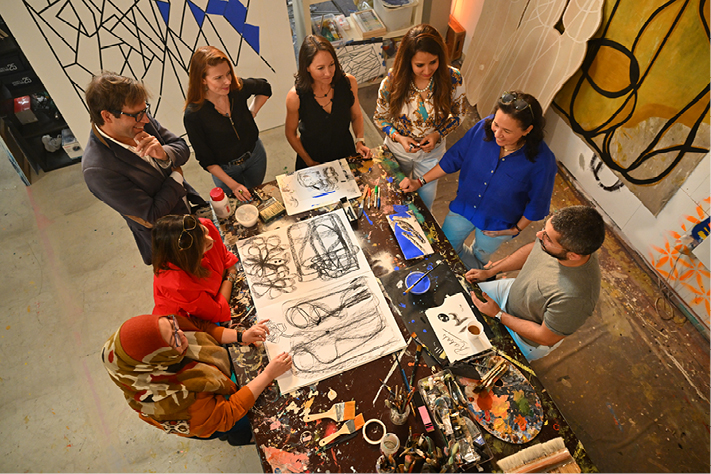
Studio Thirteen
Studio Thirteen has quickly become an important creative hub in Dubai. What sparked your vision for the space, and what gap in the local art ecosystem were you hoping to fill?
Studio Thirteen was built out of necessity. When opportunities weren’t available, I opted to create them, not just for myself, but for others who were also overlooked. I wanted a space for artists who didn’t fit the traditional institutional model, who needed room to experiment, connect, and build their practice on their own terms. The gap was never just a lack of space; it was a lack of access, community, and momentum.
Aramtec, Voices of AlQuoz
Community-building is at the heart of Studio Thirteen’s mission. How do you cultivate an environment where emerging and established artists can grow alongside one another?
We keep it real, supportive, and unpretentious. No hierarchy, no gatekeeping. We share everything: resources, successes, failures, contacts, and knowledge. Artists learn by doing, observing, and collaborating. The mix of experience levels creates a natural mentorship ecosystem, a community of individuals helping each other navigate the creative world. At Studio Thirteen, it’s always been collaboration over competition, which can be challenging because ideas feel personal and precious. But with trust and time, we learn that sharing doesn’t diminish us, it expands what’s possible.
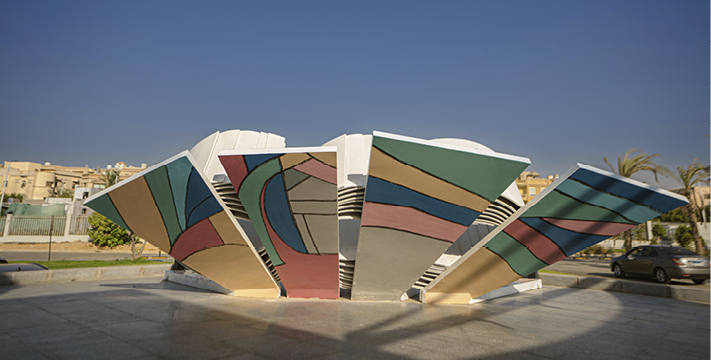
CDD
Dubai’s creative scene is expanding rapidly. From your perspective, what makes this moment particularly significant for artists working in the region?
We’re at the beginning of something important, building cultural legacy rather than importing it. There’s space for experimentation, risk-taking, and defining what art from this region is rather than responding to what the global art world expects. Institutions, collectors, and the city itself are now looking inward, and that shift is powerful.
Many young artists struggle to find their voice and build confidence. What advice do you share with the emerging talents who join Studio Thirteen?
Start. Make work. Make mistakes. Stop waiting to feel ready; readiness comes after doing, not before. Opportunities rarely show up fully formed, so build your own momentum. And don’t rush the process. Give your work the time it needs to become what it’s meant to be.
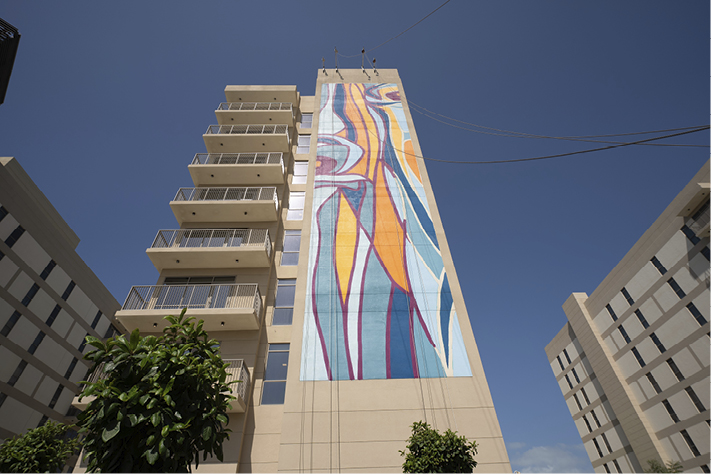
Mural – YAS 2024
You have spoken about instinct and experimentation guiding your process. How do you maintain that sense of freedom while balancing major commissions and community responsibility?
It’s intentional. I’ve seen what freedom can create, so I’m always looking for new ways to experiment. I also understand that my work won’t speak to everyone, and that’s fine. If I only focused on commissions, I’d lose the part of my practice that keeps me curious and alive creatively. So, I protect experimentation, even if it means making bad work along the way. That freedom doesn’t happen by accident; you really must claim it.
As an artist deeply connected to the region, how do you see art shaping cultural identity and social dialogue in the UAE over the next decade?
The UAE has built a cultural landscape in record time, and the momentum now is undeniable. There’s already a solid foundation; institutions, public art programs, galleries, collectors, and our government that genuinely prioritises creativity. In the next decade, I see art continuing to shape how we see ourselves and how the world sees us, not by mirroring western narratives, but by expressing the complexity, diversity, and confidence of this region. Artists here aren’t filling gaps; we’re contributing to a cultural legacy that’s already taking shape. The future feels exciting because there’s room to experiment, challenge, archive, and imagine and that combination is rare.
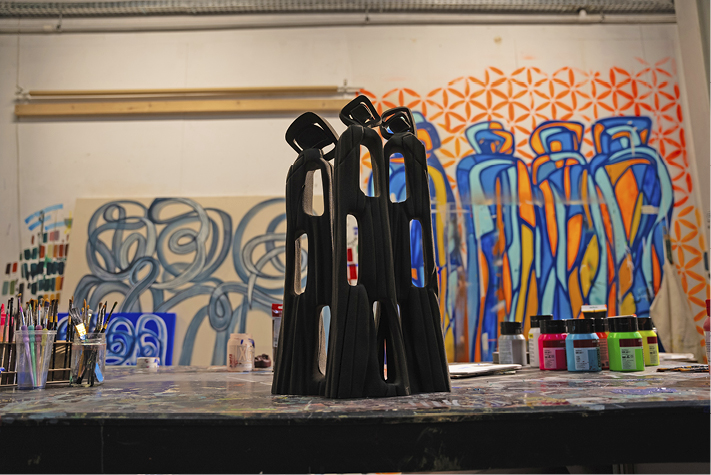
The Guardians
What are you currently exploring in your practice, and what ideas or projects are exciting you most as you look ahead?
Right now, I’m drawn to process, movement, and mark-making that feels instinctive rather than controlled. I’m interested in performance, repetition, erasure, and the line as both gesture and record. I’m excited about large-scale sculptures, new materials, and work that blurs the boundary between drawing, installation, and experience. The direction feels less about producing objects and more about creating moments.
By Lindsay Judge
Crafting a Legacy, Ingie Chalhoub on two decades of shaping regional luxury
Ingie Chalhoub has been shaping the Middle East’s luxury landscape for decades, introducing global fashion houses to the region while simultaneously nurturing homegrown creativity. When she launched Etoile La Boutique, not only did she open the country’s first curated multibrand retail space, she also redefined what luxury curation could feel like in the Gulf. With its emphasis on discovery, craftsmanship, and personal expression, the boutique quickly became a style compass for women seeking something more nuanced than traditional retail.
Today, Etoile La Boutique stands as a benchmark for thoughtful curation and experiential shopping, evolving in tandem with the region’s dynamic fashion identity. Under Ingie’s vision, it has grown into a network of distinctive spaces, each tailored to its location yet united by a shared sensibility: elegance, curiosity, and an instinctive understanding of what inspires the modern Middle Eastern woman.
As the brand enters an ambitious new chapter, with refreshed concepts, regional expansions, and deeper collaborations, Ingie continues to balance heritage with reinvention. Her perspective offers a rare lens into how luxury retail in the GCC has transformed, where it is headed, and what it means to build a legacy rooted in creativity, culture, and connection. Here, she reflects on that journey, the evolution of Etoile La Boutique, and the vision guiding its future.
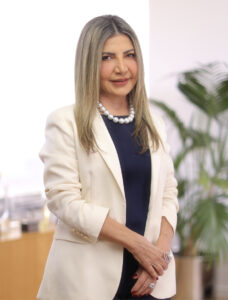
Ingie Chalhoub
Etoile La Boutique has become a defining name in regional luxury retail. How would you describe its evolution since launch, and what do you think has shaped its strong identity in the Middle East?
Since its launch, Etoile La Boutique has evolved from a pioneering luxury space into a trusted style destination in the region. Its identity has been shaped by our commitment to thoughtful curation, introducing new designers, and delivering a boutique experience that feels both personal and inspiring. The boutique has evolved from a single destination into a regional network that brings together global fashion, emerging talent, and thoughtful retail experiences. By balancing global trends with the tastes of Middle Eastern women, we’ve built a brand that remains distinctive, relevant, and deeply connected to its clientele.
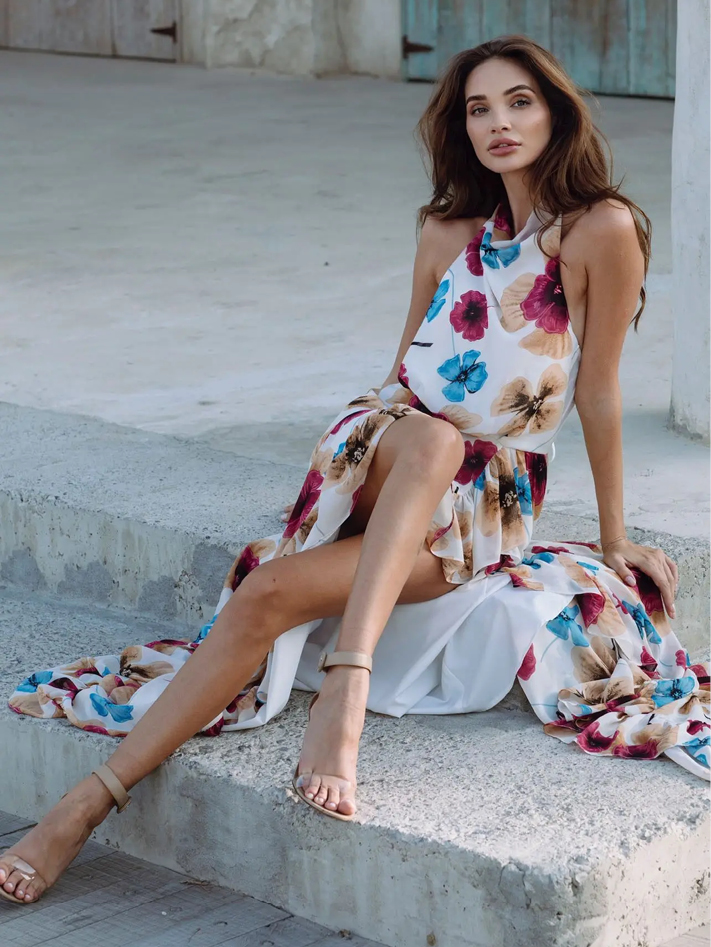
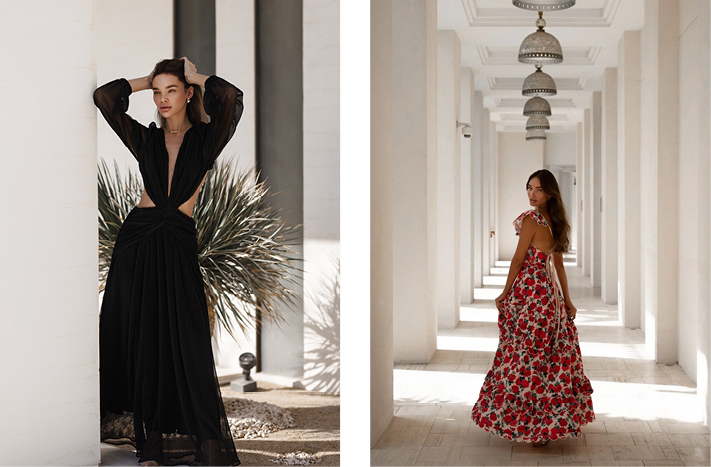
Etoile La Boutique, ALB London
Etoile La Boutique continues to expand its footprint across the region. What drives your strategy when choosing new locations, and how do you ensure each space feels uniquely ‘Etoile’?
When selecting new locations, we look for cities that reflect our clients’ lifestyles, dynamic, culturally rich, and engaged with luxury as an everyday expression. We also pay close attention to the potential of each area, carefully benchmarking where major luxury brands are opening, ensuring we position ourselves in the most strategic and desirable retail landscapes.
Each space is intentional; we never replicate. To ensure every boutique feels uniquely “Etoile”, we tailor each location with its own mood and energy while maintaining our signature elegance and curation. The design, the experience, and the assortment are all thoughtfully crafted so that, wherever she is, the client instantly recognises the Etoile spirit.
Etoile La Boutique is known for curating designers with strong narratives and craftsmanship. How do you decide which brands to champion, and what excites you most about new talent?
I’ve always believed fashion should move you, through craftsmanship, innovation, sustainability, or a compelling story. We champion brands that embody these values, including those redefining luxury with responsible sourcing and thoughtful production. What excites me most about new talent is their fearlessness. They bring fresh ideas, modern perspectives, and often a genuine commitment to sustainability. Supporting them keeps the boutique dynamic, forward-thinking, and continually inspiring.
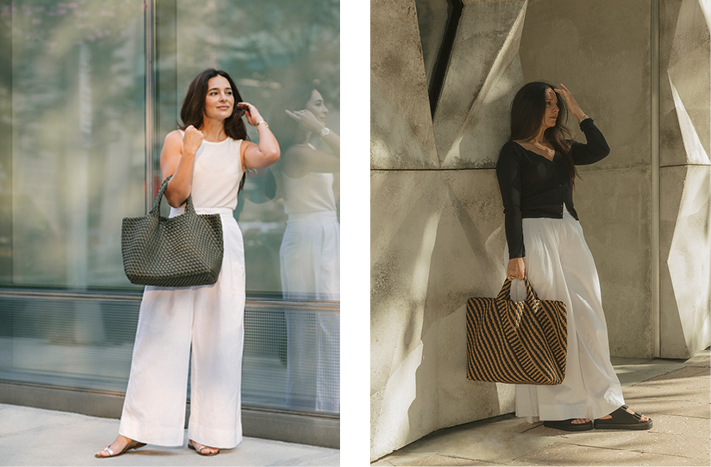
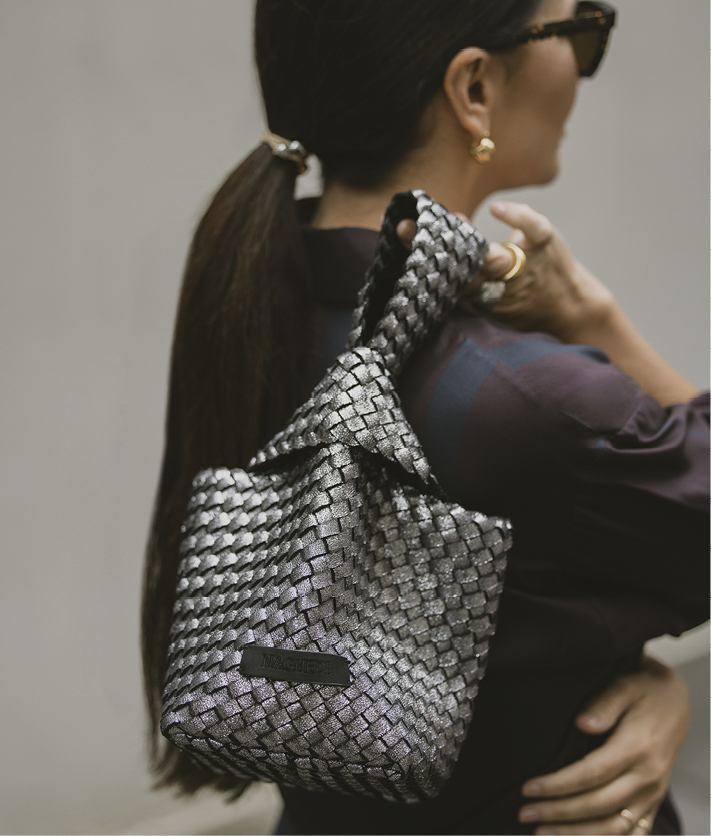
Etoile La Boutique, Naghedi
You’ve championed luxury fashion in the GCC long before the industry reached today’s scale. How do you see the regional retail landscape evolving, and where is the greatest momentum right now?
The regional retail landscape has become incredibly dynamic. Consumers in the GCC are more informed, more experimental, and more invested in craftsmanship and authenticity than ever before. The greatest momentum right now is in experiential retail and in the rise of regional talent. Clients want spaces that inspire them, brands that speak to their values, and a level of personalisation that feels truly luxurious. It’s an exciting moment of creativity and confidence, and I believe the GCC will continue to set new benchmarks for the industry.
As someone who has made the UAE your home for many years, what does UAE National Day mean to you personally and professionally?
Personally, it represents gratitude for a country that has welcomed us, inspired us, and allowed us to grow. The UAE’s spirit of ambition, innovation, and cultural openness is something I deeply admire. Professionally, it reminds me of how much the nation has empowered the fashion and creative industries. Its vision has allowed brands to flourish and continually push boundaries. National Day is a celebration of that progress, unity, and forward-looking spirit.
How has living and building a business in the UAE influenced your vision as an entrepreneur and as a creative leader?
Living and building a business in the UAE has shaped me profoundly. The country’s openness to ideas, diverse community, and future-focused mindset inspire me daily. As an entrepreneur and creative leader, I am driven by that same desire to innovate, evolve, and create spaces and experiences that bring people together through fashion and design.
What can you tell us about the upcoming plans for Etoile La Boutique – new concepts, expansions, or creative collaborations on the horizon?
We are entering an exciting chapter with several new launches and concept evolutions. This includes the revamp of Etoile La Boutique at Galeries Lafayette Dubai Mall and in Doha, as well as the reopening of our Jeddah boutique and a refreshed concept for Riyadh. We’re also focusing on more immersive experiences and deeper connections between designers and regional audiences. There is much in the pipeline, and I look forward to unveiling more throughout the coming year.
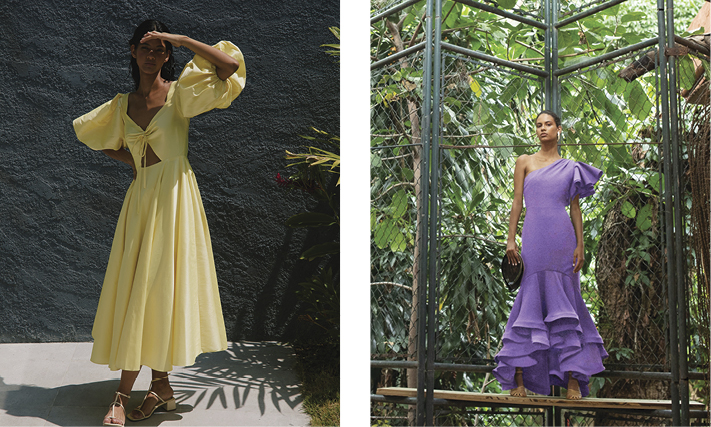
No Pise La Grama

Across your career, you’ve launched brands, built institutions, and shaped the region’s luxury scene. What achievements stand out as the most meaningful to you?
I am proud of many milestones, but the achievements that resonate most are those that have contributed to the region’s fashion ecosystem, such as introducing global designers, creating platforms for emerging talent, and building institutions that continue to shape the GCC’s luxury landscape. Seeing our legacy carried forward by a new generation is deeply rewarding.
In parallel, what are some personal milestones you’re excited to explore, whether within the fashion world or beyond it?
On a personal level, I am excited to explore projects that blend fashion with art, culture, philanthropy, and education. Mentoring young creatives is particularly meaningful to me.
You’ve long advocated for elevating regional designers. How do you see your role in nurturing the next generation, and what support do you believe is still needed in the ecosystem?
Supporting regional designers has always been important to me. My role is to offer designers a platform, through visibility, mentorship, and opportunities that integrate them into the global luxury conversation. Through initiatives like the Marangoni mentorship program, I work closely with students to help them navigate the industry while staying true to their creative identity. The industry has made huge strides, but continued support is needed in areas like production, scaling, and long-term brand development.
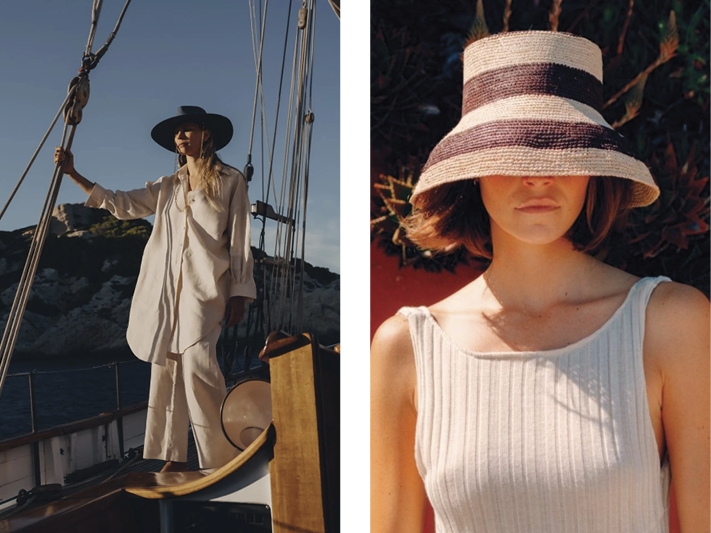
Etoile La Boutique, Van Palma
The fashion industry is shifting toward more conscious, experience-led retail. How is Etoile La Boutique responding to these changes, and what innovations are you embracing?
Etoile La Boutique has always embraced experiential retail, and today we are taking it even further through exclusive collections, meaningful storytelling, personalised shopping, and curated events that bring designers and clients together. Conscious luxury is equally important. We champion brands that share our commitment to craftsmanship, longevity, and mindful production, and we are continuously exploring ways to reduce our own footprint, from more responsible material choices in our packaging to prioritising designers who lead with sustainability at the core of their process.
Looking ahead, what is something you still hope to achieve?
I still have many dreams. I hope to continue inspiring women, shaping the region’s creative landscape, and building a platform that outlasts me. My passion has always been to create, to uplift, and to open doors for others. Most of all, I hope to keep evolving, because fashion at its heart is about change, emotion, and deep personal expression.
By Lindsay Judge
Hogan Opens First Riyadh Boutique at Kingdom Centre
Hogan has officially opened its first boutique in Riyadh, marking a major milestone in the brand’s growing presence across the Middle East. The new store, located in the prestigious Kingdom Centre, reflects the Italian label’s continued international expansion and its commitment to bringing refined craftsmanship and contemporary design to a wider global audience.

The boutique’s concept draws inspiration from Milan’s rich architectural heritage, echoing the city’s classical facades and the iconic minimalist aesthetic of Franco Albini’s Milan Metro stations. The space is designed as a distilled, modern “room,” where essential forms and materials come together to create an atmosphere of understated sophistication.
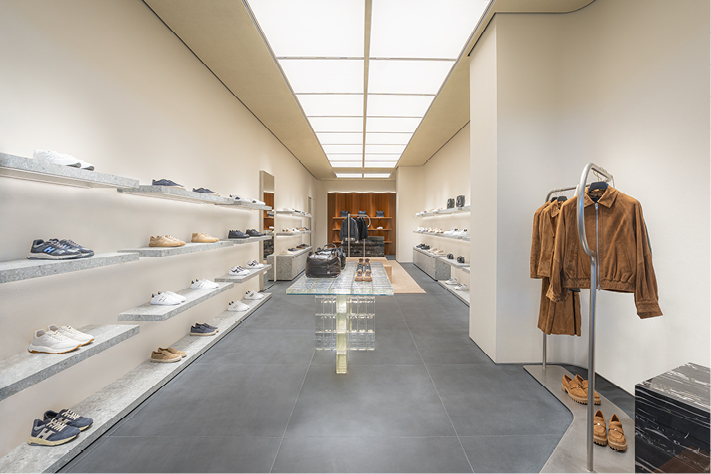
Ceppo di Gré stone, which has long been associated with Milan’s traditional buildings, has been reimagined as sculptural shelving, paired with Marmorino velvet-textured plaster walls and black cement floor tiles. These elements are balanced with warm Iroko wood, Belvedere stone, and glass-brick structures crafted into geometric compositions that serve as freestanding furniture. Light, curved P-shaped rails and handles, inspired by the handrails of Milan’s metro, add an elegant sense of movement.

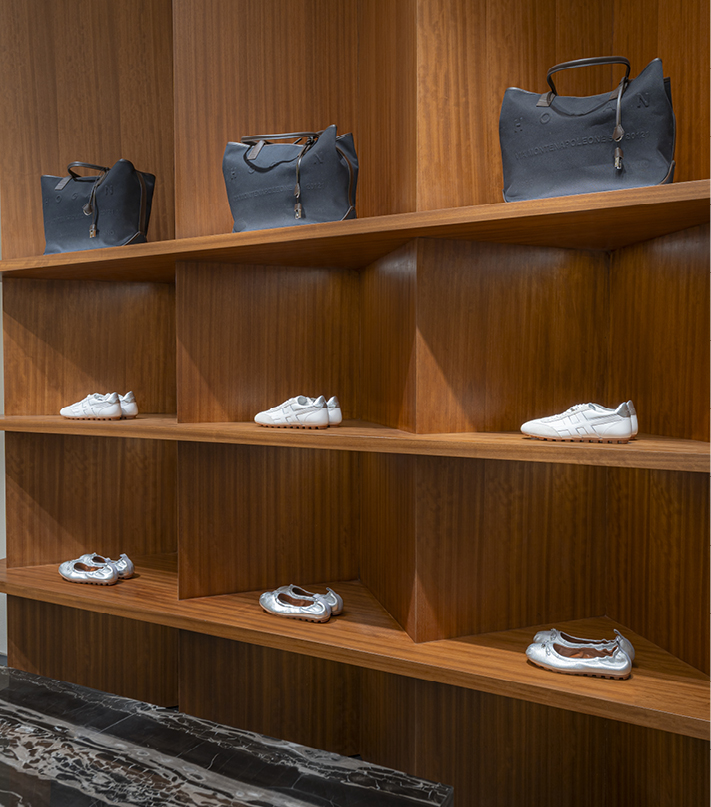
Developed in collaboration with Al-Jawad Pike, the London- and Dubai-based architectural studio, the boutique showcases Hogan’s core values through a dialogue between heritage and modernity. The result is a refined and immersive retail environment that reflects the brand’s Italian roots while speaking to a contemporary Saudi audience.
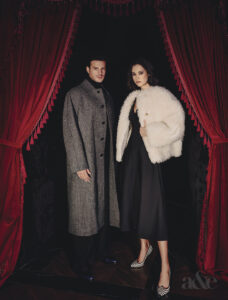
A Night At The Theater: Wardrobe Inspiration For The Festive Season
As the festive season approaches, our latest editorial shoot delivers fresh style inspiration for the party season ahead, from statement silhouettes to elevated evening looks made for holiday moments. Which one would you wear?
Founder/Editor in Chief: Lara Mansour
Photography: Patrick Sawaya
Styling: Lea Nouhra
Model: Felicity & Felipe at MMG
Hair and makeup: Lina Dahlbek
Location: The Theater, Dubai
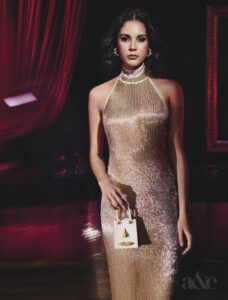
SCHIAPARELLI
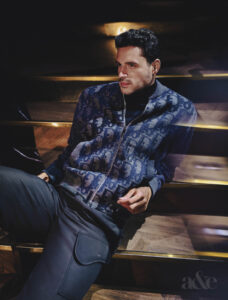
DIOR
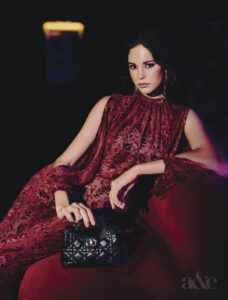
DIOR
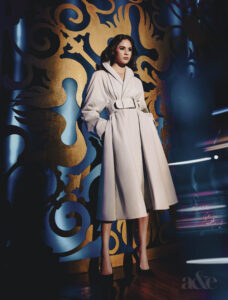
BALENCIAGA
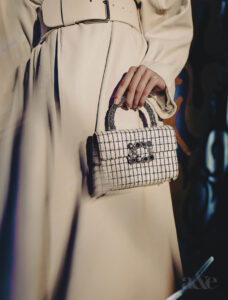
BAG, ROGER VIVIER
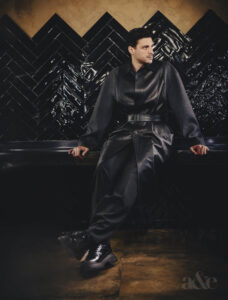
FENDI
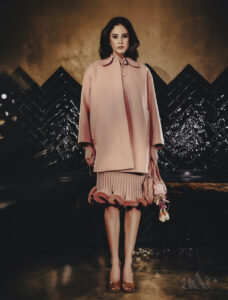
FENDI
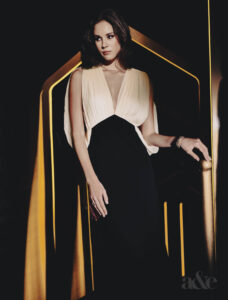
CELINE
JEWELLERY: DINA J
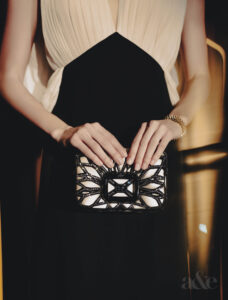
BAG, ROGER VIVIER

PRADA
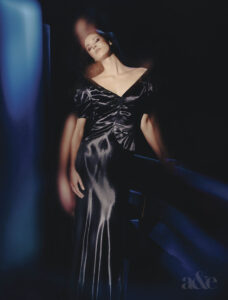
MIU MIU

ELIE SAAB
CELINE
SHOES: ROGER VIVIER
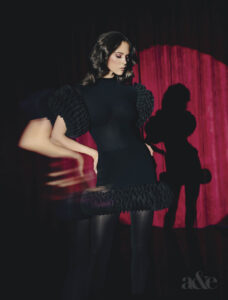
ALAIA
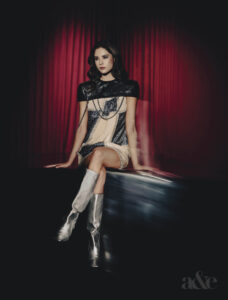
LOUIS VUITTON

TOD’S
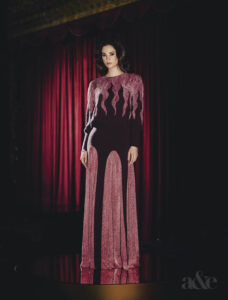
LOUIS VUITTON

HE WEARS: FERRAGAMO
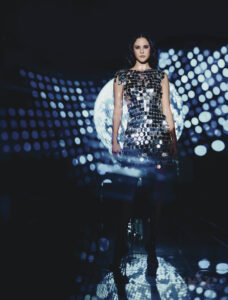
SHE WEARS: RABBANE
RABBANE

DINA J

DINA J
Gilded Dreams, Schiaparelli Brings Its Surreal Universe to the Dubai Mall
Dubai Mall has welcomed a dazzling new addition to its luxury landscape as Maison Schiaparelli unveils a striking three-month pop-up on Fashion Avenue. The space is an immersive homage to the Maison’s Parisian soul, transporting visitors into the surreal, golden universe of Schiaparelli.
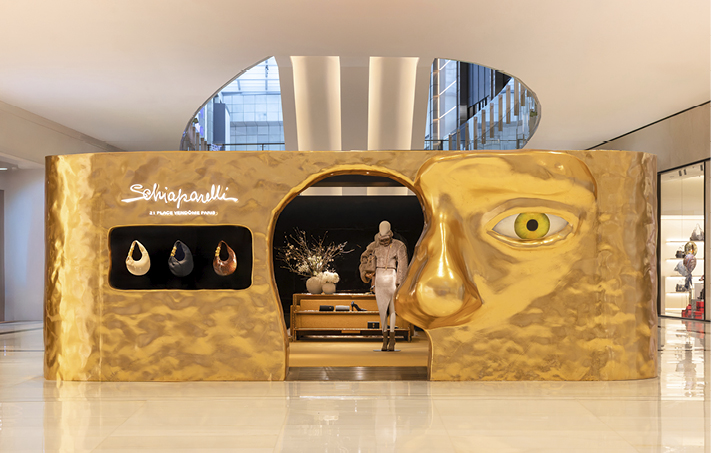
Echoing the spirit of its legendary home at 21 Place Vendôme, the pop-up appears as a sculptural jewel box clad in luminous gold. The façade, reminiscent of hammered brass, shimmers beneath the lights, while subtle reliefs reinterpret the house’s iconic symbols as contemporary emblems of surreal luxury. Inside, the poetic dialogue between gold and black lacquer mirrors the intimate atmosphere of Schiaparelli’s historic salons, originally designed by Jean-Michel Franck for Elsa Schiaparelli.
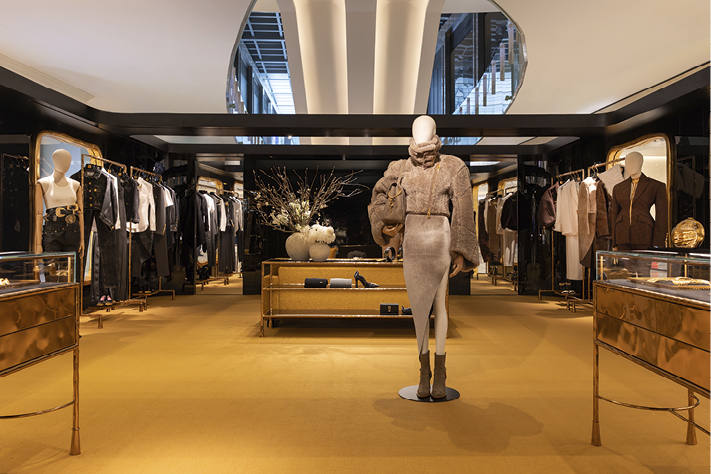
The curated selection on display includes ready-to-wear, leather goods, and bijoux from the Fall-Winter 2025 collection, alongside the Maison’s celebrated Iconics. Visitors will discover dreamlike evening and cocktail dresses, trompe-l’œil knits, sculpted denim, and sharply tailored jackets that showcase Schiaparelli’s signature blend of craftsmanship and fantasy.
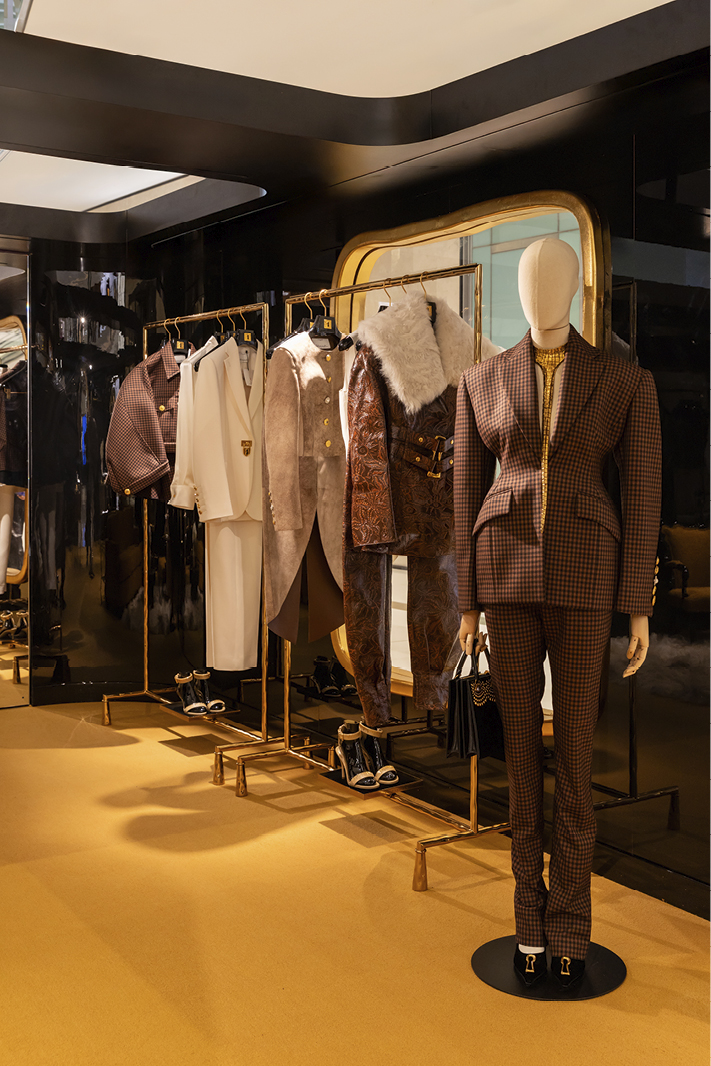
Highlights include the instantly recognisable Secret and Face bags, statement anatomical jewellery, and sculptural tailoring that captures the Maison’s distinctive duality: refined French rigour infused with unapologetic extravagance. Each piece reflects the house’s enduring fascination with the body, illusion, and artistic expression.
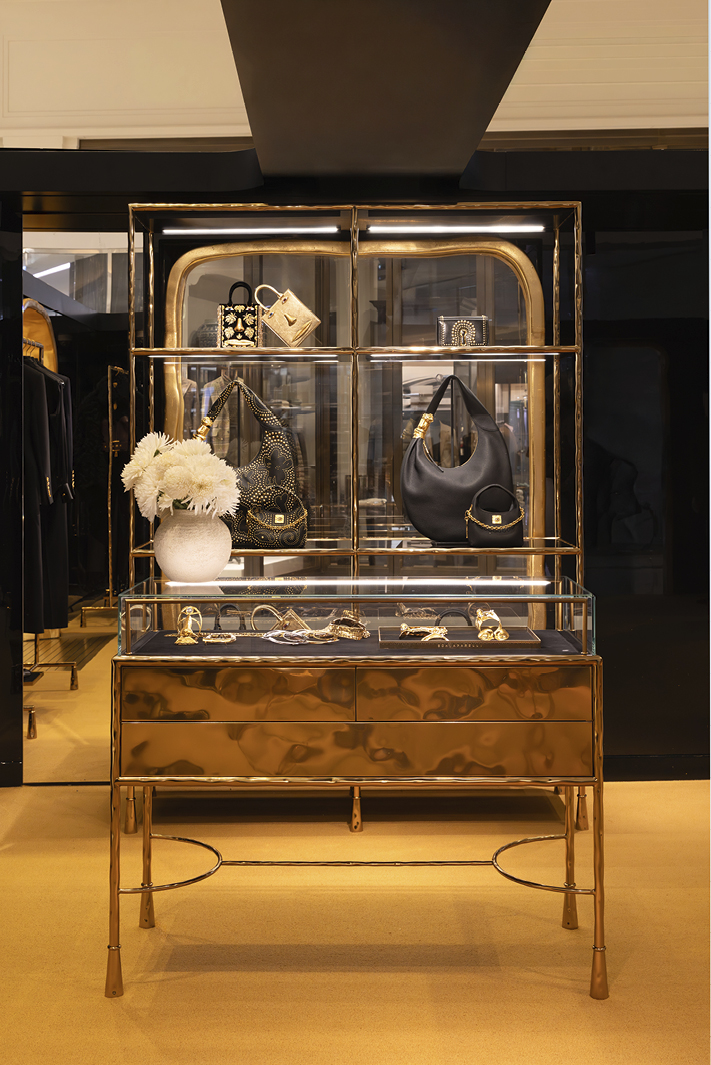
For the duration of its stay, the Schiaparelli pop-up becomes a destination in its own right. A place of discovery where art and fashion intertwine, inviting Dubai’s luxury audience to step inside a world shaped by imagination, craftsmanship, and bold creative vision.
The Schiaparelli pop-up will be open at Dubai Mall, Fashion Avenue, from December 1, 2025, to February 28, 2026.
A New Parisian Landmark, Roger Vivier opens Maison Vivier: A homecoming of heritage and imagination
At 98 Rue de l’Université, in the heart of Saint-Germain-des-Prés, Roger Vivier marks a poetic return to its roots with the opening of Maison Vivier. This new Parisian residence transcends the idea of a flagship store. This 18th-century hôtel particulier, once home to the Maison’s founder, now becomes a living narrative that connects past and present, craftsmanship and creativity, Parisian heritage and timeless elegance.
Built in 1729 by royal architect Jacques Gilet de la Fontaine, the hôtel particulier has witnessed almost three centuries of Parisian history, from aristocratic salons to its later years under the French government. Now beautifully restored, it opens its gilded doors to host the Maison’s ateliers, archives and salons. A grand staircase bathed in natural light guides visitors from history to contemporary creation, while a hidden garden behind the residence celebrates Parisian refinement and joie de vivre.
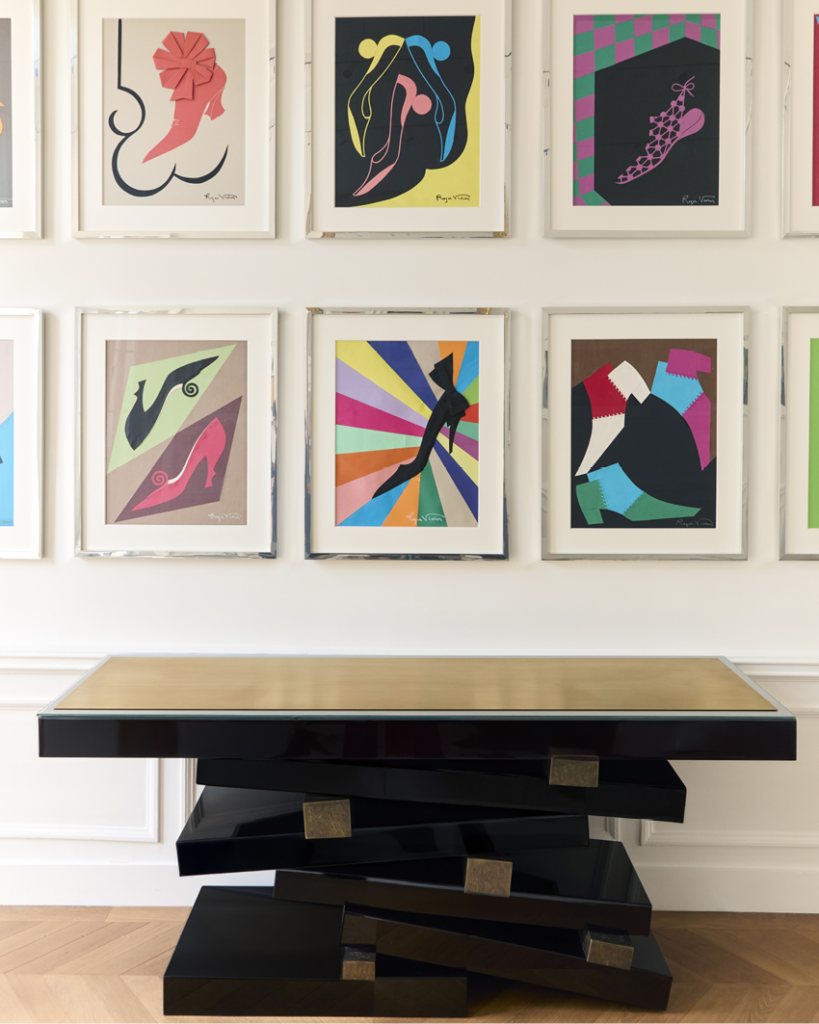
Inside, each salon pays tribute to Roger Vivier’s visionary spirit. Curated by Inès de La Fressange, Le Salon de l’Héritage presents a journey through the designer’s most celebrated work. Archival pieces from the 1950s to the 1990s are displayed alongside photographs of Vivier’s muses. Mid-century furniture by Mies van der Rohe and Xavier Feal sits harmoniously with Pierre Frey textiles and Vincent Darré carpets, echoing the sculptural beauty of the Virgule heel and the iconic Belle Vivier shoe.
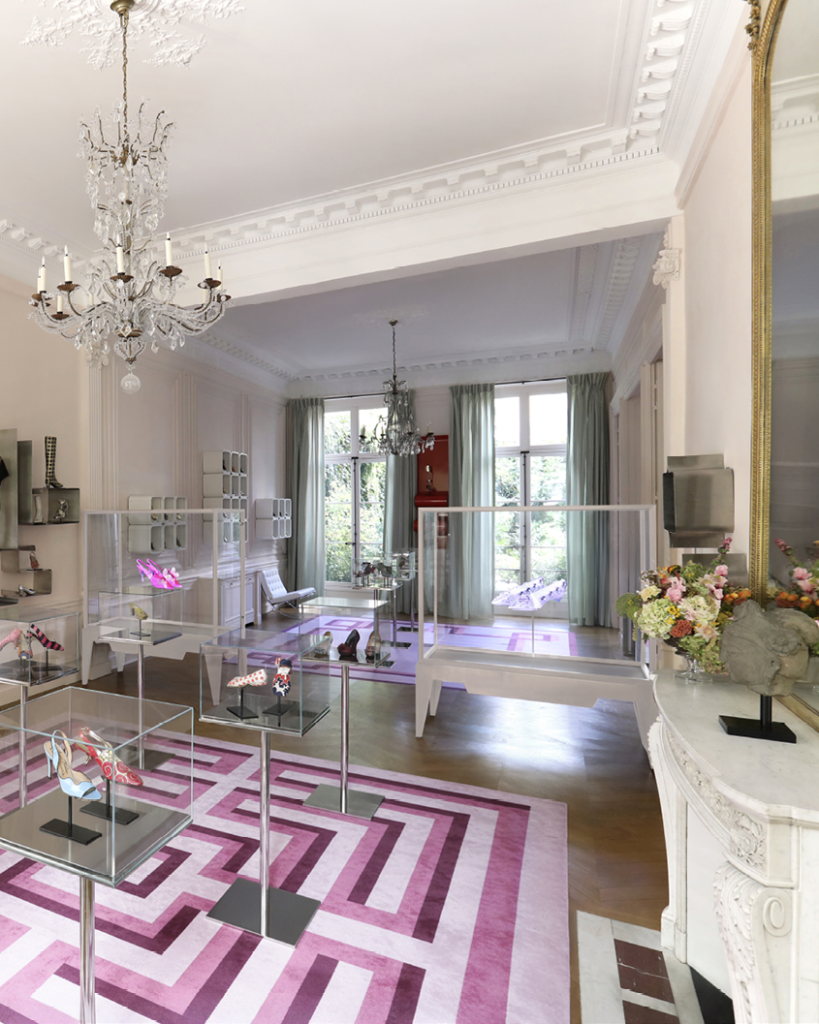
In Le Salon Vivier, the atmosphere becomes more intimate. Regency chairs and modernist pieces coexist with a Picasso pochoir, a Chinese cabinet once owned by Hubert de Givenchy and an oil painting by Charles-Henri Monvert. Together, they reflect Vivier’s eclectic and cosmopolitan taste, one that is elegant, daring and playful.
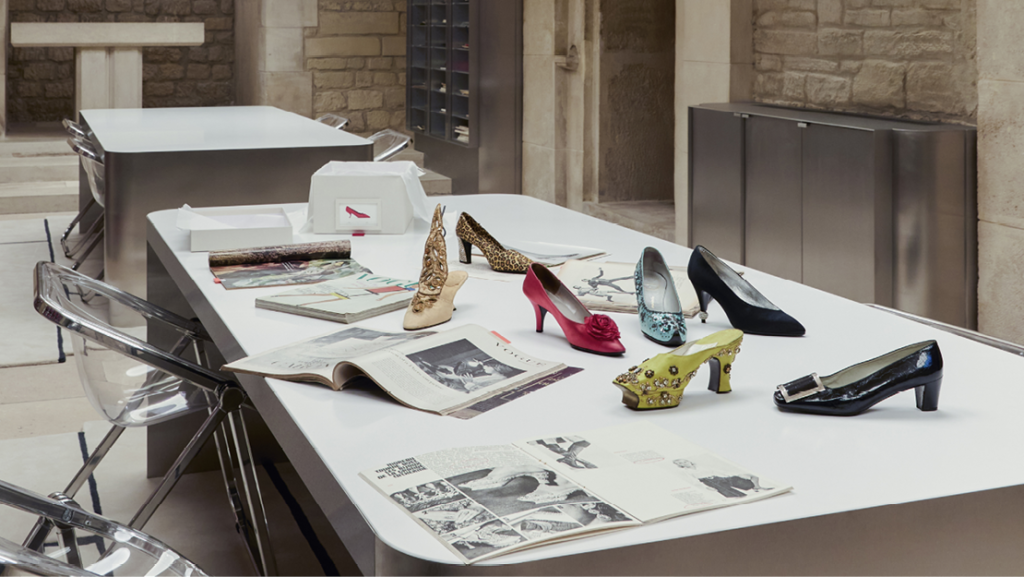
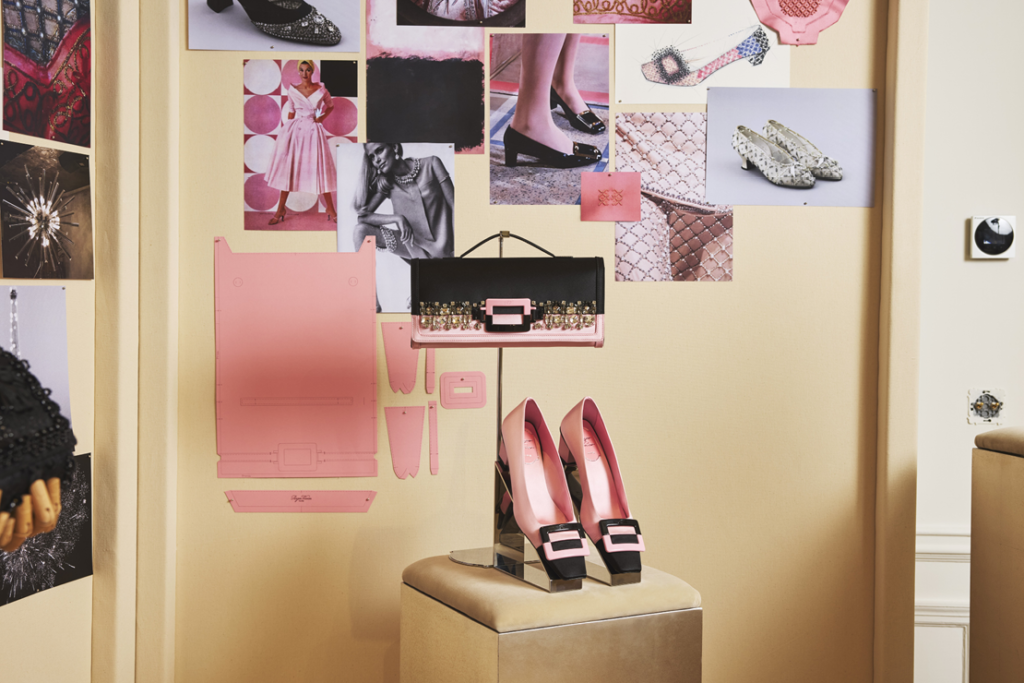
The conversation between past and present continues in Le Studio de Gherardo Felloni, where the Creative Director’s Parisian sensibility defines the Maison’s future. His studio, framed by soft pink and green tones, is filled with antique armchairs, sculptural furniture and shelves lined with archival shoe boxes. Books, art and personal objects create a space where heritage inspires new visions.
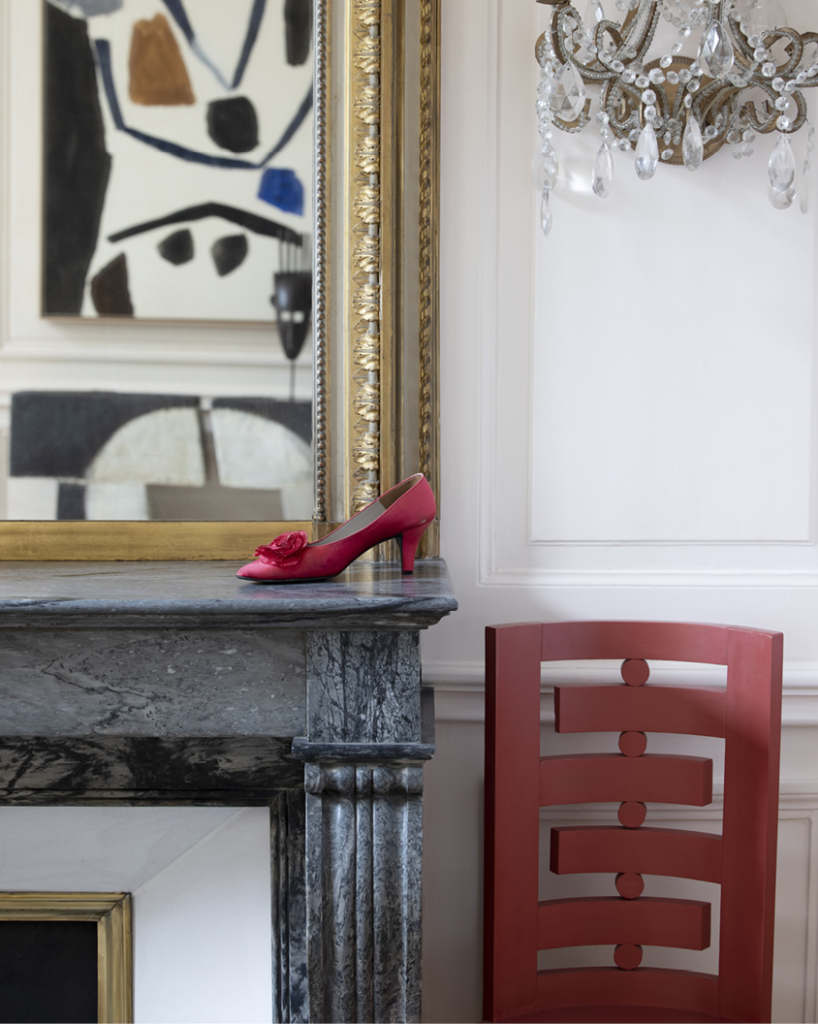
Visitors can also explore La Salle des Archives, a treasure trove of more than a thousand preserved creations. Highlights include a prototype made for Princess Soraya in 1962, documents on Queen Elizabeth II’s Coronation shoes and the original Belle Vivier, designed in 1965 for Yves Saint Laurent’s Mondrian collection and immortalised by Catherine Deneuve in Belle de Jour.
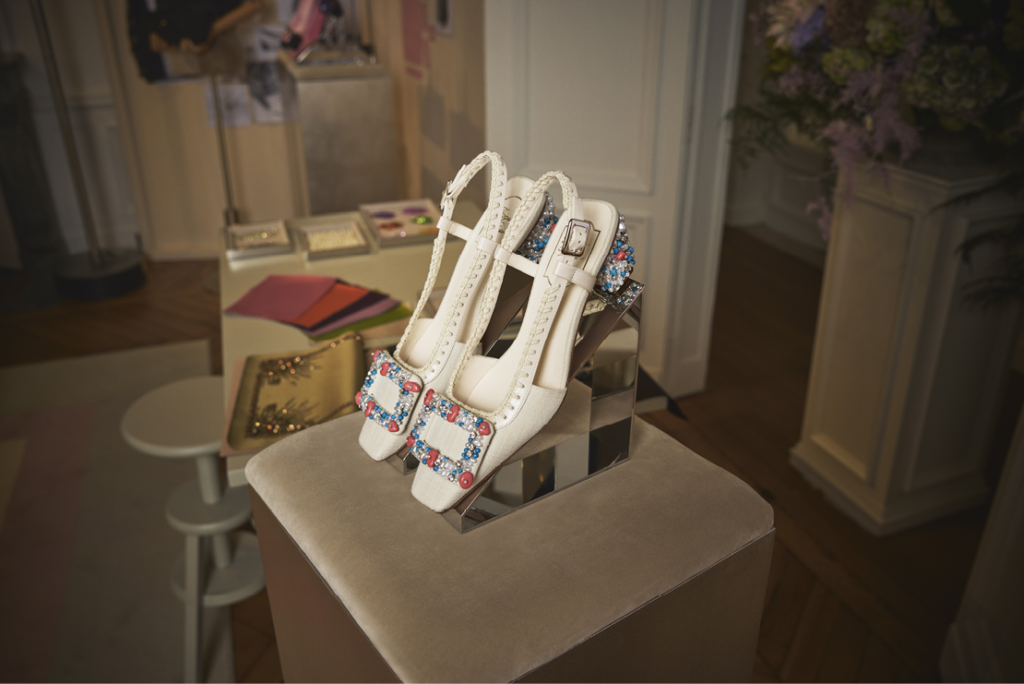
To celebrate the opening, the Maison unveils Belle Vivier 60, a special collection that reinterprets the 1965 classic in new materials and forms. More than a shoe, it is a symbol of continuity and innovation.
Reimagining an Icon, Louis Vuitton Unveils The Artycapucines VII by Takashi Murakami
Louis Vuitton celebrates a new chapter of artistic collaboration with The Artycapucines VII – Louis Vuitton x Takashi Murakami Collection, a vibrant exploration of creativity, craftsmanship and cultural dialogue.
Since its debut in 2019, the Artycapucines Collection has transformed the Capucines bag into a blank canvas for the world’s most celebrated contemporary artists. Named after Rue Neuve-des-Capucines, the Paris street where Louis Vuitton opened his first store in 1854, the bag has become a symbol of modern artistry and timeless elegance. In its seventh edition, Japanese artist Takashi Murakami brings his kaleidoscopic imagination to life through eleven striking interpretations that blend fine art, fantasy and the Maison’s unparalleled savoir-faire.
Born in Tokyo in the 1960s, Murakami has built a global reputation for his singular aesthetic that fuses traditional Japanese painting with pop culture, anime, and science fiction. His world is both playful and profound, filled with characters and motifs that challenge conventions while celebrating joy and colour. It is this distinctive spirit that defines his Artycapucines Collection, created in close collaboration with the Louis Vuitton design ateliers.
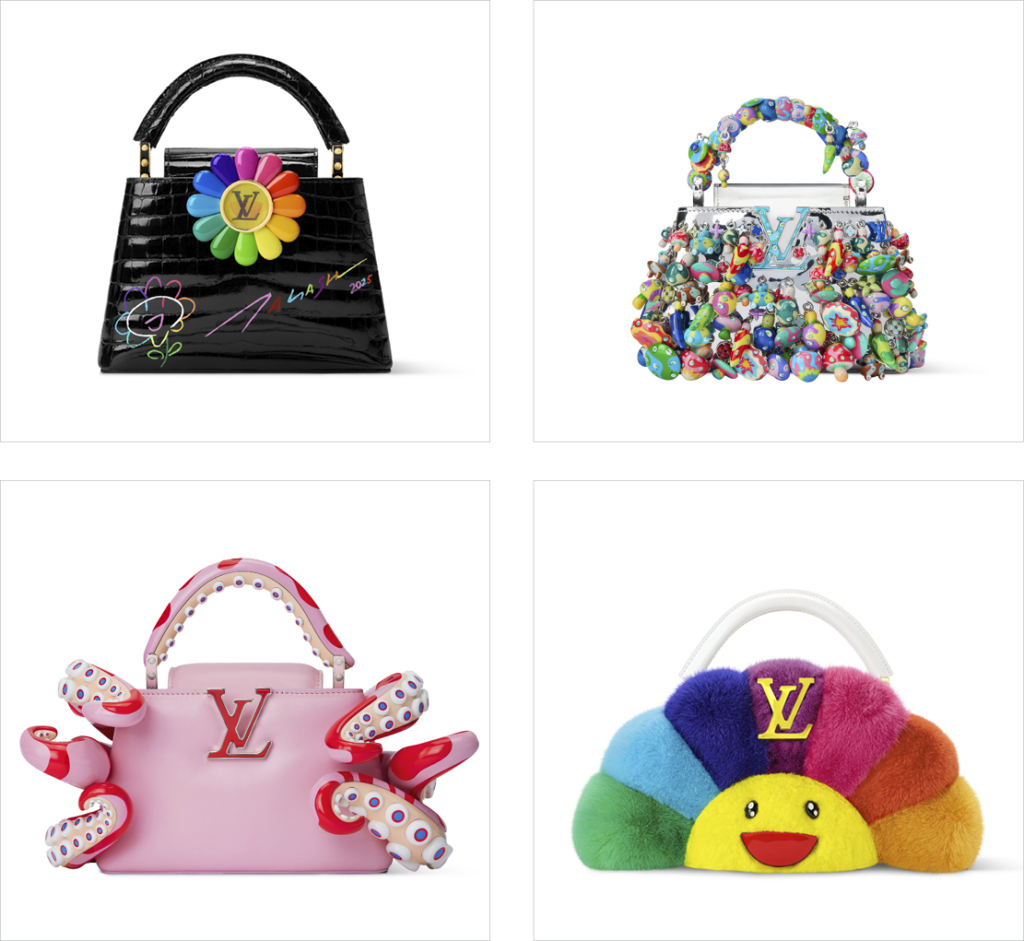
Each piece reimagines the Capucines bag as a sculptural work of art. The Capucines EW Rainbow reconfigures the bag’s structure into Murakami’s iconic Rainbow Flower motif, radiating optimism and energy. The Capucines Mini Mushroom becomes a psychedelic wonder, featuring one hundred hand-embroidered and hand-polished mushrooms across a mirrored silver surface. Meanwhile, the Capucines Mini Tentacle playfully reinterprets Murakami’s alter ego, Mr. DOB, as a whimsical octopus.
Equally captivating, the Capucines EW Dragon translates the artist’s monumental painting Dragon in Clouds – Indigo Blue into an intricate composition of leatherwork and craftsmanship. The Capucines BB Golden Garden glows with gold-leaf leather marquetry, embodying both grace and artistry. Completing the collection is the Panda Clutch, a sculptural piece fashioned from silver-tone brass and adorned with 6,250 hand-set strass, turning Murakami’s beloved panda character into a glittering masterpiece.
The Artycapucines project now encompasses more than thirty creations by artists including Beatriz Milhazes, Daniel Buren, Vik Muniz, Paola Pivi and Tschabalala Self. It continues Louis Vuitton’s century-long commitment to artistic collaboration, from Gaston-Louis Vuitton’s commissions in the 1920s to partnerships with Sol LeWitt, Yayoi Kusama and Richard Prince, and the founding of the Fondation Louis Vuitton designed by Frank Gehry.
With Murakami’s new vision, the Capucines bag once again stands as a symbol of femininity, imagination and craftsmanship, a perfect harmony between art and fashion.
Dior presents the 10th edition of Dior Lady Art
In celebration of the tenth anniversary of Dior Lady Art, the Maison invites ten visionary artists from around the world to reinterpret one of its most timeless icons: the Lady Dior. Among them, Alymamah Rashed, the Kuwaiti artist known for her deeply symbolic and surrealist explorations of womanhood, identity, and the natural world, brings a distinct Middle Eastern voice to this global dialogue between heritage and contemporary art.
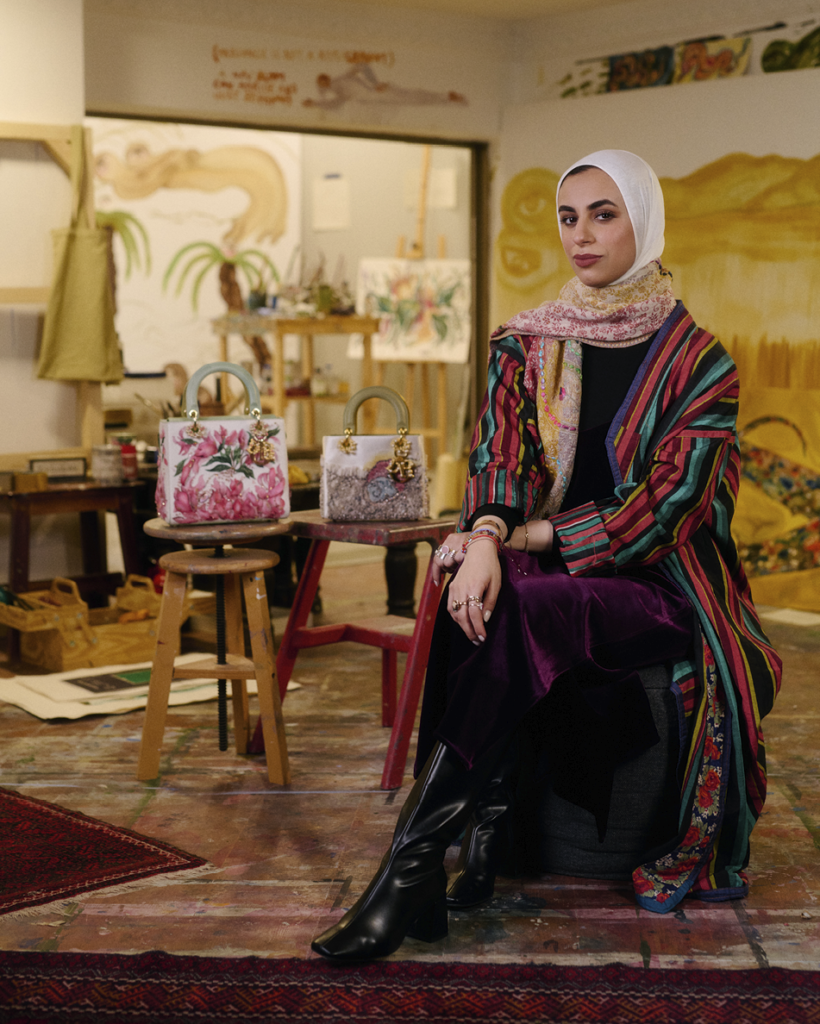
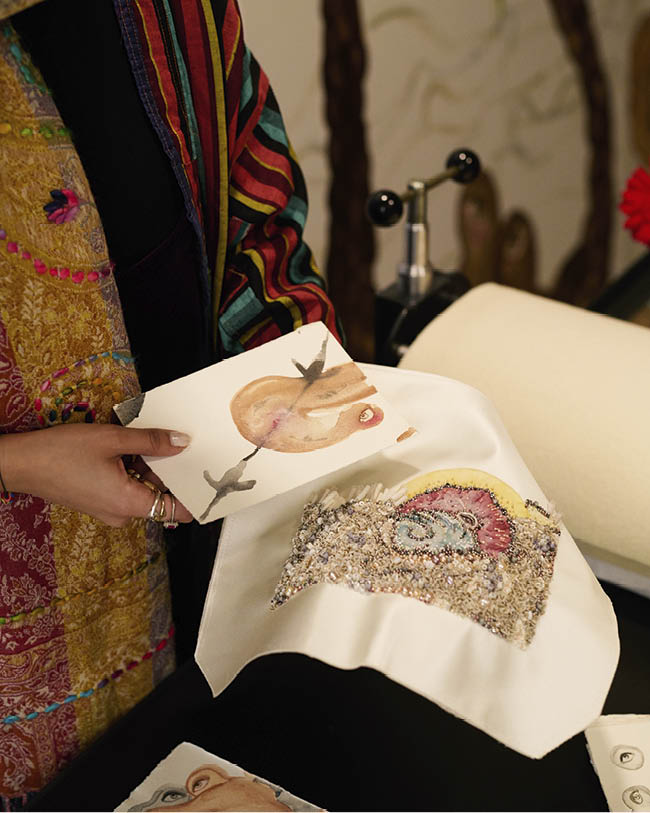
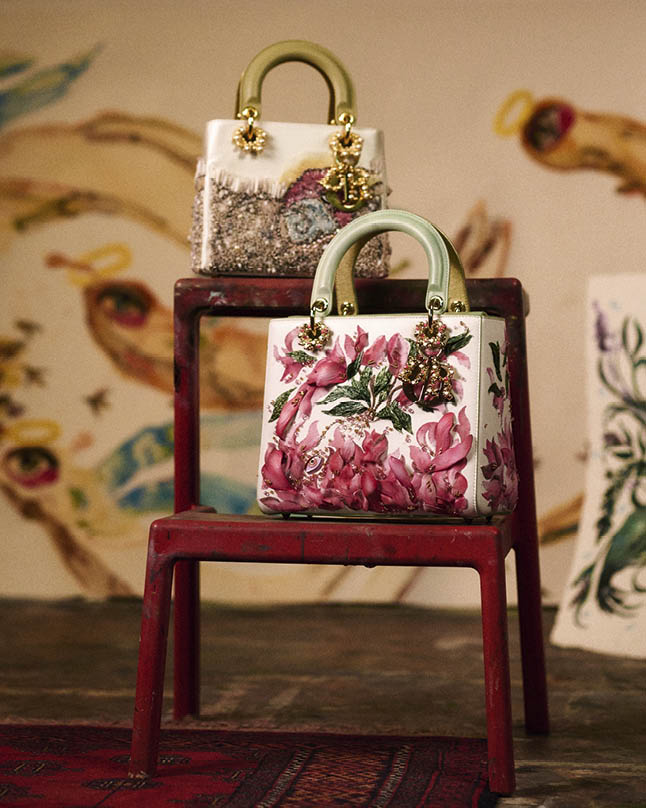
Born in Kuwait, Rashed’s practice bridges the personal and the universal, often using her own body as a vessel for exploring social change, spirituality, and the evolving landscape of womanhood in her region. For her collaboration with Dior, she turns her gaze toward Failaka Island, a site rich in natural beauty and archaeological heritage, transforming its textures and history into poetic design. The artist translates the island’s layered environment, its sands, stones, and barnacle-covered shores, into intricate embroideries that adorn the first of her two creations. This mini Lady Dior evokes the organic tactility of the coast, its reliefs extending into sculpted eyelets that mirror the ebb and flow of the sea.
Her second design, a medium-format Lady Dior, celebrates the Humaith flower, a native Kuwaiti bloom whose soft resilience becomes a metaphor for life and renewal. Fabric petals printed in three dimensions are edged delicately with pearls, creating a sense of fragility and strength intertwined. Each bag carries an enamel eye, a motif of watchfulness and inner reflection, and a hidden poem inscribed inside the lining, visible only to the owner, reinforcing the intimacy of creation.
Craft Meets Code, Assaad Awad, FTA 2025 Finalist in the fashion tech category discusses merging craft with technology
Lebanese-Spanish artist and designer Assaad Awad’s work combines the worlds of craft and technology, where ancient techniques meet futuristic innovation. A finalist in the Fashion Tech category of the 2025 Fashion Trust Arabia Awards, Awad is among a new generation of designers redefining what luxury and craftsmanship mean in the digital era. The FTA Awards final will take place this November, where his experimental vision, rooted in both artistry and research, will compete on one of the region’s most forward-thinking platforms.
Awad’s creative path began in Lebanon, where limited resources sparked a boundless imagination and a drive to create his own worlds. After a decade in advertising, he turned toward accessory and wearable design, quickly gaining global attention for his bold, avant-garde aesthetic. His creations have graced the stages of Lady Gaga, Madonna, Mugler Paris, and The Royal Opera House Madrid, as well as collaborations with Balenciaga and Hermès.
Today, through his company Extraordinary Wearables, Awad bridges centuries-old craftsmanship with emerging technologies such as 3D printing, scanning, and AI-assisted design, crafting hybrid, sustainable objects that blur the boundaries between art, fashion, and science. His work is not only about what we wear but how we connect to it, reimagining the emotional and sensory potential of fashion in a digital age. Beyond creation, he is also deeply involved in education and mentorship, shaping the next generation of designers at IED Madrid and across Lebanon.
As he prepares for the FTA Awards final, Awad reflects on how technology can enhance human emotion, craftsmanship, and sustainability, and why the future of fashion might just be printed, not stitched.
You’ve been recognised in one of the most forward-thinking categories of the FTA Awards. How does it feel to see your experimental work resonate on this level?
It feels incredible, and honestly a bit surreal. As a researcher and developer deeply involved in R&D, I’ve spent years experimenting and trying to crack the code of tech design. Seeing it recognised on this level feels like a huge payback for all those nights of exploration and trial. My work has always lived in that space between technology, craft, and emotion, so to see it resonate within such a forward-thinking platform means a lot. It tells me that people are ready to see innovation not just as a tool, but as a form of artistic expression.
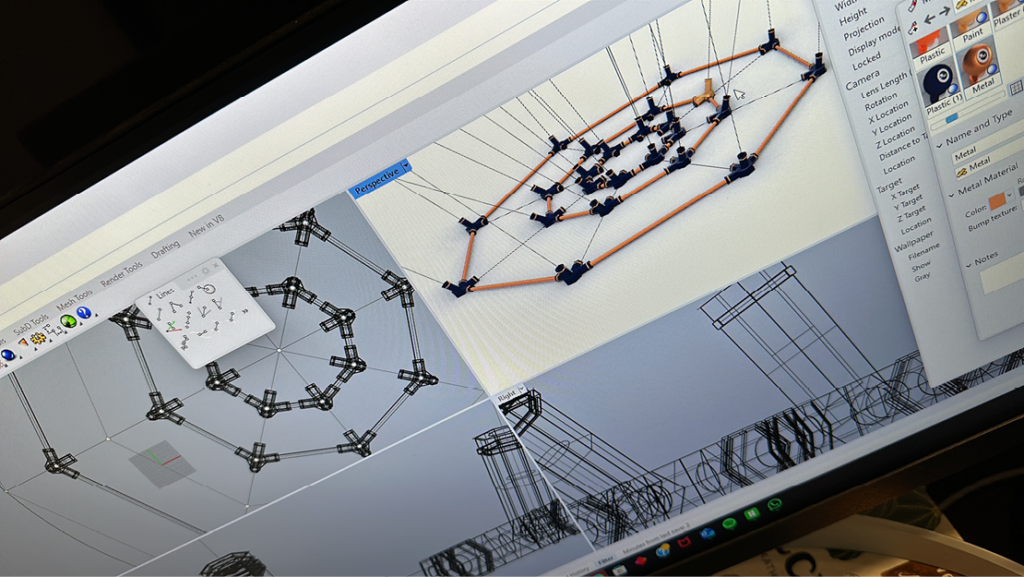
Your creations often blur the line between art, design, and technology. How do you see innovation shaping the emotional and aesthetic experience of fashion today?
I think innovation adds a new layer of intimacy to fashion. It’s not just about what we wear, but how it’s made, how it connects to us, and how it evolves with time. Technology allows emotion to take new forms, movement, adaptability, and even interactivity. It gives life to materials and opens up ways to tell stories through design. AI also plays a key role here, as it helps us explore form, emotion, and storytelling in ways that were unimaginable a few years ago.
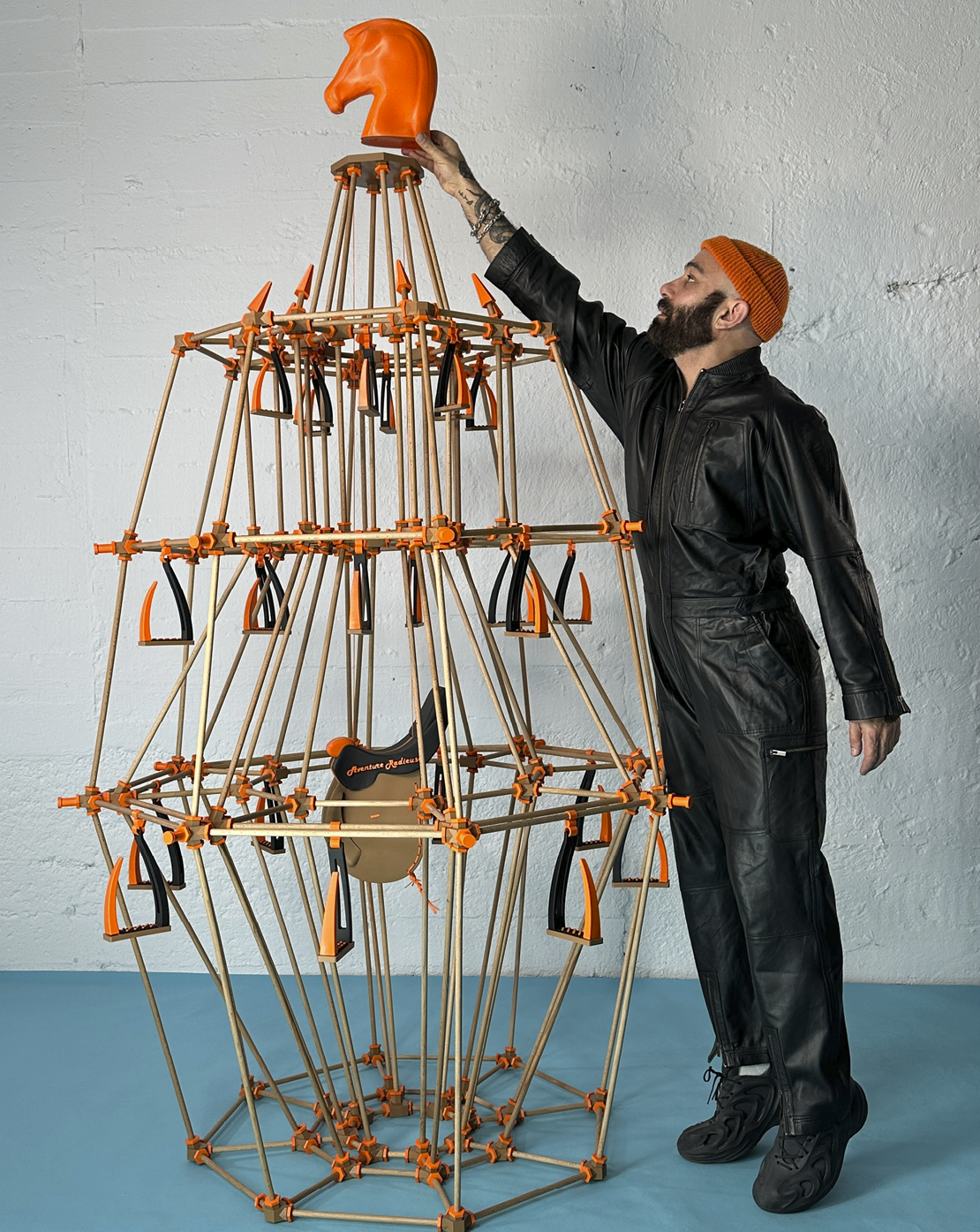
Craftsmanship and technology are sometimes seen as opposites, yet your work fuses both beautifully. How do you maintain a human touch in such futuristic creations?
For me, the human touch is in the intention. Every line, every connection, even the algorithm behind a 3D print comes from a deeply handcrafted mindset. I still think like an artisan, I just use new tools. The craftsmanship isn’t lost, it’s translated into a digital language that still carries the same sensitivity and devotion.
From 3D printing to digital prototyping, the tools of design are changing rapidly. How do you approach technology not just as a medium, but as a creative partner?
I treat technology almost like a collaborator; it has its own logic, rhythm, and surprises. When you understand its limits and possibilities, it starts suggesting ideas back to you. I like that dialogue. Sometimes the machine proposes shapes I would have never drawn by hand, and that’s where creativity really expands, and that’s the magic of materialising those proposed shapes into something tangible again, using Rhino 3D, Grasshopper, and sometimes 3D scanning and 3D sculpting!
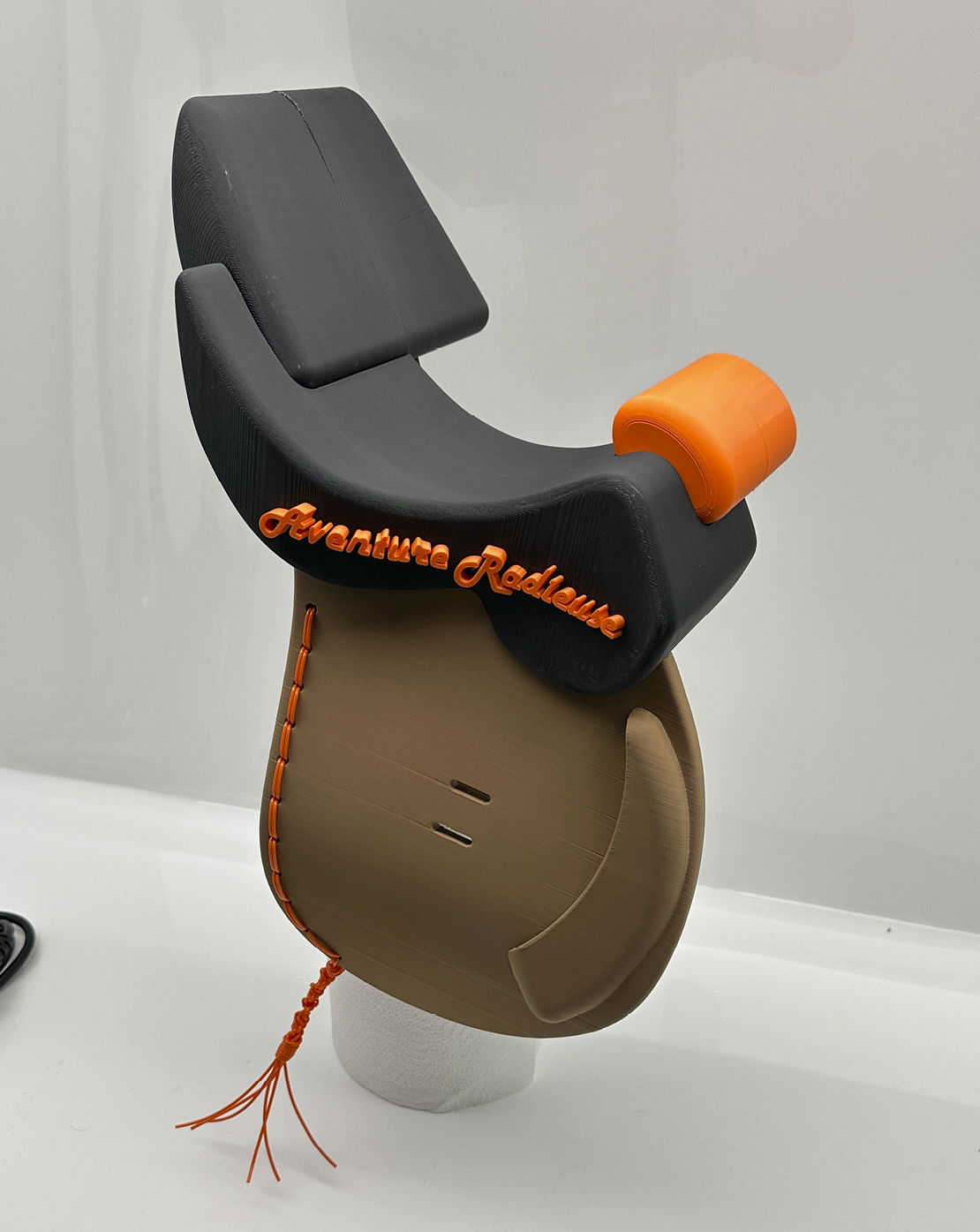
What are some of the trends and technological developments that are inspiring you right now?
I’m fascinated by material evolution, flexible filaments, bio-based polymers, and the fusion of textiles with 3D-printed elements. I’m also drawn to digital craftsmanship, how we can simulate handcraft in a virtual environment while keeping the soul of the process. And AI, of course, because it challenges how we define creativity itself and allows us to merge human intuition with computational precision.
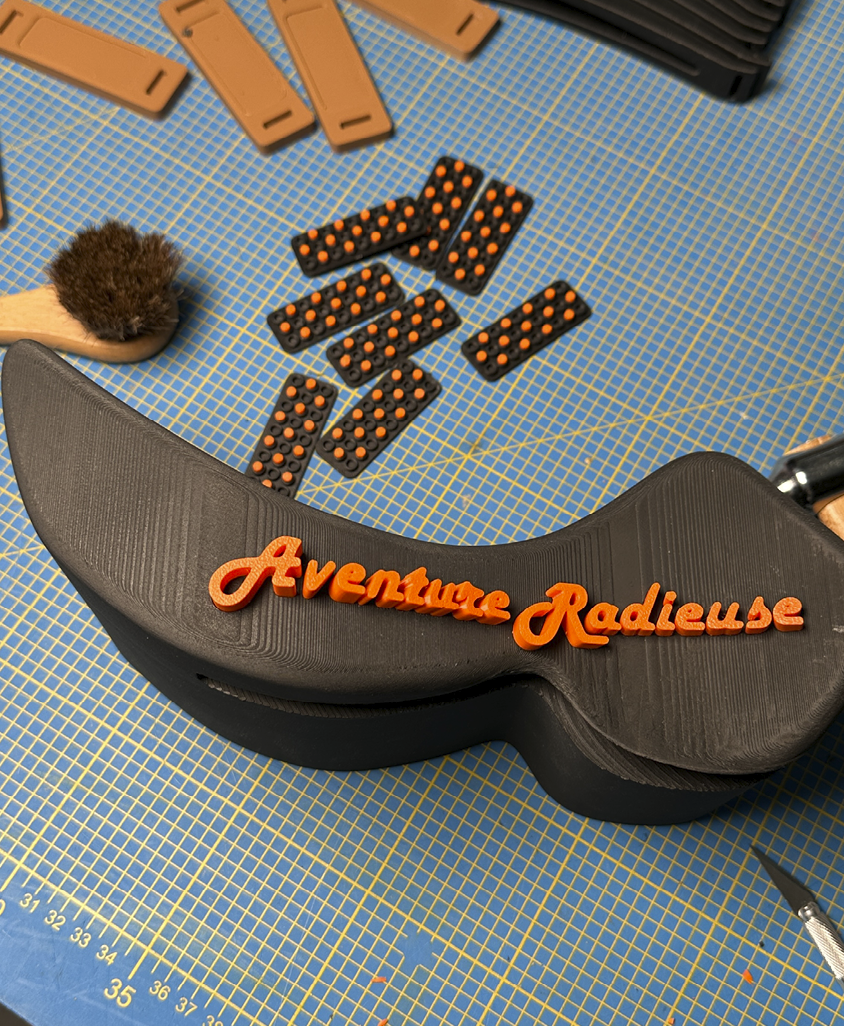
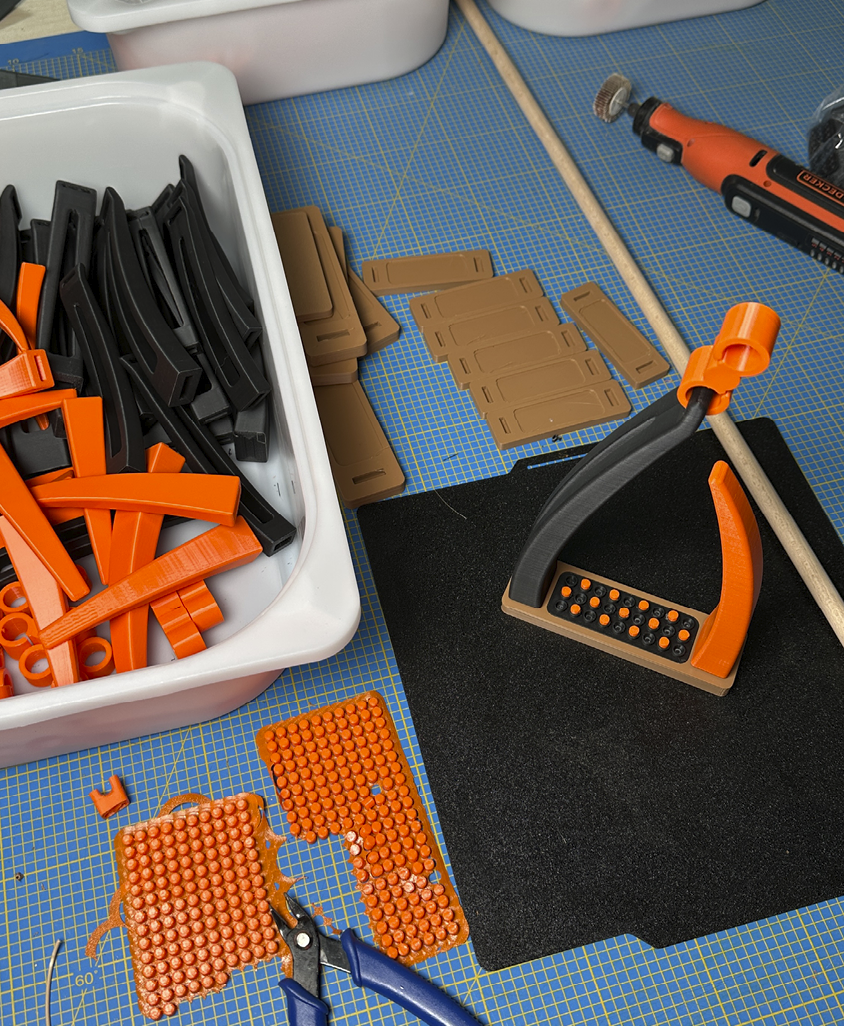
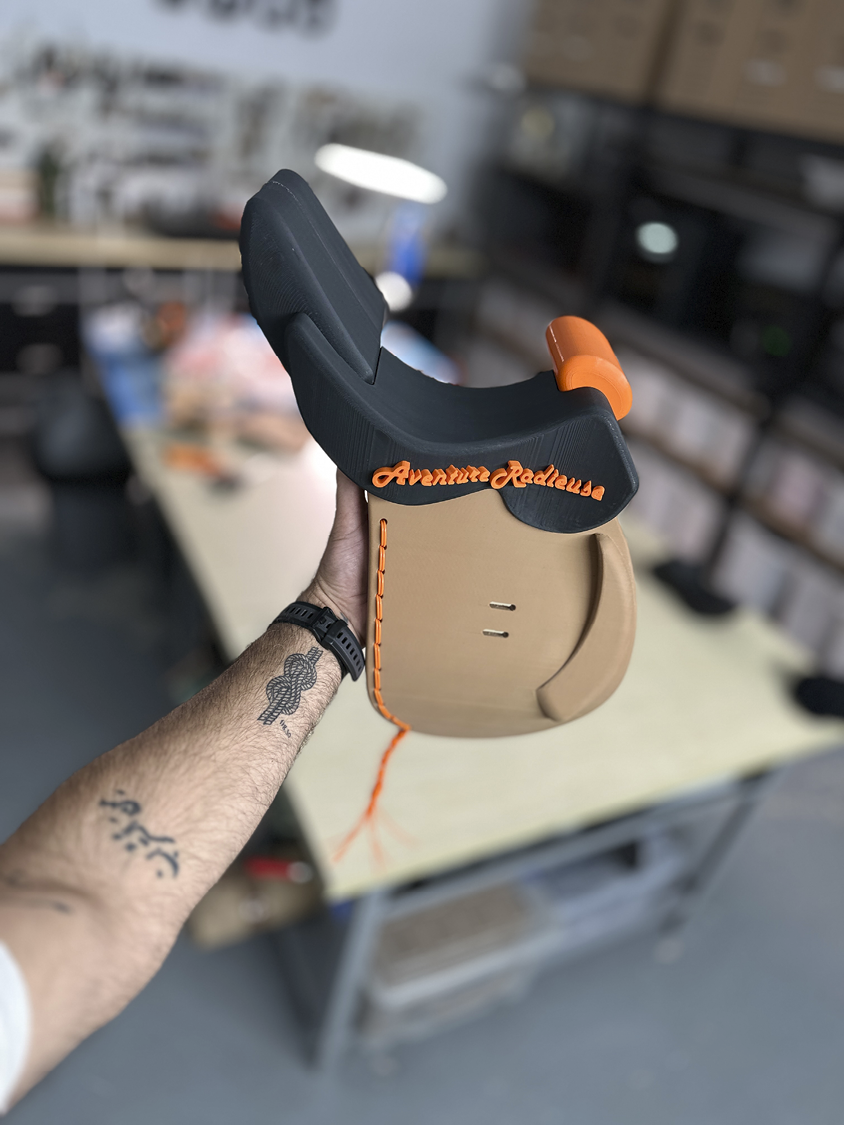
As someone whose work borders on art installation and wearable design, how do you think architectural concepts like structure, rhythm, and space inform your process?
Both architecture and a bag are spaces that need to be filled with things, keeping a sense of harmony and functionality. Architecture teaches me discipline and balance, and that naturally translates into my design process. When I design a bag or an accessory, I think in terms of space and movement, how the object interacts with the body like a small piece of architecture. Structure and rhythm guide everything, the proportions, the way it opens, how it feels to carry. It’s wearable architecture in a poetic sense.
Looking ahead, what excites you most about the future of fashion and innovation, and what message do you want your work to leave behind in that future?
I’m excited about a future where creation becomes more personal and sustainable, where people can print, repair, and customise their own pieces. I want my work to inspire a shift from consumption to connection, the idea that technology can bring us closer to what we own, not farther away.
I want to be a pioneer in helping put together the blueprint book of how, in the very near future, people will print their own luxury goods. My goal is to make design and post-processing easier for the consumer, so that this becomes a sustainable, accessible solution against fast fashion. AI is also part of this vision, helping translate design ideas into printable, personalised objects that adapt to individual needs and styles.
I also dream of creating an open-source bag, one that people can collaborate on instead of simply being passive buyers. Imagine how that bag would evolve if it reached every continent, how it would carry influences from different hands, minds, and cultures. It would become a living project, a collaboration with the world itself.
What else is in the pipeline for your brand?
I’m working on expanding the collections I presented for Fashion Trust Arabia into more modular, customisable pieces, still rooted in craft but with a strong technological identity. I’m also exploring collaborations that merge art, performance, and design, pushing this dialogue between digital precision and human emotion even further. At the same time, I’m always in the process of mentoring and passing my know-how to my students at IED, Instituto Europeo di Design, and to young designers in Lebanon, helping them embrace technology as a creative language rather than a barrier.
How do you see a concept born from a luxury house transforming into a tech-driven object that still carries emotion and craftsmanship?
The Hermès Tree I created last year perfectly embodied that idea. It served as both a sculptural piece and an equestrian hat rack that lives beyond the holiday season. The saddle shape was lowered to invite people to “ride a new adventure,” while the orange accents reflected the brand’s identity. The stirrups represented the crystal balls, and the wood rods connecting the 3D-printed joints symbolised the connection between people gathered around shared joy. At the top, the Cheval Samarcande overlooked the happiness below, acting as the star of the tree.
The piece was later auctioned for charity, giving it a deeper sense of sustainability. Its campaign, created entirely with AI, transformed the concept into lyrics and an AI-generated jazz song for Christmas — merging technology, storytelling, and craftsmanship into one poetic expression of modern luxury.
By Lindsay Judge
FTA Finalist and Designer Ayham Hassan, Discusses the Importance of Sharing Messages Through His Work
Palestinian designer Ayham Hassan represents a new generation of creatives using fashion as a language of identity, resilience, and reform. Based between London and Ramallah, he has been shortlisted for the Franca Sozzani Debut Talent Award at the 2025 Fashion Trust Arabia Awards, set to take place this November. His nomination highlights a growing global recognition of Arab designers who challenge cultural narratives through craft and concept.
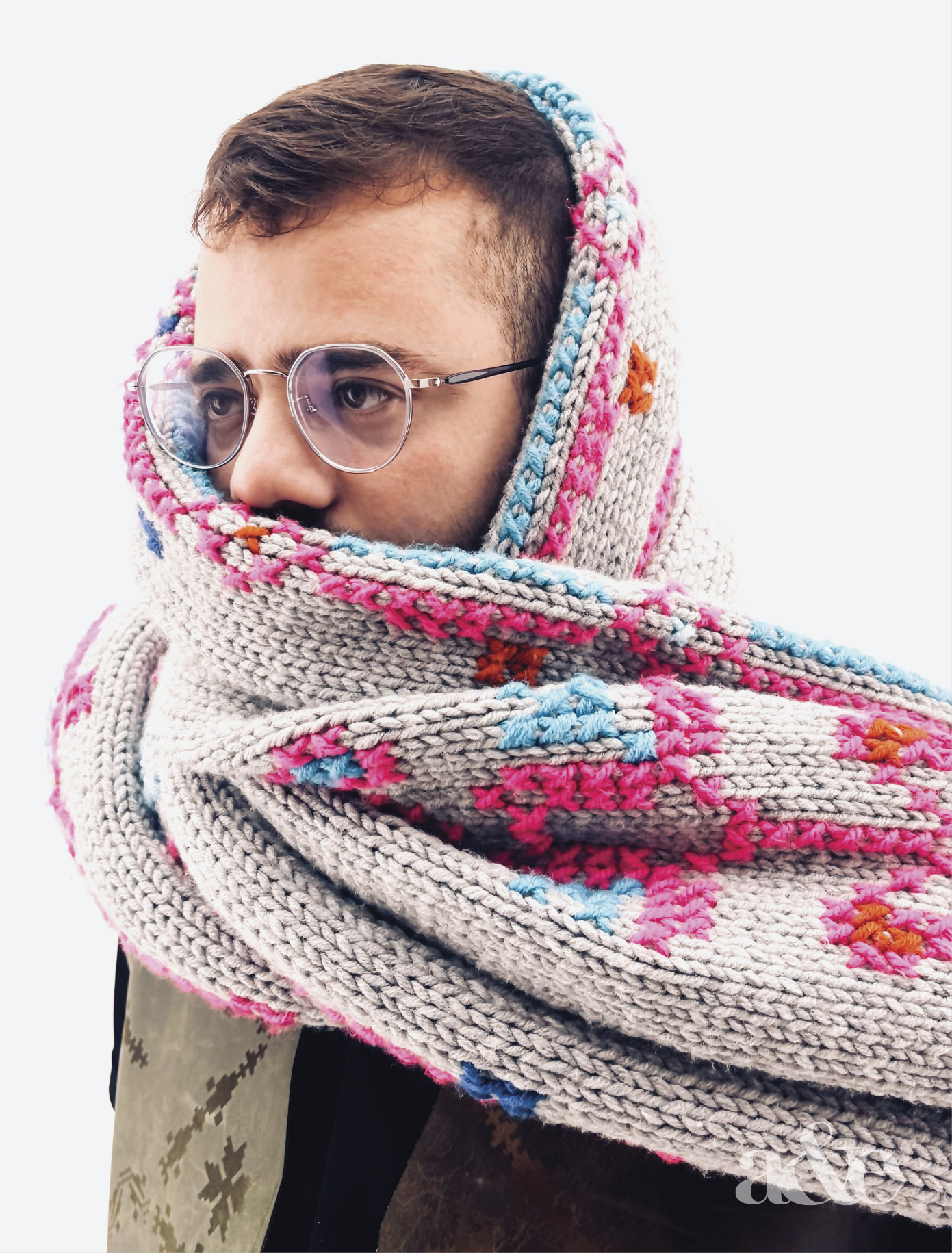
A graduate of the London College of Fashion, Hassan’s work is anchored in the experience of growing up in the West Bank, where creativity and survival often coexist. His designs merge storytelling with social reflection, exploring how fashion can become both a form of expression and protection. With a focus on tailoring, textiles, and draping, he draws on the deep craft traditions of Palestine, reinterpreting them with contemporary precision.
Through collaborations with local artisans, Hassan works to preserve and evolve traditional techniques within a modern framework. His aesthetic is defined by a grounded, tactile sensibility that reflects the physical and emotional landscape of his homeland. Raw textures, sculptural silhouettes, and earthy tones come together to form garments that embody endurance and transformation.
As he prepares to present his vision at the upcoming FTA Awards, Ayham Hassan continues to build a practice that bridges tradition and innovation. Here we find out more.
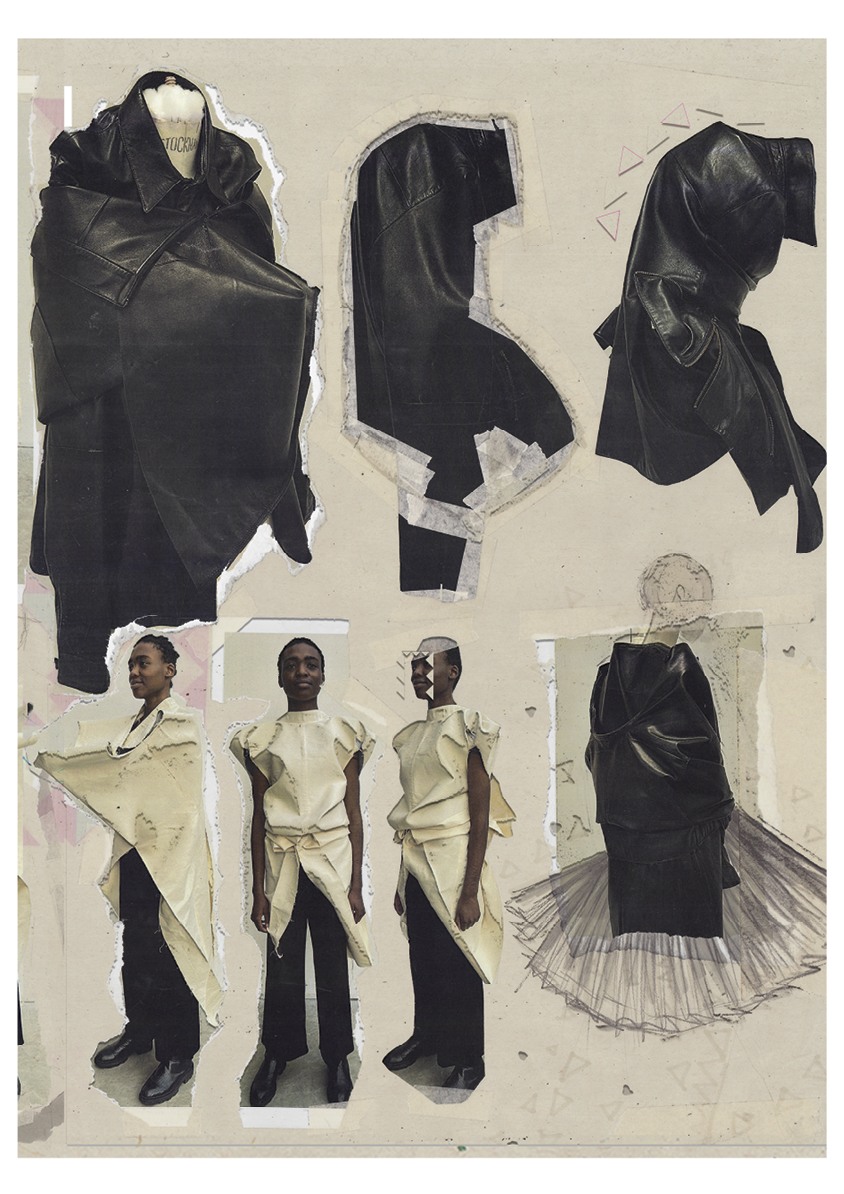
Congratulations on being shortlisted for the Franca Sozzani Debut Talent Award. How does it feel to have your collection recognised on such a prestigious international platform?
Thank you so much. It honestly feels surreal to be shortlisted for the Franca Sozzani Debut Talent Award. To have my collection recognised on such an international stage is incredibly meaningful. This project was very personal to me, and to see it resonate with others in this way is both humbling and energising. Franca Sozzani’s legacy represents creativity with purpose, and being connected to an award that celebrates emerging voices in that spirit feels truly special. I’m deeply grateful for this recognition and the opportunity to share my work with a wider audience. How does your heritage inspire you, and what does it mean to you to represent your country on an international platform? My heritage is at the heart of everything I create. It shapes the way I see beauty, detail, and storytelling. It’s woven into the textures, colours, and emotions behind each piece. Growing up surrounded by the richness of my culture has given me a deep appreciation for craftsmanship and a desire to reinterpret tradition through a contemporary lens. Representing my country on an international platform is an incredible honour. It’s more than just personal recognition, especially being a Palestinian from the West Bank, it’s a chance to share our creative identity with the world, to show the depth, innovation, and spirit that define where I come from. I carry that pride with me in every collection, hoping to inspire others and open more doors for emerging talent from my region.
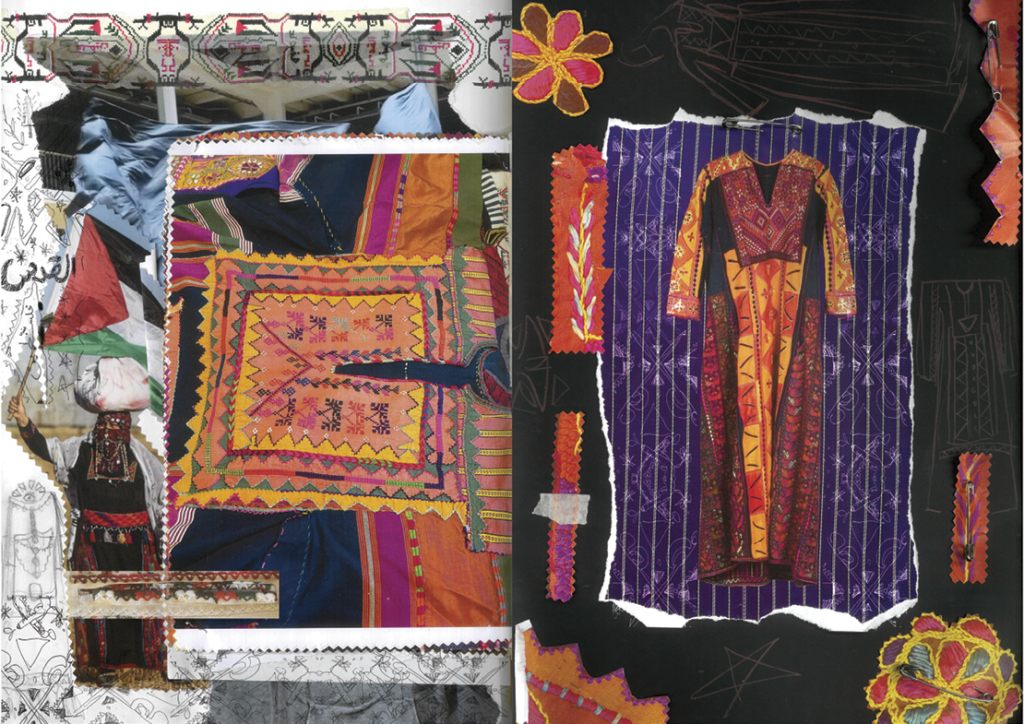
What story does your debut collection tell — and how does it reflect your identity as both a designer and an emerging voice in regional fashion?
IM-Mortal Magenta: the colour that doesn’t exist is both a personal and political reflection — a meditation on survival, loss, and the act of remembrance. The collection was born from the experience of growing up under occupation in Palestine, where life itself exists in contradiction, between despair and defiance, erasure and endurance, mortality and immortality. Magenta, a colour that technically doesn’t exist in the spectrum, became a symbol for that in-between state, the tension between presence and absence, between what is destroyed and what refuses to disappear. Through this collection, I reclaim narrative and space, honouring those erased while asserting continuity through craft, memory, and creation. Drawing from Gaza’s historic textile and dress traditions, I used print, embroidery, leatherwork, laser engraving, and knit to translate that tension into form. Every stitch, every surface, carries the weight of loss but also the persistence of beauty and humanity. IM-Mortal Magenta is not just about fashion, it’s about resistance, remembrance, and the eternal pulse of a people who continue to exist, even when told they do not.
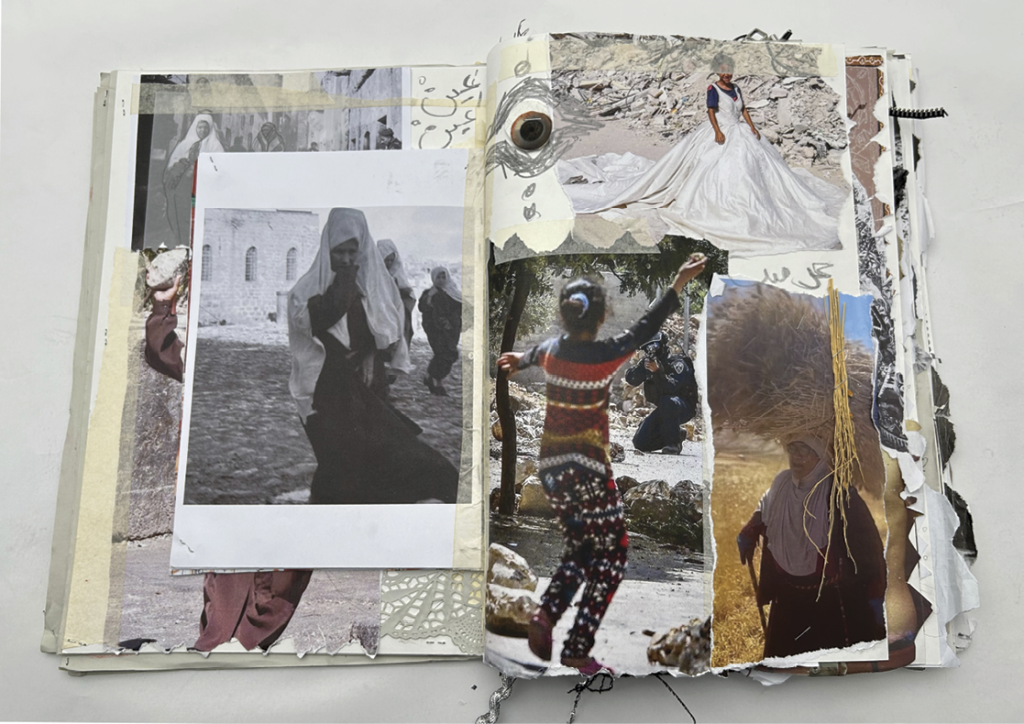
Tell us about your creative process.
My work is deeply rooted in my personal experiences growing up in the West Bank and is approached through a critical and analytical lens. Fashion, for me, is a means of challenging and reshaping my reality, a language through which I process identity, displacement, and resistance. I draw inspiration from the social customs and evolving culture of my city, exploring the rich craftsmanship of Palestine, with a particular focus on tailoring, textiles, and draping. Collaborating with local artisans is central to my practice; it allows me to preserve traditional techniques while reimagining them within a contemporary context. Through these collaborations, I aim to sustain and celebrate Palestinian craft, ensuring that these invaluable skills continue to evolve in a fast-changing world. My design process is fluid and ever-evolving, a space of experimentation, reflection, and discovery. Being an international student has widened my perspective, allowing me to see my culture from afar and understand its nuances more deeply.
I’m driven by the desire to innovate with what’s around me, to transform limitation into possibility, and to craft work that tells stories of resilience and healing. The aesthetic of my work is raw, visceral, and grounded, shaped by the physical and emotional landscape of growing up under military occupation. For me, fashion is not only a form of self-expression but also a form of protection, a way to reclaim space, dignity, and identity in the face of oppression. Ultimately, I believe in the transformative power of design as a force for change. Through my work, I seek to provoke dialogue and self-reflection within Arab and Palestinian societies, while advancing sustainable and independent design practices in the region. By building upon tradition and infusing it with innovation, I hope to bring Palestinian identity into global consciousness — not as a symbol of war, but as a source of creativity, resilience, and profound beauty.
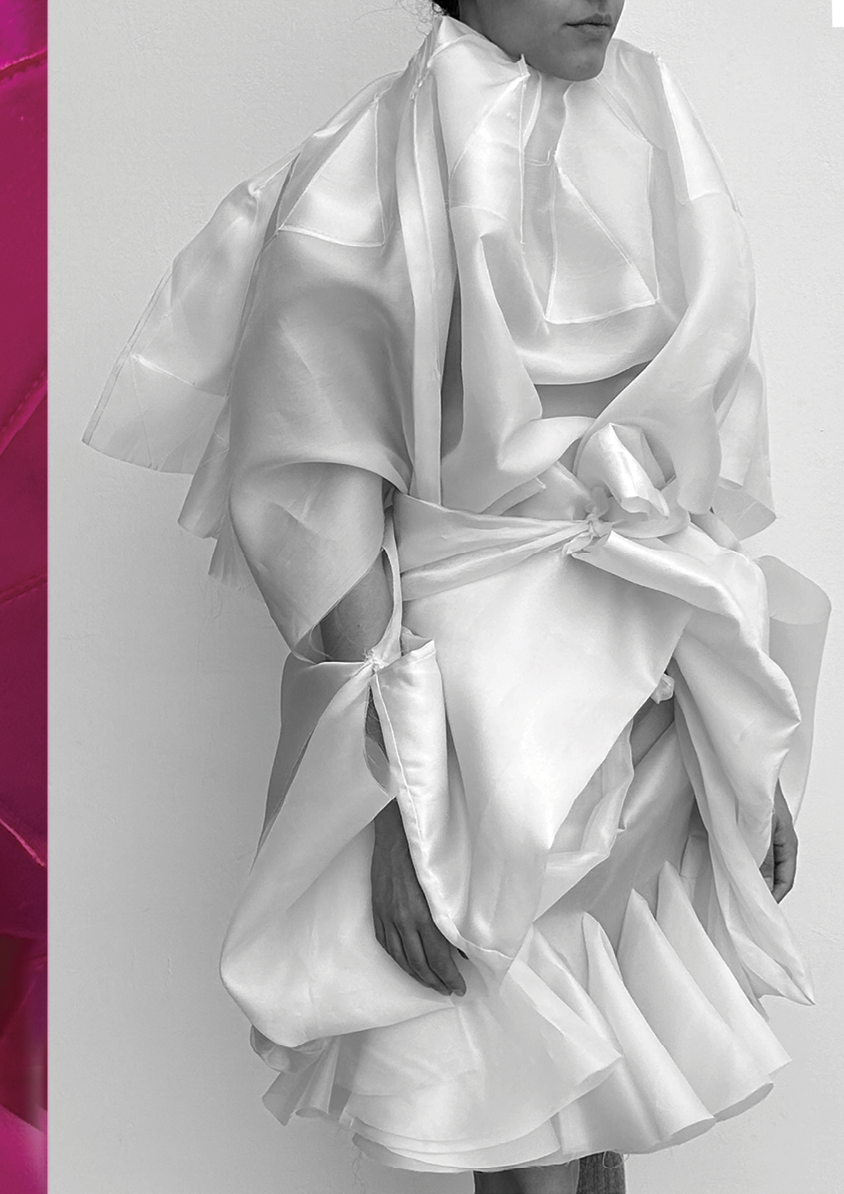
Architecture and fashion often share a dialogue of structure, form, and proportion. How do elements of design and spatial composition influence your approach to creating garments?
Architecture and fashion are deeply intertwined in my creative approach, as both disciplines explore structure, form, and the relationship between space and the human body. I consider garments as inhabitable spaces, where drape, volume, and silhouette create a dialogue similar to architectural design, defining movement, presence, and proportion. The balance between tension and release, rigidity and fluidity, plays a central role in how I construct pieces, whether through tailoring, layering, or the manipulation of textiles. I am particularly inspired and analytical by the spatial composition of traditional Palestinian architecture and how the military occupation restricted the natural Landscape, where every line, curve, and proportion carries cultural and historical meaning. Translating this into fashion, I treat garments as three-dimensional structures that both protect and empower the wearer, while reflecting the narratives and heritage embedded in my surroundings. By viewing clothing through an architectural lens, I can explore innovative forms that honour craftsmanship while challenging conventional perceptions of space, movement, and identity in design.
As someone at the beginning of your journey, what materials, shapes, or techniques are you most drawn to exploring?
At this stage of my journey, I am drawn to materials that carry both history and narrative — natural fibres, traditional textiles, and hand-crafted elements that connect me to Palestinian heritage. I am particularly interested in exploring textures that respond to touch and movement, from intricate embroidery and leatherwork to layered knits and laser-cut detailing. In terms of shapes, I am fascinated by forms that balance structure and fluidity, creating a tension between architectural precision and organic movement. Draping, tailoring, and three-dimensional construction allow me to experiment with how garments inhabit the body and interact with space. Techniques that merge tradition with innovation are central to my exploration, hand and machine embroidery, weaving, laser engraving, and modular design all offer ways to honour craft while pushing boundaries. Ultimately, I am motivated by the potential of these materials, shapes, and techniques to tell stories of memory, resilience, and identity through fashion. and currently I’m obsessed with silk chiffon fabrics!
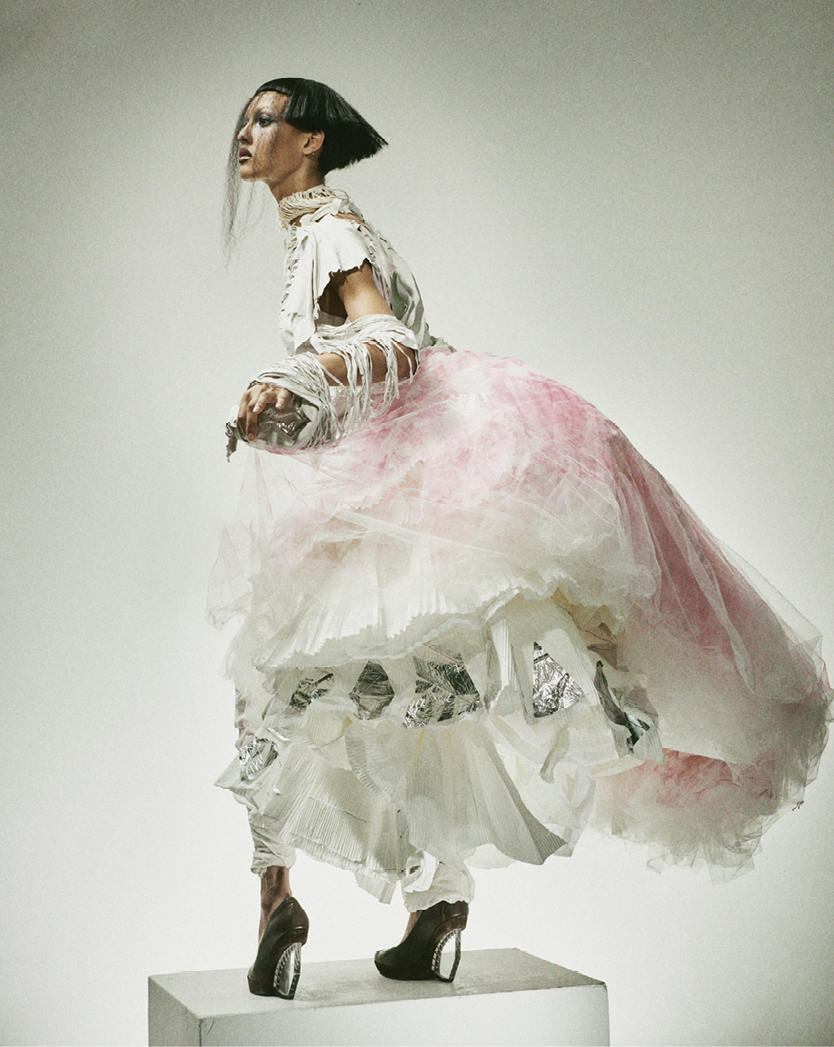
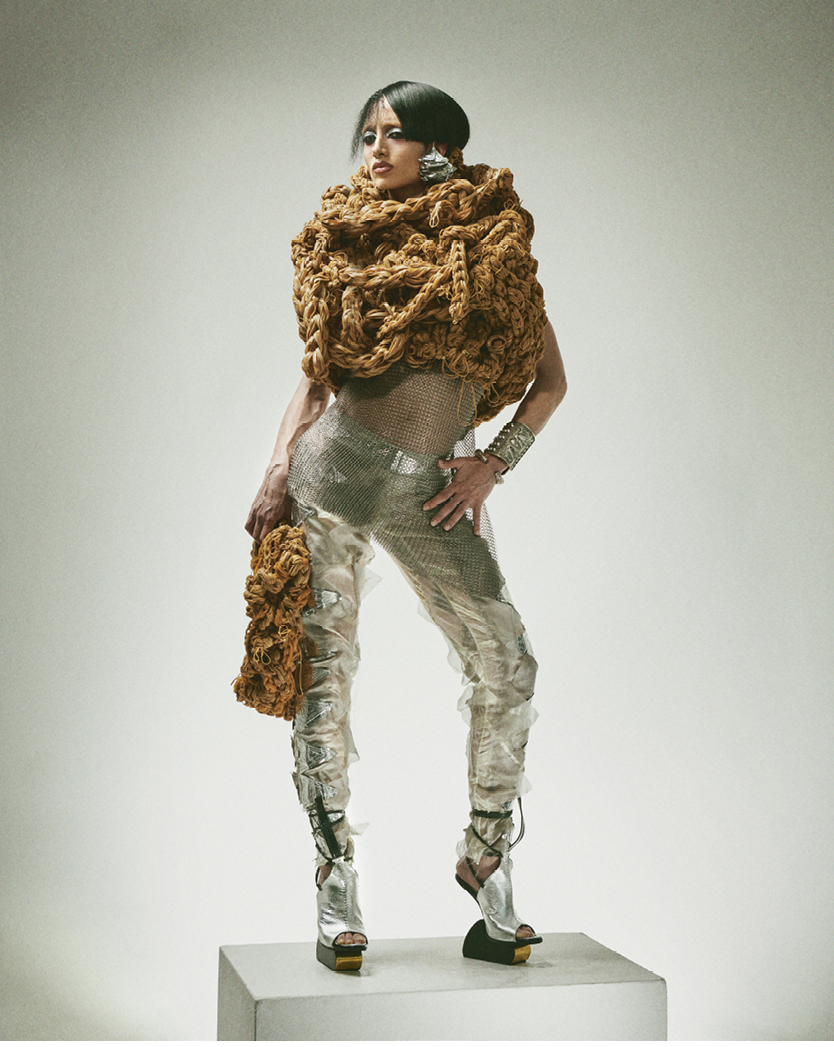
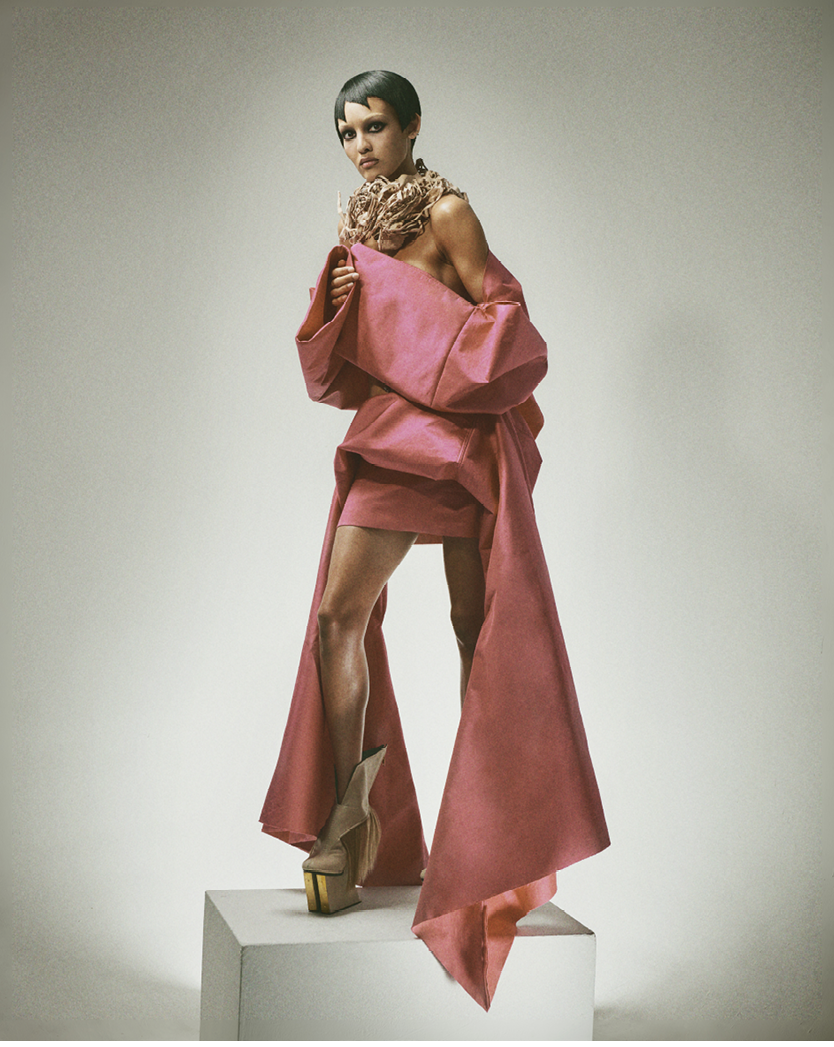
Franca Sozzani was celebrated for championing new voices and socially conscious creativity. How do you see your work aligning with that legacy?
Franca Sozzani’s legacy has always been about giving space to voices that challenge the status quo and bring social consciousness to the forefront of fashion. My work aligns with that ethos by using fashion as a medium to confront and reflect on lived realities — from personal and cultural identity to the broader social and cultural context of Palestine. Through my collections, I aim to tell stories of resilience, heritage, and remembrance, while integrating traditional craftsmanship with contemporary design. Like Sozzani, I see fashion as a tool for dialogue and change, a way to amplify underrepresented narratives and provoke reflection. Being recognised on a platform that celebrates creativity with purpose inspires me to continue pushing boundaries, honouring my roots, and using design to make meaningful cultural and social statements.
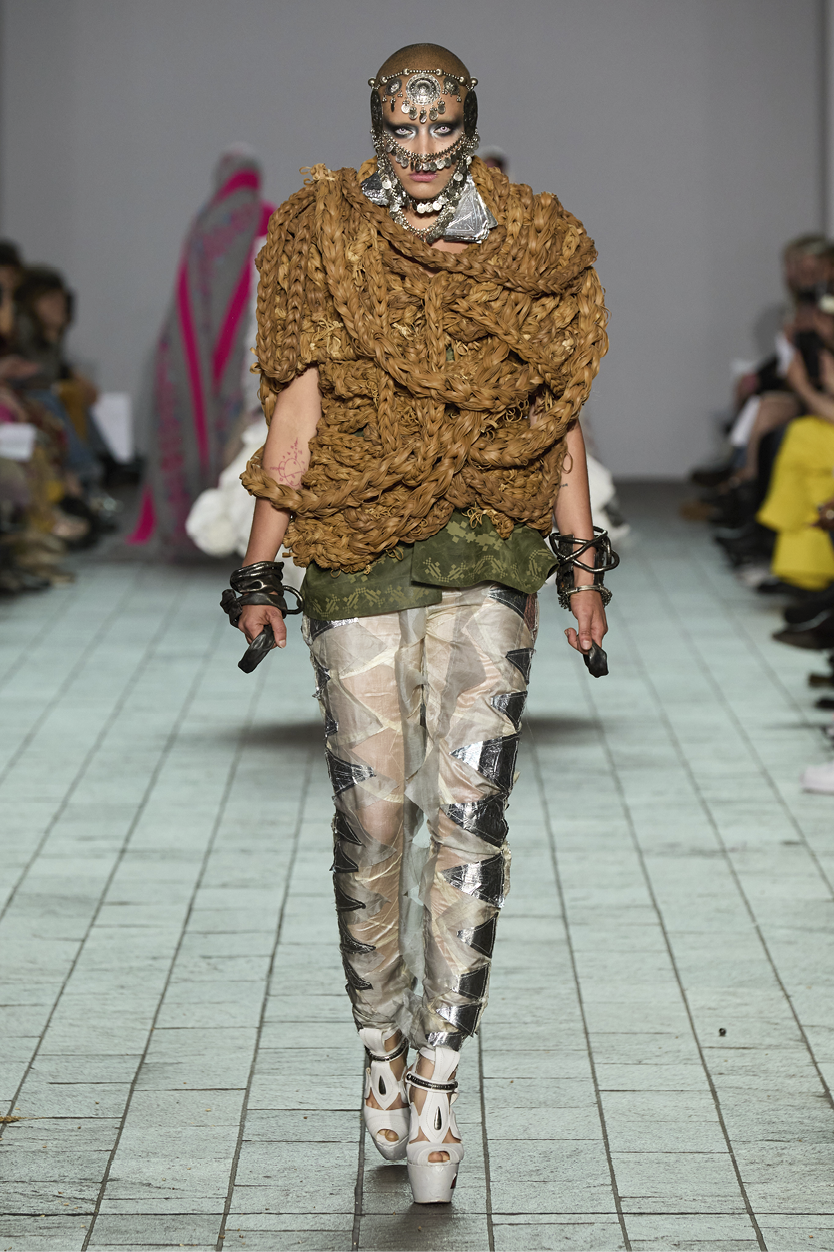
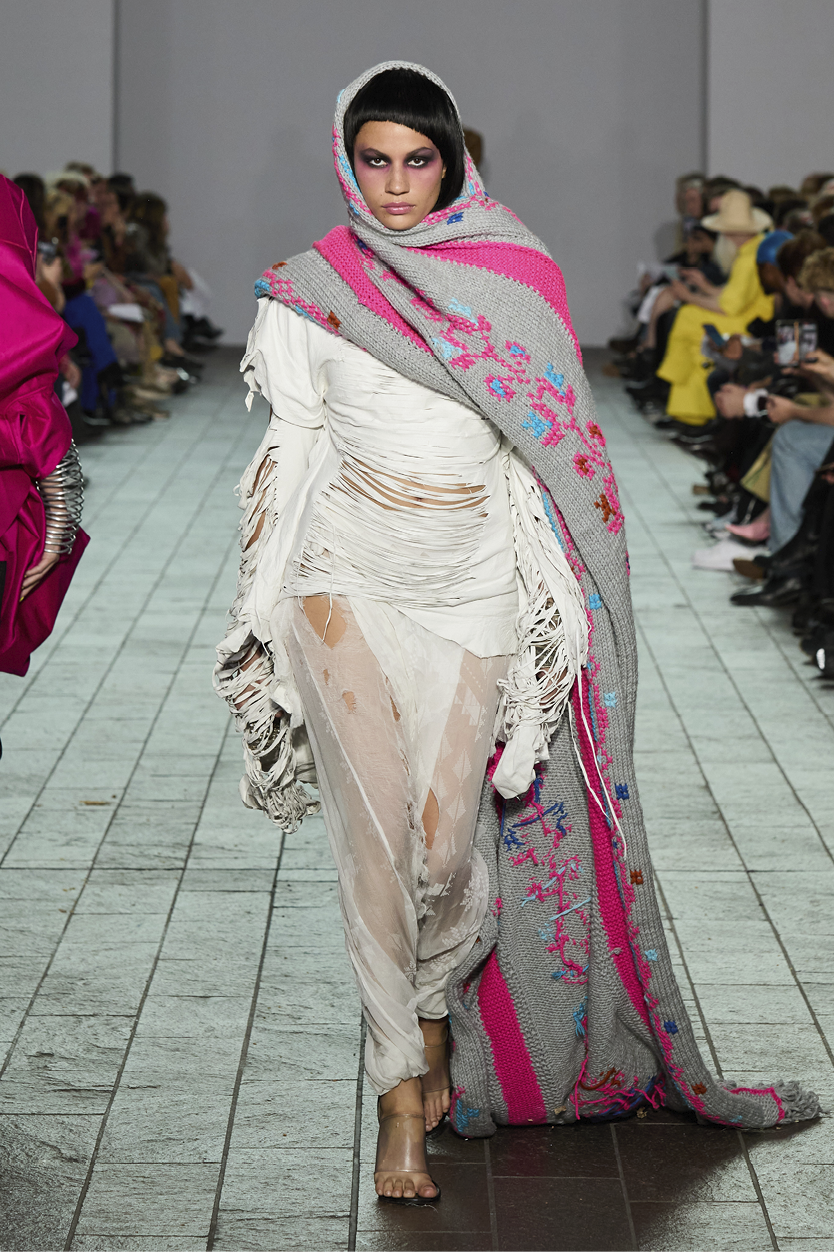
What is the vision for your brand looking forward?
Looking ahead, my vision for the brand is to continue bridging tradition and innovation, creating collections that honour Palestinian heritage while engaging a global audience. I aim to expand the integration of local artisans and traditional techniques into contemporary fashion, supporting craft preservation and sustainable production in the region. At the same time, I want the brand to serve as a platform for storytelling — sharing narratives of resilience, identity, and cultural pride — while pushing creative boundaries in materials, form, and technique. Ultimately, my goal is to establish a design practice that is internationally recognised, socially conscious, and deeply rooted in the values and traditions that shaped my perspective, inspiring dialogue and meaningful change through fashion.
By Lindsay Judge
Conscious Couture, Ziyad Buainain, FTA finalist, discusses redefining conscious luxury
Saudi designer Ziyad Buainain has quietly built one of the most distinctive voices in the new wave of regional luxury design. As a finalist in the Evening Wear category at the 2025 Fashion Trust Arabia Awards, taking place this November, he represents a generation of creatives merging craftsmanship, emotion, and purpose into a modern couture language.
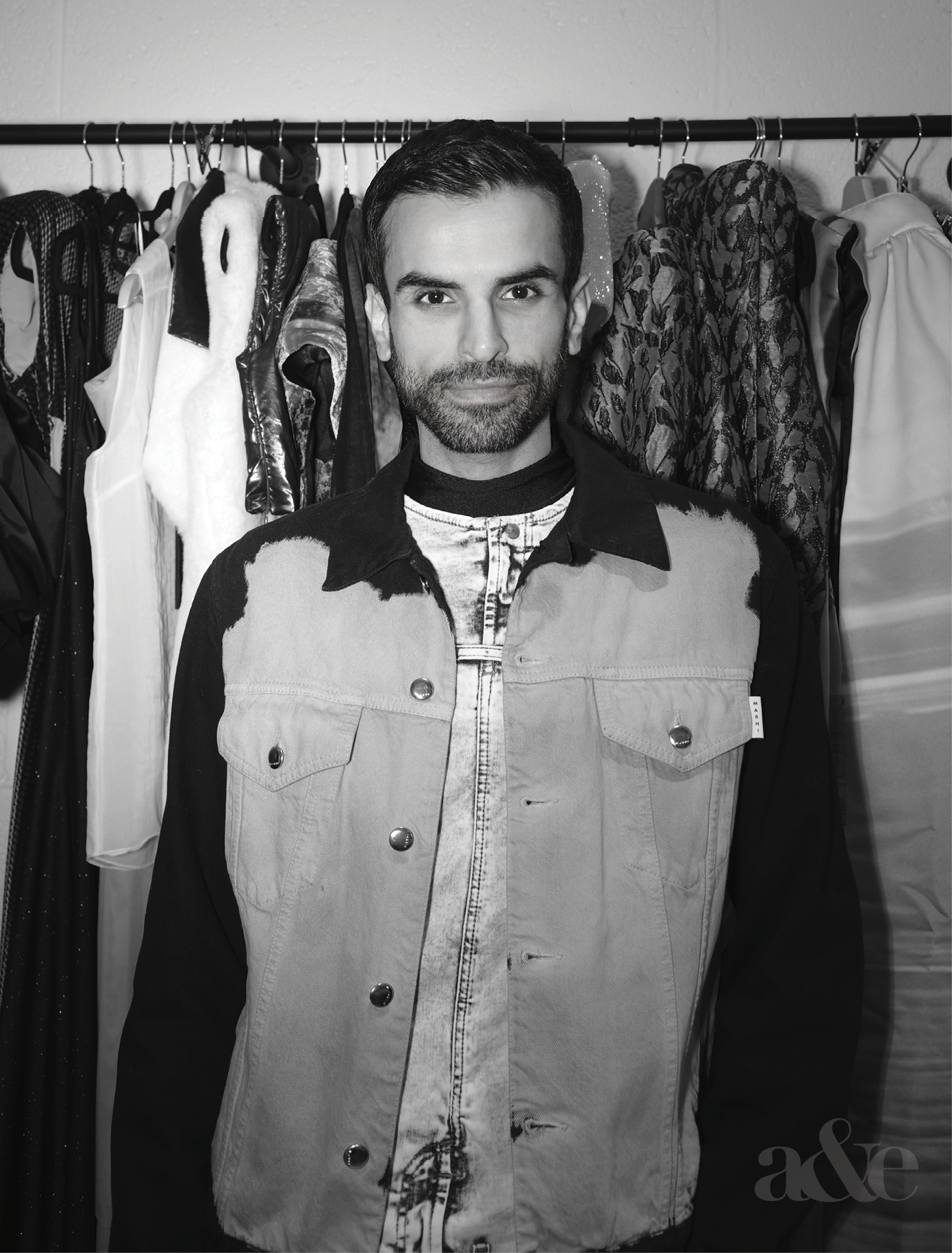
Founded in 2021, his London-based label embodies a global perspective shaped by his life across Al Khobar, Tokyo, Leysin, New York, Milan, and London. This multicultural lens informs a design philosophy rooted in contrast — balancing strength with delicacy, structure with fluidity, and discipline with freedom. Each collection is a dialogue between art and architecture, tradition and experimentation, exploring how garments can carry both resilience and vulnerability.
Every piece from Ziyad Buainain is crafted in London from deadstock, recycled, and responsibly sourced materials, a reflection of his belief that sustainability begins with intention. His approach to eveningwear favours emotion over embellishment, using form, movement, and precision to express a quiet kind of drama. Through his commitment to mindful creation, he redefines luxury as something thoughtful and enduring rather than excessive.
Buainain’s work speaks to a broader cultural moment in the Arab world, where designers are shaping their own narratives on the global stage. His collections invite reflection on identity, craft, and modern Arab expression, offering a vision of couture that is refined yet radical. As he prepares for the FTA Awards final, his perspective feels both deeply personal and distinctly international — an example of how fashion, when rooted in meaning, can connect worlds while remaining true to its origins.
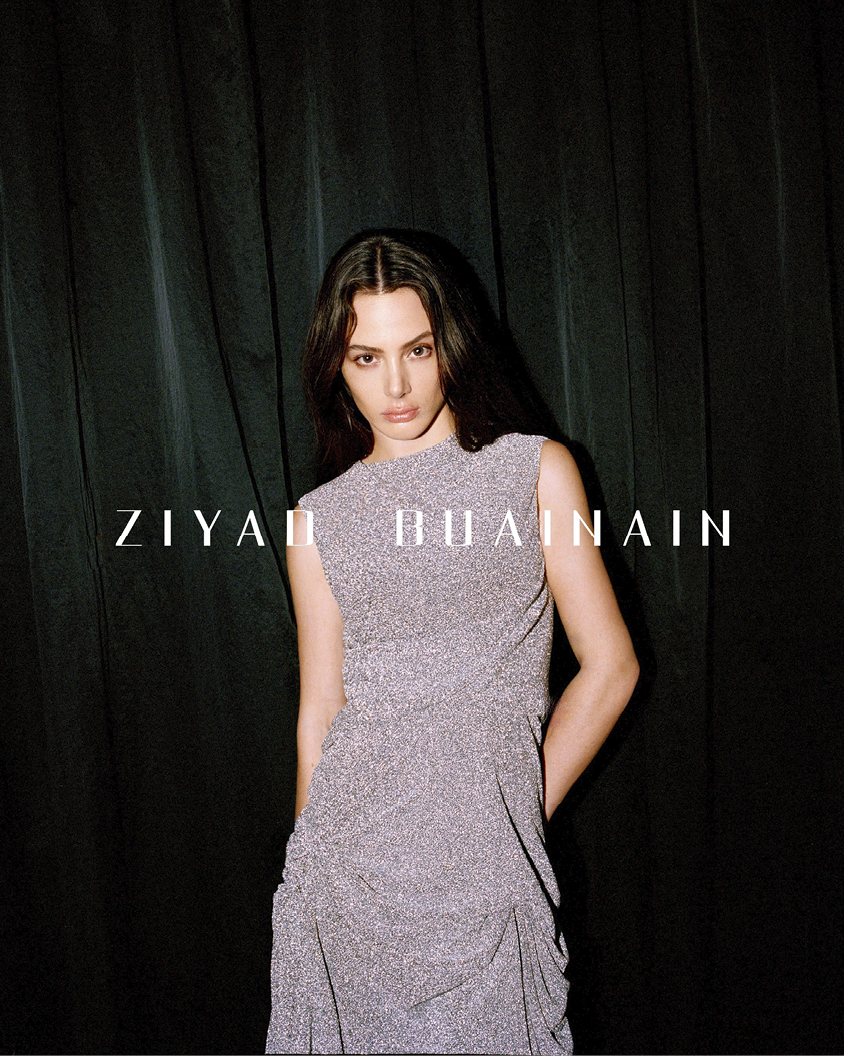
Being named a finalist in the Evening Wear category is a major milestone. What does this recognition mean to you personally and professionally?
Personally, it feels like a moment of reflection, to pause and appreciate how far the journey has come. My work being recognised and seen on this level is incredible. Professionally, it is an honour to be acknowledged by such respected figures in the industry. It reminded me that my work and stories resonate and connect with people. It also feels meaningful to represent the region at a time when so many powerful creative voices are emerging from it.
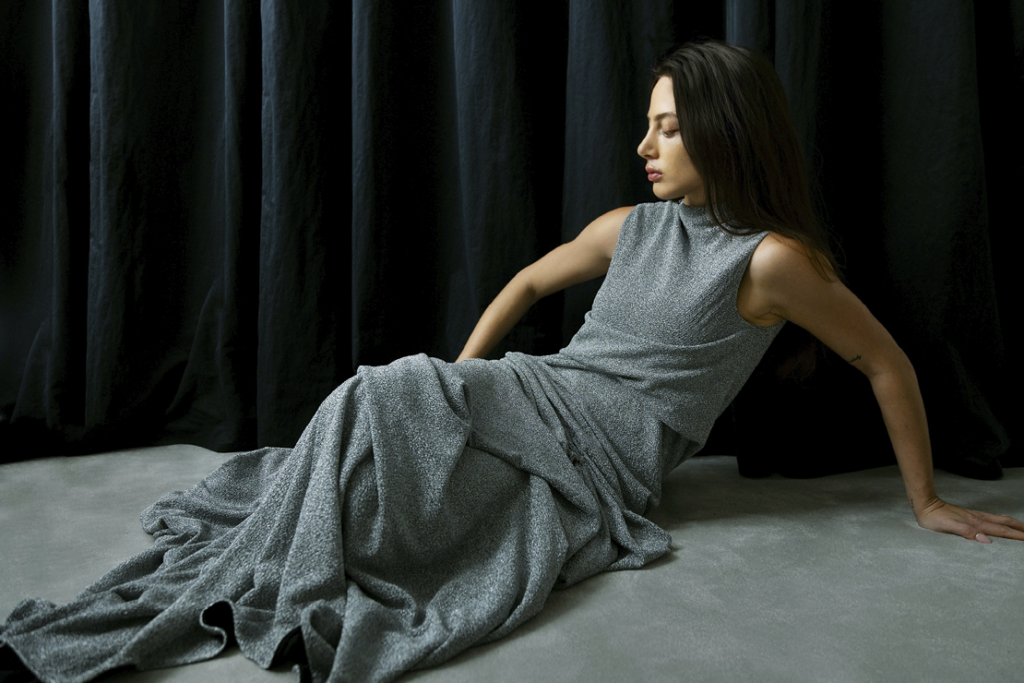
Evening wear is as much about architecture as it is about emotion, sculpting form, light, and movement. How do you balance structure and softness in your designs?
That balance is at the heart of everything I do. I am drawn to contrasts, so I often start by exploring tension between strength and vulnerability. I build structure to support the body, but I like to soften it with fluidity and movement. For me, structure represents resilience, while softness carries emotion. When they coexist, the result feels human and alive, not static. It is about creating a sense of presence, but also poetry.
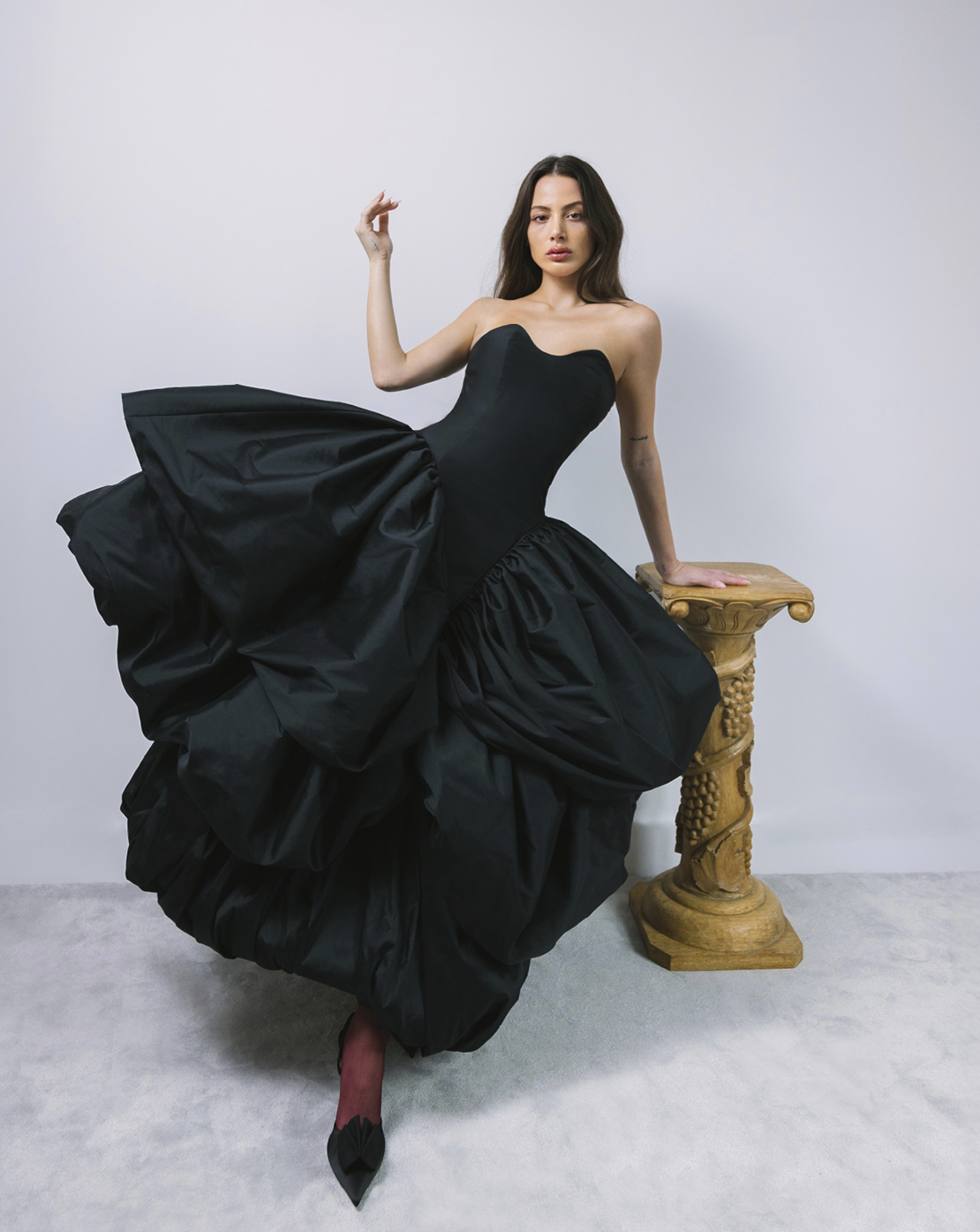
Where do you draw inspiration for your silhouettes, from art, architecture, culture, or perhaps your own experiences of the region’s heritage?
My inspiration comes from many places, but it always begins with emotion. I am drawn to absurdist film, surrealist art, and the feeling that comes from something slightly off-balance or unexpected. My time living in Tokyo taught me to appreciate form and restraint, while my Saudi roots gave me an appreciation for storytelling and symbolism. The silhouettes often sit somewhere between those worlds, combining discipline with fluidity. I like to create pieces that hold memory and movement at the same time.
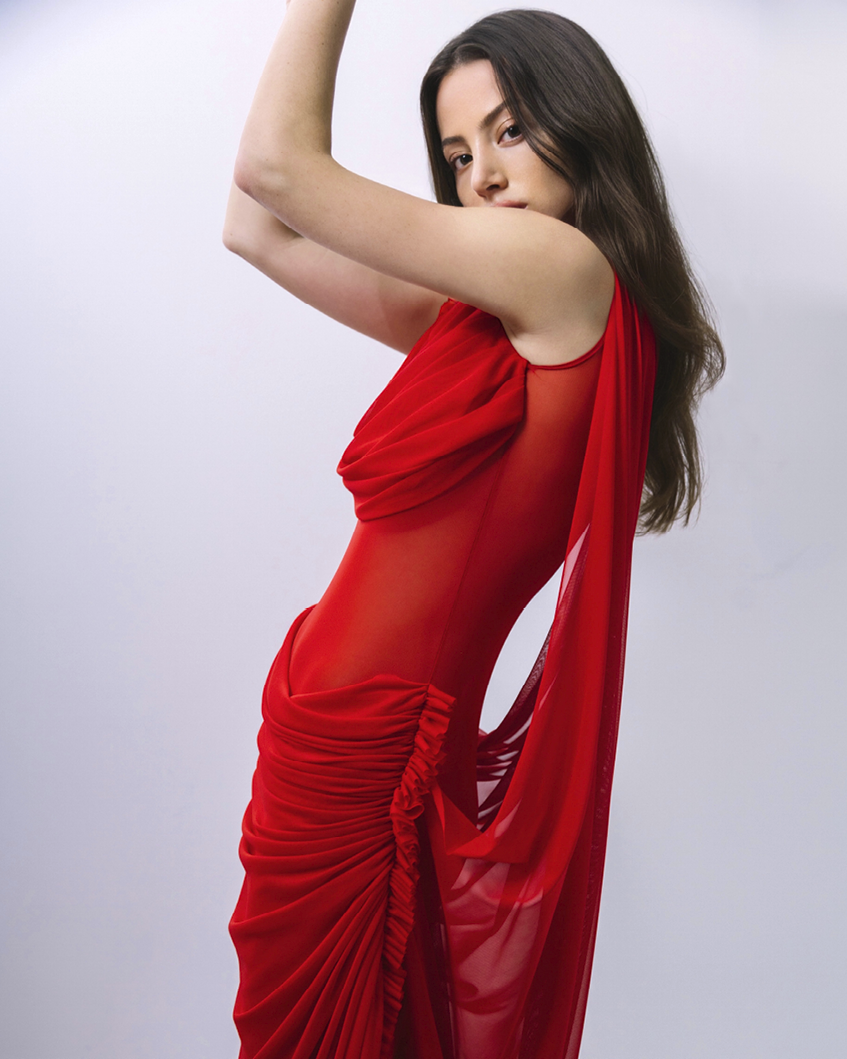
Many of your pieces convey a strong sense of drama and refinement. How do you use craftsmanship and materiality to bring those emotions to life?
Craftsmanship is where emotion becomes visible. I am very deliberate about how each piece is made, from the cut to the choice of fabric. I work mostly with deadstock, recycled, and responsibly sourced materials, so there is intention behind every decision. The drama comes not from excess, but from precision and detail. I like materials that move and react to light, that have a sense of depth. Refinement, to me, comes from restraint and from allowing the craft to speak for itself.
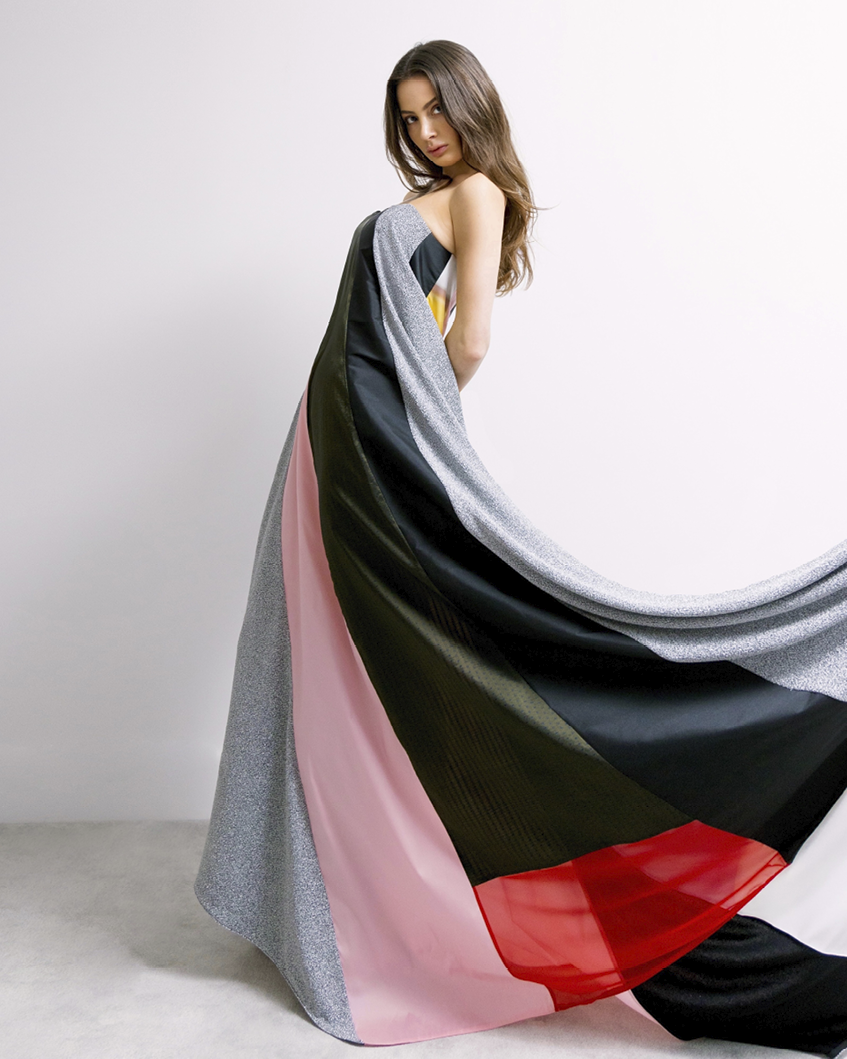
How do you see the dialogue between modern Arab identity and global couture evolving, and what role do you hope your brand will play in that conversation?
The dialogue is becoming more confident and complex, which is exciting to see. Designers from the Arab world are now shaping the conversation rather than trying to fit into it. There is a growing sense of individuality and purpose that feels authentic. I want my brand to be part of that shift by offering a perspective that is rooted in the region but speaks globally. My goal is to show that modern Arab identity can be experimental, emotional, and forward-thinking, while still being connected to its depth and heritage.
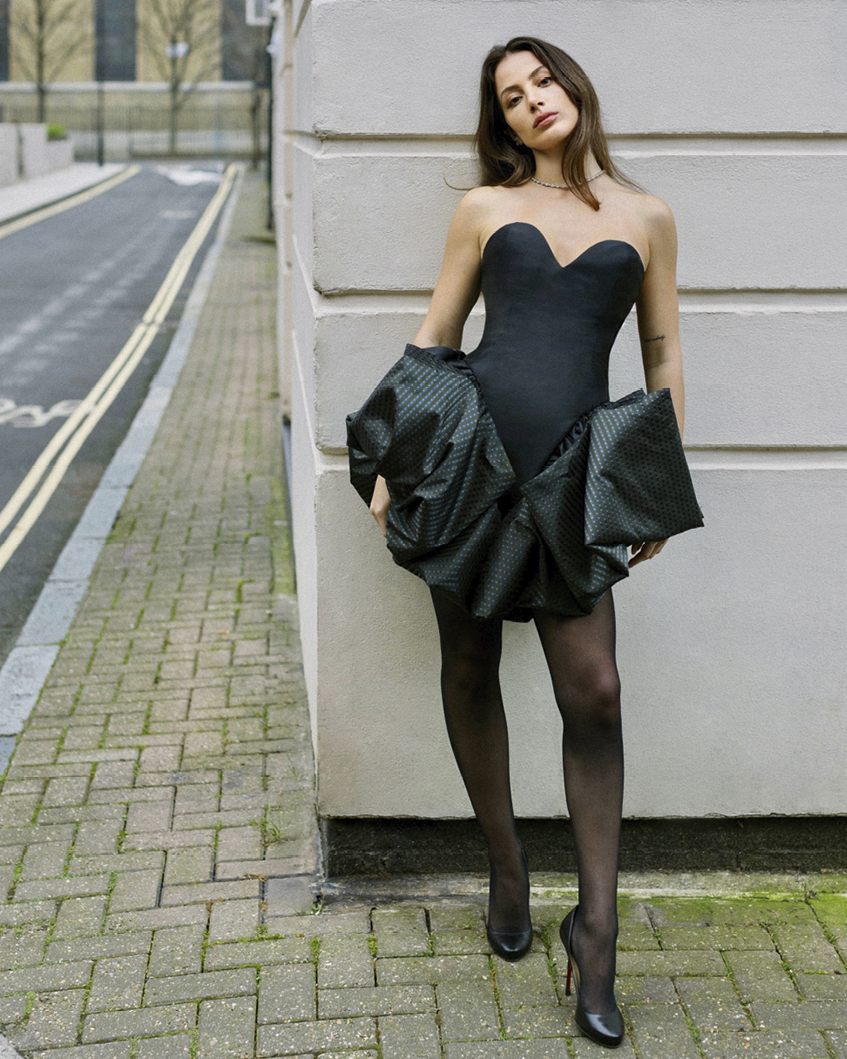
If you could describe your creative philosophy in one sentence, what would it be?
To create with honesty and intention, using design as a way to tell stories that hold meaning and hope.
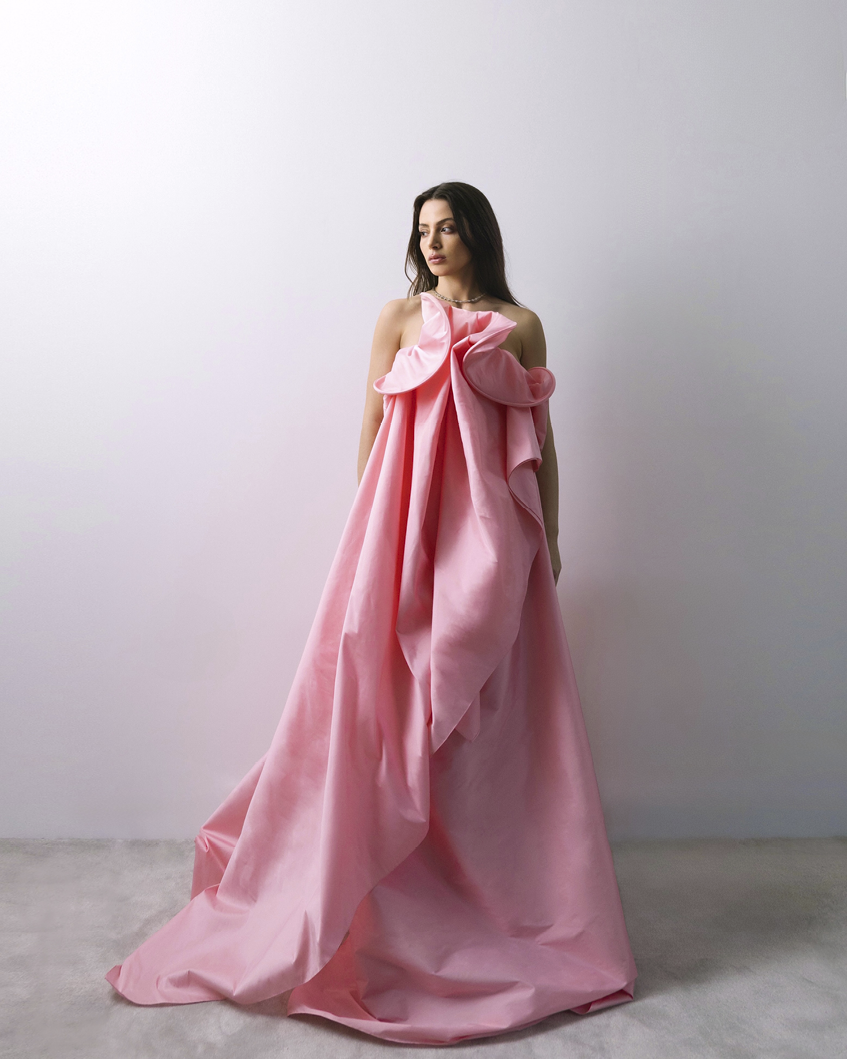
From where do you get your inspiration and when or where are you at your most creative?
My inspiration often comes from observing people and the world around me. I am drawn to emotion, to how we move, feel, and interact with our environments. I am most creative when I have space to think, usually in the studio or while travelling. Research also fuels my ideas; I often look to art, psychology, and social topics that feel relevant to the moment. Creativity, for me, begins with curiosity and evolves through experimentation.
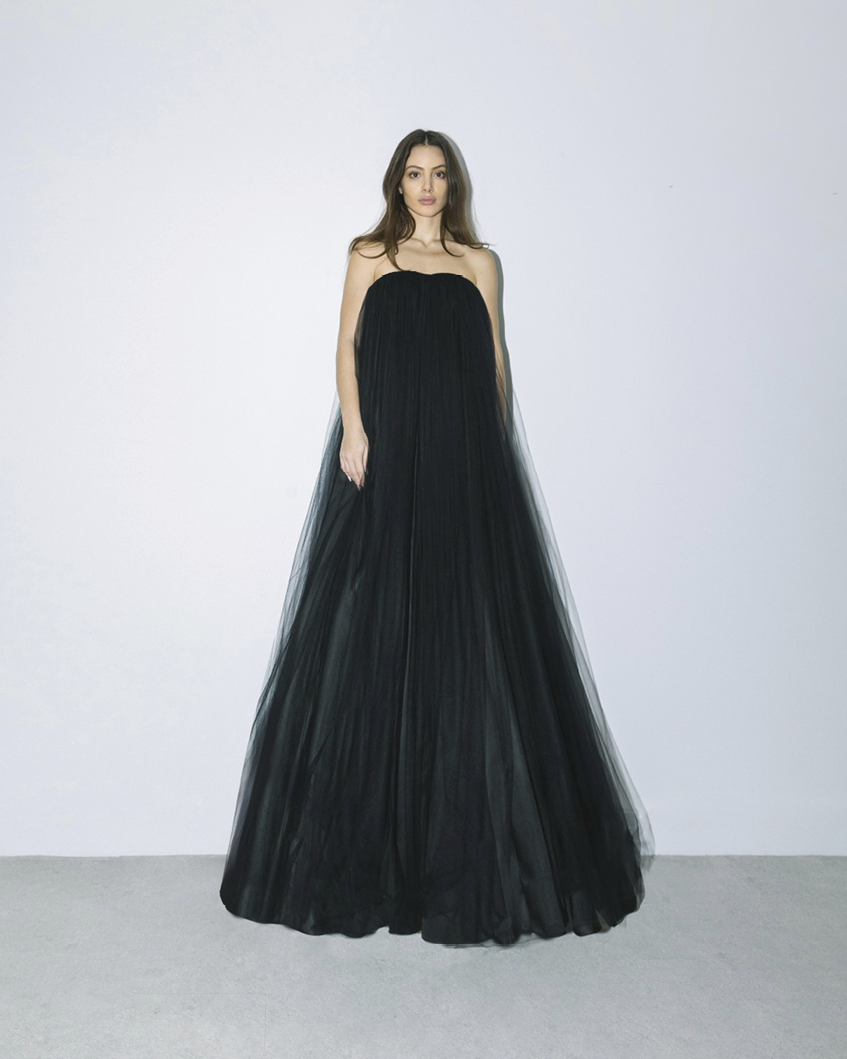
Looking ahead, what is the vision for your brand?
My vision is to build a brand that feels timeless, emotionally grounded, and responsible. I want it to stand for conscious creation, where craftsmanship and storytelling are equally important. I hope to keep pushing boundaries in how we define luxury, focusing on meaning rather than excess. Ultimately, I want my work to inspire reflection and possibility, especially for young creatives from the MENA region who are shaping the future of our industry.
By Lindsay Judge
The World of Mastery, Jewellery meets Architecture with Louis Vuitton’s Virtuosity Collection
With its latest high jewellery collection, Virtuosity, Louis Vuitton redefines craftsmanship as a form of architecture. Comprising 110 one-of-a-kind creations across twelve themes, the collection unfolds as a study in mastery and imagination, a balance between structural precision and liberated creativity.
Divided into two chapters, “The World of Mastery” and “The World of Creativity,” Virtuosity celebrates the house’s dual heritage of construction and emotion. The first chapter, The World of Mastery, is rooted in geometry and engineering, where Louis Vuitton’s iconic trunk-making codes merge with the rigour of fine jewellery. Here, design becomes discipline.
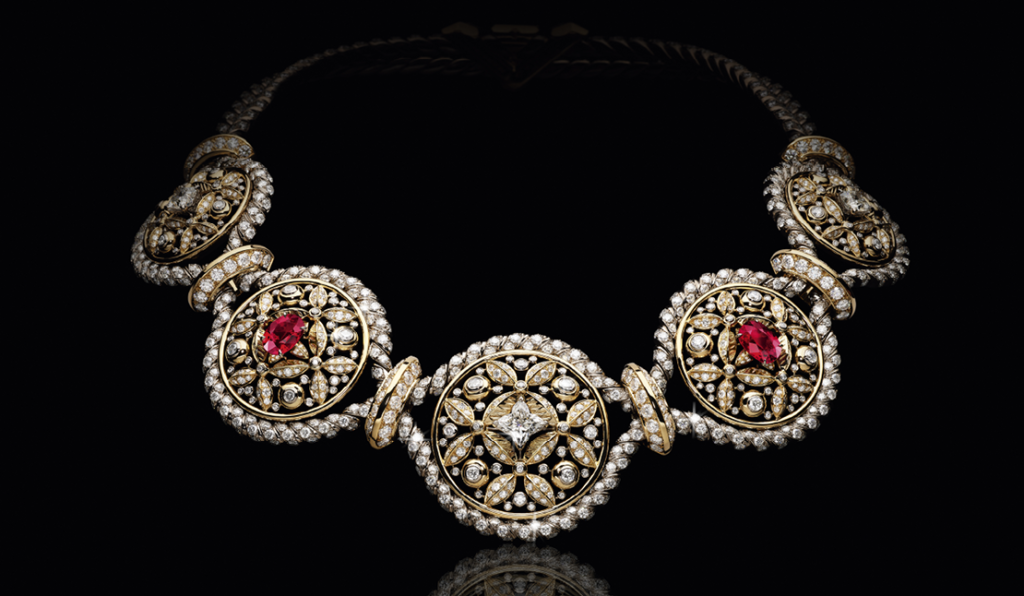
In Savoir, the collection opens with a 30.56-carat black opal and a 28.01-carat emerald drop, suspended in a lattice of angular lines that recall the maison’s trunk corners and metallic rivets. It is a piece that took over 1,500 hours to complete, transforming craftsmanship into a wearable monument.
Louis Vuitton’s gemmologist explains that this dedication begins long before design: “At Louis Vuitton, our journey begins with the careful sourcing of stones and a deep appreciation for the offerings of nature. This treasure hunt reveals a distinct DNA: a focus on rare and exceptional finds, coupled with a disruptive approach to colours, shapes, and the unconventional origins of our gems, ensuring unwavering quality and excellence. Inspired by a spirit of adventure, a love for vibrant colours, highly refractive crystals, and precisely cut stones, these elements form the unifying essence of our creations.”
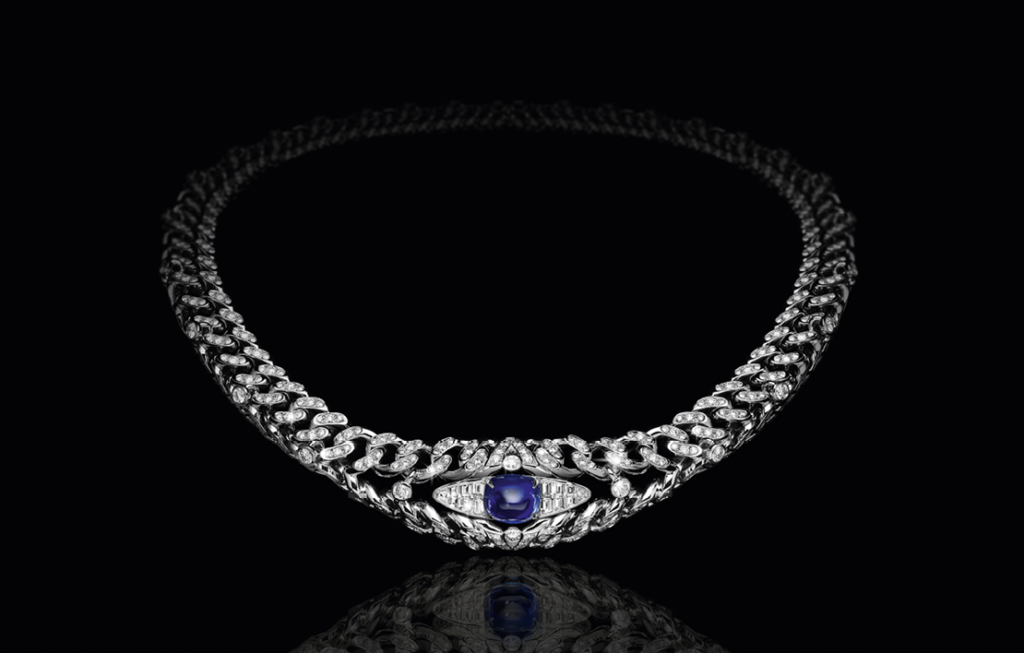
In Protection and Keeper, architectural discipline softens into symbolism, shield motifs, rubies, and pearls intertwine to guard the maison’s secrets. Maestria and Monumental stand as testaments to strength and structure, necklaces engineered like cathedrals in gold and gemstone. The latter features 320 stones arranged into a mosaic of emeralds, rubies, onyx, and diamonds — a façade of colour and light that mirrors Louis Vuitton’s architectural precision.
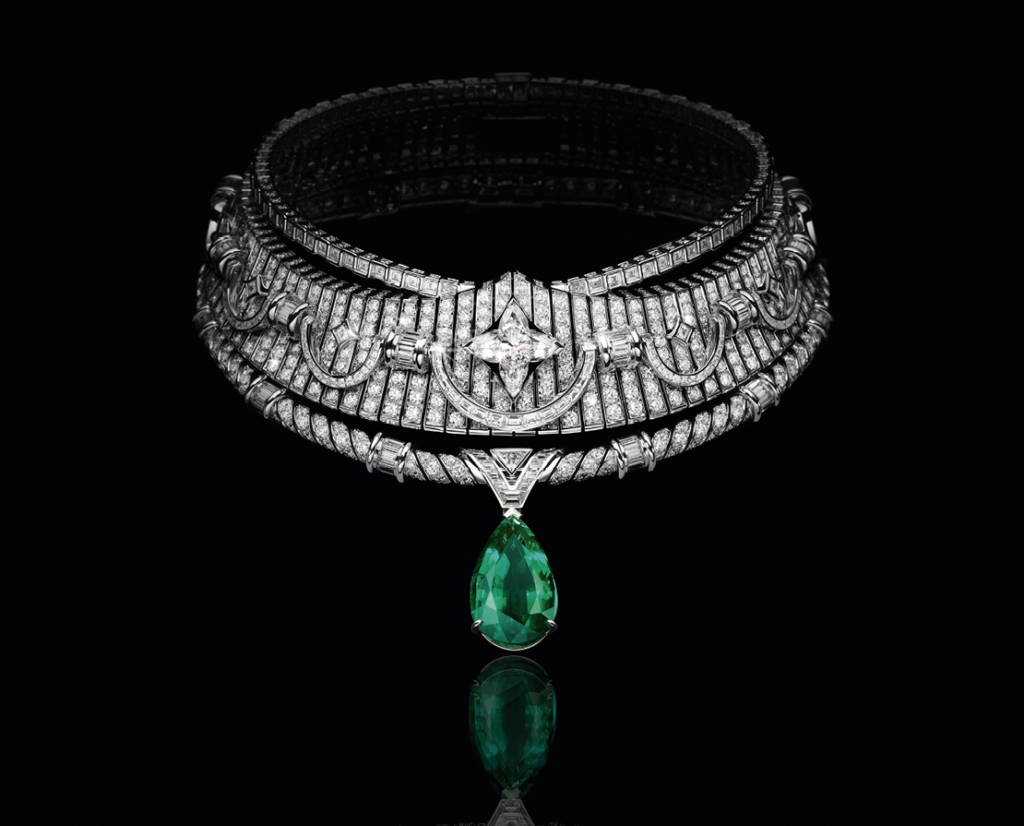
Throughout the collection, the variety of stones tells a global story of rarity and refinement. “The gems used in the Louis Vuitton Virtuosity collection are particularly special, mainly because of their variety, their impressive carat weights, and their diverse origins,” the gemmologist notes. “You can find an opal from Australia, exceptional and rare emeralds from Zambia, Colombia or Brazil, pigeon-blood rubies from Mozambique, an impressive chrysoberyl from Sri Lanka, an astonishing sapphire from Sri Lanka, rubellites, and indicolite tourmalines from Brazil. They feature different cuts and colours that are very characteristic of Louis Vuitton, such as the opal on the Savoir necklace, cut into a unique triangle, echoing the V of Vuitton and the triangle of knowledge, symbols of the Maison’s relentless pursuit of innovation.”
This dedication to discovery extends beyond the rare and precious to the imaginative and unconventional. “We are also continuously expanding our material and colour palettes to include new and less familiar stones, allowing us to offer a differentiated selection, including gems like aquamarine, Mexican opals or zircons, for example. We aim to transform our expertise into emotionally resonant pieces, never compromising on excellence or perfection, while discovering and appreciating the unique magic each stone possesses. The seemingly effortless result is achieved through extensive and meticulous work.”
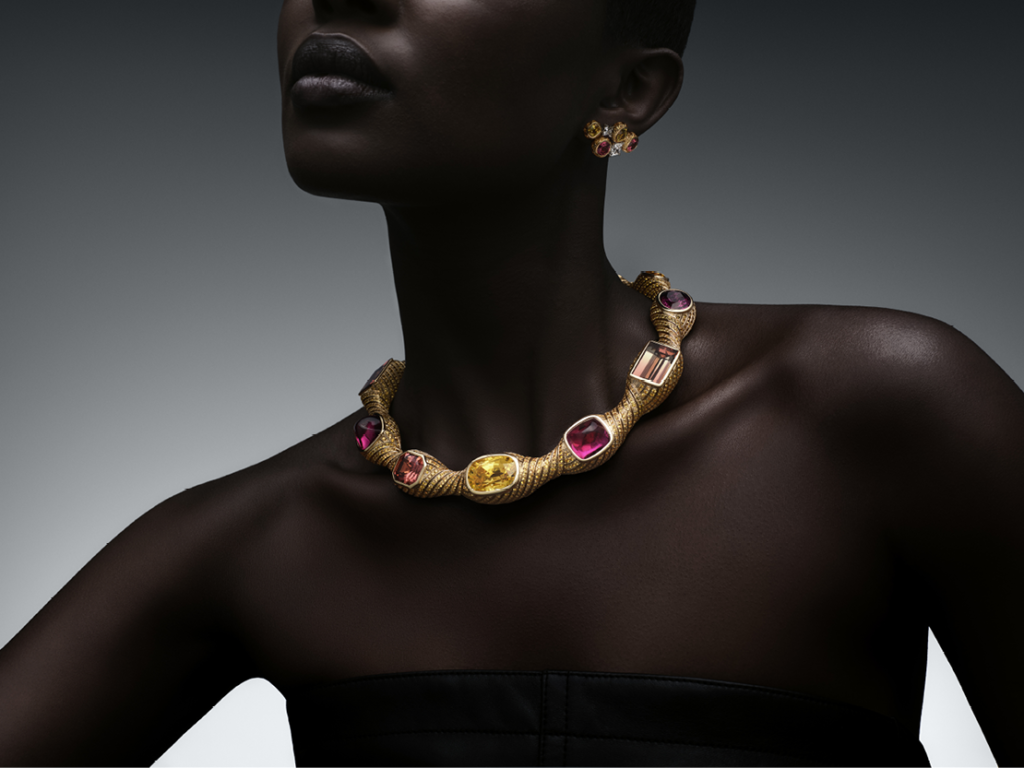
In Apogée, the collection reaches its pinnacle, a transformable masterpiece centred around a 30.75-carat Brazilian emerald pear-cut, embraced by Louis Vuitton’s Monogram star diamond, the ultimate symbol of artisanal triumph. Rope-like gold details, reminiscent of architectural rigging or tensile structures, connect craftsmanship to creativity, guiding the collection into its second universe: The World of Creativity.
Here, motion and emotion converge. In Motion, sapphires and diamonds ripple in waves of energy and movement, while Florescence blossoms into vibrant tourmalines that seem to breathe with life. No longer bound by symmetry, these pieces dance between structure and freedom, their beauty lying in effortless balance.
The crescendo arrives in Joy, Aura, and Eternal Sun, where light itself becomes the muse. “I am particularly proud of the fabulous yellow diamonds pairing for the Eternal Sun collection,” shares the gemmologist. “It took us seven years to gather all 27 diamonds just for the necklace to have this perfect combination of colour and sizes! These extremely rare diamonds are true miracles of nature, and there are still many gemological questions surrounding this type of yellow Ib diamonds (versus type Ia), where a nitrogen atom has lodged itself in the carbon’s crystalline structure under extreme conditions of temperature and pressure.”
In Eternal Sun, those 27 radiant yellow diamonds are arranged in a spiral so seamless it resembles the geometry of light itself — a feat of artistry and patience that captures Louis Vuitton’s relentless pursuit of perfection.
Throughout Virtuosity, Louis Vuitton treats each jewel like a structure, a monument of emotion, precision, and imagination. Every clasp, setting, and facet becomes an architectural element, as if the maison’s legendary trunk-makers had turned their craftsmanship from sculpting leather to sculpting light.
Art Without Borders, Dyala Nusseibeh, Director of Abu Dhabi Art, discusses the city’s flourishing art scene
As Abu Dhabi Art prepares for its most ambitious edition yet, welcoming 140 galleries from 35 countries, the fair stands as a symbol of the UAE’s growing influence on the global art scene. At its helm is Dyala Nusseibeh, Director of Abu Dhabi Art, whose leadership has been instrumental in shaping the fair into a meeting point for international collaboration, cultural dialogue, and artistic discovery.
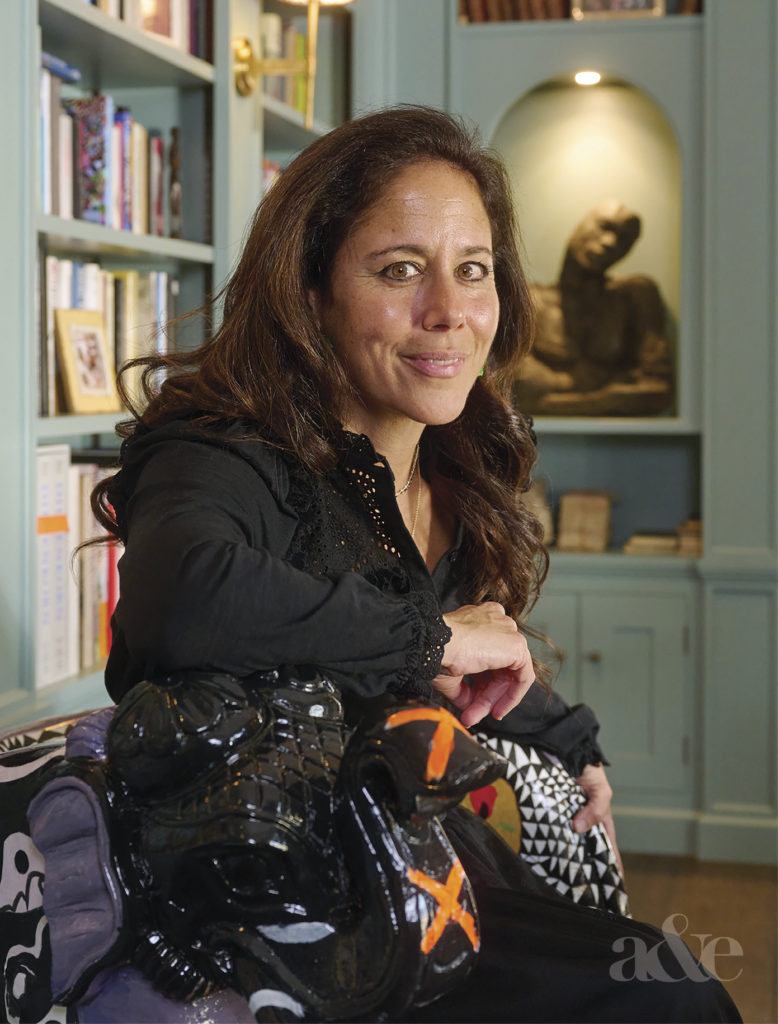
Under her direction, Abu Dhabi Art has evolved from a boutique fair into a major platform that reflects the emirate’s wider cultural vision, one defined by inclusivity, education, and global exchange. This year’s edition extends that vision further, spotlighting Nigeria, the Gulf, and modern Türkiye through its Focus Sectors, and introducing new collaborations with emerging galleries and artists from around the world.
In this interview, Nusseibeh reflects on the fair’s remarkable growth, the power of cultural diplomacy, and the dynamic creative energy that continues to position Abu Dhabi as a bridge between global art markets
This year’s edition has been described as Abu Dhabi Art’s most ambitious yet, with 140 galleries from 35 countries. What does this growth signify about the fair’s evolution and its role on the global stage?
The rapid growth of Abu Dhabi Art in recent years cannot be seen in isolation. Important cultural projects are now coming to fruition in Abu Dhabi, many of which have been in planning stages for close to two decades. More specifically, I would point to the constellation of museums on Saadiyat Island that have opened or are soon to open, among which are Louvre Abu Dhabi (opened 2017), Natural History Museum which opens this month, Zayed National Museum (opening December 2025), and of course Guggenheim Abu Dhabi, opening toward the end of 2026. Cultural professionals working for these institutions, building global networks, contributing to our creative economy and enabling local knowledge production to be shared globally, have collectively created a strong base for the development of our market.
Seen through a wider lens, the Gulf has come to global attention for its significant government-led investment in culture, at a time when many countries are facing significant cuts in arts funding. This makes the UAE attractive as a partner for global galleries seeking new collectors and institutional support for their artists.
Finally, as an art fair that started as a more high-end boutique project, we have been able to introduce different (lower) price points for artworks, bring in a wider range of galleries from a broader geographic spread, and create a space for emerging and mid-sized galleries to participate. This has, in turn, attracted a younger generation of potential collectors and encouraged them to start acquiring works from the fair. In this sense, we have supported the growth of less dominant global art markets and grown as a fair in step with this.
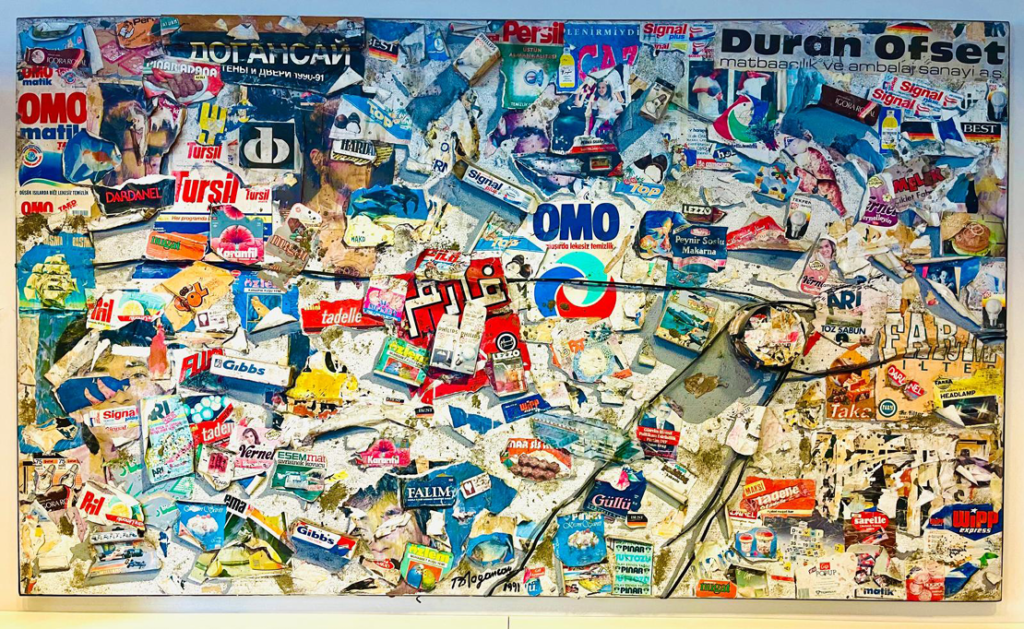
With many first-time participants from new regions, what was the curatorial vision behind expanding geographic diversity this year?
Our collaboration with the Nigerian Ministry of Art, Culture, Tourism and the Creative Economy, in particular, bears reference here. Like the UAE, the Nigerian Ministry has placed strong emphasis on developing and enhancing its creative economy and providing opportunities in the creative sphere for its youth. Thanks to their support, we are presenting modernist Nigerian artists such as Nike Davies-Okundaye and Twins Seven Seven through kó gallery alongside emerging artists from 6 galleries, including SOTO gallery, which is a community-centred space that opened in 2022. The ambition for the Ministry is to develop a new, broader market for its artists. Abu Dhabi, as a cultural hub,§ offers a dynamic platform for them.
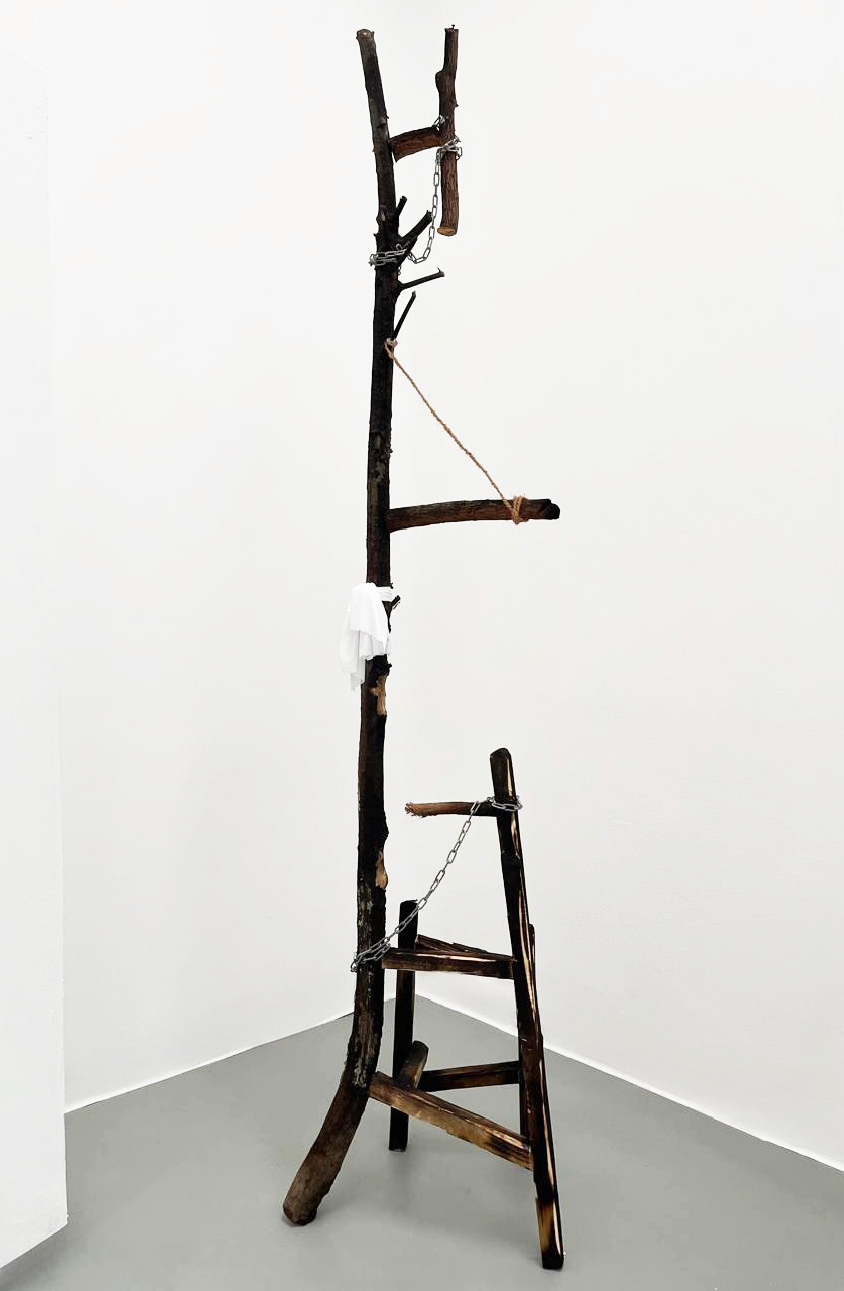
The Focus Sectors shine a light on Nigeria, the Gulf, and Modern Türkiye. What connects these regions conceptually, and how do they reflect Abu Dhabi’s position as a bridge between cultures?
I would say that all three geographies are dynamic creative centres for artistic production and that modern and contemporary artists from these countries are relatively under-researched in the context of global art histories (traditionally Euro-centric in emphasis). All three societies have undergone tremendous socio-political transformations in recent decades, and it is fascinating to think about how artists have engaged with these changes in their practice and how globally connected these artists were and continue to be. Take, for example, Fahrelnissa Zeid (showing at DG Art Project), who was born under the Ottoman Empire in Türkiye, married Prince Zeid bin Hussein, a member of the Hashemite royal family of Iraq, lived and showed in Paris and London as well as Baghdad and Istanbul and ended her days mentoring younger female artists in Jordan. Or Nike Davies-Okundaye and Twins Seven Seven (showing with kó gallery), who were part of the Osogbo movement in Nigeria. The Osogbo movement came out of a period of transition in the early years of Nigerian independence in the 1960s. Osogbo—a town connected by rail and known for its cultural heritage—became a gathering point for artists, performers, and thinkers. Many of these artists are also currently in an exhibition in a show about Nigerian Modernists at the Tate Modern in London. To be able to visit the fair and acquire works by such historically important artists is exciting in my view. In the Khaleeji Focus, Nasser Al Yousif is being presented by Albareh Gallery. He was an important artist in Bahrain, and the beautiful linoleum prints on view depict quotidian community scenes such as fishing, diving, music, and dancing. These works were created in the 1980s when the artist had begun to lose his sight. He drew on his mind’s eye to recreate these vignettes, recalling a now much-transformed country.
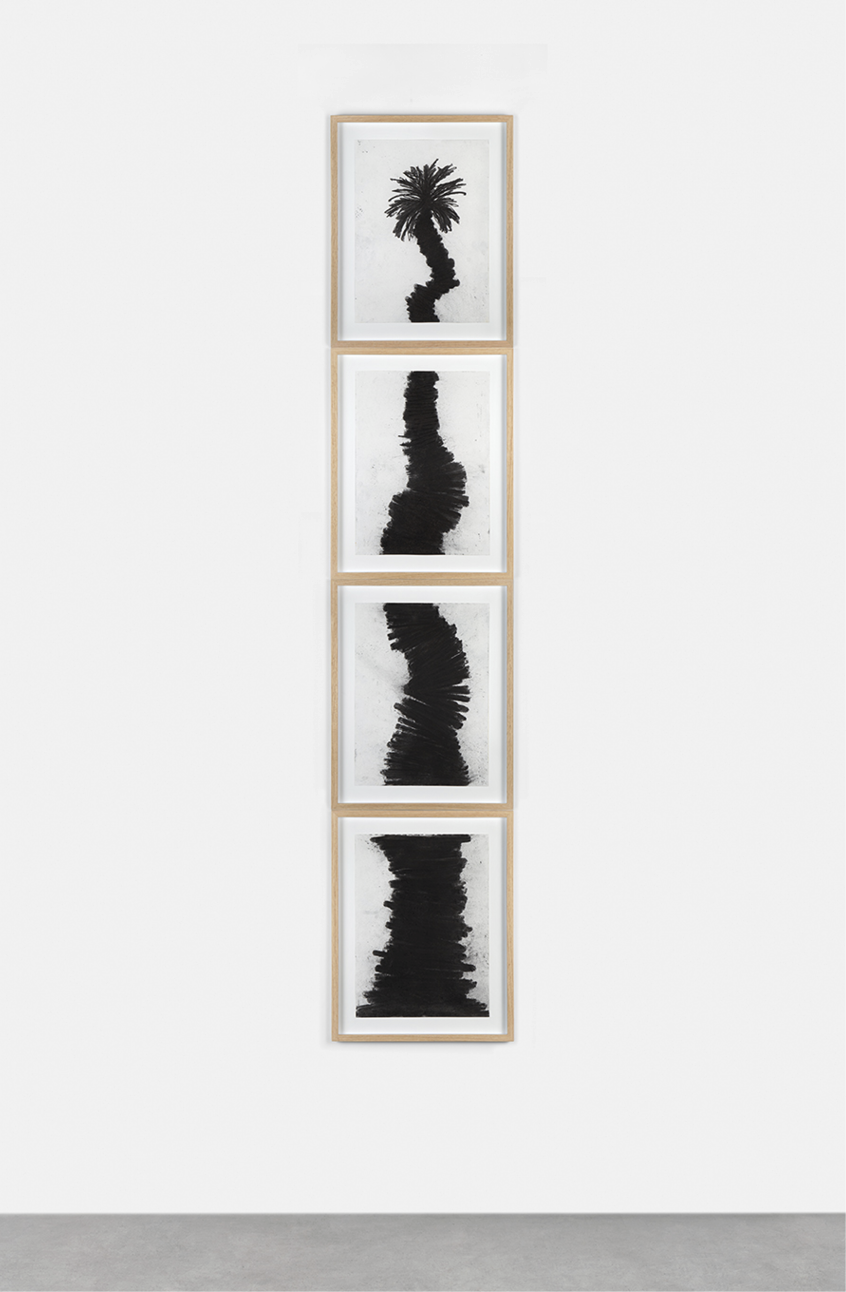
The UAE’s art scene has evolved dramatically in the last decade. From your perspective, what makes Abu Dhabi’s approach to art and culture distinct within the region?
The commitment of the UAE government to supporting the creative economy and placing culture at the heart of its vision for the future development of the nation is exceptional. I would say it is two-pronged; on the one hand, led by an ambition to provide the best possible opportunities for youth on the ground and on the other, as an exercise in soft power internationally. The UAE advocates that the wealth of the nation lies in its people and therefore strategically invests in the best possible education for youth, providing the tools necessary for younger generations to build their futures. This sentiment drives investment in higher learning institutions for technology and AI, medicine, science, space, astrophysics, engineering and of course culture. Both local and international universities that have set up in the UAE are contributing to what has been called the “brainport generation”, a generation growing up at a time where the UAE is a centre for knowledge production globally, where many innovators have set up in the UAE to work on world-leading research. Of course, others in the region are thinking along similar lines, but few have managed to attract so many global investors and innovators to make the UAE their home, contributing to social innovation on the ground. At the same time, global economic exchange and economic integration bring in their wake cultural exchange, the exchange of ideas and positions. The UAE is supported in its global economic and political aims in part through the strength of its cultural diplomacy and soft power policies.
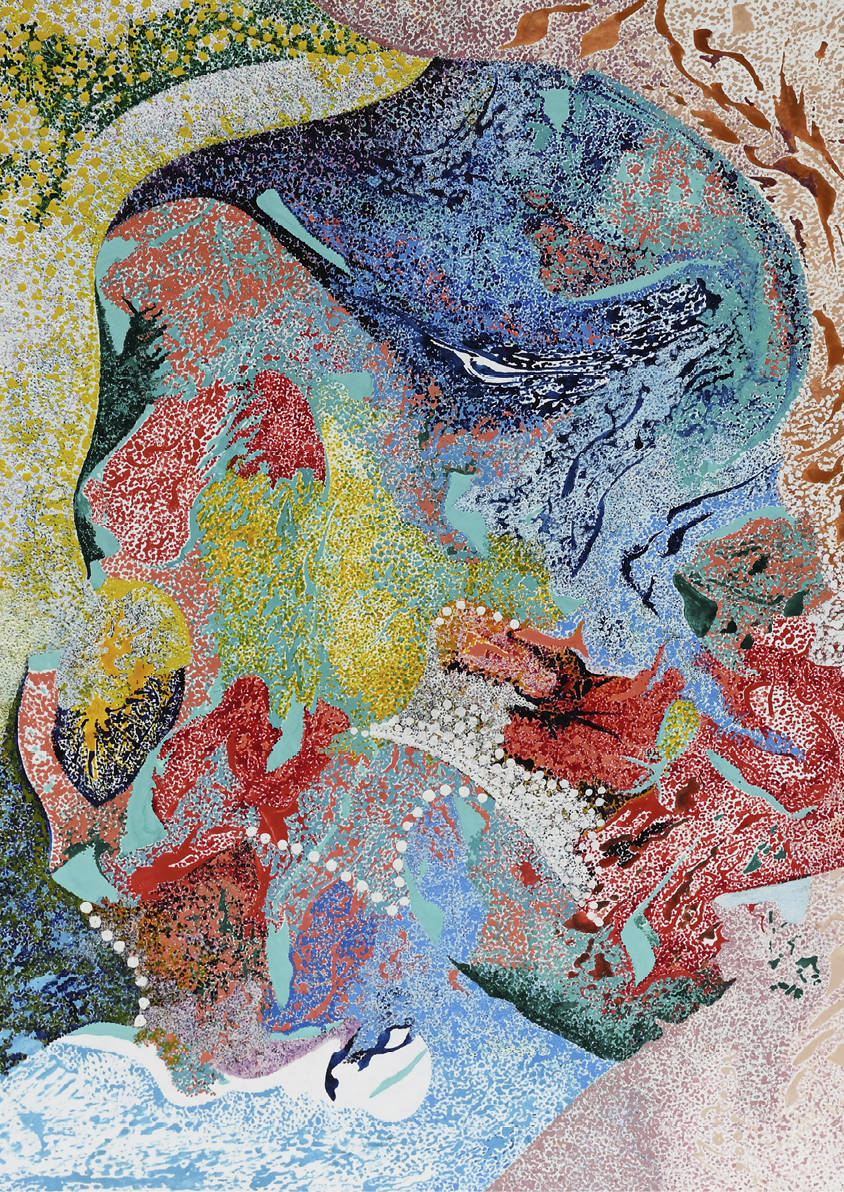
How have government and institutional investments influenced the pace and direction of this growth?
Enormously. The Louvre Abu Dhabi is a case in point as a symbol of a far wider bilateral co-operation between the UAE and France that has benefitted both the French and the Emirati creative economies, whilst also strengthening political ties between the two countries. Since the Louvre Abu Dhabi opened in 2017, it has welcomed over 1 million visitors a year, vastly increasing the number of cultural tourists to the emirate, but also the quality of exhibitions and art historical research available for local schools and universities to integrate into their curricula. Guggenheim Abu Dhabi, though not yet open, has been acquiring art for its collection for years and has already had a seismic impact on artists in the region, attracting global interest in Southwest Asia and North Africa (SWANA) art and art histories.
Similarly, New York University – Abu Dhabi Art Gallery and Al Mawrid Arab Centre for the Study of Art at NYU-AD have accelerated research into the art histories of West Asia and North Africa and enabled vital knowledge production to come out of Abu Dhabi in this field. Professors at NYU-AD also spend semesters teaching as New York University faculty, ensuring a transfer of knowledge and integration of ideas globally. In terms of pace and direction of growth, global partnerships and local institution-building are vectors that interconnect to drive these changes. There is a real energy in Abu Dhabi at present that is led by the government but also supported by grass-roots organisations, private philanthropists and corporations. The work of these stakeholders and others whom I should also highlight (Warehouse 421, Rizq Art Foundation, Cultural Foundation, etc) will yield, I think, amazing opportunities for youth today.
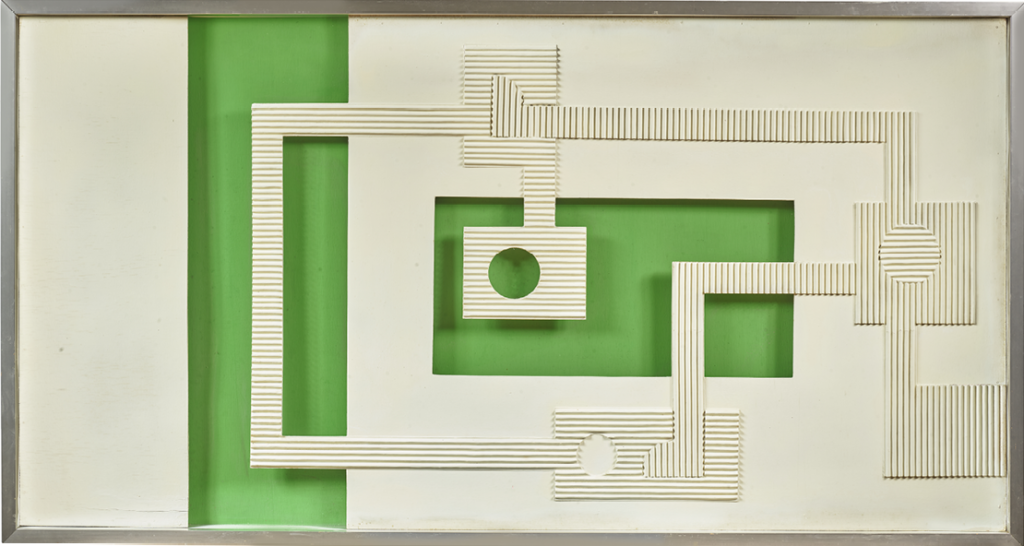
How does Abu Dhabi Art ensure that homegrown talent is represented and supported on an international scale?
Our Beyond Emerging Artists programme springs to mind here. Each year, we commission three artists from the UAE to create new work, which is shown first at Abu Dhabi Art, then later exhibited internationally in different locations. We work closely with a group of cultural philanthropists called Friends of Abu Dhabi Art (FOADA) to deliver this programme and appoint a guest curator each year to mentor and support the artists with their commissions. In 2024, we showed these artists in Venice, Italy, and then, thanks to the support of a FOADA member, Shafeena Yousuff Ali, we showed these artists in Kochi, India. This year, thanks to the support of our partner HSBC, we exhibited three commissioned artists in both London and Hong Kong.
The UAE has become a major destination for collectors. How do you see the collector base evolving, and what trends are emerging among regional patrons?
It is certainly a desirable destination with the relocation of many high-net-worth individuals to the UAE in recent years. However, I would highlight that there is also an existing community with strong roots, thanks to whom the fair has evolved. We have collectors who have been building collections for decades in the UAE. What is evolving is how younger collectors are impacting the scene, what their interests are, as well as the buying power of some of the newcomers to the UAE and the ramping up of museum acquisitions for the region. I would say a clear growth in the value of art from the region can be expected, given the investment of museums that are both acquiring and building on existing research and archives for and about artists from this part of the world.
Collaboration and education seem to be central to Abu Dhabi Art’s DNA. Can you share more about the initiatives that extend beyond the fair, such as community programmes, residencies, or public art projects?
We launched the Pavilion Prize in 2017, inviting architecture and design students to propose a Welcome Pavilion for the fair. The winning design is produced for the fair following an annual competition, and the Pavilion is viewed by 35,000 visitors each year. We also commission artists to create site-specific works in cultural sites in Al Ain, bringing art into public spaces. This year, six artists are creating works for Al Ain, including our Beyond Emerging Artists, Alla Abdunabi, Maktoum Al Maktoum and Salmah Almansoori, as well as more established artists Issam Kourbaj, Nike Davies Okundaye, Ramin and Rokni Haerizadeh and Hesam Rahmanian. Their work will be on view in sites including Hili Archaeological Park, Al Qattara Arts Centre, Jebel Hafit, Al Ain Oasis, and outside the newly reopened Al Ain Museum.
Having led Abu Dhabi Art through years of transformation, what has been the most rewarding moment or milestone in your journey so far?
Probably reaching 140 exhibitors as a fair this year. When I joined in 2016, the fair had fewer than 40 exhibitors, so we have really matured over time into a major cultural event that contributes in a meaningful way to the local ecosystem and attracts international investment.
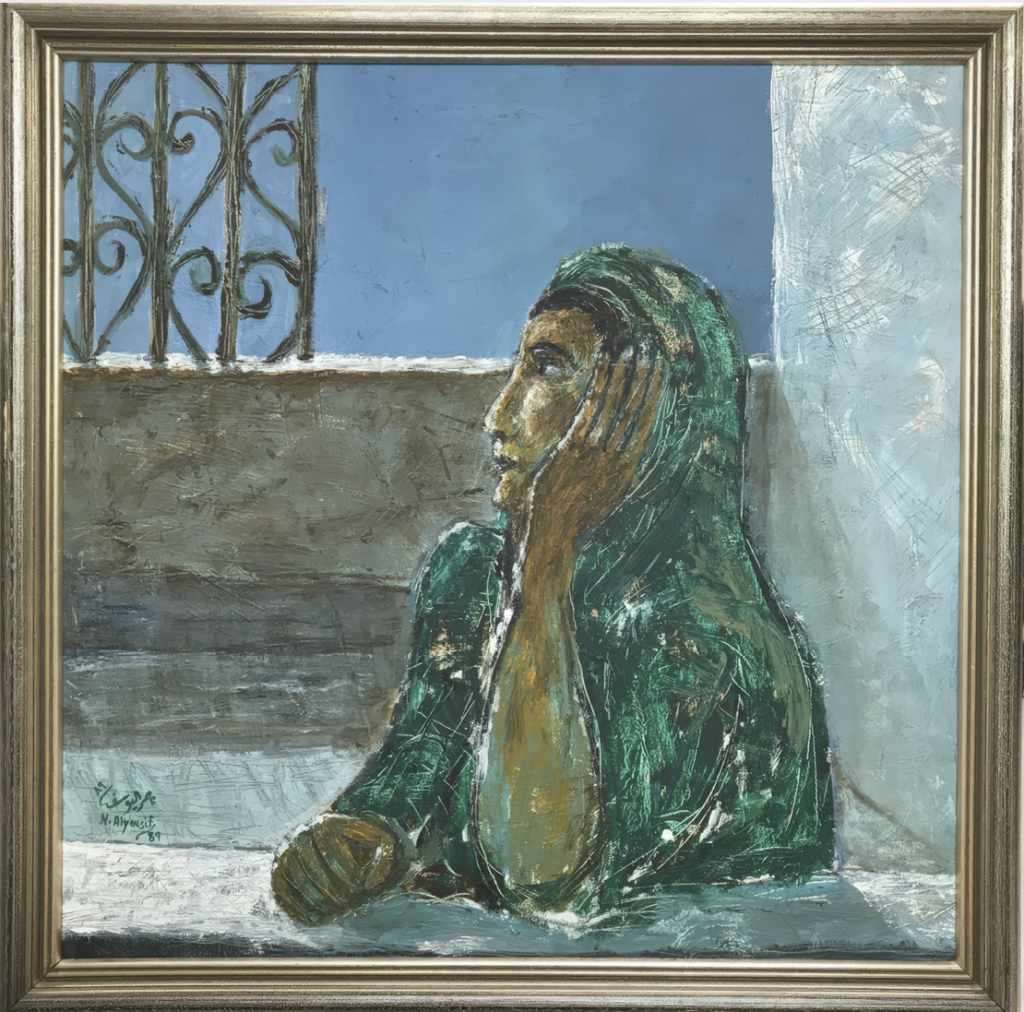
Looking ahead, and with the recent announcement of Frieze Abu Dhabi, what is your vision looking forward?
I can’t wait to collaborate with Frieze on the next chapter for the fair. I anticipate more integration globally for our regional market, more integration of our own narratives about our part of the world in global discourses and widespread benefits beyond the fair itself for arts professionals in the region. I look forward to seeing what Frieze Abu Dhabi ushers in. The team is fantastic and has decades of experience running major global fairs that bring big benefits to the cities they are part of.
Celebrating Craft, Dior adds new additions to the La Rose Dior Collection
For Victoire de Castellane, Creative Director of Dior Joaillerie, nature remains an inexhaustible source of inspiration. Through the La Rose Dior collection, she continues to reinterpret Christian Dior’s lifelong passion for flowers, particularly the rose, a symbol of femininity, emotion, and eternal beauty.
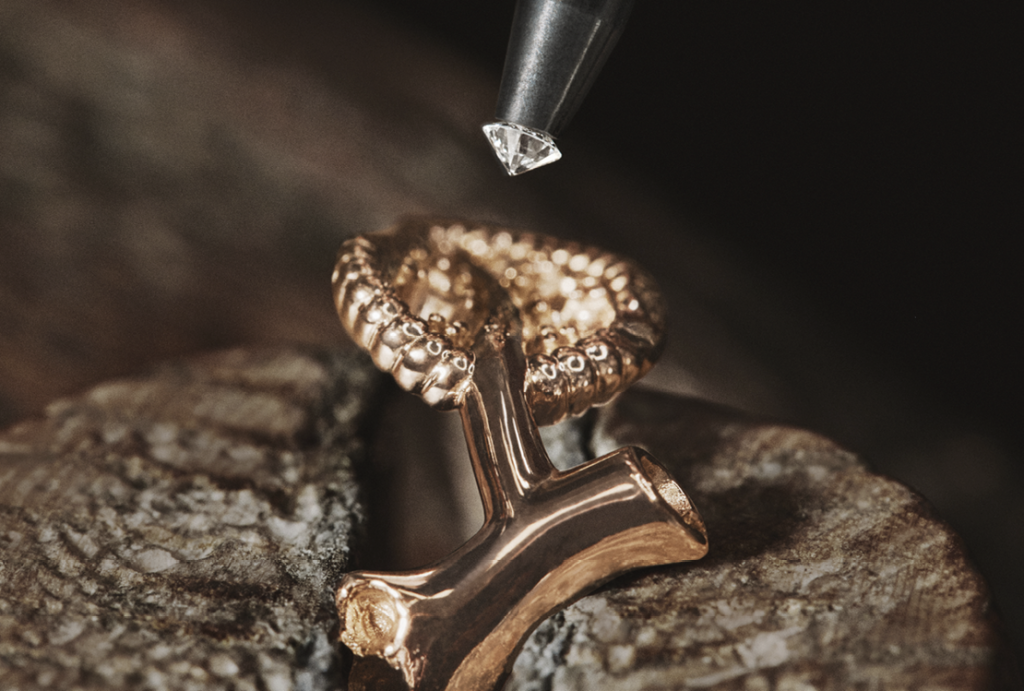
This season, the Maison unveils exquisite new creations that expand the poetic world of La Rose Dior, bringing fresh expressions of lightness, romance, and craftsmanship to its signature lines.
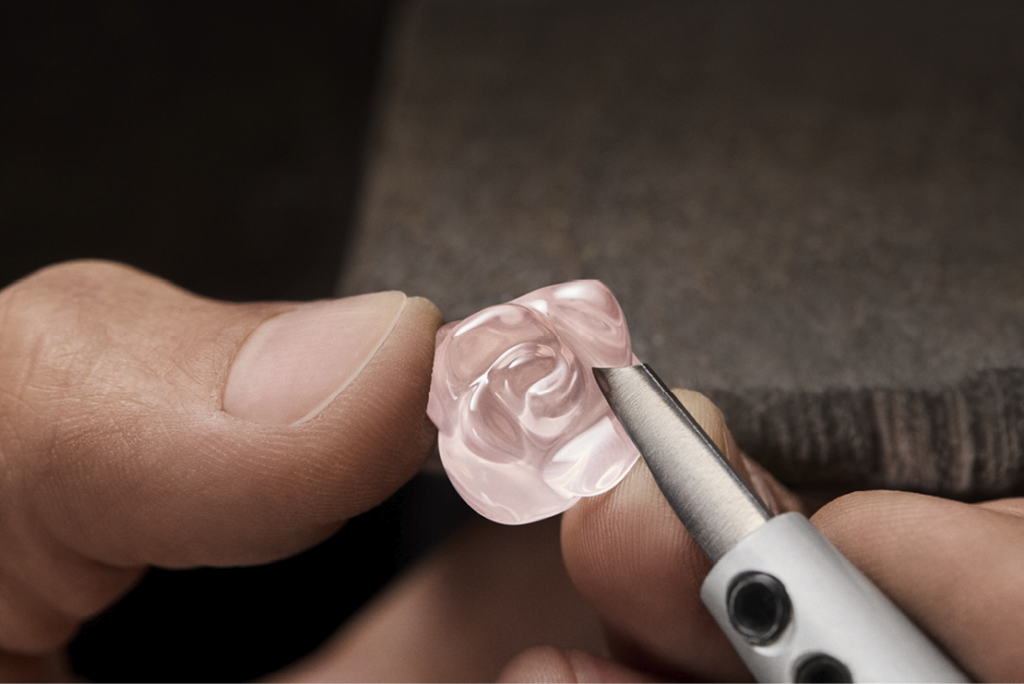
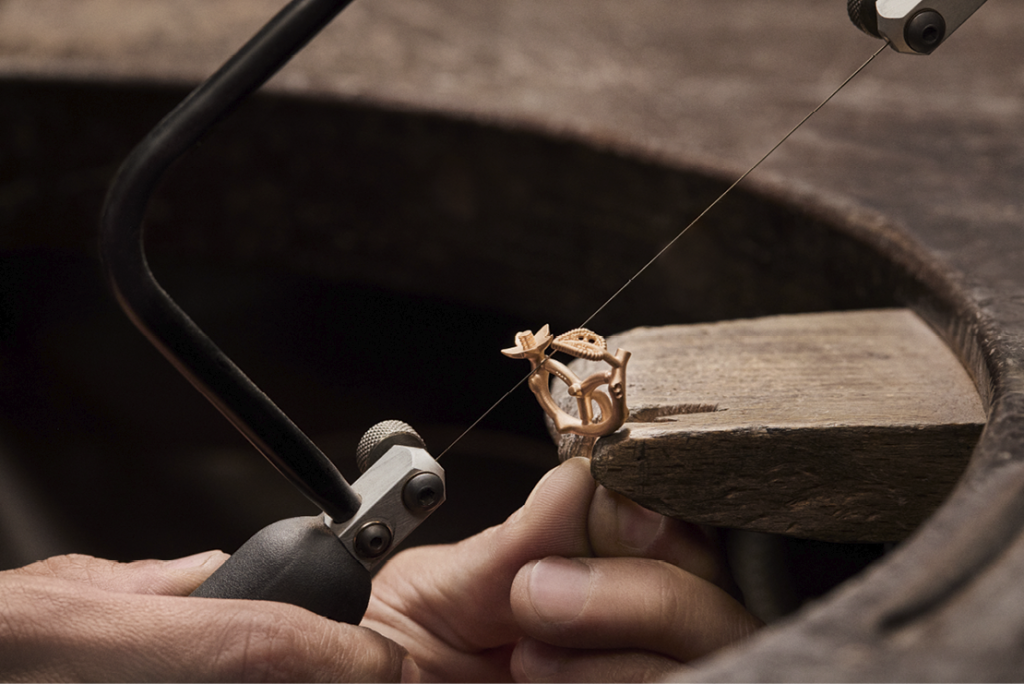
Bois de Rose
First imagined as a contemporary take on the stem of a rose, the Bois de Rose line now welcomes two exceptional necklaces. The first, in white gold, is mounted on a fine chain that delicately traces the neckline, embodying understated elegance. The second introduces freshwater pearls for the very first time within this collection, a harmonious blend of natural softness and refined craftsmanship. The design is completed with a rose gold clasp, subtly nodding to the Maison’s emblematic codes of contrast and grace.
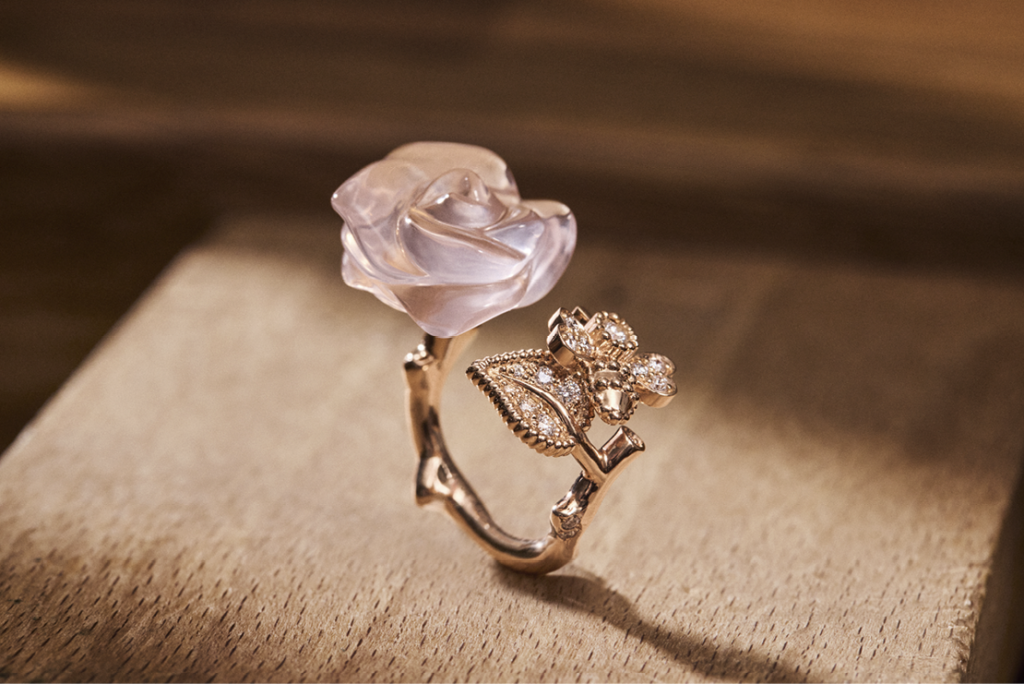
Rose Dior Bagatelle
Named after the enchanting gardens of Bagatelle in Paris, the Rose Dior Bagatelle creations celebrate romance through diamonds and white gold. Each petal and curve is sculpted with meticulous precision, capturing the ephemeral beauty of a rose in full bloom. The result is a radiant expression of femininity that reflects both nature’s perfection and Dior’s high jewellery savoir-faire.
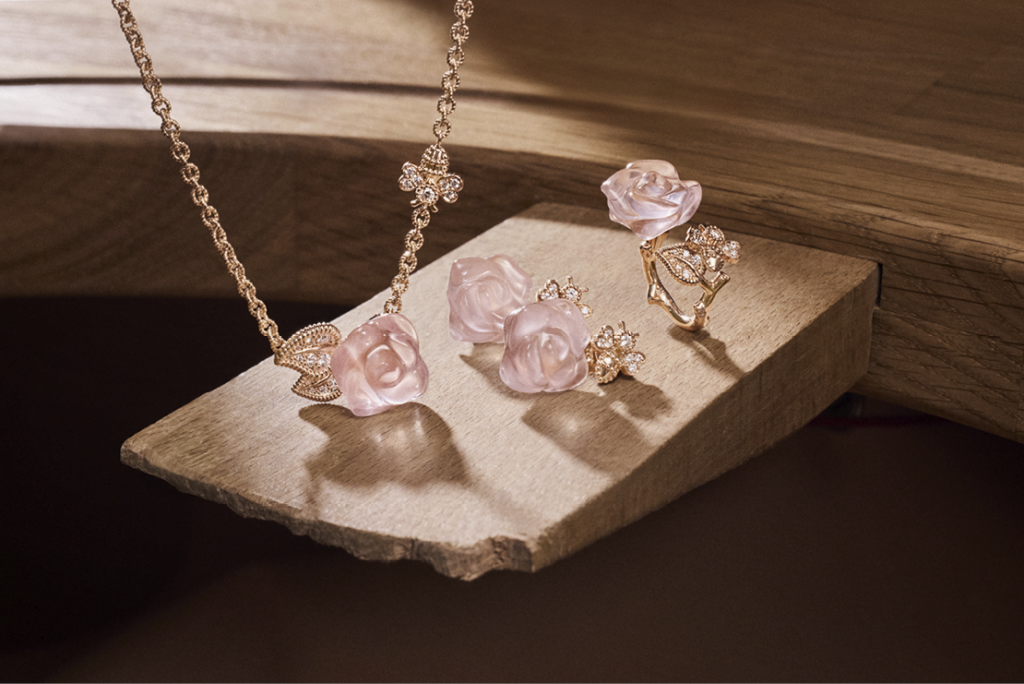
Rose Dior Pré Catelan
The Rose Dior Pré Catelan pieces offer a warmer, more sensual interpretation of the motif. Rendered in rose gold and adorned with rose quartz, these creations evoke the tenderness of dawn light and the serenity of a spring garden. The subtle interplay between the metal and the translucent gemstone reveals a refined, modern romanticism.
Together, these new jewels reaffirm Dior’s devotion to the rose, a timeless muse that continues to inspire new stories of elegance. Each creation is a tribute to Monsieur Dior’s favourite flower, lovingly reimagined by the Ateliers in forms that are as delicate as they are enduring.
Design in Dialogue, Maria Porro, President of Salone del Mobile.Milano, on Bringing Salone del Mobile.Milano to Riyadh
As Saudi Arabia continues its remarkable cultural and creative transformation, one of the world’s most influential design platforms is set to make its debut in the Kingdom. This year Salone del Mobile.Milano will arrive in Riyadh with its first-ever regional edition: Red in Progress: Salone del Mobile.Milano meets Riyadh, a landmark moment that unites Italian design heritage with Saudi Arabia’s fast-evolving creative landscape.
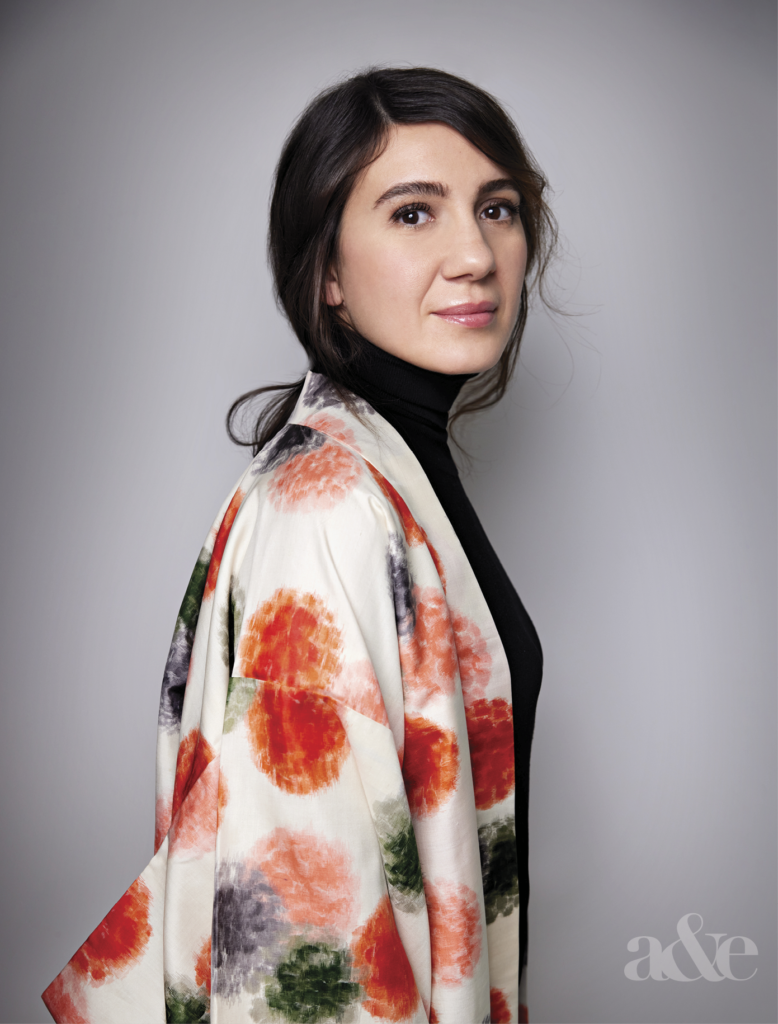
Leading this ambitious expansion is Maria Porro, President of Salone del Mobile.Milano, whose vision is guided by collaboration, education, and long-term cultural exchange. For Porro, Riyadh represents a shared stage for innovation, craftsmanship, and dialogue. The 2025 edition will serve as a preview of what’s to come in 2026, transforming King Abdullah Financial District into a hub for design, architecture, and ideas. Featuring over 35 Italian brands and a strong Saudi presence, the event will highlight sustainability, craftsmanship, and cross-cultural collaboration, setting the tone for a lasting partnership between two design capitals.
In this interview, Maria Porro shares the vision, values, and ambitions behind Salone del Mobile.Milano meets Riyadh, exploring how this creative encounter will contribute to the Kingdom’s Vision 2030, empower emerging Saudi talent, and redefine what a truly global design platform can be.
What inspired the decision to bring Salone del Mobile.Milano to Riyadh in 2025?
first of all, it is a cultural horizon. Riyadh is writing a new chapter, opening museums and schools, rethinking hospitality and public spaces, and doing so with a clear mandate for quality and knowledge. That is where Salone belongs: as a bridge between cultures and a catalyst for standards. We come not to “export” Milan, but to listen to the Saudi genius loci and place it in dialogue with Italy’s manufacturing culture, curation meeting craft, service meeting industry, ideas meeting delivery. 2025 is our opening gesture: a shared stage where we celebrate design as a public good and lay the groundwork — through education, methods, and partnerships — for a lasting exchange that will grow into the full Salone in 2026.
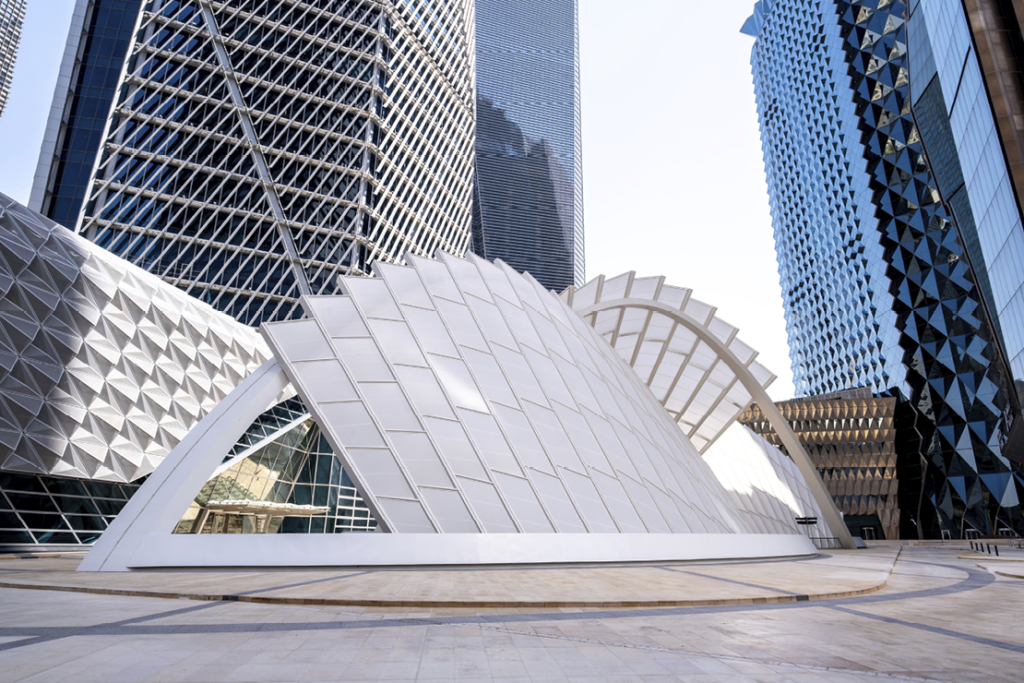
The event’s title, “Red in progress. Salone del Mobile.Milano meets Riyadh”, is intriguing. Can you tell us more about the concept and message behind this theme?
Red is Salone’s signature — our signal for energy, welcome, and momentum. In Riyadh it becomes space: Giò Forma’s landscape of modular scaffolding, entirely red, turns the raw language of the building site into a cultural stage. A vivid red path acts as the fil rouge, guiding visitors through an immersive journey and announcing that we are building something together. Indeed, within this architecture, the product path is clear: a curated sequence of furniture, lighting, and surfaces from 35+ Italian brands, positioned not as isolated icons but as solutions, with materials, finishes, and specifications easy to read. It’s both a preview and a manifesto: Salone is arriving, and it’s arriving to work.
With over 35 Made in Italy brands and a strong Saudi presence, what kind of creative and commercial exchange are you hoping to spark?
Culture and commerce in one frame. On one side: a curated constellation of Italian companies selected for quality, innovation, and sustainability. On the other hand: Saudi designers, developers, and institutions who are ready to translate ideas into interiors, fit-outs, and cities. The exchange is practical; clear specs, targeted B2B meetings, and site visits, so conversations become briefs, pilots, and orders, and partnerships.
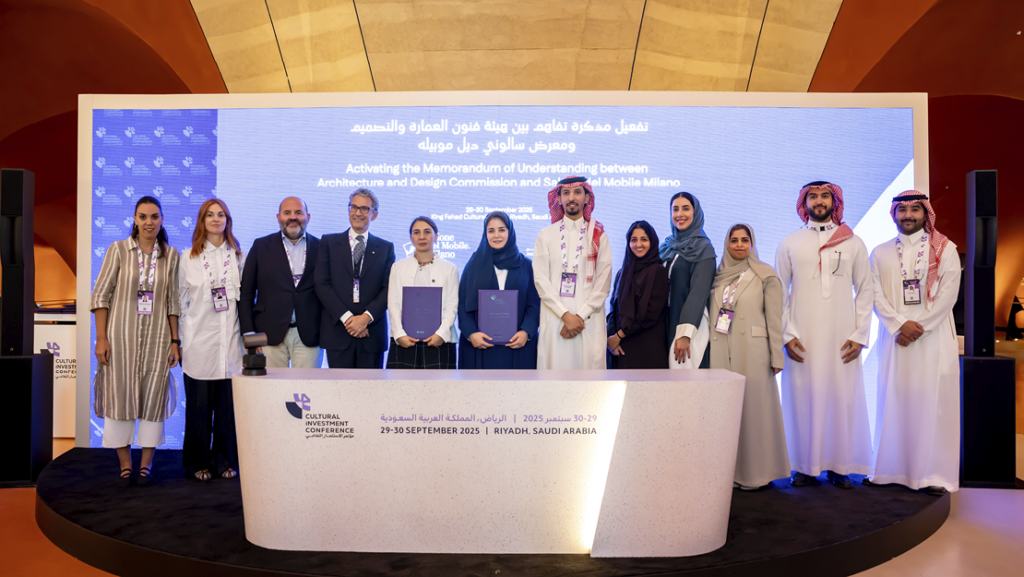
How did the partnership with the Architecture & Design Commission take shape and what vision underpins it?
It grew from a shared brief rather than a single meeting. We found immediate alignment on four pillars: excellence, education, sustainability, and long-term impact. From there, working groups brought together designers, universities, and industry to define concrete objectives, spotlighting Saudi talent, harmonising standards and specifications, and creating clear routes from concept to production. The underlying vision is fully consistent with Vision 2030: build cultural capital and creative industry capacity at the same time, so identity and economy advance together. In practice, that means a professional bridge that turns cultural dialogue into deliverable projects and durable collaborations.
The 2025 edition serves as a preview of a larger Salone to be held in Riyadh in 2026. How will this first event set the tone for what’s to come?
This debut defines the values and objectives that will guide our path to 2026: a listening-first approach to the Saudi context; quality as a shared benchmark across design, service, and execution; a business-first mindset where cultural content and B2B opportunities reinforce each other; and a commitment to education — from mentorship and portfolio reviews to clear routes from prototype to production. We’re also setting expectations on sustainability as practice and on standards that help projects deliver at scale. Above all, 2025 affirms our role as a cultural bond: recognising and amplifying the Saudi uniqueness while connecting it to international networks. These are the coordinates that will shape the 2026 fair so that it feels authentically rooted in Saudi Arabia and fully aligned with Salone’s ethos.
Saudi Arabia’s Vision 2030 emphasises creativity, innovation, and knowledge-sharing. How does Salone del Mobile.Milano meets Riyadh align with and contribute to this national vision?
By design, our initiative sits at the crossroads of Vision 2030’s pillars: a vibrant society, a thriving economy, and an ambitious nation and translates them into concrete actions for the design sector. First, we’ll amplify cultural life and public engagement around design — supporting the Quality of Life Program’s goal to enrich cultural participation — through an accessible program of exhibitions, talks, and masterclasses that turn design into shared knowledge. Second, we aim to strengthen the creative economy: we connect Saudi studios with manufacturers, contractors, and clients, helping prototypes become deliverable projects and improving supply-chain capability in line with Vision 2030’s diversification agenda. Hosting the event in KAFD — an anchor of Riyadh’s economic transformation — further roots this in the city’s innovation corridor. Third, we align with the Architecture & Design Commission’s mission by building a year-round bridge: mentorship, portfolio reviews, and shared guidelines on sustainability and performance that raise professional practice. In short, “Salone del Mobile.Milano meets Riyadh” is not a one-off showcase; it is a platform that cultivates culture, builds capability, and forges partnerships, so that Saudi identity and creativity gain international visibility while contributing to the Kingdom’s long-term transformation.
The event is set to transform King Abdullah Financial District into a hub for design and dialogue. What can visitors expect from this transformation and how will it reflect both Italian design heritage and Saudi creativity?
Expect an all-red, semi-transparent structure that reframes construction as culture; inside it, furniture, lighting, and surfaces from leading Italian brands meet Saudi voices on stage through masterclasses and roundtables. It’s Italian know-how, clarity, and service translated through Riyadh’s pace and hospitality, an urban stage that feels both familiar to Salone and specific to the Kingdom.
As the design landscape in the Gulf grows rapidly, how do you see Italy’s design expertise and craftsmanship inspiring or collaborating with the region’s emerging designers and architects?
We’ll activate SaloneSatellite as our talent bridge: juried showcases, portfolio reviews with decision-makers, and technical clinics that help promising ideas meet feasibility and production. Alongside that, we’re inviting Saudi universities to join workshops and research studios focused on materials, climate, and use, so collaboration starts in education and flows into practice. And we’ll spotlight the Saudi Design project as a dedicated thread within the program, giving emerging studios visibility, mentorship, and direct access to manufacturers and contractors. In this way, listening, prototyping, and aligning on codes and performance aren’t abstract principles; they’re structured pathways from presentation to production, with quality and accountability built in.
What conversations do you hope this debut opens between global and regional communities?
Three, above all: how beauty and performance can align in large-scale delivery; how identity can be expressed through contemporary, climate-aware design; and how sustainability can be measured across the entire lifecycle — from materials to maintenance — without losing warmth and humanity.
One of the key aims of this partnership is to foster local talent. How will the Riyadh edition support and empower young Saudi designers entering the global design stage?
The Riyadh edition puts Saudi designers on a curated stage, within an international program of masterclasses and roundtables, and places them in direct dialogue with leading Italian companies through a dedicated Business Lounge for targeted meetings. In other words: public recognition paired with concrete B2B pathways. We will also spotlight national initiatives such as Designed in Saudi, amplifying emerging voices and connecting them to manufacturers, contractors and decision-makers — so ideas can travel from concept to specification and into projects. The aim is simple and long-term: raise visibility, build know-how, and open professional routes that are locally rooted and globally legible.
Fine modulo
Sustainability and innovation are at the heart of today’s design conversations. How is Salone del Mobile.Milano integrating these priorities into its expansion and programming?
Sustainability is a working method. Salone is ISO 20121 certified for sustainable event management, and we apply evolving Green Guidelines to exhibitors. In Riyadh, we’ll foreground circular design, responsible materials, modularity, and logistics efficiency, showing not just products but the processes that make interiors last longer and perform better.
What excites you most about this new chapter in Riyadh and what does it mean for the future of the Salone as a truly global platform for design?
What excites me most is the chance to refine what a great design fair can be, not only a stage, but an engine. Riyadh gives us the scale and urgency to test a more agile Salone. It also lets us learn from a vibrant, young design culture — how hospitality becomes spatial practice, how climate and light shape comfort — and let those lessons travel back into our global calendar. For Salone’s future, this is a blueprint. We’re building a year-round platform rather than a single week: continuous dialogue with studios and brands, measurable outcomes for projects, and an education pipeline that moves talent from idea to industry. If we do it right, Milan remains the heart, but new “beats” like Riyadh become permanent nodes in a global network, each amplifying its identity while sharing a common vocabulary of quality, sustainability, and service. That, to me, is a truly global Salone: locally rooted, internationally useful, and always moving forward.
By Lindsay Judge
Art in the City, We Design Beirut returns for its second edition
Beirut once again became the stage for Lebanon’s most dynamic cultural event as We Design Beirut returned for its second edition this October. The five-day celebration transformed the city into a living canvas of design, architecture, and craftsmanship, showcasing the enduring vitality of Lebanese creativity across some of Beirut’s most iconic landmarks.
Anchored in the pillars of empowerment, preservation, and sustainability, this year’s edition deepened its commitment to collaboration and cultural continuity. It brought together artisans, designers, architects, students, and educators in a shared creative dialogue. Described by organisers as both “healing and restorative,” We Design Beirut offers a space to refuel inspiration, rebuild creative networks, and celebrate design’s role in shaping collective memory.

Fifty years after the beginning of Lebanon’s civil conflict, Edition Two embraced themes of legacy, revival, and continuity, staging a cultural renaissance that bridges generations. Its program of exhibitions, installations, and performances breathes new life into the country’s heritage sites, crafts, and architectural icons, transforming design into a language of renewal.
The opening night set the tone with a moving tribute to master Oud craftsman Nazih Ghadban, in collaboration with Michael Ibrahim, Founder and Music Director of the National Arab Orchestra, and guest artist Mirna Mallouhi. Together, they delivered a performance that fuses music and craftsmanship, symbolising We Design Beirut’s commitment to honouring Lebanon’s living traditions through modern creative forms.
Across the city, five landmark venues hosted eight major exhibitions that connect the past to the present. At the Abroyan Factory in Bourj Hammoud, Threads of Life explored textiles as vessels of memory, while Métiers d’Art transformed the industrial space into a live atelier where artisans and designers collaborate to reinterpret traditional techniques. The Factory also featured Skin of a City, a photography exhibition by Patrick Baz and Anthony Saroufim, and Les Indisciplines, both exploring the human body as a form of creative resistance.

At Burj El Murr, the youth-led Design “In” Conflict examined how war and reconstruction shape architecture and space through the eyes of students from nine Lebanese universities. Meanwhile, Villa Audi housed Totems of the Present and the Absent, curated by Gregory Gatserelia in tribute to SMO Gallery, the platform he founded to elevate Lebanese design talent.
At the Roman Baths, Of Water and Stone by Nour Osseiran reinterpreted ancient rituals through contemporary marble artistry, while Immeuble de l’Union in Sanayeh, under restoration by Karim Nader, hosted Union: A Journey of Light alongside Rising with Purpose, a showcase spotlighting designers under 30.
Among the Designer Showcases, The Lab by Naggiar transformed a functioning metal fabrication workshop into a live creative studio where eleven Lebanese artists and designers created on-site. Fabrica Design Platform presented clay unbound, a sensory exploration of ceramics, while Iwan Maktabi unveiled GROUNDWORKS, a dual showcase featuring new collections by Shaha Raphael and David/Nicolas. At Nalbandian Carpets, collaborations with Selim Mouzannar, Sandra Mansour, and others merged fashion, jewellery, and design into woven masterpieces.
We Design Beirut also partnered with ALBA (Académie Libanaise des Beaux-Arts) for its Educational Hub, fostering knowledge exchange between academia and industry. Beyond the city, curated excursions invite visitors to explore Lebanon’s architectural heritage, including a tour of 49 modernist landmarks, the International Fair of Tripoli by Oscar Niemeyer, and the Saloua Raouda Choucair Foundation in the mountains.
Global Impact, FBMI Marks 15 Years of Empowerment and Craftsmanship
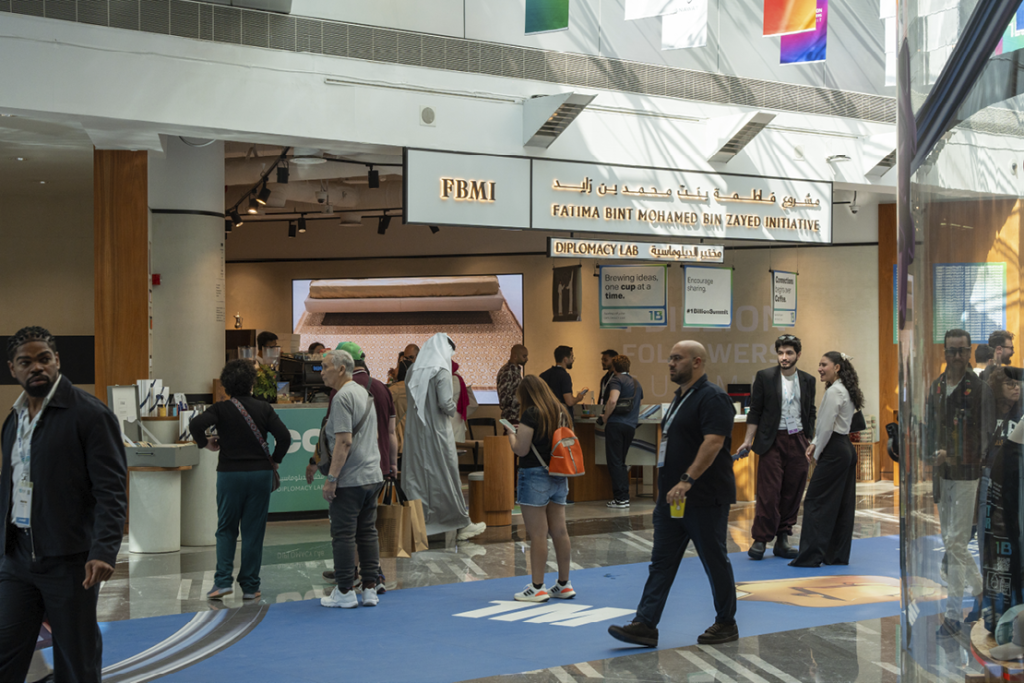
Fifteen years after its founding, the Fatima Bint Mohamed Bin Zayed Initiative (FBMI) stands as one of the UAE’s most remarkable success stories in social innovation, sustainability, and cultural diplomacy. Established in 2010 by H.H. Sheikha Fatima bint Mohamed bin Zayed Al Nahyan, the initiative has evolved from a community-driven enterprise into a global model for purpose-led development, fusing creativity, entrepreneurship, and compassion to create lasting social change.

What began as an initiative to empower Afghan women through traditional carpet weaving has blossomed into a self-sustaining ecosystem of businesses and programs built around the principles of education, employment, and ethical trade. FBMI’s model reinvests all profits directly into its social programs, ensuring continuous access to healthcare, schooling, and sustainable livelihoods for underserved communities. Over the past decade and a half, it has created over 10,000 jobs, educated thousands of children, and provided healthcare to nearly two million beneficiaries, a true testament to the UAE’s humanitarian and visionary leadership.

“Fifteen years of FBMI is more than a milestone; it’s a reaffirmation of our mission to empower, to educate, and to connect communities through creativity,” says Maywand Jabarkhyl, CEO of FBMI. “From the UAE to Afghanistan and now Tanzania, our work continues to evolve, but the foundation remains the same: people, purpose, and progress.”
This year also marks a new chapter with the launch of Hunger, a social enterprise in Tanzania dedicated to tackling malnutrition and supporting local farmers through sustainable food production. The initiative extends FBMI’s ethos from craftsmanship to cultivation — addressing food security while empowering communities across Africa through a circular, impact-driven model.

FBMI’s network of enterprises continues to expand its reach and influence. Zuleya, its design and retail arm, brings together Afghan craftsmanship and contemporary Emirati aesthetics. Mira, the agricultural enterprise, advances sustainable cultivation and ethical sourcing, while Emirati District at Dubai International Airport celebrates local creativity and heritage. At Diplomacy Lab, FBMI fosters cross-cultural dialogue through curated talks and creative collaborations.
To commemorate its 15th anniversary, FBMI will host a series of activations, including special showcases at Dubai Design Week, Abu Dhabi Art, and UAE National Day, alongside the relaunch of Diplomacy Lab Talks under the theme “Cultural Diplomacy in Practice.” Together, these events celebrate FBMI’s enduring vision.
A new Cultural Icon, Dubai unveils Duma by Tadao Ando
Dubai has announced the launch of the Dubai Museum of Art (DUMA), a new architectural and cultural landmark set to redefine the city’s creative landscape. The project was unveiled in the presence of His Highness Sheikh Mohammed bin Rashid Al Maktoum, Vice President and Prime Minister of the UAE and Ruler of Dubai, and will be developed by Al-Futtaim Group on the waters of Dubai Creek. Designed by world-renowned Japanese architect Tadao Ando, the museum is envisioned as a beacon of creativity and innovation, strengthening Dubai’s position as a global capital of culture.
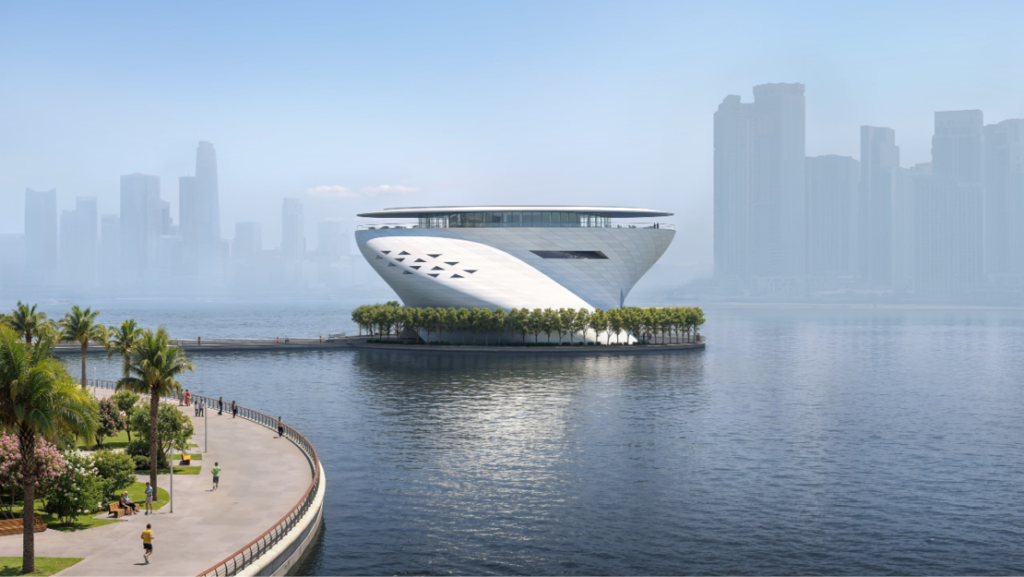
DUMA reflects Sheikh Mohammed’s vision of transforming Dubai into a global destination for culture and creativity. The museum will serve as a dynamic platform for artists and visitors from around the world, fostering collaboration, education, and artistic exchange. Through exhibitions, residencies, and public programmes, DUMA aims to inspire dialogue across cultures while supporting the growth of the UAE’s creative economy.
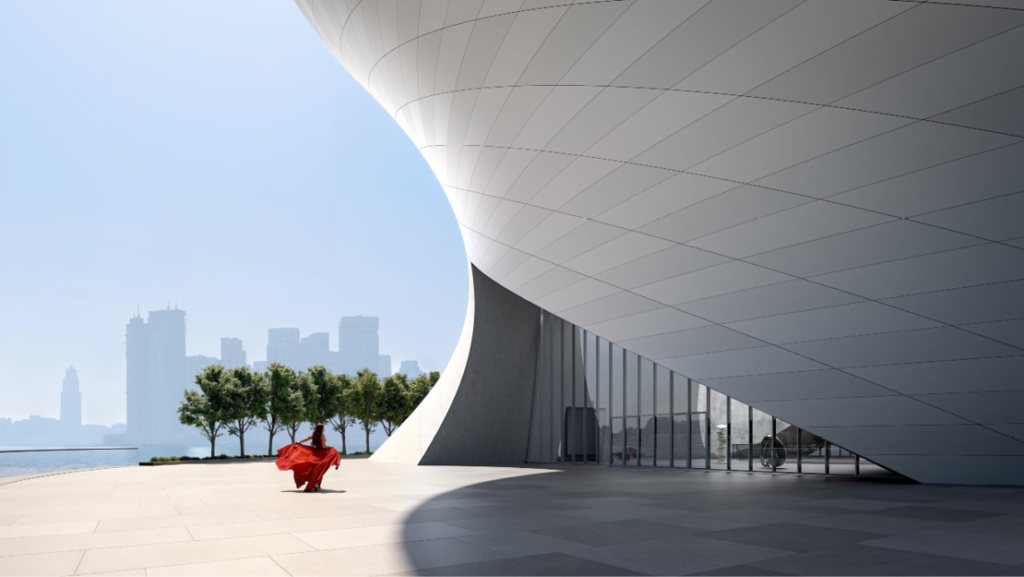
Tadao Ando’s design for DUMA is a masterpiece of symbolism and precision. Drawing inspiration from the sea and the pearl, the structure’s curved shell and circular exhibition hall represent unity, discovery, and continuity. A central opening allows natural light to cascade through the interior, echoing the iridescence of a pearl, a poetic tribute to Dubai’s maritime heritage. Rising five storeys above the water, the museum will house adaptable exhibition spaces, a restaurant, VIP lounge, and a library, along with areas dedicated to education, dialogue, and world-class art training.
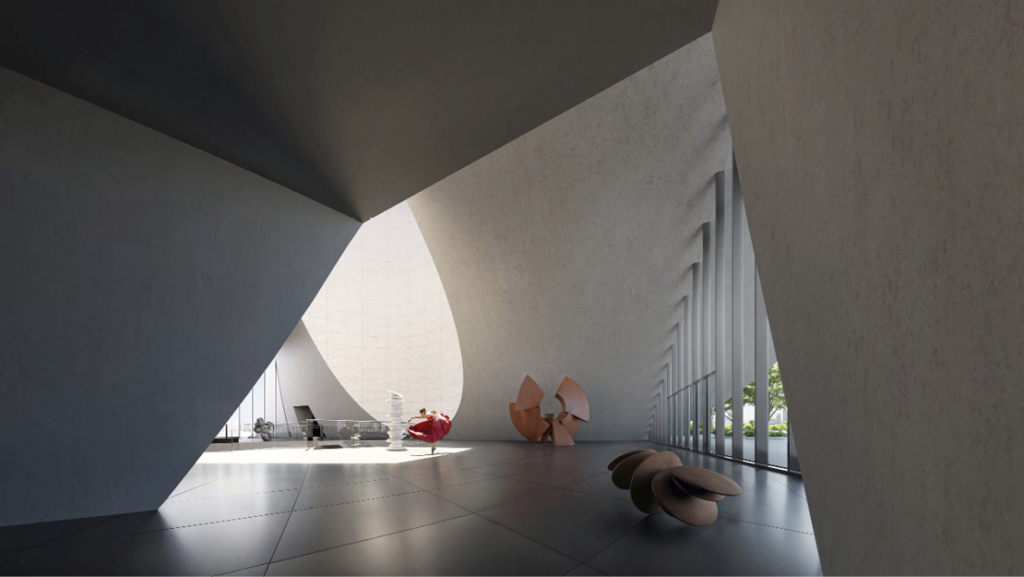
Beyond its architectural marvel, the Dubai Museum of Art will stand as a centre for global artistic collaboration. Hosting international exhibitions, artist talks, and educational programmes, it will serve as a hub for creative innovation and cultural understanding. Designed to capture the spirit of Dubai — open to the sea, sky, and world — DUMA embodies the city’s balance between heritage and modernity, and its vision of art as a bridge for empathy, curiosity, and shared progress.
A New Chapter, Sharjah’s Ruler Supports the Restoration of Beirut’s Grand Theatre
His Highness Sheikh Dr. Sultan bin Muhammad Al Qasimi, Supreme Council Member and Ruler of Sharjah, has extended generous financial support toward the rehabilitation of the historic Beirut Grand Theatre, one of Lebanon’s most treasured cultural landmarks.
The initiative forms part of UNESCO’s international campaign to restore the theatre, a cornerstone of Beirut’s artistic and architectural heritage. The contribution reflects His Highness’s enduring commitment to safeguarding cultural identity and fostering international collaboration through the arts, values that have long guided Sharjah’s global cultural mission.
Originally designed by Youssef Aftimos and built by Jacques Tabet in the 1920s, the Beirut Grand Theatre opened its doors in 1929 as a beacon of creativity and cosmopolitan spirit. With seating for 630 guests, it featured an orchestra pit, two balconies, and a stage equipped with intricate mechanical systems. The theatre’s elegant stained-glass ceiling and its moveable steel dome became symbols of the sophistication that once defined Beirut’s golden age.
For decades, the venue hosted world-class operatic, theatrical, and musical performances, drawing audiences from across the region. It remained active until the mid-1970s, when years of conflict led to its closure and gradual decline. Despite the passage of time, its neoclassical façade and timeworn interiors continue to embody the cultural resilience of Lebanon and its people.

The restoration of the Beirut Grand Theatre stands as a continuation of the strong partnership between Sharjah and UNESCO, which has flourished through numerous joint initiatives, exhibitions, and awards. His Highness has consistently championed culture as a bridge between nations, with Sharjah earning international recognition as a UNESCO World Book Capital and a hub for Arab culture and creativity.
Through his unwavering patronage, His Highness reaffirms that the preservation of heritage is not merely an act of restoration but a renewal of dialogue, understanding, and collective memory. The rehabilitation of the theatre will return one of Beirut’s most iconic cultural landmarks to its rightful place, a living stage for artistic expression and a symbol of hope for future generations.
Natasha Carella, Director of Dubai Design Week, offers an insight into this year’s edition
As Dubai continues to define itself as a global capital of creativity, innovation, and culture, each November, the Dubai Design District (d3) transforms into an open-air laboratory of ideas for Dubai Design Week.
A platform where craftsmanship meets technology, and where voices from across the Middle East and beyond come together to reimagine what design can do. Now in its 11th edition, taking place from November 4–9, Dubai Design Week 2025 promises to be one of its most ambitious yet. Across installations, exhibitions, and performances, the event reflects a city and a region in constant creative dialogue with the world. From architecture and product design to digital innovation and sustainability, the week celebrates the power of design as both cultural expression and social catalyst.
At the helm of this evolution is Natasha Carella, Director of Dubai Design Week, who brings an international perspective shaped by years in the art, culture, and design industries. Her vision for this year’s edition goes beyond aesthetics; it’s about amplifying authentic voices, deepening cross-cultural collaborations, and positioning Dubai as a hub where ideas from the Global South meet the creative energy of the world.
This year marks another exciting edition of Dubai Design Week. What can visitors expect from the 2025 programme, and what ideas are shaping this edition?
Each year, Dubai Design Week evolves while maintaining its core pillars. For 2025, we’re welcoming over 1,000 architects, designers, and creatives from around the world. Visitors can expect five exhibitions, over 30 large-scale installations, and a range of special commissions and activations throughout d3. The fair will once again host Downtown Design and Editions, both of which remain cornerstones of the week.
What’s particularly exciting is the collaborative energy this year. The UAE, by nature, is a place where crossovers happen organically, between disciplines, between cultures, and between ideas. That spirit of openness and exchange is very much at the heart of this edition.
We’ve also introduced the d3 Awards, a new initiative that provides AED100,000 in funding to support emerging designers, offering meaningful recognition and opportunity. Alongside that, we’ve expanded our workshop and masterclass programming to give the public access to leading academics, designers, and cultural institutions, ensuring that Dubai Design Week continues to serve both professionals and the community at large.
In terms of curation, we don’t work with an overarching theme. Design is such a vast field — spanning everything from architecture and urban planning to graphic design and digital innovation — that it’s impossible to capture it under one phrase. Instead, we take a principled approach to programming: ensuring that every project we feature is original, high-quality, and representative of the diverse creative voices that define this region and the wider Global South.
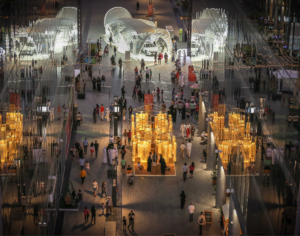
The event has always been known for its immersive installations and multidisciplinary approach. How are you expanding the experience this year?
We’ve made a conscious effort to broaden cultural representation, especially from Africa and East Asia. For example, we’re working with Bootleg Griot, a collective that curates African literature and printed media. They’re bringing their public library to life through performances, talks, and workshops, turning it into an active space for dialogue.
We’re also placing greater emphasis on access and inclusivity. The goal is to make Dubai Design Week not just a showcase, but a living platform for exchange, a place where anyone, from a student to a design professional, can participate, learn, and connect.
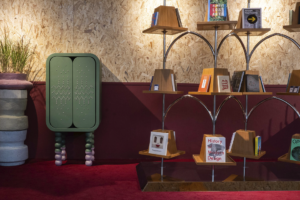
What are some of the standout installations or exhibitions to look out for?
There are several exciting installations this year. One of my favourites is a collaboration between Nick and Seke, the architects behind Zabeel One, and a historic Japanese family of woodworkers who have been practising their craft for centuries. Together, they’ve created a pavilion entirely from wood, inspired by ancient joinery techniques, paired with a live tea ceremony. A beautiful example of how craftsmanship, architecture, and ritual can come together in one space.
We’re also showcasing Art Collective, a group of young designers who met while studying at the Dubai Institute of Design and Innovation (DIDI). They’ve developed Date Crete, a sustainable material made from UAE sand and date seeds — a low-carbon alternative that reflects how design can be rooted in local materials and innovation. It’s incredible to see work like this, designed and produced entirely in the UAE, entering the global design conversation.
In addition, the d3 Architects Exhibition, in partnership with the Royal Institute of British Architects (RIBA), will explore the theme of community. It brings together international names such as Zaha Hadid Architects and Foster + Partners, alongside regional practices, to examine how architecture shapes collective experience.
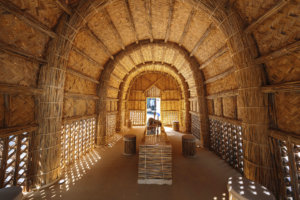
The event continues to attract global attention. How do you balance showcasing international design excellence while championing regional and local creativity?
For us, it’s about creating a natural dialogue. Dubai Design Week has become a key moment in the global design calendar, but at its core, it’s a gathering of ecosystems. It brings together universities, cultural institutions, and design businesses, both regional and international, in a way that feels collaborative rather than competitive.
We’re proud to have ongoing relationships with other design events in the region, like Design Doha and Ithra’s Saudi Design Week. These initiatives are strengthening the regional design network, and we’re supportive of each other’s growth. I often say, people assume the market is saturated, but in reality, we need more of these platforms. Just look at London; there are dozens of design events happening year-round. For the Middle East, each new initiative adds depth and opportunity.
How has Dubai’s design scene evolved in recent years?
If you look back a decade ago, design in Dubai was still quite import-driven — in both product and philosophy. Today, there’s a real shift toward building from within. We’re seeing more designers experimenting with materials and manufacturing processes developed locally. There are around 10 to 15 new materials now being produced in Dubai, including innovative bio-composites and sustainable alternatives to leather and concrete.
What’s equally exciting is the mindset shift. Designers are no longer confined to expressing identity through stereotypical regional symbols or motifs. There’s a sense of creative freedom, a belief that work can be global in language yet authentic to its context. A designer from the UAE can now create something that speaks universally without having to reference falcons or sand dunes. That confidence and nuance mark a new maturity in the regional design scene.
How is Dubai Design Week shaping the identity of Middle Eastern design, and what defines the regional aesthetic today?
When Dubai Design Week began ten years ago, it was a relatively small event of around 30 exhibitors and 20,000 visitors. Today, it’s the largest and longest-running design week in the Middle East, drawing over 150 exhibitors and more than 100,000 visitors annually. That growth reflects not just the city’s development, but the evolution of design thinking across the region. What defines the regional aesthetic today is dialogue between tradition and modernity, between sustainability and luxury, and between local heritage and global innovation.
Design in the Middle East is increasingly being used as a tool for problem-solving. It’s not only about form and function, but also about addressing environmental, social, and technological challenges. We’re seeing designers explore themes like AI and authorship, cultural preservation through materiality, and design for wellbeing.
We’re also looking outward, expanding partnerships with designers and institutions across East Asia and the wider Global South. The aim is to strengthen this global network of creatives who are redefining design beyond the traditional Western canon.
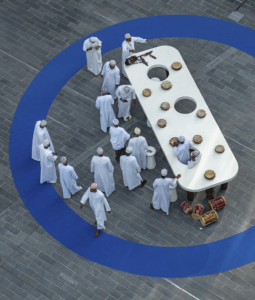
Who are some designers or highlights we shouldn’t miss this year?
One of our flagship initiatives, Abwab, returns this year with the theme Ornamentalism. It’s an open call inviting designers from Asia and Africa to create new commissions that explore craftsmanship and cultural storytelling. This year’s project by Mirage Studio — the Bahraini duo Latifa and Mariam — is a standout. They’re creating a 25-metre embroidered installation inspired by the forgotten island of Nabil Saleh, weaving together its ecological and oral history through intricate craftsmanship.
We’re also seeing exciting brand collaborations. Jaeger-LeCoultre will present a multidisciplinary activation with Filipino illustrator Aaron Amar, Emirati architect Abdullah Muller, and French chef Yann Couvreur, inspired by the geometry and light of the Reverso watch. It’s a beautiful expression of cultural exchange, where design, gastronomy, and architecture meet.
Le Labo is partnering with Pots & Pines, a UAE-based studio creating sculptural papier-mâché vases, while BMW has commissioned Saudi design firm Bricklab for an exclusive installation. These projects show how global brands are increasingly engaging regional creative talent, not just as collaborators but as storytellers.
For me, that’s what defines the spirit of Dubai Design Week: these unexpected intersections of creativity. It’s where an Emirati architect, a Japanese artisan, a Bahraini designer, and a French brand might share the same space, each contributing something distinct yet connected.
Shaima Rashed Al Suwaidi Discusses Shaping Dubai’s Creative Future
As Dubai continues to evolve as one of the world’s most dynamic creative capitals, Shaima Rashed Al Suwaidi, Chief Executive Officer of the Arts, Design & Literature Sector at Dubai Culture & Arts Authority, stands at the forefront of this transformation.
With a clear vision rooted in innovation, inclusivity, and heritage, she is helping define how creativity shapes the city’s identity and economy.
Under the guidance of Her Highness Sheikha Latifa bint Mohammed bin Rashid Al Maktoum, Shaima leads initiatives that connect artists, entrepreneurs, and communities, from large-scale festivals such as Sikka Art & Design Festival to policy frameworks like the Dubai Public Art Strategy and Al Quoz Creative Zone. Her work reflects a deep belief in the power of culture to unite people, foster opportunity, and ensure that art becomes an everyday part of life in Dubai.
In this exclusive interview, she shares insights into Dubai’s growing cultural ecosystem, the evolution of its arts and design scene, and the initiatives shaping its next creative chapter, from empowering women and emerging artists to positioning the emirate as a global hub for innovation, collaboration, and storytelling.
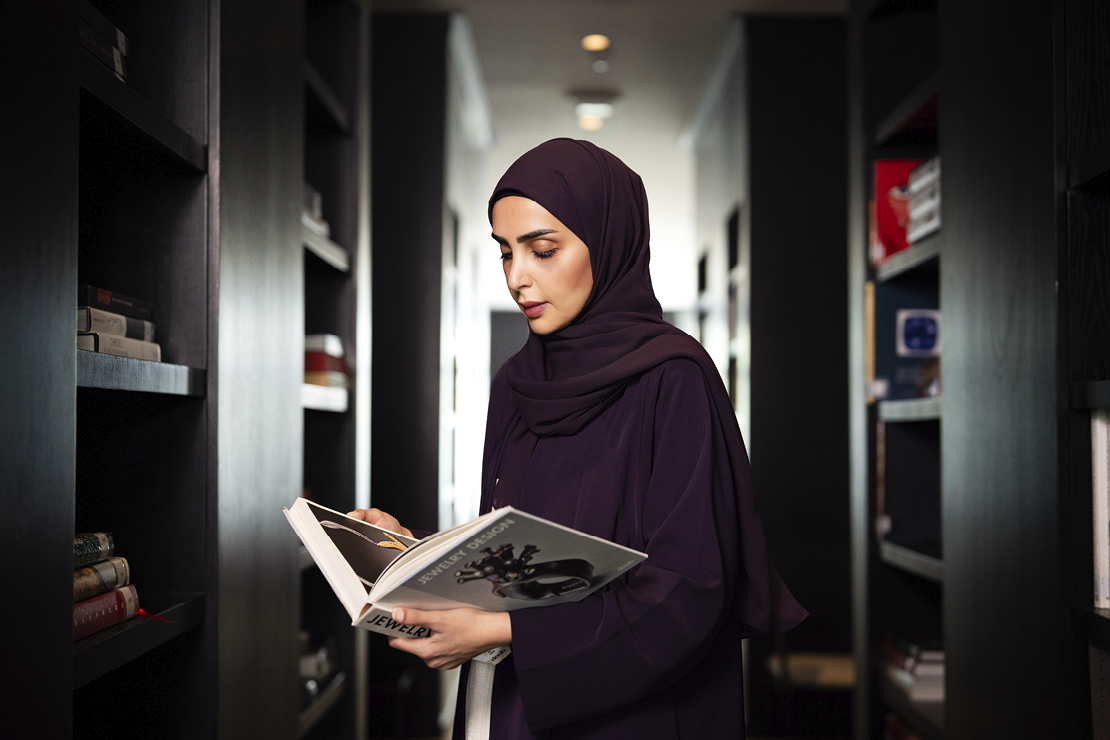
As CEO of the Arts, Design & Literature Sector, how do you see your role in shaping Dubai’s cultural identity and supporting its creative economy?
My role is, above all, about connecting people to creativity, ideas to opportunity, and the past to the future. At Dubai Culture, we see culture as a living force that shapes how we experience the city and how the world sees us. Every initiative, from large-scale festivals to mentorship programs, is part of a bigger effort to ensure that creativity becomes an everyday part of life in Dubai.
Under the guidance of Her Highness Sheikha Latifa bint Mohammed bin Rashid Al Maktoum, Chairperson of Dubai Culture, our mandate is to transform the emirate into a global centre for culture, an incubator for creativity, and a thriving hub for talent. This vision guides all our work, from developing infrastructure that supports artists and entrepreneurs and advancing public engagement to ensuring that the creative economy remains sustainable and inclusive.
What drives me personally is seeing the impact on people, be it an artist receiving their first grant, a student discovering their passion at a workshop, or a neighbourhood coming alive with public art. As CEO, I focus on fostering an environment where creative voices can be heard and supported. The more we empower people to tell their stories, the richer Dubai’s cultural identity becomes.
How would you describe the evolution of Dubai’s arts and design scene in recent years, and what makes it unique compared to other global creative hubs?
Dubai’s creative landscape has transformed profoundly over the past decade. What once began as small, independent initiatives has evolved into a vibrant ecosystem that spans design, fashion, visual arts, literature, and more. The difference today is that creativity is recognised as an integral part of Dubai’s economy and social fabric.
But what makes the emirate unique is the diversity of voices shaping its story. This city brings together over 195 nationalities, and each person contributes a layer to its creative identity. Emirati artists draw from heritage and oral traditions, while international creatives bring fresh perspectives, leading to a kind of cultural cross-pollination that you rarely see elsewhere.
Dubai also benefits from strong collaboration between the public and private sectors. From initiatives like Dubai Design Week, Art Dubai, and Emirates Airlines Festival of Literature to home-grown projects in Al Serkal Avenue and Al Quoz Creative Zone, there’s a shared commitment to making creativity accessible and economically viable. That synergy between government, industry, and community is what truly defines Dubai’s creative evolution.
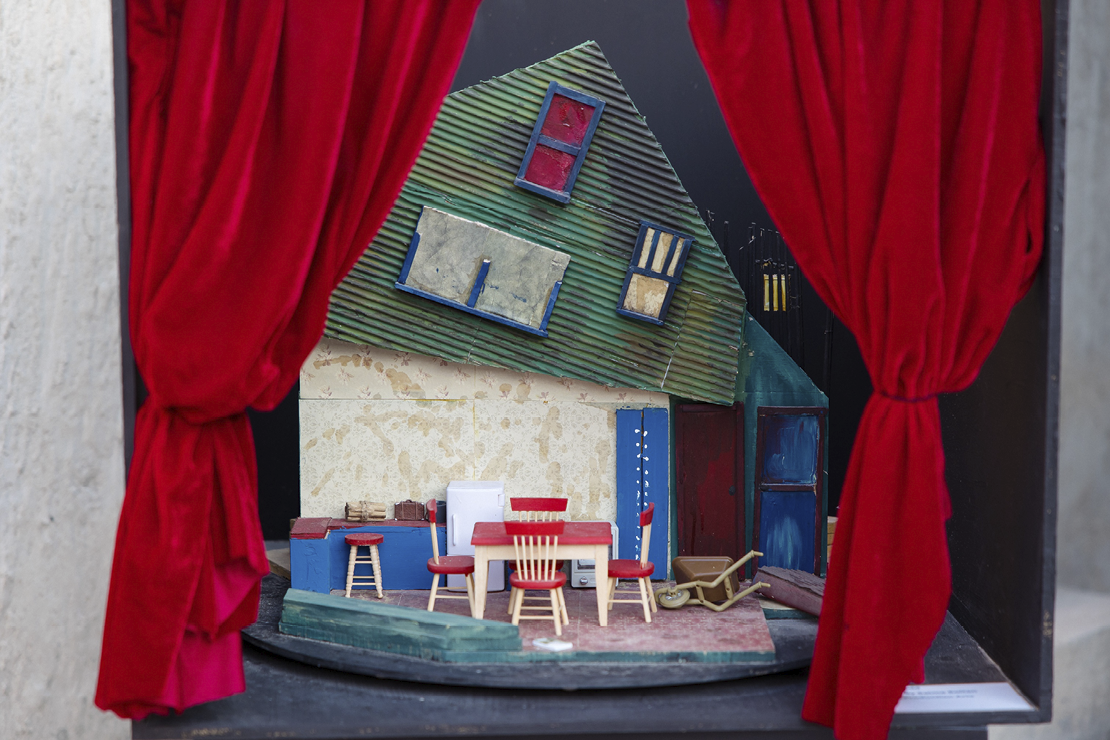
Sikka Art & Design Festival has become a cornerstone of Dubai’s creative calendar. How has the festival evolved and what role does it play in nurturing emerging Emirati and UAE-based talent?
Sikka holds a special place in our cultural calendar because it represents the heart of Dubai’s creative journey. It began as an intimate community initiative and has grown into a platform that showcases hundreds of artists, designers, filmmakers, and performers from across the UAE and the wider region. Yet, it has never lost its grassroots spirit.
For emerging artists, Sikka is often their first major showcase. Beyond exhibitions, the festival offers mentorship, networking, and opportunities for artists to experiment freely. In fact, many of today’s established creatives began their careers here, and it continues to serve as a launchpad for new voices who go on to exhibit internationally.
Sikka also reflects Dubai Culture’s wider mission: to celebrate the diversity of the UAE’s creative community while nurturing a strong sense of belonging. Every year, it evolves, introducing new disciplines, collaborations, and interactive experiences that keep the festival relevant, inclusive, and deeply connected to the community it serves.
How is Dubai Culture continuing to create opportunities for female creatives across different disciplines?
Women have always been at the heart of Dubai’s creative story and supporting them is one of our highest priorities. Across Dubai Culture, women lead departments, curate exhibitions, design programmes, and shape the city’s cultural dialogue. Sikka has become a stage where female voices, from emerging artists to established designers, take centre stage and redefine creative boundaries.
Through initiatives like the Dubai Cultural Grant and Talent Atelier, women gain access to resources, mentorship, and platforms that allow them to develop their practice and share it with the world. We’ve also made sure our flagship festivals and cultural events include women in every aspect, from curating and producing to performing and leading conversations.
It’s equally important to recognise that women’s creativity often emerges from lived experiences. When their stories are shared, they resonate far beyond the arts; they influence communities and inspire future generations. Seeing young girls walk through Sikka and realise, ‘I can do this too,’ is one of the most rewarding outcomes of our work.
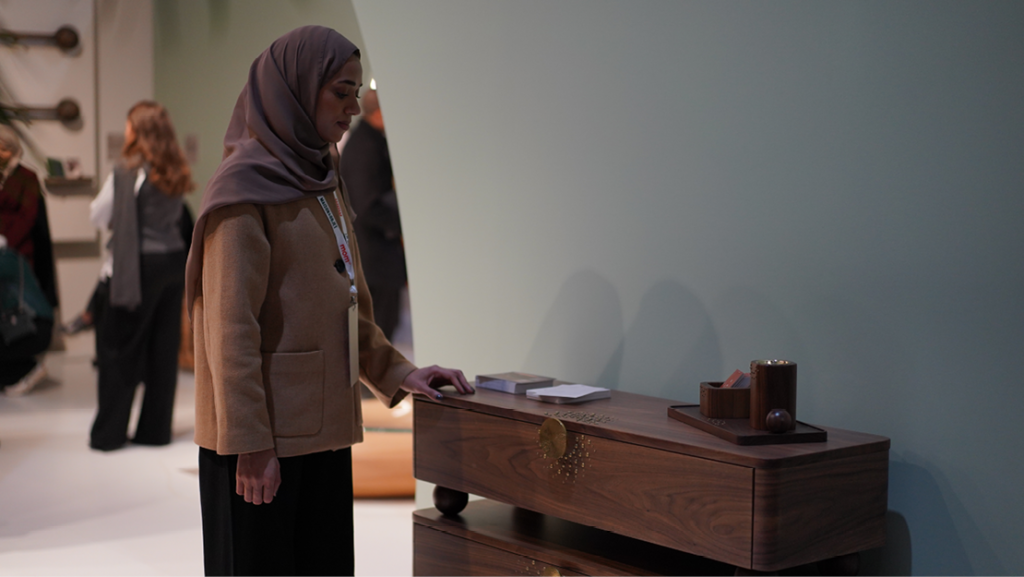
The Dubai Public Art Strategy aims to transform the city into an open-air gallery. What inspired this initiative, and how does it reflect Dubai Culture’s vision for embedding creativity into daily life?
The inspiration for the Dubai Public Art Strategy stems from the belief that art should be part of people’s everyday lives, not confined to galleries or museums, but experienced in the rhythm of the city itself. Dubai has always been a place that values innovation and connection, and public art provides a way to express these values visually in the spaces where people gather, walk, and live.
The initiative is about transforming the city’s landscape into a living gallery. Each piece commissioned under the strategy tells a story, whether it’s about Dubai’s heritage, its multicultural spirit, or its vision for the future. Together, these works form a collective narrative that belongs to everyone, offering moments of reflection, beauty, and dialogue in our shared public spaces.
It also reflects Dubai Culture’s broader mission to weave creativity into urban life. Public art encourages residents and visitors alike to engage with their surroundings more deeply, to see familiar places in new ways. Beyond aesthetics, it fosters community pride and strengthens the emotional bond people feel with the city.
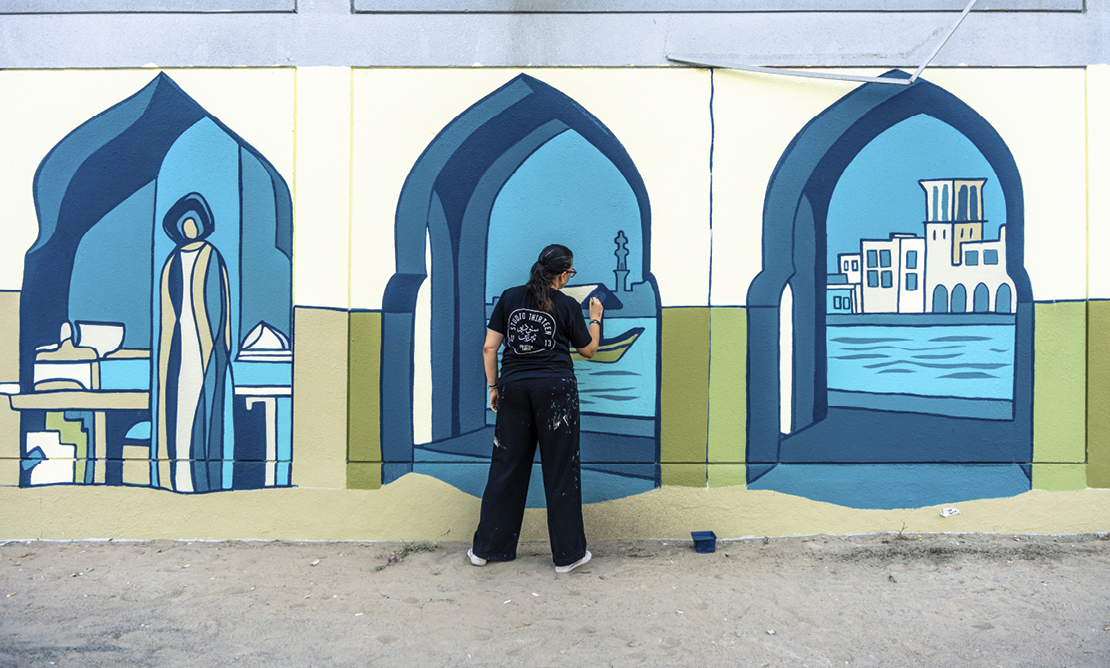
How does Dubai Culture ensure that cultural learning remains accessible across generations and backgrounds?
We believe that culture thrives when everyone, regardless of age, background, or ability, feels invited to participate. This notion drives many of our initiatives, from School of Life and Reading Month to the programmes run across our network of public libraries, museums, and heritage sites.
Through School of Life, for example, we’ve reimagined public libraries as community hubs where learning extends far beyond books. Workshops, creative sessions, and talks bring people together to share skills, ideas, and experiences in welcoming, inclusive environments. In parallel, Reading Month transforms the act of reading into a national celebration, connecting children, families, and educators in activities that foster curiosity and imagination.
We also prioritise lifelong learning. Whether it’s a young student discovering art for the first time or an adult exploring a new craft, we aim to provide experiences that are enriching and accessible. Heritage sites like Al Shindagha Museum play a vital role here, offering intergenerational experiences that connect younger audiences with the stories of their city.
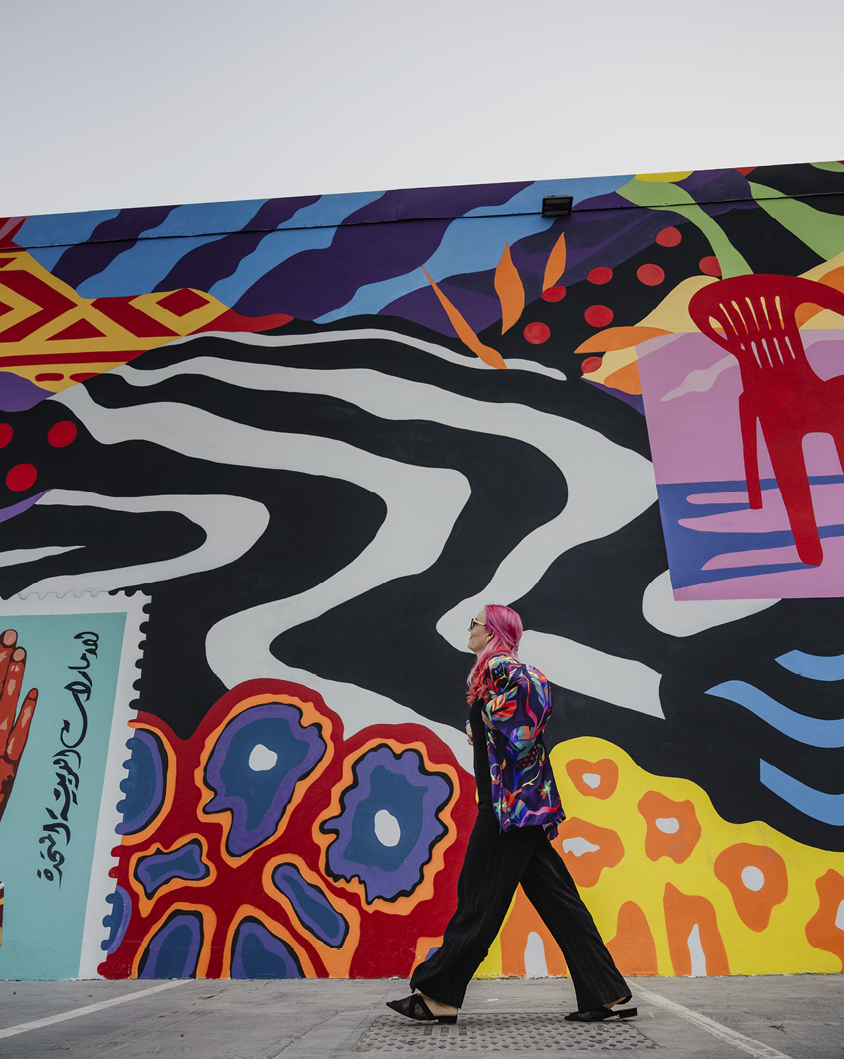
The Dubai Cultural Grant is a key initiative in supporting artists across disciplines. How does this grant contribute to long-term sustainability within the creative ecosystem?
The Dubai Cultural Grant is an investment in the long-term sustainability of the creative ecosystem, empowering artists and cultural practitioners to focus on developing their craft while providing the resources, mentorship, and visibility they need to succeed.
Through it, we’ve been able to support projects across literature, design, visual art, film, and performance, among other fields, helping creative ideas move from concept to completion. This continuity allows artists to grow their practice, build audiences, and contribute to Dubai’s cultural economy in meaningful ways.
But sustainability also means creating systems of support that extend beyond a single funding cycle. That’s why we pair financial assistance with guidance, training, and networking opportunities to support artists and equip them with the skills to sustain their work, collaborate, exhibit, publish, and connect internationally.
What does Dubai Culture look for when selecting artists or projects for the grant?
When evaluating applications, we look for authenticity, innovation, and impact. We want to support projects that tell meaningful stories, whether they’re rooted in heritage, exploring new ideas, or addressing contemporary issues through art. The most successful applications are those that bring a distinctive voice to Dubai’s cultural landscape.
We also value projects that foster collaboration and community engagement. Art that connects people and sparks conversation contributes directly to our mission of building an inclusive, creative society. It’s not just about individual achievement, but about how the work can inspire, educate, or uplift others.
In addition, we consider the project’s feasibility and long-term potential. Our goal is to support initiatives that can grow and evolve, creating ripple effects across the sector. We look for creatives who are thoughtful about how their work fits into the broader cultural ecosystem and how it can add value to Dubai and beyond.
Ultimately, we’re seeking voices that reflect Dubai’s diversity and dynamism; artists and thinkers who are unafraid to experiment, challenge norms, and imagine new possibilities. Those are the voices that define the future of the UAE’s creative economy.
Al Quoz Creative Zone has become a thriving creative ecosystem. Tell us about that.
Al Quoz Creative Zone represents one of Dubai’s most inspiring creative success stories. What began as a handful of artists transforming industrial warehouses into studios and galleries has organically evolved over the years into a vibrant ecosystem where creativity drives both community and commerce.
Through the Al Quoz Creative Zone initiative, Dubai Culture, along with its partners, has worked to formalise and nurture that energy. We introduced policies that simplify licensing, provide affordable workspaces, and encourage cross-sector collaboration. This framework gives artists, designers, and entrepreneurs the stability they need to sustain their practice and grow their businesses.
But what makes the zone stand out is its sense of community: you’ll find painters working next to architects, photographers beside product designers, startups collaborating with established brands. It’s a district that blurs boundaries between disciplines and fosters constant dialogue.
How is the upcoming Al Quoz Creative Entrepreneurship Forum contributing to the dialogue on innovation and creative entrepreneurship in the UAE?
The Al Quoz Creative Entrepreneurship Forum held this year under the theme ‘Passion, Profit, Possibilities’ is designed as a platform where ideas, inspiration, and opportunity meet, bringing together artists, entrepreneurs, investors, and policymakers to discuss how creative ventures can grow into sustainable businesses that contribute to Dubai’s cultural economy.
This year’s edition builds on the momentum of previous forums, offering an even richer mix of keynote talks, workshops, and networking sessions. The goal is to provide entrepreneurs and creative professionals with tangible tools, from mentorship and funding insights to strategies for brand development and collaboration.
The Forum embodies what Dubai Culture stands for: creating spaces where creativity and entrepreneurship intersect. It reinforces our belief that innovation grows strongest in an environment of shared learning, collaboration, and support
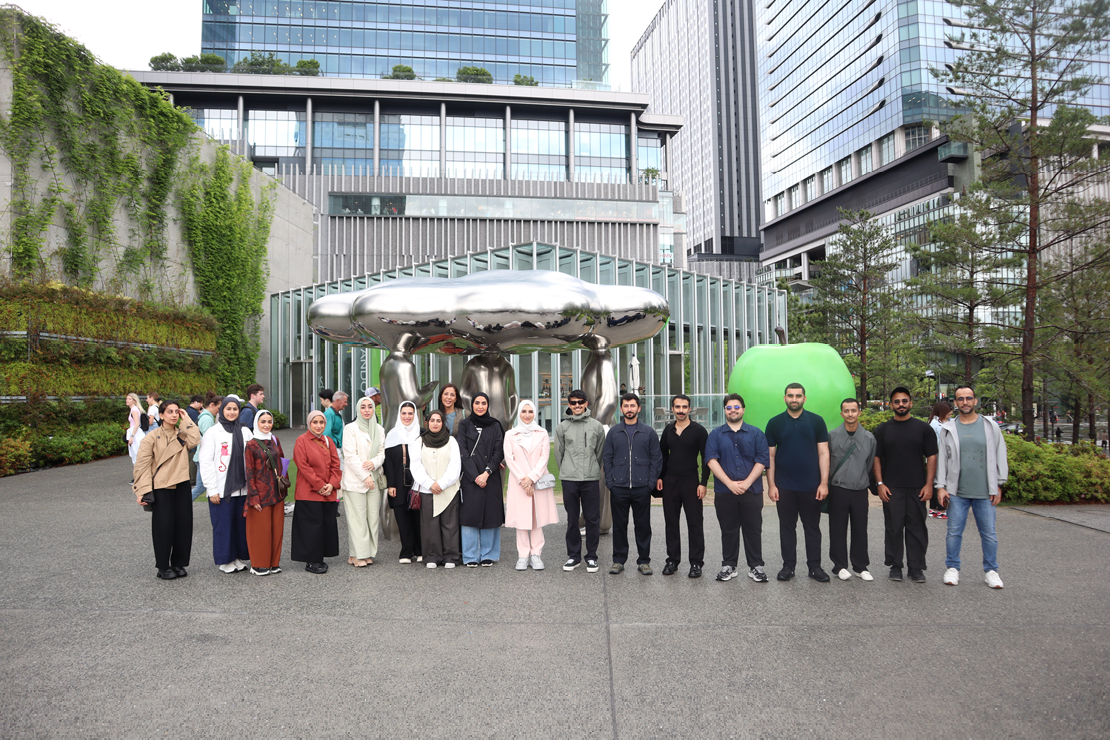
Dubai recently won the bid to host ISEA2026. What does this achievement mean for the UAE’s position on the global creative stage?
Winning the bid to host ISEA2026 is a defining moment for Dubai and the UAE’s creative industries, as it places us on the world stage as a city that not only appreciates art and technology but actively pioneers the dialogue between them.
This achievement reflects Dubai’s growing reputation as a destination where artists, scientists, and technologists come together to explore new frontiers of creativity. Hosting ISEA will bring global thought leaders, researchers, and practitioners to our shores, offering invaluable opportunities for local creatives to engage with cutting-edge ideas and networks.
It also reinforces the UAE’s commitment to cultural innovation. By integrating technology into artistic practice, we’re expanding what creativity means, from digital installations and AI-driven art to immersive storytelling and new media. Dubai is uniquely positioned to lead this conversation because our infrastructure, openness, and vision already support experimentation at scale.
As Dubai continues to position itself as a global creative hub, what are your key priorities for the next few years?
Our key priorities focus on sustainability, inclusivity, and growth, ensuring that the creative sector remains both dynamic and resilient. We’re dedicated to building an ecosystem where artists and entrepreneurs can thrive independently, supported by clear frameworks, access to resources, and a culture that values creativity as a driver of progress.
Over the coming years, one of our main goals is to deepen international collaborations. Dubai already serves as a crossroads for creative exchange, and by strengthening partnerships with global institutions, festivals, and networks, we can further amplify the reach of local talent.
We also want to continue investing in the next generation by providing training, mentorship, and exposure opportunities for young artists, designers, and writers. Initiatives like the Dubai Cultural Grant, Sikka, and School of Life will remain central to that mission.
Ultimately, every initiative we pursue comes back to a single vision: to make creativity a defining feature of life in Dubai. By empowering people to express themselves, innovate, and connect through culture, we’re shaping a city that lives its creativity.
How is Dubai Culture nurturing the next generation of creative talent, particularly young artists and designers seeking international exposure?
Empowering the next generation is one of our most important responsibilities. Young creatives represent not just the future of Dubai’s cultural landscape, but also its most powerful voice today. At Dubai Culture, we focus on giving them the confidence, skills, and opportunities to grow locally while connecting them to international platforms.
Through initiatives such as Sikka Art & Design Festival and the Dubai Cultural Grant, we provide mentorship and exposure to both established professionals and global audiences. These programmes are designed to help young artists develop their craft, understand the creative economy, and access networks that can elevate their work beyond borders.
We also encourage experimentation, giving young people the space to take creative risks and explore new forms of expression. Whether that means a designer reinterpreting heritage materials or a poet performing at an international festival, we want them to feel that their voices matter and that they can make an impact from right here in Dubai.
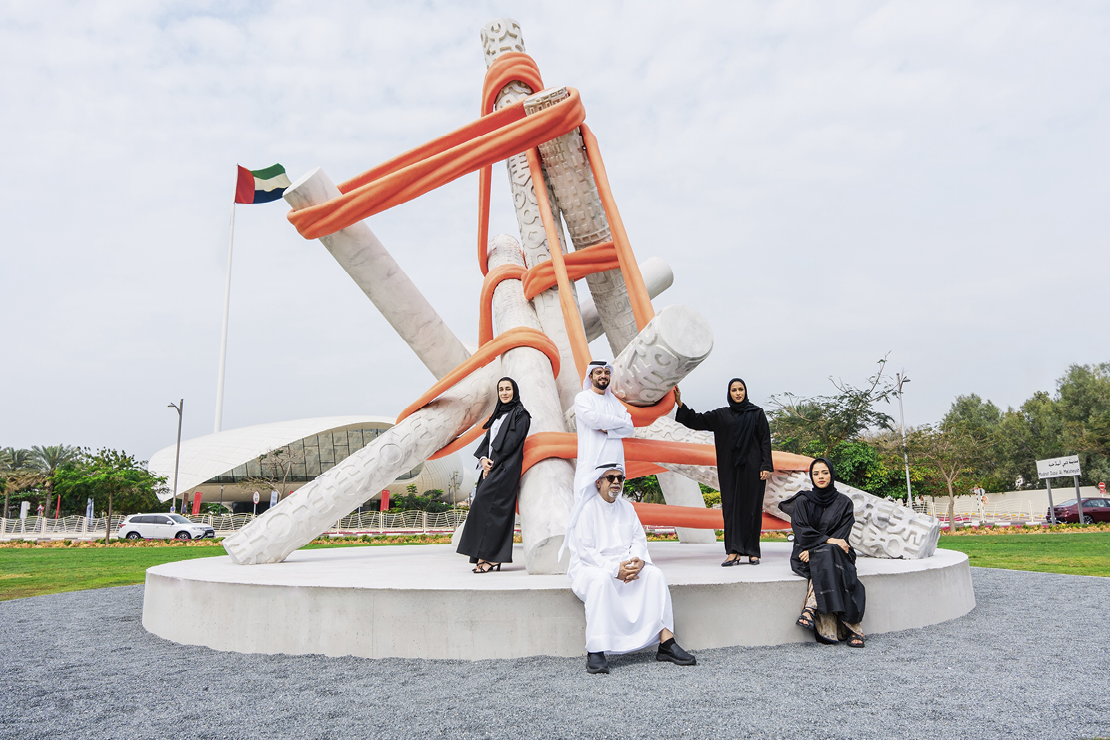
Finally, what is your personal vision for the future of Dubai’s arts and design sector?
My vision is for Dubai to continue growing as an emirate where creativity is woven into every part of life, becoming a city where culture inspires daily experiences and connects people across backgrounds and generations. I see a future where art, design, and literature are not separate industries but living, breathing parts of our communities, influencing how we think, learn, and interact.
For me, the most meaningful progress happens when creativity touches people’s lives directly. That’s why I’m passionate about public art, cultural learning, and accessible spaces, because they invite everyone to participate in shaping Dubai’s story.
Looking ahead, I want Dubai to continue setting global benchmarks for innovation while staying deeply rooted in its cultural identity. Our heritage will always be our foundation, but our openness to new ideas is what drives us forward. The intersection of tradition and innovation is where Dubai’s true creative power lies.
I just want every artist, designer, and writer who calls Dubai home to feel supported, to dream boldly, to create fearlessly, and to share their work with the world.
