
Rolls-Royce Presents the New Ghost

The new Rolls-Royce Ghost made its debut in Dubai and A&E was there to experience this masterpiece of engineering and craftsmanship first hand.


For a car manufacturer that is always looking for inventive ways to bring its expression to life, Rolls-Royce is constantly moving forward with its designs and innovation. This year, the new Rolls-Royce Ghost was introduced as the most technologically advanced Rolls-Royce yet. While the design is elegant and minimalist, the product has a highly complex creation and is a welcome addition to the Rolls-Royce offering. Over a ten-year period, the Ghost has become the brand’s most successful car in its 116-year history and this new edition is expected to continue the momentum.


Today, with the new Ghost, Rolls-Royce introduces a car that will set the standard of its manufactory designs for the next years. This car was inspired by the Rolls-Royce customers and their needs. “These business leaders and entrepreneurs demand of their Ghost more than ever. They require a new type of super-luxury saloon that is dynamic, serenely comfortable and perfect in its minimalism. Ghost is this product.” Said Torsten Müller-Ötvös, Chief Executive Officer, Rolls-Royce Motor Cars. He continued; “the only components that we carried over from the first Goodwood Ghost were the Spirit of Ecstasy and umbrellas. Everything else was designed, crafted and engineered from the ground up. The result is the most technologically advanced Rolls-Royce yet. It distils the pillars of our brand into a beautiful, minimalist, yet highly complex product that is perfectly in harmony with our Ghost clients’ needs and perfectly in tune with the times.”


The first Goodwood Ghost in 2009 had a laser focus on meeting the demands of its clients and throughout its ten-year lifecycle, this transformative motor car became the most successful product in the company’s 116-year history. Ghost’s decade-long market presence enabled the brand’s Luxury Intelligence Specialists to gather vital information about developing behaviours in how Ghost clients use their motor car, how they commission it and how they perceive Rolls-Royce. As Ghost clients required even more of their motor car, Rolls-Royce used its knowledge to respond, incorporating technology such as all-wheel drive and all-wheel steering in Ghost and unlocking an entirely new, purposeful personality.


Reserved exclusively for Rolls-Royce the new Ghost features the proprietary aluminium spaceframe architecture which allows for fewer constraints than high-volume vehicles. It creates an acoustically superior, highly rigid and dynamic proposition for Ghost within the Rolls-Royce product portfolio. The Rolls-Royce architecture is based around four fixed points, one at each corner of the motor car. The moveable aluminium bulkhead, floor, cross-members and sill panels were positioned specifically to ensure the new Ghost meets client expectations as a motor car that is equally enjoyable to drive as it is to be driven in. Two of the cast suspension mounting assemblies were pushed to the very front of the car, placing its 6.75-litre V12 behind the front axle to achieve an optimum 50/50 weight distribution.


To accommodate this without intruding on new Ghost’s interior suite, its overall length has grown by 89mm, compared to the first Goodwood Ghost, to 5546mm, and its overall width has grown by 30mm to 1978mm. Significant changes were also made to the double-skinned bulkhead and floor structure packaging. These were undertaken to incorporate an all-wheel drivetrain, all-wheel steering and completely redesigned Planar Suspension System, which further enhances the marque’s hallmark Magic Carpet Ride. This was achieved without compromising the motor car’s low centre of gravity, which aids cornering dynamics. The car’s outer body is rendered as one clean, expansive piece, flowing seamlessly from the A-pillar, over the roof and backwards to the rear of the car. To achieve this, four craftsmen hand-weld the body together simultaneously to ensure a perfectly continuous seam. In addition, 100% aluminium, laser-welded doors have been used. This not only offers weight benefits and remarkable 40,000Nm/deg stiffness, but the material has a lower acoustic impedance than steel, improving cabin ambience.


Engineering specialists redesigned the motor car’s suspension completely to deliver what is called the Planar Suspension System. Named after a geometric plane, which is completely flat and level, the system is the result of ten collective years of testing and development to create a sense of flight on land never before achieved by a motor car. Created through physical engineering developments as well as sophisticated scanning and software technology, it incorporates a world-first Upper Wishbone Damper unit above the front suspension assembly, creating an even more stable and effortless ride. This works alongside the Flagbearer system, which uses cameras to read the road ahead and prepare the suspension system for any changes in the road surface, as well as the marque’s Satellite Aided Transmission. These technologies are managed as one through a bespoke Planar software system. The new Ghost can now anticipate and react to the most demanding road surfaces.


Rolls-Royce’s self-closing doors for years have been a favourite element of customers for years. The new Ghost allowed the innovation to go even further and for the first time, clients can now also open the doors with power assistance. The car also benefits from a new Micro Environment Purification System. This unique system develops the existing air filtration technology to incorporate a full suite of hardware and software improvements.


The new Ghost is the most technologically advanced motor car Rolls-Royce has ever produced. Further equipment includes: LED and laser headlights with more than 600m of illuminated range, vision assist, including day- and night-time wildlife and pedestrian warning; alertness assistant; a four-camera system with panoramic view, all-round visibility and helicopter view; active cruise control; collision warning; cross-traffic warning; lane departure and lane change warning; an industry-leading 7×3 high-resolution head-up display; Wi-Fi hotspot; self-park; and the very latest navigation and entertainment systems. The bespoke audio system also allows drivers to experience the best of sound and make the most of the highest quality uncompressed music, providing an exceptional listening experience.


When it came to the design, opulence and minimalist luxury were at the front of mind of the craftsman. Rolls-Royce’s proprietary architecture allowed the design team to increase the width by 30mm, subtly communicating presence. This is framed by sharp bowlines that intersect with an angular light signature, creating an assertive yet beautiful front end. In addition, the new Ghost was given its own ethereal front-end character. This was achieved not by way of overt design, but with light. 20 LEDs underneath the top of the radiator grille subtly illuminate the veins. In the spirit of Post Opulent aesthetics, the marque’s engineering team brushed the back of the metal grille bars, making them less reflective, subduing the effect and perfecting the restrained glow desired. The front of the new Ghost is an exemplar of the design team’s obsession with reduction. Owing to the hand-welded aluminium body structures, the main structure of the car appears as one fluid canvas, uninterrupted by shut lines, recalling the coachbuilt Silver Dawn and Silver Cloud. For the first time, the Spirit of Ecstasy is not surrounded by panel lines but rather stands sits within her own ‘lake’ of bonnet.


Inside, you’ll find the same minimalist design aesthetic. The finest materials were sourced to ensure the approval of even the most seasoned clients. Wood, leather and metal have all been crafted by hand to ensure the very best in quality and perfection. And finally, for those looking for something truly unique, Ghost’s Illuminated Fascia offers the ultimate in luxury. A world-first innovation that was developed over two years and more than 10,000 collective hours, this remarkable piece brings an ethereal glowing Ghost nameplate, surrounded by more than 850 stars, into the interior suite of the motor car.


The new Rolls-Royce Ghost is now available to order in The Middle East.

Valentino’s Latest Collection is a Must For All Animal Lovers

Valentino Garavani Rockstud Pet is an exclusive customising service that celebrates our pets.


Dedicated to our beloved animals this personalisation service allows bag owners to exclusively personalise their Valentino Garavani Rockstud bag with an image of their pet.

The super cute service has been curated in collaboration with illustrator and artist Riccardo Cusimano who will embellish the bags by hand with the owner’s initials and a charming portrait of their pet. The two elements are blended together to ensure each owner has a completely unique design.


The illustrations can be embossed on three different styles of the Valentino Garavani Rockstud bags, in five different colour variations. An exclusive selection of Valentino Garavani Rockstud leashes and dog collars, in a matching colour palette, will also be available for purchase.

Shoppers can personalise their bags online at Valentino.com by choosing their preferred colour combination and sending over an image of their pet which will be the basis of their design. Once ready they can have the bag delivered or collection from selected Valentino boutiques.

Special packaging completes the Valentino Garavani Rockstud Pet experience, a venture of pure craftsmanship dedicated to the Valentino community.

Sustainable Staycations in the UAE

We discover some of the hotels in the UAE that are working towards a long-lasting, safer and more sustainable future


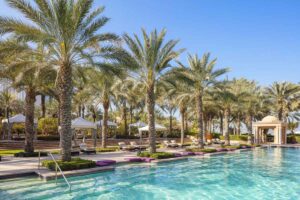
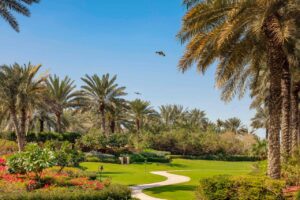
The Chedi Al Bait, Sharjah


Since its official opening, The Chedi Al Bait has outlined clear goals for its dedication towards sustainability. The resort in Sharjah completely banished plastic consumables (including room keys, water bottles and straws), from the offset and its comprehensive sustainability plan embraces recycling, organics and energy efficiency strategies. The on-site water filtration system allows the resort to produce its own water which is used in-house. The Chedi Al Bait also has a zero-waste policy, recycling all food waste which it uses as compost for the landscaping in its gardens. All waste is segregated and collected by a waste management contractor. At the same time, the resort has minimised its dependence on consumables, it’s trying to mitigate its use of energy in general. The Drop of Water campaign has drastically curtailed its use of water and energy. The resort’s air conditioning is also set to default at 26 degrees when guests are not in their rooms and in communal areas the AC is automatically powered down when not needed.


As well as reducing its carbon footprint, the resort’s spa is building for the future too but using organic, Halal-certified products only. None of the products contain artificial colour or fragrances, GM ingredients, petrolatum or petrochemicals, parabens, animal derivatives or sodium lauryl sulphate. For nail treatments only vegan, wildcrafted, organic Spa Ritual products are used. All of which are free of toluene, formaldehyde, dibutyl phthalate and parabens that are normally found in nail treatment products so you can really trust in the products you are using on your body.


The Chedi Al Bait was also awarded the Modama Green Hotel & Resort Award for its continuous efforts in practising and promoting sustainable hospitality. Established by Ajman Tourism Department the Modama Award was developed to recognise the most sustainable hospitality companies in UAE. This award acknowledges the hotel’s founding vision in supporting the local authorities, aligning its long-term goals with the UAE’s vision to grow into a sustainable business hub for international establishments.


The Four Seasons Hotels, Dubai


The Four Seasons Hotels in Dubai follow the Four Seasons Dubai Green Committee which was founded to create an environmentally responsible business where employees are committed to reducing the ecological and carbon footprint from activities associated with the brand. The goal of the Four Seasons Jumeirah and Four Seasons DIFC Hotels is ultimately to reduce waste and energy use through the educating of its employees who are guided to work more sustainably and responsibly.


The Hotel’s commitment to conserving water is highlighted in several ways. Without compromising on guests comfort, water reduction systems have been installed that work to reduce the water flow by almost 50%. Employees are encouraged to pay close attention to water usage daily. Four Seasons Hotels Dubai have food composters present in the kitchens, and water is generated from any composted food waste and is then treated and reused for on-site purposes such as watering the plants. Light sensors have been installed in all rooms to reduce energy usage. The Four Seasons Resort Dubai at Jumeirah Beach has recently partnered with ChoChoMa Studios to create one-of-a-kind fruit bowls made completely from recycled glass. The design is unique to the hotel and each bowl is compiled of five green bottles and five clear bottles collected from the resort. ChoChoMa Studios is the only artist-run, hand-crafted glass studio in the UAE and we are proud to partner with them on this initiative. All plastic straws have been replaced with a paper alternative, as well as eradicating plastic cup use where possible including in the hotel’s spa. Inside the spa itself, the resorts are committed to using organic and natural product ranges including Sodashi and Du Burgener.


Andaz Dubai, The Palm


Andaz Dubai The Palm recently launched a new container farm in partnership with Green Container Advanced Farming (GCAF), introducing its own organic container farm on the terrace of its Palm Jumeirah location. The hotel’s ongoing commitment to sustainability has been a focus since its 2019 opening, with multiple initiatives to reduce single-use plastic and use of environmentally friendly products. Through the partnership with local organisation GCAF, the property is able to harvest its own hydroponic produce onsite, to be utilised in the preparation of dishes at the hotel’s restaurants and cafes.


This method of farming not only reduces the amount of water needed to grow by up to 90% compared to traditional soil farming but also reduces the carbon footprint created by distribution modes of transportation whether by air or land and reduces food waste by harvesting only according to daily requirements. The new container farm is 400 square feet in size and completely pesticide and herbicide-free. Produce grown in the farm includes salad and lettuce variations, herbs such as basil, microgreens and edible flowers. Guests visiting Andaz’s dining venues, including neighbourhood eatery The Locale and popular Japanese eatery Hanami are able to enjoy culinary creations made with the freshest and most nutritious produce sourced daily from the hotel’s very own farm.


The Future Is Electric at Maserati

Francesco Tonon, Head of Product Planning at Maserati on producing luxury cars that will help to save our planet.


The automotive industry is one of the key sectors that is crucial when it comes to building a better future and sustaining our planet. It’s commonly known that traditional cars play a huge role in contributing to climate change and more work needs to be done to limit the greenhouse gases produced by car engines before the contribution to global warming becomes irreversible. When electric cars were first on the market they came with the taboo of being uncool and ugly, but things have come a long way since then. Many luxury car manufacturers have begun to question how they can build cars for a better future, and one of the answers is to create electric “hybrid” engines.


Italian car manufacturer Maserati has recently embarked on a journey into the world of hybrid cars. The new Maserati Ghibli Hybrid combines luxury, excellence and performance with the car manufacturer’s first-ever eco-friendly design. This unique design is one of the most ambitious projects taken on by Maserati yet and is the beginning of the future of the car manufacturer with a direction of greener consumption, without compromising on quality or design. The hybrid technology uses the kinetic energy that the car uses when in motion and transforms it into electricity that is stored in the battery and used to run the engine. This reduces fuel consumption, improves performance and cuts harmful emissions. We find out more about this care and the future of sustainability at Maserati with Francesco Tonon, Head of Product Planning at Maserati.


The Ghibli Hybrid is a milestone launch for Maserati – how long has this car been in the works and tell us a little about the initial idea?

The launch of the Ghibli Hybrid is a milestone for Maserati because we are entering a new era. We are writing a new book and the Ghibli Hybrid represents the first chapter as it is the first hybrid model by Maserati. Ghibli Hybrid is the link between a past of internal combustion engines and an electric future. When we started thinking about this project, at the beginning of 2018, the goal was to create a car that was able to deliver efficiency and at the same time, enhance the performance. With the Mild Hybrid system, we can offer to our consumer the best skills, options and values of two engines. The performance and the smooth response of a 6-cylinder petrol engine and the low emission and consumptions of a 6-cylinder diesel engine.


What are some of the biggest challenges you faced with this car?

This is a historical moment because for the very first time, we are producing a Maserati equipped with a hybrid engine. It’s truly an exciting time because we’re on the verge of a new era. The challenge is combining the brand’s traditional values with the electrification project. That’s why we need to find a balance in meeting the market’s demands that push toward green mobility and at the same time, we do not want to forget the traditional Maserati DNA.


Why did you decide on the Ghibli model for the hybrid engine?

We decided to apply this technology on Ghibli because it perfectly embodies Maserati’s DNA. Maserati has a long history with sedans dating back to the 60s. Maserati invented the high-performance sedan in 1963 by fitting a race car engine in a sedan – the Quattroporte. The current Ghibli is a very successful model produced in over 100,000 units since its presentation in 2013. Consequently, we believed Ghibli would be the ideal Maserati model to be equipped with our new hybrid unit.


What were the challenges in ensuring the Maserati sound was still present even with this engine?

The Ghibli Hybrid is a Maserati in every respect, the signature sound is completely authentic. It is achieved without resorting to amplifiers, but by just tweaking the fluid dynamics of the exhausts and adopting resonators, tuned to deliver the typical roar. Anyone on board a Maserati hybrid must still hear the unmistakable sound of a Maserati engine.


Who is the person this car is designed for?

In terms of demographics, the younger generations have been the early adopters when it comes to electrification and sustainability. However, this situation is changing as these values are becoming important among different generations of consumers. Considering that our hybrid solution provides enhanced performances as well as efficiency, this is a combination of assets that is desirable for a very wide range of consumers.


How does the Maserati Hybrid differ from those on the market?

The Maserati 48 volt hybrid system has four parts: BSG, battery, eBooster and a DC/DC converter. The BSG and eBooster combination is unique in the hybrid sedan segment and provides an extra boost when the engine reaches peak rpm in sport mode, at which point the performance benefits can be fully enjoyed, while in normal mode it balances fuel use and performance.


Tell us about the blue colour – why did you decide on this colour to identify the hybrid cars?

The blue colour is universally adopted as the symbol of clean mobility. The Ghibli features several details in blue: the three traditional air ducts on the front mudguard have a blue trim, the Brembo brake callipers and the thunderbolt in the pillar logo are in the same colour.


How do you ensure that you continue to keep the Maserati spirit and DNA with an electric motor car? 

The Hybrid system is the best solution we could have adopted because it combines the best features of the two previous power plants, offering the driver a car that is fun to drive, with the genuine Maserati sound. It squares the circle by delivering the smooth response of a 6 cylinder engine with the low-rpm torque of a diesel. The outcome achieved is almost perfect: even greater performance, with less fuel use (100 km/hour in 5.7 seconds and delivers a top speed of 255 km/h).


How do you ensure that long-term clients will be interested in the Ghibli Hybrid and at the same time appeal to new potential customers?

By staying true to our DNA. Our everyday aim is to infuse our pride and dedication to people who love excellence. Choosing a Maserati is never done by chance, but instead, it is an act of deep passion and knowledge. Innovation, audacity and uniqueness guide the brand in this phase of total renewal. It’s not about offering a huge number of models, it’s about offering the right ones. This is the secret to ensuring the commitment of our long-term clients and at the same time appealing to new potential customers: never forget the past; start from the roots to create our future. It’s about staying true to Maserati’s soul.


Of course one of the challenges today is sustainability which of course is very important to the brand – can you tell us a little about some of the ways you are tackling sustainable alternatives and practices?

The Ghibli Hybrid aims to enhance performance while saving fuel. It represents the Maserati approach to hybrid propulsion, an approach in keeping with our DNA. The Ghibli Hybrid takes Maserati into the future without betraying the past. In a way, it even further highlights the keynote features of every Maserati: exceptional performance and luxury. The first hybrid engine in the history of the marque, where innovation and technology have always met with high-performance automotive engineering, to drive Maserati forward towards a more sustainable future. Faster than diesel, greener than gasoline: that is the Ghibli Hybrid philosophy in a nutshell.


Earlier this year you announced that you would cease production of V8 engines for you GranTurismo – what does this significant move mean for the brand and the future?

As we have recently declared, all-new Maserati models will be 100% developed, engineered and built in Italy, and will adopt electric solutions (hybrid and/or 100% electric) delivering all the innovation and outstanding performance typical of the Brand’s DNA. GranTurismo and GranCabrio remain part of the Brand’s roots and the new versions heralding the age of full electrification for Maserati, constituting the first models to boast 100% electrical systems.


This issue of a&e talks about the future – in your opinion what is the future of luxury cars?

Luxury is not just about expensive and outstanding things; it’s not the coolest bag or the fastest car. Luxury is being able to do what you want when you want; it’s freedom of expression; it’s desire. For sure, the consumer who buys an electric car is interested in sustainability and in the environment, but he’s also attracted in the innovation and the ability to constantly innovate. Innovation doesn’t mean twisting, we have to respect the heritage of the brand and securing its timelessness. In the automotive industry, Innovation is the constant improvement of performance and technology, it’s a matter of anticipating customer’s wishes. Creating and satisfying desires is important to sustaining luxury.


How do you continue to combine tradition and innovation with sustainability at Maserati without compromising on quality or performance?

The choice of the Mild Hybrid technology used for the Ghibli is a clear sign the Maserati wants to re-establish the historical performance DNA, embracing ate the same time the future with the hybrid. We are offering the new Hybrid for the best experience driving with a combustion engine: our concept offers high performance combined with fuel economy. From a customer point of view this Hybrid should like a “new performance Diesel” – and CO2 like the V6 Diesel, power, performance and like V6 Gasoline (e.g. CO2 & Taxation Reduction Lower CO2 Emissions vs V6 Diesel and ~ -25% emissions vs. V6 350 gasoline)


What can you tell us about Maserati in the Middle East?

The Middle East is an important region for Maserati and we have been present there, with our partners for over 50 years, boasting among the most beautiful showrooms in the world. We have a strong base of clients that, unlike other regions, has an exceptionally high and growing number of young and female clients who truly appreciate exclusivity and unique craftsmanship. We are looking forward to strengthening our offer to our customers in the region by demonstrating how a luxury and performance brand like Maserati can lead the way to satisfy numerous market trends like electrification and contactless interaction, while at the same time remaining true to its DNA of high performance and beautiful Italian design. The first steps of this journey are already at our doorstep with the arrival in the Middle East of the Ghibli Hybrid, Trofeo Collection and soon the highly anticipated super sports car MC20.


Patek Philippe Launches a New Exclusive Highly Complicated Watch

Patek Philippe has launched a new Grand Complication watch that celebrates its mastery of the music of time.


The Ref. 6301P Grande Sonnerie is the watchmaker’s first wristwatch with a grande sonnerie in its purest form.


This grand complication which is exceptionally rare in a wristwatch, is complemented with a petite sonnerie, a minute repeater, and a patented jumping subsidiary seconds. This exclusive piece will be made in a limited number of pieces and appeal to the most dedicated of watch collectors.


The new model as a hugely complicated 703-part movement that was developed specifically for this watch. It is cased in platinum, as well as a black dial in grand feu enamel. Patek Philippe endowed the caliber GS 36-750 PS IRM with two tandem-connected twin mainspring barrels, one for the going train and the other for the chiming mechanism. This configuration delivers a power reserve of 72 hours for the movement and of 24 hours for the strikework.


Patek Philippe has been producing striking watched since its founding in 1839 and this new piece completes the brand’s collection of iconic timepieces, with a watch that will last for generations.


This watch features three classic gongs: low, medium and high. Attached to the movement, the three gongs must not touch one another nor other parts of the case or movement despite the compact space in which they hover. Three hammers of identical size and mass guarantee a uniform strike for all three pitches. The selection of platinum as the case material also presented a challenge because it is difficult to master acoustically and requires Patek Philippe know-how that at the manufacture is handed down from one generation to the next.


When they reworked the caliber 300 from the Patek Philippe Grandmaster Chime, the engineers and designers at the manufacture added a small jumping seconds display, which was never done with a grande sonnerie. Inspired by the four patents of the 175th-anniversary model, the Ref. 5275 Chiming Jump Hour, they endowed the new Ref. 6301P with an innovative jumping seconds mechanism.


Patek Philippe has leveraged its skills with respect to artisanship and rare handcrafts, notably on the black grand feu enamel dial with the “glacé” finish, applied Breguet numerals, and leaf-shaped hands in luminescent white gold. The slightly slanted Breguet numerals add a dynamic touch to the classic yet contemporary face.


The displays for the hours, minutes, and subsidiary seconds at 6 o’clock are well proportioned alongside two power-reserve indicators for the movement and the strike work at 3 and 9 o’clock with semicircular scales identified with the inscriptions MOUVEMENT and SONNERIE. The timepiece is worn on a hand-stitched shiny black Alligator strap with square scales and a fold-over clasp.


The relaunch of the 1989 minute repeater wristwatches gave Patek Philippe the opportunity to push the door wide open for the return of modern repeater timepieces. With the presentation of the Grandmaster Chime in the anniversary year 2014, now followed by the new Ref. 6301P as part of the regular collection (although its complexity limits production to a few pieces per year), the manufacture has opened up a new chapter that paves the way to new developments in the field of grande sonneries – much to the delight, aesthetically and acoustically, of all connoisseurs and aficionados who are passionate about the music of time.


Discover Boucheron’s Middle East Exclusive Campaign

Boucheron presents its new Middle East campaign; Legacies.


The new image showcase the Houses latest collections and put three Middle East-based women and their families in the spotlight.


Boucheron Legacies – Nour Arida – Serpent Bohème necklace 23 motifs, YG, diamonds, Serpent Bohème ring 6 motifs, YG, diamonds, Serpent Bohème L motif, YG, diamonds


Each of the three women speaks of the values passed on to them which have enabled them to shape their own style.


Boucheron Legacies – Saira Arshad – Quatre White Edition earrings, Quatre Radiant Edition YG ring, Quatre Radiant Openwork Edition ring and Jack


The three; Nour Arida, Jessica Kahawaty and Saira Arshad are surrounded by their friends and families. Nour Arida, her mother and her daughter chose to wear pieces from the Serpent Bohème collection. Jessica Kahawaty and her mother are adorned with jewels from the Plume de Paon collection. Lastly, Saira Arshad and her friends wear items from Quatre and Jack de Boucheron collections.


Boucheron Legacies – Saira Arshad and friends


The Legacies campaign is exclusive to the Middle East, where custom-made vitrines of the Boucheron stores will be showcasing the icons of the Maison. It highlights the legacy of Boucheron, a House that has never ceased to place women at the heart of its creations. For the style of Boucheron is designed by them and with them.


Fashion, Future, Luxury: The Fashion Houses Building For a Better Future

We discover some of the luxury fashion houses who are planning for a more sustainable, happier future.


In 2019, a number of global luxury brands came together to create The Fashion Pact. Launched as a mission given to Kering Chairman and CEO, François-Henri Pinault by French President, Emmanuel Macron, the Fashion Pact was presented to Heads of State at the G7 Summit in Biarritz. By joining this global coalition, the companies highlighted their commitment to working towards combating key environmental issues including stopping global warming, restoring biodiversity and protecting the oceans. We discover some of the developments some of the brands have made to the cause since signing the pact last year.


The Prada Group 


The Prada Group’s commitment to a more sustainable future has always been deeply rooted within the company’s strategy but it is something that has become even more at the forefront of the business in recent years. The Group’s principles are outlined in the Sustainability Policy which represents a formal commitment towards the communities in which it operates. This can be through investment in culture, integrating with local communities, inclusivity in the working environment and investment in more sustainable materials and practices.


Most recently, Prada has expanded the reach of its ground-breaking Re-Nylon collection. Using the latest in fabric and sustainable technology Prada’s Re-Nylon is a textile crafted from regenerated nylon created through a process of recycling and purification of plastic collected from the oceans, fishing nets, landfills and textile fabric waste. Through a method of de-polymerisation, purification and then transformation into new polymers and then threads, this material can be recuperated and made into new nylon fabric. The choice of the ECONYL® yarn for the Prada Re-Nylon collection actively contributes to the reduction of global warming by up to 90% compared to the use of the virgin nylon yarn. Prada aims to convert all of its virgin nylon into regenerated nylon by the end of 2021. The collection of ready-to-wear and accessories is available now in Prada stores.


Chanel 


In March 2020 Chanel outlined an ambitious sustainability plan. Entitled Chanel Mission 1.5°, the plan was written in accordance with the 2015 Paris Climate Agreement, which aims to reduce the mean global temperature increase to 1.5°C. Chanel pledged to reduce emissions across the House’s operations by 50 per cent by 2030 and to reduce supply chain emissions by 40 per cent per unit sold, by the same year. It will move to 100 per cent renewable electricity by 2025 and balance residual carbon emissions by investing in nature-based research and solutions.


Burberry


Earlier this year Burberry launched ReBurberry Edit, a collection of products made from innovative materials that bring together the latest in sustainable material science. The collection of 26 styles which first debuted in the Spring/Summer 20 collection. Burberry’s responsibility highlights the brand’s longstanding commitment to sustainability and its dedication to reducing its environmental footprint and enabling social progress. By 2022 Burberry aims to source 100 per cent of its cotton sustainably, as well as have 100 per cent of its products with more than one positive attribute in terms of its social and/or environmental impact. This will be achieved either at raw material sourcing or at the product manufacturing stage. The brand also aims to source 100 per cent of its leather from tanneries with environmental traceability and social compliance certifications by 2022. The brand has also pledged to have 100 per cent renewable electricity by 2022 and aims to drastically reduce waste which began with its pledge to not destroy any unsaleable finished products.


PVH Corp. 


PVH Corp. whose brand portfolio includes Calvin Klein and Tommy Hilfiger recently embarked on the latest step on its journey towards a sustainable future. Its global headquarters in The Netherlands has unveiled the world’s most powerful solar roof. The roof will allow 100 per cent of the company’s electricity to be produced through renewable sources by 2030. The 48,000 solar panels that cover the roof covers the Centre’s electricity footprint, as well as indirectly providing 100% of all energy for PVH Europe’s warehouses, offices and stores in the Netherlands via the Dutch public power network. PVH Europe’s energy partner, Eneco, has certified that all energy needed to power these buildings is generated by the new rooftop installation. This work is linked to PVH’s science-based emissions target aligned with the most ambitious level of decarbonization as set out by the Paris Agreement. It is also one of the priorities outlined in the company’s Forward Fashion corporate responsibility strategy, which aims to reduce negative impacts to zero, increase positive impacts to 100% and improve the over 1 million lives across the company’s value chain.


Capri Holdings


Capri Holdings which has Michael Kors, Versace and Jimmy Choo under its umbrella has stepped up its progress for the future in recent years. The group’s Corporate Social Responsibility Strategy encompasses significant and measurable goals across a range of environmental and social sustainability issues. The goals are split into three categories. “Our World” focuses on actions across the operations and supply chain to significantly reduce the environmental impact of the group’s brands. “Our Community” is a commitment to fostering a supportive, healthy, diverse and inclusive workplace for all employees. And “Our Philanthropy” is about connecting the talents, energy and success of the group’s brands to those in need around the world.


One clear example of the latter is Michael Kors’ Watch Hunger Stop collection which continues to work alongside the United Nations World Food Programme which works to reduce those lacking food around the world. The latest colourful campaign entitled Food Is Love – Share Your Heart stars some of the brand’s own employees. This year’s capsule was designed and produced with the aim of minimising environmental impact. 100 per cent of the proceeds will be going to the World Food Programme.


Salvatore Ferragamo 


Since 2014 Salvatore Ferragamo has laid out a Corporate Sustainability Report in accordance with the international guidelines of the Global Reporting Initiative GRI – G4. To be transparent about its operations, the Company has committed to reporting on its corporate social responsibility initiatives. On a consumer level, Salvatore Ferragamo has developed new ways to provide sustainable alternatives for its customers. In December 2018, the Salvatore Ferragamo Group took part in the “Make Fashion Circular” initiative. This promotes the development of business models based on collaboration, the extension of the life of products, the reuse of energy and utilisation of renewable resources. Salvatore Ferragamo believes in the value of “Made in Italy” and seeks to create sustainable value for generations by continuing to keep all of its production and craftsmanship in Italy. By preserving traditional crafts and not outsourcing production, the brand helps to sustain jobs as well as cutting down on its carbon footprint. CEO, Mrs Micaela le Divelec Lemmi said:In the past few years, recycled and regenerated nylon, wool, and silk have been selected to be increasingly used in our Collections, building on our Founder’s passion for innovative materials and relentless experimentation. We are thrilled to share our vision and environmental goals with industry leaders and to take collective actions on such crucial changes.”


In 2018, Salvatore Ferragamo presented its first shoe bound by the principles of sustainability. The Rainbow Future shoe was inspired by the iconic Rainbow sandal of 1938 and was presented in a limited edition of 100 pairs. The shoe was hand-finished and made from wood and organic crochet cotton. The leather lining was created with no carbon dioxide or water consumption. Rainbow Future obtained the ISO 14067 certification, whereby it is now possible to calculate the emissions due to its making and compensate them through reforestation programs, making it a “carbon neutral” shoe. Subsequently, the brand partnered with Treedom who planted 100 orange trees in the countryside on the outskirts of Catania (Sicily), within the sustainable production of high-quality products through environment-friendly processes. A code written on the accompanying certificate will inseparably link each tree to a pair of Rainbow Future – a precious symbolic gift from Salvatore Ferragamo to the clients who purchase the shoe.


Hermès


As a brand, Hermès has always worked towards sustainable development. The House prides itself on preserving traditional crafts and these values have been passed down through the generations. The brand’s quest for authenticity, responsibility and respect for nature have allowed sustainability to come naturally to the House. Hermès seeks out the most beautiful materials offered by nature for its collections. Their artisans’ skilful hands respect leather, silk, fabric, wood, crystal and precious metals. They see it as their duty to achieve the sustainable use of these resources. Hermès seeks to source where possible, its workforce in France and commits to promoting local employment and preserving traditional crafts. Furthermore, as part of the energy transition launched by the Paris Agreement, Hermès integrates renewable energies into its electricity consumption in France as well as supporting the WWF to protect against endangered species in the Congo Basin. The brand also partners with several non-profit organisations around the globe, helping to preserve our planet and provide a better environment for future generations.


Gucci 


In 2017, Gucci outlined a ten-year Culture of Purpose sustainability plan. “Gucci is committed to a culture of purpose putting environmental and social impact at the heart of the brand,” says Marco Bizzarri, Gucci President and CEO. The plan outlines key guidelines that will form the future of the House including reducing the environmental impact of its business operations with a special focus on the use of energy and water, waste production, hazardous chemicals and the sustainability of raw materials; identifying and assessing both direct and indirect social and economic environmental impact along the entire supply chain and promoting within its spheres of influence actions for the improvement and development of support for people and their environment. The company is committed to reducing its environmental impacts and is setting ambitious targets to create a new standard in luxury retail, guaranteeing the traceability of 95% of their raw materials. In 2019, Gucci announced that they will pay every year to offset the emissions it can’t eliminate from its supply chain to become carbon neutral. In 2018 the brand presented its first fur-free collection beginning with Spring/Summer 2018. The company continues to search for sustainable alternatives, finding the least invasive processes, dreaming up innovative solutions and looking after the people who help them achieve what is part of the Gucci House.


The Science of Beauty

Skincare solutions that are bringing together these two worlds and providing visible log-lasting results.


While beauty is on one level about what’s on the outside, in today’s industry it goes far deeper than this. The world’s top beauty brands have dedicated decades of research into finding products that really improve the condition of our skin and fix the problems and issues that affect many of us today. We all want results that are truly visible, without the risk of surgery or invasive treatments, and while there are hundreds of solutions out there, it’s difficult to tell those that really do work from the ones that don’t. Here we discover the latest science-based skincare products that are providing results that will truly have the ability to change the course of your skin’s future.


Dior


Dior’s philosophy to skincare has always been to monitor medical advances, identify the most relevant and be the first in applying them to cosmetics and skincare. In 2020 Dior announced one of their most innovative products yet. Capture Totale C.E.L.L Energy is a range that focuses on the restoration of cellular energy to reactivate the skin’s youthful beauty.


A new patented technology revives vita energy deep beneath the skin’s surface and artificial intelligence allowed Dior Science to go beyond visible signs and analyse the key to our perception of age: the face’s visible health and vitality. This new range offers “total” skincare (hence the name) with a full range of products. Ingredients include a unique complex of four flowers that work in synergy to revitalise the skin. All formulas boast Bio-Cellular Technology, along with specific and complementary ingredients unique to each product.


Key to the range is the Capture Totale Super Potent Serum which was developed to be super performative in age-defying. With an ultra-active texture in affinity with the skin, it offers a revitalisation for a skin-firming effect and a powerful treatment for all signs of ageing. The Capture Totale Firming & Wrinkle-Correcting Crème restores the skin on every level by strengthening the barrier and improving suppleness from deep within. While the Capture Totale High-Performance treatment Serum Lotion refreshes, plumps, resets and conditions the skin. Finally, the Capture Totale High-Performance Gentle Cleanser gently cleanses the skin, ridding the face of impurities (makeup, pollution, dead skin cells) while maintaining its natural hydration.


Chanel


Chanel’s LE LIFT Crème De Nuit has been developed as a two-part night ritual designed to soothe and re-energise the skin during its rest time. Extensive research has found that cellular proliferation reaches its peak at night when its renewal is 30 times more active than during the day. While we sleep, the skin works silently, transforming itself so that it can look fresh each morning. With our busy days and environmental factors, stress and tiredness can mean that the skin is no longer able to renew itself. It becomes more reactive, uncomfortable and sensitised then in the evening, it can no longer calm itself. This leads to NGF (Nerve Growth Factor), causing inflammation and discomfort. The skin’s natural cycles are disturbed. Its night time renewal is less effective and signs of ageing appear more quickly. Chanel’s LE LIFT is a new night care formula which comforts the skin and stimulates its renewal so that you can still glow during the day. Made with 94 per cent natural-origin ingredients, this product is kinder to your skin and soothes it throughout the night.


LE LIFT Crème De Nuit is undeniably efficient thanks to extensive research to solve this specific issue that many women face today. With its creamy, fresh and velvety texture, ensured by a combination of oils and butters, such as jojoba oil and Shea butter, it envelops the face with a soothing caress that eases the skin and mind. Formulated with a combination of high molecular weight hyaluronic acid and glycerin, it leaves skin more comfortable, ready to spend a relaxed and revitalising night. The two-part ritual includes a soothing technique inspired by yoga to remove tension from the face. This should be done each night before application. Then after applying LE LIFT Crème De Nuit the re-energising technique will leave your skin feeling smoothed and soft. For maximum benefits, combine LE LIFT Crème de Nuit with LE LIFT Sérum and LE LIFT Crème Yeux.


Sisley


This year, after extensive research and discovery, Sisley introduces anti-ageing care programme; Sisleÿa L’intégral Anti-Âge La Cure. For the first time, Sisley has taken inspiration from research concerning the mechanisms of autophagy. This has resulted in a product capable of reactivating the cell’s vital energy at its source to combat the consequences of time better than ever before and to fully restore the skin’s vitality. As skin cells grow older they lose their ability to regenerate and restore themselves thanks to years of stress, environmental aggressions and hormonal changes – this is what we come to know as ageing. Sisleÿa La Cure is a four-week programme intended to restart the fundamental cell mechanisms in your skin one by one and minimise these signs of the ageing process. After four weeks of using this intense product, the skin’s quality and radiance are restored, transformed through deep and intense regeneration. For this product, Sisley Laboratories were inspired by a major scientific discovery revealed by the Nobel Prize in Medicine in 2016: the cells’ incredible biological ability to ensure their survival.


It takes four weeks for skin renewal to take place – Sisleÿa La Cure has therefore been programmed to last the exact same time to restart the skin’s vital mechanisms and ensure a real upsurge in the results obtained. Each week, the four bottles of the energy-saturated treatment unlock the mechanisms that allow the skin to renew and regenerate itself by acting gradually to restore its quintessential youth potential. Sisleÿa La Cure is an exclusive concentrate formed from a combination of powerful and targeted plant extracts to act at the source and provide a complementary action on the key mechanisms of the energy cycle. The four stages of the skin rejuvenation process come in four individual bottles providing visible results each week. This is one of the most intense and highly sophisticated processes your skin can undergo at home.


La Prairie 


La Prairie’s scientists are constantly on a quest for eternal beauty. This year the Swiss skincare brand has reinvented its Platinum Rare Collection offering “Haute-Rejuvenation” for the skin. More than a science, Haute-Rejuvenation is an expression of La Prairie’s savoir-faire, offering the most elevated, high-performing formulation, sensorial experience and exquisite packaging to date. The skin’s natural rejuvenating power is based on a coordinated effort of skin cells in all skin layers. This creates an efficient network of interconnected processes of rejuvenation. Due to the interconnectivity of these processes, activation of one will trigger the others. Unfortunately with age, the skin’s natural rejuvenating capacity decreases. To counteract this, La Prairie has identified five key rejuvenating processes in the skin and acts on them. This triggers many further important rejuvenating processes. The Science of Haute-Rejuvenation reactivates the skin’s natural network of interconnected rejuvenating processes to create a unique virtuous Loop of Rejuvenation across all skin layers addressing all signs of ageing.


Two active ingredients are key to the reactivation of the rejuvenating processes: La Prairie’s patented Exclusive Cellular Complex and the new, exclusive Platinum Multi-Peptide specifically developed for Platinum Rare Collection. The new Platinum Multi-Peptide is a tight complex of three different peptides attached to spherical platinum particles and designed to trigger rejuvenating cellular activities. While the previous platinum peptide mainly activated collagen production, the new Platinum Multi-Peptide goes beyond this as it was designed to also strengthen the skin barrier, improve its moisture balance and enhance cellular longevity. La Prairie’s Exclusive Cellular Complex is considered to be the “guardian of the epidermis”. It invigorates and nourishes epidermal stem cells to enable them to resume proliferation capacity and cellular functionality similar to that of young skin.


Empowered by these two aspects, the Platinum Rare Haute-Rejuvenation formulas help to strengthen the skin’s barrier, renew epidermal cells, protect against external stress factors, renew the cell’s environment and stimulate cell communication. The resulting new formulas infuse the re-innovated Platinum Rare Collection creations: Platinum Rare Haute-Rejuvenation Elixir, Platinum Rare Haute-Rejuvenation Eye Elixir, Platinum Rare Haute-Rejuvenation Eye Cream and Platinum Rare Haute-Rejuvenation Cream.


With the Science of Haute-Rejuvenation, the skin’s texture is refined, wrinkles are smoothed, moisture levels are augmented, skin tone appears more even, the natural glow of youth is enhanced, firmness and elasticity are increased and volume is restored – reversing all visible signs of ageing, bringing the Platinum Moment to life.


Givenchy 


Since its launch in 2008, Givenchy’s Le Soin Noir has constantly reinvented itself. It’s its unique black appearance is inspired by Vital Black Algae Sap, an essential concentrate sourced from an alga with an exceptional power to survive and regenerate itself. Le Soin Noir 3rd Generation features a formula enriched with an alga extract sourced at the gametophyte stage, an early phase in the alga’s cellular development which is also when it releases the greatest amount of vital energy. A period of intense metabolic activity that goes hand in hand with an extraordinary concentration of antioxidant molecules.


With this new formula, Le Soin Noir offers your skin complete regeneration. Vital Black Algae Sap stimulates the renewal of the epidermis and regenerates the dermal matrix. Skin is firmer, plumper and re-densified. Meanwhile, the algae extract at the gametophyte stage helps to protect the skin from free radicals from the very first application and offers a long-lasting effect. It helps to preserve the skin’s youthfulness. Givenchy’s Le Soin Noir 3rd Generation is available in a new, unique texture: a Crème Légère that combines prodigious efficacy with miraculous sensoriality for skincare that is adapted to suit combination to oily skin, as well as hot and humid climates.


See the Winners of the 2020 Grand Prix d’Horlogerie de Genève

The 2020 edition of the Grand Prix d’Horlogerie de Genève (GPHG) was unveiled last night celebrating the best in watchmaking.


The GPHG has been pursuing its mission to celebrate and promote the watchmaking art worldwide for 20 years. 


Winners included Piaget who was awarded the “Aiguille d’Or” Grand Prix for the Altiplano Ultimate Concept watch. CEO Chabi Nouri accepted the grand prize of the night in an intimate ceremony in Geneva.


Chabi Nouri, CEO, Piaget


Other winners included Breitling who won the “Petite Aiguille” Prize for the Breitling, Superocean Heritage ’57 Limited Edition II and the Diver’s Watch Prize for the Breitling, Superocean Automatic 48 Boutique Edition. 


Georges Kern, CEO of Breitling


Van Cleef & Arpels won the Jewellery Watch Prize for the Frivole Secrète watch and the Artistic Crafts Watch Prize.


And Vacheron Constantin won the Calendar and Astronomy Watch Prize for the Overseas Perpetual Calendar Ultra-Thin Skeleton. 


LOUIS FERLA, CEO OF VACHERON CONSTANTIN


See the full list of winners below:

“Aiguille d’Or” Grand Prix: Piaget, Altiplano Ultimate Concept

Ladies’ Watch Prize: Bovet 1822, Miss Audrey

Ladies’ Complication Watch Prize: Charles Girardier, Tourbillon Signature Mystérieuse  fleur de sel

Men’s Watch Prize: Voutilainen, 28SC

Men’s Complication Watch Prize: Greubel Forsey, Hand Made 1

Iconic Watch Prize: Bulgari, Aluminium Chronograph

Chronometry Watch Prize: Chronométrie Ferdinand Berthoud, FB 2RE.2

Calendar and Astronomy Watch Prize: Vacheron Constantin, Overseas Perpetual Calendar Ultra-Thin Skeleton

Mechanical Exception Prize: Bovet 1822, Récital 26 Brainstorm Chapter 2

Chronograph Watch Prize: H. Moser & Cie, Streamliner Flyback Chronograph Automatic

Diver’s Watch Prize: Breitling, Superocean Automatic 48 Boutique Edition

Jewellery Watch Prize: Van Cleef & Arpels, Frivole Secrète watch

Artistic Crafts Watch Prize: Van Cleef & Arpels, Lady Arpels Soleil Féerique

“Petite Aiguille” Prize: Breitling, Superocean Heritage ’57 Limited Edition II

Challenge Watch Prize: Tudor, Black Bay Fifty-Eight

 Innovation Prize: Parmigiani Fleurier, Hijri Perpetual Calendar

Audacity Prize: H. Moser & Cie, Endeavour Cylindrical Tourbillon H. Moser X MB&F

Horological Revelation Prize: Petermann Bédat, Dead beat second

Special Jury Prize: Antoine Simonin, watchmaker, teacher, editor and former director of the WOSTEP Foundation


Chanel Presents Its Latest Watches and Fine Jewellery Collections

Chanel has introduced its latest watches and fine jewellery collections.


Starting with the iconic COCO CRUSH collection which is available in white, yellow and beige gold, now in a mini version, as well as the exclusive CAMÉLIA and PLUME de CHANEL collections.


COCO CRUSH ring 18K beige gold. COCO CRUSH ring 18K beige gold and diamonds. COCO CRUSH ring 18K white gold. COCO CRUSH ring 18K beige gold.


The CODE COCO and PREMIÈRE·BOY watches are now available in new versions inspired by iconic codes of the House.


J12 watch black highly resistant ceramic and steel, 38 mm, selfwinding manufacture caliber 12.1 movement.


Discover more of the collections below:


PREMIÈRE·BOY watch steel and diamonds, black quilted pattern calfskin strap, 34.6 mm, quartz movement.


COCO CRUSH mini ring 18K white gold. COCO CRUSH mini ring 18K beige gold. COCO CRUSH mini ring 18K beige gold and diamonds.


PLUME DE CHANEL ring 18K white gold, yellow gold and diamonds.


CAMÉLIA ring 18K white gold and diamonds.

Versace Opens a Flagship Store in Dubai

Versace has opened a flagship store at The Dubai Mall.


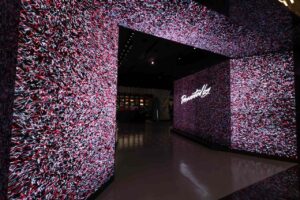
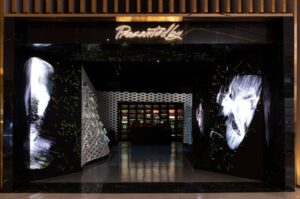
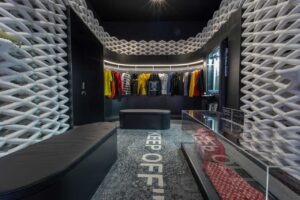
Designed following the concept created by renowned architect Gwenael Nicolas, the flagship is a celebration of the unique brand codes and houses ready-to-wear and accessories collections for both men and women.


The exterior is crafted from white Ariston marble, while a gleaming golden “Versace” logo is placed above a glass entrance enriched with Barocco V-shaped door handles. White marble covers the space ranging from flooring to counters and wall fixtures.


Seating areas are warmed up with plush carpets and soft velvet armchairs in soothing blue shades. The neutral colours are contrasted by an impressive ceiling embellished with golden louvers surrounding a three-dimensional Medusa.

Visit now at The Dubai Mall.

Loro Piana Launches E-Commerce in Saudi Arabia With Exclusive Pieces

Loro Piana has launched a new e-commerce platform for the Kingdom of Saudi Arabia.


The new e-store will offer both its core product ranges of ready-to-wear and accessories for men and women, as well as a selection of exclusive pieces, designed and available only in Saudi Arabia for a limited time.


Two exclusive products consisting of a coat and pouch are available exclusively to customers in the Kingdome for a limited time only.


The Harvey Coat for women is a long powder blue wrap-over robe coat with a leather belt that gracefully ties at the waist and a wide hood. Crafted from Soft Shearling Glacé entirely worked without seams, it is completely reversible.


When worn on the Nappa leather side, the coat showcases the shearling edges that recall the typical selvedges of the Loro Piana textile tradition. The leather features an opaque finish and an impalpable waterproof treatment that allows it to be used in case of light rain, without risk of stains.


To accompany the coat is the Extra Pocket L14 Pouch, a versatile pouch with a wide opening and detachable shoulder strap. The powder blue tone matches that of the coat and is crafted from the softest Nappa leather.


The launch of the e-store in the Kingdom of Saudi Arabia is a much-welcomed addition to Loro Piana’s growing attention to the Middle East


To shop visit: https://sa.loropiana.com/

Cécile Lochard, Chief Sustainability Officer at Guerlain Talks Innovation, Nature and Building for Generations to Come

Despite being a House that is almost 200 years old, Guerlain has always been looking to the future. Sustainability and protecting our planet have been key values to the brand for many years and in 2007, the House recognised the importance of including a sustainable development plan in its company strategy. This is something that has continued for the past 13 years. The plan covers the House’s environmental strategy from product formulas to the sourcing of ingredients, to providing packaging that is better for the environment and much more. Guerlain is truly aware of its responsibility as a luxury brand and takes its commitment to protecting our planet and the nature within it very seriously.


Leading the movement is Chief Sustainability Officer, Cécile Lochard. Cécile took on the role at Guerlain in September 2020 with a goal of deepening Guerlain’scommitment to sustainability by innovating sustainably, preserving biodiversity, acting for climate and creating positive social impact. We find out more about the progress she hopes to make and the ambitious goals for the future of the House.


This is a new role for you – how would you sum up your vision for the future of sustainability at Guerlain?


My vision is to keep integrating sustainability at the core of our strategy. I strongly believe in the same goal that Guerlain does: ensuring the quality and longevity of our creations and savoir-faire. In order to do so and because we owe nature so much, we have decided to focus on preserving the beauty of the world in our own way. Sustainability is at the heart of our products, from start to finish. From sustainable sourcing to eco-design and complete transparency. Guerlain continues to evolve its actions linked to sustainability and requirements to this day.


For example, the iconic Abeille Royale creams underwent a sustainable makeover in 2019. The annual carbon footprint of the jar has been decreased by 44% (565 fewer tons of CO2 emissions) and the water consumption by 42%. Aligned with our eco-friendly vision, the contemporary-looking packaging was manufactured with the use of an innovative Verre Infini® NEO from Verescence, our glassmaker partner. Verre Infini® NEO is the first premium glass made using 90% recycled materials, including 25% post-consumer glass (PCR).


Guerlain has had a commitment to sustainability for many years but what do you believe still needs to be done and what are some of the actions you plan to take to achieve this?

To continue our constant evolution in terms of sustainability, Guerlain has ambitions regarding sourcing, eco-design, transparency, carbon neutrality and solidarity. We are working towards the below goals:

– Sourcing – to source 100% of iconic raw materials from sustainable production channels by 2022 and become the benchmark company in terms of protecting bees across the world.

– Eco-design – by 2022, all of our new products will be eco-designed and by 2021 100% of our new skincare products will be composed at least of 90% ingredients of natural origin and become the benchmark luxury house in terms of naturalness.

– Transparency – by 2022 we will ensure 100% traceability for all of our products thanks to Bee Respect, our digital traceability platform and transparency.

– Carbon neutrality – carbon neutrality by 2028 in order to address climate change and to have 100% of our subsidiaries worldwide be ISO 14001 certified by 2022.

– Positive social impact – we aim to launch the Women For Bees programme by training Women Beekeeper’s in the UNESCO biosphere reserves by 2025 and by 2021, our goal is to have 100% of Guerlain employees participating in our Bee School volunteering day.


Guerlain is a pioneer in its field when it comes to sustainability – how do you continue to keep the innovation going?

Never stop being ambitious!


Can you share with us any of the latest developments? 

We recently inaugurated a five-year sustainability partnership with UNESCO-MAB in collaboration with the French Bee Observatory. 50 affiliated women beekeepers worldwide will be trained in order to develop quality beekeeping operations within UNESCO designated biosphere reserves, contributing to the 2030 Agenda for Sustainable Development. The French Apidology Observatory (L’Observatoire Français d’Apidologie) will supervise training, support and hive installation.


This five-year partnership includes the training of 50 women beekeepers within 25 UNESCO biosphere reserves, the creation and installation of beekeeping operations each comprising of 50 hives, technical support and follow-up to ensure sustainable development and a stable business model and measurement of the benefits of the pollination in the local ecosystems. The first beekeeper training program will take place in April 2021, as we had to postpone it due to the COVID-19 pandemic to ensure the safety of all parties. The selection of future zones within the biospheres marked for 2021 and the participants of the April 2021 training programme have already been selected.


What can you tell us about packaging at Guerlain?

Throughout the past 13 years, we have demonstrated that sustainability is truly at the heart of our creations, as many of them are refillable. This includes our iconic Bee Bottle and our best-seller lipstick Rouge G. Eco-conception is also important to us. Since 2020, 100% of our new glass bottles and jars are made with part recycled material and/or reduced weight in glass. The Orchidée Impériale jar is now 60% lighter and the carbon footprint reduction of the Abeille Royale jar has decreased by 44%.


Of course, Guerlain’s products have a very close connection to nature – how can the Maison help preserve natural ingredients around the world?

Ouessant Island’s black bee’s honey is the star ingredient of our Abeille Royale skincare range. Since 2011, Guerlain has established a meaningful partnership with the Ouessant Brittany Black Bee Conservation Association. To keep up the maintenance of the hives and the actions the Association requires, financial support is the first pillar of this partnership. The second pillar is support for the Association’s research and communication activities. By protecting Ouessant Island’s black bees, we are also protecting the honey they produce.


Tell us a little about some of the recent work involving Guerlain’s bees? 

In 1853, in honour of her wedding to Napoleon III, Guerlain’s founder Pierre-François-Pascal Guerlain created a citrus Eau de Cologne named “Eau de Cologne Impériale” for Empress Eugénie. The bottle is decorated with bees, his majesty’s coat of arms, and a festoon pattern, a reference to the Place Vendôme column. It is the result of the work of glassmakers Pochet & du Courval. Apart from being the story of the creation of our iconic Bee Bottle, it is also the beginning of Guerlain’s deep-rooted relationship with bees. The bottle is refillable and is a prime example of how Guerlain, guided by bees, combines luxury and sustainable development.


Throughout the years, the bee has been at the heart of many of our creations. The Abeille Royale range has demonstrated the benefits of bee products on the skin for the past decade. Some of our exclusive olfactive creations are contained in bottles with our historical Bee bottle’s shape. Jeweler Lorenz Bäumer designed our exclusive Secret de la Reine’s bottle to open its bee wings when the pear-cut diamond on the abdomen of the bee is pressed. The bee is also a recurring theme in the relationship between Guerlain and art. The “Bee Natural” exhibition took place in 2010 at the historic Champs-Elysées boutique. Fifteen artists worldwide had designed bee-themed art pieces to be exposed.


In the past decade, five meaningful partnerships dedicated to bees and their preservation have displayed once more how committed we are to them. These include our partnership with the Ouessant Brittany Black Bee Conservation Association, a partnership with the French Observatory of Apidology. The creation of Bee School, our volunteering program (our Guerlain employees go in schools to inform the youngest on the fundamental role of bees)And most recently, the launch of the UNESCO-MAB partnership in collaboration with the OFA as well as the inauguration of a partnership with the GoodPlanet Foundation. These partnerships are important to us as we are strongly convinced that protecting bees is crucial for the food security of our planet.


What is something you would like to change in the industry moving forward? 

I would like to see priority put on efforts and resources on the topics that will make a meaningful difference collectively. Identifying opportunities for collaboration and innovation within companies and across the industry and setting bold environmental goals that will lay the foundation for resilience in a resource-constrained world. I would like to see an acceleration of industry-wide action to create a sustainable future for cosmetics.


Moving forward how can we shift a greater focus onto sustainability, and do you think it’s something that is becoming more at the forefront of everyone’s minds given what has happened this year?

At Guerlain, we strongly believe that younger generations are seeking greener and safer beauty alternatives and the demand for meaningful products that respect the planet and people was heightened by this year’s COVID-19 crisis. As a responsible House, investing, acting and committing to CSR and nature preservation do not represent a limitation to us, rather an incentive for innovation and creativity. As our consumers grow more and more conscious, our historic commitment to sustainability across our value chains enables us to connect with them, deepen their loyalty as well as our brand’s appeal.


What role do you believe the luxury industry and the beauty industry has in providing for a better future? 

The luxury industry plays the role of giving the right example to others.


How do you think luxury brands can help to educate younger generations on topics such as climate change and sustainability moving forward?

As mentioned previously, Guerlain launched the Bee School in 2018. It is an awareness-building programme for children and students in which Guerlain employees visit them to teach them about the role of bees and raise awareness about their protection. Guerlain employees are enabled to do so through Guerlain’s Commitment Day, a day made available to all employees dedicated to volunteerism. Since 2019, our Bee School program has been put in place internationally. Our ambition for 2021 is that all of the House’s employees take part in the programme in May, as the 20th of May is the UN-supported World Bee Day.


What is the motto you live your life by? 

“The more clearly we can focus our attention on the wonders and realities of the universe about us, the less taste we shall have for destruction.” – Rachel Carson


On a personal level how sustainable are you in your life and can you share with us something you do every day?

First of all, I do not own a car. I also don’t eat meat. I also worked as an employee at WWF, the first environmental NGO in the world for eight years.


Where would you like to see your achievements at Guerlain in five years? 

By completing all our ambitions and more!


Describe the future of sustainability at Guerlain in one word? 

Bees!


How Can Facebook Support More Responsible Luxury?

How social media is supporting positive changes in the world and why luxury brands should look to their past to build for a better future

By Violaine Gressier, Industry Manager, Luxury at Facebook France.


No one can ignore the ecological emergency we face today. Concerns are growing in the world of luxury, and our clients are asking how we can help them to commit to more responsible luxury practices across our platforms.


Beyond our own environmental-friendly initiatives, the mission that Facebook has embraced is to offer everyone the opportunity to create communities. In response to the huge challenge of sustainable development, it is vital for us to allow people who wish to invest in this cause to connect, communicate and act together. We are convinced that our services have a genuine role to play. Through our platforms, we provide individuals and organisations with solutions that help them to inform, educate and mobilise communities on this major challenge – it is vital that everyone should be able to access, understand and participate in this global debate.


The Facebook Live studios has broadcasted the UN Framework Conventions on climate change since 2016. In 2018, the UN campaign “The People’s Seat”, rolled out on Facebook and Instagram with the hashtag #TakeYourSeat, making it possible to champion the cause amongst heads of state and to over one billion people. Meanwhile, the UN Messenger bot ‘ActNow’ has generated almost 750,000 actions over the last two years. These initiatives show that our platforms can be particularly effective ways of reaching out to the wider population and encouraging people to take action against climate change. Other examples are the climate marches organised around the world and the many advocacy groups that are popping up everywhere. In France for instance, the “Citoyens pour le Climat” collective has created a very active group that now has over 75,000 members.


To provide guidance for organisations, we recently developed a new tool, the “Climate Conversation Map”. This is an interactive map that makes it possible to identify where, when, how and which topics and conversations on climate-related matters are taking place on our platforms.


Luxury brands have recently made fantastic progress on environmental issues. Last year, almost 250 brands signed the “Fashion Pact”, thereby taking one step further towards protecting the climate, biodiversity and the oceans. Firms are investing in fields that offer innovative solutions in response to ecological constraints – such as biotech processes that create leather from plant cells – or services offering more frugal modes of consumption such as rental, exchange or subscription.


Vivienne Westwood


Brands have every reason to take action because the attraction of luxury is now connected to the ethical commitments of companies and consumers alike. Consumers, especially the new generation, increasingly base their purchasing decisions for luxury goods on very strong environmental and social considerations. In 2019, a survey carried out by BCG revealed that over 60% of luxury consumers prefer brands that adopt eco-friendly practices. This increases to 64% for Millennials and Gen Zers. The latter represent the majority of consumers who buy preowned luxury goods. This is a booming market set to experience 12% annual growth.


As we know, these consumers are very active on social media. In France alone, 89% of them use Facebook products every day. Brands must be able to respond to these expectations by communicating in a clear, transparent way about their products and commitments.


Furthermore, although the finger is frequently pointed at luxury brands, they paradoxically meet requirements that are far from incompatible with a more sustainable world. By definition, luxury products are manufactured in small quantities, most often by hand, using traditional expertise. Most importantly, they are made to last. If we want a more sustainable future, it’s important to reconnect with these fundamentals and bring them to the forefront.


Many luxury brands are already using their accounts to voice their ecological commitments, for example, the ethical fashion pioneer Stella McCartney with her #WeAreTheWeather campaign, or Vivienne Westwood with her video series on Instagram TV entitled: “Save the World – The Big Picture”. Young brands such as Reformation and Everlane have created highly committed communities around their eco-friendly approach. Another example is the Weston brand, which has mobilised all of our formats to promote its “Weston Vintage” initiative, a new service offering customers the opportunity to bring their old shoes back to the shop to be restored and given a new lease of life.


These are all examples of how luxury brands can take part in the struggle to protect the planet. There’s a huge amount of work to be done, but one thing is certain: together we can design and roll out large-scale solutions that will benefit communities all around the world. This is why we must join forces and ensure that tools such as Facebook, Messenger, Instagram and Oculus (WhatsApp) help brands to make their voices heard as they strive to build a world that is respectful of the climate and the environment.


References: Facebook, Sustainability Report 2019. Global coalition of fashion and textile firms (ready-to-wear, sport, lifestyle and luxury) and suppliers and distributers who have made a series of ecology-related commitments. Boston Consulting Group, True Luxury Global Consumer Insights, 6th edition, April 2019. Boston Consulting Group & Vestiaire Collective, Why Luxury Brands Should Celebrate the Preowned Boom, October 2019. Facebook IG & Ipsos MORI, Global Report: Understanding Luxury Consumers, November 2019.

The World’s Most Sustainable Cities

We discover the cities around the globe that are building for a better world through sustainability, technological advancements and innovation


Zurich, Switzerland


Zurich’s commitment to education and public awareness on matters such as environment and sustainability has allowed the Swiss city to become one of the most sustainable in the world. Its efficient public transport and outdoorsy spirit encourage residents to be more mindful in the way they operate. The local authorities in Zurich also encourage public buildings and homes to comply with strict sustainable building principles. Zurich’s commitment to the environment is highlighted by its investment in renewable energies and its focus on energy efficiency which help to improve its overall footprint.


It has also set itself the aim to become a 2000-watt society by 2050, meaning a city using only 2000 watts of energy per capita, the amount globally recognised as a sustainable level of energy use. Its new “Cap-and-Trade” scheme has put a limit on the amount of car parking spaces allowed in the city, thus encouraging residents to walk, cycle or use public transport to get around. The city’s innovative spirit has encouraged new business to open up in Zurich over the last few years.


Stockholm, Sweden


Stockholm’s has huge goals when it comes to sustainability. The city has an innovative take on the way it approaches the topic and its unique practices can be seen as a guideline for other cities around the world. Stockholm plans to be 100 per cent fossil-free by 2050 and already it recycles all household waste and materials. There are plenty of urban green spaces within the city and public transport is even powered by recaptured methane from sewage treatment. Stockholm has the highest number of eco-hotels in the world and its love of second hand and vintage clothing and goods make it easy for residents to live a more mindful lifestyle.


Even the waterfront conference venue is built from recycled materials, and its town planning is carefully considered to ensure that visitors and residents can walk or cycle between most main locations. One thing to look out for is Hammarby Sjostad. This urban project has created eco-friendly living for 25,0000 people by redeveloping a toxic industrial site.


San Francisco, United States of America

This picture-perfect city has been concerned with sustainability long before other cities had even started to use the term. Banning plastic bags in 2007 and making recycling a legal requirement has allowed the city to become one of the most eco-friendly in the world. The city has long planned to be waste-free by the end of 2020, carbon-free by 2030 and there are large-scale commitments to solar energy. The city if also promoting smart commuting in a bid to reduce carbon emissions (of which around 40 per cent currently comes from cars and lorries).


They are promoting smart commuting, electric transportation, and biofuels to help them meet our greenhouse gas reduction goals. There is a huge organic market scene in the city, with many restaurants sourcing their ingredients locally and using only organic produce. San Francisco still has many goals to achieve but its innovative spirit and embracing of new technology allows this city to be a leader of change.


Singapore


Over in Asia, Singapore is setting a new level for sustainability with its ambitious 2030 Agenda for Sustainable Development eco-building programme, which outlines goals for the future. One of Singapore laws states that any greenery loss on the ground has to be replaced with greenery in the sky. This essentially means that any new buildings in the city that require greenery to be removed, must find ways to create sky gardens and elevated parks so as not to reduce the nature within this developing city. As a result, Singapore has lush parks overlooking the city, particularly in the Marina Bay area.


Singapore generates 95 per cent of its electricity from natural gas and pays close attention to climate change. The Asian city is committed to its 2030 Agenda for Sustainable Development which will see several goals including ending all poverty and hunger, promoting wellbeing for all ages, ensuring sustainable management of water and sanitation for all, offering access to affordable, reliable, sustainable and modern energy, promoting inclusive and sustainable economic growth and more. This 17-point plan will see further sustainable development of the city in all sectors over the next ten years.


Copenhagen, Denmark


Eight years ago Copenhagen launched a plan to become the world’s first carbon-neutral capital city by 2025. Its dramatic reduction of traffic in the city, increase use of public transport and “greener” methods of transportation means the Scandinavian city is well on its way to achieving this goal. Cycling is the transport of choice for many citizens with many roads being converted to cycle paths only, and you’ll also find hydrogen-powered taxis, solar-powered boats, natural urban swimming baths and saunas made from local wood.


Food is often grown organically and sourced locally and the city’s waste-to-energy plant (known as Copenhill) recycles much of the city’s waste. The city has vast amounts of green space with a new nature reserve in the works in the industrial North Harbour area. Much of this district has already been generated with sustainable designs including glass roofs that filter rainwater and insulate the buildings. More than two-thirds of the city’s hotels hold an eco-certificate and recycling is taken very seriously both for individuals and organisations.


Vancouver, Canada


It’s no surprise that this outdoorsy city with its incredible surrounding landscapes is one of the most sustainable in the world. Vancouver has the lowest per-head greenhouse-gas emissions of any city in North America thanks to its carbon tax on heading bill and petrol, that was introduced in 2008. Today the city runs on 90 per cent renewable energy thanks to the city’s large supply of hydroelectricity. Vancouver’s green areas are constantly being increased with over 125,000 trees planted since 2010. Most of the city is accessible by foot on bicycle and residents are encouraged to use public transport over their own cars. In 2019, the city voted to ban single-use plastic. If you’re lucky enough to stay in one of the city’s five-star hotels, you’ll more than likely find vegetables growing on the roof or bees producing honey on-site.


Cape Town, South Africa


Cape Town is the greenest city in Africa thanks to its Carbon Disclosure Project implemented in 2004, that has put into place effective waste management strategies to minimise the amount of carbon produced and to dispose of waste more sustainably. The city created the first wind farm in Africa which over 20 years will produce a large amount of the city’s energy. Currently around 10 per cent of the city’s energy derives from renewable sources and the government has also set a goal for 10% of all households to use solar energy, which is significant as it is one of the cities most affected by blackouts. Cape Town is constantly developing its technology and looking at innovative ways to create a more sustainable location and this is likely to continue into the future as it develops its plans. The city is also encouraging a more outdoorsy lifestyle for its citizens. Safe-cycle routes have been introduced as well as better access to public transport in a bid to reduce the number of cars on the roads. There is still work to be done in the African city but it is leading the way in the continent for a better, healthier lifestyle.


Amsterdam, Netherlands


Amsterdam attracts many tourists for its slow pace of life, beautiful waterways, and cycling paths. This city by definition is sustainable thanks to large amounts of nature and the limitations on transport. But the authorities in Amsterdam are working to ensure the city is even kinder to the environment in the coming years. Authorities are trying to reduce the number of emissions being emitted by introducing electric vehicles around the city, which has been accompanied with around 300 charging points. Homes are also looking to become more eco-friendly.


More homeowners are beginning to install solar panels on roofs and grow their own foods, or alternatively, purchase from local farmers’ markets, which in turn, puts money back into the local economy. This approach combining innovation and tradition helps to make Amsterdam one of the cities of the future and we are sure many more will follow in its footsteps.

Peter Stephenson, Executive Director of Development at OMNIYAT on providing the Ultimate Luxury in Design and Development for the Future

The world of architecture and property development in the Gulf region has exploded over the last two decades.


The UAE in particular has truly seen some of the buildings of the future take root in its cities over the past 20 years. From the Burj Khalifa; the world’s tallest building, to the world’s largest 3D-printed building which was completed in 2019 and all the hundreds of ground-breaking building designs in between. The UAE has carved out a new genre of luxury living with its developments and it won’t be stopping any time soon!


OMNIYAT is one of the most visionary real-estate and development companies in the region. Its luxury buildings offer a lifestyle not just a piece of architecture. Designed for the most affluent of residents, OMNIYAT prides itself in having the most innovative, luxurious and unique ways of living. Working with some of the world’s leading architects, engineers, interior designers and artists, OMNIYAT has taken on some of the most ambitious projects in the region that are truly building for the future. The recent partnership with Dorchester Collection has seen OMNIYAT move into the realm of hotel development and complete the 360 lifestyle experience they offer. We discover more about some of the latest developments and the ways the company is pushing the boundaries in real estate development with Peter Stephenson, Executive Director of Development.


This year has been a strange one for all – how have you been continuing the developments within the region over these past months and are you still on track?

This year has certainly been different. During these unprecedented times, we have really focused on the delivery side of our business and trying to minimise the impact that the pandemic restrictions have had. For the most part, given that construction is a vital sector, we have been able to mitigate and keep things on track. We are especially excited about One at Palm Jumeirah, Dorchester Collection, Dubai, which currently stands at over 91% complete and construction is planned to be complete at the end of the year.


What makes Omniyat’s architecture and design unique in the Middle East and how do you think Omniyat is leading the way in development and construction in the region?

OMNIYAT always approaches development and design with our end user in mind. In other words, we focus on what our affluent clients are looking for and ensure we bring this to life. Of course for us, being a bespoke, high-end developer, that means curating unrivalled living environments for patrons of luxury looking for a lifestyle to match. At OMNIYAT we work with some of the best architects and designers around the world, true pioneers in their respective fields, and we challenge them to be daring when it comes to meeting our brief. We are passionate about developing unique and memorable projects that create value for all stakeholders.


One at Palm Jumeirah


Omniyat’s buildings offer true luxury – how do you elevate that experience for the residents and take it to the next level? 

Our clients are often looking for their second, third or even fourth home. They are discerning individuals looking for thoughtful layouts, quality detailing and finishes without compromise, maximum flexibility with technology through high-quality infrastructure and, most importantly, a discrete & secure living community. These core values in development are always the primary focus for OMNIYAT.


What are some of the trends you are seeing in the design of buildings currently? 

We try not to follow trends, but rather fuse flexibility with sophisticated design, allowing our end users to also tailor a space to their own desires. In addition to the design of a building, our clients also take into consideration the lifestyle a property brings; from the facilities and amenities to its location.


How are you working to develop the buildings more sustainably and can you tell us about Omniyat and sustainability in general? 


Sustainability is of course of great importance and consumers are becoming ever more sustainability-conscious. Through the design process, construction practices and operations we always strive to ensure a sustainable approach.


The Opus by Omniyat


You will soon be opening One at Palm Jumeirah, Dorchester Collection, Dubai can you tell us about the unique design of this tower? 

One at Palm Jumeirah, Dorchester Collection, Dubai, is a unique building housing the most sought-after residences in the epicentre of luxury. A prestigious address located on one of the world’s most astonishing landmarks, Palm Jumeirah, the development offers unparalleled views of the coast and the city including landmarks such as Burj Al Arab.


This 105m residential landmark houses 94 prestigious residences in the sky, with the interior design of this 910,000sq. ft architectural being brought to life by two of the world’s most sought after designers; London’s acclaimed interior design studio, Elicyon, and Japanese born design firm Super Potato. No two residences are the same, however, what all residences do have in common is an uncompromised luxury.


Additionally, residents will enjoy 55,000sq. ft of dedicated gardens and amenities including an unspoilt beachfront promenade accompanied by a private jetty and restaurants, alongside One at Palm Jumeirah Beach Club managed by Dorchester Collection. With lavish gardens cultivated by celebrity landscape architect Vladimir Djurovic, the residences include an expansive main pool, vitality pools and a 25m lap pool that provides plenty of space, privacy and security to relax in, not to mention the top of the range gym and spa facilities, lounge areas, business meeting rooms, and of course indoor cinema facilities.


Moving to The Opus by Omniyat, we know the building was initially designed by Zaha Hadid – how do you think her design style resonates with Omniyat as a brand? 

I think it resonates perfectly. Zaha Hadid was an inspirational figure in the world of architecture and part of her legacy lives on in The Opus by Omniyat. Her design style is sophisticated, daring, and memorable. We certainly strive to emulate that in our developments.


The Residences Dorchester Collection Duplex


The Residences, Dorchester Collection, Dubai again has a stunning design – what can you tell us about its development and any unique aspects of this building?

The Residences, Dorchester Collection, Dubai, was born from and has been conceptualised by leaders in their respective fields. Designed by international award-winning architects Foster and Partners, the design features two interconnected towers, one housing the world’s 10th Dorchester Collection hotel and the other consisting of only 39 fully furnished and fully serviced residences.


The interior design has been brought to life by Parisian Duo Gilles & Boissier, combining exquisite finishing, intricate detail and a sumptuous material palette with unique features such as floor to ceiling glass, allowing for expansive urban views, and magnificent terraces.


This issue is about the future. You have worked in construction for many years – in your opinion what does the future of architecture look like to you? 

Real Estate Development and its architecture respond to the aspirations and requirements of the end-user. Whilst there are of course overarching trends in technology and sustainability, I believe that the fundamentals of good design and the importance of detailing in luxury development don’t change.


One at Palm Jumeirah Duplex


What can you tell us about your upcoming projects in 2021? 

I can reveal that we have some very exciting projects on the drawing board but unfortunately can’t go into further detail at this stage. What I can say is, watch this space.


What is a building or construction in the world that you love the most? 

That is a very difficult question. To be honest, I have an emotional attachment to all of the projects I have been involved in and it has been an absolute pleasure to have played a role in bringing the three iconic developments in Dubai to life.


Discover Dubai’s Sustainable City

Faris Saeed CEO of Diamond Developers discusses The Sustainable City in Dubai and how it is the model of the years to come and the secret to saving the planet


As we look to the future, it becomes more apparent that we all need to take on a much more sustainable way of life in order to preserve our beautiful planet. In the UAE, there is increasing awareness of these issues but there is much work still to be done. There is one project, however, setting an example for the rest of the world with its unique concept and dedication to providing a more sustainable lifestyle. The Sustainable City in Dubai is the Middle East’s first fully-operational sustainable community that delivers measurable outcomes across all of the three pillars of sustainability: environmental, economic, and social. The city is a working blueprint for low-carbon living and ensuring a reduction in carbon footprint through disruptive innovation and transformational societal change.


The Sustainable City houses 500 villas which feature courtyards and many outside spaces in between. Cars are left at the entrance and residents are encouraged to walk or cycle to their homes, or otherwise use the solar-powered buggies supplied. The City created much of its own organic produced and is 100 per cent dedicated to recycling all of its waste. Energy is produced by solar panels and distributed around the city. There is no other fully comprehensive solution like this in the world. The Sustainable has taken solutions from several countries brought them all together without compromising anything to create a community that is feel self-sufficient and environmentally friendly. After five years of running successfully, the city is ready for expansion and with four new Sustainable Cities in the works it’s only a matter of time before this concept changing the way of living in the region forever. To find out more about how this community functions and plans of global expansion, we talk to the CEO of Diamond Developers, the developers behind the city, Faris Saeed. Saeed’s foresight and guidance have led Diamond Developers to shift its focus towards properties and businesses that not only provide economic and aesthetic value but minimise their impact on the environment. With his forward-thinking and leadership of prescient initiatives, Diamond Developers created The Sustainable City and has plans to introduce many more in the region.


Car-free residential clusters


Why do you think it was important to build a sustainable city in the UAE and what were the challenges?

The UAE is our home as a business so naturally, we had to start here but there were many challenges including the harsh climate. Sustainability has become something that isn’t secondary anymore and it is our responsibility to be aware of it and tackle the problem. We built the city on three main pillars of social, environmental and economical awareness.


Social looks at education, wellbeing, arts, culture, gender equality. Economical was concerned with making sure that we built The Sustainable City without any extra cost. This was really important to show people that you can have a sustainable city but there is no extra cost. There are in fact a lot of savings when it comes to operation. From an environmental point of view, we developed a structure – this consists of food, energy, water, products, mobility and waste. And we went into the details of each of these elements.


The planet needs us to look after it and it is an individual responsibility. So from a food point of view, we developed outlets where we can produce our own food. We make honey, we grow fruit and vegetables, we have chickens that produce eggs, we have palm trees from which we produce 60 tonnes of dates a year. This food is available to our residences but the other 95 per cent is sold to the market. This is again sustainable from an economical point of view and it is locally produced which reduces the emissions of transportation.


From an energy point of view, we are the first project of its kind to emit zero energy. In some parts of the city, we produce 50 to 60 per cent of our energy from renewable sources and in Phase Two we produce 100 per cent of the energy needed. We have an institute under construction currently where we will be producing 200 per cent of our energy and the extra energy will be used internally throughout the city. Our energy of choice is solar as we of course have plenty of sunshine in the UAE.


When it comes to water, we have firstly reduced our consumption by almost 30 per cent and we are recycling all of our water and using it within our landscape. We have some initiatives to produce water from air which means we can have drinking water which has been created from humidity. We have many future projects to take this to the next level.


When it comes to products, we are trying to use low-carbon products as much as we can. We try to source locally, but when we do have to import, we try to use recycled materials as much as possible. Our walking track for example is made from recycled tyres and we reuse most of the construction waste that we have to create furnishings within the parks around the city. And at the same time, we are very careful about what we import.


The fifth element is mobility. The Sustainable City is a completely car-free area. We are connected by busses to the nearest metro stations. Within the city, we have buggies that are powered by solar energy available to take residents where they need to be, but we also strongly encourage our residents to be mobile with our walking track, cycling track, horse riding facilities and more. Most of our residents walk around or use bicycles. We dedicated certain areas next to the residential areas that require residents to walk around a maximum of 80 metres to get to their homes. We did extensive research on this distance and it is walkable even in the hottest period of the year. This also satisfies our social objective as creating a car-free area means it is much safer for kids to play outside. At first, the idea of walking was a little bit of a challenge for some people who weren’t used to it, but it became our best selling point. People love the idea because the safety of kids and wellbeing is ultimately most important. Another thing we do is that we encourage the use of electric cars. We have provided charging stations in all of our car parks that are free of use to our residents. This again is powered by our solar energy. We have the highest percentage of electrical cars in Dubai (myself included!).


The last point is waste. We created a fully comprehensive solution that starts from the kitchen. All households in The Sustainable City are provided with four bins so that residents can “sort at source”, which means they will segregate their waste first. Then each bin is sent to a company that recycles it. With the food waste, we create a compost which we use for farming within The Sustainable City.


What sort of challenges does having a hot climate provide? 

The UAE’s temperature can be up to or over 50 degrees and we have around eight or nine months where air conditioning is required. Seventy per cent of our energy goes towards cooling and this is why it is an energy-intensive area, compared with other countries where we may not need to produce so much energy as temperatures are cooler. So because of this, it means there is a huge demand for energy used for air conditioning. I believe if we can meet this kind of demand, it means we can do anything!


Solar car park


What more can be done to raise awareness of sustainability in the UAE and what can the rest of the country learn from you?

We have 20,000 school students visiting The Sustainable City every year and we invite everyone to come. We have international companies coming to the city to learn and understand how we function. We receive almost 1,000 international visitors every year. We are open to everyone to show them what we have done here and we are using Sustainable City as a pilot to educate people. Aside from this, we are building an institute that will be offering professional training on sustainability, as well as conferences and events. We are contacted by a lot of people and companies that have new products that they want to test out within The Sustainable City and we invite them to collaborate with us. We are trying to do our best to educate people about sustainability through our experience and knowledge.


How do you think the importance of Sustainability has come to light in recent years?

The whole world is witnessing what’s going on with climate change and the disasters that are happening and it’s threatening all of us. So the world needs to act as one to tackle this challenge. We believe that the entire planet should go in this direction and start building only sustainably – because there really isn’t another option. We are working to develop a standards and rating system which brings together our knowledge and what we have achieved at The Sustainable City and we want to roll this out on a global scale to help others understand how to reduce their emissions without having an impact on cost.


Lake Area


What is your vision for The Sustainable city and would you still like to achieve? 

From day one our vision was to build a model and export it to the whole world. We are now building another four sustainable cities in the Middle East and we have raised the bar in all of them, taking into consideration what we have learnt so far. Some are nearly finished, some are still in the design stage but we will be announcing all of the details soon. One of them is double the size of the one we have in Dubai!


Why is it important for us to live a sustainable lifestyle? 

Recent studies have shown that if we don’t live sustainably and we keep emitting the same level of emissions as today, by 2050 the temperature of the planet will increase by 3-4 degrees. That would be a disaster for the planet, even one degree is not good. Eventually, all the coastal cities in the world will be flooded and this is where 30 per cent of the world’s population is living. So it has become a need, not a choice. We don’t have another planet so we have to save this one and we have to work fast. We must reduce our existing emissions by fifty per cent in the next ten years. Then we need to reduce the other fifty per cent so that we are carbon neutral otherwise we are finished! It is very scary.


How are you promoting this message in the UAE?

We have a lot of collaborations with Expo next year in which we hope to raise awareness and we have already received a lot of interest from a lot of countries and we look forward to sharing with them our experience.


What can you tell us about the use of plastic and how you are reducing the use of it?

Before COVID-19 we launched a programme that was reducing the use of single-use plastic and it was doing very well. Unfortunately because of the pandemic and issues related to hygiene etc. we have had to put that on hold slightly, but we hope to recover from this and go back to the plan. But we continue to sort and collect all of the plastic in the city and recycle it.


Cycling track


How does the recycling process work? 

We do all of the sorting and collection of the waste within the city and fortunately, we own a waste management company, so we take the waste to there, recycle it and create palettes from it which are reused within the city.


How is the city encouraging a healthy lifestyle?

Aside from walking, running, cycling etc. we have the biggest functional medicine clinic in the country. We believe in a holistic approach to medicine and we use only organic origin products. We also created a lot of places within the city the care for the wellbeing of our residents. We have a lot of outdoor and indoor sport including yoga, football, tennis, basketball etc. This helps to keep our residents healthy. We also encourage children to play outside and be social. The way we designed the city directs people to walk, which also encourages them to meet their neighbours and this encouraged them to have active social lives. There is real community spirit within the city and we always encourage people to gather and meet.


What can you tell us about Sanad Village and what you are hoping to achieve with this platform? 

Sanad Village started as a small clinic but we realised the need to have a bigger centre for autism as it is a huge issue today that often gets neglected. Almost one in 50 boys are autistic and the numbers are dramatically increasing. So we decided to build this as a facility for autistic kids. We are working in a very holistic way and we are creating comprehensive programmes covering all kinds of therapies as well as vocational and educational programmes. We created training programmes for parents because they need guidance and all of our staff are fully trained to look after the children. Above all, we are in contact with almost 300 centres around the world and we will be choosing around 20 to sign agreements with to hopefully work together with them on research and contribute towards solutions with our holistic medicines. Autism is a global problem that we all really need to be aware of.


What can you tell us about the future development of the city? 

We are developing the rating system that I mentioned earlier. It’s very essential and important. We are creating full guidelines and manuals for design, building and operating sustainable cities and we want to roll this out as a resource for the whole world. We want people to learn from what we have done and start building in the way we have done it. It will also allow us to provide training sessions for others. We want to share the feeling of community that we have here with others as this is something that makes our residents feel protected and taken care of and I think it’s one of the most important aspects of the city.


What first interested you in sustainability?

I have been interested in sustainability all of my life but I didn’t have the chance to work around it until our company in real estate progressed. After the crisis of 2008, I started to think in a totally different direction and I decided, even if I was to continue doing what I was doing, it had to be in a sustainable way. This is why we wanted to perfect the project and make sure that our business would be more sustainable than others and today we can see the results of what we have done. We have the highest occupancy of any community in Dubai. Especially since COVID-19 – people love to live here because they feel safe and they like to be able to go outside. We did not feel the lockdown in The Sustainable City! We have seen many residents stay living in the same homes since we opened in 2015 and most of the people who do move out of the city move because they are relocating out of the country.


Are there any countries in the world that inspire you in terms of their approach to sustainability?

When we started working on The Sustainable City we had a lot of visits to countries around the world. We went to California where they have a community called South Village. We took a number of ideas from there. We went to Denmark who also has great ideas about sustainability. In Asia, we visited Japan and South Korea. We did a detailed tour before we started designing and we took elements from all over the world.


What’s the profession motto that you live by? 

most dangerous things to use are not setting high targets and falling short, but setting low targets and achieving. This is why we always try to raise the bar and we don’t feel bad if we fall short.


Dubai Artist Sends a Message of Hope With Her New Exhibition

Dubai-based artist Rowaida Hakim is exhibiting her latest works on through an online exhibition starting on November 5th.


The exhibition of 70 works were designed to send a message of positivity to the world with a dedicated theme of hope.


The self-taught artist will display her works on a specially designated site using virtual reality technology so that viewers can have a unique experience of viewing the paintings.


During the month of November, selected paintings from the exhibition will also be on view at Rowaida Interiors Gallery in JLT.


“The main drive behind staging this large-scale virtual exhibition was to send a message to everyone that we can and achieve our goals and dreams at any time,” says Hakim. “Whether it be coronavirus or other obstacles, we are able to attain our aspirations if we believe we can and do so with a positive vision and manner.”


Working in an abstract and expressionist style, Hakim’s works on canvas combine vibrant colours with her signature use of 18-carat gold leaf. Hakim explores themes relating to positivity, humanity, cultural understanding, peace and the beauty of nature, and specifically, the need to find positivity and motivation and continue to dream even amidst the turbulence and challenges of these present times.


The exhibition includes works such as Romance, painted in 2018, featuring a hot pink canvas, My garden (2020), portraying a series of trees painted with green leaves in a gold trunk with semi-precious stones, the Silent Messages collection painted in acrylic with gold leaf on canvas, Golden key, a key painted in gold leaf against a black background and Happy flowers (2020) Canvas in golden with one side filled meticulously painted flowers.


The painting that symbolises the theme of the show also called Hope (2020) filled with cherry blossom flowers painted on a blue painted Canvas, each with its distinct colour and form, with gold mountains in the background. “I love this work because it transmits a very warm feeling of happiness and it reflects how the flowers open after the winter, ” after every hard times there is beauty coming out, let us hope good is coming.”


“The main reason I am creating such a large-scale virtual art exhibition is to show how nothing can stop us,” continued Hakim. “We must always have hope, even during the most challenging times. We must never give up under any condition, whether it is because of coronavirus or other circumstances. We must always retain hope and the will from inside of us to do the best that we can do in every aspect of our lives. We must continue to enjoy our lives and be happy. We must not give ourselves an excuse to feel sad. With every challenge, there is an opportunity and a solution that can help us move to a better place. Every obstacle is a way for us to transcend our difficulties and become a better version of ourselves.”

Click here to view the exhibition online and appointments can be made to view the artworks in click here to book.


Bvlgari Brings Together Friends and Family to Help Support Children Affected By the Recent Explosion in Beirut

As part of its partnership with Save the Children, Bvlgari brought together friends of the brand for a special dinner in Dubai in support of those whose lives were affected by the devastating explosion in Beirut which happened in April.


The B. For Beirut dinner marks a continuation of the longstanding partnership between Bvlgari and Save the Children and help to support those children whose lives were shaken by the recent events in Lebanon.


Hosted at Il Ristorante – Niko Romito of Bvlgari Resort Dubai, guests were welcomed into the heart and home of the Maison. A special menu was created by chef Niko Romito; who personally attended the event having worked closely with Save the Children for a number of years.


The Bvlgari Resort Dubai in a show of continued solidarity will also allocate a part of the revenue generated over the following two weeks at Il Ristorante – Niko Romito.


Bvlgari will also contribute to the donations made to Save the Children as well as inviting members of the public to donate on https://b-for-beirut.com/


A selection of friends of the brand participated in a special photoshoot which invited them to answer the question “what do you wish for all children?”. The images were unveiled at the dinner, spreading messages of hope, joy, and unity.


These dreams were echoed by Mai Farouk, Strategic Foundation Partnerships manager of Save the Children Gulf Office, who joined in spreading this important message tonight.


To donate please visit https://b-for-beirut.com/

Emporio Armani’s Latest Collection Puts Sustainability at the Forefront

Emporio Armani’s fall/winter 2020-21 collection presents a selection of ready-to-wear and accessories that have been crafted in an environmentally responsible way.


All of the materials are recycled, regenerated or organic, representing the luxury of tomorrow and the vision of Giorgio Armani moving forward. The shapes of the looks for men and women incorporate the brand’s icons with a modern twist on workwear that creates a contemporary aesthetic.


The fabrics and textures in this collection are most unusual. Enhanced by the arrangement of shapes and the almost exclusively black colour palette featuring contrasting details and the R-EA logo in a soft Ecru colour.


For women, the collection presents practical and comfortable pieces with feminine flair. Short skirts and shorts are paired with padded coats, long and thin trenches, cropped jackets and double-breasted jackets and jumpers. Accessories come in the form of logo-detail hats, boots and padded nylon bags.


For men, an oversized fit dominates the collection. Parkas, windbreakers, blousons, zipped jumpers, cargo trousers and dungarees are paired with boots, balaclavas, padded beanies and gloves. Bags come in the form of backpacks and large shopper bags representing functionality as well as style. A pair of bold sunglasses with a matte black frame in regenerated plastic and lenses partly made of a bio-based material complete the collection. As well as a watch produced using sustainable materials.


The wool used in this collection comes from the textile region of Prato in Italy. It is “zero kilometre” recycled wool from local textile waste and scraps. The organic cotton is grown with a low environmental impact, using non-GMO seeds and an organic growing system to fertilise the soil. The nylon and polyester fibres come from pre and post-consumer waste such as fishing nets and plastic bottles that have been recovered and recycled.


Modal, a biodegradable fibre whose preparation process includes significant water and energy savings, is used to provide a soft feel to the fabrics. The materials as well as the R-EA finishes are all certified according to the most relevant international standards and full transparency and traceability throughout the entire textile production chain is guaranteed for the products. In keeping with the theme of protecting the environment, the collection comes in certified and sustainable packaging, produced using compostable materials. A QR code is present on all garments allowing customers to check the authenticity of each garment and access more details about the collection.


Giorgio Armani has regularly spoken of his desire to provide more sustainable luxury fashion. On the Group’s website he says: “The philosophy underpinning my brand has always been sustainability: through my work, I offer clothes that last and can be worn for many years […]. It is vital to adopt a sustainable position nowadays. The question of ethics even comes before strategy.” Armani is known for the principles guiding its actions, which are laid out in its Code of Ethics. These principles are inspired by the concept of substance and the conviction that sustainability means, first and foremost, creating a system capable of enduring through time, with respect for all the resources that the Group draws on and with the awareness that the future of generations to come depends on the choices of today.


The fall/winter 2020-21 Emporio Armani collection is available in stores now.


Positive Outlook: John Sanei on the Future

Where we are at, where we are going and is there enough toilet paper?


When COVID-19 hit, there were four questions that filled our minds in that collective 03:00 AM anxiety: Am I going to make it through this? Do I have enough cash to see me through this? Is my family OK and safe? Do I have enough toilet paper?


This was how we reacted. Maslow’s Hierarchy of Needs quickly broke itself apart amid the most harrowing pandemic the modern world has ever seen and is still experiencing. We witnessed households latching their doors to protect themselves from the virus, businesses shutting up shop – some for good – our leaders looking ugly and all our relationships showing their hidden cracks. The unravelling of our lives began, and this seems to be how things will stay.


The first aggravator of this discomfort is that, as a species, we have lived our lives for too long measuring our emotions, our successes and our relationships by length and not by depth. Triggered intensely by the needlepoint of The Survivor Consciousness, we are miserable, negative, complacent – and everything is taking too long.


We are starting to realise (but perhaps not yet admitting) that our default is the fight, flight and react, and we have done a pretty good job of detonating our internal and external world because of it. Because we are stuck in the outcome of our consciousness, we find ourselves fighting to be heard, living on adrenaline, counting the days between the days, waiting for it all to be over, and everyone’s calling it “resilience”.


Humanity’s New Hashtag: Resilience


Somewhere between the masks and sanitiser pumps, we have managed to hashtag “resilience” as the way to be, and the key constituent in getting us back to where we were in the great vague “before”.


In doing so, we have deepened the fault lines in our groundedness: expecting things to improve, leaders to lead and the virus to, well, just disappear, so that we can get back to what we were busying ourselves with before March 2020.


But it ain’t happening!

What’s really happening is that we have trapped ourselves in the resilience bubble, measuring our days by how quickly we are able to find our way back.


There is no back. There is only how, now and next.


We are breaking apart because we have lost sight of how to “respond, recover and reimagine”. Many of us are playing in the drama triangles of our lives and not enough in the creator space. Nowhere in this horror story have we witnessed a greater divide than between the optimists, the realists and the pessimists. Each with their own perspectives, and all within their own echo chambers.


I often wonder what would happen if we took a “Possiblist” position? Can we return to a place of possibility? Can we remove “outcome” and “survival” from our mix, and equip ourselves with concrete guidelines to thrive through the challenge; harnessing a society that opts into a less angry, less anxious, more practical, more responsible and more curious way of existing?


We are squarely in the winter of our lives, and fractures are forming between a world divided between right and left with no centre. We should want to mobilise human evolution towards a middle ground, through a mind-and-heart breakthrough – and indeed many of us are seeking to reshape our world from the inside. The question is how? The answer: starting a conversation between the left and right camps.


Courage, curiosity and consciousness


There are no more excuses for broken systems, numbness, side-line coaching or dogmatism. As a collective, we need to fully immerse ourselves in the raw truth of this reality and make a choice; to become a by-product of COVID-19, or to become FutureNEXT activators.


To embrace the latter opportunity, we need to return to courage, curiosity and consciousness. We need to seek out what is real and what is digestible – not a three-month supply of toilet paper. Perhaps it is time we understand that the future is here already, and it is re-shapable; that this reality is not about resilience, nor agility; that in fact, we need to practice responsibility, curiosity and wisdom that is going to take “us” to reimagine it. Because ultimately, we are fractured – but we are not broken.


John Sanei is a futurist. Sanei and economist Iraj Abedian address this theme along with so much more in their new book, FutureNEXT. The book will be launched in Cape Town on 19th November.


Sara Prentice, Creative Director at Garrard on Preserving the History of the Brand to Build For the Future

When you have a jewellery House that has so much history, how do you build for the future and continue to honour the legacy of the brand? That is the question Sara Prentice, Creative Director at Garrard faces in her role.


With a rich history of over 300 years, Garrard is the oldest jeweller in the world. The British House has produced pieces for royalty all over the world and continues to be the jeweller of choice for many members of the British royal family today including Queen Elizabeth and The Duchess of Cambridge.


But how do you take all those memories and moments of the past and bring them into the future? Enter the House’s Creative Director Sara Prentice. Since joining Garrard in 2012, Prentice has been working with her team to take these elements of history and reconfigure them for today’s modern woman. By taking inspiration from the symbols and designs in the House’s archive, Prentice embraces the history but makes it contemporary with new upgraded designs and fresh ways of wearing the pieces. She creates versatile jewellery that meets the needs of women today.


And it’s not just the jewellery itself that’s moving into the future. The brand takes sustainability very seriously and is one of the few in the world to receive the Positive Luxury Award for its continued efforts. The House ensures that all stones and diamonds are ethically and environmentally sourced as well as ensuring its activities as a company are done in the most sustainable way. As we navigate through this unusual year, Garrard takes the next step in its vision for the future by turning to e-commerce. Partnering with Ounass in the Middle East, a selection of Garrard’s pieces are now available to purchase online. To find out more about the latest steps in moving the brand forward and what we can expect to see next, we talk to Garrard’s Creative Director Sara Prentice.


This has been a strange year for all – how have you functioned as a team and were you able to continue creating? 

Firstly it was a case of reassuring myself and my team that we still have to look to the future and that this time will pass. It was challenging in the beginning but in an interesting way. We pushed the boundaries in how we were creative and how we reacted to what was happening, as well as being sympathetic to the situation.


We had a lovely initiative during lockdown called The Garrard Angels. We asked our Instagram audience to nominate key workers and people who have done something good throughout this time and we selected around 30 who were gifted Wings Embrace pieces. It was a rather lovely initiative that lifted people’s spirits. The main outlet of course, during this time and moving forward is digital, so we really increased our digital creation. We put out a lot of new images on our digital platforms and we reacted as well and as creatively as we could considering the situation.


Aloria Collection


We know you like to be in touch with your clients – how have you managed to maintain this throughout this year? 

We’ve done a lot of Zoom calls! I have had several bespoke client appointments via Zoom which is not quite the same as meeting in person, but you still have a sort of connection. I absolutely love meeting clients and I love face-to-face interaction, particularly if clients are buying something bespoke as it’s great for me to know who they are and have a real understanding of their personality and the kind of pieces that they would like me to design for them. Social media has been a great outlet for our messaging and connecting with customers.


Have you changed anything within the company and the way you work that you think is for the better? 

One thing that we had started to do before COVID-19 and the situation has accelerated is communicating via video and showing our jewellery through videos instead of only images. This is really helpful for our clients, whether it’s a quick video on an iPhone of a piece they are interested in buying or something more complex. It allows the client to see the piece being worn, they can see the details and get a 360 image in their mind of the piece. That’s something we will continue and I think we can push the boundaries on it a lot further. So all of these digital channels are our lifeline at the moment.

Aloria collection

On a creative level have you been able to be your creative self throughout this period? 

I don’t think I could ever struggle to be creative when I have 300 years of history to inspire me! We launched our Aloria collection in July and we have a new collection coming out next month called Symphony. It is an extension of one of our existing collections. That will be launching in December in time for the festive period. So the creativity is still flowing!


This issue is about the future – of course Garrard is very much about history – how do you think the future and the past perfectly align within the brand to create something relevant for today? 

We use the heritage and history in our story telling and it is the start of inspiration for our collections. We are an all-female design team and for me and the team what’s important is that our jewels reflect the modernity of today. We don’t want to produce a direct copy of a tiara that the queen wore in 1893 for example. We take those elements and really think about how the jewellery could be worn today. We look to more contemporary designs; ear climbers or stacking rings for example, but we take that original design and move it through into a modern way of wearing it. Each Garrard jewel is a balance of tradition, versatility and design. We want to create something that you can wear today, tomorrow and forever.


In your opinion what is the future of the brand?

We build on our brand heritage which is always evolving, but we have creative and contemporary designs. So the inspiration comes from the history but we need to move it into today and that’s the vision moving forward.


Aloria collection

We know you have recently partnered with Ounass – how do you think this will help to increase visibility in the UAE? 

Ounass has become very popular in the Middle East and the region is a new important market to us. So it will allow us to expand our reach in the Middle East. It raises our profile as a brand and enables us to engage with new customers as well as our existing clients.


How do you select the pieces that will be showcased on the platform?

There are of course certain styles that we know the customers in the Middle East prefer and we wanted to showcase some of our best loved designs, as well as allowing clients to discover some of our new collections. Wings Embrace is our most iconic collection that we believe most women relate to because of its symbolism of peace, purity and protection. But we also added in a selection of our new collection “Aloria” which is multi-faceted in the way you can wear it as it has multiple elements to it. So for example you might have yellow gold on one side and diamonds on the other and it’s a very modern collection which can be worn in several ways.


What do you think is important to consider when buying high jewellery via e-commerce and ensuring the customer still gets a luxury experience?

Firstly, we only work with trusted partners whose idea of luxury is in line with our own. Our focus is on fine jewellery but we were quite selective in the pieces that we chose. They had to be accessible pieces that people feel comfortable buying online. We wanted the experience of shopping digitally to replicate that of going to the store as much as possible, so the packaging will still be a beautiful Garrard box wrapped up with a bow, in a bag. So you still get the experience and story and everything that goes with the brand.


Wings Embrace collection


We know you have launched on the “Threads Styling” portal – how will this help to enhance the experience? 

Threads Styling is a virtual portal that allows customers to have an online personal shopping experience. It is a very fashion forward brand which sees clients shopping through a WhatsApp or WeChat function which allows them to chat directly with a stylist for a personal one-to-one shopping experience. We launched this already and the feedback has been great and we are very pleased with the partnership.


What is a message you would send to you clients in the region? 

Firstly, stay safe in these really strange times. But also watch this space. Garrard is launching a new collection in December so there will be some nice fun things to spark positivity and keep people smiling. Our new Christmas campaign is all about celebrating in colour and we want to bring some vibrancy back into everyone’s lives.


What can you tell us about sustainability at Garrard – are there any new developments in this field and what is its importance to the brand? 

Sustainability is very important to us as a brand and it’s something we are continuing to push. We’re looking at new ways that we can increase and improve on what we are currently doing. We are evolving our CSR programme and putting the building blocks in place to initiate new practices that will allow us to operate even more ethically in the future. All of our suppliers are required to sign a robust supplier charter and we are looking at extending this to our partners in other areas of the business. In terms of raw materials, responsible sourcing is essential to our business. We source our gold and gemstones exclusively from sustainably managed eco-systems and acquire all of our diamonds from suppliers who are approved members of the Kimberley Process certification which confirms that they are conflict-free which is extremely important. We are also working towards improving the sustainability of our packaging. We are in a good place at the moment but there are always elements that can be improved, so it’s definitely something that’s on our radar.


Wings Embrace collection

Can you tell us about you’re the apprenticeship scheme that Garrard has in place?

This is something we are really proud of as it enables us to keep the longstanding traditions of jewellery manufactory alive within the younger generations. We have one apprentice at a time and they take on a programme of five years. Technology and innovation are great but there are still traditions that we don’t want to lose along the way so this is our way of helping to preserve this.


What is next on your agenda at Garrard?

For me right now I just want to travel again! I want to meet my clients in Dubai and the rest of the world. I wanted to get back to whatever the new normal will be. In terms of design – I have the most wonderful job where I think I have designed almost everything you can imagine and I just want that to continue.


What is a lesson that you’ll take from this year? 

It would probably be connected to people and having sensitivities to people. I think the situation has affected people very differently and we need to be sensitive to that. Some of my team live on their own and have been isolated for so long and you have to remember that and be sensitive to everyone’s situation.

Franziska Gsell, CMO of IWC Schaffhausen on the Future of Sustainability in Luxury Watchmaking

By definition, luxury watches are one of the most sustainable products consumers can own today.


These handcrafted mechanisms are passed down through generations and can keep working for hundreds of years. However, the manufacturing process around luxury watches has been a topic of concern in recent times with many brands starting to assess their environmental impact and the ways in which they can tweak their processes to redefine the industry in a more sustainable way. At IWC Schaffhausen, sustainability is at the forefront of the business.


With the recent creation of the Sustainability Committee, issues and questions surrounding the topic have become even more crucial to the brand. Chief Marketing Officer Franziska Gsell has been head of IWC Schaffhausen’s Marketing & Communication department since 2015, but she has recently diversified her role to also become Chair of IWC’s Sustainability Committee. This has seen her play a key roll in the planning towards a more sustainable future at the brand. Most recently, Gsell hosted a virtual conversation with actress Cate Blanchett following the release of IWC Schaffhausen’s second sustainability report. The two discussed sustainability, its environmental and social impact and how it has become a leader in sustainable luxury watchmaking. To find out more about that conversation and continuing it throughout the future of the watchmaker we talk to Franziska Gsell.


How have you been keeping in touch with your clients throughout this strange time? 

When most European countries went into lockdown, we wanted to do something special to stay in touch with people around the world. So we created the “TIME WELL SHARED” initiative, using our digital channels to keep the IWC family connected and engaged. Through this initiative, we have published numerous videos from IWC brand ambassadors and partners. The series has seen contributions from Tom Brady, Sean Fitzpatrick, Hani Rashid and many more. A particular highlight was also a series of uplifting readings from Antoine de Saint-Exupéry’s famous novel “Le Petit Prince”. Started by Indian actress Sonam Kapoor, subsequent chapters were read by others including Lebanese-British TV presenter Raya Abirached and Tunisian actress Hend Sabri.


IWC Manufacture


What has been the reaction to these virtual sessions and how has this enabled you to enhance the customer experience? 

Because of the global pandemic, we had to shift many of our activities to digital channels. In no time at all, we created a digital edition of Watches & Wonders and the format worked exceptionally well. We were able to share the launch of our new Portugieser collection with an even larger number of watch lovers around the world. Thanks to innovative digital tools like augmented reality, the virtual launch was highly captivating and successful. Just recently, we held a digital launch event for our new Pilot’s Watch Chronograph Top Gun Edition “SFTI”, the first in an upcoming series of IWC Top Gun watches based on our US Navy exclusive professional watches. We have several other digital projects in the pipeline, such as virtual tours of our manufacturing centre, which will be launched shortly.


What can you tell us about sustainability at IWC and its importance to the brand? 

Sustainability is at the heart of what we do as manufacturers of luxury, mechanical watches. If properly taken care of, a mechanical watch will last for generations – some of our watches are still ticking after 150 years. We aim to honour the inherent sustainability of our watches by producing them responsibly and taking good care of our social and environmental impact. We want to add value to society and leave a positive legacy for future generations.


Can you tell us a little about the sustainability committee at IWC and why as a company you felt it was important to introduce this? 

Our Sustainability Committee is the driving force for ensuring our impacts are managed responsibly. The Committee, which meets quarterly, is made up of representatives who manage every aspect of IWC’s business, and together with our CEO, the Committee sets the organisation’s sustainability targets and activities. By having accountability for responsible management of our impact we can ensure our goals are practical and can be implemented as part of our regular business.


How do you think your approach is different from other brands? 

In our sector, we differ because of the transparency we offer regarding our sustainability approach. By reporting to GRI (Global Reporting Initiative) standards, we enable a dialogue with our stakeholders and therefore can receive meaningful feedback. We can take steps to ensure our activities are understood and we can learn and adapt as well as always being open to opportunities to improve.


We know that by definition watches are sustainable thanks to their longevity, but how is IWC increasing sustainability around the product in areas such as packaging and distribution?

As one of our 2020 targets, we redesigned our watch boxes to reduce the average volume and weight of primary packaging by 30 per cent compared to 2017. This had the benefit of reducing emissions from shipping and logistics, but also represented a change in approach to our packaging. By designing smaller, higher-quality packaging, we created a new product, intended to be kept for generations. The new travel pouch contains 90% less plastic than previously, and 80% of the plastic remaining is recycled plastic. We aim to increase this figure to 100% and to explore packaging using new materials that offer a lower environmental impact. Thanks to innovation in materials and processes, we should have more opportunities to continue to improve our impact in future.


What can you tell us about the brand’s commitment to responsible sourcing of raw materials?

We take the impact of our supply chain very seriously and make sure we know the suppliers we work with. Many of our raw materials fall within the scope of the Responsible Jewellery Council’s certification scheme. We were the first luxury watch brand to be certified to the RJC’s stringent new Code of Practices, which aims to ensure best practices in the sourcing of precious metals and precious stones. We’re also working to demonstrate the care we take in our sourcing of animal products, supporting the creation of a new standards setting organisation in this area, and taking steps towards greater traceability. We have confidence in the practices of our suppliers and want to be able to demonstrate this to our customers.


Can you share a little on how you are using renewable energy to assist in the manufacture of IWC’s watches? 

We designed our new manufacturing centre to run on renewable energy and we are encouraging our Brand Managers around the world to purchase renewable energy wherever possible. We already ensured that in 2019, we purchased only renewable electricity, globally. Energy is a topic with long roots at IWC, because our founder, F.A. Jones, chose Schaffhausen as the site of his International Watch Company in part so he could draw on water power from the River Rhine – a few steps from where I am sitting today. It’s one of the easiest ways to manage our environmental impact: it makes no difference to our product but makes a significant difference to our planet.


Cate Blanchett


We saw the recent conversation you had with Cate Blanchett – how do her values and beliefs align with those of the brand? 

In her private life as well as through her professional roles such as Director of The Sydney Theatre Company, Cate has demonstrated time and again that she understands the importance of managing environmental impact. She has shown that making sustainable choices is completely compatible with elegance, beauty and being outstanding in your field – all of which I think is also embodied in our watches.


What is something you would like to change in the industry moving forward? 

In the industry I think opportunities to change will flow from new technologies, processes and materials that are developed and we will continue to be open to adopting these. We would also like to demonstrate more clearly that IWC is a brand that values diversity, equality and inclusion. Our employees are happy – they voted us as a great place to work in Switzerland last year and we know engagement is high. To ensure that we are truly inclusive, we have created an international council of colleagues, looking at factors such as gender, ethnicity, sexual orientation, age, and ability. I’d like the open-minded approach we bring to our product development and to managing our environmental impacts to also be reflected as much as possible in our colleagues and leadership, as well as our partners and brand ambassadors.


In this issue, we are talking about the future – in your eyes what is the future of the watchmaking industry and what is the secret to being successful in this challenging market?

The manufacturing of mechanical luxury watches represents the most exquisite craftsmanship that has survived hundreds of years. These timepieces not only combine precision engineering and timeless design, but they also have a unique emotional component that distinguishes them from most other products of our time. I am convinced that this product will be desirable and attractive even for future generations. However, the current crisis might change our behaviour towards more conscious purchasing decisions. Possibly we will ‘consume’ less and instead, invest in products that are physically and aesthetically long-lasting and represent real emotional value for us. Established brands and responsibly made products will benefit from this phenomenon and this is why I believe that IWC is in an excellent position going forward.


Even despite the circumstances of this year how important is emotional buying with your products today?

Very important. Buying a mechanical watch is always an emotional decision. You don’t need a watch to tell you the time. A mechanical watch is a beautifully designed and handcrafted object, something that touches people on an emotional level. You attach a particular story or memory to the watch you wear every day. Maybe you have received it as an inheritance, or it was a gift you gave to yourself to celebrate a milestone in your life or your career. This individual emotional component is something very few other products can offer.

Pilot’s Watch Chronograph Edition Solidarity with Beirut


We saw this touched on with the recent watch you launched in dedication to Beirut – can you tell us a little about this watch and why it was something important to the brand?

We were simply devastated when we saw the effects of the explosion in Beirut on August 4th. For this reason, we decided to partner with Nusaned, a humanitarian, community-based and volunteer organisation in Lebanon. They are a non-governmental organisation who are working tirelessly to help Beirut and its people recover from these tragic events. With their “Goods in Need” and “Roofs that Shield” programmes, they provide families with immediate aid to rebuild their destroyed homes and shops. We decided to support Nusaned through the launch of the Pilot’s Watch Chronograph Edition “Solidarity with Beirut”. The special edition timepiece features a striking deep green dial, as well as a unique back engraving of a cedar tree, as seen on Lebanon’s flag, which symbolised eternity and peace.


Can you give us an insight into what we can expect to see from the brand in the Middle East in 2021?

I can assure you that we have many exciting things in store for the Middle East in 2021, unfortunately, I can’t go into details as of now, but stay tuned!

Explorer Bertrand Piccard On Building Towards a Cleaner, Safer and More Sustainable Planet

Bertrand Piccard has dedicated his life to demonstrating the opportunities lying in sustainable development and raising interest in profitable solutions to protect the environment. He is a pioneer of new ways of thinking that reconcile ecology and economy and uses his exploration achievements to motivate governments and industries to take action. His most notable moment came in 1999, when the explorer, doctor and visionary was the first person to fly non-stop around the world in a balloon. The Breitling Orbiter 3 flight was a ground-breaking and an iconic moment that has been an inspiration to many. Subsequently, Piccard wanted to pursue his vision to demonstrate the immense potential of renewable energies. So he initiated the Solar Impulse challenge and circumnavigated the globe in an aeroplane powered only by the sun. This was the first exploration of its kind and highlighted the capabilities of often-overlooked renewable energies. With a quest to preserve the life of our planet and live more sustainably, Piccard launched the Solar Impulse Foundation. The Foundation is highlighting 1,000 solutions that can change the world. Selected by Piccard, these solutions range from products to services, to new ways of thinking and working, all of which will help to preserve our planet and provide a better quality of life for humankind.


One of these 1,000 solutions is devised by luxury watchmaker Breitling. Piccard is a long-term partner and friend of the watch brand and has worked closely with the Breitling team for the last three decades including becoming a member of Breitling’s Explorer Squad. In 2019, to mark the 20th anniversary of the Breitling Orbiter 3 flight, the brand unveiled the Cockpit B50 Orbiter Limited Edition watch, which paid tribute to Piccard’s great achievement. Today, it is Piccard recognising the innovative work of Breitling as the brand unveils its new sustainable packaging.


The new Breitling packaging is created entirely from upcycled plastic bottles. The foldable, reusable watch box highlight’s the brand’s commitment to reducing its environmental impact and replacing the large, heavy watch boxes that have been an industry standard for decades with a small, smart, modular alternative. Piccard’s Solar Impulse Foundation has awarded Breitling the Efficient Solution Label. This certificate is awarded to the 1,000 solutions outlined by the organisation that have a positive impact on the environment and the economy as a symbol of recognition.


Breitling’s new watch box is made from materials that can be recycled and reused in future projects. From the fabric to the push buttons that open it – the box is made from 100% up-cycled PET bottles, which is among the most widely recyclable types of plastic. This is the first 100 per cent recycled and recyclable packaging in the industry and is just one of the steps Breitling is taking to help protect our planet. Here, Bertrand Piccard shares more on Breitling’s quest towards a more sustainable planet and his personal goals and aspirations for the future.


How do you think the experiences of this year have changed the mindset of people moving forward concerning sustainability and climate change?

Before the COVID-19 crisis, the world was very inefficient. There was a lot of waste, people were not taking care of natural resources, they were wasting 75 per cent of the energy produced, and half of the planet’s food was wasted. Waste is a resource in itself and it was not being used efficiently. It was an unfair world, a lot of inequality existed. There was a lot of danger, it was fragile, unstable and this was highlighted by how it could be destroyed by a virus.


So moving forward, we need to build a world that is more sustainable, fairer, more efficient, and safer and I hope we manage to do it. There will be people, who forget about this crisis as soon as it’s over and go back to their old lives, but we need to stay within the mindset of improving our planet and I deeply hope this is what happens moving forward. I hope that the trillions of dollars that are being injected into the economy are used in the right way. For example, it would be completely ridiculous to support the car industry in continuing to make cars that are polluting the environment when we could be supporting clean mobility. But we will see what people do after this crisis. Everyone is afraid but that is not enough, we have to take action and now is the time to do it.


Your Breitling Orbiter flight in 1999, of course, captured the interest of the world – how do you think this iconic moment has influenced science and technology in the years since? 

The Breitling Orbiter 3 non-stop flight around the world was my personal first big achievement and the most important moment in my life. I have a family who has had a lot of successes; my grandfather was the first man in the stratosphere, my father, the first to touch the deepest part of the ocean, so for me, this was the first moment when I got my own credibility. It gave me the authority to speak about exploration and the protection of the environment and it also allowed me to launch the Solar Impulse project. This project saw me fly around the world in a solar-powered aeroplane. To date, the Solar Impulse Foundation has been very active in identifying solutions to protect the environment.


Breitling has been a close partner of yours for a long time now – how do you believe your values align with the brand?

There are two types of values that we share; Human values such as loyalty. I’ve been working with Breitling for such a long time and when I failed the first two attempts to fly around the world, the brand kept supporting me. They were really loyal. Like attracts like. The second thing is the pioneering spirit. Breitling is a pioneering brand. Throughout its entire history, the brand has always invented new technologies and products and they continue to do that today with their new packaging.


What can you tell us about Breitling’s new sustainable packaging?

I find it clever because the watch brands are always focusing on the watch, but the watch is not alone. You have the packaging that comes with it and it needs to be special as this is a luxury product. This new packaging is very innovative because it’s not only lighter and smaller, but it also uses upcycled PET materials. So it is made from plastic bottles that end up in the ocean. I find it really interesting and promising that it is a luxury brand and it’s setting an example.


What do you think is the role of today’s big organisations in raising awareness of sustainability in their communication?

Luxury brands have a huge role to play in protecting the environment and a responsibility for educating their customers. I believe that when the protection of the environment is promoted by environmental activists it remains in a closed circle. Only ecologists are listening to ecologists! But when it’s an organisation in the industry, be it the financial world, or a luxury brand that speaks about protecting the environment, then everyone is listening. Because it’s not a closed circle, it’s open to the entire world and it presents ecology as a way to go forward and it enables them to reach people who would not previously have been aware of these issues. When you have a luxury brand showing that we can do better in relation to sustainability, I think it’s a very good sign.


If you could put out a request to ask all those with means from the luxury industry what would you ask them?

I would like all luxury brands to do something similar to what Breitling is doing. To educate the consumers about the necessity to protect the environment but in a clever way. What Breitling is doing with the ECONYL Nato straps is also very clever because it’s not only a question of making recycled bracelets, it’s also the fact that the brand is raising awareness about the plastic and fishnets that are drifting in the oceans and having a devastating effect on marine life. So it’s a case of explaining how to do better, raising awareness and finding solutions. It’s also about proving that sustainability can be fashionable and luxurious too.


What is your favourite Breitling watch of all time and what are you wearing on your wrist today? 

My favourite Breitling watches are the 20 Breitling watches that I have! It’s impossible to choose just one. There are several brands where there is just one watch model that I would like, but with Breitling, there is such an interesting combination of styles that I like most of them! Today I’m wearing the Navitimer with a grey dial and it’s something I like very much, but I also like completely different styles like the Cockpit B50 Orbiter Limited Edition watch that was made for the 20th anniversary of the Breitling Orbiter 3 flight. I am constantly adding to my collection of Breitling watches so I can’t choose just one! There are so many I like for many different occasions. I recently bought an old watch at an auction sale; it was a Chronomat from 1945. I also found another Chronomat in my father’s archives after he passed away and I didn’t even know he had it. So that’s a very special watch. I like old watches as well as new ones and I think it’s very special that they can be passed on through generations – and it ensures their sustainability too!

As this issue is about the future – tell us what is your vision and outlook on the future? 

There are two possible futures. One is a future where people continue business as usual and do not react to the crisis we have in the world. They will continue to waste natural resources and energy, continue to pollute the environment, to allow inequality in an unacceptable way. This will create a future where the quality of life of humankind will collapse. It’s a future where there will be civil wars, millions of climate refugees, tropical diseases because of the increase in temperature, there won’t be enough energy for everyone and it will create more inequalities and wars.


Or the second future is one where humankind will be reacting to the problems that we had before the global pandemic, to become more efficient, fairer and more just. This will include switching to renewable energies and reducing the waste of resources and energy. If we do that very actively and put a priority on it, we will create more jobs and we will see economical growth because all the things that are polluting today will be replaced with products and solutions that protect the environment. This is really the only way to ensure a good quality of life for moving forward and this will be a future worth living. We, as humankind, need to choose this future and not the other one.


Tell us about the work you are doing with the Solar Impulse Foundation and how has it progressed in the past year? 

The Solar Impulse adventure to fly around the world with a solar-powered plane was symbolic. For me, it was a way to demonstrate that you can achieve the impossible with renewable energy and new technology, pioneering spirit and exploration. Of course, it’s not practical for everyone to travel like that (not yet anyway), but it was an iconic moment in history. After this flight, The Solar Impulse Foundation was set up to select 1,000 solutions around the world that can protect the environment, but in a financially profitable way. I want to prove that the protection of the environment can be more profitable than the destruction of it. So today we have 765 solutions that we have already selected. This means a group of experts have accessed these solutions, under the angle of credibility, (meaning it works today and can go on the market today), profitability (that it is profitable for the company who designs it), and it protects the environment. My goal is once we have this portfolio of 1,000 solutions, we will travel the world again but this time to meet heads of states, governments, big company leaders and key decision-makers to show them that the tools of the environmental issues and the solutions of protecting the environment already exist. We just need to highlight them and use them in the right way, find investors and support them.


How do we prioritise the solutions that are needed to help our planet and what is your current focus right now? 

We took five United Nations sustainable development goals; water, energy, mobility, agriculture and industry and construction. And we launched this call to solutions where we have started working with big companies. We have segregated everything so we can prioritise all at the same time. One of the solutions is the new sustainable packaging by Breitling! We presented a certificate to Breitling’s CEO Georges Kern after our experts accessed the solution and it met all of the criteria that we have been judging our solutions against.


What is something everyone can do to help improve our planet and build towards a better future?

Everyone must understand the value of the resources we use. We need to save energy. We need to turn off lights when we’re not in a room, stop overheating or over-cooling buildings. We need to switch to electric mobility. We need to support the efforts of the governments in trying to reach a place where they are carbon neutral. Very often you have politicians who have technological goals and then you have the media or the people who don’t want to change anything, but we need to support the efforts of governments in order to do it. We also need to consume more local products. It’s crazy to give priority to products that come from the other side of the world when people in our own regions are struggling to sell their goods. We also need to stop buying things that have crazy multiple layers of packaging. The consumer has a role to play, but the major role, of course, lies in the regulations, because as long as the regulations allow people to be inefficient and wasteful, then they will. So we need to modernise regulations around the world.


What is a challenge you would currently like to undertake or something that you would still like to do that you haven’t had the chance to do yet?

I would like to continue doing things with renewable energies that were previously done only with thermal engines and pollution. I flew around the world with a solar-powered aeroplane but with stopovers – I would love to do it non-stop. Of course, we will need to invent new technologies in order to have batteries that can hold more weight but things like this can definitely be done. We can re-write the history of the 20th century but with renewable energies and new technology.


What is the motto you live by?

I would like to have an exciting and useful life – not one without the other.


What is a lesson you have learned from this year that you will take forward with you?

This year has been a very different life for me because in previous years I was travelling all the time. I was meeting people, I was giving speeches and interviews physically, and now I have seen that we can be very efficient with video conferencing. We don’t need to travel as much. It’s interesting because I never thought we could be so efficient virtually but I even did speeches for the United Nations and the European Commission over video calls. These changes mean that instead of travelling 24 hours to give a ten-minute speech, I can do ten speeches in a day! I am much more efficient and I meet a lot more people, but I do have to admit it’s not as fun!


What I also learnt this year is how fragile our society has become and the way that we have been delocalising a lot of production just to save a few cents is ridiculous. It’s better to produce more locally and have the people around you have work and be able to sell what they need, rather than delocalise at the other end of the world where they are creating more pollution and people are often treated very badly. I truly believe that our world still has a lot to learn.

Spirit Of Tradition: See Dior’s Cruise 2021 Collection

Dior’s Cruise 2021 collection, designed by Creative Director Maria Grazia Chiuri, pays tribute to the unique craftsmanship from the region of Puglia in Italy.

Colourful, intricate and complex artisanal techniques make this a collection that’s particularly close to the creative director’s heart. We discover the latest collection in the editorial shoot.

SCROLL DOWN FOR VIDEO: 


Long black mesh dress
Tan sandals Beige bra
All Dior


Long white dress
Small black Dior St. Honoré bag
All Dior


Sleeveless sweater, White shirt, Multicolored pants, Dior Granville black espadrilles
All Dior


Tie-dye sleeveless top Blue shirt
Tie-dye pants
Walk’N’Dior gold sneakers
All Dior


WATCH THE VIDEO HERE…


Pea coat White Shirt Multicolored skirt D-trap black sandals, Small black Dior St. Honoré bag
All Dior


Multicoloured long dress
Small black Dior St. Honoré bag
All Dior


Grey vest White shirt Long skirt Small grey Dior St. Honoré bag Dior Quest black boots
All Dior


Denim tie-dye jacket Denim tie-dye pants Dway multicoloured slides
All Dior


Photography: Ziga Mihelcic
Styling and Direction: Lindsay Judge
Model: Kseniia at Bareface
Makeup: Sharon Drugan
Hair: Jamilla Paul at Sisters Beauty Lounge using Schwarzkopf Professional

Location: Courtyard Dubai 

Alessandro Sartori, Artistic Director at Ermenegildo Zegna on Sustainability, Protecting Our Planet and Building for a Better Future

Ermenegildo Zegna has social and environmental responsibility is its roots, with sustainability being a key value of the House since its founding 110 years ago.


Founder Ermenegildo Zegna had a vision to preserve the nature around the House’s headquarters in Piedmont, Italy and to use the most exclusive fabrics in the world, sourced and created in a way that would give back to the planet. In the 1930s he planted 500,000 trees in an area close to the Zegna wool mill. This area, now known as OASI Zegna, became a fully protected nature reserve that invites people from all walks of life to come and experience its beauty. This year, as the House celebrates its 110th anniversary, Zegna encouraged its clients to become part of this special story, inviting customers to become active supporters of OASI Zegna. As a token of the brand’s promise to the environment, the House invites clients to purchase an engraved wooden heart made from fallen trees in OASI Zegna. This special symbol is a sign of the brand’s contribution to the ecosystem and a mark of its legacy and love for the land.


This Fall, Zegna also continues its commitment to #UseTheExisting, a vision for sustainable luxury. This is a topic that is very close to the heart of Zegna’s Artistic Director Alessandro Sartori. #UseTheExisting uses pre-existing and post-consumer fibres that are reworked for a new life in a


#UseTheExisting garment. This constant project is about creating a new mindset for luxury fashion that is about reinvention and also makes the dream of zero waste a possiblity. To find out more about how the brand is building for a better future, we talk to Zegna’s Artistic Director, Alessandro Sartori.


This year marks the 110th anniversary of Ermenegildo Zegna – how has the vision of the brand developed over the last century?

Ermenegildo Zegna is a worldwide leader in luxury menswear. After 110 years, the Group is run by the 3rd generation of the family, continuing the vision of the founder: a sustainable development based on the ethical production of the finest and most exclusive fabrics in the world through constant innovation and sourcing of noble fibres directly from their markets of origin. Giving back has always been a part of the Ermenegildo Zegna Group’s mission. When Lanificio Zegna; the Zegna Wool Mill, was founded in 1910, Ermenegildo’s dream was to make his hometown a better place. He dared to launch an extensive reforestation project in the hills surrounding the Lanificio, guided by a philanthropic vision and unwavering attention to the community and the environment.


The purveyor of timelessly modern clothing continues to be driven by the commitment to the highest quality in fabrics, garments and accessories. Under my artistic direction, we continue to evolve this progressive “crafted modernity” aesthetic, while building a seamless online and offline customer experience and integrated omnichannel e-engagement strategy – powerful elements that define Zegna’s identity and its 110 years of excellence.


In light of what has happened this year – have you changed anything within the production and the company moving forward?

I think that our actions today will impact our tomorrow and we have to use this moment in history to consider what our legacy will be for future generations. At Zegna, we endlessly honour the legacy of our founder. His pioneering approach drives us in everything we do. The pandemic forced us to think about alternatives in terms of collection presentations. Indeed I have always wanted to use alternative formats to communicate my creative process to an even wider audience. So for SS21, I presented the Ermenegildo Zegna XXX collection with a digital tool. It gave me great energy and freedom of thought because I could finally enter directly into people’s lives, strengthening a dialogue with a wider audience globally.


What can you tell us about the Fall/Winter 2020 campaign and the social and environmental responsibility that comes with it?

At Zegna, social and environmental responsibility is in our roots, and today, after 110 years, we are reaffirming our commitment to the natural world, reinforcing our founder’s legacy which is linked to a clear approach to sustainability. Ermenegildo Zegna ignited our lifelong protection of the environment when he began planting more than 500,000 trees in the 1930s. Driven by a deep sense of giving back, his reforestation project transformed the landscape surrounding the Ermenegildo Zegna wool mill into a 100km squared nature reserve that is today known as OASI Zegna. This season, carrying our founder’s commitment to the planet forward, we ask our community to join us. With the Fall 2020 campaign we invited people to be part of Zegna Forest and become active supporters of OASI Zegna. As a token of our shared promise to the environment, everyone can buy an engraved wooden heart as a sign of our contribution to the ecosystem and symbol of our legacy and love for the land.


OASI Zegna


We know sustainability is a key value for you and for the company – what new developments have been made in this area over the past year?

For Zegna sustainability is a mindset. The belief that a quality product can only come from within a working context of inclusion, integrity, well‐being and care for the environment was valid in the past as it is today. Nowadays, the Ermenegildo Zegna Group is highly committed to spreading not only the passion for artisanal work but also values of fair and ethical business development. And of course, the Group is family‐led; this ensures that the founder’s values are kept alive. Still, the Group continues to pursue these strategic objectives through initiatives and projects aimed at engaging the community by investing in the territory. Moreover, the Group is involved in the organisation and promotion of several initiatives that support the territory’s cultural heritage through relationships with associations and organizations at a local, national and international level. Fondazione Zegna and Oasi Zegna are two concrete examples of the commitment to giving continuity to the values, philosophy and work of the company’s founder and last year, Zegna was among the first group of companies to sign The Fashion Pact.


How has the #Use The Existing vision progressed this year? 

The vision behind the #UseTheExisting project is to make the dream to have zero waste possible. #UseTheExisting is not a project, it is a state of mind. The main goal is to reduce the system ecological footprint. At Zegna, we are trying to reuse resources in order to not waste any materials in the production chain. It is a mission and a vision in which we are investing a lot. This is the principle behind the latest and future collections. #UseTheExisting has been presented through all of our collections. These garments are found in both modern tailoring and luxury leisurewear from Ermenegildo Zegna, while the Ermenegildo Zegna XXX collection, remains the incubator where we innovate upcycled garments in new silhouettes.


OASI Zegna


What can you tell us about the Fear of God collaboration that launched earlier this year and why was it important to you to do this project?

Fear of God exclusively for Ermenegildo Zegna originated from the desire to collaborate on a common project between myself and Jerry Lorenzo, founder of Fear of God. With the objective of identifying and following a new path of masculine elegance that is also wearable for women, our conversation aimed to define a new lexicon for a contemporary wardrobe. A sort of new vocabulary that proposes aesthetic canons that are as free from pre-built models and gender paradigms as possible. In this collection, the excellence of Zegna sartorial take and the sophisticated leisurewear of Fear of God blend naturally, mixing and merging, to reinvent silhouettes and proportions.


Can you share with us any new methods or materials you have been working with on the recent collections? 

First of all my vision and approach is to reconceptualise the tailoring that has been Zegna’s main take for decades. This has been my aim since I returned to be part of the Group as its Artistic Director four years ago. This coming SS21 season, for example, I further honed my hybridisation of the sartorial and the casual and I came back with a different perspective: lighter fabrics, fresher colours, a more joyful approach. The most enthralling element of the collection is the fusion of past and future that has subtly defined my work for a long time. The lifestyle I am envisioning at Zegna is not only about a clothing silhouette, it is about a persona, someone that has his own life, feelings and emotions.


OASI Zegna


What is something you would still like to achieve that you haven’t done yet? 

I want to create an updated, recognisable dress attitude for multiple generations. It’s more about life through the style, rather than the age.


Last year you opened up the conversation of “What Makes a Man” with the last campaign – how has this conversation played out and has it been what you were expecting? 

With the What Makes a Man campaign, we wanted to express values that are core to the brand. We didn’t want to redefine the meaning of modern masculinity, but to open a discussion on the concept itself as it is about different meanings and includes many features.


OASI Zegna


What is something you would still like to see change in the industry? 

Working in unison to feed the ground for a better future.


What is a lesson or motto that you will carry with you from 2020?  

Our actions today will shape our tomorrow.


Sam Tayan, Managing Director for MENA at Zoom Talks Global Expansion

When the global pandemic hit earlier this year, many virtual platforms kept us connected, but one stood out thanks to its accessibility and ease of use. From press conferences to team meetings to online family quizzes and virtual drinks with friends, everyone has been logging into Zoom this year one way or another and it seems as though it’s here to stay. Rewind to January 2020, an American-born virtual calling platform Zoom was relatively unknown to the average online user. That’s because this platform was initially used by large corporations to keep connected internationally when physical travel was not always possible. Fast forward two months and physical travel was not possible for any of us, so the world’s masses turned to Zoom as a lifeline, allowing them to communicate, connect, work and engage virtually. And the success has been incredible with many businesses now using Zoom on a daily basis.


Founded in 2011 by businessman Eric Yuan, Zoom’s business strategy focuses on providing an easier to use product than its competitors, as well as cost savings, which include minimising computational costs at the infrastructure level and having a high degree of employee efficiency. Zoom has been a fast-growing company since the beginning. By the end of its first month, it had 400,000 users and by May 2013 it had 1 million users growing to 3 million by September of that year. But no one could have predicted the incredible growth in 2020. By April 2020 Eric Yuan announced that Zoom’s daily users had ballooned to more than 300 million per day. And it was seeing new ways of using the platform all around the world. Schools were connecting students, companies were uniting employees, families were coming together and businesses were sealing deals virtually. This was the new normal.


As we come to realise that things aren’t going to bounce back to how they were before any time soon, if ever, Zoom has become a crucial part of millions of people’s lives. To find out more about this platform of the future we talk to Managing Director for MENA at Zoom, Sam Tayan.


Of course, this has been an exciting year for Zoom, how have you managed the explosion of the demand for Zoom calls?

It has definitely been an exciting year for us. As a company, we are glad and honoured that we were able to support the world through the pandemic and to be able to provide solutions for people and businesses to continue to have efficient communications. We also provided support to our users across the board, be it businesses, schools or for personal use. We are also proud that we were able to handle the increased demand for our platform by taking the right actions at the right time. Our unified communications platform is architected from the ground up to address the most technically difficult aspect of communications. We ensure this through:

  • Operating our own global (co-location) data centres in 19 locations around the globe, providing significant control and flexibility when it comes to routing both our audio and our video traffic.
  • Having architected the platform such that, in the event of capacity constraints at the data centre nearest a user, additional traffic will be routed to one of our other data centres.
  • In the case of an unprecedented, massive influx of demand, we have the ability to access and deploy tens of thousands of additional servers within hours, and in full compliance with our Privacy Policy, to seamlessly scale without any impact to our users.


How have you functioned as a company this year at a time when we are sure you have been very busy?

With the pandemic happening on a global level, at Zoom, we wanted to make sure we were able to support people globally. In order to do so, we had to take the right actions in a timely manner and in a way that fits consumers all over the world. To do so, we had to listen to the needs of our consumers as well as be proactive with the solution we suggested and that was how we made sure we functioned effectively during the busy times this year.


Since the pandemic began how have you developed the platform to allow for easier use?

Zoom prides itself with how friendly its interface is and how accessible it is for people of all ages. Throughout the pandemic, we made sure that we were flexible enough to change features throughout different times to make the platform even easier to use. For example, increased our attendees’ capacity for webinars and calls. Zoom is currently the only platform that can have 49 speakers in the same call and on the same screen. Moreover, with schools and universities being increasingly reliant on Zoom throughout the pandemic, we enhanced our features to ease the process for teachers and students and to have them enjoy the e-learning experience. With our updated features, teachers now have more control over Zoom education through several features such as:

  • The teacher’s ability to mute all participants in the meeting and place students in the waiting room (where they can be readmitted). Additionally, teachers can also now create a virtual classroom seating arrangement, spotlight a group of presenting students, and enjoy other custom meeting views. Teachers can get a head start by setting meeting controls before class begins.
  • Multi-pinning is particularly helpful to teachers and students that use American Sign Language because it does not automatically trigger the speaker to appear in the speaker view. Students who are deaf or hard of hearing can pin both teacher and interpreter on the screen for a more accessible learning experience.
  • Teachers can now spotlight up to nine participants for the entire meeting, creating a custom, focused group view that is visible to the entire class. This view is perfect for allowing a group of students to present to the class together.


When it comes to numbers can you share a little with us about how Zoom has grown this year and the growth compared with previous years?

Usage of Zoom has ballooned overnight, and by far surpassing what we expected when we first announced our desire to help in late February. This includes over 125,000 schools across 25 countries that have taken us up on our offer to help children continue their education remotely. To put this growth into context, as of the end of December last year, the maximum number of daily meeting participants, both free and paid, conducted on Zoom was approximately 10 million. In March this year, we reached more than 200 million daily meeting participants, both free and paid. As of April this year, we reached more than 300 million daily meeting participants, both free and paid.


What would you say is the biggest achievement of the company so far?

At Zoom, we are glad that we can support people globally throughout these unprecedented times. We are proud of our response rate and the immediate action taken throughout the pandemic to provide people of all ages with a user-friendly interface that allows them to stay connected with friends and family. Our biggest achievements lie in our ability to be there for our consumers, listen to them and deliver what they want before they realise they need it. An example of this would be the constant developments and feature updates, from the capacity of calls and webinars, Zoom for Home, Zoom Meeting rooms, the new background and filter features we added, and the features we constantly update for students and teachers.


In your opinion what is the next step for Zoom moving forward into the future?

With the pandemic having all sectors move towards being more frictionless and digital, there became a realisation of the importance of having an easy-to-use unified communications platform like Zoom to help support the ease of communications across different departments. Hence, Zoom will for sure take part in enabling the efficiency of communications in the future and definitely has the ability to do so, since the speed of our innovation counts for 300+ features and enhancements added a year. At Zoom, we also constantly work on upgrading our features to make the experience more user-friendly and fun.


What are the latest features of Zoom we should look out for?

During our first digital Zoomtopia event we unveiled several exciting new features. We announced the rollout of end-to-end encryption (E2EE) for free and paid Zoom users around the world. We also released OnZoom – an online event platform and marketplace for paid Zoom users who want to create, host, and monetise classes, concerts, or fundraisers via the Zoom Meetings platform.

Additionally, we also announced the release of Zapps (apps for Zoom), through which users will be able to use their favourite apps like Atlassian, Asana, Box, Dropbox, PagerDuty, and Slack directly within the Zoom platform. Other than that, users should also be on the lookout for UCaaS enhancements; a new and enhanced features across our platforms Zoom Meetings and Zoom Video Webinars and Customizable SDK which allows developers to use our new customisable SDK to bring high-quality video, audio, chat, and other Zoom features directly into their custom-built apps for Android, iOS, and web.


How do you ensure that users will continue to use Zoom after things calm down with the global pandemic?

Digital transformation drive will not stop with the end of the pandemic and different sectors will continue to be part of this transition. While social interactions and offline activities are very important, incorporating digital elements into traditional education and work models would be very beneficial on many levels. This can reduce costs, offer more opportunities for learning, give employees the option of efficiently working from home and reduce carbon footprint. These are just a few positive outcomes we can expect from the increased inclusion of communication through a video communication application.

It is interesting to note that even before the pandemic, advances in technology, interwoven with the new generation of the workforce, meant that workplace culture was already experiencing a shift. When you consider the term ‘workspace’, it has somewhat lost its true meaning. It no longer defines a traditional work setting; the connotation of going to work is drifting. With people opting to go to co-working spaces, coffee shops, to stay at home, or even go outdoors – more places are deemed acceptable “workspaces”, so long as the process works for individuals and the job gets done effectively. However, this flexible concept of the workspace is no longer optional, being able to work remotely is critical for businesses. Organisations have to adapt and rethink their day-to-day operations to ensure they can successfully continue. Considering COVID-19 has completely changed how digital communications technology is being used, our vision is to ensure video communications can empower people to accomplish more and create a connected culture. We have a responsibility to do everything in our power to support our customers in these unprecedented times by committing reliable technology, expanded access, and agile customer service.


How do you ensure the safety and security of Zoom users?

Zoom takes user privacy, security, and trust extremely seriously. Zoom was originally developed for enterprise use and has been confidently selected for complete deployment by a large number of institutions globally, ranging from the world’s largest financial services companies, to leading telecommunications providers, government agencies, universities and others, following exhaustive security reviews of our user, network and data-center layers. As video-first communications become more popular and accessible, we feel a responsibility to help where we can. As more and new kinds of users start using Zoom, we have been proactively engaging to make sure they understand Zoom’s relevant policies and the best ways to use the platform, including many recent updates to Zoom’s security features that help users protect their meetings.


How do you stand out from competitor platforms?

The user interface and experience are truly where Zoom excels. Zoom users all discuss how Zoom has a simple interface and the ability to get end-users up and running with little to no training or IT support. Zoom has facilities that are specifically made for virtual classrooms, as compared to other similar platforms. Moreover, we also have features that enable teachers to have more control over the classroom since they can also now create a virtual seating arrangement, spotlight a group of presenting students, and enjoy other custom meeting views. Teachers can get a head start by setting meeting controls before class begins.


In terms of business, how can Zoom help to enhance business growth and support small businesses?

Zoom recently unveiled the public beta for OnZoom, a one-of-a-kind online events platform and marketplace that supports – and salutes – the creativity, perseverance, and innovation that enabled so many people to adapt their in-person events to virtual or hybrid experiences. Zoom was inspired by all of the amazing ways the world adapted to a literal shutdown of in-person events amid COVID-19. When business owners, entrepreneurs, and organisations of all sizes had any way to stay on course and continue providing services to their customers, many turned to Zoom and OnZoom was able to simplify the experience.


Can you tell us a little about how luxury brands are using zoom as a platform to communicate with clients?

During the pandemic, we were thrilled to be able to support so many industries, including the fashion industry, and luxury brands in particular. At the beginning of the pandemic and the global lockdown, and with just three months from the launch of many brands’ spring/summer 2021 collections, Zoom was able to support photographers shooting for lookbooks through Zoom and brands presenting their collections to clients and buyers. Zoom is glad that it provided a gateway for artists and photographers who were able to continue working throughout the lockdown and potentially provide a new way for them to work on shoots. Other than that, we have seen an increase in luxury brands’ activity on Zoom where they had ongoing communications with clients through live tutorials on products.


With Zoom calls becoming the norm, how do you think people’s approach to business has changed?

Due to the pandemic, there has been a normalisation of remote working and working from home. Hence, even in a post-COVID world, a hybrid model of working is yet to take place since businesses have acknowledged that employees can be productive even when they are away from the offices. We have seen major companies like Facebook for example, announce that their employees are working from home for the next year or so. And in the region, Chalhoub Group is incorporating a hybrid working style till the end of the year.


What can you tell us about Zoom in the Middle East?

The Gulf market is extremely important to Zoom. We value the region’s focus on digital transformation and the interest in Zoom from our growing user community here. This is particularly true in the UAE where the government’s ambition to fast-track its digital economy gives us full confidence in the potential that this market represents for Zoom. The UAE leadership’s vision to become a leading global hub of the Fourth Industrial Revolution, and its rapid adoption of innovative digital strategies to support that vision is a goal we are well equipped to support. In particular, Zoom is able to help accelerate the UAE’s digital development in vital sectors like healthcare, education, e-government and smart city infrastructures.


We are proud of the role we have played in the region during the challenging COVID-19 period, and we took notice of the recent announcement of the UAE’s plans to focus on digital transformation as a major component of the UAE’s economic recovery. We look forward to the opportunity to contribute to that recovery. We see huge potential for Zoom in the UAE and look forward to growing our activities, partnerships, and infrastructure in the market for many years to come. The diverse business environment and the UAE leadership’s drive to adopt new technologies, support innovation, and revolutionise efficiency in government make it a natural fit for Zoom’s mission to transform how we communicate.


What is a lesson you have learnt from this year,  both on a personal and company level?

At Zoom, our culture is to deliver happiness to our users and one another. We’ve learned that the success of our platform has been largely due to our laser focus on our users and what they have to say. Our obsession with listening to our users’ pain-points and feedback has helped Zoom to innovate and become the platform of choice by many around the world.

Falling For Fall: The Latest Luxury Collections For Men and Women

A new chapter of luxury begins with investment buys, classic staples and neutral tones that transcend generations and preserve the beauty of modern craftsmanship for years to come.


Givenchy


Givenchy


Valentino


Ralph & Russo


Tod’s


Max Mara


Loro Piana


Giorgio Armani


Stella McCartney


BOSS


Brunello Cucinelli


Giorgio Armani


Photography: John Rowley
Styling and Direction: Lindsay Judge
Hair and makeup: Lisa Valencia
Models: Jevan at Select and Sarah Holt at The Squad Management

Édouard Mauvais-Jarvis, Environmental and Scientific Communication Director at Dior on the Future of Skincare and Science

Édouard Mauvais-Jarvis, Environmental and Scientific Communication Director at Dior on the future of skincare and science


Édouard Mauvais-Jarvis, has been a key player in the developments of the House’s skincare innovations since 2007. As both the scientific director and the internal scientific and technical spokesperson for the Dior House worldwide, Mauvais-Jarvis is a key player in developing new and innovative skincare products that will carve out the future by addressing issues such as anti-ageing and environmental factors that affect the skin. This year has been challenging for all, and the lifestyle changes have also had an effect on our skincare choices and what women (and men) are looking for from their products.


One of the most recent developments from the brand is the newly renovated edition of L’Or De Vie La Crème. Nine years since its initial inception, this iconic cream has been redesigned with a new formula that offers even better results on the skin. A new super-concentration of Yquem sap, a youthful elixir for the skin and key ingredient in the product, allows for signs of ageing to be visibly reduced and the firmness of the skin to be restored. The precious and key ingredient of Yquem Sap occurs naturally and is a powerful antioxidant capable of targeting more than 200 longevity factors. Its action on the multiple enzymes and mechanisms linked to ageing and cellular oxidation give it extraordinary anti-ageing powers. By harvesting vine shoots at the beginning of spring when the sap is at peak concentration, Dior Science has succeeded in tapping into unprecedented molecular richness. Now present in super concentrated levels, its molecules provide extra protection from oxidation and fight against visible signs of ageing like no other Dior Skincare product has done. To find out more about the latest launch, as well as the future of science in skincare, we talk to Édouard Mauvais-Jarvis.


This year has been quite different, do you think the approach of women towards skincare has changed at all with differing lifestyles throughout 2020? 

What we have been observing worldwide since the beginning of the crisis it that there has been a refocus on skincare. It’s a matter of going back to basics. People want to be safe and safety means comfort and the notion of aesthetic appearance has become secondary to health and taking care of our skin. There is an increase in the consumption of skincare products worldwide in all countries and this is something understandable, especially due to the fact that we are all wearing face masks. Wearing face masks can be aggressive on the skin and it means that our faces are subject to more humid conditions. This humidity also triggers a reaction that produces dryness and there are rubbing points on the face where wearing masks can cause irritation. So people are adapting to this increased need for comfort and soothing products that will treat and care for their skin.


What in your opinion, is the new normal for skincare? 

It’s quite different. We have always had this notion of skin types and of using a different product in summer and winter because of the climate. But the “new normal” of wearing a mask throughout the day means that this idea of the outside air being cold or hot is not so relevant. So we are actually, when it comes to our face, going to see a more equatorial climate throughout the year. It’s more like being in a tropical climate all year round. One thing we are noticing is that people might like to have a more light-textured product around the mouth but the rest of the face can still be subject to drier or colder conditions. So the new normal is quite different in terms of our skin ecosystem.


We also need to look for formulas that protect against the rubbing that face masks are causing. Many years ago I worked on a product for feet – you might think it’s quite different from skincare for the face – but when you are working on foot products you are looking at a part of the skin that is enclosed in a sock or shoe all the time, so it’s not breathing and is enclosed in more humid conditions. This triggers dryness as well as rubbing points that get irritated. So interestingly this can be applied to what we are seeing now with face masks and having to deal with products that offer comfort and repair as well as avoiding rubbing points.


When it comes to make-up it’s going to be a matter of looking for non-transferrable products. Interestingly while lipsticks are not doing so well, eye make-up and brow products are exploding. Eye skincare has had a huge increase in purchases too because as much more focus is put on this area, it increases the visibility of our eyes. It is the part of the face from which we are now reading the emotions and intentions of a person, as we cannot see their mouth. So a lot more details that previously would have gone unnoticed are being seen and that is causing customers to be more conscious and protective of the eye area.


What do you think is the future of the perception of beauty and what will customers want from their products moving forward?

I think they will want simplicity and even more sustainability from their products. My vision or dream perhaps, is that instead of selling jars of products we will be selling a service: we tell the customers “we are going to sell you one year of youth”. We send them a jar of product and once it’s empty, they send it back to us and we send them another full one. So the concept of packaging disappears. We will simply be selling cream, not selling jars. And it can be the same for fragrance or makeup. For me in the future, we need to see the idea of throwaway packaging disappear.


Tell us about the newly renovated La Crème L’Or de Vie – why did you decide to redesign this cream and how are the results better from the product with this new concentration? 

We had two objectives when we decided to renovate this cream. We wanted to make it more efficient and at the same time, we wanted it to be much more natural and able to be more infused with the skin’s structure. So we had to completely reinvent the texture, changing the real backbone of the structure of the formula and we had a very important increase in naturality. Despite completely changing the formula, we had to stay in the same kind of signature so that we do not lose our loyal customers. Essentially, we have maintained the signature but with different ingredients. It was difficult – but in the end, we have something that’s more compatible with the skin’s structure, meaning it’s penetrated better into the skin, it’s more nourishing and more easily absorbed, so it feels lighter on the skin’s surface. And this is exactly what clients are looking for today.


What can you tell us about the new super-concentration of the key ingredient Yquem Sap, and the results it has on the skin?

As we wanted to include more of the Yquem Sap, with the previous structure of the formula it was not possible as we were at saturation point. So in terms of stability, we could not add any more. This is why we had to change the architecture of the product, which allowed for more of this crucial ingredient. By doing this, we have gone one step further in terms of anti-ageing efficiency, so it has better results.


What do you think is important to women today when it comes to the ingredients of their skincare products? 

They want everything, which can be difficult! People want natural but efficient. They want sustainable but natural. And sometimes they don’t realise the implications of their choices because want they want is not always realistic. Sometimes if a product is more natural it is difficult to maintain the same efficiency and being natural doesn’t necessarily mean that it will be well-tolerated by the skin. Sometimes trying to be more natural doesn’t make it more environmentally friendly, because natural ingredients might require more energy to be produced for example. So there are lots of contradictions that most of our clients do not realise, because for them it’s simple. So the hard work comes down to us! We try to have more natural formulas when we can, but while trying to maintain everything else in a balanced way. We are making a very relevant improvement in naturality to improve everything else in the formulas.


How would you explain the true science behind anti-ageing and is it something we should see as preventative or a problem that can be fixed once it’s begun? 

Ageing is a continuous progressive process that occurs from around the age of 25. This is around the point that you stop growing and start ageing and it’s something that just goes on. What we have identified and is at the heart of what we are trying to do with La Crème L’Or de Vie, is the idea of “transcription factors” which are molecules that our bodies tend to produce over time that get fixated on the DNA. These transcription factors change the way the DNA is expressing itself; for example, they can change young cells into behaving the way old cells do. Within every old cell, there is still a young cell that doesn’t even know that it’s young anymore and this is because we are programmed to age. What we have found is that the active ingredients in L’Or de Vie are not only blocking some external factors such as oxidation (it is one of the best antioxidants on the market), but it’s also slowing down these transcription factors that encourage the young cells to behave like old ones. So when using this product, the cells are rediscovering that if they are told to behave in a different way they can! Of course, it is more technical at the DNA level, but this is exactly how it works. So we have found a way to address this and when you remove the transcription factors you have really good results in terms of anti-ageing because you are regaining the potential of the cells in your skin.


We have also recently found more interesting molecules that have properties linked to repair. They can enhance the synthesis of collagen and cell regeneration. With Dior L’Or de Vie La Cure, for example, we have a combined action, which helps us to have one of the most powerful anti-ageing products.


To answer the second part of your question, I think it’s better to prevent it on young skin because, at that point, you don’t have anything to correct. It’s a matter of having cells that are able to do the right thing and if your cells are behaving like young ones, they will be on the side of repair. But of course, you can use the same anti-ageing products at any age.


How important is it to protect our skin from the environment? 

There are numerous environmental factors that we must be aware of – the level of moisture or dryness in the air, pollution, UV light, etc. We are submitted to many environmental aggressions daily and it’s something really important to consider. As I said, L’Or de Vie is one of the best antioxidants on the market and it’s clinically proven to be more efficient than vitamin C for example. It will not replace a UV block, however – UV light is probably the worst enemy we have, so rule number one is to avoid the sun or protect yourself. It’s crazy how irritating and dangerous it can be for the skin. When it comes to SPF, things have evolved a lot and everyone now uses a much higher SPF than twenty or thirty years ago. This has changed the way people age and there is a noticeable difference.


Another enemy is oxidative stress, caused by our way of life, lack of sleep, etc. Lack of sleep makes you age faster; when you have less sleep your skin tends to neutralise less of the oxidative stress and also you generate more information in your skin which speeds up the ageing process. Smoking cigarettes is another huge generator of oxidative stress and it destroys your skin. All of these aspects are key, but I do think there have been big changes in the last ten years and there is much more awareness of how what we do today can have a big impact on our future.


Since you began your career how has technology evolved to assist in the development of formulas? 

In my industry, we are constantly looking and trying to understand what science is doing today and understanding what it can bring tomorrow. There is a complete revolution in the world of the cosmetic industry. Raw material suppliers are working very differently today on the way they source ingredients, their carbon footprint etc. and everything is becoming more sustainable and ethical. We are looking at alternatives to things such as silicone and petrol-based products and every day there are new possibilities. So I think the formulas that we will have in ten years will be completely different from what we have today. We will have many new ingredients coming – mainly nature-based – that will be completely different; and that will revolutionise the industry.


From a biological standpoint, we have a much better knowledge of how the skin is working and also a better understanding of genetics so it’s becoming easier to de-code the genetic make-up of each person. We also have the means to process it now, thanks to technology and its incredible capacities. This allows us to progress and I do believe that in the future we will have a more personalised approach. We are all dealing with the same processes of ageing but certainly not all at the same level. In my opinion, in the future, we will be able to identify different profiles of ageing and define different approaches that are more relevant to each individual. One of the big lessons of the pharmaceutical industry in the past 20 years is that the idea of having the same medicine for everyone is not always realistic. So I think we will move further down this path and have a more personalised approach that can look and adapt to the way of ageing of each individual.


Tell us one reason why we should buy La Crème l’Or de Vie? 

Christian Dior’s dream was to make women not only more beautiful but happier and I think we make products that not only provide youth and beauty but also happiness through their quality and the results and I think that really makes a difference.


Dubai Design Week Due to Take Place This November

Dubai Design Week had announced the full programme of its 2020 edition which will take place this November.


Held under the patronage of Her Highness Sheikha Latifa bint Mohammed bin Rashid Al Maktoum, Chairperson of Dubai Culture & Arts Authority (Dubai Culture) and member of Dubai Council, the annual event returns from 9th to 14th November at Dubai Design District.


Over 100 physical events and activities including exhibitions, pop-ups, outdoor installations and a new retail initiative supporting Dubai’s artisans, creatives and entrepreneurs will take place, alongside a digital schedule including a digital fair that will run online and is open to all.


Highlights of the physical programme will include a new large scale outdoor retail initiative bringing together the best of Dubai’s artisans, creatives and entrepreneurs, The Dubai Design Week Marketplace, that is supported by Dubai Culture & Arts Authority (Dubai Culture), who have offered grants for small businesses to take part; the conceptual design exhibition ‘The Shape of Things to Come’ featuring exploratory work and projects by a diverse group of Middle East based architects and interior designers, spotlighting progressive design thinking emerging from the region, and MENA Grad Show that will see 50 of the most exciting projects from the Middle East and North Africa, focusing on solutions to improve and transform lives.


Dubai Design Week 2020 will give centre stage to cultural and region-focused showcases shedding light on the local community and its creative scene, including the UAE Designer Exhibition presenting works of 20 locally based creatives and the d3 Architecture Festival 2020 featuring regional projects of 40 RIBA-chartered architectural practices alongside multi-disciplinary exhibitions and initiatives by international organisations, councils and institutions.


Meanwhile, virtual programmes will include the Global Grad Show which will showcase work from students around the world and Downtown Design Digital Fair will offer inspiration and insight to navigate the new design landscape. There will also be a number of digital talks and presentations shedding light on the alternative emerging structures and solutions that creatives can adopt to navigate new realities that are reshaping societies, economies and communities globally.


To explore the festival’s full programme, visit dubaidesignweek.ae and follow @dubaidesignweek | #DXBDW2020 on social media to stay updated.