

How Technology is Revolutionising the Beauty Industry in 2025
In an era defined by rapid technological advancements, the beauty industry stands at the forefront of innovation. From AI-driven skincare diagnostics to virtual makeup try-ons, technology is reshaping how we perceive, access, and experience beauty. As we move into 2025, a wave of tech-forward products, treatments, and trends is setting new standards for personalisation, sustainability, and inclusivity in the beauty world.
AI and Personalised Skincare
Artificial intelligence is driving a major shift towards hyper-personalized skincare. Brands like SkinCeuticals and Clinique are leveraging AI-powered diagnostic tools to analyse skin concerns such as hydration levels, pigmentation, and elasticity. By using apps or in-store devices, consumers can receive tailored product recommendations and routines in real-time. L’Oréal’s Perso, a smart skincare and makeup device, exemplifies this trend. The device uses AI to blend custom formulas for moisturisers, serums, and foundations based on environmental factors and individual skin needs.
The Rise of At-Home Beauty Tech
Home beauty devices are becoming smarter and more accessible, offering salon-quality treatments without leaving the house. LED therapy masks, microcurrent devices, and laser treatments are no longer exclusive to professional settings. In 2025, the spotlight is on devices like the Foreo Luna 5, which integrates advanced cleansing technology with skin analysis, and the Omnilux Contour FACE, an LED mask that promotes collagen production and skin rejuvenation.
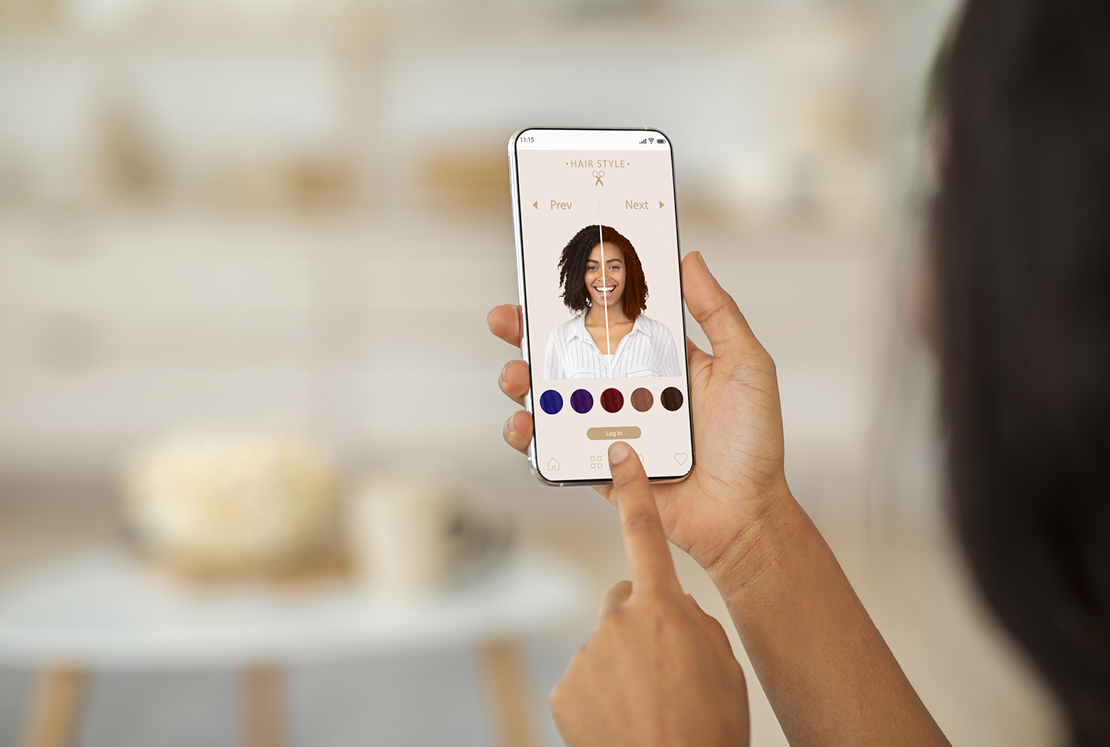
Augmented Reality in Beauty Retail
Virtual try-on technology, driven by augmented reality (AR), is revolutionising the shopping experience. Apps like Sephora Virtual Artist and MAC’s Virtual Try-On allow users to test makeup shades, experiment with hair colours, and even visualise skincare results before making a purchase. These AR tools are improving accessibility for online shoppers and reducing product returns, aligning with the industry’s push towards sustainability.
High-Tech Ingredients and Biotechnology
Biotechnology is taking ingredient innovation to new heights. Lab-grown actives such as vegan collagen and bioengineered hyaluronic acid are becoming staples in luxury skincare. Additionally, 2025 sees a surge in microbiome-friendly products, with brands like Gallinée and TULA leading the charge. These formulations aim to balance the skin’s natural ecosystem, offering gentler and more effective solutions for sensitive skin.
Sustainability Through Tech
Sustainability remains a critical focus, and technology is enabling brands to adopt greener practices. Waterless beauty products, such as solid shampoos and cleansers, are gaining traction for their minimal environmental impact. Refillable packaging systems, like Kjaer Weis’s luxury compacts, are becoming more sophisticated, while blockchain technology is enhancing transparency in ingredient sourcing and production.

The Future of Professional Treatments
Cutting-edge treatments in clinics and spas are also benefiting from technological breakthroughs. Cryotherapy facials, radiofrequency skin tightening, and ultrasonic exfoliation are among the most sought-after procedures in 2025. Moreover, 3D printing is making waves in prosthetic and reconstructive aesthetics, offering customised solutions for individuals with unique needs.
Wearable Beauty Tech
Wearable technology is entering the beauty scene, with gadgets designed to monitor skin health and suggest proactive care. Devices like L’Oréal’s UV Sense, a compact UV sensor, and the YSL Rouge Sur Mesure device for on-the-go lipstick blending, highlight the potential of wearables in merging beauty and convenience.

Trends to Watch
Neurocosmetics
Neurocosmetics focus on the connection between skincare and emotional well-being. These products leverage advanced formulations that can stimulate the release of neurotransmitters, providing mood-enhancing effects. For example, certain creams are designed to reduce stress or promote relaxation through the skin’s sensory pathways. This trend reflects the growing demand for holistic beauty solutions that cater to both physical and mental health.
Skinimalism
The “less is more” approach continues to dominate, with consumers seeking simplified yet effective skincare routines. Skinimalism emphasises multi-functional products that combine several benefits into one, reducing the need for elaborate routines. Brands are responding with hybrid products—like tinted moisturisers with SPF and serums infused with active ingredients—that save time, reduce waste, and offer high performance.
Digital Influencers
AI-generated beauty influencers are transforming the marketing landscape. These virtual personas, created with photorealistic detail, can model makeup looks, endorse products, and engage with audiences on social media. They offer brands an innovative way to reach consumers while sidestepping some of the challenges associated with traditional influencer partnerships, such as scheduling conflicts or brand alignment issues.
Customisable Beauty
Bespoke products are becoming the norm as technology enables mass customisation. From tailor-made foundations that match an individual’s exact skin tone to haircare products designed for unique hair types and concerns, personalisation is driving consumer loyalty. Advanced algorithms and 3D printing are key to realising this trend, allowing consumers to co-create their ideal beauty solutions.
Sustainable Innovation
The push for eco-friendly beauty continues to grow, with brands incorporating cutting-edge materials and practices. Innovations include biodegradable glitter, algae-based packaging, and carbon-negative production processes. Technology is also aiding in the development of waterless formulations, which reduce the environmental footprint while maintaining efficacy.
The integration of technology into the beauty industry is not just enhancing product performance and customer experience; it’s redefining beauty standards and expanding the industry’s horizons. As we embrace 2025, the convergence of tech and beauty promises a future where innovation and individuality thrive, making beauty more accessible, sustainable, and inclusive than ever before.
Perfumer Alexis Dadier Discusses Acqua di Parma’s New Colonia Il Profumo Fragrance
As one of the world’s oldest perfumers Acqua Di Parma has many iconic fragrances.
One such scent is the legendary Colonia perfume which first launch in 1916. Now, in a first for the brand, this iconic fragrance has been reinterpreted with a modern, and intensified version. Envisioned by perfumer Alexis Dadier, who brings decades of experience in the luxury fragrance industry, Colonia Il Profumo combines the best of the original scent with a new, modern twist. As the fragrance launches in the Middle East we find out more about how it has evolved from its original version yet still retains all the ingredients of an icon.
Tell us about the new Colonia Il Profumo EDP – what makes this fragrance special?
Colonia Il Profumo is a vibrant and contemporary reinterpretation of Acqua di Parma’s timeless classic. What makes this fragrance special is how it celebrates the elegance of the original Colonia while enhancing its brightness and depth. The addition of fractionated ylang-ylang brings a new level of radiance, supporting the citrus notes and making them linger longer. Combined with contemporary woods and an intensified concentration, it’s a modern Eau de Parfum that stays true to its heritage while feeling bold and fresh.
What challenges were there when taking such an iconic fragrance and giving it this new upgrade?
The biggest challenge was preserving the original Colonia’s unmistakable signature while giving it a modern twist. Colonia has a devoted following, and it was important to respect their expectations while appealing to a younger audience. Removing elements that felt outdated, like the animatic tones, required a delicate touch. Balancing the freshness of citrus with the richness of modern woods and florals was also key to ensuring that the fragrance remained coherent and true to its legacy.
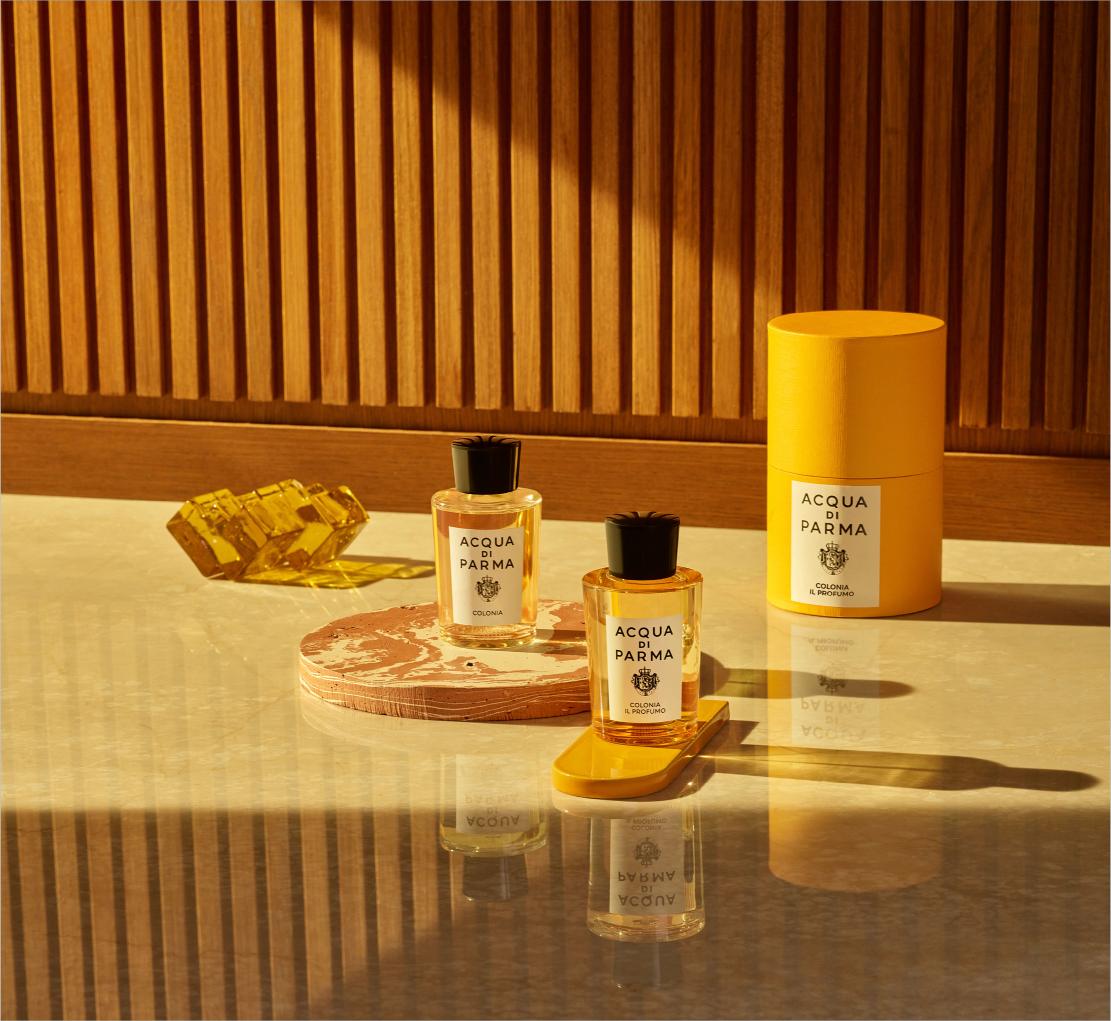
Can you share more on the specific ingredients and notes included?
At its core, Colonia Il Profumo is all about citrus, but with a richer, more enduring quality. The top notes feature Italian bergamot, blood orange, and grapefruit, creating a sparkling, juicy opening. The heart brings aromatic rosemary and fractionated ylang-ylang, which enhances the citrus’s brightness and longevity. Finally, the base is grounded by fractionated patchouli and vetiver heart, both of which add depth and freshness, while maintaining the timeless elegance of the fragrance.
What’s the feeling you wanted to evoke with this fragrance?
The goal was to evoke a sense of radiant elegance and modern sophistication. I envisioned a transformation from black-and-white photography to vivid, full color—taking something timeless and breathing new life into it. It’s about capturing the essence of La Dolce Vita—the vibrant energy, effortless charm, and sophistication of Italian life—but reimagined for the modern world.
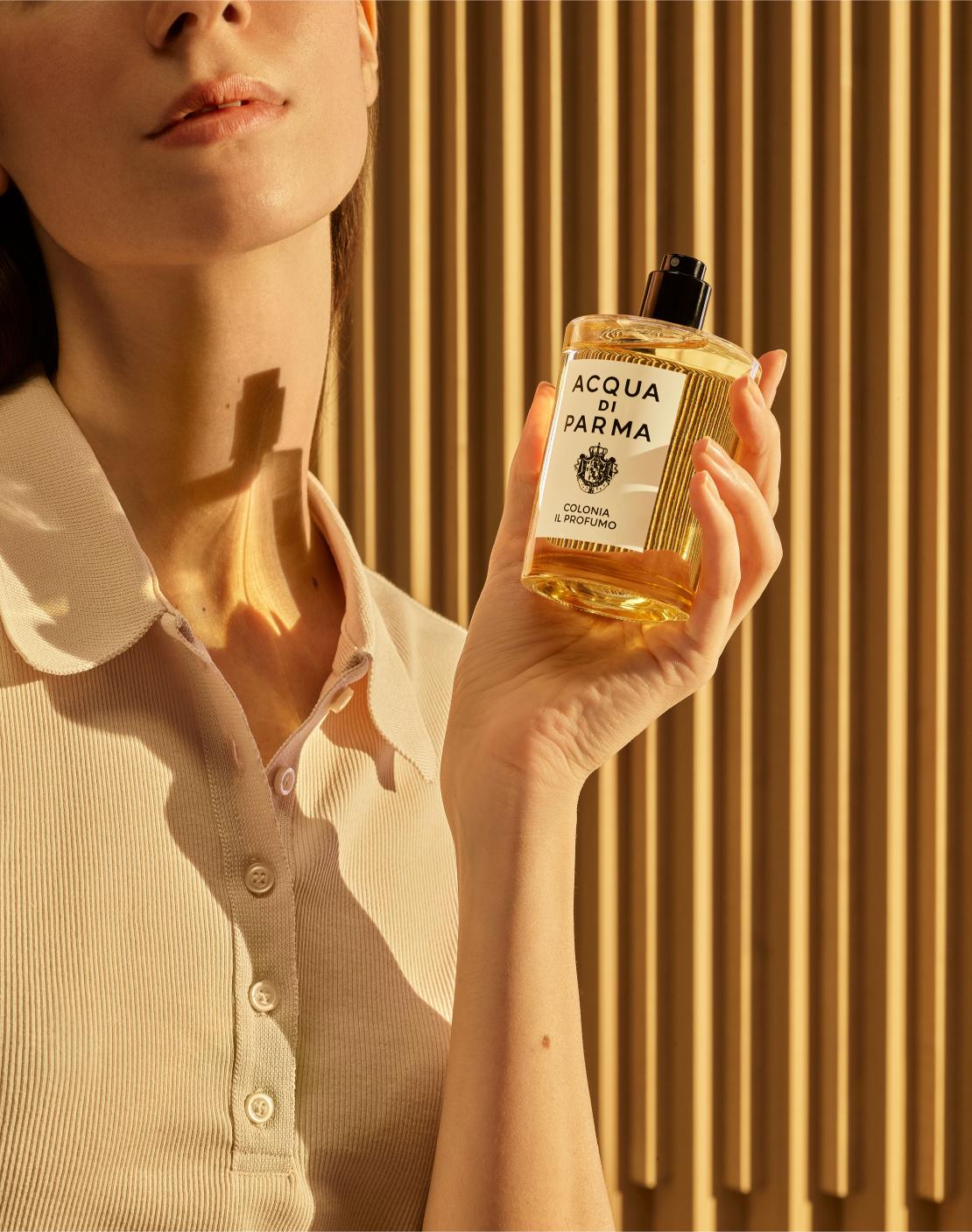
How do you think this fragrance connects the past and the present and highlights ADP’s long legacy?
Colonia Il Profumo bridges the past and present by respecting the DNA of the original Colonia, with its classic citrus and aromatic profile, while embracing contemporary trends in perfumery. The use of modern ingredients like fractionated ylang-ylang and refined woods reflects today’s advancements in fragrance creation, showcasing Acqua di Parma’s ability to evolve without losing its essence. It’s a celebration of over a century of Italian artistry and craftsmanship, reimagined for a new era.
How do you think a brand with a long history can balance the line between heritage and modernity?
The key is to honour the elements that define the brand’s identity while being open to innovation. For Acqua di Parma, this means staying true to its Italian roots, timeless elegance, and artisanal approach while using modern techniques and materials to adapt to contemporary tastes. Heritage provides the foundation, but modernity is what ensures relevance in an ever-changing world. Colonia Il Profumo is a perfect example of this balance—steeped in tradition, yet undeniably current.
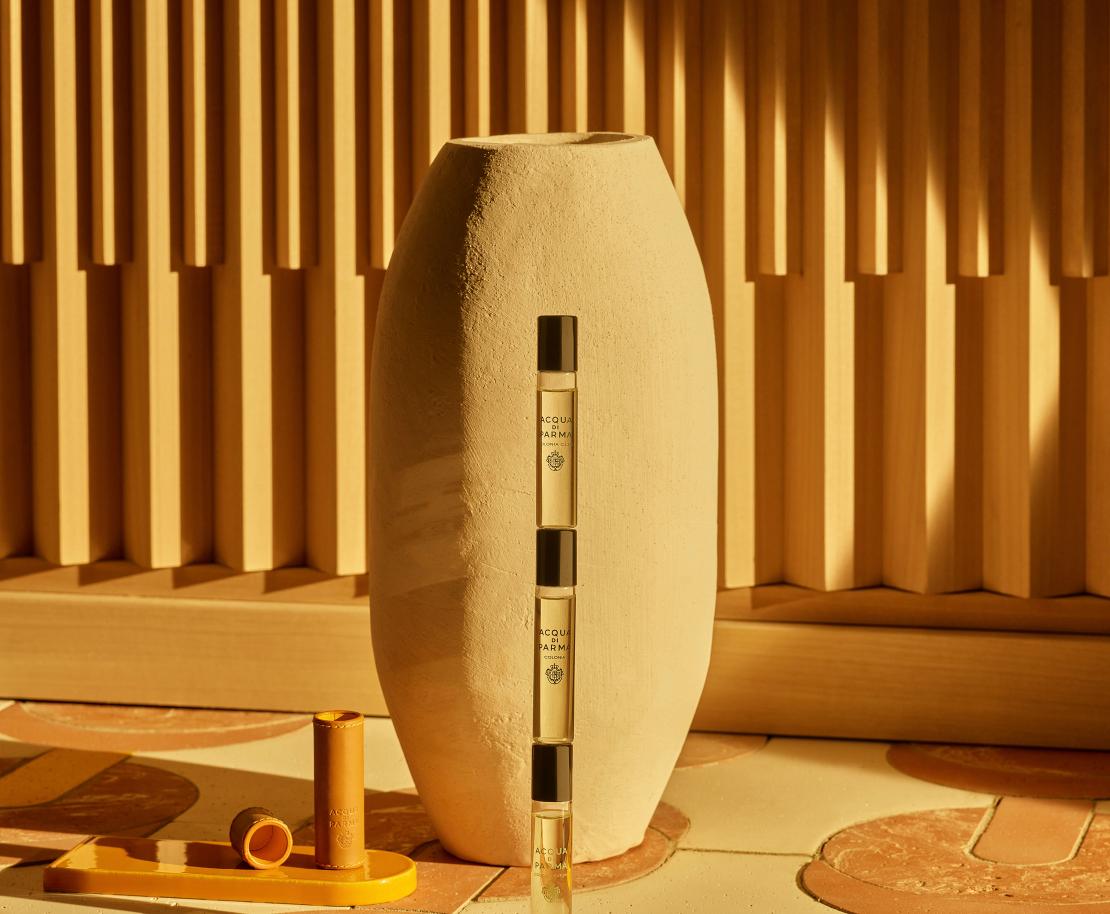
What do you think women are looking for from fragrance today?
Today, women are looking for fragrances that reflect their individuality and authenticity. They favor unique compositions that tell a personal story, often linked to natural and sustainable ingredients. There is a growing trend toward personalization, with increasing demand for bespoke fragrances that match their olfactory identity. Additionally, eco-responsibility has become a crucial criterion, as consumers are paying closer attention to the sourcing of ingredients and the environmental impact of the products they use.
What are your thoughts on fragrance in The Middle East?
The Middle East has a rich olfactory tradition, where fragrance holds a central place in the culture. Consumers in this region particularly appreciate intense and opulent fragrances, often built around notes of oud, incense, spices, and precious flowers. It’s fascinating to see how Western perfumes increasingly integrate these oriental notes, creating a dialogue between cultures and enriching the global olfactory palette. This mutual influence opens up new creative possibilities for perfumers.
What do you think makes a fragrance iconic?
A fragrance becomes iconic when it captures the spirit of its time while remaining timeless. It must evoke universal emotions and leave a lasting imprint on the collective olfactory memory. Often, it is the boldness of its composition, the innovation in ingredient choices, or a break from established norms that gives a fragrance its iconic status.
How would you sum up the global fragrance industry today?
The global fragrance industry is thriving, marked by steady growth and diversification of offerings. There’s a democratization of perfume, with more accessible and varied options that cater to an increasingly informed and demanding clientele. Current trends include strong demand for natural, eco-responsible, and personalized products. Simultaneously, the rise of e-commerce and the influence of social media are transforming how fragrances are discovered and marketed, opening up new opportunities to reach broader audiences.
What are some of the interesting trends you are seeing?
One fascinating trend is the reinterpretation of classic fragrances to suit contemporary tastes. For example, Colonia Il Profumo modernizes the iconic Colonia launched in 1916 by adding a refined blend of ylang-ylang and patchouli fraction to its signature citrus notes. Such trends highlight a balance between heritage and modernity. Additionally, gourmand and savory notes, as well as fresh and milky accords, continue to gain popularity among consumers seeking uniqueness and sophistication.
Is there a fragrance you would still like to create or ingredients you would still like to work with but you haven’t had the chance yet?
As a perfumer, the quest for new raw materials and olfactory combinations is a constant. The possibilities remain endless. I would love to further explore rare ingredients, especially those from lesser-known regions. It’s also exciting to revisit classic ingredients like citrus or spices, giving them a contemporary twist, as well as using new technologies to express materials in a more sustainable way.
What’s the biggest challenge as a perfumer today?
The biggest challenge is undoubtedly meeting the diverse expectations of consumers while adhering to increasing constraints, whether regulatory, environmental, or technical. For example, balancing innovation and sustainability in formulations requires boundless creativity. Striking the right balance between tradition and modernity is also a major challenge, particularly for heritage brands.
What’s a message for our readers as to why they should try this fragrance?
Colonia Il Profumo is more than just a fragrance—it’s an invitation to rediscover the vitality and timeless elegance of Italy. Its sophisticated blend of sun-kissed citrus, vibrant ylang-ylang, and refined patchouli captures the essence of a tradition reimagined with modernity. Wearing this fragrance is like immersing yourself in a unique sensory journey that combines freshness, intensity, and Mediterranean warmth. It’s an olfactory experience that stays with you throughout the day, with elegance and depth.
Dior’s B35 NXXT Sneakers Offer a New Look for Spring 2025
Designed by Kim Jones for the Spring 2025 Dior Men’s collection, the latest B35 NXXT sneakers are set to be the must-have accessory for this season.
Symbolising heritage and style, this new design features a raffia version of the essential shoe, that is both futuristic and timeless.
The mess of cannage is revealed in an openwork design that magnifies the shoe’s sole for both style and comfort. The shoes are available in a series of natural shades, heightened by suede inserts, graphic curves and criss-crossing lines.
Both eye-catching and functional these sneakers will be the perfect addition to the style-conscious man’s wardrobe.
This is why Ferrari’s Roma Spider is the Perfect Companion for City Life
For many, owning a Ferrari represents the ultimate dream—a symbol of prestige, performance, and timeless design.
Yet, the reality of integrating a supercar into everyday life often clashes with practicality. Enter the Ferrari Roma Spider: the perfect blend of sophistication, usability, and exhilarating performance, redefining what it means to drive a Ferrari in the city.
Unveiled in 2023, the Roma Spider embodies the effortless charm of 1960s Italian luxury while delivering the cutting-edge engineering expected of Ferrari. It’s a car that transforms even mundane commutes into moments of escape. Whether stuck in traffic or racing through urban streets, the Roma Spider offers not just a drive but an experience—an everyday companion for those who seek elegance in every detail of life.
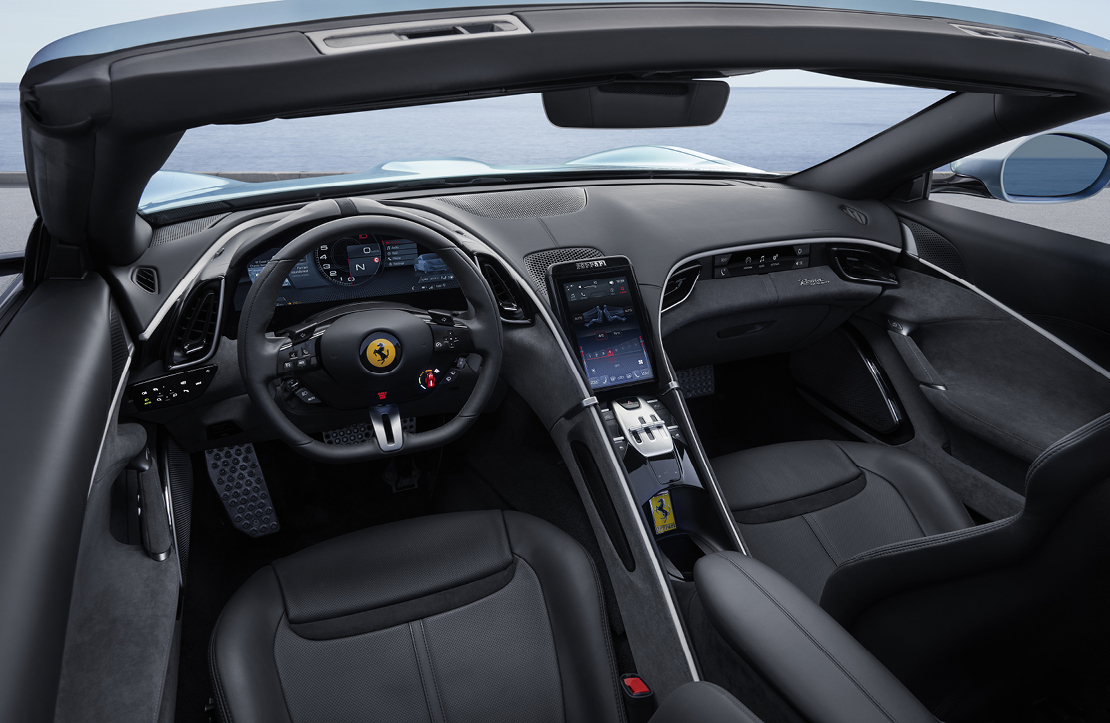
The Roma Spider builds on the celebrated Ferrari Roma platform, combining its dynamic capabilities with the allure of a convertible. Carrying over the proportions, volumes and specifications of the Ferrari Roma’s hugely successful V8 2+ concept, this new car is elevated by its striking soft top, making it a year-round vehicle, offering an extra-special experience. Deploying in just 13.5 seconds, while at a speed of up to 60km/h, this design feature makes it seamless to use. Ferrari also offers extensive personalisation options to the soft top including sophisticated, bespoke fabrics and contrasting stitching. The compact design of the soft top makes for a larger boot space, while a patented wind deflector integrated into the backrest of the rear bench can be deployed by a button on the central tunnel, offering a protection from the wind as your drive.
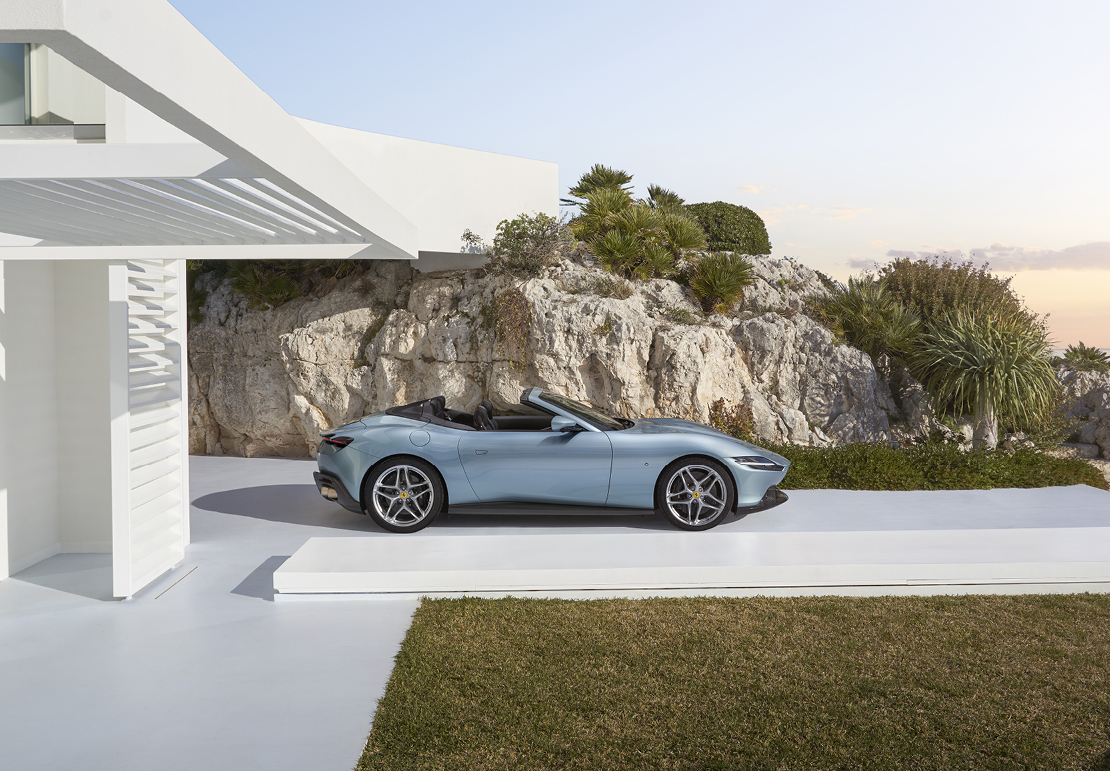
But it’s not all about the stunning appearance of this car, it also offers an incredible drive. An all-aluminium chassis and 620 cv V8 engine are key factors in facilitating this. The engine comes from the family that was heralded as the International Engine of the Year on four consecutive occasions. Coupled with Ferrari’s universally-acclaimed 8-speed DCT known for its incredibly fast shift times, it offers excellent standards of comfort, drivability and speed. It’s not just easy to drive, it’s also extremely responsive making it great for both inner-city driving and out-of-town staycations. The car offers instantaneous throttle response, the direct result of the adoption of specific solutions, such as a flat-plane crankshaft, compact turbines, twin-scroll technology, and a single-piece, cast exhaust manifold with equal length pipes to optimise pressure waves in the turbine and reduce losses.
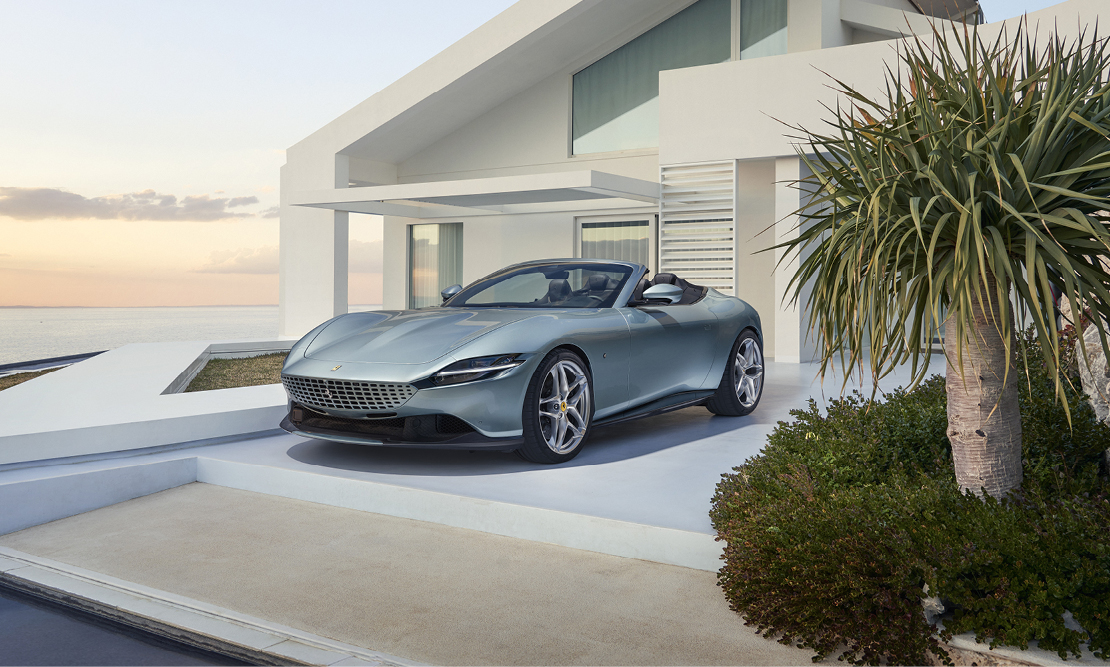
The stylistic approach taken for the Ferrari Roma Spider’s exterior centres around a clean design and absolute symbiosis between its various elements. Its harmonious proportions and pure, elegant volumes are very much in line with Ferrari’s front-engined GT tradition. That said, the designers have created a modern take on those classic proportions, giving the car a sophisticated, contemporary stylishness. The long front bonnet underscores the spare silhouette of the flanks, lending a sense of sleekness to the entire body and a dynamic look. The front of the car looks as if it were sculpted from single block of metal, creating an overhanging, sharknose effect.
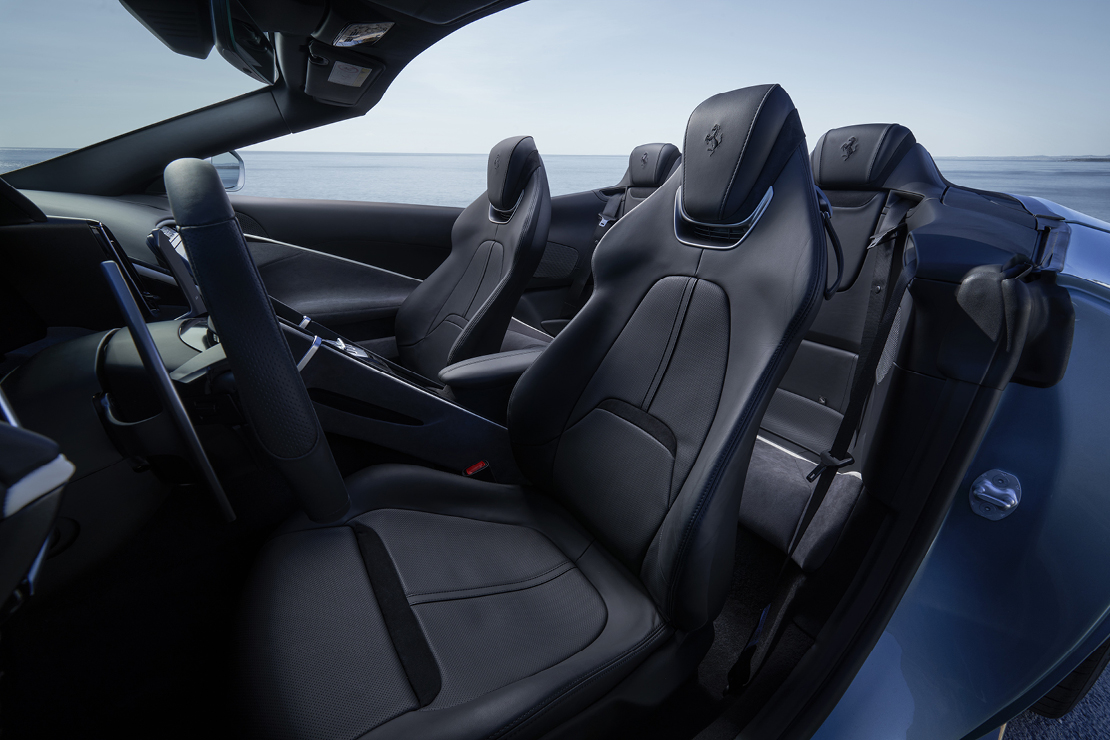
Inside the car, two separate spaces, one each for driver and passenger, were created in an evolution of the dual cockpit concept, which has its roots deep in the marque’s history with cars from the 1970s. This innovative design has an almost symmetrical layout which produces a more organic distribution of both spaces and functional elements. The result is that the passenger will feel very involved in the driving experience – almost like a co-driver, in fact.
This lightweight, easy-to-drive motor will make the perfect second car for a busy or a young professional who likes to get away at the weekends. It’s seamless design and imppecable driving ability make it an enjoyable ride for all.
Available at Ferrari Al Tayer Motors in the UAE. Visit Ferrari Al Tayer Motors showroom, Al Manara for more information.
Zenith CEO Benoit de Clerck Reflects on his First Year at the Watchmaker
When Benoit de Clerck joined Zenith as CEO in January 2024, he knew he was onto a great thing.
The brand had had a significant revival in the past few years, with a focus on its heritage, as well as innovation and a slew of exciting new novelties, there was much to be excited about. But, as with any senior role at a global brand, there are going to be challenges. At Zenith, there are many. Balancing the heritage of the brand with innovation, offering clients and collectors what they are looking for, managing global distribution, finding new brand ambassadors, the list goes on. So de Clerck has a large and important role to play in the Swiss watchmaker’s future, and with the brand celebrating 160 years of consistent manufacturing this year, there’s lots to talk about.
Ahead of the recent LVMH Watch Week event, we sat down with the brand’s CEO to reflect on his first year at the helm of the brand, as well as discuss what’s in the pipeline for 2025.
You joined Zenith at the beginning of 2024 – how has this past year been for you?
Indeed, it’s been a great year and a great adventure. It has gone exactly the way I envisioned it. It hasn’t been easy, but it’s been extremely enriching, both personally and professionally. The brand is beautiful; it has history, authenticity, and all the ingredients for a great outcome. It’s been a very interesting year – so far, so good – and the brand is in very good shape.
Are there any lessons you’ve learnt since joining?
From a personal standpoint, when I started in the role, I said to myself that for the first 100 days, I would not make any judgements. It was very difficult and a real challenge for me personally, but at the end of the 100 days, I was very pleased I did it. It forced me to have an open mind, really absorb everything and make important decisions without judgement. I learned a lot from this.
Then, in April, came Watches & Wonders. This was my 20th edition, but the first one as a CEO, so I was extremely apprehensive. But I soon saw everyone working in harmony, and I realised everything was working! And so I relaxed. That was really the second important milestone so far. Then we had summer, and in the last few months, I have been out to some of the markets, meeting the teams and the customers.
It’s been very enriching on a personal and professional level.
The brand is celebrating 160 years this year, and very few brands have reached this milestone. Even fewer celebrate it with continuous, uninterrupted production. This is definitely adding a positive twist to the experience.
With that in mind, what’s the focus for 2025?
We have great plans for 2025. We have decided to capitalise on what we know best, which is our savoir-faire, our craftsmanship, and our people. This is what we will be communicating throughout 2025 and what we will embrace the most, to remind people that we are a watchmaking manufacturer with a very strong savoir-faire, and a rich history. These are the real pillars of the brand and what I like about these pillars is that they are authentic. It’s not a marketing gimmick.
We will also be presenting some exclusive novelties to mark the anniversary. They will be daring and unusual and produced in a limited quantity. They will address what some of our customers and collectors have requested. I speak to a lot of customers and collectors, and we like to listen to them and react to what they are looking for. We try to encompass everything they tell us and a lot of what you see this year will be based on the feedback that we have had from them. Yes, they will be daring, unusual and crazy, but at Zenith, we can afford to be a bit creative in terms of design. It’s part of the brand’s DNA.
When you joined the brand, it was in a good position. How would you assess where Zenith is today, and what is the focus looking ahead?
There is a readjustment happening in the market today. We are privileged and lucky because we are most probably less affected than many others. The brand is doing well in the Middle East. We are doing well in Japan, and in The United States. Some other Asian markets are readjusting. But overall, the brand is in good shape. We would rather have slow but consistent growth than ups and downs because it is much easier to manage. We work in a very collaborative way, and the global market teams are very much involved in the brand’s decisions. Feedback from the markets is something I value a lot.
What’s the future for Zenith in the UAE?
Globally, Zenith has a very good distribution structure. We don’t want to be overexposed. We want to be able to communicate the values of the brands on a one-to-one basis. Our business is about relationships, and this is what we have perfected with our clients in the Middle East. It’s the relationship first, then the watch. We are very particular with how we distribute our watches – we don’t want to have too many points of sale in each country or region, and we feel that is enough. We have no intention to overexert or overexpose ourselves because our relationship with our customers is very important. We want to do it well and have a real exchange with the customer. We have learnt a lot from our customers, and it’s very interesting. We are very proud of the outcome and success of our business in the Middle East. We’ve had the right strategy, and we will stick to that strategy.
What can we expect to see at LVMH Watch Week this year?
LVMH is a great platform to communicate on a group level. It’s been working very well for the division. Of course, we are going to launch part of our novelties for this year, and then the 160-year-old novelties will launch in Watches & Wonders in April.
We know brand ambassadors are very important to the brand – how do you feel about this top and how do you plan to continue these partnerships with Zenith?
Partnerships are always good. But they have to make sense, and they have to be natural. It’s also good to change partnerships and evolve. It’s happening very naturally. The fundamentals of a successful partnership are that it has to come from both sides. Irrespective of financial arrangements, they have to believe in the brand. We have a lot of brand ambassadors who already wore Zenith watches, and so already knew the brand. That is 70 per cent of the job done, as you don’t need to push it. It comes naturally. Most of our partnerships actually come from the ambassador reaching out to us. It goes back to this idea of authenticity that is so important to Zenith. Partnerships are good if they are not overdone. If you have too many, you can dilute the message, and we are not into that mentality. We have limited production, we are lucky to sell what we produce, and we don’t have to go crazy and try to change things in that respect.
What’s the biggest challenge you face in your position?
There are many challenges, but I strongly believe that where there are challenges, there are always solutions. The biggest challenge today is to remain true to ourselves. I receive a lot of offers and proposals that do not work for the brand and are not part of our DNA. So, a challenge is not to be tempted and not to fall into things that are irrelevant. Relevance is important and remaining true to ourselves.
What’s something you would like to do with Zenith?
I want to make sure that we protect the savoir-faire of the brand. It is what the brand is truly about, and I strongly believe that you need good people behind this. That’s why the people at Zenith are so important. I must admit, when I arrived a year ago, it was incredible for me to see the sentimental value and connection that the people at Zenith have to these watches. The human aspect is very important, and I want to make sure that this remains. That’s why our Manufacture is open to the public. We have visitors every day, and we are proud to open our doors to the public and to our customers.
What’s a message you would send to our readers about the brand?
When you know, you know. It might sound cliché, but once you know about Zenith, you never forget it. Zenith is a brand for people in the know. It’s not a mainstream brand. We have authenticity. We have a mile of archives. And this year I’ve decided to invest in this because we have so much to celebrate and organise.
Royal Jet CEO Shafiul Syed Discusses What’s Next for the Region’s Leading Private Airline
With over two decades of experience flying some of the world’s most prestigious figureheads, Royal Jet has firmly established itself as the UAE’s leading private airline.
Beginning as the UAE Royal family’s airline, it’s jets have flown the country’s leaders across the world for over twenty years, safely enabling them to complete missiones, secure peace deals and meet with global world leaders.
Today, Royal Jet has expanded far beyond its humble beginnings, with a substantial fleet of aircraft that connect VIP travellers from Abu Dhabi to the world. But it is about to spread its wings even further. With the recent arrival of its new CEO Shafiul Syed, Royal Jet hopes to attract a widened cleintele and expand georgaphically, whilst still offering the same levels of quality and safety standards it is known for. Here we find out more about the plans for the future of the Abu Dhabi based airline.
Tell us about Royal Jet’s business model and the current vision and direction of the brand.
Royal Jet is now in its 21st year which is a great achievement. It began as the Royal airline of Abu Dhabi, and then became primarily focused on the extended royal family. Then we started to buy more aircrafts and build capability, and we realised there was a market out there, so we started to expand commercially as well. Appealing to other heads of state, outside of this region.
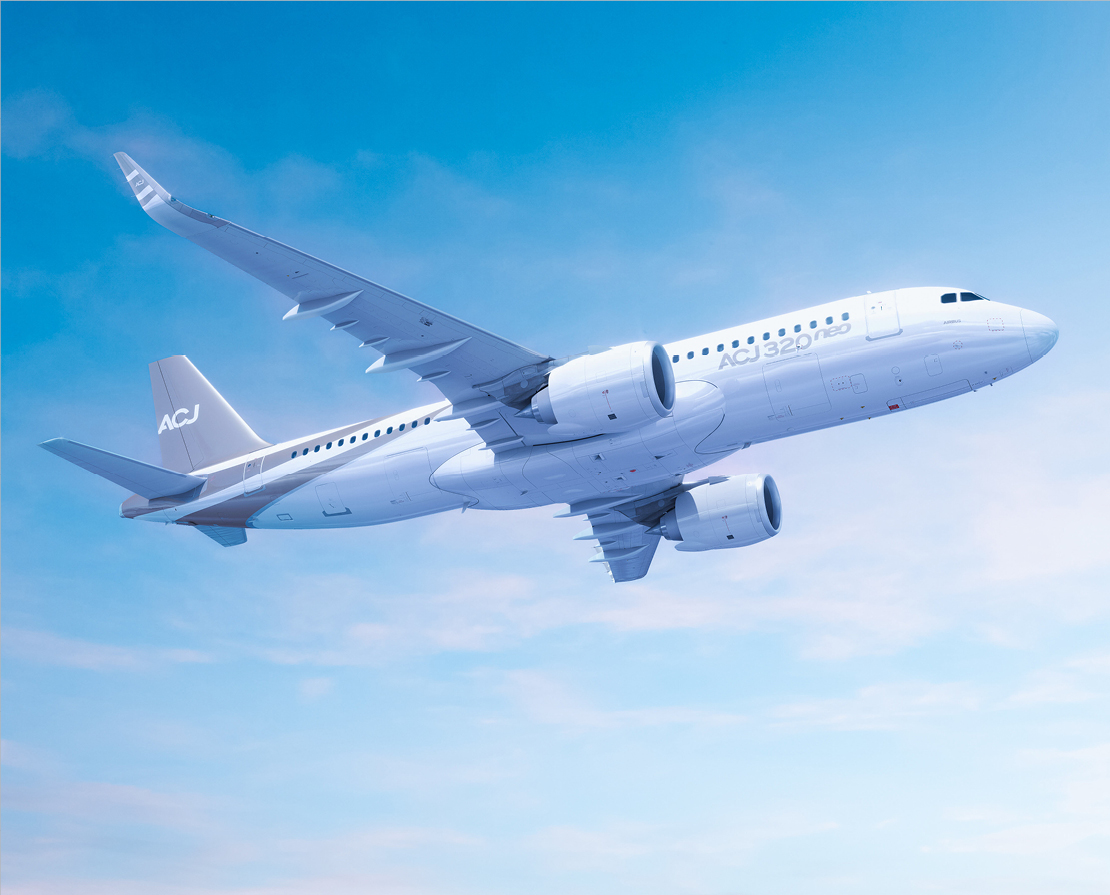
We’re currently at a crossroad where we’re about to take a deeper plunge into the commercial market. We have a strong brand; we have a great home in Abu Dhabi – to be identified with the UAE leadership is really powerful in itself. And that gives us a brand that is different from others. We’re described as being timeless, sophisticated, and elegant. we’re not trying to be anything else; we are a more elevated brand. So, looking forward, we can start with the recent announcement that we will be upgrading our fleet. Some of the Boeing Business Jets (BBJ) aircraft are getting a little bit old, and generally, for our clientele we need younger, newer aircraft. That gives us a great opportunity to become a NAVOS operator. We recently announced the introduction of three ACJ320neo aircraft, with rights for an additional six, marking a significant step in meeting the growing demand for private aviation.
We also have two Bombardier Global 5000s, and we’ve realised that there’s a great market out there that we can appeal to. There is opportunity to extend our brand geographically and into different segments. So, over the next three years we are hoping to expand into different markets and sectors. We are going to do a bit of exploration which started this year with Malaysia, and we are going to take that further extending it forward over the next three to six months. You can expect to hear some exciting developments!
In terms of sectors for expansion can you explain in more details – will you be expanding into different price segments as well as new locations?
When it comes to pricing, we need to be in the ballpark. Whilst we have a superior product, and our whole customer experience is built around the royal element of Royal Jet, we are focused on curating personalised travel for leaders of countries, industries and businesses. But, there is a market that’s a bit more price-sensitive. There’s room for differentiation in terms of pricing and offering, but we need to be in the vicinity of what others offer. So, we will start to look at our pricing, new segments, and new geographies.
Since COVID the industry has changed – how would you assess the market today?
When you look at all the indices, the US and Europe are going through quite a lot of adulation. But actually, what we’re seeing in the Middle East is constant growth since COVID. There is still great demand. We have a lot of new players coming to Dubai World Central Airport. We are in a great location and there are many opportunities for us as an airline. There are so many markets crying out for capacity and so there’s huge room for growth. But we need to explore in the right way that’s viable for the customers and for us as a business.
How do you serve your customers and ensure their expectations are met?
It’s about curating a personal experience. We get to know our clientele and what they actually want, and we ensure we can provide that to a very high degree. This can be anything from catering, offering, the way our crew interact with the client. Everything comes together so that it’s a personal experience and no two experiences are the same. We collect data from our clients well and we’re looking to refresh a lot of our systems and make it more tactile so we can get all the information we need in the simplest way. We are going through a digital upgrade, and we are going to look at using AI tools and upgraded platforms to make the process even more seamless and allow us to become more client-centric.
You have joined Royal Jet quite recently – what expectations did you have and how has it been since joining?
I generally join companies that need a lot of help or improvement – but coming to Royal Jet – it was already a great brand, with a great family spirit amongst the employees. I think it’s a great platform. So, I’m a lot further forward than expected and I was pleasantly surprised by what I found. I found the company in a great position to catapult it into the future and the future is looking very exciting.
The safety and quality standards at Royal Jet are world-leading and I think that comes from the experience we have in taking ultra-care of VIP individuals. It has become the culture in the organisation and that’s the only way we do things. We have some very difficult missions. The leadership of the UAE often fly to war-torn places or conflict where they are trying to broker peace. So quite often we must do a huge risk assessment in the back end, to make sure that our aircraft and our passengers are well protected and we’re taking the right risks that we can mitigate. There is a very delicate balance, but Royal Jet are extremely good at delivering on that basis.
What’s the biggest challenge you face in your role?
There are many challenges but one of them is that Royal Jet operates at a different standard and we have the GCA (the regulatory body in the UAE), and they have a very high standards.
Pricing is also a challenge as we are sometimes competing with companies who don’t have the same standards or the same levels of training that we do, or the same commitments to quality. So, we are often compared to these airlines who don’t train to the same level as we do, but unfortunately it appears to the outside that we are more expensive that others, but not everyone is always aware of what we put in.
Delivery of aircraft and getting spare parts is another challenge. We just ordered another three A320 Neos and we are working around three years from order to delivery. So, a lot of planning is required, and we know that there is also a large demand for these aircraft. Another challenge is that we are designing an interior for something that won’t come to life for three years, so by the time it arrives, it is already old. I do wish that those cycles could be somehow lessened but that is the industry standard as it stands.
And then another challenge would be related to sustainability which of course is an industry-wide challenge that we are constantly working o improve. I’m a passionate believer that the real solutions and change are yet to come but it will take time and it’s not something that we are one individual airline can fix. Ultimately aviation saves lives and makes us better people, but we have to find ways to improve the sustainability aspect of it.
Walk us through a customer experience at Royal Jet.
The customer experience begins with the booking process which comes through to the concierge booking department and once that mission is booked, we then try to send out an iPad to our customers to give them the opportunity to tell us more about themselves, their likes, dislikes and preferences for their journey. This can include options for catering, for the type of service they require, how the staff should interact with them. The iPad then comes back to us with all that information, and we can curate the guest experience. Quite often there will be an advance part that arrives at our airport lounge. We will take care of them as well as the lead guest when he or she arrives. We make sure everything is stocked with the food and beverage that he or she likes and that the space is prepared for how they would like it. Typically, that experience at the terminal is quite short with just enough time for us to clear the guest through immigration and customs.
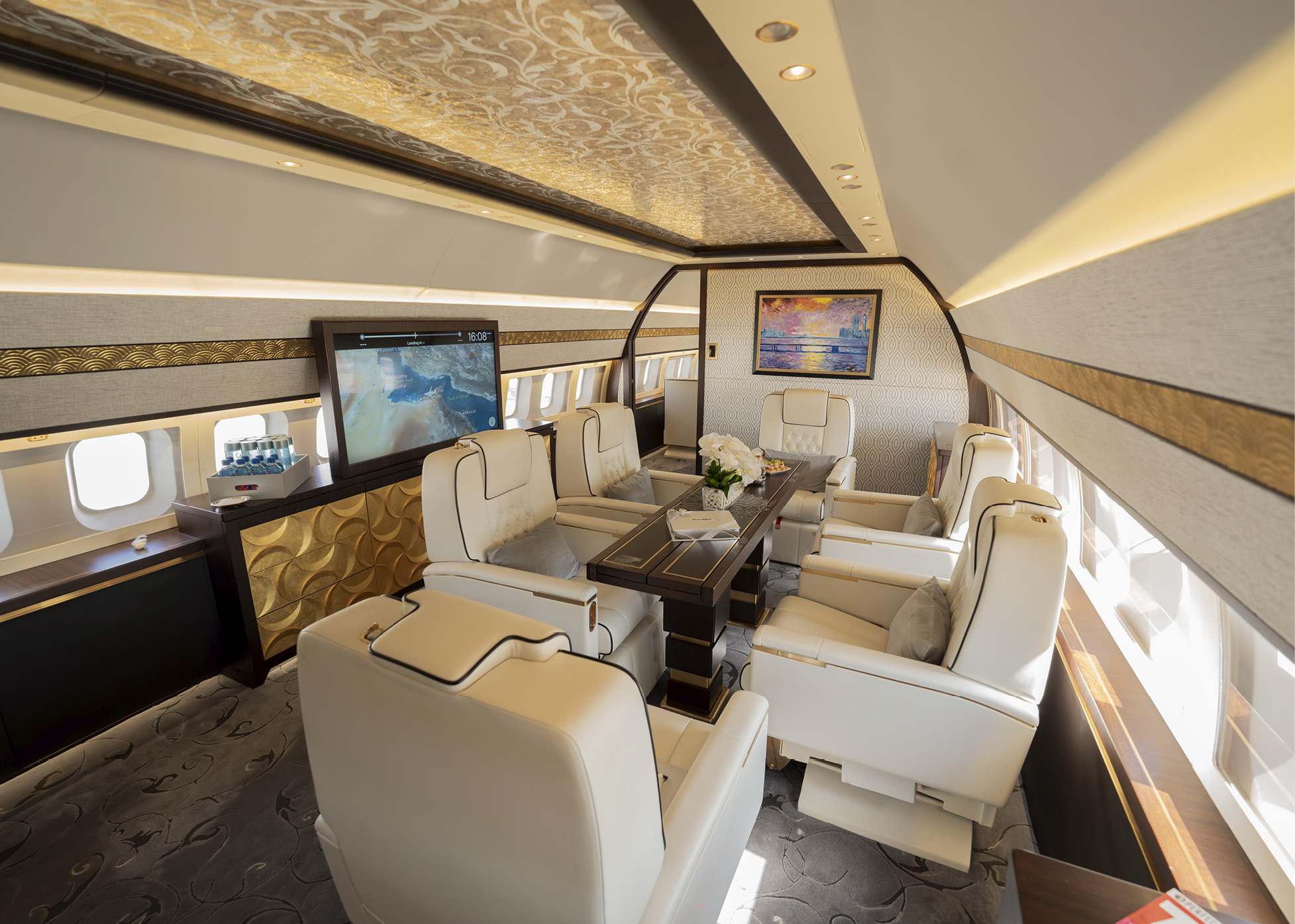
Then when they arrive on the aircraft they will be met by the pilot and cabin crew and addressed in the way they prefer and then they are settled into the aircraft based on the preferences they shared beforehand. This could be their choice of TV, internet, food choices, music – we can curate everything for each individual preference, whatever their needs.
We want everything to be as seamless as possible for the guests and a truly personalised experience.
What do you think impacts a client’s decision to fly with Royal Jet?
We do have a lot of loyal customers who not only know Royal Jet, but they also know exactly which aircraft they want. That’s one level.
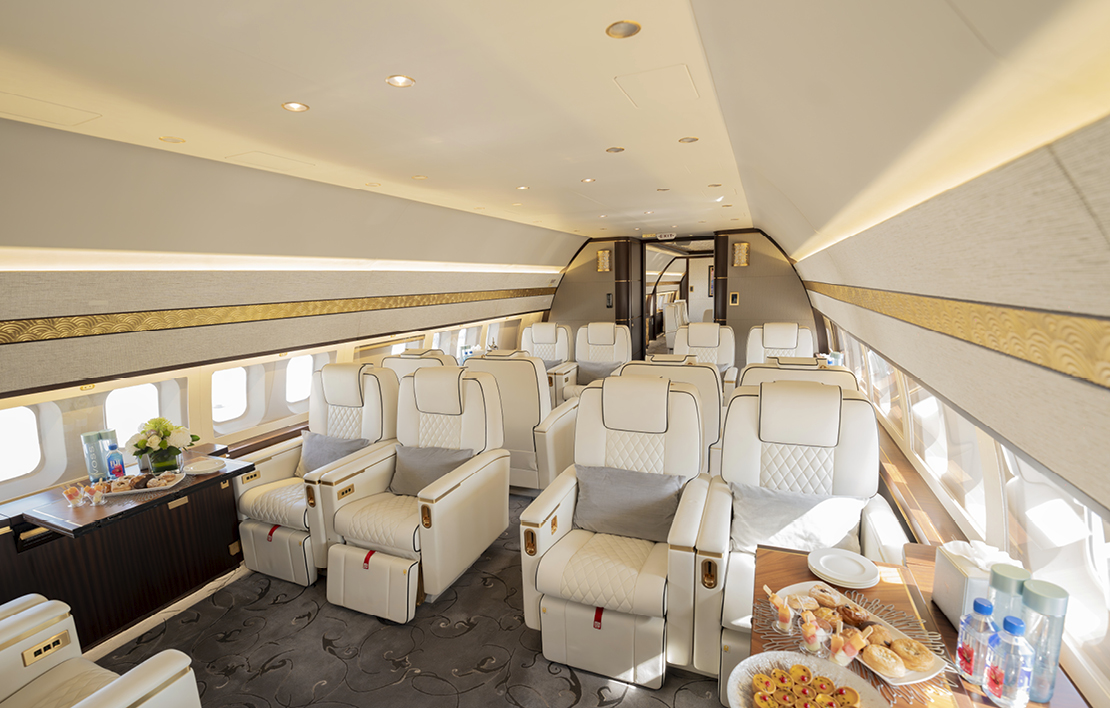
If we take a new customer – price is a factor obviously, but it tends to be that we will sell based on our aircraft. We are the biggest BBJ operator in the world. We have great internet, we have beds on board, we have a majlis setting. There is space for protocol, space for the lead passenger and his colleagues or family. A 34-seater is perfect for this and on the BBJs we can fly at 34,000 feet which is a comfortable height to fly at. With that you have all the safety and quality of Royal Jet. Availability of these aircrafts can be an issue as well as our ability to get them to where they want. Particularly with the BBJs and soon. The ACJs – they have the ability to fly long-range and that is definitely an impactful element of a guest’s decision to fly with us. We can get to Singapore, The United Kingdom, Iceland, in one flight and that’s not the case for every aircraft.
What’s in the pipeline for the future of Royal Jet?
A lot of it will be connected to our new fleet and the decisions we are making around that. As I mentioned we have a three-year time window on that but there will be more and new types of aircraft added. We are also looking to upgrade our old fleet.
Secondly will are looking at expanding geographically. And the third will be expanding into a different segment that requires smaller aircraft. Internally, as I mentioned, we are going through a digital renaissance and a reset within the business which is also very exciting.
Jacob Abrian Founder and CEO of the Arab Fashion Council Discusses Dubai Fashion Week
Since its inception in 2015, Arab Fashion Council has been championing the work of regional designers and creative talents, working towards stablishing a fashion ecosystem in the UAE that will be globally recognized.
By supporting regional designers in their endeavors and allowing them to grow within the region as well as offering a platform of exposure on a global scale Arab Fashion Council has far exceeded expectations. Today Dubai has firmly established itself as a leader and a crucial part of the world’s fashion economy, with the Arab Fashion Council the driving force behind it. The Council’s bi-annual event Dubai Fashion Week, which is in collaboration with Dubai Design Week (d3), has become a key fixture on the fashion calendar and an opportunity for established and upcoming regional designers to showcase their talent and work. Now, as the latest edition prepares to attract global attention, we talk to Jacob Abrian, Founder and CEO or Arab Fashion Council to find out what’s coming up this year.
What can we expect from the latest edition of Dubai Fashion Week?
The Autumn/Winter 2025 edition of Dubai Fashion Week will bring together some of the finest established names and the most exciting emerging talent from the region and around the world. This season, we’re thrilled to unveil an unprecedented lineup of designers, representing a harmonious blend of established visionaries and groundbreaking emerging talent. For the first time, we welcome Australia to our calendar, and we introduce the Correspondent Designer category to the platform, alongside meticulously curated collections from across the globe, reinforcing Dubai as a nexus for international fashion dialogue. The global buyers’ program, running February 3rd to 5th, is set to be a game-changer, offering unparalleled access for designers to connect with the world’s most influential industry leaders. Beyond the runway, this edition elevates the fashion experience through citywide activations, intimate dinners, and collaborations with partners like LuisaViaRoma, THAT Concept Store and Etoile La Boutique.
Can you share a bit on the criteria for participants and the designer selection each season?
We have a rigorous selection process, ensuring that every season reflects the highest standards of creativity and market relevance. We prioritize designers whose collections resonate on a global scale and demonstrate strong growth potential. Sustainability is also important —we’re looking for talents who balance creativity with a commitment to environmental responsibility. We look for emerging designers with potential, especially those who showcase exceptional craftsmanship. Storytelling is a key factor—fashion is about self-expression, and we want designers who can engage audiences with compelling narratives and fresh perspectives. Ultimately, it’s about identifying those who are pushing the boundaries of fashion and providing them with a platform to amplify their vision on the global stage. Each season, we seek to amplify voices that are not just creating fashion but shaping its future.
How do you feel this event has been received by the regional and international communities so far?
The Middle East has a rich cultural heritage in fashion, and designers from across the region have long awaited a dedicated platform to showcase their work. Dubai Fashion Week provides just that—an opportunity for local talent to not only present their creations but to engage with a global audience. On the international front, we’ve seen growing interest from designers, buyers, and media, with many now viewing Dubai Fashion Week as a key fixture on the global fashion calendar. The synergy between the regional and global communities is truly inspiring, and we’re excited to continue building on this energy in future editions.
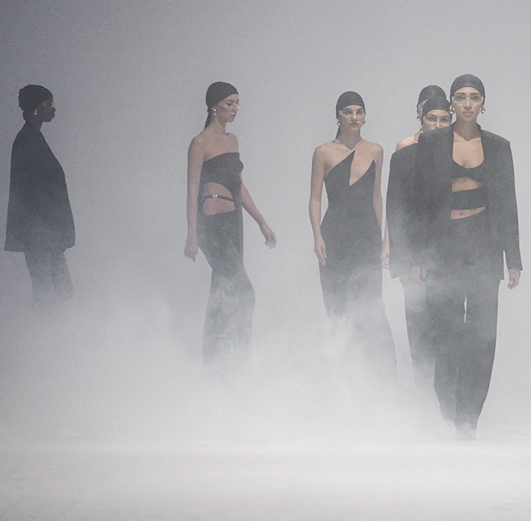
What was your vision for the event and how are you working towards that goal?
From day one, since the inception of the Council, our vision was clear: to position the regional talent at the forefront of the industry and provide them with a platform that can amplify their creativity on both a regional and international level. Our focus has always been on differentiating the platform to resonate beyond the runway, fostering collaborations, and driving industry growth. Every step we take—whether it’s building a global buyers’ program, hosting a showroom in Paris or launching groundbreaking initiatives—is a testament to that commitment. The journey has been extraordinary, and we have inspired the entire region to focus on Fashion—a fact we take pride of.
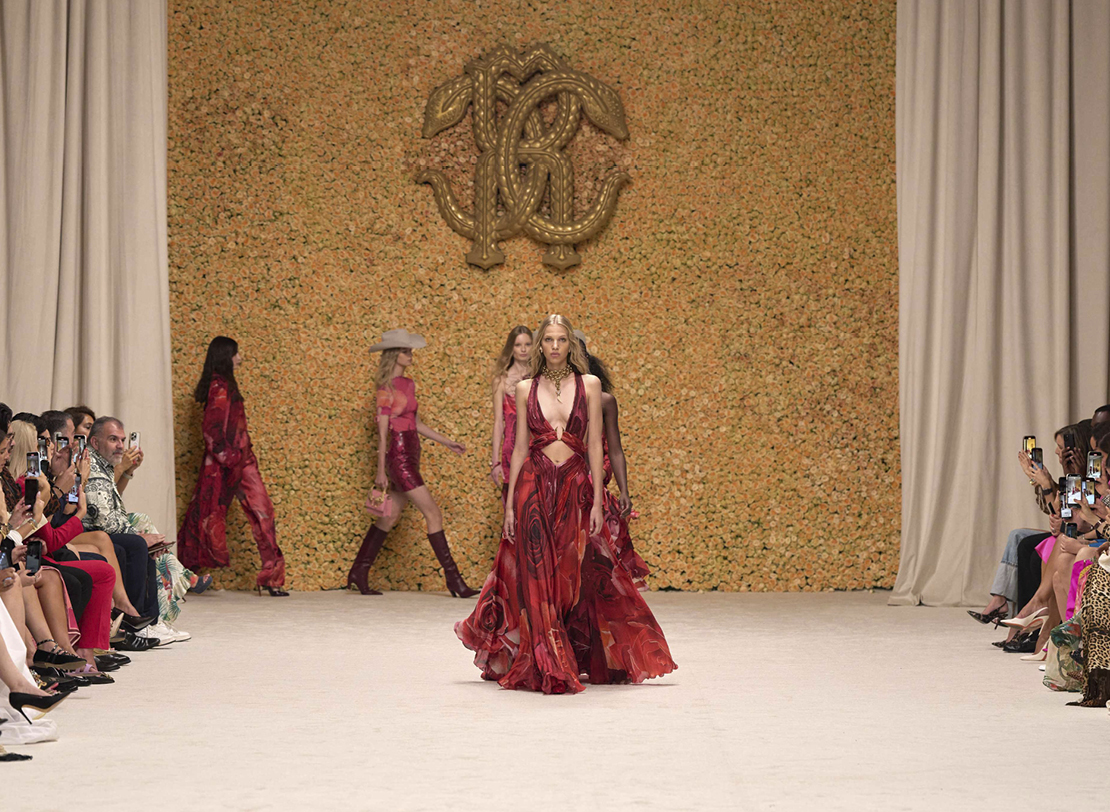
How do you think Dubai Fashion Week is helping to put Dubai on the global fashion map? Dubai Fashion Week’s growth is a testament to the city’s emergence as a global fashion capital. The event goes beyond Dubai’s reputation for luxury shopping, establishing it as a hub where talent, emerging designers, and established names are nurtured and empowered. It has become a beacon for international designers and brands who are eager to be part of this thriving and dynamic creative community. Furthermore, the region’s increasing focus on sustainability and craftsmanship has gained international recognition through this platform. With every edition, Dubai Fashion Week broadens its global impact, offering not just a stage for talent but also meaningful opportunities for collaboration, commercial development, and worldwide exposure.
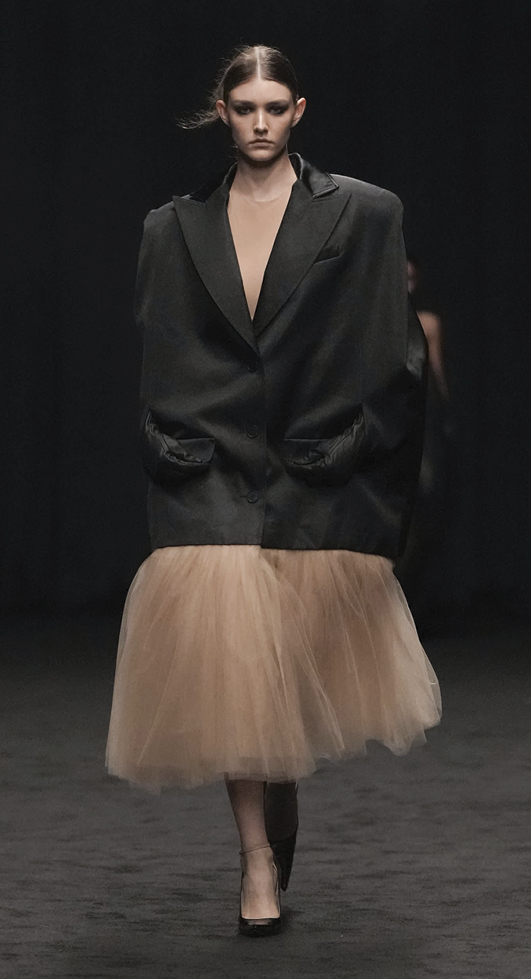
What would you still like to achieve?
We aim to expand the horizon of the fashion industry across various spectrums by introducing new pillars that position the region as a global leader, incubator, and initiator of trends, policies, and standards. Our vision includes seeing our regional designers export their creations globally, becoming dominant players in the creative economy index, and setting benchmarks for innovation and sustainability. Additionally, we aspire to establish stronger collaborations between the Middle East and international markets, bridging cultural and creative dialogues. We want to foster an ecosystem where our designers don’t just participate, but lead global conversations in fashion, leveraging their unique perspectives and craftsmanship. We also hope to develop structured educational programs and incubators that nurture the next generation of talent while creating funding and mentorship opportunities. Ultimately, the goal is to not only contribute to the global fashion industry but to redefine its narrative, with the region driving meaningful change and sustainable growth.
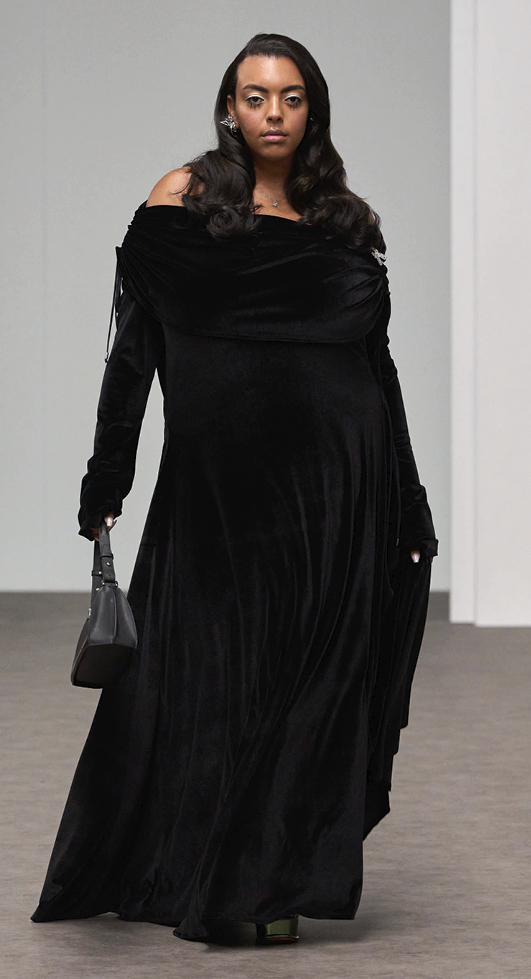
You have partnered with some exciting international designers over the past few seasons – is this something you would like to continue doing?
This strategy has been at the core of the Council’s vision since its inception in 2015, with iconic names such as Jean Paul Gaultier, Iris van Herpen, Moschino, Blumarine, and Antonio Marras playing pivotal roles in amplifying our mission. The momentum continues as Dubai Fashion Week and the Arab Fashion Council, has hosted renowned brands like Carolina Herrera, Roberto Cavalli, and now Manish Malhotra, with another highly anticipated name joining in September. Collaborations with international designers enrich the creative dialogue and bring innovative perspectives to the region. These partnerships not only underscore the Middle East’s growing influence but also emphasize Dubai’s significance as a key market for global fashion. This dynamic exchange continues to inspire and elevate the event to new heights.
What are the challenges Dubai faces when hoping to grow its positioning in this market?
Dubai is a city of vision, ambition, and limitless potential. Its unmatched energy, agility and forward-thinking spirit position it as a dynamic hub for innovation and growth. The city offers a world-class creative ecosystem and infrastructure bolstered by ambitious government strategies and initiatives in the creative and design sectors. It also brings a unique offering to the global fashion scene with its vibrant multicultural landscape. Emerging and established creatives have shaped a distinct identity for the region that resonates and inspires regionally and globally.
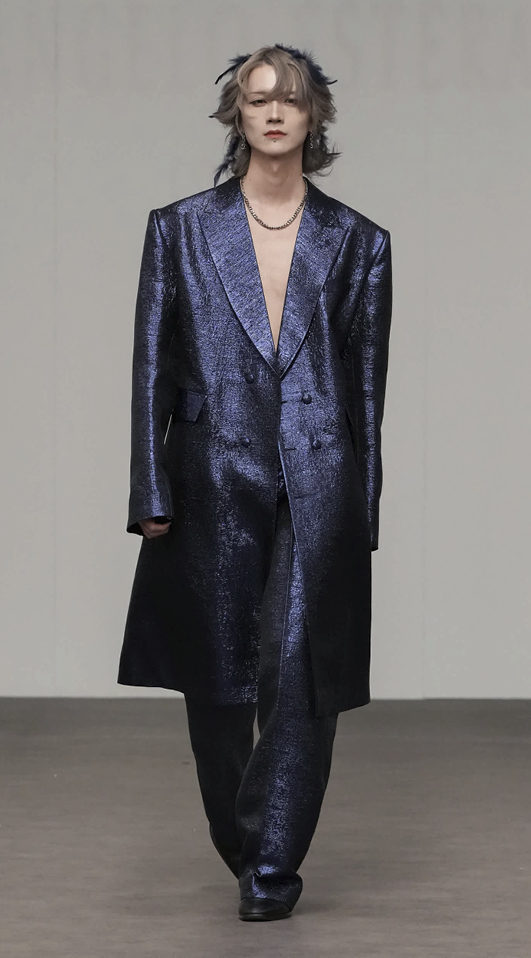
Aside from Dubai Fashion Week, how is the Arab Fashion Council working to support local talent throughout the year?
The Arab Fashion Council is dedicated to championing local talent 365 days a year through a multifaceted approach that empowers designers and drives the industry forward. A cornerstone of our efforts is the AFC Green Label initiative, which supports and funds designers who meet 100% of the Sustainable Development Goals (SDGs), ensuring their work is both impactful and purpose driven. We also provide mentorship programs, workshops, and roadshows, alongside showrooms abroad that spotlight regional talent on a global stage. Our collaborations bridge the gap between regional designers and global brands, and we work closely with New York-based Fashion 4 Development to ensure fashion remains a purposeful force for change. Additionally, we align with our European counterparts to maintain a cohesive narrative and shared vision for the industry’s future. The Council actively creates funding opportunities for designers, hosts multiple networking events to connect designers, buyers, and industry leaders, and engages in regional and international dialogues to advocate for a stronger and more sustainable fashion ecosystem. It is also worth highlighting our ongoing scholarship program, which identifies and rewards the most promising emerging designers to watch. Through these comprehensive initiatives, the Arab Fashion Council ensures that regional talent not only thrives but leads on the global stage.
What more do you feel needs to be done?
There is still an incredible journey ahead, and we are only at the beginning. This is both motivating and exhilarating as we continue to shape the future. This year marks our 10th anniversary—a milestone we take immense pride in. We’ve successfully navigated the challenges of our formative years and have established a council for the region that has inspired many countries to follow in our footsteps. As we reflect on the past decade, we are equally focused on the future. We are in the process of defining our manifesto for the next 10 years—a visionary roadmap that will be unveiled at our anniversary celebration. This moment is not just about celebrating our achievements but about reaffirming our commitment to leading the region’s fashion industry into an even brighter future.
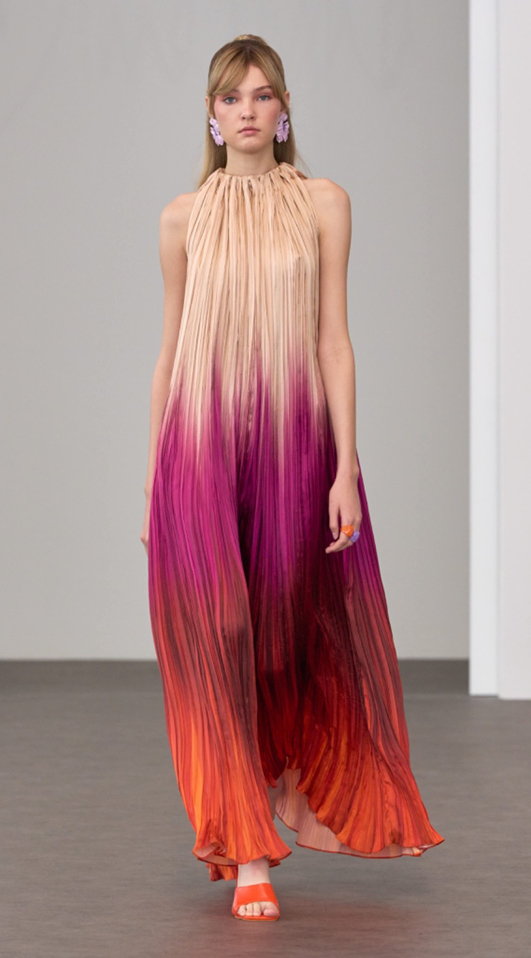
Can you share some of the designers in the region who have caught your eye recently?
This is a highly subjective question, and I’d rather answer it as Jacob Abrian than on behalf of the Arab Fashion Council, as the Council’s decisions are based on the collective opinions of its committees and board. Personally, I’m drawn to designers who strike a perfect balance between bold artistry and commercial viability. I admire those who can translate inspiration into innovative and edgy creations—designers who dare to push boundaries yet have the skill to shape their vision into a brand that resonates with markets. While I respect all forms of creativity, I find myself less inclined towards designers who lean solely on commercial appeal without a strong creative identity or those whose artistry lacks a pragmatic edge. To me, the magic lies in the synergy of creativity, daring vision, and the ability to build a sustainable, commercially sound brand. Those are the designers I watch closely.
What advice would you give to aspiring fashion designers
Stay true to your vision while constantly evolving.
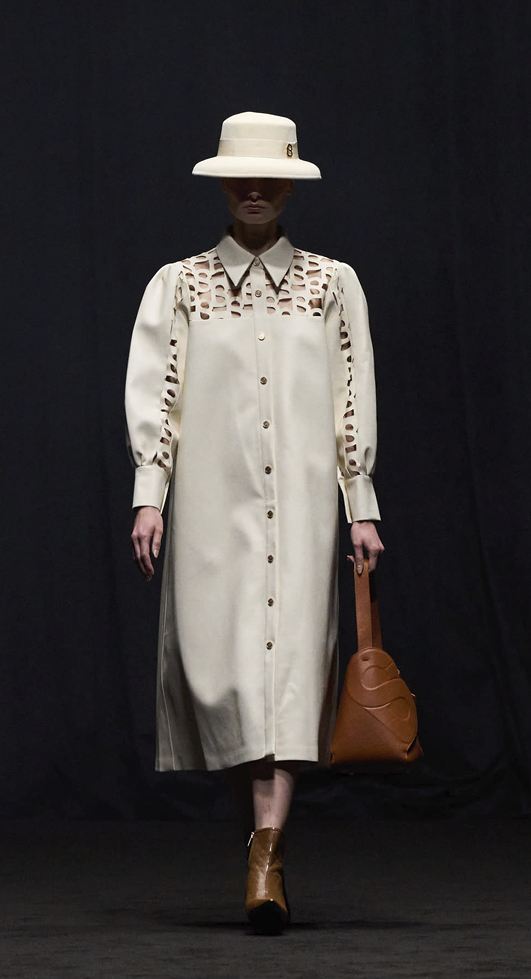
What’s the biggest lesson you’ve learnt throughout your career?
Adaptability is essential. The fashion industry is constantly evolving, and success depends on your ability to innovate, pivot, and stay ahead of the curve. One of the most valuable lessons I’ve learned is to approach challenges without rigid expectations and to understand that progress rarely comes from miracles—it comes from perseverance. Enjoying the journey toward your vision is just as important as achieving the end goal. Every step, even the most difficult and challenging one, is an opportunity to grow stronger and push beyond your comfort zone. These moments of adversity are not obstacles but steppingstones toward building resilience and achieving greatness.
Looking ahead, what’s in the pipeline for the Arab Fashion Council?
The future holds limitless opportunities, and we are committed to expanding our global presence while steadfastly championing regional talent. Our focus includes building stronger international collaborations, pioneering innovative sustainability initiatives, and developing groundbreaking platforms for Arab designers to showcase their brilliance on the global stage. Our vision is clear: to position the Arab world as a leading voice in the international fashion industry. As we celebrate what we have accomplished, we invite you to stay tuned for the unveiling of our manifesto – a roadmap that will set the tone for the next chapter of our journey.
Sara Belhaif Al Nuaimi CEO of Sharjah Entrepreneurship Center Discusses Aspiring Entrepreneurs
The Sharjah Entrepreneurship Center (Sheraa) was established in 2016 to support startup businesses in Sharjah, offering mentorship and incubating entrepreneurship in the Emirates to help establish the growth of young companies.
Since launching, Sheraa supported start-ups have generated 120 million US dollars of revenue with 87 million dollars of capital raised by Sheraa to support startup companies. As CEO, Sara Belhaif Al Nuaimi is tasked with ensuring the continuation of the success of Sheraa so far and helping to further support young businesses to achieve success. One of the biggest platforms that helps with this mission is the Sharjah Entrepreneurship Festival which was launched in 2017 with the aim of motivating entrepreneurs and promoting social responsibility. The festival brings together entrepreneurs, government partners, potential investors and those interested in the sector. Here we find out more about this year’s festival as well as how Sheraa is working towards continuing its mission.
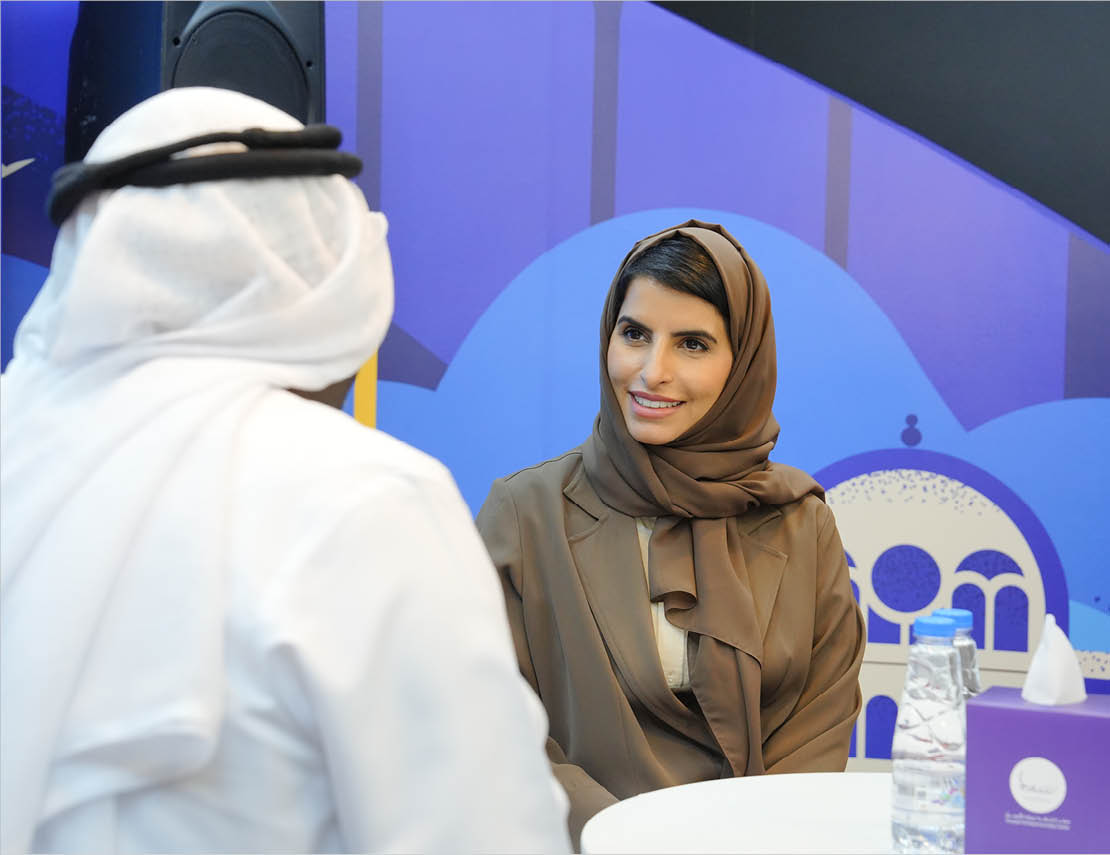
Tell us a about your role at Sheraa and what it encompasses.
We work under the guidance of Her Excellency Sheikha Bodour Al Sultan Qasimi, Chairperson of Sheraa and we work on supporting Sharjah’s mission to position itself as a global leader for entrepreneurship and innovation. I had the privilege of taking on this role quite recently and I would like to build on the foundation of Sheraa that has been set out over the past eight years. We work very closely with the founders of start-up companies to guide them and provide them with support, connections, access to investment, financial grants. And we also work on curating programmes and initiatives to help meet the needs of entrepreneurs and aspiring entrepreneurs.
The advantage we have at Sheraa is that we look at startups in their very early stages and I think that puts us in a great position. We work on helping the entrepreneur to build their business from the bottom up and in turn, help to build on the eco-system that has been created in Sharjah connected to this.
What can you tell us about Sharjah as a hub for entrepreneurs?
Sharjah has always been a place where innovation thrives. We are lucky to be the educational capital of the UAE. Having access and being in close proximity to the University City gives us access to a continuous pool of talent. I think that by itself differentiates what Sharjah has to offer to entrepreneurs in comparison to other places in the world.
This year alone we have climbed in the global rankings. We became the 4th best entrepreneurial hub in the GCC and the 7th in the MENA region. We aspire to keep climbing up those rankings. We look at providing mentorship and funding to entrepreneurs and we have been able to help start-ups raise 171 million dollars in capital to date and close to 150 million dollars in revenue and we have helped create close to 2,000 jobs.
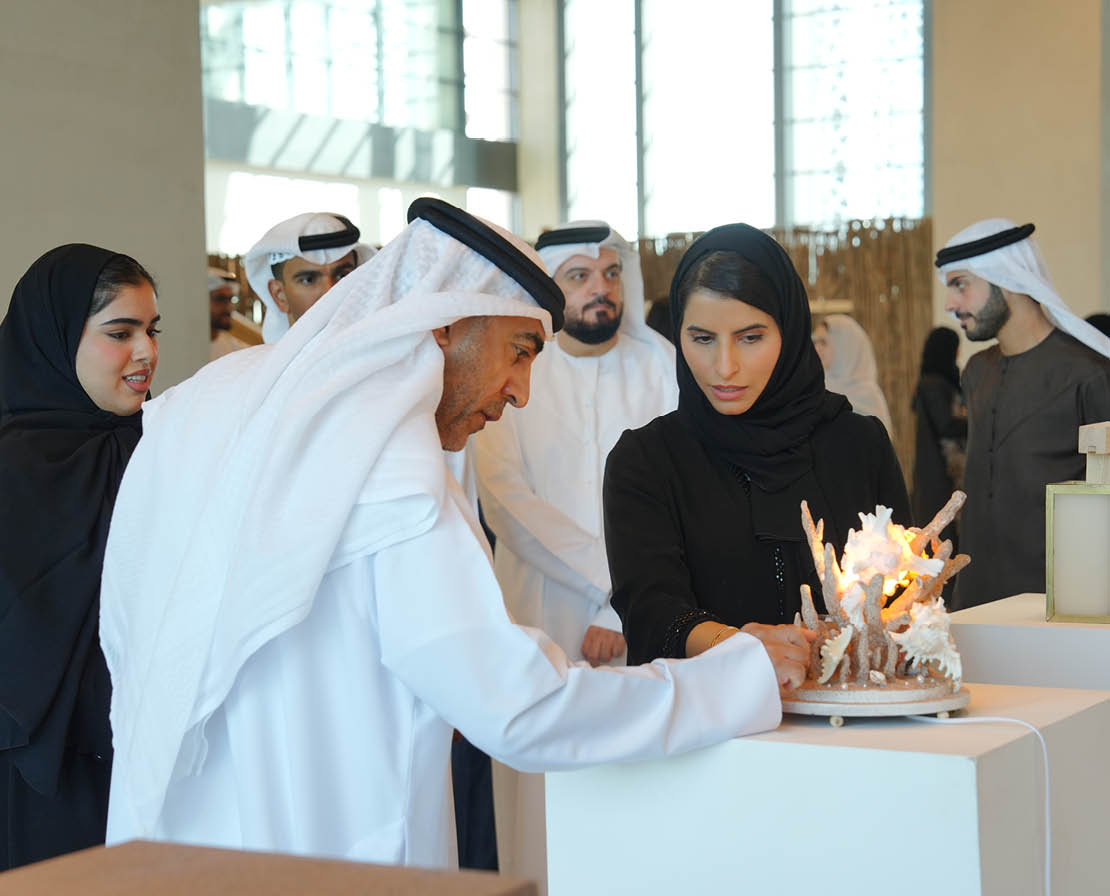
What are the criteria that you look for in the businesses that Sheraa supports and how do you connect with business owners?
We have many ways to connect with entrepreneurs. We work with aspiring businessmen and women at a very early stage which is one of the benefits of what we do and a real source for us to build our community. We work with the University of Sharjah and The American University of Sharjah. We have our own hubs close to the University City in addition to our headquarters and in those hubs we provide programmes to upscale youth in the entrepreneurship field. We have an online platform for students to access the basics of entrepreneurship and this is available to all our members. We also have our flagship incubator which start-ups can apply to and we will provide care and support as the businesses grow. We give them access to funding, access to clients and help them grow their business in the right way. We also have our Sheraa community which is a community of Sharjah-based communities.
What are some of the fastest-growing industries you are seeing in the Emirate?
We have started to look at what the priority industries are in Sharjah and the UAE and we saw sustainability, tech, advanced manufacturing and the creative industry at main focal areas. These industries are aligned with the UAE’s visions and we feel we can add value by supporting start-ups and addressing these four sectors. Therefore in the last year, when we are enrolling start-ups in our programmes we are focusing on those four industries.
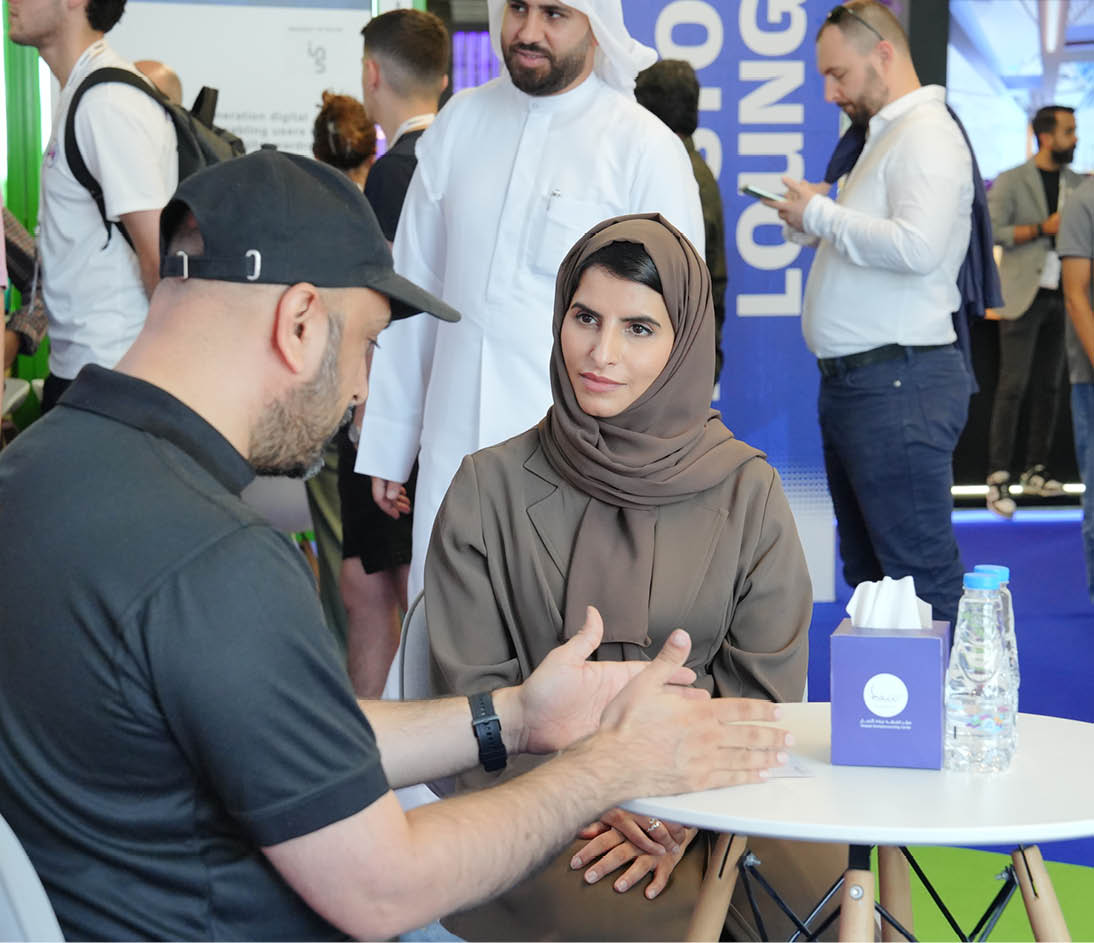
How does Sheraa work towards achieving the goals and overall vision of His Highness?
I always tell my team that we are a very lucky nation to have such a visionary leadership. They acknowledged the need for diversifying the economy early on and entrepreneurship and SMEs are part of that. Of course, His Highness Sheikh Sultan bin Muhammad Al-Qasimi, The Ruler of Sharjah, has championed many principals including sustainability, education and cultural preservations and these have been the pillars of Sharjah’s development. With that and the guidance of Sheikha Bodour, we work on fostering a culture of progression and advancement. We also aspire for Sharjah to be a hub for entrepreneurship regionally and globally.
What steps has Sheraa taken to promote Sharjah and its businesses on an international platform as well as regionally?
We have a number of initiatives to do so. One that stands out is the Access Sharjah challenge. We are working closely with different sectors within Sharjah to identify challenges within certain areas. And then we have campaign calling startups from all over the world to apply to this challenge and to propose solutions to the challenges we have highlighted. This gives them a chance to set up their business in Sharjah. This is a way of attracting global startups to Sharjah. The last one was in the Department of Agriculture and Livestock where we were looking at addressing certain challenges for livestock health and sustainable irrigation. We received 2,000 applications to that challenge and we chose two winners that will be announced next month in the presence of His Highness. These two startups are regional and they will be coming here to Sharjah and implementing their solutions in the farm land in Sharjah.
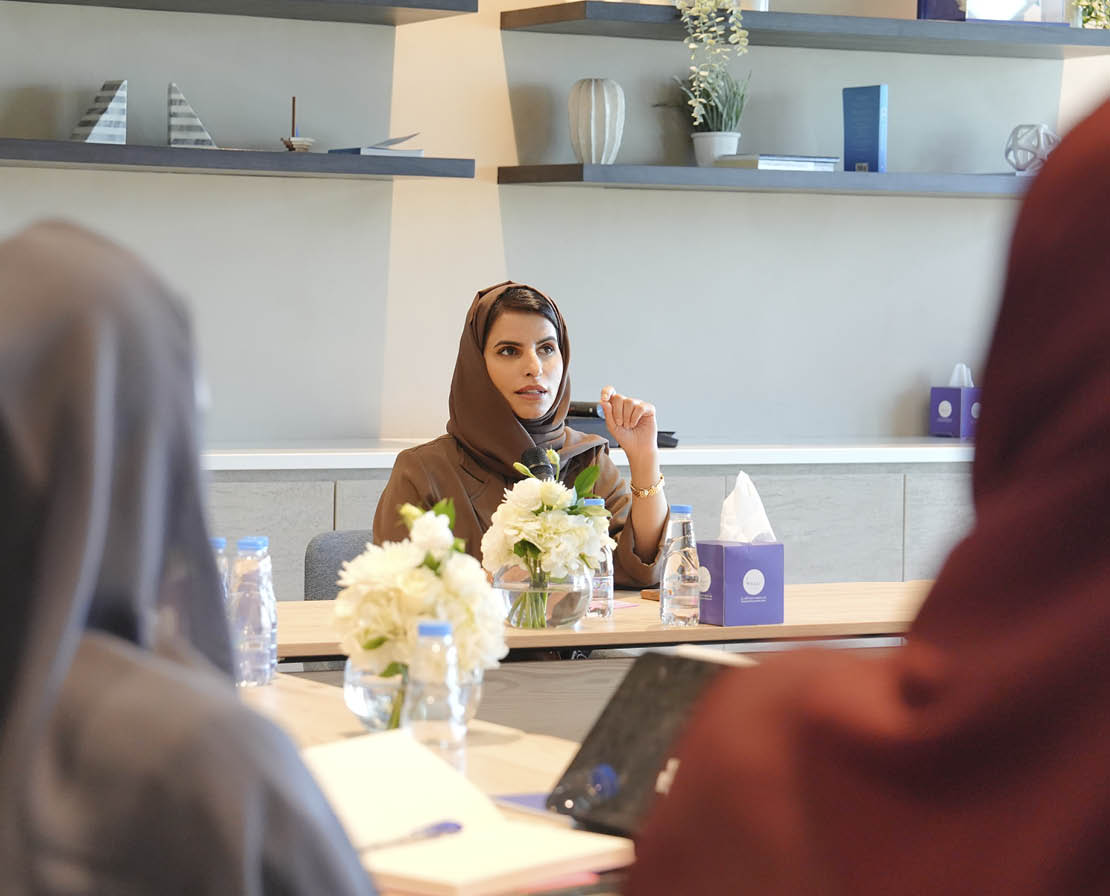
What can we expect from this year’s edition of the Sharjah Entrepreneurship festival?
The Sharjah Entrepreneurship Festival has grown to become one of the biggest events in Sharjah, attracting over 10,000 people annually. We expect visitors to be flying in from all over the world for this year’s edition and it’s set to be the biggest yet, with double the capacity of last year. We are working around the theme “Where We Belong” and there will be over 300 speakers and over 350 innovative start-up companies coming to Sharjah to inspired people and showcase what they do. We have a huge lineup that includes international speakers in addition to entertainment, retail and more.
There will be masterclasses and workshops that entrepreneurs can benefit from. We will have a pitch competition for startups with a pool of AED700,000 in grants awarded to businesses. There will be an investors lounge where we will be connecting entrepreneurs to potential investors.
It’s a very exciting time of the year and it’s an experience that has been curated very carefully for people to come and enjoy and gather knowledge and information.
Who are you targeting with the festival?
It was initially intended for entrepreneurs but it has evolved into a much bigger event that inspires everyone in the community. It’s open for everyone – I believe that anyone that comes in will benefit from it in his or her own way. It’s catering for all areas of the community and we are looking forward to welcoming people from different walks of life.
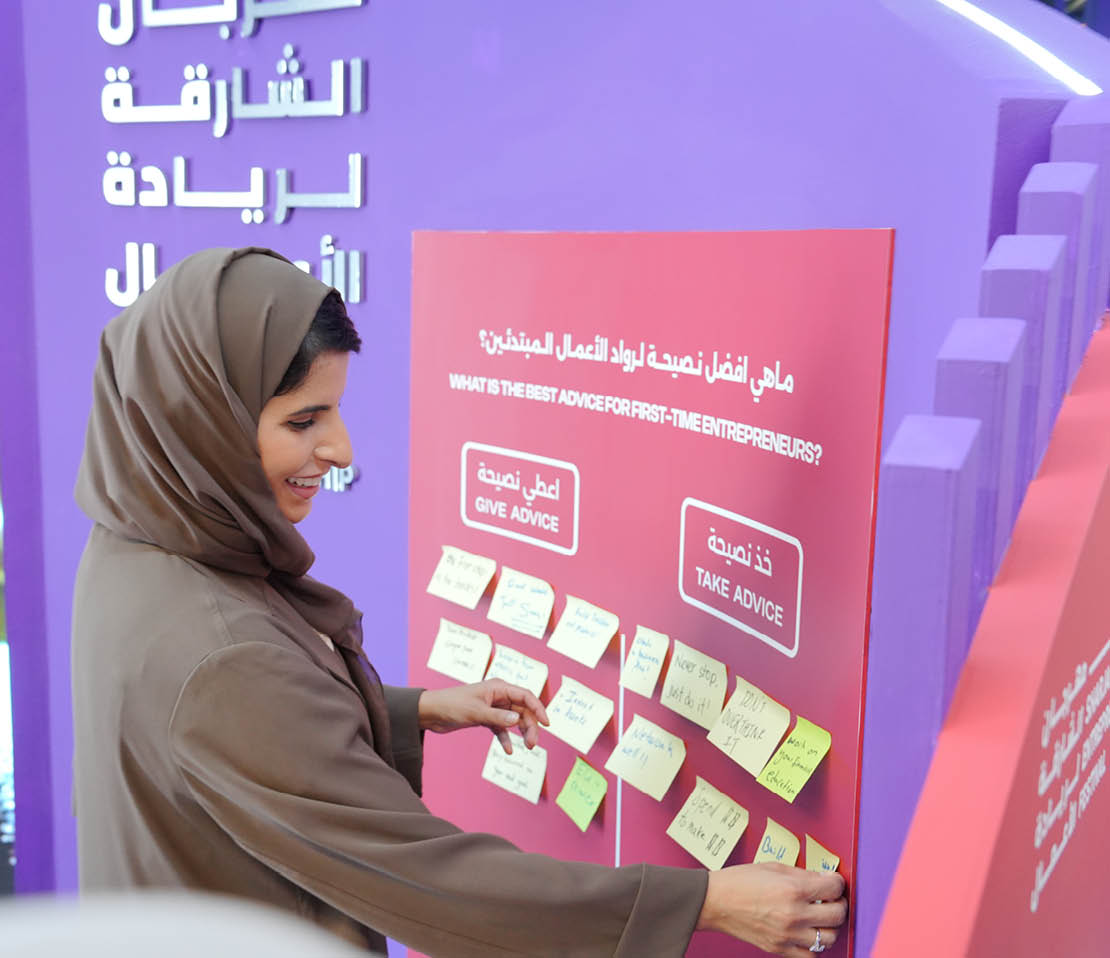
What’s the biggest challenge you face in your role?
Being able to continuously and effectively provide support to our community and counterbalance that with the rapid changes in the world when it comes to technology and everything else. So keeping up with changes that are happening in the world is something that is a challenge and one that we are strongly focusing on.
I’m lucky to have a great team and we all keep up to date with developments that are happening in the world and we are very adaptable which I think is one of the biggest advantages that we have at Sheraa.
Can you tell us about the work you do with women specifically?
Supporting women is something that has always been close to my heart. I’m proud to say the about 52 per cent of the start-ups that we support at Sheraa are women-led. The majority of my team is women. And we actively support female entrepreneurs through different mentorship programmes, funding and platforms to help them amplify their voices.
What advice would you give to women who are apprehensive about beginning their entrepreneurial journey?
I would tell them to have the courage to move forward and take that step. The hardest step is always the first step but once you get into it, things will flow. Things don’t have to be perfect at the beginning, you just have to take that first step and then adjust, adapt and tweak things as you move forward. We are very lucky to be in this country and have access to Sheraa and other incubators and entities that provide such support for any business or startup to grow and thrive.
The Ultimate Winter Sun Wardrobe Inspiration for 2025
From Prada to Jacquemus these are our favourite pieces for the winter season in Dubai.
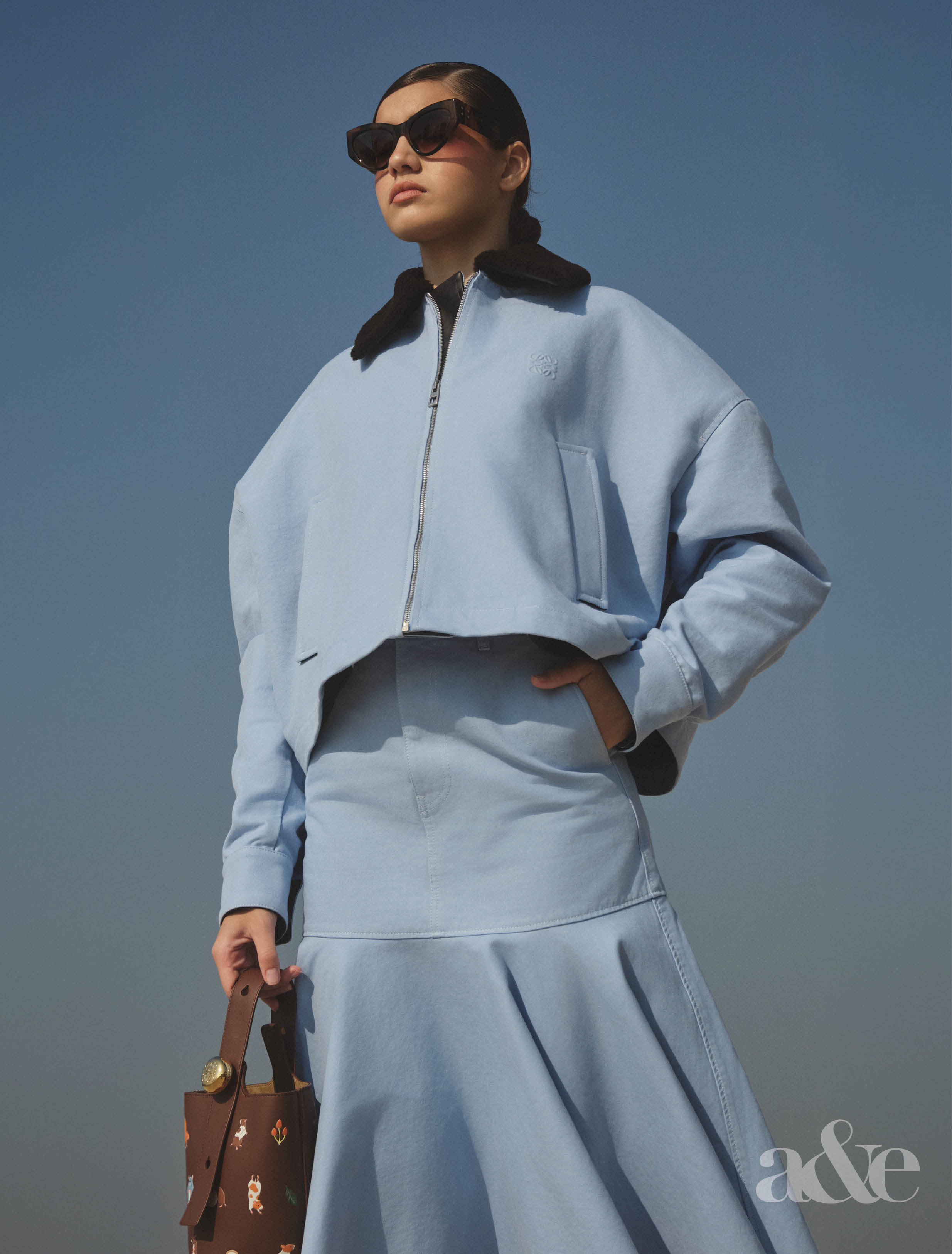
Full look and bag, Loewe; Sunglasses, Bottega Veneta
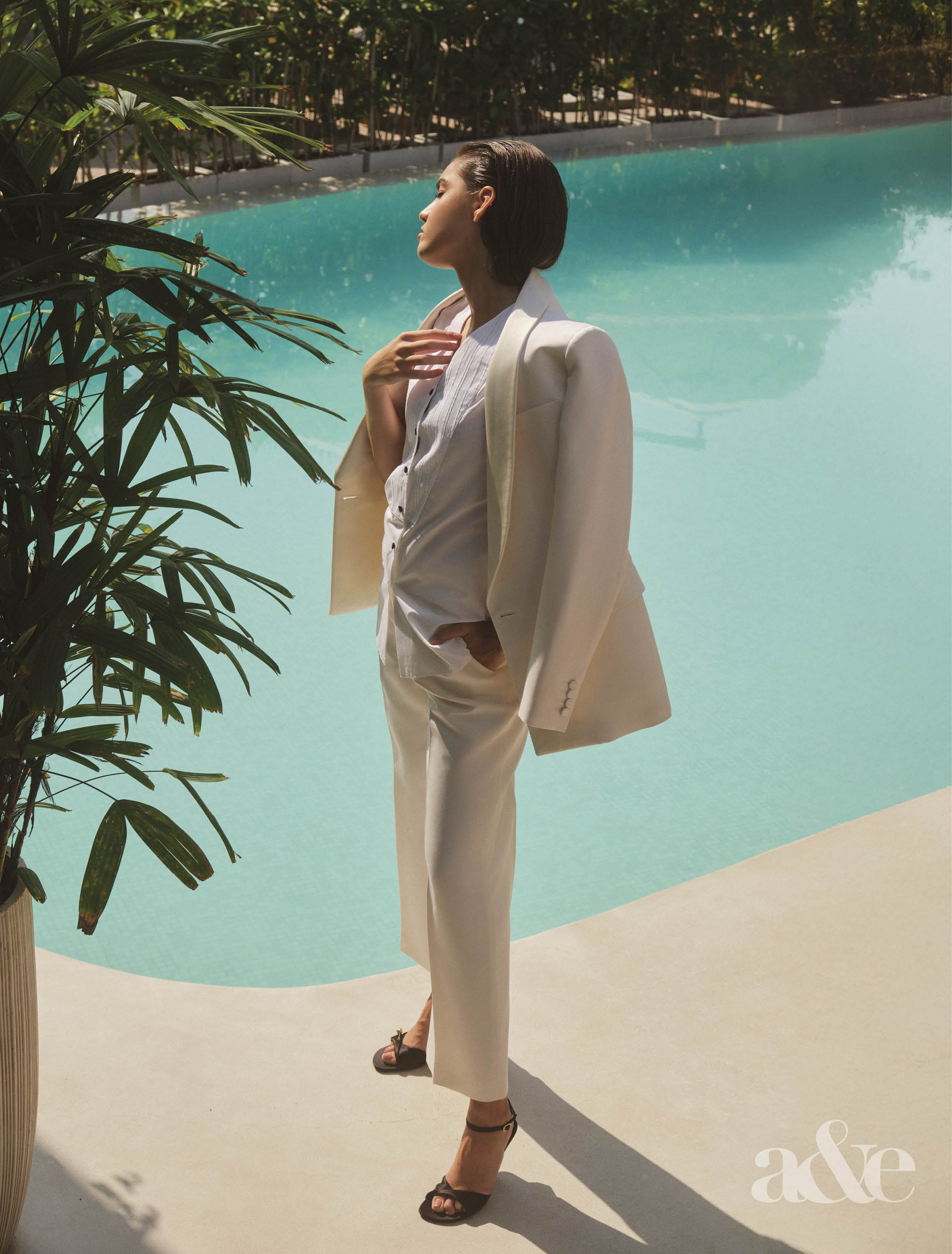
Full look, Loro Piana
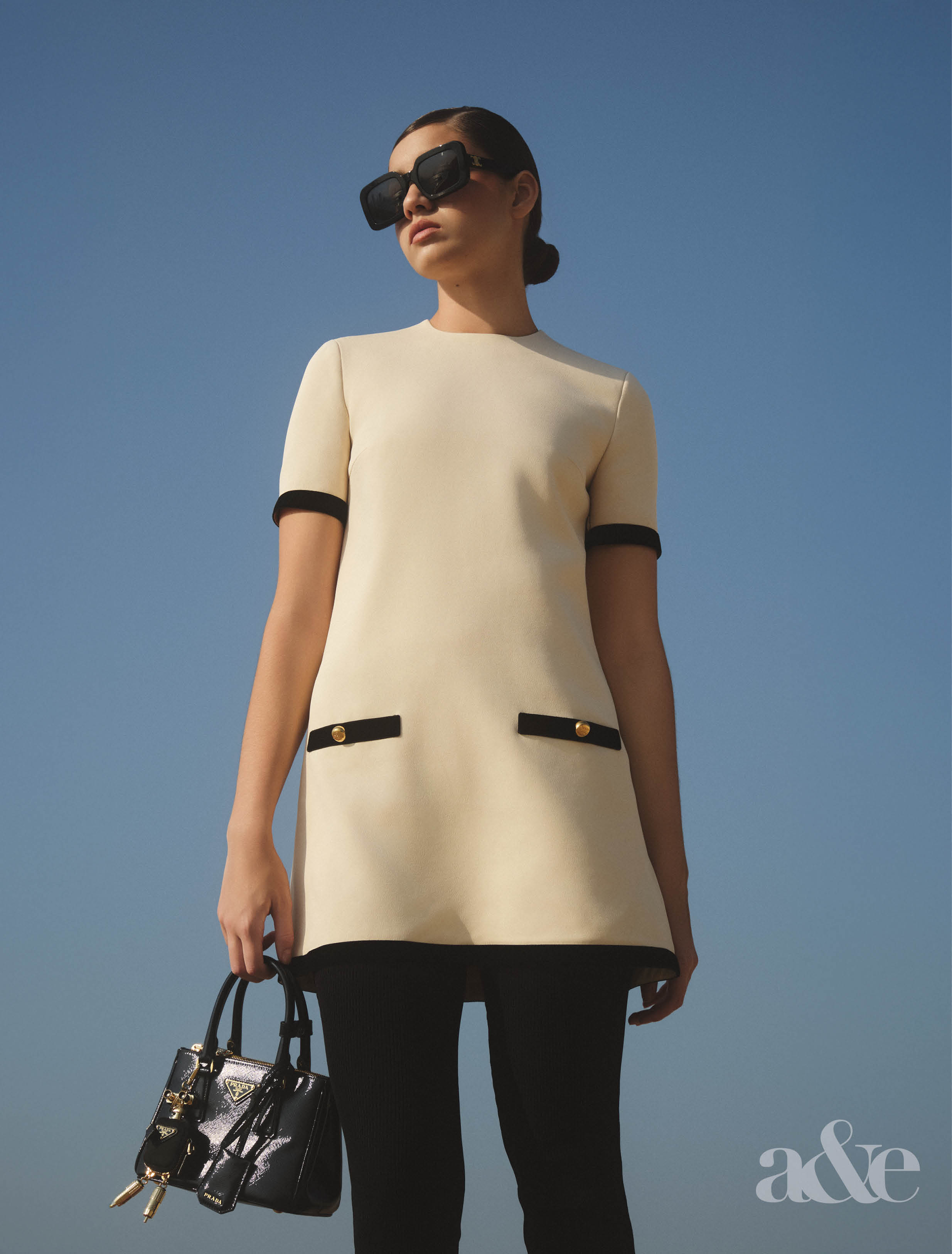
Full look, Prada; Sunglasses, Celine
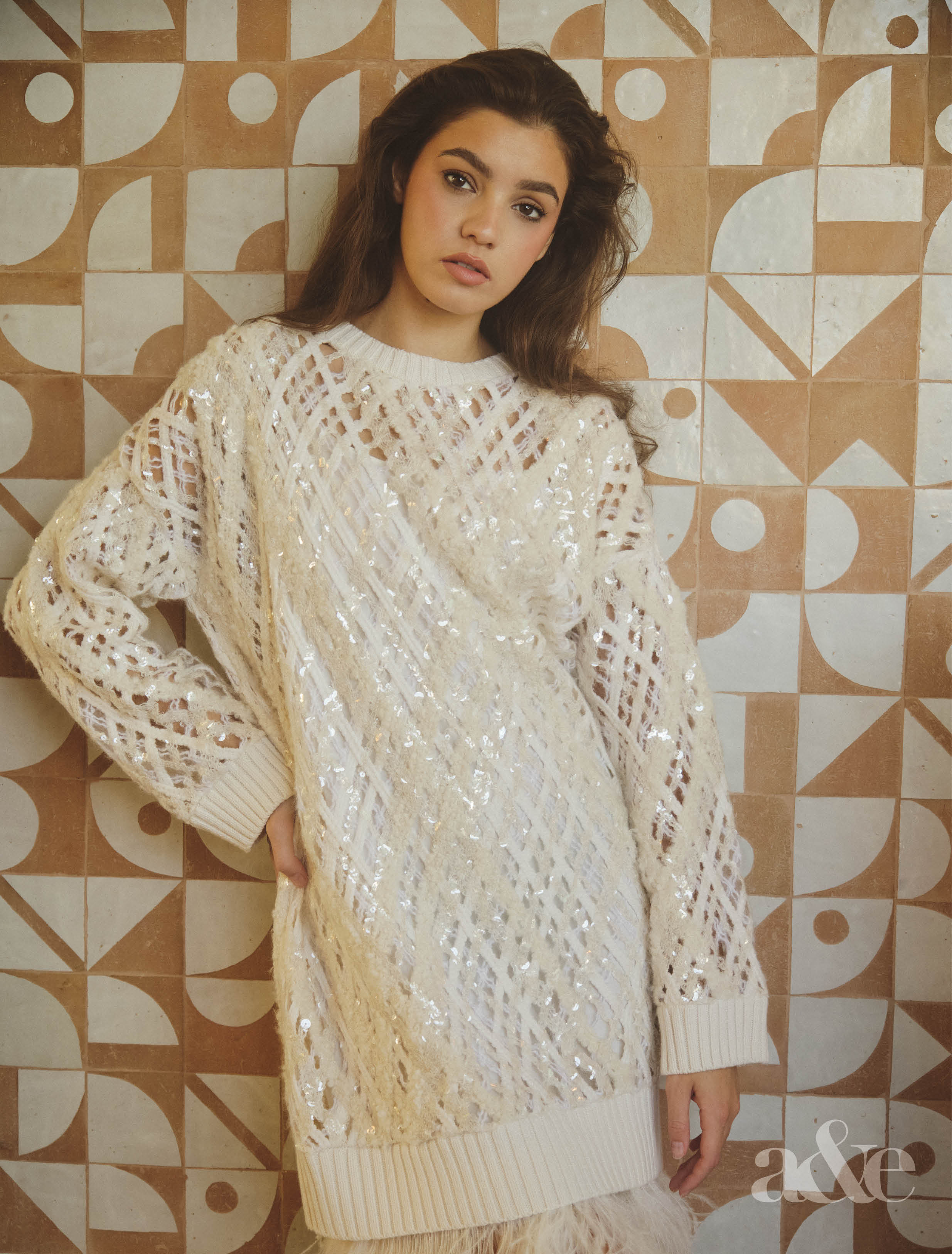
Brunello Cucinelli
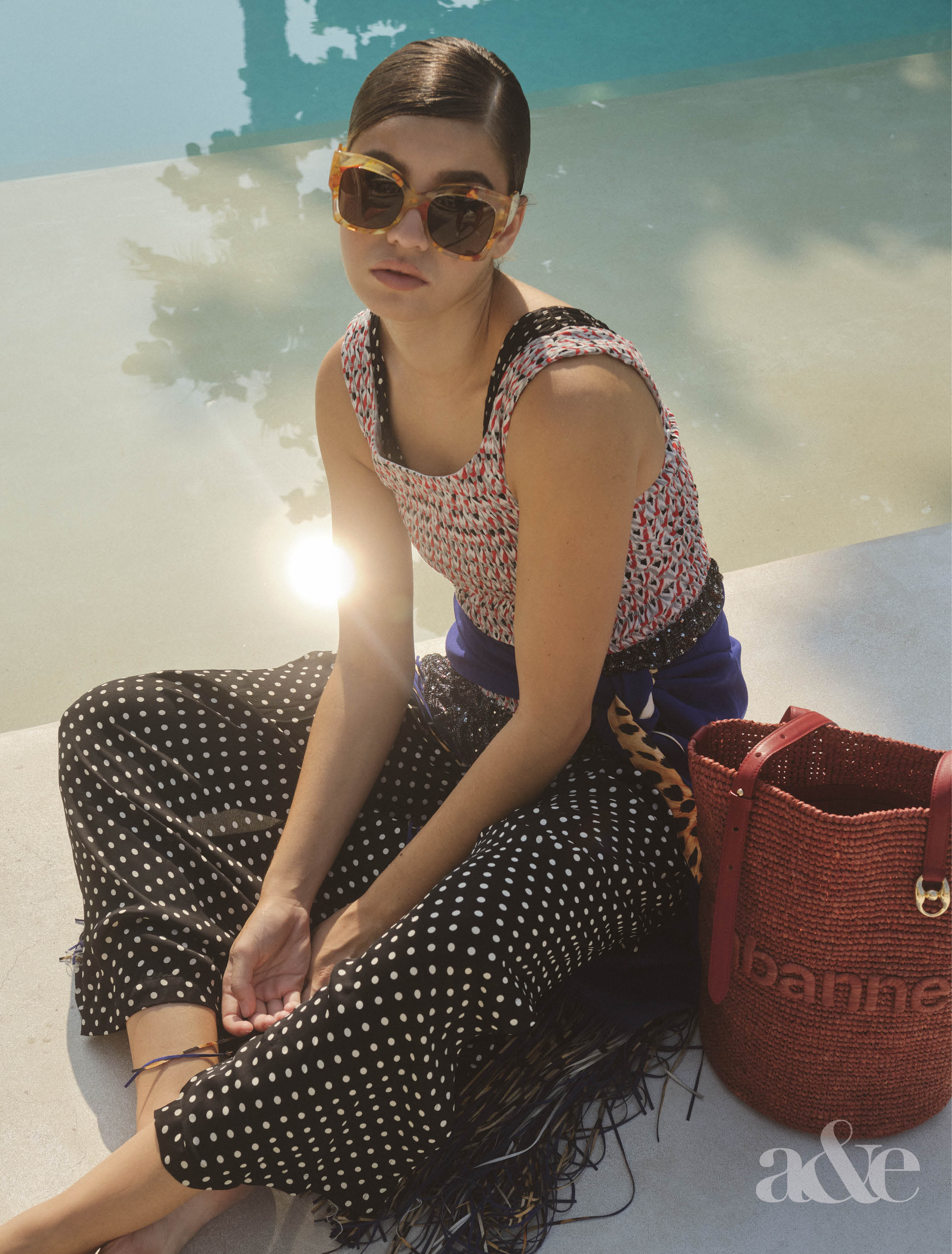
Full look and bag, Rabanne; Sunglasses, Chloé
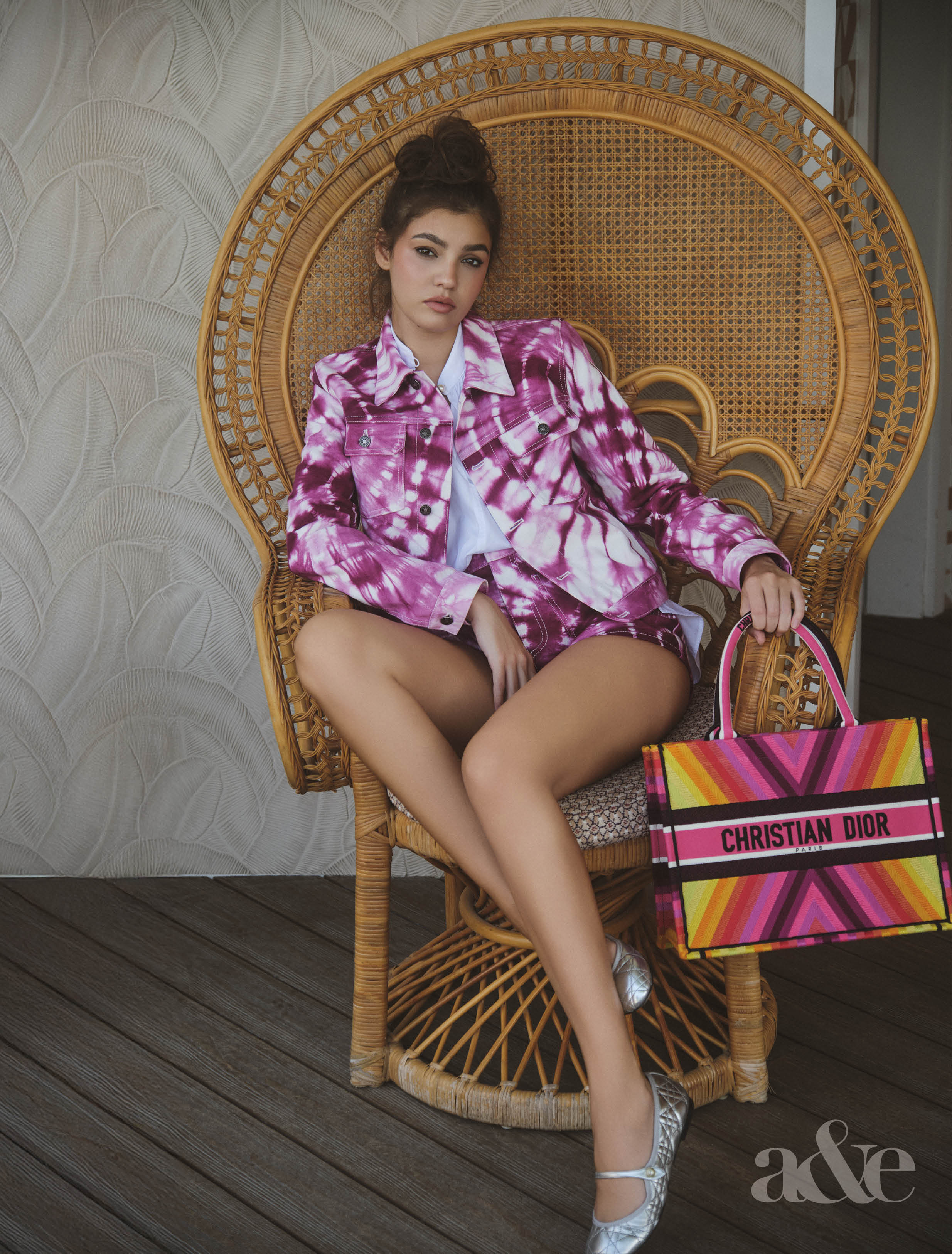
Full look, Dior
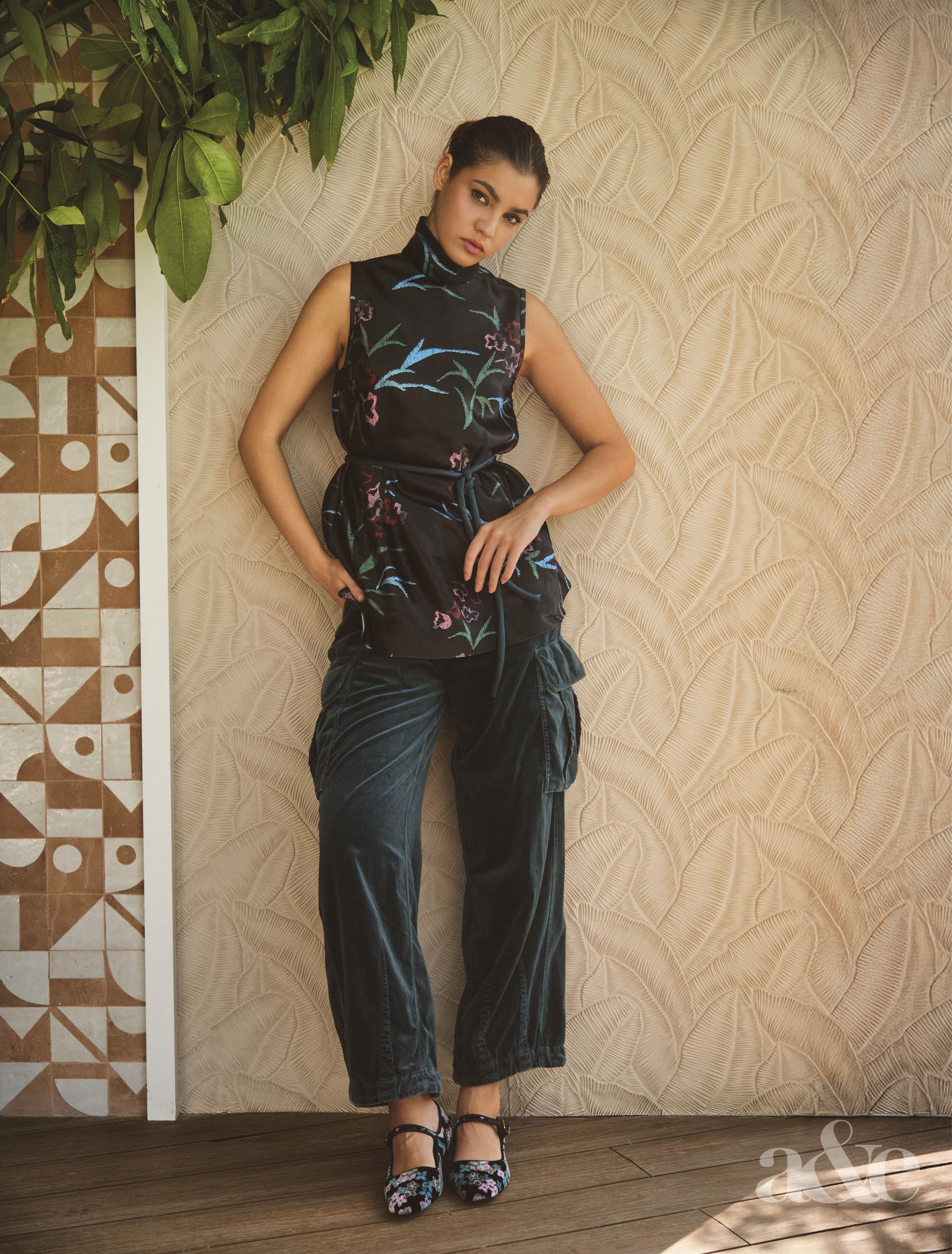
Full look, Giorgio Armani
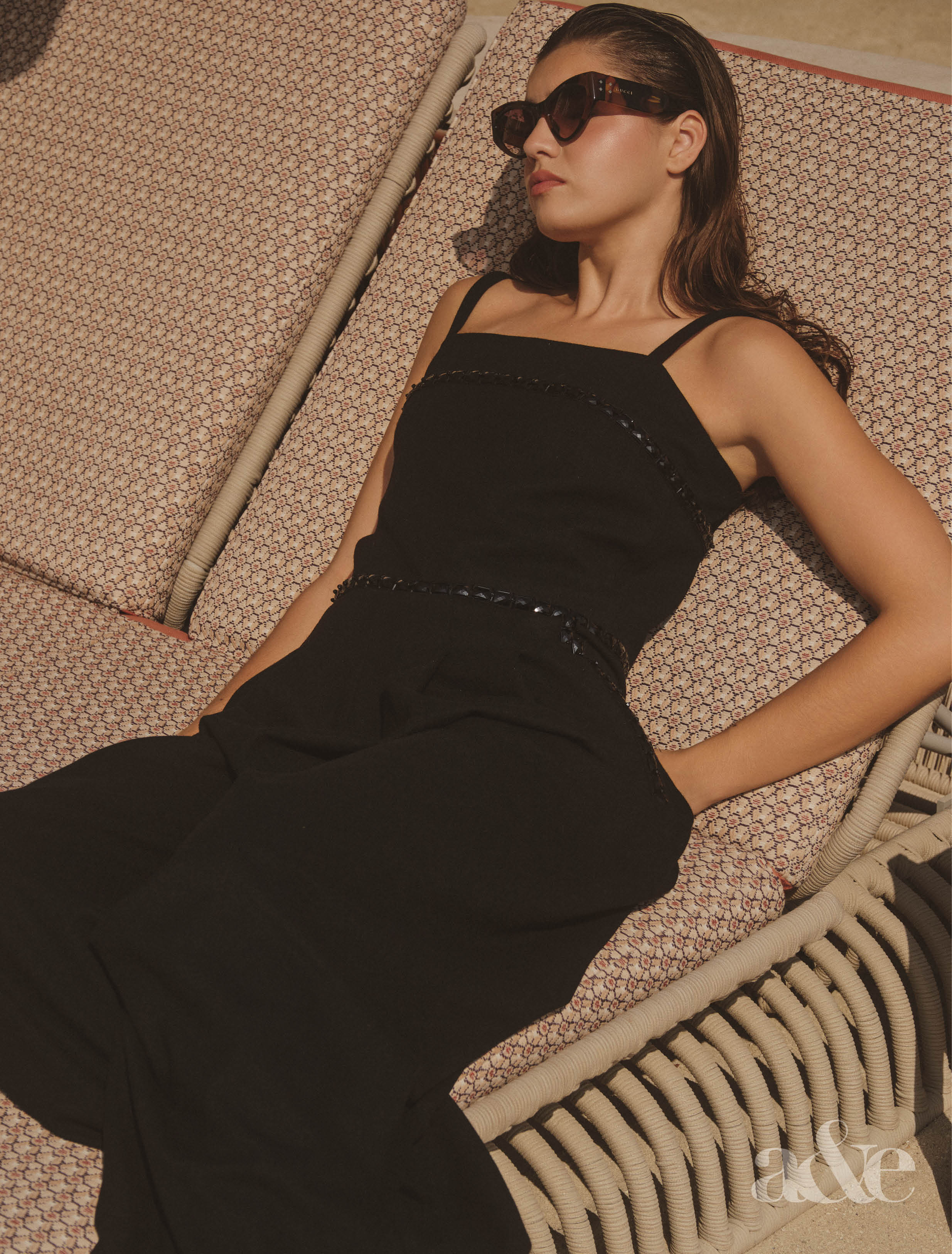
Full look,Max Mara; Sunglasses, Bottega Veneta
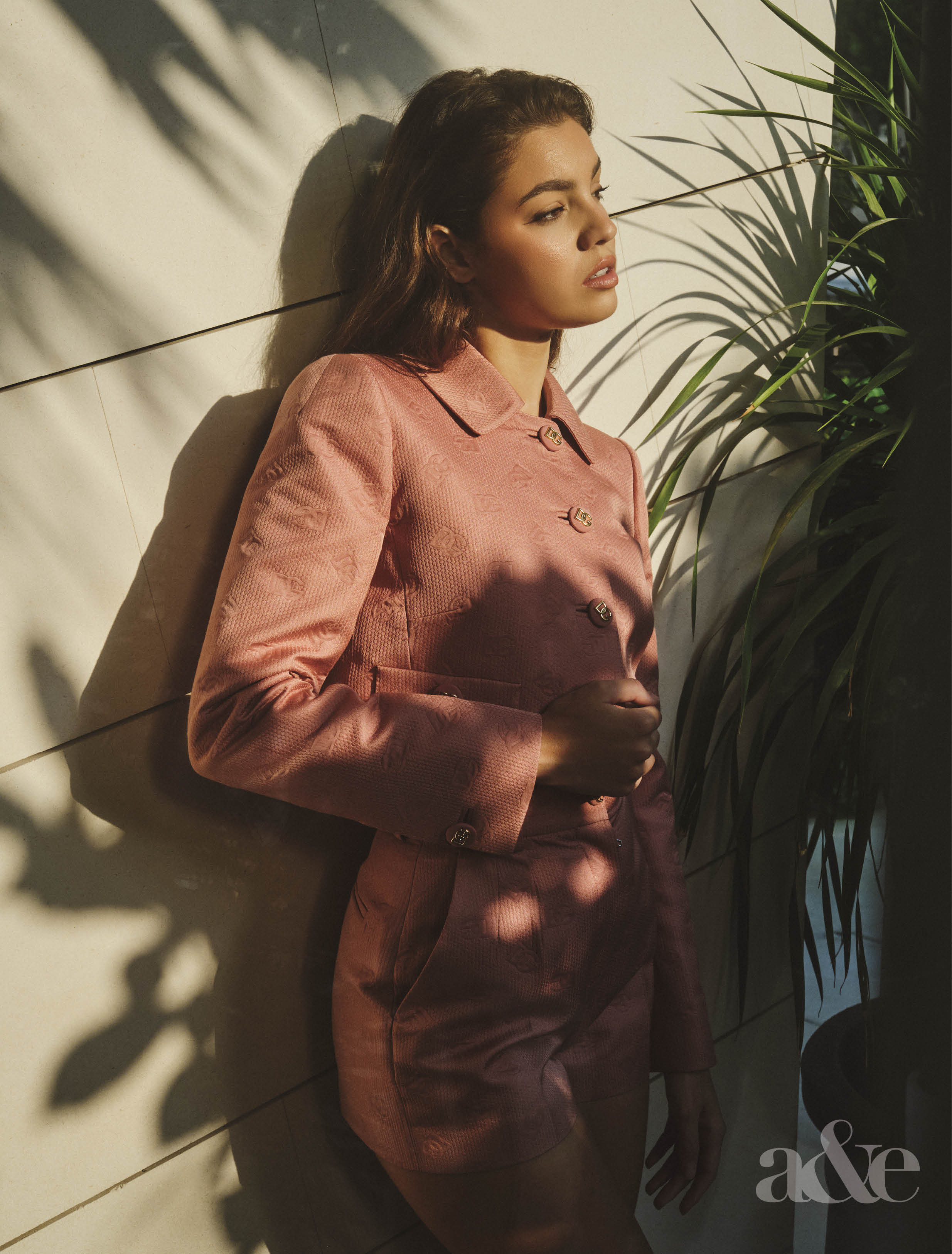
Full look, Dolce&Gabbana
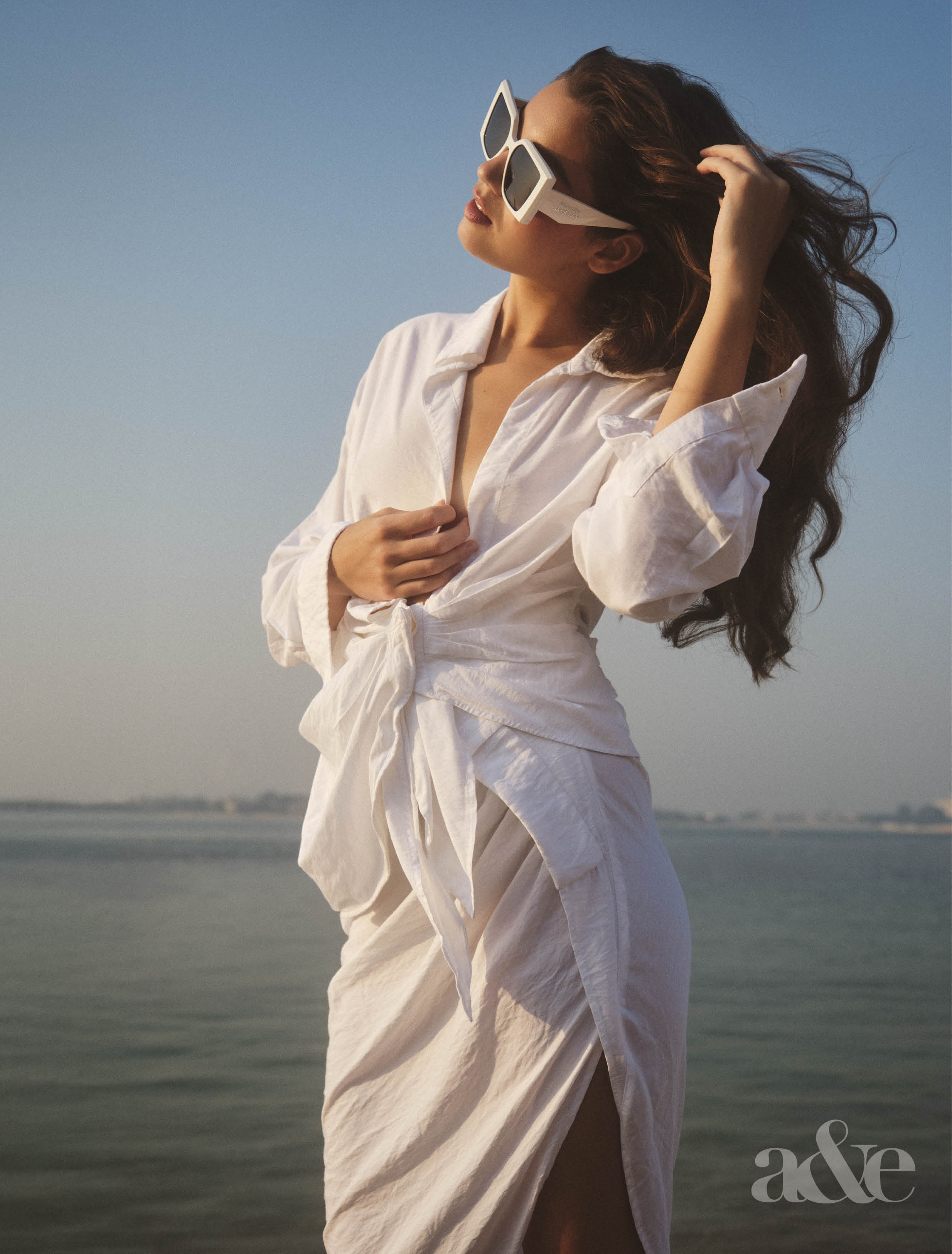
Full look, Jacquemus; Sunglasses, Alexander McQueen
Shoot credits:
Photography: Ziga Mihelcic
Styling & Direction: Lindsay Judge
Hair: Jamilla Paul using Authentic Beauty Concept
Makeup: Artilla – Makeup by Tori Arthur
Model: Shelby at MMG Models
Location: Maison de la Page
Dior Brings its Iconic Exhibition to The Saudi National Museum in Riyadh
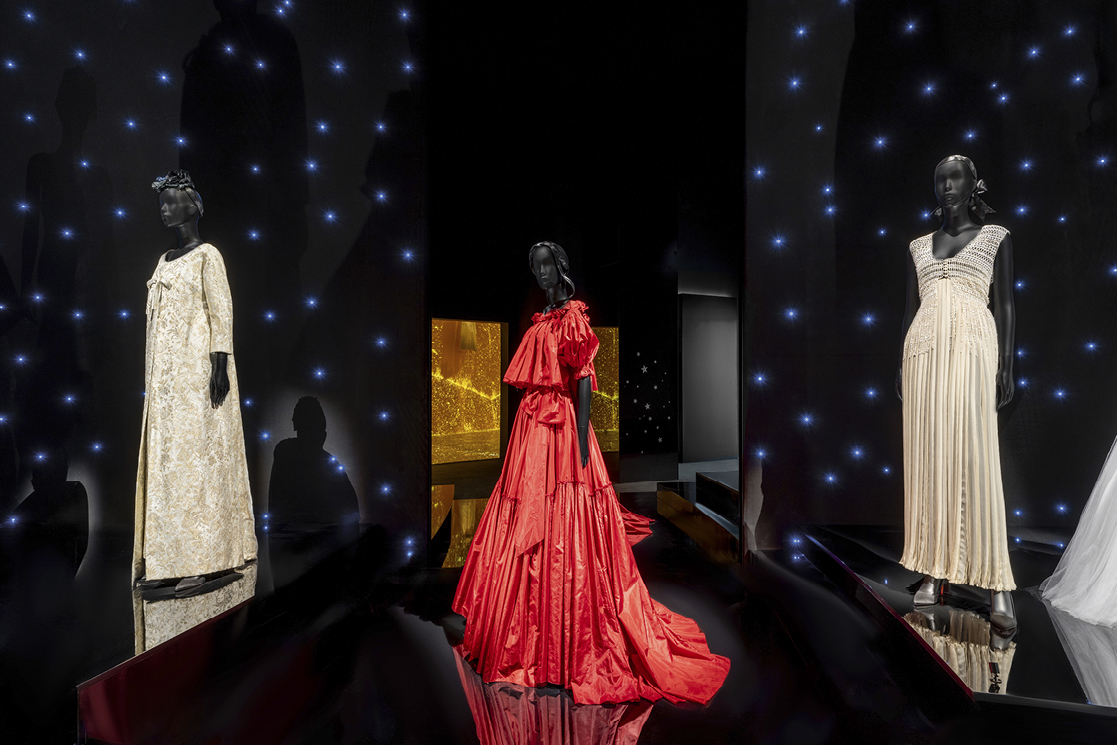
After a successful residency at the Musée des Arts Décoratifs in Paris, the Christian Dior: Designer of Dreams exhibition has arrived in the Middle East with an exclusive exhibition at the Saudi National Museum in Riyadh.
Running until April 2nd, 2025, as part of the 2024 Riyadh Season, this fabulous retrospective brings to life over seventy-five years of creative audacity initiated by the pioneering vision of Christian Dior.
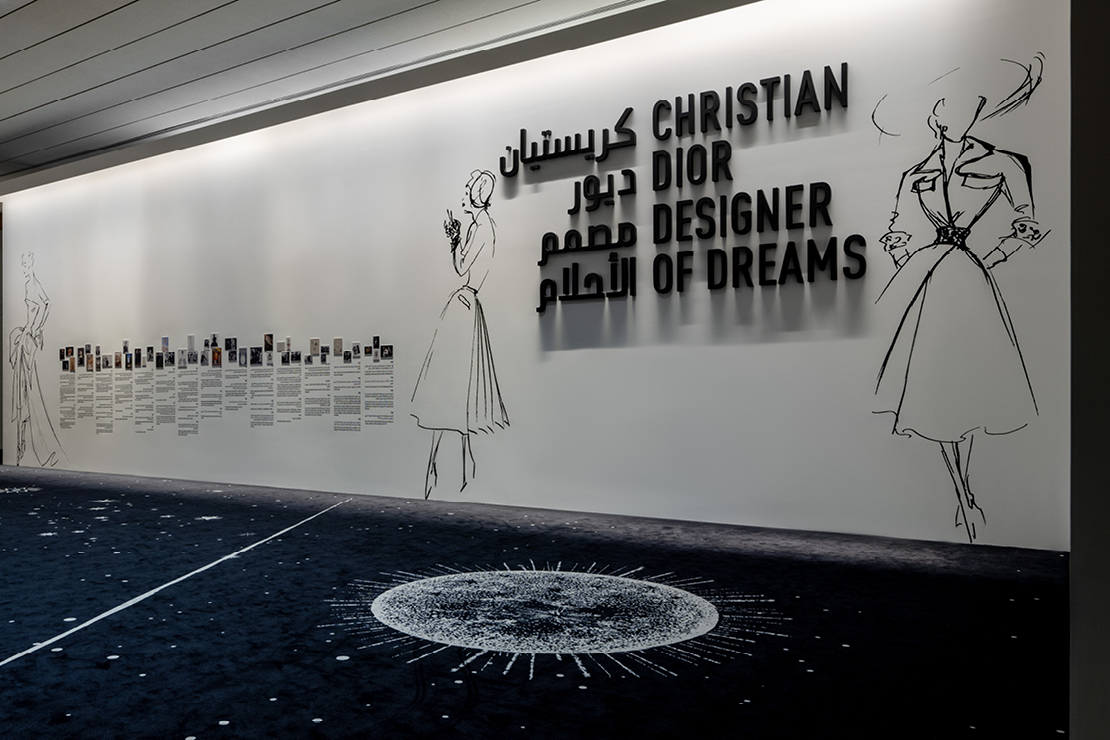
The exhibition was conceived by curator Florence Müller and scenographer Nathalie Crinièr and highlights the incredible vision of Christian Dior from 1947 to the present day.
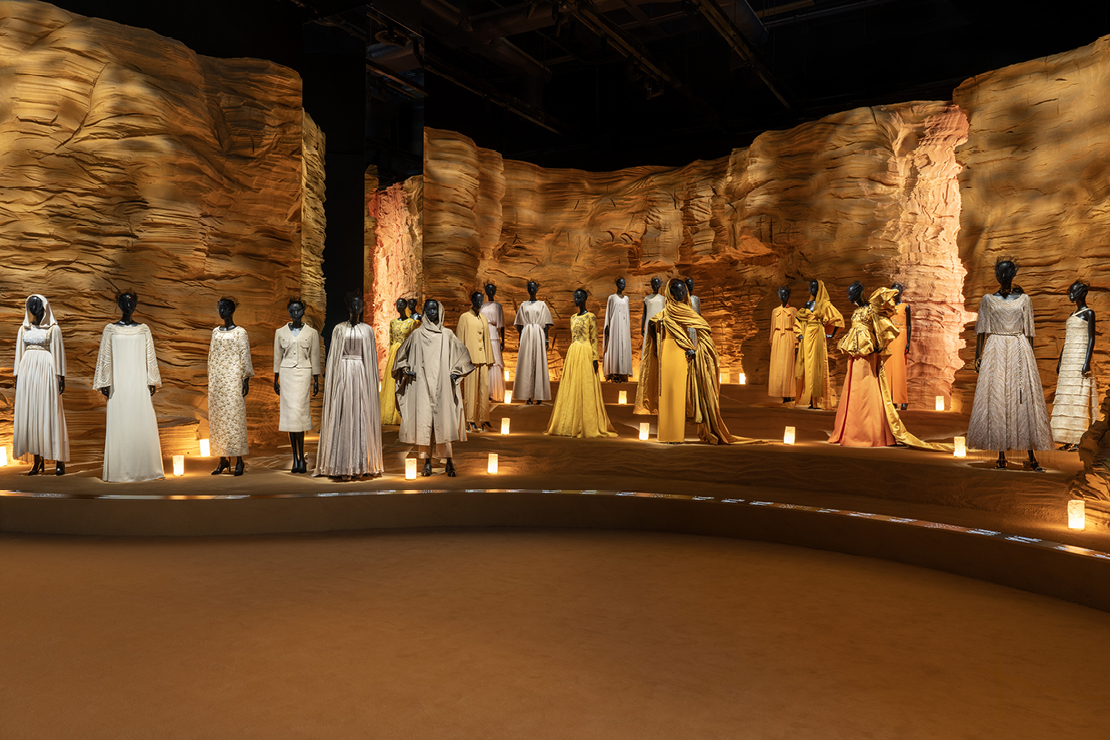
The exhibition opens with an immersion in the heart of 30 Montaigne, that “realm of dreams” where the House’s haute couture collections come alive. he second space pursues this journey over time, notably through the love of art cultivated by Monsieur Dior, who was a gallery owner before becoming a couturier.
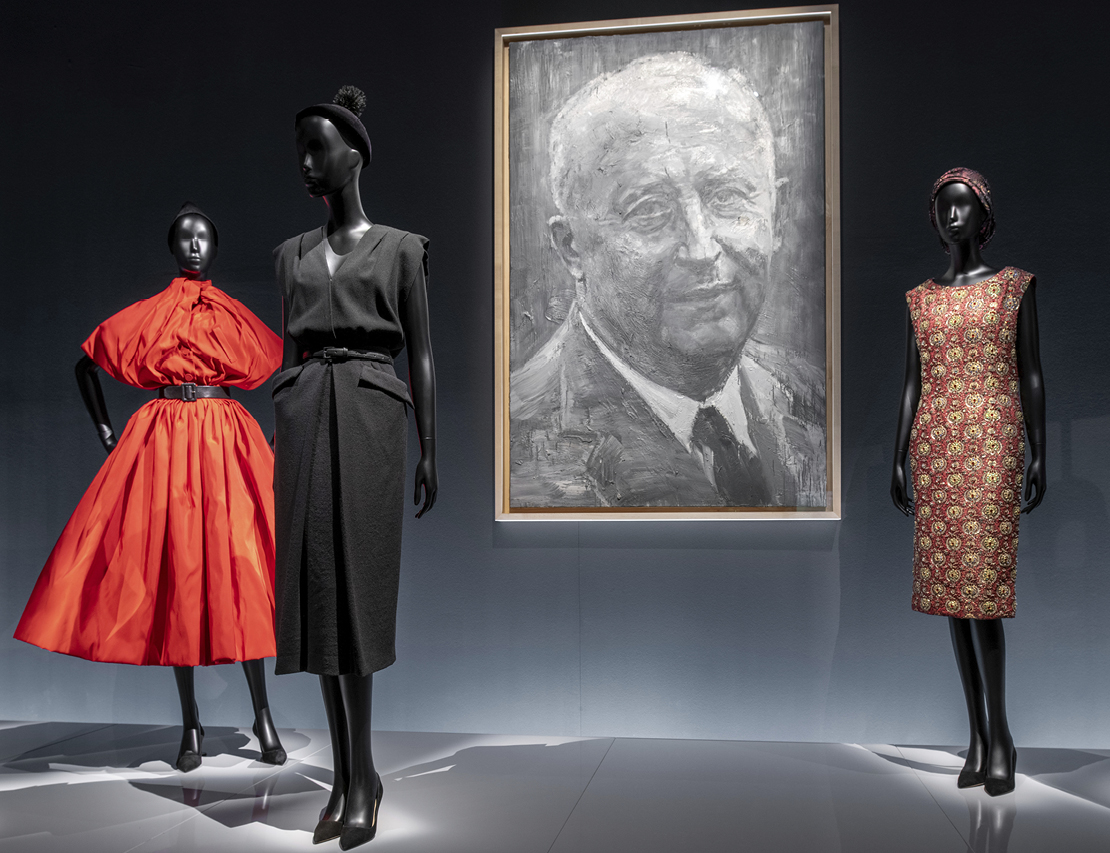
The influence of the brand’s various Artistic Directors is highlighted by portraits signed by the painter Yan Pei-Ming. These poetic images are superimposed on the emblematic silhouettes of Christian Dior’s successors.
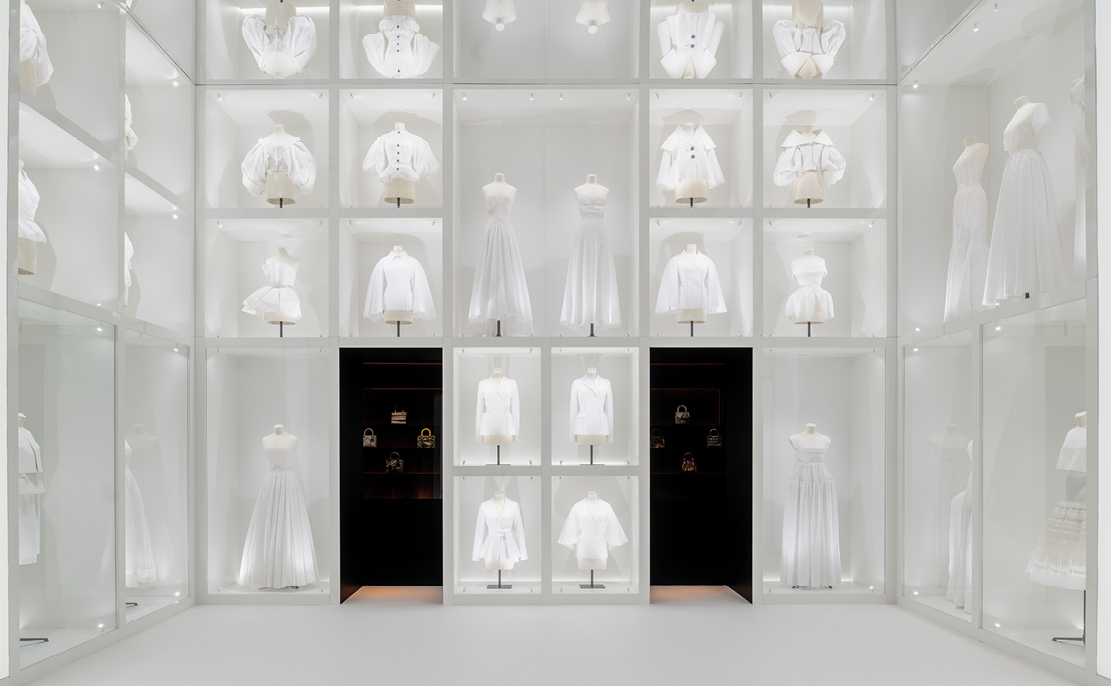
The launch of the house’s first ready-to-wear line, Miss Dior, is also featured in a unique space, retracing the freshness and energy of fashion in the sixties. Dedicated to the savoir-faire of the ateliers, the unmissable salle des toiles celebrates the virtuoso excellence of the petites mains.
From one Dior code to another, the multiple themes dear to the Maison are revealed in turn – from Miss Dior to J’adore, from the passion for Versailles to that for balls and dazzling parties – while the Colorama, a bewitching cabinet of curiosities, reaffirms the essential role of Dior accessories. The Lady Dior bag, a timeless icon of the House, metamorphoses according to the works that have travelled the globe for the nine editions of the Dior Lady Art project.
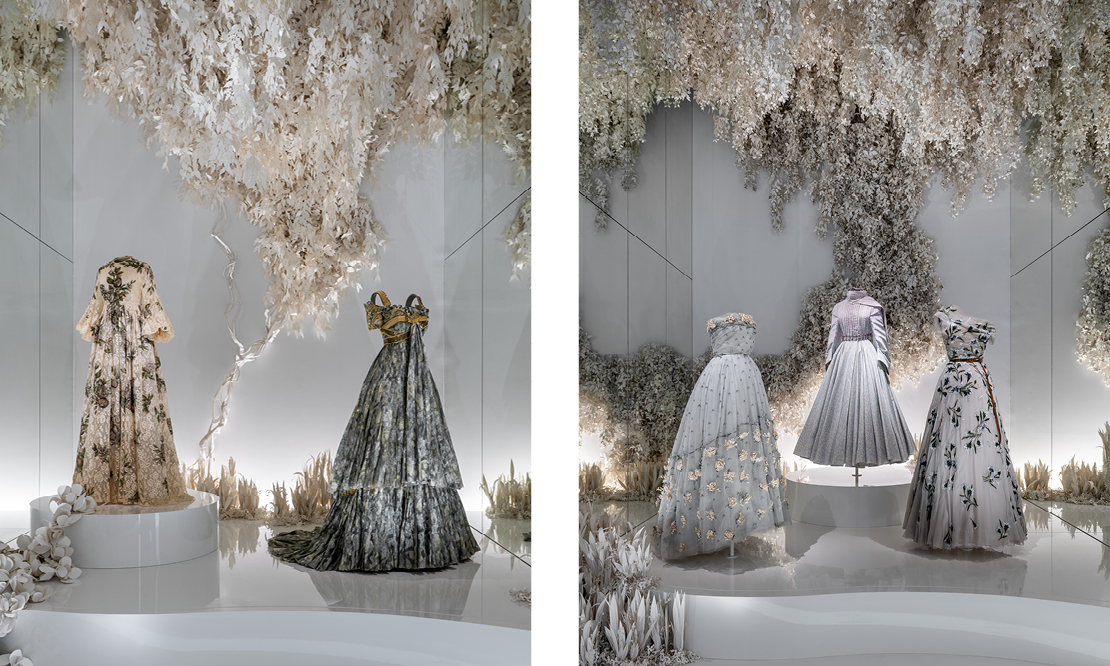
Reflecting the fascination shared by Dior and Saudi Arabia for the wonders of nature, an enchanted setting and ode to the authentic, preserved beauty of the Al-’Ula oasis – an ancestral treasure of the province of Medina – hosts a series of dresses in hypnotic shades, evoking those of the sun embracing the desert.
A Look Back at the 2025 SailGP Season Opening Event in Dubai
The 2025 edition of SailGP kicked off in Dubai last month with a grand event at Port Rashid.
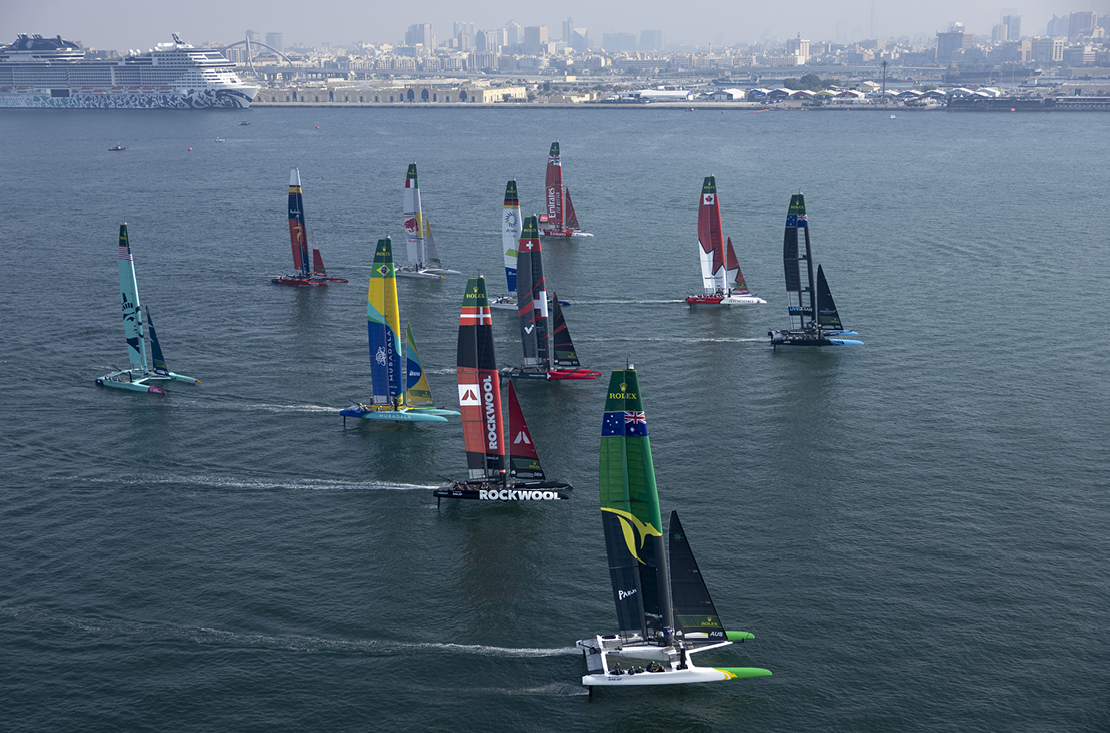
The annual event sees teams from around the world compete in one of the world’s most exciting races on water, with short adrenaline-fueled battles between national teams at iconic stadium venues worldwide. Top athletes fly identical, high-tech F50 boats faster than the wind at speeds approaching 100 km/h – in a championship that’s powered by nature and races for a better future.
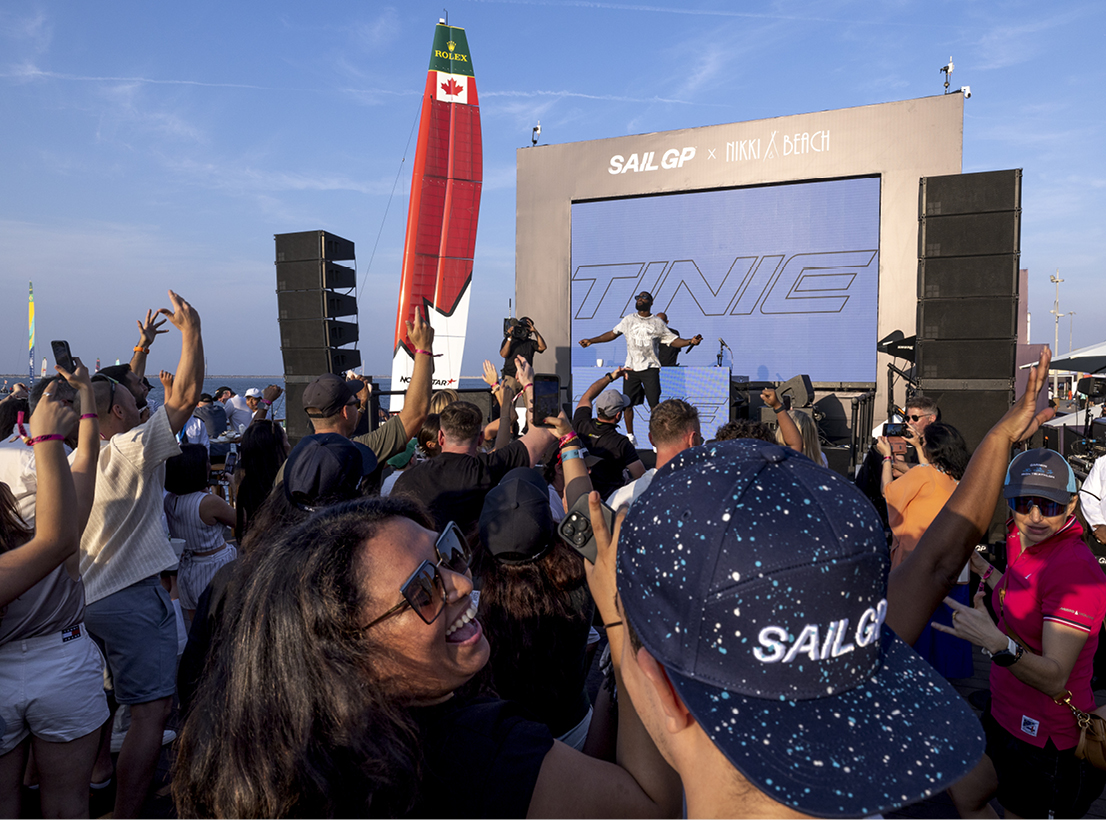
Picking up where they left off in January, Peter Burling’s ‘Black Foils’ from New Zealand have claimed their third consecutive win in the UAE, soaring ahead of the Emirates Great Britain team and U.S. SailGP. Peter Burling said: “We seem to love these Middle Eastern events – that’s three on the trot now for us in this part of the world, so we’re definitely quite excited about the grand final being in a different spot, it’s a change of scenery and we’ll definitely be trying to make sure we can take a win in Abu Dhabi.
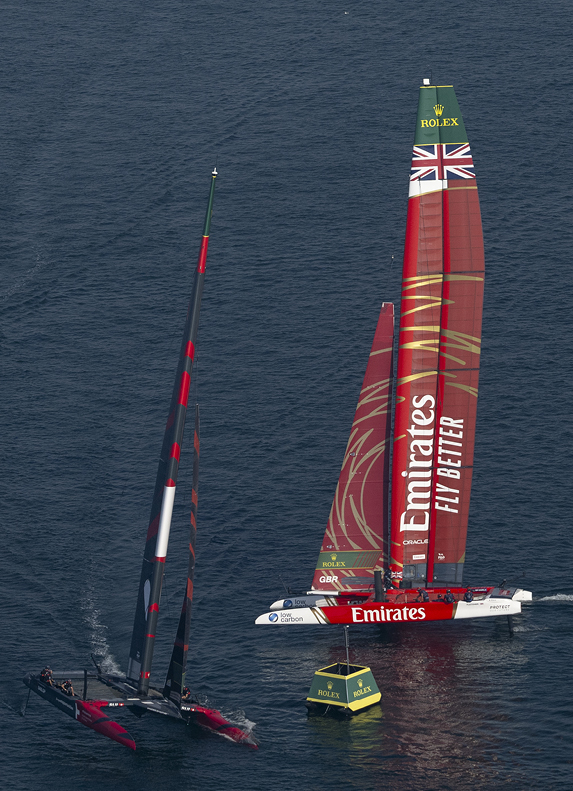
“Auckland (next race) – super excited to get home, the buzz in town is already growing. The renders of the grandstand, which is just about to get built, are just amazing. So, for any Kiwis who have not bought tickets yet, it’s going to be an amazing weekend.” The Black Foils executed a perfect start to storm ahead of the Americans and the British team, but the race was far from won – with multiple lead changes to come.
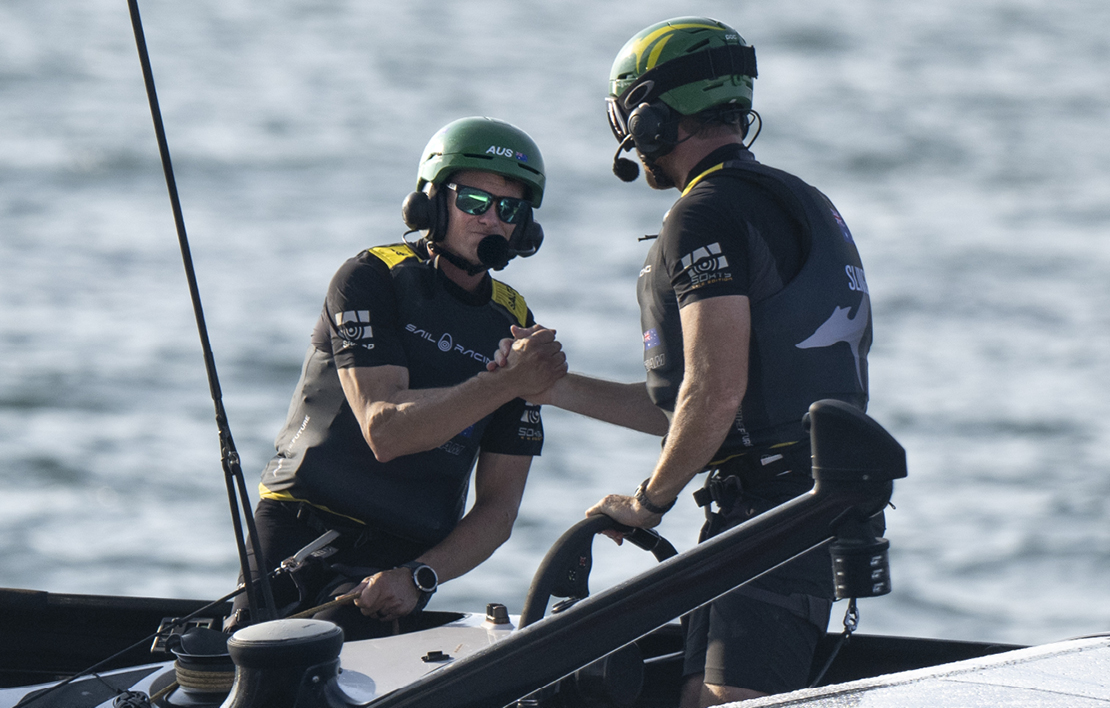
SailGP Sir Russell Coutts, CEO, added: “We couldn’t have asked for a better day of racing for Championship Sunday in Dubai. An enormous congratulations to our event winners, New Zealand, as well as our new teams competing for the very first time, Red Bull Italy and Mubadala Brazil.”
“To our partners and fans in the UAE, thank you for your ongoing support and for coming down to Mina Rashid to cheer on our 12 national teams close to shore. We’ll be back in just over 11 months’ time when the race for the Rolex SailGP Championship comes to a close in Abu Dhabi.”
The weekend festivities also saw a performance from British star Craig David, who performed at t the Waterfront Premium Lounge presented by Nikki Beach.
These are the Maldivian Hotels you Need to Visit in 2025
As one of the world’s most sought-after travel locations, The Maldives has become a bucket list destination for families, couples or even solo travellers, looking for a one-in-a-lifetime beachside getaway.
With crystal-clear waters, pristine beaches, and unparalleled luxury it’s not surprising this small Indian Ocean country has become so popular in recent years. With 1,192 coral islands and over 130 resorts to choose from, selecting the perfect retreat can feel overwhelming. With a host of Maldives destinations, Marriott Group has a resort to suit every guest’s needs, to help make your decision easier. Here, we explore two of the group’s exclusive properties — St. Regis Maldives Vommuli Resort and JW Marriott Maldives Resort & Spa— and realise that each Maldivian destination has its own quirks, perks and unique experiences to offer.
Reaching the Maldives from Dubai is relatively simple. A direct flight with Emirates takes just under four hours, making this tropical haven an ideal long weekend getaway. Upon landing in Malé, the journey continues via speedboat or seaplane to your chosen resort. Our trip involved the latter, seaplane travel with Trans Maldivian Airways (TMA), the world’s largest seaplane operator and Marriott’s partner operator.
Taking off from Malé’s newly built seaplane terminal, TMA has a fleet of 65 DHC-6 Twin Otters flying to over 80 resorts across 14 atolls. The process and journey were surprisingly seamless (even for nervous first-time seaplane fliers) and picturesque, with a direct flight to our first resort that took just under an hour. Soon, we were in paradise!
St Regis Maldives Vommuli Resort
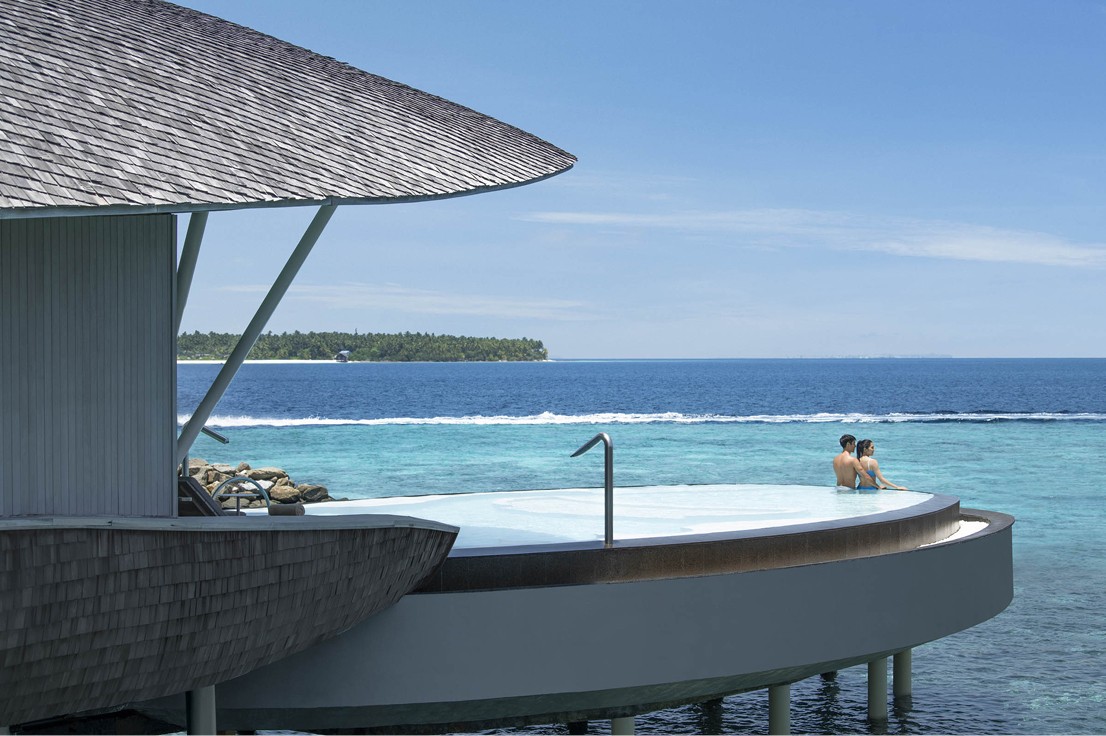
Our first destination, St Regis Maldives Vommuli Resort, is consistently ranked as one of the Maldives’ finest resorts, and we can immediately see why. Its commitment to quality and excellence is clear from the moment we step off the seaplane and are whisked to our beachfront villa by golf buggy, with no need for a complicated check-in process.
On arrival at our room, we were greeted by jaw-dropping ocean views through floor-to-ceiling windows. The room features traditional Maldivan-style décor blending with modern luxury, as well as the latest technology, including a thoughtfully integrated iPad system that controls every aspect of the villa. The indoor-outdoor living concept featured a plunge pool, outdoor shower and direct access to the beach.
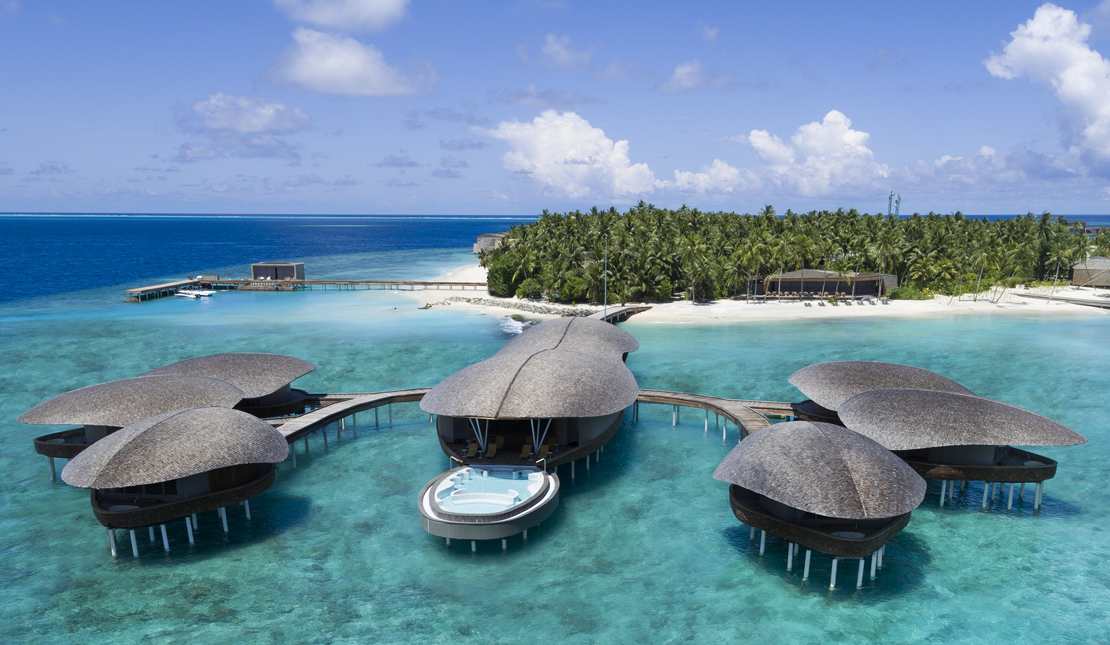
After going with the vision that there was little to do in the Maldives aside from spending time relaxing by the pool, I was soon proved wrong. There is so much to do at this resort that there was barely time to squeeze it all in! Our stay started with drinks at the breathtaking Whale Bar, where we savoured the sunset during the resort’s signature evening ritual. After dark, we made our way to one of the resort’s seven dining destinations. Our first gastronomical stop on the journey was Orientale, a speciality Asian restaurant offering a unique twist on classic dishes. This isn’t the resort’s only Asian dining location. The exclusive Teppanyaki haunt, T-Pan, holds just 16 guests per sitting and is a one-of-a-kind experience, with food prepared at your table by the resort’s expert chef. T-Pan is, in fact, so exclusive that you are advised to book your spot months before arriving at the island to guarantee a seat.
Other dining locations around the island are Alba, the all-day dining venue which is also the location for breakfast; Cargo, a Middle Eastern restaurant set amidst tropical gardens; and Crust & Craft, a casual family-friendly destination that offers freshly made pizzas and snacks as you gaze out to the blue waters of the ocean. Room service is also available round the clock for guests who prefer to dine in the comfort of their own room or villa.
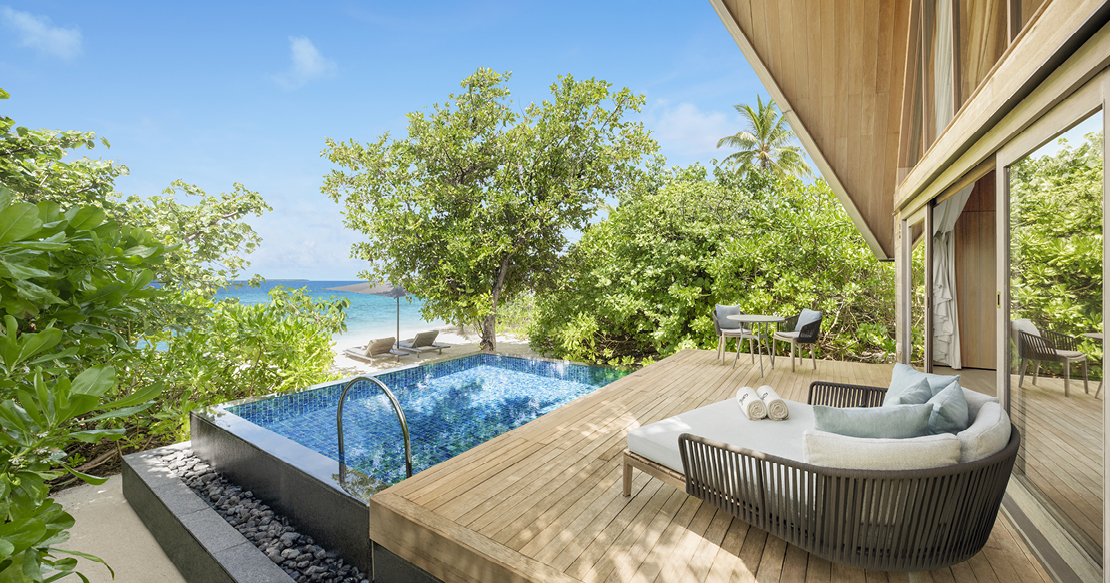
After a well-earned rest in the incredibly comfortable bed, we woke up feeling refreshed and happy to be there. After a short bicycle ride to breakfast (bicycles are provided at all rooms), and an indulgent start to the day, we were ready to discover some of the activities the island has to offer. This began with an invigorating dip in the Blue Hole Hydrotherapy Pool at the Iridium Spa. As the largest hydrotherapy pool in The Maldives, this unique experience involved immersing ourselves in a pool filled with varying types of water massage jets, designed to deliver exceptional therapeutic properties for the body with skin cleansing. The warm salt water helps relieve pain and induces muscle relaxation. After the Blue Hole experience, discover Iridium Spa’s extensive treatment menu, which includes signature massages, facials, and full-body experiences. That afternoon consisted of snorkelling in the island’s coral reef. Just steps from the shore, we encountered vibrant marine life, from technicolour fish to gentle sea turtles.
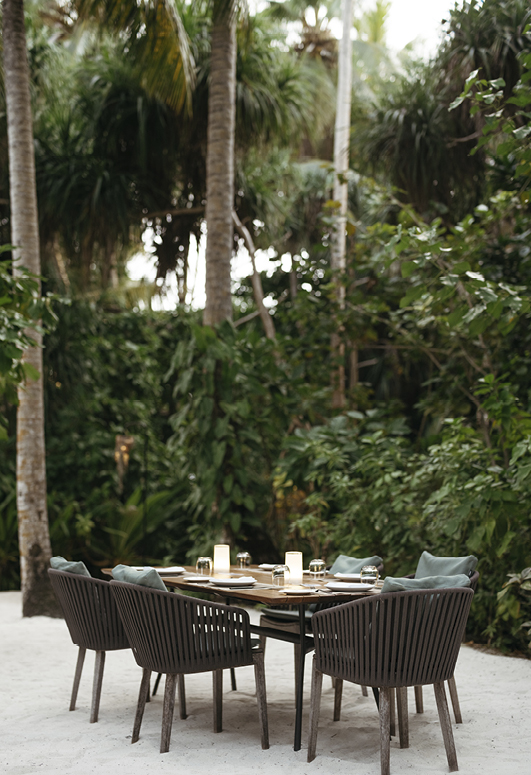
Our final day on the island allowed us to explore the resort by bicycle further. This 1.5km island can be circled in just a few minutes, but there’s plenty to discover. In total, the resort has 33 on-land and 44 overwater villas, including an impressive three-bedroom overwater villa spanning 1,726 square metres.
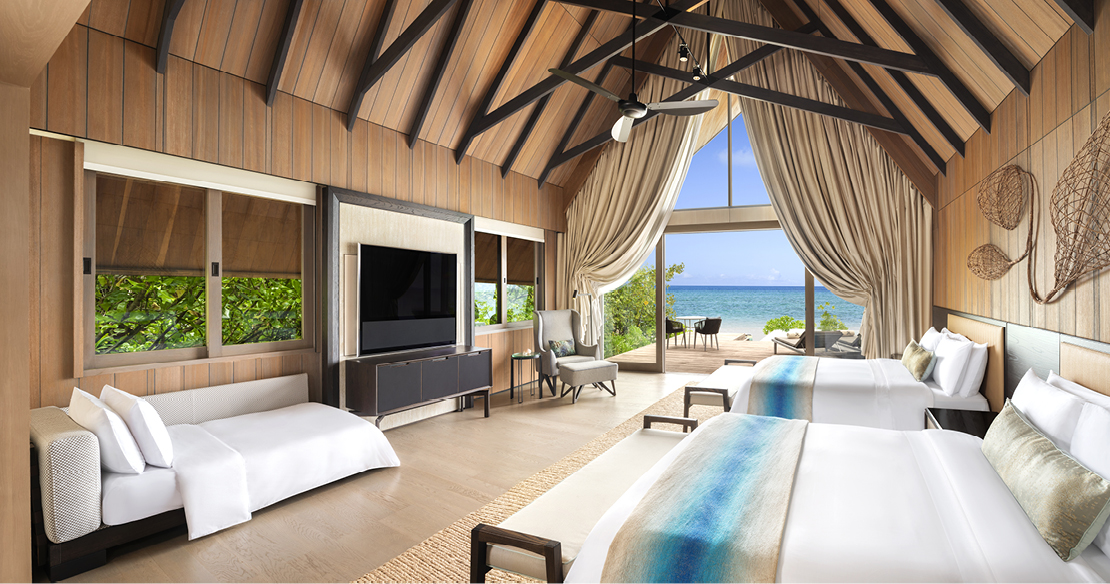
Each villa comes with a private butler service, who will be on hand 24 hours a day to meet your every need. This resort’s personal touches and attention to detail take it to new heights. Two nights was not nearly long enough to spend in this idyllic location – we will definitely be returning!
JW Marriott Maldives Resort & Spa
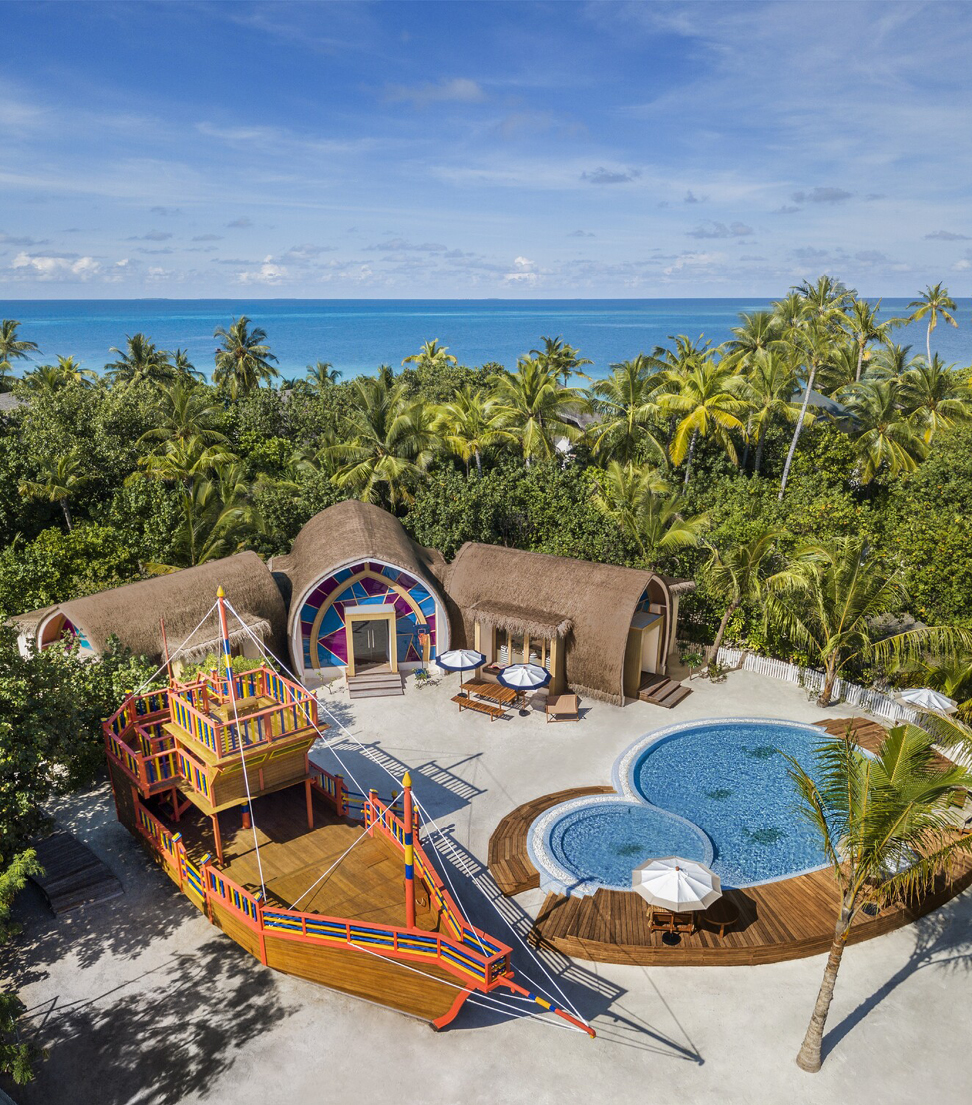
After another smooth and safe flight back to Malé with TMA and a second 55-minute journey, we landed at our new destination, the JW Marriott Maldives Resort & Spa. We were immediately impressed by the palatial architecture and homely feel of this island.
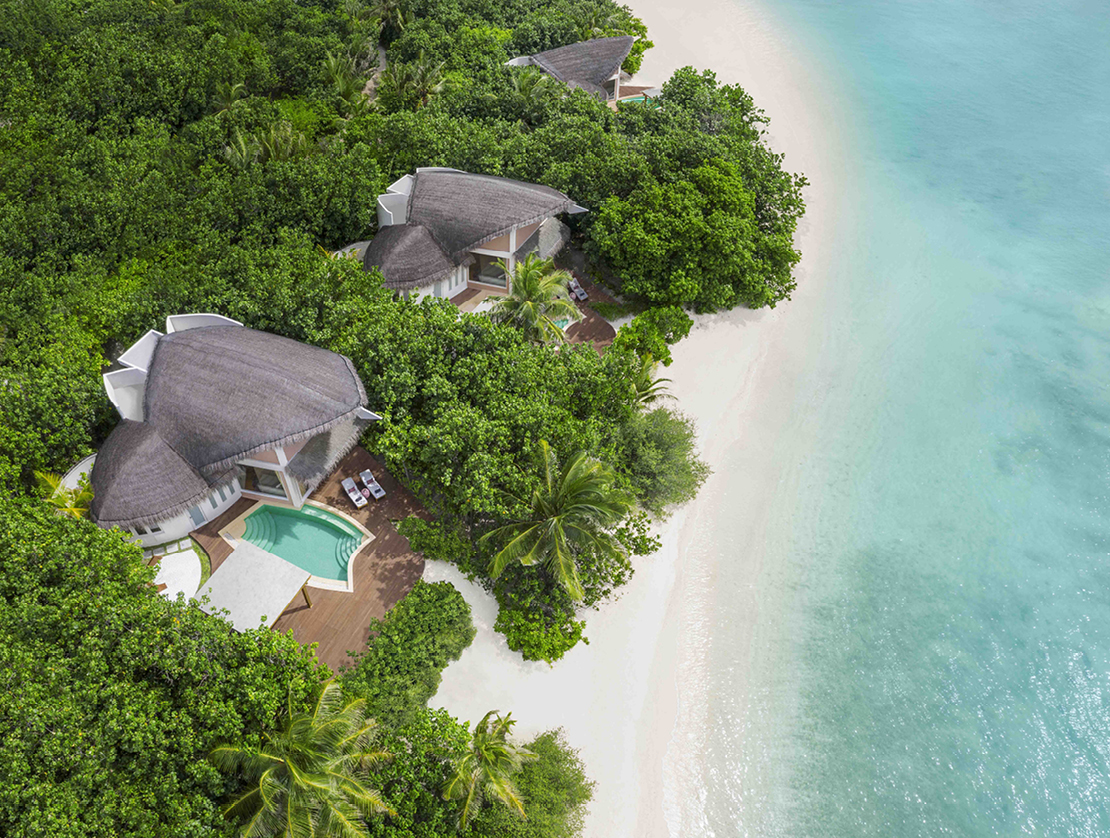
Despite the rain, the resort’s staff were waiting to greet us for this new experience. This island immediately has a welcoming, family-friendly atmosphere, which the groups of guests reinforce as we pass them on the way to our beachside villa. Our spacious room has an impressive two bedrooms and is perfect for a family of four. The upstairs lounge can also be converted into a third bedroom, making this a great location for group holidays. The island has 60 villas in total – beachside and overwater – many of which have been recently renovated. These villas feel expansive, with large wooden decks and pool areas looking out to the ocean. Each villa comes with a personalised butler service.
JW Marriott Maldives Resort & Spa offers a diverse dining scene, with five restaurants catering to every palate. Our first stop during the stay was a trip to Teppanyaki Grill Hashi. During our visit, Dubai-based chef and founder of Jun’s, Kelvin Cheung was on the island to host an exclusive three-day residency experience. Known for his creative dishes that combine global flavours, Cheung created an exclusive tasting menu for guests during his visit. It was truly a taste sensation and a chance to embrace a touch of the UAE in this tropical paradise.
Other dining locations on the island include the unique treetop Thai restaurant Kaashi, whose views make it the perfect spot for lunch. The food is divine, and goes down incredibly well with sampling the cocktail menu. Fiamma, the island’s Italian eatery, is perfect for those who want to spend the afternoon in a well-earned food coma! Those who prefer in-villa dining at JW Marriott should also try the floating breakfast, which can be enjoyed in each room’s private pool. It’s a unique experience, and for first-time Maldives visitors, it’s a must!
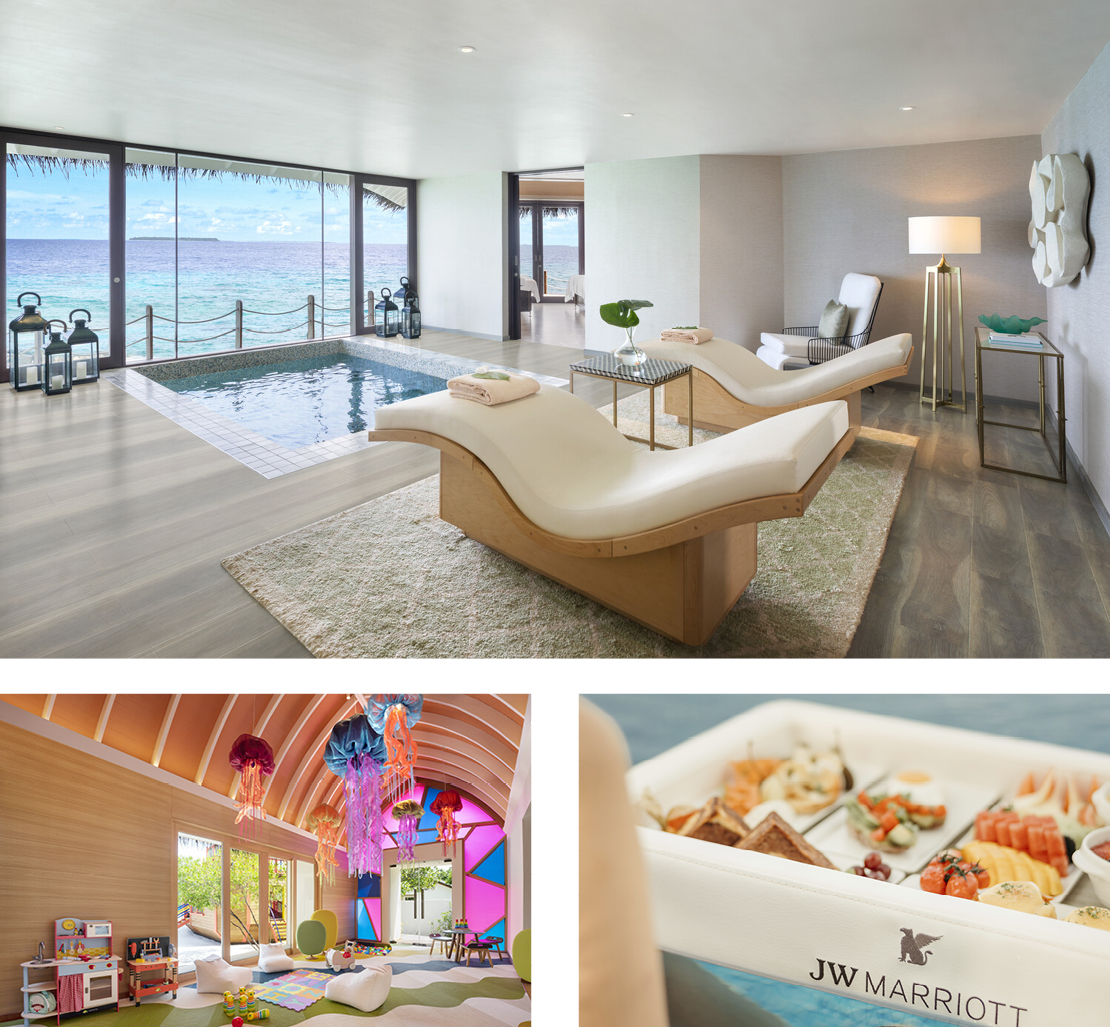
The next morning was a rainy one, but there was still plenty to do – starting with a morning dip in the sea, followed by a visit to Spa by JW, the resort’s picturesque spa. Set within a cluster of overwater buildings, the spa offers uninterrupted sea views and the sound of the waves, creating a calming experience during your treatment. We tried a couple’s signature massage, but the spa also offers body scrub and wraps as well as fashion and other treatments. There is also a picture-perfect overwater fitness centre for those who want to work our during their stay.
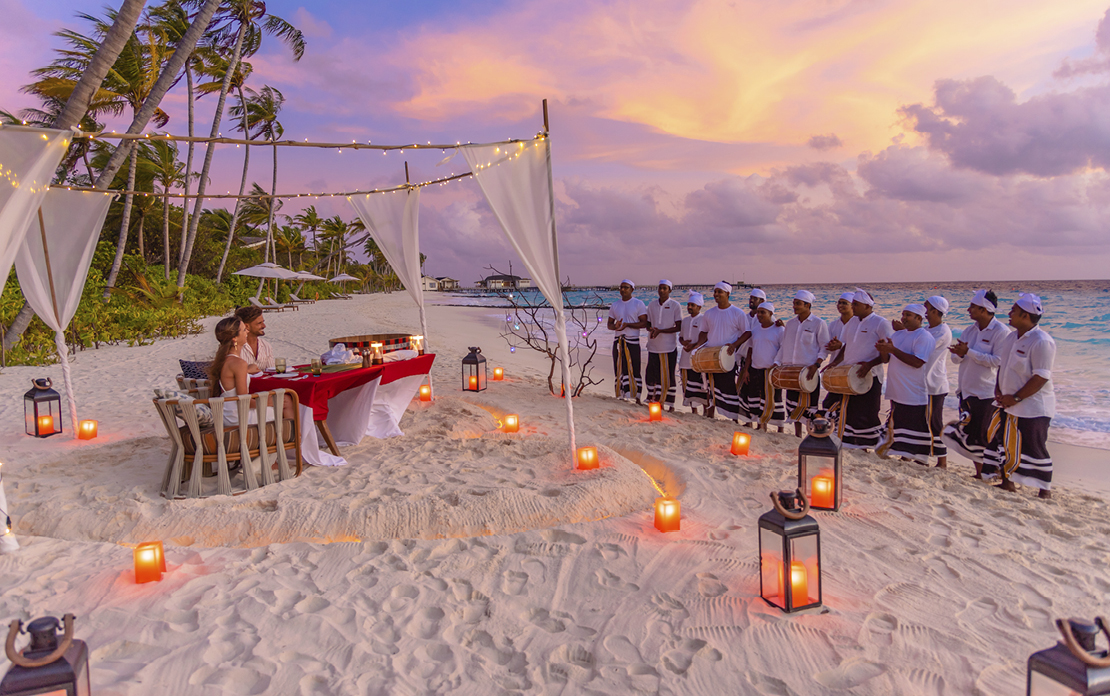
The afternoon was spent discovering some of the other activities available at the island’s dive centre, including dolphin watching, fishing, snorkelling and diving. As well as watersports such as jet skiing, parasailing, kayaking and more. For those with young children, the island is fully equipped starting with the Little Griffins Kids Club for kids up to 12 years and following with the teens lounge for kids over 12. There are over 100 activities for kids to try, from pizza making to sports to trampolining – they will never get bored! The resort also offers a babysitting service so that younger children can be safe and occupied while the adults enjoy their holiday.
After a busy few days our trip was sadly coming to an end. It had really been the adventure of a lifetime, but not so much of a bucket list trip but rather a – let’s go every year destination!
Highlights From the 9th Edition of the Lady Dior Art Bag
The ninth edition of Dior Lady Art features emotional, cultural and stylish interpretations of the iconic bag
The Lady Dior bag has become a symbol of quintessential Dior style. Named after Princess Diana, who was widely seen wearing the bag, Dior’s most recognisable accessory has become synonymous with luxury and individuality, allowing it to be reinvented over and over again. Fusing the house’s DNA with impeccable savoir-faire this bag, has inspired so many projects and stories over the years.
Since 2016, the Dior Lady Art project has invited international artists to reinvent the Lady Dior as an object of desire that combines the worlds of luxury and art. Each year the specially selected artists are given carte blanche to revisit the bag as they imagine it, putting their own aesthetic onto the bag.
For the ninth edition this year, the brand has partnered with eleven new artists for the annual project.
Sara Flores
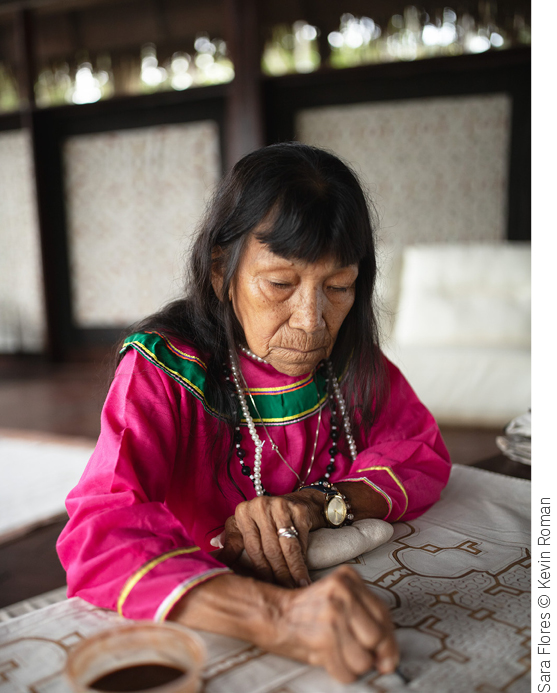
Visionary artist Sara Flores is inspired by Kené, the age-old visual language at the heart of the artistic practice and cosmovision of the Shipibo-Conibo people, an indigenous group living along the Ucayali river in the Peruvian Amazon. For this new chapter of Dior Lady Art, she wished to highlight the unique skills and legacy of her community and has dreamed up two bags with details that echo her personal painted works that use plant pigments on canvas. Both display subtly embroidered serpentine motif. The aesthetic harmony of this design system – characteristic of her Indigenous people – promises spiritual healing: the gaze follows the intentional trajectories of the strokes.
Jeffrey Gibson
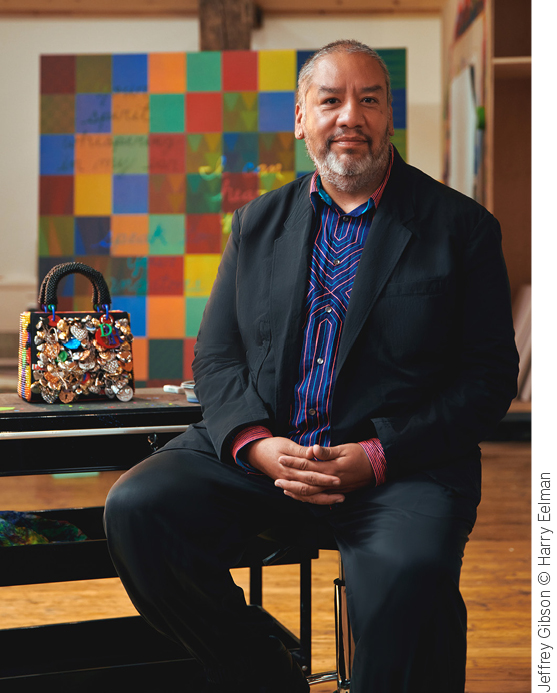
Between heritage and reinvention, Jeffrey Gibson elaborates ultra-colourful works that unite traditional native American craftsmanship with a bold, almost psychedelic aesthetic. Jeffrey Gibson transposes his unique universe onto a Lady Dior in a resolutely «pop» metamorphosis inspired by his iconic punching bags – for boxing – revisited as art installations.
Huang Yuxing

Considered one of the most innovative talents on the contemporary scene, Beijing-born Huang Yuxing stands out for his ability to conceive works that tell the story of their genesis. His new versions of the Lady Dior include two models echoing psychedelic elements of his canvases: Heaven and the Earth (2016-2020) and the Galaxy (2017-2021).
Liang Yuanwei
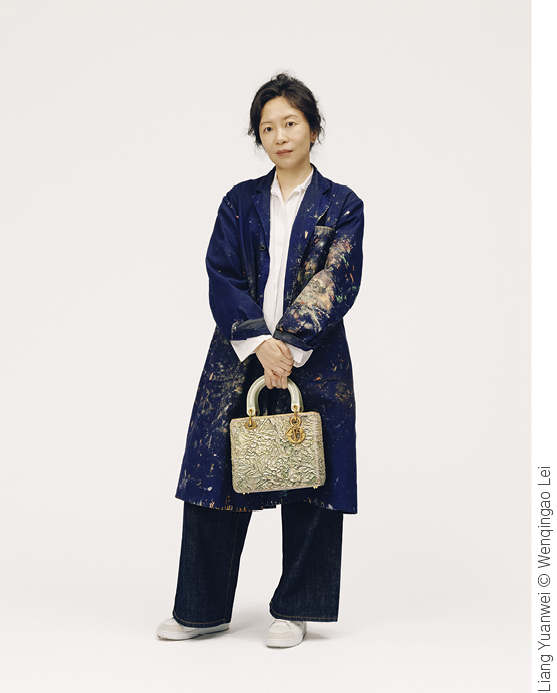
Chinese artist Liang Yuanwei found inspiration in her Impasto Golden Notes series and Ru Ware from the Song Dynasty, integrating two-dimensional painting into a three-dimensional iconic accessory. crafted in resin using a 3d printing process, calligraphic brushstrokes in Liang’s painting, which differ in power and do not overlay the other are reproduced as puzzle tabs and brought together as a whole on the bag. the colour refers to the celadon green in the Ru Ware from the Song Dynasty, the antique gold metal is a nod to the gilding technique on the rim of Ru Wares and the handles and shoulder strap evoke jade.
Danielle McKinney
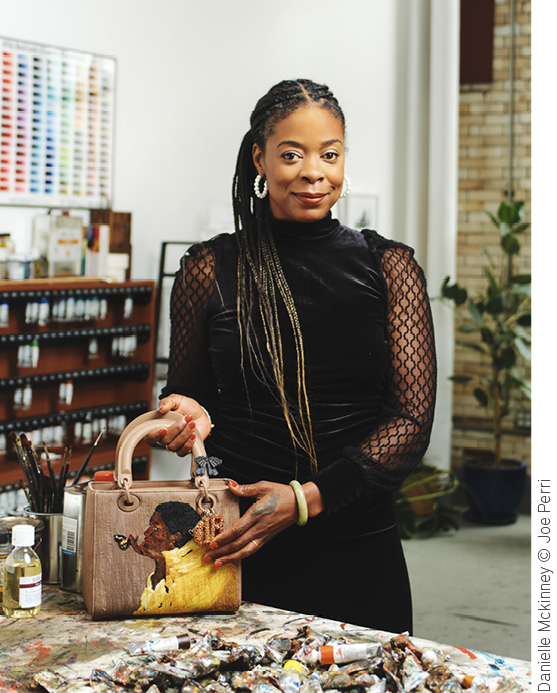
American artist Danielle McKinney’s artistic style consists of intimate cinematic portraits, which is reinterpreted through her bag design in a unique way. A slightly crumpled backdrop features a silhouette of a woman – the artist’s signature protagonist – delicately embroidered thread by thread. At the heart of the scene is a butterfly, capturing the beauty and highlighting the colourful palette of her creation.
Duy Anh Nhan Duc
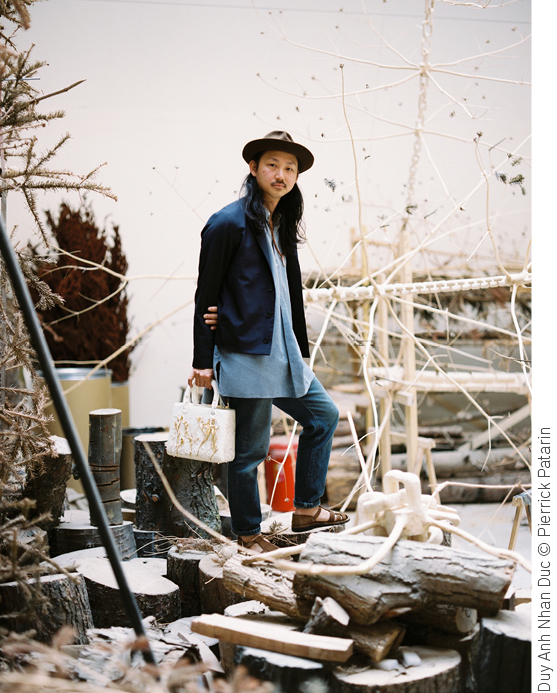
Duy Anh Nhan Duc’s reinterpretation of Lady Dior reflects his passion for the botanical realm, particularly wild plants. His bag is decorated with a profusion of flowers and seed motifs, embossed on the vegan leather bag and enhanced by a sublimated trellis and precious embroidery.
Hayal Pozanti
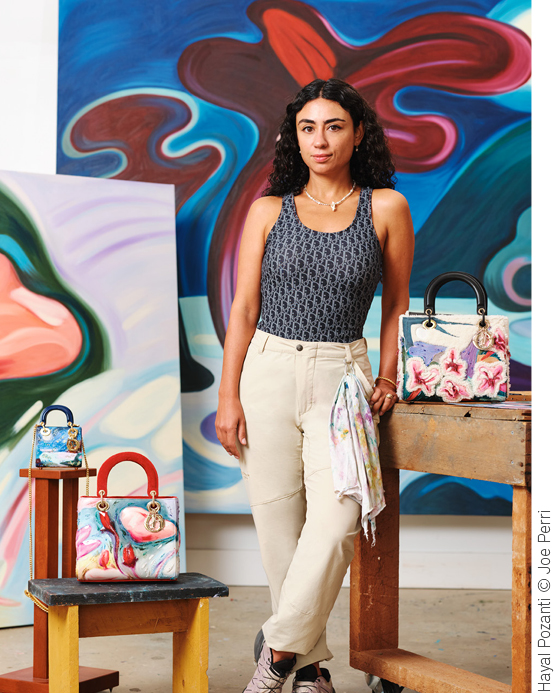
Hayal Pozanti has designed three pieces that exemplify her vision of nature as a sensorial and imperative subject. The first two bags are adorned with athletic details drawn from one of her passions, trekking: sheepskin inserts, reminiscent of the lining of hiking boots, snap hooks, along with feet recalling the star-shaped tips of walking poles. the last model, a hand-painted clutch reveals a nocturnal panorama magnified by a cloud of rhinestones meticulously placed in a shower of entrancing comets.
Faith Ringgold
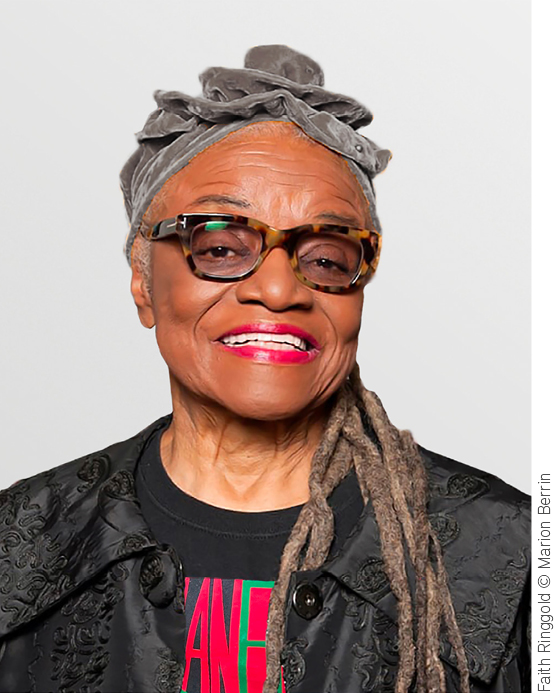
Feminist, artist, activist and educator Faith Ringgold is a force to be reckoned with. The American artist has consistently confronted issues of race, gender and social justice through her work. For her collaboration with Dior, Ringgold created six designs before her sad passing in April 2024. Each is inspired by her 1971 political posters, which have been reimagined in a collage of materials.
Vaughn Spann
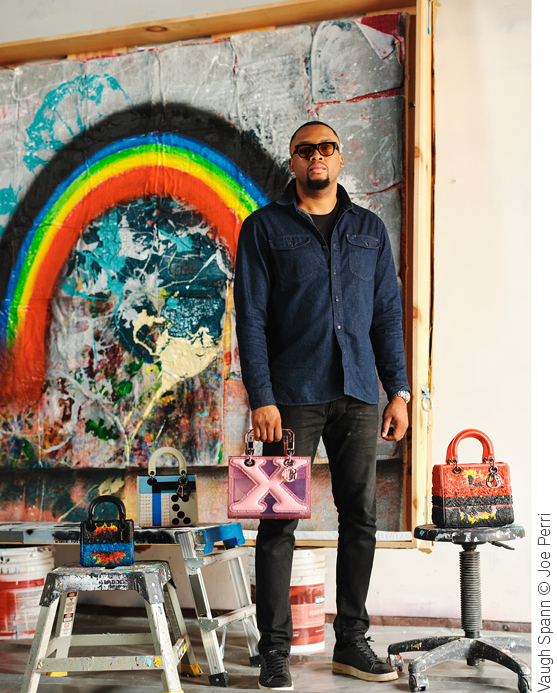
American artist Vaugn Spann uses a mix of abstract and figurative elements to explore American history, culture and identity. His approach is seen in his iterations of the Lady Dior bag, which plays on the codes of masculine and feminine. The first model, an oversized version, revisits the shape and functional spirit of 1980s briefcases, all in pink-tinged transparency, and features a central «x» – a recurring motif in Spann’s oeuvre. a second is adorned with geometric structures from several of his canvases, while the last two represent, respectively, his paintings from 2020, Firestorm and Untitled (stormy), with striking effects of material, relief and contrast, irresistibly “pop” and light-hearted.
Anna Weyant
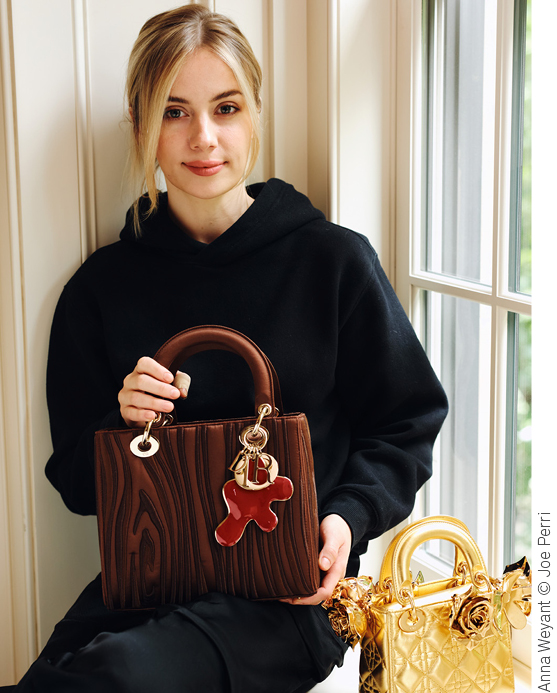
Canadian artist Anna Weyant is inspired by surrealism and mystery. Her interpretation of the Lady Dior bag evokes a wood grain pattern that appears in many of her works. An entirely gilded bag also features an entirely gilded model, punctuated with roses and daisies as if jewelled sculptures. An ode to the excellence of the house’s ateliers, the graphic lines of the emblematic cannage are revisited in a variation delicately dotted with a garden marguerite motif.
Woo Kukwon
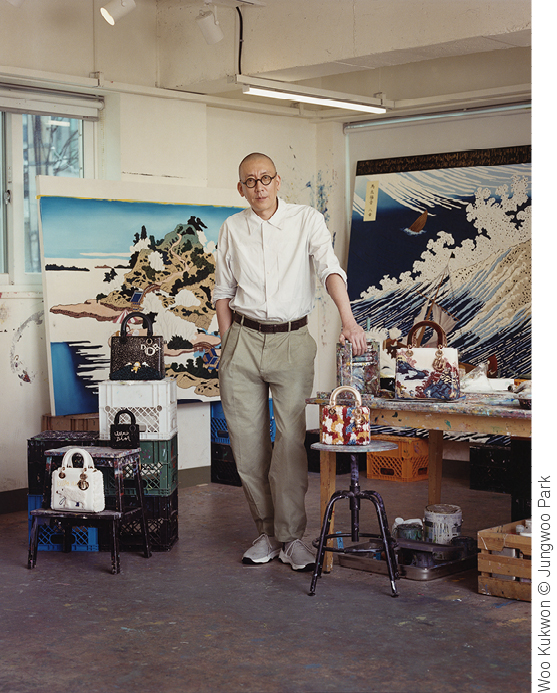
The art of Woo Kukwon, from South Korea, unfolds through oil paintings, drawings on paper and installations. For his Lady Dior designs, two medium-format pieces portray characters representing his wife, daughter and dog, populating two enchanting spaces. On the first, they gaze up at a starry sky, stretched out on a hill sublimated by colourful threads; within, the words “my universe” can be read, in homage to his little girl. a second bag depicts them strolling beneath cherry trees in blossom, the splendour of the vegetation blooming on the handles and eyelets.
Ferrari Launches its Newest Supercar the Ferrari F80
Ferrari has revealed a new chapter in its history of legendary supercars with the new F80.
This exclusive motor car will be produced in a limited run of just 700 pieces and joins an impressive lineup of icons, including the GTO, F40 and LaFerrari, showcasing the best that the Maranello-based marque has achieved in terms of technology and performance.
The F80 is tasked with embodying the ultimate in engineering for an internal-combustion-engined vehicle and employs all the most advanced technological solutions, including the latest-generation hybrid technology for the powertrain, to achieve unparalleled levels of power and torque. Every aspect of the architecture is conceived to maximise performance, from the carbon-fibre chassis and extreme aerodynamic solutions far beyond anything seen before in a road-legal car, to the new active suspension optimised to let the driver wring every ounce of performance from the car on the track.
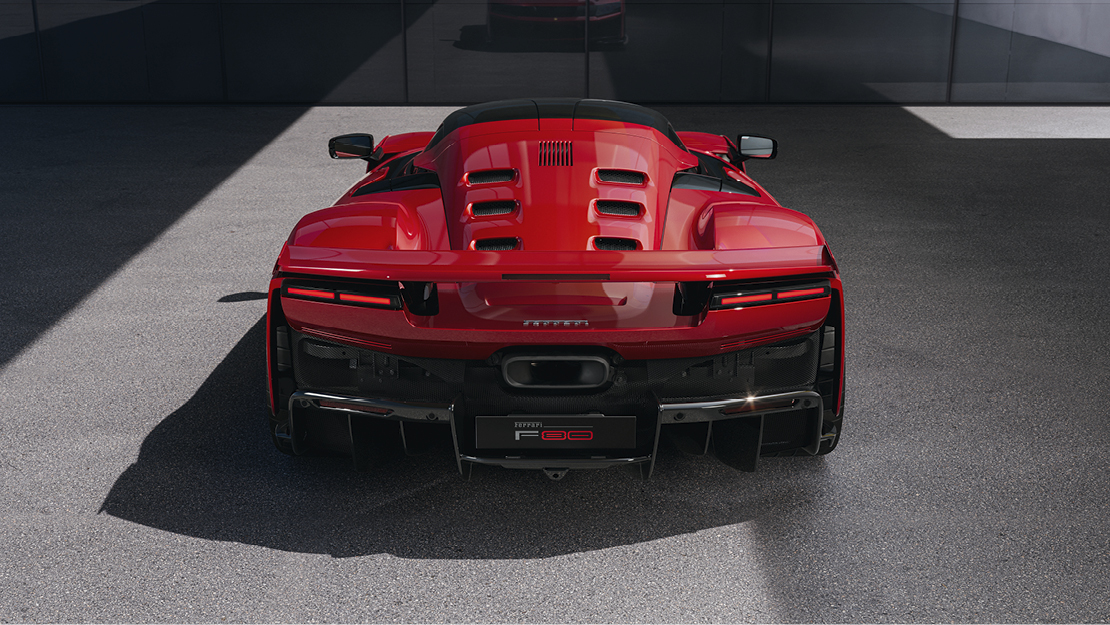
Unlike anything else in the current supercar world, the F80 combines all these attributes with uncompromising levels of usability on the road, where it can be driven with ease. This ability shaped every choice made in terms of technology and architecture to achieve the goal, which at first sight seems impossible, of creating a track-oriented supercar that’s just as driveable as a production range model. This means that the driver will spend even more time in the car and can truly get to know and revel in its performance and the thrilling driving experience it offers.
The architecture of the F80 is so extreme that the layout chosen results in a narrower cabin with a driver-centric layout, which nonetheless still offers excellent space and comfort for a passenger. This choice had crucial benefits in terms of minimising drag and weight.
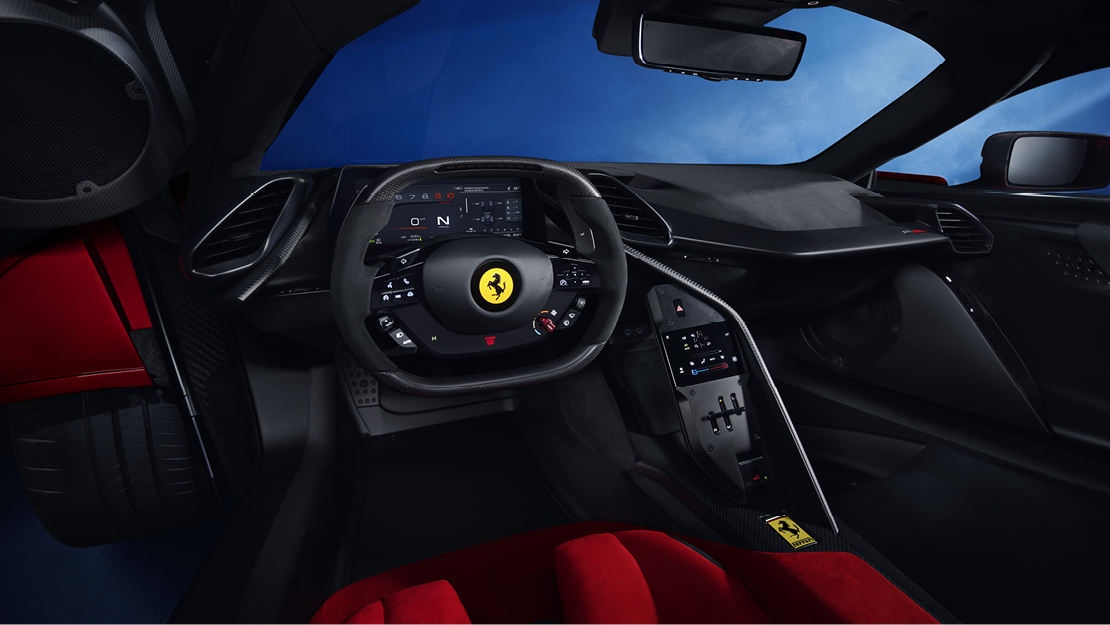
As has always been the case with the Ferrari supercars preceding the F80, the powertrain is based on the finest expression of technology in motorsport. The GTO and F40 were powered by a turbo V8, because Formula 1 cars used turbocharged engines in the 1980s. Today in both Formula 1 and the World Endurance Championship (WEC), powertrains consist of turbo V6 ICE engines mated with an 800 V hybrid system. It was only natural then that this architecture – the same architecture used by the 499P, which has taken two consecutive victories at the 24 Hours of Le Mans – would be transferred into the new F80.
Here though, the powertrain is further complemented by the introduction, for the first time ever on a Ferrari, of electric turbo technology (e-turbo), which, with an electric motor installed between the turbine and compressor of each turbo, allows for an extraordinary specific power output and instantaneous response from low down in the rev range.
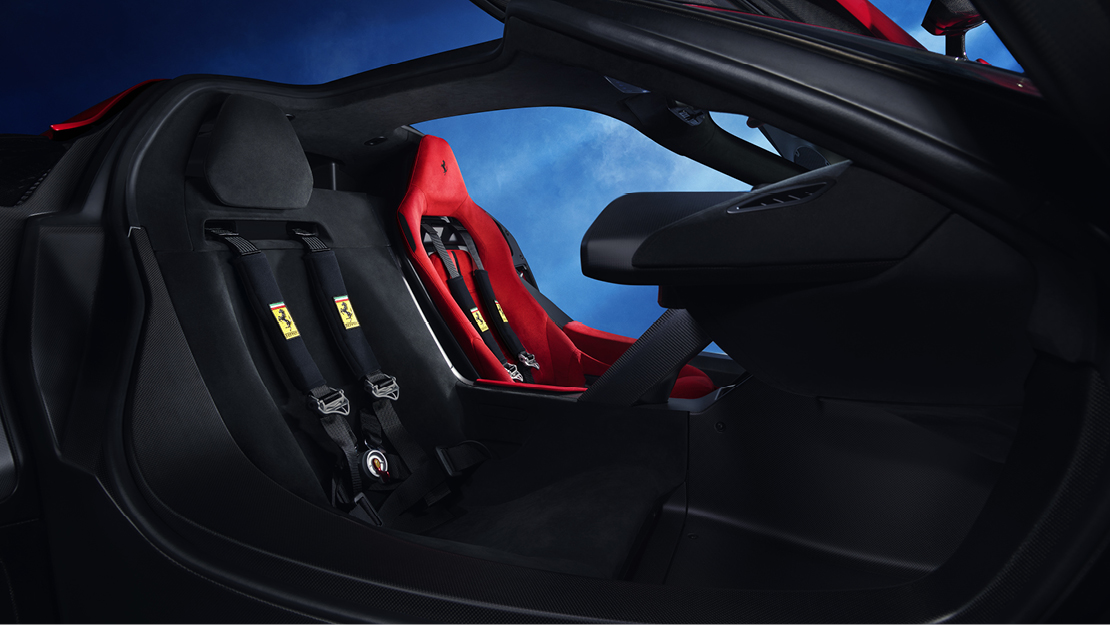
Aerodynamics play a key role in the F80, with solutions such as the active rear wing, rear diffuser, flat underbody, front triplane wing, and S-Duct working in concert to generate 1000 kg of downforce at 250 km/h. This result is further enhanced thanks to the active suspension, which contributes directly to generating ground effect. Performance is boosted by the electric front axle, which brings four-wheel drive capability to make even more effective use of the torque and power on tap, and the new brakes with motorsports-derived CCM-R Plus technology.
As with all the supercars preceding it, the F80 marks the start of a new design era for Ferrari, with a more tense, extreme design language accentuating its race-bred soul. There are clear references to cues borrowed from aerospace, which underscore the cutting-edge technology and elegant engineering of each and every technical solution. But there are also nods to its hallowed progenitors which clearly declare the illustrious lineage of the F80.
For more information, follow @FerrariMiddleEast on Instagram.
Our Pick of Holiday Gifts and Festive Outfit Inspiration
We have everything you need for the holiday season.
Louis Vuitton
Louis Vuitton’s holiday campaign presents a magical adventure centred around an enchanted carousel ride. Set against a breathtaking snowy landscape, the carousel awaits jubilant revellers, transporting them on a captivating journey across dreamlike scenes, celebrating the spirit of travel dear to Louis Vuitton and the joy of the Holiday season for all.
The campaign highlights a selection of products spanning Louis Vuitton’s universe, including elegant ready-to-wear, iconic leather goods, travel accessories, fine jewellery and hard-sided creations – a showcase for the most discerning of gift-givers as 2024 comes to a celebratory close.
To bring the magic of the Holiday season to life, Louis Vuitton will be hosting a number of physical carousel activations in select cities worldwide. Visitors can experience the enchantment firsthand and immerse themselves in the merry atmosphere, stepping aboard the carousel on their own festive ride.
Miu Miu
Miu Miu has revealed its Upcycled 2024 line as part of its holiday collection. The Upcycled collection, which launched in 2020, continues to breathe new life into cherished garments from the past, enhancing the experience of those who will wear them in the future. The 2024 edition features iconic pieces that have been upcycled with festively themed details.
Highlights of the collection include vintage biker jackets, patched with iconic materials. Signature shorts and miniskirts, as well as upcycled kilts in eye-catching tartan prints. The collection also The collection includes chunky crewneck hoodies, scarves and small accessories, all finished with a cotton crochet knit Miu Miu logo, while The Wander bag and knitted slippers with a bold new look.
The collection is presented in the Miu Miu Holiday campaign, with actor Emma Corrin and photographed by Lengua, reflecting the essence of postcard portrait photography with special colour features. Now available in selected Miu Miu stores worldwide and on miumiu.com
Dolce&Gabbana
Dolce&Gabbana’s holiday campaign is designed to inspire shoppers with gifting ideas for men and women. Shot by acclaimed photographer Gordon Von Steiner, the campaign features a model at the centre, dressed in gold, surrounded by her entourage who get her ready for the festive season.
The campaign features ready-to-wear and accessories from golden dresses to eyewear, that will make the perfect gift for the holiday season. Discover party looks that capture the eye with their stylish yet glamorous style and refined details.
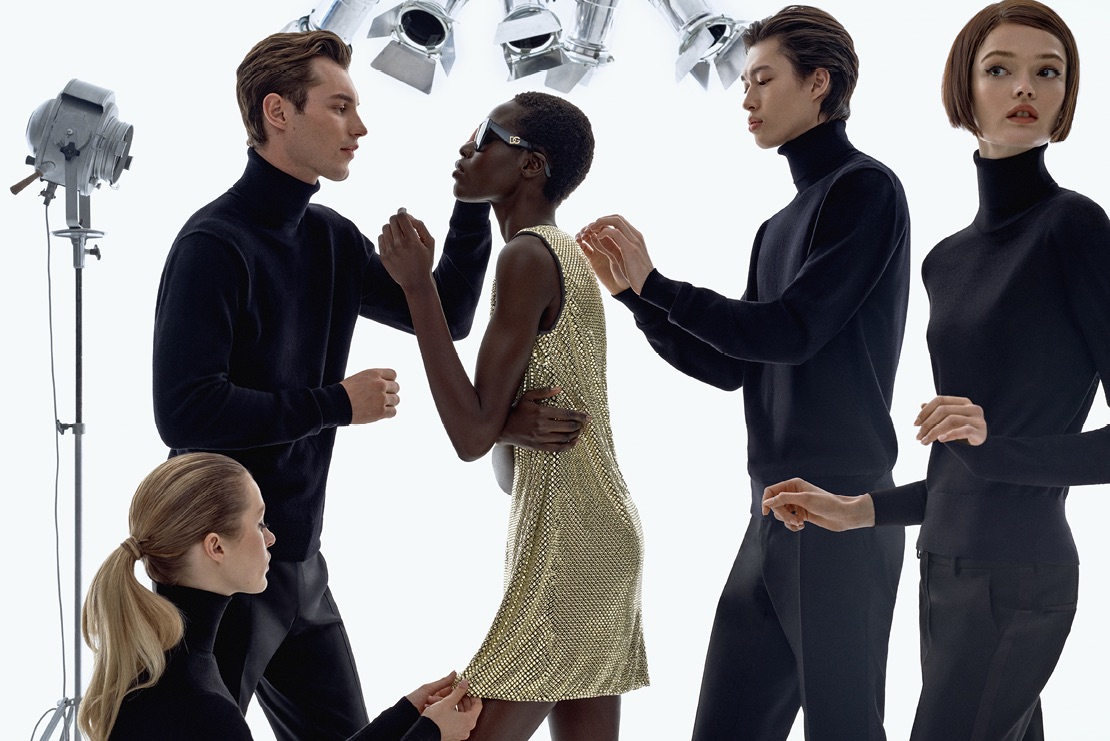
Other images feature a man dressed in a tailored Dolce&Gabbana suit with all the accessories for any festive event. The brand’s gifting selection features items for men, women, kids, beauty accessories and pieces from the DG Casa home range.
Givenchy
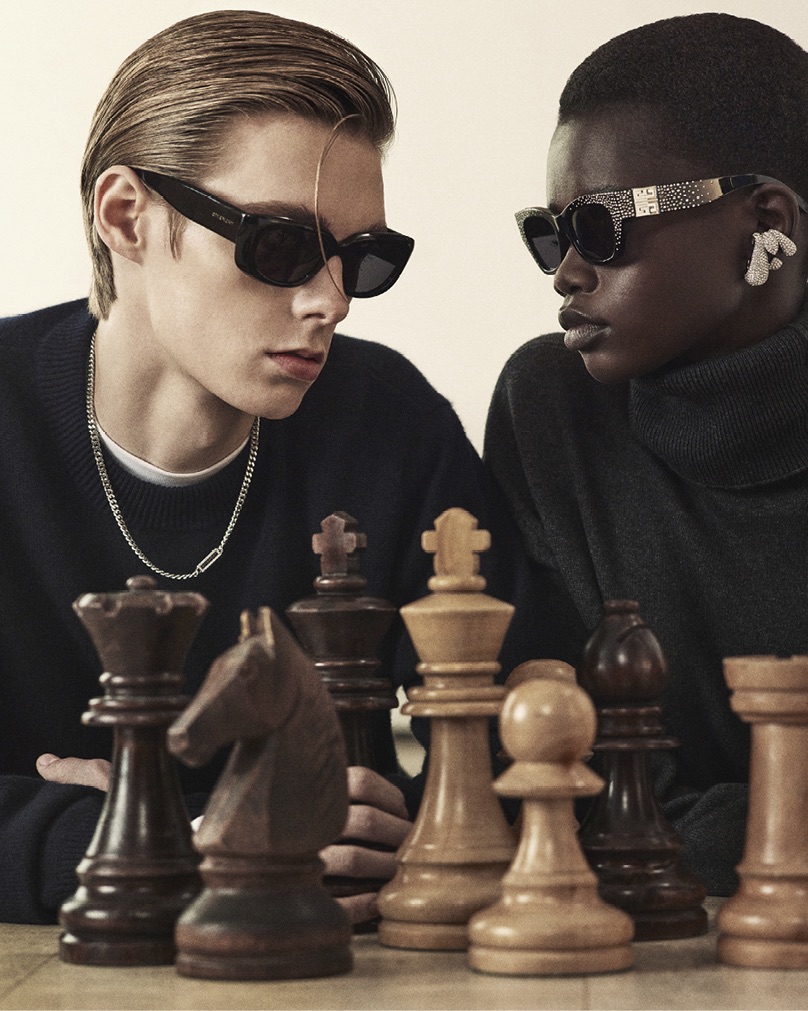
For the 2024 holiday season, Givenchy presents a selection of ready-to-wear and accessories entitled A Holiday Game. Shot by photographer and director Mark Kean, these images capture the elegant simplicity and the intimacy of playing classic board games.
Key women’s looks include party pieces such as cage dresses with a graphic interlacing of crystals punctuated by feather pompoms. Statement outerwear features the Maison’s signature cheetah print, a cocoon jacket in black faux fur, and a utilitarian jacket with wide fur cuffs. Casual wear, including a cozy ribbed knit and denim are accompanied by the Voyou bag in suede shearling. Other bags include the P’tit Voyou in glossy black leather, the Antigona Toy Lock in dark ebony box leather, and the swingy Pumpkin bourse bag with a metallic chain strap. Additional accessories complete the looks with understated elegance, from Shark Lock boots in an exclusive burgundy python version to 4G cat-eye sunglasses embellished with crystals and a crystal-fringed 4G necklace.
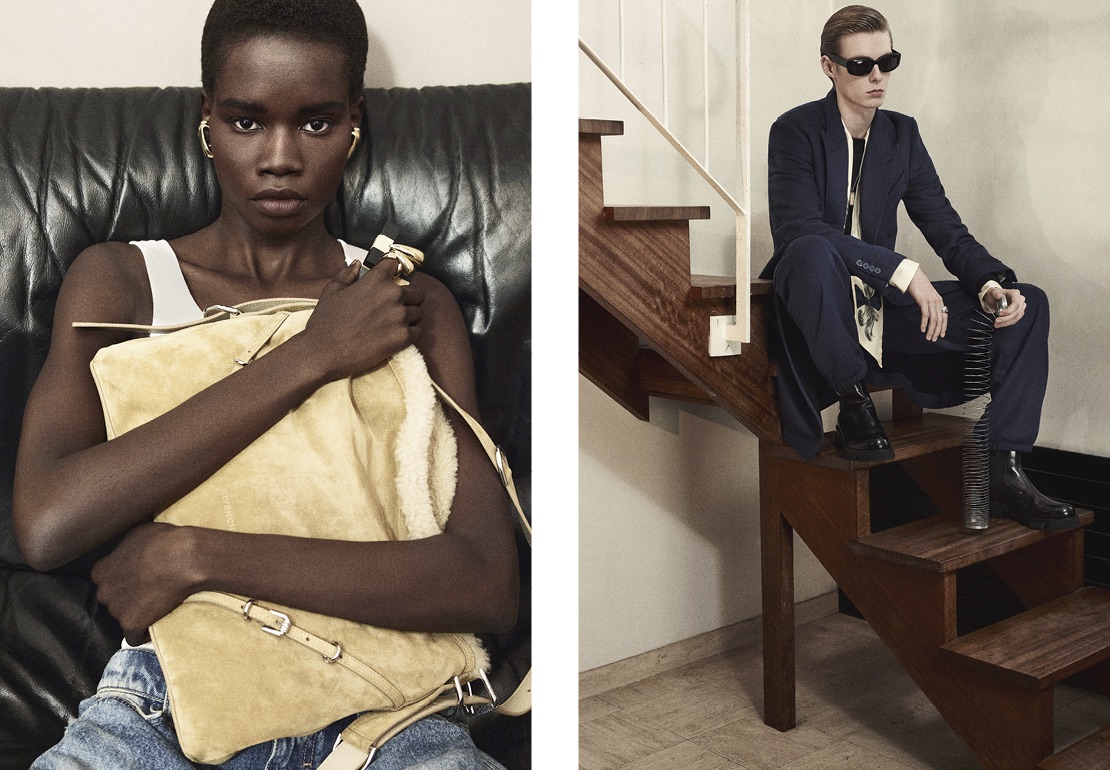
Men’s tailoring fuses Hubert de Givenchy’s aristocratic image with the more flamboyant, expressive sides of his persona. Formal clothing, notably tuxedo jackets and cummerbunds, take on an extravagant attitude with rust or purple accents. The traditional argyle, revisited in aqua brights, incorporates the archival Monogram 72 motif. Star accessories include the dandy-chic GV Day sunglasses and this season’s chunky-soled Chelsea boot.
Weekend Max Mara
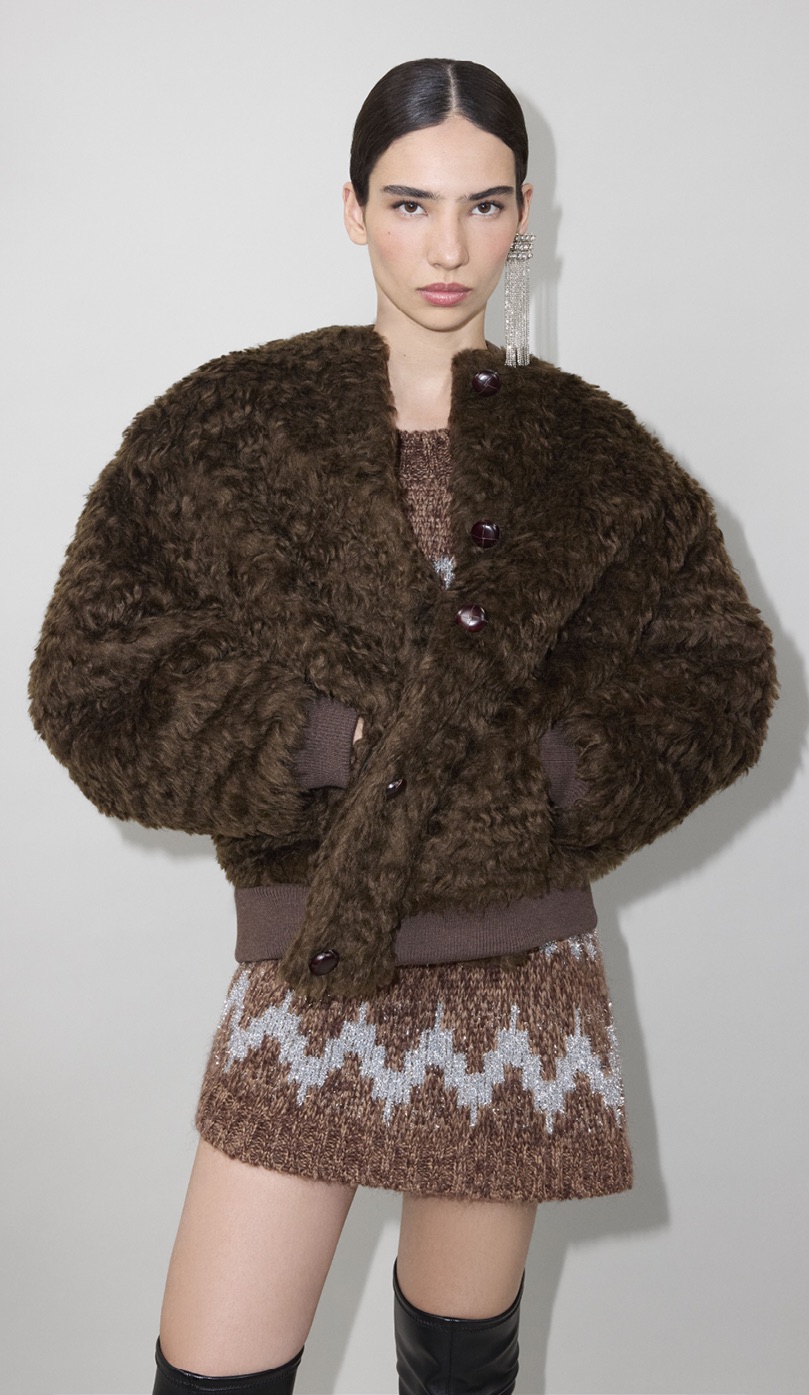
Weekend Max Mara’s holiday campaign sees sparkling accessories and winter-warming ready-to-wear pieces presented within a paste-hued luxury hotel.
Soft knitwear is rendered in multiple looks, from mélange sweater dresses and Fair Isle crewnecks to logoed inserts or grey knitted skirts with crystal applications. These cosy pieces are perfect for daytime activities, whether enjoying lunch with friends or toasting with colleagues. Sleeveless dresses with sparkly fringed decorations, body-hugging sequined numbers, and flashes of Lurex complement the pristine elegance of ivory silk camisoles and long black shifts.
On silver platters, the Pasticcino Bags are elegantly presented, all dressed up for the occasion – in ruby red or black silk adorned with crystal-encrusted boules, draped in cascades of shimmering fringes, in furry winter white, or decorated with macro crystals. Glimmering silver metal costume jewellery and headbands boost the sparkly factor.
Burberry
The ‘Wrapped In Burberry’ campaign for Christmas 2024 celebrates pending the holiday season with loved ones, where the home is at the heart of making memorable festive moments. The three sets of portraits spotlight couples, friends and families from around the globe wearing Burberry while joyfully celebrating the holiday spirit.
Drs. Herschel and Lilly Stoller, who star in the ‘Wrapped In Burberry’ series, are a Nebraska-based couple who encapsulate Burberry’s timeless appeal and have been fans of the brand for over 20 years. The Stollers coordinate in matching Burberry Check, reflecting their personal style.
Shot on the London streets of Bloomsbury, British icons of the stage and screen, David Tennant and Alex Hassell, co-stars in the recently acclaimed TV series ‘Rivals’. The duo is featured wearing this season’s festive offering of umbrellas and scarves paired with timeless tailoring and heritage rainwear.
Thirdly, Nigerian-born London-based artist Slawn, partner Tallula Christie and their two children, Beau and Baby, present wardrobe essentials in time for the festive season.
Tod’s
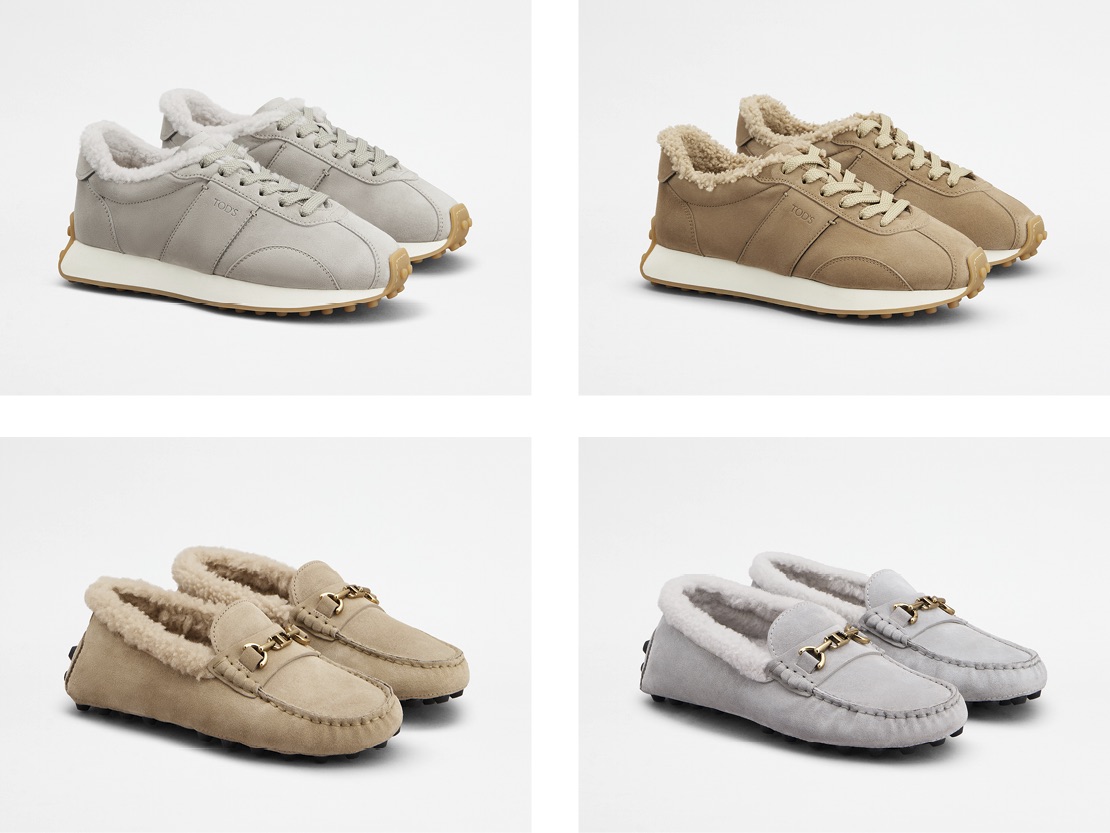
Tod’s presents this year’s Holiday collection, a special edition of iconic pieces designed specifically for the festive season. This collection showcases the brands’ must haves crafted in luxurious leathers and soft shearling.
The collection includes the iconic Gommino, which represents the brand’s heritage, as well as the Tod’s W.G. and T Vintage sneakers in soft fur, exclusively designed for this winter collection.
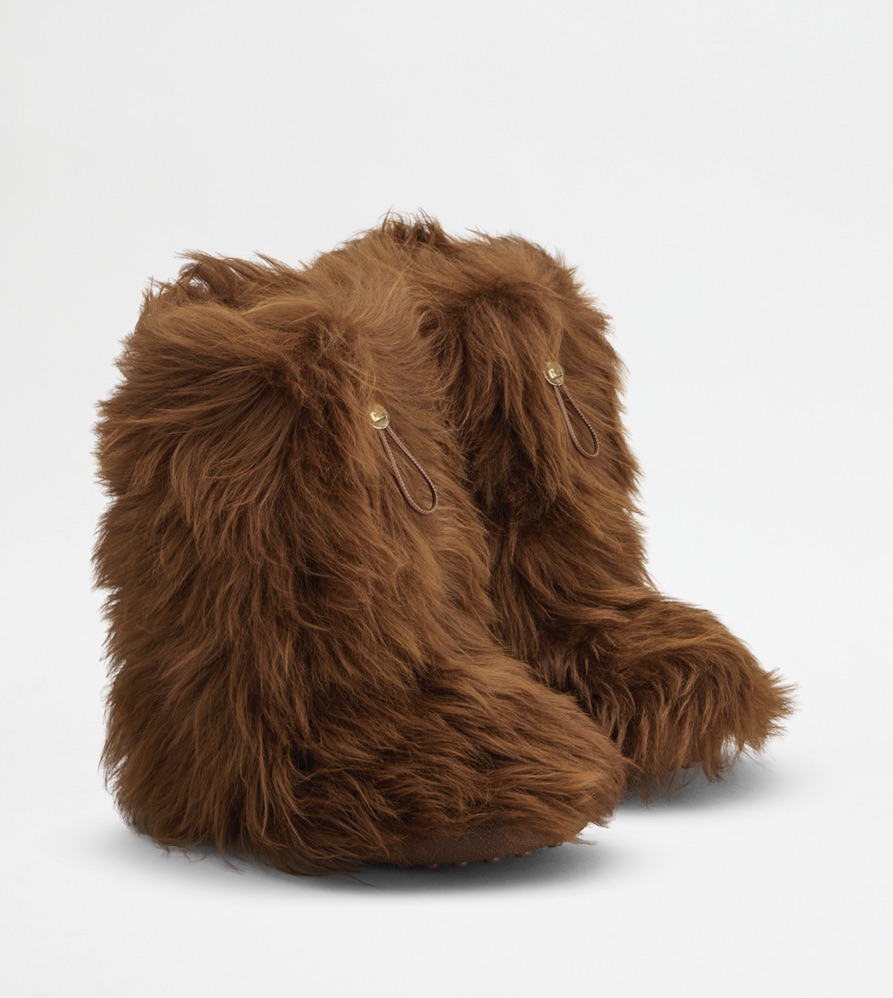
The sophisticated designs and meticulous craftsmanship of these pieces will add a glamorous touch to your holiday season, showcasing the excellence of Italian style that Tod’s is known for.
Harvey Nichols – Dubai
Harvey Nichols – Dubai has unveiled a festive campaign full of elegance and mystery, with glittering accessories, beauty must-haves, and festive fashion statements for both him, her, and the little ones.
Standout gowns like Richard Quinn’s velvet maxi and Oscar de la Renta’s ombré peony sequinned kaftan bring the drama, while winter florals, and jacquard patters add some glamour. Blue tones are leading the way with standout pieces including the Solace London river cape dress. Deep burgundy also reigns supreme this season, offering a rich alternative that rivals black or brown, whether you go for a head-to-toe red wine ensemble or introduce a bold accent with a clutch or boots.
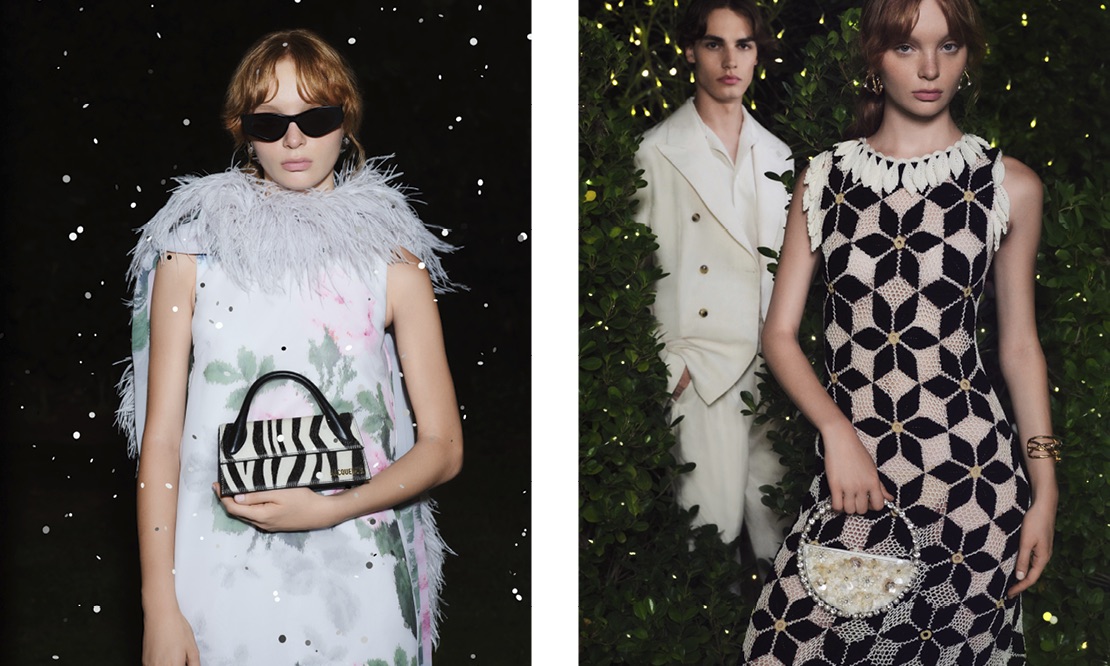
Oversized coats are also stealing the spotlight, perfect for dressing men from date nights to urban escapades. Think tailored pieces like the Dries Van Noten double-breasted wool coat or the sleek Fear Of God high-neck trench coat.
When it comes to bags, go big and bold with a brown suede option like JW Anderson leather tote bag. Rock Alexander McQueen calf sneakers, and cap it off with a Wooyoungmi embroidered baseball cap, effortlessly blending high fashion with urban style.
Gabo Guzzo’s Luxury Creations are Works of Art
Interdisciplinary artist, writer and designer Gabo Guzzo’s one-of-a-kind bags are truly works of art.
The Italian designer’s ethos focuses on “more art, less production”, and encourages the freedom of creativity to create awe-inspiring pieces that take time, but last generations. “I initiated this interdisciplinary journey to nurture the freedom of creativity, promote responsible choices, and instil hope in the passion of endangered artisan communities. Said Gabo Guzzo. “It serves as a means to cherish our irreplaceable human value and our irreplaceable Earth.”
Made exclusively in Italy, each Gabo Guzzo handbag features distinctive design elements, making every creation truly unique. From custom colours, special leathers, hand-painted finishes, or the tone of the gemstone, each element of the bags is truly special and one-of-a-kind.
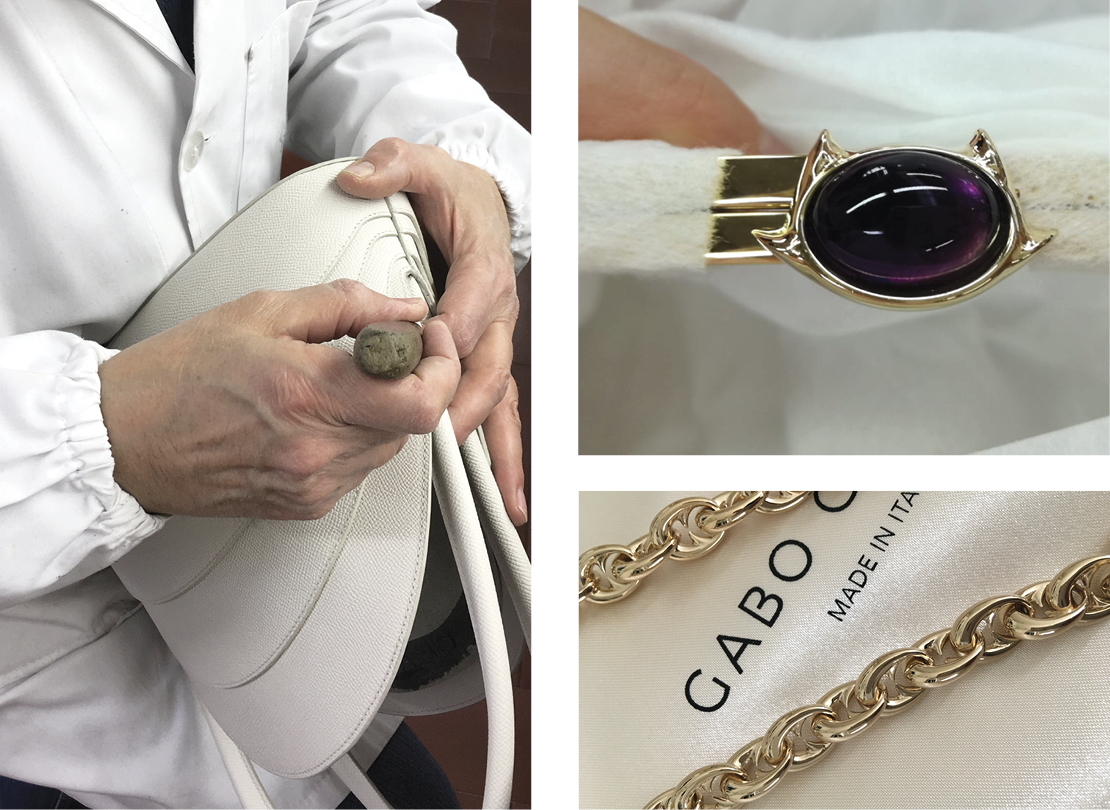
Gabo Guzzo offers a bespoke service, meaning clients can express their creative freedom by commissioning handbag creations that best reflect their individuality and lifestyle. His one-of-a-kind creations talk to customers who genuinely value what they buy and have opted for wiser shopping, also as a way to protect our planet’s natural resources.
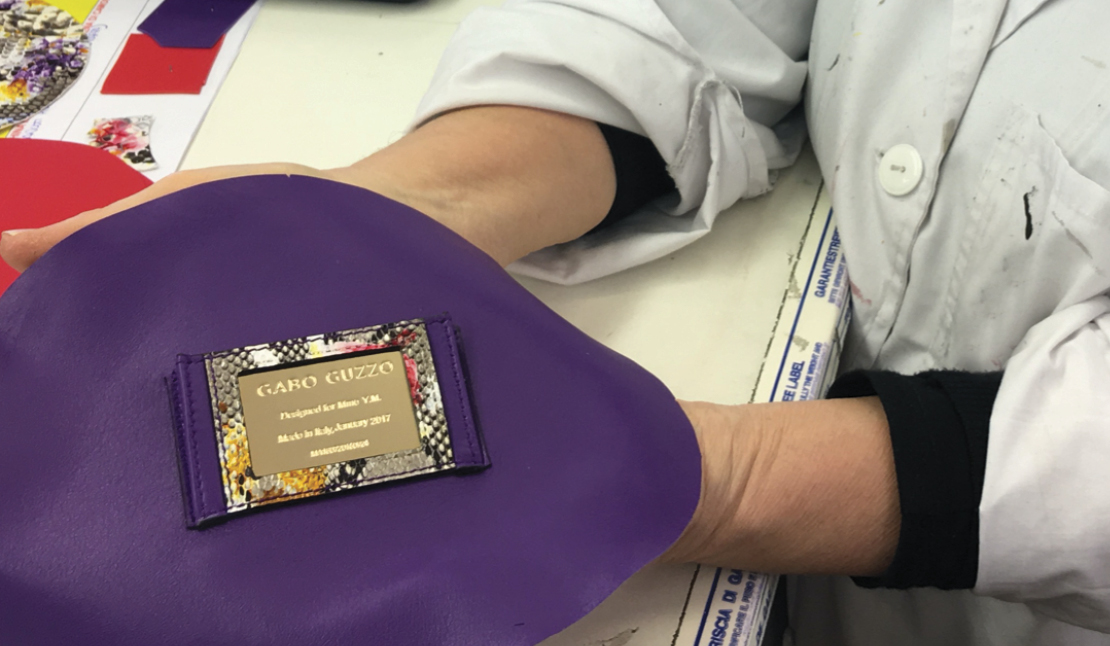
Every piece is one-of-a-kind, entirely handcrafted by master leather-good artisans and goldsmiths in Florence, Italy and available in very limited quantities. Inside the handbags there is a plate with a unique number and the handwritten signatures of Gabo Guzzo and the artisan who made the handbags.
The House offers handbags made with a variety of materials: calfskin, lambskin, sustainable exotic skins, precious metals and other more experimental materials. Each bag is embellished with hand-cut precious and semi-precious stones, including sapphires, tourmaline, amethyst, jade, lapiz lazul and more. All of the handbags made of calfskin are made of premium leather with a natural texture and a soft touch. All colours are custom-made.
For the ultimate finishing touch, each Gabo Guzzo creation is presented in a luxury handmade box or leather trunk box. An exquisitely unique touch, the House’s luxury trunks protect its iconic handbags for many years, especially while travelling.
Why Ras Al Khaimah is the Ultimate UAE Tourist Destination
Ras Al Khaimah is one of the most diverse emirates in the UAE. From its green mountains to its rolling desert dunes and picturesque beaches. As the world starts to learn about what Ras Al Khaimah has to offer, its tourism authority is working to increase its diverse offering and attract more visitors both international and domestic to its shores. After its most successful year yet in 2023, there is much to build on. Here we talk to Raki Philips, CEO of RAKTA (Ras Al Khaimah Tourism Authority) to find out more about what’s to come.
Tell us about the current tourism industry in Ras Al Khaimah and what is attracting visitors to the emirate and how does Ras Al Khaimah differentiate itself from the other Emirates and ensure it has something to offer?
Ras Al Khaimah is one of the Middle East’s most diverse and compelling tourism destinations. Known as the “Nature Emirate,” its success lies in its unique mix of pristine beaches, rolling desert dunes, and the majestic Hajar Mountains. Together, these landscapes create a destination that seamlessly combines adventure, relaxation, and cultural exploration.
Thrill-seekers can take on Jais Flight, the world’s longest zipline, or enjoy Jais Sledder, the region’s longest toboggan ride. Nature lovers are drawn to the Al Wadi Nature Reserve and our 95km of hiking trails, while culture enthusiasts immerse themselves in historical gems, such as Dhayah Fort, Al Jazeera Al Hamra, and Suwaidi Pearls – the only traditional pearl farm in the UAE offering a glimpse into the country’s rich pearling heritage. With four heritage sites on UNESCO’s Tentative List, these experiences allow visitors to connect deeply with Ras Al Khaimah’s rich past. For those looking to unwind, our 64 km pristine coastline is home to world-class resorts, offering everything from spa retreats to family-friendly activities.
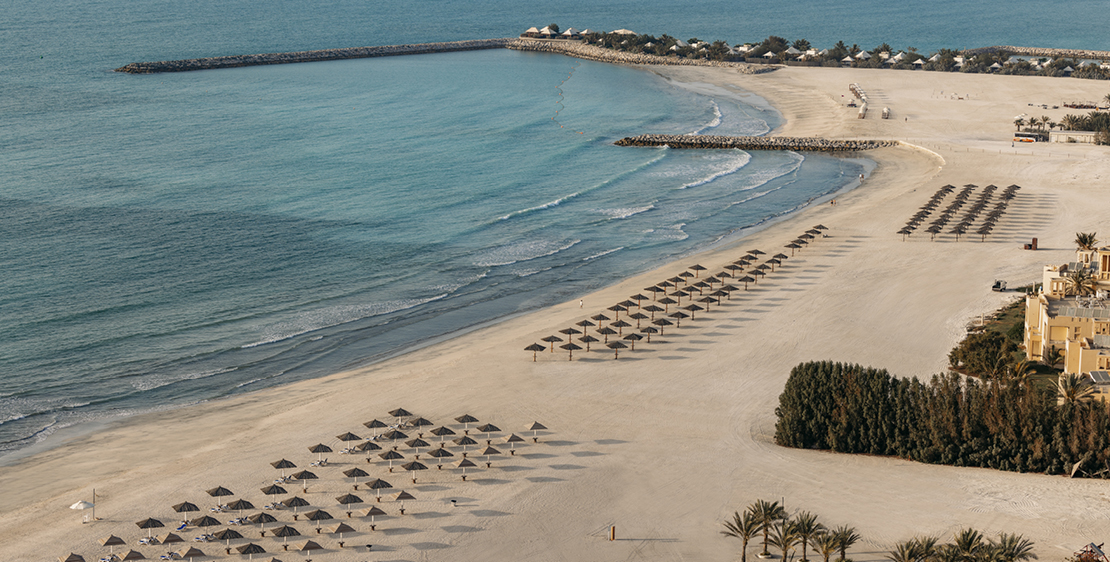
What’s more, our hospitality sector continues to grow and diversify. The Emirate is currently home to 56 hotels and resorts, with a total of 7,800 rooms across all price points – from ultra-luxurious 5-star properties to mid-range and family-friendly options. Recent additions like Anantara Mina Al Arab Resort, with its stunning overwater villas, have elevated our portfolio even further. Upcoming developments by world-class brands such as Wynn Resorts, Nobu Hotels, Le Méridien, W Hotels, JW Marriott, Hilton, and Nikki Beach reflect Ras Al Khaimah’s growth as a must-visit destination.
2023 saw the highest number of visitors ever to the Emirate – where do you go from numbers like that?
2023 was a record year for Ras Al Khaimah, with 1.22 million overnight visitors, marking an 8% increase compared to the previous year. This achievement affirms the growing global appeal of Ras Al Khaimah as a destination of the future. Our vision extends far beyond just increasing visitor numbers – it’s about creating a holistic destination for both tourists and residents. Currently, tourism accounts for 5% of our Emirate’s GDP, but we aim to increase this to one-third by 2030, welcoming 3.5 million annual visitors.
To achieve this, we’re doubling our hotel inventory, with a robust pipeline of properties from world-class brands, including Nobu Hotels, W Hotels, JW Marriott, Hilton, and Nikki Beach. Another key addition to this vision is Wynn Al Marjan Island, set to open in 2027.
Our commitment to sustainable growth ensures we enhance our cultural sites, develop new attractions, and invest in innovative infrastructure, creating a destination that resonates with modern travellers while preserving its unique charm. With this balanced approach, we’re confident in the Emirate’s continued success.
Can you tell us a little about the balance between domestic and international tourism and what these two clientele are looking for?
Ras Al Khaimah strikes a thoughtful balance between domestic and international tourism, both of which play pivotal roles in our growth. Domestic visitors remain a key driver of demand, often seeking convenience, family-friendly options, and short getaways to relax and recharge. Internationally, we saw strong momentum in 2023, with 24% growth in international arrivals contributing to the 1.22 million overnight visitors last year. Key source markets like UK, India, Germany, and Central Asia drove this growth, drawn to the Emirate’s unique combination of adventure, cultural heritage, and relaxation.
The key is ensuring that Ras Al Khaimah remains versatile and inclusive, offering something for both audiences while staying true to its identity. This is what keeps the Emirate thriving as a destination that resonates with travellers from all over the world.
Where are the focus markets in terms of attracting tourism to RAK?
As we plan for the future, Ras Al Khaimah is strategically focusing on both established and emerging markets to sustain and diversify our tourism growth. Key markets such as the GCC, Europe, and India remain central to our strategy, driven by their demand for our unique mix of adventure, cultural heritage, and relaxation. Additionally, China has become one of our fastest-growing source markets, reflecting its status as one of the largest outbound tourism markets in the world. Outbound tourism from China is projected to reach 580 million travellers by 2030, with the UAE alone expecting over 10 million Chinese visitors in the same period. In 2024, we’ve already seen a 16% growth in Chinese visitors, cementing China as one of our top 10 source markets.
We’re strengthening connectivity through increased airlift and partnerships. New charter flights from Russia, Poland, and Romania have already been introduced for Q4 2024, while IndiGo flights from Hyderabad and Mumbai continue to drive strong growth from India. Uzbekistan has become another key market with CentrumAir flights from Tashkent, and new connections from Poland and Czech Republic are also enhancing accessibility from Central Europe.
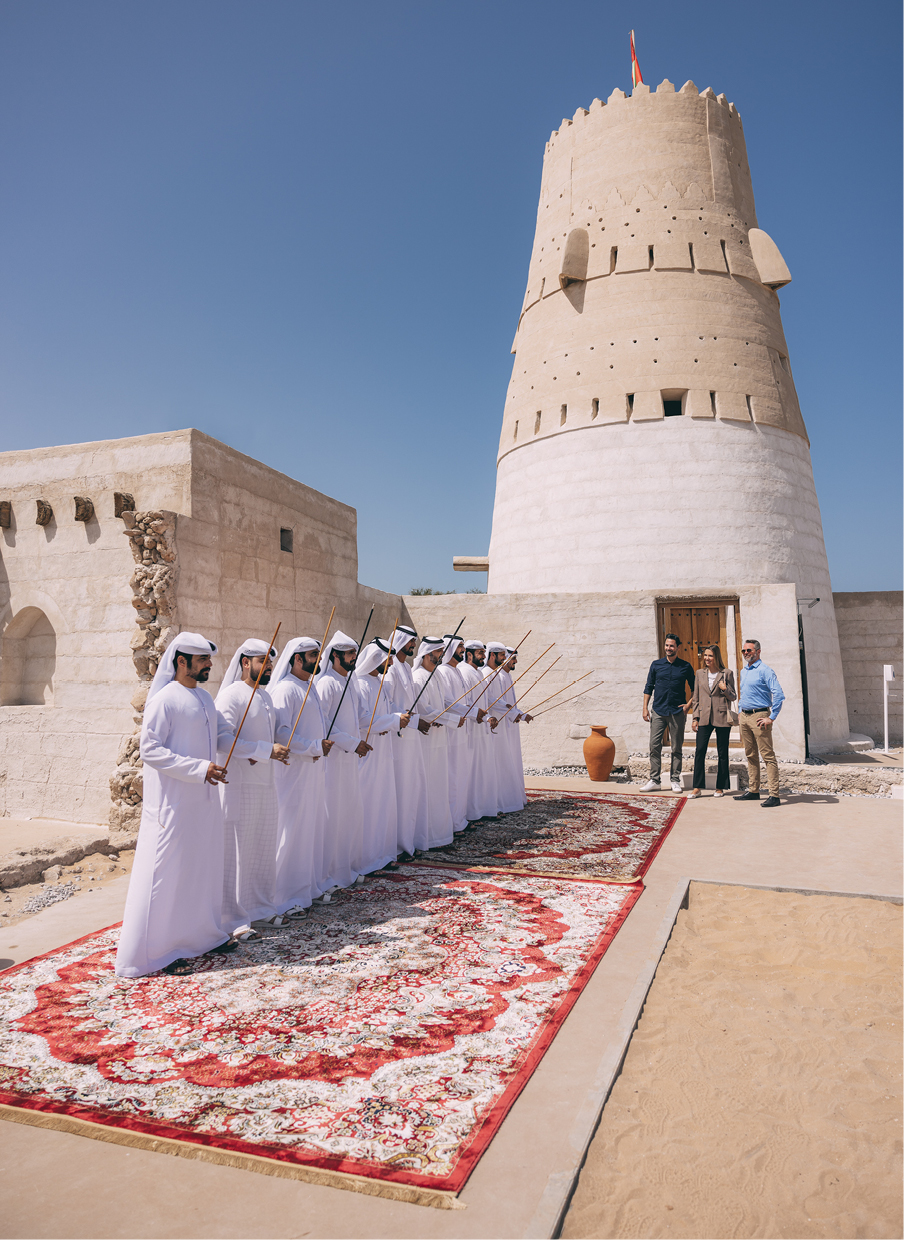
What can you tell us about the overall vision looking ahead? What level would you like to see tourism in the emirate reach in the coming years?
We are positioning Ras Al Khaimah as a destination of the future. This means creating a destination where tourism flourishes sustainably. We’re focused on fostering an environment where both visitors and residents feel connected to the Emirate’s unique identity while benefiting from its economic vitality.
Our goals are ambitious but clear: we aim to welcome 3.5 million annual visitors by 2030 and increase tourism’s contribution to the Emirate’s GDP from the current 5% to approximately one-third. Every initiative – whether it’s enhancing infrastructure, introducing new visitor experiences, or building partnerships – contributes to this vision.
What are the current projects you’re working on?
We’re focused on delivering projects that align with Ras Al Khaimah’s vision of sustainable growth and diverse experiences. This year, we opened Sofitel Al Hamra Beach Resort, with 292 keys, and the Anantara Mina Al Arab Resort, which introduced the destination’s first overwater villas. Early 2025 will also see the launch of Rove Al Marjan Island, a vibrant 441-room beachfront property catering to budget-conscious travellers. As the year progresses, we’ll introduce Saij, A Mantis Collection Mountain Lodge, a boutique eco-lodge nestled Jebel Jais that offers sustainable luxury while connecting guests with the Emirate’s natural beauty.
In Q3 2025, we’re excited to welcome two exceptional additions to our portfolio. Rotana Mangrove will feature 258 keys, while the Westin Hotel & Apartments will offer 257 keys with a focus on wellness, extensive fitness facilities, and signature Westin services.
We’re also expanding our adventure offerings with the introduction of Jais Wings, the region’s first dedicated paragliding site, and a new Via Ferrata offering exhilarating rock-climbing and mountaineering experiences.
Can you tell us a little about how you are working to promote historical and heritage sites?
Promoting and preserving our historical and heritage sites is a core part of our vision. With 7,000 years of history, the Emirate is home to some of the most significant cultural gems in the region. We’ve identified over 80 historical sites, with 20 prioritised for conservation as part of a long-term strategy. Four of these sites are already on UNESCO’s World Heritage Tentative List. We’re working closely with various authorities in Ras Al Khaimah to ensure these efforts align with international best practices.
Our efforts go beyond preservation – they’re about making these sites accessible and engaging for visitors while maintaining their authenticity. As part of our vision, we’re also working to integrate these sites into Ras Al Khaimah’s tourism narrative by creating curated tours, interactive exhibits, and storytelling elements to connect visitors more deeply to our heritage.
What can you tell us about the role of integrated resorts like Wynn Al Marjan Island in shaping the future of Ras Al Khaimah’s tourism industry?
The Wynn Resort Al Marjan Island represents a pivotal moment for Ras Al Khaimah. As the first integrated resort in the region and the largest single foreign direct investment in our tourism sector at $5.1 billion, it’s set to transform the Emirate’s hospitality landscape. Opening in early 2027, it will feature over 1,500 rooms, 24 dining options, a 7,500-square-metre event space, and a premium gaming element, all designed to attract affluent travellers and elevate tourism revenues.
Beyond its offerings and boosting visitor numbers, the resort is already generating jobs during its construction phase and will provide long-term employment once operational, helping to solidify Ras Al Khaimah’s standing as a global tourism hub.
What about property developments – we know you have some exciting launches coming up soon such as the Elie Saab residence – what is RAK doing to attract such projects?
The Wynn Resort Al Marjan Island has been a catalyst for growth across multiple sectors in Ras Al Khaimah. The “Wynn Effect” is driving increased interest from some of the world’s most prestigious brands. Nobu Hotels, W Hotels, JW Marriott, Hilton, Nikki Beach, and Ushuaïa under Palladium Hotel Group are just a few of the names now looking to invest in the Emirate, further reinforcing its appeal as a global destination.
The Elie Saab-branded residences and other premium real estate projects are a great example of this momentum. These developments reflect the growing demand for luxury living spaces in Ras Al Khaimah, driven by a strong investment climate and the increasing recognition of the Emirate as a place that blends opportunity with exceptional quality of life.
What is the biggest challenge you face in your position?
One of the most important aspects of my role is ensuring that Ras Al Khaimah’s growth as a tourism destination is managed sustainably. As we expand our hospitality portfolio, it’s vital that this development respects the Emirate’s natural and cultural heritage, ensuring that the qualities that make it special remain intact.
To achieve this, we’ve adopted a thoughtful approach to new developments, working closely with hospitality partners to align projects with sustainable practices and high environmental standards. Initiatives like the Barjeel Green Building Regulations, part of the RAK Energy Strategy 2040, aim to reduce energy and water consumption in new buildings by 30%, delivering operational efficiencies while minimising environmental impact.
Our broader Sustainable Tourism Strategy, developed in partnership with EarthCheck, supports local tourism businesses in tracking and improving their sustainability performance. Through “Responsible RAK,” hotels and attractions have adopted best practices in energy and water conservation, waste management, and social responsibility, with 24 properties already earning Silver Certification. By balancing growth and sustainability, we are ensuring that Ras Al Khaimah evolves responsibly, offering memorable experiences for visitors while securing a sustainable future for the Emirate.
On a broader scale, what are some of the trends you are noticing in the industry?
Tourist preferences are shifting in fascinating ways. Nature-positive tourism has become a major driver as travellers look to immerse themselves in the environment without leaving a heavy footprint. Ras Al Khaimah is uniquely positioned to meet this demand, with attractions like the Hajar Mountains and Rams Lagoon offering eco-friendly experiences in stunning natural settings. Globally, eco-tourism is expected to grow from $181 billion in 2022 to $334 billion by 2027, and it’s clear that visitors value destinations where sustainability isn’t just an option but a core focus.
We’re also seeing the rise of ‘gig-tripping,’ where holidays are built around cultural and entertainment events. This trend was especially evident with the “Swift effect” and Coldplay tours globally, and we’re embracing it here with initiatives like the Seven Wonders experiential event series. Next year, we will bring seven incredible artists to perform seven concerts in seven stunning locations across seven weeks. These events will take place in iconic settings across Ras Al Khaimah, including Jebel Jais, Al Jazeera Al Hamra, Al Wadi Desert, and on the emirate’s pristine, sandy white beaches, in a celebration of culture, music, and the natural beauty that makes this destination truly special.
Another trend gaining momentum is the appeal of all-inclusive travel, particularly among younger demographics. A recent report showed that 61% of British Gen Z travellers are considering all-inclusive stays in 2025, with 43% identifying it as their preferred hotel type. Ras Al Khaimah’s all-inclusive resorts have been key in capturing this audience, offering convenience and quality without compromise.
We’re also seeing the resurgence of multi-generational travel. Families are increasingly choosing destinations that cater to all ages, seeking a mix of relaxation and adventure. With its family-friendly resorts and diverse attractions like Jebel Jais Adventure Park, Ras Al Khaimah continues to deliver memorable experiences for every traveller.
Can you tell us some of the more unexpected reasons to visit Ras Al Khaimah this winter?
Ras Al Khaimah is the kind of place that surprises you at every turn. If you’re looking for something beyond the usual winter getaway, Jebel Jais, the UAE’s highest mountain, is a standout. This winter, the Bear Grylls Explorers Camp is back with activities like axe-throwing and air rifle shooting for those looking to channel their adventurous side. Families will love the Jais Adventure Park, home to the Jais Flight zipline and the Jais Sledder, where you can glide down the mountainside with stunning views at every twist and turn.
For hiking enthusiasts, Ras Al Khaimah offers an impressive 94km of trails, including the recently enhanced Jebel Jais Rim Trail, a 40km loop featuring the UAE’s longest balcony walk and ridge trail. History buffs can explore Dhayah Fort, the UAE’s only remaining hilltop fort, or visit Al Jazeera Al Hamra, a historic pearl diving village that tells the story of the Emirate’s rich past. Visitors can also take to the skies in a microlight aircraft or enjoy the serene beauty of the coastline on a Yellow Boats tour.
Food lovers will appreciate Ras Al Khaimah’s latest dining experiences. The Zuma pop-up at The Ritz-Carlton Ras Al Khaimah, Al Wadi Desert offers modern Japanese cuisine in a breathtaking desert setting. Here, you can also experience Michelin-level gastronomy at the newly opened Farmhouse by Chef Syrco Bakker. Farmhouse’s menu embraces sustainability, traceability, and local ingredients. With a rustic yet refined atmosphere, the restaurant delivers a culinary experience that connects guests to the essence of the land, redefining luxury desert dining.
What are some of the upcoming events visitors can look forward to?
To round out the year, our New Year’s Eve celebrations will once again attempt to set a new GUINNESS WORLD RECORD™ title. Building on last year’s record-breaking fireworks and drone show, this year’s celebration will push the boundaries of creativity further, combining advanced laser drones and stunning pyrotechnics that residents and visitors can witness at the waterfront between Marjan Island and Al Hamra Village.
For 2025, Ras Al Khaimah has yet another incredible lineup of events. One of the most exciting is Seven Wonders. Recently launched with an exclusive performance by the legendary DJ Armin Van Buuren, the event series will unfold with seven concerts by seven world-class artists at seven iconic locations over seven weeks, offering visitors a completely immersive experience.
Sports continue to play a big role in our events calendar. The RAK Half Marathon, now in its 17th year, remains a highlight for both elite and amateur runners, while the RAK Golf Championship and the UAE Tour showcase the Emirate’s appeal as a destination for world-class sporting events. For those drawn to art and culture, RAK Art will once again transform Al Jazeera Al Harma into an open-air art gallery as the festival celebrates the creative talent of regional and international artists.
Head of Dubai Opera Paolo Petrocelli on What’s Next for the city’s Leading Arts Venue
When Dubai Opera opened its doors for the first time in 2016, there was much anticipation as to how this world-class venue would help shape the future of the city’s cultural and entertainment scene.
Globally, opera houses are known as a source of entertainment and education and a critical part of the city they came from. Almost a decade later and Dubai Opera is well on its way to achieving this feat. Housed inside an architectural marvel, the Dubai Opera has quickly become a premier destination for arts and entertainment, hosting an eclectic mix of performances, from grand operas and classical ballets to contemporary concerts, theatrical productions, and even stand-up comedy.
Leading Dubai Opera’s vision is Paolo Petrocelli, whose background in the entertainment industry has been imperative to the development of the venue and its increasing popularity. Here, we find out more on what’s to come from this cultural destination.
Tell us about the current vision and direction of Dubai Opera.
At Dubai Opera, our vision is to be the cultural heartbeat of Dubai, a city renowned for its dynamic growth and global ambition. We strive to position Dubai Opera as a world-class destination for diverse artistic expressions and cultural exchange. This includes showcasing international superstars and groundbreaking productions, while also nurturing local talent and providing an accessible platform for the arts. We aim to deliver a broad spectrum of performances, ranging from the grandeur of opera and ballet to the vibrancy of contemporary theatre, ensuring that every season offers something for all tastes. Our direction is about blending the traditional with the modern, creating a cultural dialogue that resonates with the multicultural community of Dubai, while attracting visitors from all over the world.
In line with Dubai’s vision to become a leading global cultural hub, we focus on making Dubai Opera a beacon for creativity and innovation in the arts, continually pushing boundaries while remaining deeply connected to the heritage of both Dubai and the broader Arab world.
What do you look for when curating the schedule each season at Dubai Opera?
When curating our season, we aim to create a lineup that reflects the cosmopolitan spirit of Dubai. Our programming is a mix of traditional and modern performances, always reflecting our commitment to excellence and diversity. We carefully balance the genres of opera, ballet, classical music, jazz, contemporary dance, theatre, and musicals to ensure there’s something for everyone. International productions like The Phantom of the Opera and Matilda have been crowd favourites, but we also prioritise innovative performances, such as cutting-edge collaborations and contemporary theatre.
Each season, we seek to bring performances that not only appeal to Dubai’s residents but also attract tourists from around the world. With shows like The Nutcracker, and concerts like Ludovico Einaudi we continually aim to present globally recognised talent, but we also invest in nurturing regional talents through collaborations and special performances.
How do you balance the genres of events?
Balancing genres is an integral part of our programming strategy. We understand that Dubai’s audience is diverse, with varied interests spanning different cultures and artistic preferences. Therefore, we make it a point to mix traditional genres like opera and ballet with more modern and accessible genres like pop concerts, musicals, and even family-friendly events.
We also aim to reflect the city’s vibrancy by introducing immersive art experiences and live performances that fuse technology with music and dance. Through such a dynamic mix, we can engage different demographic groups—cultural connoisseurs, families, young professionals, and tourists. It’s about ensuring that there is something for everyone while maintaining the highest standard of quality.
When it first opened, the building was an architectural marvel – tell us about that and some of the highlights.
Dubai Opera is a true architectural marvel, designed by renowned architect Janus Rostock, and inspired by the shape of a traditional dhow, reflecting Dubai’s maritime history. The design allows for versatile usage, transforming seamlessly from a traditional proscenium theatre to a flat-floor event space, offering endless possibilities for a variety of performances and events. This flexibility allows us to host everything from grand operas and ballets to intimate concerts and corporate events.
Our stunning venue, with its 2,000-seat capacity and cutting-edge acoustics, continues to attract world-class talent and serve as a symbol of Dubai’s growing cultural scene.
Tell us about the educational opportunities you are providing through the Opera.
At Dubai Opera, we place a strong emphasis on education and community outreach. We offer a variety of programs aimed at nurturing future talent and fostering an appreciation for the performing arts. This includes workshops and masterclasses with international artists, designed to provide both aspiring artists and students with hands-on learning experiences. Our Behind-the-Scenes tours give students a unique insight into the production process, from the technical aspects to the creative artistry that goes into staging performances.
We also collaborate with schools, universities, and cultural institutions to create accessible opportunities for young people to engage with the arts. Programs like The Lullaby Project in collaboration with Carnegie Hall Weill Music Institute is a transformative training program that we are gladly working on in association with the Dubai College of Tourism for the first time in the Middle East.
Who is the core target market for the opera today?
Dubai Opera’s audience is incredibly diverse, and we strive to appeal to both seasoned arts aficionados and newcomers alike. Our core audience includes local residents, expats, and tourists who are drawn to Dubai’s vibrant cultural scene. With performances ranging from world-class opera to Broadway musicals and contemporary dance, we cater to a wide array of tastes, from classical music lovers to fans of pop and rock concerts.
Our family-friendly performances also attract families with young children, providing them with accessible, enjoyable cultural experiences. The recent success of events like Mamma Mia! Slava’s Snow Show, The Little Prince exemplifies this broader appeal. In addition, we regularly host corporate events and private functions, further solidifying Dubai Opera as a multifaceted cultural destination that serves multiple segments of society.
What would you still like to do that you haven’t done yet?
There’s always more to accomplish! One of my main goals is to continue strengthening Dubai Opera’s role as a platform for innovation in the arts. We are exploring more immersive and interactive experiences, such as multi-sensory productions and collaborations with digital artists, to appeal to evolving audience expectations. Additionally, while we’ve brought major international productions to Dubai, I’d love to expand our relationships with global cultural institutions further, bringing even more exclusive performances to our stage.
Another key area for growth is the further development of our educational outreach. We’re working very closely with the Arabic Music Institute, which works on preserving the Arabic music and language, which is a new initiative by EMAAR.
What is the biggest challenge?
One of our biggest challenges is maintaining a consistent level of audience engagement in a city as dynamic and multicultural as Dubai. With such a transient population, it’s essential for us to strike a balance between attracting tourists and creating a loyal, local following. We must constantly innovate to remain relevant while ensuring that our programming remains rooted in the rich cultural traditions of Dubai and the UAE.
Another challenge is balancing commercial viability with artistic excellence. We aim to ensure that our performances are not only artistically inspiring but also financially sustainable, enabling us to continue offering diverse, world-class programming year after year.
We are seeing so many exciting events across the country – how would you assess the cultural/entertainment scene in the UAE today?
The UAE’s cultural and entertainment landscape has evolved dramatically over the last decade. With major projects like the Louvre Abu Dhabi, the upcoming Guggenheim Museum, and numerous global festivals, the country has firmly established itself as a cultural powerhouse in the Middle East. Dubai Opera plays a critical role in this transformation, offering a world-class venue for global performances while also fostering local talent and promoting cultural exchange.
Looking at the wider region – do you see further opportunities for culture and entertainment that haven’t been explored yet?
There is certainly room for more cross-cultural collaborations within the region, especially fusing traditional Middle Eastern music and dance with contemporary global trends. The future of regional arts lies in these collaborations, which will introduce new artistic forms and enrich the cultural fabric of the entire region. Dubai Opera is uniquely positioned to lead in this regard, and we’re exploring partnerships with regional artists and institutions to create such collaborations.
There’s also growing potential in creating more platforms for local talent to engage with international audiences. We’re working to bring more regional performers to global stages, and also curate more productions that fuse local heritage with international theatrical practices.
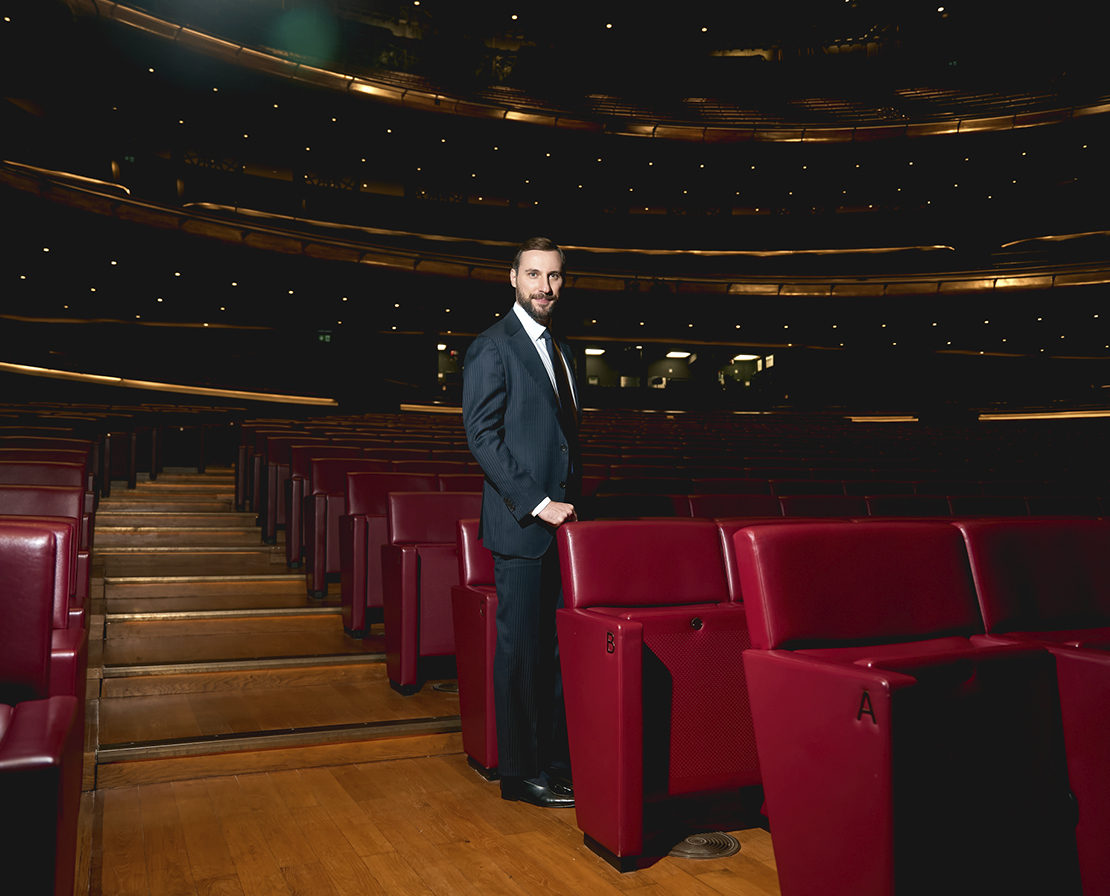
Can you share a little about your personal journey so far and how you progressed to your current role?
My journey into the arts has been shaped by a deep passion for culture, creativity, and the transformative power of the arts to connect people across boundaries. From a young age, I was drawn to music, and I recognised early on that the arts have the unique ability to inspire and transform. I started in management roles within cultural organisations, focusing on the strategic development and innnovation. Over time, I developed a strong interest in how the arts can play a key role in shaping the cultural identity of a city, especially in a dynamic and multicultural environment like Dubai.
I joined Dubai Opera at a pivotal time, when the venue was still relatively new, and the ambition was clear — Dubai Opera was to become not just a performance venue, but a beacon for culture in the region. As I progressed in my role, I had the privilege of working closely with an incredibly talented team to help realise this vision. The opportunity to work with world-renowned artists and productions, while also nurturing local talent, has been one of the most rewarding aspects of my career. In my current role as Head of Dubai Opera, I continue to work towards our mission of positioning Dubai Opera as a world-class destination for the arts, a platform where international and local talent can meet and where cultural exchange thrives.
It’s been an exciting journey, and I look forward to continuing to contribute to Dubai Opera’s growth, while embracing new challenges and opportunities as we evolve within the rapidly changing cultural landscape of Dubai and the wider region.
What are some of the highlights upcoming this season?
This season, we are thrilled to present a stellar lineup that includes world-renowned operas, musicals, and exclusive performances by celebrated artists. We are currently having Singin’ in the Rain the musical, and next in line is the Nutcracker performed by the prestigious ballet and orchestra of Astana Opera.
Chopard’s Caroline Scheufele Discusses the Brand’s Growth in the Middle East
Swiss high jewellery and watch manufacturer Chopard has a long history in the Middle East. It was one of the first international brands to open a store in the UAE, and that relationship has continued for decades.
Today, the brand, which was founded in 1860, and brought by the Scheufele family in 1963, is spearheaded by second-generation family members Caroline Scheufele and Karl Scheufele, who share the responsibilities of the company between them.
Caroline is also the brand’s Artistic Director, overseeing the creative processes at the brand and designing the company’s annual Red Carpet High Jewellery collection, which launches at the Cannes Film Festival each year.
This month, however, Caroline is focused firmly on the Middle East, as she arrives in Dubai for the relaunch of Chopard’s boutique in Dubai Mall. Alongside Friend of the Brand, Bella Hadid, the Co-President reopened the meticulously designed store. Ahead of the opening, we caught up with Caroline to discuss the brand’s relationship with the Middle East, as well as the latest collections and what’s to come for 2025.
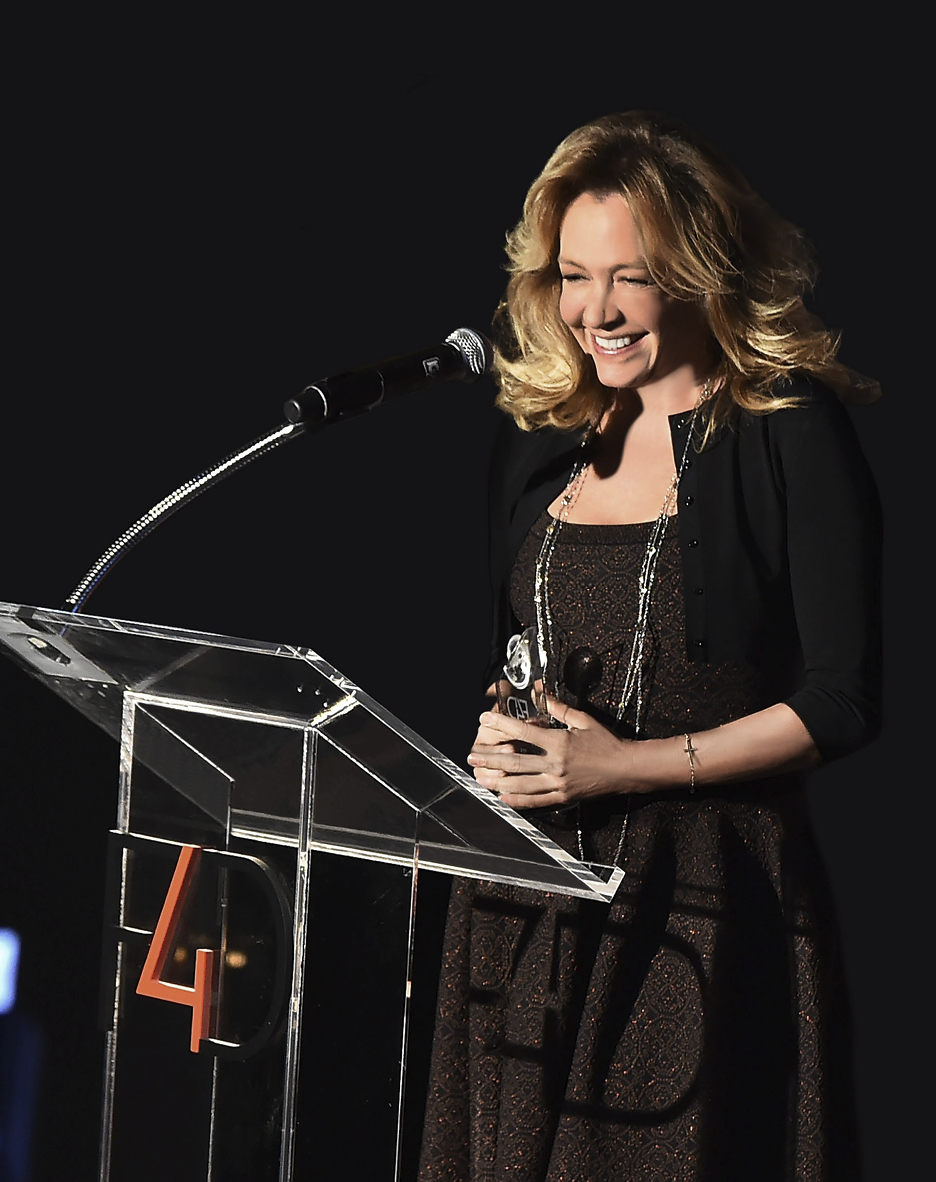
What does this market mean to you and how do you connect with your customers here?
The UAE is one of our oldest and first Middle Eastern markets. We opened our very first boutique in the WAFI centre in Dubai many years ago. It was opened by my father. There is a lot of history between Chopard and Dubai. There has been much change, growth and friendship – it’s about more than business. We are very excited to reopen the Chopard store in Dubai Mall with a completely new look. The team has done an incredible job, and of course, we have an incredible friend of the brand here with us to open the store.
Tell us about the new store – what are some of the new elements and changes?
For some time now, instead of repeating the same elements in each store around the world, we have used the concept of being inspired by the city that the store is in. So even though the basis of each store is the same, when you go to Paris, you should feel that you are in Paris, and when you go to London, you should feel that you are in London, and now, when you come to Dubai, you can feel that you’re in Dubai. We have beautiful artwork by a local artist, and there are some elements – small details – that are inspired by the country. When people go shopping, it’s an experience, and they want to remember something about the shop they visit in a particular destination.
We are also making more and more limited edition pieces for particular cities or stores. It’s something we have done in Dubai for many years – a special coloured dial, pieces with Arabic writing, pieces that connect to the world of horse riding or are inspired by architecture – it was one of the first markets that we did this. It has been very successful, and it’s something we want to do more of.
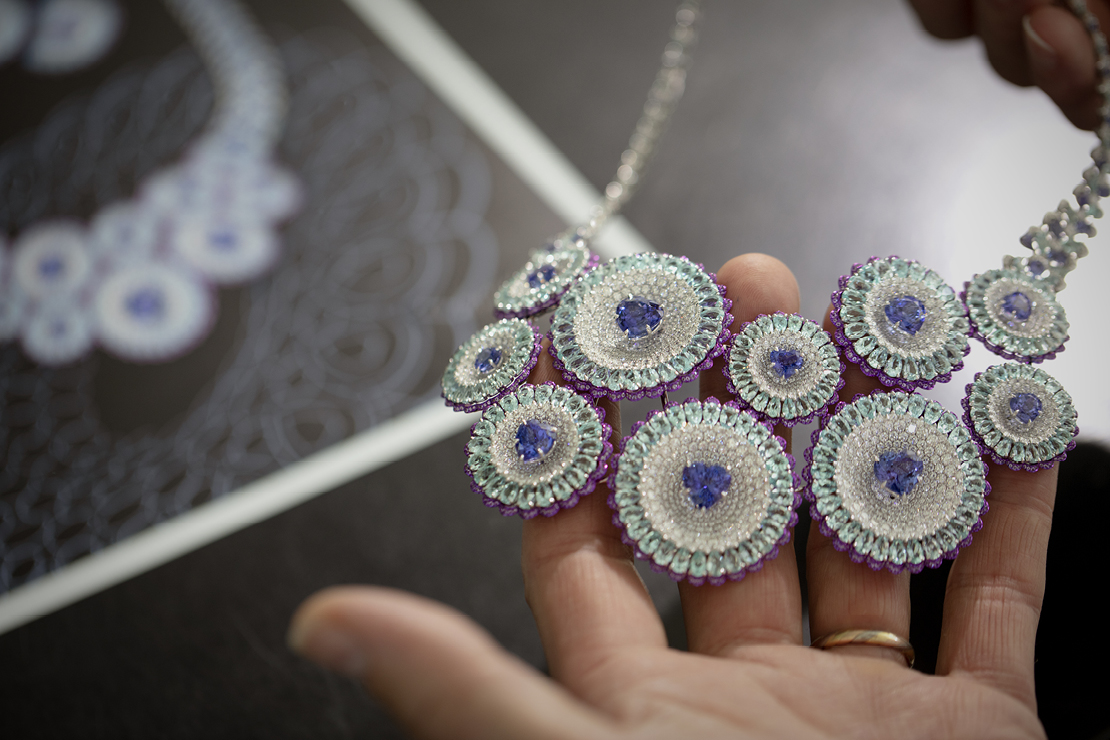
Who is your customer in the UAE today?
Today in Dubai, our customer is the whole world! Especially when you go to Dubai Mall, and hear languages from Europe, America, Asia, and Russia – everything is melting together, and this was not the case some years ago. It’s completely multicultural and it’s fascinating. So our customers could be anyone from anywhere, and they could also be women of different age groups, especially with the launch of the Ice Cube collection, which is targeted at the younger generation. We have customers who are collecting watches, customers who are looking for unique pieces and then we have their daughters or their granddaughters who have got to know Chopard through their parents and are interested perhaps in the Happy Sport or Ice Cube collections – so it’s really multigenerational.
Tell us about the Ice Cube collection – why was it important for the brand to launch this and target the younger market?
Well, because they are the clients of tomorrow! It’s nice to see younger generations interested in our brand, and remember; the younger generation is very influential on their parents.
The Ice Cube collection has actually been at Chopard since the 1990s. It started with a high-end jewellery watch – The Cube – many years ago. It was completely set with baguette diamonds. Then, we made different iterations of this watch, and we started creating jewellery pieces to complement the watches. It’s a collection that has always been there, but if you look at it, you feel like it has just been invented today, and it has this incredibly modern appeal. That’s a sign for me that a collection is a success – you can reinvent it at any time, and it still feels new and contemporary. What is new with Ice Cube, however, is the stacking and the way it is worn today.
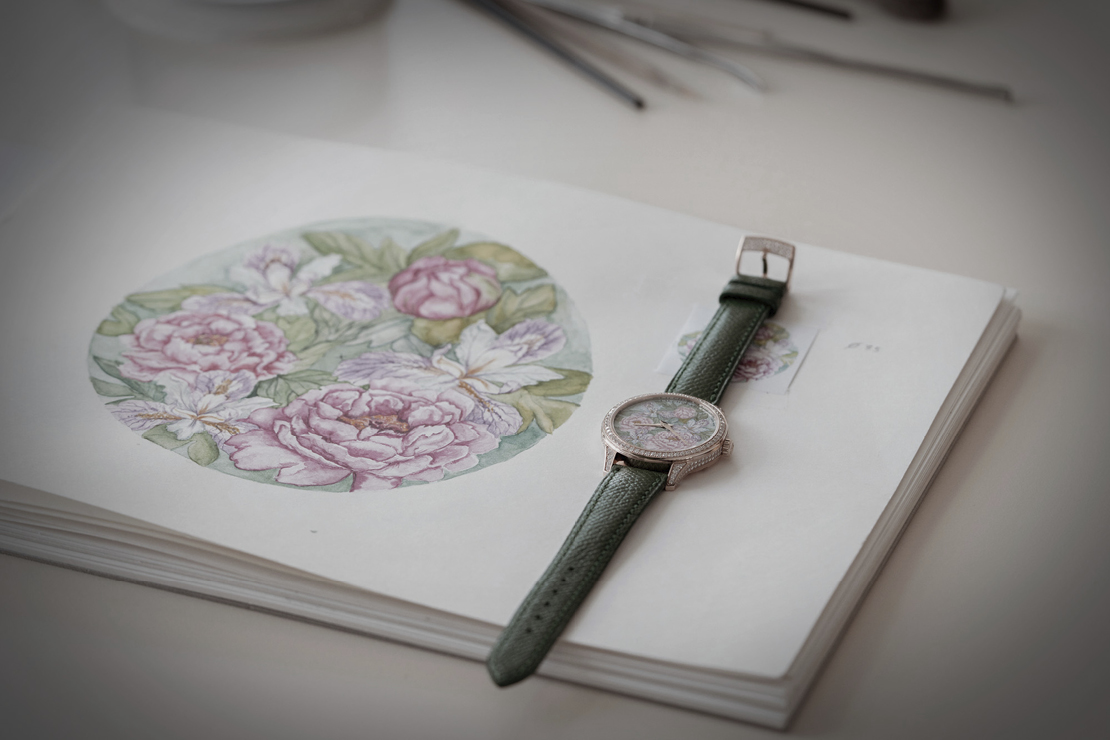
Tell us about the 2024 High Jewellery collection, which launched earlier this year.
We launch the Red Carpet collection in Cannes each year at the Cannes Film Festival. Every year, there is a theme and some years, it can be mind-boggling to come up with ideas, but this year, actually for me, it was easy. I went back to my childhood and how people want to dream and feel cocooned – especially with so much turmoil in the world – and we arrived at the theme of fairytales. I thought about stories that my mum used to read before bedtime, and this was the inspiration. It was a fantastic theme. It was very straightforward, and next year’s theme is also very straightforward but I can’t tell you about that yet!
What else is coming up this year and into 2025 that you can tell us about?
We are almost at the end of a very busy 2024. We have the Red Sea Film Festival coming up, which is an incredibly fast-growing event that I must say is very well organised. So, I think I’ll be back in the Middle East one more time this year. We are working on new boutiques and renovating old boutiques, which is an ongoing process. We just launched a beautiful new watch in Mexico – it’s very cool – a one-off minute repeated based on skulls. We will have a big exhibition over the new year in St. Barths. All of our markets are very busy!
We know that brand ambassadors are very important to Chopard – how do you select them, and how do you think they help support what the brand is doing?
I would actually call them Friends of the Brand because we often get approached by them, meaning they follow the brand, and they like what we are doing and would probably wear our products, even if they weren’t officially working for us. I think this is really important because it has to be a good match. You have to wear something that goes with your personality and that you like. I don’t want any of our ambassadors just to be a pretty face – they have to have a character and personality, beauty inside, not only outside.
And you have Bella Hadid here with you in Dubai for the store opening – why do you feel she is a good fit for the brand?
Bella has been a face of the brand for a few years now, and she really loves Chopard. She is a perfect fit for the Ice Cube collection.
And then, of course, we have beautiful Julia Roberts. When we were launching the Happy campaign it was all about a smile. Many beautiful actresses were suggested to front this campaign, and I said, ‘the most beautiful smile is missing: Julia Roberts’. The team told me: ‘No, she doesn’t do anything like this,’ but we had a relationship with her because she liked the brand and she loved the initiatives we have around sustainability and ethical gold, so we talked to her, and it worked!
And now we are working with someone else who I can’t say yet, but it’s someone who contacted us first, and that I would say is a result of us being at the Cannes Film Festival for 27 years. We are there for young talents when nobody knows who they are, and we get older together!
We know sustainability is very important to the brand – what can you tell us about the latest developments around that?
It’s an ongoing journey. We have perfected our ethical gold, but the journey does not end there. Two years ago, we launched our ethical Lucent Steel. It is, in fact, a more beautiful steel because it’s much harder and manufactured differently.
Our diamond sourcing process is more or less under control, but with coloured gemstones, there is still a lot to be done. Every year, we focus on a different stone – we have done opals, emeralds, rubies – but there is still a lot to do, and it takes time – countries are involved, governments are involved, so we have to take it step by step.
What’s the biggest challenge you face today?
To come up with new ideas that have not been done before. And using new materials. We were the first company to set diamonds into titanium in our high jewellery, which was a completely new process, and we are trying to stay on top of that creativity. Even as we grow, we must maintain the quality and keep our values and family spirit.
Controlling distribution is also a challenge. There are so many new challenges that need to be controlled with the internet and social media, and it’s still an unknown area in many ways.
How do you balance staying true to the brand’s heritage with being modern and creating for the younger generations?
It’s a very thin line to walk on. Thankfully, I have still not run out of ideas! Actually, I always have too many, which is a good problem. I think one thing that sets us apart from others is that we produce everything in-house. If you visit our manufacturer, you will see everything from watchmaking to stone-cutting, to high jewellery making, and gold making, all under one roof – it’s very special, and if you visit, you will see how proud people are to work with us. Many of our artisans trained with us, and they are still with us after 20 or 30 years.
Is there anything you would still like to do?
Well, I’m doing it with our fashion collection. It’s a completely different animal, and I have stepped out of my comfort zone, which is challenging. It’s fun, but it’s another world for me – it’s working, though, and it’s also a first. I approach it with the same ethics as making high jewellery or watches to make sure it’s sustainable.
What would be your message to readers to know about Chopard in 2025?
We always surprise!
Sharifa Al Sharif Al Hashemi Founder of ONORI Discusses her International Ambitions
Emirati entrepreneur Sharifa Al Sharif Al Hashemi, has had a busy year. Since launching her brand ONORI in January, she has revealed four collections, a pop-up store and her designs are now stocked on Ounass.
ONORI is not your average UAE-based brand. Al Hashemi’s designs are modern, with stand-out pieces that go against the modest fashion narrative we have seen so much of in recent years. It was Al Hashemi’s love of being different that inspired her to launch her own fashion brand, after realising her passion for design could in fact become a career choice. Now, as the brand launches it’s 2024 Resort collection, we find out what’s next for the ambitious designer.
Tell us about the universe of ONORI.
ONORI is very luxurious, feminine and romantic. It’s all about promoting strength and confidence, and I feel like it’s very magical. Even the colours and fabrics I choose keep this in mind. Every piece I make resonates with power, and at the same time, it’s very feminine. There is a modern edginess to it as well. All of my pieces take inspiration from vintage fashion of the sixties and seventies but with a contemporary edge to them. I try not to follow trends, as I want my pieces to be timeless and wearable, as well as a way for women to express their unique style. I myself like to be very unique with what I wear and I think the woman who chooses to wear my pieces has that element to her as well.
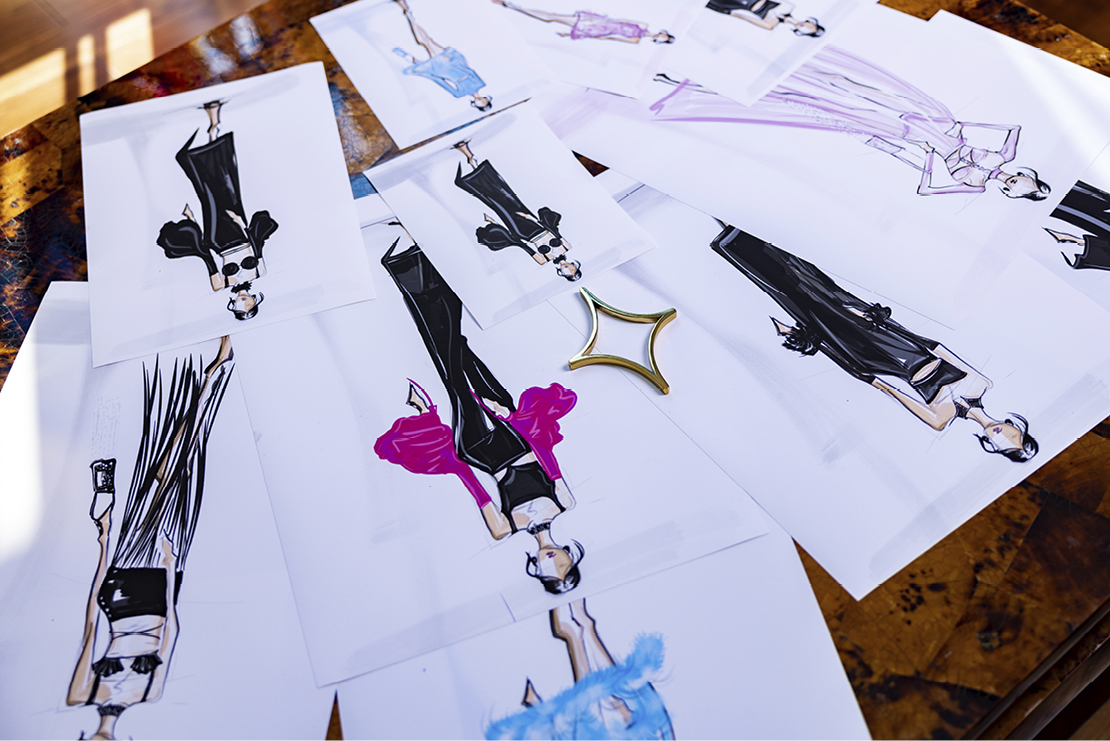
How did the brand come to life?
I didn’t study fashion design, but I grew up in a family working in the fashion business. I have been to so many fashion shows since I was young. I have travelled a lot, and this has inspired me, too. Then, three years ago, my sister was sadly diagnosed with cancer, and she really inspired me by the way she continued to work and take care of her kids, even though she wasn’t well. My father inspired me with his work ethic, too. Even though he’s getting older he is so dedicated to his work. I saw all this, and I thought about how I’m young, healthy, and still have energy, and I wanted to create something that expressed this. I have always liked to wear clothes that express my personality, and I like to put a twist on every piece I wear. So, I started to design limited pieces, and it was very inspiring. I went to Première Vision in Paris and started doing my own research and finding out what it would take for me to launch a brand. It was a long process because I was new to everything, and I had no training in design. It was difficult but it was a beautiful journey but luckily, I had my family’s support.
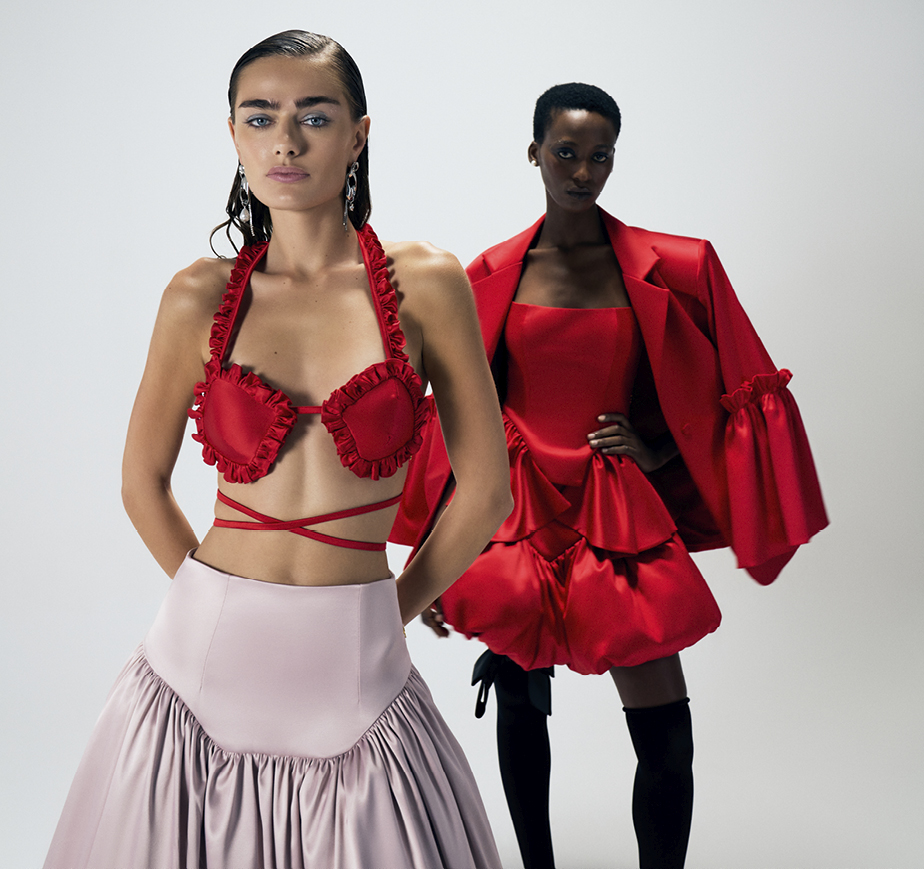
What can you tell us about the overall vision looking ahead?
Since the beginning, I have wanted to see it become a global brand. I want ONORI to be in international department stores, and online stores. I want to see women of different ages from different countries wearing my pieces, and I want it to be a global brand.
Can you tell us about your current collection?
Our most current collection is the Resort collection, which is now available on Ounass. This collection is very elegant; the colours are very romantic and soft – red, dusty pink, champagne – all of the pieces are timeless, but they have a boldness to them. Each piece was created to elevate the wardrobe of whoever buys it, and it’s a great collection for the festive season.
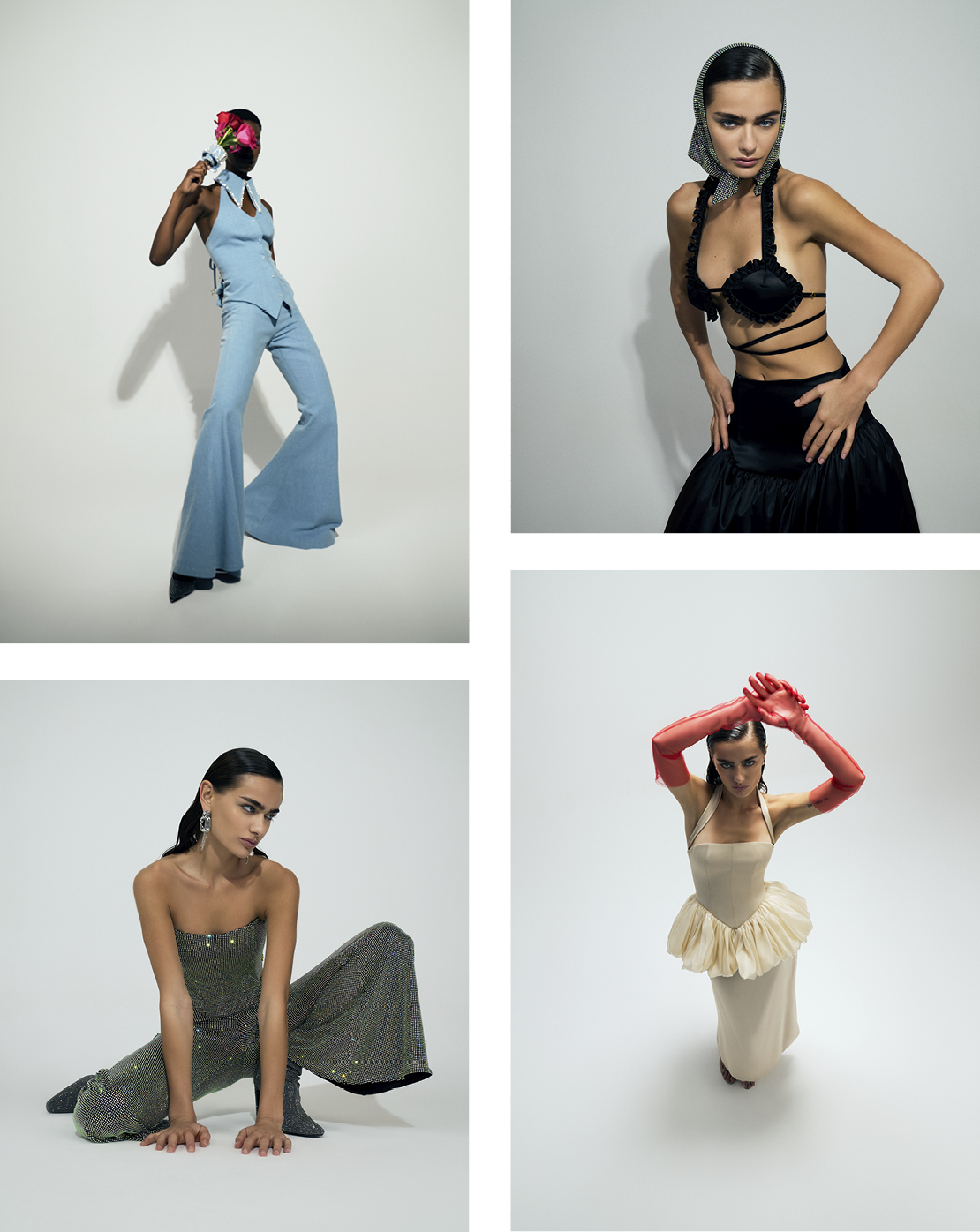
Your brand was founded here in the UAE but it has a very international feel – how did you find this balance?
I lived in The United States for nine years, and throughout my childhood, I used to travel a lot so I think I have always been different. That’s why my brand is not very conservative. It’s more fun and playful. My first collection was really out there. Then I tried to be a bit more conservative in the second and third collections to match all the demographics.
The feedback I’ve had so far is that my collections feel like they come from a brand that’s already established, even though it has still only been a year. This is something I made sure of.
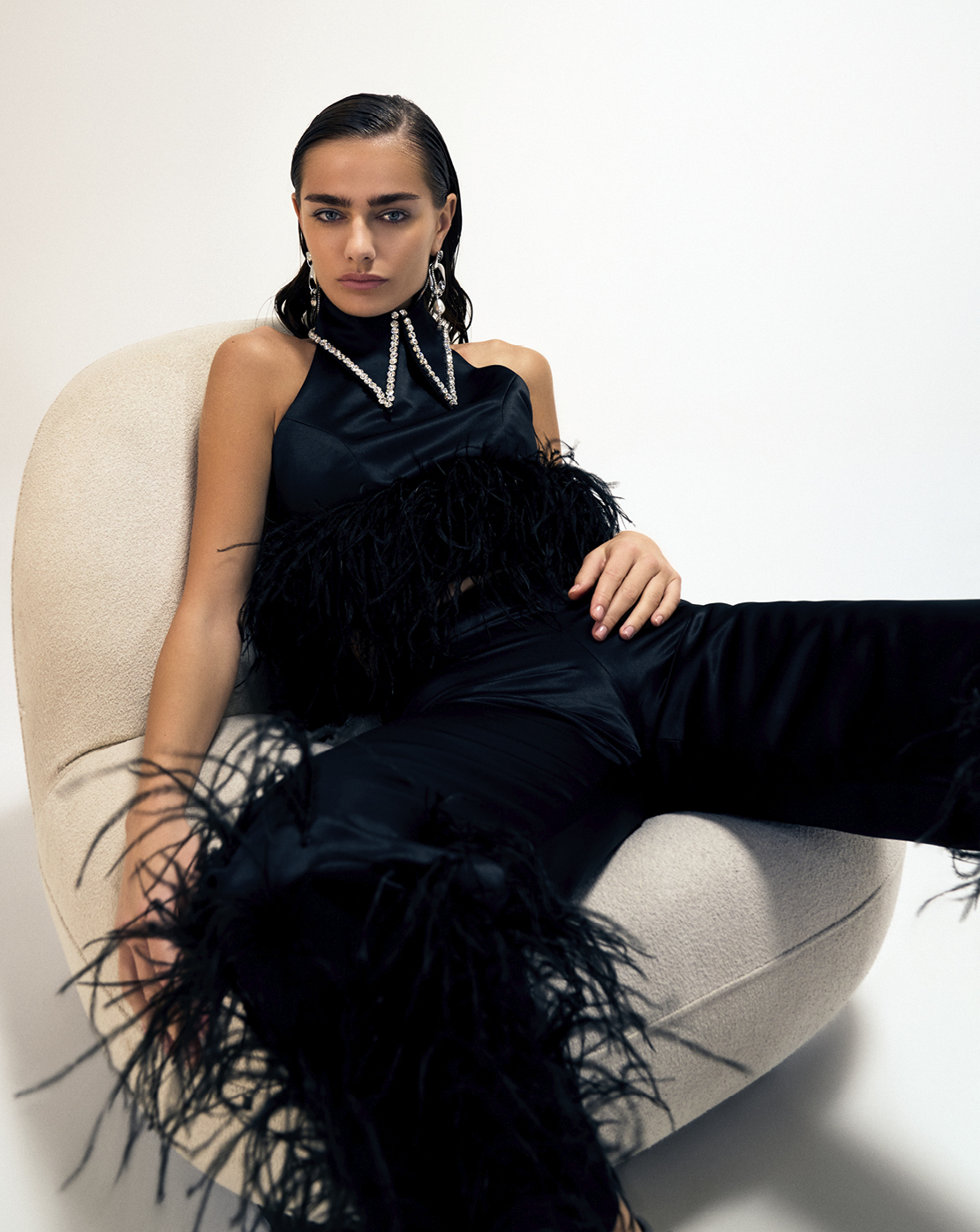
Can you share a little on your production and material selection?
I get inspired on a daily basis. Anything I see that I like, I take a photo of it, or I write it down and keep it so I remember. I am always looking for ideas. I then go to fabric shows around the world. I collect fabrics and colours and get inspired from that. Then I print everything that I took photos of, and then I sit and start sketching my designs. We then test the designs in a simple fabric and I wear them myself to see how I feel when wearing them. I get my sisters, my friends, and my colleagues to try on the pieces, and then when everyone agrees that it’s perfect, we stitch them on the actual fabric. Then, we will all try it on and wear it again until it’s perfected.
What’s the biggest challenge?
The biggest challenge is people. When I started the brand, it was only me, and I have another job, so it was very challenging to find the time for fashion design. I needed to find the right people to work with me because it’s not only about having someone who’s quality, I wanted someone to be loyal as well. I wanted my staff to feel at home when they came to my office, as though they are part of a family and I think this encourages them to be honest and loyal to ONORI.
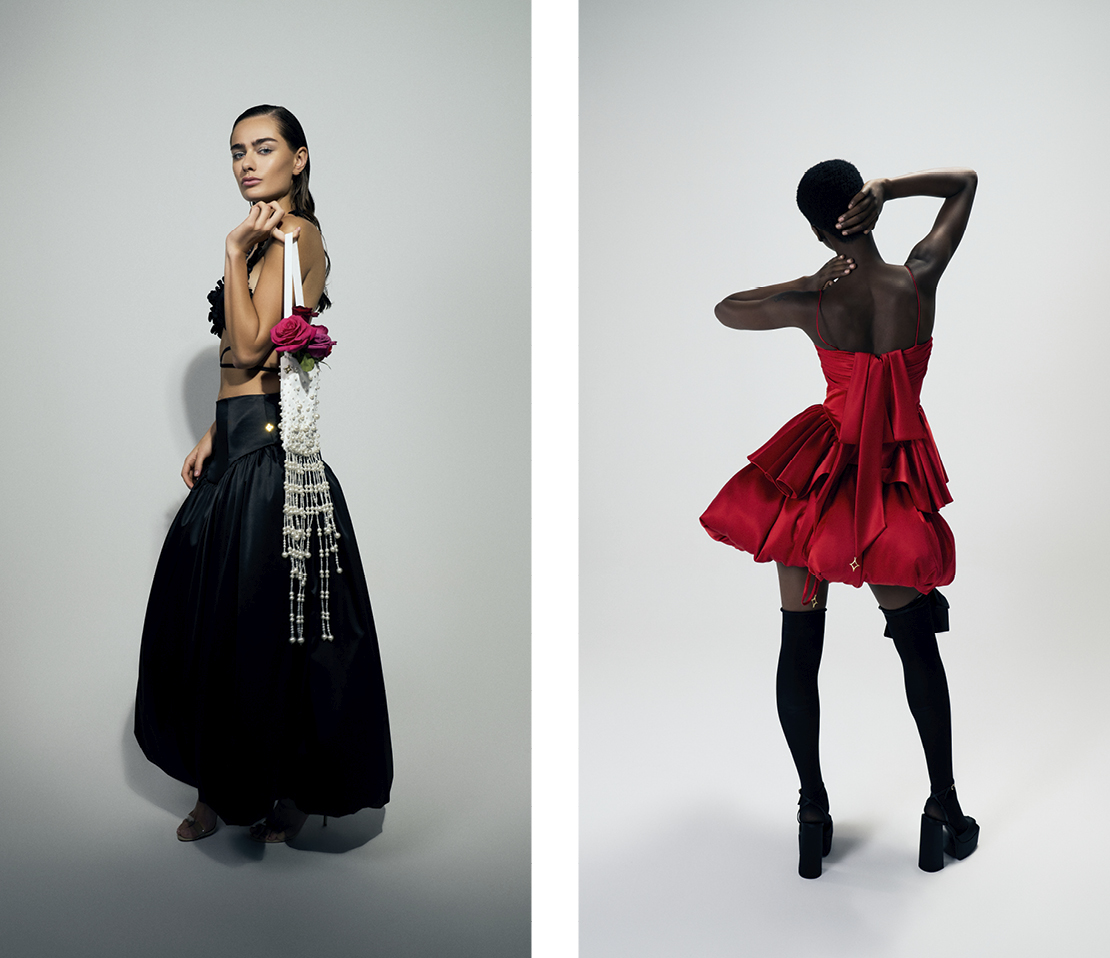
How would you assess the fashion industry in the Middle East today?
Dubai is a melting pot of people from all different cultures, religions, and backgrounds. There is a mix of global influence and local creativity, and the UAE’s market is growing fast, especially in Dubai. I am so happy to see a focus on local brands and to see them gaining recognition globally which is great because we do have the creativity here.
What’s the professional motto you live by?
There’s an Arabic saying that means ‘when you do something, perfect it, or just don’t do it.’ This is how I live my life: I do everything perfectly, or I don’t want to do it at all.
Where do you go to switch off and find inspiration?
The beach.
Omar Al Gurg Curator of the 2024 UAE Designers Exhibition Discusses Regional Talent
Each year, the UAE Designers Exhibition is one of the highlights of the annual Downtown Design event, showcasing conceptual creations from talented, upcoming designers based here in the UAE.
Now in its fifth edition, the 2024 UAE Designers Exhibition was curated by Dubai-born designer Omar Al Gurg, who, in 2021, was one of the designers selected to showcase as part of the same exhibition. Now, three years later, Al Gurg is running his own design company, Modu Method, and is a testimony to the success of the Downton Design showcase. As this year’s event kicked off, we met with Omar Al Gurg to find out more about this year’s showcase as well as the success of his own brand.
Tell us about this year’s UAE Designer exhibition at Downtown Design.
The brief for this year was about comfort and function. All of the pieces had to be comfortable in one way or another and functional, of course. That didn’t have to be just physical comfort. It could be emotional or mental comfort, too. It could be nostalgic in some way or another as well. We sent out an open call and rounded up 33 designers. Some of them are in collaboration with each other, and they come from all around the world. It’s not necessarily that they are all Emirati – there are seven Emirati designers – but they are all based here in the UAE.
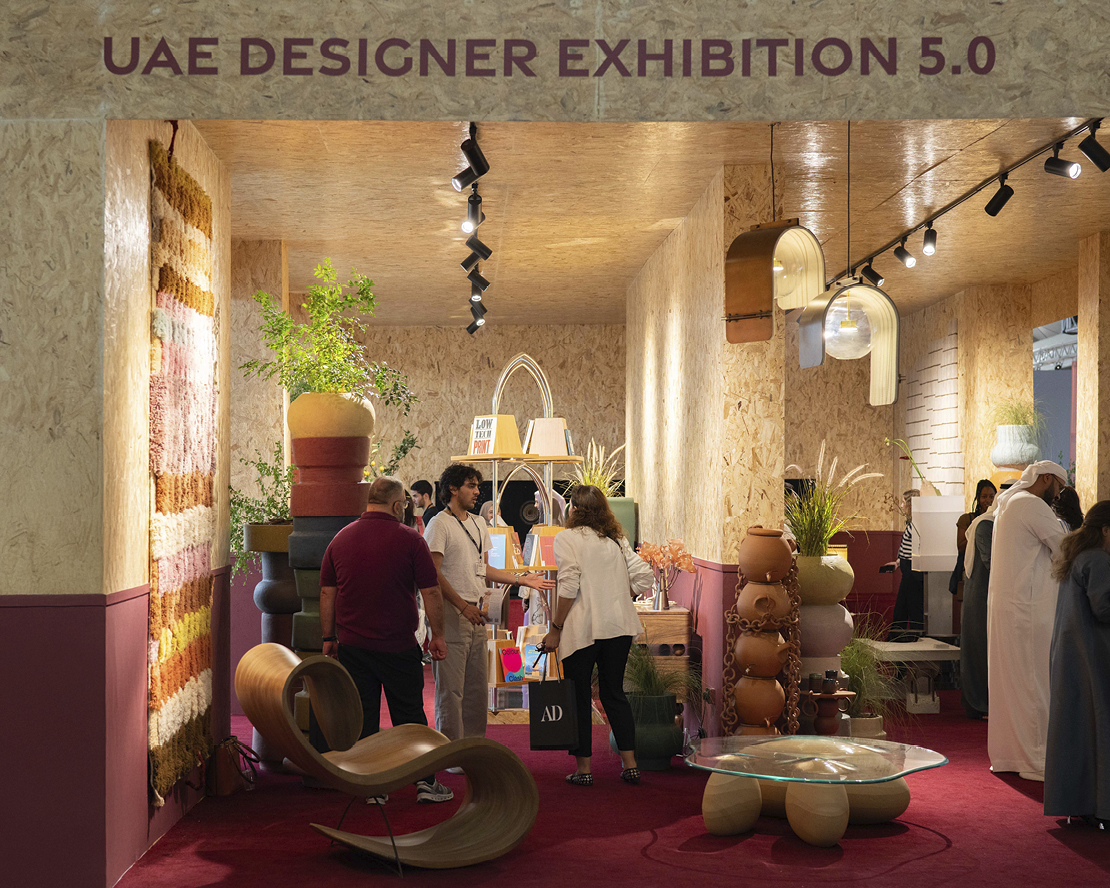
This year, we wanted to make the exhibition feel like it was more of a living room setting than a sterile space. I wanted the products to interact with each other, and that way, the designers were more inclined to speak to each other and build a community among themselves. This could open up doors in the future for further collaborations.
How did you go about selecting the final lineup of designers?
I looked at the things that worked with each other when they all came together. It wasn’t necessarily the things that I liked (although I do like a lot of the pieces), but I looked at the selection, and I saw what could work well in one space.
Tell us about the design of the space itself.
I like cosy spaces, and I’m very much a homebody. I wanted people to feel welcomed into the space. We are very used to seeing bright, white light spaces that are clean-cut. I wanted this space to look a little more lived-in and used so that people could see more of the potential of each product. And I wanted to use a bold colour that would stand out and draw people in.
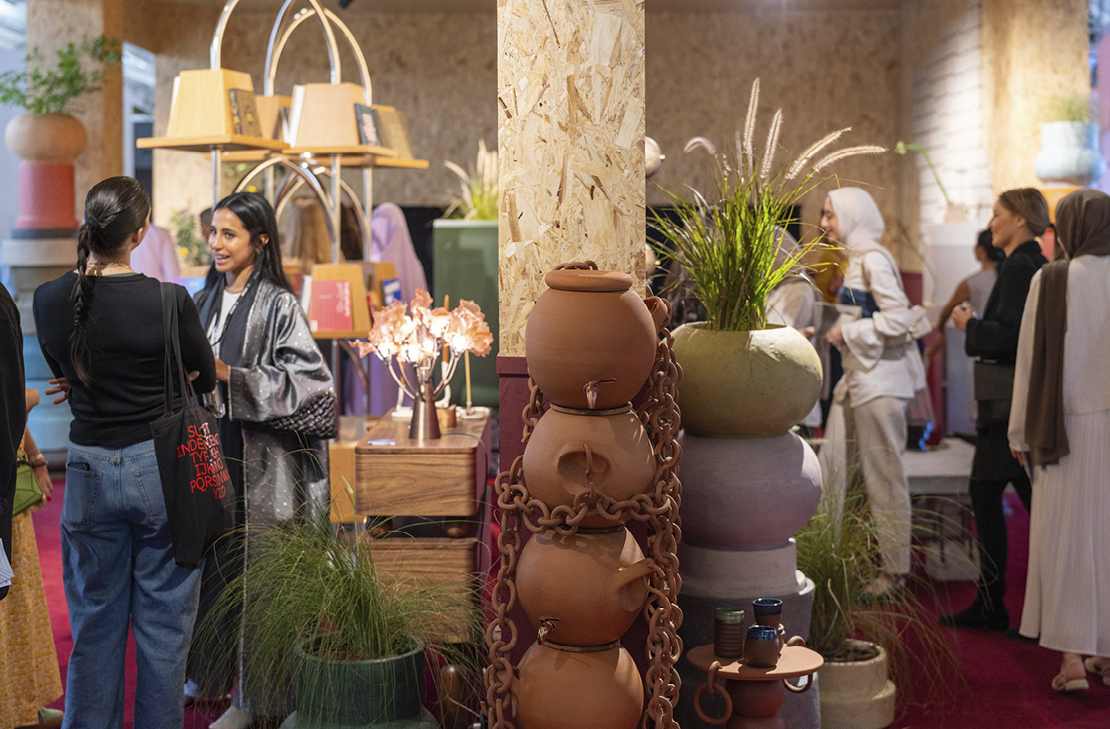
You were part of the exhibition yourself in 2021, tell us more about your journey to where you are now.
Yes, I started in the exhibition in 2021, and because of the exhibition, I got a lot of exposure and good feedback, which was then implemented. I then participated in Downtown Design for the next two years, and this year, I was approached to curate the same exhibition that kicked me off.
How do you think this exhibition will help raise the profile of upcoming designers?
I think it’s important to showcase the work of these designers because it shows the potential of what we have here in the UAE. It shows how many great minds we have. It’s a great platform for designers to learn not only from each other but also from the rest of the market. They get to look at the work of other designers and brands, learn from their craft and design, and maybe implement it in their own future. It gives them a taste of what the market could look like for them and it also gives them an idea of whether or not they want to pursue this field. If you are not passionate about what you do, you are not going to get very far in this field, so I think it helps with that.
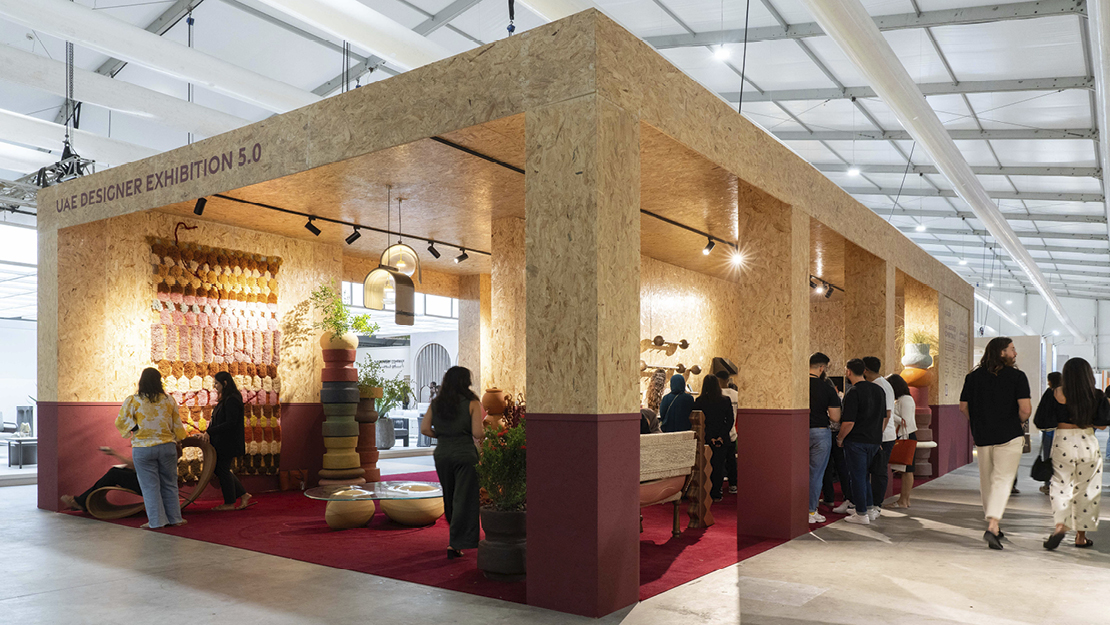
How do you feel the industry is today for upcoming designers in the UAE?
Things are becoming a little easier now for aspiring designers. We have a lot of great programmes that educate people on product design, industrial design, and that kind of thing. It’s around the UAE, not just in Dubai. What’s great is that there are a lot more people now that are more supportive of designers. I think it took a while for people not to gate-keep their suppliers, but now everyone is sharing information, so if you really want to know something, all you have to do is ask. It’s great that designers have the free will to ask other people in the field for recommendations. When I look at my personal experience, I could not have done it without the support of the community here. I wouldn’t have been able to come as far as I have so far without the support of other people.
What’s the biggest challenge?
Here in the UAE, the biggest challenges are manufacturing and funding. Funding is important because we have a lot of great minds and many people with amazing ideas, but they never find the funding for it. And I’m talking about designers of all nationalities who are based in the UAE.
Manufacturing things here is quite expensive, and that’s a big challenge. That’s why these design fairs are important because people who come are willing to pay more money, but if someone wants to introduce their product to the mass market, it’s a little bit more difficult here.
Tell us about the vision for your own brand.
My company is called Modu Method. It’s very much a passion project. I also have a job with the family company, where I work as an architect in the real estate division. Modu Method is where I let all of my creative juices flow. Modu stands for Modular, and Method is the way of living. We make modular designs that are inspired by the seventies. We try to make everything as interactive as possible because we believe that the more you interact with your piece of furniture, the more you develop a sentimental relationship with it. And the more you have a sentimental relationship with it, the more you are attached to your product, and you want to keep it with you throughout your life and maybe pass it down to someone you love. So, that gives it a long-lasting lifespan.
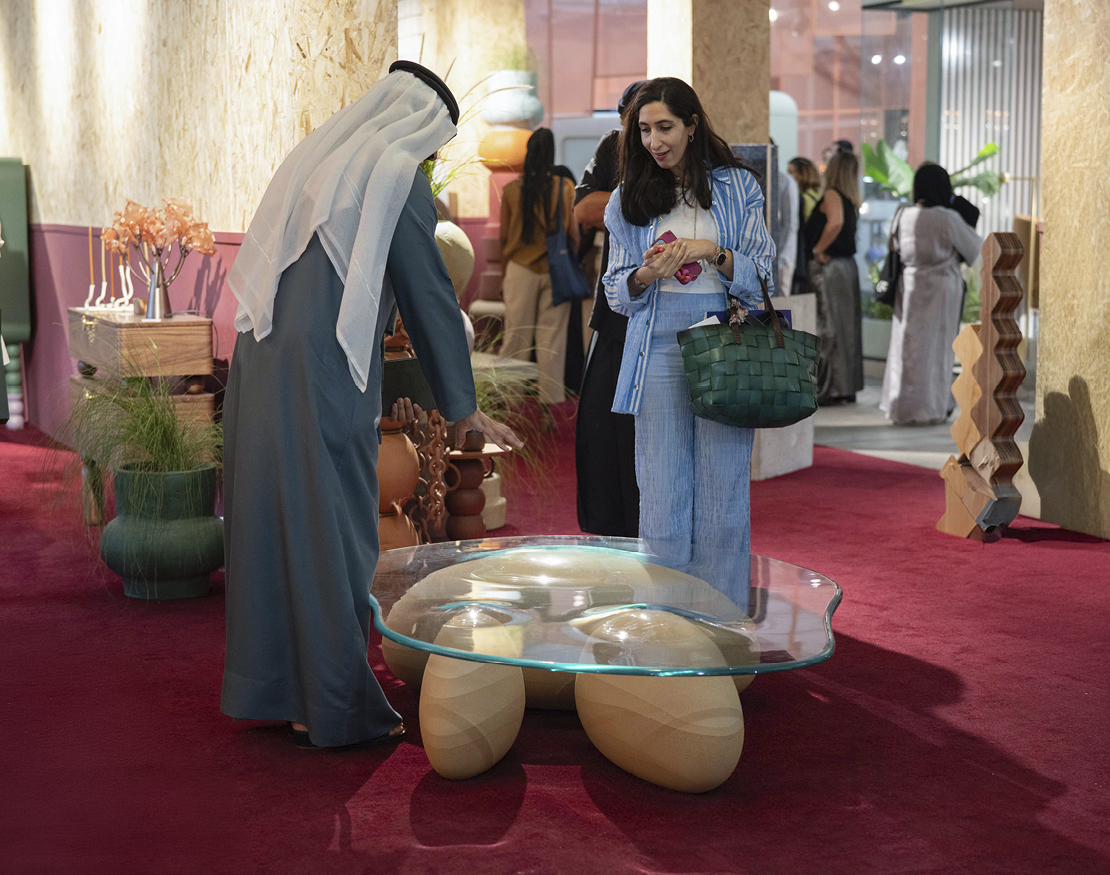
What’s the vision for your brand?
That’s a really broad question because I’m one of those people that likes to do everything! I want it to be a place where people can learn and more of a community-based space. I want people to come to our brand to be able to share ideas and fall in love with our products at the same time. Obviously, I want to sell products and see it work as a business, but I also want it to turn into a community.
We have started to do this already. We have a show villa, which is kind of like a majlis where creatives can gather. We have game nights there; we exchange ideas – it’s a casual space for people to share, and everything in the space is from our brand.
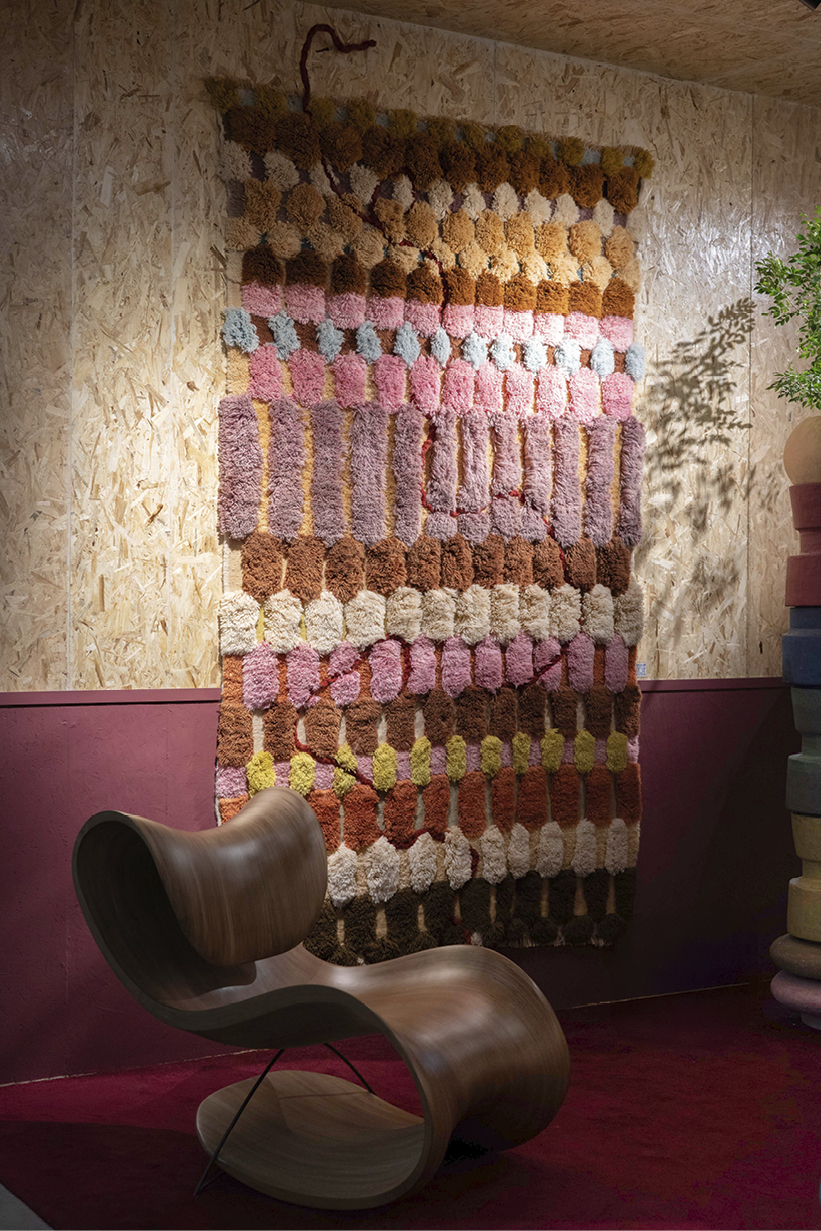
Looking ahead, what’s in the pipeline for you?
At Modu, we are working on developing some smaller products that are more accessible. Accessories, things that are fun to play with. Of course, we’re always looking for collaborations. We have quite a significant amount of large products now, so we are trying to cater more to people who might be in love with the brand but can’t afford our larger pieces.
Noora Shawqi Discusses her Jewellery brand and her new Book Launch
After realising her passion for jewellery, Emirati designer Noora Shawqi embarked on a career journey that would allow her to start her own jewellery line.
After sharing her love for jewellery with her social media followers, Shawqi received great feedback and decided to take things further by embarking on studies into jewellery and gemology. In 2018, Shawqi returned to Dubai and launched her own brand, a vision of modern elegance inspired by her travels and heritage. Noora Shawqi showcases fine jewellery collections that combine cultural references with impeccable quality, creating statement pieces with a timeless aesthetic. Her designs are constructed using the finest materials, primarily in Dubai, working closely with highly skilled artisans. Her designs encourage women to be brilliant, adventurous and unique – we find out more.
Tell us more about your jewellery brand and how it came to life.
Noora Shawqi was born out of a deep passion for jewelry, diamonds and gemstones that I’ve had since I was young. I always found myself drawn to the craftsmanship and stories behind each piece. I decided to pursue formal training through the International Gemological Institute and Gemological Institute of America, which really helped solidify my love for jewellery to turn it into something more. After completing my courses, I felt confident enough to launch my brand in 2018. It’s been a journey of combining my love for design with a mission to create jewellery that tells a story.
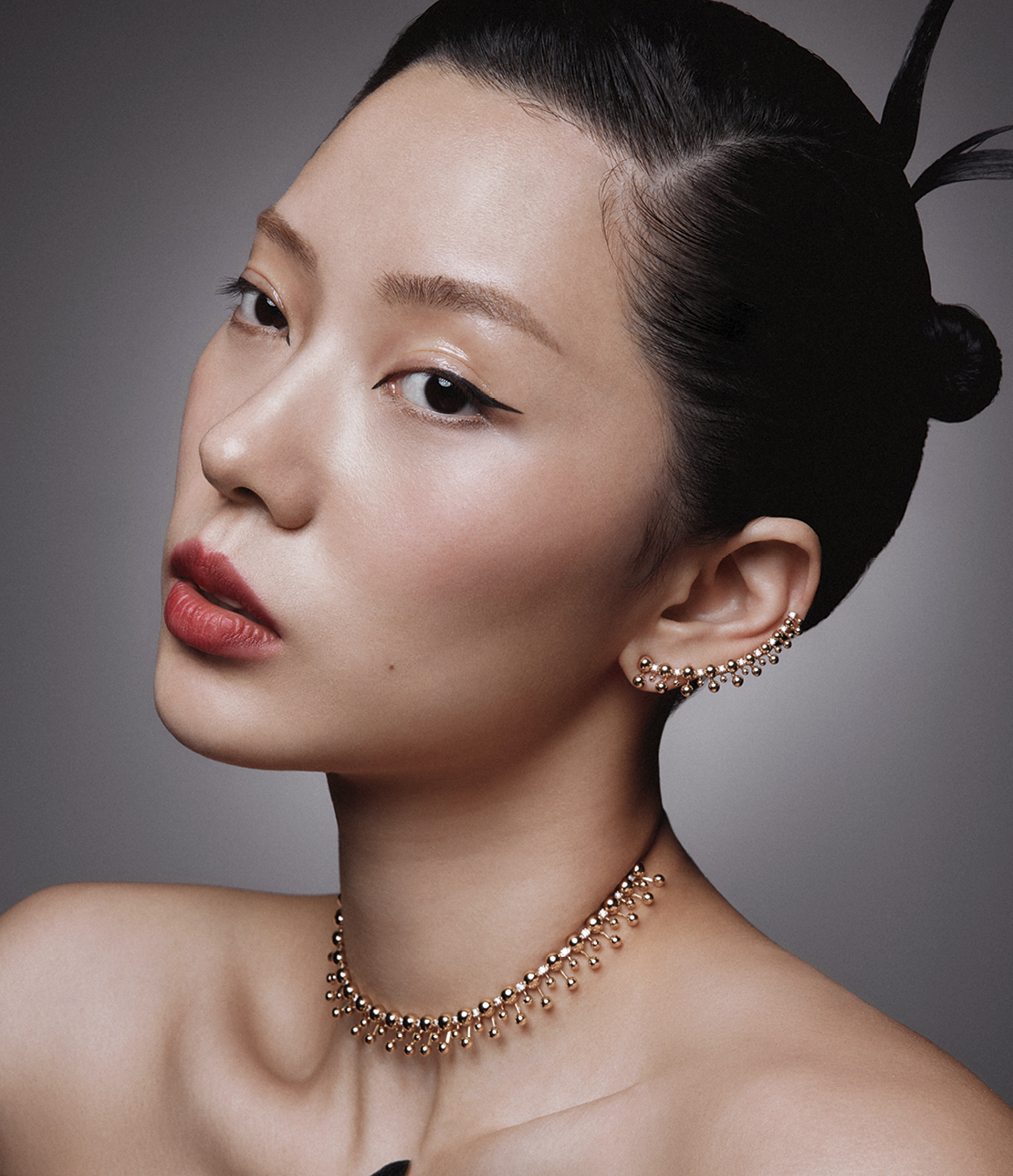
What is the vision for the brand, and what would you like to achieve?
My vision for Noora Shawqi is to create a brand that’s recognised globally for its creativity and commitment to quality. I want the pieces we make to be more than just jewellery —each one should be a statement of empowerment and self-expression. Sustainability and ethical practices are also at the heart of what we do. I envision a future where women across the globe feel connected to our designs, not just because they look beautiful but because they carry meaning.
Describe the style and aesthetic of your pieces.
I’d say my style is all about telling a story through design. Each collection I create is deeply inspired by the places I visit and my experiences there. The aesthetic is a blend of bold, timeless pieces with a touch of elegance, all reflecting the rich cultures and traditions I’ve encountered. It’s about creating something meaningful—whether it’s a tiny detail or the whole concept — while maintaining a modern, wearable look.
Can you tell us about your current collection?
Our latest collection is inspired by Japan—particularly the beauty of its lanterns and the dynamic energy of places like Shibuya Crossing. It’s all about movement and light, captured in the form of gold balls, which symbolise both the people and the lanterns in Japan. I spent a lot of time working on the Shibuya piece, which I think really encapsulates the vibrancy of Tokyo. It’s a collection for strong, confident women who want to make a statement.
Can you tell us a little about the production process and the materials you source?
Once I have a design idea, I collaborate closely with my manufacturer. We decide on the best materials for each piece, sometimes sourcing stones directly from trusted suppliers or selecting the perfect metals. I’m very particular about the quality of materials. The production process is a balance of creativity and precision, with a lot of back-and-forth to ensure each piece comes out just right.
What do you think are the most important things to consider when having a jewellery brand today?
Today, I think it’s all about being authentic. Consumers want something unique that resonates with their values. It’s crucial to have pieces that stand out, but also to build a brand that reflects who you are. Quality and craftsmanship can’t be overlooked, of course, but I also believe that storytelling and a strong ethical commitment are key in creating meaningful connections with your customers.
What’s the biggest challenge?
Honestly, the biggest challenge is staying true to the brand’s identity in such a crowded market. There are so many amazing jewellery brands out there, so it’s a constant effort to stay unique while keeping up with trends and customer needs. But I love the challenge—it pushes me to keep evolving and perfecting what we do.
Where did your passion for jewellery design come from?
My passion really blossomed during my travels. The more I explored, the more I realised how deeply connected jewellery is to culture, tradition, and personal expression. But it was when I started blogging about jewellery and connecting with other designers that I truly saw the potential to create something of my own. That spark led me to formal training, and from there, the idea of building a brand became a reality.
How does your heritage and culture inspire your brand?
Being Emirati has had a profound influence on my work. The UAE’s rich history and cultural diversity shape many my designs, whether I’m drawing from traditional symbols or blending them with modern elements. My heritage is something I hold dear, and I like to weave it into collections that reflect the strength, beauty, and history of my culture.
How would you assess the industry in the Middle East today?
The jewellery industry in the Middle East is growing rapidly, with a strong demand for luxury and unique pieces. People are becoming more educated and selective, so there’s an emphasis on quality, storytelling, and personalisation. It’s an exciting time, but it’s also competitive—brands need to stay innovative and authentic to stand out.
What else is in the pipeline for this year?
One of the most exciting projects we’re working on this year is the launch of our coffee table book, Travel Through Jewellery. This book is a celebration of our brand’s journey and the four incredible destinations that have inspired our collections. Through vivid photography and storytelling, we take readers on a journey, showcasing how the unique cultures, landscapes, and people of these places have shaped our designs. The book also highlights our commitment to sustainability and corporate social responsibility, with each chapter emphasising how we’ve supported local communities and preserved cultural heritage. Travel Through Jewellery is more than just a book; it’s a reflection of the intersection between travel, culture, and craftsmanship, and we’re thrilled to share this with our followers and collectors. Stay tuned for more details on how you can get your hands on this exclusive keepsake!
Where would you like to see your brand in five years’ time?
In five years, I see Noora Shawqi as a global brand, with a strong presence in key markets worldwide. I hope to continue pushing the envelope in terms of design and storytelling while also expanding our sustainability efforts. Ultimately, I want to inspire women everywhere to feel confident and empowered through our pieces.
What’s the professional motto you live by?
“Create with purpose, design with passion.” For me, this is all about staying true to your vision while putting your heart into everything you do. I believe passion and purpose go hand in hand, and they’re the driving forces behind my work.
Where do you go to switch off and find inspiration?
I switch off when I travel, allowing myself to observe everything around me—nature, culture, people, and the unique surroundings of each place. When I travel, I do so with a fresh, clear mind, taking everything in without distraction. It’s during these moments of immersion that I find the most inspiration, whether it’s the architecture, the sounds, or even the energy of a bustling city. Travelling not only helps me disconnect but also sparks new ideas for my designs.
Fatma Al Otaiba the Founder of Odeem on Her Homegrown Luxury Handbag Line
After dreaming of creating her own luxury handbag line for over a decade, Emirati entrepreneur Fatma Al Otaiba founded her accessories brand, Odeem, in 2019.
With a strong focus on “slow fashion” Odeem is dedicated to creating timeless pieces of the finest quality using luxurious materials. A self-confessed handbag lover, Al Otaiba spent years searching for the perfect size and shape, before deciding to create it herself. She started with three bags, and today, that offering has grown, with various shapes, sizes and materials available to meet every woman’s needs. Here, we find out more about the brand as well as the vision looking forward.
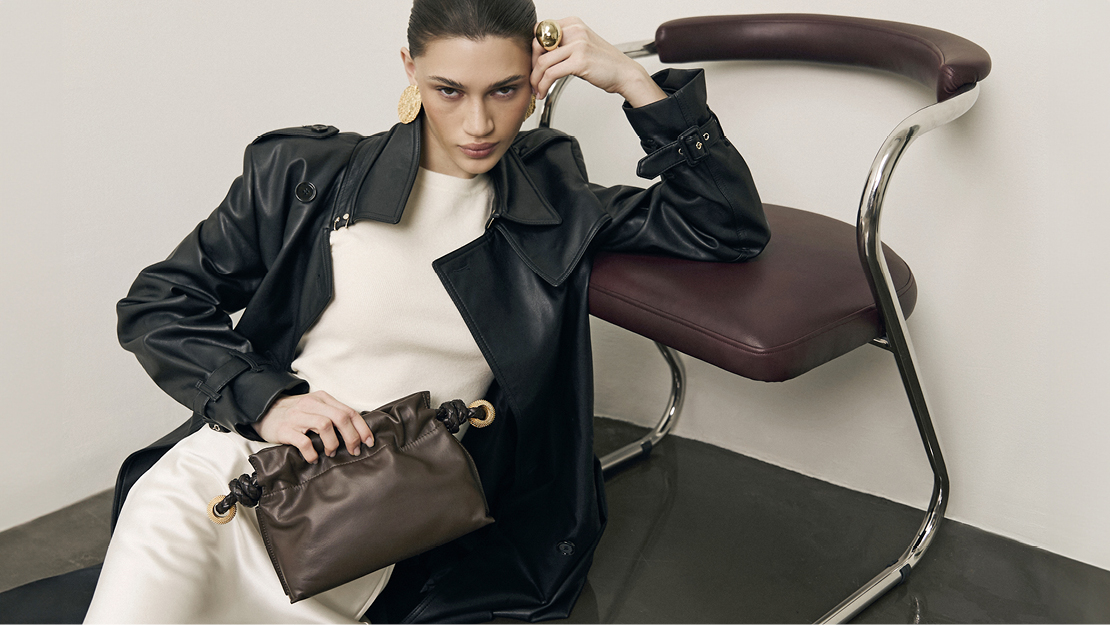
How did your brand come to life?
Odeem was born out of a desire to create timeless, versatile, and functional luxury handbags that cater to the modern woman. Drawing inspiration from my own challenges in finding pieces that combined elegance with practicality, I envisioned a brand that could deliver beautiful, high-quality bags crafted with exceptional attention to detail.
Tell us about the materials and fabrics you work with at Odeem.
At Odeem, we take pride in using only the finest materials. Our handbags are crafted from premium leathers such as crocodile and ostrich, offering a luxurious touch and unparalleled durability. We also work with nappa, canvas, and satin for select designs, ensuring a variety of textures and styles to suit different tastes. Each material is chosen with care to reflect our commitment to quality and timeless design.
What is the current vision and direction for the brand?
The vision for Odeem is to continue establishing ourselves as a premier UAE-based luxury brand recognised globally. We aim to expand internationally while staying rooted in our commitment to creating timeless, versatile pieces. In the near future, we also aspire to evolve into a comprehensive lifestyle brand by exploring new categories, such as fragrances and ready-to-wear fashion, while maintaining our signature elegance and quality.
Describe the style and aesthetic of your pieces.
Odeem embodies timeless sophistication and modern versatility. Our designs strike the perfect balance between elegance and practicality with clean lines, refined textures, and thoughtful details. Whether it’s a handbag for an evening soirée or a functional piece for daily use, Odeem bags seamlessly complement a variety of styles and occasions.
Can you tell us about your current collection?
Our current collection showcases a refined selection of duffle and bucket bags, each designed to transition effortlessly between occasions. The collection emphasises neutral and earthy tones, reflecting the timeless appeal of our brand while offering versatility for the modern woman. As always, the craftsmanship, quality, and attention to detail remain at the heart of every piece.
How do you feel Odeem’s products differ from others on the market?
Odeem stands apart through its emphasis on combining timeless design with unmatched functionality. Our handbags are not just accessories—they’re investments designed to be worn season after season. Each piece is lightweight, versatile, and meticulously crafted, catering to the needs of women who value elegance and practicality in equal measure.
We are seeing some fantastic talents and brands coming from the UAE – how would you assess the industry today?
The UAE’s fashion industry is thriving, with emerging talents and brands making a significant mark on the global stage. The region’s unique blend of cultures and its position as a global hub provide an excellent platform for creativity and innovation. I’m proud to be part of this wave of homegrown talent contributing to a diverse and dynamic fashion landscape.
How does sustainability influence your brand?
Sustainability is an ongoing priority at Odeem. We are actively exploring eco-friendly materials and practices to incorporate into our designs without compromising on quality or elegance. Additionally, our commitment to creating timeless, long-lasting pieces aligns with the principles of sustainable fashion, as it encourages thoughtful, enduring investments over fast trends.
What’s the biggest challenge you face in your role?
Balancing the creative and business aspects of running Odeem is one of the biggest challenges I face. While I’m passionate about designing and bringing new ideas to life, managing the operational and strategic aspects of the brand requires equal dedication. However, overcoming these challenges is deeply rewarding, as they push me to grow both personally and professionally.
What would you still like to achieve with Odeem?
I hope to see Odeem become a globally recognised luxury brand that represents the best of UAE craftsmanship and innovation. Expanding into ready-to-wear and lifestyle categories is a significant goal, as is establishing a strong international presence while remaining true to our roots in Dubai.
Would you expand your brand into other categories?
Yes, we are excited to explore ready-to-wear fashion and gradually evolve into a full-fledged lifestyle brand. Our aim is to offer a cohesive range of products that embody Odeem’s ethos of timeless elegance and functionality, catering to the needs of our clients in every aspect of their lives.
How does your heritage and culture inspire your brand?
Being born and raised in the UAE, my heritage deeply influences my work at Odeem. The country’s rich multiculturalism and a blend of traditional and modern elements inspire my designs. This unique environment motivates me to create pieces that resonate globally while celebrating the craftsmanship and creativity rooted in the UAE.
What is the professional motto you live by?
“Quality and timelessness above all else.” I believe that staying true to these principles ensures that every piece we create is meaningful, enduring, and resonates with our clients.
What else is in the pipeline for this year?
This year, we are focusing on introducing customisable options for our handbags, allowing clients to choose their preferred materials and colours for a more personal touch. Additionally, we are working towards expanding our international presence and laying the groundwork for our entry into ready-to-wear fashion, as we continue our journey towards becoming a lifestyle brand.
How The Sharjah Museums Authority Is Becoming A Leading Cultural Hub In The UAE
Sharjah has long been the cultural capital of the Middle East thanks to the Emirate’s support and celebration of talent in the arts, music, literature and education sectors.
The Sharjah Museums Authority was established in 2006 under the direction of His Highness Sheikh Dr. Sultan bin Mohammed AlQasimi, Supreme Council Member and Ruler of Sharjah, as an autonomous government authority. Today it oversees 16 museums across Sharjah in various categories, including Islamic art and culture, archaeology, heritage, science, marine life, as well as the history of Sharjah and the region. This blanket governing authority is helping to elevate the profile of each of Sharjah’s museums and help the Emirate to further its position as a cultural beacon, as well as educate the local and international communities on Sharjah’s diverse offerings. Leading SMA’s vision is Director General Aisha Rashid Deemas, whose guidance is allowing the authority to further establish the work of Sharjah’s museums as well as diversify and attract wider audiences to the Emirate. Here we find out more.
Tell us about the current vision and direction of the Sharjah Museums Authority.
The Sharjah Museums Authority (SMA) aims to be a cultural beacon that enhances Sharjah’s identity locally and internationally and contributes to nurturing a community aware of museums’ importance as cultural, educational, and enjoyable destinations. We are deeply committed to safeguarding and celebrating Sharjah’s rich cultural heritage while fostering sustainable community engagement. Museums serve as important custodians of history and heritage, but they are also dynamic educational platforms that inspire learning, disseminate knowledge, and provide enriching entertainment. Moreover, SMA envisions its museums as vibrant social hubs that strengthen connections within the community while showcasing the enduring cultural legacy of Sharjah.
How does SMA support and encourage tourism in Sharjah?
SMA plays a pivotal role in boosting Sharjah’s tourism by offering diverse and engaging museum experiences that appeal to both local and international visitors. Through carefully curated exhibitions, cultural events, and educational programs, SMA highlights the emirate’s rich history and heritage. Its broad initiatives and regular exhibitions, hosted across its various museums, provide immersive and interactive experiences that inspire tourists to delve deeper into Sharjah’s unique cultural landscape.
The rich collections of Sharjah’s museums hold immense potential to foster intercultural dialogue and promote cultural understanding and exchange. We are dedicated to making our 16 museums accessible to all visitors, including tourists, ensuring access on physical, intellectual, and even virtual levels. SMA consistently explores innovative approaches to enhance the visitor experience. Beyond considerations for physical access, SMA works to boost intellectual accessibility to its collections. Our museums offer exhibitions, events, and activities catering to our audiences’ diversity and providing meaningful and inclusive learning opportunities for all.
What can you tell us about the overall vision looking ahead?
Looking ahead, the Sharjah Museums Authority (SMA) is committed to cultural heritage preservation while ensuring museums continue to serve as dynamic spaces for learning, engagement, and discovery. The authority aims to broaden its reach through enhanced digital platforms, introduce more interactive and immersive exhibits, and strengthen international collaborations. With a strong focus on inclusivity and accessibility, SMA works tirelessly to make its rich cultural offerings accessible to all segments of the community, ensuring that everyone has the opportunity to connect with and benefit from Sharjah’s vibrant cultural scene.
What are the current projects you’re working on?
Recently, SMA participated in the Sharjah International Book Fair, where we proudly launched a new book that delves into the rich history and unique collections of Sharjah’s museums. The publication “titled “Sharjah Museums” serves as a valuable resource, offering insights into the emirate’s cultural heritage and its vibrant museum landscape.
SMA recently hosted the SAWA Conference, celebrating the 10th anniversary of this groundbreaking intercultural museum studies program. Organised in collaboration with Berlin State Museums, Goethe-Institute Gulf Region, and the University of Applied Sciences Berlin, the conference emphasized the importance of cross-cultural exchange and highlighted the program’s decade-long achievements in fostering mutual understanding within the museum field.
And in celebration of the UAE’s 53rd National Day, SMA has curated a vibrant lineup of events and activities across its museums. These events aim to honour the nation’s heritage and bring communities together in a spirit of unity and pride. We also continue to strengthen our partnerships with academic institutions, such as those with students from the American University of Sharjah and the University of Sharjah. These collaborations allow students to work on real-world projects, gaining practical experience in exhibition design and curation. In turn, the museums benefit from the fresh perspectives and innovative ideas young talent, enriching our exhibitions and programs.
Looking ahead, SMA is preparing an exciting lineup of exhibitions for 2025, which will be announced in the new year.
How do you differentiate between Sharjah’s key museums and ensure there is a diverse offering for visitors?
Each museum under the Sharjah Museums Authority has a distinct thematic focus, offering a unique perspective on Sharjah’s rich heritage. For example, the Sharjah Heritage Museum is dedicated to Emirati culture, while the Sharjah Calligraphy Museum celebrates the artistry of Arabic calligraphy. Meanwhile, the Sharjah Museum of Islamic Civilization highlights Islamic art and culture, bridging the past and present.
This thematic diversity ensures that each museum contributes to Sharjah’s broader cultural narrative while preserving its specialised focus. At SMA, we also prioritise community involvement and education, positioning our museums as active centres of learning and cultural exchange. Through exhibitions, workshops, and public programs, SMA’s museums engage with the local community and cultivate an appreciation of Sharjah’s heritage among younger generations.
Furthermore, SMA plays an active role in international cultural diplomacy by promoting Sharjah’s cultural heritage on a global scale through exhibitions and collaborations. These efforts ensure that each museum retains its individuality while contributing to a cohesive and dynamic cultural narrative that not only reflects Sharjah’s rich history but also highlights its role within the broader UAE cultural landscape.
Can you share a little about your personal journey so far and how you progressed to your current role?
My journey in the cultural and museum sectors has been both rewarding and transformative. I began my career with the Sharjah Museums Authority in 2006 as a Curator at the Sharjah Museum of Islamic Civilization, where I managed collections, organised exhibitions, and fostered national and international collaborations. This role provided me with the invaluable opportunity to engage deeply with the cultural heritage of our region.
In 2012, I was promoted to Director of Executive Affairs at the Sharjah Museums Authority, where I focused on long-term planning and overseeing services across all our museums. This position further strengthened my commitment to delivering diverse, inclusive, and enriching experiences for all visitors, ensuring that our museums continue to inspire and connect with a wide range of audiences.
In June 2023, I was appointed Director General of the Sharjah Museums Authority. My focus remains on sustainability, cultural preservation, and community engagement. I believe museums are crucial not only in preserving our heritage but also in fostering social connections and engaging the community.
Can you tell us a little about how SMA is working to promote historical and heritage sites within the Emirate?
SMA actively promotes the emirate’s historical and heritage sites through a multifaceted approach that includes partnerships, participation in cultural events, outreach programs, educational services, and tailored community events.
We collaborate with a wide range of local entities, from the Sharjah Art Foundation to Sharjah Commerce and Tourism Authority and RUWAD, to enhance cultural initiatives. For instance, SMA worked with RUWAD to organise the “Suppliers Forum: Entrepreneurs’ Projects Exhibition,” providing a platform for Emirati entrepreneurs and fostering partnerships across its 16 museums.
To increase accessibility, SMA introduced the “Museums Express,” a mobile museum program that has reached over 12,000 students, bringing cultural and historical exhibits directly to diverse audiences. This initiative complements SMA’s broader educational services, which include interactive workshops, guided tours, and programs tailored for schools and universities to enhance students’ engagement in museums.
SMA also organizes community-focused events to foster a deeper appreciation for the emirate’s culture. One such event, the “I am at Sharjah Museums” photography competition for school students, highlighted the creativity of young talents capturing the emirate’s heritage through their lenses.
Through these diverse initiatives, SMA continues to promote Sharjah’s historical and heritage sites, fostering stronger connections between the community and its rich cultural legacy.
How do you think SMA has supported Sharjah to grow into the cultural capital of the region?
SMA operates as a vital part of a broader vision set forth by His Highness Sheikh Dr. Sultan bin Mohammed Al Qasimi, Supreme Council Member and Ruler of Sharjah, to position the emirate as a global cultural hub. Guided by this vision, SMA, through its diverse museums, cultural events, and educational programs, has significantly contributed to enhancing Sharjah’s cultural stature. By preserving and showcasing the emirate’s rich heritage, fostering meaningful international collaborations, and actively engaging the community, SMA plays a vital role in advancing Sharjah’s reputation as a beacon of culture and knowledge in the region and beyond.
What’s something you would still like to do in your position?
In my current position, I aim to foster the role of museums as dynamic platforms for knowledge exchange and promote the sustainable development of museums.
It is essential for museums to provide visitors with a holistic experience. To achieve this, we continue to explore engaging and immersive display techniques, including but not limited to, advanced digital technologies, to make Sharjah’s cultural heritage more accessible and appealing, particularly to younger generations. Furthermore, I envision SMA continuing to play a pivotal role in fostering intercultural dialogue and social cohesion, ensuring our museums remain spaces for learning, connection, and community building.
One initiative I am particularly proud of is the SAWA Museum Studies program, which exemplifies the power of collaboration. This program brings together museum professionals and students from around the globe, fostering mutual learning and building bridges between cultures. By supporting and expanding these efforts, we aim to ensure that Sharjah’s museums not only preserve and celebrate our rich heritage but also play a pivotal role in the global cultural landscape, sharing our stories and learning from others to create a truly interconnected cultural experience.
What is the biggest challenge?
One challenge is creating the right balance between traditional museum display methods and embracing modern technologies and innovative approaches. This delicate balance is essential to ensure that our museums remain authentic yet relevant to diverse audiences.
By continuously adapting to technological advancements and evolving audience expectations while remaining true to the authenticity of our heritage, we ensure that our museums continue to inspire, educate, and connect diverse communities, fostering a deep appreciation for Sharjah’s cultural legacy among all generations. Strategic planning and ongoing dialogue with the community are key to achieving this goal.
What are some of the upcoming events visitors can look forward to?
Visitors can look forward to a vibrant lineup of exhibitions and events organised by the Sharjah Museums Authority (SMA), showcasing the emirate’s rich cultural and artistic heritage. Among the current highlights is the “Eternal Letters: Qur’an Manuscripts from the Abdul Rahman Al Owais Collection.” This exhibition at the Sharjah Museum of Islamic Civilization showcases 81 previously unseen Quranic manuscripts, offering a rare glimpse into the timeless art of Arabic calligraphy in the writing of the Holy Qur’an.
At the Sharjah Archaeology Museum, the “Journey of Discoveries” exhibition offers children an interactive experience, providing them with a unique opportunity to engage with the region’s archaeological heritage in an immersive and educational setting.
SMA’s much-anticipated “Lamma” event, traditionally held in December, will again bring the community together to celebrate Emirati heritage. This cultural gathering features traditional performances and crafts, providing visitors with an authentic and engaging experience of Sharjah’s heritage.
In conjunction with this, SMA has planned a series of National Day celebrations to mark the UAE’s 53rd National Day from November 23 to December 3, 2024. These celebrations will include traditional folk performances, heritage corners with local delicacies, and cultural competitions in Arabic and English. To further celebrate the occasion, SMA will offer free entry to all its museums on December 1 and 2, ensuring families and visitors can enjoy these enriching experiences.
Enhancing these cultural offerings are the newly recreated community spaces at the Sharjah Art Museum and the Sharjah Museum of Islamic Civilization to provide visitors with a more immersive and engaging experience in our museums. These thoughtfully designed areas reflect SMA’s commitment to innovation and offer versatile environments that inspire creativity, foster collaboration, and encourage social interaction. These spaces enable visitors to connect, share ideas, and become part of a vibrant creative community.
These Are The Emirati Designers You Need To Know About In 2025
Our cover shoot this month explores the new generation of Emirati designers who are shining a light on the UAE. Scroll down for the designers to watch in 2025.
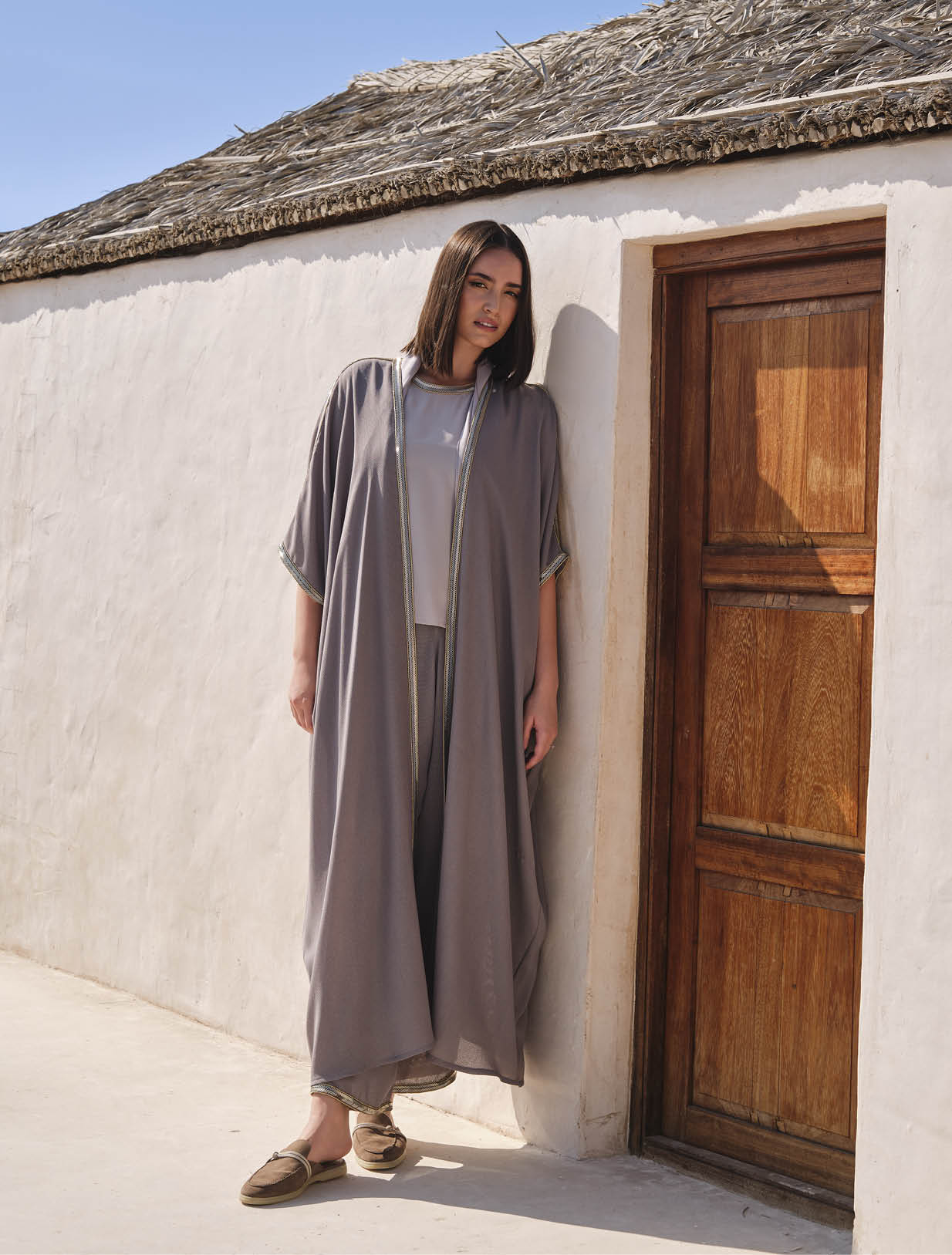
Abaya, Amal Murad,
Shoes, Zaia
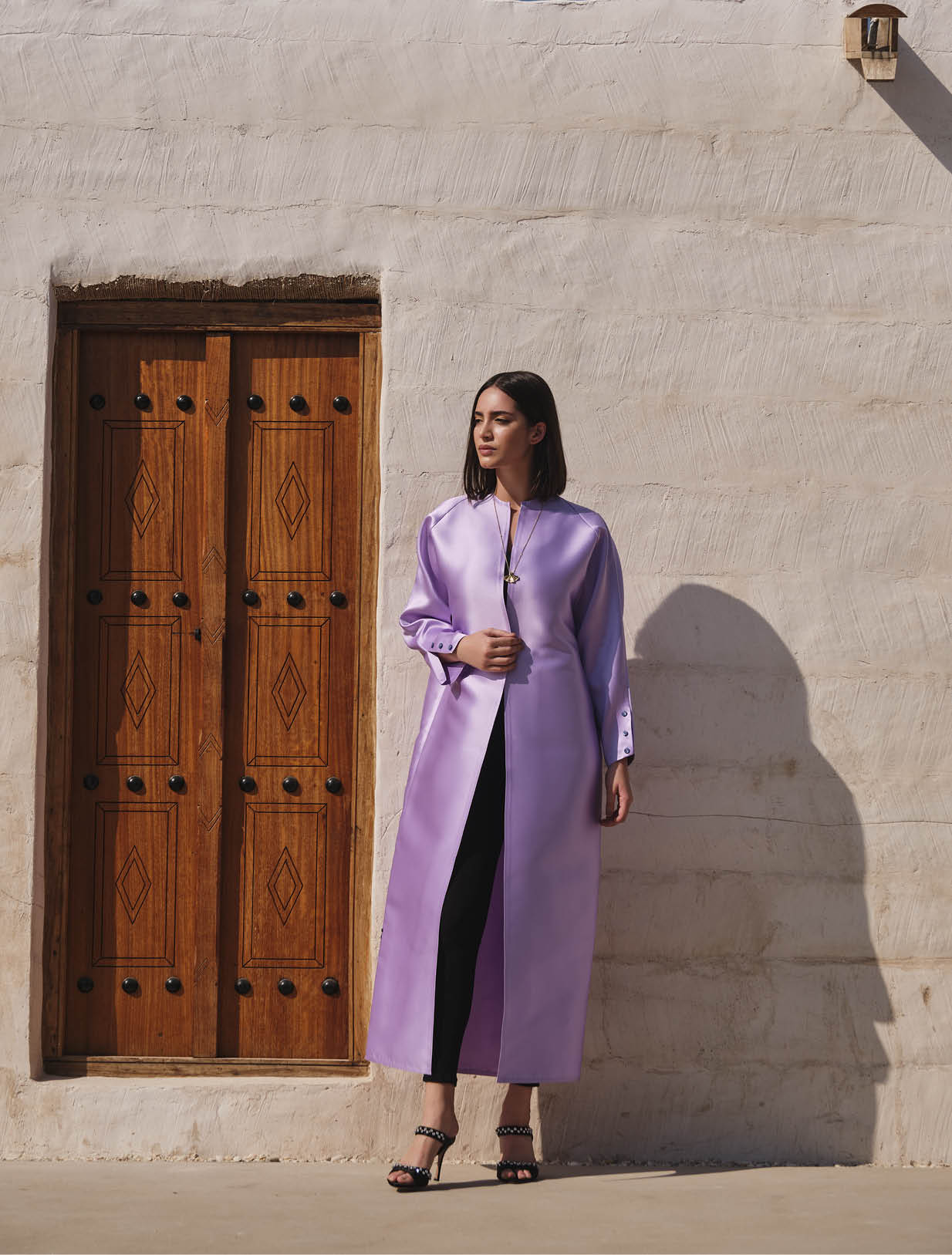
Abaya, Manaal Hammadi,
Necklace, Khayal jewellery;
Shoes, Malone Souliers
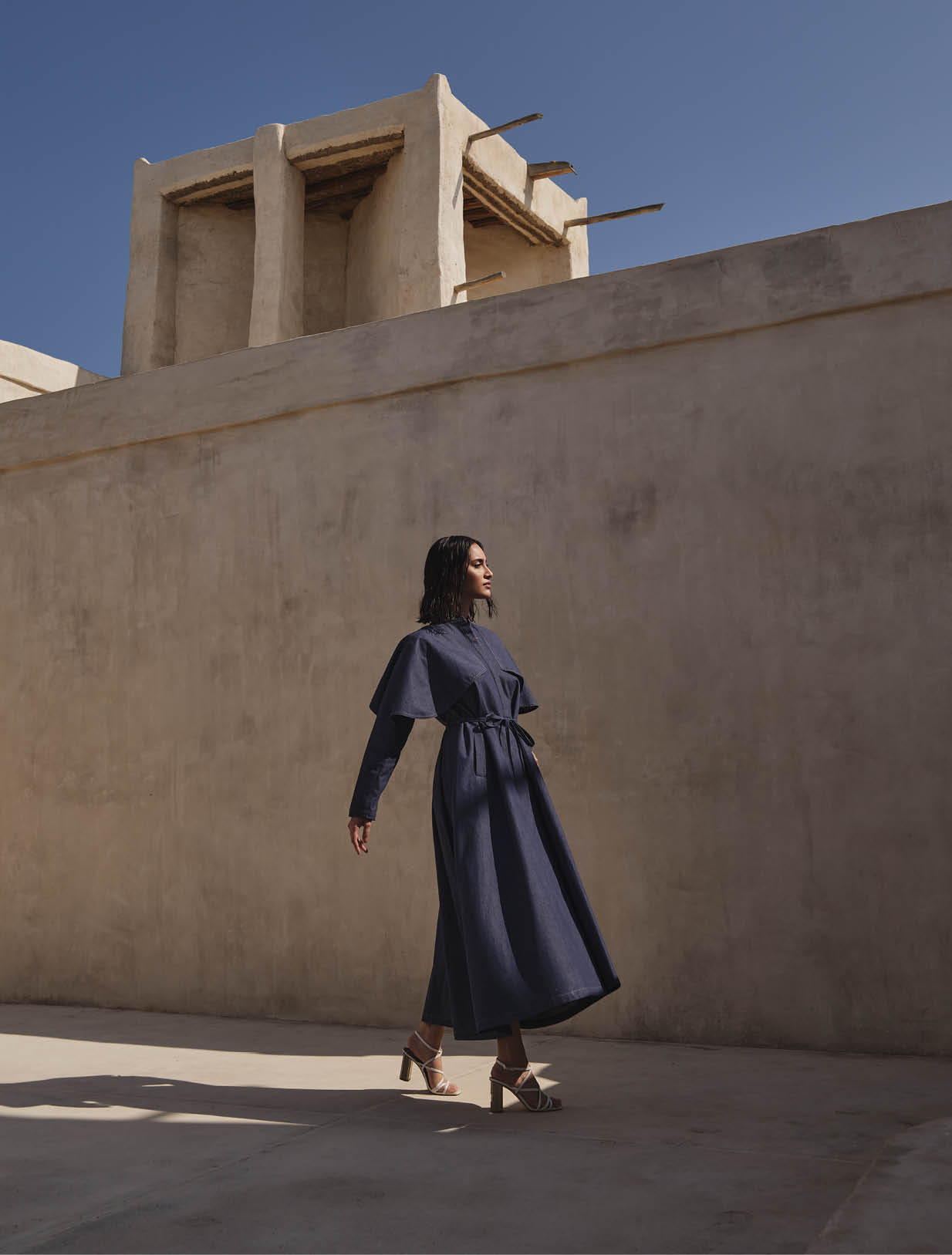
Jacket, Salfa;
Shoes, Malone Souliers
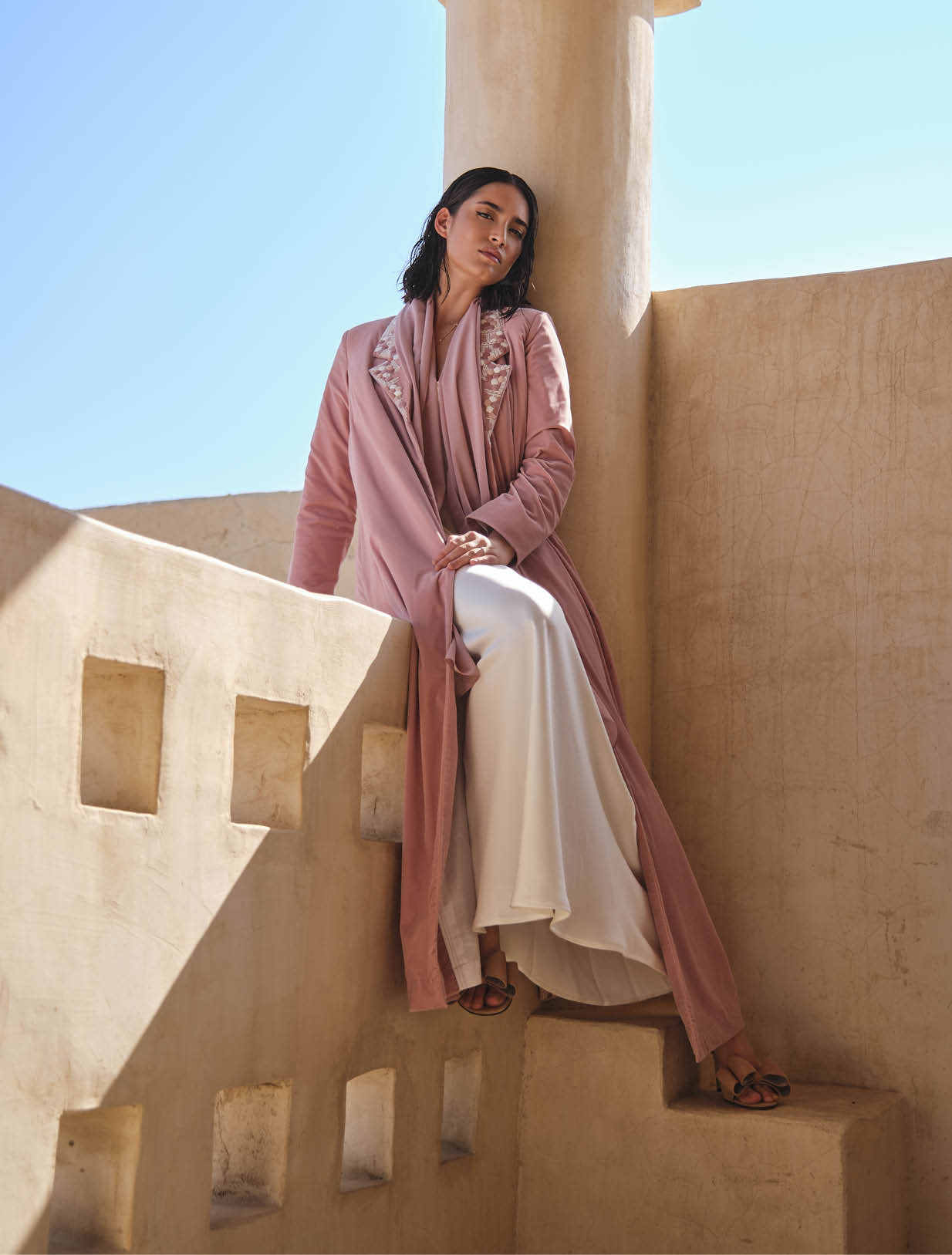
Abaya, Wafa Balaswad,
Necklace, Khayal jewellery
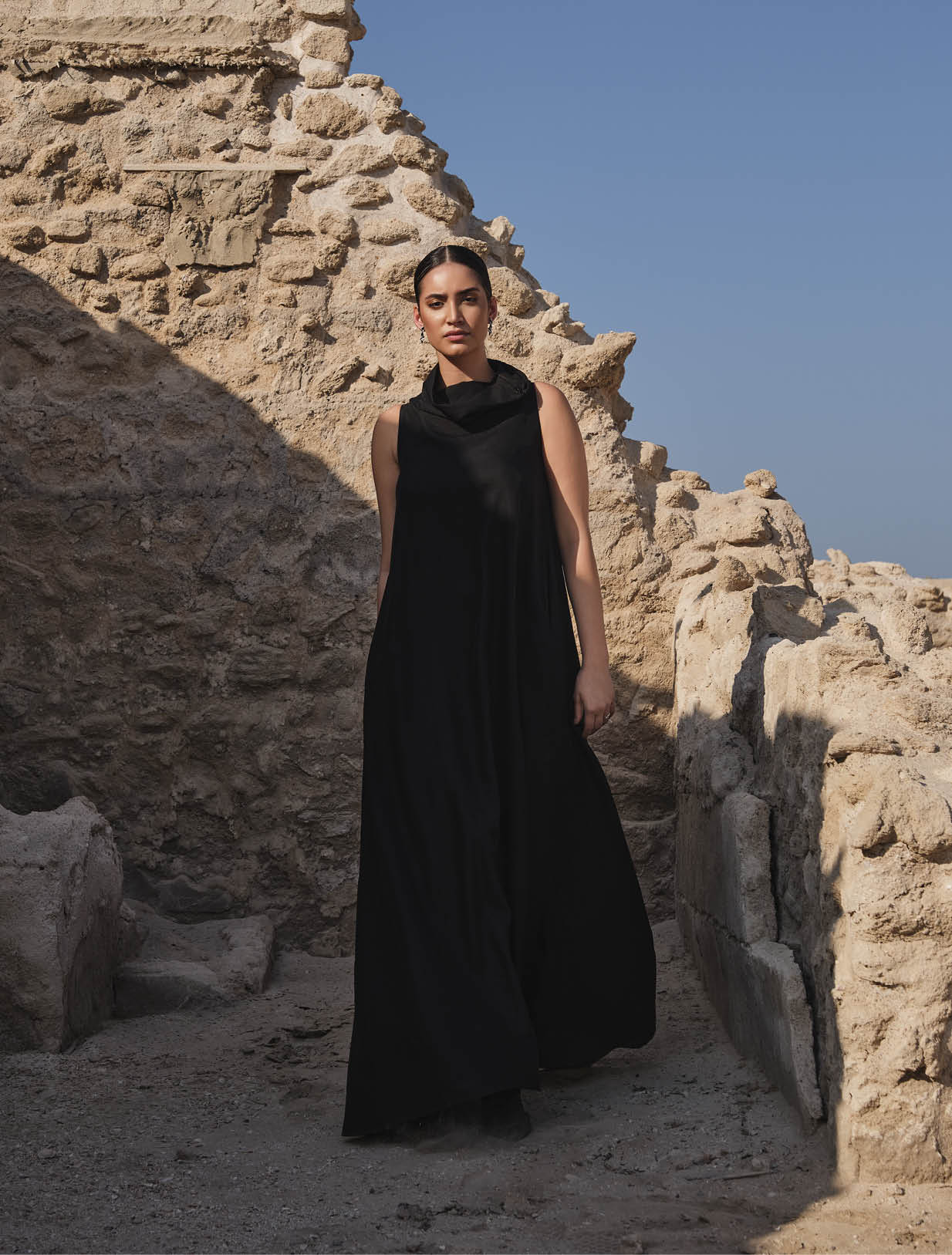
Dress, Qasimi, Earrings, La Graine
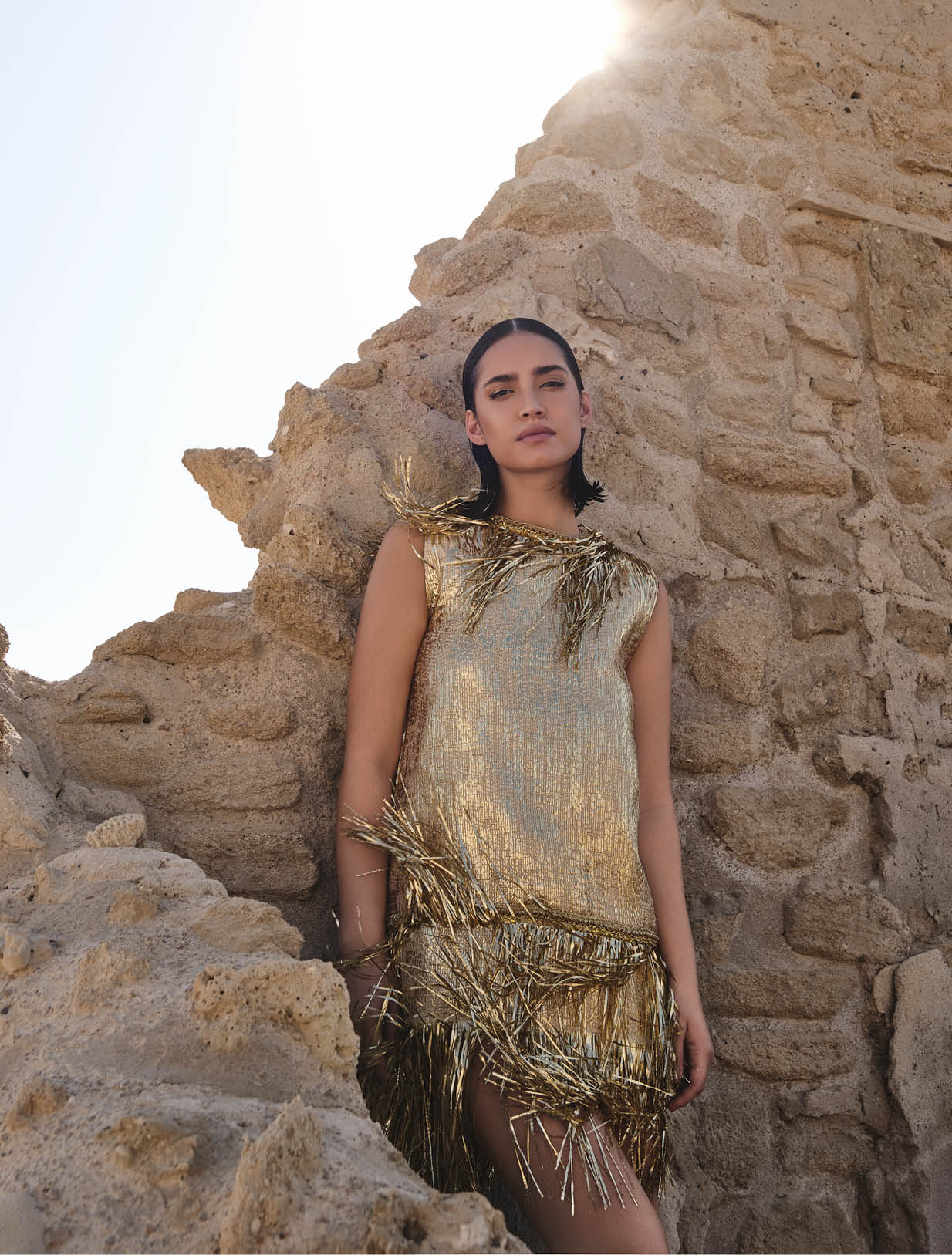
Dress, Azzalia
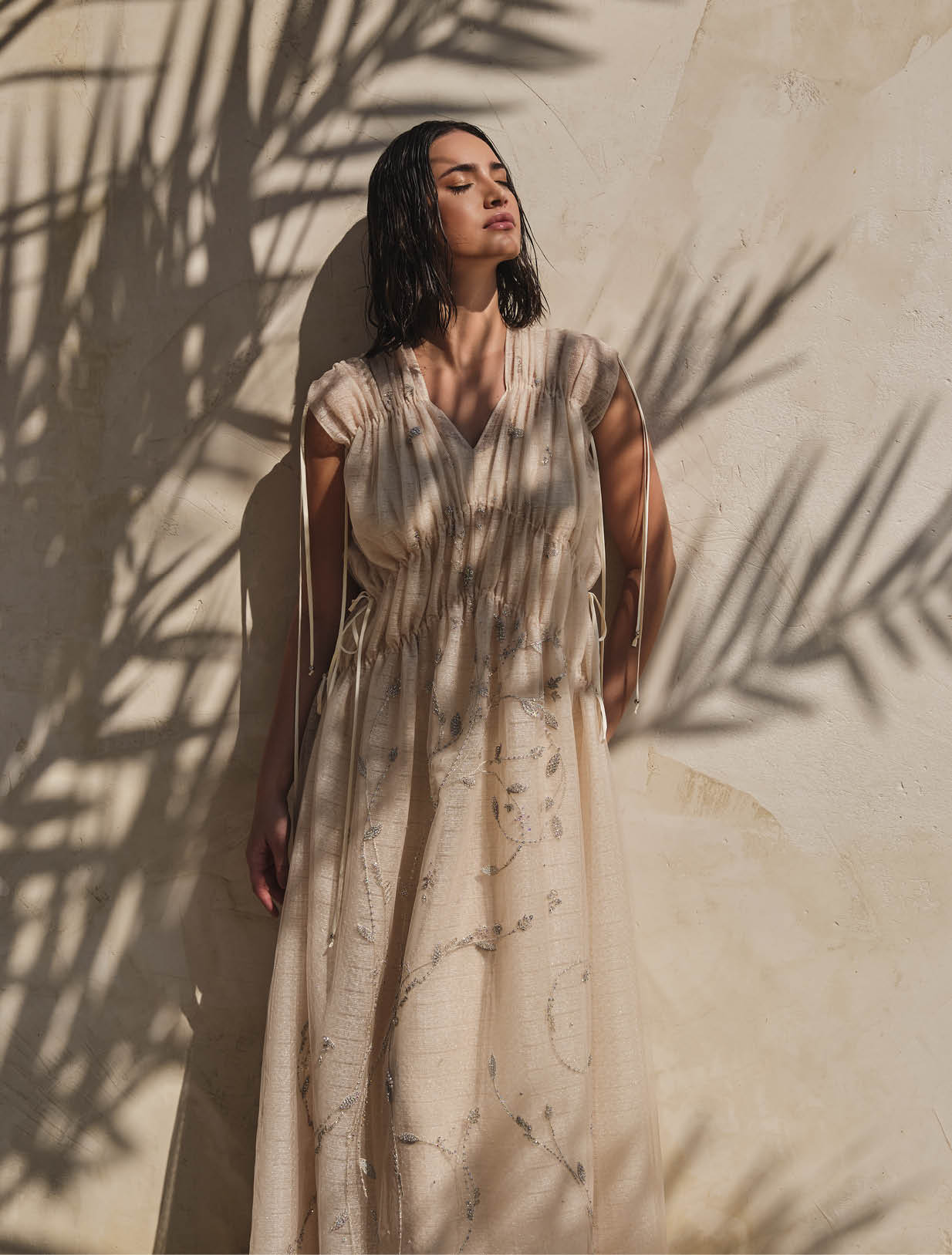
Dress, Mauzan
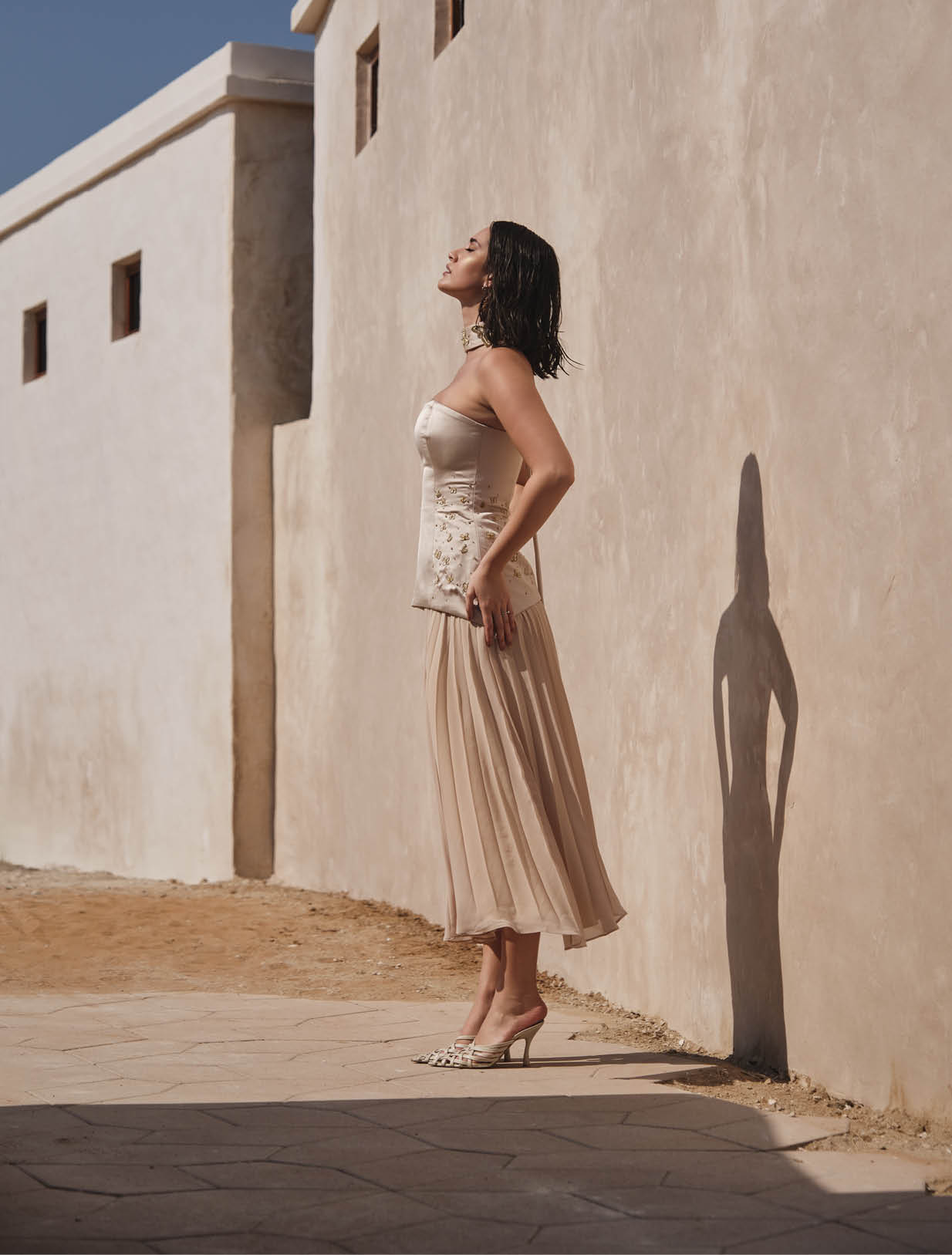
Dress, Onori,
Shoes, Malone Souliers,
Earrings, La Graine
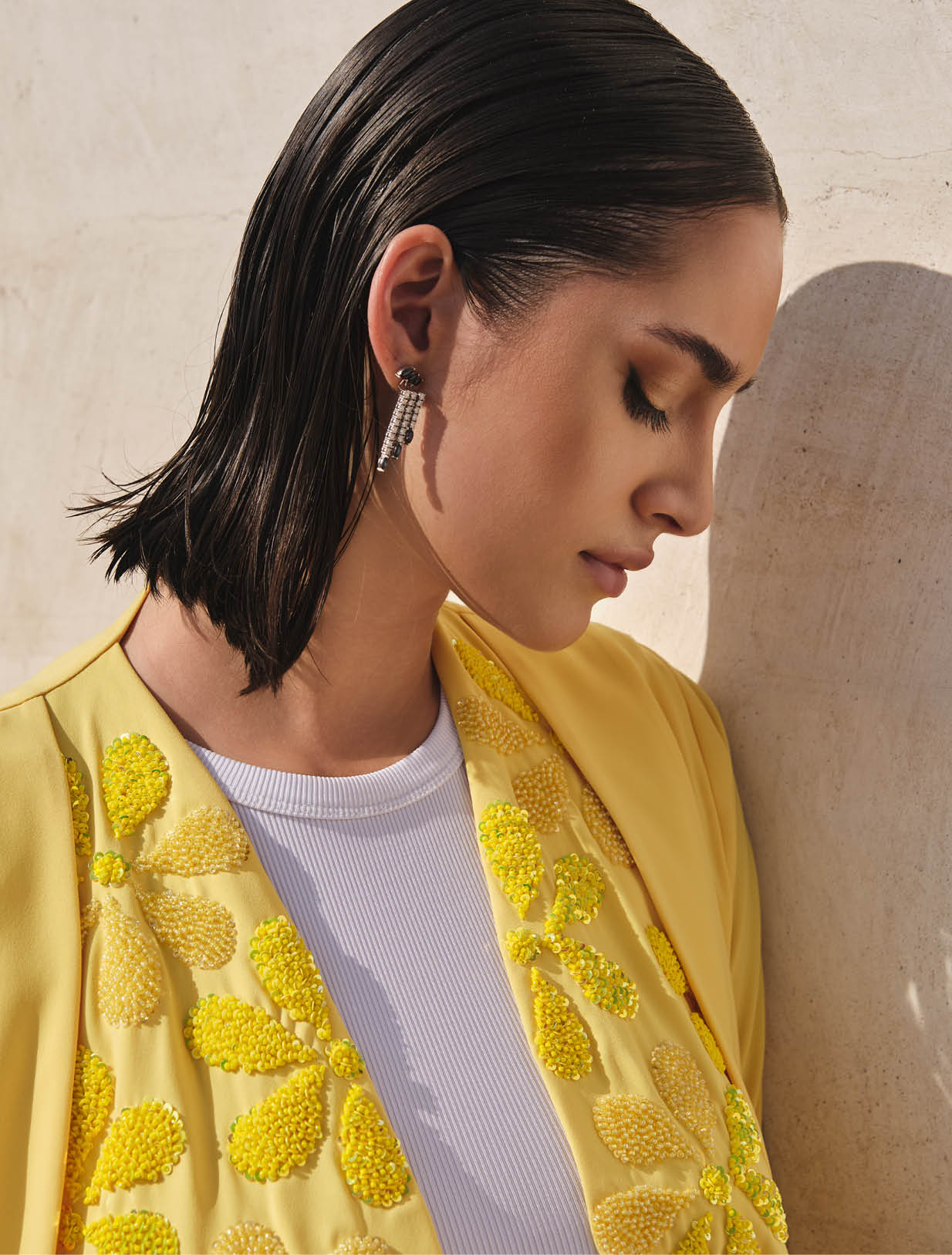
Abaya and pants, Sekka38; Earrings, La Graine; Shoes, Zaia
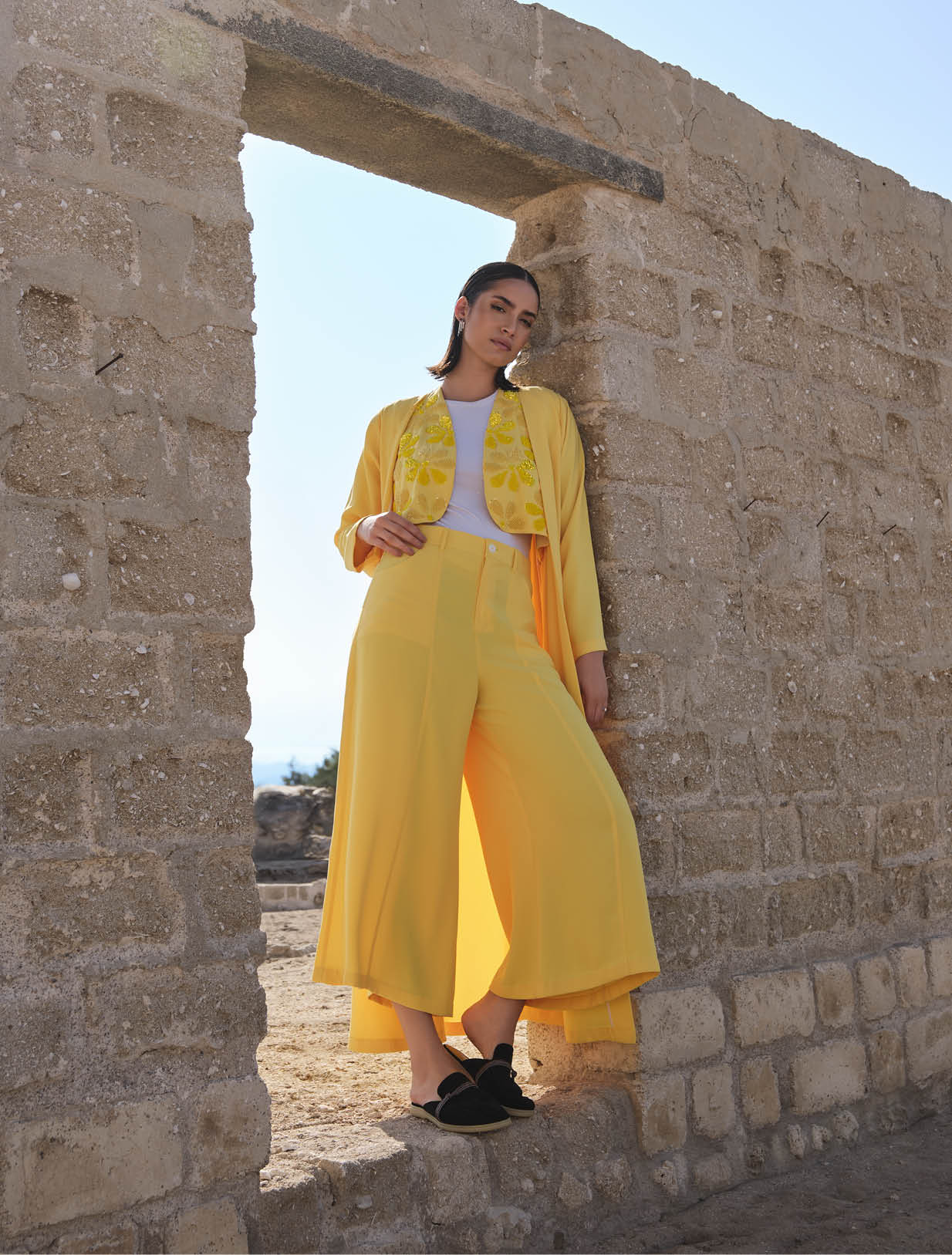
Abaya and pants, Sekka38; Earrings, La Graine; Shoes, Zaia
Credits
Photographer: Ziga Mihelcic
Styling & Direction: Lindsay Judge
Model: Agatha at MMG Models
Hair: Jamilla Paul using Schwarzkopf Professional
Make Up: Zuzanna at Artilla
Location: Al Jazeera Al Hamra, Ras Al Khaimah
The Classic Tod’s Winter Gommino Gets an Updated New Look
The new Tod’s W.G is an evolution of the iconic Winter Gommino ankle boots that defined the lifestyle in the nineties.
Like many of Tod’s icons, these practical yet stylish boots were designed for those who appreciate good taste, high-quality craftsmanship and utility. A functional shoe that can take you from day to night and guarantee absolute comfort.
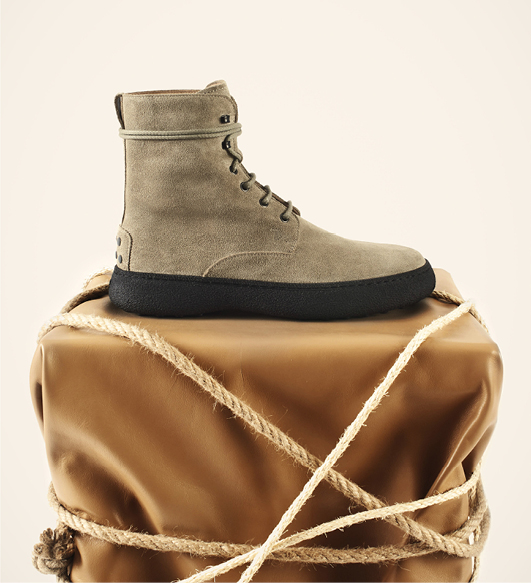
The new W.G has evolved with revised shapes and proportions, both available in the original ankle boot, and in a tapered shorter style desert boot made with the same high-quality suede and leather materials.
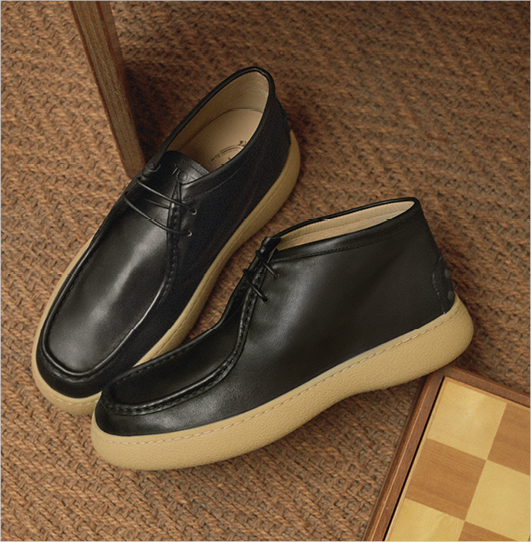
Thanks to its lightweight and flexible rubber role, which is more practical than leather, and characterised by the rubber pebbles on the heel, it provides great functional features which make it an essential part of the cosmopolitan man’s wardrobe, allowing him to feel comfortable for any occasion.
Abu Dhabi’s First Public Art Biennial Gives the Capital a New Look
The inaugural Public Art Abu Dhabi Biennial kicked off on November 15, transforming Abu Dhabi into a celebration of culture and community, with works by more than 70 artists installed across Abu Dhabi and Al Ain.
Titled Public Matter, the event explored the evolving concept of public space in Abu Dhabi through the lens of four main factors: environment, community, urbanity, and indigeneity. The The Biennial investigates how environmental conditions influence gathering places and interactions, and how they define what is considered public space. It examines the interplay between the city’s modern development and its indigenous practices, addressing the challenge of preserving traditional values amid urban growth and economic diversification.
Located in downtown Abu Dhabi and Al Ain, the event saw landmarks transformed by art pieces or installations. One highlight was the Abu Dhabi Bus Terminal which was redesigned with eye-catching art for the event, as well as Al Ain’s pre-petroleum architectural heritage.
The event promotes inclusivity and invited artists to contribute to a deeper understanding of public spaces and their cultural significance. It also marked an exciting programme of public activities for people of all ages throughout November, including musical performances, talks, film screenings and more.
Expo City Dubai Reveals A New Plan For Long-Term Development
Expo City Dubai, the former site of Expo 2020 has revealed a new master plan for its long-term existence, proposing the location become “the new centre of Dubai’s future.”
Launched by His Highness Sheikh Mohammed bin Rashid Al Maktoum, the new master plan for Expo City Dubai cements the area as a focal point on the 2040 Dubai Urban Master Plan and a central hub for the key sectors driving the delivery of the Dubai Economic Agenda (D33), benefitting from its proximity to Dubai Exhibition Centre, Jebel Ali Port and Al Maktoum International Airport.
Once completed, Expo City Dubai will be divided into five districts: Expo Business, Expo Hills, Expo Fields, Expo Downtown and Expo Valley. Each district will be home to residential and commercial buildings, as well as community spaces and amenities that prioritise wellbeing and social connection, all in harmony with nature. There will be a strong focus on sustainable living as it meets urban developments in areas that offer everyday needs for all residents.
Each area within the city will have its own theme and focus. His Highness Sheikh Mohammed bin Rashid said in a statement: “A decade ago, we paved the way for a new city to rise within Dubai – one that would host the world, drive innovation and sustainability, and propel the UAE into a new era of prosperity. Together, as a community, we have been on a remarkable journey, and today we reveal a new chapter in our long-term vision to advance our ambitions. The new master plan establishes Expo City Dubai as a hub for pioneers, entrepreneurs and investors, a magnet for innovators, educators and students, and a vibrant, nurturing community for residents and visitors.”
Spanning 3.5 sq km, Expo City Dubai will be home to more than 35,000 residents and 40,000 professionals as it develops into a global centre for businesses, investors, homeowners and visitors who share its vision of a brighter, more connected and sustainable future.
These Are The Must-Have Accessories For The Winter Season
Shoes and bags that will become your go-to accessories this season and beyond.
Etro Vela Bag
Designed by Marco De Vincenzo the new Vela bag features a flexible metal zipper and a chain adorned with the Pegaso medal. It comes in a rich brown palette and is available in both smooth leather and intricately woven variations that showcase the brand’s craftsmanship and creativity.
Louis Vuitton Neverfull Inside Out
The new Neverfull Inside Out is a twist on Louis Vuitton’s timeless classic Neverfull, turning this beloved inside out and making it fully reversible. With an adapted resistant lining, the Neverfull Inside Out is durable whichever way it is used and offers a variation on the look according to your personality and mood.
Stella McCartney Stella Ryder Bag
Stella McCartney’s Stella Ryder Bag is inspired by the designer’s favourite animal: the horst. Each Stella Ryder is handcrafted in Italy with a cruelty-free leather alternative, incorporating recycled materials and trimmed with VEGEA, a grape-based solution. The bag’s lining is in organic hemp, a naturally renewable plant-based fibre.
Valentino 9to5
True to its name, the Valentino Garavani 9to5 bag makes its mark as an all-day accessory. Free from any aesthetic limitations, it speaks a universal language, enhanced by a soft, slightly rounded frame and emboldened by a golden VLogo.
Prada Holiday Collection Bag
Prada’s Holiday collection features a selection of bags that are set to become winter icons. This new design in soft black nappa leather draws its pleated body and lock, chain and brass ring decoration from archival Prada accessories. This classic design is perfect from day to night.
Ferragamo Ballerina Ferragamo
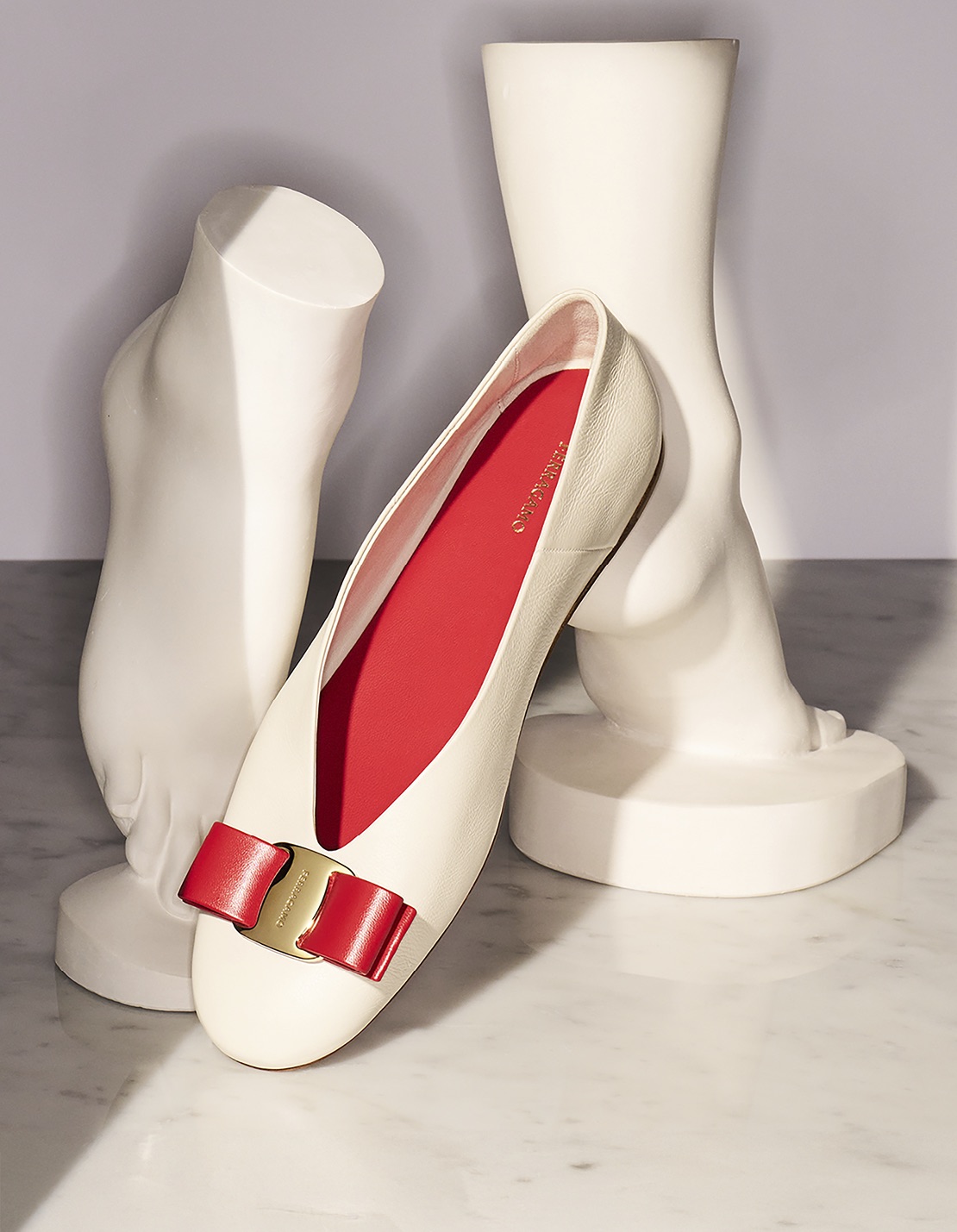
Salvatore Ferragamo first created ballerina shoes for the Hollywood stars of the 1950s and 1960s. The new design for this season is inspired by the original but features new colourways and new packaging.
Gianvito Rossi Mountain Capsule Collection

Gianvito Rossi has revealed three new mountain-style boots. Metal buckles and eyelets embellish leather straps that embrace the soft, shearling Maverickboot and warm ribbed knit fabric wrap the Thurso boot, making these styles the perfect booties for mountain adventures and outdoor walks this holiday season.
Roger Vivier Belle Vivier Slingback
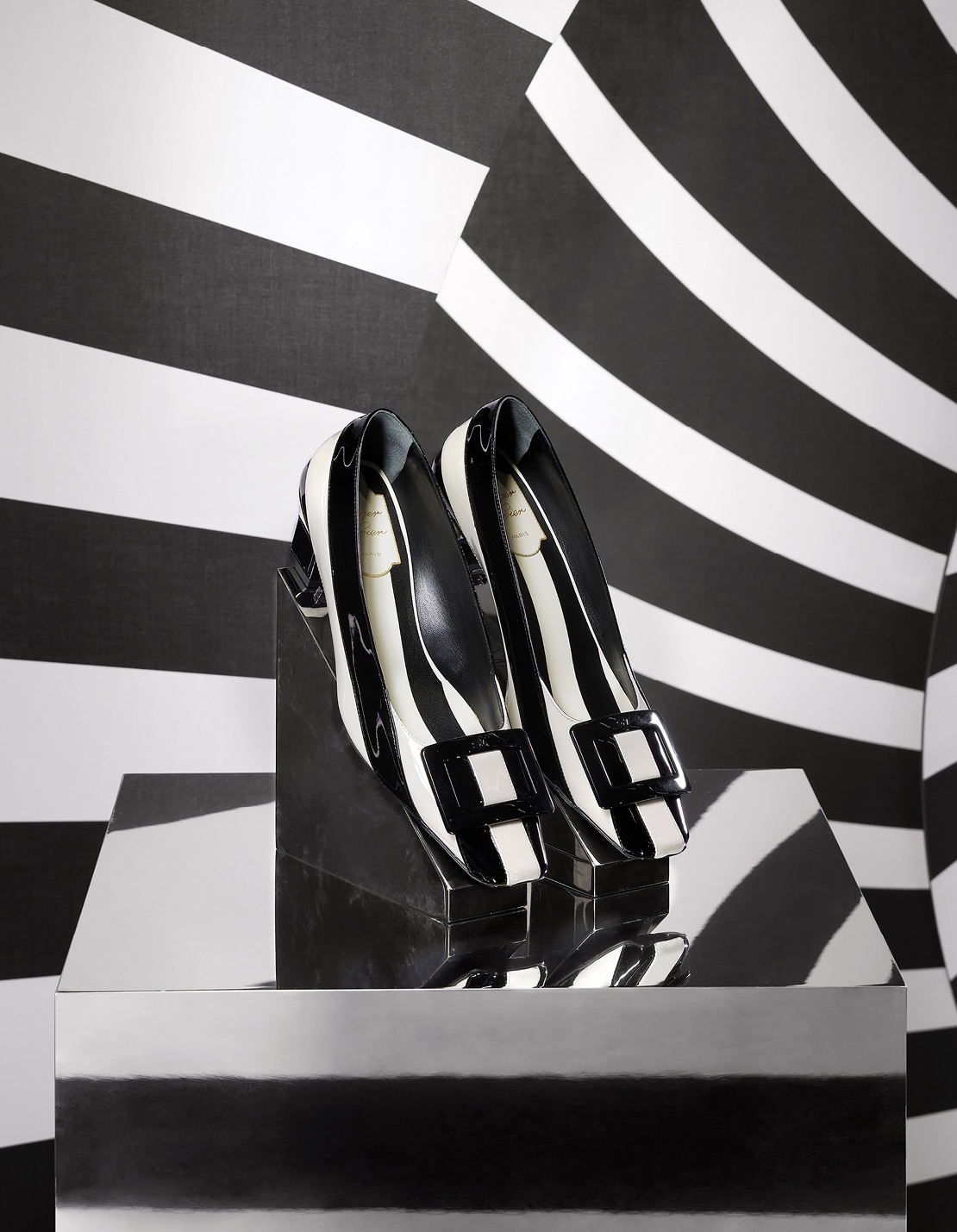
Roger Vivier’s Belle Vivier Slingback pump is being offered in a new eye-cathing monochrome version for fall/winter 2024. With a sixties twist, this iconic shoe was first unveiled in 1965, and features the designed instantly recognisable buckle and skyscraper heel.
Santoni Beige Andrea Tassel Loafer
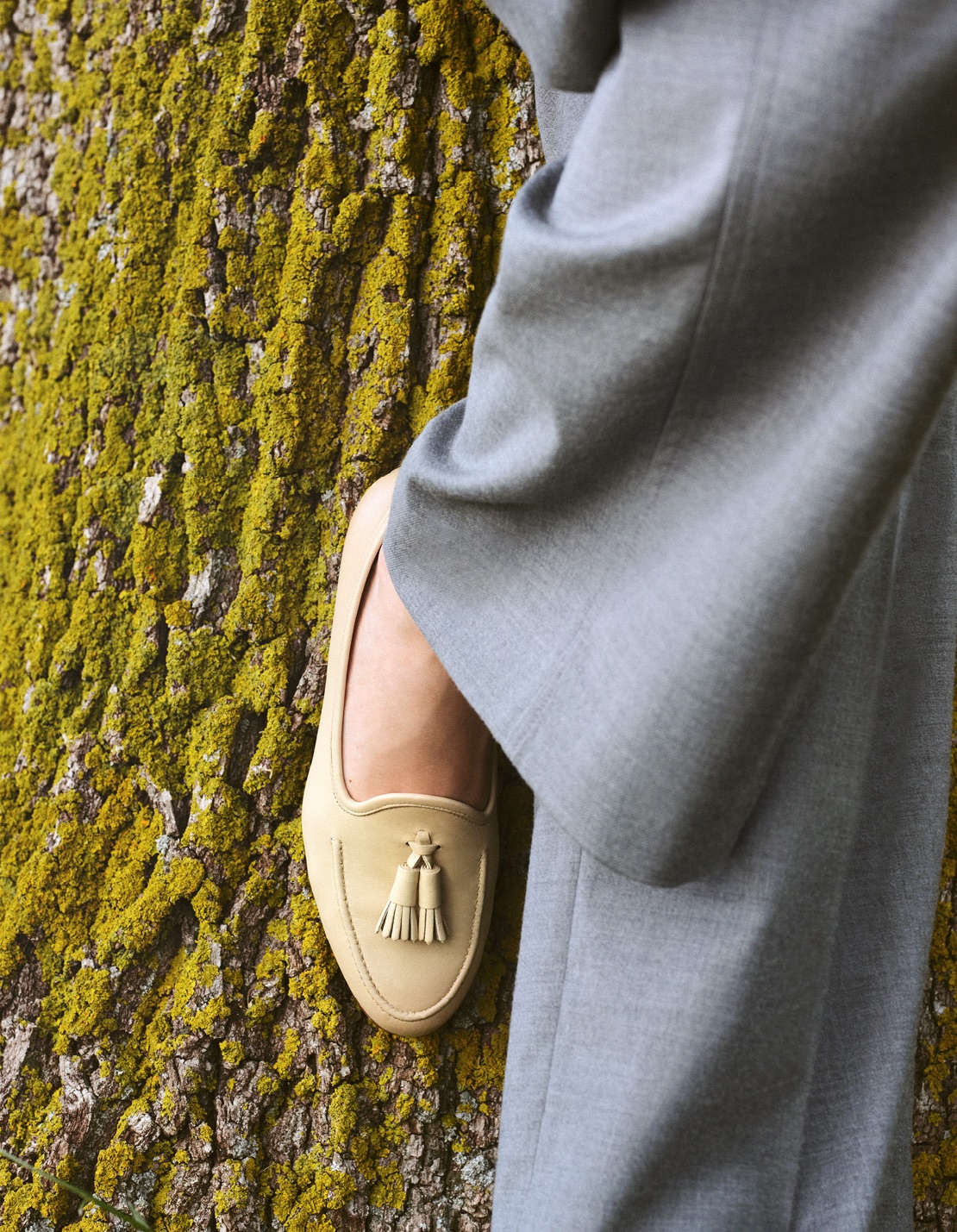
The epitome of elegance, Santonie’s beige tassel loafer reinterprets an archival classic with refined allure. It features a low-cut silhouette and the brand’s signature “velatura” gradated finish and is completes with delicate tassels on the toe.
Christian Louboutin Sweet Jane Flat
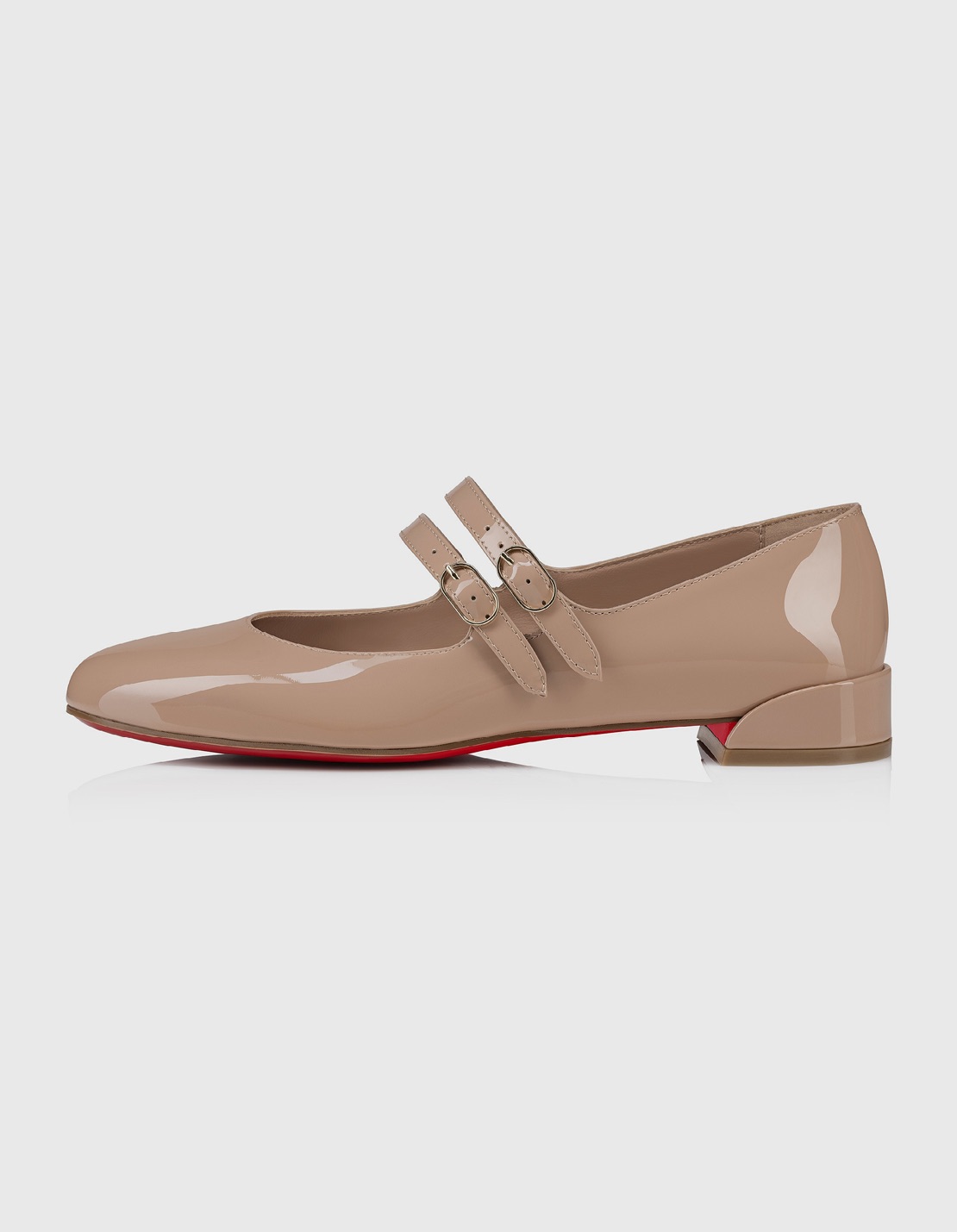
with its slightly rounded toe, Christian Louboutin’s Sweet Jane Flat has a sophisticated appeal. Available in a series of nude tones, this flat shoe is made of patent calf leather with two straps composed of tone-on-tone loops and a generous border that reveals the foot. Part of the Maison’s signature Nudes collection, this shoe stands as an emblem for diversity.
Tod’s Yorky in Leather
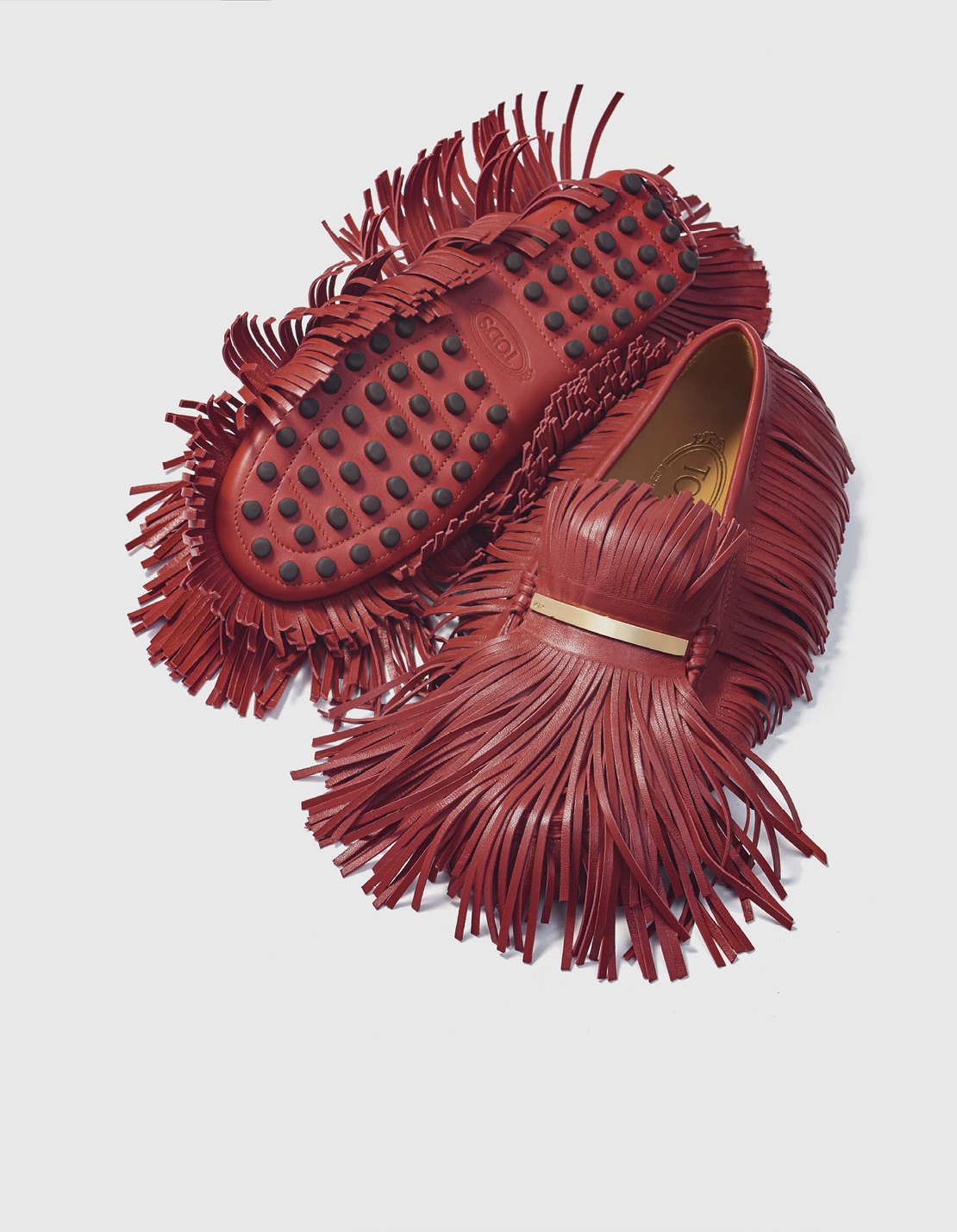
This eye-catching twist on Tod’s classic Gommino first debuted on the catwalk this season. A result of careful craftsmanship, this sophisticated version of the classic features flowing fringes for a fashion twist. Crafted in ovine and calfskin leather with a branded metal front bar, this Tod’s Yorky version comes with signature handmade stitching and the iconic rubber pebble outsole.
The Must-Have Pieces From The 2025 Cruise Collections
This season’s collections offer escapism and a touch of glamour.
Chanel
Chanel’s 2024/25 Cruise collection was presented in the French town of Marseille, which has been closely linked to the house over the years. “The sun, architecture, music and dance: Marseille also has a very strong sense of freedom. I was inspired by the codes of lifestyle, of everyday life and by all the things that invite movement. The sea and the wind made me want to play with wetsuits,” said Virginie Viard in the show notes. The designer was inspired by the sea with embroideries including fish, fishing nets, shells and shellfish, which feature on suit jackets, waistcoats, faille blouses, T-shirts and little vest tops.
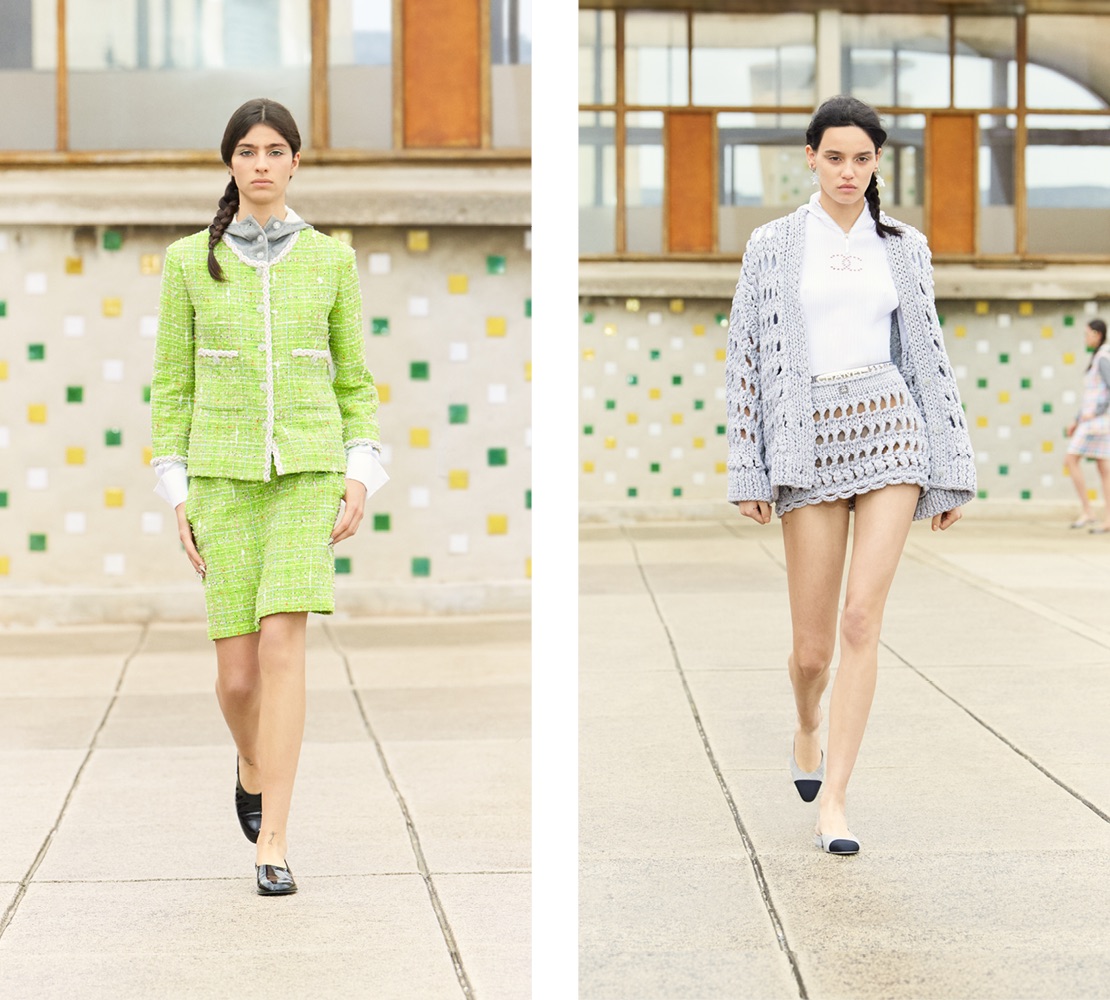
The inspiration of water continues with the reflections of sunlight on a swimming pool or the ocean. Glistening details and silvery reflections appear on neoprene-like jerseys, tweeds and sequinned jackets, while other tweeds and jerseys pick up the colours, grid motifs or geometric shapes of the facades of surrounding habitats for a long dress, tunics and even embroidered pockets.
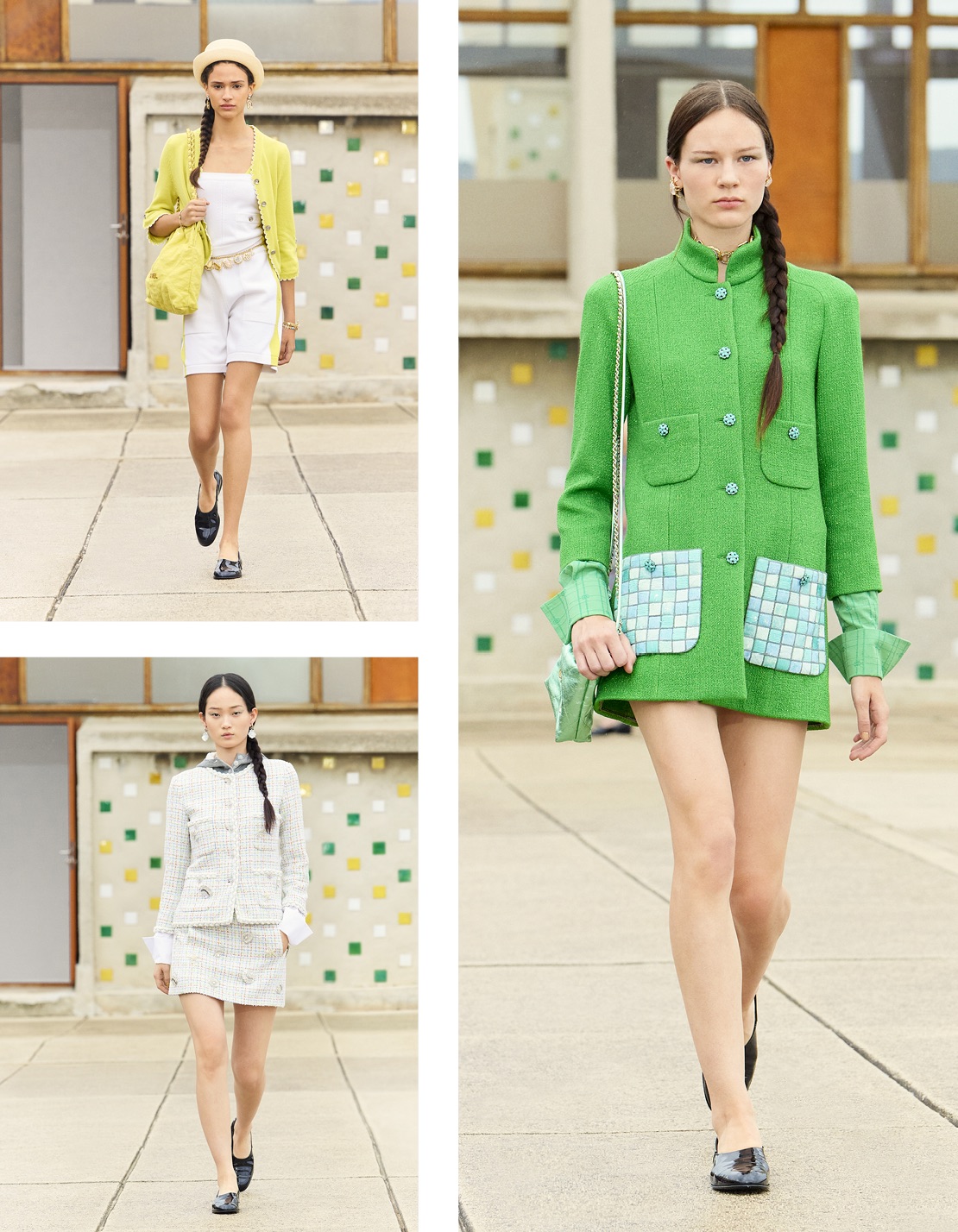
Many items are decorated with the hood and press studs which are set to become signature design details, as well as revisiting the classic traits of the sweatshirt, offering its own version in fish-printed chiffon. Running Bermuda shorts trimmed with embroidered braid, tweed cycling shorts and oversized jackets complete a collection that embraces the dynamics of movement. The same wind of freedom blows over a white flounced skirt and a floral-embroidered sheath dress. Other highlights include swimwear which evokes a summery mood.
Louis Vuitton
Louis Vuitton’s Cruise 2025 collection debuted in the Spanish city of Barcelona, a place synonymous with architecture. For the runway presentation of this collection, the brand chose Park Güell, an architectural utopia created by Antoni Gaudí and a UNESCO World Heritage site.
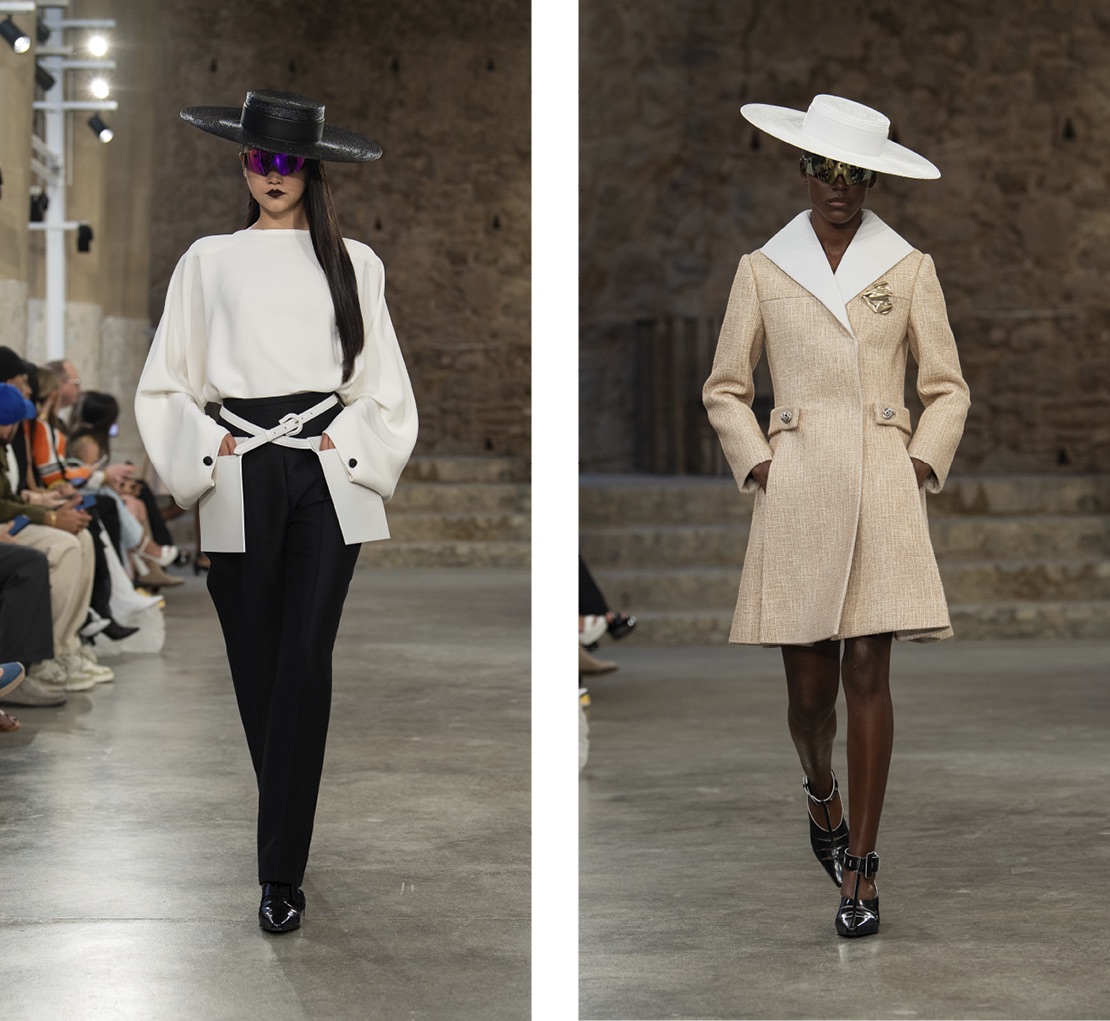
The collection itself took inspiration from architecture and the surroundings, as well as deep-rooted connections to Spain and its culture and traditions. As if in homage to the opulent purity of the country, the Maison’s rigorous spirit embraces Spain’s passionate character.
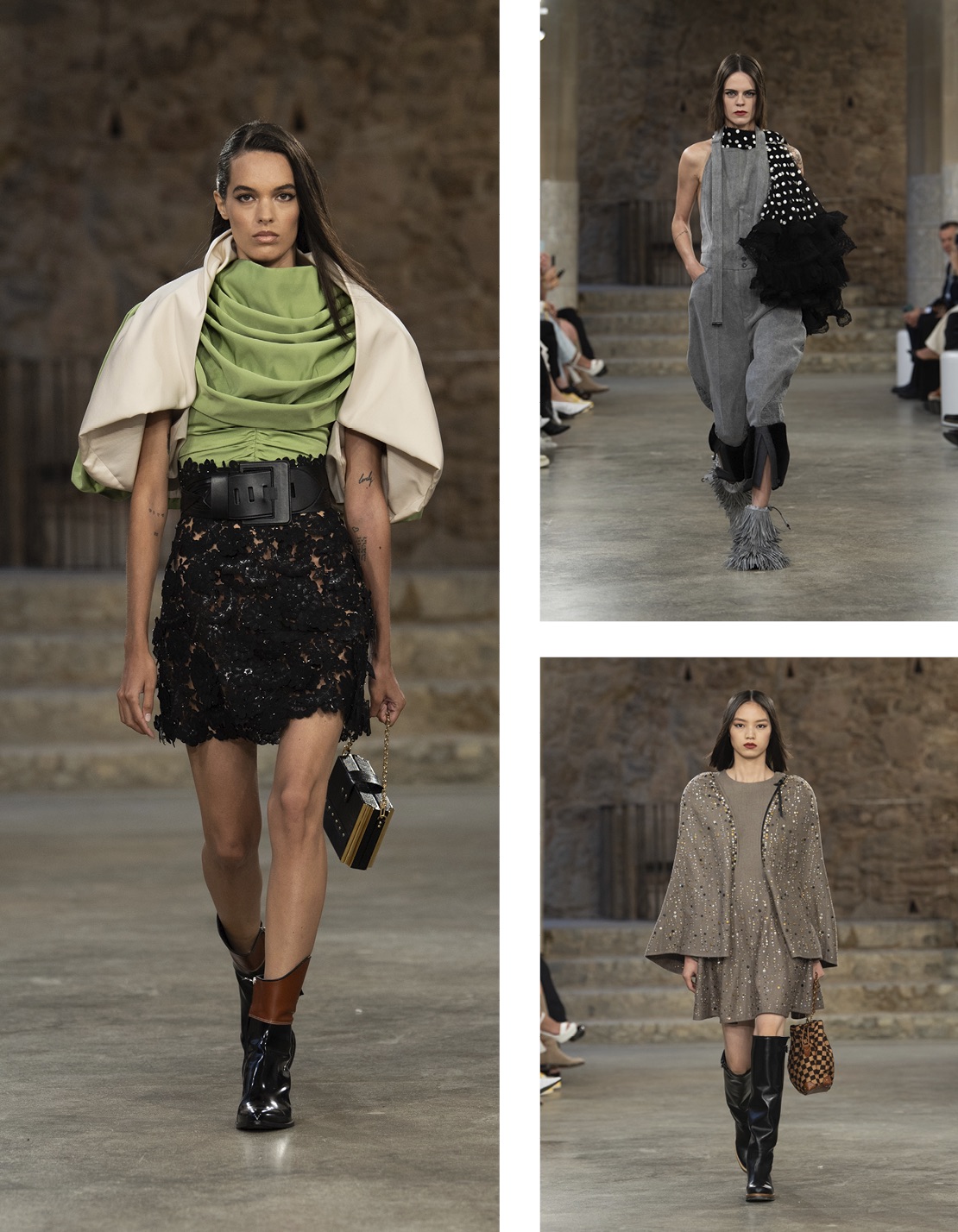
The fervor of its colours, and its loyalty to tradition elevated into artistic expression, dark and light that never appear contradictory. In sum: a style, an art of traveling, enriched by the specialness of a different land and the way one makes it one’s own; a journey of discovery.
Max Mara
Staying true to its Italian roots, Max Mara travelled to Venice to present its Resort 2025 collection earlier this year. As one of the most magical cities in Europe, this settlement, built on a lagoon is unlike any other place in the world. This year, a series of exhibitions and events will mark the 700th anniversary of Marco Polo’s death, making it a key moment to be in the city.
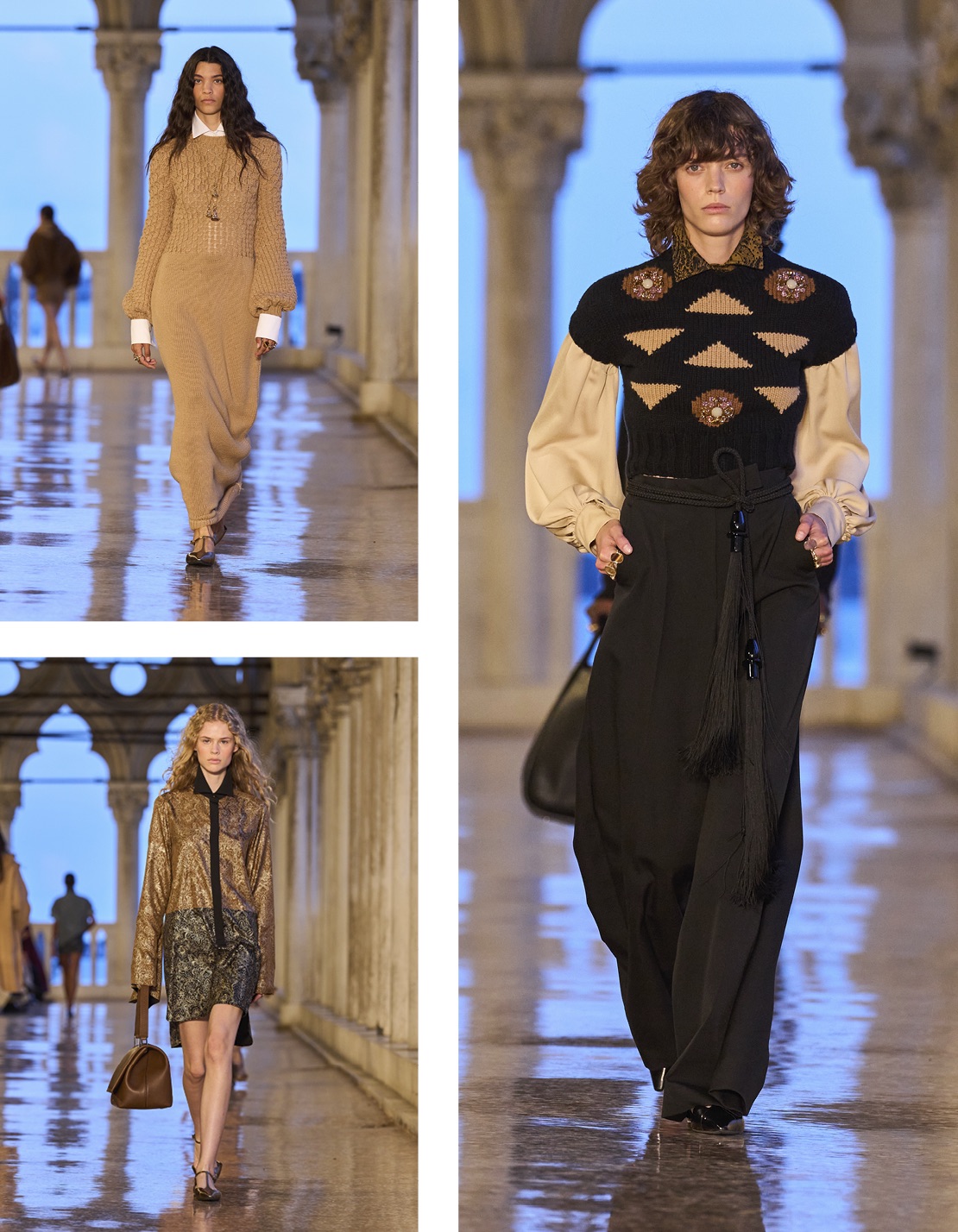
Max Mara follows in Polo’s footsteps with an opulent and multi-cultural collection that aims for a little magic. Polo spent twenty years at the court of Kublai Khan in Mongolia, where, even today, camel and cashmere wools are produced and traded on the so-called Silk Road, a conduit for all manners of luxurious commodities. Naturally, the collection kicks off with camel, black, white and tan and introduces silks in nuanced shades like those Polo might have brought back from Cathay or Constantinople. From ‘robes de chambre’ to parkas via trenches and tabarri, Max Mara serves up the stateliest coats.
There are gowns for special occasions, but there are also sweeping spolverini, snappy tunics, sharply cut tailleurs and neat all-in-ones with everyday elegance ready for travel and adventure. Outsize tassels, chunky drawstrings, extravagant handkerchief cuffs and velvet pannier skirts are key features. The crowning glory will be series of turban-inspired headpieces, realised in collaboration with legendary milliner Stephen Jones.
Valentino
Valentino’s Resort 2025 collection Avant Les Débuts is the first collection to be revealed under the Creative Direction of Alessandro Michele. This marks a new era for the brand as it begins a new chapter in its legacy.
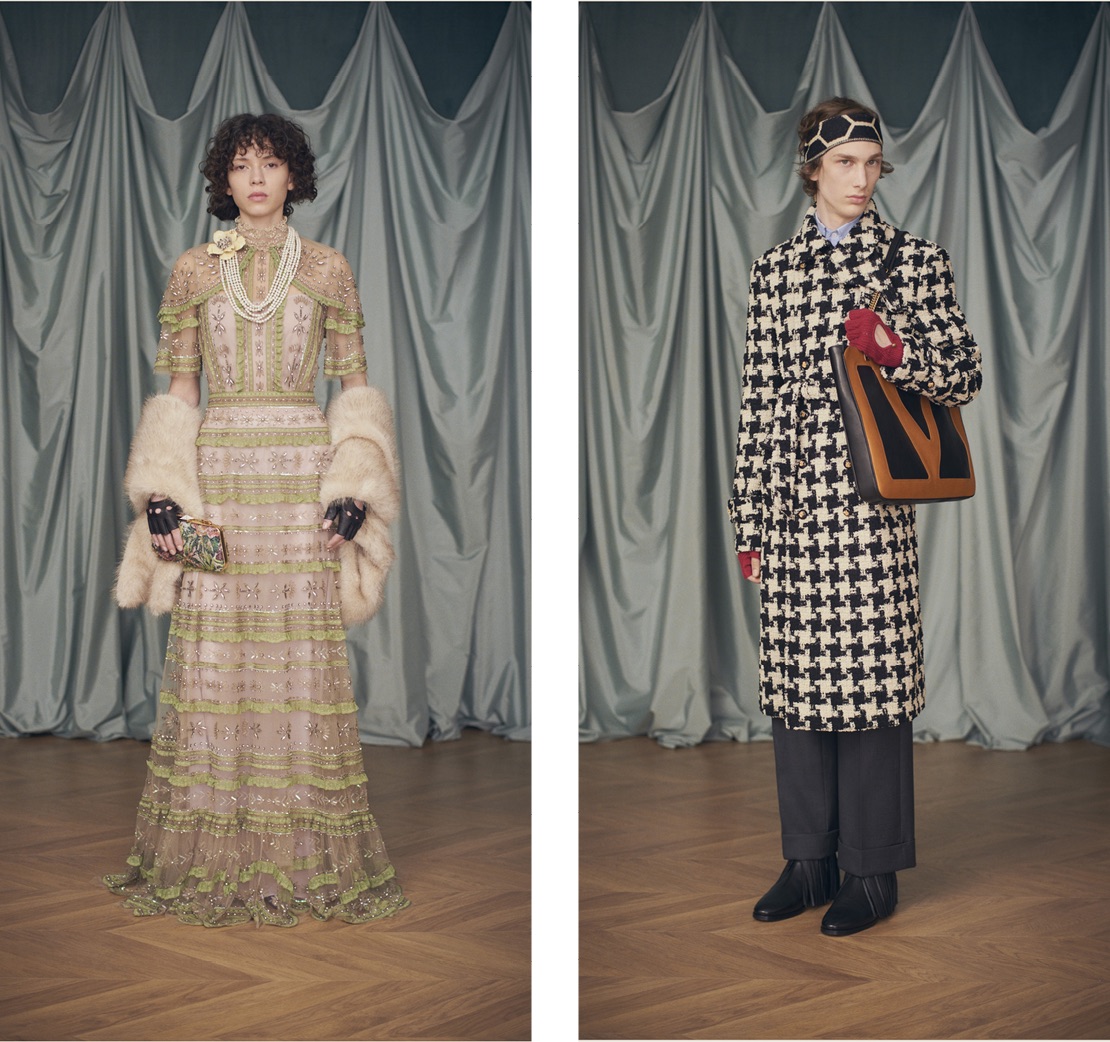
This collection pays homage to Valentino’s past as well as drawing out its new future. “In this delicate passage of memorial revisitation, I tried to reimagine Maison Valentino, starting from the mythical Mignanelli palace, historical headquarters of the brand. In my oneiric transposition, the front door of this ancient Roman palace becomes the portal leading to a house populated by eccentric, uninhibited, eclectic humanity.” Explained Michele in the collection notes.
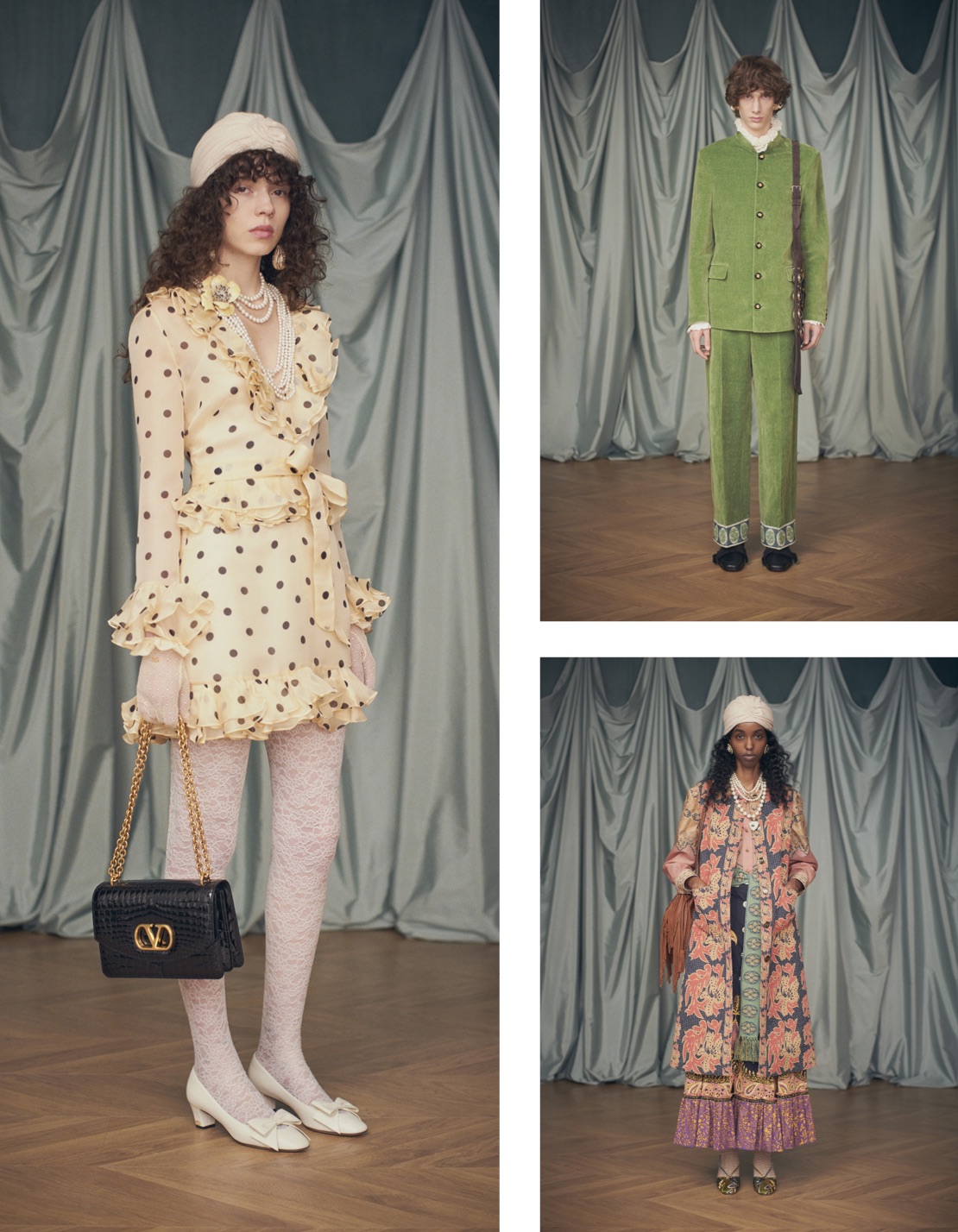
He imagines glamourous women in cinema, living in the vibrant city of Rome draped in elegance and each one expressing their complex personality. There is no denying Michele’s design aesthetic clearly shines through in this collection, juxtaposed materials, opulent layering and surprising twists and turns make you look twice at each look. As the world awaits the next chapter of Valentino, this collection is certainly an exciting beginning.
Rabanne
Rabanne’s Resort 24 collection is a celebration of Parisian style, combining it with the bold and extroverted influences of the seventies and nineties. With looks the emphasise ease and individuality, the collection expresses women to embrace their individuality.
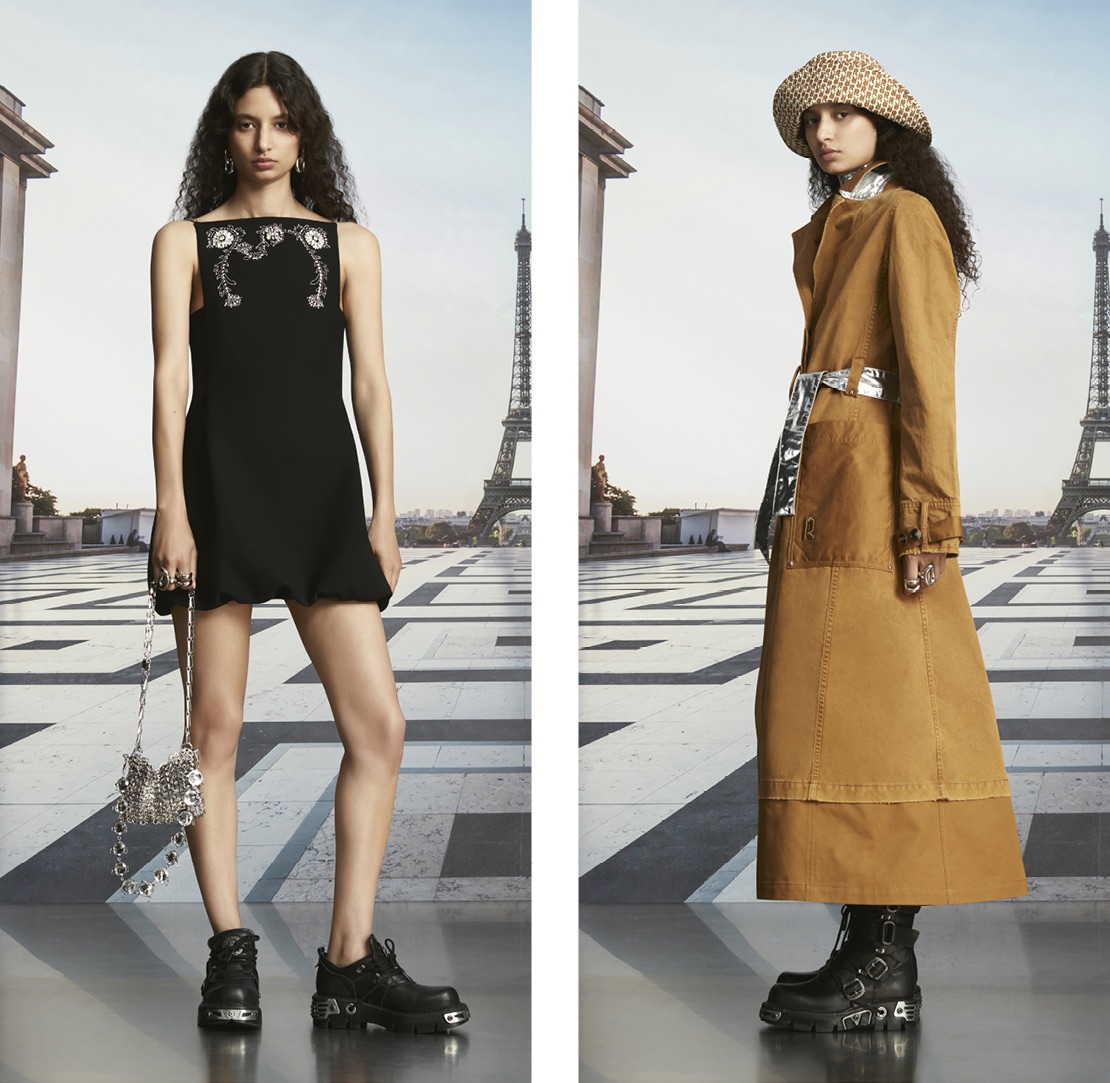
Long dresses span various materials and silhouettes: gathered silk jersey, body-grazing knit, a sheer sheath with incrustations of metal mesh; and stretch velour with a gathered torso in a shade of candy pink. Beyond their dramatic allure, surface details and styling capture the season’s insouciance. There are straps like ice cubes and belts with draped chains, while rivets and metal balls bring focus to the silhouettes. A wraparound snowflake scarf is paired unexpectedly with dresses or comes as a knit layer embellished with geometric assemblage. Grunge takes a festive attitude, as slip dresses in lustrous metal mesh are incrusted with lace and assemblage halter tops are worn with cashmere shorts. The constant juxtaposition of fancy elements and relaxed garments brings fresh focus to the Maison’s DNA, at once intricately crafted yet ever-youthful.
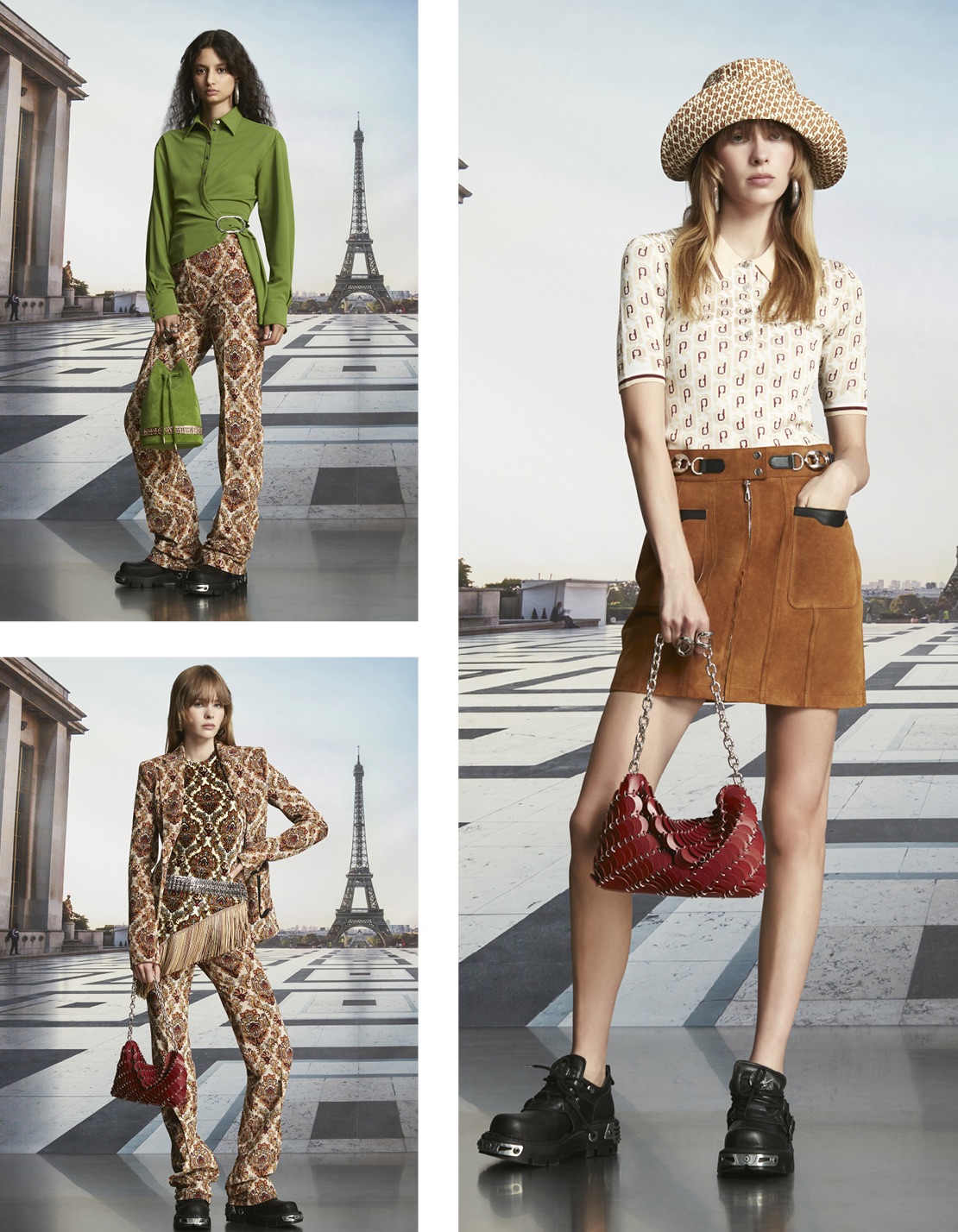
As night gives way to day, the Pre-collection delivers a spirited range of wearable looks that take fashion to the street. Sparkling embroideries are suddenly dressed down; military elements become decorative, and sport meets sophistication. A coat trimmed with silver and cargo pants worn with a pastille belt shows workwear in a Rabanne way. And while coordinated looks make a bold impression – the flocked denim jacket and jeans; corduroy tailoring in billiard green; stretch jersey ensembles covered in a lush tapestry pattern – remixing the pieces reveals cool creativity.
Boots in collaboration with New Rock become another expression of elevated grunge and prove highly versatile across the collections. Among the statement bags, there’s Rabanne in a compact, slouchy shoulder style; new iterations in raffia include a spacious cabas and a small bucket with contrast black stripes; and the iconic 1969 pastilles return in gleaming copper. Tubular mesh accessories such as a magnet choker and bracelet bordered with metal balls can be effortlessly added to any look, enhancing the edge of a free-spirited season.
Chloé
Since the arrival of Chemena Kamali, Chloé has been celebrating the boho glamour that it is traditionally known for. For the Resort 2024 collection, Kamali is inspired by Karl Lagerfeld’s 1970 interpretation of the brand and the influence of his Art-Deco Parisian apartment on his design. Its signature black, gold and cream colour palette is the basis for the designs that feature key shapes and silhouettes from the seventies.

The collection moves along two parallel lines: rich and airy, billowing dresses and blouses in black and gold or white and gold fil coupé evolve seamlessly from the last show, exploring Art Deco motifs and colour combinations; meanwhile, the definition of the Chloé wardrobe keeps growing, adding pieces that exude the charm of a personal vintage find.

The core elements of this woman’s evolving closet are the tailoring, the jackets with scalloped edges, the leather coats and Bermudas, together with the denim pants and the ribbed knit tops. The colour palette features, along with our signature shades of beige, cream and black, new, highly saturated tones of magenta, fuchsia, purple which add to the eclectic spirit, and intensely decorated and fringed 70s-inspired jewellery completes the looks. Folded boots are a new take on our signature “Cuissardes”, and we introduce our new Chloé sneakers, inspired by the silhouette of boxing shoes and the softness of a ballet shoe.
