
In Dubai’s evolving creative landscape, UrArtU Gallery offers a distinct perspective on the role of floristry within contemporary culture. Founded by Gurgen Yeritsyan, the Alserkal Avenue space moves beyond traditional notions of flowers as decoration, positioning them instead as a medium for artistic expression, spatial design and emotional storytelling.
Drawing on more than 15 years of experience in floral artistry, Yeritsyan has developed a practice that treats flowers as both material and message. At UrArtU, this vision unfolds through a programme of exhibitions, installations and collaborations that blur the boundaries between art, architecture and design. The gallery operates not only as a space to view floristry, but to experience it, inviting visitors into environments where nature is reimagined through scale, structure and context.
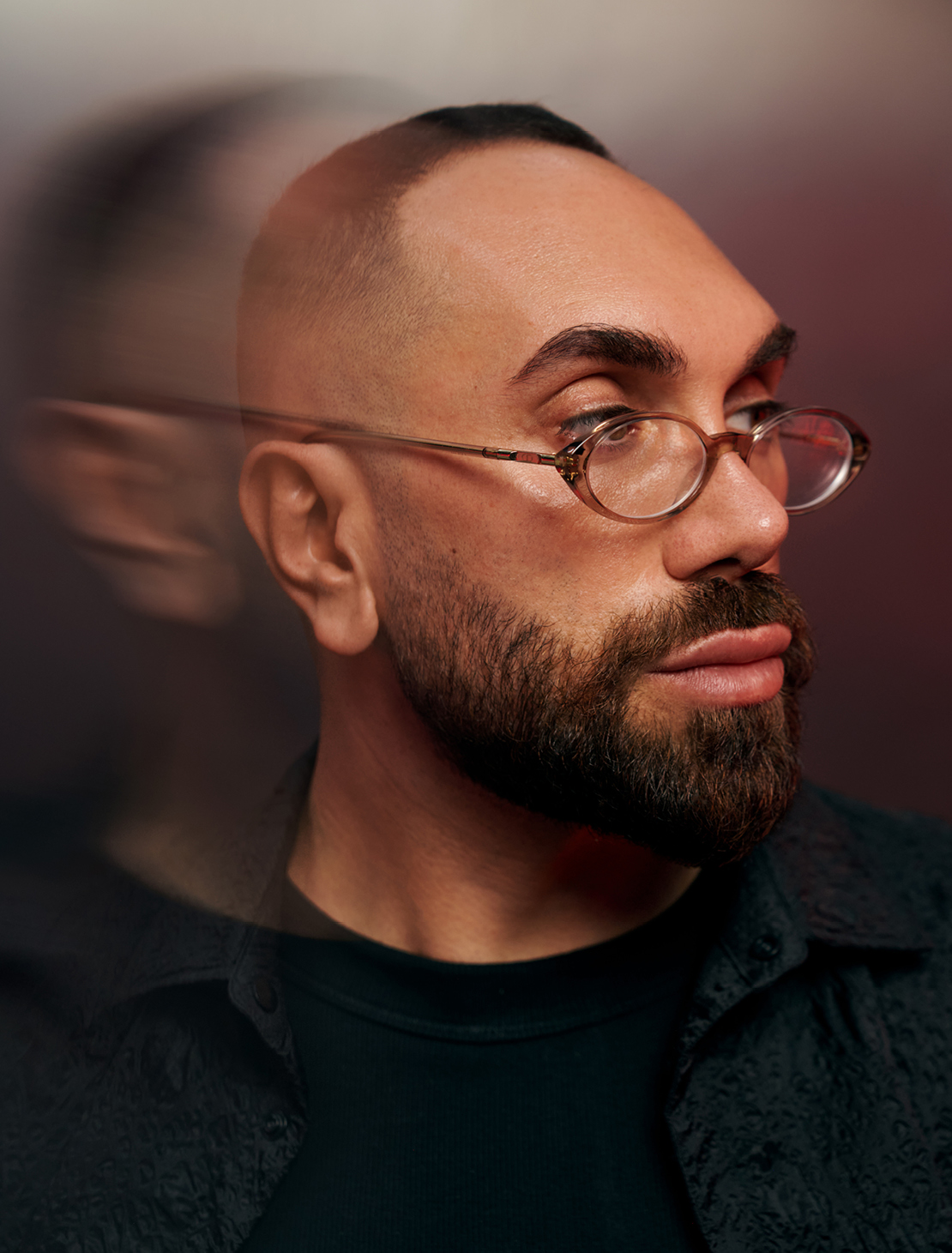
This approach is further explored through the gallery’s recent collaboration with Crosby Studios, where floristry takes on a more architectural presence, shaping the space as much as inhabiting it.
Here, Gurgen Yeritsyan reflects on the concept behind UrArtU, the evolving language of floristry and the role of the gallery within Dubai’s wider creative ecosystem.
UrArtU Gallery has always explored flowers as more than decoration. What was the original vision behind the gallery, and how does this new collaboration with Crosby Studios expand that concept?
When I started UrArtU, the idea was to challenge the way people usually interact with flowers. Most of the time, they are seen as something temporary or a gift and used as decoration. I wanted to slow that moment down and give flowers a different kind of presence. The collaboration with Crosby Studios allowed us to push that idea further. Instead of flowers existing within a space, the space itself now feels shaped by them. The gallery becomes a stage where nature and design meet, and where people can experience floristry in a way that feels more immersive and unexpected.
This project transforms floristry into a spatial and architectural experience. How did the idea for a flower space that operates as both a gallery and an installation first come about?
For a long time, I felt that floristry was often confined to the vase. But flowers have so much more potential than that. They have colour, movement and emotion. They can create an atmosphere in the same way that light or music can. The idea for the gallery was to create a place where flowers could exist in dialogue with art, design and architecture. A space where floristry becomes immersive, almost cinematic. With Crosby Studios, we pushed that concept further, treating flowers as part of the environment rather than just something placed within it.
What kind of experience did you want visitors to have when they walk through the gallery for the first time?
I want people to feel welcome. UrArtU Gallery is a place designed to bring people together, and I want it to be a moment to pause. In cities like Dubai, everything moves very fast, and we are constantly surrounded by noise and information. When you enter the gallery, I want it to feel almost meditative. Somewhere you can grab a coffee, enjoy art and take some flowers home to enjoy the memory.
Working with Harry Nuriev and Crosby Studios brings a strong architectural language into the project. How did this collaboration come together, and what was the creative dialogue like between you and the studio?
I’ve admired Harry’s work for a long time because he approaches design with a very conceptual mindset. When we first started talking, we realised we shared a similar idea: that objects and materials can tell stories and evoke emotion. The dialogue between us was very organic. I came from the perspective of flowers and emotional storytelling, and Harry brought this strong architectural vision. Together we created something that lives somewhere between art installation, architecture and floristry.
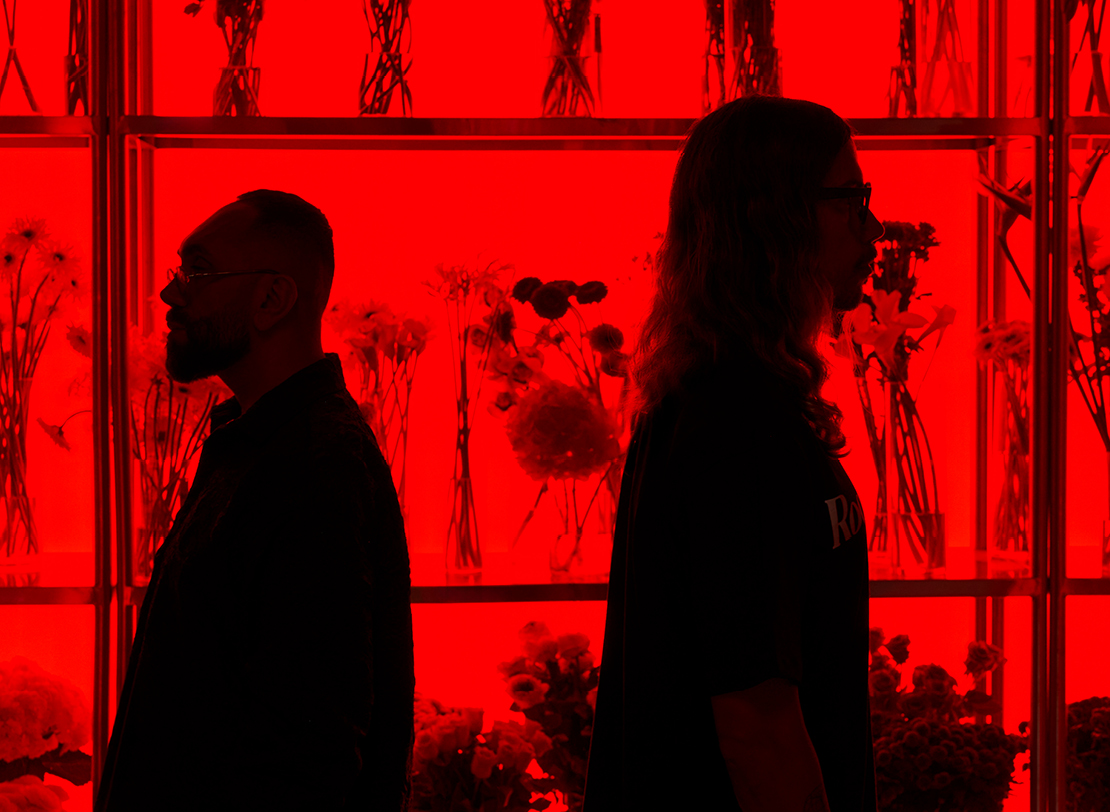
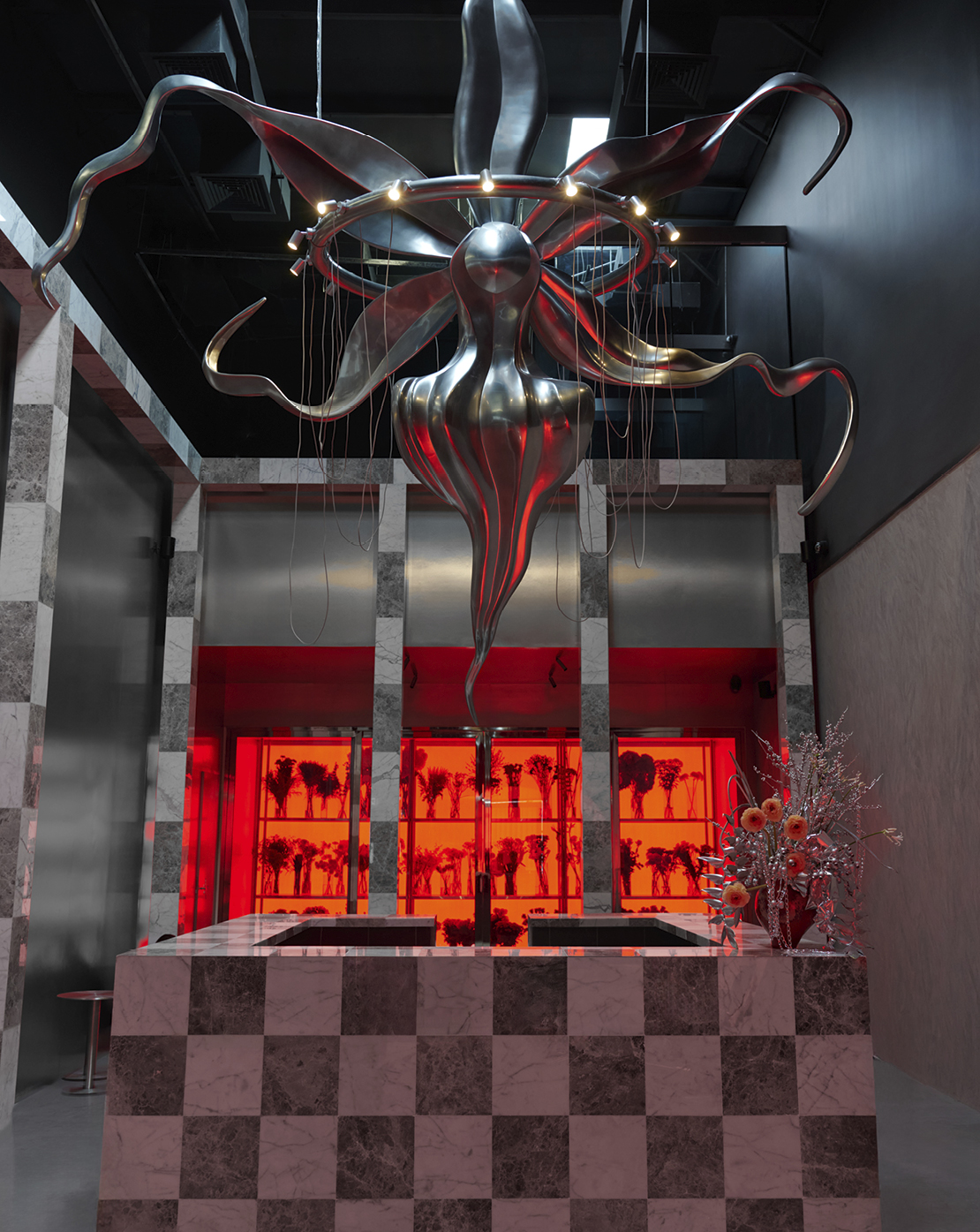
The aluminium orchid structure is one of the defining elements of the space. How did the idea for this dramatic centrepiece emerge, and what does the orchid represent within the project?
The orchid is my favourite flower, and it’s a fascinating flower because it represents elegance but also strength. It’s delicate, but it also has a very sculptural form. We wanted to take something that is usually fragile and temporary and make it monumental. For me, it symbolises the whole concept of UrArtU, turning something fleeting into something powerful and lasting.
Materiality seems to play an important role in the design, from microcement floors to Italian marble and stainless-steel finishes. How do these more industrial materials complement the softness of flowers?
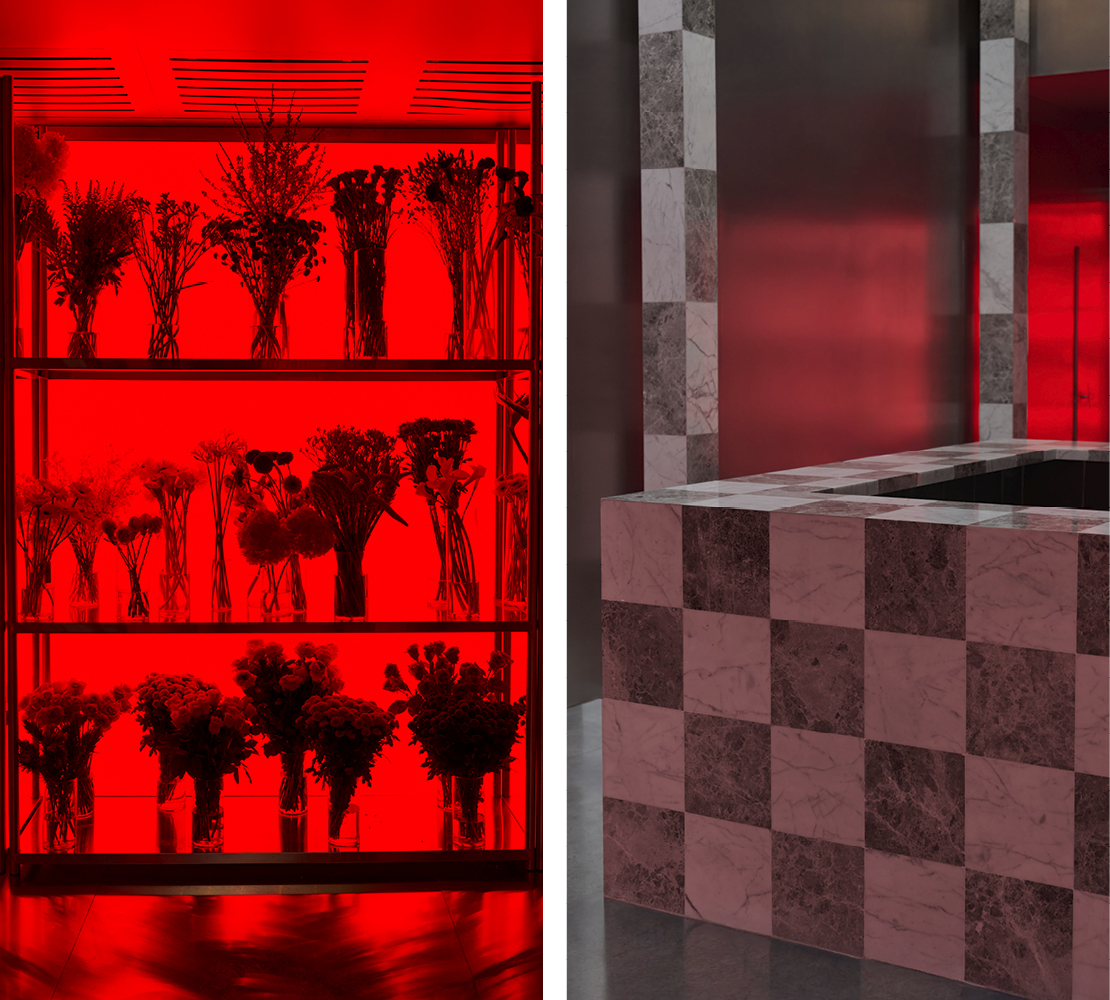
The project is built around contrasts. Flowers represent softness, fragility and nature and using materials like the beautiful marble by Stonetta represents permanence and structure. When these opposites exist together, they amplify each other. The flowers feel even more alive within a space that is minimal and architectural. And the architecture feels more emotional because it interacts with something organic.
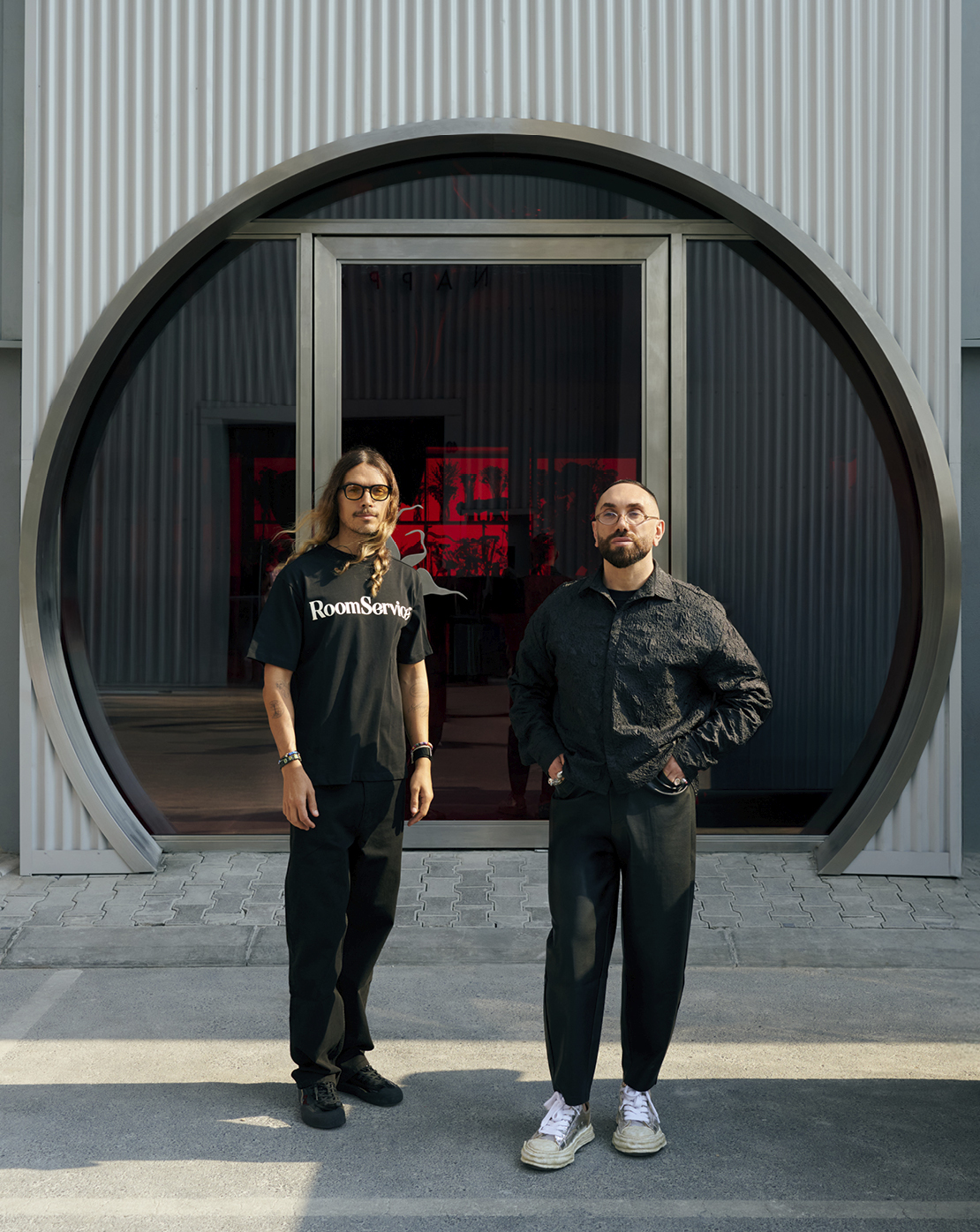
Floristry has traditionally been seen as feminine. As a male founder working with flowers as a primary medium, how do you view that perception, and how do you think it is evolving today?
For me, flowers have never been about gender. They are part of nature, part of culture, part of art. Historically, flowers have always been present in architecture, painting, fashion and rituals across different cultures. I think today people are beginning to see floristry differently – not just as decoration but as a creative discipline that can be conceptual, sculptural and expressive.
Flowers seem to have become particularly relevant again in art, fashion and design. Why do you think floristry has recently gained this renewed cultural ‘cool factor’?
I think, like most things that are organic and natural, society has almost a subconscious cyclical approach to it. In a world that is full of stimulation and speed, as humans, we will always find our way back to nature somehow. I think people are searching for emotion and authenticity again. In a very digital world, flowers remind us of something real. They carry symbolism, memory, and beauty, and artists, designers, and fashion houses are rediscovering that emotional power.
UrArtU operates not only as a gallery but also as a multi-purpose platform for workshops, pop-ups and collaborations. How important is that flexibility to the identity of the space?
It’s essential. I never wanted UrArtU to be static. Creativity is always evolving, and the space should evolve alongside it. The gallery is designed to host many different types of experiences like workshops, installations, collaborations, and even brand projects. It’s a platform for ideas as much as it is a gallery for flowers.
Alserkal Avenue has become one of the most important cultural districts in the UAE. What does it mean for UrArtU to be part of this creative community?
Being part of Alserkal Avenue is very meaningful because it’s one of the few places where different creative disciplines truly meet in the city – art, architecture, design, fashion and food. For UrArtU, it’s the perfect environment. The community here encourages experimentation and dialogue, and that’s exactly the spirit behind the gallery.
More broadly, how do you see the creative industry in the UAE evolving?
The UAE is becoming an exciting place for creativity because there is openness to new ideas and formats. Galleries become event spaces, design studios become cultural platforms, and collaborations happen across industries. That kind of fluidity allows creativity to grow in unexpected directions.
Looking ahead, what are your plans for UrArtU Gallery? Are there particular exhibitions, collaborations or creative directions you’re excited to explore in the coming years?
UrArtU is a long-term creative journey. We’re planning collaborations with artists and designers from different fields, and also more public experiences that allow people to interact with floristry in new ways. At the moment, we are running BELONGING(S), a solo exhibition with Tunisian-Finnish artist Dora Dalila Cheffi, curated by Yeocheva, but definitely stay tuned for more to come.
By Lindsay Judge