
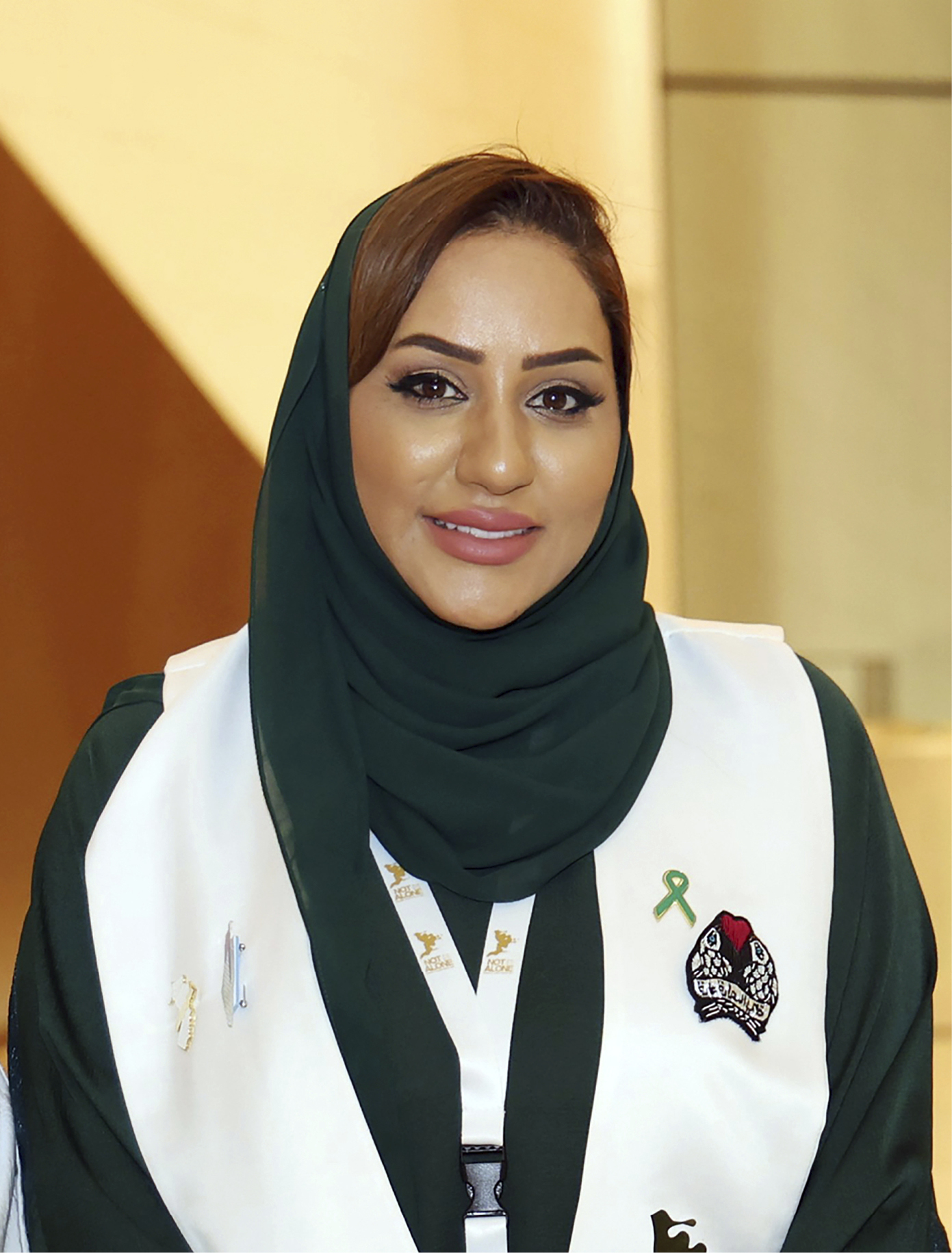
The past few months have seen some of the most tragic, unsettling, worrying and terrible times across the Middle East. The conflict in Gaza has seen thousands of lives and homes lost, with millions more displaced or suffering the loss of a loved one. While this festive season many of us will not feel like celebrating, there is a glimmer of light at the end of the tunnel: hope. When times are terrible all we have left is hope, and as HH Sayyida Basma Al Said, Psychotherapist, Clinical Hypnotherapist and founder of Whispers of Serenity Clinic explains, we must hold onto that.
How would you define hope?
Personally I think hope is the last thing that is there if everything else falls. It is a glimmer of light. Something that we can hold on to. It can be a positive or negative feeling. It can be positive in the sense that when everything falls, you know that something positive can still happen, but it could be negative in the sense that you feel that everything is gone, and that’s all we have left. It depends on how a person looks at it, but it is essential, and, interestingly, not many people believe in hope.
Why do you believe it’s important for us all to have hope?
It’s important to have hope because when everything falls, hope is all you have left. You have to hold onto something. We learn about hope from a very young age. We might not always understand that it’s hope; we might just think ‘Something’s going to happen, something good,’ but we know it from very young. It’s not something that’s even taught. It’s a feeling that we will later learn is hope. People often associate religion with the meaning of hope. I think that’s something that’s embedded in all faiths.
What are some mechanisms or strategies you would suggest for finding hope in dark times?
Personally, I always feel something good is going to happen. There must always be a positive feeling and God must have done everything for a reason. If it’s not something I can see at that moment, it must be something unknown that will be good. And to build on that is a strategy I would use. Knowing that something good might not happen now but will happen later, I would make plans for later on. I keep thinking, ‘This is all I have right now,’ and it becomes something that you hold on to when you feel that everything is gone. It’s a glimmer of light.
I could be very upset about something, but then something little could happen, and I’ll know there is hope, even if it’s something tiny, that gives me the feeling that things might be okay. I know a lot of people who don’t have that or don’t believe in it, and I think that must be an unfortunate and materialistic life. I believe hope can also be connected to dreams. They often work hand in hand.
The past few months have seen the world in turmoil – what are some of the methods you would recommend for finding positivity and hope at these times?
What’s happening right now is beyond sadness. We are at a level where things don’t make sense. Since we were children, we heard about what’s happening in Palestine on and off, and as you grow older, it becomes more painful. You see that lives and families are being demolished. In times like this, talking about how you feel is a very big thing that people sometimes don’t do. It’s not just about finding positivity, but it’s explaining your feelings to others and finding out that they’re going through it too. It doesn’t mean it’s a positive, but it’s a mechanism to use to understand what others are feeling this, and at the same time, someone from the same group will say, ‘Things will turn out OK; there must be a positive’, someone always tries to be rational. But in times like this, you could sometimes not really see it. And that’s why I said dream. I think hope and dream work hand in hand because when you are experiencing so much trauma and sadness, you just feel that you could dream of a better tomorrow and that a better tomorrow is hope. Even though you feel in times like this that there is no positive, there must be, even if it’s a little glimpse.
How do we compartmentalise these kinds of traumatic issues in the world?
We are often taught to ignore it from a young age when bad things happen. So, you start compartmentalising, not wanting to deal with these things because they are so difficult. But is it right to do that? We shouldn’t compartmentalise these things. We should talk about it, we should seek more information about it, and we need to get it out because the more you compartmentalise it, the more it might hurt you. So, I would suggest first talking about it, then learning how to deal with it. Issues in the world will NEVER stop. Sadly, we live in a world that has continuously had things going on, and maybe when we’re younger, we don’t think about it that much, but as you grow older, you start to realise that the world is not really a nice place, and that’s when you start seeking hope. Putting everything in perspective is a good idea, but talking about it, and then putting it in perspective is a better idea.
Of course, there is no one-size-fits-all approach, but can you talk a bit about grief and the methods of dealing with this you would recommend?
There is no spot-on method, but there are guidelines. With trauma, loss and sadness, there are five phases: denial, anger, bargaining, depression, and acceptance – not everyone goes through the same steps at the same time, but I would recommend seeking help, and talking to someone. Talking about grief is very important. And not talking about it is the worst thing to do. You need to talk about it. You need to express how you’re feeling about it. Because if you don’t, it will hit you even harder. So, trying to deal with it as much as you can in your capacity is one of the most important things. Of course, recognising that there are stages of grief and that these stages might not be exactly the same for everyone is key. Everyone goes through them in different orders and at different times, but there are steps, and when we identify these steps, it can help. What helps more is talking about it and finding a mechanism for dealing with it. You could be someone who likes to write or read more about topics; there will always be something that works for you.
How important is it to talk about and share our thoughts and issues?
Talking about our feelings is something we don’t do enough of. It could be that we are ashamed. We could feel that there is no use to doing it. It could be that we feel like we are fussing. But it’s never wrong to express and share thoughts. That’s the only way issues can be resolved and that applies to any type of issue in the world. So, talking about issues and sharing thoughts is essential for a healthy lifestyle where we can deal with things correctly.
When it comes to the ways men and women deal with things differently – what can you tell us about this?
Men and women deal with things in totally different ways. Women may want to express themselves more, and they may talk too much about things. Meanwhile, men will just get to the point, not go round in circles. You’ll find women talk more about things with emotion, and in that sense, they could perhaps be more hopeful about things. Men might be more realistic and more to the point. They like to get things done, but that can also make them impatient. I have seen within my practice that women are more expressive than men. And that’s why bigger problems can occur later on with men: they keep things inside, and then they can explode.
As we come towards the end of the year and the beginning of a new one, what should we be doing to prepare?
I think we are all used to making resolutions at the end of a year, which we rarely actually succeed in achieving. I think this has a lot to do with the media and the idea that we need to create resolutions and goals. But this can actually distract us from the reality of what we need to do. Sometimes we need to continue what we have been doing instead of making new resolutions, and we also need to make realistic goals. They could be continuing previous goals that were not achieved. Learning more about what we have been going through and figuring out where we want to go next, is also something we need to think about.
What are some of the things we should think about in relation to planning for our future?
Be realistic. When we say ‘plan for the future’, when we consider things that have been going on around the world, it’s not wrong to plan, but it’s more realistic if we’re able to take things step by step. Working towards finishing what we’ve started is one of the most important steps. With what happened with Covid, I think planning is good, but, realistically, why can’t we just live day by day and enjoy every day? Thinking about the future can sometimes add stress to our lives because if we don’t succeed in those goals, we can feel like we haven’t done a good job and we feel bad about what we have done.
What are three points or messages we should take with us into 2024?
Interestingly, I have realised with myself that many things have changed in the way I think. I don’t want to say it’s because of age, but I think it’s about things happening around us. If you had asked me this question three years ago, I would have been thinking differently than I am this year.
This year and these past few years, with what has been going on, from sickness to wars, to injustice, etc. and on more of a personal level with my job and my kids and my ambitions, I really think that the first point would be to look after your health, because our health is the most important thing we have. More than any success we could have. The second point is enjoying every moment of your day and your life. And the third point would be to take things as they come. Do plan, but also don’t break down if it doesn’t work. Go with the flow and, don’t put too much pressure on yourself and give yourself a big pat on the shoulder for all that you have achieved.
What is a book or podcast you would recommend listening to today?
“Don’t sweat the small stuff” by Richard Carlson.