

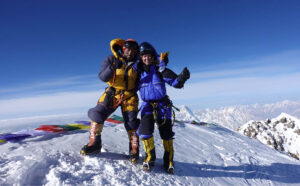
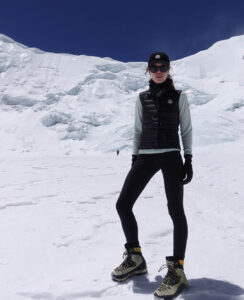
Perched at the intersection of physical extremity and philosophical clarity, Anja Blacha occupies a rare space in modern exploration. A world record–holding mountaineer and polar explorer, she has skied 1,400 kilometres solo and unsupported from the Antarctic coast to the South Pole, stood atop Mount Everest three times, and climbed twelve of the world’s fourteen 8,000-metre peaks without bottled oxygen. Yet beyond the statistics and summits, Blacha’s story is one of interior strength: how the mind behaves when the body is depleted, when fear is rational, and when turning back can be as courageous as pressing on.
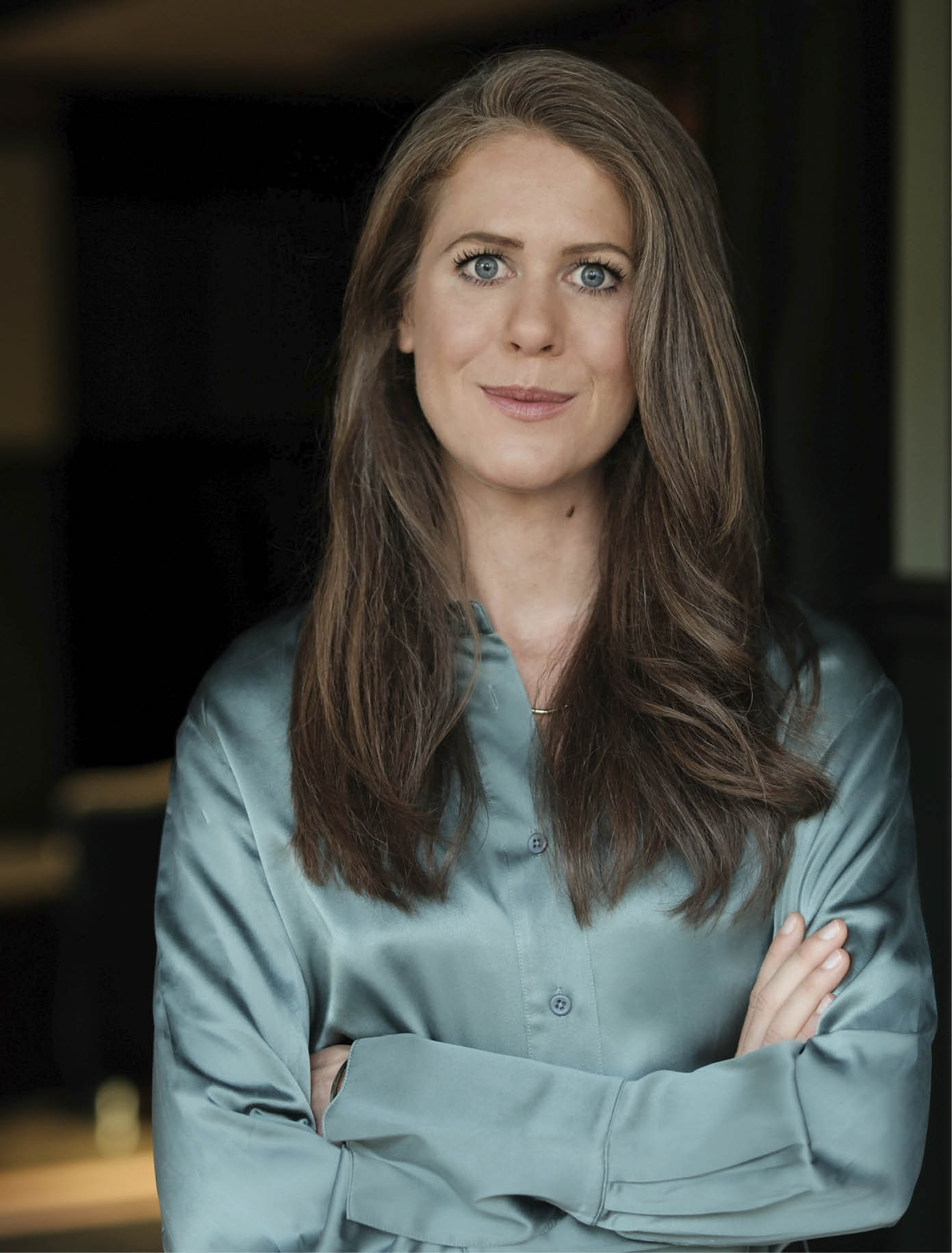
Trained not only by mountains and ice fields but also by rigorous academic thought, Blacha holds a master’s degree in philosophy alongside a background in business. That dual lens shapes how she approaches risk, discipline, and decision-making, whether navigating avalanche terrain or questioning the narratives we attach to success, willpower, and failure. Today, she brings those insights beyond the expedition world, speaking to global audiences, advocating for climate education, and inspiring a new generation through initiatives such as Not Bad for a Girl and the Peak Performer Foundation.
In this interview, Blacha reflects with striking honesty on the moments when doubt grows louder than ambition, how she distinguishes real danger from the urge to quit, and why discipline often matters more than motivation.
When you’re standing at extreme altitude, exhaustion setting in, and the summit still far ahead, what inner voice do you listen to, and how do you keep it stronger than fear or doubt?
In those moments when the summit seems elusively far away and my progress diminishing, I look around and take in the view. The cloud cover stretches out below me, and the panorama of jagged mountains extends infinitely out in the distance. I see how far I’ve come – simply by putting one step in front of the other. To me, this is the most powerful reminder that all the effort, no matter how insignificant it may feel at the time, adds up. At this point, I don’t look at the summit ahead of me anymore; I simply ask myself: Can I take one more step? And if I can, I will, knowing that this is all it takes to get me there.
Mountaineering pushes the human mind to its limits. How do you personally manage mental health under intense physical stress, isolation, and risk?
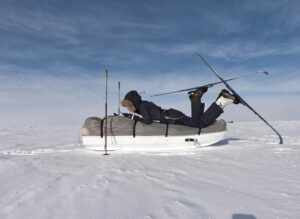
First and foremost, I need to understand and attend to my own needs. Sometimes, that is simply a short rest, some water and a snack, and my mental resilience is restored significantly. Then, there are other people, be it the Basecamp team, climbers on the route, or a strong bond with someone back home who can help me reset my mental state. I will never forget how, at the end of 58 days of skiing alone to the South Pole, I gave a hug and spoke face-to-face with someone. Suddenly, all the pressure and thoughts that had grown so big inside my mind collapsed to nothingness.
Still, there are times when itis just me out there. I remind myself during those times that I chose to be there, and that I chose it for the very reason that it would be challenging. Now, do I want to be a victim of my own choosing, or can I shift perspective, embrace the challenge and actively push through this? This mindset shift makes an incredible difference as it allows me to turn negative stress into eustress, something that is invigorating, that allows me to outgrow myself and thrive.
There are moments on a climb when turning back is the safer choice. How do you distinguish between true danger and the mind’s natural urge to quit?
Before each expedition, I consciously decide to take certain risks that are unavoidable to reach my goal. However, I need to reassess factors such as weather, route conditions, and my personal condition as I go, because they can vary and greatly increase the risk.
The key question I ask myself is: How likely is it that I will return safely if I continue? Sure, I can be lucky if I continue despite a greatly increased risk. However, in the long term, statistics will play against me.
The second question I ask myself is: What will I be thinking if I turn around now? Will I be looking for excuses to justify my descent, or will I stand tall because I acted in accordance with my guiding principles and the best reasoning I could at that moment?
Willpower is often romanticised, but it can be fragile. Have you ever experienced a moment where your willpower nearly failed. And what brought you back?
There are countless moments on an expedition where motivation is low. To prevent myself from quitting in these moments, I remind myself that if I stop now, I will have to do it all over again, only to end up back where I am now. So I rationalise that the better choice is to continue – even when I do not feel like it. Discipline beats motivation. In fact, willpower in the sense most closely related to discipline can even be trained.
Thus, months and months on expeditions – getting out of the sleeping bag when it is freezing cold, shovelling snow when all I want to do is hide away in my tent, breaking trail when the going gets tough – have probably transformed me from a stubborn person to an even more stubborn person!
Also, being highly committed to the expedition helps alleviate the lack of willpower at times. Out on expedition, Plan B may well exist, but it comes at a high price. In contrast, if I chose to go running every morning at 5 am, the immediate consequences of skipping a day are barely noticeable.
When it comes to willpower as the inner drive, though, the force that makes me want to go out there in the first place, that is a different story altogether. If I cannot feel that inner drive, I will not even embark on the expedition in the first place.
I believe that stretch goals invigorate our inner drive the most. Goals that are equally intimidating and intriguing, daunting and rewarding, still out of reach, but if only we try hard enough, we might be able to reach them. After all, why would I want to work hard for something that is already well within my reach?
How do you prepare mentally for an expedition long before you ever step onto the mountain? Are there rituals or mental disciplines you rely on?
I do not do mental training. Instead, I have come to realise that practical competence directly contributes to my mental readiness; i.e., the more I have prepared, trained, and built my skills, the more at ease I feel taking the leap into the unknown of an expedition. And the more I have proven to myself that this is something I really want to do.
In extreme environments, control is an illusion. How has mountaineering reshaped your relationship with uncertainty and letting go?
Indeed, weather windows shift, fresh snowfall creates avalanche risk, seracs collapse and block the way – there is always something happening outside my control. I have learnt that it is critical to remain clear about the goal, but agile in the way to get there. Realising that I can only control my own actions, not nature, is, in a way, liberating, and I have found that by working with changing external circumstances as a given, I can, more often than not, still reach my goal.
I try to bring this mindset into daily life too. All too often, we get upset about external circumstances, complain without being able or willing to take meaningful action, or we try to change other people’s behaviour – often in vain. The moment we refocus on ourselves and our actions, though, is the moment we realise that we do have a lot of control.
Failure and retreat are part of the journey in climbing. How do you reframe setbacks without letting them affect your confidence or sense of purpose?
Confidence follows courage. However, being curious, daring to explore my capabilities and pushing beyond what I have done before is already a greater win to me. Separating my self-worth and identity as a human being from the outcome of an expedition is what helps me most when dealing with the emotional impact of a setback.
Still, I want to understand the root cause of a setback and learn from it: Was it for reasons within my control, i.e. could I have done something differently, or did I do my homework, prepare and dedicate all the resources that I was willing to give to this expedition? Or was it for reasons entirely outside of my control that I retreated? Either way, the consequences are the same: Re-focus on the long-term result. A setback or failure may be hard to digest at first, but there is always the chance to return and do better than before, leveraging the learnings or benefiting from more favourable conditions.
High-pressure situations often reveal who we truly are. What have the mountains taught you about yourself that everyday life never could?
I have found my personal strength in staying calm, focused, and grounded. The mountains have taught me: You don’t need to be special to do something special.
How do you define “success” today?
Of course, when I set out on an expedition, my number one objective is to return home safely, and my number two objective is to reach the summit. Success, however is not a finish line. Rather, it is the art of striving well, a process of learning, evolving, and growing. I feel most accomplished when I have outgrown myself.
What advice would you give to someone facing a personal ‘mountain’ in their own life?
I would tell them to break it down. When I decided to ski 1400km solo and unsupported to the South Pole, that goal felt overwhelming, so I divided the route into six segments, and those six segments into daily schedules. I figured that, on average, all I had to do was ski 3km/hour for 8 hours every day. Suddenly, this daunting goal felt very doable. It is micro-steps and micro-habits that lead us to big goals.
Secondly, keep showing up. With my schedule laid out, I was keen to turn it into reality. Many days, motivation was lacking; I would have rather enjoyed a rest day in my tent. But I kept showing up, knowing that any step I do not take today will be added to the next day that already is going to be long in itself.
And thirdly, help others climb their mountain. The moment you start helping others tackle their big goals, your mindset shifts. You take on a new perspective and see possibilities where for yourself, you might have only seen struggle. Sometimes, lifting up others is the best – and most rewarding – way to grow yourself.
Mental strength doesn’t mean emotional numbness. How do you allow space for fear, vulnerability, or doubt without letting them take control?
Fear and doubt are basic human instincts critical to survival. I prefer to frame them with respect. Respect allows me to come prepared and stay focused and alert without becoming paralysed or panicky. A lack of respect easily leads to overconfidence or sloppiness, which are far greater dangers. As much as I advocate for the courage to step out into the unknown, I take an equally humble approach.
After achieving extraordinary goals, how do you find meaning beyond achievement and what continues to drive you forward?
Quite the opposite, with every peak I climb, my horizon expands, and new goals come into sight that spark my curiosity. There is just so much to explore in this world – on and off the mountains.
High performance often requires operating while depleted, physically, mentally, and emotionally. How do you train your mind to perform consistently when ideal conditions don’t exist?
Metaphorically speaking, I may go beyond my limits. Practically speaking, though, I try to never go to my limits. In environments beyond control, something can always happen. I need reserves for the unexpected. Also, I try to make safety a habit. I will practice and establish routines in non-critical circumstances until they become second nature, so I can perform them even when my mind is not sharp or conditions are bad. This allows me to pitch a tent amidst heavy gusts, or to use my belay device properly when my fingers feel numb, the goggles are frozen, and my energy is low.
Elite performers across all fields speak about the focus and clarity they maintain under pressure. What mental frameworks or habits allow you to stay fully present and make clear decisions in life-or-death situations?
I will create anchor points in advance, for instance, pre-determined rules such as turnaround times, regular radio checkpoints with Basecamp, written checklists and emergency procedures. These are guard rails that help me stay on track or get back on track. When I find myself in a critical situation and need to regain control, breathing provides a bridge from the conscious to the subconscious. Box breathing and deep exhales are great tools to balance and calm down my system. Finally, shifting gears and getting back into action quickly allows me to experience self-efficacy again. I then try to focus on the next safe step or hold, rather than the abyss below.
What is an objective or dream that you still aim to achieve?
Right now, I am working towards climbing all fourteen 8000m peaks without bottled oxygen. There are two remaining: Lhotse and Shishapangma.