
Self-made entrepreneur, public speaker and social media sensation Gary Vaynerchuk has spent the last twenty-five years going against the norm and setting his own trends in order to be a successful businessman.
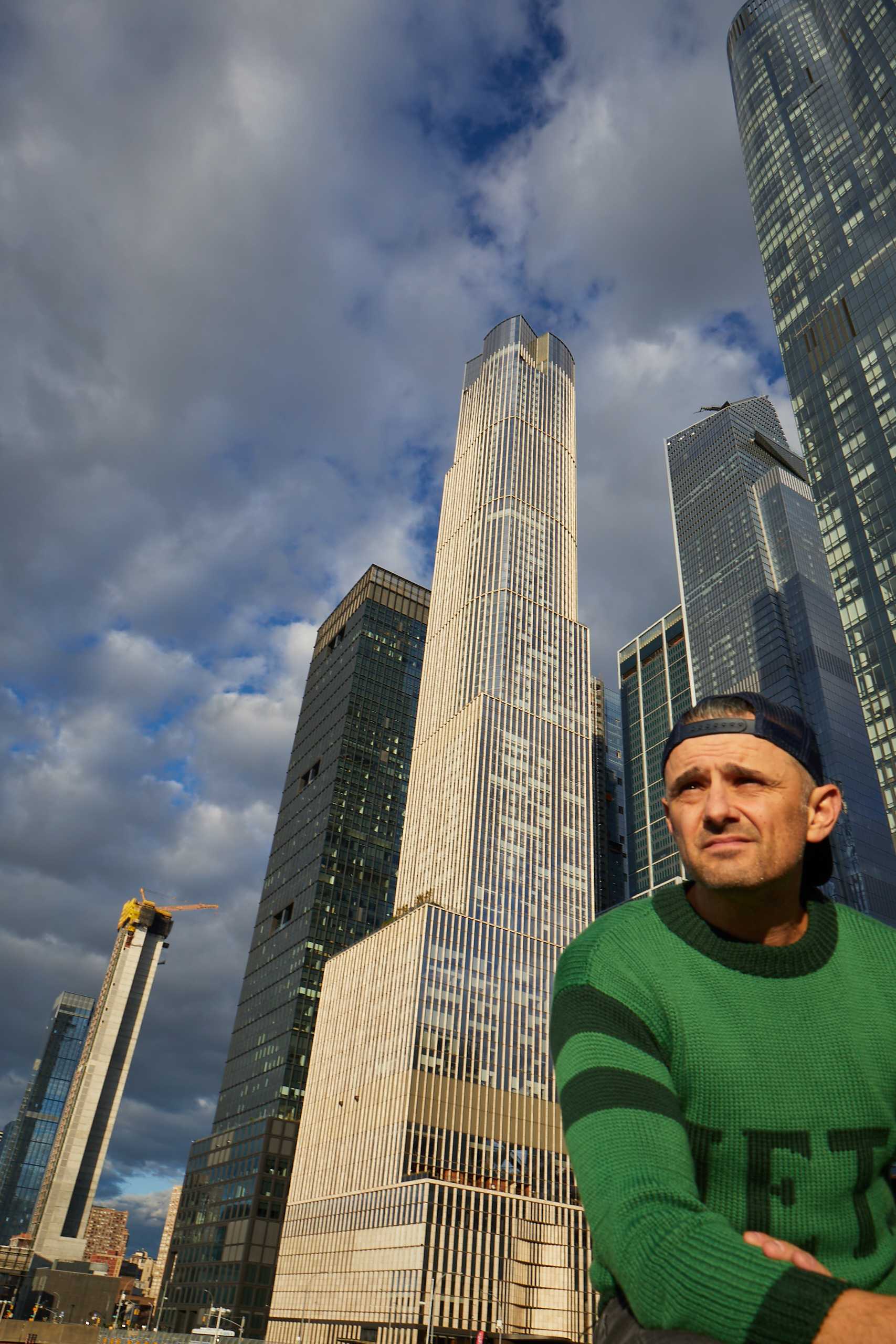
He’s a serial entrepreneur with dozens of businesses in his portfolio including Vaynermedia and VaynerX and his most recent business venture VeeFriends which sees him entering the universe of NFTs. Gary is also a sought after public speaker and a five-time New York Times best-selling author. He is admired by his millions of followers (ten million and counting) for his out-of-the-box, pioneering way of thinking and his ability to turn the traditional mindset on its head and encourage a new outlook on life business and culture.
Gary is considered one of the leading global minds on what’s next in culture, relevance the internet and most recently, the Metaverse. He is always one step ahead of the game, constantly moving keeping up with what’s new and what’s next predicting what the future will hold when it comes to technological investments. He specialises in accurately recognising trends and patterns early to help others understand shifts in the market and predict the next course of action. He understands how to bring brand relevance to the forefront and how to become successful in business at moments where others would get left behind. His early investments over the years have included businesses such as Facebook Twitter, Tumblr, Snapchat, Coinbas and Uber and his savvy-minded approach rarely seems to fail him. His latest business venture VeeFriends sees Gary entering the world of NFTs something that he feels very passionately will be an essential element of the future of business. He has created his own business to bring to life his ambitions of building a community around his creative and business passions using NFT technology and their smart contract capabilities.
This month Gary will be in Dubai to promote his new book “Twelve and a Half” at the Emirates Festival of Literature. He will be holding a session based on the theories in his book and understanding how emotional intelligence can accelerate business success. Here we find out more about what his newest book has to offer and why we should be living in the future now.

We look forward to having you in the Middle East for the upcoming edition of the Emirates Festival of Literature – why did you decide to take part in this festival and what can we expect from your session?
I decided to take part in the festival because I’ve desperately been trying to get back to Dubai and COVID has not been allowing me to do that! I want to be in the region and Dubai specifically as often as possible, so when there are high-quality events that I feel are worth my time and they can work with the calendar, they will always be highly considered. When it comes to what can be expected, I think it’s what you can always expect from me; plenty of passion and energy and always a strong pulse on the current: what is happening right now and what does it mean for entrepreneurs, businesses, culture and so on.
Tell us more about your love for Dubai?
I find it very entrepreneurial and I’m an entrepreneur, so it works for me. In a way, Dubai has a very “yes” culture and I think people in Dubai are ambitious and on fire. It’s gorgeous – there’s a lot to like!
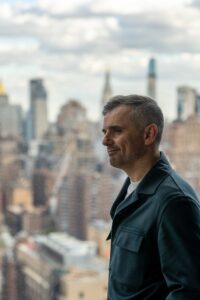
What can you tell us about your newest book “Twelve and a Half”?
The book is focused on an idea that’s been in the back of my mind for a while and the COVID-19 pandemic gave me the time to sit down and extract it. That is how the combination of positive human virtues and attributes are the singular most effective ingredients to be successful in business. And what has historically been considered the “soft skills”, I believe are the hard skills. I believe that empathy and patience are very hard skills and when deployed properly in business, can give outlandishly successful results. I think that people consider being nice is something that’s just nice to have, but it is quite the opposite it is a fundamental aspect of success in business. I don’t understand why anyone thinks yelling at someone in a business meeting is a good idea. I really don’t. Especially if they are doing it in front of others. What is the benefit of that? I think too many leaders have for too long thought that fear is an effective motivator to business results, and I believe it’s the reverse – so I wrote a book about it!
I cover 13 different ingredients including tenacity, ambition and more – it’s not a book about just being nice or a spiritual ideology that isn’t practical. It’s incredibly practical but it does have a very poignant point of view on the opportunities of doing things differently. Whether it’s as an entrepreneur, a manager, an employee, a CEO, a parent, or as a human being in general. It applies in all aspects of life.
What can you tell us about your mindset for 2022 and what should we all be considering as we enter this new year?
I think there is so much opportunity. Consumer blockchain is now here, and that creates radical opportunities for people. I think people have the potential to be dramatically more grateful if they put into context what happened during COVID-19. However, I do feel like a lot of people are also equally choosing to see the negative. I’m very aware that many are in tough spots, but I think that’s an opportunity to have the right conversations about perspective. In general, I’m quite optimistic about what’s going on in the world. Yes, there is a lot of tension and conflict, but there’s always been tension and conflict, it’s the human truth. I think if you look deeper, the opportunity and optimism are extraordinary and if people lean into those opportunities and take on accountability, that’s where the real opportunities are.
How do you manage your time and how do you keep up to date with the latest in technology and innovation when trying to run multiple businesses?
My secret is simplicity. I think I’m incredibly driven by gratitude not taking things too seriously is part of that. Obviously, I’m very proud and thoughtful about my profession and my life in general, but when I think about the simple things like knowing that the people I love the most are healthy, what else could I really ask for? I think with a lot of ambitious entrepreneurial go-getters, we don’t see that part of them but many of them have it. I’m wildly simple. I don’t take things too seriously. Of course, I don’t want things to fail or go off the rails, but I’m incapable of making them so serious that they need to become a huge negative, and in that simplicity, I guess it becomes much easier for me to operate at the speed in which I operate. If you’re not scared of some things breaking along the way, then you’re going faster and doing more so you will only gain.
Who has been your biggest inspiration or mentor over the years?
My mum is always the first person I go to when I’m asked this question and that’s really because it’s true. Going back to my book, so much of my success comes from my emotional intelligence which not only did my mum pass on to me, but she also cultivated as a parent. My father’s work ethic also inspires me. And then finally, believe it or not, the market is a great source of inspiration. I feel that my true mentor is the rest of society. I’m a very big observer and listener of behaviour and so, I’d rather watch what everyone is interested in and doing as a source of inspiration or guidance, more so than asking someone who did it in the past. I value the current state of the market too much and I feel like I have a tremendous grasp of the principles that matter in providing value to others and customers, so I don’t need mentorship from a wisdom standpoint. And then after that, mentors often speak about how they did things, but the problem is, it’s not 1990 or 2006 anymore and things are constantly evolving. So, in the macro, emotion is timeless, but in the micro, I need to know what’s going on right this second.
What is the biggest lesson you have learnt throughout your career?
Something that I was very vulnerable about in this new book and I’ve struggled with historically is candour. I’m very good as it as a public figure when I’m talking to the masses, but as an individual, not so much. So, I think the biggest lesson I’ve learned is that trying to navigate around the issue can only take you so far. Early on in my career, I thought I could find a way to make things better with a person without having to tell them things that might upset them and at the end of the day, a lot of the time that does work, but it doesn’t work enough to not lead to resentment and severed relationships, and I don’t want that to be the case. So, I think the biggest thing I’ve learned is the value of kind candour and I’m building on that.
What is something we can all be doing every day to keep ourselves moving forward with the world?
Have curiosity. There’s too much happening in the world and so people need to lean into curiosity and to say yes or even maybe – I think too many people are in love with the word no. For example, they hear “NFTs” and they immediately say “no that’s a scam”. Instead of what I do which is to say “this is probably something,” then I try to talk myself out of it and find the reasons why it’s not something and then I move on. But if that probably turns into a yes, that’s when it becomes something that I put a lot of my time and effort into. So I think that is probably the single biggest piece of advice I could give: build a level of curiosity and a level of “yes” and focus on that.

Speaking of NFTs can you give us a crash course on them and why they are so important in business and on a personal level today and moving forward?
First of all, let me tell you why people struggle with them: everyone tries to deploy internet logic to the blockchain world. So when people say; why would you want to own it? Can’t you just click on it download it and save it? Etc. They are deploying internet logic: you can’t own digital items on the internet because of the way the servers are structured. Whereas on the blockchain you can, because nobody owns the servers. So if nobody owns the servers and it’s just a global network where servers are talking to each other, actual validation works.
The second important thing is that people need to communicate through the things they buy. If you believe in Mercedes Benz or Louis Vuitton for example, then you already believe in NFTs. Because you would not be buying these things for the prices they are unless you were using them to communicate and be part of a tribe. The same logic applies to NFTs. However, with NFTs, the scale of digital is so much greater. It’s the same as why social media took off. People always took photos of themselves on nice vacations, but they could only have four of their girlfriends come over for tea and show them the photos. With social media, they could show everybody and that’s why it got so big. Most people want to communicate through their photos or their purchasing behaviour, which is why NFTs will become so popular.
And the third point is that NFTs are contracts and utilities. Memberships, tickets to events, receipts etc. can all now become NFTs and have value. Your traditional receipt is the thing that you throw away immediately. But what about when you buy a Louis Vuitton bag at Dubai Mall and they give you an NFT as your receipt and the artist is an emerging artist who goes on to become famous and that receipt is now valuable? What if you sell that receipt for a thousand dollars and Louis Vuitton makes ten per cent commission on it? When I fell in love with the internet, it was because I believed it worked for both parties. I think the same thing is going to happen today. That is why the blockchain is valuable for both parties. It’s valuable for Louis Vuitton because they have royalty on it, and it’s valuable to you because you have an extra asset that you got when you bought your bag.
What advice would you give to aspiring entrepreneurs who might be afraid to take the leap they have been thinking about?
I would tell them that regret is poison. That as scary as it is, it will be much scarier when you’re 77 or 86 or 91 and you will regret not trying. The only reason you’re scared is because of the judgement of people around you. But you need to understand that it’s your failure, not someone else’s, and if you fail, then you fail, but you tried. People just worry about what others think of them and that’s what scares them.
What is a message you would send to our readers on why they should visit your session in Dubai or read your book or invest in what you have to say?
Well, I think that there is a 25-year track record of a whole lot of innovation that has become true and a lot of happiness and success along my path. There’s a reason all this stuff is happening to me and the people in my communities and I think it would be fantastic if people took a glimpse at why this is the case. But I don’t love convincing people, I’m not interested in that, I’m more interested in having conviction and executing it and letting it come to me. Like I said to my brother the other day, at the end of the day, they’re all going to end up here anyway, whether they believe me today or not, one day it will all play out. There is a saying that says, “measure twice, cut once”, I think I move so fast and so hard and loud that people judge that as chaos and lack of thoughtfulness. I would argue that I measure 100 times and cut once. Because I’m petrified of being historically incorrect. And so much of my confidence comes from that, even though it’s incredibly difficult to see.