
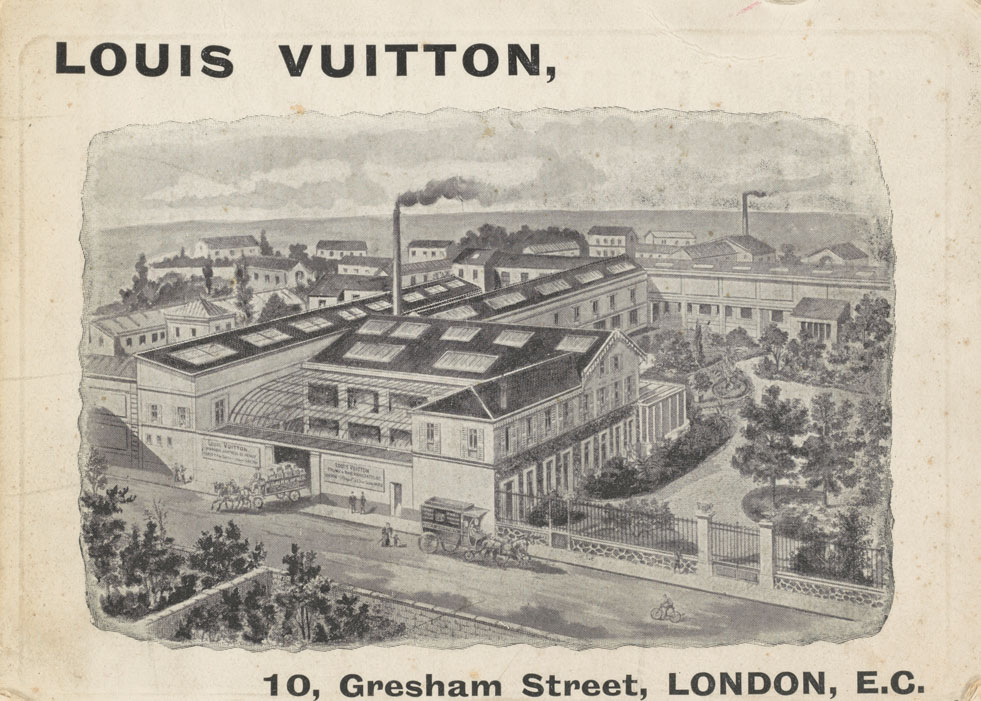
The most beautiful adventures are not always measured in kilometres, but often in years, in what and how you feel… Since Louis Vuitton first settled in Asnières-sur-Seine in 1859, the House itself has travelled, recalling incredible places and exciting creations. While the Vuitton residence in Asnières reminisces about a certain distant era through their Eiffel architecture and Art Nouveau style, the mood has always been one of absolute modernity, for both the family home and ateliers. The Vuitton family itself was made up of courageous characters who pushed boundaries and transcended time, a spirit which continues to thrive in the House today. Though inherently linked to the world of fashion, Vuitton continuously seeks the leading minds of each era, be they artists, aristocrats or adventurers of all kinds.It is this shared vision and freshness that curator Judith Clark sought to highlight in the exhibition presented in Asnières.
Within the exhibition, visitors can feel the beating heart of the Asnières ateliers which, to this day, continue to make the most exceptional trunks and pieces of Louis Vuitton’s leather goods collections. This unique savoir-faire is also endlessly renewed, to reflect the ever-changing catwalk trends and the vision of the House’s designers.
In displaying elements of the Vuitton family home and its special craftsmanship, this constantly developing exhibition presents the House as a vector of creation and creativity. Located on the historic Louis Vuitton grounds in Asnières-sur-Seine, the exhibition presents a multiple space, a blank canvas on which many different films can be projected and layered, each telling of a different adventure.
Since the ateliers began being built in 1859, Louis Vuitton transformed the top floor into living space in order to remain near to his artisans. Like many of the younger generations, his son Georges, born in 1857, was a true child of Asnières, educated at the local boarding school in a village that was rapidly becoming a town. Though Louis and his wife Émilie finally settled onsite in the 1870s, it was Georges’ wedding in 1880 that marked the turning point in Vuitton’s path with Louis building a villa with a smaller home tucked away for the young couple.
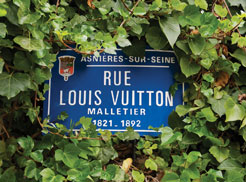
Living close to the company’s beating heart became part of the Vuitton family life, with members coming together in the big home for hearty Sunday gatherings in Asnières, this little corner of countryside just outside Paris. “The table was open to all, as was the pot-au-feu,” recalls Gaston-Louis Vuitton in a letter to his cousin. Given his own delicate health, Gaston-Louis spent all of his childhood at the family home on Rue de la Comète. The neighbouring Rue du Congrès, home to the ateliers was later renamed Rue Louis Vuitton.
The family spent their precious free time rowing on the nearby Seine. The river, large garden and railway track leading to the station of Paris Saint-Lazare were the first signs of adventure for the Vuitton boys, who had all in turn, passed through the ateliers to hone their craft before heading out to manage the ever-expanding stores. This atelier “work-experience” was Georges’ idea and the home’s current appearance is also due to Georges’ late 19th Century renovation.
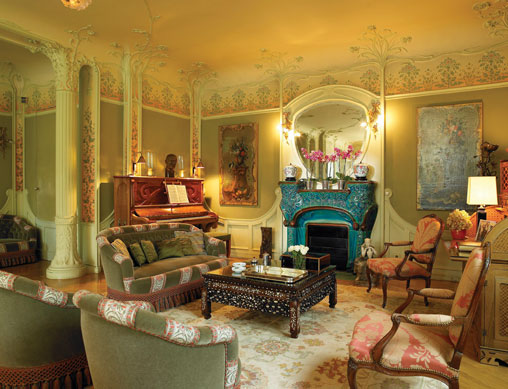
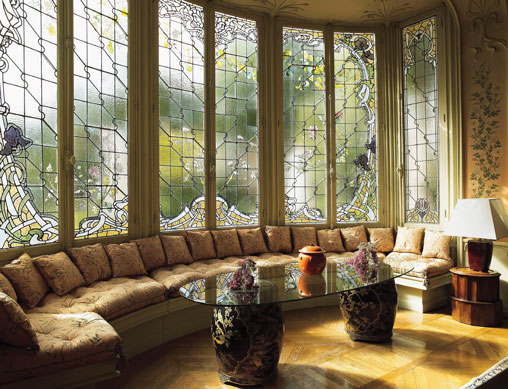
The latter paid close attention to the Nancy School and so commissioned its artisans to refurbish the family home in the purest Art Nouveau design, a style pioneered by his friend Louis Majorelle. As though the garden itself were extending into the home, flowers and leaves multiplied across stained glass windows – created by master craftsman Janin – intertwined through intricate wood carvings and even onto the furniture. The front room dining table still holds memories of family gatherings, celebrations and was home to some of the most important decisions such as the creation of the Monogram pattern, the Houdini Challenge to test the patented locks, the opening of Vuitton’s first international stores.
The family continued to live in the home until 1964 when George’s widow Joséphine passed away. Between the unique work of the nearby ateliers and the home’s anachronistic appearance, the family home remains a place where great creative minds were as comfortable in their destiny as they were visionary in their approach.
HISTORY UNWRAPPED
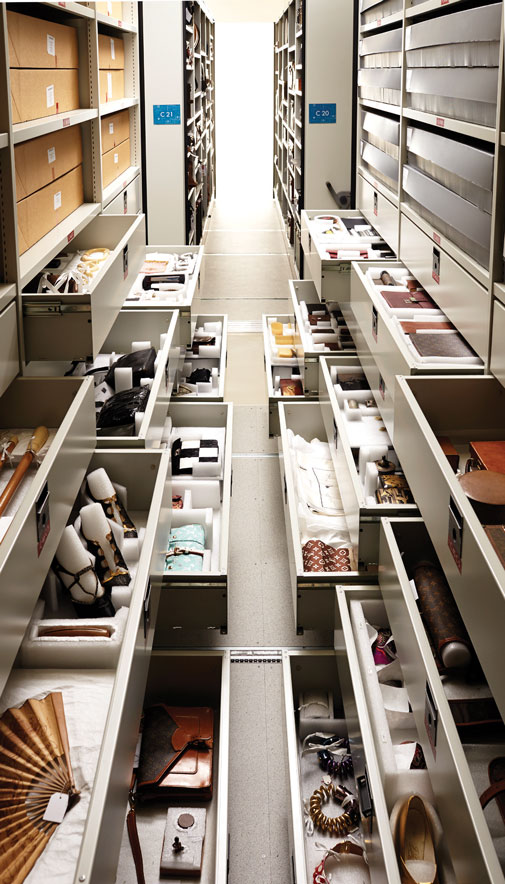
Of the many trunks created in the Asnières ateliers, some rest stored away in attics while others are still on show every day, paraded by their owners… Luckily, the House has always enjoyed collecting. Gaston-Louis Vuitton was passionate about historical trunks from all backgrounds and accumulated a significant collection. All of Louis Vuitton’s archives are always meticulously conserved to keep precious objects and documents in the best possible conditions. Clients records, sales registers, posters and original photographs are kept alongside trunks, suitcases, bags and ready-to-wear collections. This treasure trove includes 165,000 documents – of which 110,000 clients records – and 23,000 objects, from which Judith Clark has hand-picked the many significant pieces displayed at Asnières.
The “Galerie” boasts the personal possessions of princes and maharajas, film stars and couturiers as well as anonymous clients who hold the same, uppermost appreciation for fine craftsmanship. As Patrick-Louis Vuitton confirms: “A piece of Louis Vuitton luggage is always complicated to make and is created to carry the most beautiful of things.”

A “GALERIE” IN MOVEMENT
Reveal the intimate aspects of a House’s history, highlight its ties with the ateliers, underline the presence of the Louis Vuitton universe… These were some of the challenges that curator Judith Clark sought to tackle in the new creative, playful and timeless space she so vividly imagined. In fact, the term “galerie” itself seemed an obvious title – extending the concept of the exhibition far beyond the makings of a museum. While the latter can at times feel solemn and focused on the past, a “galerie” is a space for discovery and is deeply rooted in the present.
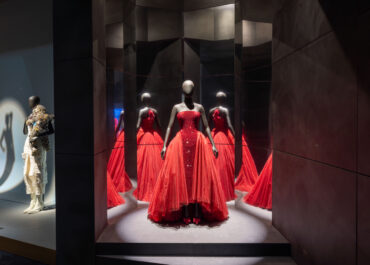
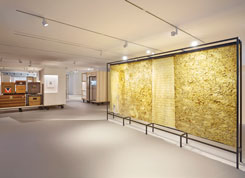
At the entrance, a work by Jorge Otero-Pailos highlights the traces of Asnières’ past and superimposes them against those of today. By including other artists in the project such as illustrator Ruben Toledo and milliner Stephen Jones, Judith Clark sheds light on the importance of savoir-faire, an element so crucial to this space, a sort of latent electricity which is evident throughout the “Galerie”. The exhibition is curated to allow free roaming with no specific order, though elements are grouped according to themes: globalisation, client relations, the Monogram, nature, the avant-garde…
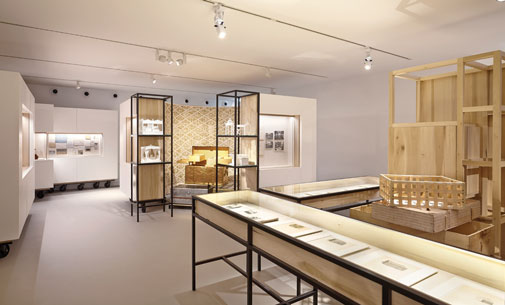
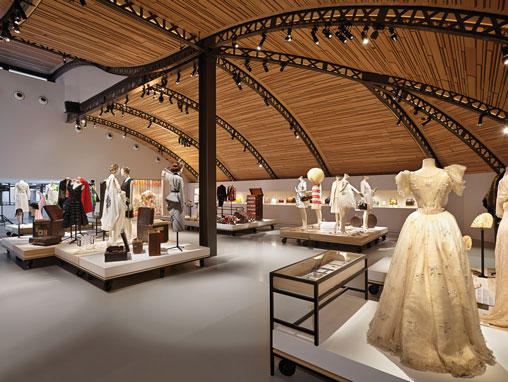
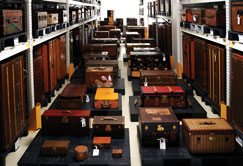
During her research through the House’s archives, Judith Clark discovered rare gems such as the Patéki wooden cube puzzle, a game created by Gaston-Louis Vuitton and which served as the inspiration behind Clark’s choice of scenography. Within these peculiar poplar boxes, luggage, objects and garments created by the House’s various artistic directors lay side by side with more private documents and insider tell-tale signs allowing visitors to catch a glimpse of those who designed, carried and owned these different pieces. From Louis Vuitton’s original journey from his native Jura to Paris, Gaston-Louis Vuitton’s private correspondence, Loïe Fuller’s dance accessories, Redfern’s travel cape, to Frank Gehry’s Fondation Louis Vuitton design… The malletage is omnipresent throughout the exhibition, revealed as an intricate interior detail in antique trunks, or as a recurring motif worked into backdrops and even prints. With unexpected twists and turns, the constant frisson of creativity and surprise, the visitor enters into a web of fantasy travels without ever leaving the world of Louis Vuitton.