

A&E Editorials: Prada SS18
Fresh perspective, a dialogue between two worlds. Explore Prada’s SS18 menswear collection, here in our exclusive editorial.
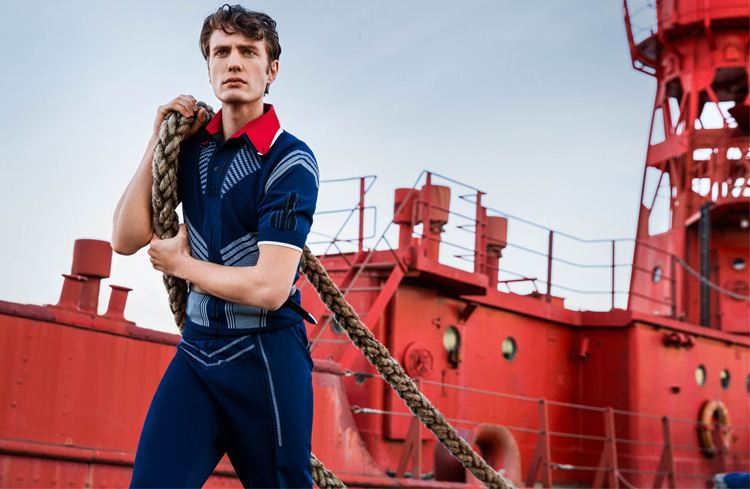
NYLON TEC POLO & PANTS, BICOLOUR POPELINE COMPACT SHIRT, BELT ALL BY PRADA
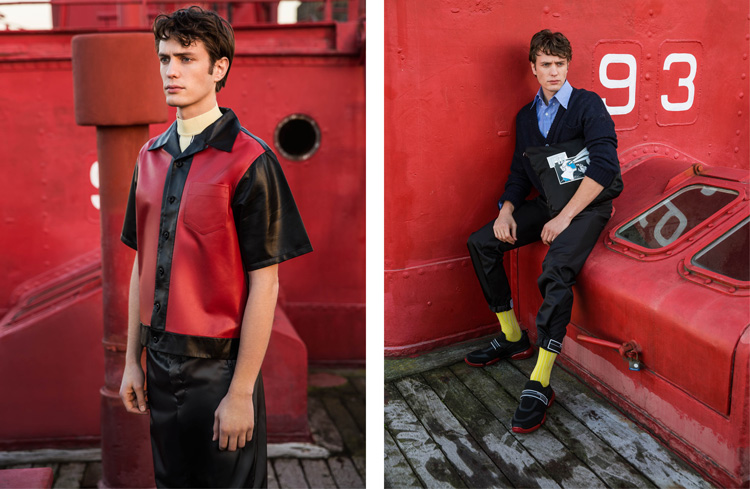
LEFT IMAGE: BICOLOUR NAPPA LEATHER SHIRT, GABARDINE NYLON PANTS, TECHNICAL COTTON KNITWEAR RIGHT IMAGE: CASHMERE DOUBLE CARDIGAN, GABARDINE NYLON PANTS, POPELINE COMPACT SHIRT, NYLON TEC COLOUR SOCKS, TECHNICAL FABRIC PRADA CLOUDBUST, SNEAKERS ALL BY PRADA

PRINTED NYLON JACKET AND PANTS, NYLON TEC COLOUR SOCKS, TECHNICAL FABRIC POUCH, NYLON TEC PRADA CLOUDBUST SNEAKERS ALL BY PRADA

LEFT IAMGE: TWEED CHEVRON COAT, POPELINE DIVISA PANTS, COTTON STRIPE KNITWEAR, NYLON TEC COLOUR SOCKS, BICOLOR SPAZZOLATO LEATHER SHOES RIGHT IMAGE: PRINTED POPELINE DIVISA COMICS JACKET, POPELINE COMPACT SHIRT, POPELINE DIVISA PANTS, NYLON TEC COLOUR SOCKS, GOAT LEATHER SHOES ALL BY PRADA

GABARDINE NYLON JACKET AND PANTS, POPELINE COMPACT SHIRT, RED TECHNICAL FABRIC POUCH ALL BY PRADA

BICOLOUR LIGHT MOHAIR JACKET AND PANTS, BICOLOUR POPELINE COMPACT SHIRT, NYLON TEC COLOUR POLO AND SOCKS, NYLON TEC COLOUR PRADA CLOUDBUST SNEAKERS ALL BY PRADA
Fashion Director: Eliza Scarborough
Photographer: Hanna Hillier
Grooming: Julie Read
Model: Ed Hayter at Models 1
Location: Lightvessel 93, London
READ MORE
The Return Of The Turban
The turban, a staple of the 70’s, has been seeing a comeback since it was prominently featured on the Marc Jacobs SS18 runway, and at Proenza Schouler and Prada in seasons before. Glance then at November 2017’s biggest fashion media story, the relaunch of British Vogue under new editor-in-chief Edward Enninful, and it’s clear to see that respect to the past, with a modern and inclusive outlook, is key, showcased perfectly via one simple accessory, the turban.
Traditionally worn by Sikh men, it was not until the Twenties that fashionable ladies adopted the turban, often wearing swathes of fabric stitched to a small cloche hat to mimic the effect without the fuss. At its most humble, it provided a practical style solution for women in the Forties, who tied cotton headscarves in the manner of a turban while they worked as Land Girls, inspired by stars such as Marlene Dietrich and Greta Garbo, who were known for embracing winding folds made popular by French milliner Madame Paulette.

Quietly confident, oozing a new era of glamour for the Instagram generation, the elegant fashion accessory has also adorned the heads of Lady Gaga, Rihanna, Katy Perry, and Rita Ora, as well as Kate Moss, Sarah Jessica Parker, Eva Herzigova, and Amal Clooney. Having languished in the style doldrums since the Seventies, when they were wildly popular among the jet-set and young royals Queen Elizabeth II and Princess Grace of Monaco, it has had the ultimate re-invention. From the Stephen Jones-designed headpieces recently in the spotlight at Marc Jacobs, to the Jennifer Behr turban completing Sofia Coppola’s look captured by Steven Meisel, the key is for them to be intricately detailed with sparkling brooches or meticulously coordinated with their wearer’s ensembles, for the strongest statement.
By Eliza Scarborough
READ MORE
Acclaimed Van Gogh Alive Exhibition to Abu Dhabi and Dubai
Held under the patronage of the Ministry of Culture & Knowledge Development, Art lovers will be able to view the Dutch post-impressionist’s most famous works during multi-media exhibition’s three-month visit to the UAE.
This fully immersive audio and visual show offers visitors a unique way to experience Van Gogh’s masterpieces. No ordinary exhibition, Van Gogh Alive combines a specially chosen score of classical music with over 3000 images. Some of the artist’s most famous paintings as well as other inspirational images are all displayed on the walls, floor and ceiling of the exhibition space using 40 high-definition projectors.

Visitors are introduced to a unique symphony of light, colour and sound as famous artworks are shown in their entirety, broken down into highlighted sections or magnified on a huge scale. The carefully selected soundtrack invites art lovers to immerse themselves in the wonderful detail and vivid colours of Van Gogh’s paintings, uncovering the subtle meanings and ideas behind the artist’s most famous masterpieces.
Born March 30th 1853, Vincent Willem Van Gogh is one of the most famous and influential figures in the history of western art. He created more than 2,000 works of art, including 860 oil paintings, before his death on July 29th 1890. While Van Gogh’s work has been on display in museums and art galleries around the world for more than 100 years they have never been shown in this manner.
READ MORE
Men’s Fashion Week: Dolce & Gabbana Fall 2018
Kings Angels!
Of course, as the title of the show explains, a regal look was reflected throughout, with the first of the Dolce & Gabbana millennials dressed in golden military jackets. Sumptuous velvet, brocade, jacquard, epaulets, and jewel tones added to the decadence as the collection continued.
Sweaters and sportswear were emblazoned with angelic murals, before the Dolce & Gabbana man turned dapper with pinstripes, fedoras, fur coats hung over the shoulder, and brooches on the lapel. Softly tailored velvet smoking jackets reigned supreme, amongst smatterings of sequins, glitter, and embellished crowns.
Slide through the gallery above to view the collection in full.
READ MORE
The Man of Today: Inspiration, Innovative and Individual
Meet the world’s most inspirational men. They’re athletes and actors, innovators and artists, politicians, and philanthropists. They’re people who measure success based upon the values by which they live their lives, they’re multi-faceted individuals unafraid to express themselves through their talents, making a trailblazing impact on society.

READ MORE
Skincare Routine Be Prepared
Make you skincare routine work harder by adding a simple step before your go-to products. Then look forward to fewer lines, stronger protection and more dewiness.

By Eliza Scarborough
READ MORE
A&E Guide: To Buying and Collection Vintage Watches
What to Look For, and Where to Look.

Men’s watch collecting has exploded over the past 10 years, and continues to grow in both the contemporary and second-hand markets, with vintage styles from the 1940s through the ’60s commanding record-breaking prices at auction. Now, more than ever, watches are being bought and sold online, with collectors having access to the finest, rarest, and most sought-after pieces from around the world with the click of a mouse. So, whether you’re in the market for a gold dress watch, a steel sports watch, or an antique pocket watch, it’s important to educate yourself about what makes a piece authentic and valuable.
EDUCATE YOURSELF
Whether you are in the market for a vintage gem or a mint condition preowned modern classic, the fun is to keep moving onwards and upwards to a more interesting or rarer watch. It is possible to make a profit on your acquisition, break even or take a very small hit, but, with a good buy, you’ll always be in a position to move on to the next watch on your wish list. Christie’s is a great place to educate yourself on where to start, because they have watches at all different price points, even if you’re an entry-level collector, while at Chrono 24 you can get a good idea of the market value of the watch you are looking at. A rare watch is not intrinsically old or vintage, its rarity depends on the production numbers and availability.
WHERE TO BEGIN
If you’re an entry-level collector, Patek Philippe has some really accessible price points, and Longines is definitely rising. These aren’t typical names that a lot of people have heard of, but they are ones that are fast appreciating. Rolex sports watches are also very good at holding value, with the Submariner 16610 in particular, as it is out of production meaning values are on the way up. Also look at the demand for particular watch models, with any watch from the Patek Philippe Nautilus range doing very well at the moment due to the waiting list. Panerai’s are pretty good at holding value too, but be sure to get one with a manufacture movement and stick to the Luminor range.
CONDITION
In the watch world, just as location is important for real estate, condition is important for watches, so you want to look for a watch that hasn’t been over-polished. If you look at the case, you want the watch to have crisp edges, and sharp definition, which means it hasn’t been over-polished in its lifetime and it still has the same definition as it did when it first left the factory. You also want to look at the dial condition, making sure that it hasn’t been refinished.

THE PARTICULARS
A full set of the original box and papers the watch came with will add value, and just as crucially, make it easier to sell. Provenance is important to the buyer and gives them confidence, so the originality of a vintage timepiece is essential. Also, be aware that the dial, hands, and bezel should be original to maximise financial opportunity, with evidence of official service history.
HOW TO AVOID FAKES
The key to avoiding fakes is to look in the right place to start with. If the price seems too good to be to true, then it is. But if you are not sure and are buying privately, you can arrange to meet the seller at an authorised dealer and ask them to check it for you. They key is doing your own research, and there are lots of experts online too. Knowing the hallmarks and details of the watch can help you establish an indication of the authenticity of it.
RESTORATION
A watch that is not in excellent shape can perhaps be bought at a lower cost, but remember that this may come at a price. Restoring a watch back to good and fully functional condition can be very costly. It often depends on age, brand, and movement, so when going after a bargain it is better to do your homework and check on options and costs for maintenance before you buy. When a brand does not exist anymore, or if you want an independent opinion, find a reputable watchmaker near you.
ESTABLISHING & MAINTAINING VALUE
Watch-care is integral to the longevity of your timepiece. No matter the age, model or brand, all watches should be given the same treatment. First and foremost, it’s never wise to attempt to repair your watch yourself, an appointment should be pencilled in the diary for every two to three years to have it serviced by a professional, and if your watch is waterproof, check its seals annually.
By Eliza Scarborough
READ MORE
IWC Presents Jubilee Collection To Celebrates the Company’s 150TH BIRTHDAY
A&E Interviews: The Newly Appointed CEO Of Zenith, Julien Tornare
ZENITH, AT ONE POINT AN ICONIC WATCH BRAND, HAS BEEN DORMANT. BUT, WITH JULIEN TORNARE RUNNING THE SHOW, IS IT NOW READY TO COMPETE WITH OTHER BIG NAMES IN INNOVATIVE AND CONTEMPORARY WATCHMAKING?

You’d be forgiven for archiving Zenith in your minds, but it was once a brand that many saw as a beacon of creativity pushing boundaries. However, it has relied on the success of El Primero, the first automatic chronograph made in 1969, for too long which has led it to a stand point and eventually out of the spotlight. The newly appointed CEO Julien Tornare believes it’s time to shake off the old and bravely focus on the new.
Everyone has been waiting to see the changes you’ll bring Zenith. What has been your focus since becoming CEO six months ago?
When I met Mr. Jean-Claude Biver, we talked about a sleeping beauty and how we were going to wake her up, and the idea is to bring back some innovation in the brand, which is exactly what we are doing this year between the Defy Lab and the Defy21. We strongly believe that today our industry has been too focused on the past and repeating it, as if they are jailed by tradition. We believe that you shouldn’t be jailed and instead use it to build the future. That’s why the idea for us isn’t just to bring innovation, but it is also to make the brand more contemporary, reaching younger clients whilst still respecting our heritage in a very contemporary way.
In your opinion, what was the weak point of Zenith that held it back from moving forward with other brands?
Zenith was always focusing on El Primero, the first automatic chronograph made in 1969, and although this invention is really great, we are today in 2018 so we have to know what we want to do with it. Zenith was a little boring and repeating itself in the past, and that’s why it didn’t excite the client. There were a few years where Mr. Nataf brought a lot of excitement to the brand, but then he suddenly became a little bit quiet. Therefore, we need to be louder and we must be proud to represent the brand and what it has done.
How challenging is it for you to revive the brand and make a space for it again when both luxury and retail industries are suffering?
It is certainly challenging because we didn’t enjoy the 12 to 15 golden years that we had behind us before the crisis started to hit in 2014-2015. So, of course if you did not enjoy those fantastic years it is even harder to climb mountains. It is a big challenge, but we need to go back to the basics, which means reviewing the distribution, the marketing strategy, and the product. We need to start with the product because it is the most important thing in our business, and right now I am working on re-organising the company on different levels.
What do you think makes a brand successful?
I think it is about people and energy. To be honest, I knew it was a tough challenge for me, but I was very excited because when I met Mr. Jean-Claude Biver we shared a lot of ideas and we had common views about brands, brand building, and all the things that we wanted to do. He has so much energy and wants the brand to be back on track as well as successful and that is what I want too. So, two people are already easier than being on your own. Now my job is to bring the whole company with us and to bring energy to them. I go every day to the company and I tell them how they should change their mentality, as you have to be energised and proud to represent Zenith.
How was your experience at Dubai Watch week, and what are your plans for the region?
In the region the potential is huge. We have changed the team and hired a new person in charge of the brand here who is very smart and has a lot of experience. He is just like me because he wants to turn the brand into a success. I think that Dubai is a priority market, we have a lot of work to do and we will concentrate on 4 or 5 key markets to start in the region, and go from there. However, Dubai Watch Week is definitely important, and I really wanted to attend it. We will surely make an exclusive watch for the region, and although it’s not yet finalised we are working on the project.

You’ve won recently the Innovation watch prize at the ‘Grand Prix D’Horlogerie de Genève’ tell us more about the Defy Lab and what makes it so special?
Defy Lab is really unbelievable, it is a revolution. Today we can say with this new oscillator that we have created the most precise mechanical watch ever made, and we only vary by less than one second per 24 hours, while most watches vary by 2 or 2.5 seconds. After 24 hours, when the energy of the watch goes down the drops, our new system is stable all the way until the end of the prism, so it really is an improvement.
How important are the women’s watches to the brand, and what is your strategy for growth in this sector?
Women are the most important. It is clear that Zenith today is in a funny situation because we never really worked on a lot of female product lines, but still we sell today 25% to 30% in this sector. What we need to do next is to find the right way to talk to women, not only with watches but with the right product environment. We need to bring femininity to the watch, and understand that women and men want to be equal on many levels.
What watch are you wearing today?
I am wearing the Defy21, which is a watch that you have not seen before because it will be launched next year with a blue finish. I also asked my production team to create a rubber strap which we will also introduce next year. It is the only chronograph in the world made in a series like this that can measure the 100 per second based in El Primero history. It is my favourite design.

How do you see the future of the Swiss watchmaking?
I am very positive. I think what we learn from our industry is that it will survive even with a connected watch. It is not because people with connected watches are on their cell phones all day and forget the watch, it is because these watches are as important as the cell phones because they are part of the personality.
Do you have any regrets in life?
I don’t have regrets, I only have thoughts about things that I could have done differently. I believe if you have regrets it means you always look backwards, and something I learned is that you need to look forward.
What’s your favourite book and why?
I would say my favourite book is ‘Ma Vie’, which was written by my grandmother. It is about her life and is very interesting. She passed away a few years ago so I read it again and saw it in a different way. It teaches a lot about life, but also about my history, my grandparents and where I came from, so every time I read it I learn new things.
What is a life lesson that you can share with us?
We all tend to put limits on ourselves, but we shouldn’t. I think by putting limits in place, we will never be able to succeed or to overachieve things. For example, if you enter a tennis court thinking that you’re going to lose because you’ve lost before to the player, or I should not take over Zenith because it is a difficult brand to put back on track, you are already putting limits on yourself and you won’t succeed.
Life is always trying to challenge you so if you don’t face the challenges it means that you are walking backwards. However, I think naturally it is all about your mind set. That is what I am trying to teach my children, if they have a difficulty I want them to know how to cooperate with it so they can finally make it through instead of giving up quickly.
What’s your motto?
My motto is ‘never give up’. Sometimes I do give up, but I am trying not to even if it is hard and I am feeling that I am going through difficult times. I think it is super important not to give up, which I have learnt from sports and am now trying to apply to my daily life.
What do you do in your spare time?
I work and travel a lot, but when I do have spare time I like to spend most of it with my family.
What are you like as a CEO?
I believe in people and think that you can be demanding but respectful. I have always been that way as I want people to believe in our projects so that we can move in the right direction and make it happen.

Is it easy for you to say no on a professional level?
I don’t like to say no just to say it, I prefer to explain why. I am not saying it is easy, but if you’re honest with people, usually 95% of them will understand.
What are your goals for the year?
The last six months have been busy, so it’s become important for me to get a better work life balance in the coming months. My professional one is to capitalise on what has been done already since I have joined. I am starting to feel the vibe, a change in Zenith.
By Charline Deek
READ MORE
Class of 2017: The Best Emerging Designers to Know
As fashion continues to move even faster with the speed the digital age has brought us, it has also connected us to new fashion designers in ways that were never possible before. Inspiration on Instagram has allowed lots of talent to be found, and here we have rounded up the emerging labels we’ve had our eyes on of late. They may all be at different stages of growth, but they are all major ones to watch.

HALPERN
Defining a new era of glamour, Michael Halpern creates a colour-popping mélange of hand-sewn, pailette-encrusted flares, sequined roll necks and glittering boned bustiers. His MA collection at Central Saint Martins in 2016 won him the attention of everyone from Donatella Versace to Beyoncé, and in less than a year his small team has already outgrown its first studio.

ATTICO
Founded by Italian fashion consultants and street style circuit regulars, Giorgia Tordini and Gilda Ambrosio, Attico’s take on boudoir chic is taking the fashion world by storm. Attico, which means penthouse in English, specialises in classic robes and slip dresses often created in opulent fabrics such as silk and velvet. Much more than a lavish loungewear option, their pieces are the cool-girl’s answer to eveningwear.

RACIL
London-based label Racil is quickly becoming the final word in after-dark dressing. Born out of founder Racil Chalhoub’s lifelong obsession with finding the perfect tuxedo, Racil’s signature suiting combines precision tailoring and ’70s-inspired silhouettes, with a Lebanese sensibility to create her unique collection.

A.W.A.K.E
Fast becoming a go-to brand for the fashion pack looking for statement-making silhouettes and unexpected details. Deconstructed shirting, full midi skirts and graphic plaid ensembles are amongst the key pieces.

REJINA PYO
A quick flick through street style imagery from the September shows and the work of Rejina Pyo is likely to pop up. Her elegant tailoring, graphic prints and striking shapes have already been spotted on street style heavyweights Kate Foley, Yasmin Sewell, and Martha Ward. The Korean-born, London-based designer is a Central Saint Martin’s graduate who assisted Roksanda Ilincic prior to starting her eponymous label.

JACQUEMUS
While Vetements may have been the French brand on everyone’s lips last year, innovative Parisian based Jacquemus is now stepping forward. This year we saw something different from designer Simon Porte’s with soft, draped, asymmetric shapes.
MOLLY GODDARD
Probably a name you’re already familiar with, Molly Goddard cemented her title as fashion’s brightest new star when she scooped the British Emerging Talent gong at the Fashion Awards. Another member of Central Saint Martin’s alumni, Goddard has won over the fashion industry with her DIY aesthetic and fluro-tulle party dresses, and we can’t wait to see what she comes up with next.

Y/PROJECT
In a season where streetwear is everywhere, Glenn Martens’ brand Y/Project is the new kid on the block. From the exaggerated sleeves to the reworked denim, the collection is set to be a favourite amongst Vetements and Off-White fans.
READ MORE
IWC Presents Jubilee Collection To Celebrates the Company’s 150th Birthday
IWC Schaffhausen is turning 150 next year, and to celebrate this milestone, the company is set to unveil a special Jubilee collection at SIHH in Geneva, comprising a total of 27 limited-edition models from the Portugieser, Portofino, Pilot’s Watches and Da Vinci families. To mark this occasion, IWC is also launching its first-ever wristwatch to feature the original digital hours and minute display as it appeared on the Pallweber pocket watches back in 1884. The one aesthetic element all these timepieces share is their imprinted dial in white or blue, an effect that is achieved by a process of applying several layers of lacquer, reminiscent of heritage enamelled finishes.
IWC’s first-ever watches to feature jumping numerals in a digital display are one of the special highlights of the Jubilee collection. They show the hours and minutes in large numerals on rotating discs. IWC was already using this form of time display in pocket watches back in 1884, the display was a revo¬lutionary development in its time. The IWC Tribute to Pallweber Edition ‘150 Years’ has an 18-carat red gold case, a white dial with a lacquered finish, white display discs, and a blued seconds hand. The watch is available in a limited edition of 250. As a reference to the design of the historic Pallweber watches and a tribute to F. A. Jones, the American watch¬maker who founded IWC, the windows of the digital display are labelled as ‘Hours’ and ‘Minutes’. When creating the IWC-manufactured 94200 calibre, the watch designers developed a new solution for the technically sophisticated digital display. While toothed cogs moved the discs in the historic Pall¬weber pocket watches, the impulse that advances the single-minute disc now is supplied by a separate wheel train with a barrel of its own. A release mechanism that establishes a connection to the watch’s main wheel train unlocks the train every 60 seconds and then immediately locks it again. After 10 minutes, the single-minute disc moves the 10-minute disc forward by one position. Every 60th minute, the hour ring jumps to the next numeral. The fact that the flow of power in the main wheel train is uninfluenced by the separate wheel train guarantees a precise rate and a high 60-hour power reserve.

LEFT: The Portugieser Constant-Force Tourbillon Edition ‘150 Years’ also stands out in the Jubilee collection. The watch has a platinum case, a white dial with a lacquered finish, and blued hands. It is available in a limited edition of 15. For the first time, the new IWC-manufactured hand-wound 94805 calibre with a power reserve of 96 hours combines a constant-force tourbillon with a single moon phase display that only needs to be adjusted by 1 day after 577.5 years. The patented constant-force mechanism transmits completely even impulses to the escape wheel. In conjunction with the tourbillon, which compensates for the negative influ¬ences of gravity on the watch’s oscillating system, this achieves an excep¬tionally high level of precision.
RIGHT: With the Portugieser Perpetual Calendar Tourbillon Edition ‘150 Years’, IWC combines a perpetual calendar with a tourbillon on the dial for the first time. This spectacular watch has an 18-carat gold case, a white dial with a lacquered finish, and blued hands. It is available in a limited edition of 50 watches. The watch is driven by the newly developed IWC-manufactured 51950 calibre. This is an extension of the basic 51900 calibre, with the addition of a perpetual calendar. Made of 82 individual components and weighing just 0.635 grams, the tourbillon is visible at ‘12 o’clock’ because the watch designers opened up the calendar advance ring and integrated the moon phase in the month display disc at ‘6 o’clock’. With its solid gold rotor, the automatic winding system generates a power reserve of 7 days.

LEFT: With the Da Vinci Automatic Moon Phase 36 Edition ‘150 Years’, IWC takes up its former tradition of elaborately decorated jewellery watches. It has an 18-carat red gold case, a white dial with a lacquered finish, and blued hands, and is available in a limited edition of 50 watches. The watch has a moon phase display at ‘12 o’clock’, and the case and moving lugs are completely covered by 206 pure white diamonds amounting to 2.26 carats. This was a style the company cultivated towards the end of the 1980s and during the 1990s with models like the diamond-set Lady Da Vinci in yellow gold.
RIGHT: The Da Vinci Automatic Edition ‘150 Years’ with its small seconds at ‘6 o’clock’ is the first watch to feature the new IWC-manufac¬tured 82200 calibre. The watch has a stainless-steel case, a blue dial with a lacquered finish, and rhodium-plated hands. It is available in a limited edition of 500 watches. The newly developed IWC-manufactured 82200 calibre is an automatic movement with Pellaton winding and boasts a power reserve of 60 hours. Components in the system subject to pronounced stress, such as the pawls or the cam, are made of virtually wear-free ceramic. The rotor is skeletonised and offers a view of the movement decorated with circular graining and Geneva stripes.
READ MORE
Style Equations: The Party Heel
Fun, statement, jazzy. It doesn’t really matter what you call it, we love a heel with a bit of personality. These showpieces will transform your look and walk you glamorously through the festive season

SAINT LAURENT

READ MORE
The Magnificent Seven Regions of the UAE
From historical sites, award winning hotels, dramatic landscapes and crystal blue waters, there is plenty to celebrate in the United Arab Emirates. Whether you’re a resident or have only called this place home for a few years, the growing cultural, culinary and innovative buzz throughout the cities is undeniable.
We wanted to celebrate the regions personality, all seven of them, with a closer look at the Emirates that make up this diverse, bold and exciting part of the world. The best part? You can appreciate them all in just 24-hours.

ABU DHABI
Nobody can visit the capital of the UAE and not stop to admire the Sheikh Zayed Grand Mosque. You don’t have to go inside, though it is spectacular, instead head there early morning with a cup of coffee and a pastry from the The Ritz-Carlton Hotel and watch the golden sun rise over the peaks. Walk over to the North Gate to grab some breakfast at The Coffee Club before jumping in the car for 90-minute drive to Dubai.

DUBAI
You can spend 24 hours in Dubai exploring various sites but we suggest driving straight to the Atlantis Hotel where a helicopter tour will await to show you everything that the city has to offer in no more than 25 minutes. Afterwards whizz past the Burj Al Arab and the Burj Khalifa towards 19th century Bastakiya Quarter to see traditional Old Dubai.

SHARJAH
Known as cultural capital of the UAE a visit to the Sharjah Art Museum is a must as well as the Blue Souk that has close to 600 shops offering all types of gifts. The dining scene focuses on high-quality Middle Eastern and Indian fare meaning that eating out is an authentic experience and one of our top picks is Shababeek that offers a glimpse into a Middle Eastern world of luxury and fine dining beside the Al Qasba Canal. If it’s relaxation you’re after then make sure to come back for when the new Sharjah Beach, an area of sand that’s 3.3 kilometres long, is complete.

AJMAN
Next stop on your journey is the smallest emirate of the seven, Ajman. You may have to skip some of the prettiest beaches in the UAE as you head to the historical parts with plenty of museums and a Bronze Age archaeological site. Immerse yourself in the region’s last dhow building yards, where artisans construct the vessels using traditional methods.

UMM-AL-QUWAIN
Umm-Al-Quwain is home to ancient city Tell Abraq, as well as one of the largest pre-Islamic sites in the UAE, Ed-Dur, but it’s the Seneyah Island that has captured our attention. The nature sanctuary is home to native Al Qaram trees, as well as nesting birds including flamingos, herons and plovers. Make sure to pack a picnic for the trip from gourmet deli Finer Things that offers cheeses, relish, crackers and biscuits among other items.

RAS-AL-KHAIMAH
A lot of effort is going into making Ras-Al-Khaimah the lead destination for luxury adventure holidays, including the world’s longest zip line in Jebel Jais which circumstantially is the tallest mountain in the UAE. The rugged beauty feels far from the glitz and glamour of Dubai or Abu Dhabi and if adrenaline boosting activities are not your thing, you can enjoy natural therapy in the mineral-rich waters of Khatt Hot Springs.

FUJEIRAH
Lastly, the road leads you to Fujeirah which sits on the shores of the Indian Ocean surrounded by mountains. You have two options, either explore the history such as UAE’s oldest mosque Al Bidyah built in 1446 or Fujairah Historic Fort where the the ruling family also used to live. Or, dive into the rich marine life around Snoopy Island where among the colourful fish you might also spot turtles and white tip reef sharks. Whatever you decide, make sure to grab dinner at Swaad, an elegant restaurant offering the finest authentic Indian cuisine based in Le Méridien Al Aqah Beach Resort.
By Diana Bell-Heather
READ MORE
Bokja Design: A Story of Beautiful Contradictions

Founders Huda Baroudi and Maria Hibri
From the Turkish word describing a cherished piece of fabric wrapping a woman’s most precious possessions, Bokja bloomed in the year 2000 out of the creative minds and the common love of fabrics of Huda Baroudi and Maria Hibri. Ever since, the company has grown into a brand with a vision, a voice, and a passion for Beirut’s beauty and contadictions. The fully hand-made products are crafted by at least fourteen hands, and are constantly telling a story inspired by the surroundings of the motivated women behind the project.

A tell-all of the design’s aesthetics, to the designers’ views on craftsmanship, to their source of inspiration and their fondness of Beirut city; here the creative duo Huda Baroudi and Maria Hibri share it all.
Tell us a little bit more about how the Bokja Design concept was created and what influenced you both to become part of the design industry?
We established Bokja in the year 2000; it was the fruit of our common love for antique tapestries, textiles, and design. Throughout the years we collected precious fabrics from the Levant region, cities along the Silk Road and eventually from all over the world. From there on, we began developing Bokja’s trademark of textile layering and embroidery techniques. We are on an unwavering quest to preserve and reinvent traditions, while redefining them in a contemporary voice.
Why the name Bokja? Where did this passion for product design develop?
“Bokja” is a millennial Turkish word describing a cherished piece of fabric used to wrap a woman’s most precious possessions: her dowry, linens and clothes that were hand-embroidered by the women in the family to accompany her into her new life.
We are drawn to the charm of the way things used to be, when people cherished time, embraced luxury, and had a personal investment in their possessions. We believe that through the revival of our past, we are able to ensure a better tomorrow.

Define your design aesthetics. What keeps up your continuous motivation that inspires your creations?
Our works are a mirror of the city we live and create in: Beirut. Bokja is a harmonious combination of striking opposites- past and present, beauty and ugliness, ordinary and exceptional. Our language of textiles tells the stories of what is happening around us, from headlines in the news, to political demonstrations and social affairs. Basically, what is on our minds will eventually end up on our designs.
How is your language connected with the materials you use? And how does the process flow?
It’s a process where serendipity and spontaneity play a big role. We are always very quick to produce in a free form kind of style, like improvised jazz music. We discovered a process where we could transform our fears and frustrations into aspirations. And from there onward we were hooked.
What’s it like being in the design industry? What are your thoughts on the revival of artisan and handcraftsmanship, especially in Lebanon?
We are in the artisanship and design industry; it feels like being in the right place at the right time. We try to be relevant and connected to our instinct. We believe in traditional skills and their big addition to any contemporary project. At Bokja we help preserve the artistry of craft artisans and by doing so we maintain history. Hand products are far superior to any machinery type production; they slow down the process to a rhythm that is resonating very positively now in the world.
What are the main elements you love about your studio?
The team! Whether it’s the artisans in our atelier or our studio team, we love their commitment to the creative chaos that is Bokja.
Most of your designs come with a story; tell us more about how important history and culture is when it comes to designing an object?
Story telling is essential; we have been called the Shehrazad of the Middle East. We get inspired by all that is around us. Being in Lebanon, and part of today’s world, is an incredible mix of frustration and inspiration. This energy translates into our designs.

You have collaborated with numerous designers locally and internationally, who is someone you wish to collaborate with that you haven’t yet?
The Campana brothers! The Brazilian duo celebrate design and culture, while simultaneously expressing their roots through colour, textures, and creative chaos, resulting in a triumph of simple solutions.
What is your take on modern design in the Middle East? Especially in Lebanon?
Lebanon’s design scene is budding. So much talent can be found all over. Recently a lot of people were forced to come home because of the worldwide situation, and these new arrivals help create an intense and exciting climate.
Tell us why should people come to Bokja Design?
People should come to Bokja to experience the immersive imaginative experience. The human element, the honesty, the boldness, and the quirkiness.
Name one object that will always put a smile on your face?
The fish!
Name an artist that you always go back to for inspiration.
Li Edelkoort, the world famous trend forecaster. She may not be an artist, but we go to her to show us the way.
Name three things that you could never live without.
Maria: The sun, the sea, and threads.
Huda: Chaos, laughter, and old fabrics.

What’s your favourite corner in Beirut?
Basta, an old Beirut neighbourhood and the second-hand market where we rummage for vintage furniture.
What’s Bokja Design’s message for the year 2017?
Sticking to our path of sustainability and making it grow even further.
By Dana Mortada
READ MORE
Interview with Lebanese Interior and Furniture Designer, Nada Debs
A&E Interviews: Aquazzura’s Edgardo Osorio
Striking the perfect balance between modern design and impeccable craftsmanship, Edgardo Osorio, Aquazzura Founder & Creative Director, combines his passion for contemporary design with impeccable luxury craftsmanship to create stylish yet wearable footwear. He draws his inspiration from European luxury and tradition, whilst creating modern shoes that are both sensual and incredibly comfortable.
Born in Colombia and raised between Miami and London, Edgardo made his first step into the footwear world working with prestigious luxury brands such as Salvatore Ferragamo, René Caovilla, and Roberto Cavalli, after attending the London College of Fashion and Central Saint Martin’s, and in 2011, at just 25 years old, he launched the now internationally-renowned Aquazzura.
From Julianne Moore to Jennifer Lawrence, Gwyneth Paltrow to Nicole Kidman, Rihanna to Rosie Huntington-Whiteley, and Beyoncé to Kendall Jenner, his designs have achieved worldwide status, gracing the feet of trendsetters, Hollywood stars, European royalty, and fashion insiders all around the globe. Collaborative collections have also come thick and fast, most notably with Salvatore Ferragamo, Poppy Delevingne, Olivia Palermo, and recently Claudia Schiffer, garnering even more demand for the colourful designs with uncompromising comfort and craftsmanship.
We caught up with the man who has made us fall for flats all over again him, and get an insight into his uncompromising standards on style, discuss the high heels versus flats debate and find out whether or not heels can truly be comfortable.

Who is the Aquazzura woman?
The Aquazzura woman is a modern woman. She is very active and a multitasker, she carries her kids to school, goes to the office and attends parties, she loves to travel, has a taste for beautiful things and wants to enjoy life. It’s her I have in mind when I design. I want women, of all ages, to be able to walk in my shoes all day and feel great, and not to change their shoes during the day because they cannot walk in them.
Can you share your brand DNA?
The essence of Aquazzura is like me, a mix of cultures and flavours, Italian style, with a Latin flair and
American ease. So, my shoes reflect all these different influences through impeccable craftsmanship, elegant and sensual design, all with an aim towards incredible comfort.
Where did the name Aquazzura come from?
The name Aquazzura comes from the words ‘acqua’ and ‘azzurra’, which means blue water in Italian. I’ve always been in love with the sea and the sun, and wanted the name of my brand to both evoke my love for Italy and to remind me of Capri and of all the sunny places by the water I use to escape to during the winter. It evokes a modern idea of ‘Dolce Vita’ and a year-round holiday lifestyle.

What was the catalyst behind creating your own label, especially in an already saturated market?
I remember that at the time of the launch of Aquazzura in 2011, the market was saturated with shoes that were just too chunky, heavy, and extreme, and that all my girl-friends were complaining a lot about the pain caused by their heels. That brought me to the idea of starting my own brand. I thought women wanted to go back to simple yet elegant designs, but in a new way, and wanted to create something that followed a very specific aesthetic and sensibility, shoes that were sophisticated and beautifully made. Shoes to walk, dance and enjoy that would not make women suffer. I firmly believe comfort should be intrinsic to beauty and luxury, and not an exception.
Where does your love for shoes come from?
My love for shoes comes from my childhood, which I spent surrounded by women who ignited my interest in fashion. I remember my mum used to wear heels at home and wedges to go to the beach, she was pretty laid back in the way she dressed, but she was always wearing great shoes. Since I was a child I’ve been drawing and sketching a lot, and designing shoes soon became my real passion and a natural extension of my love for fashion, something instinctive that always came very naturally. After attending London College of Fashion and Central Saint Martins I had the chance to start working for prestigious luxury brands such as Salvatore Ferragamo, René Caovilla and Roberto Cavalli, and thanks to the amazing opportunity to learn and grow my skills with them, in 2011, at 25, I decided to launch my own luxury footwear brand.
Is there another shoe designer whose designs or career path you admire?
French shoe designer Andre Perugia, who was a real innovator in shoe design during the ‘20s, ‘30s and ‘40s. He was convinced that women’s feet were a mirror of their personality, and was always eager to experiment with new materials, shapes, and textures. His avant-garde models are renowned for their humour and originality, following this idea of a new idea of femininity. And if you look at them they feel so modern even today!
How do you like a woman to feel when wearing a pair of Aquazzura shoes?
For me, when you buy a pair of Aquazzura shoes, you are halfway from holiday. They are shoes that take you to places, and make you want to go on an adventure, and make you want to smile. This is how I want women to feel, simply happy! Fashion needs to make you enjoy life and feel good.

What are your favourite styles of shoes for women and why?
I have to say I love to see a woman wearing sexy strappy sandals.
What made you decide to really glamorise the flat shoe, and what are your thoughts on the growing popularity of flats?
It’s curious that as a footwear designer, when women wearing flats approach me they often apologise for not wearing heels. I actually think it has become fashionable to wear flats, and that it’s very elegant and modern to wear them with a cocktail or an evening dress, it gives the outfit an extra edge. Many stores have been selling out for seasons my Christy and Belgravia flats because there’s not such a wide offering of sophisticated flats made to be chic and comfortable at the same time.
Do you prefer designing heels or flats?
I love designing all different styles of shoes and, most importantly, those that make women feel feminine and confident. Though, laced up sandals are my favourites, and all fun shoes in general!
Can you share with us how an Aquazzura shoe comes to life?
I travel most of the year, and after my trips I head back to Italy and start designing my collection, taking inspiration from things I saw, books I bought and whatever is in my head. I then work together with my Tuscan craftsmen to make my sketches into real shoes.
How about your signature golden pineapple, what is the meaning behind it?
It’s a lucky charm, gold pineapples bring good fortune! I also kept seeing it everywhere in the entrances of villas in the south of Italy, as it’s also a symbol of hospitality, and I couldn’t get it out of my mind. I think it’s very cool to have a lucky charm on the bottom of your shoes every day!
How do you go about designing to ensure you combine both style and comfort?
The problem with most of the beautiful shoes is that they are uncomfortable. That’s the reason why when I started my own brand I wanted to do something different, and hired a technician who has been making lasts and shoe constructions for over 40 years. Together, we developed a last and shape that fits better on the foot and that distributes the weight of the body not only on the ball of your foot, but also in the arch and the back. Most importantly, we also put extra padding with a memory foam on the soles, so that it is softer when you walk. All my shoes tend to be very slight and soft, as I was tired of women wearing heavy and chunky shoes.
Where do you look for your design inspiration?
As Diana Vreeland used to say, ‘the eye has to travel’, and I couldn’t agree more. I’m travelling around the world 8 months a year and constantly looking at new things, meeting new people, going to see exhibitions, shows or auctions. Getting to know women, my clients, the women I grew up with, my friends from all over the world is what inspires me the most. I’m very lucky as I’ve always been surrounded by wonderful women of all ages and with different lifestyles, coming from many different places in the world. For me it is very interesting to fully understand a woman’s point of view, or the way people of different ages look at things. I am also passionate about photography, and particularly about Slim Aarons, and movies of the Italian Dolce Vita of the 50’s and 60’s, the ones by Visconti or the James Bond saga. That sexy, positive, and glamorous lifestyle is always funny to look at.
Tell us about your collaborations, what was the catalyst behind partnering up to create capsule collections?
The partnerships with fashion influencers came up in a very natural way. With Olivia Palermo, Poppy Delevingne and Claudia Schiffer it started out as a friendship and mutual admiration, and it ended up with joining forces to create beautiful collections reflecting their unique style and taste for fashion.
I also had the amazing opportunity to collaborate with interiors brand de Gournay, renowned for their hand painted wallpaper and fabrics, in a five-piece collection and wallpaper design which I am very proud of. Collaborations definitely bring to the table new ideas, more creativity and allow a brand to remain exciting. It gives you the chance to try things you have never done before, or wouldn’t have done otherwise.
Has there been one partnership that you have been particularly proud of, and what can we look forward to in the future?
As I just mentioned, my collaboration with de Gournay was a dream come true as I am naturally very passionate about interiors and design, and have always been a great fan of their work. I love wallpapers, and de Gournay hand-paints some of the most beautiful you can get. As part of our collaboration I designed my own wallpaper inspired by an exotic Amazonian jungle full of animals, but using pink as a backdrop which, alongside the shoes capsule collection featuring the same design, was a huge hit!
Who is the one person, dead or alive, that you’d love to collaborate with?
My dream collaboration would have been with Andy Warhol.

Can you tell us about your personal style?
I would define it as classic Italian with a twist.
What footwear designer do you wear for your own shoes?
Slippers and loafers in bright colours and prints are always my favourite. During the summer I love to wear Stubbs and Wooton needlepoint slippers, while for the winter I love Edhen’s Brera boots.
Will you ever look to branch out to menswear design?
Yes, it’s definitely in the plans!
What do you think about a woman’s relationship with her shoes?
A pair of shoes is probably the one thing a woman wears that shows off her personality and what she wants to express the most. Heels change the way a woman moves, stands, and walks. They even influence the way women behave and feel, and are definitely the only thing able to update an outfit and instantly make it ‘current’. You can be any age and any size, and I also think it’s much more fun to buy shoes than anything else!
Which pair of your shoes should every woman have in her wardrobe?
The wonderful thing about being a woman is that there are so many shoes you can have for all the different moments and occasions in life. If I had to choose just one, I would say a woman should own a great pair of flats like the Aquazzura Christy because they are just timeless and chic, and most importantly, you can wear them all day long, from day to night. They can be worn with jeans and a t-shirt or a cocktail dress, and they are sexy and comfortable. If I could choose more than just one pair, I would also suggest a fun and sexy sandal to go out for dinner or to dance the night away, a chic pump for work and as a go to shoe for many occasions, and a bootie that can be worn almost all year round to walk around the city.
Can you share with us your style advice for wearing your shoes?
I think anything goes, and women should just have fun with it! I always say to people to start dressing from their shoes up. Our feet are the part you can have more fun with, and since shoes update your whole outfit, you should try some colour even if you are not used to wearing any. You can wear a beautiful black dress you might have had for years, but if you wear a fun shoe you can completely change it! Wear something different, something strappy or with special details and you will have a whole new look. If the shoes are the focus, it’s good to wear chic, but more simple clothes to complement with the accessories. For instance, in the summertime a beautiful white dress always looks great, while during the winter you should go for a little black dress.

What has been your greatest achievement?
Having had the chance live my dreams. I started my own brand at a very young age and do what I love to do every day. The fact that Aquazzura has had a great success so fast is something I am thankful for everyday, and that I never take for granted.
Can you explain why Aquazzura became such a huge success so fast?
I launched Aquazzura in a moment when the market was saturated with over-priced and chunky shoes, while I was aware women wanted to get back to a certain elegance. Following a specific aesthetic and personal sensitivity, and thanks to a core focus on simplicity, wearability and uncompromising standards on style, the brand hit the shoe-spot almost instantly. I invested a lot in design and innovation, and I believe women appreciated the combination of luxury craftmanship and modern design that the brand was offering. I think many designers live in a bubble and design with mythical muses in their mind, while I want to create something that really fits women’s lives, and creating shoes should incorporate looking chic and pulled together into a normal life. The truth is the client decides. Obviously, you need to dream and to make something beautiful, but your designs should not just live in the pages of the magazines, and you can consider a brand successful when the excitement generated through some fashion pages translates into the product women actually want to buy and wear. Social media, and particularly Instagram, that started together with us, also played a significant role in the growth and awareness of Aquazzura, and influenced the development of its image, together with renowned ambassador endorsements that connected the brand to a large audience.
What are your future plans for Aquazzura?
I really hope to become a lifestyle brand dealing with accessories, sunglasses, men’s shoes, and beauty products, with stores in every major city in the world. I want to make women feel great with what I create and my aesthetic vision.
Year of Zayed
To Commemorate a Centennial Milestone, the UAE will Dedicate 2018 to its Founding Father.
Following the Year of Reading in 2016 and Year of Giving in 2017, the President of the UAE, Sheikh Khalifa bin Zayed Al Nahyan will commemorate Sheikh Zayed’s 100th birthday in 2018 with the Year of Zayed. The year will be focused on instilling and highlighting the principles and values that were advocated by the late founding father.
‘The Year of Zayed is a great national occasion when we will proudly share memories of the life of the Founding Father, Sheikh Zayed bin Sultan Al Nahyan, and his gift to us of deeply rooted values, principles and traditions that have become part of our Emirati identity,’ said His Highness Sheikh Khalifa.
Featuring a series of events and initiatives in the UAE and internationally, the Year of Zayed has been designed to commemorate the memory of the late Sheikh Zayed, and highlight his impact and legacy, and promote the values that he displayed throughout his life in creative and interactive ways.

THE YEAR OF ZAYED OBJECTIVES
Educate and create greater awareness of the life and achievements of the late Sheikh Zayed among local, regional, and international audiences.
Raise the profile of the late Sheikh Zayed to that of one of the world’s greatest leaders and most inspirational figures.
Reinforce the status of the late Sheikh Zayed as an eternal source of national pride and a powerful symbol of the UAE around the world.
Celebrate and honour the legacy of the late Sheikh Zayed through projects and initiatives that are consistent with his vision and values.
To be held under four main themes of Wisdom, Respect, Sustainability and Human Development, and consistent with the values of the late Sheikh Zayed, it is intended that the Year of Zayed will involve people of all ages, nationalities, faiths, and backgrounds in the UAE and internationally, to educate about the life and achievements of Sheikh Zayed.

WISDOM
By virtue of his words, actions, foresight and judgment, Sheikh Zayed was widely recognised as a wise and visionary leader and an inspirational man. He not only imagined a better future for his people, but also had the wisdom and determination to make that ambitious vision a reality against all odds. As the UAE’s President, he made many wise decisions that would support the country’s social development, economic strength, and national security well into the future.
RESPECT
Throughout his life, Sheikh Zayed treated people with the utmost respect regardless of nationality, gender, status, or religion. As the UAE’s President, he advocated strongly for the rights of women, highly valued the role of expatriates in the building of the UAE, and ultimately created the vibrant, diverse, and cosmopolitan society that the UAE remains today.
SUSTAINABILITY
From an early age, Sheikh Zayed had already established a deep personal connection with the desert and sea ecologies of Abu Dhabi and an innate understanding of the inherent value and fragility of the natural environment. His lifelong commitment to sustainability became a hallmark of his Presidency that continues to shape the positive and constructive approach of the UAE to meeting the world’s greatest environmental challenges.

HUMAN DEVELOPMENT
Sheikh Zayed believed that investing in people’s welfare, knowledge and capabilities would produce the greatest dividends for individuals, families, and society. As a leader, he authorised significant investments in healthcare and education facilities and other essential infrastructure in the UAE that rapidly transformed the country’s social and economic outcomes and the quality of life enjoyed by its people. A global humanitarian, he also provided significant financial and in-kind assistance to a diverse range of people and countries in need around the world.
READ MORE
A&E Interviews: Meet Joost Komen of Intercontinental Mzaar Mountain Resort & Spa
Nestled in the Lebanese peaks of Keserwan, less than an hour drive from Beirut, the InterContinental Mzaar Mountain Resort & Spa has been living up to its five-star reputation ever since it opened its doors in the year 2000. Inspired by the world’s most beautiful ski destinations, the hotel blends into its natural surroundings and has direct access to the Lebanese ski slopes. It offers Alpine wood chalets, as well as entertainment ranging from an indoor swimming pool, to a fun kids centre, to the “Thermes du Mzaar” spa experience, as well as five different restaurants offering a variety of cuisines.
Joost Komen began his hospitality career in the Netherlands, working for several hotels across Europe, Australia, and the USA. He ultimately moved to the Middle East and became the general manager of the award-winning InterContinental Mzaar in 2012. Komen discusses luxury hotels, his hospitality journey around the globe, and his deep attraction to Lebanon.

First, tell us more about what motivated you to get into the hotel industry? And what brought you back to Lebanon?
I started working in the hospitality industry during my teenage years. I really loved what I was doing which is what led me to hotel management studies in Holland, and ultimately a career in the hospitality field. I worked all around the world. My first trip to Lebanon was for the re-opening of the Phoenicia hotel in Beirut, and I immediately fell in love with the country; its contradictions, diversities, and lifestyle. I met my wife Nancy and meanwhile worked in Egypt and Jordan, but I was always drawn back to Lebanon, until I settled here.
What is the main element that attracts you to work for luxury hotels?
Well I love dealing with people; guests, vendors, colleagues. What drew me into the luxury segment were the “exotic” destinations where the hotels are usually located. I have a passion for discovering new cultures, so it was the perfect balance of social and professional life for me.

With your 20 years of experience, you have seen many luxury hotels around the globe. What makes the Intercontinental Mzaar’s location unique?
I’ve worked in beautiful places around the world, from Santorini, to San Miguel, to Australia. At the beginning of my Mzaar adventure, I was astonished to discover that skiing in Lebanon even existed! I had only worked in beach resorts previously, so I took Mzaar as a challenge. Since it is not always an international knowledge that you can ski in Lebanon, we are putting a lot of our marketing efforts in this idea of skiing in the morning, and swimming in the Mediterranean Sea in the afternoon, in order to promote Mzaar Ski Resort.
We know the hotel’s peak season is mostly during winter; what authentic local experiences do your guests have access to when they stay at your hotel?
Besides skiing and snow scooter tracks, we offer experiences such as visits to local wineries, historical tours of the Faqra ruins, hikes towards the natural bridge of Kfardebian, and culinary experiences at our tented restaurant “Khaymet el Hor” during the summer.

What are the most challenging issues you face in your current position?
We are in constant staff-guest interaction, so our main challenge is to find skilled and trained seasonal and casual manpower to assist us during the high season. Unfortunately, due to the emigration of talented Lebanese towards better career opportunities abroad, the hospitality industry’s local talent pool is nearly empty. The remoteness of the resort’s location, especially during winter, makes it even more challenging when it comes to recruitments, but we are doing our best to offer opportunities to the Lebanese from various regions.
In your opinion, what is the difference between management and leadership? Are they equally important?
Personally, I believe that management is the ability to direct the daily work efforts, implement processes, standards, rules, and operate procedures while looking after the people I am working with. As for leadership, it is about creating a vision, inspiring people, challenging the status quo, doing things differently and thinking outside the box. It is also related to communication, and keeping the team informed and involved in our journey. It is important to have the right balance between leadership and management to get the team on board to move forward towards our vision of success.
In between seasons, how do you stay on top of this estate, from managing the staff, to giving the best possible service?
We offer special packages to attract people to the destination. These packages include a double room that comes with breakfast and an activity such as a spa treatment, hiking, or an ATV ride. We also offer special meeting packages for our corporate segments. This attracts clientele to the hotel so we can keep our staff on board and focused on service delivery, and it’s a chance for the management team to take some time off.

What are the main changes you have made since you were named GM?
The main change I have focused on is offering the authentic Lebanese hospitality. Our clientele is mainly regulars, so we train our colleagues to learn more about the customers, their likes and dislikes. As for first time visitors, our guest-staff interaction is necessary to ensure their satisfaction and their return to the hotel. We also work a lot on informing our guests of the main local attractions.
What are your views on Lebanon’s hotel industry?
The Lebanese are creative by nature, and it does show in the success of the culinary field as well as the nightlife. I personally believe that creativity and innovation are lacking in the Lebanese hotel industry. We need to add a touch of novelty to the traditional way of dealing with this business, and that way we will ensure that the field will thrive in the coming years.
When you dine in a restaurant, what do you look at besides the menu?
The atmosphere, the ambiance and the vibe of the restaurant are the most important. Walking into an empty restaurant, even if the food is delicious, is not a pleasant experience. A place buzzing with people sets the right atmosphere. In my opinion, this is what makes or breaks a restaurant.
What is your favourite corner in your hotel?
It’s the hotel lobby. Its chalet feel with the central chimney, filled with the weekend buzz is quite unique. It’s the place to be, to meet hotel guests, or spend a relaxing time after a long ski day. It is also ideal during a snow storm, where you sit around the warming chimney, and indulge yourself with a good glass of wine, accompanied with cheese and chestnuts on the side. This always reminds me of how lucky I am to be the general manager of the InterContinental Mzaar.
Which aspects of the Lebanese culture do you enjoy the most? And which do you find the most difficult to adjust to?
I love the Lebanese social life; your fridge needs to always be filled with goodies for when friends or neighbours pass by for a coffee or a drink. Hospitality really is the heart of Lebanon. As for the most difficult adjustment, I would say it’s the punctuality. I grew up in the Netherlands, so being on time was mandatory. In Lebanon, being on time takes a whole new meaning, and it does frustrate me sometimes. But then again, it has its charms.
What is the best compliment you’ve ever received?
The best compliment comes at home from my wife and kids when they tell me how much they love me. At work, my favourite compliment would be my achievements; becoming general manager, winning the hotel’s award, receiving the satisfaction survey results from my colleagues. We are a family here at InterContinental Mzaar, and this is what renders our service unique.

So, who are your typical guests? And what will they rave about once they leave the hotel?
They vary over the seasons. In winter, we receive the “rich and famous” as well as European expats working and living in the Gulf countries. They rave about the hotel’s location and the direct access to the slopes, the complete services we offer inside the hotel, the luxurious spa, the indoor pool, the bowling, cinema, and wide selection of restaurants. During other seasons, our guests become businessmen who use our corporate area (conference rooms etc.). We also welcome local leisure travellers, since we have a wide variety of summertime activities such as hiking, biking, clay pigeon shooting, picnics, and ATV rides. During summer, our guests will rave about the award-winning “Khaymet el Hor” restaurant located at the foot of the hotel in an authentic tent setting, serving organic Lebanese cuisine.
Any exciting plans for the Intercontinental Mzaar Mountain Resort & Spa? What is next?
We are almost done with the renovation of our 140 rooms and suits. In 2018, we are planning on renovating the public spaces such as the lobby, the reception, and all the restaurants. There is also a plan to create an outdoor pool.
By Dana Mortada
READ MORE
Khawatem: Where Art Meets Jewellery
Coming straight from the fourth generation of one of the most prestigious houses of jewellers; Wadih Sayegh graduated from Antwerp Belgium with a degree in Gemology, before creating his first collection at the age of eighteen, and owning his first jewellery store at the age of twenty-two. Constantly driven by a passion for gems, and inspired by the ever-changing architecture around him, Sayegh’s success story is forever ongoing.
We sat with the ambitious jeweller, as he shared his experience with jewellery, his collaboration with various artists, and his particular vision that takes life in the Khawatem designs.
Tell us a bit more about the Khawatem concept.
The Khawatem concept merges in a successful collaboration with talented designers, sculptors, calligraphers, painters, architects, and artisans. It is a jewellery concept boutique that features handcrafted jewellery in limited editions, along with an open space that hosts multi-disciplinary artists from all over the world.

Why do you choose to work with structural and architectural shapes?
I am constantly inspired by the changing architecture around us, as well as by objects and accessories with unique forms and structures. That is mainly why I choose to work with shapes, which is reflected in most of my own jewellery designs.
Which materials are your favourites?
I am fascinated by natural gems; their colours, healing properties, myths and legends surrounding them. Gemstones have been honoured for centuries by so many cultures! Take the Greek culture for example; they deeply value the ‘asteria’ gemstone: a gemstone cut to show asterism, or in other words gemstones regarded as having powerful love charms.
Khawatem is known for where art and jewellery meet; can you elaborate more about how you decide on the different collaborations you have with artists across the region?
It’s very personal; whenever I like the artist’s style and work, I ask them to collaborate with us.

Tell us more about your manufacturing process. How difficult was it to find the artisans?
Jewellery making is a long, tough, and challenging procedure from start to end. Each product created undergoes a series of processes before reaching the final result of a beautiful piece of jewellery. Over centuries, we have excelled in everything we have done, from art to music and architecture. Also, since we are based in Lebanon, finding highly skilled artisans was never a difficulty for us.
What are the main challenges of production you face today?
Nowadays, the real challenge remains in mixing different types of manufacturing techniques. Technology is evolving, and new programs such as CAD CAM are replacing the old traditional methods within the jewellery industry. The great thing about these new programs is that they make it much easier to achieve more intricate detailing on the pieces, which are usually difficult to replicate through traditional methods.
What triggered your passion for art and jewellery design?
To me, art has always been an expression of colours and textures, while jewellery is a pleasure, an obsession, and an art form. I like to think of jewellery as pieces of art.
Define the language of jewellery. What does jewellery mean to you?
The language of jewellery is the “timeless object of desire”. Jewellery, like actions, can speak louder than words.

Who do you design for? Describe her in three words.
Independent, intelligent, and intellectual.
Each of your collections has its own story attached to it. Is there any specific piece in particular which you hold dear to your heart?
One particular piece that is extremely special to my heart is our collaboration with Zaha Hadid in 2009. It included a multifaceted jewellery piece designed to entwine an arm inside the stretched and pulled latticework of filigree.
What is next for Khawatem?
Khawatem is an ongoing project, which plans to bring more artists onboard from different corners around the world, as well as more jewellery that will make women feel happier and more beautiful every day, because I believe that’s what jewellery is supposed to do.
By Dana Mortada
READ MORE
A&E Editorial: Discover Louis Vuitton’s Blossom Collection
Bringing the monogram flowers to life, and with a faithful embodiment of Louis Vuitton’s heritage and savoir-faire, the blossom collection sparkles, and blooms, in a testimony of the zealous creativity of the Parisian fashion house Maison. Explore the gleaming selection in our editorial below.
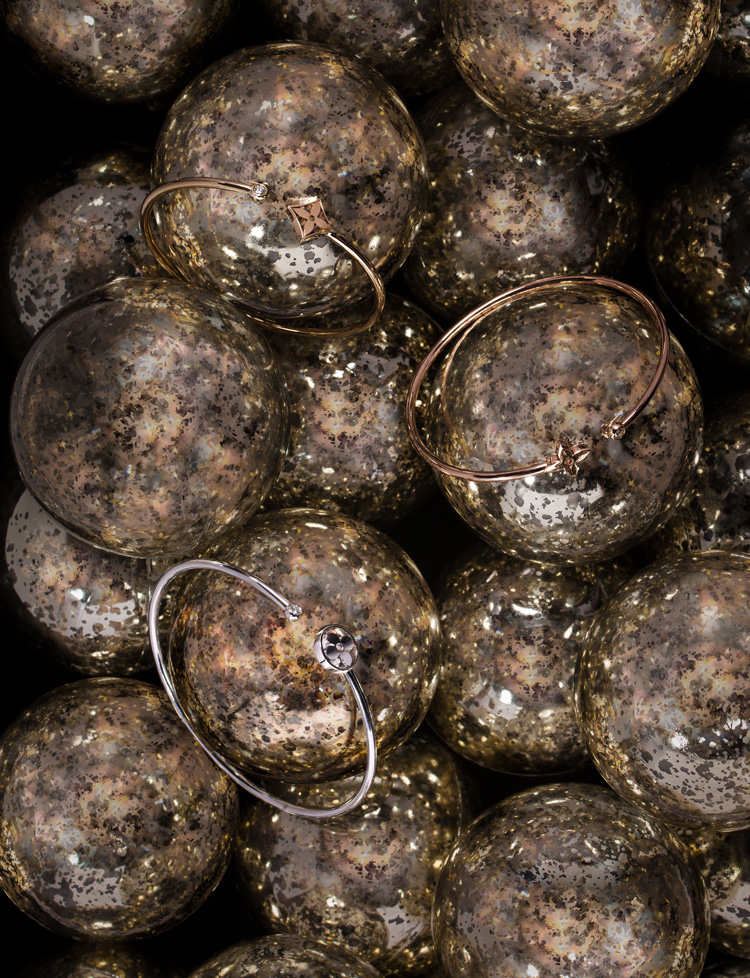
Yellow Gold Idylle Blossom Twist Bracelet, Pink Gold Idylle Blossom Twist Bracelet, White Gold Idylle Blossom Twist Bracelet. All Louis Vuitton
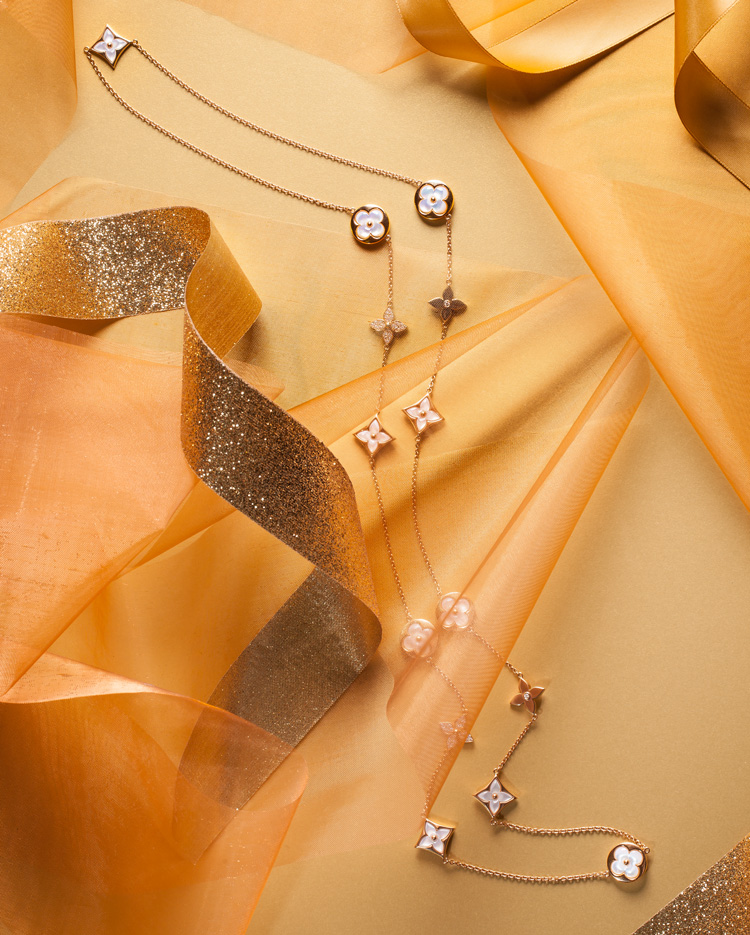
Color Blossom Sautoir with White Mother-Of-Pearl and Diamonds. All Louis Vuitton
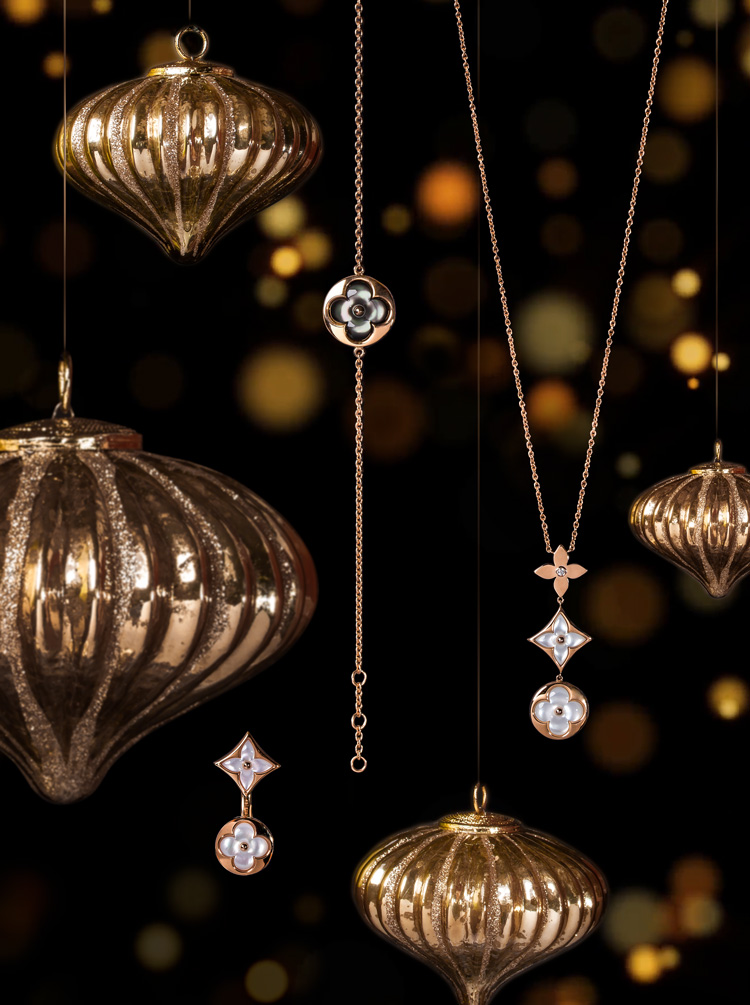
Color Blossom Ring with White Mother-Of-Pearl, Color Blossom Sun Bracelet with Grey Mother-Of-Pearl, Color Blossom Lariat Necklace with White Mother-Of-Pearl and Diamond. All Louis Vuitton
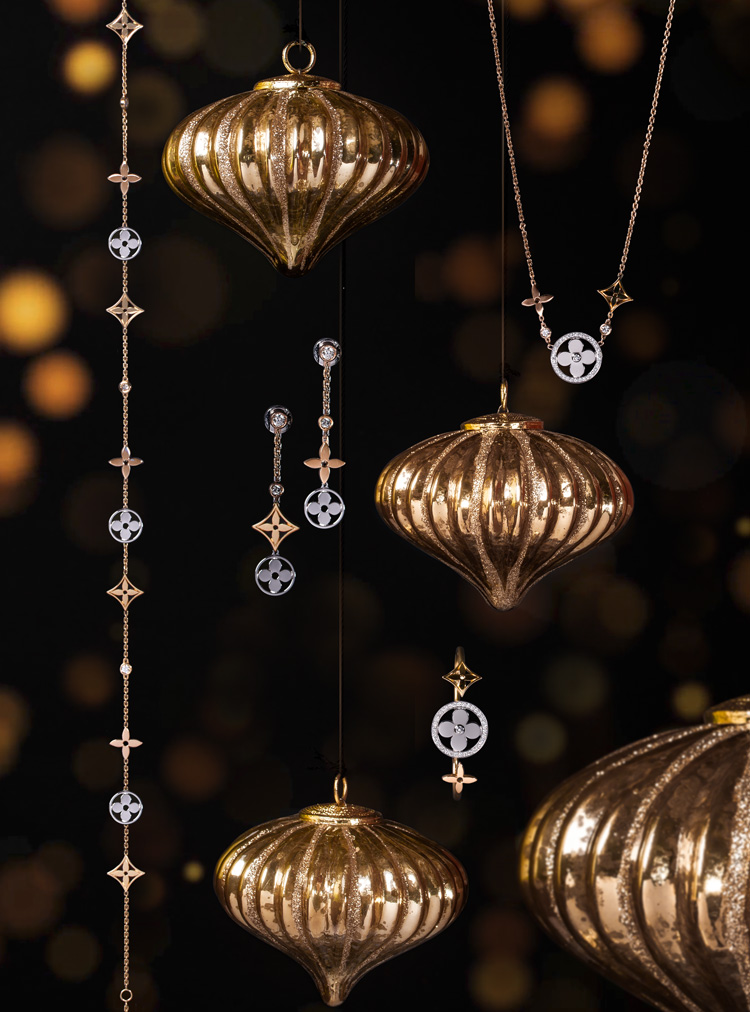
3 Golds and Diamonds Idylle Blossom Bracelet, 3 Golds and Diamonds Blossom Long Earrings, 3 Golds and Diamonds Idylle Blossom Double Ring, 3 Golds and Diamonds Idylle Blossom Necklace. All Louis Vuitton
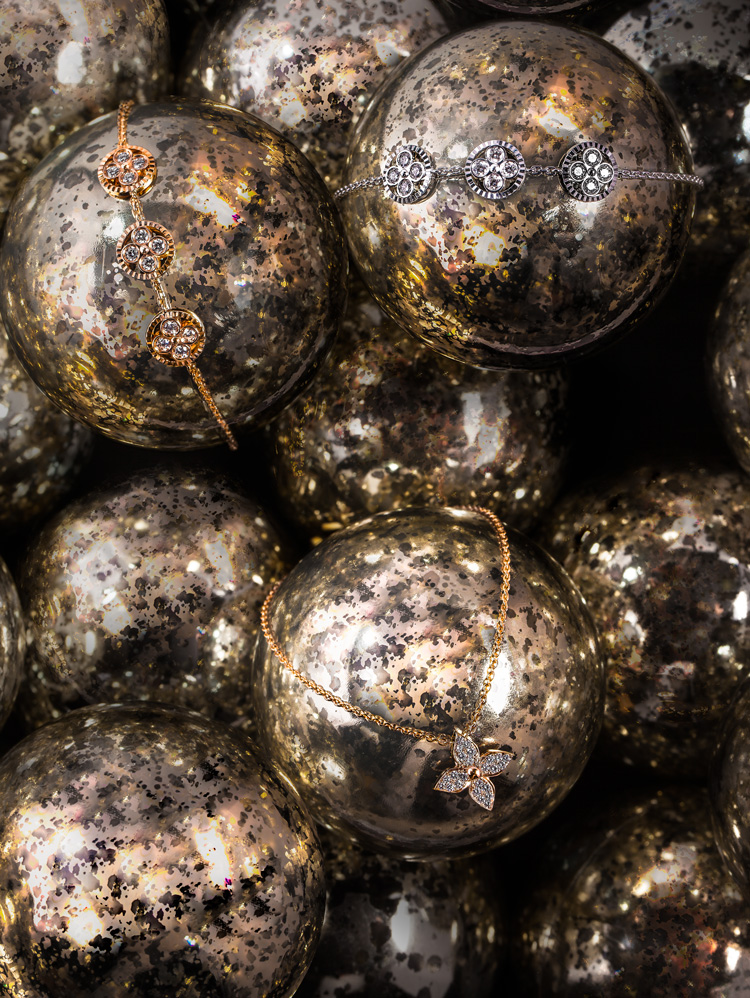
Pink Gold and Diamonds Blossom Bracelet, White Gold and Diamonds Blossom Bracelet, Pink Gold and Diamonds Blossom Star Pendant. All Louis Vuitton
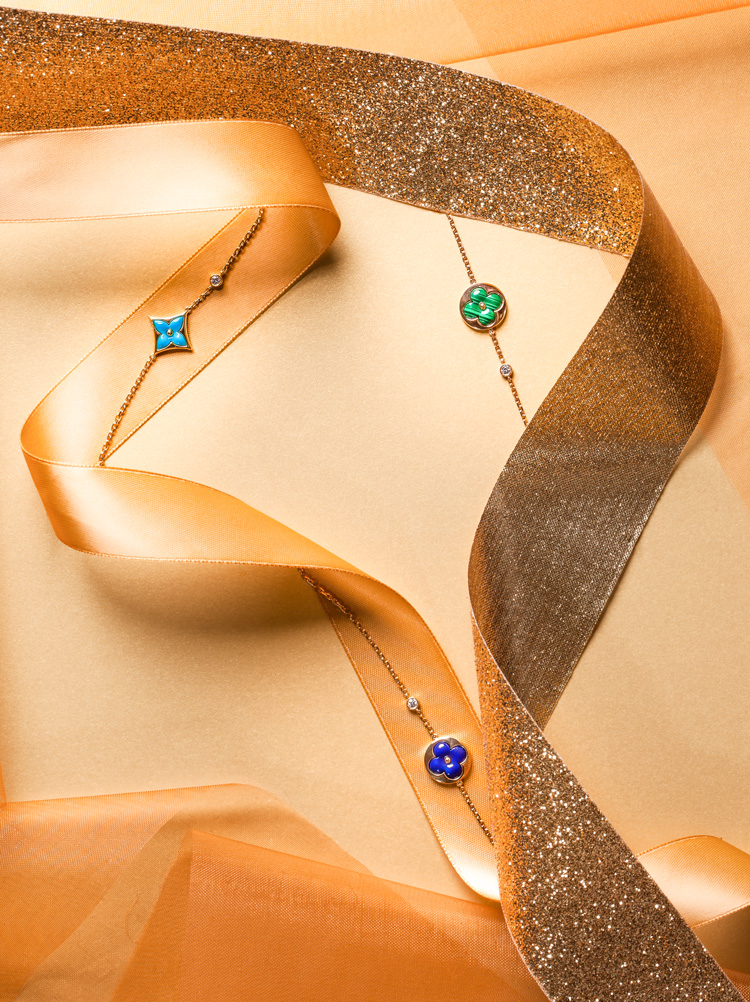
Turquoise and Diamond Color Blossom Star Bracelet, Malachite and Diamond Color Blossom Sun Bracelet, Lapis Lazuli and Diamond Color Blossom Sun Bracelet. All Louis Vuitton
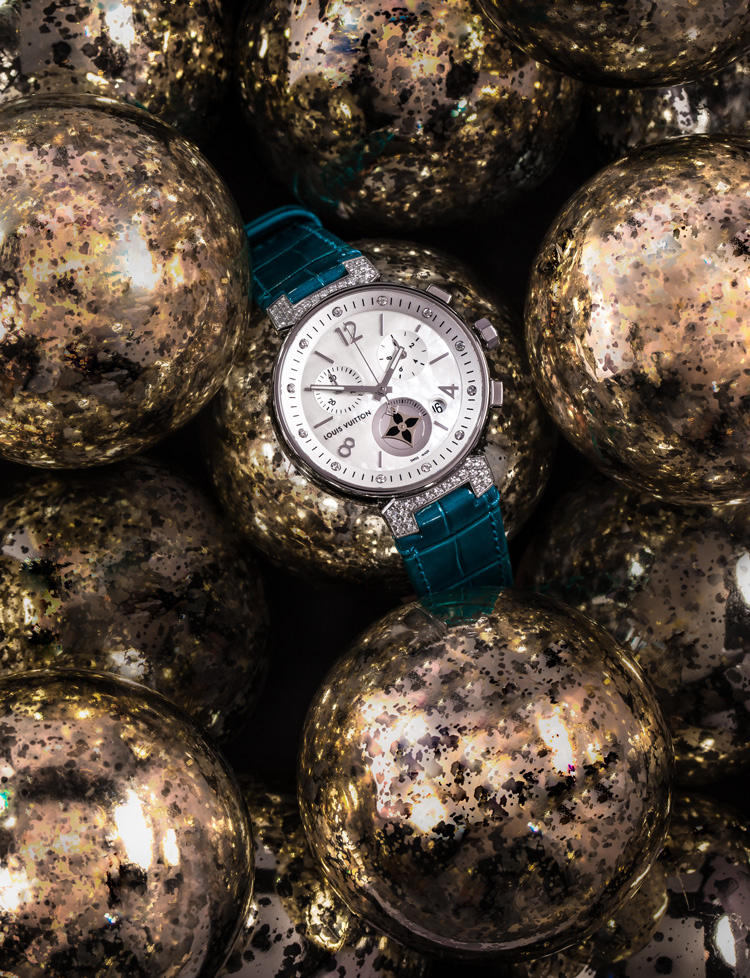
Tambour Moon Star 35 with Diamonds and Blue Strap. All Louis Vuitton
Fashion Director: Eliza Scarborough
Photographer: Henry Pascual
READ MORE
A&E Editorial: Cartier Symbols of Eternal Feeling
Discover Cartier’s vast jewellery collection in our exclusive editorial from our latest December issue out now!

Juste Un Clou Earrings in Yellow Gold, Juste Un Clou Necklace in Yellow Gold, Juste Un Clou Bracelet in Yellow Gold. All Cartier Dress, Solace London
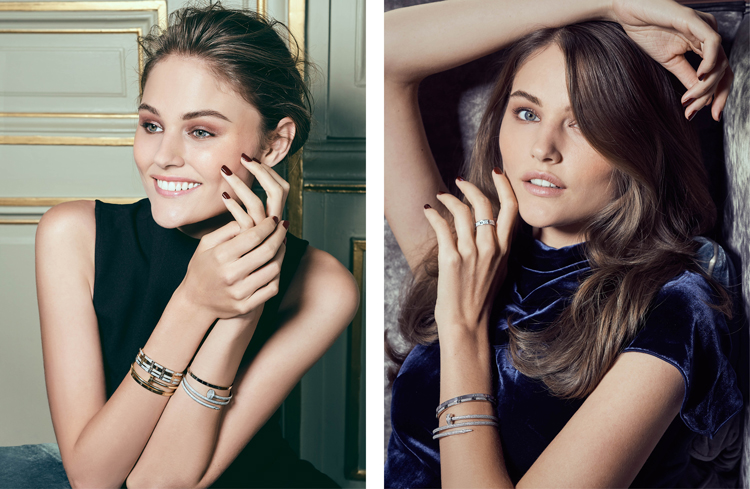
LEFT IMAGE: Juste Un Clou Bracelet in Yellow Gold, Love bracelet in Pink Gold & Diamonds, Love bracelet in Yellow Gold & Diamonds, Juste Un Clou Bracelet in White Gold & Diamonds, Love bracelet in Yellow Gold. All Cartier Top, Roland Mouret RIGHT IMAGE: Juste Un Clou Bracelet in White Gold & Diamonds, Love Bracelet in White Gold, Love Bracelet in White Gold & Diamonds, Love Ring in White Gold & Diamonds. All Cartier Top, Roland Mouret

LEFT IMAGE: Juste Un Clou Earrings in Yellow Gold, Love Bracelet in Yellow Gold, Love Bracelet in White Gold & Diamonds, Love Ring in Yellow Gold & Diamonds. All Cartier Dress, Safiyaa RIGHT IMAGE: Juste Un Clou Bracelet in White Gold & Diamonds, Love Bracelet in Yellow Gold & Diamonds, Love Bracelet in Yellow Gold, Love Ring in White Gold, Panthère de Cartier Watch in Steel. All Cartier Top, Solace London

LEFT IMAGE: Love Bracelet in Yellow Gold, Love Bracelet in Yellow Gold & Diamonds. All Cartier Dress, Safiyaa RIGHT IMAGE: Juste Un Clou Earrings in Yellow Gold, Juste Un Clou Necklace in Yellow Gold. All Cartier Top, Roland Mouret

Fashion Director: Eliza Scarborough
Photographer: Lezli and Rose
Hair and Make-up: Chase Aston at Carol Hayes
Model: Jordan Van der Vyver at Marilyn
Location: Hotel Lancaster, Paris
READ MORE
Benefit Beauty: Hot for the Holidays
Looking for beauty inspiration for your next holiday party? Follow these tips from Benefit Cosmetics to achieve a festive and ‘fa-la-la flawless’ face!
Have Yourself a Merry Little Contour
Contouring this season is subtle, less is more. To create a naturally-sculpted look, sweep a soft matte powder bronzer like Hoola beneath your cheekbones and jawbones and along the sides of your nose. Blend thoroughly to avoid harsh lines. sunscreen and impurities while nourishing the barrier.
You’re the Highlight of the Holidays
Light up the party with simple strobing. First, swirl peachy-pink blush on the apples of your cheeks, then blend a soft, shimmery highlighting and strobing cream like Watt’s Up along the tops of cheekbones, the bridge of your nose and cupid’s bow.

It’s the Most Browtiful Time of the Year
Groomed brows are key to achieving a party-perfect look. ‘Brow shaping has the power to transform your features, brows can even help contour your face,’ says Menat El Abd, Middle East Brow Artist. For example, less space between eyebrows creates a slimming effect on the nose, while extending the tail end of the brow makes a round face look leaner. We call this technique ‘brow contouring’. For expert help, pop into your nearest Benefit BrowBar Beauty Lounge to reveal your ideal brow shape with a Signature Brow Mapping. This personalised consultation is complimentary, so tweeze the season!
Feathered Brows are Comin’ to Town
After you’ve shaped your brows, get them all decked out. To get Instagram-worthy feathered brows like those seen on our model, draw short upward strokes with a super fine tip pencil like Precisely, My Brow. Use a light flicking motion with the tip of your pencil in the direction of your natural hair growth, and finish by brushing on 3D Browtones instant highlighting gel to add subtle highlights and dimension to brows.
Yule Have the Hottest Party Peepers
For big, sexy eyes that will put you at the top of the ‘naughty’ list, stroke They’re Real Eyeliner along the upper lash line, flicking up the outer corners to create a cat-eye effect. Then apply They’re Real Lengthening Mascara, holding the wand horizontally wiggling through lashes from base to tip. Next, hold the wand vertically and stroke the custom dome tip through lashes for curl and separation.
READ MORE
A&E Editorials: Silver Screen
A&E celebrates the festive season with Lebanese designers, as they take centre stage in our exclusive “Silver Screen” story, with the finest selection of gleaming couture gowns for our Lebanon’s December edition.

Dress Georges Hobeika, Earrings Georges Hobeika, Shoes Poise Design

LEFT: Sandra Mansour RIGHT: Rani Zakhem

LEFT: Georges Chakra RIGHT: Rami Kadi

Krikor Jabotian

LEFT: Hussein Bazaza RIGHT: Azzi & Osta

LEFT: Nicolas Jebran RIGHT: Ashi Studio
Styling & Direction: Dana Mortada
Photographer: Fouad Tadros
Make up Artist: Silvy Iknadosian
Hair Stylist: Ivan at Velvet Management
Model: Karina at Velvet Management
All footwear by Poise Design
Location Casino du Liban
READ MORE
The Art of Glamour: Exclusive Interview with Georges Hobeika
A&E Interviews: Meet Oscar de la Renta’s Duo Designers
Oscar de la Renta’s new designers reveal what has given them a clear understanding of what women want.

South Korea-born Laura Kim and Dominican Republic-born Fernando Garcia straddle a unique line. In one corner, their task is to nudge the codes of heritage house Oscar de la Renta, without sacrificing the traditions of the late designer’s métier, while on the other hand, the pair have developed their standalone signatures and rhythms at Monse.
Earning their stripes working for Oscar de la Renta, Kim from 2003 to 2015, most recently serving as the design director, and Garcia from 2009 to 2015 working his way to Senior Designer, the duo went on to found their fledgling womenswear label, Monse, which debuted during New York Fashion Week in 2015. Fast-forward, and after a 2-year hiatus, they have returned to Oscar de la Renta, this time appointed as co-creative directors in September 2016, following designer Peter Copping’s departure. From interning at Oscar de la Renta, to their desire to bring something new to the market, Kim and Garcia’s story is an aspirational one, and would not have happened if it weren’t for their motivation and hard work. The two recognise the pressures of designing in the shadow of one of fashion’s greats, but it doesn’t seem to hinder their process. In fact, it seems that working with Oscar for years prior to his passing, and with a different customer via Monse, has given them a clear understanding of what women want.
Successfully continuing with both brands, the pair showed how harmoniously the two brands can coexist, opting to show the Fall 2017 collections for both brands together, one after another. This presented some logistical juggling, punctuated by lots of shuttling between Oscar de la Renta’s expansive midtown studio and their more cramped Monse quarters on lower Broadway. Yet, on the day of the Fall 2017 show, Monse marched out first, with an opening look that will be familiar to the label’s fans, before transitioning seamlessly into the duo’s first outing at Oscar de la Renta. However, this season they split the shows, presenting their Spring Summer 2018 collection at Sotheby’s York Avenue galleries, where their points of reference were Pop Art and a trove of letters Mr. De la Renta wrote, along with thank-you notes that the young designers have received from starlets like Emma Watson and Elle Fanning. Motifs were quite literal, from the paint splatter-print button-downs and paintbrush-heel pumps to the signature prints on tailoring and huge block letters picked out in sequins on a strapless party dress. All of which showed their fresh eye for design, combined with a deep respect for the late Oscar de la Renta, under whom they worked for years, before his death in 2014.

AW17
A baby brand in one hand, a historic label in the other, Laura Kim and Fernando Garcia have all the opportunity they could want to be a part of the new guard exploring and remoulding fashion’s universe, and we take the opportunity here to speak to them about how they are achieving this.
Tell us about how you originally come to work for Oscar de la Renta?
LAURA: Oscar was my last internship before I graduated, and I loved the atmosphere here. I loved how he was with people, and I loved how it was a family business.
FERNANDO: I started in architecture when I was young. I didn’t have the guts at the time to work in fashion, and architecture was the next best thing. A friend of a friend connected me to Oscar when I graduated school, and I showed him some sketches I had been working on. I had always wanted to be in fashion.

AW17
How does it feel returning to a brand which you share so much history with?
LAURA: To be honest I feel like I never left.
Fernando: It feels like coming back home, to the place where we learned everything, and now it’s our turn to give back for all they did for us when we started in this city.
How do you feel that the Oscar de la Renta brand has since evolved?
LAURA: There’s definitely a little bit more of a sportiness in it. Everything’s super stretchy. Even if it looks structured, there’s a comfort level to it.

SS18
What is your design aesthetic?
FERNANDO: Laura and I believe that today the woman needs to be comfortable. What we’re introducing into the house is a sense of versatility, evening separates, suiting, even denim to make the brand feel much more approachable for today’s woman.

SS18
What two perspectives do you both offer to the designs, and do you think these are what makes you such a successful partnership?
FERNANDO: We toss ideas in the air. We both must like it to push it forward. We sketch separately, and we just make sure that we’re both focusing our ideas on the larger picture, eventually creating a board of all our ideas. We then filter these down and pick the favourites, building and expanding them to the max, and this is what gives the team some direction. When it comes to design, we do not have a particular division of responsibilities. I think that in other facets of the company we do divide and conquer.
How have you found the transition from your past roles at the Maison, to now being Creative Directors?
FERNANDO: It’s strange that Laura and I are in charge of perpetuating Oscar’s DNA. To be honest, I still think of myself as his lunch grabber, running down to Pret A Manger and telling him what kind of soup they have.

SS18
You have just shown your SS18 collection, can you tell us about the inspiration behind it?
In the Spring 2018 collection, we were inspired by Oscar’s love of art and colour, featuring bright, vivid hues, paint splatters and scribble prints, and Oscar’s signature logo.
How far do you feel that you can reinvent the brand, whilst still staying true to Oscar?
FERNANDO: It has to be relevant to the times. House codes like Oscar’s are strong, but without an update for what women want to wear today, they would fall flat in the stores. This is our primary focus at Oscar coming from 2 years of developing clothes at Monse.

SS18
Can you share with us what the new focus is for Oscar de la Renta? Is it now less about frothy evening gowns, and more focused on pants, punchy colours, and a more relaxed sensibility?
LAURA: I want our customer to be able to purchase everything she needs for her wardrobe at Oscar. Cocktail dresses and gowns, yes, but also T-shirts, jeans, and sweatpants. My personal spin will be adding a bit of a relaxed and casual attitude to the brand.
What has been your biggest Oscar de la Renta influence?
FERNANDO: His personality was one that would always make everybody work harder because of how much respect he had for his work, but also because he made you laugh at the end of each day.
LAURA: I loved working with Oscar because he was my opposite. He’d turn on the music in the middle of the day and start singing and dancing.

SS18
During your time away from Oscar de la Renta, you set up Monse. How did you come up with the brands concept?
FERNANDO: When we first started Monse, we didn’t know what the DNA was going to be. So, once we had two or three seasons to think about it, Monse became its own entity. We developed its language with the deconstruction, the stripes, and the bold colours.

SS18
What characteristics do the Monse and Oscar de la Renta women share? How do you balance them when they both have such different aesthetics?
LAURA: We know our client very well for both brands. There is some overlap, but they come to Monse for certain things and to Oscar for other things. And luckily, we have a defined DNA for both brands.
By Eliza Scarborough
READ MORE
My Life, My Style: Lama Jouni
Dubai-based and Lebanese-born, contemporary designer Lama Jouni combines traditional techniques with a forward-looking approach, building a label around feminine tailoring that aims to enhance and celebrate the female body. It’s timeless but with an edge of modernity, just like her own personal style.
It all started in 2007 when the Jouni moved to Europe to study at Parsons Paris, and then after finishing her studies she trained at some of the most respected fashion houses including Balmain, Rad Hourani, and Reed Krakoff which helped her develop her own unique style of bold, feminine, designs. This time spent at such established brands was invaluable, helping her understand the process behind taking an idea to the runway, together with all the small details and costs, with Jouni explaining, ‘seeing everything backstage really opens your mind’.
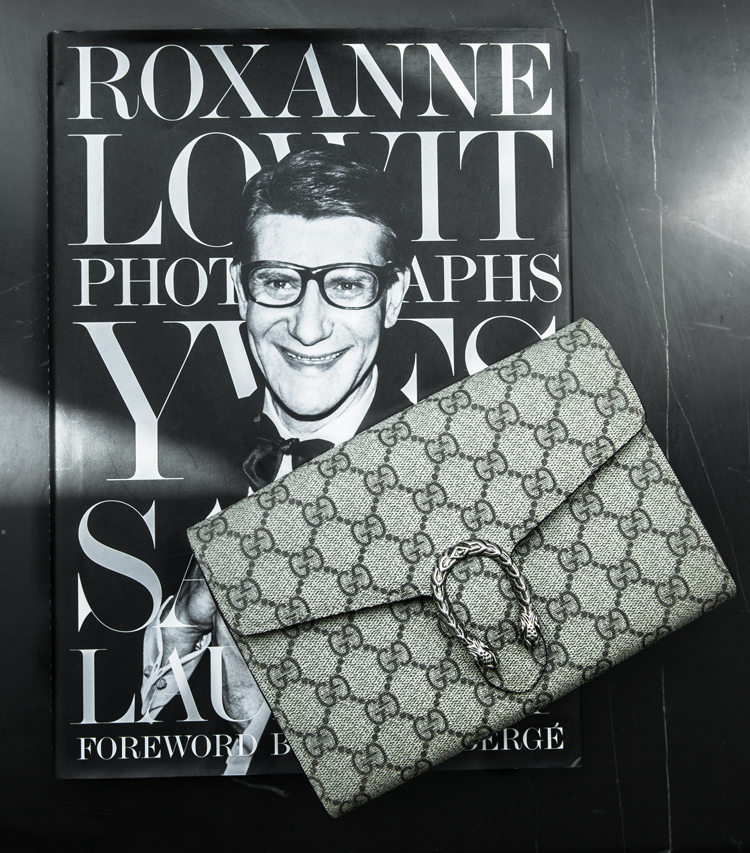
I don’t usually carry bags, as I am minimal and prefer to just have things in my pockets! However, I will take this on evenings out with my essentials. I am currently loving what is happening at Gucci, so wanted to invest in an icon from the brand that I can pass down generations in the future.

I watch a lot of movies and will always go to the cinema once a week. If I like a film I will end up watching it three or four times, and one of my favourites is The Dark Knight.

These trainers are by Filling Pieces, and they are an affordable sneaker with a luxury feel, designed by my friend in Amsterdam. I have about 7 pairs of them at home, and my husband has over 50! They go perfectly with my personal style which is relaxed and minimal.

Although I tend to mainly wear sneakers, when I have an event or evening out I will dress up in heels. Tom Ford is a creative genius and the cut of these shoes makes them my new favourite. Whereas most of the heels in my wardrobe are black, I am currently loving these because they are neutral but have luxe details.

When I was working at Balmain there was a sample sale and as an employee I had the privilege of accessing the pieces earlier than everyone else. I saw this cape and instantly felt wow when I put it on, it is so heavy with a flattering cut.

During my studying in Paris, I started collecting Vogue and have now compiled a library of editions. I used them for research when studying and now with my own collections. Vogue has always been my magazine of choice as it is the fashion bible, with the French and Italian editions being my favourites.

Moodboards are always my starting point for each collection, and this comes from an idea or state of mind, as your unconsciousness really plays a big role in what you are doing. I love to look at images, and I like creating moments from all my visual inspirations. From here I find that the collections really come to life.

These are very special pieces with Lebanese authenticity, and although my personal style is minimal, I do like to collect items from everywhere I travel to give the office more of an identity and personality.
By Eliza Scarborough
Photographer: Henry Pascual
READ MORE
The Art of Glamour: Exclusive Interview with Georges Hobeika
Lebanese couturier Georges Hobeika has once again met and exceeded heavy expectations with his fairy-tale collection for Fall 2017, giving the gift of his trademark glamorous gowns. Turning to great architecture and storied traditions harking from Andalusia, the vibrant energy of the collection is inspired by styles that have developed throughout the ages on the Iberian Peninsula. Cue intricate embroidery, bold silhouettes accentuating femininity, and distinctly glamorous gowns primed for high-society events.

In this exclusive interview, we get to know the thoughtful, artistic designer, from his atelier in Beirut to the front row in Paris.
Who is the Georges Hobeika woman?
The spirit of the Georges Hobeika woman is the perfect harmony of romance and modernity.
Can you share with us your signature touch on every design?
My signature touch is the unique way I integrate sensual style and contemporary cuts.
How has your aesthetic evolved since you first launched your brand?
The extent of the growth and evolution of my brand is difficult to summarise in one paragraph, but I can say that after many years of dedication, starting from my first couture show in Beirut in 1999, I have been able to progressively expand my brand and make my important move to Paris in 2001. That move has proven to be the most significant advancement the brand made towards achieving international recognition. The opening of my showroom in Paris was then coupled with pursuing a presence on major international red carpets, while at the same time expanding my points of sale. The transformation of my brand was solidified when I became an official Guest Member of the Chambre de la Syndicale at the beginning of 2017.

Can you tell us about your recent Fall 2017 collection, and the inspirations behind it?
This collection is characterised by flamboyance and sophistication, as it draws its vibrant energy from ornamental traditions of Andalusia. The main inspiration behind this collection is the historic architectural styles showcased throughout the Iberian peninsula, especially expressed by palaces designed by artistic genius and filled with gold.
Do you have a standout piece in the collection, and why?
Consistent with the opening design of every one of my couture collections being my favourite, the first look of this collection is the piece that reflects the femininity and Andalusian inspiration in the most captivating way.

The Middle East has gained traction in the fashion industry, and you are one of its premiere forerunners. What do you see in the Middle East’s fashion future?
I believe that fashion’s future in the Middle East is going to surprise the world, consistently bringing more amazing designers to fruition, along with sustaining a thriving consumer market that is passionate about fashion.
What aspect of the Arab culture inspires you the most?
Everything in my beloved country, from its sea to its mountains, is an inspiration for my collections!

Tell us what you think makes couture so special, and why you feel there is still the demand during these times of fast fashion?
At its heart, couture fashion is an art form. It’s a rare craft that combines numerous artistic disciplines, further enhanced by the fact that this art is displayed on living bodies. The uniqueness of this art form is precious and irreplaceable, which is why it will always be in demand.
What do you see in the future for the couture industry?
I see an evolution coming for the couture industry, which will be fuelled by a new generation’s demand for higher quality fashion and designs that express an individual’s signature style.
Can you share with us your biggest achievement in fashion?
The key moments with regards to my brand, my first couture show in Paris and the opening of my showroom in Paris, come together as my biggest achievement: becoming a Guest Member of the Chambre de la Syndicale.

You have designed many iconic and statement dresses, what do you think is the must have piece for the festive season?
I will have to say a gown or ensemble displaying the striking colour combination of red, gold and silver.
What are your top tips for party dressing?
My top tip is to make sure there is a touch of sparkle or glitter with any outfit.
What do you think is the perfect accessory to complete your party look?
Belts, rings, earrings, and ear cuffs, it’s difficult to choose!
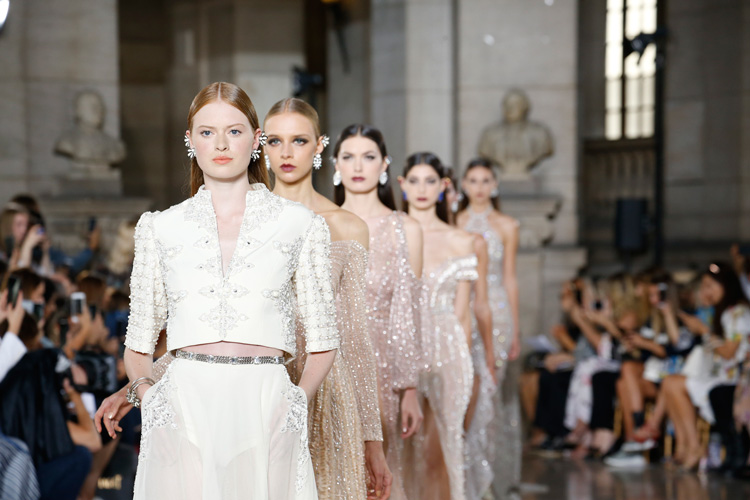
What will you be wearing for Christmas Day and New Year’s Eve?
I’ll be wearing a classic ensemble with a touch of red.
What is on your Christmas gift wish list?
Peace and love, especially considering the current state of the world. Nothing is more important than those two things.
Can you share what makes Christmas a special time of year for you?
For me, Christmas time is the time for family. It is also the wonderful time of the year when helping others and sharing love overwhelms the hearts of most people.
By Eliza Scarborough
READ MORE
Selim Mouzannar: World of Heritage and Optimism
A&E Interviews: Exclusive Talk with Laudomia Pucci
Established in 1947, Emilio Pucci is one of Italy’s storied jet-set brands of the Sixties, synonymous with dazzling prints on silk jersey, which the founder even applied to skiwear early in his career, pioneering a lifestyle approach to fashion.
Emilio Pucci died on November 29, 1992, leaving behind his wife, the Roman Baronessa, Cristina Nannini, and their daughter. After his death, his daughter, Laudomia Pucci, took the reins and continued to design under her father’s name. Laudomia had originally joined the family business in 1985, after graduating from Luiss University Rome with a B.A. in Economics and Politics, before moving to Hubert de Givenchy in Paris in 1987 to work on Ready-to-Wear and accessories production and sales. This experience allowed Laudomia to return in 1989 well equipped for a new role as Chief Executive Officer of Emilio Pucci, covering management, organisation, and logistics, as well as the re-launch and restructuring of the company. She went on to redefine the style, image, commercial and marketing approach of the brand, including a new distribution pattern worldwide.
In 2000, the company formed an alliance with the French luxury goods empire of LVMH Moët Hennessy Group, which bought 67% of the Pucci Empire, and Laudomia became the company’s image director, bringing on major fashion designers such as Christian Lacroix and Peter Dundas to continue producing the elegant and sophisticated aesthetic that was the Pucci signature. With the backing of LVMH, the company has expanded rapidly, building a worldwide store network and global fan base, and as the brand faces more changes in creative direction, we exclusively talk to Laudomia about standing at the helm of such a storied brand.
‘He was a minimalist before minimalism, a jet-setter before jets were flying, a scientist before fabric technology became a discipline, provocative in his modernity and sartorial daring. For him prints were rhythm and movement, and in prints he expressed a message of contagious happiness.’ – Laudomia Pucci, speaking of her father and brand founder, Emilio Pucci.
Your father, Emilio Pucci, was one of the most remarkable designers of his time. What was it like growing up as his daughter?
This is a wonderful question, however when you are growing up whatever surrounds you appears normal. For me to grow up with my father having models around the house, who were actually photographed on the roof next to my playroom, in incredible clothes and hairdos, as well as having Asian, and coloured and blonde models was totally normal! To know that we had fashion shows in the house and that I could hear clapping from two floors lower was normal, as it was also normal that he would show me his sketches and his drawings. We shared his contagious enthusiasm for his job!
What is your first memory of fashion?
I am not sure, probably going to my father’s office and seeing the Christmas tree.
Tell us about when you first joined the family business?
My father started telling me I should help him when I was 14. I kind of dreaded the idea, and it was not until after my University studies in Economics and Politics that I joined the family business. It was sort of what I was expected to do. I would not have minded entering politics, although fashion was probably a safer choice!
How much do you feel the fashion world has changed since your father founded the company, and how do you think he would feel about the direction which the brand has taken?
I joined Pucci in 1985, over 30 years ago, and it feels like 3 centuries have passed. It was another and very different way of thinking then, with the fashion, markets, clients, supply chain, and made in Italy. Yet it was very special, with incredibly special people that I had the privilege of meeting or working with, from Hubert de Givenchy, who is as a second father to me, to Stanley Marcus, from Joyce in HK, just to name a few. I think we should never think how a founder of a historical brand would look at it today, just understand the message and interpret it in today’s or possibly tomorrow’s reality!

Do you face a lot of challenges personally when trying to stay true to how your father saw the future of Pucci?
Not really, I’m quite pleased with what we have done. It has been 25 years since he left us, and he would probably be very happy to see his name in new markets and young girls wearing his brand!
How do you feel the heritage of the brand sets Pucci apart from other luxury companies in the market?
This is a long story! Should I say it was made by a man that loved women and women’s bodies and movement, mixed with colours and an artistic dimension. What looked simple for my father is actually very complex.
Can you share with us what is the most important part of your brand DNA?
It’s a world of sophistication and joie de vivre, mixed together with the Italian touch!
What is key to combining the rich history of the brand with current trends?
You have to take a dose of the past and the present in a very clever way, not too much nor too little. This is the genius of creative talents!
You’ve always said that Pucci is about family. You sold a majority stake to LVMH in 2000, but the company continues to run with a strong sense of family. How important it that to you?
I think what is important is to have a personality of the company that carries that sense of continuity and uniqueness true to the brand. I hope that this is what I have been able to bring to the company.
How have things changed since the LVMH acquisition?
After 17 years a lot has changed, including myself and the world around us. We have moved into new markets, new generations, and new products too, which has all been very exciting!

Do you hope your children will join the family business one day?
I am not sure about my children, one is talented creatively, but hasn’t studied fashion, and I am not sure whether they will want to walk in their mother’s footsteps. However, I know that all three love the brand!
What’s the biggest challenge you’ve encountered in your professional life?
Probably it wasn’t an easy decision to sell majority, but Yves Carcelle had such a wonderful vision.
Where can we see the new direction of Pucci going, and what can we look forward to seeing with the changes in Creative Direction?
When we are ready we will let you know what the plans are!
Tell us about how Pucci’s signature prints are reinvented every season, whilst keeping fresh and remaining powerful?
Pucci prints are a signature as you rightly said, and you need to have a lot of knowledge and company culture to be able to cope with re-inventing the prints. There are always plenty of interesting challenges and new possibilities, but they are always very Pucci.
To you, what makes a timeless print?
Timeless prints are the result of an artistic approach. I believe my father was firstly an artist and then a designer.
Can you tell us about the new SS18 collection, what it embodies, and the inspiration behind it?
Spring Summer 2018 is quintessentially a Pucci moment, for example a pool party. It’s summer, it’s beautiful girls, it’s chrome, sophistication, playfulness and ‘joie de vivre’.
Do you have a key favourite piece from the collection?
I think the twill ‘Ama’ print chemisier dress, the palazzo trousers in ‘Nisida’ print, or the mirror beaded mini dress and skirt.
Can you tell us about the new Dubai capsule collection that has been created?
We thought of creating this exclusive capsule collection with an oriental inspired print for a very important market like Dubai. We are very excited to turn our creative eye to the Middle East with a selection of essential resort pieces. A one of a kind Pucci print which combines oriental references with Mediterranean mosaics and graphics in different hues of blue which remind me of the beautiful Dubai coastline.

What are your thoughts on the fashion in the Middle East?
It is a great market with great women, and is very feminine and fashion savvy. It’s a joy to meet Middle Eastern women during my visits to the stores or when I travel to the Middle East.
What will you be wearing for Christmas Day and New Year’s Eve?
I haven’t thought about this yet, but since I will be in the warm weather of the Philippines, I will probably wear a piece from the SS18 collection in coral or blue.
What is on your Christmas gift wish list?
To have all my family healthy and with me, and my girls in their new Pucci outfits.
Can you share what makes Christmas a special time of year for you?
Family and the sun, as I almost always spend it in the Philippines.
READ MORE
The Art of Glamour: Exclusive Interview with Georges Hobeika
How To Shop Smart
Whether you are Christmas gift shopping or navigating the sales, take note of our tips so that you can put the joy into shopping, together with making some failsafe purchases.

PLAN
Check your wardrobe before clothes shopping, as it is easy to forget what already exists and there is no need purchasing something you already have at home which serves a similar purchase. Also, always wear well-fitting underwear when you do go out shopping, it is the foundation to everything.
SIZE
During sale time, never be tempted to buy something too small assuming you will slim into it. Instead a size too big can be easily tailored by a seamstress, although be realistic about what is achievable and avoid complicated designs and prints. When it comes to footwear, never buy shoes thinking they will stretch.
GOWNS
Don’t be afraid of buying your dream gown on sale at a time when you have no occasion to wear it. This category can be reduced by up to 70% during the sales, so it is a smart time to buy. It’s far worse to spend more on a panic buy, and is better to have a dress in your wardrobe ready for when the invitation arrives.
SHOES
New season shoes are a smart way to update your existing wardrobe, but when you get home wear them inside for at least 30 to 45 minutes before stepping outside. Walk on different surfaces, from carpet to harder flooring, being careful not to scratch the soles, and if they are unbearable, return.
FITTING ROOMS
Always take two sizes to try on, as firstly it means you can avoid having to get redressed to head back to the shop floor to find another size, and you may prefer the fit of the one you weren’t expecting. Also, take a photo of yourself in the mirror, ensuring you cover all angles.
COST-PER-WEAR
When it comes to basic items never spend a great deal, as it is always better to spend less and replenish more frequently. However, as much as you consider cost-per-wear, don’t underestimate the feeling of joy. If you love something and it makes you happy then it is worth having.
RECYCLING
Edit your wardrobe every six months and re-sell pieces of value not worn over the past year. Put these funds into a separate bank account and aim to limit new purchases to using only this account.
ONLINE
Begin by signing up to your favourite brands to be instantly alerted when new collections arrive on site, although do also look at other websites for the same item as many will offer different angles and videos showing it in a new light. If you miss a purchase, sign up to Vestiaire Collective’s ‘The One That Got Away’ which will ping an alert when your wanted item lands in their hands. When your online purchase arrives, if you have an ounce of disappointment upon opening the box, return it.
DEPARTMENT STORES
When navigating a department store it is imperative that you have an agenda to ensure you don’t get waylaid, which will waste time and inevitably lead to panic purchases. Also, do try the personal shopping services, as these are complimentary and often offer better equipped fitting rooms.
DETAILS
Check the care labels before you make a purchase, as realistically will you dry-clean an inexpensive top, or will you risk hand washing premium items or machine washing them on a cold cycle.
By Eliza Scarborough
READ MORE
A&E December Fashion Roundup

Collection to Covet
With her playful emoji inspired pieces, Mira Mikati is being touted as the Anya Hindmarch for the Instagram generation. The London based Lebanese designer regularly collaborates with artists and illustrators to create colourful, pop-art style wares that are guaranteed to brighten your day.

I Want Choo
Cara Delevingne has just been announced as Jimmy Choo’s newest brand ambassador in the Cruise ’18 campaign, with the model and actress dressed in the season’s must-have accessories. In the new short film, aptly titled Shimmer in the Dark, Delevingne takes on the streets of New York City, as she window shops for the perfect Jimmy Choo boots before hitting the ‘I Want Choo’ disco.

Birthday Jewels
To celebrate its 50th anniversary, Pomellato creates a striking new one-of-a-kind collection that honours the values of the Milanese Maison, anti-conformism, creativity, craftsmanship and colour. The 50 unique pieces are adorned with agate, lapis lazuli, amazonite, tiger’s eye, malachite, and other opaque gems, which are a rare find in high-end jewellery.

Blossoming Creations
Gucci’s latest exclusive line of coveted offerings sees several pieces inspired by the GG Running, Le Marché des Merveilles and G-Timeless collections. Crafted in 18k yellow gold, the jewellery collection blends the maison’s fantasy-like aesthetic with its tiger motif mixed with diamonds, pearls, rubies, topaz and amethyst.

Satin Party Pumps
Satin stilettos are this season’s most in-demand dancing shoe. Redefine the term ‘twinkle toes’ with the help of a high-powered ’80s edge, by donning Miu Miu’s violet slingbacks. Wear with cropped cigarette pants or super-mini hemlines to ensure maximum visibility.

READ MORE
Designer Focus: Mira Mikati
Shop Now: Nike Pro Hijab
Pick Of The Week: Dior Precious Rocks
Cool and opulent, the mood of the holiday 2017 collection pits the refinement of precious gems against the rock attitude of the modern Dior woman.
Deep colours, prismatic brilliance and crystalline freshness electrify this season’s creations by Peter Philips.

Golden Light
Diorific Precious Rocks
5 Couleurs Precious Rocks In Emerald
Diorific Precious Rocks loose powder bathes the complexion in a delicate glow, as it sculpts and brightens the face, décolleté and shoulders with a golden shimmer. Add definition to your eye too with the Emerald 5 Couleurs Precious Rocks palette, where opulence permeates the emerald green, grey and pink.

For The Beauty Of It
Diorific Khôl In Intense Garnet
The first Dior kohl for the lips, Diorific Khôl with a faceted stick for ultra-precise application delivers intense, powdery matte, long-wearing colour.

All That Glitters
5 Couleurs Precious Rocks In Ruby
Diorific Vernis In Amethyst
Compacted like the facets of a cabochon, the 5 Couleurs palette fulfils a desire to be unique and precious. The Ruby palette features a sumptuous red alongside browns, burgundies and ivory streaked with shimmer and gold. Team it with the complementing Diorific Vernis, which takes a cue from the vibrancy and colour of gemstones.

Finishing Sparkles
Diorific Vernis Liner In Precious Rocks
With a stroke of its liner brush, Diorific Vernis Liner delivers clear varnish strewn with gold, platinum, and silver glitter in various sizes to play with festive nail art.

Colour Finery
Diorific Matte Fluid In Glory
Diorific Matte Fluid tinges lips and cheeks with a matte texture in subtle nude or fiery red.
Photographer: Henry Pascual
READ MORE
This Is What The Future Of Flying Looks Like
Pilotless planes, designer cabins and competitive prices, it is time to upgrade for your next flight.

As the world’s major airports become ever-more crowded, flying on commercial airlines is going to become increasingly stressful.
London Heathrow currently operates at 98 per cent of its capacity, with flights capped at 480,000 annually, which is why there are plans to build a third runway, but in 20 years, every airport in the capital is going to be full. By 2030, our skies will be so congested that there will be 50 times more delays with the International Air Transport Association predicting that by 2035, there will be 7.2 billion air travellers globally, double the number in 2016.
The answer to this is private jets, especially because in Europe alone, there are 3,000 airfields that can accommodate them, versus just 300 airports for commercial airlines that use bigger planes. Together with this, aircrafts of ever-greater range and efficiency are being produced, from light jets such as Cessna’s Citation M2, Embraer’s Phenom and the all-new HondaJet, to the transoceanic flagships of Gulfstream, Bombardier and Dassault. Planes are lighter, because of the composite materials used in their construction, and safer thanks to ever-more automated flight systems and sharp tech to help pilots.
However, until a new generation of jets breaks the sound barrier, they aren’t getting any quicker, with a hop from Dubai to New York still taking more than 14 hours in the Gulfstream 650ER, the fastest long-range jet. So, the accent is on comfort inside the flying machine, with architects and psychologists working with engineers to ensure that the space is so agreeable the occupants forget they are 41,000 feet in the air.

AFFORDABLE FLYING
Described as the ‘Netflix of air travel’, Californian subscriber-based start-up Surf Air has just branched out to Europe offering ‘all-you-can-fly’ monthly packages, using a combination of eight-seat Embraer Phenom 300s, the new improved version of ‘the best-selling business jet in the world’ and, from next year, Pilatus PC-12s, one of the most reliable and the longest-range aircraft of its type. Headquartered in Florida, JetSmarter is another disrupter. Just like UberPool, you download the app and request a seat on a private jet with strangers, and you can also snap up amazingly cheap seats on empty legs where the aircraft is returning to its home base.
DESIGNER JETS
For the really smart flyer, France-based European aircraft manufacturer Airbus and Italian hypercar designer Pagani Automobili have come together to create the futuristic Infinito cabin for the new ACJ319neo plane. The standout feature is its sky ceiling, which makes it look like a convertible, but is actually a digital screen displaying a live feed of the sky above. The jet can seat eight passengers and fly for 15 hours, meaning you could travel from Dubai to New York without stopping to refuel. Other collaborations are coming from fashion brands such as Versace and Armani that are turning their hand to fitting out private jets.
SELF-FLYING PLANES
We all know planes can fly on auto-pilot, but how would you feel if there was no pilot in the cockpit? Like it or not, plans for fully autonomous aircraft powered by artificial intelligence are already taking off. Just like self-driving cars, the promise is for improved safety by removing the risk of human error, one of the primary causes of accidents. In Dubai, drones have already embarked on test flights, the vision being for them to whizz between tower blocks, transporting tourists in sci-fi flying taxis.
BOUTIQUE AIRPORTS
As commercial airports turn into monster hubs for the world’s biggest airlines, chic, design-forward satellite terminals for private jets will form a counter trend. From Farnborough’s space-age airbase of undulating steel and glass, to Stobart Aviation’s cutting-edge jet centre at Southend Airport, these airports offer dedicated concierges and 24 hours a day service. A growing number of companies are also building their own private aviation hubs. At Nike’s global headquarters in Portland, next to Hillsboro airport, is Nike’s Air Hangar 1, one of the most design-led private jet terminals on the planet. Boxy in shape, with glossy all-white hangars decorated with posters of Nike ambassadors, not only does it have a gourmet kitchen, stylish meeting spaces and lounges, but a fitness centre too.
READ MORE
Emirates New First Class Is Nothing Like You’ve Ever Seen Before
Mövenpick Hotel Beirut Making All Your Christmas Wishes Come True
The Mövenpick Hotel Beirut is one of the best business hotels with extensive resort facilities in Beirut. Located directly on the Mediterranean Sea and only ten minutes from the airport, this upscale 292-bedroom hotel offers all you would expect from a 5-star beach resort. The restaurants create authentic Lebanese and international cuisine and our range of bars, including our famous chill-out bar Square, is perfect for relaxing with drinks in the evening.

A calm oasis in the heart of the city, Mövenpick Hotel Beirut has been named as Lebanon’s Leading Resort for 2016 and Lebanon’s Leading Luxury Hotel for 2017 by the World Travel Awards.

As the festive season approaches, it is time to gather with your loved ones to celebrate one of the most magical times of the year. Once again, Mövenpick Hotel Beirut celebrates Christmas season with plenty of offerings for its guests and patrons. Enjoy the festive season with amazing food and the best entertainment in town; experience a luxurious fun-filled New Year like no other.
FESTIVE DINING
Hemingway’s Bar & Lounge welcomes you for a mouthwatering International menu while Bourj Al Hamam offers you a special deluxe Oriental menu. Buffet lovers are in for a treat at Méditerranée restaurant. Enjoy a Christmas themed dinner at all three restaurants with live entertainment suitable for both adults and kids and full of surprises and gifts, Mövenpick Hotel Beirut has it all wrapped up this festive season.

Christmas Eve at Méditerranée Restaurant will offer an International buffet, starting from 8 pm till midnight- including grills, seafood, desserts, cheese and wine cave at US$ 63/person.
Christmas Brunch at Méditerranée Restaurant will also offer an International buffet, starting from 1 pm till 5 pm- including grills, seafood, desserts, cheese and wine cave at US$ 68 /person.
NEW YEAR CELEBRATIONS
Méditerranée Restaurant: international buffet, starting from 8pm- including grills, seafood, desserts with open regular bar with DJ, countdown and cotillions at US$ 125 per person, US$ 150 for premium bar.
Bourj Al Hamam Restaurant: Lebanese set menu with open regular bar, with one man show, belly dancer and DJ , countdown and cotillions at US$ 125 per person, US$ 150 for premium bar.
Hemingway’s Bar & Lounge: Four course set menu with open regular bar, live band performance and DJ, countdown and cotillions, at US$ 175 per person, US$ 200 for premium bar.

NEW YEAR COUPLES PACKAGE
Book a one-night stay and benefit from late checkout till 4PM- including breakfast for two in addition to a New Year’s Eve party at Bourj Al Hamam Restaurant, Hemingway’s Bar & Lounge or Méditerranée Restaurant for US$ 500 per Couple.

FESTIVE SPA PACKAGES
Essential Spa at Mövenpick Hotel Beirut welcomes special spa packages during the month of December – including complimentary access to indoor pool, Jacuzzi, relaxation area (sauna, steam, water beds, and more).
Special Treatment: 40 minutes relaxing massage for 77$ (Includes a full body massage with essential oils; plus shoulders, neck, scalp, hands, legs and back)
SLEEPING SANTA: 1HR. 10 MIN FOR 111$ (Full body Scrub using essential salt and oil scrub)
- Chocolate Wrap (body envelopment rich in vitamin E)
- Indian Scalp (relaxing massage for the shoulders, neck and scalp)
- Hair Treatment (Dry hair masque treatments for scalp nourishment)
WARM STAR: 2 HOURS FOR 133$
- Express Oxygen (face cleanse, scrub, mask and pure oxygen to refresh and boost the blood circulation for a bright face skin)
- Rwabineda (Hot Stone massage)
JINGLE BELLS: 1HR. 45 MIN FOR 150$/PERSON OR 1 HR. 45 MIN FOR 300$/COUPLE (COMPLIMENTARY COUPLE SUITE)
- Aromatherapy Massage (full body massage with essential oils)
- Aromatherapy Facial (facial cleanse, face scrub, mask and face massage plus lymphatic drainage personalised for all skin types)
WISH LIST: (GET A 25 % DISCOUNT ON ALL ORIGINAL PRICES)
THAI MASSAGE (STRETCHING WITH PRESSURE POINTS FOR THE BODY):
- Asian Experience (1 hour for 120$ or 80minutes for 150$)
- Life Saving Back (1 hour for 70$)
BODY SCRUB, FULL BODY MASSAGE AND BACK MASK:
- Foot Reflexology (1 hour for 75$ or 80 minutes for 110$)
- Gentlemen Retreat (1 hour for 170$)
READ MORE
