
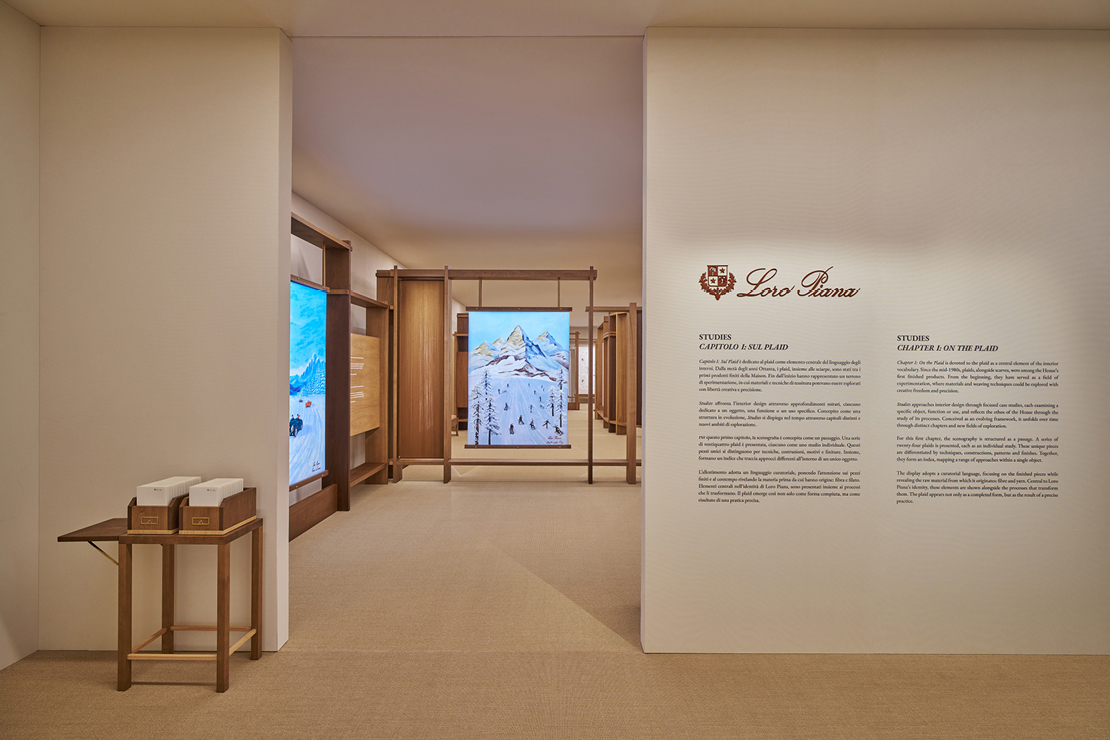
Earlier this year, Loro Piana debuted Studies, Chapter I: On the Plaid at Milan Design Week, launching a new project dedicated to the house’s craftsmanship and celebrating plaid as a central element of the brand’s DNA. We take a close look at the making of this special project as it continues to unfold over the coming months.
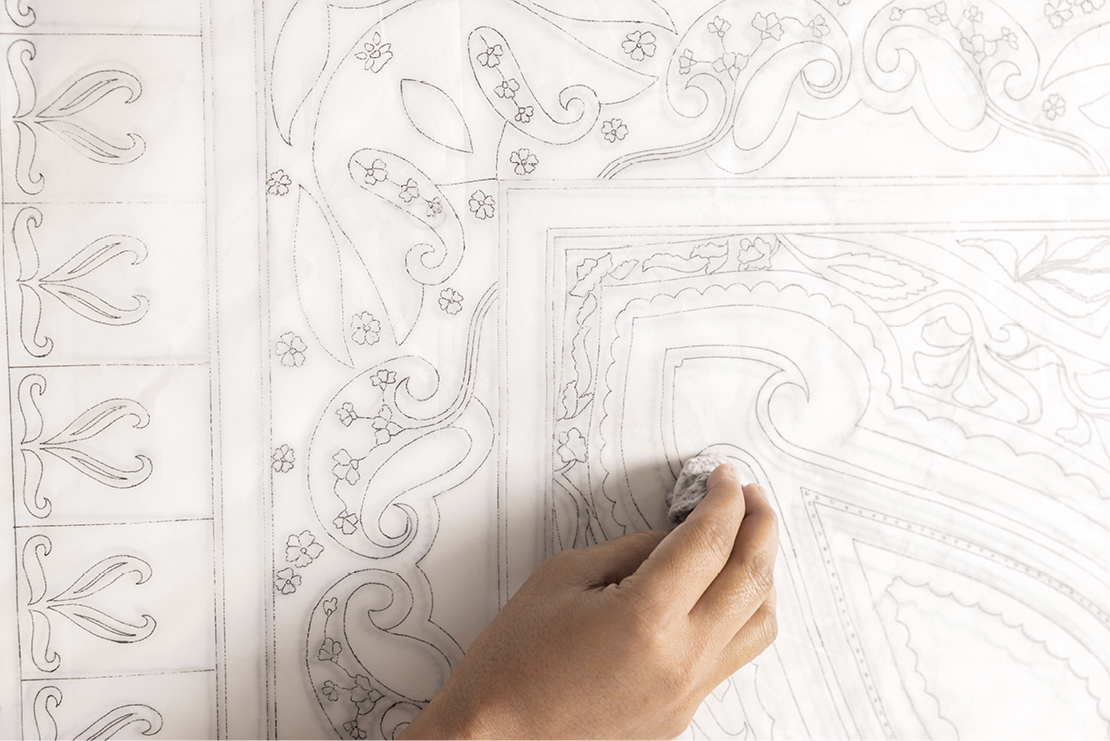
Presented as a series of 24 individual pieces, the project examined how a single object can hold multiple narratives through texture, construction, and technique. Each plaid was treated as a study in textile craftsmanship, distinguished through varying methods, motifs and finishes. Together, they formed what the house described as an “index” of approaches, mapping the possibilities of fibre and fabric through a curatorial lens.
The installation highlighted how craftsmanship is at the forefront of the luxury conversation, as clients are increasingly asking for transparency around craftsmanship and the irreplaceable techniques that go into creating luxury objects. In Loro Piana’s case, the plaid serves as a natural vehicle for this conversation. Long associated with comfort, travel and the outdoors, it occupies a unique place within the Maison’s universe, balancing practicality with refinement. Here, however, the plaid was elevated into something closer to textile art.
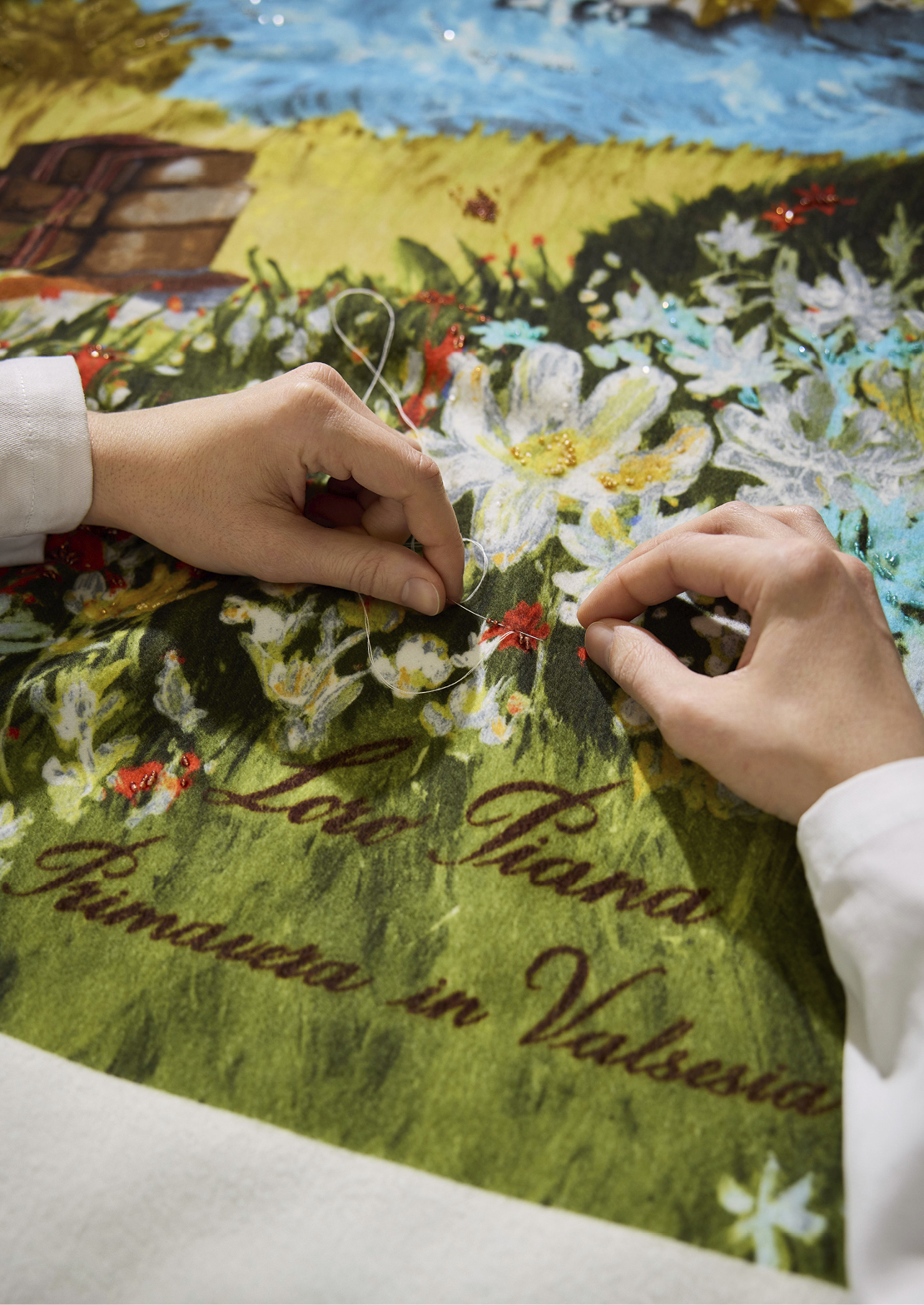
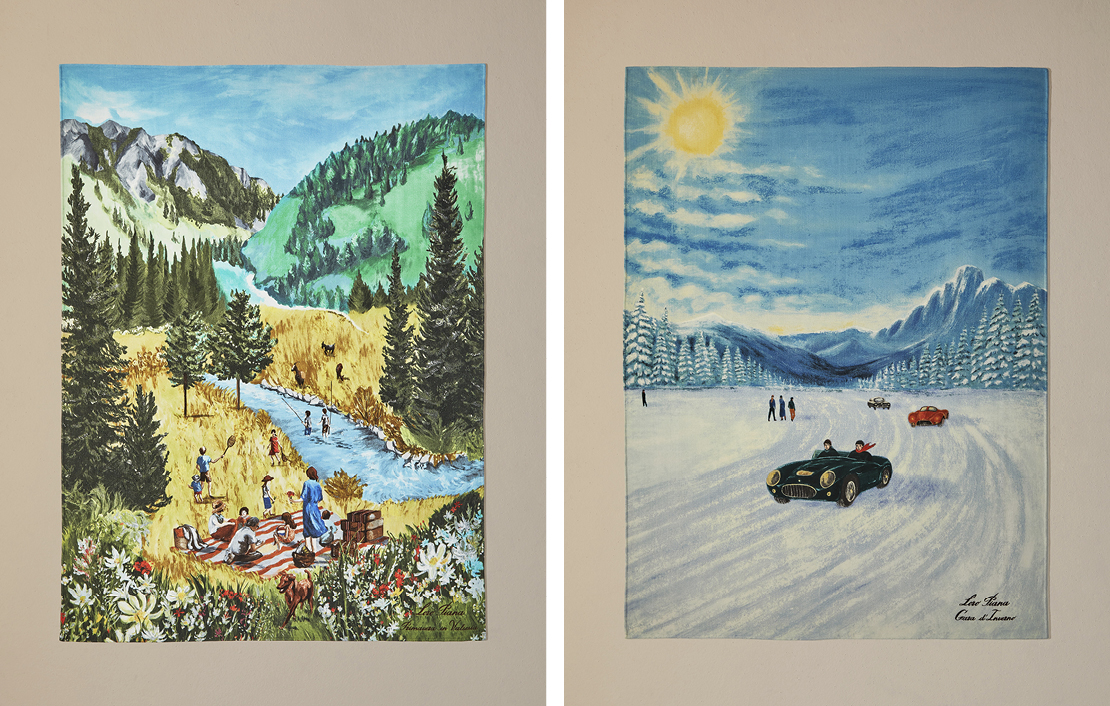
The journey began with Loro Piana Sceneries, a poetic evocation of Valsesia, the northern Italian region where the company was founded in 1924. Through landscapes inspired by seasonal rhythms, mountain environments and outdoor pursuits, the project traced the origins of the Maison and its longstanding relationship with nature. Snow-covered terrain, classic cars and alpine references created a vision of a particular way of living, one rooted in slowness, craft and the natural world.
From there, the exhibition unfolded into a deeper examination of technique. Fibre and yarn were displayed alongside finished pieces, placing emphasis on process as much as product. Visitors were invited to understand not just what these plaids looked like, but how they came into existence.
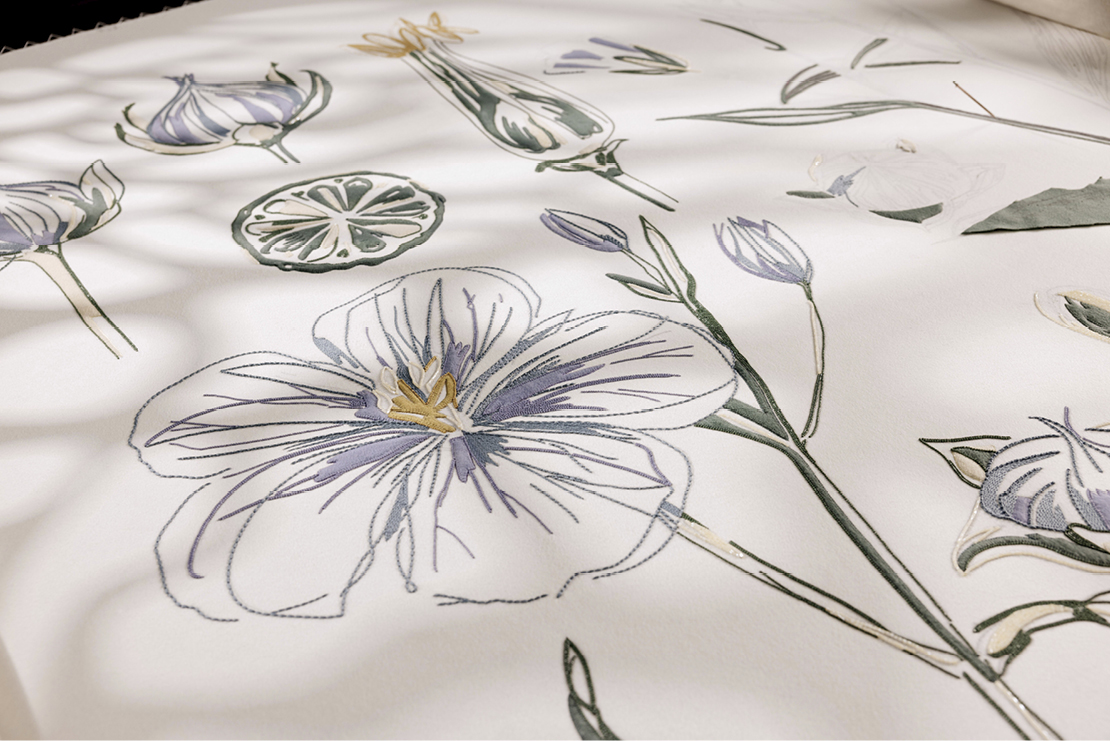
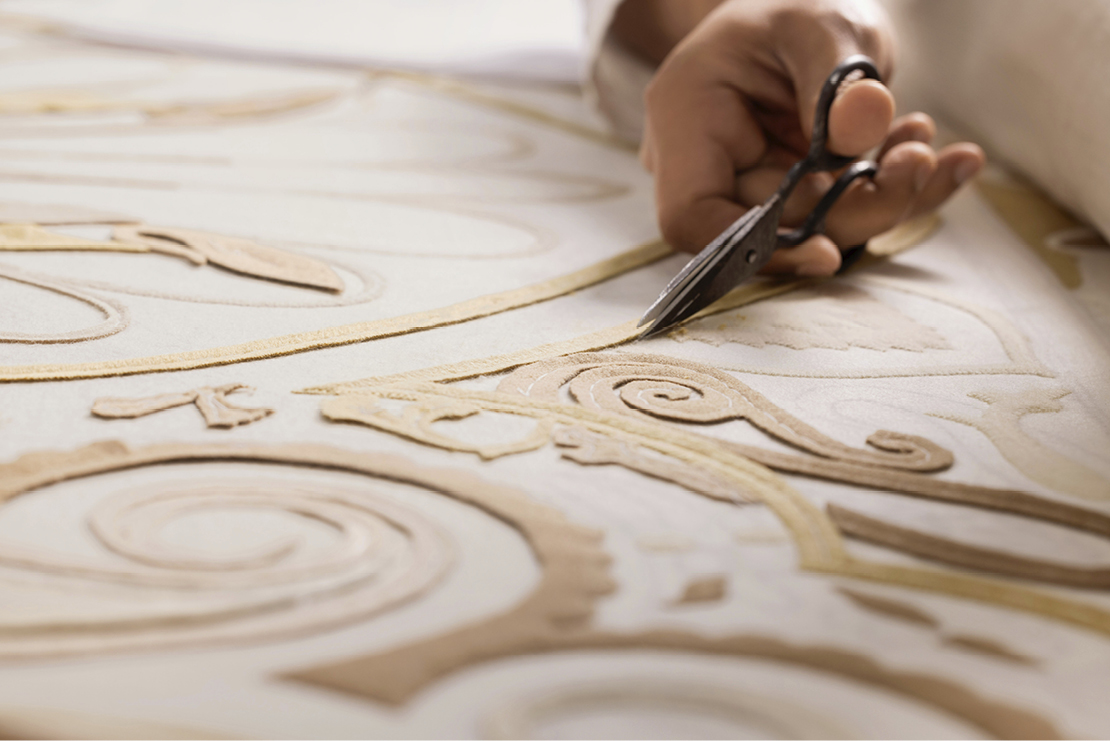
Among the techniques highlighted was needle punching, where fibres are repeatedly inserted and repositioned to create tonal variations and textured relief directly within the textile surface. Elsewhere, appliqué introduced layered contrasts through carefully stitched fabric and leather elements, while hand embroidery added dimensional detail through controlled stitching sequences.
Handloom weaving and jacquard weaving demonstrated the precision of traditional textile production, creating intricate structures and motifs by manipulating the yarn itself rather than relying on surface decoration alone. Screen printing, meanwhile, brought further complexity through layered colour applications that retained the softness of the fabric beneath.
Material played an equally important role within the project. The plaids were crafted using some of the Maison’s most prized fibres, including Vicuña, Baby Cashmere, Cashmere and The Gift of Kings®, alongside linen, Wish® wool and Pecora Nera® wool. These materials were paired with embroidery, patchwork and weaving techniques to create pieces that felt deeply tactile yet technically rigorous.
What emerged was a vision of luxury rooted not in overt decoration, but in precision, rarity and restraint. Each plaid is crafted exclusively upon request, reinforcing the idea of individuality and measured production over mass production.
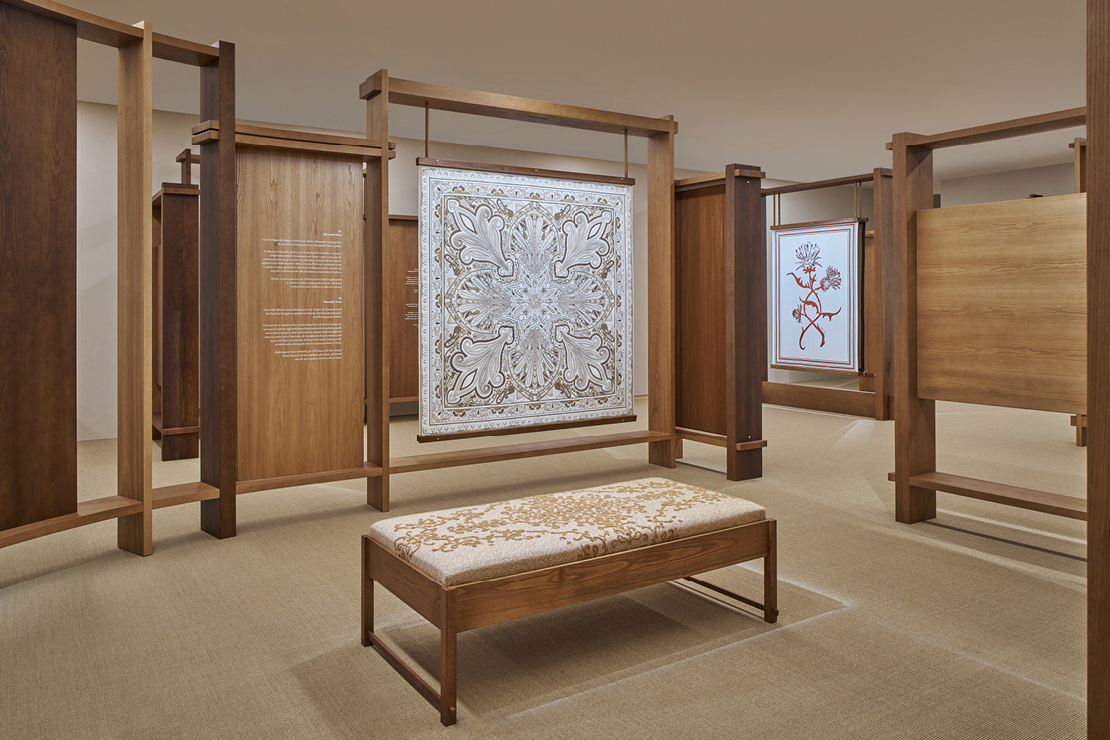
The wider project also explored the codes and symbols that have shaped Loro Piana’s visual identity over the decades. In Codes of the House, functional motifs such as the Belt pattern and the Suitcase Stripe were revisited through weaving and embroidery, demonstrating how utilitarian details evolve into enduring signatures. Elsewhere, Botanic Repertoire revisited the thistle flower that has appeared within the Maison’s coat of arms since 1951, connecting textile finishing techniques to the natural world that inspired them.
Through fibre, texture and technique, Studies, Chapter I: On the Plaid reveals how an everyday object can become a record of heritage, experimentation and human skill.