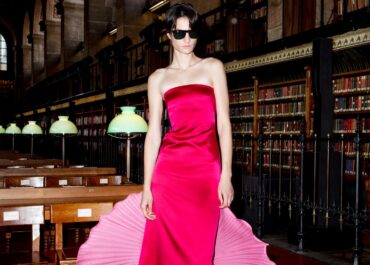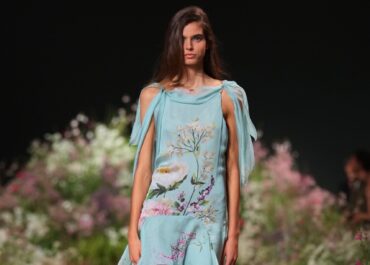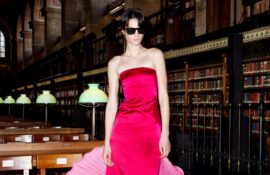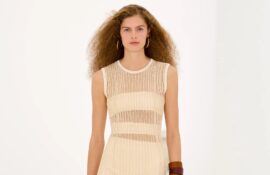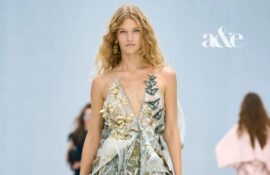

For Louis Vuitton’s Spring-Summer 2027 women’s collection, Nicolas Ghesquière looks to ergonomics as a guiding principle, exploring how clothing can respond to the human body and its movement.
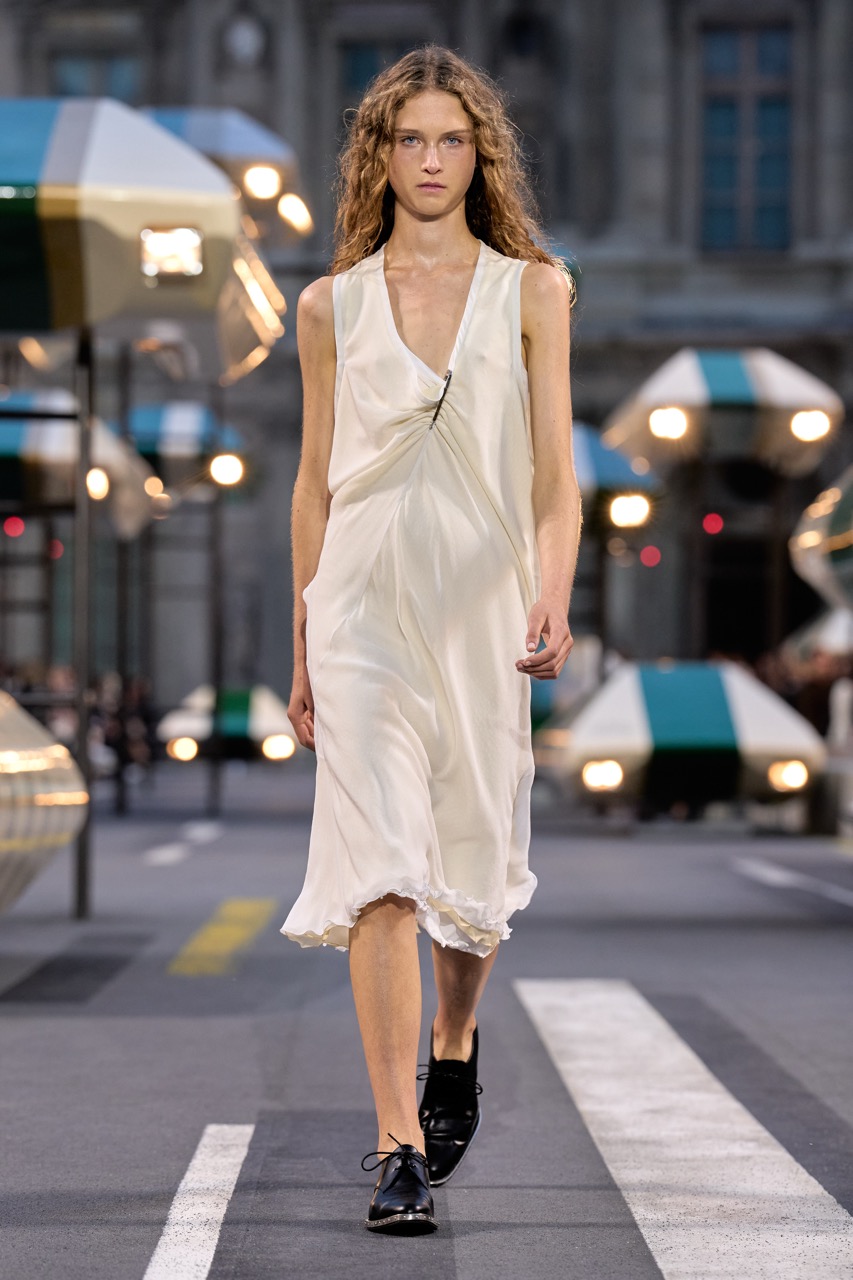
The concept centres on the relationship between object, body and action, with garments designed around the physique rather than imposed upon it.
The approach also draws a connection between contemporary ideas of ergonomic design and the heritage of Louis Vuitton. Both share an emphasis on lightness and functionality, with form shaped by the need to facilitate movement and travel. For Ghesquière, this philosophy translates into clothing that is fluid, adaptable and designed for a body in motion.
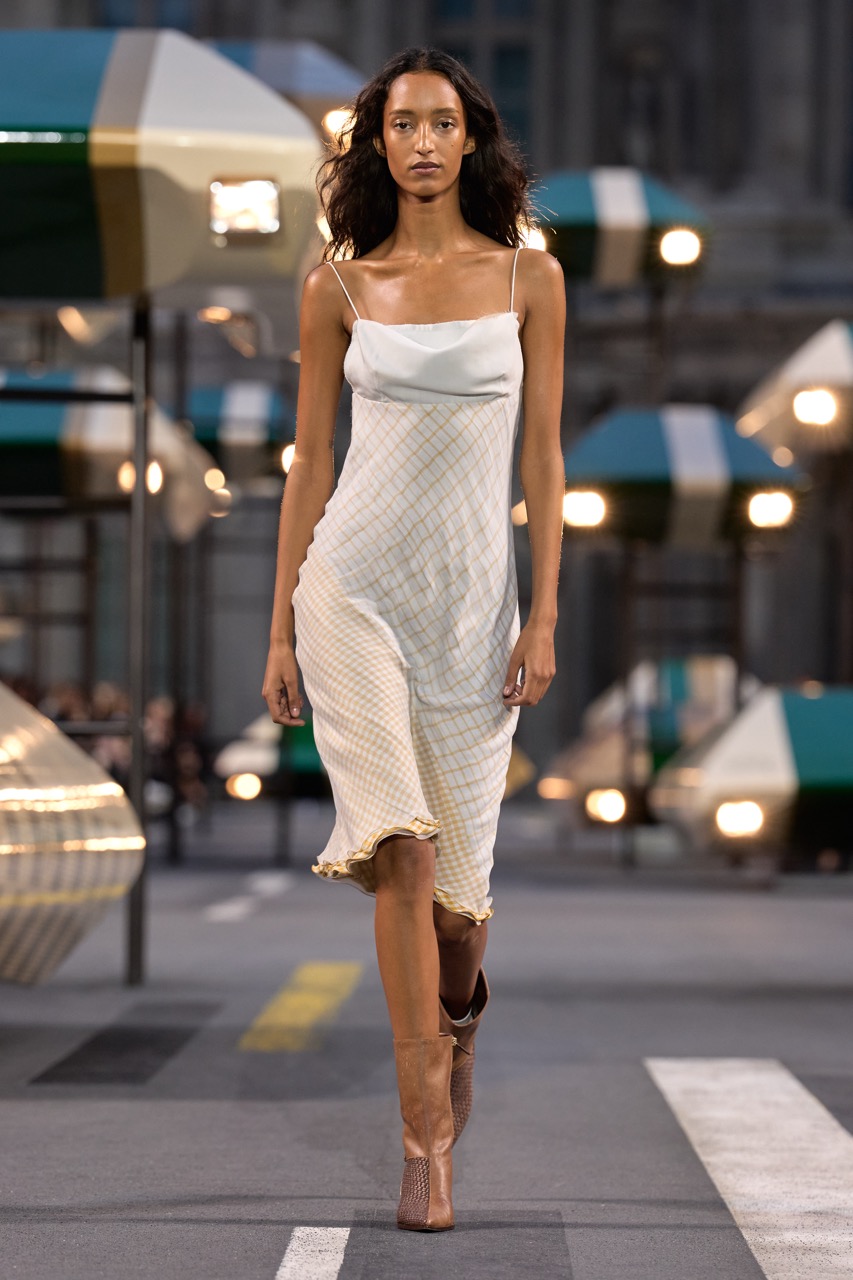
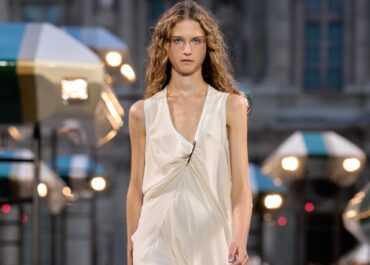
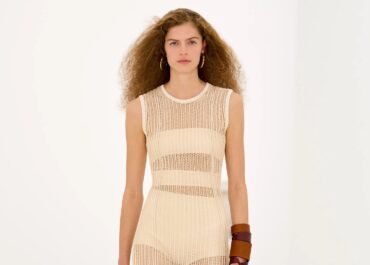
Rather than creating garments around a fixed external silhouette, the collection considers the body beneath them. Pieces are not rigidly moulded, but instead mould to the wearer, functioning almost as a second skin through their sensation and performance. Structure remains present, but traditional rigidity is removed, allowing materials and silhouettes to respond to the changing contours of the body as it moves.
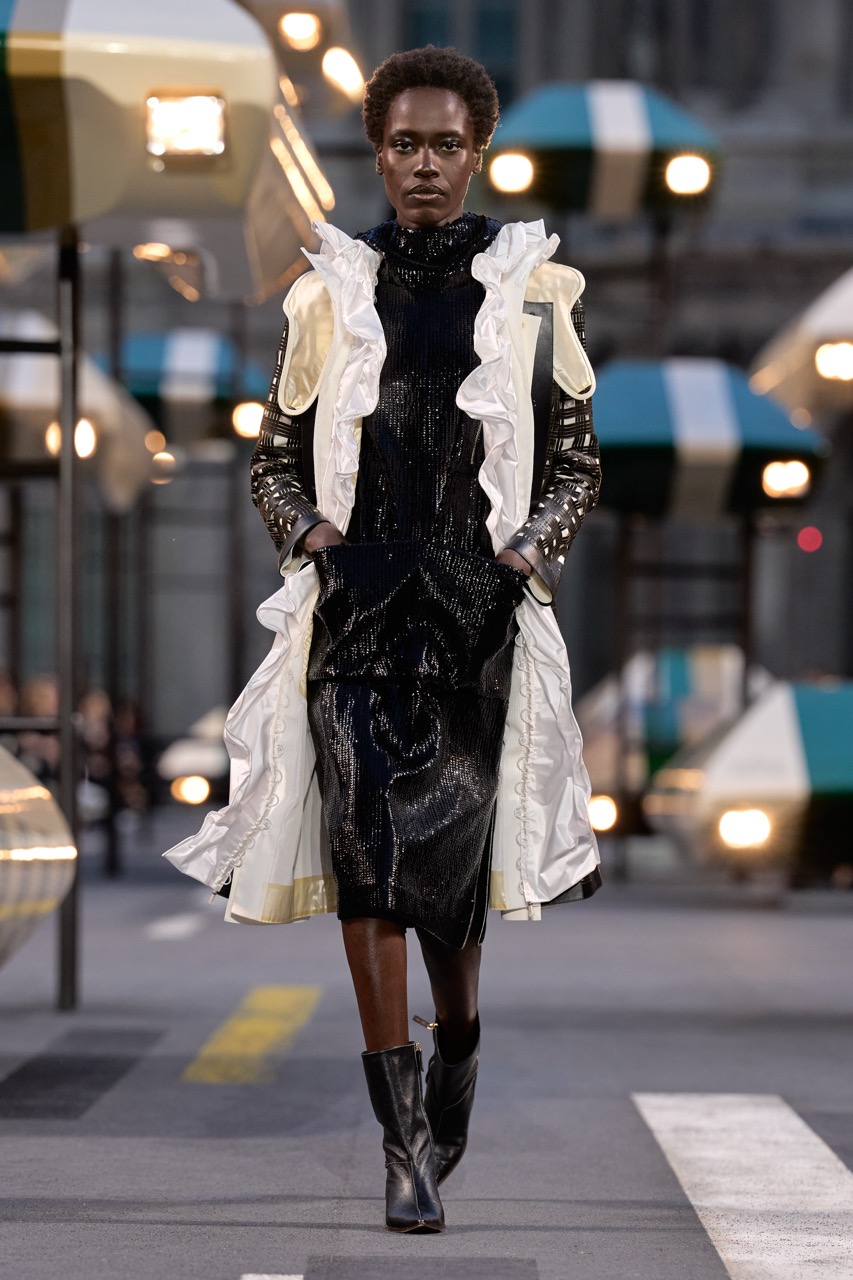
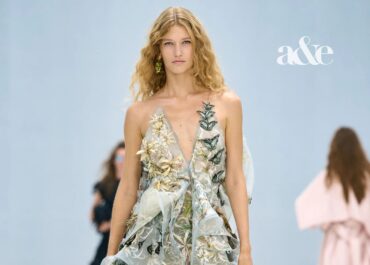
This sense of movement is reflected in the collection’s construction. Garments that appear almost structureless are, in fact, built from complex combinations of surface tensions designed to reflect the physicality beneath them. Fabrics and leathers are placed close to the body, creating pieces that feel light while retaining a sense of engineered construction.
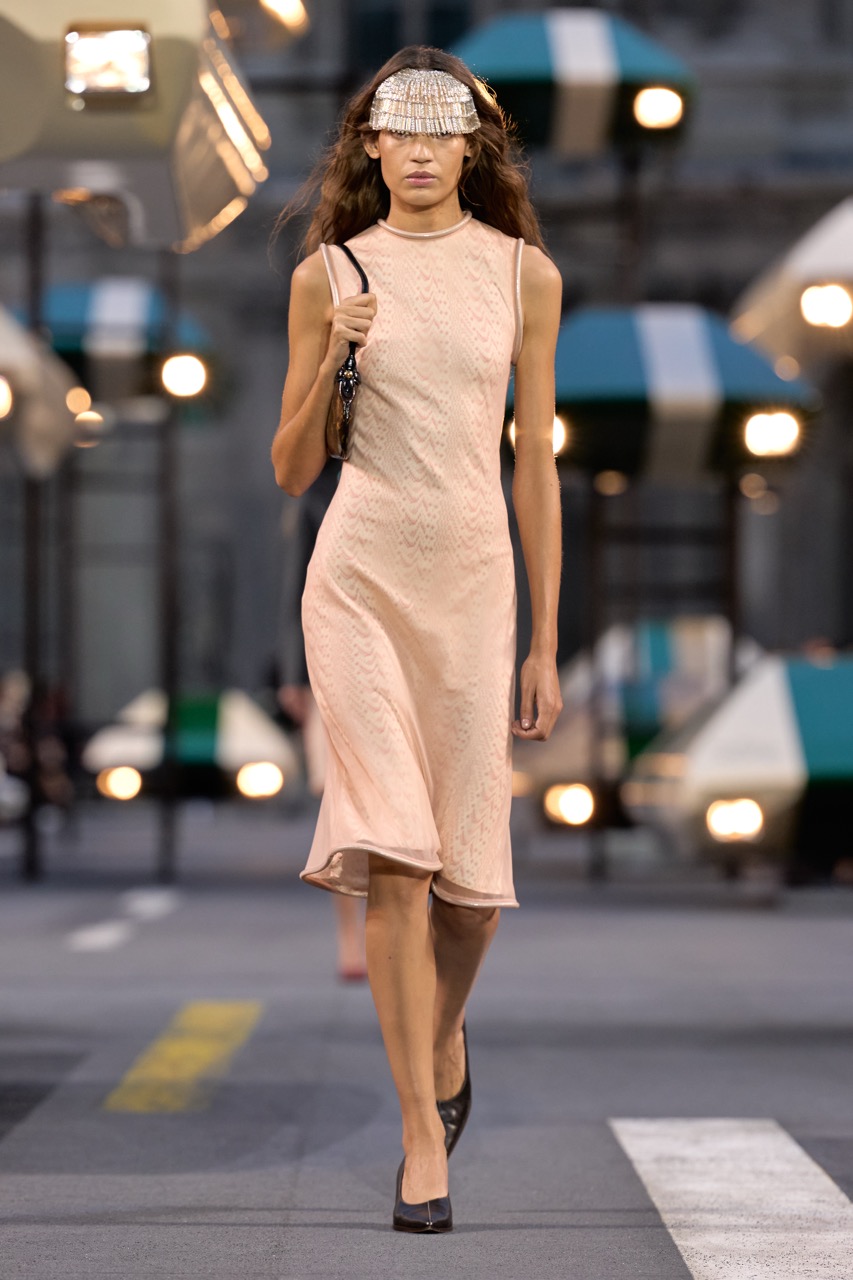
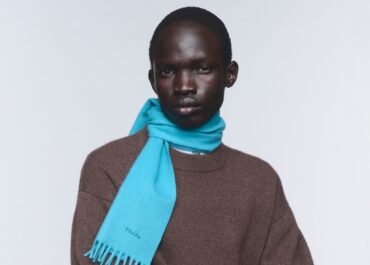
Ultralight materials are central to the collection. Double and triple composite chiffons, carré silks and scarf fabrics in silk and cashmere are used across a range of garments. Traditional tailoring is reworked through a process of reduction, with internal layers removed to streamline its construction. Knitwear helps define the body, while footwear provides a grounding element to otherwise weightless silhouettes.
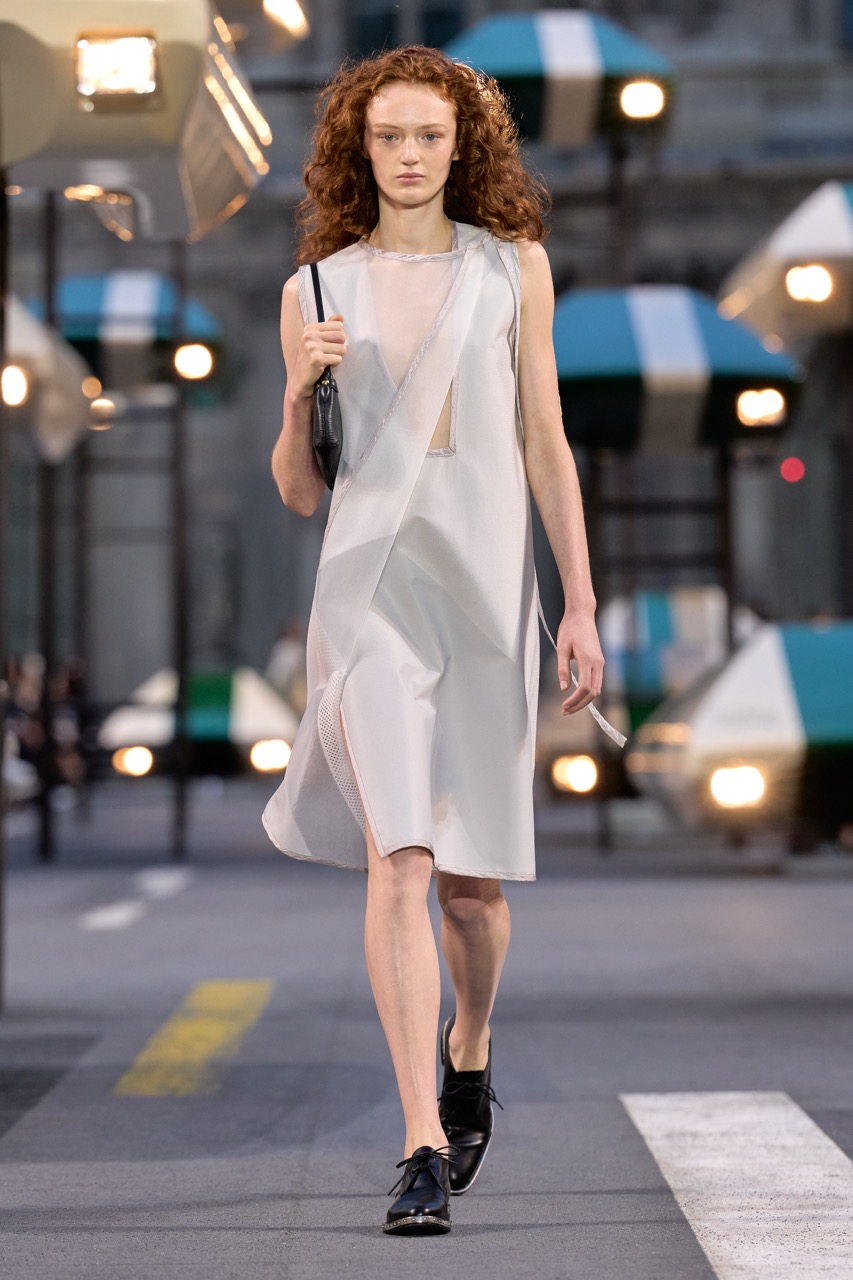
The result is a collection built around what Louis Vuitton describes as a sensation of simplification and physiological ease. Its garments are designed for locomotion rather than stasis, with an innate mutability that allows them to transform as the wearer shifts and moves.
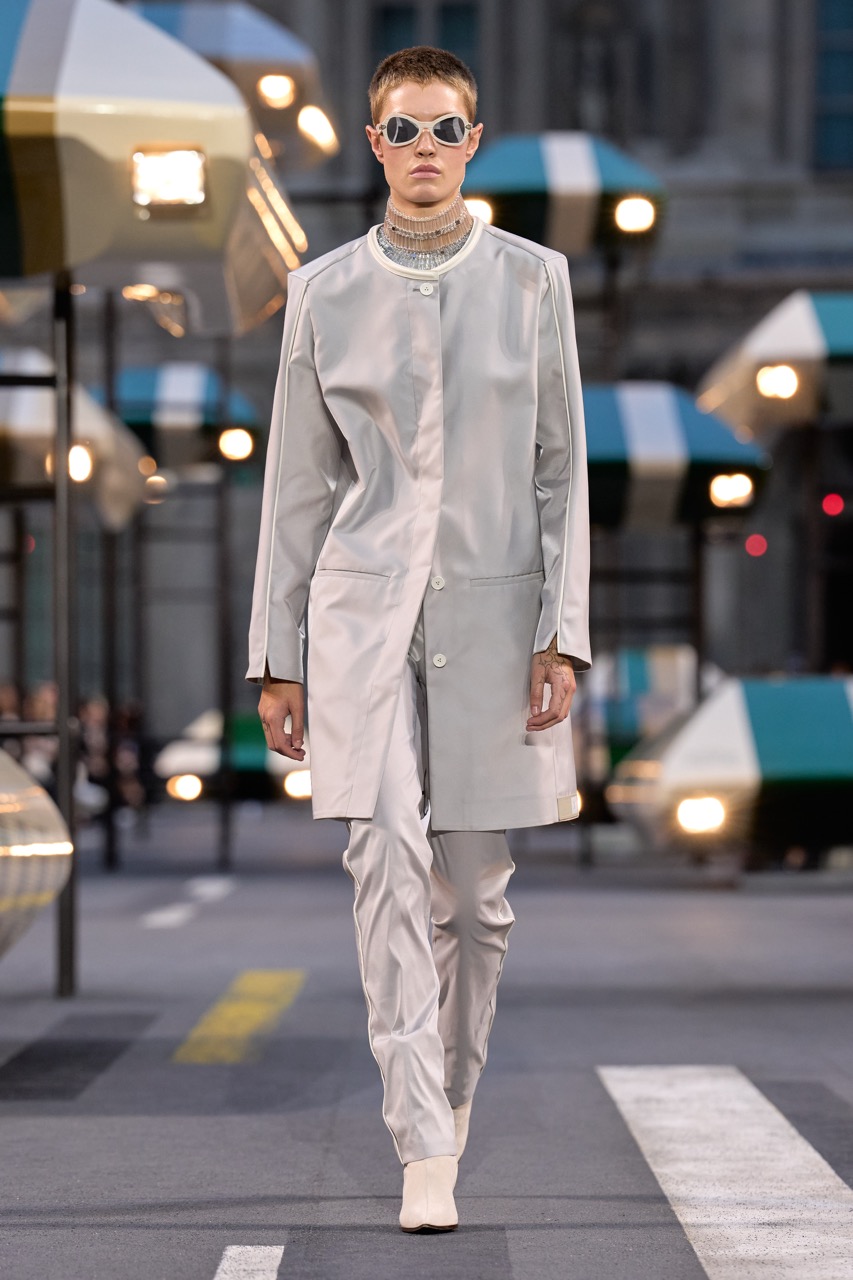
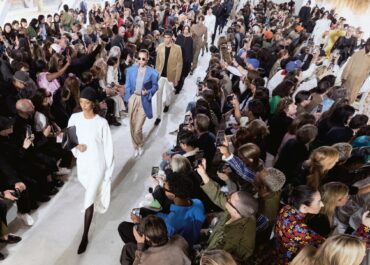
The accompanying scenography reinforces this idea through contrast. A static cityscape provides the backdrop for singular figures moving through it with the lightness of feathers or balloons. Against the stillness of their surroundings, the moving body becomes the focal point, amplifying the collection’s central idea: clothing as an extension of physical movement.