
There are few places quite as enchanting as a beautiful library. Beyond their collections of rare manuscripts and literary treasures, some of the world’s most remarkable libraries are architectural masterpieces in their own right, where soaring ceilings, elaborate frescoes, intricate woodwork and centuries of history create an atmosphere that feels almost otherworldly.
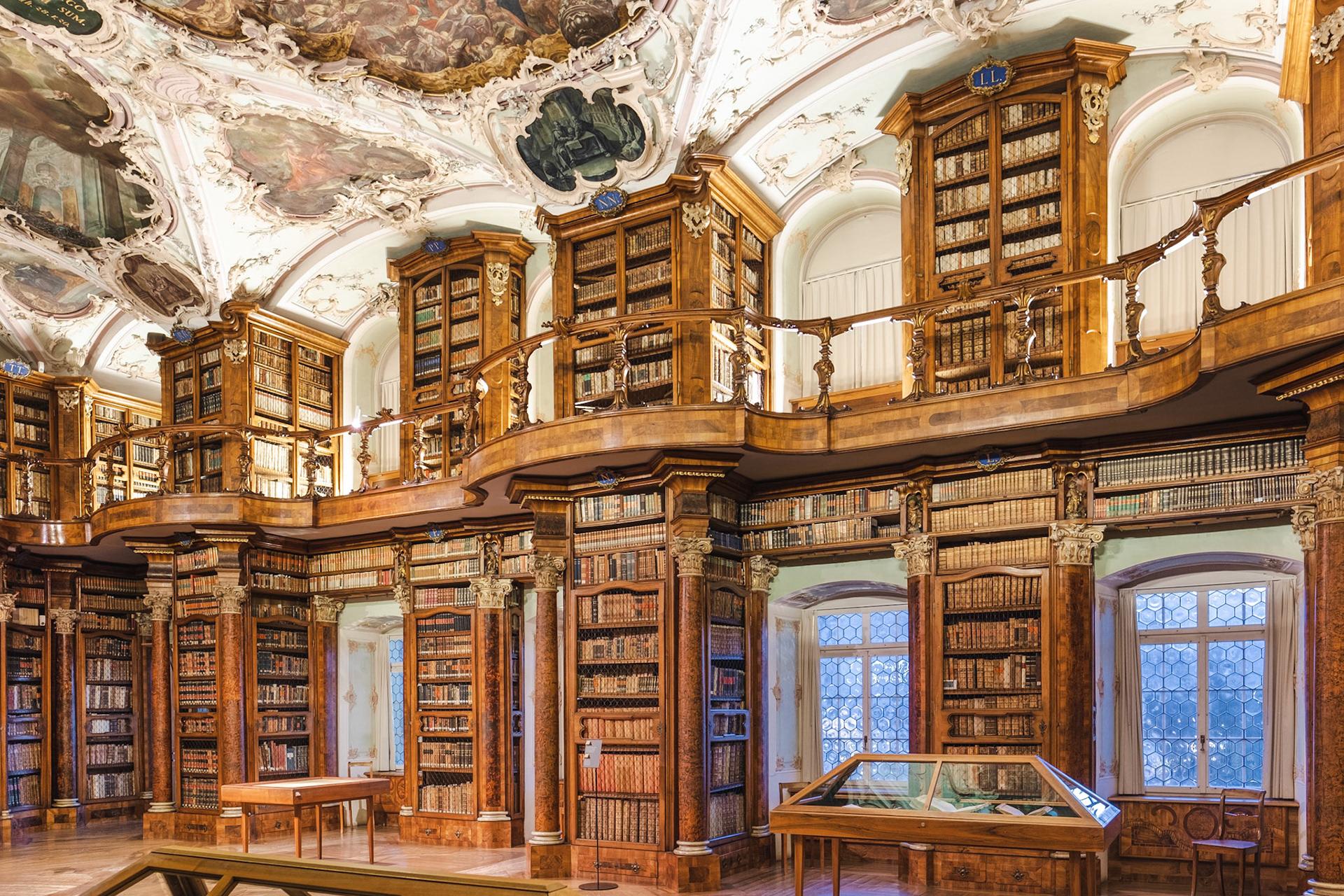
Abbey Library of Saint Gall, Switzerland
From an extravagant Baroque library tucked away in the Austrian Alps to a spectacular neo-Gothic reading room in Brazil, these five destinations demonstrate that the pursuit of knowledge can be a remarkably beautiful affair.
Admont Abbey Library, Austria
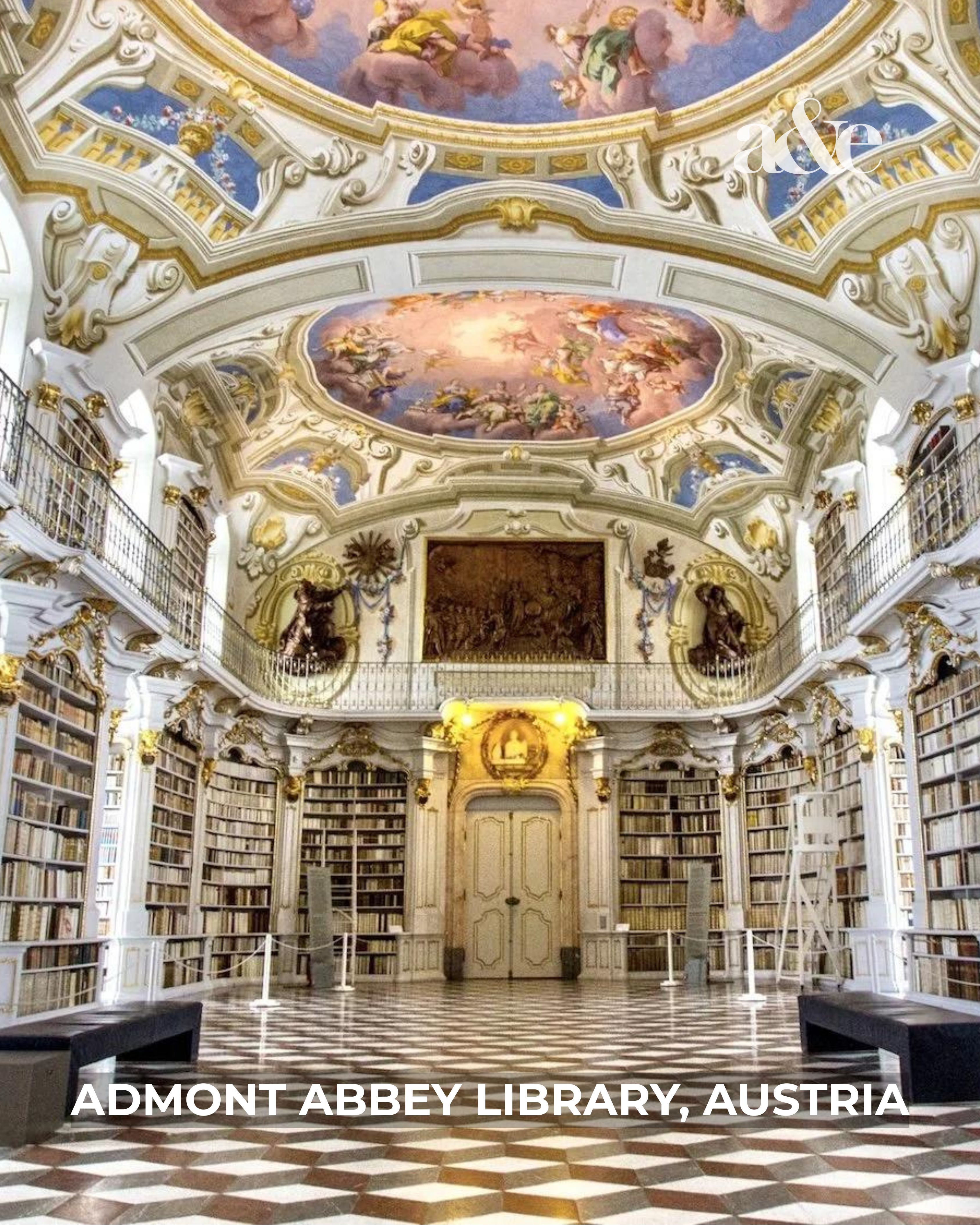
Set against the mountainous landscape of Styria, the Admont Abbey Library is one of Europe’s most extraordinary architectural interiors. Completed in 1776, the library is the largest monastic library hall in the world, extending approximately 70 metres and containing an extraordinary collection of historic books and manuscripts.
Designed in the late Baroque style, its white marble interiors are punctuated by gilded detailing, ornate bookcases and seven ceiling domes decorated with frescoes by Austrian artist Bartolomeo Altomonte. The paintings explore the relationship between religion, reason and knowledge, while sculptural details by Josef Stammel add another layer of artistic grandeur.
With its luminous palette and theatrical proportions, the library is as much a work of art as it is a repository of knowledge.
The Long Room, Trinity College Dublin, Ireland
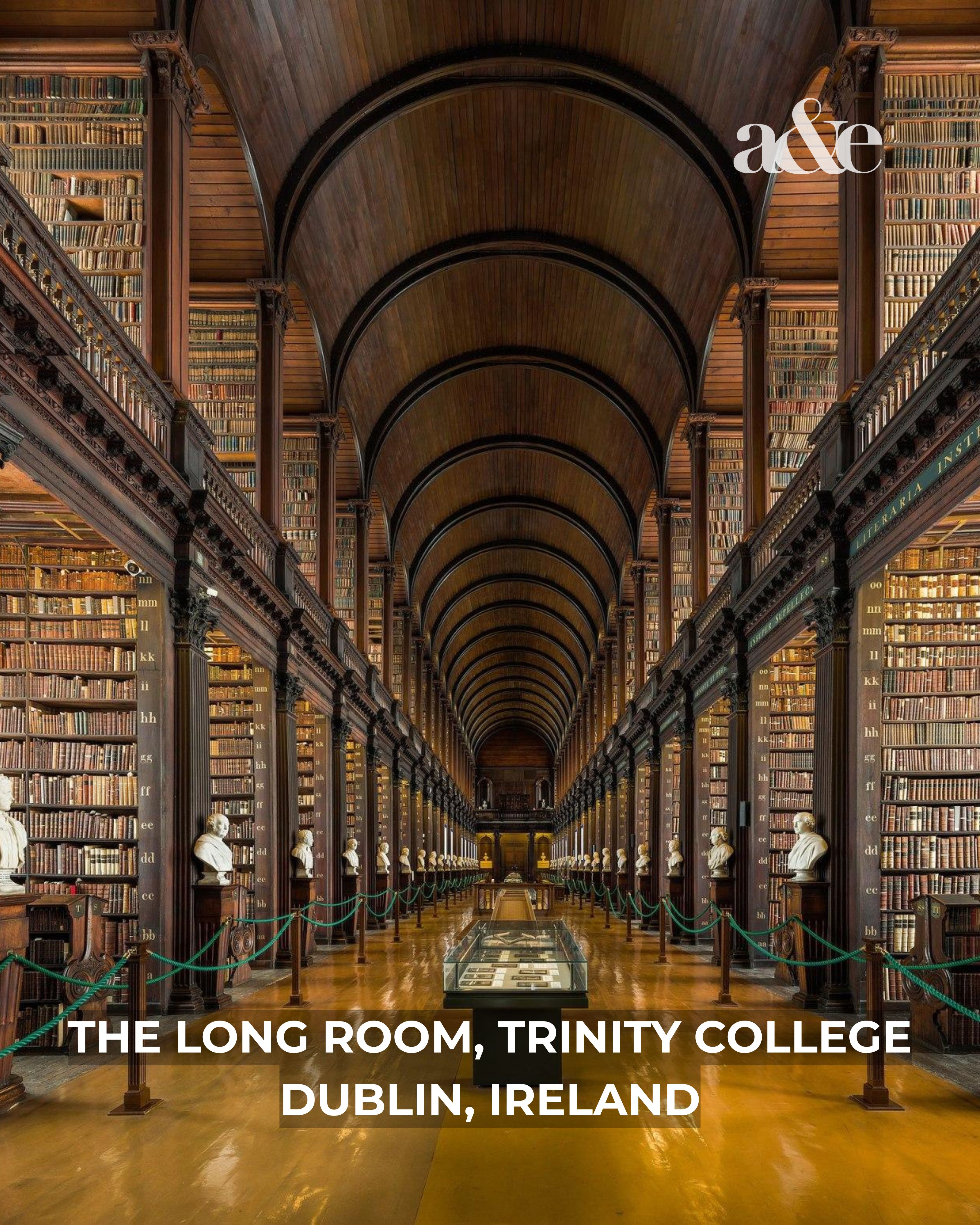
One of the most recognisable library interiors in the world, the Long Room at Trinity College Dublin is a remarkable example of eighteenth-century architecture. Stretching approximately 65 metres, the historic gallery is lined with towering dark-oak bookcases, marble busts and an impressive barrel-vaulted ceiling.
Part of the university’s Old Library, the Long Room has long been associated with Ireland’s literary and intellectual heritage. Trinity College is also home to the celebrated Book of Kells, the illuminated ninth-century manuscript containing the four Gospels.
The library’s atmospheric combination of timber, natural light and centuries-old volumes has made it a destination for book lovers and architecture enthusiasts alike. Visitors should, however, check access arrangements ahead of travelling, as the Long Room is undergoing a major conservation programme.
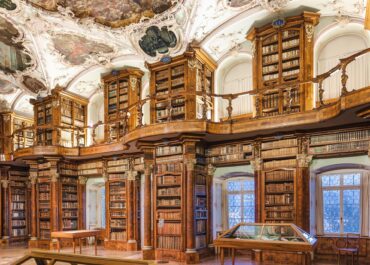
Abbey Library of Saint Gall, Switzerland
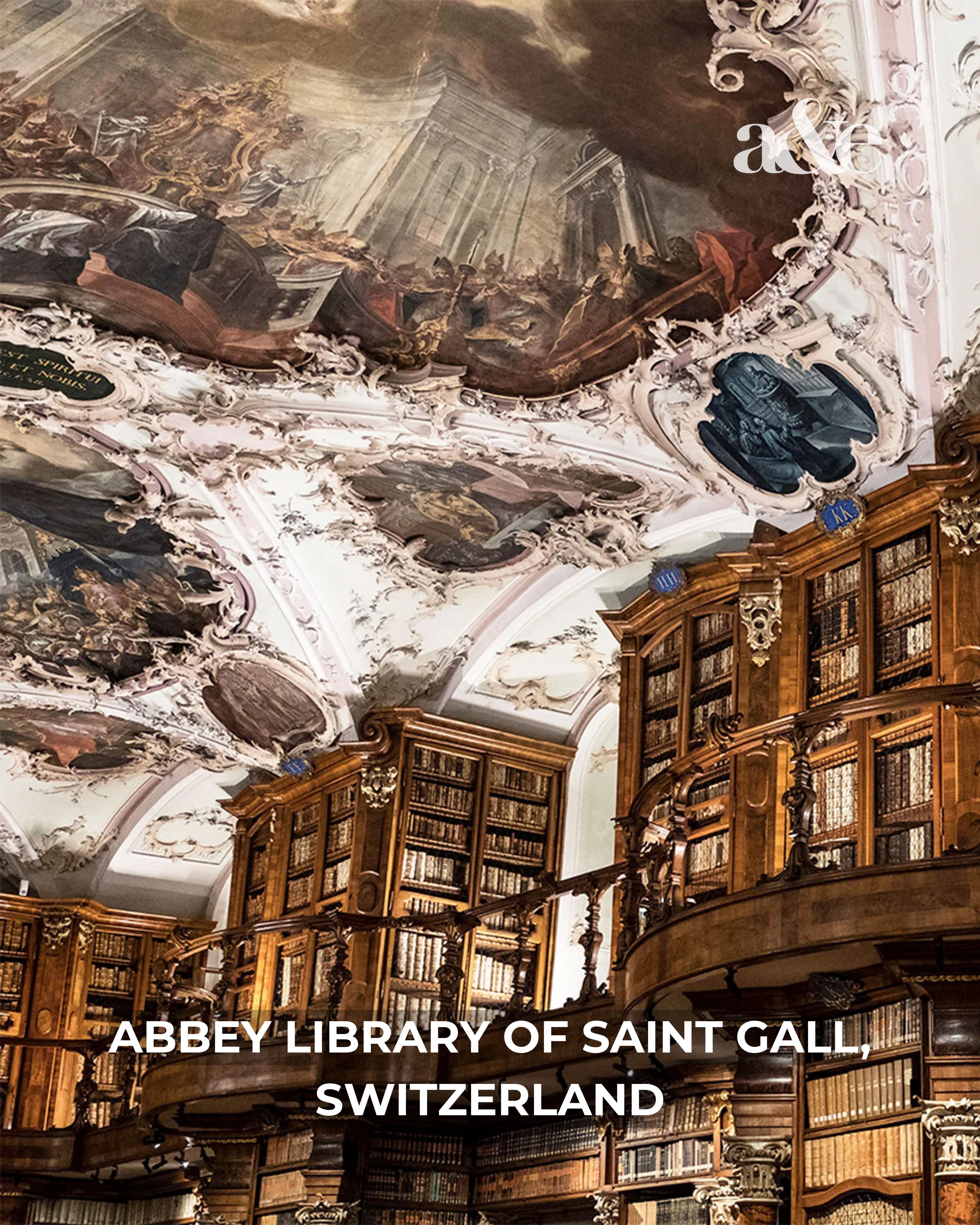
Located in eastern Switzerland, the Abbey Library of Saint Gall is among the oldest and most significant monastic libraries in the world. Its origins date back to the eighth century, and its remarkable collection includes medieval manuscripts that offer an extraordinary insight into European intellectual and religious history.
The library’s interior is a masterpiece of Rococo design, with beautifully curved wooden bookcases, intricate stucco decoration and elaborate ceiling frescoes. The harmonious combination of pastel tones, polished timber and painted architectural details gives the room an almost dreamlike quality.
Its historical significance extends beyond its appearance: the Abbey of Saint Gall was designated a UNESCO World Heritage Site in 1983, recognising its exceptional cultural and architectural importance. For visitors, the library offers a rare opportunity to experience centuries of European scholarship within an extraordinarily preserved historic setting.
Royal Portuguese Reading Room, Rio de Janeiro, Brazil
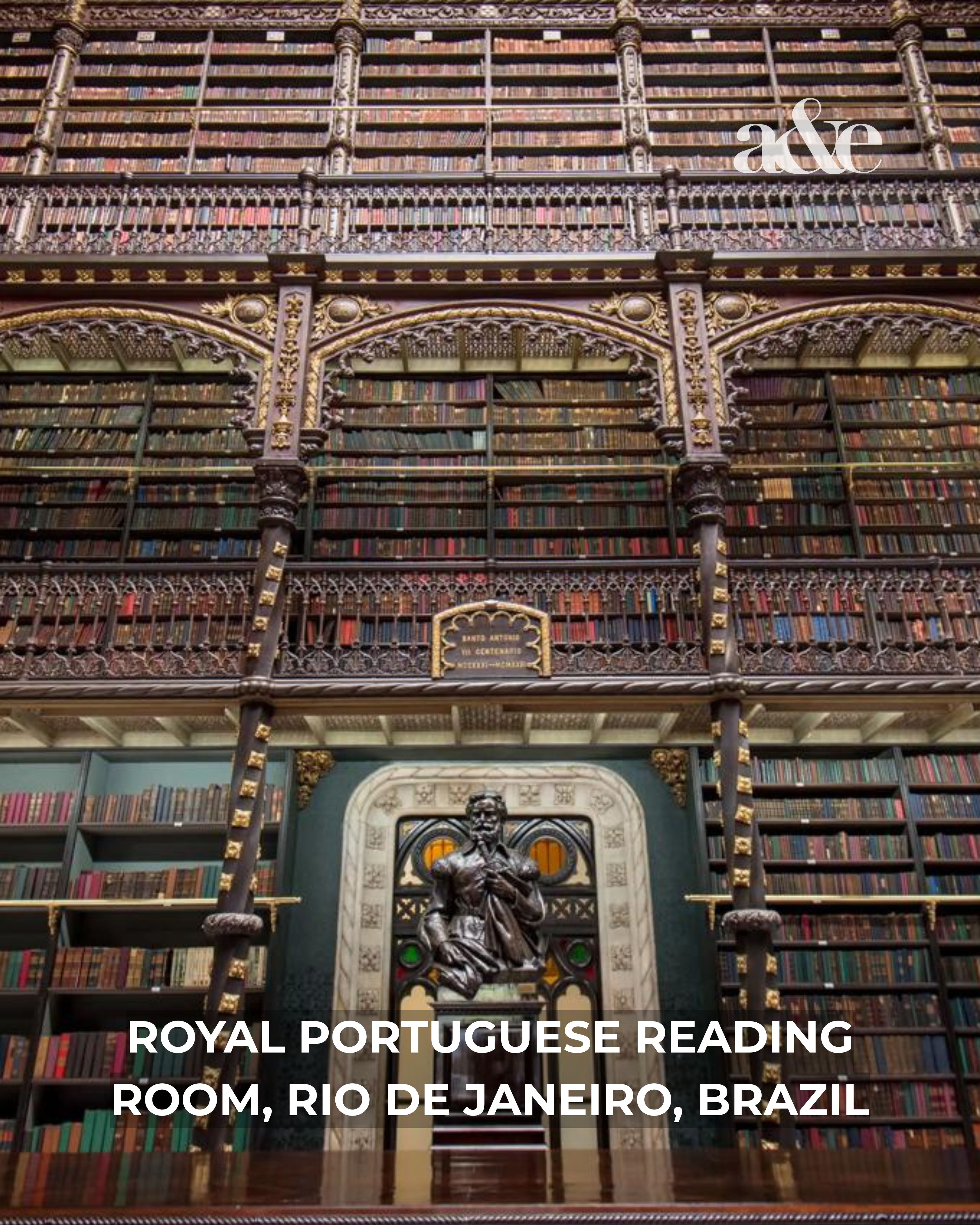
The Royal Portuguese Reading Room is one of Rio de Janeiro’s most spectacular architectural landmarks. Founded in 1837 by Portuguese immigrants seeking to preserve and promote their literary heritage, the institution opened its striking neo-Manueline building to the public in 1887.
Inside, three storeys of intricately carved wooden bookshelves rise towards a magnificent stained-glass skylight, while an elaborate central chandelier illuminates the vast reading room. Its Gothic-inspired arches, decorative columns and richly detailed façade create an atmosphere more reminiscent of a cathedral than a conventional library.
The collection contains hundreds of thousands of Portuguese-language volumes, making it an important centre for the preservation of Portuguese literature and culture outside Portugal. Its extraordinary interior is also a reminder of the enduring cultural connections between the two countries.
George Peabody Library, Baltimore, USA
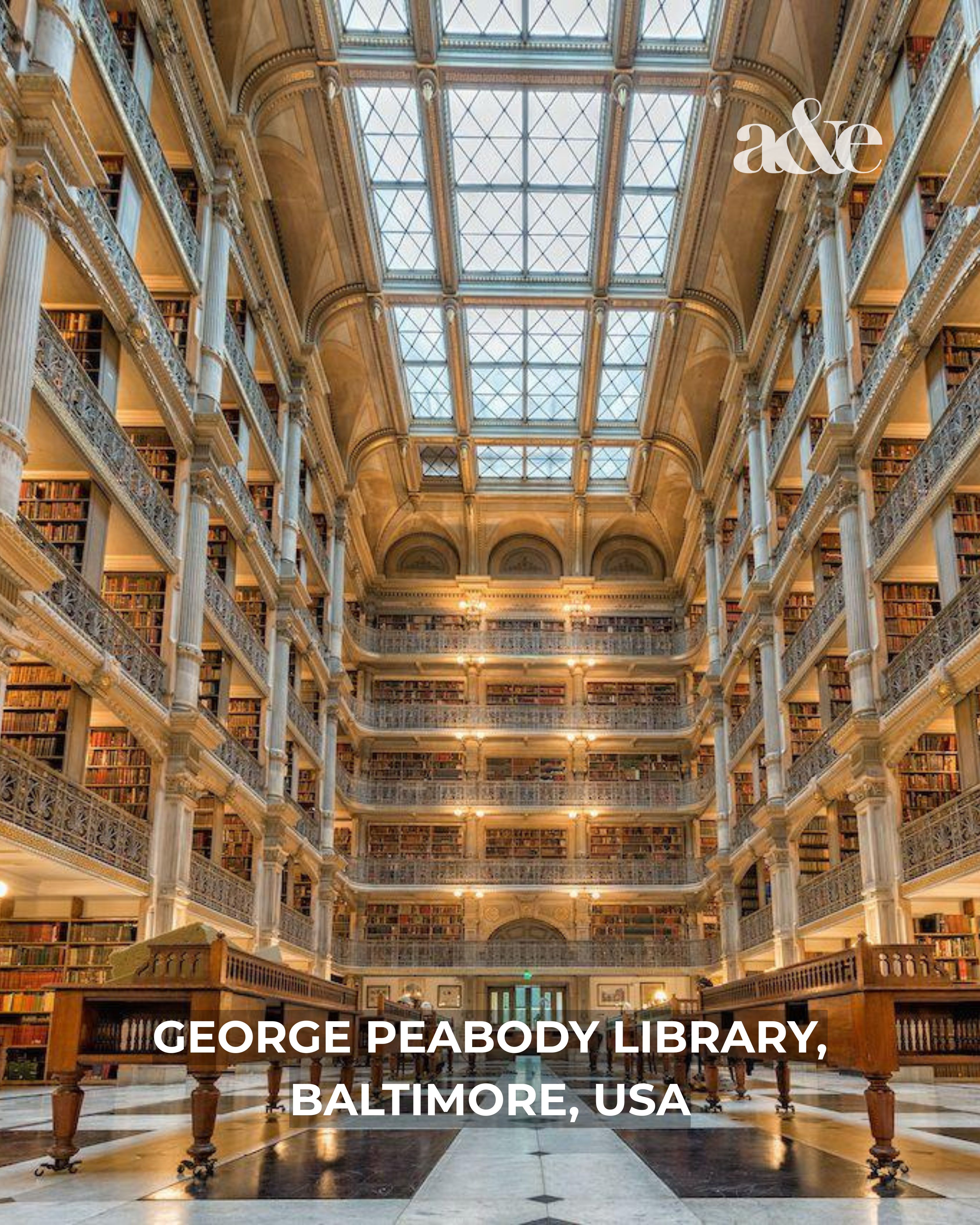
Often described as a cathedral of books, the George Peabody Library at Johns Hopkins University in Baltimore is an extraordinary example of nineteenth-century library architecture. Opened in 1878, it was designed by architect Edmund G. Lind and funded by philanthropist George Peabody as part of his commitment to supporting education and public knowledge.
The library’s defining feature is its soaring central atrium, which rises approximately 61 feet beneath a vast skylight. Five tiers of ornate cast-iron balconies, finished in black and gold, frame the space, while marble floors and decorative detailing add to its grandeur.
Its collection encompasses hundreds of thousands of volumes, with particular strengths in nineteenth-century literature, history and the arts. The dramatic vertical perspective, with seemingly endless rows of books rising towards the glass ceiling, makes this one of the most visually impressive reading spaces in North America.
Whether admired for their architectural ingenuity, historical collections or sheer visual splendour, these five libraries offer something beyond the written word: a reminder that the spaces in which we preserve and explore knowledge can be just as extraordinary as the stories they contain.