

Cruise 2027, Fashion’s Global Stage Reimagined
From the USA to Biarritz and Shanghai, here’s the full lineup of where fashion’s biggest Maisons are unveiling their Cruise collections and when.
Cruise season has always been fashion’s most globe-trotting chapter, a moment when collections are designed not just for wardrobes, but for worlds. Originally conceived for elite clients chasing sunshine across continents, Cruise has evolved into something far more strategic, a fusion of storytelling, spectacle, and market positioning.
For Cruise 2027, that evolution is unmistakable. While the tradition of far-flung destinations remains, this season reveals a striking recalibration of priorities, with a powerful gravitational pull toward the United States. Instead of the usual jet-setting to Italy, Seoul, or Rio, fashion’s top houses are planting their flags in New York and Los Angeles, doubling down on the buying power and cultural influence of the American market. From the cultural intensity of New York to the cinematic sprawl of Los Angeles, this isn’t just about aesthetics, it’s about economics, influence, and timing.
With signs of renewed confidence among American luxury consumers and the rising influence of Gen Z, brands are leaning into markets that promise both visibility and growth. At the same time, key global cities like Shanghai and heritage-rich destinations such as Biarritz ensure that the international dialogue remains intact.
What emerges is a map that feels both expansive and intentional. Cruise 2027 is less about escapism and more about connection, to history, to architecture, to shifting centres of power. Whether rooted in legacy or driven by reinvention, each show reflects a broader narrative about where fashion is heading next.
Dior
Los Angeles, 13th May
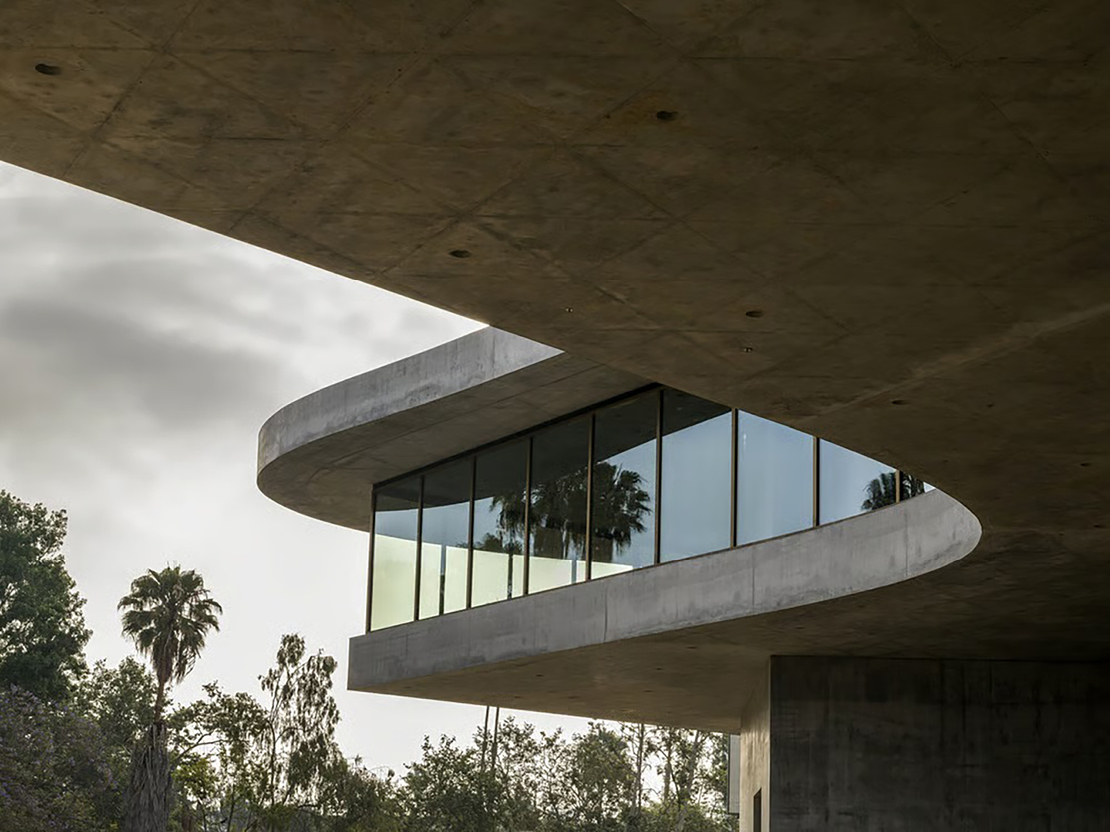
Dior heads to Los Angeles for one of the most anticipated debuts of the season, as Jonathan Anderson unveils his first Cruise collection for the house. The show will take place on the grounds of LACMA, the Los Angeles County Museum of Art, set against the recently completed building by Pritzker Prize-winning architect Peter Zumthor, one of the city’s most significant new architectural landmarks. The choice of Los Angeles feels deliberate, a city synonymous with storytelling, image-making, and global cultural influence. Anderson’s growing ties to Hollywood add another layer of intrigue. Having already collaborated with high-profile actors, his Dior is shaping up to be one deeply embedded in contemporary culture. The timing also aligns with the brand’s expanding US footprint, including its new Rodeo Drive flagship. Altogether, the show signals a bold new era for Dior, one that merges cinematic scale with modern design language, firmly rooted in the energy of the West Coast.
Gucci
New York, 16th May
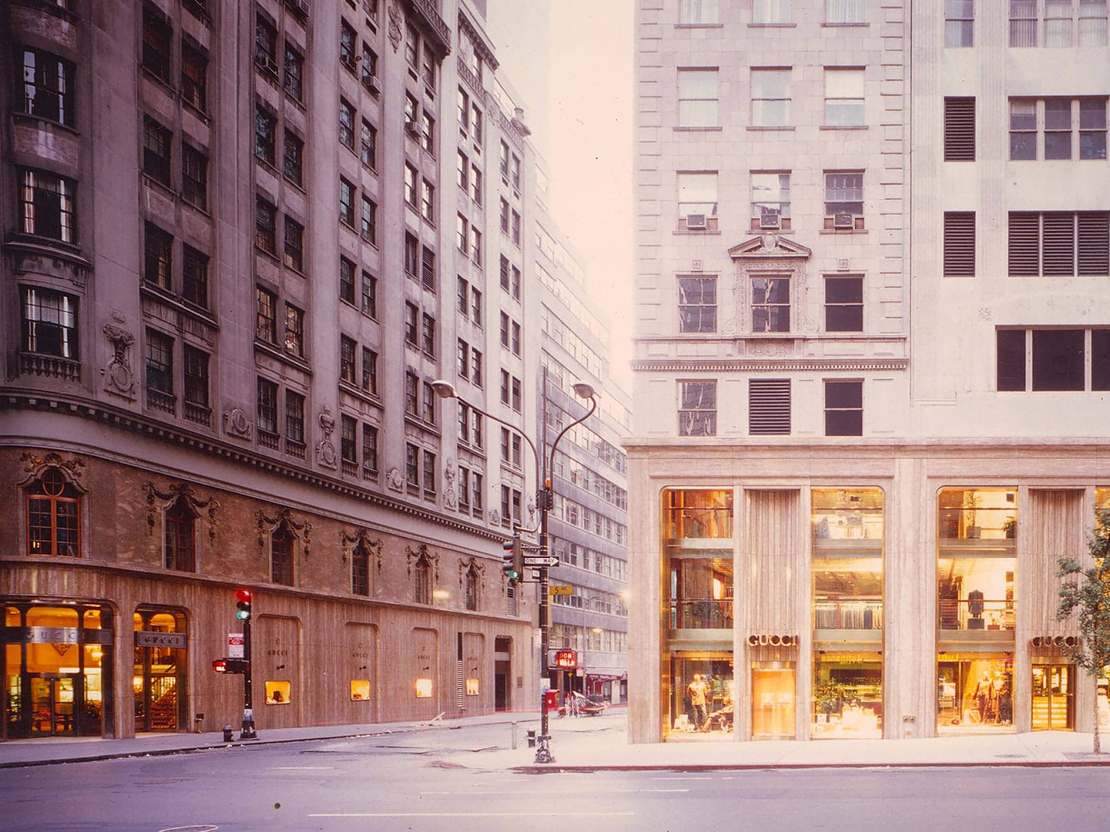
For Gucci, Cruise 2027 marks a pivotal reset. Demna’s first Cruise collection for the house will be unveiled in New York, a city that shaped the house’s global identity and is deeply woven into Gucci’s history. It was here, in 1953, that the brand opened its first store outside Italy, launching its global expansion. Returning now feels both symbolic and strategic. Demna’s appointment signals a shift toward a sharper, more subversive creative direction, and New York provides the perfect backdrop. Known for its raw energy and cultural hybridity, the city mirrors Demna’s own design language, one that thrives on contrast and commentary. While the exact venue remains undisclosed, expectations are high for a show that blends spectacle with provocation. This presentation is more than a debut, it’s a reintroduction of Gucci through a new lens, aligned with a city that never stands still.
Louis Vuitton
New York, 20th May
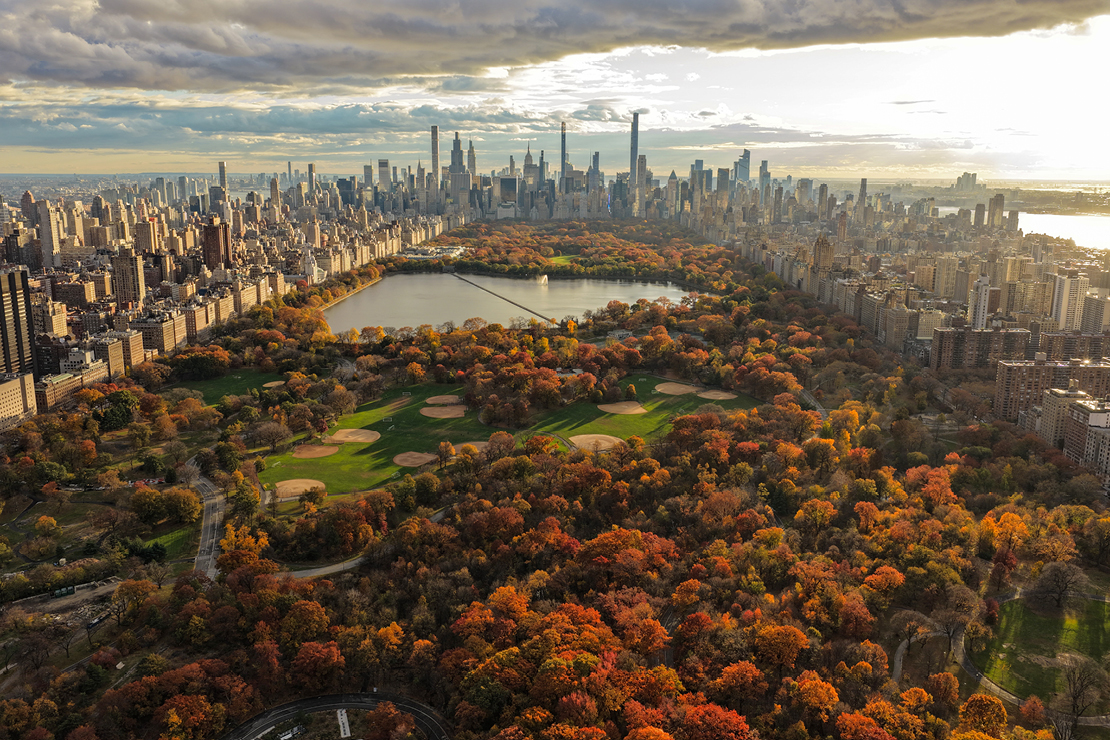
Louis Vuitton is also staking its claim on New York City for Cruise 2027 as it continues its deep engagement with the American market. Under the creative direction of Nicolas Ghesquière, and influenced by Pharrell Williams’ cultural perspective, the show is expected to fuse high fashion with the city’s street-level dynamism. Set to unfold at an iconic New York landmark, this show is expected to be one of the biggest productions of the season, and a clear demonstration of how vital the American market has become to Louis Vuitton as it regains momentum. Past shows at the TWA Flight Centre and the Salk Institute highlight his fascination with spaces that bridge eras, a theme likely to continue here. This season represents a shift from historical European settings to a more contemporary urban narrative. By anchoring the collection in New York, Louis Vuitton underscores the city’s enduring role as both a cultural engine and a commercial powerhouse.
Chanel
Biarritz, 28th April
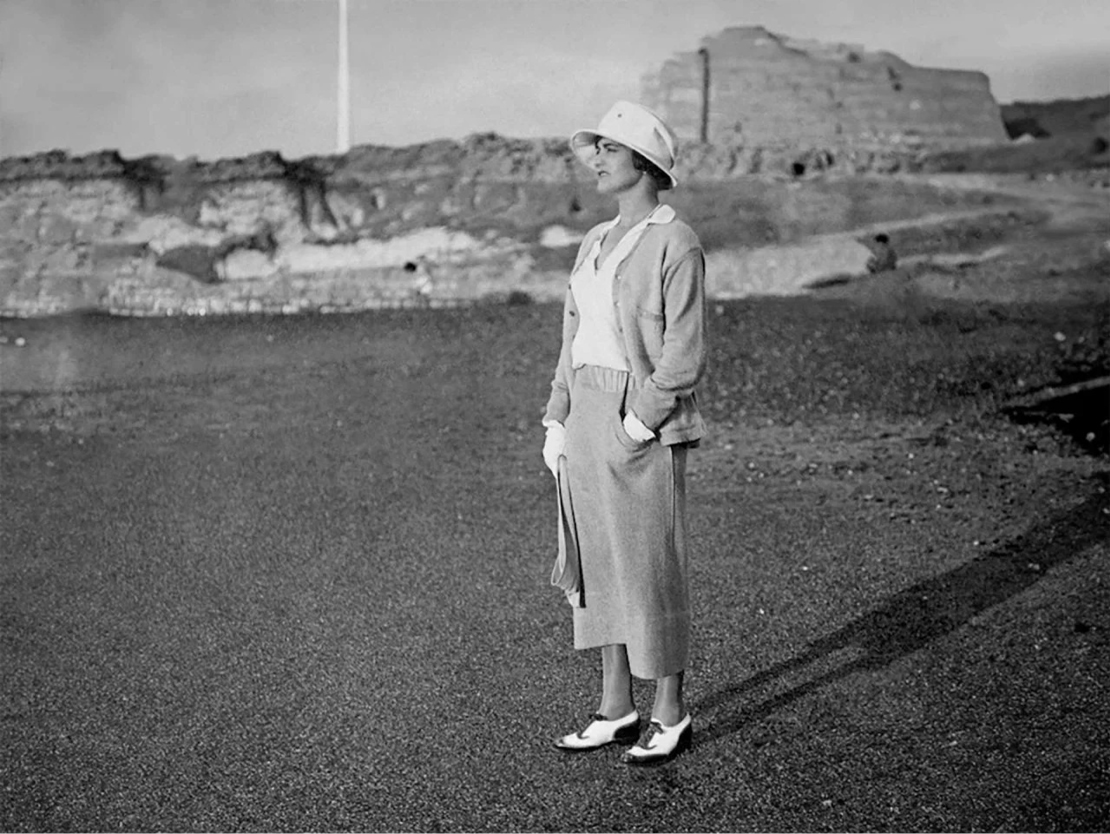
Returning to its roots, Chanel will present its Cruise collection in Biarritz, the seaside town where Gabrielle Chanel opened her first couture house in 1915. The location is rich with meaning, offering a direct link to the brand’s origins and the relaxed elegance that defined its early identity. Under the direction of Matthieu Blazy, this show represents a dialogue between past and present. Following a bold Métiers d’art presentation in New York, the shift back to Biarritz suggests a recalibration, one that honours heritage while redefining it. The coastal setting, with its windswept beaches and understated glamour, is expected to influence both mood and design. More than a nostalgic return, this is a strategic reaffirmation of Chanel’s foundations, interpreted through a contemporary lens.
Max Mara
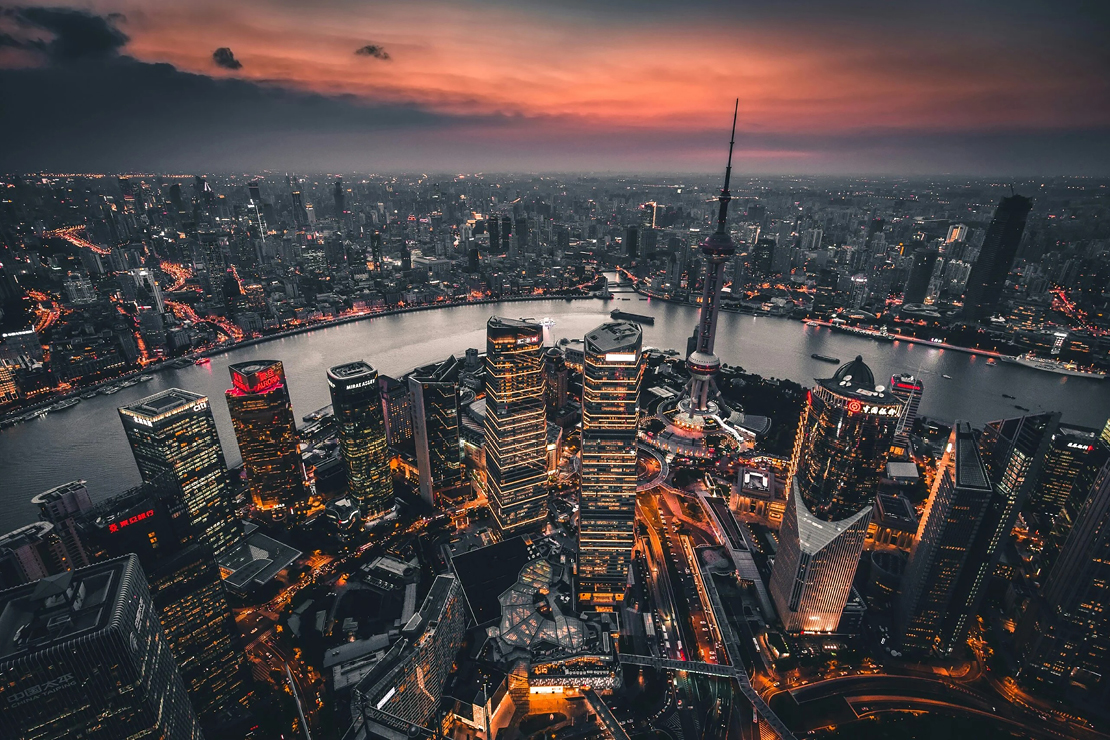
Shanghai, 16th June
Maxmara closes out the Cruise 2027 calendar with a show in Shanghai, reinforcing the brand’s ongoing dialogue with Asia. Known for its balance of practicality and elegance, Maxmara finds a fitting counterpart in a city that seamlessly blends tradition with futurism. This marks the label’s second major presentation in Shanghai, following its Pre-Fall 2017 show, and signals a continued investment in the region’s influential consumer base. While details remain scarce, the setting alone suggests a visually compelling production. Shanghai’s skyline, a juxtaposition of historic architecture and cutting-edge design, mirrors the brand’s own duality. In choosing this location, Maxmara not only acknowledges the strength of the Asian market but also positions itself within a global narrative that is increasingly shaped by the East.
Eliza Scarborough
Spring Awakening, A New Era of Defining Trends on the Runways
And just like that, the Spring Summer 2026 collections have landed, and what a season it has been. Marked by an unprecedented wave of creative director changes, often dubbed the ‘big reshuffle’, this fashion month has delivered one of the most dynamic and closely watched chapters in recent industry history. With over a dozen major houses unveiling new leadership, the stakes were high, and the results did not disappoint. From Jonathan Anderson’s debut at Dior, Louise Trotter at Bottega Veneta and, of course, Matthieu Blazy at Chanel, there were bold reinventions and thoughtful evolutions, with designers approaching their debuts with a clear intent, to make an impact.
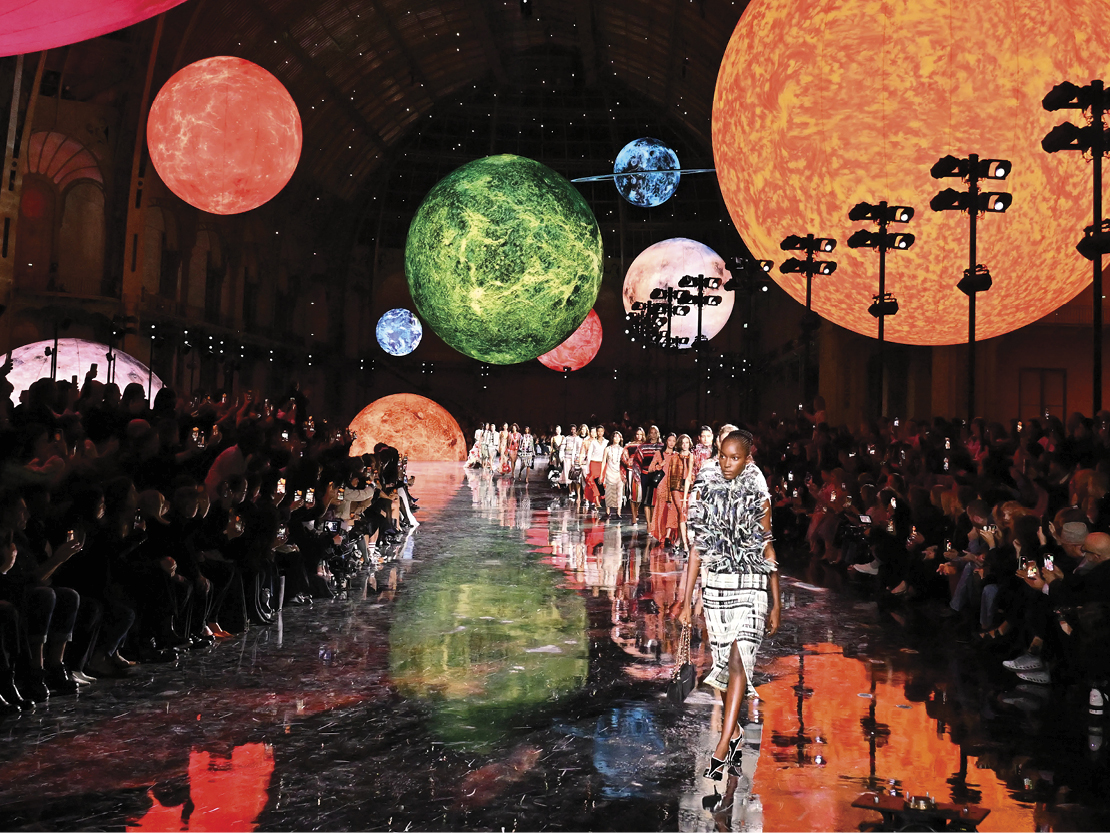
But outside of the debut collections, the season was all about joy and drama. It brought vibrancy and confidence in full force, revealing something deeper, a collective shift in mood. Where recent seasons leaned into restraint and minimalism, this one embraced expression, emotion, and individuality. There was a palpable sense of release on the runways, with colour, texture, and silhouette all dialled up to reflect a renewed appetite for fashion as a form of personal storytelling. It was not simply about what we wear, but how clothing makes us feel. From Saint Laurent’s spectacle under the Eiffel Tower, which delivered conspicuous colours and ‘80s nostalgia, to Chloé’s striking vintage-inspired prints, Givenchy’s textures and Miu Miu’s pointed pinafores, there was a new sense of freedom.
At the same time, practicality remained firmly in focus. Designers balanced fantasy with function, offering pieces that feel wearable yet elevated. This duality, between realism and escapism, defines the season. Whether through reimagined classics, tactile experimentation, or bold styling choices, Spring 2026 signals a new era, one that values confidence, creativity, and connection in equal measure.
Fashion with Feeling
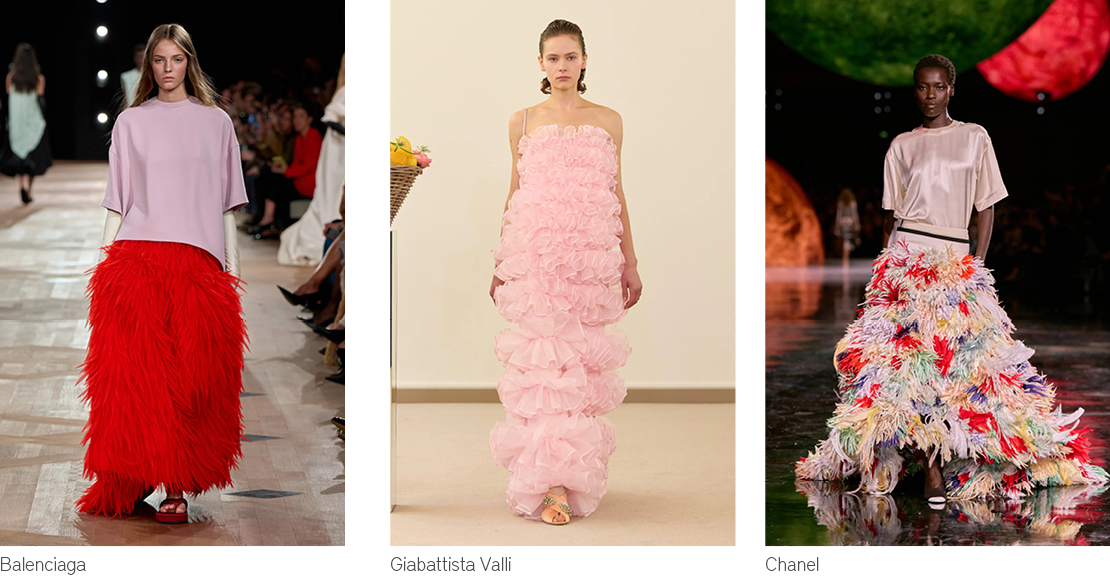
Emotion and tactility defined this trend filled with joy, with designers focusing on texture, colour, and movement. Layered fabrics and rich materials created pieces that engage the senses while expressing mood and individuality. It reflects a deeper shift toward clothing that resonates emotionally, blending visual impact with a sense of joy and personal connection.
Utility Dressing
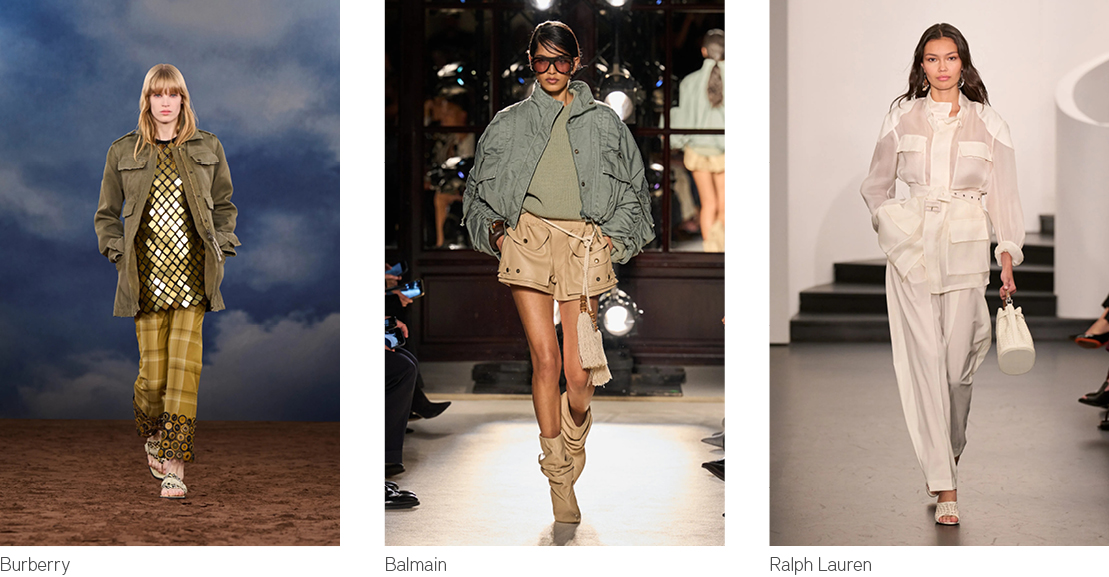
Functional clothing has never been so central in the fashion conversation until this season saw designers lean into utility dressing in a new, and altogether more elevated way. Cargo jackets, pocketed shorts, and military outerwear appeared in softer fabrics for a versatile, wearable aesthetic that blends practicality with polish.
Colour Blocking
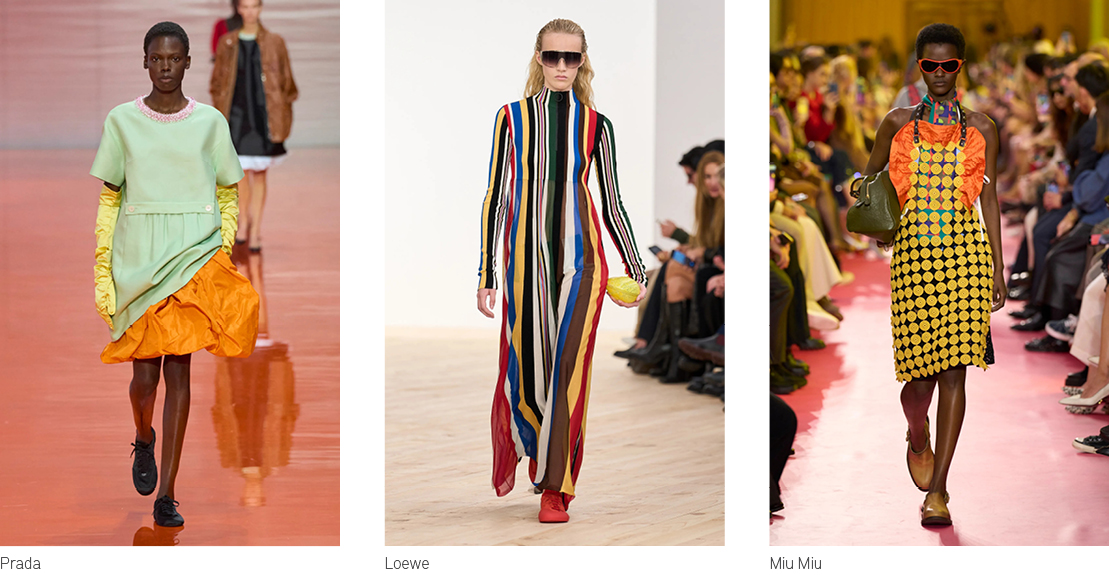
Prada led the charge with its collection of unlikely colour combinations, from green and grey to lilac and red. Miu Miu followed suit with coveralls and aprons in both earthy greens and retina-searing yellow florals, while at Loewe there was a spectrum of Crayola brights parading down the runway.
Jackets and Jeans
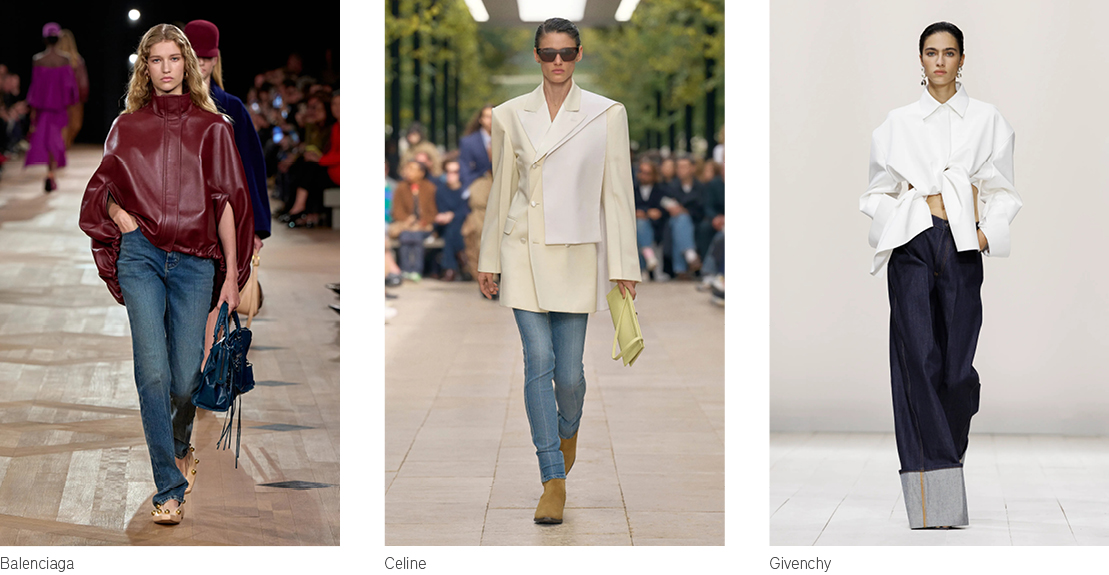
Jackets and jeans returned as a defining formula for effortless style, with the duo spotted at Balenciaga, Celine, Valentino and Givenchy. Relaxed denim grounded more structured outerwear, creating a balance between casual and polished. Updated proportions elevated this classic pairing, making it a quietly modern go-to uniform.
Literacy Chic
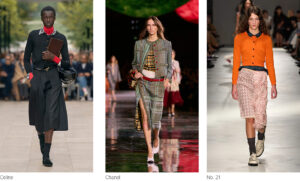
From Celine to No. 21, designers presented an intellectual take on everyday dressing that was utilitarian. At Chanel, Matthieu Blazy reworked the house codes with proper, but not prim, tweed twinsets styled with lightweight knits, meanwhile Miuccia Prada and Raf Simons created a more uniform-coded vibe.
Statement Skirts
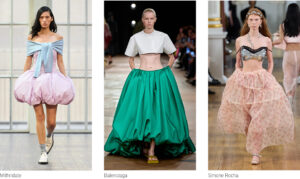
Statement skirts embraced volume and drama, replacing minimal silhouettes with bold, sculptural designs. Puffball shapes, tiered constructions, and exaggerated proportions created striking visual impact. Despite their scale, they were styled simply, allowing the silhouette to shine and encouraging a more playful, expressive approach to everyday dressing.
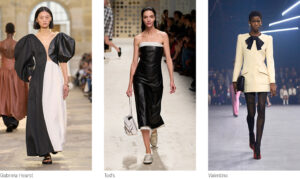
Monochrome
Monochrome dressing proved its enduring appeal, with black and white combinations offering a refined alternative to bold colour. Clean contrasts and balanced proportions created looks that felt polished and modern. This timeless palette provides versatility while maintaining visual impact, demonstrating that simplicity can still make a strong statement.
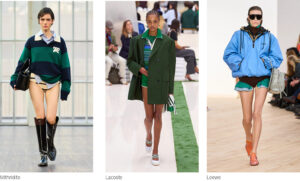
Sports Club
Sports-inspired dressing returned with a softer, more refined edge. Preppy elements like polos, rugby shirts, and knitwear were styled in relaxed, layered ways. The look feels wearable and understated, blending athletic references with everyday ease, and signalling a shift towards comfort-driven fashion with subtle nostalgic undertones.
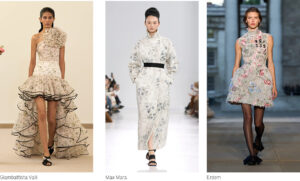
Rococo Revival
Rococo influences brought romance and ornamentation back to the runway. Lace, florals, and soft, decorative fabrics created an ethereal yet opulent mood. While rooted in historical references, the trend felt modern through its balance, offering a refined sense of escapism and a renewed appreciation for beauty and detail.
Underwear as Outerwear
Underwear as outerwear continued to evolve, with bras and lingerie-inspired pieces becoming central styling elements. Integrated into full looks, these garments challenge traditional boundaries between private and public dressing. The result is bold yet considered, offering a modern way to express confidence and individuality through unexpected layering.
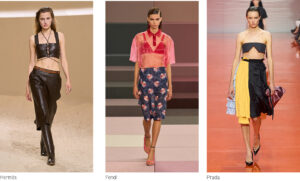
Ladylike Leather
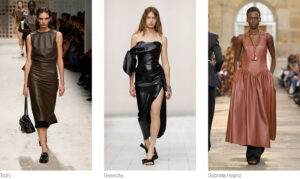
Rather than feeling rebellious, this season’s leather leaned into femininity and control, taking on a softer, more refined identity. Moving away from its traditionally tough associations into something altogether more polished, clean lines and tailored silhouettes gave it a poised, almost formal quality, while buttery textures ensured ease of wear.
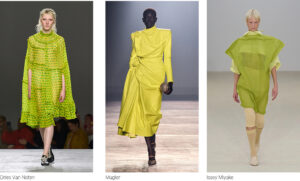
Chartreuse Green
If one standout shade defined the spring runways, it was chartreuse green. Sitting somewhere between neon and nature, this high-impact hue brought a sharp, modern edge to collections. It appeared across everything from tailoring to accessories, injecting energy into even the most minimal looks.
The Architecture of Fashion Week, The Set Design Behind the Autumn/Winter 2026 Catwalks
From sets celebrating icons of urban architecture at Burberry and Dior to an equine performance of horsemanship at Stella McCartney, the AW26 season offered much in the way of innovative set design. Across London, Milan and Paris, designers transformed show venues into immersive environments that blurred the line between stagecraft and storytelling, from monumental installations and architectural references to playful spectacles and theatrical lighting. These spaces did more than simply frame the collections; they shaped the atmosphere through which each narrative unfolded, heightening the drama and emotion of the runway experience. As always, these temporary constructions can tell us as much about a designer’s current preoccupations as the garments they send out into them. Discover some of the standouts from fashion month below, where architecture, performance and imagination combined to create some of the season’s most memorable moments, demonstrating how the runway set design continues to evolve as an essential creative extension of the collection itself.
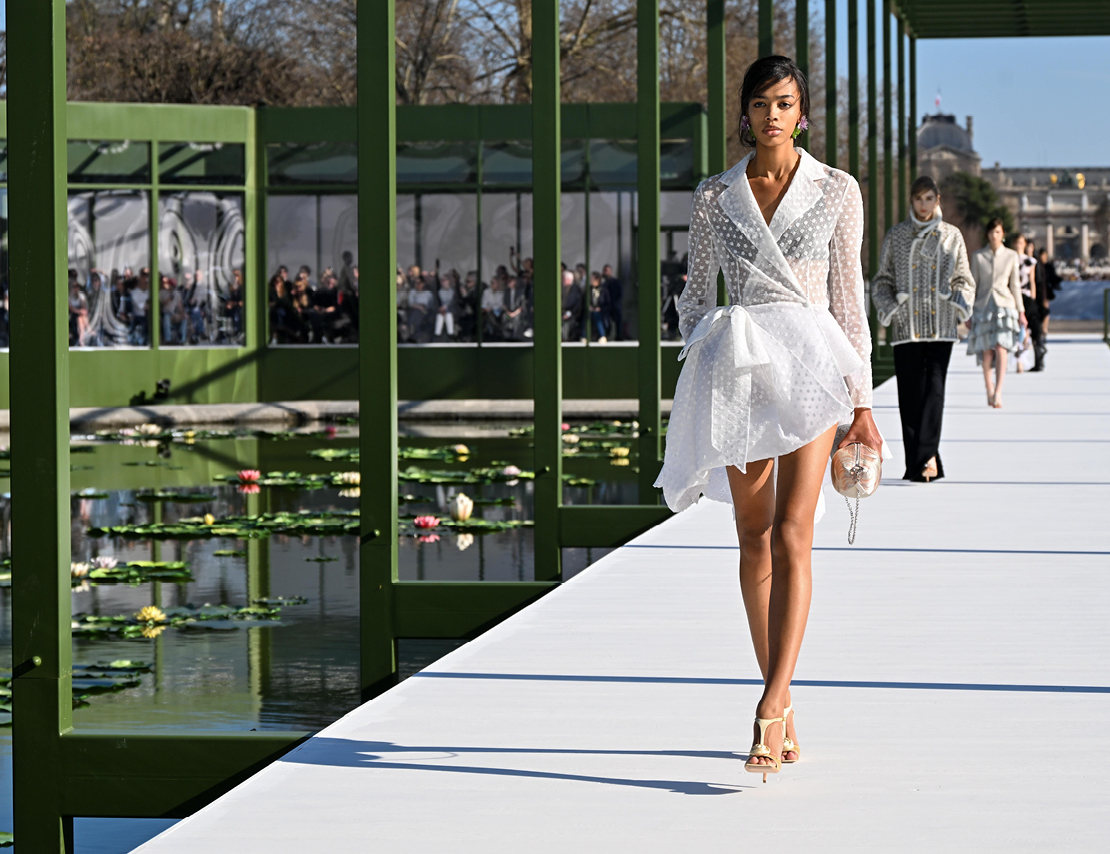
Dior
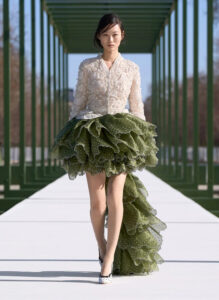
What more appropriate way to kick off Paris Fashion Week than a promenade in the Jardin des Tuileries, which became the site of Jonathan Anderson’s second womenswear collection for Dior, in a show space described as ‘an imitation of a park, within a park’. A giant glass box surrounded the formal fountains allowing light to flood in, with a catwalk raised over floating lily pads which snaked around the perimeter of the water, and across its centre.
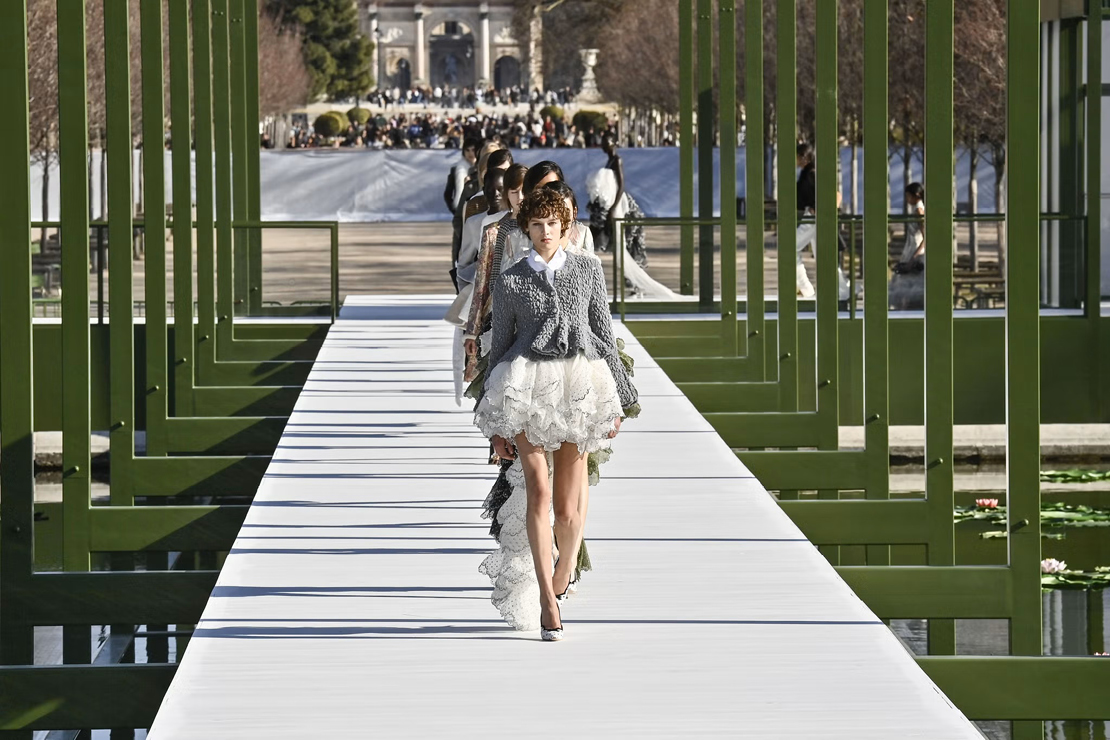
Chanel
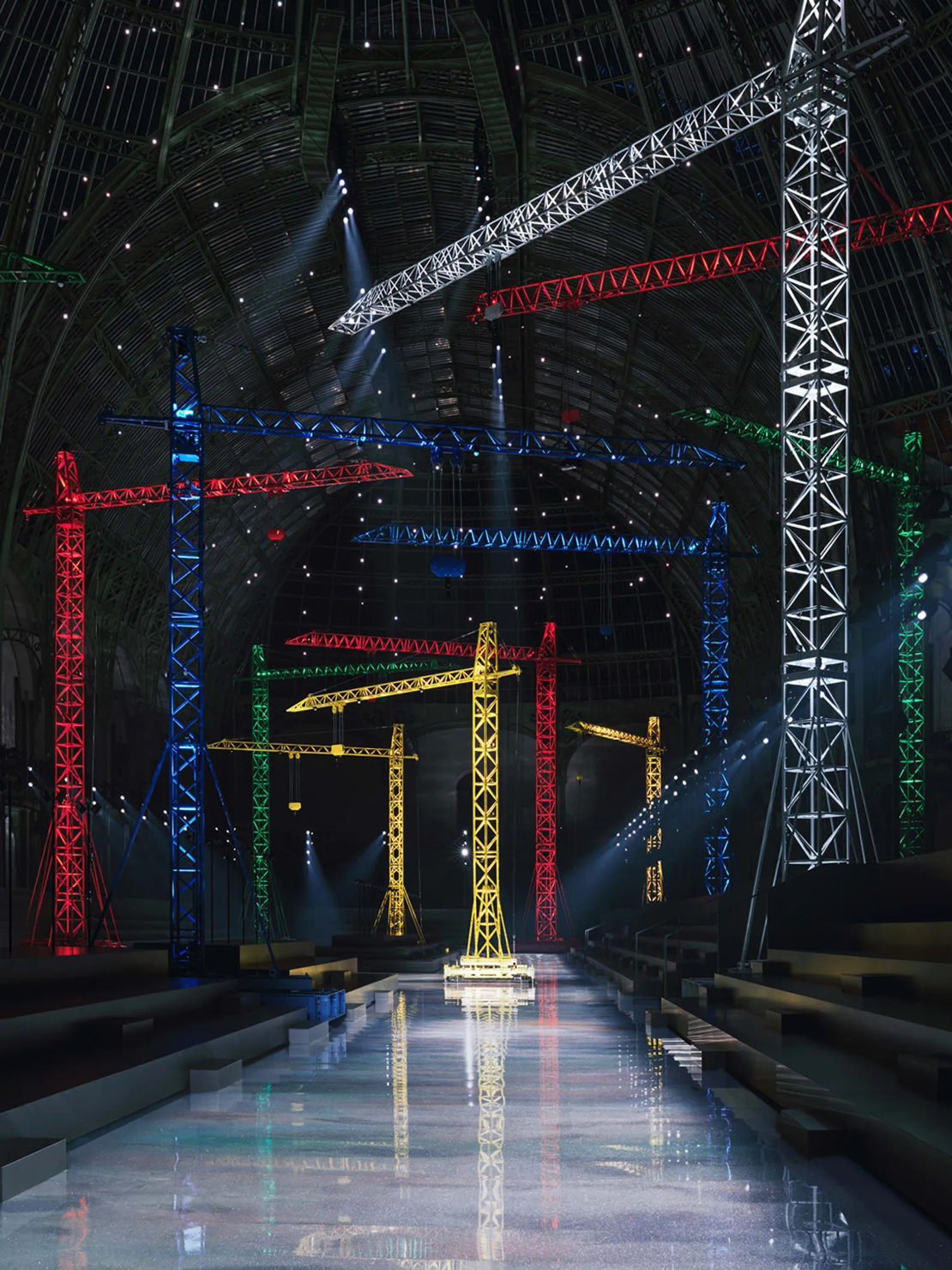
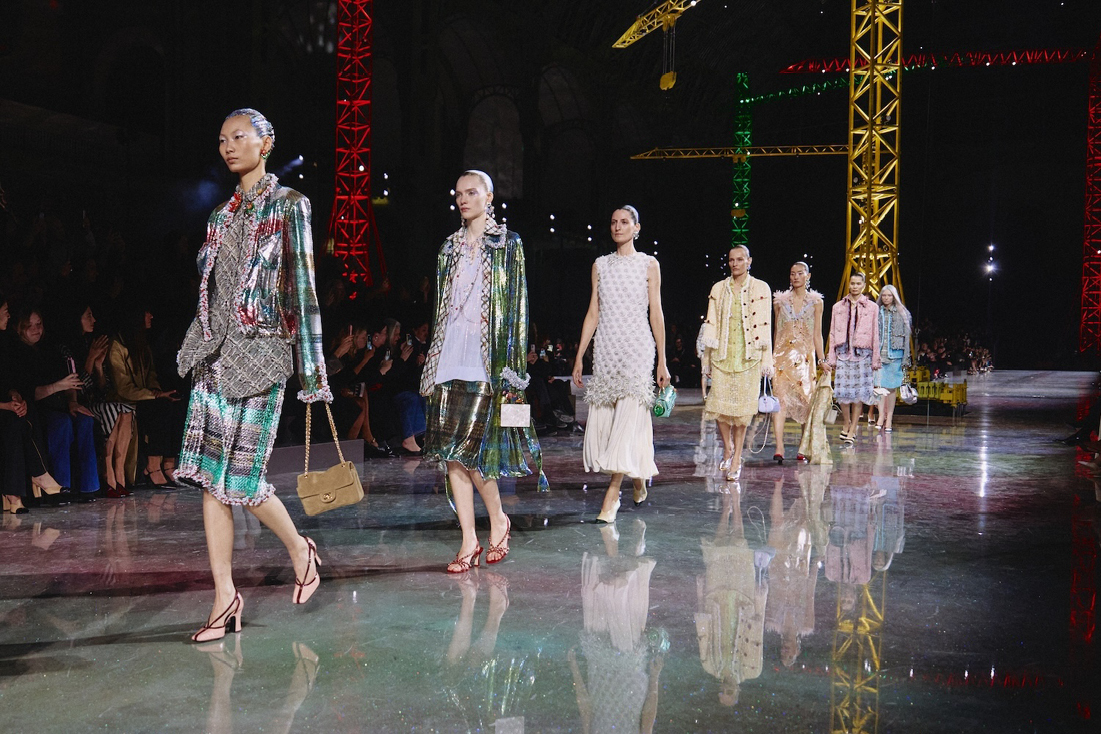
Known for his set design, this season Matthieu Blazy created enormous cranes in Playmobil primary colours for Chanel, piercing the space within the Grand Palais’ main atrium. With their resemblance to stage rigging, these monumental installations were assembled on a glitter floor to evoke the joy of dance, reinforced through a soundtrack of Lady Gaga remixed with dialogue from Billy Elliot. The whole effect was a glorious reminder that Blazy’s Chanel is to be totally joyful.a chic grey suit into a room, this would be it.
Louis Vuitton
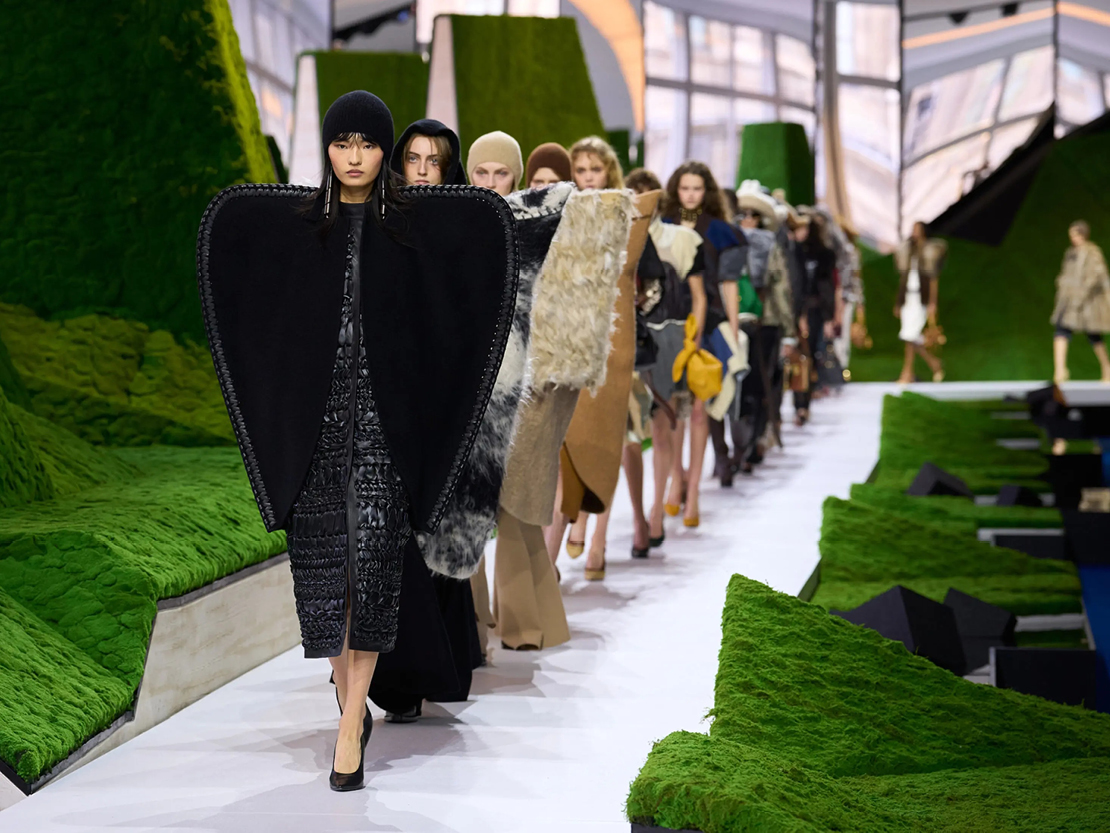
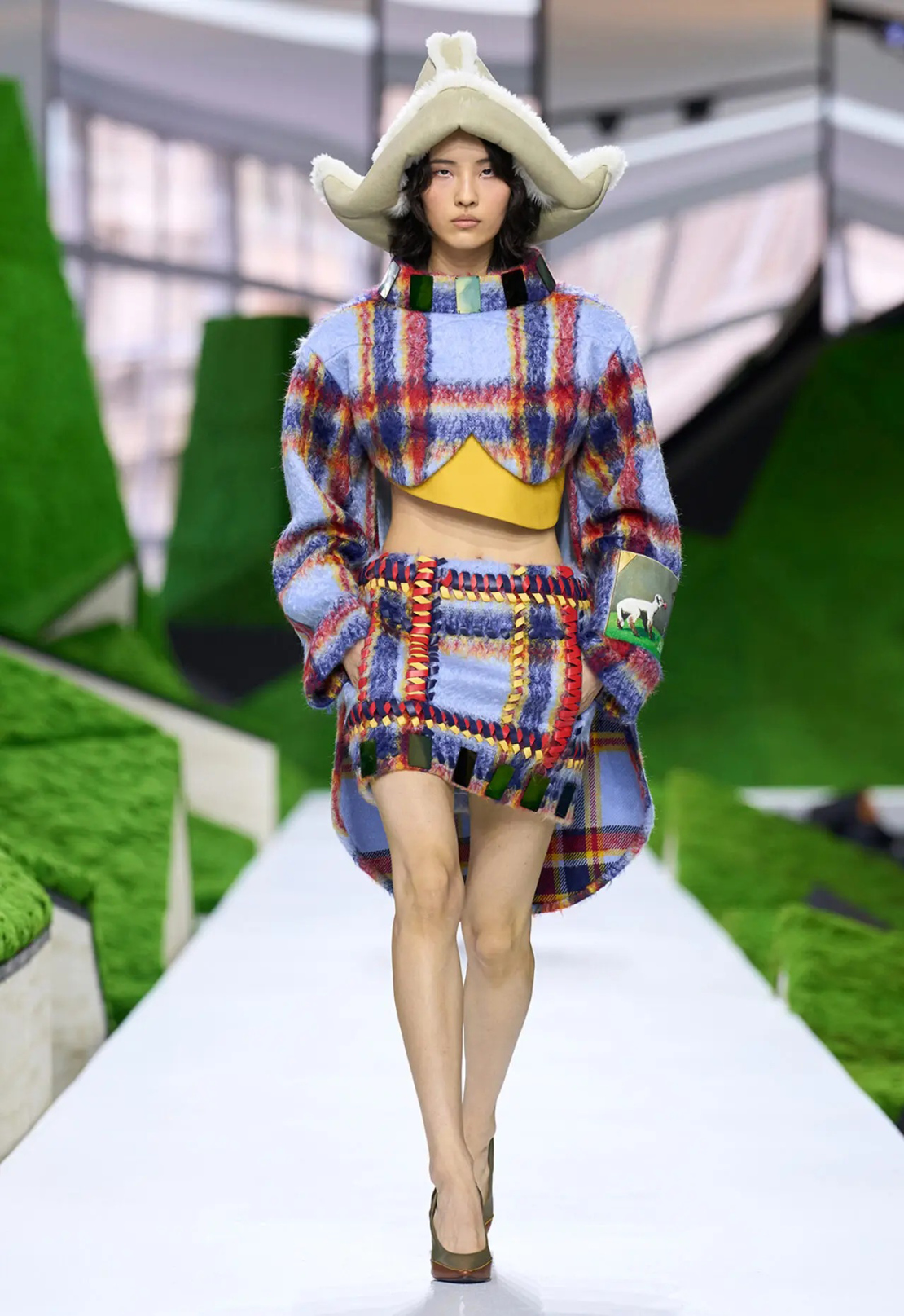
Inside the Cour Carrée of the Louvre Museum, Nicolas Ghesquière turned his gaze away from the city and towards the landscape as he unveiled his latest collection for Louis Vuitton within a moss-covered neo-landscape conceived by production designer Jeremy Hindle. Artificial hills rose around the audience, transforming the courtyard into a surreal pastoral stage that felt suspended somewhere between the natural world and speculative fiction.
Burberry
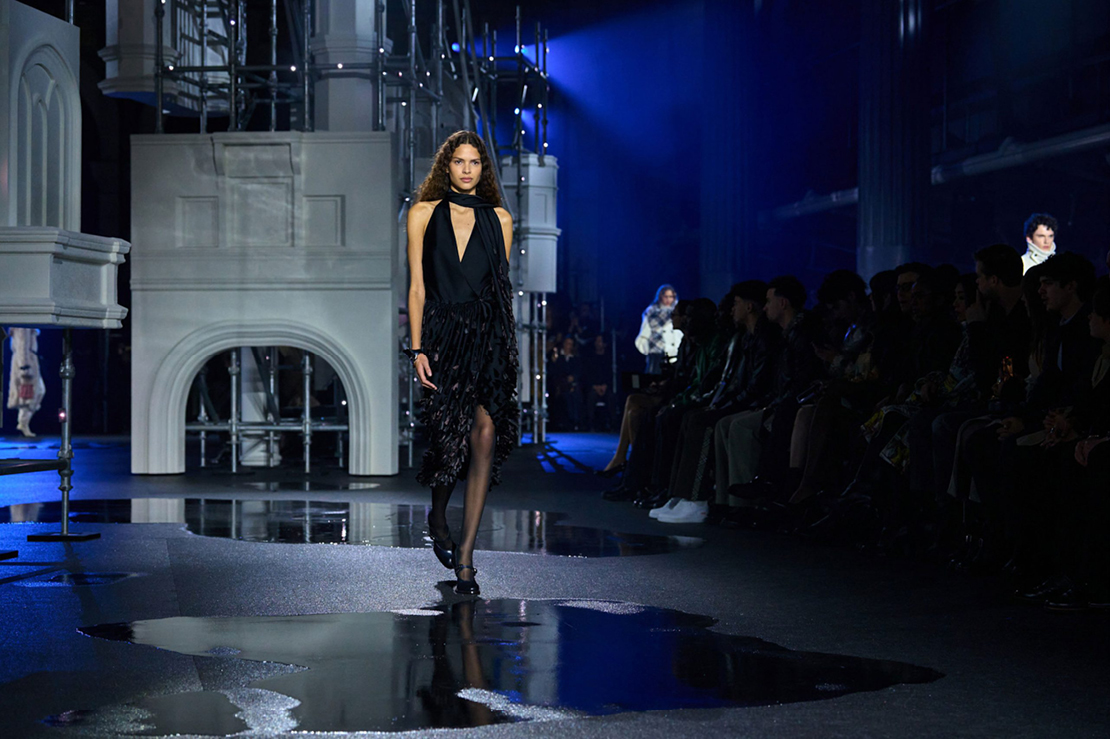
At London’s Old Billingsgate Market, Daniel Lee played with the idea of a city in construction for his latest Burberry show, presenting the new collection amid a recreation of London’s architecture, most notably, the spires of Tower Bridge deconstructed into toy-like blocks and wrapped in scaffolding. Trompe l’oeil puddles of resin scattered the tarmac-effect runway to echo London’s rain-soaked streets, while low lighting and black velvet seating captured an after dark mood.

Stella McCartney
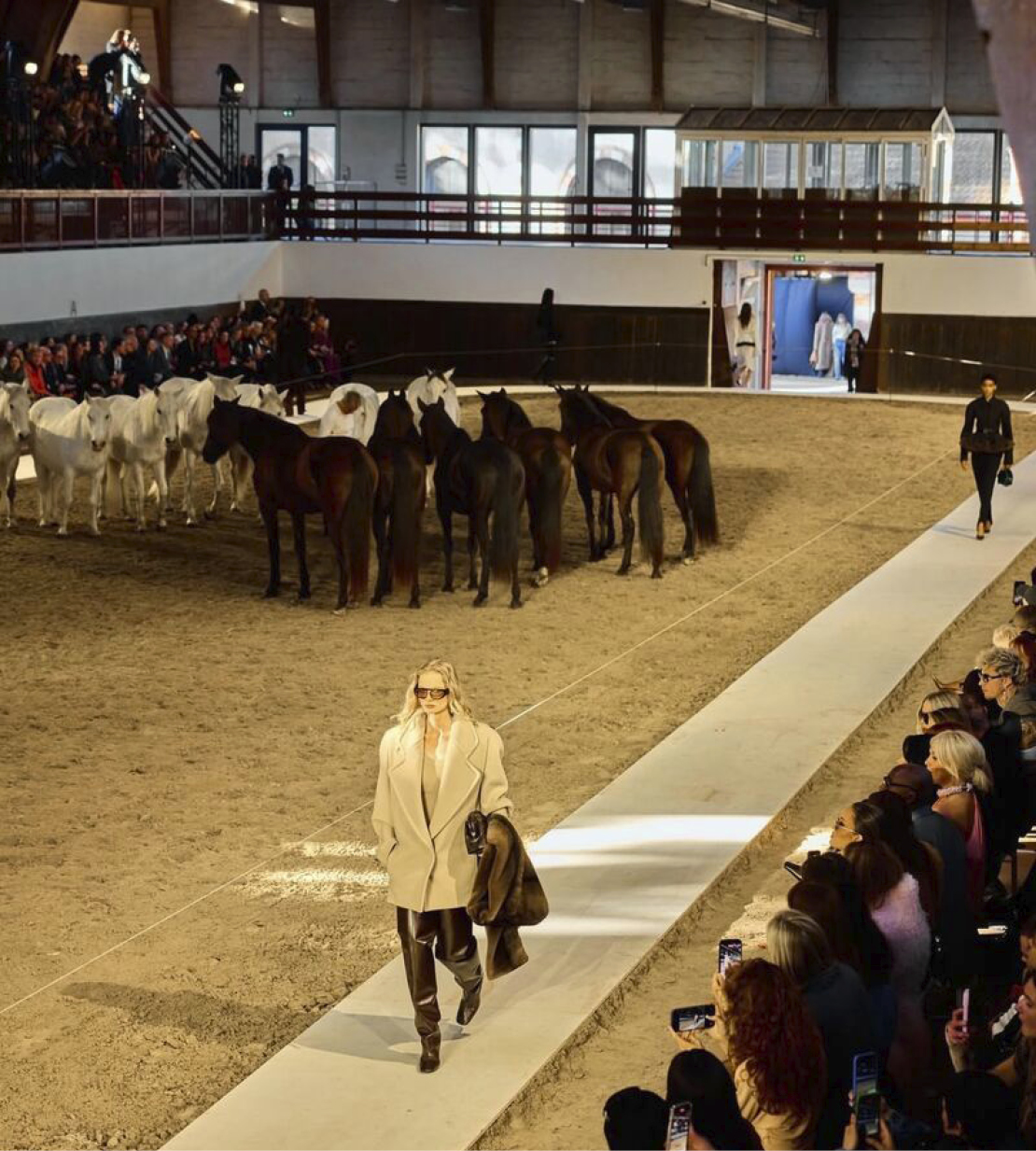
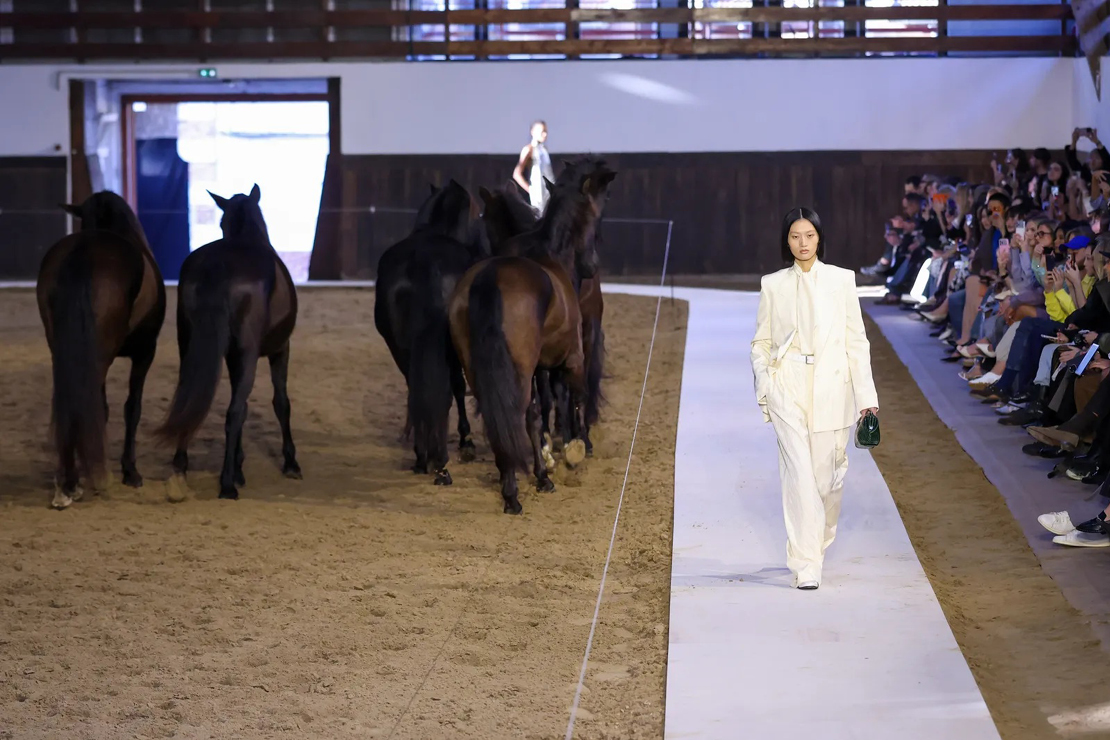
Stella McCartney took the Year of the Horse quite literally, hosting her AW26 show in a grand Parisian equine arena complete with a dozen beautiful horses. Inviting horse whisperer Jean-François Pignon and his shiningly intelligent Camargue ponies to reprise their runway performance from 2023, the artistic display formed a fantastic backdrop as models emerged clad in Stella’s latest collection.
Schiaparelli
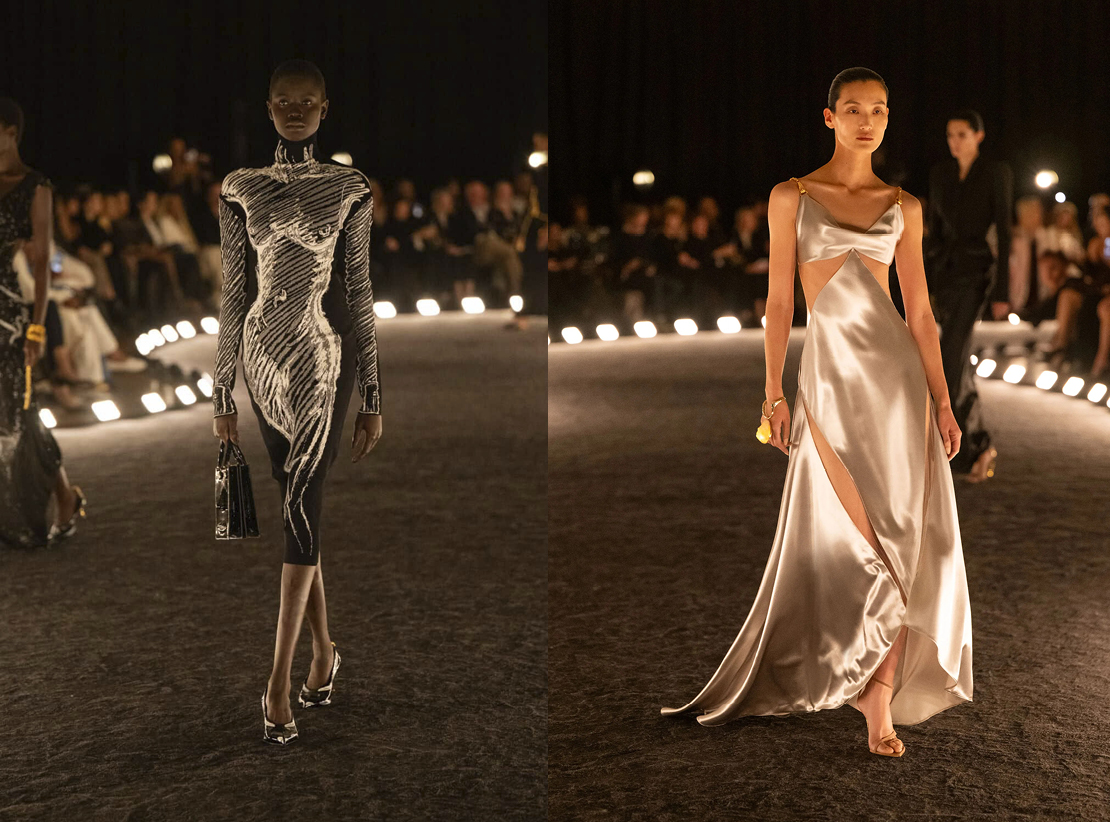
Daniel Roseberry called his AW26 Schiaparelli collection The Sphinx, a title that nodded to the house’s enduring fascination with enigma and contradiction. That tension ran through the collection. Staged on an elevated runway lined with blazing stage lights, playing on the power of illusion, the clothes oscillated between what a garment should be and what it can be, before firmly settling into a happy medium, balancing both on equally weighty ends of a scale.
Diesel
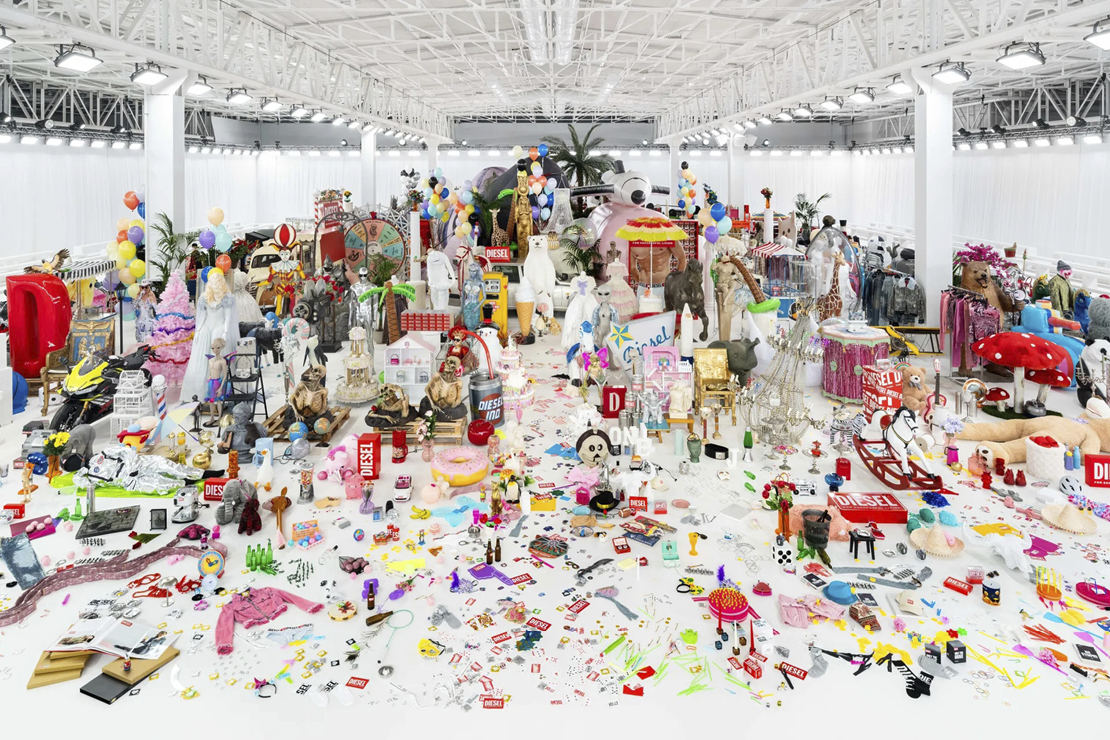
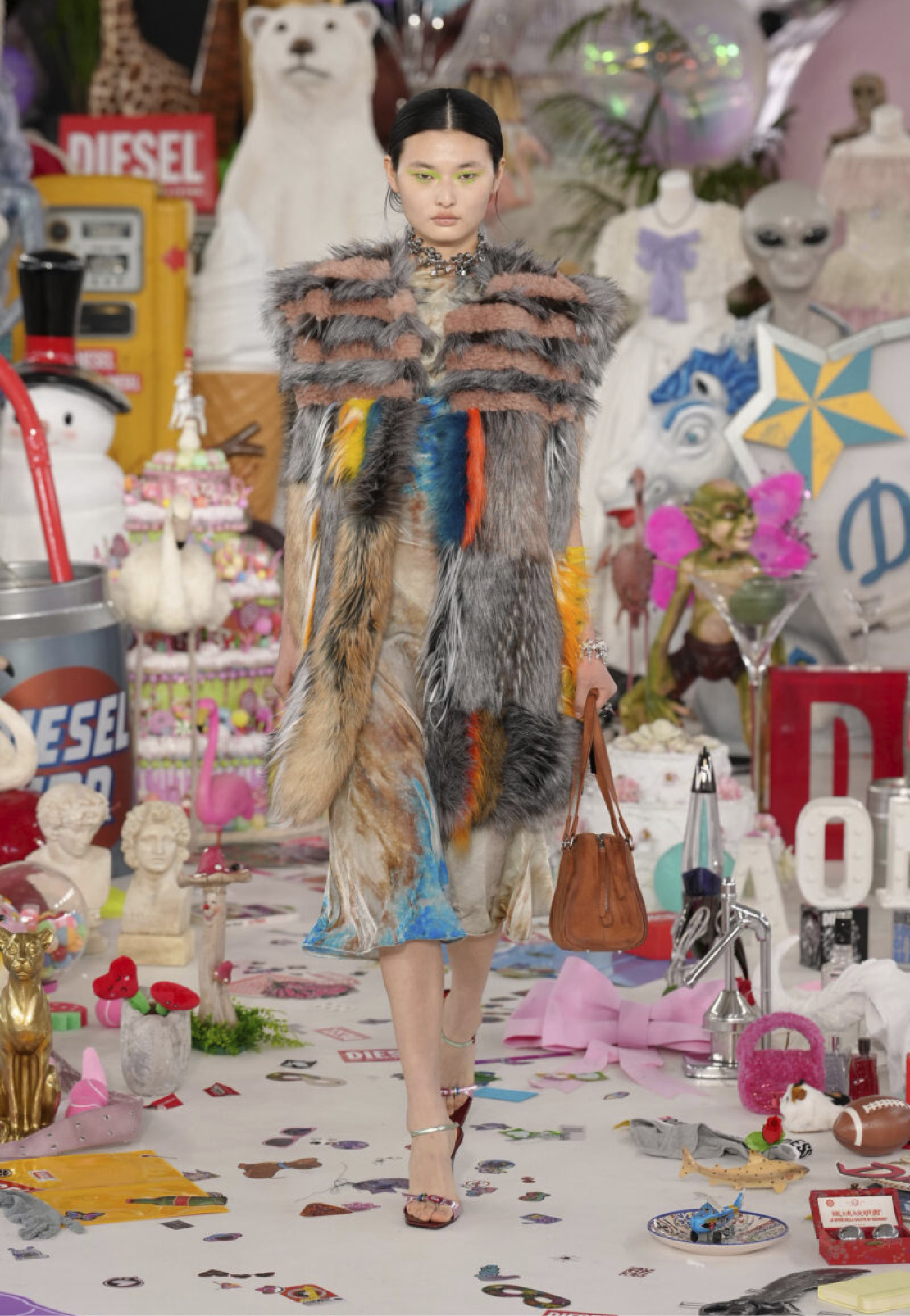
Diesel’s runway set consisted of around 50,000 pieces of memorabilia from the brand’s archive, a monumental time capsule. Displayed under bleached lighting, the installation was awash with high-voltage colour, with objects ranging from a fringed parasol and inflatable beach doughnut, to a coffee machine, motorbike, and lava lamp. Creative director Glenn Martens described the season’s mood as ‘waking up in a place, with no idea what happened last night’.
Gucci
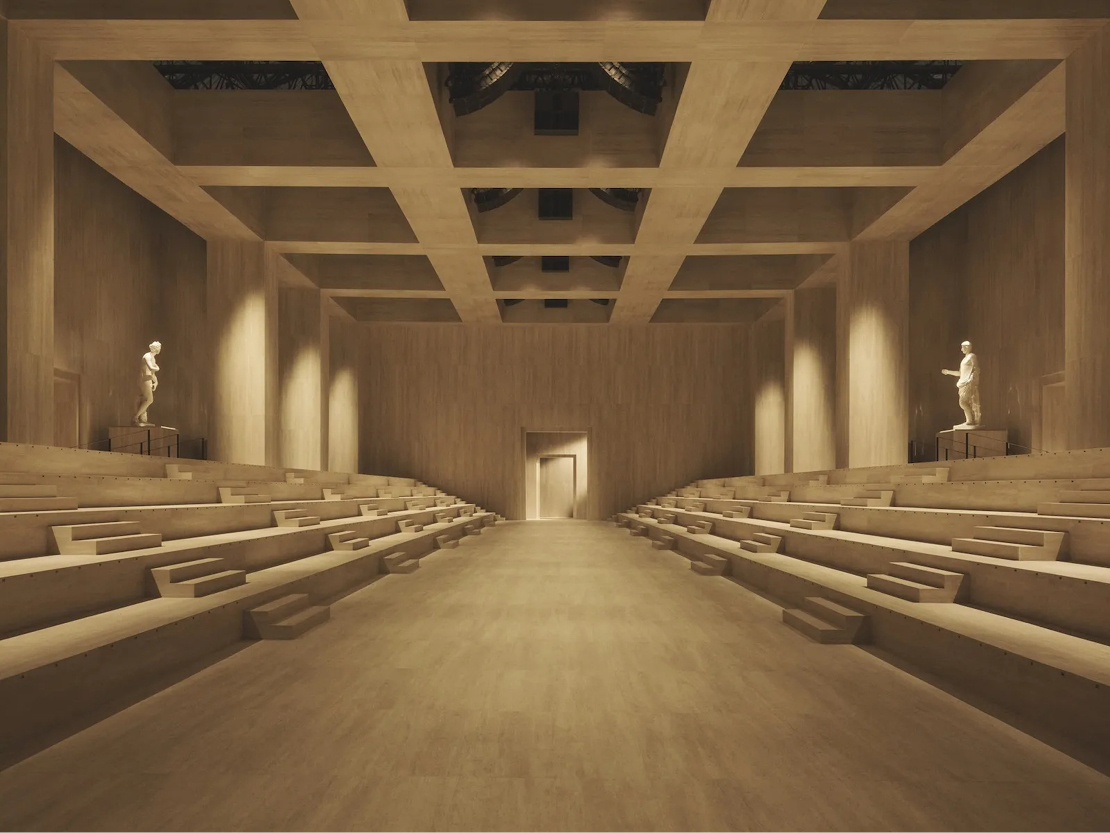
For Demna’s debut he explained that he had been seeking out what he calls the ‘Gucciness of Gucci’. It was a journey that led him to the ancient city of Florence, where the brand was founded and where he visited the Uffizi. The experience of entering a museum was the inspiration behind the runway set at Milan’s Palazzo delle Scintille. Upon entering the show space and ascending a staircase, guests were greeted with a vast hall clad in travertine Stoneleaf, with classical sculptures made out of plaster using 3D scanning and then treated to look like aged marble.
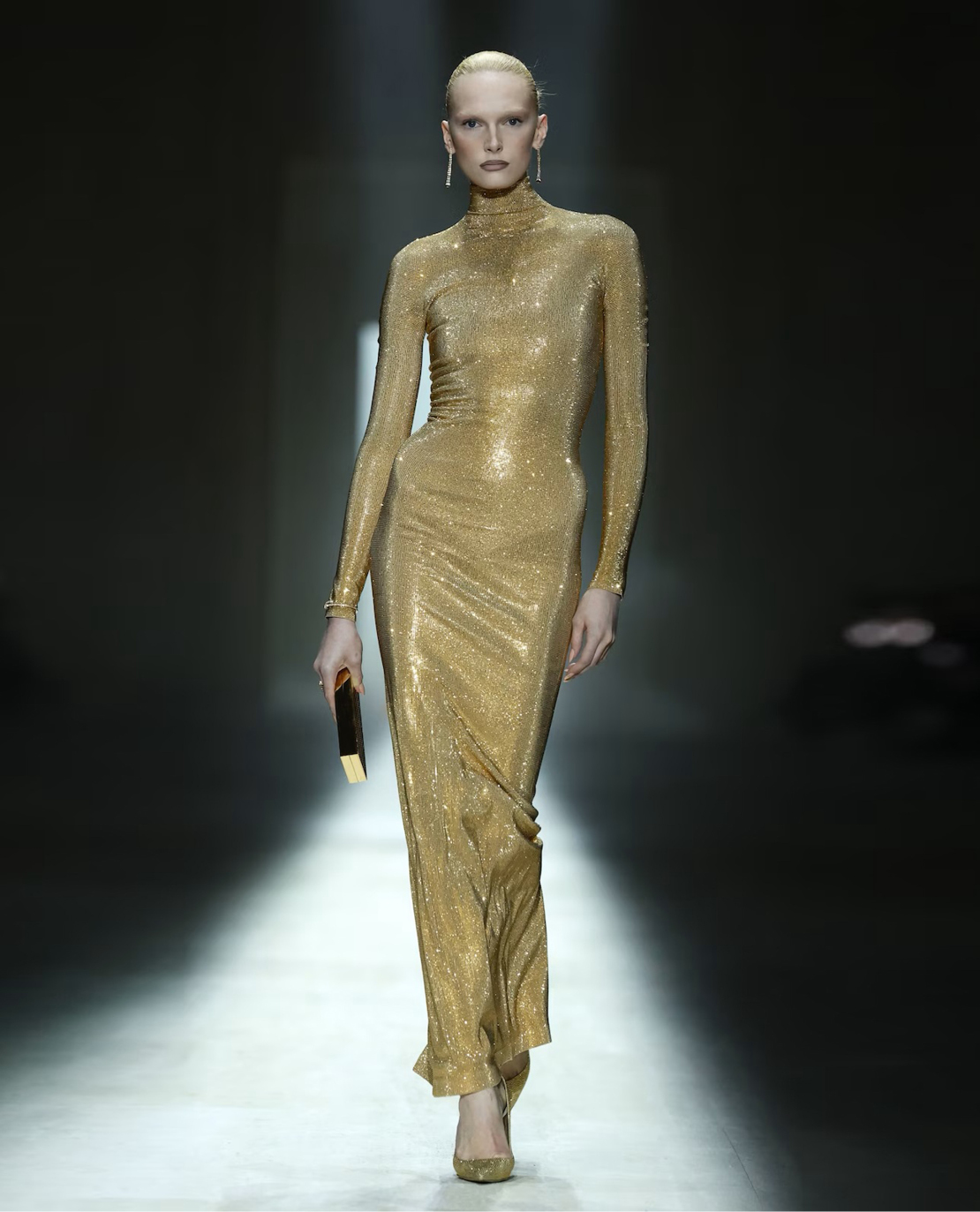
Prada
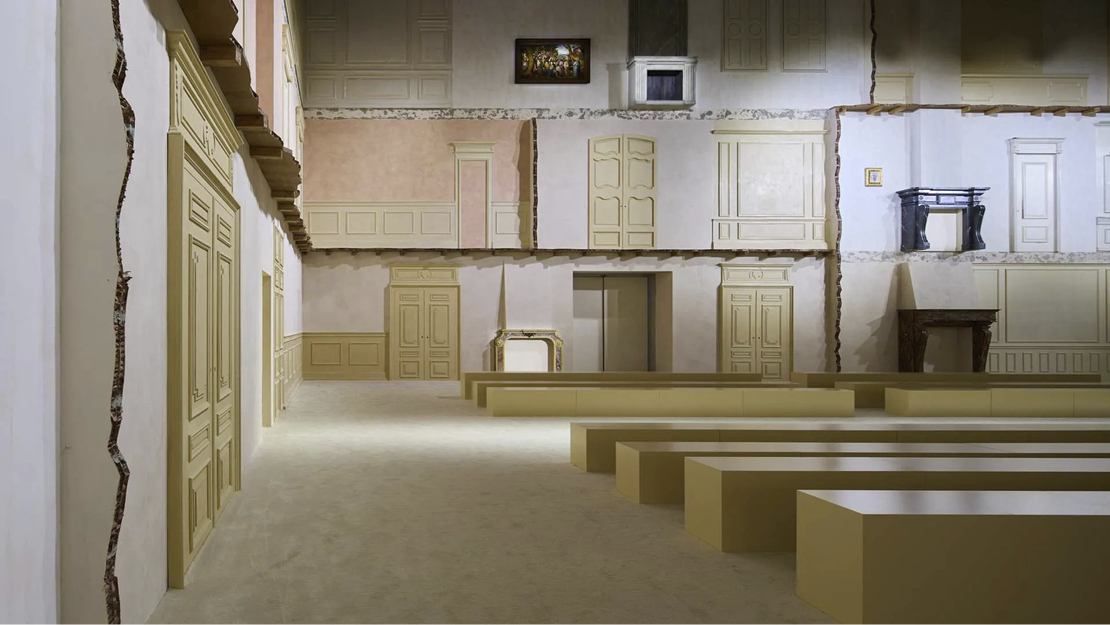
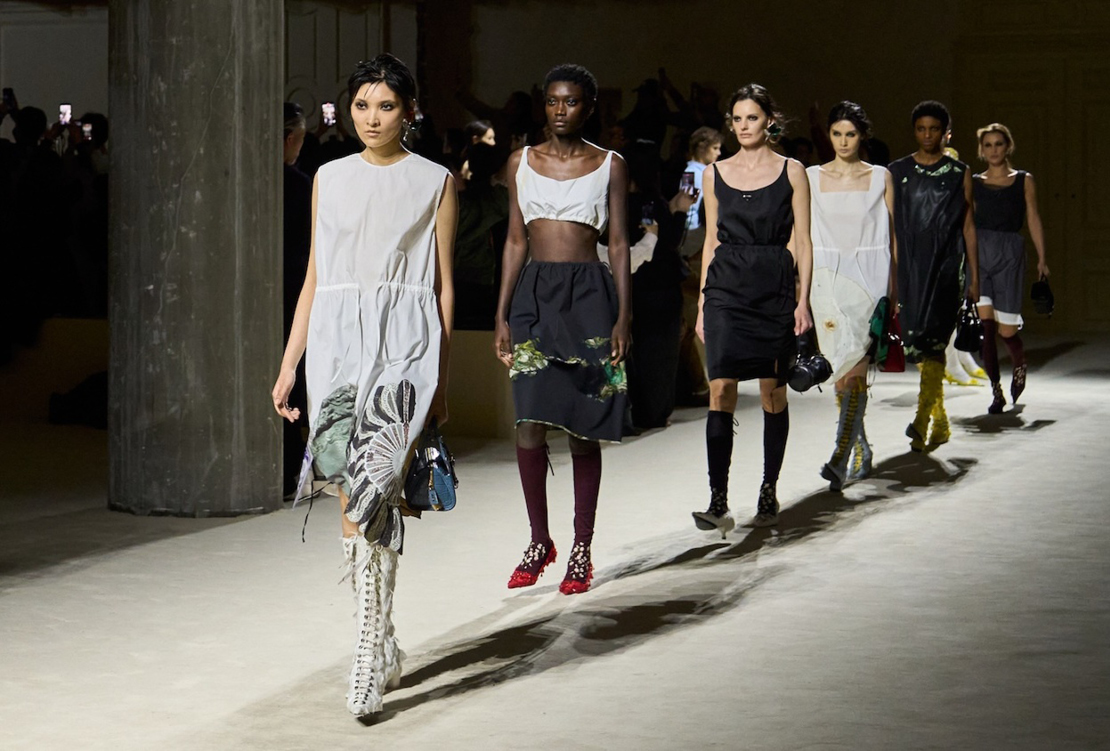
Prada was an exercise in extreme layering, with 15 models showing a total of 60 looks, gradually stripping away garments each time they walked the runway. However, the set had been stripped already, leaving only an eerie whisper of what might have been there before, like when you see a partially demolished house. Fireplaces exposed to the elements and masonry jaggedly revealed.
Fendi
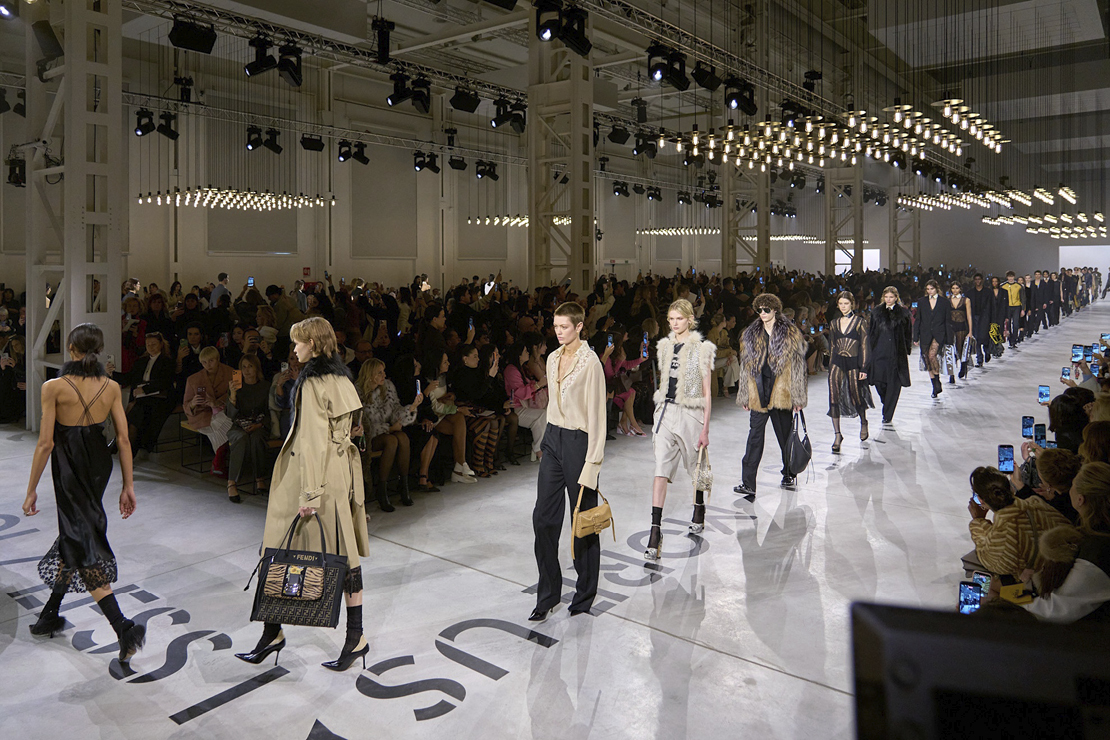
Making her debut, Maria Grazia Chiuri sent out of a message of intent for her Fendi era by emblazoning the catwalk with the message ‘Less I, More Us’. Having long had a way with words with those viral ‘We should all be feminists’ Dior T-shirts, this was a message of inclusivity that embodied the values of working together. Emblazoned down the runway in both English and Italian, it was a nod to her own way of working, while also celebrating the approach of Fendi’s five founding sisters.
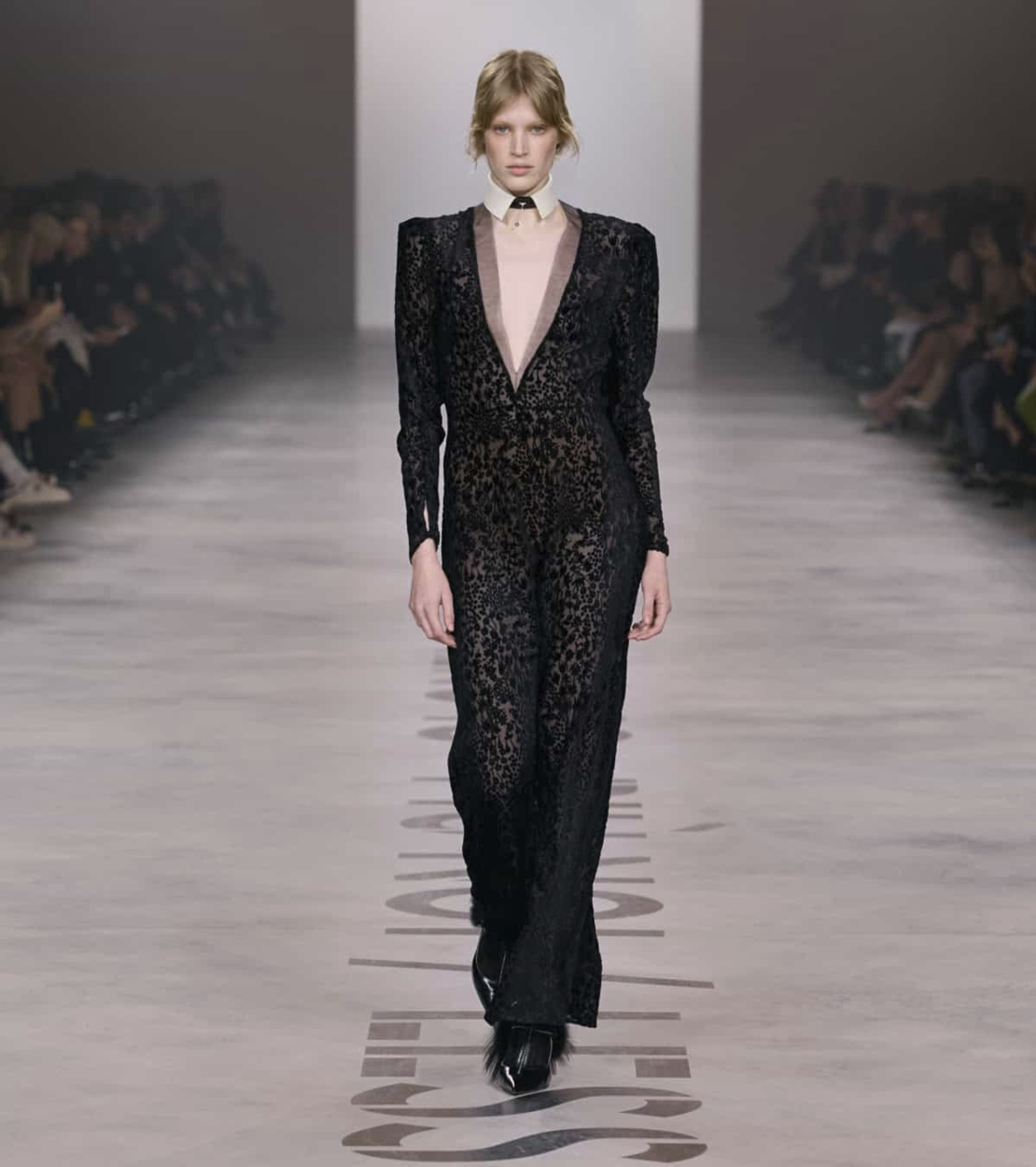
By Eliza Scarborough
Brick by Brick, The Architecture Firms Leading the Way in the UAE and Beyond
Dubai stands as one of the most compelling architectural landscapes in the world, a city where heritage and hyper-modernity coexist in striking harmony. Once a modest desert trading port, it has rapidly transformed into a global stage for architectural experimentation, ambition, and innovation. From record-breaking skyscrapers like the Burj Khalifa to the instantly recognisable sail silhouette of the Burj Al Arab, the UAE has cultivated a skyline that is both iconic and symbolic of its forward-thinking vision.
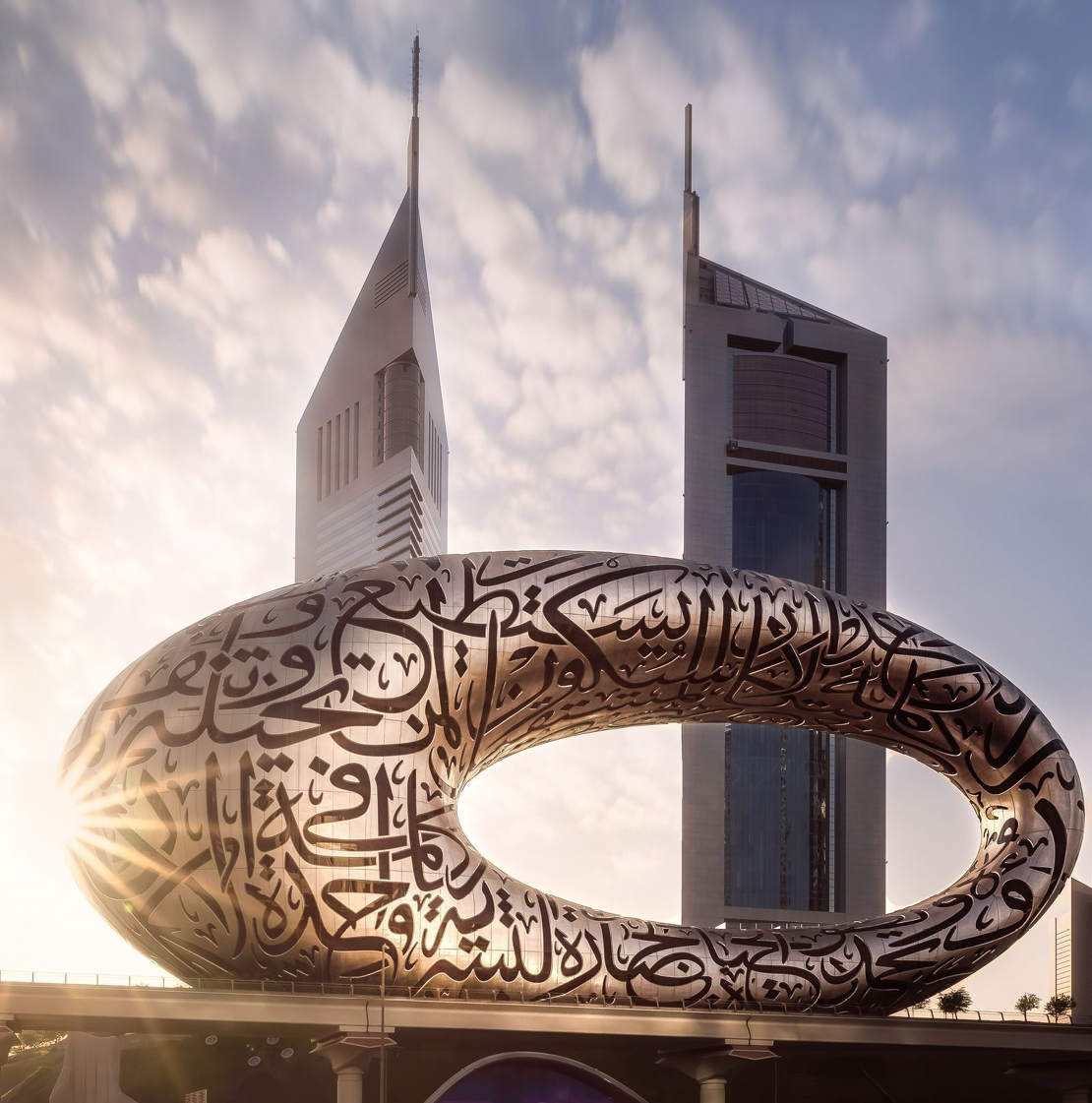
Today, Dubai is not only a showcase of engineering prowess but also a testing ground for sustainable design, advanced technologies, and new spatial narratives. Architects here are redefining how buildings interact with climate, culture, and community, balancing bold expression with environmental responsibility. Bringing together established pioneers, creative disruptors, and rising talents, this list highlights the architects shaping the next chapter of design in the region.
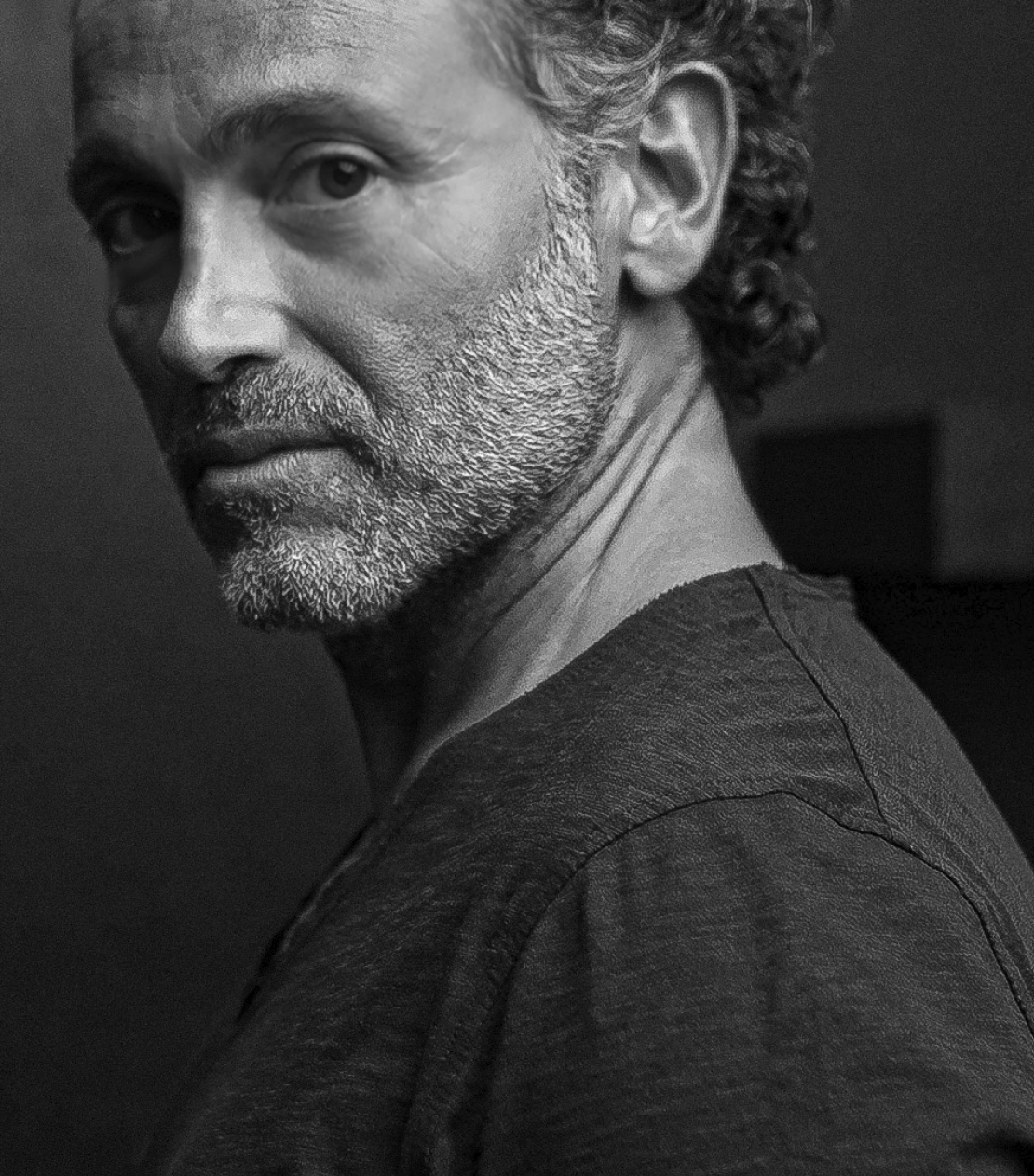
Abdalla Almulla
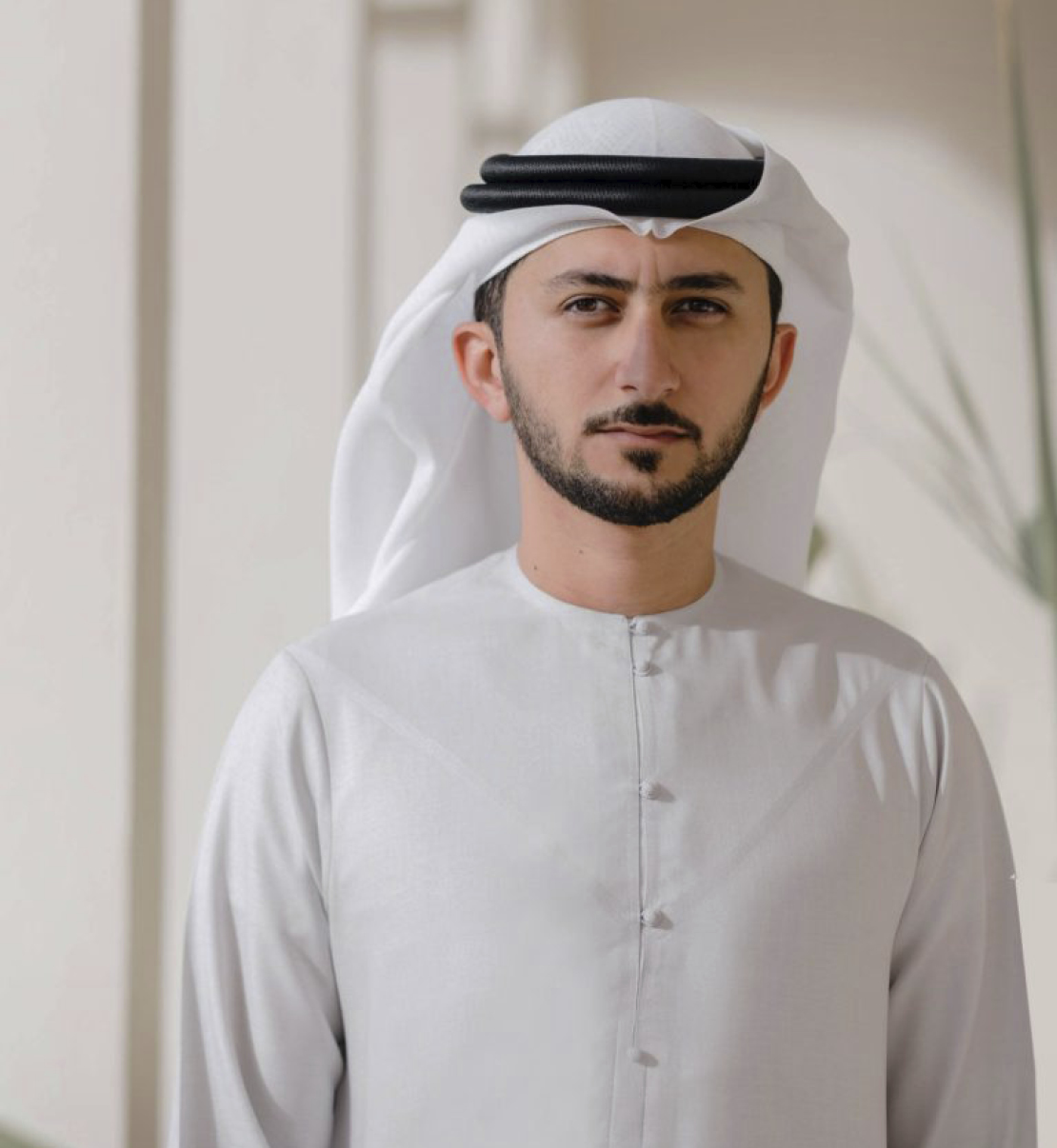
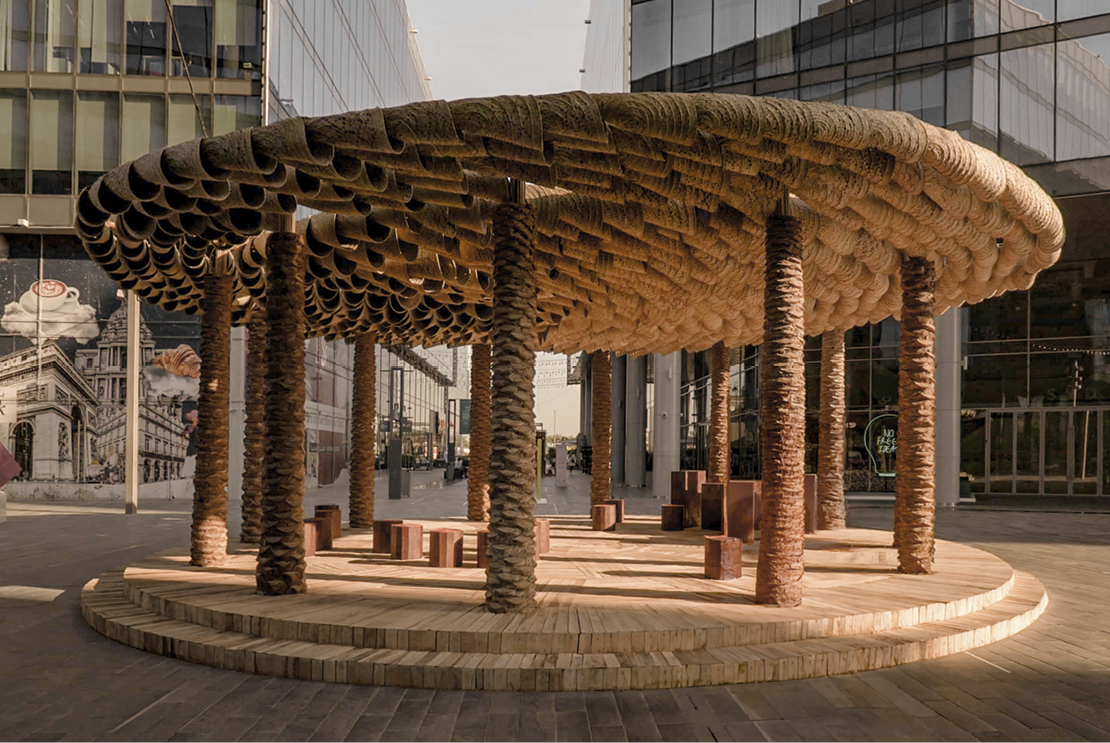
For Emirati architect Abdalla Almulla, architecture is rooted in joy, experimentation, and cultural storytelling. His work reflects a deep engagement with local materials and traditions, reinterpreted through a contemporary lens. He gained widespread recognition for his pavilion at Dubai Design Week where he unveiled Of Palm, a striking installation constructed entirely from palm tree components. By reimagining a ubiquitous natural resource, Almulla demonstrated how vernacular materials can be elevated into innovative architectural solutions, a philosophy that continues to define his practice.
Abboud Malak
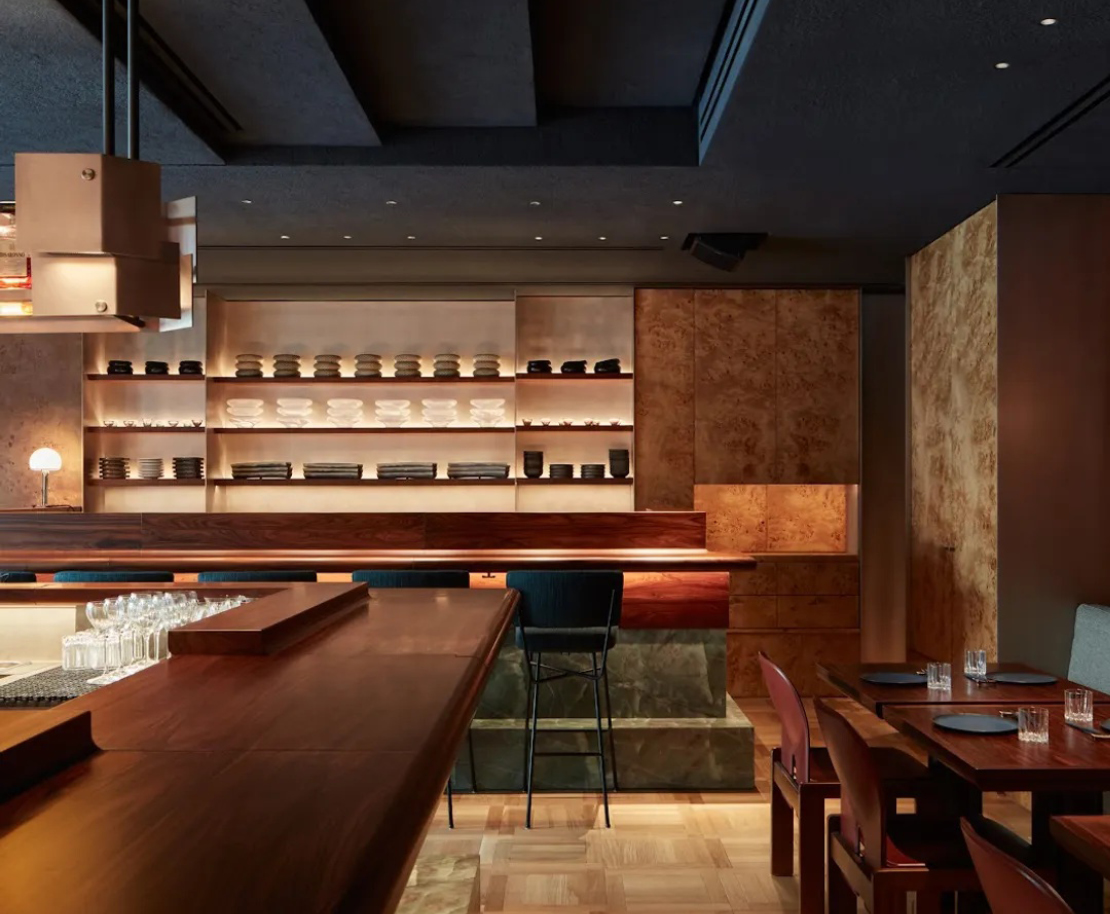
Dubai-based designer Abboud Malak leads Studio M with a multidisciplinary approach spanning architecture, interiors, and furniture design. His aesthetic blends minimalist sensibilities with an east-meets-west philosophy, resulting in spaces that feel both refined and culturally layered. This design language is beautifully expressed in Uchi, a Japanese restaurant inspired by 1960s modernism, where rich rosewood and walnut veneers create a warm, immersive atmosphere.
H+A
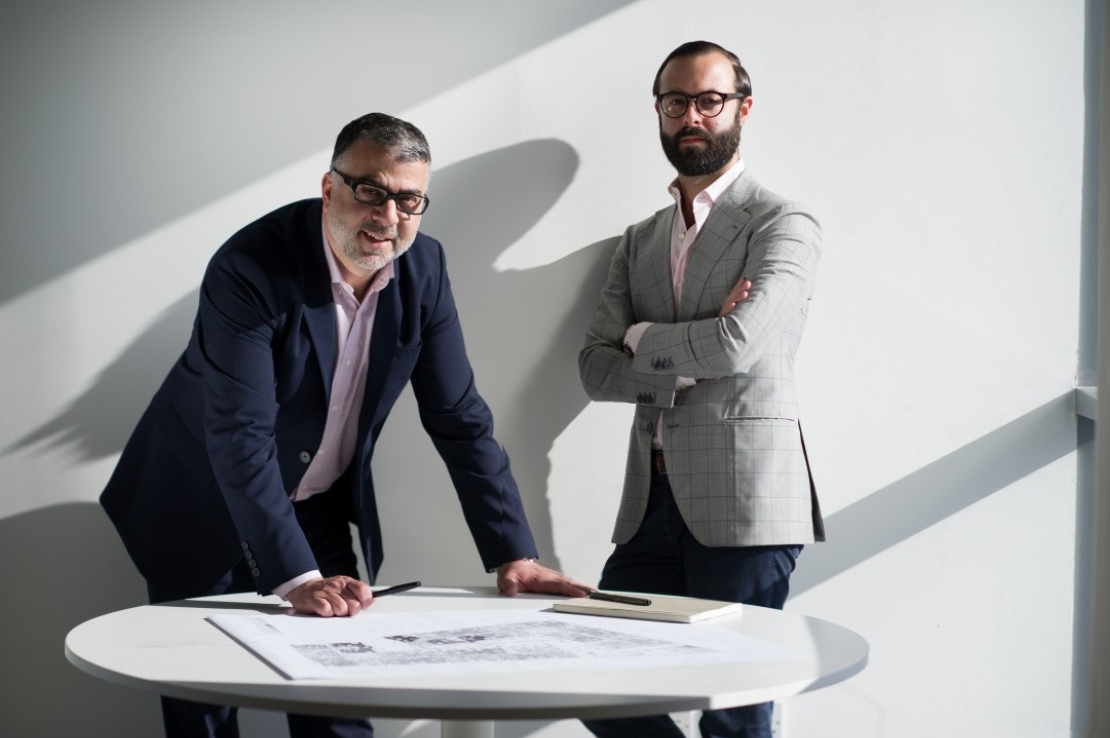
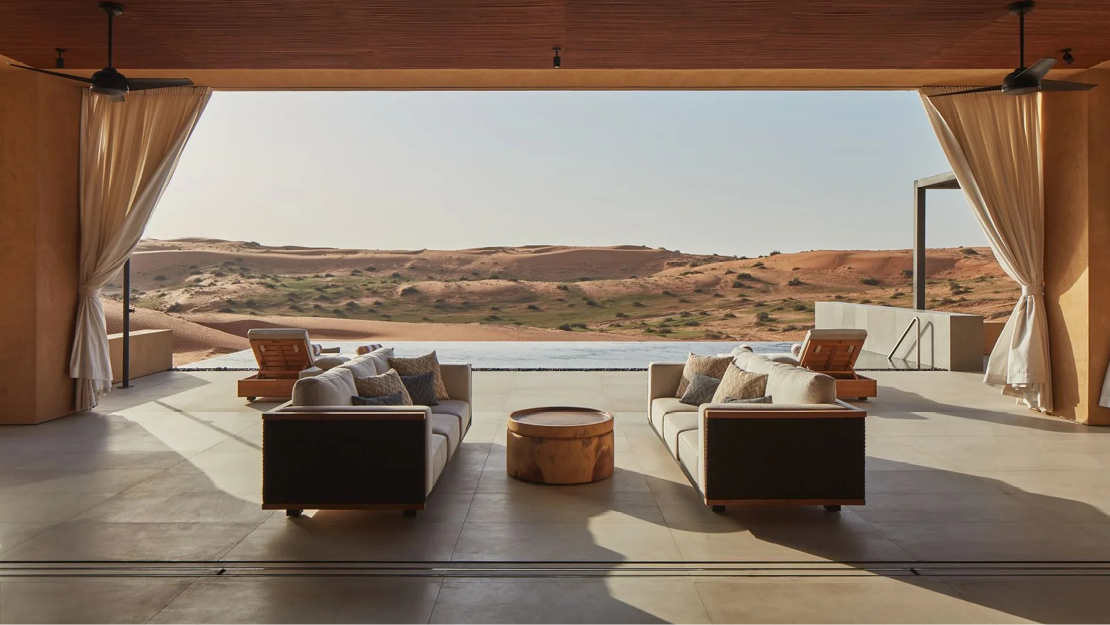
At the core of H+A’s philosophy is a commitment to human wellbeing. Led by Stas Louca and David Lessard, the Dubai-based studio brings together extensive expertise across healthcare, hospitality, and residential design. Their work prioritises sensory experience, sustainability, and harmony with the natural environment. This is exemplified in the Signature Villas at The Ritz-Carlton Residences, Al Wadi Desert, where architecture is carefully integrated into the shifting desert landscape using natural materials and organic forms.
La Bottega
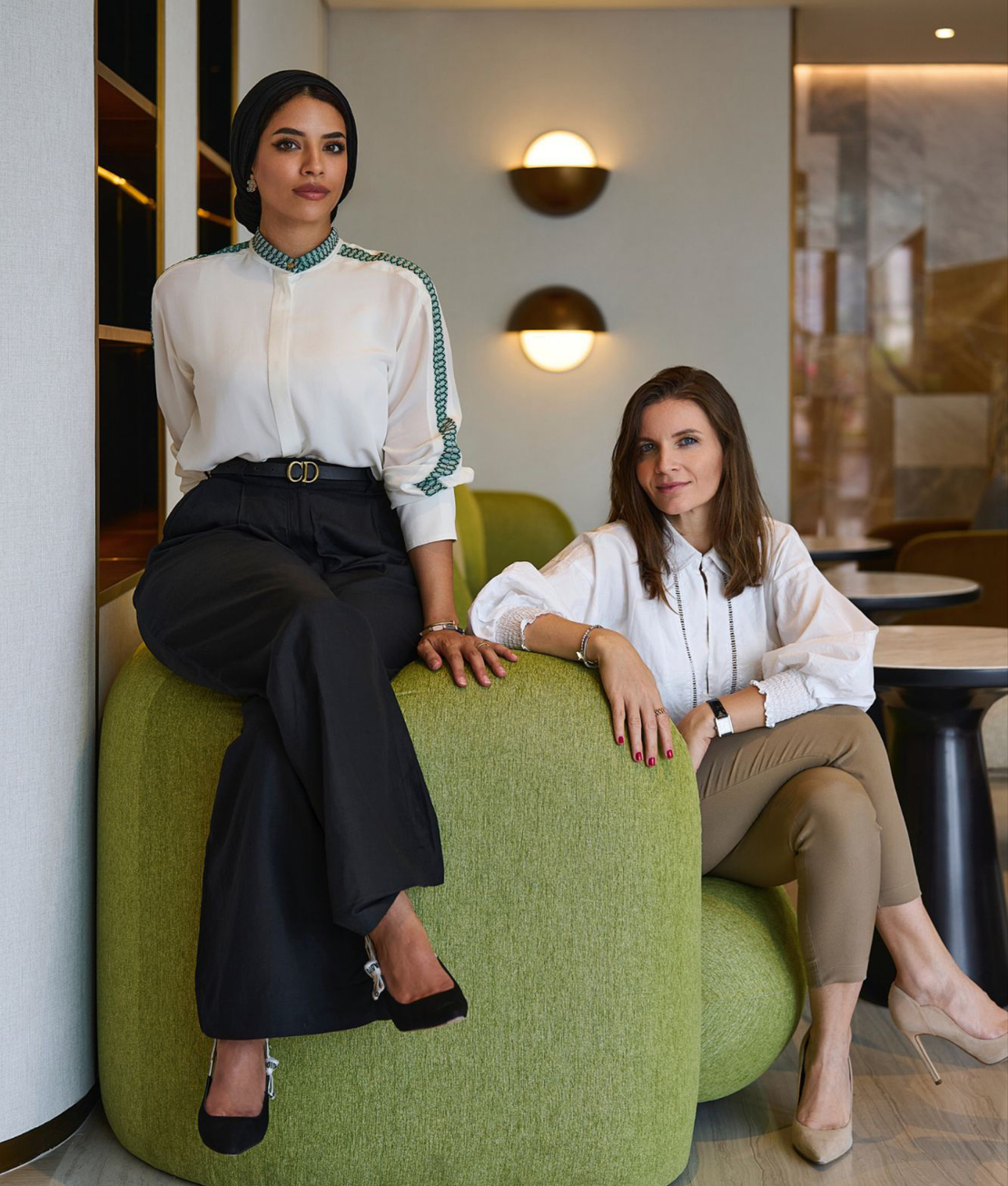
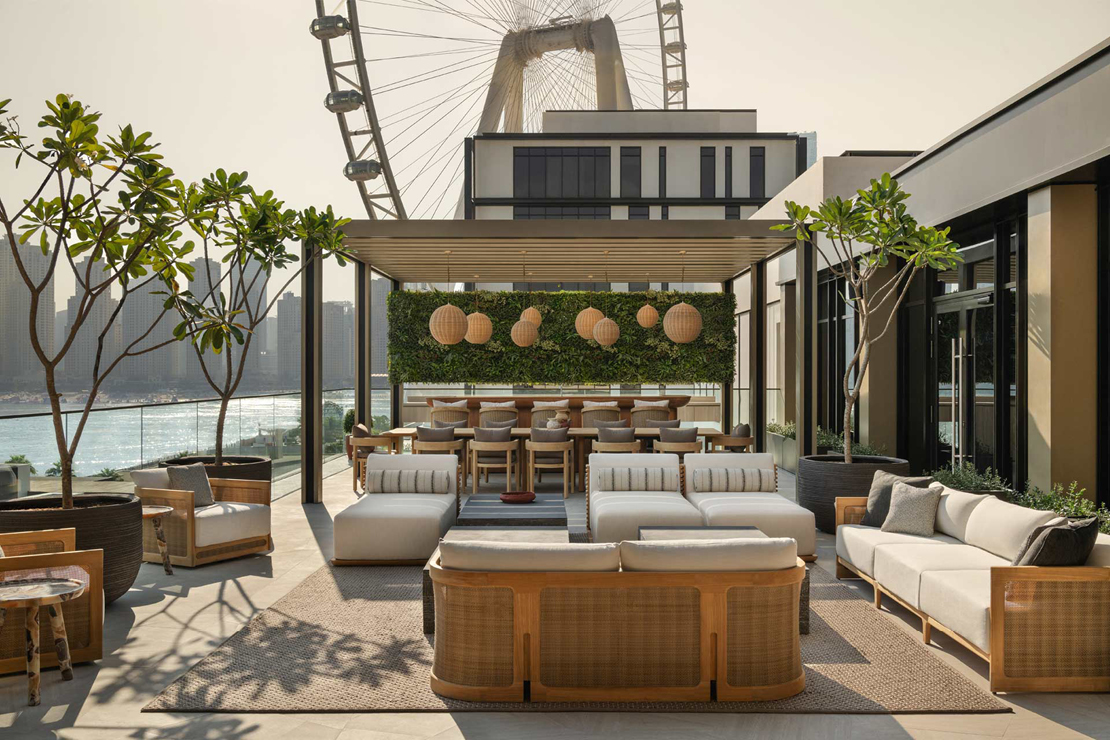
Founded by Sahar Al Yaseer and Cristina Gallenca, La Bottega is known for its narrative-driven approach to design. The studio treats each project as a story, one that evolves through close collaboration with clients and a deep understanding of context. From reimagining coastal summer homes to designing a sophisticated penthouse at Delano Dubai on Bluewaters Island, their work blends timeless elegance with contemporary flair.
Pallavi Dean
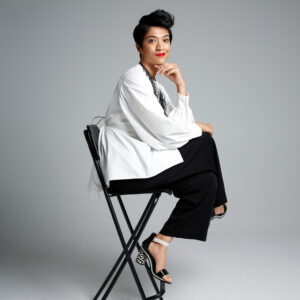
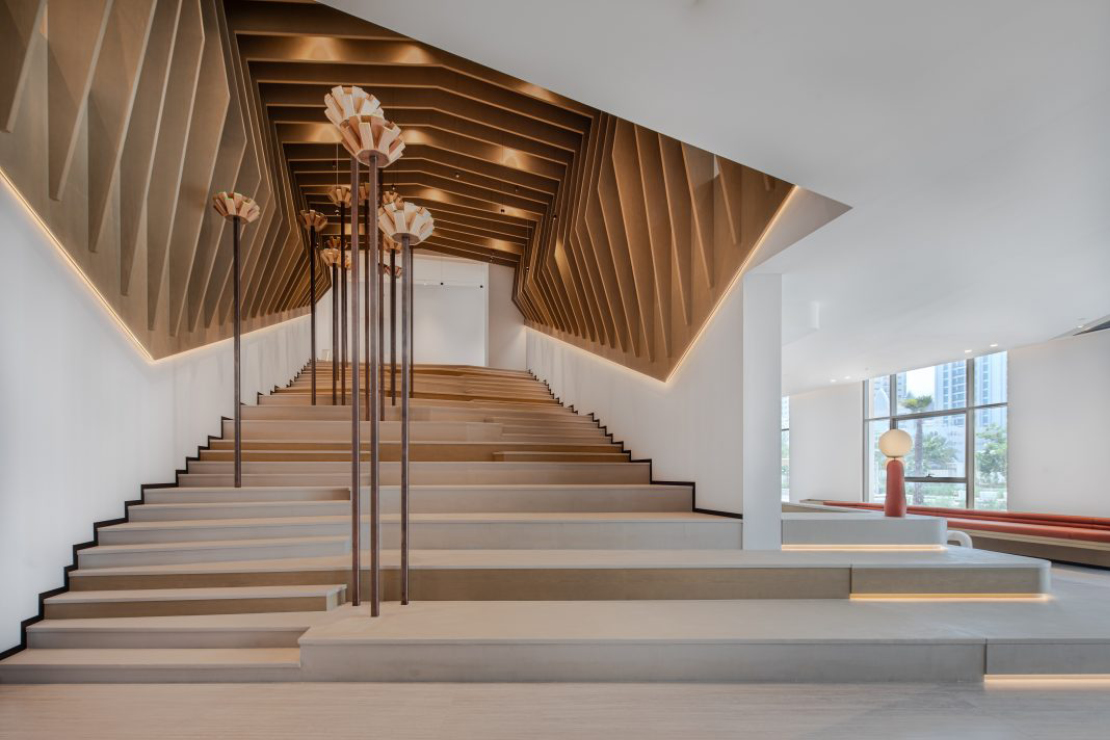
Pallavi Dean has carved out a distinct position in Dubai’s design scene through her forward-thinking and research-driven approach. As founder of Roar, she integrates emerging technologies such as AI while championing local craftsmanship and production. Notable projects include the Ajman Ruler’s Court, where interiors echo the movement of desert dunes, and the National Academy for Childhood Development, whose flowing forms draw inspiration from water ripples and the UAE’s pearl-diving heritage.
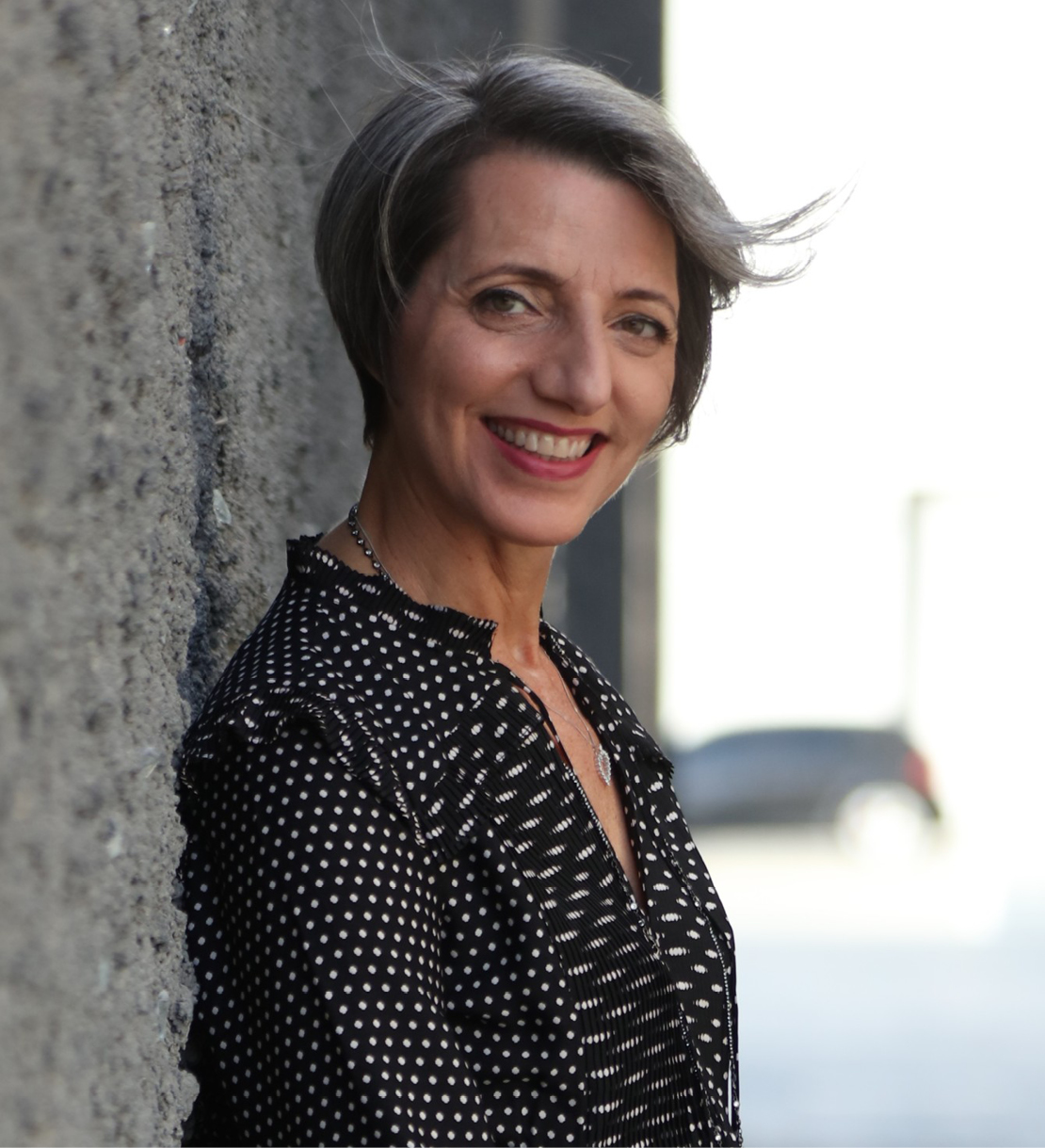
Sumaya Dabbagh
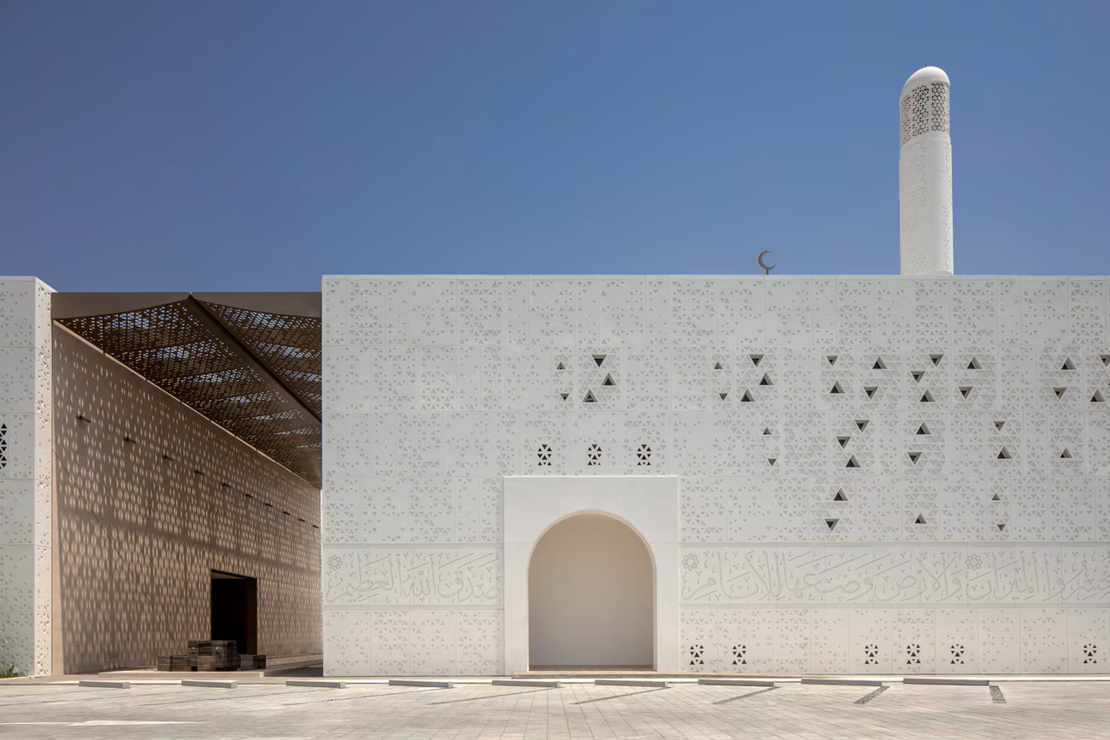
A pioneering figure in the region, Sumaya Dabbagh is the founder of Dabbagh Architects and one of the first female architects in the UAE to design a mosque. Her work is defined by a restrained, minimalist aesthetic that emphasises light, proportion, and spiritual clarity. The Mosque of the Late Mohamed Abdulkhaliq Gargash in Dubai exemplifies this approach, offering a contemporary reinterpretation of Islamic architecture through simplicity and precision.
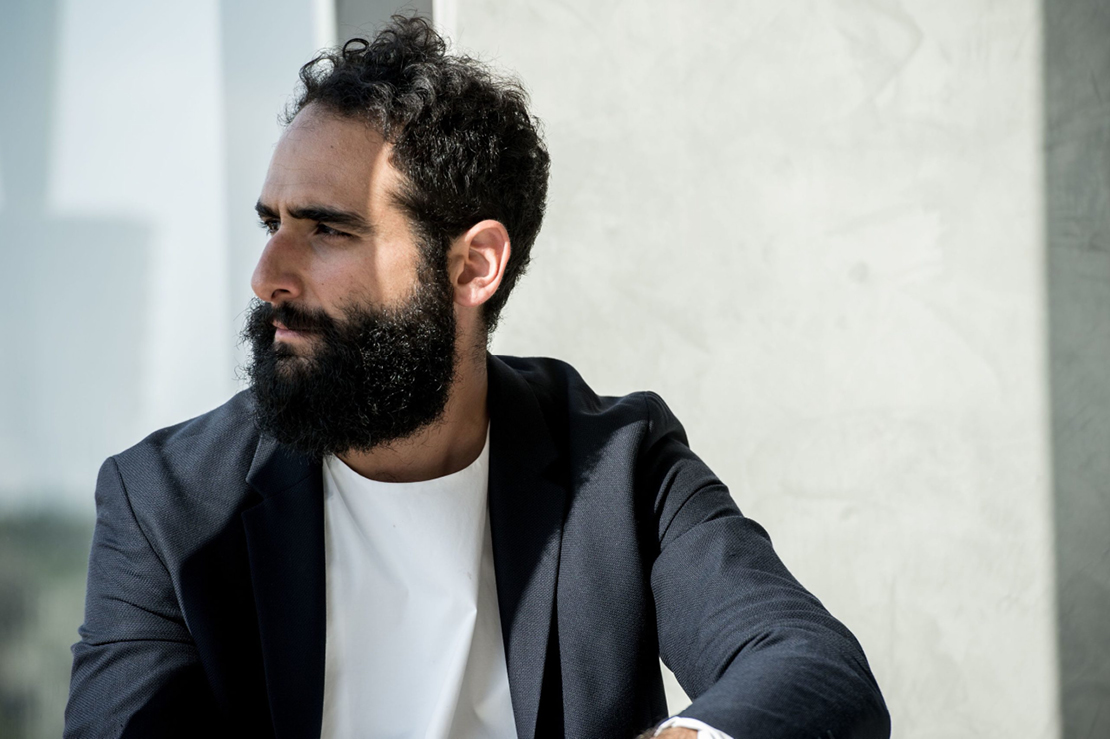
Tarik Al Zaharna
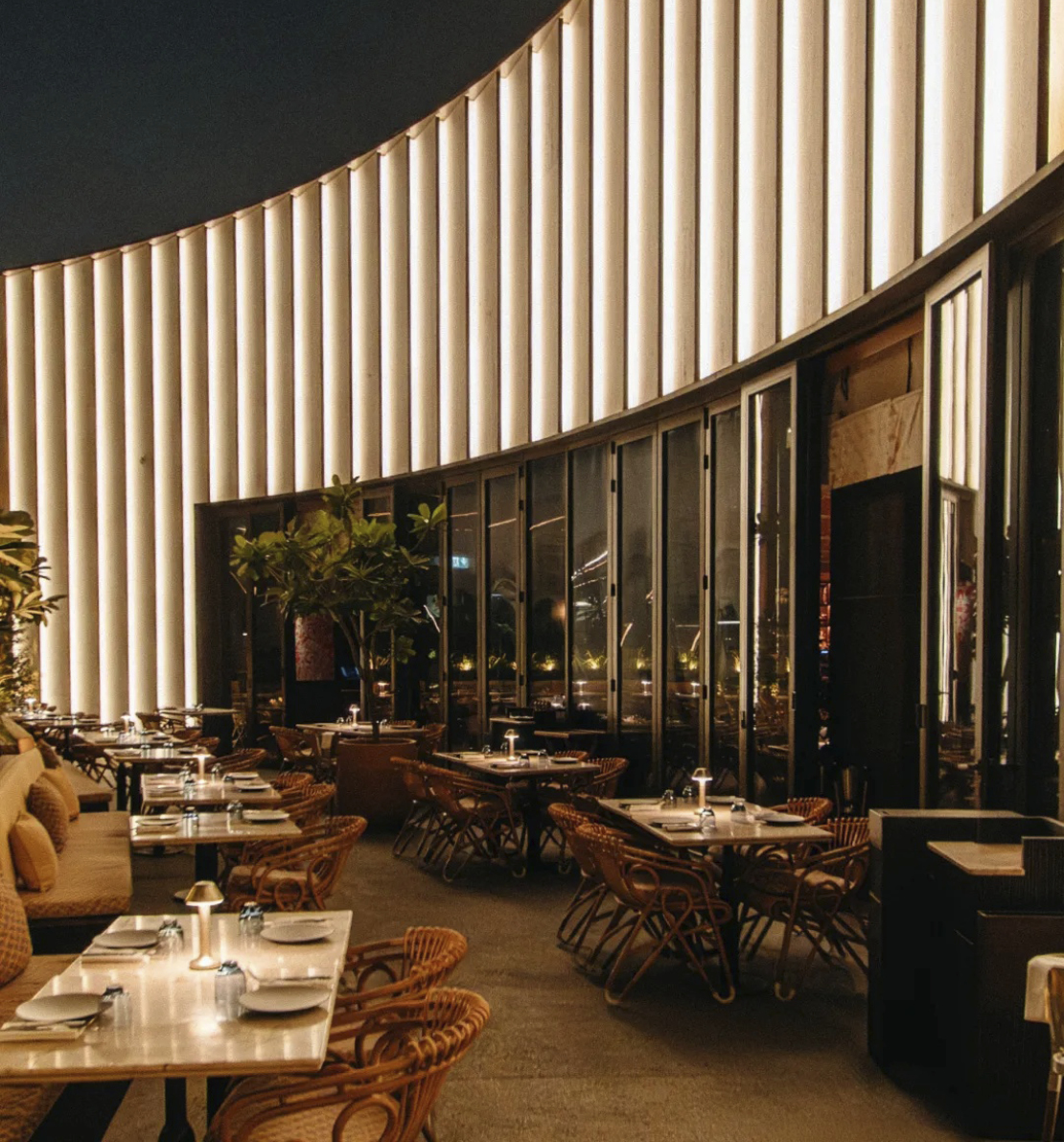
Through T.ZED Architects, Tarik Al Zaharna is shaping a new architectural language rooted in craftsmanship and materiality. His work champions artisanal techniques, particularly in masonry and joinery, while embracing a bold and contemporary aesthetic. Projects such as Chez Wam highlight this philosophy, with richly textured interiors and atmospheric lighting that create a distinctive and immersive dining experience.
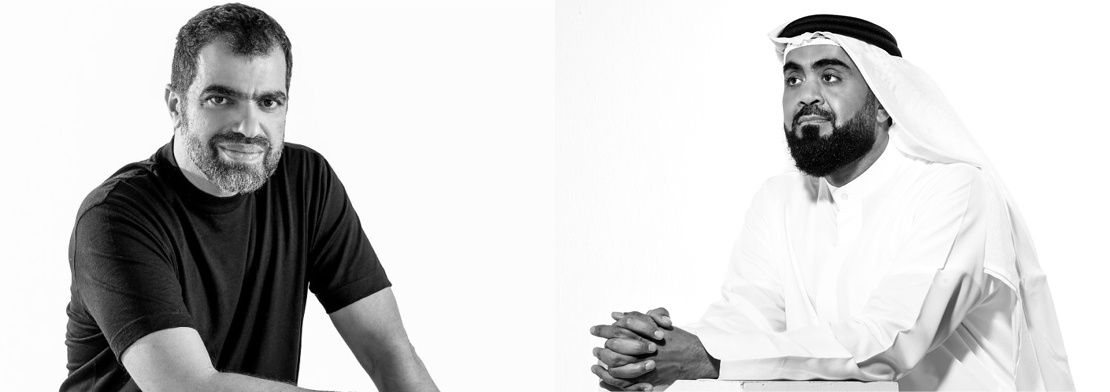
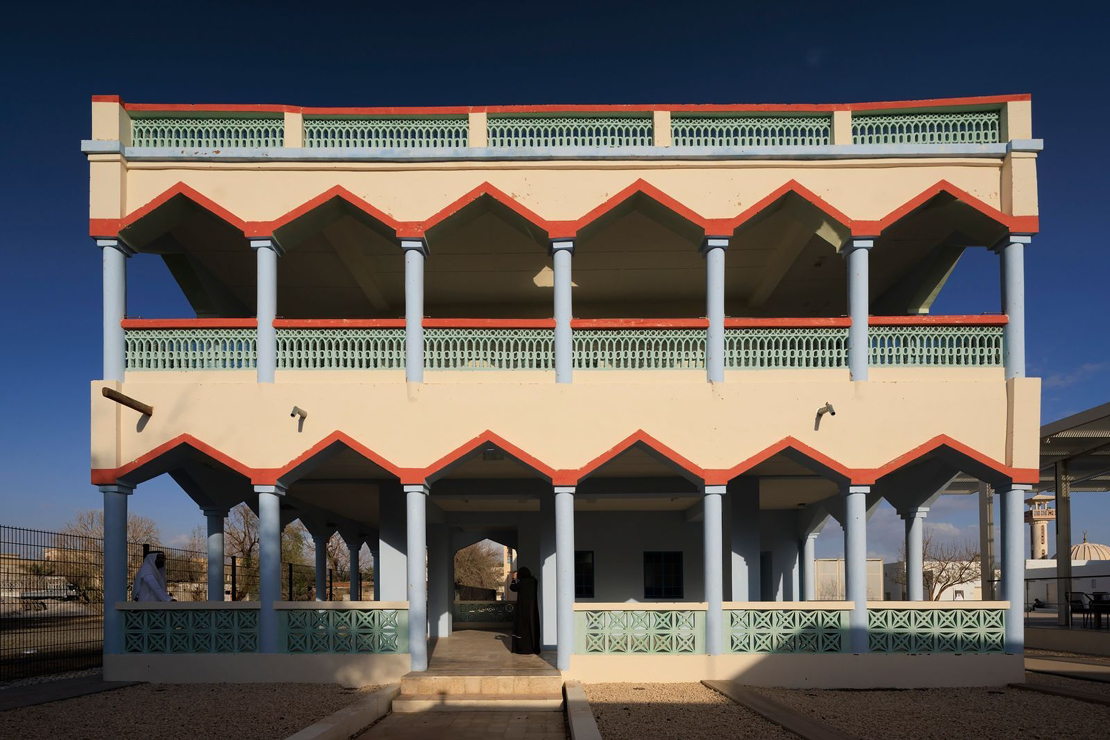
X Architects
Founded by Ahmed Al-Ali and Farid Esmaeil, X Architects has spent over two decades exploring the intersection of architecture, landscape, and cultural heritage. Their work often focuses on preservation and adaptive reuse, breathing new life into historic structures. A key example is Bait Mohammed Bin Khalifa in Al Ain, where careful restoration combined with contemporary interventions transformed a deteriorating building into a vibrant community space.
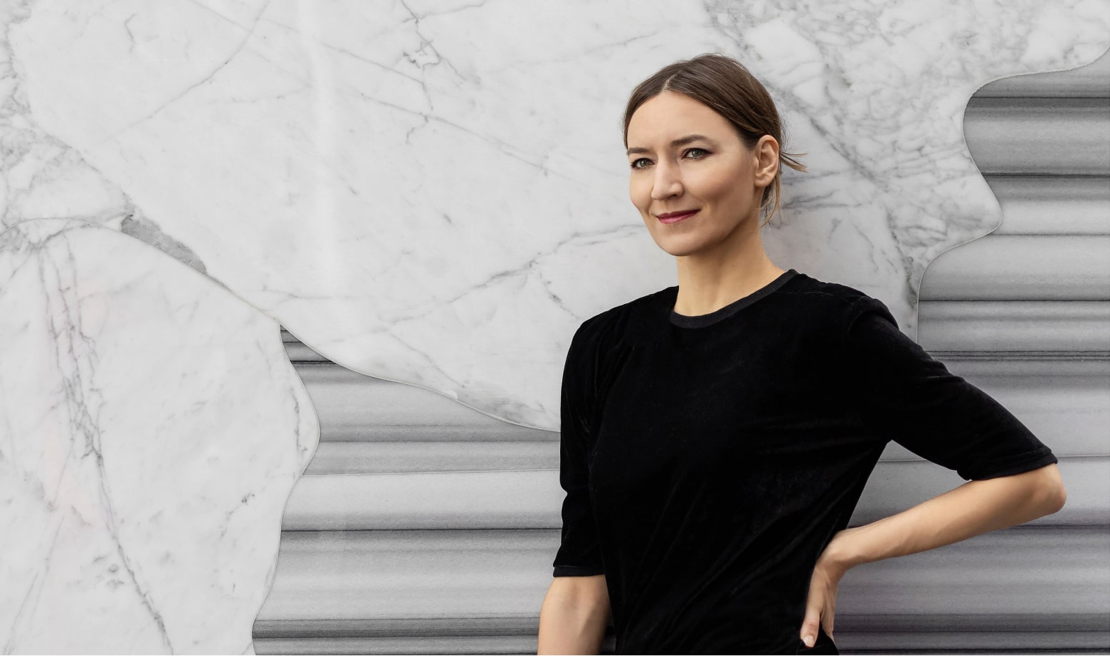
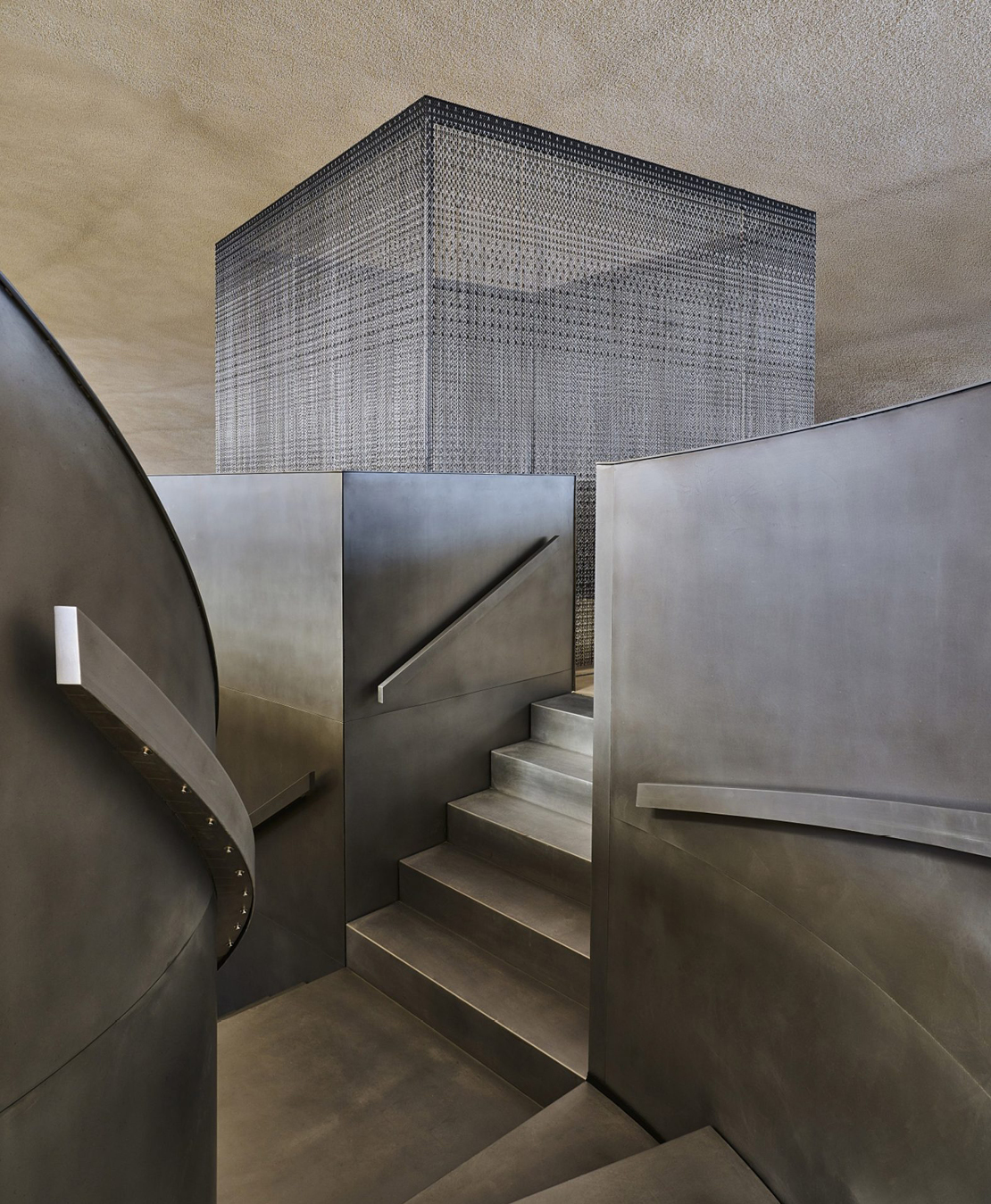
Agata Kurzela
Dubai-based designer Agata Kurzela blends modern creativity with technological savvy, she’s a trained engineer, architect and urban planner. Her versatile work spans architecture, interior design, installation and product design, and she’s won awards for her steel-clad Government Offices in Abu Dhabi. Most recently at the Zayed National Museum, she has taken a similarly nuanced approach, adding depth to a sand-coloured palette with tactile local materials.
By Eliza Scarborough
A Gilded Spirit: Chanel Métiers D’art Paris-New York 2018/19
From the May 2019 issue of A&E Magazine, watch the fashion film created alongside the editorial photoshoot showcasing the Chanel Métiers D’art Paris-New York 2018/19 collection.
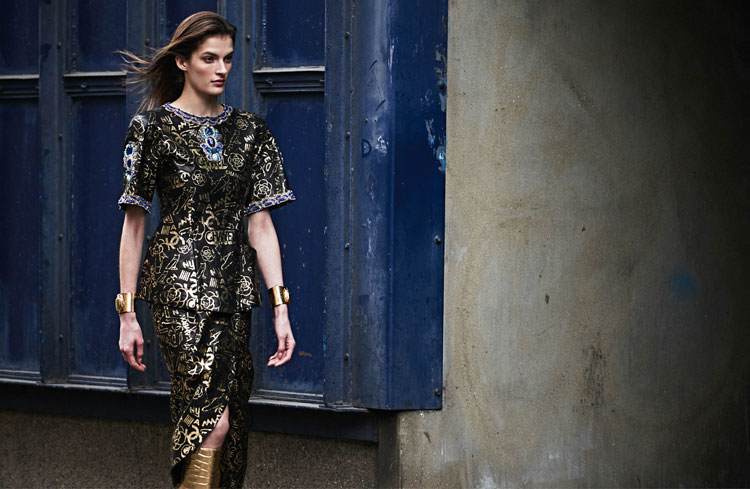
Black and gold top in printed leather, Black and gold skirt in printed leather, Cuff bracelet in gold metal, Gold boots in embossed leather
ALL CHANEL
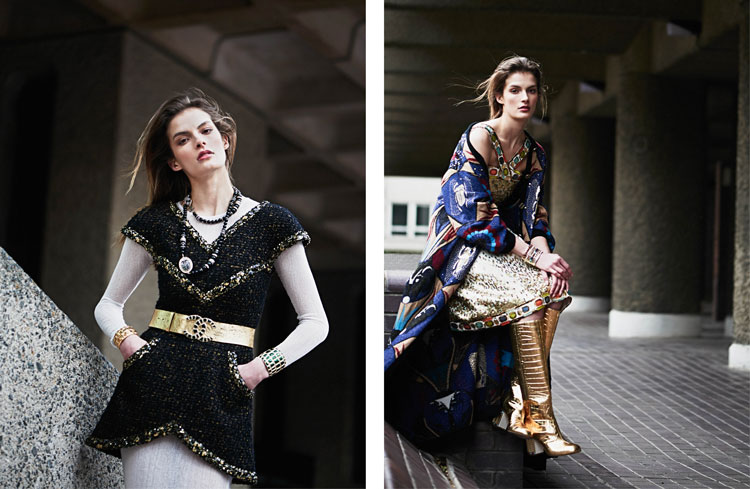
LEFT IMAGE:
Ecru dress in fine jersey, Tunic in black and gold tweed embellished with braid, Gold belt in lame leather, Cuff bracelet in metal, glass beads, resin and strass, Cuff bracelets in metal and resin, Multi-strand necklace in metal, resin, glass beads and strass
RIGHT IMAGE:
Embroidered dress in cream satin, Multicolour blue coat in cashmere, Cuff bracelets in metal, glass beads, resin and strass, Gold boots in embossed leather
ALL CHANEL
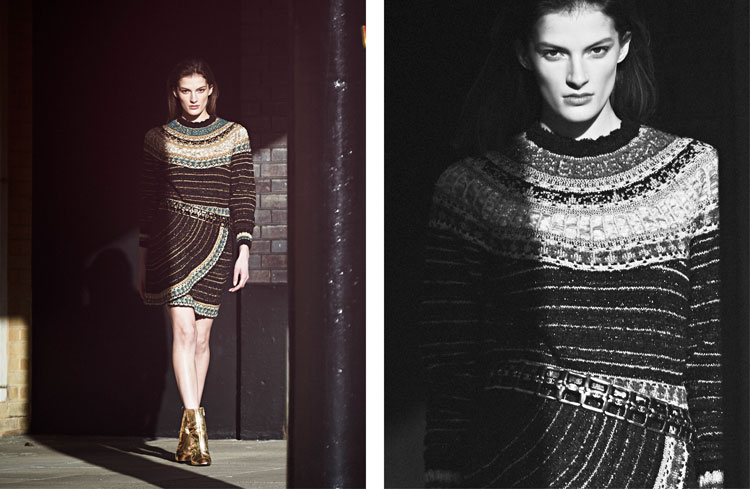
LEFT & RIGHT IMAGE:
Black, green and beige sweater in silk and cashmere, Black, green and beige skirt in silk and cashmere, Gold short boots in embossed leather, Chain belt
ALL CHANEL
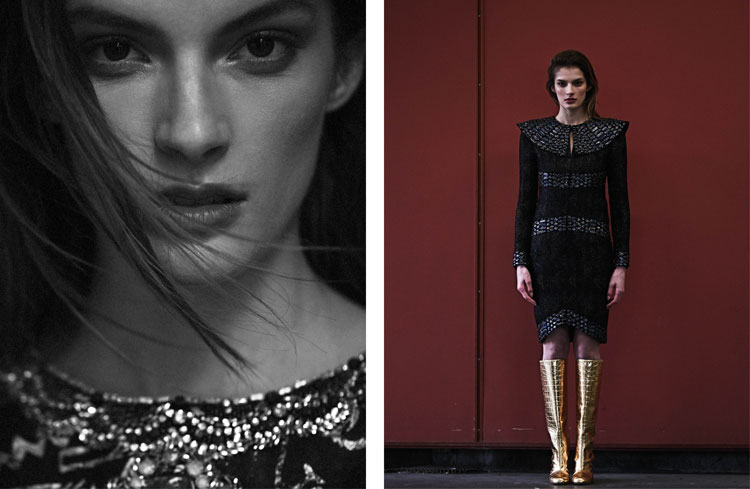
LEFT IMAGE:
Black and gold top in printed leather
RIGHT IMAGE:
Black and gold dress in iridescent tweed, Gold boots in embossed leather
ALL CHANEL
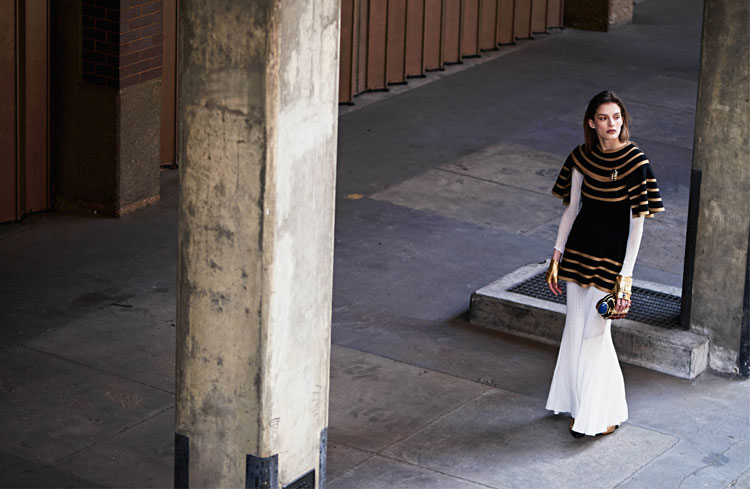
Black and gold dress in silk and viscose, Ecru dress in fine jersey, Fingerless gloves in leather, metal and resin, Brooch in metal, resin and strass, Gold boots in lamé leather, Minaudière in resin and strass
ALL CHANEL
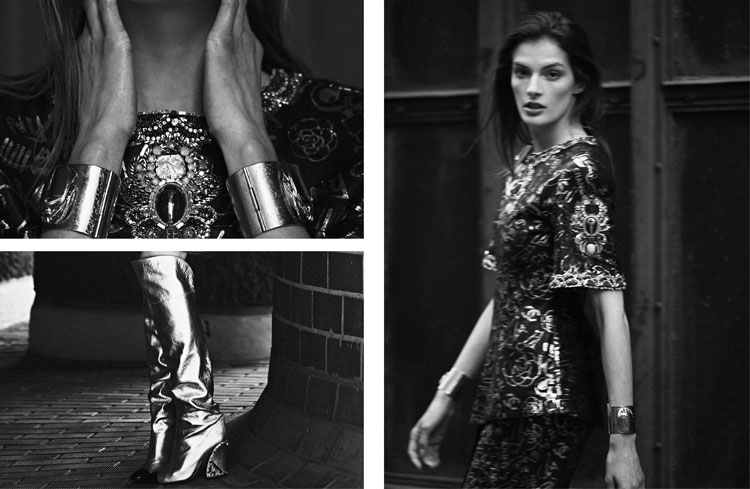
LEFT & RIGHT IMAGE:
Black and gold top in printed leather, Black and gold skirt in printed leather, Cuff bracelet in gold metal, Gold boots in lamé leather
ALL CHANEL
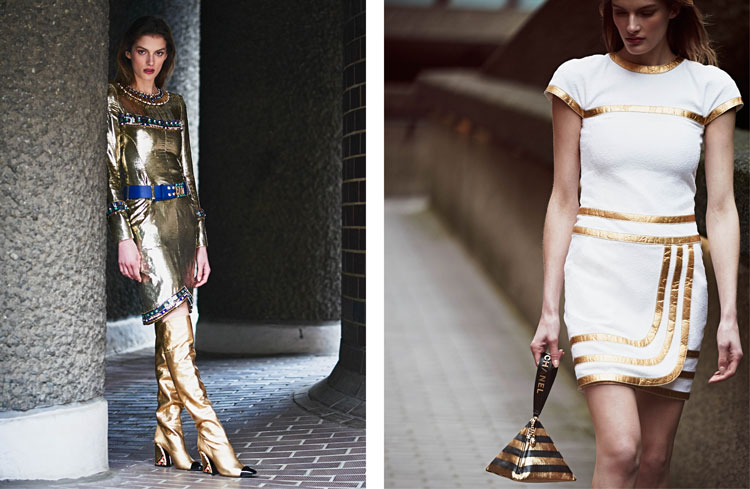
LEFT IMAGE:
Embroidered dress in gold panne velvet, Gold boots in lamé leather
RIGHT IMAGE:
White and gold dress in silk tweed and cotton, Gold and black pyramid minaudière in suede and leather
ALL CHANEL
Fashion Director: Eliza Scarborough
Photographer: Christian Geisselmann
Hair and Make-Up: Min Sandhu
Model: Nadine at Elite
Make-up: Chanel Les Beiges 2019 Collection
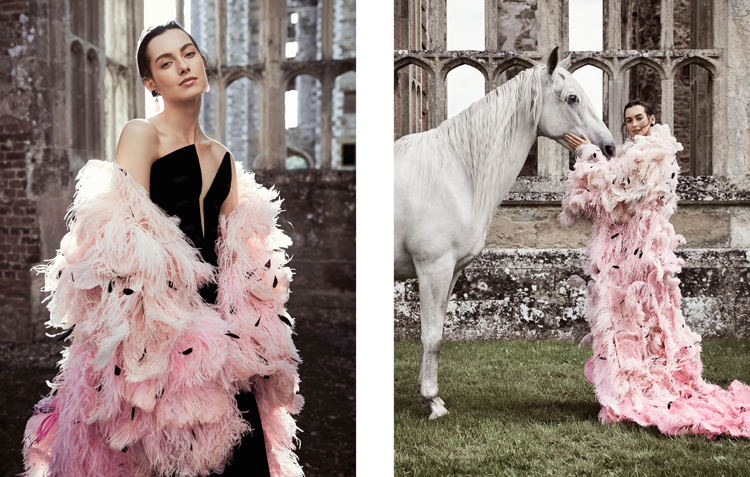
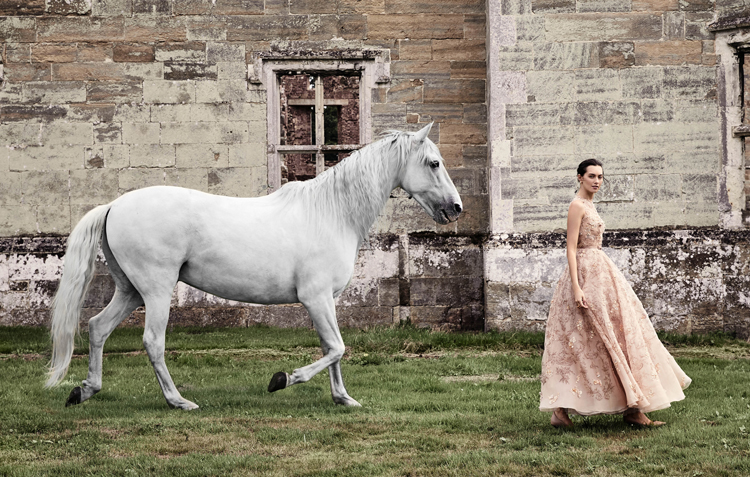
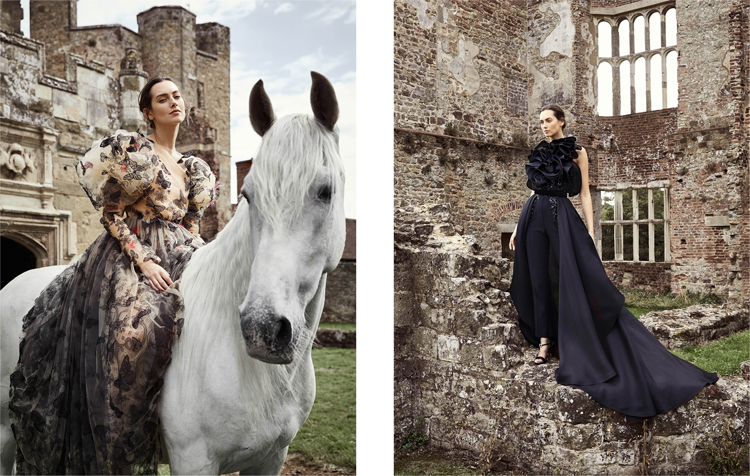
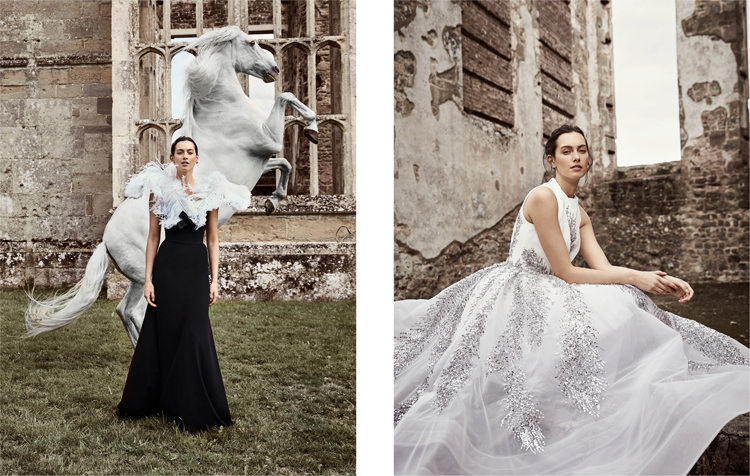
Romantic Revolution, Enter The Magical World Of Haute Couture
There’s strength in romanticism and grace in authority. This is the mood of today’s Haute Couture told through A&E eyes.
READ MORE
Haute Couture FW18: Valentino
Haute Couture FW18: Zuhair Murad
Scroll through to escape into a magical craftsmanship from leading names like Armani, Valentino, Zuhair Murad and Dior.
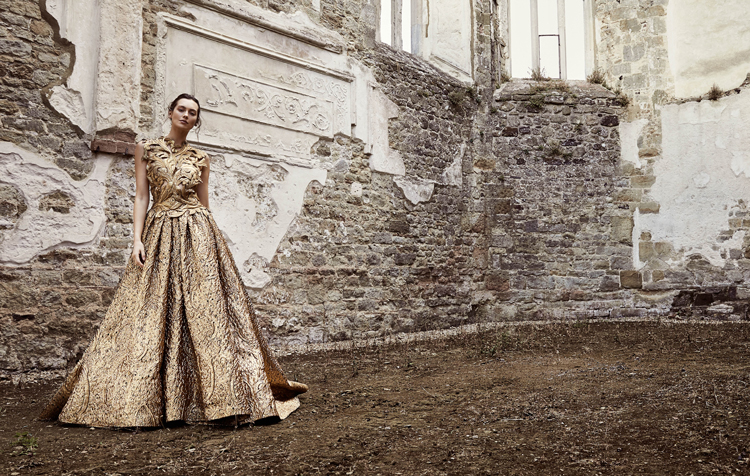
VALENTINO
ARMANI PRIVÉ
DIOR COUTURE
LEFT: SCHIAPARELLI – RIGHT: ELIE SAAB
LEFT: ALEXIS MABILLE – RIGHT: AZZI & OSTA
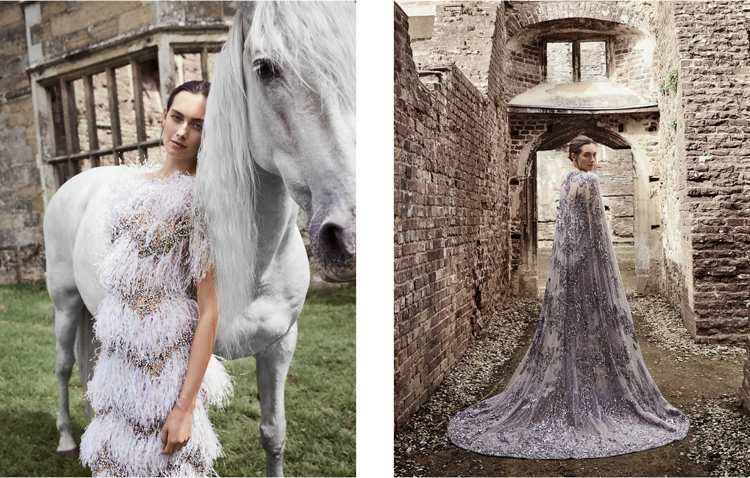
LEFT: RALPH & RUSSO – RIGHT: ZUHAIR MURAD
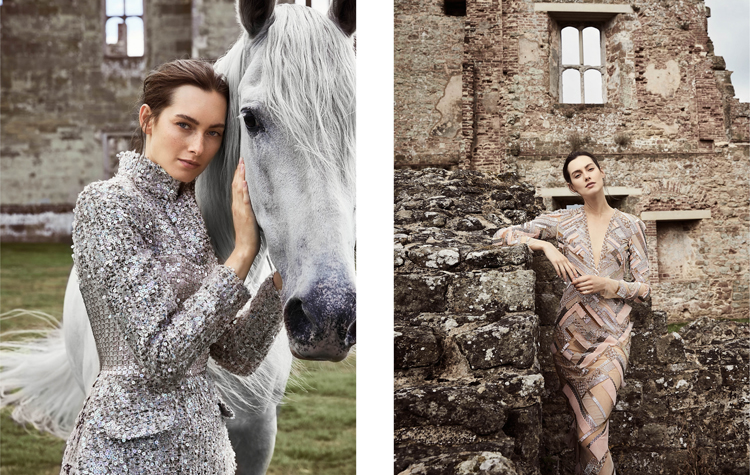
LEFT: RAMI KADI – RIGHT: RAMI AL ALI
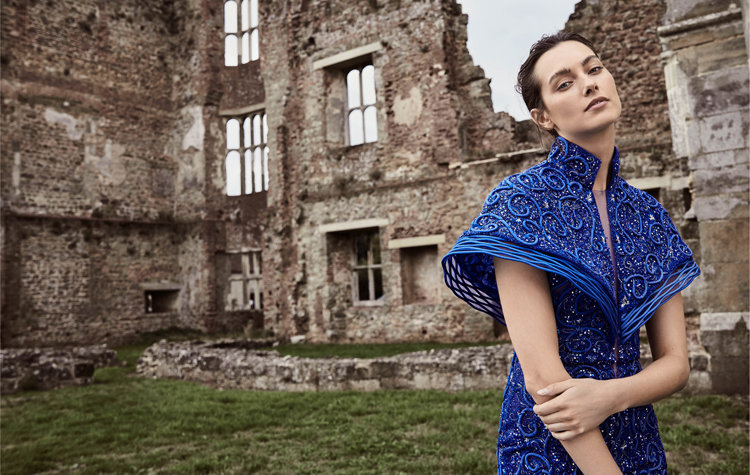
TONY WARD
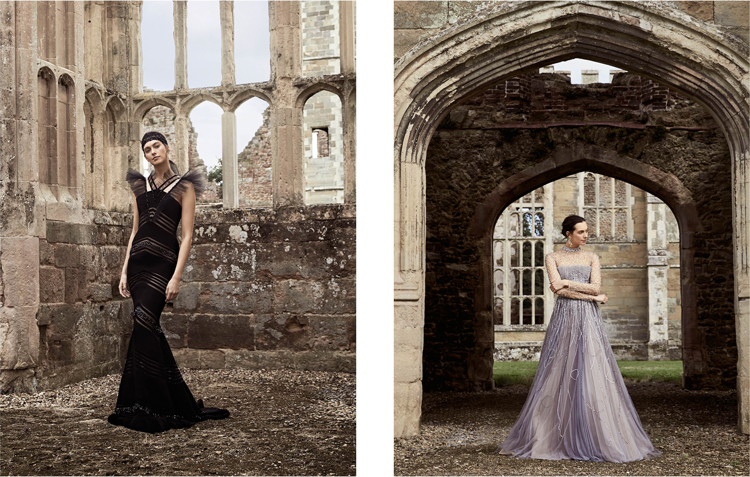
LEFT: GEORGES CHAKRA – RIGHT: GEORGES HOBEIKA
Fashion Director: Eliza Scarborough
Photographer: Jenny Brough
Hair and Make-Up: Scarlett Burton
Model: Morven at Premier
Videographer: Curt Taylor
Location: Cowdray Ruins, United Kingdom
a&e Editorial: Chanel 2019 Cruise Collection
COLOURED TWEED, FLOATY FABRICS AND NAUTICAL PRINTS BRING TO LIFE KARL LAGERFELD’S VISION FOR THE 2018/19 CHANEL CRUISE COLLECTION.
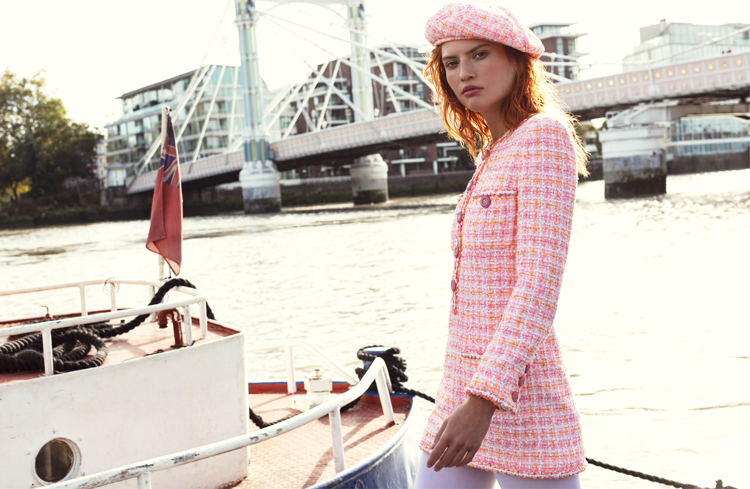
Dress in multicolour tweed embellished with sequins, Beret in multicolour tweed embellished with sequins
ALL CHANEL
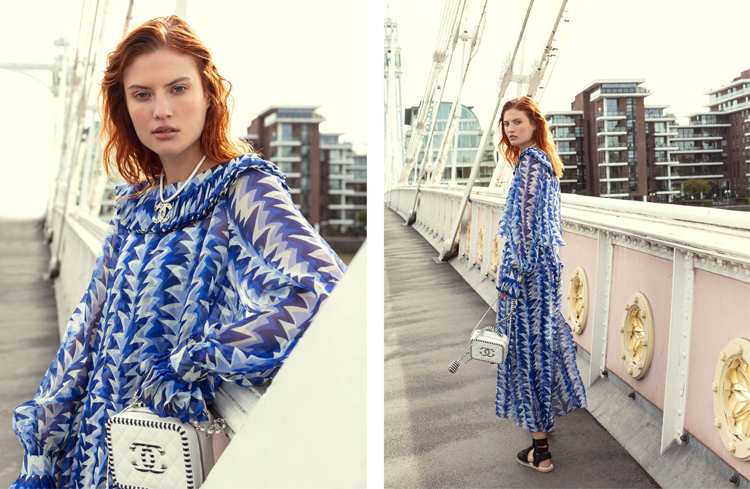
LEFT IMAGE: Printed chiffon top, Printed chiffon dress, Necklace in metal, leather, resin and strass, Bag in white and black leather and metal
RIGHT IMAGE: Printed chiffon top, Printed chiffon dress, Necklace in metal, leather, resin and strass, Bag in white and black leather and metal, Black espadrilles in fabric and leather
ALL CHANEL
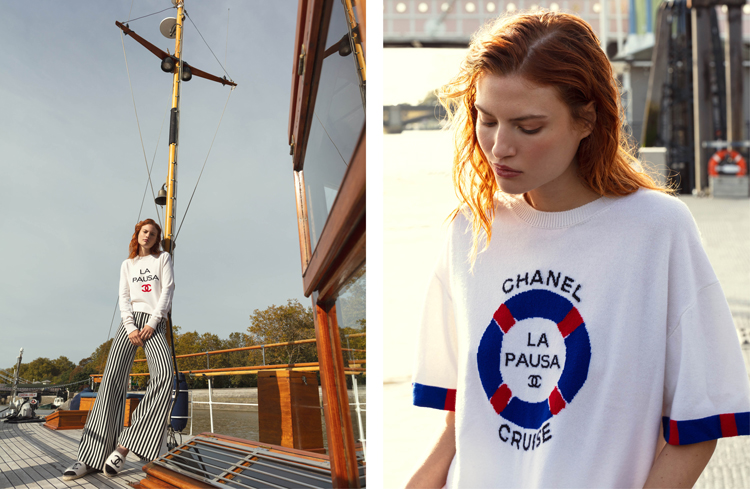
LEFT IMAGE: White cashmere sweater, Wide trousers in black and white striped broadcloth, White and black espadrilles in fabric and leather
RIGHT IMAGE: White pullover in cashmere
ALL CHANEL
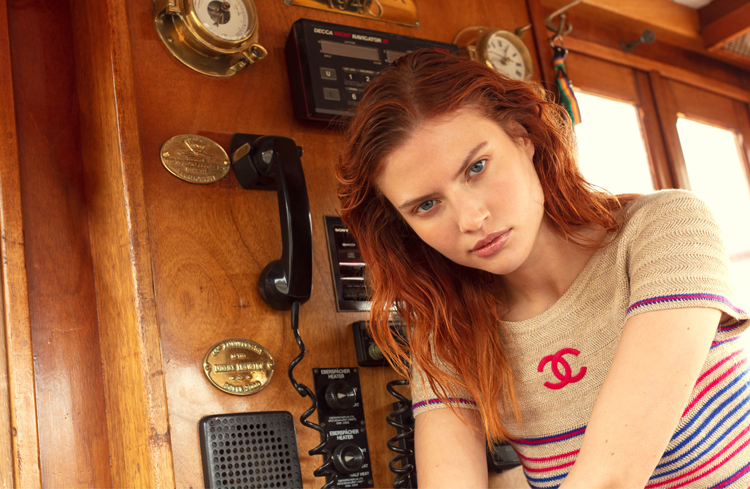
Gold, pink and blue striped dress in linen and cashmere
ALL CHANEL
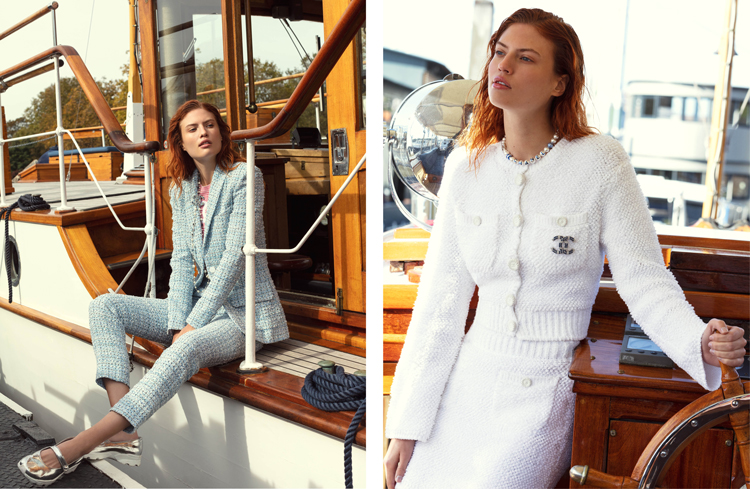
LEFT IMAGE: Blue jacket in tweed, Blue trousers in tweed, Striped pink top in cotton, Necklace in metal, glass, resin and strass, Strappy sneakers in silver leather
RIGHT IMAGE: White cardigan in cotton and polyamide, White skirt in cotton and polyamide, Necklace in metal, glass, resin and strass, Brooch in metal, glass, resin and strass
ALL CHANEL
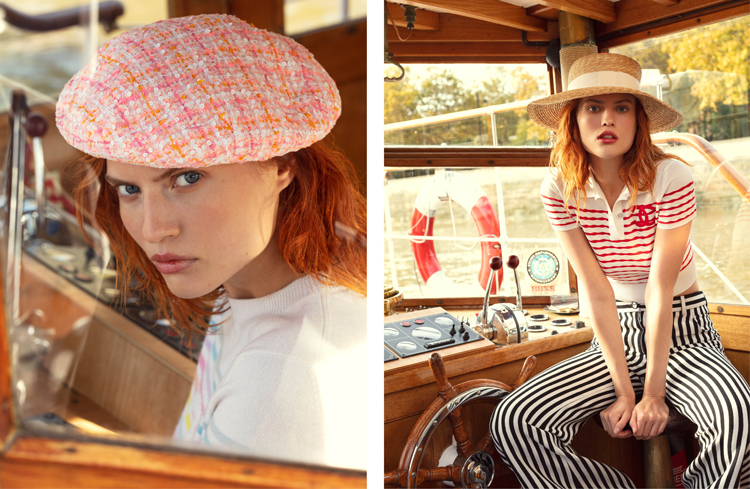
LEFT IMAGE: Beret in multicolour tweed embellished with sequins, Multicolour striped pullover in cashmere
RIGHT IMAGE: Striped white and red polo in cotton, Wide trousers in black and white striped broadcloth, Straw boater embellished with grosgrain and a pompom
ALL CHANEL
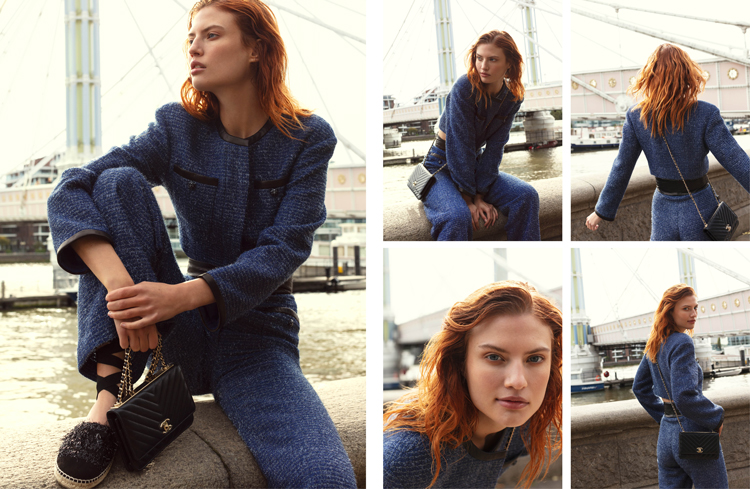
LEFT IMAGE: Blue jacket in iridescent cotton tweed, Blue trousers in iridescent cotton tweed, Black espadrilles in fabric and leather, Black O mini bag in leather
RIGHT IMAGE: Blue jacket in iridescent cotton tweed, Blue trousers in iridescent cotton tweed, Black O mini bag in leather
ALL CHANEL
Fashion Director: Eliza Scarborough
Photographer: Vivienne Balla
Hair and Make-Up: Scarlett Burton
Model: Steinunn at Established
Make-up: Collection Libre 2018 Maximalisme de CHANEL
A&E Interviews: Zuhair Murad
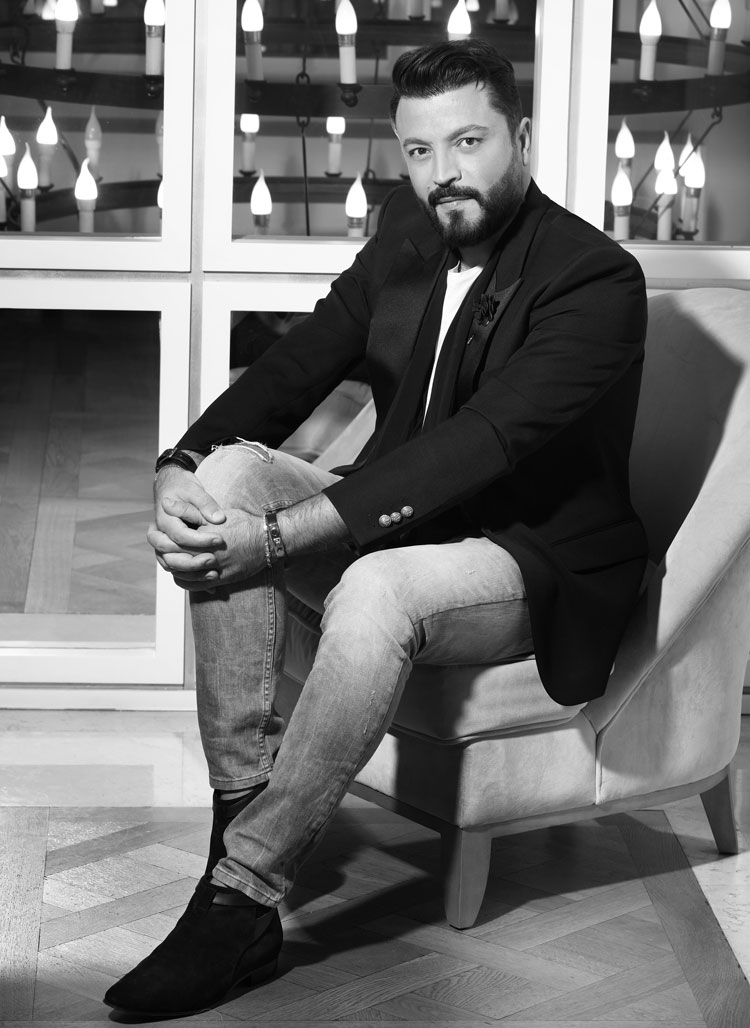
Revered designer Zuhair Murad is skilled in the art of making women feel like princesses. Starting out in an atelier in Beirut, Murad has gathered a following for his romantic-cut dresses, made from the finest of fabrics. His painstaking attention to detail, and ceaseless pursuit of silhouettes that flatter the female form, has seen him reign supreme in the haute couture and bridal stakes for years.
One of his most memorable brides is actress Sofía Vergara, whose gown took 1657 hours to craft, including the application of 350 hand-beaded crystals and hundreds of pearls. Murad’s Fall 2018 collection was another milestone in the bridal sector. The gowns were an ode to pink, with flower motifs adorning silk chiffon, Mikado, and lace dresses in a blushing, powdery palette. The designs typified Murad’s creative journey, which has seen him continue to rethink classical codes while retaining an unabashed romanticism.
Born in Ras Baalbek, Lebanon, Murad quickly discovered his love for fashion. In 1997 he opened his first atelier in Beirut, and his private client list grew rapidly in tandem with his burgeoning reputation for dazzling eveningwear. Just four years later, Murad made his debut at Haute Couture Week in Paris, catapulting him onto the global scene.
In 2007, Murad inaugurated his Parisian ‘Maison de Couture’ in the heart of the Triangle d’Or on François 1er Street, followed by his second office in Paris in 2015, located this time on Pierre Charron street. In addition to the flagship stores in Beirut, Paris and Dubai and shop-in-shop in London, Kuwait and Istanbul, Zuhair Murad collections are distributed through a retail network of more than 150 multi-brand outlets and leading high-end department stores in the major cities around the world the US, France, the United Kingdom, Monaco, Switzerland, Japan, Russia, Canada, Singapore, China and the UAE.
In a world of fast fashion and an era of unprecedented competitiveness between established Maisons and leading brands, some designers have turned their back on couture, however Murad has no intention of following suit, and the DNA of his label is firmly rooted in the heritage, savoir faire, and precision of exquisite one-off pieces. His collections blend ancient heritage with a modern twist, a signature to which the House is very loyal, with a mission for a continuous quest for craftsmanship, glamour, and reverie.
Perfection is also what Zuhair Murad strives to implement during all the phases of his creations, from the concept to the conception then the completion. Each garment is the result of a long and rigorous artisanal savoir-faire that creates the ultimate experience in elegance and refinement.
‘It’s about sensuality and femininity, along with a touch of glamour.’

How did your journey in fashion begin?
Fashion was my passion, my life! I never dreamt myself doing something else. I cannot deny that my parents encouraged me when I used to draw, but they looked at art as a hobby, not a career, especially that fashion in the modern sense wasn’t the trend in Beirut. Beginnings were a bit hard, and competition was everywhere, so it took me years of self-support with many ups and downs and challenges to continue my path. But my great passion and most importantly my ambition was my drive and desire to go bigger and bigger along the way.
What prompted you to decide to create your own brand?
I am an ambitious person and always seek for the best. I always wanted to stand out from the crowd and create my own brand. That was for me the normal process for my business to develop.
Who is the Zuhair Murad woman, and what is your design aesthetic?
It’s about sensuality, femininity, and a touch of glamour. The cuts of the pieces are made with the intention to highlight the natural shape of the woman wearing them. The adornment including inserts of lace, embroidery, sheer panels, print and cut-outs are carefully crafted to achieve a strong silhouette.

What makes your collections unique?
I think they reflect my vision and my personal style, even though they also follow the actual trends.
What do you enjoy most about being a designer, and how has your role changed as you have scaled the company up?
The first years following the opening were very exciting and so overwhelming. Although I had been designing for years before that and I was familiar with fashion in all its aspects, the whole business side happened so fast and it boomed so quickly. As we all know the fashion business requires a lot of personal involvement and a total dedication of time and energy. I learned so much and am a different man today!
What do you feel is key to the growth of the brand, and has been key so far in the journey of the brand?
Personal dedication, personal presence, and perseverance.
What do you find the most challenging part of having your own fashion line?
You and your brand become one entity. It affects you personally through the good times and the bad. You have sleepless nights, constant worrying, lives that depend on you, eyes that are on you. So, I would say that the most challenging part is the pressure that comes with this beautiful career.

Can you share the secret to a successful label?
I guess it is the way I get involved in all the steps when creating, from the first idea that pops up to the final step. Of course, I would have to say that everything I do is a work in progress and is all based on trial and error and finding the perfect combinations for the creations of collections.
What personal qualities to you attribute most to your success?
Perseverance and the desire for perfection.
Can you share with us a milestone moment in your career?
Showcasing my couture collection for the first time in 2001 during Haute Couture Week in Paris. It encouraged me to inaugurate a couture showroom in Paris because I felt that I had to be present in the capital of fashion. It was a bit risky at that time because I was just a beginner, but thanks to the encouragements that surrounded me and my determination to succeed, it was a very positive step that I made.
What is your creative process like, and what part do you enjoy the most?
I love the early stage of the creation of the collections, when I am spending entire days with my team with a lot of ideas, suggestions, details, fabric samples, embroidery swatches, and colour palettes. Then comes the drawing part followed by producing those designs where no mistakes are allowed.

To you, what makes the perfect dress?
I am a woman’s curves fanatic! The perfect dress is the one that heightens the silhouette whether with décolletage, fabrics, or style to end up with a perfect creation.
Tell us about your favourite signature fabrics?
Muslin, silk, and lace are my favourites. Even though they are not easy to handle because of their delicate texture, they look so glamorous, and the result is always spectacular.
Why did you decide to take the Haute couture route with your gowns?
I have an endless dream of magnificence that I concretise with couture designs. This message of beauty and aesthetic is also my state of mind throughout the collections.

What has been key to gaining credibility in a segment of fashion that is so elite and surrounded by so much history?
The level of craftsmanship maintained in each one of my designs, whether ready-to-wear, couture or bridal. The same attention to detail is invested in all my pieces.
How do you guarantee exclusivity with your gowns?
When it comes to couture gowns, it’s very easy since every piece sold is documented and the files are with our headquarters. We make sure no couture design has been sold to more than one client.
As more luxury brands bolster their couture strategies, what do you feel sets you apart?
As a designer I’d like to think that my designs set me apart from other designers. There are also the numerous red-carpet placements, the positive feedback we’ve had so far from the press and most importantly my clientele’s testimonials.
Can you talk us through the couture process at Zuhair Murad?
Designing a couture look ensures that the outfit is a piece of art and offering a distinction in design and practice remains a constant challenge. Whether it is fully beaded, embroidered or made in plain fabric with intricate details, it is all about that feel-great factor in a unique piece. Everything turns around that piece conceived by craftspeople with a particular aptitude. I love working with sheer materials such as silks, chiffons, and tulle, as they feel very feminine to me. These fabrics give depth and perspective, allowing me to highlight the natural shape and curves of a woman’s body and show as much as I like while maintaining a certain degree of mystery as well. It is a very long process of work between creation and production for each look, with a simple dress taking a minimum of 300 hours for design, producing and beading, whereas for a sophisticated style, over 1,000 hours would be dedicated to designing, hand embroidering, and tailoring.
Do you travel to meet your clients around the world too?
I rarely travel for clients. They all come to our showrooms in Paris and Beirut for that exclusive and singular VIP treatment.
Tell us about your decision to diversify into Ready-to-Wear and accessories?
My decision to design high-end garments that are more available to purchase at store front boutiques, high-end department stores and online boutiques comes from the need and the want to engage on a larger level and include a new clientele and market to the existing one. I want my designs to be accessible to all kinds of sophisticated tastes.
How do you find the process of Ready-to-Wear designing? Does your heart always remain with the exclusivity and luxury of couture?
There is luxury in my ready-to-wear pieces as much as there is in my couture pieces, with the brand identity and the DNA remaining the same. The styles, cuts, and fabric of course change, but my heart is poured out on these collections as much as it is on couture.
How would you define luxury?
Luxury means exclusiveness, premium quality material, and exclusive distribution.

What is the biggest luxury in your life?
Healthy time spent with your loved ones.
Tell us about why you decided to expand into bridal wear?
I believe that the main reason for creating bridal gowns has been my oriental origins, where marriage is an institution. The wedding day is the most important day of every woman’s life and her wedding gown has to be outstanding and remembered. To develop this line, we have come to the creation of two RTW bridal collections per year, sold all over the world beside the custom-made couture collection.
How is the process different when designing either red-carpet gowns or bridal wear?
For the red carpet, that magical place, I believe it’s about finding a balance and of course the dress should inspire confidence. When a celebrity feels confident on the red carpet, it is clearly reflected in the way she carries herself. Every detail is treated with the utmost attention and dedication, which is why it takes a lot of time to create a satisfactory result. I wouldn’t have ever had a chance on the red carpet if I didn’t work this way, precision is what makes headlines. Whereas for the bridal dress I focus on the bride and the way she wants to look for her most important day. Even though she is here to seek my personal style and taste, leading her into her choices I, from my side, take into consideration that young woman’s opinion whose aim is to look splendid on that day. This process takes time because as you may know we are not often on the same page. We both need to agree in which direction we’re going. Then as soon as we both approve on the style, the production of the dress is the easy part even though it is time consuming and can take a minimum of 1000 hours of production.
Designing a bridal dress has many constraints. What inspires you, and how do you keep creating new and exciting designs with such a tight remit?
I think the inspiration for wedding dresses is based on what we have lived, experienced and seen over the years. We all have memories of lavish weddings, romantic princess dresses, and endless veils. These omnipresent reminiscences, in addition to current trends, nourish the inspiration ending up with collections whose ultimate goal is to provide to the bride a spectacular entrance that will set the tone for the atmosphere of the wedding.
Who would be your dream bride to dress?
I don’t dream of dressing anyone in particular for their wedding dress, as long as the bride is happy wearing my dress I am more than satisfied. I feel so involved in the happiness of the brides that already wore Zuhair Murad on their most special day, and I wish from the bottom of my heart to be able to be part of this joy for many other brides.
Tell us about your recent Fall 2018 bridal collection and the inspiration behind it?
Pink, the eternal symbol of femininity is celebrated throughout the collection, and is used in a limited palette, ranging from tender ivory to powdered and muted tones, giving centre stage to the house’s savoir-faire. The collection celebrates a tradition both ancient and modernised, and more importantly, the woman is it designed for, equally in love and of her time. Flowers appear in all shapes and sizes throughout the pieces, expressing the same philosophy, whether worn as a crown, embroidered in 3D, or delicate on sheer chiffon like a tattoo on nude skin. Channelling the timeless elegance of Grace Kelly, the short and bouffant cut Audrey Hepburn in Funny Face, or Mia Farrow’s pared down chic, in their respective off and on-screen weddings, each design radically rethinks classical codes. Silk chiffon, tears of ruffles, and airy lace create a tension between what is made visible and invisible, and this equilibrium reflects a harmony between worlds, cultures and generations.
Tell us about your favourite part of designing a bride’s big dress, and what do you feel is most important when creating their dream gown?
The perfect dream dress is the one that reflects the bride and only the bride herself, her character, her taste, her choices, and her envies, because the wedding day is the most important day of every woman’s life and her wedding gown has to be outstanding and remembered. I emphasise a lot on highlighting a feminine silhouette along with the sensuality that enhances the woman’s body. I want the bride to be elegant and contemporary with a touch of romantic. The lines and cuts have to be pure and perfect along with the fabrics and embroideries.
Can you share with us your top tip for brides-to-be?
The golden rule of a wedding dress is that it reflects the wearers personality. Nothing beats having your DNA and the designer’s encrypted in the dress you’ll wear on the most important day of your life. You don’t want to be remembered for the rest of your life in something that doesn’t represent you.
What is the biggest mistake a bride can make while wedding dress shopping?
Mistakes happen only when the bride chooses a style that does not fit her figure, following trends instead. The choice of colour of the dress is also very important, it should go with the colour of your skin and bring out the colour in your eyes.
Is there a particular style or look of Zuhair Murad dress that seems to appeal to the Middle Eastern woman?
From their cultural background, Middle Eastern women tend to be very sophisticated and elegant. They love glamour, seduction, refined details, and luxury and like to be distinguished from the others. They are always on the lookout for anything new in fashion and they want unique and singular gowns for their occasions and this is what couture offers them.
Which markets do you feel will present the biggest opportunities in the future?
China.
What do you expect to be the biggest challenge the brand will face in the coming years?
Diversifying has its risks and limits of course, and with our recently implemented strategy that focuses on diversifying in ready-to-wear, we need to ensure Zuhair Murad as a brand doesn’t get diluted and keeps its identity, whilst being more accessible and reachable to a bigger market.
What is next on the agenda when it comes to product lines, and what can we look forward to seeing at Zuhair Murad?
Expanding our new RTW lines, which include daywear garments, shoes, and accessories, together with the opening of franchise and flagship stores.
READ MORE
15 Minutes With… Rami Al Ali
A&E Interviews British Designer Aruna Seth
Louis Vuitton Presents Les Parfums Masculins
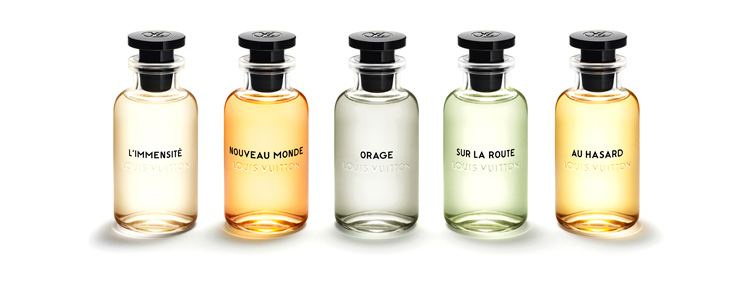
Louis Vuitton presents its first ever collection of perfumes for men.
Created by Master Perfumer Jacques Cavallier Belletrud Les Parfums features five fragrances, which pay homage to the adventurer on a quest for self-revelation. Each of the five scents captures a discovery and evokes a masculine energy onto the skins surface.
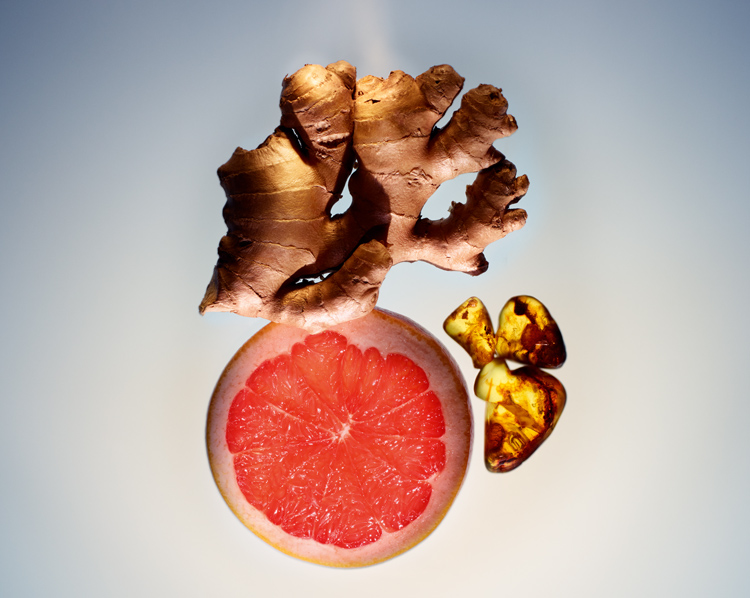
Immensité represents freedom. A sharp and powerful perfume that blends the bitterness of grapefruit with ginger, labdanum and ambroxan. There is a distinct sensual amber note. Ginger and a spicy, lemony scent creates a hint of freshness.
Behind the bitterness of grapefruit, a watery molecule emerges with the aromatic echo of sage and rosemary. This fragrance carries the promise of a new horizon, with which to invent a thrilling new life.

Nouveau Monde is an homage to the explorer. For the man stepping away from day-to-day life to experience new cultures and life-changing rituals. This oriental accord is created in honour of 19th century explorer Pierre Savorgnan de Brazza; one of LV’s first clients.
The scent is a comforting breath of fresh air created around natural cocoa and complemented with a contrasting oud assam. One final surprise is a spicy note of saffron. The result? A leathery scent from the oud which is given energy from the cocoa and incense.

Orage is a surprisingly woody fragrance. Created with a short, and concise composition Orage is made with only around a dozen raw materials of incredible luxury. Iris with a patchouli heart, fractionated so as to preserve only the avor of its leaves is used as a key ingredient.
Majestic, earthy and acerbic, the patchouli commands attention. As the scent warms to your skin it reveals an ambiguous power: as luminous as lightning, bleached and slightly elevated with bergamot. Earthy and vegetal, this regal, soft fragrance reveals gentle, musky notes as the hours pass.
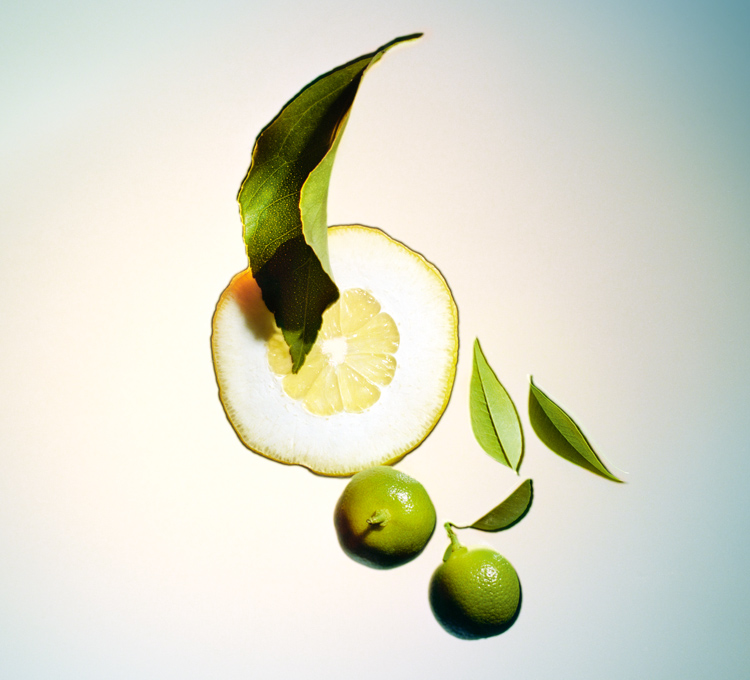
Sur La Route is an ode to the special excitement one feels when striking out to meet destiny. This is a grounded fragrance to wear for any occasion. Sur La Route is shaded with a touch of tender green, as fresh as a splash of water on the cheeks.
Calabrian citrus is combined with the noble note of lemon, bergamot and a few blades of freshly cut grass that give the scent its raw, green accent. Finally, Peruvian balsam provides the most beautiful balsamic notes in perfumery. The balm is incredibly addictive on the skin thanks to the freshness of citrus and spicy notes of pink peppercorn and nutmeg.
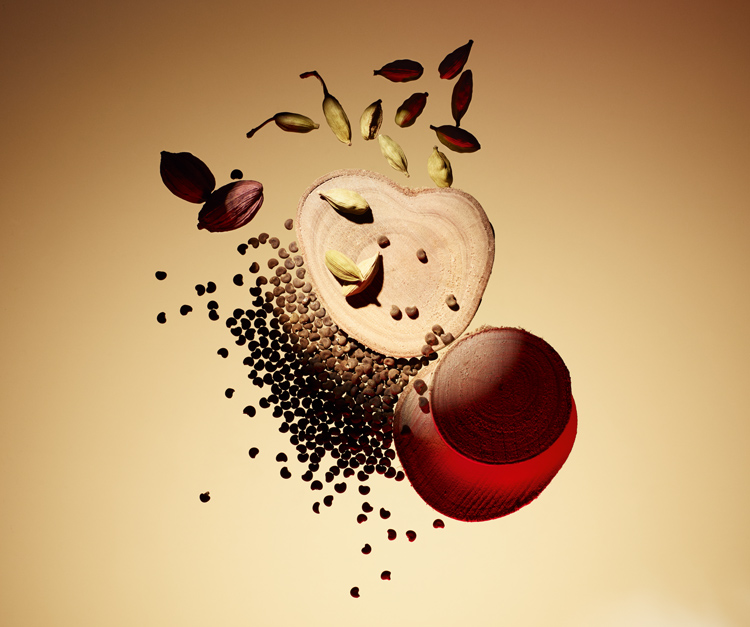
Au Hasard is for those with a taste for risk; a surprising scent with no discernable bearings. Master Perfumer Jacques Cavallier Belletrud chose to use an exceptional sandalwood, cultivated in Sri Lanka. On to this creamy, milky wood he decided to graft the seed of ambrette, a delicate yellow flower that resembles a pansy, from whose tiny black seeds emanates a perfume of pear liqueur and vegetal must. On the skin the spicy vibrations of cardamom mix with sandalwood, while the ambrette lends a fruity radiance.
Housed in the same glass bottle as previous LV men’s fragrances the new collection of five perfumes features juices with a delicately shaded colour palette. The two interlaced letters of the LV logo are engraved in cold galvanized metal, recalling the codes of men’s leather goods and the barrel of a shotgun. The use of gray and silver markings makes it easy to distinguish the men’s cases from
the women’s, which have subtle gold markings.
Inspired by travel, discovery and movement, these men’s perfumes come in several formats, echoing the women’s. These include the generous, refillable 200ml bottle as well as a 100ml size compatible with carry-on requirements. Each of these five fragrances is also available in a travel set that includes a black 7.5ml bottle and four magnetic, new-gen refills that clip into the spray bottle. The easy-to-use travel bottle is ready to take to the four corners of the globe. Cylindrical travel cases are available in two masculine shades of leather: Monogram Eclipse canvas and Taïga leather.
READ MORE
The Story Of Louis Vuitton’s Ombre Nomade
Watch Virgil Abloh’s First Menswear Collection for Louis Vuitton
Dior Brings Couture Craftsmanship to Watchmaking

Christian Dior’s childhood memories are held with strong emotions linked to the world of couture. In the heart of the family villa, perched on the crest of a Normandy cliff, the place that the young Christian prefers above all others is the linen room, where he watches in silence as the seamstresses sew and embroider with such skill. Chain stitch, scalloped eyelet, bobbin lace, stem stitch, satin stitch, rattail beading, Beauvais knot: the deft hands stitch and re-stitch under the fascinated eye of the child who plays with the silk threads and recuperates the bobbins. In his memoires written in 1957, the Master records his cherished memories in detail:
“Dusk was drawing to a close, night was falling and I lingered there, forgetful of my books and my brother, looking at the women deftly wielding their needles around the oil lamp.”
This love of couture continues into his adolescence. Whilst his parents are preparing him to become an ambassador, the young Norman prefers to design – and sew if need be – the fancy dress costumes for his brothers, sisters and cousins for the masked balls at the Granville casino. In the 1930s, during a retreat far from Paris, Christian Dior discovers the great pleasure of creating something for himself. He learns the art of tapestry making and becomes passionate about it. This initial contact with arts and crafts leaves him with a vital need that he resumes by saying “I wanted to make something with my hands”. This is how, from needle to thread, from one thing leading to another, the future couturier becomes a fashion designer. His friend, Jean Ozenne proposes to sell his sketches and one evening he returns triumphant.
“He had sold some of my drawing for 120 francs. The most money I had really earned with my own hands! I was amazed. Those 120 francs brought to me by watchful and faithful friendship were like the first rays of sun after a long night. They decided my future and they still sparkle in my life”.
When he founded a Maison in his own name in 1947, Christian Dior wanted it to be small and confidential: a Maison, where people work in accordance with the traditions of couture, where the heads of the ateliers and their seamstresses apply themselves to rediscovering or inventing the appropriate techniques for the models they are entrusted with.
“I considered that in order for the Maison to validate itself, it must resemble – at a time when everything was moving towards machines – more an artisan’s laboratory than a model factory.”
Although the great Couturier becomes famous by proposing a new silhouette to the world, his legend is to be immortalized thanks to a unique vision that glorifies the golden hands of craftspeople. Even if that requires reviving long-forgotten traditions.

“True luxury demands true materials and true craftsmanship,” proclaimed Christian Dior. “It is only meaningful when rooted in authentic traditions.”
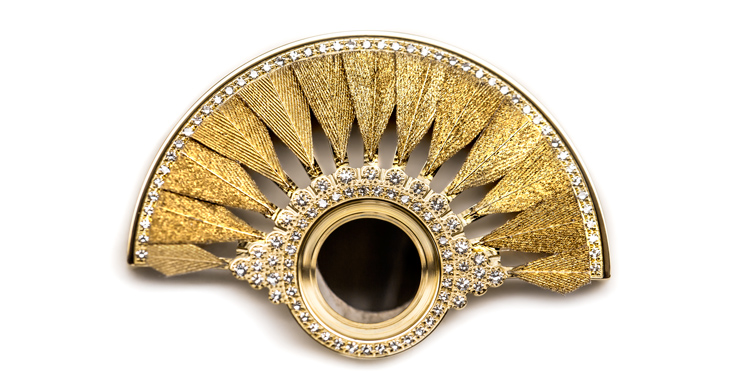
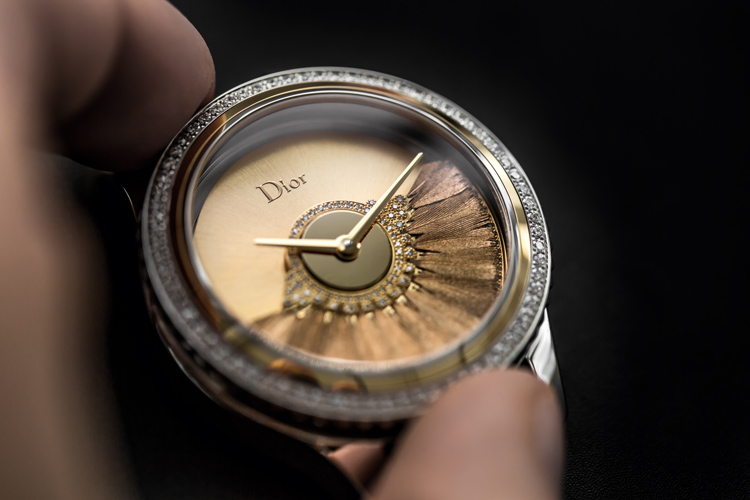
Dior Horlogerie has wished to perpetuate those traditions by offering watchmaking craftsmen the right environment for them to express their know-how in harmony with the Maison’s very essence. This year, the aesthetic and technical signature of the Dior Grand Bal collection, the “Dior Inversé” calibre and its oscillating weight placed on top of the dial, develop some unprecedented feats. Spectacular and elegant, a new Dior Grand Bal Plume displays a cluster of feathers entirely covered in gold. For the occasion, the craftsmen have rolled out a wealth of talents and engineering skills in order to preserve all the organic softness and lightness of the natural duvet on this sunny panache.
Another Dior Grand Bal Plume model extravagantly dispenses the mysterious shades of a magical night by turning the dark surface of the dial embellished with gold thread into a deep and powerful velvety black. Whilst diamond trimming underlines in one sparkling stroke the gracefulness of the wild feathers blossoming on the functional weight.
One of Christian Dior’s favourite colours, red diffuses its sensual energy all over the dial and the alligator strap of the new Dior Grand Bal Résille. The oscillating weight reveals an exquisite and sparkling meshwork of diamonds echoing the sensuous fishnet on audacious underwear.
In the 1930s, during a retreat far from Paris, Christian Dior discovers the great pleasure of creating something for himself. He learns the art of tapestry making and becomes passionate about it. This initial contact with arts and crafts leaves him with a vital need that he resumes by saying: “I wanted to make something with my hands”. This is how, from needle to thread, from one thing leading to another, the future couturier becomes a fashion designer. His friend, Jean Ozenne proposes to sell his sketches and one evening he returns triumphant.
“He had sold some of my drawing for 120 francs. The most money I had really earned with my own hands! I was amazed. Those 120 francs brought to me by watchful and faithful friendship were like the first rays of sun after a long night. They decided my future and they still sparkle in my life”.

DIOR GRAND BAL PLUME
The Dior Grand Bal collection is now enriched with a new model in 36m, combining the delicacy of a feather with the preciousness of gold. The airy light feathers are covered in gold then set on the oscillating weight next to the diamonds. They evolve in harmony with a sun-brushed golden dial. The Dior Grand Bal Plume is equipped with an automatic movement, exclusive to the Maison Dior, the “Dior Invesé 11 ½’ caliber, featuring a patented and functional oscillating weight recreating the swirl of a ball gown. Combining feather-making know-how, specific to Haute Couture, with watchmaking technology, this model is elaborated with great delicacy, like a feathered petticoat embroidered with gold and diamonds. The Dior Grand Bal Plume is a limited edition of 88 pieces.
DIOR GRAND BAL PLUME NOIRE
The Dior Grand Bal Plume Noire collection presents with a new 36mm model, combining the delicacy of a feather with the elegance of black. The black feathers are set on the oscillating weight next to the diamonds. They evolve in harmony with a sun-brushed back dial set with yellow gold threads. The Dior Grand Bal Plume is equipped with an automatic movement, exclusive to the Maison Dior, the “Dior Inversé 11 ½” caliber, featuring a patented and functional oscillating weight recreating the swirl of a ball gown. Combining feather-making know-how specific to Haute Couture, with watchmaking technology, this model is elaborated with great delicacy, like a feathered petticoat embroidered with diamonds. The watch is a limited edition of just 88 pieces.
Story Behind Dior Fall 2018 Collection
The starting point of the Dior Fall 2018 collection by Maria Grazia Chiuri was the rediscovery of the work of Claude Cahun, pseudonym of Lucy Schwob, 1894-1954, surrealist writer, photographer, actress, political activist and member of the French Resistance.
The Artistic Director was first struck by her photographic self-portraits. In these images Claude Cahun constantly questioned identity and gender, and the complex and ever-changing social constructs. The collection is propelled by the artist and her decision to embody the character of Claude in order to, ‘see [herself] in the third person,’ but also by her photos, in which the concepts of masculine and feminine are poses and masks.

Maria Grazia Chiuri also draws inspiration from the House’s more recent history, incorporating it into her ongoing dialogue with the Dior heritage. Thus, this collection demonstrates that it is notably through fashion that the complementary between masculine and feminine defines individuality in the twenty-first century. After the Second World War, with the New Look, Christian Dior gave women back the pleasure of their femininity. Likewise, today, Maria Grazia Chiuri wants women to have the necessary tools to be first and foremost people and not characters.

In the occasion of the re-opening of the Dior flagship boutique in the new Dubai Mall extension recently, some gold pieces will be pre-launched exclusively at the new Dior boutique in Dubai Mall.
READ MORE
The Making Of Métiers D’Art Paris-Hamburg

Karl Lagerfeld received a standing ovation at the 2018 Métiers d’Art Paris-Hamburg Show. The exquisite show is dedicated to the small specialist ateliers that Chanel owns and works with on each collection. Their crafts and skills are preserved by the fashion house.
The 87-look collection was presented in the Elbphilharmonie, the stunning concert hall in the designer’s home town of Hamburg. The models dressed in sailor caps, walked the runway to a live orchestra conducted by British cellist Oliver Coates. Paying homage to the city’s sailors, the ideal location mirrored that of a large ship.
The first looks featured naval inspired all-blue cable knit looks complete with sailor hats, over-the-knee woolen socks and booties. Then came the signature tweed suits which were glistening with metallic threads and finished with sequins and paired with tweed caps and quilted clutch bags. Chiffon skirts and wide-leg denim pants were layered with tweed jackets and belted at the waist to complete the day wear looks.
Evening wear came in the form of delicately tailored tuxedos juxtaposed with tulle skirts and feather hem dresses with metallic accents. Hemlines varied. Some were long and layered while others were high above the knee.
The colour palette although somber had the odd flash of colour and sparkle, while sailor motifs, and rows of buttons added a playful edge to the looks.
Here, we present an exclusive insight into detailing the savoir faire behind the creation of the look 83. A dress in organza, embellished with feathers and embroidered with braid.
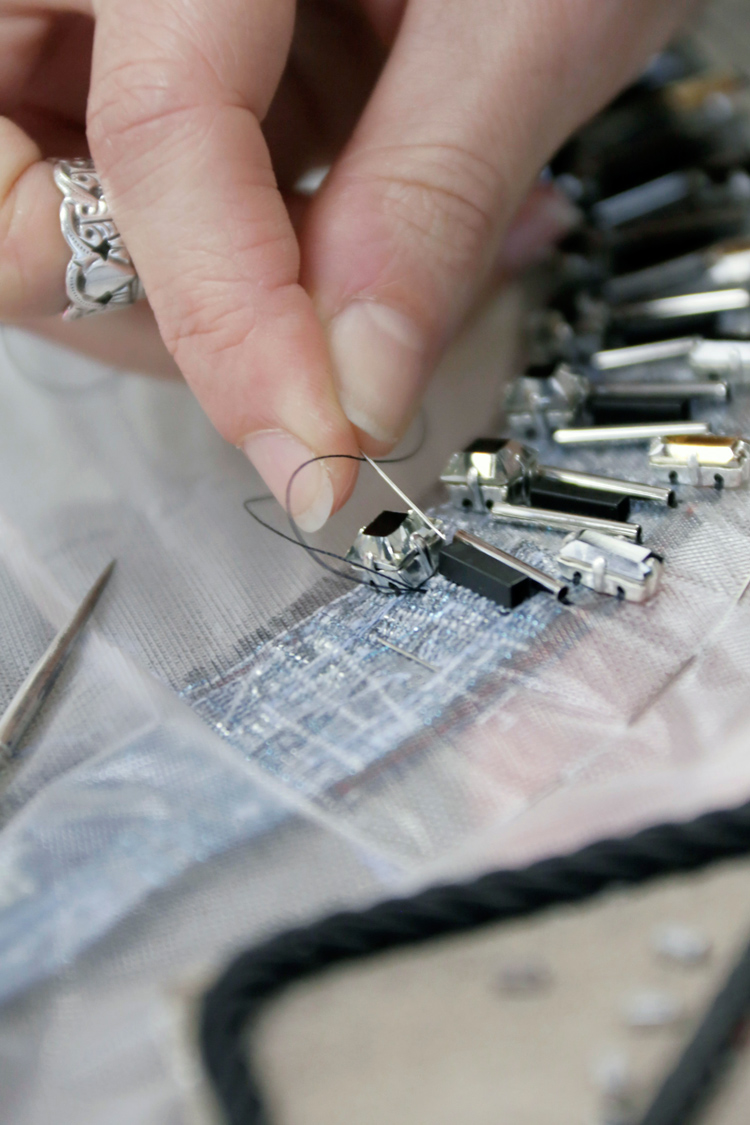
For this particular look braids embroidered by needle are made using wisps of tweed, 310 rhodoid elements, 1,430 metallic tubes and 685 stones, requiring hours of work at the MONTEX ateliers. These embroidered braids will embellish the collar, the pockets and the hem of the dress as well as the cap.

The organza of the dress is covered with white feathers which are then hand painted with wide horizontal blue stripes in the spirit of a “sailor’s top”, requiring 76 hours of work in the Lemarié ateliers.

The pieces worked on by the MONTEX and Lemarié ateliers are sent to the Chanel ready-to-wear ateliers so the seamstresses can start assembling the dress.

The outfit is ready for the final fitting in Hamburg in the presence of Karl Lagerfeld.

The outfit is accessorised with a wool cap made by Maison Michel and embroidered by MONTEX, a clutch bag as well as two-tone pumps made by Massaro. It is subject to the approval of Karl Lagerfeld during the final fitting the day before the show.
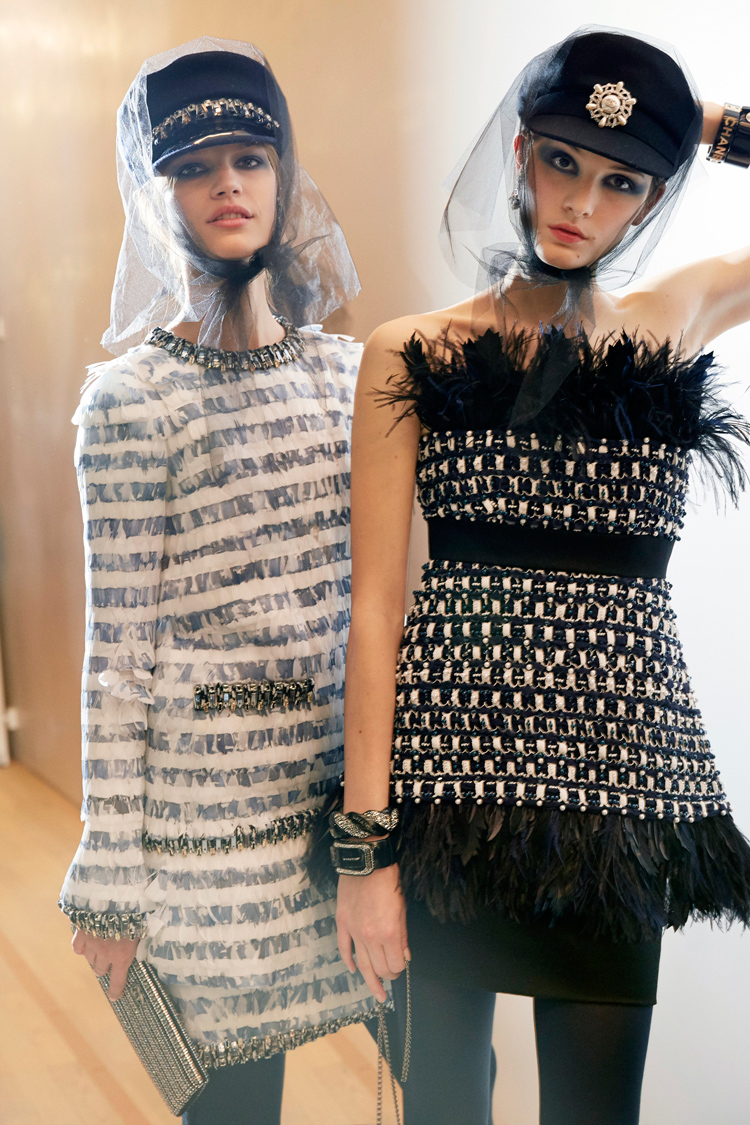
Backstage at the Métiers d’art 2017/18 Paris-Hamburg show.

The Métiers d’art 2017/18 Paris Hamburg shoe look No. 83.
Ermenegildo Zegna Expand Their Toyz Collection
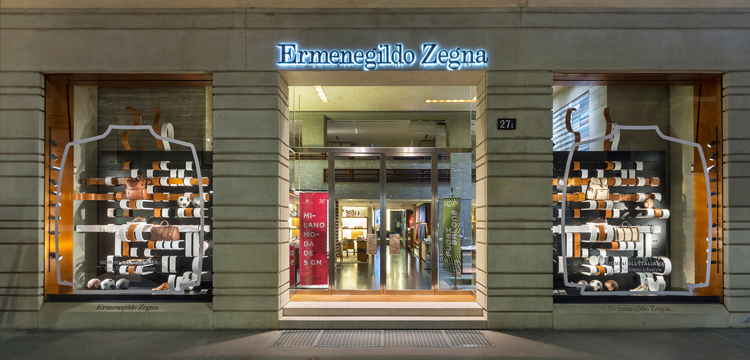
Unveiled at the opening of Salone del Mobile 2018, the collection consists of accessories, entertainment and home products featuring an exclusive new design inspired by one of the iconic Lanificio Ermenegildo Zegna suiting fabrics produced in 1968.

Blending weaving tradition with modern technology, Pelle TessutaTM is Zegna’s lightweight and highly versatile leather fabric that brings its textile expertise into the leather world. For the new chapter of its Zegna Toyz, Ermenegildo Zegna has interwoven extremely thin micro leather yarns to recreate a 1968 vintage herringbone pattern discovered within the Zegna Archive in celebration of the 50th Anniversary of Ermenegildo Zegna’s entrance into the Ready-to-Wear business.


Zegna Toyz will be available in major Ermenegildo Zegna stores worldwide starting in November 2018. A small selection, including the mobile phone pouch and the ping-pong racket set, can be purchased at the Milan Global Store in via Montenapoleone throughout Salone del Mobile 2018 week.
The Zegna Toyz collection is thought to meet the needs of the modern man and designed to accompany different moments of his life: from the essentials small leather goods for the gentleman’s business life, the Toyz selection of leisure and entertainment travel games, to the technological series of multimedia accessories created in collaboration with Master & Dynamic, the premium audio brand known for its sophisticated sound tools.
READ MORE
Berluti Release Exclusive Sandals For Ramadan
Ermenegildo Zegna Unveils First-Ever Beachwear Collection
Choosing The Right Sunglasses For Your Face Shape

A good pair of sunglasses are transformative, and yet finding the perfect pair can be overwhelming due to the range of styles, sizes, and shapes on offer. The trick is to choose a pair that complements your features, and you’ll instantly up your frame game.
We all have very different face shapes and sunglasses are ultimately doing the job of framing our faces, they’re not just a seasonal essential. So, in order to find the best sunglasses, you need to figure out what shape yours is by analysing the definitions and outlines of your face, and then simply compare your findings with our following examples to see which one is most like yours.

READ MORE
Eid Gift Guide For Him By Berluti
MR PORTER Launches A Capsule Collection With Tod’s
How Streetwear Became a Focus of High Fashion
FROM LOUIS VUITTON TO BURBERRY, EVEN THE MOST VENERABLE HOUSES ARE TAKING TO THE STREETS.
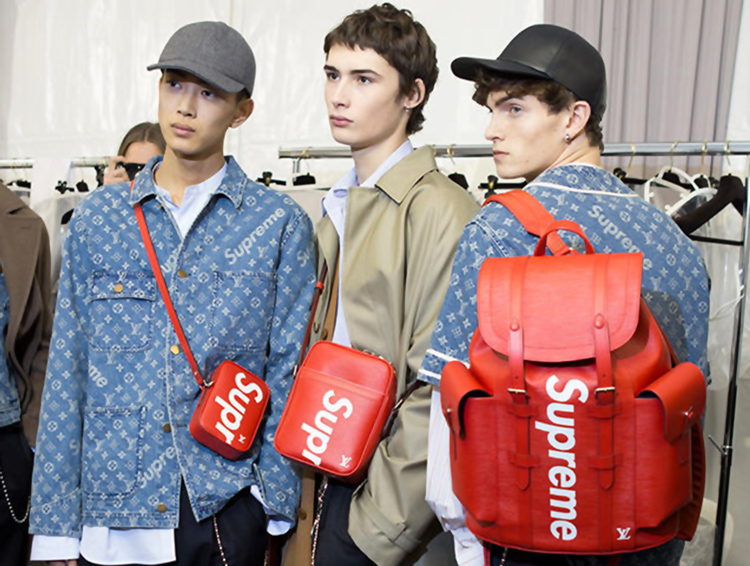
LOUIS VUITTON X SUPREME
Since the birth of luxury fashion as we know it, designers have always worked with a vision of exclusivity extrapolated from the lifestyles of elites.
Ralph Lauren has made billions from casual clothes that serve up the dream of Ivy League style, while jackets and suits are marketed based on their close, or ideological, links to the old-money tailors of London’s Savile Row.
However, last year the biggest story in menswear was the unlikely collaboration between luxury French Maison Louis Vuitton, which has a history that spans three centuries, and Supreme, a New York streetwear brand with origins in the anti-corporate skate culture of the 1990s. This logo-heavy collection would have been impossible to imagine until very recently, but it spoke volumes about the style world’s current taste for streetwear. If fashion labels have become too slick and luxurious, perhaps streetwear is the antidote, seeping its way into not just mainstream fashion, but the highest echelons of it.
Leading the forefront of this streetwear-ification of luxury are designers like Abloh, Kanye West and Demna Gvasalia, whose designs for both Vetements and Balenciaga can be so mundane, yet so expensive. But when you buy luxury streetwear, you’re not paying for the most handcrafted, highest quality piece of garment, you’re buying into a subculture. It’s something you either are a part of or want to be a part of, and when you think about it, that’s what any luxury brand has always been about.

VETEMENTS
While luxury brands have always gained inspiration from underground, subculture, and streetwear style, the window of social media has brought this trend from the streets of Soho to the mainstream catwalk. That taste explains why Burberry’s latest two collections have featured many casual pieces, including baseball caps, sweatpants and Harrington jackets bearing the brand’s famous check, together with simultaneously producing other heavily branded items in collaboration with Mr Gosha Rubchinskiy, the Russian designer who is currently among the hottest names in fashion thanks to his interpretations of the kind of proudly unsophisticated streetwear that was popular when Russia first embraced capitalism in the 1990s. Most recently, Burberry hired Riccardo Tisci to help steer the brand’s turnaround efforts by lending his street-inspired style.
For luxury fashion houses, there’s a new ultimatum as they look to win over a younger set of customers. Thanks to the growth of Instagram, streetwear has had an explosion and democratised fashion for many. However, unfortunately you can’t democratise taste, resulting in casual clothes inspired by sportswear and vintage knock-offs, together with an explosion of logos. People aren’t into design right now, they’re into impact.

READ MORE
Top Trends From Fall 2018 To Wear Now
Louis Vuitton Editorial: The All Star Icons
New Season Wedding Dress Trends

ELIE SAAB
While last season’s wedding-dress trends aren’t going anywhere, this season saw a new take on some of our favourites with a return back to tradition.
For Fall 2018, gowns feature bigger ball skirts than ever, capes are still going strong, but this season they’ve been upgraded from capelet to full-on princess cape, and ladylike mid-length dresses have us all seeing visions of Audrey Hepburn in Funny Face. Long-awaited minimalism is on the rise where there has been over-embellishment before, and while lace is going nowhere, there are now an array of alternatives to its vintage appeal.


READ MORE
A-Z Of Planning Your Wedding
Meet Toni Breiss: Wedding Planner Extraordinaire
The Most Iconic Royal Wedding Dresses Of All Time
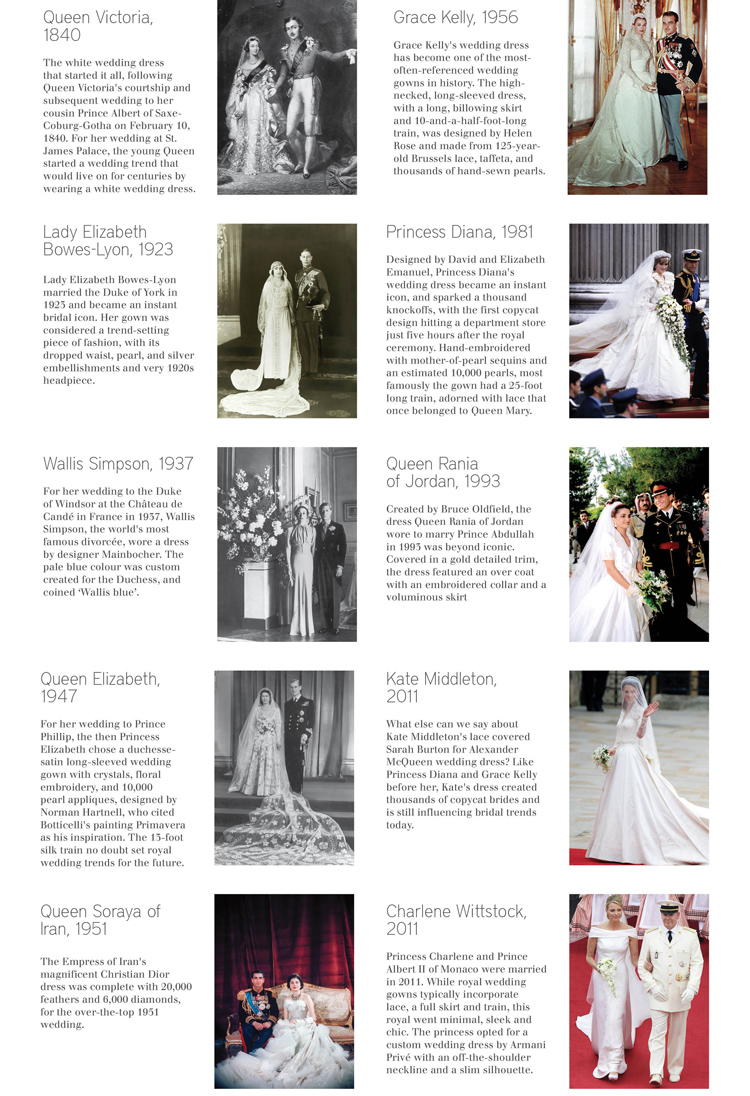
From Queen Victoria’s trend-setting white dress to Princess Diana’s long train, and the dress that launched a thousand others on Kate Middleton, the royal wedding gown has evolved through the era’s, and we look back at some of the greatest royal wedding dresses in history.

READ MORE
Your Guide To British Royal Wedding Etiquette
Are Ralph & Russo Making Meghan Markle’s Wedding Dress?
Meet The Force Behind Anastasia Beverly Hills
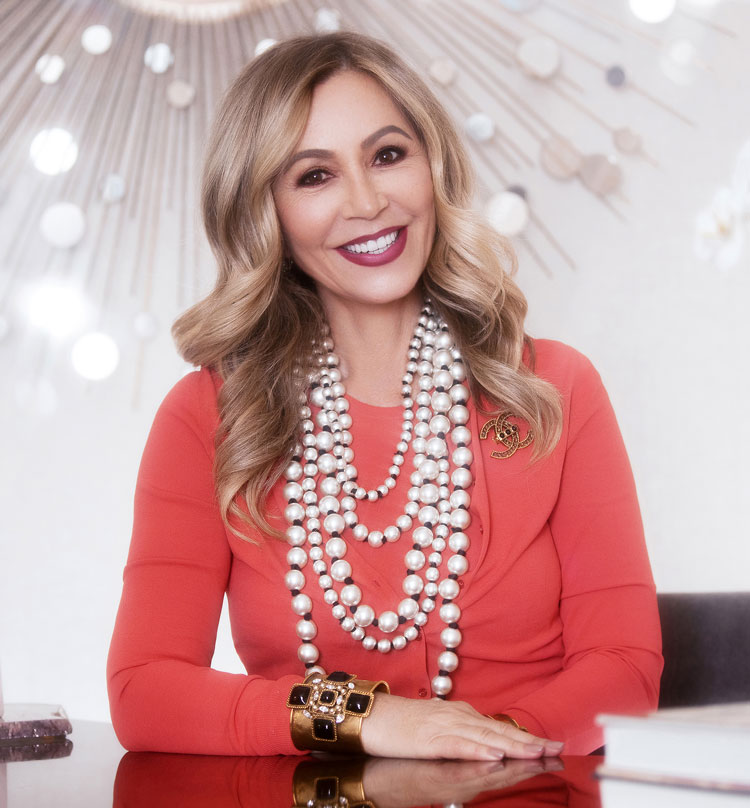
BEAUTY ENTREPRENEUR ANASTASIA SOARE REVOLUTIONISED THE APPROACH TO BROWS, YET STILL CONTINUES TO GROW HER EMPIRE
Beauty pioneer, creative visionary and powerhouse entrepreneur Anastasia Soare is Founder, CEO, and driving force behind Anastasia Beverly Hills, one of the fastest-growing brands in the global beauty industry. Soare immigrated to the US from Romania without language skills or financial means, instead leveraging a fierce resolve and education in art and architecture to fuel her entrepreneurial vision and unique approach to beauty.
This tough work ethic helped Soare launch her beauty empire, which began as brow products before expanding to an entire make-up range. Unlike the new-gen beauty brands celebrating overnight success thanks to social media, she has had to work solidly on her namesake brand, Anastasia Beverly Hills which was launched with a Beverly Hills flagship salon in 1997 and the company’s first product line in 2000. It was while working in a beauty salon that she noticed no one was doing brows, and six months after she opened her own salon Cindy Crawford walked in and from there the other supermodels followed.
The brow-shaping service, later patented as the ‘Golden Ratio’ method, has gone on to become a staple service and enduring new category in modern beauty. Based on Leonardo da Vinci and her studies in architecture and art, it establishes the shape of brow through math’s and proportions that would best suit a client’s face shape. Soare continues to push boundaries today, expanding beyond the brow category with the company’s leading prestige cosmetics line. Her capacity for driving growth through innovation and organisational focus on customers has become a hallmark of her leadership and the Anastasia Beverly Hills brand.
Tell us about Anastasia Beverly Hills and what the motivation was behind launching the company?
I had the idea in 1996. I wanted to create products that my clients could use every day. At that time, I was shaping eyebrows in the salon, and I was motivated by the challenges my clients faced trying to find brow products.
What brought you into the world of beauty and prompted you to decide to create your own brand?
My interest in beauty developed naturally. With my art background, I learned quite a lot about proportion and the principles of beauty. In Romania, brow shaping was the norm but in the U.S. the service wasn’t widely recognised. I began offering brow shaping to my clients and out of necessity, I began developing brow products.
What is your earliest makeup memory?
I have fond memories of visiting the salon with my mother every Sunday. It was a treat to get the full beauty experience together, manicures and hair styling, we would get the works.
Why focus on eyebrows?
Eyebrows provide balance to the face, and the right brow shape can enhance your overall look. Brows that are shaped according to your bone structure and facial features allow you to achieve harmony and symmetry.
Was it always your goal to grow a beauty empire?
I wanted to prove to myself that I was capable of succeeding with my passion, even though I wasn’t sure how it would manifest. My clients believed in my technique, and soon after, they believed in my products, and I am truly grateful for that. Coming to the U.S. afforded me the opportunity to chase my dreams.

How did you go about creating Anastasia Beverly Hills?
It started organically. I began making brow products for my clients because many of them wanted to recreate their brow look at home. Expanding the line to colour products flowed naturally as well. We developed products based on the same principles that were at the core of my brow technique which traced back to science and facial aesthetics. From there, we began connecting with people through social media, educating them on our products and our philosophy.
What challenges did you face launching a small independent beauty company?
When I decided to take a leap of faith, many people thought I was out of my mind. I was in America with my daughter, I didn’t speak English, and I didn’t have access to funding. It was a challenging task to convince my landlord that I could afford to pay for my rental space with eyebrow shaping, but I believed I could do it.
What has been key to the development and growth of your brand?
Social media has been an amazing tool for us. The relationship we have built with our beauty community means a lot.
How has your role changed as CEO as you have scaled the company up?
My position has evolved to meet the company at every stage. The growth we’ve experienced has allowed me to do more of what I love every day, equal parts business-driven and creative.
What part of your job would people find most surprising?
People are often surprised that I’m involved in every aspect of the company. I feel it’s important to be hands-on and to collaborate with my team as much as possible. I like to play an active role in all operations, my biggest role is to invigorate everyone so they can be their best. That’s my goal.

What personal qualities to you attribute most to your success?
Perseverance comes to mind. I’ve met challenges, but I overcame them by believing in myself and I feel it’s my duty to encourage others to do the same.
With such a busy work schedule, how do you maintain your home and personal life?
I make sure to turn my phone off before bed so that I allow myself time to rest. I love reading, I take time to travel, and I love musing through home decor, and taking on home projects. I also spend time with my family on Sunday’s, we cook dinner and enjoy each other’s company.
Tell us which milestones you are proudest of to date?
Introducing a new category in the beauty industry was a true milestone for me. Creating contour and glow kits also proved to be big defining moments in my career.
What would you consider to be the turning point in your career?
Sharing my brow shaping technique on Oprah. It was a major opportunity to display my technique to viewers all over the world.
You have grown a huge amount since your launch, what is key to keeping this growth sustainable?
Listening to our customers has been a major part of our growth. The support we’ve earned from them is why we continue to experience growth. They are talented artists of all levels who share our passion for beauty.
What are your go to resources for keeping up to date in the beauty industry?
I love reading Women’s Wear Daily and I check Instagram frequently to stay in the loop.
How has social media impacted the beauty industry?
Social media has made it easier for beauty brands to connect and engage with people all over the world. We’ve been able to share in this online community of beauty lovers and really listen to what they are passionate about and learn more about what they want to see from us.
Who do you love to follow on Instagram?
I love following my clients. Oprah, Kim Kardashian, Khloe, Kendall, Kourtney, Kylie, Jennifer Lopez, Victoria Beckham, and Michelle Obama. I also follow Makeup by Mario, Amrezy, and Carlibel. I’m inspired by all of them.
Tell us about the importance behind celebrity endorsements, and how these relationships come about?
I’ve been fortunate enough to work with beautiful, talented, and intelligent women from lots of different industries. I’m grateful for the genuine bonds we’ve built.
Tell us about why you decided to expand to include make-up too?
We expanded our range to products like contour and glow to work in unison with our brow products. Our goal was to show our customers that they could create balance, harmony, and achieve the right proportion not only with our brow products, but all of our products.

How do you create a unique product?
I think for a product to be unique, it has to solve a problem for the customer, it has to add value to their everyday life.
What was the first product you launched?
Our brow products launched first. I wanted to offer my clients products they could use between appointments to maintain their salon-quality brow look.
Can you share with us how you came up with it, and how it has gained cult status?
Our brow products were developed based on my shaping technique. There were no brow maintenance products at that time, and I wanted to help my clients feel just as beautiful at home as they did when they left the salon.
What other products do you feel are the ultimate must haves?
I absolutely love our Liquid Lipsticks, our Eye Shadow Palettes, and Contour.
What is your favourite Anastasia Beverly Hills product?
If I could choose them all, I would, but I’m going to go with DIPBROW.
Which product can you not live without, and what is currently in your makeup bag?
I always carry Liquid Lipstick in the shades Pure Hollywood and Heather. I love to keep a few brow products in my bag as well as blush.
What five essentials should every woman have in her beauty bag?
Stick Foundation is great to have on-the-go, Brow Definer to perfect your brow shape, your favourite shade of Liquid Lipstick, Blush, and of course, eyeshadow.
Can you describe your morning and evening beauty regimes?
Caring for my skin is a must. I rotate between three skincare lines using toners, serums, eye cream and face cream. I repeat the same routine at night.
What is the best beauty advice that you have been given?
To always wear sunscreen and wash off your makeup every night before bed. Great advice from my mother.
To you, what is the most common beauty mistake that women always make?
Over-tweezing is pretty common, but now we have the right products to correct it.
What are your top tips for reviving over-tweezed brows?
It’s important to study your face and your facial features. Choose the right products that will help you achieve the look you want with respect to your facial features, tools like our Stencils, Brush 7, and Brow Powder Duo are a great place to start. Remember that you want to achieve the perfect brow look for you, not the look of someone else.
If someone hasn’t really done anything to their eyebrows before, what’s the easiest way for them to start?
Our tutorials are a great place to start. You can learn so much about how to use our brow products and learn more about the technique. Next, explore the products and tools, try the stencils and Brow Powder Duo. It’s an opportunity to play.
If everyone had one eyebrow product, what should it be?
Brow Wiz. It’s so easy to use and it’s available in many shades.
We’ve seen everything from super thick to completely bleached out brows. Where do you think the trend is headed with brows?
Colour could be big. It would be fun to see unique brow shades like we currently see with hair colour trends.
What shapes do you really dislike?
There isn’t a brow shape I dislike, every brow shape is different. Anyone can improve the look of their brows with the right products and with practice you can transform brows you dislike into brows you love.
How do you feel the Middle Eastern woman’s make-up needs differ from other regions?
I believe it depends on trends and what Middle Eastern women would like to see in beauty. I think women all around the world want to feel beautiful.

Which of your products do you recommend for the Middle Eastern woman?
Middle Eastern women have beautiful eyes, cheekbones, and brows. Our Soft Glam Eye Shadow palette has warm browns and shimmer shades that would beautifully complement the eyes, our Glow Kits are wonderful, and our Clear Brow Gel adds the perfect polish to naturally full brows.
Will you be tailoring some palettes and products for the region in the future?
That would be a dream.
What is your definition of beauty?
Outer beauty is to have balance and proportion to the facial features. Being good to others and giving back are two of the most beautiful traits one could have inside.

Who is your beauty icon?
I consider each one of my clients a beauty icon.
How do you feel the concept of beauty can affect confidence, and open doors for empowerment?
There should be no physical beauty standard. We shouldn’t measure ourselves that way because we are all unique individuals. Beauty should be a reflection of who you are as a person, your struggles and your ability to be kind to others. That is where our true beauty lies.
What are some important things brides should be aware of when approaching makeup on their wedding day?
Use a gentle hand when applying makeup for the big day to create a timeless beauty look. A bride should be breath-taking, so it’s important to avoid a makeup look that appears overdone.

Can you share your top tips for getting the perfect bridal look?
A great tip is to decide what your brow shape will be a few months in advance. Also, use a gentle hand when applying makeup for the big day to create a timeless beauty look.
Which key products would you suggest having in your make-up bag for your big day?
Soft Glam is the perfect eyeshadow palette for a bride to be. The range of shades are so beautiful, you can achieve an understated bridal look or a full on glam look. It’s incredibly versatile and suits any bride.
Which celebrity bride do you think perfected the bridal beauty look?
Kim Kardashian, her bridal look was effortlessly classic.
Can you tell us about what you are working on now that you are most excited about?
You’ll have to wait for it, it’s a surprise!
What is your long-term vision for the future of Anastasia Beverly Hills?
We’re expanding globally, and that’s pretty exciting.
Your Guide To British Royal Wedding Etiquette

If the world is on countdown to one event this year, it’s the wedding of His Royal Highness Prince Henry of Wales to Ms. Rachel Meghan Markle at St George’s Chapel in Windsor Castle on May 19.
We know about the engagement ring, designed by the Prince himself using stones from his late mother’s collection and a large diamond from Botswana, and created by the jeweller Cleave & Company, however, many details are still a mystery. Unknown is the seating plan in the chapel, which has a capacity of 800, the identity of the best man, the Duke of Cambridge has yet to be asked, apparently, and the designer of the dress.
On the subject of the bridal gown expectations, royal dressing used to be everything that fashion wasn’t. It was predictable, traditional, and all about precedent rather than innovation. It was always eye-catching, as the Queen herself is said to have put it, ‘I need to be seen to be believed,’ but in a practical sense with those brightly coloured suits. But that has all changed, and now it seems we are taking to the royals for inspiration, with their influence undeniable during the SS18 shows. Virgil Abloh’s entire Off-White collection was devoted to Princess Diana, the jazzy floral print and pretty pearl buttons at Erdem were a direct homage to the charm of a young Queen Elizabeth, who bewitched the famous jazz musician Duke Ellington when they met in 1958, and the Queen’s signature quilted coats and neatly tied silk headscarves made an appearance at Mulberry.
These looks may have been buttoned up for duty, rather than dressed up for fun, well until Kate Middleton came along and took a modern understanding on royal dressing etiquette. She chose Sarah Burton to make her wedding dress, knowing that not only would Burton deliver a gown of exquisite beauty, but the name Alexander McQueen would bring an air of boldness and daring that would add to her wedding.
Now it is over to Meghan whose brand of glamour is California casual, a world away from debutante dressing. As the fashion world is taking bets on who designs her wedding dress and helps create the fashion moment of the year, we look to the other specifics of their big day and the steadfast traditions and protocols the soon-to-be-newlyweds will be following and, in some cases, breaking.

Proposal
The Royal Marriages Act of 1772 requires all royal descendants to seek the sovereign’s approval for marriage. But the requirements don’t stop there, the 1701 Act of Settlement prohibits royals from marrying Catholics. Royals may legally wed an atheist or someone of any faith other than Roman Catholicism.
Location
The most traditional site for a royal ceremony is the Chapel Royal at St. James Palace, which housed the weddings of Queen Anne (1683), George III (1761), George IV (1795), Queen Victoria (1840), and George V (1893). More recent royal couples have since outgrown the small chapel, which seats 100, as the ceremonies have become more of a public spectacle. For her 1919 ceremony, Princess Patricia of Connaught brought Westminster Abbey back into vogue for royal weddings for the first time in 605 years. Westminster was then chosen for King George V’s daughter Mary in 1922, Queen Elizabeth’s parents in 1923, and the Queen’s own wedding in 1947. Kate and William were Westminster-bound as well, but two alternatives would have been the much larger St. Paul’s Cathedral where Charles and Diana wed or the much smaller St. George’s Chapel in Windsor Castle where Prince Charles and Camilla Parker Bowles’s wedding was dedicated following a civil ceremony at Windsor’s Guildhall in 2005, and where Harry and Meghan plan to marry in May.
Wedding Party
English brides are accompanied by a group of bridesmaids, usually younger girls between the ages of 10 and 12. The Queen had eight bridesmaids, and Diana had five, ranging in age from 5 to 17. Kate’s bridal party was even younger, including Grace van Cutsem and Eliza Lopes, both age 3, Lady Louise Windsor, 7, and Margarita Armstrong-Jones, 8. In a major break with tradition, Kate chose a maid of honour, her sister Pippa.
Guest List
At an event as exclusive as a royal wedding, the guest list is everything. Fellow royals, foreign leaders, church officials, diplomats and celebrities dot the list along with the couple’s own friends and family. The Royal Family sits on the right-side of the church, unless the groom is not royal, in which case they sit on the left. By the Queen’s command, 1,900 invitations went out to William and Kate’s wedding guest attendees, including David and Victoria Beckham, Elton John, and Guy Ritchie. Male guests are expected to wear military uniforms, morning dress, or lounge suits, while female attire is less specifically outlined, though hats are a must.
Outfits
The bride gets to choose her own gown, something which causes a lot of speculation before the big reveal, whereas the groom will have to wear his military uniform, a tradition that dates back to Prince Albert’s wedding. In addition, tiaras are a must for a royal bride’s wedding day, a piece of jewellery which won’t have been worn by the bride in public before, as they are typically reserved for married women. The Duchess of Cambridge wore a Cartier Halo tiara from the Queen’s personal collection for her big day, and it’s likely Her Majesty will loan one to Meghan as well.

Bouquet
When Queen Victoria married Prince Albert in 1840, she carried myrtle, known as the herb of love, in her bouquet. After the wedding, Victoria planted a myrtle shrub in her garden at the Osborne House on the Isle of Wight. Every British royal bride since has carried a bouquet containing a sprig plucked from the same shrub. Kate carried a small, shield-shaped wired bouquet, designed by Shane Connolly, of said myrtle, lily-of-the-valley, Sweet William, and hyacinth. In an act of love to honour the armed forces, Kate left her bouquet in Westminster Abbey at the grave of the Unknown Warrior, a tradition begun by the late Queen Mother.
Transportation
Most royal brides arrive to their wedding in horse-drawn regal style, Diana’s chose the 1881 Glass Coach purchased for George V’s coronation in 1911, but Kate instead arrived at Westminster Abbey with her father in the Queen’s Rolls Royce Phantom. Once married, Kate and Will departed the ceremony in the same carriage that transported Charles and Diana, a 1902 State Landau originally made for the coronation of Edward VII.
Ceremony
English brides lead the processional down the aisle, with her bridesmaids in tow unescorted by ushers, who stand at the front of the church with the groom. Kate walked down the aisle to ‘I Was Glad’ by Sir Charles Hubert Hastings Parry. Some royal wedding staples have been Mendelssohn’s Wedding March, the hymn The Lord’s My Shepherd, and Widor’s Toccata from Organ Symphony No. 5, which was the recessional music at Edward and Sophie’s wedding.
Wedding Band
Beginning with the wedding of the Queen’s late mother in 1923, all of the royal women’s wedding bands have contained precious Welsh gold from the same nugget mined in Dolgellau, North Wales, a variety of gold that’s three times more valuable than gold from Australia or South Africa. While the traditional nugget is almost depleted, the Queen has since been presented with another large nugget for subsequent weddings bands, including that of Sarah, Duchess of York and now Kate.
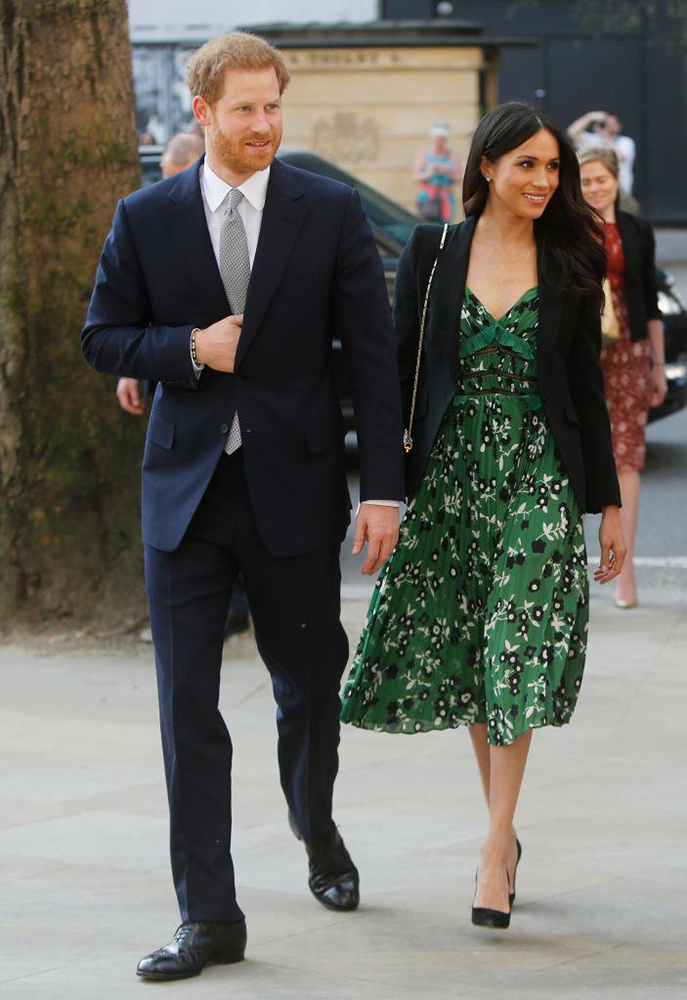
Reception
Most British weddings are held at noon and are followed by a seated luncheon called a wedding breakfast. The Queen’s luncheon was held in the Ball supper-room at Buckingham Palace for a small party, as was Diana’s for about 120 guests. Following William and Kate’s 11am ceremony, 600 guests joined the new couple at the Palace for a buffet-style wedding breakfast hosted by the Queen, before 300 of the couple’s closest friends and family enjoyed a dinner dance later in the evening in another one of the Palace’s state rooms. At 1:25 pm, the newlyweds appeared on the Buckingham Palace balcony to share a public kiss, a tradition begun by Charles and Diana.
Portrait
After each royal wedding, the entire Windsor family comes together for an official portrait. With Kate Middleton and Prince William’s baby set to arrive just in time for the royal wedding, perhaps baby number three may make an appearance in Prince Harry and Meghan Markle’s wedding portrait.
Royal Titles
With a few exceptions, women who marry royal male successors assume their husbands’ titles, however the most notable exception is Camilla, who adopted the title Duchess of Cornwall instead of the Princess of Wales out of respect for Diana. If Prince Charles becomes King, Camilla will be the Princess Consort, not Queen Camilla. Prince William and Kate became the Duke and Duchess of Cambridge. It is expected that the most likely contending title for Harry and Meghan is the Duke and Duchess of Sussex.
READ MORE
Will Meghan Markle Wear Viktor & Rolf On Her Big Day?
What Do Amal Clooney And Meghan Markle Have In Common?
15 Minutes With… Rami Al Ali

Rami al Ali has dressed the most glamorous women in the Gulf from his atelier in Dubai, whether it is in prêt-à-porter which has been running since 2015, Haute Couture which recently returned to the circuit in Paris, or in bridal. Wedding gowns have featured in his couture lines from the beginning but a dedicated collection for bridal was formed in 2009, and fresh for 2018 the new collection is fully loaded with floor-sweeping dresses collections.
Ethereal elegance and contemporary sophistication are the hallmarks of Rami Al Ali’s bridal collection, and the Syrian designer doesn’t fall short. This season, Al Ali delivers a collection of grand gowns that beautifully complement and contour the female form, certain to make the bride feel like a princess on her special day. With a distinct focus on volume, nipped-in waists flare into floor-sweeping skirts that are deftly constructed to give the appearance of floating. Expect an emphasis on the shoulders, too, with several of the collection’s pieces designed to gracefully display the décolletage, lending an air of regal refinement.

Tell us about how important the bridal sector of your business is?
The bridal line caters to a very niche segment of our clientele and although customers order it once in their life time, it has a very wide audience. Hence it is very exposed, and it has a lot of commercial benefits and this makes it our most lucrative line.
What are your favourite signature fabrics?
I love to play with different, unique textiles and fabrics for each collection, so it would really depend on the theme I want to achieve. The 2018 bridal collection features grand gowns that beautifully complement and contour the female form, certain to make the bride feel like a princess on her special day.
Do you find it challenging reinventing a white dress season after season?
My designs’ aesthetics have evolved through the years creating timeless, elegant pieces drawn from several inspirations. But I don’t normally follow trends, so it becomes more challenging every year to introduce something completely new while maintaining the brand’s signature.
Do you have a favourite piece from your current bridal collection?
I never have one dress that is my favorite or stand out piece of the collection. Each dress tells a different story and plays a unique part in the collection as a whole. The amount of work that goes into the creation of these pieces makes them equally important and usually suits different peoples’ preferences.

In your opinion, what is the most flattering silhouette on a woman?
The most flattering silhouette is the A-cut as it suits all body types.
If you could dress any bride, who would it be?
I would love to design a wedding gown for Elizabeth Taylor. She has had many marriages and they were all very lavish, so she would be a good return customer, and hence it would have been a great experience to be part of the design process for all her wedding gowns!
How do you want women to feel when they put on one of your beautiful creations?
I want her to feel like a princess on her big day. It’s very important for each bride to love her dress and love herself in her dress.
What are you most excited for about the future for Rami al Ali?
The growth and evolution of the ready-to-wear line and the current plans to develop a ready-to-wear bridal line. This is something very exciting for us as we would have a bigger reach and a wider circle of clients.

How would you describe your personal style?
I would describe my style as understated chic. I love to have classic pieces that remain timeless, never going out of fashion, and would rather indulge in fewer pieces that last longer. My staple wardrobe consists of a crisp white shirt and my navy-blue Louis Vuitton loafers.
Who has inspired you the most?
I usually get inspired by many elements such as travel, art, women, nature, and more, so there is no one source of inspiration.
What song or album could be the soundtrack to your life?
‘No Regrets’ by Robbie Williams
What three films could you watch over and over again?
Cinema Paradiso, Bridges of Madison County, and La Fille Sur Le Pont.
Who would play you in the film biopic of your life?
Jude Law.
If you could invite four people, living or dead, to the ultimate dinner party, who would they be and what would you serve?
Barbara Streisand, Cleopatra, Grace Kelly, and Audrey Hepburn, and I would serve caviar and champagne all night.
What’s your guiltiest pleasure?
I know it’s not too healthy, but I love eating late, especially on holiday when meals are more relaxed, and you can take your time to savour every bite.
Do you prefer a night in or night out?
Night in.
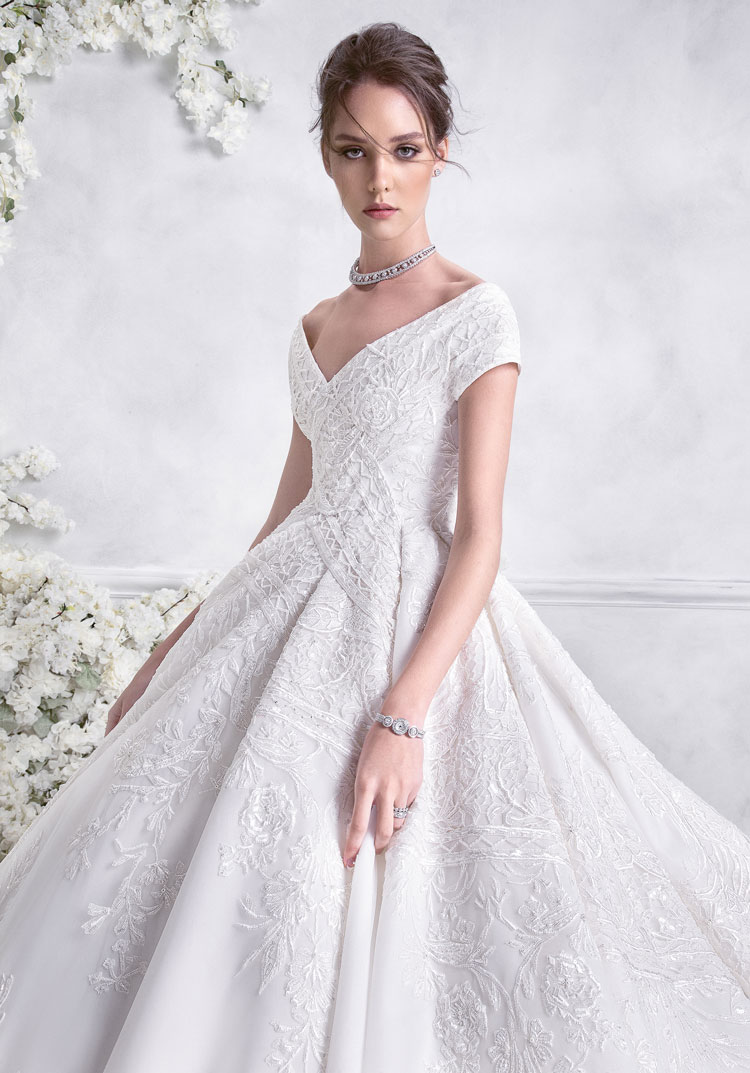
What was the last piece of clothing you bought?
A t-shirt and a bomber jacket from Qasimi which happens to be the work of a friend, Khalid Al Qasimi.
Tell us about your most prized possession?
Letters.
If you weren’t a designer what would you be?
I would be a chef!
What is your earliest fashion memory?
Seeing my mother wear a tailor made turquoise silk dress. This dress made her transform into another person. The way the silk laid on her body and the movement of the fabric makes it a very special memory that it will stay with me forever.
What are the best and worst things about a career in fashion?
The best part is that you are always creating and launching new designs every season. The worst part, which I would prefer to call tough, is finding the inspiration to create each collection.

Tell us the secret to your success?
Whenever I design a new collection, I always look to create beautiful bespoke pieces that leave a lasting impression, as I don’t favour fashion that leaves a strong impression which fades quickly. My design philosophy has always been to create feminine, romantic pieces that are beautiful, because when something is beautiful, everyone appreciates it and it isn’t questioned. I take inspiration from both Eastern and Western culture and always pay strong attention to detail. With every new season, you will always find intricate embellishment throughout the line, this is my signature flair.
What can’t you live without?
My phone!
Who do you follow on Instagram?
I mainly follow people who inspire me, friends, and family.
What advice would you give to your teenage self?
Be brave and never fear trying new things, and it can only get better.
Where is your favourite place in the world and what makes it so special?
My favourite place is Brazil. What makes it special is the rich culture and the beauty of nature the country has.
When packing, what are your travel must haves?
I always try my best to travel light, it’s important to be practical. I try to select multi-purpose pieces from my wardrobe, such as transitional items that can be causal or dressed up. I often pack polo’s, linens, and loafers, which are all very laidback looks and perfect for the climate. In addition, I always carry a notebook, you never know when you will get inspiration.
Where is the next place on your wish list to visit?
Most of Latin America starting with Cuba and Argentina.

What are your grooming essentials?
I love using the organic products sold at The Organic Shop in Dubai as it has some great products that are both affordable and very effective. Also, let’s not forget moisturisers!
Tell us the best advice you were ever given?
Don’t get attached to something old as you are not leaving space for something new.
What was your life goal aged 10?
To become an adult.
And what is it now?
Quite the opposite, to be younger and stay relevant!
READ MORE
Net-A-Porter Bridal Edit Will Make You Rethink Wedding Dressing
Will Meghan Markle Wear Viktor & Rolf On Her Big Day?
The Evolution Of The Met Gala
2016 Anna Wintour & Bee Shaffer
The Met Gala is best known for its star-studded red carpet, but the glitz and glam is only part of the story.
Colloquially and affectionately referred to as ‘fashion’s biggest night out’, the Met Gala is a pinnacle of iconic style. A fundraising benefit for the Metropolitan Museum of Art in New York City, the event welcomes celebrity stars, young creatives, and industry paragons alike. Although the excitement doesn’t stop there, the gala also signifies the highly anticipated grand opening of the Costume Institute’s annual fashion exhibition.
Next month, on the first Monday of May, the Costume Institute will sanctify its love of fashion as it presents ‘Heavenly Bodies: Fashion and the Catholic Imagination’. Designed to create a dialogue between fashion and the masterworks of religious art in the museum’s holdings, the show will be presented in a trinity of locations, the Anna Wintour Costume Centre, the medieval galleries at the Met’s Fifth Avenue location, and further uptown at the Cloisters, however the event will take place at its usual location at the Metropolitan Museum of Art in New York City.
The exhibition will have approximately 180 pieces on display and will highlight the enduring influence of religion and liturgical vestments on fashion. Numerous designers including Dolce & Gabbana, Christopher Kane, Jeremy Scott, and Jean Paul Gaultier have referenced religion in their work, while other names confirmed to be featured are Chanel, Versace, and Valentino. The Vatican will also be loaning 40 rare items of religious significance from its archive, including a papal tiara featuring 18,000 diamonds and pieces worn by Pope Benedict 14th in the 1600s, which will also go on display.
2017 Kylie Jenner breaks the no-selfie rule
Also impressive are Anna Wintour’s 2018 co-hosts for this year’s Met Gala, which are just as important as the Met Gala theme reveal. Taking over the duties carried out last time around by Katy Perry, Pharrell Williams, Gisele Bündchen, and Tom Brady are three women who are as talented as they are glamorous, Amal Clooney, Rihanna, and Donatella Versace.
So, as May 7th approaches, we look back at Met Gala history to understand the legacy behind this fashion extravaganza. Publicist Eleanor Lambert started the gala in 1948 as a typical philanthropic endeavour for the great and good of New York society, and it has been held yearly since, now serving as an opening ceremony for the exhibit which will be featured for the year at the museum. However, originally the Gala was not to introduce a new exhibit. From the 1940’s until 1971, the Gala was held off-premises in the Waldorf Astoria and various other locations. The event was far less glamorous, and usually consisted of dinner and light entertainment. It was not until 1972 when Diana Vreeland, the editor of Vogue at the time, became a consultant for the Costume Institute and encouraged the group to curate more ambitious pieces. A need for exhibitions of these pieces arose, and thus the Galas were used as a promotional tool as well as a social event for society’s elite.
The Met Gala became known for its luxurious attitude and attention to detail, and as its popularity grew it soon became an event famously driven by fashion designers and industry elite. In 1999, Anna Wintour became chairwoman of the Institute, and began to encourage the attendance of A-list celebrities in addition to those in the fashion industry. As the current editor of Vogue, Wintour used her knowledge of the fashion industry combined with her credibility among Hollywood’s elite in order to transform this blossoming event into the immense spectacle that it is today.

2016 Kim & Kanye
The Met Gala starts with a major exhibition on a changing theme that showcases the museum’s extraordinary holdings. These displays have run the gamut theme-wise, from historical periods, to genres, to individual design innovators, becoming increasingly extravagant over the years. Early themes included, Untailored Garments in 1972, Romantic and Glamorous Hollywood Design in 1974, and Costumes of Royal India in 1985, to more out-of-the-box themes such as Superheroes: Fashion and Fantasy in 2008, Punk: Chaos to Couture in 2013, China Through the Looking Glass in 2015, and last year’s Rei Kawakubo/Comme des Garçons, the first monograph show at the museum to focus on a living designer since its Yves Saint Laurent exhibit in 1983. This year’s theme however is especially noteworthy, as it is being slated as the Met’s most controversial yet, owing to the positioning of these fashion garments alongside sacred artefacts.
20 YEARS OF THE MET GALA
1995: Haute Couture
1996: Christian Dior
1997: Gianni Versace
1998: Cubism and Fashion
1999: Rock Style
2000: No gala presented
2001: Jacqueline Kennedy: The White House Years
2003: Goddess: The Classical Mode
2004: Dangerous Liaisons: Fashion and Furniture in the 18th Century
2005: The House of Chanel
2006: AngloMania: Tradition and Transgression in British Fashion
2007: Poiret: King of Fashion 2008: Superheroes: Fashion and Fantasy
2009: The Model As Muse: Embodying Fashion
2010: American Woman: Fashioning a National Identity
2011: Alexander McQueen: Savage Beauty
2012: Schiaparelli and Prada: Impossible Conversations
2013: Punk: Chaos to Couture
2014: Charles James: Beyond Fashion
2015: China: Through the Looking Glass
2016: Manus x Machina: Fashion In An Age Of Technology
2017: Rei Kawakubo/Comme des Garcons: Art of the In-Between

2017 Rihanna
THE MET GALA BY NUMBERS
Each year the Met Gala brings together the most famous faces from the realms of film and fashion, all dressed in their own interpretations of the theme du jour. But what is the price of a ticket to attend the prestigious affair? Which famous faces does Anna Wintour enlist to host alongside her? And just how many crystals were needed to make Kendall Jenner’s barely there gown? Here’s everything you need to know.
4
The number of co-chairs for 2018 to host alongside Wintour. Amal Clooney, Rihanna, and Donatella Versace, who is a sponsor. Wintour has previously enlisted the likes of Katy Perry, Beyoncé, and Marc Jacobs to chair the event with her.
40
The number of Vatican vestments and accessories spanning 15 papacies, which will be featured in the exhibition. These items have never left the Vatican’s possession before, and will go on display alongside pieces by Coco Chanel, John Galliano, Cristóbal Balenciaga, and Donatella Versace.
85,000
Kendall Jenner’s La Perla naked dress, which was worn to last year’s gala, was made of 85,000 crystals strung together by one single thread.
1948
The year that the first Met Ball, then called the Costume Institute Gala, took place, meaning that this year will be its 70th anniversary. Founded by publicist Eleanor Lambert, the benefit was dubbed ‘The Party of the Year’ as the great and the good of fashion and Hollywood came together to raise money for the institute. Pat Buckley, wife of the conservative author and commentator William F. Buckley Jr., became chairwoman in 1979, and Anna Wintour took over in 1995.
25,000
The reported cost in dollars of a ticket to the fashion soiree, with tables usually snapped up by designers and brands to host their favourite faces going for around $275,000. However, money doesn’t guarantee you an invitation, as Anna Wintour gets final say over the guest list.
1 MILLION
The total number of flowers that went into the lavish decoration of 2016’s Gala, many of which had been flown 2,500 miles from Colombia.
1
The number of films that have documented the months of preparation that go into the Gala and the spring exhibition that it opens. The First Monday In May aired last year, with filmmaker Andrew Rossi following Wintour and the team as they planned 2015’s China: Through the Looking Glass event.
115,167
The square feet of gallery space which displayed the 2017 exhibition, which took 69 days to construct and install.
5
The number of months that the ‘Heavenly Bodies: Fashion and the Catholic Imagination’ exhibition will be on display, from May 10th to October 8th, 2018.
THE MOST UNFORGETTABLE MET GALA DRESSES OF ALL TIME
Thanks to its annual theme, based around the year’s exhibition, the fashion that graces its red carpet is often some of the most theatrical, with many attendees tailoring their ensembles to complement the topic of choice. The result is style that often pushes the boundaries, and here we revisit some of the Met Gala’s most memorable fashion moments.

Louis Vuitton Reveals New Colourways For Technical V.N.R Sneakers
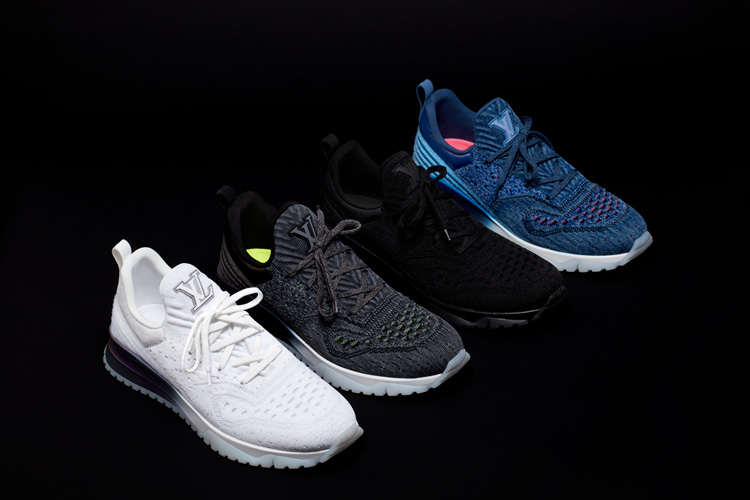
The Louis Vuitton V.N.R combines classic, elegant design and the House’s signatures with ultimate technical innovation. Twelve months of meticulous research and development have led to a shoe that is light and flexible, and utterly contemporary in terms of both savoir-faire and aesthetic.
This trainer is the House’s second full knit sneaker made in Italy. Months of experimentation have allowed for one piece of knit to combine three yarns, to add depth and intrigue. In total, each pair of shoes requires three hours to be assembled with keen attention to detail.
Embedded with elasticity, the knit wraps the foot for a sock-like comfort, providing extra support. Especially made for the size of the shoe, with no cutting involved, the seamless upper part weighs just 60 grams, and takes one and half hours to knit. Expansive materials make up the sole to allow for suppleness and wearability, and the highly resistant outsole is made from three separate pieces which are carefully assembled by hand.
For the first time, Vuitton’s heritage of fine craftsmanship and excellence is introduced to a technical trainer, resulting in a lifestyle sneaker combining modernity with sophistication.
READ MORE
Kris Van Assche Named Berluti’s New Creative Director
Strike! Prada Is Launching Bowling Inspired Collection With Mr Porter
Top Trends From Fall 2018 To Wear Now

DIOR
The new season has been shown, and the hot-ticket pieces are ready for investing in, so now is the time to shop. The key is picking up items that can be worn now and into Fall, giving them that extra bit of air-time, whilst ultimately being fashion forward at the same time. Win win!
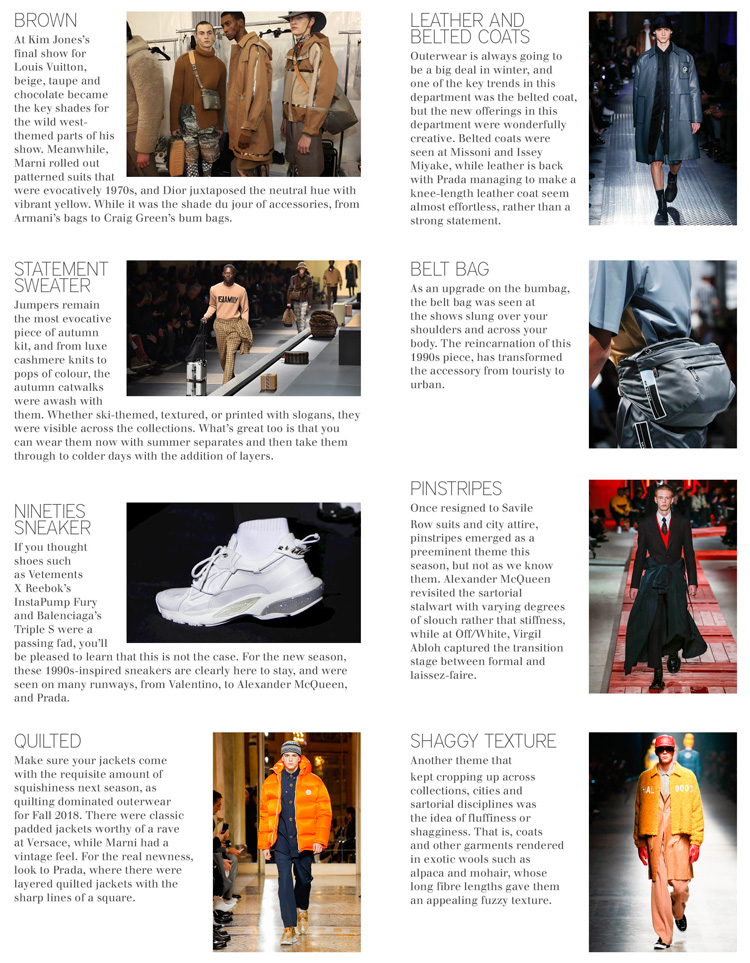
READ MORE
Dior Homme: Bags Of Style
In Focus: Coach Men’s Pre-Fall 2018
Meet The Duo Behind Art Concept Emergeast

Established in 2014, Emergeast is an online art gallery that represents dynamic contemporary artists from the Middle East, promoting and selling artworks at affordable prices under one umbrella. Co-run by Dima Abdul Kader and Nikki Meftah, Emergeast not only champions emerging artists but also encourages and educates young people to buy and collect art.
Through a carefully hand selected process, founders Nikki, who has an avid passion for Middle Eastern culture and heritage, and Dima, an arts and culture devotee who is wholly dedicated to a creative domain, endeavour to bring the region’s rising stars straight to your home. They see the importance of both an emotional and financial investment, catering to the young urban professional wanting to build their Middle Eastern art collection through the Emergeast platform.
Here we meet Nikki and Dima to gain an understanding about their interactive hub, which engages a new audience to embrace and advocate contemporary art, bringing inspiration and beauty to the region and beyond. We know how intimidating art collecting can be, and they share with us their tips for making a purchase, breaking down the barriers to an enjoyable art collecting process.
Tell us about Emergeast, what is it and why you decided to create it?
Emergeast is an online platform promoting and selling artworks by emerging Middle Eastern artists. We search for talented artists with a Middle Eastern background who we believe are the next shapers of the art scene from the region. The platform is dedicated to young collectors who want to build their own original art collection. We saw a gap in the market for artworks at affordable prices as unfortunately there were not enough galleries which supported emerging artists.
Where did the idea come from?
DIMA: As young urban professionals in our early 20’s, we wanted to start our very own art collection, specifically tied to our culture, history, and background. However, as soon as we embarked on the prospect of this, we realised there was no immediate place to acquire art by Middle Eastern artists, particularly at prices a 20-something urbanite can afford. Cue Emergeast!
How did you two meet?
NIKKI: We met at SOAS university in London and had previously been introduced by a mutual friend. We can pretty much say that the Emergeast fate was decided there and then!
What did you both do before Emergeast?
DIMA: I come from a finance background with experience in banking and private wealth management. Throughout this experience however, my passions and hobbies were always in art and in my early 20’s I decided to follow my dreams of immersing myself in the world art and advocating the notion of art collecting.
NIKKI: I worked at Magic of Persia, an Iranian art foundation holding art auctions with works donated by Iranian artists to raise funds for their emerging Art Prize, which aims to bring emerging Iranian artists to the forefront.
When did your fascination with art begin?
DIMA: My art journey began immediately after university, when I turned to painting and appreciating contemporary artists of our time, as I felt through creative expression and discourse a number of social, political and emotional themes can be discussed and embraced at length, a route that I felt very comfortable and connected to as a person.
NIKKI: I have always been surrounded by art. Before they met, both my parents lived in many different countries and one thing they always brought back with them was a piece of art. Growing up, they focused on an Iranian collection, supporting books and collectors’ items. My concrete fascination began when I saw the ‘Woman of Allah’ series by Shirin Neshat. Like Shirin, I wanted to somehow propagate Iranian culture and heritage to an international audience.
How do you both work as a duo, and how do you split responsibilities?
DIMA: We both have our respective skill set that together has proved a valuable combination in the development of Emergeast. Whilst both our roles may differ, our tactics are underlined by the same mission and vision statement at all times.

MO AWWAD
Do you both always have the same vision on artists you sign?
DIMA: We have different tastes and styles we are drawn to in terms of artists, but we most certainly complement each other and manage to hence cater to a wide variety of our urbanites. Our vision is the same when it comes to unearthing artists with talent, a unique style and distinctive story.
NIKKI: Both of us have a different taste in art, so we cover a wide range of styles and mediums. My taste varies from abstract portraiture to themes rooted in culture, history, and nostalgia from the Middle East.
Is there a huge demand for affordable art, and how affordable is your art?
NIKKI: There is most definitely an appetite for affordable art. As we break down the barriers of art collecting and eliminate the intimidation factor most young collectors fear, we see an increasing number of people being comfortable with enquiring about artworks and getting acquainted with the process of art buying. Given this recent accessibility of affordable art, young urban professionals are likely to opt for an original art piece that speaks to them.
What are the benefits of making the ownership of contemporary art accessible?
NIKKI: Many people think art is sectioned off to the 1% of art collectors who can afford to splurge at auctions and buy art from blue chip galleries. Our aim at Emergeast is to break down these notions and showcase high quality artworks at affordable prices. Encouraging art enthusiasts and first-time art buyers to acquire their first artwork not only creates cultural dialogues between people but also directly contributes to the careers of emerging artists to produce further works.

ELHAM ETEMADI
How do you find and source your art?
DIMA: A lot of scouting! We are very much on the ground visiting artist studios across Tehran, London and Dubai and wherever our leads take us to scout, interview, and get to know potential artists fit for an online profile on emergeast.com. Many of the artists represented on emergeast.com have also come from direct submissions through our website, who have gone through a rigorous selections process sending them to the fingertips of our young collectors.
What makes an artist the perfect fit for Emergeast?
DIMA: First and foremost, upon coming across a potential artist’s portfolio, the team and selections committee is required to believe in the artist’s works and cultivate a connection with that particular artist’s story and message. We require that an artist exhibits determination in sustaining their production, together with evolving and developing their art. As we promise our young collectors affordable yet ‘investment’ wise artworks, we continuously thoroughly screen an artist’s CV to assure notable solo or group exhibitions and future exhibiting plans.

NOOSHIN IPAKTCHI
What are the benefits of a digital platform rather than the traditional method of a physical gallery?
NIKKI: We chose to strictly be online as it gives us the chance to reach a wide international audience who are not necessarily aware of the region’s up and coming talent. Technology is powering the volume of interest, which is why we set up the first online gallery in the Middle East dedicated to inspiring artists and aspiring collectors.
DIMA: Young collectors also feel more comfortable to read, browse, and scroll in the comfort of their own home, without being intimidated by the gallery experience.
Do you think the new age of social media is having a positive impact on the art world?
NIKKI: This digital shift has acted as a catalyst to the art market, we’ve certainly seen a notable change in the structure of the art landscape. Galleries are shifting their resources to online, auction houses are competing for their online market share and we have seen tons of online galleries popping up on the web. This rapid exchange of information accessible through digital opportunities has opened the doors to a globalised art world. I would say it has definitely had a positive impact, especially for young collectors who are typically too intimidated to go to a gallery, who can now browse via Instagram and the online avenues to access all the information they need. Quite a large portion of our sales come from Instagram, and the sale last year at Christie’s for a $24 million Basquiat piece through Instagram, certainly speaks for itself!
Where is the most exciting place for contemporary art in the Middle East right now?
DIMA: I would say it’s certainly Dubai. The city is propagating the development of art culture. Dubai is incubating a gallery and art fair ecosystem, laying the foundations for a sound and sustainable art and culture environment as well.
NIKKI: Dubai has definitely cemented itself as the Art capital of the Middle East. Tehran’s contemporary art scene is also exploding right now. There are over 500 galleries, the majority of which have surfaced in the past 10 years. Given Iran’s situation, artists are turning contemporary art into a prevailing social force acting as a voice to the international community.

ABDI ASBOGHI
How do you feel the art scene in Dubai has grown?
NIKKI: Aside from holding the largest art fair in the region, Al Serkal Avenue has rapidly become a thriving hub for established galleries, emerging galleries, installation spaces and all things creative. Given Dubai’s rapid development, it is home to many esteemed collectors as well as the yuppie generation who are interested in catching the art bug. Dubai definitely caters to all!
Is Dubai becoming more of a respected art hub?
DIMA: Dubai has managed to shape itself as a key and integral player in the art world in a record period of time. Its geographic location coupled with its focus on incubating a sustainable art scene and market has made the city a highly regarded centre for the emergence and development of the arts. Art Dubai and its satellite on goings have made Dubai an important spot in the annual art calendar.
How would you describe your personal style?
DIMA: I am always drawn to abstract expressionism and that’s where my journey in the arts started. Along the way, my taste and style has since evolved into appreciating more photography and video art.
NIKKI: I love photography and the essence that a photograph can capture. Beyond this, I am drawn to abstract figurative paintings.
What is in your personal art collection?
NIKKI: Most of my collection is made up of Iranian emerging artists, both from Emergeast and the ones who I hope to get on Emergeast. I tend to support artists from Iran as I connect with the culture and history, and of course want to support them as much as possible.
DIMA: I have a mix of artworks by Western artists acquired at the beginning of my art journey and recently more Middle Eastern emerging artists such as Anas Homsi. I tend to gravitate towards new media such as light and video works.

BEYA KHALIFA
What was the first piece of art you purchased?
DIMA: My first piece of art was during the time I was living in London and stumbled upon an affordable art gallery and happened to connect with a French artist duo who used metal scraps from billboards found around France. Upon acquiring the artwork, I immediately felt like I bought a piece of the artist’s story and message and realised how easy it was to collect art. The significance behind this experience inspired the inception of Emergeast, as I aimed to give young and first-time collectors the chance to feel the same inspiring experience.
NIKKI: The first artwork I purchased was a large-scale Polaroid from a dear friend and magnificent photographer, Cyrus Mahboubian. Much thought went into the subject, composition, and lighting of each of his photographs as the Polaroid film was becoming extinct and each shot holds a distinctive weight. The artwork I purchased was one of a young girl in a long white dress, leaning against a Mailbox in New York City. To me, the work represents independence, strength, and individuality.
If you could own any piece of art, what would it be?
DIMA: Anything by Yassine Allaoui.
NIKKI: Babak Kazemi’s series ‘The Exit of Shirin and Farhad’.
What would be your tips for new collectors looking to buy a piece of art?
NIKKI: We recommend that young collectors visit gallery exhibitions and fairs as much as possible to gauge what they are drawn to and what speaks to them. It is important for new collectors to do research on the artist they invest in and foster that connection.

TAHER JAOUI
What would you suggest is key to growing your own art collection?
DIMA: Passion for the story and cultivating a collection with every artwork.
NIKKI: Finding a piece of yourself in every artwork you purchase is the key to a beautiful collection.
What do you love most about your job?
DIMA: The thank you emails we get from our collectors once they’ve received their piece!
NIKKI: Supporting artists from the region by directly contributing to their growth and seeing their development unfold.
What’s next for Emergeast?
Middle East online art domination!
READ MORE
A&E Guide to Buying Art
Emergeast Shines A Light On Middle East Artists
New Ways To Style A Blazer For Spring

From the runway to the street, this smart blazer has cemented itself as not only a must-have wardrobe hero that works boardroom to bar, but as a cover-up with cachet.

READ MORE
Paris Fashion Week: Chloe SS18
Shirt Dresses Get A Haute Status This Season
It Girls Of The 60’s
We take a closer look at how the 1960’s fashion revolution continues to influence modern fashion and the It girls who have made that era truly iconic.
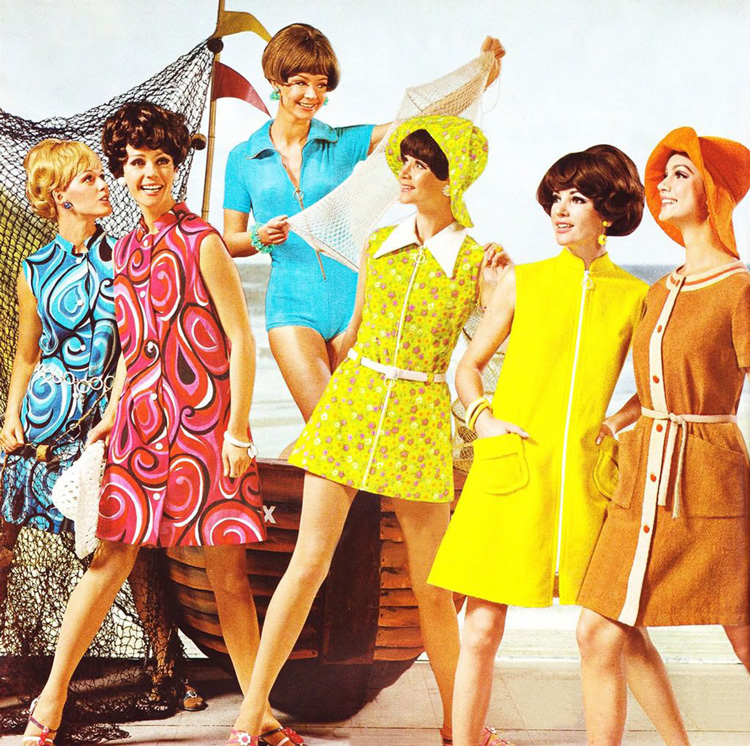
After a decade of cinched waists, full skirts and impeccable hair and makeup, many fashion traditions were broken in an act of rebellion, mirroring the momentous social and political changes of the decade. The 1960’s was the era where no skirt was too short and no beehive too high.
Not since the 1920’s had an era so drastically altered its perception of style and attempted to separate itself entirely from the decades before. Prior to the 1960’s, 50’s fashion was dominated by the tastes of a wealthy, mature elite, with midi dresses, skirts, and clothing that denoted ‘proper forms’ of masculinity and femininity in terms of clothing choices. Paris remained the engine of the fashion industry with sophisticated haute couture garments produced in regular collections by the likes of Cristóbal Balenciaga and Hubert de Givenchy. But times soon changed. At the dawn of the 60’s, young people’s income was at its highest since the end of the Second World War, and these fashion traditions were broken. Colours became brighter or monochrome, geometric shapes inspired by various art movements like ‘Op Art’ became popular, and a convergence of musical and digital media inspired tastes led to social and aesthetic led change, transforming the 60’s political, cultural and social landscape.
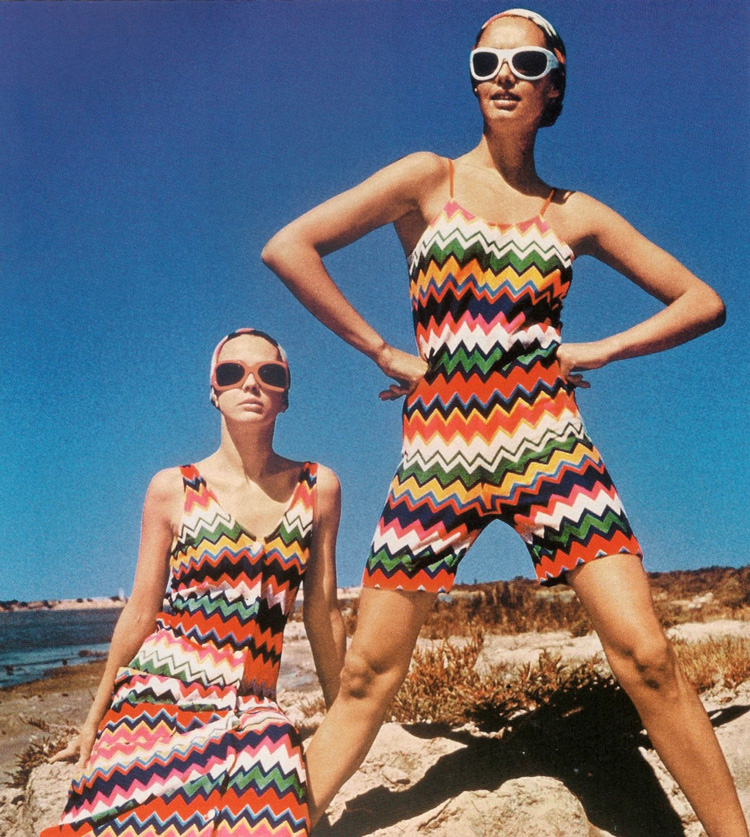
One of the key movements associated with the decade was the ‘Mod’ trend which was described as ‘young people’s fashion’ by the legendary Mary Quant. Quant is best known for popularising the mini skirt but she also triggered the augmentation of the monochrome trend, the psychedelic movement as well as other mini-Mod related trends. While Quant did not invent trends, she put them on the map for 60’s style lovers and shortened skirt lengths to retaliate against previous fashions that refused to allow women to show their legs. The 1960’s were fashion forward, futuristic and fun.

A common ‘Mod’ look before it waned in popularity in 1965, was a monochromatic or colour-blocked geometric shift with thigh high boots and Vidal Sassoon’s ‘five point’ haircut, inspired by models like Twiggy. It was razor sharp and androgynous, yet still laced with a smattering of femininity. The merging of gendered fashion had almost become unisex and both men and women were likely to borrow elements from each other’s wardrobes. Style had never been so unified and although the 70’s and 80’s were seen as the decades that were ‘infamously androgynous’, it was the sixties that engineered and pre-mediated the androgynous look.
The 1960’s was a definite style powerhouse and even today it is clear that many trends that we see as modern are really just a patchwork of 60’s led styles. From Missoni’s use of the ‘zig zag’ and stripe print that was so popularly used in the era’s op art movement, to Dior turning back time to stage a 1968 protest down its Fall 2018 runway, complete with an array of 60’s-inspired patchwork pieces, flower power-infused dresses, and colourful lensed sunglasses, it’s clear that the 1960’s style movement is still inspiring modern fashion.
MEET THE INFLUENCERS BEHIND THE SIXTIES’ FASHION SCENE
From Brigitte Bardot‘s beehive to Mary Quant’s geometric prints, every 1960s fashion icon contributed their own signature style to the. It was the era of the girl group, the gamine supermodel, and the original IT-girls.

Edie Sedgwick
The wealthy socialite, toast of the New York art scene, and Andy Warhol’s muse, Edie Sedgwick was the original IT girl. The essential ingredients of her good-girl-gone-bad aesthetic were lashings of eyeliner, chandelier earrings, mini mod dresses with sheer black tights and a crop of platinum hair.

Twiggy
One of the greatest muses of all time, Twiggy quickly rose to supermodel fame, thanks to her paint on thick eyelashes and boyish hairstyle. Almost overnight she became instantly recognisable and the face of the decade.

Mary Quant
Not only was Mary Quant a 1960s fashion icon in her own right, she brought the era’s greatest trends to the wardrobes of the masses from her shop on the King’s Road in London. The mini skirt, hot pants, coloured tights, and plastic macs were down to this design pioneer.

Jackie Kennedy Onassis
Before Michelle Obama and Samantha Cameron, there was Jackie Kennedy Onassis. The original fashionable First Lady managed to maintain her impeccable style throughout her time in the White House, even as she lived through tragedy. Jackie’s prim skirt suits, pillbox hats and super-sized dark glasses made her the style inspiration for women across America.

Audrey Hepburn
First it was that 1961 Breakfast at Tiffany’s that put the little black dresses back on the fashion map, teamed with movie star shades and a top-handle bag which won over our hearts. Then came the off-duty style, as Audrey championed capri pants and ballet pumps.

Cher
With her blunt bangs, kohl-rimmed eyes and a love of outlandish prints and the widest of flared trousers, Cher was a certified sixties icon. The then other half of Sonny and Cher led the way with the bold and the daring, and launched the hippie look with cool, Californian style.
READ MORE
Return Of The Visor
Annabelle Wallis Is The New Face Of Panthère de Cartier
The Legacy Of Hubert de Givenchy
From Audrey Hepburn’s little black dress to her wedding gown, Hubert De Givenchy is the master of iconic designs.
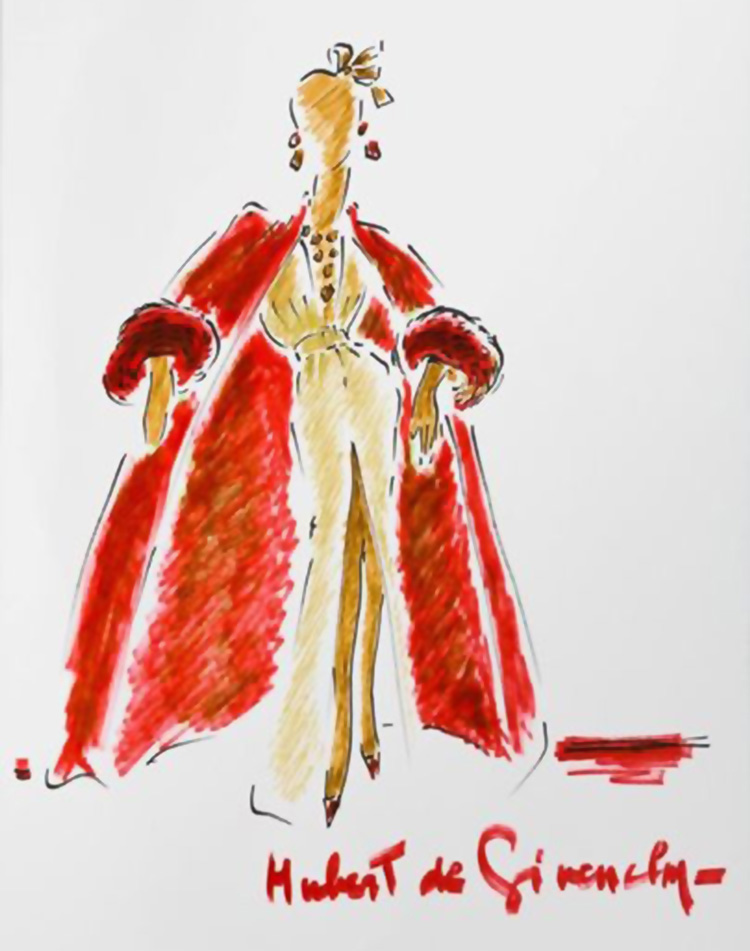
An illustration by Hubert de Givenchy
Although Givenchy is now a household name, Hubert founded the namesake brand in 1952 when he was in his 20s, quickly elevating the brand to become one of the most distinguished in Paris. Coco Chanel may have originated the Little Black Dress, but it was Givenchy, thanks to Audrey Hepburn’s both louche and devastatingly sharp inhabitation of an albeit-elongated version of the garment in Breakfast at Tiffany’s, that made it iconic.

Audrey Hepburn wearing Givenchy’s little black dress in Breakfast at Tiffany’s, 1961
Born on the 21st February 1927, in the provincial city of Beauvais, north of Paris, Hubert de Givenchy was raised by his mother and maternal grandparents after his father, a business executive and amateur pilot, died when he was a toddler. His grandfather, an administrator of a tapestry workshop in Beauvais, cultivated the young Givenchy’s appreciation of the arts and honed his aesthetic sensibility. After high school, he acceded to family pressure and joined a notary firm in Beauvais, but it didn’t last long, and he struck out for Paris in his late teens, in the wake of World War II.
Couturier Jacques Fath hired Givenchy on the strength of his sketches, and he spent two years learning the basics of fashion design, from sketching to cutting and fitting haute couture styles, while also studying drawing at the École Nationale Supérieure des Beaux-Arts, the French National School of Fine Art. He moved to Robert Piguet in 1946 and, briefly, Lucien Lelong in 1947 before joining Elsa Schiaparelli later the same year. Quickly, he became the Artistic Director of the Schiaparelli boutique at Place Vendôme.
In 1952, Givenchy founded his namesake house on Rue Alfred de Vigny in the 8th arrondissement of Paris, and it proved an instant success. No sooner did it open that it earned a reputation for breaking with fashion codes of its time. His debut collection ushered in the concept of separates, light blouses and skirts blending simplicity with architectural lines, as opposed to head-to-toe looks that were the norm among Paris couture purveyors. Working on a tight budget, Givenchy served up the floor-length skirts and country chic blouses in raw cotton materials normally reserved for fittings, including the high-buttoned, ruffled Bettina blouse which quickly took off during the ’50s. The collection’s body-conscious shapes created a sensation among the fashion press and buyers, especially because they were a stark contrast to the more restricted spirit of the time and the wasp-waisted, full-skirted ‘New Look’ pioneered by Dior.
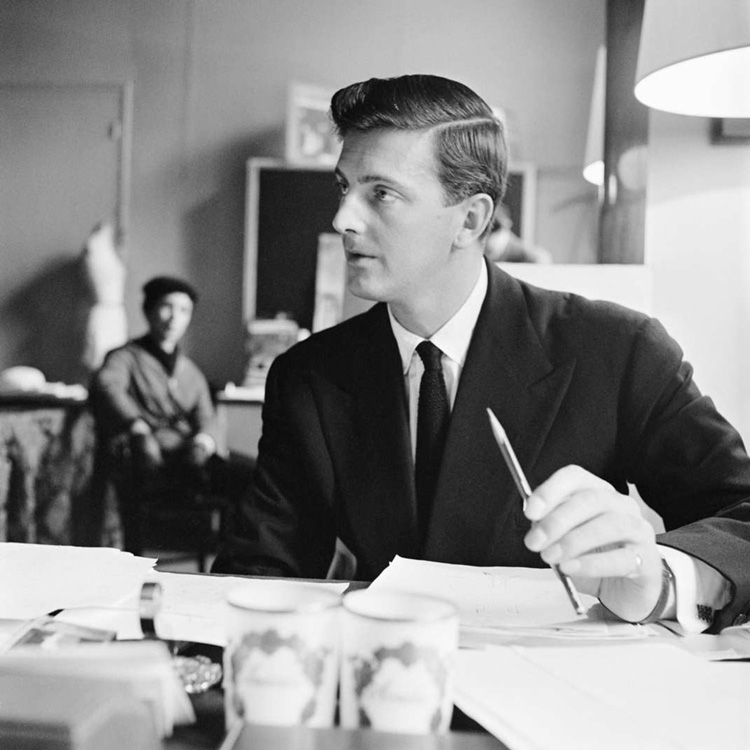
Hubert de Givenchy
Since the inception of his eponymous brand in 1952, Givenchy had been an arbiter of glamour and sophistication, dressing the likes of Hollywood stars Greta Garbo, Lauren Bacall, and Grace Kelly. But perhaps his greatest and most fruitful relationship was the one he shared with lifelong client Audrey Hepburn. In the summer of 1953, the couturier met Hepburn, who borrowed several looks for her film Sabrina. It was the beginning of a long collaboration and profound friendship between the actress and the designer. The two quickly struck-up a friendship and their resulting working relationship went on to span 40-years, ending only on Hepburn’s death in 1993. In total, he dressed her for seven films, including Funny Face, Love in the Afternoon, Charade, and of course Breakfast at Tiffany’s, with the image of her in a simple black satin sheath dress with matching gloves and pearl necklace forming one of the most iconic images in cinematic and fashion history.
The common industry practice of celebrities as brand ambassadors, seen everywhere nowadays with global luxury brands and A-list movie stars, can be traced back to the Hepburn and Givenchy relationship. Her genuine friendship with Givenchy stemmed from his warm, gentleman’s persona and refined elegance, something they shared unequivocally. It’s quite rare this day and age to point out a designer-celebrity ambassador relationship that’s not tied to exclusive dealings and multimillion-dollar contracts.
Aiming to reach a wider market, Givenchy launched a line of upscale ready-to-wear and accessories in the 1960s, and its commercial success soon enabled him to buy out his backers, making him one of a handful of Paris couturiers to own their own label outright. However, in 1988, he sold the house to French luxury conglomerate LVMH Moet Hennessy Louis Vuitton, and went on to announce his retirement in 1995, leaving a great Haute Couture empire which underwent a series of changes at the creative director post.
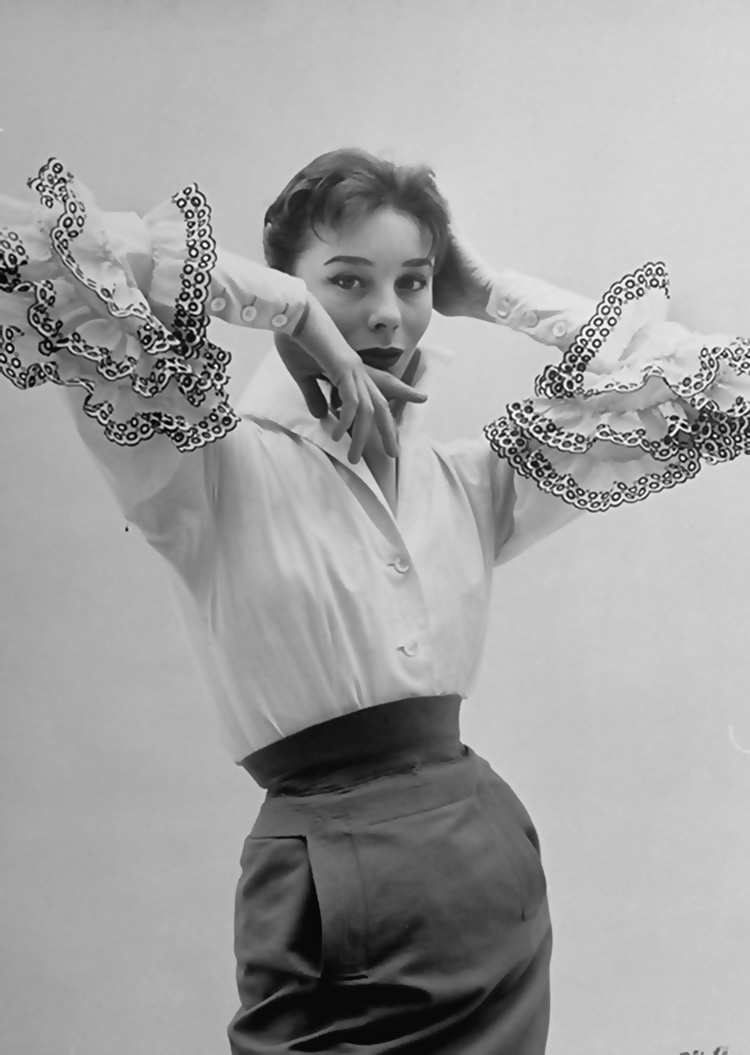
Bettina Graziani wearing the Bettina blouse
The label was inherited first, from 1995 to 1996, by Hispanic-British designer John Galliano, one of the most controversial and famed fashion designers of the time who redefined the firm aesthetics. Galliano was followed by yet another legend in the industry, English fashion designer Alexander McQueen, who bestowed a vibrant and underground audacity from 1996 to 2000. Next was Welsh fashion designer Julien McDonald who brought a more commercial touch until 2005, when Italian designer Riccardo Tisci took over as creative director.
The longest-serving creative director, other than Givenchy himself, Riccardo Tisci helped grow the company exponentially thanks to his designs and celebrity support, bringing the brand into the modern red-carpet era, with stars from Beyoncé to Kim Kardashian becoming fans. In some ways, Tisci’s friendship with muse and social media phenomenon Kim Kardashian offers a parallel to the one Givenchy enjoyed with Hepburn, proving that an authentic relationship grounded in mutual respect and admiration can do wonders for a brand’s reputation and growth. Today English fashion designer Clare Waight Keller serves as Givenchy’s first female artistic director, following Tisci’s departure in 2017.
Sadly, on the 10th of March 2018, Monsieur de Givenchy passed away, leaving behind not only a thriving fashion house, but a legacy of his own. An aesthete and collector, Hubert de Givenchy symbolised Parisian chic and elegance for more than half a century and will always embody classic elegance with a touch of wit. His enduring influence and his approach to style reverberate to this day.
READ MORE
French Couturier Hubert de Givenchy Dies At 91
The Life And Legacy Of Alexander Mcqueen
Your Cheat Sheet To Top SS18 Beauty Looks

DIOR
This season, the world’s most revered beauty experts created inspirational and incredible beauty looks. Whether it’s an extreme graphic liner, a crystal embellishment or a sprinkling of glitter, there really is something for everyone. Scroll through our roundup of SS18 beauty trends to try now.

Missed-a-Bit Lips
This new lip trend dictates that actually it’s okay to miss a bit, with negative space lips. Championed by Pat McGrath at Maison Margiela, she applied a bespoke mix of her LuxeTrance Psycho Candy and MatteTrance Full Panic in a flocked shape that, upon closer examination, revealed two twin hearts that were turned on their sides.

Feeling Flushed
With the ability to brighten a complexion and awaken tired eyes, it’s only right that blusher breaks free from the traditional apple-of-the-cheek placement and instead, travel up to the eyes and along the cheekbones. And don’t play it safe with the shade either, opt for a poppy fuchsia or electric neon pink.

The Surrealists
Rather than lashline-hugging cat eye flicks, the new way to wear liquid eyeliner is with pure whimsy and abandon. Encircle eyes in almond-shaped rings or take inspiration from abstract art and go freehand to create graphic lines.

Bling it On
This season crystals made a brilliant accessory for under your eyes, hair parting and Cupid’s bow. Simply use a pair of tweezers and eyelash glue to stick the crystals either along your parting or onto your lips. The key here is to keep everything else pretty understated, think dewy skin, mascara-less eyes and nude lips, and the additional sparkling Swarovski’s won’t start to look OTT.

Electro Eyes
Would it really be summer make-up without some seriously bright colours on show? Electro-pop eye make-up appeared in orange, pink and aquamarine at House of Holland, in highly-pigmented pastels at Missoni, and in blues, greens and turquoises at Marni.
AND HERE ARE THE CRAZIEST BEAUTY TECHNIQUES WE SAW BEING USED BACKSTAGE…
Val Garland’s toothbrush lip-exfoliation at the Balmain show
Luminous coverage and nude lips were the beauty look at Balmain, and the secret to the buffed lips was a toothbrush. The technique, as revealed by Val Garland, is simple. Using a lip exfoliator, start by sweeping the brush over the lips in light strokes, before nourishing the lips with a hydrating balm for a flake-free canvas.

The vacuum technique adopted by Sam McKnight for Chanel
In reference to the show’s transparent vinyl hats, trenches and bags, Sam McKnight styled the models low ponytails into a Plexiglas tube. However he used an alternative method to feed the hair into the unusual accessory, first placing the tube over the nozzle of the vacuum cleaner, turning the machine on, and sucking up the hair lengths.
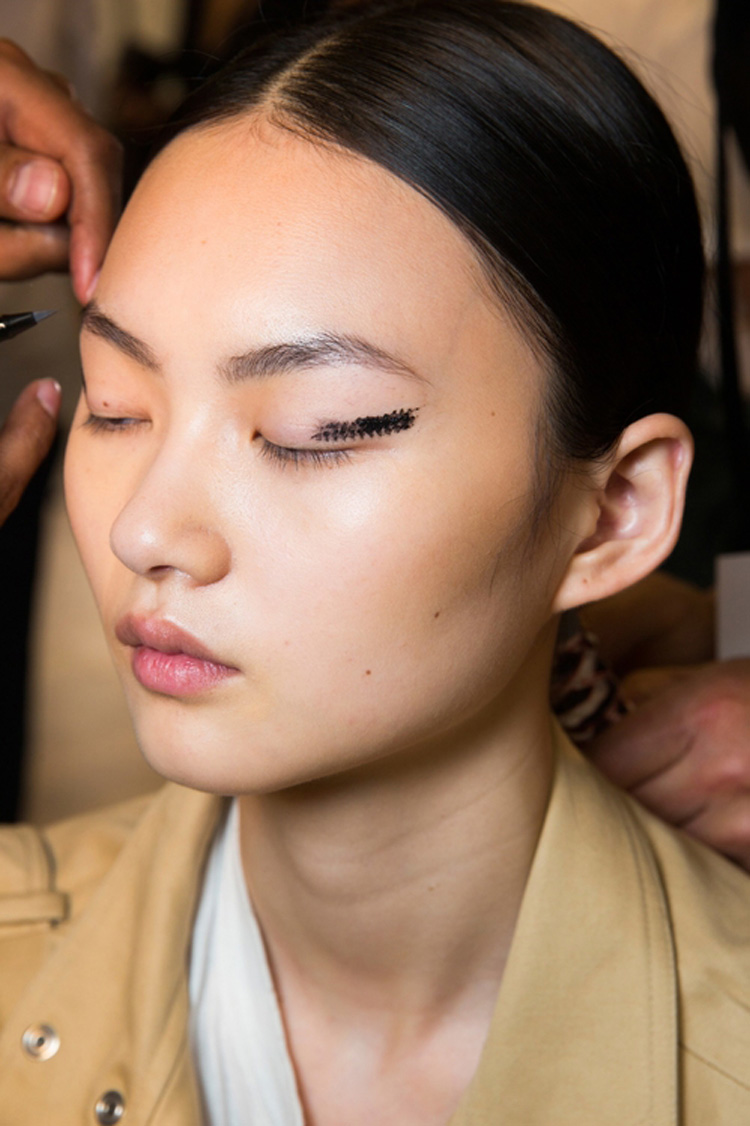
Karim Rahman’s cat-eye applied with a straw for Lanvin
This season, updated takes on the cat-eye were seen across the board, from the graphic, negative-space eyes at Rochas to reverse feline flicks at Jill Stuart. The most innovative however, were the graphic shapes at the outer corners of the eyes at Lanvin, by Karim Rahman, which were created with drinking straws dipped in a generous amount of liquid eyeliner.
READ MORE
A&E Guide To Double Cleansing
Aesop Gives Combination Skin A VIP Treatment
How To Wear Print This Season

LOUIS VUITTON
Underscoring the move towards a bolder male wardrobe, prints are the need-it-now item to inject some va-va-voom into minimal or neutral outfits this season. Just in time for the seasonal change, prints are ripe for the picking, florals, animal prints, the more classic checks and stripes, and the currently ever-present logo.
Shirts, shorts, and shoes are all getting the bold print treatment. So, learning how to wear the bold print trend without being overpowered is essential style savoir-faire for standing out in the crowd for all the right reasons.

READ MORE
How To Tackle Head To Toe White
Aquazzura Men’s Collection Is On The Way
David Downton: Master Of Fashion Illustrations
In an Instagram world, artist David Downton continues to draw fashion and Hollywood’s top stars.

A master of fashion illustration, London artist David Downton has carved out a celebrated career illustrating the fashion set, from the models to the shows to the well-heeled ladies who attend them, and as we celebrate art we put the spotlight on him and his relationship with fashion.
As one of the most prolific fashion illustrators alive today, his illustrations are some of the most recognisable in the industry and Downton is often found in the front row of the world’s best fashion shows, capturing the spirit of the models, the garments, and the designer. Like fashion illustration, couture has, at times, been written off as irrelevant, archaic and on its last legs. And, like fashion illustration, it refuses to listen to the prognosis.
Downton began his career as a commercial illustrator and didn’t consider fashion as a career until he attended the Paris couture shows over two decades ago. It was then that he began to really explore the world of fashion illustration, saying it felt like he’d ‘been given the keys to a magic kingdom’, before taking the industry by the horns and really making it his own.
He, among many others, is often credited with resurrecting the art of fashion illustration after it waned in popularity in the 1930s. What had begun as the sole means of communicating the soul of the fashion industry to the masses was quickly replaced by photography, with the first photographic cover of Vogue truly marking the decline of the art form. However, in today’s modern world of photography, video and image editing, illustration has become a visual luxury. Like many traditional mediums, fashion illustration is cyclical, it has become sought-after again, with many new illustrators being praised for their individuality, for daring to stray away from photography. Although, perhaps fashion illustration never went away, and it was individuals like Downton who were always working, keeping the spark of the tactile medium alive while technology and the fashion industry evolved.
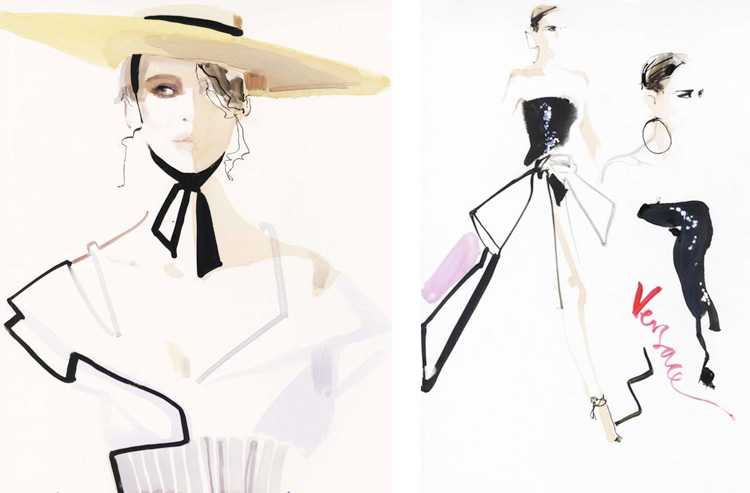
Illustration offers a greater sense of movement and fluidity than traditional fashion photography. The dexterity of Downton and fluidity of the watercolour convey a story without needing to be totally accurate, which culminates in an unusual perspective on some the world’s greatest designers and models. He has illustrated with effortless elegance the flowering of the excess-all-areas Galliano regime at Dior, and it’s almost equally extravagant counterpoint, Alexander McQueen at Givenchy in the late 1990s, while also capturing the essence of Yves Saint Laurent’s magisterial final bow in 2002, and those of Valentino Garavani in 2007 and Christian Lacroix in 2009. Downton has witnessed pivotal fashion moments, drawing them with his trademark simplicity and grace, from Gianni Versace’s last collection before his murder, and the return to the fold of the house of Schiaparelli.
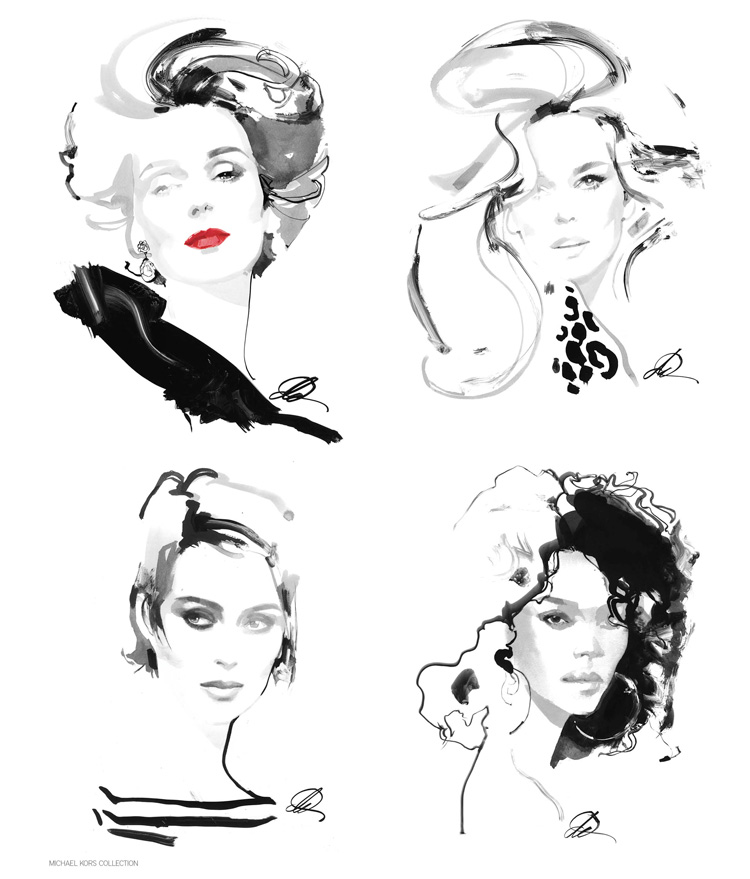
‘I like the images to float on the surface of the paper, as though they had just happened.’
– David Downton
Beautiful in their simplicity and spontaneous in spirit, Downton’s works have captured numerous collections and a glamorous host of sitters, think Cate Blanchett, Dita Von Teese, Iman, Linda Evangelista, and Paloma Picasso, with an international client list that includes Chanel, Dior, Tiffany&Co and the V&A Museum. His classically elegant, yet highly contemporary images have been a key factor in the revival of interest in the tradition of fashion illustration and Downton is a worthy successor to the great artists in his field including Gruau, Eric and Antonio.
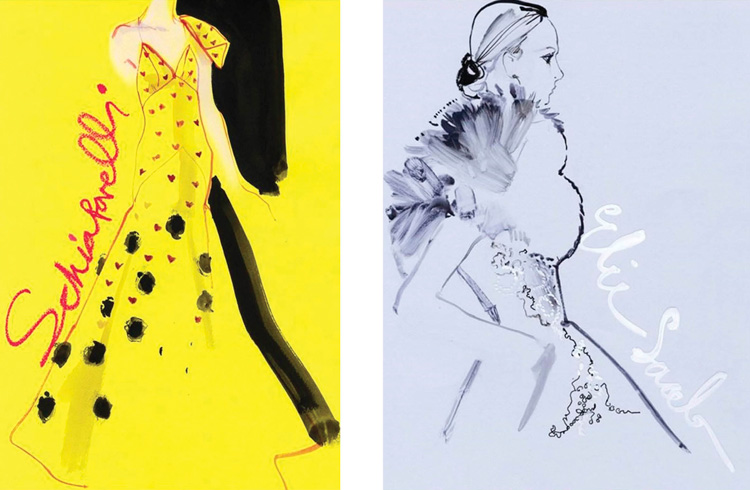
Varying his technique depending on his mood, yet favouring black ink and water colours, the striking velvety nature of the black strokes in his pieces have become somewhat of a trademark, really setting his work apart from the rest, and most recently he has collaborated with Michael Kors on a special edition capsule collection.
‘This is our first collaboration with an artist for Michael Kors Collection, and it is very personal,’ says Michael. ‘David captures people’s essence and style without feeling the need to draw every detail about them, it’s the magic of a great illustrator.’
The designs debuted at the Michael Kors Collection runway show during New York Fashion Week in February and will hit stores in Fall.
READ MORE
Your 2018 Art Exhibitions Guide
New Hermes Exhibition Celebrates Martin Margiela
