

New Fashion Brands On Our Radar
We are always on a look out for new fashion brands that are making a name for themselves in the region.
You may not know these designers yet, but will most certainly recognise their pieces from the fashion front row, or spotted them on your Instagram newsfeed. Here, we have sussed out the best and brightest of emerging labels, from the brand that makes the perfect fluffy slippers to the one that’s fulfilling our minimalist dreams.

By Eliza Scarborough
READ MORE
On Our Radar: Racil
Name To Know: Okhtein
Our Top Six Accessory Trends For Fall 2017
Dazzling embellishment, traditional craftwork and a seventies palette is about to up your style game. Scroll through our top pick of accessory trends for fall.


READ MORE
Resonances de Cartier: A Jewelled Journey
A frisson of energy embraces one creation after another.
Follow us on a journey with Resonances de Cartier, the maison’s latest high jewellery collection that fuses together the finest craftsmanship with a range of extraordinary jewels shaped into eclectic and dramatic pieces of sparkling art.
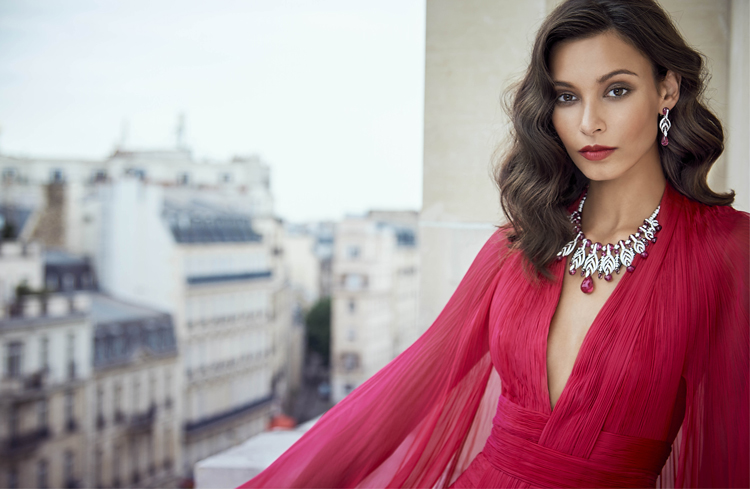
Résonances de Cartier MURMURE necklace and earrings, white gold, rubellites, black lacquer, diamonds. Gown, Rami Al Ali Couture
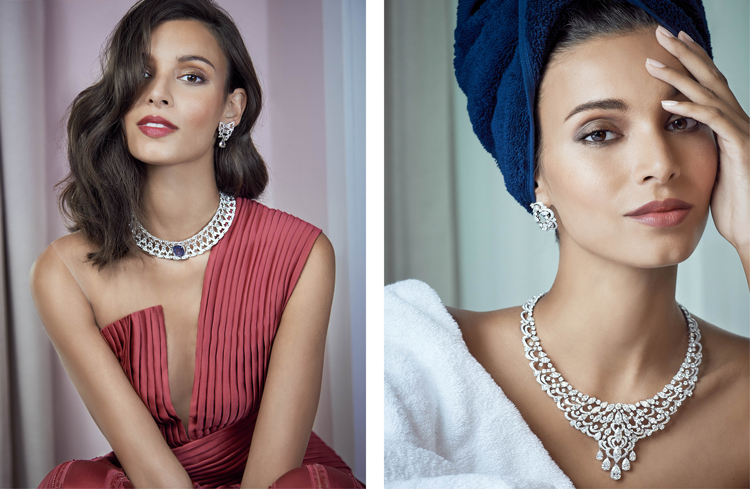
LEFT IMAGE: Résonances de Cartier DIATONIQUE necklace and earrings, white gold, one sapphire from Ceylon, diamonds. Gown, Rami Al Ali Couture RIGHT IMAGE: Résonances de Cartier HARMONIE necklace and earrings, platinum, diamonds. The necklace can be worn in three different ways.
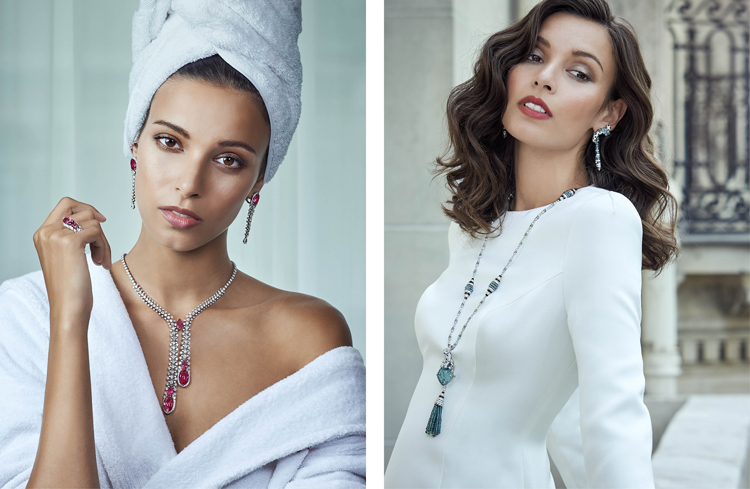
LEFT IMAGE: Résonances de Cartier LEGATO necklace, ring and earrings, platinum, spinels, diamonds. RIGHT IMAGE: Résonances de Cartier PANTHERE DE CARTIER necklace and earrings, white gold, aquamarines, blue tourmalines, emeralds, onyx, diamonds. Gown, Suzanne Neville Couture

LEFT IMAGE: Résonances de Cartier TUTTI FRUTTI necklace, white gold, carved emeralds and rubies, diamonds. Gown, Ong-Oaj Pairam Couture RIGHT IMAGE: Résonances de Cartier DIATONIQUE earrings, white gold, diamonds Résonances de Cartier KINETO ring, platinum, emerald, diamonds. Gown, Rami Al Ali Couture

Résonances de Cartier HARMONIE necklace and earrings, platinum, diamonds. The necklace can be worn in three different ways. Gown, Ong-Oaj Pairam Couture
Fashion Director: Eliza Scarborough
Photographer: Lezli and Rose
Hair and Make-up: Ian McIntosh at Carol Hayes
Model: Rea St Helena at Premier
Location: Royal Monceau, Paris
Enjoy our exclusive video with Cartier below:
READ MORE
Interview with Lebanese Designer Rani Zakhem
One of Lebanon’s most successful designers, Rani Zakhem is the new fashion innovator with a reputable presence across the Middle East all the way to Hollywood. Born in Lebanon and raised in Kenya, from a very young age Zakhem knew he was destined to be part of the design industry; that led him to pursue a degree in architecture in Lebanon, and then fashion design at Parsons the New School for Design in New York.
Charmed by the colourful beauty of the African lands, the label features three main lines including ready-to-wear, couture, and bridal. We get personal with the designer as he tells us how he went from being in interior architecture to fashion design and the triggers behind his timeless creations.

How did growing up in Kenya help your aesthetics and daily inspirations?
For people who grow up in Africa, it never leaves them. Definitely, it still inspires my work to this day, the colours, the landscapes, and the memories influence my tastes. I like two extremes, personally I love monochromes as for me the absence of colour is very soothing, especially when you work with colours all day. But when it comes to my own designs, I am known for my vibrant tones.
What triggered your passion for design?
I have always known that I wanted to be a Fashion Designer, and my love for architecture compliments it all.
What is one thing that makes your process different to other designers out there?
I believe every designer has a way of processing a collection, for me there isn’t one process per-se in specific. Sometimes a love story can start with a fabric or a dream, and sometimes it is inspired by the women you work with, as many times they have new ideas, they have a flair with their choices or with their taste level and their way of life.
Is there anyone in specific you are thinking of right now that heavily influenced your work?
There are many interesting women that compliment my way of thinking and sometimes you adapt to their way of thinking and living that takes a big part of the process.

What is your take on the world of Fashion in the Middle East? Is it growing positively or negatively?
Fashion is a very industrious business; sometimes I do feel that everyone just wants to become a designer, which is sort of ridiculous. I just think that some don’t understand what being a designer is, because fashion design isn’t as glamorous as it seems, there is a lot of mathematics and architecture. For me I believe they are praying on the business. Many are masterful accomplished designers that know what they are doing, and are worth being named as designers because they studied and practiced. However, some others are just intruding.
What is Rani Zakhem’s main philosophy?
I would say understated elegance with a touch of quirkiness. It is for an elegant modern woman, because I personally am an advocate for the form-loving silhouette and like to show her curves and to experiment with shapes that help women feel sensual and seductive.
What is your biggest design inspiration for the coming year 2018?
For next year we are experimenting with new horizons! The main trend we are working on is fringes and incorporating macro-main knitwear.
You have dressed a star-studded list of clientele, who else is on your wish list?
Charline Theron! Others from the Arab world that I look up to would be Queen Rania of Jordan, I think she is an icon of style, and also Sheikha Mousa and Queen Leila. There are a lot of remarkable woman who symbolise the modern Arab woman of today.
If you were to go back in time, what era would you choose to be a designer in?
I would love to go back to the 1920’s and ‘30’s!
What’s your take on social media? How important do you think it is towards building a brand?
Social media today is an important tool to show your work and craftsmanship and give more exposure to the brand. However, I do believe that there are a lot of people, such as bloggers and influencers who are praying on the business, and for me personally they are not adding a plus to the industry, and are given more credit than they should. While the designers are the ones who are doing all the work and coming up with the creations, they are the ones who are getting all the hype. So I believe somewhere down the line I think people’s ideas got a little bit skewed or confused, because we are the ones who are supplying them with the materials that they are influencing with. This is a topic that is very subjective, but of course social media is important to give awareness for the brand, and to put it on an international platform where it is visible and accessible to everyone.

Can you share with us your least favourite Fall 2017 trends?
The rainbow coloured Gucci platforms, I think they were a big no-no!
Latest song that you have on repeat on your iPod…
“Feel it still” by Portugal. The Man.
If you were a city…
That’s debatable; it would be Paris and New York!

Name a movie that made you laugh very hard.
White Chicks!
What advice would you like to share with young designers trying to break into the industry today?
Never give up! It is a very tough industry and sometimes designers or artists are always self-conscious, searching for ways to validate themselves, which makes them discouraged. Even now after 9 years in the business I question my designs. The key is to always work on improving; never stop from creating new shapes and different silhouette details; if this time it didn’t work out it will eventually the next time around. So, I say to them to always stay true to your identity as a designer.
What is Beirut to you?
Beirut is a lot of things- it is passion, anger, home sweet home. It is really a city that is indescribable, but it is full of colours and warmth that is not found anywhere else; and of course good food!
What is next for Rani Zakhem?
Hopefully, opening a freestanding store here in Lebanon; and to show our collections in Paris. I personally think that things are meant to happen effortlessly; because if you force them they either don’t last or happen in the right way you want them to. Things do really happen for a reason!
By Dana Mortada
READ MORE
Ralph Masri: Welcomes the World of Modern Lines
Lebanese-born, Ralph Masri is known for being a globetrotter who lives between Lebanon, Canada, France, and the United Kingdom. For the love of jewellery, art and history, the jewellery designer graduated with a degree in Jewellery from Central Saint Martins in 2011, and shortly after he decided to return to his home country to set up his eponymous brand.
From Lebanon to Dubai and New York, Ralph Masri is making a buzz with his modern-looking pieces, so we caught up with the young designer at his Beirut showroom to find out more about the influences behind his passion for sculptural shapes and the steps to building his label’s strong identity.
We know that your parents are already part of the jewellery industry; did they have any influence on your decision to take part in the jewellery industry?
Yes, I did grow up in this environment but I must say my family never had anything to do with my decision. At first I never considered going into jewellery, but I have always been very artistic and creative as a kid, and I have always loved drawing and sketching, so I knew from the start that I wanted to do something creative. My first love was painting, but I realised that it is not realistic as a career so I decided to pursue a degree in graphic design at Central Saint Martins. Once I moved there and had my foundation year in London, this is where I realised I actually do love jewellery, and it is a field that I really enjoyed so I switched my degree. It happened organically, no one pushed me into the field, and my parents were shocked when I told them that I was going into jewellery after all. Once I graduated, I came back to Beirut to launch my own business.
What triggered your passion for jewellery?
There was no one trigger, it was the combined elements of everything that I loved. It combined creativity, drawing and sketching with working with my hands, like creating 3D models. I love working with my hands, and to this day I make my own jewellery. Even though I have craftsmen that I work with, I make all the prototypes and the original pieces, and then during production I collaborate with my craftsmen.

Tell us why do you lean more towards sculptural shapes and ancient cultures?
I am a history freak! I always loved history and architecture; these are my two main sources of inspiration. Especially our own heritage here in Lebanon and the Middle East tends to be my starting points. Again, it is very important for me to make my pieces look contemporary and have this universal appeal.
What makes your design process different than any other designers?
I don’t know if my process is different, but usually with me I have a moment of an epiphany, and this is my inspiration, so I have a moment where I love one thing and decide to research that one theme, which ends up being developed into a collection.
What is your take on the world of independent fine jewellers in the Middle East?
In the Middle East I think it is still very primitive, compared to how much fashion, music or film is evolving, when it comes to jewellery I believe we are very much behind. It is still an old-school industry; we don’t have institutes that teach jewellery. So, you don’t have a lot of young people getting into the field and starting their own thing unless their family is in it. Yes, in the Middle East I must say it is lacking and from an educational standpoint it is not being taught enough, but again on an international level you have a lot of fresh talents rising in fine jewellery.

Why did you decide to come back to Lebanon and not stay abroad in London? Do you have any regrets?
No, of course not! For one I think Lebanon is a great base and geographically it is close to Europe and not far from many other countries. However, from a production stand view we have amazing quality here and at a much lower cost. Plus, Beirut is my home; I came back for this reason because I like the feeling of being home and close to family. It made sense from every angle.
What is Ralph Masri’s Philosophy?
The most important thing is the identity of my work. I am less interested in sales and more interested with my work being coherent, and having a strong and recognisable identity.
Name one surprising secret talent that no one knows about you.
I am an amazing cook! Food is one of my other big passions of life, for me it is very comforting and it takes my mind off things.
In that case, what would be one type of cuisine you would live off?
I have a weakness for Asian food.

What is your biggest design inspiration for 2018?
My latest collection is called ‘Modernist’ inspired by modern architecture. You can see it is very geometric, minimalistic, and it also continues a story for the rest of my collection’s architectural spirit. I love statement pieces that are clean and simple.
How many collections do you produce a year?
Do you go by the Fashion Week schedules?
I didn’t before, but now I do. I am working with a representative in New York, who takes care of my press and sales outside the Middle East, and they represent all their designers in Fashion Week, so now if I want to be part of all this mix where all the buyers and press are there I have to commit to the schedule. So basically, I launch a big collection once a year, and every season introduce capsules of new colours and styles to the collection.

Who is the ideal Ralph Masri woman?
She is an independent woman with a bold taste who buys her own jewellery. With our brand, it is more about successful women spoiling themselves, because of the simplicity of the design, and it not necessarily the product a man would think of as a gift.
Name a role model you would want to wear your designs.
Queen Rania was one of them, and it actually ended up happening. I think she is a great role model for women, not only in the Arab world but internationally.
Which piece is your top seller or that you may call your signature piece?
My Arabesque Ring and Earrings, both had a lot of love from press and clients.
What is next for Ralph Masri?
The launch of my Modernist collection!
By Dana Mortada
READ MORE
Joseph Himo: Inside the Mind of a Jewellery Master
One of Lebanon’s well-known jewellery names has gained international acclaim, famous for their modern, whimsical, and timeless designs. Himo Jewellery is a brand that has redefined the meaning of fine jewellery by taking trends a step further, and over the years has been a leader within the jewellery industry and a true inspiration for others across the region. The jewellery house is always on the move, doing what they do best by giving attention to detail, valuing the art of craftsmanship and using innovative manufacturing skills.
Just like his eponymous brand is like no other, Joseph Himo- CEO of Himo Jewellery, began his career at a very early age, and has been revolutionising jewellery design across the region ever since. Here we get personal with the CEO, as he shares more stories about how he made his name as one of the most pre-eminent luxury jewellery brands in Lebanon and his plans for a brighter future.

Tell us how did your vision of the HIMO concept come to Life?
In my head, jewellery has always been the sign of luxury, yet I always felt that it was exclusive to certain people or certain occasions. What I wanted to do, is to introduce diamonds and jewellery in a way that it is perfect, suitable, and affordable for everyone, but without losing the touch that distinguishes diamonds from regular jewellery. And so, the concept of HIMO came to life, a brand that combines luxury with everyday style.
From the different collections you are offering, clearly a woman of any age can wear your designs. In your own terms, who is the HIMO woman?
The HIMO woman is someone who is always shining, and who knows how to look distinct on any occasion. Many ladies can wear jewellery and look stunning in it, but a HIMO woman is one who looks effortlessly beautiful.
What are your favourite stones to work with?
As a brand that specialises in diamonds, diamond would be the obvious answer. But I have to say that I find mixing diamonds with other stones like ruby, sapphire or emerald, do add a lot more to the design of a simple necklace.

There are a lot of messages about women empowerment today; to what extent do you feel jewellery empowers the woman of today?
The way we choose our wardrobe is a strong expression of our personalities, and so does beautiful jewellery, which expresses the women who are strong, confident, and beautiful.
We heard that HIMO is launching a new watch line for both women and men, what are the challenges you are facing with this new project?
Indeed, we are releasing our own line of watches. I have to say that one of the biggest challenges we faced was making the design of the watches, to be elegant, and to express the ideas and notions we have when designing our jewellery; and also of course, to integrate these new items and ideas along with our jewellery and diamond collections.
How does Lebanon inspire you to work? Do you have plans to expand internationally?
Lebanon is a rising country that comes with a lot of potential; and just like jewellery all it needs is some crafting skills. Similarly to Lebanon, our brand has the flair that would fit all tastes yet with a local touch. As for your second question, yes we do; we already have ongoing talks to expand our brands further in the Middle East and across the world.
What is your favourite HIMO line?
I find each collection unique in its own way, and each one has its own story. However, for me personally, I find the Princess Collection to be one of my favourite, it is a real interpretation of the vision I always had for the HIMO woman.

What is your advice for men when picking out the right jewellery piece for their loved ones?
As a man, I have to say this is a little bit of an issue; but as an expert in jewellery, I have to say that when it comes to choosing a gift for that special someone, the gift has to be not something only meaningful to you; but also to the person who relates to you. In a way that every time they wear it, it is like you are with them in every step of the way.
Tell us, where is HIMO today?
I would say HIMO is currently on the verge of making a big transaction from a brand that is known mostly in Lebanon. It is now walking into the international market, by introducing new items inspired not only from our culture, but from different ones around the globe.
Would you say you achieved all your dreams?
No one can ever say they have achieved all they ever dreamed of; however, establishing the HIMO line has always been one of my biggest dreams that I see growing stronger every day.
What is your personal motto?
My motto in life has always been “when there is a will, there is a way” this saying has accompanied me in every step of my life, especially when it comes to making either professional or personal decisions.
READ MORE
Exclusive Editorial Shoot with HIMO Jewellery
Welcome fabulous jewels and elegant timepieces, all recast for the modern woman who desires an effortless appeal. Enjoy the latest exclusive editorial with HIMO Jewellery out in our Lebanese edition for October.

Princess Collection; Earrings and Necklace, Elizabeth Watch Collection. All Himo Jewellery

LEFT IMAGE: The Classics Collection; Diamond Necklace, Lady D Collection; Ring, Pendant Chain, Earrings, Princess Collection; Ring, La Reine Watch Collection RIGHT IMAGE: Diva Collection Ring, Elizabeth Watch Collection All Himo Jewellery

LEFT IMAGE: Bridal Collection; Earrings, Princess Collection; Ring, Tourbillon Collection; Bracelets, Scarlett Watch Collection RIGHT IMAGE: Tourbillon Collection; Bracelets, Pacifico Watch Collection All Himo Jewellery

LEFT IMAGE: Emerald-Ruby and Diamonds Bridal Set Collection RIGHT IMAGE: Lucky Charm Set Collection, Capri Watch Collection All Himo Jewellery

Diva Collection; Necklaces, Earring, Ring. All Himo Jewellery
Styling and Direction: Dana Mortada
Photographer: Sam Rawadi
Hair Stylist: Ivan at Velvet Management
Makeup Artist: Bohdana at Velvet Management
Model: Maria at Velvet Management
All Clothing from Le66Beirut
Location: Coop D’ Etat Rooftop – Beirut, Lebanon
Enjoy our exclusive video with HIMO Jewellery below.
READ MORE
Simone Tamer: The Successful Secrets for Living in a Man’s World
Full of passion and charisma, Simone Tamer belongs to the fourth generation of Tamer Frères group, a Lebanese family business responsible for global watch brands, jewellery, medical products, IT Solutions and Chemicals and raw materials.
The young entrepreneur took charge of her big dream, as she holds a Bachelor in Business Administration from the American University of Beirut (AUB), an MBA from ESA Business School and followed executive courses at Harvard Business School in Boston.
Today, Simone is an inspiring role model, she has successfully completed her academics and has taken her passion and knowledge, and done what so many young entrepreneurs strive to do and be; is today’s proud CCO of the Tamer Freres Group. Despite her busy schedule, Simone talks to A&E Magazine about her path to success and shares her entrepreneurial skills with today’s women trying to make it in a man’s world.
Tell us how was it to grow up into a family business as successful as Tamer Frères Group? And why did you choose to become part of it?
I started as a sales person at the first Montblanc boutique in Downtown Beirut during my summer breaks. Soon after graduating, I started working in a multinational company, and later decided to join our family business. Firstly, I was named the Marketing Coordinator of the group, working across several fields such as sales, training, and brand coordinator, after I was the brand manager then Department manager and eventually today 11 years later, I was promoted to CCO of Tamer Freres.
The reason why I wanted to be part of our family business is because I am very much attached to our family’s legacy and history. I was very proud of the hard work my dad has accomplished to reach the highest level of performance and the various partnerships he landed with the most successful brands worldwide.
What steps did you take to get where you are today? What keeps you motivated?
After successfully completing my academics, I trained with a multinational company and then immediately after I decided to join the family business in an entry-level position, which taught me a lot. I learned the details of every task, and did most of the basic tasks for several years. My learning experiences came from my father, my customers, from key opinion leaders, and other significant people in key positions within the companies we work with and represent. I followed training related to the watch industry, strategy training, selling techniques as well as behavioural trainings. I believe in self-motivation, I push myself to reach higher targets and always aim for new challenges. I am encouraged by success. When I fail, I do my best to learn from the situation and try to fix it so it won’t happen again. I also love what I do and I believe that love is a main trigger for motivation. I try to be always positive and consider that the fact that we can forget and move on is a human quality I adopt very often.
Tell us more about any habits you have, which helps you set up success every day?
I do my best to sleep early; I do not drink or smoke. I love to wake up and run in the morning and if I skip my morning run I never skip my afternoon time at the gym. I try to have a light lunch but always go out for dinner. I learned to ask to leave early so I wake up early and fresh, because as a discipline it is very important for me and I appreciate the people who respect that.
Knowing that you are a woman taking part in the business world, do you think women feel intimidated in business?
I think men feel intimidated by the presence of women in business! Women and men are almost equal today in the business world, key positions are reached by very successful ladies, sometimes I even feel and that’s a personal opinion that women have an advantage over men. The best sales people in my team are women! A key factor of success is to follow the business world know-how, where a woman should be dressed elegantly but following a certain business dress-code. Empathy is a key rule where a woman should know when she’s dealing with men that they might think or act differently in business and that’s why we have the general business conduct rule to follow.
What is your professional take on success for women in Lebanon?
Several key positions are reached by women in Lebanon, especially in the banking sector, the hospitality segment, the luxury business, and the marketing and advertising sectors, also key sales positions. Today recruitment and career paths are more related to performance and attitude rather than gender differences, at least in professional corporations where women’s rights are respected. When it comes to maternity or household responsibilities we live in a country where help is very accessible and makes it easy for ladies to acquire a certain balance between their job and life at home.
How do you achieve work-life balance?
I certainly cannot achieve a perfect work life balance. I try to prioritise and to find a balance between what I want and what I can do. My priority today remains a good balance between my work and my family, but also my different activities such as hunting, skiing, boxing, running, tennis, snowmobile, swimming, reading and online shopping. I am a strong believer that a woman has no reason to lose who she is in order to attain work goals. Time management, making the right choices and setting priorities are essential, well-being is key!

Are there specific advantages and disadvantages to being a woman in business?
If I talk about my personal experience, I can say that there are advantages and disadvantages, and both find a certain balance at the end. Surely physically we cannot deny that we are not as fit as men and we go through certain phases where we can be a bit less productive but at the end if we work on “how to get things done” we can get through the worst. Our grooming can take more time too, travelling can be harder than it is for a man but at the end when we are in a room full of men, our femininity is our biggest advantage, men respect our presence, they listen to us, they respect our turn to talk and fewer misunderstandings can occur.
What advice would you give to other women entrepreneurs within the Arab region who want to follow a similar career path as you?
Start from the bottom, go in the details of the tiniest tasks, and do not be scared of challenges, to understand the specificities of each job you should perform it yourself. Do not worry about going up the ladder, even if you do not have to. Every step teaches you something new, learn and listen to everyone, choose what you retain and what you want to let go of. Make a lesson out of success and failures, do not take things lightly or personally, concentrate and focus when you have to, mix business with pleasure and love what you do. A career path is something you draw over 40 years, so do not look at the small picture, follow the right steps and in business everything you do will change your path or will stay with you till the end; your business reputation remains essential so take good care of it and choose what you want it to be.
What are the key elements that increased Tamer Frères’s exposure over time? What have you changed in the last 5 years?
Tamer Frères was internationally active since the early start of the company around 1895. I am fourth generation and our name is renowned globally for being very loyal partners to suppliers, highly professional in the fields we work in specially sales and technical after sales services. For example, today we are the only certified centre for Audemars Piguet repairs in the Middle East and this doesn’t happen without investments, trainings, high performance and the right human resources to do so. Our key success factor is the people we work with. We believe in human assets, the brains who work with us are loyal to the company, we are an employer by choice, where the culture and work environment is to enjoy and love what you do, and appreciation and motivation are the main concerns of our HR department as well as proper assessment of performance and attitude. The company culture is very strong and is growing stronger with time. In the last 5 years, we integrated a highly efficient HR department, we also integrated audit and risk controls, an external company is working on our corporate governance and family council, which is an avant-garde move that we decided to make. We are making sure all is implemented and going through a testing phase. We restructured several departments and business dynamics to reach a top level in efficiency and performance. We manage talent in a different way and we are in an ongoing quest of chasing the best human power.
What is the most courageous thing you have ever done as a young entrepreneur?
To make a change! The change we implemented was nothing more than reinforcing our roots, reinforcing our business dynamics and implementing modern ways to do so. We live in a world of constant change and to adapt to those changes is our main asset. The company reached a level where adaptation is no longer an issue but a positive challenge that our team respect with very low resistance.
Do you believe in free will or destiny?
Free will and destiny are somehow closely connected for me. I was lucky enough to find in our family business a department and products I like to work with. Starting in the luxury business for free will, but destiny was there as the department was already operating since 1968. I chose to join and chose to be part of the many challenges it came with.
If you can give yourself advice at the age of 13, what would it be?
To look at the end goal and not to worry about the hard work, also to take advantage of every second of adolescence because these days will never be duplicated in life later on. Responsibilities will grow and things get harder with time.
What is next for Simone Tamer?
I need to complete what is on my agenda, follow up on the implementations of what was already in process and somehow try to find a way of finding more time for myself.
10 Things You Didn’t Know About Simone Tamer:
1. When you face a big challenge, you… Plan, implement and test.
2. Three things that you always carry in your purse… My phone, a sunscreen, face powder and a credit card.
3. Best gift you ever received… A book: The Ultimate Gift.
4. Favourite fashion designer… Stephane Rolland.
5. Favourite phone app… Instagram.
6. Favourite vacation spot… New York!
7. One thing you can’t live without… Wifi.
8. To succeed in life you need… Perseverance, personal initiative, and team work.
9. If you could do anything else with your life, it would be… World Traveller.
10. Biggest goal for the year 2017… Finalise and implement the corporate governance of the family business
By Dana Mortada
READ MORE
Interview with Zenith’s CEO Julien Tornare
Escape: Mandarin Oriental, Paris
Flanked by designer boutiques, including Emporio Armani, Balenciaga, Hermes and Dior, on Rue Saint-Honoré is Paris’ Mandarin Oriental, a bastion of elegance.
The hotel is built around a central garden that bursts with greenery and is just a short walking distance from sight-seeing hotspots, the Louvre, Tuileries gardens, banks of the Seine and Place Vendôme. The best rooms are courtyard-facing, however all 138 rooms and suites are spacious and stylish, with arty accents from photographers Man Ray and Ali Mahdavi, fresh cut flowers and grand marble-clad bathrooms stocked with Diptyque toiletries. The overall feel is elegant and tailored, with feminine details that add a sense of romanticism.

Style
The style of Mandarin Oriental, Paris takes inspiration from the richness, modernity and creativity of the 1930s and Art Deco, as well as from the hallmarks of luxury and Parisian fashion. The verdant courtyard garden and its wall of cascading foliage provide a soothing sight on arrival in the marble-clad lobby. The look throughout the hotel is cool and contemporary, served up with a slice of the Orient in the form of cherry wood panelling and fine silks. Whimsical touches include the butterfly motif that appears on carpets and artwork and the statement over-sized bird cage in the garden.

Rooms
Soft rugs, silk throws, warm colours and wonderfully comfy, over-sized beds lend a cosy and homely feel. The standard rooms are spacious and have generous wardrobe space, with even a yoga mat tucked away in the shelves. The hotel has its own in-house florist, meaning beautiful displays appear throughout the hotel, including pretty posies in the rooms. In-room entertainment includes a Bang & Olufsen television and iPod dock, while the use of an iPad is available on request in the standard rooms and included in the suites. This entertainment is not just confined to the rooms, you can soak in Diptique bubbles while watching television in the large sunken bath.

Food & Drink
Mandarin Oriental, Paris satisfies every gourmet desire through the impetus of Executive Chef and Director of Food & Beverage Thierry Marx. Two restaurants, a bar, Cake Shop and the Garden offer many different settings and moods where guests can savour a unique experience each time. Sur Mesure par Thierry Marx is a three-Michelin-starred affair where foodies pay homage in an all-white room that has been designed so as not to detract from the ‘sensory’ dining experience. Those wishing to sample Marx’s food without making too much of a dent on their bank balance can instead dine at the hotel’s excellent Camélia restaurant, also overseen by the chef extraordinaire.

Spa
Entirely devoted to well-being and relaxation, the Spa offers an holistic experience to promote complete mind-body harmony. At 900 square metres, this is one of the city’s largest hotel Spas. Sybille de Margerie has imagined the entrance to this tranquil retreat as a vast pearly sphere that instantly sets a relaxing mood. The sensory journey continues with the unique, refined experience of the fourteen-metre indoor pool.

READ MORE
Mövenpick Hotel Beirut Wins Lebanon’s Leading Luxury Hotel 2017 Award
Opening Date For Bulgari Hotel Dubai Is Revealed
Meet Our Top Masters of Couture
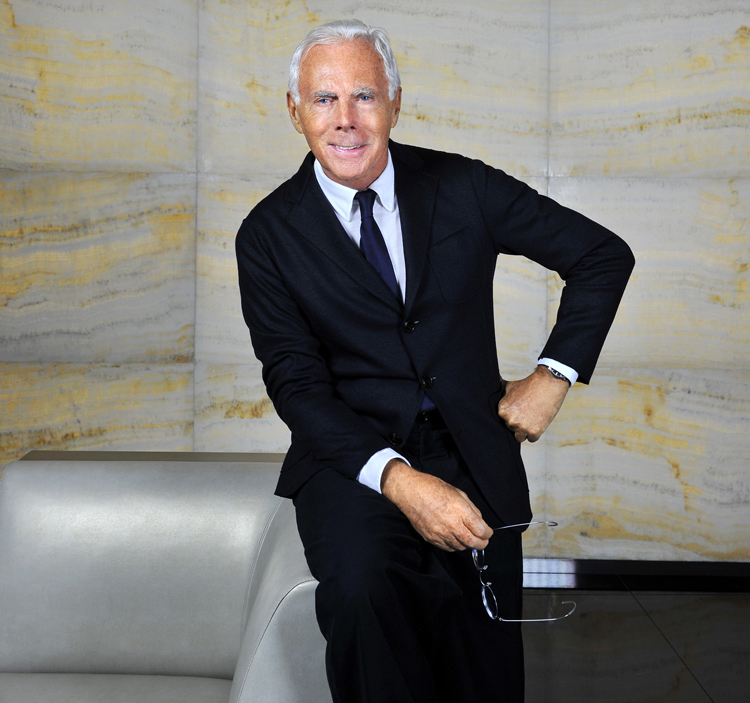
Giorgio Armani
The number 11 is an iconic number for me, and has many memorable meanings…
It is the date of my birthday! I was born on the 11th July, so it’s always been a lucky number for me.
The Armani headquarters in Milan is at number 11, Via Borgonuovo.
In terms of teamwork, it is all about the number 11. In football, teams have 11 on-field players, they are 11 athletes that together, with dedication, sacrifice and perseverance, fight for the same goal. I have always liked football and throughout my career I have enjoyed dressing many teams and players.
Apollo 11 was the first spacecraft to land man on the moon. I still remember that day and the effect that memorable endeavour had on me. It suggested that anything was possible. A moment of incredible optimism.
If I could have given my 11-year-old self some advice, it would have been to have fun with your friends but at the same time, always work hard and stay true to your beliefs, and to follow your dreams.

Alexis Mabille
The number 11 means to me the rebirth after a big step, the ‘10th’ when you restart with a new year.
After 11 years of designing, I felt I had achieved a lot, but there are still so many creative ideas and codes of myself that I want to express. For me it meant that I arrived to establish my label and own style.
If I could have given my 11-year old self some advice, it would have been to go on your own feelings and to be creative and independent to be yourself. It is the only way to make things happen.

Burtrand Guyon – Schiaparelli
The number 11 means to me a new decade, a renewal.
After 11 years of designing, I felt I had achieved a stage of my professional career. I had just joined the Haute Couture studio of Christian Lacroix, who was celebrating the 11th anniversary of the House.
If I could have given my 11-year self some advice, it would have been to follow your own path and be confident in yourself.

Rami Kadi
To me, number 11 is dynamic and positive, as 1+1=2! It’s also the date of my brother’s birthday.
If I could have given my 11-year old self some advice, it would have been to avoid being in NYC on September 11th, 2000.

Tony Ward
After 11 years of designing, I felt so much and so little had been achieved! I had launched my own brand, presented my collections during the Italian and French fashion weeks, reached clients from all over the world and yet so much had not been done yet! I can assure you that after the first 11 years, I was so looking forward to the next 11 years.
If I could have given my 11-year self some advice, it would have been to always keep moving forward and consider every obstacle as an opportunity to grow. I truly believe that life is too short for regrets.

Georges Chakra
To me, the number 11 is the double digit of number 1. If number 1 is for new beginnings, then 11 is for new visions and higher ideals.
After 11 years of designing, I felt I had achieved some sort of refinement in design and a certain balance between work, creative thoughts, and emotions.
If I could have given my 11-year self some advice, it would have been to pause for a moment, take a deep breath, focus on future goals and plan on ways to reach new heights.

Rami Al Ali
For me, the number 11 is the first year after your first decade, which is usually the most challenging to maintain your achievement and try to upscale and perform better, for a better second decade in your career.
After 11 years of designing, I feel I have established the Rami Al Ali brand to what it is today. Myself and the team have worked extremely hard to build and maintain our brand image. From maintaining a loyal customer database, the quality of stockists, having an international presence through showcasing at Couture Fashion Week for the past 12 season and working on being recognisable in the region for my designs.
If I could have given my 11-year self some advice, it would have been to let your dreams guide your path.
READ MORE
Exclusive Interview with Natalie Portman, The Face of the New Miss Dior
In 1947, Miss Dior the Couture perfume was born in a burst of life, with the audacity of a great green floral that astonished and stood out. Christian Dior created it to embody the revolutionary silhouette of his New Look, and to suggest the sensuality of his inspired curves with a scent. Fast forward to 2017 and François Demachy has created a new interpretation, while Natalie Portman, the face of the scent, begs the question, ‘what would you do for love?’
The new Miss Dior Eau de Parfum has evolved in unison with the Dior silhouette, for women who fear nothing. The reinvention has stayed true to its original signature, but is nuanced with new and livelier notes. For today, more than ever before, the Dior woman embodies a lively and confident mind.
It was at Christian Dior’s resplendent Chateau de la Colle Noire that we celebrated this revolutionised perfume of love, and spoke with Natalie Portman, the face of the campaign, who gushed-“Miss Dior is the fragrance of the heart, so it’s nice to be here to celebrate this perfume of love.”

Do you still recall your first scent?
My first scent would be citrus fields that I remember from childhood.
Do you layer fragrances in your routine?
I don’t actually layer scents, as by using Miss Dior there are many scents layered within it.
How would you describe the new Miss Dior fragrance?
Miss Dior is made up of a combination of two of my favourite scents, orange blossom and rose. I would describe it as couture in a scent, due to the elements of fine craftsmanship that go into creating it. The roses used only bloom for a few weeks in May, and are then picked by hand and in a delicate way to preserve the scent. It is a very artisan skill that families pass down through generations, and this brings out that passionate intensity of love and memories.
What is your most treasured memory of love?
I remember the time around meeting my husband, which was so magical. The process of falling in love is so special, you remember all of the little details, from what song was playing, and what the weather was like, to what smells there were.
In your opinion, what is the relationship between fragrance and women?
I think that fragrance is the first sense that we all experience in our childhood, making it a part of your core, not just for women but for everyone. But of course, it is also a part of how a woman wants to present herself to the world and define herself.
What has been your most memorable moment with Dior across the years?
I think visiting their rose fields here in Grasse with François Demachy. It was so magical as it really gave the perfume humanity, emotion, and art, which I didn’t appreciate as much before I visited. It was like something from another era, where people have this craft which takes time and has been passed through generations, especially because of the age we live in where everything is instantaneous. Suddenly it was like going back in time, growing flowers and waiting, which is a real beauty against our fast world.
Similar to the revolution of the fragrance, Dior fashion has also been through a revolution, and over the past years you have been dressed by the different artistic directors of the House. What are your thoughts on Maria Grazia Chiuri’s strong feminist message?
Incredibly I have been working with Dior for 7 years, and it has been wonderful to see and experience the different designers and the different ways each one works. But of course, seeing a woman leading the house of Dior is so exciting, and just the fact of her leadership is already a message. Obviously, we should get to a point where it is not remarkable, but currently we live in a world where it is remarkable to see female leadership, but the more we see it the more that it will become normal. Together with this, it is also a positive that she has been promoting her feminist message through her clothes, not only with slogan messages, but by creating items that she knows women want to wear, that are luxurious and beautiful, but also practical.
You lived in France and are now in LA, are there any beauty rituals that you picked up in France and things you learnt from being American that you combine?
I have become very specific with the products that I use, especially related to the scent of them, from shampoo to skincare. I also learnt from French women that a more natural look is better, from not washing and drying your hair every day, to accentuating what is different and special about yourself.

What did your mother teach you in the world of beauty, and what would you like your daughter to learn from you?
My mother is very beautiful, and I think she always showed me that you don’t need to be focused on the beauty of your hair and make-up. She didn’t make comments to me regarding this, leaving me alone on appearance. She is such a good person, and those values made her more beautiful, and meant that I wasn’t left with any appearance complexes. I hope to be the same with my daughter, as it’s not what you look like, but who you are.
How do you balance your professional and private life?
It is a struggle and sometimes I feel like I am drowning! A lot of women manage to do it all, but I just try to relax and realise that not everything is possible.
What is a life lesson you would like to share with your children?
Not to be too obedient. It always worries me when their teachers tell me that they are following all the rules, as I want them to take their own path, and to use their imagination more.
Do you have a life motto?
To have fun and be good. The combination may not always be possible, but it is something to aspire to.
By Lara Mansour Sawaya
Photographer: David Bellemere for Parfums Christian Dior
Makeup: Peter Philips
Hair: Bryce Scarlett
Manucurist: Nelly Ferreira
Stylist: Kate Young
READ MORE
Meet Sara Melki: Lebanese Designer with a Gypsy Soul
Raised amongst aesthetics and in the midst of a family business specializing in furniture and decoration, Sara Melki knew from the very start that she belonged in the art world. Starting her fashion internship while still in high school, she quickly discovered her talent. Ever since, she has been working hard to become the renowned designer she is today.
A gypsy soul, recognized for her love of fabric, colour, and mixing, Sara Melki is the perfect example of being different and unique in the fashion world. We sat down with the young designer as she told us more about her journey, her one-of-a-kind collections and her future visions.
What inspired you to be a designer and part of the fashion industry?
I was raised in an artistic family, as my father owns a home furniture gallery, so ever since I was a kid, I was always into fabric and textile. At the beginning, I wanted to be a jewellery designer specialized in the use of textile in my accessories. I did my first internship while I was still in high school, it was with Rabih Keyrouz, and it had always been a dream for me to work for him. As I interned for him, I knew I was going to lean towards fashion instead of jewellery design. It really was an amazing experience as he always kept an eye on me and told me that he liked how I mixed colours together. After finishing high school, I studied fine arts at ALBA and then went to Paris for four years of fashion studies. For me, Paris has always been the perfect place for fashion. When I was done, textile was still on my mind as it had always been, and that was what led me to intern for Malhia Kent. I went to New York afterwards and interned at Proenza Schouler where I learned the business side of fashion. It was a great experience for me as well because they were all for mixing fabrics and colours, creating geometric cuts; basically everything that I loved and could use for my inspiration.
How did you build your own brand? How would you describe it to people?
After my internships, I came back to Beirut with the goal of building my brand right away. We created Espace M as a family business. M represented our family name Melki, as well as Meubles (which is French for furniture) and Mode (which is French for fashion), therefore linking all of our talents in the same company. I would describe the identity of my brand as a cosmopolitan style. I create statement pieces and unique looks that stand out.
I also always like to include accessories, as it has always been my “vocation” to design jewellery.

Tell us more about your experience with Malhia Kent, Chanel’s exclusive weaver.
I can really say that it was the best experience that I’ve had in my fashion career. Nowadays, it is sad but true to admit that we are not creating something from scratch. The true power of creation remains in how to mix fabrics together, how to work on a simple piece but make it stand out as a statement. I had six months of weaving internship at Malhia Kent, and I was asked to create. They gave me a chance to prove myself, which led showcasing my fabrics at Premiere Vision; a tradeshow for textiles.

You started your career quite young; do you think the brand will change as you change?
My brand is definitely growing from being local to international. I am currently selling my pieces in a boutique in New York which is something very big for me as the store is doing really well. Of course I would want my brand to keep growing and be showcased in big cities such as Dubai and Paris, and in renowned stores such as Bergdorf in New York. I am also working on applying e-commerce for my brand on the website.
What do you find the most challenging part of having your own fashion line?
Well having your own fashion line is by itself very challenging. I am getting married soon and moving to Africa, so I will be going back and forth. This is a challenge for me because I feel that I have to be in the boutique with my staff and customers at all times. Nevertheless, I know that Africa is going to be an inspiration for me and will allow me to be even more creative. Sometimes staying creative can be a challenge because when creating my pieces, I want them to be unique and directly recognizable by people.

What is it like to be part of the industry, especially a woman based in Lebanon?
Honestly, I have a very positive view on being part of the fashion industry in Lebanon. Nowadays, I feel that Lebanese people are changing their views on young and upcoming designers. They feel proud to wear them. The Lebanese customers are the ones allowing me to grow, and I believe that my brand is where it is today thanks to them.
Of all the designs you’ve created, do you have a favourite?
Out of my 11 collections, my first one is my favourite. I think that I will never change the front page of my press kit on which my first collection is portrayed. I also love my hummingbird collection. As for a favourite piece, I would have to say the bomber jacket. It became a classic that I reproduce in every collection but with different fabrics.
What is your greatest lesson in life?
Patience! I have never been patient in my whole life! But today, after all my experiences, I am learning to be more and more patient because everything happens for a reason and everything comes to you at the right timing.
When you were a little girl what did you want to be?
A jewellery designer.
Define couture in your own words.
For me, couture is all about lace, beadings… I prefer to be on the ready-to-wear side. I don’t see myself in couture because of all the mixes of fabrics that I do. Of course, my finishing is all couture but I like to keep my “different” signature, as opposed to the more classic side of couture.
What is on your wish list for this year?
I would definitely like to open a boutique in Cote d’Ivoire in Africa!

Your current role model…
I would have to say my family! As for personalities I would love to dress, I would say Gwyneth Paltrow, Naomi Campbell, Queen Rania, and Natasha Goldenberg -even though I am against the blogging world.
Your favourite restaurants in Beirut…
Bread Republic and The Gathering!
To be successful, you will need…
You need to have a lot of ambition. You need to go to work loving what you are doing. I believe that every person loves to do something specific, so find what that is and do it. I also think that to be successful, one should never be materialistic.
What is next for Sara Melki?
I am currently working on a new collection- The English Boxing Collection. It is my favourite sport and I really feel good when I practice it so I decided to create a collection inspired by it.
By Dana Mortada
READ MORE
10 Questions with Makeup Artist Sharbel Hasbany
Desired to make his one long dream come true, Sharbel Hasbany, 26 year-old makeup artist studied at the Maquillage Paris Modèles. Since then, his artistry led him to work with various magazines along with infamous socialites, models, creative artists and photographers who helped him share his love for beauty across the world. We get up close and personal with the young Lebanese artist as he shares his ultimate beauty secrets, tips and what sets him apart from other artists across the region.

Tell us more about when did you know you wanted a career in beauty? And why?
I’ve always been interested in beauty since my childhood. Before becoming a professional artist, I used to experiment with different various products and makeup utensils. In 2014, I decided to quit college to pursue my dream, without taking any consideration of consequences that I might face in the future. My love for makeup started growing as I started take interest in face structures, body anatomies and colours. My main challenge was drawing, but it never defined who I was or what I wanted to do, I worked towards improving myself and moving forward. Even though, I get told that I’ve achieved a lot, I always see myself as someone who is still learning.
Today’s women are quite busy. What is an easy trick to turn a day-look into something that works for a night out?
For a fabulous night-out look, you can use a black eyeliner, smudge it with a small brush to have a semi-smokey look (you can enhance it with a black or brown eyeshadow for a more intense look) and then use a black mascara. Finally, brush your eyebrows, use a peachy blush colour and finish the look with a nude or strong red lip.
What are three makeup items every woman should have in her makeup kit?
Every woman should have these three items in her bag: mascara, lipstick and a brow brush. You’ve done such beautiful work on so many magazine editorials and socialites. Name someone you would love to get into your chair? I would love to work with the iconic Coco Rocha, she is known for her unique beauty and strong features. Also, the beautiful Natasha Poly is on my list.
What are the biggest challenges of your career, especially being based in Lebanon?
The beauty industry in Lebanon is quite small; but I am lucky that I was able to work on many editorials, designer lookbooks and campaigns on daily basis. I must say it’s good to have big dreams, I aim on becoming an international artist and to travel more around the world, and with no doubt challenges will always tag along.
Any tips on how to keep summer makeup looking fresh during day?
For a fresh summer bronze look, I recommend using Coconut FIX mist by Marc Jacobs after touching up your face with their Tantastic Bronzer. Use a creamy highlighter from Stila Cosmetics or Laura Mercier on your upper cheeks and dab a bit on your nose and the cupid of your lips, and you’re ready to go!
How would you describe your signature look? What is about your technique that sets you apart from other artists?
The strength of makeup is that it lets you transform yourself. Sometimes this transformation becomes something far from reality. In my work, I aim to hide or fix imperfections and enhance beautiful, strong features of the face while staying loyal to the person’s natural beauty. This takes us to the answer of this question, my signature in makeup is always a fresh-looking face, where you can hardly see any products applied, a skin that looks incredibly healthy. I try to see the strengths in different makeup brands, I don’t just stick to one or two brands just because they have big names in the industry, I encourage new makeup lines and test a lot of products every-time I get the chance to. When it comes to techniques, nothing is specific, but I personally enjoy mixing colours and creating looks that are seamlessly crafted.

What do you like most about fall 2017 beauty trends?
We saw a lot of colours on the runway this season. My favourite runway looks were: Laura Biagiotti, I loved the gold shadow over the eyelids with a hint of gold on the nails as well, as for the Saint Laurent show, the black shape on the eyes without any colour base, was a stunner. Oscar De La Renta’s bold neon-pink lines with cyan purple or orange is a must-try.
What is next for Sharbel Hasbany? Do you ever dream of launching your own line of cosmetics?
I’m heading to Bangkok this month; I have plans on working in the Asian market for a while and maybe to continue the journey in Paris or New York if things work out. I do not have plans at the moment of launching a makeup-line, maybe in the near future, but I’m always open to collaborating with brands and new product lines. I have a couple of requests on becoming a brand ambassador for important international brands but these projects are yet to be decided.
Your life mantra…
It’s good to be talented, but talent is not everything. Being humble, having work ethics and respect to other fellow artists in the industry is key to success. Believe in yourself no matter what people think, challenge yourself daily and work hard to become who you want to be. Don’t be afraid of stepping out of your comfort zone, travel and explore new cultures, and get inspired!
By Dana Mortada
Designer Focus: Nour Najem
Young and beautiful, born and raised in her beloved Beirut, the talented Nour Najem has been living her well-deserved success story. From a scientific background to a complete shift into the world of fashion, the designer has come a long way after interning for the biggest names in the Lebanese fashion industry. Today, her brand, along with her social enterprise project, are respected and recognized. We sat down with the young designer to learn more about the behind-the-scenes of the collections, the story of the brand, and Nour’s view on fashion in the Middle East.
Tell us, why did you choose to become a fashion designer?
Well I grew up in a household with both my parents being architects, so I’ve always been into arts, history of arts, and culture. I had an interest in textures, materials, colours and how they blend and mix together. But I always had that idea that the fashion industry did not have a soul while all I wanted to do was save the world. So I decided to become a doctor. After graduating with a B.S in Biology, I knew it was not for me; you really can’t escape a vocation when you have one. So I went to fashion school while enrolling in a Master’s of Business at Lebanese American University (LAU) at the same time. During my time at LAU, one of my courses entitled “entrepreneurship” highlighted the study of social entrepreneurship; how to do something good for society while remaining a viable commercial company. I would say that was the light bulb in my head that gave me the idea for my company.


Describe your design and brand aesthetic.
I believe my main influence is my heritage, which is huge. My brand is inspired by the oriental culture, by craftsmanship, by artisans… I would say my heritage is a message I want to convey through my brand. We have such a strong Lebanese culture with different habits and traditions. Everything in our values has a symbolism and I try to include that in my collections.
Tell us more about the Kenzah project and how it came about?
Basically, Kenzah came to life at the exact same time as my brand; I wanted them to work together. It started with me finding a few women in the streets of Burj Hammoud, marginalized women who were not given the chance to work. Word of mouth did the rest and I had almost twenty women wanting to join Kenzah. It was a hassle at first, but then everything was established with those who really wanted to work and give an example to their daughters. They are the strongest most genuine women I know. Most of them work from their homes, and for every collection I create for my brand, there are parts of the works done by Kenzah that are included. There is, of course, a lot of trial and error as the women are constantly learning, but the pieces added to my collection are labeled “Kenzah”. It is all about women empowerment.

If you had to select one piece from your own creations, which do you feel most attached to?
I can’t really say as every collection and every piece I create becomes my new favourite! It’s maybe as impossible as choosing between the fingers on your hand!
What’s your take on the influx of female designers in the Middle East? What would you like to see more of?
I think people have forgotten that designers are there to find solutions to problems such as inequalities, the struggle for freedom of expression… They think it is all about the aesthetics, and fashion being a world of glitz and glam. I believe the first responsibility of a designer is to allow women to express themselves the way they truly are. We should cater to their comfort and enabling, we should be giving them that confidence boost that they sometimes need.
What would you say is the driving force behind your work?
I’ve always had that part of me that wanted to change the world. Fashion is a universal language that everyone speaks and I think that helps my quest. Fashion is not just pieces of fabric sewn together; we should never forget the hours of work behind it. I would love for each person to wake up in the morning and be proud of what they have accomplished so far instead of going through life as a rat race.
What’s it like to be part of the fashion industry, especially being based in Lebanon?
It is as challenging as it is rewarding. On so many levels, you feel you are not taken seriously because of the stigma there is against designers, especially female designers in an industry dominated by men. You hear it a lot: “Oh, there’s yet another designer” and that does not allow much encouragement for young designers.
What is the most surprising thing that inspires your work?
I am really inspired by feelings. Every collection I create starts with a feeling I want to convey to women. Sometimes it’s a feeling of ease; other times it’s about catching your breath is such a busy world. I want to relate a feeling of security in the sense that everything will be ok in the end.
What are the most challenging about having your own fashion line?
As I said before, it is very challenging to assert yourself and be taken seriously as a young and rising designer in a very competitive industry. My collections are also named in Arabic: Nafas, Zaman, Baraka… That is also some kind of challenge for European customers to be able to pronounce the sounds we have in Arabic that they don’t have in their own languages. But I think it could be a way of attracting them even more.
What are the happiest and memorable moments you have as a designer?
I remember my first fashion show with Fashion Forward. As I was walking out after my collection was showcased, I had a mixture of feelings, from happiness to nervousness not to trip on the runway; it was such a powerful feeling for me; I knew that was what I wanted to do for the rest of my life. As for happy moments, waking up every morning is a joy for me; sometimes I dream of a piece I want to create and it just works itself out afterwards. It really is happiness when you wake up every morning wanting to create something and live your dream.

Name three essential items every woman should own?
A white dress, a pair of high heels, and a white T-shirt.
If Nour Najem could have a spokesmodel, who would it be?
Right now, I would have to say Amal Alamuddin. I want strong women to be linked to my collection, to be the face of it; women who want to change the world.
What makes the city of Beirut great?
Definitely its contradictions, the fact that there is a conflict everywhere you go, but there is always a silver lining to it.
In your opinion, in order to succeed in life you need…
Well my mom used to tell me: “you can get whatever you want in life if you do whatever it takes to get it”. So I would say own up to what you want, go after it, and don’t back down.
What is a message would like to share with the Arab women of today’s society?
I think we should go back to our humanity. We as women are givers, we tend to care a lot for others and sometimes, we forget who we truly are. We need to take care of ourselves first in order to do better and give even more to the world. Through empowering each other, we can build a community of strong women who can convey so many messages linked to our values and our culture.
By Dana Mortada
READ MORE
Our Exclusive Roger Dubuis Photoshoot For The September Issue
Waste no time and enter the world of precision in seconds. Get a glimpse at our exclusive editorial Roger Dubuis photoshoot out in our September issue now.

Him: Roger Dubuis Excalibur Spider Pirelli Automatic Skeleton, Blazer Eden Park, Shirt Paul Smith, Pants Eden Park, Shoes Billionaire Her: Roger Dubuis Excalibur 36 Automatic, Dress Paule Ka, Shoes Purification

LEFT IMAGE: Roger Dubuis Velvet Jewellery, Top Carolina Herrera RIGHT IMAGE: Roger Dubuis Excalibur Spider Titanium Automatic Skeleton, Blazer and Shirt Hackett

Roger Dubuis Excalibur Essential, Jacket Paul Smith

LEFT IMAGE: Roger Dubuis Velvet Jewellery, Dress Versace RIGHT IMAGE: Roger Dubuis Excalibur Spider Pirelli Automatic Skeleton, Blazer Eden Park, Shirt Paul Smith

LEFT IMAGE: Roger Dubuis Excalibur 36 Automatic, Dress Versus Versace RIGHT IMAGE: Him- Roger Dubuis Excalibur Essential Blazer and Shirt Eden Park Her: Roger Dubuis Excalibur 36 Automatic, Top Carolina Herrera

Roger Dubuis Excalibur Spider Pirelli Automatic Skeleton
Photographer: Adam Black
Styling and Direction: Dana Mortada
Makeup & Hair: Katarina at MMG
Models: Olivia and George at MMG
Location: The Address Montgomerie Dubai
READ NEXT…
Our exclusive interview with Roger Dubui’s CEO Jean-Marc Pontroué.
Beauty Trend: The Blow Dry is Back
The blow dry has undergone a dramatic revolution throughout the decades. From the perfectly preened forties and chic chignons of the sixties, to the nineties signature supermodel bounce and the mussed up, messy noughties. With a new season brings a new look, and for Fall 2017 it is softer and less-done, yet no less game changing.
It can seem a shame to create something perfect and then go about deconstructing it. But that’s exactly what the style of the season, the ‘undone blow-dry’ asks. There’s texture and a slightly dishevelled finish to this perennially popular catwalk look, so think hair that has been ‘done’ and then slightly tousled. Add texture and movement, and the more fresh and modern the result.
Here is How-To:
Prepare
A good blow-dry relies on excellent preparation. We recommend starting with an intensive wash-out mask followed by a good spritz of leave-in conditioner and heat protectant. There are also plenty of thickening hair preparations that can be used to create volume and styling creams that will give lasting hold.

Gloss
A hair oil can really add gloss and gleam to the hair, especially any dried-out or brittle ends. With such a loose, low-maintenance look, it really is essential to have healthy-looking hair. Hair oil is a multi-tasker, as it will also protect against heat styling damage too.

Blow-dry
Begin by towel drying, to remove the bulk of the moisture. Your choice of hairdryer and brush are the key tools here, so ensure you choose a dryer that is at least 1800 watts and roughly use it with your hands until it is 50 percent dry.

Section
Work around the head, attending to the underneath layers first and pinning the top ones away. It’s far easier to get a good result if you divide your locks into sections, rather than trying to dry all your hair at once. Go for a brush that encourages better air flow, and roll sections around it, directing the air downwards.

Top Layers
For more lift at the top, take smaller sections and really focus on the root, pulling the hair taut as you focus the nozzle of the dryer on the root area of the hair. For extra oomph at the roots, try tipping your head upside down and blast them, allowing the hair to cool. When all your hair is dry, use the cool button to close the hair follicle and add a shot of shine.

Finish
It takes some practice to achieve a good blow-dry. But the beauty of the ‘undone’ version is that it doesn’t need to be quite as perfect as the groomed and sleek traditional do. Finish by using your fingertips and a little spray to create texture. The desired finish is ‘blow-dry on day three’, thick, healthy locks, with a hint of bedhead.

Anatomy of a Beauty Look
Inspired by all things intergalactic, for Chanel Fall 2017 Ready-to-Wear it was a space-themed affair, where Tom Pecheux transformed models with splashes of silver shadow and 60s-inspired floating liner, both perfectly complementing the season’s collection. Hair stylist Sam McKnight created Barbarella-inspired back-combed hair to complete the retro look. Here is how to achieve the look, and the best part is that you can go as bold or subtle depending on your mood.

This look was all about dewy and glowing skin, and to achieve the flawless finish ‘Les Beiges Healthy Glow Foundation’ was applied using the ‘Retractable Foundation Brush’. Imperfections and dark circles were concealed with the ‘Correcteur Perfection Long Lasting Concealer’, and a hint of powder blush ‘Elégance’ was dusted across the cheekbones.

Begin your eye look by apply a touch of the ‘Multi-Use Illuminating Base’ to prime your eyes, before sweeping the ‘Ombre Première’ eyeshadow in Titane across your lids, ensuring you also apply it to the inner corners of your eyes.

The thing that really sets this look apart is the 60s-esque liner used to define the eye crease. Use the ‘Calligraphie de Chanel’ liner and its angled brush to draw a thin line along your crease, starting just before your nose bone and ending just after your eyes. Finish with a slick of ‘Le Volume de Chanel’, adding extra layers on the bottom lashes.

To complete the look, brush and set the brows with the ‘Le Gel Sourcils’ brow gel, keeping them looking full and natural. Then apply a subtle slick of ‘Le Rouge Crayon de Couleur’ in Rose Violine on the lips for a natural finish.

Chanel Fall Winter 2017
READ MORE
Jewellery Focus: Gaelle Khouri
Born and raised in Lebanon, jewellery designer Gaelle Khouri has been pioneering extravagant and sculptural jewellery since launching her eponymous high-end artistic jewellery label in 2015 in London.
Today, Khouri cultivates her authentic approach to design from the city of Beirut; she uses her love of handcrafted design to relay the story of each collection and continues to build a loyal following worldwide. The Lebanese designer talks inspiration, design process and the future of her own venture.
Tell us about yourself, including what you do and how you got there.
When I was getting my Master’s degree in New York, I started to realize that what I want to do is different from what I was doing at the time. I think it was normal as I was growing up and maturing more to develop a better understanding of myself and my real interests.
I think I always had an interest in creative and artistic fields but I had never expressed that strongly before – professionally I mean. And the transition did not happen overnight: I grew up in Tripoli, which is a city in the north of Lebanon and the perception of success there is in big part dictated by a limited number of academic fields. This has partly influenced my academic choice and led me to major in the scientific field.
My first and second steps were when I took on an internship at Oscar de la Renta and then at Elie Saab. I received job offers at both houses but wasn’t fully ready at the time to make the transition –and honestly, I think deep down I knew that I wanted to start and run my own venture.
I took extensive private jewellery lessons and developed a strong portfolio within a few months following graduation. Though I did not know at the time where I was going, my teacher pushed me to start the production. The field of production was an unknown territory to me but I took the difficult first step of giving it a try, and in spite of the many challenges that came along the way, things started to unfold and to move forward from there. It took 4 years to launch the brand because financially it was a bit of a challenge given that I am self-funded, and additionally I was keen to learn and master the extensive technical side of the work before launching.
What makes your collections unique in the industry?
Jewellery is a silent tool and tangible way of an expression – the pieces I create are my inner voice, they are a tangible form of my emotions. The metals I use include treated bronze, rhodium silver and 18 carat yellow and pink gold. All the pieces I create are handmade which means they are crafted on wax first. This process requires great craftsmanship skills which we definitely have in Beirut. The pieces are then set with diamonds and precious stones.
A key common characteristic among my pieces is the technical complexities and the movements. I am all about details and relief, and the fact that in most pieces, the visual effect from afar is quite different from what the person sees the details in the piece from up-close.

What drew you to jewellery, and more specifically, nature?
I love the creativity behind jewellery. For me, inspiration comes from within. In each piece, I create a tangible form of my emotions and thought process, and I think the ability to create something physical out of abstract and conceptual things like feelings is what drives my passion. I also enjoy translating the complexities of the human emotional range into a complex movement of the piece, while at the same time keeping it wearable and elegant to fulfil its purpose.
I think my collections and designing jewellery in general is a way for me to express myself. And it came very naturally given that I come from a very different educational and professional background; designing wasn’t forced upon me. Creating jewellery has really been a personal self-exploratory journey and I have used the design process to be inquisitive and reflective.
I have always felt an instinctive connection with nature which I try to expose and emphasis. So the first collection, The Garden of Earthly Delights, reflects upon the deep-rooted instinctive connection that exists between the woman and nature – The pieces translate the complexities of the feminine through the complexities of the universal. For instance, some designs portray provocative and appealing physical characteristics of diverse species that compare in strong ways to human psychological characteristics. Like people and emotions, I think there is something very appealing and at the same time very ugly about insects and their physiology and that’s what I’m drawn to.
What’s your jewellery philosophy?
Out of everything that is stored in my mind, I am particularly interested in strong movements and shapes – I find beauty in intricate and complex shapes that are left unfinished and unclean. I feel that pieces like that have a mix of appeal and unattractiveness that creates a particular and exotic beauty.
Visual influence aside, my reflective thinking is very much influenced by philosophical thoughts which consequently impact my creative process. I was particularly influenced by the writings of Michel de Montaigne, Hegel, and Nietzsche, who helped me develop a better understanding of life and supplied me with the strength to pursue what I really love.
What type of woman did you have in mind when designing a collection?
Any woman who doesn’t follow the pack, but goes for a daring and different style that reflects her personality – all while keeping elegance in check – would stand out for me. I think it is also important for the style to look effortless, as if it comes naturally. Sometimes you look at a woman and feel that a big amount of time and effort were invested in the look. I think that kills the style!
What are your favourite recent trends in the jewellery design industry?
Chandelier style earrings are having a moment now, as seen at Céline and Miu Miu’s FW’17 shows. This statement style of earring echoes the ThoughtFall and Free Dots earrings in my previous collections, but also the Arche earring from my latest collection, The Next Perspective.
Oversized pearls have also been seen across the catwalks. I love working with natural pearls and used baroque pearls in the Anchor earrings and Octopus. The Frogs earrings are also made with pearls – a particular round shaped Tahiti pearl which gives the piece a playful feel.
I love seeing these trends; however I don’t tend to follow trends when designing my collections.

Who are your favourite designers? Any names you would wish to collaborate with one day?
I would love to collaborate with another like-minded jewellery designer. I admire the work of Lydia Courteille and Bibi van der Velden – I feel our artistic direction is similar in that we offer creative designs that eschew the mainstream. Also, Lydia Courteille is from a different generation where internet and social platforms weren’t so developed so her inspiration and creativity was influenced by other elements than the ones that influence us today. Hence, I think a collaborative project would be interesting.
Name a muse or an icon, you would like to see wearing your pieces.
I admire women such as Daphne Guinness, Rihanna, Pandora Sykes, and Negin Mirsaleh, as well as Tina Leung and Yoyo Cao. I think they are always on point and their styles are always a true reflection of their edgy personalities. My pieces have been seen on a number of celebrities and personalities in the past that I love such as Ellie Goulding, Alesha Dixon, Sai Bennett and Phoebe Lettice Thompson. It’s always an amazing feeling seeing someone you admire wearing your designs.
Tell us, what was the best advice you’ve received that helped you get where you are today.
I can say personally to have a long term vision for the brand, but work it step-by-step and enjoy small achievements. But if someone is really passionate about what they are doing, their passion will lead them through it all, they won’t need any advice!
Do you have a most treasured item in your personal jewellery box?
It’s hard to pick just one piece! I have an 18ct gold handmade retro bracelet that is over 70 years old – it belonged to my great-grandmother who bought it in Turkey and it was then handed-down to my grandmother on her wedding day. The unparalleled splendour of the piece is the culmination of intricate and rigorous labour that went into creating it at a time when artisans had limited access to technology. It is a testament to the greatness of artists and the power of the human mind and craftsmanship.
I also have a pair of micro-mosaic Nada Le Cavalier earrings which were the first high-end piece of jewellery I ever bought for myself. I had my heart set on them for a while but was only able to afford them after starting my first job in New York. The design appears abstract from afar yet the griping layers of elaborate miniature flora intensify as the eye draws closer. They are made of 18ct gold and precious stones.
Do you have any advice for those hoping to break into the industry?
A lot can hang on what kind of assets people have and start with – if they have the technical knowledge and the financial ability to venture into this industry, then the way will be much smoother. Otherwise, I think it would require true passion for the field. Because only when you are passionate about what you do, will you find in you the patience, the self-control, and the composure, which will allow you not to lose motivation and keep moving forward. The path won’t be smooth, and there will be days where you go on a tough roller coaster of emotions, and it won’t be easy. Just keep thinking positively, plan short-term.
What is your favourite piece you’ve ever created – and what made it so special that you could not live without?
It’s hard to choose but I think I would have to say the Anchor earrings – they are one of the first pieces I created from The Garden of Earthly Delights Collection. Made of 18ct yellow gold and set with brown diamonds and Baroque Chinese pearls, the design has a sense of fearlessness. Pearls often communicate a romantic and feminine feel but I don’t feel this is the case with this piece – the sharp contrast and dichotomy is resonant with my divergent personality traits. This piece means a lot to me as it was created at the start of my career as a jewellery designer and it reminds me of how far I have come all that I have achieved.
What’s next for Gaelle Khouri Jewellery?
We have just launched at Sylvie Saliba in Beirut and at Browns in London, and I was recently in Paris and London to showcase the new collection, Soft Deconstruction: The Next Perspective!
By Dana Mortada
READ MORE…
A Hospitality Journey with Giuseppe Ressa, GM of The Grand Hills Hotel & Spa
Spread over 35,000 m2 and tucked within the popular pinewood mountains of Broumana, east of Beirut. The Grand Hills, a Luxury Collection Hotel and Spa offers breathtaking views of both the green mountains and the coast. It is a home for over 1,200 art pieces and antiques, and also features 164 suites, rooms and apartments set up in the middle of the Broumana village.

Giuseppe Ressa has been serving on the management team of the award-winning Grand Hills Hotel since 2014. The Italian born began his hospitality career as a chef at some of the top Michelin starred restaurants and worked for hotels across several different countries between South America, Europe and Far-East Asia. Finally, he decided to move to Lebanon from Jordan, where he also served in a similar role as a general manager. A&E meets with Ressa as he takes us on his hospitality journey around the globe, and tells us more about how he ended up in one of the country’s most prestigious and luxurious properties.
Tell us a little bit more about how you decided to get into hospitality.
Actually, my career started as a chef in the kitchen, after studying kitchen management and hotel Management. As soon as I graduated from school at the age of 18, I went to England, and from there I kept travelling as a chef, from England to Switzerland, and France and then I went to South America. South America gave me the opportunity to go into food and beverage management, so from there I switched from inside the kitchen to the food and beverage industry. After that, I decided to go to Asia, so my career brought me then to Taiwan, India, Malaysia, Vietnam then back to Malaysia then I went to Indonesia, Jordan, and finally to Lebanon. My previous post was in Jordan, but when I knew that the Grand Hills Hotel was being signed by the international management company, Starwood Hotels; I actually asked to be located here because this is a very unique property with 1,200 antique pieces and is known to have the largest suite in the world and I think it is one of the most luxurious properties I’ve ever worked for, so I specifically asked to be located here for this reason.

Despite the location, is it because of the antiques, or is it just because of the Lebanese culture?
Well, first of all they told me that Lebanon had the best service in the Middle East, and of course you cannot talk about Dubai or any other country because they import the man power. In Lebanon, it is about the Lebanese man power, who are known for their hospitality and their service, so I thought it was a good opportunity to work in a country just like in Italy they have the hospitality in their blood, and they know how to manage guests. Second, this property was one of the unique properties I’ve ever worked for, not only because of the location, but because of the complexity of the hotel; it has 118 rooms, 44 suites, fully serviced apartments and also a royal suite. I am blessed to be working in a property where it is so complex and has all the different kinds of services that a hotel can provide; we even have a nursery that it is not operating at the moment, Overall, it has this complexity similar to a whole village or community. Plus, this has been a new rich experience for me, not by only being part of a high and luxurious property but part of something that is offering a newer kind of service.

So how long have you been in Lebanon?
I’ve been in Lebanon for three and a half years. The first year and a half were for the pre-opening because the hotel was being fully refurbished and new standards were added to the management contract. The opening was on the 17th of July 2015, so we have been operating for just over 2 years, but all together I would say three and a half years.
How do you stay on top of all of this, from the services to managing the staff, and giving the best possible experience?
It is an interesting property, because it is 35,000 sqm, it has special antiques and a lot of decorative items around the hotel, which require a lot of management walks- I try to walk as much as possible within the property especially in certain areas to be with different teams to show leadership. I don’t like to run work from my office, I like to be down in operation and since it is a large property you have to walk and make tours during the day and take different spots to make sure the staff are operating according to our policies and procedures.

As a GM, what are the kinds of challenges that you face almost every day in such a position?
The hotel business is very labour heavy, we provide services to people, and have thousands of personal interactions every day. When you talk about food and beverages especially, it is one of those businesses that you can’t make everyone happy, as it is purely service oriented and the main challenge here is to find skilled man power because a lot of skilled Lebanese men have gone abroad for better prospects, salaries, and more stability. So one of the challenges is to find skilled workers and talents, and more importantly these employees within the location to provide the community the opportunity to benefit as well from the business of the hotel, but when it comes to basic labourers sometimes it is a bit difficult because Broumana is considered as a high residential area.
What type of guests does the hotel attract and how do you define your guests?
Our guests are mostly connoisseurs and people who are willing to experience the location and have a full journey. People come here to be involved within the resort not only for the antiques but also for the nature as we are 800m above sea level, which is one of the best heights to oxygenate your blood.

What have you changed since you became a GM for Grand Hills Hotel?
I mainly focused on service, that’s for sure. We wanted to make the service at the hotel personalised, because the people who come to this hotel come for an experience and for this reason they want to make sure they are treated as individuals, not just as one of the guests of the hotel. We wanted to make sure we knew their preference and create more interaction between us and the guest from the moment they check-in. We use some systems in the company that allows us to track people’s preference, for instance if you like white wine or red wine, or a room with a mountain-view or the sea, we can know it all. So, once you start keeping up with people’s personal preferences, you tend to have them coming back again.
Which aspects of the Lebanese culture do you enjoy?
I come from the south of Italy; it is a culture that has a lot of similarities with the Lebanese culture. I love the food; I like how the people tend to enjoy their life, where they try to strike a balance between work and pleasure. Of course the active social life is something that I highly enjoy as well, and the fact that it is culturally very stimulating, you will always find new things to do, like festivals, concerts, and theatre. Culture is very rich, from Byblos to Tyr and Beit el Dine, and the fact that I am in a city that is very close to the Mediterranean Sea is something that I cherish very deeply.
What are the key words that you repeat to your employees to keep them motivated?
The satisfaction of achievement is greater if you have a bigger challenge. I always say “winners don’t find excuses” as usually the excuses are made by losers; rather if the winner is facing a problem, they will overcome the obstacles because they see success at the end of the tunnel. In other words, if you see success at the end of the tunnel, you have to go for it; therefore, I always remind myself and others by saying to achieve in life you need to overcome the difficulties and not find a reason for those difficulties.

What makes your hotel memorable and unforgettable?
One thing for sure is the view! I think so far 99% if not 100% of the people who visit us will tell you the view that they get from that balcony is one of a kind. And of course, there is the richness of the art displayed around, but I would say this is a matter of taste; but the fact that there are authentic antiques in the lobby and rooms is something that differentiates us from any other hotel.
Tell us what is your favourite antique piece found here?
The Napoleon couch! God knows who sat on it.
What is the Hotel’s philosophy?
We want to be a destination within Lebanon and the Middle East; we want to provide a personal experience, and of what will give you good health. Surely, we want people to visit Broumana and from here to explore the rest of Lebanon.
What advice would you offer to those who are inspired to become successful in the hotel industry?
The hotel industry is one of those industries that you have to go through the ranks. Studying management is very important, because you will still need to lead people, but I believe the key element is common sense, this is the main secret to becoming successful in the hotel industry.
A favourite meal at one of your restaurants…
I really like the Chicken Quinoa salad that we serve at the pool café, and of course when we open our Italian restaurant in the summer I will go straight for the Osso Buco with Risotto.
At work, what puts a smile on your face?
A full hotel and a crowded lobby with people always seems
to put a big smile on my face.
What’s next for Grand Hills?
As the tourism confidence rises in Lebanon, it will definitely help us shine better. Life is a cycle, and I believe now we are bouncing back. I see a very bright future ahead for this hotel and for tourism in Lebanon.
By Dana Mortada
READ MORE
Our Femme Fatale Editorial Shoot for Prada
Through exploring Feminism, Miuccia Prada’s femme fatal dares to be revolutionary. Enjoy our exclusive editorial shoot with the Italian fashion house out in our September issue.
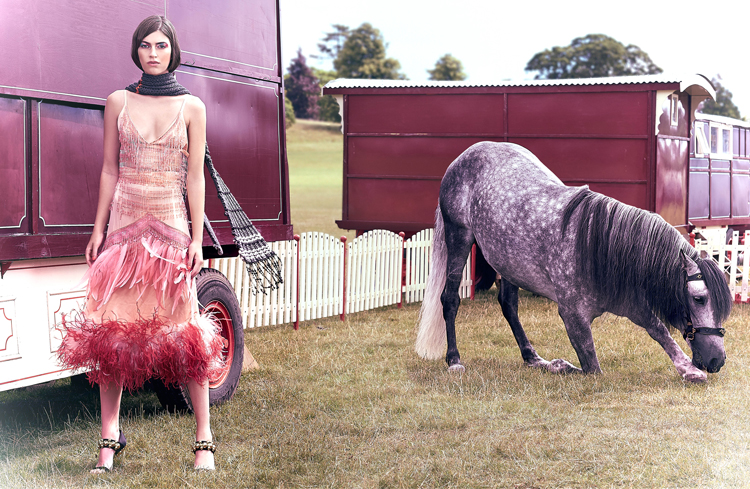
Feather embellished dress, Tassel scarf, Sandals. All Prada
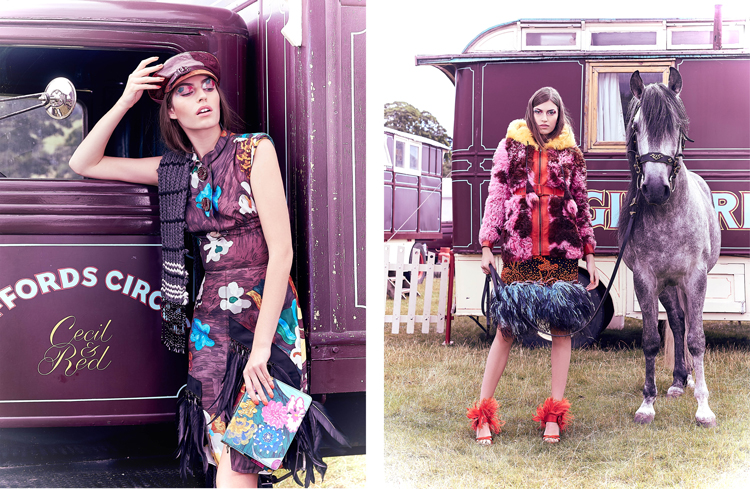
LEFT IMAGE: Silk dress, Leather cap, Tassel scarf, Light Frame printed Saffiano leather shoulder bag. RIGHT IMAGE: Shearling coat, Feather trim skirt, Feather sandals. All Prada

LEFT IMAGE: Silk gown, Tassel scarf Feather sandals, Embroidered velvet shoulder bag RIGHT IMAGE: Belted leather jacket, Feather trim skirt, Shearling moccasin. All Prada
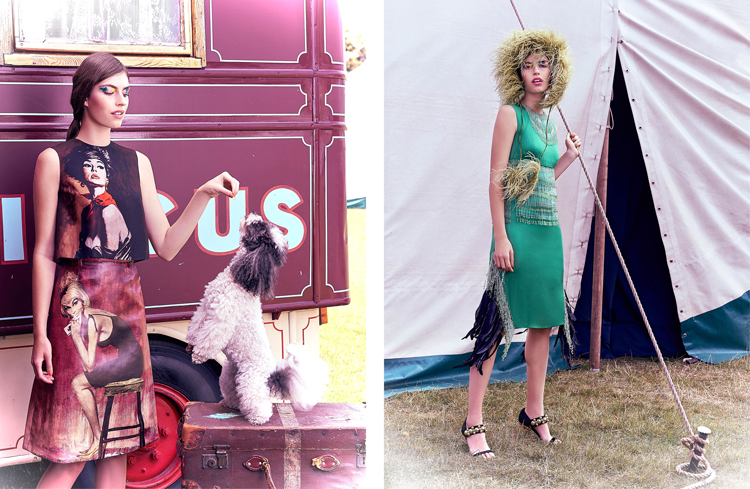
LEFT IMAGE: Printed top, Printed skirt RIGHT IMAGE: Silk embellished dress, Feather hat, Sandals. All Prada

LEFT IMAGE: Frill hem dress, Pumps RIGHT IMAGE: Leather beaded coat, Tassel scarf, Feather trim skirt, Embroidered Mary-Jane pumps, Etiquette python, suede and calf, leather shoulder bag. All Prada

Coat, Angora cardigan, Peplum hem skirt, Embroidered Mary-Jane pumps. All Prada
Fashion Director: Eliza Scarborough
Photographer: Lezli and Rose
Hair and Make-up: Ian McIntosh at Carol Hayes
Model: Simona Kirchnerova at The Hive
Location: Gifford’s Circus
Watch our Femme Fatale video exclusively for Prada below:
Interview with François Demachy- Dior’s Perfume Creator
François Demachy, Dior Perfumer-Creator, describes making a fragrance that smells like love as a renewed challenge. He explains, ‘The composition has to be exciting and stirring, somewhat wild, and yet accessible,’ something he achieved through emphasising the power of its roses to make it sensual and suggestive. He kept the floral heart of the original fragrance intact, but played quite radically with its supporting characters, with extremely lively and exuberant notes, so that it would be instantly expressive and attractive, together with eliminating any dark, earthy notes.
In essence that means less patchouli, more fresh green notes and two potent scents of orange, a classic sweet orange, and a sultrier blood orange. And it has also been an opportunity, 70 years on, to use molecules that were unavailable back in 1947.
Demachy seeks to convey, with fragrance, the idea of a perfume that expresses a feeling of love, and shares with us his childhood memories of scent and what goes in to the process of creating an iconic fragrance.
‘For love? What wouldn’t I do? I’d do the impossible, and push back all boundaries. Like Miss Dior!’ – François Demachy
Could you tell us a bit about your creative process?
It is not a single process, and depends on the fragrance. There is not one way of doing it, and you aren’t always following the same process. You initially start with a project if there is a request submitted to you, and you start imagining and working in different directions in order to avoid saturation and open up your mind. You then need to gradually shrink the field of possibilities, and during this process, you very quickly need to hear the opinions of others to make progress. But for this particular perfume, and the direction we were following, we really had love at first sight which made it easier.
Do you have preference between reinventing an existing perfume, or starting afresh? Do you enjoy one more than the other?
My answer would be both, as it depends. To reinterpret a fragrance and work on evolving an existing one, especially a famous fragrance, it means working within constraints which can be difficult. However, from an intellectual point of view it is interesting because it is a challenge. Whereas if you have a new framework and you can be completely free from a conceptual point of view, it is much more satisfactory, but it can be difficult too as you may get lost.
Where do you find your inspiration in general, and for this fragrance?
Inspirations can come from anywhere, everywhere, and anybody. A woman, the image of a woman, cuisine, the environment, or when you meet someone. You just need to be ready for it and always be on the lookout. For instance, I pick up on specific smells, such as on the walk here of the bushes mixed with the ocean, and I may use this inspiration later. For this perfume in particular, it was inspired after a meeting with Maria Grazia Chiuri who is a woman with a perfect image of a woman. She is very inspiring herself and also with her fashion, and since Miss Dior is the perfume of couture, it has to reflect and embody the new femininity of the house today.
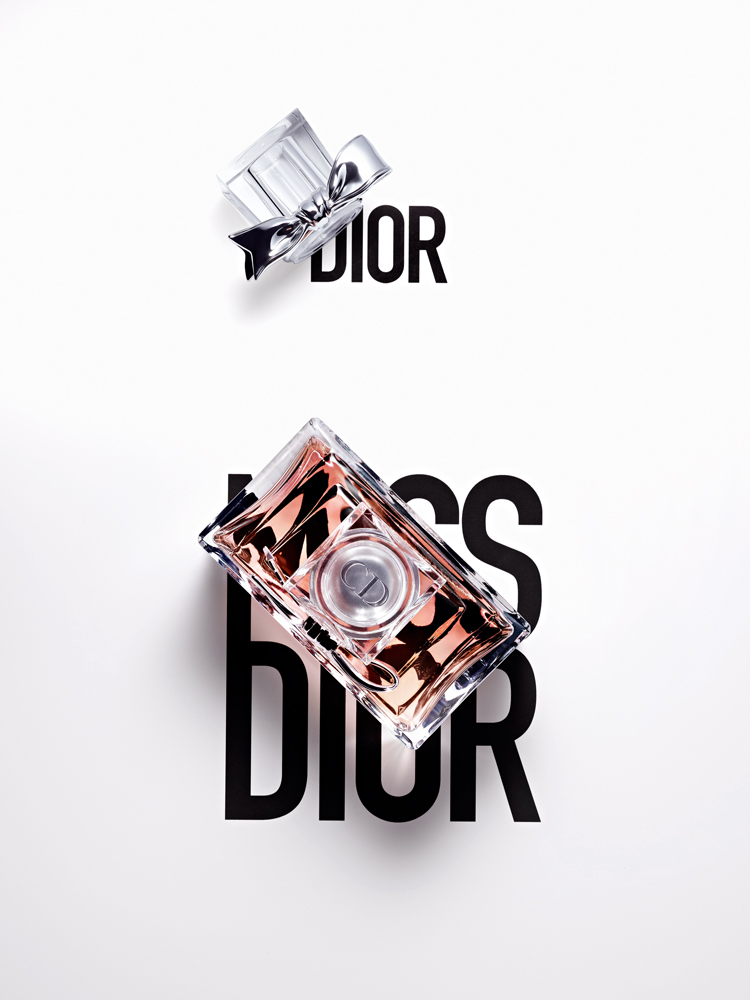
Speaking about the perfume, last year it was Absolutely Blooming and this year we noticed that there is the pink pepper and other new ingredients. What made you decide on these and what makes the new scent iconic and different from the previous Miss Dior?
Firstly, I would like to say that it is not a completely different perfume because we stayed within the framework of Miss Dior. Secondly, I discussed the scent with Maria Grazia Chiuri and she gave me ideas, so I decided therefore to use pink pepper instead of pepper as they are both spicy notes yet slightly different, so therefore we remained in the same spirit. By adding up all these slight differences you get a fragrance which is still in the same spirit but with a difference, so for instance here it is more contemporary, more joyful, and less conventional, like the passion of Maria Grazia Chiuri. It is graceful, but with a sparkling temper.
Fragrances always evoke emotions, so looking back at your childhood what scent do you remember?
Your senses directly link to the brain and your memories, and that is why for instance when we work on a fragrance for the summertime we incorporate notes of tanning products, the sun and wellbeing, and we use those features as we never forget the olfactory memories. My own personal early memories are of descending the mountains, or the jasmine fields I came across as a teenager.
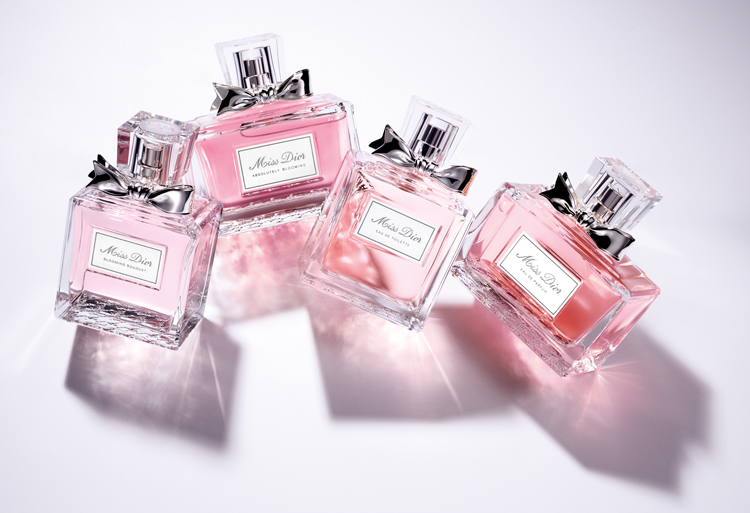
What do you think makes a fragrance iconic and timeless?
There is no specific rule, and we try and hope for something to be iconic, but we never know until after it has been launched as there is no recipe for this. If we explore existing iconic fragrances, we can look back and see what made them iconic, but it is usually down to a series of factors, such as the history, the perfume, and bottle. For example, Chanel No5 is iconic as it has been there for some time and it represents a luxury perfume, but I am not sure that the scent would be as magnificent if you had a blind test, because it’s popularity is down to a series of different factors. The same applies to Miss Dior, a lot of perfumes revolve around the same notes, but Miss Dior has remained iconic and others have disappeared, because it is all about the combination of quality, name, bottle, and chance, as the actual fragrance is not always enough.
By Lara Mansour Sawaya
New Season Must-Haves: Top Trends Every Man Should Own
You will recognise some as refinements of, or elaborations on, looks that have been evolving over the past few seasons, iconic slogans, shearling, double-breasted jackets, while others, such as tartan, standout shoes and Americana, are new additions to the style front runners. Treat these key pieces as the building blocks to your new-season wardrobe, whether you’re looking to liven up your business look, or opting to add an insouciant note to a weekend ensemble. The resounding message however, is don’t be afraid to step outside your comfort zone.


By Eliza Scarborough
Our Regional Exclusive Editorial with Vacheron Constantin
Get into the spirit of travel and enjoy our exclusive journey Vacheron Constantin’s Overseas Collection, captured in the middle of the Mediterranean, out now in our September issue!

Him: Overseas Exclusive Middle East Edition Chronograph (Rubber Strap) Her: Overseas Exclusive Small Model in Pink Gold; All Vacheron Constantin

LEFT IMAGE: Him: Overseas Chronograph in Stainless Steel Her: Overseas Small in Stainless Steel RIGHT IMAGE: Him: Overseas Exclusive Middle East Edition Chronograph (Rubber Strap) Her: Overseas Small Model (Alligator Strap); All Vacheron Constantin

LEFT IMAGE: Him: Overseas Exclusive Middle East Edition Chronograph (Rubber Strap) Her: Overseas Exclusive Small Model in 18K 5N Pink Gold RIGHT IMAGE: Overseas Chronograph in Stainless Steel; All Vacheron Constantin

Him: Overseas Chronograph with Rubber Strap. Her: Overseas Small Model in Stainless Steel; All Vacheron Constantin

LEFT IMAGE: Vacheron Constantin Overseas Small Model in Stainless Steel RIGHT IMAGE: Vacheron Constantin Overseas Chronograph with Rubber Strap; All Vacheron Constantin

Him: Overseas in Stainless Steel with Rubber Strap. Her: Overseas Exclusive Middle East Edition Small Model in 18K 5N Pink Gold; All Vacheron Constantin

LEFT IMAGE: Vacheron Constantin Overseas Exclusive Middle East Edition Small Model in 18K 5N Pink Gold with Rubber Strap RIGHT IMAGE: Vacheron Constantin Overseas in Stainless Steel with Rubber Strap; All Vacheron Constantin
Photographer: Sandra Chidiac
Styling and Direction: Dana Mortada
Makeup Artist: Ivanna Bou Salameh at Velvet Management
Hair Stylist: Georges El Mendelek
Models: Anja at Velvet Management & Andy Eshak
Location: Batroun Phoenician Port & Wall, Lebanon
Watch our ‘An Invitation to Travel’ an exclusive film with Vacheron Constantin below.
READ NEXT…
Under Cover: Our September Fendi Editorial
The mission? She reprises the ‘7os inspired tailoring with strong silhouettes for a look that is uncomplicated, yet saturated with a quiet power. Meet Fall’s new femme-fatal in our exclusive Fendi editorial for the September issue, out now!

Black and caramel graphic inlaid Persian and mink long coat, F is Fendi KAN I mini bag in python, F is Fendi red leather hoop earrings, Red Leather Boots. All Fendi

LEFT IMAGE: Caramel cut-out wool gilet and red, cut-out wool midi skirt, F is Fendi KAN I Bag with python rivets, Red Leather Boots. All Fendi RIGHT IMAGE: Red georgette dress, Lacquered high-waist leather skirt. All Fendi

LEFT IMAGE: F is Fendi KAN I micro-bag with python flower, F is Fendi python hoop earrings. All Fendi RIGHT IMAGE: Black tulle long dress with flower applications, Purple velvet boots, F is Fendi KAN I micro-bag with python flower, F is Fendi python hoop earrings. All Fendi

LEFT IMAGE: Red shearling long coat with alpaca reverse and mink cuffs, F is Fendi Red leather hoop earrings, Black & White Runaway Bag with Strap You In floral. All Fendi RIGHT IMAGE: Red shearling long coat with alpaca reverse and mink cuffs, F is Fendi Red leather hoop earrings. All Fendi

LEFT IMAGE: Prince of Wales wool jacket with mink cuffs and petroleum satin pleated midi skirt, F is Fendi python, hoop earrings, Runaway sunglasses. All Fendi RIGHT IMAGE: Multicolor mink jacket with inlaid flowers, KAN I Bag in Tapestry, Red georgette dress and lacquered high-waist leather skirt . All Fendi
Photographer: Fouad Tadros
Styling and Direction: Dana Mortada
Makeup Artist: Silvy Iknadossian
Hair Stylist: Ivan at Velvet Management
Model: Elizabeth at L.I.P.S Management
Location: Grand Hills Broumana Hotel
READ NEXT…
Enjoy our exclusive ‘UNDER COVER’ film for Fendi below.
Enter the World of Haute Couture
A&E Magazine goes above and beyond as it takes over the streets of Paris in the world’s finest couture designs! Enjoy our dazzling display of the best looks of which cascaded down the Haute Couture Fall 2017 runways.


Enjoy our Haute Couture Fall 2017 video below and pick up a copy of our September issue now.
Photographer: Lezli and Rose
Fashion Director: Eliza Scarborough
Hair and Make-up: Chase Aston at Carol Hayes
Model: Silke Hajunga at Marilyn
READ MORE
See More Of Our Exclusive Editorial Shoots From The September Issue 2017
Our September Cover Is Revealed
It’s a Festa: Our Bulgari High Jewellery Editorial
Explore Buglari’s Festa High Jewellery Collection- an ode to the Italian art of joy and happiness, transmitted through the centuries and statement pieces with exception gems.

Necklace in Platinum with 42 Burma rubies (215.75ct), 134 round, brilliant cut diamonds (19.43ct) and 134 tapered cut diamonds (15.57ct). Earrings in Platinum with 8 pear rose cut Diamonds (15.47ct), 2 round Rubies (2.22ct) and pavé-set diamonds (0.87ct). Ring in white and yellow Gold with 1 cushion shaped Burma Ruby of 11.03ct and half-moon diamond shoulders. High Jewellery Ring in white Gold with 1 cabochon ruby of 2.58ct, 68 buff top rubies (2.64ct) and pavé-set diamonds (2.43ct). All BVLGARI High Jewellery Dress, Ong-Oaj Pairam
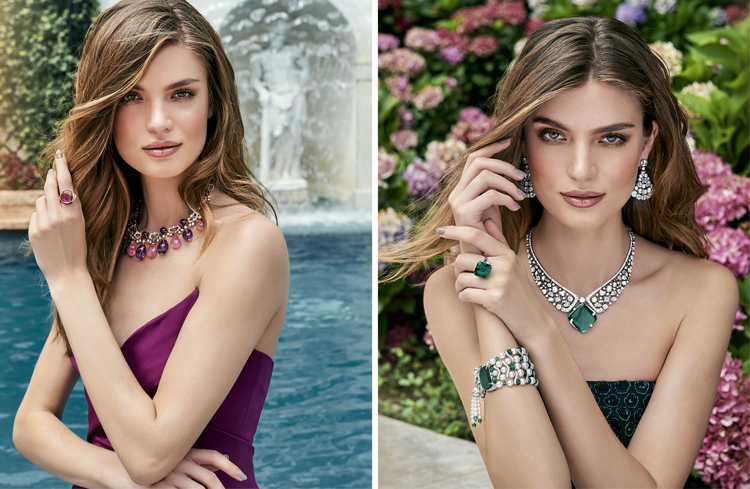
LEFT IMAGE: Necklace in Pink Gold with 5 Amethysts (148.70ct), 6 pink Tourmalines (84.72ct), 15 cabochon Amethysts (48.30ct), 8 Spinels (13.41ct) and Diamonds (21.45ct). ‘RASPBERRY CARAMELLE’ Ring in pink Gold with Onyx, 1 pink Tourmaline (12.38ct), 2 Diamonds and pavé-set Diamonds- Dress, Bruce Oldfield RIGHT IMAGE: ‘MERLETTO MAGNIFICO’ Necklace in Platinum with 1 Zambia Emerald of 46.5ct, Diamonds (26.88ct), baguette and pavé-set Diamonds. ‘MERLETTO MAGNIFICO’ Bracelet in Platinum with 1 Zambia Emerald of 25.42ct, Emerald beads (67.77ct), Akoya cultured Pearls and pavé-set diamonds (6.38ct). Earrings in platinum with 20 fancy shaped brilliant cut diamonds (25.73ct), 2 triangular step cut Diamonds (0.97ct) and 20 round brilliant cut diamonds (7.92ct). Ring in white gold with 1 cushion Colombian shaped Emerald of 13.21ct and 2 half-moon diamonds (2.42ct). All BVLGARI High Jewellery– Dress, Ong-Oaj Pairam

LEFT IMAGE: ‘DANCING GOUNS’ Necklace in Platinum with 1 cabochon Colombia Emerald (26.54ct), round brilliant cut Diamonds (14.50ct), buff-top Emeralds (4.55ct), baguette Diamonds (3.09ct), round brilliant cut Diamonds and pavé diamonds (28.67ct). ‘DANCING GOUNS’ Bracelet in Platinum with 13 bead Emeralds (15.21ct), round brilliant cut Diamonds (5.05ct) and pavé-set Diamonds (12.75ct)- Dress, Ong-Oaj Pairam RIGHT IMAGE: Earrings in Platinum with 2 Colombian cushion shaped Emeralds of 10.44cts and 9.87 ct), marquise Diamonds (5.82 ct), 6 pear shaped Diamonds (2.89 ct) and round brilliant cut Diamonds (3.43 ct). All BVLGARI High Jewellery– Dress, Bruce Oldfield

LEFT IMAGE: ‘ROYAL BALLROOM’ Necklace in Platinum with 1 cabochon Colombia Emerald of 22.60ct, Emerald beads (56.29ct) and Amethyst beads (55.06ct), buff top Emeralds (6.04ct), 137 buff-top Amethysts (10.40ct), 25 round brilliant cut Diamonds (5.63ct) and pavé-set Diamonds (4.24ct). ‘FIOCCO REALE’ Earrings in Platinum with Emerald bead, Sapphire bead, Diamonds and pavé-set diamonds. ‘SECRET MIRROR’ Bracelet in Platinum set with Rock Crystal and 5 Emeralds (5.89ct), blue Sapphires (2.85ct) and pavé-set Diamonds (5.42ct). Ring in Platinum with 1 cushion Madagascar Sapphire (7.63ct), buff-top Emeralds (1.23ct) and pavé – set Diamonds (0.46ct)- Dress, Zeynep Kartal RIGHT IMAGE: PALLONCINI’ Necklace in pink Gold with Aquamarine, Amethysts, Emeralds, pink Tourmalines, round and pavé-set Diamonds. ‘PALLONCINI’ Earrings in pink gold with 2 Emeralds, Diamonds and pavé-set Diamonds. High Jewellery Ring in pink Gold and Onyx with 1 Spinel (10.44ct) and Diamonds pavé (3.20ct). All BVLGARI High Jewellery– Jumpsuit, Temperley London

‘IL MAGNIFICO DI BVLGARI’ Necklace in Platinum with 1 cabochon Burma Sapphire of 180.98ct, rectangular, trapezoidal step cut and pavé Diamonds (28.46ct). ‘IL MAGNIFICO DI BVLGARI’ Ring in Platinum with 1 cushion cabochon Sri- Lanka Sapphire of 13.62ct, step cut and pavé-set Diamonds. ‘SECRET MIRROR’ Earrings in Platinum and Rock Crystal with 1 cushion Burma Sapphire (9.26ct), 1 cushion Sapphire (8.86ct), 2 Emerald beads (4.5ct) and Diamonds (3.55ct). ‘SECRET MIRROR’ Ring in Platinum with Rock Chrystal, 1 cushion shaped Sapphire (3.59ct) and pavé-set Diamonds (0.93ct). All BVLGARI High Jewellery – Dress, Bruce Oldfield
Fashion Director: Eliza Scarborough
Photographer: Lezli and Rose
Hair and Make-up: Ian McIntosh at Carol Hayes
Model: Frederikke at Select
Location: Villa Sigurta – Verona, Italy
Enjoy our exclusive video with Bulgari below:
READ NEXT
Resonances de Cartier: A Jewelled Journey
Our Exclusive Photoshoot with Miu Miu
Declaring independence and glamour, through flamboyant faux fur and effusive femininity. Now it is time to feast your eyes over our exclusive “Great Expectations” shoot with Miu Miu for our September issue, out now!

Embellished gown, Crystal earrings, Bag with fox patch handle. All Miu Miu

LEFT IMAGE: Embellished neck dress, Faux fur hat, Boots RIGHT IMAGE: Crepe de Chine dress, Boucle coat, Headpiece. All Miu Miu

LEFT IMAGE: Faux fur coat, Faux fur hat, Boots RIGHT IMAGE: Belted jersey top with embellishment, Jersey trousers, Crystal earrings, Shoes. All Miu Miu

LEFT IMAGE: Dress with all over sequins, Crystal necklaces, Headpiece, Crystal earrings, Sandals RIGHT IMAGE: Printed jersey dress, Faux fur hat, Bag with fox patch handle, Sandals. All Miu Miu

Dress with all over sequins, Headpiece, Crystal earrings, Socks, Lace-up boots. All Miu Miu
Fashion Director: Eliza Scarborough
Photographer: Lezli and Rose
Hair and Make-up: Ian McIntosh at Carol Hayes
Model: Alina Bobyleva at The Hive
Location: Log House Holidays, The Cotswolds
Watch our exclusive video with Miu Miu below:
Rana Salam Studio: When Old Meets New
Her designs are inspired by Middle East’s popular culture; she displays her work in her design Studio right in the heart of Beirut. The daughter of a Lebanese architect Assem Salam, Rana received a memorable gift from her father, a scooter at the age of 15 that helped her explore the streets of her hometown; which unconsciously introduced her to the city’s riot of colours that became her main inspiration at work.

Captured by Sam Rawadi
The Lebanese graphic designer pursued degrees from both art schools Central Saint Martins and Royal College of Art. Twenty years later, Salam returns to her home country to set up her own design studio with a whole new perspective. Salam gives credit to the city of London for helping her discover her own culture, through designs that are motivated from billboards, vintage film posters and signs of consumerism. Throughout her career as an artist, Rana has translated her work into creative contemporary reinterpretations that are reproduced into everything from interiors to products.
We invite Rana Salam to exclusively design our cover at her studio; it is an image that merges our Lebanese designers featured in this issue who appreciate traditional artisans and hand-craftsmanship. Inspired by her design aesthetic, Salam steps out of the box with her signature pop art typography to evoke a modern spirit and the contrasts of the most elemental forms of design.

Captured by Sam Rawadi
Here the art director takes us down memory lane as she tells us more about the power of design, and the influences that run through her visual language.
What’s it like being in the design industry, especially being based in Lebanon?
The design industry is very challenging in Lebanon as it has no basic design history to fall back onto. I still find clients having a hard time understanding the value of design and its power and the return in investment it can have on their business. The design industry is growing slowly where the creativity is being explored in the F&B and cultural sectors mainly.

What’s your opinion on the importance of social media? Do you use social media to get the word out?
Social Media embraced well can transform people’s perception about one’s business, which eventually helps to get the word out.
What is the best thing about being a designer?
The best thing about being a designer is the influence one can have on society and culture.
What is most important in maintaining your success?
Making sure that I give my clients design solutions they have never dreamt of, something better than their expectations; always surprising, eye catching and unique. In life, you need to have a vision and know it can happen. To make the cake and yes…eat it!

If you had the chance to talk to your ten year-old self, what would you say to her or would like her to know?
I would tell her that your road will be rough and painful but you will have your talent and wisdom to guide you into these challenges. You will get younger as you will get older and your work will have an amazing influence on people’s heart.
What was one of your best work experiences?
I was producing the 12 shop front windows of Harvey Nichols in London in 1993 while working along with street artists from Burj Hammoud. It was the begging of exporting a new visual language from Beirut and the Middle East to the West. The beginning of a long life mission: changing the perception of the Middle East through the power of design.

What’s the best advice you’ve ever gotten?
To throw a party when you have no money!
Tell us about your most happiest and memorable moment.
I had a 7 year old come into my studio this year all the way from a school in Dubai. At school, his teachers where teaching them about my work and he wanted to meet me during his visit in Beirut. I was so touched and told him to be so proud of his culture and to buy a Vespa!
What’s on repeat on your iPod?
Ministry of Sound 2017, the best for my morning run.
What’s your favourite corner in Beirut?
My beloved studio space.
Your life motto…
Fight negative thinking as the ego loves drama!
By Dana Mortada
Our Exclusive September Editorial for Dior FW’17
Uniform and feminism are keywords in Dior’s FW’17 collection. Creative Director Maria Crazia Chiuri explains her ethos behind the collection so: “I need to speak to the millennials, and understand this generation.” Feast your eyes over our exclusive editorial with Parisian house in our September Fashion issue out now!

Jacket, Skirt, “Dioraddict” Square Bag, Bohemian Strap Beret, Earrings, Choker, Rings. All by Dior

LEFT IMAGE: Dress, Beret, Choker, Necklace, Ring RIGHT IMAGE: Minaudière Evening Bag. All by Dior

LEFT IMAGE: Dress, Beret, Earrings, Choker Necklace RIGHT IMAGE: “J’Adior” pumps. All By Dior

LEFT IMAGE: “Dioraddict” Bag RIGHT IMAGE: Dress “Dioraddict” Bag, Boots, Beret, Choker, Earrings. All by Dior

LEFT IMAGE: Dress “Dioraddict” Bag, Ballerinas, Beret, Choker, Earrings, Rings RIGHT IMAGE: “Dioraddict” Bag. All by Dior

LEFT IMAGE: Vest, Blouse, Pants, Beret, Earrings, Choker, Rings RIGHT IMAGE: Jacket, Pants, Stockings, “Dioraddict” square bag, Bohemian strap, “J’Adior” pumps, Beret, Choker, Earrings. All by Dior
Photographer Sandra Chidiac
Stylist & Director Dana Mortada
Makeup Artist Silvy Iknadossian
Hair Stylist Ivan at Velvet Management
Model Daria C. at L.I.P.S Management
Location On1e Beirut Waterfront, Lebanon
Enjoy our exclusive video “Big Girls Don’t Cry” for Dior!
Exclusive Interview with Baume et Mercier’s Alain Zimmermann
CEO Alain Zimmermann, enhances the rich heritage of Baume et Mercier with a modern flavour.

As one of the oldest Swiss watch Maison’s, Baume et Mercier has been shining in the watch industry firmament for almost two centuries. Such longevity commands respect and the inevitable question comes to mind, what is the recipe behind this success? The key ingredient is undoubtedly expertise, continuously distilled with authentic passion, something which Alain Zimmerman, CEO of the company, lives and breathes.

What was your proudest achievement last year for Baume et Mercier?
2016 was a feminine year and for Petite Promesse what we have done around the concept was to re-address the femininity, but this year we have continued with it in a much more versatile way, playing around with the straps and considering the watch to be an accessory. To be on one side super fashionable and stylish, and on the other ethical, as people increasingly want to have a good feeling. Bringing fantastic straps in an Eco responsible way with Banka leather is the future for Petite Promesse.
Do you think you are one of the few brands who is managing communication smartly between targeting millennials with more mature loyal customers?
This might sound shocking, but I don’t think our main aim is to have a very loyal client. Normally when you get a new client you try to keep them as long as possible. However, I think our mission is different, our mission is to be the first watch, we are more on the initiation approach, and want to be the door opener to access the industry. For some people, this will actually end up being the first and last watch they own as it is perfect for any kind of style, and maybe the customer is less of a collector. The common point between any of our potential clients is something which is not related to age, it is the emotion of celebration, and this is the bridge which is not specific to millennials or age.
What do you think the projection is for this year, and do you expect any obstacles?
I don’t think anybody knows, and I think we need to manage pragmatism, realism, and optimism. If everything gets too dark about the market, then you don’t get the necessary positive energy to create. The world is tough and difficult enough, so our role is to surprise, seduce and make people happy. Luxury is the feeling of happiness and pleasure, so in that world we cannot ignore the context. This year is about navigating in waters where there are a lot of waves, but not to forget your direction.
Do you think the honeymoon between luxury and high-watchmaking is over due to how they are marketed?
I don’t think so, I think the product remains the star, whatever the marketing. You don’t open your wallet as easily as you maybe did a few years ago. But if you do go for it, you expect a great product with a beautiful story that is harmonised with your own expectation, and on top the perfect service, while you buy the watch and even more afterwards.

Do you create the product and then the story, or vice versa?
It is both, but I will always give an advantage to the product as I know the story can be changed overnight, but not the product. Once you have bought the product, you might remember the communication, but one day the communication will disappear and the product will stay. There is no doubt that one is nourishing the other, but the final objective is to make you happy and proud of what you bought.
What three things do you hate most?
Lying, unfairness, and when people don’t go the extra mile.

What is your ideal time of day?
I am a morning man, and I need the first hour of the day for myself, when there are no external obligations and I am in control of that hour. This is time for family, and even to spend time with my dog!
What book are you currently reading?
To be honest I don’t read books, it is newspapers instead. On holiday I will read short books, but during regular time I am a fast consumer of news through magazines, newspapers, and social media.

How would you describe your style?
Casual and elegant.
What is your personal motto?
It is always possible.
By Lara Mansour Sawaya
READ NEXT…
Our Exclusive Editorial Shoot for Louis Vuitton FW17
Sophistication appreciated with a hint of sultry colour, smart knits and other artful surprises. Enjoy Louis Vuitton’s ‘State-of-the-Art’ editorial shoot showcasing the latest FW’17 collection out now in our September issue!

English Rib Knit Jumper, Jersey Trousers, Limitless Ankle Boots. All Louis Vuitton
LEFT IMAGE: Coated Devore Velvet Versailles Top, Chantilly, Print Skirt, Flowers Petit Malle RIGHT IMAGE: Hologram Crew Necklace, Coated Devore Velvet, Versailles Top. All Louis Vuitton

LEFT IMAGE: Knit Jumper, Crystal Mousseline Dress RIGHT IMAGE: Macrame Top, Bouclette Dress, Brogue Pochette Metis. All Louis Vuitton
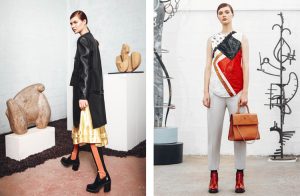
LEFT IMAGE: Leather Coat, Viscose Duchesse Dress, Limitless High Boots RIGHT IMAGE: Velvet Versailles Top, Gabardine Trousers, Trunk Studs City Steamer, Limitless Ankle Boots. All Louis Vuitton
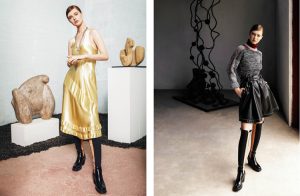
LEFT IMAGE: Viscose Duchesse Dress, Limitless High Boots, Handy LV Tie Necklace RIGHT IMAGE: Ribs Patch Knit Sweater, Leather Skit, Limitless High Boots. All Louis Vuitton
Photographer: Sam Rawadi
Styling and Direction: Dana Mortada
Makeup Artist: Silvy Iknadossian
Hair Stylist: Ivan at Velvet Management
Model: Maria.C at L.I.P.S Management
Location: MACAM- Modern and Contemporary Art Museum- Lebanon
Watch Fendi’s exclusive State-of-the-Art video below.
