

New Saint Laurent Store In Dubai Mall Extension Is Out Of This World
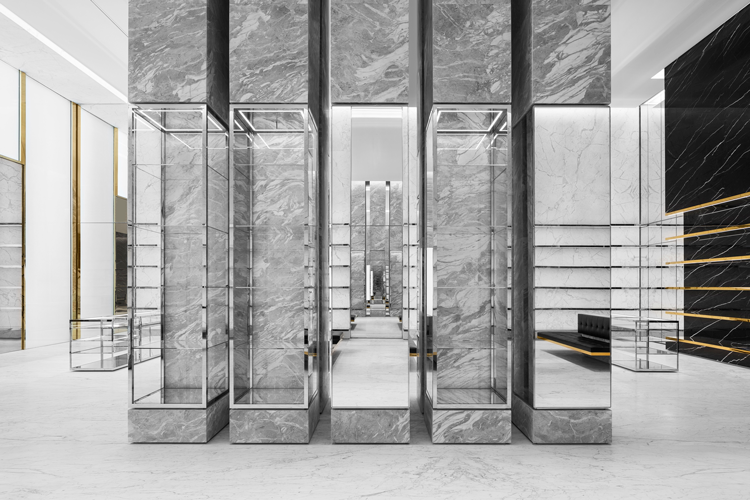
Located at the Fashion Avenue in The Dubai Mall, Saint Laurent’s flagship offers a complete vision of the brand and perfectly references the Maison’s identity, giving us yet another reason to shop the brand’s coveted collections.

The space embodies the Saint Laurent store concept, a contemporary interpretation of the French modernist movement of the early 20th century. The minimalist sophistication and iconic Art Deco materials echo the brand’s characteristic aesthetics, with floors and walls in white Carrara marble, and black silk marble, a monumental staircase in grey silver marble, structures in nickel plated brass and extra clear glass, leather and nickel-plated brass benches, suspended hanging rails and a gold frame showcase.

The boutique, which offers a wide selection of products from all categories including ready-to-wear, leather goods, shoes, sunglasses, and jewellery for women and men collections, covers three levels, boasts a VIP Room with vintage furniture, and features two elevators made in glass, mirror, and polished stainless steel.
READ MORE
You’re Going To Love The New Dior Boutique In Dubai
Tod’s Celebrate Their Dubai Mall Store With Exclusive Collection
A&E Interviews British Designer Aruna Seth
ARUNA SETH DESIGNS FEMININE SHOES THAT STRIKE A BALANCE BETWEEN TRANSFORMATION AND TIMELESSNESS, CREATING COLLECTIONS THAT ARE RELEVANT TO THE SEASON BUT REMAIN CLASSICS OVER THE YEARS.

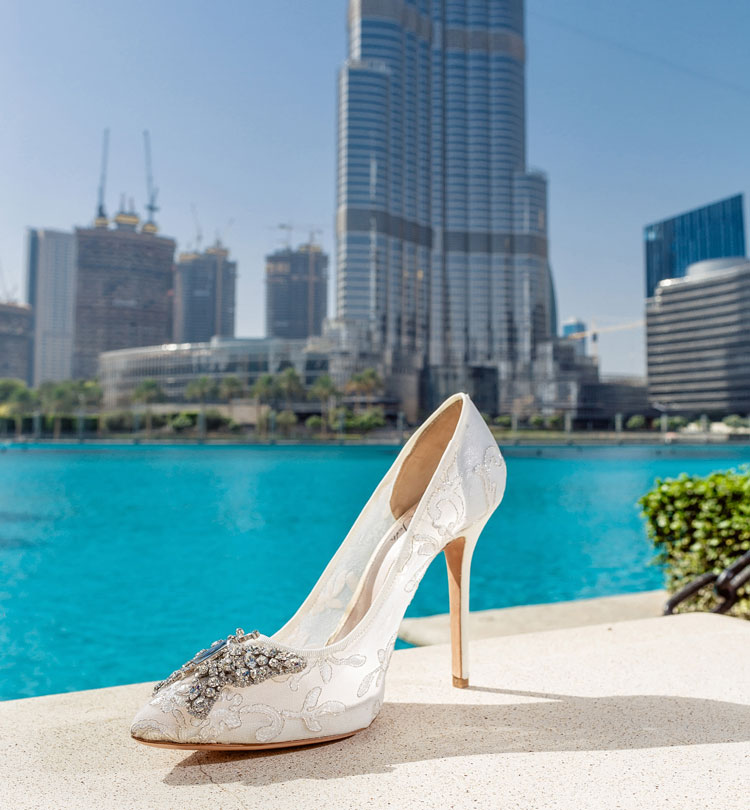
Based on elegance and style, Aruna Seth is renowned for its stylish, elegant shoes and handbags, handcrafted solely in Venice, Italy. Founded by the British designer Aruna Seth in 2009, an ultra-feminine design aesthetic, skilled craftsmanship, luxurious leathers, and stones embrace the brand’s identity of sophistication and femininity, creating the iconic ‘Farfalla’, meaning ‘butterfly’ in Italian.
Hailing from a family firmly established in the shoe world, Aruna lived every little girl’s dream as she grew up surrounded by shoes, although while her father made practical, affordable, sports shoes, she wanted to make shoes fit for a princess. In her design approach, Aruna views fine detail as more than a matter of embellishment. The Swarovski crystals, intricate trims and exquisite materials that make her shoes instantly recognisable are ultimately the elements that give Aruna Seth shoes their beauty. However, it isn’t all about how they look as one of the key features is how the shoes feel, and thanks to a plush leather cushioned padding, the luxury of comfort is maintained irrespective of the heel size.
The shoes Aruna makes reflect sheer luxury and love for design. Here, she reveals her source of inspiration, why her shoes are as comfortable as they’re stylish, and how her works of art will complete your outfit on your wedding day.
Who is the Aruna Seth woman?
The Aruna Seth woman is recognised for her timeless elegance and femininity while always eager to be on trend, edgy, and youthful.
Can you share your brand DNA?
With the new rebirth of the butterfly Farfalla, the labyrinth butterfly, the brand’s DNA is now taking a more playful, youthful, and edgier turn. With the new shift in image, the brand is now tapping into the millennial market while staying devoted to loyal customers.
How did you first become interested in fashion, and in particular, designing shoes?
I was literally born around shoes! My father owns a shoe company, so I grew up around shoes and knowing everything related to shoes. This has definitely paved my way to enter the shoe industry, of course, let alone my strong admiration and addiction to shoes.
What was the catalyst behind creating your own label, especially in an already saturated market?
I was always buying luxury shoes that were not comfortable and that lacked this ‘wow’ factor, and this was when the idea of starting my own shoe brand hit me. I wanted a comfortable yet stylish shoe, something which was not necessarily abundant in the market. For this reason, my sock is made of soft nappa leather with a cashmere like comfort.
Can you tell us a little about what sets Aruna Seth shoes apart from other brands?
The cashmere like comfort factor for sure!
Is there another shoe designer whose designs or career path you admire?
Yes! The edginess of Giuseppe Zanotti and the craftsmanship of Sergio Rossi.
What are your favourite styles of shoes for women and why?
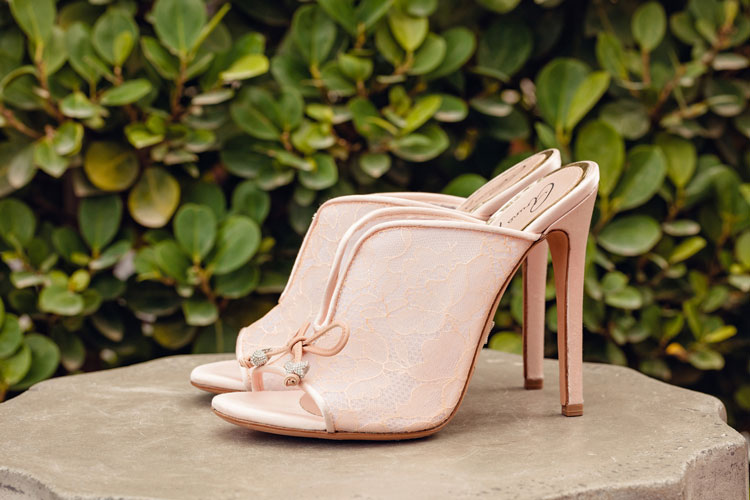
Of course, for each season it is a different style. For summer, the Aruna Seth sliders in either blush lace or even nude leather are a great style to put on, they’re easy and effortlessly glamorous. As for the winter, nothing beats a well-crafted, nicely fur lined bootie.
Which pair of your shoes should every woman have in her wardrobe?
A pointy toe stiletto for the formal occasions and a pair of sliders for the casual summer days. I am currently leaning towards a very comfortable pair of sneakers as well, hence the reason we have launched our bridal sneaker.
What do you think about a woman’s relationship with her shoes?
It is a very important and close relationship. Every woman considers her shoes as one of the most, if not the most, important accessory in her closet. I personally see the relationship as a form of her own identity and it highlights how much she cares about fashion.


Can you share with us your style advice for wearing your shoes?
They’re versatile in terms of how you can style them. You can dress them up with an evening gown or down with a pair of jeans and white tee. Nothing is better than being able to wear a pair of shoes to multiple occasions and functions.
You have also glamorised the flat shoe, what are your thoughts on the growing popularity of flats?
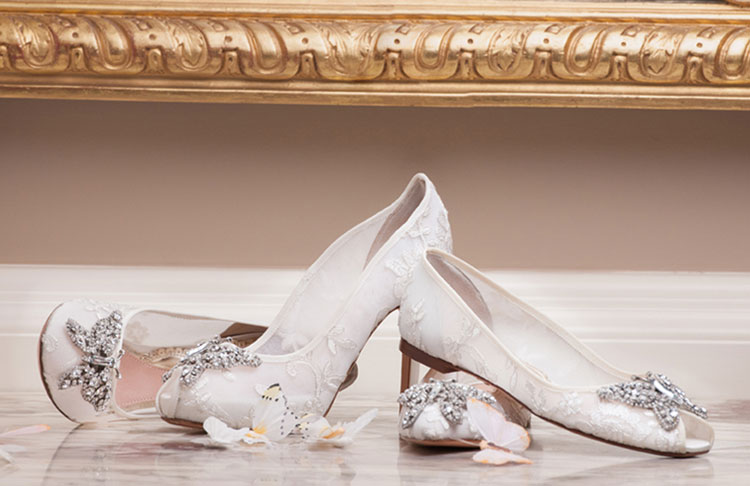
I am happy that I was one of the very first brands to offer the glamourous flats, as being a pioneer in this area helped my brand flourish nicely. As for my thoughts, fashion is changing, and people are looking for the effortlessly glam look, so I see the Aruna Seth flat style as a perfect fit for today’s demands.
Do you prefer designing heels or flats, and which do you find hardest?
I prefer designing heels as you have more material to work with, it is also about the cut of the shoe. Designing heels is a lot more complicated than designing flats, which makes it more challenging and always fun.
Can you share with us how an Aruna Seth shoe comes to life, from concept to point of sale?
It starts with the inspiration of the collection, creating a detailed mood board, I usually like to cut and paste on to a foam board and hang it in my office to have the reference available at all times. The design process takes place from there and the production of prototypes follows right after, up until you achieve the perfect style, colour and fit, which is the final sample that you actually present to buyers and stores during market weeks in NYC and Paris.
Where do you look for your design inspiration?
My travels, the Indian heritage, and the Saris.
Do you have a particular muse in mind when you design?
It is a combination of Kate Middleton’s all-time grace with Jennifer Lopez’s edginess.
How about your signature butterfly, what is the meaning behind it?
Freedom, grace, elegance, and aesthetic.
How do you go about designing to ensure you combine both style and comfort?
This is the sole reason we design prototypes, it is all about reaching the perfect cut and comfort before moving into production.
Can you tell us more about the special padding that you use, and why you chose to incorporate it in all of you designs?
It made out of Nappa leather combined with a gold and nude trim around the padding which is strategically placed inside the sock to give the foot the extra comfort. Our production house is in Venice, Italy to ensure the highest quality and comfort for the client.
Why did you choose to have production in Italy?
To ensure we have the best quality shoes, comfort, and overall luxury for our clients
Tell us about the bespoke service that you offer?
We work on a made to order service, especially for our brides. It takes 10-12 weeks to make the shoes and the bride can choose from ivory satin and ivory lace or even a colour to match her dream dress. Clients can also work on bespoke shoes, where they can choose their butterfly colour and the fabric to match the butterfly. Should the client wish to personalise even more, we can engrave the initials. Moreover, all the shoes have a hidden butterfly in the sole and for the brides, we have a small blue pearl to go with something blue!
Why did you decide to concentrate on bridal shoes?
Bridal shoes are not the sole focus of the brand, nonetheless we are recognised for our bridal shoes due to the various options we offer the brides in terms of designing their one-off shoe for the most special day of their life. What pushed me to get into bridal is when I designed Pippa Middleton’s shoes for the royal wedding.

Tell us about your latest bridal collection?
We design a bridal collection once a year with heel heights from 50mm to 130mm. Our latest bridal collection includes a blue pearl at the sole of the shoe next to the small butterfly farfalle, and the fabrics range from ivory satin to blush lace and white satin.
Do you have a favourite pair?
The new addition to the brand, the Aruna Seth Farfalla sneakers. They are a white pair of comfortable sneakers embellished with the signature Farfalla.
Can you share your shoe advice for brides-to-be?
You should always take into consideration the venue of the wedding, the height of your groom, and what type of heel you are most comfortable wearing. If it is an indoor wedding, you can go for pointy heels and if it is an outdoor wedding, then it is definitely an open toe.
Can you tell us about your personal style?
My style is constantly evolving! I am currently going through a ‘rebirth’ which aligns with the rebirth of the Farfalla. The labyrinth butterfly that is seen in the Fall 2018 collection is edgier, playful with clean cut edges and to a certain extent more casual to suit the more casual style I am currently sporting.
How many shoes do you have in your personal collection?
So many! Around 400 now!
What has been the most significant breakthrough moment in your career and your greatest achievement?
Pippa Middleton wearing my brand was definitely one of the greatest achievements, followed by Kate Hudson.
When celebrities wear your designs, it certainly results in a lot of awareness of the brand, but how does it reflect in your sales?
Red carpet placements definitely help sales and create a larger demand for that specific pair. The reason we support celebrity placement is due to the trickle-down effect it has on the brand, as once a client buys a pair of Aruna Seth the chances are that she will go for a second, third and fourth pair.
Who would you most like to see wearing your creations?
Jennifer Lopez.
How should a pair of shoes make a woman feel?
Strong and like they’re on top of the world, together with being confident and fashionable.
What are your future plans for Aruna Seth?
Opening a standalone store in Dubai and Abu Dhabi, and our first flagship store in London.
By Eliza Scarborough
READ MORE
CEO Louis Ferla Upholds The Vacheron Constantin Values That Have Been Defended For Almost Three Centuries

Vacheron Constantin has recently appointed Louis Ferla as its new CEO. Ferla joined Richemont in 2001, as area sales manager for Alfred Dunhill in Hong Kong, and has devoted his career to the group, taking on international roles for Cartier in Taiwan, the Middle East, and China, before joining Vacheron Constantin in 2016. Most recently, Ferla has served as Vacheron’s managing director of sales and marketing, before taking on this new responsibility and leading the brand into an optimistic future.
What is your vision and the direction you are having for Vacheron Constantin?
When I first took on my new role, I spent time traveling to listen and speak to colleagues, clients, and partners. What I learnt from this was that Vacheron Constantin is a Maison that produces beautiful haute horlogerie and we agreed together that we would keep on achieving that. Vacheron Constantin is steeped in history, and although it has been faced with ups and downs over time it has succeeded because the Maison has constantly innovated. So, while we need to respect the tradition, we also need to continue with innovations. If you compare Vacheron Constantin to a tree, it is a very big tree with long deep roots and we have a lot of stories to tell, and to do so, we keep turning back to our DNA while opening some doors for people to enter the world of Vacheron Constantin.
To what extent is storytelling important in the world of fine watchmaking and luxury?
I think this is key, as although it is expected that we create beautiful watches, engaging in the communications and living a passion is equally important. There is a very famous quote, ‘people often forget what you say, but they don’t forget how you feel,’ and we look to follow this with the experiences that we provide.
How do you aim to achieve a strong outlook for 2018?
I have always been a strong believer of what is called the virtuous cycle, where good news and a positive outlook brings on more good news and positivity. This creates motivation amongst the team.
What is the main message you are relaying this year to your clients?
Vacheron Constantin is a brand of its time, and we are continuing to create beautiful haute horlogerie, mixing tradition with innovation while at the same time remaining elegant and investing plenty of thought into details, making us unique.
What is key when looking to satisfy your existing loyal clientele, together with attracting new customers?
Exceptional watches pushing the boundaries of fine watchmaking with high-end mechanical complications in uncompromising designs will always remain at the center of Vacheron Constantin DNA. They appeal to both existing clientele and new customers. Because you don’t come to our Maison by chance. Our loyal clients or new ones seek excellence, history, legitimacy, authenticity and know-how. They already are connoisseurs.
Can you tell us about the strategy that you took to bring a new freshness to Vacheron Constantin?
For us, it is not a question of reach, but is more about the engagement. We are looking to share the level of passion in what we do with people who will grow with the brand, and the average age of our customer is under forty years old which has certainly surprised me.
Tell us about what we can expect to see in the Overseas collection?
We have a beautiful, ultra thin perpetual calendar in pink gold, a timepiece that reveals its technical complexity while exuding an aura of understated distinction. It houses an ultra thin mechanical movement and comes with two interchangeable straps. We are further presenting a chronograph with a black dial, that is very assertive in its identity as both: A sophisticated design object and a piece of contemporary fine watchmaking. The dual time – a sporty watch with a practical complication – rounds out the collection. The steel version is coming in either a deep blue or silver-tone dial.
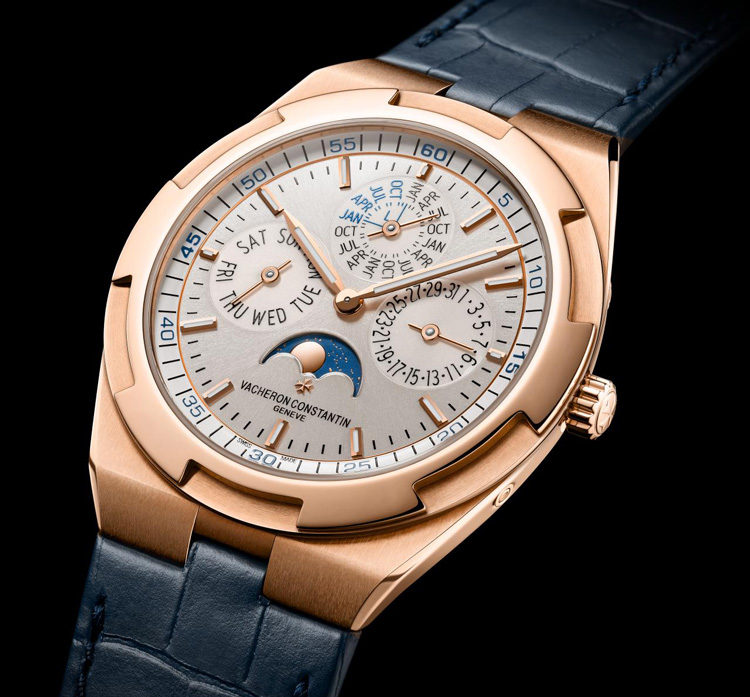
OVERSEAS ULTRA-THIN PERPETUAL CALENDAR
Where is the Vacheron Constantin woman this year?
We don’t have many new timepieces and will just be continuing our current offerings. Our approach this year was to not launch too many references, and instead be very smart with a clear message.
What is your opinion on over-communication reducing the desirability for a brand?
That is not our strategy at all, as for us we are not about reach and are instead focused on engagement. You can see that we don’t work with celebrities, as we are Maison of connoisseurs and for us what matters the most is to do what we do and do it well. We don’t plan to increase the number of watches that we produce, so this isn’t a direction that we would take.
Tell us your thoughts on e-commerce, and to what extent is retail and human interaction still important?
We believe that today you don’t have one typology of client, with our clients all having different demands and wants. They don’t have one journey and they take many different avenues before making an informed decision. These people are very often connoisseurs and experts, as it is very rare that you come to Vacheron Constantin by chance. I think it is our duty to facilitate the journey of the client through different channels and platforms, but the majority of our clients prefer a human interaction to see the details before making a purchase.
How important is your history and heritage in today’s communication?
If you are a new brand starting, you would dream to have the heritage of Vacheron Constantin. We started in 1755 and are constantly going back to our incredible archives to stay true to our DNA.

MÉTIERS D’ART AÉROSTIERS
How would you like to see the future of Vacheron Constantin?
I really would like Vacheron Constantin to continue being recognised as a beautiful Maison of haute horlogerie in 10, 15, or 20 years from now. There are two things that are extremely important for me, one is that we create beautiful watches, and second is that our client enjoys visiting us and their experience with us. We will continue promoting a gesture and a culture and I like to engage our client to do that. Finally, it is also important that our team takes pleasure in what we are doing too.
How would you sum up Vacheron Constantin?
Understated yet elegant.

FIFTYSIX

TRADITIONNELLE TOURBILLON
What motto do you live by?
Doing better if possible, which is always possible.
What would you promise Vacheron Constantin for the upcoming year?
To continue taking pleasure with what we do, enjoying the interaction with our clients together.
How Tod’s Chairman Diego Della Valle Turned a Small Shoemaking Business Into a Global Empire
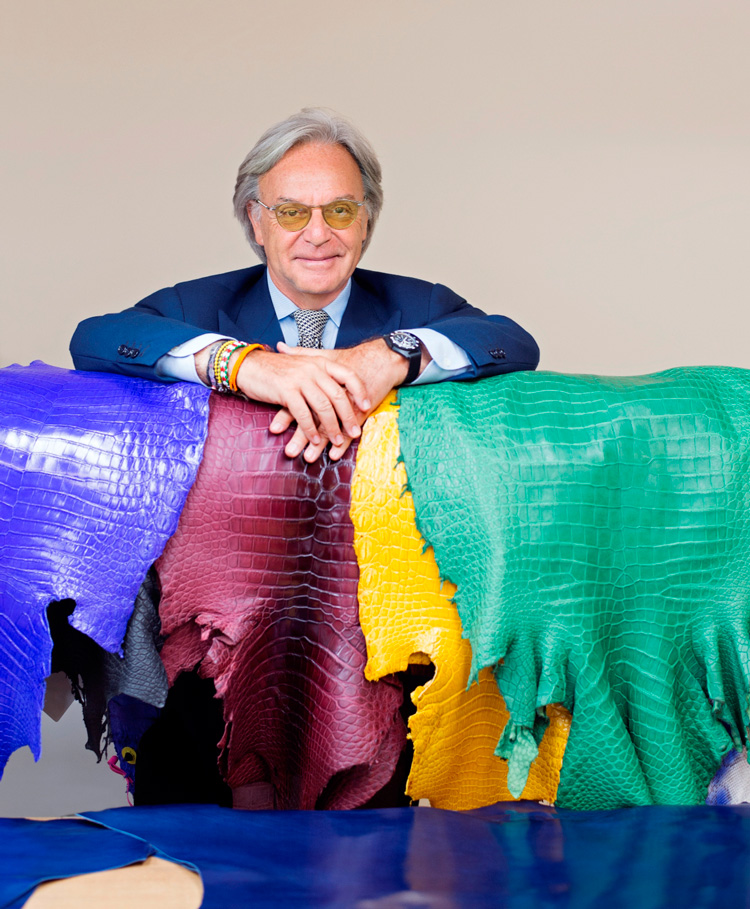
Diego Della Valle, the owner and chairman of Tod’s, was born into a humble and hardworking family of shoemakers in post-war Italy and saw his father’s work pay off in the 1960s as his shoes became fashionable items in America.
After working with his father for several years, he launched a second brand of shoes in the 1970s, a soft-soled moccasin with a distinctive rubber-nub sole called J. P. Tod’s that quietly became a high-quality, low-key status item until the 1990s, when Tod’s exploded. Under Della Valle’s direction, Tod’s now encompasses brands, Hogan, Fay, Schiaparelli, and Roger Vivier. He also owns Serie A football club ACF Fiorentina, where his brother Andrea served as chairman, and has stakes in some of Italy’s most influential companies, together with funding productions at La Scala in Milan and the restoration of the Colloseum in Rome.
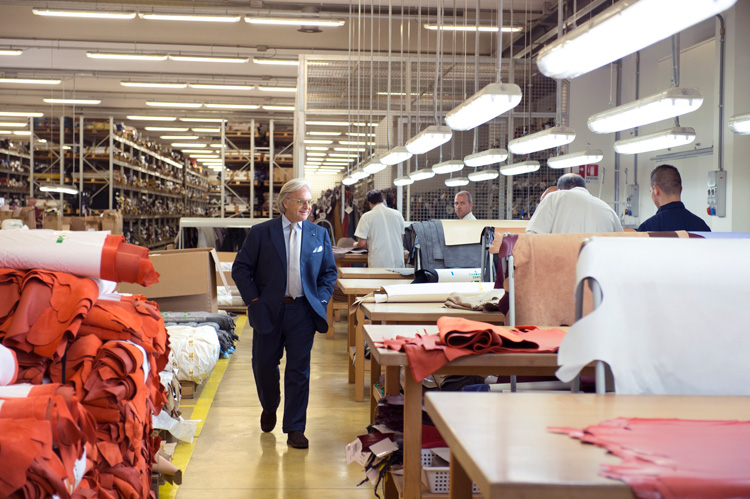
Alongside the philanthropic causes which he is deeply committed to, Diego Della Valle is focusing on what used to be considered luxury’s essence, quality manufacturing, amongst other things. From understanding how to take advantage of the sweeping technological disruption of the luxury industry, to building a futuristic factory in the tiny hamlet of Casette d’Ete, the key to his success is being a man who’s always been about the people, the people who work for him and his close friends and family. Known for his business acumen, and despite having achieved something like sopra-hero status in Italy, Della Valle still desires the one thing that everyone who has got it all needs, time to enjoy it.
He talks to us about this, together with other topics during an exclusive chat while in Dubai to present the opening of the new Tod’s boutique in the Dubai Mall extension, where an exclusive collection of women and men iconic Gommino loafers were created in celebration, taking colour inspiration from the famous hues of the seven UAE sands.
Tell us what challenges you are facing today?
If you don’t change the strategy you don’t have any problems. Now what we want to do is use our story but add more creativity and sense of life, but without losing our DNA. We are balancing between tradition and quality, as day by day we can lose the quality to marketing and creativity, and maintaining our quality is paramount as it is a pillar in our DNA.
In your opinion what are the important pillars for sustaining the success of a brand?
For many years it was step by step, but now everything has changed with the advances of technology. Things are moving faster, and we need to change our strategy to keep up with this fast speed. I think that we are in a new era and we are working to embrace that.
What are your thoughts on co-branding?
We do work on partnerships with other brands, and we are looking towards a collaboration with a special designer. We would plan for possibly two collaborations a season, which is very interesting as the customer loves the additional products and it is also a strong marketing movement of these times.
What are the prerequisites that you look for when choosing the right partner for collaboration?
Having the same feeling and passion, but what we also love is creativity, as when the partner starts collaborating it is possible for them to do what they want.
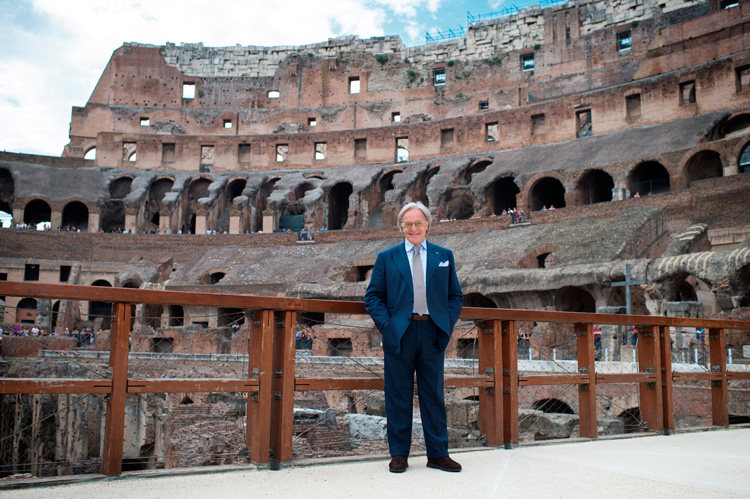
Diego Della Valle, Tod’s group Chairman at Rome’s Colloseum that was restored and funded by the group for a multiphase project costing around $27.6 Million.
To what extent is philanthropy important today?
I think that for businessmen like us we have a responsibility to give back a part of our power, finance, and attention to others, especially for the future.
It is only natural for us and for our family to give back with these initiatives. First you need to do it because you like to do it, secondly because it is important, and finally because people love to know that a company, which creates luxury products, is sharing its profits with their future.
Tell us about the relationship between Tod’s and the Middle East?
More or less, it is a long-term relationship as many of our Middle East customers have been with us for years, whether they were shopping in London, Milan, or St Tropez. Now we are here with a boutique in the region where we are able to offer more, which is very important as the elegant community of the Middle East is key for Tod’s.
Can you share with us your thoughts on customisation, and how important it is becoming for your customer?
It is important for the relation between brand and customer, together with the limited-edition aspect. People love something special and individual, which is why we have created the exclusive seven sands collection of Gommino loafers, taking colour inspiration from the famous hues of the seven UAE sands.
What is the main message that Tod’s is projecting this year?
Generally, the message is about taking a sense of light life. We make products that are sometimes not indispensable, which will at one point give you a happy moment. People are looking for the experience and the story that they are learning, investing in moments and feelings.
Can you share with us a life lesson that you have learnt and would like to share with young Entrepreneurs?
We have to always remember the important and crucial things in life like the sense of honour and sense of duties. This is the basis of life across all people rich or poor since if you have those qualities then you are very strong in the true meaning of strength. It is important that when you are in the real game of business to keep your human qualities and don’t think that being aggressive is a sign of success and strength.
You also need to have a dream and then push a lot and work hard to capture it, as everything is possible to be achieved. Again, There is no need to be aggressive, just be determined.

What is something that you would still like to achieve?
Free time, as all my life I have been involved in business, day by day, seven days a week. I would like a day without an agenda!
Where do you like to spend your free time?
There is more than one, but I do love Capri and also Miami.
When you wake up in the morning what do you tell yourself?
I have a daily morning ritual when am home at Le Marche, an eastern Italian region where also our headquarters is based, where I sit in my garden for 5 minutes reflecting.
I don’t say anything, but I just reassure myself that even if I do something that isn’t perfect, it will be ok. I also think a lot about the people around me and my family.

What do you hate in life?
Hypocrisy.
How would you like the world to remember you?
As a funny guy!
What is your vision for the Tod’s group moving forward?
I think that we are having a special moment in our business, facing a lot of opportunities. We have brands with a lot of potential, and although the market is aggressive we have strong products. It is like the second half of a football game. We need to do everything precisely in these next steps, and we will have an incredible chance.
How would you define Tod’s?
A lifestyle.
READ MORE
A&E Editorial: Tod’s SS18
Tod’s Celebrate Their Dubai Mall Store With Exclusive Collection
IWC CEO Embraces The Future Of Watchmaking
A&E interviews IWC CEO Christoph Grainger-Herr on how the brand is celebrating 150 years and what the future looks like for the Maison. 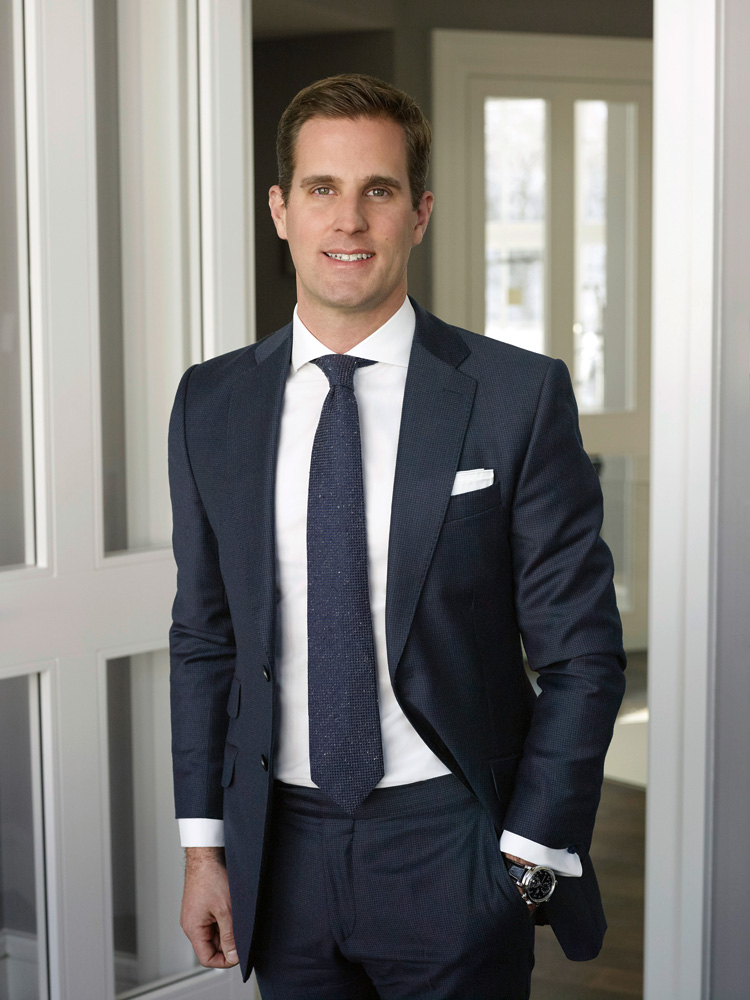
IWC Schaffhausen is celebrating its 150th anniversary, and while the watchmaker boasts technical expertise in the creation of watches for active professionals such as pilots and drivers, it also prides itself on designing timeless pieces that evoke emotion and memory, and through a uniquely narrative-driven message, is looking to conquer a new market share.
The man poised to take IWC’s ever-increasing relevance to new-heights is the recently appointed and dynamic Christoph Grainger-Herr. He is not one to rest on the laurels of IWC’s past conquests, and instead takes a focused and courageous direction as the brand hits its 150th anniversary. Understanding the importance of both e-commerce and the personal level of storytelling, it is clear that he will be instrumental in shaping IWC’s growing relevance with the current and future generations of watch buyers.
Here, while a new celebratory collection is unveiled at SIHH, we exclusively chat to Grainger-Herr about watches that transcend functionality, the brand’s growth, and the main challenges for haute horlogerie in 2018.
To what extent do you feel story-telling is still relevant in the watchmaking industry?
It comes back to the basic definition of what a luxury product is, and what it stands for. First, it begins with the physicality of the product and creative aspect, as no luxury product in the world is ugly and successful, making a beautiful design essential. Then you have the craftmanship and engineering content which make the product. As a luxury brand we also represent a values system, as a watch is the most personal and powerful product you can wear, especially for men who don’t have jewellery and fashion to express themselves in the same way as women. A watch is so rich in symbolism and allows others to instantly draw a conclusion about who you are and what you are saying about yourself. This powerful message comes from the content in story-telling.
What story is IWC telling this year?
It is the story of our 150th anniversary, and the focus point really is to express that we have a unique and different founding story. Our background is not in an artisan atelier, as instead we had an American engineer and entrepreneur who travelled from Boston to Switzerland to combine American manufacturing technology with Swiss craftmanship to make the best pocket watches money could buy. In his first year of operation at the age of 27, he created a modular system of watch movements and exported 10,000 pieces to the American market. So, what we are trying to express is that we have a story that is based on engineering, combined with the other side of IWC, which is adventure. To celebrate this milestone, we unveiled a special Jubilee collection which comprises a total of 27 limited-edition models from the Portugieser, Portofino, Pilot’s Watch and Da Vinci families, together with the first-ever wristwatches to feature the original digital hours and minute display as it appeared on the Pallweber pocket watches back in 1884. The one aesthetic element all these timepieces share is their imprinted dial in white or blue, an effect that is achieved by a process of applying several layers of lacquer, reminiscent of heritage enamelled finishes.

What are the challenges that you are facing?
The biggest project that we have this year is completing our manufacture centre. Our two main focus points are on the one hand the manufacturing process and on the other is the ongoing e-commerce rollout.
What is your objective for 2018, and your vision for the brand moving forward?
At the moment we are in the middle of building a meaningfully connected distribution channel globally. It is a high quality, high-end brand experience and service, which complements all our physical wholesale and retail distributions with both our own e-commerce and everything we do on Mr Porter and Net-a-Porter, to really make sure that those channels become fully complementary. The idea is to ensure our clients have the opportunity to interact with us wherever, whenever and however they choose, to make sure it is one unified experience.
To what extent do you think the retail experience is still important?
At the end of the day, with the products we sell it is about understanding the contextualisation of that product on your wrist. The relationship with it and human reaction are very important and enrich the product, and it is impossible to relay this without a retail experience. Of course, a proportion of purchases happen online, but in most cases the client will have interacted with product at some point beforehand.
Is it your strategy to sell some products online, and other more exclusive pieces in boutiques?
We are not pursuing any strategy to push a certain channel in a certain direction. You will always have exclusive editions across all channels. Broadly speaking, the shopping behaviour online is completely identical to the shopping behaviour offline.

What are the pre-requisites that IWC set for collaborators?
It has to make sense with our direction of storytelling, and there has to be a match of minds and a match of values in the organisation.
To what extent do you think over-communication negatively impacts desirability?
There is a balance to strike between awareness and the quality of the content. I think we also have to realise that the awareness for mechanical watches in many markets is still very limited, so there is a component of reach that you need to have, simply to spread the word. But managing luxury is always a balancing act between exclusivity, rarefication, desirability, and reaching your potential customers, and in such an aesthetic industry it has a lot to do with feeling what you are doing. We monitor our communications very carefully and respond on a day to day basis.
Where is the woman in IWC?
She is very much part of IWC. We have many launches and offerings, but our idea is to have a fully complementary female offering from classic to sport, which can sit alongside our existing more male focused collection.
Tell us about your thoughts on what other brands are offering at SIHH this year?
I think a lot of the brands have made a step forward this year, becoming more energetic which is so good to see.

How do you choose what watch to wear?
I am very much emotionally driven when it comes to watch selection. I pick the watch I wear each day depending on what I love and what speaks to me.
What brought you to the watch industry?
When I started my University placement year, one of my first projects was to design a gentlemen’s accessory store in Sloane Street in London Longmire Cufflinks. I think that was the moment I became interested in creating shops for luxury goods. Later, I designed a jewellery shop in Rue du Rhône in Geneva, before I started to work as an interior designer in Zurich. Shortly after I was contacted by IWC to create the brand museum in Schaffhausen. It was during this assignment that I got to know IWC and fell in love with the brand.
Tell us about how your personality fits your new position as CEO?
I see myself as a balanced creative person, and the main part of my character will always be the aesthetic drive, which I think luxury brands need. Although I am not just creative, as I have always had a commercial understanding and focus which really helps in my current position.
What do your promise yourself, and IWC for 2018?
Personally, I am not one for New Year resolutions, as I try to work towards everything I want on a daily basis, every day of the year. On a professional level, we really want to make this year truly special, firstly with a big global celebration, and on the other hand we are placing a big emphasis on R&D and manufacturing to really reinforce that engineering spirit again at IWC, adding this to the storytelling communication.

What motto do you live by?
Curiosity is what gives us energy, passion and fresh ideas.
Tell us something that you would still like to achieve at IWC?
We are a brand that truly has the potential to be globally one of the top watch brands and that is the direction that we want to go in, ensuring that we have the best product, with the best service and most appealing story, working on substance and emotion.
What lessons would you like to pass on to your children and your IWC family?
I tell my children to be true to themselves, as you must trust in what you can do, and not try to be something that you are not. The lesson I am sharing with my IWC family this year is that we are working as a true team, we are all here to create the best possible product and experience for our clients and everything has to be aligned to that end.
How would you sum up IWC?
Engineered, pure in design, and full of emotion.
READ MORE Bradley Cooper Stars In IWC Campaign IWC Presents Jubilee Collection To Celebrates the Company’s 150th Birthday
Dior Homme: Bags Of Style
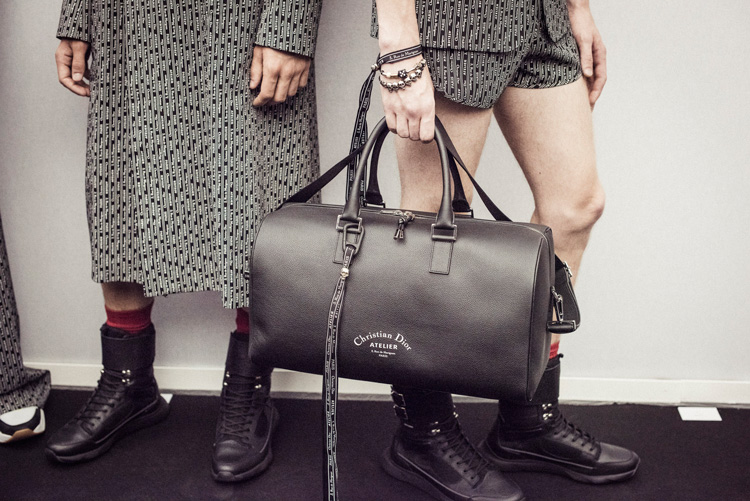
Dior Homme debuts it’s latest accessories for summer with a selection of leather goods in supple, yet hardwearing grained calfskin.
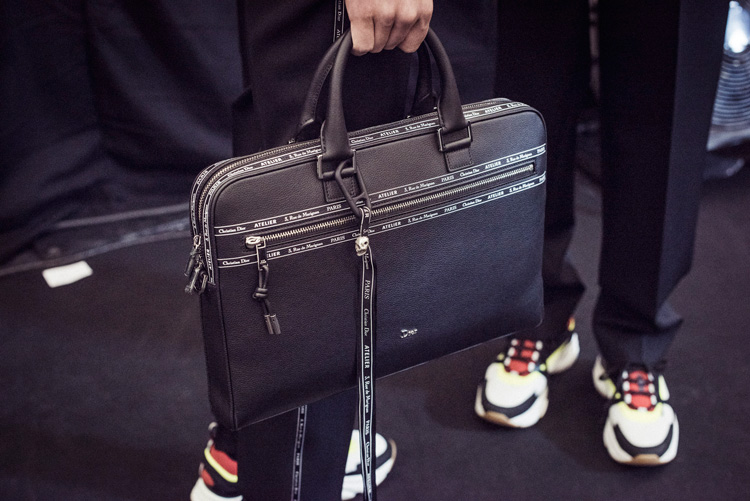
On the occasion of his ten-year anniversary at Dior Homme, Kris Van Assche revels in the craftsmanship of the House atelier situated at 3 Rue de Marignan in the 8th arrondissement of Paris.
The signature of the Dior Homme atelier features on a selection of leather goods in supple yet hardwearing grained calfskin. Presenting four elegant and simple leather goods, the backpack, briefcase, hand-held and crossbody pouch, Dior Homme combine a streamlined elegance with attention to detail, the perfect way to transport the essentials of a contemporary lifestyle.

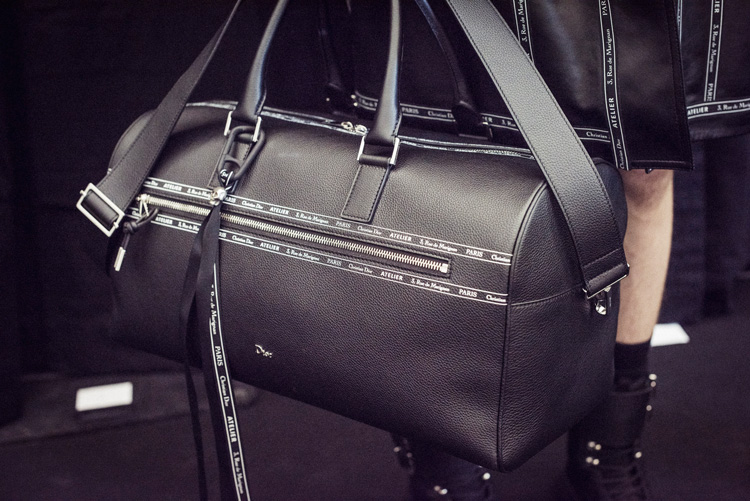
The black leather is stamped with the ‘Christian Dior Atelier’ logo which evokes both the Dior Homme savoir-faire and the house’s contemporary vision.
READ MORE
Kris Van Assche Named Berluti’s New Creative Director
Strike! Prada Is Launching Bowling Inspired Collection With Mr Porter
Your 2018 Art Exhibitions Guide
From Tate Modern’s first ever Picasso Survey to an innovative and truly immersive 3D experience of Van gGgh’s most famous works, here’s your guide to the most highly anticipated art exhibitions around the world for 2018.

Salvador Dali: The Memories
DIFC, DUBAI
Featuring Dali’s original paintings, lithographs and photographs sourced from private collections around the world, this is an opportunity to familiarise yourself with Dali’s other remarkable art works apart from The Persistence of Memory. An exclusive piece to watch out for is Shower of Jasmine, as the oil painting on canvas has only been displayed to the public twice since it was first unveiled in 1954, and its Dubai appearance will be the third time ever that the public views it. Paintings aside, photographs featuring Dali taken by Robert Descharnes will also be on display at the exhibition.

Picasso 1932: Love, Fame, Tragedy
TATE MODERN, LONDON
In what will be the Tate Modern’s first ever solo exhibition dedicated to Picasso, more than 100 paintings, drawings, and sculptures will go on view alongside family photographs to illustrate the artist’s personal life, focusing on one considerably tumultuous year in the artist’s life, when he met his muse and lover Marie-Thérèse Walter. Of particular note will be the display of three paintings of Walter, shown together for the first time since produced in 1932.

Michel Sittow: Estonian Painter
NATIONAL GALLERY, WASHINGTON, D.C.
Considered Estonia’s greatest Renaissance artist, Michel Sittow (c. 1469–1525) was sought after by the renowned European courts of his day, and this is the first monographic exhibition devoted to the artist. The exhibition includes some 20 paintings from American and European collections, including 13 paintings by Sittow, as well as works by Juan de Flandes, Hans Memling, and Jan Gossaert that provide a context for understanding Sittow’s achievement.

Permanent Temporariness: Sandi Hilal and Alessandro Petti
NEW YORK UNIVERSITY, ABU DHABI
Sandi Hilal and Alessandro Petti, co-directors of DAAR examine conditions of exile, highlighting how refugees’ state of displacement unsettles how we think of temporary living conditions. Trained as architects, the duo shows how these living conditions have developed social, economic, and political systems, and created built environments that deserve to be seen as fixtures rather than as aberrations. Their work takes the form of installations and collaborative projects, such as Campus in Camps, an experimental educational programme they ran in Palestinian refugee camps.

Gabriele Münter
LOUISIANA MUSEUM, DENMARK
Though perhaps not widely known yet, the German painter Gabriele Münter should be acknowledged for her striking contribution to the art of the twentieth century. Taking a present-day look at Münter, this exhibition is the first in several decades to unfold the many aspects of her long and multi-facetted artistic career.

Painted in Mexico: 1700-1790
MET FIFTH AVENUE, NEW YORK
In a show that first appeared at the Los Angeles County Museum of Art in 2017 as part of Los Angeles’ ‘Pacific Standard Time: LA/LA’, which explored Latin American art throughout the city, this show, a collection of more than 100 artworks, will travel to New York’s Metropolitan Museum of Art. Put in the context of the Met’s prodigious collection of European masterworks of the same period, the show will take on a new importance as questions of colonialism, international exchange, and art history are put in stark and fascinating relief.

Van Gogh Alive: The Experience
D3, DUBAI
Van Gogh Alive explores the life and art of Vincent van Gogh in an incredible, stimulating multimedia format. The Dutch impressionist’s famous works will be projected onto the walls, ceilings, and floors, making you feel as though you’re walking right into his paintings. Set to classical music, the exhibition boasts more than 3,000 images, including some of Van Gogh’s most beloved works, immersing you entirely in the vibrant colours and vivid details that constitute Van Gogh’s unique style.

Azzedine Alaïa: The Couturier
DESIGN MUSEUM, LONDON
London’s Design Museum will open a major retrospective focused on world-renowned fashion designer Azzedine Alaïa. This highly anticipated project will feature 60 pieces selected by the designer himself, as Alaïa was co-curating the exhibition when he died of heart failure in November 2017, which makes the exhibition one of his last creative endeavours.
READ MORE
A&E Guide: Glossary Of Art
New Hermes Exhibition Celebrates Martin Margiela
Dior Fine Jewellery Unveil À Versailles, Pièces Secrètes
Victoire de Castellane reveals an unseen Versailles, composed of secret passages and concealed boudoirs.
The inner sanctum of the château is where the stories and the passion behind these narrative and playful Dior Fine Jewellery pieces unfolds, precious rotating stones, hidden drawers and miniature chests hide symbols relating to Monsieur Dior’s world.
See some of the key pieces from À Versailles, Pièces Secrètes below.

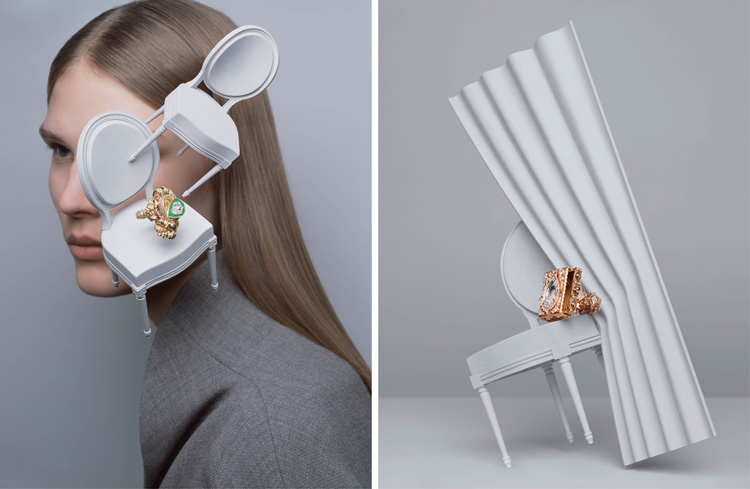


IMAGES BY BRIGITTE NIEDERMAIR FOR DIOR
READ MORE
A&E Editorials: Dior Fine Jewellery
Dior Pays Tribute To Marc Bohan
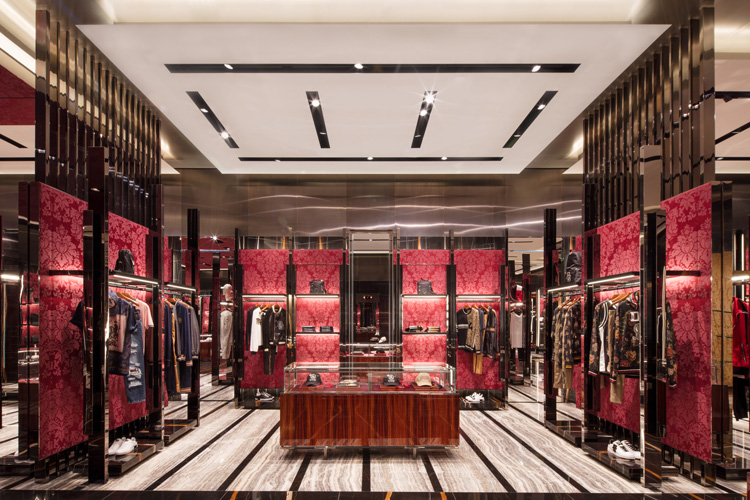
See Inside Dolce & Gabbana New Dubai Mall Boutique
The new fashion avenue in the Dubai Mall has welcomed some of the biggest designers from around the world and the Dolce & Gabbana boutique has taken over three floors of this prime shopping destination. The Italian duo are known for bold collections and extravagant shows, and the latest store in their portfolio reflects their vibrant personality perfectly.
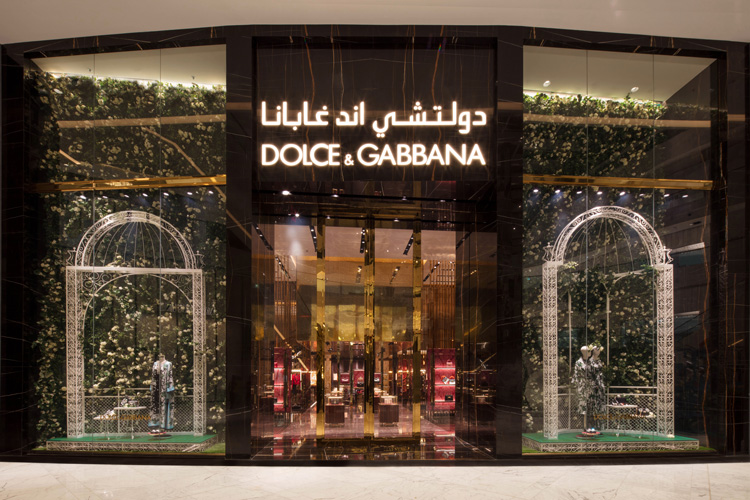
The rich and romantic blossoms of White Geranium print on a black background are the signature motif of the Women’s Line. The collection features dresses and skirts in chiffon, poplin, cady and crepe, blouses in charmeuse, coordinated bags, sneakers and accessories – all with splashes of white flowers as if a lush Italian garden has magically bloomed, in the heart of the desert.
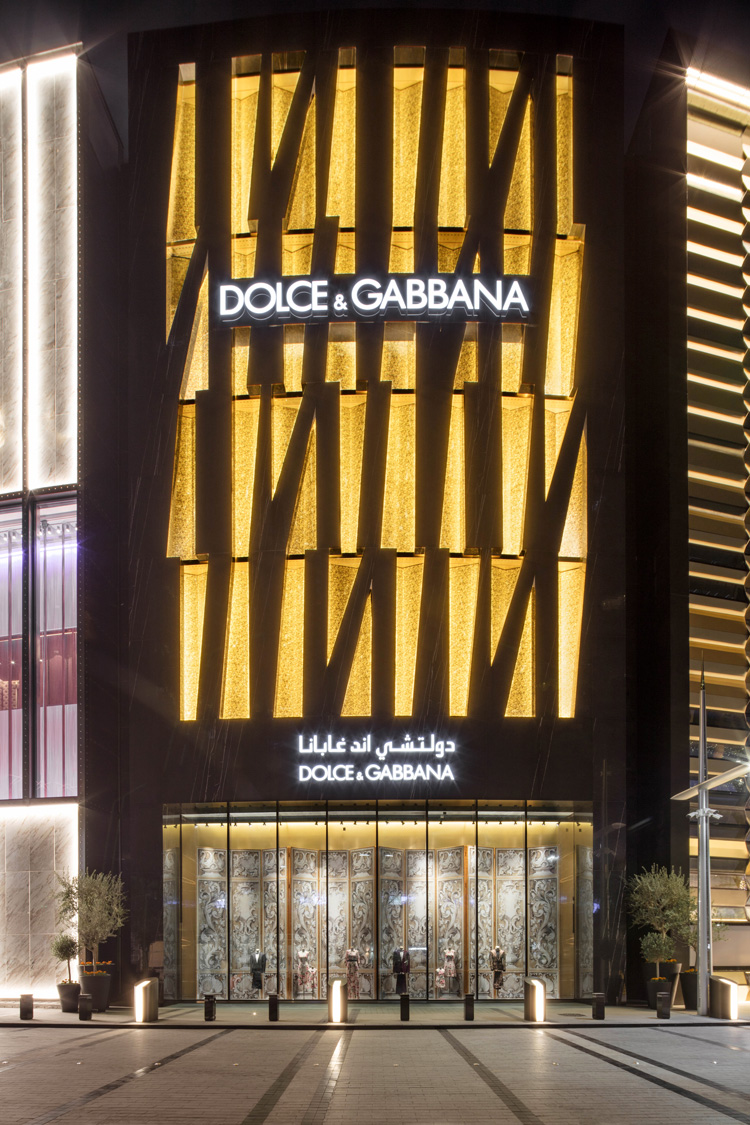
Clothing and accessories in scaled-down versions are also available, so that our younger customers have the possibility of choosing among delightful dresses, pinafores, poodle skirts, fun t-shirts and comfortable activewear with all-over White Geranium print.
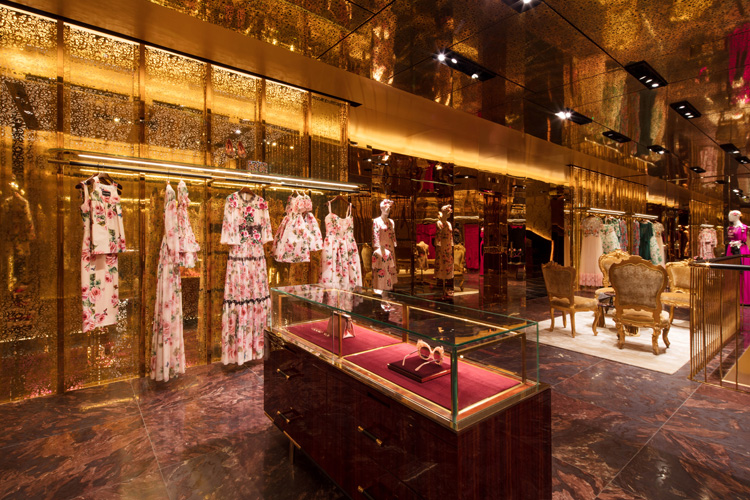
The Men’s Collection, bold and sporty, reflects the contemporary spirit. Trousers, t-shirts, pullovers in jersey, backpacks and accessories are characterised by a white background printed with graffiti print and colourful images of hearts, crowns, stars and the D&G logo.
Also part of the Men’s Line is a special sneaker with a gilded crown design and ‘The Royal World’ written on a white background, available both in the boutique and on the Shoes Level of the Mall. Dolce&Gabbana also proposes an exclusive white t-shirt for Women, Men and Girls featuring #DGLOVESDUBAI.
READ MORE
Alaïa Just Opened Their First Middle East Boutique
Tod’s Celebrate Their Dubai Mall Store With Exclusive Collection
A&E Travel Guide To The Best Private Islands
Beat the crown and the experience a pure escapism with our guide to the ultimate private island destinations.
BAWAH ISLAND, INDONESIA


This sensational, luxurious private island only opened in late 2017 and is already creating a huge buzz. Until now, the remote archipelago, located between Malaysia and Borneo was relatively unknown. However, Bawah Island has suddenly put this stunning location on the map. After taking a ferry from Singapore, followed by a seaplane, you are welcomed by phenomenal views of the five lush jungle-covered islands, surrounded by turquoise waters, coral reefs, and extreme remoteness. The island can host a maximum of 70 guests in 35 beautifully designed eco villas and features 13 pristine beaches and 3 blue lagoons. Once settled into island life, you can choose to unwind in the holistic spa, which offers a range of treatments and activities, such as yoga, Pilates, and meditation. Or the adventurous soul can spend days hiking in the lush tropical forests or exploring the open sea, with plenty of places to dive, snorkel, paddle board and canoe. Food is locally grown and can be found on the island’s Asian fusion menu at the stunning Tree Top restaurant. At sunrise, you can search for turtle nests and come sunset enjoy cocktails whilst watching classic films at the open-air cinema. Don’t be fooled, this remote, island paradise has plenty to do to keep everyone entertained, whilst still providing that feeling of pure escapism.
ISOLA SANTA CRISTINA, ITALY


Experience your own little slice of Venice by visiting Isola Santa Cristina. Just a 20-minute boat ride from Venice itself, this little oasis offers the utmost privacy, with picture perfect surroundings. The Island is almost self-sufficient, boasting its own fresh water source, organic fish and produce farming. Santa Cristina’s exclusive villa, accommodates up to 15 guests, with each room is luxuriously styled, offering sensational views of the Adriatic Sea, the Dolomites and the neighbouring islands of Torcello, Burano, and Mazzorbo. The Venetian style kitchen is certainly impressive, and you can either prepare meals yourself or take advantage of a private chef. The owners are also yoga instructors, offering classes for up to 14 people in their stunning yoga studio, and excursions to nearby islands are regularly available. So, if you are looking for a unique, island experience with total exclusivity, then make Isola Santa Cristina your first port of call.
AMANPULO, PHILIPPINES


The Philippines is fast becoming an Asian hotspot. With over 7,000 islands, one can experience true paradise and isolation. Situated in the Sulu Sea and an hour’s flight from Manila in the resort’s private jet, Amanpulo exudes off the grid luxury. On arrival, you will immediately be wowed by the sugar white sand beaches and crystal clear turquoise waters. However, these are not the only perks to this beautiful island. Each Casita features a beachfront setting, with deluxe, yet rustic island styling and your own golf buggy to explore your surroundings. For the active soul, Amanpulo offers a range of activities, from an abundance of watersports, to jungle trekking, cycling and even turtle spotting. The Aman group has done it again, providing another world-class resort. We dare you not to fall in love!
JUMBY BAY, ANTIGUA


After a seven-minute boat ride from Antigua airport, close your eyes and be transported into a world of butter soft beaches, calm waters, and sensational views. This family friendly resort features sleek suites and a collection of spacious villas and estate homes with private staff. Take advantage of the children’s club, while you top up your tan or brush up on your tennis skills and be sure not to miss out on the Sunday night White Nights beach barbecue, a toe in the sand, steel drum spectacle. Jumby Bay truly is a home away from home, with impeccable surroundings.
READ MORE
Palazzo Versace Dubai: An Italian Opulence Among The Dunes
The concept of Palazzo Versace Dubai represents the beauty and the luxury, which the Versace brand is famous for. It brings all the elements of the inspirational Versace world into a single destination to allow everyone to experience the ultimate Versace lifestyle.
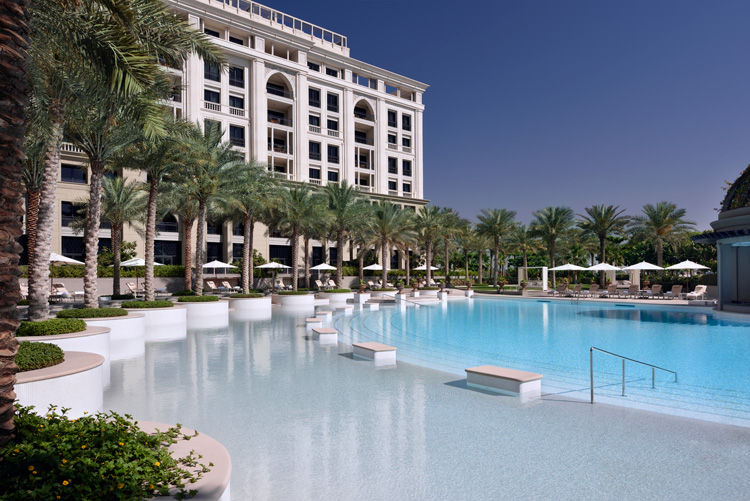
Set in the heart of Culture Village, less than 15 minutes away from the international airport, Palazzo Versace Dubai is located on prime waterfront with unobstructed views of the Dubai Creek. . This specific location of the hotel mirrors the same sense of place as a grand hotel setting in the Lago Maggiore or Lake Como.
Design & Architecture
The architectural style of Palazzo Versace Dubai hotel and residences represents the merging of a traditional neo-classical Italian palace with recognizable Arabic architectural elements.
The interiors showcase the Versace lifestyle through the contemporary eyes of Artistic Director Donatella Versace. The iconic motifs of Versace are present in each detail such as the Medusa head, the Greek key and the House’s legendary prints, with many designs created exclusively for Palazzo Versace Dubai.
Lobby
The ceilings are hand-detailed in gold and complement the impressive chandelier lights on the grand foyer.
A Versace floral pattern typifies the grand foyer chandelier, shaped to appear as if moved by a soft breeze, bringing delicacy to 3000 kg of hand-blown Bohemian glass.
The floors in the upper lobby are made of Cremo Delicato marble from Italy. The overall colours of the Palazzo are an explicit reference to the desert.
Mosaico
The name refers to the outstanding 1000 sqm marble mosaic flooring set in the lower part of the grand lobby. It is a hand-crafted masterpiece of approximately 1.5milion pieces of mosaic made by the famous Italian manufacturer of mosaics and marbles, FANTINI Group. The décor is inspired by a heritage pattern from Versace’s archive.

Versace Boutiques
Located on the west wing of Palazzo Versace Dubai, are the Versace boutiques: Versace Fine Jewellery, Young Versace and Versace Home.
Kids’ Club
Home to the little ones, this kids’ club, features a room for napping, a room for bedtime stories and a very stylish play area with primary coloured flooring designed by Versace.
The Spa
Located on the ground floor west wing of Palazzo Versace Dubai, The Spa has seven treatment rooms, a spa suite and hair & make-up salon. Both the ladies and gentlemen’s relaxation areas have plunge pools, hammams and saunas.

Almost 1000sqm of wellness typify the new Versace spa. Its marble floors of Granito Nero Assoluto match the grey degrade mosaics and the white birch wood walls with mother-of- pearl details. The plunge pools are in vibrant turquoise mosaics. The décor’s motifs belong to the sea world: cornucopias interlaced with small seashells and embellished curlicues.
Gymnasium
With a full selection of cardio and strength training equipment from the cutting edge TechnoGym, including cross trainers, treadmills, bikes and free weights, our gym offers a variety of options for guests to keep fit while relaxing in the lap of luxury at Palazzo Versace Dubai.
Amalfi
Located at the west lagoon pool, Amalfi features an al fresco dining venue. This tranquil poolside bar and restaurant offers traditional cooking techniques to prepare classic Mediterranean fare that includes healthy salads and authentic Italian pizzas – the perfect accompaniment to a relaxing sundowner by the waterside.
Q’s Bar and Lounge
The music legend Quincy Jones’ first ever bar, Q’s is set to become Dubai’s most desirable venue for live entertainment. The living room-like space will feature performances from an ever-changing schedule of acts of next generation stars directed by Quincy himself.

Enigma
Unfolding over the course of a year, Enigma brings food connoisseurs evolutionary culinary tales of mystery and delight, each lasting just for a limited time.
Diners can now experience the third chapter of Enigma’s journey. ‘The Inside Story’ will see Enigma bring Turkish cuisine to life in a new and creative way which is sure to captivate the imagination.

Giardino
This restaurant presents marble “terrazzo” flooring, columns and wallpapers inspired by the jungle motif of Versace wallpaper collection. The colours switch from green, light green and ivory. The crockery belongs to an exclusive line “Rosenthal meets Versace” collection, inspired by “Les Reves Byzantines”.
Gazebo
Facing the Ischia pool, lies Gazebo – a shisha lounge adjacent to Giardino where guests can enjoy a selection of Moroccan, Turkish and Lebanese mezze outdoors, or simply enjoy a variety of shisha flavours.
La Vita
This chic and vibrant smoke-free bar upholstered in leather and matelassé textile with the iconic Vanitas motif is the perfect place to meet after work hours. La Vita features innovative cocktails, carefully selected boutique wines by the glass and crafted beers.

Vanitas
Like in a traditional Italian palace, Vanitas restaurant is typified with hand-made decoration on the walls featuring the so-called “Grottesche Italiane”. The grotesque is a traditional decoration used in the Renaissance age, after the rooms of the Nerone’s Domus Aurea painted with the fanciful motif has been discovered.
On the bottom wall stands a beautiful century landscape that reminds of a painting from Versace’s archive, while the furniture is typified by classy yet bold red and blue colours. The renowned dinner service ‘Medusa Blue’ by ‘Rosenthal meets Versace’ collection perfectly complements the environment.
Gala Ballroom
A magnificent area conceived for outstanding events, the Gala ballroom could be divided into three separate spaces. Its pre-function room leading up to the entrance of the ballroom features classical columns.
The interiors boast of a carpet reflecting an archival Versace Barocco print in gold and violet that measure 600sqm. Three high windows overlooking the so-called Hypogeum garden, while majestic frescos with symbolic animals of the Arabian culture – i.e. the Peacock and the Falcon adorn the three niches of the ballroom. The staircase leading to the foyer level is made of Cremo Delicato marble and is complemented by a stunning Bohemian crystal chandelier.

Signature Suites
Located on the 9th floor of the hotel, the Signature Suites measure up to 300sqm and present an entrance hall, a powder room, a dining room, a living room and a bedroom with en-suite bathroom. Wooden floorings match the Cremo Delicato; Giallo Siena or Verde Laguna marble slabs while the walls are decorated with Versace wallpaper collections.
The Imperial Suites
Set on the two-leveled top floors of the Palazzo is the magnificent Imperial Suites. The first presents a heritage design concept with neoclassical elements and a delicate colour palette: the floorings come in Verde Laguna marble mosaic alternated with Grey Delicato or Giallo Siena marble as well as wooden floors; the furniture belonging to the iconic Vanitas collection by Versace Home.
The Imperial Suites are made of almost 1200 sqm and each has two levels. Both feature an entrance hall, a magnificent marble staircase, a dining room, a living room, an office, a lounge and entertainment room, a cocktail room, two master bedrooms with walk-in closets and en-suite bathrooms, a gym and sauna. The terrace unveils an outdoor private pool and garden.
READ MORE
Bella Hadid’s Beauty Secrets
In 2017, Dior Addict Lacquer Stick, a delightfully easy to use lacquer-balm hybrid, transformed our lip make-up habits, until this year when Dior pushed lacquer and lip care even further, creating Dior Addict Lacquer Plump, the first plumping lacquered lip ink.
This plumping lacquered lip ink is a genuine feat from the Dior laboratories. Just like an ink, it colours lips in fusional shades for 8hours, and like a radiant shiny plumper, it provides shaping, smoothing, and plumping effects and achieves new levels of hydration.

Its secret? An oil and water emulsion infused with colour and enriched with natural hibiscus extract for a plumping effect, hyaluronic acid for hydration and an ingredient that provides a fresh sensation. Upon contact with the lips it is activated, revealing the intensity and shine of its lacquered finish. Mere seconds after application, colour and shine appear in a featherweight film.
Seen here through the lens of director Cass Bird, and with Peter Philips’ expert application, Bella Hadid models the Lacquer Plump, and also shares with us her thoughts on this new innovative product, together with her make-up secrets and memories.
What do you love about the new Dior Addict Lacquer Plump, and what makes it special?
I particularly love the plumping effect and strong pigments.
What is your favourite Addict Lacquer Plump colour for an everyday look and a party look?
My favourite shades are Dior Pretty and Lovely D. I love a light pink or a nude lip.
When do you use it?
All the time! I literally feel naked when I don’t have it on.
How did you feel when you first tried the new Dior Addict Lacquer Plump?
I was really excited for this product to come out, as the Lip Maximizer has been one of my favourite products ever. Imagine my excitement when I found out that a lipstick will ally the plump effect to an extra shine finish!
What do you like most about the new Lacquer Plump?
I love the combination of the plump effect and vibrant colour.
How important is lip makeup to you?
I usually wear light colours, but I love a nice shine. My favourites are the nude and light pink shades.
Can you describe shooting the campaign?
The energy on the shoot was so great! I love working with Peter and Cass, and having other girls, whom I love, with me made the whole experience really fun!
What is the best trick for getting voluptuous lips?
I use the Universal Lip Pencil to contour my upper lip and then apply the Lip Maximizer or the new Dior Addict Lacquer Plump.

Can you define beauty in 3 words?
Confidence, intelligent, kind.
How do you take care of your lips?
I love a good lip scrub. I would usually use the Lip Sugar Scrub in the morning and then a good moisturiser. It’s really important to do a good scrub before applying colour.
What are your 3 must-have makeup products in your bag?
My Undercover concealer, my Lip Maximizer and my Dior Nude AirLuminizer.
Name one woman who inspires you?
Mrs. Michelle Obama.
Do you have any specific beauty icons in mind?
Carla Bruni. She is such an iconic beauty!
Can you share with us you first beauty memories?
Probably stealing my mother’s makeup without her even noticing it. It started with face oils and skin products really, and then I went straight for the black eyeliner.
At what age did you start to use makeup?
At 14 but was for sure way less knowledgeable about it than I am now.
Did your mother let you go to school with makeup on?
My mum didn’t allow me to wear makeup until I was 14.
Has your mother given you some beauty secrets?
She always taught us to take care of our skin first and that less was more!
Can you tell us about your beauty routine?
My routine is pretty much the same. I wash my skin and apply a good moisturiser. During the day, I usually put on a little concealer, highlighter, do my brows with the Diorshow Brow Styler, add a little bit of mascara, some Lip Maximizer and I’m out!

What are your ‘Holy Grail’ products, which you cannot live without?
My Lip Maximizer, Dior Nude Air Luminizer and Undercover concealer.
Do you like to experiment or are you more traditional in your choice of makeup products and your looks?
I love to experiment and try new things, but I always end up going back to my signature makeup.
What is the worst mistake you can make when it comes to makeup?
A bad eyeliner wing!

What beauty advice would you give to any woman who wants to look her best?
It’s important for me that women and especially young women understand that your confidence exudes through you. I’ve also learned this year that your smile is your greatest makeup product.
How does it feel to be 21? Has your view of beauty changed?
I feel pretty much the same to be honest! I am still experimenting and enjoying makeup, but I generally keep it simple as much as I can.
How has it been working with Peter Philips?
Peter is a Legend! We work extremely well together, and I love his company. I can’t complain about the fact that he is one of the most incredible makeup artists in the world!
Any tips you have learned from him?
Peter really taught me the importance of building your makeup and blending. Blend ladies, blend!
Which are your favourite looks that he has created for you?
They might be my Diorshow liners look, as they are all so incredible and special. They look like actual pieces of art!
Photographer: Liz Collins
Makeup: Peter Philips
Hair: Ward
Manicurist: Mei
Stylist: Marie Chaix
READ MORE
March Cover Story: Jennifer Lawrence’s Powerful Role On & Off Screen
Home Décor: Modern Bohemian
WE TAKE A LOOK AT SOME OF THE BEST BOHO-CHIC STORES IN DUBAI THAT CAN BRING SOME OF THAT FREE SPIRIT MODERNITY TO YOUR HOME.
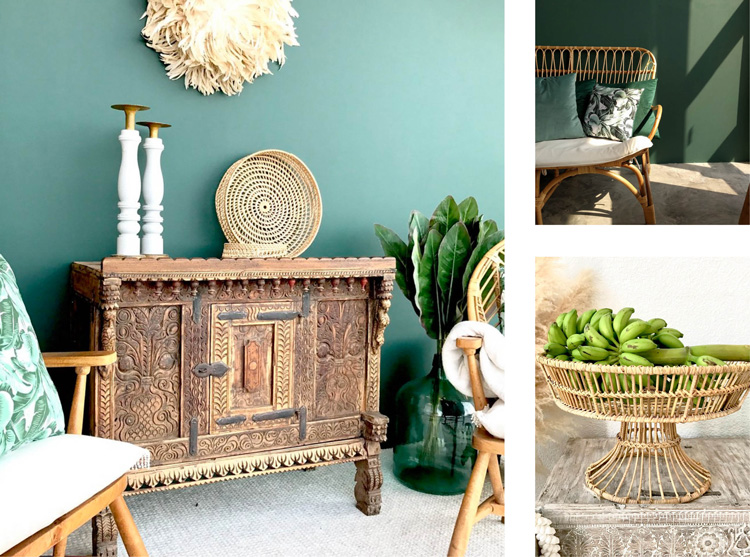
Tribe, The Courtyard, Al Quoz
Handmade and unique, you will be spoiled for choice in this cute store located in a picturesque The Courtyard. Curated by Australian designer, Jo England, Tribe brings together coastal elegance with a global-chic edge.
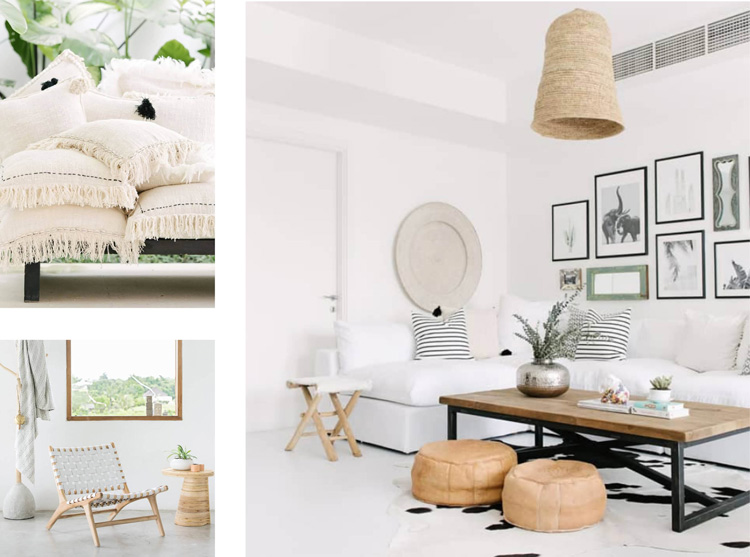
White Moss, www.white-moss.com
White Moss focuses on handmade simple pieces that bring a sense of neutral balance to any home. Choose from pineapple shape lamps to printed or fringed cushions that make something simple look special.

Boutique Nomads, www.boutique-nomads.com
Turn your outdoor space into a playground with bright hammocks, fun pool floats and lanterns that will have you spending more time outside during these sunny months.

The Bowery Company
For a bohemian urbanite who is looking for something a little bit cleaner and modern will love what’s on offer at the Bowery Company. Add some quirky utensils to your kitchen or bring a minimalist vibe to your lounge, whatever your taste there is something to cater for any free spirited city dweller.
READ MORE
Jean-Christophe Babin: Shaping The Future of Luxury
There seems to be nothing that can dampen the positive optimism of Bulgari and their charismatic CEO Jean-Christophe Babin. As the sun shines down on another sparkling edition to their hospitality portfolio, the newly opened Bulgari Resort in Dubai, we take a moment to reflect on the last 12 months and look ahead to a colourful future that the Maison is determined to keep consistent, creative, and credible.

Describe the feel of the Bulgari Resort Dubai?
Hospitality is taking us to a new level of luxury experience. I say this is a mix between Milan and Bali which, makes it magical and unique. On one end this it is a city resort central to Dubai, but at the same time you’re on a tropical island, a Bulgari island.
Let’s talk about the Festa collection, what has been the reaction?
Festa resonates well in what you expect, feel, and dream out of Italy. People think about Italy as joyful so the Festa theme reflects that, it represents what Italy stands for. Turning that into jewels you’d never experience felt to the client as a major revolution without denying anything of the past. It’s strong, bold, and colourful, so those items are there but it’s expressed in different ways, which is unexpected.
We have a soft spot for Monete, will we see a revisit to the collection?
You can’t have repeat jewellery with Monete as each one will be slightly different. Each coin is unique and rare, and it can only fit with one of a kind pieces. We created a watch for a client with a beautiful coin, but the coin itself cost 100,000 Euros, so the Monete can be much more expensive than some very big gems.
Do these pieces go to auctions?
You frequently find our pieces at auctions, but our role at Bulgari is not to feed ourselves at auctions. If we ever sell at auction it’s not a need to speculate or to increase the price, it’s a second market for Bulgari.
What can we expect from the fashion jewellery?
The fashion jewellery has been a success, and we have managed to evolve credibly. Serpenti has evolved with pendants and rings and so have other collections which added new clientele on top of traditional clientele. The launch of Diva has been a major success and brought a new layer of clientele, so fashion jewellery is very strong.
Tell us about the Diva accessories?
Diva is a new baby as it was launched this summer. We saw that the clientele is different between Serpenti and Diva across jewellery and watches. Perhaps Serpenti is a stronger self-statement, yet Diva is perhaps more feminine, so they are on different levels. Those who are in love with Serpenti might not be interested in Diva, and vice versa.

What are we expecting to see at Basel?
Basel will be very feminine. It will show that if you’re daring and you can evolve, an icon which may have seemed frozen forever.
To what extent do you think brand collaboration gives back to the brand?
They shouldn’t be systematic, they are there to add value. If it’s just to have a slight twist on something that we have already created. As a brand you’re the main creator, but on occasion we need mind openers and it’s exciting to work with someone who is different to you because it stimulates the themes and gives personality.
As a jewellery Maison, what challenges do you face today?
Our challenge is to express identity, difference, and character in a world of few millimetres. You may think everything has already been invented, which is right or wrong. If you take Serpenti, we could do it the way Egyptians did it 3000 years ago, but obviously we try and find our own Serpenti. I think what is more challenging in the jewellery business is to try to reinvent something which theoretically is impossible.
Do you tend to create the story first and then the product after?
The product always has an origin, there is initially a trigger. It should symbolise something, for Serpenti it’s the Egyptian bracelets, but it’s not the full story and it’s not the only way to create. The object must be beautiful.

Can over-telling the story, especially on social media, effect the product?
With social media there is very little storytelling, you find more on websites. On Instagram it’s more news rather than the storytelling. Taking Monete, it’s not just a beautiful coin but something that was used 2000 years ago, you can imagine it in the Middle Ages or other adventures.

What are your objectives for the new year?
Professionally it is to grow the desire for Bulgari. There’s no real limit, you can do it through a hotel or ring or an event. You have so many facets in the Bulgari world and you have playful dimension in terms of management. This strive for credibility and consistency remains our challenge for years to come.

And on a personal level?
I live in the moment, I’m not a person to set goals. I’m optimistic and tomorrow is another day.
By Lara Mansour Sawaya
A&E Interviews: Tomas Maier, Creative Director Of Bottega Veneta
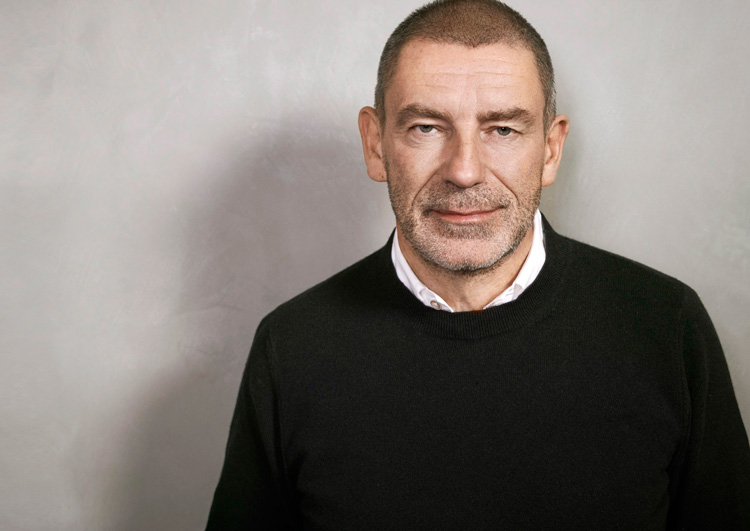
It is no surprise then that Italian luxury brand Bottega Veneta has found deep-rooted success since Creative Director Tomas Maier came on board in 2001. Before his appointment, the brand faced bankruptcy as its Intrecciato leather weaving technique had begun to lose global relevance, yet now into his 17th year with the brand, the designer has made creating unfettered luxury his mission, pushing out understated designs rarely found in today’s logo-driven, high-fashion world.
Born in April 1957 in Pforzheim, Germany, at the edge of the Black Forest, Maier was raised in a family of architects and attended a Waldorf school as a child. From there he headed to Paris, where he trained at the Chambre Syndicale de la Haute Couture. His professional experience includes designing for some of the most prestigious fashion and luxury goods houses in France, Italy, and Germany, including Guy Laroche, Sonia Rykiel, where he designed men’s wear for eight years, and Revillon, where he spent four years as creative director. For nine years, Maier was a women’s ready-to-wear designer at Hermès, where he also designed some leather goods and accessories.
In 2001, after the Gucci Group bought over Bottega Veneta, Tom Ford, who was Gucci’s creative director at the time, brought Maier on board, and since then he has had complete creative control over the design for men’s and women’s ready-to-wear collections, alongside homeware, furniture, watches, luggage, fragrance, and fine jewellery.
One of Maier’s earliest moves was to affirm that Bottega Veneta would return to its logo-less heritage, conveyed in the famous slogan, ‘When Your Own Initials Are Enough’, and using this principle, together with four key cornerstones, high-quality materials, outstanding craftsmanship, timeless design and contemporary functionality, he has grown Bottega Veneta into the luxury lifestyle brand that it is today. He presented his first collection, which consisted solely of accessories in September 2001, just a few months after being hired, and launched the Cabat bag, a woven leather sack-like bag that features no logos. The first women’s ready-to-wear show took place in February 2005 and the first men’s runway show was held in June 2006, before the addition of homeware, furniture, watches, luggage, fragrance, and fine jewellery.
Another of Maier’s great successes has been The Art of Collaboration, which was conceived in 2001, and highlights a storied relationship with artists. For Spring Summer 2018 the next chapter unfolds with a disruptive digital first ad campaign, and the focus will return to Bottega Veneta itself, with a communication platform that reinforces the brand’s own initials more relevantly for today’s customer. Titled Reflections, the campaign embraces moving images as its core, with six distinct and deeply cinematic films to be released episodically throughout the season via multiple platforms and partners. Each season will focus on different characters with an overarching narrative that illuminates the collection and draws from the brand pillars, Mystery, Sophistication, Architecture, Sensuality, and Surrealism.
At the helm of a relatively young luxury brand, only founded in 1966, whose name literally translates as ‘Venetian Atelier’, Tomas Maier has transformed the luxury goods business, offering a thoughtful and increasingly important argument for the primacy of quality, craftsmanship, and individuality. His refusal to pander to fashion’s fickle tastes has allowed him to carve out a niche in the industry, refining a formula that finds the sweet spot between credible fashion and casual, wearable clothes. Necklines, silhouettes, and proportions are subtly tweaked to suit the seasons, but they all boast the same attention to detail and longevity that’s now a cornerstone of all Bottega Veneta’s products.
What are the core values of Bottega Veneta?
The foundation of Bottega Veneta’s values remain the Four Cornerstones which I established when I arrived at the brand in 2001. They serve as a strong guiding principle for everything that we create, from our core leather goods to jewellery and fragrance.
How do you think the DNA of the brand has changed over the years and what has stayed the same?
On the foundation of the Cornerstones, we have built our pillars and creative ideals. Among the pillars are things that we value as part of the brand’s culture, Sustainability, Individualism and Experience. Our creative ideals include mystery, surrealism, and sensuality. These have all evolved and deepened over time.
What do you identify as the major signatures of the house?
The intrecciato weave is undeniably the most recognisable signature of the house. It’s our default logo. But what I love about intrecciato is that we find creative ways to approach it every season. For Spring, we introduced the Intrecciato Checker, which uses a colourful graphic contrast weave. We also created the Intrecciato Wingtip workmanship, which translates the decorative perforations of a brogue onto an intrecciato City Knot handbag. Intrecciato is so perfect and simple that the possibilities of how to reinvent it are endless.

How do you continue to keep the brand covetable and fresh, balancing tradition and innovation?
The design process is a collaboration between myself and the artisans. It’s a dialogue and there’s mutual respect. Their work is based on strong roots but it’s always evolving. That’s what keeps all of us motivated. We like a challenge. We don’t like to do the same thing over and over, because that would be boring. Because of the way we work, tradition and innovation are completely intertwined.
Tell us about how the craftsmanship sets Bottega Veneta apart from other brands?
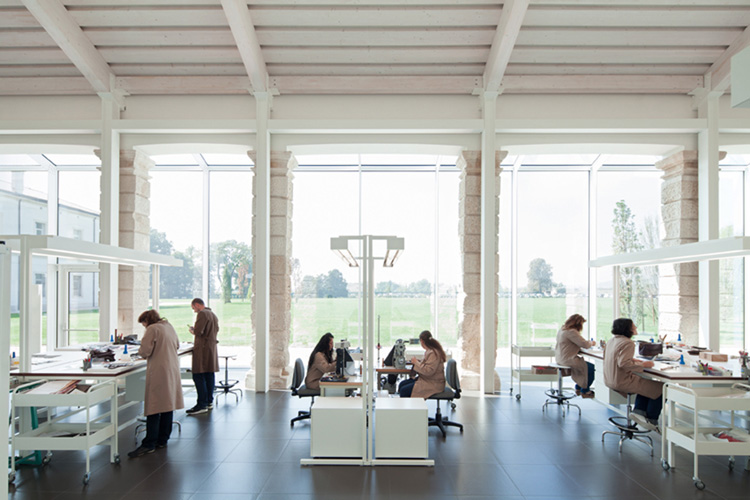
I can’t speak for other brands, but we are unequivocally committed to craftsmanship. I think our atelier in Montebello Vicentino, which is built within a beautiful Palladian villa, is evidence of how important craft is to us as a company. We respect our artisans and treat them well. We also patronise other Italian artisans to keep their businesses alive. In the Spring Summer 2018 collection, we used silk from Taroni, an old mill based in Como, and we use Murano glass for our fragrance bottles. We have to support these people and these traditions, or they will die out.
Do you find the speed of fashion challenging as demand increases for the number of collections and ranges a year?
Yes, especially with the products we produce, that need a lot of time to be developed.
What do you think has been the key to growth and building a strong identity?
Staying true to the brand and being aware yet not listening to the noise.

When did you your passion for fashion start, and love for fashion come from? Was fashion a career that was always destined for you?
My father was an architect and I very much liked architecture but if I went into it, I would have been taking over the family business. I also became interested in fashion when I was around 15 years old, and later, I decided to apply to the Chambre Syndicale de la Haute Couture and left for Paris shortly after I finished high school.
What drives you and keeps you inspired?
I have always been inspired and passionate by many things, art, architecture, photography, music, and the places and things I have discovered on my travels and throughout my life. There are many things I find inspiring in the Veneto region, the architecture of Palladio, the paintings of Veronese and the sculpture of Canova. Or it could be a certain kind of Japanese lacquer or a strange plant specimen.

Tell us about your design process, and how it begins?
My design process always starts with colour, which is extremely important at Bottega Veneta. Our palette is unique and every single material, every single yarn, every single fabric of ours is custom. Nobody else dyes everything that they use. Colour is key for us because it has that inherently Italian playfulness. It’s the very specific joy of living in Italy.
What was your inspiration behind the most recent Spring Summer 2018 collection?
The palette there came from the Marble Room at Kedleston Hall, a Palladian estate in the English countryside. That gave us all these beautiful powdery pastel colours. The silhouettes were inspired by workwear and sportswear, very easy, functional shapes. Then we contrasted that simplicity with exquisite embellishment.
Tell us about the concept behind the Art of Collaboration?
Originally, I conceived of the Art of Collaboration because I love photography as an art form and collected photography for many years. When the opportunity came up to create a new approach for a luxury advertising campaign, I thought I could go with a fashion photographer or I could go with an art photographer which is more my world, and that would tie into the idea that Bottega Veneta is a brand for the individualist.

Why did you choose to collaborate with artists and photographers for your advertising campaigns?
I like the idea of bringing something educational. Maybe I can help them discover unknown territory. Perhaps they knew some photographers we collaborated with but not all. I think this new campaign that we created with Fabien Baron, since these striking moving images can exist on so many platforms, will bring the same dynamic, just in a different way.
What makes telling the story through film more effective?
These films have layers and depth. They are not easily categorised. When you are shooting a campaign, there is a desire to tell more of a story. You are in an interesting environment with great talent, and the wheels start to spin. Who is this woman? What is the man doing there? Whose house is this? Film now allows us to take the story further. To me it is always more interesting when a film ends, and the plot could go one way or the other. It’s open to interpretation.

By following the format of an episodic television series, are you looking to attract a younger consumer?
Our aim is to communicate with our customer where he or she already is. We went with a digital-first format because we want to always be in the palm of our customer’s hand with content that inspires and entertains. Certainly, young people are digitally savvy, but I think these days the luxury audience, no matter their age, are increasingly engaging with brands in this way.
To you, what is luxury?
Having personal, private time.
Tell us about why you brought back the tagline, ‘When Your Own Initials Are Enough’?
When I arrived at Bottega Veneta, it was the era of the ‘it’ bag. I wanted to give something to people who wanted something that was beautifully made, timeless and free of any of the logos and excessive hardware that was so prevalent at the time. I discovered this tagline ‘When Your Own Initials Are Enough’ in an old Bottega Veneta advertisement, and it just fitted the moment and the mood perfectly.
What are your thoughts of logomania, and the rise of logos in luxury fashion?
Fashion goes in cycles and therefore logos come and go. I think what is important in this industry is to stay true to who you are.

You are now offering customisation in all your Maisons, are you seeing an increased demand for this service?
I think in general there is a move towards customisation in luxury. We’ve always offered services for clients to do special orders and, considering our motto, this new personalisation program is a natural move. We made it our own by taking advantage of our savoir faire with precious skins, offering stitched initials with letters cut from croco.
Why did you choose New York as the location for your third Maison?
New York is very important to the brand. Bottega Veneta opened its first store outside of Italy on Madison Avenue in 1979. We were one of the earliest Italian luxury brands to be there. That store was quite successful. Jacqueline Onassis shopped there, and Andy Warhol was a regular visitor and even made a short film about the brand. Our return to Madison Avenue is kind of a homecoming.
What has been a standout moment in your career, and your greatest achievement?
My most important achievement was building the atelier in Montebello Vicentino in the Veneto and giving our artisans a beautiful place to work. It’s built into an 18th century Palladian villa within a historical park but is completely modern and Platinum LEED certified.
By Eliza Scarborough
READ MORE
Three Reasons To Visit The Largest Bottega Veneta Store In The Middle East
15 Minutes With… Nour Al Tamimi
Conceptualised by Saudi born Nour Al Tamimi, The Nou Project is a limited-edition line of sneakers designed in collaboration with up-and-coming artists. Through handpicking a select group of artists and bridging the gap between art and footwear, Nour creates inspiring, one-of-a-kind pieces, so you can now wear a piece of art on your feet.
Tell us about how you conceived The Nou Project?
The Nou Project was actually part of my final thesis at Sotheby’s Institute of Art in New York, we had to come up with a business plan to benefit the art world in a different manner. I was inspired by sneaker culture in the city and I wanted to offer artists a new platform to showcase their works.
How did the idea of combining exclusive art with sneakers come together?
When I first moved to New York, I realised it was necessary to invest in a cool comfortable pair of sneakers to walk around the city. That’s when I came up with the idea of combining art and sneakers, owning a cool pair of sneakers with a limited work of art to stand out.
Tell us about how you turn buyers into collectors?
Art has always been a powerful form of expression that reflects and provokes attention to the circumstances within society and culture, while in some cases influencing change within these cultures by bringing attention to certain issues. I wanted to give upcoming artists a chance to showcase their expression on something that is somewhat of a moving canvas. This allows for their message to be seen and heard within a larger community and audience, as well as allowing customers to walk with a purpose. I want the buyers to appreciate the message as well as the limited edition aspect of the sneaker, as it will never be reproduced. Also walking around with a cool design on a shoe allows the buyer to stand out and make a statement.

How do you choose the artists you collaborate with?
My first collaborations were with artists I knew directly or artists that I met through friends in the art world, such as gallery owners. After launching the first three artists, Rex Chouk from Saudi, James Rawson from the UK, and Nydia Lilian from Mexico, I started having artists approach us.
If you could own any piece of art, what would it be?
That is a tough question because there are so many great artists that have been instrumental within art history and within different types of art movements. But if I could own any piece of art it would definitely be either a Mark Rothko, abstract expressionism, or Damien Hirst, more contemporary.
What are you most excited about for the future of The Nou Project?
I am excited to meet with new and interesting upcoming artists as well as established artists, of course these would be more limited and more expensive, just as in the art world. But it is very exciting to be working with creatives and making something magical together. I am also excited to expand to other types of apparel such as t shirts and sweaters.
How would you describe your personal style?
Eclectic, elegant and edgy. I would say I am definitely someone that likes to make a statement with what I wear. I love accessories that stand out and that are different, I have a weakness for sunglasses and headpieces, and I love themed parties because I love to go all out.

Which are your go to, heels or sneakers?
Sneakers in the day and heels at night, although of course this also depends on the city I am in.
What does your personal shoe collection look like?
I have mostly TNP sneakers of course, but I also love Gianvitto Rossi and Aquazurra for heels.
Who is the woman, or women, who has inspired you the most?
I am one out of five girls. So, I have to say my mother and each one of my sisters have been a huge inspiration to me in different ways. They all have different characteristics that have influenced the person I am today.
What three films could you watch over and over again?
Sound of Music, Pretty Woman, and Clueless.
Who would play you in the film biopic of your life?
That’s a very tough question, but I have always loved Jennifer Connelly as I find her so elegant and an incredible actress.
If you could invite four people, living or dead, to the ultimate dinner party, who would they be and what would you serve?
Cleopatra, Marilyn Monroe, Madonna, and Lady Gaga. These women have been and are icons, and have affected society in so many different ways. I would have a tea party!
What’s your guiltiest pleasure?
Special K with two spoons of Nutella and milk, I know it’s weird, but I love it!
Do you prefer a night in or night out?
A night out of course.
What was the last piece of clothing you bought?
A crop top and very edgy high wasted pants by designer Yasmin Qanzal from Jeddah.
Tell us about your most prized possession?
My magnetic Midnight headpieces.
If you weren’t a designer what would you be?
Definitely an artist.
What is your earliest fashion memory?
Going on a shopping spree with my mother when I was 12. It was right before I went to boarding school and she bought be amazing clothes to wear out on the weekend when uniform wasn’t necessary.
What are the best and worst things about a career in fashion?
I think the brand is very unique in that it is a new creative concept, so it is fun because I feel it stands out. I think the worst is feeling pressure all the time because there is no time off!
Tell us the secret to your success?
To always believe in the project and the brand and not let anything stand in the way. The power of visualisation.
Who do you follow on Instagram?
Many artists, emerging and established, galleries and museums, as well as sneaker brands.
What advice would you give to your teenage self?
To be confident and not care about what others think. 90% of style is confidence.
Where is your favourite place in the world and what makes it so special?
India, I love their ethos, the spirituality, the yoga, the culture, the energy, the colours and the happiness the people exert. They are so happy, and I love that about them.
When packing, what are your travel must haves?
My jump-rope and my workout clothes, a variety of sunglasses, body suits that I can either dress up or dress down and my Nou Projects of course!
Where is the next place on your wish list to visit?
Japan! I am dying to go because sushi is my favourite food and I want to dress in Harajuku!
What are your beauty essentials?
Dark lipsticks because they change your face, even when you are not wearing anything else, together with all of Charlotte Tilbury’s products, her eyeshadows are the best.
Tell us the best advice you were ever given?
My mother told me that confidence is the best accessory.
What was your life goal aged 10?
To be a poet and a writer.
And what is it now?
To turn the Nou Project into an established brand that represents artists and utilises them as designers. To also publish a book, or many, and to pursue my career as an artist. But I believe there is time for that, as there is no age limit when pursuing your career in art.
By Eliza Scarborough
READ MORE
Palmer//Harding: The Art of Shirting
Nathalie Trad: Combining Middle Eastern Heritage With Modern Design
Logo Girl: Fendi FF Capsule Collection
This season is all about logomania, and Fendi pays tribute with a special capsule collection that reloads the iconography of the FF logo. See our ‘Logo Girl’ editorial story in full below.

FF allover bomber jacket in velvet jacquard, FF allover sweater top, FF Runway small ALL FENDI

LEFT IMAGE: FF allover bomber jacket in velvet jacquard, FF Runway small RIGHT IMAGE: FF allover logo sweatshirt, FF allover knit dress ALL FENDI

LEFT IMAGE: FF allover pleated skirt, FF allover technical mech dress, multicoloured FF allover logo Kan I, FF allover technical mech boots RIGHT IMAGE: FF leather Runway shopper, FF allover knit jacket ALL FENDI

LEFT IMAGE: FF allover bomber jacket in velvet jacquard, FF allover sweater top RIGHT IMAGE: FF allover knit jacket, FF black leather biker boots ALL FENDI
Styling & Direction: Dana Mortada
Photographer: Fouad Tadros
Hair & Make-up: Ammara at MMG
Model: Natalia at MMG
Location: Last Exit E11, Dubai
READ MORE
Milan Fashion Week: Fendi FW18
Shop Fendi FF Capsule Collection On Net-A-Porter Before Anyone Else
A&E Editorial: Bvlgari Serpenti Viper
Get a new season update with Bvlgari’s hypnotic Serpenti Viper Collection- featuring stackable timeless pieces. Enter a world of sensuality with our exclusive ‘Power Players’ story for Bvlgari out now in our April’18 issue.

BVLGARI SERPENTI VIPER Bangles in Pink Gold with Pavé Diamonds, BVLGARI SERPENTI VIPER Bangles in Pink Gold with Mother-of-Pearl, BVLGARI SERPENTI VIPER Bangles in Pink Gold with Carnelian, BVLGARI SERPENTI VIPER Ring in Pink Gold with Pavé Diamonds and Carnelian, BVLGARI SERPENTI VIPER Rings in Pink Gold with Pavé Diamonds, BVLGARI SERPENTI Earrings in White Gold with Pavé Diamonds
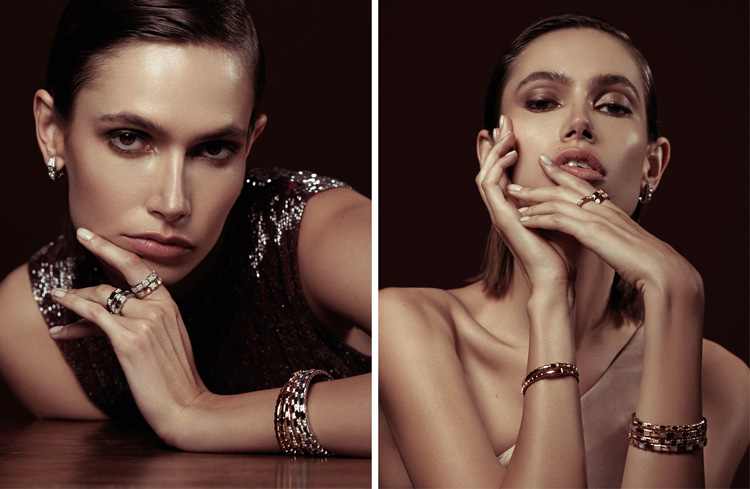
LEFT IMAGE: BVLGARI SERPENTI Earrings in White Gold with Pavé Diamonds, BVLGARI SERPENTI VIPER Rings in White Gold with Mother-of-Pearl and Pavé Diamonds, BVLGARI SERPENTI VIPER Rings in White Gold with Pavé Diamonds, BVLGARI SERPENTI VIPER Rings in Pink Gold with Pavé Diamonds, BVLGARI SERPENTI VIPER Bangles in Pink Gold, BVLGARI SERPENTI VIPER Bangles in Pink Gold with Pavé Diamonds, BVLGARI SERPENTI VIPER Bangles in White Gold with Pavé Diamonds RIGHT IMAGE: BVLGARI SERPENTI Earrings in White Gold with Pavé Diamonds, BVLGARI SERPENTI VIPER Rings in Pink Gold with Pavé Diamonds and Carnelian, BVLGARI SERPENTI VIPER Rings in Pink Gold with Pavé Diamonds, BVLGARI SERPENTI VIPER Bangles in Pink Gold, BVLGARI SERPENTI VIPER Bangles in Pink Gold with Pavé Diamonds, BVLGARI SERPENTI VIPER Bangles in Pink Gold with Mother-of-Pearl
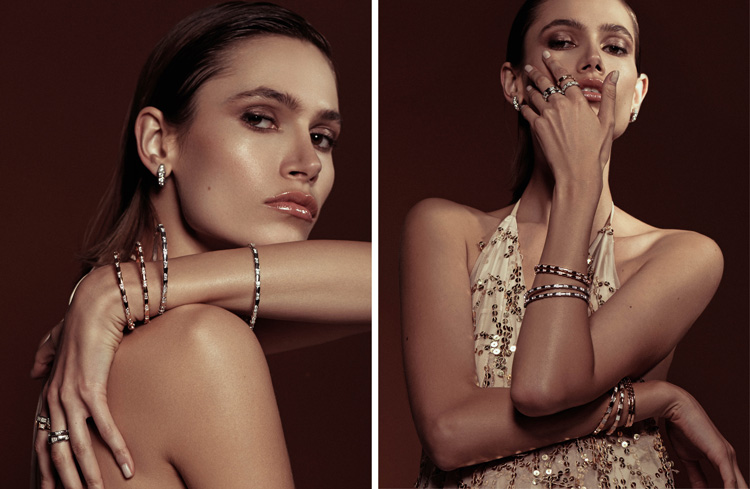
LEFT IMAGE: BVLGARI SERPENTI Earrings in White Gold with Pavé Diamonds, BVLGARI SERPENTI VIPER Bangles in Pink Gold with Pavé Diamonds, BVLGARI SERPENTI VIPER Bangle in White Gold with Pavé Diamonds, BVLGARI SERPENTI VIPER Rings in White Gold with Mother-of-Pearl and Pavé Diamonds, BVLGARI SERPENTI VIPER Rings in White Gold with Pavé Diamonds, BVLGARI SERPENTI VIPER Rings in White Gold with Full Pavé Diamonds, BVLGARI SERPENTI VIPER Rings in Pink Gold with Pavé Diamonds RIGHT IMAGE: BVLGARI SERPENTI VIPER Bangles in Pink Gold with Carnelian, BVLGARI SERPENTI VIPER Bangles in Pink Gold, BVLGARI SERPENTI VIPER Bangles in Pink Gold with Mother-of-Pearl, BVLGARI SERPENTI VIPER Bangles in Pink Gold with Pavé Diamonds, BVLGARI SERPENTI VIPER Bangle in White Gold with Pavé Diamonds, BVLGARI SERPENTI VIPER Rings in White Gold with Mother-of-Pearl and Pavé Diamonds, BVLGARI SERPENTI VIPER Ring in White Gold with Pavé Diamonds, BVLGARI SERPENTI VIPER Ring in Pink Gold with Pavé Diamonds, BVLGARI SERPENTI Earrings in White Gold with Pavé Diamonds

BVLGARI SERPENTI VIPER Bangles in Pink Gold, BVLGARI SERPENTI VIPER Bangles in Pink Gold with Pavé Diamonds, BVLGARI SERPENTI VIPER Bangles in White Gold with Pavé Diamonds, BVLGARI SERPENTI Earrings in White Gold with Pavé Diamonds, BVLGARI SERPENTI VIPER Rings in White Gold with Mother-of-Pearl and Pavé Diamonds, BVLGARI SERPENTI VIPER Ring in White Gold with Pavé Diamonds, BVLGARI SERPENTI VIPER Ring in Pink Gold with Pavé Diamonds
Styling & Direction: Dana Mortada
Photographer: Fouad Tadros
Hair & Makeup: Ammara at MMG
Model: Paulina at MMG
Enjoy our exclusive film for Bvlgari below:
READ MORE
A&E Guide: Glossary Of Art
From abstract to zoopraxiscope, here’s a comprehensive guide of art terminology, techniques and movements.
Abstract Art
This is art that does not attempt to represent an accurate depiction of a visual reality but instead use shapes, colours, forms, and gestural marks to achieve its effect.

Gilbert Soest
Baroque
Baroque was the dominant style in art and architecture of the seventeenth century, characterised by self-confidence, dynamism, and a realistic approach to depiction.

Sir Joshua Reynolds
Classicism
The terms classic or classical came into use in the seventeenth century to describe the arts and culture of the ancient civilisations of Greece and Rome and is referred to as classicism.

Nan Goldin
Documentary Photography
This is a style of photography that provides a straightforward and accurate representation of people, places, objects, and events, and is often used in reportage.

Oskar Kokoschka
Expressionism
Expressionism refers to art in which the image of reality is distorted in order to make it expressive of the artist’s inner feelings or ideas.

Barbara Kruger
Feminist Art
Feminist art is art by artists made consciously in the light of developments in feminist art theory in the early 1970s.

Harold Cohen
Generative Art
The term generative art is predominantly used in reference to a certain kind of computer-based art. It is art made using a predetermined system that often includes an element of chance.

Frank Stella
Hard Edge Painting
The term ‘hard-edge painting’ was coined by Californian critic Jules Langster in 1959 and is characterised by monochromatic fields of clean-edged colour which reinforced the flatness of the picture surface.

Salvador Dalí
Illusionism
The term illusionism is used to describe a painting that creates the illusion of a real object or scene, or a sculpture where the artist has depicted figure in such a realistic way that they seem alive.

James Abbott McNeill Whistler
Japonisme
The term is generally said to have been coined by the French critic Philippe Burty in the early 1870s. It described the craze for Japanese art and design that swept France and elsewhere after trade with Japan resumed in the 1850s.

Jeff Koons
Kitsch
Kitsch is the German word for trash, and is used in English to describe particularly cheap, vulgar, and sentimental forms of popular and commercial culture.

Frank Stella
Lithography
A printing process based on the fact that grease and water don’t mix, where the image is applied to a grained surface such as a flat stone or metal plate using a greasy medium, so that the ink will adhere, while the non-image areas are made ink-repellent.

Georges Braque
Modernism
Modernism refers to the broad movement in Western arts and literature that gathered pace from around 1850 and is characterised by a deliberate rejection of the styles of the past, emphasising instead innovation and experimentation in forms, materials and techniques in order to create artworks that better reflected modern society.

John Constable
Naturalism
Until the early nineteenth century both landscape and the human figure in art tended to be idealised or stylised according to conventions derived from the classical tradition. In the nineteenth century there was a trend towards representing things in a more realistic way.

Robert Delaunay
Orphism
Orphism was an abstract, cubist influenced painting style developed by Robert and Sonia Delaunay around 1912. In the Delaunays’ work patches of subtle and beautiful colour are brought together to create harmonious compositions.

Sir John Everett Millais
Pre-Raphaelite
The Pre-Raphaelites were a secret society of young artists, and one writer, founded in London in 1848. They were opposed to the Royal Academy’s promotion of the ideal as exemplified in the work of the Renaissance master Raphael, and believed in an art of serious subjects treated with maximum realism.

Sandro Botticelli
Quattrocento
The cultural and artistic events of Italy during the period 1400 to 1499 are collectively referred to as the Quattrocento from the Italian for the number 400, in turn from millequattrocento, which is Italian for the year 1400.

Philip Mercier
Rococo
Light, sensuous, intensely decorative French style developed in the early eighteenth century following the death of Louis XIV and in reaction to the Baroque grandeur of Versailles.

Sir Eduardo Paolozzi
Screenprint
A variety of stencil printing, using a screen made from fabric, either silk or synthetic, stretched tightly over a frame.

Edward Collier
Trompe L’Oeil
French phrase meaning ‘deceives the eye’ used to describe paintings that create the illusion of a real object or scene.

Banksy
Underground Art
These days the term underground art is used to describe a subculture of art, like graffiti art or comic strip art. Since the late 1990s the internet has become a forum for underground art thanks to its ability to communicate with a wide audience for free and without the support of an art establishment.

Wyndham Lewis
Vorticism
The vorticists were a British avant-garde group formed in London in 1914 with the aim of creating art that expressed the dynamism of the modern world.

Joseph Mallord William Turner
Watercolour
Refers both to the medium and works of art made using the medium of watercolour, a water-soluble paint with transparent properties.

Xylography
A printing technique that involves carving text in relief upon a wooden block, which is then inked and applied to paper. This method of wood-block printing originated in Japan and China in the 8th and 9th centuries and appeared in Europe in the 14th century.

Damien Hirst
YBAs
This is a label for Young British Artists and is applied to a loose group of British artists who began to exhibit together in 1988 and who became known for their openness to materials and processes, shock tactics and entrepreneurial attitude.

Zoopraxiscope
19th-century motion-picture device, designed by Edweard Muybridge, in which light is projected through rotating glass disks applied at the rim with a changing sequence of images, creating the illusion of movement.
READ MORE
We Found The Best…Art Galleries In London
GARDENS OF PARADISE
CHOPARD PRESENTS FOUR SUMPTUOUS FRAGRANCES BASED ON A LUXURY NATURAL PHILOSOPHY

After many years of external collaborations, Chopard is establishing its own fragrance house, Chopard Parfums, leading the brand to the forefront of luxury natural perfumery. Echoing the brand’s vision as a jeweller, Chopard Parfums places natural, positive, and ethical luxury perfume-making at the heart of its inspiration as a Maison de Parfums. By taking control of its perfumery activities, Chopard aims at creating exceptional fragrances, rich of the most pristine and premium natural ingredients, in line with its journey to sustainable luxury, a project that started in 2013 at Cannes Film Festival with the launch of the High Jewellery Green Carpet Collection.
Inspired by the Arabian Gardens of Paradise, these four new high-end fragrances are a tribute to the most mythical and mystical gardens of the Orient. From the Mediterranean to the East, these legendary gardens are the expression of the Golden age of Arabian civilisation. Peaceful and secret, traversed by rivers of water, milk, and honey, they are filled with the most beautiful, sweet-smelling and colourful flowers and fruits, under the shade of majestic trees.
With the Gardens of Paradise Collection, Chopard Parfums is offering fragrance connoisseurs the quality of the highest tradition of perfumery, and during their launch in Dubai we took the opportunity to speak with Caroline Scheufele, Chopard Co President, and Patrizio Stella, CEO of Chopard Parfums, to get a greater understanding of the power of scent.
To what extent in such a fast-paced world storytelling is still important?
CAROLINE: I think it is more important than before, because the younger generation are questioning what they buy far more. They want to be more informed, so there needs to be a true story behind the product to garner their interest and touch them.
PATRIZIO: I believe it is very much important, but it must be translated in the right way. There are different elements in luxury business, one is the quality of the product itself, the second is the brand, and thirdly the story. Storytelling for us is something that is not just a marketing tool to sell the product, it has to be the true fairytale behind the creation that can help people understand more about the process and link them to the vision and dreams of the brand. It is there to enhance the story of the product.
What is the true meaning of luxury today?
CAROLINE: Luxury is a choice, so no matter what category of price, it is all about the quality and being different.
PATRIZIO: We believe that luxury is connected with quality, emotions, and being true to yourself. Luxury is a promise that we make to our customers, telling them that we will take care of them from the beginning to the end without hiding anything. It is about the substance, it needs to be rich, with the right ingredients, and the right story, whilst still remaining transparent to the customer. Simplicity is very important to us when talking about luxury, we believe that perfection is not when there is nothing else to add, but when there is nothing left to take away.
What makes each of the four fragrances unique?
PATRIZIO: The four fragrances are very much unique, so despite them being a collection, they can be individual fragrances on their own. They all have one ingredient that makes them uncomplicated, and each of them tells a different story, representing a different garden.

PATRIZIO STELLA & CAROLINE SCHEUFELE WITH LARA MANSOUR SAWAYA
How would you define each fragrance?
PATRIZIO: In the case of Orange Mauresque it’s a sandy fragrance, for Jasmin Moghol it’s about sensuality, with Rose Seljuke it’s a mythical flower like the rose, and for Miel D’Arabie it’s the emotional restoration.
Tell us about the challenges you face today with fragrances?
CAROLINE: It’s a big competition with almost every brand touching the fragrance world, whether they are fashion, jewellery, or cars. So, if you want to stand out and make it, you must be different and immediately recognisable.
PATRIZIO: On the creation side we are challenged because we have placed a long-term goal on ourselves to work with natural, high-quality materials which can be complicated due to scarcity and the time needed to work with them. The other biggest challenge for us is defining ourselves in this new luxury natural perfumery segment of fragrances.
What is next in the pipeline for your fragrance sector?
CAROLINE: This line is perhaps more focused on the mature client, so we are looking to create something for the younger generation.
PATRIZIO: This is a major launch which is being introduced all over the world progressively. The Gardens of Paradise is really the starting point, and we chose Dubai to launch it first because it is a place that is fundamental to the fragrances. The idea is to stay very selective with its placement.
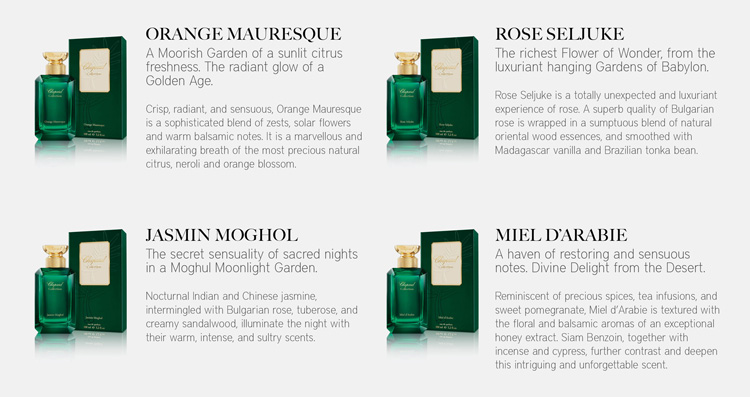
As you are inspired by colours, can we look forward to other jewel coloured bottles in the future?
CAROLINE: Certainly, I think the most obvious colour that we would use next would be red, inspired by the ruby.
Can we expect to see a wider range of related products released in the future?
PATRIZIO: The project started from the creative side rather than the retail side. Which means that if things follow in the path of the brand, we could be interested in going anywhere to create more complimentary products.
What are the common codes that you are ensuring you keep between the fragrance and the Maison?
CAROLINE: First of all, being as creative in the world of fragrances as we are with watches and jewellery. Next is sustainability, as we are the first brand in the world to really push forward the ethical aspect, which I think really contributes to the fragrance as it makes the smell different. The sustainable side is more complicated due to the ingredients, and this requires extra precision which is in line with our watch and jewellery making.
Tell us about the story behind the design of the bottle?
CAROLINE: The base of the bottle is from the bottle I designed for the very first fragrance that we launched, Happy Diamonds, which was the beginning of the fragrances in 1995. We were talking about the bottle in brainstorming meetings and I showed this previous design which is also inspired by an emerald cut diamond.
Among the fragrances, do you have a favourite?
CAROLINE: It would be the Miel D’Arabie.
Do you have any regrets when it comes to the timeline of Chopard Fragrances?
CAROLINE: I would have preferred to have done this a couple of years ago!

CAROLINE SCHEUFELE
What are your highlights for 2018 with jewellery and watches?
CAROLINE: Happy Sport, one of the first watches I designed is celebrating 25 years, and we also have a large collection of 71 pieces in the red-carpet book to present in Cannes.
What can we look forward to seeing on the red-carpet in Cannes?
CAROLINE: There will be a lot of colours, as I can’t stop myself when it comes to colour!
Can you share with us what you still looking to achieve with the jewellery sector?
CAROLINE: The Happy Hearts line is very successful, and we are extending this as it is very popular with the younger generation.
How challenging is it to speak to the mature client, whilst still attracting the millennials?
CAROLINE: It is about choosing the right media for both levels, so we need to make sure that we advertise each product in the right manner in order to reach the right customer. The younger products are placed across digital platforms, whereas the high jewellery is in print.
When you are designing, do you have a specific idea in mind, or do things come together as you design?
CAROLINE: If it is red-carpet, it is often centred around an unusual or rare gemstone, and this is what inspires me. With the younger lines I start with a white sheet of paper and it can be troubling, whereas with watches, you have a movement in the middle and you have to respect this, designing around it.
What is your favourite stone?
CAROLINE: Diamond.
What is your perfect ‘me-time’?
CAROLINE: Relaxing with good music.
What do you hate the most?
CAROLINE: Bad moods.
Are you currently reading a book?
CAROLINE: I am reading, ‘Fire and Fury: Inside the Trump White House’, which I think a lot of people are reading at the moment! It is not something I would usually read, but it is out of curiosity.
What is the one thing you wouldn’t leave the house without?
CAROLINE: If I travel, a pair of jeans. But funnily enough on this trip to Dubai I packed two left shoes by mistake!
What do you promise yourself and Chopard for the future?
CAROLINE: I promise myself to do more of the things that I want to do, including sports as last year was a marathon but without sports, and spend some more time with my parents, together with having fun. For Chopard I want to create a better red-carpet collection than before, working as hard as I can.
PATRIZIO: To myself I also promise to do more of the things that I like and listen more to the people around me. To Chopard, I want to give plenty of time to maintain the brand DNA, so that in the future it is even more true to itself.
You are one of the few companies that is still family owned, how does that serve you?
CAROLINE: It is a certain freedom that we have, but also a big responsibility.
If there is one thing that you would like to see Chopard achieve in the future, what would it be?
CAROLINE: Being a success with the fragrances.
By Lara Mansour Sawaya
Spring Clean Your Grooming Regime

Spring is a time of renewal and regeneration. It represents a fresh start after the protracted dormancy of winter, a figurative and literal shift that affects us both physically and psychologically. In other words, the change of season isn’t confined to warmer temperatures, blooming flowers or sprouting seeds. It’s about the subtle shifts that occur in our bodies.

While most people tend to detox at the beginning of the year, spring, being inextricably linked with ideas of expansion and renewal, is the time that’s most conducive to a full body reset. Now is the perfect time to let go of stimulants and old habits and, above all, make some subtle tweaks to your nutrition and grooming routine, to ensure you spring forward in the best possible shape.

READ MORE
Upgrade Your Nighttime Skincare Routine
We Found Your New Favourite Grooming Spot In Dubai
Huawei’s Secret Formula To Success
Huawei, a Chinese company- born and founded in Shenzhen- has rose in a very short time to become a global leader in ICT solutions and is transforming its enterprise services strategy with the introduction of several channel services policies and programs across the world. Today, Huawei’s products and services are available in more than 170 countries, and are used by a third of the world’s population, placed third in the world in mobile phone shipments in 2016.
Aside from advanced technology, Huawei has beaten all odds and sets an industry benchmark for style and colour of new revolutionary devices. Especially for its Middle Eastern customers, a new Artificial Intelligence Strategy will focus on: evolving smart devices into intelligent devices by building end-to-end capabilities that support coordinated development of chipsets, devices and the cloud.
Here we speak to Rex Liu, President of Huawei Consumer Business Group Levant Region as he walks us through the company’s strategy focus on customers in the Middle East, Huawei’s new innovations that give the consumer a better experience and its promising future.
Tell us more about the Huawei brand, its products and its achievements in the Middle East region so far.
Huawei was established 30 years ago, with a mission to enrich life through communication; and today it has become a global leader in telecommunication, and a serious contender for the big tech giants. With increasing brand influence, it has become one of the world’s most valuable brands. Also one must mention that it is the first Chinese company to ship more than 100 million smartphones.
As for the brand performance, here are some facts:
- #2 Smartphone market share in the MEA region at 13.8% (GFK report H1).
- 27% growth in our brand awareness in the UAE – 2015 – 17 (Ipsos).
- 25% growth in Brand awareness in KSA – 2015 – 17(Ipsos).
We have a mix of several series to match all consumers’ preferences, including The Y series, The Nova series, The P series and our flagship products the Mate 10 Series that we recently launched in the Middle East with amazing key features that will dazzle our clients.
What advantages do you feel Huawei products have over other comparable products?
The Huawei brand is built on four principals: management philosophy, product innovation, commitment on quality, and think global act local.
As for Huawei’s products, they are setting new standards and uniqueness in so many ways such as the Mate 10 Series that we recently launched, which incarnates a series of firsts:
- The World’s First AI Processor Inside a Smartphone
- The World’s First AI-Powered Photography Technology
- The World’s Longest Battery Life
- The World’s First TÜV Safety Certified Charging Technology
- The World’s Fastest 4.5G Experience
Huawei is committed to turning smart devices into intelligent devices by building end-to-end capabilities that support coordinated development of chips, devices, and the AI cloud.
We focus on User Experience; Huawei added a layer of AI to Mate 10 smartphones which created a more organic interaction between people and their devices. This impacted the entire user experience, from efficiency to photography and security.
The Kirin 970 in Huawei Mate 10 Series provides:
- Intelligent performance
- Intelligent photography
- Intelligent power
What has been your market strategy for the region?
Huawei CBG was established in 2011 in the Middle East region, and has now a strong position in the region.
Firstly, thanks to the great consumer reception of our diverse portfolio of products, second our strategic partnerships and lastly being customer first.
Tell us how did Huawei make this possible?
By Bringing meaningful innovation to this region: World’s 1st Leica dual camera, supercharge with TUV certification and Kirin AI processor.
Consumer centric in MEA: opened 47 dedicated customer service centers in the region.
Continuous investment: 1st Huawei Flagship Store Launching at Dubai Mall in Oct 2017.
Local innovative collaborations:
- Partnership with The Executive Council to become one of the first smartphone companies to adopt the Dubai Font in OS in 27 languages.
- Aligned to UAE Happiness Agenda – Happiness meter in Huawei customer service centers to measure customer happiness in real time and interact immediately to solve problems.
Can you tell us more about the newly applied photography standards? Why focus so much on Leica?
Taking daily pictures has become a norm; we capture moments and share them with the world. Photography skills are no longer a must, as long as you have your smart device with its fully equipped camera, you are good to go. Therefore, the need of consumers today is to not only have a smartphone with the best features, but also to have a super intelligent camera. To answer their needs, Huawei has invested time, effort and craft to create an innovative smart camera that will take photography to the next level.
As a result, Huawei partnered with Leica, a premium camera manufacturer with more than 100 years as the leader in the world of imaging. Since the launch of the p9, they offered a new and improved dual-lens camera technology that sets a new standard in smartphone photography. Huawei and Leica have now a joint lab and they are pioneer in the world of smartphone photography.
And the newest update is the New Leica Dual Camera in Huawei Mate 10 series with SUMMILUX-H lenses, featuring an aperture of f/1.6. The cameras have 12-megapixel RGB + 20-megapixel monochrome dual sensors with an Optical Image Stabilization (OIS) solution to help you capture more light, and to enable perfectly focused pictures of everyone and everything you love.
HUAWEI and Leica co-engineered the new dual lens camera that utilizes the world’s most advanced photographic technology to create artistic photos in Leica image style.
AI Features on the photography level:
- AI-powered Real-Time Scene and Object Recognition: which automatically chooses camera settings based on the object and scene, supports an advanced AI-powered Digital Zoom.
- Snapshots with AI Motion Detection for clearer portraits and sharper pictures.

In your opinion, what are consumers looking for in a mobile phone, and specifications that mostly interest them?
Consumers usually look for a mobile phone that has a good speed in processing the apps, a long lasting battery, a long life (no need to replace the phone every couple of years), super good camera that takes beautiful pictures regardless of the light and movement conditions, big storage and definitely an elegant design.
In short, they are interested in mind challenging devices, yet practical and modern ones.
For that reason, Huawei brings them the world’s first truly intelligent devices, the HUAWEI Mate 10 and HUAWEI Mate 10 Pro — two new devices that define the next era of mobile. In the last decade, we’ve witnessed advancements in smartphone development including: connectivity, displays, cameras and performance. Featuring Kirin 970, the world’s first smartphone chipset with a dedicated Neural Network Processing Unit, the new HUAWEI Mate 10 Series provides a faster, more personalized user experience that will bring the future to life and I think that’s exactly what consumers are looking for.
Today, Huawei is growing up to become the world’s number one. Tell us how the focus on innovation has given your consumer a better experience?
The focus on innovation was rewarding and helped us provide devices with an ultimate design, long lasting battery, fast charging technique, tremendous photography tools, intelligent speed and many convenient features that changed the customers’ experience to the better.
A device with the Kirin 970 processor, where apps and big games are loading faster and getting the phone into action is a very fast process. This processor allows an energy saving up to 50% compared to previous versions, with a fast-chargeable 4,000mAh battery that last for 2 days.
Huawei values R&D investment, technology and innovation. In the last 10 years, the company invested 45 billion USD in R&D to bring the latest technology to its products and services.
To date, the company has established 15 R&D institutes/centers and 36 joint innovation centers around the world, mainly in Europe, including Belgium, Finland, France, Germany, Ireland, Italy, Sweden, and the UK. Huawei also ranked as the world’s top 10 companies in terms of research and development spending in 2016, according to EU Industrial R&D Investment Scoreboard.
The Premium phone is a very tough market; why did Huawei decide to place itself in this category?
Huawei decided to take on the challenge of producing value added phones, premium phones because of the customers’ constantly evolving needs and expectations.
We even went above the premium especially by introducing flagship phones such as the Huawei Mate 10 Pro, which has been described as reinventing the concept of a smartphone-strong hardware, a new NPU, water resistance, and good display and cameras and has a great display and a powerful processor with minimal power consumption; the Huawei Mate 10 Pro is among the top 3 best devices of 2017.
Moreover, Huawei collaborated with Porsche Design to create Porsche design devices, the partnership with Pantone Colour Institute to create a vibrant palette of tech-packed P10 smartphones, we also have a lot of R&D centers in the world, as well as design centres including Japan Research Centre; Moscow Algorithm Centre; San Francisco UX Design Centre; Paris Aesthetics Centre; EU 5G Technology Centre and London Design Centre.
What is your take on digital advancement and how is it reflected on the company’s efforts to innovate and provide the consumer new ground-breaking products?
Digital advancements can help in creating the product, but can never create one.
We cannot deny that digital advancements have helped us get to where we are now, but it also raised the level of standards high, and challenged us to create a ground-breaking device that already generated global recognition; especially since it’s powered by AI chipset, the Kirin 970- which is the World’s First SoC with NPU and all the advancement that was added.
Walk us through the brand’s collaboration process, and what does Huawei foresee in the near future, any new collaborations with fashion designers or artists?
Huawei has joined forces with industry partners to innovate and bring technology to consumers. Committed to the core values of staying customer-centric, Huawei amassed long-term, focused effort that leads to great moments of technological breakthroughs.
We have collaborated with Global Partners as well as renowned companies:
- Huawei collaborated with Porsche Design to create Porsche design devices.
- Huawei and The Pantone Color Institute, the global colour authority, have partnered to deliver the first Pantone colours for smartphones.
- Huawei partnered with Leica, a premium camera manufacturer with more than 100 years as the leader in the world of imaging.
On Fashion and Artists:
Huawei partnered with Ricostro on Huawei P10 and Huawei P10 Plus, to reconstruct the design language for smartphone accessories. RICO designed smartphone charging cables and a smartphone bag for Huawei P Series. Her inspiration came from ‘telepathy’ – power runs through a device like blood in human body to connect ‘space’ into geometry tailoring creation. Sometimes abstract and sometimes structured, to possess the modern beauty of technology.
Moreover, Huawei also partnered with CSM (Central Saint Martins), to explore the boundary of vanguard design (The Arts London’s Central Saint Martins is regarded as the birthplace of luxury brands and fashion designer incubators, and highlight the personality of the times and lead the world fashion. The world’s leading designers Alexander McQueen, Stella McCartney are graduates from this school.)

So, what do we have to look forward to in Huawei’s future devices? Any plans to enter a new product category?
Huawei is becoming a global tech giant and is yet to introduce more and more innovative devices in the years to come, by:
- Bringing more consumer focused innovations.
- Bringing forward exciting era of Mobile AI.
- Investing in R&D.
- Work on more unique features based on the AI technologies.
We believe that focusing on the consumers needs and with the global tech innovations we are keen to always introduce new devices that suit everyone and that simplify their lives and enhance their daily routine.
With the introduction of the AI chipset, I believe we are the trendsetters when it comes to the future of smartphones, we will keep on investing in R&D with our centres across the globe and we are committed to always come up with more and more innovations.
At this stage I can only say stay tuned because we will have plenty of products that will dazzle you.
By Dana Mortada
READ MORE
You Can Now Stay In A Hublot Suite
ZURICH’S URBAN RETREAT, HOTEL ATLANTIS BY GIARDINO IS HOME TO SWISS LUXURY WATCHMAKER, HUBLOT’S FIRST-EVER EPONYMOUS SUITE, HUBLOT 107.

Designed by Swiss company, Studioforma, the stylish suite spans 68 square meters and revives the theme of watches with its unusual design. It is comprised of one spacious living room, a master bedroom, two wardrobes and two private terraces.
‘The Art of Fusion’ is the guiding principle of the Hublot brand and can be found throughout the suite. The architectural layout of the suite embodies a concept of balance and features lavish fittings and textures to reflect the signature look and feel of Hublot watch boutiques. The suite is furnished with a sublime elegance reflected in the smallest detail. A refined combination of grey and black tones, the use of polished aluminium and black smoked mirror panels, alongside walls hung with grey velvet, all work perfectly together to encapsulate the chic, seductive lifestyle characterised by the Hublot brand.

The suite hosts a gem of technology – an innovative installation of a chronograph chandelier designed with a diameter of 1.20 m and a rainbow-coloured LED lighting system. The chandelier resembles an exploded view of the Hublot Unico chronograph. Its interactive technology empowers the guest to vary the colour and temperature of the light for setting the preferred mood and atmosphere in the suite.

The room also boasts custom Molteni sofas, which feature a similar design to the furnishings found in the brand’s boutiques, along with other furniture items from Molteni. Eye-catching contemporary Big Bang pop-art canvas screens in striking neon colours are distributed across a number of walls.
“This collaboration with the Giardino Group is Hublot’s first-ever with a hotelier. We’re are incredibly proud and honoured to partner with this exceptional watch brand. Our guests now have the opportunity to fully immerse themselves in Hublot’s world, ” said Philippe Frutiger, CEO of the Giardino Group.


READ MORE
HUBLOT: The Art of Fusion
A&E Reviews: Hotel Lancaster In Paris
Bvlgari SS18 Accessories: Upon Reflection
Bvlgari’s Accessories hold a forever prestige only revealed at a closer look.

BVLGARI SERPENTI FOREVER Bag in Python and Multi Colour

LEFT PHOTO: BVLGARI SERPENTI FOREVER, Bag in Calf Leather and Rose Brushed Metallic Colour, BVLGARI SERPENTI Sunglasses RIGHT PHOTO: R: BVLGARI SERPENTI FOREVER, Bag in Calf Leather with Pop Heart and White Agate Colour L: BVLGARI SERPENTI FOREVER, Bag in Calf Leather and Rose Colour

LEFT PHOTO: BACK: BVLGARI DIVAS’ DREAM, Bag in Quilted Calf Leather and Violet Colour FRONT: BVLGARI DIVAS’ DREAM, Bag in Python and Multi Colour RIGHT PHOTO: BVLGARI SERPENTI FOREVER, Bag in Python and Multi Colour, BVLGARI SERPENTI Sunglasses
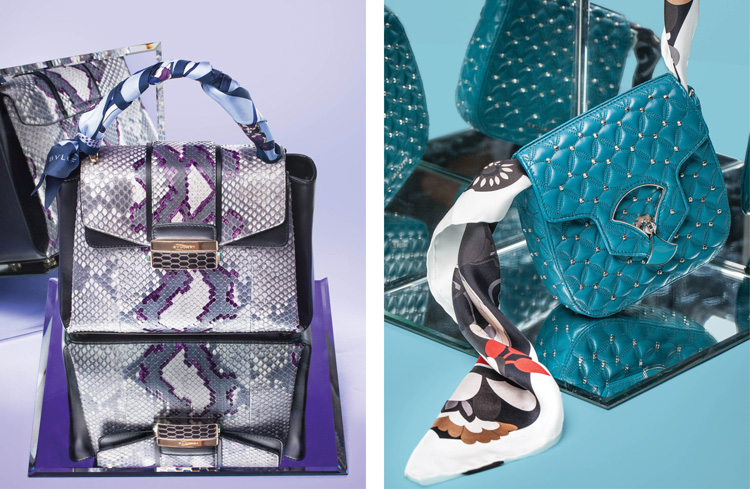
LEFT PHOTO: BVLGARI SERPENTI VIPER, Bag in Python and Multi Colour BVLGARI DIVA Shelley in Silk RIGHT PHOTO: BVLGARI DIVAS’ DREAM, Bag in Quilted Calf Leather and Jade Colour BVLGARI TATOO Scarf in Silk
Fashion Director: Dana Mortada
Photographer: Henry Pascual
READ MORE
March Cover Story: Jennifer Lawrence’s Powerful Role On & Off Screen
At 27, Jennifer Lawrence is already one of the most successful and exalted actors on the planet. She’s a four-time Oscar nominee and Best Actress winner for Silver Linings Playbook, who simultaneously built a history-making franchise with “The Hunger Games”, while co-starring in another for X-Men. This March, Lawrence will be seen in a new blockbuster, “Red Sparrow”, an action-thriller she made with her friend and Hunger Games director Francis Lawrence.
Although when not filming, actress and muse Lawrence embodies Artistic Director Maria Grazia Chiuri’s feminist vision of the Dior woman, the French fashion house, whom she’s represented since 2013. She understandably is the ideal fit for this role, after pulling off a hugely difficult Hollywood feat, being both immensely likeable and seriously strong, taking stands on issues surround feminism and gender-equality.

Wardrobe & Makeup all by DIOR
To coincide with the launch of Red Sparrow, we take the opportunity to exclusively chat with the independent and self-confident Jennifer Lawrence, who is as powerful a voice as she is a star. Starring as Dominika Egorova, a dancer in the Bolshoi Ballet who was drafted against her will to become a ‘sparrow’, Jennifer describes her role as a trained seductress in the Russian security service. ‘Dominika learns to use her body as a weapon but struggles to maintain her sense of self during the dehumanising training process. Finding her power in an unfair system, she emerges as one of the program’s strongest assets. Her first target is Nate Nash, played by Joel Edgerton, a CIA officer who handles the agency’s most sensitive infiltration of Russian intelligence. The two young operatives fall into a spiral of attraction and deception, which threatens their careers, allegiances, and the security of both countries.’
This was a role which she was drawn to during the press tour of the last Hunger Games movie, telling us that it was a book that director Francis Lawrence had been reading and thought would be an interesting movie. Trusting the director who she had previously worked with on three films was the catalyst behind taking on the project, ‘I love working with Francis and think he is an incredibly giving and collaborative director. He has amazing taste, and I know the pressure is off me personally when he’s directing the movie, because there is a trust and he’s truly a visionary.’ This relationship, and the shorthand they understand during their collaborations led her to investigate the role further, and Jennifer explains, ‘when I finally had the opportunity to read the script, it was an easy yes. It’s a smart, sexy, and intense thriller about a secret program that trains young agents in the psychological art of seduction.’ However, the preparation was demanding, requiring intense physical training of up to 4 hours every day for three months, in order to emulate the ballerina role. ‘It taught me posture and transformed my body, together with learning about the discipline of the art, and the level of discipline it takes over so many years of their lives. The way they carry themselves, the way they handle themselves, and the way they work.’ Which remained as something that was constantly on her mind, even after wrapping all the dancing sequences. Together with the physical training, dialect coach Tim Monich helped Jennifer craft the Russian accent.
The authenticity which Jennifer relays in the role adds to the adventure that the storyline tells with its many twists and turns, ‘it’s a really smart thriller, and is exciting.’ Although, moreover it is the relatability of her character who like many women has been treated differently to men throughout her life. ‘We’ve always had to find different ways and angles of getting what we want and becoming successful professionally.’

Wardrobe & Makeup all by DIOR
Aside from her Hollywood career, Jennifer finds her role as the face of Dior a ‘tremendous honour,’ and to be able to be a part of a house with a rich history is something she doesn’t take for granted. Championing feminism, which to Lawrence mean ‘equality of the sexes,’ she is the perfect fit to model Maria Grazia Chiuri’s designs, who as the first female artistic director of Dior has contributed considerably to female empowerment in fashion. ‘She’s an inspiration to us all. Beyond designing beautiful clothes by a woman for a woman, she is redefining glamour.’ From her very first collection at Dior, Maria Grazia Chiuri launched a social media project, #TheWomenBehindMyDress, featuring the women behind her first collection, such as seamstresses and models, and #TheWomenBehindTheLens, which highlights the female photographers that she chose to work with, such as Brigitte Lacombe, Maripol, Sarah Moon, Nan Goldin, and Janette Beckman. It is this outlook which particularly resonates with Jennifer, who believes ‘it’s incredibly important, especially right now, to be supporting female artists and activists. We are in a sea of change for the better.’

Wardrobe & Makeup all by DIOR
Whether dressing casually in her personal life, or glamorously for premieres, Jennifer feels her red-carpet style ‘has definitely evolved’ as she has grown up, which is inevitably due to being ‘dressed in the best clothes’ by Dior. From the bags and shoes she loves from the last collection, to her favourite ‘black leather jacket with the Moon tarot sign on the back’, or the current Spring Summer 2018 collection she shot in these exclusive Ben Hassett images on location at Paramount, American beauty Jennifer is a muse that clearly lives and loves the storied French Maison’s designs.

Wardrobe & Makeup all by DIOR
So, as another blockbuster movie wraps, Jennifer is likely to move on to a handful of equally impressive projects, but not before she enjoys a real work break. ‘I am taking my time to choose the next film I want to do. I’ve been reading a lot and meeting directors that I want to collaborate with, and I’ve also been able to spend time with friends and just take it easy, which surprisingly has been nice.’
PHOTOGRAPHER : BEN HASSETT
MAKE UP ARTIST: JO BAKER
HAIR STYLIST: JENNY CHO
STYLISTS: JILL LINCOLN & JORDAN JOHNSON
READ MORE
Jennifer Lawrence Is Our March 2018 Cover Star
A&E Reviews: Hotel Lancaster In Paris

Leading Hotels of the World
Located in the heart of the 8th district, within walking distance of the Champs Elysees Avenue, Hotel Lancaster was originally built as a private mansion. This small and intimate hotel is peaceful and discrete, with a large and valuable collection of art and French antiques, accented with contemporary items. The former private residence became a hotel in 1930, when famous guests included Marlene Dietrich, and epitomises civilised Paris and comfort.
Style
Originally a private residence built by Spanish aristocrat Santiago Drake del Castillo, before being enlarged and converted into a hotel by Swiss Emile Wolf in 1925-30, the Lancaster still has something of the feel of a private home, perhaps because of the winding corridors. The hotel has several original paintings on display, including numerous portraits by Russian artist Boris Pastoukhoff who lived here in the 1930s, antique clocks, and furniture mixed with modern comforts. The restaurant has recently been redecorated, forsaking the Japanese touches of its Grace Léo Andrieu days for a comforting ambience of grey velvet seats and white linen.

Rooms
The 56 rooms, including compact singles and good-sized doubles, overlooking the street or planted courtyard, feature herringbone parquet floors, original paintings and antique furniture. The ultimate is the spacious Suite Marlène Dietrich, where the actress actually lived for more than three years in the 1930s, complete with its tall windows, lilac-coloured sofa, chaise longue and baby grand piano.

Food & Drink
Chef Julien Roucheteau is one of the surprisingly unsung talents of Parisian cuisine. He gained his second Michelin star at just 35 years old, and has been at the head of the one Michelin-starred Table du Lancaster restaurant since 2011. Dishes such as dessert of mango sorbet, mousse, and redcurrants with curry reveal Roucheteau’s flair for subtle spicing.
Hotel Lancaster Paris is a member of The Leading Hotels of the World, a collection of authentic and uncommon luxury hotels. Rooted in the locations where they are found, the hotels embody the very essence of their destinations. Offering varied styles of architecture and design, and immersive cultural experiences delivered by passionate people, LHW’s collection is for the curious traveller looking for their next discovery. Established in 1928 by several influential and forward-thinking European hoteliers, Leading Hotels has an eight decade-long commitment to providing remarkable travel experiences.

READ MORE
A&E Reviews: Mondrian London
Prince Of Prints: The History Of Emilio Pucci
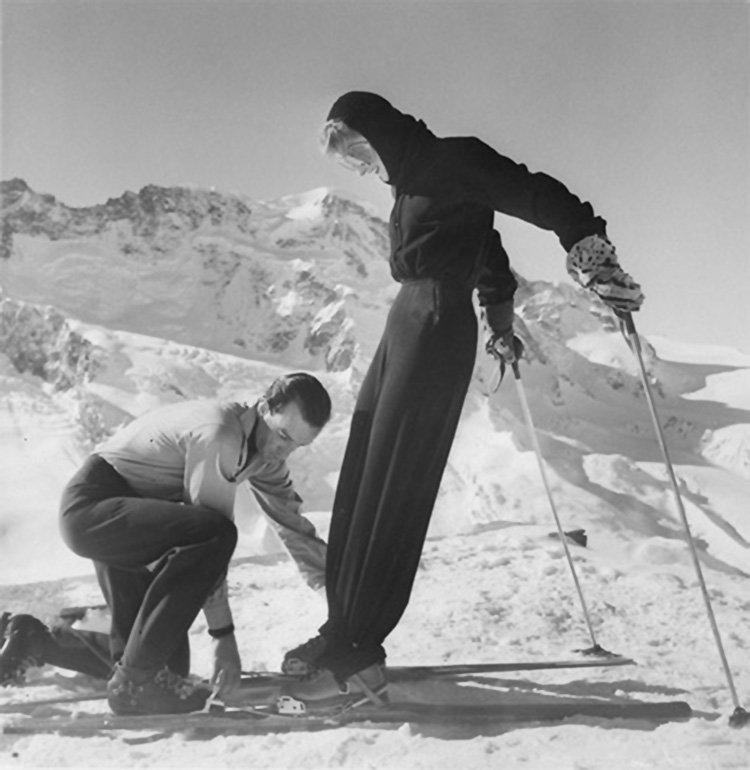
Born in 1914 to one of Florence’s oldest families, Emilio Pucci, the Marquis of Barsento, became a fashion phenomenon in the 1950s with a trailblazing vision that continues to reverberate today.
Although he relinquished a private life of aristocratic leisure, the Marquis was nonetheless crowned ‘The Prince of Prints’ by the international fashion press who were smitten by his bold, new designs and radical approach to fashion at the time. A major influence in contemporary fashion, Pucci’s legacy continues to be a major force behind the birth of the ‘Made in Italy’ style and a milestone in Italy’s sportswear concept.
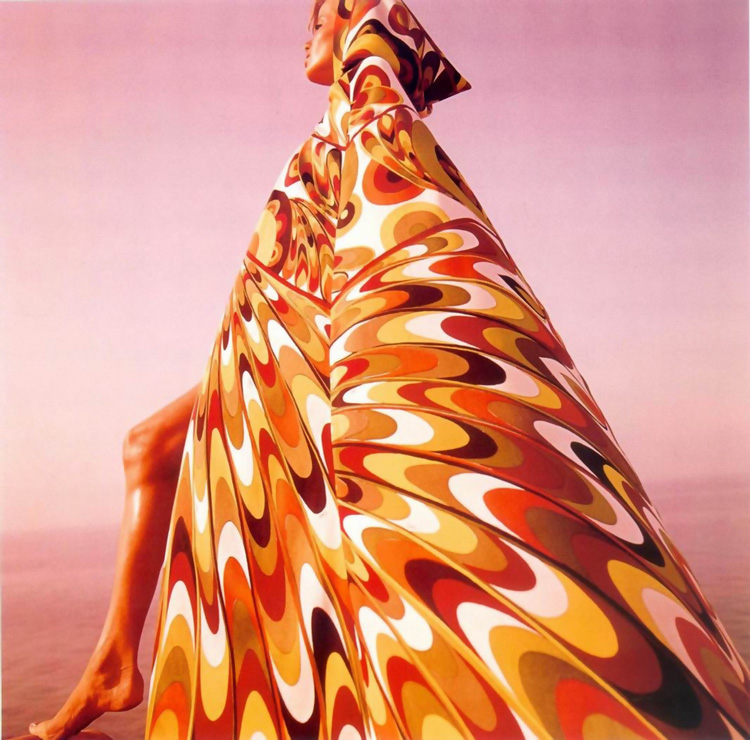
HOW IT BEGAN
An avid skier and athlete, who travelled between his family’s regal palazzo in Florence, the mountains of Switzerland and the glamorous resort island of Capri, Emilio Pucci naturally embodied the post-war, jet set glamour which captivated a new generation of modern, active women. His fashion career began unexpectedly in 1947 when he created a streamlined ski outfit, which was revolutionary with its sleek, tapered trousers and hooded parka, and was photographed on the slopes of Switzerland for Harper’s Bazaar. He then opened a boutique on Capri dedicated to simple, yet beautiful resort clothing that embodied the island’s natural beauty and refreshingly bright colours. The novel concept of designer ready-to-wear was a hit with the island’s sophisticated clientele who had instant access to wearable yet chic clothing. Later, his designs were prized by world-renown female icons, including Marilyn Monroe, Sophia Loren, Jackie Kennedy, and Gloria Guinness, as well as Madonna, and Nicole Kidman.

JACKIE KENNEDY
THE REVOLUTIONARY DESIGN
Prior to Pucci’s arrival on the design scene, women were constricted by rigid, structured clothing that utilised heavy padding, corsets, and petticoats to unnaturally confine the body. Contrary to his design contemporaries, Pucci was driven by the desire to liberate women, granting them unprecedented freedom and movement. His simply designed dresses, pants and tops featured free-flowing lines that followed the natural curves of the body. Pucci designs had the allure of couture, but were shed of all the impractical weight, volume, layering and, most importantly, cost of haute couture creations. Additionally, Pucci offered a total vision that ranged from dresses and underwear to linens, handbags, perfumes, and rugs, and gave an expanded group of consumers access to designer goods for the first time.

FALL 2017
A BRILLIANT COLOURIST
Inspired by exotic cultures and by the natural landscapes of the Mediterranean, Pucci brought luscious, bright colour to his designs in an unparalleled way. A sophisticated fusion of colour, lemon yellows, bougainvillea pinks, frosted lilacs, azure blue, and almond green became the hallmark of Pucci design. The effect was glorious, joyful, and perfectly captured the new mood in fashion. Instantly recognisable, Pucci’s colour combinations exude energy and emotion and allow the designs of the clothes themselves to remain relatively simple.
A KALEIDOSCOPE OF PRINTS
In the 1950s Pucci began developing his signature prints, graphic, abstract designs, which swirled in a kaleidoscope of colour. The organic forms pulsing with geometric patterns mimicked contemporary art forms, but were inspired by the world around him, which included Sicilian mosaics, the heraldic banners of Siena’s Palio horse race, Bali Batiks, and African motifs. It was the first time that such optical illusions had been incorporated into clothing and the effect was highly original, not to mention extensively copied in the years to come. Each print carries the designer’s name ‘Emilio’, in tiny hand-written form, marking the debut of a designer’s name as an external logo.
UNPRECEDENTED FABRICS
Working closely with expert fabric manufacturers in Italy, Pucci revolutionised the clothing sector by pioneering free-moving, stretch fabrics. Eschewing the heavy, rigid fabrications that were still largely in circulation in the 1950s, he developed and patented several original fabrics such as silk stretch jersey and cotton jersey. Both fabrications, the result of intensive technical research, allowed Pucci garments to be weightless, unlined, and wrinkle-proof, the precursors for a modern, travel-friendly wardrobe.
CONQUERING AMERICA
Working out of his grand palazzo, the designer began showing his collections to the international press and buyers in Florence in 1951. He became an instant hit with American retailers such as Saks Fifth Avenue and Neiman Marcus who were enthralled by the explosive colour and the wearability of his simple designs. The effortless, elegant clothing, which took women from day to evening and from jets to seaside cocktail parties, perfectly captured America’s new sportswear sensibility and complemented the glamour of the high-rolling, jet set crowd. Throughout the 1960s and 70s, the brand rose to popularity amongst the country’s wealthiest and most stylish women.
SPECIAL PROJECTS
Pucci used his design talent in a variety of non-fashion projects. These include creating futuristic uniforms for Braniff International Airlines flight attendants, the logo for the Apollo 15 space mission, porcelain tableware for Rosenthal, Spring Mills bath towels, the ‘Piume’ print for Qantas airlines, and the interior of a Ford Lincoln Continental Mark IV, as well as Cappellini furniture projects and a 300-foot hand-painted sail for Wally Yachts. The more recent projects include the Illy Art Collection as well as the Pucci book published by Taschen.

RESORT 2018
TODAY
In the 1990s, Pucci prints experienced a surge in popularity, and as the world’s fascination with the brand rekindled, Emilio’s daughter, Laudomia Pucci, began to take over her father’s business. In April 2000, an alliance was formed between the Pucci family and LVMH, with the French luxury group acquiring 67% of the company. In a short time the company has built a global store network, and soared once again on the international fashion stage.
READ MORE
A&E Guide To Milan Fashion Week FW18
15 Minutes With… Haneen Saber
Saudi designer, Haneen Saber, launched her debut jewellery collection in 2017, comprising earrings, bracelets, necklaces, and charms. Looking back at the great civilisations of antiquity, the brand focuses on historical heritage with a contemporary execution. We chat with the brainchild and founder of the brand which is based on a timeless concept of antiquity, and get an insight into her stylish life.
How did the idea of your jewellery brand come about?
Strangely, the beginning of my interest in jewellery design began during my stay in England. I lived in London for two years while I was doing my Master’s studies in History of Islamic Art/Architecture at SOAS University. Ironically, I never wanted to be a jewellery designer, though I have always been very passionate about gemstones and jewels. I wanted to attain my Master’s certificate in History of Islamic Art/Architecture to be able to restore one of the old buildings in my hometown, specifically in Old Jeddah, Saudi Arabia, and turn it into a boutique hotel. However, on one of the trips to the British Library, we, the students, were allowed to visit the private room where the rare collections were kept and secured. One of the objects that grabbed my attention was the manuscripts of old Quranic parchments decorated with ornaments illuminated in the most vibrant colours of royal blue and fuchsia. It was then that I envisioned how lovely it would be if anyone could recreate jewellery from such beauties, to reflect art and history. In the days following this trip, I began to think that I could be this person, and started my research.
What are your favourite materials to work with?
I find gem stones so inspiring, and I like to work with all different kinds of gem stones, the emerald being closest to my heart. It has a sense of history and royalty. Each one has its own uniqueness.

What are you most excited about for the future for your brand?
I’m excited to discover new interesting historical objects can share their stories with the world. My brand is all about bringing the history of art alive by spreading awareness and sharing art over the centuries.
Who is the woman who has inspired you the most?
Well, my mother of course. She is passionate about art, so I had a love of art surrounding me from a young age.
What song or album could be the soundtrack to your life?
Every chapter in life has its own song, but now since it’s the new year I feel it is, ‘Feeling Good,’ by Nina Simone.
What three films could you watch over and over again?
Pretty Woman, Mrs. Doubtfire, and Ratatouille.

What’s your guiltiest pleasure?
Sitting on the sofa in my pyjamas and ignoring work for a while.
Which are your go to, heels or flats?
Flats, for sure.
Do you prefer a night in or night out?
I like both, but a night out with friends seems more fun.
What was the last piece of clothing you bought?
Asics running shoes.
What are the failsafe items in your wardrobe?
A simple black dress is always a life saver.
Tell us about your most prized possession?
A turquoise diamond jewellery set designed by my grandmother.
If you weren’t a designer what would you be?
I would work on restoring one of the beautiful historical houses in downtown Jeddah, and turn it into a boutique hotel.
What is your earliest fashion memory?
I remember sitting next to my mother watching her as she would design our denim jackets, which got me a lot of compliments, so thanks mum! I did the same thing last year with my daughter.
What are the best and worst things about a career in fashion?
The best thing about it is that I get to discover new things, tell stories, and above all there’s a great joy in seeing the outcome of the final piece coming together. The worst thing is when inspiration cools down and mental blocks interfere with my creative thinking.


Tell us the secret to your success?
It’s a learning journey as we go, I keep learning, and trying to work hard. It always pays off.
What can’t you live without?
My children and family
Who do you follow on Instagram?
I appreciate jewellery brands in general because they are unique in their own way of creating new designs. For example, I really like Harry Winston and Graff. However, I am really into antique jewellery which I find fascinating and which probably explains my interest in artistic history. Some of the designers I truly admire and follow are, Nikos Koulis & Hemmerle.
What advice would you give to your teenage self?
Learn more languages. I wish I could speak 5 languages or more!
Where is your favourite place in the world and what makes it so special?
I’ve been to many beautiful places around the world, each one with its own particular charm. But I would say London holds a special place for me.
When packing, what are your travel must haves?
A good pair of sneakers, a little bag of dates and nuts, Lancôme mascara, and a good lip gloss.
Where is the next place on your wish list to visit?
Peru and São Tomé.
What are your beauty essentials?
Morning and night moisturisers.
Tell us the best advice that you live by?
Gandhi said, ‘Live as if you were to die tomorrow. Learn as if you were to live forever.’
What was your life goal aged 10?
To master roller blading like my cool sister!
And what is it now?
Enjoy the present moment and have a media boycott once a week.
By Eliza Scarborough
Cracking Breitling’s Marketing Codes With CMO Tim Sayler
You know the name and can’t mistake the logo but as far as must-have timepieces go, Breitling may have fallen off your radar. How do you inject new life into a historical brand? We sit down with their Chief Marketing Officer Tim Sayler to discuss the Navitimer 8, the new logo and plans to conquer air, land and sea.
We are here in Zurich for the Navitimer 8 Launch, why did you decide to start with this line?
It’s the first new line from a new team that came on board only five months ago so it’s an important launch to show where the brand is heading. We chose very carefully how to do the first new launch so this watch is a pilot’s watch, and we are leveraging the core and the strength of the brand. It’s totally inspired by the legendary history of the brand, but at the same time it’s a watch that takes all these strengths but presents the new look for the brand with a more elegant, pure design. It goes back to the 30s and 40s so for those reasons it’s a careful and conscious choice to launch with that product and that collection as the first new direction.
The medium to high range watches market segment is seeing a high amount of investment, with Breitling what is your strategy to stay ahead of the competition?
It’s a competitive segment and we see Breitling staying in that segment, we don’t have the ambition to pull the brand this upwards. Breitling is between 3,500 and 10,000 Swiss Francs. It’s a watch that provides great functionality, great quality, great reliability, great design from a great brand. But yes, in that segment we are not the only ones. Saying that if you look closely, we believe we are competitive as every watch is cost certified and comes with a five year guarantee. With the Breitling brand and history, We have a big chance.
Tell us more about certification of second hand watches?
This is one of the things we are working on very hard. Obviously this is an opportunity and we are not the only ones looking at that in the industry, to get some level of control in your own second hand market. We are going to introduce a brand certified pre-owned label, so these are watches that are second hand that we take back in, we refurbish, equip with a new guarantee and a brand certified pre-owned label.

Navitimer 8 Automatic with blue dial and stainless steel bracelet.
For the past several years the brand’s communication focus stayed on Pilot watches and didn’t move on with the rest of the market. How are you taking forward the brand’s image and what objectives have you set for this year?
We see the glass half full. There are many strong basics and so much history but the brand has become stuck in a niche. The aviation niche was extremely narrow and it was great to be so strong in that but its too narrow now and the brand has lost the touch with a younger audience in terms of how it presents itself, it’s sort of got stuck in the 90’s in the look and feel. So this is our challenge and opportunity, there’s strong brand awareness, strong memories and such a strong history. In a nutshell we want to enlarge the brand from not just aviation but into other fields that are totally authentic to the brand – we are going to be in air, land and sea. Secondly, we are going to completely revamp the brand so we are upgrading corporate identity, upgrading the campaign etc. Nothing that we are proposing is invented, everything is authentic and inspired by the roots. Breitling fans today might say ‘well this is not Breitling’ but you only know the last 20 years so this is why we are calling this campaign Legendary Future.
Let’s talk about the logo. You kept the B, buy why did you remove the wings?
The logo we are using is the original logo for the 1950’s and 60’s. Changing and touching such a logo is always very delicate and you always go through an initial phase of resistance. But if you look at the history of many brands, a brand has to upgrade its logo. Styles get out-dated and don’t look contemporary any more. We thought the logo was cluttered and over loaded, and not in line with today’s aesthetics as today you want something cleaner and nicer. Secondly we are air, sea and land and not just air so the wings are too specific. What we say now with logo is Beauty, History – that’s the hand written B that’s from the history and still very strong – in a logo you don’t need more.
We heard of a women’s line, what can we expect?
Breitling is a very masculine brand, we sell a small percentage to ladies. That said, I found it interesting in some countries the brand still has very good awareness and positive feelings for women. We are working on a completely new collection that we will present in fall. It will be a truly first men/woman line but a line that can really stand alone as a female collection. It’s an opportunity for us, it’s not going to dominate the brand, we will not forget that it’s a masculine brand. If you look at the underlying core of Breitling, it’s purpose and action, Breitling is a watch you wear to do something with, it has a strong personality and you can play it in an interesting way for women. We are not going to deny our identity, but we are going to make it interesting for women.
In a digital world, to what extent do you think over communicating in the luxury segment kills desire?
Personally I do think it’s a risk. I saw this year that every brand shifted into digital and social, and it depends on who you are as brand but for me it can be too much for the customer. It can appear too in your face, so as always the digital world is moving fast but it’s something I watch with a lot of attention and think it’s a risk to over do it. For Breitling not really, we have a lot to catch up on. You can see on our Instagram the expression of where we are going and people are interested to learn more about the brand so before we risk of doing too much, we have a long way to go. For me, it’s key that we respect the brand.

Navitimer 8 Roadshow in Shanghai.
How challenging Is it to maintain history and heritage with a brand like Breitling and still remain attractive and modern in your communication with everything you do today?
That’s the eternal challenge. We are going to do is: we are going to balance it. The new collections we are launching are not vintage collections, they are modern and we design them as modern watches. What we are going to do in parallel, because a lot of people don’t know about the heritage of the brand, we will also launch re-additions. Those are replicas of signature pieces of the brand throughout the history that today fall right into certain trends of vintage. These will be limited volumes with an objective to speak to certain audience that likes this pure authentic vintage style but also on a broader level to educate. On those two feet we can balance both sides.
What is the main message Breitling is giving this year?
The message is two words and it’s the campaign we are running right now called Legendary Future. We invite you to discover the legend that is Breitling with a look to the past and glimpse into the future. We need to tell them to come and discover – or rediscover – what Breitling truly is because it not just the last 20, 30 years and based on this legend of 140 years we are aiming to transport the brand into a new future.
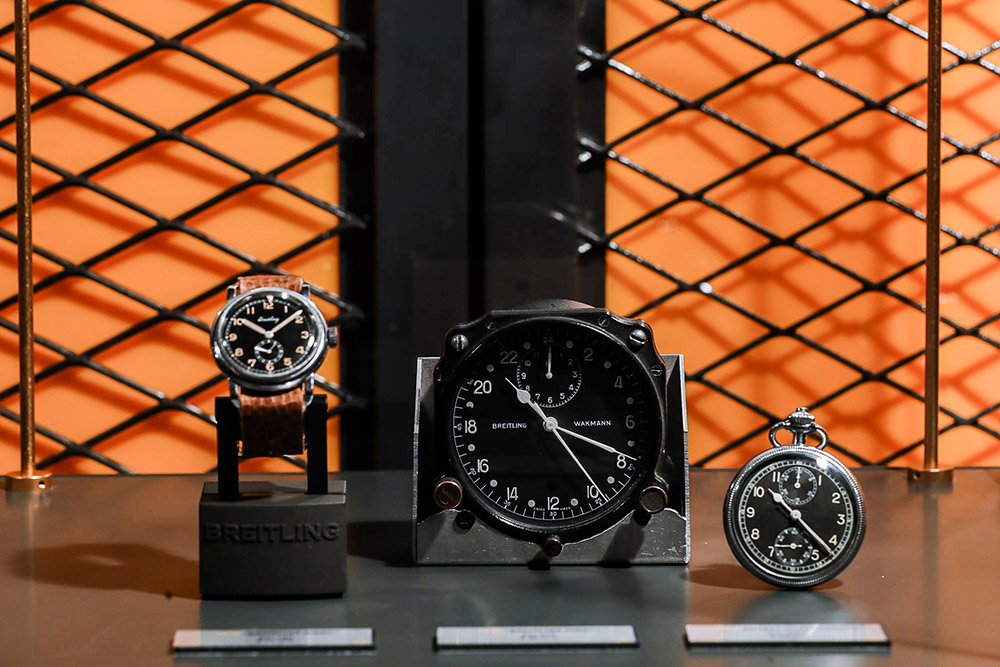
Breitling vintage.
What are your main objectives for Breitling?
I see a huge opportunity in the brand and we all in the team believe that. When I went to university some 20 years ago in Switzerland, the cool rich guys wore Breitling, and today that’s not the case anymore so the objective is to give the brand that status again and make it that brand of choice.
What would be a promise you give yourself and Breitling?
A promise to myself is to do the best we can. To Breitling, we have a very good and ambitious plan. If you look at what we have turned around in the space of four, five months it’s really astonishing. The team is a new team that needs to find itself but given that it’s incredible, so the promise to Breitling is to keep on pushing.
READ MORE
Onwards and Upwards: Breitling CEO Georges Kern Travels Towards a Legendary Future
Guy Bove Discusses Breitling’s Identity And Navitimer 8
Balancing between heritage, modernity and being relevant in today’s market Guy Bove, Breitling’s Creative Director, shares the story of the Navitmer 8.
When designing, how challenging is it to stay true to your heritage and remain modern and appealing?
It is challenging. One of the things I’ve noticed with Breitling is how proprietary people feel about the brand. We have a lot of collectors who really love the brand so they are expecting a lot. We have a lot of customers who see a different side of the brand and they’ve seen cool things that have been happening over the last decades with aviation, so to bring everything together and keep it exciting and keep the heritage intact is tricky.
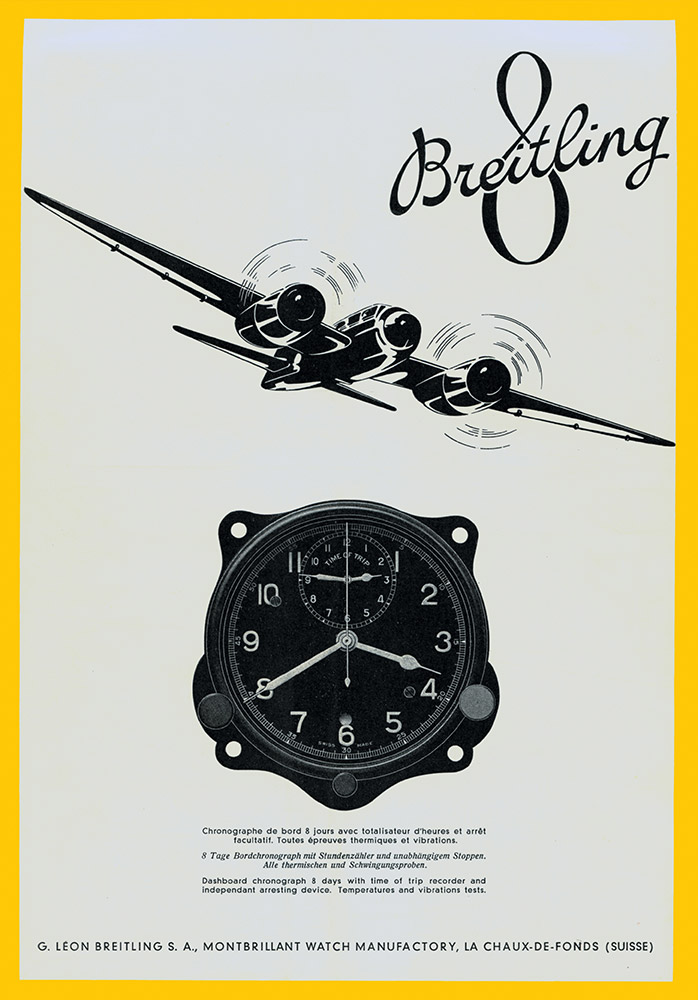
Tell me about the development of Navitimer 8?
The first phase was easy as we had an action plan on the wall and they told me to look at cockpit clocks from 1930’s and put it on the wrist. But to go from that to a wristwatch, that’s where a lot of work came in.
We knew that you’d be launching a ladies line by the coming fall. What do you consider when developing a women’s watch while the perception of Breitling is a masculine brand?
My feeling is that it’s more than a masculine brand, it’s a brand that’s known for tool watches and the women who wear Breitling today wear strong watches. They’re not dainty. The watch has to have a character and we had very cool women wear watches in the past so my idea was for them to be still recognisably Breitling and not trying to cross over to another brand but at the same time, for strong femininity to come through.

Navitimer 8 B01with black dial and black alligator strap. (PPR/Breitling)
With Basel coming up, what is the message we will see?
You will see the work we’ve been doing on the brand image and of course the main novelty is the Navitimer 8. We are also working on facelifts of other products. You will see a coherent design language, which is very clean, working on colour schemes that will be interesting for today’s market.
What is more challenging, to facelift a product or create a new one?
It’s the same. It doesn’t matter how many steps there are to the final product, the proof is in the pudding.
How many sketches did you do for the Navitimer 8?
Not many. I don’t do a lot of sketches, I work on the computer a lot just so I can build up a watch around the wrist and fit around the movement, to get the size of dial I want and work on small the details. Sketching is great, but to transfer that onto the metal, I’d rather start directly on the metal. I do a few sketches to show our CEO Georges Kern, a couple of sketches of the dial, but bear in mind we are starting with a dial heavily inspired by a cockpit chronograph so it’s about applying that and building a watch around it. The Dial is very close to the original, the case took a bit of work but I knew where I was going. It’s made a little bit more tough, as flying a plane in those days was a bit more dangerous so I’m thinking action heroes before there were action heroes. There is a lot of work to keep the genes that work for the future and takes you back to the past.
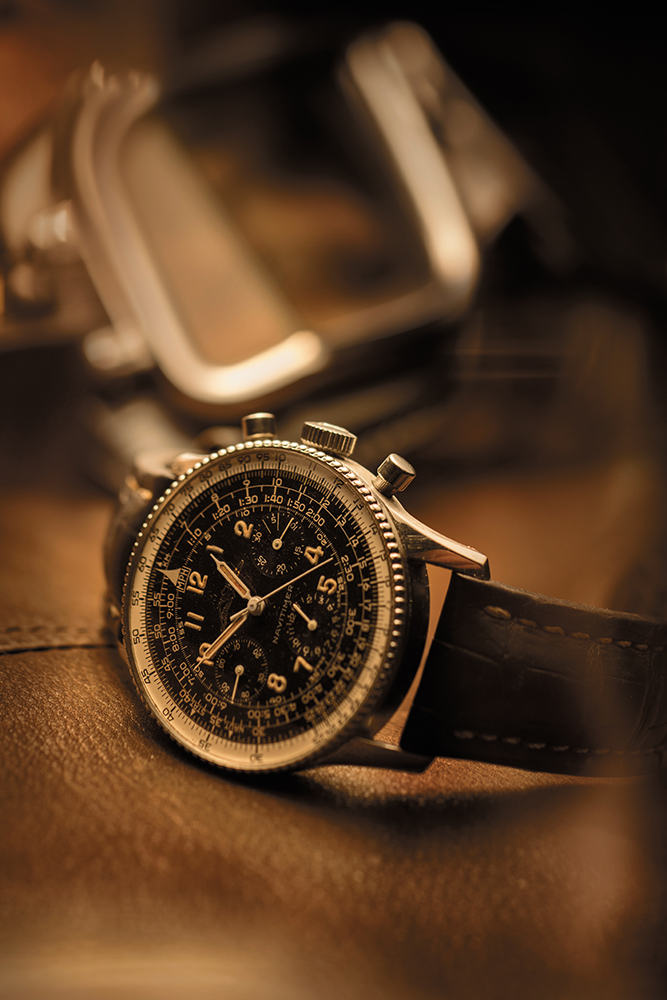
The first Breitling Navitimer 1952. (PPR/Breitling)
What is the most challenging part of your job?
I don’t only work on the products; I’m a Creative Director across the board so it’s keeping everything aligned so you feel the vision. It’s coherent in what you see in the catalogue and what you see here, it is all one brand.
What’s an element that’s not there that you’d like to see at Breitling?
For it all to become coherent but also that people find the brand relevant for today and that today we manage to make people aware of the whole history behind the brand, which is massive. There are so many inventions; the products are really cool, so I think if we can get all that across I’ll be very happy with what we’ve done.
What’s on your wrist now and why?
I’m one of those people who don’t wear a watch. At one point I realized the watch I was wearing was sort of the benchmark of what I was designing everyday and I didn’t want that to be the case. I also got used to not wearing one.
Which is your favourite from the Breitling collection?
I think the coolest watch is the 1950’s Super Ocean. The original one really stands out.
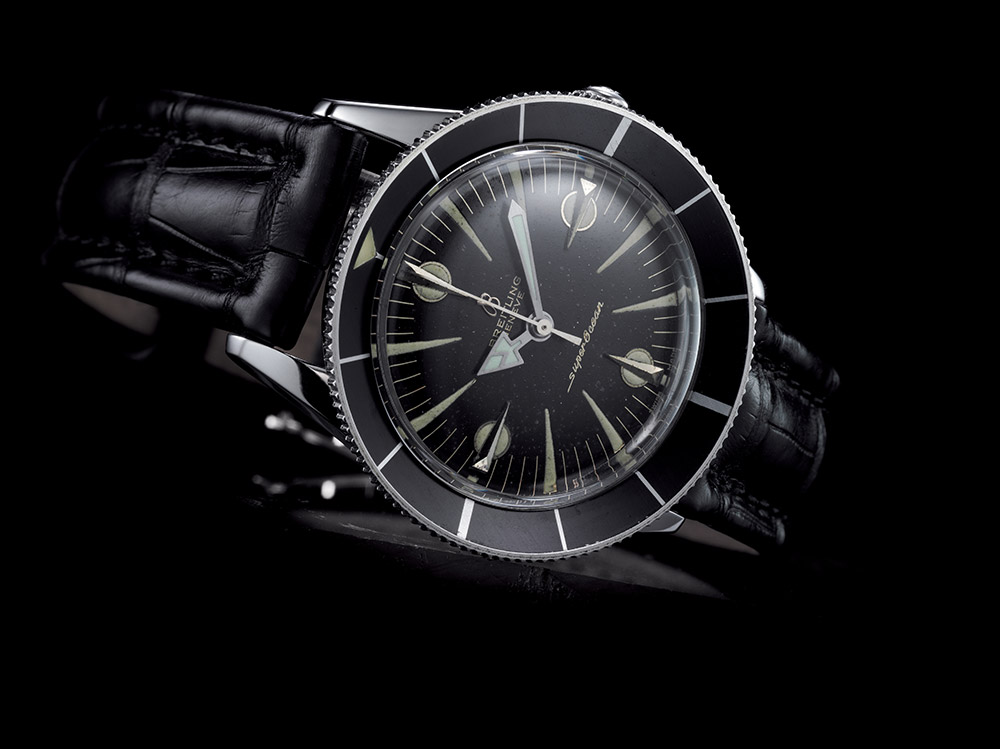
Breitling Super Ocean.
Are you exploring more strap options for the Navitimer 8?
We are working on some cool straps for people who like to change.
When you’re designing, where does it start?
It has to look like a Breitling. The most important thing for me is to create in my mind a mood board. Who is the person who will be interested in this watch? What’s his life like?
How would you describe Breitling in three words?
Strong, technical and cool and if can use four – exciting.
READ MORE
Onwards and Upwards: Breitling’s CEO Georges Kern Travels Towards A Legendary Future
