
When Ruwaya Al Shamsi struggled to find engaging Arabic educational content for her young son, she decided to create what she felt was missing. The result was RAWA Learning, an online platform designed to introduce children as young as nine months to Arabic through spoken vocabulary, simple hand gestures and real-life scenes.
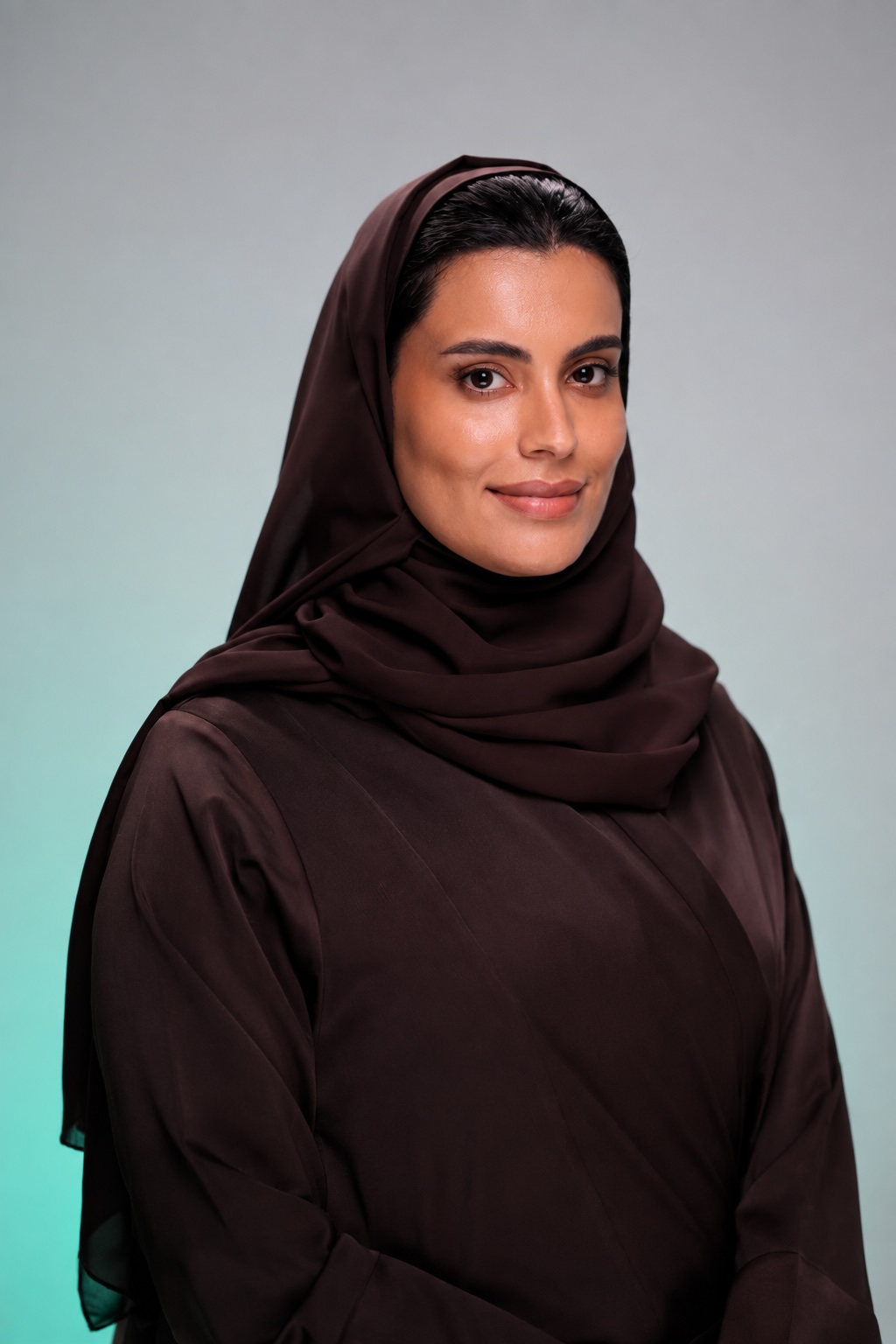
Developed with a team experienced in early childhood education and child psychology, RAWA encourages parents to participate in the learning process rather than treating technology as a passive distraction. Its thoughtfully paced episodes, accompanying flashcards, and relatable characters help children connect language with everyday actions, even before they can speak.
Here, Al Shamsi discusses turning a personal need into a growing educational business, the importance of preserving Arabic in multilingual households and her ambitions for the platform. She also reflects on entrepreneurship, Emirati Women’s Day and the women who have inspired her journey.
Tell us about RAWA Learning. Why did you decide to create the platform, and where did the idea come from?
As an Emirati, an Arab woman and a mother, I found it difficult to discover high-quality online content created specifically to support early learning in Arabic. As a new mother, I did not want to remove technology from my child’s life because it is part of the world he is growing up in. Instead, I wanted to introduce it in a healthy and purposeful way.
That experience inspired RAWA Learning, an online platform supporting early Arabic language development in children. I work with a dedicated team of mothers with experience in early childhood education and child psychology. We carefully considered every element to ensure children can learn while developing a greater understanding of the world around them.
How have you made the content accessible to children from different Arabic-speaking backgrounds?
We use simple Arabic vocabulary that is not tied to a particular dialect. Whether a family is Emirati, Lebanese, Sudanese or from elsewhere in the Arab world, the words are designed to be widely understood and used.
We wanted the content to feel relevant to children’s everyday lives, so each word is placed within a recognisable context. For example, when we introduce the word ashrab, meaning “drink”, the child sees the action taking place in a real-life setting. This helps them connect the word with its meaning rather than simply memorising it.
What makes RAWA Learning different from other children’s educational content?
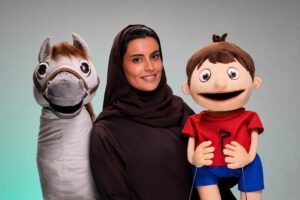
We use real-life scenes alongside very limited, gentle animation. Much of today’s children’s content is highly animated and fast-paced, but we wanted RAWA to feel calmer and more grounded. The animation is kept simple and two-dimensional, while our puppets give children characters they can connect with.
There are two main characters. Majid, inspired by my son and sharing his name, is a curious toddler who wants to explore, touch, and learn through his senses. Mahra is a white Arabian horse and his wise friend. She guides Majid, introduces new vocabulary and helps him understand how words are used.
Why is it important for parents to be involved in the learning process?
Living in the UAE means our children grow up surrounded by different nationalities, cultures and languages, which is something we truly value. The challenge for Arab parents is ensuring that Arabic also remains a consistent part of their child’s environment.
RAWA is not designed for a parent to simply place a child in front of a screen. It creates an exchange between the programme, the child and the parent. We have also developed Arabic learning flashcards that complement each episode. If the word mama is introduced in an episode, for example, the corresponding card allows parents to continue using and reinforcing it throughout the day. Repetition and parental participation are essential parts of the experience.
How does RAWA help children communicate before they are able to speak?
We combine spoken Arabic with simple hand gestures. These are not intended as formal sign language, but as a way of bridging the communication gap before a child becomes verbal.
When the word ashrab is introduced, it is accompanied by a gesture representing drinking. We encourage parents to repeat both the word and the action during the episode and in daily life. Over time, the child begins to associate the spoken word, gesture and physical action. This gives them a way to express what they need before they can say the word clearly. It can also reduce frustration because the child has another way to communicate with parents and caregivers.
What changes have you noticed in your own son through using this approach?
When my son was around 18 months old, my husband and I decided we would speak to him only in Arabic at home. We knew he would still be surrounded by English speakers and have plenty of opportunities to learn English, but we wanted to build a strong foundation in Arabic.
Children absorb language so quickly. My son now speaks both Arabic and English fluently, and he has also learnt to translate naturally. He might tell me something in Arabic and then turn to an English-speaking family member and repeat the same thought in English. He was never formally taught how to translate. Through exposure to both languages, he began connecting the words and understanding that they carried the same meaning.
What was the experience of establishing the business, particularly when your previous career was in a different field?
My background is in interior design and project management, which is completely different from early education and technology. I had to carry out a great deal of research and learn how children acquire more than one language simultaneously. I also had to understand what it takes to establish and manage a technology business.
Having a strong idea is only the beginning. You need guidance, mentorship and people who can help you understand the practical side of building a company. The UAE is known as a land of opportunity, and there are organisations willing to support founders and businesses that can make a positive social contribution. You should never limit yourself because your professional background is different. Skills can be transferred, and the right support can open unexpected doors.
How has the entrepreneurial community in the UAE supported your journey?
The Sharjah Business Women Council has been incredibly supportive. Through its community, I have received opportunities that have helped both me as an Emirati founder and RAWA as a business. It has allowed us to reach new audiences and connect with people who recognise the platform’s potential.
It has also introduced me to other women building companies and facing similar challenges. That community is very important because starting a business can feel overwhelming, particularly when you are entering an unfamiliar industry. Access to advisers and mentorship sessions helped me learn how a technology business should operate. Support can provide the push a founder needs to keep moving forward.
Where would you like to take RAWA Learning over the next five years?
I would love to see RAWA become a recognised early education programme for children between nine months and three years old, whether used at home, in nurseries, or as part of preschool learning.
The first season teaches numbers from one to ten and introduces simple Arabic words children hear in everyday life. We are now working on a second season that will explore numeracy and literacy in greater depth, alongside ideas such as day, night and the concept of time. It will be aimed at children between three and six years old. Our goal is for RAWA to grow with the child and remain part of their learning journey until they are ready to begin school.
We have also received interest from adults who want to learn Arabic. While our current focus remains children, parents can already learn alongside them.
What does Emirati Women’s Day mean to you?
Emirati women have become a source of inspiration not only within the UAE, but around the world. That progress has been made possible by the encouragement and opportunities women receive in this country.
Today, Emirati women are succeeding in an extraordinary range of fields. They are doctors, teachers, astronauts, artists and entrepreneurs. There is almost no field in which you will not find an Emirati woman making an impact, and that is something we can all be proud of.
Her Highness Sheikha Bodour bint Sultan Al Qasimi is a particular inspiration to me. Her work with Kalimat Group and Arabic children’s publishing resonated strongly when I was developing RAWA. I am also inspired by my sister, Dr Lamees Hamdan, who has built businesses alongside her medical career. Seeing women close to you pursue different ambitions is incredibly motivating.
What advice would you give to women considering starting a business or changing careers?
Do not allow nervousness to stop you. I also questioned whether I would succeed or fail, but constantly asking “what if?” can prevent you from beginning.
If an idea does not work, you will still have learnt from taking it forward. If it succeeds, you will learn through that experience too. Either outcome allows you to grow. Trust the process, stay open to what the journey teaches you, and don’t be afraid to enter a field simply because it is unfamiliar. You do not need to have every answer at the beginning. You need the courage to start and the willingness to continue learning.