
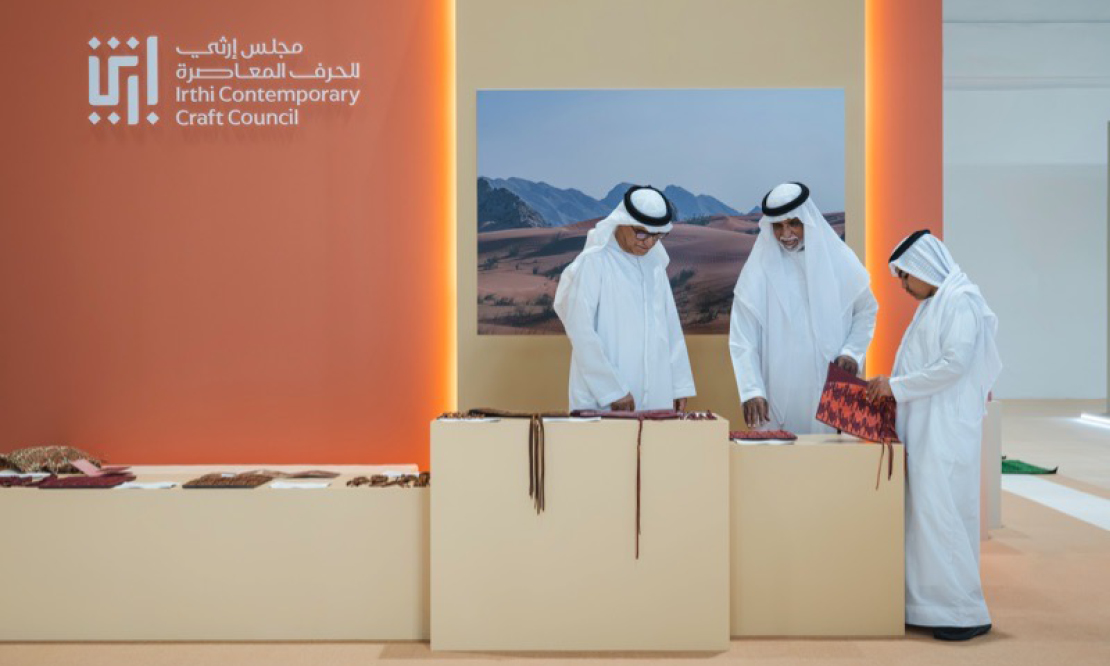
Traditional Emirati craftsmanship continues to find new expression through the work of Irthi Contemporary Crafts Council.
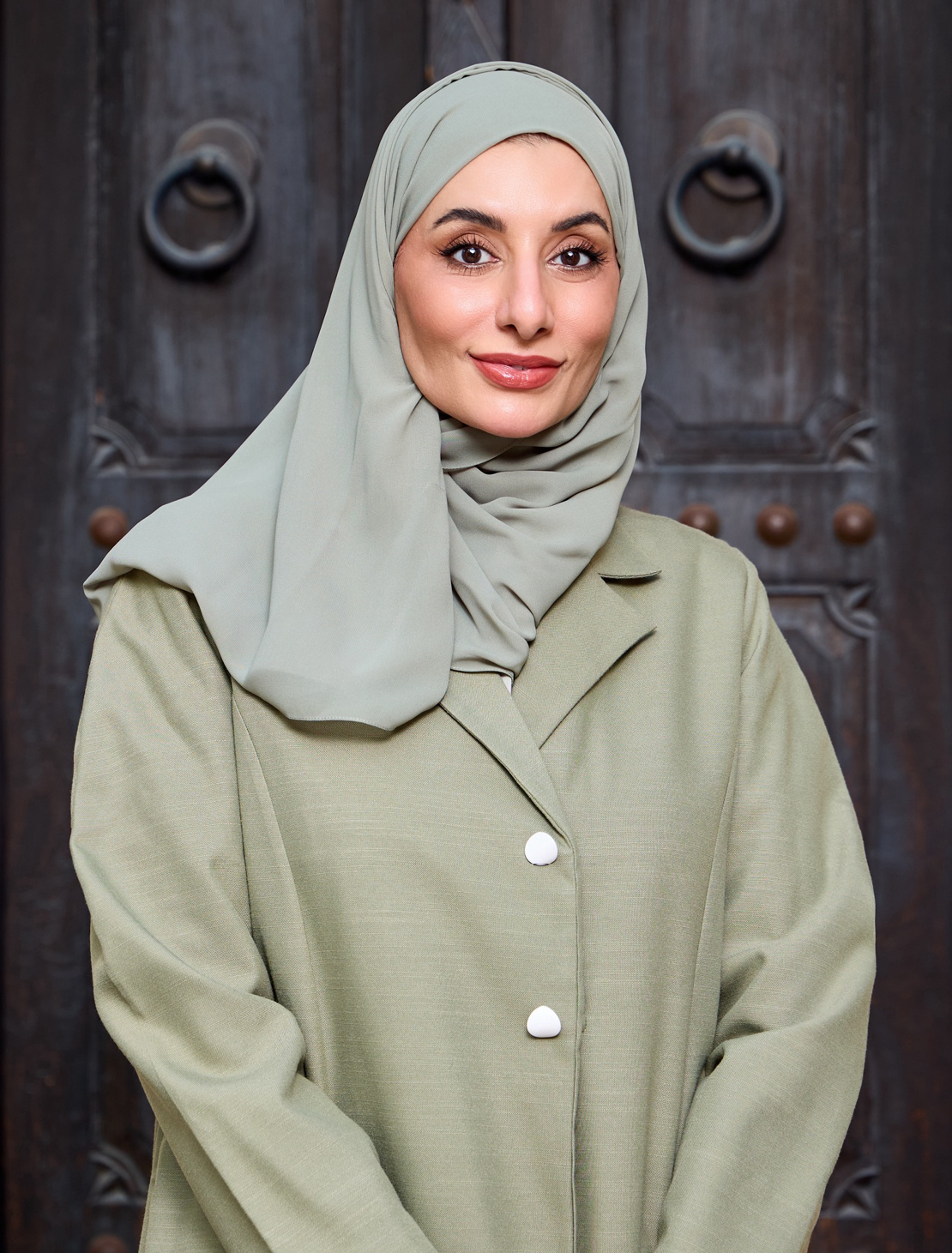
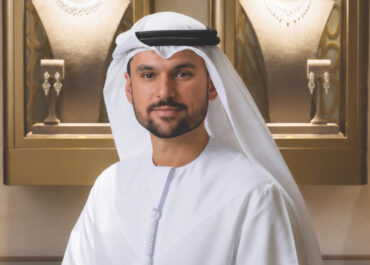
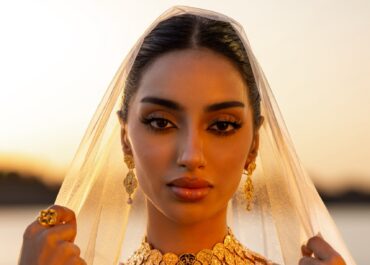
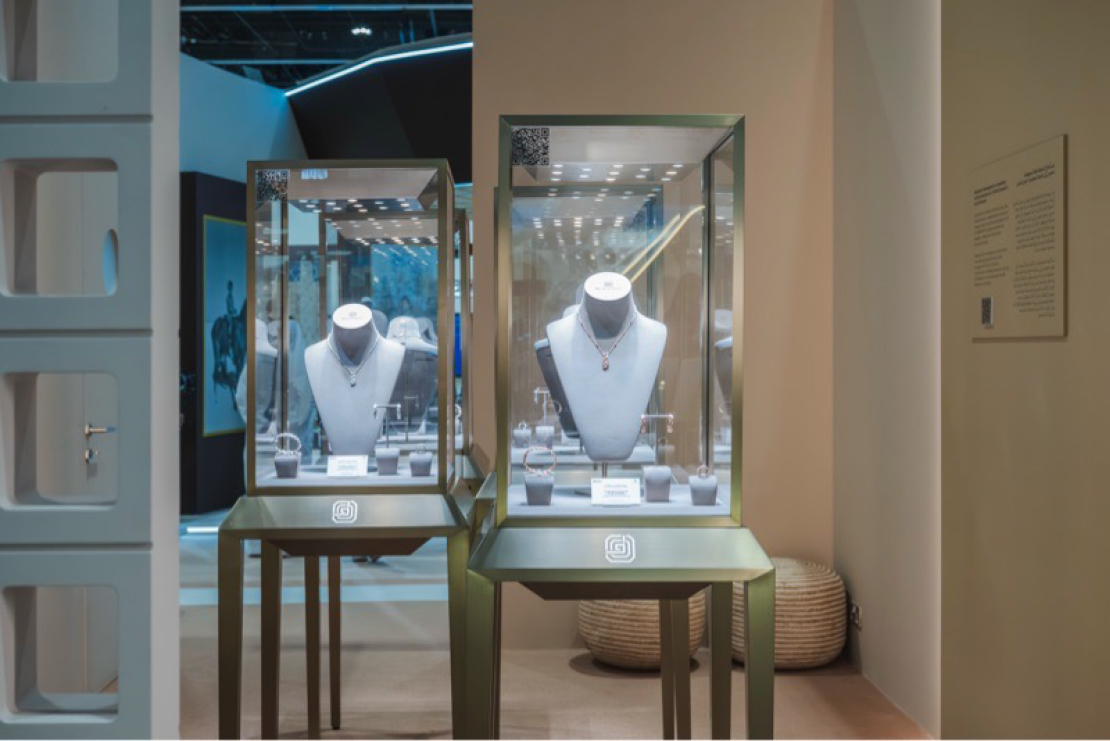
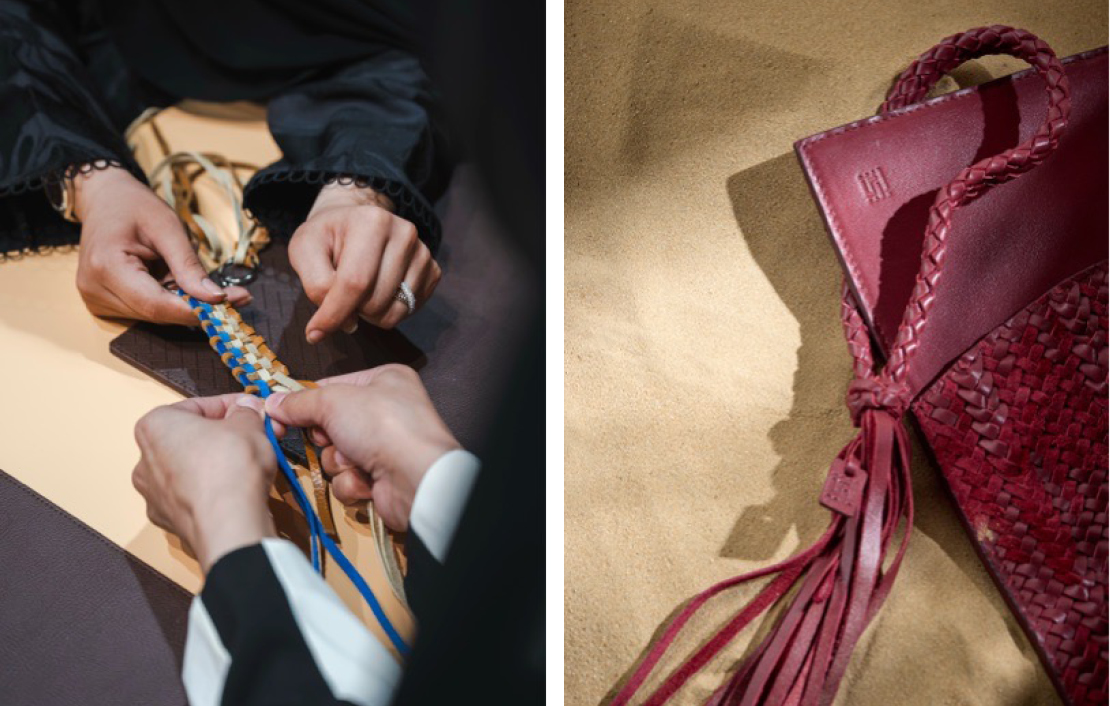
Its latest collaboration with Emirati jewellery designer Adi Al Fardan reinterprets Al Safeefah, a traditional palm-frond weaving technique practised by generations of Emirati women, through a collection of fine jewellery crafted in 18-karat gold and precious gemstones. Created to celebrate Emirati Women’s Day, the collection pairs the craft’s geometric patterns with references to the UAE National Anthem and the national flag’s colours.
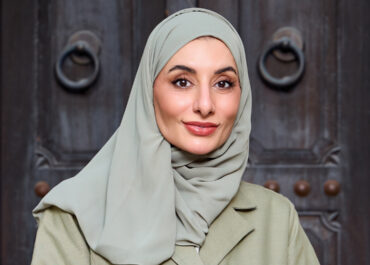
For H.E. Reem Bin Karam, the collaboration reflects Irthi’s wider commitment to preserving traditional knowledge while developing its place in contemporary design. Through research, training, international partnerships, and commercial opportunities, the Council is also working to ensure women who possess these skills can continue to benefit from them.
What inspired Irthi’s collaboration with Adi Al Fardan?
The collaboration emerged from a shared commitment to Emirati craft heritage and its continued relevance within contemporary design. Safeefah offered a particularly compelling starting point. Its distinctive geometric patterns and intricate interlacing techniques possess an aesthetic precision that translates naturally into fine jewellery.
The significance lies in bringing inherited craft expertise into dialogue with contemporary jewellery design, demonstrating the creative potential of Safeefah beyond its traditional applications while preserving its identity.
Why was it particularly meaningful to celebrate Al Safeefah for Emirati Women’s Day?
Safeefah holds a special place in the UAE’s craft heritage because of the skills and knowledge passed down by women across generations. Reinterpreting it through contemporary jewellery is an opportunity to celebrate the women who have safeguarded these skills and recognise their knowledge as a continuing source of creativity and innovation.
At Irthi, we believe that celebrating Emirati women means recognising their achievements today alongside the contributions of the generations who came before them.
How is the collection’s connection to Emirati identity expressed through its designs?
The necklaces feature the words “Hassantak Bism Allah Ya Watan” from the UAE National Anthem, with each necklace dedicated to a word from the phrase. The gemstones also reflect the colours of the UAE flag through rubies, emeralds, black diamonds and white diamonds.
These details bring together craft knowledge and national symbolism in a contemporary expression of Emirati identity.
How does Irthi help craftswomen develop sustainable professional opportunities?
Empowering craftswomen involves more than developing technical skills. It requires connecting training with production opportunities, professional development and greater economic independence.
Our Skills Development Centre in Dibba Al Hisn provides a practical example. Thirty-five craftswomen participate in production and development activities, supported by regular workshops. Qualified craftswomen are also offered paid production opportunities, while those with appropriate experience are encouraged to develop their capabilities as trainers.
How has the role of Emirati craftswomen evolved as traditional craftsmanship gains recognition within contemporary design?
Their contribution remains grounded in preserving inherited skills, while increasingly encompassing experimentation, product development and creative collaboration.
Through Irthi’s initiatives and international partnerships with names such as Cartier and Bvlgari, Emirati craftsmanship has gained further opportunities for expression within contemporary design. An equally important development has been the confidence with which craftswomen engage in this evolving creative landscape.
How are you encouraging younger Emirati women to pursue traditional crafts as a creative career?
Craft education must offer more than technical instruction. It should demonstrate how these skills can be applied within design, innovation and entrepreneurship.
The results can be seen in businesses established by graduates of our programmes, including Gharzat Khawat in Dibba Al Hisn, and Ghazal and Nawaem Al Tulle in Kalba. These ventures show the importance of linking inherited skills with sustainable creative careers.
What would you most like Irthi to achieve in the years ahead?
Our long-term vision is to strengthen an environment in which Emirati women can expand their contribution to the creative industries, pursuing opportunities in design, production, entrepreneurship and international markets.
The priority is to create broader opportunities for Emirati craftswomen while reinforcing the value of Emirati craft knowledge as an enduring source of creativity, both locally and internationally.