
For decades, Swiss watchmaker Universal Genève held an important place within watchmaking history. Founded in Le Locle in 1894 before relocating to Geneva in the early 20th century, the Maison became renowned for combining technical innovation with refined, design-led watchmaking. Revered by collectors for icons such as the Polerouter, Compax and Tri-Compax, Universal Genève earned its reputation as “Le Couturier de la Montre” (the couturier of watchmaking), for its rare ability to unite mechanical expertise with elegance, artistry and cultural sophistication. Following the Quartz Crisis, the brand gradually faded from prominence and remained largely dormant for decades. Today, however, the historic Maison is entering a major new chapter under the leadership of Georges Kern.
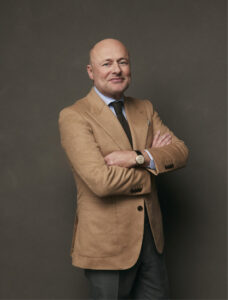
After reshaping Breitling over the past several years, Kern now leads the newly established House of Brands, a curated portfolio of watch maisons, each with its own heritage, DNA, and cultural relevance. Universal Genève marks the first major relaunch within that vision, with another historic watchmaker, Gallet, also set to return later this year. Fresh from unveiling the revived Universal Genève in Geneva following Watches and Wonders 2026, Kern travelled to Dubai to introduce the brand to the Middle East for the first time.
The arrival signals the next phase of Universal Genève’s international expansion, with the Maison preparing to launch in the Middle East as part of a tightly controlled global rollout. Positioned within the high-end luxury segment, the revived brand is placing design, craftsmanship and emotional connection at the centre of its identity, drawing heavily on its historic reputation as one of watchmaking’s most aesthetically driven maisons. Boutique concepts are being imagined more like couture ateliers than traditional watch retailers, while future collections will span from refined everyday pieces to highly exclusive bespoke creations. We sat down with Kern to discuss reviving one of watchmaking’s great sleeping giants, building the House of Brands, and why Universal Genève’s blend of heritage, artistry and contemporary luxury feels especially relevant today.
Universal Genève is particularly interesting because it feels like a brand that naturally appeals to both men and women. Was that intentional from the beginning?
Absolutely. I believe the brand will ultimately be very balanced between male and female customers, probably close to 50/50. What’s important is that the products never feel artificially designed for one gender or the other. Everything comes directly from the brand’s history. Nothing feels forced or invented.
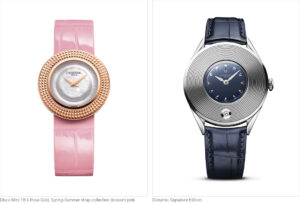
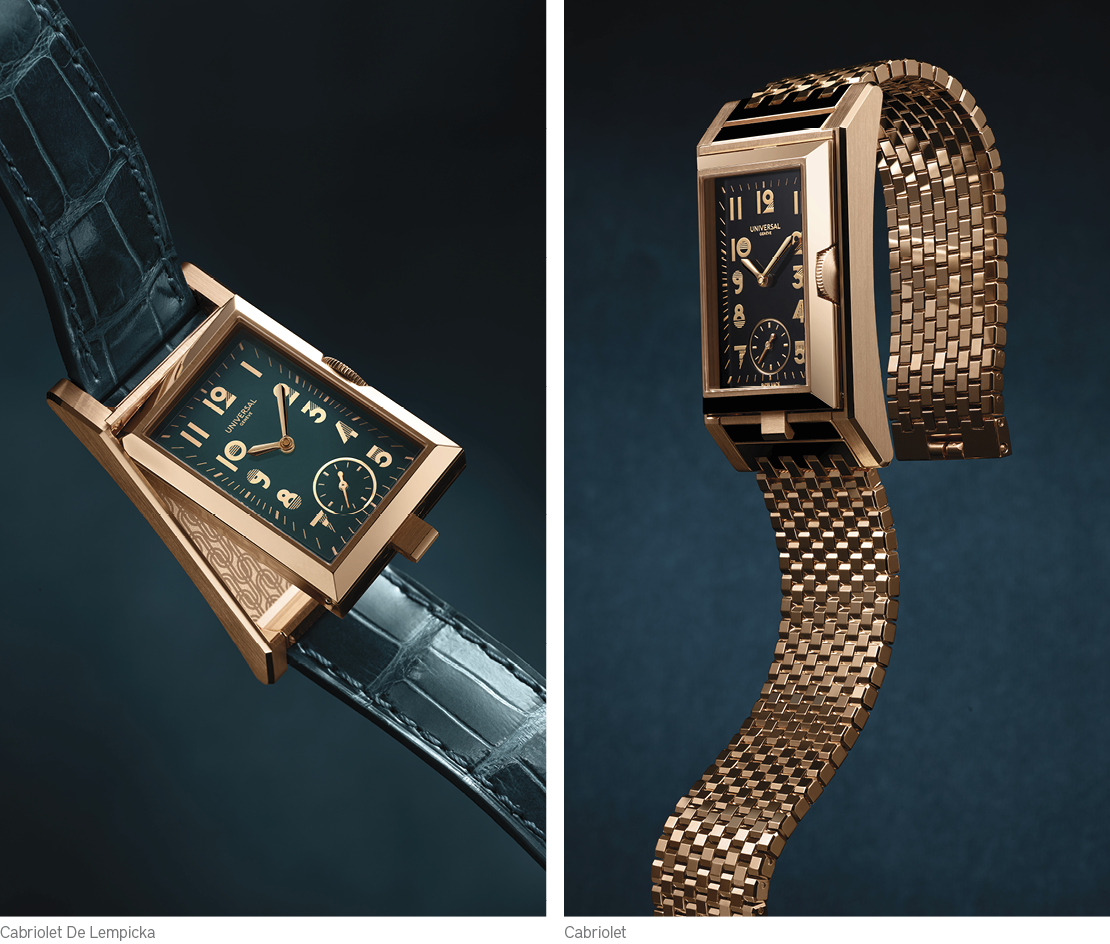
Universal Genève was a dormant brand with such a rich archive that we didn’t need to create an entirely new design language. Unlike some modern revivals where you have to imagine what a brand might have become over decades, here the foundations already existed. The designs are timeless and incredibly sophisticated.
When you look at pieces like the Polerouter, designed by Gérald Genta, who also created the Royal Oak and Nautilus, you realise just how important Universal Genève was historically. Discovering that heritage has been fascinating.
Why did you choose Universal Genève specifically for revival?
Around three years ago, we began discussing how we could expand beyond Breitling. We had strong manufacturing capabilities, excellent teams and a lot of expertise, so I felt we could do more.
At first, we explored acquiring existing watch brands, but often the brands available for sale are the ones with problems. You inherit stock, operational issues and a complicated structure. That didn’t interest us.
So instead, we started looking at historic dormant brands. I asked our heritage department which names truly mattered, and two immediately stood out: Universal Genève and Gallet, which we will also relaunch later this year.
The more we researched Universal Genève, the more compelling it became. The history is extraordinary. It has this very artistic, almost couture-driven identity. In some ways, it reminds me of Schiaparelli because of the relationship between creativity, artistry and revival.
We discovered incredible archival material, letters from Jean Cocteau, connections to figures like Jeanne Lanvin and many fascinating cultural references. Then there was the historical slogan “Le Couturier de la Montre” (the watch couturier). The moment I saw that, my imagination immediately started working. It felt authentic and obvious. Everything about the brand naturally aligned.
Reviving a heritage watchmaker on this scale must come with significant challenges. What has been the most difficult part of the process?
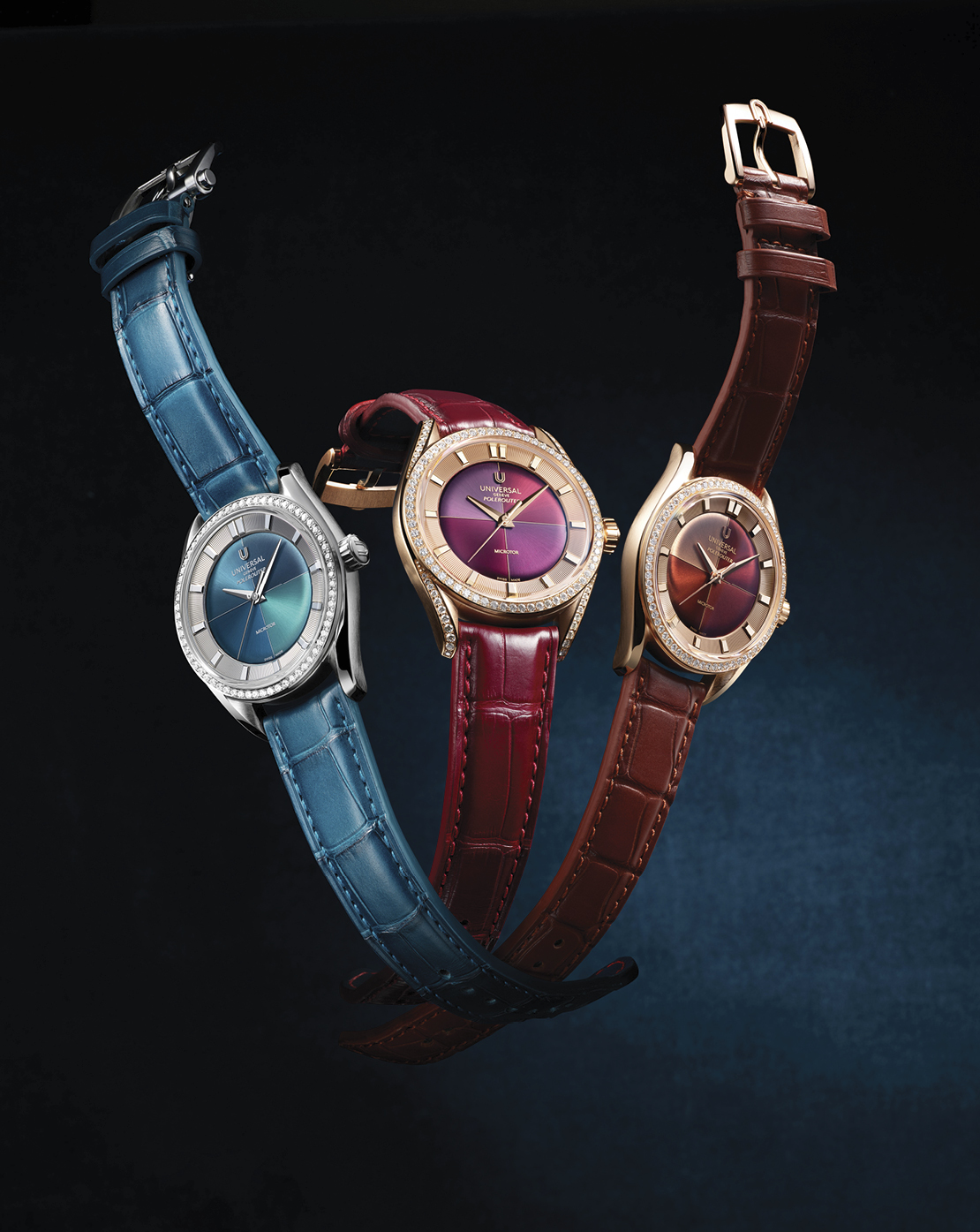
The biggest challenge was building everything from scratch while staying true to the brand’s spirit. We developed three entirely new movements, including a chronograph, an automatic and a hand-wound movement. We also chose a very specific technical direction with a micro- or rather three-quarter rotor architecture. As I emphasized early on, there had to be a micro-rotor solution — although you could also describe it as a three-quarter rotor. The larger oscillating mass is necessary to achieve a modern 72-hour power reserve while keeping the movement under 4 millimeters thick. We explored various approaches extensively, but ultimately there was no other viable option. For this combination of performance, proportions and elegance, the three-quarter rotor was the only solution. Developing that technology from the ground up was extremely complex.
At the same time, we had to build every other aspect of the brand: the products, campaigns, social media strategy, retail concept, boutiques and team structure. When you start with a blank sheet of paper, every detail matters.
But it was also incredibly exciting because I could apply everything I’ve learned over the past 30 years in the industry. Every mistake you make throughout your career becomes valuable when you have the opportunity to build something new from the beginning.
What has the reaction been like since the launch in Geneva?
Honestly, people were blown away. The response from collectors, retailers and journalists has been overwhelmingly positive. Retailers immediately wanted to work with the brand, although we are intentionally keeping distribution extremely limited at first. We will probably begin with only 10 to 15 retail partners globally because exclusivity is very important to us. The average price point will sit around US$25,000 to US$30,000, although pieces start at US$11,500. We are positioning Universal Genève firmly within the high-end luxury segment, but in a way that feels fresh and emotionally driven rather than overly technical. Within that space, we’re adding value to the market by positioning the brand between the more conservative maisons and the more extravagant players in the market, not overly traditional but not ostentatious either, with an aesthetic and brand expression designed to appeal to both men and women.
You have spoken before about how important boutique identity is. How will this apply to Universal Genève?
Universal Genève will have its own dedicated boutiques and completely distinct retail identity. The boutiques will not feel like traditional luxury watch stores. We are approaching them more like couture ateliers. We constantly asked ourselves throughout the development process: how can we create something different from what already exists? The reality is that the market doesn’t need another complicated high-end watch brand focused purely on technical specifications. Most collectors already own the classic brands. What people are increasingly looking for is strong identity, exceptional design and emotional connection. That’s why we speak about “functional beauty”, the idea that reliable, precise movements must always serve the watch’s design and aesthetic appeal. It is about the harmony between the two. The focus is on elegance, design and authenticity rather than pure complication for the sake of it.
Do you think luxury consumers today are looking for something beyond the traditional established watch brands?
Definitely. That’s exactly what retailers are telling us. At this level, customers often already own traditional collector pieces. What excites them now is discovering something different with genuine heritage but a fresh perspective. Universal Genève offers that. The designs are distinctive, the story is compelling, and the products feel unlike anything else currently on the market.
How have you structured the collections themselves?
We’ve created three distinct layers. First, there are the core collections with classic executions in steel, leather and precious materials, all powered by our new movements, which we refer to as prêt-à-porter. Then we have capsule collections, which are more expressive and experimental. These are limited editions produced in small numbers, roughly 50 to 100 pieces per model. Finally, we have the couture segment. These are fully bespoke creations, similar to haute couture fashion. They are unique pieces made specifically for clients, often incorporating custom stones and detailing. Naturally, those require time to produce because each element is sourced and created individually.
Dubai is clearly an important market for the brand. What can we expect in terms of expansion here?
Dubai is absolutely essential for us. We definitely plan to open a boutique here.
Over the next six to eight months, we hope to establish flagship boutiques in cities including Geneva, New York, London, Milan and Dubai. At the same time, we will continue with a very selective global distribution strategy. Even with expansion, I don’t expect Universal Genève to have more than around 15 points of sale worldwide initially. We want to maintain rarity and exclusivity.
Heritage clearly plays a huge role in the revival. How deeply have you explored the archive?
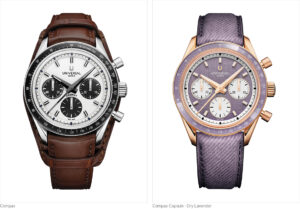
The heritage is the entire reason we bought the brand. What we acquired were the iconic designs, the aesthetic codes and the stories connected to Universal Genève. The collector community surrounding the brand is incredibly passionate. Many watches even carry nicknames connected to famous figures who wore them. For example, collectors refer to a Tri-Compax model as the “Clapton” because Eric Clapton wore it extensively. Then there’s the famous “Nina Rindt” watch, a 1960s Compax named after Nina Rindt, the wife of Formula One champion Jochen Rindt. She famously wore the watch during his races and the watch became iconic and a cultural phenomenon through its association with her. She actually attended our launch event and remains incredibly charismatic and elegant. Those kinds of stories give the brand emotional depth. Since the relaunch announcement, vintage Universal Genève models have also increased dramatically in value, which reflects the renewed excitement surrounding the brand.
Beyond Universal Genève, the House of Brands is expanding significantly. What is the wider vision?
The idea is to create a coherent luxury ecosystem across different price points and audiences. Breitling sits at the center of the House of Brands. Then we have Gallet, a sister brand distributed through Breitling’s boutique network and selected retail partners, offering strong heritage, quality and adventure-oriented Swiss watchmaking at a more accessible entry point. Finally, Universal Genève, operates as a distinct maison positioned at the very top end of the portfolio, reimagining watchmaking through a more creative and artistic approach. Together, the brands allow us to speak to different customers while maintaining authenticity and strong positioning across the portfolio.
Finally, what is your outlook on the wider luxury industry right now, particularly in the Middle East?
I’m very optimistic about the UAE and the Middle East overall. This region has extraordinary fundamentals. Dubai has some of the best airlines, hotels, hospitality and service standards in the world. It also offers a level of safety and security that many global cities no longer have. Those strengths won’t disappear.
Luxury always depends partly on emotion. People still have spending power, but they need to feel positive and optimistic when purchasing luxury products. I think once there is more stability globally, this region will recover extremely quickly, perhaps even faster than after COVID.
By Lindsay Judge