
From Cartier’s Tank to Audemars Piguet’s Royal Oak, these timepieces have revolutionised the watch game and are worth considering for your collection.
A watch is never just a watch. At its simplest, it measures the passing of hours, at its most powerful, it captures an era, defines a style, and becomes part of the wearer’s identity. The greatest timepieces do more than sit elegantly on the wrist, they have the power to push technological boundaries and accompany some of history’s most remarkable moments. Many were created out of necessity, others from bold ideas, yet the ones that endure have become true legends.
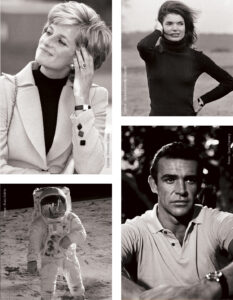
Whether it’s the Rolex Submariner diving into the ocean or the Omega Speedmaster on the moon, each watch tells a story worth knowing. Timeless dress watches like the Bulgari Serpenti or the Cartier Tank continue to embody elegance, worn by some of the world’s most influential figures. These pieces go beyond mere function, they are statements of craftsmanship, innovation, and personality, each becoming shorthand for something larger than its mechanism.
The most iconic watches also share an extraordinary ability to remain relevant. Their proportions, silhouettes and signatures are so distinctive that even subtle updates cannot dilute their identity. A bracelet, a bezel, an angled case, a serpent coil or an octagonal dial can be enough to make a design instantly recognisable across generations.
Women’s Icons
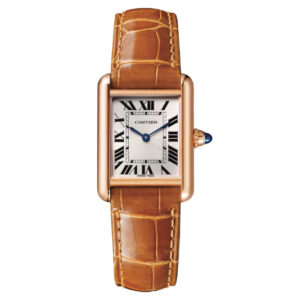
Cartier Tank
Few watches possess the effortless authority of the Cartier Tank. Designed by Louis Cartier in 1917 and inspired by the lines of wartime armoured vehicles, its rectangular case was radical in an era dominated by round watches. More than a century later, it remains one of the purest expressions of elegance in watch design thanks to its clean lines and perfect proportions. Worn by figures including Jackie Kennedy, Princess Diana, Michelle Obama and Andy Warhol, the Tank is not simply a watch of status, but of taste. It is timeless, intelligent and eternally chic.
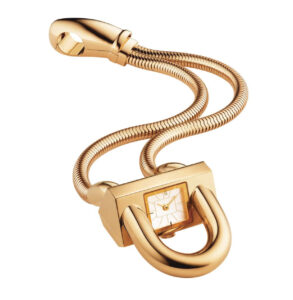
Van Cleef & Arpels Cadenas
The Van Cleef & Arpels Cadenas is a watch with the mystery and allure of a jewel. First introduced in 1935, its name means padlock, a reference to its distinctive clasp-like form. The design is both practical and sensual, with an angled dial that allows the wearer to read the time discreetly. Its bracelet-like silhouette makes it feel closer to high jewellery than conventional watchmaking, a quality that has helped it retain its special charm. Revived in 2015, the Cadenas remains a cult classic, sculptural, glamorous and unmistakably Van Cleef & Arpels in spirit.
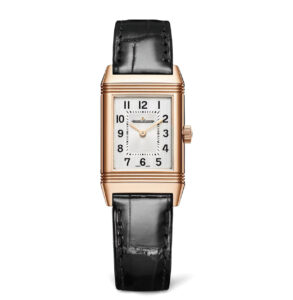
Jaeger-LeCoultre Reverso
Originally created in 1931 for polo players, the Jaeger-LeCoultre Reverso is one of watchmaking’s great design solutions. Its clever reversible case was designed to protect the dial from flying mallets and balls, but its lasting appeal lies in its Art Deco elegance. The clean rectangular lines, gadroons and slim profile have made it far more than a sports watch. Today, the case back is often used for engraving, transforming the Reverso into an intimate keepsake.
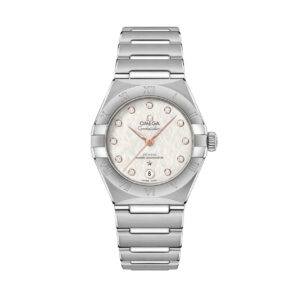
Omega Constellation Manhattan
The Omega Constellation Manhattan is instantly recognisable thanks to the distinctive claws that grip its bezel. Launched in 1982, it gave Omega a modern icon, sleek, precise and refined, yet unmistakably individual. Originally, those claws helped hold the crystal in place while preserving the watch’s slim profile. Today, they serve as a powerful design signature. Polished without being showy, it has evolved through many materials, sizes and finishes while retaining its essential character.
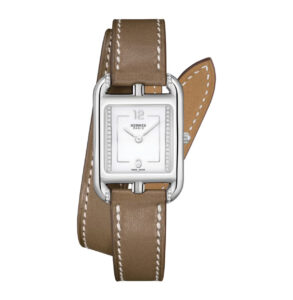
Hermès Cape Cod
The Hermès Cape Cod proves that a modern classic need not be old to feel iconic. Launched in 1991, it was inspired by the geometry of anchor chains, resulting in a distinctive square-within-a-rectangle case. The design captures the breezy refinement of its New England namesake while remaining unmistakably Parisian. In 1998, Martin Margiela added the now-famous Double Tour strap, wrapping the leather twice around the wrist and turning the watch into a fashion statement. Whether worn simply or in gem-set and mechanical versions, the Cape Cod carries Hermès’ gift for understated luxury and quiet originality.
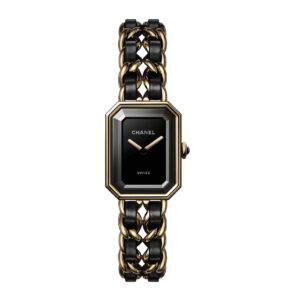
Chanel Première
The Chanel Première is one of the most elegant fashion watches ever created. Introduced in 1987, it draws on two of Chanel’s most recognisable codes, the octagonal stopper of the No.5 perfume bottle and the chain strap of the 2.55 handbag. Its silhouette also echoes the geometry of Place Vendôme in Paris, giving the design architectural poise. Sleek, monochrome and refined, the Première feels like the watch equivalent of the little black dress.
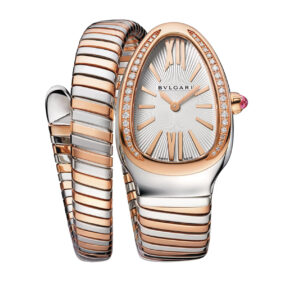
Bulgari Serpenti
The Bulgari Serpenti is pure drama on the wrist. Inspired by the serpent, one of jewellery’s most powerful symbols, the watch coils around the arm with unmistakable sensuality. Its Tubogas bracelet gives it flexibility and strength, while the snake-head case transforms timekeeping into theatre. Although its roots reach back to the mid-20th century, the Serpenti became internationally famous when Elizabeth Taylor was photographed wearing one during the filming of Cleopatra.
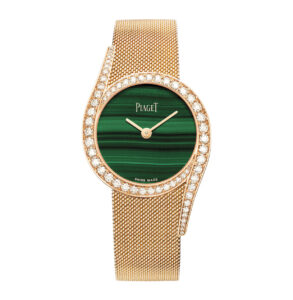
Piaget Limelight Gala
The Piaget Limelight Gala captures the liberated glamour of the 1970s. With its sweeping asymmetrical curves, elongated lugs and diamond-set case, it feels both luxurious and full of movement. Piaget was already celebrated for combining watchmaking expertise with jewellery craftsmanship, and the Limelight Gala brought those talents together beautifully. It is feminine without being delicate, decorative without losing refinement.
Men’s Icons
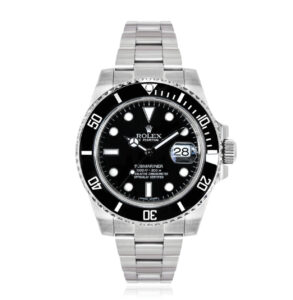
Rolex Submariner
The Rolex Submariner is the archetypal dive watch. First sold in the 1950s, it established a design language that has influenced countless watches since, yet its fame extends far beyond diving. Worn by Sean Connery’s James Bond, collectors, explorers and everyday enthusiasts, the Submariner has become perhaps the most recognisable sports watch in the world. Its genius lies in balance. It is practical, durable and technically serious, but also refined enough to wear with a suit.
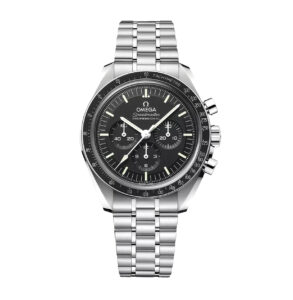
Omega Speedmaster Professional
No watch has a story quite like the Omega Speedmaster Professional. Introduced in 1957 as a racing chronograph, it became legendary when NASA selected it for space missions after punishing tests of heat, cold, shock and vacuum. On 20 July 1969, Buzz Aldrin wore a Speedmaster on the moon, earning it the immortal nickname Moonwatch. It represents courage, precision and the ambition to go further than anyone has gone before.
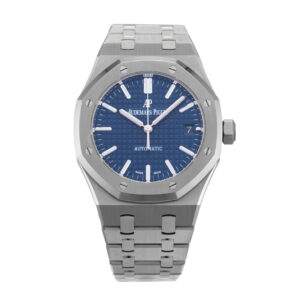
Audemars Piguet Royal Oak
When Gérald Genta designed the Audemars Piguet Royal Oak in 1972, he changed the idea of a luxury watch. Its octagonal bezel, exposed screws, integrated bracelet and stainless-steel construction were provocative at the time. Luxury was supposed to be gold, slim and discreet, whereas the Royal Oak was angular, industrial and expensive. Initially controversial, it went on to define the luxury sports watch category.
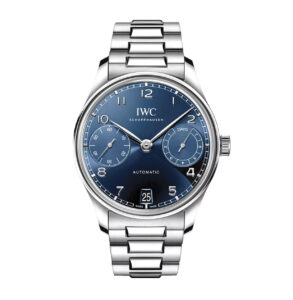
IWC Schaffhausen Portugieser
The IWC Portugieser is one of the great dress watches with a maritime soul. First created in the late 1930s for two Portuguese businessmen who wanted the precision of a marine chronometer in wristwatch form, it brought pocket-watch accuracy to the wrist with striking elegance. Its clean dial, Arabic numerals, slim feuille hands and generous case gave it a distinctive presence that still feels refined today. Over the decades, the Portugieser has become one of IWC’s most recognisable families, admired for its balance of technical credibility and quiet sophistication.
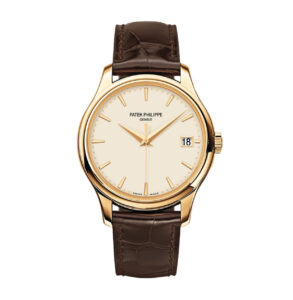
Patek Philippe Calatrava
The Patek Philippe Calatrava launched in 1932 and is the definitive round dress watch. Inspired by Bauhaus principles, it is beautifully simple with a clean dial, slim case, refined proportions and no unnecessary ornament. Its importance lies in restraint. While Patek Philippe is famed for grand complications, the Calatrava proves that simplicity can be just as elevated when executed perfectly. It became a pillar of the brand and a model for generations of formal watches that followed.
Richard Mille RM 001
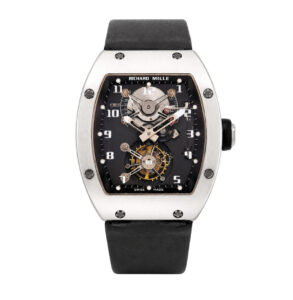
The Richard Mille RM 001 announced a new era of avant-garde watchmaking. Released at the beginning of the 2000s, it rejected traditional codes in favour of technical audacity, futuristic materials and a highly visible tonneau-shaped case. Richard Mille turned the mechanical watch into something closer to a Formula One machine for the wrist, lightweight, complex, expensive and unapologetically modern. The brand’s association with athletes, racing drivers and cultural figures helped make its watches symbols of contemporary success.
A. Lange & Söhne Lange 1
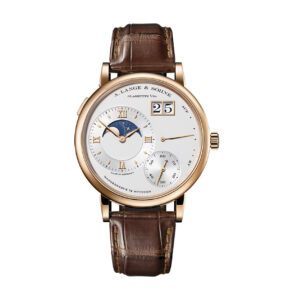
Perhaps the most striking dial on this list, the Lange 1 from A. Lange & Söhne is an icon in our eyes for its combination of traditional elements of Saxon watchmaking artistry and an extraordinary dial. The design of the Lange 1 follows a clear-cut principle: all displays are arranged off-centre, forming an isosceles triangle. And this, paired with useful innovations such as Lange’s typical outsize date, have made the Lange 1 one of the most awarded watches of the last two decades.
Cartier Santos
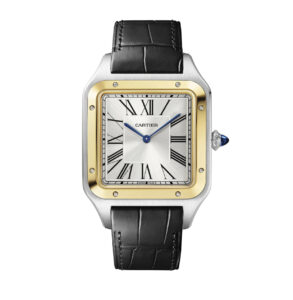
The Cartier Santos, which many consider to be the first male wristwatch, was first released in 1904 and was designed for aviation pioneer Albert Santos-Dumont, who wanted a way to check the time without his hands leaving the plane’s apparatus. Louis Cartier’s solution was as practical as it was elegant, a square-cased watch with visible screws, softened edges and a leather strap. Its design felt radically modern then and remains instantly recognisable today.
Eliza Scarborough