
For Spring/Summer 2027, Maximilian Davis looks to the 1940s, exploring how the era’s uniforms and workwear reflected a period of social change as women entered the workforce.
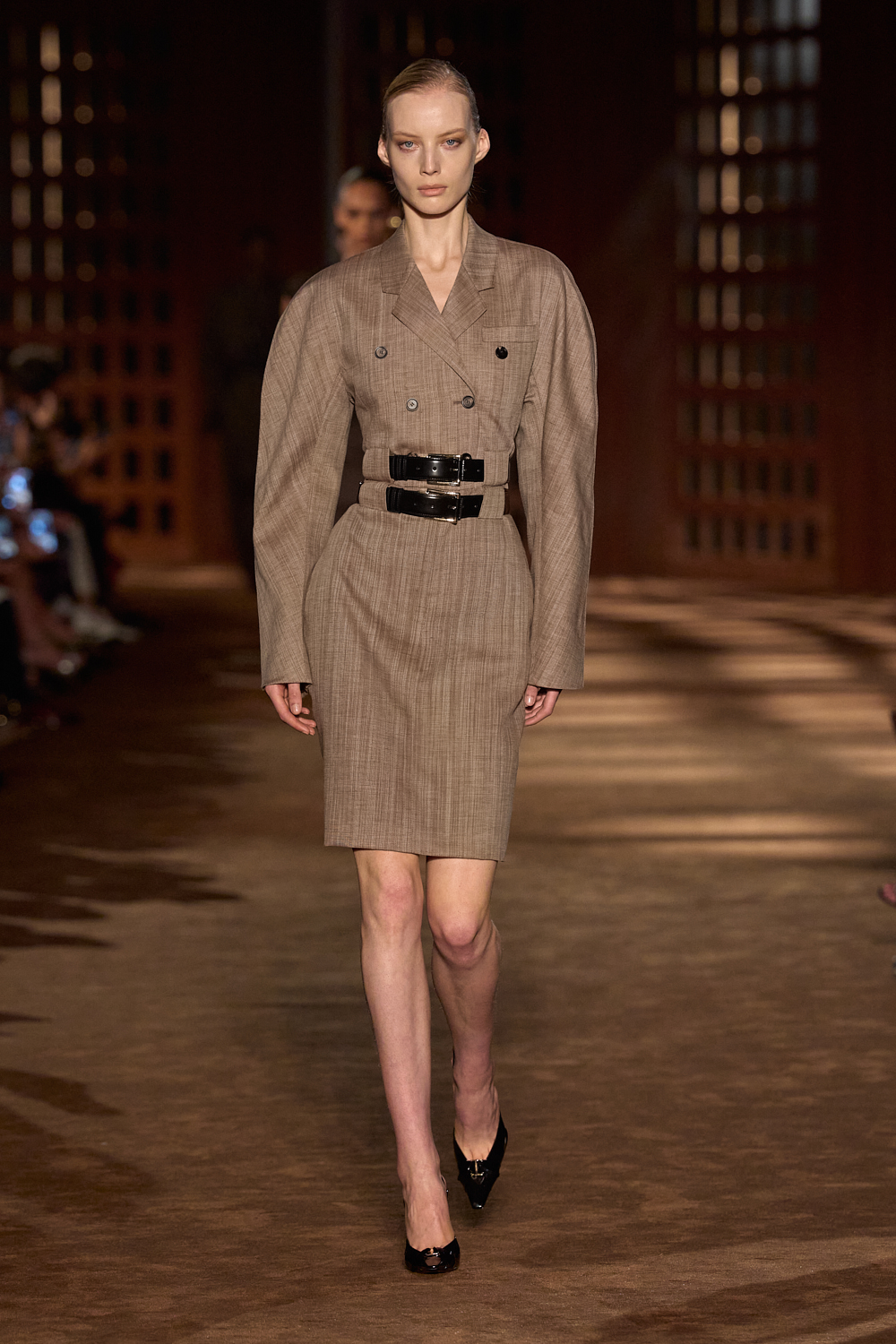
At Ferragamo, he reinterprets these codes through the contemporary design language he has developed for the house, distilling the period’s structured silhouettes into a collection focused on liberation, utility and modern femininity.
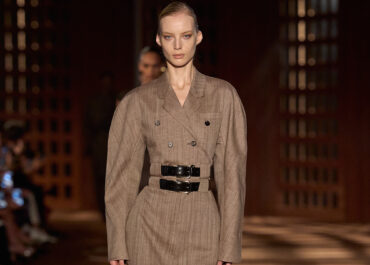
The collection distils those references into refined, contemporary silhouettes. High-waisted tailoring is cut close to the body, cinched with statement belts and double fastenings, while military pockets are applied to pencil skirts and outerwear. Utility vests are layered beneath suiting, and trench coat skits are given an elegant flare.
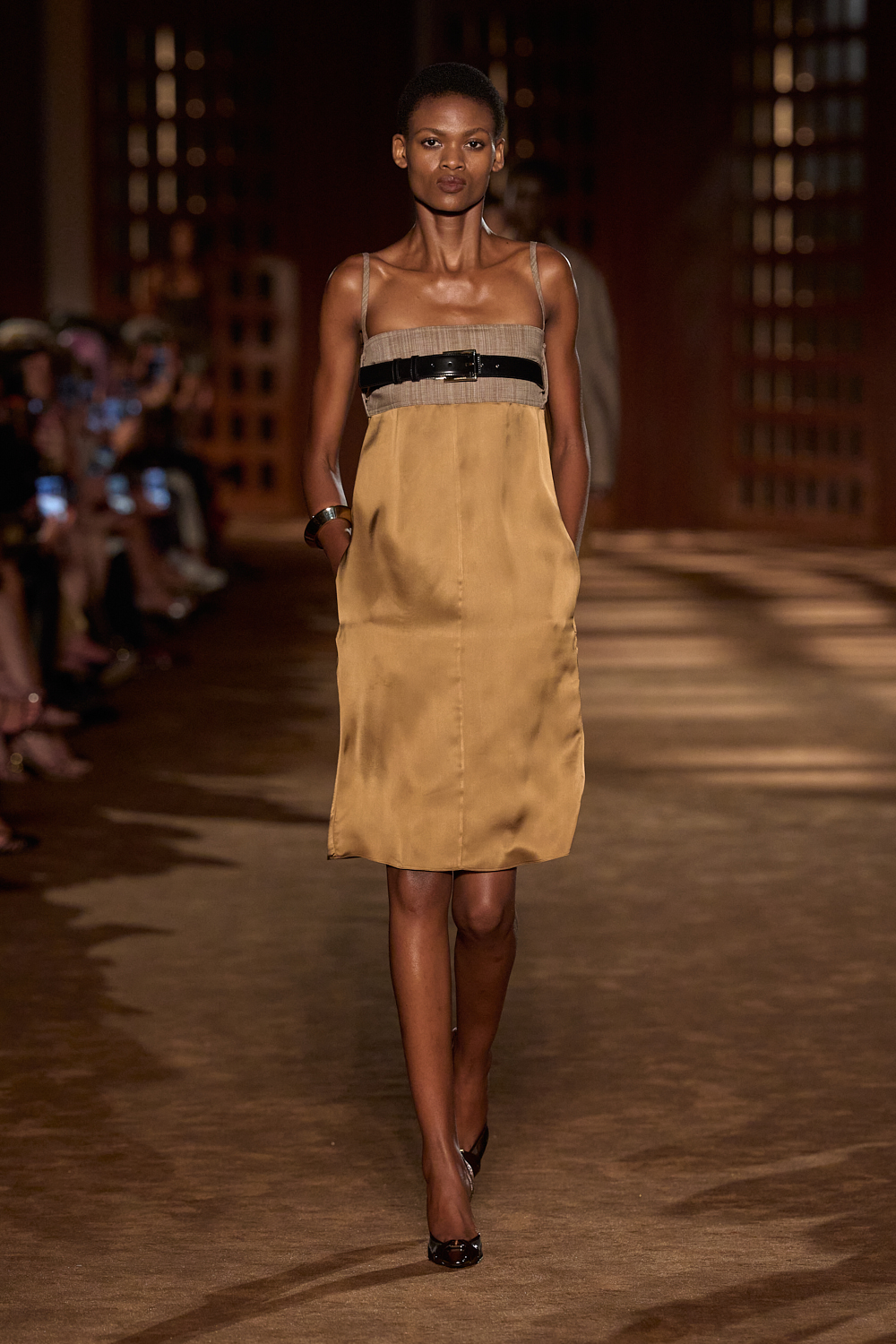
“It was a period where clothing, and its structure, created a certain posture and propriety: when the placement of pocket would dictate how you would both stand and behave,” explains Davis. “I wanted to take elements of that silhouette and modernise it for today.”
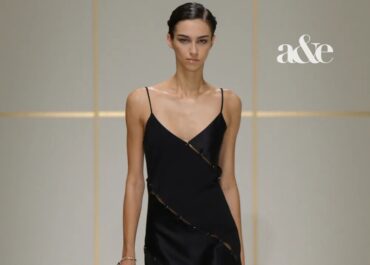
The structured vocabulary of the collection is offset by more fluid treatments of fabric. Translucent rubber introduces a clinical edge, while leather shirting and glossy python ties bring flashes of fetishism. Elsewhere, Davis returns to the draped scarf dressing that has become a defining element of his work, expressed through looped silks, leather trains and draped sequinned gowns.
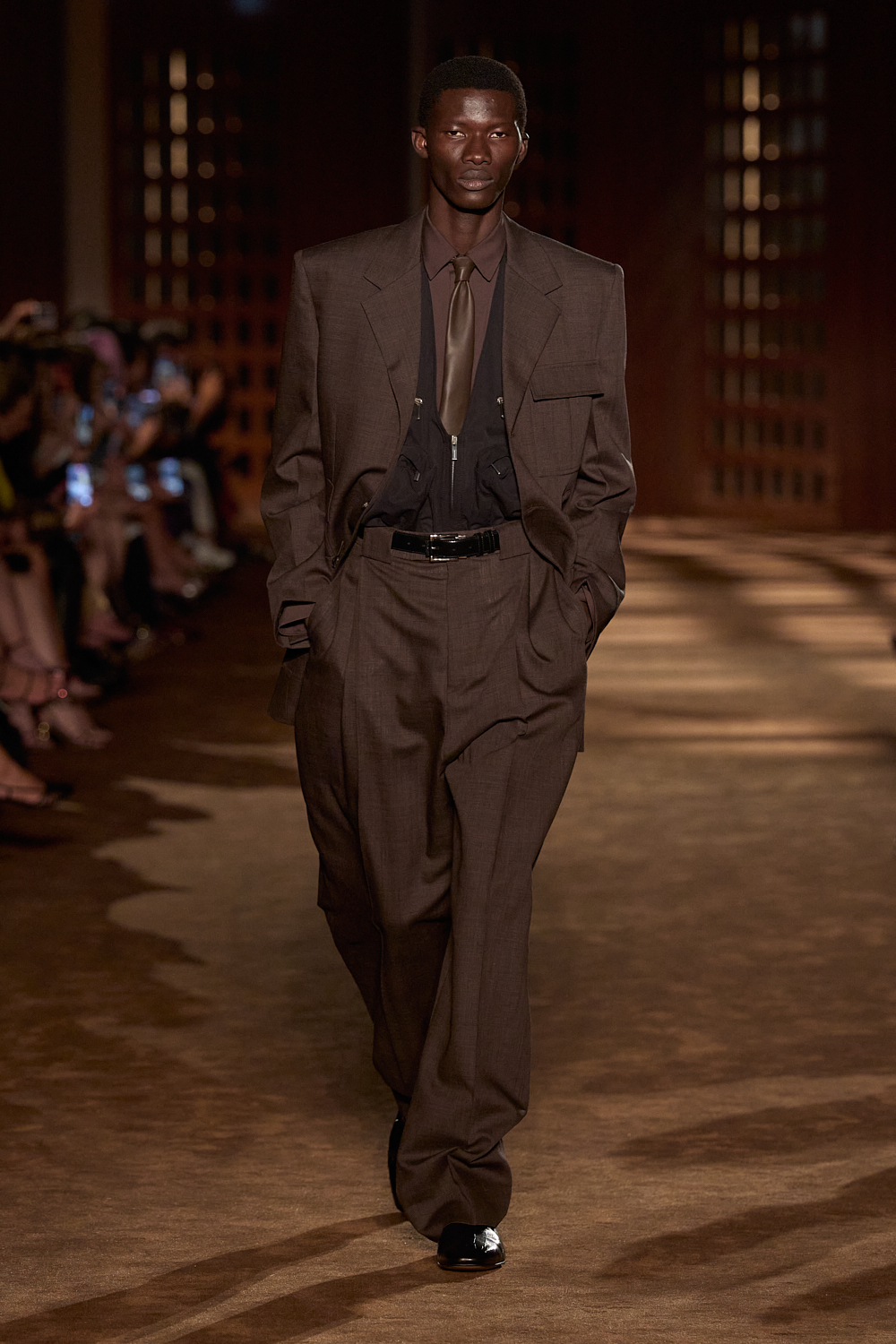
Surrealism, another recurring reference for Davis, informs the collection through tonal textures inspired by dreamlike rayographic and solarised portraiture. These influences appear in material transparencies and contrasts, while sun-faded leathers, natural fabrics and prints echoing the topography of terrain reflect the designer’s interest in the movement’s muses.
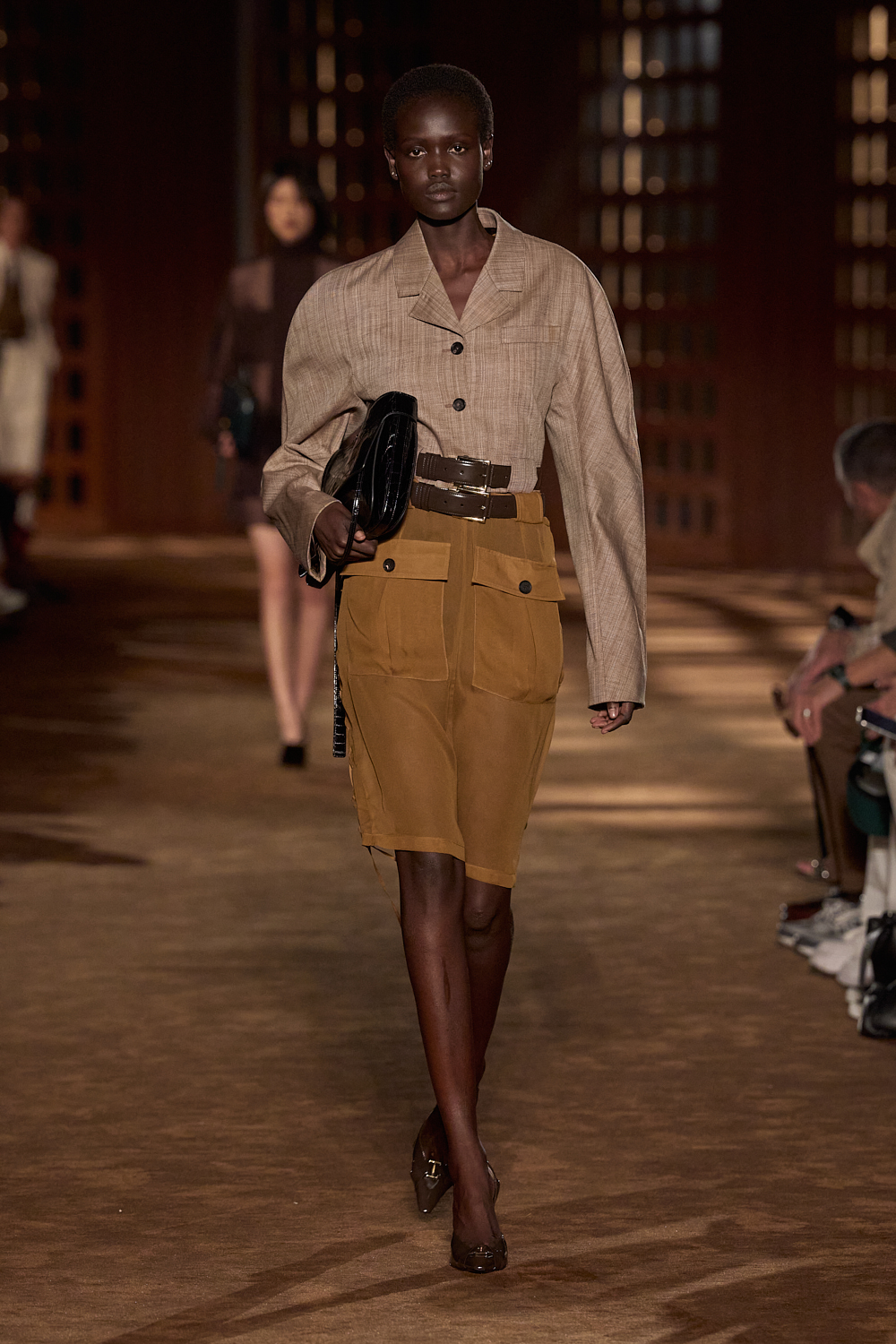
“I was inspired by the women of the era who were taking ownership of their own narrative: who were subjects of imagery but also travelled the world to create their own,” says Davis.
Footwear further connects the collection to Ferragamo’s history. The F wedge, first pioneered by Salvatore Ferragamo in 1947, inspires a curved stiletto heel decorated with a new interpretation of the Vara bow, as well as a satin mule with Art Deco-inflected jewellery. Other iterations of the F wedge appear on linear sandals and slingbacks, including styles with contrasting, illusory heels.
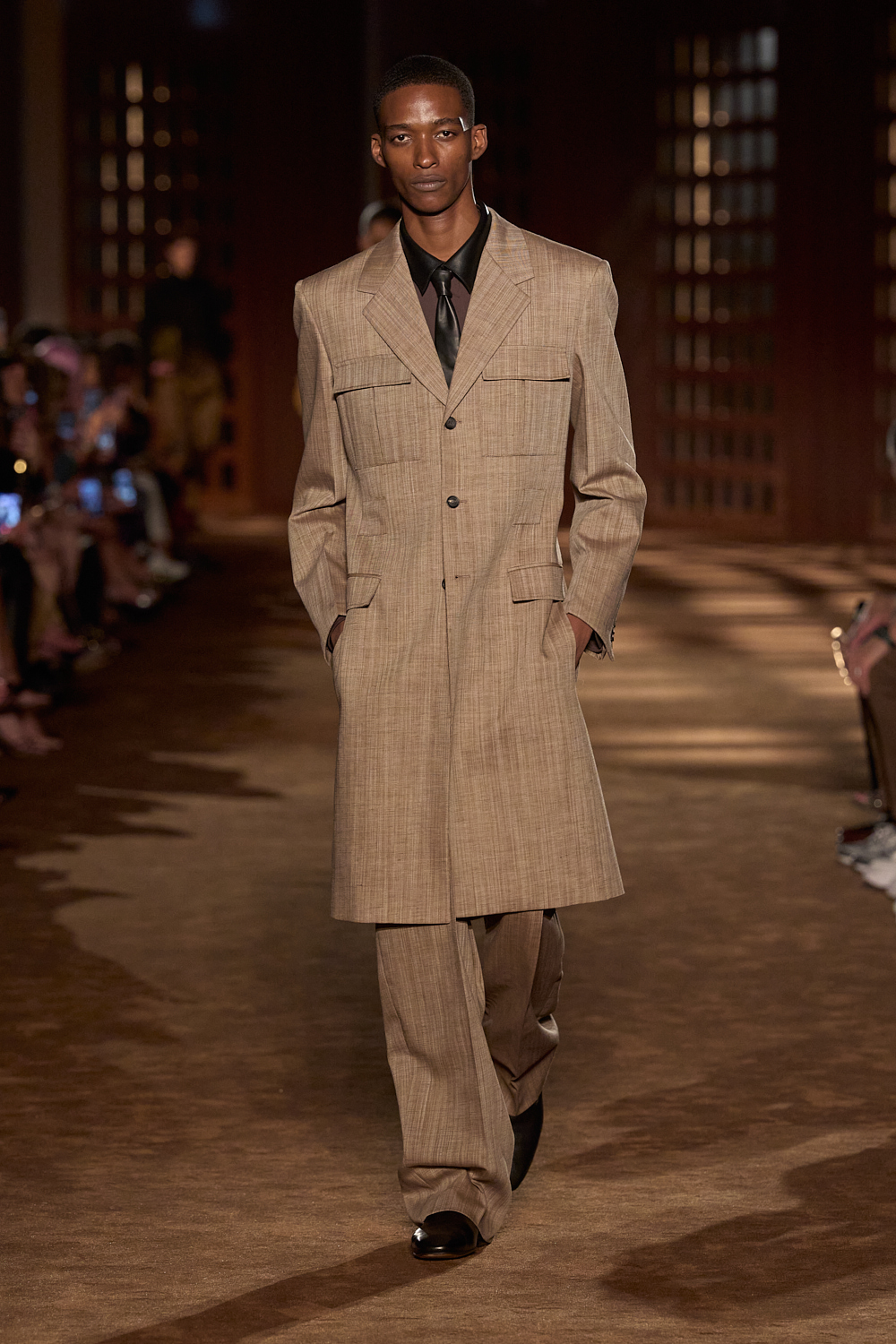
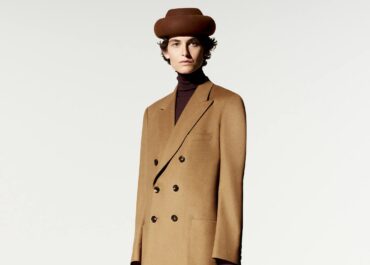
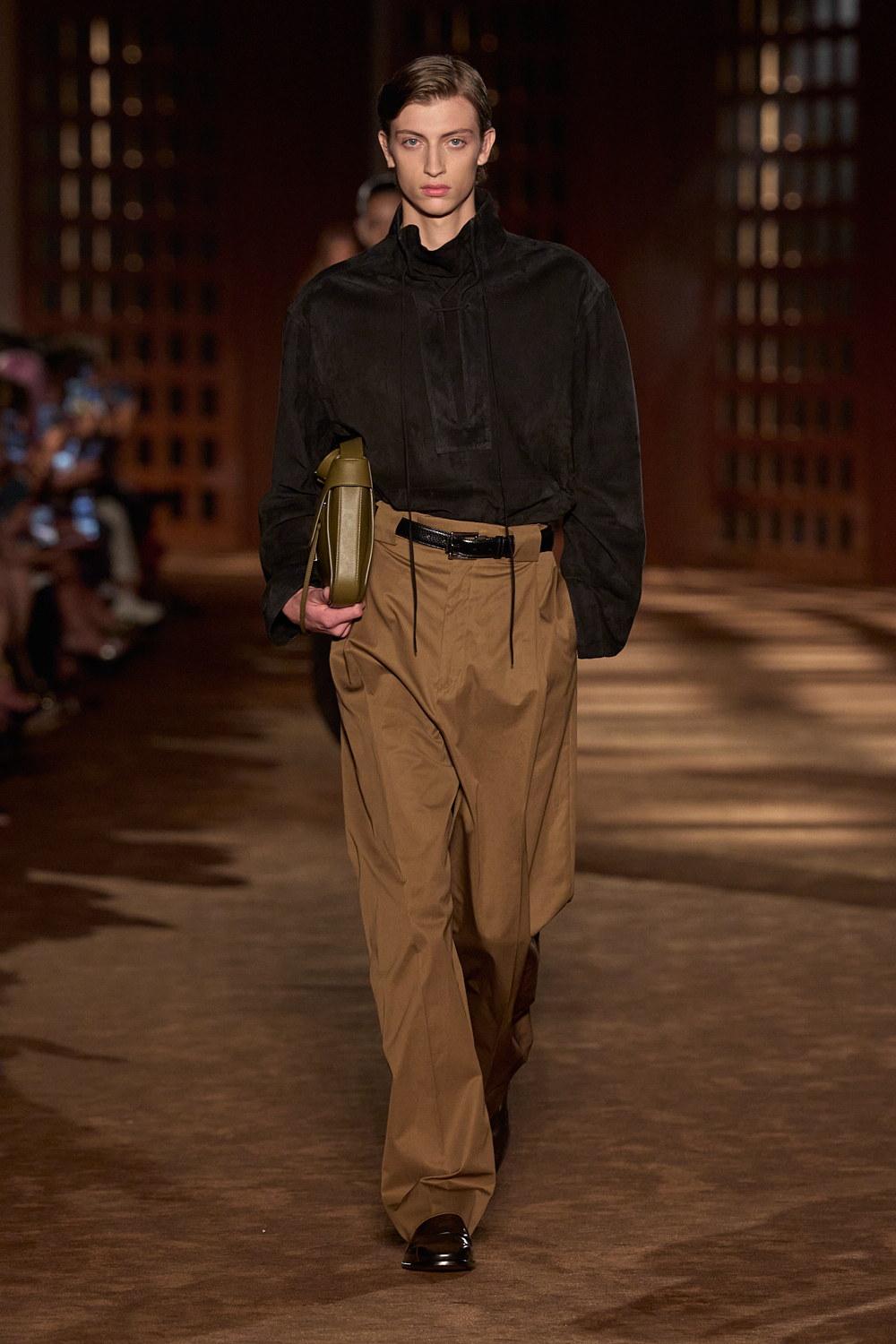
Menswear maintains a clean, understated approach, with double monkstrap shoes accompanied by a supple nappa leather slipper and a polished version featuring an embroidered toe.
Accessories include seasonal interpretations of the Cara bag in leather and suede, while the Hug is re-proportioned into a new East-West silhouette and rendered in a crinkled double silk fabrication.