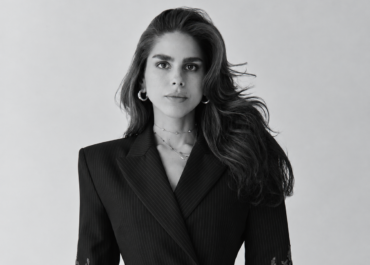

For Palestinian designer Dana Riad, getting dressed has always been an exercise in creative expression.
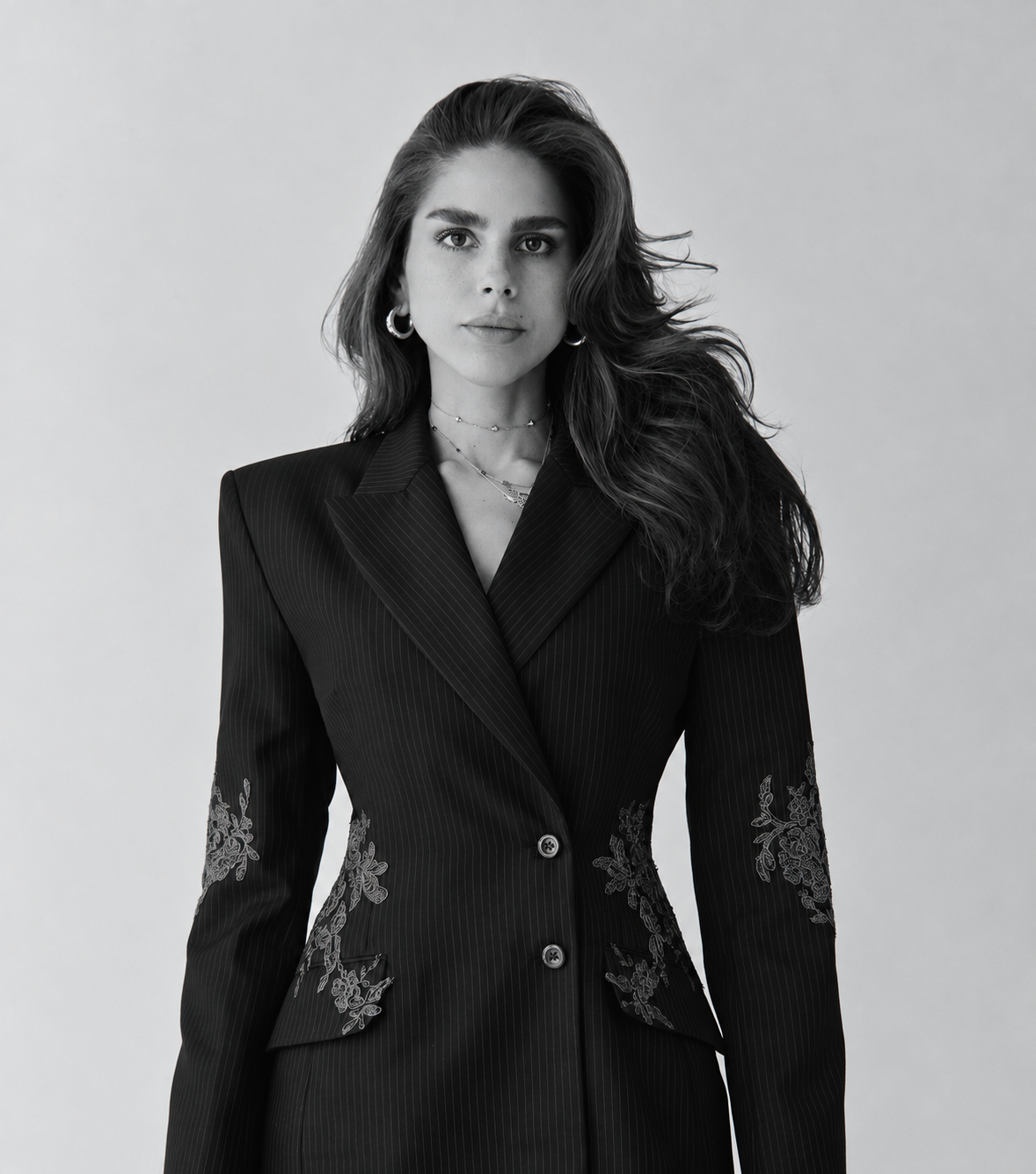
Born and raised in Qatar, Riad studied both interior and fashion design at VCUarts Qatar, developing an understanding of structure, proportion and form that continues to inform her eponymous womenswear label.
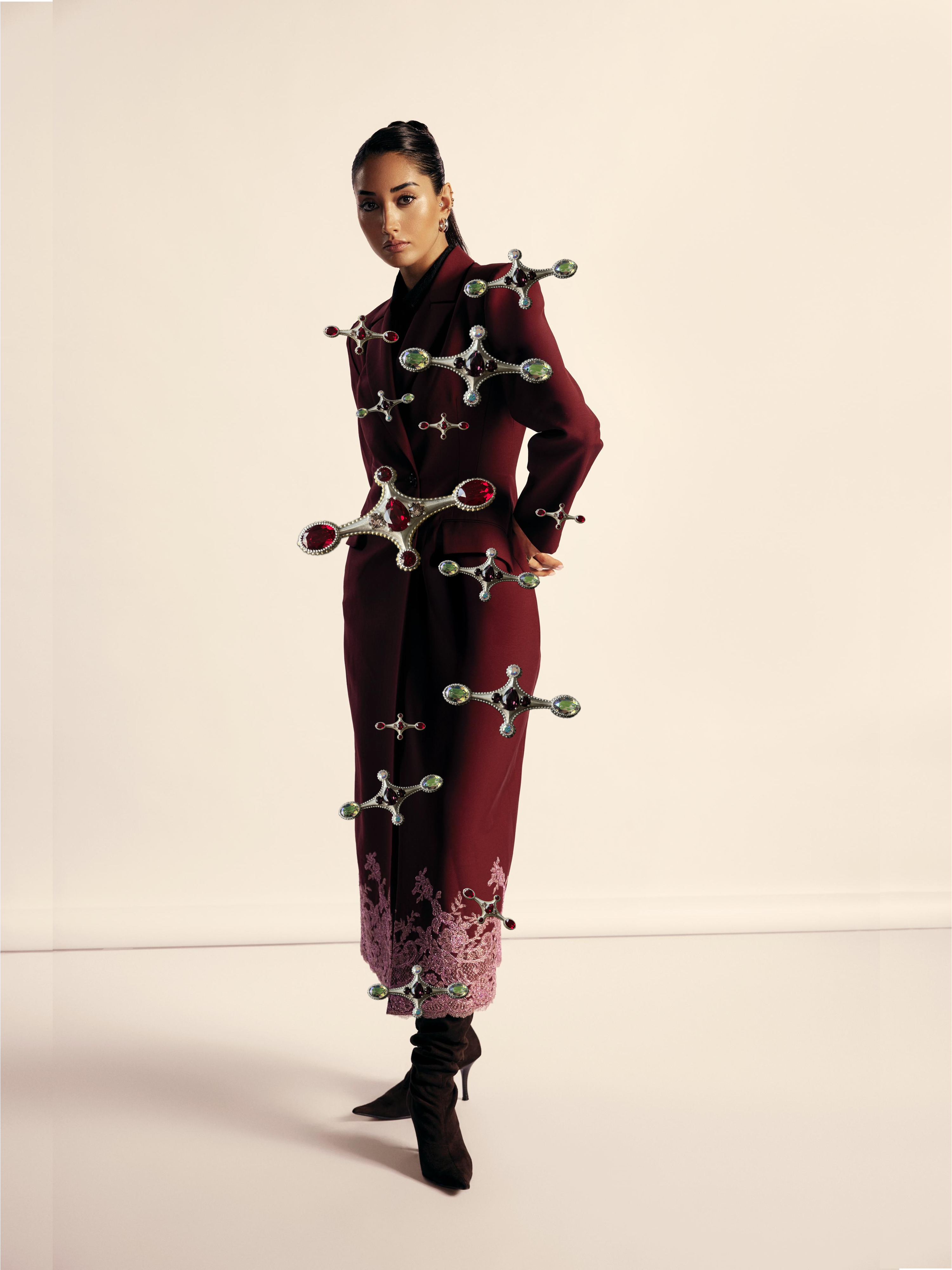
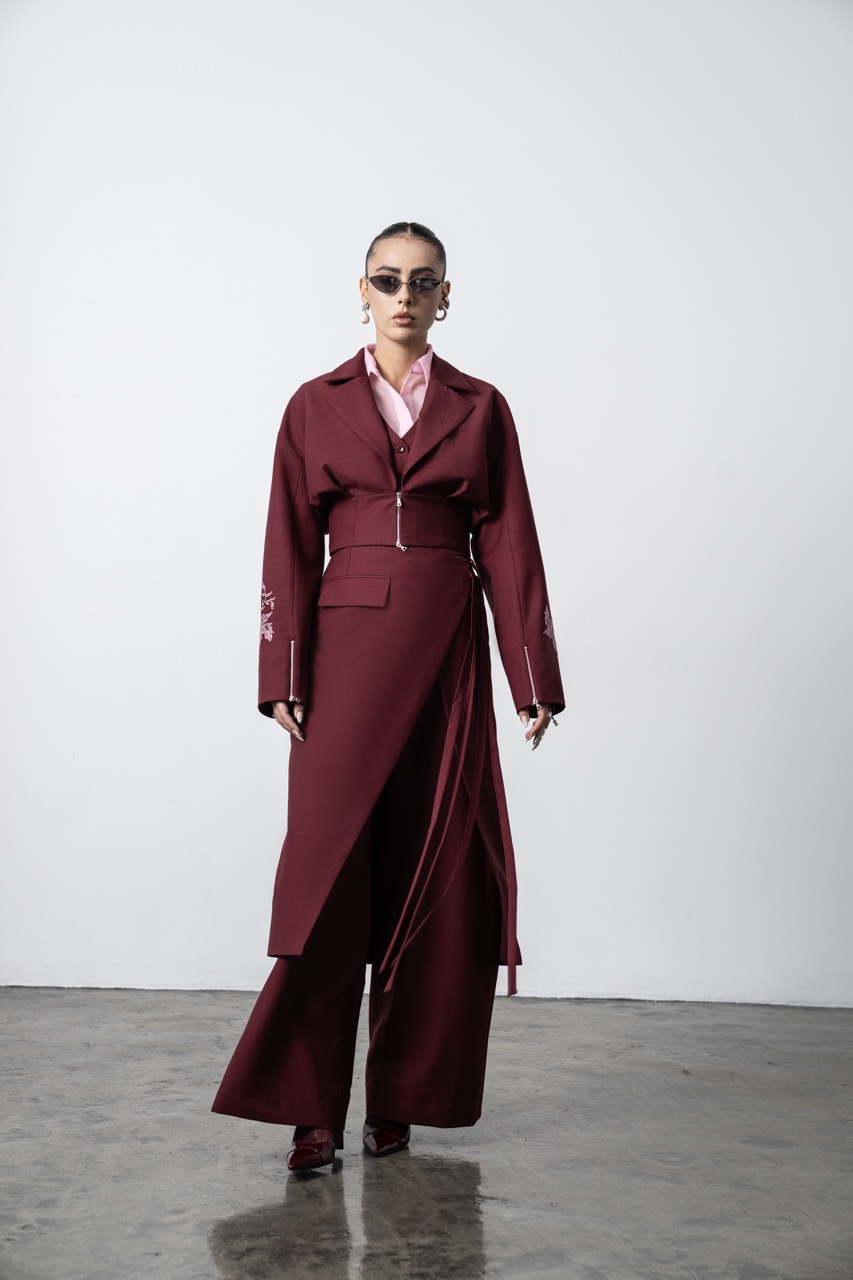
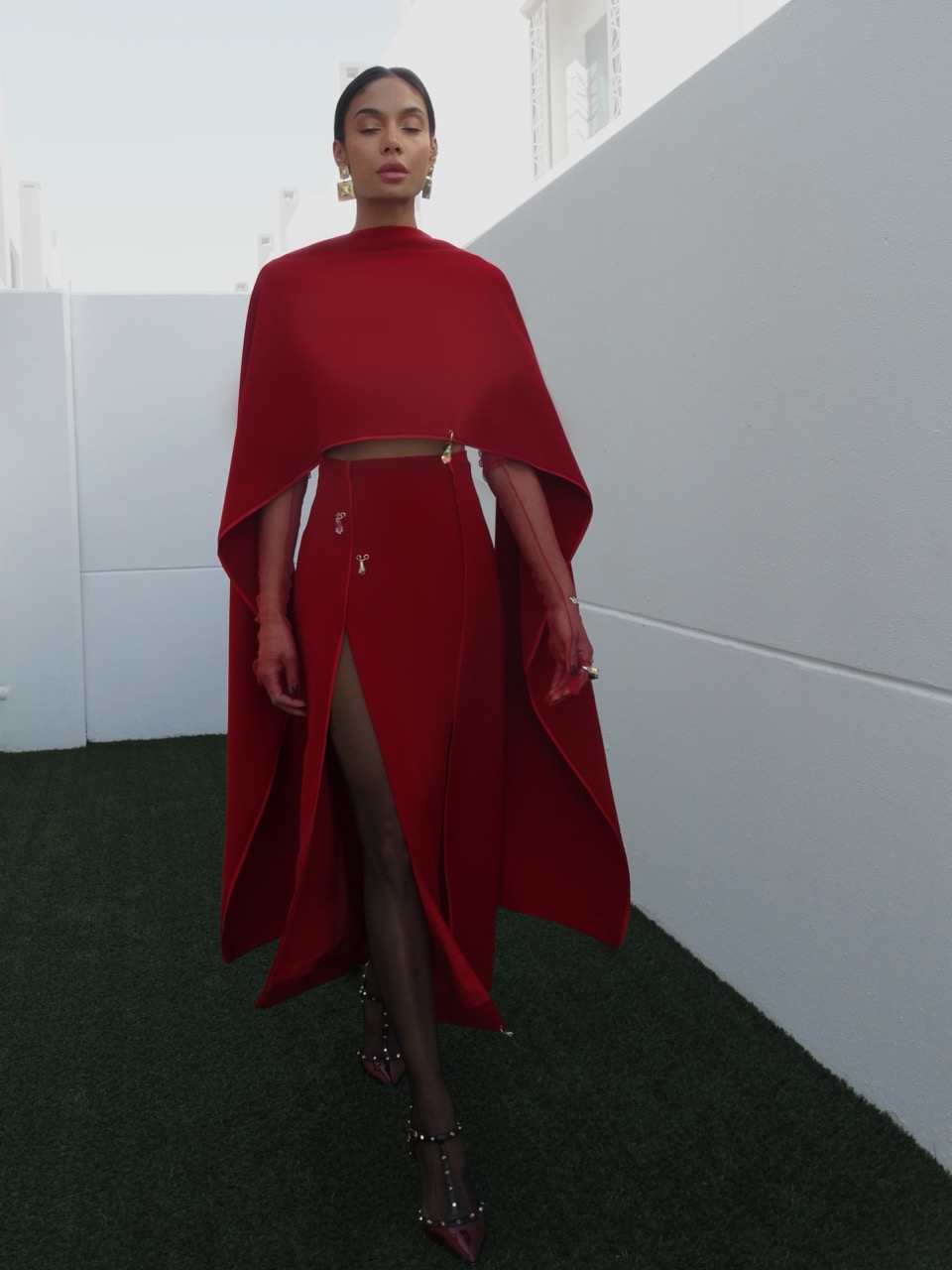
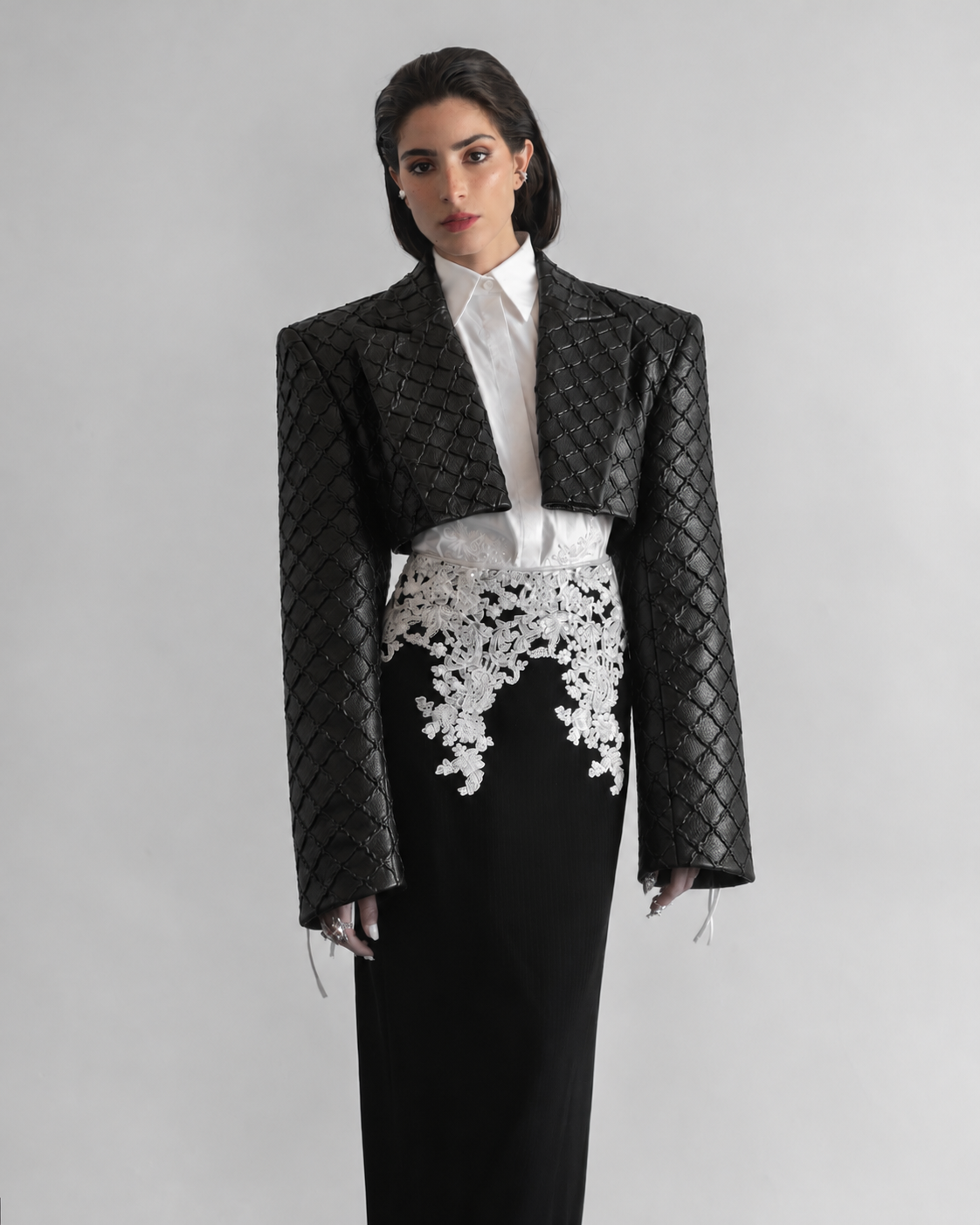
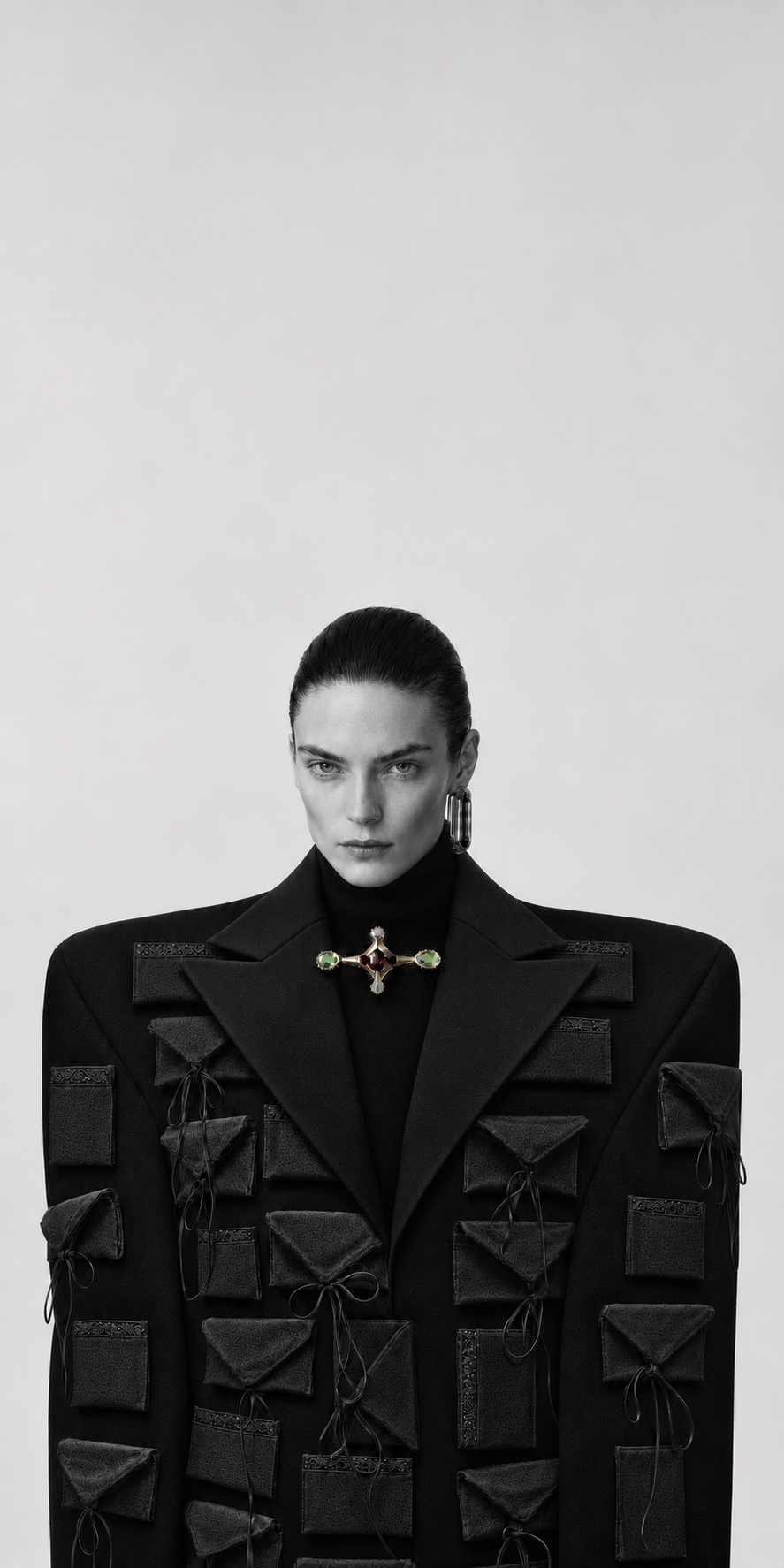
Her vision of the modern warrioress is articulated through sharply defined shoulders, sculptural silhouettes, integrated jewellery and the interplay between rigid construction and fluid fabrics. These contrasts speak to Riad’s fascination with the complexities of femininity and the relationship between what a woman wears and how she carries herself.
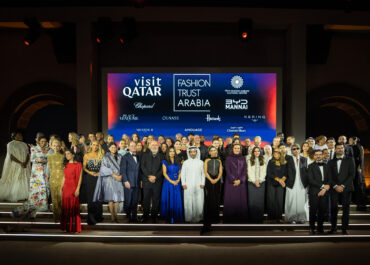
Prior to her win in the Evening Wear category at the 2026 Fashion Trust Arabia Awards, we spoke to her to discuss her creative philosophy, the realities of building an independent brand in the Middle East and her ambitions to establish a multidisciplinary design house.
What first inspired you to become a fashion designer, and what was the original vision behind establishing DANA RIAD?
As a child, I would enter drawing and art competitions at different clubs around Doha. I knew I wasn’t necessarily the best artist in the room, but for some reason, I always knew I would win. And often, I walked away with first place. It’s a funny contradiction I’ve always had: never quite satisfied with how good I am, yet somehow completely convinced of what I’m capable of.
I also had a very particular relationship with clothes growing up. I rarely connected with what was commercially available or how it was presented. But I loved dressing up. I would layer things differently, turn necklaces into belts and wear pieces in ways they were never intended to be worn. I wasn’t interested in recreating a look. I wanted to create my own.
That curiosity eventually led me to study both interior and fashion design at VCUarts Qatar. I never wanted to choose just one creative field.
When I established DANA RIAD, the original vision was to design for women like me. Not a hypothetical customer or a market opportunity, but a woman with different sides to her identity who wanted clothes that could express all of them. Women who are confident, independent and comfortable with their contradictions.
The idea of the modern warrioress is central to your work. What does this figure represent to you?
The modern warrioress, to me, is a woman who is constantly fighting, overcoming, evolving and challenging herself. Not necessarily fighting the world but often fighting her own limitations. I relate to that personally because I’ve always had this constant urge to prove myself, not necessarily to others, but to myself.
I’ve always believed that God created women with an extraordinary kind of strength. But possessing that strength and knowing how to recognise and express it are two very different things.
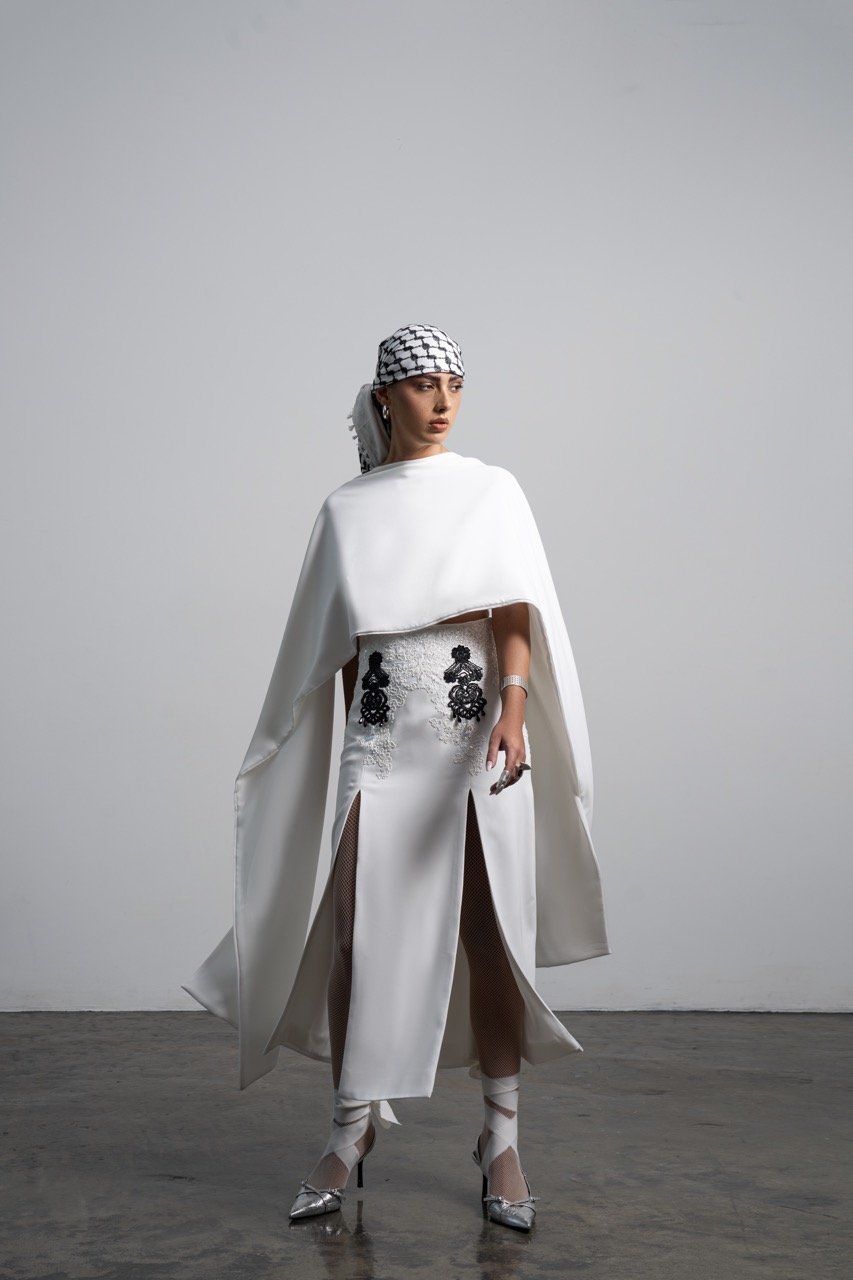
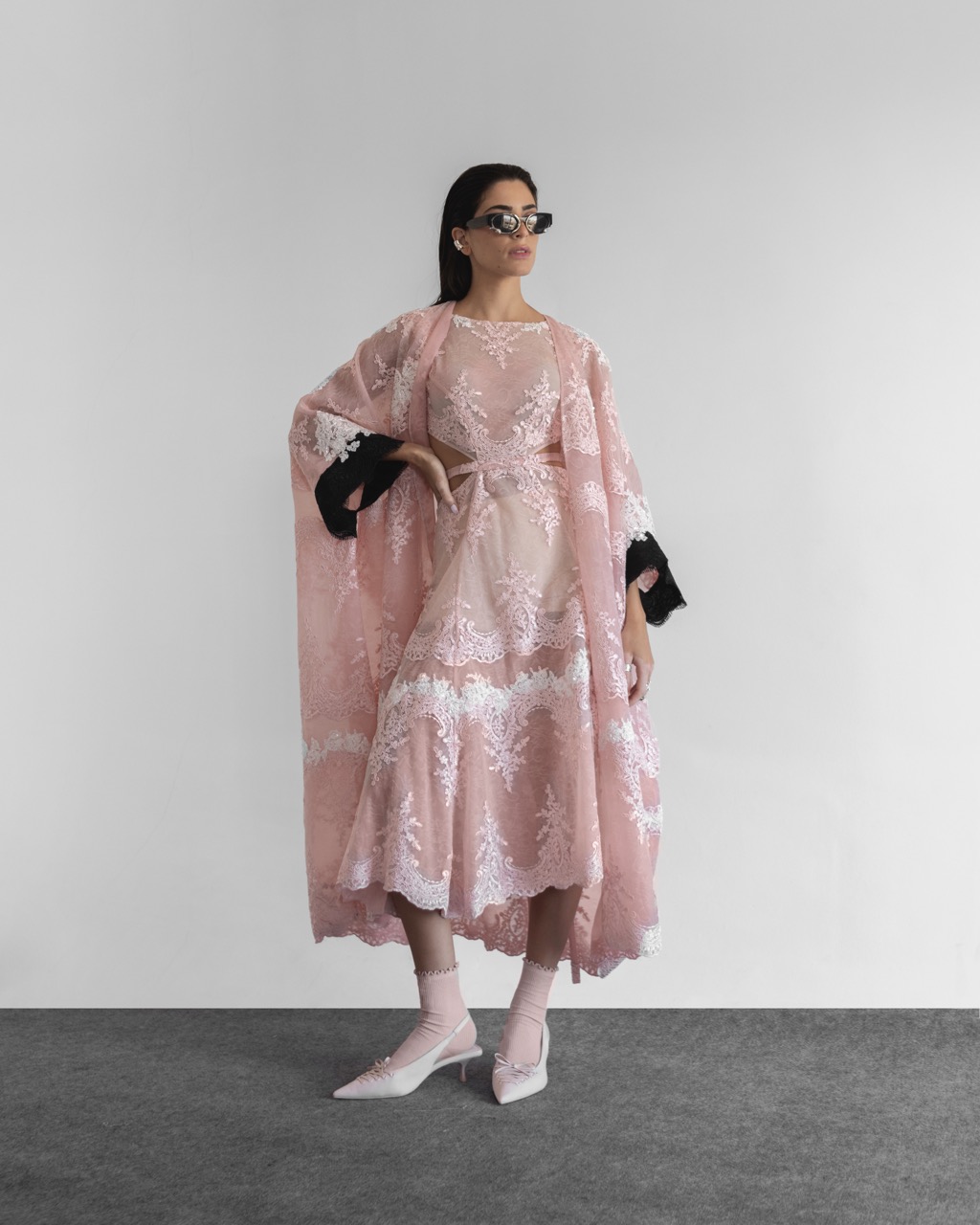
I pay particular attention to what happens to a woman’s posture and presence once she puts on a garment. Sharp shoulders, tightly constructed waists, commanding proportions, rigid structures against transparent fabrics. I love that tension between control and exposure, between something that almost protects the body and something that reveals it.
Symbolism and jewellery are equally important. My Riad swords, sculptural metal elements and jewellery integrated directly into garments aren’t simply decorative. They become part of the armour, part of the identity and part of how the woman carries herself.
I don’t design to give a woman power. I believe that power already exists within her.
Your work frequently combines architectural tailoring, fluid fabrics and strong silhouettes. Can you talk us through your creative process?
My creative process rarely starts with a mood board or a fixed idea. It usually begins with a symbol I want to explore, or an image of how I want a woman to look, move and exist within a particular setting.
Some of my strongest creative moments happen when I’m driving alone. I imagine a woman walking through a scene, wearing a design that exists only in my head. I replay it again, changing the proportions, layering, colours and details each time. It’s like directing a scene in my mind.
It’s a slightly chaotic process, but somehow very controlled. By the time I sit down to sketch, I’ve often already developed a clear vision of what I want to create.
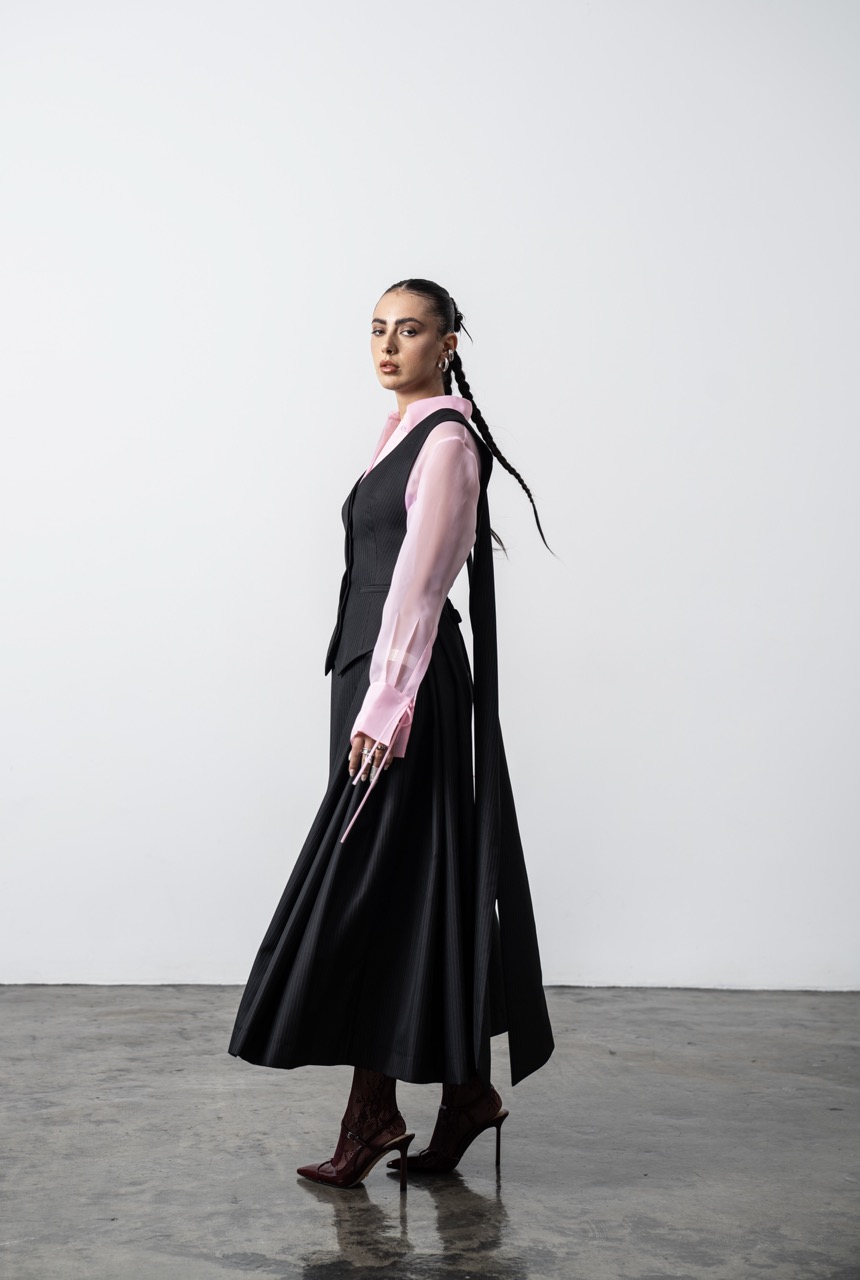
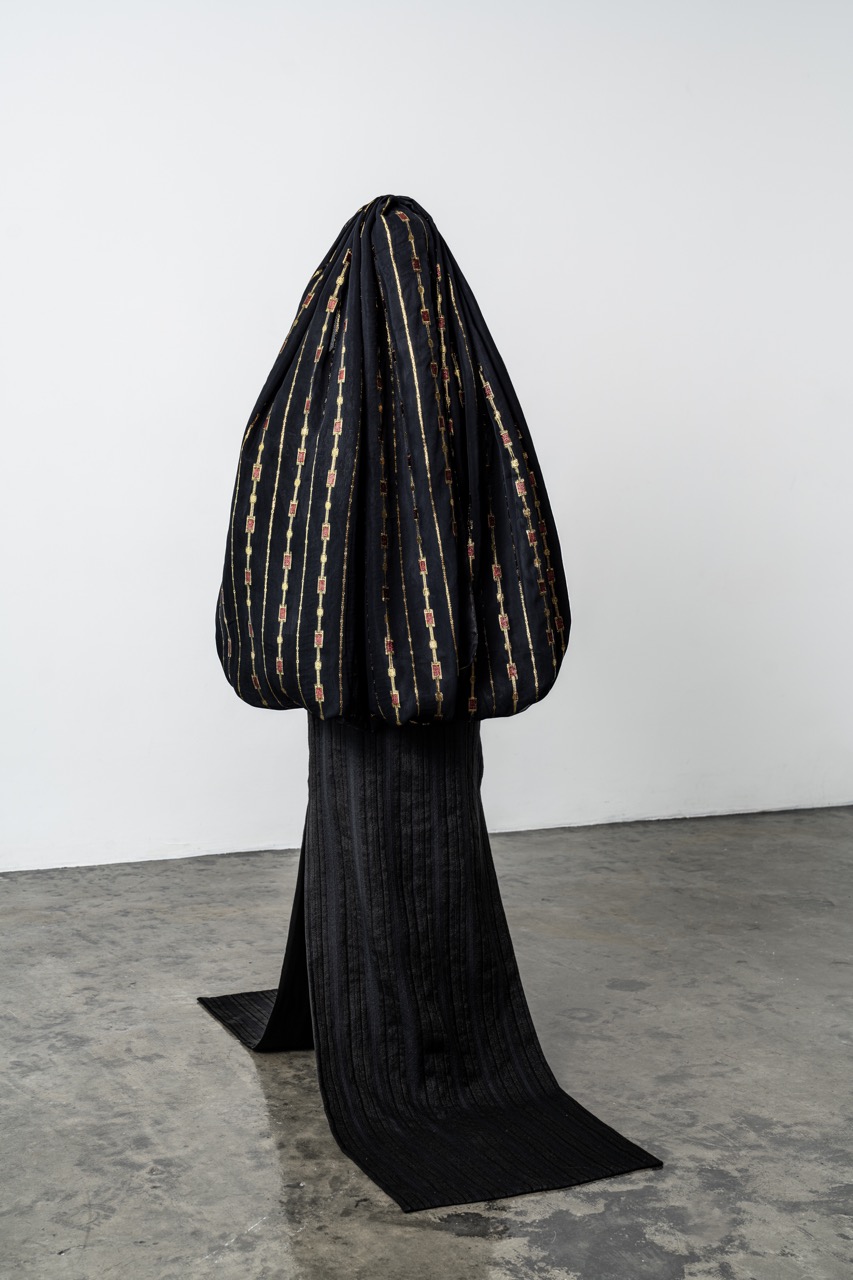
My approach to clothing is quite architectural. I don’t necessarily see a garment as fabric covering a body, but as something that creates a new shape, proportion and presence around it. I’m interested in what happens when different pieces are layered, how rigid structures interact with fluid fabrics and how the final silhouette changes the way a woman carries herself.
How has your Palestinian heritage shaped your perspective as a designer?
Being Palestinian by blood has shaped the way I see the world, not necessarily what I put on a garment. It has influenced my understanding of strength, resistance, femininity and power, and I think that naturally connects to my idea of the modern warrioress.
I’ve never looked at my heritage as a theme I need to design around. I don’t feel the need to create a collection about Palestine for my work to be Palestinian. It’s already part of who I am, how I think, what I question and the stories I choose to tell.
My connection to Palestine often comes through my relationship with symbolism, objects, memories and the meanings we attach to seemingly ordinary details. Sometimes those references are visible, sometimes they’re much more subtle. But I don’t believe cultural identity needs to be immediately recognisable in a garment for it to be present.
Through DANA RIAD, I want to contribute to a broader understanding of Palestinian creativity. One that speaks of strength, beauty, sophistication, intellectual depth and imagination.
Who are some of your greatest creative inspirations?
I’m inspired more by details, objects, symbols and experiences than by any one designer. Sometimes a single detail is enough for me to imagine an entire world around it.
I admire Alexander McQueen for the emotional depth of his work, his extraordinary detailing and his fascination with powerful, almost frightening women. Sarah Burton for her perfectly layered looks, contrasting silhouettes and ability to make complicated tailoring appear effortless. More recently, Erdem has caught my attention for the beautiful tension between refinement and rawness.
Beyond fashion, I’m deeply drawn to Brutalist architecture. Its commanding presence, the contrast between heavy structures and open space, and the way light and shadow create entirely new forms. It’s architecture that makes you stop and stare.
Jewellery is another obsession of mine. I’m a collector by nature, and what interests me goes far beyond its appearance or symbolism. It’s the physical experience of wearing it: the weight of stacked pieces, the way they change the movement and expression of my hands, even the sounds they make.
Your experience spans costume design, education and digital fashion. How have these disciplines informed your approach?
My approach to design has always been multidisciplinary. I’ve never seen these disciplines as separate careers. They constantly influence one another, and each has challenged the way I think and create.
Costume design taught me to understand the character before the theme, period or performance. Every character needs a distinct identity, even when they belong to the same story. That has stayed with me in fashion, where I believe every look should have its own personality within a larger narrative.
Teaching as an adjunct professor at VCUarts Qatar made me realise that education alone doesn’t make you a designer. It gives you the foundation, but it’s through years of real, extensive experience that you discover your capabilities, develop your perspective and understand what kind of designer you want to become.
Digital fashion made me realise how deeply connected I am to physical experiences, emotions and things I can touch and manipulate. It wasn’t my natural creative language, but I wanted to understand it rather than dismiss it.
What do you hope women feel when wearing your designs?
I want her to put on one of my pieces, look in the mirror and feel that she’s exactly how she wants to be seen. Strong, feminine, a little intimidating and completely comfortable standing apart. I want her to love how she looks, how she carries herself and, most importantly, how she feels in it. Not because she’s become someone else, but because she recognises herself in a way she hasn’t before.
What are the biggest challenges facing independent designers in the Middle East today?
I think one of the biggest challenges for independent designers in the Middle East is not a lack of talent, but the infrastructure needed to support it.
I’ve personally experienced the gap between creative ambition and production reality. Finding the right craftsmanship, technical expertise and manufacturing capabilities comes at a significant cost, often financed entirely by the designer. I still have an archive of designs and jewellery in my head that I haven’t been able to produce because the right resources haven’t been available.
What I particularly admire about Her Excellency Sheikha Al Mayassa’s vision for Qatar’s creative industry is her emphasis on long-term development rather than immediate recognition. I’ve experienced that approach firsthand through M7, whose mentorship programmes, guidance and opportunities have played a meaningful role in my development as a designer.
But visibility is not the same as opportunity, and opportunity is not the same as having the resources to deliver. A designer can receive international recognition and still lack the production capacity, financial backing or distribution network to turn that recognition into a sustainable business.
What does being selected as a Fashion Trust Arabia finalist mean to you, particularly as a Palestinian designer?
When I found out I was an FTA finalist, my first feeling was relief. Almost a confirmation that all those years of consistency, stubbornness, hard work and sacrifice were worth it. But that relief quickly turned into a sense of responsibility to make the most of the opportunity and everything I’d worked towards.
There’s an immense sense of pride in having Palestine next to my name, while also representing Qatar, where I was born, raised and developed my creative identity. Both are part of my story, and being recognised on a platform like Fashion Trust Arabia makes that particularly meaningful.
Looking ahead, what would you like to achieve with your brand?
I want to take DANA RIAD international, with a strong retail presence and lasting industry relationships. I want to expand into jewellery, accessories and more ambitious collections, while building my own specialised production team to give me the creative freedom to execute them properly and sustainably.
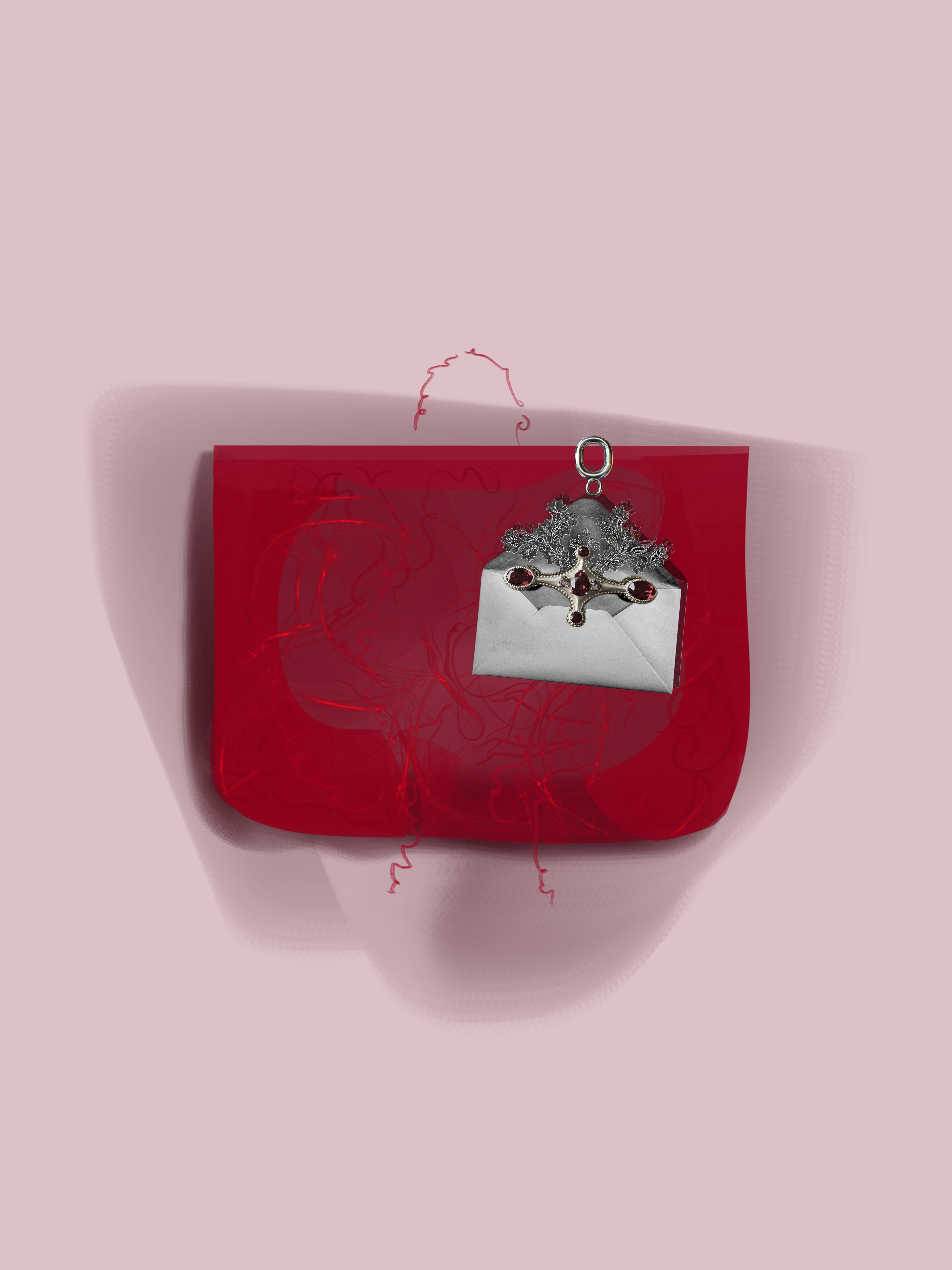
I want DANA RIAD to evolve beyond a fashion label into a multidisciplinary design house, where clothing, jewellery and objects become one. Not separate categories, but pieces designed to connect, interact and become part of each other. I want to challenge where a garment ends, where jewellery begins and how everyday objects can become part of what we wear.
What is the best piece of advice you’ve ever been given?
One piece of advice that has never left me came from my interior design professor at VCUarts Qatar in 2011, during my graduation project.
He told me, “Don’t choose a beautiful building to create something beautiful. Find something raw, unfinished, even ugly, and make it beautiful.”
And it completely changed how I understood beauty. I stopped seeing imperfections as something to hide and started seeing them as something to work with. I became drawn to the raw, the unfinished and the tension they create against refinement.