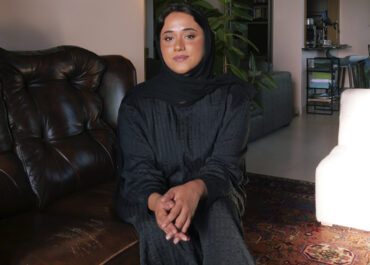

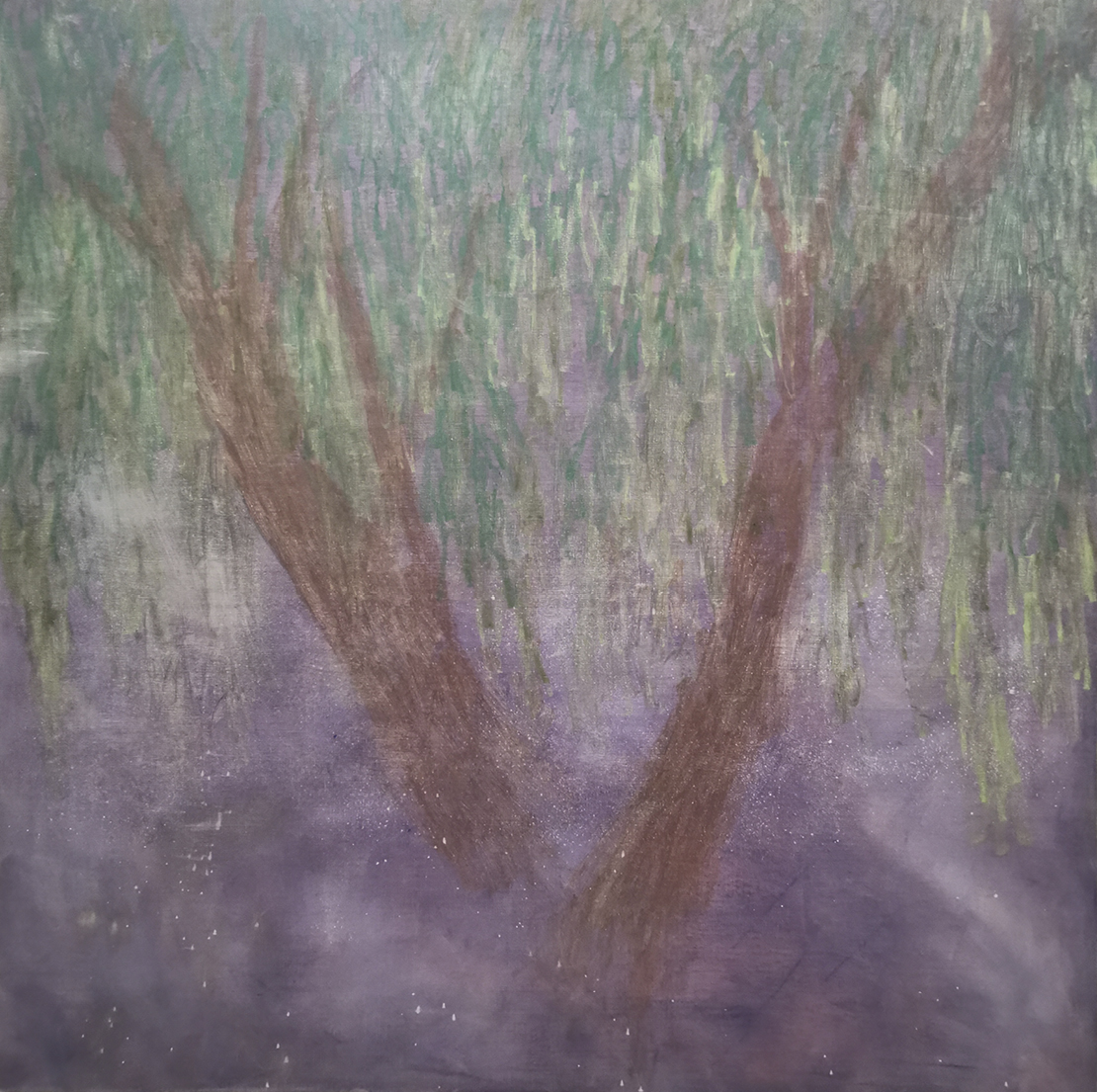
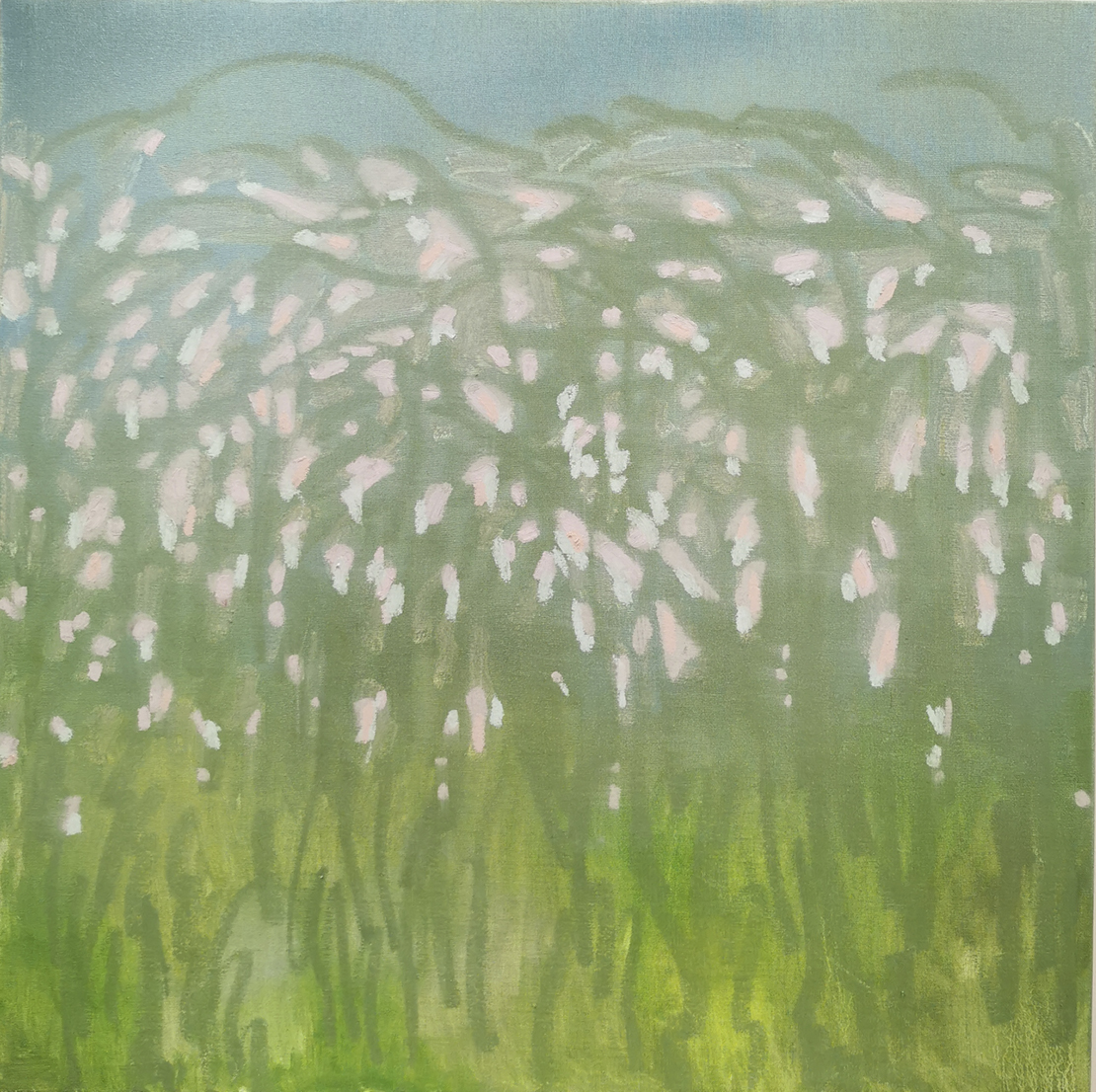
The landscapes of the UAE have long provided inspiration for Alia Zaal, although her paintings are concerned as much with how we remember places as how they appear. Working primarily across painting and photography, the Emirati artist explores the subtle changes in light, colour and atmosphere that shape our perception of familiar surroundings. Her subjects range from ghaf trees and mangroves to construction sites and the expanding urban environment, often beginning with photographs captured during everyday journeys.
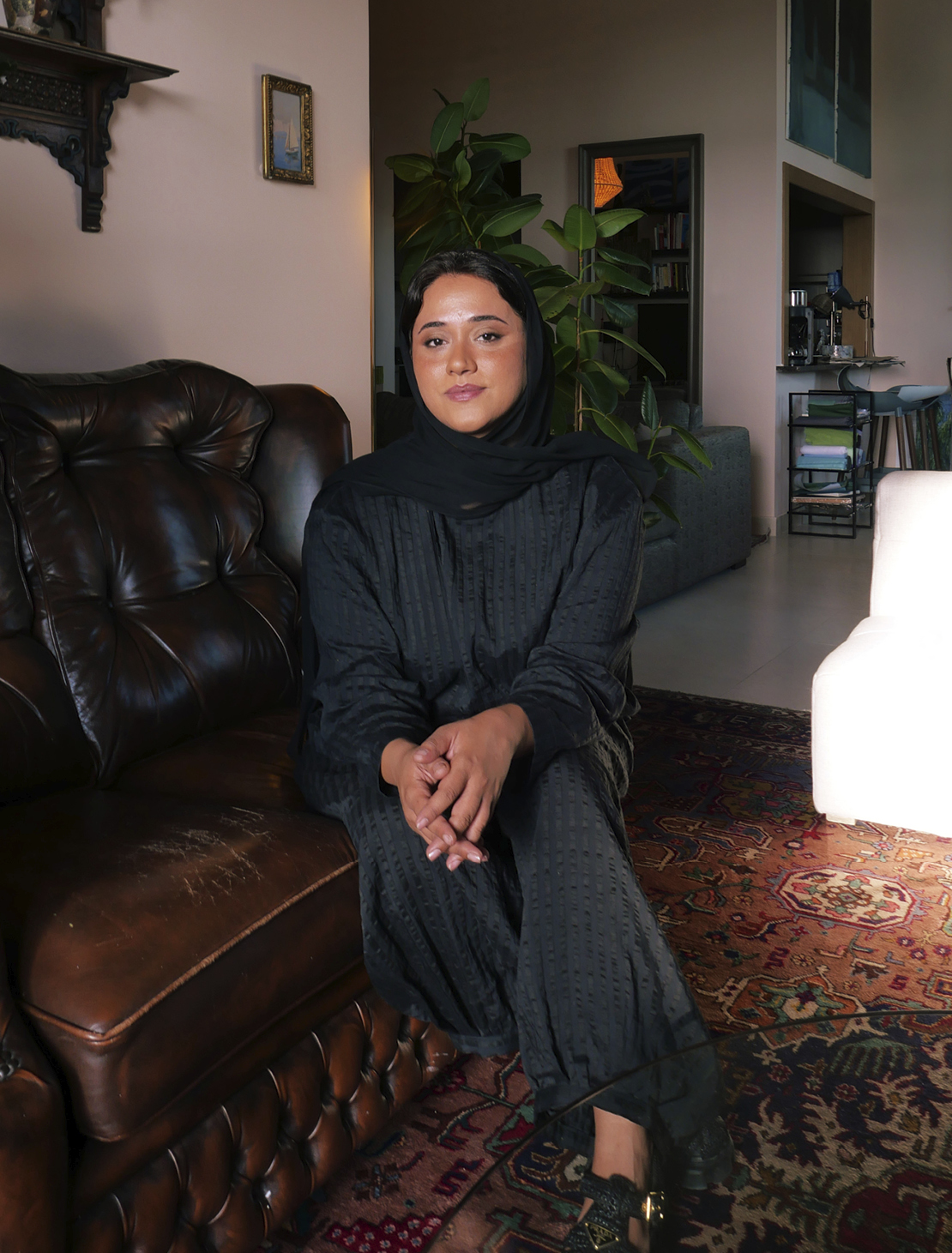
Having grown up in Dubai and later moved to Abu Dhabi, Zaal has witnessed the country’s physical transformation first-hand. Her work reflects these experiences, combining personal memory with a close observation of the natural world. At Frieze Abu Dhabi, she joins pioneering Emirati artist Mohammed Kazem for At Another Meeting Point, the inaugural In Dialogue exhibition curated by Dirwaza Curatorial Lab. Their shared interest in light, space and perception provides a starting point for a conversation that spans generations of Emirati art.
Your work is being presented alongside Mohammed Kazem’s in the first edition of In Dialogue. What makes this collaboration particularly meaningful?
I’ve known Mohammed Kazem for about twenty years, since I was a student studying fine arts at the University of Sharjah. I visited his studio and The Flying House in Dubai, and we spent a lot of time talking about art, conceptual art, studio practice and art in the UAE. We’ve had this relationship ever since.
I continued working with Mohammed as a curator. When I was Assistant Curator for Modern and Contemporary Art at Louvre Abu Dhabi, I researched his work extensively and developed different acquisition proposals as part of my curatorial work.
I believe our artistic practices are connected particularly through the subject of light, and how we both relate light to space and our experience of it.
Having known him for so long, and having followed each other’s practices over the years, makes this opportunity to exhibit together particularly meaningful to me.
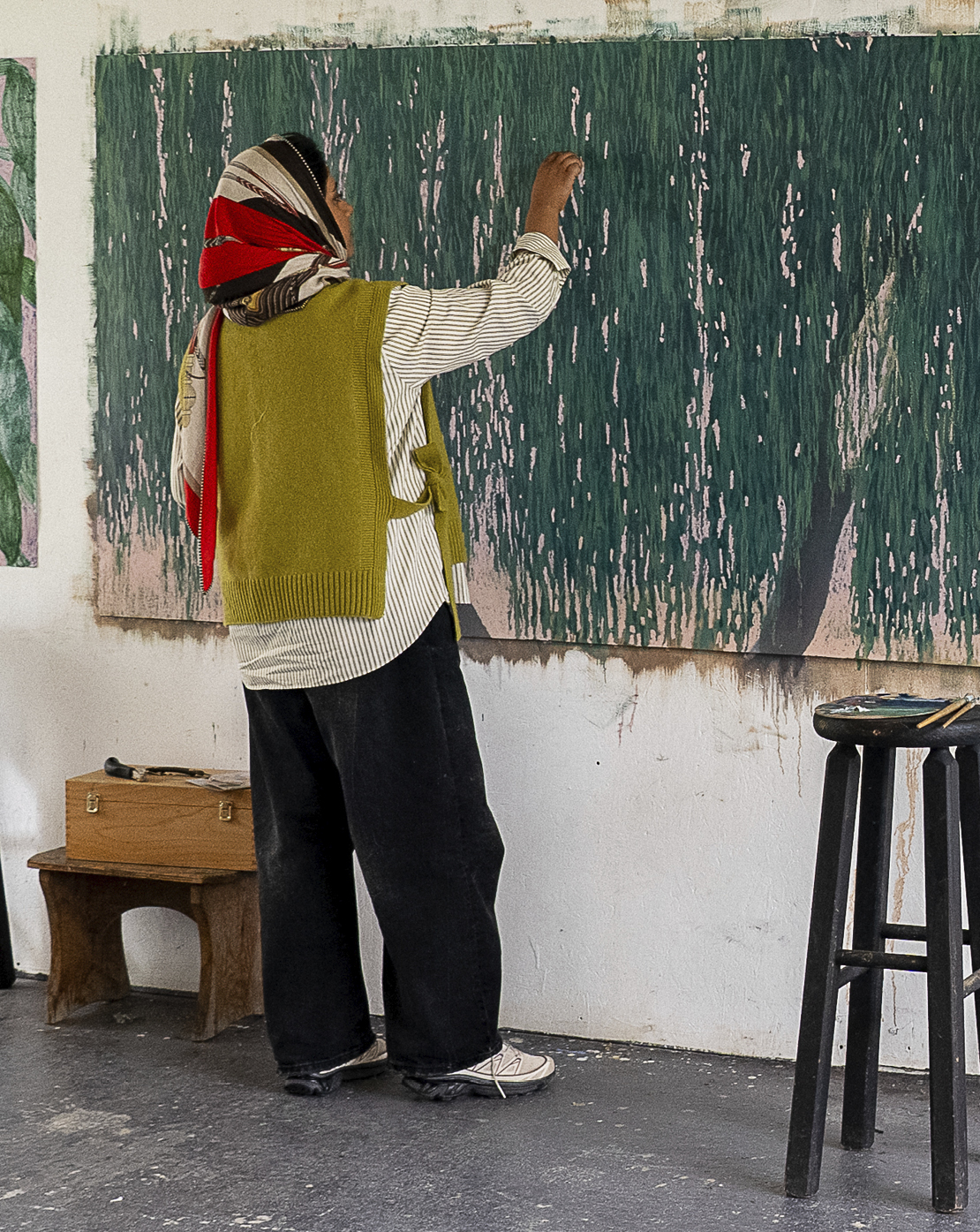
Your paintings often begin with photographs of everyday moments. What attracts you to these subjects?
What draws me to these moments is my appreciation of beauty. I’m a very visual person who loves contemplation and seeing beauty in everything.
I see beauty in construction sites. I see beauty in nature, in movement, in patterns, ripples and reflections. I see beauty in change and transformation.
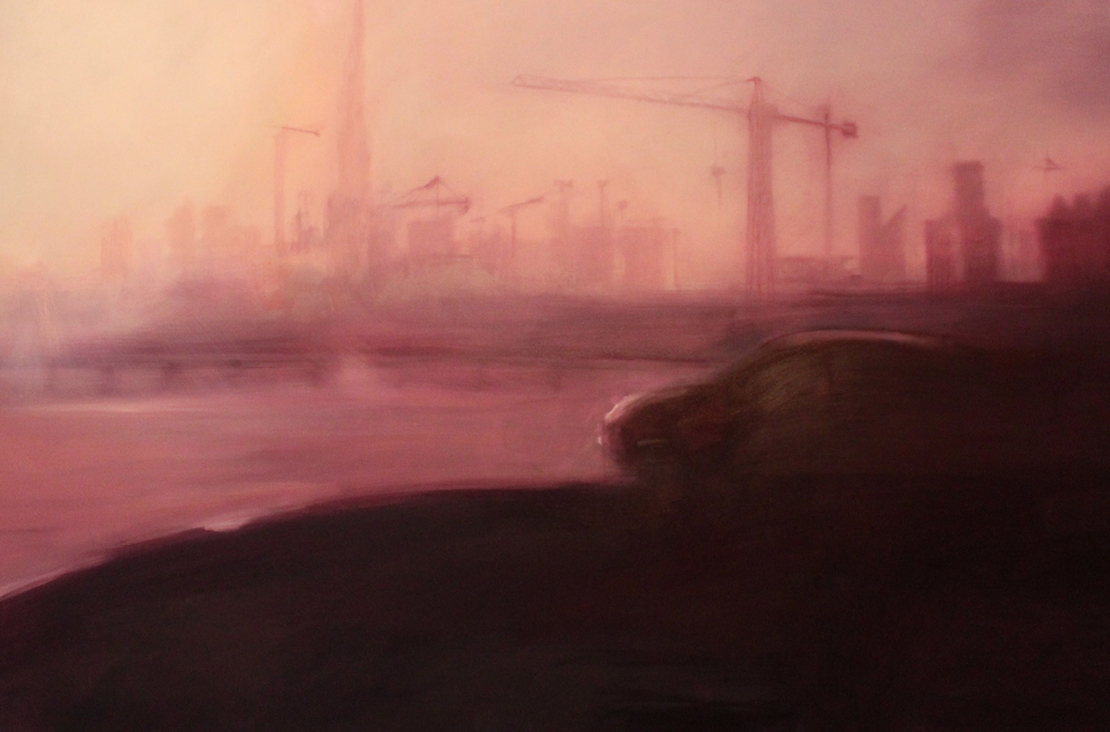
A lot of the time, I take photographs when I’m in motion, often when I’m in a car. I’m interested in the way our eyes function, how we see things, and how we translate the images we see through light and colour.
After taking these photographs, I don’t necessarily return to them to reproduce the exact images in painting. A lot of the time, I paint from memory. Taking photographs is an exercise for me. It’s a way of capturing the frame of what I see, the lighting and the relationship between objects. In a way, these photographs warm me up for painting.
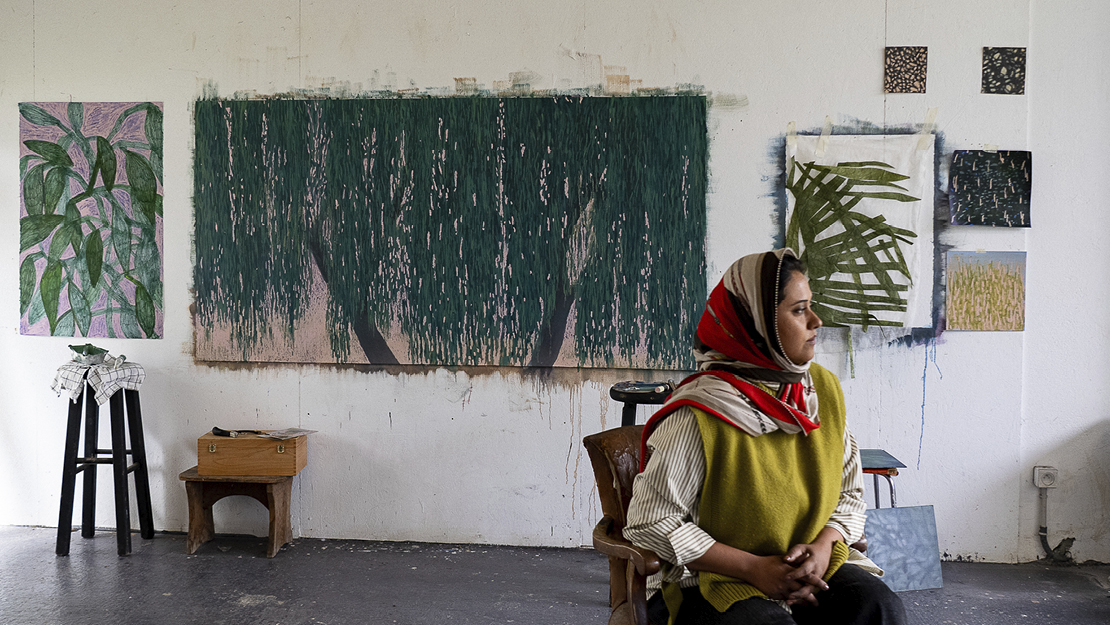
Memory and perception are recurring themes in your work. How do they influence your interpretation of a place?
What we see is not necessarily what we remember, and what we remember is not necessarily what we eventually paint.
When I look at something, I observe its light, its colours, the positioning of objects and their relationship to one another. Sometimes I photograph it, but when I return to it through painting, I often paint from memory rather than from the photograph itself.
This creates another perception of the image, another idea of what I originally saw.
I’m also interested in how we see the same place differently over time. The light changes, the atmosphere changes, and the landscape itself can change. Our own experiences and memories influence the way we look at these places.
You often return to subjects such as ghaf trees and mangroves. What do these repeated encounters reveal?
These repeated encounters allow me to understand light and place. For example, if I paint the ghaf trees of Yas Island versus the ghaf trees of Al Khawaneej, Al Mamzar or Nad Al Sheba, the light and atmosphere are different in every location.Whether the trees are close to the sea or closer to the desert affects how we see them. These little nuances create a particular atmosphere in the air, changing the colour of the sky and the way light falls on the ghaf trees.
Mangrove trees are also seen differently at high tide and low tide, and from winter to summer. When you come closer to the mangroves at low tide, you begin to see their roots and all the details of life in the sea. It opens up another way of looking at these plants, an almost completely dreamlike way of seeing them.
How has growing up in Dubai and witnessing the country’s transformation influenced your artistic identity?
I grew up in what is now called Muhaisnah 1 in Dubai. It was known as Madinat Lootah, and it was an area full of palm trees.
I remember very fondly the nature that surrounded us: the palm trees, the bats, the bright stars and the bright moon. I used to sit on the rooftop and contemplate the sky.
The view from my bedroom window was of the desert. I used to see camels, and we would walk behind our house, not knowing what was at the end or what lay beyond the horizon. It almost felt like we were at the edge of Dubai, very far from the city.
I saw the development happening with my own eyes, year after year. Before I graduated from school, I began to see the highways appearing and hear the new sounds of cars and motorbikes.
Moving to Abu Dhabi in 2010 added a lot of vocabulary to my visual language, in terms of colour palette, lighting, environment and positioning. It was a completely different landscape, moving from the desert to an island and being surrounded by water.
All these transformations have influenced the way I capture my life and my environment as a painter.
How has Mohammed Kazem’s work influenced your own creative development?
I was introduced to Mohammed Kazem’s work when I was still studying fine arts, more than twenty years ago.
At the time, the artistic community was very close. Artists knew each other, visited each other’s studios and exhibitions, and shared ideas and experiences. These relationships were an important part of my own experience as a young artist.
What particularly interests me is his relationship with light and space, which I also find very important in my own work.
I also remember his early paintings very clearly, especially his Impressionist paintings and still lifes. Although Mohammed is known as a conceptual artist, he is also a very strong painter.
I think the relationships between artists of different generations in the UAE are very important. We continue to learn from each other, follow each other’s work and share conversations about art.
How do you see Emirati artistic identity developing today?
I feel that the identity of Emirati art stems from what is happening in the Emirates today, but also from what is happening within the minds of the artists themselves.
It can come from the vast changes in our landscapes, from our heritage, from folklore, tales and chants, from the use of materials that come from the land, or from the relationship between the past and the future. The identity of Emirati art comes from the identity of the artists themselves. And the artists themselves are like the United Arab Emirates. They are ambitious, open, innovative and traditional at the same time.
But Emirati artists are also, like the UAE, very international and open to the rest of the world. They tackle subjects that are global and international, not only subjects that relate to their immediate environment.
What impact do you think international platforms such as Frieze Abu Dhabi can have on the UAE’s artistic community?
Bringing Frieze to Abu Dhabi opens up a window to this part of the world. Through a fair that represents artists like myself and Mohammed Kazem, for example, in an exhibition such as In Dialogue, it allows international galleries, collectors and audiences to come closer to the environment of these artists.
It gives them an opportunity to understand the context of this part of the world and to connect with artists in their own land.
I believe it’s important for us to be international and to represent the UAE internationally, but it’s also important for the international public to come to Abu Dhabi and see where these artists are coming from.
For me, this is what makes these international platforms important. It’s not only about Emirati artists travelling and exhibiting internationally, but also about bringing the world here, allowing people to experience the place, the culture and the environment that these artists come from.