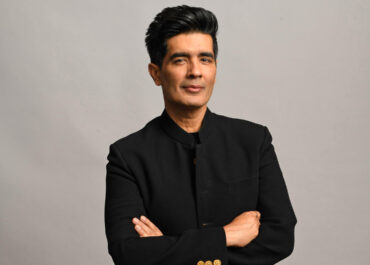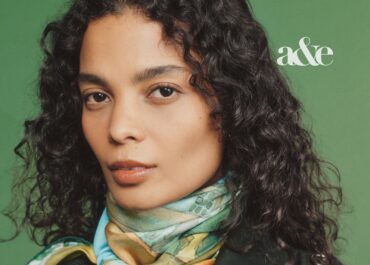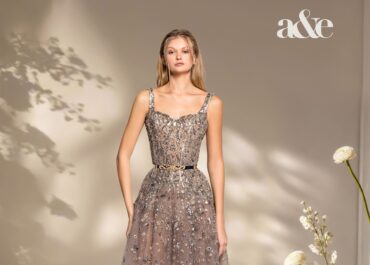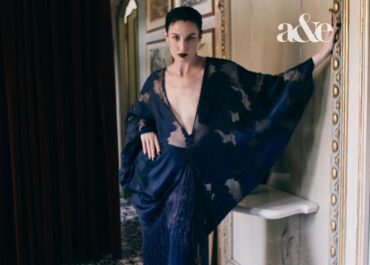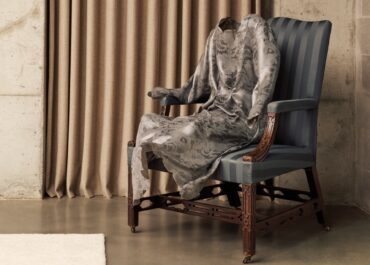

Manish Malhotra has spent more than three decades moving between fashion and film, beginning his career in costume design before building a creative world that now extends across couture, bridal, menswear, jewellery, beauty and beyond.
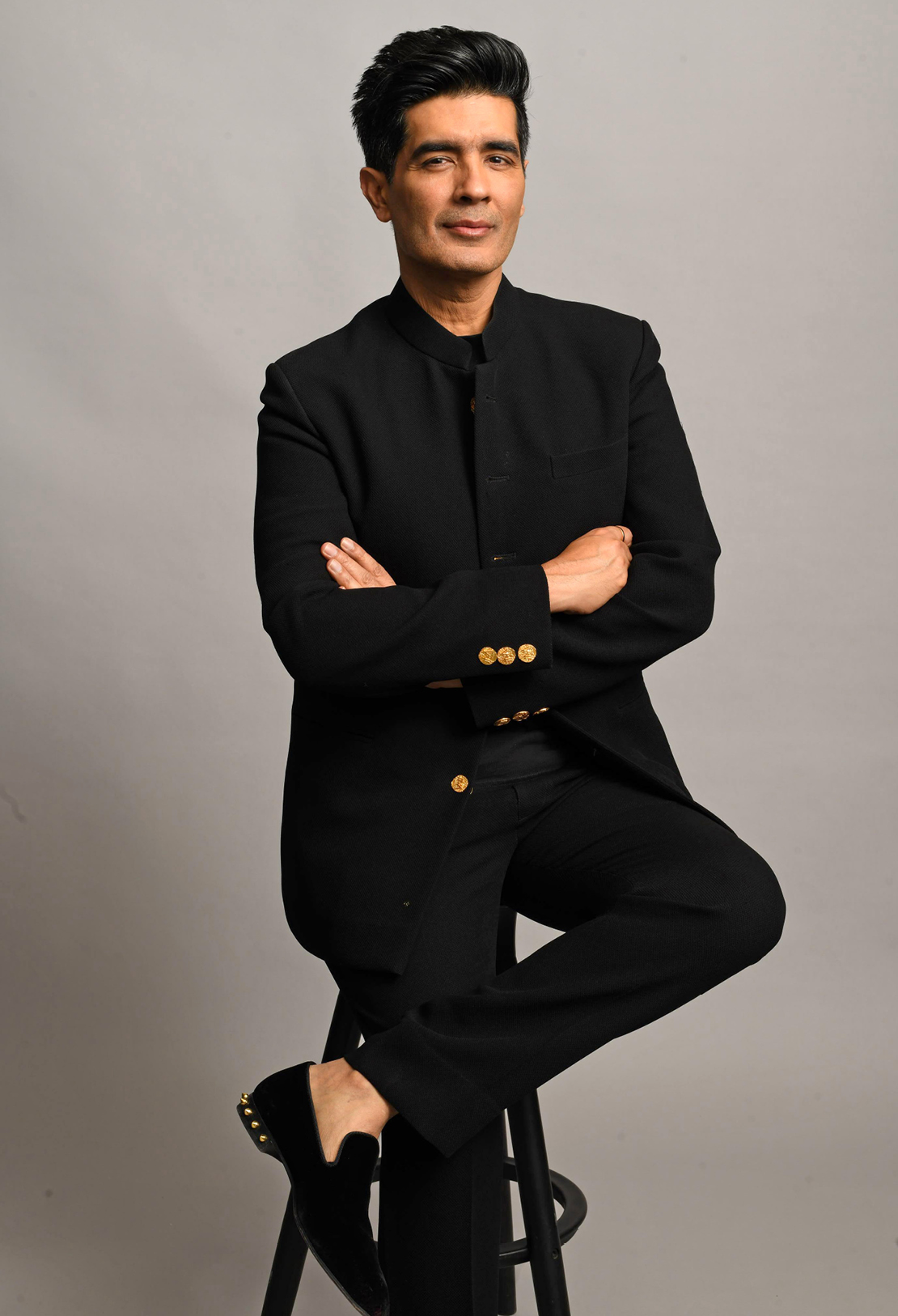
Dubai has also played an important role in that journey, becoming home to his first international boutique more than two decades ago.
This summer brought another significant milestone. Malhotra joined the official Paris Haute Couture Week calendar for the first time with MAA, a deeply personal Fall/Winter 2026/27 collection inspired by the mother-child relationship.
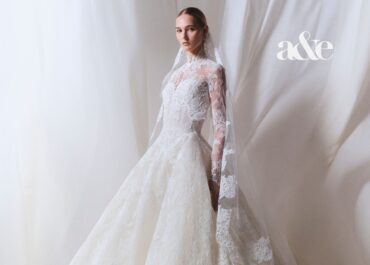
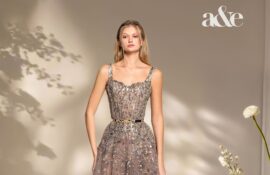
Presented across four chapters, Cocoon, Bond, Becoming and Abundance, the collection translated memories of his own mother into sculptural silhouettes, intricate embroidery, architectural corsetry and richly worked eveningwear. Indian techniques including zardozi, resham embroidery, vintage salli work and sequins appeared alongside contemporary construction, while High Jewellery was developed as part of the same creative narrative.
Here, Malhotra discusses the emotion behind his Paris debut, the changing international perception of Indian couture, the artisans behind his work and why, even after decades in the industry, he remains interested in discovering what comes next.
Presenting your collection on the official Paris Haute Couture Week calendar marked a significant moment for both you and the House. What did it mean to you personally?
It was deeply emotional because MAA was such a personal collection, rooted in my relationship with my mother and in the many ways that relationship has shaped me as a person and as a designer. Presenting on the official Paris Haute Couture Week calendar marked a defining new chapter for the House, bringing together years of work, craft, and evolution on an international stage.
More than anything, I wanted the collection to speak confidently about where I come from: India’s extraordinary craftsmanship, interpreted through a global couture language. To take something so personal, and so rooted in India, to Paris felt incredibly meaningful.
The collection MAA is rooted in the relationship between mother and child. Why did this feel like the right collection for your Paris couture debut?
Because it was so personal. I didn’t want my first couture presentation in Paris to begin with spectacle alone; I wanted it to begin with emotion.
MAA comes from memories of my mother and from thinking about how that bond shapes you long after childhood. But the idea of a mother, the protection, the bond, the strength, the letting go, is also universal. It felt right that something so intimate should become the starting point for such an important chapter.
The collection moves through four chapters: Cocoon, Bond, Becoming and Abundance. How did you translate memory and maternal connection into silhouette, construction and movement?
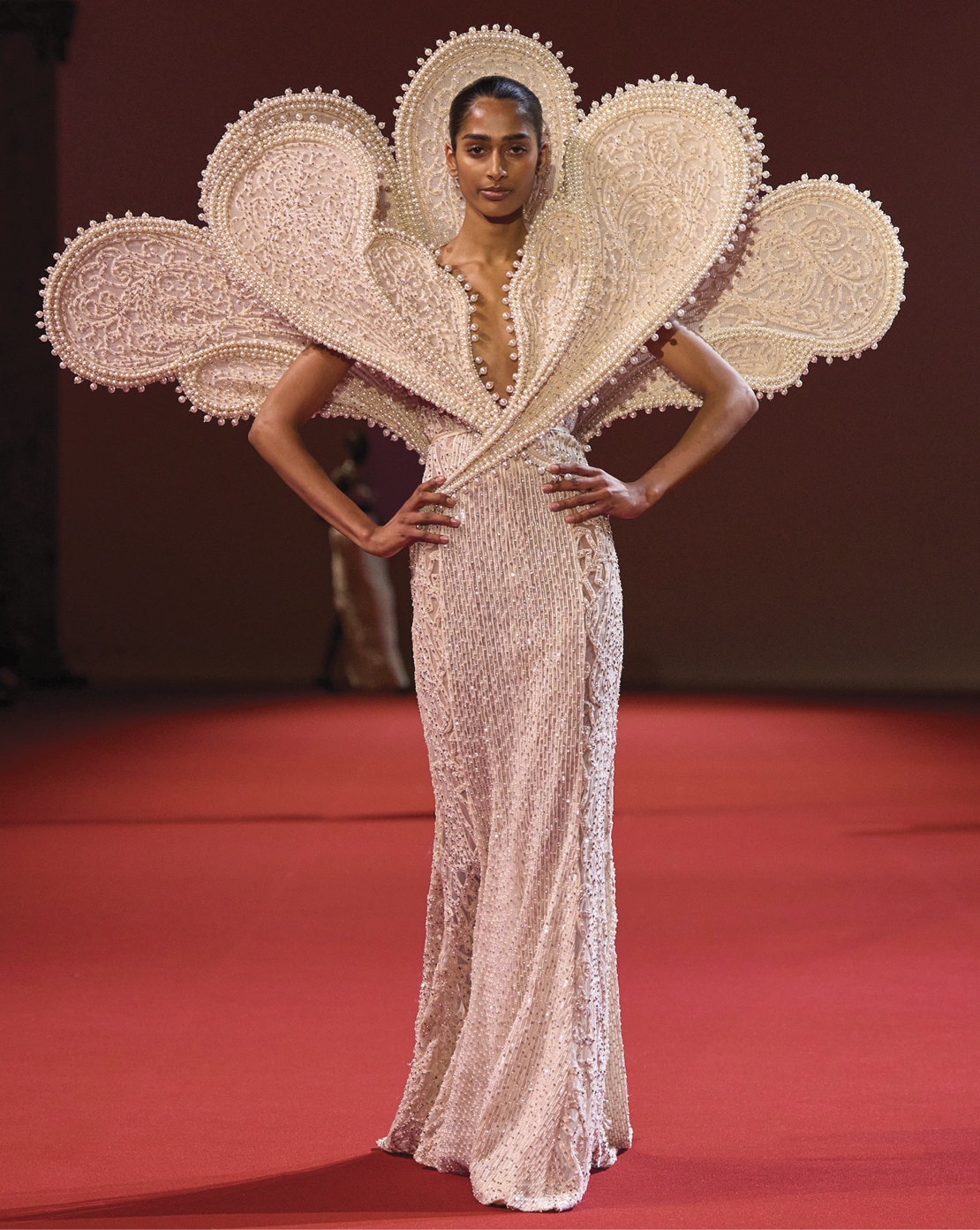
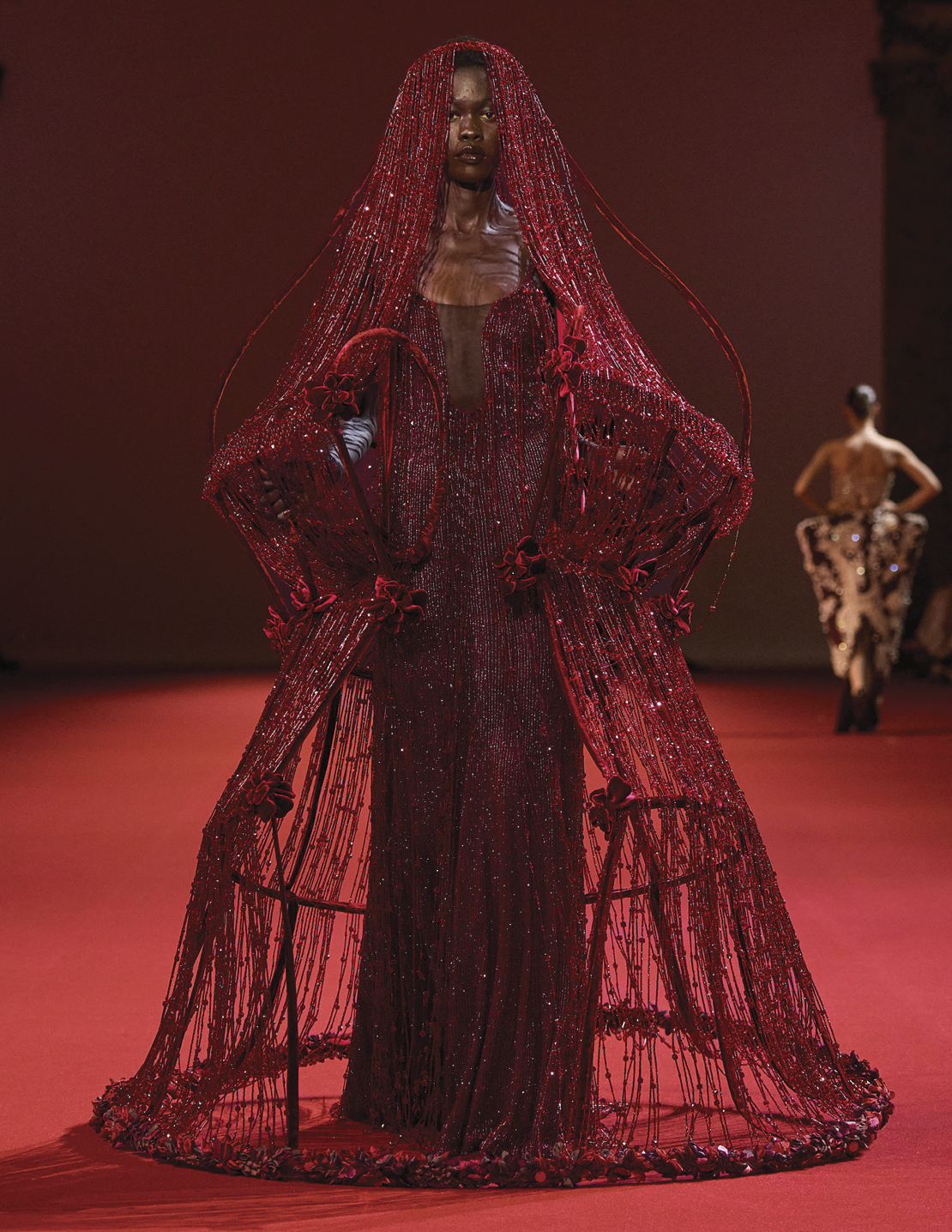
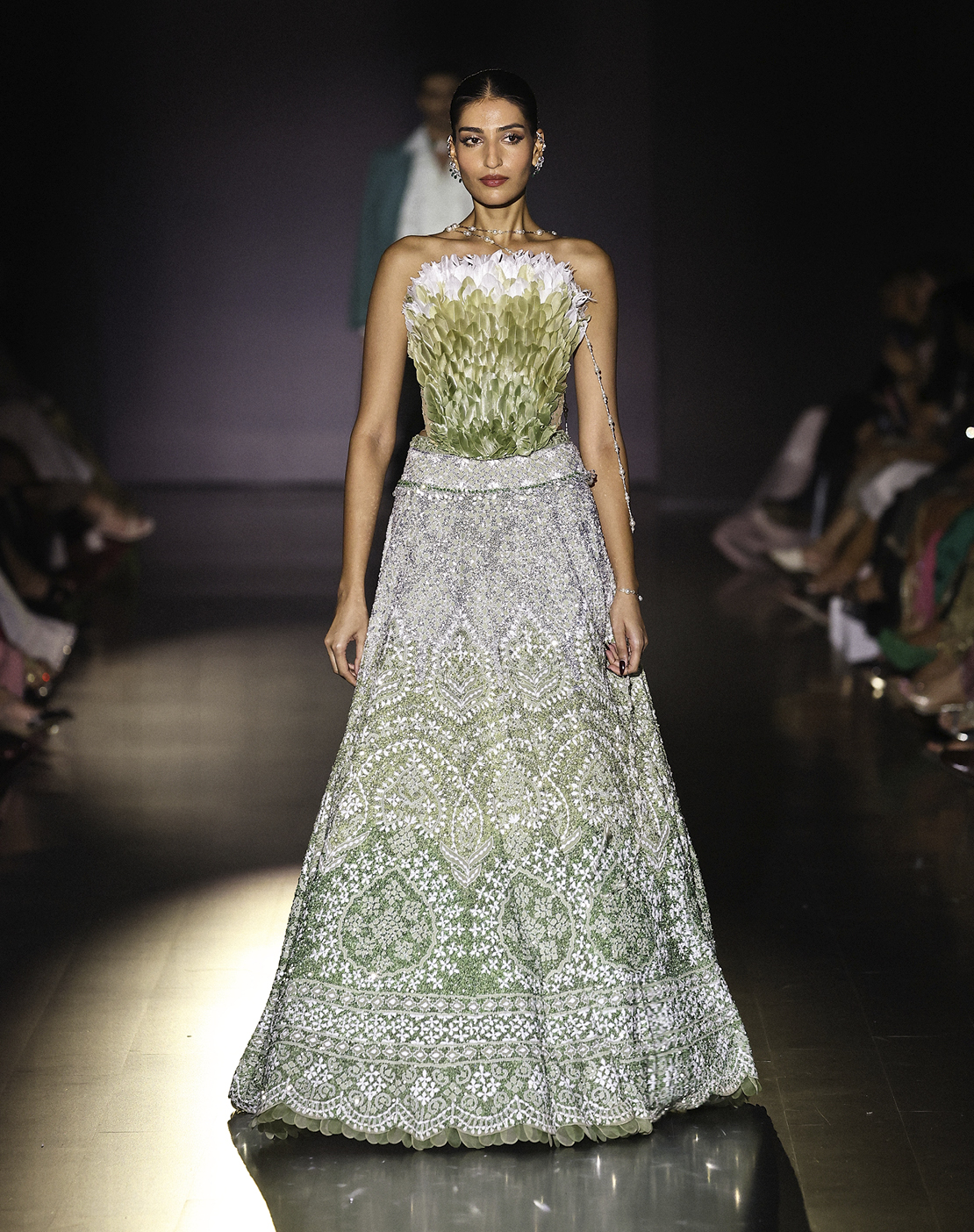
Each chapter explored that relationship differently. Cocoon was about protection, so the silhouettes enveloped the body through wiring, boning, pleating and sculptural floral forms.
Bond became more tactile, with knots, tubular constructions and hand-painted surfaces expressing connection. Becoming was about expression and coming into my own, both personally and as a designer, so the silhouettes became stronger, more confident and more geometric.
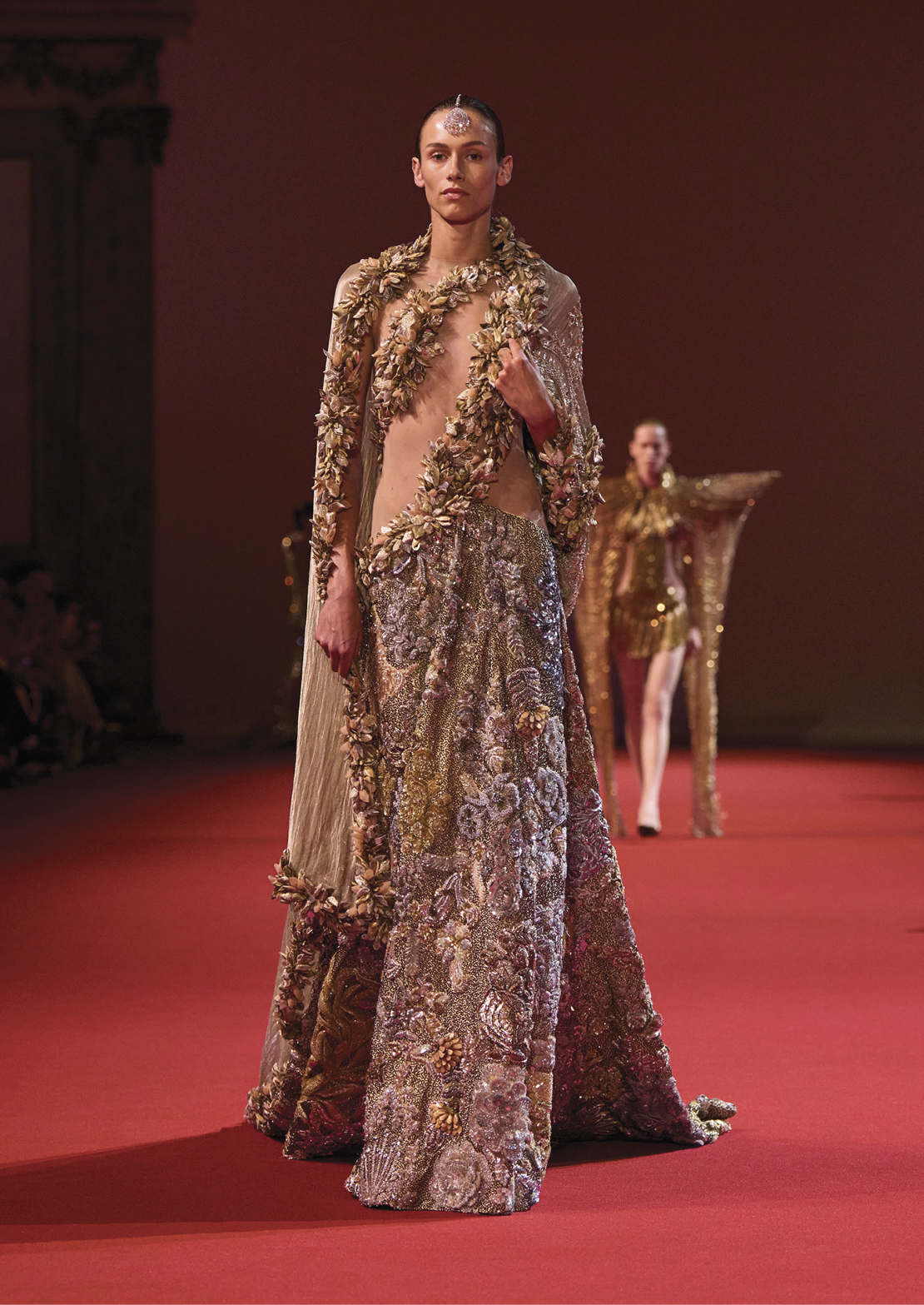
Abundance expanded everything in scale, with extraordinary handwork, flowers and surface techniques. As the emotion evolved, the construction evolved with it.
Indian designers and couturiers are becoming increasingly visible internationally. How do you view this moment for Indian fashion?
It has been a long time coming. The world is beginning to see Indian fashion beyond the obvious references. We have extraordinary craft, but we also have innovation, construction, modernity and a very distinct design language.
I would like the next phase to be about Indian Houses being understood not as a category apart, but as an integral part of the global luxury conversation.
Do you feel perceptions of Indian couture are changing internationally?
Yes, definitely. For a long time, Indian fashion internationally was often viewed primarily through occasionwear, bridal or traditional craft. Those are incredibly important parts of our identity, but they are not the whole story.
Today there is a greater understanding of Indian couture as design, engineering, experimentation and luxury at the highest level.
Craftsmanship has always been fundamental to your work. Which techniques are particularly important to your collections, and why?
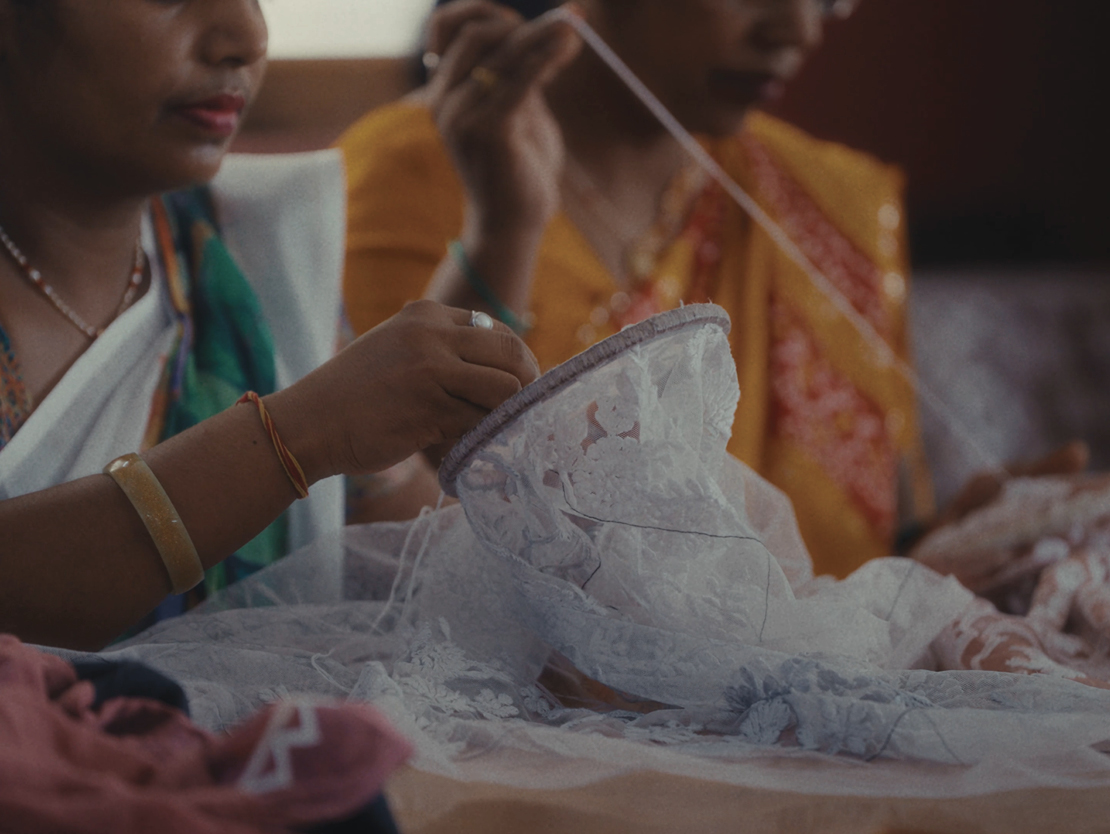
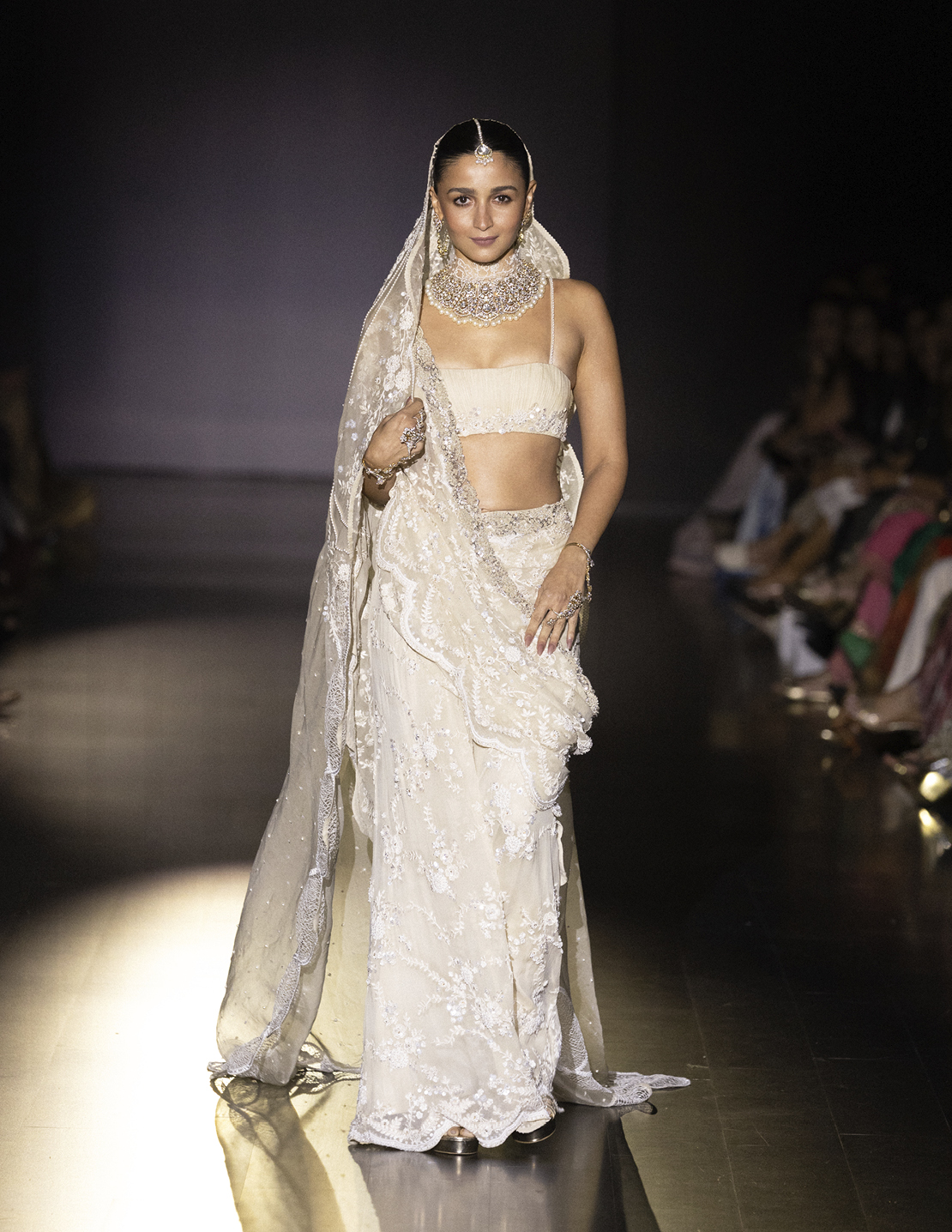
Craftsmanship has always been a pillar of the House. Over the years, certain techniques have become especially important to our language: chikankari, Kashmiri threadwork, zardozi, resham, dori work and intricate sequin embroidery.
I have always loved techniques where you can still feel the hand behind the work. More recently, I’ve also been exploring hand-painting, sculpted flowers, textile manipulation and more engineered forms.
What excites me is bringing these traditions into new constructions and silhouettes, so the craft does not simply sit on the garment; it becomes part of its form.
How do you preserve traditional techniques while ensuring the final result feels contemporary rather than nostalgic?
By not treating craft as something frozen in time. I respect the technique enormously, but then I ask how it can be scaled differently, placed differently, or combined with an unexpected fabric, construction or silhouette.
That is where it becomes exciting for me. Preservation is important, but so is evolution. Craft has to continue living and finding new expression.
How important is it that clients understand the hands and generations of craftsmanship behind a Manish Malhotra creation?
Very important. Couture is ultimately about people. A single piece can involve dozens of artisans and hundreds, sometimes thousands, of hours of work.
When you understand that, you begin to understand why couture has value beyond appearance. You are wearing knowledge, patience, precision and generations of skill.
How do you begin choosing fabrics, gemstones, embroideries and finishes for a couture collection of this scale?
It always begins with the emotion of the collection. For MAA, I knew the materials had to evolve with the four chapters.
We moved through tulle, velvet, organza, leather, resham and increasingly intricate surface work as the story developed. The jewellery evolved alongside the clothes, so the gemstones, forms and settings became part of the same narrative rather than something added at the end.
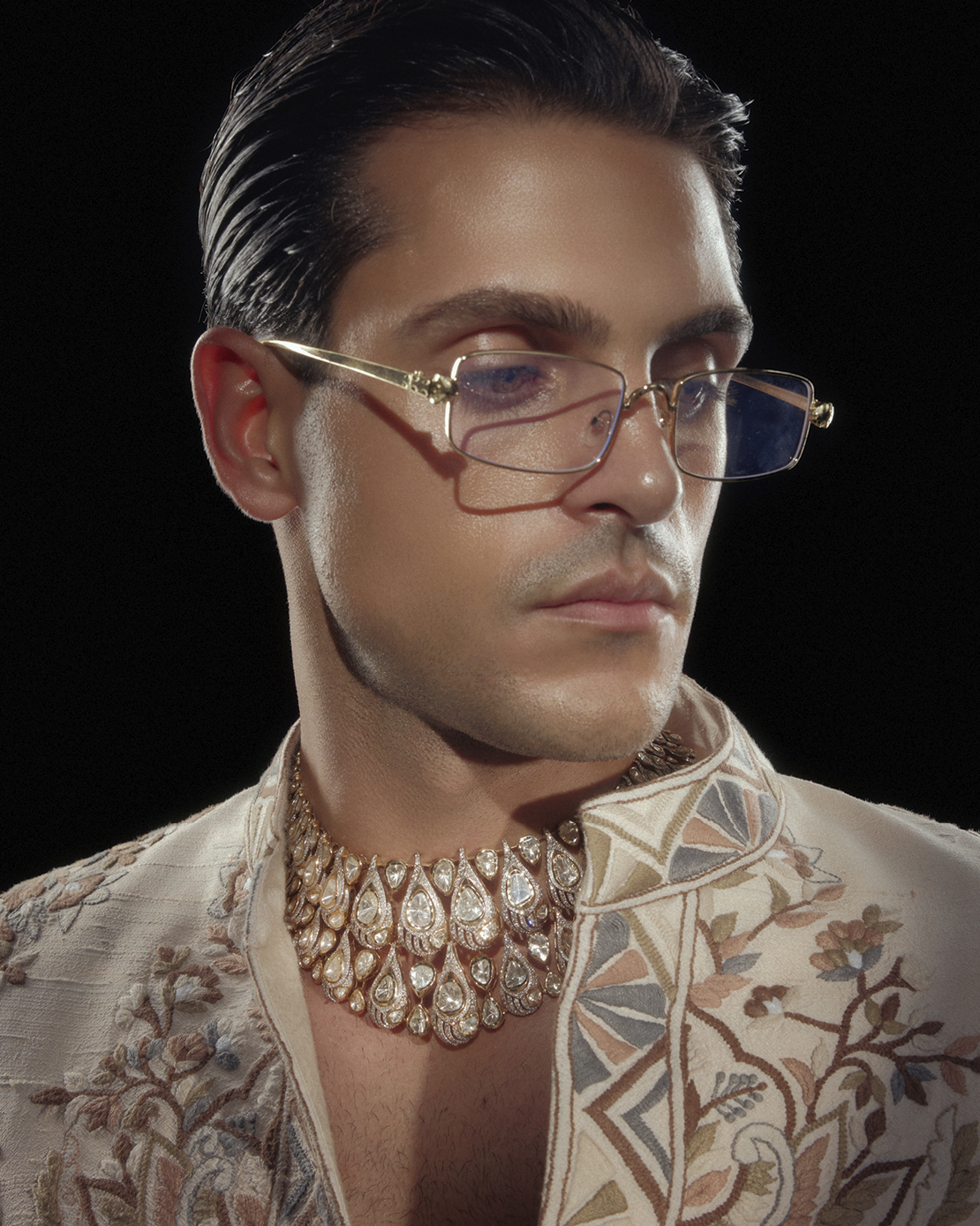
High Jewellery also formed part of MAA’s story. How do you see couture and jewellery speaking to one another within the wider universe of the House?
I see them as one language. Jewellery can completely change the attitude of a couture look.
With our High Jewellery, I love moving between the grandeur of Imperial Heirlooms and traditional necklaces and more contemporary expressions: ear cuffs, collar pins, brooches, and sculptural pieces.
In MAA, the jewellery was conceived alongside the clothes, so it became part of the silhouette, the mood and the emotion of the collection rather than simply an accessory.
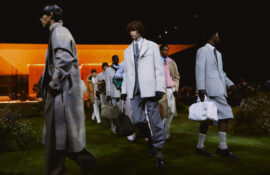
Manish Malhotra has grown from couture into bridal, menswear, jewellery, accessories and lifestyle. How do you maintain a clear identity as the House expands into different categories?
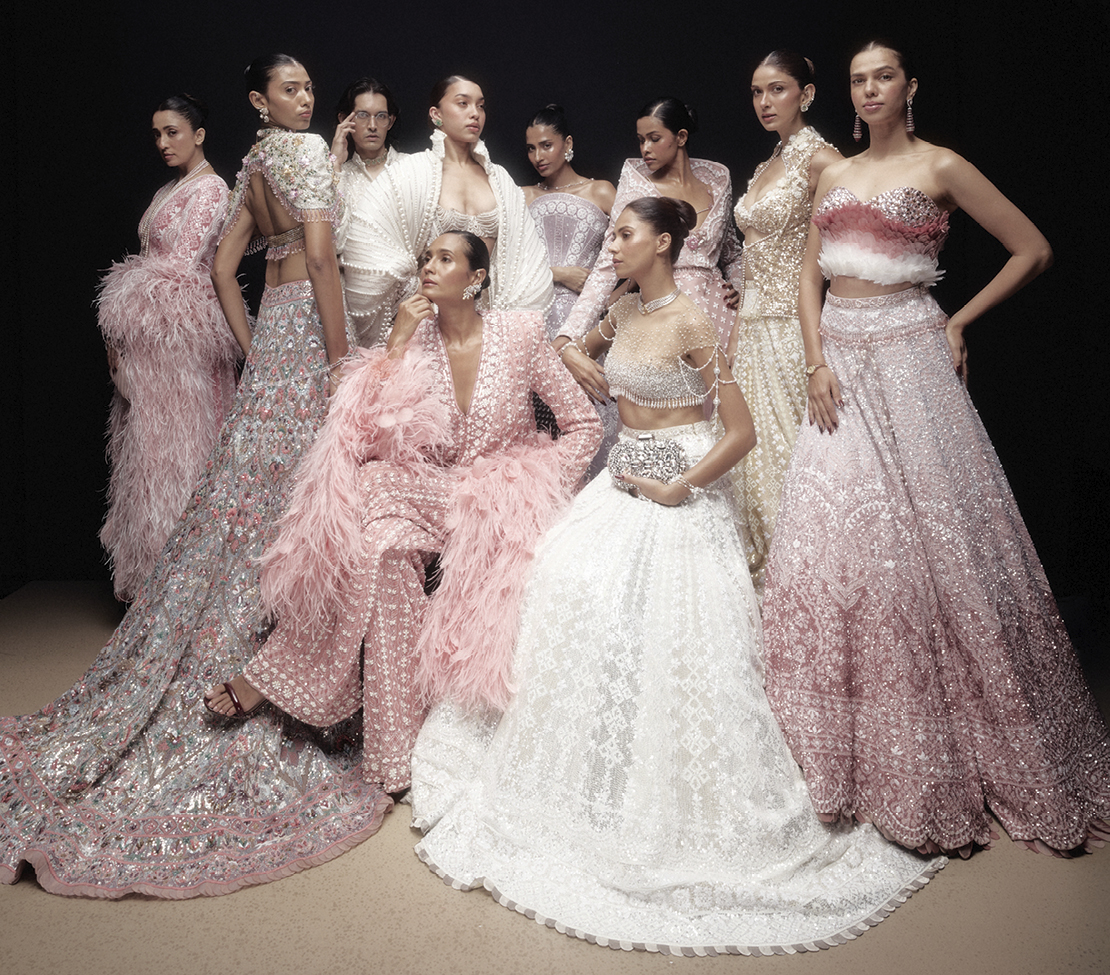
Every category has to share the same values: craft, glamour, detail and a sense of modern India. It doesn’t mean everything should look identical. In fact, I want each category to have its own personality.
But there should always be something in the proportion, the finish, the craftsmanship or the emotion that makes it unmistakably part of our world.
How important has the Middle East become to the brand’s evolution?
The Middle East has been an incredibly important part of my journey. Dubai, in particular, has had a very special place in the brand’s story for over two decades. I opened my first international store here, and over the years, the relationship has grown beautifully.
Today, the region is a significant part of our global evolution because of its appreciation for luxury, craftsmanship, and design, and because it understands glamour and individuality so deeply.
With our presence across fashion and jewellery, I see the Middle East as a space where Indian craftsmanship can be expressed through a truly global language.
Have you noticed particular differences in what Middle Eastern clients look for from couture compared with clients in India or other international markets?
There is a wonderful appreciation for glamour and craftsmanship, but I don’t like generalising too much because every client is different.
What I do notice is a real understanding of couture, the time, the finish, the embroidery, the jewellery. I also enjoy designing with strong colour, statement silhouettes, and important jewellery.
As Dubai continues to establish itself as an important global luxury market, how would you like the Manish Malhotra presence in the Middle East to evolve over the coming years?
The Middle East has always felt like a second home to me. There is such a natural connection with the region: the warmth, the love for celebration, and a deep appreciation for craftsmanship and luxury.
Over the years, that relationship has only grown stronger, particularly with our presence in Dubai. I would love to continue building a bigger presence across the Middle East, reaching new audiences and bringing our complete world to the region.
For me, it is about growing that relationship organically while continuing to create and evolve.
Following this Paris debut, what ambitions feel most important to you now, both creatively and for the future of the House?
Paris has made me want to experiment even more. Creatively, I’m interested in taking some of the techniques and ideas we explored in couture and pushing them into completely new directions, whether that is bridal, menswear, jewellery or entirely new collections.
I want to keep exploring construction, texture, craft and new ways of expressing the House. Globally, the ambition is to continue building the brand with Indian craftsmanship and our own point of view firmly at the centre.
I feel there is still so much more to discover.