
For much of the past century, contemporary art learned to distrust beauty.
To be taken seriously, art was often expected to challenge, disrupt or provoke. The beautiful could be dismissed as decorative; the pleasurable as too easy. Conceptualism privileged the idea over the object, while successive generations of artists embraced irony, confrontation and discomfort as powerful ways of questioning the world around them. Yet something is shifting.
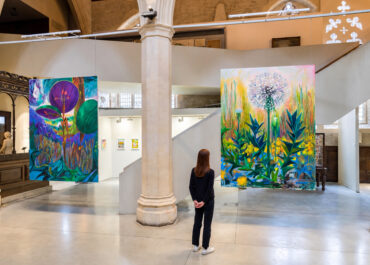
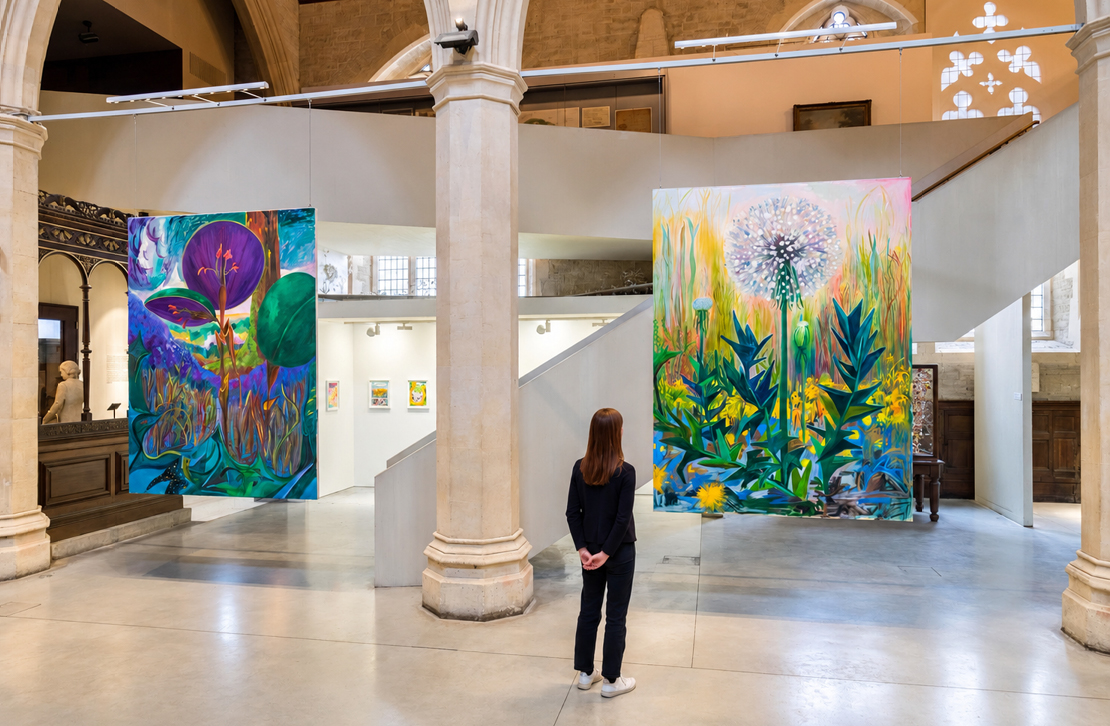
Walk through galleries, art fairs, and collectors’ homes today, and you’ll find an unmistakable appetite for art that seduces the eye before demanding an explanation. Colour has returned with confidence. Figurative painting is flourishing. Flowers, landscapes, romantic imagery, expressive abstraction and painstaking technique and craftsmanship are reappearing without apology. Artists are once again letting us experience something contemporary culture had perhaps become suspicious of: pleasure and beauty.
This does not signal a retreat from intellectual or politically engaged art. Nor does it suggest that challenging work is disappearing. Instead, it points towards a widening of contemporary art’s vocabulary. Beauty and meaning are no longer necessarily being treated as opposites.
From provocation to pleasure
The rejection of conventional beauty has an important history. Modernism dismantled traditional ideas of representation; Dada deliberately challenged taste; conceptual art questioned whether an artwork needed to be visually compelling, or even exist as a conventional object at all. Later generations used shock and irony to address consumerism, identity, politics and power.
These movements fundamentally expanded what art could be. But after decades in which disruption itself became almost an expectation, provocation inevitably lost some of its ability to surprise. When audiences anticipate being shocked, shock can become a convention in itself. Beauty, paradoxically, can begin to feel radical again.
This may partly explain the extraordinary vitality of painting today, particularly figurative painting. Major institutions have acknowledged its resurgence: the Institute of Contemporary Art/Boston, for example, devoted A Place for Me: Figurative Painting Now to a generation of painters reimagining the human figure.
The renewed interest is not simply nostalgic. Contemporary painters are borrowing from art history while speaking unmistakably in the present. Classical composition might coexist with cartoon imagery; portraiture with fantasy; romantic colour with difficult questions surrounding identity and belonging. The visual language may be seductive, but the ideas behind it can remain complex.
The desire to feel something
There may also be a more human explanation. We live in an extraordinarily image-saturated world. Hundreds of photographs, advertisements, videos and digitally generated images can pass across a screen in a matter of minutes. Artificial intelligence can now produce technically astonishing imagery almost instantaneously.
Against this abundance, physical artwork takes on a different significance. A painted surface reveals decisions. A sculpture retains traces of touch. Pigment has depth, canvas has texture and handmade objects contain imperfections. These qualities cannot be fully communicated through a screen.
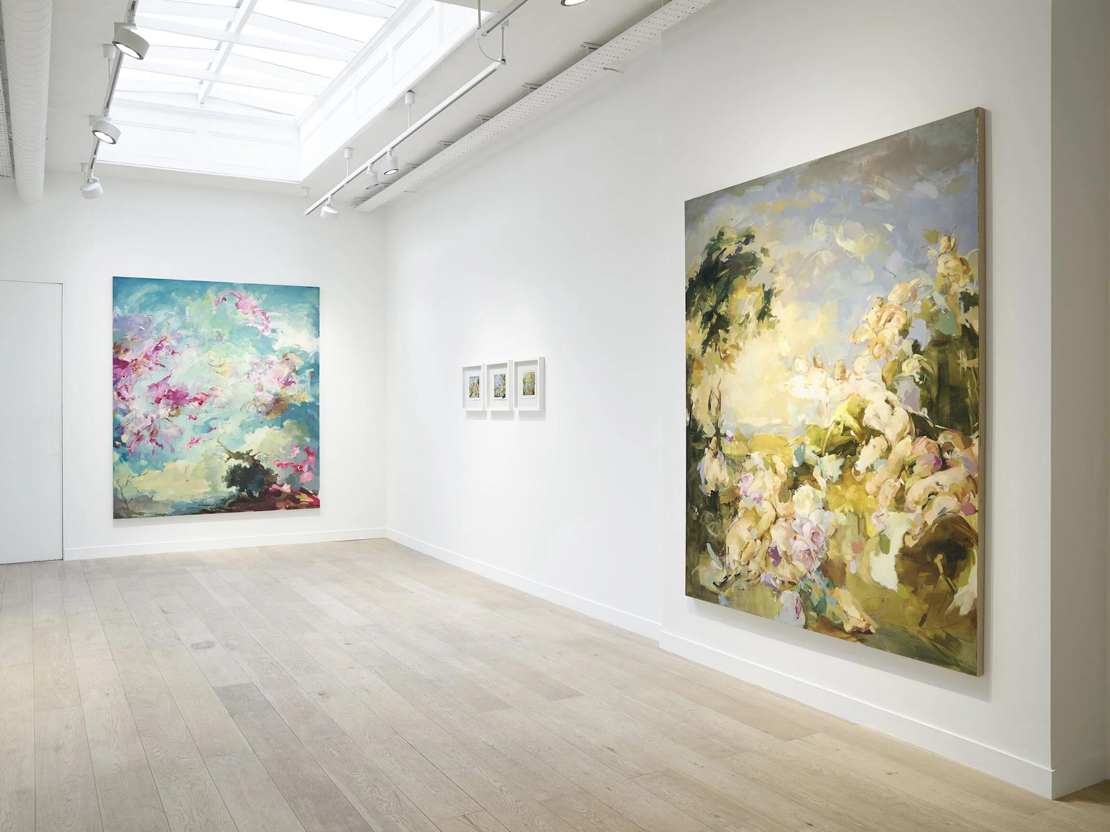
Few contemporary artists embody this rehabilitation of beauty as vividly as British painter Flora Yukhnovich. Her canvases borrow the seductive palette and theatrical excess of the Rococo, only to dissolve them into abstraction. Pink, pistachio, powder blue and cream collide across monumental surfaces. The paintings are beautiful—and make no attempt to apologise for it.
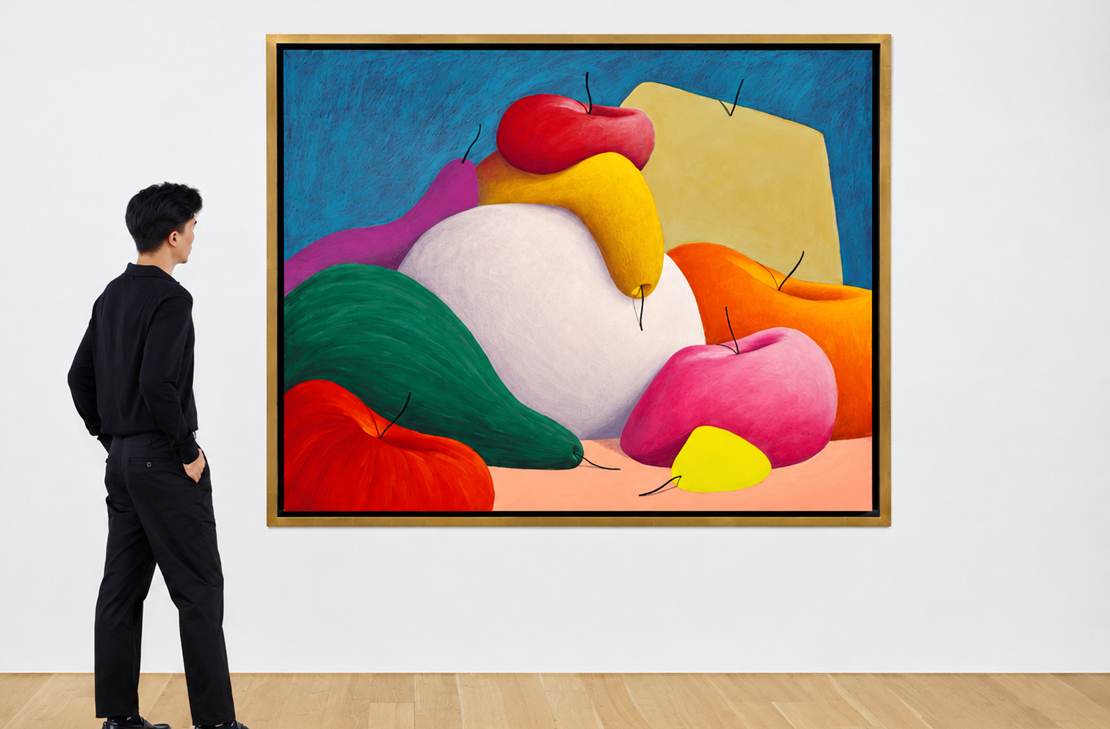
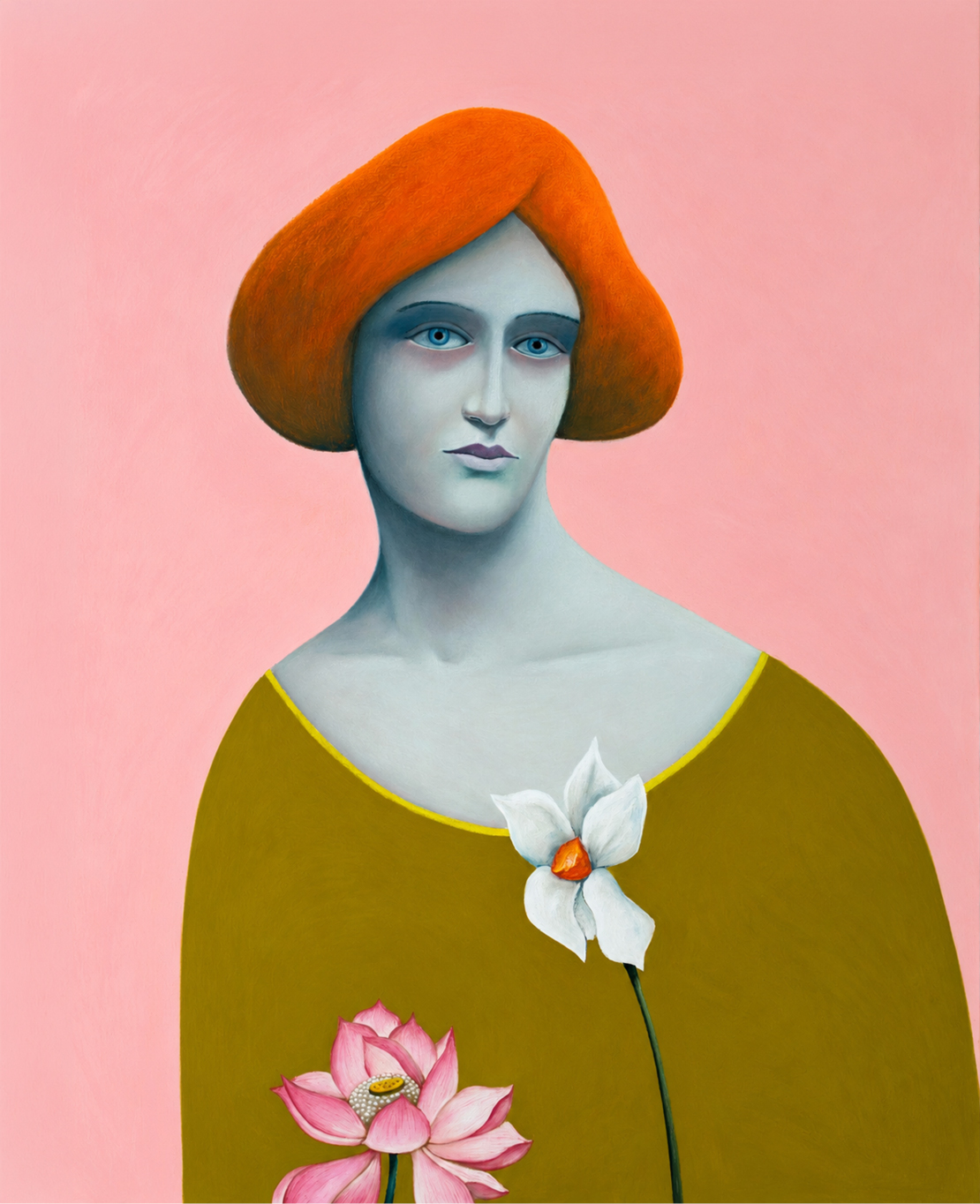
Swiss artist Nicolas Party similarly embraces subjects contemporary art once seemed determined to leave behind. Portraits, landscapes and still lifes populate his universe, rendered in extraordinary colour. His work suggests that returning to traditional genres need not mean returning to tradition.
Landscape, too, has returned without nostalgia. In Shara Hughes’s intensely coloured imaginary worlds, nature becomes psychological rather than literal. Trees, flowers and skies appear familiar and fantastical at once. The landscape is no longer simply something to observe; it becomes somewhere to escape.
Interestingly, even as digital access transformed the art market, physical encounters remain important. The 2026 Art Basel and UBS Global Art Market Report found that online sales fell to their lowest level since 2019 while art-fair sales increased their share of dealer turnover. Paintings also remained the most purchased fine-art medium among collectors surveyed in the 2025 Art Basel and UBS Survey of Global Collecting.
Perhaps, surrounded by the frictionless perfection of the digital world, we increasingly value evidence of the human hand.
Beauty after uncertainty
The renewed attraction to beauty may also reflect the world outside the gallery. The past several years have brought pandemic, war, political instability, economic anxiety and an almost relentless cycle of disturbing imagery delivered directly to our phones. In such an environment, wanting to surround oneself with beauty need not be interpreted as superficial escapism. Beauty can offer restoration and an inner sense of calm.
Art has always responded to periods of uncertainty in complicated ways. Sometimes it confronts reality directly; at other times it creates somewhere psychologically different to go. A luminous landscape, an exuberant floral painting or an intensely coloured abstraction does not deny the difficulties of contemporary life simply because it provides pleasure.
There is value in joy too. And collectors understand this instinctively. People rarely live with an artwork because of market statistics alone. They live with it every morning and pass it every evening. The relationship gradually becomes personal. The most enduring collections often contain works that provoke an immediate emotional reaction long before their owners can articulate why.
A return, but not a repetition
Of course, beauty never actually disappeared from art. It simply became more complicated.
Claude Monet’s water lilies, Henri Fantin-Latour’s flowers and centuries of portraiture remind us that artists have continually returned to subjects capable of producing visual pleasure. But today’s artists inherit that history alongside abstraction, conceptualism, Pop Art, street culture, photography and the digital revolution. The result is not a return to nineteenth-century aesthetics. It is beauty after everything that came afterwards.
A contemporary painting can be beautiful and unsettling. A sculpture can be playful and intellectually rigorous. An artwork can complement an interior while still possessing conceptual depth. Perhaps the more interesting development is that these qualities no longer need to cancel one another out.
Even the market reflects a broadening, not a single dominant direction. Global art sales returned to growth in 2025, reaching an estimated $59.6 billion, while collecting activity extended across periods and price levels rather than concentrating exclusively on the newest contemporary names.
What we choose to live with
Ultimately, the return of beauty may say less about changing fashion than about what we expect art to give us. For years, contemporary art taught audiences not to trust their first response. If something was immediately attractive, perhaps we were supposed to look beyond its beauty for the “real” meaning. Today, the distinction feels increasingly unnecessary.
An artwork can make us think precisely because it first makes us look. It can challenge us while giving pleasure. Beauty does not have to mean simplicity, just as difficulty does not automatically create depth. In an era capable of generating more images than any human being could ever consume, perhaps scarcity now lies elsewhere: in attention, intimacy, craftsmanship and genuine emotional connection. Contemporary art is not abandoning ideas for aesthetics. It may simply be rediscovering something artists understood long before the distinction existed. Beauty can itself be an idea.