
After more than two decades of building brands for others, Zainab Talati reveals Jaan, her first standalone restaurant in Abu Dhabi
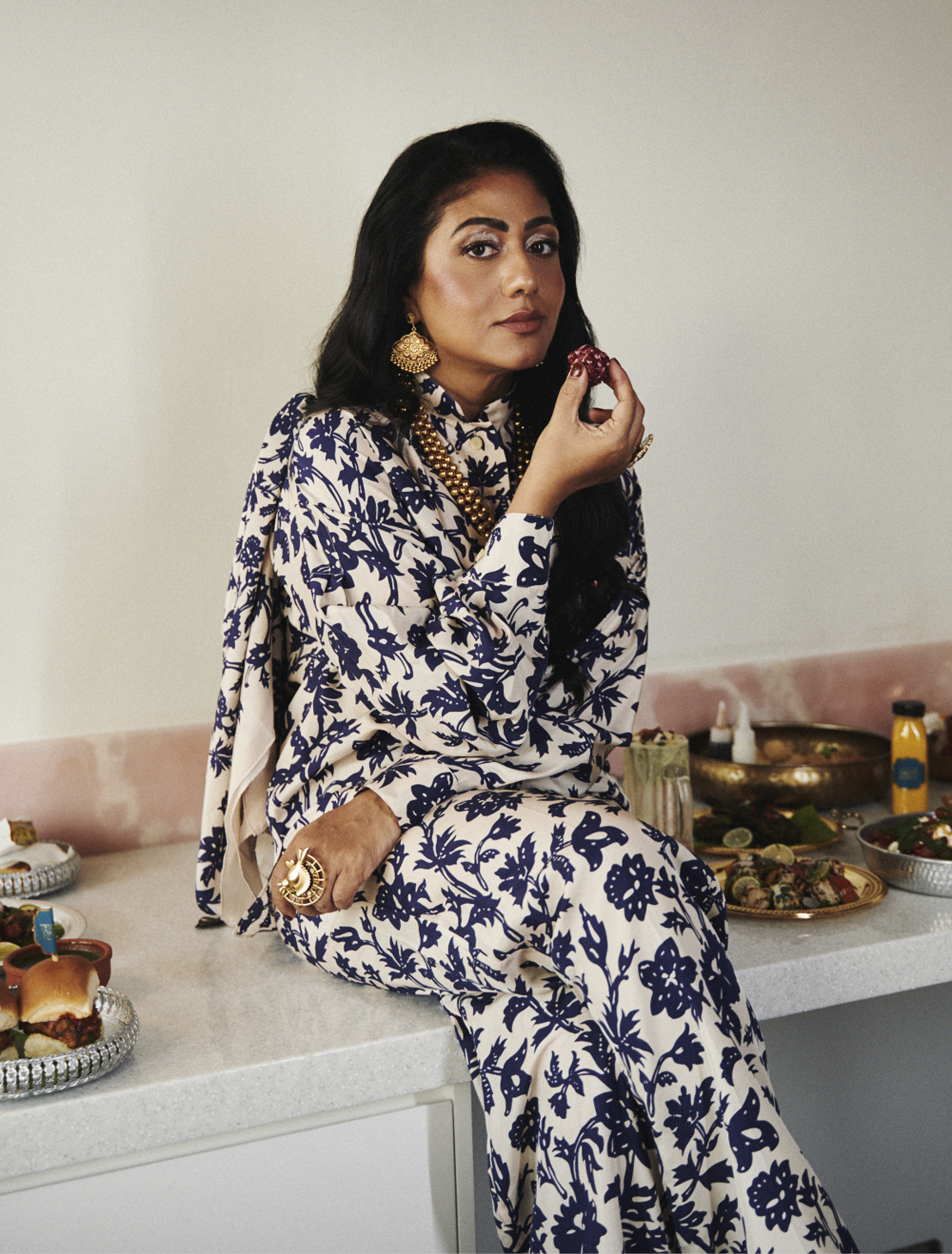
Six years ago, strategic communications leader Zainab Talati started Mama’s Kitchen from home with no grand plan beyond cooking the food she loved. What began almost instinctively in 2020 gradually built a loyal following and has now evolved into Jaan, her first standalone restaurant in Abu Dhabi’s Mina Zayed.
The move into hospitality is a significant one for Talati, whose 24-year career has spanned marketing, communications, media, branding and storytelling. That experience is evident in Jaan, where the food is only part of the picture. The interiors, music, photography, crockery and artwork are all considered part of a wider identity, while the menu draws on the flavours and memories of her British-Indian upbringing without trying to reproduce them too literally.
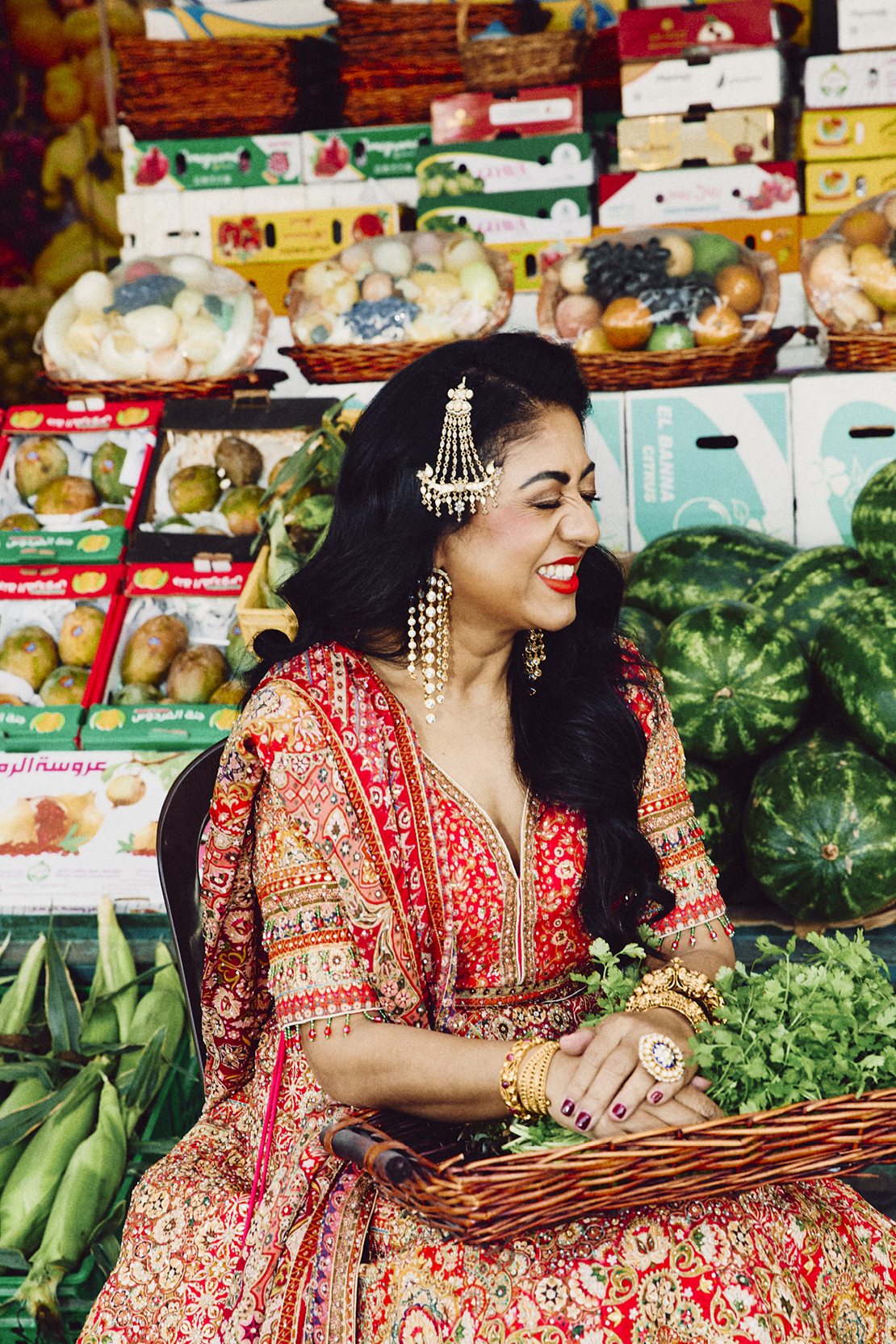
Here, Talati talks about turning a home kitchen into a restaurant, leaving the security of corporate life, building two businesses of her own and why she is far more interested in longevity than expansion for its own sake.
Jaan grew out of Mama’s Kitchen, which began as a home kitchen project in 2020. When did you realise the concept was ready to become a standalone restaurant?
Mama’s Kitchen started very organically in 2020. It was a home kitchen project during a time when so many of us were reassessing our lives and what genuinely brought us joy. Food had always been a huge part of my family and upbringing, but I certainly didn’t start Mama’s Kitchen with a grand plan to open a restaurant.
What changed was seeing how people responded to the food. We built an incredibly loyal customer base, and there was something very special about seeing dishes that felt so familiar and personal to me resonate with people from completely different cultures and backgrounds.
As Mama’s Kitchen grew, so did my ambition for what it could become. I realised I could take everything I had learnt and build something more defined around it.
It has taken six years to get here, so Jaan was never an overnight decision. It is the evolution of that entire journey. It carries the warmth and generosity of Mama’s Kitchen, but has its own identity, its own point of view and a much bigger world around it.
How did you translate the concept into a standalone restaurant?
I started by asking myself what I would genuinely want to walk into, eat at and spend time in. I didn’t want Jaan to feel like a conventional Indian restaurant, nor did I want to lose the warmth and personality that had made Mama’s Kitchen special. The challenge was balancing the two.
I wanted the space to feel intimate, colourful, layered and contemporary, while still having a very clear connection to India. That thinking went into everything, from the food and interiors to the music, photography, crockery, artwork and tone of voice.
Incredible craftsmanship runs through the space, including hand-embroidered wallpaper made by artisans in Mumbai, alongside textiles, objects, and visual references to Indian fashion, jewellery, cinema, and culture. I wanted those details to be discovered rather than feel overly themed or literal.
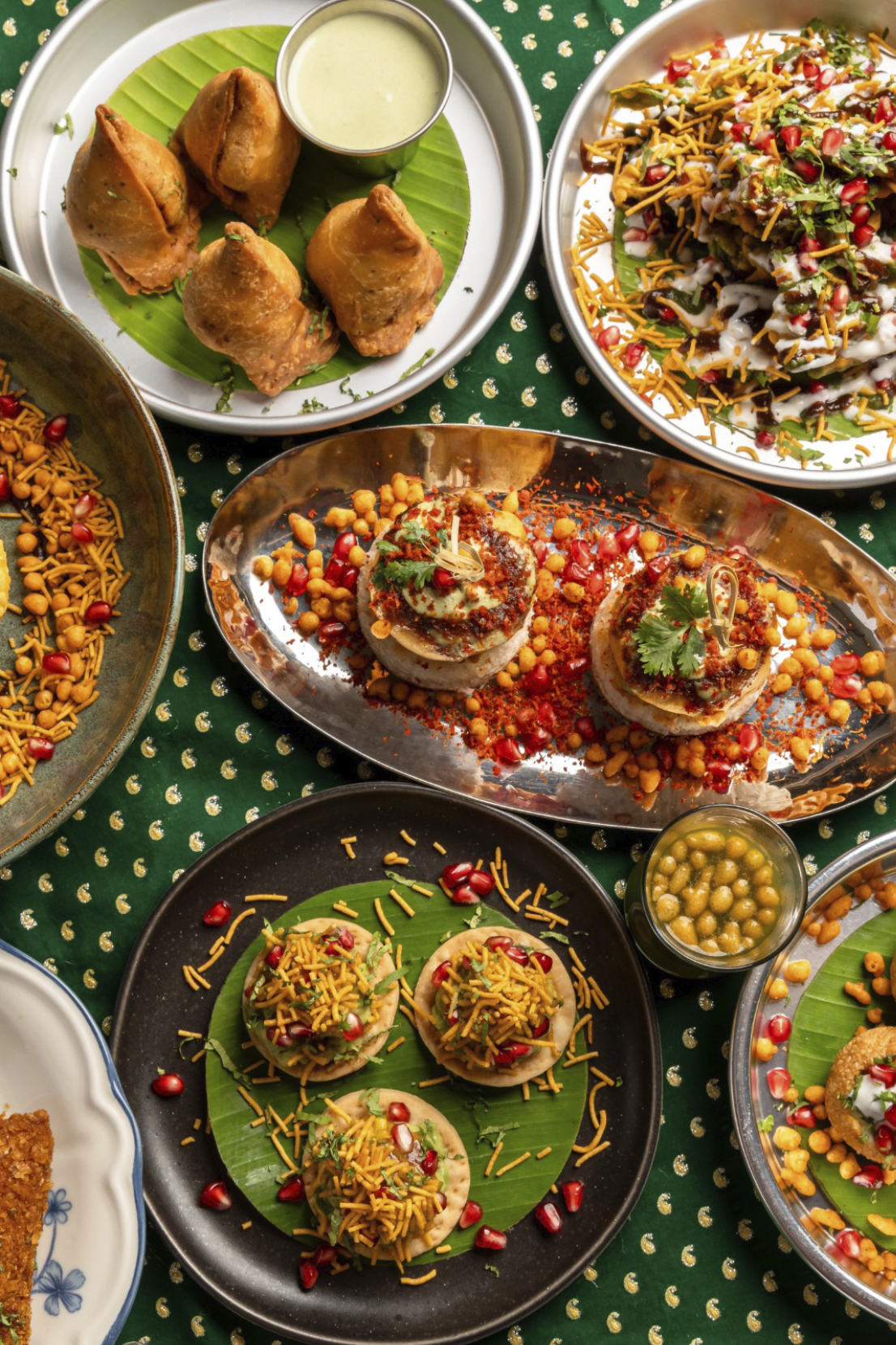
The same applies to the food. There are flavours and dishes people will recognise, but we have given ourselves permission to reinterpret them. It is rooted in familiarity, but it isn’t restricted by it.
Many of the dishes are inspired by the food and recipes you grew up with. Which memories from your childhood have had the greatest influence on the menu?
For me, food is inseparable from people and memories. I grew up in a family where food was a love language. You didn’t necessarily ask someone if they were okay; you fed them. Some of my strongest memories are the simplest: chai, samosas, the smells coming from the kitchen, watching food being cooked instinctively without recipes or measurements, and everyone gathering around a table.
My late father is also an incredibly important part of the story. Tastes, smells, and rituals around food immediately take me back to him and our family. Jaan carries some of those memories.
But I didn’t want to recreate my childhood on a plate. It is more about capturing the emotion behind those memories: generosity, comfort, chaos, colour, family and that wonderful Indian obsession with feeding people.
You have spoken about wanting to challenge perceptions of Indian cuisine, particularly ideas around its richness or heaviness. What do you think diners still misunderstand about Indian food today?
I think Indian food is still sometimes viewed through a surprisingly narrow lens: curry, naan, rich sauces and something you eat when you want to indulge.
India is vast, and its food reflects that. It changes enormously between regions, communities and even individual households. It can be incredibly fresh and light, acidic, smoky, spicy, delicate, vegetarian, street-led or beautifully refined.
That diversity is what excites me.
At Jaan you can have something playful like chaat, something grilled and smoky, something fresh and vibrant, or something deeply comforting. There should be contrast.
I would never claim that one restaurant could represent Indian cuisine in its entirety. If anything, I hope Jaan encourages people to become more curious about just how much there is to discover.
Your professional career has been built around luxury branding, communications, media and storytelling. How much of that experience shaped the way you developed Jaan as a brand rather than simply a restaurant?
I have spent 24 years working across marketing, communications, media, branding, and storytelling, so it would have been almost impossible for that experience not to influence how I approached Jaan.
I have always believed that a strong brand is about much more than the product itself. It is about how you make people feel, the story you tell, the world you create around it and, ultimately, the emotional connection people form with it.
I am already seeing that happen at Jaan in ways I hadn’t necessarily anticipated. I have guests sitting in the restaurant reminiscing when they hear a particular song from the playlist I put together, while others have told me that a dish reminds them of their grandmother’s cooking or takes them back to a particular moment in their childhood. Those are the connections I want people to feel. It should evoke something beyond simply having had a great meal.
I have never really viewed Jaan as simply a restaurant. I see it as a brand with food and hospitality at its heart, but also as a space for storytelling, cultural exchange and discovery.
After years spent helping build and position other brands, what has been different about creating something that is entirely your own?
It is infinitely more personal, and considerably more terrifying!
For most of my career, I have helped other businesses build, position and communicate their brands. Now, somewhat unexpectedly, I find myself doing that for two businesses of my own.
In about six months, I launched my own marketing agency and opened Jaan. It sounds incredibly sudden when I say it like that, but neither business happened overnight. The restaurant journey has taken six years, beginning with Mama’s Kitchen in 2020, while my agency is really the culmination of everything I have learnt throughout my 24-year career.
The biggest difference when something belongs to you is that there is nowhere to hide. It is your investment, your instinct, your reputation and your responsibility. When you get something wrong, you own it. But when something works, you also feel an incredible sense of fulfilment.
I never thought I would give up my corporate career entirely, and in many ways I haven’t. I have simply taken everything that career gave me and started building businesses of my own.
Jaan is designed to extend beyond dining through collaborations, takeovers and cultural activations. What kind of creative community would you like to build around the restaurant?
Interestingly, I think the beginnings of that community are already happening quite naturally, and that has probably been one of the loveliest things for me to witness.
Jaan is a small, intimate space and, because of that, there isn’t much separation between tables. What I hadn’t anticipated was how much that would encourage people to interact. I have watched complete strangers start conversations, talk about what they are eating, share recommendations, and, by the end of the evening, genuinely get to know each other. There is something incredibly special about witnessing that, because it’s the ethos of Jaan coming to life without us having to orchestrate it.
Food has always been about connection for me, and I want to build on that same sense of openness as Jaan evolves, but I don’t want to manufacture a “community” or fill the calendar with activations simply for the sake of it. What I am seeing inside the restaurant has actually reinforced my belief that the best communities form organically when you create the right environment and bring interesting people together.
Hospitality is an increasingly competitive space in the UAE. What did you feel was missing from the market that Jaan could bring differently?
The UAE has some exceptional restaurants, so I never approached this believing the market simply needed another Indian restaurant. I felt there was room for something independent, personality-led and culturally rooted that could still feel contemporary, accessible and fun.
Jaan isn’t fine dining, but we’ve considered everything. We’re also inspired by Indian street food, without trying to replicate a street-food environment. We occupy our own space somewhere between those worlds.
I wanted somewhere that could be beautiful without being intimidating, where the interiors can be maximalist, the food playful, the music part of the experience and the atmosphere relaxed. You can dress up and make an evening of it or arrive casually because you are craving chaat and chai.
I think luxury today can also be about personality, authenticity, and how something makes you feel, rather than formality for its own sake.
What are your future ambitions for Jaan, and where would you like to take it?
I have always built Jaan with the belief that it can become more than one restaurant, but I am also very conscious of not running before we can walk.
My immediate ambition is to make this Jaan genuinely successful, build a loyal community around it and continue learning from our customers.
Longer term, I would love to take Jaan into other cities and markets. I believe the concept can travel because, although the expression is very specific, the emotions behind it are universal: family, nostalgia, generosity, culture and the way food brings people together.
But growth has to be meaningful. I am much more interested in building a valuable brand with longevity than opening multiple locations simply for the sake of expansion.
What has the journey from a home kitchen to opening your first restaurant taught you about entrepreneurship that you could never have learned through your corporate career?
That there is a huge difference between advising a business and actually carrying the responsibility for one. After 24 years in business, strategy, marketing and communications, I wasn’t unfamiliar with commercial realities. But ownership changes your perspective completely.
Entrepreneurship has taught me to become much more comfortable with uncertainty. In corporate life, we are often encouraged to plan, analyse and perfect. When it is your own business, there are moments when you have to make the best decision you can with the information you have, trust yourself and move.
It has also taught me that there is absolutely no job beneath you when it is your business. You can be discussing long-term strategy one minute and dealing with something incredibly operational the next. Hospitality in particular is very good at keeping your feet firmly on the ground!
And now that I have two businesses, I have had to learn another lesson very quickly: you cannot do everything yourself. Finding the right people, trusting them and building a team around you is just as important as the original idea.
What’s a message that you would tell your younger self?
I would tell her not to worry so much about having everything mapped out or believing success has to follow a particular path. Everything I have done has somehow contributed to where I am today. My corporate career gave me the experience and confidence to build my own agency, but it also gave me many of the skills I now use in building Jaan: understanding people, positioning, storytelling, commercial thinking, and knowing how to create a brand people can genuinely connect with.
I have also learnt how important it is to be intentional about the people you surround yourself with. Find people who share your values, your ethics and your energy. Your environment can either give you the confidence to grow or slowly take it away. I feel incredibly fortunate to have a family who have supported me through every chapter, and beautiful friendships that have kept me grounded through it all.
So I would tell my younger self to worry less about what the path is supposed to look like, trust her instincts much earlier, choose her people carefully and know that sometimes the things that make very little sense at the time are the very things that eventually bring everything together.
What is the professional motto that you live by?
Don’t be afraid to change direction.
What is something you would still like to achieve?
There is still so much. In many ways, I feel as though I am entering a completely new chapter professionally. My agency is the culmination of everything I have learnt throughout my career in media, marketing, communications and brand building, and I want to build that into a business with genuine international relevance.
With Jaan, the ambition is different but equally significant. I would love to take it beyond Abu Dhabi and build a hospitality brand with real longevity and commercial value, without losing the personality and soul that made it special in the first place.
What excites me is that I haven’t had to choose between those two worlds. I still have my career in marketing, and now I have hospitality alongside it. They exercise very different parts of me, but they also complement each other in ways I hadn’t expected.
Ultimately, I would like to build businesses that give me the freedom to choose what I work on, whom I work with and where I invest my time. For me, that is probably one of the greatest measures of success.