
The world of fragrance has always traded in rarity.
Exceptional ingredients, closely guarded formulas and the skill of the perfumer have traditionally been enough to distinguish the extraordinary from the everyday. But at the highest end of the market, luxury is expanding.
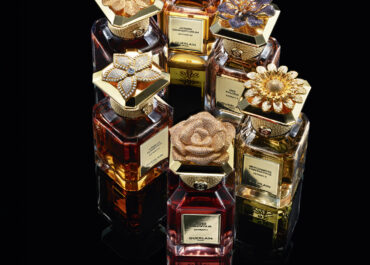
Today’s most ambitious fragrance collections are about far more than scent alone. The bottle might be shaped by an architect, created by a master glassmaker or dressed with the techniques of a fine jeweller. Some are produced in extraordinarily small quantities; others offer personalisation that makes each purchase feel individual. What sits on the dressing table is no longer simply packaging but part of the creative proposition.
It is a natural evolution for fashion and jewellery houses accustomed to expressing their identities through craftsmanship. Haute parfumerie offers another way to tell those stories, only this time through scent, touch and design.
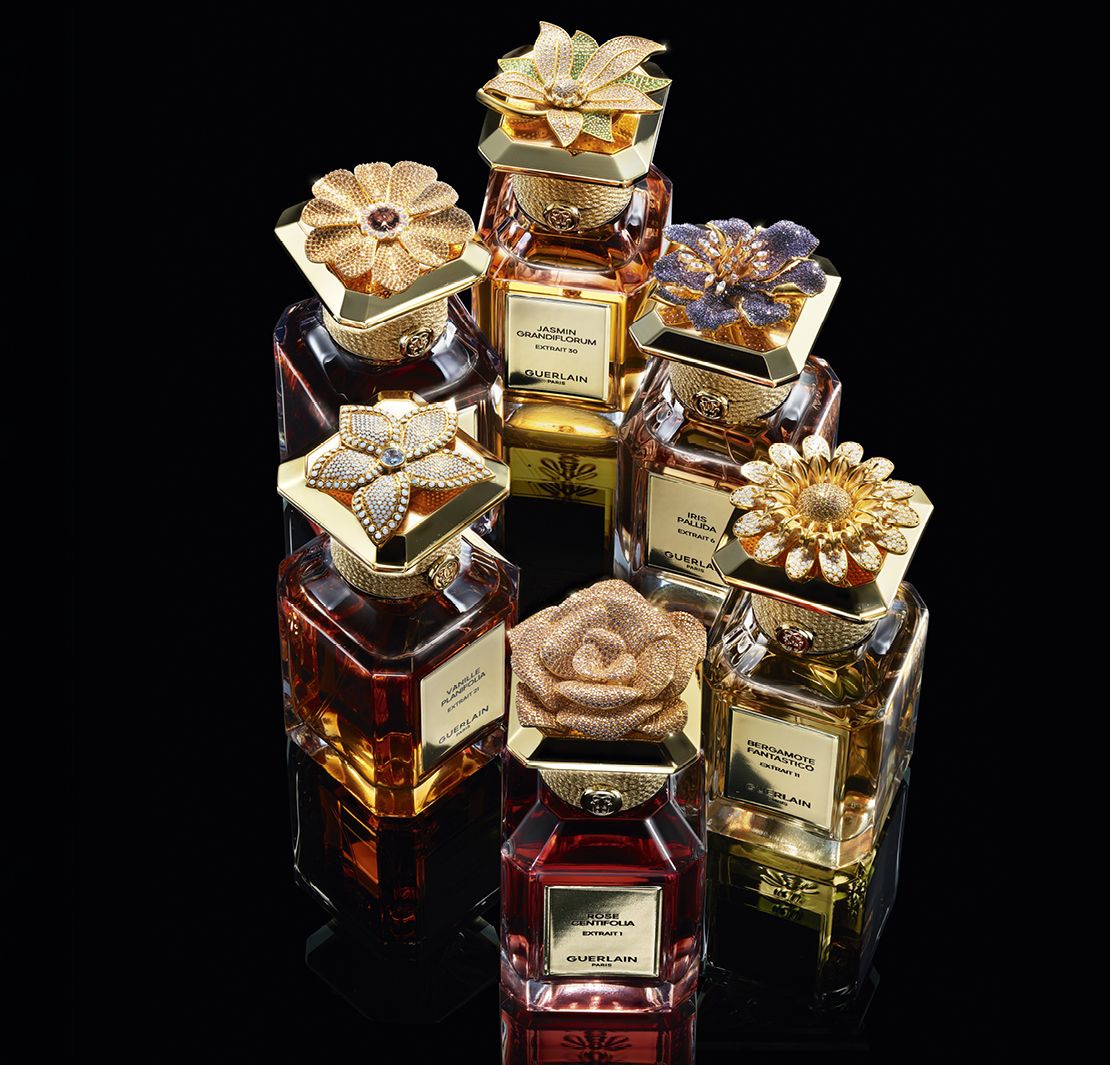
Guerlain L’Art & La Matière
Guerlain has been making perfume for almost two centuries, so its approach to haute parfumerie comes with considerable authority. L’Art & La Matière places exceptional ingredients in the spotlight, treating each almost as an artist might approach pigment, marble or clay.
Rather than allowing precious materials to disappear into complicated compositions, the collection often gives them room to assert their character. Vanilla, iris, rose, neroli and leather take on unexpected personalities across fragrances including Spiritueuse Double Vanille, Cuir Béluga and Angélique Noire.
There is also something appealingly personal about the presentation. Bottles can be customised through different details and finishes, adding another layer to the experience. Guerlain may be one of perfumery’s most historic names, but L’Art & La Matière demonstrates how tradition can become a starting point for experimentation rather than a reason to stand still.
Celine Haute Parfumerie
Celine’s Haute Parfumerie Collection was conceived by Hedi Slimane with the intimacy of a personal diary. Rather than building each fragrance around an obvious destination or ingredient, the collection draws on moments, places and impressions accumulated over time.
Names such as Nightclubbing, Black Tie, Parade and Saint-Germain-des-Prés suggest scenes rather than prescribe them, leaving space for the wearer to create their own associations. Powdery notes provide a recurring thread, while traditionally masculine and feminine codes frequently cross paths.
The bottles are equally controlled. Fluted glass, sharp proportions and black lacquered caps give the collection an architectural quality that feels completely aligned with Celine’s wider visual universe. There is little excess here. The luxury lies in mood, detail and the confidence to leave certain things unsaid.
Dolce&Gabbana Velvet Precious Jewel
Dolce&Gabbana takes a considerably more opulent route with Velvet Precious Jewel, where fragrance is treated almost as though it were a piece of high jewellery.
Limited to just 40 individually numbered creations, the bottle is surrounded by an elaborate handcrafted cage decorated with stones. The Arabic inscription جوهرة, meaning jewel, gives the piece a particular connection to the Middle East and its long relationship with both perfume and adornment.
Perfumer Cécile Zarokian brings together Amarelli liquorice, tobacco leaf and myrrh in a composition designed to feel every bit as rich as its presentation. Italian decorative craftsmanship meets Middle Eastern olfactory traditions in an object that is intentionally theatrical.
This is not a bottle likely to disappear quietly onto a bathroom shelf. Velvet Precious Jewel is fragrance designed for display, collecting and, inevitably, conversation.
Bvlgari Eclettica
For Bvlgari, the transition from jewellery to exceptional fragrance feels particularly seamless. Its Eclettica high jewellery universe includes three olfactory creations by master perfumer Yann Vasnier: Architettura, Scultura and Pittura, each linked to an artistic discipline.
The craftsmanship of the bottles is every bit as important as what they contain. Created on Murano, each flacon is formed by specialist glassmakers using traditional mouth-blown techniques. Coloured glass elements are worked into the surface before being encased, producing a finish that shifts in colour, texture and depth.
The irregularity is part of the appeal. Each piece carries small variations that reveal the hand of its maker, giving the bottles an almost mineral quality. Given Bvlgari’s expertise with gemstones, it feels fitting that even its fragrance vessels should seem to capture and refract light like jewels.
La Collection Privée Christian Dior
At Dior, fragrance has long existed in close conversation with fashion. La Collection Privée Christian Dior builds on that relationship by approaching perfume as a wardrobe of different moods, personalities and occasions.
Fragrances including Gris Dior, Ambre Nuit, Bois d’Argent and Oud Ispahan demonstrate the breadth of the collection, moving between woody, floral, amber and more intensely concentrated compositions.
Where the couture connection becomes particularly tangible is in the presentation. Special cases and accessories have been decorated using recognisable Dior motifs and embroidery techniques, from Cannage to Toile de Jouy, bringing the language of the atelier into the world of beauty. It changes the way fragrance is experienced. The bottle is no longer simply selected, sprayed and returned to a shelf, but becomes part of the wider ritual of dressing.
Louis Vuitton Les Extraits
Louis Vuitton’s Les Extraits Collection begins with an unusual creative partnership between master perfumer Jacques Cavallier Belletrud and architect Frank Gehry.
Gehry reworked the conventional geometry of a perfume bottle into something more fluid and sculptural, topped with a polished metal cap that appears almost to have been caught in motion. It is recognisably a fragrance flacon, but one viewed through the mind of an architect.
The perfumes themselves take a similarly unconventional approach to structure. Rather than relying too heavily on traditional fragrance categories, compositions including Symphony, Dancing Blossom, Cosmic Cloud and Myriad play with concentration, texture and contrast. The newest creations continue that experimentation, while the refillable bottles ensure Gehry’s sculptural design is intended to remain long after the original fragrance has been used. In this case, the vessel is not simply something to preserve the perfume. It is something worth preserving in its own right.