

Brunello Cuccinelli on Building a Global Business From His Hometown in Italy
Brunello Cuccinelli, CEO, Designer and Founder of his namesake brand discusses his humble beginnings in a small Italian hamlet, that lead to incredible global success
Brunello Cucinelli is a true rags to riches story. Born in a rural community in the area of Perugia in Italy, Cucinelli grew up in a home that had no electricity or running water. But this proud Italian had bigger plans for his life. In 1977 he started making dyed cashmere in a small workshop, close to his hometown. Cucinelli founded his fashion brand Brunello Cucinelli in 1978 with around just 500 euros. With hard work and passion, Cucinelli was about to take his business from a small humble company to a global enterprise.
As his creations started to grow in popularity in Italy, he had the vision to take his company to a much larger scale. He found a gap in the market for coloured cashmere for women and this saw huge attention and spent 20 years providing luxury quality cashmere to women. In the 1990s the businessman grew his product line with an offering for men and by 1998 he was selling 200,000 cashmere jumpers a year. But this was only just the beginning. He started to get attention from America, where customers were excited by the idea of expertly made cashmere from Italy and in just six years his company generated revenue of around a staggering 450 million euros by 2013.
Today he is the CEO and Designer at the Brunello Cucinelli this global enterprise, but one thing is for sure, this hugely successful businessman remains true to his roots. With his company headquarters and factories mostly in Solemeo; the 14th-century hamlet that he grew up in, Cucinelli has provided jobs for thousands of local people over the years and has given back to the community in incredible ways by restoring much of the hamlet over the past two decades. Solomeo lies deep in Brunello’s heart as it represents the core of his family, business and spiritual life. He had restored many of the medieval buildings in the area, established the School of Art and Crafts, as well as the Theatre Cucinelli, a Renaissance-style open-air theatre that hosts plays, concerts and ballet shows that highlight the history of the hamlet.

Solomeo Valley
In 2018, Cucinelli unveiled a monument titled “Tribute to Human Dignity”. The five-metre high monument was built according to an ancient technique using blocks of travertine. To express the universal nature of this structure, the name of the five continents of the world is listed under each arch, again in bronze: AMERICA, EUROPE, AFRICA, ASIA, OCEANIA. Africa is located beneath the central arch to commemorate man’s original home. This iconic landmark was designed to last centuries and represent the arts and crafts celebrated in this hamlet and their connection to the world of Brunello Cucinelli.
Here we discuss with Brunello Cucinelli his passion and love for Italy, in particular, the area from which he is from, and how this passion inspired him to achieve his dreams.
How would you describe Italy through your eyes?
I see Italy as one of the most charming countries in the world, for its artistic heritage, for the beauty of the places, the variety of cultures, inexhaustible and unique creativity… and after all, it is where I was born!
Tell us more about the importance of “Made in Italy” and why do you think there is such a fascination with this concept globally?
“Made in Italy” means a guarantee of handmade products, with the same features as when craftsmen were true artists. Products that are made in Italy are handcrafted goods and they therefore last a long time and – when necessary – can be mended or repaired. Its humanistic nature is one of the factors that make “Made in Italy” attractive worldwide.

Tribute to the Dignity of Man Monument
How do you think the values and culture of Italy are seen throughout Brunello Cucinelli?
They are seen through Brunello Cucinelli because it is a true Italian brand. When I travel to any country in the world, one of the greatest pleasures for me is the opportunity to get to know the genuine life of new places, the customs, the food, and the habits of my guests. This is knowledge. The Brunello Cucinelli brand conveys knowledge of Italy to the world, and this is the reason why it is so endearingly appreciated.
You built your brand from a small humble workshop and have seen it grow to a global fashion house – how proud are you of what you have accomplished so far and how do you think Italian culture has influenced that growth and make it possible?
It is not easy – even for me – to retrace how it all happened because, especially in the early days, we were fully focused on the quality of the product and lived on a daily basis. But I believe that a great Italian heritage does not last for centuries for no reason. It doesn’t happen very often that a country can enrich its heritage with so many different cultures: Greek, Latin, Arabic, Germanic, French, and Spanish. This wealth is one of the strongest reasons for our success, and I am more proud of it than of my own work.
Italy has suffered greatly throughout the global pandemic we are currently experiencing – when all of this is over what do you expect to see from the recovery of this crisis?
When all this is over, it will be enough to chase away the ghosts and keep a warm heart and a cold mind. If we can start again at the same pace from the exact point where we had to stop, and if we don’t yield to haste, the time to return to normality will be very short. Crises are cyclical in history, but structural crises, such as the one that hit us in 2008, when no one could understand what was going on, are one thing; temporary crises, such as today’s one, are something different, as the way ahead is much clearer.
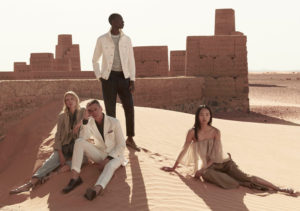
Spring/summer 2020 campaign
When all of this is over will you change any of the strategies of the brand and has it had an impact on how you will move forward?
It is still too early to talk about changes in business strategy. I don’t see the need for that at the moment. We will have to wait for the markets’ reaction on an international level, the common sentiment, the new expectations; I can, however, say that any needed changes will always comply and be in keeping with the humanistic identity of the company because this is our most authentic meaning.
Growing up, what is your first memory of Italy?
The memory of my uncle Giuseppe Garibaldi who moved to France spoke fabulous words of, recalling wonderful adventures set in glorious Italy, full of passion and humanity.
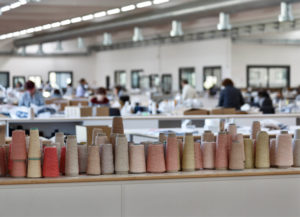
Solomeo Headquarters
Can you share with us any Italian traditions that you to this day continue with your family and friends?
I am not sure that they are typically Italian, perhaps they are universal: but they all revolve around the value of friendship. One of our traditions is a dinner party that we organise two or three times a year with some friends of my wife Federica’s and mine, people we grew up within a relationship that has never stopped. The other tradition is a football match, which takes place almost every week with the same friends.
What’s your favourite Italian dish to eat?
Toasted bread with olive oil on top.
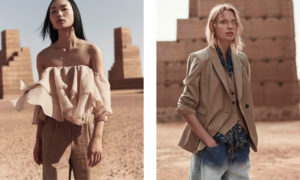
Spring/Summer 2020
What’s your favourite Italian phrase?
“The love that moves the sun and the other stars.”
READ MORE:
Alberto Camerlengo CEO of Furla on the Uniqueness of the Brand and Its Global Success
Riccardo Sciutto CEO of Sergio Rossi on the History and Heritage of the Italian Shoemaker
Riccardo Sciutto CEO of Sergio Rossi on the History and Heritage of the Italian Shoemaker
Riccardo Sciutto shares how Sergio Rossi’s legacy lives on through his brand and how as CEO, he is working preserving the traditional techniques of the house.
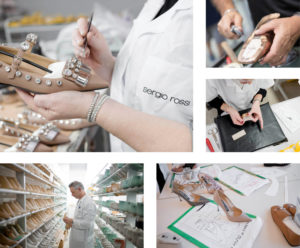
Celebrating legacy and history has always been at the heart of Sergio Rossi. The brand was founded by Mr Sergio Rossi in the 1950s and he built his factory in San Mauro Pascoli, the same location it still stands at till today. Sergio Rossi quickly became known for his handmade shoes that captured Italian quality in their feminine designs and the designer found himself collaborating with brands such as Versace, Azzedine Alaia and Dolce & Gabbana. To this day a pair of Sergio Rossi shoes take a minimum of 120 different steps to make and over 14 hours. Each one is created by hand, in San Mauro Pascoli – the heart and soul of the house.
In 2016 Riccardo Sciutto joined Sergio Rossi as CEO. Sciutto was amazed by the heritage of the brand and embarked on a project that would celebrate the history of the house and bring the archive of Sergio Rossi to the forefront. The “Living Heritage project” which displays over 6,000 of some of the most iconic shoes from the brand’s history is now on display at the factory, inviting visitors on a journey through the legacy of the brand. Under Sciutto’s guidance, the iconic Sr1 shoe was also reinvented based on some of the founder’s original designs.
Sadly, earlier this year, the great Sergio Rossi passed away, but his legacy will continue thanks to the great preservation of the band and all its history. To discuss celebrating this legacy and why it is so important to continue the traditional methods of the shoemaker, we talk to CEO Riccardo Sciutto.
What can you tell us about the importance of “Made in Italy” and why do you think there is such a fascination with this concept globally?
“Made in Italy” is a creativity, unique know-how and inventiveness that has been recognised all around the world. Sergio Rossi was a pioneer in this and he built an innovative company that was a true point of reference for industry insiders as well as the final consumer. Today, with a long history to relay on know-how and heritage, the core belief remains in the idea that quality, care and craft must always be at the centre of the creative process. At Sergio Rossi with almost 70 years of history, we became a symbol of the Italian mastery recognised worldwide.
How important is it to you to preserve traditional crafts and handmade techniques at Sergio Rossi?
Heritage and tradition is everything! Sergio Rossi has an incredible heritage and a playful feminine touch. It is a truly iconic brand which represents Italian excellence at its nest. I have always had the greatest respect for the brand and when I joined as CEO my feeling was reignited. The key was to believe in the factory and revaluate it completely, as well as invest in our history and create our incredible archive, collecting over 6,000 pieces in just four years. We have almost 70 years of history and so we have started to look within that to find inspiration for the latest collections. It’s a unique balance that takes influence from our past but is always in line with the present and future. We are creating emotion and we must always keep in mind who the Sergio Rossi woman is and what are the things she wants and needs. We have a beautiful story and for this treasure, we must thank our founder, Sergio Rossi every day.
What do you think Italy offers that is unique?
Heritage, know-how, passion and great products. More than ever, it’s essential to be flexible to the changes in the market and that very quickly has proven crucial to navigate this critical situation.
What can you tell us about the values and DNA of Sergio Rossi?
At Sergio Rossi, it has always been crucial for us to stay true to the DNA of the brand and the vision of our founder. The values of the brand have always been very close to what a woman really needs and wants, with a product designed for the woman of today: dynamic, smart, sophisticated without taking herself too seriously. The shoe needs to be an accessory that can translate from day to night with ease and naturally became part of a woman’s closet. With experience, know-how and heritage, the core belief remains in the idea that quality; care and craft must always be at the centre of the creative process.

Sergio Rossi Headquarters – “The Magic Kingdom”
What is one thing you love about the legacy and history of Sergio Rossi?
The Sergio Rossi Factory in San Mauro Pascoli is the heart and soul of our company. Our industrial platform can develop, manufacture and produce all types of women and men’s luxury footwear, from flats to high heels. It’s a rare treasure where over 120 artisans create shoes entirely by hand! When I joined the company I felt very lucky to have found it. It’s a process similar to magic, where each shoe takes a minimum of 110 steps to be created. I love to call it the “Magic Kingdom, it’s where the magic has happened every day for almost 70 years.
Italy has suffered greatly throughout the global pandemic we are currently experiencing and Sergio Rossi has been incredibly supportive to the Italian community throughout all of this – when this crisis is over what do you expect to see from the recovery?
As a brand, in such unprecedented and dif cult times for the business and us all, we couldn’t be exempted to be part of the rebirth of our beautiful Italy. I’m very proud to have been one of the very first brands to give this inspiration and support, as I wanted to play an active part, starting from the city to which Sergio Rossi belongs and always looking positively towards the future. We are facing one of the worst situations of our time after the war.
and courage. More than courage, we must move with passionate audacity as in moments such the one we’re living today, we can reach great results but we will have to take risks.
We have seen the “Shoes Make a Difference” campaign that was launched during this time – how do you think this initiative has helped to bring the Sergio Rossi community together?
I believe in positive energy and the strength and resilience of the human spirit. Today more than ever, it is important to explore our humanity and respect for one another. We are being forced into a truly essential state where we must change our habits and move forward with a strong sense of civic duty as fundamental values in our lives. In this dif cult and unprecedented situation, it’s important that our brand community can look within and rediscover themselves and the simple joys life has to offer, as well as the respect for one another.
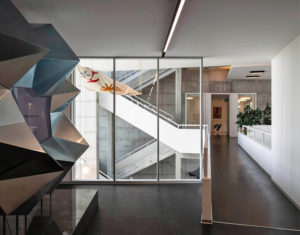
Sergio Rossi Headquarters – “The Magic Kingdom”
They say in every crisis there is always an opportunity – what is something positive that will come out of this situation?
I’m sure of that, and this is a motto I love to use! As a CEO and as a citizen I’m sure that from this critical situation we can create opportunities and generate a successful strategy that will make us stronger to move forward with innovation. I know it’s a hard time from a business point of view, but today is the moment to think about the new opportunities that this crisis put us in front. I believe the entire system will change dramatically so we need to be ready and adapt the process to a new model so that we can start up once the situation allows us to.
When all of this is over will you be changing any of the strategies of the brand and has it had an impact on how you will move forward?
I am always looking to create new opportunities against all odds from a business standpoint. We must be flexible to the changes in the market. At this moment we must act with courage and audacity to create a new business model, and finding solutions that will take us to a better tomorrow.
Do you think the crisis will impact the buying behaviour of customers?
It’s crucial to look after and protect the structure that we’ve successfully built by having a flexible strategy to quickly adapt to the rapid changes of the local markets. The fashion system will be different for sure, once we are back to work and I’m also expecting a different customer who will look for storytelling, quality and sustainability from brands. The entire system will change and we have to be ready to come back stronger than ever. We need to have the strength today to nd solutions to support each other, giving us hope and taking us towards a better tomorrow, while keeping in mind our story and celebrating our founder. This said, in times of difficulties people need certainties: for this reason, I’m sure our bestseller sr1 will be stronger than ever!
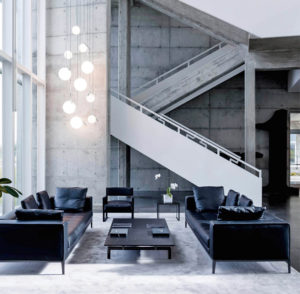
Sergio Rossi Headquarters – “The Magic Kingdom”
The brand recently lost its founder Sergio Rossi – how would you sum up what Mr Rossi did for shoemaking during his life? How will his legacy live on through the brand and in your mind?
Sergio Rossi was a master, and it is my great honour to have met him and present him the archive earlier this year. He loved women and was able to capture a woman’s femininity in a unique way, creating the perfect extension of a woman’s leg through her shoes. Our long and glorious history started from his incredible vision and we’ll remember his creativity forever. Now, more than before, we need to spread his amazing story and his dream. His vision and approach will remain our guide in the growth of the brand and the business.
What is the motto you are living by during this time?
My motto has always been “Think Heritage, Play Digital, Passionate Audacity” because only if we are true to our DNA can we nd an innovative way to live the future. Today, in the era we’re facing, the heritage and the know-how are the true pillars and I’m sure our factory and our long history will be once again the column of our future and this crisis is giving us the inventiveness and strength to create a new winning strategy.
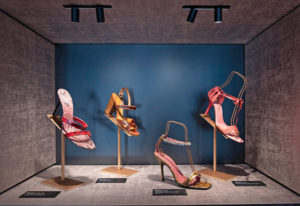
The Living Heritage
Looking forward, what does the second half of 2020 hold for Sergio Rossi?
Today the global markets are so unpredictable that it has become increasingly more dif cult to make predictions. The Asian market was the rst to live this crisis and will be the first to recover so that will be interesting. It is crucial to work on local markets with passion and never be afraid to be daring and push innovative ideas to gain the trust of our customer.
Our goal is to create desire for our product across all demographics, working on a shopping experience that revolves around the needs of our clients and building a seamless Omnichannel retail experience. To do that I believe that we’ll need to adopt a vision that’s more related to local markets. We must play with the digital platforms and change the experience in-store so it is completely different. What I see for tomorrow is an iconic brand and a point of reference for the final consumer, who combines tradition and innovation masterfully thanks to the factory, the heart and soul of the brand. I also imagine increasingly advanced technology in the production line as well as a completely sustainable factory.
Growing up, what is your first memory of Italy?
My parents had their own business and so, since my first steps I’ve collected great memories of our Italian knowhow and made in Italy, appreciating the great work and devotion that’s behind it! A beautiful memory is me as a child walking between my mother’s fabrics and my dad’s closet. For sure this generated in me huge respect for our identity that I’ve brought with me to Sergio Rossi. We must look at our past to create a successful future.
Where in Italy do you like to travel to relax?
I love to explore my beautiful country, here you can admire the infinity of the mountains and the depth of the sea, you can feel the energy and art of our beautiful rich cities that are the very treasure of our culture, that made us so well know all around the world. And of course, I love to travel by car and visit my parents that today are far away from me exploring our bella Italia; such a gem we can experience in our own country.
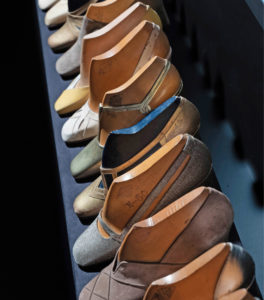
The Living Heritage
Can you share with us any Italian traditions that you to this day continue with your family and friends?
For sure sharing and the art of convivio (dining together)! It’s such an Italian tradition that I love to share with my guests too even when I’m travelling aboard.
How would you describe Italy in one sentence?
Beautiful and passionate.
READ MORE:
Edoardo Caovilla Shares the Secrets to Great Italian Shoemaking and Why Traditional Craftsmanship is Key at René Caovilla
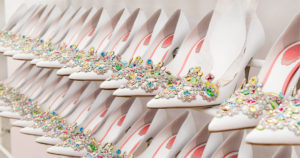
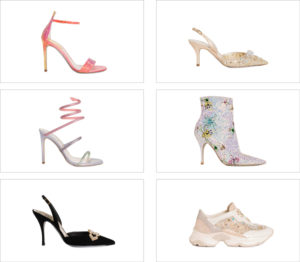
René Caovilla is one of the world’s oldest shoemakers. Founded in 1934 in the picturesque area of Fiesso D’Artico near Venice in Italy, Edoardo Caovilla (senior) opened a small workshop where he had a vision or making shoes that would make women dream. From the first illustration to the last stitch Caovilla made everything in-house by hand. He had a very unique and instantly recognizable style of shoemaking that consisted of elegant yet dazzling that would make a woman feel special.
Over the years, his vision has been shared through many generations. As the company grew and he began to work with more artisans it was crucial that they shared his passion and love for the shoes they produced and that the secrets of the house were passed down from generation to generation. Today this vision still exists. Under the guidance of a younger Edoardo Caovilla (the grandson of the founder), who was appointed as Creative Director in 2012, René Caovilla prides itself on creating handmade, unique, feminine shoe designs. Still produced in that same original factory in Italy, it takes an average of 48 hours to handcraft a pair of René Caovilla shoes, using the most skilled techniques in the world.
Since he took on the role in 2012 Edoardo has been taking the company from strength to strength, increasing its global awareness and presenting a top communication strategy that has seen the brand gain a huge following over the last eight years. However, one thing is clear, while technology and innovation are key to the development of the company, the heritage and skills of the workers is a treasure this brand must cherish forever. Here we discuss with Edoardo his passion for design, his love for his country and the legacy of his family.
What does Italy mean to you?
For me, Italy means belonging and pride. Italy is a country full of history, beauty, culture and creating things to show the rest of the world. Its cuisine, art, natural beauty and its people are truly one-of-a-kind. I’m proud to say, we are a country of passionate, resilient people and during these difficult days I’m more and more convinced of that.
Italy is, of course, a country that is very close to your heart – tell us more about the importance of “Made in Italy” and why do you think there is such a fascination with this concept globally?
I believe that what distinguishes a “Made in Italy” product from others is the ability to perceive within its every detail of the artisanal process. You will not only see the detail of the work but the cultural heritage behind it. Our culture is surrounded by history, art, fashion, good food, and a warm soul. History and creativity are the keywords to understand what Italy is all about.
How important is it to you to preserve traditional crafts and handmade techniques?
I think nowadays it’s a matter of mixing fashion culture, tradition and research with something new and innovative. Craftsmanship alone is not enough today. Making superb shoes is about more than a mere technique. It demands artistry, virtuosity, skill and an interpretive talent that only the truly great master artisans possess. Here, the manual artistry of embroidery happily coexists with leading-edge quality control, to guarantee that each pair of Caovilla shoes is a triumph of beauty and comfort.
What do you think Italy offers that is unique when it comes to craftsmanship?
What distinguishes an Italian luxury brand is an excellence that you find in the choice of materials, attention to details and the use of the best craftsmen that we have, combined with our cultural heritage. All of our shoes are handmade and made to the highest quality, in the most re ned way possible. This is what makes Caovilla and its Italian shoes more than unique.

How do you think the values and culture of Italy are seen throughout René Caovilla and tell us more about the values of the brand and how they connect with your values as a person?
Craftsmanship is for sure one of the core values of René Caovilla that we have in common with the Italian culture. Italy is a country of artisans, artists and passionate people who put their commitment and knowledge into creating wonderful works. I believe that this connection can be felt in every pair of shoes we create. In my family, art and the enhancement of beauty are two elements that have been transmitted for generations. I am sure that the luck of being born in Italy has made this connection even more strong.
How do you think the legacy and history of the brand is still relevant today?
I think that the history of a brand is essential because it allows you to know its DNA and fundamental values. These memories not only help us to understand the present but to look to the future with consciousness and awareness.
Italy has suffered greatly throughout the global pandemic we are currently experiencing – when all of this is over what do you expect to see from the recovery of this crisis?
I expect economic measures that will affect the whole Italian population. This moment is marking our country and the whole world, but many times we have been affected by history and never surrendered, and this time too, I am sure we will.
They say in every crisis there is always an opportunity – what is something positive that will come out of this situation?
On a social and human level, we will surely learn to appreciate the little moments and our everyday life a lot more. Freedoms that we have taken for granted will return to their original value. Talking about business, we will return to give the right value to the product, to all the sales channels but being aware that something has changed in the management of the markets.

When all of this is over will you be changing any of the strategies of the brand and has it had an impact on how you will move forward?
Something has already changed and we should all adapt our work to this new world. The key point is to understand the change and translate it into positive and constructive strategies that are more and more in line with the customer’s needs.
What escapism can René Caovilla bring to women during this time?
We have always tried to offer women something that makes them feel unique and special in their everyday life. I hope to do the same even in these dif cult times, offering small moments of escape and lightness.
Do you think the crisis will impact the buying behaviour of customers?
I think so. For a long period, we have had to close stores and depend more and more on online platforms, this will certainly change many purchase methods that will be increasingly diversified and versatile.
How are you spending your quarantine days?
By being with my family and trying to enjoy these little moments with them.
Looking forward, what does the second half of 2020 hold for Rene Caovilla?
We will certainly get back to work on all the outstanding projects and work on the upcoming initiatives with much more enthusiasm and positivity.
We want to talk about the upcoming fall/winter collection – what can you tell us about it?
In imagining and then designing a collection, I focus on understanding what our current clients want to feel. Elegance and sexiness always play a part, as well as strength, determination and comfort. The mix of these elements guides my thoughts in creative moments and I think it has been best embodied in the Fall Winter 2020-21 collection.
Growing up, what is your first memory of Italy?
Growing up in Italy made me collect a lot of beautiful memories in my country. Some of the best ones go back to my family farm in Siena, a beautiful XV century former convent that my father bought more than 40 years ago. There I celebrated my graduation, my wedding and spent some of the most significant moments of my life. It’s a magical place that I always keep in my heart.
Where in Italy do you like to travel to relax?
During summer, I love to escape to Sardinia. One of my other biggest passions is freediving and Sardinia offers some real breathtaking underwater scenes. There in the deep, I find ideas, shapes and colours that capture the spirit of nature.
At the moment all the travel plans I had organised are unfortunately on hold, but I have some trips planned to the UAE and Russia in the upcoming months. I love to travel abroad, whether it’s for vacation or business – travelling is one of the best ways to grow one’s cultural knowledge.
Can you share with us any Italian traditions that you to this day continue with your family and friends?
We as Italians we love to spend quality time with our family and gather all together at the table for big lunches and dinners. The most beautiful thing currently, and also very new to me, is having the privilege of enjoying more time with my beautiful family – my wife and our four children – having lunch and dinner together every day, listening to music and talking. The simplest moments are the most precious ones.
What’s your favourite Italian dish to eat?
I cook a lot and I like to do it with the help of my children. As a true Italian, I am a great cook and I have a lot of fun experimenting with different recipes! I have to say, my best recipes are sh dishes. I love to cook them the Mediterranean way, in the oven with some fresh herbs and cherry tomatoes!
What’s your favourite Italian phrase?
There is a phrase by Italo Calvino, an Italian writer of the second half of the 20th century, that I find contemporary. It says: “Take life lightly, that lightness is not superficiality, but gliding over things from above, not having boulders on your heart”. In a moment like the one we are currently living, where we must not be overwhelmed by discouragement, I think it’s truly important to project oneself positively towards the future.
How would you describe Italy in one word?
I would probably say charming. The culture, the landscape, the food, the traditions, the music, but also the people who live here are the real treasure of the entire nation. I don’t think that one word is enough to show the wonder of this country.
READ MORE:
Lorenzo Serafini, Creative Director of Philosophy Shares His Passion for Italy and Design
Ian Griffiths, Max Mara’s Creative Director Discusses Italy, Fashion and Design
Laudomia Pucci Discusses How the Traditions of Italy Are the Same Values That Run Deeply Through Her Family and the Emilio Pucci Brand
Laudomia Pucci grew up surrounded by the arts and craft values of Italy, and that is something that has run deep through her blood ever since.
She inherited her father’s fashion house at the age of just 28 and has spent decades ensuring that the brand stays true to the DNA and values that he put in place. Some of those values include staying true to the Italian craftsmanship, quality and excellence when it comes to materials, processes and customer experience. None of this would be possible without the heart of the brand remaining in Italy, where it has stayed for over seventy years. Here we discuss with Laudomia, her love for her country, in particular her home city of Florence and why she believes the values of the Emilio Pucci House are strongly intertwined with the traditions of Italy.
What does Italy mean to you and how would you describe it through your eyes?
Italy is my home country and though I have travelled extensively and lived abroad, I have however always returned to my country and my city of Florence. I believe that at first sight, Italy represents somewhere to go for a vacation because of its beauty, its art, the people, the fashion etc. But it is much deeper than this. In fact, in Italy, we have embraced beauty and we express design and aesthetics in all its forms.
To be a bit more specific, I want to recall the Grand Tour of the 19th century and more specifically; the Stendhal Syndrome. This was an event that occurred when the poet Stendhal arrived in Florence in 1817 and was personally shocked and overwhelmed by the beauty of the city!
From nature to the arts, to history and traditions, the cuisine, the cars, the boats, the creativity in manufacturing skills and last but not least, the warmth of people. All of this makes Italy special.
Italy is, of course, a country that is very close to your heart – tell us more about the importance of “Made in Italy” and why do you think there is such a fascination with this concept globally?
My father is at the very roots of the concept of “Made in Italy”. It was after the war that he started working with artisans in the south, in Capri, and mills in the north to create innovative products that had a very unique appeal. They were unique in that he was creating
fashion and collections for the United States, which was a new market at the time.
It is interesting that when we think of the Renaissance when we used to have the “arti maggiori ed arti minori” meaning the major arts and the minor arts. To explain, this means the difference being between artists and craftsmen. Craftsmen could be weavers, people working with leather, with wood etc. and artists are the painters, the sculptures etc.
I believe that “Made in Italy” as we know it today is the modern translation of this. Centuries of these skills of craftsmanship, quality and research, made our fashion and design companies what they are today. “Made in Italy” is therefore synonymous of Italian tradition and quality.
How important is it to you to preserve traditional crafts and handmade techniques?
Today depending on the company and the industry I think we need to develop our unique traditional skills in innovative ways and using the latest in technology. So much is happening and it can revolutionise and bring the “Made in Italy” concept to another level.
How do you think the values and culture of Italy are seen throughout Emilio Pucci and how do they connect with your values as a person?
Pucci at its core is inspired by the Italian’s Dolce Vita and Italian culture. We recall and are inspired by everything from the pageantry races of the Palio of Siena to the islands of Capri or Porto no; the mountains and ski resorts and the beauty of the monuments. These values of beauty have captured and fascinated clients for at least three generations and have also inspired the different creative minds and artistic directors that have worked with the brand.
How do you think the legacy and history of the brand is still relevant today?
I believe that a brand’s history makes sense when it is translated simply and effortlessly through a great product. Our history is about innovation in terms of our fabrics, colour research and product development. It is a brand that has helped women express themselves and embraced women’s liberation since the 50s and 60s and I think that resonates today!
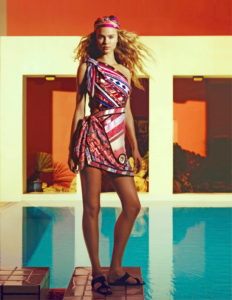
Italy has suffered greatly throughout the global pandemic we are currently experiencing – when all of this is over what do you expect to see from the recovery of this crisis?
Yes, unfortunately, Italy is suffering a lot due to the pandemic, however, I believe that going forward we need to find a new balance between creativity and business. We have witnessed too many talents burned out in this industry. The speed of the system didn’t allow much time for creativity, meaning young talent and small business often get lost. But this is not only in Italy.
Today I am not sure what to expect from the recovery, as unfortunately the length of the shut down is heavily impacting our manufacturing facilities and our factories, nor are we sure what the recovery will look like in terms of the markets picking up. But I do believe there is great hope in what technology can bring to the industry; from the supply chain to the final market. Our industry is quite agile and I’m sure it will embrace all possible innovations in order to survive this unprecedented moment. As a result of this situation, I strongly believe that quality and sustainability will be valued more.
What is the motto you are living by during this time?
More than living by a motto I’m trying to listen and understand more deeply what is happening.
We want to talk a little about the spring/summer 2020 collection – what can you tell us about it?
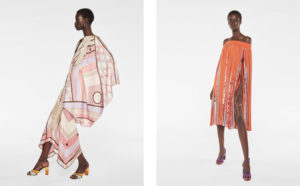
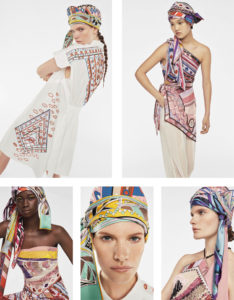
The spring collection is very strong and young, yet modern at the same time. I love the inspiration of athletic wear, as well as the beaded mini evening dresses – all so perfectly Pucci! I also love the muted colours and re-work of the Vivara iconic print. The scarf that can be used at any time is a big trend this season and will only become more important.
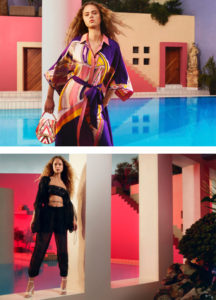
Where in Italy do you like to travel to relax?
I love Tuscany and also Rome and the countryside to the north of the city. I love the lakes and also Viterbo and Ronciglione.
Can you share with us any Italian traditions that you to this day continue with your family and friends?
I think the Italian tradition I cherish most is family. Though we all have busy lives, travelling a lot and living in separate cities, (my children live abroad and my husband in Milan), we know that our roots will always be in Florence. I am blessed that my children love their home and our country house in Tuscany and enjoy coming back to visit so we can all share meals together! That’s magic for me.
READ MORE:
Lorenzo Serafini, Creative Director of Philosophy Shares His Passion for Italy and Design
Established by Alberta Ferretti, Philosophy was an opportunity to create an ethereal feminine lifestyle that captured the contemporary woman of today. It is a brand that is synonymous with romance and bohemian style.
Lorenzo Serafini joined Philosophy in 2014 after heading up the womenswear department at Roberto Cavalli. He is inspired by the many cultures of the world and the different women he meets. He loves to express a woman’s sensuality through his designs and has successfully done that over the past six years of leading the brand. Sera ni draws inspiration from female icons (both past and present) for his designs, many of which are the legendary Italian women who have helped to define the idea of Italian elegance.
His Spring/summer 2020 collection was inspired by Monaco and the jet-set lifestyle. Bringing together elements that he discovered during his travels. Here we discover that no matter where he goes and whom he meets, it is his home country that is the real source of inspiration for this designer.
What does Italy mean to you and how would you describe it through your eyes?
Italy means art, culture, history, tradition and creativity. Thought my eyes Italy is my home, my family and my brand; Philosophy.
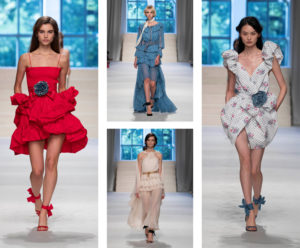
Spring/Summer 2020
Tell us more about the importance of the “Made in Italy” and why do you think there is such a fascination with this concept globally?
Made in Italy is the creativity and savoir-faire that made our country a destination for fashion, design, automotive and culture in general. I truly believe that there’s a real charm behind made in Italy that is made possible by the Italian love for working. Maybe this love comes from the Romans? What a glorious past Italy had!
What do you think Italian brands offer that no one else does?
Creativity anchored to the roots of the country. We do it better because we use the past to teach us.
How do you think the values and culture of Italy are seen throughout Philosophy?
I have always tried to give a very international point of view to Philosophy but now that I am at home and reading books by many Italian authors and watching old Italian movies I am also reflecting on the Italian side of my brand. Italian icons like Isabella Rossellini, Monica Vitti, Mina and Patty Pravo all live in the clothes I’ve designed in the past ve years. They are creating the right attitude for the brand: an Italian essence with a jet-setter touch.
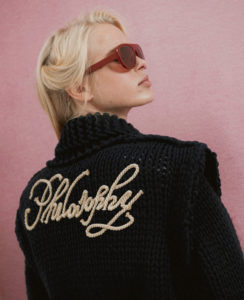
Spring/Summer 2020
Italy has suffered greatly throughout the global pandemic we are currently experiencing and Philosophy has been very generous in its donations to support the crisis – how have you seen the fashion industry has come together to support those in need during this time?
I was overwhelmed to see such generosity and I think we all made the donations in a very natural way. When my friend Chiara Ferragani told me about a great crowdfunding project she was organising I wanted to support her. Using her huge popularity to raise awareness for building a hospital is amazing and I’m proud to consider her a great friend.
When all of this is over what do you expect to see from the recovery of this crisis?
I hope to see more respect between humans and more respectful of nature.
They say in every crisis there is always an opportunity – what is something positive that will come out of this situation?
Technology will be the key for all the positive sides whether it’s related to health or business.
When all of this is over will you be changing any of the strategies of the brand and has it had an impact on how you will move forward?
I will have to. As of today, I can’t imagine a fashion show with 500 people in a room. Where would the social distancing be? Brands will need to focus on what it is extremely important and key to them. Not on useless activities.
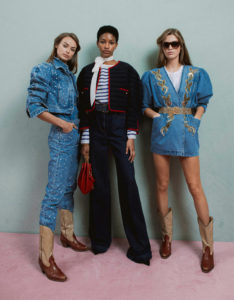
Spring/Summer 2020
Do you think it will impact the buying behaviour of customers?
For sure. Before buying we will all ask ourselves at least ten times: do I need it, now, at this moment?
Do you think the concept of runway shows are still as important as they used to be?
Yes, I think they are fundamental to show a great emotion but the format needs to change accordingly to the timing.
Can you tell us about your creative process as a designer and what inspires you?
My creative process starts at home with my books and the old magazines I collect. Or it could be while I’m travelling and meeting people I don’t know. As of today, I need to stay safe. Thanks to Instagram I have great help. Once you know how to use it intelligently, you discover many never seen images and even old images!
What would you still like to achieve with the brand that you haven’t done yet?
I would have loved this question three months ago! Now I can only answer that I hope to be able to still show to the Philosophy lovers all my energy and passion for fashion.
We want to talk about the spring/summer collection – what can you tell us about it?
This collection is a mix of two personalities: a rebel and a romantic. Both have a French “je ne sais quoi” attitude that I adore. The location I imagined is Monte-Carlo, a place that made was the original home of the jet-set lifestyle. I have also created a playlist on the Philosophy Spotify channel dedicated to this atmosphere. I suggest you go and listen to it.
Who is the Philosophy woman today?
She is a woman without age who loves to be accidentally beautiful and charming for every occasion without being overdressed.
What is your first memory of Italy?
Days spent on the beach near my house. I was born in a seaside town on the Adriatic Riviera that was very cool in the 80s that’s full of tourists, international women, shopping places and disco clubs. I have always loved my hometown Riccione because it gave me a lot of energy during my teenage years.
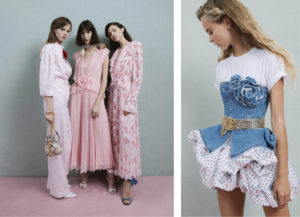
Spring/Summer 2020
Where in Italy do you like to travel to relax?
In Italy, I love to fly to Sicily and Venice. These are the two places where I can spend days walking, surrounded by the beauty of nature and the glorious past of our country.
If you could visit another time and place to immerse yourself in its style and culture, when and where would that be?
I would love to live in Paris at the age of Louis XIV. It would be such an awesome experience full of art, gossips and love.
Can you share with us any Italian traditions that you to this day continue with your family and friends?
Sunday lunch. I have lunch with my family every Sunday. There are no excuses.
What’s your favourite Italian dish to eat?
Fish! Fresh tuna and grilled shrimps are my favourites. And the dessert that I can’t resist is Tiramisu.
What’s your favourite Italian phrase?
Buon appetite.
How would you describe Italy in one word?
Creativity.
READ MORE:
Ian Griffiths, Max Mara’s Creative Director Discusses Italy, Fashion and Design
Since the brand began in the 1950s, Max Mara has been true to its own genre of style.
Originally created for the independent woman by founder Achille Maramotti in 1951, the Italian fashion house has spent decades defining the rules of “power dressing” by creating styles that will make women feel strong, independent and powerful. Max Mara’s style is instantly recognisable – the feeling of stylish workwear that can be transformed from day to night, defines the brand today, while the techniques and traditions of the house have been passed on through generations. If you know one thing about Max Mara it would be its classic camel coat, which has become a global phenomenon and is a wardrobe must-have for millions of women worldwide the Max Mara coat perfectly captures the understated elegance that today’s power women possess.
In 1987, fashion designer Ian Griffiths entered a student competition to work at Max Mara, after visiting Italy for the first time. He won and has been with the brand ever since – over 30 years now. He is surprisingly, quite the opposite of the Max Mara customer. Firstly he is a man, he is British and was bleached-haired, Bowie loving punk when he first joined the brand in the eighties. Today, as Creative Director of the Italian fashion house, Griffiths has traded his punk style for much smarter attire and he continues to dedicate his life to creating clothes for the elegant Max Mara woman. While he is not Italian himself, Griffiths has found a second home in the country he has worked in now for over three decades. Here we discuss what it is that attracted him to Italy and the brand and how he has come to develop a unique relationship with it.
You have worked in Italy for many years – how does it inspire you and how would you describe it through your eyes?
I have worked in Italy for over thirty years. I wouldn’t have stayed so long if I didn’t love this beautiful country, with its uniquely rich culture and heritage, and of course its people. Italian culture revolves around the idea of ‘la bella figura’ which means presenting your best self, not only in the way you dress but in the car you drive, your home and its contents, even the bar you choose to visit. When you put that deep appreciation of beauty together with the country’s unrivalled craftsmanship you have the formula for Italian style.
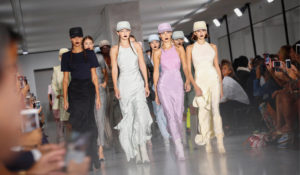
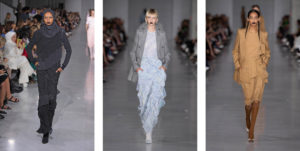
Max Mara Spring/Summer 2020
Tell us more about the importance of the concept of “Made in Italy” and why do you think there is such a fascination with this, globally?
Whether it’s a house, a piece of furniture or a coat, Italy regards the technical specification of an object as an integral part of the design process. Technicians collaborate with creative teams to make sure that every object is made to the very highest standard, where every detail is perfectly resolved. Italian craftsmanship operates on an industrial scale; it’s not about making one exquisite thing that can’t be replicated, but a series of things that will be perfect each time. “Made in Italy” represents total quality and design excellence. It’s a benchmark that speaks for itself, that’s why the world loves it.
How important is it to you to preserve traditional methods of savoir-faire at Max Mara?
I wish the readers of a&e could all visit our state-of-the-art coat factory where we have evolved a production line that combines traditional tailoring techniques with technological innovation. Max Mara invests in the training of technicians and tailors in order to guarantee that those skills will never be lost. Whenever I visit the factory, I’m humbled by the pride of the people who work there, and their passion for what they do. That will never change.
How do you think the values and culture of Italy are reflected through Max Mara?
Through the epitome of good design and the fact that Max Mara is a brand which has always been dedicated to providing clothes that enable women to look and feel their absolute best so that they can shine in whatever they do. That’s 100% Italian.
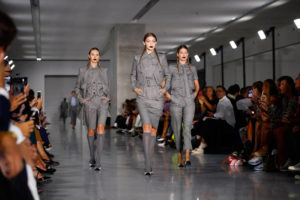
Can you tell us a little about how the brand has evolved and is appealing to today’s woman?
Max Mara’s founder Achille Maramotti founded the brand in 1951 with the aim of dressing the growing army of women living increasingly independent lives, driving cars, managing careers, families and busy social lives. By the early 80s, Max Mara had devised a very distinctive look, now known as ‘power dressing’, which undoubtedly offered women a style that was credible in the corridors of power, but which demanded a certain uniformity. Forty years later, women are breaking through the glass ceiling. They have confidence and want to announce their success in the way they dress. They are looking for an element of cool, individuality in their clothes, but never an overpowering one. When a Max Mara woman enters a room, she wants to be noticed, but for the right reasons.
How important is it to Max Mara to localise its collections or give tribute to a specific market?
We do sometimes produce a capsule collection dedicated to a particular market, we presented on in Dubai in 2018. But generally speaking, Max Mara has such an iconic style, and the whole world wants that same universally recognisable look. Max Mara women transcend national and geographical boundaries.
Women all around the world are in love with the Max Mara coat and it is for sure an essential in any woman’s wardrobe – what do you think is the fascination with this key item and what would you tell women are the reasons why they should own one?
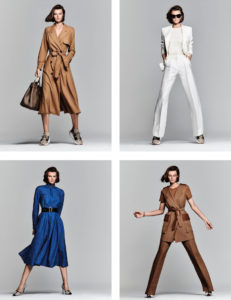
I often visit our stores and discreetly observe clients trying on our celebrated coats. A woman pulls on a camel coat, ties the belt, pulls up the collar, and looks in the mirror. She seems to have grown taller. She feels cool, con dent and glamorous, like a movie star. That coat will make every woman feel that way every time she wears it, for years and years, in many cases for a lifetime. A woman develops an emotional relationship with a Max Mara coat like no other item in her wardrobe. It’s a friend for life.
The word is suffering greatly at the hand so the coronavirus pandemic but in every crisis, there is always an opportunity
– what is something positive that will come out of this painful situation?
It’s giving us time to reflect, to consider who we are and what we do best. We will come back more focused than ever. Right now I’m working from my home in the UK; being separated from Italy reminds me why I fell in love with that beautiful country in the first place. I will appreciate it all the more when I can finally go back.
What is the motto you are living by during this time?
Make the most of what you have.
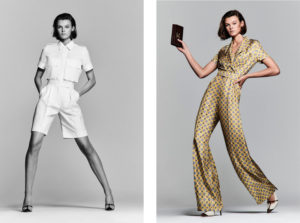
We want to talk a little about the spring/summer collection – what can you tell us about it?
I was inspired by the upcoming James Bond movie to think about the spy thriller genre. I imagined my own version of the movie, casting the Max Mara woman as the central character. Smart, cool and sassy, our heroine carries out her assignment with glamorous panache – from a meeting at the ministry in London’s rainy Whitehall, lunch at a discreet Mayfair watering hole, to a smart reception at the Governor’s mansion on a tropical island. With the odd speedboat chase and helicopter ride thrown in! Max Mara gives her the perfect look for every occasion.
Can you share with us a little bit about your creative process?
My creativity is driven by the challenge to produce clothes which are desired by women and also wearable. I always resist the urge to be experimental simply for the sake of it and because the Max Mara woman does not want to look like an experiment! The clothes we design are not about me, they are about the woman who wears them. That’s the nature of Italian fashion.
Who or what inspires you?
Every collection explores a specific theme or idea, and the sources can be quite diverse, although art, architecture and film are fairly constant sources of inspiration for me. But the underlying inspiration is always the Max Mara woman. She’s always there in my head when I’m working on a collection. I love her like a friend; I want only the best for her.
Who is the Max Mara woman of today?
She’s ambitious, determined, talented and focused. She’s not afraid to speak her mind or challenge convention – but always in the most elegant, put together way.
What is your first memory of coming to Italy?
I visited with my friend when I was an art student. It was the early 80s and I was a punk; my hair was bleached white! People stared at us constantly because we looked so unconventional, but they were kind and hospitable. That’s when I fell in love with Italy.
Where in Italy do you like to travel to?
I find it impossible to prioritise one particular town or region over the others. From Florence to Ravenna, Mantova to Palermo, every single Italian town, even the smallest, has history and beauty. And every region from Umbria to Puglia, from Emilia Romagna to Trentino Alto Adige has some outstanding aspect of beauty.
Are there any Italian traditions or you have picked up on since working with Max Mara?
I respect mealtimes like the Italians do. No matter how busy we are, or where we are, my team and I always stop for lunch. Mealtimes are when we strengthen the bonds between us, exchange ideas and discover our lighter side.
What’s your favourite Italian dish to eat?
My favourite restaurant in the world is the charming historic ‘Da Giacomo’ in Milan. Every time I go there, I choose the exquisite antipasto di mare crudo – the quality is perfect every time, just like a Max Mara coat!
How would you describe Italy in one word?
Bellissima
READ MORE:
Shop Dior Fragrance and Beauty Lines From Your Home During Lockdown
Dior Fragrance and Beauty Launches Online in the UAE.
While the lockdown may have eased slightly, many of us in the UAE are opting to stay at home unless absolutely necessary. So going out to browse the shops for our favourite beauty products is still a million miles away.
So to bring some beauty happiness into your home Dior has launched a dedicated beauty and fragrances site in the UAE that means you can buy your favourite Dior fragrances make-up and skincare from the comfort of your own home.
Explore the latest collections including the Maison Christian Dior range, women’s perfumes, men’s perfumes and the full ranges of make-up and skincare. The Art of Gifting section allows you to send your favourite products to your loved ones, gift-wrapped in a Dior branded box – perfect for Eid.
Delivery is free and customers will receive two complimentary samples with every order. Delivery will be within a maximum of five days.
To shop visit shop-beauty.dior.ae
READ MORE:
Veronica Etro on Staying True to the Brand’s Values and Developing New Ways to Share the Message of Etro
When he started the Etro fashion house in 1968 Gimmo Etro took inspiration from the Paisley print and the lifestyle the surrounds, this colourful, free-moving symbol. Today, over 50 years later, the Italian fashion house still holds this print and the ethos Gimmo created at the heart of the brand. A brand that defines bohemian styles and is a master when it comes to creating prints, Etro has built a true niche for itself allowing it to sustain in a saturated fashion world.
Today, Etro is managed by Gimmo’s four children; Kean, Jacopo, Ippolito and Veronica, so it’s true to say this fashion house is a true family business. Veronica is Creative Director of the Women’s collections. She joined the business in 1998 after studying in London and unveiled her first runway collection in 2000. Since then, Veronica has worked hard to steer the women’s collections in a direction that embraces the heritage and DNA of the brand but celebrates the modern woman of today and all she is looking for. She maintains the classic Paisley print as a key factor in all of her collections but we have seen it in new fabrics, colours and styles.
Veronica is often inspired by different cultures and that is something that has been seen at the brand since the beginning. Bringing together all the world has to offer and combining that with the heritage of its home country allows Etro to create something quite unique. Here we discuss with Veronica Etro the importance of remaining true to her family’s values but embracing innovation and technology as we move into the future.
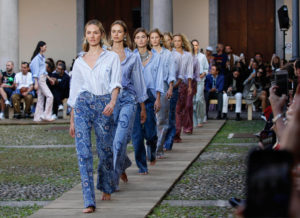
Etro Spring/Summer 2020
What does Italy mean to you as a person?
Italy is a special country: not only because it is my home country but also because in such a small area it gathers a variety of incredible landscapes, traditions, arts and cultures. If I were to create a mood board about Italy, it would surely be a combination of all of the above: from seaside and mountain views to architecture and local specialities, with the addition of warmth, passion, sunshine and creativity.
Tell us more about the importance of “Made in Italy” and why do you think there is such a fascination with this concept globally?
Made in Italy is not only a label. It is rather a value, an expression of cultural knowledge and craftsmanship techniques which have flourished in Italy over the years and have been handed down from generation to generation as precious traditions. People come to Italy from all over the world to produce their collections and accessories: Italy is a symbol of high quality and good taste.
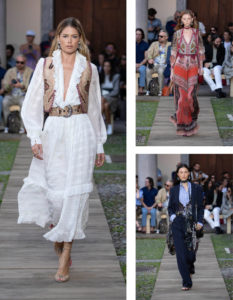
Etro Spring/Summer 2020
How important is it to you to preserve traditional crafts and handmade techniques?
Extremely important! They are real treasures for our country and I hope innovation will be able to integrate, support and safeguard artisans, not destroy them.
When it comes to these techniques – what do you think Italy offers that is unique?
Assuming extraordinary quality and attention to detail as fundamental, I feel that the added value Italy offers is the passion we put in what we love to do. We are creative also in always finding new solutions and never giving up. Thinking positive is the Italian way of overcoming obstacles and barriers.
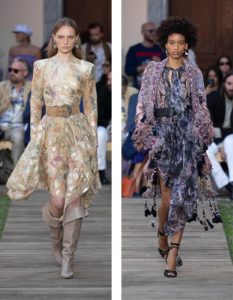
Etro Spring/Summer 2020
How do you think the values and culture of Italy are seen throughout Etro?
Etro is profoundly Italian for sure, but we have always been open to influences from different eras, cultures and areas of the world. As a family we have always been very fond of art and travelling – not only physically but also with our minds. What my father Gimmo has passed on to me and my brothers since our early childhood is curiosity: it opens your mind so you never feel bored. The world is full of beautiful things to be discovered.
How do you think the legacy and history of the brand is still relevant today?
Since it was founded in 1968, Etro has established and developed a very distinctive aesthetic. Strong colour combinations, Paisley prints and eclectic patterns that convey a sense of freedom and discovery. These have always characterized – and still do today – not only our fashion collections but our lifestyle as a whole. In more recent years, fashion has fostered a continuous evolution of temporary trends, especially in reference to streetwear. I am happy and proud to say that at Etro we have always believed in our identity and remained faithful to our legacy, preserving and nurturing our founding values and stylistic codes. Actually, there is more to this! Following our 50th anniversary, over the last year, we have worked on our classics and re-edited two of our iconic items: the Pegaso Bag, crafted from our signature Paisley fabric, and my father’s first striped shirt, the GE01, re-edited with a more contemporary and genderless t.
Italy has suffered greatly throughout the global pandemic but in every crisis, there is always an opportunity – what is something positive that will come out of this situation?
For years, the fashion industry has experienced a sort of addiction for collections, products, special projects and capsules. I truly feel now is an opportunity to rethink and give new meaning to our work: it’s time to go back to concrete values and authenticity. I hope this terrible time we are all going through will give way to a new renaissance, based on more solid ground, with a more responsible and respectful mindset. Fashion needs more pragmatism and new awareness.
What is the motto you are living by during this time?
In general, in life, I always try to stay positive and to see the glass half full rather than half empty. I believe that it is important to attract positive thoughts and relate to positive people and things to gain good energy. The terrible times we are now living are surely unprecedented and my life motto is not always applicable. Nevertheless, I remind myself every day to not lose hope and vision for a more responsible future.
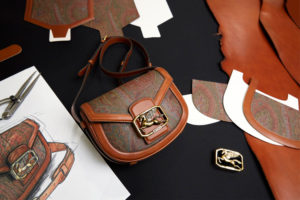
The Making of Pegaso Bag
Looking forward, what does the second half of 2020 hold for Etro?
We are working on the future step by step, exploring new ways to engage with our audience. A first step is the creation of a virtual showroom to allow the presentation of the upcoming collections to those who will not be able to travel in the coming months. This new digital space, which will be complementary to the physical Milan sales showroom, will not only be a technical project: the aim is to create an experiential and visual environment able to convey the brand’s heritage and values.
We want to talk a little about the spring/summer collection – what can you tell us about it?
I was inspired by two contrasting souls: posh pirates, such as Anne Bonny and Mary Read, and aristo groupies, like Anita Pallenberg and Marianne Faithfull. The wild and the free-spirited meet the ultimate bourgeois sophistication in a collection which adds influences from the hippies’ favourite Seventies retreats, such as Tangier and Goa, to sartorial refinement, embracing lightness and an effortless attitude.
Who is the Etro woman of 2020?
A fierce and passionate woman who embarks on an adventurous trip, not only physically but also in her mind. The sky is her limit.
Growing up, what is your first memory of Italy?
I remember travelling a lot with my family in my early years. My first memory is Venice: a magical city which, with the eyes of a kid, is truly incredible and somewhat surreal. I remember the beauty of the golden Venetian masks and passing under the iconic Ponte dei Sospiri on a gondola.
Where in Italy do you like to travel to?
One of the most recent places I visited with my family is Naples. It is so colourful. I love to eat Eating typical street food, like pizza alla scarola, in the crowded narrow streets of the city centre; climb the active volcano Vesuvius; walk on the ancient mosaics of Ercolano and Pompei archaeological sites and admire the veiled Christ at the Museo Cappella Sansevero: these are just a few of my suggestions – It’s really worth a visit!
Can you share with us any Italian traditions that you to this day continue with your family and friends?
Good food is certainly one of the most celebrated Italian traditions. Even though I am very practical and manual, I am not much of a kitchen-person myself, but luckily my husband is very good at quite a few recipes – especially gnocchi, lasagne, tagliatelle and homemade pizza…a real treat! I also find that cooking is a great means of sociality: in our case, for example, it’s an important moment for a family gathering with my two sons, especially during the weekend.
What’s your favourite Italian dish to eat?
I am in love with pasta: my favourite is spaghetti aglio, olio e peperoncino – the simplest but the best!
How would you describe Italy in one word?
Authentic. But also real, passionate, warm.
READ MORE:
Stefano Gabbana & Domenico Dolce Share Their Love For Italy and How They are Trying to Help Their Country in This Crisis
It’s no secret that Dolce&Gabbana designers Stefano Gabbana and Domenico Dolce have a strong passion for Italy. This love for their home country has been and continues to be present throughout their collections season on season. Whether it’s an inspiration from a particular era in Italian history or prints and patterns mirroring the local landscape, elements of Italy can be seen throughout all of D&G’s designs. The Dolce & Gabbana spring/ summer collection 2020 was inspired by the duo’s love for Sicily. An island that they regularly travel too and speak of their love for.
While Italy is in a moment of crisis, it goes without saying then, that Domenico and Stefano wanted to contribute in some way towards helping Italy navigate through this terrible time. But the designers wanted to do something unique, that they believe would really help towards the future. So they decided to partner with Humanitas University, one of Milan’s leading universities, to help fund a study that aims to clarify the response of the immune system to coronavirus SARS-CoV-2, which causes COVID-19. Here, the designers share more on this, as well as talking through the spring/summer 2020 collection and of course, their love for Italy.

What does Italy mean to you both personally?
DD&SG: For us, Italy is the place where everything started and where everything always returns. Each region has a story to tell, folklores that reveal the soul of the area and of the people who live there, pearls of rare beauty that must be known and treasures of priceless craftsmanship.
Tell us more about the importance of the concept of “Made in Italy” and why do you think there is such a fascination with this concept globally?
SG: Made in Italy is a value. We are lucky to live in a country that has an incredible artistic and cultural heritage and we are proud to be able to give light, with our work, to the craft masteries that, even today, represent excellence.
DD: In Italy, we are immersed in absolute beauty. We Italians do not realise it, but our food, as well as our land, art and culture, constantly give us beauty. Our friends from other countries often remind us that a simple walk allows us to admire palaces of marvellous architecture, be it Baroque or Renaissance.

How important is it to you to preserve traditional crafts and handmade techniques?
SG: What we try to do with our collections is to tell and transfer to the new generations the values of “Made in Italy” and the art of craftsmanship. That’s why we created Botteghe di Mestiere, a professional training course that teaches young people the basics and skills of tailoring and at the same time, offers them employment opportunities. It is a project that Domenico and I are very fond of because it reflects and conveys all the values that are fundamental for us: the importance of human touch, tailoring, “creating” with passion, sacrifice, technique, time and patience. These are all of our values. The core of our fashion is nothing but the “know-how” for which it takes dedication and desire to learn.
DD: Tailoring is an ancient profession that needs experts who can teach and pass on the techniques and some of the most complicated workings. Our “method” is based on three points: cutting, embroidery, ironing. Everything else — really everything, at least for us — is secondary. It is also part of the course to learn to look, touch and listen in order to steal the secrets or those small tricks that really make the difference.
How do you think the values and culture of Italy are seen throughout Dolce&Gabbana?
DD: Every dress for us is a narrative that can speak of Italy, of tradition, of roots, of what we like most, of flowers, of colour, of lace, and of tailoring. What brought us to where we are now is love for what we do, the passion for fashion and the desire to tell a story and offer a dream and a memory.
SG: Too often fashion tends to highlight only what is considered to be cool, trendy or “fashionable”, but does not tell much more. This doesn’t interest us. We want to communicate a good story, highlight the beauty of Italian traditions and values and create special clothes and accessories for women and men who choose to wear them. We believe this is the secret, the added value that allows our creations to be timeless.

How do you think the legacy and history of the brand is still relevant today?
SG: We believe that without a past and solid roots, there can be no future. Dolce&Gabbana’s DNA is the union of multiple elements: the harmony of the opposites, the suits, the sensual sheath dress, black and the use of colour, the sacred and profane, the most eccentric print, the simplicity, the lace; we are all of this. The attention to detail, shapes and proportions are all aspects of our aesthetics and they are the plot of a story that has yet to continue.
DD: Dolce&Gabbana’s DNA is characterised by many different elements that will never change. The contrasts of femininity versus masculinity, sensuality versus austerity, precious fabrics versus plain ones; it’s a combination of multiple, different things: rst of all, Italian tradition coupled with our creativity and ideas.
How did you decide to face the Coronavirus situation?
SG: We felt we had to do something to fight this devastating virus, that is threatening all mankind. In these cases, it is important to make the right choice. This is why we thought Humanitas University would be the ideal partner to work with, as its excellence and humanity make it a special entity. Our relationship with Humanitas University doesn’t start with this research project. We’ve already started an active collaboration with the University, funding the scholarships for students of the MedTec School, the innovative degree programme in Medicine.

We want to talk a little about the spring/summer collection – what can you tell us about it?
DD: For us, this collection is a message of joy and lightness, with our love for Sicily at the forefront. We have combined bright colours and tropical patterns with typical island techniques and special materials such as raffia and wicker, drawing inspiration from the classic handwoven baskets. There is also a part of the collection dedicated to black, to sensual clothes and with a tight t.
SG: It is a story of colour and vitality, our Sicilian Jungle. We are Sicily, our world; the jungle is all that comes from outside, the inspirations, the movement, the constant changes… what influences us and affects us in our life. It is a collection full of love and positivity because this is what we want to express today.
Growing up, what is your first memory of Italy?
DD&SG: We are lucky because we have many good memories related to Italy, Sicily and Milan. It’s too difficult for us to name just one!

What’s your favourite Italian era?
SG: Neorealism for sure! Classic Italian cinema, the old Neorealism films have been and continue to be, sources of great inspiration for us. In our collections there is always a part dedicated to Nero Sicilia and also refers to black and white cinema, to the beautiful women like Anna Magnani and Sophia Loren that will always inspire us.
DD: Baroque is also a period we love and from which we constantly take inspiration. With its richness in details and its timeless opulence, we often look back at that artistic phase. Inspirations do not die, they are always there, in the drawer of our imagination; from time to time they jump out and give new ideas.
How would you describe Italy in one sentence?
DD&SG: Passionately beautiful!
READ MORE:
Mario López, Nutrition Consultant at SHA Wellness Clinic on How Healthy Eating Fights Disease
Scientific research says suggests that food has a decisive influence on the immune system, the way our body defends itself against disease.
Therefore what wat we eat and drink during this time of lockdown is crucial when it comes to preparing our body against disease. Following healthy eating advice from an expert nutritionist will have a huge effect on your body’s immune system and if you were to catch coronavirus or any other disease for the matter, it will place your body in a better position for fighting off the virus.
Healthy eating is also key to keeping your energy and motivational levels up during lockdown. So a healthy body means a happy mind. Mario López, Nutrition Consultant at SHA Wellness Clinic shares his tips and tricks to eating yourself healthy during this time of uncertainty.

Mario Lopez
Reducing fat in the diet is not only a fundamental aspect of weight control, but also influences the functioning of the immune system. It’s simple: if you reduce the fat content in your diet, your immune activity increases. Research warns that maintaining the immune system requires a steady intake of all necessary vitamins and minerals. To do this, make sure you eat a balanced diet that includes plenty of fruit and vegetables. “It is essential to nourish our organism with vitamin C and antioxidants, which are vital in reinforcing the immune system”, summarises Mario López, Nutrition Consultant at SHA Wellness Clinic.

Why Antioxidants?
Antioxidants offer great support to the immune system because they reduce cell death and promote the development of white blood cells, which are key to destroying harmful bacteria.

Why Vitamin C?
Vitamin C is an essential nutrient that, unlike other mammals, humans cannot synthesize, but must obtain through diet or dietary supplements. “There is no doubt that it influences the functioning of the immune system. It is recommended to take between 1 and 1.5 grams a day. It has no contraindications as long as the indicated dose is respected”, explains López.

Why garlic or echinacea?
Let’s not forget four well-kept secrets: the immune power of garlic, spirulina, brewer’s yeast and echinacea. They are very economical ingredients that will bring your dishes and body to life.

Why eat better than ever now?
“You can have a good diet at home,” says Mario Lopez emphatically. “The key is to find the necessary caloric contribution, chew well, eat a lighter diet, choose well what we take, follow schedules or eat satiating food”, explains López.

KEY IDEAS:
- Scientific research says it: food has a decisive influence on the immune system, the way our body defends itself against disease.
- Antioxidants offer great support to the immune system because they reduce cell death and promote the development of white blood cells, which are key to destroying harmful bacteria.
- Our immune cells have a great need for vitamin C when they are actively working to fight infection.
- To keep our immune system in optimal condition, many foods can be used, and four well-kept secrets are garlic, spirulina, brewer’s yeast and echinacea.
- A good diet can be maintained at home and the key is in aspects such as finding the necessary caloric contribution, chewing well, eating a lighter diet, choosing well what we take, following schedules or consuming satiating foods.
READ MORE:
How Can we Keep Our Mind Functioning While at Home?
Clinical Dietitian Dr Dana Al Hamwi Talks Nutrition in the Lead up to Ramadan
Donatella Versace Chief Creative Officer of Versace Shares How Italy is at the Heart and Soul of the Fashion House
Italy is truly embedded into the DNA of the fashion house Versace. It is a house that was built on the values and traditions of Italy from the very beginning, by a family that highly respects and sees these values as part of their DNA.
Versace’s founder Gianni Versace regularly spoke of how he was inspired by his surroundings in Italy and how in a way, it was this that urged him to create his own fashion brand. From the first Versace runway show in Milan in 1978 to the most recent collections almost fifty years later, the essence of Italy runs through and through the Versace House.
Who better to interpret this into words that Chief Creative Officer Donatella Versace? Donatella famously took over at the helm of the brand after the shocking and sudden death of her brother Gianni in 1997. While she had moved the brand forward in her vision, something that has always been crucial to Donatella is to withhold the values and beliefs that her brother put in place when he created Versace, values that have always been intertwined with traditional Italian values. Here we discuss with Donatella how Italy is truly the heart and soul of the fashion house and how the values and traditions of her family influence the way she moves the brand forward today.
What does Italy mean to you as a person?
Italy is my home! It represents my roots and where I come from. Like every country, Italy has a specific set of values and I grew up according to them. These include family, traditions, history, literature, art, creativity to name a few. Being Italian has a much deeper meaning than just a nationality and I believe I am who I am because of that simple reason. It resonates within me in whatever I do. Without Italy, there would be no Versace!
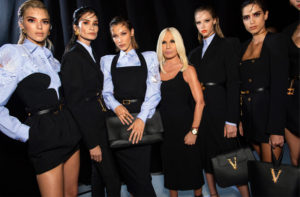
Spring Summer 2020
Tell us more about the importance of “Made in Italy” and why do you think there is such a fascination with this concept globally?
I am proud to be the Chief Creative Officer of an Italian brand with a global reach. I believe Italians have creative abilities in their DNA and I think we use our creativity to generate desire. “Made in Italy” means being a leader in innovation and fashion made with genuine, traditional craftsmanship. I am glad to see the world appreciating what is unique about Italian fashion.
How important is it to you to preserve traditional crafts and handmade techniques?
Being a brand that is “Made in Italy” is very important for me. Not just because I am patriotic, but because I strongly feel that the being “Made in Italy” is a value that we have as a country, as well as an industry and it needs to be preserved. Made in Italy is not just something we put on the labels of our clothes. It is synonymous with the highest standards of quality, the use of the best materials and fabrics and having the best research and innovation that live along with one of the longest-lasting traditions in fashion. In my team, I have tailors that have been with us for decades and they are now training the younger ones in some of their skills like the art of creating a dress from a sketch, embroidery, draping and so on… I cannot even begin to give a value to this richness, because it is something unique.
When it comes to these techniques – what do you think Italy offers that is unique?
Being made in Italy naturally means luxury, the most extraordinary craftsmanship, the best materials. The creativity to find new ways to produce high standard products, the ability to make something unique and the will to adopt, adapt and preserve traditional techniques. It’s a cultural identity. It also means keeping an eye on the environment, being conscious and offering products that can assure clients that we are taking the necessary steps to be environmentally conscious.

Versace Spring/Summer 2020
How do you think the values and culture of Italy are seen throughout Versace?
There are very few brands that scream “Italy” more than Versace! Italian history has deeply influenced me since I was very young and it means everything to the Versace brand. This is where the brand was inspired and started in terms of imagery, culture and craftsmanship. Of course, we can’t just look the past and this is why today and moving forward, we are playing with the new and startling ideas of using the past to create something completely new, re-inventing our codes with. One thing is for sure, though; Versace will always break rules, will always be daring, and will always evolve.
How is the legacy and history of the brand still relevant today?
The new generations are discovering old treasures. For them, the fashion of the 80s and 90s is new and we all know that fashion and tastes tend to be reinvented. I noticed that there was a fascination for the fashion of the past from all the questions I was asked by younger people, especially on social media. It is incredible to think that they are living all of this for the rst time. Little by little, I started to see the first signs of a return to specific tastes and it is fascinating to see how young people are attracted to the world of Versace. This is what pushed me to re-imagine the DNA of the brand with the eyes of today. To show them the Versace codes and history, elaborating it in a way that is relevant for our culture so that they would understand it and make their own. Relevance is the keyword: being relevant for me, and the brand, means talking the language of today’s society, being able to understand what it is about and being part of the cultural conversation, because fashion does not live in a vacuum.
Italy has suffered greatly throughout the global pandemic we are currently experiencing – when all of this is over what do you expect to see from the recovery of this crisis?
We have just rediscovered the importance of being kind to one another, to support each other, to be a real community. I pray that this sense of unity will remain intact even after we overcome this virus. For the rest, I honestly don’t know. This is one of the same questions I keep asking myself too and one that I think is in the minds of everyone right now. What I do know, is that we won’t be the same after this is over. Maybe this is our chance to x a couple of things that were not right before… who knows? There are too many variables at play right now to have any certainty.
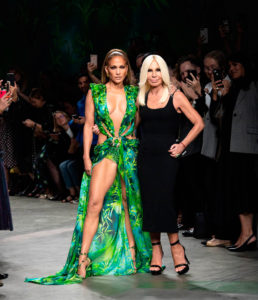
Donatella Versace with Jennifer Lopez
In every crisis, there is always an opportunity – what is something positive that will come out of this painful situation?
This moment has given to all of us the time to think. If the world has changed forever and if fashion is the mirror of society, then fashion will have to adapt to a new world and a new way of living. Unfortunately, right now, we still do not have the answers as we are in the middle of this crisis. All I can tell you is that I am still working and I am still creating. Not only because it is my job, but also because it is my duty to my team, the company and all the other industrial realities that are looking at us to be able to restart when all of this will be over.
When all of this is over will you be changing any of the strategies of Versace and has it had an impact on how you will move forward?
A lot of things will probably have to be looked at from a different perspective. For example, seasonality, how big a collection should be, what should be in it. If fashion is the mirror of the society that creates it, if that society has changed, probably what people will desire is going to change. I think all of us designers are looking for direction right now. I think the fashion industry will be different and maybe, in a good way.
Right now, it seems inappropriate to even think about fashion when you know there are so many people dying or risking their lives. But, on the other hand, fashion has always offered an escape from reality, a way to dream…and that can help in a moment when everything around you seems to be falling to pieces. There are so many contradictory thoughts in my head right now. I am still processing everything and because the situation changes every day, I have no certainties.
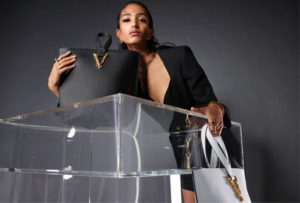
Versace Spring Summer 2020
Do you think it will impact the buying behaviour of customers?
I guess so yes, but right now I want to be positive and keep on doing what I know how to do best.
What is the motto you are living by during this time?
Stay positive. I always see the glass half full and that’s what has helped me in difficult moments.
Looking forward, what does the second half of 2020 hold for Versace?
I have so many plans for the second half of the year. Stay tuned!
We want to talk a little about the spring/summer 2020 collection – what can you tell us about it?
For this collection, I decided to honour an iconic moment when fashion and culture became a catalyst for technological progress. I’m referring to the 2000 Grammy Awards when Jennifer Lopez garnered international attention wearing the Versace jungle dress. The world had the same reaction: jaw-dropping. Today we live in a technological world, but back then, one event prompted the creation of a new tool that now has become part of our lives. Thanks to the friendship that I have with Jennifer, while I was working at the collection, I texted her asking if she would walk, never expecting her to say yes. Instead after a few minutes, I receive her enthusiastic reply and it was like a dream come true.

Who is the Versace woman of 2020?
She is every woman. Versace is more of an attitude than a set of physical characteristics. I like to think that what I create speaks to every woman in a different way and that each of them can find something in my collections that is in line with her style and her personality. Generally speaking, I am inspired by women who are self-con dent, strong, supportive of one another and are not afraid to speak their minds. But today, it does not make much sense for me to think that there is one Versace woman. On the contrary, I think that there is a bit of Versace in every woman.
Growing up, what is your first memory of Italy?
I grew up in Reggio Calabria. My home was in front of the sea and I remember that Gianni and I loved to go and take a look at the antique ruins in the city. That was the beginning of a love story with art and a fascination with history, that my brother made even stronger. He loved art, especially the neoclassic art and he passed this passion on to me.
Where in Italy do you like to travel to?
I love Milan, it’s a city of secrets. Much of its beauty lies behind closed doors, in galleries, museums and meeting places. But I also love amazing Italian cities like Rome and all its splendours or Venice and its uncontested beauty.

Can you share with us any Italian traditions that you to this day continue with your family and friends?
The art of hospitality and talking for hours!
What’s your favourite Italian dish to eat?
Pasta! Even if I do not eat it often, there’s nothing that screams Italy more than pasta. It’s what all Italian mums would cook when you go back home.
What’s your favourite Italian phrase?
“Mai arrendersi” – it means never give up.
How would you describe Italy in one word?
“UNICA”.
READ MORE:
Diego Della Valle Chairman of the Tod’s Group Discusses the Global Pandemic and His Love For Italy
Alberta Ferretti Discusses the Beauty of Italian Design and How Tradition has Been a Great Influence on Her
Alberta Ferretti has long designed for the elegant Italian woman. While her woman has evolved, one thing has remained consistent; the inspiration Ferretti’s gets from her home country of Italy.
The Alberta Ferretti Maison began its life in Italy in 1973 with a small boutique in Cattolica. Ferretti began showing seasonal collections in Milan in 1981 and has remained consistent and true to the Italian fashion industry for over forty years.
Her feminine and elegant designs embody the values of Italy, especially its women. Attention to details is at the core of the Alberta Ferretti Maison and this is synonymous with Italy and Italian design. Here we discuss with Alberta Ferretti how her surroundings and the people of Italy inspire her collections, year after year.
How would you describe Italy through your eyes?
I would describe Italy as a wonderful country to explore and discover in its diversity and traditions, where the pursuit of excellence and quality, not only in fashion, represent its strength and essence, but while always looking towards the future.
Tell us more about the importance of “Made in Italy” and why do you think there is such a fascination with this concept globally?
Craftsmanship, quality and tradition are still the characteristics that distinguish Italian fashion today. A tale of expert hands that interpret and give shape to a creative idea, through techniques and processes that are never forgotten, but preserved over time and still incredibly modern today. This is still an element of charm that characterises our country today, making it unique in the world.
How important is it to you to preserve traditional crafts and handmade techniques?
It’s very important! Especially for those like me, whose work begins with materials and the use of original embroideries and techniques that require expertise, as well as meticulous craftsmanship.
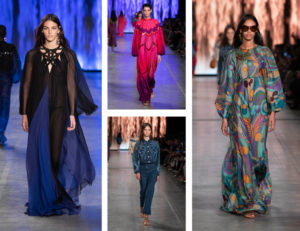
Spring/Summer 2020
When it comes to these techniques – what do you think Italy offers that is unique?
Italy is the only country where creativity becomes an object. It is universally considered a reference model for production. Our country has the merit of having been able to maintain its leadership in the production chain over time, welcoming and positively integrating technological innovations.
How do you think the values and culture of Italy are seen throughout Alberta Ferretti?
I have always thought of Alberta Ferretti as a Maison, and I have always referenced a coherent style as well as my very personal vision of fashion to create an ethereal, sensual and timeless look for women who choose pieces not based on trends but on their taste. This vision of fashion is very “intimate” and reflects my training, which took place inside my mother’s tailor shop. A place full of imagination and creativity, where women could feel free. Fashion at the time was really about couture. Putting fabrics, colours and silhouettes together was a magic that came together on a woman’s body. Women were suddenly transformed into more beautiful women because of what they were wearing! It was incredible for me to see how a dress could transform every woman into a character. I am
We know the woman that you create for is very important to you and that she is a reflection of Italy’s modern woman – how would you describe her in your own words?
I love how different each woman can be and through my creations, I desire to enhance their characteristics without masking their distinctive beauty. In particular, I am interested in the women of today and for this reason, my fashion wants to represent modernity.
How do you think the Alberta Ferretti brand has evolved over the years?
Out of sensitivity and choice, I have always worked on building a very precise, coherent and de ned style that has characterised my fashion and my creations. Over the years, I have always tried to anticipate and closely follow the changes and needs of my customers. I believe I have always remained faithful to my vision of elegance and romance, to enhance the personality of my clients through my clothes. Having always been careful to represent modernity, in recent years I have also worked on special projects and unisex capsule collections that have expanded my universe, without altering its DNA.
Italy has suffered greatly throughout the global pandemic we are currently experiencing – when all of this is over what do you expect to see from the recovery of this crisis?
I am sure that the fashion industry will find a way to overcome this difficult moment. I think it will come out stronger as there is no limit to creativity, and today, more than ever, we need to dream. It will take time to return to the rhythms of the past and surely there will be several changes. However, I believe that nothing can replace the emotion of a fashion show because in those moments you don’t only see one dress but enter a whole new world.
In every crisis, there is always an opportunity – what is something positive that will come out of this painful situation?
This moment is surely teaching us to give more value to intimacy, to affections and not to take anything for granted. I found some photos of my two children when they were little, which fondly reminded me of those days. I am always projecting towards the future. Being a fashion designer means to run without ever looking back, to be constantly up to date, but now and then, stopping and reliving beautiful moments of the past is good for the heart.
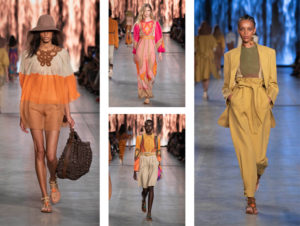
Spring/Summer 2020
When all of this is over will you be changing any of the strategies of the brand and has it had an impact on how you will move forward?
I am spending a lot of time studying what women might want after this pandemic. Certainly, they will want easy, comfortable, eco-sustainable, elegant and above, all quality clothing: garments and accessories that last over time, that enter the wardrobe and are there to stay and be reinterpreted season after season. Extravagance will end, but we will not stop dreaming.
The collections will certainly be less broad and more focused on the identity of the brand. A timeless style that remains attentive to the needs of the women of today. A style that thanks to sober lines, will always be current and fulfil a woman’s desire to feel beautiful and comfortable in any situation.
What is the motto you are living by during this time?
Never stop dreaming!
Looking forward, what does the second half of 2020 hold for Alberta Ferretti?
I talk to my closest collaborators every day and together we continue to work on and design the new collections: the next steps will be the Resort and the SS2021 collection, which will surely be communicated with a different approach. Intense months await us, made up of big challenges, some unknowns that will require great commitment.
We want to talk a little about current the spring/summer collection – what can you tell us about it?
I started working on this collection with the idea of creating a story of modernity, trying to nd a balance between the feeling that women have towards fashion and the spirit of freedom of our days. I decided, therefore, to deepen my search for personalisation, to make each garment the chapter of a story and transform everyday clothing into many special occasions.
Growing up, what is your first memory of Italy?
I was born and raised in a small seaside town but in the warmer months, my parents would send me to the countryside to a large farmhouse with some of our relatives, where I spent my days immersed in nature and playing with my cousins. I still remember the emotions I felt when I heard the sound of the cicadas, the scents, and the views of the hills between the Marche and Romagna regions. In the evenings, I loved looking at the stars in the total darkness while facing the immense sky.
Where in Italy do you like to travel to?
I love to drive. I like to take my car to explore and discover the beauties of our country. Each trip is a different surprise as each region has its own unique charm, which never ceases to amaze me. I love roads surrounded by nature, sea or countryside. The cities I have recently rediscovered are Orvieto and Matera.
Can you share with us any Italian traditions that you to this day continue with your family and friends?
Most certainly Saturday lunch with my family and the inevitable aperitif by the sea with friends. I can’t wait to be able to resume these habits!
What’s your favourite Italian dish to eat?
I was born by the sea, so there is nothing more beautiful to me than experiencing the flavours and scents of my homeland, even in the kitchen! One of my favourite dishes is tagliolini pasta with squid ink, salmon and ricotta cheese cream with a hint of lime… Roberto, my chef, cooks these dishes that I love always in summer.
What’s your favourite Italian era?
The Renaissance, for the innovation and vitality it has brought in all areas, especially on an artistic and cultural level, making Italy a role model for other countries. Let’s just think of Leonardo da Vinci’s genius… but there are so many I could mention!
How would you describe Italy in one word?
Surprising! For its indisputable beauty and the strength and character of its inhabitants.
READ MORE:
Diego Della Valle Chairman of the Tod’s Group Discusses the Global Pandemic and His Love For Italy
Valentino Presents a Middle East Capsule Collection of Accessories
Valentino Presents a Middle East Capsule Collection of Accessories
Maison Valentino is present a new capsule collection for the Middle East. The Valentino Garavani Limited Edition Accessories Collection is exclusive for the Middle East, designed by Creative Director Pierpaolo Piccioli.
Below is a sneak peek of some of the pieces:

VALENTINO GARAVANI VSLING SMALL TOP HANDLE BAG

VALENTINO GARAVANI VSLING SMALL TOP HANDLE BAG

VALENTINO GARAVANI VSLING SMALL TOP HANDLE BAG

VALENTINO GARAVANI SLING BACK MEDIUM HEEL PUMPS

VALENTINO GARAVANI SLING BACK HIGH HEEL PUMPS

VALENTINO GARAVANI SLIDE SANDALS
The collection features four precious skin women’s handbags and five women’s shoes.
Now available in Middle East stores. Shop safely!
READ MORE:
Watch the Christian Dior: Designer of Dreams Exhibition From the Comfort of Your Home
Shop at Mall of the Emirates Without Leaving Your Home
How Can we Keep Our Mind Functioning While at Home?
In a time of uncertainty, it’s hard to stay motivated and focus on the tasks in hand. Working from home often raises some challenges and a change in routine for all the family can be unsettling. Rachel Rose, Yoga and Meditation Instructor at SHA Wellness Clinic shares her tips on keeping the focus and staying motivated.

Taking control of our thoughts is not an easy task! And in these uncertain times, even less so. Times like this magnify stress, sharpen anxieties and deepen depressions, all whilst physical ailments are left untreated. A functioning mind is a calm mind, not a busy one. So how to calm and focus the mind and make the best use of our days in confinement?
The untrained mind is often described as a monkey in a cage. Like a caged animal, the mind deprived of its everyday distractions jumps around, rattles its bars and overthinks itself into a frenzy. To keep the mind functioning when we are spending a lot of time at home, we must calm our thoughts and cultivate positive emotions.
By controlling our thoughts, we reduce our emotional stress. Calmly, we then undertake those much-wanted self-improvement tasks like learning a new language or instrument and make use of the precious gift that we have been given: time. Until then, trying, but failing, at self-improvement goals may only bring more frustration. So, let’s start at the beginning:
Thoughts trigger emotion.
Mindfulness meditation is a form of cognitive self-regulation that requires no religious or spiritual affiliation and can be done by anyone, even kids.
Mindfulness aims to train the mind to focus on one single thing at a time, pushing all other thoughts to the side. We can use apps, but it is useful to develop mindfulness without the support of technology.
Boredom. Lethargy. Frustration. Worry. Loneliness. All of these feelings and more, may arise during self-isolation. These feelings are natural and most of us will experience them at one time or another, but they may be more intense and more frequent when we are torn out from our routine and facing an uncertain future. Some say they feel like they’re on a roller coaster, moods careening up and down as the hours tick by. So, the first step to feeling calmer is the do a simple Mindfulness Meditation every day.
Breathe evenly
One of my favourite techniques involves making the breath steady and even by counting each breath. I teach this technique with small finger movements. The combination of moving the fingers (fine motor coordination), regulating the breath (conscious breathing) and counting (cognition) means that we really achieve our goal of linking body, breath and mind.
It’s easy to do: Just sit comfortably and start to breathe counting 1-2-3-4 on the inhale and 1-2-3-4 on the exhale. This makes an even breath. Then, place your hands on your knees and turn your palms up. As you inhale, touch the thumb to the index finger on 1, the thumb to the middle finger on 2, the thumb to the ring finger on 3 and the thumb and the pinkie on 4. Exhaling, do the same but backwards: 1/pinkie, 2 /ring, 3/middle, 4/index. Keep going like this, ignoring any natural pauses that may occur at the end of the inhale or the exhale. Try to do at least 12 minutes of this meditation, every day. This practice works for both the young and old!

Develop positive emotions
Gratitude and compassion are two of the noblest emotions. One way to keep the mind functioning during lockdown is to try to use your thoughts to a positive end. To feel any emotion, we need to think thoughts that awaken them. It’s hard to feel angry if there is nothing to feel angry about! So, let’s think thoughts that invite feelings of gratitude and compassion into our lives.
Gratitude means feeling thankful. There is so much to be grateful for, but we often overlook it. We must train the mind to give thanks every day. We simply think about our strong body and feel grateful for our health. Or, we think about our home and feel grateful for the safety and shelter it provides. Or, we remember that we are lucky to have hot, running water to wash our hands so many times a day, and feel thankful for this. This practice will help us feel warm, safe and cosy inside, and it is so easy.
Another gratitude exercise I recommend is best done first thing in the morning. The minute you wake up, think for a second about how grateful you are to be alive, and aware of your existence. This is a wonderful way to start the day and if you make a habit of it, you will soon find that every day becomes a little more special. This gratitude exercise is so simple that even children can do it. So, if you are blessed to have a family, encourage them to do the same practice, every morning.
Compassion is the feeling we get when we perceive suffering. It may be hard to find compassion when you are feeling frustrated, fearful or out-of-control, but it is exactly the antidote you need. Here is a simple practice you can follow:
Begin by feeling compassion for yourself. Allow your mind to quietly watch you and your emotional turmoil, then forgive yourself for not being perfectly balanced at all times, and comfort yourself by being kind to that scared, discouraged person. You deserve your own kindness! Next, turn your compassion outwards: if you are confined with your family, you know that they are also surely feeling disheartened and worried. Cultivate kind thoughts about them. See them in their best light, forgive them their irritable answers and internet obsession. Finally, think benevolent thoughts about people all over the world facing the same situation. Think about animals confined in cages for years, about the ill, trapped in disabled bodies and about those families directly affected by the current pandemic. Feel compassion for them. Listen carefully to your thoughts about what desires to help me be present, then put some time aside every day to do one compassionate act. By practising compassion daily, we tune into ourselves and each other. This helps us feel more at peace with the strange times we are all living in.
Make good use of your time
Once you have calmed your mind, undertake to make each day count. Don’t overdo it. It’s best to make a schedule that includes downtime and entertainment, but which motivates you to get out of bed, get dressed and stay mostly away from the mind-numbing effects of binge-watching series or bingeing on food or alcohol. Remember, we want the mind to be clear, not dull.
Once you have a clear mind and a realistic schedule, see where you can find time to fit in something that challenges your mind and body. Whether you choose Sudoko or crosswords, chess or cross-stitch, piano or percussion, Pilates or yoga, there are so many activities on offer all around the world! It is up to you to plunge in and cultivate your skillset.
Finally, reach out to friends and family for socialising, even if only online. Those who are isolated alone are most at risk of developing depression since solitude feeds depression, Really invest time in your relationships, maybe even make amends with old friends. If you’re not alone, but know someone who is, touch base.
How we can we keep our mind functioning when we are spending a lot of time at home depends on cultivating mindfulness, gratitude and compassion. Only in that mental space can we then learn and grow and make the best use of our time. Remember: a functioning mind is a quiet mind, not a busy and distracted mind. Understand that and you’re already halfway there!
READ MORE:
Clinical Dietitian Dr Dana Al Hamwi Talks Nutrition in the Lead up to Ramadan
There’s an online Portal Offering Mental Health Support During the Coronavirus Outbreak
Discover the Latest Timepieces by Vacheron Constantin
Vacheron Constantin Presents its latest novelties through the first-ever virtual Watches and Wonders Presentation. Through L’Imaginaire by Vacheron Constantin, the brand presents a virtual global platform that presents a whole new world to explore the union of the Maison’s tradition of craftsmanship and spirit of innovation.
The platform presents six new stunning collections; Traditonelle Tourbillon Chronograph, Traditonelle Tourbillon, Overseas Perpetual Calendar Ultra-Thin, Overseas QP, Fiftysix and Les Cabinotiers. We discover more on these latest creations from the Swiss watchmaker.
Traditonelle Lady Tourbillon
For the first time, the Traditionnelle collection combines aesthetic refinement and technical sophistication in a feminine way, by welcoming the very first Vacheron Constantin self-winding tourbillon in a lady’s watch. Housed within a new 39 mm diamond-set pink gold case, or in a diamond-paved white gold jewellery version, this prestigious horological complication appears in unprecedented feminine finery.
These watches are for women looking for a timepiece that combines precision and style. They feature an extremely thin movement, the in-house 2160 calibre, featuring a peripheral rotor and a three-day power reserve. This is the first time this movement has been at the heart of a watch dedicated to women.
Traditonelle Tourbillon Chronograph
Considered an emblem of Haute Horlogerie, the tourbillon now takes on a stronger personality and more dynamic aura, combined with a monopusher chronograph function which pay tribute to the history of Haute Horlogerie and reflect Vacheron Constantin’s technical mastery in the crafting of Grandes Complications.
Through its ties with centuries of watchmaking culture and its dynamic character, this timepiece pays tribute to mechanical complexity while respecting the Maison’s distinctive aesthetic codes and inherent elegance.
Overseas Perpetual Calendar Ultra-Thin
The Overseas Perpetual Calendar epitomises the spirit of sporty elegance and now it is presented with a case and bracelet in 18K pink gold. This pink gold is paired with a blue dial to offer a perfect combination of casual chic. There is also an all-gold version featuring links inspired by the Maltese cross that is pure elegance.
In addition to the case/bracelet combination, the brilliance of the gold extends to the blue dial, whose hour-markers, hands and moon discs are also made of 18K 5N pink gold. While the blue-lacquered gold dial captivates the eye with its sunburst satin finish, the counters are distinguished by their snailed decoration, while the gold-rimmed minute-rack opts for a velvet finish.
Overseas Perpetual Calendar Ultra-Thin Skeleton
The Overseas collection is enriching its range with a new territory to explore. The prestige of a precious metal case and bracelet is now complemented by the extreme sophistication of an open-worked movement that is also ultra-thin and houses a perpetual calendar, giving the timepiece a contemporary and horologically sophisticated look.
Open-working (also called skeletonisation) is regarded by connoisseurs as a watchmaking complication in itself and is indeed a speciality during watchmaking training. This technique, which consists of finely open-working a mechanical movement by hollowing out its components yet without compromising their reliability, is an extremely complex task. For the first time, this craftsmanship is seen in the Overseas collection.
Fiftysix
Vacheron Constantin’s retro-contemporary collection adopts a new sepia brown-toned dial colour. A look imbued with a vintage touch, interpreted through two pin gold models with calfskin strap designed for everyday wear. This watch reinforces the vintage character of the Fiftysix and is available in two versions; automatic and complete calendar.
Les Cabinotiers
Grouped under the exceptional chiming watches names “La Musique du Temps®”, Les Cabinotiers Astronomical striking grand complication, Les Cabinotiers split-seconds chronograph-Tempo and the singing birds timepieces, are the latest range of one-of-a-kind timepieces created within the Les Cabinotiers department in tribute to the art of music.
READ MORE:
The Art of BOVET: Discover the Highly Skilled Decorative Techniques Used by the Watchmaker
Stay Home and Watch Movies Recommended by Celine’s Artistic Director Hedi Slimane

Hedi Slimane, Artistic Director of the Maison CELINE, has curated a selection of films from online streaming platform MUBI’s hallmarks of Hollywood to cult classics and more, the selection is a snapshot of a cinematic sensibility.
Together, Hedi Slimane and MUBI invite you to enjoy all of MUBI for 30 days, for free. Watch any of the films on MUBI, for a whole month. Including all the films curated by Hedi Slimane.
Below are Hedi Slimane’s picks, with film selections varying in each country. The collection will be available to watch from today, until May 31st 2020.
Apocalypse Now (Francis Ford Coppola, 1979)
Charade (Stanley Donen, 1963)
Laurence Anyways (Xavier Dolan, 2012)
Le Cercle Rouge (Jean-Pierre Melville, 1970)
Night Tide (Curtis Harrington, 1961)
Paris, Texas (Wim Wenders, 1984)
Persona (Ingmar Bergman, 1966)
Pierrot Le Fou (Jean-Luc Godard, 1965)
Red Desert (Michelangelo Antonioni, 1964)
The 400 Blows (François Truffaut, 1959)
To watch the films and find out more about how to get a free 30-day trial of MUBI click here…
READ MORE:
Artist and Former Artistic Director at Hermès, Leïla Menchari Has Died
Alexander McQueen Explores the Undeniable Elegance of Lace in its Spring/Summer 2020 Collection
Luxury Brands Continue to Support the Fight Against COVID-19
The Art of BOVET: Discover the Highly Skilled Decorative Techniques Used by the Watchmaker
BOVET is a watchmaker that places art and craft at the heart of its house. Each complicated timepiece is created by a skilled ensemble of artisans and technicians who work together like an orchestra to create the perfect piece. Hours upon hours of painstakingly skilled work is required for these watches many of which feature miniature painting and engraving – something that has been at the heart of the brand since the beginning.
But while preserving these traditional techniques is crucial, BOVET’s commitment to technical advancement continues the spirit of its founders and artisans, long known for their groundbreaking patents. BOVET continues to honour traditional forms and functions but at the same time pushes horology forward with new innovations and patents that allow the past to meet with the future.
BOVET’s unique dials are entirely made by the Manufacture. An array of materials including metal, transparent mineral glass, carbon fibre and Mother of Pearl are giving a number of unique decorative finishes that require the most skilled techniques. BOVET is the master of a wide range of techniques including engraving, guilloché, setting, enamel and lacquer decoration as well as adding colour treatments to create extra-special hues.
Since their inception, BOVET’s 19th-century pocket watches gained a reputation for their lavish and high-quality decoration and they were the first watch Maison to use transparent backs. Every available surface is engraved to create three-dimensional masterpieces. In addition to engraving the dials, flanges, bezels, middles or bows, BOVET hand-engraved on almost every movement something that can be done by only the most skilled artisans.
Fleurisanne engraving is the most complicated technique of all. It is a form of relief engraving used to enhance patterns in flowers and volutes. Craftsmen carve the patters before engraving them onto the surface. BOVET is also known for its embossed “broken glass” motif which is used on cases and movements.
Another form of art that BOVET excels in is miniature painting and there are very few today who can do this technique well. BOVET typically used the polished lacquer technique for its miniature paintings which enables the best possible definition of details while offering more shock-resistance than enamel.
Polished lacquer requires a large number of firings depending on the complexity of the motif and the number of colours used. The firings never exceed temperatures of 140 degrees which enables the lacquer to be applied to a wide range of materials that can take this heat however Mother of pearl serves as the basis for the majority of BOVET miniatures.
BOVET has recently invested in new technologies that can assist the miniature painted. In 2017, for example, they unveiled a world first: a miniature painting combined with coats of the luminescent material Super-LumiNova®, where the design is visible by day and illuminated at night.
READ MORE:
Breitling Unveils Its Latest Novelties for 2020
The Making of Van Cleef & Arpels’ Frivole Collection
Discover Boucheron’s 2020 Timeless High Jewellery Collection, Celebrating the Icons of the House
Ayse Arel, Founder of Online Boutique Maison Orient Talks Online Shopping and Sourcing Unique Brands From the Region
Ayse Arel, Founder of Maison Orient, has used her experience in fashion buying and years of travel to create her own online shopping retailer.
Finding a gap in the market for undiscovered regional fashion brands Arel set out to create an online platform that would expose independent fashion brands from the Middle East, India and the Far East to a wider audience and allow the customer to have access to brands they may previously never have heard of or been able to reach.
Maison Orient serves as a platform where shoppers can discover new designers as well as a launchpad for designers to share their stories and creations. Arel will create pop-up Maison orient stores in various countries offering customers the opportunity to experience the clothes on a deeper level, discovering more about the brands and trying on and touching the clothes to get a real understanding of each brand. She recently hosted her first pop-up store in Dubai and will be on the lookout for her second venue soon. Here we discuss with Arel her plans to expand and when she looks for in a designer.
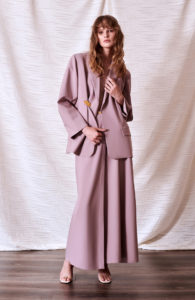
Yassmin Saleh
Why did you decide to launch Maison Orient?
It all started with my personal discovery of regional brands when I arrived in the UAE. I have been working in luxury fashion for so long and when I realised the talent in this region, I figured if I personally did not know of most of these brands, the chances are, that most people have never heard of them.
Coming from the other side of the industry, I know the difficulties that new brands face when trying to grow their businesses; they are often faced with difficult barriers that require them to put forward faster than they physically can as well as facing financial and logistical issues. That is why I wanted to create Maison Orient as a platform that they can join to allow them to grow and reach customers out of their usual reach.
What makes it different from other eCommerce sites out there?
Maison Orient is geographically focused in the emerging markets, meaning that I do not source any brands from Europe or the United States. This focus enables Maison Orient to dig deeper into the countries in local regions and really invest everything into the brands that join, whereas the other eCommerce sites are filled with many brands from all over the world, therefore, the focus and investment are diluted. The brands that join Maison Orient get much more visibility due to this focus. I also try to keep the site very curated so that also adds a special touch.
Selissa’s Jewelry
What is the biggest challenge you face launching an online shopping site in today’s market?
The biggest challenge is being different from those already out there. There are already existing names that are very established and a regular destination for people to shop from. Creating a new destination requires a different angle and offering. Maison Orient is aiming to be the destination for people who are looking to shop more consciously, who have a curious mind and who are looking for authenticity and to discover new stories and designers.
What can you tell us about your plans to have pop-up stores?
I think in today’s fashion world it is hard to have a concept that is purely online or a purely offline business because one feeds the other. In my case, I am sourcing brands from such diverse backgrounds that online is the majority of the potential, however, bringing these brands to different retail locations that they would not be able to reach on their own enables them to go across borders. There is still a percentage of clients who are not so at ease with online shopping, especially when shopping brands that they do not know. In this case, they often like to physically try on the products. The pop-up stores are a great way to create a buzz for both Maison Orient and the brands under it, clients get to discover new brands that they have never seen before and once they buy the products offline, they build the trust they need to come back and shop online. So I aim to host two pop-up stores per year, each in a different country to increase exposure and client portfolio.
Bodhita
Can you share with us some of your favourite brands on the site?
It is very difficult for me to answer this because I curate each brand with attention and love. I have more than 60 brands online and I add them all with the same level of enthusiasm.
What are the criteria that a brand needs to fit to make it on to the site?
I look at a variety of things before I approach a brand or before I approve the brands that reach out to me. This includes the quality of the products, the quality of imagery the brand has, the price point, the production, the fulfilment capacity and also the story behind the brand. The brands that join Maison Orient are all mid to high segmented brands and I want to keep this level the same mainly because I owe it to the brands that have already joined to respect their brand positioning.
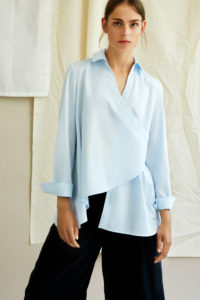
SANKT
How do you go about sourcing brands?
I do a lot of my research online through fashion magazines and articles. I also discover a lot of brands during my travels. I always make sure to analyse the brands in depth before I source them.
What is one thing you would like to do with the site but you haven’t had the chance to do yet?
I want Maison Orient to be a destination not just for fashion but also lifestyle. The countries I source from have such rich histories and cultures and I believe that people who are looking for different brands are also interested in their origins. I will be adding “Mens” and “Lifestyle” categories in the near future and I am working on an edited Blog section that will host independent writers from the countries I source from.
Where would you like to be with Maison Orient by this time next year?
I hope that the additional categories will be online and we will be reaching many more people around the world.
Gaios
What do you think women are looking for from fashion today?
I believe people are becoming much more aware of their habits and choices. They are looking to shop more consciously. As fast fashion is enabling everyone to wear similar clothes, I feel that a lot of women are now looking to differentiate themselves from others with the clothes and accessories they wear. It is very nice to hear a compliment from someone about your clothes or accessories and to hear their reaction when you tell them what brand it is and where it is from.
What advice would you give to aspiring entrepreneurs who want to set up their own business?
Patience is key when launching a new business, it takes time and commitment to get it off the ground. I also think that staying humble and grounded is very important to ensure you do not lose sight of things.

Talar Nina
How do you think women are empowered by fashion?
Fashion is a form of expression. It is a way for people to reflect their style. I also believe that it is a mood lifter; we feel good when we are dressed up.
Who is the woman you believe will come to shop at Maison Orient?
A woman who is looking for authentic designs and wanting to discover new brands. She is a woman who is looking to stand out in a crowd and reflect her curated style. A woman who travels not just physically but also through her shopping and a woman who is always curious.
How can you offer a personal service to your customers without face-to-face interaction?
Our customer service is key to enable new customers to shop online and answer all of their questions. People can reach us via Whatsapp, phone and email so we get to interact with our customers and learn about them. The pop-up’s will be our way of physically reaching out to new customers and providing a curated service.
Roma Narsinghani
What is the professional motto that you live by?
I believe in working hard to earn things; be it money, a title or even sometimes opinions. I also learn from my mistakes and experiences, and I try to stay humble regardless of my title.
You have travelled a lot – what do you think travel adds to you as a person?
Studying or working abroad makes a person work much harder to achieve things because you compete with more people and people who are not from the same ethics and background. Travelling opens new horizons, teaches new cultures, makes one dream and teaches variety.
How have your travels and experiences in different countries influenced what you do today?
I have both studied and worked in different countries therefore I have been exposed to many different types of people and cultures. I got to see their shopping habits, comfort zones and cultural characters. My travels enable me to think of many different customer types and their demands which helps me to curate not from just a personal perspective but really select brands for a global customer portfolio.
Deena Wagdy
Who is the person that inspires you the most?
Personally, I get inspired a lot from my family. I watched my father work very hard for all the things he has achieved and I also watched my mother support him through his journey so that in itself is a great inspiration to me. I also get inspired and highly supported by my husband for which I am lucky. Professionally, there are many people but if I had to name one person for this journey that I am currently in, it would be Natalie Massenet, the founder of Net-a-Porter.
When you’re working with an online business it is a 24-hour job so how do you switch off?
I have a family so it is very important for me to switch off and spend time with them. One of the upsides of entrepreneurship is the ability to schedule my own time so I try to balance it all out and fully be invested in both my company and my family.
What is the one item of clothing every woman should have in her wardrobe?
A white shirt.
How would you describe the Maison Orient customer in one word?
Curious.
READ MORE:
Watch the Christian Dior: Designer of Dreams Exhibition From the Comfort of Your Home
Shop at Mall of the Emirates Without Leaving Your Home
Breitling Unveils Its Latest Novelties for 2020
Breitling unveiled its latest novelties during its first-ever webinar yesterday. Hosted by CEO Georges Kern, he first addressed the current coronavirus crisis with a clear message of hope and looking forward to better days.
The new watches can already be purchased online, and will in time be available in all Breitling stores around the world and are available in some around the world already. Breitling is looking forward to a successful second half of 2020 and there are even more exciting novelties in the pipeline. Here we discover the latest additions to the Swiss watchmaker’s offering.
The Breitling Chronomat
Chronomat B01 42 with a silver dial and black contrasting chronograph counters
The Chronomat was first introduced into Breitling’s offering in 1984 and now, almost 40 years later it has been redesigned with a modern appeal, inspired by the original.
The new Breitling Chronomat is an all-purpose sports watch that can be worn from day to night. It recalls the design of the 80s and features a replica of the eye-catching Rouleaux bracelet from the past. The iconic strap comes with a butterfly clasp that expresses modern-retro style. This watch introduces a new generation of chronograph timepieces at Breitling thanks to its versatility and stylish appeal meaning it can be worn for every occasion.
Chronomat B01 42 with a silver dial and black contrasting chronograph counters
Every Chronomat in the collection has a signature rotating bezel highlighted by rider tabs that not only protect the crystal but make the manipulation of the bezel easier. The rider tabs at 3 o’clock and 9 o’clock, true to the original, are interchangeable, so the wearer can use them either for a “count up” or “count down” function.
There are a number of different sizes, materials and colour offerings available. The first has a 42-millimetre stainless-steel case with a choice of a silver, copper, or blue dial with black contrasting chronograph counters. It is also available with a black dial with silver contrasting chronograph counters.
Dial of the Chronomat B01 42 with a silver dial, an 18 k red gold crown and pushers and a bezel with 18 k red gold rider tabs
The Chronomat Bentley celebrates Breitling’s partnership with the great British luxury car brand. It has a 42-millimetre stainless-steel case with a green dial and black contrasting chronograph counters. This watch features a “BENTLEY” engraving around the transparent sapphire caseback. The Chronomat Frecce Tricolori Limited Edition has a blue dial featuring tone-on-tone subdials and the Frecce Tricolori logo on the dial. This is limited to 250 pieces.
Those looking for something that extra bit special can opt for the Chronomat B01 42 fitted with an 18-carat red gold crown and pushers and a bezel with 18-carat red gold rider tabs, numerals, and indexes. This model has a silver dial with silver tone-on-tone subdials and a 42-millimetre stainless-steel case.

Chronomat B01 42 Bentley with a green dial and black contrasting chronograph counters
Another striking two-tone Chronomat features either an elegant blue dial with tone-on-tone chronograph counters or anthracite dial with black contrasting chronograph counters. It is highlighted by an 18-carat red gold ratcheted unidirectional rotating bezel and an 18-carat red gold crown and pushers.
And last but not least, the Chronomat B01 42 comes with a striking 18-carat red gold case presented on a black rubber strap with an 18-carat red gold folding clasp. It has an anthracite dial with black contrasting chronograph counters.
The watches are powered by the Breitling Manufacture Caliber 01, an in-house mechanical movement that delivers a power reserve of about 70 hours. The hands of every Chronomat B01 42 are coated with Super-LumiNova®, a luminescent material that enhances legibility in all lighting conditions. All of the models except for the Chronomat Frecce Tricolori Limited Edition have a red chronograph second hand, which also contributes to easy readability.
The Breitling Navitimer Automatic 35
Navitimer Automatic 35 Collection
Historically Breitling’s offering of women’s watches have been hugely successful but it has been a while since they introduced a full line dedicated to women so this is an incredibly exciting launch. The Breitling Navitimer Automatic 35 timepieces are designed for the cosmopolitan woman. This elegant 35-millimetre design is understated and stylish but doesn’t compromise on functionality.
The Navitimer Automatic 35 is inspired by some of Breitling’s stylish watches from the fifties. It takes the design inspiration for its striking, sophisticated beaded bezel from the Navitimer Ref. 806. The clean three-hand dial is an affectionate nod to the Ref. 66, which was launched in the 1950s. The red-tipped second hand contributes to the watch’s excellent legibility.
The collection has a stylish solution to suit any taste. There are four different versions, each powdered by the Breitling Caliber 17, which delivers a power reserve of about 38 hours.
Navitimer Automatic 35 with a copper colored dial and a brown alligator leather strap
The first is offered with a 35-millimetre stainless-steel case with a choice of a blue dial presented with a blue alligator leather strap, a copper dial with a brown alligator leather strap, or a silver dial with a burgundy alligator leather strap. The straps feature a pin or folding buckle, and each version of the watch is also available on a stainless-steel Navitimer bracelet with a folding clasp.
The second version also features a 35-millimetre stainless-steel case with a white mother-of-pearl dial and diamond hour markers. It has a burgundy alligator leather strap with either a pin or folding buckle and is also available with a stainless-steel Navitimer bracelet with a folding clasp.
Navitimer Automatic 35 with a white mother-of-pearl dial with diamond hour markers and a burgundy alligator leather strap
The watch is also available in two-tone with a 35-millimetre stainless-steel case and a luxurious 18-carat red gold bidirectional rotating bezel. Its white mother-of-pearl dial is highlighted by diamond hour markers, and the watch is presented on a brown alligator leather strap with a pin or folding buckle or a two-tone Navitimer bracelet in stainless steel and 18-carat red gold with a folding clasp.
Finally is the Navitimer Automatic 35 in 18-carat red gold with a white mother-of-pearl dial and diamond hour markers. This striking watch is delivered with either a brown alligator leather strap with an 18 k red gold pin or folding buckle or an 18-carat red gold Navitimer bracelet with a butterfly clasp.
The Breitling Superocean Heritage 57 Capsule Collection
Superocean Heritage ’57 Capsule Collection & Superocean Heritage ’57 Limited Edition
The new Superocean Heritage 57 Capsule Collection is for those who like to express cool, laid-back style. Inspired by the cool mood of the fifties and sixties this capsule collection is produced in a limited number of pieces for a limited time. Each watch in the collection is a modern retro interpretation of a classic sea watch that embodies the laid-back lifestyle associated with surfers and beachcombers.
The collection is available with two dial options. One has a classic black dial and is presented on a black vintage-inspired leather strap with a pin or folding buckle, while the other has a blue dial and is equipped with a brown vintage-inspired leather strap with a pin or folding buckle. Both are also available on a stainless steel bracelet. There is also a two-tone version featuring a bidirectional rotating bezel in 18 k red gold with a black ceramic ring.
The timepieces in the Superocean Heritage ’57 Capsule Collection are powered by the Breitling Caliber 10, which offers a power reserve of approximately 42 hours.
The Superocean Heritage ’57 Limited Edition
Superocean Heritage ’57 Limited Edition with a light blue Outerknown ECONYL® yarn NATO strap
The Superocean Heritage ’57 Limited Edition shares some unmistakable design DNA with its cousins in the Capsule Collection, but it takes its cool credentials a couple of steps further. This watch is all about colour and features a rainbow-style colouring on the dial.
The hour markers and the hour and minute hands are coated with Super-LumiNova® in rainbow graduation of yellow, green, blue, indigo, violet, red, and orange. This makes the watch particularly easy to read in a range of lighting conditions.
Superocean Heritage ’57 Limited Edition with a light blue Outerknown ECONYL® yarn NATO strap
Your Limited Edition can be matched to a vibrant Outerknown ECONYL® yarn NATO strap, which can be purchased separately in one of six colour combinations: blue with dark blue stripes and lining, light blue with dark blue stripes and lining, yellow with orange stripes and lining, grey with black stripes and lining, red with black stripes and lining, and green with black stripes and lining.
All of the watches are now available at Breitling’s e-commerce platform and will be available throughout stores worldwide, as the markets begin to open once again.
READ MORE:
Amanda Ellison, Global President of WatchBox Discusses the Preowned Watch Market in the Middle East
Watch the Christian Dior: Designer of Dreams Exhibition From the Comfort of Your Home
The Christian Dior: Designer of Dreams exhibition at the Musée des Arts Décoratifs was one of the most captivating fashion exhibitions from the last few years. Documenting the story of the Dior House and some of its most iconic designs.
Now, Dior is offering the chance to re-live this exhibition virtually, from the comfort of your home. An hour-long presentation and look at the original exhibition allows views to immerse themselves in the Dior world and discover over 70 years of design.
The exhibition was originally held in Paris from July 4, 2017, to January 7, 2018, and gave a retrospective look at some of the House’s most iconic designed from a line of Creative Directors from Christian Dior himself, Yves Saint Laurent, Jean-Paul Gaultier, Maria Grazia Chiuri and more.
Discover iconic Haute Couture dresses, some of which you will remember from key moments in time, precious archival photographs and sketches by Christian Dior, The exhibition also features objects, accessories, original paintings and more.
This virtual exhibition allows the viewer to discover the beauty and legacy of this extraordinary House.
To view the exhibition click here
READ MORE:
Harvey Nichols-Dubai Launches its Ramadan Campaign for 2020
Fendi Presents a Ramadan Capsule Collection Exclusively For Its Middle Eastern Clients
Luxury Brands Continue to Support the Fight Against COVID-19
Shop at Mall of the Emirates Without Leaving Your Home
A new online platform allows customers to shop Spring/Summer collections at Mall of the Emirates from the comfort of your own home.
Mall of the Emirates in Dubai invites customers to shop the latest fashion, beauty and luxury collections online from its hundreds of stores. The new platform is allowing customers to continue to shop for the newest collections while not being able to physically visit the stores during this lockdown period.
Trends At Your Doorstep in partnership with Majid Al Futtaim has created an online platform that allows brands from Mall of the Emirates to invited their customers to have a virtual shopping experience and products will be delivered directly to their door.

The service will be available for addresses in Dubai, and all deliveries will be made complimentary and contactless to preserve the health and safety of shoppers.
Brands available through the platform include Bvlgari, Roberto Coin, TAG Heuer, Miu Miu, Jimmy Choo and lots more with more brands joining daily.
Fuad Sharaf at Majid Al Futtaim – Regional Managing Director, Shopping Malls (UAE, Oman & Bahrain), said, “In true Majid Al Futtaim style we’ve evolved the retail experience we offer to better serve shoppers across the country. Inventive initiatives such as Trends At Your Doorstep are a testament to the strength of the partnerships with our brands and the success of our omnichannel strategy, where we’re focused on growing both our physical and digital presence. Now, even despite the current limitations on movement, shoppers can effortlessly access the latest Spring Summer 2020 styles from the brands they love and have them delivered straight to their door.”
Alongside complimentary, contactless delivery, customers will receive additional SHARE points on through the SHARE app to spend across Majid Al Futtaim’s ecosystem of brands.
CLICK HERE to start shopping now!
READ MORE:
Harvey Nichols-Dubai Launches its Ramadan Campaign for 2020
Fendi Presents a Ramadan Capsule Collection Exclusively For Its Middle Eastern Clients
Piaget’s High Jewellery Director, Christophe Bourrie Discusses the Creative Process of the House’s high Jewellery Collections
With a jeweller such as Piaget traditional craftsmanship is at the heart of the House. In a world where there is increasing pressure to use new technologies, Piaget strives to preserve the classic techniques that have been unique to the House for over 100 years and can be carried out by only the most skilled craftsman. From the first sketch to the last polish, Piaget’s High Jewellery collections are created with the utmost care and passion.
At the heart of this is Piaget’s High Jewellery Director, Christophe Bourrie. Bourrie is responsible for overseeing the creation process of Piaget’s High Jewellery collections and ensuring they are made in a way that is true to the DNA of the House. Here we discuss with Bourrie the importance of craftsmanship and how art and colour inspire Piaget’s High Jewellery designs.
How important is preserving traditional craftsmanship in the creation of Piaget’s High Jewellery?
High Jewellery is all about craftsmanship, creativity and exceptional stones. The expertise of the jeweller is key in creating exceptional pieces and nothing will ever replace the hands of our artisans. At Piaget, we see High Jewellery as the art of sublimating precious stones. The skills of our artisans come from traditional apprenticeships and they all benefit from years of experience.
At Piaget, we push our historical and traditional know-how further to adapt it to contemporary creations that are relevant today. Both our designers and artisans work hand in hand to adapt our traditional crafts in a modern way. The perfect example is how we transform the palace engraving (traditionally used on our jewellery watches), onto unique necklaces or cuffs. The shine of the engraving plays with the light of the diamonds and coloured gemstones in a unique and original way.
How does Piaget embrace new technologies but continue to sustain traditional techniques?
Piaget creates High Jewellery in a traditional way, it is rather the style and the ways of wearing it that are evolving. Nevertheless, we like to push the boundaries by working with Maître d’Arts, nurturing traditional and unique crafts such as using feathers or wood marquetry and innovating with them on audacious creations.
How do you think the world of art and design influences jewellery making?
Our internal design studio is very much taking inspiration from the surrounding world for the creative process. Their aim is to perpetuate the Piaget DNA, while instilling it with inspirations from nature, art, fashion, etc. Piaget as a Maison has always been very closely linked to the world of art, especially by approaching the Piaget creations as art pieces: we like to say that Piaget’s artisans are artists, and our creations are presented as pieces of art.
Can you tell us a little about the choice of colour combinations and colour choices within Piaget’s collections?
Colour is very important to Piaget. In 1963, Piaget launched its first colour dials in hard stones, a true milestone for the brand. Ever since then, the Maison has been using colour in all of its creations and collections, whether through using gemstones, hardstones, mother of pearl, feathers, precious woods or many other materials. The choice of colour is so important. Our colours are vibrant and strong, highlighting the boldness and differentiation of the Maison.
Are there any particular stones or colours you love to work with?
Hard stones are definitely a favourite as they are part of Piaget’s DNA and we even use them in our High Jewellery collections, mixing them with the most exceptional gemstones. If there is one colour that stands out, it would have to be blue. The blue of Lapis Lazuli, but also turquoise blue in Turquoise and Paraiba tourmalines. Green (emeralds, malachite, and chrysoprases) also stand out as well as red (rubies, carnelians and corals). As said before, the colours used at Piaget are very vibrant and strong.
It is important to mention the huge research that is conducted by our gemology team as we only work with natural, non-treated and non-heated precious stones. A lot of patience is required to find the most beautiful and natural stones, while continuing to strive to use unique and vibrant colours.
Are there any particularly intricate techniques used in the jewellery making process you can tell us a little about?
In every new collection, we try to come up with something new. As mentioned before, our craftsmanship remains traditional, but we try to work with new materials and new ways of wearing the pieces. Transformability is one important point we are working on. Today, when a client buys a piece of High Jewellery, we try to offer them multiple ways of wearing it. For example, a pear-cut diamond can be removed from a statutory necklace to be worn on a simple chain, or a large pendant can also be worn as a brooch. We challenge our Ateliers de l’extraordinaire to be able to come up with innovative and surprising ideas.
When it comes to the initial design, where do you start? Are all of the pieces still hand sketch or is this done digitally?
In traditional High Jewellery, everything starts from the centre stone. The drawing and the inspiration come directly from this gemstone. However, for some creations, it can also be the case that the designer imagines a piece from scratch. The designer then asks our gemology team to find the matching stones, which can sometimes be quite challenging. The design today is still carried out by hand, using the gouache technique. It is then the work of the jeweller, hand-in-hand with the designer, to work on the 3D version.
What do you think customers are looking for today in terms of the savoir-faire and design in jewellery?
Today our customers are more and more educated and aware when it comes to High Jewellery pieces. The quality of our precious stones is crucial. It is our priority to find the most beautiful and precious stones that nature has to offer.
Then comes the design. As a contemporary jeweller, at Piaget, we like to affirm our style, and the creativity in our pieces. Our creations are intended for people who say yes to life and like to be different.
How does the heritage of Piaget influence today’s new pieces and collections?
Piaget’s style and DNA can be seen throughout all of our creations thought their movement, asymmetry, fluidity, colour, audacity, etc. Then come our signature pieces, such as the cuff (in jewellery and watches) or the sautoirs, that recall the creative period of the 80s.
What is the biggest challenge of your role?
It is definitely to carry-on the heritage, history and savoir-faire of Piaget from 1874 to each and every High Jewellery piece to make sure our clients continuously recognise the signature style that they appreciate in our creations. It takes years to create and launch our High Jewellery collections and they will be carried out by our clients for eternity. Therefore the entire team feel very liable for each piece which is for sure, a strong motivation.
What is one secret you can share with us regarding Piaget’s High Jewellery?
While looking for exceptional stones for the recent High Jeweller collections, Piaget’s gemologists remembered a 30-year-old legend. According to them, a sapphire of rare beauty was discovered in the early eighties. Locals still remember this gift of nature which disappeared as quickly as it appeared…It was too beautiful…they had to find this gem! After searching for a year, they finally found this breathtaking blue sapphire. The stone was called “Piaget Blue”, as a tribute to the signature blue colour of the Maison. It is a cushion-cut unheated blue sapphire of 53.45 carats.
READ MORE:
Amanda Ellison, Global President of WatchBox Discusses the Preowned Watch Market in the Middle East
Discover Boucheron’s 2020 Timeless High Jewellery Collection, Celebrating the Icons of the House
The Making of Van Cleef & Arpels’ Frivole Collection
Amanda Ellison, Global President of WatchBox Discusses the Preowned Watch Market in the Middle East
Preowned luxury items are something that have become the norm in many realms of the luxury market. A preowned handbag for example can be seen as a great find, or a vintage jacket is often considered more stylish than a new one, so why is it then that preowned watches are still much of a rarity?
That’s exactly the question the founders of WatchBox asked themselves when they for had the idea for their new business that would buy and sell second-hand luxury watches to and from watch owners and collectors. In 2017 WatchBox was born and has since gone on to become the world’s leading platform for buying, selling and trading of luxury pre-owned timepieces with destinations all around the world from The United States to Hong Kong, to Switzerland and their newest store most recently opening in Dubai. This is supported by a global online platform that allows customers to purchase any watch from the company’s network, anywhere in the world.

With over 90 brands in the portfolio, WatchBox has the world’s largest offering of preowned timepieces and guarantees authenticity and reliability with its products that are refurbished by Swiss watchmakers. Their pricing is very transparent and helps to create a sense of trust with its loyal customers. WatchBox launched in Dubai last year as part of Dubai Watch Week. Partnering with Ahmed Seddiqi & Sons has allowed the brand to tap into a network of watch lovers and collectors in the region and give them access to timepieces they may previously of not had access too, at a price that is fair and in many cases more affordable than a new piece would be.
Heading up the development of WatchBox into new markets is Global President Amanda Ellison. A trained attorney, Ellison is responsible for overseeing the successful growth of the WatchBox portfolio. A keen advocate for women’s roles in the professional arena, she launched the Women’s Leadership Initiative at WatchBox, establishing a network, resource, and learning and development program for the company. She was instrumental in negotiating the joint venture in the Middle East with Ahmed Seddiqi & Sons. Soon after the opening of WatchBox in Dubai’s Gate Avenue, we met with her to discuss the plans for the platform’s development in the Middle East.

Can you tell us about the concept of WatchBox and how it works?
We are an omnichannel solution to watch buying but most importantly we are a platform that buys and sells preowned luxury watches. The whole concept was really born out of answering the needs of the clients. Consumers were walking into watch and jewellery stores
every day wanting to trade in their watch against the purchase of a new one or just wanting to sell their watch and retailers weren’t equipped to do this in terms of authenticating the watch, pricing it and distributing it. Even though the customer was demanding it there was no platform offering it and this is how the concept was born. The pre-owned watch market has exploded in the last couple of years but the watch industry is probably one of the last ones for the concept of pre-owned to reach. In other segments, we already have enormous pre-owned platforms for luxury items that are hugely successful so it makes complete sense for this to become the case with pre-owned watches. This disruption of it being OK to buy pre-owned products is happening and we were probably shouting louder than anyone about it. It’s really exciting to be in the middle of a change in history within the industry.
Why did you decide to bring the WatchBox concept to the Middle East?
The Middle East obviously has a huge luxury sector. Ahmed Seddiqi & Sons has done an amazing job at promoting luxury brands in the region but up until now there really hasn’t been any legitimate outlet when it comes to preowned luxury watches. The preowned market is a very tricky one and often lacks transparency and there’s often no level of trust as customers very often don’t know who they are dealing with or if something is genuine – there’s real insecurity around it and what WatchBox brings is the trust and credibility. We want our customer’s experience to be the same as it would be if they were buying a new watch. We want to offer them the same service, make them feel special and give them the same experience that they would have in the original store.

How does the process of acquiring the watches work?
If somebody comes to the store and they want to sell their watch we have a very thorough process that the watch is put through. First of all we want to make sure that it is authentic and that it’s in working condition, or if not at least understand what needs to be done to bring it up to the standard that it needs to be at to be re-sold. We look at the aesthetics of the watch and the mechanical side of it. We check through various databases to ensure that the watch is not stolen and we do a diagnostic test on it. At that point, if we agree on a price with the consumer, that watch then goes to Swiss watchmakers who then repair it, polish it and bring it up to the WatchBox standard. Then we will put it in the retail store and/or post it on our global website. Anything on the website can be shipped to any customer all over the world.
Who do you work with on the process of restoring watches if needed?
If the watch is still under the warranty from the brand it will go back to them for repair. If it’s out of the warranty it will go to our watchmakers. All of our watchmakers are trained in Switzerland. They are highly skilled and will re-service the watches and bring them up to the condition we require it to be in.

What has been the feedback in Dubai so far?
We launched with probably the best platform possible during Dubai Watch Week. So everyone from the industry was here, there was a great mood and the reception was phenomenal. Since then we have had a lot of interest from people who are looking at pre-owned watches in a way that they have never done before. People are astounded that they can walk in and see all these beautiful products in one place. It’s crazy for them to see that and when you’re a watch collector it’s like being a kid in a candy store! There is also a huge market for customers selling watches in the region so we are encouraging them to bring all the watches that are lying in drawers to the store and it’s a win, win situation for everyone.
What about aftercare?
All of our watches come with a two-year warranty so customers can bring them back to the stores or send them to us if there are any issues.
What would you like to achieve with WatchBox now that you are here in Dubai?
When you look at the numbers, in the past eighteen years, the Middle East has received over twenty billion dollars worth of product in the watch industry. So that 20 billion dollars worth of watches is either on someone’s wrist or sitting in their home somewhere not being worn. The Middle East is synonymous with luxury and customers here love high end, collectable products and that’s exactly what WatchBox can provide.
Why would someone come to you over the original brand store?
There’s a number of different reasons. Obviously there is the availability of rare products and that’s why watch collectors have always been much more accepting of the preowned market. I think WatchBox is also a nice entry point for someone who would love to own a luxury watch but can’t necessarily afford it, so it’s a good way to get into luxury watches. The variety is huge – we have over 90 different brands – what store in the world can say they have that? Our pricing is very fair and transparent and we are very open with our customers about how we arrive at the price which I think is also very important in order to build up trust. Most importantly we are passionate about what we do and we really care about the service that we offer.
As a woman in a predominately man’s world what are the challenges you face?
Where do I begin?! I have personally always been in a very male-dominated environment. From growing up in South Africa in a society where women were expected to marry and not work. I clearly didn’t fit the mould and I moved to the US. Then I started to work in law and it was very male-dominated. But I have to tell you, the watch industry is one of the worst I’ve come across. It is still a very old school industry and there are very few women who are the real decision-makers.
Coming back to me, I think part of the reason why I have ended up where I am is because being a woman has never stopped me. I don’t define myself by my gender, I define myself as a person and I think if you’re smart, you’re smart and if you’re capable, you’re capable it doesn’t matter which gender you are and if somebody doesn’t recognise that because I’m a woman then it’s their loss not mine. So being a woman has never stopped me from achieving what I want to achieve. I hold the firm belief that while my opinion may not be more important because I’m a woman, it most certainly isn’t less important. Women have just as much right as anyone else to have an opinion and be heard. That’s always been my attitude.

Where would you like WatchBox to be in five years?
In five years I would like WatchBox to be a brand that is recognised worldwide and a brand that evokes a sense of trust.
What is the professional motto you live by?
“Actions speak louder than words” is something that resonates with me very much. A second would be “don’t judge people until you walk in their shoes.”

What is a book you’ve read that has inspired you?
A really good book I read recently was “Hard Things About Hard Things” by Ben Horowitz. It explores is about how very few people are honest about how difficult it really is to start a business.
What watch are you wearing today?
I’m wearing a gold Rolex Daytona with black dial.
READ MORE:
The Making of Van Cleef & Arpels’ Frivole Collection
Roger Vivier Celebrates the 55th Anniversary of its Iconic Buckle With a Collection Inspired by its History
Since its first appearance on a pair of patent high heeled shoes in 1942, the buckle has become an iconic symbol of the Roger Vivier House – defining decades of instantly recognisable footwear designs that embody the elegance and originality of the Parisian shoemaker.
From Roger Vivier’s first designs to current Creative Director Gherardo Felloni’s interpretation, the buckle has undergone many reinventions but never losing its distinctive elements, which makes it a signature of the house.
It was in January of 1942, while Roger Vivier was in New York, that he filed a patent for a shoe with a high heel and a large buckle at the throat. This was perhaps the beginning of a journey that would last decades and make an everlasting mark on in the history of shoemaking. However throughout the sixties, as styles changed so did the route of Vivier’s designs as he moved towards more practical heels for women who were working and travelling, requiring comfort over fashion.

Monsieur Roger Vivier
Then, in 1965 the iconic buckle shoe that we still know and love was born. The original idea for the first buckle came from the shoe of a marquis, from a time when buckles were seen as jewellery for the feet. Roger Vivier modernized the rectangular shape, making it more geometric with straight sides that represent masculinity and rounded angles that represent femininity – the perfect symbol of balance.
The shoe debuted in the Yves Saint Laurent fashion show that year in Paris. The standout shoe was the now-famous Mondrian collection – featuring a chrome-plated buckle that almost entirely covered the upper portion of the shoe.
Belle Vivier in Belle de Jour
Soon after this, every woman in Paris wanted a Roger Vivier shoe – with the flagship boutique selling 50 pairs a day! In 1967 the shoes were worn by French actress Catherine Deneuve, who wore a pair in Luis Bunuel’s film “Belle de Jour.” This shoe has been known ever since as the “Belle Vivier” – the Maison’s most iconic style, worn by the world’s most elegant women of that time including Jacqueline Kennedy, Hélène Rochas and Marlene Dietrich.
The iconic buckle has seen many reinventions over the last 55 year. The shoes have changed in shape, that buckle has changed in size and colour, but it has always remained as a symbol of stability for the house and to this day represented the DNA of Roger Vivier.
Gherardo Felloni – Creative Director, Roger Vivier
Roger Vivier’s current Creative Director Gherardo Felloni has brought the brand’s heritage and the buckle to the forefront of the brand for the spring/summer 2020 collection. A collection that celebrates the 55th anniversary of this iconic symbol.
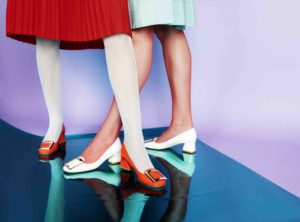
Roger Vivier SS20 Collection
The new Très Vivier was inspired by the Belle Vivier from the sixties and sees a new buckle on bags and shoes. The designs have a retro look but are modernised with more rounded curves, while the Très Vivier pimps have a chunky heel that comes in two heights.

Roger Vivier SS19 Très Vivier Pump
Taking things one step further Felloni also interpreted the signature buckle on Roger Vivier’s first running shoe, the Viv’ Run sneakers, which he debuted in his first collection and continues to be one of the most-loved styles each season.
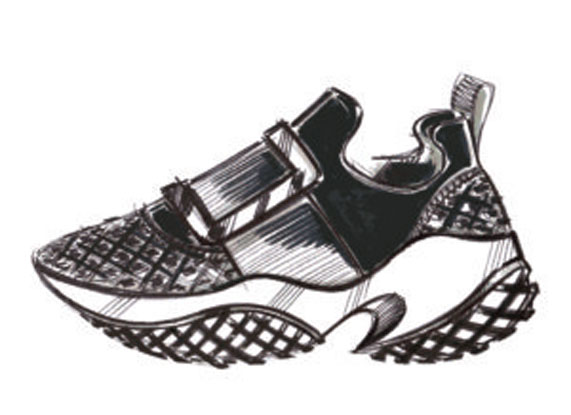
Roger Vivier SS19 – Viv’ Run
One of the key styles for Spring/Summer 2020 is the Belle Vivier pumps, which Felloni reimagines with different materials, colour combinations and buckle styles – covered in leather, polished in metal or encrusted in crystals. This quirky collection allows the customer of today to appreciate a small part of the brand’s history.
READ MORE:
Luxury Brands Continue to Support the Fight Against COVID-19
Harvey Nichols-Dubai Launches its Ramadan Campaign for 2020
Zaid Farouki Discusses the Influence of Art in his Designs and His Latest Ready-to-Wear Collection
Discover Boucheron’s 2020 Timeless High Jewellery Collection, Celebrating the Icons of the House
Boucheron’s new Timeless High Jewellery collection, designed by Creative Director Claire Choisne, showcases three signature codes of the house. The Creative Director brings her personal vision to the classic styles of the Chevron, the Parfum ring and the Liseré – three key pieces that have made up the rich heritage of this house for over 160 years.
VENDÔME SET

The first signature style of the collection features three key pieces set with diamonds in white gold. Designed around an original motif taken from the archives, the Vendôme collection was inspired by the Art Deco era which has been so important to the House’s DNA over the years. The collection of three pieces embodies energy and elegance with a sculptural necklace studded with brilliant-cut diamonds and baguette-cut diamonds.

Vendôme necklace paved with diamonds on white gold
This necklace is complemented by a bracelet that can be worn in many ways depending on the wearer’s mood, as well as white gold pendant earrings displaying the same motif and decorated with diamonds. “I love this motif that is both timeless and contemporary, classic and current, of great plastic beauty,” says Boucheron’s Creative Director.
PARFUM RING
The second part of this timeless collection is the Parfum Ring. This statement ring with its stunning blue cabochon stone has been revisited several times by the jeweller’s designers over the years.
Claire Choisne spoke of her love for this ring; “I love this ring; it is a wonderful gateway into the Maison’s world, if only for its blue cabochon which, in my opinion, is the Maison’s recognisable signature. Your gaze will be drawn to a stunning constellation of diamonds set under the body of the ring. Seen from the side, the cabochon appears to be floating; seen from above, its facet-less cut, which moderates refraction, reveals, like an inner light, the diffuse sparkle of the diamonds. It’s magic!” This edition of the ring is set with a 7.48-carat oval cabochon tanzanite, paved with diamonds and rock crystal in white gold.
LISERÉ SET

The third and final aspect of this collection is the Liseré set. These pieces pay tribute to the ties forged between Frédéric Boucheron and Russia. Inspired by Moscow itself Clair Choisne travelled to the Golden Ring area in winter and was astonished to see how everything was pristine white, covered with a blanket of snow. Amongst the white was a black line, that turned out to be the bark of a tree – and there she had the inspiration for this graphic collection.
In this collection baguette-cut and emerald-cut diamonds are giving a graphic edge with a line of black lacquer that surrounds them and highlights their beauty (much like the black line of bark in the snow.) “For me, this edging is the essence of modernity,” says Claire Choisne. “Its graphic brilliance gives the jewellery a mystical appeal and real personality.”

Liseré bracelet paved with round and baguette diamonds, black lacquer, in white gold
The collection is made up from a bracelet in white gold, paved with diamonds, surrounded by black lacquer; pendant earrings featuring 2.11 and 2.12-carat emerald-cut diamonds in white gold and a ring with a 4.09-carat, emerald-cut diamond, paved with diamonds and surrounded by black lacquer.
READ MORE:
The Making of Van Cleef & Arpels’ Frivole Collection
Jane Fonda, Laura Dern And Cate Blanchett Celebrate Women with Pomellato
Tiffany & Co. Introduces the New Tiffany T1 Exclusive Rose Gold and Diamond Designs
Clinical Dietitian Dr Dana Al Hamwi Talks Nutrition in the Lead up to Ramadan
The Holy Month of Ramadan is fast approaching and while many of us are preparing to begin to fast, the worries of the current global Coronavirus crisis, as well as changes in lifestyle and habits, are undoubtedly on many people’s minds when preparing for Ramadan this year.
Clinical Dietitian Dr Dana Al Hamwi is a specialised nutritionist and expert in her field. Al Hamwi has become well known in the region for creating a healthy and sustainable lifestyle and eating plans and she also offers expert advice when it comes to safe and successful fasting. Here she offers insights into preparing your body and mind for The Holy Month, as well as how to prepare in the exceptional circumstances some might find themselves in currently.
What are some top tips you can suggest for preparing the body for fasting?
We are fast approaching the start of the Holy Month of Ramadan so we have to modify our lifestyle and eating habits as a preparation for it. Start by stopping snacking between meals as well as beginning to introduce healthy cooking practices and avoiding frying. Another thing to do is reduce your caffeine consumption as well as reducing milk with your coffee and get used to drinking a lot of water.
How soon before the Holy Month begins should we start to prepare our body?
At least one month before the start of the Holy Month so that the body can get used to the changes and a more healthy lifestyle
Are there any foods we should avoid in the lead up to Ramadan and any foods that are good for preparing the body?
We should reduce caffeine intake to avoid headaches which can be very common at the beginning of Ramadan. I would also recommend starting to eat one date with one glass of Laban before lunch. It’s important to start having an earlier breakfast and late lunch as well as avoiding snacks and drinks, except for water, in between meals. Start to reduce the amount of food you have for dinner – have something like yoghurt or salad or a bowl of soup, as well as reducing the amount of salt you are consuming. Avoid pickles and use spices and herbs as a substitute. Women especially should get used to including healthy options while preparing food. Try using chia seeds, quinoa, brown rice and flax seeds as substitutes for regular ingredients.

What about drinking water – is it a good idea to limit water intake in the lead up to Ramadan?
No, not at all. Water is very important for a healthy body and to boost immunity against viruses so we shouldn’t reduce water intake but we have to cut down on the number of sugary drinks including soft drinks and juices. You can compensate with herbal options such as anise, ginger or chamomile to boost the respiratory tract health.
Are there any ways we can prepare our sleeping patterns?
It’s important to get used to going to bed early in the evening so that it is easier to wake up for suhoor and then sleep through until the morning without affecting your job performance the next day. Avoid watching too much TV and try to increase physical activity. Of course with the current situation, this might be something that has to be done at home so my suggestion is to aim for doing between 8000- 12000 steps most weekdays. Also practising yoga and reading can help in reducing your stress levels and help in sleeping well at night. Including sources of magnesium in your diet will also help you to sleep better. You can get this from items including green leafy vegetables, nuts, yoghurt, quinoa, spinach and avocado.
With the Coronavirus outbreak being a huge concern will it still be safe to fast and is there anything we should be doing differently?
Of course, it will be safe to fast if we are healthy and not suffering from any chronic disease that might affect our ability to fight it. Fasting is a way of boosting the body’s immunity and detoxing from toxins but it’s important to be aware of our safety and ensure we are washing hands well, avoiding social gatherings, staying at home and listening to government regulations.
What about those who experience symptoms would you recommend continuing to fast as normal?
For people testing positive coronavirus, it’s not safe for them to fast as they will need more water, protein and vitamins to boost their body immunity in order to able to fight the virus.
If in self-isolation when Ramadan begins are there any tips you can give to those who will be home all day?
For those who are isolated because of positive testing, my advice is not too fast. For those in isolation as a precautionary action but are still showing symptoms I advise them to fast but drink more water, avoid caffeine and have one banana and three dates with Laban every day in addition to a healthy breakfast. Avoid heavy meals or fried food and unhealthy sweets. I would also suggest adding a bowl of vegetable soup with natural stock to your breakfast, as well a glass of yoghurt with one teaspoon of Manuka honey. Eating citrus fruits is very important in addition to a daily salad dish to ensure you are getting enough nutrients.
I also advise taking one tablespoon of olive oil every day before suhoor and drink herbal teas such as anise tea and chamomile. Exercising will also help in boosting immunity and in my opinion daily prayers and Taraweeh are the best natural physical and mental exercises.
Once Ramadan starts are there any recommendations you would make to keep energy levels up?
Healthy eating and breaking the fast with dates and Laban then prayers before soup and salad. I would recommend postponing your main course till after Taraweeh prayer as this will help with hunger.

When fasting what recommendations would you give to parents who still need to ensure their children have regular meals?
Firstly parents are role models to their kids so if they eat healthy their kids will do so.
If the kids are able to fast parents should ensure that they are eating healthy during suhoor and iftar meals in addition to having plenty of fruit and drinking enough water.
If they still young below the fasting age then they can teach them to eat only the three main meals a day but without eating anything in between.
What foods would you recommend for breaking fast?
Dates, Laban, soup and salad.
How about sugar is it something that we should reduce intake of during Ramadan?
Of course, adding sugar to drinks or eating a lot of sweets, as well as rice, white bread or pasta is unhealthy and might have a negative affect our health and immunity so it’s important to get used to reducing sugar intake and avoid adding sugar to drinks as well as not drinking too many juices and traditional Ramadan drinks such as Vimto. Replace sweets with healthy options such as Muhalabieh, rice pudding, dried fruits or fresh fruits and use brown rice as a substitute for white rice.
READ MORE:
There’s an online Portal Offering Mental Health Support During the Coronavirus Outbreak
Silsal Founder and CEO Samar Habayeb Discusses Her New Creative Programme; The Studio
Zaid Farouki Discusses the Influence of Art in his Designs and His Latest Ready-to-Wear Collection
While he is a fashion designer by trade Zaid Farouki is an artist at heart. The creative designer began his brand by developing “wearable art pieces” that allowed clients to express themselves and their individuality, making a statement through the pieces they choose to wear.
His couture line Zaid Farouki is handmade in Dubai and customers are invited to have a one-to-one experience with the designer in order to create custom-made pieces that express their individuality. With a global background that brings together Middle Eastern heritage with American influences, Farouki draws inspiration from the fashion of cultures and plays this out through his designs in his own unique way. He has a love of classic couture techniques including embroidery and all of his prints are handpainted to ensure they are unique and every detail is carefully considered.
The designer recently launched his ready-to-wear line Zaid by Zaid Farouki which keeps the DNA and key design elements of the brand and interprets them into a more commercial line. His latest collection I Am Sharqi and the second phase I Am Sharqi 2.0 are a celebration of cultures coming together and a celebration of Middle Eastern values. Here we discuss the latest collections and the influences of art in his designs.
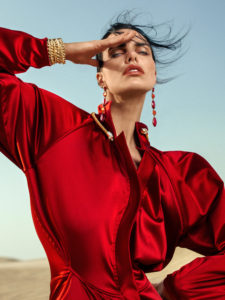
How does art inspire your clothing designs?
Fashion design to me is using your body as a canvas, to express your current state, mood, or even make a statement. In the beginning, Zaid Farouki actually produced one-of-a-kind wearable paintings, sculptures and light installations so art is very closely linked to the brand.
As an artist what do you think are the close links between art and fashion?
Art to me is a way of living. We all agree that the human body is created in the most perfect of forms. So why would you cover a beautiful artwork with something that has been badly designed?
What can you tell us about the new I Am Sharqi collection?
In November 2019, we produced a unisex T-shirt under the ready-to-wear brand, Zaid by Zaid Farouki. Each T-shirt states “I AM
SHARQI” which literally translates to “I AM ORIENTAL” across the front. The collection offers a playful and urban take on traditional dress. We have created separates that are versatile to mix and match and wear as full looks. Unisex styles include silk pyjama-style sets, modernised bishts, thobes, abayas, vests and accessories including Swarovski adorned brooches and 3D printed headpieces.
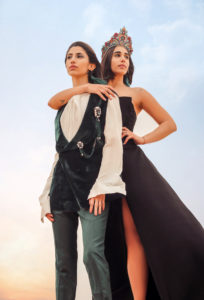
What is the significance of this collection in relation to the region?
The “I Am Sharqi” collection was created as a celebrating of being from the Middle East in today’s politically sensitive and culturally diverse world. The collection includes designs that flaunt the unbiased beauty within paradoxes such as old meets new, east meets west and individual versus community.
You collaborated with a poet on a special limited edition piece – what can you tell us about the motivation behind this project?
We launched second edition pieces titled “I Am Sharqi 2.0” which is a collection created in collaboration with regional poet Fatima Alsaad, in order to amplify our mutual feelings behind what being Middle Eastern means to us within our introspective and artistic experiences. Fatma created an original poem that puts all of her and my own emotions of being Middle Eastern into words.
What is the significance of the poem used in the designs?
It amplified our vision. I am not the best with words, therefore, Fatma came in and allowed us to express our feelings and emotions.
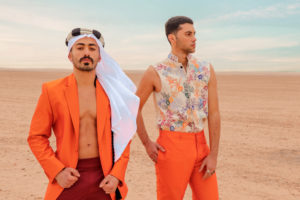
Tell us a little about your design process – we know you like to keep everything in-house in Dubai where possible?
Yes, although we launched the ready-to-wear brand Zaid By Zaid Farouki. Our clients are still used to being able to customise everything they see, so that’s why we keep all the production in Dubai. Furthermore, although it’s a ready-to-wear line the pieces are still made in limited quantities. This is a key aspect we wanted to keep in place as well as producing limited quantities to ensure we are environmentally friendly.
What does the rest of 2020 hold for Zaid Farouki?
Hopefully a year of success, we are aiming to further expand globally and looking at exhibiting more of our work abroad.
What is the professional motto you live by?
Go to bed every night knowing you have done the best you could have done that day.
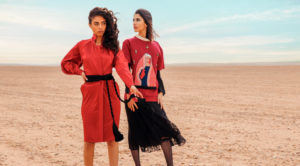
Can you recommend a book that has inspired you?
Orientalism by Edward Said
How would you describe the Zaid Farouki brand in one word?
Experimental.
What is the importance of using handcrafted techniques?
It’s about history and these techniques have been handed down for generations. They are also art forms that take years for the artisan to master and they have individuality as no piece will ever be the same.
Are there any particular techniques you love to work with?
I love the collaging of embroidery and paint even on the ready-to-wear pieces, as you are taking the delicate technique of embroidery and adding a harsh element to it.
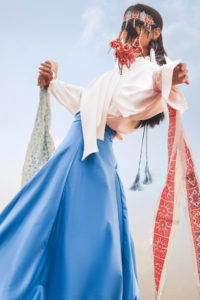
What can you tell us about the embroideries in the new collection?
They are all inspired by ancient cross-stitching and traditional Palestinian embroidery. Each motif comes from a different area in Palestine that I relate to. They are deconstructed in a modern manner and take on a new form of representation.
What makes the Zaid Farouki brand unique?
For the ready to wear brand Zaid By Zaid Farouki We don’t follow trends, we use our gut instinct and react to what is happening in the world. We really tune in to what we believe people want to see and express. It’s a unisex brand so all pieces are worn by both men and women and all of our pieces make a statement, whether cultural, political or artistic.
For the Zaid Farouki line, each item is a one-of-a-kind piece, so you become a walking piece of art. The designs allow the wearer to make a statement in its most powerful form. Art is beautiful, but it is designed to make a statement, this can be anything that ranges from beauty to power.
Who are the women and men you design for?
Art collectors and very individualistic people. They’re trendsetters and not followers and they are the head-turners when they walk into a room.
READ MORE:
Fendi Presents a Ramadan Capsule Collection Exclusively For Its Middle Eastern Clients
Alexander McQueen Explores the Undeniable Elegance of Lace in its Spring/Summer 2020 Collection
Luxury Brands Continue to Support the Fight Against COVID-19
Pierre Marcolini Provides Luxury Chocolates for Healthcare Workers in the UAE
Chocolate maker Pierre Marcolini is donating a selection of its fine chocolates to those working on the frontline in the UAE’s Healthcare system.

Marcolini has already provided chocolates to hospitals and healthcare facilities throughout Europe from his Belgian, Parisian and London boutiques and has decided to bring the same initiative to the UAE to provide a little happiness to the lives of those who are working on the frontline during this terrible crisis.
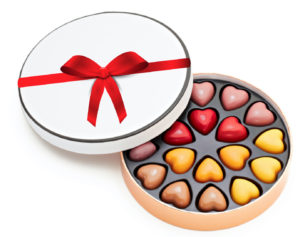
Providing chocolates from its Dubai Mall store to the front line staff of Medcare Hospital in Dubai Pierre Marcolini Middle East is hoping this small contribution can boost morale during the coronavirus crisis for the employees, patients or families who are working or suffering during this tie.
Pierre Marcolini is known for his luxury chocolate making that uses the finest cocoa beans from around the world. Based at a factory in Brussels, Belgium, Pierre Marcolini chocolates have been handmade since 1995.
It’s amazing the happiness a little bit of chocolate can bring!
READ MORE:
Silsal Founder and CEO Samar Habayeb Discusses Her New Creative Programme; The Studio
Bring Your Gym Home With TechnoGym’s Indoor KINESIS Personal, the At-Home Training Solution
Silsal Founder and CEO Samar Habayeb Discusses Her New Creative Programme; The Studio
Silsal Founder and CEO Samar Habayeb is on the lookout for emerging artists to join her latest art and design project; The Studio.
UAE-based homeware brand Silsal was born from a love of art and design. Founder and CEO Samar Habayeb is an artist herself and she wanted to create a homeware brand that embraced the beauty of Middle Eastern art and brought it into the homes of her customers. Since 2013 Silsal has developed a reputation for producing elegant pieces that have an artsy touch.
This year Silsal has developed a new creative programme that will aim to support emerging artists and give them the opportunity to showcase their work through the brand’s new platform; The Studio. Applicants are invited to apply to become part of The Studio which will be devoted to developing and showcasing the work of emerging artists.

Furthermore The Studio will work with ambitious creatives to develop a collection that will embody their artworks and be produced and sold at silsal.com. Successful applicants will also receive an artists fee of $2,000 as well as one-to-one mentoring with Silsal’s Founder and CEO Samar Habayeb. To find out more about this exciting opportunity a&e talks to Habayeb to discuss the inspirations and goal behind this project.
Why do you think it’s important to shine the light on emerging artists?
The world needs art, and it needs artists. They are integral to our society and contribute to the creative economy. Emerging artists in particular have the power to change the future, and bring to the forefront unique perspectives that have never been seen before. Because of that, it’s important that we support them and encourage them to continue creating.
Can you explain a little about the concept of The Studio and why you decided to launch it?
The Studio was launched to produce homeware collections in collaboration with ambitious emerging creatives. First and foremost, we launched it as a way to support emerging artistic talent and showcase their work to a larger audience. At the end of the day, more visibility means more value.
Secondly, as an artist, it’s often incredibly difficult to monetise what you’re doing – even Monet and Van Gogh died penniless. But I have no doubt that the world would be poorer if Van Gogh had never painted “Starry Night”, or if Monet had not painted “Water Lilies”.. With The Studio, as well as offering a $2,000 artists fee, we have created a one-to-one mentorship programme, which will help them explore ways to monetise their work.

What advice would you give to aspiring artists?
Stay true to your identity, style and values. The most important thing about art is authenticity and your voice.
What are the criteria you look for when choosing artists for the project?
We wanted to keep The Studio open to everyone and anyone. While artwork should respond to some aspect of the Middle East, applications are welcome from people of all ages, genders and nationalities, residing anywhere the world.
What do you hope to achieve with this project?
We want to shine a light on some brilliant, emerging artists. We want to introduce them to a new audience. We want to inspire people to create and, of course, we want to create a beautiful collection that our customers will love.

Are there any particular types of art that you are drawn to?
I will always love Art Deco! I also really enjoy contemporary and street art. I’m particularly impressed with how it’s being used to draw attention to very important global issues and spread important messages in a more relatable way.
Are there any emerging artists whose work you are particularly fond of?
There are so many. I cannot pinpoint one or two, but I’m a fan of many emerging artists that use various media to express themselves – be it dance, painting, digital art, installations etc. So many emerging artists are truly shining at what they do, and they definitely have a great future ahead of them.

How important are art and creativity when it comes to your designs at Silsal?
It’s at the heart of everything we do. Art, particularly Middle Eastern art, inspires and informs many of the patterns or calligraphic styles we use. In terms of creativity, we’re always experimenting with new shapes, products and functions. Silsal’s vision goes beyond creating products, to revolutionising the way we interact with them – proposing new visions and models for living. For example, many of our pieces are specifically designed to be multi-functional. Our incense burners are modular, so when one part is removed, it becomes a vase. Likewise, our candles are designed to be re-used as trinket dishes, or condiment bowls once the wax has run out.
Also, we’re always thinking up new, creative services, which are genuinely designed to help make life that little bit easier. For example, you can add flowers to any of our vases, which saves people a trip to the florist.
How important is it to you to preserve work by traditional artists?
At Silsal, we’re dedicated to reviving traditional artforms and reinventing them for the modern audience – whether that’s a disappearing calligraphy or ancient motif.

How do you get inspired for your designs?
For me, anything can spark inspiration. It could be a motif, a person, a building or a piece of art. Inspiration can strike at any time, anywhere, which is why I try to give myself time and space to reflect on everything I’ve seen and experienced.
How does Middle Eastern art inspire your designs?
At Silsal, we’re dedicated to producing products that are inspired by the arts of Arab and Islamic worlds – that is our DNA and modus operandi. The Middle East is a land of contrasts, one where ancient heritage and modern culture sit side-by-side. With every collection, we hope to breathe new life into age-old artforms and reimagine them through the frame of modernity. Our Majestic collection, for example, was inspired by the Sheikh Zayed Grand Mosque, while the Mirrors collection pays homage to the complex patterns found in traditional Islamic geometry. We dissected the shapes, then rearranged, overlapped and compounded them to produce a new, abstract pattern rooted in the region.

Do you think there is a fine line between art and designing objects such as those you create?
Yes, it’s a fine line. To me, art doesn’t have to hang on a wall. It can be a vase, or a teacup, or a dinner plate. At Silsal, we want to create versatile pieces that are functional but are also works of art in themselves. It’s all about integrating art into our daily lives and making it accessible to everyone.
What is something you would still like to achieve that you haven’t had the chance to do yet?
Our target at Silsal is always getting bigger, so there are always new things we would love to achieve. Currently, I think expanding our product range to include a more diverse selection of products would be a great move for us. In addition, collaborating with international brands to spread the arts of the Middle East further and amongst a larger audience, would be something we look forward to.
What’s the biggest challenge you face in what you do today?
Taking risks. While we know this is key to success, I thought, with time, we’d get more comfortable with taking risks, but that does not seem to be the case!

What’s the professional motto that you live by?
Kaizen. It’s a Japanese philosophy that encourages employees at all levels to introduce small improvements constantly. In the long-run will these small changes become powerful shifts in thinking and processes.
What does the rest of 2020 have in store for Silsal?
We have some really exciting things in the pipeline for this year. We’re about to launch Silsal’s 2020 Ramadan collection. An ode to the Silk Road, the Kunooz collection is a symbol of connection, bringing together visual influences from across the globe. Kunooz, meaning ‘treasures’, harmoniously fuses Mesopotamian botanical motifs, East African geometry and Ottoman calligraphy to striking effect. I believe the result is a powerful symbol of cultural exchange, a visual poem, indistinguishable yet distinct from its individual parts.
We also have an incredibly exciting collection that we created exclusively for Crate and Barrel, which will be launching very soon… so watch this space.
READ MORE:
Luxury Brands Continue to Support the Fight Against COVID-19
What the Luxury World is Doing to Support in the Fight Against COVID-19
Harvey Nichols-Dubai Launches its Ramadan Campaign for 2020
Harvey Nichols-Dubai invites you to discover its modest collections this Ramadan with its new campaign Moments of Serenity.
The campaign which is launching this week to coincide with Ramadan later this month sees some of this season’s biggest trends adapted in a way that is modest and elegant from some of the store’s key fashion brands.
Discover easy, relaxed pieces by Emilio Pucci. Signature kaftans in iconic Emilio Pucci prints are the perfect Ramadan wardrobe staple. While Coordinating separates in pastel tones will be a huge hit in the coming months.
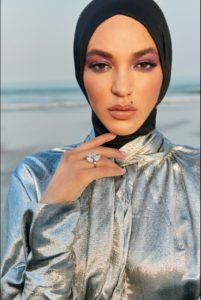
Loose, oversized separates from Materiel, and modest dresses from Masterpeace and Evi Grintela are simple yet stylish go-to’s for enjoying those special moments with family. Pair your statement pieces with essential long-sleeved tops and lose-fitting silk shirts from the likes of Theory and Vince. Animal print overcoats or jackets from Dries Van Noten and separates from Dolce and Gabbana will add some statement pieces to your wardrobe. For Eid celebrations add a little sparkle with glamorous gowns from Dundas, Roland Mouret Avaro Figlio and more.
When it comes to accessories, complement your look with square- toe mules and pumps from the likes of Valentino and Malone Souliers, while bags including Jacquemus Chiquito mini bag or ostrich skin designs from Delvaux are exclusive to Harvey Nichols – Dubai in the region.
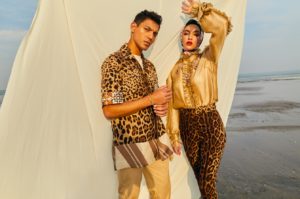
In menswear tailoring becomes much more refreshed and relaxed with loose layering soft-fitting blazers and comfortable trousers from the likes of Neil Barrett, Theory, Vince and Slowear.
Harvey Nichols-Dubai has launched an exclusive WhatsApp Business service allowing customers to shop from the store while in the comfort of their home. Read more about the service here.
READ MORE:
Luxury Brands Continue to Support the Fight Against COVID-19
What the Luxury World is Doing to Support in the Fight Against COVID-19
The Making of Van Cleef & Arpels’ Frivole Collection
