

Alessandro Sartori, Artistic Director at Ermenegildo Zegna Discusses Family Values, His Passion For Italy and Planning for the Future
As one of the oldest fashion houses in Italy (110 years to be exact) Ermenegildo Zegna is rich in Italian culture and tradition. Founded in 1910 in the Trivero in Northern region of Italy, Zegna has spent a century establishing, preserving and innovating with traditional Italian crafts and methods.
While the clothes that are made today are very different from those 100 years ago, the passion and attention to detail that was there from the beginning still run deep at the home of Zegna.
Supporting Italy has been very important to the men’s fashion house since the beginning. In the 1930s, founder Ermenegildo Zegna began actively promoting social facilities in his native town Trivero and he provided hundreds of jobs for the local community. He also planted thousands of trees and financed the panoramic road, which was named after him. Then in 1993, the Group created the Oasi Zegna, a protected natural area in the mountains surrounding Trivero. In 2014 the Oasi was granted the patronage of FAI Fondo Ambiente Italiano, the National Trust of Italy. So preserving the beauty and heritage of Italy is something that has always been at the heart of the brand.
Pioneering Zegna’s creative development and direction today is Artistic Director Alessandro Sartori. A family man, with a passion for design, Sartori’s values align perfectly with those of the House and that has seen a great partnership blossom in the years he has worked with Zegna. Alessandro grew up in Italy with a close-knit family before moving to Milan to pursue a career in fashion. Here he speaks honestly of his love for his home country, his family values and taking the time to reflect and plan the future.
What does Italy mean to you?
Italy to me is about Emotion. It is a touching country, not only because it is my country but also because there are so many generations of people living together, and there is so much history. Everyone in Italy has a lot of passion. Every time I think about my country, even when I’m not here, I feel touched by this very emotional feeling.
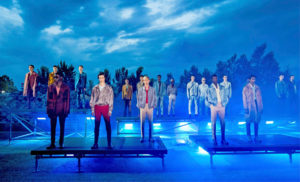
Ermenegildo Zegna XXX Spring/Summer 2020
What do you think is the fascination with the concept of “Made in Italy”?
It goes back to art and music that are instilled in the history of Italy. Italy is unique in that we unite a very high level of creativity with very good handmade work and craftsmanship. We are able to associate two very interesting areas – the creativity and the capability of people. This is something special and it happens in food, music, art, fashion and so on. There is a deep understanding of how it is possible to do work by hand with maximum quality.
Italy has suffered greatly with this pandemic – when the situation is over what do you expect to see from the recovery of the crisis?
For sure we need a transition period which will likely last until a vaccine is found. Some changes will happen during this period and others will be once the vaccine is found. I was recently talking with a friend of mine who is a cardiologist in Milan and she told me that they are already seeing a lot of panic about what is going to happen next, especially in this transition period. And actually, it could be a period that we may never fully leave since there are many things that we need to think about and take care of that we didn’t consider before. After the lockdown, everything needs to be different and it will take a lot of time for things to go back to ‘normal’.
But moving forward to after this transition period there is going to be a very big understanding of who we are, how we are made, what we are in terms of people and what our real values are. We will have better relationships with each other and we will spend more time with others; cooking, talking etc. I’m sure Italy will enter a new phase that will see a stronger relationship between people.
When I move to fashion, I think it will change for the better. I’m not saying everything will be different, but we can change a lot. Maybe we can do the things that we were scared or hesitant to do before. Maybe as a brand we could travel differently, spend more time with people instead of doing huge collections, maybe it’s better to do something smaller and even more creative and more qualitative. We can think about processes that might change and we can maybe have a new relationship with the customers and offer a more personal service. I’m sure that something big and better could come after this crisis, but I don’t think this will happen in the next few months, I am talking further in the future after the vaccine is found.
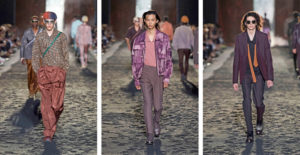
Ermenegildo Zegna XXX Spring/Summer 2020
Do you think there will be a change in the buying habits of customers?
Moving forward I think there will be a change. I think the buying habits of customers will be deeper and more invested and maybe they will buy less. When it comes to the brand and the fashion buyers, what I have seen in the last couple of years is buyers spending a huge budget in two or three hours, but I don’t think that will happen anymore. 15 years ago people would come to the showroom for one whole day, we can’t go back to that, but at the same time, buying for thousands of stores and looking through a huge collection in two hours is something I don’t think will be realistic anymore. I see less huge collections but I also see more time dedicated to how to buy the product and how to improve and create a relationship that is more one-to-one with our customers and so on. So, in this case, I think the approach will be different.
We have seen the huge success of the “What Makes a Man” campaign – what will be the message that you are sharing going forward and how will this campaign continue?
This is something we are discussing internally but we still haven’t come to a conclusion yet. However, we will continue with the concept of “Use the Existing”. It’s very crucial to me to continue to have huge respect for the environment, for the people and everything related to the future and the next generations. This is something we want to consider very deeply as part of the What Makes a Man campaign going forward.
We know sustainability is a subject that’s very important to you – what can you tell us about Zegna and sustainability going forward?
I don’t think there is an option at this time to wait regarding sustainability. The Zegna family started with a sustainable vision over 100 years ago so it is in our DNA and I also share this very strong idea of sustainability. We must stay strong on not creating pollution and be as sustainable as we possibly can, but on the other side I want to move forward with having as little waste as possible. At Zegna the dream is to have zero waste in the future. It is doable if we all work in the same direction.

Oasi Zegna
To what extent do you believe that brands nowadays should invest in giving an experience to the customers?
We have always worked on having one-to-one moments and a very personalised approach. This is both through the in-store experience, but also the relationship that we as a brand have with our clients. I am a big believer myself, and so is the brand, in offering exclusive moments, experiences, and products to the consumer and this is our future. I much prefer taking care of a customer for an hour, rather than having many customers at the same time, because if I want to help that customer in the best way and nd a look that allows them to make the best of themselves, we need to spend time working together. This has always been a big part of the brand but I think it will be focused on even more in the future.
What can you tell us about the inspiration and essence of the spring/summer 2020 collection?
This collection is mostly related to how a city like Milan can be renovated using something that is already existing and we focused on the “Use the Existing” concept and how materials that are already in existence can be re-purposed into new clothing items. Silhouette- wise everything is very comfortable, softer, with bigger volumes and beautiful natural shapes. We used a lot of light materials from the highest quality fibres you can imagine. The colours are earthy tones with accents of pink, sunflower yellow and fresher summer colours.

Oasi Zegna
When this crisis is over – what is the first thing that you’re going to do?
There are two things. The first is to go for beautiful dinners – one with friends and one with my family. I really want to unite my family and have a great celebration together.
The second desire I have is to take my camera and go for a weekend away, somewhere in Italy. There isn’t one specific place I like, there are many, but just to breathe the fresh Italian air and see the landscape, meet the people and eat the food. I really need that.
If you had to choose where is your favourite place to travel to in Italy?
There are many but if I had to choose one it would be Sicily. I’ve been several times and I love it there. I want to feel and breathe the seaside, taste the Italian food and connect with nature.
Growing up what are some of your first memories of Italy?
Well-dressed men. I have memories of my father from when I was probably three or four years old. He would go to his room and get ready and he would dress up to go out. He used to wear a button-up shirt with a tie and a double-breasted suit and a coat with a beautiful hat. He always used to keep his hat in those round boxes. I was fascinated by this and by the elegance.
Can you share with us some Italian traditions that you still to this day do with your family and friends?
All of these traditions that I have kept are related to celebration. My uncle and aunt have a very beautiful garden where they grow vegetables. Once a year, at the end of June on a Sunday, we have a long lunch in the garden with family and friends and we eat what has been grown there. Everything is fresh and we have fresh homemade pasta – it’s a very traditional lunch that we do every summer. Then, of course, we have big celebrations at Easter, Christmas, and for birthdays. They are always very Italian and very traditional. Another interesting tradition that we have is to pass secrets of cooking and also of trust to a younger member of the family. I remember teaching my cousin how to sew and how to create a pattern for a garment. I remember the two of us and my older brother learning how to cook the best gnocchi and lasagne. My mum would teach us about sh and my aunt would teach us how to cook meat. All of our traditions are related to crafts and food and they are all passed down through generations.
What is the motto you are living by at this time?
Our actions today will shape our tomorrow.
How would you describe Italy in one word?
I would go back to my first answer – for me Italy is emotion.
How are you spending these days at home?
I am trying to keep a normal routine. I live in a compound of industrial apartment buildings and I see many people outside using this time as a holiday. I’m not doing that however since I want to and try to keep a routine, to feel strong and alive. I wake up around 7.30 am, do one hour of workout, then I cook my breakfast (I have time for this now which I love!) Then I work until 1 pm, then I cook again, and then I work from 2.30 pm until 7/7.30pm and then I cook again. So I try to stay active. Of course, I spend Sunday on the terrace, reading a book and listening to music, but I don’t want to get out of routine and feel strange when we do return to work. I enjoy being home early in the evening, which is something that I don’t normally do, so now I have more chance to read and watch movies. I’ve already read four books so far!
What’s your favourite Italian phrase?
Italy is a place where people are embracing each other and are always in contact with each other and very linked to traditions and family. I feel very attached to my father and there is a four-word sentence that resonates with me, and that is: “Tale padre, tale glio” (like father, like son). It represents me and my father, so it is a sentence I really love.
READ MORE:
Chairman and CEO of YOOX Net-A-Porter Group Federico Marchetti on Technology, Sustainability and the Future of Business
Federico Marchetti, Chairman and Chief Executive Officer of YOOX NET-A-PORTER GROUP is one of those who are thriving during this new lifestyle we are all adapting to. With technology at the forefront of his business and an entrepreneurial mindset, Marchetti quickly adjusted to the “new normal”, immediately looking for solutions to adapt and transform his business model and find ways of smart-working for all his employees in order to continue the success of his company.
When he founded YOOX in 1999, Marchetti was ahead of the curve. He anticipated a huge change in consumer habits before many of us even had internet in our homes. His company grew quickly and in 2015 Marchetti successfully struck a merger with NET- A-PORTER founding YOOX NET-A-PORTER-GROUP.
Four years on and the group is the world’s leading online luxury fashion retailer and is going from strength to strength. With over 5,000 employees around the world, it is one of the fastest growing online companies in the world and in 2018 when YOOX NET-A- PORTER became part of Richemont, it was valued at six billion dollars.
While he is Italian, Federico Marchetti spends much of his time travelling the world and splits his living time between Milan and London. His wife is British and their daughter is bilingual, with a great experience of both cultures. With his fast-moving lifestyle it’s rare that this CEO has the chance to spend so much time at home. From his house in Italy, he shares with us his thoughts on the future of the fashion and e-commerce industry as well as the ways he believes the world has changed forever.
What does Italy mean to you personally?
Italy is my home. It’s my roots, my culture, my sensibility, my love for beauty. However, I am a man of technology and I know that to be able to invent a tomorrow, you must have had a past that you can then surpass, you must look ahead, and know how to live in the future. I feel like an Italian-American, or rather a Romagnolo-American. Romagnolo by birth, Italian by DNA, American by choice, because I studied at Columbia University and because my lifestyle and work are like those in the United States. Above all though, I’m someone who doesn’t like borders. I like to overcome them. And technology allows me to do this every day.

Tell us more about the importance of “Made in Italy” and why do you think there is such a fascination with this concept globally?
We (Italians) are modern artisans. We know how to design bridges, like Renzo Piano’s latest one, houses, furniture, clothing. We use creativity and rationality but, above all, we give a soul to our creations. Italians always put everything into what they create: their lives, their feelings, their emotional relationships. The result is always something that has an inner world, a strong aesthetic and an emotional component. There is never an aseptic environment in the workplace. Once the shifts are over, people share food, flavours, views and everything comes together in a circular process where the things you create are the result of who you are, where you live, who you love, what you have around you. The people who buy products that are Made in Italy, are buying a whole world, not just an object. It’s a unique experience, not just a purchase.
Italy has suffered greatly throughout the global pandemic we are currently experiencing – when all of this is over what do you expect to see from the recovery of this crisis?
A technological, connected, interactive world, but also one that has rethought its hierarchy of values, a world that has rediscovered the importance of community, participation, solidarity and respect for the environment and nature. A world that puts its focus on health, with a true understanding of the value of science and the expertise of doctors. Technology and the internet have been a great vehicle for this new sense of unity. Just think of the millions of people who have been using the internet every day, to talk to each other, for smart-working and homeschooling; all the hours of meetings that scientists have conducted online, exchanging vital information, diagnoses and treatment hypotheses. Then there’s the other end of the spectrum: people spending their time watching Instagram Lives and streaming movies. Technology has entered our homes and opened the world up to us.
Here and now, a new age has begun, one in which everyone will have to make a great technological leap. Twenty years ago, I created a company; YOOX, which was completely digital. I then transformed it, with the merger with Net-A-Porter, into the leading group globally for luxury e-commerce. I find myself in a privileged position because I have created an ever-changing path and, now, I can say that I have been able to face this crisis with all the appropriate tools.
Even the elderly have started to approach the internet, trying to do their grocery shopping online and are now in love with the experience. Less technological companies will have very little time to adapt. There will be many things that we will not do anymore as people, but that robots will do. Robots may not have feelings, but they are very useful as they can’t become infected by Covid-19.
When all of this is over will you be changing any of the strategy of YNAP and has it had an impact on how you will move forward?
We have moved a step ahead as only leading companies can do. The first decision we made was to extend smart working to all colleagues in our offices around the world, even before governments decided to lockdown cities. Our teams have worked day and night on various latitudes to find solutions quickly, always keeping our employees’ health as our top priority. We have learned from each other, we’ve been fast and reactive. Our biggest strength is that we are a technology group. Everything was ready. We knew how to do it. We know the Internet well. We are in perfect harmony with our customers, but we have always been innovators too. Technology, transparency, sustainability, entertainment and humanity are the keys to the future.
It’s time to experiment with emerging technologies, from virtual fitting services to digital showrooms, from Artificial Intelligence to Augmented Reality, avatars, visual recognition and all the tools that allow us to be closer to what our customers need. We have to be transparent and sustainable, but also entertaining. We have to show our human side. At YOOX NET-A-PORTER we have been working on this since 2009. We are ahead in this field, we use the most advanced technology and we collaborate with brands that have sustainability at their heart, just like we do. Our packaging includes fully recyclable materials and we have launched many sustainable projects, including one with HRH The Prince of Wales, The Modern Artisan Project, which merges sustainable practices with craftsmanship, data use and education. It brings together the most modern technology that you can imagine, with the most human and traditional practices. Consumers expect us to use robots and that information technology will become increasingly central, but they also want the emotional side. They ask us to be close to them, and to be knowledgeable and empathetic. They want to be understood and respected. They seek content and sensitivity. And we know how to satisfy them.
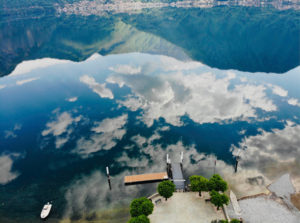
View from Federico’s home in Italy
Do you think it will impact the buying behaviour of customers?
It already is: The Beauty segment is displaying a growing share
of purchases across both female and male customers and this is consistent across all our sites (Net-A-Porter, YOOX, Mr Porter and The Outnet). Shoes appear to have a growing share of purchases mostly driven by male customers.
Within Ready To Wear, tops and shirts appear to be taking a growing share, and this is consistent across all our sites. Home design (including art and fine books) has a fast-growing share at YOOX.
Tell us about your 2030 sustainability plan.
I believe that the fashion industry needs to change its mentality and deeply rethink the concept of what fashion is. Fewer collections, less production, less waste. New creativity must be combined with a new sensitivity to protect the planet. Fashion will have to decide if it wants to enter a virtuous cycle where sustainability, respect for nature and circularity are its watchwords or not. At YOOX NET-A-PORTER we decided which side we wanted to be on a long time ago. And we will push it even more in the coming years.
When this situation is over, what is the first thing that you will do?
I don’t think there will be a zero hour, an X moment. Maybe when they find a vaccine, but some time will have passed by then and I’m not sure that at that point we will want to go back to our lives exactly as they were BC (Before Coronavirus). In the meantime, there will be a stop and start, some things we will do more, and some less. We will get used to managing risks and to preventing them. We will plan for and create the future.
Growing up, what are some of your first memories of Italy as a child?
Marina di Ravenna, the sea, swimming, the boats. Water is my element, my memory, the place where I like to be, that belongs to me and where I love to return.
Where in Italy do you like to travel to / your favourite city and why?
I love to travel by sea. I love Sicily, the Aeolian Islands, Tuscany, Ponza, but I never want to dock, I don’t look at the coast hoping to go ashore as soon as possible, in fact, I prefer the open sea.
Bruce Chatwin argued that travel is a profound necessity for the human being who is not satisfied with the reality they are living, for someone who must subvert the known, the certain, the here and the now. Travelling is the ability to become fluid, liquid, adhering to all the experiences of reality. In this sense, travel remains the opposite of tourism: it never guarantees to join two places, it certainly has a beginning, but its end is always uncertain, because its dimension is the during, made up of emotions, ideas and unexpected encounters. The journey is the Odyssey: in the end, Ulysses returns home, but he is no longer the same. And according to a minor version of the myth, it starts again.
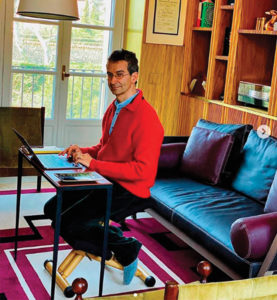
Federico Marchetti at home during quarantine
Can you share with us any Italian traditions that you have with your family and friends?
As I said before, I am a Romagnolo-American, with an English wife and a bilingual daughter who corrects my phonetic mistakes. We have fun comparing different traditions, sayings and cultural differences. With my wife, we debate for hours about the air conditioning: she wants it on and I turn it off, we talk about Anglo-Saxon and Italian habits.
What is the motto you are living by during this time?
You can’t predict the future, you have to invent it.
What in your opinion are the prerequisites to success?
Only impossible challenges last forever. I was able to bring together two worlds that were apparently not compatible: luxury and technology. At first, they were wary of each other. Technology considered fashion too frivolous and evanescent, fashion considered tech too cold and unaffected. They are now inseparable lovers. We need to think big, look outside of ourselves, be global and avant- garde, dare, respond to needs before others. In Italy there are many small and medium-sized companies that need to grow, and technology can help them.
How are you spending your days while staying at home in this “quarantine mode”?
6:45 – Wake-up call (I decided not to change my habits, even if in smart working).
6:45 – 7:15 – Double check breaking news overnight and if there is any news from my Asian colleagues in Hong Kong, Shanghai or Tokyo. 7:15 – 8:00 – Yoga and posture exercises for my back pain (that’s why I use this special chair – I recommend it to anyone who suffers back pain!). Then I shower.
8:00 – 8:30 – Breakfast.
8:30 – 11:30 – Work on multiple tasks, mostly taking decisions with the Executive Committee on COVID-19 measures for our colleagues, customers and community.
11:30 – 12:00 – Italian classes, homeschooling with my daughter. 12:00 – 1:00 – Video calls with my colleagues in London and Milan, and catch up with my assistant.
1:00 – 1:30 – Lunch.
1:30 – 4:30 – Work, work, work (that’s what www stands for!).
4:30 – 5:00 – Break, for ‘merenda’.
5:00 – 7:00 – work with my colleagues in the USA.
7:00 – 8:30 – Dinner and catch up on world news.
8:30 – 10:30 – Video call with some Executive Committee members. 10:30 – 12:00 – Take a bath, watch a movie or read before sleep.
What’s your favourite Italian phrase?
Detto, fatto. It means ‘said and done’. Patience isn’t my best quality: I like to associate action to thought. I’m not a philosopher, I’m an entrepreneur, I follow speed and innovation.
How would you describe Italy in one sentence?
The Great Beauty.
What is a message that you would like to give to all the Italians that will be reading your interview?
In this crisis we have shown our best side: our extraordinary doctors and nurses have worked tirelessly, with passion and professionalism, moved by each recovered patient and crying for those who weren’t able to make it. We have been a model for the world to follow, but I would like to add another thing that concerns a great Italian: Leonardo da Vinci.
Leonardo was born and living in Vinci but went continuously to Florence, starting from a young age to overcome his personal borders, ending up in Milan, France and many other places. I’ve always wondered what Leonardo thought as he went back and forth to Tuscany, what he saw, how he felt. Then one day, walking in Silicon Valley, I found the answer: with an incomparable style and beauty, in his time, Leonardo saw in Tuscany what you can see today in California. An active ruling class, economic and cultural resources and a lingua franca that breaks down barriers and confuses styles, cultures, people. Then it was art, today it is technology. I see this in our future.
READ MORE:
Pierpaolo Piccioli, Creative Director at Valentino Shares His Love For Italy and His Passion For Design
Valentino’s Creative Director Pierpaolo Piccioli has a fond love for his country and the beauty of its craftsmanship.
Pierpaolo Piccioli is a master in the world of Italian fashion. With a career spanning over 30 years, he has dedicated his life to Italian luxury and has spent more than three decades crafting incredible creations and living out his passion for design. He worked at Fendi for almost ten years before joining Valentino in 1999 as an accessories designer. He worked alongside Maria Grazi Chiuri as Co-Creative Director before her departure to Dior in 2016. After her departure, Piccioli became the sole Creative Director of the House and through his role he has allowed women to dream, thanks to his breath-taking runway shows and his flawless, feminine designs. His presentations have been enough to bring women to tears.
Piccioli was born in Rome and his love for the city has never died. Perhaps that is why he has fitted in so seamlessly at Valentino. The fashion house is itself Roman, founded by Valentino Garavani in 1960 on the Via Condotti. It has since become one of the leading luxury fashion houses, not just in Italy, but in the world. Since Pierpaolo Piccioli became Co-Creative Director in 2008 (when he worked alongside Maria Grazia Chiuri until 2016), the brand has undergone a creative evolution. This evolution has made Valentino one of the most talked about brands in the world and has allowed for its international success. Here we discuss with Pierpaolo Piccioli his love for Rome and the importance of keeping Italian craftsmanship at the forefront of the house.
What does Italy mean to you and how would you describe it through your eyes?
Italy, and Rome in particular, de ne my culture and identity. Italian history, art and nature are simply part of my DNA. Two main aspects of the country really coincide with my ethical and aesthetic values: diversity and extraordinary beauty. Rome is a metaphor for diversity. It is the natural territory for complexity, the highest example of inclusivity. I have learnt most of what I know from this city in terms of emotional patrimony, let alone the historical knowledge. Although I enjoy the international allure of my job, I keep rooted in an Italian interior landscape. This sense of belonging allows a better understanding of the world.
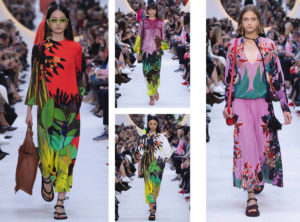
Valentino Spring/Summer 2020
Italy has suffered greatly throughout the global pandemic we are currently experiencing – when all of this is over what do you expect to see from the recovery of this crisis?
I think a new energy, which we started to perceive during these hard times, will catch on. I am particularly interested in the experiments we will approach with curiosity, to reinterpret reality together. We must deconstruct our dogmas, and that’s good. I also think that this country is reacting to and facing this health emergency with the same strength and dedication that our history can testify. We are naturally resilient and I am very proud to be Italian, now more than ever.
They say in every crisis there is always an opportunity – what is something positive that you think will come out of this situation?
Humanity and creativity will be placed where they should have always stayed: at the centre of everything. This experience made their value clearer than ever.
When all of this is over will you be changing any of the strategies of the brand and has it had an impact on how you will move forward?
I will not change anything in relation to the technique and the research process. We must preserve our heritage; the culture of the atelier cannot be modified in its essence. What will change in our everyday practice, will of course regard the safety of the people. Our crowded and never-ending creative reunions will become virtual and, to some extent, also the fundamental presentation rituals will follow the same line.
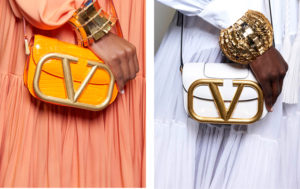
SuperVee Bag
The fashion industry has grown enormously in the last years. Many designers and names have multiplied remarkably. What do you a designer have to do to sustain the desirability of the brand?
Be authentic, stay true to yourself, strengthen your narrative with emotional and rational elements that are consistent with contemporary society. In a word: dialogue.
You have always put your team at the forefront of appreciation, how are you coordinating these days with this situation?
We are always in touch. Not for a single second have I felt my team was loosening up. On the contrary, actually: our energy got stronger and the synergy that had characterised our collaboration has been reinforced by the emergency. It was a priceless confirmation of having a dream team.
Let’s talk about the SS20 collections, what was your inspiration for the women’s collection?
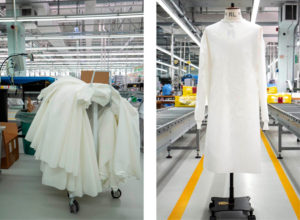
This collection hosts a significant capsule named Le Blanc, inspired by a reflection on the colour white. White was not intended as an expression of minimalism but as a “maximalist” manifestation of couture. I reflected on the Grisaille technique: by taking off the surface the essence emerges. Universality, personal expression and lightness encouraged the creation of these ethereal yet voluminous poplin dresses.
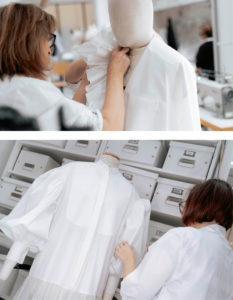
The Making of Le Blanc Collection
The “Made in Italy” element is very important to many, why do you think there is such a fascination with this concept globally?
In my opinion, our uniqueness lays in the simplicity on one hand and the extreme perfectionism on the other. Our passion is palpable, our tradition is profound.
What do you think are the fundamentals of success?
Truth, humanity, and freedom.
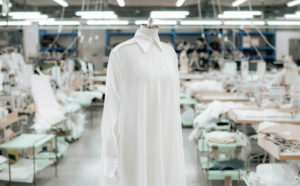
The Making of Le Blanc Collection
What’s your favourite Italian phrase or motto you live by?
“We are tired of becoming such serious youth, contented either by force, or criminals, or neurotics: we want to laugh, to be innocent, to expect something from life, to ask, to ignore. We don’t want to be so con dent, already. We don’t want to be so dreamless already.” Pier Paolo Pasolini Lettere Luterane, 1976
What would like to achieve that you feel you haven’t done yet?
I still have to find out!
How are you spending this quarantine period at home?
Sketching, reading a lot, and working on the upcoming collections. I’m also spending quality time with my wife Simona and our children: Benedetta, Piero and Stella. We watch movies, enjoy food, we talk and discuss a lot, we are a very normal family and now with no rhetoric, we understand how lucky we are to stay together.
READ MORE:
Diego Della Valle Chairman of the Tod’s Group Discusses the Global Pandemic and His Love For Italy
Valentino Presents a Middle East Capsule Collection of Accessories
Diego Della Valle Chairman of the Tod’s Group Discusses the Global Pandemic and His Love For Italy
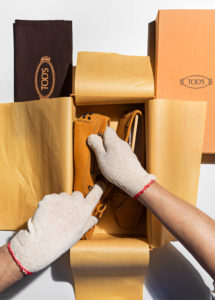
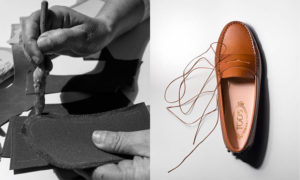
When it comes to the idea of “Made in Italy” Tod’s is truly this. A young Italian named Filippo Della Valle began making shoes by hand in his basement in the 1920s and his grandson Diego Delle Valle saw the opportunity to transform this enterprise into a business. And thus Tod’s was born.
Diego expanded the basement workshop into a factory that by the 1970s was manufacturing handmade Italian- crafted shoes for American department stores. Diego has always been innovative in his strategies, keeping the handmade process true to the brand, but diversifying in many ways and ensuring that he is always business-savvy.
In 1996 Diego Della Valle was nominated for the Cavaliere del Lavoro (the highest honour in the Italian Republic for professional achievement); in 2000 he received an Honoris Causa Degree in Business and Economics from the University of Ancona followed by an Honoris Causa Degree in Economics and Management from the University of Sannio, in Benevento.
Today, Diego Della Valle oversees the Tod’s Group as a Chairman, alongside his brother Andrea. A true family business to this day that has been successful beyond anything the family thought possible all those years ago. The business has expanded over the years and shoe brands Roger Vivier and Hogan as well as the casual chic fashion brand Fay, live under the Group’s umbrella. The family’s financial company acquired the Haute Couture brand Elsa Schiaparelli in 2006.
Diego Della Valle was and still is on the board of several companies including Banca Commerciale Italiana, Assicurazioni Generali, Ferrari, BNL, RCS and LVMH. Della Valle was among the principal shareholders of Sak’s Fifth Avenue and remains a shareholder of Mediobanca, Piaggio and other important companies. He is also a member of the fundraising committee of the Umberto Veronesi Cancer Research Foundation and President of the Board of Directors of the Della Valle Foundation, a charity engaged in funding education for children.
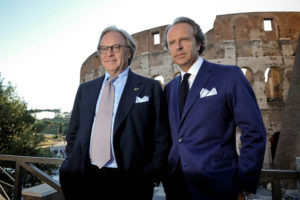
Diego Della Valle and his brother Andrea Della Valle – © Imagoeconomica
As Italy suffers greatly through the coronavirus pandemic Diego and his brother Andrea made the decision to donate, on behalf of themselves and their company a sum of 5 million euros to support the family members of health workers who have lost their lives in the fight against COVID-19. Here we discuss in-depth with Diego Della Valle the journey through this crisis and how Italy inspires him to keep going and grow further stronger into the future.
What does Italy mean to you and how would you describe it through your eyes?
Italy is my country, where I was born and where I grew up. Italy is where my family lives, where my friends and my company are. Italy is a beautiful country and at this moment we need to support it to let it restart in the best way possible, the way it deserves. For my country, for my Group and for my employees, the message I want to convey is very clear: Italy is and will always be my country.
We have seen the generous donation you gave on behalf of your employees to support the family members of health personnel who lost their lives fighting COVID-19. But that is not the first time you gave back to your country and showed your devotion, as we know the massive project about restoring Rome’s Colosseum that started in 2016. Tell us more about the values that de ne the TOD’S culture and the values you live by as a person.
The restoration of the Colosseum has been a milestone and a very emotional moment for my Group and for Italy. Being able to take part to this initiative makes me extremely proud. In this particular moment, it would be impossible for us not to support a group of people who are struggling to support our country. Together with the Protezione Civile (the Civil Protection) we created a fund to support the family members of health personnel who lost their lives in the fight against COVID-19, “Sempre con voi” (Always with you), and everybody can donate to help.
The values of solidarity are rooted in my company’s DNA as well as in my family and in the majority of the Italians. This particular moment will make us more sensible and open to helping others. Nothing will be as it was before. Solidarity, “being a family”, and “being a community” have always been strong values in my Group and today they are signposts from where we need to restart.
Italy has suffered greatly throughout the global pandemic we are currently experiencing – when all of this is over what do you expect to see from the recovery of this crisis?
I believe that at this point we must not lower our guard. We need to trust what the government tells us since they consult with those who are most competent in health matters. We have to rethink our business models, imagining what the world will be like in the first year after the epidemic and in subsequent years. It will be crucial to understand which kind of lifestyle people will adopt, and as a consequence, how they will approach products and services. It is certain that entrepreneurs and companies will have to develop a greater sensitivity towards issues of solidarity and in addition to the competitiveness of their companies – correctly – they will have to dedicate part of their time and pro ts to improve people’s quality of life.
They say in every crisis there is always an opportunity – what is something positive that you think will come out of this situation?
We need to find the positive side of this experience. As said, the values of solidarity, of social solidarity are emerging with strength and determination, this pandemic is helping us to be better people. We are learning how to be patient, we have more time to spend with our families and we have the possibility to help others.
When all of this is over will you change any of the strategy of the brand and has it had an impact on how you will move forward?
What we have in front of us is a year of hard work and sacrifices. We were among the first to react strategically to this emergency so that we are able to re-start at the soonest. We need to think about a company which will work differently from the past. Everything will change: the way people buy goods, the way they will go to a restaurant, or how they will spend their weekends, the social change will be very strong.
Do you think it will impact the buying behaviour of customers?
For sure and it will take time, all the past habits will change.
TOD’S has always been synonymous with quality and outstanding craftsmanship, tell us more about how important is it to maintain and preserve the savoir-faire nowadays?
I think more and more. The high quality of our products, the craftsmanship, the Made in Italy aspect, our DNA that made us unique and recognisable all over the world and our timeless luxury are the values on which our company is rooted and through which we have gained the loyalty among our clients. They will for sure appreciate more and more iconic and timeless products.
Why do you think there is a great fascination and appreciation of the “Made in Italy” products especially with leather goods?
The quality of products that are made in Italy are incomparable and craftsmanship makes products unique and timeless. Above all, I believe that people are looking for dream products, long-lasting to escape from the overdose for multiple collections, from the loud messages with which we have been bombarded with.

Diego Della Valle © Emanuele Scorcelletti
A new designer joined TOD’S (Walter Chiapponi) and presented his debut collection for the brand featuring the Fall/ Winter products. Can you share with us the vision you have for TOD’S moving forward?
We started working from the day after the last fashion show in February despite the lockdown to ensure the launch of the Fall Winter collection can happen in the best way possible. We are trying to get the best from this period of apparent quiet by working on a marketing plan which will be going to support our products in the right way. The idea of the “T Factory” will then be more than before: working on strong projects with beautiful stories to tell explore collaborations with designers, news and innovative ideas of communication.
Can we ask about the vision and direction you have on a group level as well?
As explained earlier, the new business model we are working on will be on a Group level. Fewer products, strong and recognisable projects with particular attention to the development of the omnichannel and e-commerce. We want to re-start and solidarity will be even more as before at the heart of our system. The success of the company is important, but the importance of our employees is even more so.
Sustainability, a topic that was trending heavily lately. What do you think the impact post-COVID-19 will be on companies and manufacturers when it comes to their sustainable offerings?
I think it should influence it in a positive way, I don’t think these topics can be neglected in the future.

Can you tell us what a day in the life of Diego Della Valle would be like?
It depends on the lockdown…I am joking of course, but I am a person who loves his job and his company to which I dedicate the majority of my time. As soon as I can, I come back to Le Marche where my family lives and where I love spending my free time when it is possible. I love walking around, simple good food, and childhood friends.
Where in Italy do you like to travel to relax?
Le Marche is the region where I was born and where I grew up, my family is there, my company is located there, and it is the place of my heart. Then Capri for sure, the most beautiful island on earth, where I love to relax with my family and friends, in front of unforgettable sunsets and excellent Italian food.
Can you share with us any Italian traditions that you to this day, continue with your family and friends?
There are a lot, unfortunately with the lockdown we are not able to do many things, but I think being reunited with our families around a beautiful table, with good food and great conversation is one of the most Italian of traditions that I love. In these days this moment of complicity can be of great help.

In your opinion what are the prerequisites to success?
Being coherent, transparent, and direct. For Tod’s, the success has always been being close to the values of Made in Italy, the craftsmanship and respecting the quality.
What is a life lesson that you can share with us?
This pandemic has definitely been an important life lesson. We have been overwhelmed by a tsunami but we are still working, trying to think about everything, discussing how these scenarios that we never experienced before may pan out. We need to learn from what we are seeing and try to learn how to avoid being unprepared, in case something like this ever happens again. This virus will definitely create a strong social change and I think that for a while, people will be physically far from each other, but closer by heart.
What’s your favourite Italian phrase or motto you live by?
Dignity, duty, fun: in this exact order: first of all, the dignity which you can conquer working hard and at the end a bit of well-deserved entertainment especially for the younger generations.
What do you say no to?
To all the things and topics that I don’t agree on.
What would like to achieve that you feel you haven’t done yet?
I would like to have free time to be able to do what I like. It is a challenging goal that I would like to achieve once we are out of this situation.
Italy suffered, and Milan suffered. If you were asked to say a few words from the heart to Italy what would you say?
That we will make it, we will get out of this situation stronger than before, but we need to support one and other otherwise it will be very difficult to rebuild our future.
READ MORE:
Valentino Presents a Middle East Capsule Collection of Accessories
Global Motivational Speaker John Sanei Talks Positivity and Moving Forward During the Coronavirus Crisis
Global motivational speaker and best-selling author John Sanei talks positivity and building courage and clarity in people’s minds and hearts, in order to prepare for an uncertain future
It’s no secret we are all in a time of uncertainty at the moment, wherever we are in the world. During these times it can be hard to keep positive and see a light at the end of the tunnel. So we decided to talk to Global Motivational Speaker and best-selling author John Sanei who has been sharing his motivational mindset with the world. Sanei combines his passions for psychology, technology and innovation to bring about a unique outlook of the world, thinking about the future in a unique “possibilist” way. Sanei’s most recent book Future Now comes at a time when the world needs it most. It delves into how we can enter a positive mode of thinking even though we may be living through something that in many ways is not positive, to bring about our own authenticity and therefore move forward and ultimately achieve success. Here we discuss with Sanei the outlook of the world during and after COVID-19, and how we can guide our minds through dark times to achieve a brighter outlook for the future.
In a time we are all facing uncertainty, what is your outlook on the near future and what do you think the “new normal” will be in terms of mindset?
I think this is a billion-dollar question. I have tried to not come up with any clear definitions of what the “new normal” looks like yet, as I think we still have a bit of a way to go when it comes to understanding the repercussions of this economic close-down and the Domino effects of bankruptcies and the closing of legacy businesses. But remember, as far as mindsets are concerned, certain people are thriving in this new marketplace –finding new solutions and being adaptive. Some people love this – we call those people “wartime CEOs” – the ones who are stepping up during this time. On the flip side, there are also “peacetime CEOs” – they are the people who have no idea what to do in times like these, they are much better at maintaining businesses than starting new ones. So the “new normal” across the board will be affecting people in very different ways, but the mindset that should prevail is being adaptable and flexible. To do this, you need to be able to be curious about your subject and try and bring about that resolution or solution through your adaptive, flexible, curiosity. I call these people “possibilists” and that’s what I suggest people become – look for possibilities, give a minimal amount of attention to negativity and look for solutions and scenarios where you can add impact. It’s about utilising your curiosity so that you can add more value to the world.
Can you explain to us what a futurist is and why you deem yourself to be one?
I have never actually called myself a futurist – other people call me that. If you read my books or social media you never see the term “futurist” because I think far too many people have jumped on the bandwagon of being one. Also, the word futurist can be understood in many different ways. I think many people expect futurists to predict the future. And I guess some can – and I can’t – and it’s not really where my skill set lies. Where my skillset lies is to build courage and clarity in people’s minds and hearts, in order to prepare for an uncertain future. Ray Kurzweil; one of the founders of Singularity University, has written many books and he is excellent at predicting the future – in fact, in one of his books, he as an 86 per cent success rate of predicting the future. So he is what I would describe him as a futurist. But because I’m a faculty member at Singularity University, people deem me to be a futurist too, but I think that word carries too much expectation. I consider myself more to be a foresight strategist. In other words; how do you adapt a foresight that allows you to apply a strategy? Something that allows you to thrive no matter what the future looks like. That always comes down to your inherent, unique and authentic skillset and how you can use that skillset with as much impact, while the marketplace is changing around you.
What was it that shaped up the direction you took in life?
If I talk about where I am right now, which is a combination of human psychology, neuroscience, futurism and business strategy. That combination has always been in me as a human being. I never put them together because I didn’t think the world was ready for them all, I didn’t even think it was something the world needed. But from a very young age, I was always an early adopter, the one who knew what was coming next and was always seeing the latest brands, whether it was in shoes, fashion or restaurants etc. And that early adoption made me quite successful. In my twenties I had several businesses, I was doing well and then at 31 I became bankrupt. I was depressed for a few years after that and the magic about depression is that you don’t even know you’re depressed. Because it comes in such a slow way that suddenly you aren’t able to create anymore and you’re stuck in a victim mindset. So I had to snap myself out of that after a couple of years, and I managed to do that. My personality has always been to dive deep into a subject as much as I can so that I can understand it better, and I realized that I had gone so deep into neuroscience and psychology that I was able to start teaching it. So I started to combine these four aspects and it has really started to change the direction of my life. I do believe that everyone has his/ her own genius and I have tapped into mine.
You have a passion for psychology and technology, how do they connect in your world and how have they helped you throughout your journey?
Your unique and authentic self is what will be celebrated in the world when we live in a world of surplus. In other words, there is a surplus of amazingly clever people who do the same thing. The world used to need a surplus of the same – accountants lawyers, doctors etc. – but as we move into a multi-adaptive world, we start to realise that what makes the most sense is uniqueness and authenticity, because people want to hear something fresh and surprising. We are always looking for uniqueness and I think because of the Internet we can build our own resonance that highlights our authenticity. So this combination has been fantastic for me and I’m adding surprising, unique stories to the world, that people have never thought about before and I think that’s kind of what makes me successful.

Tell us about your recent and upcoming books?
“FOREsight” was my third book. It comprised of 20 essays that I wrote around the concept of connecting the brain and heart. For me brain and heart coherence is of utmost importance because when these two things are speaking the same language, your decision- making is calm. The essays alternate from talking about the future, then talking about our emotional state. You will see that I like to make it snappy and short so it’s easy to read and clear on what the messages are.
I was busy with my fourth book “Evolution of Value” when COVID-19 happened and now the subject of that book has kind of become irrelevant. I was breaking down the ten different values that we will need to prioritise in the future, but now everything has changed. So I started writing a trilogy of books; “Future Now,” “Future How” and “Future Next.” I think these are the most relevant to the situation we are in now.
What in your opinion are the business models of the future? And how do you define the trends of the future?
The trends of the future are actually based on human needs. So if you can track human needs, you can then start to determine what the trends could look like. But also remember that in different parts of the world humans prioritise different aspects. There are three types of consumers and they make decisions in very different ways. The first comes from a place of value. They look for as much value as possible. These are generally the poorer people around the world. The second type of consumers is all about reward and recognition. They are found in emerging markets and their marketing is very different from other consumers. They have only started making money in the last generation or so and they want to be able to show the world that they are healthy. The third type are the mature awareness consumers who are underpinned by guilt-free consumption and they are not looking for reward and recognition, they are much more about asking if their decision has a harmful effect on the planet. Each one of these sections has different trends. You can see this with fashion brands for example who are closing stores in the mature awareness markets and opening stores in the booming markets like Saudi Arabia for example because they have just started to make money. These brands are doing so well in countries like China, South Africa and the Middle East. This is because the consumers in this market are prioritising showing their wealth because they are an emerging market. So it just depends. All trends follow these need states.
Going back to the first part of the question, the business model that we’ve all become used to is supply and demand. But now, we are starting to see so many new business models and the models of the past are becoming too expensive. New business models include the “Crowd Economy”, with companies like Uber and Airbnb. They use the ‘crowd’ to build their business and they are a platform that connects those two. Then you have the “Free date Economy” and those are companies that give you something for free, but they pick up your data. Facebook and Google are two examples of this. Then you have the “Curate, Match and Facilitate” business model, with companies like Spotify. They curate music and match it to your taste using machine learning and facilitate it to you for a cost. Then you have the “Transformation Economy” which is transforming things like a simple cup of coffee into a total experience because we are changing the way we perceive things. There are about 5 or 6 business models that are changing right now and people need to understand them going forward for businesses to succeed in the future.

Looking forward, what advice would you give to businesses that are struggling?
People need to understand that COVID-19 will have magnified any issue you had personally or in your business beforehand as well as highlighting bad business models. If you are struggling, what you need to realise is that this is a wonderful opportunity to redesign your business with a decentralized ideology. In other words, can you get rid of legacy costs? This could be done through continuing to work from home etc. Try to step out of the construct of your business and see what is truly needed and take the opportunity to get over feeling sad. The truth is if your business was struggling before, things are going to be worse with COVID-19 so it’s a really good time to redesign.
We saw a lot of companies that used a lot of “disruption” practices, which backfired on them, let us talk about how do we define our strategies on “how disruptive we should be”?
Innovation and disruption mean two very different things. Innovation means doing what you did yesterday just better and making incremental changes. Disruption means making your current business model obsolete to create a new one. So it’s not about your business, it’s about understanding your consumer better. How much better can you pre-empt what your customer wants before they know it? Utilizing machine learning and data will do this because those are the tools of the future. So you need to ask how can your business become more personalized to your consumer? How can it become more seamless to your consumer? And how can your business build more trust with your consumer? The choice is not what we are after – it’s really just about the suggestion. That’s what consumers are looking for.
What are the messages of positivity that you are sharing in this time of crisis?
I’ve written a whole book on it! The book “Future Now” is about how to become comfortable with the unknown. And that’s what a positive mindset is. A positive mindset is not looking for a guaranteed outcome; it is being OK with any outcome because you have become anti-fragile. In other words, when you’re fragile; if you fall you break. Anti-fragile says when you fall, you get stronger. So every time I get challenged, I’m happy with the challenge and this is intelligent positivity. What that does is it allows you to ask ‘what is my genius?’ What is best for me?’ and then you need to dive deep into that subject, figure out what you can bring to the world that nobody else does and do that unique thing. So then no matter what happens, your uniqueness and curiosity will always find a solution.
As an optimist, how do you foresee the “new world”?
I’m more of a “Possibilist”. That means that I can see the darkness, but I’m looking for the possibilities. I absolutely foresee a new world and yes, there is going to be a ‘bad world’ for sure because we always have that duality of the good and bad. But I do also see a great new world ahead. We need to take responsibility for ourselves. You are responsible for creating your bubble of seamlessness and clarity and if you’re not prepared to do that, then you won’t be having a great time.
How do we keep a calm state of mind when things around us are stressful?
The truth is when you’re expecting something to happen and it doesn’t happen you become upset. When you’re making logical decisions you need an outcome. But if you’re following curiosity, the outcome is not what you’re looking for; you’re looking for your curiosity. So whatever happens, you’re happy because you followed your curiosity and delved deeper into who you are. So if you are feeling stressed, it’s because you’re expecting something that hasn’t happened. What you need to do is become more fluid and the way you do that is by unclicking your logical mind and become more heart-led, more curious and more enthusiastic about why you’re here on earth and then, nothing can stress you out.
What is the motto that you live your life by?
The question you need to keep asking yourself is “Is this what makes me most excited?” And “can I do something without expecting the outcome and can I do it with maximum enthusiasm?” Keep asking yourself these questions and if you do that you’ll lead yourself towards your genius and when you find that, you start to live a totally different life.
Have you ever failed and how do you deal with failure?
I’ve written about my failures a lot. One of them was when I went bankrupt at 31 and I was depressed for a couple of years. Then I got divorced when I turned 40 and that shattered my reality in such a massive way. Then coming out of that shattering, I started writing books and speaking publicly and this is where my career is right now. The best thing you can do when you go through failures is to try and see that failure as a learning curve as soon as possible. We all go through failures but what’s important is to move away from being the victim and be thankful that it happened so you can move forward properly.
How do you carry on when you feel like life is getting you down?
Firstly, all human beings have ups and downs so that’s OK. Trauma sits in our bodies or minds for a very long time and then when we have a lot of time on our hands (like now with COVID-19), this trauma can now surface. Trauma is a thing that is in all of us and if we don’t deal with that it can stay with us for life. What we have to do is work on fixing those traumas so they don’t linger in our memories. When you do get down you need to first ask yourself ‘where is this coming from?’ and figure out what has triggered you to get to that feeling of down. Every trigger point is based on a memory that you haven’t healed. So give yourself space to stew in that emotion, but don’t stay like that longer than you need to. If you can’t get out of that emotion there is something you need to resolve from your past. Then you can move back into your flow state. It’s impossible for us not to go through these times, and you have to give yourself time to go through those emotions but not for too long. If you are going longer than half a day or a day with these thoughts then I recommend seeking professional help and working to x those triggers as quickly as possible.

Dubai is your residence city, why did you choose it and what do you foresee for this city of life post-COVID-19?
I chose to live in Dubai for a couple of reasons. The first is leadership. I love the way the leadership in Dubai is focused on the future and the energy of the way they believe anything is possible. I’m a big fan of the vision our leader has. The second reason is that most cities in the world are stuck in that mindset of “that’s just how it’s always been done.” And Dubai doesn’t have that. Dubai has a clean slate that it’s building the future on and it’s not stuck in any old ways of thinking. The third reason is that it’s a hub. I can easily access all the cities around the world which gives me a great opportunity to travel and see as much of the world as I can and have access to my clients around the world. I also love the people in Dubai. Everyone has great energy.
Post COVID-19 – I foresee it to be something amazing. I think Dubai will have renewed energy and a new way of thinking about the future. We will understand that as residents we need to make the most of the situation. I also believe that the leadership of Dubai will come up with new ways of enhancing the city and creating new ideas. Until we are through this situation there is so much up in the air, but I am a possibilist and I know that the Dubai leadership will come up with something amazing. I am very positive about the world we can create and I want to do as much as I can in my power to empower people to take responsibility and be part of creating a better world for themselves and everybody else.
READ MORE:
How Can we Keep Our Mind Functioning While at Home?
Clinical Dietitian Dr Dana Al Hamwi Talks Nutrition in the Lead up to Ramadan
EXCLUSIVE: Giorgio Armani on Being a Proud Italian and Why Staying True to His Values is the Secret to His Success
Giorgio Armani shares why he is so proud to be Italian, how he believes the world will change after the global pandemic and why staying true to his DNA and values is the secret to his success
He is one of the most successful designers in the world. His name and brand are recognised in every corner of the globe, and the Italian born businessman has successfully diversified his company in ways, that no other brand has done. From Haute Couture to Ready-to-wear, to accessories, to hotels, restaurants, fragrances – and the list goes on. But as his global expansion continues, Giorgio Armani remains very loyal to his roots. His brand has a very clear DNA of elegance and he strives to ensure it is kept this way.
Armani was born in the northern Italian town of Piacenza. While at school he aspired to have a career in medicine and found himself working at a Military Hospital while in the army as a young man. But eventually, he decided that this wasn’t the career path for him. In 1957, he landed a job as a window dresser in one of Milan’s department stores before starting to create men’s clothes when he realised his skill and passion for design. Armani worked for a number of fashion houses over the next decade before deciding to launch his own label in 1975.
Giorgio Armani’s first men’s and women’s collection launched in 1976. By 1979 Armani was producing clothes to be sent to the United States and this started the real growth of his company. With an innate flair for innovation, Armani saw the opportunity to expand his company. In the early 1980s, the company signed an important agreement with L’Oréal to create perfumes.
Always ahead of the game, Armani felt that he had to make use of new and unconventional advertising methods. These included television spots and enormous street ads, together with a house magazine that was sent out by mail to consumers. Armani also felt that a relationship with the cinema was essential, both for promotional reasons and for the stimulus to creativity. He has designed the costumes for over 100 Hollywood movies and dressed the world’s most important celebrities. The expansion of Armani’s enterprise continued throughout the eighties with new markets and new lines while always remaining true to his values. Giorgio Armani has never been afraid to speak his mind. He has a clear vision and idea of how his line and the fashion industry should be. He never veers away from his focus and his business mind continues to fuel every aspect of the Giorgio Armani Corporation. Just last year, the designer was honoured with the Outstanding Achievement accolade at the British Fashion Awards as a celebration of his work and an acknowledgement to his dedication to the fashion industry.

Giorgio Armani at The Armani Hotel Dubai
This year, Giorgio Armani had planned to travel to Dubai to present his 2020 Cruise show, in line with the 10th anniversary of the Armani Hotel Dubai. Sadly due to the outbreak of COVID-19, this was postponed until later in the year. Armani has been very dedicated to assisting in the fight against coronavirus, donating a huge amount of money to local hospitals. In this exclusive interview, we discover more behind what Italy means to him and take a look at the plans for the exciting future ahead.
What does Italy mean to you and how would you describe it through your eyes?
Italy is my home and my mother country. I believe it is a beautiful, richly cultural, fascinating place full of passion and emotion and I am genuinely proud of being an Italian.
We have seen the generous donation you gave your country in such hard times and the heart-warming words you’ve dedicated to Italy and Milan in specific and this kind of initiatives reflect a lot of values in a person. Tell us more about the values that define the Giorgio Armani culture and the values you live by as a person.
They are simply human values. I believe that we are all connected by our humanity, which is why when this crisis started to unravel, I simply could not stand by and do nothing. I am in a position to help and so I feel it is my duty as an Italian and as a human being to do so. This action does relate to the values of Armani too – as I have always thought of what I do as something that serves the customer. Fashion for me is about making beautiful and well-made items for real people who will wear them in their lives and feel that they contribute positively to how they feel about themselves. This is very different from the idea of fashion for fashion’s sake. It is about connecting with reality.
Italy has suffered greatly throughout the global pandemic we are currently experiencing – when all of this is over what do you expect to see from the recovery of this crisis?
I hope that fashion reviews its priorities and learns from this experience. I have been very vocal – well before the current situation – about how I feel that there is a need to slow down, to show fewer products and to return to a position of taking into consideration the real needs and desires of customers. Maybe this idea will begin to take hold more now. I hope too that people will consume in a more thoughtful and considered way – focusing on things that are well made and have longevity, and turn away from the hectic cycle of fast fashion. This is also a much more sustainable way of shopping, which is less damaging to the environment. After the current crisis, I think we are all going to be more attuned to the wonders of the natural world, as we have been denied access to these in an unprecedented way; because of this, I expect we will value them more and seek to preserve and protect them more vigorously.

Giorgio Armani Via Sant’Andrea Boutique
They say in every crisis there is always an opportunity – what is something positive that you think will come out of this situation?
It is hard to see anything positive about the situation currently as people are suffering. However, we have learnt something here in Italy for sure: Italians seem to be quite chaotic and even unruly. But it seems to me that we actually give our best in difficult times. This is when our innate inventiveness and creativity shines through. And we show how we are capable of finding a very rare unity and focus. In this most difficult of moments, I am seeing my countrymen reacting in a very responsible way. I hope we will continue to behave like this when the situation becomes more normal.
When all of this is over will you be changing any of the strategies of the brand and has it had an impact on how you will move forward?
I am of course thinking about how we should respond in our thinking, but to be honest, I feel that my lifelong strategy of trying to make clothes that have eternal style, and that is well-made and functional, is well suited to the future. We all need to recognise that things that have longevity – not only because they are well constructed, but also because they are designed to last (from an aesthetic perspective as well as a manufacturing point of view) – are better purchases. This is also a good strategy to promote sustainability, which is something I have been increasingly focused on. Sustainability has now been thrown into relief, through the crisis, as we are all being forced to consider our future more closely.
Do you think it will impact the buying behaviour of customers?
As I said, I hope it will. I hope they will become more and more discerning in how they consume, and so consume better things in a better way.

Giorgio Armani Spring/Summer 20 campaign
Dubai was looking forward to your visit to show your cruise collection and with the current situation, all was rescheduled till the second part of the year, tell us why did you choose Dubai to be your runway?
Dubai is an extraordinary place, symbolising modernity, and looking to the future. It is a true city of the 21st century. As a designer and a human being, I am resolutely always focused on the future, so it seemed to me to be a perfect location in which to present a new collection. The event was also planned to celebrate the reopening of the Giorgio Armani boutique in the Dubai Mall and ten years since the inauguration of the Armani Hotel – on the occasion of Expo 2020.
The fashion industry has grown enormously in the last years. Many designers and names have multiplied remarkably. What should a designer do to sustain his brand desirability?
I have to create beauty that resonates with my customer in a way that is relevant to their lives. I have a very particular personal aesthetic, which is based on sophistication, elegance and comfort, and over the years I have discovered that this is something that many people all over the world – regardless of geography or culture – can relate to and desire. This is the secret to my longevity as a designer; my clarity of vision is very simple to understand, and as I don’t follow transient, passing trends, my customers know they are in good hands. You sustain desirability by having a genuine, authentic point of view. That is what people respond to.

Giorgio Armani Spring/Summer 2020
Let’s talk about the SS20 collections, what was your inspiration for Giorgio Armani and Emporio Armani? Also, can you take us through the beautiful Armani Privé couture collection that we saw in Paris earlier this year?
The Giorgio Armani collection was inspired by the legend of the nymph Echo, of whom all that remained was her immaterial voice. I saw this as a metaphor for a type of feminine, imperceptible lightness of touch. I also wanted a connection with nature. The collection embodies this idea of the immaterial and the natural through the use of transparent and lightweight fabrics, and overlapping floral prints. Fluid silhouettes and a natural palette running from earthy browns to liquid blue and the lightest of pinks play a part too in this work of the imagination. Emporio Armani, by contrast, is more corporeal, a representation of modern femininity, linked to the urban landscape through the use of crystals, sequins and metal strands that suggest the way light plays throughout the metropolis. My Armani Privé couture collection looked to ikat, the dying technique that takes its name from the Malay word “mengikat”, which means to bind or to tie. I like to play with visual motifs from other cultures and with conceptual geometries. Here I used the manual skill of couture to create shining, chromatic, decorative pieces, evoking sensuality through the use of light and colour: embroideries, prints and inlays bring the flair of ikat into the contemporary world.
I am in love with the LA PRIMA bag, tell us more about how and why you decided to revisit this icon and what makes it unique.
Sometimes you find that a design you created in the past has a new resonance with the time you are living in right now. I designed the La Prima bag back in 1995 and addressed it to the dynamic women of the day, the ones who opted for the sharper Armani looks with that restrained and relaxed softness that laid claim to a new idea of elegance. The concept was to interpret this androgynous femininity in bags too, bags that were practical and also fun.

La Prima Bag
It seemed to me last year that the same ideas were relevant again – about the line between masculine and feminine, the relationship between form and function, the need to bridge day and night in busy lifestyles where the demarcation between work and leisure is shifting all the time. So I decided to bring back La Prima, which takes its inspiration from the design and details of my jackets, such as the pleats at the corners and the rounded cuts. But today, I would reintroduce it in a fusion of past and present. I would create a select and varied group of new models, made using the new manufacturing techniques available to us in the 21st century, combined with careful hand-crafting and tailored stitching of millimetric precision. The new La Prima is thus a bag that now truly tells the story of the evolution of the craftsmanship of Italian manufacturing over the past quarter of a century. It may be called “The First” (“La Prima”), but it is a new chapter in an ongoing story.

Making of La Prima Bag
Sustainability, a topic that was trending heavily lately. We know that you support it for sure on all levels. What do you think the impact post-COVID-19 will be on companies and manufacturers when it comes to their sustainable offerings?
I have been struck by the recent evidence that shows a reduction in pollution over cities of the world – in places like China, but also here in Milan. Then when I look at the clean waters in Venice, the dolphins swimming closer to ports in Pisa… these are indications of how the natural world can flourish when man’s impact on it is reduced. Even just for a few weeks or months. These are things that we need to keep in mind when this emergency is over. As I said, we all need to slow down a little and reconnect with the world we live in.
The “Made in Italy” element is very important to many, why do you think there is such a fascination with this concept globally?
It is about authenticity. Italy has a rich culture in the arts, music, sport, food, craftsmanship and of course, fashion. This is all instilled into the idea of Italy. So when you buy something that is made in Italy, you invest in our country’s skill and expertise in design and manufacturing, of course, but you also experience our passion and love of culture. That is a very powerful thing with great appeal.

The Making of Armani Prive
You’ve always been empowering women and giving them freedom through your fashion and the way you’re designing for them. Who is your Armani woman?
She is elegant and confident. She knows her worth. She dresses in a sophisticated way. She enjoys the freedom to express her character through how she behaves and of course, through what she wears.
Milan has a special place in your heart; tell us about some moments that you still recall when you opened your first store on Via Sant’Andrea in Milan and what were your biggest challenges when you started?
Milan has been my hometown ever since I moved here as a young man. I love this city and when I first opened a store here it felt like a big step, but also like a homecoming. I wanted to show the people of Milan my vision and from there, I built the confidence to show it to the people of the world. When I first started, there were many challenges– would anyone like what I was doing? Would anyone buy my clothes – and by so doing, buy into my vision? Luckily they did.
With all your products, you have created a lifestyle way beyond just clothing. You’ve created a universe and a powerful and recognizable DNA. What do you think are the fundamentals of success?
I firmly believe that you have to have a vision. And you have to have confidence in that vision and stick to it. Of course, you need to evolve and ensure your approach suits the times, but essentially you should make sure that you follow your own path. If you get side-tracked by criticism or being seduced by passing trends, if you spend your time overly concerned with what other people are doing, then you run the risk of losing your way and losing your identity. Establish and develop your own DNA. And then continue to be true to it.

Giorgio Armani Men Spring/Summer 2020 Main Capsule Collection
Where in Italy do you like to go to relax? And if you could visit another time and place to immerse yourself in its style and culture, when and where would it be?
I am very fortunate in that I have a holiday home on the volcanic island of Pantelleria, which is an extremely wild and elemental place. It is in the Mediterranean Sea, 100 kilometres off the coast of Sicily, and I love to go there to get away from modern life and recharge. I also have a beautiful boat that I like to spend time on, and more often than not, I use it to cruise around the Italian coast. If I could time travel it would be back to Asia in the ‘20s and ‘30s. I am fascinated by the culture of Eastern Art Deco and would be intrigued to experience that era first hand. Having visited modern Shanghai and Beijing and Tokyo, it would be extraordinary to be able to compare those cities with their ancestral versions.
Can you share with us any Italian traditions that you to this day continue with your family and friends?
I like to have an aperitivo with friends in the early evening when I have the opportunity to. And I like to celebrate occasions like Christmas with traditional Italian food, like panettone – we actually make rather a fine one in the Armani/Dolci collection! The dove-shaped colomba di Pasqua, which is a type of panettone made with candied orange peel and almonds, is a traditional Easter cake, and I enjoy this at this time of year. There is an Armani/Dolce version of this too.

If there was one thing you would like to change in yourself what would it be?
I would love to go back to when I first started my label and have all the challenges ahead of me. Of course, there are still challenges, and I am still motivated and pushing myself every day. But that feeling of a whole world of possibilities, and only yourself to make it happen. That was very special.
Do you have any regrets?
I used to say that my only regret was not spending enough time with friends and family on account of my tendency to be a workaholic perfectionist. Now I have made my peace with that idea – I know myself well enough to understand that work is what I am passionate about. It is what fulfils me and drives me. So no; no regrets.
What’s your favourite Italian phrase or motto you live by?
It’s actually something my mother said to me when I was a kid. She said that if you want to create beauty, only do what is necessary and no more.
To what do you say no?
Laziness.

Giorgio Armani women Spring/Summer Mare Capsule Collection
What would you like to achieve that you feel you haven’t done yet?
I’ve always wondered what it would be like to be a film director. I love movies – I have done ever since I was a child and discovered American Westerns at the cinema in Milan, which I would travel in to visit from my home in Piacenza. Now I have worked on many films, I have seen how the magic is created, and I do like the idea of having a go at directing a movie myself.
How would you describe Italy in one word?
Bellissima
READ MORE:
Valentino Presents a Middle East Capsule Collection of Accessories
Watch the Christian Dior: Designer of Dreams Exhibition From the Comfort of Your Home
Luxury Brands Continue to Support the Fight Against COVID-19
Sabina Belli, CEO of Pomellato Group Talks Empowering Women to Achieve Success
When it comes to women’s empowerment, Italian jewellery house Pomellato has this notion at the heart of the brand. An Italian jeweller that is built on being unconventional and out of the box, Pomellato has spent the last ve decades creating unique and beautiful creations for women. Sabina Belli joined as the first female CEO with the mission of empowering women.
This is something that is part of the Group’s parent company; Kering’s, broader focus on women’s rights and aims to include ladies from all walks of life, working to empower them to achieve their dreams. Sabina Belli is a woman who is successful and inspiring herself. She appreciates the unique strength of women today and their unique qualities, as well as the ways in which jewellery and the Pomellato brand can make them feel empowered. As the first female CEO of the Italian fine jeweller, it seems as though Belli is in the perfect role with her own values and missions perfectly aligned with that of the house. Here we discuss what women’s empowerment means to her and achieving success as a woman in a world man’s world.
Our March issue is celebrating women in power and women with success stories. Being at the helm of Pomellato and leading the brand, what are the leadership rules and work values you live by?
Allow me to make a short premise. Pomellato is a brand that stands with women today and it has always been like this, since its inception. Therefore, as a woman and a woman CEO, the importance of the ’empowerment of women’ is a strong value. This is a much more important task than a business goal. I encourage and strive to provide equality and equal career opportunities for my employees; I want to give them the motivation to make them believe in what they are capable of as passionate and professional people. Gender should not be a problem at work and beyond. So, Pomellato and I share a common philosophy in which women’s empowerment is key, I believe that a company needs to share strong values with its audience. As leaders we need to pursue a higher purpose, to create a common vision that in my case drives the entire Pomellato family to create handmade and sustainable products that bring joy to women in the world.
How do you deal with challenges professionally and as a person?
Through my personal experience, I have selected some characteristics that define me and guide me as a CEO. I would say that it is important to have a lot of physical and mental energy. To pursue a collective or individual project towards success implies a ‘physique du rôle’ which conveys motivation and determination. And to always believe in the power of collective intelligence, even though you decide for yourself by taking on all the responsibilities for what it entails. I always try to look at things – and challenges especially – from different angles before making a decision.
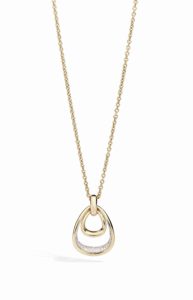
How do you define success, and in your opinion what are the prerequisites to achieving it?
Success is interpreted in different ways by every person. It can’t be defined. I often use this anecdote from a past professional experience. We were facing a difficult choice for a store we wanted to buy and after several proposals from the team, the big boss suggested: ‘Why don’t you buy the building?’ Today for me, ‘let’s buy the building’ means to believe in the dream that is inside each of us, whether in your personal or professional life, encouraging us to rise above our limits and think big.
Have you ever dealt with failure? Or faced being judged as a woman and how did you overcome it?
Of course. Everyone has failed at some point in life. And yes I have also been judged as a woman in a world of men, it was not easy, but again all that happens in life helps you to grow stronger and to fight for yourself and your dreams. I always tell my daughters to be themselves whatever happens. Our dignity and self-confidence are key if we want to make the difference.
In your opinion, do you think women now are learning to support each other and not be intimidated by each other’s success?
Solidarity between women is still to be achieved, it is not a simple task but we are in the right direction. I think it is important to support each other, to hear each other’s story and each one of us express our unique talents. Culture and mentality are changing and women do not need to feel guilty if they want to choose a professional career rather than growing a family for example. As each one of us succeeds we pave new ways for all womankind.
Women’s empowerment is a drive that is very much in the spotlight today, and Pomellato has always been a brand that celebrates women and their empowerment; tell us more about the brand’s latest initiatives towards supporting that.
Women are at the centre of the Pomellato universe. In 1967, when Pomellato was founded, the role of women in society was radically changing. Women were becoming more independent, self-con dent and seeking new roles in society. Pomellato has been with women since the day it was founded and has been designing jewellery with them in mind. In fact, Pomellato breaks the rules of traditional jewellery to meet the needs of today’s women. Today we wish to create a community of women of all ages and walks of life to inspire each other through the #PomellatoForWomen communication platform. This is our legacy. And today is the time to develop the idea of authentic beauty with a more positive concept of empowerment than ever before. Very soon we will gather great women in our first ‘Pomellato For Women Forum’ in order to act concretely towards such important topics as sisterhood, gender equality, inclusivity and female leadership.
Recently, during Milan Fashion Week, you launched a beautiful collection, ‘Fantina’, tell us more about this collection and its story.
Fantina is a brand new gold Collection; we started with our origins and the word ‘Pomellato’ which stands for a ‘dappled horse’. The name was chosen by the founder Pino Rabolini because he wanted to ‘ride his own destiny’ by becoming an entrepreneur. So Fantina is a mix of our equestrian heritage and the pure and sophisticated Milanese contemporary design with curvy lines in rose or white gold, very feminine and I would say conceived for a modern woman.
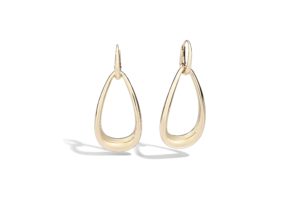
What can you share with us on your upcoming projects in the Middle East?
We have room to grow in this region and we recently opened a wonderful boutique in Kuwait at The Avenues and we will soon refurbish our store at the Dubai Mall. Moreover, we think that Arab women are more and more taking the lead and we want to be on their side too…so I invite you to stay tuned as you’ll see something soon!
What is your vision in moving forward for Pomellato?
Pomellato has an extraordinary, colourful and sensual design and the organic feel that characterises every piece thanks to the hands of our artisans is one of the unique features of the brand. Every jewellery piece is created with 100% responsible gold by more than 100 artisans working every day at Casa Pomellato. I believe that today’s identity is tomorrow’s value and the importance of building on sustainable jewellery as well as transferring our savoir-faire to the young generations is key for a successful brand.
What is something that you still aim to achieve as a brand?
I think Pomellato has great potential to make more women all over the world fall in love with our jewels. The pursuit of sustainability and towards a more inclusive attitude are a responsibility of all brands, including us.
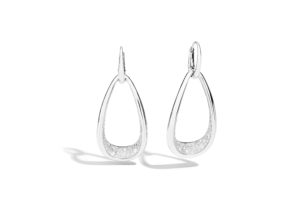
And you as a person?
More time for myself and the ones I love. In general, the pursuit of happiness and harmony which to me also means mentoring younger women and giving back.
What is the motto you tell yourself?
‘Be grateful for what you have’ and be thankful for those who have believed in you and the people who have given you opportunities; your door openers.
What do you consider your proudest achievement?
I feel accomplished. I was able to choose my career and build a family with three wonderful daughters. It took negotiating new forms of balance at different times. I am proud to sit in a position of responsibility and influence especially as a woman, well aware of being in a minority as only a few women in the world today have this type of opportunity.
Pomellato in one word?
Joy.
READ MORE:
A tale of two cities: Bvlgari’s Creative Director Lucia Silvestri Talks Partnering With the UAE Royal Family on a High Jewellery Collection
As Bvlgari collaborates with her highness Sheikha Fatima Bint Hazza Bin Zayed Al Nahyan on a high jewellery collection we meet with Creative Director Lucia Silvestri to discover the fruit of this partnership.
Bvlgari’s latest high jewellery collection “Jannah” was born through a partnership between the Roman jeweller and Her Highness Sheikha Fatima Bint Hazza Bin Zayed Al Nahyan, a member of the United Arab Emirates Royal family. The collection celebrates the two beautiful cities of Abu Dhabi and Rome through a series of spectacular jewellery creations, replicating the passion and heritage of the UAE and the beauty and elegance of Italy. The Jannah Collection is the story of two powerful families coming together in a celebration of shared values and reverence for heritage.

Lucia Silvestri, Creative Director, Bvlgari
“Jannah”, meaning “paradise” was two years in the making. Her Highness Sheikha Fatima bint Hazza bin Zayed Al Nahyan, who first had the idea of collaborating with Bvlgari over two years ago, is the granddaughter of Sheikh Zayed Bint Sultan Al Nahyan. Throughout her life, the Sheikha found inspiration, guidance and beauty in her grandparents’ stories and this is what has inspired her vision for the future. There is a nod to the Sheikha’s values through the Jannah collection which is inspired by a ve-petal ower, found inside the Grand Mosque in Abu Dhabi and representing the bond between two special cities.
The Sheikh Zayed Grand Mosque is the most prominent embodiment of such values and therefore became the centre point of inspiration for these pieces. Her Highness Sheikha Fatima bint Hazza bin Zayed Al Nahyan met with Bvlgari’s Creative Director Lucia Silvestri and the two spent many hours sharing stories and their experiences of two different worlds and bonded through their love for beauty and family and an unmistakable zest for life. One of the recurring themes shared between these two new confidants was the Princess’s admiration for her grandparents and their tireless pursuit for tolerance and peace in the region. When visiting the Grand Mosque, Lucia was inspired by the delicate five petals flowers that adorn the Carrara marble ceilings and architecture: and so Jannah was born.
Lucia Silvestri is truly the heart and soul of Bvlgari. Having been part of the jewellery house since she was just 18 years old, today Silvestri lives and breathes the Bvlgari ethos. She embodies the elegance and glamour that Bvlgari is known for and continues to reinvent the legacy of the house again and again. When she began working on this project Silvestri was instantly inspired by the UAE and Sheikha Fatima’s passion for life. Here we talk to Lucia Silvestri about Jannah and her passion for what she does.

Bvlgari Jannah collection
What can you tell us about how “Jannah” came to life?
Her Highness Sheikha Fatima bint Hazza bin Zayed Al Nahyan reached out to one of our sales advisors as she wanted to know much more about Bvlgari from a historical point of view and gain an understanding of the history of the brand. So she invited me to Abu Dhabi to meet with her and we instantly had a connection. I loved her energy and curiosity and the feeling I got when I talked to her. She asked me a lot of questions about myself and she expressed how she would like to work with me to create something. She told me of her love for her grandfather and how he is her idol and how she wanted to do something for him.
At that time I had never been to the Sheikh Zayed Grand Mosque but Sheikha Fatima told me that she would like to do something inspired by the mosque, so I visited with one of my designers and we spent five hours taking pictures and talking about the beauty and architecture. Then there were the flowers and the geometry. The third link was light and harmony. The harmony in the mosque between the colours and materials and lines was key for me. We took a lot of photographs and started to talk about the symbols that we had seen and how we could incorporate them.

Bvlgari Jannah collection
We then started creating some sketches and I met with Sheikha Fatima again and told her how impressed I was with the mosque and that I was ready for us to work together. At this point, she hugged me and I felt her energy. I will never forget that hug. She came to Rome and we started to work together. She gave me a brief to work around and let me go with it. She told me that she wanted to include a beautiful emerald in memory of her grandmother and that was the first piece we worked on.
In the beginning, the idea was to create just a few pieces for the Sheikha and her grandmother and other family members, but when she saw the beauty of the collection she realised that it could be something much bigger. Even with fine jewellery not only high jewellery. From the beginning to the end the project took two and a half years.
How proud are you of this collection?
I am very proud. This is one of the best moments of my career. When I saw Sheikha Fatima two days ago we hugged again and there was a great emotion. I think it was the same for her too.
What would you still like to achieve that you haven’t done yet?
There are many things but I like challenges so I hope for many more new challenges and I hope to work with Sheikha Fatima again. For me, it was one of the best experiences of my life. There was so much creativity and an incredible feeling of two different cultures coming together. I think this could be just the beginning!

Bvlgari Jannah collection
How do you empower yourself as a woman?
It’s about determination and passion. The passion that I have for my job, my life and myself is something that has been with me from the beginning. I remember when I started working as a young woman in a man’s world and nobody wanted to negotiate with me. If I was selecting stones that was OK but negotiating – no – the opinion was that this is business, not for women, it’s for men. Especially in the world of gemstones. But I was very determined and I had a dream to become one of the biggest buyers in the world and I was determined to achieve that. I tell every woman in the world to please follow your dreams. Don’t forget that you can do anything.
What is a lesson you have learnt in your life?
I am still learning and that never stops. I learn from young people, old people. I’m very connected to young people but people with experience are very important to me. I can learn a lot from them and that’s why I need to connect with people. Also, I’m incredibly proud when I see a collection come to life as we have here in the UAE. It is incredible because I know that I believed in myself and in what I do from when I started at the age of 18. I have always felt that I need to follow my instinct.
What would you tell your younger self?
I would tell her ‘you will make a few mistakes but do your best, follow your dreams and don’t be shy. Sometimes you have to be tougher, but kinder and never forget your femininity.’

Lucia Silvestri, Creative Director, Bvlgari
Do you think as a woman success comes at a price?
This is something that is definitely changing. I had to be determined and that was very important. I don’t feel that men are stronger than women, I think that we are stronger than them and we have to believe in this. As women, we need to stick together and not be in competition with each other.
If you weren’t working for Bvlgari what would you be doing?
When I was very young I wanted to be a fashion designer or work in communication but I was so shy that it would never have happened. I then started studying biology and I thought I could be a biologist but I completely changed my path and followed my instinct.
Is there anything you regret?
Not really. I think I would make the same mistakes again because from every mistake I learnt a lot.
What do you say no to?
Vulgarity and people that are too aggressive or not genuine.

Bvlgari Jannah collection
What is a lesson that you can share with us?
My mum is my idol and she told me to always forgive people and not hold grudges. So this is what I try to do.
What is your perfect way of unwinding and disconnecting?
A few years back I bought a small house in the south of Italy. There I find great food, great weather and great people. It’s very small but it is where I go to relax and unwind.
What is one thing you would promise yourself to do this year and what are you going to achieve for yourself?
I would like to be myself and be honest with everyone. I don’t want to be a star. I’m just Lucia and I want to remain true to who I am.
READ MORE:
Bvlgari Unveils the New B.Zero1 Rock Collection at New York Fashion Week
Elie Saab Talks Design, Fashion and Fragrance in a Heart-to-Heart Conversation
The beauty of a woman has always been a source of inspiration to exquisite creations; from the melodies composed by musicians to the songs written by poets, to the works of art by famous artists across history. But when it comes to couture and beautiful dresses there are the creative hands of Lebanese designer Elie Saab working to produce something quite special.
In Dubai during the launch of his latest fragrance “Le Parfum Essentiel”, we had the pleasure to meet the designer and enjoy a profound chat from the heart that was full of hope, humility and love. We travel with him on a journey into the world of couture, the successes, challenges, memories of childhood and his gratitude towards the Arab women who supported him from the beginning.
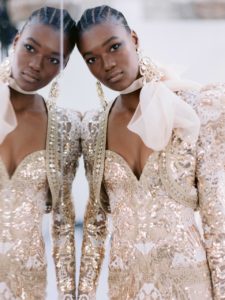
We are in Dubai for the launch of the new fragrance … Why did you choose Dubai, and tell us more about the fragrance ?
We took the main picture in Marrakech, and we wanted to capture the light around the fragrance. When you smell the fragrance for the first time you will feel that it’s surrounded by light, therefore we chose Dubai, because it is the only Arab country that has the exact amount of light that we want, and we saw that we are surrounded by a contemporary mix of vocabulary here and that we are only 5 minutes away from the desert, so we can see the light from elsewhere too. We tried to design a trip and a memorable experience for journalists where the significance was to witness the light of sunrise at dawn in the desert and the sunset and to see the difference between the contemporary city and the desert.

Perfumes are often associated with feelings and childhood memories, what is the first perfume that remains in your memory, and how do these memories reflect on the perfume compositions that you create?
Since we started the project of creating fragrances, there was a unique scent that was always attached to my memory. I still remember the days when we were children and our house in Damour in Lebanon was surrounded by stretches of orange blossom trees and on the balcony of our spacious house we had lots of Jasmine shrubs. It was that unforgettable combined scent that reminds me of spring and that is still completely stuck in my mind, and now when we create any new perfume, there are two main scents that are at the heart of our fragrance: the jasmine and orange blossom.
Who do you dedicate this fragrance to?
I dedicate it to every woman who loves Elie Saab and I know that not all women are able to buy the fashion of Elie Saab, so we want them to try this perfume, which has one of my touches.

You just showed your Haute Couture collection last month, tell us more about it.
It was the Mexican Empire that reigned at the end of the eighteenth century that inspired the collection. Women then were distinguished by dresses decorated with hearts and large sleeves, and this time was the first that I have used large sleeves of that size. Honestly apart of the colours that we used, we did not want to use black, we went for calm shades instead but with Mexican details especially when it comes to the craftsmanship of using the thread and the surrounding with Payette and lustre.

What are the challenges you face as a couturier today as the market is becoming more competitive?
To be honest, I do not face any difficulties, as Haute Couture will remain as long as women remain. There is a demand for this type of dressing especially on important occasions for every woman, so as long as there is a demand for haute couture, this craft will continue.
The issue of competition has always been around for many years. Yet the craftsmanship of making haute couture at the Elie Saab workshop still preserves and guards its customs and traditions, although some other fashion houses have diverted from craftsmanship and manual work in the creation and savoir-faire of couture.
I still recall the echoes that we heard after showing the collection where some said that Elie Saab was able to return the concept of couture and high fashion to Paris again because some of the rest presented fashion that felt like ready-to-wear.

Getting back to the dream! What is it that you haven’t achieved yet?
There is a long list! There are a lot of things we want to do this year, such as partnering with Simonetta for children’s fashion, furniture projects that we want to launch at the Salone del Mobile in Milan in June. We also have new hotel projects that we will announce soon. This year will be busy with new launches.
They say artists create when they are in a certain mood. What is the state of mind you’re in when you’re inspired to design?
Thinking of the beauty of women!
Forget the stories that we tell when we launch a new collection each season, these are stories we draw the inspiration from to change the colours, shapes and cuts of the pieces and in a way to print them in the memory, but the main concern for me is that the beauty of women should always be the pillar and focal point of any collection that I design.
These psychological states experienced by some talented artists were from the past. Elie Saab is a person who has to balance between creativity and business management. I have more than 25 people working at the Atelier after me, so if I was in a certain psychological state, we wouldn’t know how to work. At Elie Saab the error is forbidden, that is why I have to personally validate all at the end of the day. The designer is not like a poet, a musician or an artist, where they work on and create on their own. For us, we create and operate in a different way surrounded by a big team.

What do you say No to?
Frankly, I never used to say no, but now I say it a lot.
First, I say no because I have to maintain the status that I earned. Maintaining and guarding success is something that I never compromise.
There are times where you get people coming to you with new concepts and ideas that are not relevant, and here I say No.
Saying No is difficult sometimes, but with experience, the word now comes out naturally, and when I am responsible for the result and I know it will be a failed result, I reject the idea from the beginning. Eventually, people will know that I was right.
What are the life lessons you want to share with us?
Life teaches us lessons every day! A person dies while learning, and if anyone says otherwise, he is not an ambitious person. No one is greater than life.
How do you encourage yourself to work every day, even on dif cult days when you feel like you want to stop?
At one point, you just reach a stage where you feel the necessity of continuing to succeed; this matter keeps you under great pressure and a daily challenge striving for the better and to achieve more. This sometimes becomes addictive.

How do you motivate yourself to stay persistent?
Now I think a lot more about others than I think about myself, I feel that there are a lot of responsibilities towards the team that work at the atelier. No one is exempted from making mistakes, and even with all the precautions that we take, we still make mistakes but we should always make sure that our mistakes are minor or this will affect the thousands of employees who work for Elie Saab.
How do you disconnect, and when is your best time to do that?
On weekends if I don’t meet with the whole family, I feel that the days are too long. I feel that since I was young, my life was designed and programmed for work. It is very rare to have “disconnection” days, it’s more like having the luxury of sleeping two extra hours sometimes or having breakfast and going back to sleep again. In general, I am a person who loves to work.

Tell us about the project you collaborated with Emaar on in Dubai?
The project is still under construction. My team visited the site, and they found that the buildings are shaping up and starting to look beautiful, most likely in the next year the project will ready. So far more than 70% is sold, and I am very happy with this project, it is a beautiful partnership.
We know that currently you are working on your upcoming AW20/21 collection. What can we expect?
The truth is that we have been presenting the same woman on the ready-to-wear runway for 8 seasons. This season we decided to present a new woman, a woman who works, who is fun and free. When you see the collection you will know exactly what I mean!

I know how Beirut is very precious to you. Do you have hope that it will go back to its glory?
Of course, I have hope!
What message would you like to tell the Arab women in the region?
Elie Saab owes a lot to the Arab woman in general, since she is the first woman who believed in him, worked with him, and invested with him. I say that our Arab women are women who have no equal. My weakness is the Arab woman, I have accompanied her from the renaissance to the present day. What Elie Saab gave to the Arab women made the rest of the fashion houses look at the Arab women in a completely different way, where they now know her value and are working hard to enter the Arab region after Elie Saab opened the way and was the pioneer to do so.
READ MORE:
Milan Fashion Week: Fendi, Versace and Bottega Veneta
Milan Fashion Week: Prada, Max Mara, and Gucci
Discover The Making of Dior’s Iconic Bar Jacket As It Turns 73
Zegna’s Artistic Director Alessandro Sartori Talks Exclusively in Dubai About the What Makes a Man Campaign
The What Makes A Man conversation continues in Dubai…
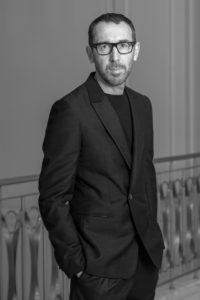
Zegna’s Artistic Director, Alessandro Sartori
Ermenegildo Zegna opened a new chapter earlier this year with its What Makes A Man concept. Starring Oscar-winning actor Mahershala Ali, the concept was much more than just an advertising campaign, it opened a new conversation about what it means to be a man today and what modern masculinity really is. When the campaign launched earlier this year, A&E was in New York to discover more about the conversation and learn why it is important to the brand and now, this November Zegna brought the conversation to Dubai. At the heart of the campaign is Zegna’s Artistic Director Alessandro Sartori. With his forward-thinking approach to design Sartori has been pivotal in transforming the men’s luxury fashion industry. By redefining the codes of men’s fashion, Sartori has taken Zegna to the next level combining the finest in tailoring with modern sportswear to create something that’s instantly recognisable.
With that in mind, it seemed like the perfect time to open up the conversation. As Dubai became one of the few cities to host this conversation A&E came together with Zegna to present an exclusive event discussing the codes of masculinity with Alessandro Sartori. Here the Artistic Director talks more on the conversation and we get an exclusive insight into the “What Makes A Man” campaign and the thought process behind Sartori’s designs.
Alessandro Sartori in Dubai
What led you to the decision to open this conversation to the world?
We decided to enter into a different method for our advertising campaign, mostly to tell a story that was not only about fashion. We are used to seeing photos of models with powerful cars or beautiful partners, but we wanted to enter into a different conversation that talks about human values and real stories. We wanted to re-start the conversation that the founder of Zegna; Ermenegildo Zegna, had in 1910. He created a mission which was very unusual for the time. He wanted to create the most beautiful fabrics in the world, involving and respecting the community and taking care of the environment. Zenga still shares these values today. It’s important to realise that people are not coming to Zenga just to buy products but to create their own image or style. So yes it is about the products, but mostly it’s about values and real things that each person can interpret differently. So, we decided to open this conversation with the “What Makes A Man” campaign because each man will give a different answer, so it’s very interesting to enter into a conversation that is not only about products and photos but about real lives.
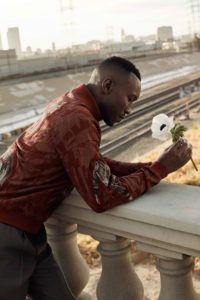
The What Makes A Man Campaign starring Mahershala Ali
Tell us a little bit about the campaign – why did you select Mahershala Ali to front this campaign and how has it been perceived so far?
First of all, Mahershala is a friend. We didn’t decide to work with him before knowing him. The friendship has been going on for a few years since we met him in Los Angeles. We do a lot of different activities around the world and at the time we were introducing our exclusive collection for the red carpet. So we went there with thirty silhouettes, each one made exclusively for actors or people in the entertainment business. All of the stylists came to see the products for their customers, but Mahershala came himself. Rather than sending a stylist, he wanted to see the products with his own eyes and touch them with his hands to feel the fabric. After that, we dressed him for red carpet events for Moonlight and Green Book and we had a lot of fascinating conversations. He is a very trusting man, a beautiful person. He believes in family values, is very interested in religion, and he is a very deep guy. When we decided on this concept we said ‘why not him?’ One interesting thing is that the campaign was not scripted. We were filming constantly during the day because Mahershala wanted to speak about himself and his own reality. We didn’t tell him what to say, we just dressed him and told him to speak about himself and his values.
Why did you choose Dubai to be one of the cities to present this story?
The first reason is that I’m very interested to know what people in Dubai think about the campaign. I’m curious to hear people’s comments on the campaign both positive and negative. So far we have had mostly enthusiastic feedback. We have previously had people in some parts of the world ask us why we don’t talk about other values aside from fashion, so that’s why we decided to talk about who we really are, and take care of our men and it is interesting to hear their opinions.
A few months ago I met with the CEO of Uniqlo. He told me a very interesting story. Our CEO asked him how he sees the world evolving and how he sees the evolution of different countries and regions. He said; “I think in the future it won’t be about booming markets any more, it will be about booming cities.” He said that Dubai is one of those cities. He actually mentioned three – Dubai, Bangkok and Singapore. I agree with him and I think Dubai is going to have its moment to shine. We like the idea of approaching the market in a totally different way. Introducing a bespoke service for example, and also creating a unique product for the market itself.
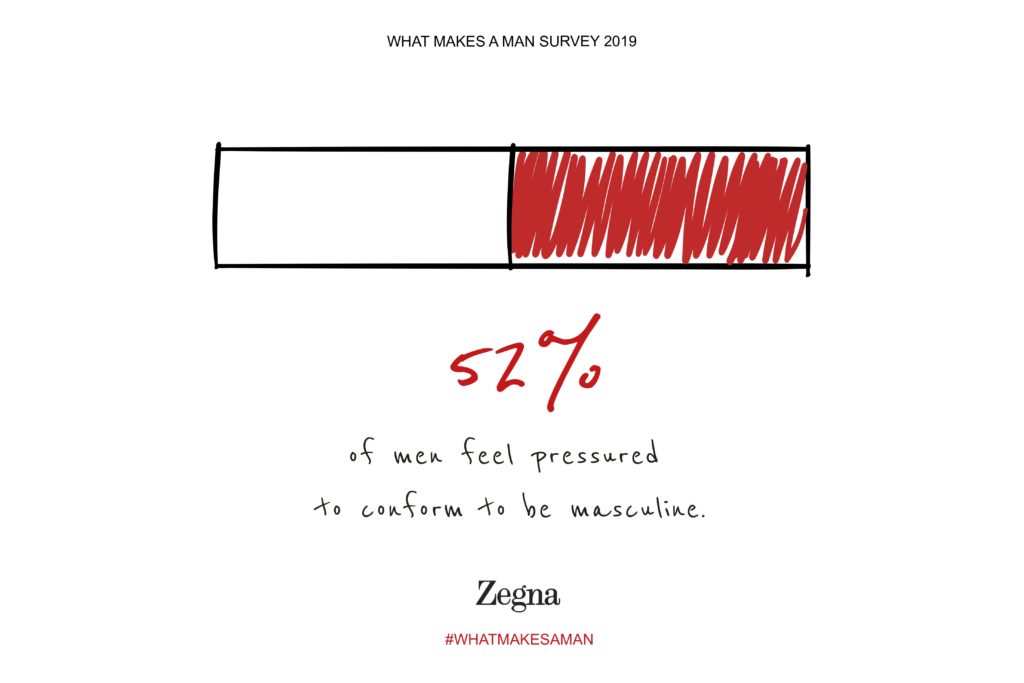
What Makes A Man Survey
How do you think fashion helps this conversation roll out?
I think fashion is changing and has to keep changing. You see many brands disappearing and many new brands entering the market. What is really important to me and to Zegna are our values. This campaign is actually changing our mindset and encouraging us to design the collection differently. We are designing garments that will be in a man’s wardrobe for a very long time, if possible; forever! This means a lot – it means different fabrics, a different approach to the construction and a different construction inside. I will tell you a little secret. If you open the lining you will understand the quality. Inside the lining in our jackets you will see there is space to change the garment by at least one size. When we create the shoulders and the sleeves we make it possible to be able to change the shoulders or the sleeves if your size changes. So the durability and the resilience is becoming a very important aspect at Zegna.
What Makes A Man Survey
Going back to the pillars of the campaign, can you tell us what failure means to you?
If you can deal with failure it makes you a much better person and you become much more conscious of what you do. I have had many moments where I’ve failed but I’ve learnt to stand up again and react positively and it made me feel better.
Moving onto the journey – what is a challenge that you came across during your journey that taught you a lesson?
I think every day you face a lot of difficulties. As far as myself and the type of work I do, managing people is the most challenging part as there are many different characters to deal with. Designers can be very sensitive people. They are very passionate about what they do, so I have to be very good at pushing them as much as I can in the right direction but not stopping them during their creative process. So the biggest challenge for me would probably be managing creative people.
What do you say no to?
Bad taste! Fashion is ultimately about creating beauty. When you understand that designing for people is not only to do business but it’s also to make people feel better, more confident and proud – you shouldn’t create anything that reflects bad taste because you want people to feel good wearing what you have created.
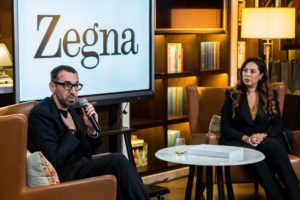
Alessandro Sartori and A&E Editor in Chief Lara Mansour
Moving on to love – to what extent do you think it is crucial to love yourself nowadays?
It’s very important. If you’re always worried to love, then you will never get the chance to get to where you want to go. It’s not the result that is important, it is the journey. A lot of the time when we do shows, we’re working like crazy, but in the end, the show only lasts eight minutes. It is over so fast that you don’t even know what you’ve done! So the journey is very important and if you live your journey with love it’s even better.
How did you first discover your passion for design?
My mum was a tailor. When I was around four or five my father bought the apartment next door for my mother to use as an atelier. So as a young boy I used to go in between our apartment and my mum’s atelier. So I started to become interested in what she was doing and it became my real passion. I started to design clothes when I was very young and at 15 I created my own suit. It was a disaster! I won’t show you, but it taught me how to sew and the process of making garments.
What do you do when you want to disconnect and get inspired?
I would like to come to Dubai for longer! I also like driving vintage cars. That’s how I de-stress. I drive them in beautiful places. I go to Tuscany or over to France and I drive not on highways but through little streets. That’s my passion and I also like to take beautiful photos. These are the two relaxing activities that allow me to think.
What is a life lesson you’ve learnt during your journey?
Everything is related to how you feel and what you believe. So the lesson that has taught me the most is that the more you believe in something deeply and act with all the love and passion you can, you will be able to achieve your dream.
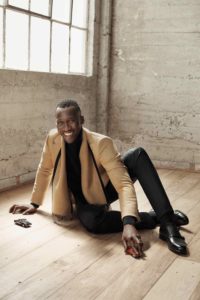
The What Makes A Man Campaign
Speaking of dreams – what is something that you haven’t yet achieved that you would still like to do?
This is very much related to this crazy mindset that came into our mind a couple of years ago. I have a friend who is a chef and we were talking about wasted food. There is an organisation in Milan that will take wasted food and create new food for poor people. And we have started to look into this idea in relation to fashion. We have a very interesting project at Zegna called “Use the Existing.” We take all of our wool and cashmere fibres from Australia, New Zealand, South Africa and Mongolia. We are lucky that at Zegna we handle the full process ourselves. We wash the fibres down, then we spin them and we create the fabric. During this process, we lose twenty per cent of the fibres. This is due to broken fibres, different qualities or different colours. Then when we cut the fabrics to make the garments we lose another twenty-five per cent. All the parts that are outside of the pattern when we cut the fabric are wasted. And then at the end of the process, we have the garments that aren’t sold. So we are losing forty-five per cent of the total, which is a huge amount. So we are now taking this forty-five per cent and creating new products out of it. I aim to reduce the waste to zero.
Speaking a little bit on freedom, we know that in recent years you have liberated the codes and stereotypes of men’s fashion in the ways that you design your collections – what can you tell us about that?
I like the idea of interplaying tailoring and sportswear. The idea of placing tailored jackets with sportswear pants, putting a tailored technique into sportswear jackets or vice versa. I love that connection. I also like to use non-traditional colours like camel, olive, brown – all these beautiful deep colours and blend them with classic tones. I think there are a lot of possibilities in menswear and a lot of playing with techniques and technologies that we can do. New categories are definitely entering the men’s wardrobe – jersey, for example, is becoming more important. Accessories are more important, so it’s really interesting to see the changes.
We know that sustainability is a topic that is very close to your heart – what more can you tell us about that?
It is very important. We have a project to use zero chemicals, so we are using leaves and herbs to dye our fabrics. We have a project that’s working on organic wool which we are doing in Australia. And generally, our designs are having a very different and more clever approach when it comes to sustainability.
We are entering a beautiful era where sustainability is a fact and we have a lot of modern products related to this including our use of cotton, reducing water consumption, reducing the waste of our fabric and fibres and using the waste to create something new. So yes we are entering a very different mindset. We still have beautiful designs, but this campaign is also affecting what is behind the designs.
Next year will be the 110th anniversary of Zegna – how would you describe Zegna today?
A company and family that takes care of the customers with real values behind it. Actually, for the 110th anniversary, I want to come to Dubai and since you have the Expo it would be fantastic!
What is the message that you are always keen to pass on at Zegna?
To keep the legacy, but to look forward.
Alexander Wang Talks to A&E on his New Collaboration With Bvlgari
Alexander Wang teams up with Bvlgari to redesign the timeless Serpenti Forever Bag – we discover more about the project
When fashion designer Aexander Wang first decided to partner with Bvlgari on a collection of handbags he had one goal – that was to honour he brands legacy by being involved in every aspect of the design process from start to finish. Wang visited the brand’s archives in Italy and really submerged himself into the life of Bvlgari in order to produce a collection of pieces that combine the past and present. The Serpenti Through the Eyes of Alexander Wang Capsule collection invited the designer to put his own unique twist onto the classic Serpenti Forever Bag and reinterpret it into something that he feels is relevant to today and also represents both himself and the house of Bvlgari. As the collection launched in New York last month A&E met with the designer to discover more of his idea behind the concept and what inspired him.
What attracts you to work with a brand like Bvlgari and what are the common codes you share with them?
When the opportunity came along I was very excited because I’ve always been an admirer of the brand. Even when I was a kid I was first exposed to it through the fragrance and then later on I became a fan because I love staying at their hotels worldwide. It’s a brand that is in a league of its own. It’s much more of a lifestyle brand than just a jewellery brand and in that sense they really push the boundaries and do things that are very innovative and different from a lot of other brands in similar spaces.
So when the collaboration came along I felt it was boundary-less in terms of each and every area that I felt like I could touch upon because there’s so much legacy and heritage. It wasn’t until I got to Rome and of course visited the archives, that I got to really hear the story and understand the narrative of where the brand has been before and where they want to go. For me these collaborations are never about just putting my name to a product or simply doing a print, but really understanding what the concept is and what it looks like 360. So while I was in the archives I was learning who the Serpenti woman is and how the pieces were initially created. There was one notion were the Serpenti woman was noted as the sinful woman and a thrill-seeker who is looking for adventure, that is of course a woman that I find very much relatable! She’s a go-getter, she’s an alpha and she really sets her own agenda and nothing stands in her way and I think that’s someone that I find very deeply inspiring.
One of the most intimate pieces of course is the Tubogas watch. What I didn’t know before was that it was inspired by an actual tube of gas which was in the gas station. The idea that the creator was inspired by something that was so banal and so ordinary but made it into such and extraordinary piece, really struck me as I realised this was my calling and that’s how I wanted to approach this collaboration. Packaging has always been a very important part of buying a luxury product and I wanted to ask how do we bring that to the forefront of the design process? So this idea of taking luxury and flipping it on its head a little bit became a very important starting point and then looking at the functionality of the bags was part two.
For the design you revisited one of the old Serpenti heads from the archives, why did you choose this one in particular and why the three heads?
When I first saw this Serpenti head from the sixties in the archives I immediately fell in love with it. Even before I knew that this was the head I wanted to use, I remember wanting to take a picture of the watch that had this head. The little teeth and the way that the head has more of a contour and the eyes were originally done with a ruby. There was something about the attitude of this head that really attracted me to it. It felt ageless, like it allowed itself to also be multi-functional. I say that because when you look at the new bags, without the pockets, the seams were from the original Serpenti bag. But I thought, how do we take those lines and make them utilitarian? I was thinking about this woman who is on the go constantly and wondering how we can make her life a bit easier in terms of finding things in her bag. So I added pockets and repeated the head in different scales and different closures. It brings a little bit of an odd but interesting mood. I love that in my design process; to be able to see things and for people to have an innate emotional reaction to something but also question it a little and ask ‘why am I interested or intrigued by this design element?’ And so I guess all I can say is that maybe it achieved its goal!
The mint green is a new colour to the collection – why did you choose this colour?
It is a new colour but a colour that is very much engrained in their history. Bvlgari’s Eau Parfumée Au Thé Vert fragrance was the first time this colour was used. We looked at the entire history of the brand, the books, the legacy and that was something that I really wanted to take into consideration when creating this collection. So the green was brought in from that fragrance.
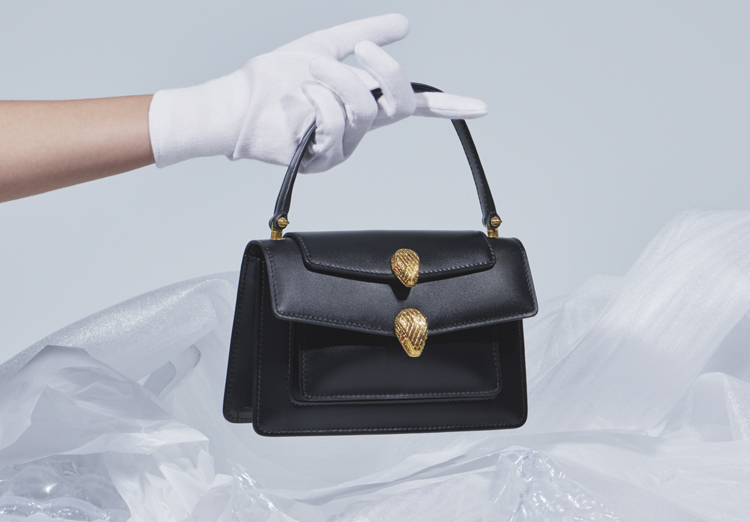
What do you still want to achieve that you haven’t done yet?
So much! I’ve only been working in the fashion industry for 15 years but I feel more liberated than ever. I think it is something that comes with being in an industry that’s in a moment where so much is changing and so much of the landscape and the rules are being reconsidered. I think in that sense I would like to be able to think outside the box and move into other territories and other industries that I might want to be involved in. I’m not the first one to want to do this of course, but it’s such an exciting time.
Now is the time of inclusivity but you have always been inclusive with what you do, what are your thoughts on how it has become such a prominent discussion today?
It is something that I have never thought twice about. Today it seems we are told, you have to be inclusive but I think I was always just trying to create things that bring people together and that’s always been a very strong ethos of mine. Even from the beginning when we were doing shows that became parties that became events, it was always about bringing people together and so the inclusive part of it is just status quo – it’s what always should have been the case.
What worries you?
A lot of things worry me! I would be lying if I didn’t say that! Of course waking up on certain days and not feeling energised and feeling like I have maybe run out of ideas or that there’s not much more I want to do. I think luckily I have the persistence and resilience to get through those tough days and know that I’m around people that I feel loved by, I’m inspired by and people that tell me the truth and challenge me. I think it’s important to get past the tough days and see the bigger picture out here and be able to grow.
What do you tell yourself every morning?
I don’t know if I do it consciously but there are definitely days when the weather is beautiful and I wake up in a good mood and Iook out the window and I think appreciate this moment. Appreciate the things you have and that you’re in good health and be grateful. It’s such a simple exercise but I think we all fall into the habit of forgetting to do it, especially when you live in a city like New York where things are so fast and you’re constantly on the go.
To whom do you dedicate this collection?
When I started this process I was looking at a lot of mothers and daughters. Ones that I’m close to and also famous mothers and daughters across generations and I wanted this collection to speak to all of them. I wanted it to be ageless and not feel like it was only for a young person or an old person but something that mothers and daughters can both enjoy. You can actually wear some of the bags four ways. As a top handle, as a cross body, as a waist bag and last of all you can take off the top handle and wear it as a clutch – so it’s four bags in one!
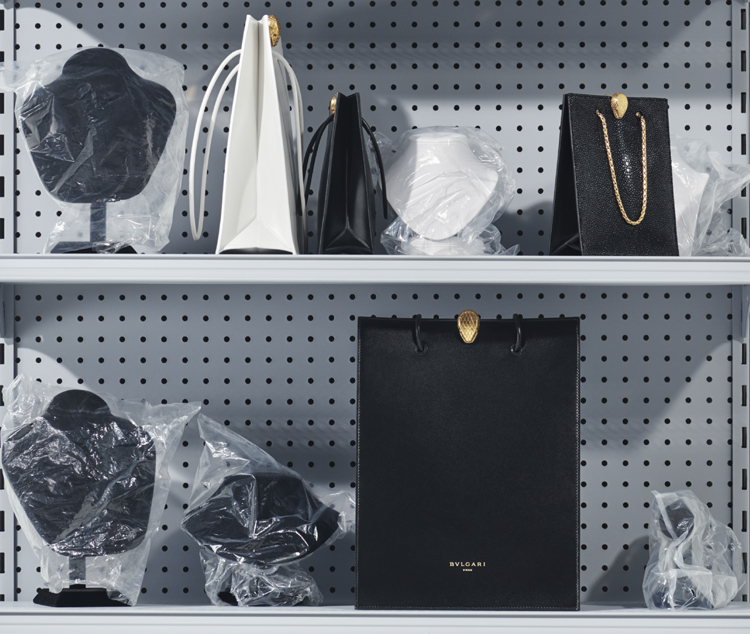
What can we expect to see coming up for your own brand?
There’s quite a few things but nothing I can reveal yet, but I’m really excited to have opportunities. We changed show schedule a year and a half ago and it’s allowed me to think on a different timeline. When you work in fashion, September and February are these two pillars that are always when you start your year. For the rest of the world of course it’s different! I think that now that I’m off that schedule it’s allowed me to still have of course a very strong hand in using the fashion weeks but to celebrate other partnerships or collaborations. They are still times where people come together but at the same time it allows me to be on a different timeline and think about all the other things that I might want to do in other industries and have more brain space to entertain them.
If there’s one thing you could change in the strategy of how you do things, what would it be?
To relax! I think my friends tell me that all the time!
How would you describe Bvlgari in one word?
Extraordinary. They have been able to be such a leader in every channel that they have participated. There’s not one channel that doesn’t do well and leave an impression and I really respect that because it’s not like they are just dabbling in it they do it with conviction and passion.
By Lara Mansour Sawaya
READ MORE:
Gem DiorCelebrates 20 Years of Jewellery
Van Cleef & Arpels Is Opening Its First Heritage Exhibition in the Middle East
Interview: Oscar Winning Actor Mahershala Ali on Masculinity and his partnership with Ermenegildo Zegna
Oscar winning actor Mahershala Ali talks exclusively on his collaboration with Ermenegildo Zegna, how he would define himself as a man and his upcoming projects
As Ermenegildo Zegna debuted it’s latest campaign What Makes a Man, in New York last month all eyes were on Oscar winner Mahershala Ali who, along with Chinese singer and songwriter Nicholas Tse, is the face of this eye opening project.
What better choice than Ali as the face of the campaign? Ali has won two Oscars for his roles in hit films Green Book and Moonlight and is a hugely versatile actor, he has depicted and embodied many shades of masculinity through the roles he has played and he openly talks of his wish to raise awareness and have a positive, productive impact on those around him. Ali was even named one of the 100 most influential people in the world in 2019 by Time magazine. It was this, paired with his unique sense of style that made Ali a a natural fit to represent the idea of what a man is today and partner with the legendary luxury menswear brand.
Growing up in Hayward California, Ali was inspired by his father who himself was an actor on Broadway, but it wasn’t until after his graduation that Ali became interested in acting. In 2000 the actor converted to Islam and has spoken many times about raising awareness of discrimination against race and religion. As we sat down with him in New York he was keen to open up on how he would define himself as a man and how he hopes to inspire others with his choices.

What are the common codes that you find between you and a brand like Zegna?
What I love about Zegna is that they have a real attention to detail and a focus on quality and I think that’s why they’ve sustained themselves for over a century. For me, I don’t always necessarily feel like the person who’s the loudest or coolest or biggest, but I do want to be consistent and I want to always be uniquely myself and true to myself and I feel like there’s a great deal of alignment with how I approach my work and how the team at Zegna approach theirs.
I got to visit the headquarters in Trivero a few months ago and I was blown away by how everything goes all the way back to the start and how they are able to make all the products in one place and bring that to market. It’s really incredible to me. There’s a sense that they are a very small, intimate company, but a very large company at the same time and in some ways I think the work that I do and the projects I’ve been able to be a part of can be small and very intimate but still have a global reach and impact. Green Book was actually a small movie. It was going to have an independent financer and even though we ended up getting support from a studio later, it actually was a relatively small film. They don’t really even do films of that budget that often these days and it was something that ended up having a global impact. Moonlight was another really ‘small’ project. We had very little money for the film but it was still a film that had a large and somewhat global impact. So I think there is a lot of parallels between some of the choices I’ve made in my acting work and this choice to work with Zegna and vice versa.
What do you understand of the message of What Makes a Man, is the concept of masculinity something you want to address?
First of all what drew me to work with Zegna was Zegna as a brand. It is clearly articulated and they have a larger agenda that they were looking to achieve with this campaign, that was already in alignment with the work that I do. Some of my favourite actors – Philip Seymour Hoffman, Daniel Day Lewis – they are transformational actors. You can’t be a transformational actor and play the same man in every role. So if you’re going to dare to sign up to be in this business, you have to work to transform and allow yourself to literally step into the shoes of another human being. I always look to tackle a wide range of characters, I’m ok with characters and parts that have small similarities but I really want to play different people. So what Zegna was expressing about opening up a conversation about masculinity and speaking to the wide range of people out there in the world, it just didn’t feel like a disruption to anything that I was already doing naturally as an actor. So it felt like a nice fit.
How would you describe yourself as a man and if there was one thing about yourself that you would change about yourself what would it be?
I’ve always been very concerned with things like movement, growth, expansion and range. Because I think anything other than that is staying in one place and becoming stagnant and unevolved and I want to evolve. I think I’ve had a lot of experiences, I’ve been around so many different kinds of people and I’ve learnt a lot from the people I’ve been around and the experiences I’ve had, so I think I would pride myself on being open and conscious and willing to listen and learn.
What I would like to do better is at times, the responsibility of it all can become dizzy, if that makes sense, because you can get pulled in so many different directions and so I think managing all the different tasks and responsibilities – whether I’m an actor or a lawyer – managing the diverse array of responsibilities is something that I want to make sure my energy feels healthy to take on. Sometimes I have to stop what I’m doing and take a bit of a break. I haven’t technically filmed in a year because I’m very conscious of the need to re-calibrate and to balance my life. So I think if anything, I wish the balancing of it was easier, but then again I don’t know how that happens, so then it goes back to just accepting what things are and embracing it and being the best within what it is your managing and dealing with. So some of the things that I would like to improve, I don’t know how quickly that’s going to happen!
How did the success of Moonlight and Green Book change your life?
I think we’re all searching for fulfilment and I think the jobs that I’ve been able to do over the course of the last several years have changed and impacted my life as they have led to more opportunity. With having more opportunity and access, you can locate the thing that you’re looking for and that gives you some sort of fulfilment that resonates with you on a deeper level. Not just financially but in terms of what you want to say as an artist. Perhaps you’re not an artist and you work in the corporate world and an opportunity allows you to locate that thing within yourself and really connect with what is outside yourself and work towards that, because in your mind you believe that there is this thing that’s going to allow you to feel whole. So I think with more opportunity it has affected my hope because I am working to be fulfilled holistically in every aspect of my life and the acting work is one aspect of that, but it is impacting me because of the opportunities and choices it leads to. But I have to be responsible and wise with those choices in order for them to do what I envision them doing.
What has changed in cultures and society in the United States in the last few years in relation to racial prejudice and how can movies and fashion help to form an equal society?
I don’t know if racial relations change that quickly. This is something that is in the DNA of our world and America – the struggle for equality, thoughts of supremacy and inferiority – these things are global in scale – how it rears its head in America is just specific to America, but it’s global. I do think storytelling specifically can contribute to impacting awareness for everyone. Because when you become aware of an unhealthy type of behaviour that’s the only way that you can make changes. I think having personal connection with people through storytelling is a major component in impacting how people think about other races, cultures and people.
Fashion is important because there isn’t a lot of space in fashion for people who look like me. And so to have an African American man as a brand ambassador and the lead of a campaign like this, it has to have an impact. I’m not saying that it’s going to stop people from being racist, but the fact that it didn’t exist before and it exists now, it has to create a moment, a pause for people, until eventually we see a communal effort towards correcting our world and how we think of each other. I happen to be Muslim and African American, so the oppressions and problems that I’ve experienced are specific to who I am, but someone else will be affected by things that are problematic for them. So I think we can all join in this conversation about the healthy world we want to have, but we can also all relate to having not felt it in our own lives as well.

How would you define your style and who were you inspired by when you were growing up in terms of fashion?
Growing up I always looked up to my father who was very fashion forward and I always felt like he was five years ahead of his time. I started cutting hair as a young kid when I was about 12 as my mum was a hair stylist. So between hair and clothes, I felt like you could say so much about yourself. I’ve always been relatively introverted so fashion was always a voice for me. In terms of race, I was always conscious of how being black, was something that was going to speak for me before I could open my mouth. So when it came to my choices in terms of fashion, I wanted them to accurately speak for me if I wasn’t going to get a chance to speak for myself. So my father really impacted on me in that way. I felt like his style was extraordinarily cool and he was always making me aware of things that I would otherwise have had no idea about.
I also looked and certain musicians – the hip-hop culture was very influential on me. I remember watching certain looks evolve as artists evolved. I always sort of had my own dialect and my own sense of what was cool. One of the things I noticed early on, growing up in the San Francisco area – I would come to New York for the summers and I would dress differently because I could and I could take chances that I didn’t feel would necessarily resonate in my area, but in New York I could go to Harlem or Downtown and I would just see this whole range of style and fashion. So it made a difference in terms of, even with the clothes I had, how I put together combinations. One of the first things I learned how to do as a kid was match clothes and colours and textures. Once you learn the rules of matching and what goes together, then you learn how to break it up and intentionally not match. That was just something that I think was part of my culture and black culture – how you step out of the house, because so often you know that you’re not going to get that job unless you’re dressed to the nines. So I grew up with that awareness and always tried to pride myself on how I dressed because I already knew that I would be looked at in a certain way and that has never really left me. I don’t know if it’s necessarily a positive thing but it is a reaction to a form of discrimination and how a lot of black people respond to that discrimination is that they are very conscious of how they put together clothes.
What do you say no to?
I say no to anything that isn’t productive. Whether it’s a job or a conversation. I believe in what is productive and what is unproductive rather than what’s positive and negative. If something doesn’t push something forward then it’s not productive. So in terms of my work and roles, it’s not so much about is this a positive or negative character it’s more about asking if it is a contribution that is in some way, shape or form going to be productive and therefore if it’s productive it’s positive.
What is a life lesson that you can share with us?
To listen. I think you have to holistically listen. Listen to your life signs, because I think we all get signs in life. We get information in ways that tell us ‘that is not the direction for me or that is the direction for me’, whether it be a letter from your teacher that says ‘I don’t know what you’re doing after graduation but you should really think about acting’ – which I got, and listening to that, to perhaps being in a relationship when you’re getting red flags and signs that this is not sustainable and being able to listen to that. We put a lot of value on what it is that we have to say, but I don’t know if we put enough value on being more porous and observing and learning and reacting to what we hear and see. So I’m trying to become a better listener.
How do you feel about being on so many best dressed lists?
I feel inspired and humbled by it. It’s always nice to be in the conversation of men who are conscious about what they put on. Because at the end of the day we all wear things that are a direct reflection and expression of our deeper selves and that can come up in so many ways. Whether it’s high fashion or street wear, we have so many different qualities and attributes and we need a diverse range of garments and items to speak for us. You don’t have conversations with most people in the world that you see every day, but you know a little bit about a person by just how they’re dressed. So just being in those conversations or being selected as best dressed makes me very grateful for the companies that I’ve had relationships with, in this case Zegna who I’ve been on the best dressed while wearing their clothes a few times! So that makes me very grateful to have that relationship with people who have been so supportive with me and my work.
Does media matter to you?
Yes, media certainly matters, I think it’s so woven into the fabric of our lives. I think at a certain time media was just news, but now the way entertainment, fashion etc. are so deeply intertwined with media – I don’t think there is any separation to the impact of media on our culture.
I think anywhere where people can see themselves or see attributes, matters. We can learn from other people’s journeys through these types of media. Television and film are a stage for the human condition to be on display, so if the story is productive, then we can take something from seeing the human condition on display, in the format of story, so that we can perhaps learn or aspire to be like that, or know to stay away from being like that. So I think it’s incredible. Storytelling has been around forever – it was on the walls of caves – so I definitely think that it’s important and I want to make sure that my contributions are the best they can be by doing films that leave an impression on people and positively impact their lives.
Are you working on any new movies?
I’m doing the new Blade movie for Marvel which is a few years away but I’m really excited about that job, I haven’t had the opportunity to do an action movie ever, well I have been in a couple of action projects but I always died before the action started! I can’t die in this one, so I’m really excited about that. There’s a show I love called Ramy and I was recently able to connect with the writer and star of the show Ramy Youssef and I’m going to do a few episodes for the second season which will be a lot of fun. Again it’s related to diversity and it’s very different from anything I’ve had the opportunity to do so far.
What are you excited about for the next year ahead?
I’m excited about doing some production work and putting a few films together and some television for HBO that I’m producing on. So there’s a handful of projects on the way that we’re really making progress on. I’m really looking forward to that.
Interviewed By Lara Mansour Sawaya
READ MORE:
Zegna Launches What Makes a Man Campaign
Skating into Autumn/Winter 2019 with Ermenegildo Zegna XXX’s Cool Collection
Photographer Peter Lindbergh Passes Away Aged 74
As the news of Peter Lindbergh’s death rocks the fashion industry, we reflect on some of his achievements as we look back to our interview with the legendary photographer earlier this year.
It takes a true icon to work with the likes of Brad Pitt, Daniel Wu, Charlize Theron and Adam Driver, so it’s no surprise that the world renowned photographer and film director Peter Lindbergh was chosen to shoot and direct the upcoming campaign for Breitling’s Cinema Squad.
Working with A-listers is something German photographer Lindbergh is used to by now. He has photographed everyone from Kate Moss to Angelina Jolie to David Beckham and so many more in between, capturing their beauty with his trademark cinematic style black and white portraits, that have become iconic and instantly recognizable as the photographer’s signature style.
Growing up in Germany, Lindbergh studied art, before meeting a number of photographers and realizing that this was something he could build a career in. Lindbergh spent two years assisting German photographer Hans Lux before opening his own studio. Lindbergh was influenced by documentary photographers and photojournalists, and soon began to develop a unique style taking inspiration from these. In a time when retouching was heavily used on images, Lindbergh changed the standards of photography, with minimal retouching and minimal hair and make-up in his works, photographing his subjects in a natural state.
Lindbergh soon moved into directing, with a focus on documentaries, he also photographed some of the most iconic music record covers including many of Tina Turner’s singles, Beyoncé’s I am… Sacha Fierce and Lionel Richie’s Time Album.
As Breitling unveils its Cinema Squad and the latest campaign, A&E talks to Peter Lindbergh on what was so magical about this project and what photography means to him.
You are known for working with groups of people, how was it working with the Breitling Cinema Squad?
It was easy because they are all of the same level. Sometimes it can be difficult. I have done other campaigns when there has been a combination of film actresses and TV series actresses together and that was more difficult because they were at different levels and used to different styles. This time we didn’t have that problem and it was very easy.
How was it working with each of the squad members?
We had some scenes where they were together, and some scenes where they were shot singularly and this was when it became very interesting. I did half an hour of shooting each one alone with no direction. I just told them “appear on the set and the camera will go after you, whatever you do.” And that was where you could see the differences between them all.
Brad was really creating magic, he was like James Dean! That kind of magic. And then Adam Driver was making fun the whole time, he created the most incredible little moments. At the time, I didn’t know if I could use any of it, turned out that I was totally wrong!
He did the kind of things you would never really do and that was great. You could really see the difference between them. Charlize was just walking around the set looking fabulous. Daniel was funny too – he did some Kung-Fu. It was uncomfortable when he stopped his foot right in front of my camera!
So each one of them had his/her own thing – for the guys it was a moment, while Charlize was just beautiful – I don’t even need to tell her what to do, to any of them actually. You could see the cast were put together to have a bit of everything and there needs to be a trust between the director and the actor which we had on this project.
How do you feed your creativity and what really inspires you in your work?
It would take me a week to answer that! But to summarize – you feed it all the time. I see it more as a kind of space inside where I collect everything and archive it. Then, whenever I need something I go to that part of my brain. When you look inside yourself to find a solution you know everything you do is your own, and if you don’t have what you need or know where it is, then you look outside. But it’s when you look outside, then you only find solutions that already exist.
I have done two workshops about this. It was funny because the photographers that were there didn’t really know what I was talking about! But the thing is, what I figured out, was that if you never think about it you will never find it because you only find something that you’re looking for. When you do find it, everything is easy and everything is originally yours.
What is your vision of beauty today?
Most people think that beauty has to do with adding components or decorating yourself. You put make-up on and you’re beautiful, or you get a nice haircut and you’re beautiful. I think that it is the opposite. It’s the things that you take away that makes someone more beautiful.
In a frame, what is the first thing you aim to highlight?
Before you get there, there are a lot of things that have to happen. I start shooting very early to develop what I’m looking for. Either you know what you’re looking for before the shoot and you go for that, or you leave it open on purpose and you let you mind guide you until something appears. This is very difficult because everyone wants to know what you’re going to do before the shoot and you have to tell them: “I don’t know yet.” Lots of people look at other photos and want to do something similar but to me, that is ridiculous.

What is one thing you still aim to achieve that you haven’t done yet?
I want to keep on going, to get better and have the perfect balance to develop in the freest way. I want to feel as free as possible and to make everyone on a shoot feel the same.
What are the common codes you have with a brand like Breitling?
Breitling for me is Georges (CEO Georges Kern). I find him very relaxing, and he chooses his teams so that he can let them do what he needs rather than telling them what he wants. Otherwise he wouldn’t really be using your skills. He has always done exactly the same thing.
That’s why Breitling is a success because the best way you can develop something is when you take the right people and know what they can do for you and let them do it and not have to tell them. That’s Georges. He hardly says anything to us, because he knows what we do and he knows he doesn’t have to say anything, it’s the same with the actors. Someone told me I was a great director and I asked why and they said “because he doesn’t say anything and they don’t say anything either.”
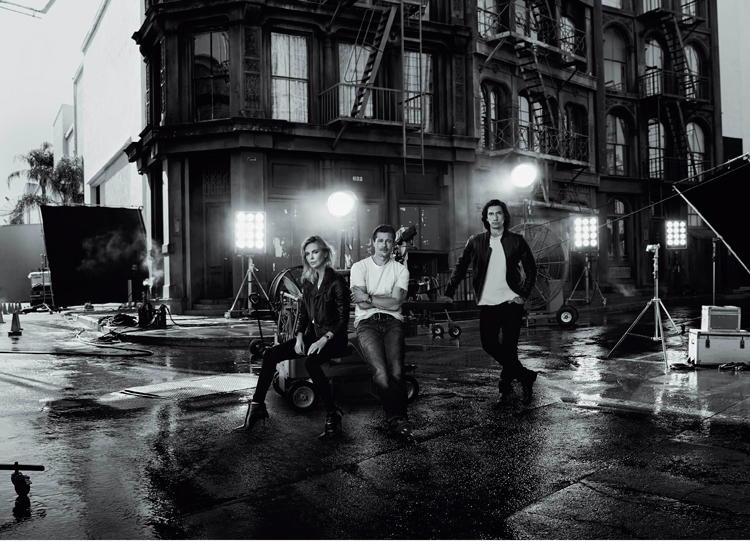
How did you develop your love for photography?
Well, I went to art school and had nothing to do with photography. Then when I met photographers I thought it was so brilliant. So I wanted to see what that could be. A really good artist today would say “oh that’s a great concept I’ll do that too” not many look to find something else. That takes longer to think about and that’s what I did. In the meantime I assisted photographers and I figured out pretty fast that it was something that I was really interested in. I assisted for a year and a half and then I opened my own studio. From there it just rolled out.
What is so special to you about black and white images?
The answer to this question keeps changing. Now I am in a place where I am influenced by the American photographers who are making a great impression with the black and white images they are creating. Showing recessions and struggling children, creating powerful images for the congress etc. This is influencing me the most right now.
What do you say no to?
I don’t like saying no. But often I feel like when I say no it’s because I don’t understand something. I feel that even in the most uninteresting, un-spectacular, unglamorous way you can learn a lot, so saying no is difficult.
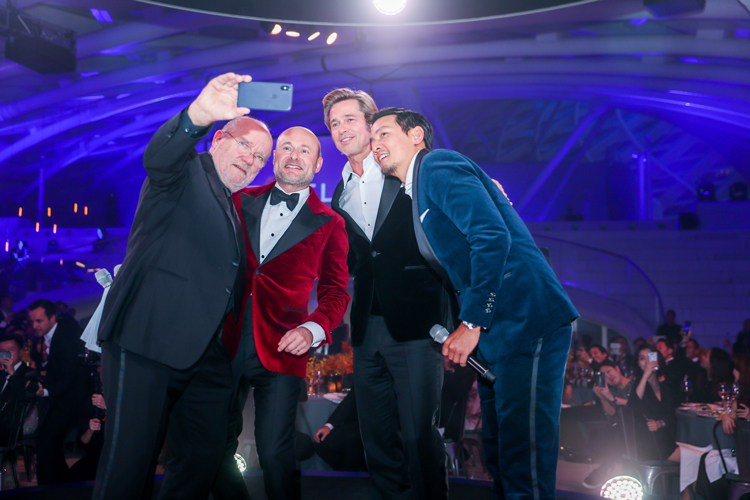
Breitling Gala Night Beijing Venue (PPR/Breitling)
What do you tell yourself every morning?
I wake up and I always have something to do so I can’t even brush my teeth without thinking.
What are you working on?
I am preparing a huge exhibition in Düsseldorf for 2020. I am working on a new book for Dior. We took 27,000 pictures on the streets of New York – it was very challenging. There are so many things happening, I am always on the go.
How would you like the industry to remember you?
I want them to look back and hear about some strange German guy who did everything differently but seemed to have sold them what he did!
Luxury on the Riviera: A&E Discovers Hôtel de Paris in Monte Carlo as it Unveils its Renovation
One of Monte Carlo’s most iconic destinations, Hôtel de Paris is born again with a new look and new vision, A&E discovered more this summer.
Hôtel de Paris Monte-Carlo is one of the city’s most historic and recognisable properties. With a 150-year history, the iconic hotel has welcomed some of the world’s most esteemed guests including celebrities, royals, heads of state and some of the world’s top business people. Not to mention it has been the film set of choice for many Hollywood movies.
Founded in 1864, Hôtel de Paris Monte-Carlo has stood the test of time and continued to be one of the city’s most popular destinations.
But in 2014 the decision was taken to renovate in order to modernise it in a way that embraced its history and further defined the founder François Blanc’s dream of creating “a hotel that surpasses everything”.

Hôtel de Paris Monte-Carlo Exclusive Sea View Room
While modernisation has been done in the past, this would be the biggest project the hotel has undertaken since its creation. In January 2019 the renovation entered its final stages with much of the vision complete and A&E was lucky enough to discover this summer the ways in which the hotel has become even elevated its status as a hospitality icon.
The overall objectives of the restoration project were partial deconstruction and reconstruction the harmonisation of spaces, designing complete new areas, the creation of exclusive suites and the evolution of gastronomy.
With this in mind, the hotel was entrusted to architects Richard Martinet and Gabriel Viora, who were given the huge task of enhancing and preserving the spirit of the building, but modernising it in a way that met the needs of today’s demanding hotel guest.

Hôtel de Paris Monte Carlo Suite Sea View Terrace
The project includes the creation of two brand new suites as well as the renovation of the Rotunda and Alice wings, the Beaux-Arts wing, Casino wing, Lobby and Bar Américain and more.
During A&E’s exploration of the newly unveiled hotel, here’s what we discovered about how the Hôtel de Paris Monte-Carlo has evolved and what it has to offer in 2019.
Rooms and Suites

Hôtel de Paris Diamond Suite Terrace
With the modernisation of the hotel’s rooms and suites, Hôtel de Paris Monte-Carlo is able to provide larger and more spacious rooms for its guests. There are now 207 rooms in total of which 60 per cent are suites and almost all feature a balcony or terrace.
The rooms upkeep the classic and timeless feel of the property but are light and airy through their modernisation and choice of luxury interiors. They’re more colourful than previously with a splash of colour adding personality and more of a homely feel to the spaces.
Within the rooms, you’ll find sleek wooden furniture with gilded brass or glass paired with Louis XVI style pieces. Bronze fabrics add a shimmer in the bedroom lounges and soft precious fabrics give a homely feel. All of the materials were carefully chosen from around the world to create the perfect mix of luxury. Aside from the standard rooms and suites, Hôtel de Paris Monte-Carlo’s three new suites are something to marvel over.

Hôtel de Paris Monte-Carlo Suite Princesse Grace
The Monte-Carlo Suite is designed with casino-goers in mind. Complete with its own exclusive gaming experience this suite is for the biggest game players in the city. At 525 Square metres, the Prince Rainier III Suite is one of the largest suites in Monte-Carlo. Guests can benefit from their own shower and sauna, a private bar in the lounge, office space and a terrace with infinity pool and wave system.
The third and newest suite is the Princess Grace Suite. Inspired by the timeless elegance of Princess Grace of Monaco. This extravagant suite is split over two floors and even includes 440 square metres of outdoor space with panoramic views of the ocean and the Prince’s Palace. The outdoor area boasts a heated infinity pool, lounge area and a jacuzzi.
Inside guests will find everything they need so that they never have to leave this luxury oasis; two bedrooms complete with walk-in wardrobes, a dining room, a lounge area and so much more. Guests staying in this suite will also receive a private Meet & Greet service at the airport or heliport, a dedicated room at the Thermes Marins Monte Carlo spa in winter and a tent at the Monte-Carlo Beach hotel’s private beach during the summer. This is the ultimate in luxury.
Food and Dining

Hôtel de Paris Monte-Carlo Empire Ball Room
Hôtel de Paris Monte-Carlo has a history of fine dining. It was, in fact, the first place in the world to be awarded 3* in the Michelin guide in 1990 for the Alain Ducasse restaurant and its new addition is set to continue the reputation as it opens its latest additions.
At Le Louis XV-Alain Ducasse à l’Hôtel de Paris, Alain Ducasse and his Executive Chef Dominique Lory present “essential cooking”, paying homage to local ingredients and cuisine. Up to 50 guests can enjoy intimate dining with a menu of carefully prepared Mediterranean haute cuisine dishes. On warmer summer days the restaurant opens out onto an elegant ground-level terrace which overlooks Place Du Casino.

Hôtel de Paris Monte-Carlo Suite Princesse Grace
For more casual dining, guests can visit ÔMER, which offers Mediterranean creations by Alain Ducasse. This restaurant overlooks the beautiful hotel gardens with the sea in the distance and the décor is fittingly inspired by that of a boat. The menu offers dishes created from ingredients of the land and sea – creating a complex and unique cuisine.
The menu is inspired by the cuisines of Greece, Lebanon, Turkey, Morocco and Tunisia with a hint of Spain and France. You’ll also find Le Grill on the 8th floor, offering marine-inspired décor in a new modern setting. This is the place to come if you are looking for spectacular evening views.
Shopping Experience

Hôtel de Paris Monte-Carlo Suite Princesse Grace
If you’re planning a trip to Monte-Carlo the chances are you’ll be wanting to experience the vast shopping opportunities – from the High Jewellery boutiques at some of the city’s leading hotels to the new Monte-Carlo shopping Promenade which features brand new luxury boutiques.
Presented by the Monte-Carlo Société des Bains de Mer, this promenade is the newest must-visit to the city. Located close to the hotel and near the Place Du Casino, the Shopping Promenade features forty high-end boutiques from international fashion brands, watch and jewellery houses, perfume makers and more.
The open-air promenade features boutiques from brands including Audemars Piguet, Celine, Bvlgari, Chanel, Dior and lots more meaning you can shop ‘til you drop then head back to the nearby hotel for some well-needed recovery time!
For more on all of Monte-Carlo’s attractions visit montecarlosbm.com.

Hôtel de Paris Monte-Carlo Facade Daily View
READ MORE
A&E Reviews… The Retreat Palm Dubai MGallery by Sofitel
A&E Reviews… Jumeirah Al Wathba Desert Resort & Spa in Abu Dhabi
Me Time: Discovering the Peak of Wellness Luxury at the Clinique La Prairie in Switzerland
Me Time: Discovering the Peak of Wellness Luxury at the Clinique La Prairie in Switzerland
As wellbeing becomes the true luxury in the lives of consumers, A&E Editor in Chief Lara Mansour Sawaya discovers Clinique La Prairie – one of the world’s leaders in finding the healthy balance between luxury and wellbeing.
In my role as an Editor in Chief of a luxury lifestyle magazine, I am privileged to be on a constant journey of discovering amazing locations and having unique experiences and being able to share them after with the readers and the people around me.
Travel will always be my main source of inspiration and cultivation as it keeps me on a constant learning curve. Lately, a new sector has emerged; wellbeing destination, and with it a big hype has been created around this new way to self-care. It was only natural for such a sector to develop so rapidly as today many of us lead fast-paced and hectic lifestyles, where dedicating time to unwinding and looking after ourselves and our own wellbeing has become a precious commodity, in other words, a true “luxury”.
I was invited to Clinique La Prairie last September, but only this summer was I able to dedicate almost an entire week to myself, away from everything and everyone I know. As I rarely get those moments – the moments where you are only in the company of your thoughts and listening to no one but yourself – it was much needed.
This uber-exclusive health and wellbeing establishment is the only one of its kind in the world and is the pioneer in the development of cell therapy and research into vitality, enhancing the immune system and slowing down the ageing process. With a special scientific approach to wellness, Clinique La Prairie approaches the wellbeing of its clientele using intimate and bespoke treatments that really look into the genetic make-up of each and every guest. The intimate 35-room property offers one of the most exclusive experiences in the world and attracts some of the most demanding clientele looking for visible, positive results.
The clinic provides a number of tailored and bespoke programs that attend to the individual needs of the clients – whether it’s weight loss, detoxing, dietary problems or general wellbeing for example – while the Medical Spa of Clinique features over 50 result-orientated treatments carried out by professional doctors.
I managed to fit five days in between my work trips, though the Master Detox Program, one of the four programs offered, requires seven days. Despite the fact that I stayed only five nights, I already felt like a different person the day I left… read on to discover more about my experience!
Clinique La Prairie Medical Centre
Day One: The arrival and how what we eat affects our body
I have always considered Switzerland among the most beautiful countries in the world. Its nature, its colours, its weather all this blended together to me has an instant natural therapeutic effect. Montreux, the beautiful town overlooking Lake Geneva and the iconic Alps mountain range was around an hour drive from Geneva airport. It was raining heavily that day and all that was on my mind was, what if got bored, what if it was too strict and the thought thread went on…
I arrived and I checked into my suite which had the most amazing terrace with a view, despite the fact that it was raining. I prayed for better weather and I rushed back down to the lobby where I was welcomed by Christine, my Dietician, who looked after my food program during my stay. We sat in the lobby lounge and the first thing she said was: ‘you will be on a vegan diet!’ Of course, I smiled and said ‘okay’ out loud, while in my mind I said: ‘worst case scenario if I ever wanted to cheat I can’. Christine went on to say that I also wouldn’t be allowed to have any coffee, sugar, or any food with gluten.
Clinique La Prairie Restaurant
Here’s when I forced a smile while wondering how I would survive five days like this. I said ‘let’s see’. So I selected a few dishes from the menu that looked interesting. The way it works is that you select your lunch and dinner every day from a designated menu that supports your program.
After setting my food program I rushed to have the Visia Test during which a device analyses how the skin is ageing and exposes the damage on the skin that the naked eye can’t see. Luckily, my skin wasn’t bad for my age, however, there was obvious sun damage that the Visia device detected. So, it is more sunscreen and less sun exposure for me.
After my treatment, I headed to the medical spa lounge where I met a great person who I now consider a friend, Nigel Franklyn, Spa Consultant at Clinique La Prairie and a world traveller who is on a constant quest to find the latest innovations and solutions to add to the offerings of the clinic. Nigel took me through the clinic’s unique offerings and shared a bit of what is in the pipeline.
The highlight of my day was what was exactly needed after a long flight, a body treatment. It was only then that I discovered the magical effect of the seaweed detoxing body wrap.
Manuela, my therapist, explained the healing powers of seaweed and the relaxing effect it has on the body, as it is known to take away stress. And indeed after this 90-minute treatment, I felt so relaxed that I wanted nothing but to sleep.
Dinner was at 7pm, my choice was pumpkin soup for starter and gluten-free pasta with mushrooms for my main dish which later became my go-to meal choices. But before I started eating I was given a glass of hydrogenated water (meaning it has been infused with extra hydrogen gas) to drink. This was given to me every day before meals.
Relaxed, sleepy and after what was a not-so-bad vegan dinner, I was ready to sleep – 9pm lights off.
Clinique La Prairie Lake View
Day Two: A new coffee substitute and a not-so-bad feeling
An early rise and an early body coordination class with my Trainer Guillaume. It was a bit tough as he was insisting that I do planks and highlighting the great effect it has on our core’s strength. I will admit that it took me a while to do it right but eventually it worked out. Little did I know that later that night my muscles would be so sore that I couldn’t turn while sleeping.
Okay so back to my day…
My breakfast consisted of a selection of fruit, hazelnuts, raw almonds and fresh juice. Of course, I was longing for a cappuccino but no I wasn’t allowed. So they suggested I try chicory, which looks like coffee in colour and has a certain toasted taste but is basically a plant-based drink. To be honest, it wasn’t bad, the taste is weird at first but in a way it quenches your caffeine craving, in other words, it tricks your brain and gives the illusion of having coffee.
Today’s treatments started with a deep cleansing facial using the signature products of Clinique La Prairie and it left my skin radiant, fresh and bright. Next, I went for a medical consultation with Dr. Magali Flot, the Medical Nutritionist, who carried out what they call the Metal and Mineral Test. This happens with a device that is simply crossed over the four parts of your palm in order to read and detect the average amount of metals and minerals in your body. My result was shocking as I had a very high aluminium count in my body. Dr. Flot even asked me to wash my hands just in case there was any cream left over on them and repeated the test. The result remained the same, so I was advised to check my cooking utensils at home and make sure nothing contains aluminium, check my deodorant and body care products and make sure they are aluminium free and restrict any use of aluminium foil in cooking.
Clinique La Prairie Spa Lounge
The rest of the analysis looked good. I can’t hide the fact that I was a bit preoccupied but she assured me that, with taking the above precautions, levels should regulate again.
That afternoon the weather got better and I sat on the outdoor terrace looking at the stunning views and wondering how our hectic lifestyles divert our attention from really taking care of ourselves and always listening to our bodies to know when it is time to slow down.
The day ended with a Visceral Massage with Manuela who explained the importance of this treatment. The technique is used to restore normal (organ) movement and function and help to integrate the function of the body as a whole. It’s a very gentle abdominal massage that can be performed by massage therapists, osteopaths, allopathic physicians, and other practitioners to treat things such as constipation, post-surgical adhesions, back pain, and even stress, mood and sleep issues.
Manuela used her hands to assess tense spots and gently compress and move certain soft tissues, feeling out for tender spots and scar tissue. What I recall was that she was focusing on my stomach, and the next thing I knew she was waking me up at the end of our treatment!
Day two ended over a quiet dinner. At the restaurant, each guest has the same designated table prepared daily according to his or her programme. At mine, a detox herbal tea was always keeping me company. I had soup, my main dish and dessert (of course no sugar or dairy products) but it tasted great.
That night I couldn’t sleep well as I was sore from the morning workout.
Clinique La Prairie Suite Terrace
Day Three: A colourful day
Early rise, feeling light and so peaceful, the weather was amazing as the sun came out again and the view out of my terrace was simply divine. I went out to enjoy a morning walk around the lake. It was so refreshing. The colours of Montreux are just beautiful.
My day continued with a colour and a photo-stimulation session, which is a kind of anti-ageing treatment also known as light therapy. Photo-stimulation uses light to artificially activate biological compounds, cells and tissues. Skin cells can be photo-stimulated in the same way as plant photosynthesis to improve oxygenation and stimulate the skin cells responsible for collagen and elastin production. The means smooth skin which regains elasticity and density, and therefore has an anti-ageing effect.
During the experience, your eyes are covered and all you can feel is the strong light of red, green and white consecutively. The treatment takes around 15 minutes.
Another relaxing afternoon followed until it was time for my highly anticipated Thai Massage. Nithaya, the lovely Thai therapist has been performing these treatments for 15 years as not only a certified massage therapist, but also a medical one as she used to work in a hospital. She is also a physiotherapist. So you can imagine the unique mix in her technique.
Clinique La Prairie Thai Massage Room
When I arrived at the treatment room Nithaya greeted me and asked me to sit on the edge of the bed where she started examining my posture, my shoulders, even the spine alignment. To her, my body was tense (no wonder) and this was negatively affecting my posture and blocking the energy channels in the body.
I laid down and she started the treatment. I won’t hide the fact that I was in pain most of the treatment which she told me is normal and advised I breathe out when I feel discomfort. 90 minutes after this intense massage (yes intense as at one point she was walking on my back), she applied a muscle relaxing cream and asked me to slowly stand up. Here is when I have to tell you that it was the first time since I had both of my kids that I could stand straight! (Did I mention the numerous times I heard my bones crack?) Well, at the end it felt great and I just wanted to sleep!
An early dinner of a very delicious pumpkin and passionfruit soup was waiting for me, followed by a plate of grilled vegetables and hummus dips that really looked great visually and didn’t taste that bad. I then treated myself with my favourite fruit watermelon and called it a day.
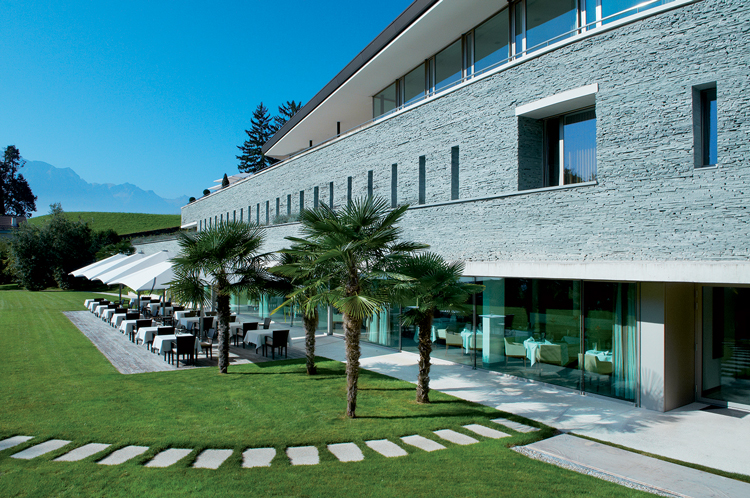
Clinique La Prairie Restaurant Terrace
Day Four: Mixed feelings of pain and relief
Not a great feeling, I tell you! I woke up super sore from the Thai massage and the muscle stimulation it involved and I was barely able to walk. It reminded me of the last month of my pregnancy, but it seems at Clinique La Prairie they expect these post-treatment symptoms, that’s why I had a planned early session of “Yogalates” with Guillaume, my trainer.
An hour of what was a mix of yoga and Pilates movements with stretching techniques outdoors in the open air and under the beautiful blue skies. Honestly, I enjoyed it so much and felt so good afterwards as it released all my muscle discomfort. Breathing had a lot to do with that since, according to Guillaume, many of us (including me) breathe in the wrong way. Learning how to inhale and exhale properly and deeply soothes pain, relaxes muscles and most importantly brings in the oxygen to all your organs in the right amounts.
Relaxed and happy, I headed to my next treatment – a body wrap that helps with firming and detoxing the skin.
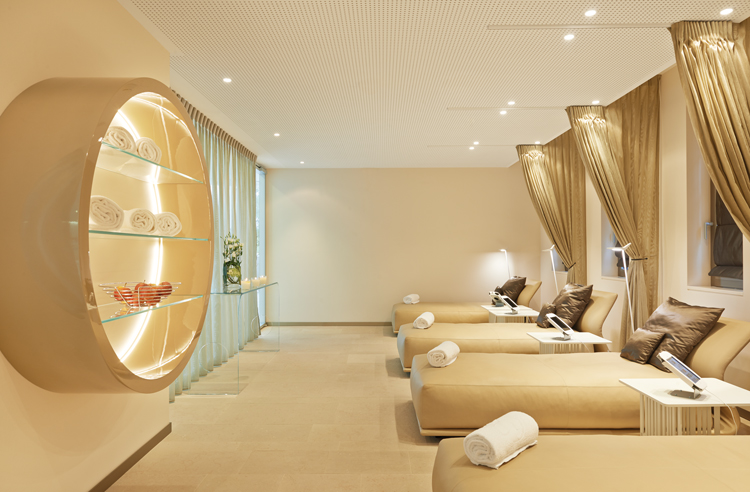
Clinique La Prairie Relaxation Room
Lunch was followed by a very interesting workshop with Olga the Dietician who took me through all sorts of healthy food components and recommendations for healthy, balanced eating. Olga had a prepared a special table set up at the spa café where she displayed all kinds of important foods with rich sources of minerals and vitamins so I could learn about each one and make sure to eat what is needed for my body.
The agenda that followed had two interesting treatments; the first was Cryotherapy, which literally means “cold therapy”. This is a technique where the body is exposed to extremely cold temperatures for several minutes. The theory for whole-body cryotherapy (WBC) is that by immersing the body in extremely cold air for several minutes, you could receive a number of health benefits.
Despite the freezing -192 degrees that you are exposed to, there are numerous benefits such as reducing migraine symptoms, numbing nerve irritation, reducing arthritic pain, combating stress and reducing inflammation in the body.
Following this refreshing treatment, it was time for a relaxing massage that included what they call a “singing bowl’.
The so-called Tibetan singing bowls are wonderful instruments made of an alloy of metals that have been used for sound healing and sound therapy for centuries. They are believed to originate in India and its neighbouring countries, although the history does not provide a clear-cut answer to their origins. The special thing about these bowls is that they produce a rich variety of harmonics and vibrations that have the capacity to stimulate us on a physical (relaxes the muscles, increases bowel movement, etc.), energetic (increases our vital energy, harmonises our personal resonance, etc.) and mental level (induces us to a meditative state, opens emotional blocks, etc.).
It was indeed a much-needed treatment to end my day.
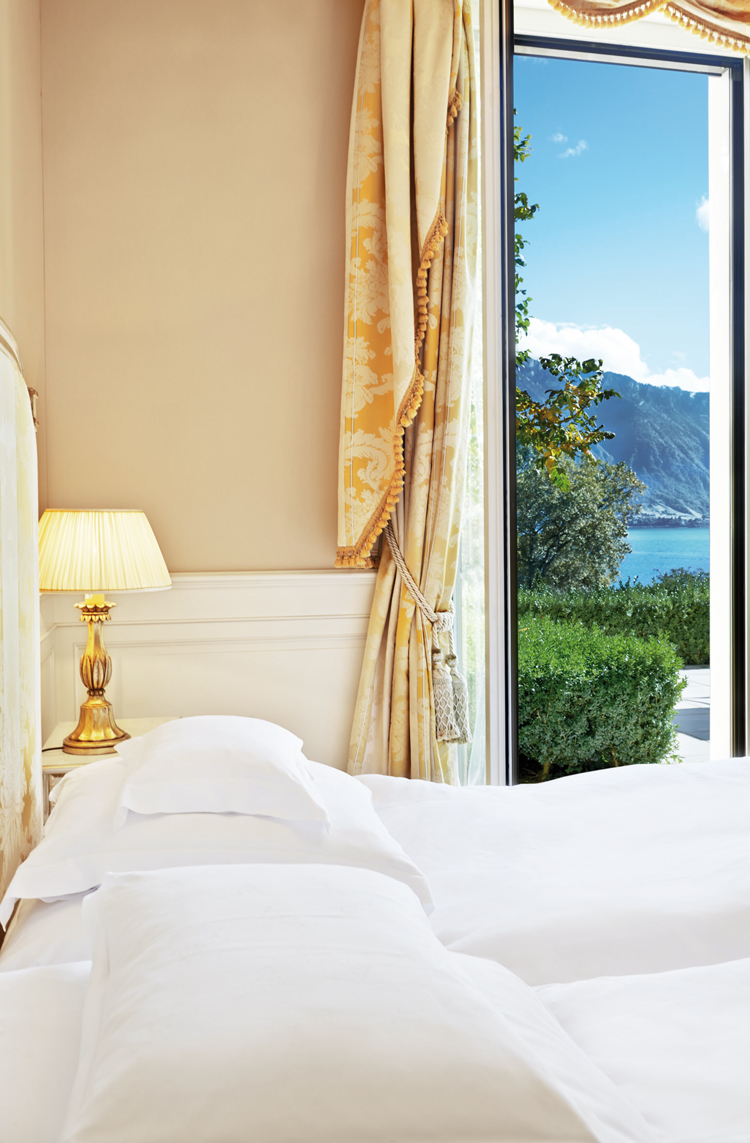
Clinique La Prairie Suite
Day Five: My last day at the clinic
Adopting a vegan and caffeine free diet wasn’t bad after all! And sugar-free as well! By the fifth day, I felt so relaxed and energetic, but most importantly I felt at peace. My skin was seriously radiant and I was totally convinced on how the food we eat and the lifestyle we lead affects our body and our wellbeing.
I enjoyed a morning swim at the iconic indoor pool with a panoramic view of the beautiful Alps and thanked myself for giving my body and wellbeing such a personal treat.
After checking out and before heading to Milan – my second destination – I had a nice chat with Simone Gibertoni, CEO of Clinique La Prairie. See the full interview here.
Discover more here: cliniquelaprairie.com/en.
Fendi CEO and Chairman Serge Brunschwig Talks The Forever Fendi Timepiece and the Future of Watchmaking
As Fendi presents its Forever Fendi timepiece – a creation that brings together the past, present and future of the house – we discover what this latest launch means for the future of the watches division and the house as a whole with the Maison’s CEO and Chairman Serge Brunschwig.
Fendi Watches presented its latest launch the Forever Fendi watch in Rome earlier this year. This contemporary yet sophisticated timepiece perfectly represents the brand with the instantly recognisable FF logo, created from links on the strap and is elegantly finished with diamond and mother-of-pearl.
Forever Fendi is a tribute to the brand’s heritage and sits perfectly with the image of the house overall. While the watch is a statement-maker it has a soft and feminine side thanks to the polished lacquer and round curves that perfectly catch the light.
The watch was presented in Fendi’s home city of Rome earlier this year and was accompanied by a unique exhibition. The Shape of Water installation saw bespoke fountains created by designer Sabine Marcelis.
Taking inspiration from, and pursuing the Design Miami project, the fountains and images showcased with a modern and fresh take, the relationship between Fendi and Rome, as well as two of the most iconic symbols of the Maison – the FF logo and Palazzo Della Civiltà Italiana. – using water, an element that Fendi cherishes the most, as a design tool. Representing the fusion between the historical, creative and aesthetic legacy of Fendi, these special installations became the perfect frame to unveil the new Forever Fendi Collection.
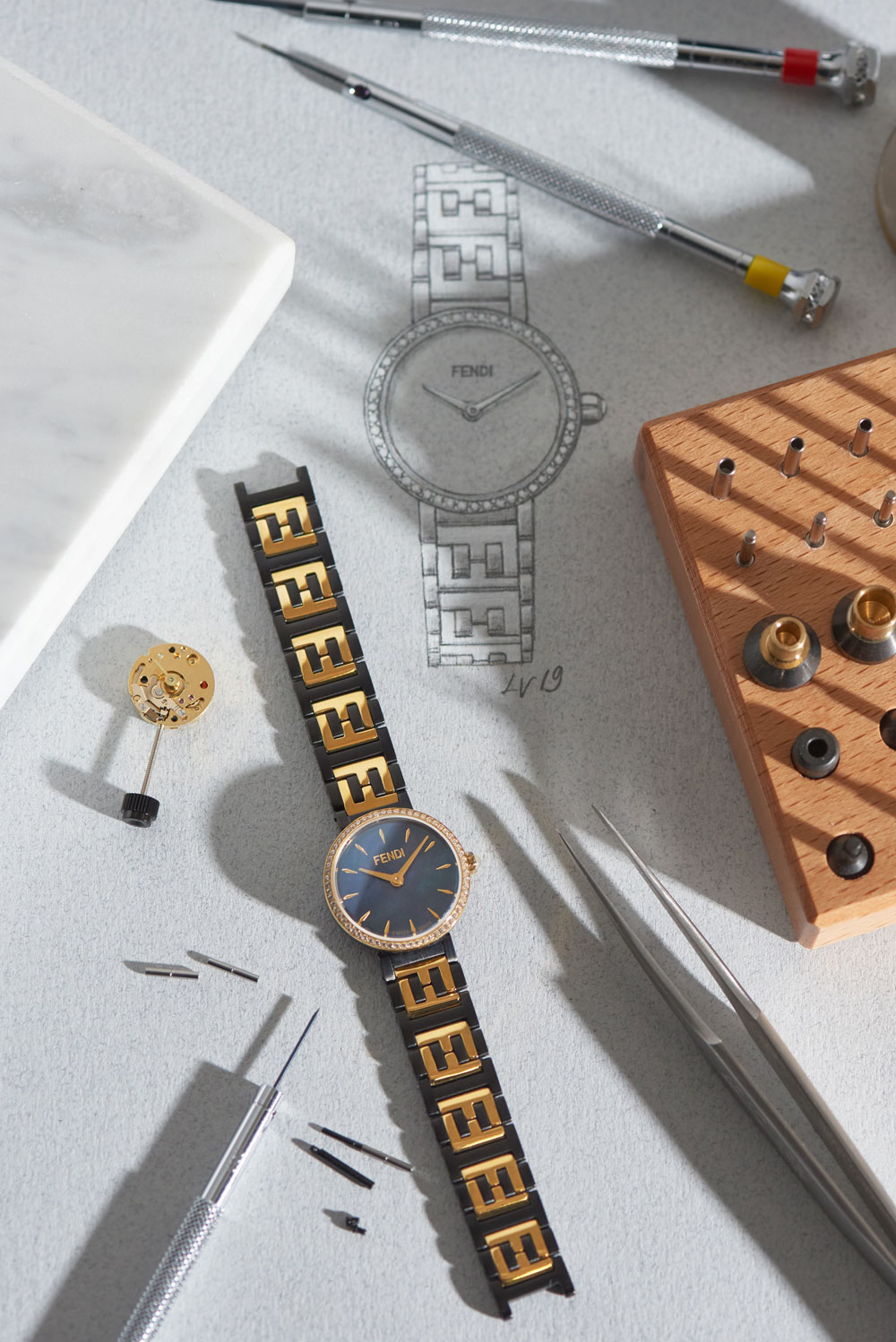
Forever Fendi: See the new watch collection
Presenting the Forever Fendi collection at the event was Fendi CEO and Chairman Serge Brunschwig. Brunschwig joined Fendi just over a year ago and was tasked with finding a way to bring the brand into the future whilst still retaining its legacy and heritage. Here we discuss the challenges he faces with Fendi Watches and the outlook for the future of the brand as a whole.
What’s the message that Fendi is giving with Forever Fendi?
I think it’s super important to reaffirm that this watch is a real watch and that it is really part of Fendi. There is an emphasis on the word ‘real’ and we are mixing all the elements together. It’s our first time to do a presentation like this, and to me, it made no sense to do anything else. We saw the birth of the product and clearly, it looked simple but refined and really expressed the message of the brand.
What do you think is a challenge you face with Fendi Watches?
I think the challenge is to try to connect and produce something that’s much closer to our heart and I think this watch will produce fantastic results. Fendi Watches will have all the authenticity of a Fendi product. The universe of Fendi is proud and we must be sure to communicate this.
The Fendi Policromia watch’s success is thanks to the bespoke option – to what extent do you think bespoke is relevant in the industry?
I think it’s super relevant and I think we are really the leaders in it – we do it for bags, furs and watches. I think it’s great to also have this expertise in watches. Policromia is Fendi’s baby and we are super happy that it’s now a member of the family, and yes, it’s definitely something that we want to push.
Fendi The Shape Of Water
If you were to create your own Policromia watch, how would it look?
If I had to design my own watch, my favourite colour would be red which is very inspiring for me. I think I would marry it with Fendi colours, maybe earthy colours, that would be quite beautiful. I would play with brown and all those earthy tones.
Fendi is celebrating the 20th anniversary of the Baguette this year – What else is coming up for the house during the rest of this year?
2019 started with the emphasis on the Baguette. We had a lot of campaigns and films that will continue with surprises. The Baguette is incredible and the response to what we have done this year has been great so far. We are in a stock shortage already in some of the designs! The Peekaboo will also continue its success and will remain a priority for us. We are one of the few houses to have two iconic bags which is a dream come true.
What is there you still want to achieve at Fendi that you haven’t done yet?
I think we have built a lot of foundations in the past year including the revival of the organisation. There is a lot of new blood circulating within the company which is superb. I think I’m still a bit impatient to see our global performance. Then, of course, we have the new projects which will be the opening of extraordinary flagship stores and fantastic website – all of these are things that are going to make statements in the future.
Fendi Forever
What one piece of advice would you give your younger self?
To believe in yourself even more. At some point, you discover your strengths and it would have been great to discover them a bit earlier!
What do you say ‘no’ to?
To dishonesty and conflicts.
How would you describe Fendi in one word?
Passion.
Fendi
Are you reading a book at the moment?
Yes I am. It’s the story of a French journalist who escaped alive and wounded from the Charlie Hebdo magazine attack in Paris – it’s an incredible story. The way he recovered and found life again – it’s stunning. It’s called Le Lambeau by Philippe Lançon.
What is your personal motto?
Have faith.
How would you like the world to remember you?
As a giving person.
Interviewed by Lara Mansour Sawaya.
Fendi Forever
READ MORE
Roma Amor: Inside Fendi’s SS19 Fashion Editorial
See Inside the Karl For Ever Exhibition Held for Late Fashion Pioneer Karl Lagerfeld
Exclusive: Alber Elbaz Shares How He’s Fallen Back in Love with the Fashion Industry and Discusses His Latest Collaboration with Tod’s
Sitting down with A&E, designer Alber Elbaz talks through finding his creative inspiration, falling in and out of love with the fashion industry and spreading joy through his work.
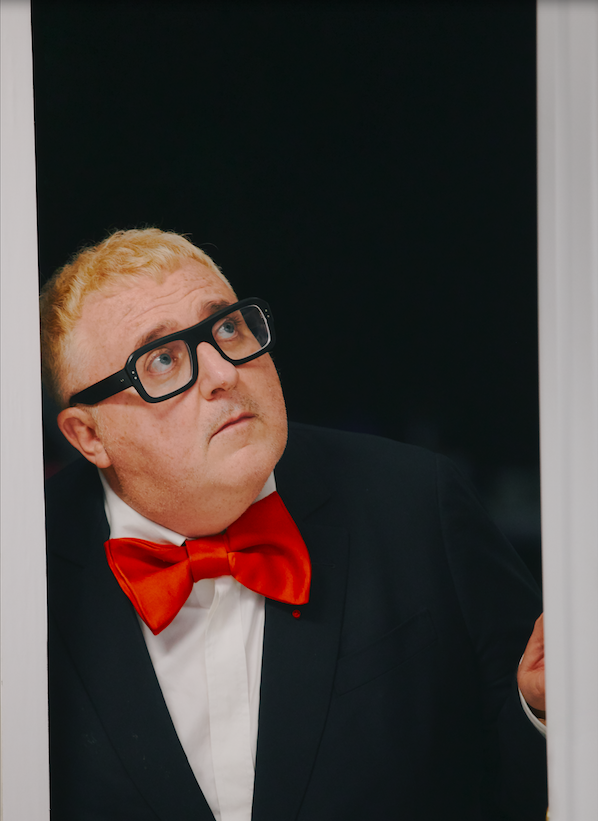
Alber Elbaz chats to A&E about his collaboration with Tod’s
There’s no doubt he’s one of the most recognizable faces in fashion, but since parting ways with Lanvin in 2015, Alber Elbaz has been taking some time out of the limelight. Or so it seemed. It was recently announced that the outspoken designer has been working with Italian house Tod’s on a collection that would combine the timelessness of the brand with his own unique style. And so the “Happy Moments” project was born.
Tod’s and Elbaz realised that shoes are there at every happy moment in your life. Whether it’s your wedding day, the first day at a new job or your birthday, you never do anything without the perfect pair of shoes. Elbaz set out to create shoes for such moments, illustrating the joy Tod’s can bring to the life of the wearer. The starting point was the iconic Tod’s driving shoe, capturing and transforming its true spirit for the next generation and from this Elbaz put his own twist on the designs.
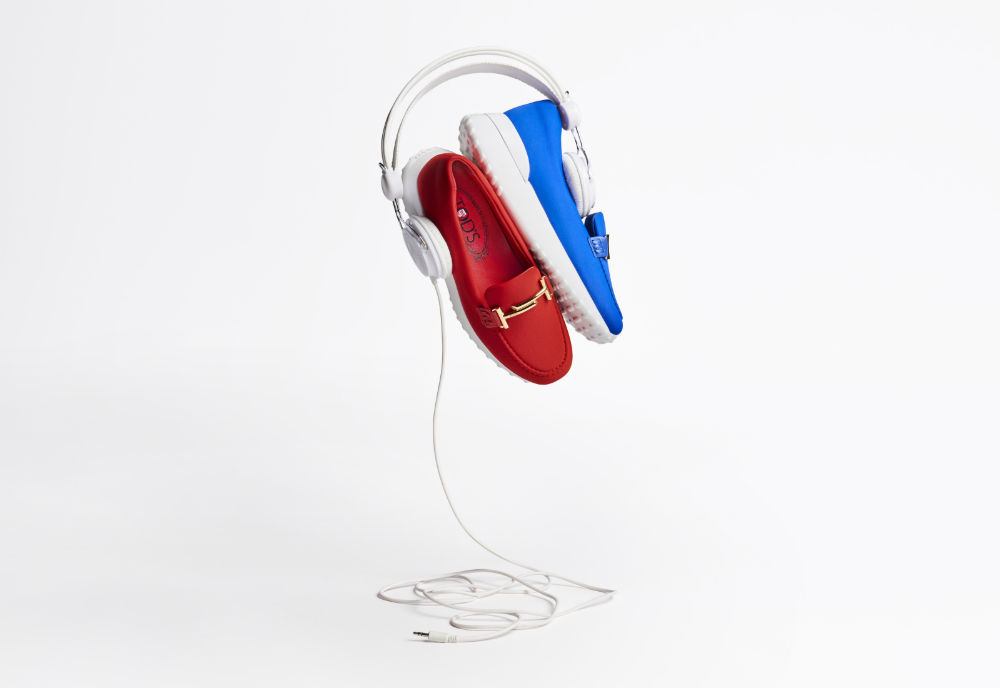
Alber Elbaz teamed up with Tod’s to create the Happy Moments collection
He imagined new contexts for driving shoes, making them aerodynamic, bright, unstructured or mounted on sneaker soles either with logos or without. He also looked to new fabrics including neoprene that added a modern twist to the designs, and a metallic finish for a sprinkle of shine.
As the collection recently launched in Paris, Elbaz was there to spread his own contagious happiness and energy. The designer has openly spoken of his turbulent time in the industry over the last few years but it seems he is back to doing what he does best and enjoying the moment. Here we discuss with him the collaboration with Tod’s and what other projects may be on the horizon.
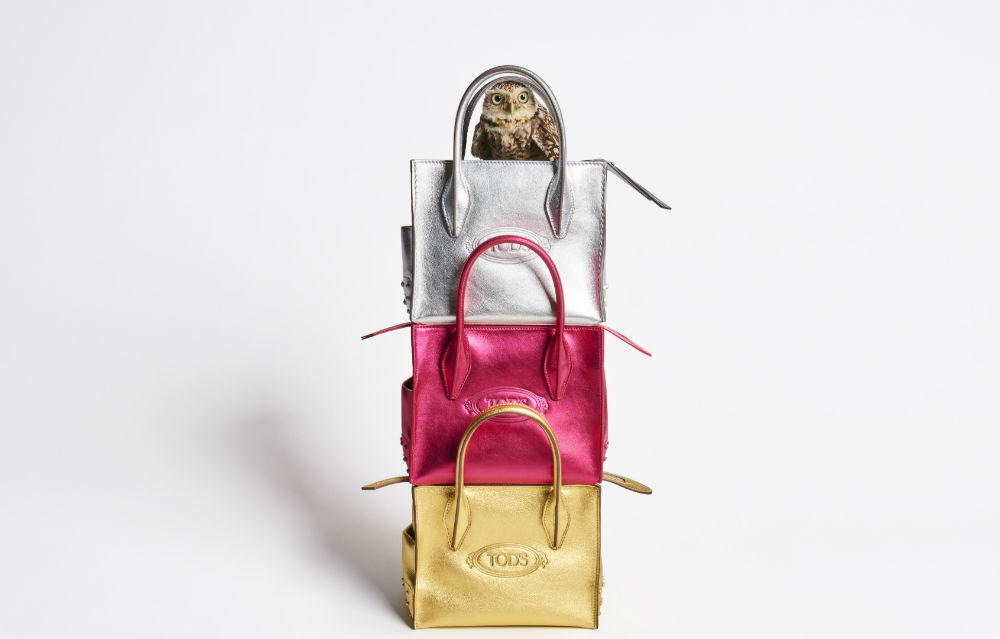
Tod’s x Alber Elbaz
Tell us how this project came to life and what are the common codes that you share with a brand like Tod’s?
I actually turned down working with them for two years. I was taking time out and I wasn’t sure I could do it, as it’s not my comfort zone. I’m not a shoe designer. So I asked: ‘why me? There are so many better people than me.’ But Diego Della Valle (Chairman of Tod’s group) insisted and so I did it.
At first, I thought to myself ‘I have no idea what I’m going to do’, and then there’s a moment where you become very humble because you are almost lost in the forest and there and you don’t know which route to take. This is the moment when God helps you. All of a sudden you start asking questions and talking to people and you realise what you should be doing. In Paris and all over the world, so many roads are becoming pedestrianized, you see more and more people are walking and you see how shoes are becoming the new cars – everyone is using their feet again.
So I started working on the collection. First, I took the sneaker that is the most important and fashionable of styles because it is a very pragmatic piece in the wardrobe. It has almost become more vital than the ‘It’ bag. Comfort is so important to women and in a moment when women are also fighting for equal rights and freedom it is even more crucial. When I was at Lanvin, we were the first ones to introduce ballerina shoes many years ago and we were the first ones to introduce sneakers because I have always believed in comfort. I think also as an oversized designer, comfort is something that I’m very aware of. Because I’m larger, I try to wear and design pieces that are very light because it creates a fantasy. If you see a designer that loses weight, they go from chiffon to heavy fabrics!
Personally, I don’t work with focus groups or marketing people, I work with what I love and I have a great team. There was one girl helping me in the factory – she ordered the fabrics, she helped me to choose the colours, she was there the whole time and I don’t want people like that to be forgotten. So I invited her here for the launch in Paris.
Once I do a collection I don’t like to look at it because all I see is mistakes. And that’s a good thing because once you don’t like it anymore you know that you are ready to go to another project. If you like it too much then you’re stuck. I think mistakes are beautiful – I like people who make mistakes and have opinions.
What can you tell us about the choice of materials in the products?
First of all, I thought of neoprene – it reminds me of Spanx – so I thought since everyone wears Spanx and complains that they aren’t comfortable, I wanted to make Spanx for the feet! So I shared this with Diego Della Valle and he said ‘Oh it’s like eco-leather’. So in a time when we are thinking about sustainability, I was asking a leather company to have an open mind – and that’s what I like.
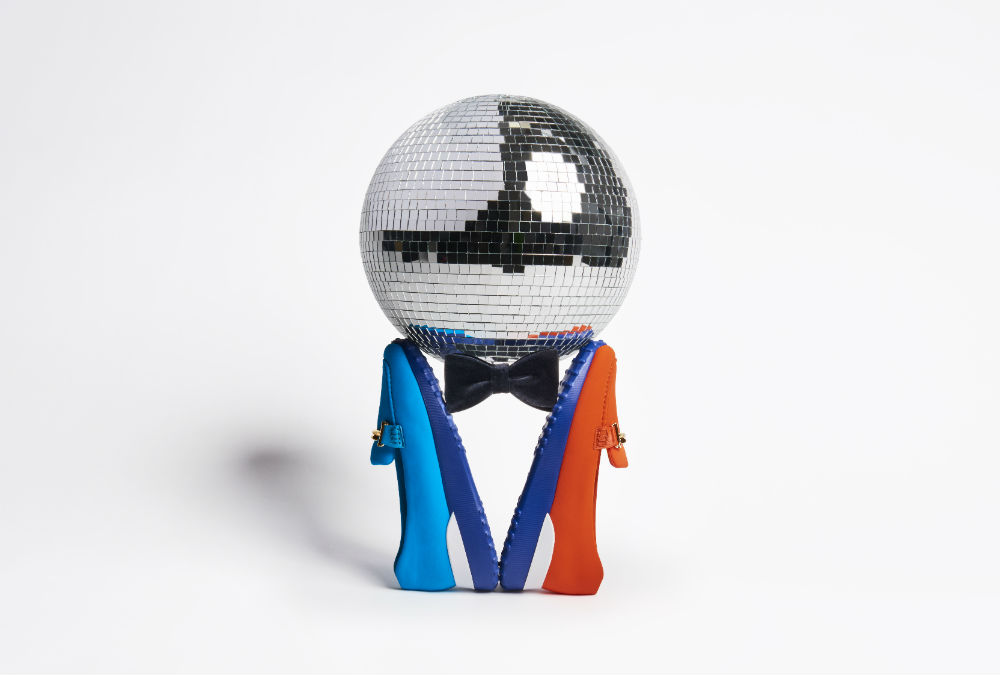
Tod’s x Alber Elbaz
You have spoken of how we are all seeking happiness – can you elaborate on this?
I meet a lot of people and they tell me that things are so hard – and I question – ‘how are we, an industry that has to make everyone happy not happy?’ That kind of gave me the idea for this collection.
What makes you happy?
Moments and people.
What state of mind are you in when you are designing?
You know sometimes when you wake up in the morning and you just have this feeling! My process starts with having an idea that is one-dimensional, making it three-dimensional and then adjusting it to real life. Then you have to look at it with your eyes, in a mirror and in a photo and ask yourself what is more important – that it’s going to look good in a photo or on the body? There are some things that look great on a woman’s body but in a photo, they don’t look good. A corset can look good – but try to move in that, try to sit on 50 metres of tulle. Imagine when women wear gowns to the Oscars – they have to come in buses because they can’t fit in cars and they cannot sit! So you have to know what you are designing for.
The media have always loved you for your honesty – what is your relationship with them now and your take on what is happening in the industry?
When it comes to the media I don’t work on commission and I’m not selling anything. I believe that we have this kind of triumph of marketing and communication. Everything is everywhere all the time so you as a journalist, you are being bombarded by everyone and it’s too much. A lot of journalists are women who are sensitive but also smart. So they know who is a key success and who pushes them and I think they are sensitive to that, so that’s what I’m doing. I’m not reading articles of what I do – unless it’s a bad review. Because I don’t want to believe in it, so I don’t want to see. I only read the bad ones!
It’s almost like you want to learn from what didn’t sell. You ask yourself why? Sometimes it can depress you because you think ‘maybe I haven’t done a good job’. We’re living in a time of followers where people want to see what they know, almost like a DJ can design a collection today – he just has to express himself and say ‘this is me’. But sometimes, we have to have new ideas. We have to come up with innovations and statements and really change something and for me, this is the difference between a DJ and a composer. A composer has to start from scratch and come up with something completely new and different. This is the part that’s very difficult and that takes all the energy.
Tod’s x Alber Elbaz
What is next for you?
It’s a good question! I think that fashion today is moving very fast but the system is not very fast. So everything is new every season – six times a year now – but the system is not new. There are so many clothes and collections that women cannot digest it. Before you arrive at the store it’s already on sale and there’s already the next collection. I think that women are confused because there is so much.
Also, you’re not going to go in December to try a bikini. But all the bikinis are there. If you go in summer to buy a summer dress, they’re all on sale. Why would you want to buy a summer dress in January? How can people not see this? I am starting to see changes. The department stores are living a hard moment, digital is affecting stores and also print magazines. So I see that there are changes and I’m very optimistic about it.
That brings me to myself and to my future. For me, I have to really fall in love with the people in order to say ‘I do’. I cannot fake a relationship – if I don’t like the people I cannot work with them. This can be a problem because I don’t know how to separate work from my emotions. I like to be very involved and I’m very much a people person. I met with some people recently that I used to work with at Lanvin – they are all working at different brands in high positions and I asked them how they are and they all said ‘we’re OK but it’s not the same’.
I think that what I bring, because of my personality, is that people first like me, then they hate me, then they don’t like me, then they love me forever! Because at first, I’m nice and easy-going so they like me, then they see that I’m to the point and I like perfection in work so it is tough, but then they see that I’m direct and will never do anything behind anyone’s back. If I have something to say I will say it to you, and this is something that I bring to a company. I bring energy. This is what the people at Tod’s have said to me – that I bring great energy and it makes them feel really happy. I’m happy that I make other people happy.
Tod’s x Alber Elbaz
Is there anything in life you would have done differently or still want to achieve?
There are two things. Firstly I want to be happy with myself. I think it took me some time to find myself again. I took some time to miss fashion; I was burned by fashion so I didn’t want to touch it for a while. I have a scar inside and I believed I didn’t want to come back. But when I recovered I remembered that I love fashion people, I love the industry and I love women. I am a Gemini so I’m always about contradiction. On one hand, I love to make beautiful clothes, really exquisite clothes – not for a photo but for women to really wear, for their bodies and for their needs but not like a couturier – I want to make them dream because what I sell is a dream, but I don’t want to do it too many times a year because then you lose the joy.
Secondly, I always wanted to do some kind of project with technology because that’s what is changing the world. I think that if you take a piano you have just a piano, but when you bring a pianist with emotion and knowhow then you can create music. I have been offered many jobs and I have said no. Some jobs I wanted and they didn’t offer them to me, but many were very hard to say no to, but I did. Because as Nelson Mandela said ‘winners are dreamers that don’t give up’. I have my dream and I want to be able to help women with solutions. That’s my project and where the technology will come in, but it’s very hard for me to find people that understand what I’m doing because people only want to do what they’ve done.
I’m meeting so many people around the world and I want to pioneer something that will be different for women but it’s very hard to find people who understand my vision. I think the biggest problem of fashion today is the lack of taking risks. People do not want to take risks. That is probably why I took on this project with Tod’s as it was not like I had to answer to a board of directors – I asked Diego if he liked it, he said yes, I said ‘okay, we can do it’. I didn’t have to meet a board and a marketing team and a focus group. I respect people, I always have. When I went to Saint Laurent they loved me because I didn’t destroy what had been done for forty years, I did the same at Lanvin. I am a very respectful person to what has already been created.
Tod’s x Alber Elbaz
How would you describe the collection in one sentence?
Changing the sole of the shoe without changing the soul of the company.
How important is passion in what you do?
For me, without passion there is nothing. Without passion, there is no relationship, no innovation, no project, no fashion. Passion is a very important thing. Sometimes over-passion can kill something but you need to know how to find the middle ground.
Tod’s x Alber Elbaz
READ MORE:
Take a Glimpse at Tod’s Collaboration With Designer Alber Elbaz
A&E Editorial: Blue Skies Ahead with Tod’s Holiday Ready Collection
Dior’s Creative and Image Director Peter Philips Reveals Beauty Inspiration at the Haute Couture AW19 Show
Working alongside Maria Grazia Chiuri, Peter Philips crafted a beauty look that reflected the softly gothic, fiercely feminine collection. Speaking to A&E, Dior’s Creative and Image Director opened up on the concept behind the beauty look and how it came to be.
One of the biggest fashion houses in the world, Dior‘s Haute Couture show is always one of the most anticipated on the industry calendar. While the carefully crafted, mould-breaking and ofttimes political clothing collection takes centre runway, it’s every detail – from the scenic setting to the beauty aesthetic – that makes Dior’s presentations so memorable.
And for the latter of those, we have Peter Philips to thank, as the talented makeup artist innovator works to capture the essence of the collection with makeup.
Talking exclusively to A&E’s Editor In Chief backstage, Philips opened up before the show unfolded in Paris’s 30 Avenue Montaigne – Dior’s historic Maison – on the aesthetic he created.

Peter Philips created a smoky eye for the Couture AW19 show
Philips said: “Today we’re going for very natural looking skin and a smoky eye – it’s the ultimate classic Haute Couture look. It’s good for every girl, every woman.”
On turning to a classic beauty look for the AW19 presentation, he elaborated: “Actually the story is funny, because about a month and a half ago, just before we launched the Tri-Oblique palette, I had a few specially customised, so I had Maria Grazia’s named embossed.
“It was before the meeting for Marrakech [where the Maison held its Cruise 2020 show] and I gave her the palette and she was like ‘Oh my God!’ – like every woman when she gets new makeup. When she saw her name she was like: ‘This is amazing. Funny you would give this to me as I was thinking of doing a smoky eye for the Haute Couture show.’ She loves a smoky eye!
“So I said; ‘Oh, perfect, we can use the Tri-Oblique Smoky Canvas palette, and that’s how the look started.”
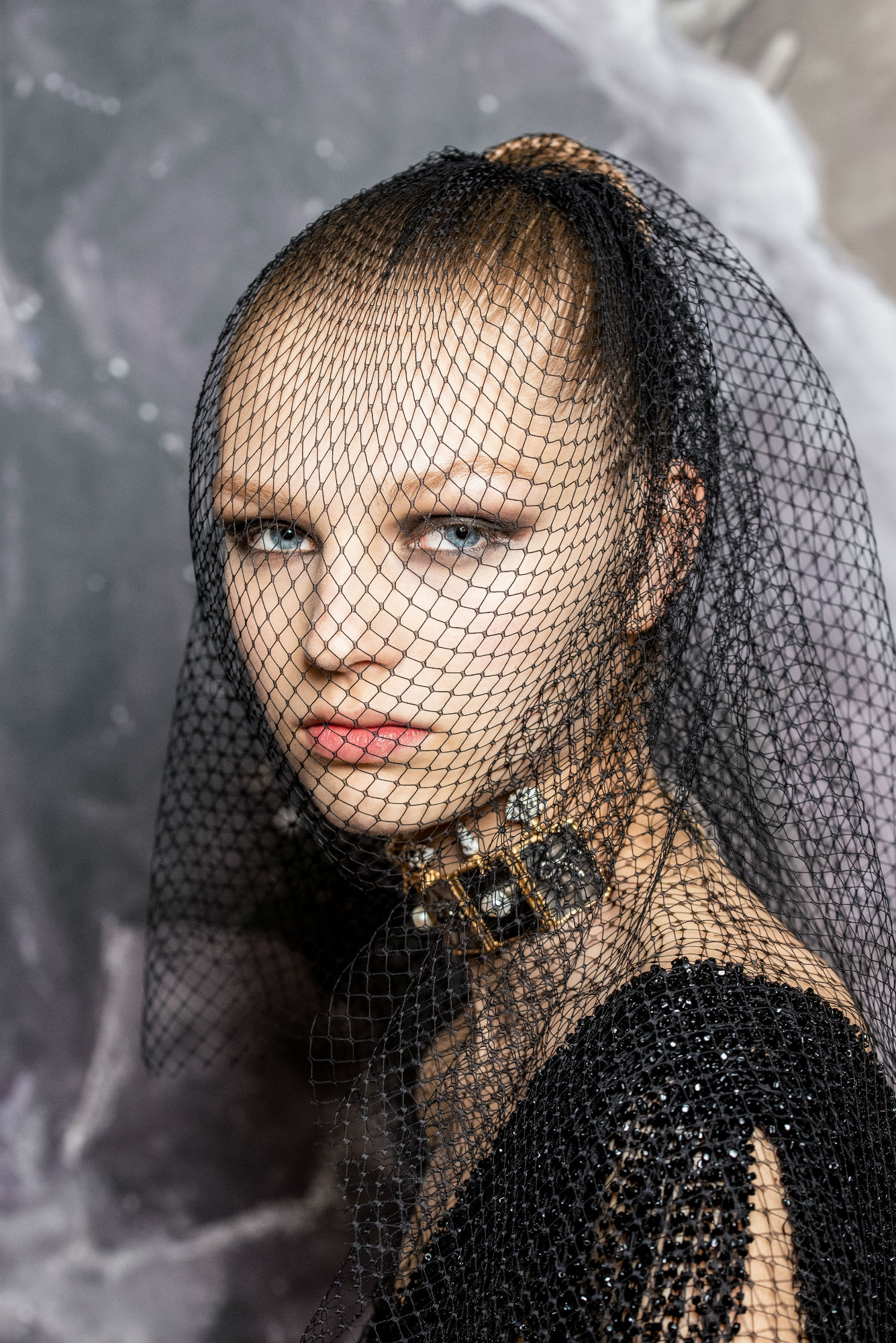
Philips created a softer look by leaving models’ lashes mascara-free
But for the look, Philips made a conscious decision to omit mascara from the look, often an item of makeup essential to the smoky eye, and one, in general, many women feel is an essential.
Philips, who has held his position with Dior since 2014, explained: “Mascara makes a big difference. If you use mascara, it suddenly becomes much more sexy; that’s a seduction kind of makeup where you have the fluttering of the lashes.
“So by not using mascara, it becomes a bit more poetic almost, a bit more softer, less harsh and a bit more cloudy. Almost like, left over.”
Taking to Instagram after the show, Philips divulged more about the products used to create the look. He wrote: “A huge thank you to my team, today at Maria Grazia Chiuri’s Dior Haute Couture Show we went for natural skin and a soft-edged but strong smokey eye. The new Dior Backstage Primer and some Backstage Face and Body foundation for the skin, and on eyes I used the black shade from the Dior Tri-Oblique Smoky Canvas eyeshadow pallet.”
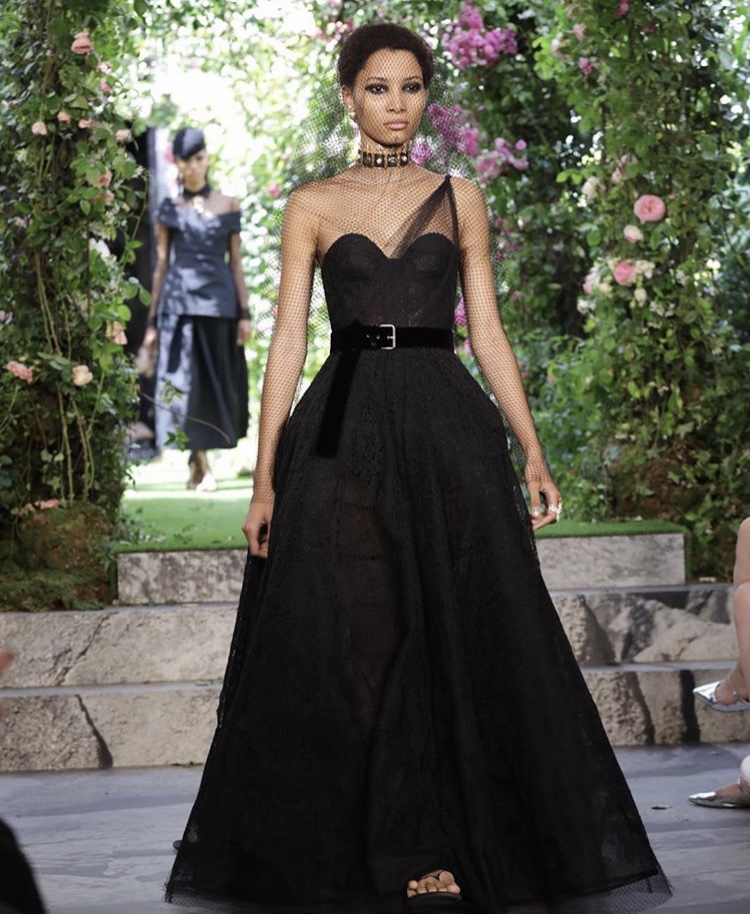
Dior’s Haute Couture AW19 collection
READ MORE
See Dior’s Haute Couture Autumn/Winter 2019/2020 Collection
Dior Beauty: Makeup Artist Peter Philips Reveals How To Recreate Teddy Girl Eyes
A&E Interviews Clinique La Prairie’s CEO Simone Gibertoni About the Luxury Wellness Retreat’s Unique Approach
After spending five days at Switzerland’s Clinique La Prairie, A&E’s Editor In Chief sits down with the CEO to chat through the future of the destination, its unique approach to wellness and its expansion into the rest of the world.
In a fast-paced, non-stop world, sometimes it seems like time is the ultimate luxury; time to step back, relax, unwind and invest in our overall wellbeing. Things that should be a part of our everyday wellness – nourishing our bodies with a healthy diet, releasing endorphins with physical exercise and taking part in activities that promote mental calm and clarity – are put at the bottom of our to-do list, if they feature at all.
Something that the Clinique La Prairie wellness institute in Switzerland wants to create space for. The only one of its kind, the uber-luxurious resort removes clients from their busy lives and hectic schedules to immerse them in intense programmes designed to soothe, rest and recharge mind, body and spirit.
Restaurant Terrace Clinique La Prairie Clinic
And after five days experiencing the incredible technologies and hospitality the clinic had to offer, A&E’s Editor In Chief Lara Mansour Sawaya sat down with Clinique La Prairie’s CEO to discover more.
Speaking with Simone Gibertoni, he opened up about his task of growing the luxury clinic and its philosophy by continuing to maintain its exclusivity and unique approach to wellness.
A&E Interviews Simone Gibertoni

A&E Interviews Simone Gibertoni, CEO of Clinique La Prairie
Do you think you will grow the concept of Clinique La Prairie around the world?
That’s a very important question and in fact, something we are working on. You told me you found this a very exclusive place and you tried treatments that you haven’t found anywhere else in the world and this is true. We have only 35 rooms but 350 staff, so on average six or seven staff for each guest – you don’t find this anywhere else in the world.
So whatever we are going to do in the future, we have to keep this idea of exclusivity and a customized, tailored service. As you can imagine we always have customers asking “why don’t you create somewhere for two hundred women in the United States?” for example. We are not interested in this.
What we envision in terms of development is basically explained in three different steps. The first is what we call City Hub – once they are back in their own city, we would like our guests to be able to find a place where they can continue to follow the programs from Clinique La Prairie under the guidance of our doctors, coaches, nutritionists etc. We know that despite us trying to do our best in the week while you’re here, in order to sustain it you need to be following a program throughout the year until you come again.
So we are building City Hubs all around the world – this is the first step and we are hoping it will help people live a longer and more healthy life. The second step is that there are technologies that we have developed at La Prairie that you can take with you. So we have created a holistic health campaign, which makes some of the technology that you experience here, available after your stay. The third step is that there are programs that you might want to do more regularly.
So we are thinking about opening three more clinics – one in the United States, one in South East Asia and one in the Middle East. Hopefully, this will allow some of the programs to be available locally to our clients who don’t want to come all the way to Switzerland so regularly.
That’s it – we don’t want to open 200 clinics and the ones we do open will have the same setup – very exclusive and around 40 rooms. This is the only thing we are good in doing and we don’t want to change that. What you receive here cannot be commercialised because the cost is so high and we cannot be anything but exclusive.
Relaxation Room La Prairie Clinique
What do you think are the main challenges that you face?
In terms of challenges, the first one we have is how can we make potential clients understand what we are. If you look at communication it may seem that we are more or less the same as others, but we know that we are different so we would like to improve the way we tell our clients, or potential clients, that what we do is very different.
The second challenge we have is that with our system you have to care about the medical aspects. Whatever we do, even if you want the most spiritual treatment it has been chosen because of the science behind it and it has to be proven to work. That is how we challenge ourselves with any treatment we provide. It’s about research, development and investment.
The other challenge for us is to promote to people that we are very serious and everything is scientifically proven and our doctors are always behind the work we do. The majority of our clients will have a house bigger than the clinic with a private chef and a private doctor, so when they come here they need to find something unique otherwise they can stay at home. Our challenge is to make these people understand our value and come back to us.
You have customers coming from all around the world – how do you offer something that will cater to everyone?
I always use a matrix of countries and age when I talk about wellness, so the wellness request of someone from China in his thirties is very different from the request of an American of the same age. So we have three big chunks of wellness philosophy – Asian, American and European – they are very different. So the question is how can we ensure these people buy our philosophy and trust us? Skincare is all about credibility our business is even more about how good we are at building this credibility and the fact that we have been here for 90 years shows this.
The bespoke approach is very important to you. What can you tell us about that?
There are a few trends in wellness as you know, but for me, the most important is the bespoke approach, which is more and more linked to genetics. I always say that the future of wellness is going to be a deeper, customized program because we know very well that in genetics there are people that can drink ten coffees for example, but there are people who cannot drink even one because their system is not built for it.
So you can’t tell everyone that to detoxify they shouldn’t drink coffee because that is not true. I believe the future of wellness is going to be more about the customization of the program, starting from genetics. That’s why we are acquiring a genetic company and why all of our programs include a genetic test. The human touch is super important for us so that’s something that will be very difficult for us to balance in the future because many people want to experience technology and artificial intelligence within wellness.
Spa Lounge Clinique La Prairie Clinic
Do you think the fast-paced lifestyle of today is meaning people are missing connecting back to the human touch?
What we often see here is actually people wanting to get away from all this technology and social media that will ruin their lives. So it is true that the human touch should be more and more important. The market would like us to create clinics of 200 or 300 rooms but we do the contrary, we are creating clinics with fewer rooms. This is also why we created the Private Retreat. This Private Retreat is the concept of having a private doctor, chef and nutritionist only for you. This can be for one week or two weeks but it means that all Clinique La Prairie services are available only for you. It is the ultimate in bespoke service and wellness.
How would you describe Clinique La Prairie in one sentence?
This best way to describe the uniqueness is that it is a perfect fusion between medical, wellness and luxury experience. You won’t find this kind of experience anywhere else.
What is the message you want to spread?
The message for us is really our vision and mission. We would like to help our clients live a longer, healthier and better life. We are seeing a lot of people who have everything they want but they are not happy and healthy and so not living the life they want to lead. So when they come here we encourage them to step into a different life. That’s our dream.
Discover more here: cliniquelaprairie.com/en.

Simone Gibertoni, CEO of Clinique La Prairie
READ MORE
Me Time: Discovering the Peak of Wellness Luxury at the Clinique La Prairie in Switzerland
Travel Review: The Four Seasons Hotel New York
Visit one of the world’s most sought after luxury hotels in the city that never sleeps.
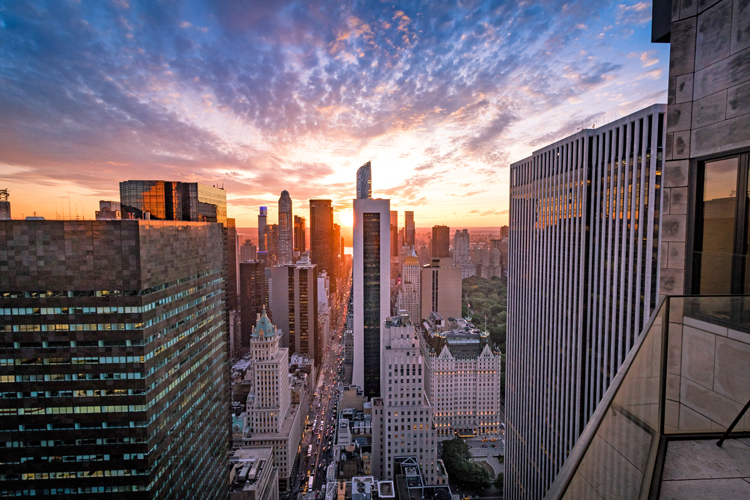
Located close to New York’s most prestigious destinations you’ll find the Four Seasons Hotel New York. Situated between Park Avenue and Madison Avenue this hotel is the ultimate location for shoppers, tourists, theatre-goers and explorers who want to be in the heart of Manhattan.
The hotel is just a few feet away from Central Park and a short walking distance from Times Square, The Empire State Building and The Metropolitan Museum of Art, so the perfect destination for both first-time visitors to the city and regulars who like to be in the heart of what New York has to offer.
Designed by famed architect I.M Pei in collaboration with Frank Williams the hotel has an Art-deco inspired interior and elegant use of light to give a classical feel to this modern property. Construction of the hotel was completed in 1993 making it the tallest hotel in Manhattan at the time.
The custom design by I.M Pei includes 33-foot ceilings in public areas that were made using the same limestone used in the structure of the Louvre in Paris. The breath-taking spacious entrance hall is one of the most popular meeting places for New York’s most elegant residents.

Food and Dining
When it comes to food and dining the Four Seasons New York is the place to be seen in the city. A meeting destination for some of Manhattan’s trendiest residents who choose from restaurants and bars that are the epitome of cool and of course if you prefer not to leave your room, the extensive in-room dining menu will have your favourite dishes delivered directly to the door of your suite.
Executive Chef Johnson, who is known for his experimental dishes and unique ways of using local ingredients says: “The thing for me is to focus the food to appeal to our guests while featuring the amazing ingredients our region has to offer. Standing out is the challenge, as there no other dining destination like New York.”
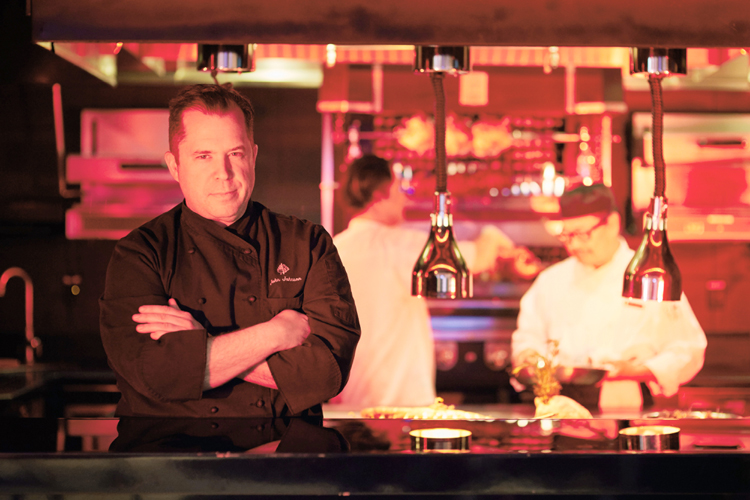
Executive Chef Johnson
The Garden offers breakfast and lunch in an enchanting setting. This relaxed restaurant overlooks the hotel’s towering Grand Lobby and is designed in the style of a mystical forest. Feel like you’re in the heart of the jungle as you dine below huge African Acacia trees while the sunshine blazes through huge glass windows. Some of the menu highlights include the Lemon Ricotta pancakes for breakfast and for dinner, the Seared Ahi Tuna Ribbons are a must try.
Elsewhere the sophisticated Ty Bar is the perfect meeting place for friends or colleagues. Continuing the stylish Art Deco setting of the main areas of the hotel, the TY Bar is inspired by the 1920s and 30s and takes you back to this magical era.

Lemon Ricotta Pancakes at The Garden
Room and Suites
At 52 storeys high the Four Seasons Hotel New York consists of 17 studios, 286 junior suites, 57 one and two bedroom suites and five speciality suites all with an at-home feel. The spacious rooms offer plenty of natural light, contemporary custom-furnishings and state of the art in-room technology. Many of the rooms have panoramic views across Central Park.
Speciality Suites
The speciality suites are the largest accommodations in the property and are perfect for families or those looking for a longer stay (think long relaxing summer vacation in the city).

The most exclusive of all the suites is the Ty Warner Penthouse. This huge penthouse offers the highest standard of luxury and is the result of a seven-year collaboration between I.M. Pei, Peter Marino and the hotel’s visionary owner Ty Warner.
The Ty Warner Penthouse is an architectural masterpiece situated on the 52nd floor of the hotel. This suite is the most exclusive and expensive one-bedroom suite in North America and is the most sought after penthouse in the city. The mission was to create an experience that would raise the bar for even the most luxury conscious connoisseur and traveller.
With 360 degree views of the city, the Ty Warner Penthouse boasts four glass balconies offering the most exclusive views of Manhattan. With four carefully designed diagonal and four orthogonal views, a surreal and dreamy effect is created with a unique view of the city.
Inside the suite, there is incredible attention to detail, with artefacts and objects carefully sourced from all around the world, as far afield as China, France and Italy. French artisans Claude and Francois Xavier Lalanne created their artistry throughout, along with a team of internationally renowned artisans and craftspeople who collaborated to create a unique sensory experience. Cathedral ceilings and diamond skylights add to the grandeur of the suite.
It really is the grandest of locations. Throughout the space, you’ll find a living room, a 700 square-foot library, master bedroom and even a zen room. The latter offers guests a relaxing experience with a floor-to-ceiling waterfall and limestone floors. There’s also a powder room, dressing room and walk-in wardrobe. With the finest attention to detail, this suite is really the ultimate in luxury and is reserved only for the most elite of guests.
For more information visit fourseasons.com/newyork.
READ MORE
Tried & Tested: L.RAPHAEL Beauty Spa at Four Seasons Hotel, New York
Four Seasons Resort Dubai Review: Escape from the City in Timeless Luxury
Movado Group’s CEO Efraim Grinberg Talks Challenges, Future Goals and Co-Branding After Second Annual Summit
As Movado Group hosted its second annual summit in Davos, Switzerland, A&E spoke to Efraim Grinberg, Chairman and CEO of the group to discover more about this global enterprise.
Earlier this year, the Movado group held its annual summit in Davos Switzerland. Instead of presenting at a multi-brand exhibition, the group chose to showcase its brands and latest developments to 500 of the company’s most important customers, distributors and global press from over 40 countries. The Movado Group’s 11 brand portfolio includes brands such as Tommy Hilfiger, Coach Hugo Boss and Lacoste, as well as watchmakers Ebel and Movado.
Efraim Grinberg Chairman and CEO of Movado Group spoke of the Summit; “One of our main goals for the Summit was to create a more intimate meeting experience for our key partners – one that would be inspiring and informative within the dramatic beauty of Davos, Switzerland. We were thrilled with results and will announce our 2020 Summit plans in Summer 2019.”
The event saw keynote speaker Amal Clooney share her insights on important global topics in a discussion moderated by celebrity and fashion photographer Alexi Lubomirski. The two discussed topics including human rights, global politics and the effects they have on society today and in the future.
Another highlight included a panel discussion “The Power of Brands.” The panel focused on millennials and their view on watches, the success of direct to consumer brands, the critical importance of digital and social media initiatives in the ever-shifting retail/consumer landscape. The panel attendees were: Efraim Grinberg Chairman and CEO of Movado Group, Jemma Fennings Founder Olivia Burton, Jake Kassan Founder MVMT and moderator, Mary Leach, CMO of Movado Group.
The event saw the presentation of the newest products and developments from all brands including the latest novelties from Ebel watches and the Movado Artist Series in collaboration with Alexi Lubomirski. Movado is internationally recognized for its commitment to the arts, an association which is intrinsic to the brand’s identity and integrated into its marketing initiatives and this new partnership reinforces that.
Chairman and CEO of Movado Group, Efraim Grinberg, was at the core of the event by representing all of the 11 of the company’s varied brands. Originally from Cuba, Grinberg was named President and Chief Operating Officer of the group in 1990 and oversaw the company’s initial public offering in 1993 and has since been responsible for building the Movado Group into a global enterprise. Grinberg’s passion for innovation has helped the company grow globally in the digital age and expand into new markets and diversify its customer portfolio. A&E took time to meet with Grinberg to find out more about this multi-national company and where we can expect to see it grow to in the coming years.
A&E Interviews Efraim Grinberg
Efraim Grinberg
What can you tell us about the strategy of omni-channelling that you are using in the group?
I think in today’s day and age it’s really about reaching consumers at every touch point and obviously everybody spends a lot of time on their screens, phones, iPads, computers, so we want to make sure that we reach them there and allow them to purchase there, but also allow them to do it in an omni-channel way. This means one thing not excluding the other, so print is still important, as is outdoor and television, it’s a 360-degree approach for the consumer.
There are some consumers who feel comfortable online and others who really want to go to a store, and we want to make sure that we are building that experience. In many of our visuals, you’ll see a lot of digital connections within our brands that can be done at a store and at a point of sale.
To what extent do you think co-branding and collaborations are still relevant and important today and how does it serve the brand?
I think it’s really about collaborations that are true to the brand and that’s what we’ve done historically at Movado. It’s really been about having connections with artists, starting with our first one with Andy Warhol. Doing significant collaborations with artists. I think with Alexi it gives us the opportunity to do something that really helps the planet and connects with consumers who want a vegan alternative.
He is a global guy and so we’re really excited to partner with him. He is excited and he is exciting and I think it’s the right time for us to be doing this.

What is a challenge you face as a group?
I think what we like to do and why we’ve been successful even in a challenging environment is that we are in control of the things that we understand. We can’t control everything and there are some markets that will be down at times and some that will be up at times. We also need to tell stories in a way that our consumers are engaged and want our products. We’ve been able to be successful by gaining market share even in markets that are declining.
Do you think it’s due to the medium price point that’s really attractive these days?
I think it’s a combination. There are people who are challenged in the fashion watch market but we have been really successful over the last few years in that market. I think what it’s about is that consumers understand when you innovate for them. The like it when you give them newness and things that are on trend and that’s what we have in our products across all of our brands. We have a lot of newness and innovation to drive consumers from a product point of view, and then we’re innovating at the point of sale and the content and the connection that we are making with consumers.
Watches have never been about telling time to me. All watches tell the time. It’s about an emotional connection and that’s what our job needs to be – to connect to consumers emotionally in an evolving landscape. You understand the power of digital and social media to reach customers and that’s throughout the whole world.
Alexi Lubomirski
Some say the concept of exhibitions is dying down – do you think summits are more engaging because of the experience they offer?
I think with the Summit we are able to give people time – which is the biggest luxury we have. We are able to spend time with people like you and also have people spend time with us in a relaxed atmosphere and not one where they have to be running from one appointment to the next and getting overwhelmed. We take three or four days so people are able to absorb everything and take the information back to their markets and tell stories to their consumers.
What do you think are the perquisites to make sure a brand is in the right direction of growing up again?
I have a philosophy that great brands are resilient. This is due to the fact that they have been developed over time. Every brand has ups and downs and any brand that doesn’t isn’t true. But great brands need to be continuously reinvented, updated, innovative and evolved. Throughout our history, we’ve proven that to be true. You take Tommy Hilfiger for example – they’ve had numerous ups and downs but are at a peak right now and that’s fantastic. There are other brands like Gucci for example who have gone through ups and downs but keep reinventing themselves. So great brands are resilient – even ones that aren’t mine!
To what extent do you think the disruption philosophy is important these days?
I don’t think that disruption for the sake of disruption is going to lead to success. What you have to do are things that are true to your brand. It’s about experiences – but it needs to be authentic to the brand. Movado, for example, is about art and artists and that’s authentic. There are brands I’ve seen using artists after we’ve used artists and it’s not authentic to them. So you need to do these things that are right for your brand and then you can do a bit of disruption – but you can’t do disruption just for the sake of doing it. I think that’s a waste of time.

Mountain Ski View
What’s in the pipeline for the Movado group in The Middle East?
We’re actually going to be having our global meeting there in September so we believe very much in the region and we will bring our customers from all over the whole world to see it. I find it an extremely exciting place from a retail and storytelling perspective and I think it’s one of the leaders in the evolving retail landscape.
If you were to describe what the group stands for in one word what would it be?
Energy. It’s about having energy in everything we do and doing things that we truly believe in, and having great people with a great amount of energy.
How would you like the world to remember you?
As somebody who listens. I think that’s one of the hardest things to do.
Group Skiing
Where does passion stand in what you do?
I think you always have to be passionate about what you do but I think you have to find something that you’re good at that you can be passionate about.
If you weren’t doing what you’re doing today what would you be doing?
I’m doing what I love to do. For me, it was about working with great people and great products. As long as I’m still learning I’m happy. You have to be changing and evolving so fast today.
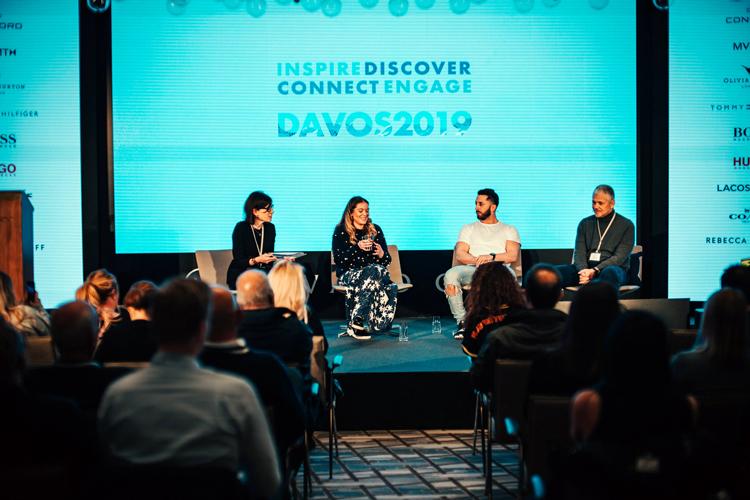
Davos Panel
READ MORE
Ebel and Concord President Flavio Pellegrini Talks the Present and Future of the Luxury Watchmakers
Ebel and Concord President Flavio Pellegrini Talks the Present and Future of the Luxury Watchmakers
Flavio Pellegrini, President of Ebel and Concord, shares his insights into the latest offerings from the brand and what to expect for the future.
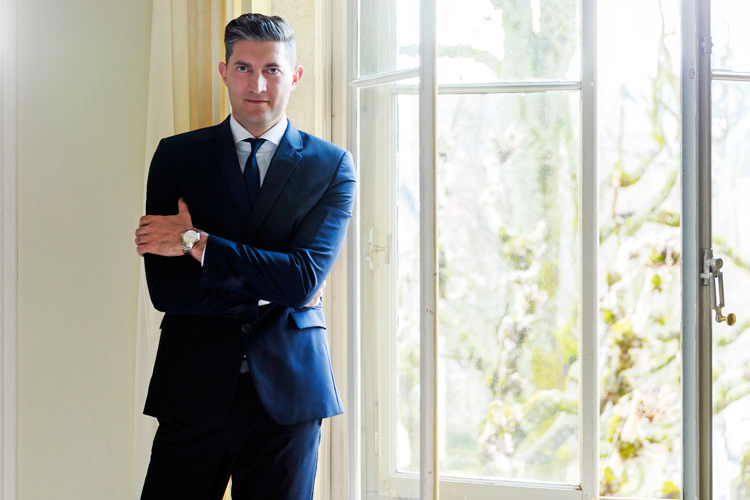
As President of Ebel and Concord, Flavio Pellegrini is responsible for driving all sales and commercial activities for the brands. Originally from Switzerland, Pellegrini grew up in the watchmaking industry but he moved to Australia to pursue a career in the automotive industry. In 200,3 Pellegrini moved backed to Switzerland and joined the MGI Luxury Group SA and held a number of positions before reaching the title he holds today.
Pellegrini has a method of combining his strong brand building skills and business knowledge and applying them to the Movado Group watch brands. He has a specific interest in The Middle East market which he is responsible for advancing business development of all Movado Group brands in the region. Last year Ebel celebrated the anniversary of its iconic watch the Sport Classic and this year they will take that further with new launches under the Sport Classic umbrella but putting new elements and innovations onto the classic piece.
When we met with Pellegrini in Davos he was keen to present this and all the latest novelties from both Ebel and Concord. We discover what is to come from the coming year.
The concept of exhibitions is changing – what message is Ebel sharing for this year?
First, on the exhibitions, I think people living in the digital world we are in today are looking for a more authentic connection and this summit is really offering us the right engagement and qualitative time to offer to our partners very unique moments and spend these with them. I think we did the right thing last year and we have proved it again this year.
Our message for Ebel today is that Ebel is back. The brand is really growing fast, especially in The Middle East. We have been able to enter the Middle East market through some prestigious doors like Rivoli and the response is great. Ebel is back because the sport classic is back and it really is our icon. If you close your eyes and think about Ebel you will see this bracelet and this is the message we really want the consumer to understand – that Ebel is coming back even stronger. It is an iconic and authentic brand and I think people are looking for that.
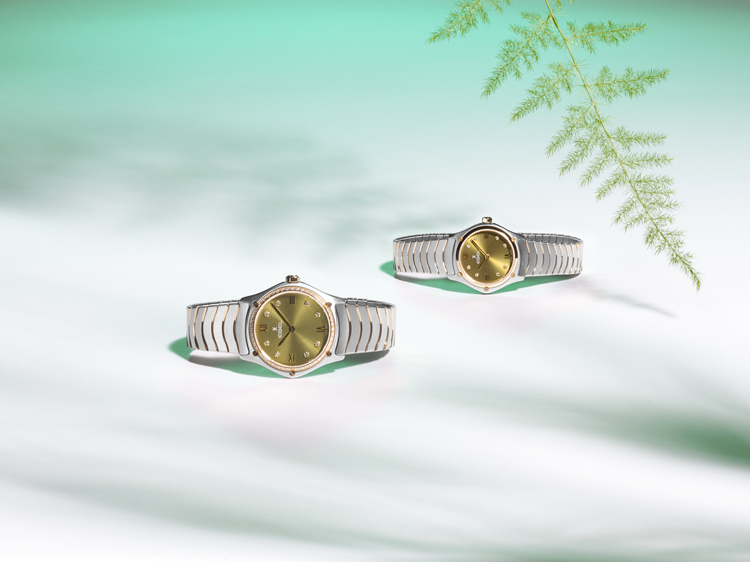
The Ebel Sport Classic Mini and Lady Green Dial
What can you tell us about the watches you are presenting for this year?
Starting with the green dial on the sport classic – it is a galvanic olive green which goes extremely well with one of our strengths – steel and gold. Eight out of ten best-selling watches are steel and yellow gold. With this green dial, I was looking for something that matches perfectly with this and I think we found it. The olive green has a yellowish feel to it but it’s very warm. We really believe strongly that green is a trendy colour for this year and we believe this so strongly that we launched it in three different references – with and without diamonds and also in a mini size. It’s a beautiful execution and we’re very happy about it. The electric blue dial will launch in the summer. It’s very wearable and versatile. We will continue to keep the same codes of the sport classic but play with it.
Talking about an icon that we can play with – we have the full polished version. It has a very minimalist dial and comes in rose gold. It’s more modern. This will launch this year as a capsule collection. It comes in Mother of Pearl with a diamond bezel and a galvanic white.
And what can you tell us about the new offerings for men?
For men again we have iconic pieces. We kept the codes but played with them and we have a beautiful, full titanium, sun-blasted matte design with a rubber bezel to give more of a sporty look. It is a limited edition of 200 pieces and people really like it. We are playing with our icon – same shape and codes but interpreted in a different way. We have a second collection – Discovery. Ebel has always been famous for having sporty yet elegant chronographs. We are relaunching this with an easily exchangeable strap system.
What are the challenges you face this year?
I think the challenge we have is that we have a lack of resources internally in terms of manpower to tackle all the initiatives that are offered to us. From a market standpoint, we are still a small brand and we have a lot of opportunities to grow. So the opportunities are there but from our side, we don’t have the manpower to do it. We are perfectionists and we only take on a project if we can do it in a good manner. Sometimes it can be frustrating and we have to say no because something cannot be done in the manner we want to do it in. That’s the challenge we have now but hopefully next year the team will get bigger so we can tackle it.
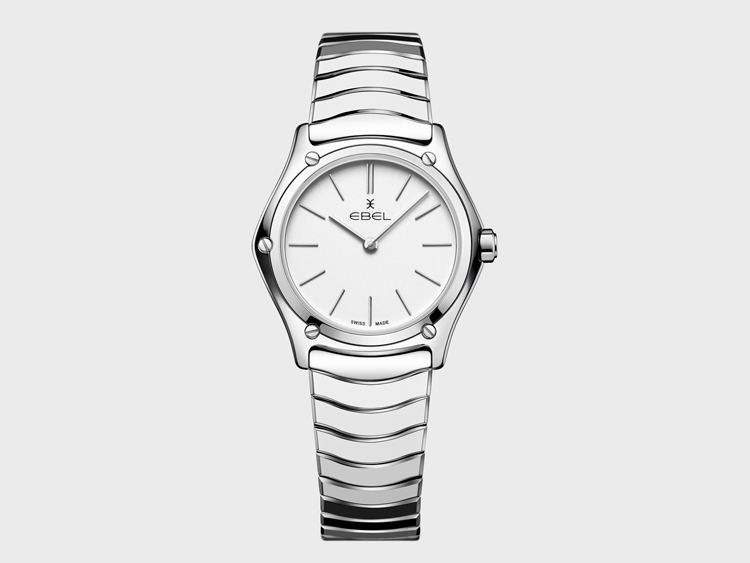
The Ebel Sport Clasic Full Polished Collection
What do you think the consumer is looking for from a watch today?
I think after crazy years of what I call ‘fake brands’ and brands where people were looking to change their watch every month, the new generation today is looking for something that is more authentic and they are looking for the brands that have been around for years. I think that’s the key element. Good brands with a good name will always remain and I think it’s a good time in the industry. I think people are looking for timeless icons, not the craziness that we had a few years ago anymore.
Women are becoming more and more educated in watches and going beyond the traditional feminine watch – is this something you are more open to explore?
I think we will stick to our DNA which is more about sensuality, elegance and softness. There are other brands that can play, brands who are really about mixing materials and technology but for us, it’s not about that. On Concord, we are playing much more with that but for Ebel, it’s the opposite. It’s very risky to go outside of your territory.
What can you tell us about the Brasilia watch?
Brasilia was launched for the first time in 2007 and the ambassador to support this watch was Gisele Bundchen. This year we decided to position the watch as a rectangular shaped timepiece with the perfect curve. I don’t think there are a lot of bracelets in the market like this. In the past, we had a larger sized case and we wanted to test that again this year.

Brasilia
What’s so special about the Beluga watch?
Beluga is the name of this launch and it is inspired by caviar. This is the most jewellery like the piece we have in our collection, there’s no bezel, it’s really about diamonds. It was originally launched in 1986 only in gold but now we have it in steel with four different dials.
What is something you would still like to achieve at Ebel?
There are so many things but I think first of all I would like the brand to be recognised a lot more as one of the iconic watch brands in the industry. It was in the eighties and I would be really happy to bring that back and be recognised in that way, especially by the trade press. We are taking baby steps but it is very solid and sustainable.
The Ebel Sport Clasic Full Polished Collection
How would you describe the universe of Ebel?
Timeless elegance.
How would you describe the universe of Concord?
Attention to details.
What is something you would still like to achieve with Concord?
To launch the brand properly in The United States.
Concord Mariner Lady New Setting
READ MORE
How the Founding Family of Chopard Are Championing Ethical
See The Last Line’s Jewellery Collection Exclusive to the Middle East
Caroline Gaspard Founder of Akillis Jewellery Sits Down with A&E TV to Talk Through Her Inspiration
The Face of Innovation: Chief Marketing Officer at Vacheron Constantin Laurent Perves Discusses the Industry’s Future and what sets the brand apart of others
In a market with some huge players, Vacheron Constantin has the challenge to continue to be innovative and forward thinking, but somehow still recognises its extraordinary past and produces some of the most complicated watches on the market.

With a history of 263 years, watchmaker Vacheron Constantin is one of the oldest in the world, but today it is still relevant; attracting new consumers and audiences thanks to its ability to develop, reinvent and innovate. Last year’s introduction of the Fiftysix watch was a big success and allowed the brand to reach into a previously untouched market. As we look to the future Vacheron Constantin presents some exciting new novelties in 2019.
With fifteen years of experience managing global brands, Perves joined Vacheron Constantin as Chief Marketing Officer in 2016 and was tasked with growing the modern day message of the brand while embracing its history. We met with Perves earlier this year at Salon International de la Haute Horlogerie to discuss how he is doing that and discover the latest novelties from the high watchmaker.
What can you tell me about the new collections?
The Mécaniques Sauvages is a segment that is progressing very fast. There is high customer demand for unique pieces now because clients don’t want to wait for custom-made watches, so we create these pieces that are still only one unique piece but are accessible. It was important for us to have a story behind the pieces. Our clients want a story, they want depth and they want emotion.
There is such a powerful motion of mechanics in Les Cabinotiers and the animal kingdom is always a very good way to start because it is something that is universal in all cultures. We really looked at the animals in various countries and tried to create a link with complicated savoir-faire. The Lion is a 14-day tourbillon with enamel treatment. The Tiger is represented with engraving and the G4 movement.
We used a lot of different techniques and complications. We recently held a clients event in Paris and what we saw was, even if the pieces were very few, people were interested to see them and we are very happy to be able to propose at least some of them to a wider audience with SIHH.
Les Cabinotiers Imperial Tiger
What are the pre-requisites in creating an object of desire today?
I think the answer is emotion. Of course, our watches are telling the time and of course, they have movements that are complicated, but before anything customers buy our watches because they have passion. There is something irrational about the thrill of owning and wearing a beautiful object – your heart beats faster, you get goosebumps, and we try to express this in our watches.
The second point, which I think is very typical of Vacheron Constantin is to never compromise on having both technical excellence and innovation with beautiful aesthetics. We’re not here only to create perfect objects of engineering – which they are by the way – but they also need to be beautiful and well-finished.
To what extent do you think storytelling is still relevant today?
It’s relevant but it cannot be everything. You can have the best stories in the world but if your product is not up to the standard of the story then it won’t work. In the arena where we play, you have to have both the story and the mechanics. The story you are telling needs to deliver the excellence of what you are producing and its quality.
What is the strategy you are using nowadays to ensure Vacheron Constantin continues to appeal to its existing clientele but also to the new generation?
I think and hope that our strategy is always the same and that’s why the brand has existed for two hundred and sixty-three years. There are a couple of tricks. We are over two centuries old but we don’t move that fast. We always look to our past and make sure that we are loyal to it and we pay tribute to it. We always try to respect what we’ve done in the past and we also look forward with innovation. By doing this it means we can be relevant to today but the message is still the same.
I’m sure if you met someone from Vacheron Constantin 150 years ago they would tell you the same. Beautiful, high watchmaking, expert craftsmanship, key aesthetics, etc. The message and core values are still the same. The world around us is changing so we are changing the way we communicate the message and we have to be creative.
Do you think diversifying the offering is also helping?
We have always had a diverse offering, it’s just that at some point we were less active in some segments. It’s always been there it’s just that now our clients are demanding from different areas. Fiftysix was a missing segment so we wanted to add that, but at the same time, it is a life cycle. It’s a natural organic process and I think Vacheron Constantin has always maintained the ability not to just follow trends and not to always do the same thing we have always done. We move and live with the time and you have to be relevant. That’s the only way you survive for 263 years.
Fiftysix Complete Calendar
What is something that you still want to achieve at Vacheron Constantin?
For me, I hope we’ll be able to keep challenging ourselves to be visible to more people. I think that’s something Vacheron Constantin can do and it’s always been in our DNA to spread the goodness of high watchmaking and make people love watches. I would love to contribute to the knowledge of high watchmaking and the knowledge of the savoir-faire of Vacheron Constantin. We want the generations of tomorrow to understand what we are doing.
What is the challenge you face today?
The key challenge is more media channels that create a lot of noise. So it’s difficult to catch people’s attention when they have so many messages coming to them from so many industries. There are 1.2 billion watches produced every year in the world. That’s one watch for seven people – that’s huge.
So within that universe and our very exclusive positioning, we need to make sure that a maximum amount of people can enjoy what we are doing. Of course, we are exclusive and only for a certain portion of the population but our message and values can be admired by many. Our mission is to make sure that high watchmaking is alive in another 260 years!

Overseas Tourbillon
What can you tell us about the women’s sector for this year?
Roughly one watch out of three that we sell is for women, which is great. We take great pride that most of these watches have automatic movements and are complicated watches. One of our best sellers is the traditional Moon Phase. Overseas has also started to really pick up in the women’s sector which is particularly satisfying for us. We’re going to keep bringing new novelties for women and we also see watches working for both genders. It remains a priority to Vacheron Constantin but we must always remain true to our values and our high watchmaking and ensure we are the best.
What do you say no to?
Many things. I say no most of the day! A couple are compromising because with our positioning and price point you cannot accept compromise and you always need to deliver the best. We say no to quantity and opportunism. And we will keep saying no to being dictated by trends. Vacheron Constantin is talking to a client who is a connoisseur who likes watches and who has a passion. You don’t come to us randomly and we stay true to this.
What book have you read lately that inspired you?
There are two books. I read a book from Chile that is about a person who travels a lot and is very open to the world and cultures. It’s a very poetic story, sometimes with suspense, sometimes with love, but it’s more about the journey and the writing of that person. It always makes me think about Overseas somehow. The second is 7 Habits of Highly Effective People. I had the training years ago but I never read the book. My wife advised me to read it and I have to say it’s way better.
If you could give your younger self one piece of advice what would it be?
Don’t change anything.
What do you think travel adds to you as a person?
For me, travel is the purest expression of experience. First of all, it is something physical that encourages you to actually go somewhere. We live in a time where people just look at pictures that other people took and I think travel is the real thing that opens your mind to new cultures and opportunities. Sometimes it can change everything and your life can twist which is really the spirit of the brand as well. As you know Mr. Constantin was an explorer going with his suitcase full of watches and movements to try to convince other cultures to buy. For me, that is the most fascinating story of the Maison.
What makes you happy?
Being here at SIHH. It’s a lot of work for all of our team however the hard work pays off. We have to manage everything; the visuals, the displays and more. We have the creative team working hard and the watchmakers – everyone is working together and this year it is a success again.
What’s your professional motto?
It changes with time, I have to say. When I was younger it would have been “live fast, die young.” I think now with a bit more experience I still have the will to go very fast but something that is very important is to see the glass half full. We are extremely lucky to be with an amazing Maison, we are in Geneva, a beautiful place, we should take some time every day to contemplate what we have and what we’ve achieved. It’s good to want more but I think it’s good to always look on the positive side of what you’re doing and eliminate negative focus.
How would you describe Vacheron Constantin in one word?
Beautiful.
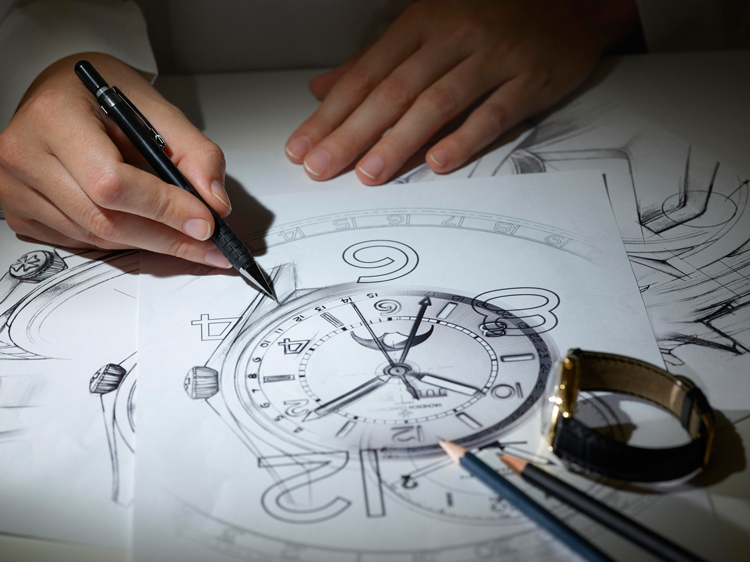
Fiftysix Workshop Watchmaking
READ MORE
A&E Editorial: Vacheron Constantin Overseas Collection
See Vacheron Constantin’s Striking Watch Collection That Embodies Ramadan Spirit
Tried & Tested: L.RAPHAEL Beauty Spa at Four Seasons Hotel, New York
We discover the signature spa treatment from one of New York’s most coveted spa destinations.

L.RAPHAEL Beauty Spa at Four Seasons Hotel New York is the world-class skincare brand’s first location in North America. The spa offers effective and luxury treatments using breakthrough technologies that have made Swiss brand L.RAPHAEL a market leader in anti-ageing skincare. Known for their high performing products they use the rarest and highest quality ingredients to create unique formulas.
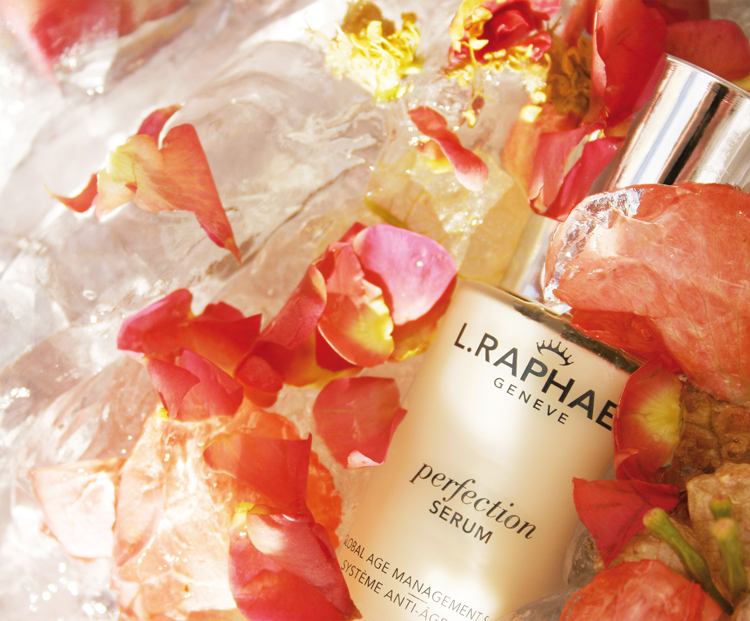
After walking through the grand entrance you’ll arrive at the 4,500 square foot spa space. With views of Central Park, the spa is home to ten elegantly designed treatment rooms including two luxury couples’ suites. L.RAPHAEL is also home to a full-service hair salon, two nail stations, saunas and a boutique selling L.RAPHAEL premium skincare products.
THE TREATMENTS
L.RAPHAEL has developed a treatment menu that perfectly compliments the qualities of the products and meets the needs of the busy men and women living New York’s fast-paced lifestyle, or those visiting, looking for a relaxing escape. Treatments on offer include facials, body and massage therapies, hair and nail care, and makeup application – so you can even pop-in before a big night out. Many of the treatments offer a holistic approach that is both calming and rejuvenating as well as scientifically advanced.
We were lucky enough to discover the signature Diamond Oxy-Lift treatment for the face. This non-invasive treatment uses the latest in skincare products including ultra-fine diamond powder to promote glowing skin for days after you leave. This scientifically advanced and ultra-luxurious experience visibly reduces the appearance of lines and wrinkles thanks to the active ingredients in L.RAPHAEL’s products. These ingredients work together to release high quality oxygen beneath the skin’s surface and continue to nourish and revitalise long after you leave the spa.

The use of diamond powder is the added luxury of this treatment. With its rigid lattice network the diamond is known to be the hardest material on earth. When pulverized diamonds create and exquisite micro-fibre that is becoming increasingly popular in skin treatments thanks to its exfoliating texture and super-fine tone that allows for radiance and glow. The results? You’ll leave the spa with a natural glow that will have you feeling rejuvenated and refreshed.
Reviewed by Lara Mansour Sawaya
For more visit fourseasons.com/newyork/spa/
READ MORE
How Guerlain Is Leading the Way for Sustainability in Beauty Brands
Five French Pharmaceutical Skincare Brands You Need in Your Beauty Arsenal
Four Seasons Resort Dubai Review: Escape from the City in Timeless Luxury
Located in the heart of Jumeirah, the Four Seasons Resort Dubai is a tranquil paradise hidden next to the Arabian Sea amongst the busy city, this resort is perfect for a weekend getaway without travelling far from home.
Since opening in 2014 the resort has become one of the leading luxury resorts in Dubai and attracts visitors both locally and internationally. Set on 270 metres of natural beach, the resort offers panoramic sea views on one side and unrivalled views of Dubai’s skyline on the other. The resort’s seaside style was envisioned by San Francisco-based interior designers BAMO. Arabic accents and Spanish architecture are highlighted throughout the property and the Seguso glass balustraded grand staircase is a key feature of the property (a great spot for photo opportunities!)
Imperial Suite Room
Rooms and Suites
Four Seasons Resort Dubai at Jumeirah Beach boasts 237 guests rooms and suites. All large in size, the suites have extra high ceilings and are designed in a loft-like style. Luxurious details included L-shaped sofas, walk-in closets and executive-sized desks as well as silver-leafed bathroom ceilings and Murano glass fixtures. For families or those looking for more space, upgrade to one of the eleven Imperial Suites which come with a large living and dining space, fully-furnished terrace and a second bedroom.
The Resort’s top floor is home to the Presidential Suite, Penthouse Suite and the Royal Suite. The latter complete with its own elevator, spa, gym, show kitchen and entertaining area featuring a grand piano.
Skyline View Room
Food and Dining
The Resort’s restaurants are headed up by Executive Chef Gilles Arzur. Choose from a number of dining experiences including international cuisine at Suq where the open kitchens showcase a modern style of cooking or Sea Fu where you’ll find fresh seafood fused with Asian influences, set against a beach backdrop. After dinner head to Mercury Lounge; a dynamic rooftop venue with incredible views of The Burj Khalifa and the rest of the Dubai skyline.
Restaurant Building
Spa and Wellness
Inspired by Dubai’s history of pearl diving, The Pearl Spa offers experiences using some of the world’s most coveted ingredients, from gold leaf and caviar to pearl extract and chocolate. The spa consists of ten treatment rooms including the Royal Spa Suite. Guests can also benefit from a deluxe aqua-thermal experience, relaxation area, juice bar and separate men’s and women’s changing facilities.
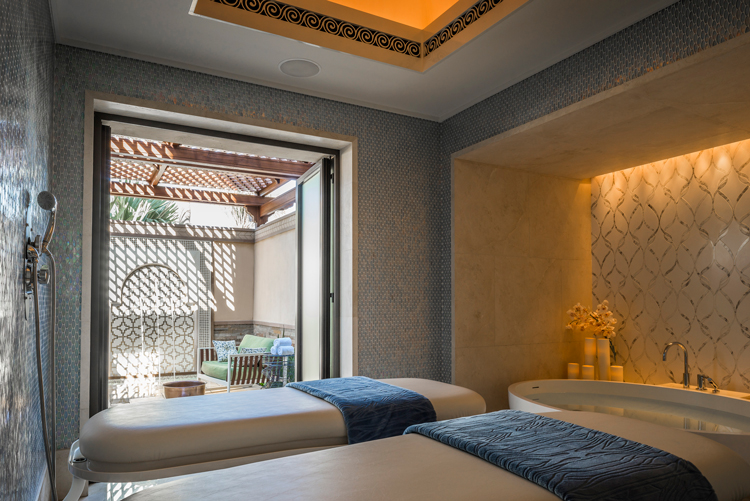
Spa Room
For those looking for a more active experience, the indoor pool and fitness centre are open to all guests. A full-service watersports centre on the beach is open to thrill-seekers looking to try their hand at kayaking, catamarans or paddleboarding. Outside you’ll find a family pool as well as an adults only pool and for those wanted some me time drop your kids into the Kids for All Season programme that offers fun for all the little ones.
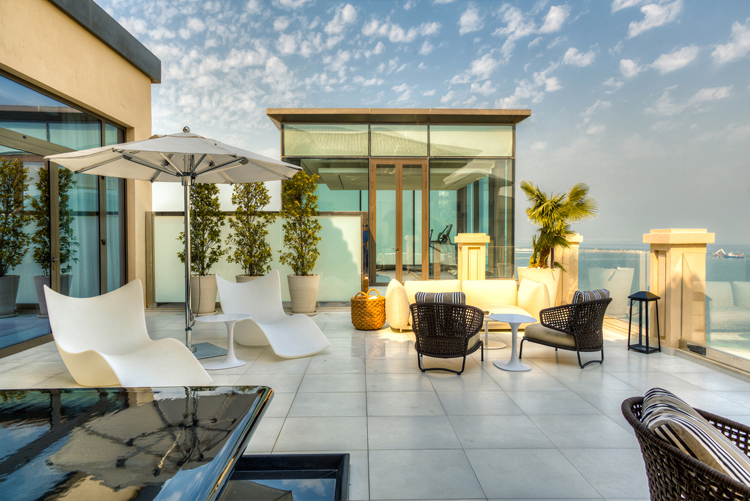
Penthouse Balcony
READ MORE
The Four Seasons London: Three Ways to Experience the Luxury Hotel In and Around the English Capital
Inside Dior’s Tiepolo Ball as the Fashion House Joins Forces with the Venetian Heritage Foundation
History & Heritage
As well as being a stunning evening to remember on its own, the event was also a nod to the ways the history of Dior and Venice intertwine. The masquerade ball was reminiscent of the ‘Ball Of The Century’ hosted in the very same architectural marvel by Charles de Beistegui – a flamboyant art collector and interior decorator – in 1951. Christian Dior, who founded his iconic fashion label in 1946, was one of the attendees of the original event.
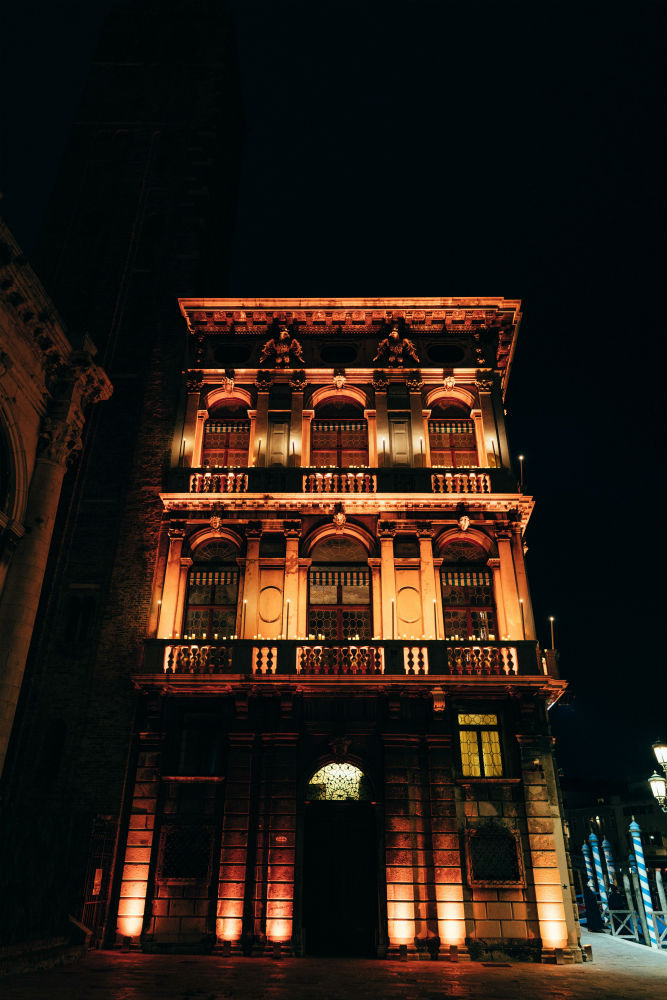
The Palazzo Labia in Venice
As the House of Dior and Venetian Heritage came together for the event, they dedicated the gala to the Palazzo Labia’s emblematic frescoes by Giambattista Tiepolo. Such a gesture was one of the ways the fashion house evoked its ties with the golden era of Baroque and the spirit of its avant-garde high society.
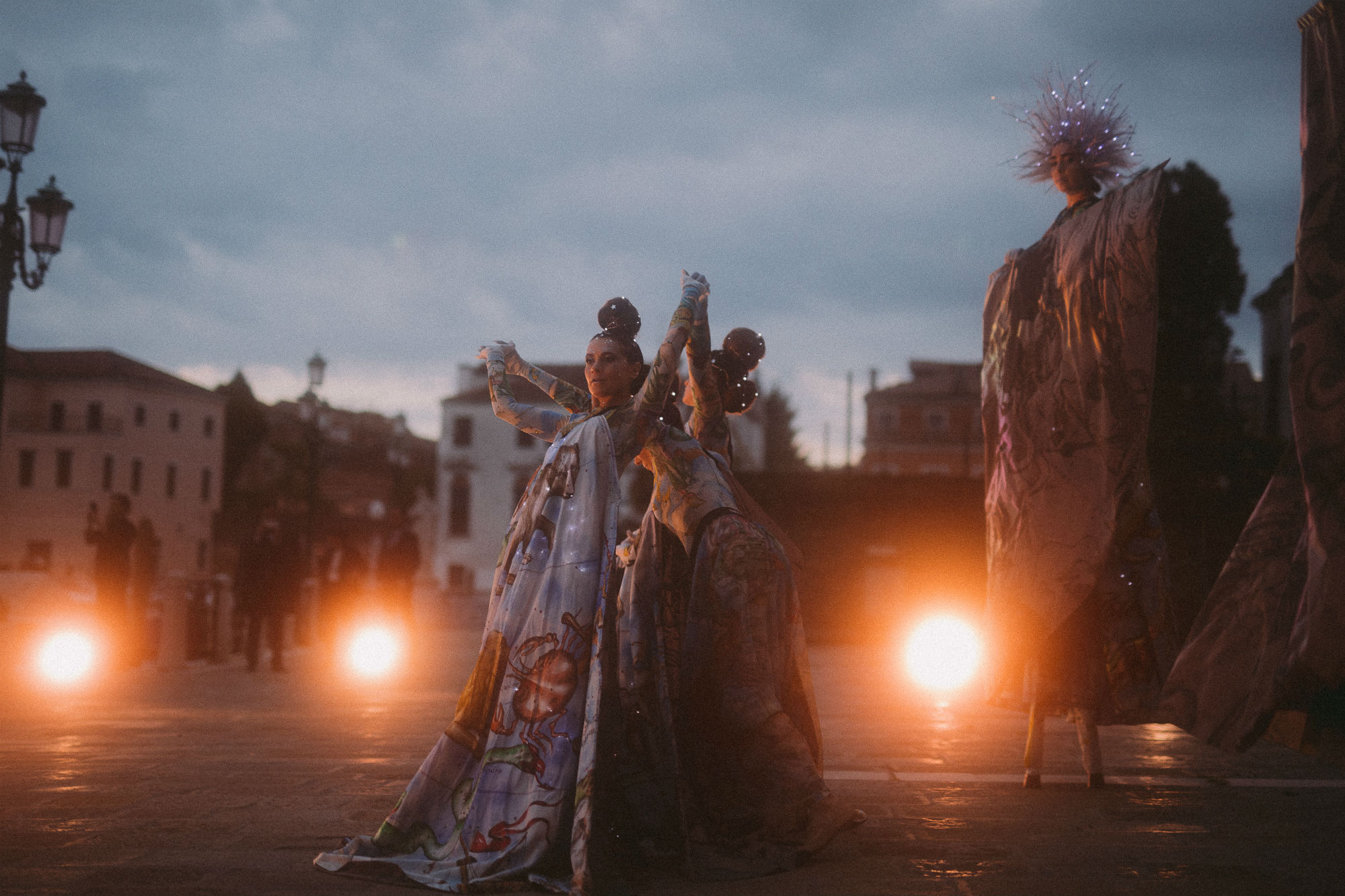
Dior’s Tiepolo Ball
Being timed alongside the opening of the Venice Biennale – an art organisation located in the Italian city – Dior’s Tiepolo Ball was also a charity gala with the incentive to fundraise for the restoration and promotion of Venice’s cultural heritage.
Ball Gowns
For the special occasion, many of Dior’s friends and admirers made their way over to the Italian city to celebrate. The likes of Karlie Kloss, Sienna Miller, Dasha Zhukova and of course Dior’s Creative Director, Maria Grazia Chiuri were in attendance.
Teaming up with prestigious collaborators Bevilacqua and Rubell – both Venetian heritage textile manufacturers – Dior creates a series of special gowns and capes using unique fabrics to dress its guests.
To take inspiration when designers the stunning outfits, Maria Grazia Chiuri looked upon the iconic paintings by the Venetian artist Pietro Longhi as well as Dior’s rich legacy of symbolic photos and sketches.
These include Monsieur Dior in his grand cape, René Gruau’s illustrations for the perfumes Miss Dior, Diorissimo, and Diorama, and the Labia dress designed by Yves Saint Laurent for Dior.
Using this pool of inspiration, ball gowns were created for guests such as Karlie Kloss and Sienna Miller using in part the original velvets used by Maria Grazia Chiuri herself for her haute couture creations.
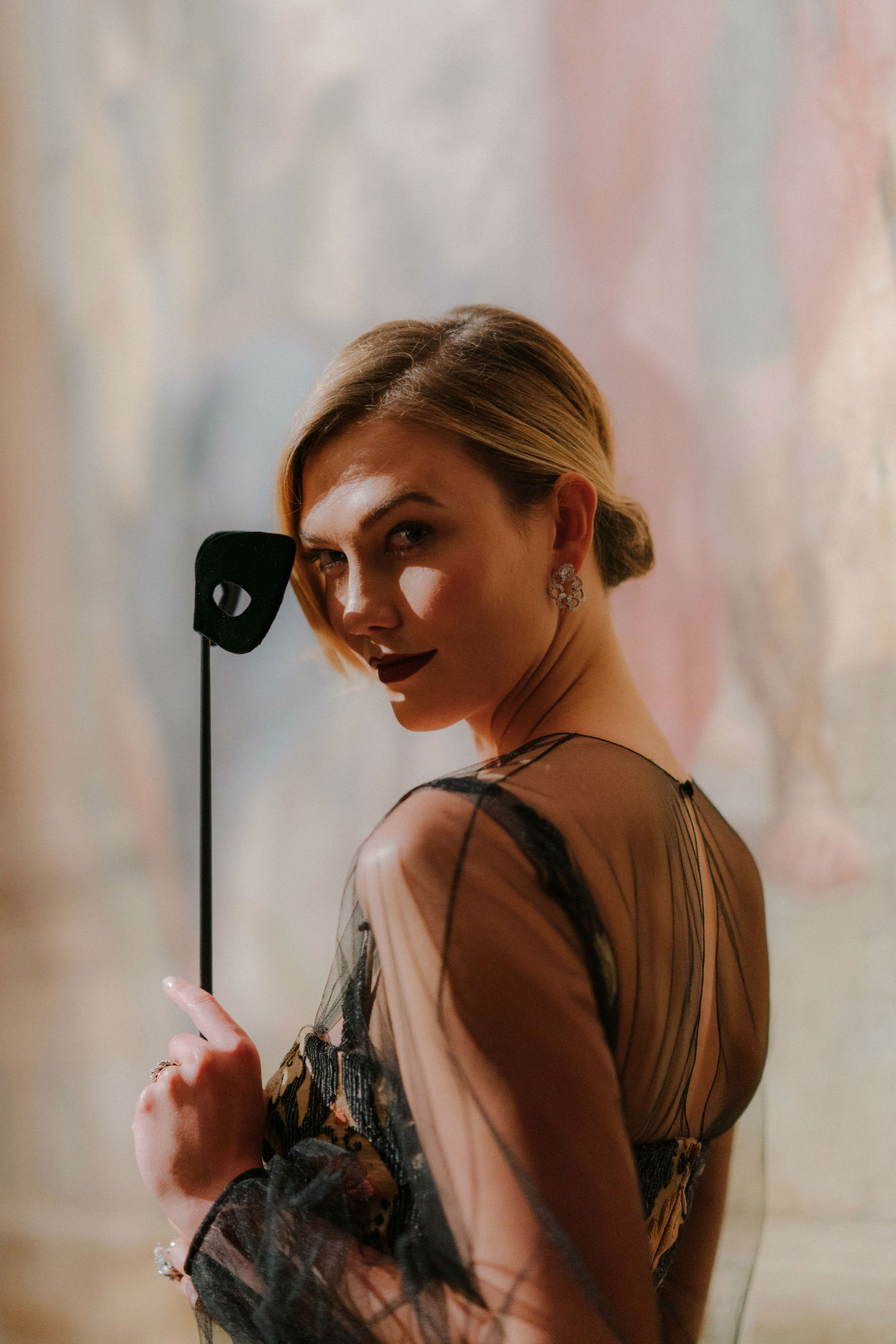
Karlie Kloss was one of the attendees of the event
Making History
Through this stunning event, Venetian Heritage and Dior honoured the steadfast ties between France and Italy. Maria Grazia Chiuri demarcates this new connection through her creativity and fascination for art in all its forms, creating an intense multicultural dialogue rooted in a variety of sources.
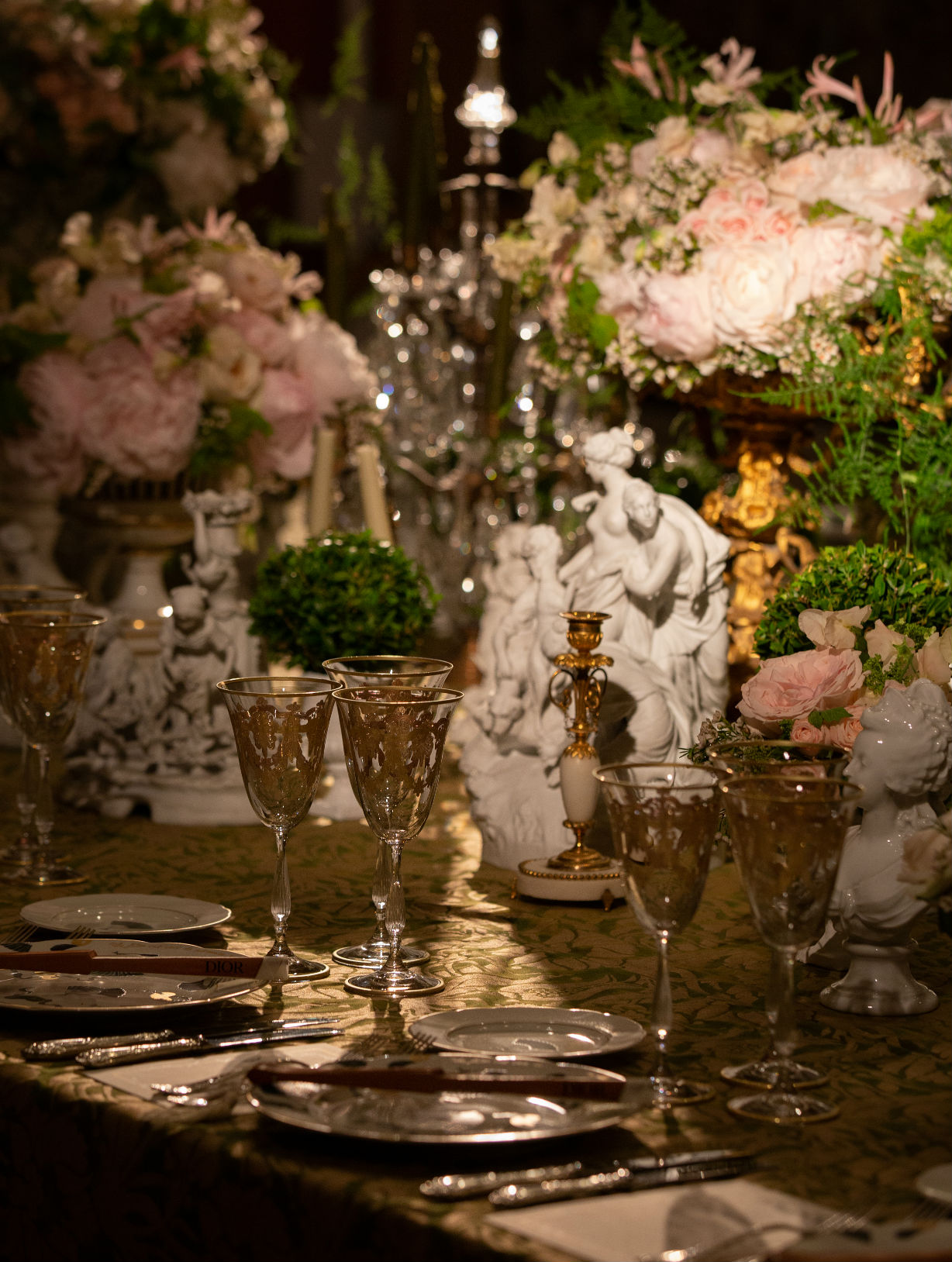
Every little detail was something to marvel at the historic event
READ: Dior’s New Fine Jewellery Collection
READ: Christian Dior Cruise Collection 2020
Building a Future: Zenith CEO Julien Tornare on His Forward-Thinking Strategy for the Coming Years
Two years ago Julien Tornare joined Zenith with a clear mission for the brand. As he comes into his third year as CEO, it’s time to reflect on the work that’s been done so far and his vision going forward. Unlike many in the industry, Tornare is not one to look back at the past but instead look to the future of the brand and develop its growth with new strategies in fresh markets with a new generation of customers.
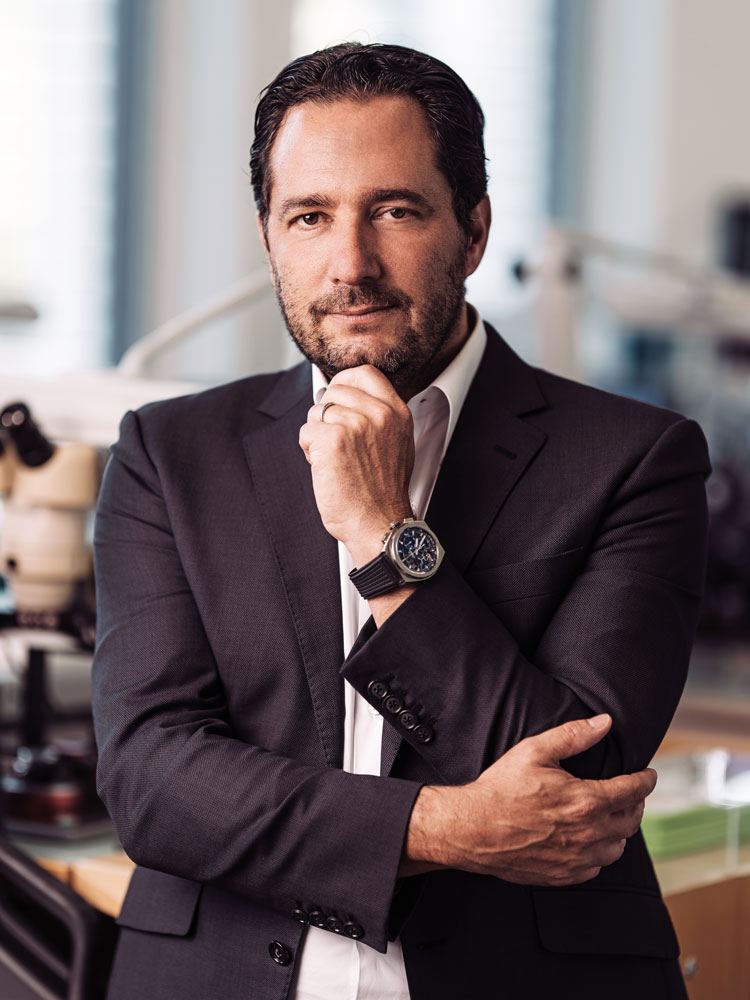
Zenith CEO Julien Tornare
Of course, Zenith‘s CEO Julien Tornare doesn’t deny the watch brand has an incredible heritage. In fact, in 2019 the brand will not only celebrate 50 years of the iconic El Primero movement with a year-long celebration but will also introduce many new novelties including the DEFY Inventor that was recently presented at Baselworld.
To explain more on where the brand is at and where it’s heading we sat down with Tornare for an in-depth and honest reflection on his vision.
a&e Interview Zenith CEO Julien Tornare

Julien Tornare talks to a&e two year after joining Zenith
What’s the main message Zenith is giving this year?
It’s a very important year for us as it’s the 50 year anniversary of the El Primero so we have an all year long celebration and a worldwide tour where we will share our passion for this amazing, legendary movement. Beyond that, we still need to build a future and we want to continue bringing added value to the brand, which for me means being creative and innovative.
We have 154 years of history and there has been a trend in the watch industry to repeat the past which I think is disrespectful to our predecessors. So I want to continue to craft tomorrow. We are presenting the DEFY Inventor which is inherited from the DEFY Lab prototypes we launched a year and a half ago and I really wanted to make sure that this was a watch we could commercialise so I’m very happy to launch this piece this year.

ZENITH Defy-El-Primero Double Tourbillon
What would you still like to achieve with Zenith?
Many things! Two years is not a long time and my mission at Zenith will take much longer than that. There are a lot of things to do. The most important thing for me and the thing that I have worked very hard on is to change the mindset of the people working for Zenith. That was what took me a little while in my first year – to make sure that people are integrating first of all, the new vision and direction of the brand and also the spirit.
I always talk about ‘start-up spirit’ because that’s what I want to implement. There’s no reason why even if you’re 154 years old you can’t change your mindset to build a future. This took me a while but I have to say we are there now.
The thing that I haven’t done yet is raise brand awareness to the level that it should be. Today it is super strong amongst watch collectors and in certain markets like Japan. But I need to go wider and get people who are not watch specialists to appreciate the brand. Firstly to know the brand and then to appreciate it. I need to work on the sexiness of the brand and that takes time. So there will be events and there might be celebrities helping us to accelerate the awareness.
To what extent do you think endorsing celebrities assists you in your strategy?
If you don’t have the right substance as a brand it’s useless. But we do have substance and content in the form of the long history and our authenticity, as 100 per cent of our watches have an in-house movement. So as long as you have this, the basis is very healthy because people do care about substance, even millennials. For us, celebrities will accelerate brand awareness. They will get people who have never really heard of Zenith to say “Oh, what is this brand?” That’s accelerating brand awareness.
Some brands believe working with an omni-channel or co-branding strategy really supports the brand but these days some collaborations we see are not relevant anymore – to what extent do you believe in this?
It’s quite similar to my previous answer in that if you use another brand – cars etc. – it can be too much. If your brand has enough content and substance in itself you don’t really need to do it. The key advantage for me is again to widen your target reach. We have been partnering with Range Rover for a few years and the main advantage is that each of us has his own expertise and we are now reaching Range Rover clients that have never even heard of Zenith. So this is the main advantage.
You are of a price point in the market where the competition is extremely fierce, what is your strategy to stay ahead of competitors?
There are two things. First of all, I believe that there is a certain price segment which I would call the ‘sweet spot’. To explain, we all have a psychological price in our minds for everything. Holidays, cars, etc. and it’s the same for a watch. Zenith needs to be in this particular sweet spot which I believe is between six thousand [Euros] to fifteen thousand [Euros].
Beyond this, I want to offer value for money and this is really key for Zenith. Many brands have been surfing on what I would call the ‘Chinese first generation’ wave where people have become rich very quickly and spending money without really counting it and sometimes without fully understanding what they were buying. Because of the huge size of China many brands said: “Okay this is the way to go for the next thirty years” and because of this they lost ground with the other clientele. But what they didn’t anticipate was the shift of a generation.
Now the new Chinese generation studied abroad – so they speak English like you and me. Their purchasing behaviour is much closer to the rest of the world than their parents’. Zenith is very well positioned for this.
What is your biggest challenge?
To increase the brand awareness of Zenith in a short amount of time, and getting people to say: “This is a cool brand”. I’m talking about the people who might not buy Zenith because of the technical aspect but because it’s a cool brand and because we are driving good values and have a good vibe around us. We’re not there yet but we are working very hard on this. We will have new brand platforms, new events and lots of other things as well as the products to create this environment around the brand.
What is your position on the discussion of retail vs e-commerce?
If we claim we are innovative and contemporary how could I say: “I don’t do e-commerce”? Of course, we have to do it but if I’m realistic, it’s still a very small part of the business for all watch brands. We are in a technical field selling highly technical products, we don’t sell t-shirts or shoes that you can order and return, you need to understand the watch.
Most people are still not buying online, it’s still a very small percentage for any brand. What works now is a special action to create a buzz. Let’s say you make a limited edition of a very specific watch and you go through a different channel like Mr Porter to sell it. This works, but the volume is not there yet, it will take time.
Retail is super important in brand building but I also believe that brands that are going 100 per cent retail might underestimate the difficulties of it at a certain point. Again we sell technical products and people don’t understand watches as they might understand a pair of shoes or a jacket for example, and at some point, they will need advice.
When it comes to this point many clients still appreciate a multi-brand store for neutral advice. If you went to a Zenith boutique, of course they will tell you Zenith is the best brand in the world. But if you went to a multi-brand store the staff will tell you something very different. I think good retailers still have a bright future and I believe that multi-brand will continue to grow. It’s a question of balance.
To what extent does localising your concept to relevant markets work better than presenting in a static exhibition like Baselworld?
I think it is very important to go to the people and the markets. I am a heavy traveller and I strongly believe that you are not going to develop a brand by staying in your office and telling people what to do. I want to go to the people – this is the only way we will improve, if I meet the press, the retailers, the clients, in their markets. So I spend most of my time doing that because it is key.
Believe me, it’s already paying off because people are telling me that they feel I’m so engaged and involved in the brand because I’m meeting everyone. This is the only way – you get the best feedback, people think that you’re caring, and that’s key so I will continue to be very present.
What can you tell us about Zenith in the Middle East?
There is huge potential for development in the Middle East. Dubai is doing better and better but I was recently in Lebanon and we had a fantastic event. I was amazed by the level of culture in terms of the watches there. So I know that if you go there and do field work there is a huge business growth ahead of us for the brand. I’m very excited.
To what extent do you think storytelling is still relevant?
It’s the key. We are talking about human beings and people are buying emotions, if you have that then it’s storytelling. A month ago I went for lunch with six people who were part of Zenith when the El Primero was created in 1969. The youngest was born in 1945 and the oldest in 1933. I had so much fun because these people told me so many cool stories and how they would love to be part of Zenith again and I said: “Of course, you have to.” A story is everything for me.
If you were to give your younger self one piece of advice what would it be?
The first piece of advice I would give is actually the first thing I was told when I started in the industry when I was 25. My first boss told me: “Don’t forget who you are and keep your feet on the ground.” Even if with Zenith I have my head in the stars my feet are firmly on the ground so I’m not forgetting who I am and my values. That’s a very important piece of advice. I would also say make sure that you are listening. The minute you stop listening, you start to lose ground.
When you feel like the challenges are too much, what do you tell yourself?
I do a few things. First of all, I used to do a lot of sports. I learnt that the tougher life becomes the more you have to fight and keep on going and never give up. When I got to Zenith two years ago it was not easy. I was alone, my family was in Hong Kong, and the weather was not so good, it was a big shock for me and I had tonnes of issues and problems to solve.
So I’m not going to lie, sometimes I didn’t know where to start. When I talked to Mr Jean-Claude Biver over the phone I realised how much of an energizer he was. He could talk to me for thirty seconds and put me back at the top. I thought ‘this is how this man achieved so many great things.’ I’m not the kind of person to complain, I like to move forward from the problems and never give up. In this role you always need to show the energy and positivity.
ZENITH Defy Inventor
You mentioned Mr Biver – is he one of the role models you look up to today?
Definitely and not only for his professional achievements but also as a human being. He is someone that has had so many amazing successes and he is still very simple – you can send him a message and he will reply immediately – like I do most of the time!
What do you say ‘no’ to?
I say ‘no’ to quick opportunism. I don’t like it. I think we need to build things for the long term.
What book are you currently reading?
I’m reading a novel that’s written by my best friend. He’s writing a novel, nobody knows, not even his wife and he’s sharing it with me one chapter at a time. It’s something I’ve never done before and it’s an interesting experience because he asks me advice on something that is taking form now. I think one of the characters makes me think of myself but there is no title yet so we will see!
ZENITH Pilot Type 20 Chronograph Adventure
How do you start your day?
I like to make my bed myself. Not because I had to do it when I was in the army but also because I think it’s part of a ritual every morning to say you are going to do something. The first thing to do is make your bed because when you do that you start to be a doer from the very first minute. So even if nothing happens during the day, at least you know you did one thing.
What is your professional motto?
Never give up. When you reach the top continue to climb.
ZENITH Pilot Type 20 Extra Special Silver
How would you like the industry to remember you?
In our industry, we have to pay attention and make sure that egos are staying at a normal level. The brands will always be remembered but the men they come and go, you have new energy. But I would like people to remember me as someone that respected people and enjoyed life. I believe in working in a good environment so I would like my employees to remember me as a person who created a great environment and made them have happy years with Zenith.
If you weren’t here today what would you be doing?
There are two things. I’m a huge sports fan and I did a lot of sports myself reaching some of my ambitions. But I would have liked to go much further and make it a life. That could have been great. The other thing is a job that involves saving lives. That must be unbelievable in terms of self-accomplishment. We do business and we make money but saving lives must give you a reason to be here.
How would you describe Zenith in one word?
Emotion.
ZENITH El Primero Revival A386 Rose Gold
READ: Zenith reveals the new Oscillator control system and a new watch DEFY Inventor
READ: High Rise: Taking the Zenith Defy Inventor to New Heights
READ: CEO Of Zenith Is Using The History Of The Brand To Fuel It’s Future Growth
CEO of Piaget Chabi Nouri Talks Us Through the Latest Novelties and Her Plans for the Future of the Brand
Chabi Nouri sits down with A&E to discuss everything from the story of Piaget in 2019 to the advice she would give her younger self.
CEO of Piaget Chabi Nouri sits down with A&E
Piaget has a clear brand ethos that focuses on happiness and a positive outlook on life. Its “Sunny Side of Life” concept did just this when it was developed in 2016 – injecting happiness into the lives of its customers.
This year, Piaget continues with this theme with a celebration of gold and things that shine. At this year’s SIHH the brand presented its latest novelties in watchmaking including new additions of the Limelight Gala watch and sparkling editions to the Piaget Possession collection.
They also presented a collection of luminous gold pieces that celebrate the allure and elegance of gold, as well as the goldsmithing expertise at the Maison.
The woman behind all of Piaget’s recent developments is Chabi Nouri. Nouri joined Richemont in 1998 and took on the position of CEO in 2017.
Swiss-born Nouri has a strong background in the watches and jewellery business and has worked to redevelop Piaget’s image and reposition the brand since taking on the role. For our first interview with Chabi we met at SIHH 2019, where she talked us through the newest novelties and shed light on what we can expect to see in the coming year.
What is the story that Piaget is telling in 2019?
We started a great story of “The Sunny Side of Life” a few years ago that had a very positive and playful spin. We were inspired by a lot of the elements that made up Piaget’s history and part of this was a positive outlook on the world. We felt that it was also the right moment for Piaget to present a fresh new look and new novelties and that was also where we started to accelerate the development of jewellery.
We are one of the rare Maisons that has both watches and jewellery and we are very proud of that, so we definitely needed to make sure everyone knew that we have an amazing history in watchmaking, but that we are also very strong in jewellery. Both together make up the heart of Piaget. The beauty is that there is a fusion between these two worlds and today we continue with that.
We have a very special booth here (at SIHH) to express that. We want to showcase the freshness and something very modern but still keep a very refined exclusivity. This year we continue with that and we are also expressing the key message of Piaget which is watchmaking and gold crafting. This year is the year of gold and shine and putting in the forefront all of our gold expertise and you will see that across all the collections.
What can you tell us about the Piaget Society?
The Piaget Society is a true community that actually existed. One of the founding family members Mr Yves G. Piaget started it in the 1950s. He gathered all these people who had a certain passion for art and beauty and brought them together to have good and authentic times.
We wanted to make sure that this was continuing to exist so we have recreated the society and have really put it in the forefront. Today it’s a gathering of people that have the same passion for beauty, watches and jewellery and we are all in a way part of this Piaget community and that makes up the Piaget Society.
What challenges do you face as a brand today?
It’s probably to have more people knowing that we have this legitimacy. Piaget has gone through different times and when we have the chance to showcase what we have and give people an understanding of what we do, we have a perfect match that’s usually very positive. That is in a way the beauty of having both jewellery and watches but it also makes it a challenge but an interesting and exciting project.
What do you think are the prerequisites to creating an object of desire today?
I think first of all you have to be true to what the brand is about because it’s important that it really matches Piaget’s values. I think today we really want to tell the truth and tell not only authentic stories but also the history. With Possession and Limelight Gala it was exactly that and that’s why it was such a success because they took the values of the brand – playful, unique, distinctive and sharing joy. Uniqueness is a key element – we all want to be a bit different and express our own identity and for that you need to have things that are not all the same. I think Possession and Limelight Gala are exactly these type of pieces.
The Gala watch has a very distinctive design and it has a lot of the Piaget elements. So this year we have novelties that are in a way even more exclusive and refined with bigger stones – almost 5-carats on the watch – and we have a special opening gem setting that allows the light to come into play even more with the diamonds so it really sparkles. We also have another novelty that has the same case but also plays with all the gold and craftsmanship that we know how to master and the malachite diamond which is the perfect beauty.
It is the same with Possession. It’s a combination of gold and hard stones which is part of Piaget’s DNA and I think as long as you’re strict to that and stay close to what you are, as long as the beauty is there it will work. So these are the key elements for me and we still have a lot of space to get there. Piaget is already a big key player but we still have a way to go and we know how much the Middle East region is important for that. The relationship we have with the region has always been very special and historic and today we know that the region is always welcoming our novelties and I think we are very excited about that.

What are we expecting to see in 2019 for the high jewellery collection?
You can expect continuity in the theme that we used because we really want the brand to have an overall message of “The Sunny Side of Life”. So we will continue working on these aspects. It’s a different part of the world that we will be showcasing in the collection. We will continue with very colourful pieces. We have a very strong love for green and we always have a lot of amazing emeralds so we will continue with that. We are colourful and we will continue with asymmetrical and fluid designs.
You will see stunning jewellery watches and we are also revealing a new gold design which is a snakeskin type design. This is a work that we have done with hand-graving. It is done by someone who has a special artistic hand. We try to have full integration between the dial and the bracelet.
What would you tell your younger self?
To do what I have done in terms of always being true to myself – that’s probably what I have done the best. I have never tried to be someone else and I’ve always respected everyone. This is something that I want to continue doing.
What do you say no to?
Authenticity is something that is really important to me. What I say no to is hypocrisy or something that isn’t genuine.

What has been your greatest achievement so far?
Personally, it would be my family. I’m super proud of my kids – do I do the best? I don’t know, but I’m super proud. On the professional side, whenever I see someone happy because of Piaget, this is probably what we celebrate the most internally, as well as having people happy at work. This is very important to me.
What is the motto that you live by?
Never fear anything.
What book are you currently reading?
Funnily I never really liked novels but the last novels I read were by Joël Dicker who is one of our ambassadors and a very talented man. Usually, I read more biographies or historical books.

If you had to choose a favourite stone what would it be?
From my childhood memories it would definitely be topaz, but today if I had to choose it would be emerald.
How would you like the world to remember you?
As a lively and nice person.
How would you describe Piaget in one phrase?
Creating joy.
Executive Vice-President of Hermès, Guillaume De Seynes, Chats The Future Of Watchmaking
Guillaume De Seynes discusses the rich history of Hermès and how it will help to shape the brand’s future in watchmaking.

As Executive Vice-President of Hermès, Guillaume de Seynes has a huge job on his hands. The great-grandson of Émile Hermès and a member of the sixth generation of the Hermès family he knows the brand inside out.
Along with his cousins, he is one of the key decision makers in the business, responsible for ensuring the continuous development and sustaining the legacy of the Parisian brand within the watch metiér.
De Seynes is responsible for the Manufacturing Division and Equity Investments. When Hermès ventured into the world of watchmaking there were challenges. Originally a leather goods and luxury fashion brand, Hermès was an outsider who fought hard to earn recognition as one of the big players.
This year Hermès exhibited at SIHH for the second time, to introduce new novelties and continue the transmission of the legacy with the rest of the world.
We were lucky enough to meet with Guillaume de Seynes to discuss how he plans to advance the brand within the watchmaking industry and ensure its craftsmanship.
What is your impression of the fair so far?
It’s positive. This is the second time we have been in Geneva and we are in a prime location – nobody can miss us which is great! I discovered what we put in the main entrance and the fact that we have strong novelties – it’s very positive.
The concept of exhibitions nowadays is fading out – what’s your impression on this?
I think it’s still very relevant. We are more challenged in this business as it’s not our original industry. We are faced with strong competition from beautiful brands and historical names, and I think with the visibility and the amount of press we get from these events, for a brand like Hermès it is still very relevant. I plan to continue exhibiting here.
What are we seeing at this year’s SIHH presentation from Hermès?
We have two main novelties in two different categories. One is a beautiful ladies watch name Galop d’Hermès. It is very original, very Hermès and everybody can see that. It’s a collaboration with a new designer, a very talented man who has a background in designing furniture, and this piece is inspired by the stirrup shape.
Of course, this means it remains true to the roots of Hermès but it’s more than this, it’s a modern, contemporary and very elegant piece that’s very Hermès – even more so because of the details of the numbers. This is a quartz piece as most of our feminine watches are, and it comes in stainless steel, steel with diamonds, pink gold and pink gold with diamonds.
We have had a very good response. I think the role of Hermès in the watch industry is to come with a strong idea of creativity and the idea of proposing something different and very well made of a high quality, and with a freedom of creation.
What is the strategy that Hermès uses to stay ahead of the competition in such a challenging market?
Creativity! Of course the pillar of this company, beyond watches is quality and craftsmanship. This is how we started in 1837. But in order for craftsmanship to be attractive and contemporary, you need creativity and the relationship between the creator, the technicians and the quality experts to push the limits. It’s the same dialogue we have in leather and in silk. The creatives are always there to inspire something new and to surprise the customer and bring something different.
I watched a video of my uncle Jean-Louis Dumas recently and he said “a craftsman is in a circle because he can always replicate what he knows, and in order to ensure that this circle doesn’t turn into a vicious circle, you have to have the help of the creator and then the circle becomes a sphere.” I like this image and we are doing exactly that. Of course, all our main competitors started out as watchmakers and they are mostly focused on quality and production, the difference is that we have the Parisian style and the style of Hermès.
What do you think are the prerequisites to creating an object of desire?
Firstly freedom – because you can’t have an interesting creation if you are told: “We want a square watch for ladies that sells at 2,000 Euro.” You have to have the freedom to create. Secondly, coherence – because you need to have a creation that makes sense for you. And thirdly boldness – because if you just imitate what others are doing or what has been successful in the past, it’s not your own creation.
To what extent do you think overcommunication kills desire and exclusivity?
I think one key quality of this company is that we are storytellers. Even if we are active on Instagram and Facebook we still need to tell stories, as behind each product there is a story. Why do we talk about the creator of the watch and why do we make him meet the customer when other brands don’t do this? Because it comes from him. He has a story and we consider it our responsibility to share this.


What do you still aim to achieve that has not been done yet?
I think what we need to achieve is an agreement between watch enthusiasts that we are on par with the best brands. I think we are gaining this recognition from the professionals and the journalists but when it comes to the public, we are still not there yet. It takes time.

How challenging is it to carry on such a huge legacy and still remain relevant and speak to the people of the present and the future?
Our brand remains family operated and it is a pleasure to work together with my two cousins. It is a big responsibility to come after five generations who have done a fantastic job, so of course, you always need to look at the long term perspective of any decision you make, because you don’t want to disappoint and threaten what has been built. They have done such fantastic work. When you imagine it was our grandfather who first designed the Kelly bag, and the destiny of that object is beyond any expectation he could have had at that time. So it’s a responsibility, but at the same time we have such strong foundations that we have the possibility to go far.
What is the professional motto that you live by?
Don’t take it too seriously.
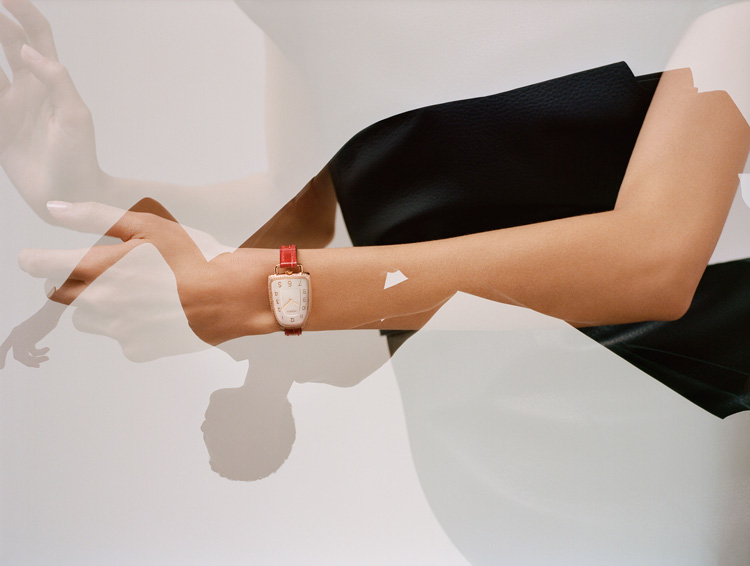
What do you say ‘no’ to?
To anything that can compromise integrity – either my integrity or the integrity of the company.
What piece of advice would you give your younger self?
Be more daring when you are young. I was a bit too wise in the sense of being too disciplined.
How would you describe Hermès in one word?
Respect. Because I think in what we try to do there is a lot of respect – respect of the craftsmanship, of our customers, of the past and respect of everybody involved in the company.
Complete the sentence: I’m happy when…
…I see beautiful new Hermès objects.
How would you like the world to remember you?
As an honest man.
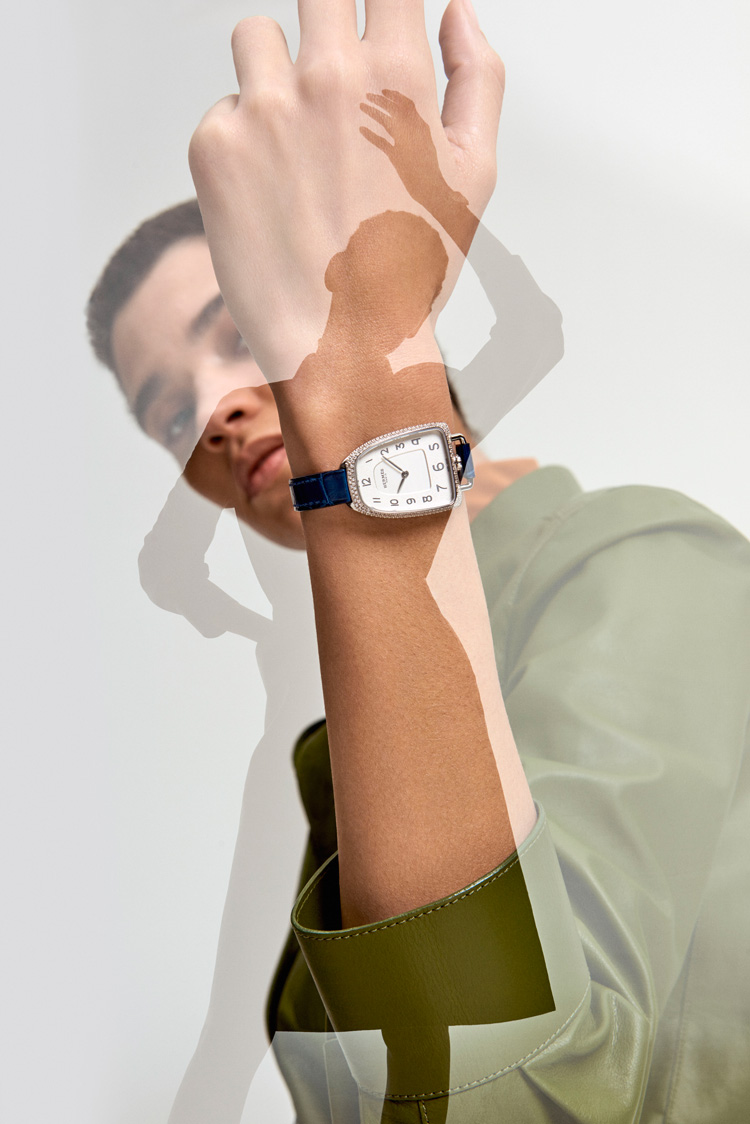
READ: Hermès At Paris Fashion Week 2019: Inside the Autumn/Winter Ready-To-Wear Collection
READ: Men’s Fashion Week Fall 2019: Hermès
READ: Laurent Dordet On La Montre Hermès Ambitions In The Watch Industry
Founder and Designer of ASHI Studio, Shares his Future Plans and Reflects on His First Runway Show in Paris
A&E meets exclusively with Mohammed Ashi to discuss his recent show during Couture Week in Paris and the plans for the future of the Beirut-based brand.
Saudi-born Mohammed Ashi is making ripples in the world of Haute Couture. His Beirut-based brand, ASHI Studio, has become increasingly popular outside of the Arab world in the last couple of years, and he recently presented his first runway show at Couture Week in Paris, firmly making his mark on the international stage.
Ashi’s designs, through their sharp cut shapes and intricate details, present a classic update for the greatest codes of fashion. Mohammed Ashi has a refined taste for art and he embraces embroideries to capture the essence of luxury and tell fairy tales through every meticulously hand-crafted design.
The Spring 2019 Couture collection was entitled ‘Letters to Margaret’ and featured 27 pieces inspired by the 1950s and the 1990s. Show-stopping dresses were presented in luxurious fabrics such as lace, taffetas moiré and double satin, with delicate fabric manipulation, feathers, sequins, pleats, ruffles, and embroideries. The colour palette was bold, while there were also more understated pieces in black and white.
While his collections are flamboyant and bold, Ashi himself is quite reserved and tends to shy away from the spotlight. He rarely gives interviews but A&E was lucky enough to meet him at his studio in Beirut, fresh from presenting his Spring 2019 couture collection, where we sat down to discuss the brand and his vision.
We enjoyed a stunning collection for couture – what did you have in mind when you were designing it?
The whole thing came to me two months, before we realised what the collection would be. I saw a picture in a book for the same mood of an event from the 1950s and it caught my eye because of the details and the movement of everything.
Funnily enough, one of the guests that were invited was a muse of mine and this was a hidden message that I didn’t tell anyone about. This is how the collection got built. The direction changed a little bit when we started as I felt it wasn’t ‘ASHI’ enough. So I took a risk and took out the embroideries and put colour, which I never do, just to give that black and white image in my head a modern touch.
I added the fifties and then I added a nineties vibe too. There is a harmony and a fine line between both and I continued this through the whole collection. I was taking a risk, I wasn’t in my comfort zone at all. On the day of the fashion show, I didn’t have any feeling at all so I wanted to see what the feedback was from the people. I had a blank page in my book, I didn’t know what to expect. I tried to make it intimate.
I’m a very shy person and you saw the event was shy. I didn’t want it to be massive, I wanted to keep it very soft. 80 per cent of the people there I knew personally. I didn’t want to call it a fashion show I called it a dinner!

What do you think as a couturier is the biggest challenge?
I think it’s change. No one embraces change easily and with everything that’s happening with the economy, there are a lot of obstacles that will make you not want to change from a business perspective. I know other designers will not change, they will continue with what they are doing.
You have to decide if you want to be creative or you want to be a business tycoon – it’s a choice. I took a risk, it wasn’t as big as I wanted to take, but I think by next season the risk will be much bigger.
Creativity is something that is innate – if we go back to your childhood, how did you discover your passion and love for what you’re doing now?
It started when I was very young. When I was 10 or 12, my mother was the first one to open my eyes to what couture was. I am the only boy with four sisters so I’m surrounded by girls with dresses the whole time and my mother was always very keen on dressing herself and changing her image. So this opened my eyes.
I looked up to my mother. My father figure was there, but the mother figure was stronger – I have a very strong mother! So it started from there. She used to drag me with her everywhere and I remember we went to visit a couple of designers. It was the experience of seeing the fabrics that inspired me.
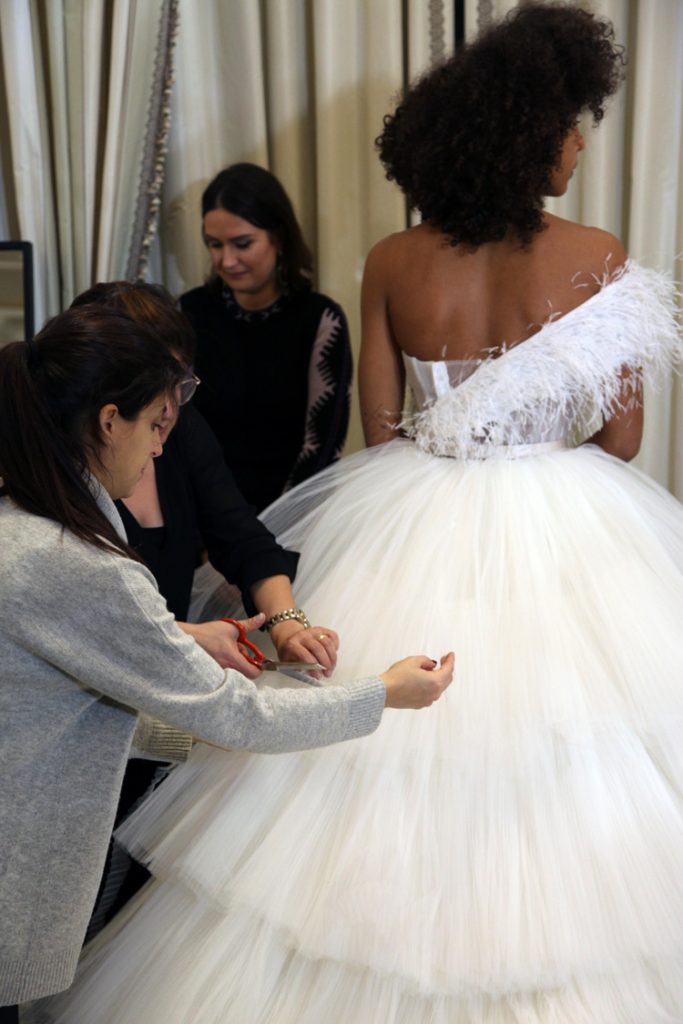
I left Saudi Arabia when I was 15 and moved to the States to study marketing. At this point, I was still attached – not to fashion but to art. All the classes that I could choose were art. At one point I almost changed my major but I didn’t, I continued with what I was doing. At some point, I changed from art to fashion. I felt there was something with fashion that I was drawn to – I watched a lot of fashion shows, I saw a lot of images.
I have a solid base when it comes to fashion but I polished it. When I look at something I have a very strong visual memory, so I can remember a jacket for example, for ten years after I’ve seen it once. Sometimes when I sit down I have images in my mind. I can’t design without listening to classical music, so I’ll put that on and the images will come to me and the pen starts walking by itself.
What do you still aim to achieve that you haven’t done yet?
If you don’t dream big, you’re not dreaming at all. If you put a limit on yourself it limits you, I just want to feel the moment. I have to be attached to this moment to make me go to the next phase. It’s not about a fashion show or an achievement it’s about the moment.
What is the motto you live by?
I don’t have limits or boundaries I have to have freedom – I drive with no restrictions.
If you were to give your younger self one piece of advice what would it be?
It’s actually the opposite. The younger me is advising me right now! He gave me all those dreams and now he’s advising the current me.
Do you have any regrets?
No, I don’t regret anything. Everything I did made me who I am today so I can’t regret anything. It is always a constant fight and struggle deep inside.
What was a challenge that you had and how did you overcome it?
I used to get affected by challenges. I would surrender to the moment. But my struggles today taught me to be brave and know that everything will change and be better soon.
What book are you reading?
I have so many books in front of me! I read a lot of poems. I read a lot of Virginia Wolf. I also read novels and watch a lot of movies. I read the end first, I’m one of those people that is very eager to know whether it’s worth going through all the drama!
What do you say no to?
I say no to no! You tell me no I tell you yes!

What inspires you when you’re in your zone?
Places inspire me a lot. When I travel, I travel though time. I feel that I’m attached to anything that is old. I believe in past lives and I think this is something that you take from your past life. I’m fascinated with gardens, old houses, old paintings – I think I’m an old soul and I’m taking that soul with me everywhere I go.
They say creativity comes out when you are emotional – when are you at your most creative?
You don’t create art from happiness you create it from sadness. This is why I usually call my work ‘Dark Romance’. Dark not as in grunge but as in sad. Everyone around me knows that I support women and this can often be women who aren’t in their best shape emotionally. For example, if you go back to some of my old collections – ‘Exiled Queen’ for example – there is always a pain in the female in what I do.
If there was one thing you would like to change in yourself what would it be?
I’m impatient! I would like to be more patient but I don’t think that will change!
In one sentence what should we be expecting from your coming collection?
A new vision of ASHI. It’s something completely different and I’m pushing the boundaries to a whole new level.
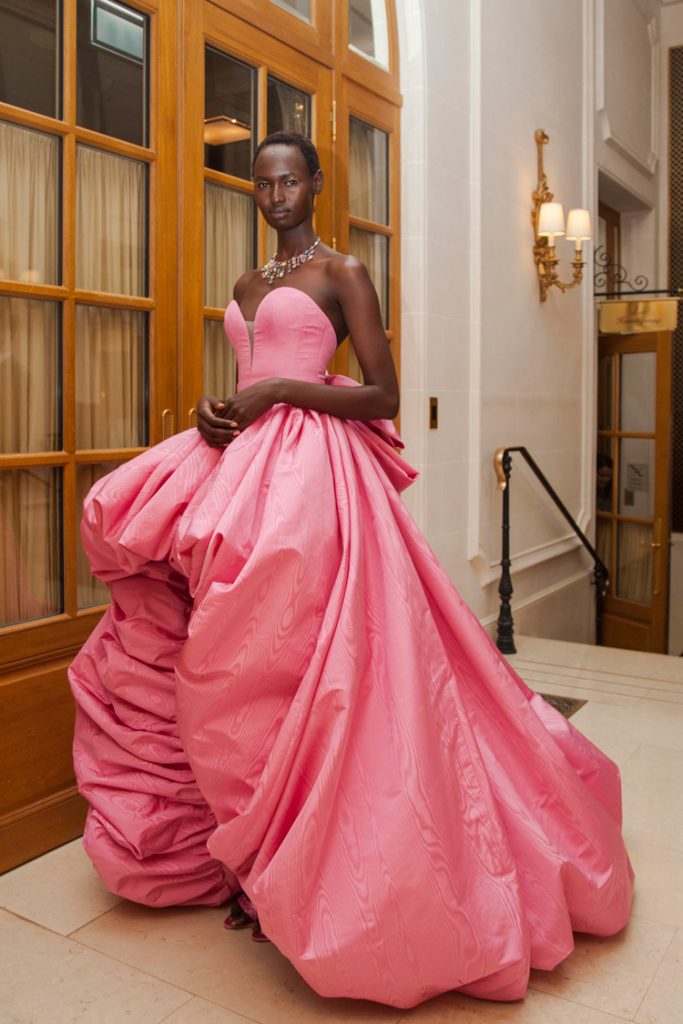
Will you remain out of your comfort zone?
Yes I will. I think it’s steps. I will try to change and give something new.
Who is the woman you design for?
All my muses have suffered or something happened that changed them. They all had big turning points in their lives.
Is there a woman you would like to see wearing your designs?
Wallis Simpson – 100 per cent.
How would you like to be remembered?
Should they remember me?! Through my work I would like to leave a message. It’s not about the dresses or work but it’s a message that I want people to understand and I think that will come with more exposure. It’s not something tangible, it’s a feeling. When you give someone a feeling it’s much more important than a physical thing.
